Tag Archives: Christmas lights

Christmas in Central Europe

One of the main reasons people visit Europe during November and December are the Christmas markets. Markets that pop up during the Christmas season date back to at least the late Middle Ages, can be found all over Europe, and are so popular that cities across the United States do their best accurately replicate the experience.

Like their American replicas, they are filled with booths that sell food and beverage.
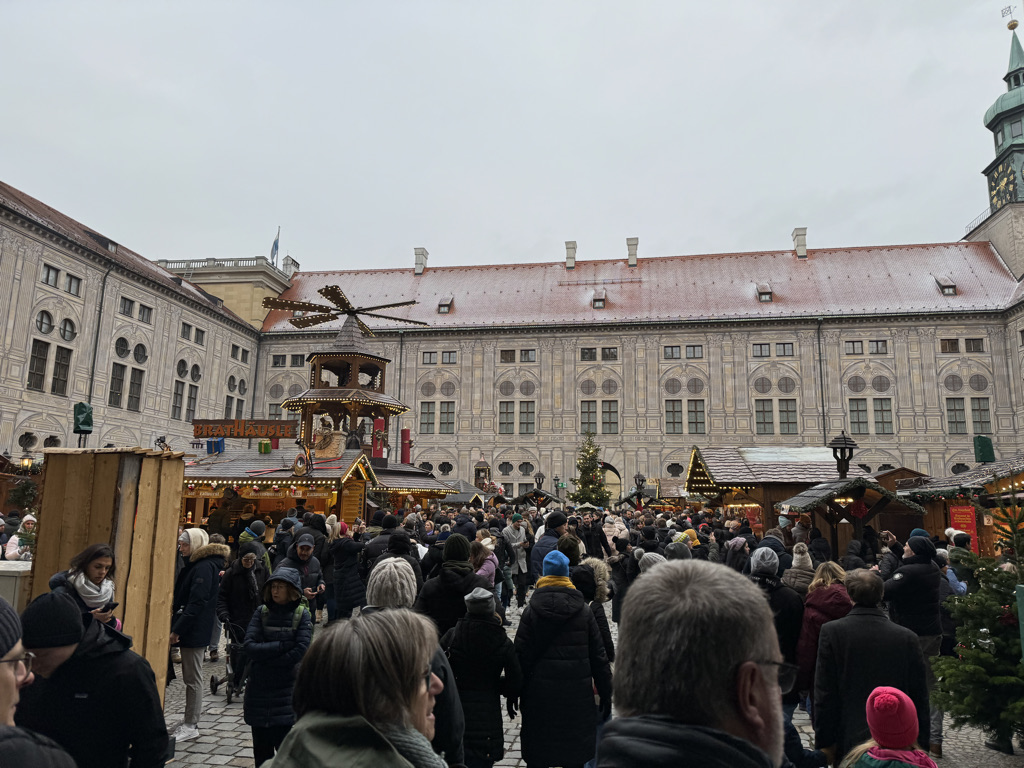
As well as shops that sell decorations, such as ornaments and nativity displays.

They can be fun places to hang out both in daylight and at night.

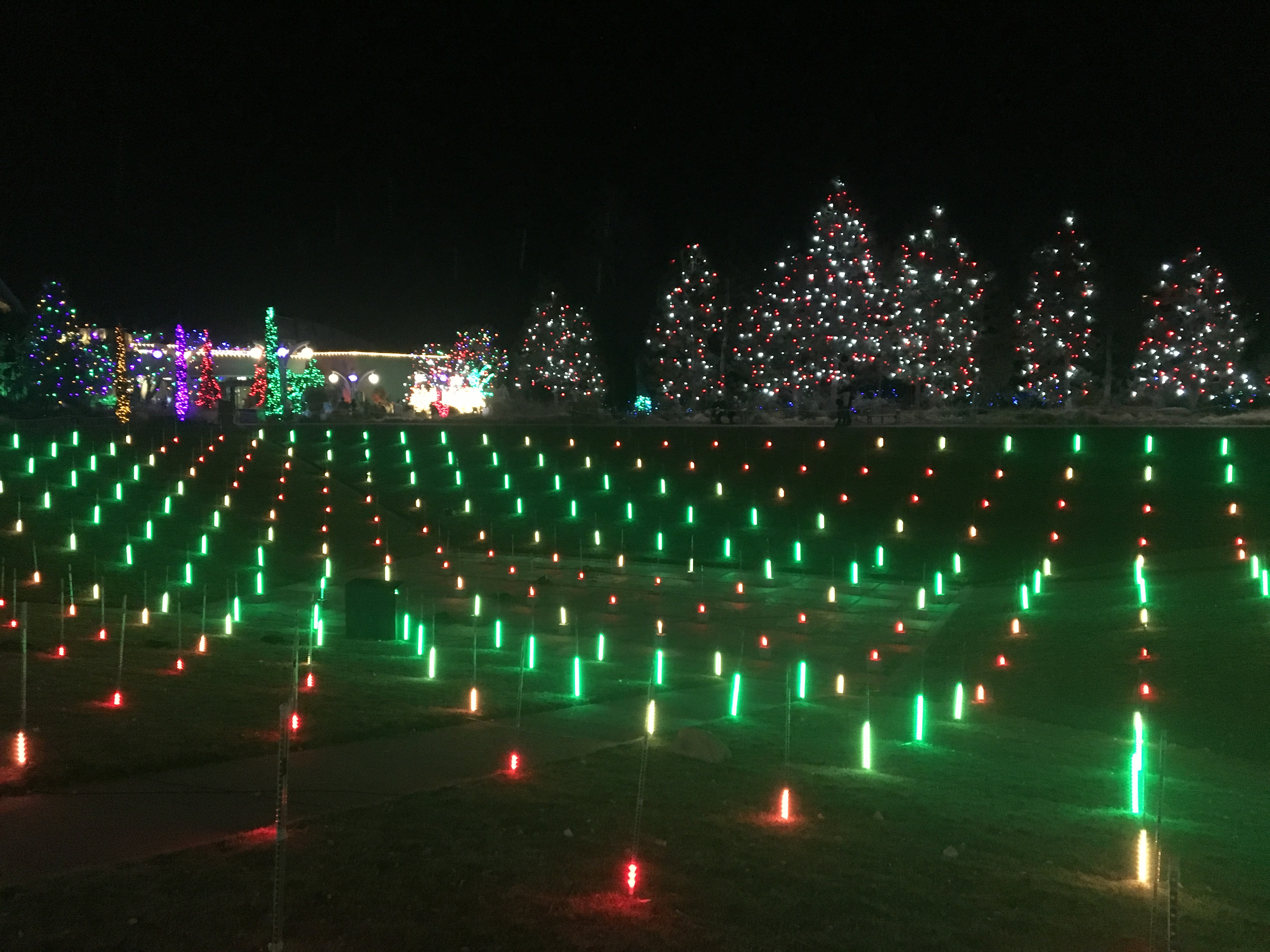
Actually, with all the lights, they can be all the more magical at night.

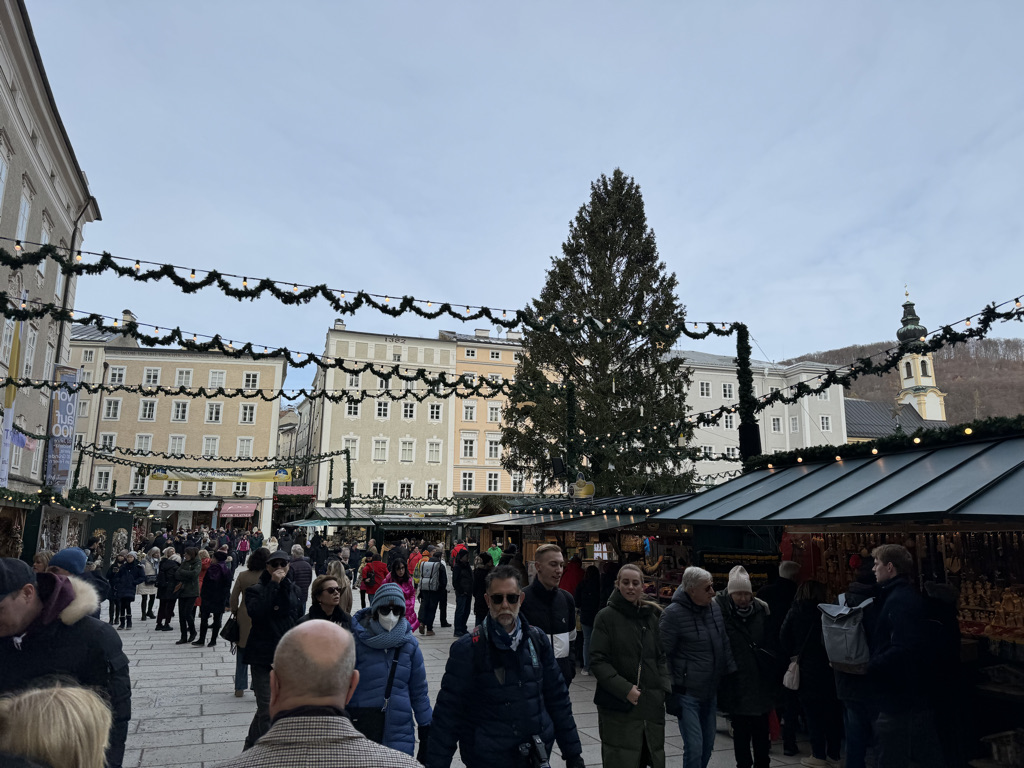
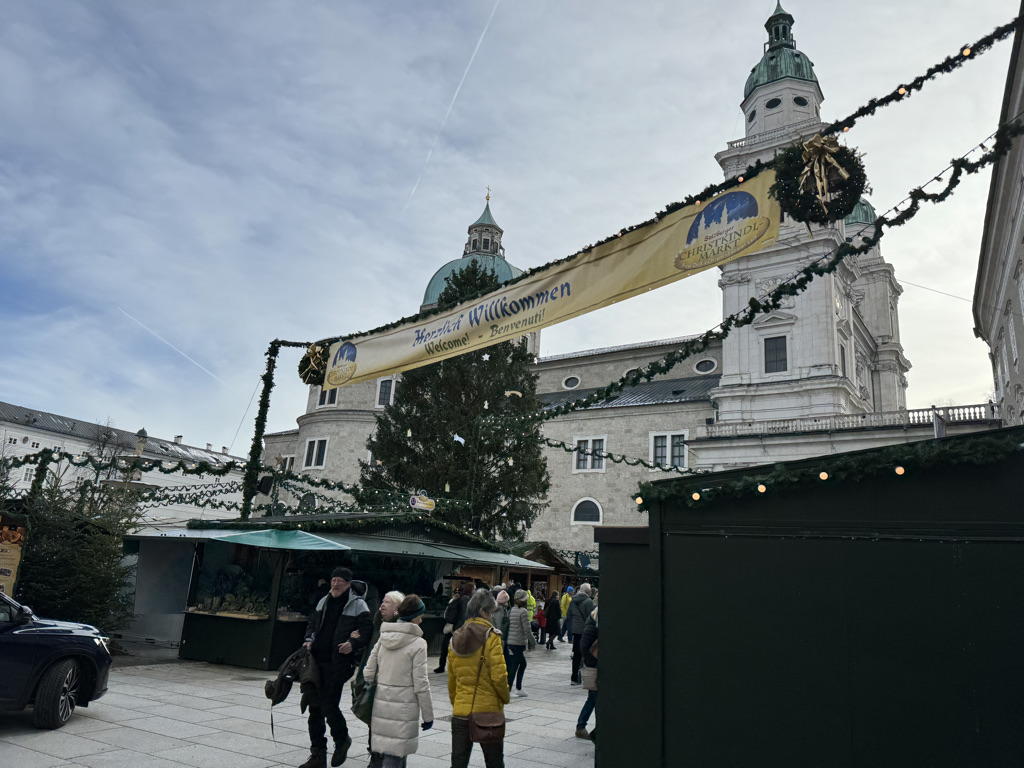
These Christmas markets are pretty sizable, with some being large enough to have multiple sections, like the Salzburg Christkindlmarkt at the Dom and Residenzplatz in Austria.
And, while Munich’s main Christmas market is at Marienplatz.

Perhaps their most interesting one is at Odeonsplatz, a mere 500 m (less than half a mile) away. This one was large enough to not only have the usual food, drink and ornaments, but also had a full Christmas children’s display which included my favorite part of this journey: A singing moose that sings “Winter Wonderland” in German.

Seriously, I could not get enough of this video!

Throughout my time in Europe, going to Christmas markets, I did make one observation that was somewhat strange to me. At the surface, Christmas in Europe seemed a bit more religious, with nativity scenes everywhere. At this Christmas market in Prague (Chezchia), the first thing visitors see is a nativity scene in front of a gigantic church.

This seemed odd given that, as a whole Europe is seen as less religious than the United States and the Czech Republic is among the least religious countries in the world!

Yet, somehow, in the more religious United States, the primary symbol of Christmas, that is seen everywhere is Santa, the quintessential symbol of commercial, secular Christmas.
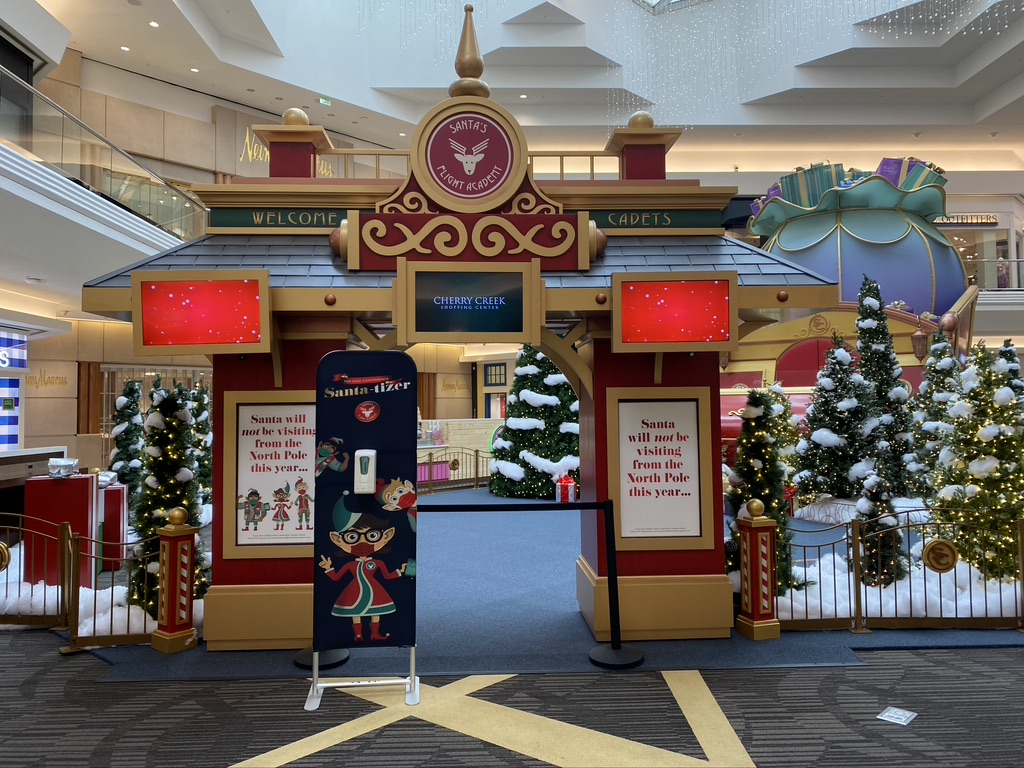
And it’s the post-Christian Europe where one will see nativity scenes, the quintessential symbol of Christian Christmas everywhere!

How does that make sense? Well, the answer is, it doesn’t. Most traditions don’t. Most traditions are some kind of jumbled up combination of the history of a place and the present day sensibilities of the population, combining the here and now with the nearby, both spatially and temporally.
There are reasons behind them, but they are complicated. Sometimes they involve specific, almost random events that would constitute historical minutia. It seems like to try to understand all the history behind every custom or tradition from around the world would be like trying to drill down to the specific reactions involving every sub-atomic structure to explain all the physical wonders of the world, including human behavior.

Maybe, observing anything that seems contradictory like this is a lession for all of us to learn about overthinking things. Overthinking can sometimes seriously rob people of joy. While hanging out in a Christmas market in a light Christmas-y snow, is it better to be fixating on why a less religious continent has more religious imagery than mine, or is it better to just be taking in the experience and the people around me?

A Christmastime Message

IMG_5229

Christmas, and the Christmas season, is quite easy to understand as a child…

Time off of school

Family gatherings

Fun lights, decorations, parades and movies

And, of course, Santa Clause coming and bringing toys

IMG_5235.jpg

Maturity complicates things. For many, there is a lot of work to do, work that is not related to Christmas; shopping, decorating, cooking, event planning, etc. In college, the Christmas season often means the end of a semester, with final projects and preparations for final exams. In many work environments, end of the year projects and the rush to meet annual goals can create a busy month. Unfortunately, this stress can sometimes make it hard for many adults to actually enjoy activities like baking and putting up Christmas decorations. These activities, which were meant to be joyous, end up just creating more stress.

Another complicating factor is the nature of what it is we desire at different ages. What most kids want is something that Santa can bring down a chimney, or what a parent, friend or relative can wrap up into a box. What most adults truly yearn for is something that cannot be found at a shopping mall, or even on Amazon. True love, self-respect, acceptance, community, and many of the things mature people need for a truly fulfilling life, but often lack, cannot be achieved over the course of one day, or even one season.

IMG_5160.jpg

Then, for those who are fortunate (or unfortunate) enough to be of the more intellectual persuasion, there are all the questions and observations.

Should non-Christians even be celebrating Christmas?

Is Christmas even really a Christian holiday? Given its dubious historic roots, and current manifestation as largely secular and materialistic.

Is there too much materialism in the holiday?

What does it mean to be in the “Christmas Spirit?”

Does all the talk of snow in Christmas music make it too biased against those who live in the tropics or the Southern Hemisphere?

What would happen if someone crashed a Christmas Party, and interrupted “Let it Snow”, with the Lil’ Wayne & Fat Joe Song “I’ll Make it Rain”, while yelling “Climate Change”?

IMG_4853

It is also possible to observe people for whom Christmas is not a great time of year. People with truly dysfunctional families (beyond just different political views) may dread the holidays, and for people with no family at all, it can be a time of intense sadness.

IMG_5226

There are probably a lot of lonely adults wondering how a season that once brought them much joy has now become one of indifference, stress, or even worse, sadness. What is it that can be done this Christmas Season to create a more positive outcome?

There are three natural instincts regarding where to begin talking about the meaning of Christmas for adults.

20171208-162224-58944475.jpg

The first is to talk about the Christmas Spirit; compassion, generosity, warmth and understanding. There are, of course, reasons this is a good thing, but anyone who has gone through a truly tough time in their lives knows that not everyone has the capacity to be in this spirit at all times. The Human Spirit can change with circumstance and environment regardless of season.

IMG_2989

The next is to roll it up with New Years, into some kind of a prolonged period of self-reflection, where the events of one year are process and the goals and themes of the coming year are considered. Of course, it is quite self-evident how effective this is, given how few New Years resolutions are actually kept.

Then there is the cycle of life that is the seasons, with the Christmas season being the beginning of winter in the Northern Hemisphere. There is historical precedence for cycles of holidays or festivals that roughly match the start and end (and sometimes the mid-points) of each of the four seasons. For some, Christmas serves as an exciting start to an exciting season, while for others, it softens the blow of entering a difficult season.

The primary common thread regarding the reasons people value Christmas relates to taking a break from the normal progression of events.

Even those who truly love their jobs need to periodically take a break. While some jobs have prolonged time off, like summers for teachers, for most, Christmas represents the longest break period of the year. For some, it’s a time to rest. For some it’s a time to party. For others, it is a time to just slow down, stop, and observe the true beauty of their surroundings. Most importantly, regardless of whether someone’s circumstances in their regular day-to-day lives are fortunate or unfortunate, it is a chance to regroup, and focus on something else for a change of pace.