Birth to roughly age 22 is an endless barrage of rites of passages. There is birth itself, first steps, first words, first day of school, learning to ride a bike, first kiss, then high school and college are one eight year long rite of passage into adulthood which includes learning to drive, and then all of the other things you can legally do at age 17, then 18, then 21. Due to the ridiculous drinking age in this country, many of us end up going a little bit overboard somewhere in there. On top of that, there are a bunch of rites of passages in there that are specific to each individual, like first baseball games, or learning musical instruments.
The final rite of passage in all of this is graduating and getting a job (or, for some people graduate school). At this point in time, most of us are quite sick of rites of passages. This is especially true for some of us that went to graduate school. The time has just come for us to stop preparing for our lives and live our lives. However, the transition is quite abrupt. We go from being in a near constant state of flux and trying to figure out where are lives are going, to a quasi-steady state, where day in, day out, week in, week out, year in, year out, has the potential to follow some routine that never changes, and never progresses. After a few years of this, it is natural to get a bit restless. Before long, we see American Pie, or Superbad, or Clueless, or whatever movie reminds us of that time in our lives, and almost become nostalgic for the time in our lives when the future, heck, the next week, was an open book, as opposed to a likely mirror of the last.

In Colorado, it is considered somewhat of a rite of passage to climb to the top of a “14er” for the first time. A “14er” is a mountain whose peak is more than 14,000 feet in elevation. The selection of the number 14,000 seemed a bit arbitrary to me at first. It seemed like it just happened to be the nearest round number, and that it would be different if the U.S. were on the metric system. But, this demarcation of peaks exceeding 14,000 feet seems useful to Coloradans for two reasons:
1. With a total of 54 “14ers”, it gives Colorado hikers a large enough variety of places to go and hike these peaks, but not so many that climbing all of them is out of reach.
2. With a total of 54 “14ers”, Colorado has significantly more of these peaks than all other states, including Alaska (14) and California (12). So, despite the fact that those states have the tallest peaks in North America and the lower 48 respectively, Colorado has a basis to claim the top position in the country with regards to mountains and mountaineering.
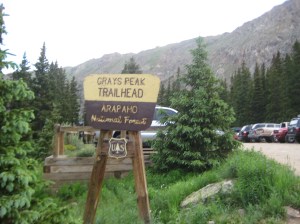
This is why yesterday I woke up before sunrise and made the trek to Gray’s Peak in order to accomplish the feat of climbing my first “14er”, and becoming a true Coloradan (in the eyes of some).

Gray’s peak is actually the highest point on the Continental Divide, and the trail up to the top of this peak (as well as Torrey’s Peak) is part of a national scenic trail that follows the continental divide. This trail is only about 70% complete. If someone wanted to traverse the entire trail, they would have to do some road-walking. This is most likely why we don’t hear about this trail as much as the Appalachian and the Pacific Crest trails.
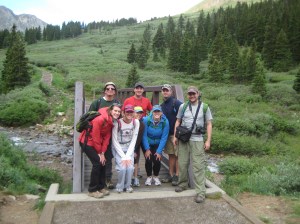
I was lucky enough to go with a group of people that included three first timers (including myself), and a mixture of people who had varying levels of experience climbing “14ers”. A couple of people had been up over ten of these peaks, some others had done only a couple. It is also just fun for me to do activities in groups like this, and I am glad I got to share this accomplishment with them.
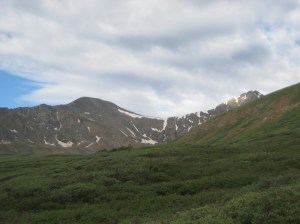
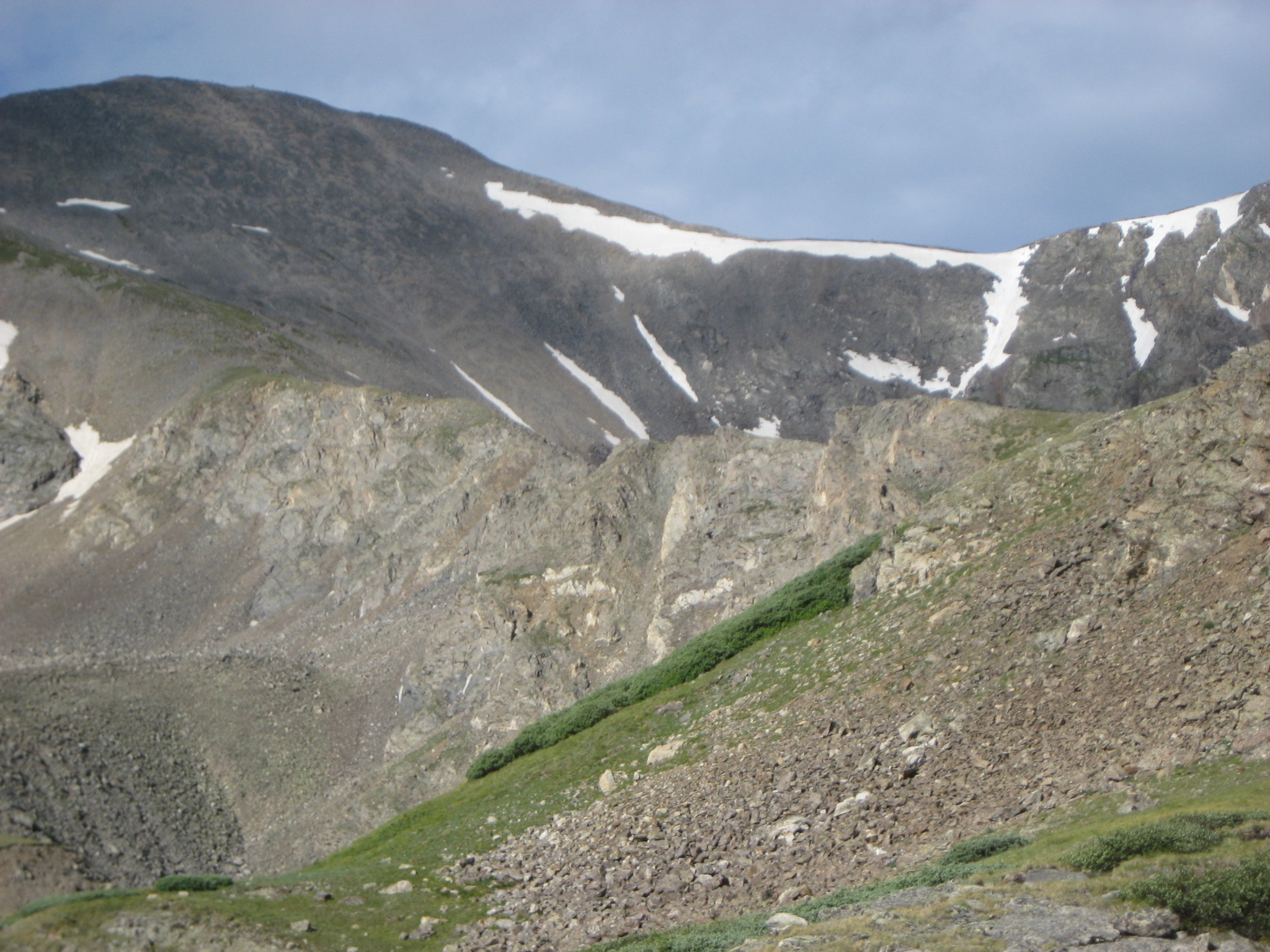
Whenever attempting something that requires physical strength or endurance, part of the battle is always mental. Seeing Gray’s Peak (left), and Torrey’s Peak (right, partially hidden behind the hill), toward the beginning of the climb definitely created an intimidation factor that somewhat reminded me of the first time I went skiing in the Rocky Mountains, at Steamboat Springs, and looked at the ski mountain, after having only seen ski mountains in the Midwest.
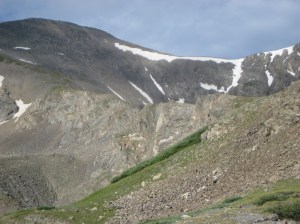
The trail up the mountain follows a path that has been mapped out for some time, and has been improved and preserved by the Colorado Fourteeners Initiative. It is likely the safest way to hike up the mountain, but it follows a ridge that looks a bit scary, as the thought of being on a small linear feature like the one seen in this picture can be somewhat frightening. Luckily, when we got there, it was actually less scary up close than it was looking at it from afar.
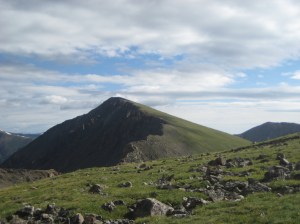

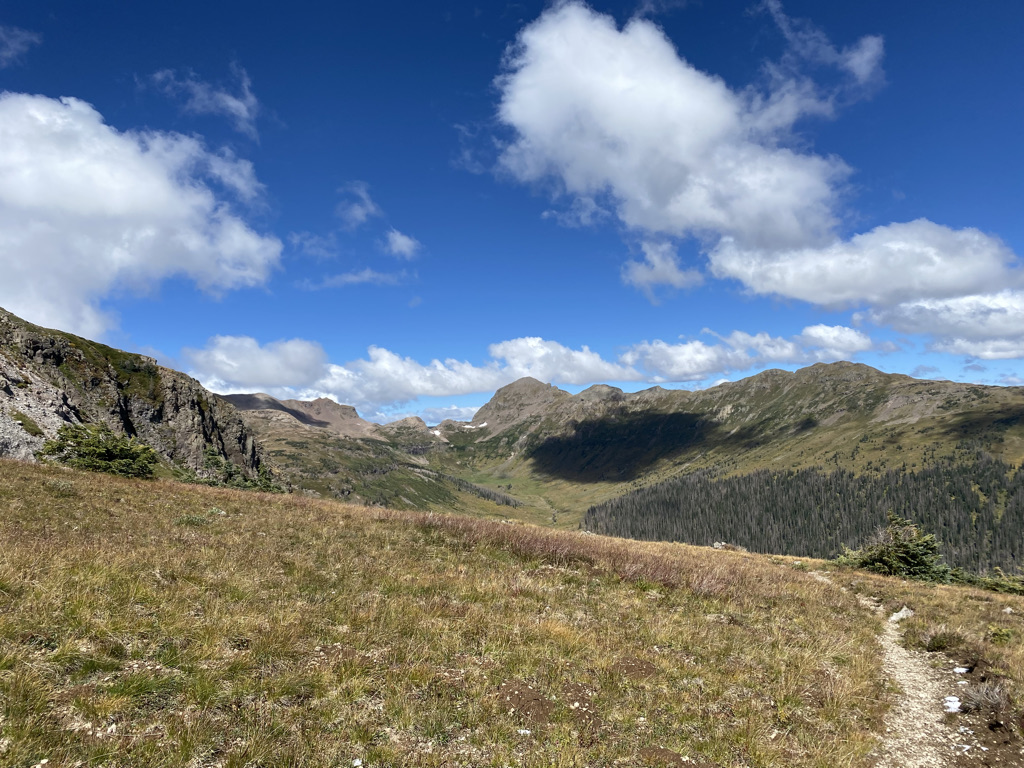
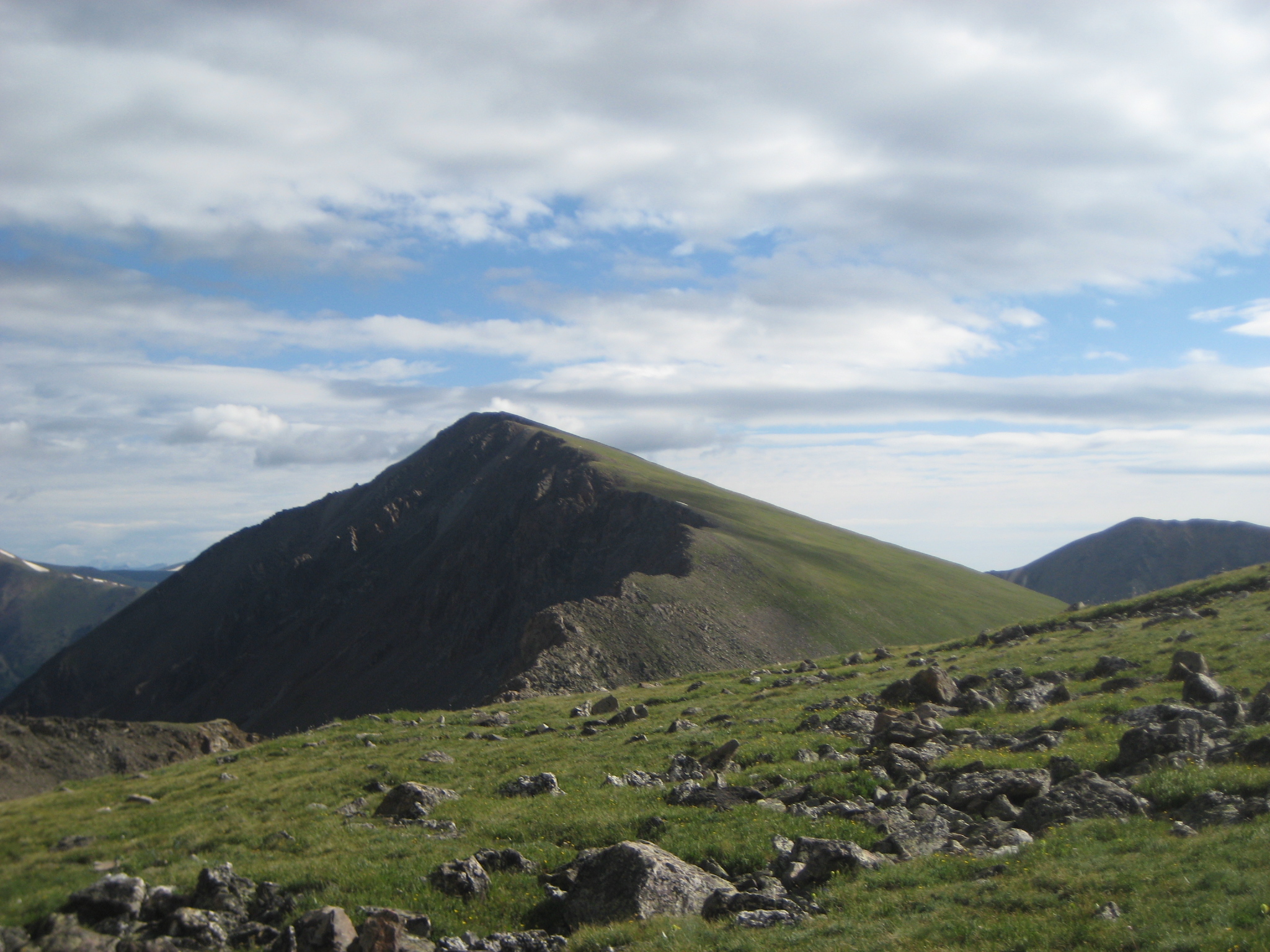
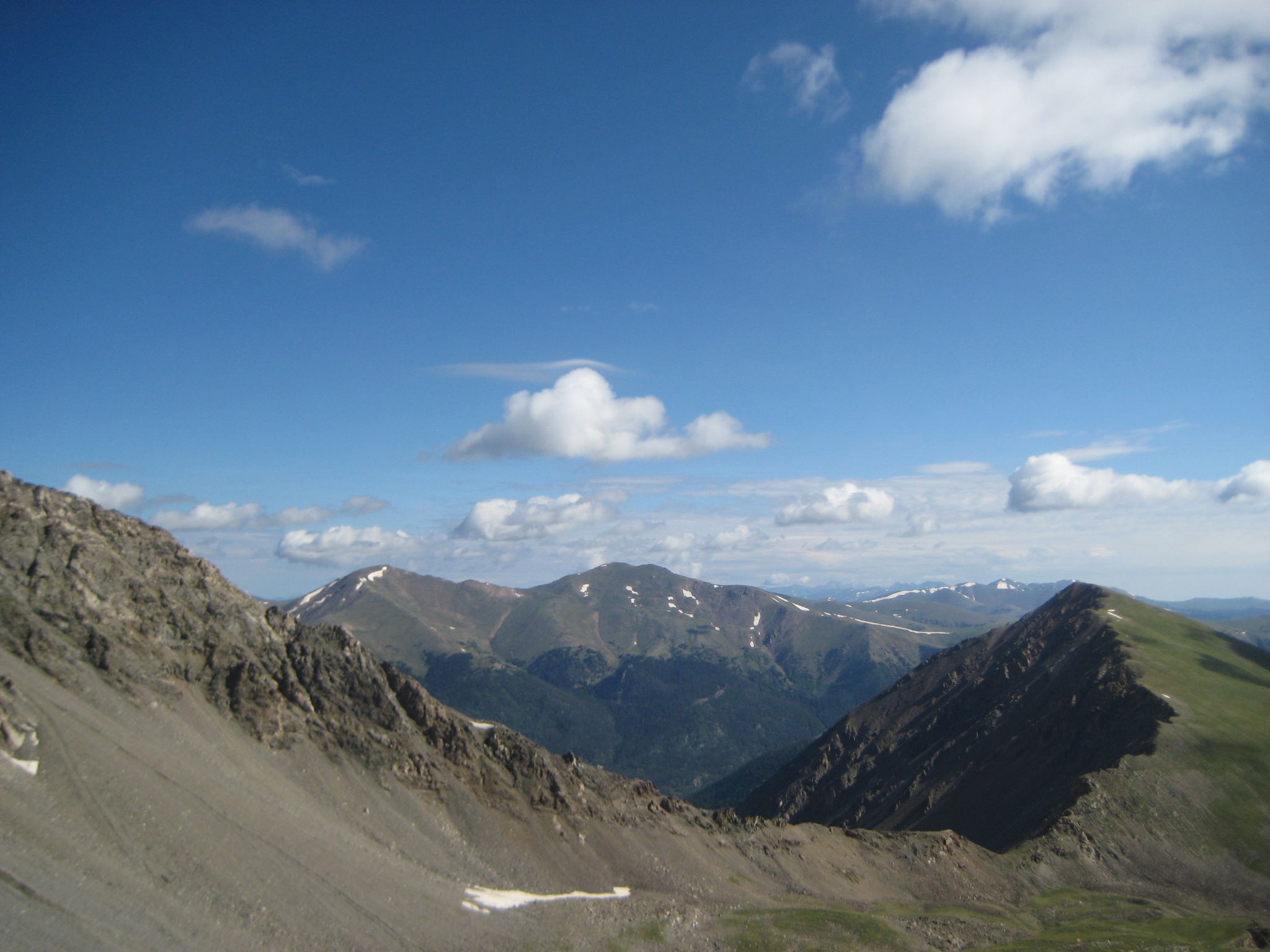
With pretty much the entire hike being above the tree line, I began to get some pretty scenic views only halfway up the mountain, which is already above 12,000 feet in elevation. It was quite interesting to see some of the other peaks looking away from the top of the mountain, to the north. As a scientist, it is hard not to be intrigued by seeing a mountain where one side is getting a significant amount of sun and the other is not. It appears as if grass grows on one side but not the other, which indicates a different ecosystem and a different climate, all within the arctic tundra, dependent on local topography.

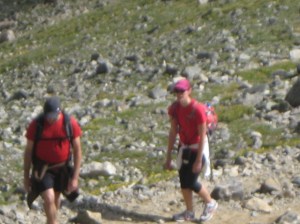
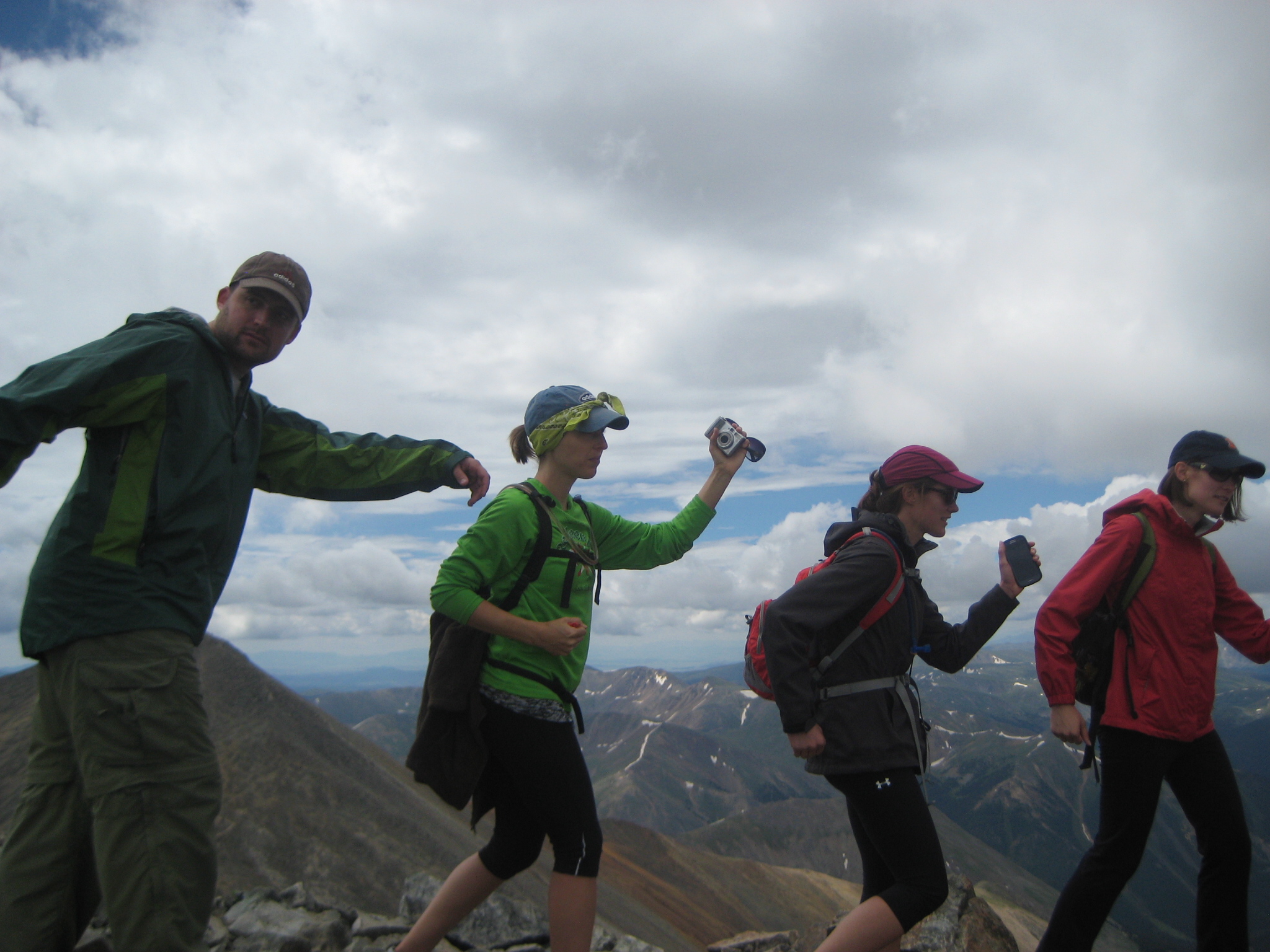
For roughly the first two thirds of the way up the first peak, I was actually able to keep up with the fastest people among the group. However, having less experience climbing at these altitudes, it was inevitable that I would eventually drop back. I took this opportunity to get some image of the others in the group hiking, as there was a switchback zone after the ridge we had previously followed. Hiking trails like these definitely involves a significant amount of looking at the ground, as there are a lot of small rocks, which need to be approached somewhat carefully. Even after I let everyone know I was taking pictures, some people still did not look up.
It took me about three hours to get to the top, and I summited just after 10 A.M. The feeling of getting to the top is hard to describe, especially for a first timer like myself. It is definitely a feeling of accomplishment, and a really good confidence builder. It is also mixed with this feeling of being on top of the world. All of the mountains, the ones that I typically view from Denver as towering over the city from the west were all below me. I had climbed to the top, conquered it in a way. I may never look upon these mountains the same way again. The very scenery that I can see on all non-cloudy days from the back window of my apartment has been suddenly transformed from symbolizing what is challenging, wild, and untamed to symbolizing that all things are possible, and that challenges can be met with determination and proper planning.

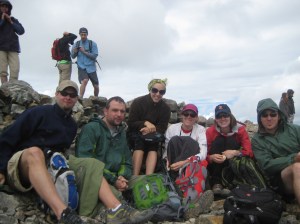

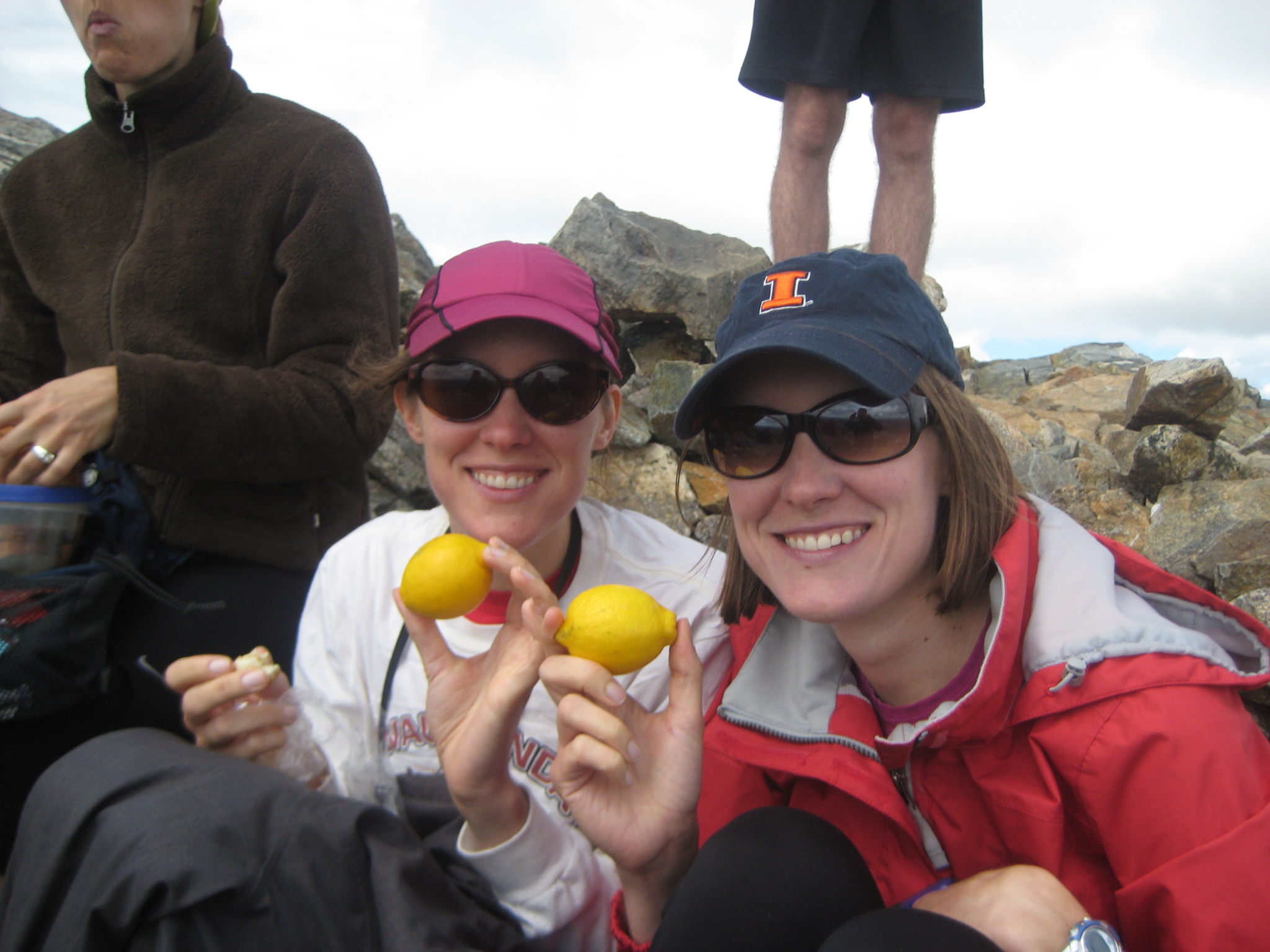
At the top of Gray’s Peak, we actually found a pretty nice place to sit, where the rocks somewhat shielded us from the wind. For some reason, it is always significantly windier at the top of a mountain peak than it is just a mere 100 feet lower. I have noticed this before, but wondered if it would feel different on this hike, which was pretty much all above the tree line. It wasn’t, it felt more than twice as windy at the top of Gray’s peak. I also learned something very surprising about hiking yesterday. On the way up to the mountain, I was told that all hikers should bring a lemon with them on their hike. This made absolutely no sense to me, as I was under the impression that I should stick with sandwiches and power bars to avoid carrying excess weight. Liz and Laura (pictured above) followed by this advice, brought the lemons, and actually let us have some. I had one lemon wedge, so I probably did not receive too much impact from it, but it did seem refreshing and energizing. Who would have thought.
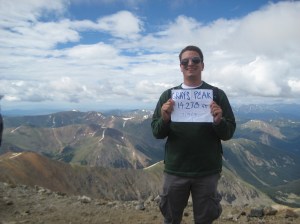
I also brought Bigfooting to new heights, doing my pose at 14,270 feet above sea level, and on the Continental Divide! The scenery behind me is looking in the other direction (South), where I could see more gigantic mountains from above- exhilarating!
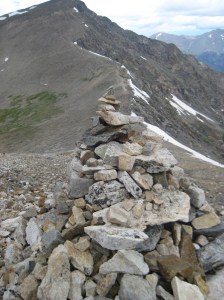
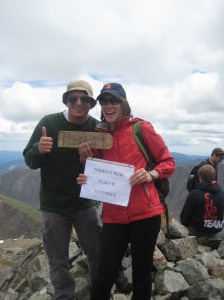
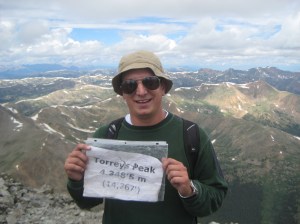
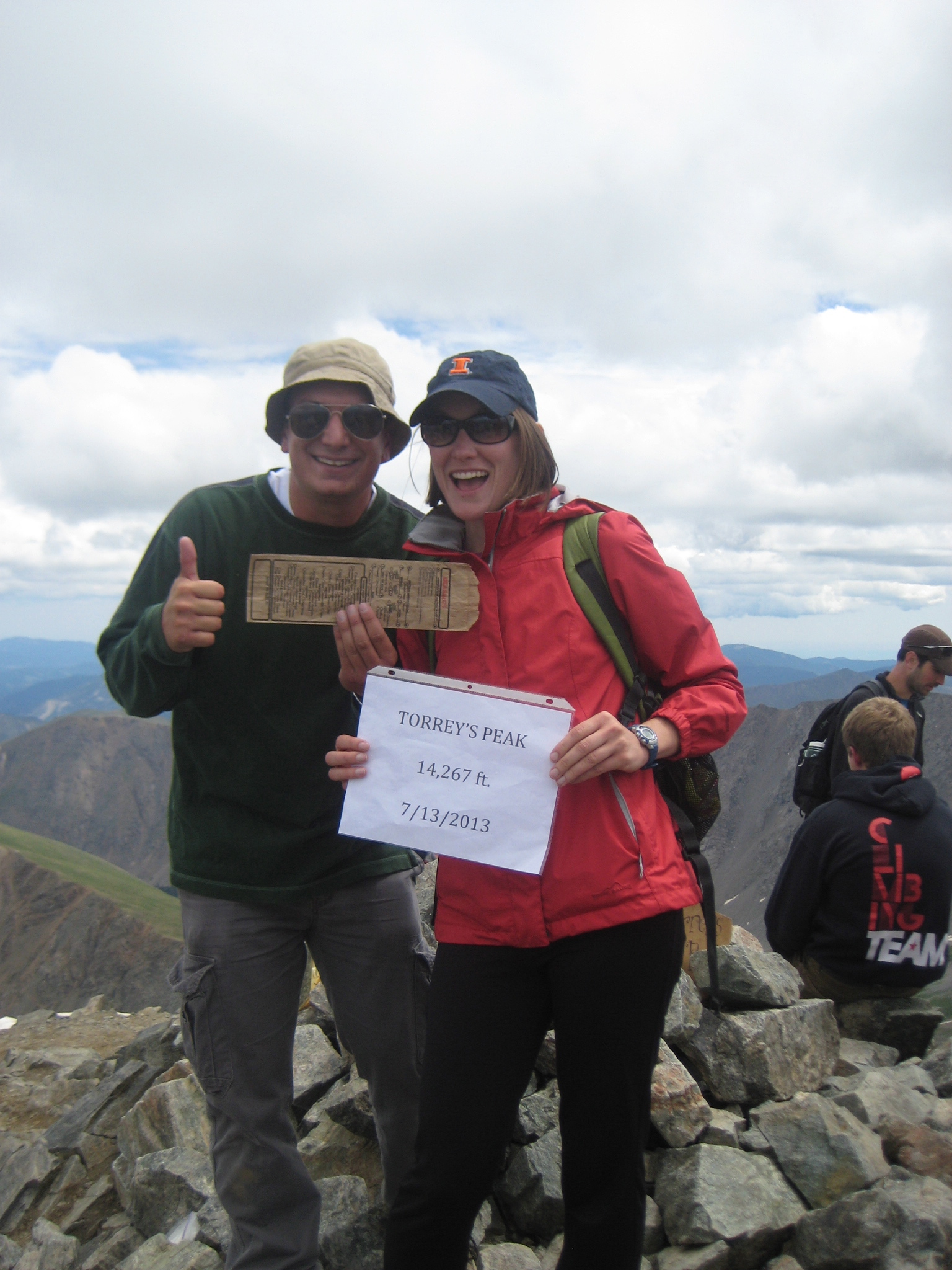
From Gray’s Peak, it is possible to “saddle” over to Torrey’s Peak. To do this, I had to descend 575 feet along a ridge between the two peaks, which actually follows along the Continental Divide, and then climb up the second peak. Apparently, this picture taken at the top of Torrey’s Peak, with a Which Which bag in the photo, entitles me to a free sandwich at Which Which. I wonder if I can upgrade to a large size sandwich for posting this picture here.
Climbing up Torrey’s Peak was harder than climbing up Gray’s. The trail up was steeper, and, possibly because I was already tired from climbing the first peak, I had to stop and catch my breath several times.

When I reached the top of my second “14er”, I was quite worn out. This is how I knew that I had given it my everything, and truly pushed my limit. I could have stopped after peak #1 already having accomplished my rite of passage. But, I decided I wanted to leave with absolutely no doubt that I had pushed my body as hard as it was willing to go. I even had to leave the Bigfooting up to others on this peak.

Going down was scary, especially this second peak, which was steeper than the first. I don’t know how I feel about it. I had become accustomed to having trees to hold onto in a pinch, but this hike was all above the tree line. I actually went pretty slow at first, but then started resorting to descending the mountain using some of my skiing techniques, primarily facing my feet sideways and turning back and forth.

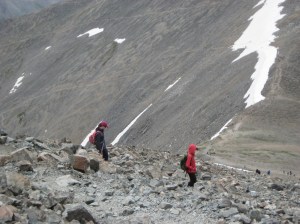
To get down from Torrey’s Peak, one must return to the saddle area between the two peaks, and then follow another trail down towards the parking area. This lead us down the mountain on a slightly different path.


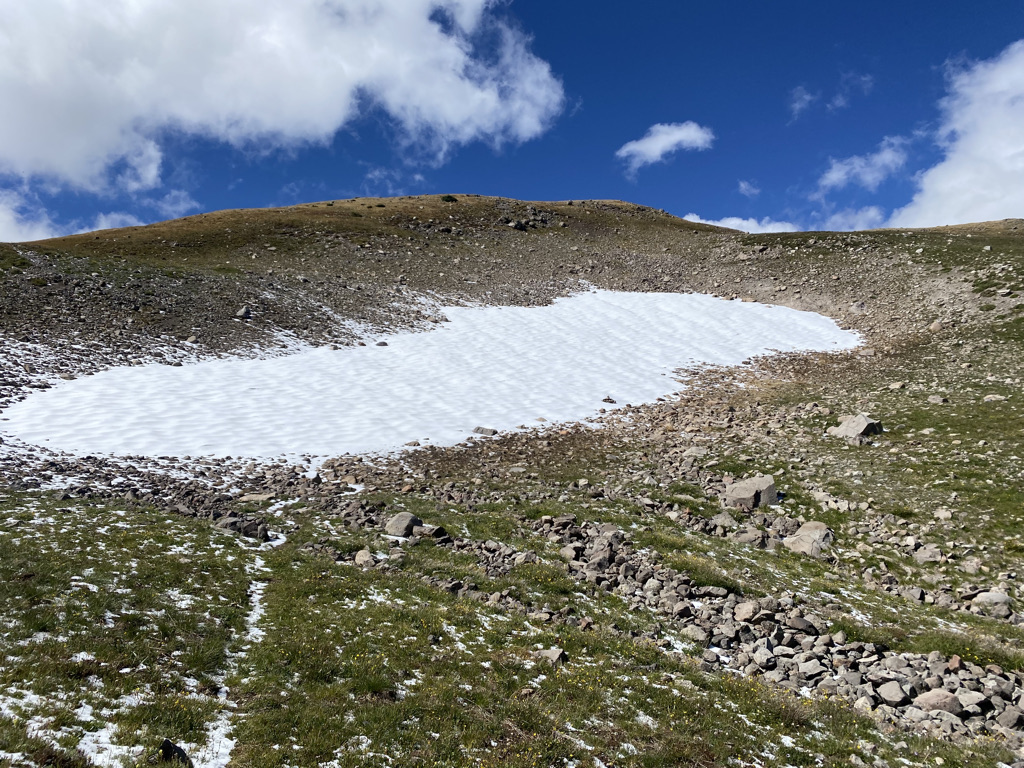
We actually had to trudge through an area with residual snowpack. While I do find it interesting to ponder why part of this mountainside still has snow and other parts, facing the same direction do not, this was my least favorite part of the hike. It was real slippery and we were descending. I consider hiking and skiing (or snowshoeing) to be two different activities, and usually plan to avoid hiking on too much snow. This snow is still melting obviously, and some small streams of water from this snowmelt were observed further down the trail.
After another area of switchbacks, the descent got less steep, and the rest of the hike was somewhat uneventful. We got back to the parking lot around 2:30 P.M., about an hour before thunderstorms erupted in the area, but apparently there were already storms elsewhere in the area. What was amazing for me to see, were people starting their ascent up the mountain after noon. We wanted to tell them to turn back and wait for another day, but I am never sure what to do about that. As someone who is typically not a fan of unsolicited advice, I am hesitant about giving it to people, even in the case where their idiocy is blatantly obvious. A general rule about climbing “14ers” is to get there as early as possibly, preferably before 7 A.M. (which we did not quite make). If arrival before 9 A.M. is not possible, it is probably not worth it to go. I learned this within a month of moving to Colorado, without even seeking this knowledge. So I find it hard to believe that someone would try to scale this mountain starting at 1 P.M. on a day with greater than normal monsoonal thunderstorm likelihoods.
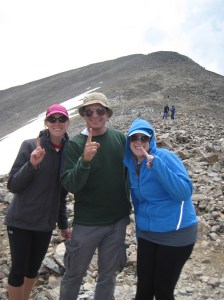


It was wonderful to have completed this, my first “14er”, and traversed this rite of passage. Having done this will give me something akin to the Colorado version of street-cred. With two other first timers amongst us, we took some “graduation photos”, with the mountains we had climbed in the background. I actually billed this the “14er Class of 2013”, but I was possibly a bit warn out and light-headed when I came up with that one. At this level (still over 13,500 feet), there is 35-40% less oxygen available than at sea level.
Does this make me a true Coloradan now? No. It actually makes me something more akin to a true Colorado transplant. One of the things I have learned over the past year is that it is the transplants that are the ones obsessed with skiing, hiking, and all of the mountain activities in general. The only people I have met over the past year here that do not ski have been Colorado natives. But, what makes someone a true Coloradan? One could argue that those of us that are going out and experiencing what Colorado has to offer are the truest Coloradans there are. It is in the same vein that some argue that some immigrants can be counted amongst the truest Americans there are. Of course, there are valid arguments on the other side, but as I have viewed tons of Colorado Native bumper stickers over the past year, I do find it hard to accept that being born in a certain location is a prerequisite for belonging there.






















 The Action Story