Tag Archives: tourism

Testing Our Limits

IMG_3247

A good friend of mine once told me that nearly all people are capable of much more than what they believe they can do.  And that, in fact, when challenged, most would actually be surprised by what they are physically able to do once they have been pushed to their very limit.

When it comes to most activities, people generally tend to stop when tired.  After all, exhaustion is generally an unpleasant experience for most, and has the potential to make an activity no longer enjoyable.  However, from time to time, life issues some kind of challenge that forces us to give everything we have, way beyond what we had been wanting to give.  Most of us have experienced that unexpectedly challenging assignment in college that forced us to “pull an all nighter”, or had to tend to someone they truly care about at a time when completely exhausted.  It is at these moments, when we completely drain ourselves, that we figure out the true boundary of what we are capable of.  And, for physical activities, such as cycling, it is when our bodies actually physically begin to give out on us, that we truly understand what we are capable of doing.

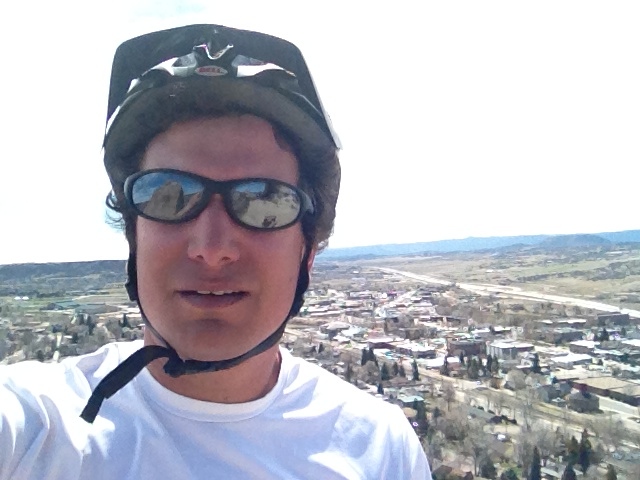
Heading into a new season, I decided it was time to challenge myself.  Monday, I had an entire day available with no prior engagements, so I decided to take on a ride that would potentially test the limits of my endurance at its current state; A bike ride from Denver to Castle Rock, and back, in one day.

IMG_3241 IMG_3259

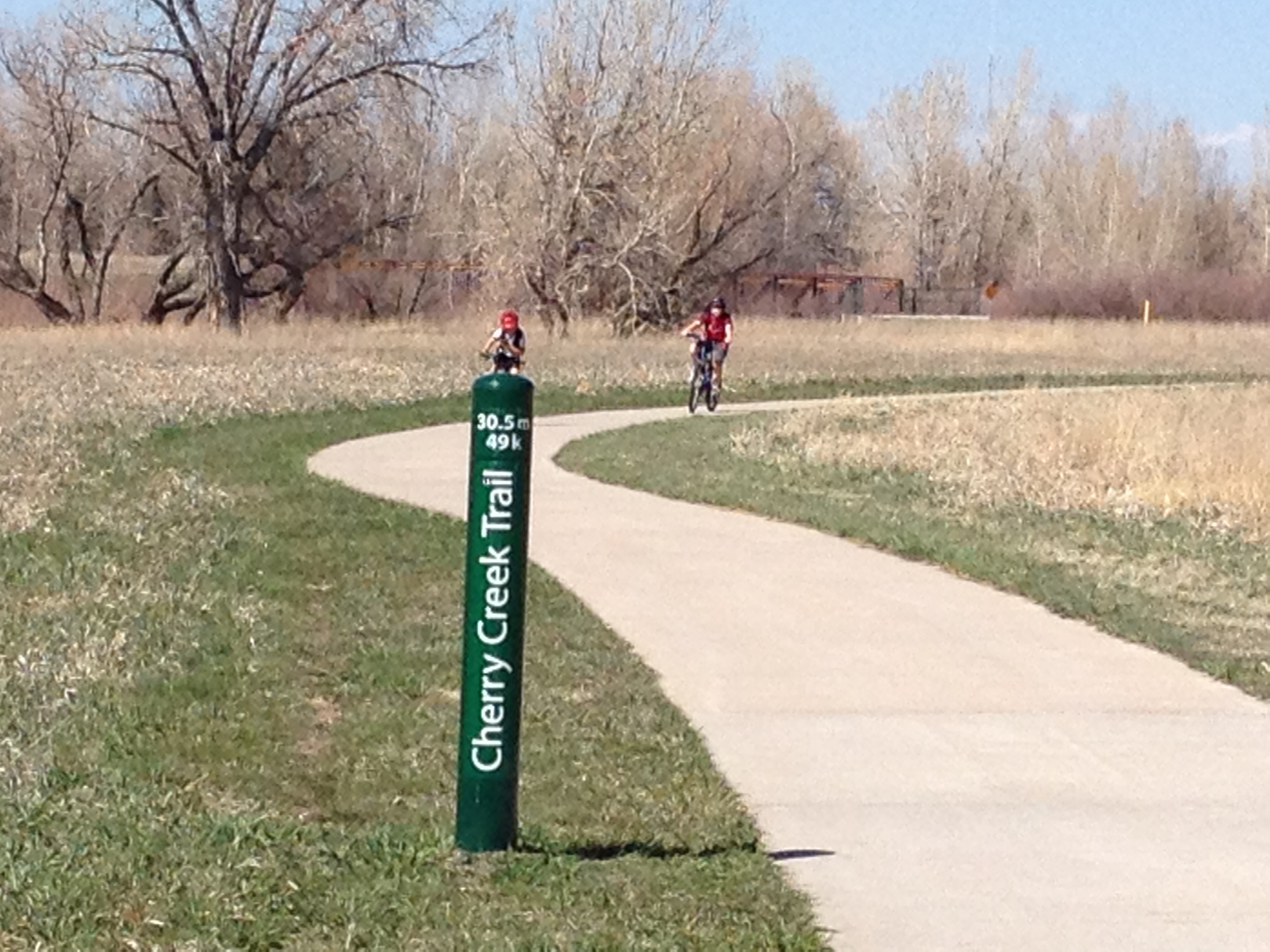
The first 30 miles of this trek is on the Cherry Creek trail, from Denver to the suburb of Parker.  Most of this trail is relatively flat.  A gradual upslope, combined with a few uphill segments, takes a rider from Denver’s 5280′ in elevation to Parker’s 5900′.  This part of the journey was not too terribly challenging.  In fact, in this segment, my biggest challenge was finding water to refill my water bottle.  I had assumed, for some reason, since it was already the end of March, and that there have already been 12 days with high temperatures of 70 or above, that the water fountains around the suburbs would be turned on for the spring.  I was wrong, and was quite thirsty and relieved to see this sign, indicating that although the water fountain was not operational, that the bathroom had available water.  You would be surprised how many suburban park bathrooms do not have running water.

IMG_3243

To get from Parker to Castle Rock, one must follow a road called Crawfoot Valley Road.  The road is quite luxurious for cyclists, with a shoulder wide enough for roughly two bikes.  In fact, it is labelled a bike lane for some parts of this eight mile stretch of road.  The first three miles, headed southwest from Parker, however, is a bit of a climb, and a deceptive one.  The climb is nowhere near as steep as one in the mountains, and one only climbs 500-600 feet.  But, it is one of those frustrating climbs where the road winds around a bit, and, with each turn, a cyclist will wonder whether or not they are approaching the apex only to see another uphill segment gradually appear as they approach.
IMG_3245 IMG_3246

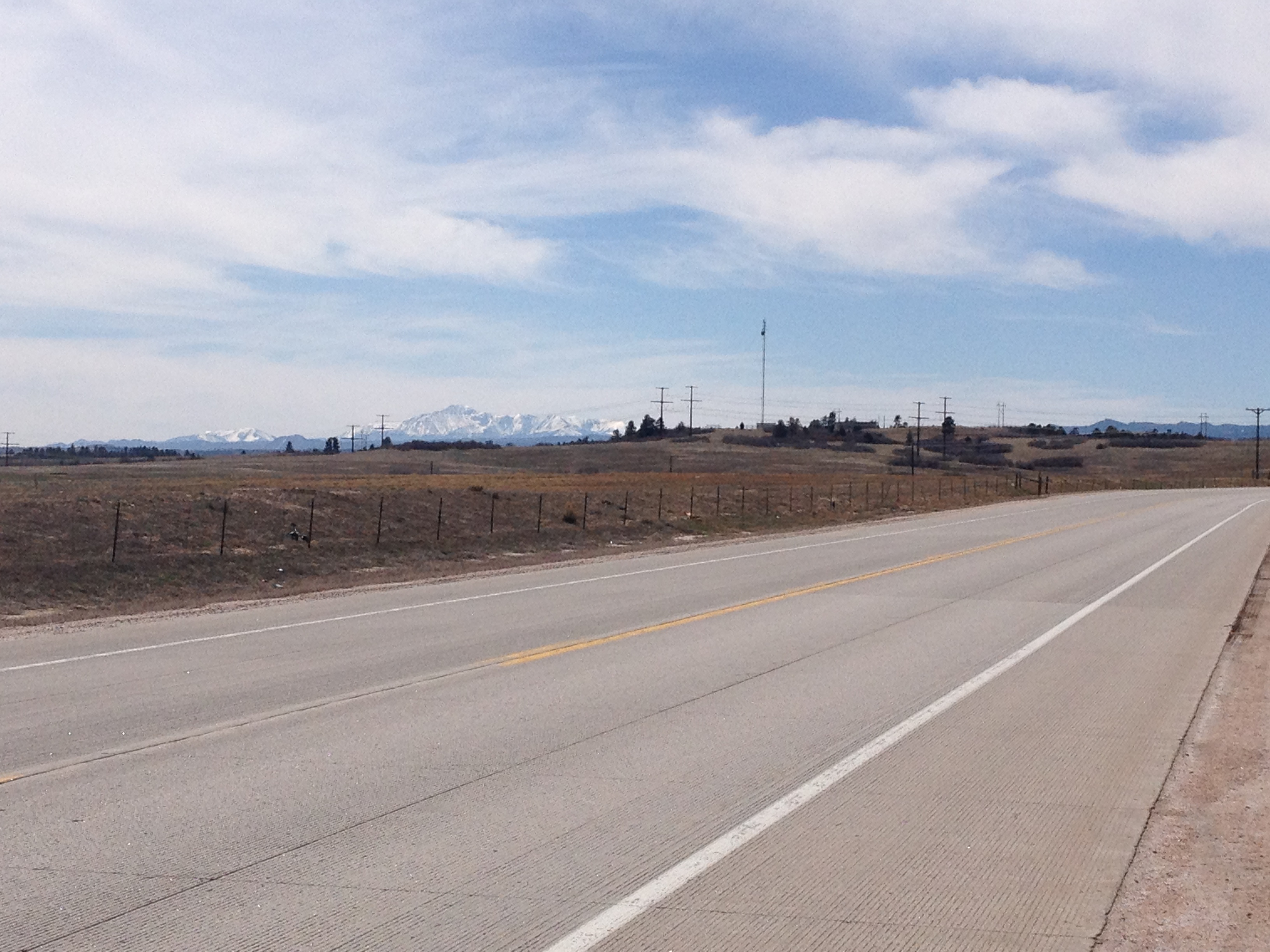
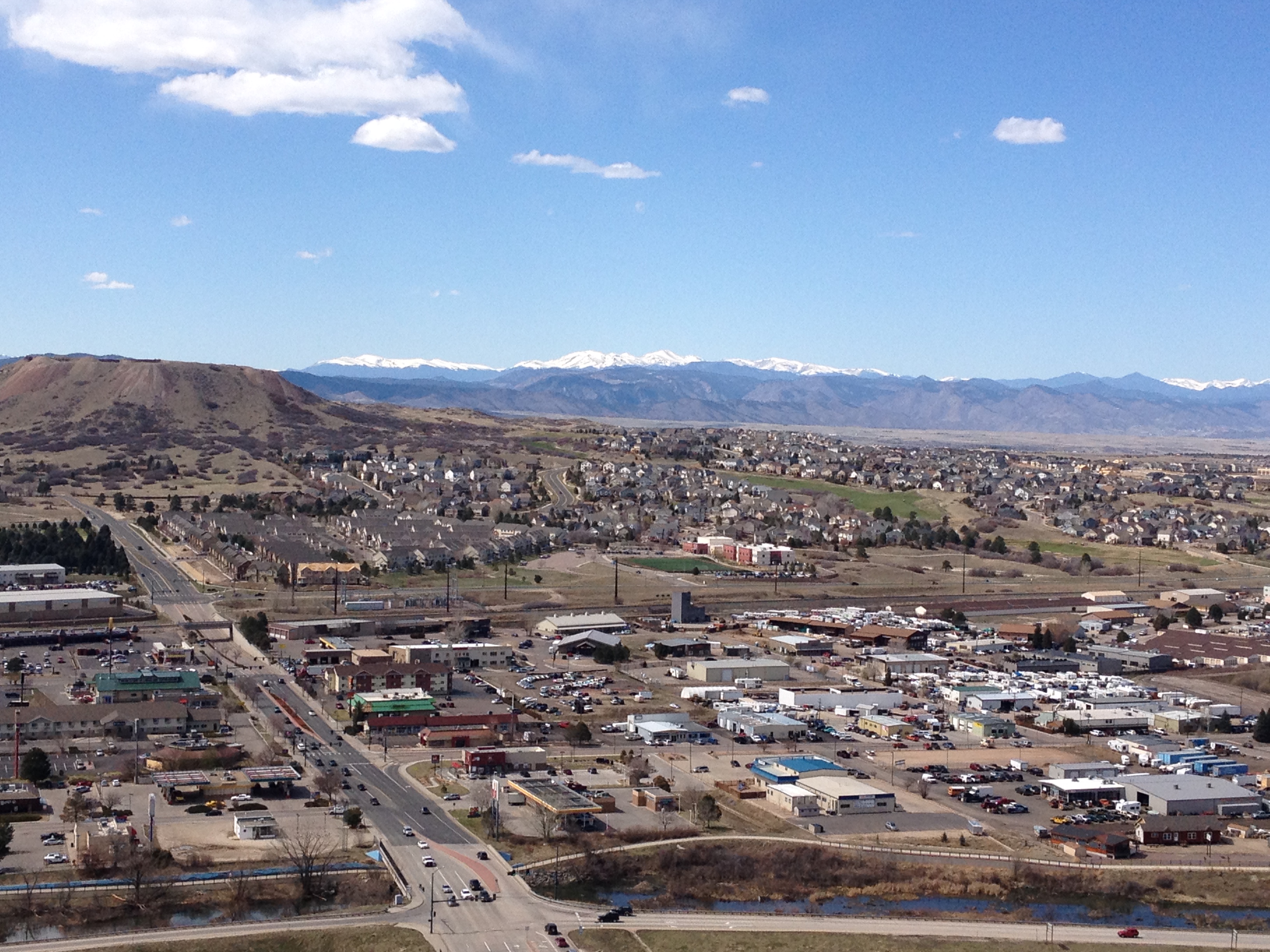
Once this road levels off, facing southwest, the ride becomes almost surreal.  To the left of the road, one can see Pike’s Peak, standing there all by its lonesome.  To the right, the mountains of the Front Range, due west of Denver appear.  Riding sort of directly at these mountains, with the vantage point of being up at roughly 6500 feet in elevation, I cannot help but take a deep breath and marvel at how wondrous the world can be sometimes.

IMG_3248 IMG_3247

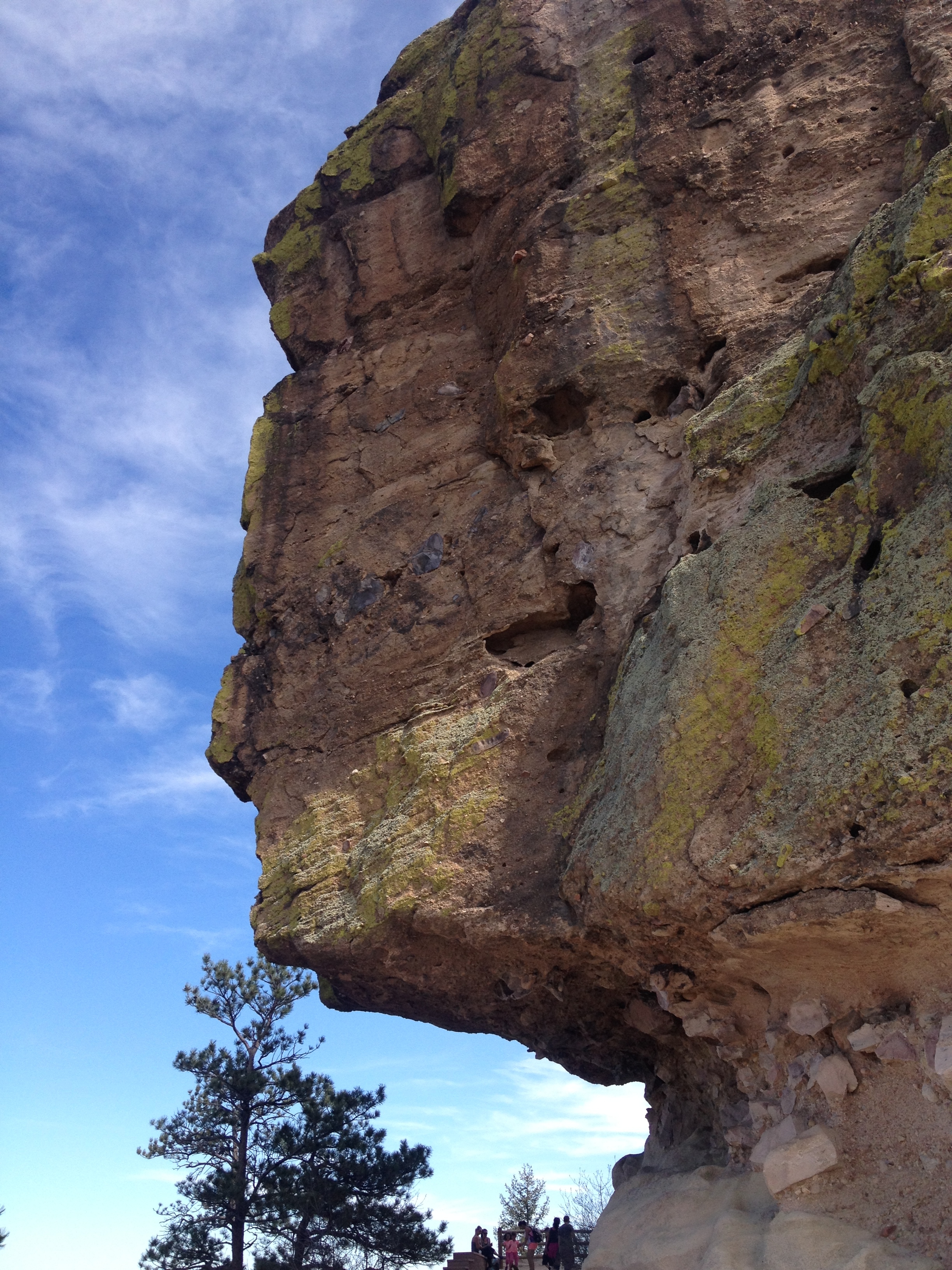
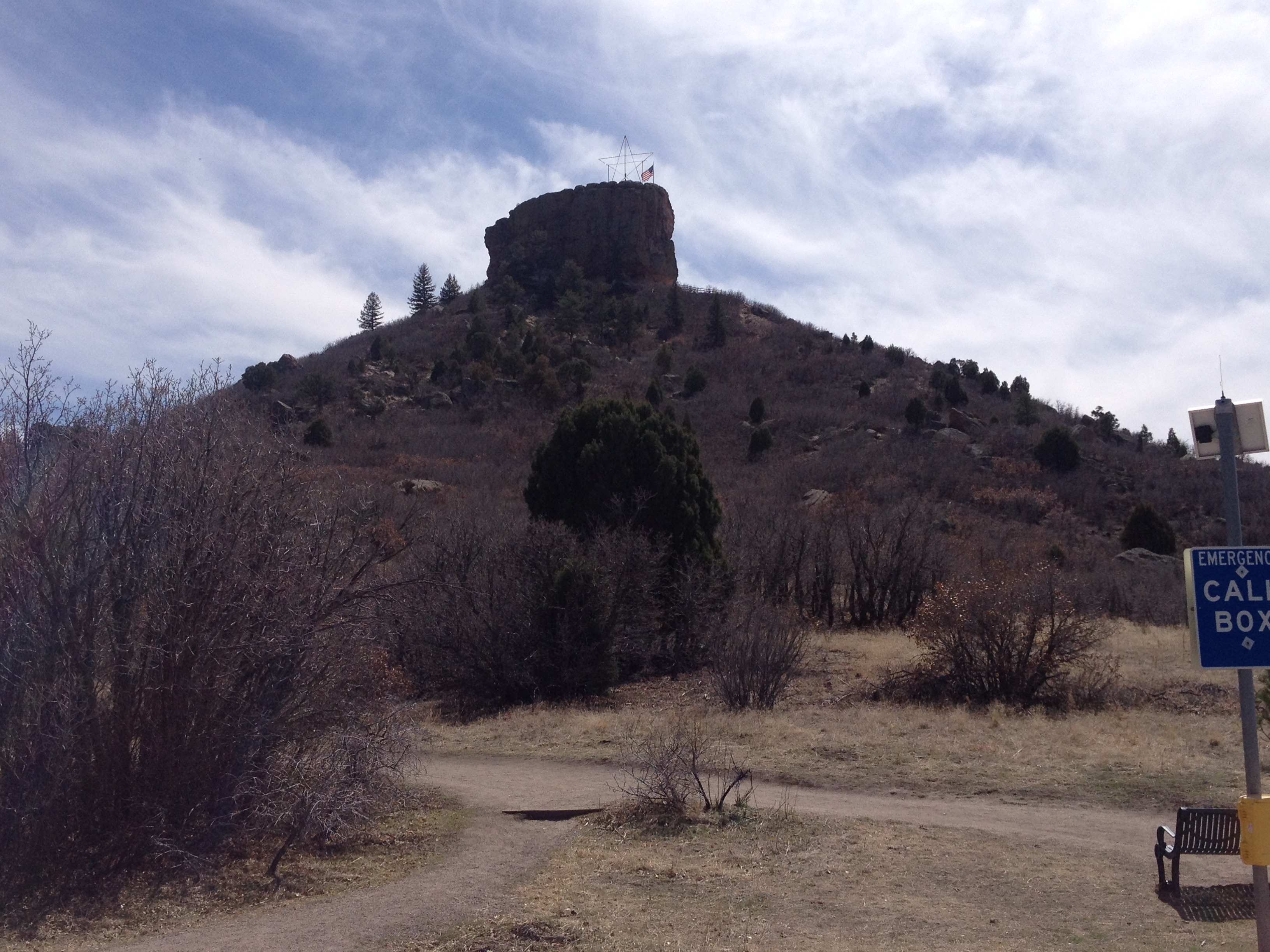
After just over 40 miles of cycling, I arrived at Castle Rock.  When I got to Castle Rock, I decided to add on a mini-hike to my day of activity.  After all, I spent almost three hours getting here, why wouldn’t I head up to this little rock structure- my destination!

IMG_3250 IMG_3253 IMG_3256 IMG_3257

This is a fairly short hike, with stair-step features that indicate that it was designed primarily for tourists, and not hard-core hikers.  So, I did not feel too bad about adding this hike to my already exhausting daily itinerary.

After all, the return trip to Denver would be much easier, after the initial climb out of town on Crawfoot Valley Road, the rest of the trip would be more or less downhill, descending, overall, from an elevation of 6200′ at Castle Rock back to 5280′ at Denver.

That turned out to be wrong.  As I approached Parker, a northerly wind developed, and, although the wind itself was not too terribly strong (10-12 mph range), the gusts began to pick up and become more frequent.  It was here, peddling into the wind, that an already challenging ride became one where I ended up testing the limits of what my body can do.

There are three levels of tired.  First, there is just general tiredness, where we just feel like stopping.  Many people do indeed stop at this point.  However, those who stop at this first level of tiredness generally do not develop any further endurance.  Level two tired is where we begin to ache, or feel some level of pain.  At this point, it is typically recommended that one stop.  This is the level of tiredness I had expected out of Monday’s ride.  However, the gusty winds on the return trip brought my level of tiredness to the third level, the level in which you simply cannot go anymore.

Working to each level of tiredness achieves a different goal.  An activity that stops at level 1 tiredness maximizes our enjoyment of an activity.  An activity that stops at level 2 tiredness is most beneficial to our fitness.  When we push to level 3 tiredness, we achieve personal accomplishments, the kind that make us feel as if we are achieving something with our activities.

The key is, for almost anyone involved in any kind of physical activity, to find a balance between working to each of the three levels, as they feed off of each other.  The original, and ultimate purpose of any activity should be to have fun, but, for most, an activity become even more enjoyable when we improve, take on new challenges, and accomplish new things.  Much like a skier that starts out on the green slopes, moves up to the blues, then blacks, and finally extreme terrain, I am looking to take my bike out longer distances, and to places that were previously unreachable.  However, in order to plan out how to test my own personal limits, I first have to know where those limits are.  So, as much as I can be pissed off that this ride ended up being more difficult than expected due to the wind, the wind allowed me to actually measure my personal limit, so I can start the process of improving.
Winter Fun in the Mountains

IMG_1521

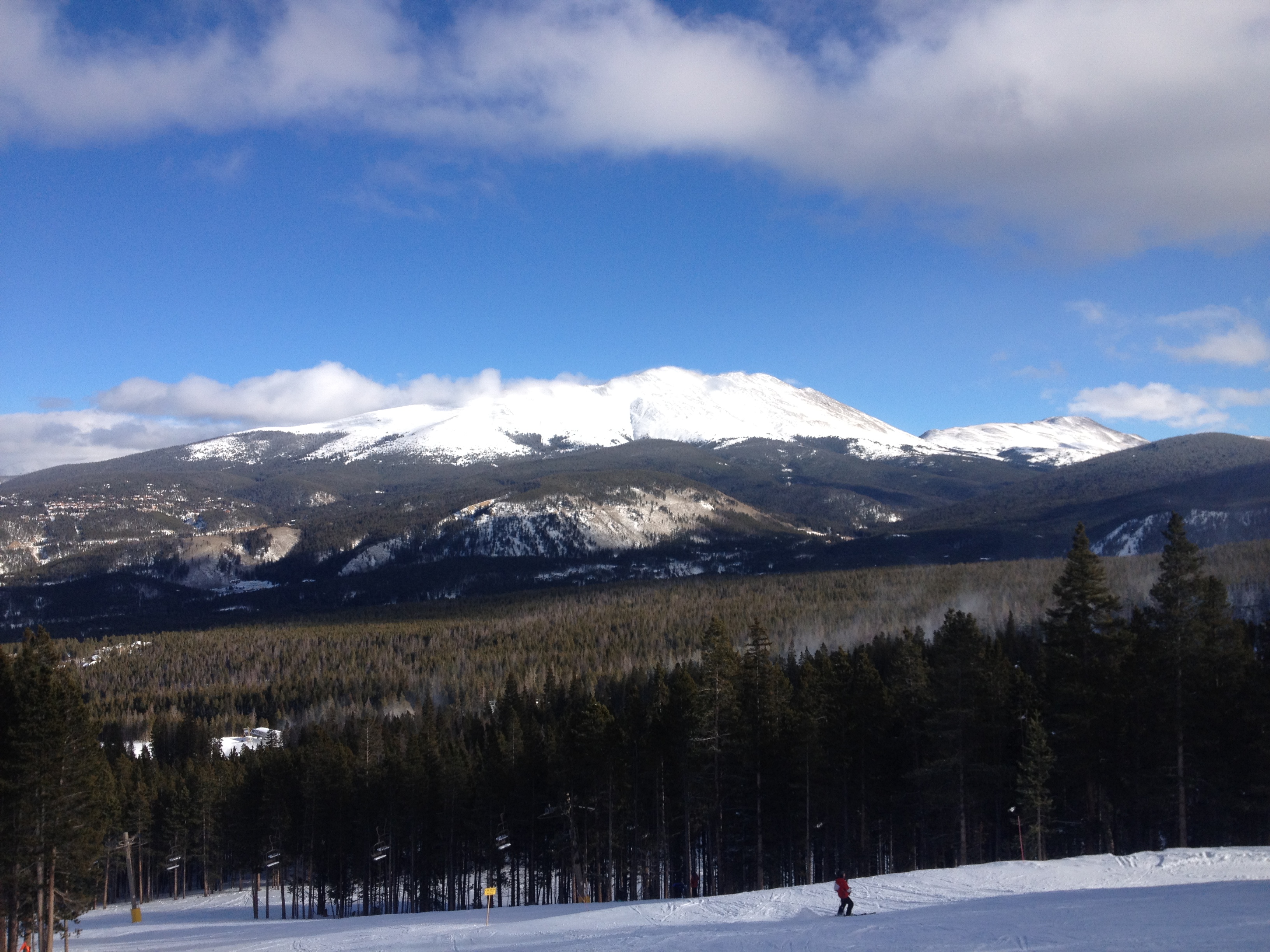
Winter fun in the mountains is about more than just skiing and snowboarding.

People who take wintertime vacations are typically drawn to one of two categories of vacations; Vacations people take to escape winter, and vacations people take to enjoy winter.  The former includes tropical resorts and beach towns in places where a 45 degree evening is considered grounds for remaining indoors.  The later, of course, typically involves mountains, with skiing and snowboarding being the most common activities.

In North America, the winter fun season lasts generally from the later part of November through the end of March.  Based on anecdotal evidence (the people I know and have talked to), the peak time to visit the mountains in winter occurs sometime around the middle part of February.  By this particular part of the year, enough snow has generally fallen to produce some of the best snow conditions of the year.  Also, temperatures have recovered a bit from their mid-January lows, and are a bit more pleasant.

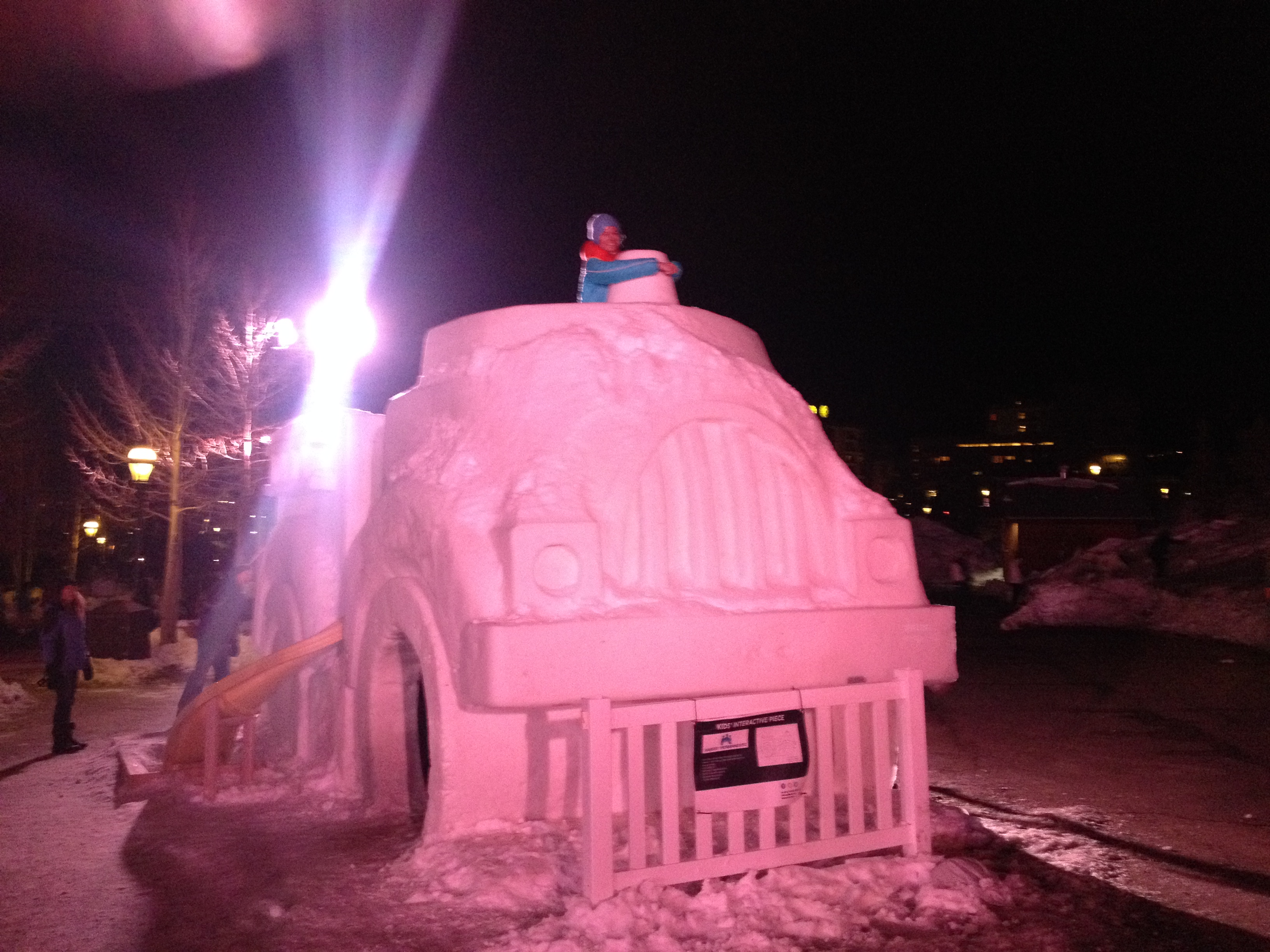
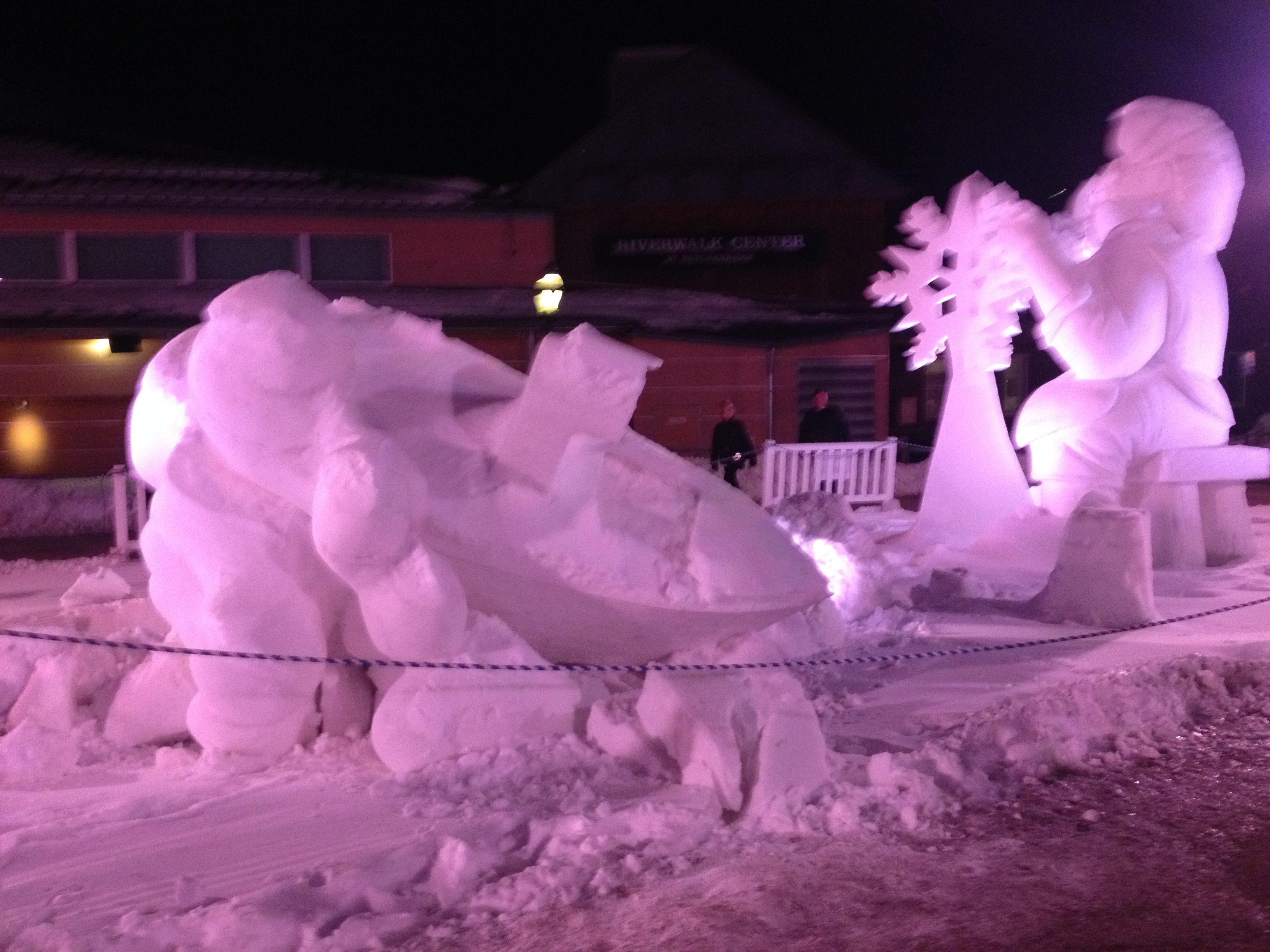
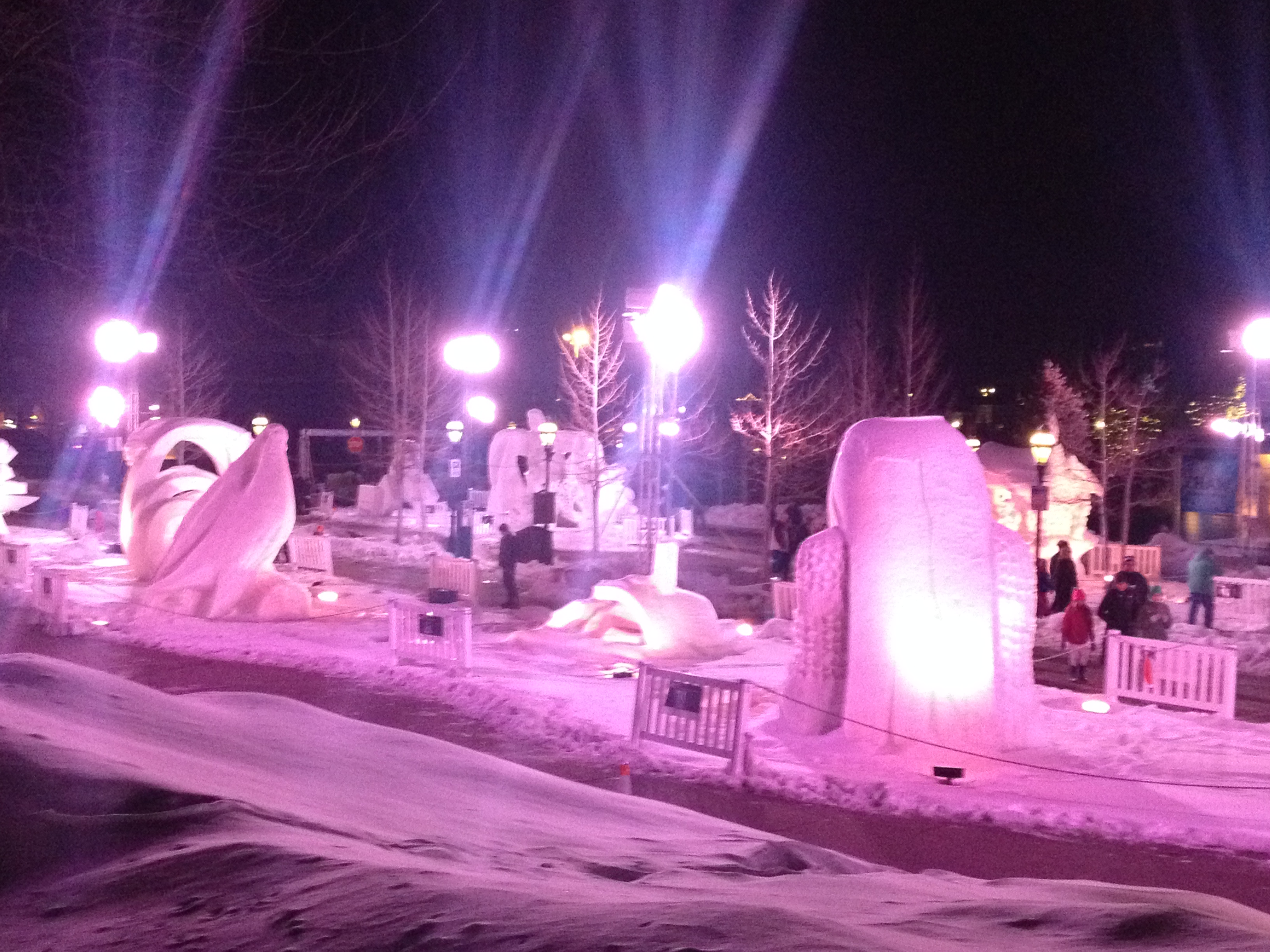
With all of the visitors, not only from all over the country, but from all over the world, other events, and other activities are bound to follow.  In the middle of winter every year, the Village of Breckenridge hosts the International Snow Sculpture Championships, which features snow art from artists from various places around the world (from local artists, to places as far away as Argentina).  These sculptures can commonly be viewed the final week of January through the first week of February.

IMG_3125 IMG_3126 IMG_3127 IMG_3129

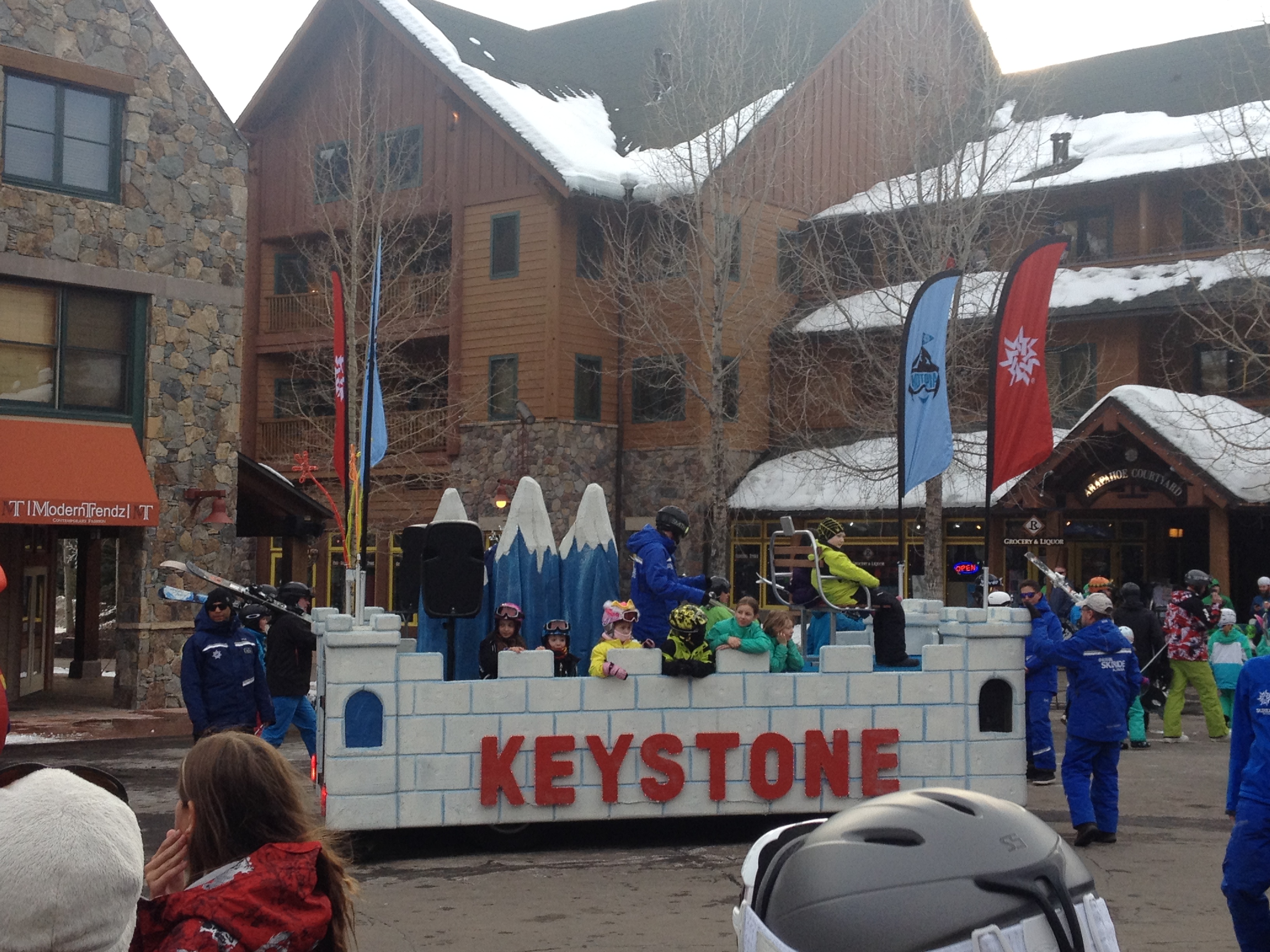
Events in the middle part of the winter also include family activities, Mardi Gras celebrations, and random parades through the village, such as this one at Keystone, which features Riperoo, the mascot for Vail Resorts, which owns eight of the top Western U.S. ski resorts in California, Colorado, and Utah.

IMG_3138 IMG_3139

And the events that take place in the ski villages throughout the peak part of the ski season are not just limited to family friendly activities.  With the number of visitors that come to the area, high class villages like Aspen, Jackson, or Vail, are able to draw some fairly well known acts to preform during the evening.

IMG_0256 IMG_0258

Those with enough energy can ski all day long, and party all evening in many of these western villages (although there might be a limit to how drunk you can get in Utah).  There is even a T-shirt commemorating this type of day.

While the ski resorts themselves are the main draw, and the main reason there are as many visitors to the mountains as there are at this time of year, wintertime activities are not limited to only the resorts and the villages that support them.

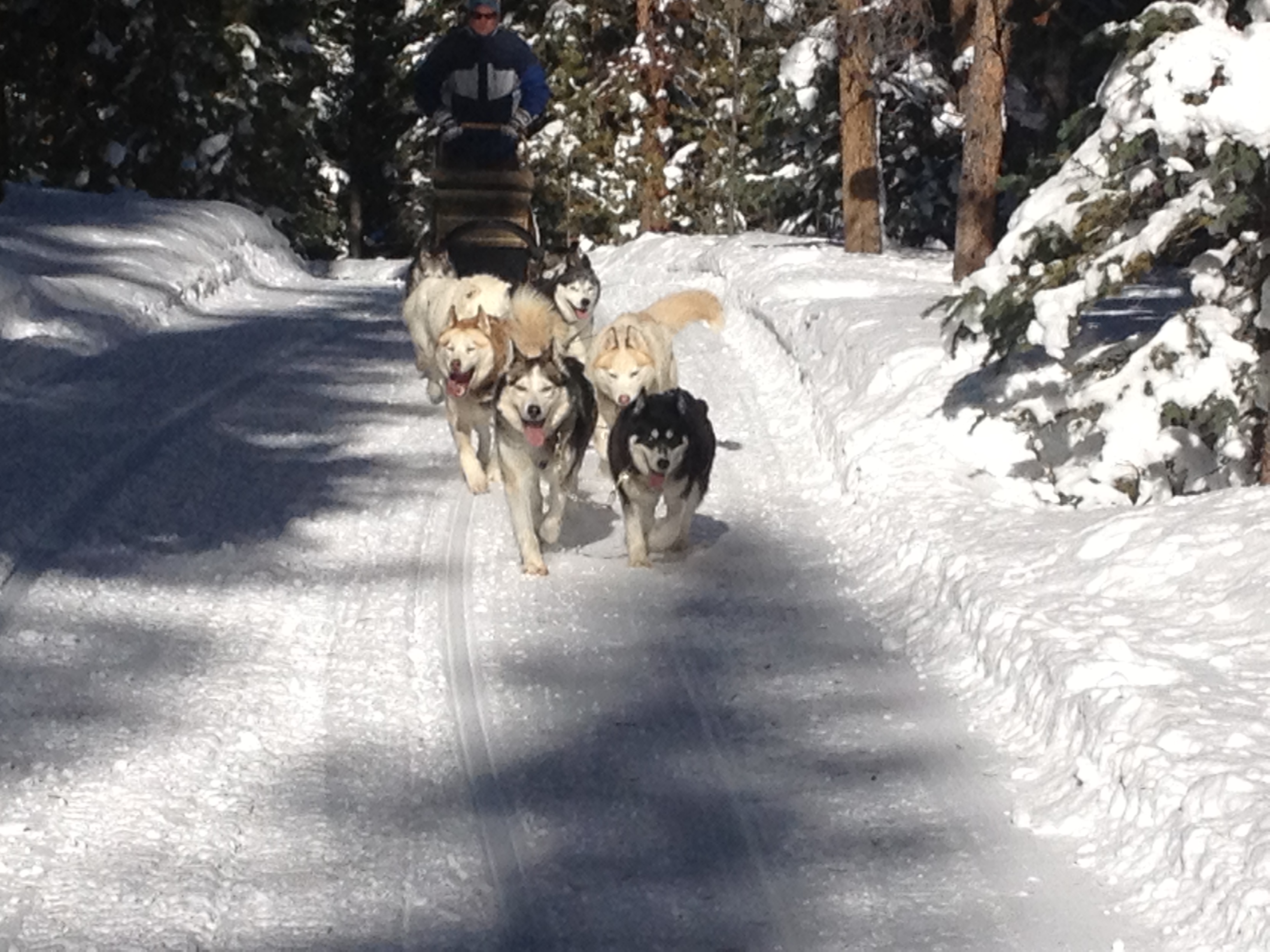
As I wrote about last year, there are plenty of outfitters in the mountains that offer dog sled tours.

IMG_1615

Many of these outfitters also offer snowmobile rentals and tours, and many are quite close to ski resorts and resort villages.

Due to geographical features, it is not hard to find hot spring throughout the West.  One of the most popular hot springs in the country, Strawberry Park, is located in Steamboat Springs, less than 10 minutes from the ski resort.

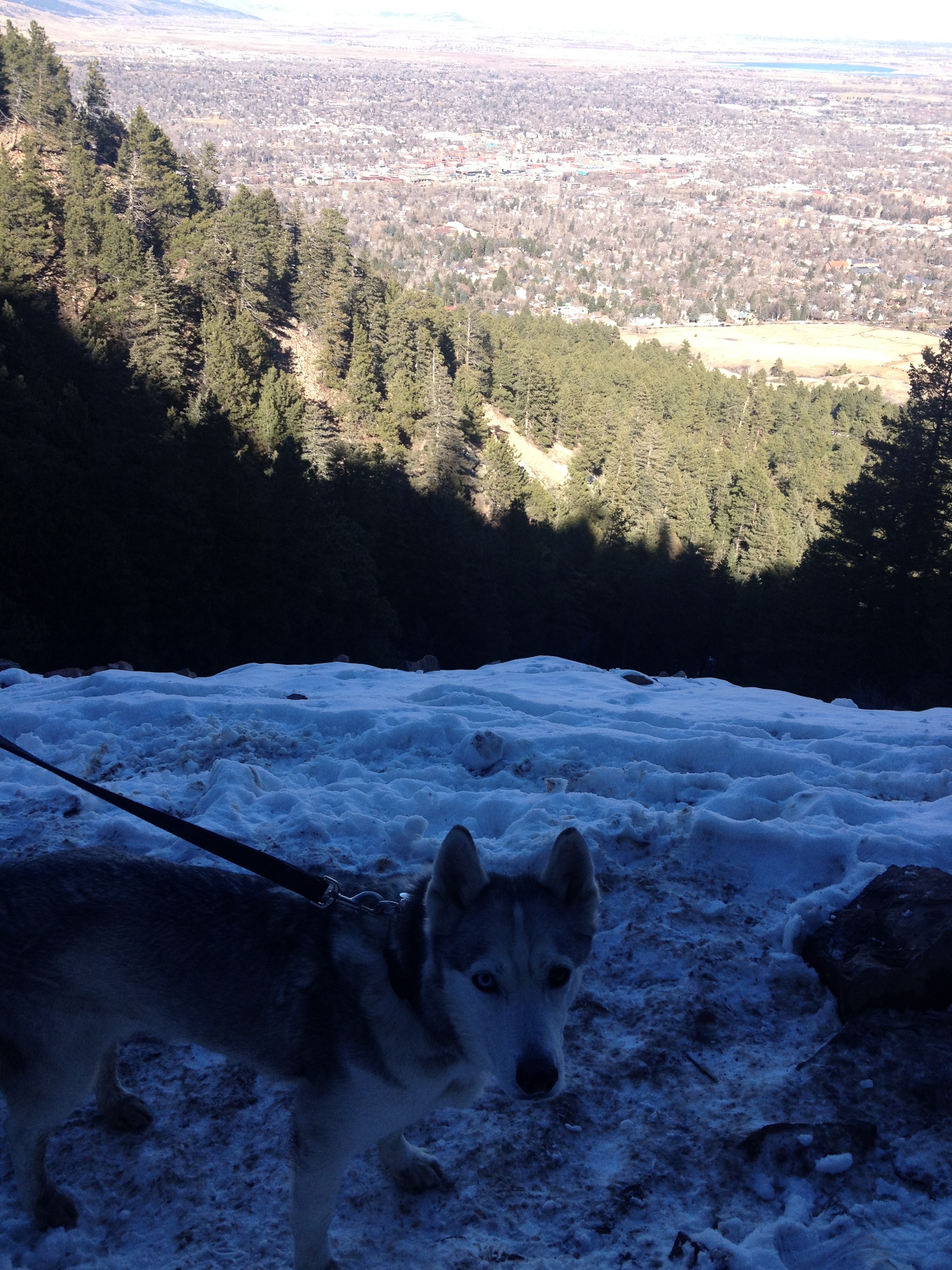
And, with frequent spells of warmer weather, it is quite possible to find a day, even during the peak part of ski season, where it is possible to just take a hike in the woods (that is, if you can handle hiking over a little bit of snow).

IMG_1657

It is a story repeated in many different places throughout the country.  In any place where you have large amounts of visitors, many other activities and events, often catering to all different kinds of people, pop up in response.  This is why we see tons of miniature golf courses, boat tours, and even night clubs pop up in places like Orlando, “Down-East Maine”, and the Wisconsin Dells.  In each case, a primary draw (like water parks, or ocean front) brings people to the region, and then the other amenities follow.  However, in many of these places, the area has become quite congested with people.  Those who have either sat in traffic, or spent a small fortune on strips such as International Drive in Orlando, or the Smoky Mountain Parkway in Pigeon Forge, will refer to places like these as “tourist traps”.

But are these places “tourist traps”?  It is, after all, quite easy to spend a small fortune in Vail right after sitting in major traffic on I-70 to get there.  However, despite the similarities between the “tourist traps” of the East and the mountain resorts of the West, there are still some major differences, with the primary one being the balance between natural and man-made attractions.  Theme parks such as Disney World and Six Flags are completely the creation of humans.  And, although we have lifts to carry us up the mountains, and a nice pool to cover the Hot Springs, the main attractions here are still the natural features that first brought us here.  So, until a roller coaster pops up adjacent to Park City, mini-golf courses start to line South Lake Tahoe, and Dillon Reservoir becomes covered with bumper boats, the mountain west has not become a “tourist trap”, at least not in the same way as the “tourist” traps had developed in these other places.

With that being said, it is still important to remember that there is way more to wintertime in the Rockies than skiing and snowboarding.  And, while there are some visitors who do little else but ski on their visits to the mountains at this time of year (spending most of their remaining time in their condo), there are others that take part in a lot of other activities and attractions in the area.

Saint John; Virgin Islands

Saint John Island is one of the most remote places within the United States.  A part of the United States Virgin Islands territory, it’s year-round population is a meager 4200 people.  It can only be accessed via ferry or boat.  For mainlanders, Saint John can be accessed by a 20 minute ferry ride, after a half hour cab ride from the airport on nearby Saint Thomas.  The flying time to Saint Thomas is listed as roughly three hours from the nearest major airport in the mainland; Miami, Florida.  Therefore, the minimum travel time for any mainlander is four hours.  For most, the journey is much longer.

I spent my time on Saint John primarily in two places; Cruz Bay, which is the main population center on the island, and Caneel Bay, a resort about ten minutes farther up the coast of the island.

IMG_2819 IMG_2817

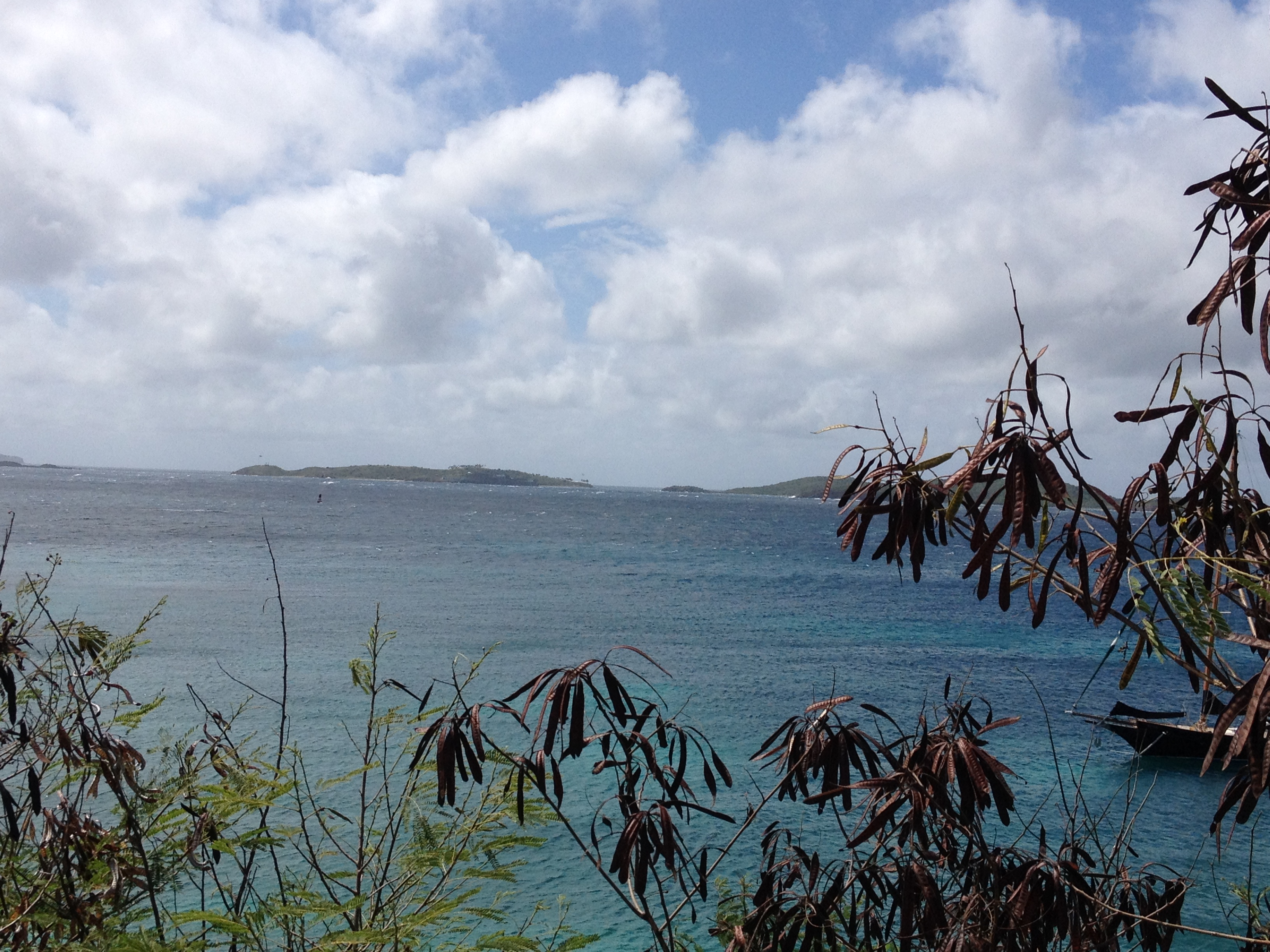
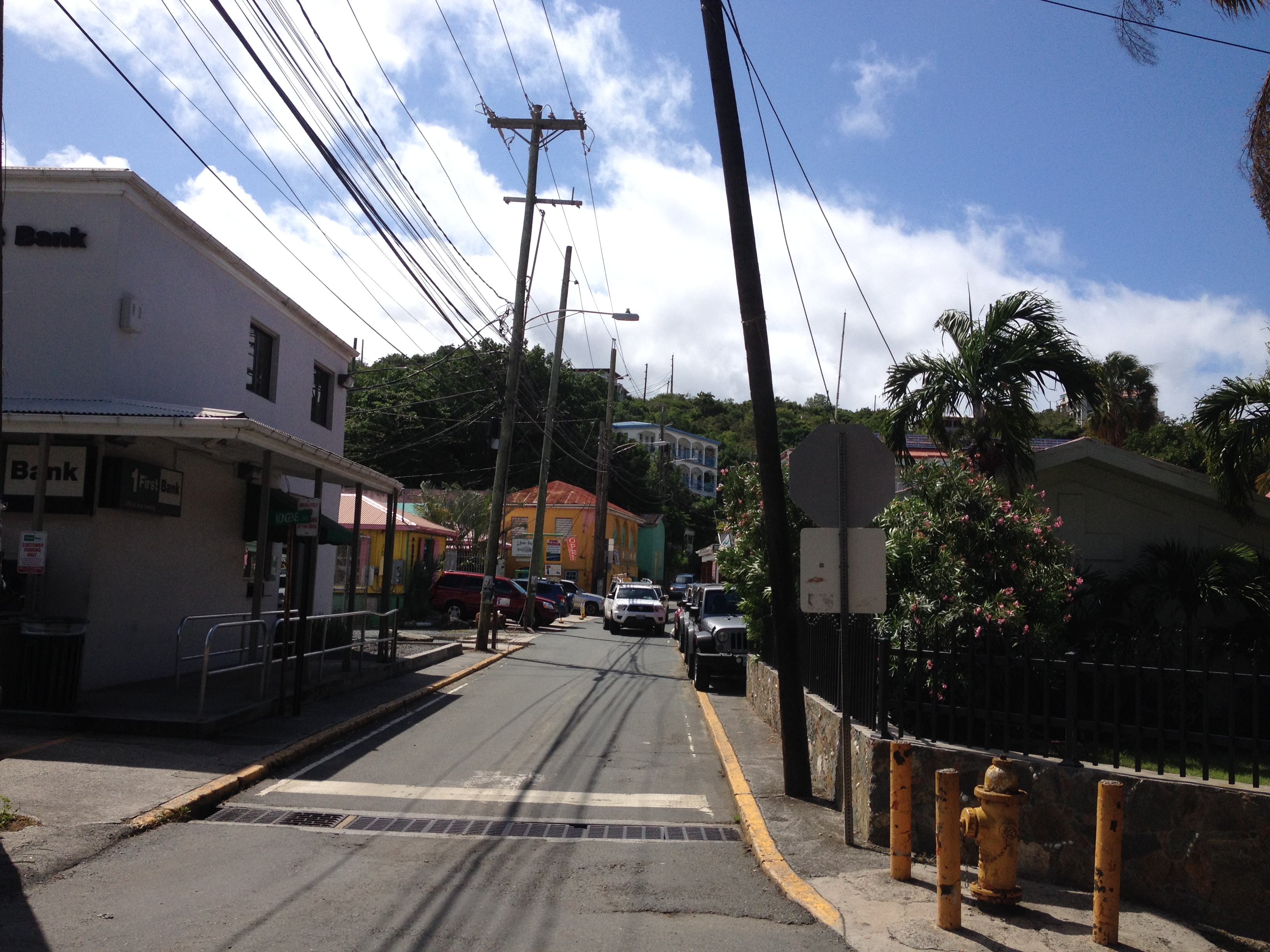
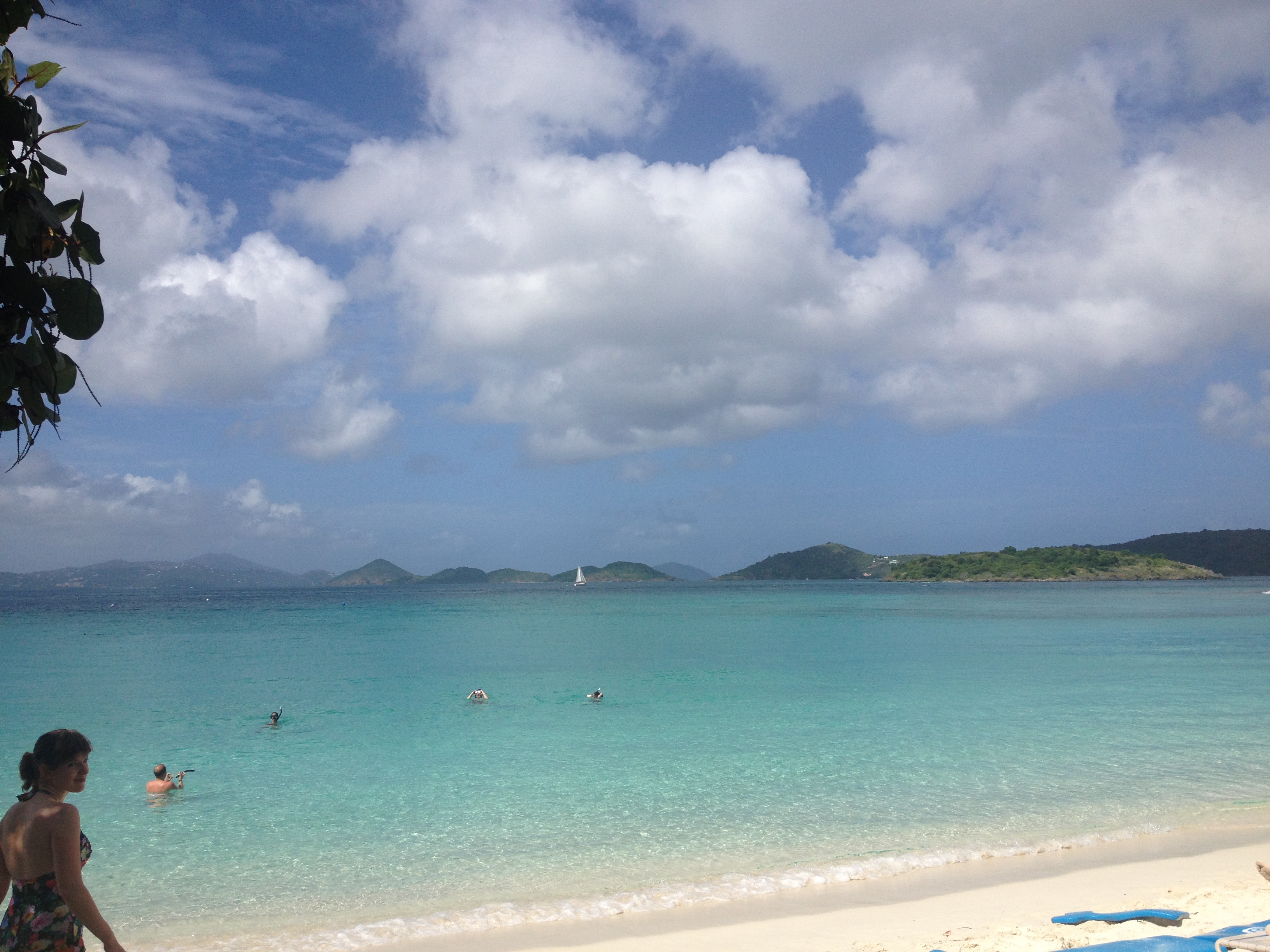
Cruz Bay is where the ferry from Saint Thomas first arrives.  It is the first place any visitor to this island sees.  It is Saint John’s front door, it’s first impression.  And it doesn’t disappoint.  The ocean here is as stunning and picturesque as anywhere I could possibly imagine.  In fact, even at some of the best kept lakes in the United States, I have never seen water this magically blue.

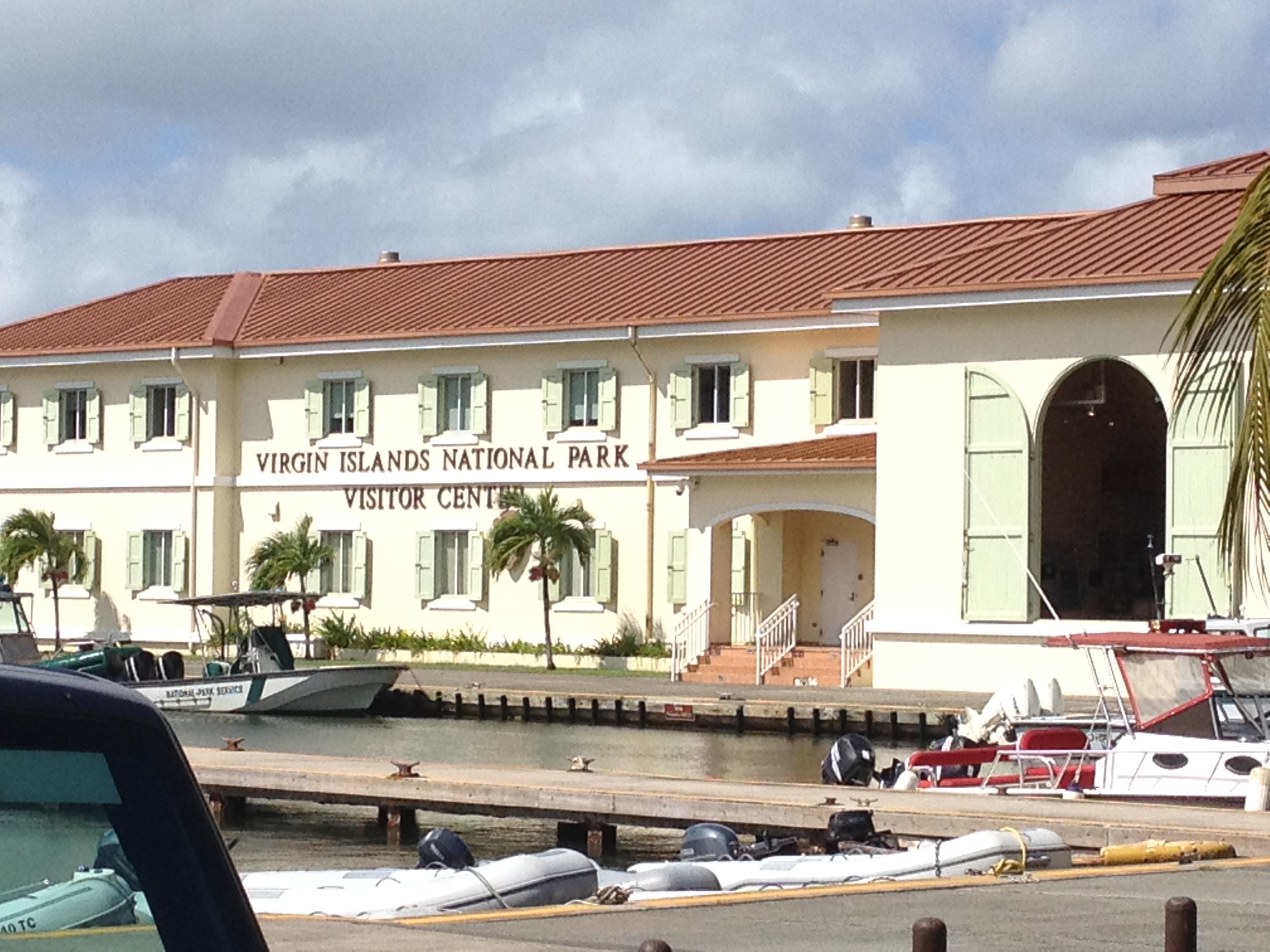
Upon arrival to Cruz Bay on the ferry, one immediately sees a plethora of tourist accommodations.  To the left is the Virgin Islands National Park Visitor Center.  In front are the beaches, boats and restaurants.

IMG_2824 IMG_2827

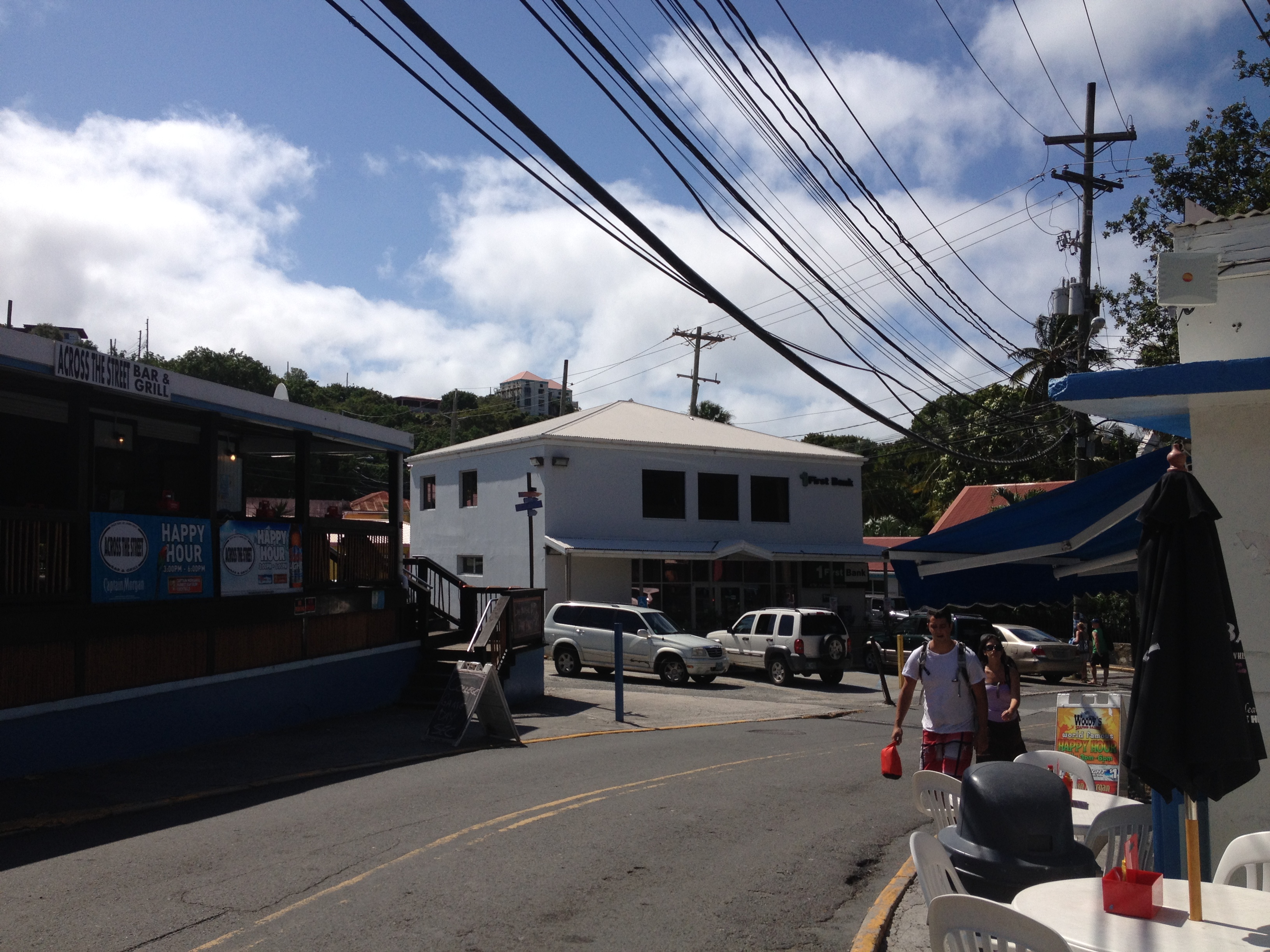
A tourist that walks up the road straight in front of them (road names are not obvious here) will encounter a road lined with bars and restaurants that obviously cater to those not from the Islands.  Walking along this street in the evening, rather than traditional Caribbean music, one will hear the likes of Jimmy Buffet, modern American pop, and a surprising amount of Country-Western music.  And, a vast majority of the proprietors and patrons of any of these restaurants are obviously tourists or those who moved here from the mainland to work tourism related jobs.

Most of the residents of this island are black (or Afro-Caribbean).  Although this did not really surprise me, I still wonder how this came to be, as I had never really been taught about the history of the Caribbean Islands beyond the arrival of Christopher Columbus in 1492 and the subsequent voyages to the “New World” that the news of this voyage inspired.

However, when I look around me, and take a couple of trips to less touristy parts of the Island, where one can see a better representation of how those native to Saint John live, I can’t help but have the present rather than the past on my mind.

How do the lives of those that live here year round differ from our own?

How do they feel about being a part of the United States?  And, more specifically, how do they feel about their status as a U.S. territory (and not a state)?  We commonly hear about issues regarding Puerto Rico’s similar status, and the razor thin margin between those who support and those who oppose statehood.  But, we never really hear much about the U.S. Virgin Islands’ status and how it impacts the people here.

Most importantly, how do they feel about us, and our presence here?  Do they debate the economic impact of tourism vs. the cultural disruption that it causes?  Do they ponder the fact that within the mainland part of the U.S., we have places like Catalina, Key West and South Padre, places where many of us could theoretically get a similar experience without invading their island?

Ultimately, are they fighting for their identities, their culture, or are they enjoying the economic benefit of our presence, as well as their association with the United States of America?   When we think of the Caribbean, we often think of pop icons, including Bob Marley, but also more recent pop icons from the region, such as Daddy Yankee and Sean Kingston.  The music produced by these artists take us to the pristine tropical oceans of the Caribbean, if nowhere else but in our minds.

However, it is these pop icons that appear to represent the dichotomy of the possible responses that seem plausible given the current situation of those that live in the U.S. Virgin Islands.  Marley, from his lyrics, considered himself part of a struggle for the culture and identity of himself and his people.  But modern pop stars like Kingston appear to be simply enjoying the economic benefit of their stardom, much of which comes from the U.S. and the western world that Marley rallies against.

Although there is a lot more to any one person’s life that what we witness through the media, Kingston and Co. do appear to be thoroughly enjoying their lives.

IMG_2847 IMG_2849

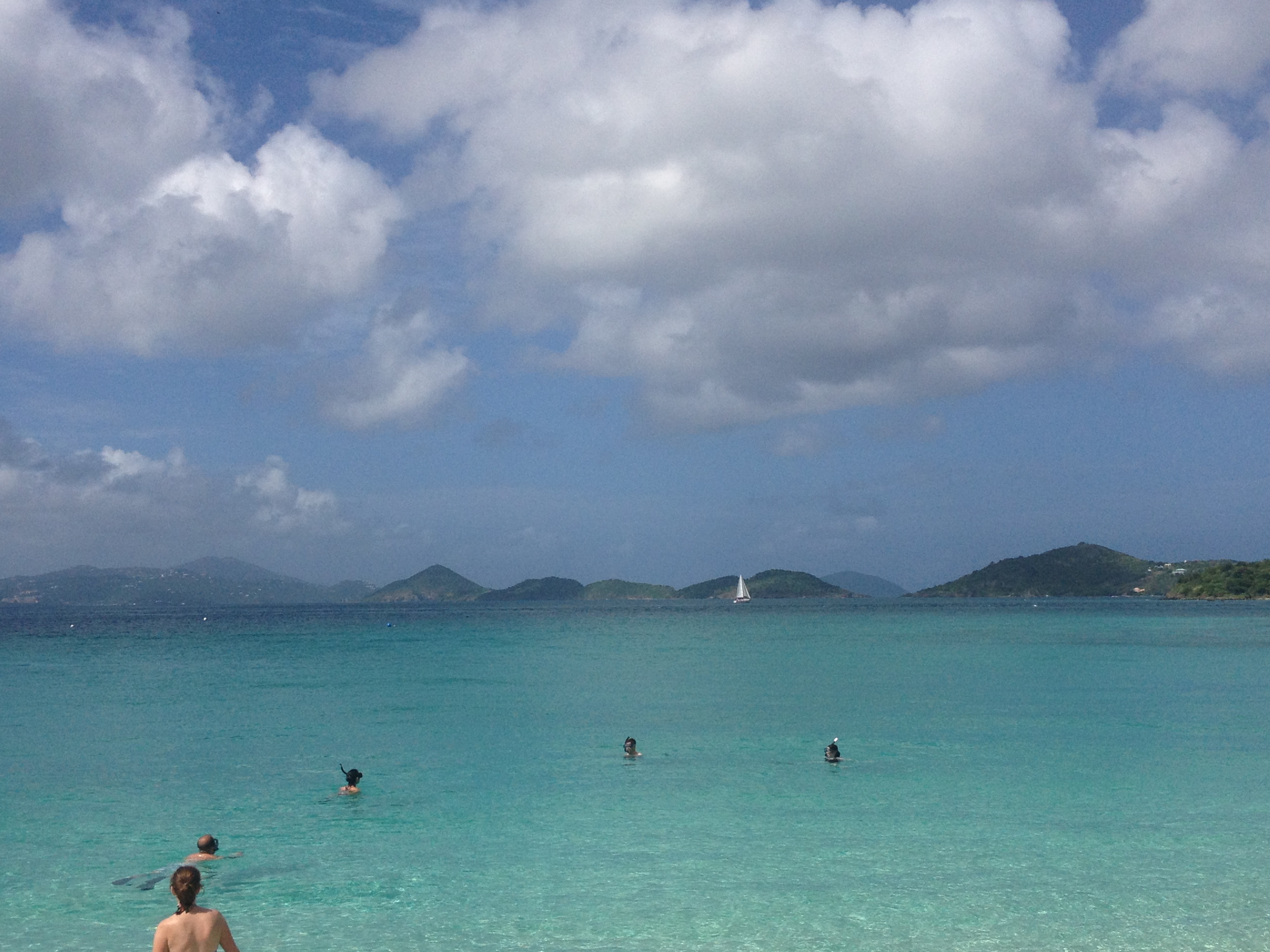
After multiple nights of partying, I lay exhausted on Scott Beach, the finest beach on Caneel Bay resort.  I watch the boaters and snorkelers go by.  Some even tell me that it was here, in the clear waters of the Caribbean, that they had one of the best snorkeling experiences of their lives.  They did so by being willing to visit a place a little bit out of the way, a place where the people, the culture, and the way of life are different than their own.

That is when it occurred to me that the world is full of people who are different from me.  The world is full of people who look different, act different, have different customs, beliefs, values, and different ways of understanding the world.  We can either learn to live with different types of people, and try to relate to them as best as we can, or we can accept the limitations that go along with confining ourselves to people with sufficient similarities to ourselves.

In practice, we all implore somewhat of a combination of the two strategies; accepting some differences but trying to stay away from others.  However, there are some that believe that in an increasingly connected world, the future belongs to those that can bridge the gap between different cultures.  I am not sure if I inherently believe that the ability to bridge cultural gaps is a prerequisite for success in the 21st Century, as many people have built fortunes designing products that largely cater to one segment of society.  However, when I watch people enjoy Saint John Island, and watch videos by Kingston and other similar artists, I see firsthand the benefits of being able to relate to those with different backgrounds and ways than my own.