Category Archives: culture

History Colorado Center

It has been unprecedentedly cold across Colorado these past several days!  It’s been so cold that no outdoor activity, not even skiing, sounds even remotely appealing.  So, in order to make the most of my time, I decided that today would be a good day to check out the new exhibit at the History Colorado Center.  As, I do want to check it out, and will likely be skiing or traveling elsewhere the next several weekends.

IMG_1502 IMG_1504

The History Colorado Center is a State history museum in Central Denver, located just south of downtown.  As the name advertizes, the museum covers the history of the State of Colorado.  A similar museum can most likely be found in nearly all state capitol cities.

In my biased opinion, the History Colorado Center is one of the best museums I have ever been to.  The reason I say it is a biased opinion is that I definitely prefer museums that cover topics I am personally interested in.  I tend to be more interested in science and history than art and lifestyle museums.  In addition, I have not been to too terribly many museums, as I tend to spend more time on outdoor activities.  So, my recommendation of this museum can be taken for what it’s worth; based on a strong personal bias and a limited sample set of options.  But, I do feel like this museum is worth the $12 admission. Today we spent just shy of three hours there, but I do feel like I could spend close to an entire day here.

I really enjoy this museum for three reasons:

1.  The museum is highly interactive.

This seems to be a trend in museums of late.  I am not sure what instigated this particular trend, but over the past decade more museums have been moving towards more interactive exhibits.  This particular museum was constructed only a couple of years ago (replacing the previous Colorado History Museum), and thus many of the exhibits at the museum are indicative of this trend.

IMG_1511

Just inside the entryway to the museum is a “time machine” exhibit.  These two “time machines” can be physically moved across a gigantic map of the State of Colorado.  Depending on where these devices are placed, a user can select a year from a list.  Each selection contains a different historical story of Colorado.  These stories come from many different time periods and nearly all portions of the state.  If one were to watch all of the stories available in this exhibit, it would definitely take multiple hours.

Other interactive exhibits at this museum include a silver mining exhibit, a bunch of screen-selecting games, and my personal favorite, the ski jump simulator.  The ski jump simulator not only simulates the building of speed, becoming airborne, and subsequent landing, but also requires that the user mimics the right ski jumping technique.  All this is done in from of a screen that shows the ski jump in progress.  Improper technique will result in a crash in the simulation, and the length of the jump is also dependent on technique.  It is interesting to attempt this ski jump simulation several times to get the best possible result.

2.  The museum presents a fairly complete representation of state history.

By this I mean the all regions of the state, all time periods, and all types of people appear to be represented at this museum.  Many people think of Colorado and think only of the mountains and the activities associated with the mountains.  Some think of Denver and the Front Range cities, but the entire Eastern 1/3 of the state is often ignored.  This museum actually includes several exhibits that cover life in the Great Plains portion of the state.

IMG_1508 IMG_1509

Half of the first floor of the museum is dedicated to the story of a small town named Keota on the plains in Northeastern Colorado.  Like many town in this area, it’s economy was primarily based on farming and ranching.  Although the town did fairly well in the first couple of decades of the 20th century, it did not fare well during the dust bowl and now is basically a ghost town.

Other exhibits about the history of Colorado’s often forgotten Eastern portion include one on Bent’s Old Fort, and one on the Sand Creek Massacre.  With these exhibits, and several others, the History Center Colorado also presents history from the point of view of nearly every ethnic group to ever inhabit the state.  One exhibit describes Colorado’s history as a borderland between the United States and Mexico prior to the Mexican-American war.  Another one describes the Japanese Internment Camps during World War 2.  And, despite the fact that Colorado is only 4% black (as a state), the museum contains an exhibit about a place called Lincoln Hills, a resort in the mountains developed by black people for black people at a time when many places refused to serve them.

In addition to presenting history from all portions of the state, as well as from multiple perspectives, the museum covers times all time periods, as well as both good times and bad times.  The Steamboat Springs Winter Carnival is a celebration of the winter sport activities that make Colorado a destination for many.  However, the new exhibit covers the importance of water resources in the state of Colorado.  This exhibit covers three periods of time where water resources and the management of them made a major difference in life in Colorado.  In the 13th century water resources were depleted from the “Mesa Verde” area, leading to hard times for the once thriving Pueblo Indians in that region.  Their response was to move south to areas where resources appeared more abundant.  Remnants of this civilization can still be viewed at Mesa Verde National Park, the only archeological U.S. National Park.  The dust bowl was one of the hardest times in Colorado.  Many farmers suffered from a combination of low prices and extreme drought.  This began a population decline in the plains, but some remained on the land.  Finally, current concerns about water resources were covered, as reduced snowpack from climate change combined with population increases threaten shortages of water resources.

3.  The museum has character.

IMG_1503

By this I mean there are a lot of little fun things like this Bison topped with a Santa hat.  Throughout the museum there are a lot of other little decorations here and there, such as the Welcome to Colorado sign, that just make the atmosphere a bitmore fun.  They do this without either going over the top, or seeming too cheesy, which I very much appreciate.

Visiting the History Colorado Center today was a good change of pace from my normal activities, and a wonderful way to take advantage of a day with less than ideal weather.  With a fun yet intelligent atmosphere, a complete view of Colorado’s history as a state, and a plethora of interactive exhibits, my visit to the History Colorado Center  was a memorable experience.  It gave me a lot to think about, and a good overview of the state that I now call home.
Anne Arundel County and the DelMarVa Peninsula

Anne Arundel County is my favorite county in Maryland.  It sits on the western shore of the Chesapeake Bay, south of Baltimore (and Baltimore County), and east of the counties in the D.C. area.  Many people are surprised that I have a favorite county in Maryland.  But, I feel like Anne Arundel County provides visitors with an experience that seems quintessentially Maryland to me.  It’s primary city, Annapolis, is characterized by the colonial development style that makes these early colonies on the eastern seaboard distinct from much of the rest of the nation.  However, much of the rest of the county is suburban in nature, which is really what much of the populated part of Maryland is like today.  With it containing a shoreline on the western banks of the Chesapeake, many of the boating activities synonymous with Maryland culture have a significant presence in this county.

In my experience here, which is quite extensive, as I have an Aunt and Uncle who used to live here, and good friends that still do (whom I am visiting this weekend), it seems as though this part of Maryland is not as politically charged as the counties to the west, adjacent to D.C.  Those areas actually feel more like an extension of D.C. than really Maryland, the same way Arlington and Alexandria seem more like a D.C. extension than Virginia.  Both of these areas are significantly different culturally from the rest of their respective states, and therefore a visit to Silver Spring is no more of a “Maryland experience” than a visit to Arlington is a “Virginia experience”.

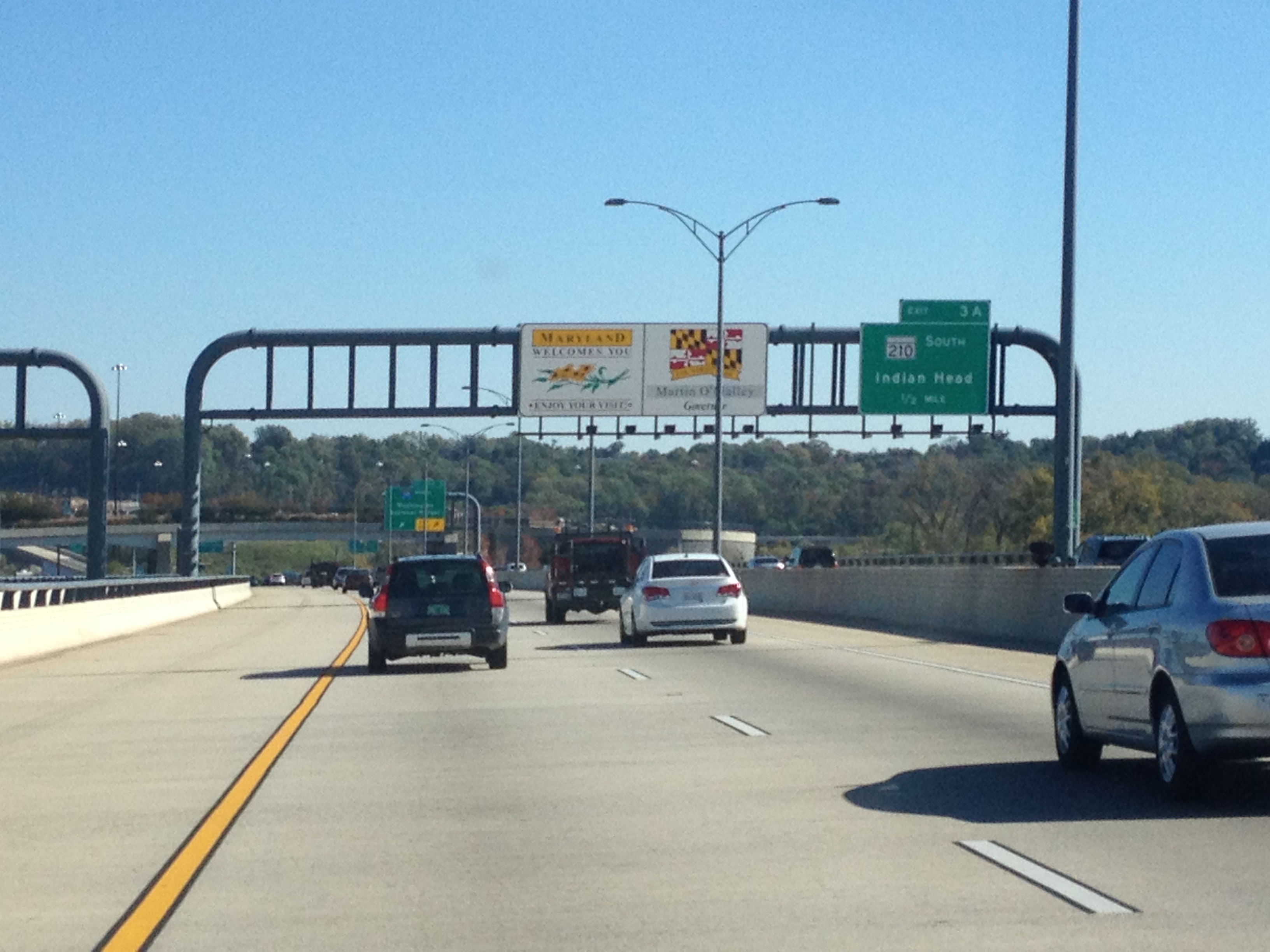
IMG_1296 IMG_1293


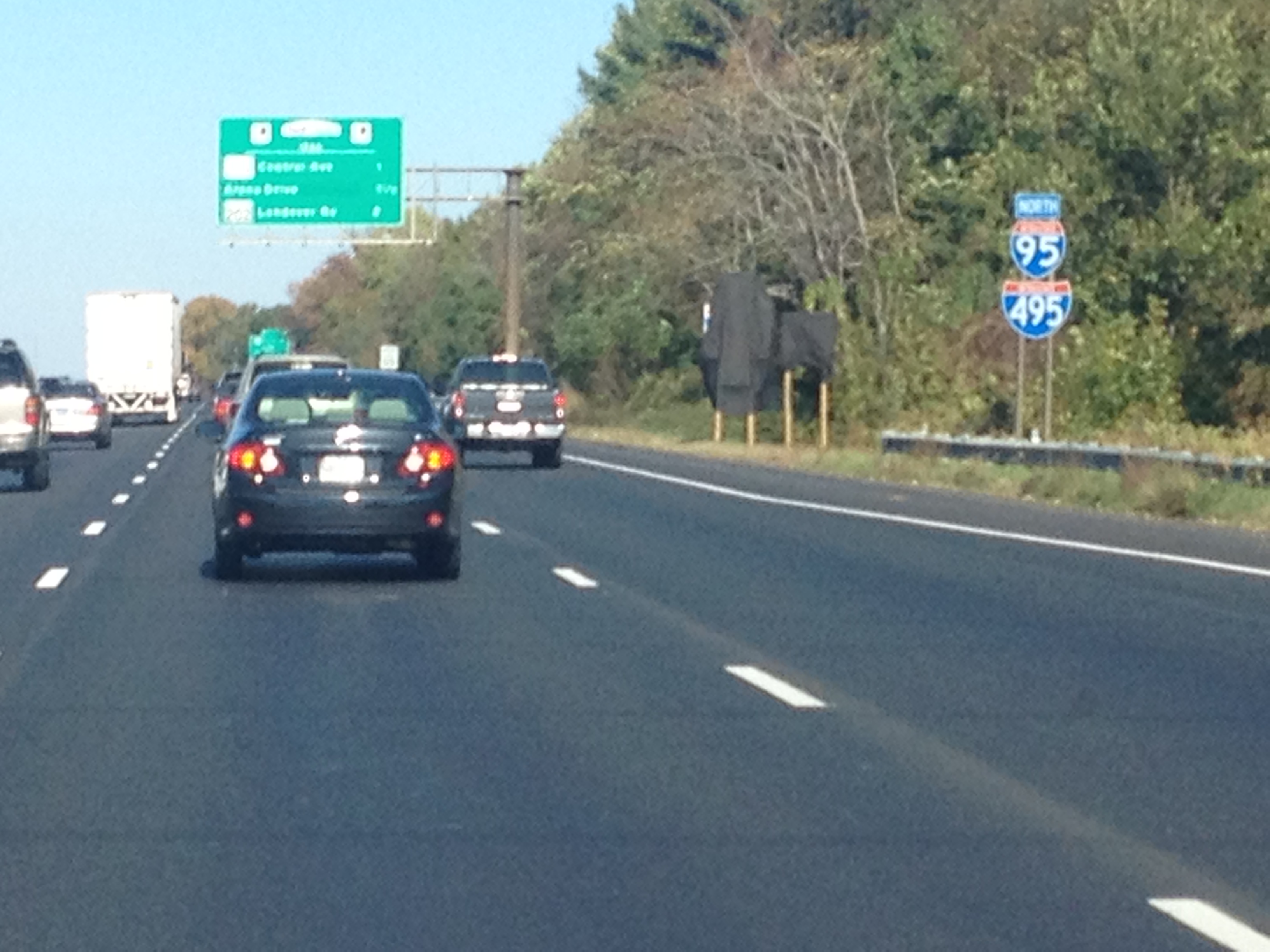
I have some amount of destain for politics and politicians at this time.  It is not that politics is not an interesting topic of conversation and not significant.  It is just that the way we practice and discuss politics in this nation at this time has this strange way of bringing out the worst in people.  Right now, I view Washington D.C. as a group of people who generally view themselves as way more important than they are/ should be, and therefore I had no desire to pass through this city at this time.  So, I went around on the “beltway” to get to Anne Arundel County.

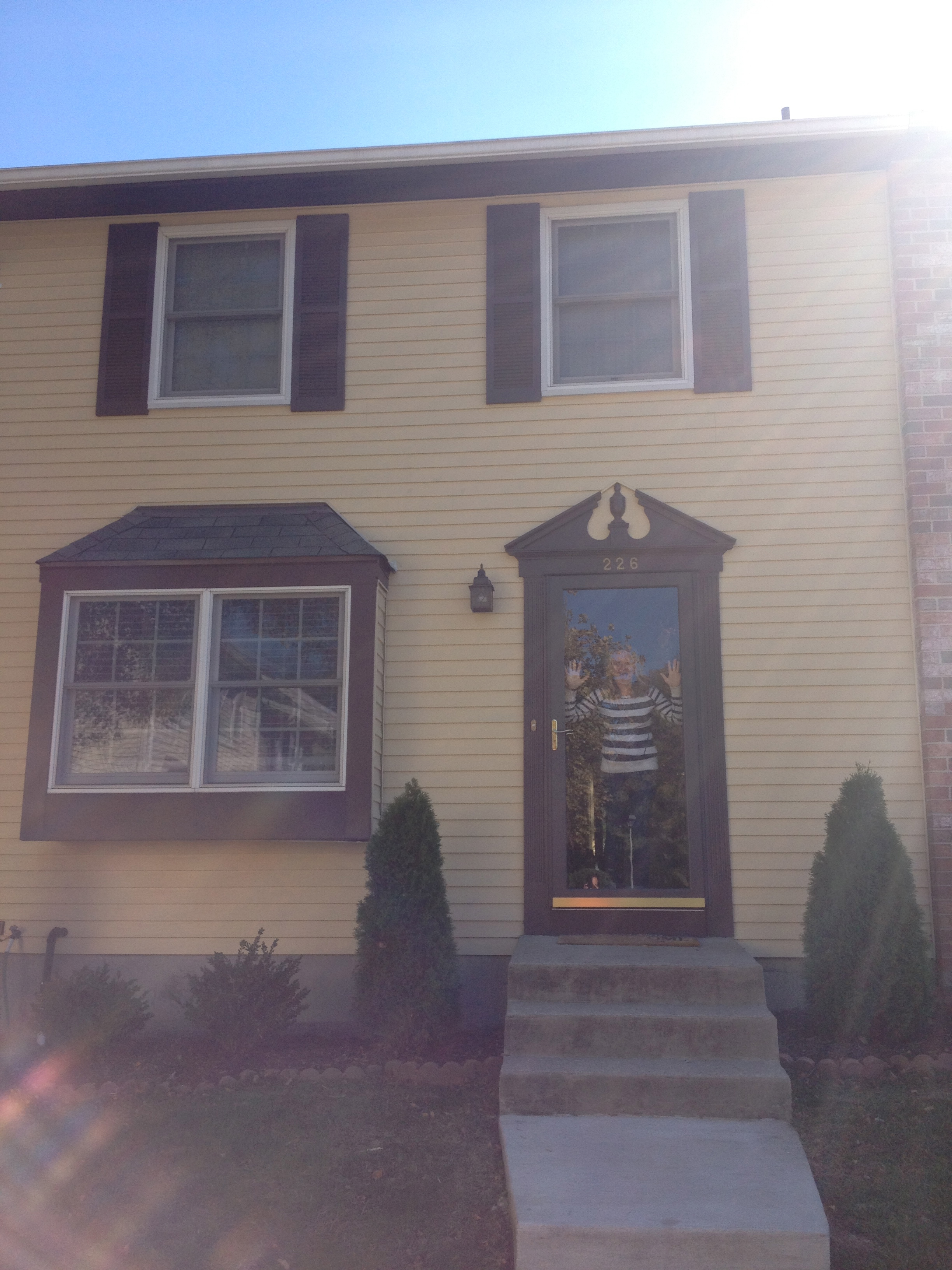
IMG_1297 IMG_1303


My friends live in a row house in Millersville, MD.  The section of houses they live in is not too uncommon for this part of the country.  It is crowded and the houses actually connect to one another.  Saturday was a housewarming party, and my contribution was a bottle of Bourbon I had picked up on the Bourbon Trail in Kentucky on Wednesday.  It is Bourbon Cream from Buffalo Trace.  It tastes like Bailey’s, only better.  It went over well at the party, and I would recommend it!

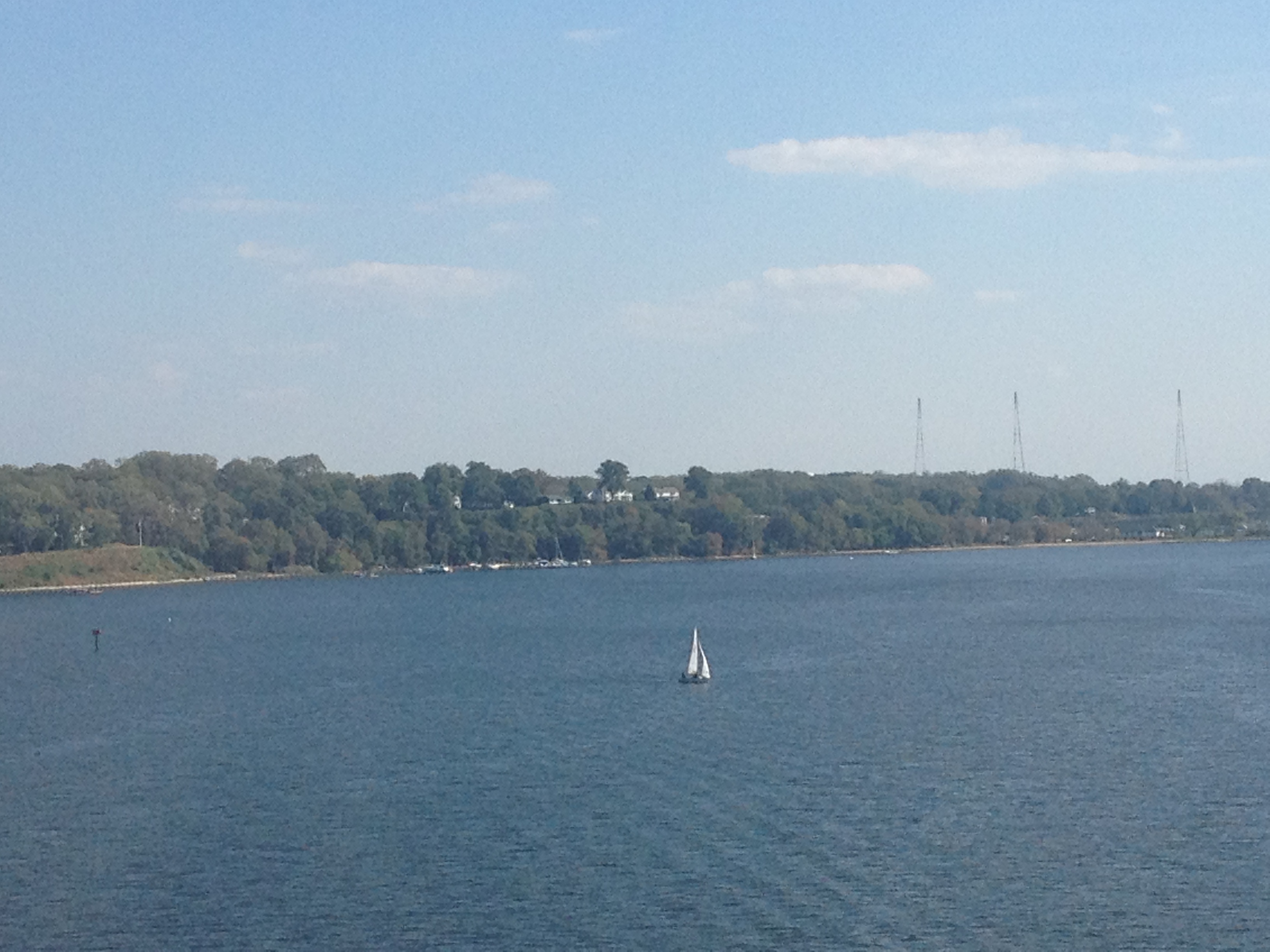
IMG_1307 IMG_1305


On Sunday we took a drive over the Bay Bridge over the Chesapeake Bay to an area referred to as Maryland’s “Eastern Shore”.  The Bay Bridge is a really neat bridge.  It is a classic for those that love bridges.  The main marvel of engineering on this bridge is how long the bridge is, 4.3 miles.  It is a testament to the amazing engineers that we have in this country that I, along with millions of drivers each year, cross this bridge, over 150 feet above the water’s surface for this long of a span of time and distance without feeling nervous about the integrity of the bridge.  I think more people complain about the toll than anything.

IMG_1310


Traveling through Maryland’s eastern shore, first on U.S. 301, then on state route 300, I am quite surprised by the scenery I encounter.  After the first few miles off the bridge, where the same shoreline features that are common in Anne Arundel County seem prevalent, I actually encounter farmland that reminds me of the midwest a bit.  Not as many trees have been leveled here to make way for farmland as have been in northern and central Illinois, and the trees are a bit denser in the non leveled places.  But, many of the crops are the same.  And, I surprisingly encounter some irrigation devices too.

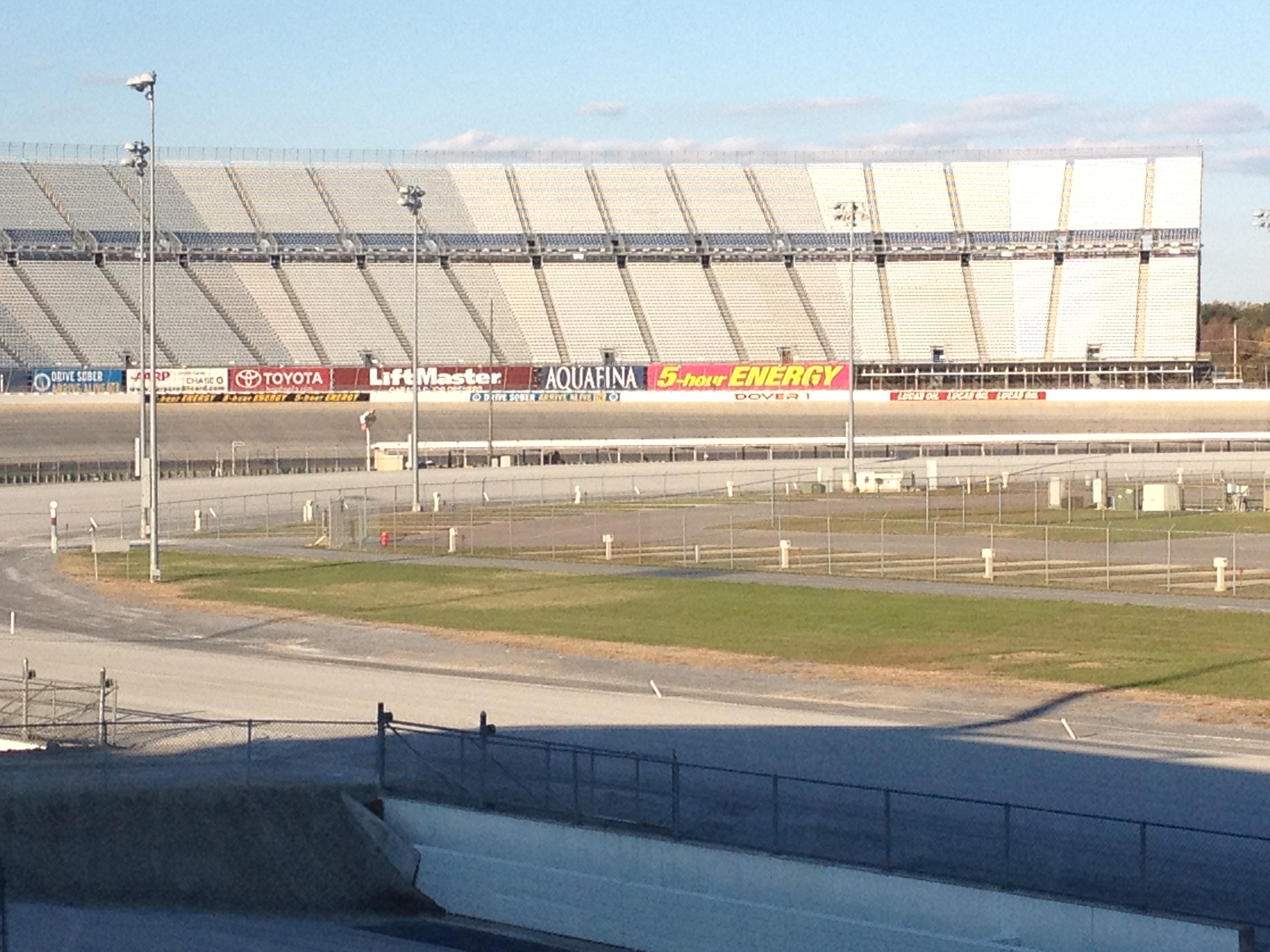
IMG_1313 IMG_1315


Our destination is Dover Downs, a “racino” (which refers to a racetrack that is also a casino).  Unlike many of the other racinos I have been to, this particular one has both a horse racing track and a NASCAR track.  NASCAR hosts a couple of races here each year.  I headed into the club box, where all of the rich people would sit during these races, as well as their horse races, which occur more frequently.  But, there were no races, for cars or horses, today.

The other thing that differentiates this place from other racinos I have been to is that the casino part of the facility is a full casino, and offers you a casino experience equivalent to visiting a standard casino.  By this I mean that every table game, from the common black jack and craps, to games like pai gow poker, can be found here.  Also, there are no alternate rules that change the experience, such as no alcohol sales or the requirement of a “rake” at the black jack tables.  At Canterbury Park in Minnesota, for example, every $10 black jack bet requires the player to chip in a 50 cent “rake” that the casino just takes.  This makes it nearly impossible to win, and not a great place to gamble.  No such restriction exists at Dover Downs, and I appreciate that.

IMG_1319


After the racino, we head back into Maryland, but not quite back over the Bay Bridge.  This was so that I could take part in an activity that I have always closely associated with Maryland; eating crab.  In fact, I can barely remember the last time I came to Maryland without going out for crab.  There is really nothing like eating seafood when it is fresh, and being that I currently live in land-locked Colorado, it was imperative that I have a seafood meal while in Maryland.  The restaurant I was taken to is called Harris Crab House, and it is right along the shore of the Chesapeake.  There is nothing better than eating crab while staring right at the body of water the crab was just caught from. It is beautiful in two ways.  The views here not only make me think of both the tranquility and adventure that can be achieved on water, but also reassure me of the freshness of my food while serving as a reminder of how connected the culture of this region is to the water.

IMG_1322

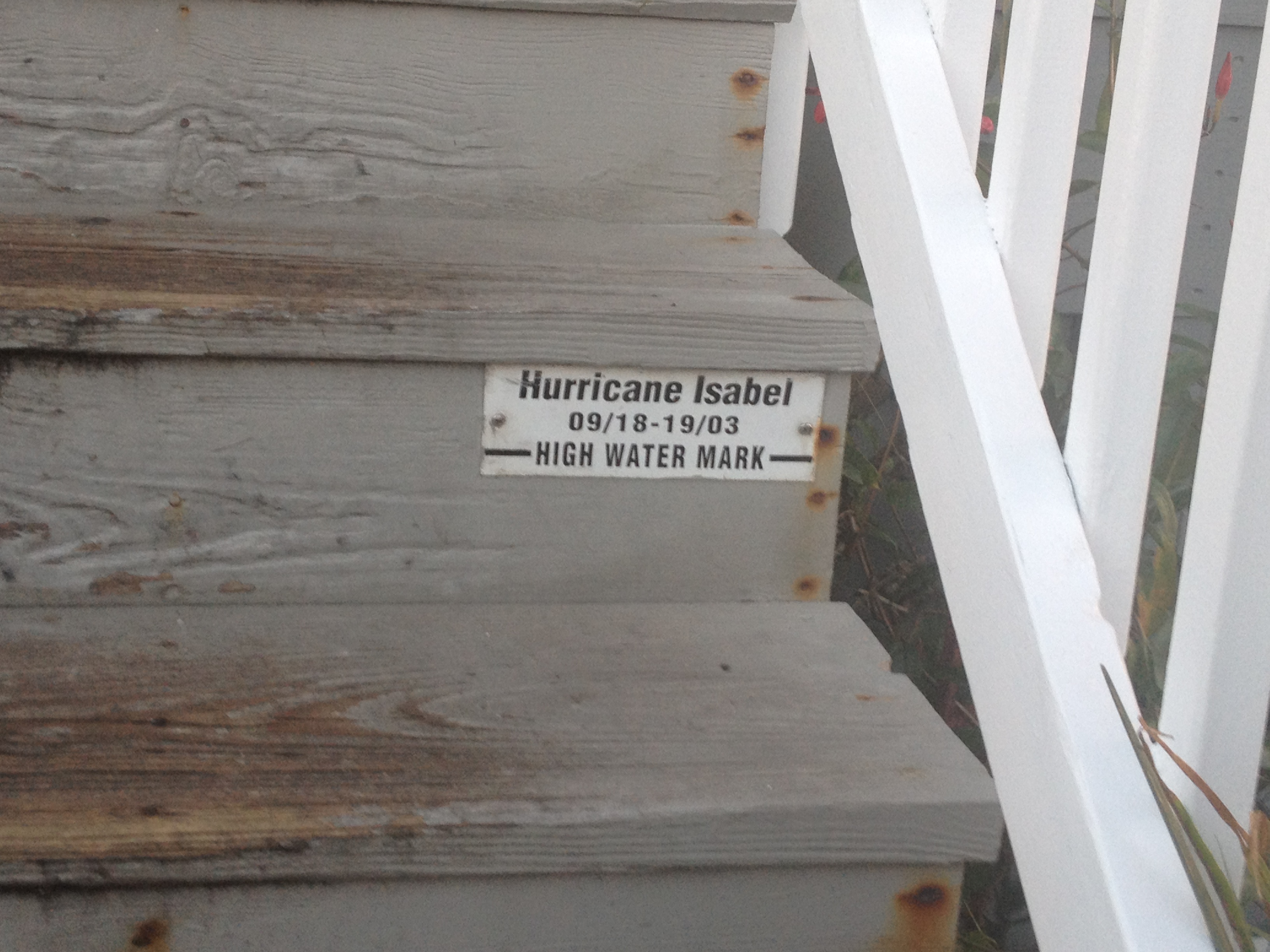
Not only did I get to see the sun set over the bay, something that is possible because we are east of the bay, but the stairs of the restaurant also had a marker marking the high point of the water during Hurricane Isabel.

IMG_1320


Apparently hurricanes Irene and Sandy did not bring water as high in the Chesapeake as Isabel, a 2003 North Carolina landfall.  The marking labeled here reminded me how much coastal storms are also a part of life here.  I saw plenty of boats on the water, both out in the open and docked.  Many of these boats would be submerged if this event were to repeat itself.  I also imagine these boats being battered by the wind, in this hurricane, the two more recent ones, as well as the dozen or so “Nor-Easters” that occur in these parts every winter.

Maryland has other parts, including Baltimore city, the D.C. influenced suburbs of Montgomery and Prince George Counties and western Maryland’s mountains.  However, for some reason, when I think of Maryland, and the things Maryland is most known for, I think primarily of the places and I activities I have seen here in this part of the state.  It may be a while before I have another crab meal like the one I had today.  In fact, I was too preoccupied with eating to take any pictures.  So, I am quite glad to have had a good Maryland experience this weekend.

Green Mountain; The Edge of Two Worlds

A lot of rivers, mountains, and land features are named for the color in which they appear.  According to the Wikipedia disambiguation, there are eight land formations, and three towns named “Green Mountain”. This, in addition to the “Green Mountains” in Vermont, which refers to the entire mountain range.

The Green Mountain I am referring to here is the one in Lakewood, CO, inside William F. Hayden Park.  What makes this particular mountain so special is it’s location.  At 6,855 feet, it is not particularly tall, but it is amongst the first actual peaks that one would come across as they travel to the West.  At least geographically speaking, it marks the border between the Great Plains to the East, and the Rocky Mountains to the West.

GreenMountain_Lakewood_Map

It is also only 12 miles from central Denver, and is known to be one of the places that dries out the quickest after a precipitation event.  So, if there is a place to check out on a nice sunny day only half a week after one of the worst flooding events in Colorado history, this is the place.

To get to William F. Hayden, I rode my bicycle, as it is only 12 miles away from my apartment, and I found a route through Lakewood, mostly on 1st Avenue that did not involve the bicycle trails, most of which are in river valleys in this area, and could still be muddy or sandy from the recent floods.  Most of this route, heading to the west through Lakewood, is a steady but slight uphill climb.  However, after I cut over to Alameda Ave. and followed the path alongside that road to the West and Southwest, the climb got steeper.  By the end of this climb, I was already at an elevation over 6100 feet.  This means that I had already done most of the climbing on my bicycle, before I even started this trail.

IMG_1040 IMG_1041Upon entering the parking lot, I was surprised to see that the trail conditions were still labeled as “Very Muddy”, and that they were still not recommending use.  I am assuming that these ratings were designed mostly with mountain biking in mind.  Still, the idea of a “very muddy trail” does not appeal to me for hiking, and I traversed the parking lot expecting not to be able to hike at all, but prepared to be satisfied with my bike ride.  However, I saw a lot of people, both hiking and biking the trails, and they appeared fine.  Two mountain bikers, who appeared to have already used the trails, confirmed that the conditions would be fine, so I decided to assume that the sign above was not updated, and hike the remaining 700-ish feet to the top of Green Mountain.

IMG_1043

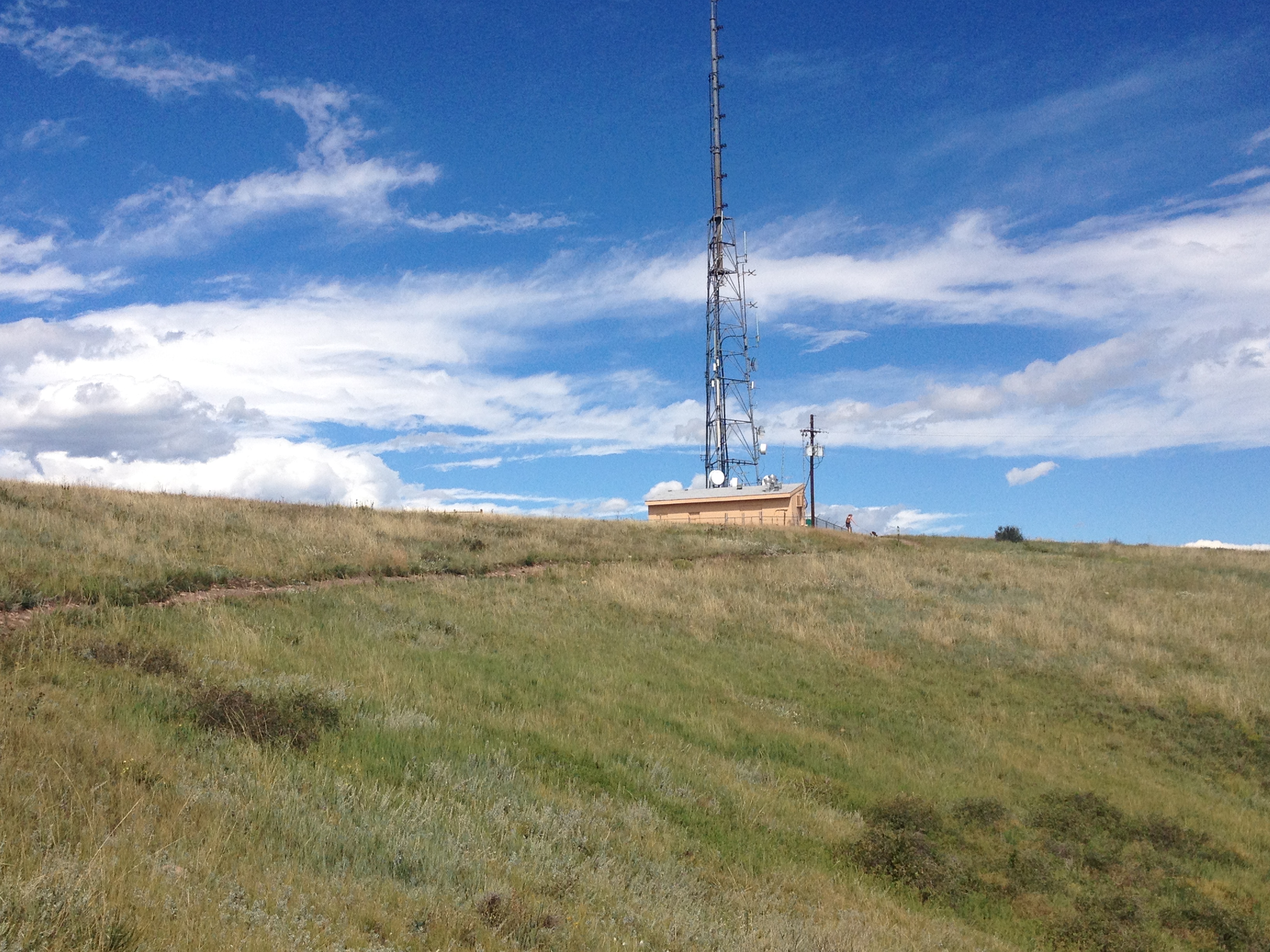
There are several routes to the top of this mountain, but the best option for someone who really wants to do some uphill hiking, traverses a radio tower, which is near the top.  Although this may take away from the pureness of a hiking experience, it seems to me like a good idea, from a scientific perspective, to have a radio tower on top of a hill, where it can reach more people.

IMG_1044 IMG_1046

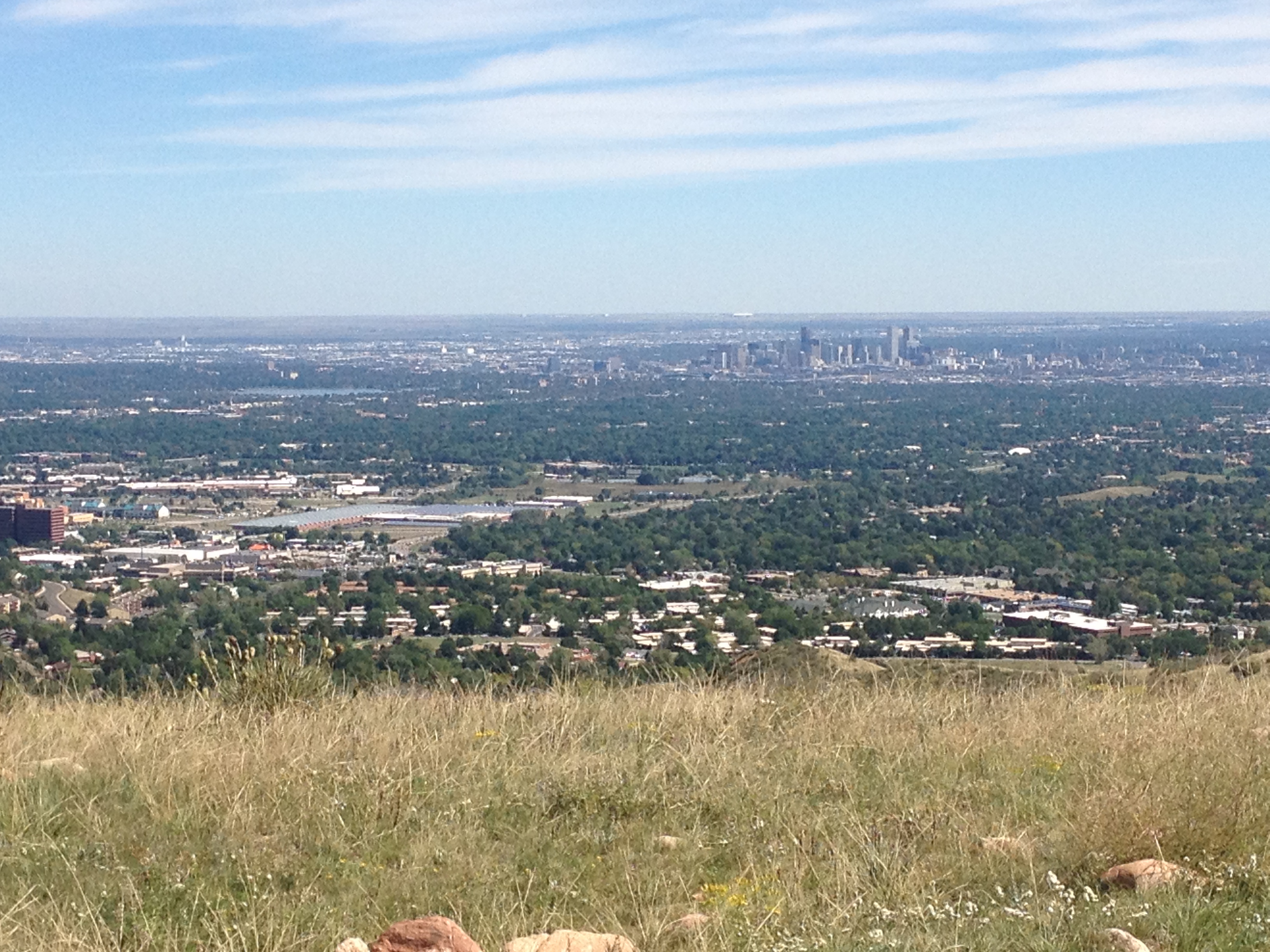
The top of this hill did feel like looking at the edge of two worlds.  Looking to the West, one could see the Rocky Mountains, well, mostly the foothills, but it was clear that anyone headed west would encounter taller and taller peaks.  Gazing Eastward there is a pretty good view of the skyline of the city of Denver.  In fact, observing the skyline of Denver from Green Mountain kind of reminded me of all of those iconic movie and T.V. show scenes where a small group of people would drive up to somewhere like the Hollywood sign and gaze at their city below them.  This would usually involve some kind of deep moment, either someone contemplating their life, kissing for the first time, or reminiscing on something.  Either way, I have this idea that major moments occur at places like this.

I hung out at the top of this mountain for a while today.  For a while, I switched back and forth between looking west and looking east, pondering what each direction meant.  To the west, the mountains represent excitement, challenge, and dreams.  A lot of people think of the glory of living the good life in a town like Vail, or Aspen.  To the east, I initially thought of Denver, but then started to look beyond Denver itself, towards what lies to the East of Denver, toward an area that is periodically overlooked and ignored.

If the west view at this peak represents challenge, dreams, and the possibility of achieving the good life, the east view represents being ignored, overlooked, and stagnation.  In fact, if I had not become interested in storm chasing, I might still have no idea what this place is all about.  The cultural centers of this country, primarily New York and Los Angeles, do not think about this area too much.  People from large cities either just fly over this area or resentfully drive across it.

There have been periods where people in large urban areas achieved greater and greater economic prosperity, while the people of the Great Plains continued to struggle.  Politicians routinely ignore people living outside the urban centers as there are fewer votes to be won there.  In fact, there are some people in the Great Plains portion of Colorado feel so ignored, they are developing plans to secede from the state.

As I leave the mountain, I think about how I am lucky to have had the experience of storm chasing, an interacting with all of these people.  Their lifestyle is not one that I would want, but what they do is still important.  People don’t think too much about the farmer and the rancher when they buy their food, but they are benefiting from what the people in this forgotten part of the country do.  Most of the interactions I have had with the locals while storm chasing have been positive and friendly.  In fact, one time in Sublette, KS, our entire chase group got free hamburgers, as they were having a celebration for the opening of their new co-op gas station, and let us join.  One of the great things about this country is that we do provide a variety of lifestyle options; something for everyone.  Hopefully one day, we will heal this urban-rural divide, and come to appreciate one another as parts of the complete social and economic system that makes all of our lives richer

Goin’ Down to South Park

IMG_0958

I decided to break with a previous precedent I had set in this blog to only post one entry about a day’s travels.  In retrospect, some of the entries I posted a couple of months ago, which combined several activities into one post just because they were done on the same day seem like they may have come out a bit awkward.  In reflecting on the travel writing I had previously read, they appeared to make breakouts by experience way more than date.

Since I had already traveled to the South and West along highway 285 to get to Staunton State Park today, I decided to continue along the road a bit to get to Fairplay, Colorado.  By looking at my DeLorme Atlas, and then doing a subsequent Google search, I determined that the show South Park, is based (some argue loosely) on this town.

As someone who is a fan of this show, it probably sounds stupid that it took me over a decade, as well as over a year after moving to Colorado, to figure this out. But, I am not one to base my life around T.V. shows.  I feel like people nowadays focus too much on T.V. shows.  I get exhausted by conversations about T.V. shows, and saddened by people who appear to posses a greater understanding of the lives of fictitious characters on a weekly T.V. show than the lives of actual people who should be important to them.

In South Park though, I see a show that can come to represent something more.  Most shows people watch are entertaining, but don’t change anyone’s lives.  Sometimes, a groundbreaking show like Seinfeld will come along, but Seinfeld mainly changed the course of television, not history or society.  There have been shows like Fresh Prince of Bel-Air that produce commentary about real issues from time to time.  But South Park has come, to me at least, to represent an actual societal development.  It has come to represent the courage to retain the right to think individually, and come to a critical conclusion of almost anyone or anything regardless of what level of esteem they have come to enjoy by long-standing institutions or large groups of people.  It is the anti-group think, and the backlash to the political correctness movement of the 1990s.

IMG_0952 IMG_0953

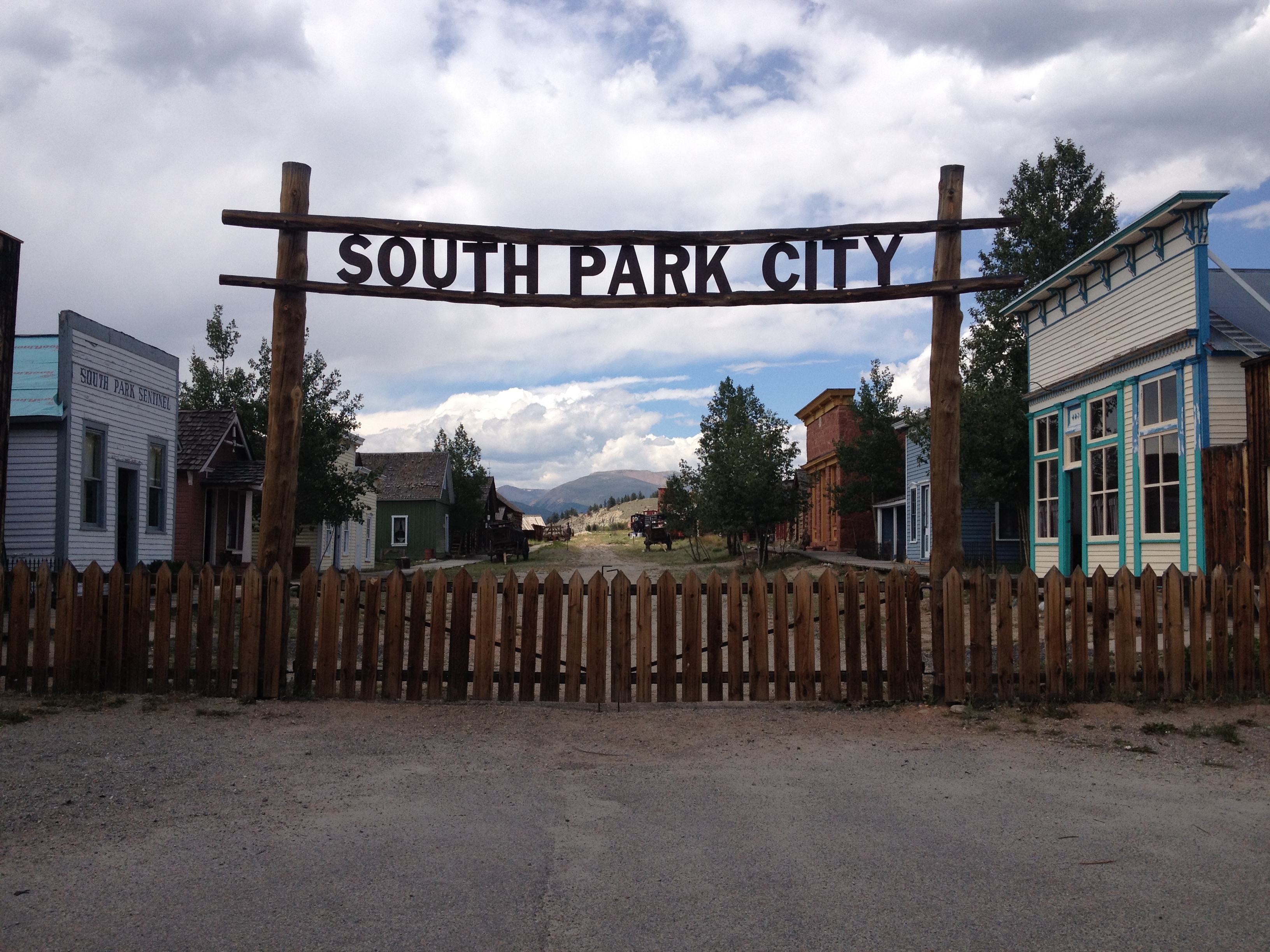
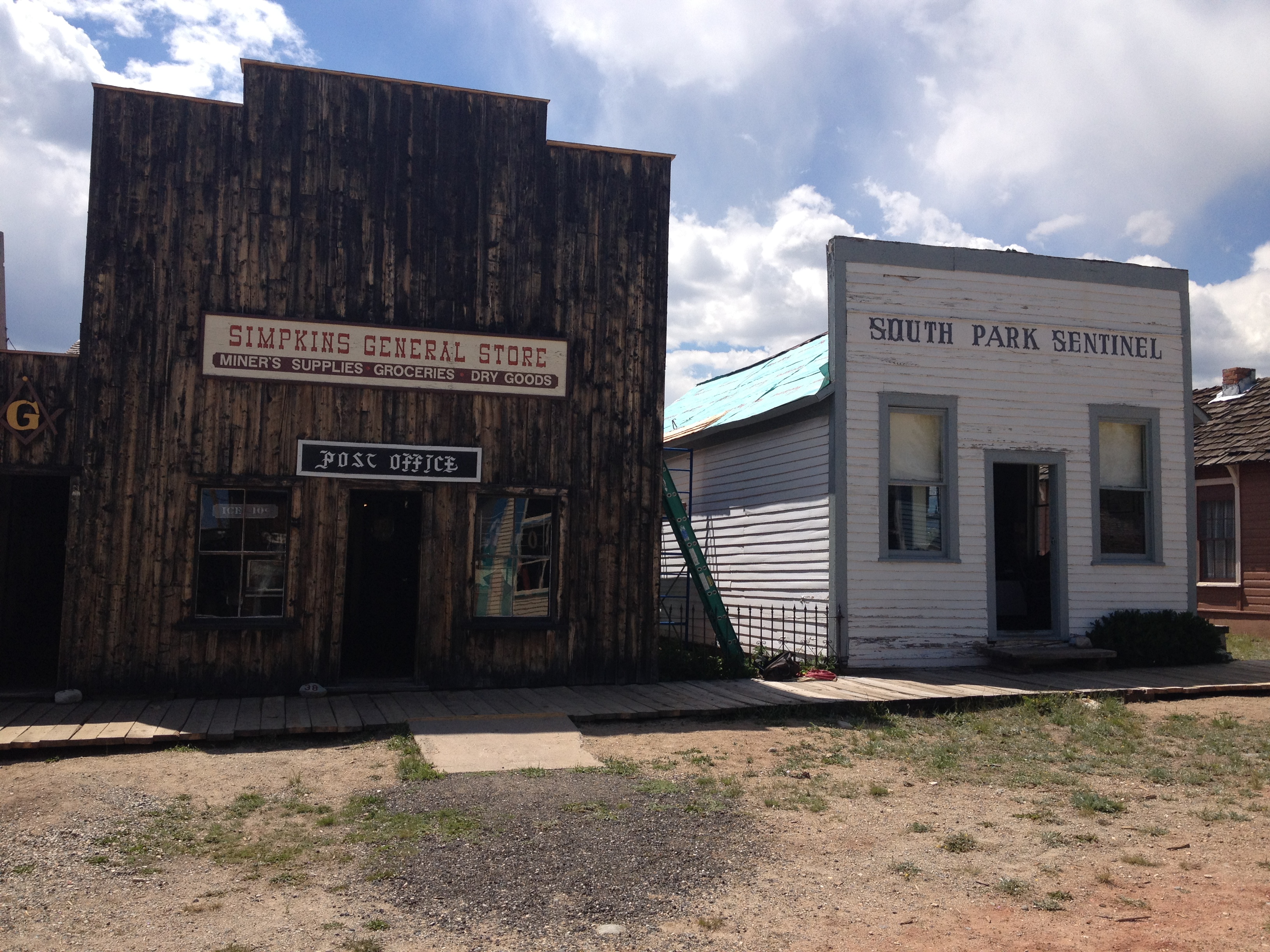
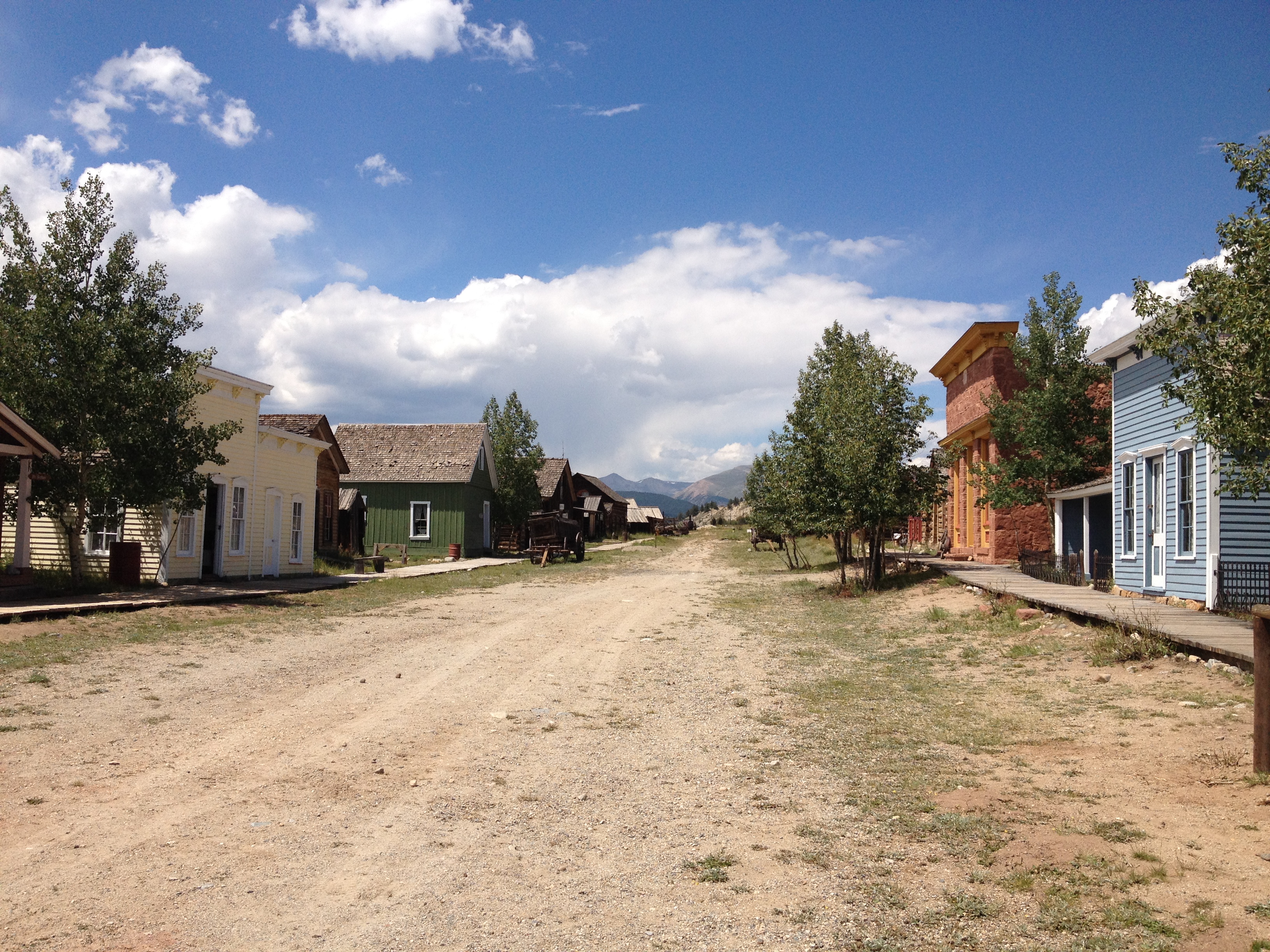
However, the South Park Museum in town has absolutely nothing to do with the show.  But, it was a really good museum depicting life in the west in the 1870s/1880s.  The town was somehow preserved exactly as it was in that era, even down to the layout of the street and buildings.  There is even a historic train at the far end of the street.

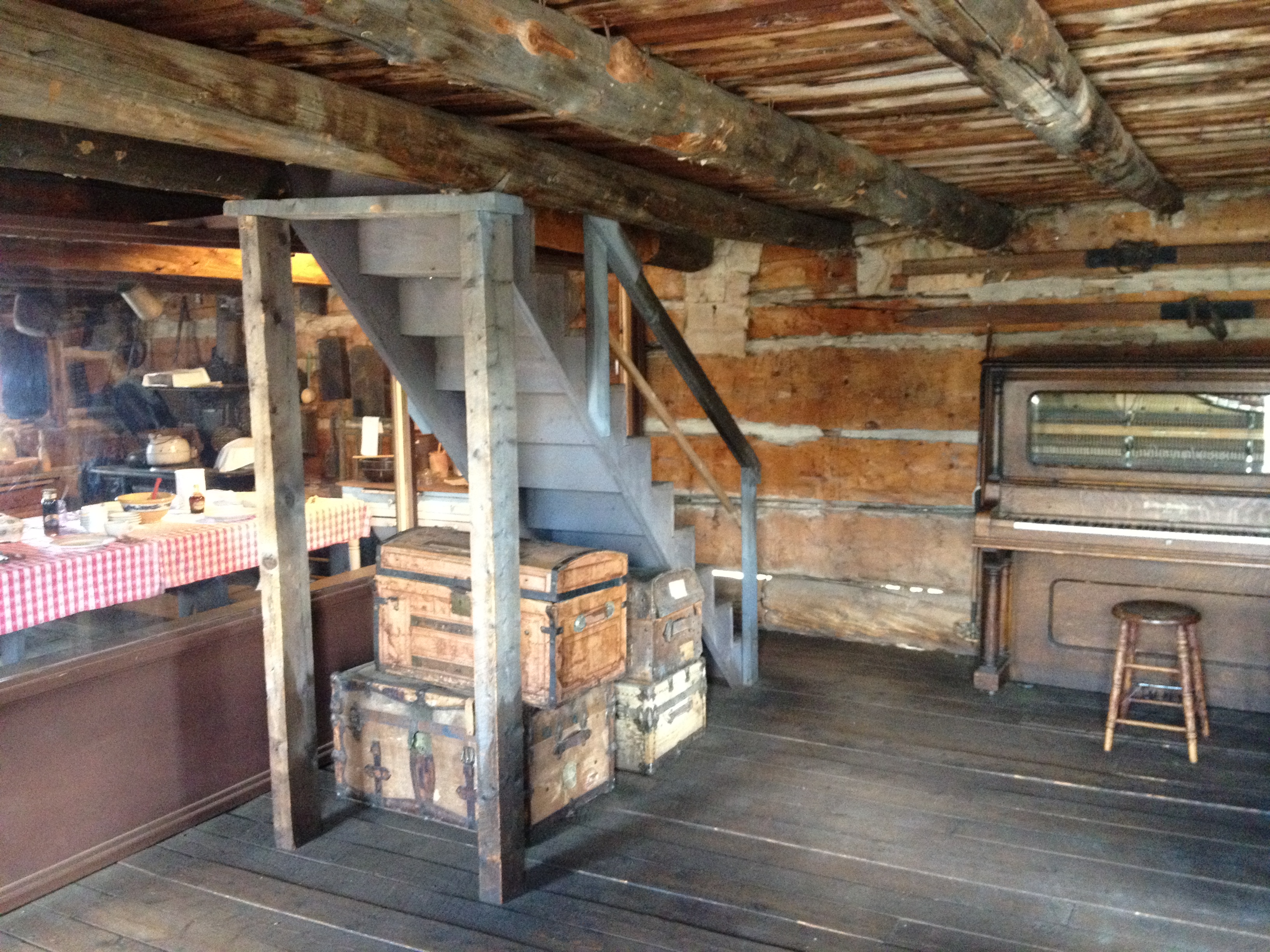
Over 40 buildings were preserved, from homes, to the general store, saloon, blacksmith, and all of the quintessential buildings needed to make a true “old west” town.  Each building contained a significant amount of artifacts from that era, and museum attendees could actually walk through almost all of them and see most of the items used in day to day life here up close.  Walking through all of these buildings, I could actually imagine myself back in the old west.  I could picture myself living the life of the 300 or so residents of this town during that time period.  Overall, I have visiting my fair share of recreations like this, and this one has been the most realistic!

IMG_0956 IMG_0957

It is quite rare that any kind of museum, or historic town can lead to someone actually imagining themselves to be there!  However, there I was, imagining myself washing my clothes at the wash house, picking up supplies at the general store, boarding the train, and even getting involved in a game of cards at the saloon as if I were in the movie Maverick.  And all this was after I was expecting an entire museum about an animated T.V. series!

Also included in this museum was a 10 minute film strip about the town, and some basics about the history of the area.  All of this is not too far out of the ordinary.  As I visit more historical locations throughout the west, I have come to the conclusion that two themes are emerging from the beginning of the white man’s history of the west; fur and gold.  Most of the trails and even some of the towns in the area appear to have been established by fur trade, or gold rushes.  However, every gold rush appeared to have come to an end within a decade.  Some towns, like this one, found another niche (in the case of Fairplay it was ranching, and being a business center and county seat).  Others, like the ghost town I wandered through this past weekend, simply died when the gold ran out.

Overall, though, I can’t help but find it somewhat ironic that the history of the west was forced so much by fur and gold.  So, it feels to me that as much as we want to characterize the old west with images like this one.

11375403-cowboy-or-a-mountain-man

I can’t help but think that since most of the early settlers were searching for fur and gold, the old west can be just as easily characterized by images like this one.

12874308-beautiful-woman-with-clean-fresh-skin-wearing-gold-necklace-and-furry-coat-looking-straight-at-the-c

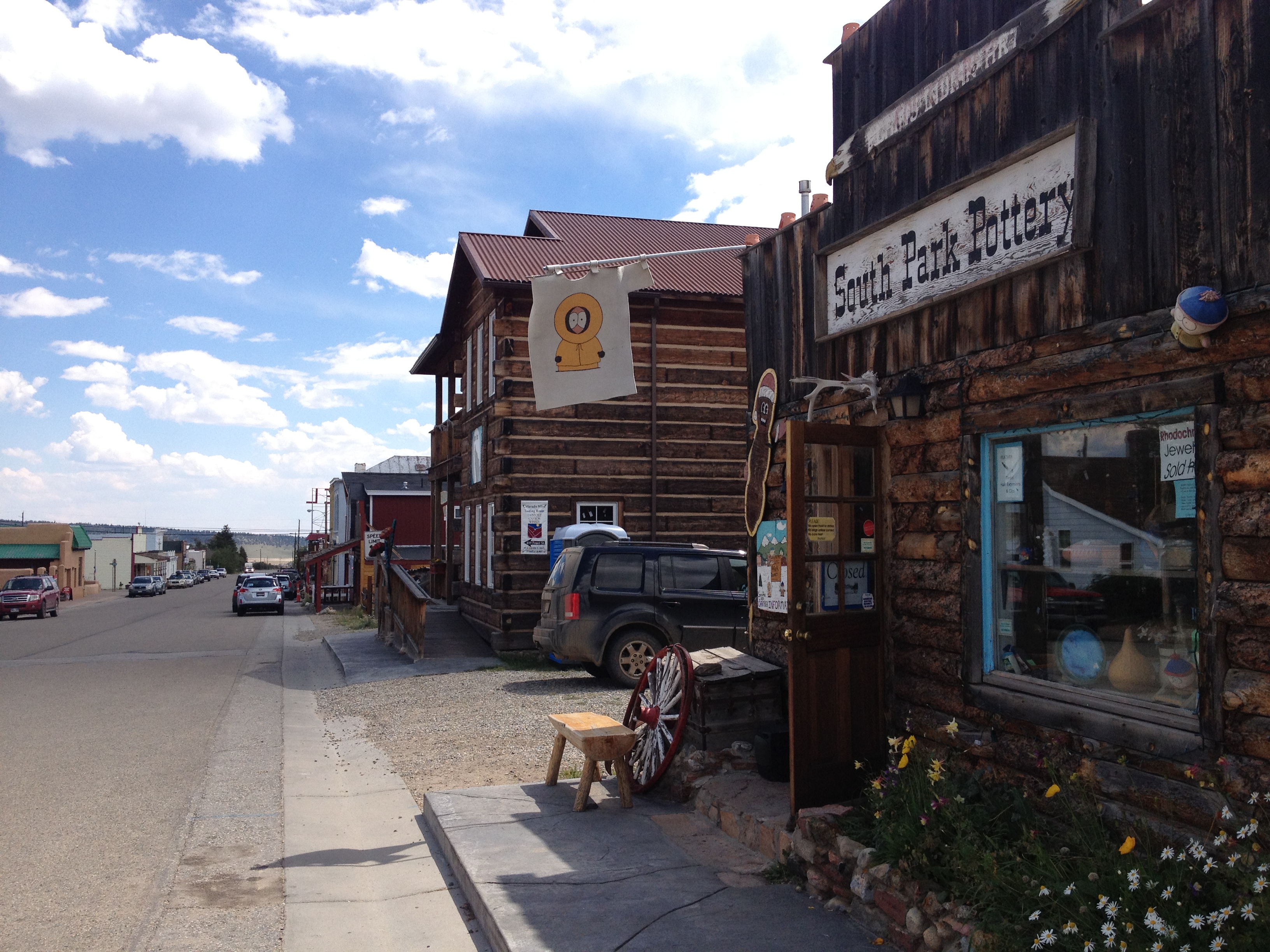
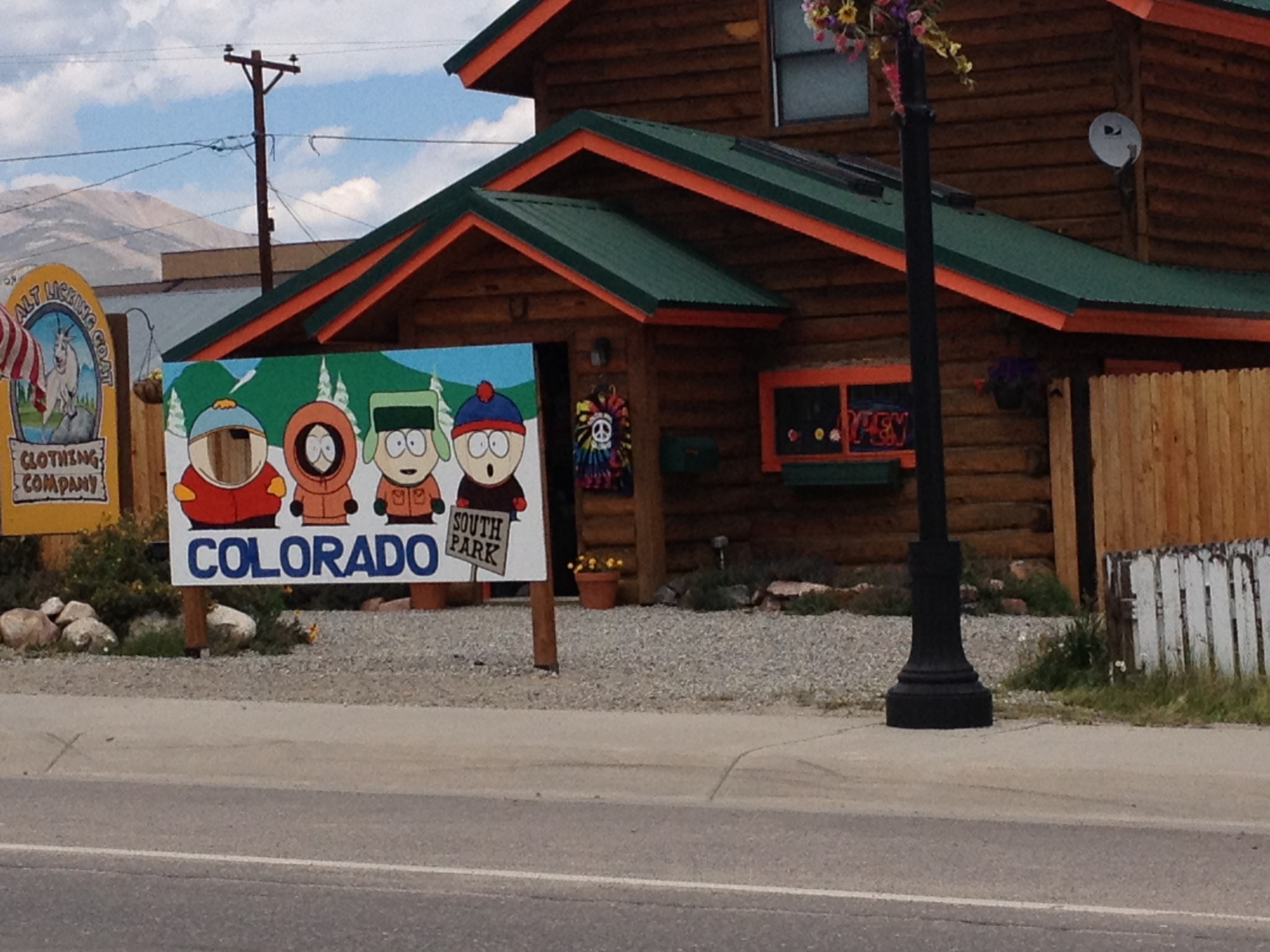
This recreation of the old west town was, of course, walled off from the rest of the town that was significantly more modern looking.  A few gift shops appeared to be trying to capitalize on the town’s association with the show, but not as many as I had expected.   The town had a somewhat similar layout to most small towns I am familiar with, with a central business district, and some larger shops and houses on the outskirts.  But, compared with the only other town above 9000 ft. I have spent a significant amount of time in, Breckenridge, it was a lot less dense.  The central business district was quite spread out, amongst a few streets and a fairly large area.

IMG_0959 IMG_0961

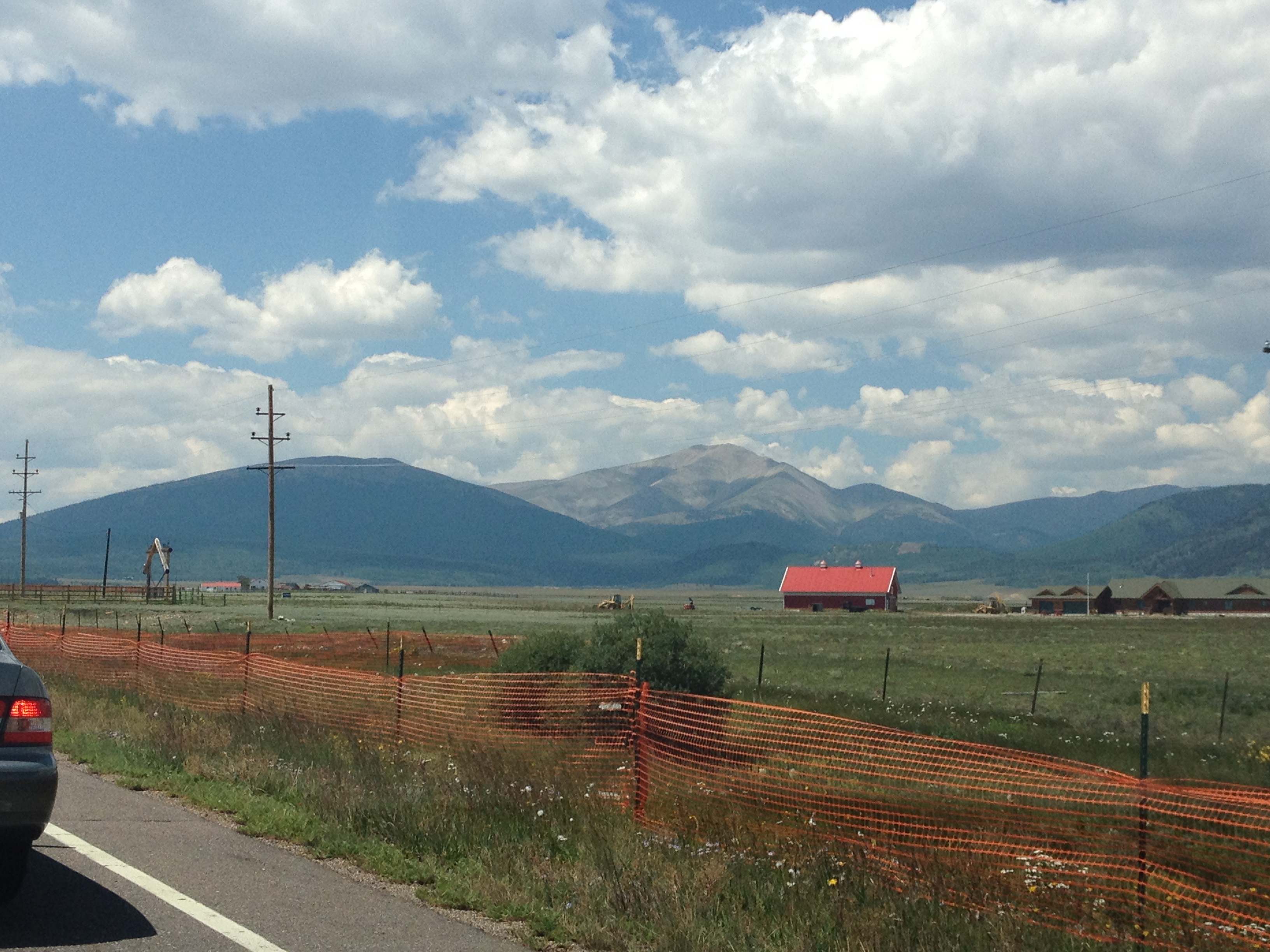
The one thing that definitely did remind me of the show, though, was the mountains outside of town.  Some of the mountain views from near town actually seemed to appear almost exactly as it appears in the cartoon.

IMG_0951


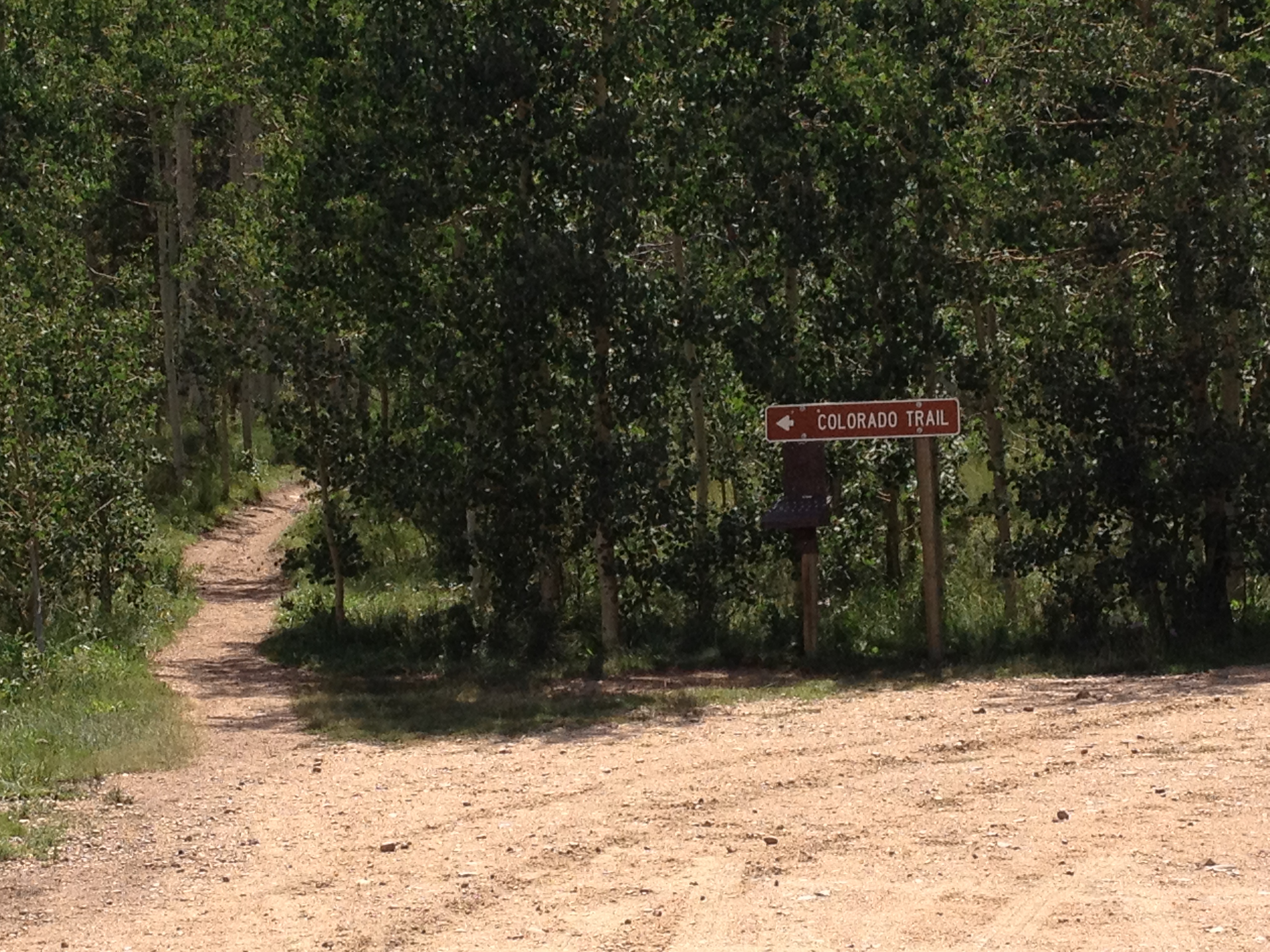
On the return trip, I once again encountered the Colorado Trail, at Kenosha Pass, which is the mountain pass that separates the “South Park” area from the Front Range.  I do find it odd, though, that this mountain pass is at an elevation less than 100 feet higher than the elevation of the town I was just in.


IMG_0962 IMG_0963

Finally, the two images above that I did not take, the mountain man and the woman with the fur and gold, are credited to the site http://www.123rf.com.


A Continental Crossroads

20130613-170749.jpg

Many places refer to themselves as a “crossroads” of some kind. In fact, every sign welcoming motorists to the state of Indiana refers to the state as the “Crossroads of America”. Indiana’s claim to being the “Crossroads of America” has to do with some of the earliest long distance highways, including the Lincolnway, which pre-dates Route 66, passing through Indiana. Even now it is a place many have to drive through to get to destinations like Chicago, Detroit, and Louisville.

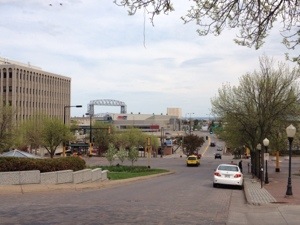
Duluth’s claim to be a “continental crossroads” seems even more substantial than Indiana’s. The North American continent includes Canada and Mexico, as well as the United States. Duluth makes this claim based on railroads and waterways. Duluth was an important rail hub in the heyday of the Minnesota lumber industry around 100 years ago, with lumber from points north being hauled to Duluth to make connections to other areas, both by rail and by ship via Lake Superior.

With this history, one of Duluth’s major attractions is their historic depot. This depot, located in the center of town, contains several museums, including an impressive rail museum. Many old trains are on display here, and visitors can view the inside of many of these trains, including the passenger and dining cars, as well as the conductor’s cars.

20130613-172745.jpg

One of the most impressive trains on display here was an old snowplow train. This particular model, was used to plow large amounts of snow, as much as 12 feet high. Seeing this is not too surprising given Duluth’s cold and snowy climate. Residents of Duluth undoubtedly put up with more cold and snowy weather than I would ever imagine wanting to experience.

20130613-172935.jpg

Duluth is a place I had never been to before. In 2007, I did visit Bayfield and the Apostle Islands, which are only 90 miles away. But, I never did visit Duluth. I did not specifically avoid coming here, but I did not seek it out either. I guess that would make it kind of a “neutral” place for me. We all have a lot of places like that. Places we would not make a specific point to visit, but would not avoid. Duluth is quite far North, and out of the way of most American road trips. In fact, on the trip here from Minneapolis along I-35, there were plenty of billboards advertising resorts in Canada, specifically Thunder Bay, Ontario.

Duluth turned out to be kind of an interesting place. It is still very much of an industrial town. Many industrial towns in the Midwest have experienced a certain amount of decline, leading to the term “rust belt”. From what I saw here, the decline seems to have not been as bad here, and there still appears to be a significant amount of industrial activity. I almost wonder if this town looks a lot like the other industrial towns in the country looked like back in the 1950s or so before much of this happened.

There also are kind of neat bluffs just outside of town. They kind of remind me of the river bluffs I would encounter along the Mississippi River along I-90, in a completely different part of Minnesota. The town appears to have mostly been built in the lower terrain right along Lake Superior, giving it a neat lakefront. I still wonder if people hike up these bluffs on a regular basis, the way Boulderites regularly hike the Flatirons.

20130613-174102.jpg

20130613-174112.jpg

But what about Duluth’s claims to be a “continental crossroads”? Well, the fact that it is an important shipping port definitely backs up this claim. It was out of Duluth that the tragic voyage of the Edmond Fitzgerald left in 1975. This voyage, intended for Cleveland, was one of a number of journeys taken along the Great Lakes from Duluth over the years. From points north and west, it is the nearest access point to the Great Lakes, which provides shipping access to the Atlantic via the Erie Canal. Also, with a good number of ports along Lake Superior being in Canada, Duluth’s importance undoubtedly stretches beyond the United Sates.

But, does this make Duluth any more important than I had previously thought? Maybe not? I mean, there are tons of airports near an international border that can call themselves “international airports” by virtue of their location more than their flight availability. And, almost every town that refers to themselves as a “crossroads” of some kind have some kind of story to back up their claims. The truth is that, the world is full of crossroads. Routes and trails have criss-crossed the continent for a long time, and along these routes and trails, many important connections have developed in quite a few locations, each with significance in the history and development of our nation. This is actually one of the things that made our country great. It is not once place that made us who we are, nor is who we are just one thing. Everybody had input. And, more importantly, everyone had the right to decline input as well. Minnesota is quite different from Texas, which is also quite different from New York. Each place developed differently, and each “crossroads” across this great continent has their own unique way of life based on what kind of “crossroads” they are.

The Dachau Concentration Camp

Today was a rather somber day.  The weather kind of sucked, could, drizzly, and I doubt it got above 10°C.  We spent most of the day in Dachau at the concentration camp memorial and museum.  Dachau, which is less than half an hour from Munich, was the site of one of the largest concentration camps and the one that set the standard for many others.  Nazis would refer to it as the “Dachau spirit”, when demonstrating how other concentration camps should operate.

I did not expect to spend nearly as much time there as we ended up doing.  In fact, we ended up missing a meal because of that.  Maybe that was fitting for the experience of being at a concentration camp.  As we learned today, those detained in the concentration camps often experienced starvation.  The museum and audio guide had a lot of information.  It also included a detailed history of Adolf Hitler’s NAZI party, and a lot of videos and first hand accounts of the day-to-day life inside the concentration camps.

The overarching theme is just how horrific it was.  Those imprisoned- their life meant nothing, their suffering- nothing.  Many starved to death, were gassed, forced to work, and were mocked and humiliated on a regular basis.  I’d always known about this horrific event, but until today I had never seen actual images and videos of it.  This put it in a whole new perspective.  I was mostly in disbelief about how something so bad could happen.  And it happened in a first world country only several years before my Dad was born.  Maybe that is one reason we are so fascinated with NAZI history, it is not nearly as far removed from us in the early 21st Century United States as Greeks, Romans, Barbarians, etc.

Hitler and the Nazis are brought up and quoted a bit in causal conversation, in my opinion way too callously.  Sure, it may be possible to compare the Defense Authorization Act with some things that occurred in mid 1930s Germany (specifically granting the government the right to detain indefinitely without due process), but after viewing this I feel it is kind of disrespectful to those who actually experienced the holocaust.   We usually bring up Hitler and the Nazis to prove a point.  But, we can probably find a more respectful way to make our points about the political climate in the early 21st Century.

More thoughts ran through my head, as despite our overuse of NAZI comparisons, it is still a very interesting case study in how a major economy/ first world country could go down such an evil path, and so recently too.  The rise of Adolf Hitler in Germany is almost always linked to the penalties and sanctions placed on Germany in the Treaty of Versailles that ended the First World War.  But, what really lead to World War I?  It seems less well known than WW II.  I am sure historians have good theories, but they are certainly less discussed in history class.  Also, were we (US and allies) the good guys in WW I?  After finally learning about Woodrow Wilson’s anti-German propaganda machine in the 1910s (no thanks to high school history class), I just don’t know anymore.  I think this is one reason people love to talk about World War II.  There is a very clear sense that we were the good guys, and NAZI Germany was the bad guys.  Very few wars are like this.  We try to romanticize past wars, especially the Civil War when you learn about it in Illinois, but further investigation shows that it was not nearly as clear-cut as the Land of Lincoln would like it to be.

Another thing that has pestered my in my head about Hitler is why he is always labeled a “right-wing” dictator.  Usually, this is done to contrast him with Communist dictators; Mao and Stalin.  There are important differences.  Most notably, Hitler’s Germany did not squash all corporate activity.  In fact, there were corporations who worked with the Reich.  However, the label is still misleading.  When translated into English, NAZI translates to “National Socialist Movement”.  In the U.S. socialism is considered left wing, at least on economic scale.  Also, many of the propaganda posters for the NAZI party I saw in the museum complained about the evils of greed and capitalism.  Rallying against “Jewish Capitalism” was seen in a lot of NAZI propaganda in advance of the 1932 elections.

I also learned that different groups of people were treated differently inside the camps.  For instance, Austrian nationals captured after the 1938 annexation of Austria were treated much better than Jews.  The more favored groups, while still having it rough, were not treated as rough, and had a higher survival rate.  Before today, I did not know that people were actually occasionally released from concentration camps.  This occurred mainly before the war.  And then there was a period of time in 1943 when they tried to improve conditions in the camps to increase survival rates to meet labor demand for the war effort.

I also did not know that corporations would pay the secret service for slave labor from these camps.  In fact, the German economy kind of became dependent on this labor, much in the same way the pre-civil war South was.  Overall, it was a learning day.  But, after all the walking, and the chilly weather, I was tired, so we did not do much else.

Touring Innsbruck, Austria

The weather was not quite as nice in the mountains this morning, so we took a day off from skiing.  Hopefully we’ll be rested for tomorrow- we plan to ski the Stubai Glacier, a place where it is possible to ski year round (although I don’t think many ski in the summer).

After sleeping in a bit, we hit up the Alpenverein Museum, which is a museum of mountain climbing I saw in an Innsbruck information packet.  This museum was great, and only 4 euro each.  We saw the complete history of mountaineering, including the tools people use to scale a mountain, how people map out mountain passes/routes/terrain, pictures people drew of mountains, stuff about mountain sickness (from high altitude), and stories and thoughts from mountain climbers themselves.

The thoughts got deep, as one mountaineer saw mountain climbing as a metaphor for overcoming our self-induced inhibitions in life, and others saw mountaineering to be associated with freedom in some other way.  However, the thing that stuck in my mind was the story of rope.  Specifically, the quality of rope was improved greatly in 1865, in response to four mountaineers falling to their death due to poor rope quality.  From a 21st Century point of view, it seem as though we should have been using much better rope all along, recognizing that human lives are at stake.  It brings up thoughts about the insurance industry charging inadequate rates in Florida prior to Hurricane Andrew, or the fact that the financial markets had to explode before they stopped leveraging 40:1.  Why are we so often collectively unable to recognize these risks until a disaster of some kind happens?

We went to lunch after the museum at a placed called Maria Van Bergund.  The food was great, but we had a strange encounter.  This woman sitting at the table next to next to ours was wasted (noon Sunday, and we were not sure what she was wasted on).  Abby noticed this first, but I thought it was no big deal, as I continued to share thoughts on mountaineering.  Then, she started asking me questions.  She spoke little to no English.  At first here somewhat less intoxicated friend helped her out (he knew English better).  Eventually, he left and she came over and sat at our table (to be in the sun).  Random people do talk to me a lot.  I feel like I am typically a welcoming person, and when I’m in a decent mood, I give off a fun and approachable vibe.  So, I try to have a conversation with her but I know very little German, so it’s hard.  I think Abby was nervous.  Eventually, she moved to another table, as she desired to sit in the sun and the sun/shade pattern advanced.  When she sat with a random old man, she got asked to leave the restaurant.  This did, however, spark up a pleasant conversation with a nice family from the UK.  Some of these events were strange, and I may have been uncomfortable, but I’d still rather stuff like this happen periodically and deal with the stress it causes than never have anything interesting happen.  Simply put, monotony would suck more than occasional stress, or drama.  I did not expect many encounters with random people in countries where I don’t speak the language, but the way I am, I don’t think I can avoid it, even here.

In the afternoon, we walked about 3 km, partially uphill to the Bergisel ski jump arena, where the 1964 and 1976 Olympic ski jump took place.  I was curious about how people watched this particular event.  It did not seem possible to me, but I think I was overestimating the spatial scale of the jump in my head.  I imagined what it was like for a ski jumper.  According to the info, once you start you accelerate to 90 km/hr in only 4 seconds!  Then, you take off.  You have a view of the whole city while in the air, as well as the entire crowd, and multiple mountain ranges.  Then, you have to land- how mind bottling!

Rome to Florence

Today started with a ride on the fastest train I have ever ridden: The high-speed train from Rome to Florence.  It topped out at 250 km/hr (155 mph).  Traveling at those speeds did not feel too different than traveling at 60, 70, 80 mph as I commonly do in my car.  However, it was definitely noticeable that the scenery was going by faster than what I was used to, and that we were moving much faster than all the cars we saw on an adjacent highway.  There are also a lot of moderate size mountains in Italy.  I think we spent about 25% of this trip underground, in tunnels under mountains.

Our hotel in Florence was much nicer.  Mainly, it was a lot bigger, our hotel in Rome was really kind of small, but I guess that is what to expect in such a crowded area.  Luckily, our hotel room was ready for us when we got there, which was before 11 AM.  So, we were able to drop off our bags and go straight to the Galileo Museum.  This museum is actually not very well known, but it was our choice to be unique and go somewhere different.  This paid off for us, as the place was much less crowded than many of the other sites in town.  The museum itself was a really good deal, for only 4 Euro each, and it is quite stacked with ancient scientific instrumentation.  The museum also contained a historical narrative of the history of science.

After visiting the museum, my mind was fixated on the Renaissance.  Specifically, why it happened.  Why was it that people suddenly became interested in this stuff after nearly a millennium of seemingly not caring about any of it?  From sometime in the 1400s onward, there’s been a cascading of scientific discovery and invention; new instruments to measure the weather, directions, proof the Earth is round and not the center of the universe, observations of other planets, electricity, the steam engine, etc.  All of this made our lives much better than those that lived 1000 years ago.  But, what triggered it all?  There seemed to be an interest in navigation after European Nations discovered and started colonizing the new world.  But that was discovered in a quest to find trading routes.  So, was it all just a quest for cheaper cooking supplies, and spices in the aftermath of Marco Polo’s epic journey to the East?  Or, was it a new “age” of sorts, as explained by both Western and Eastern Philosophy/ astrology where humanity undergoes cyclical trends both long term and short, where thinkers like Aristotle and Socrates lead the emergence, or Renaissance out of the previous dark age (in the aftermath of the collapse of the Mycenaean civilization), and Galileo and Copernicus leading the emergence, or Renaissance being discussed here.

Florence is a beautiful city.  We went out ourselves exploring it, after going to the museum and eating lunch.  First, we climbed some outdoor stairs to the top of the Michelangelo Garden.  Then, we climbed the indoor stairs in the Duomo.  That is where we encountered the most annoying American tourists of the entire journey.  This family was climbing the stairs (there are a lot of them) to the top of the Duomo.  The mother and the oldest son were behind us, and the father and the younger daughter were in front of us.  The mother in the back was getting claustrophobic and kept complaining- over and over again.  On at least six occasions, she threatened to turn around and go down.  The last one was after the father/ daughter had informed her that they saw the top!  The only one in that group I respected was the little girl.  She was like 6 years old maybe, and she actually taunted everyone else.  The older son kept asking the Mom is she was okay.  I bet she had expected climbing this Duomo to be exactly like going to the top of the Empire State Building, with a nice fancy elevator.  These people probably give American tourists a bad name.

The Arzo River, all day long, was filled with rowers.  No other water activites were going on.. NO … NINE!  No boats, no cruises, only rowing.  It is like a local law.  Also, the tops of the buildings looked like Mexico/ New Mexico (red clay).  We kind of enjoyed walking around here more than Rome.

Finally, at the end of the evening I got to try two Italian beverages.  Grappa, which I thought tasted like a combination of Vodka and bread.  The beverage is drank by Italians in a similar way that that one beverage in the movie My Big Fat Greek Wedding, you know, the tall one that Ian’s parents get drunk on, is drank by Greeks.  Also, Martini, a sweet vermouth beverage.  I enjoyed this one very much.  Both of these beverages were given to me for free.  How’s that for Italian hospitality.