Category Archives: transportation

The Way We Used to Travel

IMG_2512

One hundred years ago, most of us traveled on steam engine trains.  The proliferation of railroads across the continent during the 19th Century revolutionized how we got around, and connected us in ways we had never been before.  At the start of the 19th century, it took Lewis and Clark multiple years to get from one end of the continent to the other.  By the end of the 19th Century, that trip could be made in only one week by train.

During the 20th Century, more and more people were able to afford automobiles and flights.  Many of the train lines across the country went away as people switched transportation methods.  Those that remain have long since converted to more modern technologies; diesel or electric, and are primarily used for commutes between cities and/or suburbs at times of high traffic volume.

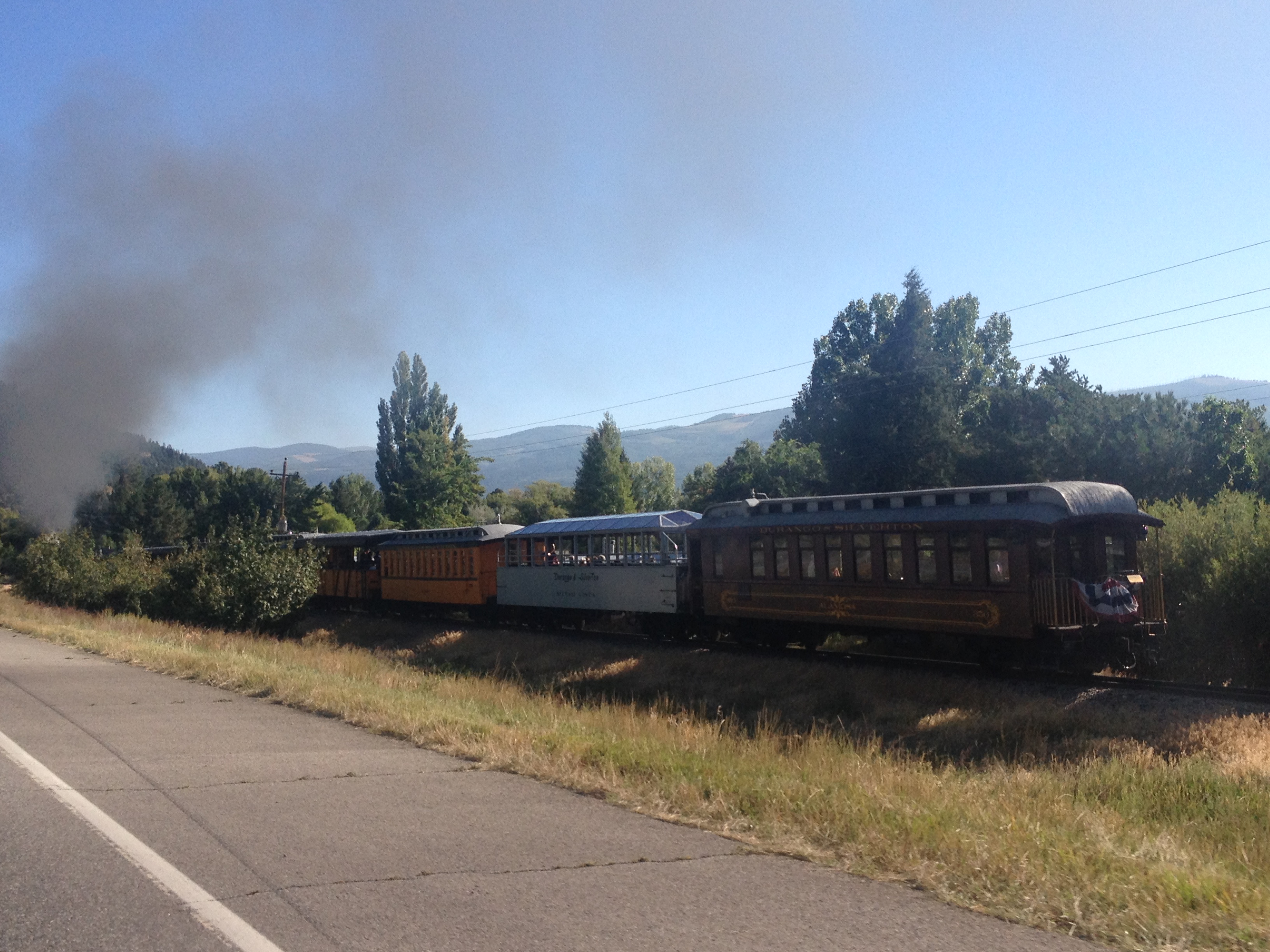
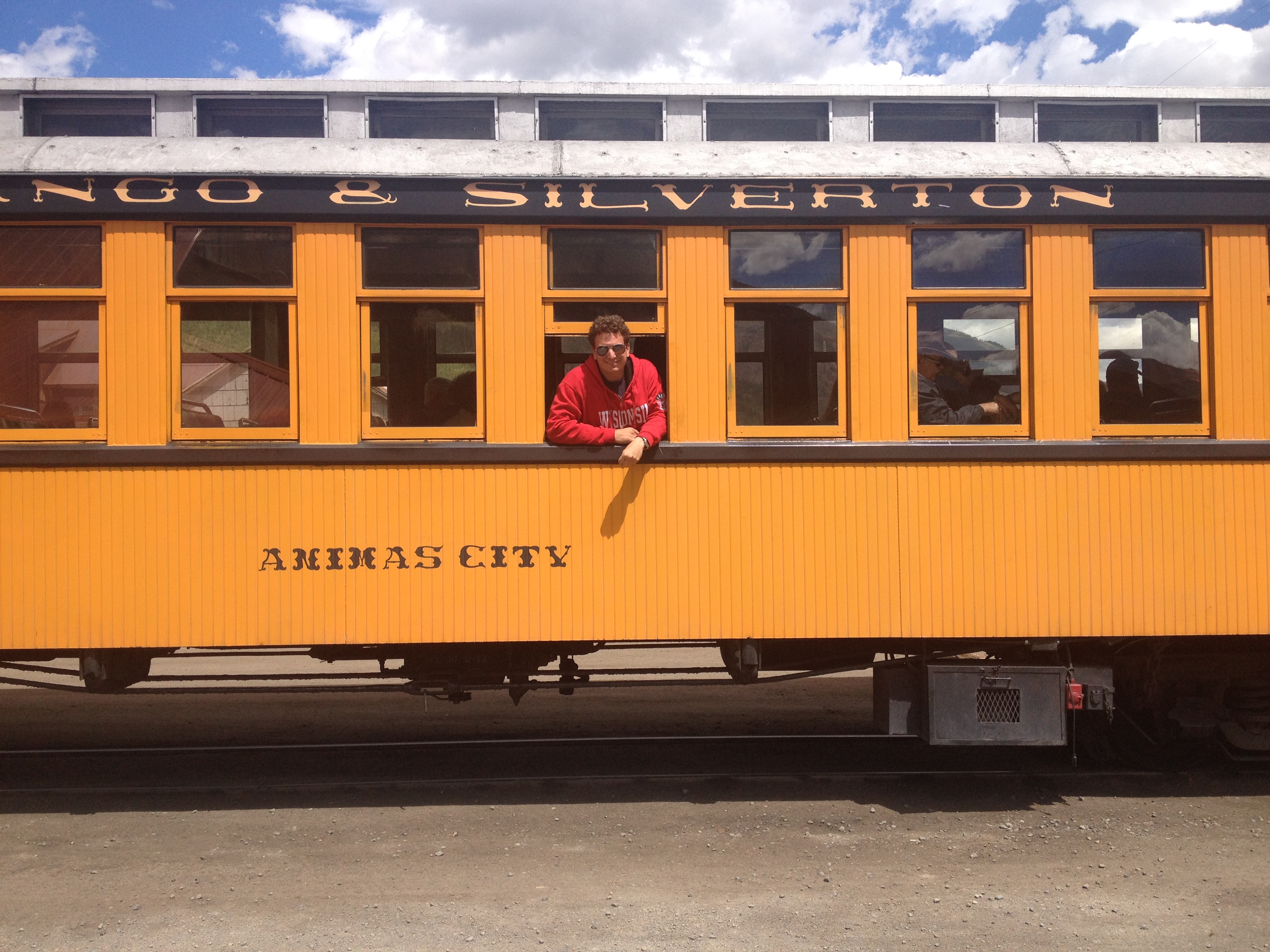
There are a few places where one can still ride a steam train, exactly how we used to ride in the late 19th and early 20th centuries.  One of those places is in the San Juan Mountains of Southwestern Colorado, where a Narrow Gauge Railway offers daily trips between Durango and Silverton, primarily for tourism purposes.

IMG_2475 IMG_2477

The train schedule is set for tourists to ride the train from Durango north to Silverton in the morning, and then return in the afternoon.  There are three departure time options, the earliest of which (and the one we took) departs at 8 A.M.
IMG_2479

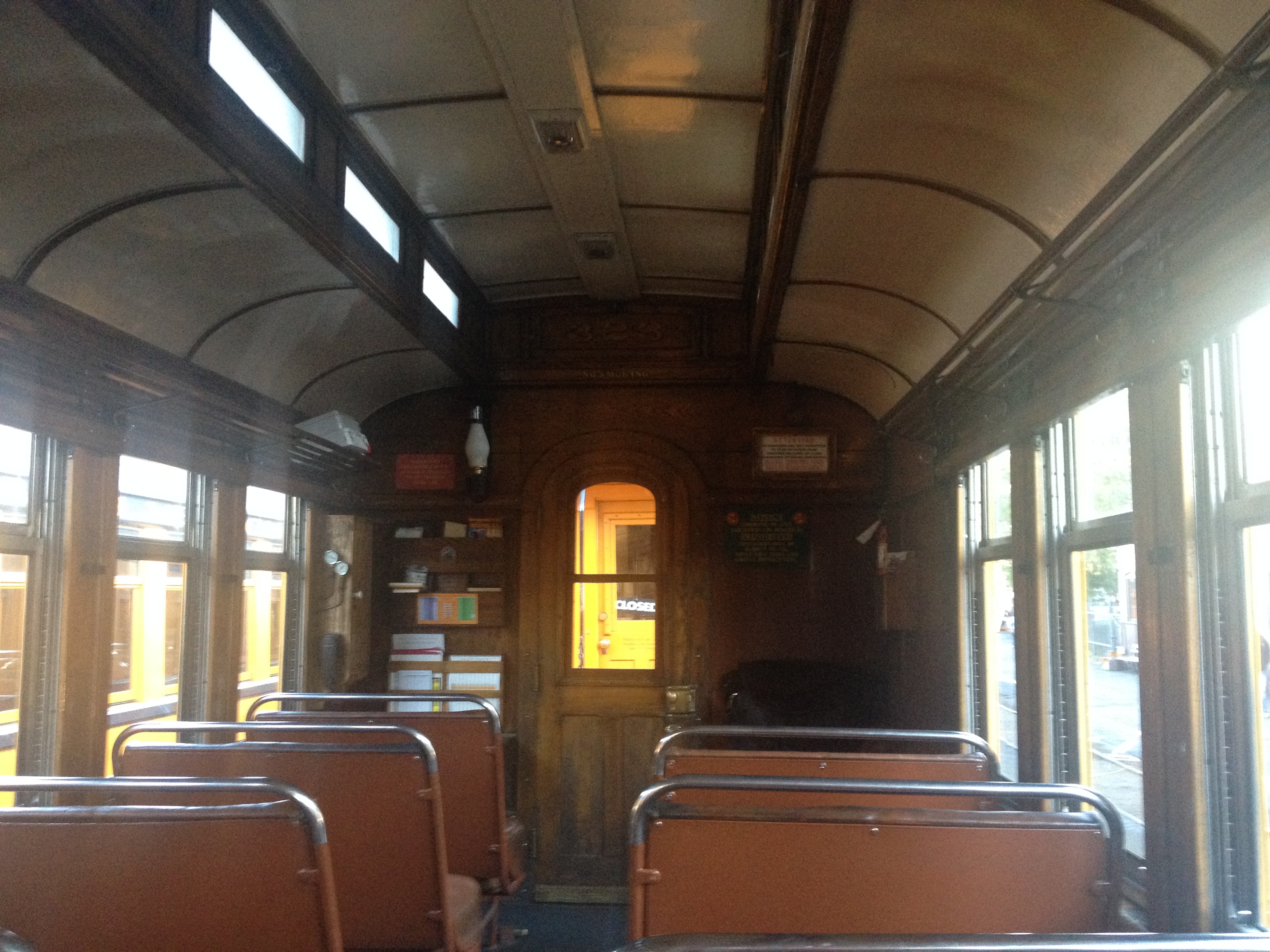
Part of the novelty of taking a train ride like this is how authentic the ride is, including the inside of the train.  Today, we are accustomed to traveling with a higher level of comfort than this.  But, the inside of this train definitely had the same exact feeling as one would have experienced one hundred years ago, making the experience as authentic as one can get.

This particular train route, from Durango to Silverton, follows alongside the Animas River the entire length of it’s 45.2 mile route.  The breathtaking scenery in which this train traverses makes the train ride appeal to many different kinds of tourists, as opposed to just train enthusiasts.

IMG_2481 IMG_2485

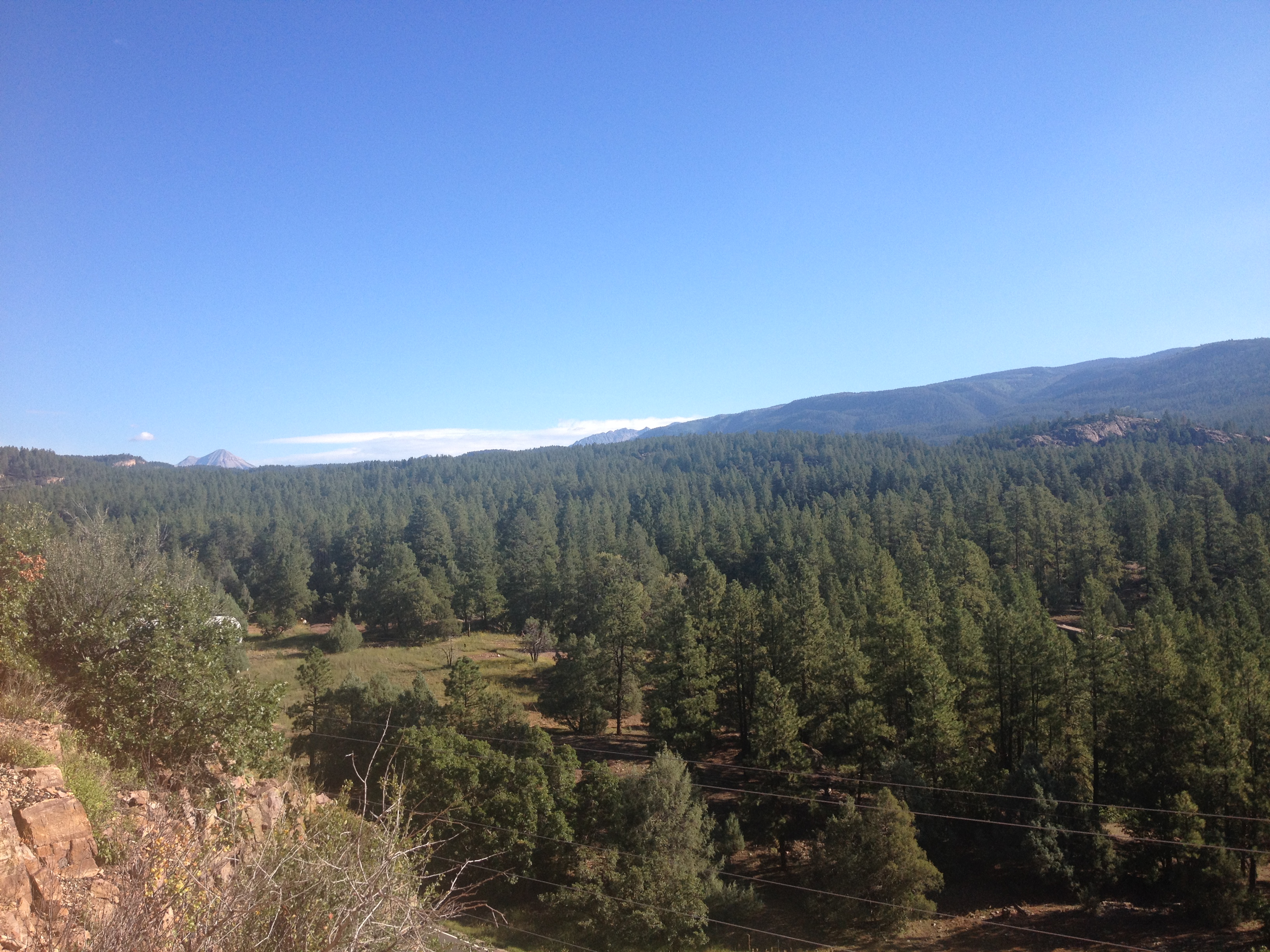
The train leaves Durango, at 6512′ above sea level, and begins it’s climb quite slowly, through a wide open river valley.
IMG_2493 IMG_2543

For the first section of the trip, the train follows the same path as the highway.

IMG_2513 IMG_2497

Some 15 or 20 miles into the trip, the train deviates paths from the highway, at a large lake called Electra Lake.  This is where the scenery really becomes quite unique and breathtaking.

IMG_2502 IMG_2504 IMG_2515 IMG_2516

The river valley becomes much more narrow as it meanders through the Needle Mountains.  The narrowness of the valley is the reason the train is “Narrow Gague”, and also the reason that roads could not be built to follow the river valley.

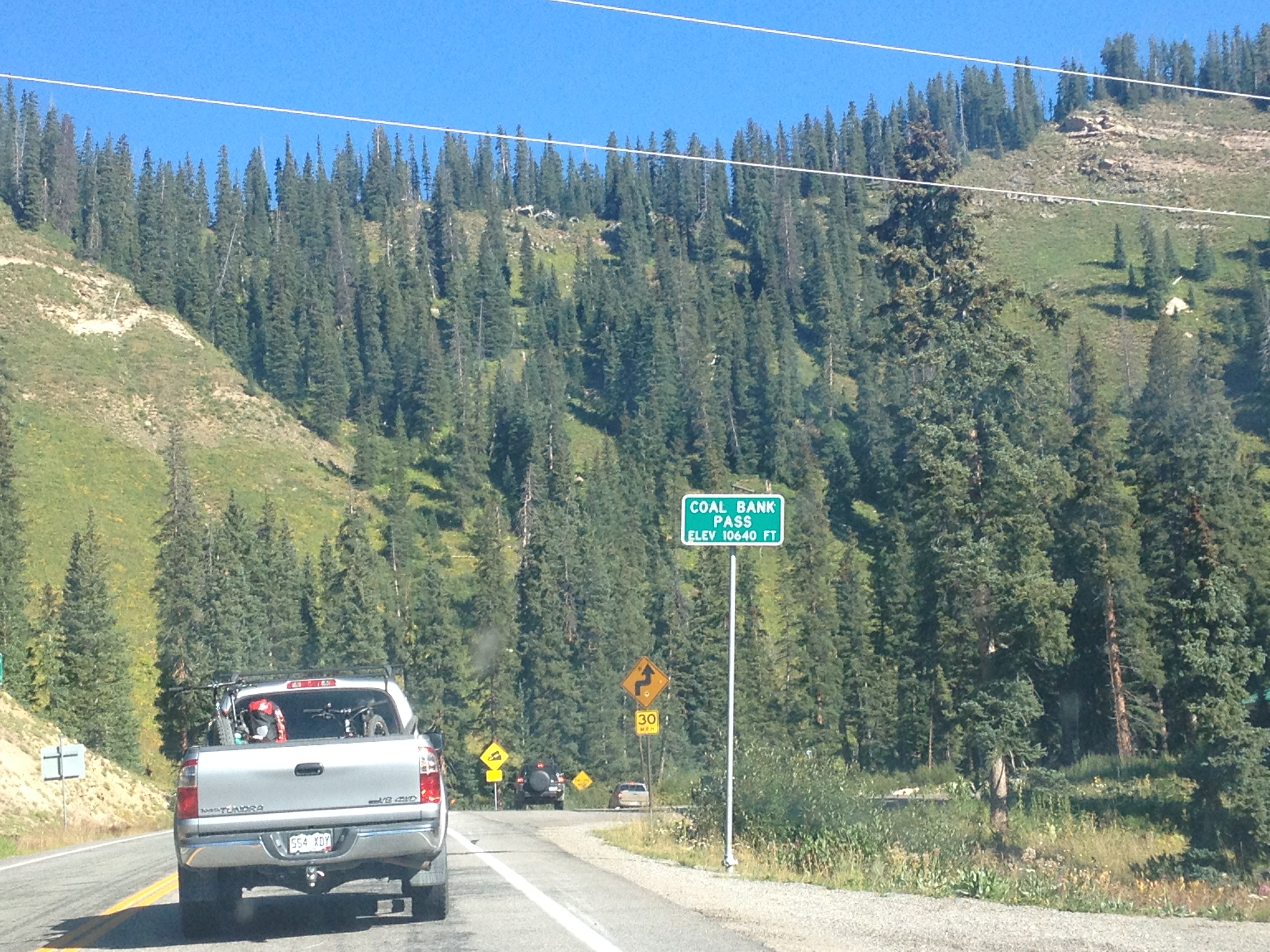
“Million Dollar Highway”, the highway that connects Durango to Silverton (and eventually Ouray), was necessarily built along a different route; traversing two mountain passes well above Silverton’s elevation of 9300(-ish) feet.
IMG_2547 IMG_2548

The route along “Million Dollar Highway” is also considered very scenic, but in a different way.  In fact, this highway is also a popular bicycle route, and even the venue of an annual bicycle race.  I would definitely recommend experiencing the journey from Durango to Silverton in both the old fashioned (steam train), and the modern (by car or with a nice road bike) way if time permits, as each set of views are great in a distinct way.

IMG_2517 IMG_2521 IMG_2522 IMG_2524

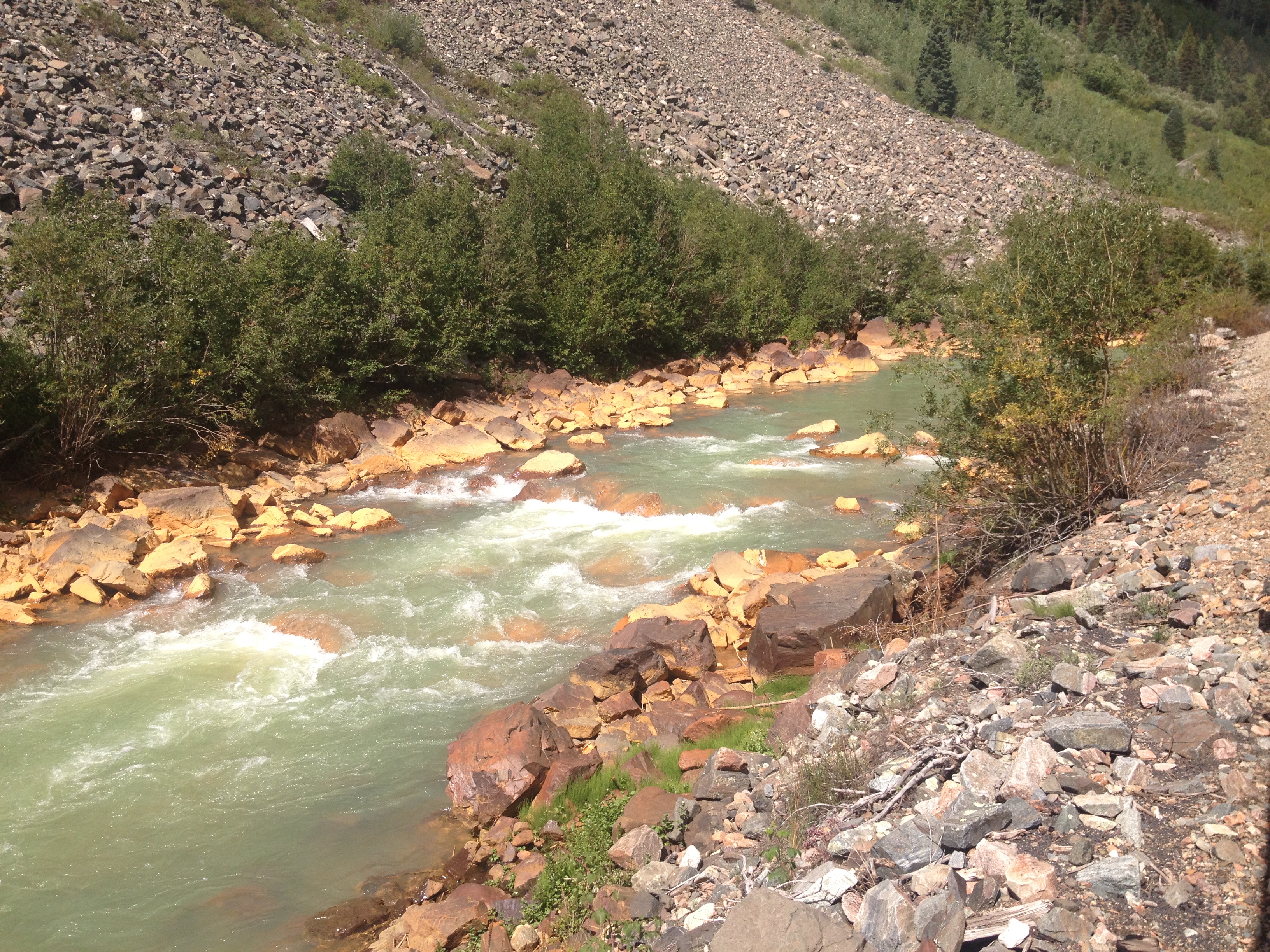
The train completes it’s journey into town in the heart of the Needle Mountains, where the gradual change in the color of the rocks surrounding the river reminds riders of the town’s history as a destination for miners.

IMG_2550 IMG_2552

Along Million Dollar Highway, motorists and cyclists view the Needle Mountains from both a higher elevation and a little bit of a distance, seeing them in their entirety.  This is followed by a descent that first winds around Molas Lake, and then provides an aerial view of the town.
IMG_2525 IMG_2534

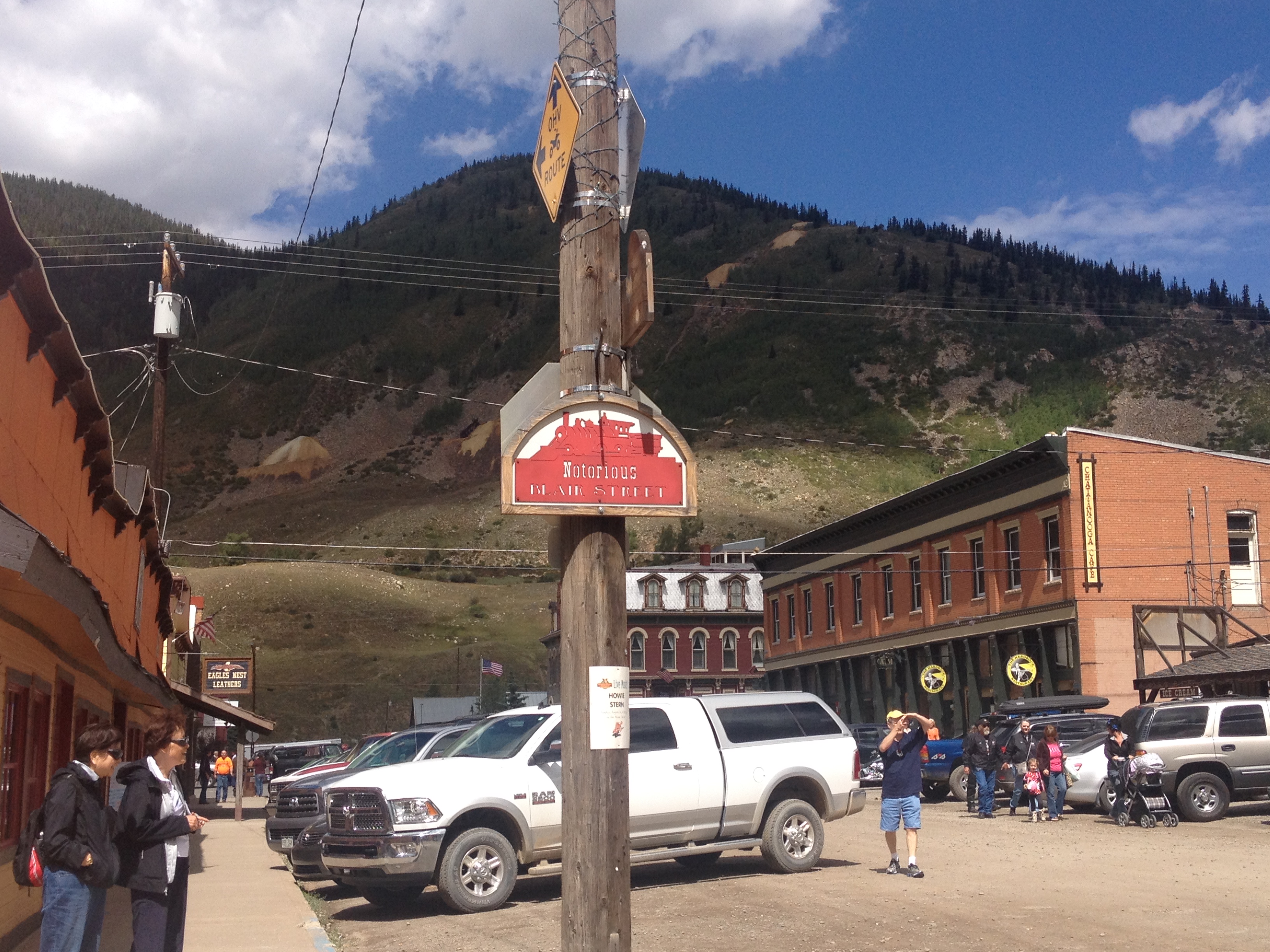
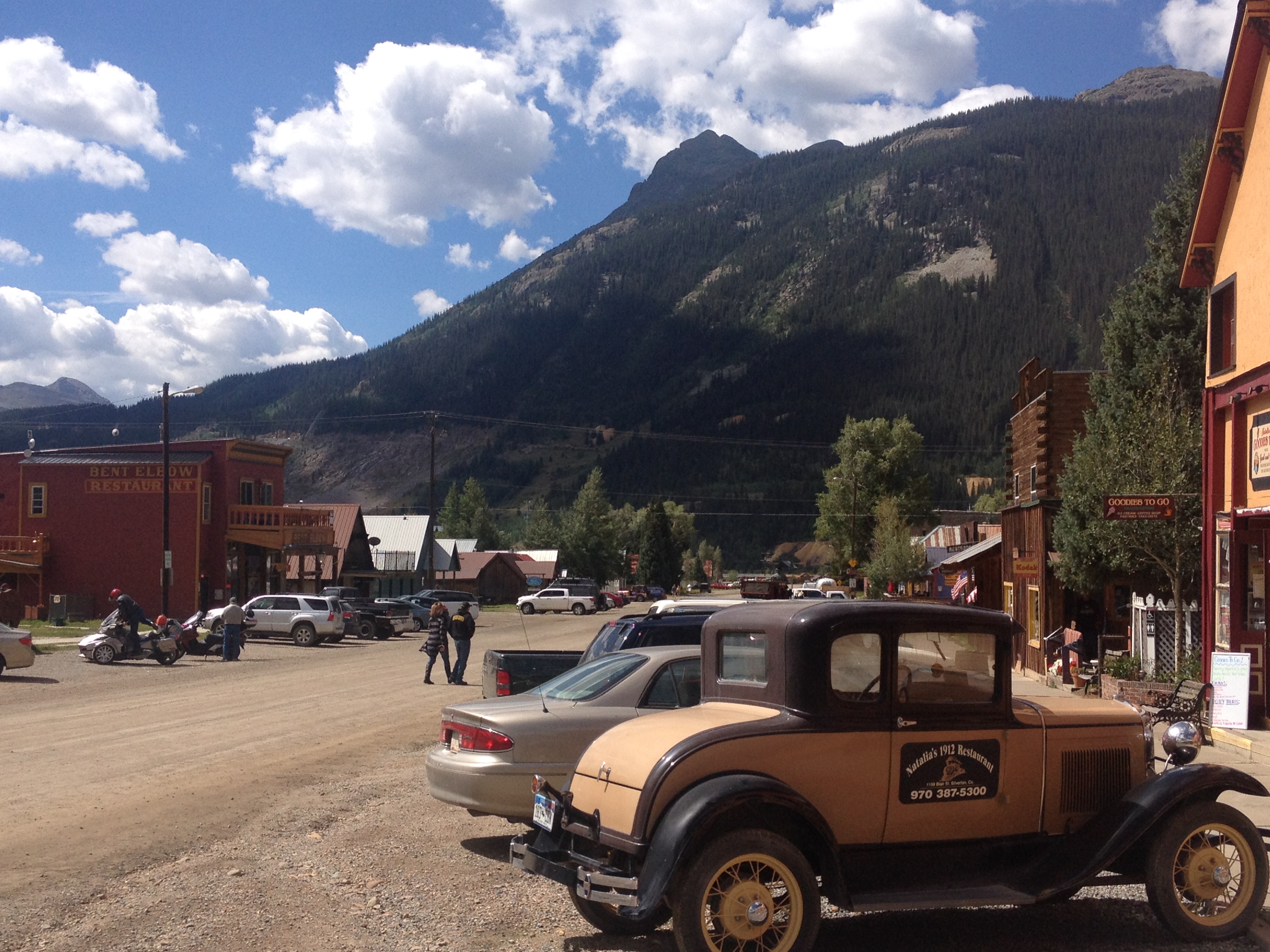
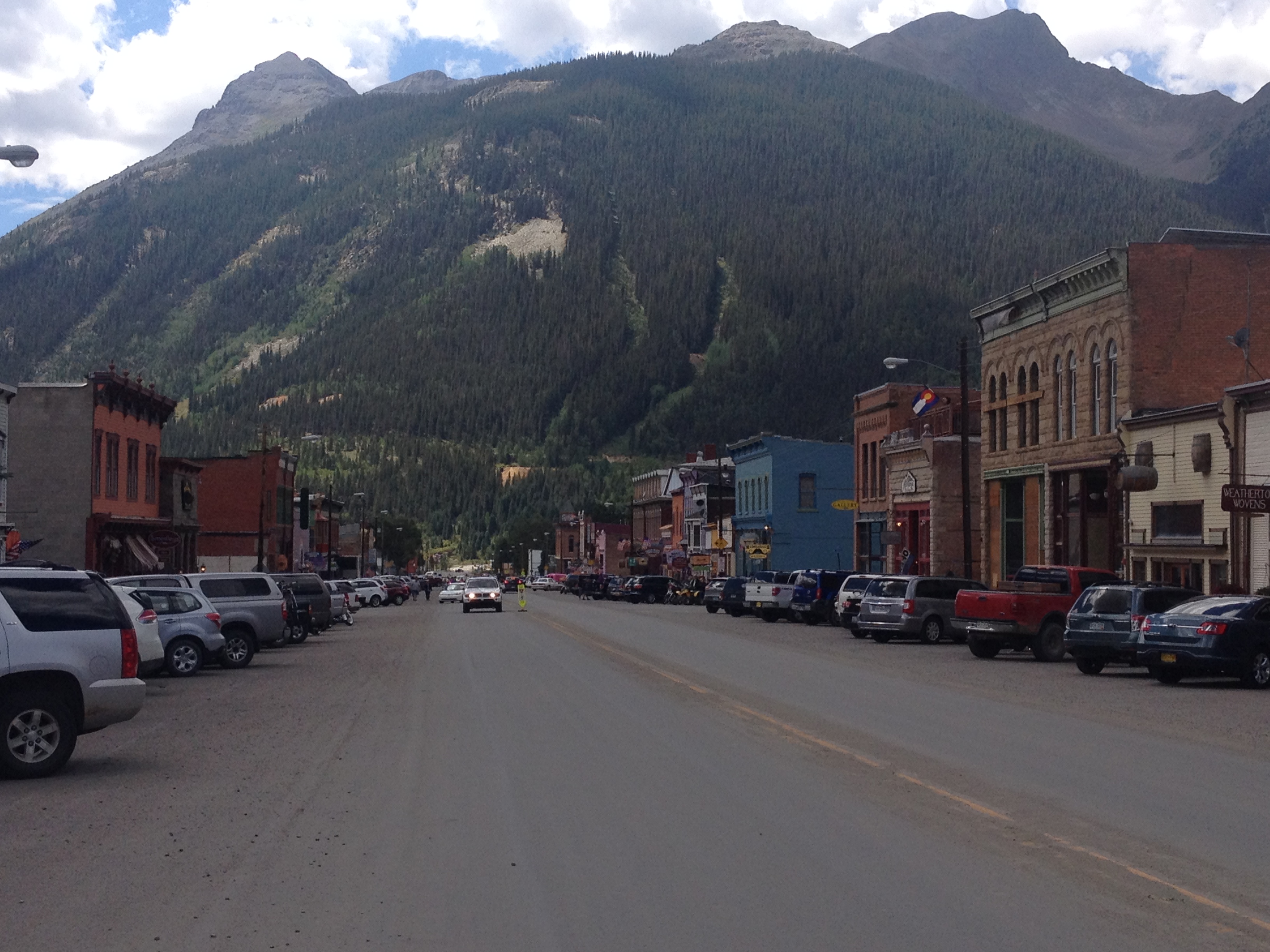
Silverton is quite the unique place as well.  As soon as I stepped off the train, I felt as if I had entered the Old West.  In fact, I have never felt more genuinely in the Old West in an operational town (as opposed to a restoration like South Park City) as I did in Silverton.
IMG_2527 IMG_2530

With the exception of Main Street, Silverton’s roads remain unpaved.  Many of the storefronts are still reminiscent of Old West businesses, in design and font, and there are even a few cars that resemble those produced in the early days of the automobile’s availability.

We at a restaurant called Grumpy’s Saloon, right in the heart of town.  This restaurant also felt like an Old West recreation.  Between the wall decorations, the waitresses dressed clothing that seemed like it came right out a film like Maverick, and an old man playing tunes on the piano, it actually felt as if they were trying too hard.

IMG_2528 IMG_2529

The only real drawback to taking the Durango-Silverton Narrow Gague Railway is the length of time the trip takes.  A trip of only 45.2 miles actually takes close to three and a half hours each way. By contrast, the trip by car took roughly and hour.  And, while it may take around the same amount of time for a cyclist like me to get from Durango to Silverton, the mainly downhill return trip could likely be done in around two hours.

I guess, like all other aspects of this trip, the travel time is also true to the exact way it was one hundred years ago.  While it was great to get the real experience, the return trip did start to drag on a bit, particularly when the train entered the less exciting scenery in the later part of the return trip to Durango.  My advice would be to either pay the extra money to ride the bus on the return trip, or to bring a book or magazine for the last 60-90 minutes of this trip.
IMG_2532


The Future of the West

IMG_2302
Earlier this summer, the new and improved Union Station opened in downtown Denver.  The station was rebuilt in an effort to accommodate several new train lines that are currently being built in the Denver metro area.  By the time this process, known as FasTracks, is complete, the metropolitan area will finally have an extensive rail system connecting many of the major employment, residential, and cultural institutions in the region.

As not only Denver, but the entire region, grows in population, this facility will serve a significant purpose.  Nearly every major city has one or more central transit hubs.  These transit hubs, such as New York’s Penn Station, often serve as a connecting point between multiple transit systems, making transit in and around the region easier.  Although only one of the new FasTracks lines has officially opened, Union Station is already prepared to serve this purpose.

IMG_2292

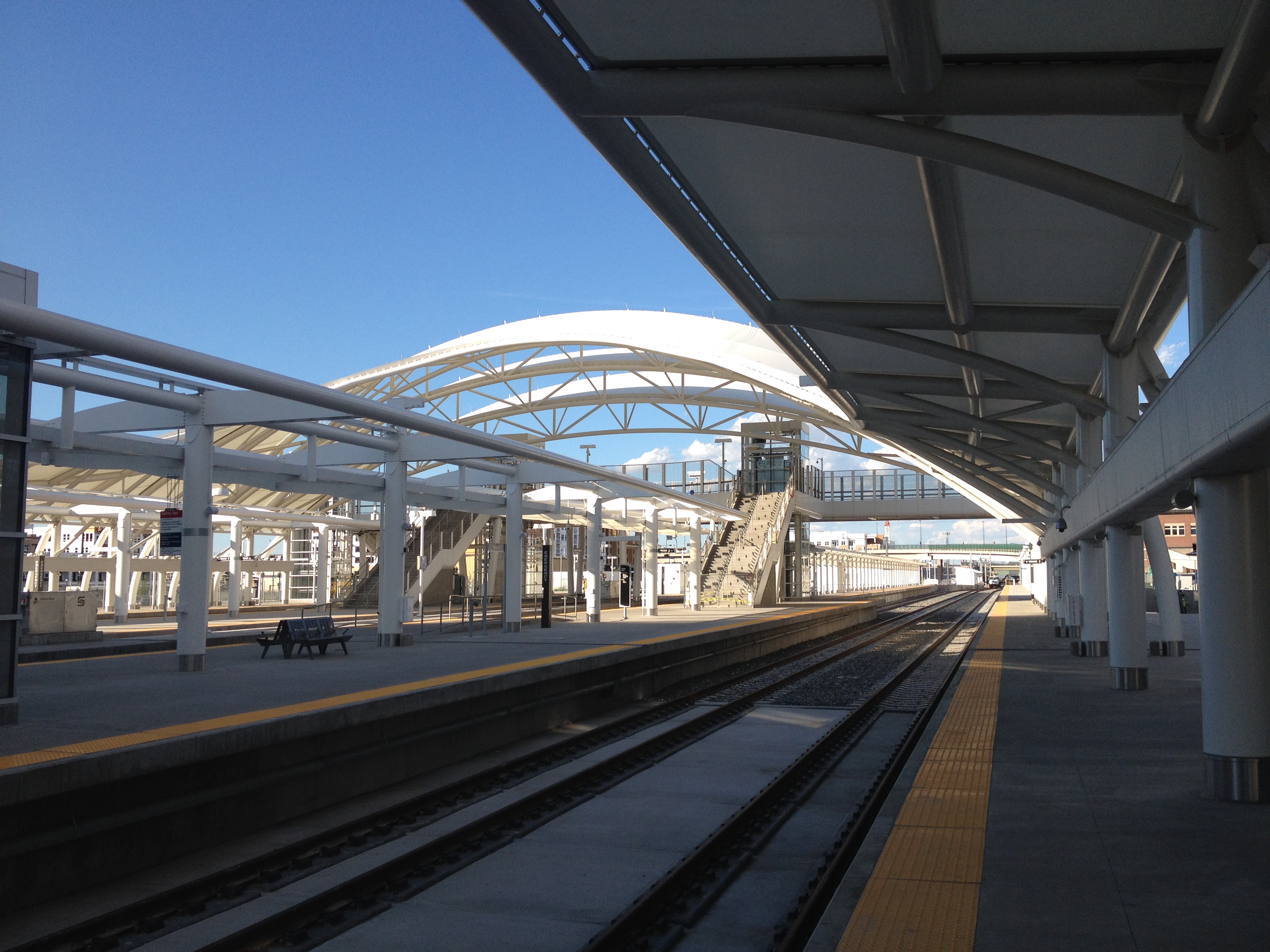
The most significant aspect of the construction of this facility, was, of course, the building of new train tracks and platforms.  With multiple tracks, and multiple platforms, Denver’s central train station is, for the first time, looking like the types of train stations I am accustomed to seeing in major cities with advanced transit systems.  In fact, seeing the pedestrian bridge with stairways to each platform actually reminded me of the train station in Jamaica, Queens, where several lines of the Long Island Railroad join, I would frequently transfer trains as a kid.

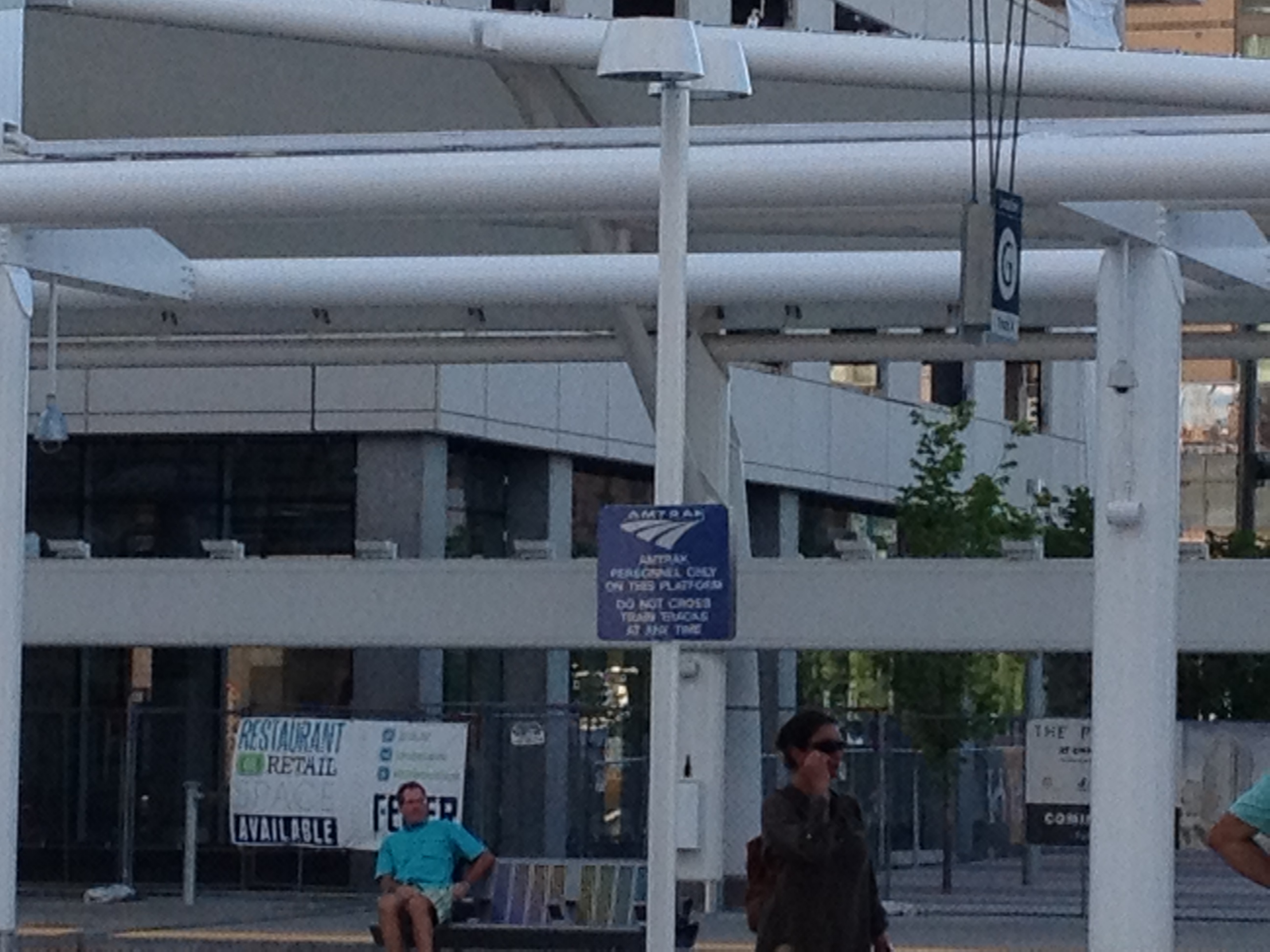
The new train lines in the RTD system, including the all important line to the airport, which will begin operations within the next 24 months, will all board on these tracks.  However, for now, the only train operating on this set is the AMTRAK (the other trains operate on the light rail tracks on another platform a block away).

IMG_2294

Unfortunately AMTRAK operates only one line through Denver, the California Zephyr, which runs from Chicago to Emeryville (near San Francisco).

I seriously doubt that I will ever ride this train.  There is only one train option in each direction per day.  Each morning, a Westbound train is scheduled to arrive at Denver’s Union Station at 7:15 A.M., and depart at 8:05.  Each evening, an Eastbound train is scheduled to arrive at 6:36 P.M. and depart at 7:10 P.M.

In addition to the lack of additional options, according to the schedule, the trip to Glenwood Springs (on the Western Slope, and a major tourist destination) takes just under 6 hours.  The return trip is scheduled to take over 6 hours!  According to Google Maps, the drive from Denver to Glenwood Springs takes 2.5 hours (without traffic).  Even for those without a vehicle, both Greyhound and Colorado Mountain Express offer bus service to Glenwood Springs in under 4 hours.

IMG_2296 IMG_2299

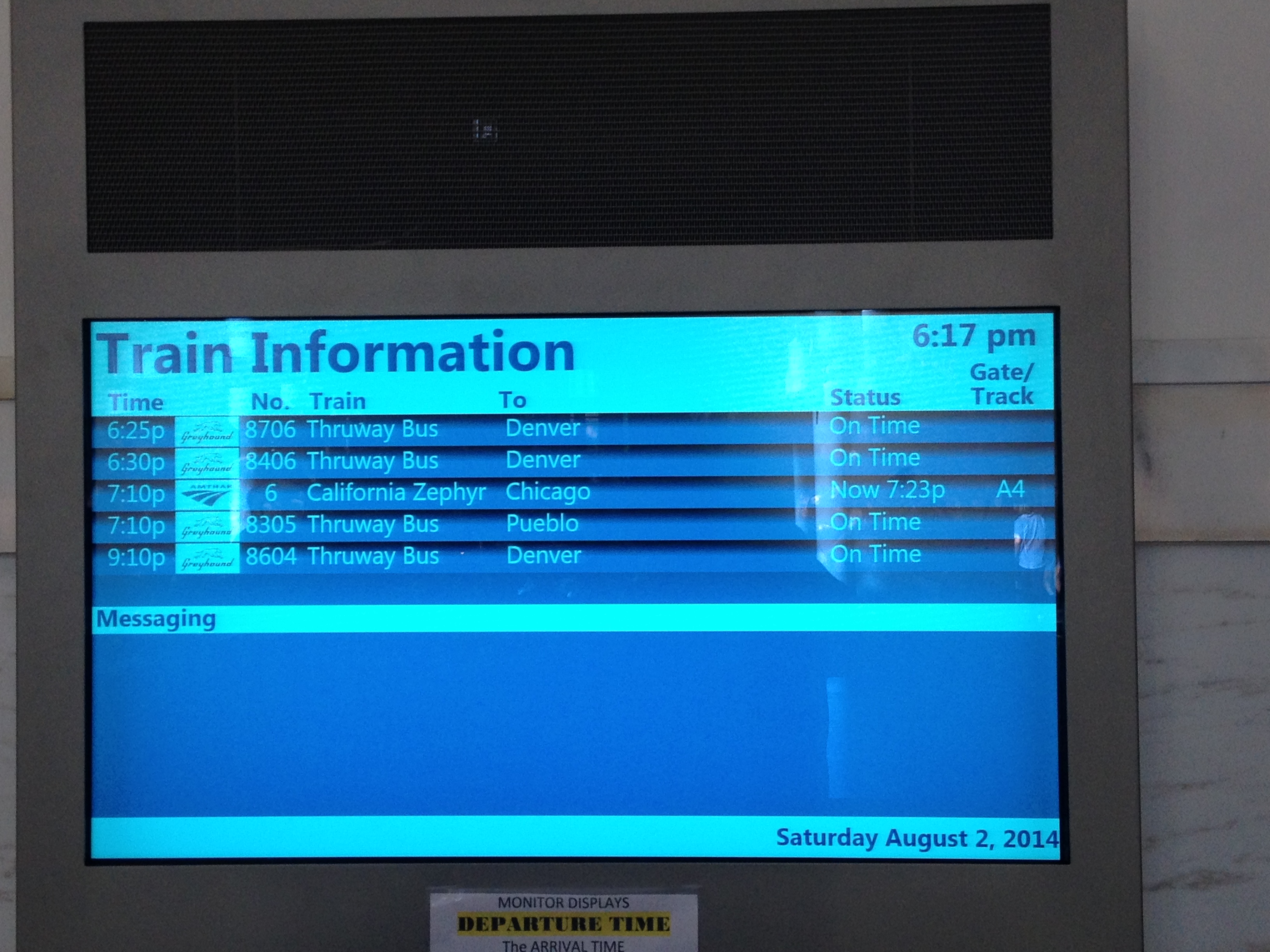
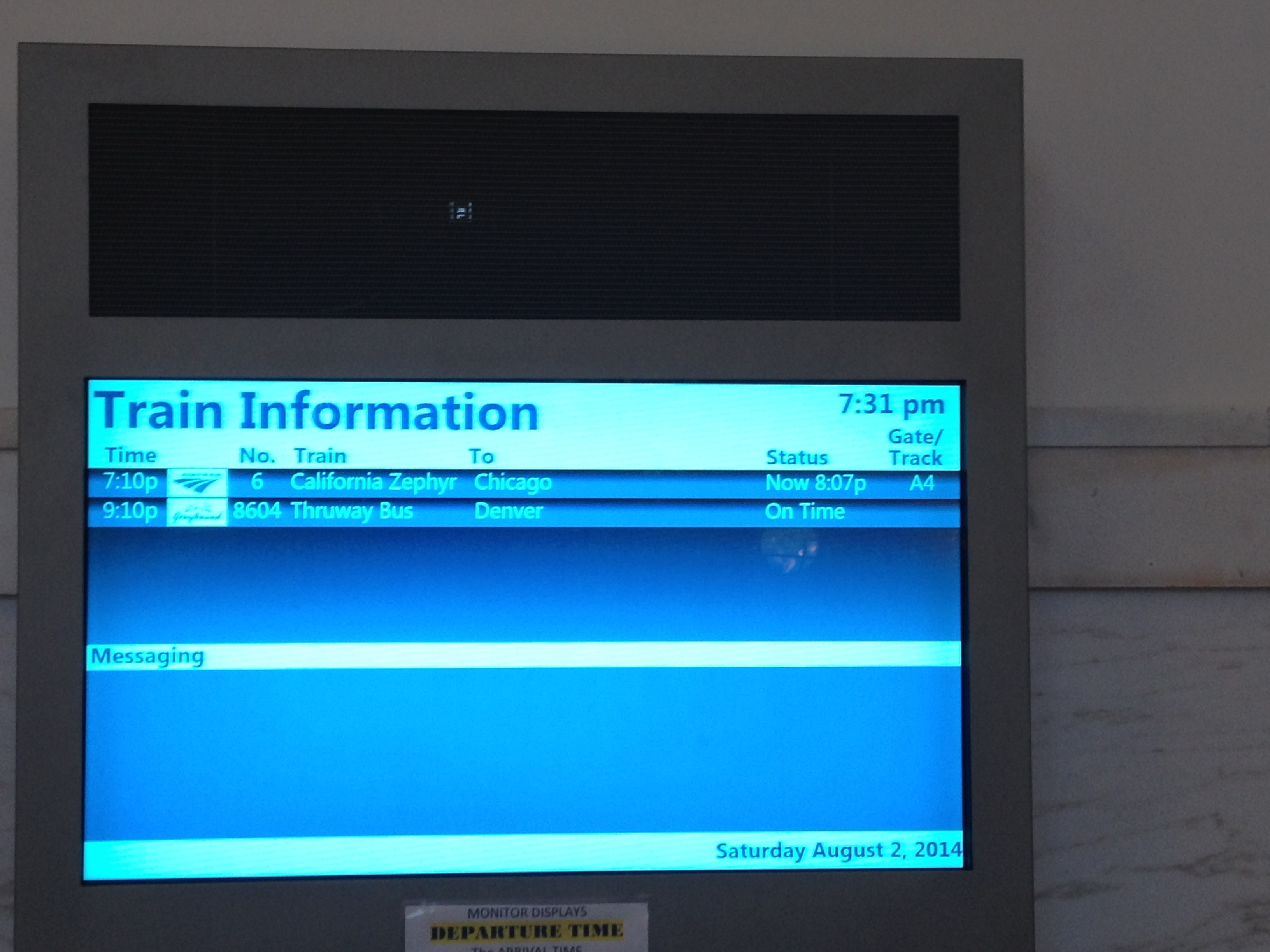
And, of course, AMTRAK’s other issue is its lack of punctuality.  As the day progressed, the station filled with people, not only checking out the new station, but with people arriving to take the Eastbound train scheduled to depart at 7:10.  By quarter after 6, the information board had indicated that the train would arrive at 7:23.  Good thing the schedule builds in that half an hour layover, right?  Well, for AMTRAK, that was not nearly enough.  By 7:30, the train had not arrived yet, with the board now indicating an 8:07 arrival.  That train would eventually arrive at 8:30.

IMG_2290 IMG_2291

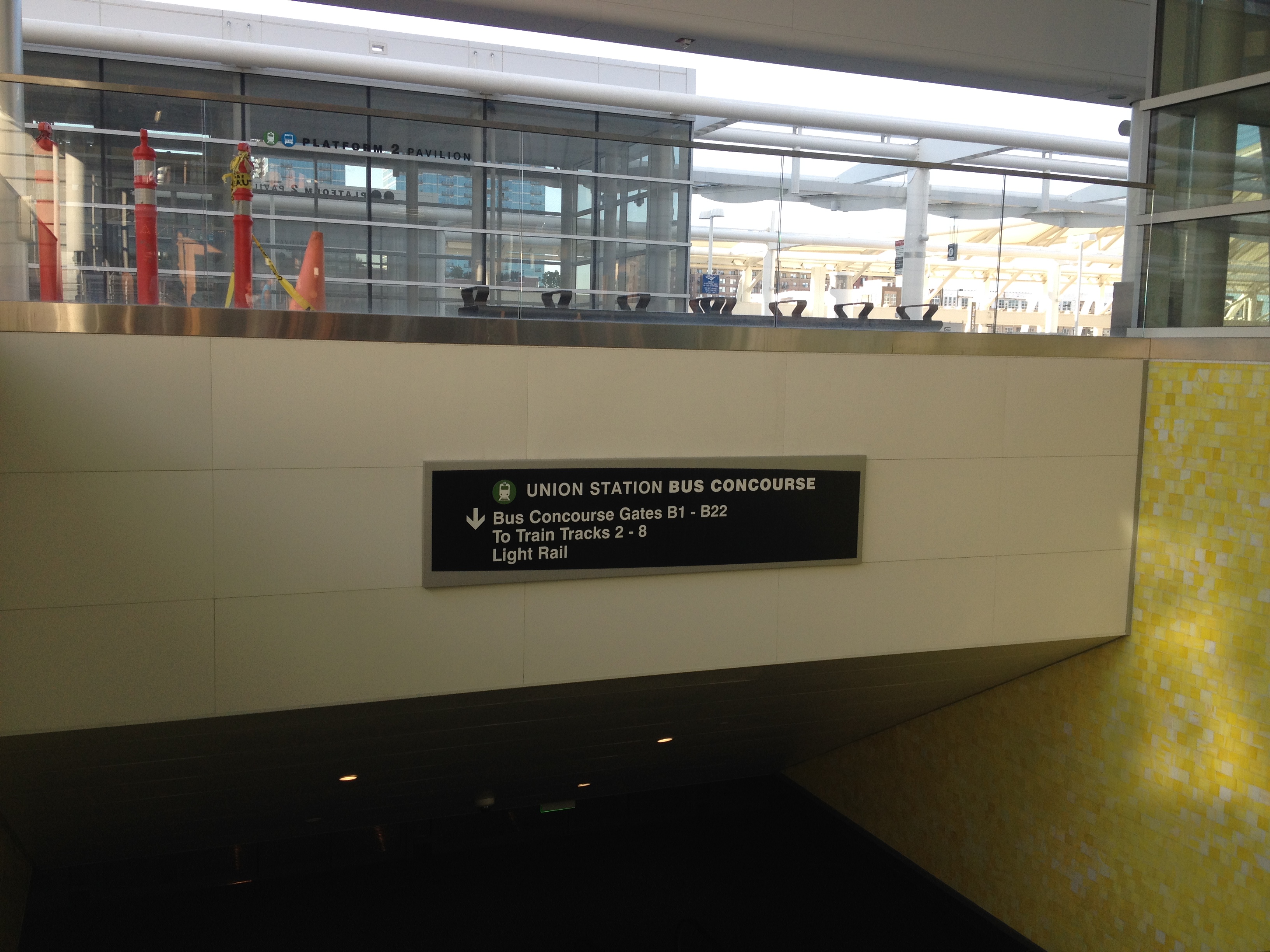
The backbone of Denver’s transit system remains its buses.  In fact, the Rapid Transit District operates three types of buses; local, express, and regional.  The local buses are primarily for transit in and around the immediate area.  Most of these buses stay at street level.  But the express and regional buses, which connect downtown Denver to places father away, such as Boulder, Evergreen, and Longmont, arrive and depart from an underground bus terminal right below the train tracks that were just built.  In addition to these regional buses, longer distance buses, operated by Greyhound, are now arriving and departing at this bus terminal as well.


IMG_2295

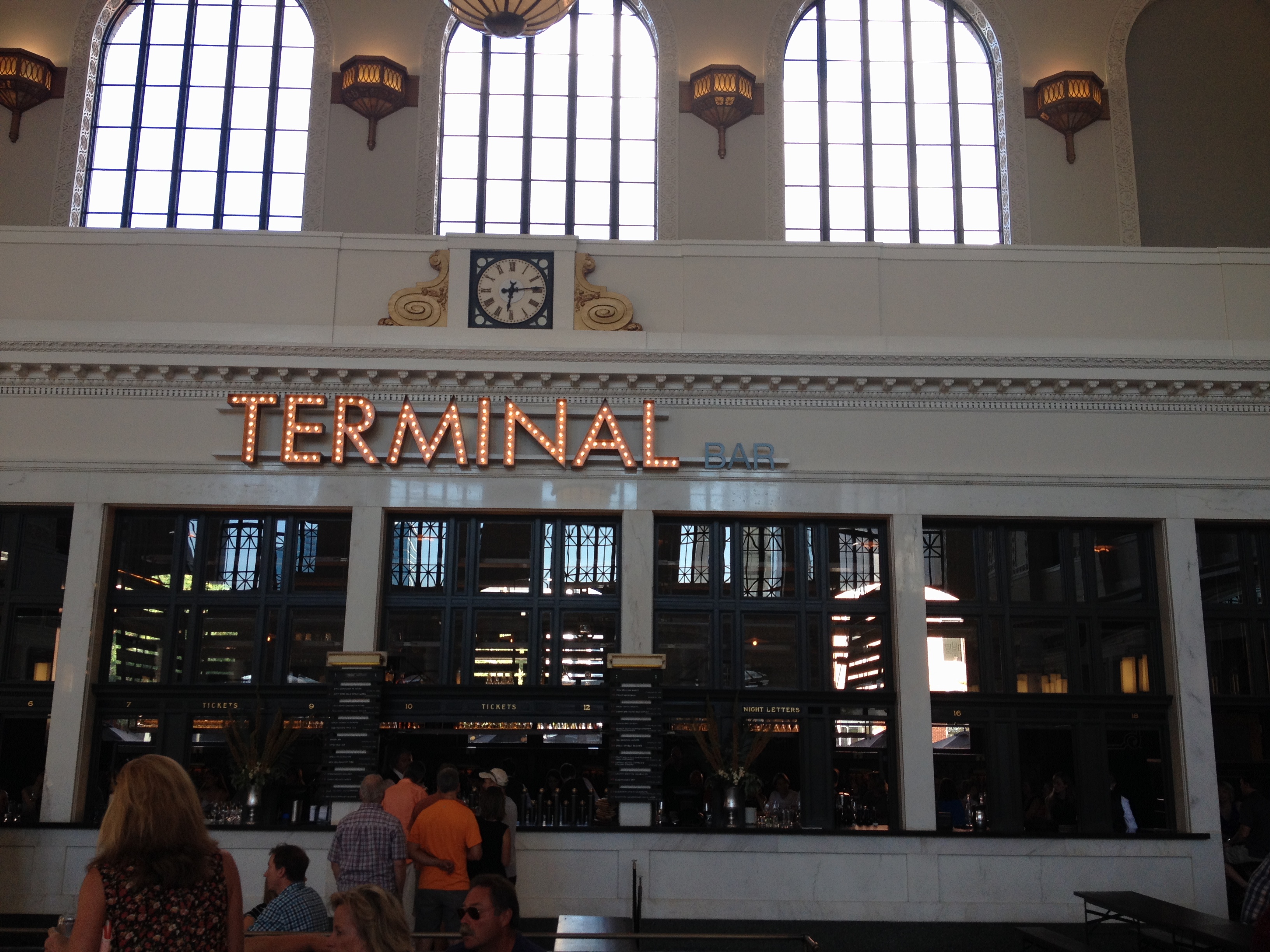
And, of course, if there is time between buses or trains, the new Union Station has a terminal with bars, restaurants, a large waiting area, and even an airport-style newsstand shop.

This new centralized transit hub gives Denver something that nearly all significant cities have; a focal point for its transit system.  Currently, the focus is on connectivity within the metropolitan area.  Service to areas outside of this particular urban corridor is limited, and sometimes unreliable.  However, with the tracks in place, and the additional amenities built, it is not hard to imagine a future state where some kind of efficient transit service between Denver and other parts of the West has been established, and functions out of this very location.

Futurists and urbanists often talk about the emergence of “megaregions“.  This is already clearly occurring in the Northeast, with the corridor of cities from Boston to Washington D.C. becoming highly connected and well traveled.  The de-facto capital of this region is New York City.  Other megaregions expected to emerge include one in the Southeast centered around Atlanta (and expected to include Charlotte), and one in the Midwest centered around Chicago (and certain to include Milwaukee and Madison).

With Colorado’s rapid growth, it is not hard to imagine a megaregion centered around Denver, with frequent travel to Boulder, Colorado Springs, Fort Collins, and possibly even places in the mountains (a train to Vail would be great).  With the building of the new Union Station, with more track, more platforms, a sizable waiting area, restaurants, bars, and many other transit-oriented services, Denver is preparing itself for its role as the de-facto capital of the “New West”.


Dog Sledding in the Rockies

IMG_1615

For thousands of years humans have assembled teams of dogs to transport themselves (as well as other items of significance) across the cold arctic regions of the planet.  It is a tradition that nearly all human beings are aware of.  Most have seen images or video of popular dog sled races like the Iditarod and the Yukon Quest.  While the average American probably views this tradition as a recreation activity, or a sport that takes place somewhere far away, for many cultures across North America, Russia, and Mongolia, teams of dog sleds have been, and still are, an integral part of day-to-day life.

Sometimes the only way to truly understand something is to experience it for yourself.  A small taste of the dog sledding experience can be found at Good Times Adventures, just outside of Breckenridge, Colorado.   Over 150 dogs are kept here, ready to take those that wish to sample this experience on a short dog sledding voyage.  Dogs kept here get to live quite an active life, typically going on two voyages per day with customers throughout the season.  When it is time for a trip, they howl in anticipation, impatiently await the go-ahead from the tour guide, and enthusiastically begin to pull their passengers across the snow.  What an experience!

IMG_1608 IMG_1609

Going on a 60-90 minute dog sledding tour on a sunny afternoon in Breckenridge leaves plenty of additional time in the day for other activities.  As a season pass holder to Vail Resorts (a pass called the EPIC pass) that other activity is pretty obvious- skiing!  Breckenridge ski resort (part of the pass), is located less than half an hour from Good Times Adventures.  We planned our sled trip to begin at 1:15 in the afternoon, and used the morning to ski.  Morning is often the best time to ski, as snow conditions deteriorate as the day progresses (due to use) more frequently than not.  Following a series of major snow accumulations to start off 2014, snow conditions were ideal at Breckenridge ski resort today.

IMG_1601 IMG_1603

I will post more about Breckenridge ski resort, as well as the other ski resorts I ski regularly during wintertime, later.

IMG_1607

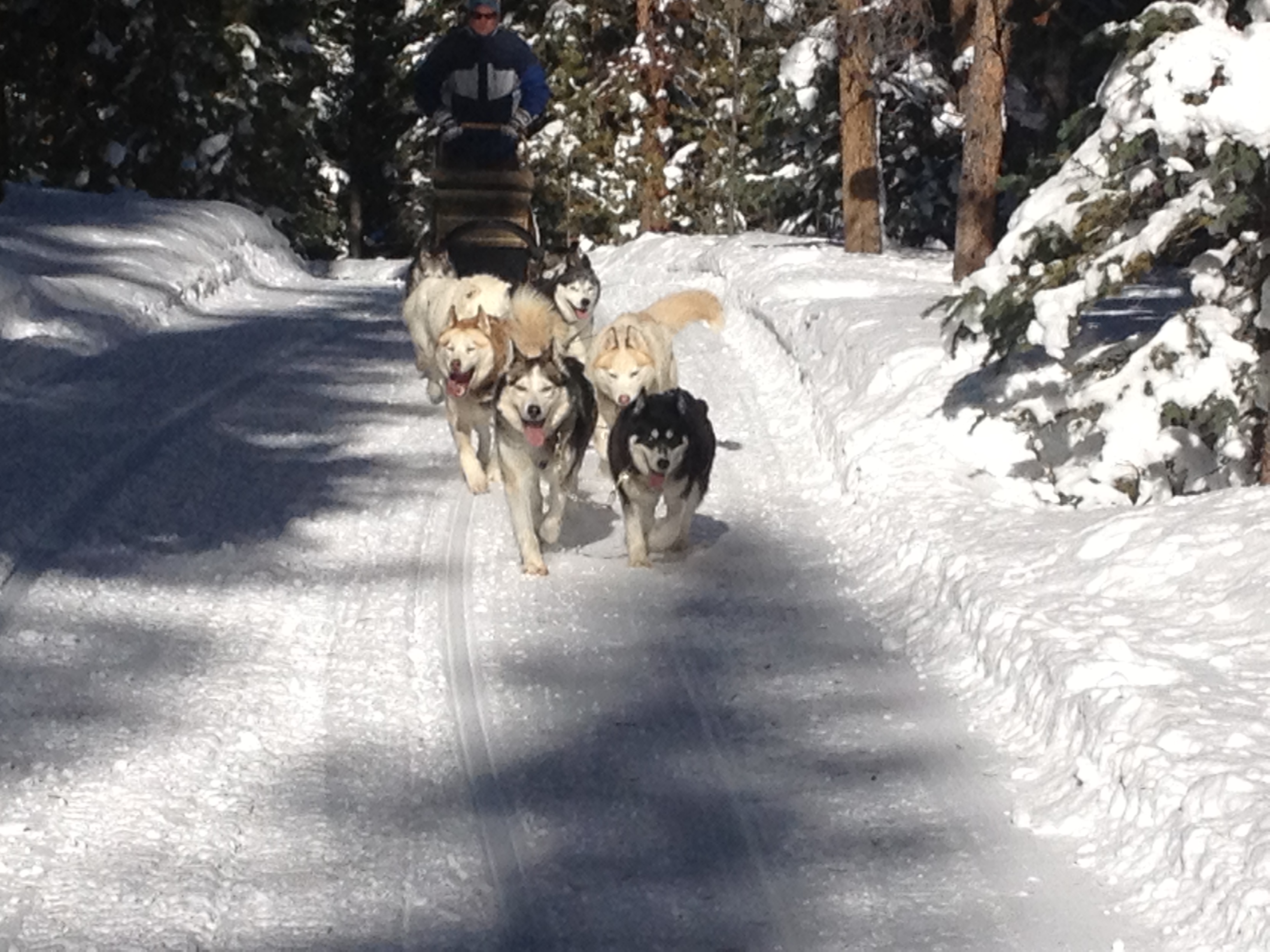
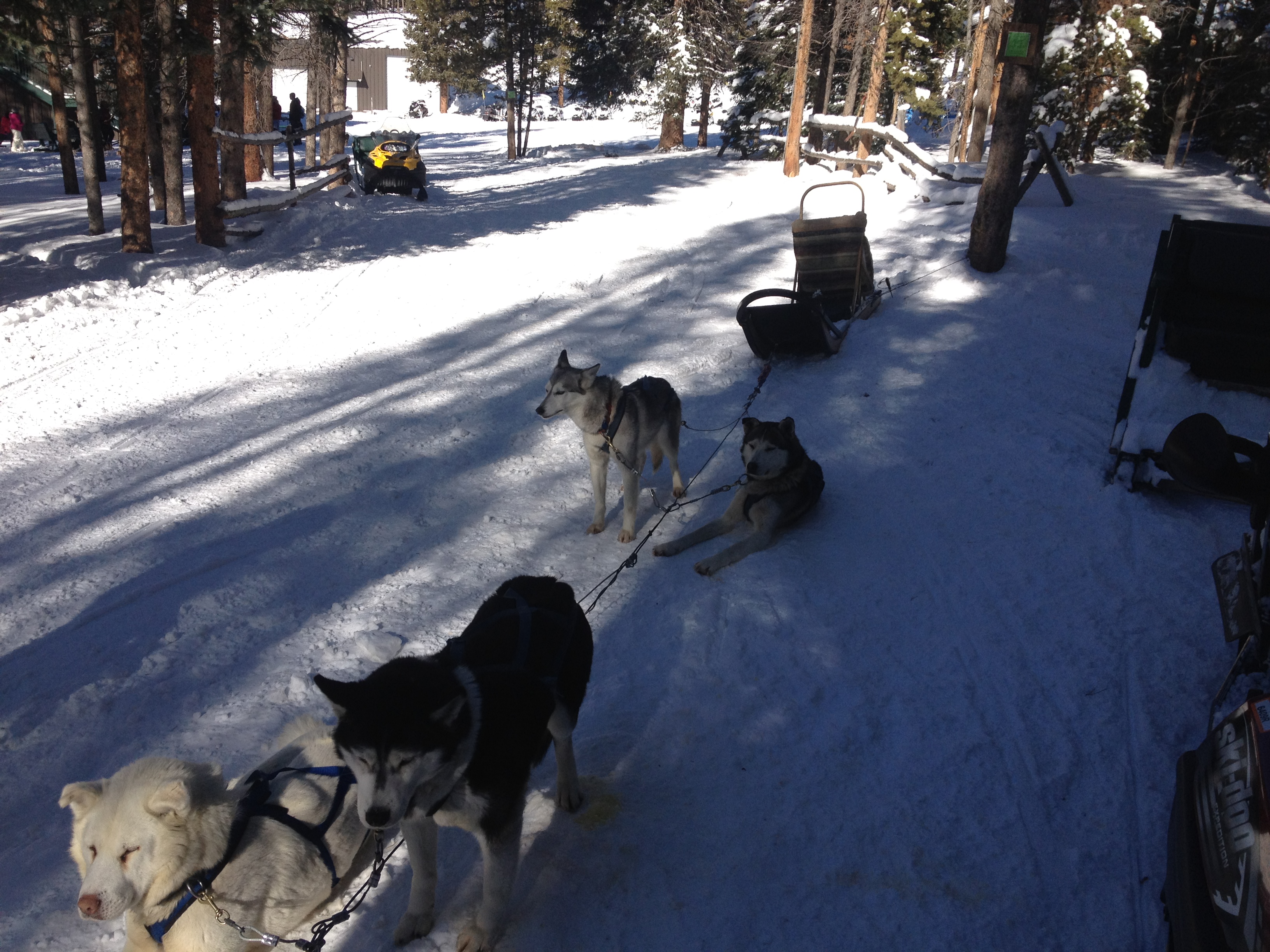
After several hours of great skiing, it was time to meet the dogs.  The eight-dog team was made up of huskies.  Across the north, huskies are traditionally used to transport lighter amounts of cargo at a faster speed.  This, of course, includes people.  For heavier cargo, the Alaskan Malamute is often used.  Essentially, a team of huskies would be analogous to a car in today’s world, while a team of malamutes would be analogous to a truck.

The dogs we met at the resort were friendly.  Towards us, they were friendly almost in a business-like way.  It almost felt like they had some kind of understanding that we were customers and that they are conducting a business.  Sometimes dogs have this eerie way of sensing a situation, and us humans cannot even begin to figure out how they do it.  Almost every dog owner can think of one instance in which they came home quite upset and found their dog ready to give them a comforting embrace.  These dogs seemed understand that we were customers and not their owners/friends quite clearly.

IMG_1610

One of the dog was briefly too friendly with his female companion.  But, hey, with almost two hundred dogs and an expanding business, Good Times Adventures could probably use a few more puppies from time to time- no matter what the source.

IMG_1620

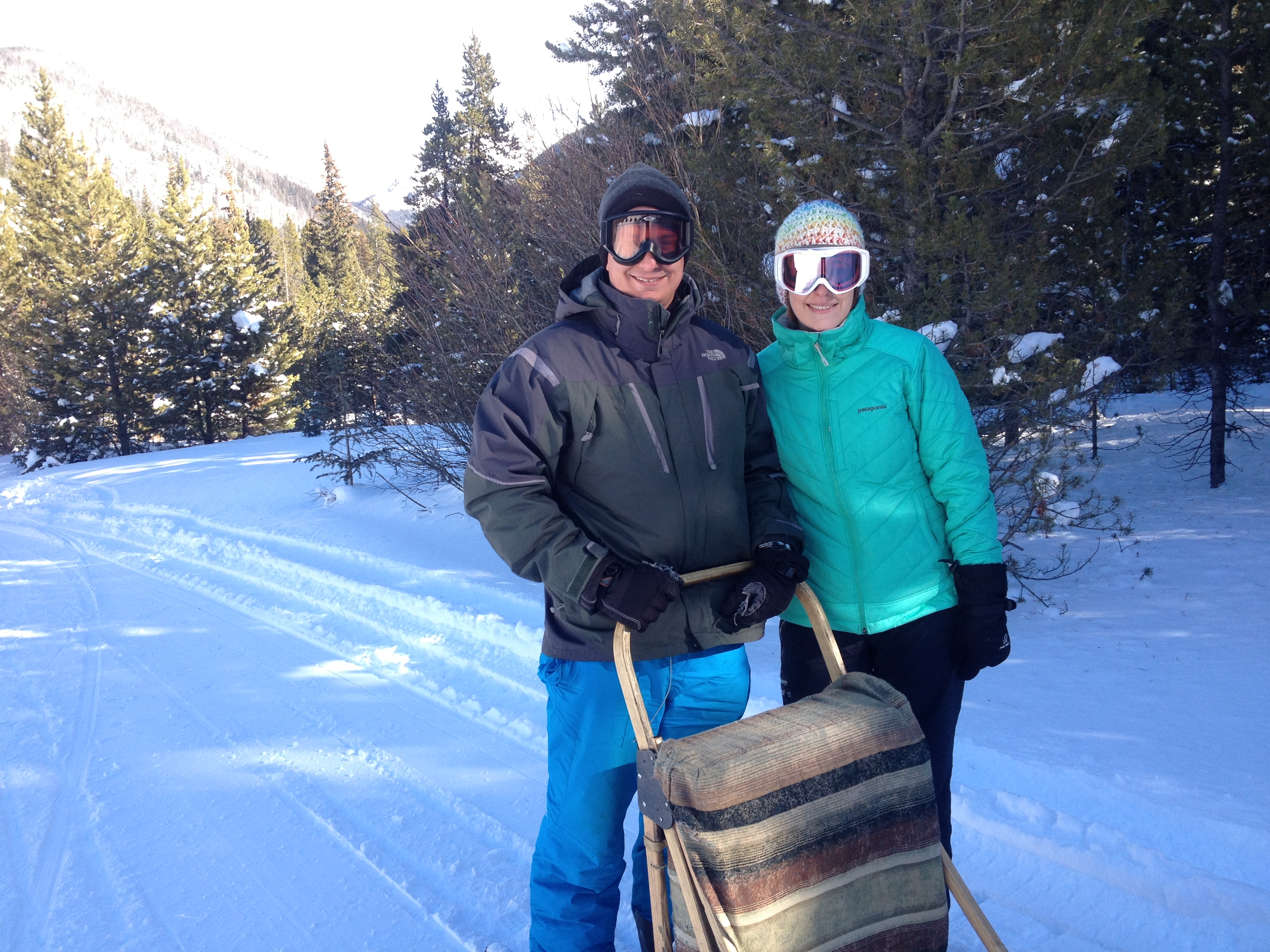
I was pleasantly surprised that I got to actually drive the sled, exactly the way the mushers do it on the dog sledding circuit.  The tour guide gave us all a brief lesson on how to steer, how to break, and some basic strategies (like leaning into a turn).  While I am sure there is a lot more to what professional mushers do, and that they do it at faster speeds on tougher courses, it definitely felt real.  I was really experiencing the culture that brought us the tradition of dog sledding, albeit only a sample.

IMG_1614

Most activities are not truly appreciated until they are experienced.  It is for this reason that people who participate or have participated in a sport are more likely to be fans of that sport.  It is the understanding of what is happening that only a fellow participant can relate to.  The speed at which the dogs are able to pull the sled across the snow is something that must be experienced.  Speed feels differently depending on the venue.  When I am able to get up to 30 mph on my bike it feels quite a bit different from skiing at 30 mph, and nothing like the extremely uninspiring experience of driving a car at 30 mph.  The same can be said of the speed at which the dogs pull the sled.  My first up close view of the dogs pulling another sled across the snow, and when I first hopped on the sled and experienced it myself surprised me quite a bit.  Huskies truly are amazing dogs!

IMG_1618 IMG_1622

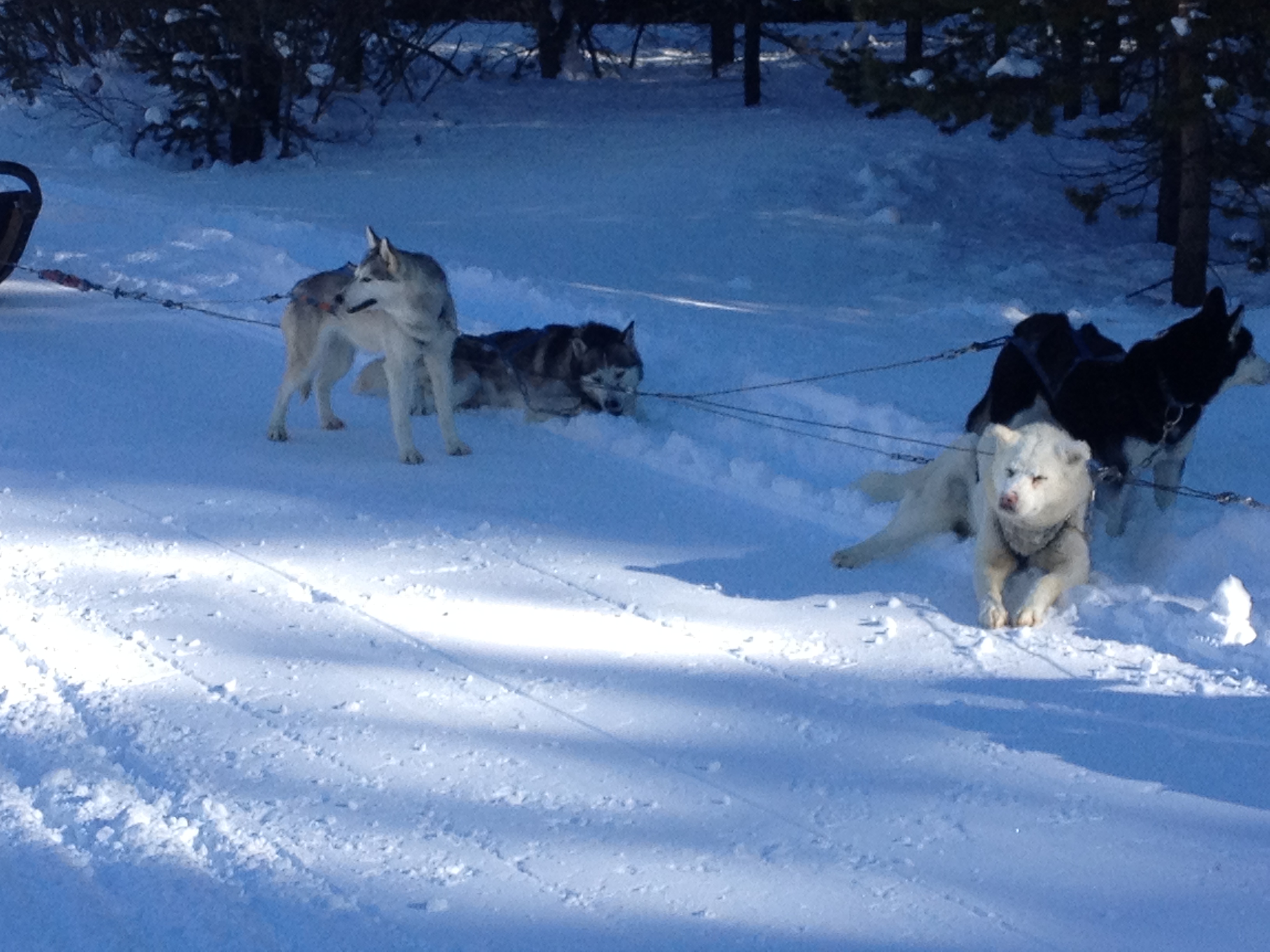
According to the tour guide, huskies are built for temperatures well below 0 (F), and it is at those temperatures that they feel the most comfortable.  Today’s temperatures in the lower 30s were therefore quite hot for these dogs.  Combined with the strenuous workout of pulling a sled at high speeds, the dogs were overheating.  In order to cool off, at every stopping point (we stopped regularly to give everyone multiple turns driving the sled) many of the dogs would actually jump into the snowbanks along the edge of the trail in order to cool off.  Some even basically covered themselves in snow!  I could not imagine living somewhere where I would regularly overheat in the middle of winter- let alone summer.

How we transport ourselves is an important aspect of our culture, and one of the ways we define who we are.  Route 66 remains an icon of American culture of the 1930s-1960s era.  The bicycling world remains its own community with its own identity.  And, one of the main differences between modern urban, suburban, and rural cultures is the manner in which we transport ourselves. Without trains, and eventually cars, the United States of America would not be what it is.

Without sled dogs, the culture of the north would not be what it is either.  By partaking in the main transportation mechanism of the cultures of the north, I was participating in their culture.  I was experiencing what they experience.  I was partaking in an activity that created a way of life, and was later harnessed to save an entire town from an epidemic.

The World’s Largest Beer Garden

It always seems to be 2/3 to ¾ of the way through any trip that people inevitably begin to think about what awaits them back home.  It was actually the previous night when it started for us.  This was unfortunate, as I was really doing my best not to think about my problems including work throughout this entire trip.  People take vacations either to get away from their day-to-day lives for a while, or to see different places/ do different things.  This trip was kind of both for me.  I desperately needed time away from the office when this trip began, but it is also my first ever trip to Europe.

We checked out of the Weisses Kreuz and took a train to our final destination, Munich.  In Italy, we moved around a lot more.  Both the Weisses Kreuz and the Laimer Hof (our hotel in Munich) are four night stays for us.  This gives us a chance to relax for a bit rather than having to carry our luggage around daily.  Overall, I was impressed with the Weisses Kreuz.  One exception, though, were the pillows.  They were crappy, kind of lacked volume.  The pillows at Laimer Hof are much better. 

The Weisses Kreuz is actually a really old hotel.  Mozart actually stayed here when he was like only eight years old.  Thinking about this, I actually speculate as to whether or not he wrote his first symphony while he was unable to sleep due to the crappy pillows at this hotel.  The Laimer Hof has nicer pillow.  So, under my ridiculous theory, had Mozart’s family chose to visit Munich and stay at the Laimer Hof instead, he would possibly have never became a famous composer.  It is weird to think about, how sometimes little things like this make all the difference in the world, in the course of history.  What if the wind happened to be blowing in a different direction the day the volcanic ashes covered the Island of Crete, disrupting the Minoan civilization, paving the way for Mycenaean takeover, which eventually lead to Ancient Greece?  What if the Allied powers had chosen a different day in June 1944 to invade Normandy?  One that was less favorable?  All of this seems so minor when it happens, but ends up having profound implications on subsequent events, creating a world, and a history completely different from what would have been had they gone the other way.

With the desire to get my mind off of work and what awaits me back home, and back into vacation mode, we visited Hirschgarten, the world’s largest beer garden.  I don’t speak German, but from years of living in Wisconsin, I have become fluent in German beer.  I knew I wanted something sufficiently alcoholic but not too dark.  Of course, Hefeweizen is the answer!  I really enjoyed this beer.  In fact, I enjoyed it enough to order dinner here, and drink three liters of it.  Once it got dark we went back to the hotel, but the drinking did not stop.  The hotel staff served us beer downstairs.  It kind of felt like a normal night for me.  There was a computer in the downstairs room where they were serving the beer, with free Internet.  I logged into g-chat and talked to some people back home.  In the U.S. it was still the later part of a workday, on a Tuesday in fact, so my crazy party demeanor and random ridiculous questions may have seemed out of place to the people I was talking to. 

I also actually held a fairly productive conversation with some of the other hotel guests.  Mostly, I talked to some people from the other side of Germany, the Northwest part of the country.  Curious, and lacking inhibition, I asked them about how they viewed Greece.  From which I got a somewhat expected response.  But, I was kind of surprised they were not as angry as I thought they would be.  I am ALWAYS mad when I end up footing the bill for the irresponsibility of others; it forms the basis of my belief system when it comes to government.  So, I am glad there are no wars about this yet.

I also asked them what they thought about Bavaria, as it kind of has a separate identity from the rest of Germany.  Before this trip, I had been telling people that Munich is the “Denver and the Detroit” of Germany at the same time.  Denver, due to its general climate, with frequent abrupt weather changes due to it’s proximity to the mountains, as well as it’s status as kind of an island of liberalism (voting SDP) in a region considered the most conservative in the country (CDU dominance).  Detroit because of the BMW factory and headquarters.  But, the man I talked to actually equated Bavaria with Texas.  I guess Texas kind of does have it’s own identity separate from most of the U.S.  There are, of course, major differences.  They drink less beer in Texas, as there are numerous dry counties in Texas.  Also, Texas’s only liberal city, Austin, is nowhere near as large in size and scope as Munich.  That is the problem with analogies like this.  There will always be differences.  When someone asks me what Chicago neighborhood equates with Astoria, or Forest Hills (both in Queens), I am at a loss for words despite my knowledge of both New York and Chicago.  There simply is not an equivalent neighborhood.  That is why, in a way, we visit other places, on trips like the very one I am on right now.  The experience is different from what we know.

Train Ride from Florence to Innsubruck

Today was mostly a travel day as we moved on from Tuscany and headed for Innsbruck.  It started with another phenomenal breakfast at Poggerino, but that now seems to feel like it happened like three days ago!  Ever notice how while on vacation, or during special events time feels like it is going faster while things are happening, but in retrospect more time seems to have gone by?  I’ve had times at work where I mistook a Tuesday lunch conversation for a Wednesday one, but the start of this trip feels like weeks ago.  Maybe it is that we perceive time in the present tense based on our awareness of time’s passing (i.e. inversely related to how involved we are in what we are doing), but in the past based on the quantity of memorable experiences in our lives.

The train rides started off kind of dull.  Florence to Bologna was like 80% under tunnels.  Bologna to Verona, at least until you approach Verona, is flat.  I saw irrigations and felt like I was in the Kansas of Italy.

After Verona things got interesting as we headed into the Italian Alps.  We kind of missed the Dolomites, but the mountains were quite nice.  Plus, the railroad tracks followed a river valley, so we got to see the scenery (as opposed to being under tunnels).  I read up a bit on Trento and Bolzano while we passed though this area.  It seems as though this is the outdoorsiest part of Italy.  There were bike trails (most likely the same one) along the river valley for much of the journey, and I saw plenty of riders.  Finally, we went thought the Brenner Pass, exiting Italy into Austria.

Innsbruck is exactly as I imagined it; an Austrian looking ski town.  The mountains came right up to the town and watch over it in all directions.  We could probably walk right up to one from the Weisses Kreuz, our hotel, which is right in the center of town.  There is a shopping district that seems to cater to both skiers and Austrian type people with bars and beer gardens.  Like I said, EXACTLY as I imagined.

We had a nice dinner at Ottoburg, at the recommendation of the hotel desk.  There, I decided to dive right into the local culture, and got the most traditional Austrian dish that did not seem scary.  It was phenomenal.  While there, we encountered a group of five guys in their 20s.  It was crazy because, other than speaking German, they looked and acted exactly like you’d expect a group like this in America.  Oh, except they were at a fancy restaurant together.   Groups of guys, for one reason or another, don’t do that in America.  But, their behavior, their interaction indicates one of two things; there really is not that much different amongst different types of people, or that the German influence has manifested itself in the heavily German Midwest (especially WI and NE) in the form of drunken Friday nights.  I’ll let you be the judge, but either way I had my first conversation with completely random people in Europe- awesome!

Rome to Florence

Today started with a ride on the fastest train I have ever ridden: The high-speed train from Rome to Florence.  It topped out at 250 km/hr (155 mph).  Traveling at those speeds did not feel too different than traveling at 60, 70, 80 mph as I commonly do in my car.  However, it was definitely noticeable that the scenery was going by faster than what I was used to, and that we were moving much faster than all the cars we saw on an adjacent highway.  There are also a lot of moderate size mountains in Italy.  I think we spent about 25% of this trip underground, in tunnels under mountains.

Our hotel in Florence was much nicer.  Mainly, it was a lot bigger, our hotel in Rome was really kind of small, but I guess that is what to expect in such a crowded area.  Luckily, our hotel room was ready for us when we got there, which was before 11 AM.  So, we were able to drop off our bags and go straight to the Galileo Museum.  This museum is actually not very well known, but it was our choice to be unique and go somewhere different.  This paid off for us, as the place was much less crowded than many of the other sites in town.  The museum itself was a really good deal, for only 4 Euro each, and it is quite stacked with ancient scientific instrumentation.  The museum also contained a historical narrative of the history of science.

After visiting the museum, my mind was fixated on the Renaissance.  Specifically, why it happened.  Why was it that people suddenly became interested in this stuff after nearly a millennium of seemingly not caring about any of it?  From sometime in the 1400s onward, there’s been a cascading of scientific discovery and invention; new instruments to measure the weather, directions, proof the Earth is round and not the center of the universe, observations of other planets, electricity, the steam engine, etc.  All of this made our lives much better than those that lived 1000 years ago.  But, what triggered it all?  There seemed to be an interest in navigation after European Nations discovered and started colonizing the new world.  But that was discovered in a quest to find trading routes.  So, was it all just a quest for cheaper cooking supplies, and spices in the aftermath of Marco Polo’s epic journey to the East?  Or, was it a new “age” of sorts, as explained by both Western and Eastern Philosophy/ astrology where humanity undergoes cyclical trends both long term and short, where thinkers like Aristotle and Socrates lead the emergence, or Renaissance out of the previous dark age (in the aftermath of the collapse of the Mycenaean civilization), and Galileo and Copernicus leading the emergence, or Renaissance being discussed here.

Florence is a beautiful city.  We went out ourselves exploring it, after going to the museum and eating lunch.  First, we climbed some outdoor stairs to the top of the Michelangelo Garden.  Then, we climbed the indoor stairs in the Duomo.  That is where we encountered the most annoying American tourists of the entire journey.  This family was climbing the stairs (there are a lot of them) to the top of the Duomo.  The mother and the oldest son were behind us, and the father and the younger daughter were in front of us.  The mother in the back was getting claustrophobic and kept complaining- over and over again.  On at least six occasions, she threatened to turn around and go down.  The last one was after the father/ daughter had informed her that they saw the top!  The only one in that group I respected was the little girl.  She was like 6 years old maybe, and she actually taunted everyone else.  The older son kept asking the Mom is she was okay.  I bet she had expected climbing this Duomo to be exactly like going to the top of the Empire State Building, with a nice fancy elevator.  These people probably give American tourists a bad name.

The Arzo River, all day long, was filled with rowers.  No other water activites were going on.. NO … NINE!  No boats, no cruises, only rowing.  It is like a local law.  Also, the tops of the buildings looked like Mexico/ New Mexico (red clay).  We kind of enjoyed walking around here more than Rome.

Finally, at the end of the evening I got to try two Italian beverages.  Grappa, which I thought tasted like a combination of Vodka and bread.  The beverage is drank by Italians in a similar way that that one beverage in the movie My Big Fat Greek Wedding, you know, the tall one that Ian’s parents get drunk on, is drank by Greeks.  Also, Martini, a sweet vermouth beverage.  I enjoyed this one very much.  Both of these beverages were given to me for free.  How’s that for Italian hospitality.