Author Archives: Stephen Jaye

Unknown's avatar

About Stephen Jaye

My name is Stephen Jaye, I currently live in Denver, CO, but have lived in New York, Chicago, Indiana, and Wisconsin. I love the weather, I love getting out, being active, and I love exploring places. In this blog are my travel writings.

The Colorado Model Railroad Museum

The later half of March is a confusing time to be in Colorado.  The range of possible weather events makes it a tough time period to plan for.  In the mountains, there are plenty of times snow continues to fall, and provides more high quality snow days for skiers and snowboarders.  But, the snow does not always continue to fall, and if it doesn’t, conditions on the mountain can deteriorate fast, as warmer temperatures are likely to eat away at the snow pack.

At lower elevations there is quite a bit of variance as well.  March can easily bring Denver, Fort Collins, and even Colorado Springs long strings of 70 degree days.  It can also bring heavy snowfall, as was the case this past Wednesday.

img_5529

There’s no guarantee that the weather will cooperate for any outdoor activities.  There is always the chance that skiing conditions will continue to deteriorate without conditions for cycling or hiking at lower elevations improving.  For people like me, this time of year has the potential to be quite underwhelming.  Due to this uncertainty, I would not personally recommend people travel any great distance to visit Colorado in the later half of March or April.

With leftover snow on the ground, covering the trails and such, this weekend ended up being a good time to visit one of Colorado’s indoor attractions.  I often lament that Colorado does have some quality museums, an indoor activity, but that I rarely actually visit them as I am planning outdoor adventures.  A weekend like this, with less than inspiring weather conditions is the perfect time visit the Colorado Model Railroad Museum in Greeley.

img_5567

As should be expected from a museum dedicated to model railroads, there is quite a bit on display here.  Following the suggested self-guided tour route through the museum, I started out by going upstairs, where I viewed the model rail display in its entirety.

Although it is neat to see these trains go by, each one carrying a different type of freight across the landscape, model railroads are about so much more than just the trains.  They depicts towns, industry, and scenery.  Some of the mountains depicted on this display even contain small components of real rock.

The upper floor of this museum is like a trip back in time.  Plastered on the wall is a map of regional railways, which were once the primary way in which we traveled around the area.  After viewing the photos of historic rail depots, posters from the middle of the 20th Century promoting passenger rail service, and old train schedules on display, I imagined myself in the setting of some quasi-ambiguous time in the middle part of last century, bags packed, ready to hop aboard one of these trains to embark on an adventure.  I gaze at these maps, and think about how much I enjoy not only the adventures I have at various travel destinations, but the process of getting there, the journey.  The railways, and these models, are all about the journey!

The second half of the self guided tour takes visitors downstairs, to see the components of this elaborate model train display individually.  Each segment of model trains tell a story, but not a straightforward story.  They show a snapshot of life in different places along this train’s route.  Looking at all of these individual displays, it is quite easy to imagine oneself there, as part of the story, or as an omnipresent type of observer.  The details and creativity allow visitors to develop a story based on what they see.
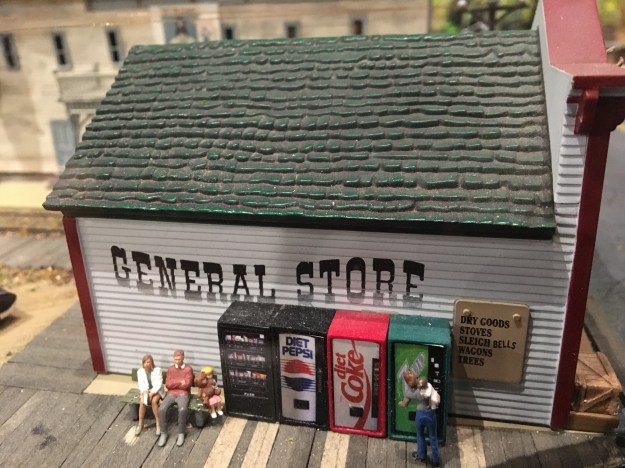
img_5577

In this thriving town along the rail route, I imagine myself getting a dollar out to purchase a soda from a vending machine on a hot day.  I imagine what this family is doing.  Did they just have a fight?  The Man’s arms are folded and the daughter is turned away from her parents, clinging to a stuffed bear.

img_5575

They got creative too.  The scene here is a wildfire being put out by firefighters.  This is one of many places throughout this gigantic exhibit where specific events are depicted.  Not only do we see where stores are, where houses are and such, imagining the day-to-day life in fictitious towns along the route, periodic occurrences are displayed before us as well.

In a few areas, the builders of this display got even more creative.  My favorite one here depicts a kayaking trip gone wrong.  This kayak now inhabited by a black bear, with two people having been thrown into the water, only one still holding on to their paddle.

img_5576

A ton of work went into the displays at this particular museum.  It’s been a long time since I have been to a museum like this one, but I picture most model railway museums being similar in nature.  It is impossible to overstate how important attention to detail is when creating an exhibit like this, or even when people create model train sets for their own homes and gardens.  I do not consider myself detail-oriented enough to put something like this together.  I am also probably way too extroverted to want to spend the time putting together a display like this.

Seeing this display, first in its entirety, and then by its individual components, gave me a newfound appreciation for the attention to detail payed when creating this exhibit.  None of it would have been nearly as good had anyone involved in building this exhibit taken the attitude I often take that details matter less than the big picture.  The story of this exhibit would not be presented properly had one little item, one tiny piece of brick at 1:87 scale been slightly off.  Maybe details need not be dismissed.  Maybe those of us that are frustrated with dealing with details we deem insignificant need to just understand how they fit into the big picture.

 

Iceland Air’s Glacier Hike and Northern Lights Tour

As part of their push to encourage tourism in Iceland, Iceland Air now offers a variety of one-day excursions that travelers can embark on whether they are visiting Iceland specifically, or taking a stopover on their way between Europe and North America.  These one-day tours offer a variety of options for experiences, including which places to visit and what types of activities to take part in.  For all of them, the general idea is the same; a bus picks tourists up at various hotels in Reykjavik, and gives visitors what basically amounts to a one-day “Taste of Iceland”.

My tour of choice was the Glacier Hike and Northern Lights tour, which offers a lot of what I was looking for out of my time in Iceland.  The Northern Lights is something I had never seen before.  In America, we hear about such phenomenon occasionally. Roughly once a year, we will hear in the news about a particularly strong solar event occurring, and the potential for the Northern Lights to be visible much farther from the North Pole than is typical.  Sometimes that zone would even reach the Northern parts of the United States, and news outlets would provide maps of where the lights could potentially be visible.

For years, living in Chicago, such stories would provide a particular brand of torment for someone that is curious about seeing the Northern Lights.  It is not possible to see the Northern Lights from such a large, lit up city.  One would need to travel somewhere less populated. To get outside the populated metropolitan area, I theoretically would be able to travel in any direction, but it makes little sense not to go North, as the lights get better the farther north one travels. However, North of Chicago is Milwaukee, and the area in between the two cities is populated enough to make it less than ideal for viewing the phenomenon.  So, the prospect of getting in a car and driving out to see the Northern Lights was always a multi-hour trip.  Some combination of time constraints, or frequent wintertime cloudiness in the Midwest always stopped me from driving up to Central Wisconsin (or Central Michigan) to try to see the Northern Lights.

The tour started like every one of the Iceland Air excursions, with a mid-sized bus going from hotel to hotel picking people up.  The bus went to about six different hotels to make pick-ups, finally leaving Reykjavik around noon.  The tour group was quite mixed.  There were a couple of other Americans, a few Canadians, and even two people from France on our tour, but the majority of the group was from Great Britain.  I have relatively little experience traveling to Europe (this trip, and a trip to Italy, Austria, and Germany in 2012), but on both occasions I ended up hanging out with tourists from the UK, specifically England.  I don’t know what that says about America, or who I am as a person, or if it is just due to a common language, but I am curious to see if that happens again next time I go to Europe.

IMG_5276.jpg

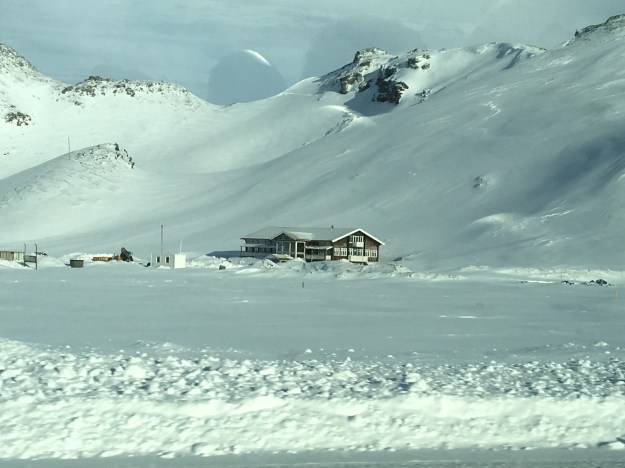
Driving East out of Reykjavik, towards Iceland’s South Coast area, the first thing I notice, which is common throughout Iceland are lava fields.  Across much of Iceland, the land is covered with ashes from previous volcanic activity.

IMG_5250.jpg

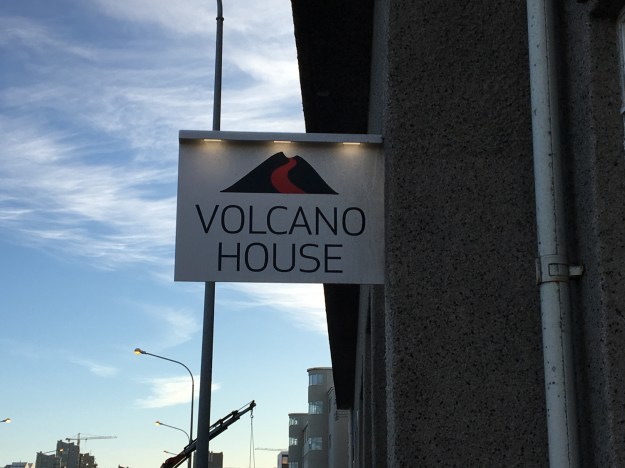
The previous day, I had learned at the Volcano House in Reykjavik that Iceland is one of the most volcanically active places in the world, as it sits on the ridge between the North American and Eurasian plates, which are drifting apart from one another.  In geologic terms, this is actually happening quite quickly.  On average, a volcano occurs somewhere on the Island once every 5 years, and as the plates pull apart, the Island is literally growing at a rate of 2 cm per year. 50 years from now, Iceland will be 1m wider than it is now!

IMG_5279.jpg

About 30 minutes into the trip, the bus passed by the hotel where one of the scenes in the 2013 film The Secret Life of Walter Mitty took place.  In the movie the volcano Eyjafjallajökull erupts, and Walter is lucky enough to have been picked up by a friendly local to escape before being covered in ashes. In real life, this gigantic volcano erupted quite explosively in 2010.  In the most unfortunate of circumstances, the wind happened to be coming from the Northwest that day, and the ashes covered the sky over Great Britain and much of mainland Europe halting air traffic for several days.

IMG_5286.jpg

The next stop on this tour was Skógafoss, one of Iceland’s largest waterfalls. Iceland is not only a hot spot for volcanoes, but it is also a hot spot for waterfalls. This is due to the glaciers, which cover 15% of the land area of the island, the terrain and relatively moderate maritime climate. Waterfalls like this can be found all over Iceland, and they probably look even more amazing in summer, when the ground appears lush and green!

IMG_5295IMG_5287

The main event of this tour, the Glacier hike, worked for me on multiple levels.  I love being outside, hiking and getting some exercise.  There are many times, when on vacation, I purposely try to find the most strenuous activities possible.  I especially do this when I am on a cruise or in some other kind of vacation package, where I know an activity does not need to be super challenging, or even that physically exhausting for them to be labelled as such.  I also got to try something new, hiking with crampons.  Now, I am not sure they were absolutely necessary for this particular hike, as back in Colorado I had hiked in areas that were steeper and more slippery and gotten by without them.  But, I did learn how to use them, how to attach them to my hiking boots, and how to walk with them on, a good thing to know for future activities down the road.

IMG_5298.jpg

In addition, the glacier, and what our tour guides told us about it was quite fascinating from a scientific perspective.  Apparently, this particular glacier is receding at a fairly rapid pace.  Along our hike, the tour guides pointed out where the glacier used to end in past years compared to where it ends now.  As recently as 2010, the glacier covered nearly all of the area near the entrance of the park that we traversed before getting onto the current glacier.  When this portion of the glacier melted, a gigantic lake was left behind in the lower lying area.

IMG_5302.jpg

The tour guides then informed us that we are actually witnessing a the formation of a fjord.  Roughly an hour into the hike, we had climbed to roughly 100m above sea level. However, the ice was thicker, somewhere between 150m and 200m.  Over time, the ice had pushed the land beneath it below sea level. Once these glaciers melt, the area will be under water, creating a fjord in this very spot.  This is one of many spots where this process is happening as we speak.

As a weather enthusiast, who had studied meteorology, I asked the tour guides what the primary mechanism was for the melting glacier.  Specifically, I asked if it was reduced winter snowfall or warmer summer temperatures.  They indicated that both were contributing factors, but also mentioned that, since temperatures in Iceland are commonly quite close to freezing, the area was starting to see precipitation fall in the form of rain (as opposed to snow) more frequently.  I could sense that, as even on this February day, the snow I stood upon was quite wet.

But that was not even the most fascinating scientific aspect of this tour.  Almost everyone is familiar with climate change, and it’s become the subject of sometimes-ridiculous debate.  The most fascinating thing I learned about this glacier is that fact that, due to the presence of volcanic ash, the glacier is creating terrain that is constantly changing.  Here, volcanic eruptions spill out on top of the ice, causing ice to melt faster in some areas.  The ice then flows in a manner that brings more ice into areas that are currently in “valleys”.  Even when there is no new volcanic activity, the cycle of ice flow and differential melting can happen rapidly enough that each year the terrain of any given section of ice is significantly different from the previous year.  Literally, if I were to return to Iceland at the same time next year, and come to this very glacier, the hike would be significantly different, as the terrain would have been significantly modified.  Amazing!

The glacier hike concluded a little after sun down, which was right around 6:00 P.M. After the hike, the tour bus took us to a hotel restaurant in the area for a traditional Icelandic meal.  To my surprise, the meal did not involve fish.  For some reason, I had this impression that since Iceland is an island in the North Atlantic, it would be a place where almost every meal consisted of fish.  Instead, the traditional Icelandic meal was a hearty meat soup.

IMG_5329.jpg

On the tour bus, I learned that the Icelandic cow, which is a special breed of cow that is smaller than the ones most of the world is familiar with is quite popular on Icelandic farms (they actually once voted in favor of keeping the cow over switching to a more efficient Norwegian cow).  In addition to these cows, many farms also keep lamb and sheep.

IMG_5331.jpg

After dinner we drove in search of an ideal place to view the Northern Lights.  This involved driving around and looking at weather conditions in a manner that actually seems reminiscent of storm chasing.  We drove around for hours, and every time it felt like we had found the right conditions (i.e. clear skies), something would change.  At one point, sometime between 9 and 10 P.M., as drove through an area where it suddenly started to snow!  At 11:30 I was in despair.  We were clearly headed back into Reykjavik, and I thought we were just going back to the hotel.  After all, the tour does not guarantee that the Northern Lights will be seen.  It can’t be guaranteed.  The weather is always changing, and the solar activity, which leads to the Aurora phenomenon, is also quite variable.

Oddly enough, though, just after midnight, we pulled into a pier on the far West end of town, along the shores of the Atlantic Ocean, on a peninsula.  Our tour guide informed us that we would now be able to view the lights, and, sure enough, they appeared. I was unable to capture them on camera in a manner that would do this amazing natural phenomenon any justice.  I mostly just sat there, in awe, watching the lights glow and move from side to side along the horizon.  I thought about how amazing this phenomenon was.  I wondered if people who lived here took it for granted, noticed it less, the same way many people become less appreciative of what is in their own back yards.  At the end, I just thought about what an amazing day it was, from when the tour began, over twelve hours ago, until now, ending with this amazing light display.

Life in a Northern Town

IMG_5245.jpg

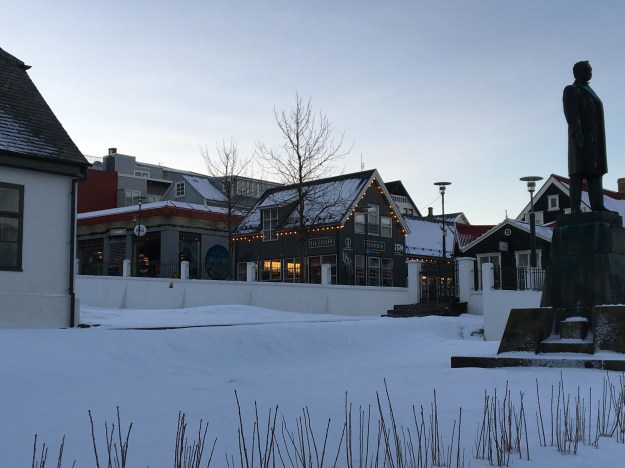
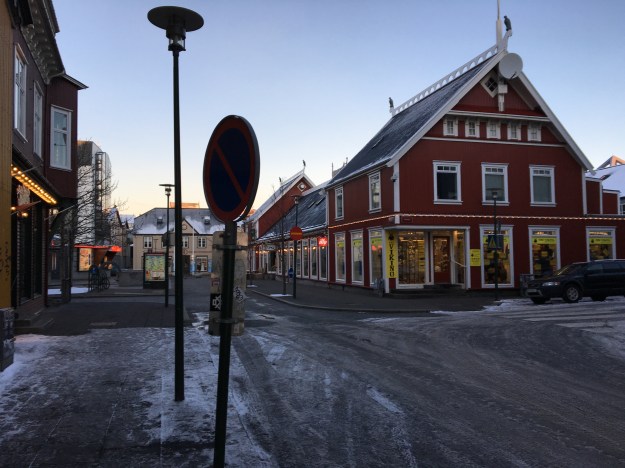
It’s 8 AM on a Thursday morning in Reykjavik, Iceland’s Capitol and largest City.  The sun has yet to come up, as this far north (64 degrees latitude) days are still quite short in the middle part of February.  A quiet dawn persists over the town for nearly two hours, from 8 to about 10.  A couple of local teenagers are hanging outside the grocery store.  A group of tourists can be seen hanging outside one of the few restaurants that are open.  Otherwise, the streets are quite empty, and the shops are mostly closed.

IMG_5248IMG_5246

It’s odd because, in many most major cities, 8:00 is the peak of what is often referred to as “rush hour”.  It is a time of people hurrying to and from train stations, and crowding highways trying to get to work.  Even in the more touristy sections of cities, which this most certainly is, a lot of motion can still be found at this hour.  At places like Chicago’s Michigan Avenue, and New York’s Time Square, which are utterly packed with tourists nearly every day, there are still plenty of people to be found at 8:00 on a weekday morning, mostly people headed into work.  Here, that culture just does not seem to exist.  Are all the office jobs elsewhere?  Do people have office jobs?  Do they work different hours?  Or is the economy so heavy on tourism and fishing that there is just no point in being awake at an hour when all the tourists are likely still asleep and the sun is not out?

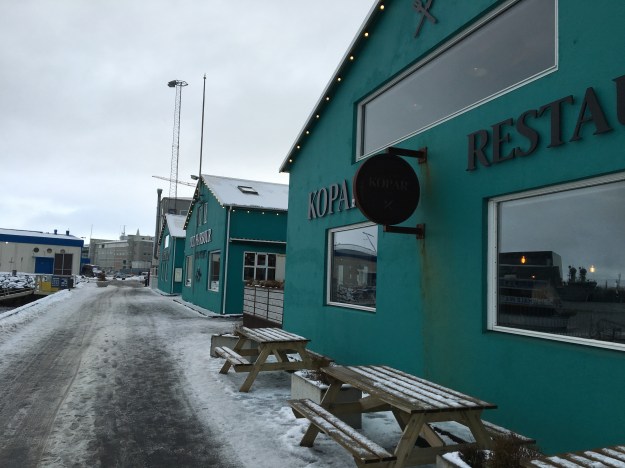
By noon, things start to pick up.  On some days, the sun comes out and hits the harbor.  At this latitude, when it hits the harbor, it hits it in a way that seems to highlight every single feature, from the boats in the harbor to the snowy mountains on the other side.  From the perspective of someone that has always lived in the mid-latitudes, is feels neither like mid-day nor twilight.  It is a different feeling altogether, and those who take a pause from their tourist itinerary and truly soak up the moment are reminded as to why it is worthwhile to visit different places in the first place; to see something, experience something, do something that cannot be done at home.

The day progresses.  Tourists fill streets whose names are too intimidating to even try to pronounce, make their way into the bars, the restaurants, and the dozens of souvenir stores that feature a gigantic stuffed puffin in the window.

The weather inevitably changes- but, well it doesn’t.

IMG_5350

There is this saying, “if you don’t like the weather, wait 5 minutes, it will change.”  Anyone that travels on a regular basis to places outside the tropics has most likely heard the phrase too many times to count.  It is used here.  At souvenir shops, mugs and shirts about Iceland sport the phrase.  And, it is true to some extent.  At any moment, it can turn from sunny to cloudy, or suddenly get windy.  But, the temperature does not vary too much.  On a four day trip to Iceland, the temperature, including daytime and nighttime, seemed to only vary between a few degrees below freezing and a few degrees above freezing.

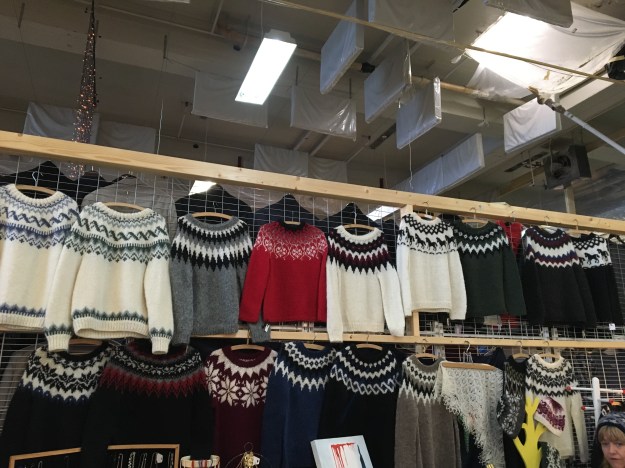
Regardless of these changes, winter in Iceland is consistently cold and damp.  For this reason, one of the most popular items made in all of Iceland are wool sweaters.  While any visitor to Reykjavik can find these sweaters for sale all over town, the best deals on them are found at the Kolaportid Flea Market.  Even at the Flea Market, though, they can be quite expensive, the equivalent of roughly $100.  Money talks, and it is easy to figure out what a certain culture values by seeing what they are willing to spend money on.  Coloradans are willing to spend thousands of dollars annually on ski equipment.  Icelanders are willing to spend money on a warm wool sweater.

IMG_5348

Reykjavik’s population is only just over 200,000 people.  In fact, the population of all of Iceland is 330,000- significantly less than every borough of New York City, even Staten Island.  Yet, it is a place that knows how to party!  The nightlife is surprisingly good- probably better than many towns 2-3 times its size!

Making up for the lack of action at 9 in the morning, festivals, shows, and clubs give locals and tourists alike plenty to do in the nighttime hours.  Iceland has been promoting tourism quite hard since the economic collapse of 2008, which hit Iceland particularly hard.  Iceland Air has been particularly active in promoting tourism, by adding direct flights to more places in both Europe and North America, possibly with the goal of becoming a preferred airport for making connections while traveling between Europe and North America.

IcelandAir_Map

Looking at this map, it is hard not to imagine an executive with Iceland Air looking at at map, possibly even Risk the board game, and thinking of this grand plan to become a connecting point between the continents.

Well, it’s working.  Recently, more people talk about Reykjavik being their favorite place to make flight connections, and more and more people seem to have visited Iceland.  At this point, in Reykjavik, it is probably impossible for locals and tourists not to interact with one another in some way, especially at clubs and shows.

After hours of partying, all of a sudden it is 4 AM.  Many clubs still have lines to get in!

At 5 AM, on the streets, music can still be heard coming from multiple directions.  In fact, by this hour, it almost becomes easier to find a place to eat than it was at 9 AM on Thursday morning.

Sometime in the next few hours, the blurry memory of a fun filled night fades into the next morning, likely to be delayed through at least part of that lengthy twilight period.  In my particular case, it faded into the realization that it is now noon, and Millions of New Yorkers (where the local time is 7 A.M.), despite the time difference, have woken up before me on the other side of the Atlantic!

IMG_5346

I only spent four days in Iceland.  I do not know the full extent of life in this nearly arctic city of Reykjavik.  I only know what I experience in this short period of time, where I did the best I could to experience the local culture.  Regardless, it does appear quite different from any place I have ever been.


A Fancier Ski Experience

IMG_5028

There are plenty of things that make skiing at Beaver Creek Resort different from pretty much anywhere I have ever skied.  As soon as I walk into the ski village, I am greeted by the resort’s staff in an extremely friendly manner.  The friendliness of the staff reminds me of the few times I had visited high priced golf resorts, and was greeted by staff offering to wipe down my clubs after a round of golf.  In a away, right from the get-go I feel like I am not at a typical ski resort, but somewhat of a country club of ski resorts.

After this, as is the case with most other resorts, I walk through a ski village to get to the lifts.  However, at Beaver Creek, this walk involves getting on a series of elevators, something I have yet to see anywhere else I have ever skied.

In addition to the elevators, Starbucks coffee and other amenities in the village, every day at 3:00 P.M., cookies are brought out to guests at the main village — for free!  In fact, on days that are less busy, staff will come out with trays of cookies and often hand guests two cookies at a time!  Last time I visited this resort, I ended up eating 4 cookies!

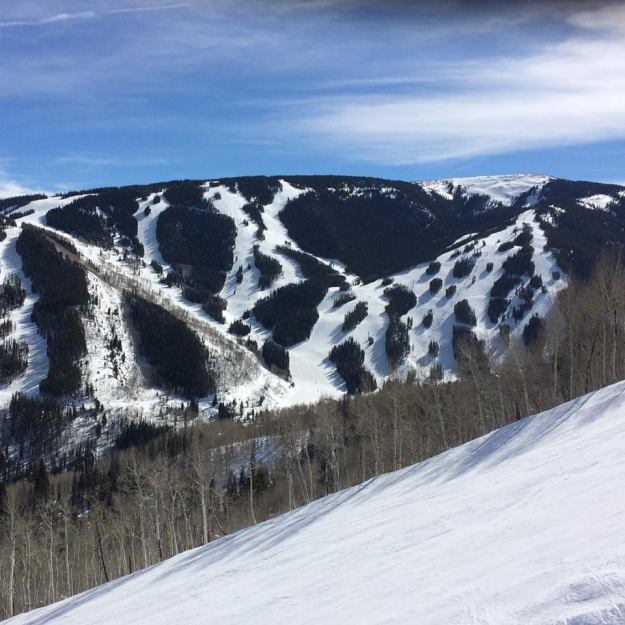
It’s easy to build up an appetite for those cookies here.  In addition to the standard type of ski runs that one finds at many of the other mountains in the area, the resort has some interesting areas that are both unique and challenging.

Beaver_Creek_Terrain

First off, some of the steepest terrain can be found here, particularly for “groomed” trails. I use the term “groomed” loosely here, as when most people think of a groomed ski trail, they think of one that had been groomed recently, often with marks from the recent grooming.

IMG_5171.jpg

(Note: This particular image was taken at Keystone Resort)

This is some of the easiest terrain to ski on, a there are no small obstacles to take a skier off course, and the snow has been churned up by the groomers to make stopping relatively easier.  However, once the snow is pushed away, either by numerous skiers making turns on the trail, or by strong winds, the conditions become much more challenging, as they can get icy, making stopping more difficult.  This seems to be the case every time I go to the steepest part of Beaver Creek ski resort; areas called Grouse Mountain and Birds of Prey.

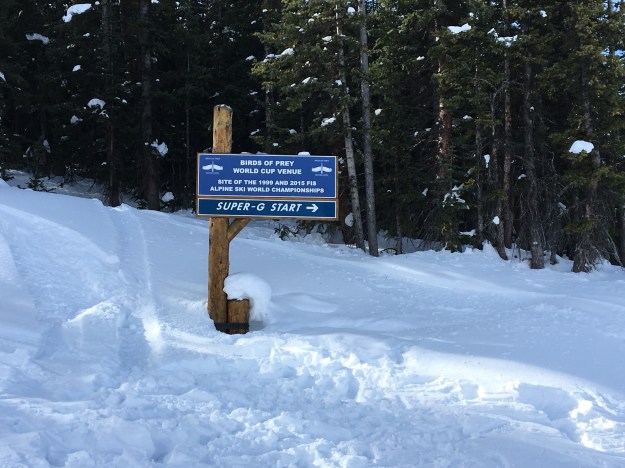
Birds of Prey is where the 2015 World Championships were held.  I had heard that this was the fastest ski trail in the State of Colorado, and that they actually purposely make the trail icier for competition.  I knew it would be scary to ski here, but I wanted to have the experience of actually skiing on a trail that professional skiers compete on.

IMG_5197IMG_5200IMG_5203

The trail certainly was icy (or “race surfaced”)!  I actually fell three times trying to get down this course, and apparently, although I could hardly imagine skiing on a surface any icier than this one, it wasn’t even as icy as it is during an actual competition.  I would later be reminded, by the friendly staff at one of the ski lifts that of the 36 contestants that entered the World Championships here, only 15 finished, the other 21 fell in some sort of way!

Due to it’s relatively lower base, at 7400′, Beaver Creek Resort is home to a significant amount of aspen glades.  By this I mean skiing through the trees, as can be done at pretty much any major ski resort worldwide, but rather than skiing through the pine and evergreen trees that are common at elevations from 9,000 to 12,000 feet (which is where a lot of the skiing at the other Central Colorado resorts is done), skiing through Aspen trees, which are more common at elevations closer to 8,000 feet.  Skiing in the Aspens offers a somewhat different tree skiing experience, primarily due to Aspen trees having significantly less branches.

IMG_5043.jpg

Discussion of Beaver Creek can be somewhat polarizing (although there is something polarizing about every resort in Central Colorado).  Beaver Creek is slightly farther away from Denver than Breckenridge, Copper Mountain, and Vail.  This means that the resort can often be slightly less crowded, but also means that most people who decide to visit this resort must consciously decide to drive past those other resorts.  Some people find the interesting experience, the unique amenities, cookies and special treatment worth the extra travel (and extra money).  Others don’t.


As an EPIC Season Pass holder, the money does not factor into the equation.  It is pretty much only the travel and opportunity cost.  Every time I come to Beaver Creek, I process the experience hoping to come to some kind of major interesting revelation about what makes some people chose the activities they do when they do.  In the end, all I actually end up thinking about is how much different the experience is than the experience I get at other resorts in the area, even Vail which is known to be a pretty fancy place in it’s own respect.

When I think about the people I ski with on a regular basis, I see a spectrum of attitudes, related to skiing, as there is with any activity.  On one side, there are the people who like to find something they like and stick to it.  These are the people who would be content to buy a pass to one resort, find their one favorite neighborhood bar, or have a standard order at a specific restaurant that they order every time.  These are the people who just want to enjoy the activity, and, know something they already enjoy, so feel no need to keep searching for something else.  On the other side are people who are always looking for variety, and always looking to mix things up.  People on this side of the spectrum can get bored going to the same places repeatedly even if they are incredible experiences.  In reality, almost everyone fits somewhere between these two extremes I describe.  I wonder, though, if for some people, particularly those who live in the area and ski somewhere in Central Colorado almost every weekend, if visiting Beaver Creek is a way to mix things up, doing something different, and ensuring that we get that variety in our experiences.  That may be what motivates many people to drive by Keystone, drive by Copper Mountain, and finally drive by Vail and come here to Beaver Creek.

When We Get Stuck

IMG_5082.jpg

Here we are, on the verge of something great!  It is right in front of us, in plain sight, a brand new endeavor, a great idea, something that’s going to either change the world, change our lives, or just be one heck of a great time!  The path in front of us is clear, exciting, invigorating.  Never have we felt so alive!  With excitement, enthusiasm, and passion, we enter this new endeavor without hesitation.  We do our due diligence, of course, but the excitement of what lies ahead by far overwhelms any concerns about what could possibly go wrong.

But then it happens.  Shortly into this new endeavor, due to something we either overlooked, poorly estimated, or never even considered in the first place, we find ourselves stuck, much like I was in Vail’s Orient Bowl.  That morning, I got off the ski lift, and saw the 15″ of fresh powder that Vail had recently received.  Instead of following tracks already made by those who skied in this area earlier in the day, I wanted to make my own tracks.  I expected a wild ride through this fresh powder!  On the contrary, I suddenly found myself slowing down, and sinking. The realization that I would find myself at a standstill, and need to work to dig my way back on track, is much akin to the realization many of us have when we realize that some aspect of our plan is not going to materialize the way we had anticipated.

IMG_5085

What is strange is that this experience, of suddenly finding myself stuck occurred at Vail Resort.  Vail Resort is not only home to one of the largest and highest rated ski resorts in the world, but it is also home to a ski museum, which has artifacts of the history of both skiing and the resort itself.

Vail_10thMountain

Vail ski mountain was founded by a man named Pete Siebert, who fought in World War 2 as part of the U.S. Army’s 10th Mountain Division.  This group of soldiers trained in the mountains of Colorado, mainly on skis, and were subsequently deployed to Northern Italy to lead an attack, on skis, in the heart of one of the Nazi strongholds in the region.  Many of the soldiers from the 10th Mountain Division, despite being from many different places all over the country, found their way back to Colorado, and alongside Siebert, helped develop the skiing industry into what it is today.

The story of skiing, and the story of Vail is summarized quite nicely at the Colorado Ski Museum.  In fact, the museum has other exhibits, including one on snowboarding, a bunch of facts about the origin of downhill skiing, which pre-dates Vail and even the 10th Mountain Division’s World War II efforts, and one that shows the history of the U.S. participation in skiing and snowboarding events in the Olympic Games.

IMG_5090

Yes, I had to get my picture taken with one of my favorite athletes, even if it is only a cardboard cutout.  I was not sure if I would get kicked out for taking this photo, so I made it quick.

The abridged version of the story of Vail is that it opened on December 15, 1962, struggled for a couple of years (the second year they had a snow drought and brought in the Southern Ute Indian Tribe to perform a snow dance for them), and then the resort took off in the later half of the 1960s.  After that, the resort periodically expanded, eventually combined with Beaver Creek and became what it is today.  For more details, I would seriously recommend visiting the museum.  With only a $3 suggested donation, it is a great activity for kind of day where skiers and snowboarders need to take an hour or two off due to weather or exhaustion.

The aspect of Vail’s history that is largely not covered by the Museum is the one that pertained to my own experience earlier that day- getting stuck.  The museum has an exhibit, and a video describing the 10th Mountain Division, how they trained, and what they accomplished.  They also describe the history of Vail as a ski resort in detail.  But, the 10th Mountain Division disbanded at the end of 1945, when the war ended.  Vail resort opened in 1962.  The only discussion of this roughly 17 year time period between these two events, was that Mr. Siebert was looking for the perfect place to open a ski resort.

IMG_5091

In detail, what did Pete Siebert do from 1946 through roughly 1960 (when he started laying the groundwork for Vail)?  Nobody knows, but it is definitely possible that he got stuck, much in the same way I was earlier that day.  Maybe, like many who returned from World War II, he came back and did not know what to do during Peacetime.  Or maybe, he looked at places for years and could not find the right one.  It is possible that he could have had a few “false starts”.

Those of us that have ever been, or currently are, stuck, can take solace in the fact that Mr. Siebert eventually, despite what is likely close to a decade of being stuck, put together a world class ski resort.  Additionally, many of his fellow 10th Mountain Division soldiers contributed to what Vail eventually became (the shops, restaurants, and even clubs that popped up in Vail Village).

After being stuck in the snow, I eventually made it down the mountain.  In fact, after only a short delay, I was able to climb my way out of the deep snow into a set of tracks just to my left.  Despite the fact that I did not get what I wanted out of that particular experience, I had a great experience with the remainder of that particular run, finding areas of deep powder farther down, where the terrain is a bit steeper, and then shooting through some glades.

In this particular case, I had no choice but to try to climb my way out of this section of deep powder.  In may other situations in life, we do have the option to give up.  Unfortunately, we often do prematurely, sometimes simply knowing that there is an easier path.  But, the easier path is rarely the more rewarding one.  The experience of getting stuck in the snow only to eventually have a great remainder of the run, followed by seeing a parallel experience with the founding of the very resort I was skiing at reminded me that it is often worthwhile to get “unstuck”, but also that it is less of a catastrophe to be stuck in the first place than we often imagine.

We live in a culture that reprimands people for being stuck only for a couple of months.  Two months with nothing to show for it- you’re on thin ice …. or out of a job!  Sometimes I even reprimand myself for “wasting” a single day!  Pete Siebert may have been stuck for over a decade!  Yet, he eventually founded Vail, and the experience of living in, or visiting, Colorado would not be the same if it weren’t for this important contribution.  So, maybe we need to be less hard on each other, and be less hard on ourselves.

NYC- Sort of Home

IMG_4991

Few places have as high of a profile as New York City.  Few places inspire as much thought and discussion, and, in North America, there are few places that are portrayed as frequently in popular culture.  New York is one of those places that everybody has a reaction to.  Some are in awe of it, see it as some kind of magical place where excitement looms around every corner and dreams come true every day.  Some see it as intimidating.  Others resent the influence it has on our culture.

At 8.5 Million, New York is by far the largest City in the United States of America.  This is less than 3 percent of the National Population, but it’s influence expands far beyond its borders.  Every day, millions of Americans living nowhere near New York read two major New York publications, The New York Times and The Wall Street Journal.  Across the country people look to New York for the latest in business, music, fashion trends, musicals, and more.  And, one would be hard pressed to find anyone in North America that does not recognize Time Square at first glance.

IMG_4974.jpg

Countless shows and movies are set in New York.  At Washington Square Park, it is easy to imagine running into Billy on The Street, the cast of Impractical Jokers, or one of the many other shows that often uses this park as a backdrop for crazy antics.

IMG_4946.jpg

At Rockefeller Plaza, I imagine being in the cast of 30 Rock, or one of the shows that is actually filmed here.

IMG_4995.jpg

Yet, what I actually encounter here at Rockefeller Plaza is people in suits waiting in line for a salad, and tourists paying far too much money to skate on an ice rink that is far smaller than one would expect.

Day to day life here appears to be some kind of a tradeoff.  There are tons of fun places to go, and things to do!  I was only in New York for several days, and this was two weeks ago (I am behind on blogs- life gets in the way sometimes), but I am still thinking of all of the great food I had while here.


It must be amazing to have access to the best of pretty much everything the world has to offer right outside your door.

What intimidates me most about the idea of living in New York City (I say idea because I have no specific plans to move) is the work culture.  While the experience one has in any job is more related to the particular industry and particular organization in which they chose to work, geographic location does seem to play a part, and, from what I hear, employers in New York expect a lot from their employees.  I actually imagine working at a major corporation in New York City as all of the things I hate about the standard working environment; strict hierarchy, lack of caring, people stepping all over each other, feeling disconnected and like just a cog in a machine, dialed up to 11.

IMG_4939.jpg

Yet, as I walked around New York City, I realized the first thing I would miss is the friendliness.  I do not live in the Midwest or the South, the parts of the country known as being the friendliest of all.  But, in Colorado, I feel as if I can smile at strangers, and even strike up conversations with random people as I walk around my neighborhood, go to the store, or go about my life in any other normal way.  Here, not so much.

What would the average American feel if they were to move to New York City?  What would I feel?  Would I fall in love with the cultural institutions, concerts, shows, restaurants, and bars open until 6?  Or would I see a City full of people who appear to have had the life sucked out of them by their professions, hurrying from meeting to meeting, yet accomplishing nothing.

New York, despite being like no other palce on this continent, is a city of contrasts.  Here, in this City, at any given time, there are people having their lives made, and people having their lives ruined!  The City is congested.  Yet, one can get around the city quite quickly via subway.

IMG_4941.jpg

It makes every other system of public transit I have ever ridden (with the possible exception of Washington D.C.) seem slow and frustrating.

I walk down 14th Street.  The sidewalks are just as crowded as I remember them.  People are as eager to shove those who dare to walk slowly out of the way.  It is the fast paced, driven New York of every stereotype.

IMG_4975.jpg

For blocks, the only vegetation one can see is roped off to avoid overuse and destruction.  Yet, a few blocks away, one can find a quiet street, and almost find tranquility.

IMG_4943.jpg

In summary, in New York I feel both at home and in a foreign country at the same time.  With how similar it is to the rest of the county in some respects, and how different it is in other respects, I imagine many Americans would feel the same way.  I guess that is why some people would love to call this place home, while others would be frightened by the very idea of it.

Where New England Begins


Everyone has this idea in their head of the ideal place to live.  For some, it is right in the middle of something; the middle of the big city where everything is happening, the middle of the woods, or somewhere else one can truly immerse themselves in the kinds of activities they enjoy most.  For others, it is places like this, places that are kind of on the edge of two worlds, that combine easy access to several types of amenities.

Greenwich, Connecticut is literally the first town across the border from New York State.  Since the people of New York, and the people of New England have a mutual preference to not include New York in the region known as “New England”, this is the exact place where one enters New England.

But, how much does one really feel like they are in New England when here?  The town is clearly a suburb of New York City.  There is no unincorporated area that separates Greenwich from the adjacent suburbs that are part of New York State.  With an express train, one can be at Grand Central Station in Midtown Manhattan in around 40 minutes.

IMG_4938

The town does have a New England-like charm.  One needs only travel, by foot, several minutes away from Greenwich Ave. (the town’s main street), and the train station, before they enter an area of windy roads, dense trees and quaint houses one often associates with New England.

IMG_4971.jpg

It has a charming downtown, as well as a “Commons” outside their City Hall, which is something I have come to associate with New England, as I had not seen areas like this referred to as a “Commons” in other regions of the country.

Perhaps one of Greenwich’s greatest attributes is the beach in an area referred to as “Old Greenwich”.

IMG_4916.jpg

One of the largest beaches in the area, and one of the few that permits dogs, it attracts a significant  number of people, even on a dreary day in January.

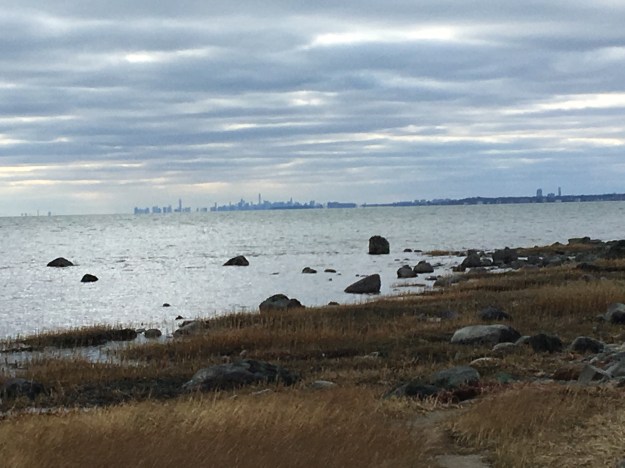
Once again, here at the waterfront, one can see where this town sits geographically.  Even on a cloudy day, at the end of the Peninsula that extends southward into the Long Island Sound, one can see both the rocky shores that pop up the along the shores of New England, extending all the way from here to Maine, but can also see the skyline of New York City.

IMG_4922.jpg

IMG_4923.jpg

Around town, I got that same hybrid-like vibe.  The pace of life is definitely different from New York City.  In New York City, people appear to have some kind of sense of urgency in everything they do.  I tell people who have never lived in New York to imagine the second or third most stressful day of their past year and assume that every person around them is having that kind of day.  In the short amount of time I spent in Greenwich, I did not sense nearly that level of urgency in the people around me.

Greenwich’s New York-like and New England-like characteristics are overshadowed by one characteristic that seems to define everything here; wealth!

Dealerships selling expensive cars, even Bentleys, line U.S. highway 1 coming into town.  The beachfronts are lined with large, multi-million dollar homes, and downtown is lined with shops selling expensive designer brands.

Gucci, Louie, Michael Kors…  I do not even know the name of all of them.  Frankly, I do not even care.  I can never picture, even if one day I become this wealthy, choosing to spend my money that way.  The only reason I know the names I do know is that they pop up in popular song lyrics, particularly rap music.  While sometimes I can get extremely annoyed by designer brands, particularly if I am EVER pressured into making a purchase, I cannot help but have some kind of odd admiration for the people that managed to market them, and, convince people to spend the amount of money they do on such products.

The people who create and market designer products have a keen understanding of human psychology (albeit, they could have used it for a better purpose).  Anytime anyone spends money (and sometimes time) on something, they want to know what they are getting.  It is the same dynamic that takes place when we ask our friend regarding their experience with a specific doctor, or a real estate agent.  We do not know what we are getting.  Through brands, we create trust.  “I know Subarus won’t break down on me”.  Or, “I trust the Cohen brothers to make a good film.”  So, we buy the product.  Those that created these designer brands managed to create a reputation so powerful that millions of people worldwide purchase this product when they could easily purchase something similar for a fraction of the price!

The two main things that stop people from living in that “ideal place” in their heads are job availability and money (which are closely related).  The fact that people with this amount of additional money chose to live here speaks volumes to Greenwich’s appeal as a place that combines the best of both worlds.  People who live here seem to have the best of both worlds; easy access to New York City, the city with more amenities than any other in the country, and fairly easy access to outdoor activities.  Friends that moved here from Manhattan tell me that the move has reduced the travel time to nearly all outdoor activities (hiking, skiing, the beach) by 30-60 minutes.  While it’s easy to come here and be envious of the fortunes here, it is also quite easy to see, even from someone who might have a different “ideal place” in mind, why people chose to live here.

Going Back to My Roots

“If you know your history, then you’ll know where you’re coming from”, Bob Marley explains in his classic hit song Buffalo Soldier.  It’s hard to really know how many places the functional equivalent of this phrase has been uttered throughout the history of mankind.

What does it mean to “know your history”, or “know where you’ve been”?  Is it sufficient to know your personal story?  Or, do you need to know the story of your parents, and your family’s ancestors?  How deeply must we understand the cause and effect relationships of events in the past?  After all, history, whether we are talking about it in an academic sense or in a personal narrative is about more than just facts.  When asked, nearly all people can recite the rudimentary factual aspects of their lives.  Where they were born, what schools they attended, when they moved, married, changed jobs, etc.  I always wonder, though, whether they understand their life’s events more deeply, how certain things impact one another, what emotions were involved, and what events were significant.  In other words, do they understand the “story” of their lives?

This holiday season, and by holiday season I am referring to Christmas and New Years, was kind of a trip back through my own history, or at least the places where said history took place.  First, Christmas was spent in the suburbs of Chicago, with my immediate family.  I spent a little bit of time in the City of Chicago, with friends, which is where I spent the four years before moving to Denver.  But, I largely spent that time in Buffalo Grove, a sort of typical suburb 35 miles northwest of downtown, and the place where I spent my Junior High and High School years.

IMG_4865

It’s been said, particularly of Millennials, that young adults go home for the holidays and revert into their teenager mode, subconsciously, because they have returned to the setting of their teenage years.  For me, it is a little bit more complicated.  Some things are the same, but some things are different.   Some things get a little bit more different every year.  There is the obvious course of change any particular location undergoes over time; that restaurant that closed, with a new one opening in its place, the road that was reconstructed and widened on the other side of town, and the new neighbors.  But there’s also a strange change in how we respond to things, sometimes things that are exactly the same as they were in previous years.

Over the course of our lives, we periodically re-examine things (I do this more than most).  Maybe it’s a different experience, or being exposed to a different point of view on something, or some major event.  Each year we come back with a slightly different perspective, and, that experience, which was the same exact one we had last year, the year before, and back when we were 14, is viewed differently in our own minds.  When it comes specifically to what my family does, both during the holidays, as well as in life in general, there are mixed emotions. There are some things my family does that I did not really appreciate with I was younger, but have found a new appreciation for.  There are other things now seem strange to me.  I am guessing many people who have moved a significant distance away from “home” have a similar experience at the holidays.

The Chicago area is not my full history.  The first 11.5 years of my life, I lived in New York, outside of New York City on Long Island.  I didn’t specifically travel to New York on New Years Eve as part of some plan to revisit my past.

IMG_4952

But, the two practically back-to-back trips did line up in a manner where I could not help but think along these lines.  New Years is already a time when people reflect on their lives.  Having just spent time in the place where I spent my recent past, and now being in a place where parts of my early childhood unfolded, I could not help but think it is time for me to re-connect with who I am.

IMG_4900

The move from New York to Chicago, my college and graduate school experience, jobs and more recent move to Colorado are the rudimentary facts of my life.  My “history”, is the memories, the periodic experiences, the kind of person I was and the kind of people I was around.  It is something that is remembered, hopefully accurately, and something that can be reconnected with, but only partially.  The New York of 2016 is not the New York of the 1990s.  Neighborhoods have made transitions, different kinds of people have both left and moved in, and some of the things one will experience here are significantly different.

However, some of the things are the same.  And, while I was not reliving a childhood event, coming back to the places where our formative years unfolded can help us reconnect with our roots. Through this experience, I feel like I am being called to return to my roots, the person I am, naturally, rather than the person we are all pressured to become as we adults in today’s world.  It’s like 2016 begun with what the year’s theme needs to be.  Outside of whatever negative feedback we have received, the adjustments we have made to be accepted, and who we were told to be, there is a person inside of all of us, the person we naturally are.  In this midst of everything I do in my adult life, this is a person I need to not lose sight of.  It is a person many of us need to reconnect with.  It is my sincere hope that in 2016, we all reconnect with our roots both individually and collectively.

Life On Monument Hill

What does a dog lover do when they suddenly find themselves dogless?  Well, they gladly accept the opportunity to “dog-sit” for their friends when they leave town.

Those that have lost a pet before know the situation.  It is just too soon to get a new dog.  But, I had become accustomed to spending time with dogs.  It still feels sort of strange to come home and not see my dog waiting for me at the door.  So, sometimes the best thing to do at this point, while I am missing just hanging out with dogs, is to go somewhere and spend several days with someone else’s dogs.

IMG_4782

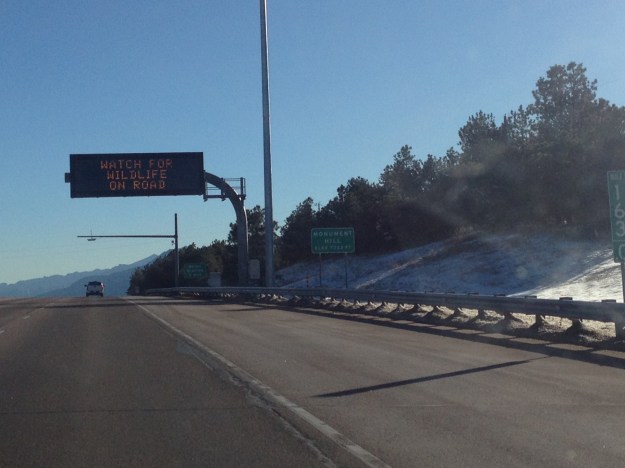
The first time I drove over what is referred to as the “Palmer Divide” it kind of caught me by surprise.  It was my first time driving from Denver to Colorado Springs.  As one who loves looking at maps, I knew there was a ridge between the two towns, and I knew it was referred to as the Palmer Divide.  I was, however, caught by surprise by how high in elevation I got to just simply driving along Interstate 25.  7,352 feet is over 2,000 feet higher in elevation than Denver, and around the same elevation as Lookout Mountain, a place people can go and overlook the City.  It’s way higher than I thought one could go without actually going into the mountains.

A most general simplification of Colorado’s geography slices the state into thirds.  The eastern third is essentially part of a larger region that extends nearly 1000 miles east called the “Great Plains”.  The central third is the Central Rockies, and the western third is often referred to as the “Western Slope”.  In this extremely simplistic model, Monument would technically be part of the eastern third, but it’s high elevation makes it significantly different than most other places referred to as part of the Great Plains.

In some ways, this town has the same look and feel of any fairly recently built suburb.  Although the town was incorporated in 1879, most of it’s population arrived since 1990.  Unlike in urban areas, the roads wind, and subdivisions are all disconnected from one another.

I actually spent the later half of my childhood (7th-12th grade) in a suburb with a similar layout.  My parents house (in which they still live) was in subdivision built during the 1980s.  The area is somewhat more densely populated than this, but the experience was actually quite similar.  Most suburban subdivisions are across the street from some sort of strip-mall.  At my parents house, we happened to be only four houses in from the main road, making the shops across the street quite close.

Over the course of that six year period, I had actually become quite accustomed to an experience that would be considered strange to most people.  Given how close all those shops were to home (the grocery store we always went to was less than a quarter of a mile from home), it seemed strange to me not to just walk there, as opposed to driving.  However, as anyone who has spent a significant amount of time in suburban areas built  in the later part of the 20th Century would attest to, these areas are quite car-centric.  For a lot of people who live in these areas, it doesn’t even cross their minds to walk somewhere.  Therefore, I would quite commonly be the only person walking anywhere in a place not built with pedestrians in mind.  This is an experience I had become accustomed to, but would likely seem strange to most people.

IMG_4831

The apartment complex I stayed at in Monument Valley is across the street from a fairly major shopping center, which includes Wal-Mart, the Home Depot, and several restaurants.  Theoretically, one could live in a place like that, and, other than whatever commute they have to work, be able to satisfy all the basic needs of life without having to drive anywhere.

As the weekend progressed, I walked back and forth across the street to shops and restaurants, the same way I did all those years ago.  I kept thinking to myself about what life is like for people in a place like this.  Obviously, most people don’t walk, even if they are just going across the street, but if I lived here, I most certainly would.  But, if I lived here, I wonder if I would get bored.  Being so close to the mountains (closer than Denver), there were some interesting cloud formations that I would see on a regular basis.  But, as much as I love the weather, and was blown away by this long flat cloud in front of the mountain range, that would not entertain me for an entire day.

For nearly all of my life I have been judging certain areas, where there aren’t any interesting bars, restaurants, or other fun places, as boring.  In fact, one of the strangest things about the Denver, is that there are sections, within the city limits, that do not have anything within walking distance.  When I saw these neighborhoods, I decided I would not want to live there.

But, I really thought long and hard about life in a town like this.  Would there theoretically be a way to make it work?  I mean, I know that I would miss a lot of urban entities, and taking Ubers, busses, trains, etc. to get around.  But, obviously a significant subset of the population does just fine in places like this.  They just do something else.  Maybe they go out to the park instead of going to a fancy brunch, or they have house parties instead of going to the bars.  I would definitely still prefer to live in areas with interesting entities around me, but I maybe I should not be as reliant on places within the neighborhood for entertainment.  After all, it does get expensive.  If experiencing life in a place like this for a few days can teach me anything, it is that sometimes we need to be creative and figure out something amazing to do with our time on our own, using limited resource.

The CrossFit Games

IMG_4755

Sometimes it is difficult for me to wrap my brain around the entity that is CrossFit.  It is definitely not your typical gym, where you pay some kind of monthly fee, and get access to group exercise courses, weight rooms, and the like.  My primary exposure to CrossFit is living on the same block as an affiliate gym.  Nearly every morning, when I would be walking my dog, I would encounter large groups of people running along the sidewalk.  Sometimes they would have something in their hands, like a tire, a medicine ball, or something that just looked like a giant jug.  I would always think to myself about how these people woke up sometime around 5:30 A.M. to come in and do an intense workout, while I was just walking my dog after eating a bagel with creme cheese.

CrossFit is a also completely different philosophy, on exercise, and on life.  Unlike at a typical gym, CrossFit-ters (is that the right way to refer to them, I do not know) do not work out at their own pace.  In fact, the workouts appear intense and competitive, and so does the lifestyle.

It was a mere ten minutes after arriving that I realized that I may have inadvertently brought a contraband item into the gym.  With a bottle of Coca-Cola in front of a sign strongly advocating against the consumption of sugar, I felt quite ridiculous.

For several reasons, I was a little bit hesitant to come to the CrossFit Regional Competition.  The intensity of the workout regiment does not really match my personality.  I have also all but lost interest in “working out”.  This is primarily due to the fact that I now live in Colorado.  I just find it hard to motivate myself to go run on a treadmill and lift weights when there are mountains with trails, ski resorts, rivers with rapids, and endless adventure possibilities so close to home!

Also, Saturday morning was COLD!  Upon arrival, at about 8:20 A.M., the temperature was in the mid-teens.  This was after Denver International Airport (where the official observations taken) recorded an overnight low of 5 degrees.  Before that morning, the last time the temperature in Denver had dropped lower than 20 was the 6th of March, over 8 months ago.  So, not only was it cold, but we were not accustomed to it.

IMG_4745

Despite the cold, and despite the activity being outside the realm of what I would typically attend, I started having fun as soon as I got there.

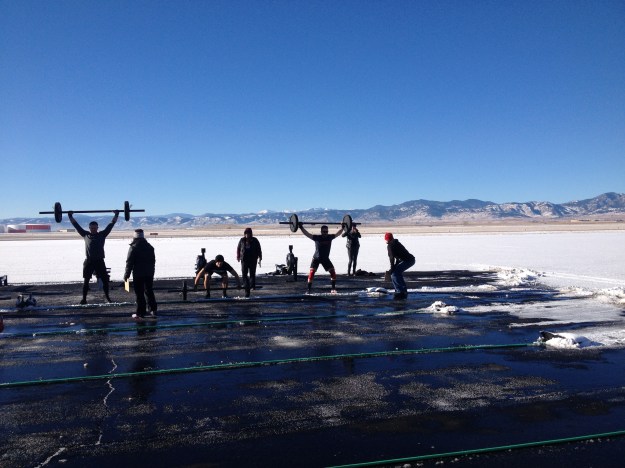
The first competition I watched was a close race between several competitors.  The competition involved a series of rows, weight lifting, and some series of jumps that I did not really understand.  It was quite exciting!  As the competitors passed through the series of events, some would take leads, some would stage comebacks.  It was like watching another type of race, such as hurdles or horse racing, only with more craziness and variety.

I had came to the CrossFit Regional Competition to support a friend of mine who was competing.  He ended up pulling out a victory in a really close “race”.  In fact, there was an entire group of us that had made the trip up to Broomfield to see him compete.  Towards the end of this close race, we were all yelling, jumping up and down, and cheering him on!  In fact, part of the reason the event was so enjoyable was the group comradery.  I genuinely believe that all events are better when shared with others, even in the cases where solitude is major part of the event (like backpacking).

IMG_4784

There were also a lot of other fun events at the CrossFit games.  In particular, I enjoyed watching the relay races, as they had a crazy arrangement of obstacles that each team of competitors had to overcome.

I saw people who were in crazy good shape.  They all looked quite strong, and they all were capable of quite a lot.  All I could think to myself was that despite my strong lack of desire to spend multiple mornings a week lifting weights and running and such, while also making it into a competition, this program works!  It works for the people involved.  Nearly every CrossFit-ter that I have seen, whether it be here, or on my block, is in ridiculously good shape, exactly the result they set out to get.

I am also glad that once again I personally decided to say yes to life.  Had I chosen to stay home, whether it be because I was deterred by the frigid temperatures, or whether it be out of lack of a strong personal connection to the CrossFit way of life, I would have missed out on something truly beautiful.  In the end, what I appreciated most about this event wasn’t the yelling and jingling my keys for the last 15 seconds of the event, or any of the other excitement one gets when watching a close race and having their preferred participant win.  This event was special because I saw something that represents one of the greatest things we, as a human race, ever experience in life.  It is that moment when you see the positive results of hard work in another human being.  It is knowing that a genuinely decent person has taken part in something to better themselves.

Life is full of tough choices.  One definitely involves how one can best spend their time.  We will all receive a series of invitations (or solicitations), and must chose to say yes to some and no to others.  We all know what we like.  One will nearly always willingly accept invitations to activities they know they enjoy, and approach them with a positive and joyous attitude.  Conversely, one will nearly always turn down invitations to activities they know they are not fond of.

What about those activities that fall somewhere in the middle?  Maybe you are not too familiar with them, or have some kind of mixed emotions.  Ultimately, we all must make a judgement call.  Saturday’s event provided a clear reminder to me that accepting more of these invitations, and approaching them with an open mind and a positive attitude will lead to more positive experiences in life.