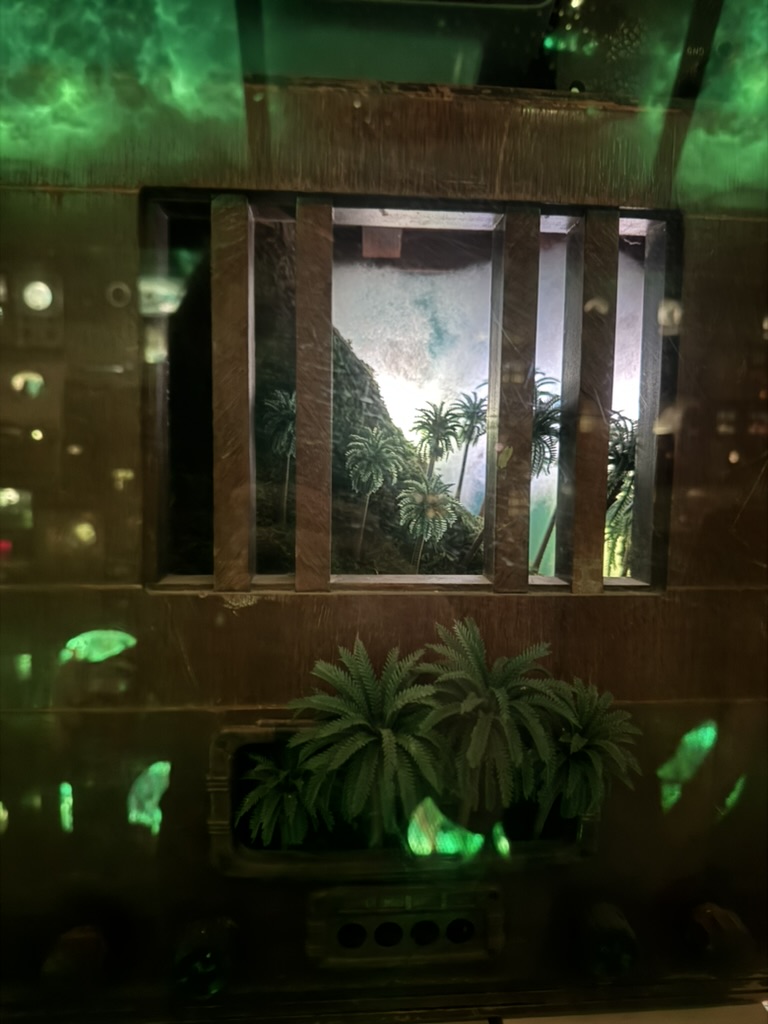
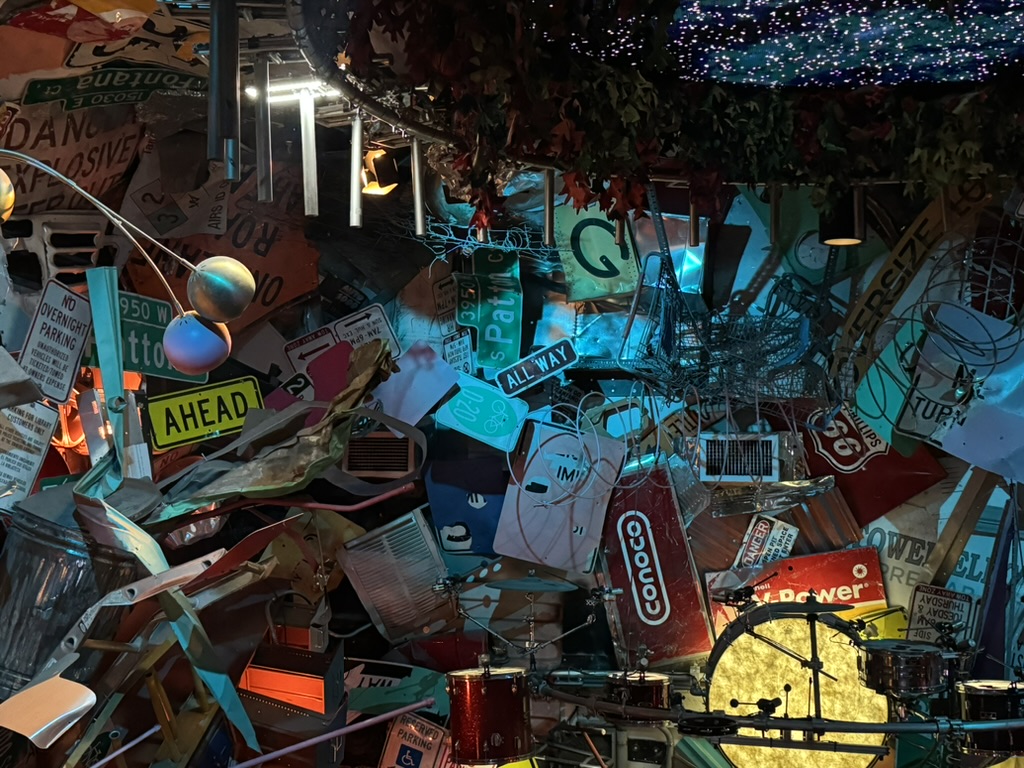
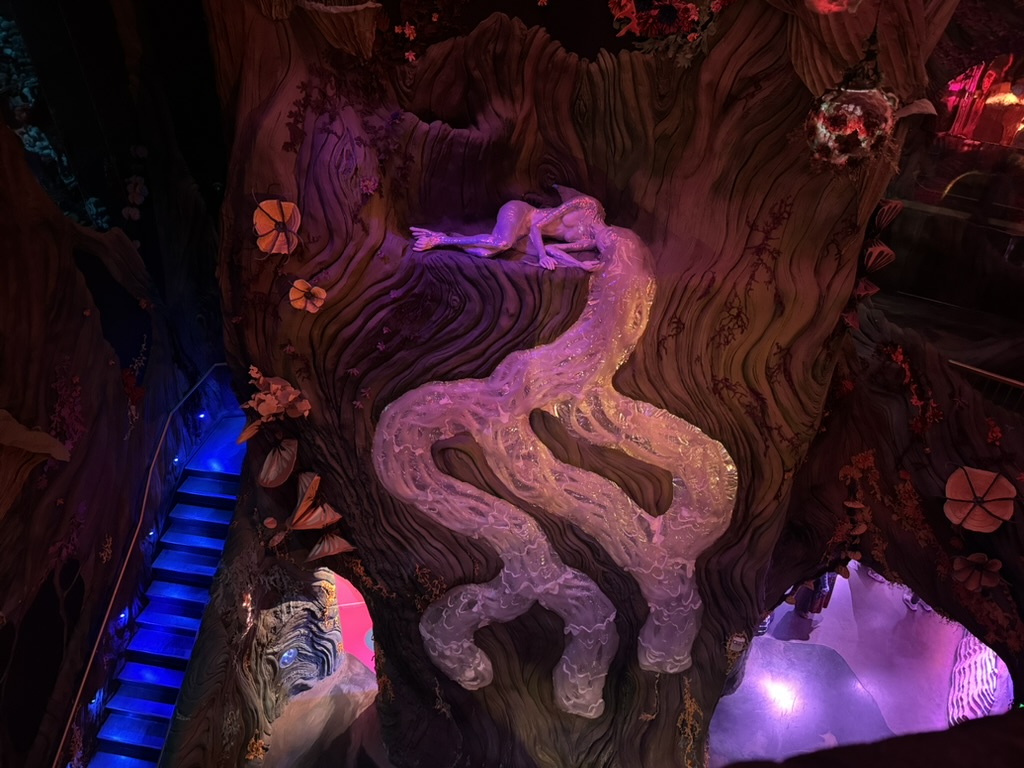
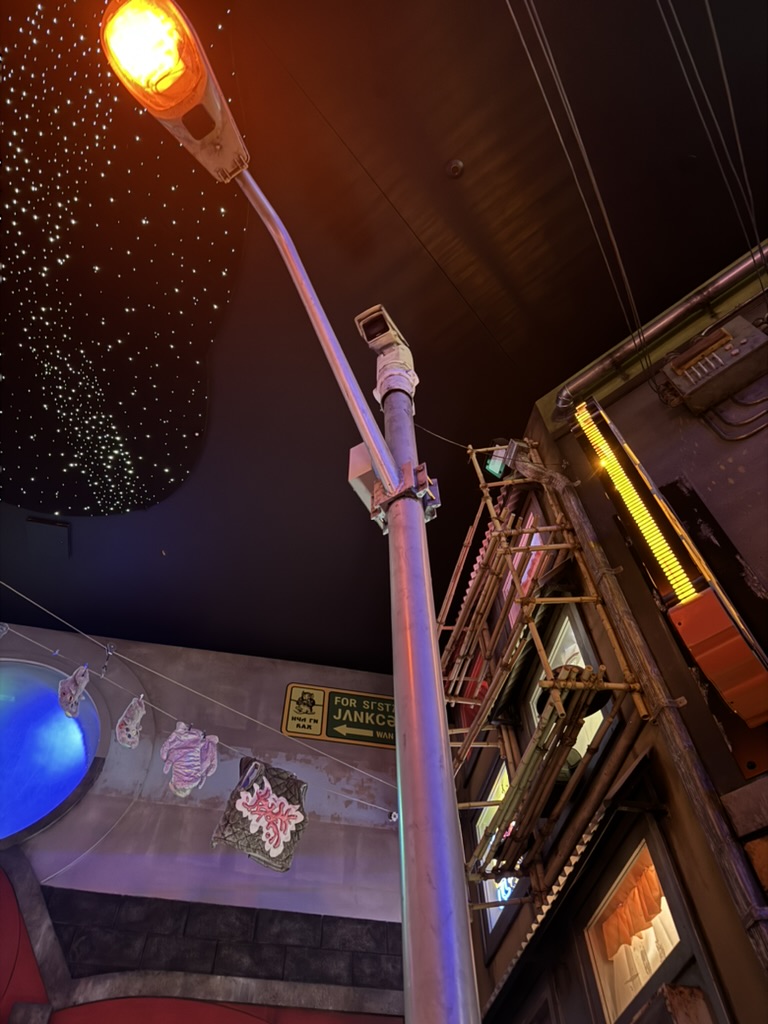
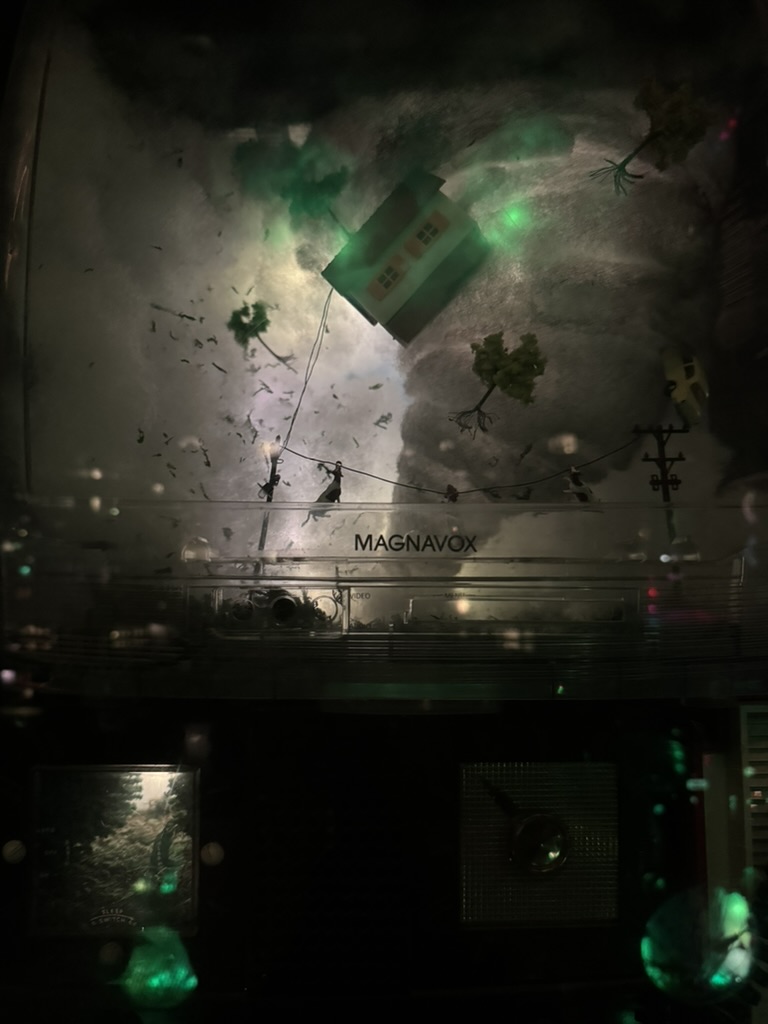
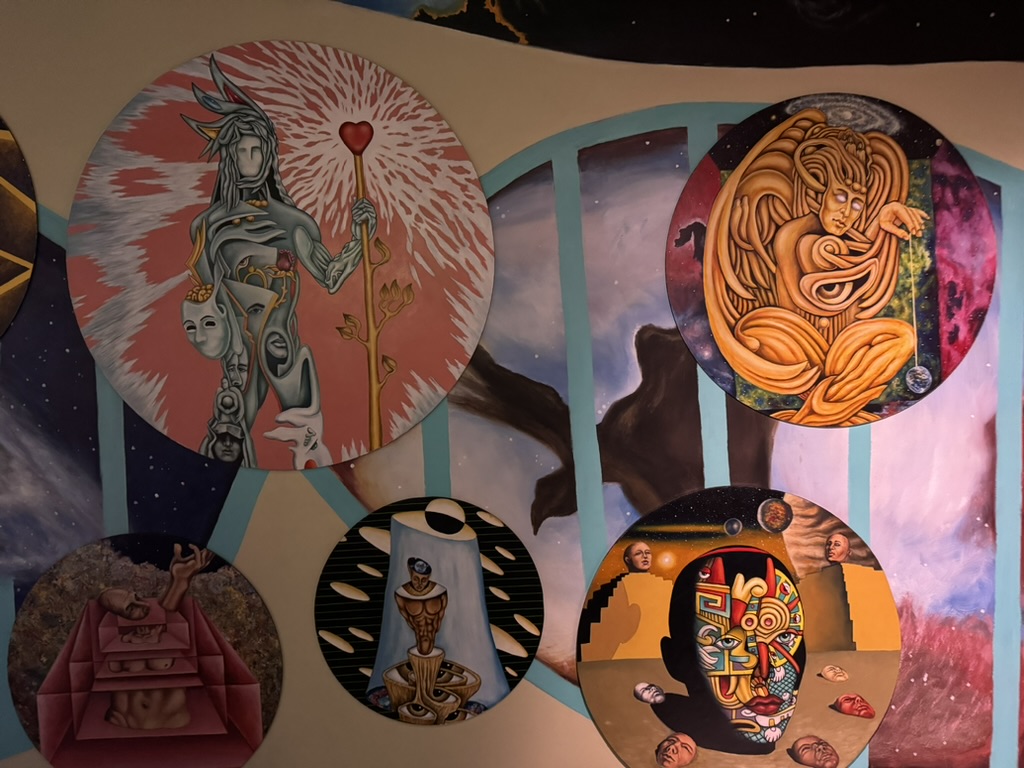
It’s hard to describe what exactly MeowWolf is. Over the past several years, you’ve likely seen some pictures of this place, mostly on social media. MeowWolf describes itself as Immersive Art Experiences and Interactive Exhibits. While this is certainly true, it feels like one of those IYKYK (If You Know You Know) types of places. Pictures like these give you an idea what to expect, but it’s impossible to understand what going to MeowWolf is like without actually going there.
More than anything, the place is extremely artistic, and just random. Around every turn there is a door, another room, or even a crawl space that leads to another completely different exhibit. There’s a lot of it too. Some have spent over five hours in this place.
My favorite part was the Pizza and Pals section, a place where I suddenly found pizza singing at me.
The place also had an optional interactive component, with a story about four worlds that it would take a much deeper dive to understand.
Still, I couldn’t help but reflect on how well this place matches our current cultural moment.
First of all, it certainly caters to an ADD (which seems to be all the rage right now) type of crowd. With all the different immersive art, any visitor can just abruptly change what they are looking at by turning their head or walking through a door.
Yet, it seems to match this historical moment on a much deeper level. Sure, it is the perfect place for Instagram, something that people seem to have been looking for for a little over a decade now. However, it seems to speak to an even deeper craving that has developed during the 2020s. After nearly two decades of looking at and sharing pictures on social media, people are now looking for something that is more of an experience.
There is also something to be said about an experience that a person cannot truly wrap their heads around just by looking at pictures or even hearing about the experience. By knowing this place cannot even be remotely understood through social media feeds, it establishes itself as being about more. While this place may be great for social media, it points to a life beyond social media. The emergence and increased popularity of this place appears to be sending a cultural message along the lines of…
“We still want great photos to show our friends and family, but we are craving in real life interactive experiences. We want something unique. Something imaginative. We want something beyond what can just be seen in a photo or a video. We are ready to be done with just passively consuming content. And, we’re tired of the flattened culture where everything is the same!”
This, I believe, culturally, is where we are in 2025.
Phenomenon like “quiet quitting“, the “great resignation” and some places experimenting with the four day workweek should make it abundantly clear that there is something less than ideal about the standard work culture of the post industrial world.
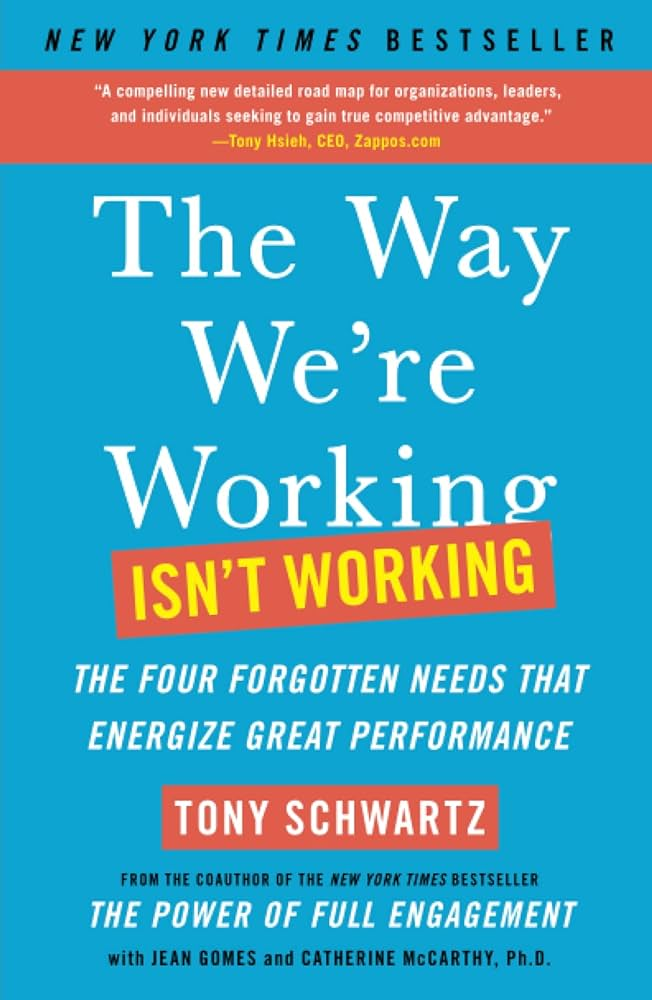
Note: This book was published in 2010
Our general work setup is built around a world that no longer exists. It was built around the industrial world of one income families of a hundred years ago. On an assembly line, the amount of value someone brings to a company is directly connected to the number of hours they are present. The eight hour workday represents a compromise of sorts between business owners and labor. It is based on this direct connection between value and hours worked, as well as a world where most laborers were men with women at home tending to childcare and household upkeep. Today’s world is completely different and needs a completely different paradigm.
However, realistically, it is going to take a while to get there. We are still in the beginning phases of exploring the new nature of work after the pandemic.
At this time, living a healthy and balanced life will require being innovative and working with what we have available. This is why I have taken an interest in hikes that can be done in roughly 90 minutes close to home. This fall, I tried two.
First was Pence Park, between Evergreen and Indian Hills.
The hike to the top is about a mile and a half (2.4 km) with an elevation gain of 750 feet (230m).
For a short hike, the views here are quite stunning, especially at the top.
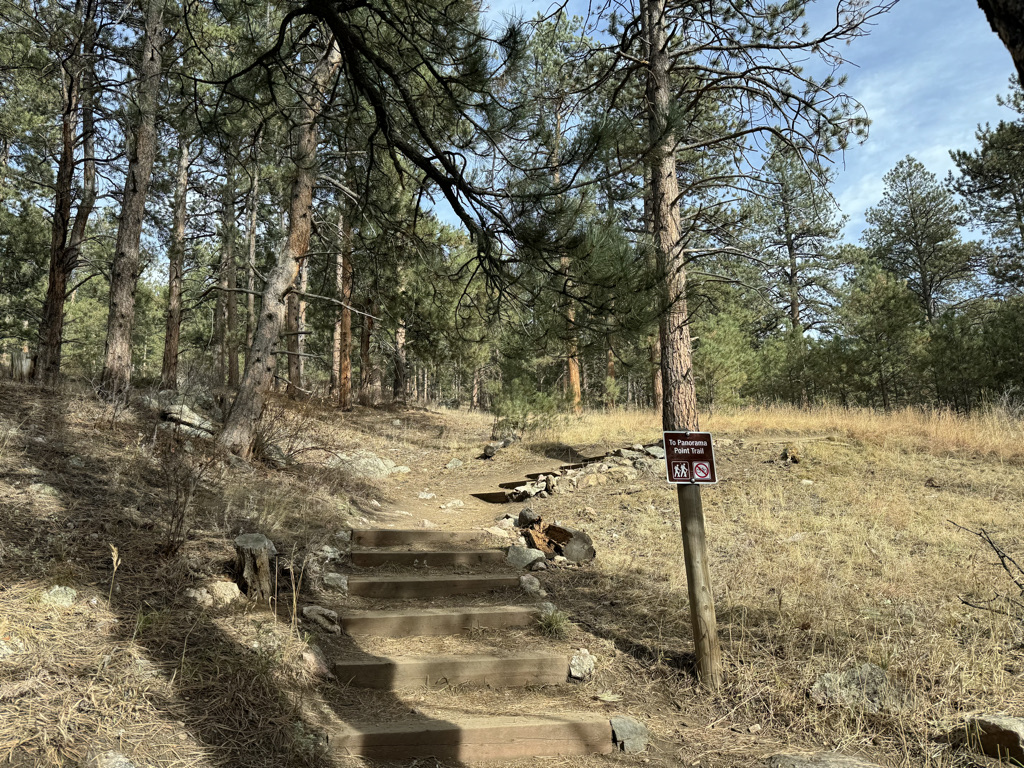
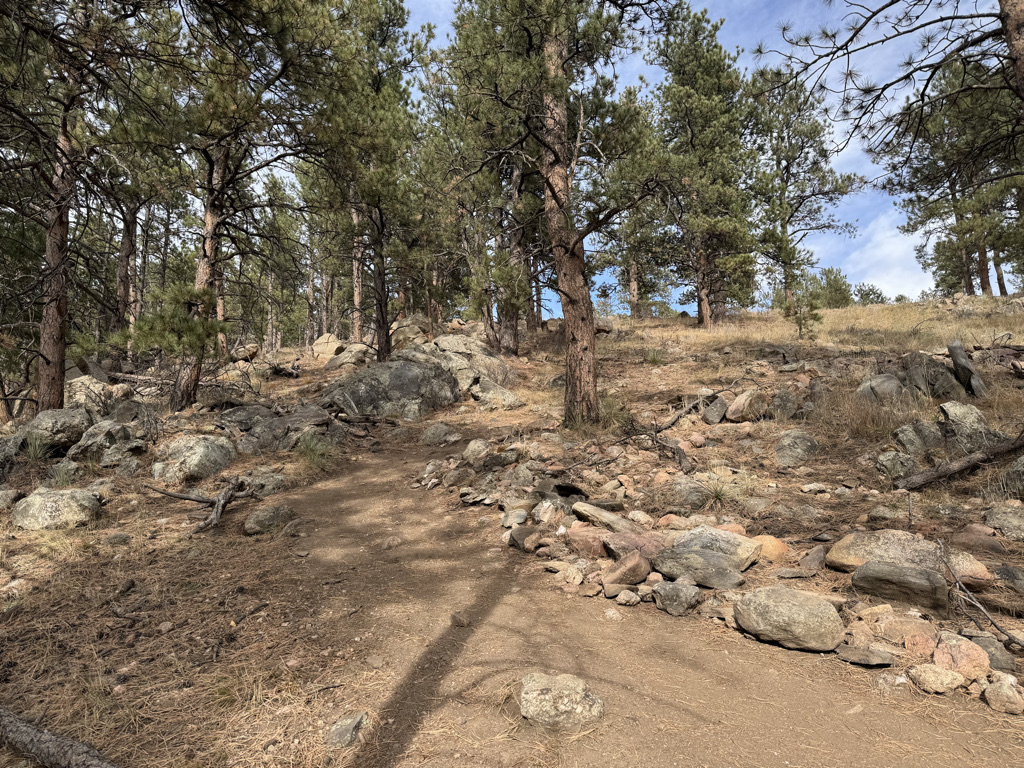
My other 90 minute fall hike was Panorama Point, just outside the small town of Kittridge.
This hike has a round trip distance of just over three miles (≈ 5 km) and an elevation gain of 625 feet (190m). These hiking trails are actually only a few miles apart, so it is not surprising that they feel quite similar.
Panorama Point has an overlook of the town of Evergreen at the top.
So, there are some slight differences, but both hikes take about an hour and a half and are about 45 minutes to drive to from downtown Denver.
This activity address two of the biggest shortcomings of “9-to-5” office jobs. Spending those hours doing work inside, whether it is in an office or remote, can limit one’s exposure to sunlight. Some studies have estimated that well over half of Americans are not getting sufficient vitamin D, which mostly comes from exposure to sunlight. Additionally, most of these jobs are sedentary, involving sitting at a computer all day long, which is certainly not helping with the obesity epidemic.
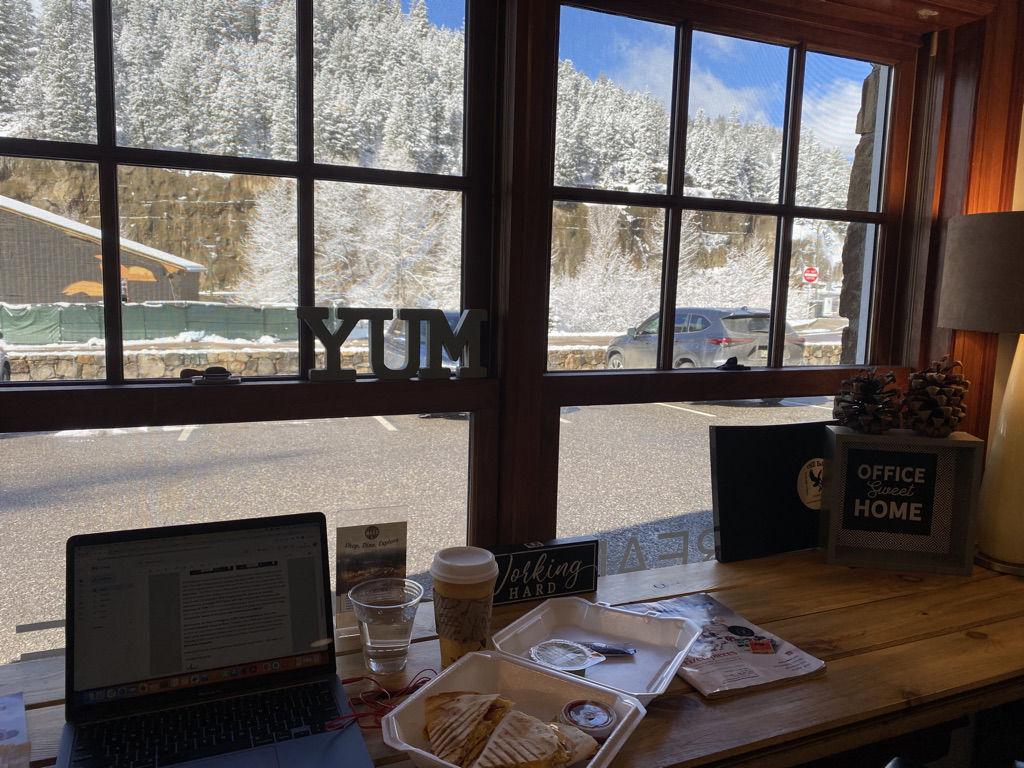
These 90 minute hikes offer an opportunity to get some sun, exercise, and even be a bit social in the middle of the day on a weekday, particularly in the spring and fall seasons. On hikes like these, there is even the potential to limit the amount of time spent out of contact to under two hours. Eating and working from a nearby restaurant made my time away from my computer, messages, etc. not too much more than a standard lunch hour.
Blackbird Cafe in Kittridge, CO
Of course, not everybody lives in a place with amazing short hikes nearby. The key is to be creative and work with what you do have around you to find habits that help correct the imbalances created by a less than ideal work setup. Hopefully, the time will come sooner rather than later when we’ll determine how a majority of people can be happy, healthy and provide value to the organizations they work for. Until then, I hope you can find your version of the 90 minute hike less than an hour from home.
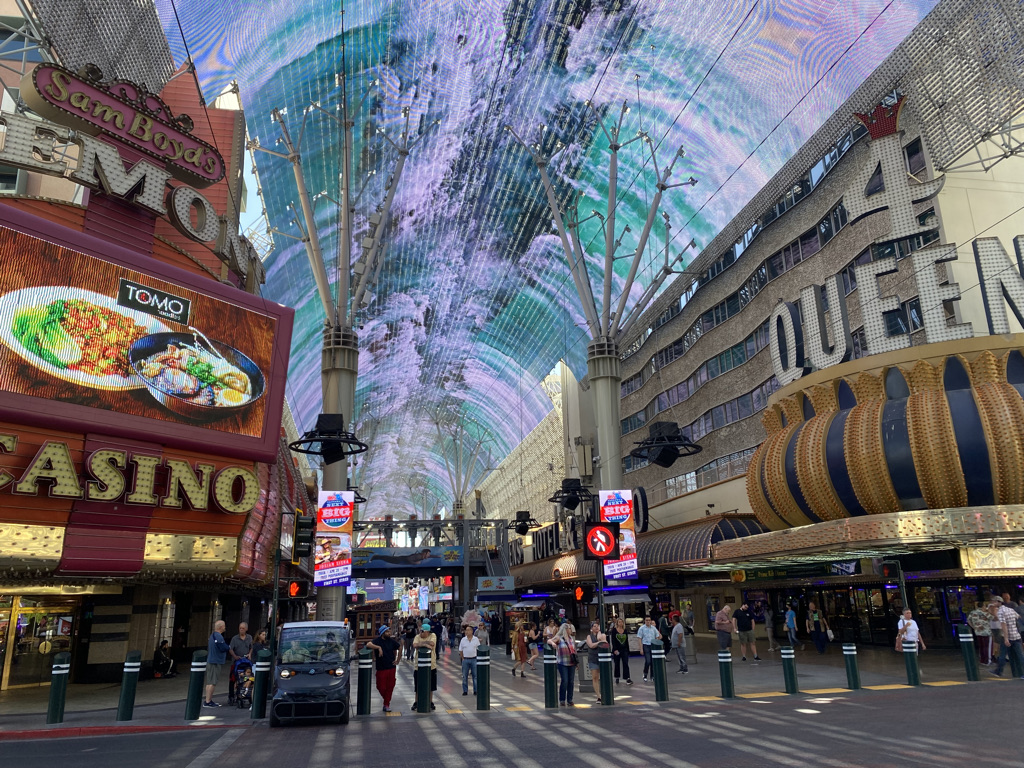
Every time I go to Las Vegas, I think about the grand meaning behind this place. What makes this place the way it is? Why do so many people want to come here? And, what does this tell us about the current human experience?
I come here a lot, and have written several previous entries about Las Vegas. Perhaps the most fitting description of what Las Vegas means to the countless people who frequently visit this place is the title to one of my previous posts, Three Days Without Rules.
Most people spend a vast majority of their time doing things they don’t really have control over. I don’t think any of us who work 40 hours per week were at any of the discussions, over a hundred years ago, where labor activists and corporate owners agreed to that standard. Nor do that many of us have any idea how 9-5 became the standard working hours.
The same can be said for many of the other responsibilities we take on, including maintaining our homes, family and relationship responsibilities and many of the standards around the other things we get involved in and take responsibility for.
For many of us, most days are just seas of to-do lists.
What we chose to do in that small amount of time we have total control over is often quite telling. People like me, with sedentary jobs in front of computers, often opt for active, outdoor pursuits in our spare time.
However, those with active jobs that require physical exertion are often more interested in relaxing, watching T.V. and sports in their spare time.
I remember back when I was in college and graduate school wondering if students balance out the high level of intellectual processing involved in their studies by drinking to sometimes crazy levels of stupidity. Those the live in cold climates are definitely the most anxious to visit places like Cancun. There is also the stereotype of the person who comes across as shy and reserved having some of the wildest and kinkiest sex lives.
In a world has recently abandoned organized religion and become obsessed with numbers and metrics for everything, we now see people looking for something beyond progress and achievement. Dare I say it, beyond this life.
These observations seem to indicate that we are all trying to achieve balance and that what people chose to do with weekends, vacations, etc. provide clues as to how day-to-day life can be out of balance in the current era.
So, why do so many people visit Las Vegas?
The reason so many visit Las Vegas is the same reason so many hate Las Vegas. What goes on here tells us something about how we live our lives in the present-day, specifically what is missing, what people are craving. I recently read a book called The Comfort Crisis, which describes, both through a lived experience and references to research what aspects of the human experiences we’ve lost by prioritizing comfort (and predictability, which is really another form of comfort) in nearly all of our recent pursuits.
In our collective pursuit of comfort, we have placed a lot of restrictions on ourselves and each other. We refuse to pursue our passions to avoid the potential financial, lifestyle and reputation risks. We shy away from pursuing meaningful encounters, friendships and relationships to avoid making ourselves potentially vulnerable to rejection and potentially making others uncomfortable for a variety of reasons, most commonly jealousy or the discomfort of seeing others break social norms. We skip activities to avoid random, often overblown risks. Perhaps most sadly, we limit how present we can be with the people around us, often the people we care about most, out of this strange pressure we put on ourselves to always be available to respond to messages. We fear our bosses, co-workers, or even sometimes causal acquaintances will be disappointed in us if there is any delay in our responses to messages over email, slack and even social media and therefore end up almost chained to our computers or other work stations.
Every time I go to Vegas, what I see is a large subset of society crying out.
They are crying out for some chaos. They are crying out for some unpredictability. They are crying out for some variety in a world where we condition ourselves and each other to follow the same routine, processes and procedures every day.
It is more than likely that we need some restrictions in our lives. At some point, we all need to sober up and get healthy.
But, perhaps, what places like Las Vegas demonstrate is that we may have too many restrictions, at least in certain areas of our lives.
The modern world is such a paradox. We are more prosperous, more secure and more comfortable than ever before. Yet, we also seem anxious, depressed and generally dissatisfied. What is going on? What are we missing?
There is something about the modern wold that, at times, can just feel lacking. Days without any meaning. Activities we don’t truly experience. Conversations where everyone’s not really interested and never lead to a true connections. Activities we barely even remember doing. On bad days, it can feel like we have all turned into robots just trying to achieve metrics, numb to all emotions.
Numbness has been attributed to lot of things. Drugs. Alcohol. Certain psychological disorders. Deciding to be constantly be busy. Engaging in only surface level interactions. And, finally, being in a constant state of distraction. The consequences are dire. When we chose to numb ourselves to avoid negative emotions, particularly discomfort, we also deny ourselves positive emotions. We lose the ability to enjoy life.
It was a similar experience. Warmth. Beautiful sunrises over the Atlantic Ocean.
Activities by the beach and pool. And, like last time, I made friends with both the other guests of the resort and the staff that coordinated the activities. It ended up being a very emotional experience. Every day I would go to Spanish lessons.
And, I would regularly try to conduct conversations with the staff in Spanish. After several days, those that I had spoken to most started telling me how much they appreciated our conversations. They said that only about 5% of the guests that come to this resort even try to speak to them in Spanish. One of the employees even wrote a heartfelt note.
It was quite emotional and made me sad to leave. I often don’t feel appreciated in normal day-to-day life. It often feels like people are trying to mold me to adapt a certain set of opinions or maximize my output. Here, I felt appreciated for being myself; goofy, curious and friendly. I felt like I was leaving part of my heart in Mexico.
Then, I spent a week with family, with Christmastime in full swing in the Chicago metropolitan area.
The setting couldn’t be more different. I went from vacation back to performing my remote job. I went from sunshine and 86°F (30°C) warmth to clouds and temperatures near 40°F (3°C).
The source of appreciation this time came from little children; my nephew and niece, ages 7 and 5. There were activities and just quality time spent with family. One of them, due to the lack of snow was baseball. My nephew drew me a picture commemorating a moment we had in a backyard baseball game when I hit a grand slam and we did a grand slam dance.
Leaving this place was emotional as well. It feels good to feel appreciated. I wonder why we are often so bad at showing appreciation. I wonder why I am so bad at it. I spent most of my travel time between all of these destinations wishing that showing appreciation was something that just came more naturally.
Also, neither of these experiences were completely free of all the mechanisms attributed to numbness. At an all inclusive resort, plenty of alcohol was consumed.
This did not stop me from truly experiencing both nature and human connection in Cancun.
Time spent with family raising children is always quite busy.
But that did not stop me from being truly immersed in the activities.
What was common to both weeks is that life felt “full”, like I was generally truly experiencing connections with other humans, activities and the world around me. Whatever numbness is common in standard day-to-day life in 2022 was just not there. If we all have a kind of metaphysical door that opens us up to emotion and experience, both good and bad, mine was clearly open and despite the heartache of leaving both places after the weeks were over, it felt so much better than having it closed.
So, how can we escape this numbness that leads to all this dissatisfaction with life? One commonality to these two weeks is that they both involved significantly less “screen time”. When factoring in computers, smart phones and television, the average American spends over 12 hours per day (84 hours per week) in front of screens. These two weeks my time in front of screens was 12 and 34 hours respectively. I was also generally free of anxiety, tight timelines and other forms of negative stress. Perhaps, it is these two factors, constantly being distracted by notifications from our smartphones and/or stressed out by drama and tight timelines that keeps us emotionally numb. Perhaps, as problematic as dugs, alcohol and being constantly busy can be, the stress and constant distraction that prevents us from being truly present is the bigger issue right now.
Lesson 1: If someone “ghosts” you, it is likely because they are overwhelmed
Ghosting can be a frustrating experience and it is certainly not the best way to handle things. However, in 2022 I realized that the primary reason this happens is people getting overwhelmed. It’s usually not about you. To account for this, you can cast a wider net to become less reliant on a person who may ghost you. If someone is really of particular interest to you, I would recommend following up something like 4-6 weeks later. This is soon enough for them to not forget about you, but not so soon that you are contributing to how overwhelmed they likely are.
2. Mindset really does create your reality
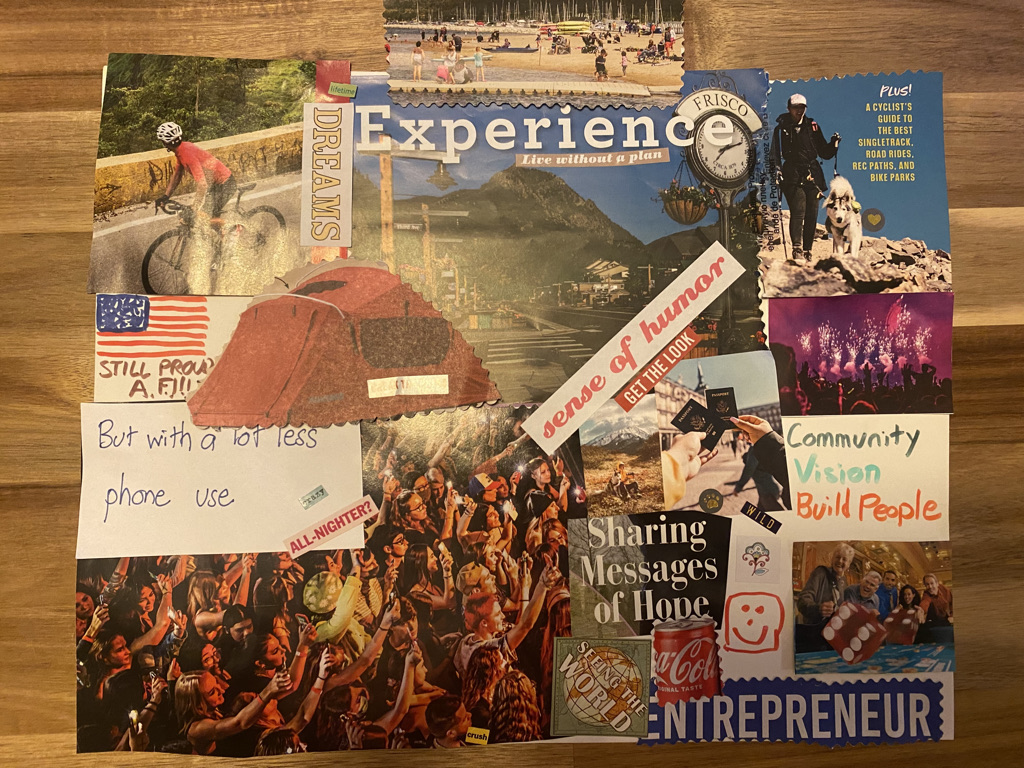
This is something that has been hard for me to accept. However, there is a logical explanation for this. What you focus on is what you see and what you see will eventually become your reality. My vision board became my reality in 2022.
Therefore, it is important to periodically re-assess what you think about, who you surround yourself with and what content you consume. Because, it will show up in your life.
3. Less is more
We’re trained to think it is better to work more, work harder and always be doing something. However, doing something just for the sake of doing something has a negative effect on our lives. It depletes the energy we have that we may eventually use for valuable pursuits. Sometimes it’s better to do nothing at all.
We need to be okay with doing nothing, stop feeling guilty about not doing enough and trust the people we “work” (using the broad definition of work) with.
4. Most people project
When someone accuses you of something, it’s probably something they are at least insecure about being true of themselves. For example, the person always accusing people or companies of being greedy is likely greedy. It’s a way of deflecting their own insecurities. Do not give in to these people! You can chose to just shake it off, or calmly point out what they are doing, but don’t comply with whatever they demand of you or engage them in the topic too much. It will reduce your confidence. It will also prevent the accuser from actually reflecting on their own insecurities and making positive changes in their life.
5. Most things are a choice
In nearly every situation, we do have a choice. Sometimes, it’s just “least bad option.” Other times, we do not understand our options. It is also common to become blinded by fear of ostracism and fail to see who would actually support the decisions we are afraid of making.
6. Fear is often overblown
After living through countless fearful situations, I have realized that what we actually go through is often way less bad than what we fear. However, there is big money in fear and it is prevalent everywhere. The problem is that often times fear of some kind of negative consequence creates an outcome worse than the event itself.
7. A strong plurality is ready to move on
2020 was us at our most divided and isolated. We also seemed to be reacting, not really thinking. While some people are still in that general line of thinking, and others want to return to some past state, it seems like a strong plurality of people are ready to just move on. We haven’t really decided what is next. Maybe there is no what. Maybe it’s for all of us to determine individually. However, it is time to be intentional about what you want to see next in your life.
8. If someone wants you to cede your power they are not your friend or ally
A true friend or ally is someone who empowers you. We all have our causes, and it’s human nature to want to enlist people in them. However, if someone enlists you in their cause in a manner that requires you to shrink back and give up power, you need to distance yourself from them. You don’t necessarily have to end the friendship in dramatic fashion, but reduce the role they play in your life.
9. What feels good in the moment is usually not what you need
The obvious form of this are bad habits like drugs, alcohol and tasty but unhealthy food. However, it also takes the form of things like instant gratification, some forms of entertainment and the search for validation or vindication. They often feel good in the short term at the expense of something longer term. Sometimes we need embrace what feels uncomfortable in the short run, like hard work and tough conversations.
Scale back on activities that bring you fleeting joy and embrace short-term discomfort for long-term satisfaction.
10. Relationships are more important than tasks
We all have our to-do lists. However, 12 months later our lives are far more likely to be impacted by who is still in it than what specific thing got done on that day. While some deadlines are important and can’t be breached, most aren’t. In more situations than not, you can prioritize taking advantage of an opportunity to build a relationship through genuine connection rather than work on a to-do list.
11. Different preferences are not a personal threat
If someone listens to different music, eats dinner at a different time of day, works different hours or conducts their relationships differently from you, does that prevent you from having your preferences? Probably not. We are conditioned to want others to validate our choices by making the same ones as us, but we should not need that validation. Nor should we feel pressure to validate others choices by conforming. You do not need others to validate your choices and you do not need to validate other’s choices by conforming.
12. More things are about power than you think
We want to believe people live by certain principles that are more important than power. Unfortunately, this is simply not true. Principles are often created as convenient excuses for people to pursue or advocate for things that will bring them more power (or money which really translates to power). Stand up for yourself. Recognize what is really happening.
13. Presence is more important than exclusivity
We focus on exclusivity when presence is what we are really looking for. It is possible to be exclusive but not present or present but not exclusive. Presence is what truly determines the quality of your interactions with one another and involvement in anything. Therefore, presence should be your focus.
14. Consciously decide whose opinion matters
Most likely, at some point this year, you found yourself overloaded by opinions. But, opinions are easy and anyone can have one. They are not all equal.
There are two ways to handle this. You can create a list of people whose opinions matter to you. Or you can learn to assess all opinions given to you by pondering the source. Who is this person? Why did they share this opinion? Do you want to follow in their footsteps? Do they have something to gain from sharing this opinion with you?
15. Perfectionism may be your biggest barrier
We’ve all been raised to fear being “wrong.” However, avoiding mistakes leads to inaction and paralysis. It’s more costly than being wrong. It can cost you your life, as it will prevent you from ever going for what you truly treasure.
It’s time to adapt a new mindset. Remind yourself, daily if you must, that it is better to get something wrong out than to not get anything out at all.
For more articles like this, take a moment to explore the many experiences and adventures documented on The Action Story!
Your midlife crisis does not have to be a negative experience. When approached from a different perspective, a midlife crisis can feel more like an opportunity than a curse. This period of upheaval, transition, and reflection establishes the perfect foundation to make changes in your life to better align your actions with your present goals and values. Whether you’re dreaming of quitting the rat race and starting your own business or getting away from everything and traveling full-time, your midlife presents the perfect opportunity to make those dreams a reality!
Start Your Own Business
It’s not unusual to feel fed up with a long-held job by the time you reach your middle years. If you feel the need for a change after working the same job for a long time, consider starting your own company! You could work as a remote freelancer, sell handmade products online, or open a local business in your community. Do whatever interests you the most.
To give your new business the best shot at success, be sure to register your business with your state, open a separate business bank account, and establish an organized accounting system. You’ll also want to set up a solid invoicing process. Remember to include your payment terms in your invoice and, if possible, accept a variety of payment methods to encourage clients to pay promptly. You can use an online invoice generator to create professional-looking invoices with all the pertinent information your clients need. Just choose an invoice template that you like and customize it however you like!
Reconnect with Old Friends
A strong social support system can make your midlife crisis much easier to navigate. This is a great opportunity to expand your social circles by reconnecting with old friends from high school. If you’ve lost touch, you can use online search tools to track down people who went to school with you in the Denver area. Just type in the name of the person you want to find as well as their graduation date and the school they attended. Then, you’ll be able to send your classmate a message and start rekindling that old friendship.
Embark on a Transformative Trip
Traveling is a great way to turn a midlife crisis into a positive experience. By leaving your regular life behind for a little while and getting out of town, you can broaden your perspective and refocus on what really matters. According to Worldpackers, research shows that travel can trigger changes in your brain as you’re exposed to new sights, smells, languages, and ideas. Plan a transformational travel experience by being mindful of how you’re feeling and what you’re thinking throughout the stages of travel. For example, you might find that surrendering to the unknown elements of travel results in a heightened sense of confidence and independence.
Leave Your Comfort Zone
Traveling is an excellent practice in stepping out of your comfort zone, which is key in coping with rocky periods like a midlife crisis. Leaving your comfort zone can help you embrace the unknown and learn to accept change in all of its forms. And facing discomfort sets the stage for growth. If the idea of hopping on a plane and finding your way around an unfamiliar city is a little scary, just go with it! Accept that anxiety is your body’s natural response to uncertainty. The only way to get comfortable with novelty is to face it head-on, so book that trip and see where your adventure takes you.
No one really feels ready for the changes that come with a midlife crisis. The best thing you can do to cope during this tumultuous time is to embrace it rather than try to resist it. Use this period of upheaval to adopt positive habits, explore new places, rekindle old friendships, and pursue new professional passions. It’s finally time to focus on you!
Living the digital nomad lifestyle can be an amazing way to explore the world, but it can be challenging if you have a pet. While some places allow you to take your pets with you, these aren’t easy to find or maintain. If you want to pursue this lifestyle, here are some great tips for doing it with a pet in tow.
Save Money
When you become a digital nomad, you have the opportunity to travel the world and work from anywhere. But how do you save money when traveling? Use public transportation or walk/bike whenever possible. Avoiding driving helps you save on gas and car rental fees. Bring your own food, or cook cheap meals, such as noodles, in your rental property instead of eating out.
Stay Safe
When you’re a digital nomad, it’s crucial to stay safe while you’re traveling. Ensure your pet’s vaccinations are current, have them microchipped, and have your pet wear a collar with identification information on them at all times to make reuniting with them easier in case they gets lost. Bring along some extra ID tags in case one goes missing. Consider bringing some plastic bags in case of accidents, and don’t forget to bring a leash if needed.
Find Houses That Are Pet and Tech-Friendly
When you’re looking for a place to live as a digital nomad, it’s essential to find somewhere that’s pet and tech-friendly. Luckily, there are resources to help you find the perfect place. Companies such as BringFido have compiled lists of rental properties that allow pets and have Wi-Fi. Sites such as Facebook also allow people to post if they need a pet sitter while traveling or on vacation.
Communicate With Clients When Traveling
If you’re planning on working while traveling, ensure you have a solid internet connection. You don’t want your clients to be unable to get in touch with you because you’re in an area with bad or no service. Bring a portable Wi-Fi device to plug into your computer in case you can’t find free public Wi-Fi in the area.
Suggestions for Finding Work as a Remote Worker
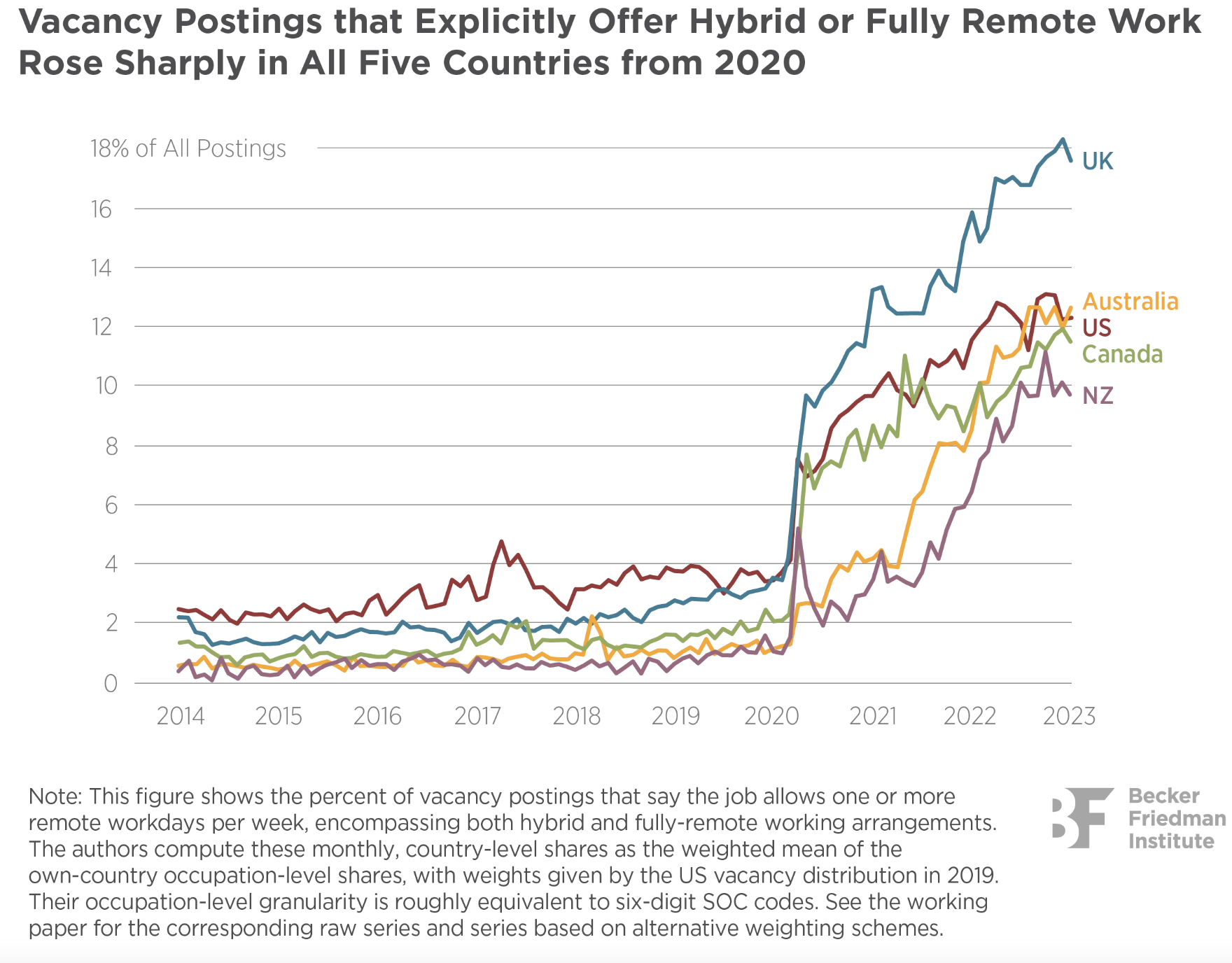
There are many ways to find work as a remote worker. Use job search engines, such as Indeed or FlexJobs. As remote work has become more common recently, more job postings, even on more traditional job boards and places like LinkedIn, are indicating they are 100% remote or have the option of being remote. Some have found good remote jobs by contacting companies directly, and inquiring about remote work opportunities. You can also network with other remote workers and ask for referrals. Between online work, odd jobs, and freelance gigs, plenty of opportunities are available for remote work.
Keep Your Pet Healthy
Ensure your pet stays healthy when you travel by getting regular checkups, administering flea and tick preventives, and keeping necessary medications current. Depending on where you’re traveling, protecting your pets might mean visiting different veterinarians in each state. Consider signing up for pet insurance in Florida since it’s more affordable. When shopping for a policy, in addition to the price, consider nationwide coverage and provider reputation.
Enjoy Your Adventure
If you want to become a digital nomad, it’s possible to do so even with a pet. With these tips, you can support yourself while traveling and enjoy your adventure with your furry friend. Visit Jaye Travel Blog, based in Denver, to learn about the world through travel experiences.
I am starting to grow tired of the internet. Every day feels like the same thing. The same feeling of rejection when I’m reminded of the social experiences people are having that I am not involved in. The same feeling of aggravation and isolation around people’s responses to current events. The same feeling of fear around societal trends and possible future events. And, perhaps most importantly, the same stale feeling around yet another hour in front of a screen, typically sitting down at home, consuming content that is all too similar to the content I had consumed the last hour I spent online.
As you can see, even before this, I spent less time on my phone than most
In the context of most of the world in 2022, going four days without the internet sounds extreme. We do everything online. We’ve spent the last two decades congratulating ourselves for making things more efficient by moving them online. However, I am not so sure this is a good thing. David Byrne famously pointed out five years ago that all of our new technologies have one thing in common. From online shopping to robots and those self-scanners at the grocery store, they all eliminate points where humans would have previously interacted with one another. This is one of the primary factors that lead to a loneliness epidemic being declared even before it the pandemic came and made it far worse.
My theory was that if I spent less time online, and distanced myself particularly from news and social media, I would be a lot happier. After all, I knew that there are people out there that care about me. I know there are people that see things the way I see them. The whole world has not descended into finger pointing and panic, and there are tons of great new experiences to be had if I just look around me. I just had to stop letting the internet tell me what to think about.
The very first thing I noticed was noticing more things.
I spent time observing trees, clouds, storms and all the things that we often forget to look at when our minds are occupied.
Soon, I became lost in thought.
Behavior analysts will often point out that if someone wants to move away from an undesirable behavior, like smoking or excessive hand washing, it is far easier to do so if the behavior is replaced with a new behavior. I sincerely believe this to be true, but I removed the internet from my life rather abruptly without selecting alternate activities. There was not always a suitable alternate activity, no matter how much I enjoyed this book!
So, in order to stick to my pledge, I ended up spending time just in my own thought. While at first my thought processes went to all of the things that had been frustrating me, soon I ran out of things to think about on that topic. This is where we all have the potential to tap into our creative sides.
It feels like we were more creative before we became constantly distracted by smart phones. Just the idea of people tapping back into this side of themselves and coming up with all sort of ideas gave me chills.
By the time I returned home, I was happier. But, as is the case any time people go on vacation, I did not know whether I was happier because of my hiatus from the internet, from not reading the news or being on social media, or if I was happier because I had just spent the weekend out of town with friends. This is something it would take all week for me to figure out.
After returning to Denver, I felt like I was still observing more than before.
And I had some pleasant conversations with the people I encountered.
Maybe it’s time for all of us to reconsider what our relationship with the internet should be. From increasingly using LinkedIn to network and find jobs to the use of QR code scanners for menus at restaurants, societal trends seem to pulling us closer to the internet, having it become more and more a central part of our lives. But, is this what we want? Is it what we need right now?
After a week of reflection on this experience I started to ask myself why I’m happier. What am I trying to escape? Am I trying to escape people? Or am I trying to escape a certain behavior pattern that the internet and particularly social media seems to encourage? Am I fed up with the way people interact over social media? Or am I fed up with the way people interact in general? And, is the way we interact in general a reflection of how social media has changed us over the past two decades?
Sometimes an experiment like this one, meant to answer a question, only leads to more questions. But, sometimes, despite what we all learn when we study science, if we experiment with something and it leads to a positive result, like being happier, maybe we need to stop obsessing over the reasons why and just be happy with the result.
This is a guest post written by Henry Moore. Henry is the co-creator of FitWellTraveler. The site blends two of his favorite subjects (travel and health) to provide readers with information about how to get the most out of both.
Experts agree that a vacation can benefit your mental health. You may find that you experience less stress, increase your productivity and sleep better. You do not have to vacation for weeks or months, however. Sometimes, you need to find yourself somewhere to spend the weekend away from the hustle and bustle of everyday life. Looking for budget-friendly ideas can help you find a vacation spot you return to every year. The guide brought to you by The Action Story can help you find a place that’s fantastic and budget-friendly.
Ideas for Budget-Friendly Destinations Ideas
Think about destinations where you can spend little money. For example, bike rides through Utah’s most challenging roads may give you a sense of freedom without a high cost. There are various ways to relax and enjoy yourself without spending a lot of money.
Camping, for instance, doesn’t involve expensive hotel or restaurant costs. Some campsites are free, whereas others cost much less than other options. In addition, you bring your food to prepare for the trip. Other ideas include:
Outdoor excursions tend to cost less and can also be more healthy. If you need to destress on your vacation weekend, the outdoors may raise endorphins and leave you happier.
Ways To Break Away From Work
Before you leave, tie up any loose ends at work. For example, if you have a business, you may want to designate someone like a registered agent to help your business run smoothly. Outline major decision-making processes for your registered agent to ensure that you do not have to worry if anything serious like a tax notification or lawsuit pops up without you.
You should not have to worry about work while on your weekend getaway. This is your time to decompress, so have a game plan before the weekend. Try to anticipate any issues that may arise and create a strategy for others to handle them if necessary. If you have a boss or supervisors, allow them to know your plans. This keeps him or her from trying to contact you over the weekend.
When on vacation, you have an opportunity to reset your body and live in the present. Sometimes you’ll find that you return to work with less burnout and more creativity than before. Do not worry about your workload piling up in your absence; you deserve the break.
Deals To Keep You Under Budget
There are various ways to save money on any trip. If you plan to leave the country, go somewhere where you can stretch your dollar further. Additionally, look for cheap travel deals. Sometimes you may find flights to other states or cities to enjoy on short notice. Do not spend extra money on drinks or dessert if you want to eat out on your trip. Instead, seek grocery stores for more expensive items.
When it comes to packing, try to stay light. Some buses and airlines will charge you more for too much luggage. If you have heavy items, exchange them for lighter ones. For example, you may want to choose travel-sized items or find items that serve multiple purposes.
If you want to plan a weekend getaway, there are various ways that you can save money. You do not have to choose expensive hotel rooms or expensive entertainment. Planning a short vacation can significantly reduce your stress levels and benefit your health.
Finally, if you are looking to travel internationally on a budget with little hassle, consider the ivisa program for your global entry needs.
February and the first half of March are typically seen as the most ideal time for skiing in North America. Weather varies quite a bit from year to year, but by February a significant snowpack has typically developed while the unpleasantly cold and windy conditions common in January start to become somewhat less likely. It is why ski trips are most commonly planned for this time of year.
However, reality often does not match expectations.
Along highway 285, Feb. 27, 2022
Both the complex systems that govern the atmosphere and the ones that govern human behavior contain a great deal of variance. It can be, at times, frustrating when experiences do not match expectations. However, this expectation is part of what makes life so beautiful. Imagine what life would be like if every event, every experience and every activity matched expectations, exactly. There would be no surprises. In some cases, there would be no hope.
The last couple of years have been rough. Patterns have often emerged that shut down multiple possibilities all at once.
In Colorado, snow this year has often fallen in the wrong place, making both the conditions at the ski resort, and activities like hiking and cycling on warmer days less than ideal. This feels like a metaphor for the general human experience over the past two years as new variants of COVID often emerged right around holidays and the most recent waning of the virus related worries is now coinciding with new geopolitical threats and economic worries.
I know, this is not expensive for some places, but for the U.S.A it’s quite a lot for a tank of gas
Perhaps, at this point in time, the worst mistake that can be made is waiting for exact right moment, the perfect conditions, before doing anything. It is for this reason everyone seems lonely and culture feels so stagnant. Any reason can be found to declare that a specific moment in time is the wrong time for a new initiative. The past couple of years have just been a more extreme version of it.
Yes, there is a lot of uncertainty. Many of these experiences are ones certain segments of humanity have not experienced for quite some time. Most people were not alive the last time anything remotely like this happened, and a lot of people do not know what to do at all. But, the stagnation that comes from waiting for that one moment where everything is perfect has the potential to make things far worse.
A lot of people are waiting for the ideal time for everything from starting a new venture, to taking part in their favorite activities and/or reconnecting with those they care about once. However, when that theoretical ideal time comes, a new form of less than ideal will present itself, crowds.
The true opportunities lie not in waiting for the outside world to present a perfect situation, but in finding a way to manage a less than ideal situation.





























 The Action Story