Category Archives: North America

MeowWolf is a Reflection of Our Cultural Moment

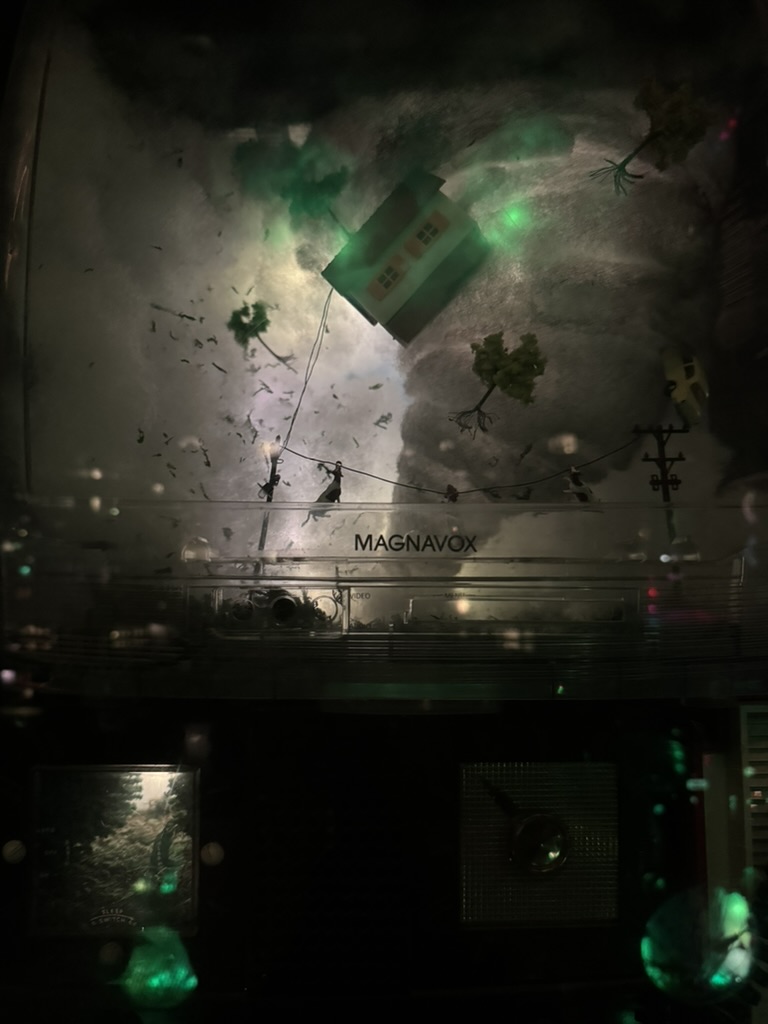
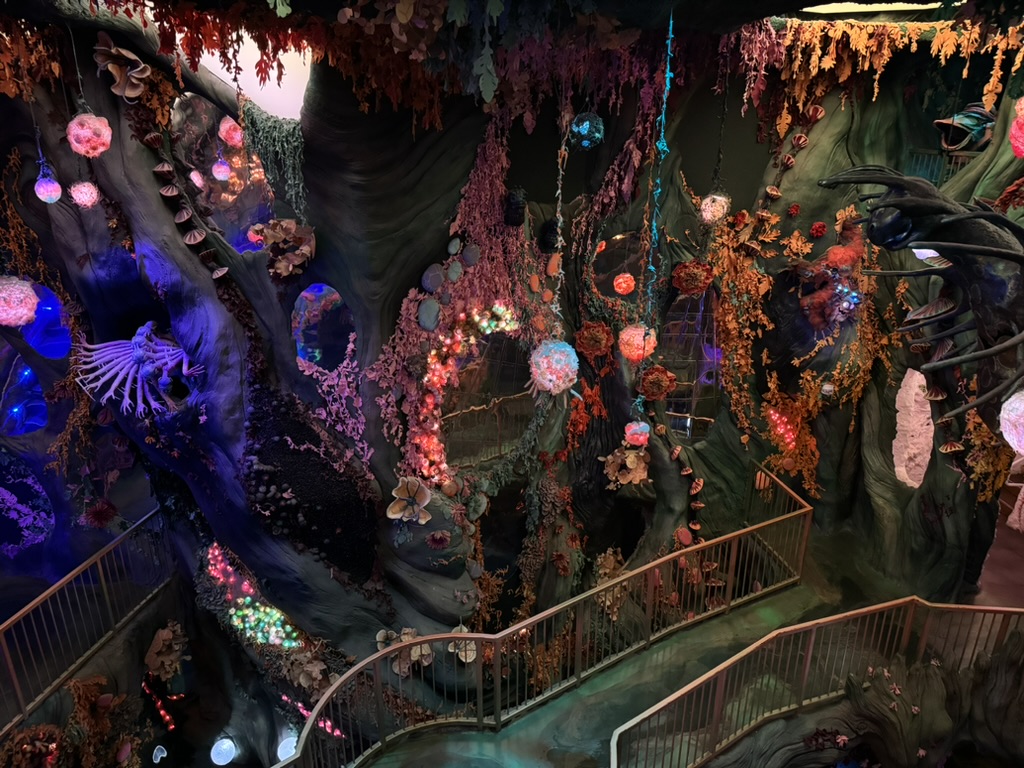
It’s hard to describe what exactly MeowWolf is. Over the past several years, you’ve likely seen some pictures of this place, mostly on social media. MeowWolf describes itself as Immersive Art Experiences and Interactive Exhibits. While this is certainly true, it feels like one of those IYKYK (If You Know You Know) types of places. Pictures like these give you an idea what to expect, but it’s impossible to understand what going to MeowWolf is like without actually going there.
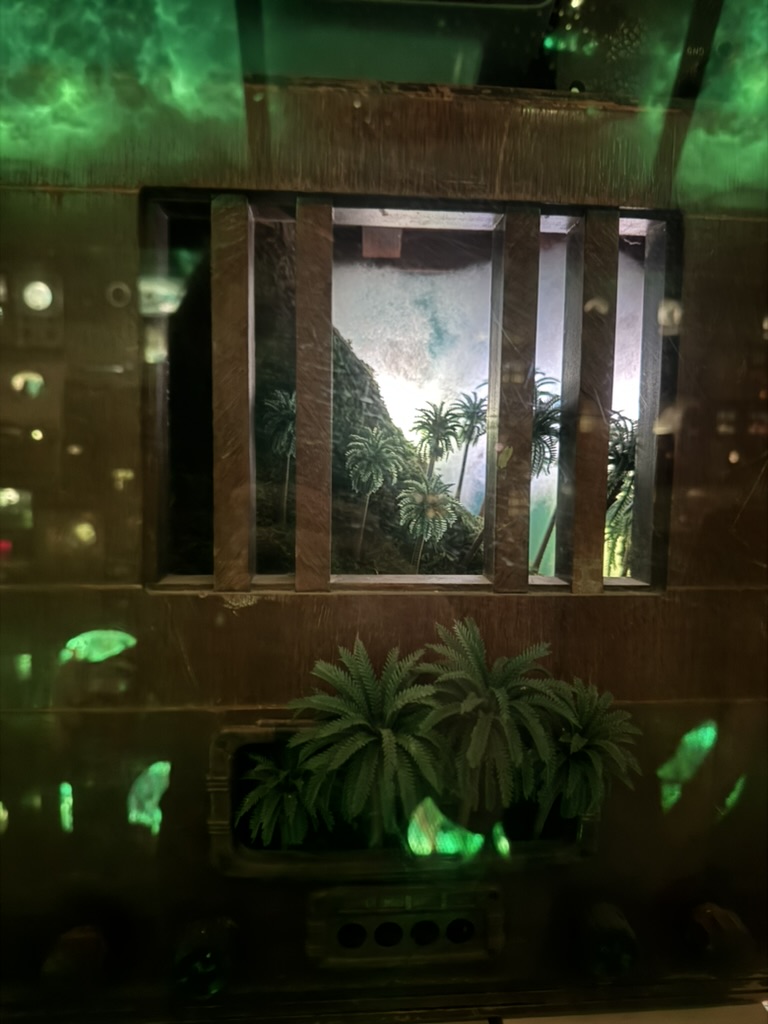
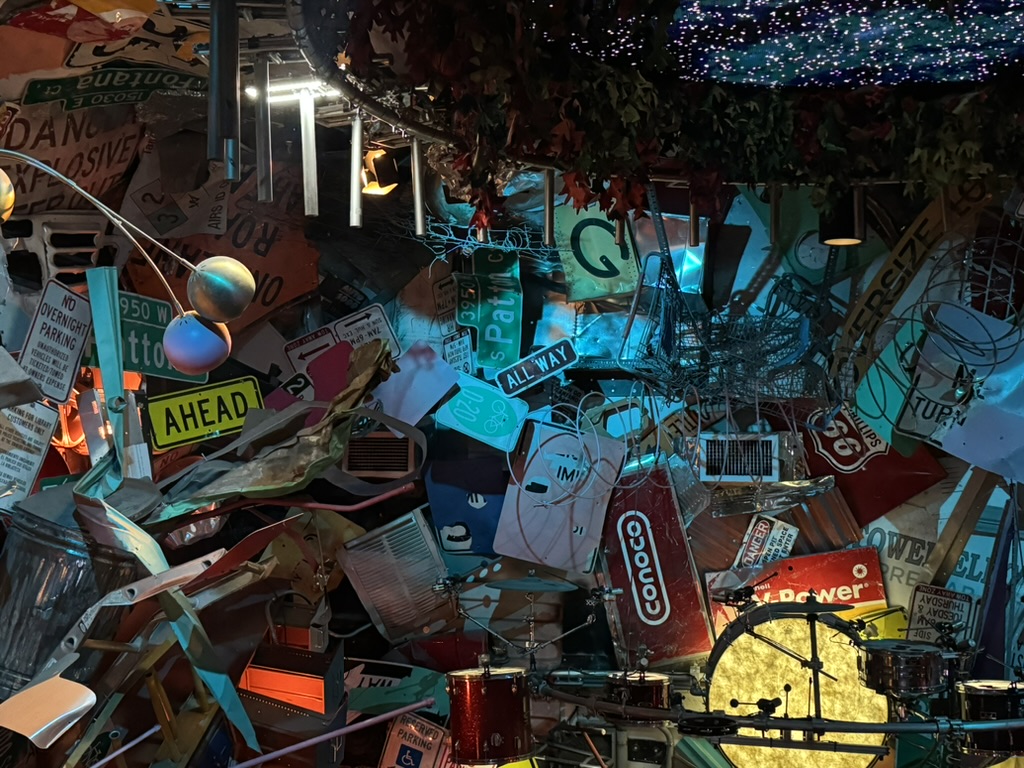
More than anything, the place is extremely artistic, and just random. Around every turn there is a door, another room, or even a crawl space that leads to another completely different exhibit. There’s a lot of it too. Some have spent over five hours in this place.

My favorite part was the Pizza and Pals section, a place where I suddenly found pizza singing at me.

The place also had an optional interactive component, with a story about four worlds that it would take a much deeper dive to understand.
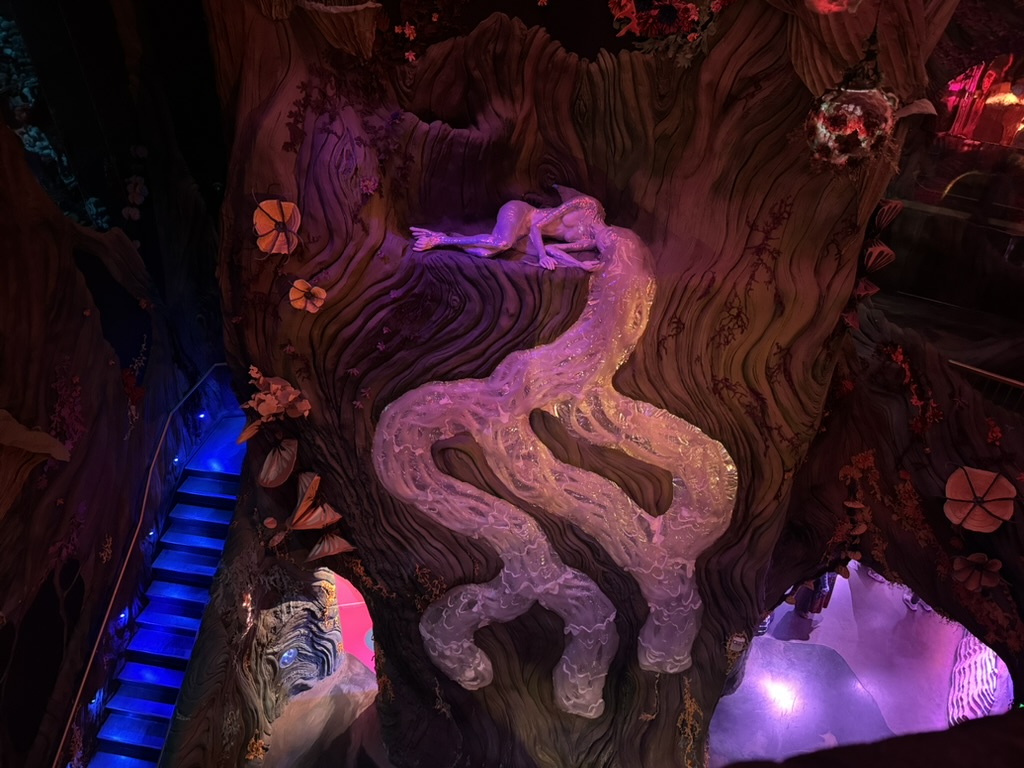
Still, I couldn’t help but reflect on how well this place matches our current cultural moment.

First of all, it certainly caters to an ADD (which seems to be all the rage right now) type of crowd. With all the different immersive art, any visitor can just abruptly change what they are looking at by turning their head or walking through a door.

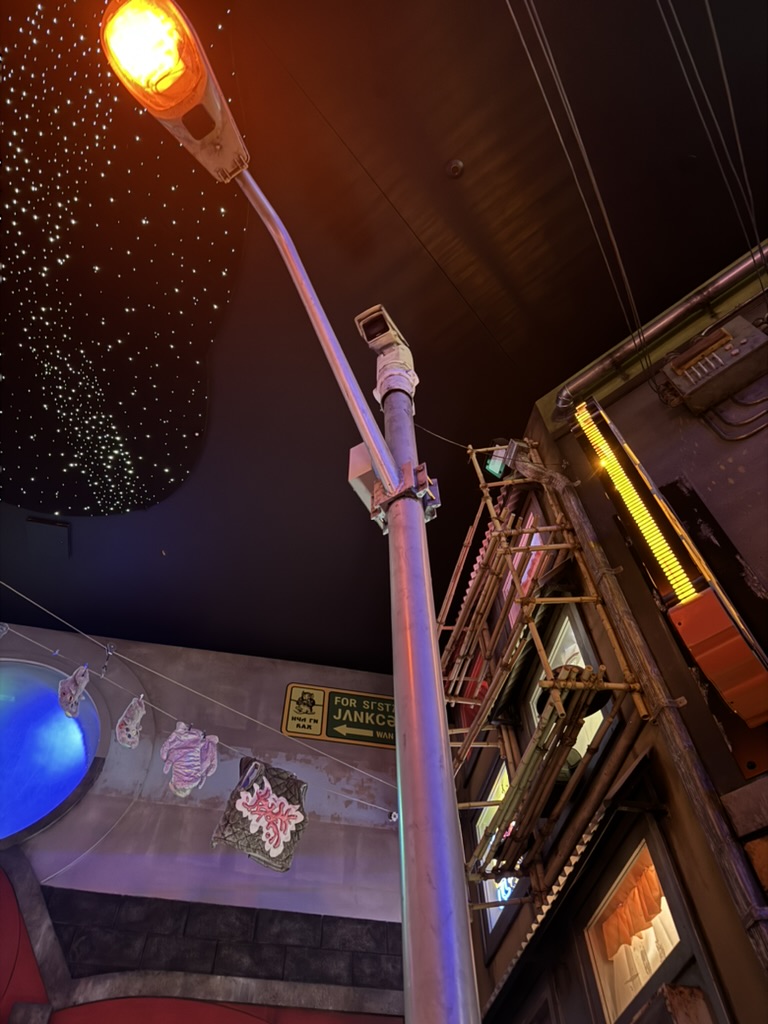
Yet, it seems to match this historical moment on a much deeper level. Sure, it is the perfect place for Instagram, something that people seem to have been looking for for a little over a decade now. However, it seems to speak to an even deeper craving that has developed during the 2020s. After nearly two decades of looking at and sharing pictures on social media, people are now looking for something that is more of an experience.

There is also something to be said about an experience that a person cannot truly wrap their heads around just by looking at pictures or even hearing about the experience. By knowing this place cannot even be remotely understood through social media feeds, it establishes itself as being about more. While this place may be great for social media, it points to a life beyond social media. The emergence and increased popularity of this place appears to be sending a cultural message along the lines of…

“We still want great photos to show our friends and family, but we are craving in real life interactive experiences. We want something unique. Something imaginative. We want something beyond what can just be seen in a photo or a video. We are ready to be done with just passively consuming content. And, we’re tired of the flattened culture where everything is the same!”

This, I believe, culturally, is where we are in 2025.
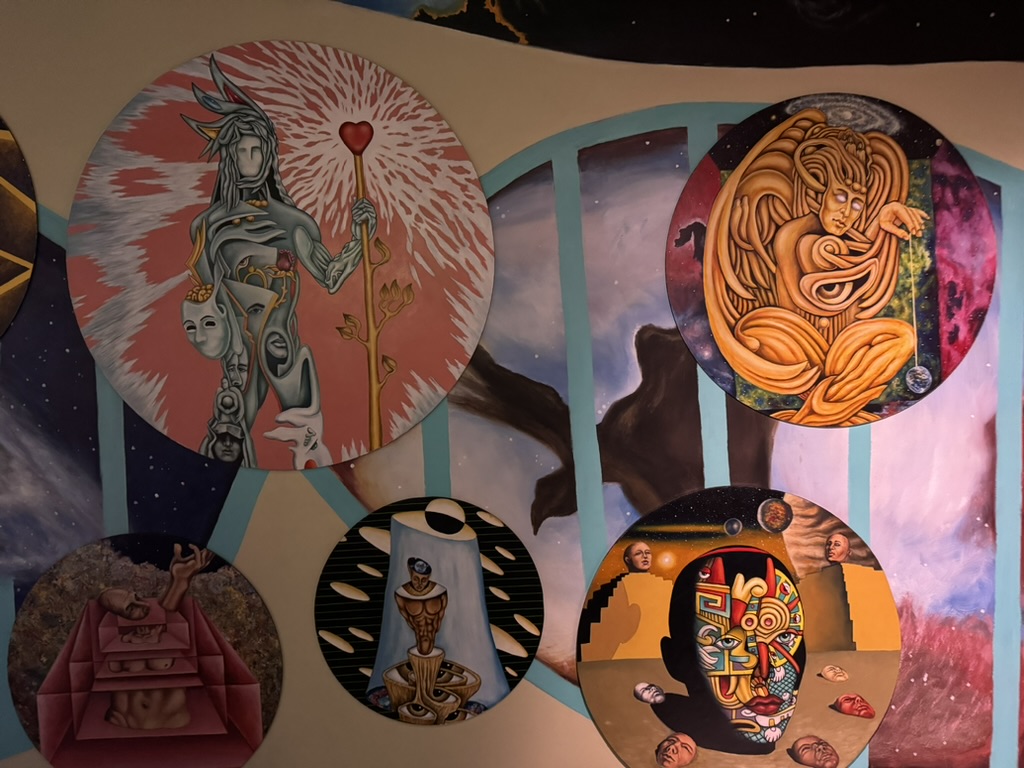
90 Minute Hikes Outside of Denver

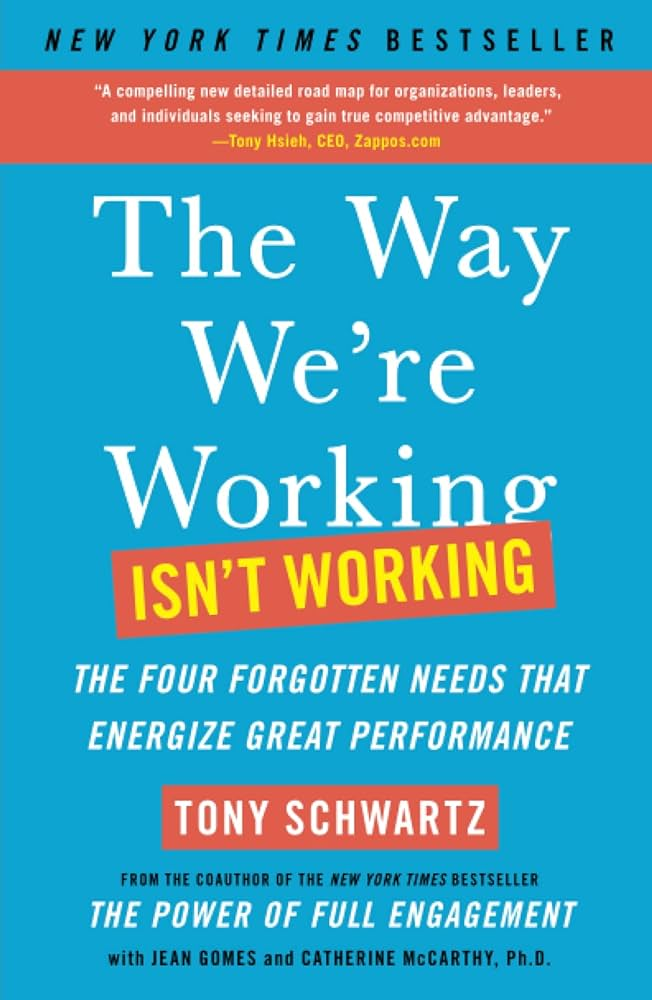
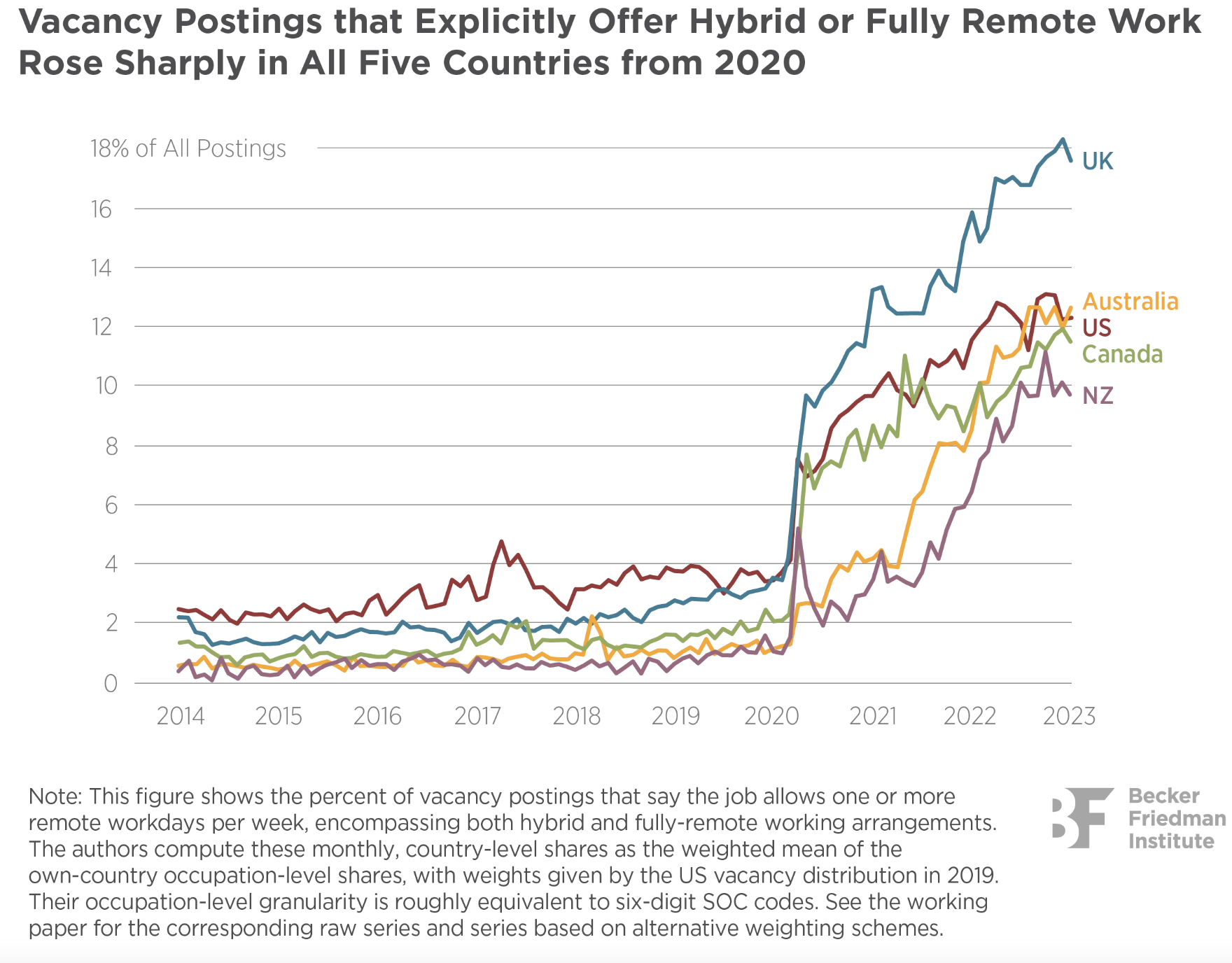
Phenomenon like “quiet quitting“, the “great resignation” and some places experimenting with the four day workweek should make it abundantly clear that there is something less than ideal about the standard work culture of the post industrial world.

Note: This book was published in 2010

Our general work setup is built around a world that no longer exists. It was built around the industrial world of one income families of a hundred years ago. On an assembly line, the amount of value someone brings to a company is directly connected to the number of hours they are present. The eight hour workday represents a compromise of sorts between business owners and labor. It is based on this direct connection between value and hours worked, as well as a world where most laborers were men with women at home tending to childcare and household upkeep. Today’s world is completely different and needs a completely different paradigm.

A silent disco co-working pop-up in Denver, curtsey of Cifernoise Productions

However, realistically, it is going to take a while to get there. We are still in the beginning phases of exploring the new nature of work after the pandemic.

And, there are plenty of powerful interests trying desperately to keep as much of the old, flawed system as possible. This will certainly delay progress towards a new paradigm.

At this time, living a healthy and balanced life will require being innovative and working with what we have available. This is why I have taken an interest in hikes that can be done in roughly 90 minutes close to home. This fall, I tried two.

First was Pence Park, between Evergreen and Indian Hills.

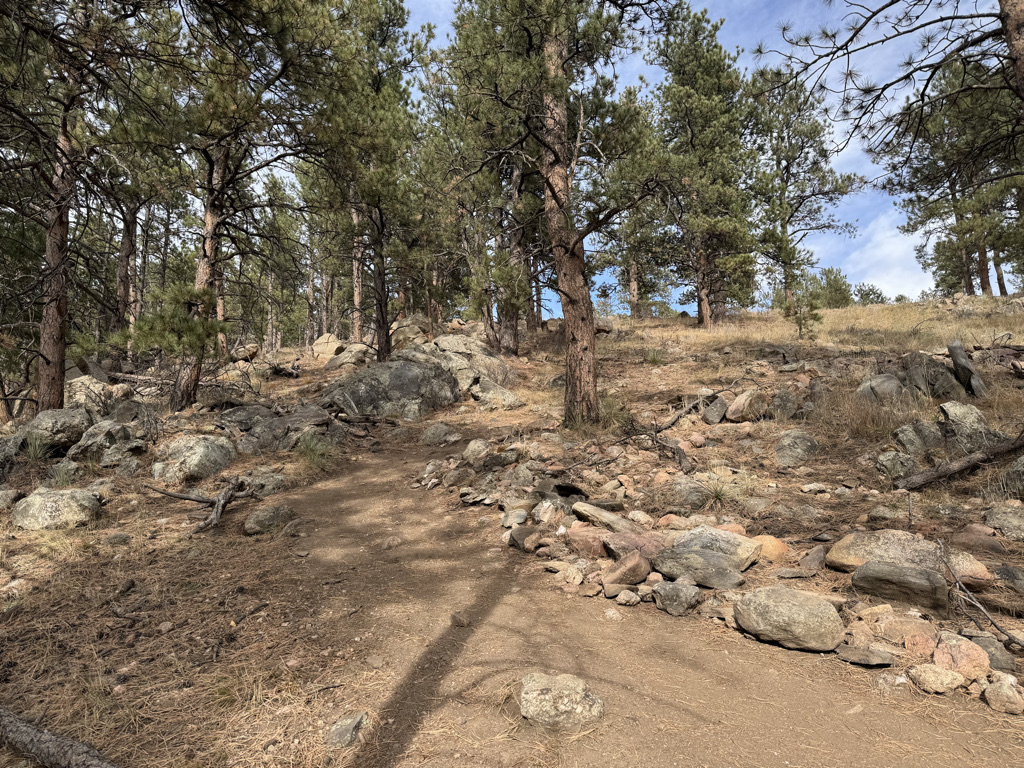
The hike to the top is about a mile and a half (2.4 km) with an elevation gain of 750 feet (230m).

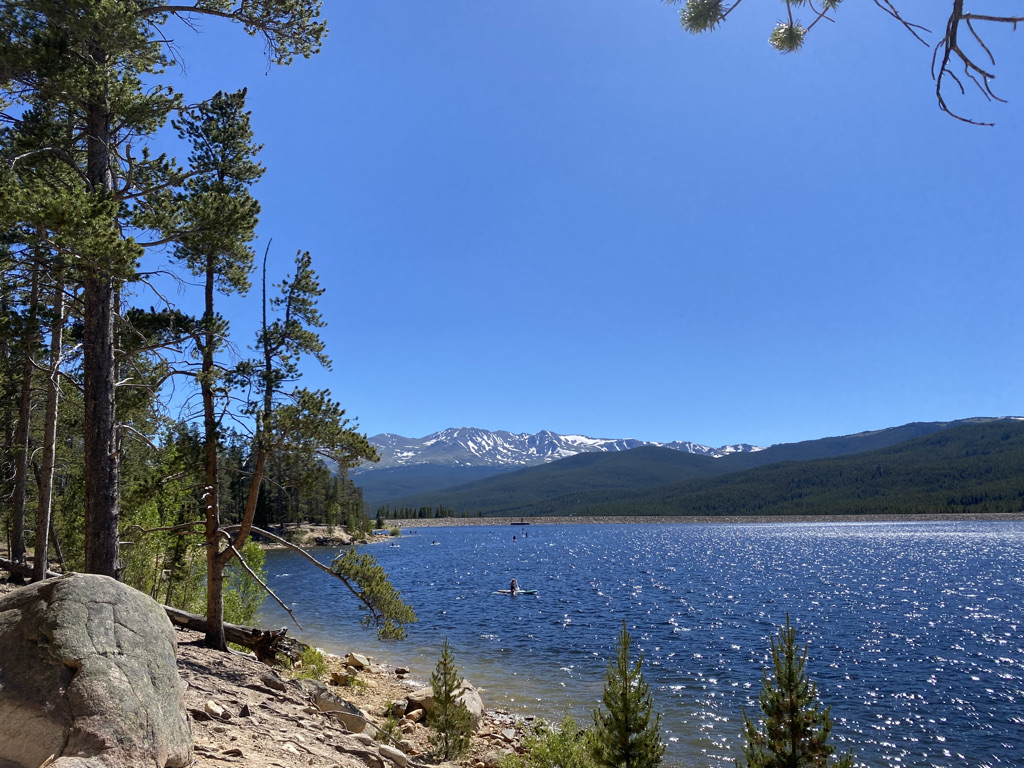
For a short hike, the views here are quite stunning, especially at the top.

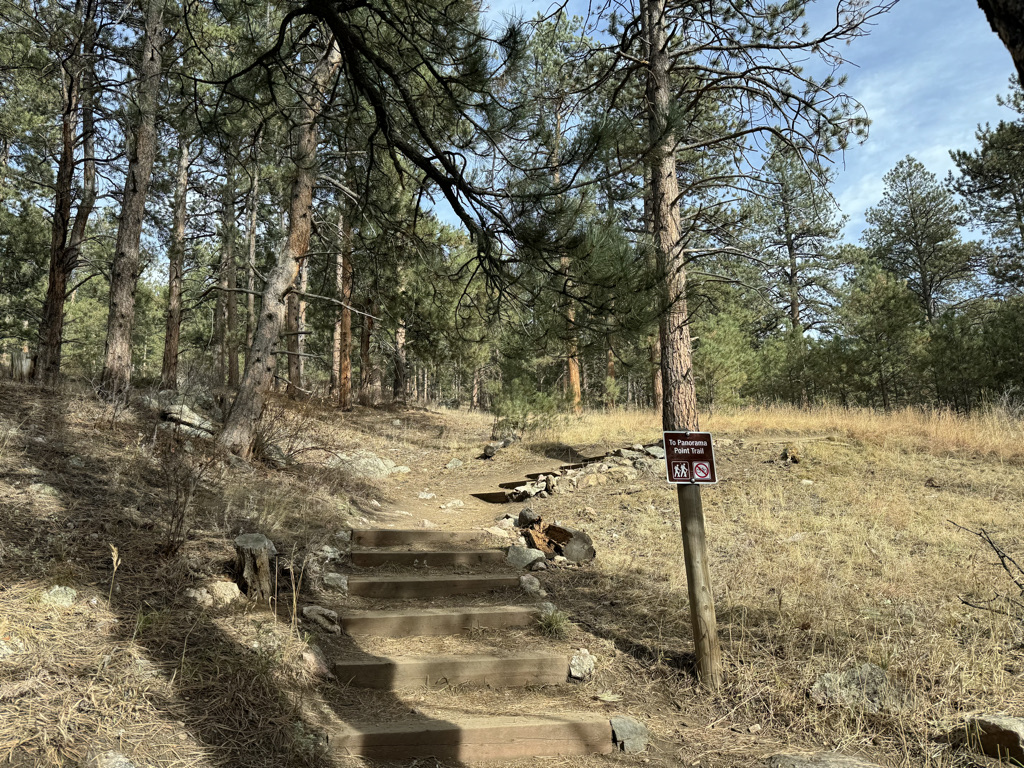
My other 90 minute fall hike was Panorama Point, just outside the small town of Kittridge.

This hike has a round trip distance of just over three miles (≈ 5 km) and an elevation gain of 625 feet (190m). These hiking trails are actually only a few miles apart, so it is not surprising that they feel quite similar.

Panorama Point has an overlook of the town of Evergreen at the top.

So, there are some slight differences, but both hikes take about an hour and a half and are about 45 minutes to drive to from downtown Denver.

This activity address two of the biggest shortcomings of “9-to-5” office jobs. Spending those hours doing work inside, whether it is in an office or remote, can limit one’s exposure to sunlight. Some studies have estimated that well over half of Americans are not getting sufficient vitamin D, which mostly comes from exposure to sunlight. Additionally, most of these jobs are sedentary, involving sitting at a computer all day long, which is certainly not helping with the obesity epidemic.

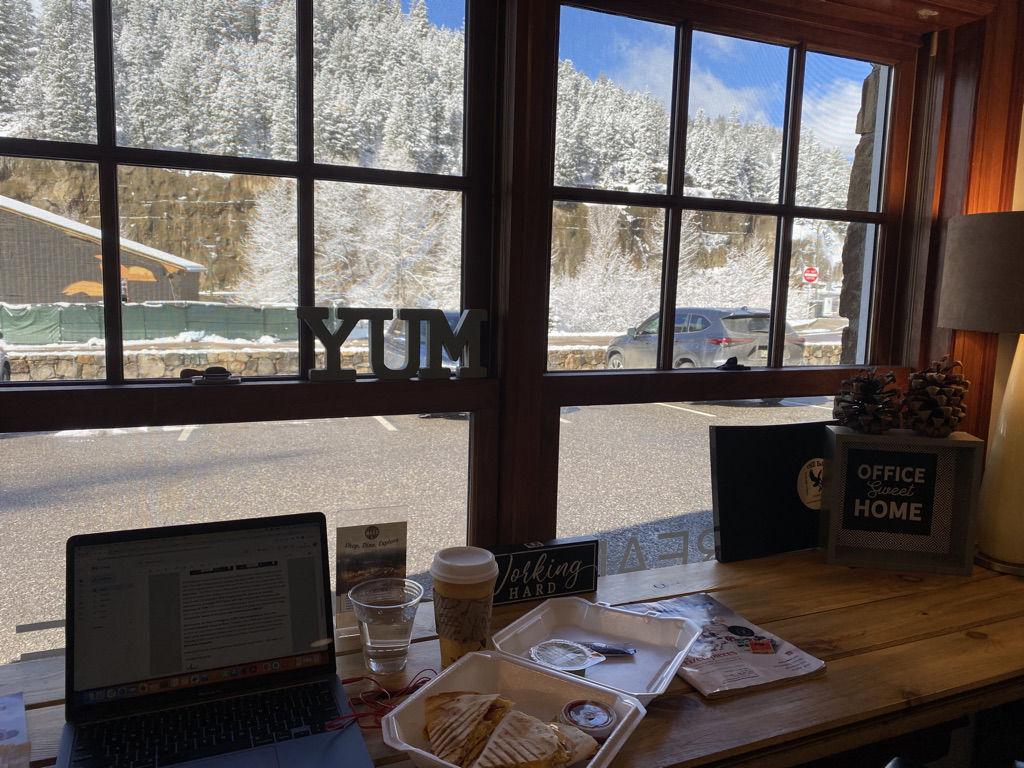
These 90 minute hikes offer an opportunity to get some sun, exercise, and even be a bit social in the middle of the day on a weekday, particularly in the spring and fall seasons. On hikes like these, there is even the potential to limit the amount of time spent out of contact to under two hours. Eating and working from a nearby restaurant made my time away from my computer, messages, etc. not too much more than a standard lunch hour.

Blackbird Cafe in Kittridge, CO

Of course, not everybody lives in a place with amazing short hikes nearby. The key is to be creative and work with what you do have around you to find habits that help correct the imbalances created by a less than ideal work setup. Hopefully, the time will come sooner rather than later when we’ll determine how a majority of people can be happy, healthy and provide value to the organizations they work for. Until then, I hope you can find your version of the 90 minute hike less than an hour from home.

Small Town Colorado

Travel has the potential to expand one’s point of view beyond the habits, priorities and perspectives that they are typically surrounded by. Visiting another location and being exposed to another culture serves as a reminder that the way things are done in the particular time and place a person lives is not the only way things can be done. However, in order to truly embrace this lesson a traveler must visit a place where they will truly be surrounded by different types of people and actually interact with some of the locals.

A lot of people visit places that are beautiful, but touristy.

Although these trips are fantastic, they usually find themselves surrounded by other tourists.

Many of whom have similar circumstances and outlooks as their own.

Truly getting out there and being exposed to different types of people, with different ways, different priorities, different customs and concerns requires being deliberate, both with respect to where to go and what activities to get involved in. An American could travel all the way to the other side of the world to do something like take an English language tour of the Taj Mahal and not really be outside of their comfort zone.

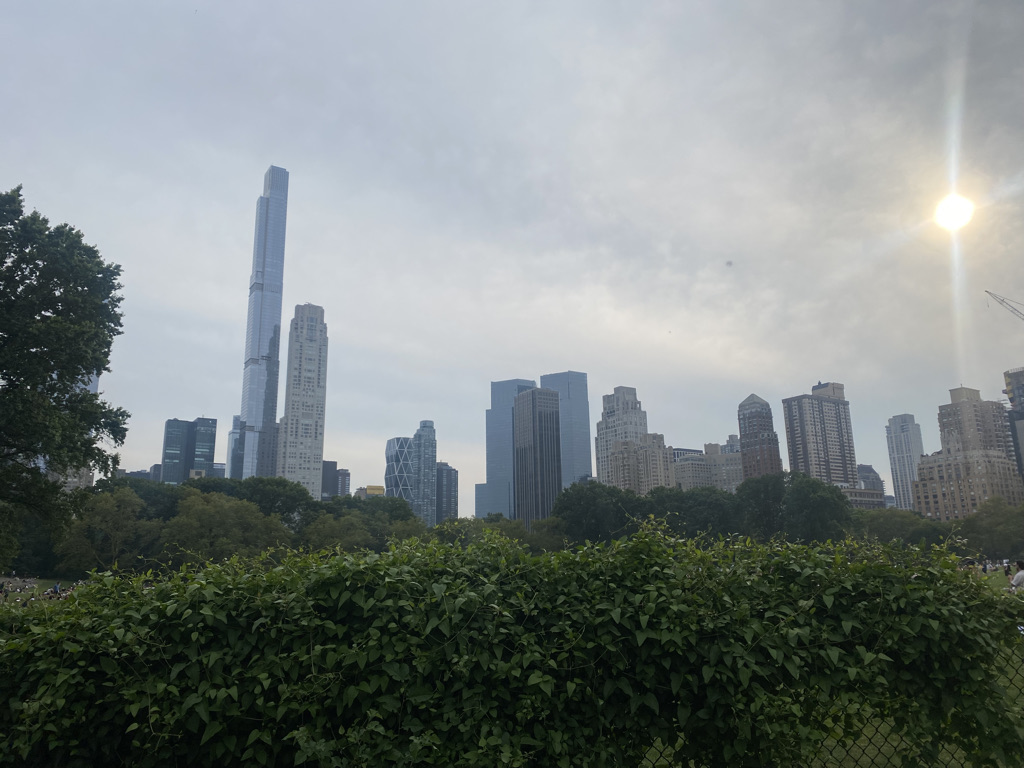
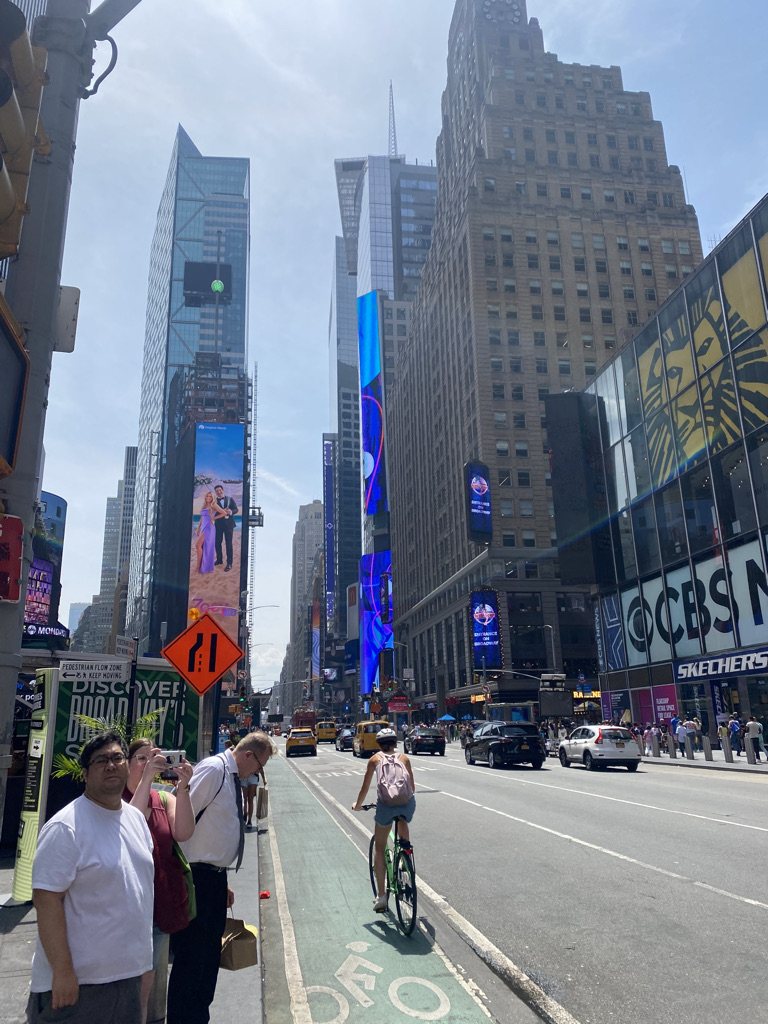
Luckily, the reverse is also possible. One must not travel far to be in a different place. In big cities like New York, ethnic neighborhoods give people the opportunity to visit a different place right in their hometown.

A state like Colorado gives people the opportunity to visit the other side of the primary cultural and political divide in the United States of America: The urban/ rural divide.

However, this requires going to places like small town churches.

Coffee shops

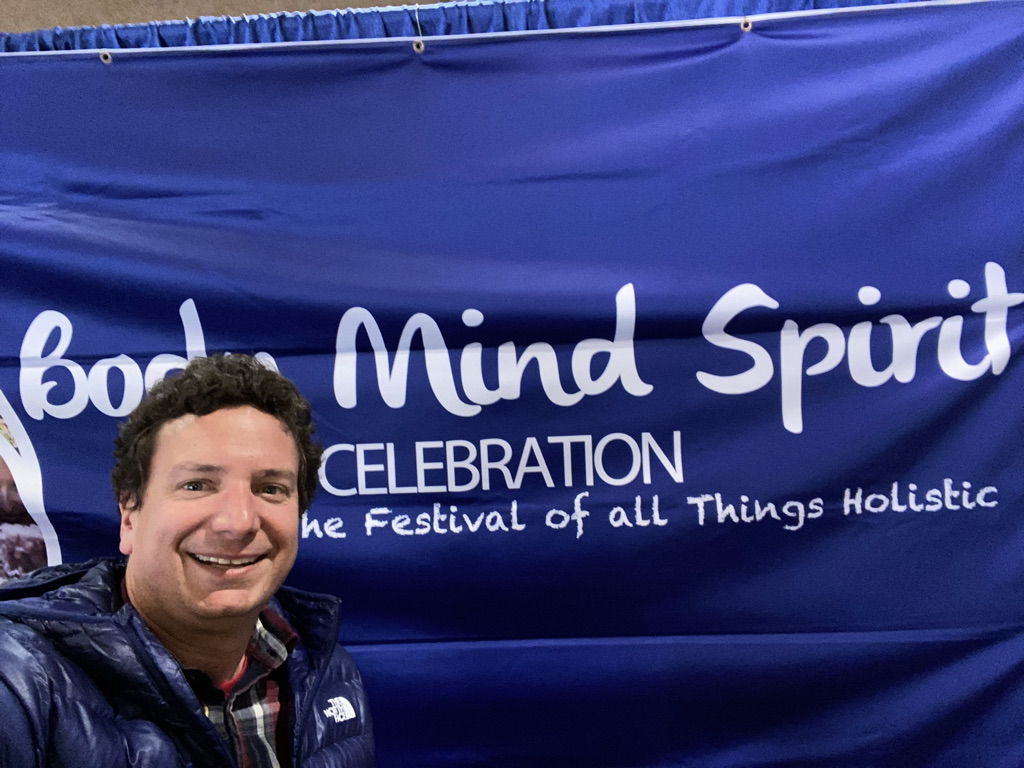
Or festivals

And talking to people who live that small town life.

Sometimes it even helps to take part in the activities they enjoy.

From an urban standpoint, it is easy to ask questions like…

Who would want to live in a place where the nearest Chipotle is an hour away?

Who would want to live in a town where you go to the same bar every weekend and encounter the same ten people every time?

What do people even do here most of the time?

And of course, the media and many political activists will not hesitate to to exploit those differences. It’s an easy way for them to get ratings, clicks and donations. Perhaps most sinister of them all, if a politician or political party can convince most of their constituents to fear the other, they can count on their support out of fear, disgust or contempt rather than having to actually serve their constituents needs.

Unfortunately, the big loser in this is all of the average person, becoming more isolated, depressed and distrustful of one another.

As is the case with every other cultural divide, on the other side of the urban/rural divide are people who, generally speaking are not all that different. They just live at a different pace.

There are some great ideas here and many take part in activities that are quite healthy from a physical, mental and spiritual point of view. Despite the divide and how its exploited, most people on both sides of it are friendly and accepting.

Travel, like life, has ebbs and flows. Some years offer many travel opportunities with abundant resources to explore exotic places on the other side of the world. Others require the focus to be kept close to home. These times do, however, provide the opportunity to explore what one can learn, see and experience relatively close to where they live.

It would benefit most people to reach across any of these divides. Particularly when a cultural divide is accompanied by a political one, there is a tendency to reduce entire groups of people to caricatures that are often a blatant missrepresentment of who they are. By meeting people and talking to them, it is possible to see who they really are.

September Backpacking in the Rio Grande National Forest

We drove two hours from the nearest town, Monte Vista, Colorado just to get to the Three Forks Trailhead in the Conejos River Valley.

It’s hard to imagine being any further away from civilization.

It’s the trip I needed, as it is the trip we all need from time to time. Three days without the constant distractions of modern life. Three days where one can just gather thoughts and reset from the constant onslaught of information.

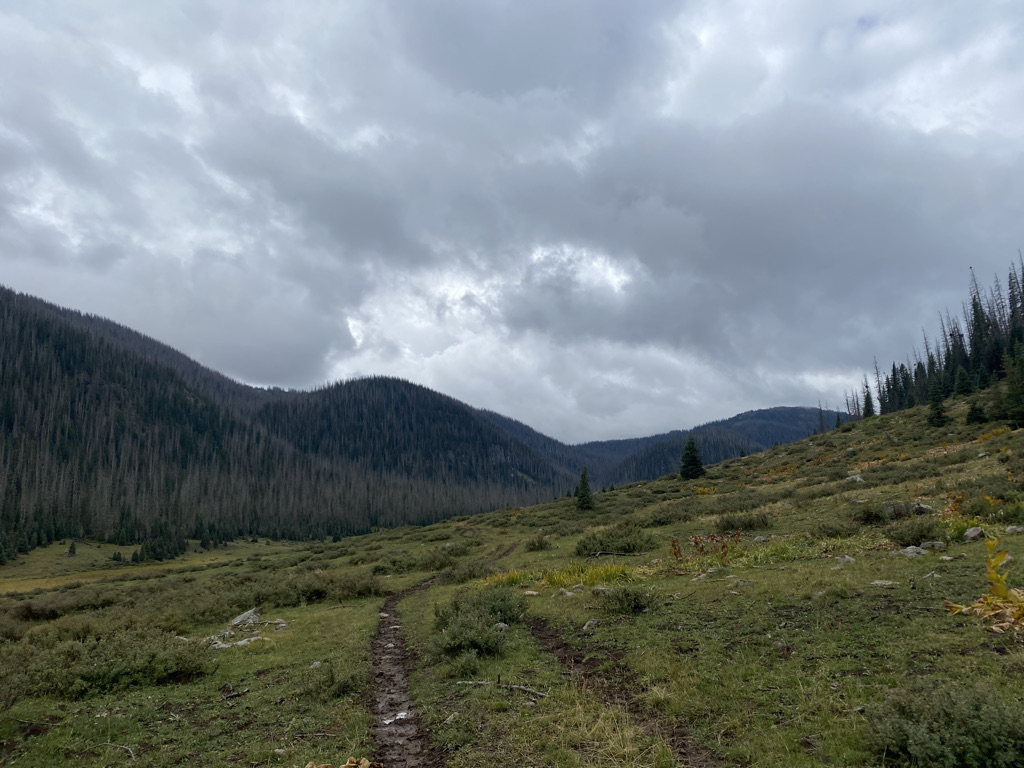
It started on the final day of a rainy week. The trails were quite muddy from the previous several days.

It was actually somewhat of a miserable day. It’s hard enough to climb roughly 1400 feet (425m) carrying heavy backpacks. The morning was cold and mostly cloudy.

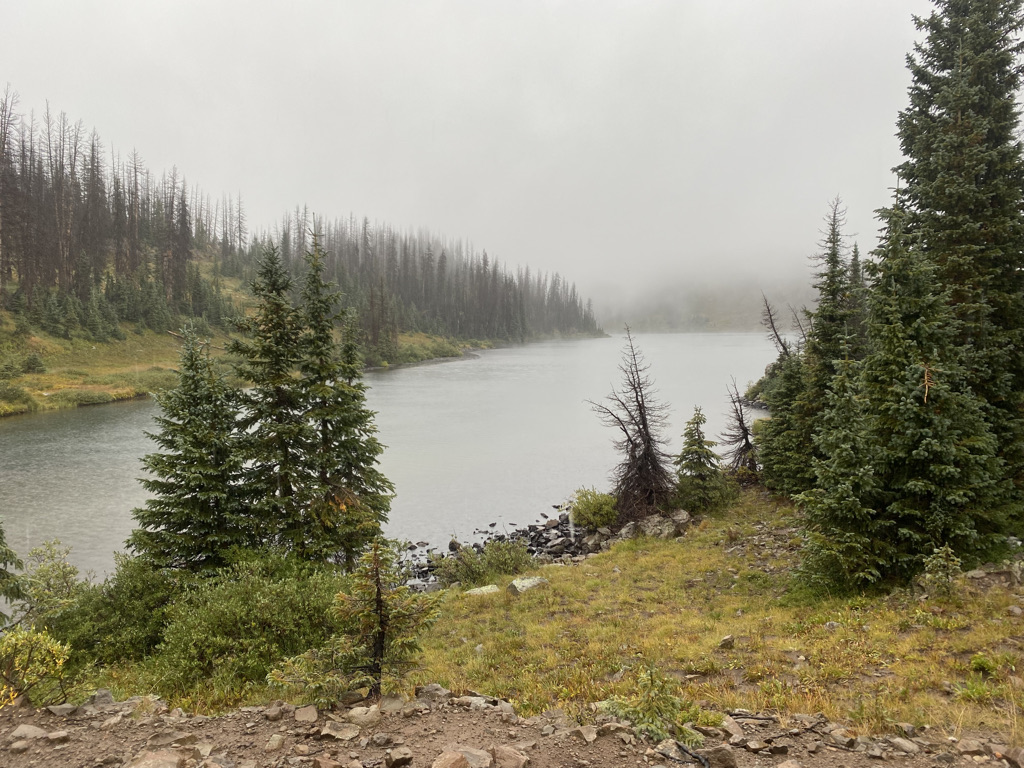
Then came the rain, somewhat heavy at times and the fog. And, it was a cold rain, the kind of rain that soaks coldness down to the bones. The kind of rain that made us want to just sit in our tents, which we did for over 12 hours that afternoon and evening.

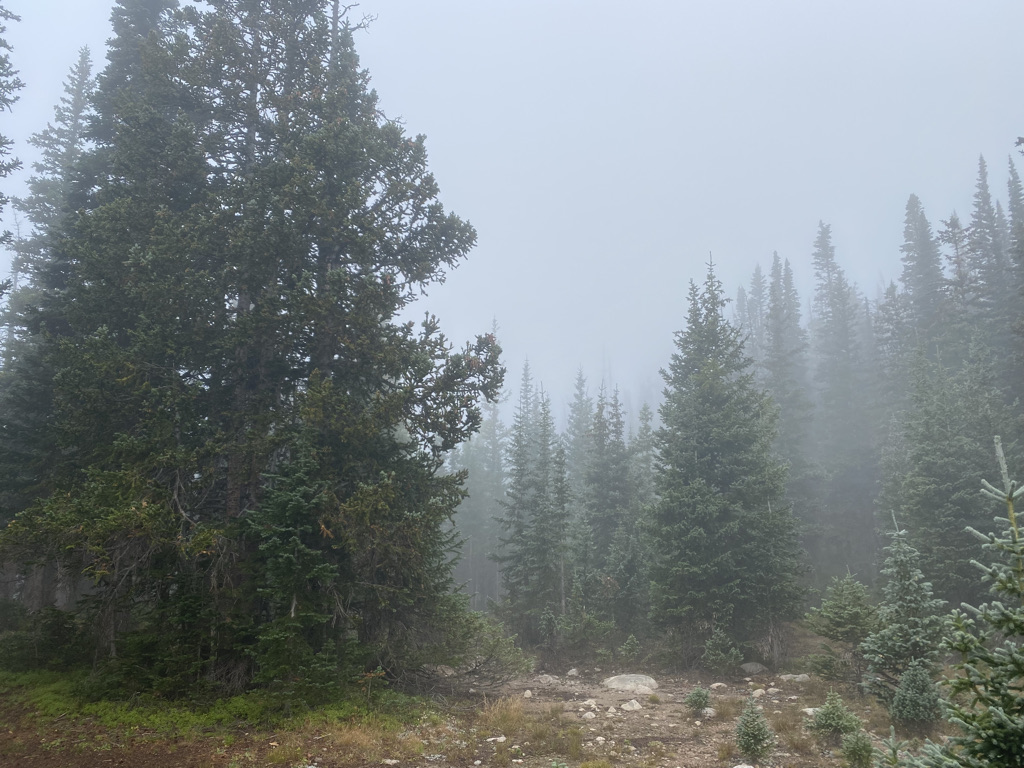
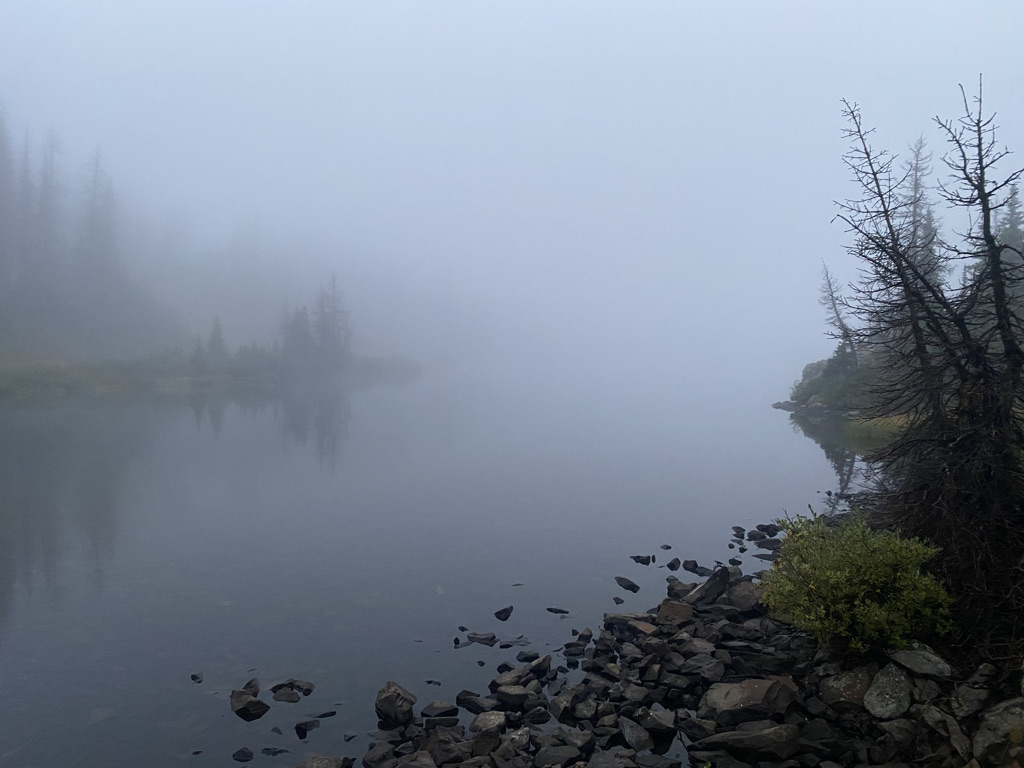
The fog obscured the views of Blue Lake, at nearly 11,500 feet (3500m) both in the evening and especially the following morning.

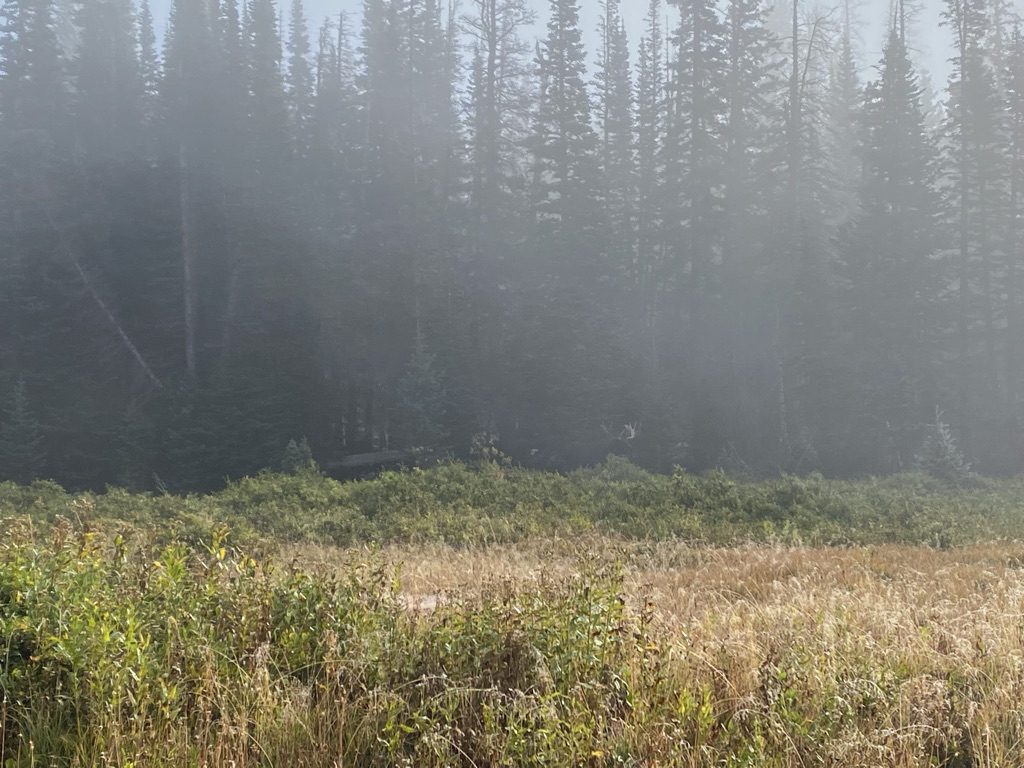
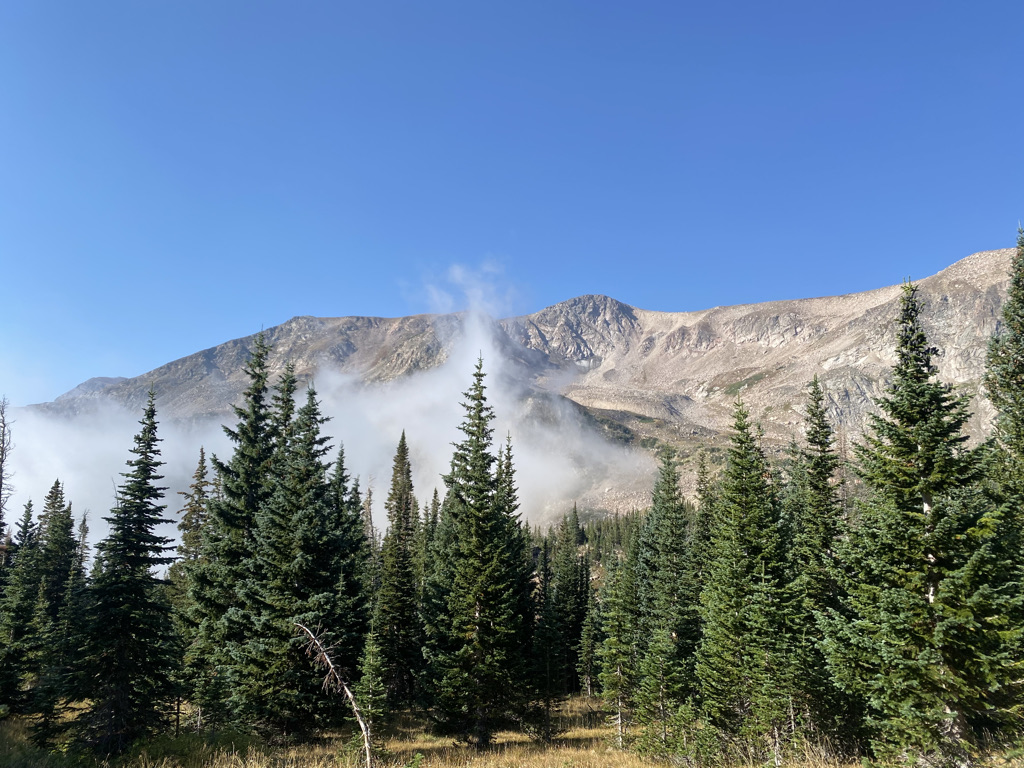
After climbing a little bit higher the next day, we could see the manner in which this morning fog was impacting some parts of the forest but not others.

I guess we just happened to be in one of those unlucky spots where the thick set of clouds had established themselves for the entire night. There is something both humbling and satisfying about experiences like these. We live in an era where people try to predict and control everything. It’s nice to know what to expect from our experiences. However, something gets lost when we achieve a certain level of certainty in life. It can make things feel emptier, more formulaic, even robotic at times. Surprises bring beauty. Surprises bring anticipation. They lead to appreication. Surprises can make us feel alive.

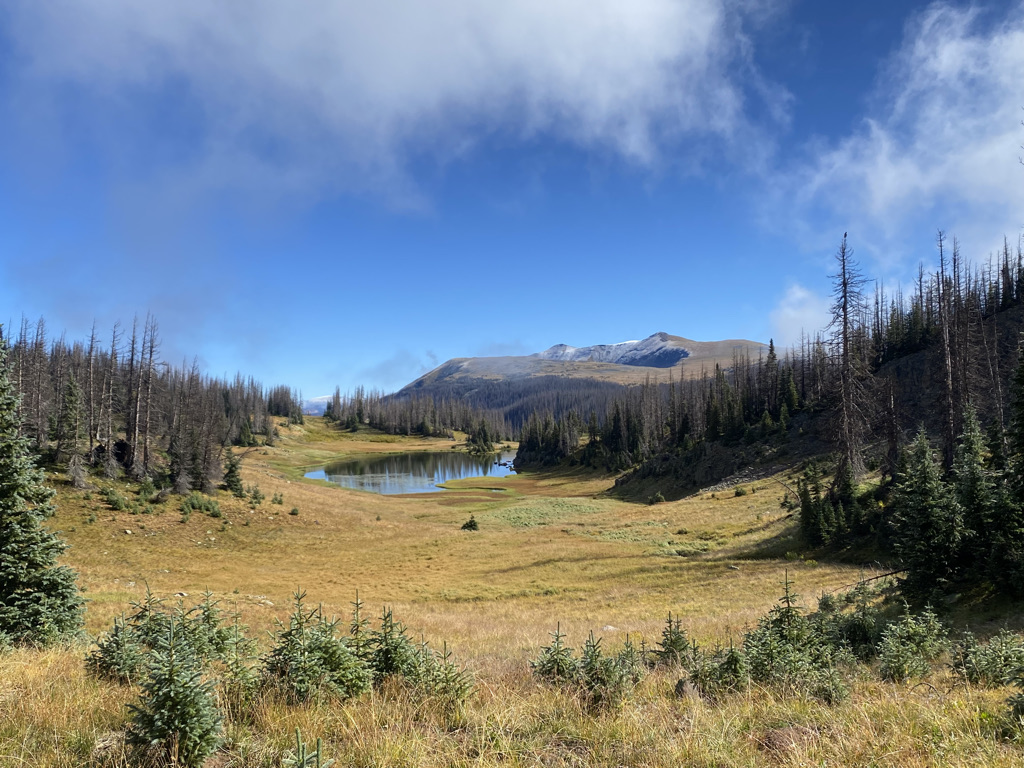
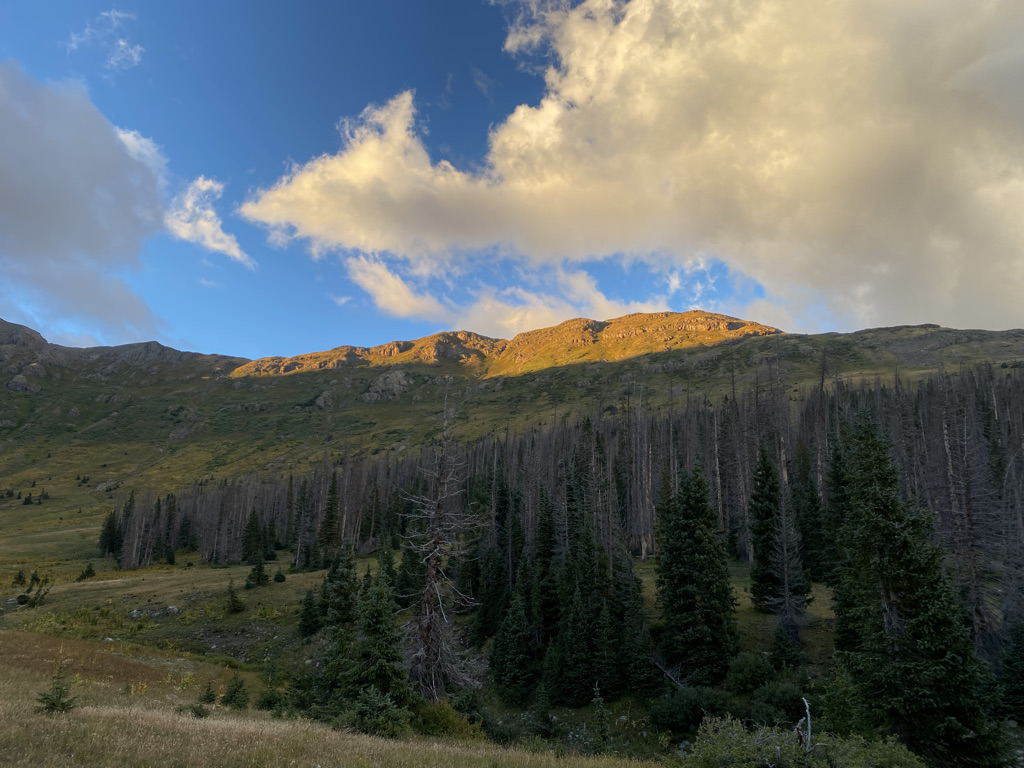
Sure, I was miserable the first day, but once everything cleared up it was spectacular!

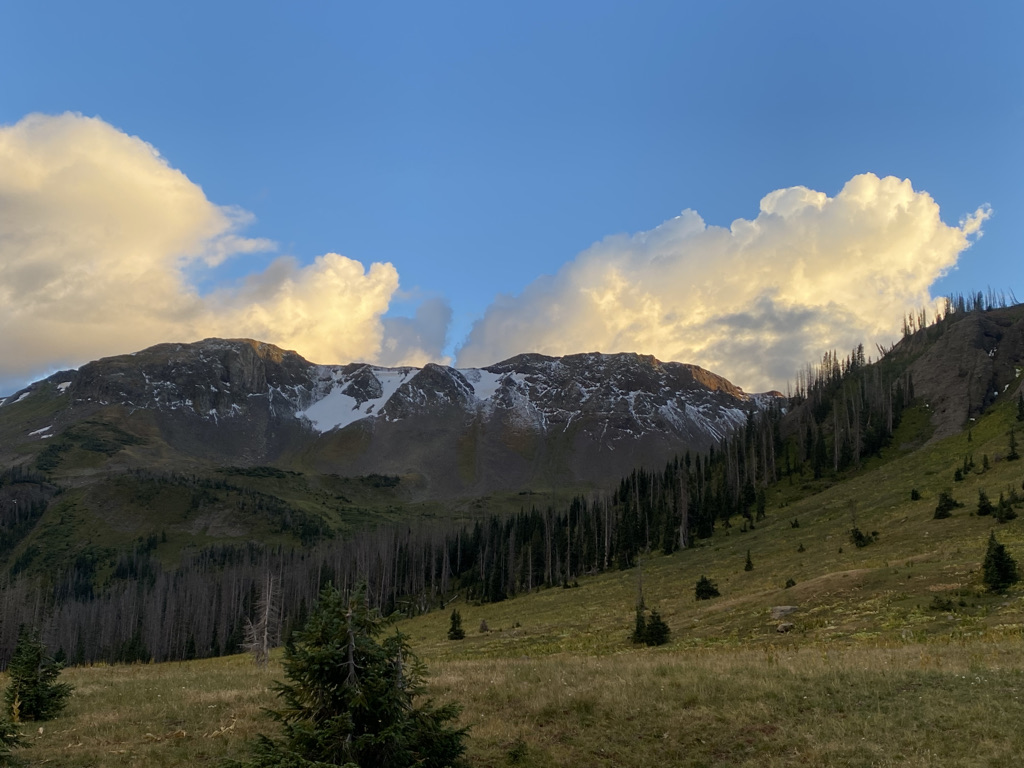
The less than ideal conditions on day 1 probably made me appreciate day 2 more. In this case, it even created a more unique experience. Often times, cold rain means snow at higher elevations, which we saw when we looked up.

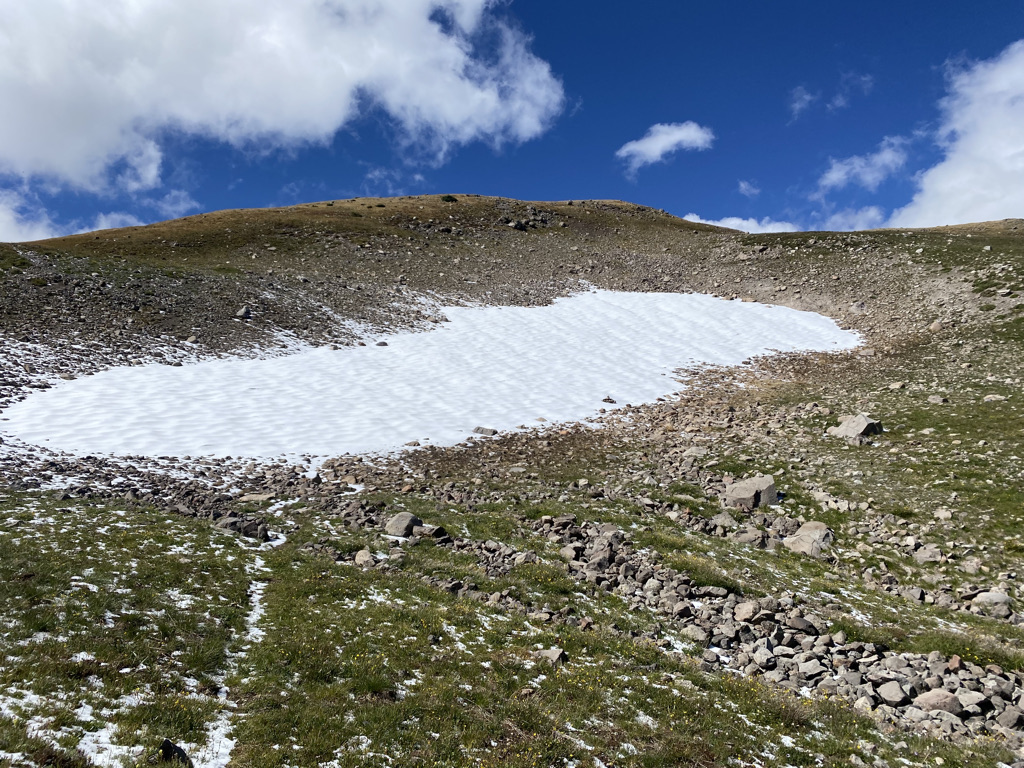
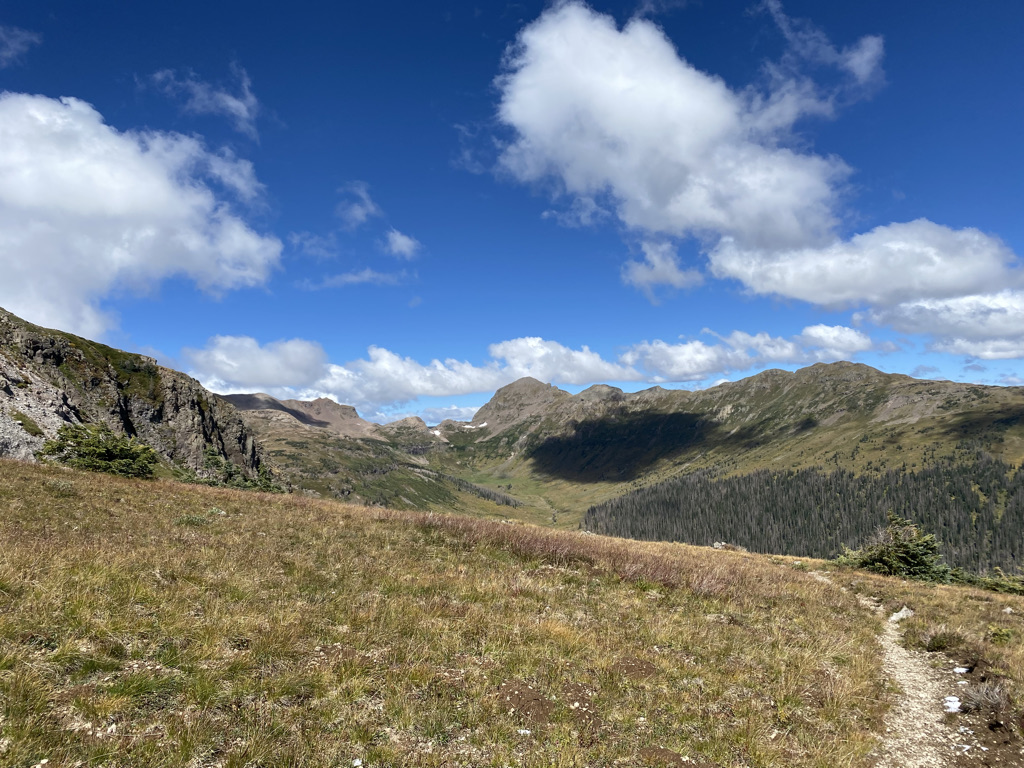
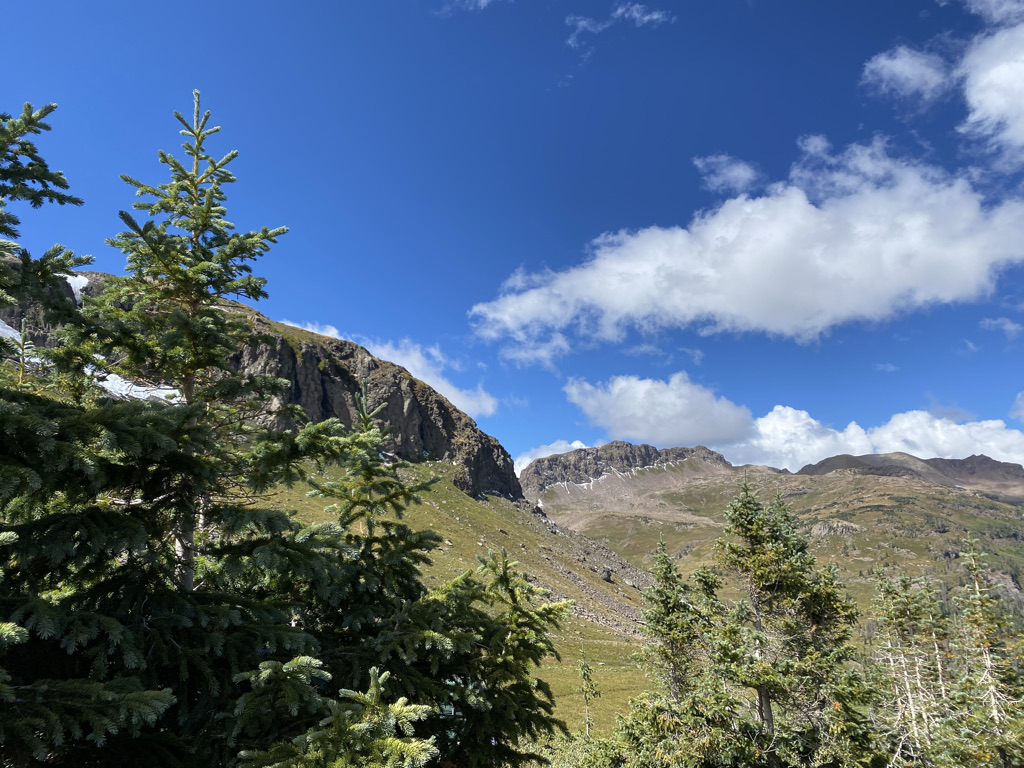
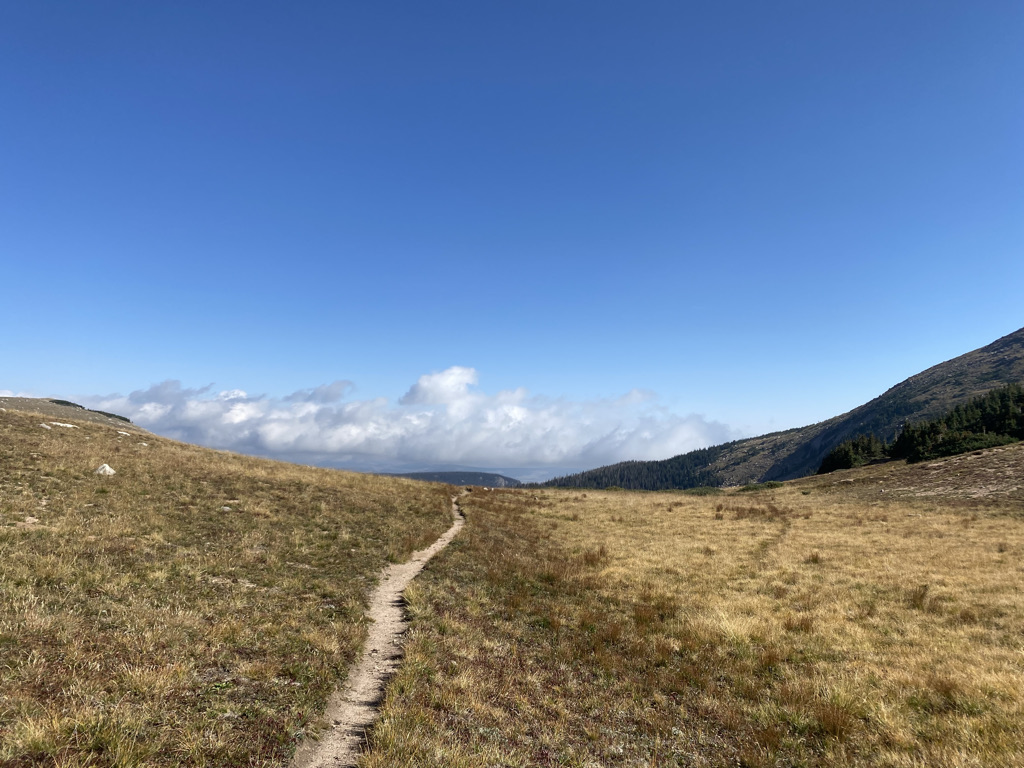
As we approached the pass, along the Continental Divide, we even began to encounter some snow from the previous night.

Yet, it was also somehow drier.

One of the things I love the most about the mountains is how full of paradoxes it can be. With each valley and mesa being subject to different weather conditions each day, experiences can often be wildly different from expectations.

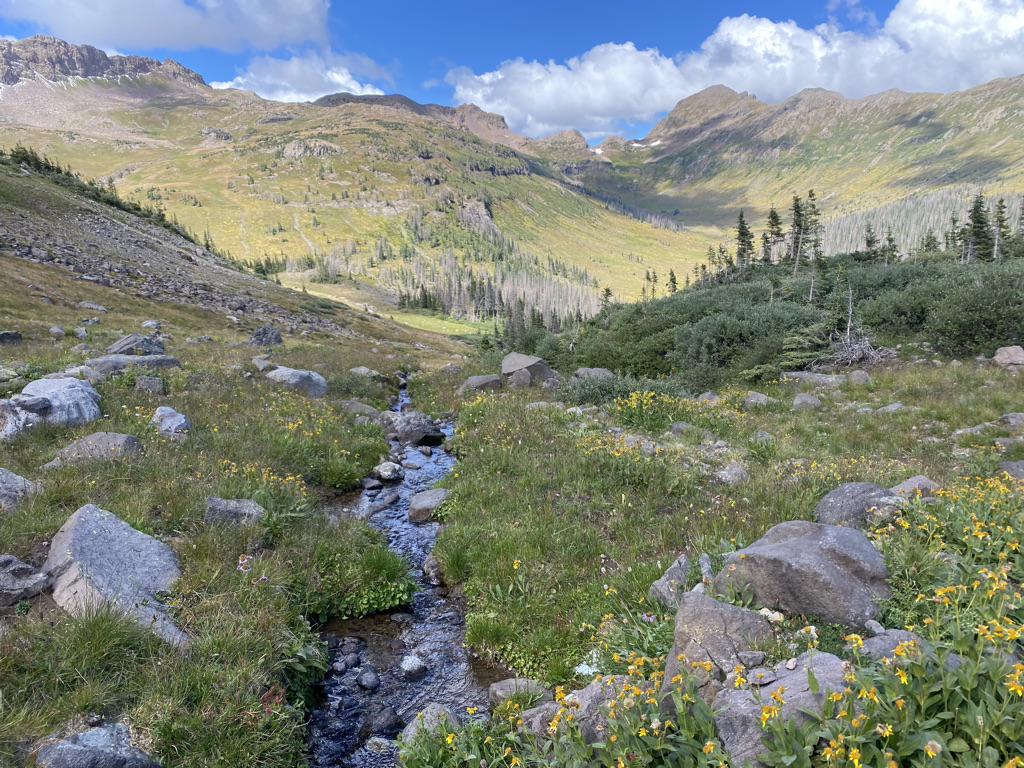
Combined with a type of natural beauty most of us are deprived of in our urban lives.

And seeing first hand, with features like deeper snow in the areas most commonly shaded.

Well, it forces us to think differently. In modern life, we typically try to understand and control our surroundings. Based on several factors, we select neighborhoods to live in. Many of us have jobs that provide a predictable stream of income. We learn routes, create habits and form routines. Here, all we can do is prepare for all the possibilities and respond to what happens.

What is odd is that the very thing that makes the conditions hard to predict, the mountains, is what makes it a place people want to visit. It’s almost as if humanity’s attraction to visiting places like this is a cosmic sign that we are, often unspokenly, yearning for a bit of chaos, a bit of surprise in our lives.

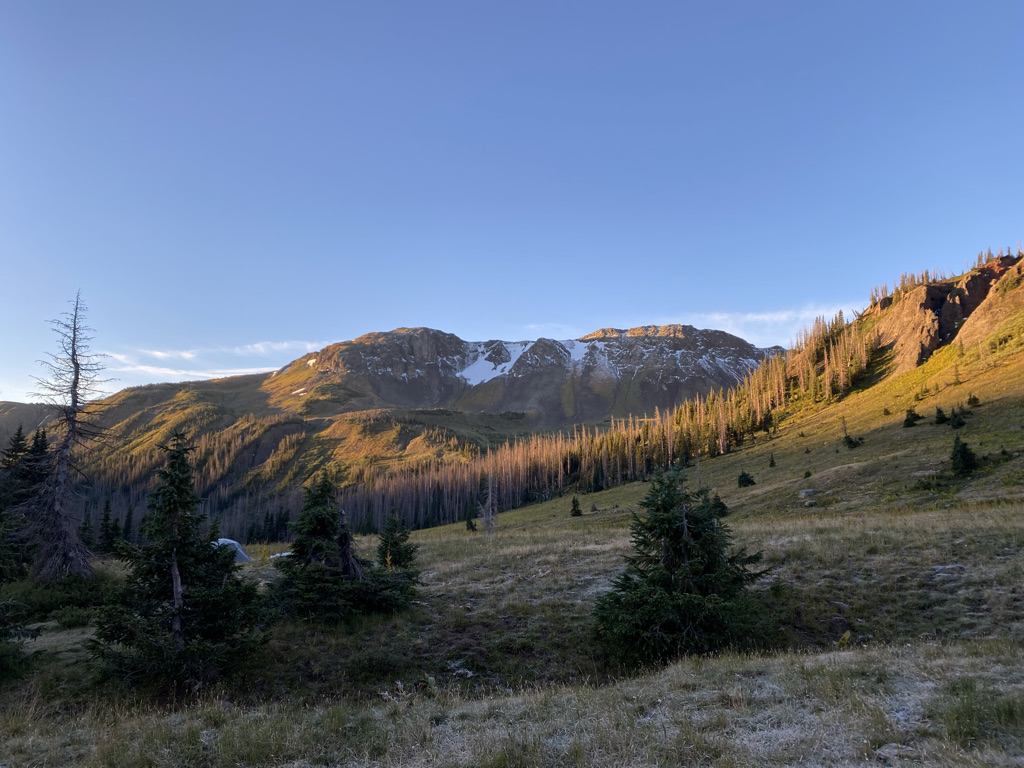
On the second day, we even found a wonderful, amazingly scenic, place to camp.

With an overlook of the Middle Fork of the Conejos River.

With amazing alpenglow in both the evening and the morning and the ability to see the stars on a new moon night.

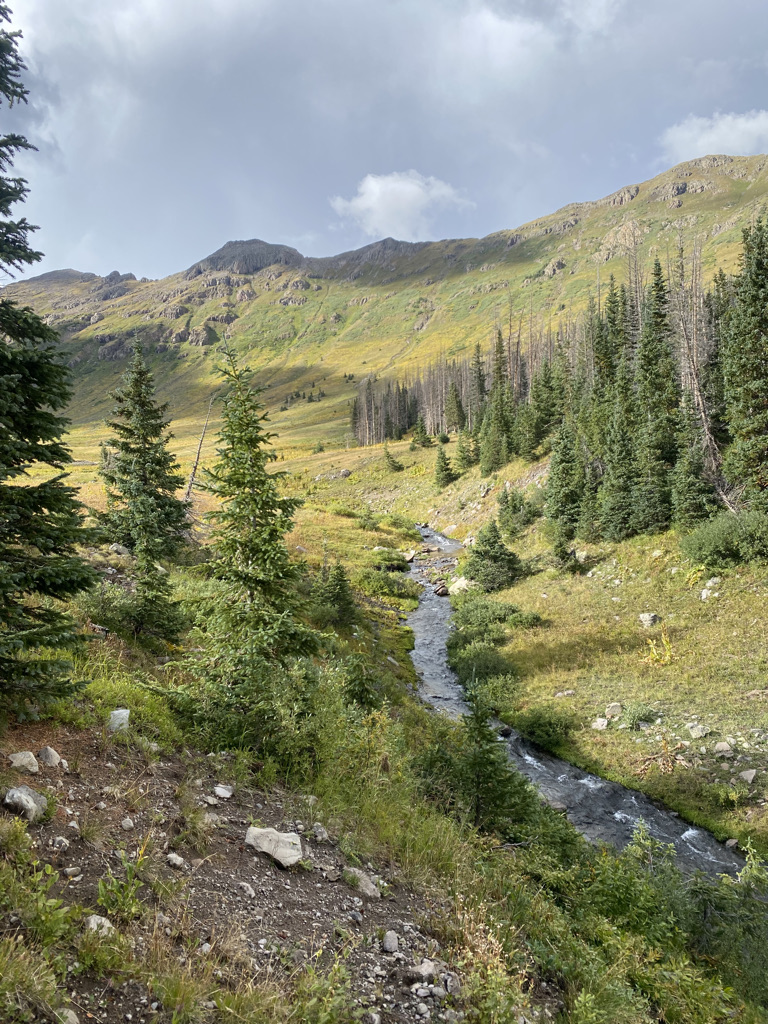
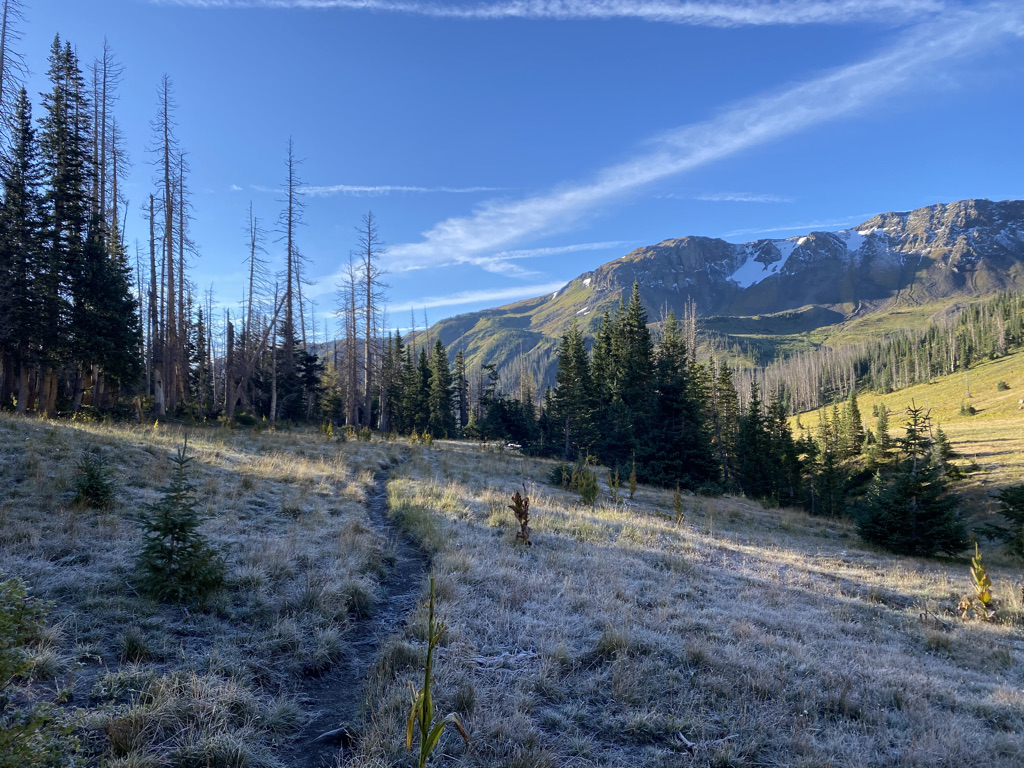
The final day of these types of trips typically involves hiking back downhill. We followed the Middle Fork of the Conejos River, making it the gentlest day of the trip. It is also almost always a day of de-layering. For most of us, it is not typical to see frost in September. Yet, this day switched from frost to being kind of warm pretty quickly.

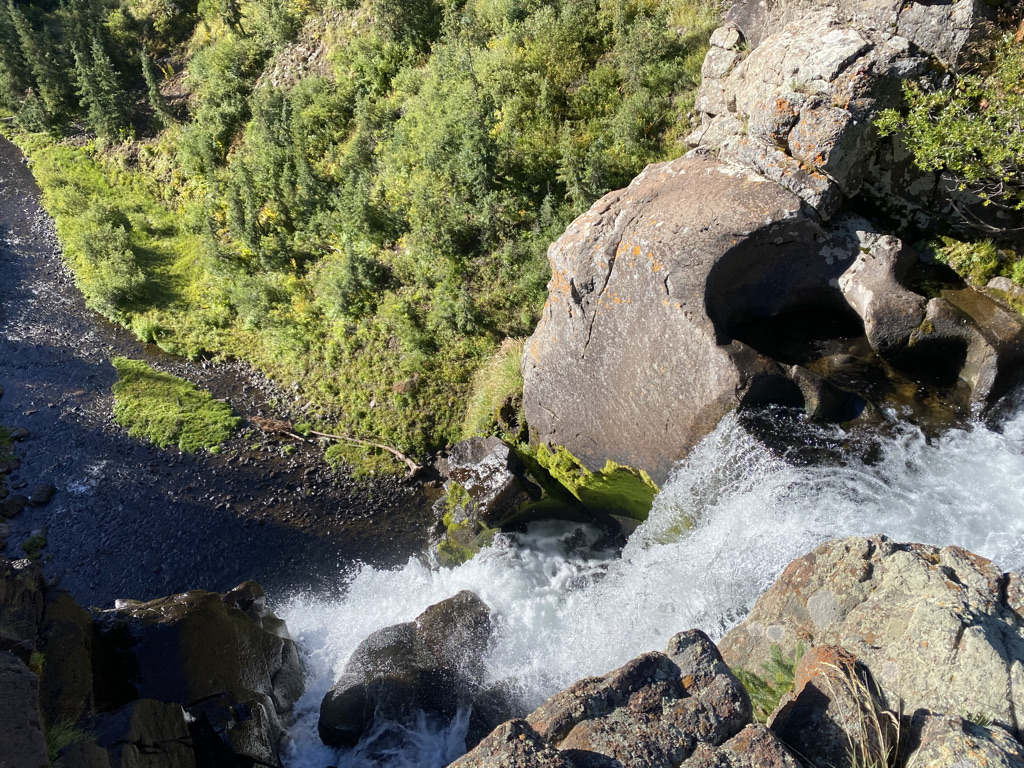
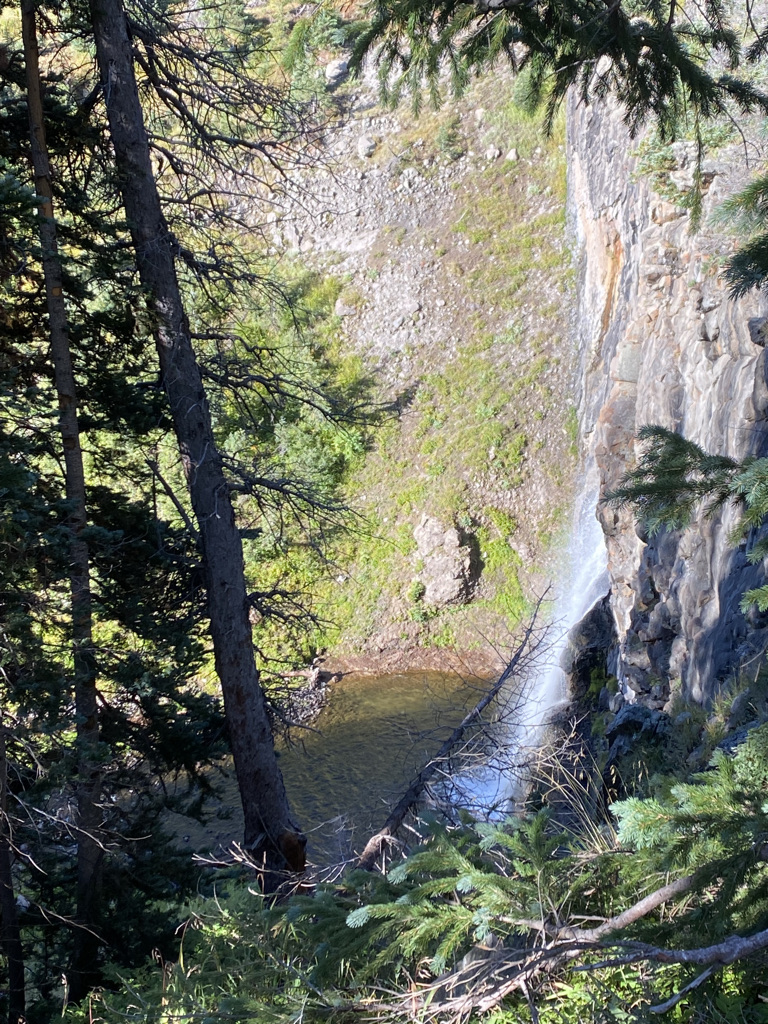
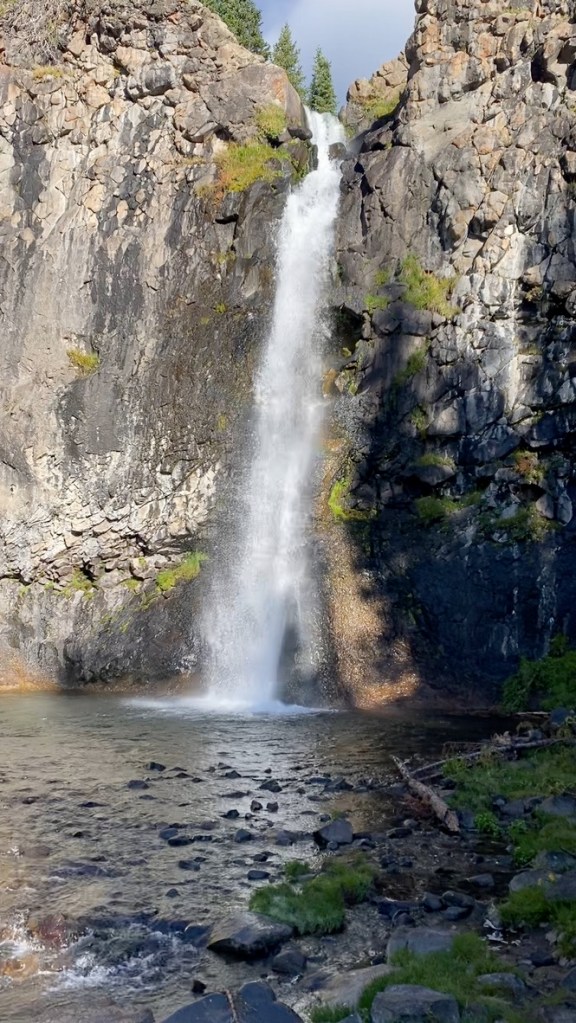
The best feature of the day, and the feature that made the trip was this unnamed waterfall.

It’s so far away from civilization, so infrequently traveled that a name for this waterfall could not be found on the map. We saw it from several angles, including having seen it the prior day from the other side of the ridge to the south.

In life, it is natural to seek comfort. Being uncomfortable is not fun. Unfortunately, the prioritization of comfort and conveniences has denied many of us the most amazing experiences. Nothing on this trip was possible without a little bit of discomfort. However, while we did have one miserable evening, we did manage to avoid a second by springing for a hotel room in Monte Vista along the way down.

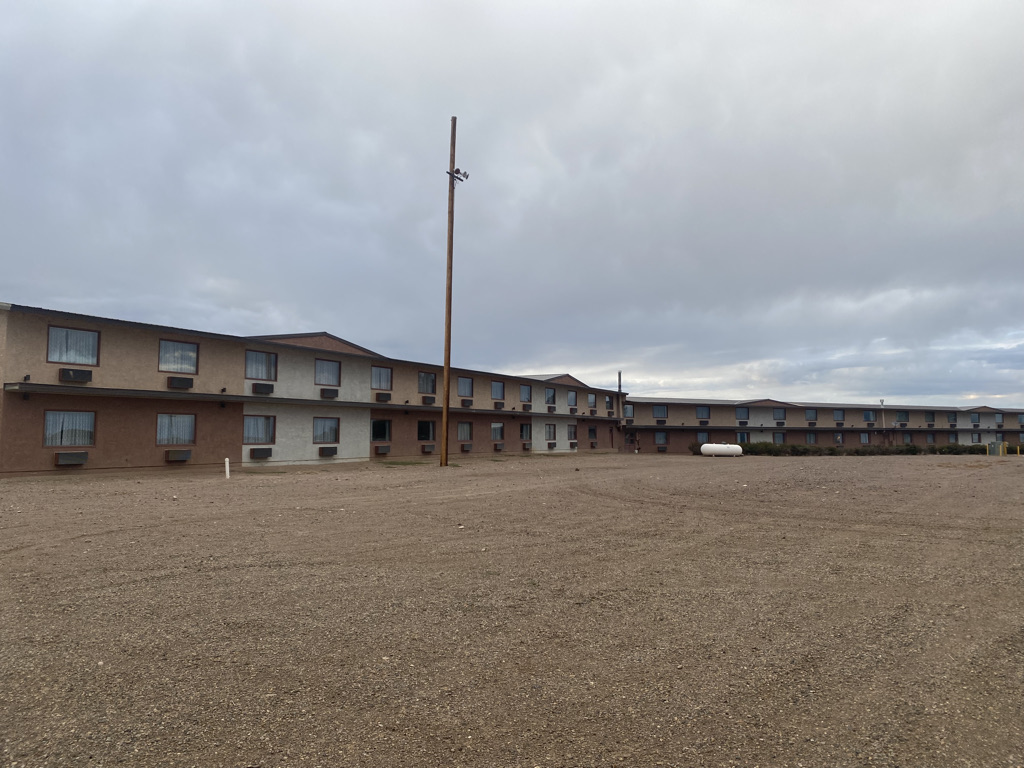
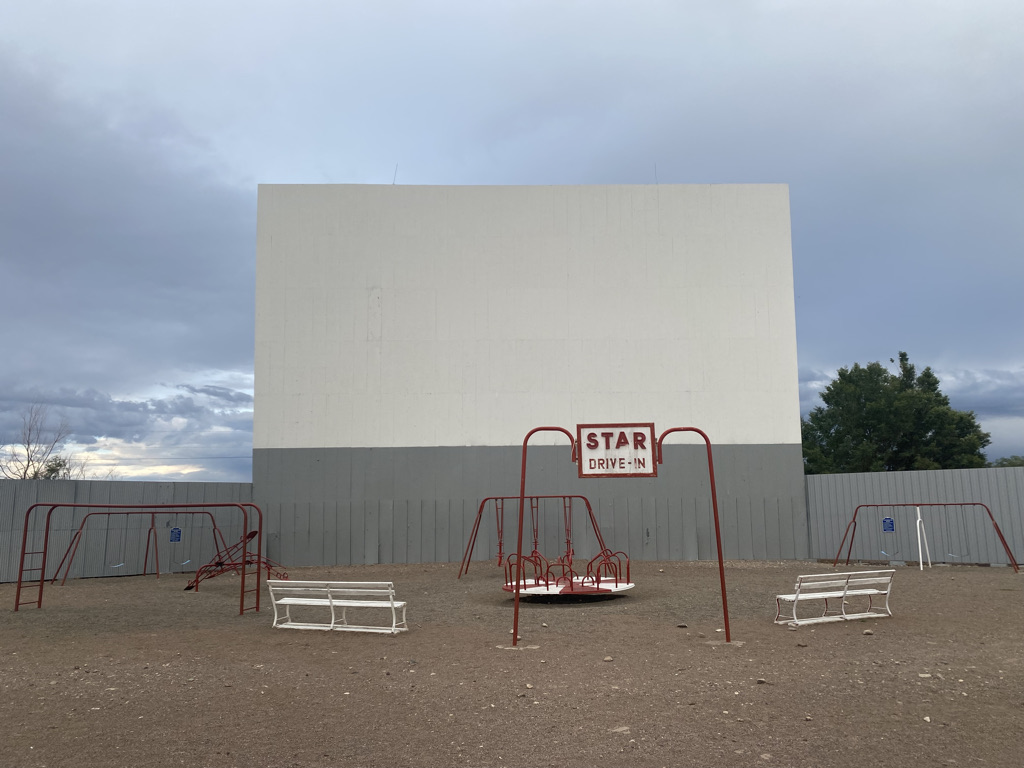
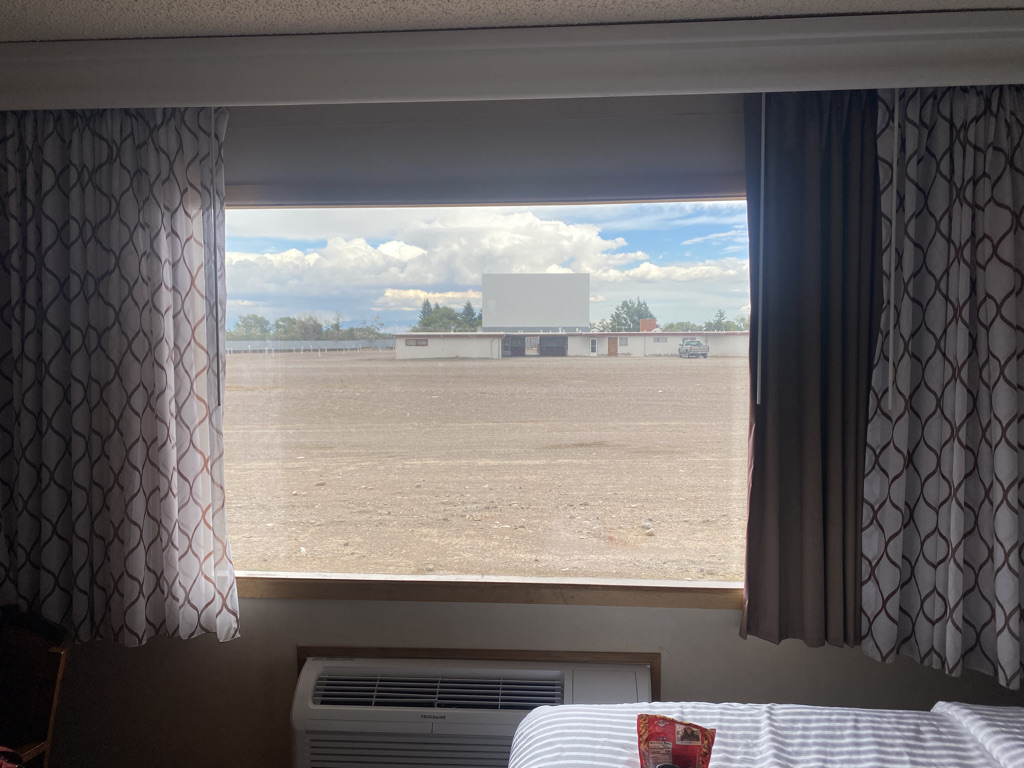
The Best Western Movie Manor is one of those unique hotels with a drive in movie, where visitors can actually watch a movie from their rooms, out the window. With this choice, we managed to avoid some discomfort without having it cost us any of the experiences we would have the next three days. Maybe it is possible to use our natural drive for comfort, but do so in a way that still recognizes that having the experience is the ultimate priority.

Visiting Three Past Chapters

What is the value of looking back to, and even re-experiencing some aspects of the past? It is a question many of us wrestle with quite a bit. From Happy Days to The Wonder Years, That 70s Show and Stranger Things there is no shortage of nostalgia in our present day culture. Yet, there was a time in fairly recent history when nostalgia was actually looked upon as a mental disorder. We all want to understand who we are, but…

Is there a reason we want to “visit” the past?

Why do we want to reminisce about the way things were?

Is it a form of escapism or a form of connecting with something about ourselves and our history?

That is the question I ended up inadvertently answering this summer, when a series of trips ended up being back-to-back visits to different parts of my past.

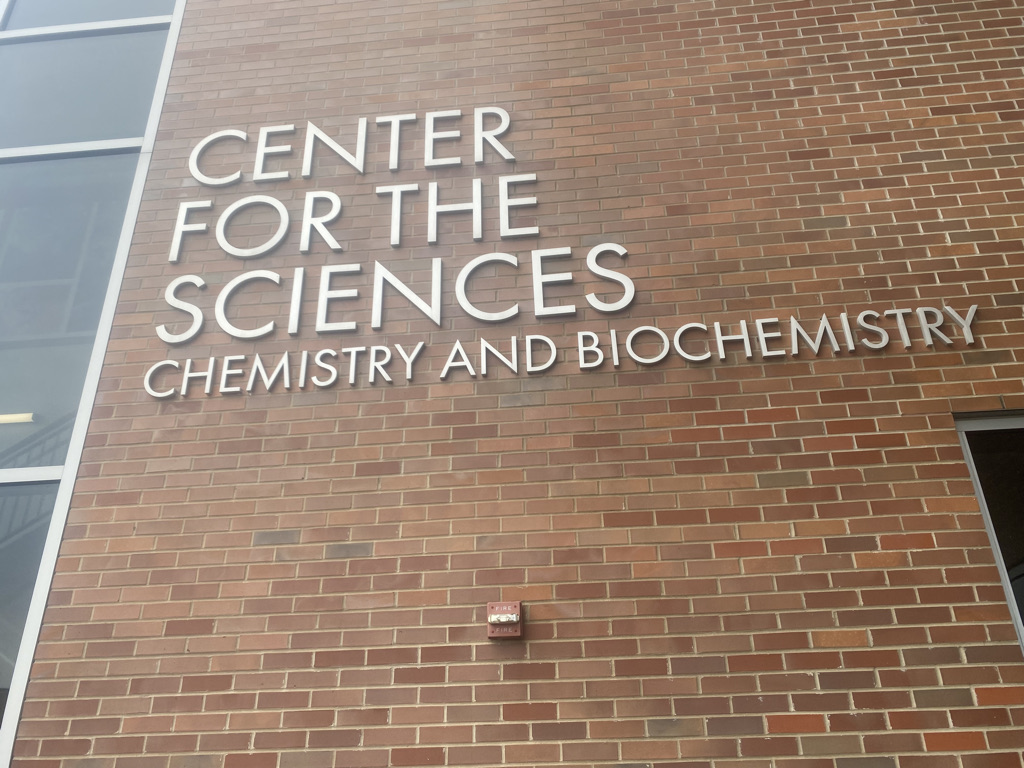
First up was Valparaiso University, where I attended college.

This was by far the most lighthearted part. Much of it was about seeing the people I went to college with, looking at the dorm rooms I lived in, sharing stories about antics and experiences.

Valpariaso, Indiana was once a far sleepier town. Going back there almost felt like Marty McFly’s trip into 2015’s version of Hill Valley in Back to the Future. My vision of Valparaiso is the Valparaiso of many years ago. I was stunned to see a far more vibrant downtown, with more people out and about, more bars and restaurants, farmer’s markets and people out cruising around!

I then visited Chicago, a place I lived several years later, for my first job after attending graduate school.

Being the most recent chapter of my life, this was my least dramatic experience. It was nice to be back at Portillos.

Ride the train again and visit some of my friends. I even got a chance to live the kind of life I lived there going to Wrigley Field and spending an entire night out at the bars.

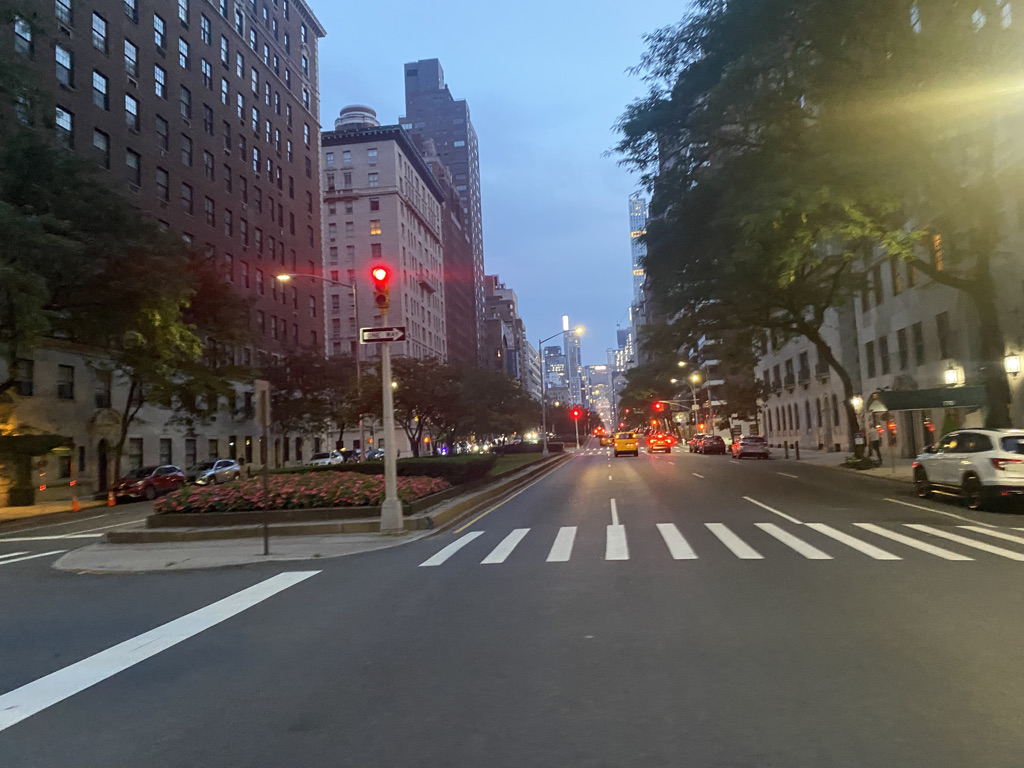
The most dramatic part of my trip, by far, was visiting the place where I grew up, New York.

I actually grew up on Long Island, in a town called Mineola.

To most, it is not a huge difference, but New York is the place where people make the distinction between being from Queens, Brooklyn and the Bronx and consider them completely different ways of life despite the short geographical distance.

I grew up eating the best pizza in the world.

Going to swim at Barr Beach (now North Hempstead Beach).

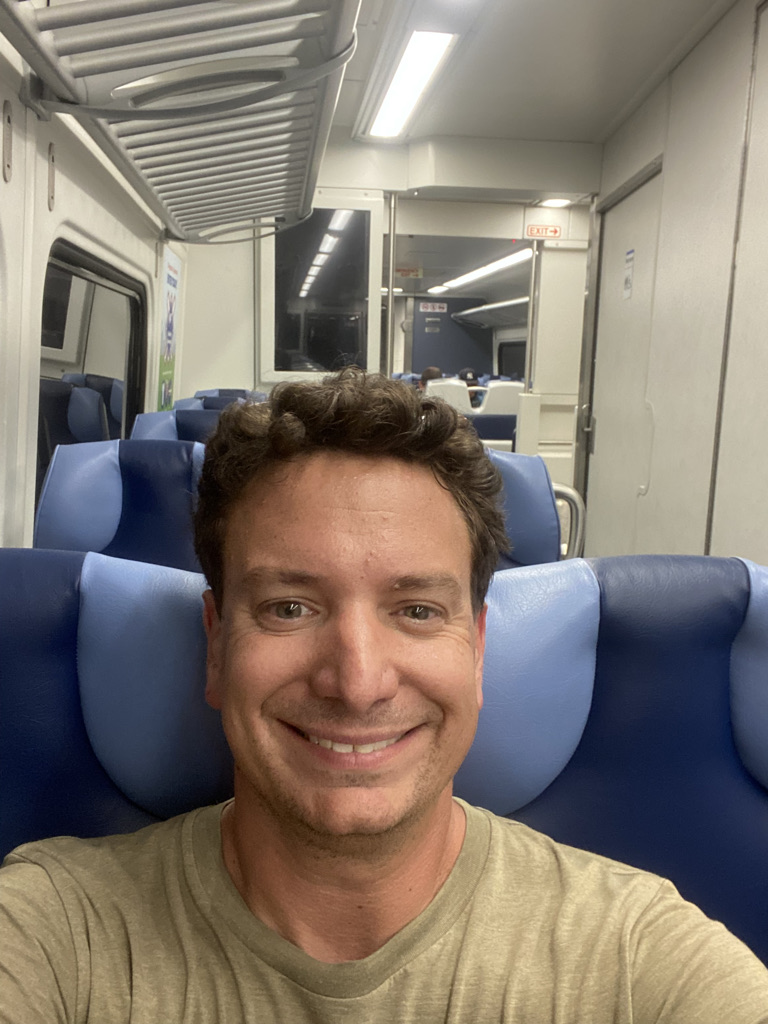
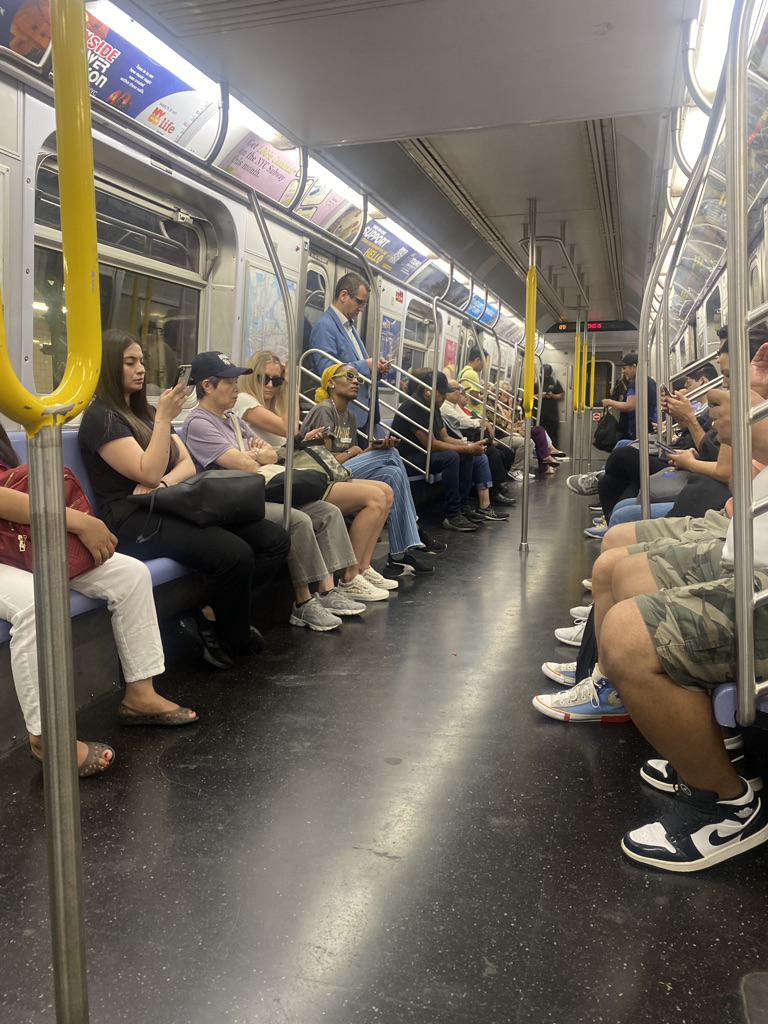
And riding the train, both the Long Island Railroad and the subway, to get places.

While there I felt like neither a resident nor a tourist.

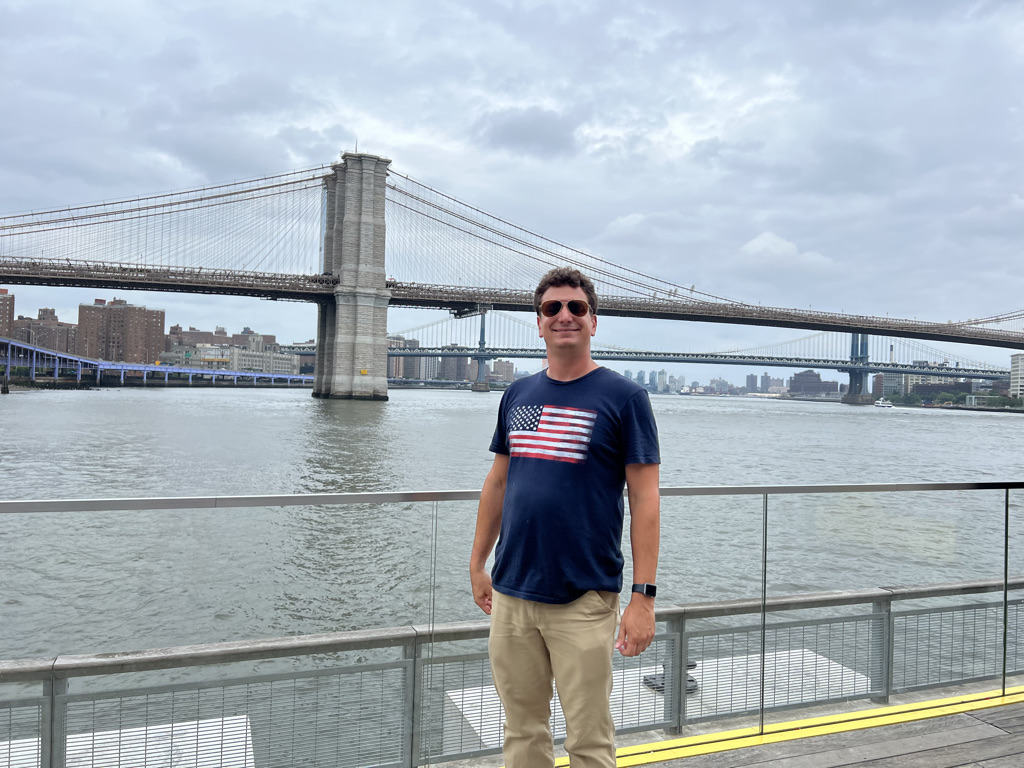
It’s been a long time since I’ve lived in New York. I never lived there as an adult. Yet, New York is still in the way that I walk, the way that I talk and the way that I act. The only day people viewed me as a tourist was the day I wore this American flag shirt to the Statue of Liberty.

Every other day, it was business as usual.

Still, it felt really emotional to remember all the things I loved when I was a kid, but feel so far removed from it.

I thought of my family, my family’s origins from even before we came to New York. Why do I sometimes feel so disconnected from it? Is that a bad thing? I’ve changed so much since every one of these chapters of my life. In fact, I would hate to be judged based on who I was at any of those moments in time. But, something made me feel a strong desire to be better connected with this past, as if it would provide some kind of grounding.

When I returned to Colorado, I reflected on the trip, especially New York.

I realized that, well, in life we all move on. We progress through chapters, some pleasant, some less pleasant. Some that feel more authentic than others. Based on who I am now, even though I often long for the fast paced lifestyle New York provides and taking trains everywhere, Colorado is where I was meant to be. Maybe I just feel I was meant to visit New York more frequently than I do.

As far as why we reminisce, why we desire to re-experience the people, places and activities we once did, in my journey I found myself focused primarily on who I was in each chapter. What I did. How I did it. How it made me feel. In New York, it was who I was as aa child. How I interacted with teachers, other kids my age. The experiences that, although so long ago, washed out in my memory by more recent happening, made me who I am.

Maybe that is the underlying reason for nostalgia. We want to remember who we once were. After all, in our lives we make some changes on purpose, but some just happen. They may not have been something we specifically desired. Sometimes they are foisted on us. Sometimes we’re just trying to get through a situation, like a survival technique applied to the modern civilized world.

So, maybe the primary reason we watch old shows, listen to old songs and go to the places that remind us of some past chapter of our lives is to reconnect with a past version of ourselves. And, if we are mindful enough, we can think about some of the ways in which we’ve changed and ask ourselves…

Did I want that?

Is this something that is serving me well?

And, is there something about who I was then I should get back in touch with?

On Restrictions (What Las Vegas Means to Me)

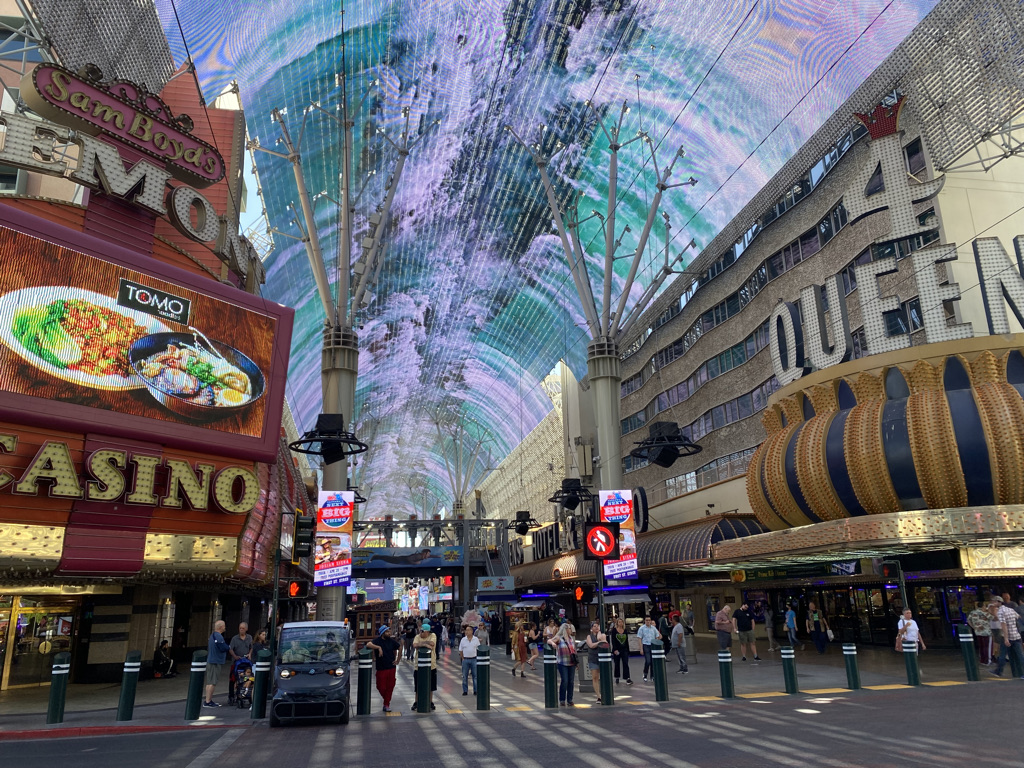
Every time I go to Las Vegas, I think about the grand meaning behind this place. What makes this place the way it is? Why do so many people want to come here? And, what does this tell us about the current human experience?

I come here a lot, and have written several previous entries about Las Vegas. Perhaps the most fitting description of what Las Vegas means to the countless people who frequently visit this place is the title to one of my previous posts, Three Days Without Rules.

Most people spend a vast majority of their time doing things they don’t really have control over. I don’t think any of us who work 40 hours per week were at any of the discussions, over a hundred years ago, where labor activists and corporate owners agreed to that standard. Nor do that many of us have any idea how 9-5 became the standard working hours.

The same can be said for many of the other responsibilities we take on, including maintaining our homes, family and relationship responsibilities and many of the standards around the other things we get involved in and take responsibility for.

For many of us, most days are just seas of to-do lists.

What we chose to do in that small amount of time we have total control over is often quite telling. People like me, with sedentary jobs in front of computers, often opt for active, outdoor pursuits in our spare time.

However, those with active jobs that require physical exertion are often more interested in relaxing, watching T.V. and sports in their spare time.

I remember back when I was in college and graduate school wondering if students balance out the high level of intellectual processing involved in their studies by drinking to sometimes crazy levels of stupidity. Those the live in cold climates are definitely the most anxious to visit places like Cancun. There is also the stereotype of the person who comes across as shy and reserved having some of the wildest and kinkiest sex lives.

In a world has recently abandoned organized religion and become obsessed with numbers and metrics for everything, we now see people looking for something beyond progress and achievement. Dare I say it, beyond this life.

These observations seem to indicate that we are all trying to achieve balance and that what people chose to do with weekends, vacations, etc. provide clues as to how day-to-day life can be out of balance in the current era.

So, why do so many people visit Las Vegas?

The reason so many visit Las Vegas is the same reason so many hate Las Vegas. What goes on here tells us something about how we live our lives in the present-day, specifically what is missing, what people are craving. I recently read a book called The Comfort Crisis, which describes, both through a lived experience and references to research what aspects of the human experiences we’ve lost by prioritizing comfort (and predictability, which is really another form of comfort) in nearly all of our recent pursuits.

In our collective pursuit of comfort, we have placed a lot of restrictions on ourselves and each other. We refuse to pursue our passions to avoid the potential financial, lifestyle and reputation risks. We shy away from pursuing meaningful encounters, friendships and relationships to avoid making ourselves potentially vulnerable to rejection and potentially making others uncomfortable for a variety of reasons, most commonly jealousy or the discomfort of seeing others break social norms. We skip activities to avoid random, often overblown risks. Perhaps most sadly, we limit how present we can be with the people around us, often the people we care about most, out of this strange pressure we put on ourselves to always be available to respond to messages. We fear our bosses, co-workers, or even sometimes causal acquaintances will be disappointed in us if there is any delay in our responses to messages over email, slack and even social media and therefore end up almost chained to our computers or other work stations.

Every time I go to Vegas, what I see is a large subset of society crying out.

They are crying out for some chaos. They are crying out for some unpredictability. They are crying out for some variety in a world where we condition ourselves and each other to follow the same routine, processes and procedures every day.

It is more than likely that we need some restrictions in our lives. At some point, we all need to sober up and get healthy.

But, perhaps, what places like Las Vegas demonstrate is that we may have too many restrictions, at least in certain areas of our lives.

On Being Less “Numb”

The modern world is such a paradox. We are more prosperous, more secure and more comfortable than ever before. Yet, we also seem anxious, depressed and generally dissatisfied. What is going on? What are we missing?

There is something about the modern wold that, at times, can just feel lacking. Days without any meaning. Activities we don’t truly experience. Conversations where everyone’s not really interested and never lead to a true connections. Activities we barely even remember doing. On bad days, it can feel like we have all turned into robots just trying to achieve metrics, numb to all emotions.

Numbness has been attributed to lot of things. Drugs. Alcohol. Certain psychological disorders. Deciding to be constantly be busy. Engaging in only surface level interactions. And, finally, being in a constant state of distraction. The consequences are dire. When we chose to numb ourselves to avoid negative emotions, particularly discomfort, we also deny ourselves positive emotions. We lose the ability to enjoy life.

Over the past month, what I have experienced is most easily described as the opposite of numbness. First, right after Thanksgiving, I returned to the all inclusive resort in Cancun I visited six years earlier.

It was a similar experience. Warmth. Beautiful sunrises over the Atlantic Ocean.

Activities by the beach and pool. And, like last time, I made friends with both the other guests of the resort and the staff that coordinated the activities. It ended up being a very emotional experience. Every day I would go to Spanish lessons.

And, I would regularly try to conduct conversations with the staff in Spanish. After several days, those that I had spoken to most started telling me how much they appreciated our conversations. They said that only about 5% of the guests that come to this resort even try to speak to them in Spanish. One of the employees even wrote a heartfelt note.

It was quite emotional and made me sad to leave. I often don’t feel appreciated in normal day-to-day life. It often feels like people are trying to mold me to adapt a certain set of opinions or maximize my output. Here, I felt appreciated for being myself; goofy, curious and friendly. I felt like I was leaving part of my heart in Mexico.

Then, I spent a week with family, with Christmastime in full swing in the Chicago metropolitan area.

The setting couldn’t be more different. I went from vacation back to performing my remote job. I went from sunshine and 86°F (30°C) warmth to clouds and temperatures near 40°F (3°C).

The source of appreciation this time came from little children; my nephew and niece, ages 7 and 5. There were activities and just quality time spent with family. One of them, due to the lack of snow was baseball. My nephew drew me a picture commemorating a moment we had in a backyard baseball game when I hit a grand slam and we did a grand slam dance.
Leaving this place was emotional as well. It feels good to feel appreciated. I wonder why we are often so bad at showing appreciation. I wonder why I am so bad at it. I spent most of my travel time between all of these destinations wishing that showing appreciation was something that just came more naturally.

Also, neither of these experiences were completely free of all the mechanisms attributed to numbness. At an all inclusive resort, plenty of alcohol was consumed.

This did not stop me from truly experiencing both nature and human connection in Cancun.

Time spent with family raising children is always quite busy.

But that did not stop me from being truly immersed in the activities.

What was common to both weeks is that life felt “full”, like I was generally truly experiencing connections with other humans, activities and the world around me. Whatever numbness is common in standard day-to-day life in 2022 was just not there. If we all have a kind of metaphysical door that opens us up to emotion and experience, both good and bad, mine was clearly open and despite the heartache of leaving both places after the weeks were over, it felt so much better than having it closed.

So, how can we escape this numbness that leads to all this dissatisfaction with life? One commonality to these two weeks is that they both involved significantly less “screen time”. When factoring in computers, smart phones and television, the average American spends over 12 hours per day (84 hours per week) in front of screens. These two weeks my time in front of screens was 12 and 34 hours respectively. I was also generally free of anxiety, tight timelines and other forms of negative stress. Perhaps, it is these two factors, constantly being distracted by notifications from our smartphones and/or stressed out by drama and tight timelines that keeps us emotionally numb. Perhaps, as problematic as dugs, alcohol and being constantly busy can be, the stress and constant distraction that prevents us from being truly present is the bigger issue right now.

Boise in Early October

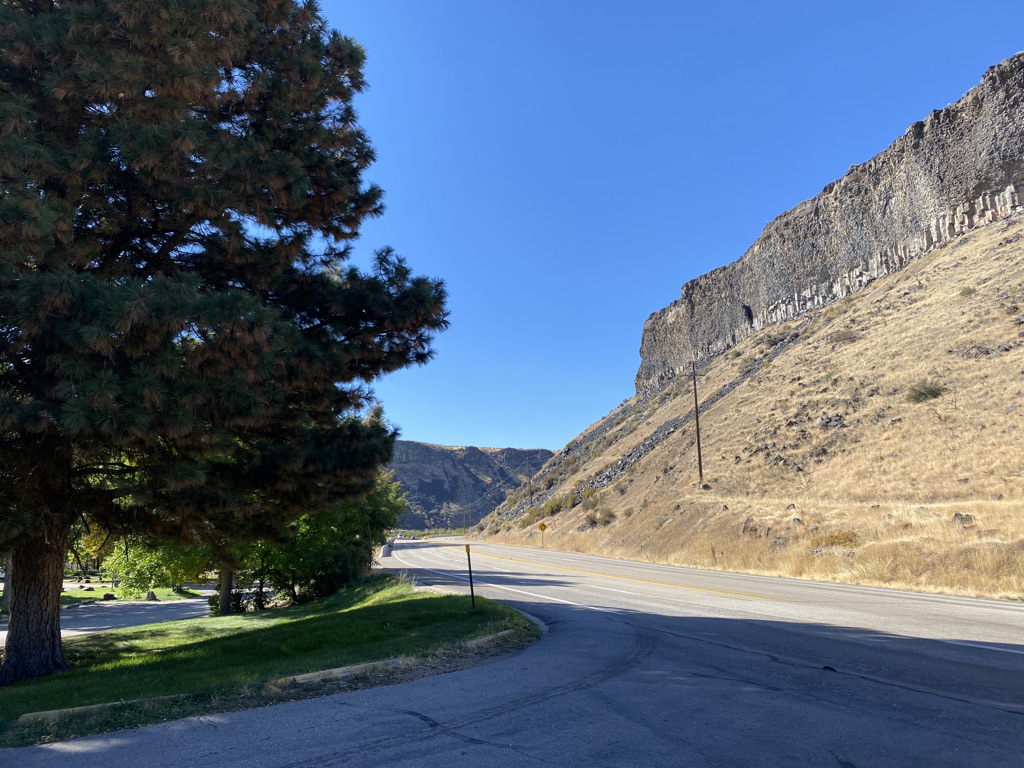
Perhaps one of the hardest things for anyone to adjust to when moving to Western North America is that fact that the weather is far more dependent on elevation than latitude. Boise sits at about the same latitude as Portland, Maine, north of Boston. Yet, it is warmer than Denver (in October, as well as most other months), which sits at a latitude just south of Philadelphia. This is because, at 2,730 ft (830 m), Boise is 2,500 feet (760 m) lower in elevation.

As October began, the leaves here had barely begun to turn colors.

And the temperatures were reaching 80 to even 85° F (27-28°C) every day.

It felt like it was still summer.

I spent three days in Boise and it was hard not to see Boise as a newer, smaller version of Denver, the city where I live. Boise is about 1/3 the size of Denver and the metro area is about 1/4 the size. I don’t like being the person who is constantly comparing something to something else, and I did not want to spend much of my time in Boise comparing it to Denver, the city where I live, but it was hard not to. There were similarities everywhere.

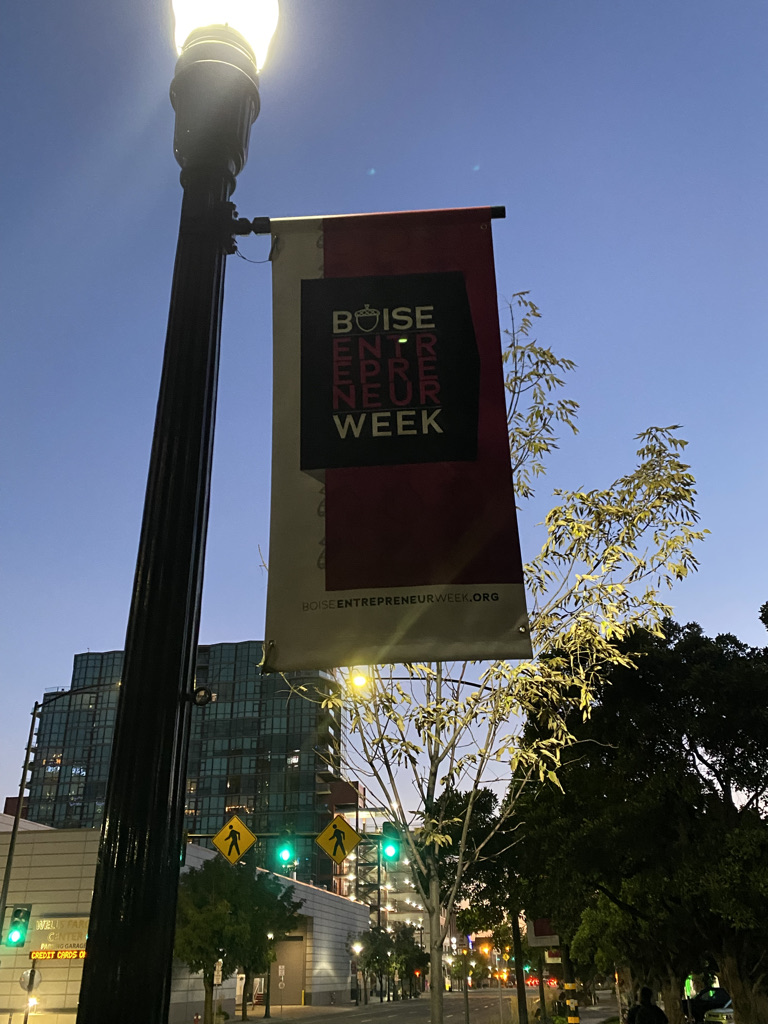
Like Denver, Boise is the State Capital.

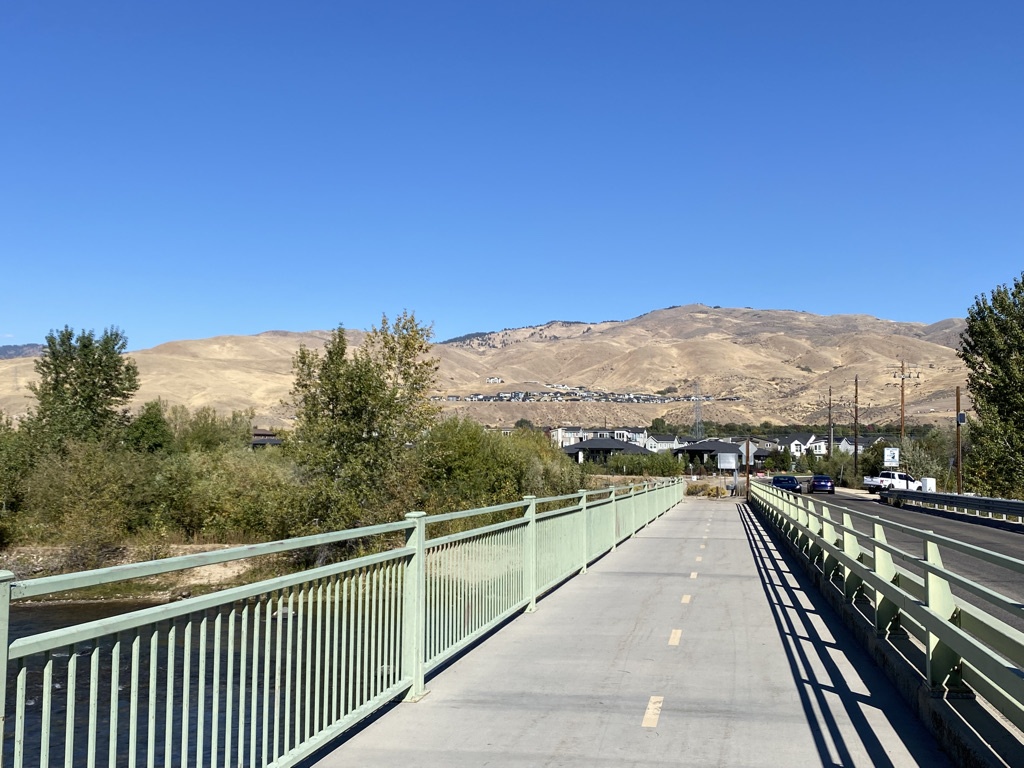
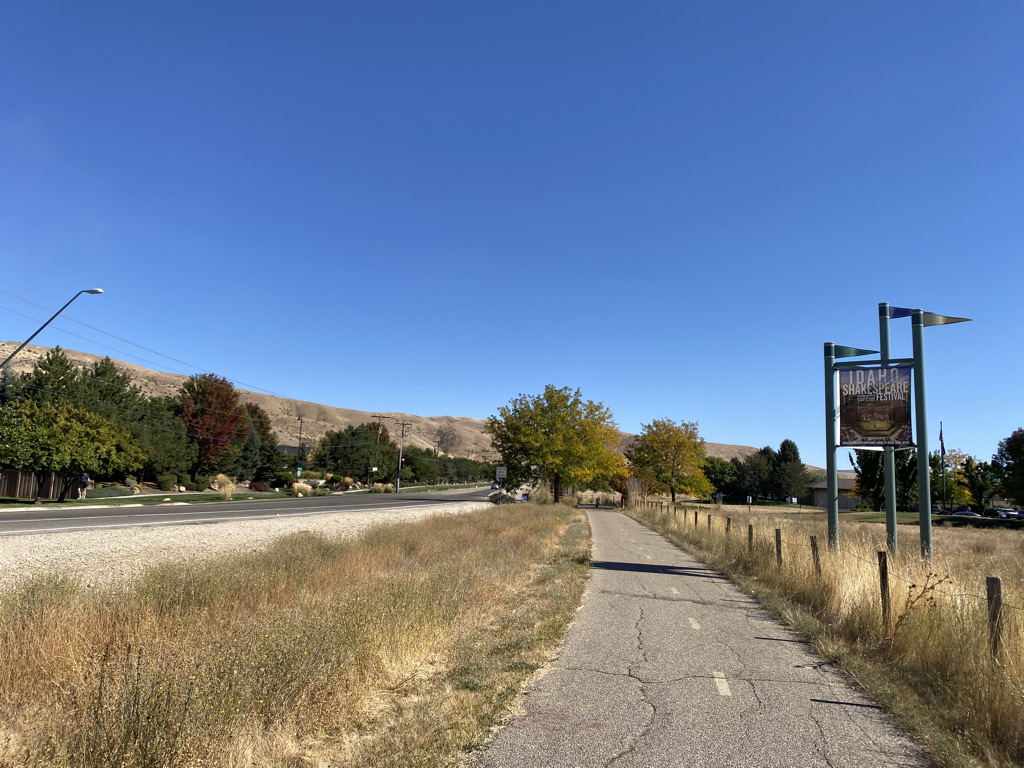
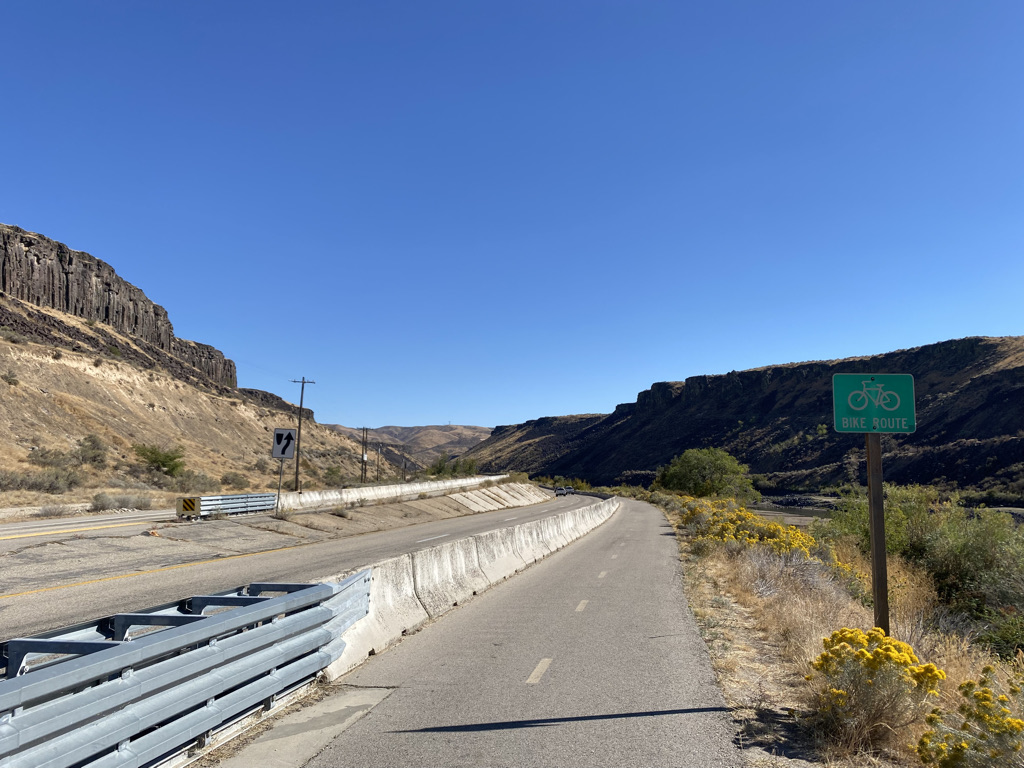
Has some cool bike trails.

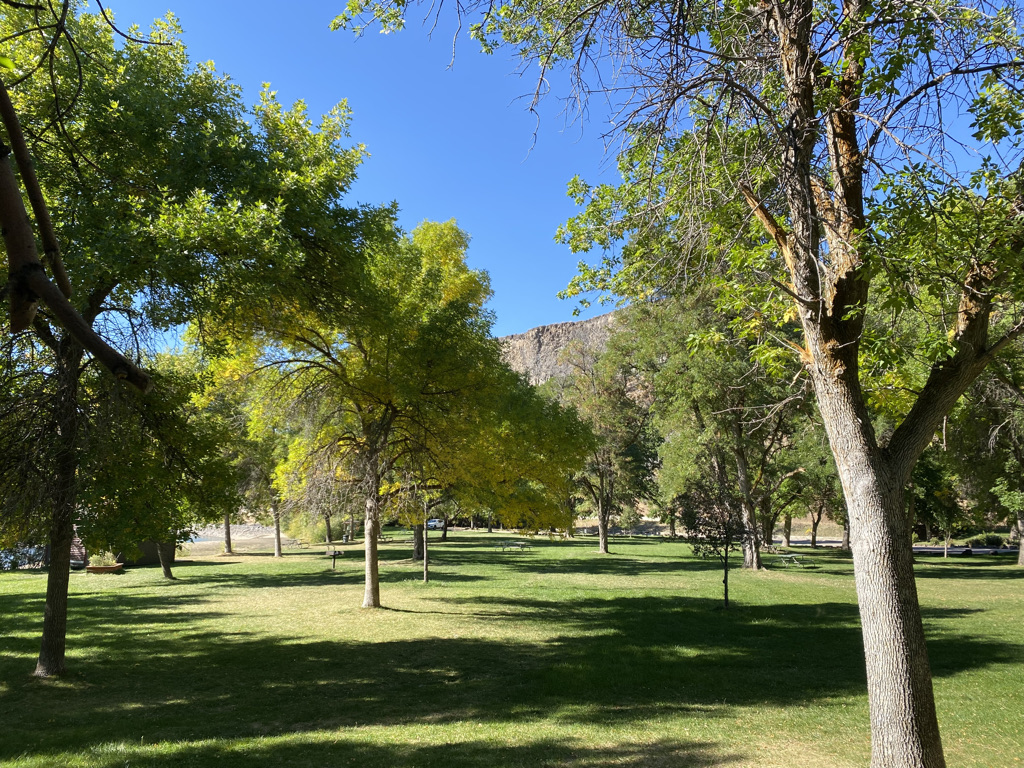
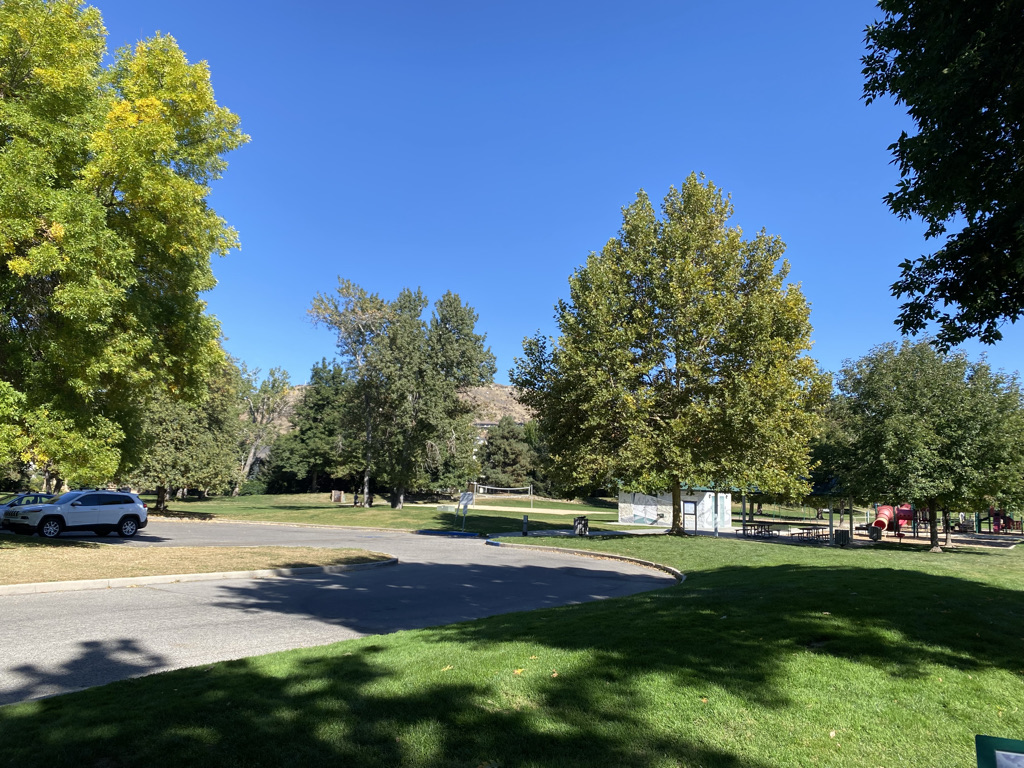
Which pass through city parks.

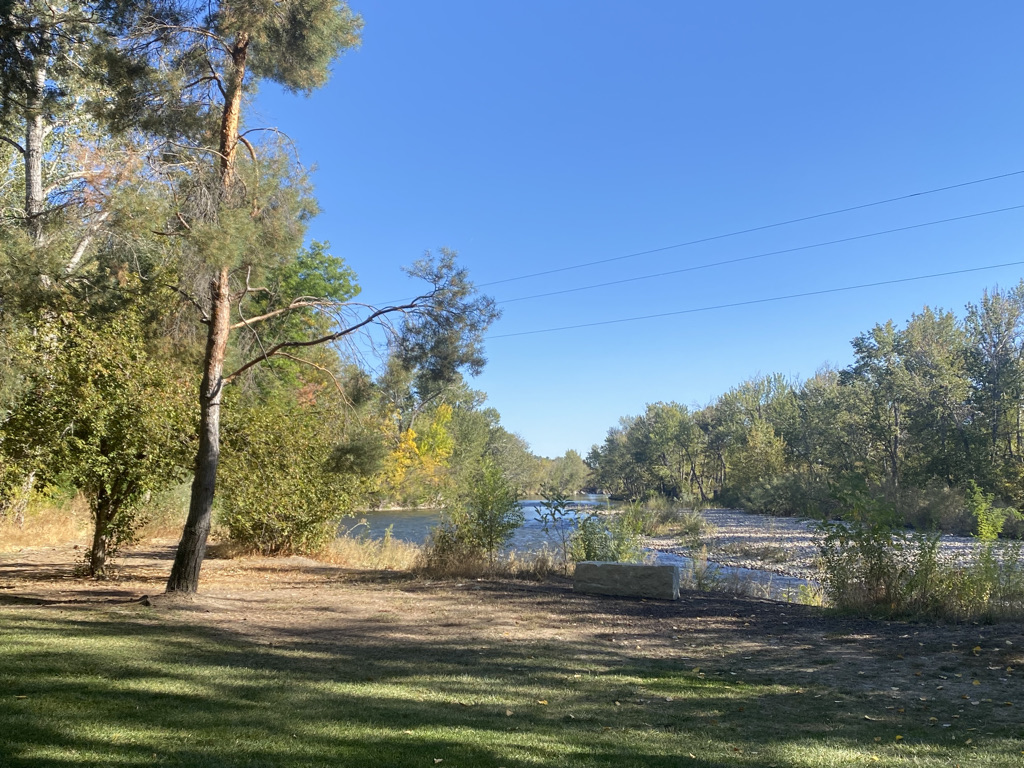
And to some amazing destinations outside the city.

However, I learned early on that people in Boise, particularly long-term residents, do not necessarily love the comparison. Boise is one of roughly ten cities that are rapidly expanding as people seek out destinations where they can be around other innovative types of people, but in a place that is more affordable than places like Silicon Valley.

I cannot accurately comment on how things are going in Austin, Oklahoma City, Phoenix, Salt Lake and Seattle, but some longer term Colorado residents lament how many new people have arrived over the past decade or so. The metropolitan area is more congested, with more traffic. However, what people seem to lament the most is how many more people an always be found on our trails and in other areas of scenic natural beauty. It feels like Idahoans do not want to follow that path. They like how empty the nearby natural beauty is.

It’s always tempting to compare things to what we already know. However, whether we are talking about a city, a music genre, business idea or festival it is important to let it be its own thing as opposed to trying to recreate something that already exists.

After all, if all we did was recreate what already exists there would never be any reason to go anywhere.

Well, I guess there would still be difference in natural scenery.

As well as climate and crops.

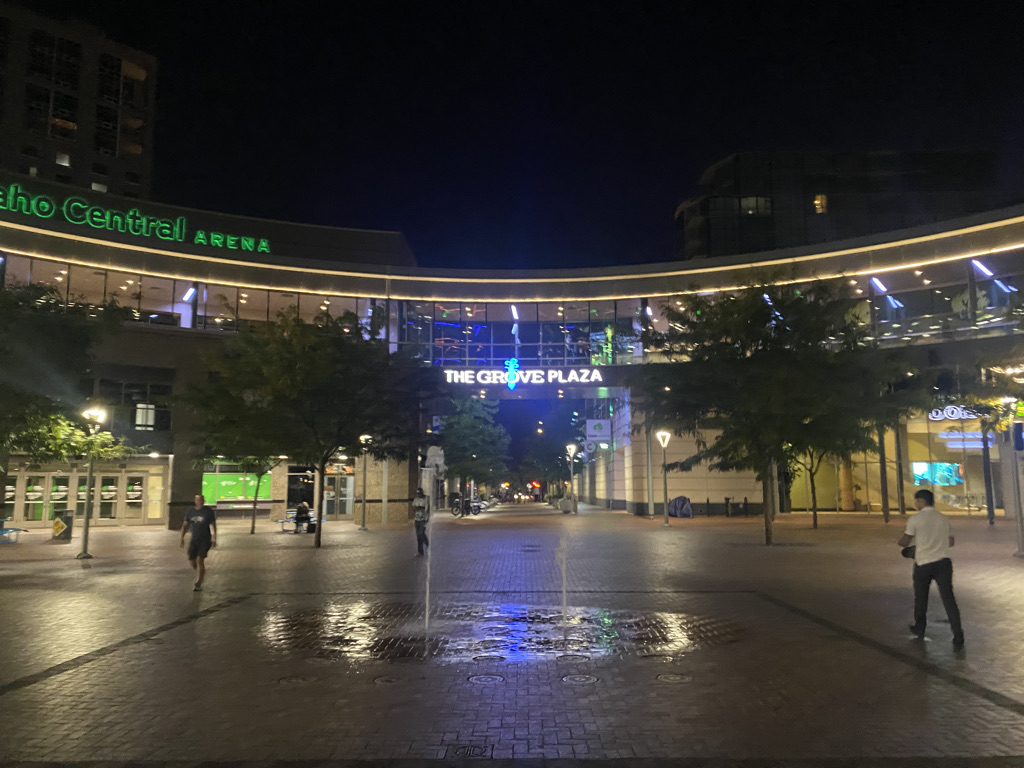
But there would be no reason to visit different cities. We would not let places have their own flare with things such as blue football fields.

Really small water fountains you can still run through in October.

And, apparently a happy hour where your dog can drink.

Boise will likely continue to grow, as remote work permits more people to live away from some of our most expensive real estate markets.

How it grows is yet to be determined. As it grows, the place will likely become more exciting, with more activity around town. However, as Boise grows, will it be able to do so in a manner that allows the place to maintain its own unique identity? Will Boise residents still be able to get away from all the noise, all the people and daily concerns in less than half an hours time? Only time will tell.

Backpacking in Northern Colorado’s Rawah Wilderness Day 3: The Depth

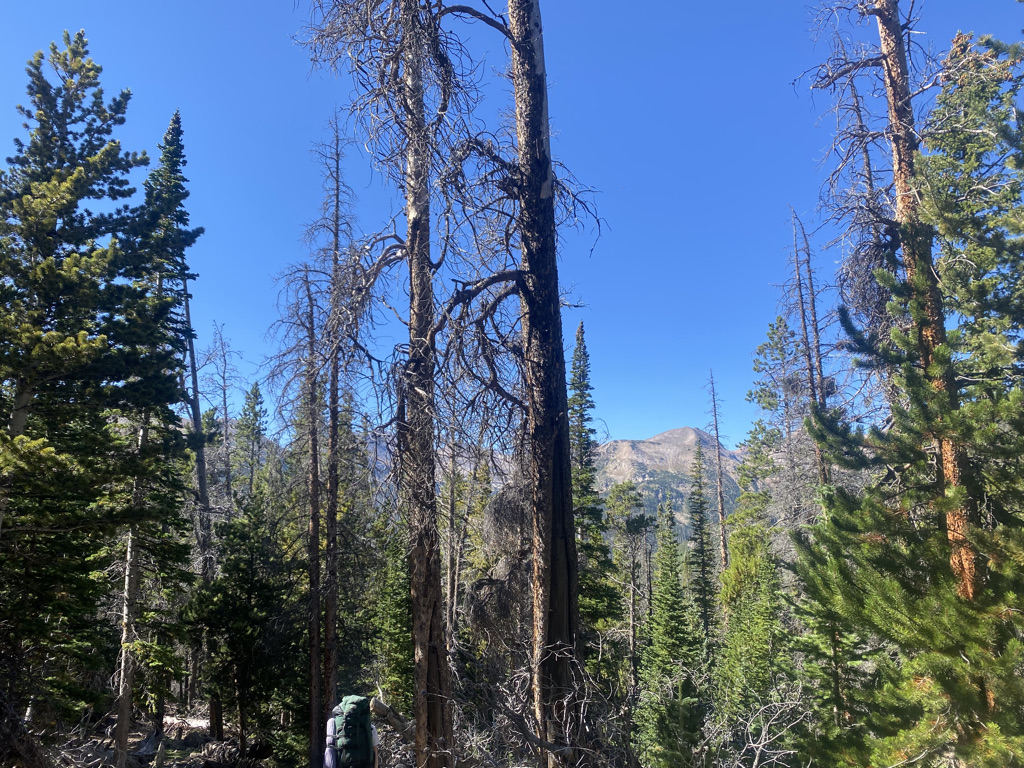
It was the morning I had been dreading. I knew it would be cold. Over the summer I had gotten so used to the heat it’s hard not to feel like a morning with temperatures near freezing would be an extremely uncomfortable shock to the body.

On days like this, it is hard not to wish to just stay in the tent until the sun comes out and has a chance to warm things up for a little bit.

Perhaps, had it not been the final day of the trip, with places to be the following day, this could have been a reasonable course of action. After all, while suffering is a part of life, there is no point in suffering just for the sake of suffering. Suffering needs to be done for some kind of reward, whether it be progress in life or the kind of beauty one beholds on a backpacking trip.

There will perhaps never be a situation in life that better demonstrates the value behind the concept of “layering” than the final downhill day of a backpacking trip. Layering was something I barely experienced growing up on Long Island where it was common to wake up on a winter’s morning with a temperature of 35°F (1°C) knowing the day will have a high temperature of 38°F (3°C). These final days backpacking, where we commonly descend around 1700 feet (500m) tend to follow the same pattern.

A cold start while descending down into dense forest, typically still wearing many layers.

They layers come off one by one, roughly every 45 minutes, followed by a kind of golden hour where the temperatures are ideal.

Since the hike is downhill, this is where typically a lot of progress is made. It also can be where we start to encounter other people more after days of solitude.

Then, typically by 11 A.M., it starts to feel a bit too warm.

Somewhere in here is where these experiences get the most introspective. At some point, everything that had previously occupied the mind goes away. All the food needed for the final miles of hiking has been eaten. All the water has been pumped. A further decent takes us away from landmarks such as alpine lakes and vistas of the mountain peaks. Two and a half days in nature had cleared the concerns of day to day life from our minds. All there is to do is walk the final few hours and get to the car.

I reflected on how much I had dreaded the cold morning on this trip. I reflected on how much I used to dread, in general, the thought of being in the wilderness with no option for shelter, not even a car to go to to potentially warm up or hide from wildlife.

In life we have tons of things we dread. People dread putting themselves out there, having difficult conversations, the less exciting work that has to be done and trying new things. Some people even dread leaving behind what they know they need to leave behind. However, in the end, we all get through these things, one way or another. We overcome the awkwardness of talking to new people when it needs to be done. We have that unpleasant conversation. We do that boring task and move on with our lives. Would our lives be better without these experiences? Maybe to a point. Still, it is hard to envision a life where there is nothing to dread… ever. It’s hard not to be doubtful that such a condition is even possible, given human nature. And, if it were to be possible, would this cause all things to lose meaning?

Backpacking in Northern Colorado’s Rawah Wilderness Day 2: Lakes and Moose

Day 2 was the day I was not necessarily looking forward to. Weather predictions indicated a strong possibility that conditions will be cold and rainy for much of the day. When it comes to outdoor activities, conditions matter. What is fun and pleasant one day can be unpleasant another. This is part of the reason it is hard for outdoor enthusiasts not to obsess over the weather.

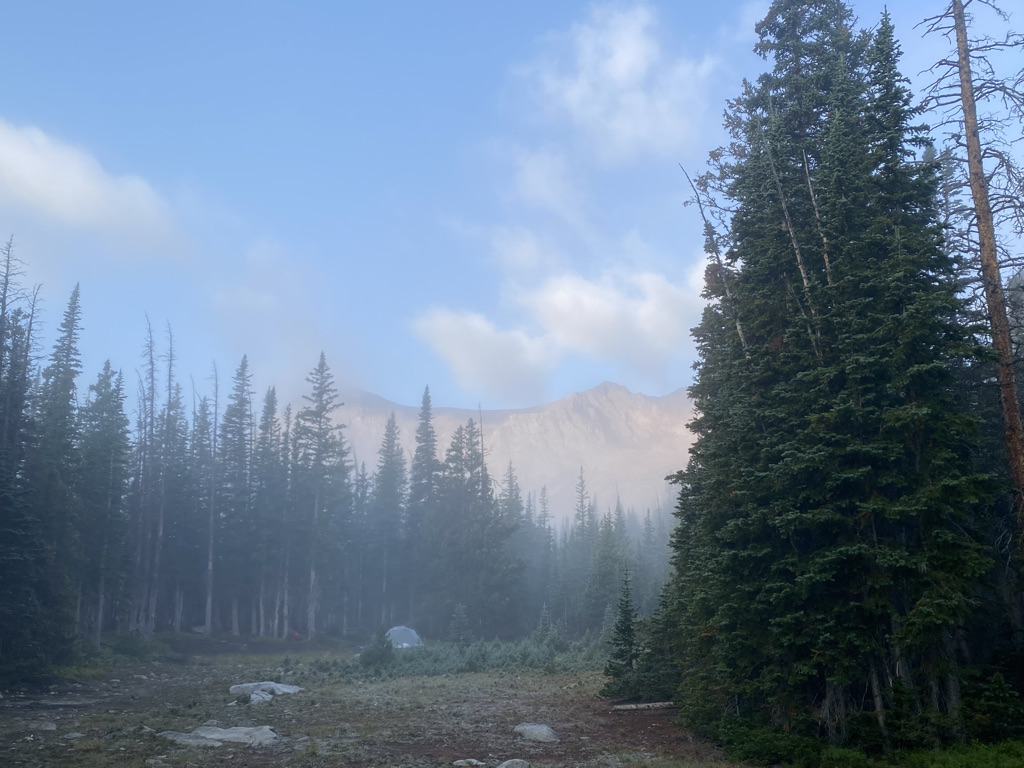
The morning was a tease. About half an hour after the sunrise, the fog that had spread across the area the prior afternoon appeared to be dissipating.

Only for it to return.

Leaving the campsite was like stepping into the unknown. In the wilderness, there is no access to weather reports. With how much the weather can vary from place to place, from minute to minute in areas with this type of terrain, there was no way to know how this day would play out. There’s little choice but to embrace the unknown.

These trips always seem to bring up thoughts of the past. Of a time when it was much harder to know what to expect. Of a time when there was no internet, no television. A time when the morning newspaper, or some other form of transmitted information was the only information anyone would have to go about their days. This was a time when embracing the unknown was the only option.

Often, the only way to embrace the unknown safely is to be knowledgable and prepared. We knew not to get too close to the moose we saw only about a mile into the hike, also wandering through the fog.

As we climbed, up towards tree line, towards a pass known as Grassy Pass, we actually walked away from the fog.

For the entirety of the morning, it was likely that the valley where we had camped the previous night was still in thick fog.

When we reached the pass that whose natural features were consistent with its name around 10 A.M., it suddenly appeared as if our time in the fog was actually done.

Anyone who spends a lot of time in the mountains knows how much the weather can vary from place to place due to the complexities of the terrain. But, how often do we see it right in front of us? One side of this pass was still engulfed in fog while the other was basking in sunshine.

Places like this are some of the last places where we can truly embrace something quite human. Here, there is no way to know exactly what to expect.

To know what is going to happen at a specific spot, given the wind direction and every small-scale geographic and terrain feature is pretty much impossible. Each cloud represents a small scale current of wind, a moisture profile and subtle differences in the land with so many components it becomes more of a headache than it is worth to try to determine how every minute of every hour is to play out.

In a world where so many lives have become orderly and predictable, trips like this force us to embrace variety and surprise. They force us to release control. Perhaps, after decades of chasing after inventions and policies designed to enable us to track every development, predict and control outcomes, this is exactly what the world needs.

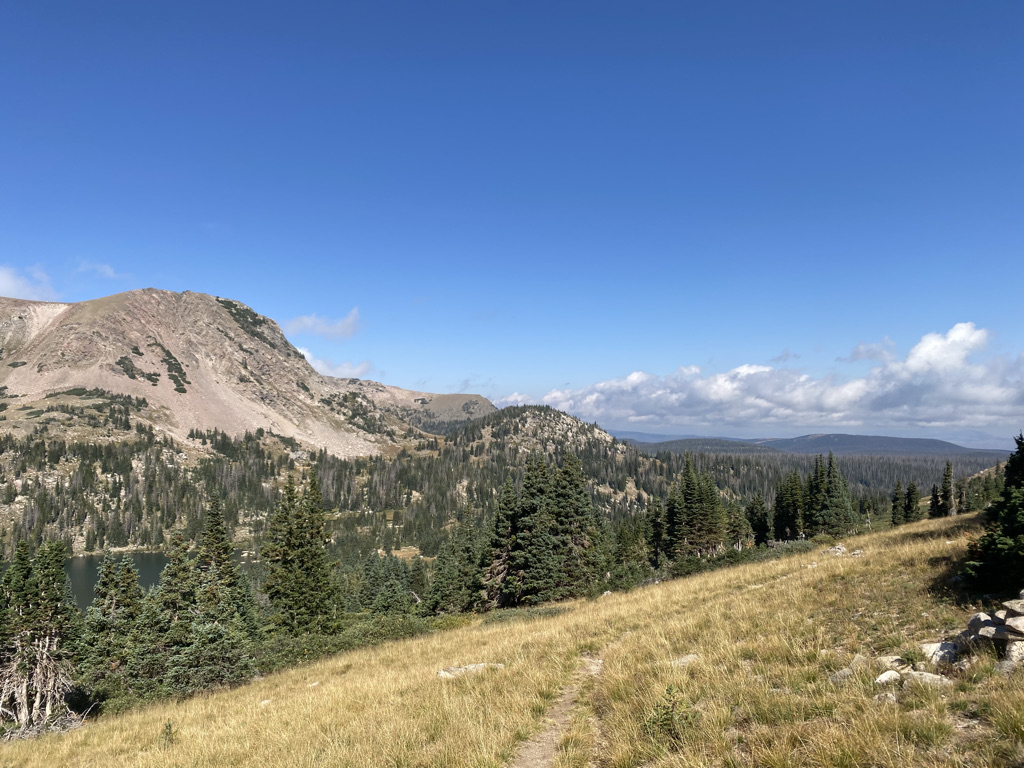
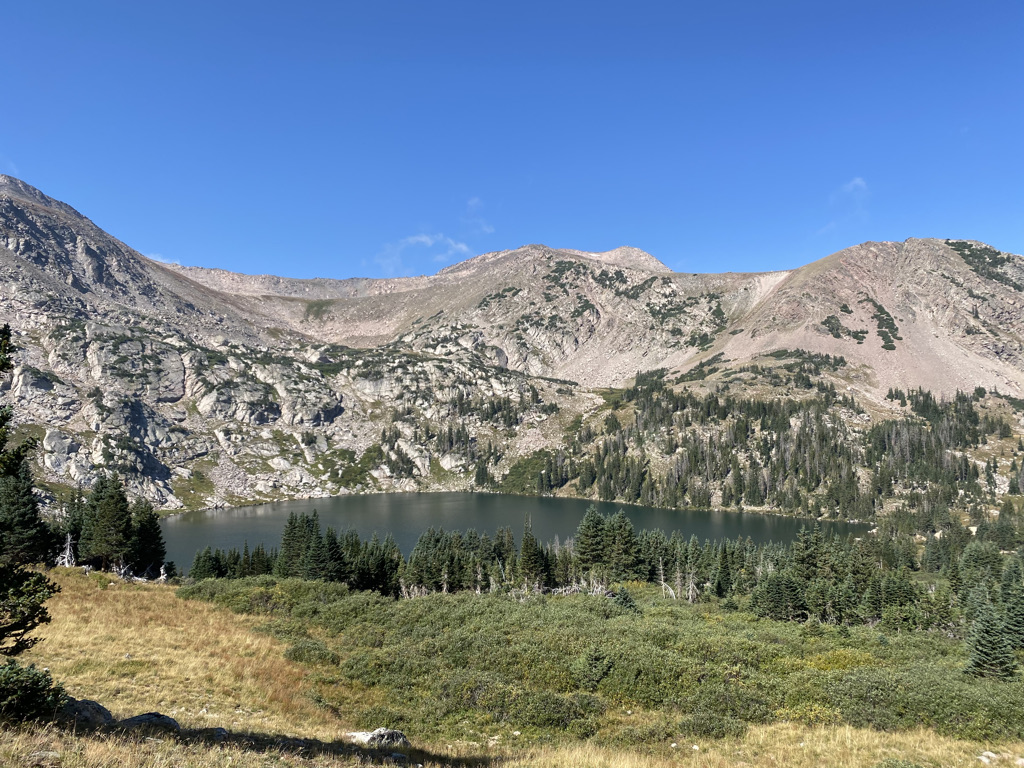
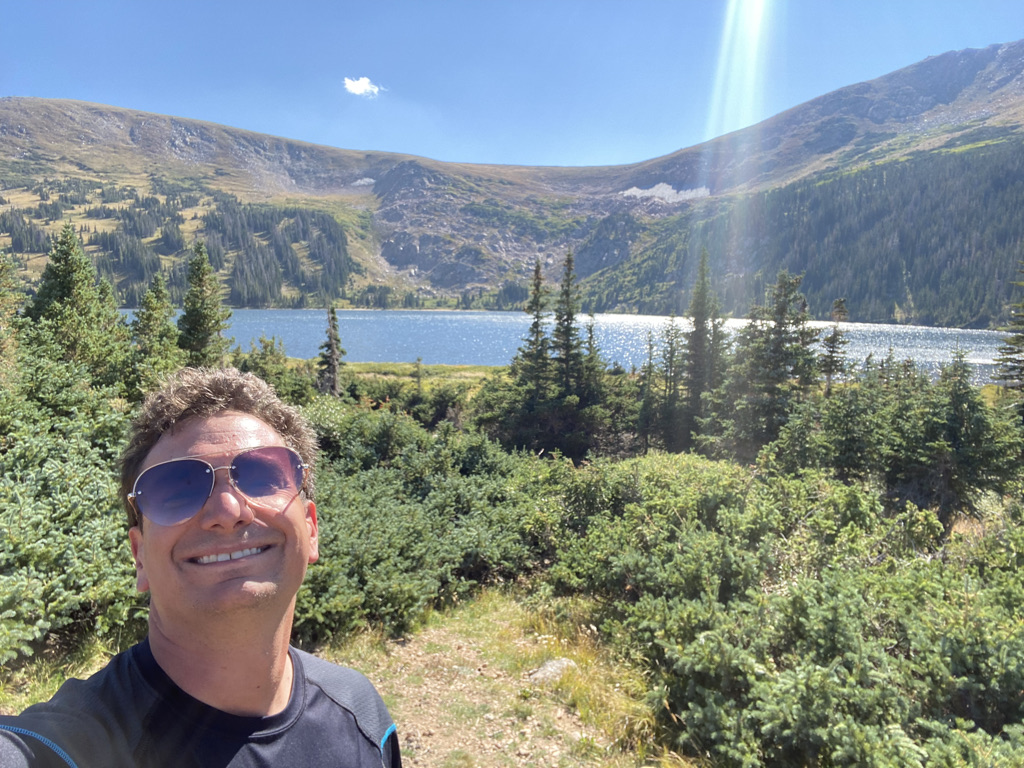
The defining feature of this section of the trip was alpine lakes.

We passed several of them as we descended into another valley, some close, some far away.

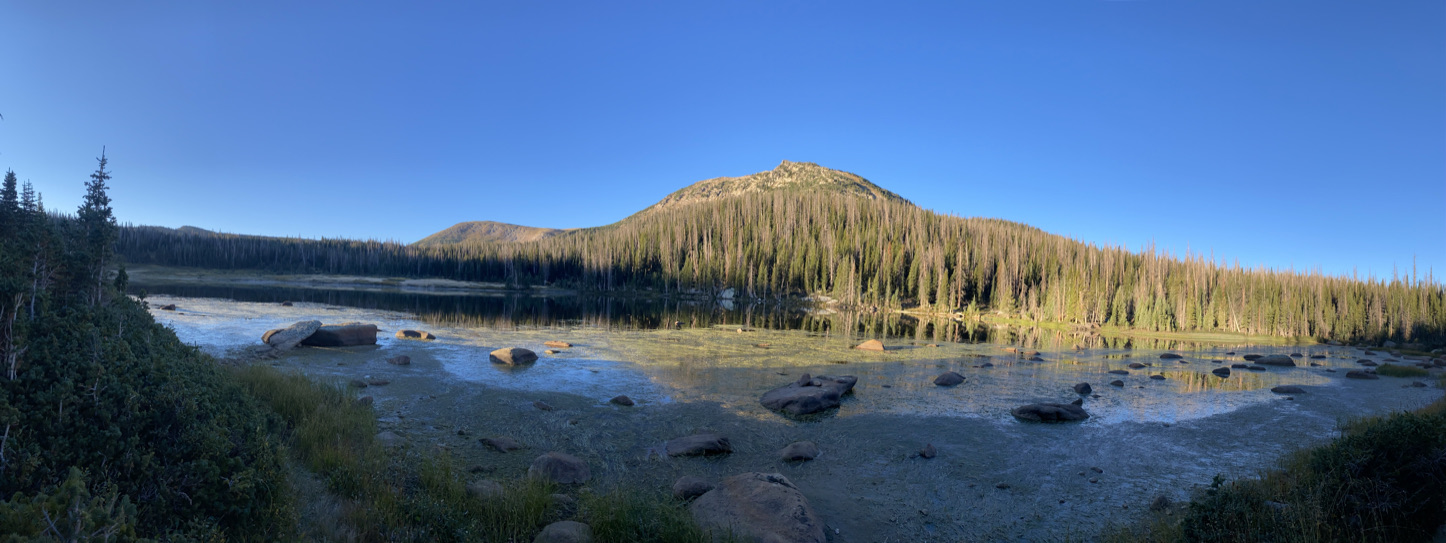
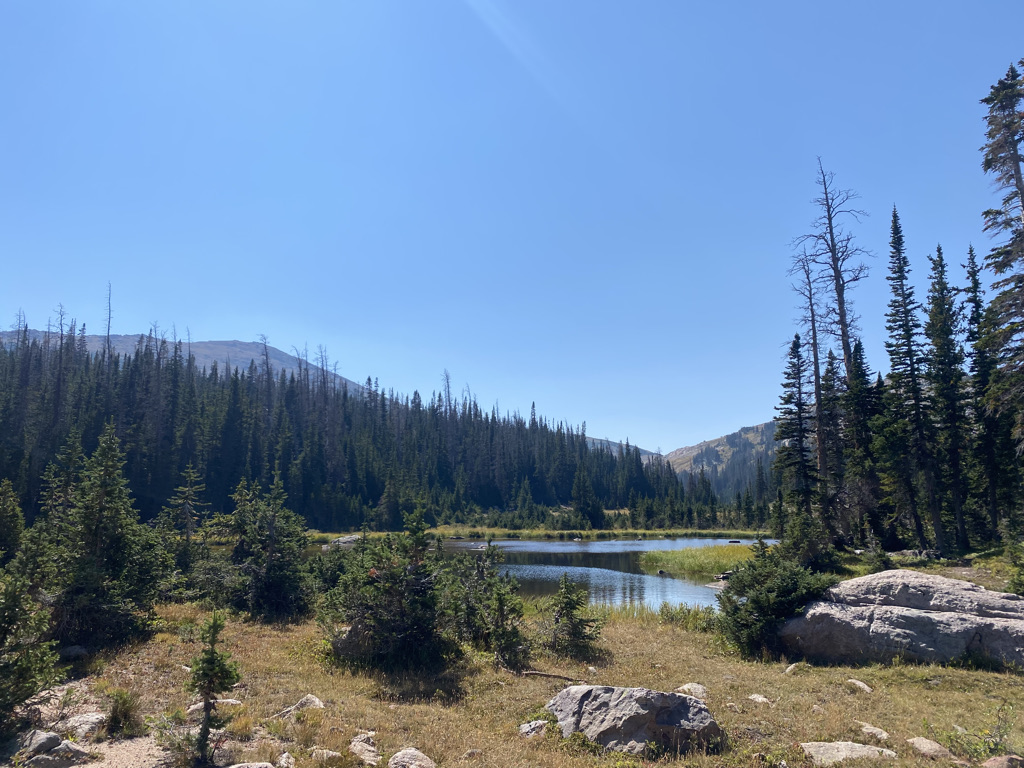
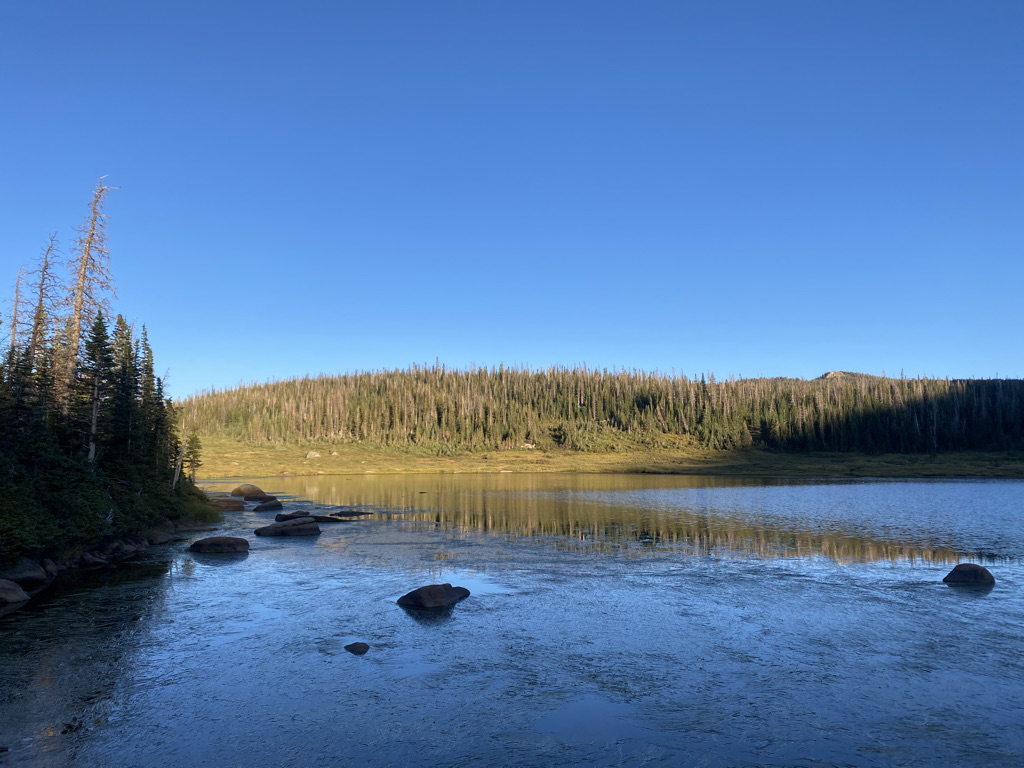
We set up camp at Lower Camp Lake.

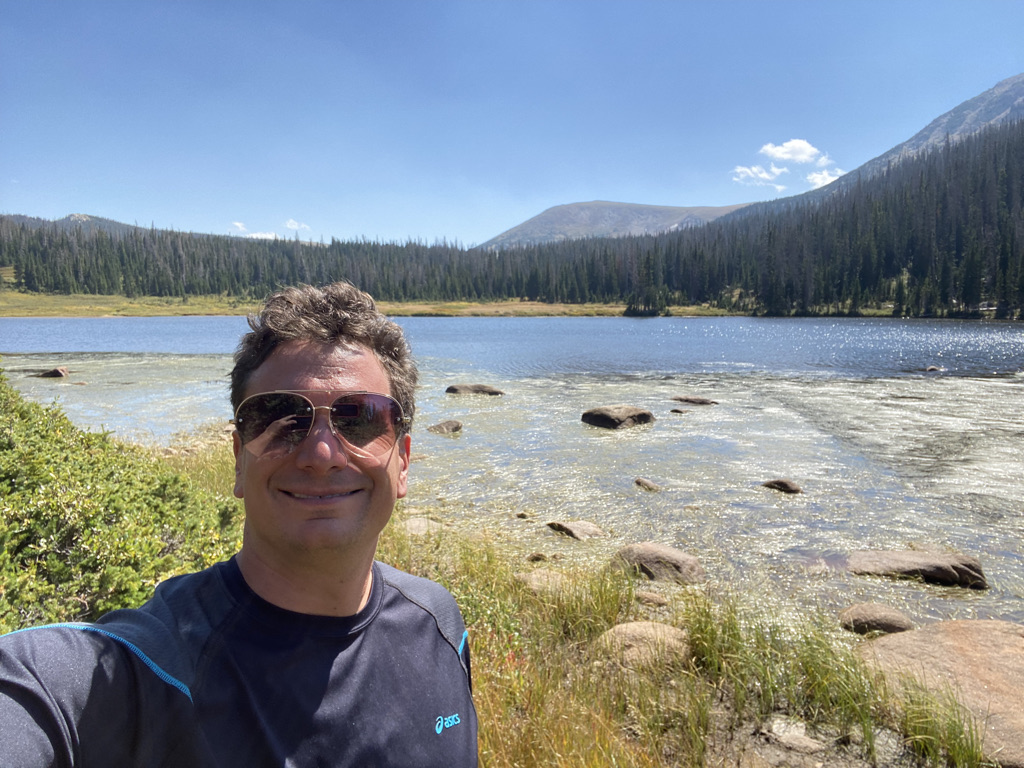
And hiked up to Upper Camp Lake.

By the way, when backpacking, one of the greatest feelings is setting down your pack and hiking with nothing on your back. Backpacks weight quite a bit and it is a relief just to walk, or exist in general, without all that additional weight.

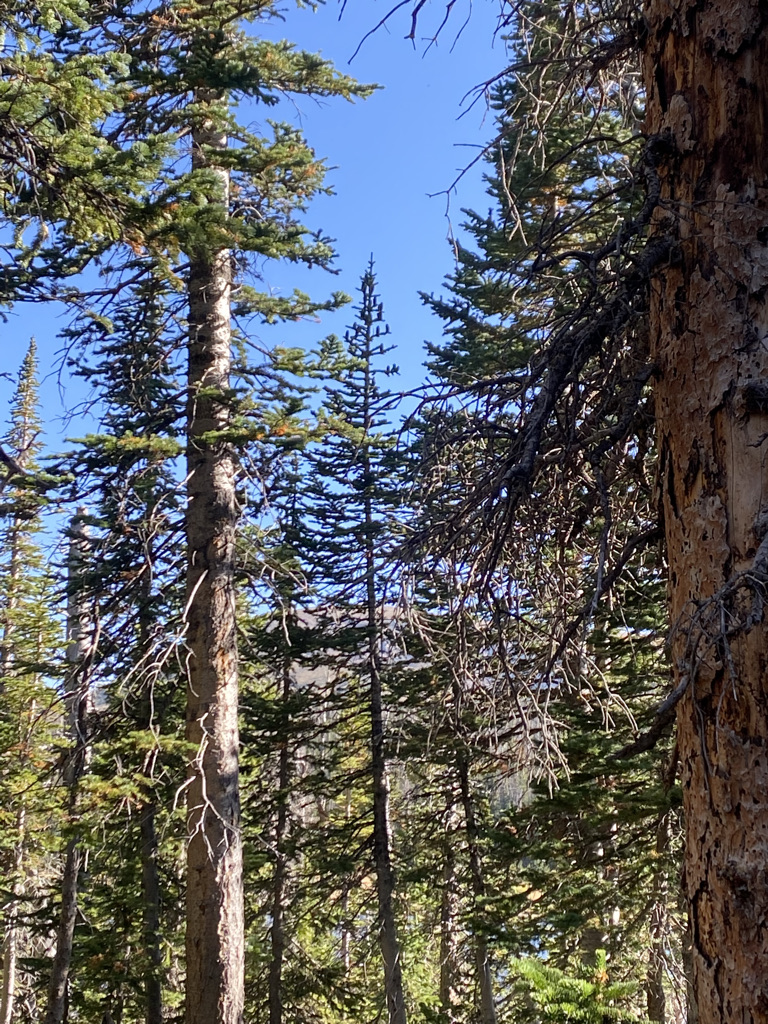
That afternoon I was back at the camp site, looking at trees full of pine cones and incorrectly speculating that there were families of birds in them.

In this moment, it suddenly dawned on me that the weather I had been experiencing all afternoon, along the Rawah and Camp creeks, at elevations of around 10,800 ft. (3300 m), was very likely better than the weather back in Denver. The sun was shining and the temperatures were actually quite pleasant. It felt like it was around 60°F (15°C), likely warmer than what was occurring in Denver. Out of the embrace of uncertainty can come some truly beautiful experiences. Sometimes things can work out for the best even when it feels like they might not.

That evening would end with another moose sighting.

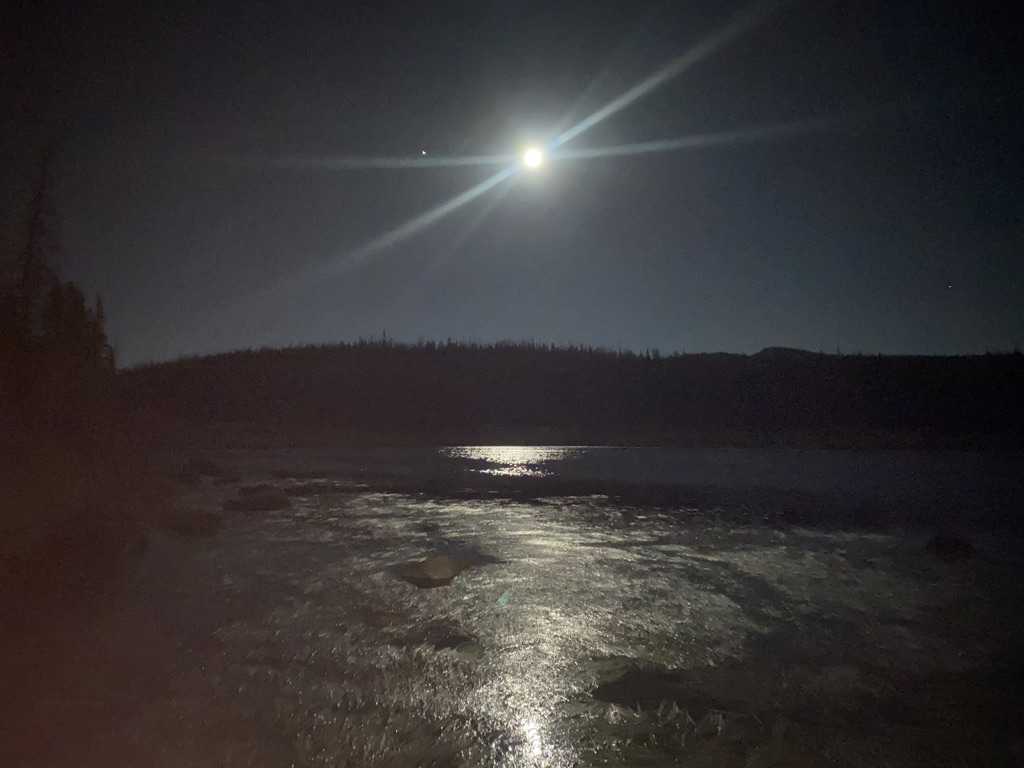
Followed by a full moon whose light reflected along the lake.

A chill came into the air as the sun went down, but we still laughed. Some of the laughter was indeed at my expense for thinking that all those pine cones in that one tree were actually birds. Still, the laughter, shared experiences and embracing uncertainty made this experience truly human.