One of the main reasons people visit Europe during November and December are the Christmas markets. Markets that pop up during the Christmas season date back to at least the late Middle Ages, can be found all over Europe, and are so popular that cities across the United States do their best accurately replicate the experience.
Like their American replicas, they are filled with booths that sell food and beverage.
As well as shops that sell decorations, such as ornaments and nativity displays.
They can be fun places to hang out both in daylight and at night.
Actually, with all the lights, they can be all the more magical at night.
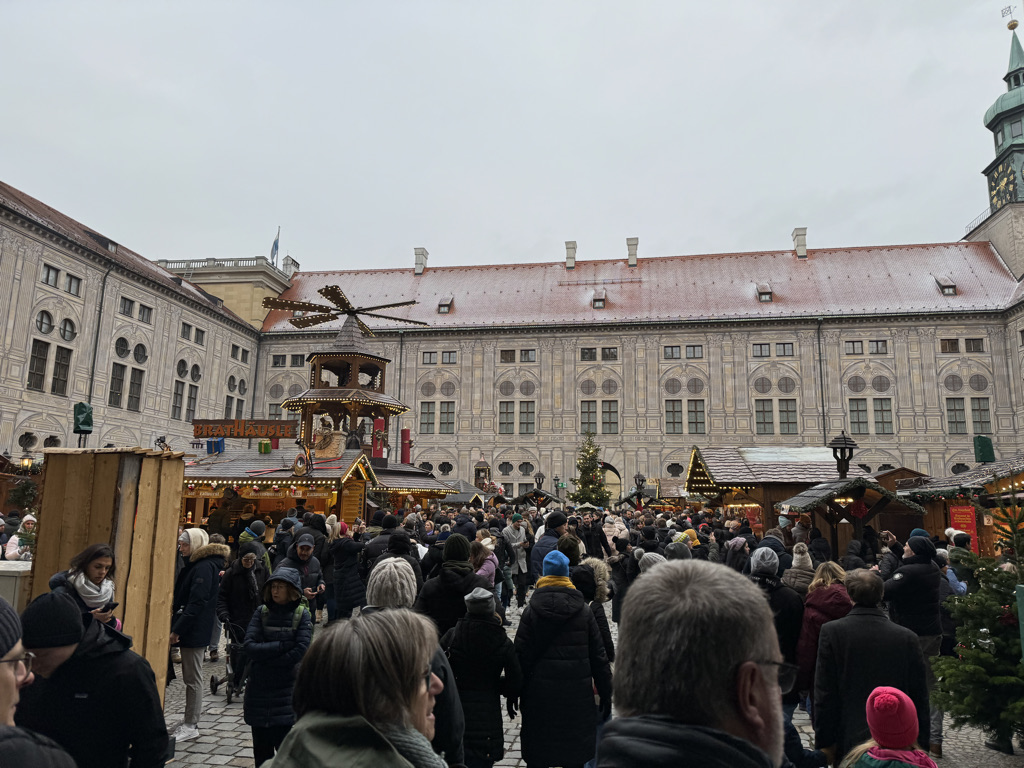
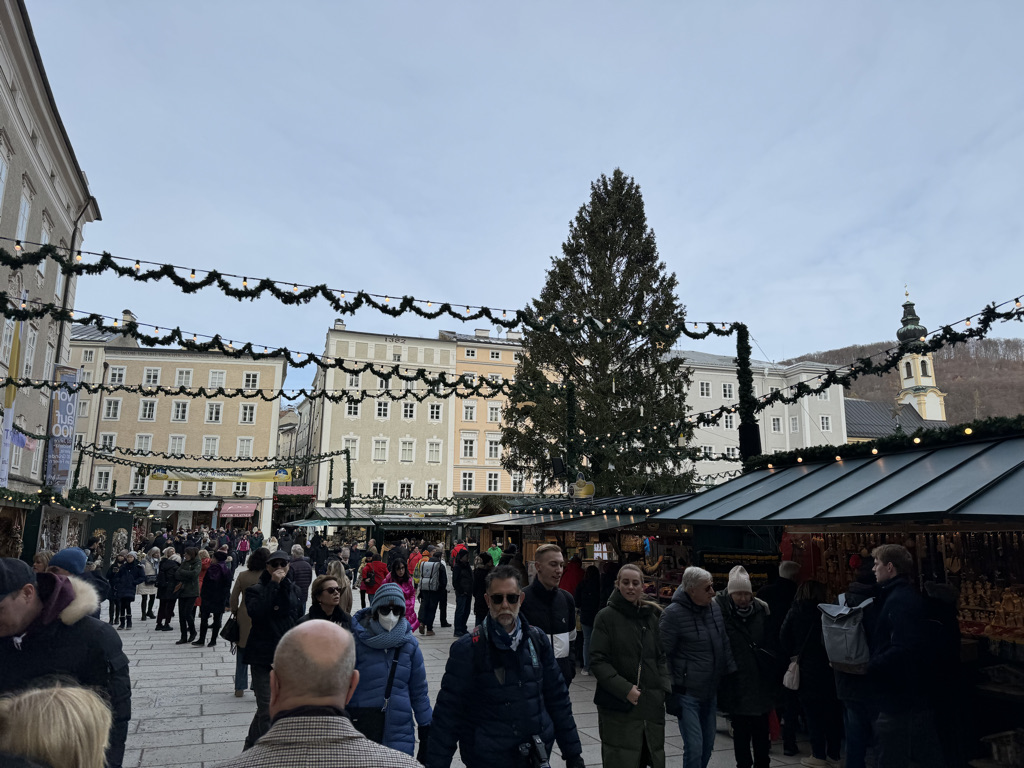
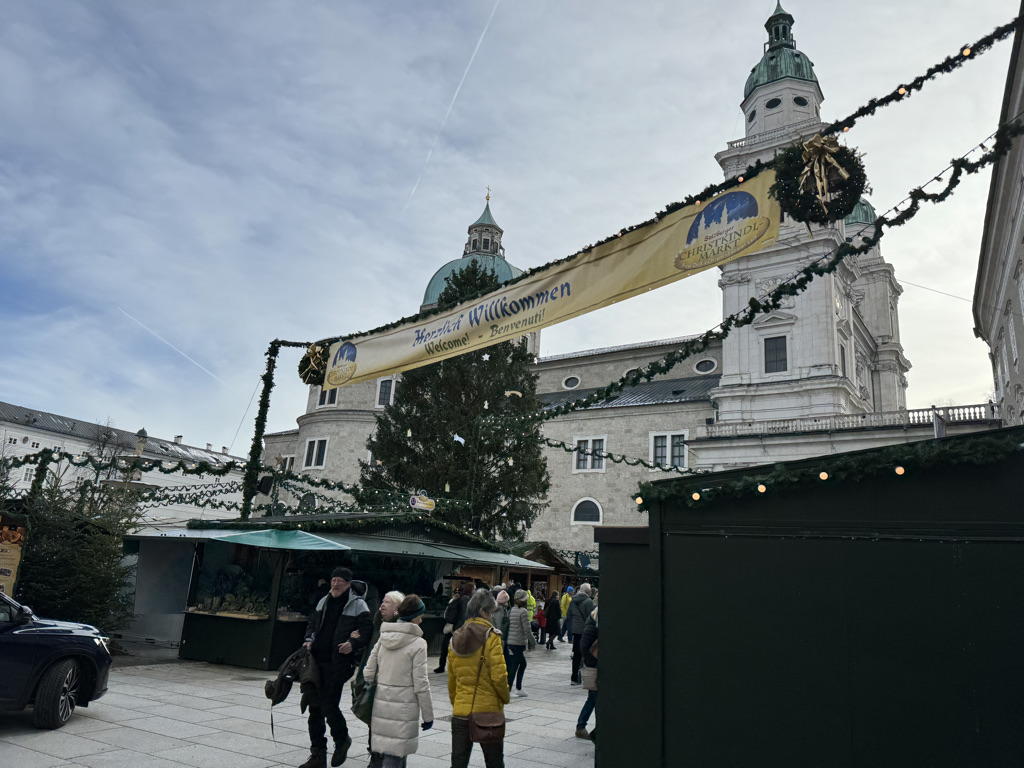
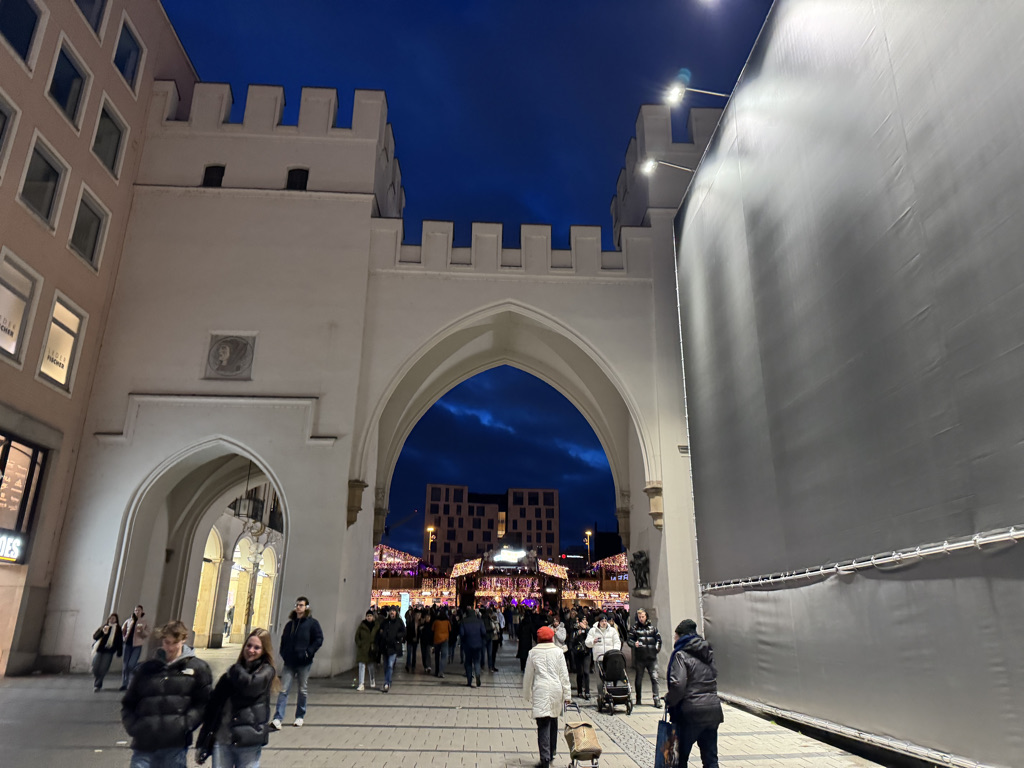
These Christmas markets are pretty sizable, with some being large enough to have multiple sections, like the Salzburg Christkindlmarkt at the Dom and Residenzplatz in Austria.
And, while Munich’s main Christmas market is at Marienplatz.
Perhaps their most interesting one is at Odeonsplatz, a mere 500 m (less than half a mile) away. This one was large enough to not only have the usual food, drink and ornaments, but also had a full Christmas children’s display which included my favorite part of this journey: A singing moose that sings “Winter Wonderland” in German.
Seriously, I could not get enough of this video!
Throughout my time in Europe, going to Christmas markets, I did make one observation that was somewhat strange to me. At the surface, Christmas in Europe seemed a bit more religious, with nativity scenes everywhere. At this Christmas market in Prague (Chezchia), the first thing visitors see is a nativity scene in front of a gigantic church.
This seemed odd given that, as a whole Europe is seen as less religious than the United States and the Czech Republic is among the least religious countries in the world!
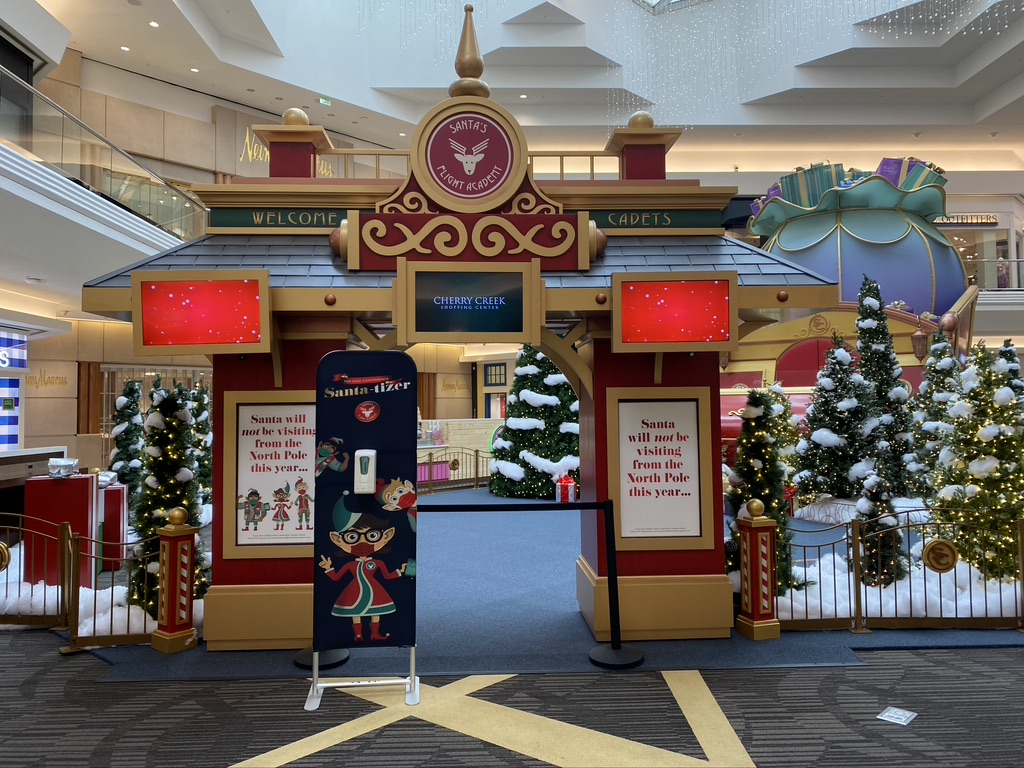
Yet, somehow, in the more religious United States, the primary symbol of Christmas, that is seen everywhere is Santa, the quintessential symbol of commercial, secular Christmas.
And it’s the post-Christian Europe where one will see nativity scenes, the quintessential symbol of Christian Christmas everywhere!
How does that make sense? Well, the answer is, it doesn’t. Most traditions don’t. Most traditions are some kind of jumbled up combination of the history of a place and the present day sensibilities of the population, combining the here and now with the nearby, both spatially and temporally.
There are reasons behind them, but they are complicated. Sometimes they involve specific, almost random events that would constitute historical minutia. It seems like to try to understand all the history behind every custom or tradition from around the world would be like trying to drill down to the specific reactions involving every sub-atomic structure to explain all the physical wonders of the world, including human behavior.
Maybe, observing anything that seems contradictory like this is a lession for all of us to learn about overthinking things. Overthinking can sometimes seriously rob people of joy. While hanging out in a Christmas market in a light Christmas-y snow, is it better to be fixating on why a less religious continent has more religious imagery than mine, or is it better to just be taking in the experience and the people around me?
It was barely above freezing when these brave individuals bared the cold river and graciously showed off their amazing surfing abilities in Munich’s English Garden. In the summertime, it is likely quite a challenge to get a peak at these amazing local athletes from the bridge over the Eisbachwelle along Prinzregentenstraße. In November, at least before noon, I was able to just walk up to this overlook and get a glimpse of this incredible performance. By the afternoon, however, this bridge would be packed with people doing the typical 2023 thing, taking photos and videos.
Munich in November is not for those who prioritize comfort. Most days are cloudy and chilly. Cold rain and wet snow is quite common.
Also, daylight is quite limited. This photograph of the BMW world headquarters was taken a little after 3:30 P.M. with darkness already starting to encroach upon the city.
The key is maximizing the daylight hours as much as possible.
To take advantage of those rare instances when the sun does come out.
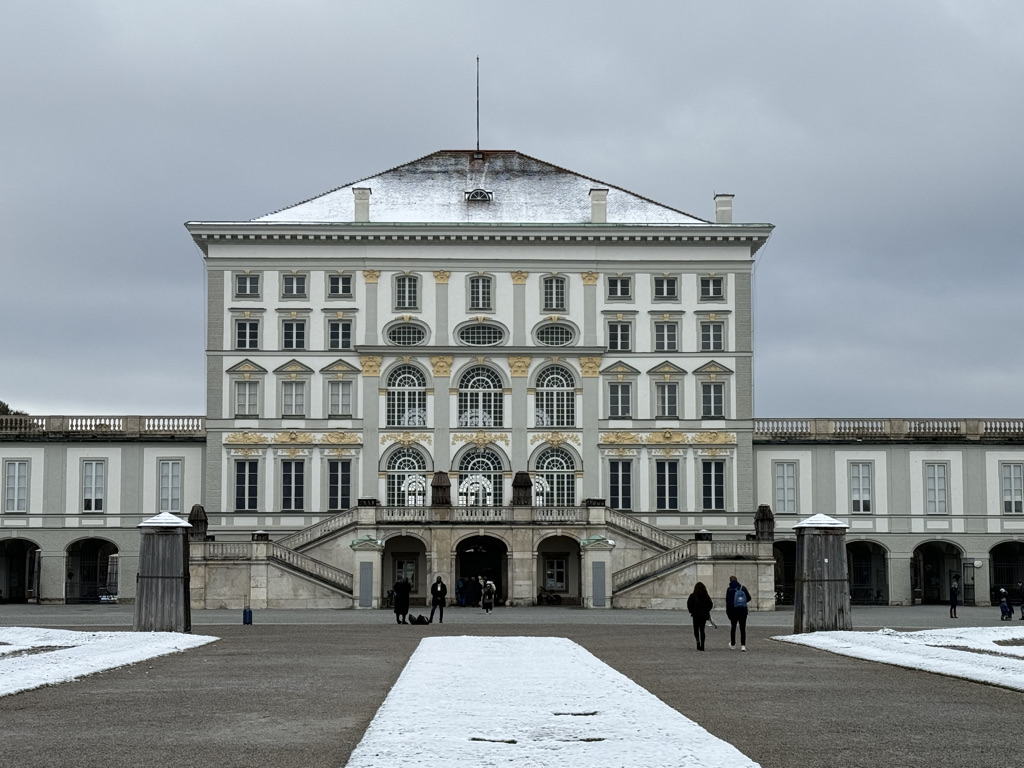
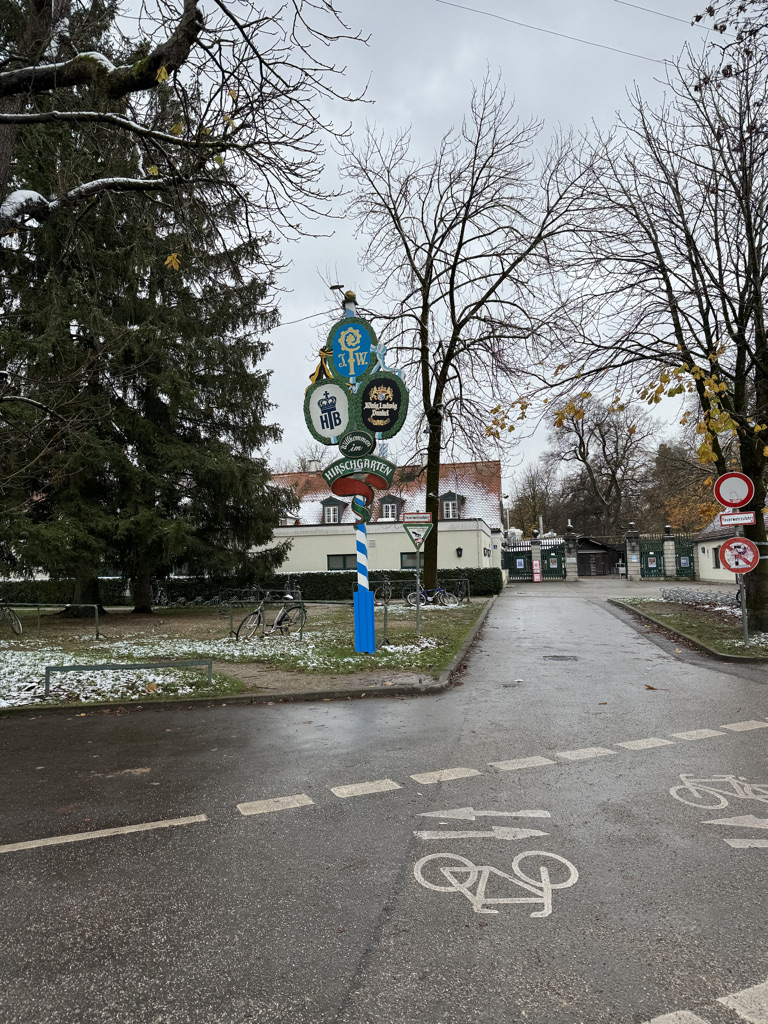
And to find a fair share of indoor activities. Luckily, Munich is home to the world’s largest beer garden.
As well as countless other places people go to eat and drink.
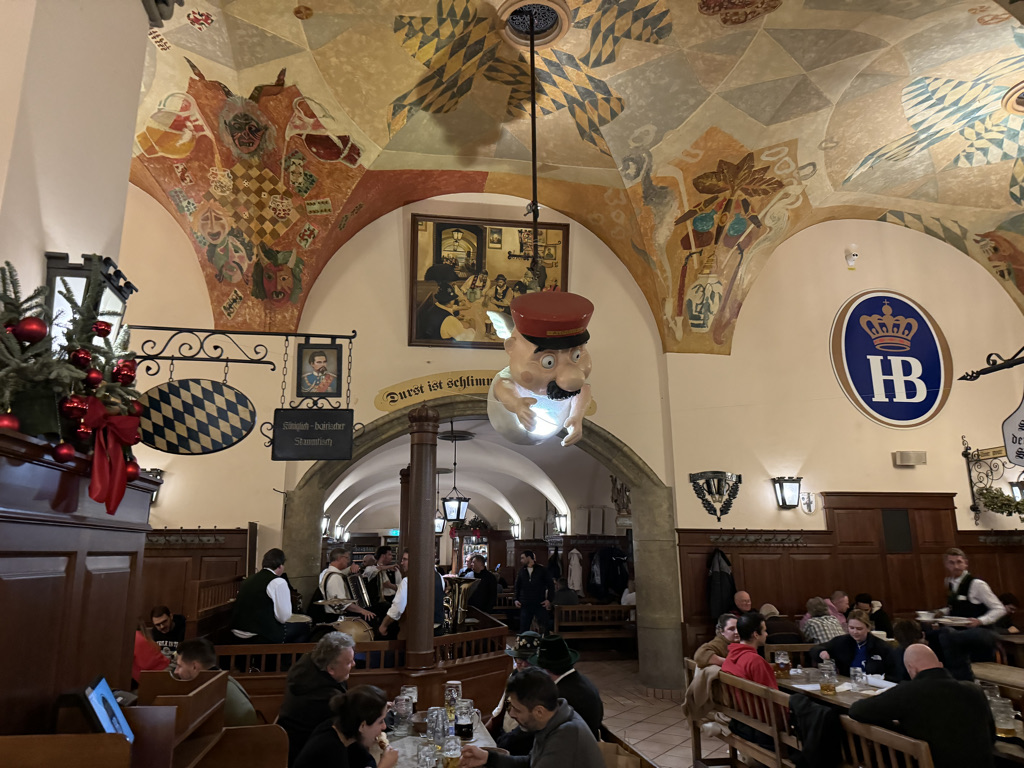
Perhaps the most famous tourist destination is the Hofbräuhaus.
The easiest way to describe this place is that it takes every stereotype you may have about Bavaria and leans into it 100%. Most people are drinking large quantities of beer and there is a band in the middle playing polka or music of a similar variety. During peak tourist season, this place may be so packed it is hard to get a table, making November a pretty good time to visit this place.
Of course, there are activities for those times when you just don’t feel like drinking. On this trip, I visited multiple museums dedicated to showcasing Bavarian history.
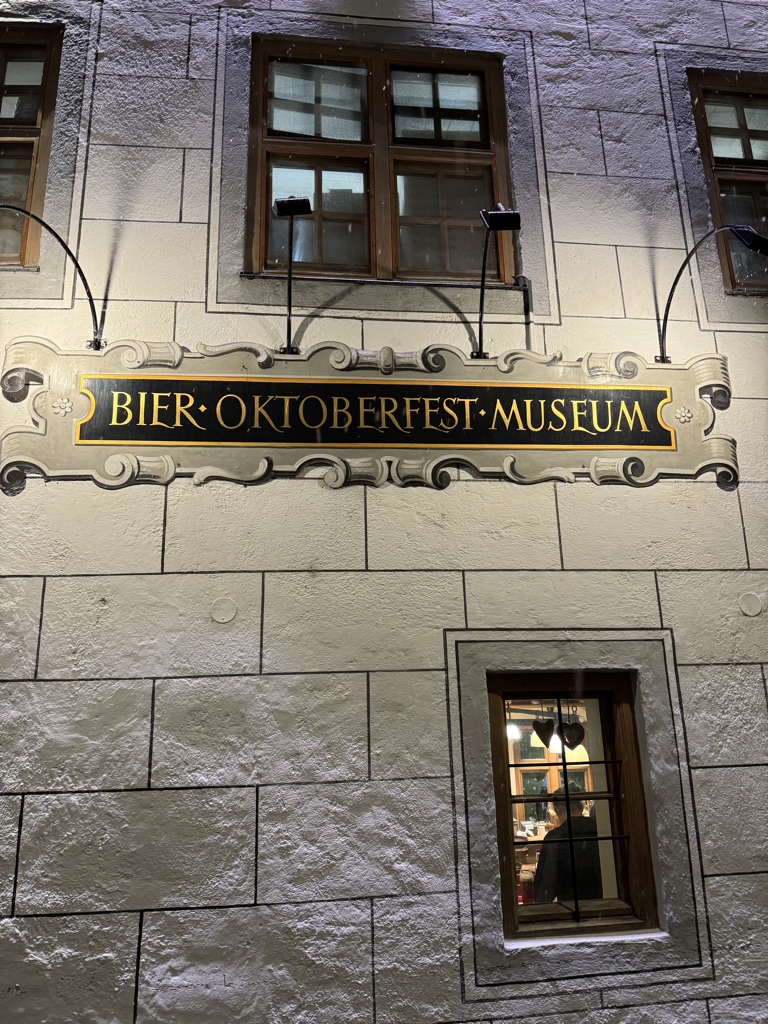
Another place easier to navigate due to the relatively low volume of tourists compared to other parts of the year is the Oktoberfest Museum.
All discussion around town about Oktoberfest defied my expectations. Oktoberfest is a tradition that goes back to a wedding celebration in 1810.
For some reason, I expected the locals to mostly be annoyed by an event that brings a lot of people to town to get drunk, act stupidly and sing songs in a foreign language. However, most people I talked to seemed to be proud of it. Maybe this is just the tourism industry trying to get people to come back, but I was told it is an event I need to experience.
The Oktoberfest Museum covers not only the history of the event, but the history of beer, sometimes in a comical manner.
It also validated both my love of all things bicycles and my instance that inflation is a bigger issue than most people give it credit for. Inflation cancelled this event for two years!
One thing that will be hard to miss in November, pretty much anywhere in Europe, is preparation for Christmas, with trees going up and people getting those amazing German Christmas markets setup.
Of course, Europe is not the United States and they do not have the Thanksgiving holiday. However, they seem to kick off the Christmas season in a similar manner. Most of these markets open up just before or just after Thanksgiving.
And, perhaps unfortunately, they have not only adapted the worst aspect of American Thanksgiving, Black Friday, but managed to turn it into an entire week.
Seriously, I know some people are ashamed of the history of Thanksgiving. However, today the holiday’s primary purposes are to gather people together and express gratitude. If people in other countries started adapting this tradition, as an American, I would wear it with pride. Our consumerism, not so much.
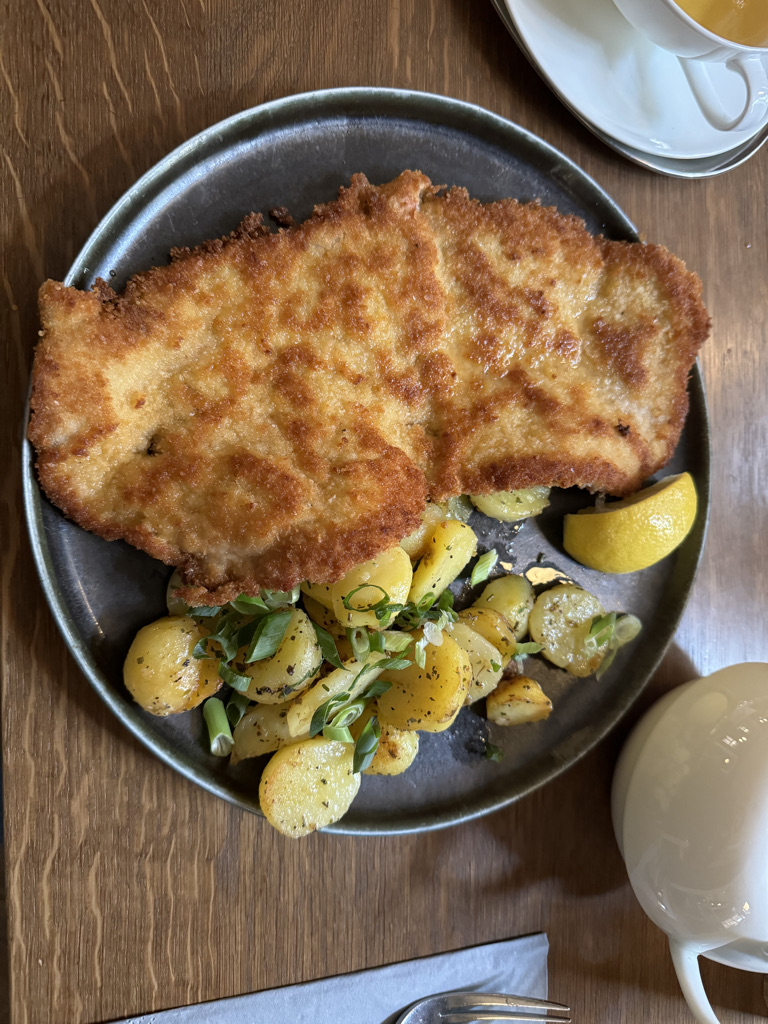
Whenever I travel anywhere, I like to really immerse myself in the food, sometimes even eating things I would not normally eat.
It’s another way of getting a real cultural experience. These traditional German dishes are pretty heavy. Eating them feels far more natural in the wintertime.
To sum it up, there are advantages and disadvantages to visiting places like Munich in November. Munich’s November weather is less than ideal. However, it is great to see people setting up the Christmas markets, and have far less lines and crowds, as well as some cheaper prices for things like airfare and hotels.
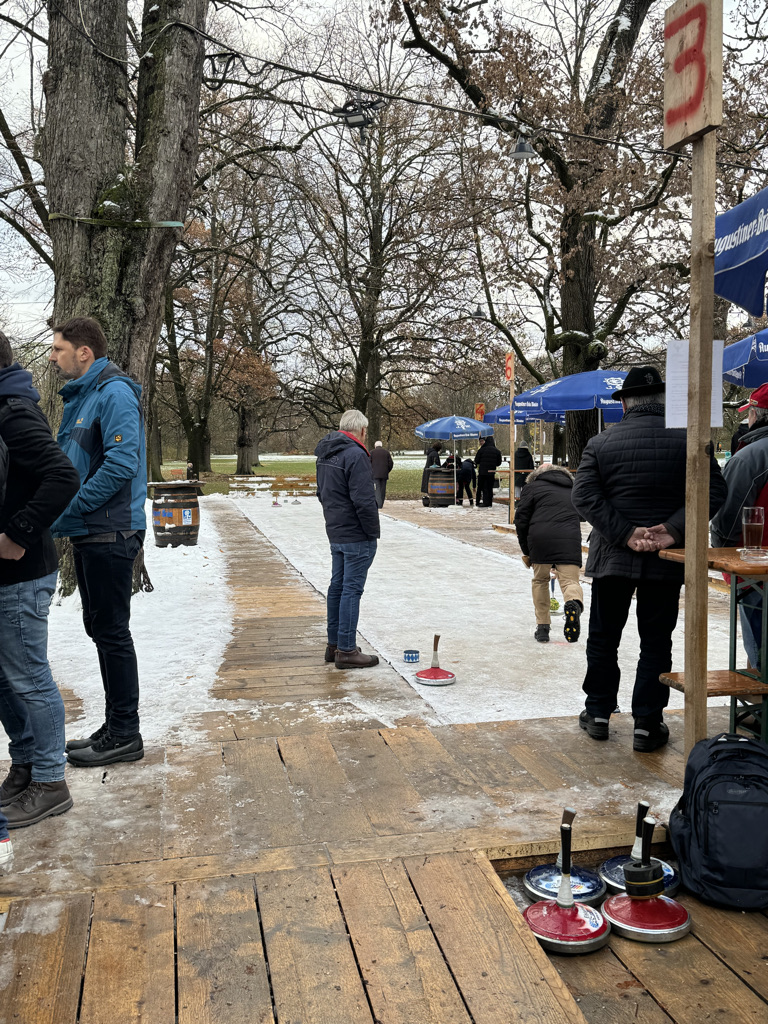
Also, had I not visited in November, I would not have learned about another completely unexpected tradition, this strange combination of curling and bocce ball, played on ice.
Seriously, I have no idea what this sport is called, but it felt like it was everywhere, particularly at beer gardens. This makes sense as I would be hard pressed to think of a better drinking game to be played outside in cold weather.
I generally try to lean into the positive on this blog, because the world is just filled with too much negativity. However, as much as people tend to lean towards and dwell on negative things, we can’t all be positive all the time. Negativity does happen. It does not need to be ignored. We just need to balance out our thoughts by expressing gratitude and appreciation more and maybe reducing the amount of unnecessary negative content we consume.
It is in this vein that I must acknowledge that 2022 is the first time in nearly two decades I am ending the year with a more hopeful view of humanity and our future. So far this century, it has honestly felt like things were getting worse. People feel more divided, isolated and in worse physical, financial and mental health than they were at the turn of the century. 2008, with the financial crisis and smart phones and social media gaining momentum, seems like the pivotal year. I’ve even taken to labelling the period of time since then as the “Little Dark Age.”
Thinking back, two events in particular gave me a preview of the darkness that was to come. First, I saw a whole city collectively “lose their shit” over the results of an election.
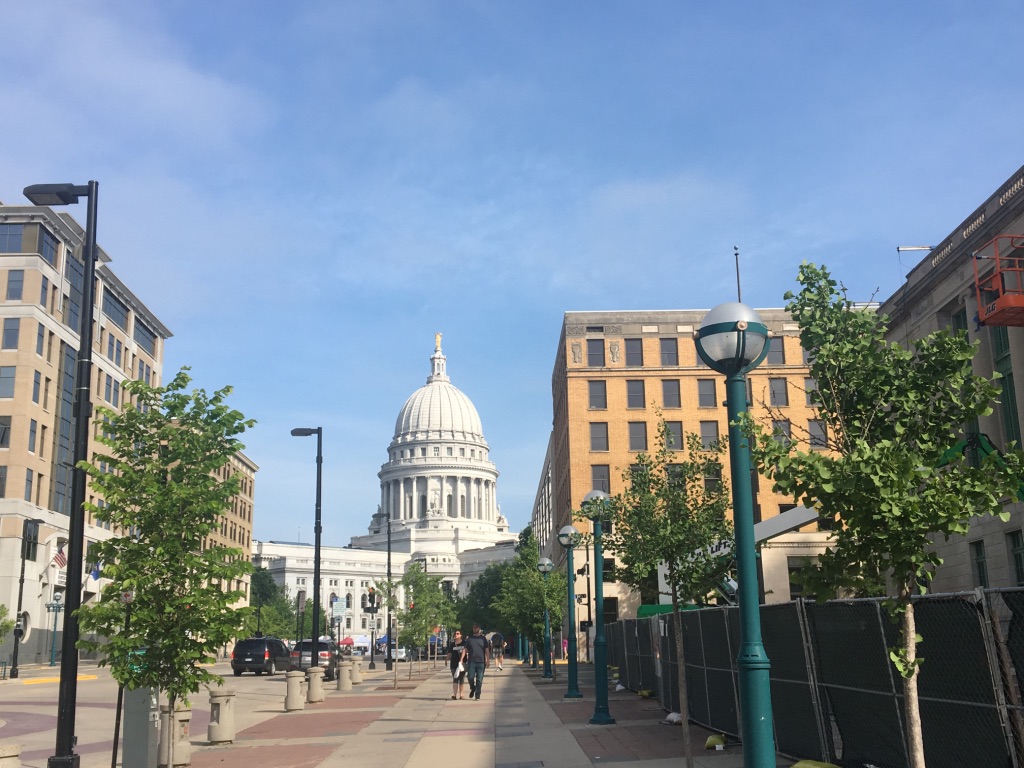
In 2004 I was living in Madison, Wisconsin, a city that is quite beautiful and culturally rich. However, at that time, it felt like they were just a little ahead of the curve in becoming obsessed with partisan politics and being outright mean to anyone who even shows an indication that they are not in 100% agreement on issues that largely split the country 50/50.
Then, my friends started getting smart phones. Normally, it is not a bad thing when someone obtains a new product. However, I began to see more and more people become so obsessed with this device that they would ignore the people that are actually in front of them, just staring at the thing the entire time. I just knew this could not be good for humanity.
The world got darker. But now, I see a coming better era. Three moments from 2022 captivate this sentiment.
1. When I met up with my friend who is a professor
My friend Kevin is a professor at Valparaiso University, where I went to college.
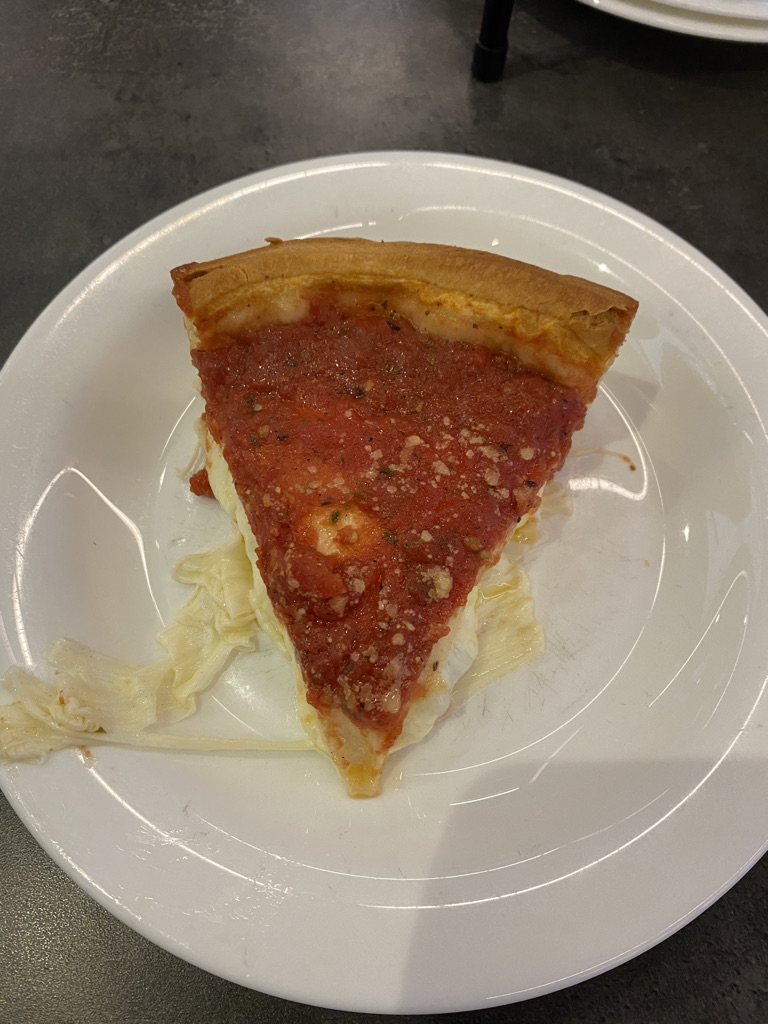
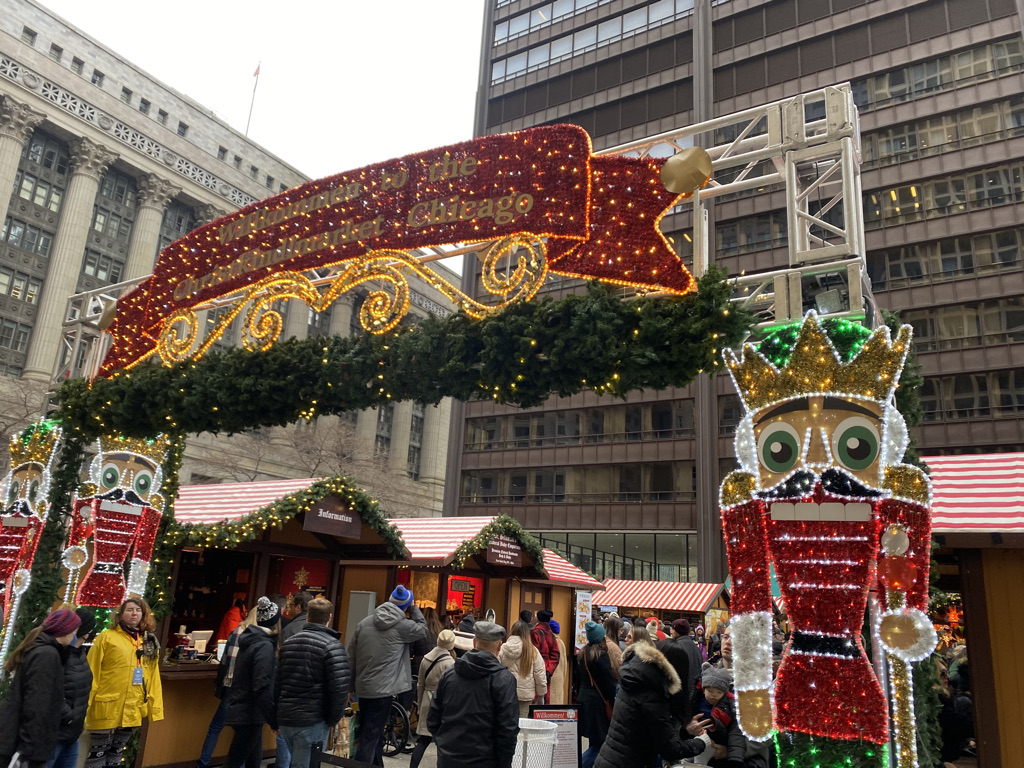
I met up with him at the start of the month. We went out for deep dish pizza and went to the Christkindlmarket, because, well, Chicago in December.
I had honestly not seen him since before the pandemic and I asked him about student’s cell phone use. What he said indicated a marked improvement. He talked about how back in 2016, students were constantly being distracted by their phones, doing things like scrolling through social media. He indicated to me that now it seems like the majority of students’ phone use in class seems to be class related. Maybe they’re looking up an equation or a historical figure to enhance what the discussion in front of them is. This feels like a new generation of people is finding a far more productive way to use this technology that recently disrupted our lives.
2. Random song lyrics
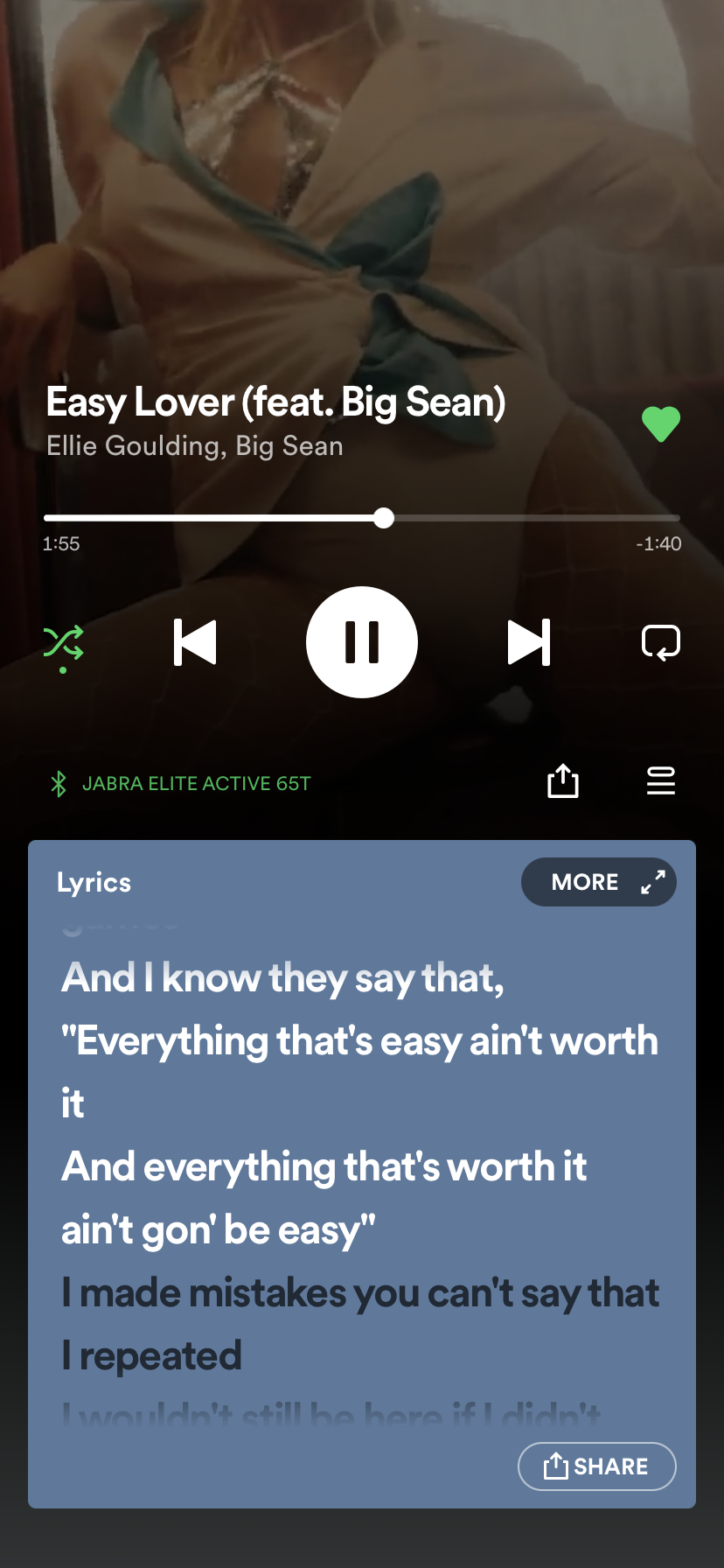
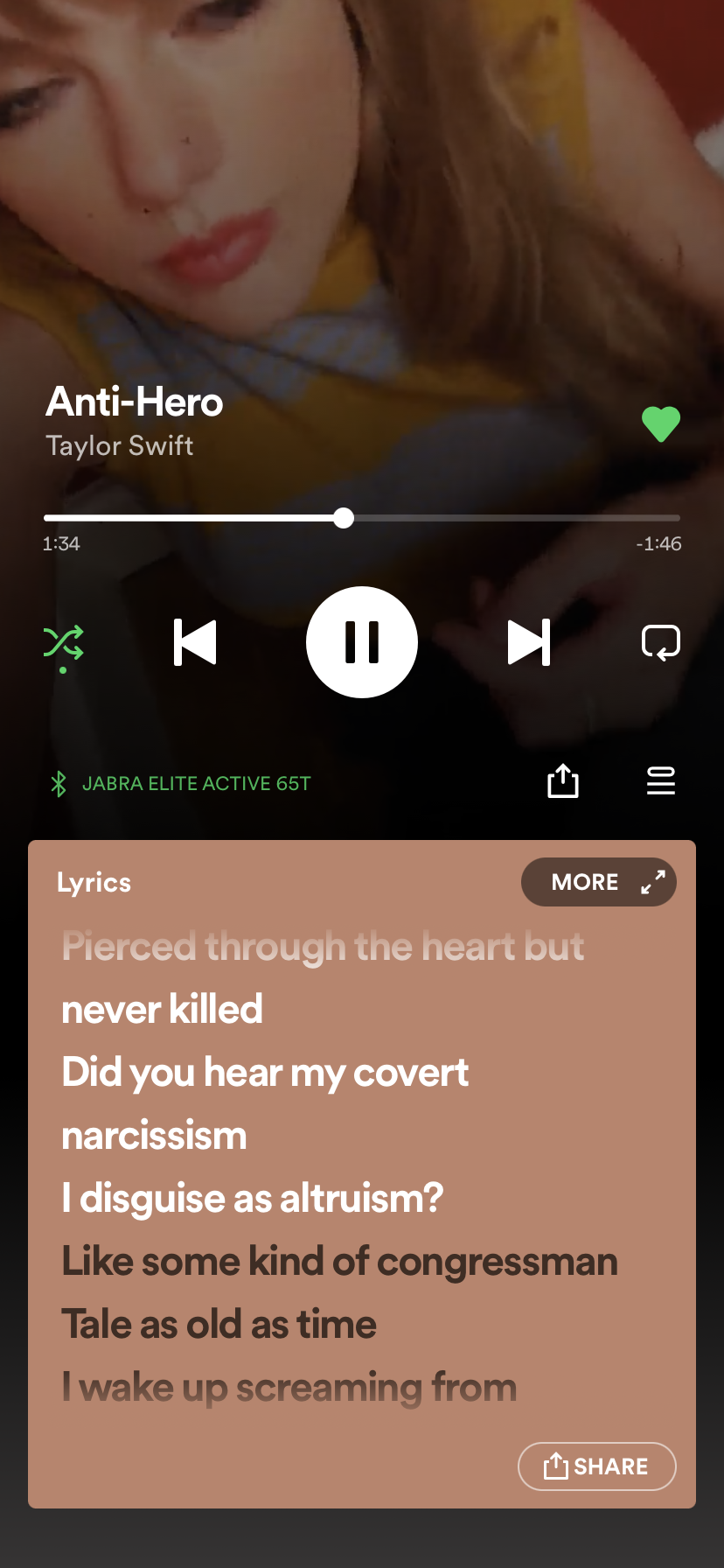
These particular song lyrics hit me hard, in a good way, in 2022. They both represent people looking inward as opposed to outward. They represent a switch from the finger pointing and accusations that were quite common during the pandemic to self-reflection and trying to be a better person. This represents a trend that has the potential to be both less divisive and also more empowering. Focusing on what we, as individuals and communities, can do offers far more hope than dwelling on external factors and obsessing over how to either change or exact revenge on certain groups of people.
This kind of echoes what I have been seeing elsewhere in culture, including movies and T.V. shows. Without getting into detail, It feels like from roughly 2017 through 2020 most of pop culture had an us vs. them theme. Many songs, movies and shows seemed to be strongly advocating that everyone adapt perspectives that are in line with what people in Hollywood think (or, just taking them as ground truth despite them being up for debate generally). This year, I saw Top Gun Maverick, Elvis and Spirited, the new Christmas movie. These films, along with some other things I watched this year seem more themed around how we can improve while still being true to who we are. Thus, combining wanting to be better to those around us with acceptance of what makes all of us unique.
3. People I encountered throughout the year
As the year went by, it felt like I was encountering more and more people with a different focus. It started when the Commons on Champa, Denver’s entrepreneurial hub, reopened the last day of May.
This lead to meeting entrepreneurs from all over Latin America, associated with the Young Leaders in the Americas Initiative. What a wonderful, appreciative group of people. I’ve been told multiple times that people from poorer countries are often better at appreciating what they have as opposed to focusing on getting the next thing.
Then, on top of Mount Antero in August, I encountered some of the friendliest people I’d ever met.
They were friends from California and Arizona on a road trip together. They offered me a ride when my dog got blisters on her paws. They picked up litter they saw on the trail. Everything they talked about was positive, things like how amazing the music they were listening to is and astonishment at the scenery on the hike.
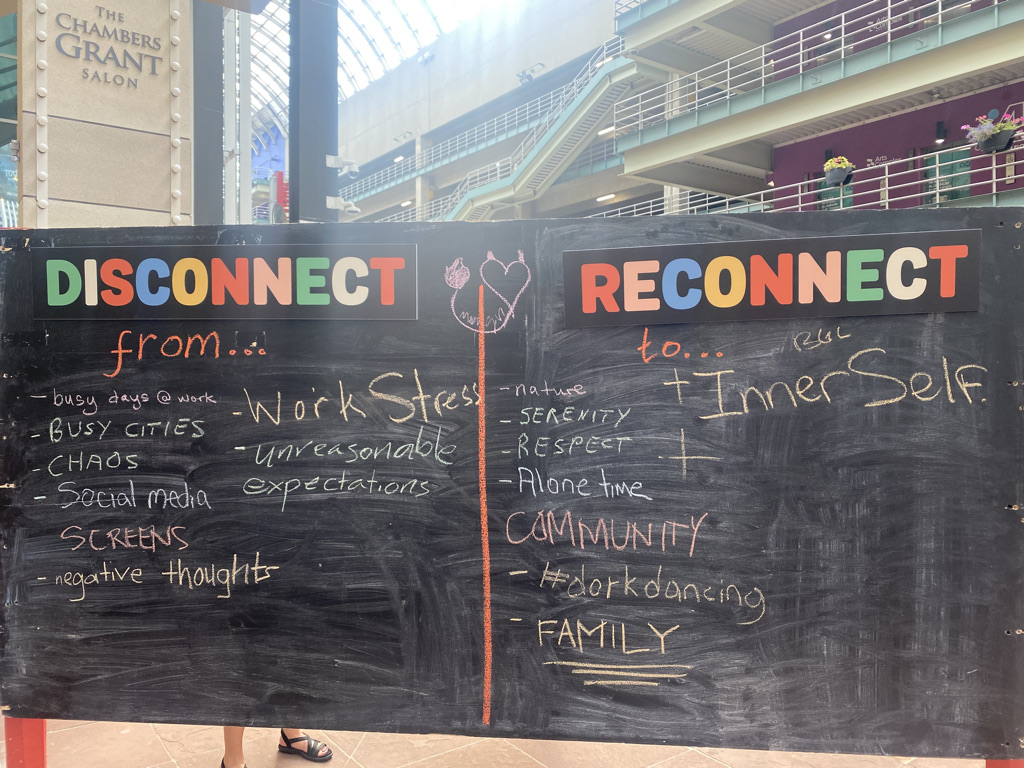
For much of the second half of the year I heard countless people describe things like their desire to get away from a lot of the stress and negativity of recent years and reconnect with themselves, their families, communities and nature. I had many people tell me about what they are doing to reduce their screen time, such as placing time limits or deleting apps and adapting new habits.
This culminated with my experiences in Cancun and Chicago in late November/ Early December. Between that and the messages I got from strangers at the Awake Festival and StartupWeek, I felt a level of appreciation I had not felt in years. Sometimes it feels like I opened a portal to accept certain influences in life. Or maybe, the world is finally moving on from the fear based responses we had to the events of 2012 through 2020 and we are finally doing the work that needs to be done to create a better future.
I coined the phrase “Little Dark Age” based on the term “Little Ice Age”, used to describe a cooler period on the planet from roughly 1300 -1850. The “Little Ice Age” reached its apex in 1816, when volcanic eruptions and a relative minima in solar activity lead to what is coined as “The Year Without a Summer.” However, by 1900, we were clearly out of the “Little Ice Age” (and on the path to better food security). My hope is that 2020, the year that everyone was as isolated as ever and yelling at each other over their responses to the pandemic and racial unrest was that moment for this “Little Dark Age”, and that now, we are on our way out, to a better (although not perfect) 2023.
Perhaps one of the hardest things for anyone to adjust to when moving to Western North America is that fact that the weather is far more dependent on elevation than latitude. Boise sits at about the same latitude as Portland, Maine, north of Boston. Yet, it is warmer than Denver (in October, as well as most other months), which sits at a latitude just south of Philadelphia. This is because, at 2,730 ft (830 m), Boise is 2,500 feet (760 m) lower in elevation.
As October began, the leaves here had barely begun to turn colors.
And the temperatures were reaching 80 to even 85° F (27-28°C) every day.
It felt like it was still summer.
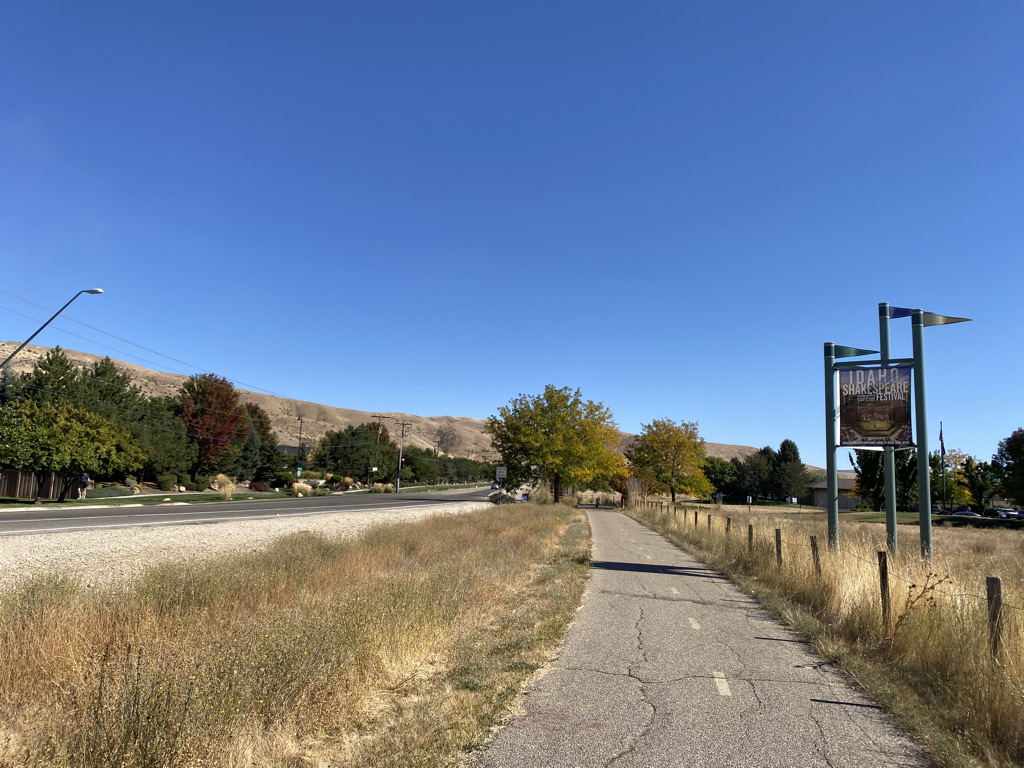
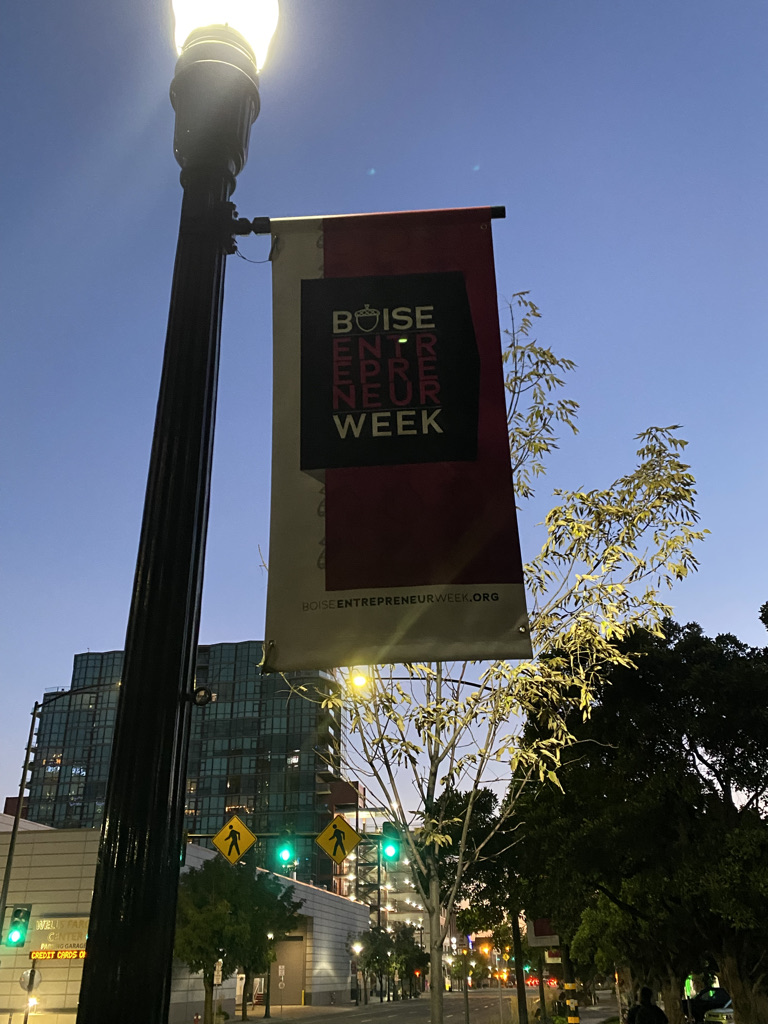
I spent three days in Boise and it was hard not to see Boise as a newer, smaller version of Denver, the city where I live. Boise is about 1/3 the size of Denver and the metro area is about 1/4 the size. I don’t like being the person who is constantly comparing something to something else, and I did not want to spend much of my time in Boise comparing it to Denver, the city where I live, but it was hard not to. There were similarities everywhere.
Like Denver, Boise is the State Capital.
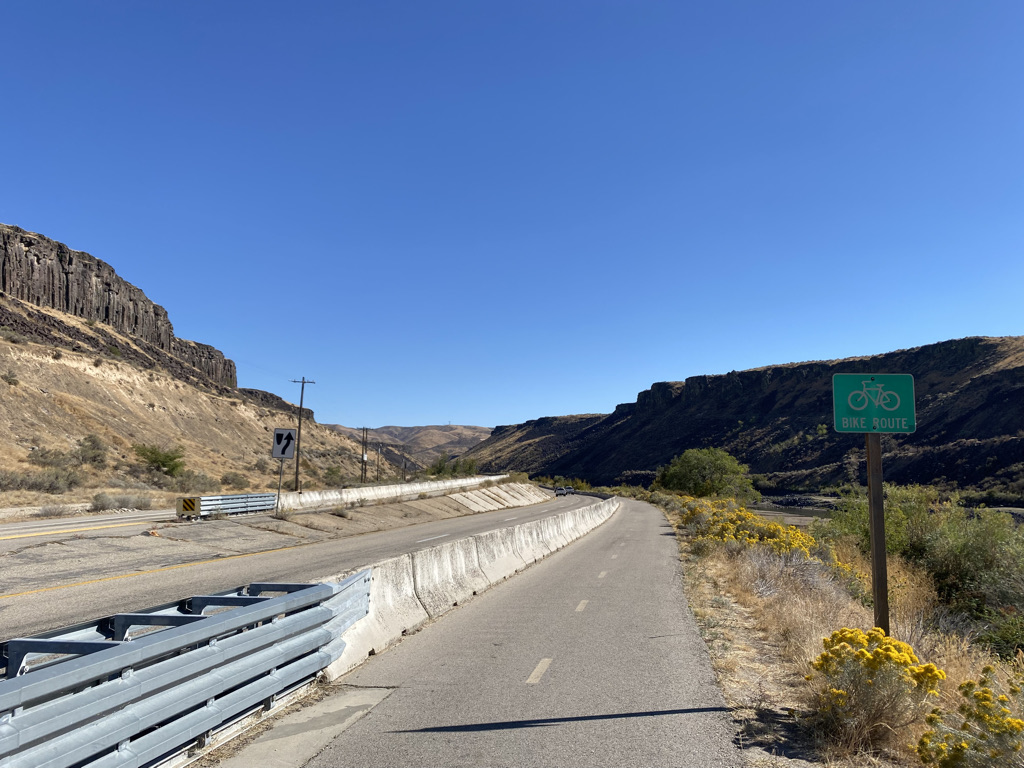
Has some cool bike trails.
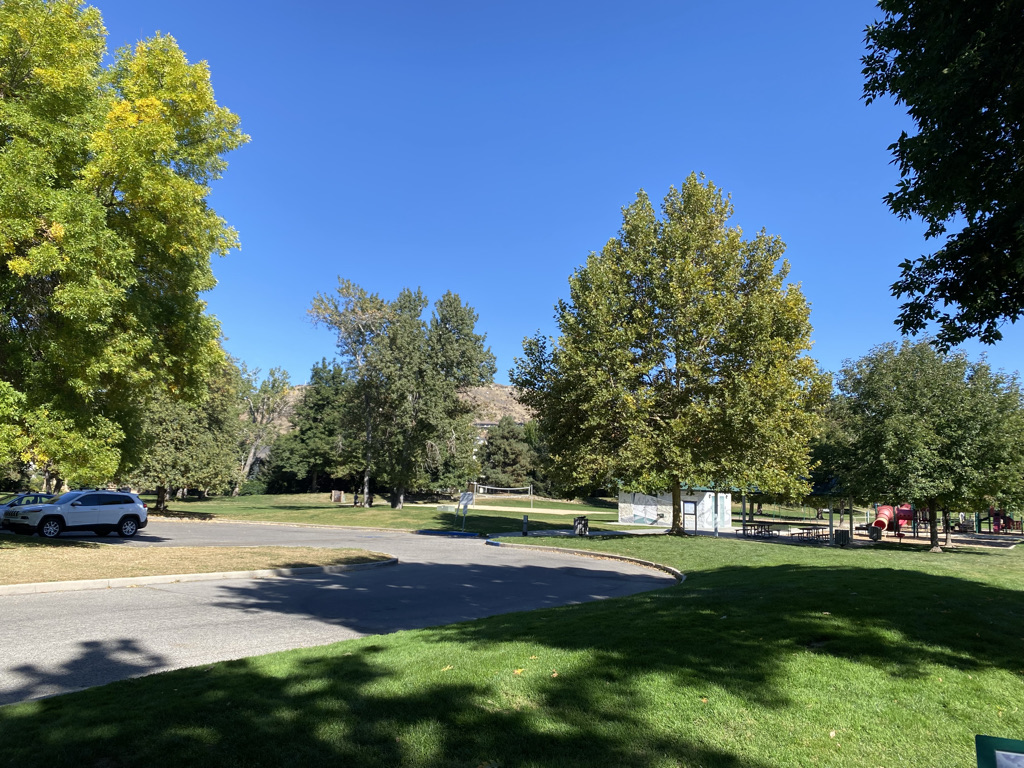
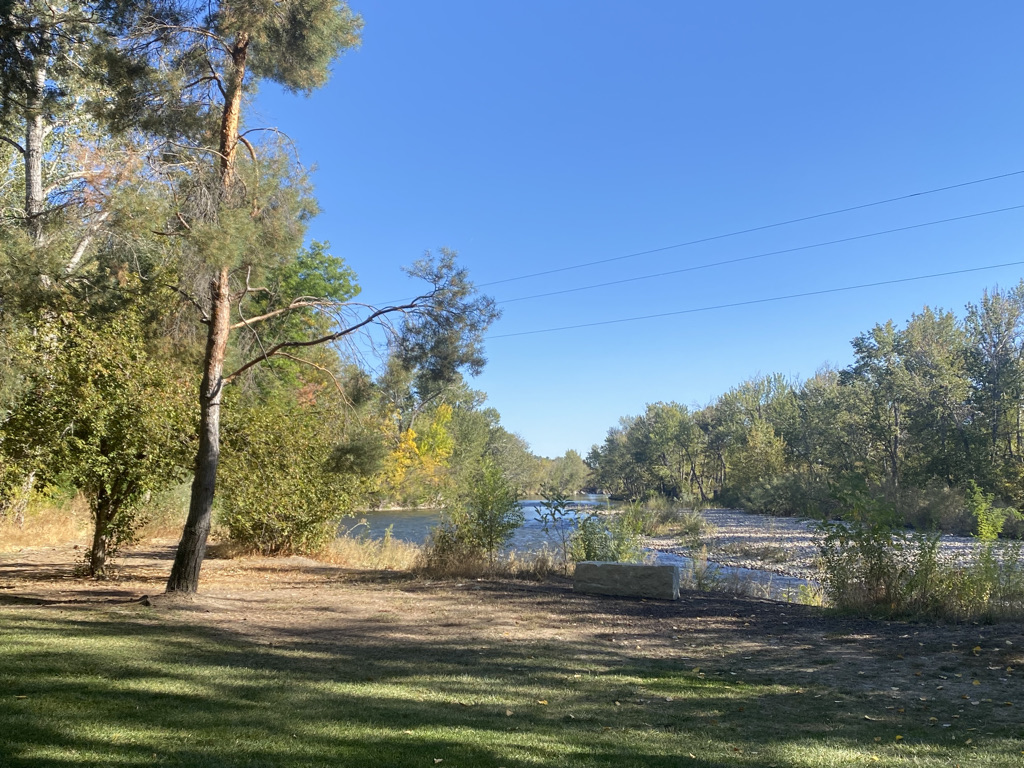
Which pass through city parks.
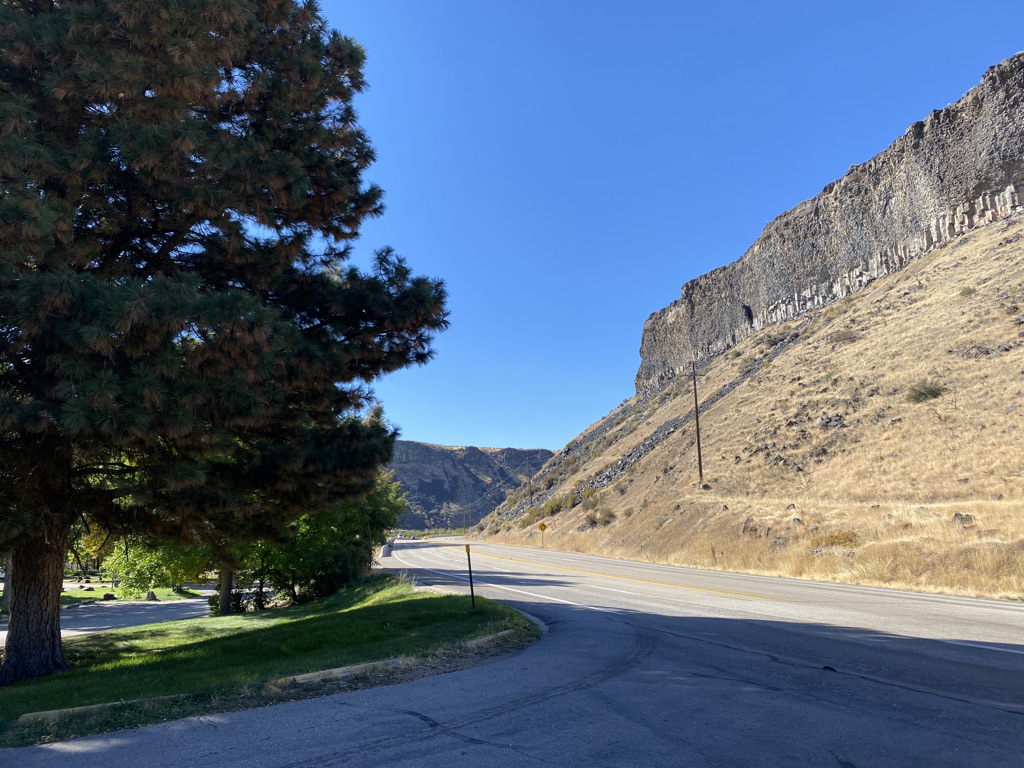
And to some amazing destinations outside the city.
However, I learned early on that people in Boise, particularly long-term residents, do not necessarily love the comparison. Boise is one of roughly ten cities that are rapidly expanding as people seek out destinations where they can be around other innovative types of people, but in a place that is more affordable than places like Silicon Valley.
I cannot accurately comment on how things are going in Austin, Oklahoma City, Phoenix, Salt Lake and Seattle, but some longer term Colorado residents lament how many new people have arrived over the past decade or so. The metropolitan area is more congested, with more traffic. However, what people seem to lament the most is how many more people an always be found on our trails and in other areas of scenic natural beauty. It feels like Idahoans do not want to follow that path. They like how empty the nearby natural beauty is.
It’s always tempting to compare things to what we already know. However, whether we are talking about a city, a music genre, business idea or festival it is important to let it be its own thing as opposed to trying to recreate something that already exists.
After all, if all we did was recreate what already exists there would never be any reason to go anywhere.
Well, I guess there would still be difference in natural scenery.
As well as climate and crops.
But there would be no reason to visit different cities. We would not let places have their own flare with things such as blue football fields.
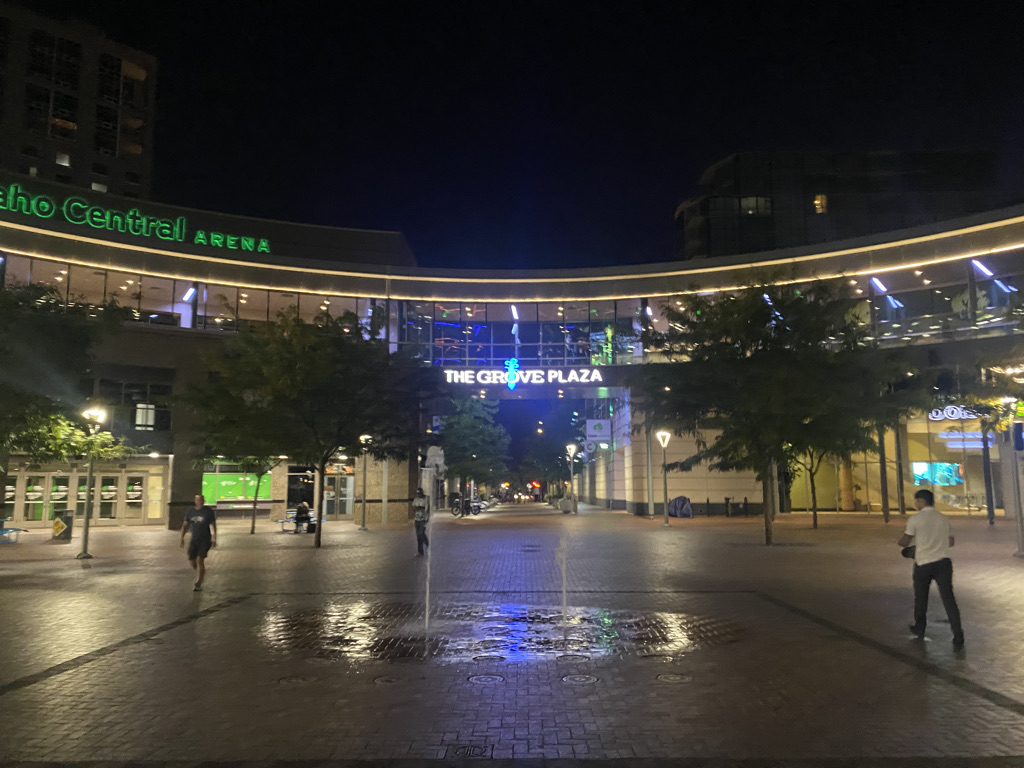
Really small water fountains you can still run through in October.
And, apparently a happy hour where your dog can drink.
Boise will likely continue to grow, as remote work permits more people to live away from some of our most expensive real estate markets.
How it grows is yet to be determined. As it grows, the place will likely become more exciting, with more activity around town. However, as Boise grows, will it be able to do so in a manner that allows the place to maintain its own unique identity? Will Boise residents still be able to get away from all the noise, all the people and daily concerns in less than half an hours time? Only time will tell.
There are many ways we travel and many reasons we travel. In retrospect, it seems rather silly that when I was a child, people used to lump all travel into two categories; business and leisure. Leisure travel, previously defined as anything other than travel for work, can take on many forms. We travel to visit friends and family. We travel to see specific destinations. We travel for specific activities. Having lived in the Midwest for a lot of year, I am more than familiar with travel to escape the winter and other bad weather.
The great thing about all these modes of travel is that it is possible to visit the same place many times and have completely different experiences.
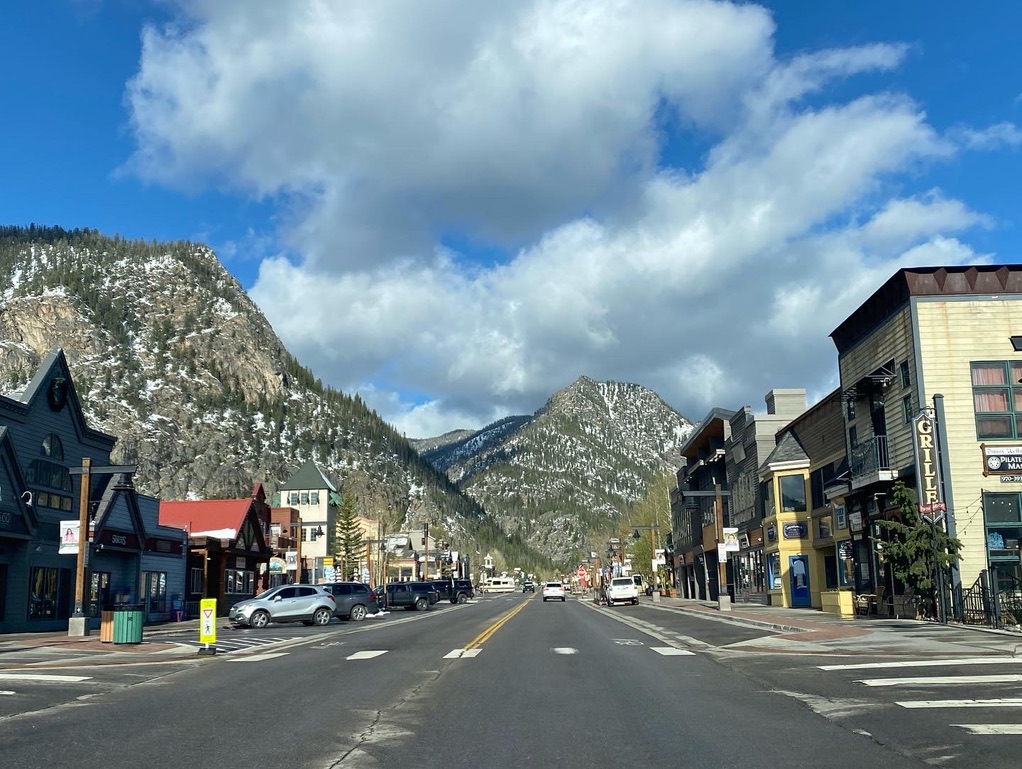
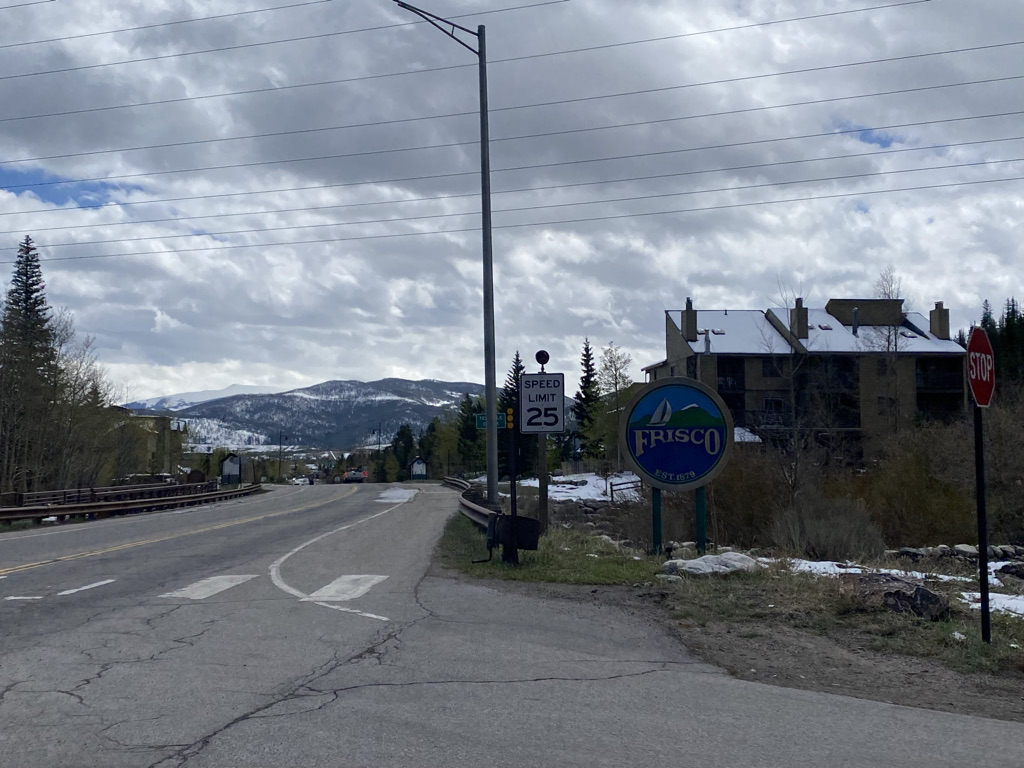
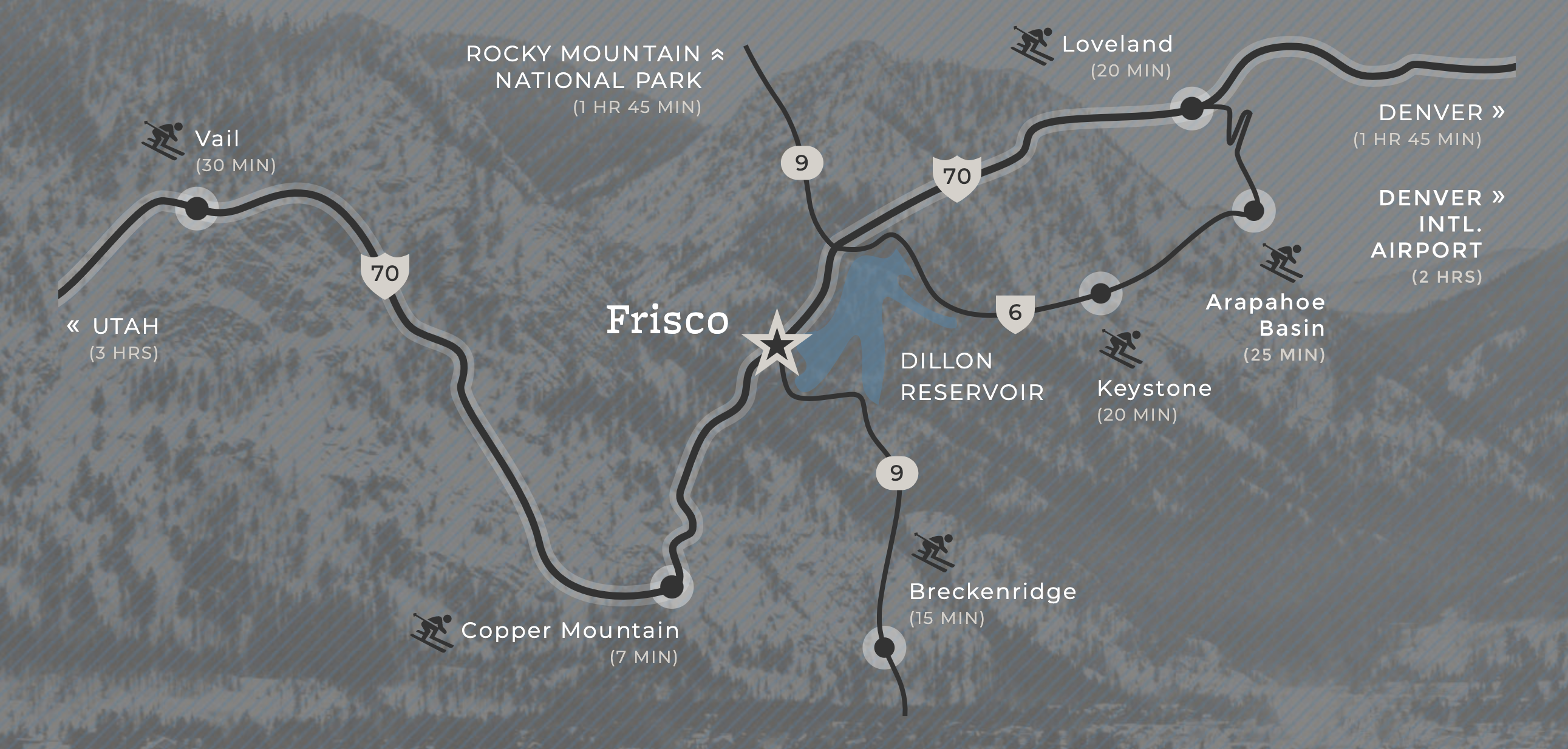
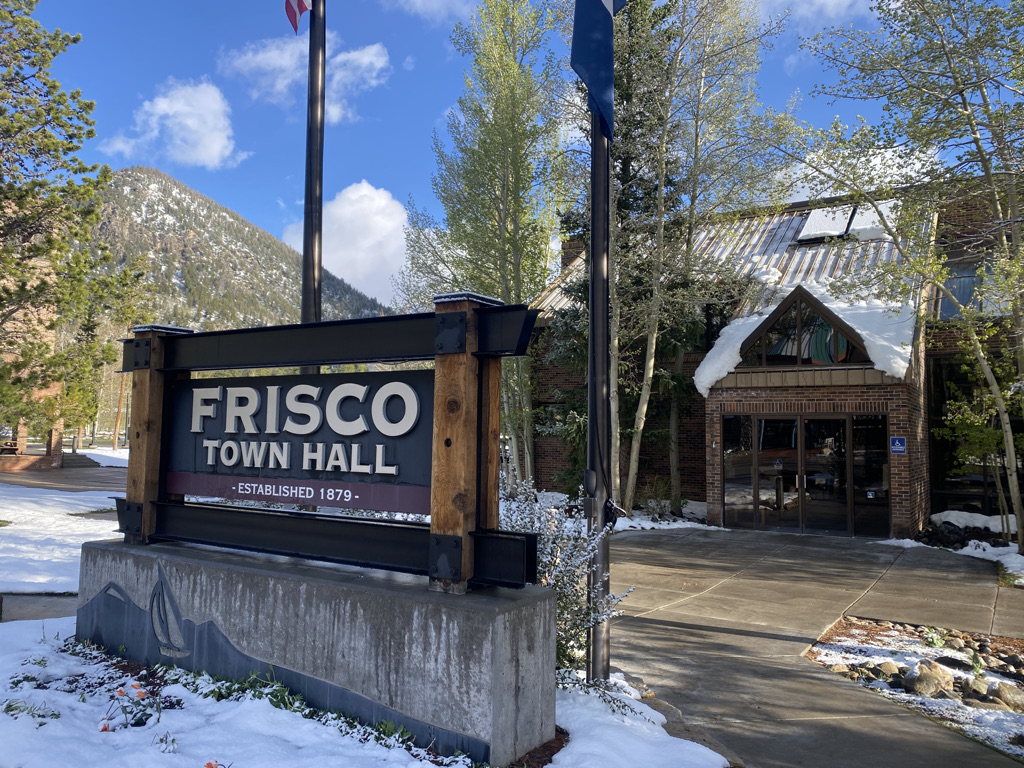
Frisco is unique in that it is situated near many of Colorado’s best ski resorts.
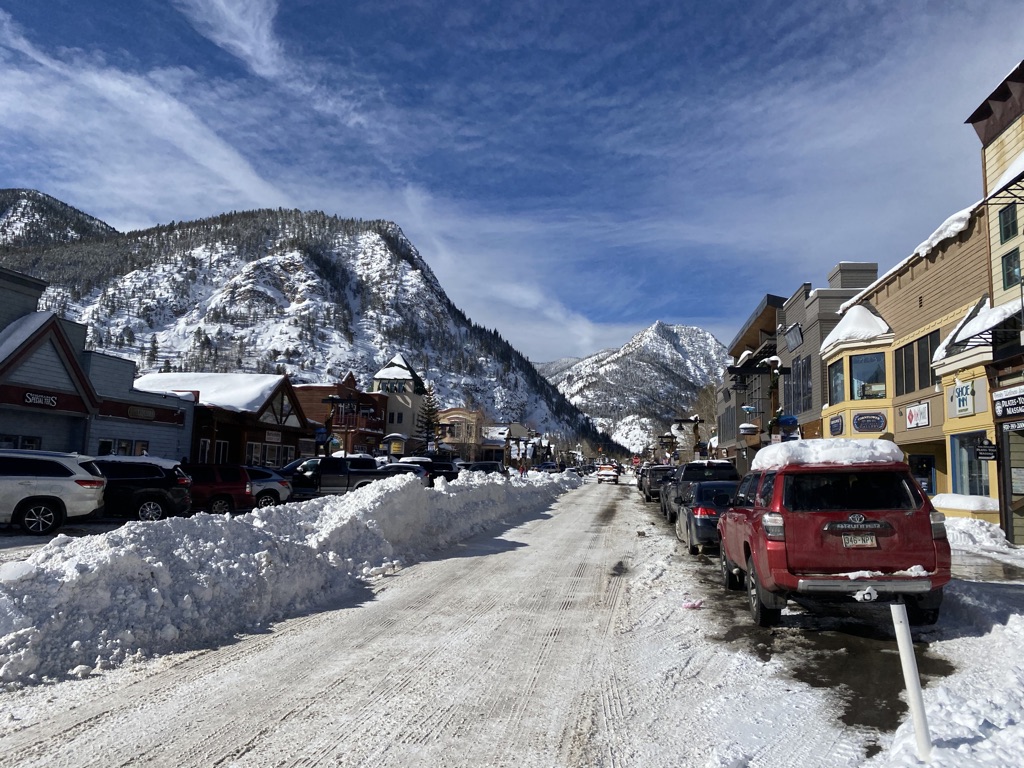
Yet, unlike Breckenridge or Vail, the town is not the site of a ski resort. Therefore, winter in Frisco is active but not in the same way these ski resort towns are. Still, there are a lot of people out and about. It is easily the most active time of the year in Frisco (except, maybe when a major snowstorm closes the highways).
Summer also tends to be active. The area is a great place to escape the summer heat and take part in activities like enjoying the mountains from the seat of a bicycle.
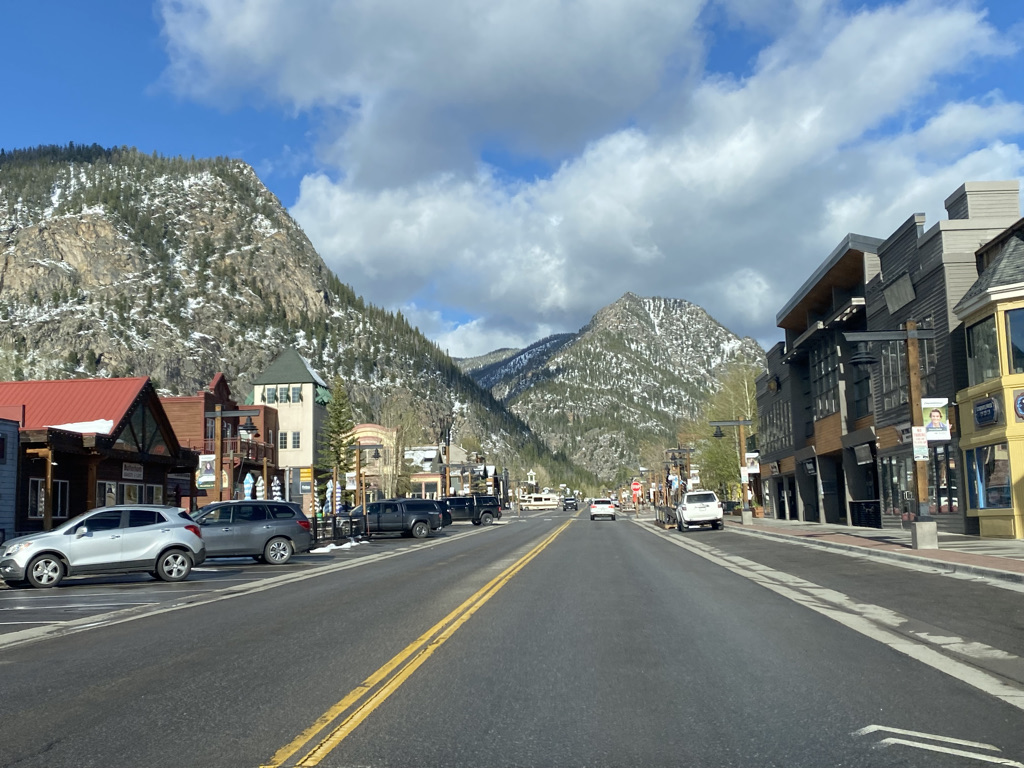
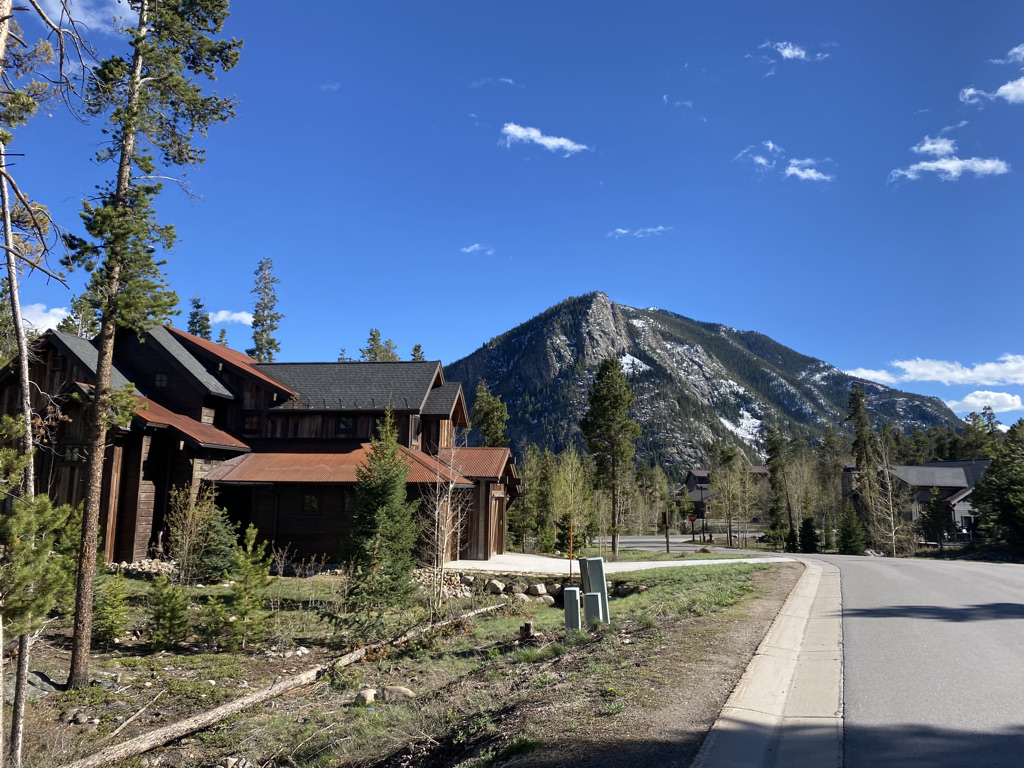
The morning of May 23, 2022, for perhaps the first time ever, I saw Frisco extremely quiet.
There was nobody walking around. The experience reminded me of the few times I would wake up before 8 A.M. on a Sunday while living in Chicago. It was the only time I saw a city that was always crowded and noisy quiet and calm. This place was quiet and calm because the activities that drew visitors all weekend had come to an end while the weather had yet to improve enough for many of the outdoor activities that draw summer visitors. There were low clouds.
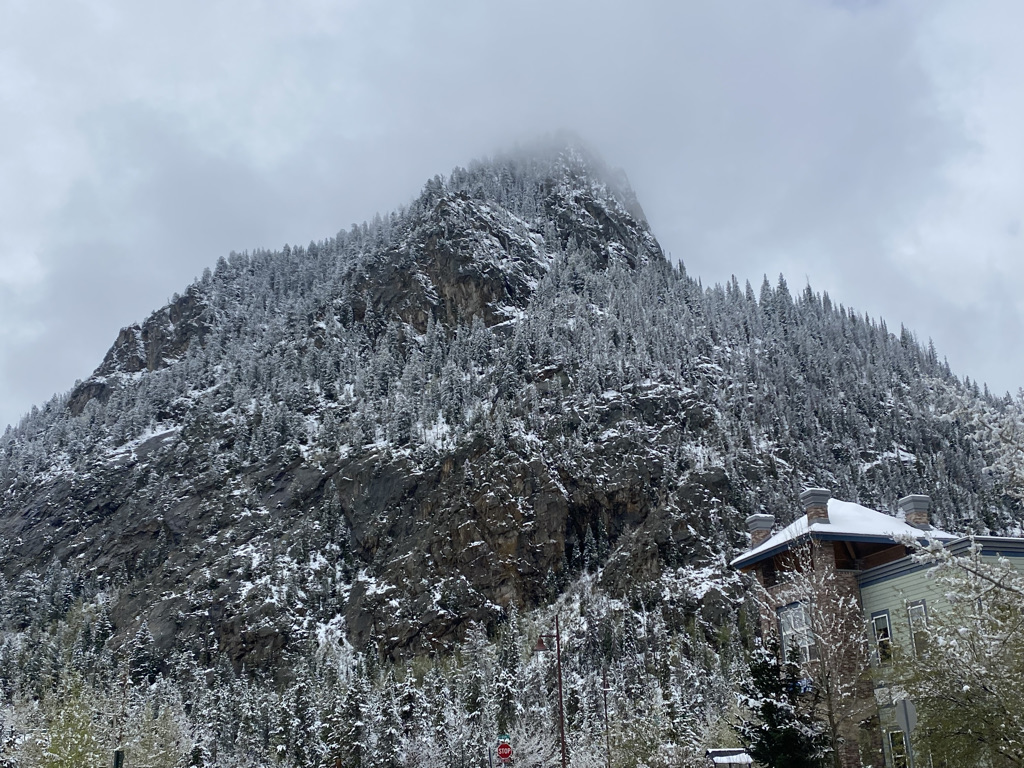
Fog, and even a little bit of snow.
It was enough to make Frisco quiet, even when the sun would peak out for a little bit.
It was even enough to make the typically even busier Breckenridge feel rather calm.
The conversations were different too. People I would encounter around town were not reflexively asking questions like “where are you in town from” and “how long are you here.” Instead, I was asked to identify a bird and about trail conditions. In a way, I was seeing the place the way the “locals” see it. Still, it made me wonder….
Do locals only get to act like locals, in the open like this, a few months out of the year, in between seasons?
Or is there a secret set of places they go during the more active seasons, particularly from December through early April?
What’s it like growing up in a place like this, not knowing that most people don’t live places constantly crawling with tourists?
On this trip, I also got to see more of Frisco. Most of my previous trips to Frisco primarily involve being on Main Street.
It is the face of the town. But, on this trip I spent a little bit of time in some of the other, more residential areas of town.
I saw where the creek flows between houses.
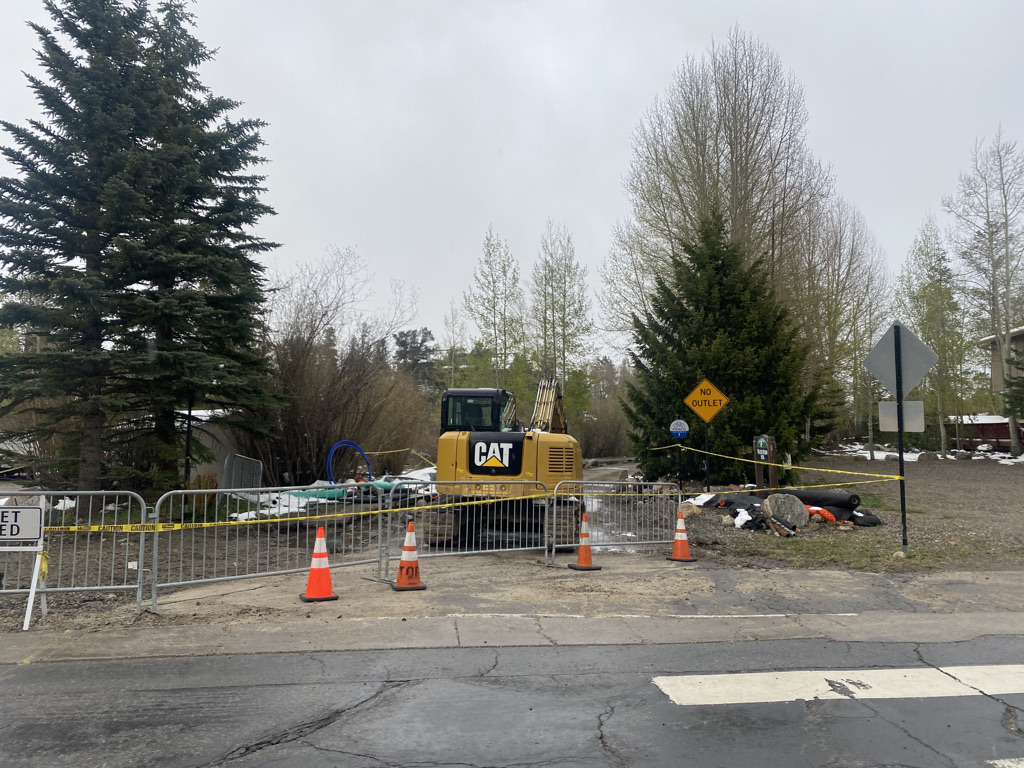
I even saw where they were in the process of building a new recreational trail.
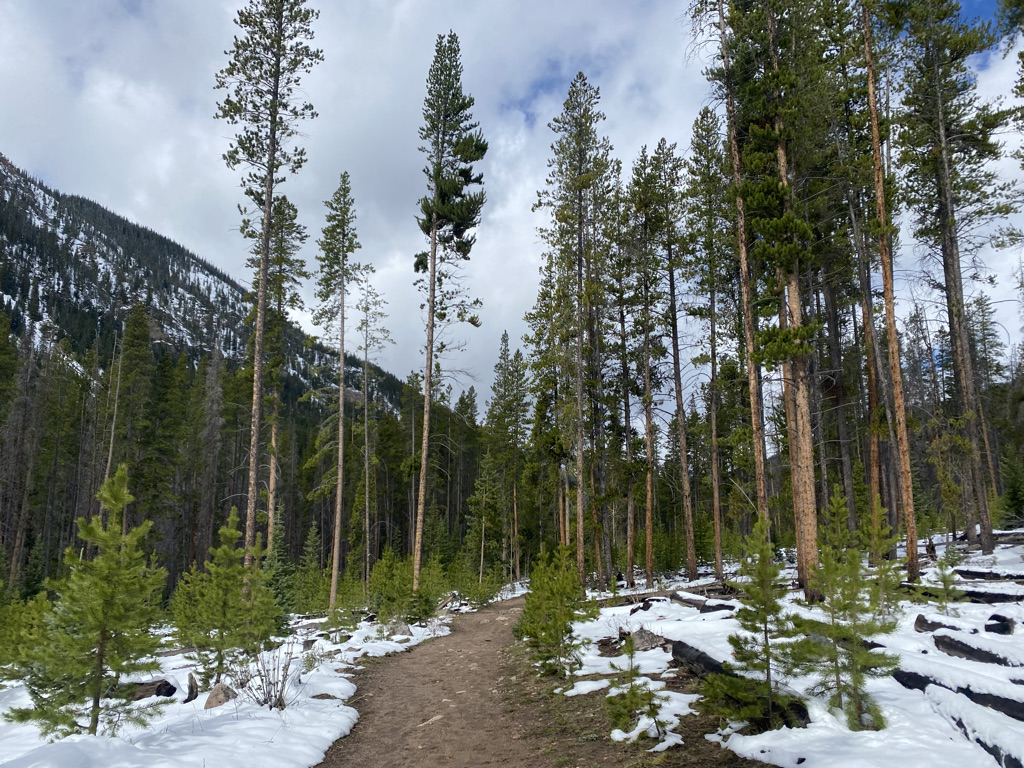
Frisco is one of those towns with hiking trails right on the edge of town. Residents and visitors alike can just walk up to a hiking trail and climb a mountain. I did this twice during my off-season visit to Frisco. On the other side of I-70, there is the North Tenmile Trail, a hike that follows the Tenmile Creek into the Eagles Nest Wilderness.
This mountain is impossible to miss. It is quite likely that for most, the idea of hiking up this mountain feels quite intimidating. The hike is steep right from the start and is steep the whole way.
However, it leads to amazing overlooks of I-70, the Tenmile Canyon (just west of Frisco) and a whole new perspective on the town of Frisco.
On previous visits to Frisco, I experienced Frisco how tourists experience it. I saw the bus to the ski resorts. I heard conversations about vacations, time shares, flights and favorite slopes, shops and restaurants. This May, nearly a decade after discovering this town, I finally experienced it more like a local, slowing down a bit and adjusting for things that almost never happen during the busy season, like restaurants being closed on Mondays and Tuesdays and full days without any activities.
February and the first half of March are typically seen as the most ideal time for skiing in North America. Weather varies quite a bit from year to year, but by February a significant snowpack has typically developed while the unpleasantly cold and windy conditions common in January start to become somewhat less likely. It is why ski trips are most commonly planned for this time of year.
However, reality often does not match expectations.
Along highway 285, Feb. 27, 2022
Both the complex systems that govern the atmosphere and the ones that govern human behavior contain a great deal of variance. It can be, at times, frustrating when experiences do not match expectations. However, this expectation is part of what makes life so beautiful. Imagine what life would be like if every event, every experience and every activity matched expectations, exactly. There would be no surprises. In some cases, there would be no hope.
The last couple of years have been rough. Patterns have often emerged that shut down multiple possibilities all at once.
In Colorado, snow this year has often fallen in the wrong place, making both the conditions at the ski resort, and activities like hiking and cycling on warmer days less than ideal. This feels like a metaphor for the general human experience over the past two years as new variants of COVID often emerged right around holidays and the most recent waning of the virus related worries is now coinciding with new geopolitical threats and economic worries.
I know, this is not expensive for some places, but for the U.S.A it’s quite a lot for a tank of gas
Perhaps, at this point in time, the worst mistake that can be made is waiting for exact right moment, the perfect conditions, before doing anything. It is for this reason everyone seems lonely and culture feels so stagnant. Any reason can be found to declare that a specific moment in time is the wrong time for a new initiative. The past couple of years have just been a more extreme version of it.
Yes, there is a lot of uncertainty. Many of these experiences are ones certain segments of humanity have not experienced for quite some time. Most people were not alive the last time anything remotely like this happened, and a lot of people do not know what to do at all. But, the stagnation that comes from waiting for that one moment where everything is perfect has the potential to make things far worse.
A lot of people are waiting for the ideal time for everything from starting a new venture, to taking part in their favorite activities and/or reconnecting with those they care about once. However, when that theoretical ideal time comes, a new form of less than ideal will present itself, crowds.
The true opportunities lie not in waiting for the outside world to present a perfect situation, but in finding a way to manage a less than ideal situation.
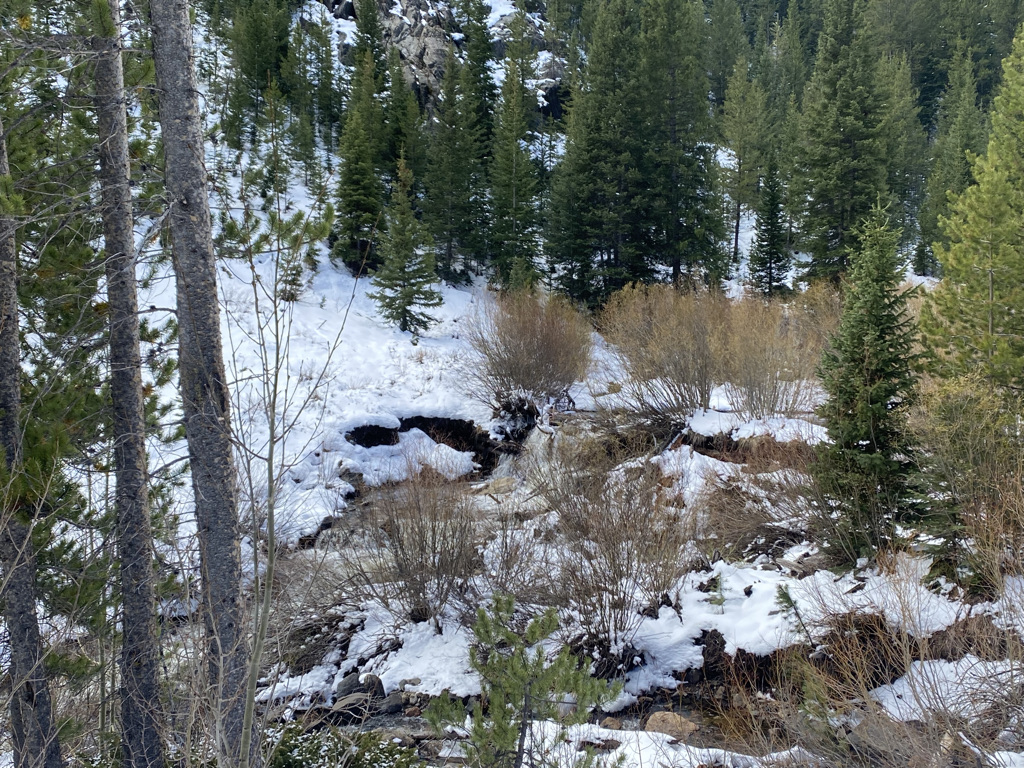
The Middle Fork of the Platte River 10,000 ft. (3km): Sunrise December 4th 2021
Life is full of patterns, rhythms and cycles. We anticipate them. We prepare for them. Depending on the cycle sometimes we dread certain phases. At other times, we eagerly await them, desperate for their arrival.
Sometimes, as is the case with events like the sunrise and sunset, we know exactly when something is going to happen.
Seasons, like many of life’s more puzzling cycles, can be unpredictable. This year, in Colorado, winter is late.
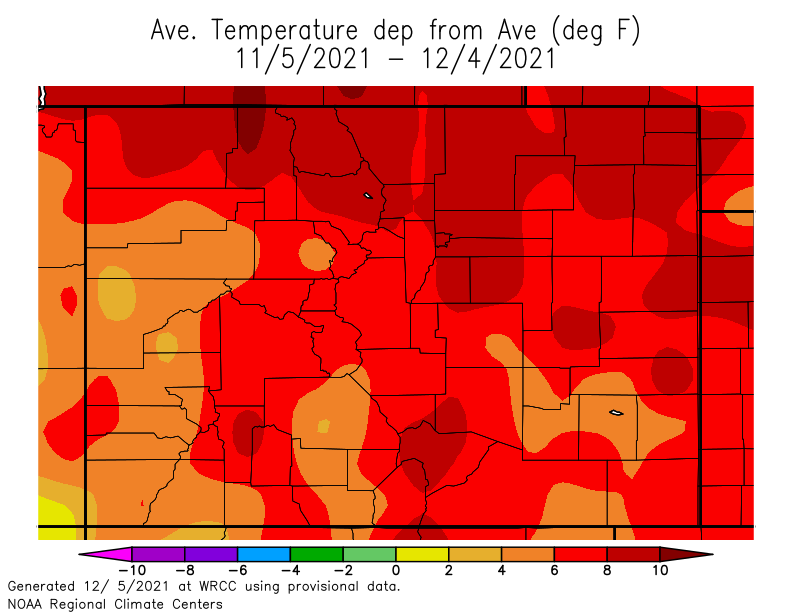
Temperatures over the past months have been about 7°F (4°C) above average. Basin-wide snowpacks are about half their average amount. On a weekend I expected to be at the ski slopes, instead, I was hiking.
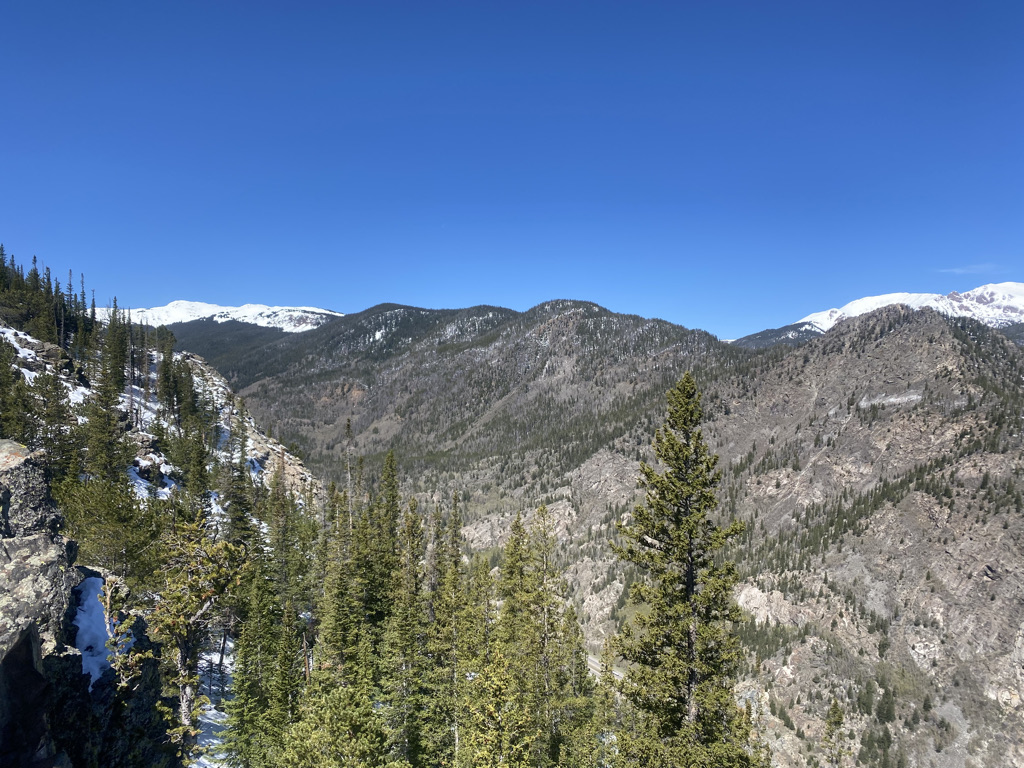
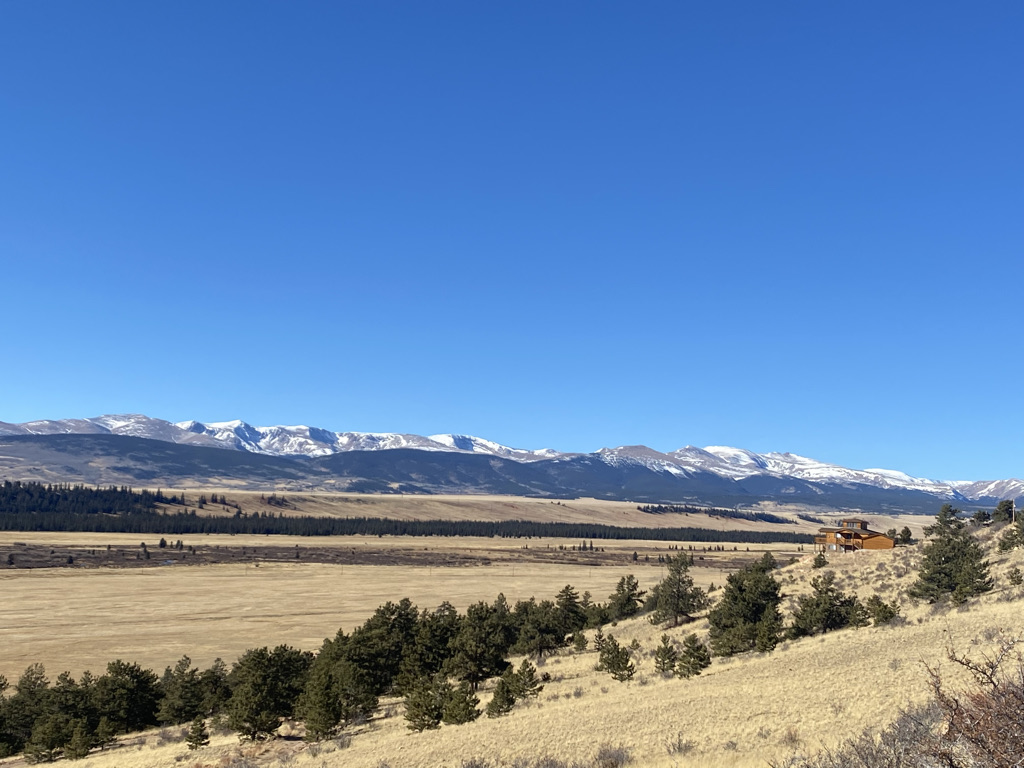
Temperatures warmed into the 50s (≈+13°C), which felt warm with no clouds or wind at a high elevation. The vibe, reminiscent of a totally different time and place then early December in the central Rocky Mountains, was impossible to ignore.
The sun kissed the entire river valley in a manner that made it hard to believe that this is really December.
Meanwhile, rather than airlifting skiers to hospitals after injuries, emergency management personnel were evacuating homes and trying to contain a wildfire.
Some welcome the continued warmth, and love the fact that they do not yet have to shovel snow and put on winter boots. Others are frustrated, losing patience, or even fearful. The weather is something that can be predicted fairly accurately about a week out and prepared for. However, like nearly all of nature, it cannot be controlled.
The weather may be one of the clearest and most present examples out there of that which we cannot control. As is the case with a lot of what life will hand us, we can only control our reaction to it. I was bummed that I was not skiing, as I had previously anticipated. However, when that door closed another one opened.
We hiked
We saw some places appear in a totally different light
And, I got to awkwardly combine holidays while wearing this strange Krampus t-shirt.
When seasonal shifts in weather arrive early or late it can be frustrating. However, this frustration can sometimes pale in comparison to unexpectedly early onsets or frustrating delays in other areas of life. Almost everyone can relate to having to wait longer than expected for a new career opportunity, to find a good relationship, or for a loved one to correct problematic behavior. Likewise, it’s hard to imagine too many people who haven’t been blindsided by an unexpected and unwelcome change.
The same way snow sport enthusiasts in Colorado are eagerly awaiting an overdue change in seasons, millions, possibly even billions, of people are eagerly awaiting what feels like an overdue change in our overall situation. The virus and the fear that goes along with it is still causing some restrictions. Most people seem tired of our partisan divisions, lack of human connections, excessive screen time and work culture that doesn’t make sense. Yet, like the onset of winter and our emergence from the pandemic, progress feels quite slow. Sometimes things go into reverse.
The timing of cultural shifts is harder to predict than weather patterns. There is no snow now, on December 5th, but, there will certainly be snow by February 5th. Shifts in the circumstance in our lives can arrive tomorrow morning, or never arrive at all. At this point, all we can do is hope and try to find the right balance between optimism and realism, between focusing on what we can control while trying to affect our surroundings, and accepting our current reality while trying to create a better future.
The second half of November is an interesting time of year. In some ways it’s reminiscent of moments like seeing the team behind by 14 points in a football game fumble the ball away with five and a half minutes left. There are six weeks left in the year, but the final result is starting to feel settled. The rest of the year will be consumed by Thanksgiving, the Christmas season and wrapping the year up.
Luckily, the first fifteen days in November produced enough nice days for a few good bike rides around the area.
Other than that, there hasn’t been too much travel since the end of a major trip two months ago.
It’s mostly just been trips to routine types of places in the area as life had me focusing on other aspects of the human journey.
For most people, two months without “considerable travel” would be quite normal. Beyond those that are far more content with routine than I am, some people have recently written some thought provoking rebukes to the increasing importance we have placed on travel. However, after COVID-19 forced many people to spend far more time at home than they are accustomed to, it is hard not to get the itch to travel more, even after a relatively active summer.
I want to travel everywhere except two places.
I generally try to avoid being negative or controversial on this blog. Perhaps I’ve taken this too far. True, the vast majority of us are experiencing some form of fatigue related to people we know who repeatedly rant about the same things and are always trying to stir up a debate. However, that does not mean the rest of us need to be voiceless. I don’t believe the solutions to the problems we are currently experiencing will come from the places where they were created. Therefore, I have no desire to visit Washington D.C. or Silicon Valley at this point in time.
As we start the long process of winding down 2021 with holidays, family time and reflection, a better approach to pondering where we are and where we are going involves understanding and respecting nuance, while also embracing a common humanity. As is the case with nearly every other period in human history, there are cultural developments that I find encouraging and others I feel we need a course correction on. As should also always be the case, some people will agree with me and others will disagree.
I’ll break down my thoughts on where we are all headed into three categories.
Encouraging trends
Awareness and focus on mental health, and a greater acceptance of those who are struggling with mental health issues.
More people, especially younger generations being interested in entrepreneurship or similar paths and questioning the rigid 9-to-5 work culture of the 20th century.
A greater interest in self care and spending time in nature.
Consciousness: People wanting to be more conscious of the decisions they are making. Over three dozen people have told me “doing nothing is still a choice” this year.
Often underreported continued global progress on issues like diseases, extreme poverty and literacy.
Disturbing trends
We still continue to move more stuff online, in a world that desperately needs more community and “in real life” experiences.
“Safteyism”: How it has created unnecessary bureaucracy and limitations. How it has taken away resiliency, especially in children and created a fragile culture.
The politicization of everything. Can’t someone just go to the Chick-Fil-A with their trans friend without pissing everybody off?
Identity politics: It’s great that we are acknowledging how people’s experiences differ based on race, gender, etc. but there is SO MUCH MORE to who a person is and we need to stop reducing people to these surface level aspects of themselves.
For some reason we are still getting more obese.
Now, inflation.
Oh, and what’s with all the auto-tuner?
This has got to go already
The entire job search process. Seriously, with all of our machine learning and AI, we can’t make this process less time consuming and frustrating? Also, why can’t we make career transitions less daunting?
The default assumption that answering all questions and solving all issues begins with a web search at the computer. We humans need to solve issues together.
Conformity of all kinds and the limitations we place on ourselves. Who we can and can’t have friendships, emotional connections, experiences and relationships with. Rules about what activities are done at certain times, how we can and can’t dress, etc. I’ve come to realize that they are all based on insecurity and are all limiting the human experience.
As the sun sets on 2021 and each of our individual outcomes for the year become settled, I dream of what 2022, 2028 and 2035 will be like. It is my hope that we move in a direction that provides for more genuine expressions of self and away from the divisiveness, limitations, loneliness, fear and insecurity present in our more disturbing trends.
There is far more nuance than most people want to admit. Entities, from the internet, to social media, our education and financial systems and religion have had both positive and negative impacts. The key is to take these things and use them for positive purposes. Unfortunately for those who want a simple solution (usually based in Washington DC or Silicon Valley), the way we improve the outcomes for humanity is from the ground-up. It’s the sum of all of our individual efforts and something we can all vastly improve if we do what lights us up and reflects our authentic selves in our day to day lives.
In that respect, 2021 has mostly been a disappointment. Hopefully we can overcome the fear to obtain a better future. I’m starting today by more and more living and speaking my authentic truth.
October is the perfect month for people who prefer to sleep in and take it a little bit easier. In summertime, it is often imperative to get an early start on most activities, before the heat builds. The long days provide opportunities to climb to the tallest peaks, go places that are inaccessible at other times of the year and push ourselves to the limits. By October, the days are shorter and the mornings are chilly. 5 A.M. goes from being dawn to as pitch black as the middle of the night. 7 A.M. goes from the ideal time to start outdoor activities to a chilly sunrise. And, 10 A.M. goes from the time when heat starts to really build to when the sun has finally warmed the air to a comfortable temperature.
Unlike the middle of the winter, there is still plenty of nice weather. It’s not time for those that shy away from unpleasant conditions to hibernate just yet.
However, the shorter days and cooler conditions give many of us permission to take the pressure off ourselves a bit. The 100-mile ride, the 14,000 foot peak and the trek deep into the wilderness are now out of reach. The time has come to take a somewhat more relaxed approach to our activities and just simply enjoy being outdoors wile it is still pleasant to do so.
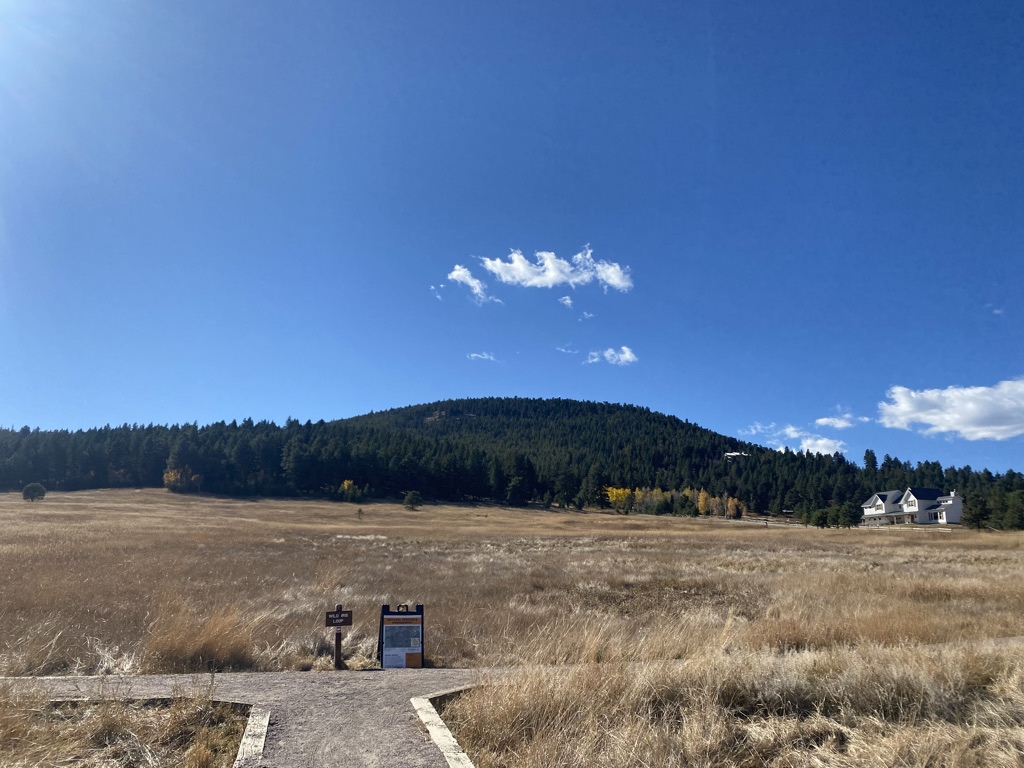
In that vein, two great activities that are simply enjoyable are Left Hand Canyon outside of Boulder and Evergreen Mountain (not surprisingly, outside of Evergreen).
Left hand canyon is an 8 mile (13 km) bike ride up a mostly relatively gentle grade. The total climb to Jamestown is about 1300 feet (400m).
Jamestown is cute little town of only 250 people frequented by other cyclists making the same or similar journeys (the road does continue upward and connect with the Peak to Peak Highway).
There are plenty of great places to just sit and meditate by the river or grab a bite to eat. The downhill is most enjoyable, as it is steep enough to go fast, but not so steep as to frighten most cyclists.
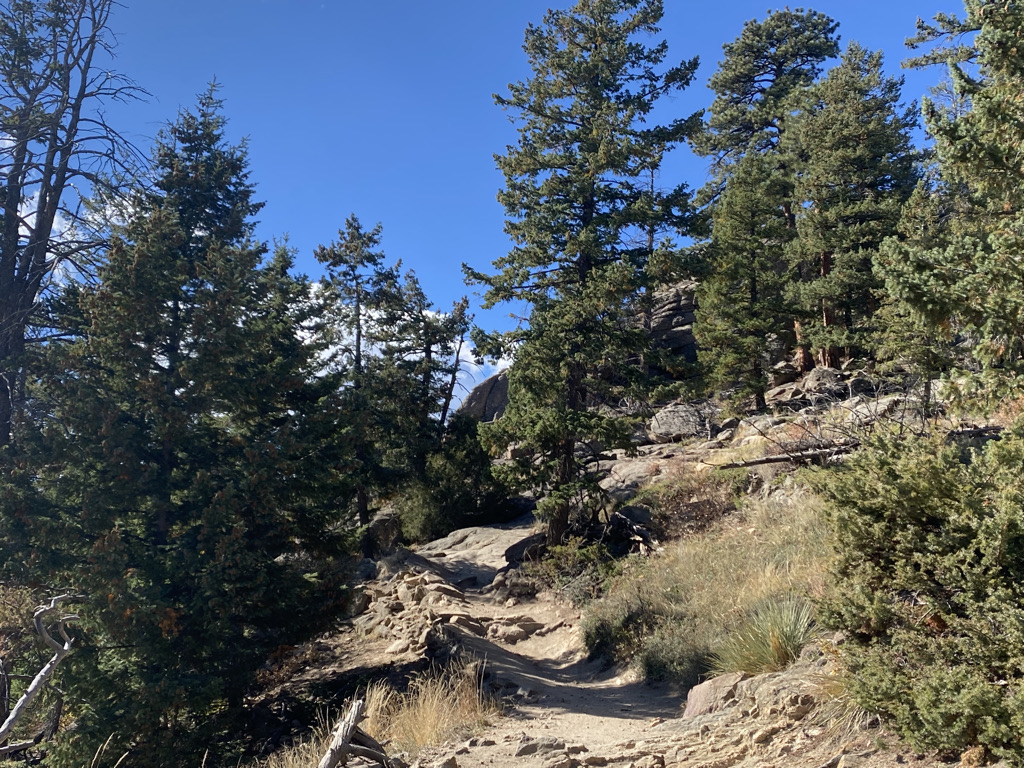
With chilly mornings, October is also the perfect time to take on shorter hikes, like Mount Evergreen, a hike with an 816 ft (250m) vertical and a total distance just shy of five miles (8 km).
In the summer time, this is probably an ideal before or after work hike for residents of Evergreen. The trek is a combination of some sections that are quite easy (i.e. flat).
And some areas that are somewhat more challenging.
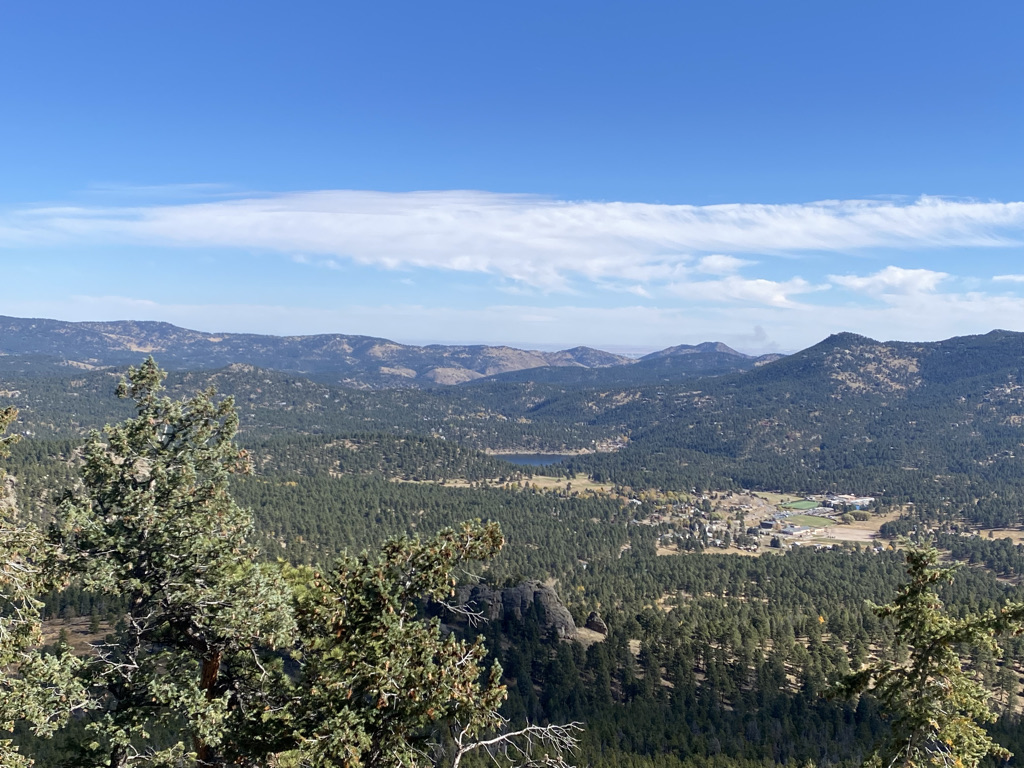
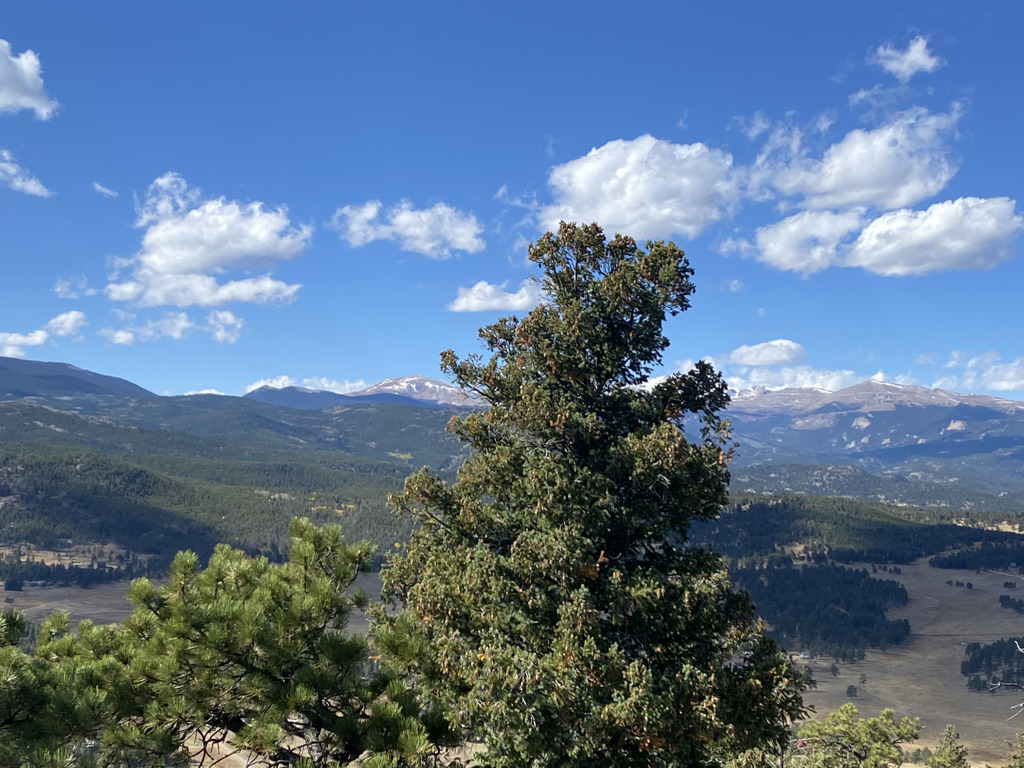
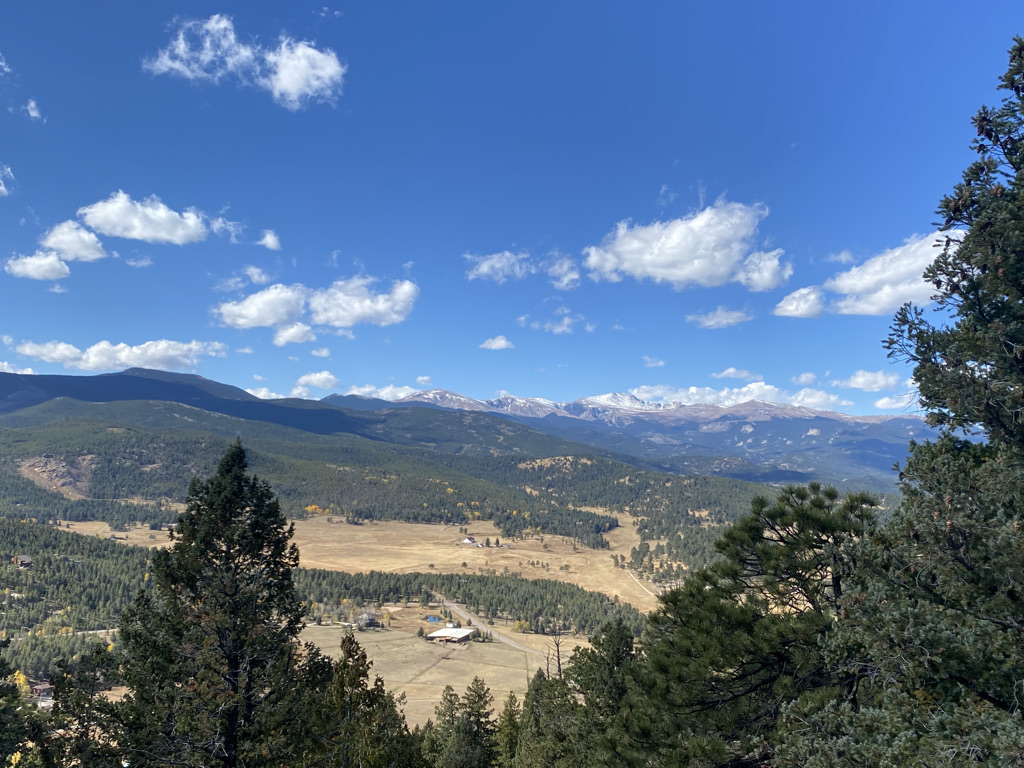
Near the top there is a short side trip to a scenic view of the town of Evergreen that should not be missed.
And, there are a couple of great vantage points of the taller mountains further west from a couple of points at the top.
As an active Coloradan, both of these activities feel relatively easy, or, at the very least moderate to me. However, as we approach November, the season of gratitude (based on the holiday Thanksgiving), I must reflect on the fact that these activities are not easy for everyone. Some people are not fortunate enough to be in good health and have the capabilities to climb 1300 ft. (400 m) on a bike or hike up 800 ft. (400 m). It is good to show gratitude for having functioning legs, a good circulatory system and the means to eat a healthy diet.
It is also important to remember that the easier activities would not feel so easy without the hard ones, the ones where we truly push ourselves.
For a sedentary person, these two activities would be hard.
If we do nothing but push ourselves, many of us will never truly enjoy the activities we take part in. However, if we never push ourselves, our range of possibilities would be very limited. We need both.
Perhaps that is what the changing of the seasons is all about.
However it manifests in the specific places we live and in our specific pursuits, it reminds us that different parts of the annual cycle and other cycles of life require us to focus on different needs.
Keystone Village Ice Rink three days before Memorial Day Weekend 2021
Somewhere along the line, a holiday set aside to remember those who had died serving in the U.S. military became the “unofficial start of summer”. This year the holiday also happens to coincide with many places lifting restrictions related to COVID-19, as a significant proportion of Americans have been vaccinated and case numbers have declined. In 2021, the contrast between Spring and Summer promises to be far greater than in any other year. It is a contrast between a “socially distanced” offseason and a fully re-open summer that unofficially began Memorial Day Weekend. The week before Memorial Day literally felt like the calm before the storm.
I spent most of the week riding my bike around the area. It felt like the last time in quite a while that these trails (the Summit County’s bike trail system) would be so quiet.
The weather was quite nice, although a bit chilly in the mornings. Yet, since it was still technically off-season, the crowds had not yet arrived.
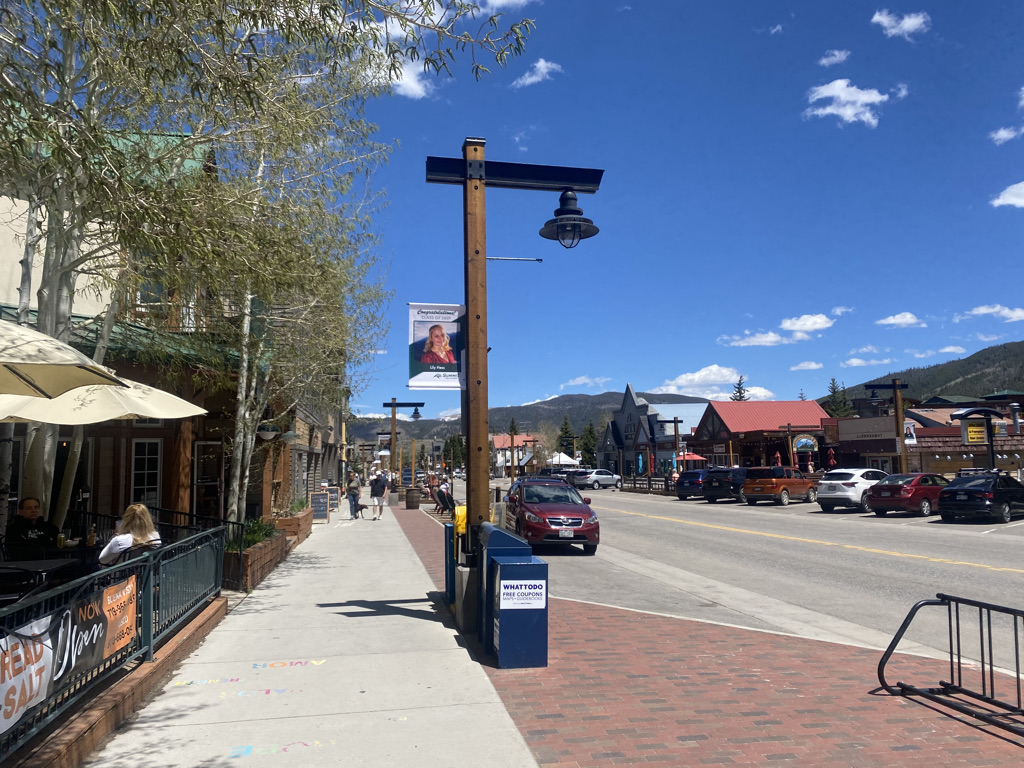
Downtown Frisco Tuesday May 25th
Each season in the mountains is unique and as Spring transitions into summer, the sun is bright, but mountain tops still have a lot of snow on top of them. The middle part of a sunny day in May or Early June may be the brightest the area ever feels.
There are so many places of natural beauty and so many stretches of trail, throughout the county, where one can just be alone with their thoughts.
It’s hard not to feel spiritually refreshed after several days of cycling around the area.
The way the world is currently set up, cycling is by far the best way for me to process my thoughts. Almost anywhere else I find myself, there is the temptation to look at my phone or engage with some other distraction. Cycling, I need to have both hands on my handlebars. Therefore, there is a lot of value in riding long distances. It is on these rides that I process through life developments and often come up with ideas.
Wednesday was quite possibly the most significant day of this trip. The day started with the Super Flower Blood Moon, a lunar eclipse visible just after 5 A.M. It was visible for a while but then the moon slid behind the clouds as the sky started to brighten up. From a spiritual standpoint, I was told that lunar eclipses are a time for us to release things. So, at the time when the eclipse had peaked, although behind the clouds, I set the intention of letting go of a couple of things that were no longer serving me in life.
Later in the day I rode my bike from Keystone to Breckenridge, a 16 mile (25 km) ride (each way) with a moderate hill climb. When I arrived in Breckenridge, I randomly encountered a parade they were throwing for this year’s high school graduates, on Main Street.
Summit High School Class of ’21 celebrating on Main St. May 26, 2021
It warmed my heart. This year’s graduates in particular got a raw deal from the pandemic. It impacted both their Junior and Senior years. I was glad to hear them all happy, with many of them looking forward to the life they have in front of them. Written on many cars was the college the students were about to attend.
One of my favorite things about bike travel is randomly encountering events like this. They are much harder to miss riding a bicycle than driving on a highway. I even encountered the parade being staged, in the parking lot for the ski resort, which is empty because it’s off-season.
In a few weeks, this place will once again be active, with summer activities. Visiting the week before Memorial Day may have been the best of both worlds, nice weather but still not crowded. However, it is important to recognize it as a transition week, a time when one season ends and another begins. Many people fly from one activity to another, one endeavor to the next, not taking any time to slow down, process what happened and take in the lessons learned. The super blood moon was a time to let go of what isn’t serving us well. Hopefully, the entire week, as was the case for the graduates marching down Main Street preparing for College, was a time to reflect and prepare for what is to come. A time to close one chapter and enter the next.




















































 The Action Story