Category Archives: cities

MeowWolf is a Reflection of Our Cultural Moment

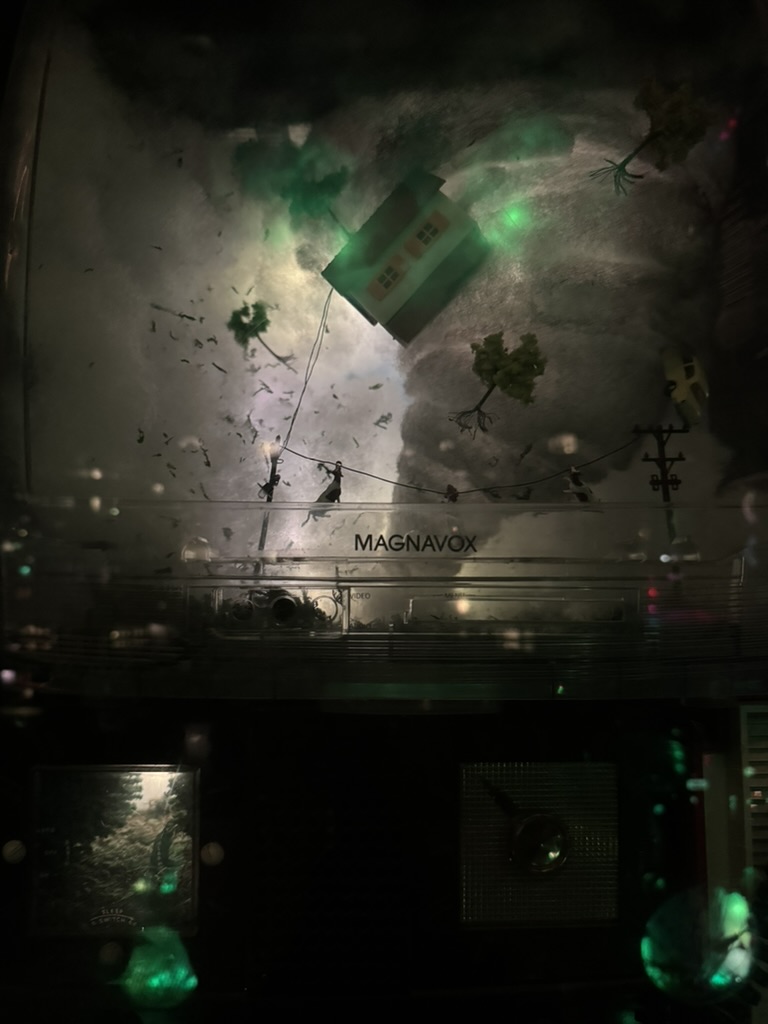
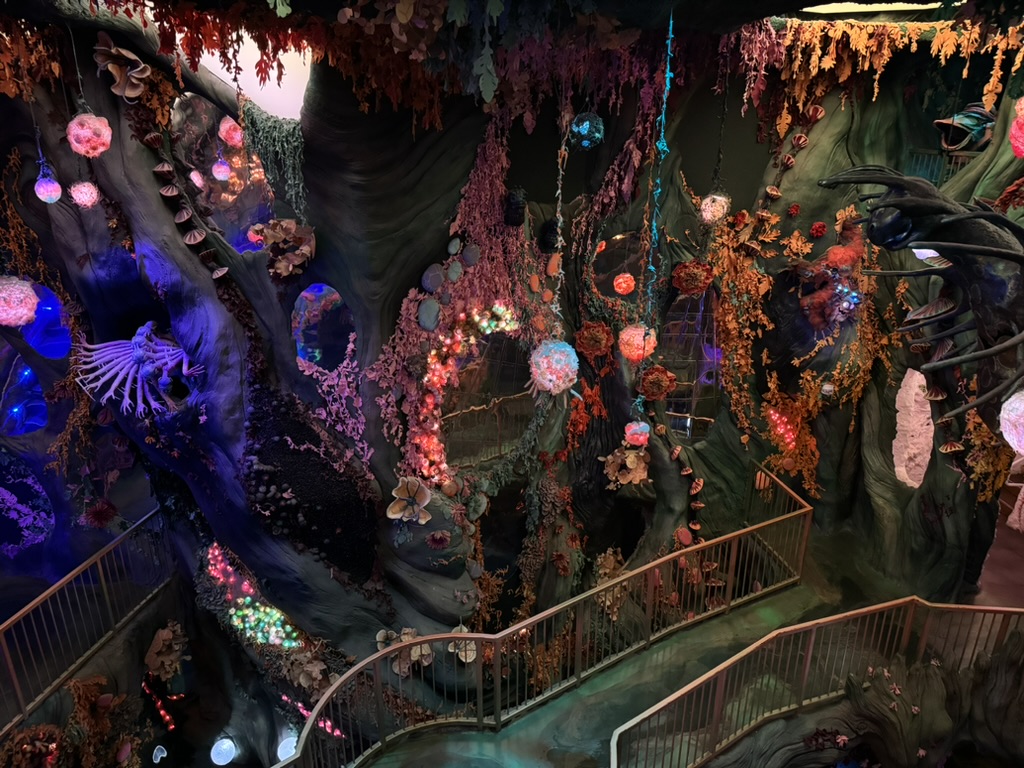
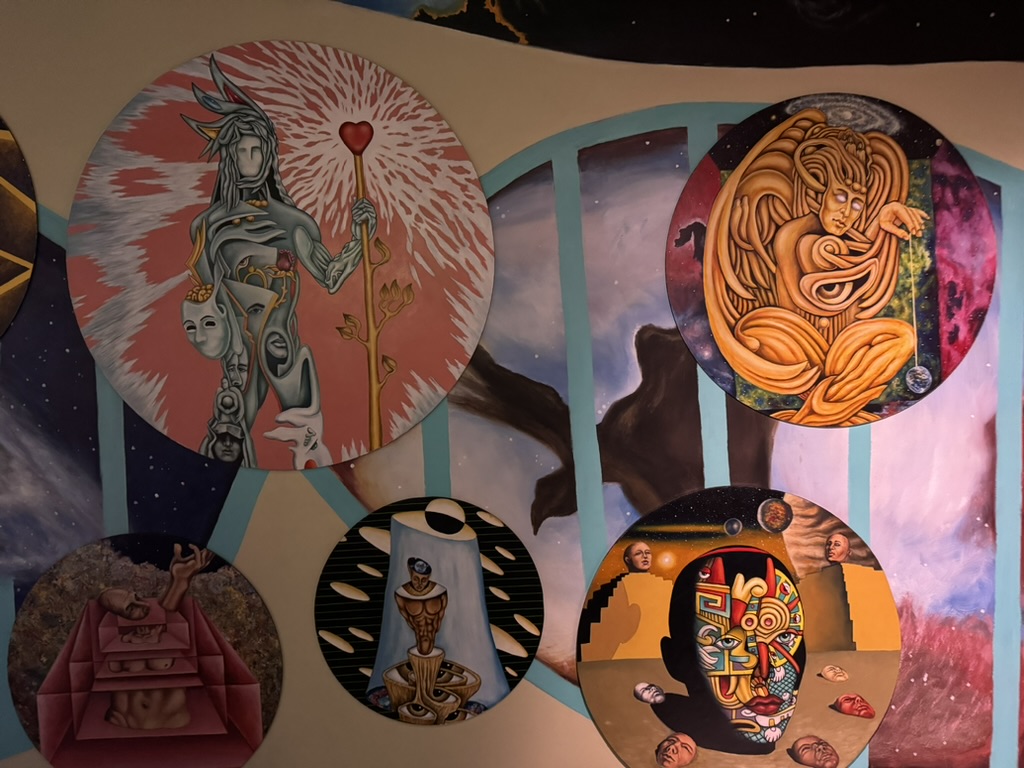
It’s hard to describe what exactly MeowWolf is. Over the past several years, you’ve likely seen some pictures of this place, mostly on social media. MeowWolf describes itself as Immersive Art Experiences and Interactive Exhibits. While this is certainly true, it feels like one of those IYKYK (If You Know You Know) types of places. Pictures like these give you an idea what to expect, but it’s impossible to understand what going to MeowWolf is like without actually going there.
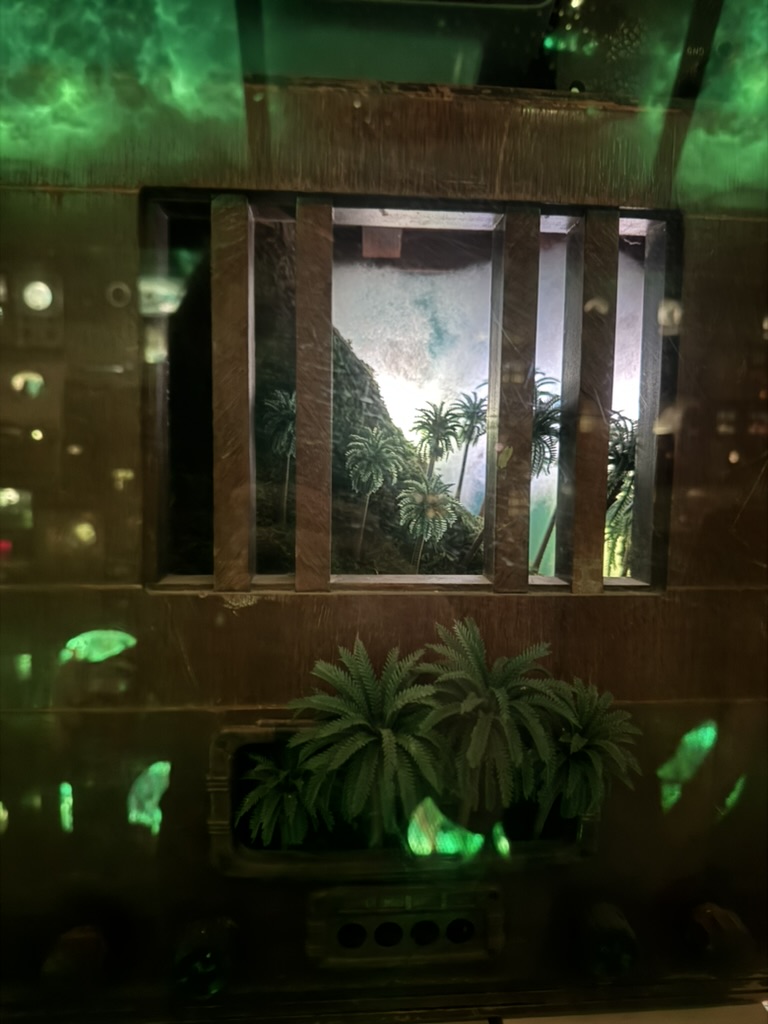
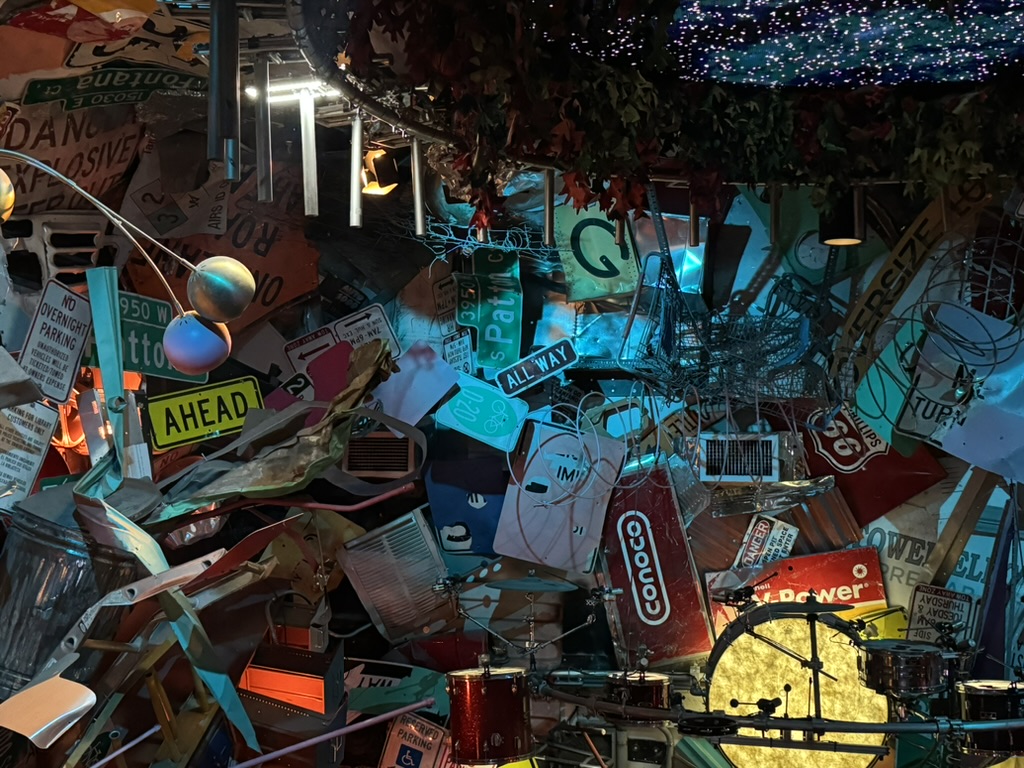
More than anything, the place is extremely artistic, and just random. Around every turn there is a door, another room, or even a crawl space that leads to another completely different exhibit. There’s a lot of it too. Some have spent over five hours in this place.

My favorite part was the Pizza and Pals section, a place where I suddenly found pizza singing at me.

The place also had an optional interactive component, with a story about four worlds that it would take a much deeper dive to understand.
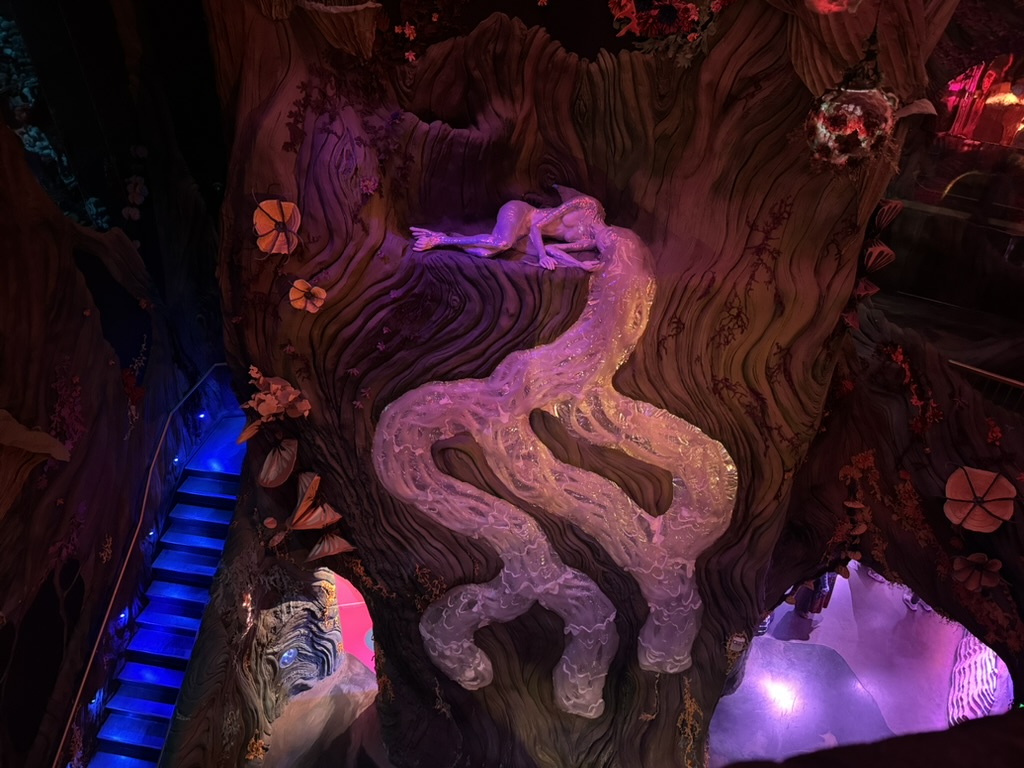
Still, I couldn’t help but reflect on how well this place matches our current cultural moment.

First of all, it certainly caters to an ADD (which seems to be all the rage right now) type of crowd. With all the different immersive art, any visitor can just abruptly change what they are looking at by turning their head or walking through a door.

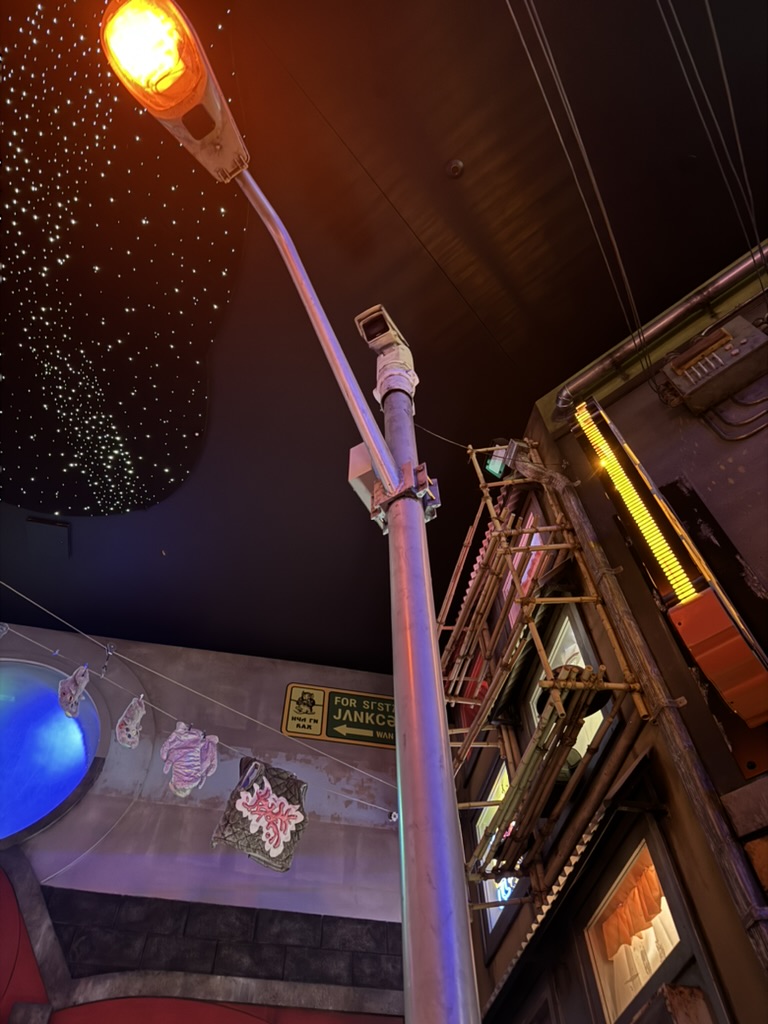
Yet, it seems to match this historical moment on a much deeper level. Sure, it is the perfect place for Instagram, something that people seem to have been looking for for a little over a decade now. However, it seems to speak to an even deeper craving that has developed during the 2020s. After nearly two decades of looking at and sharing pictures on social media, people are now looking for something that is more of an experience.

There is also something to be said about an experience that a person cannot truly wrap their heads around just by looking at pictures or even hearing about the experience. By knowing this place cannot even be remotely understood through social media feeds, it establishes itself as being about more. While this place may be great for social media, it points to a life beyond social media. The emergence and increased popularity of this place appears to be sending a cultural message along the lines of…

“We still want great photos to show our friends and family, but we are craving in real life interactive experiences. We want something unique. Something imaginative. We want something beyond what can just be seen in a photo or a video. We are ready to be done with just passively consuming content. And, we’re tired of the flattened culture where everything is the same!”

This, I believe, culturally, is where we are in 2025.
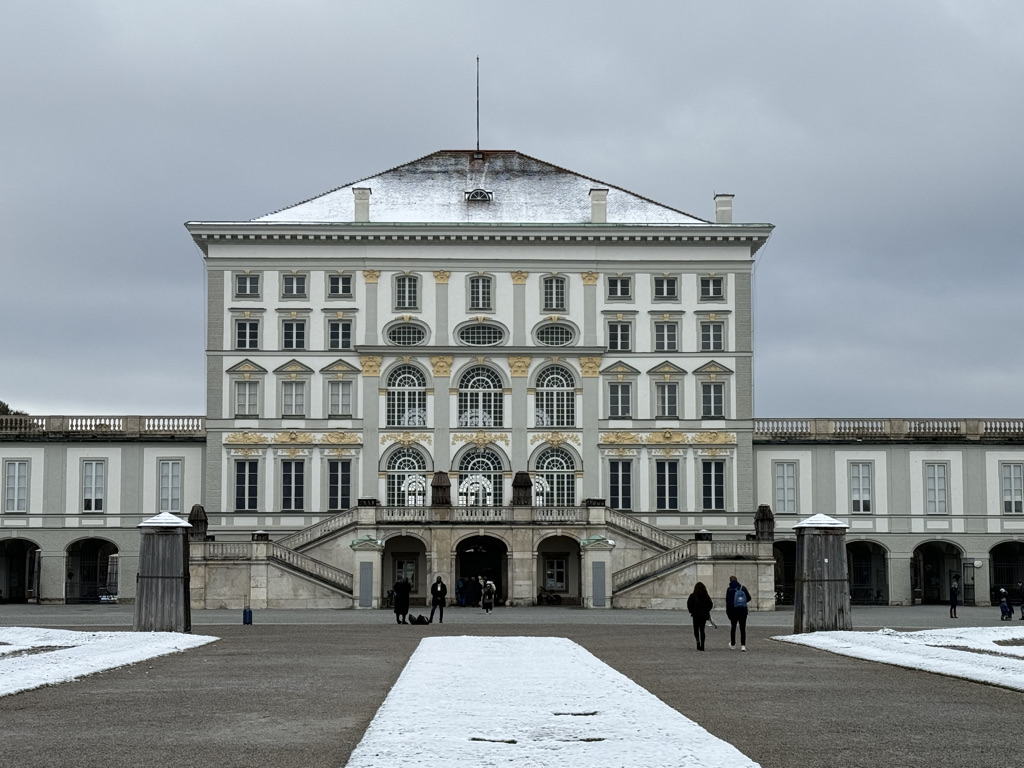
Munich in November

It was barely above freezing when these brave individuals bared the cold river and graciously showed off their amazing surfing abilities in Munich’s English Garden. In the summertime, it is likely quite a challenge to get a peak at these amazing local athletes from the bridge over the Eisbachwelle along Prinzregentenstraße. In November, at least before noon, I was able to just walk up to this overlook and get a glimpse of this incredible performance. By the afternoon, however, this bridge would be packed with people doing the typical 2023 thing, taking photos and videos.

Munich in November is not for those who prioritize comfort. Most days are cloudy and chilly. Cold rain and wet snow is quite common.

Also, daylight is quite limited. This photograph of the BMW world headquarters was taken a little after 3:30 P.M. with darkness already starting to encroach upon the city.

The key is maximizing the daylight hours as much as possible.

To take advantage of those rare instances when the sun does come out.

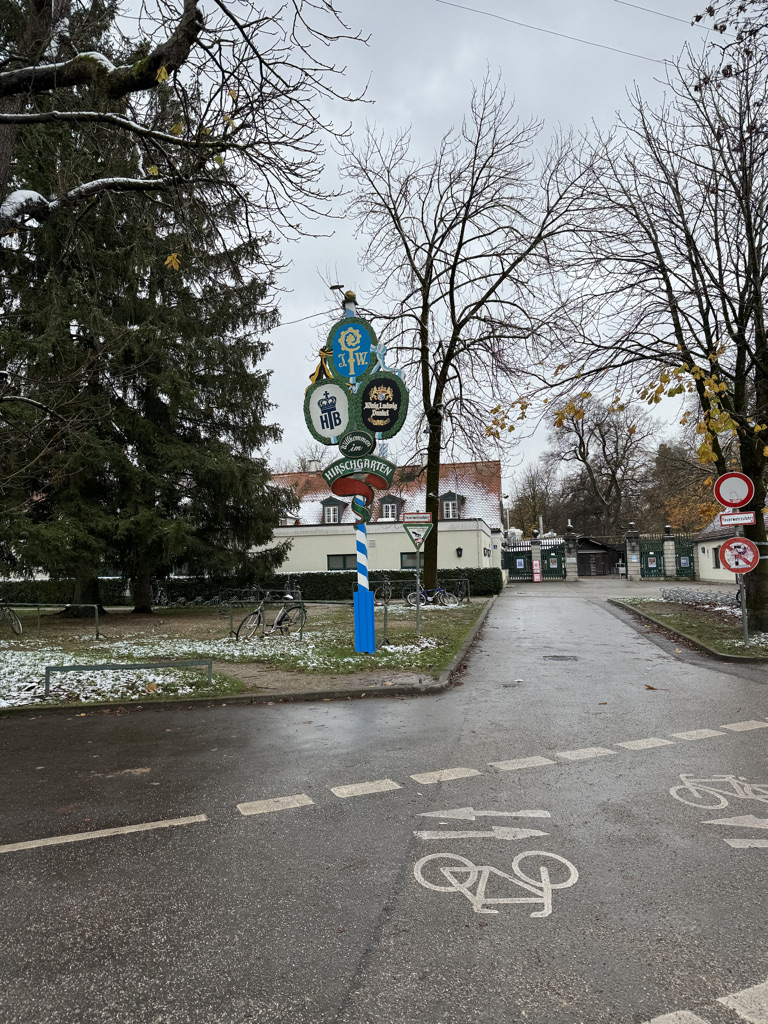
And to find a fair share of indoor activities. Luckily, Munich is home to the world’s largest beer garden.

As well as countless other places people go to eat and drink.

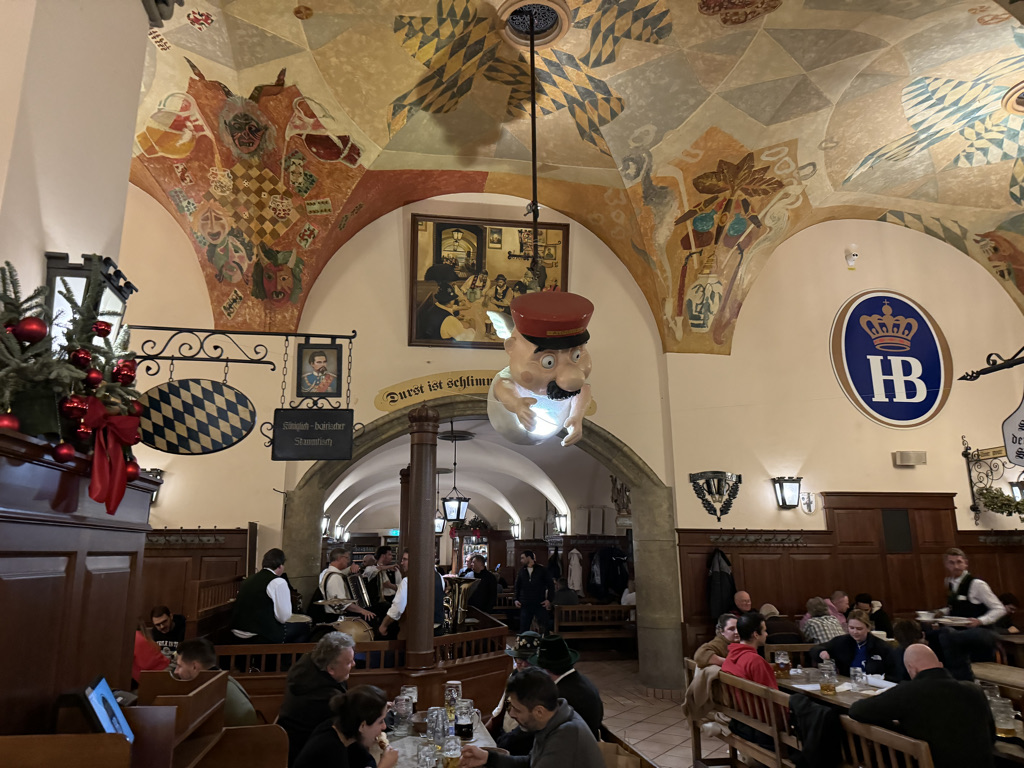
Perhaps the most famous tourist destination is the Hofbräuhaus.

The easiest way to describe this place is that it takes every stereotype you may have about Bavaria and leans into it 100%. Most people are drinking large quantities of beer and there is a band in the middle playing polka or music of a similar variety. During peak tourist season, this place may be so packed it is hard to get a table, making November a pretty good time to visit this place.

Of course, there are activities for those times when you just don’t feel like drinking. On this trip, I visited multiple museums dedicated to showcasing Bavarian history.

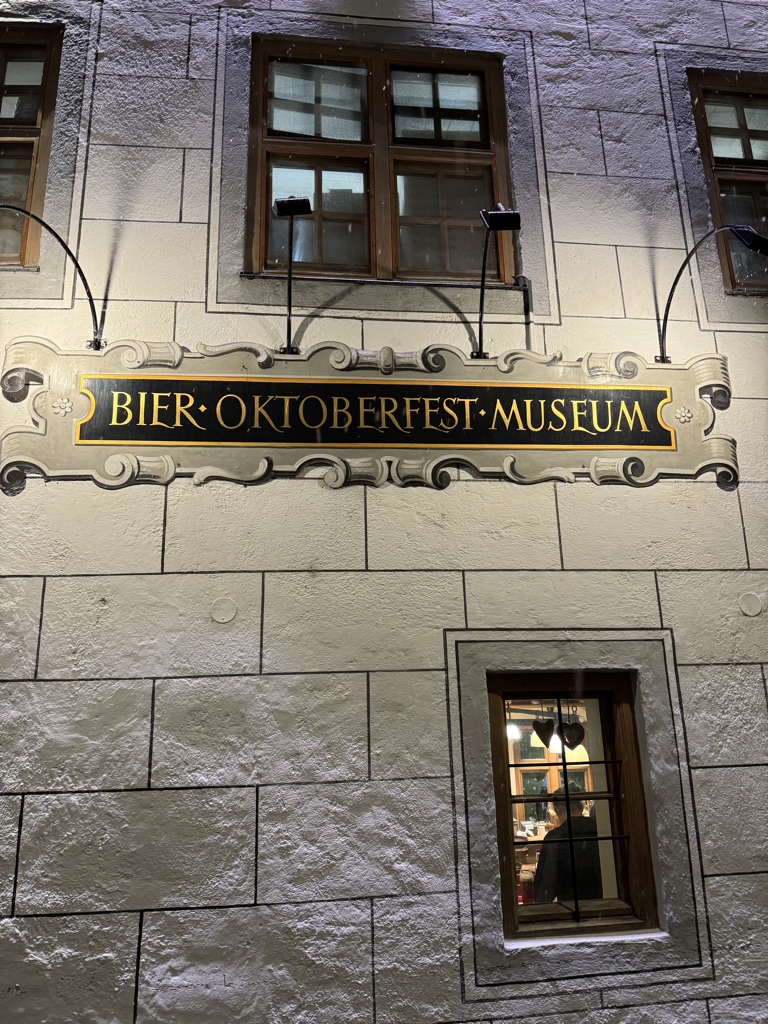
Another place easier to navigate due to the relatively low volume of tourists compared to other parts of the year is the Oktoberfest Museum.

All discussion around town about Oktoberfest defied my expectations. Oktoberfest is a tradition that goes back to a wedding celebration in 1810.

For some reason, I expected the locals to mostly be annoyed by an event that brings a lot of people to town to get drunk, act stupidly and sing songs in a foreign language. However, most people I talked to seemed to be proud of it. Maybe this is just the tourism industry trying to get people to come back, but I was told it is an event I need to experience.

The Oktoberfest Museum covers not only the history of the event, but the history of beer, sometimes in a comical manner.

It also validated both my love of all things bicycles and my instance that inflation is a bigger issue than most people give it credit for. Inflation cancelled this event for two years!

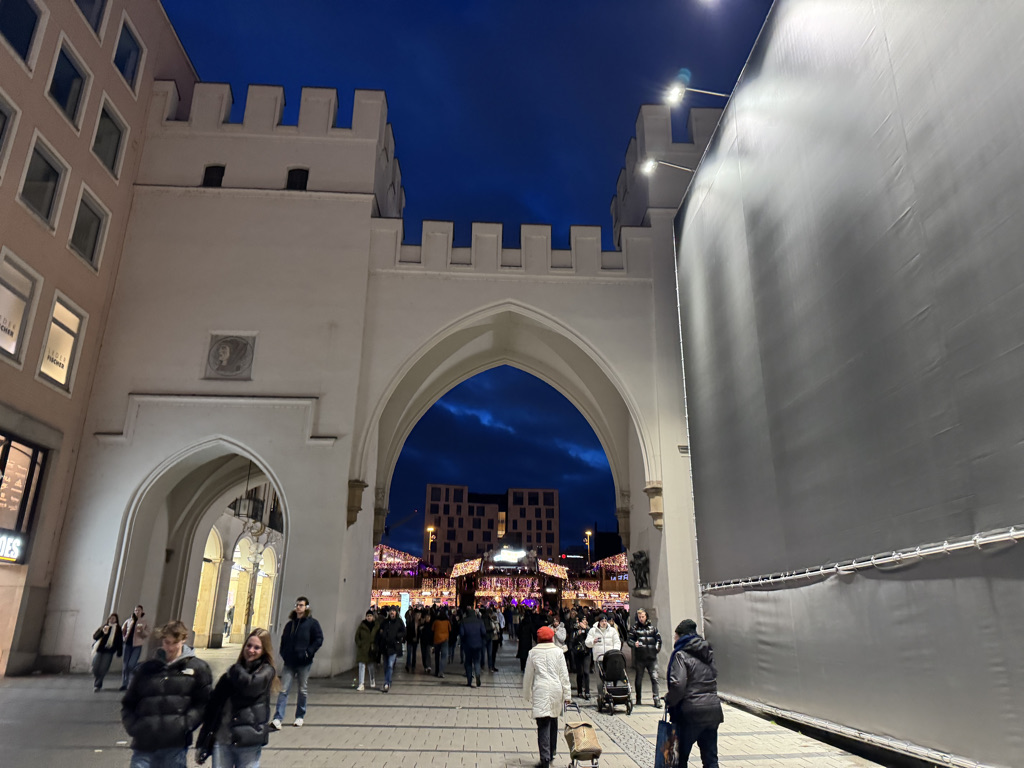
One thing that will be hard to miss in November, pretty much anywhere in Europe, is preparation for Christmas, with trees going up and people getting those amazing German Christmas markets setup.

Of course, Europe is not the United States and they do not have the Thanksgiving holiday. However, they seem to kick off the Christmas season in a similar manner. Most of these markets open up just before or just after Thanksgiving.

And, perhaps unfortunately, they have not only adapted the worst aspect of American Thanksgiving, Black Friday, but managed to turn it into an entire week.

Seriously, I know some people are ashamed of the history of Thanksgiving. However, today the holiday’s primary purposes are to gather people together and express gratitude. If people in other countries started adapting this tradition, as an American, I would wear it with pride. Our consumerism, not so much.

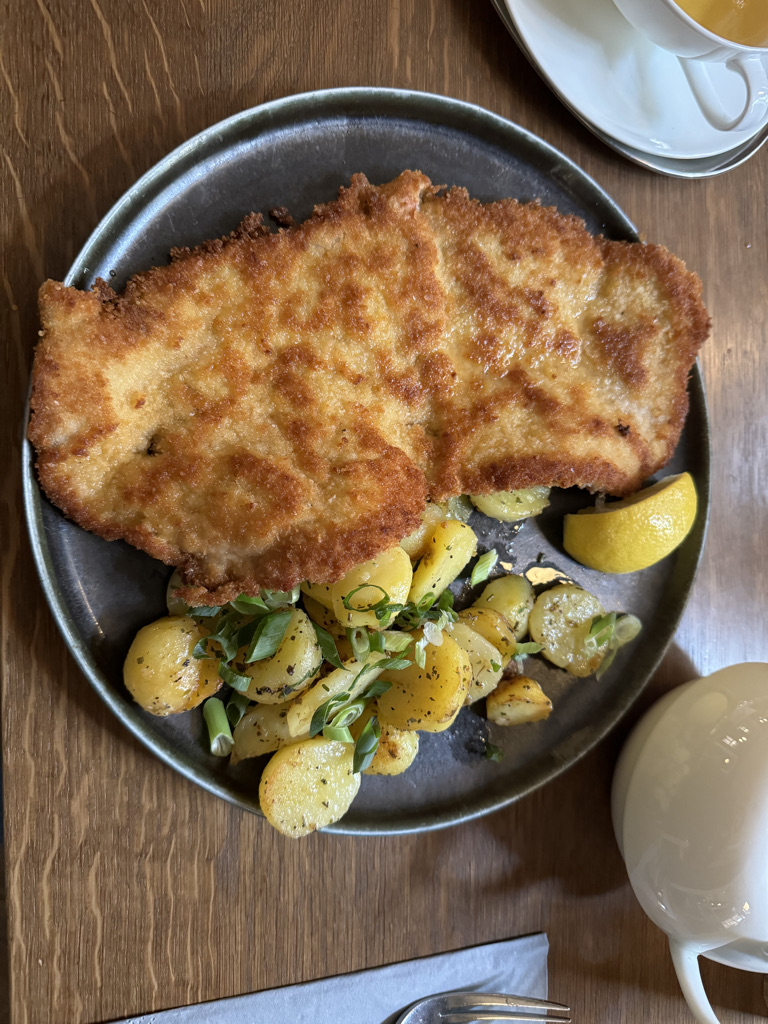
Whenever I travel anywhere, I like to really immerse myself in the food, sometimes even eating things I would not normally eat.

It’s another way of getting a real cultural experience. These traditional German dishes are pretty heavy. Eating them feels far more natural in the wintertime.

To sum it up, there are advantages and disadvantages to visiting places like Munich in November. Munich’s November weather is less than ideal. However, it is great to see people setting up the Christmas markets, and have far less lines and crowds, as well as some cheaper prices for things like airfare and hotels.

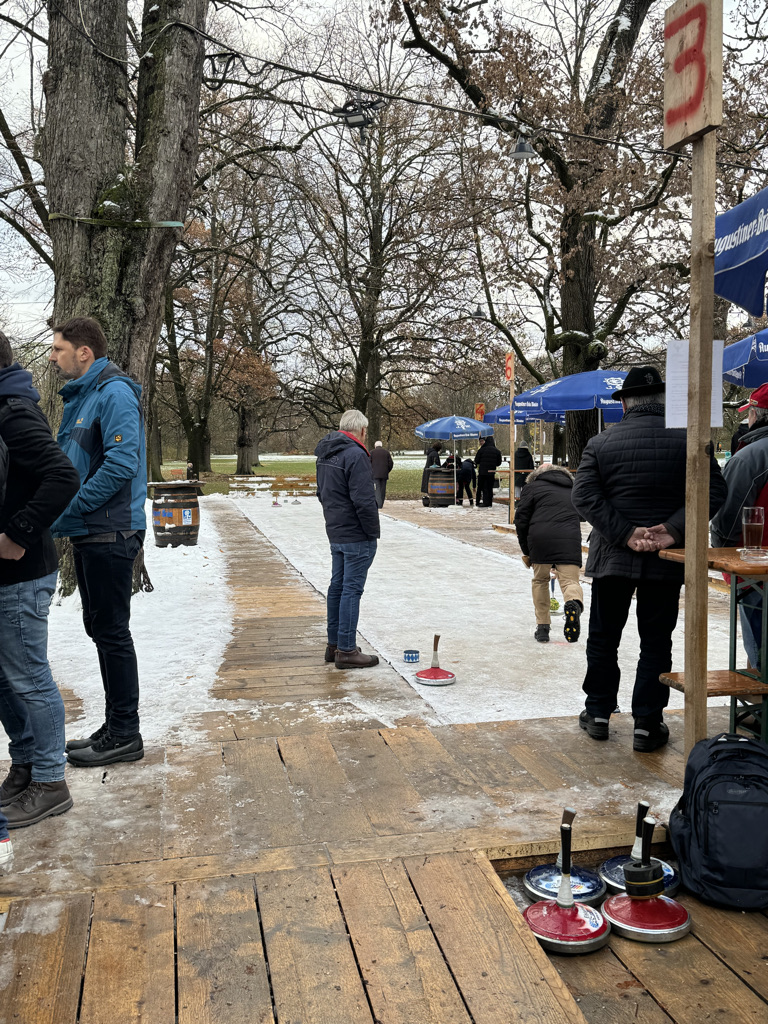
Also, had I not visited in November, I would not have learned about another completely unexpected tradition, this strange combination of curling and bocce ball, played on ice.

Seriously, I have no idea what this sport is called, but it felt like it was everywhere, particularly at beer gardens. This makes sense as I would be hard pressed to think of a better drinking game to be played outside in cold weather.

Prague: Where the Past Come to Life

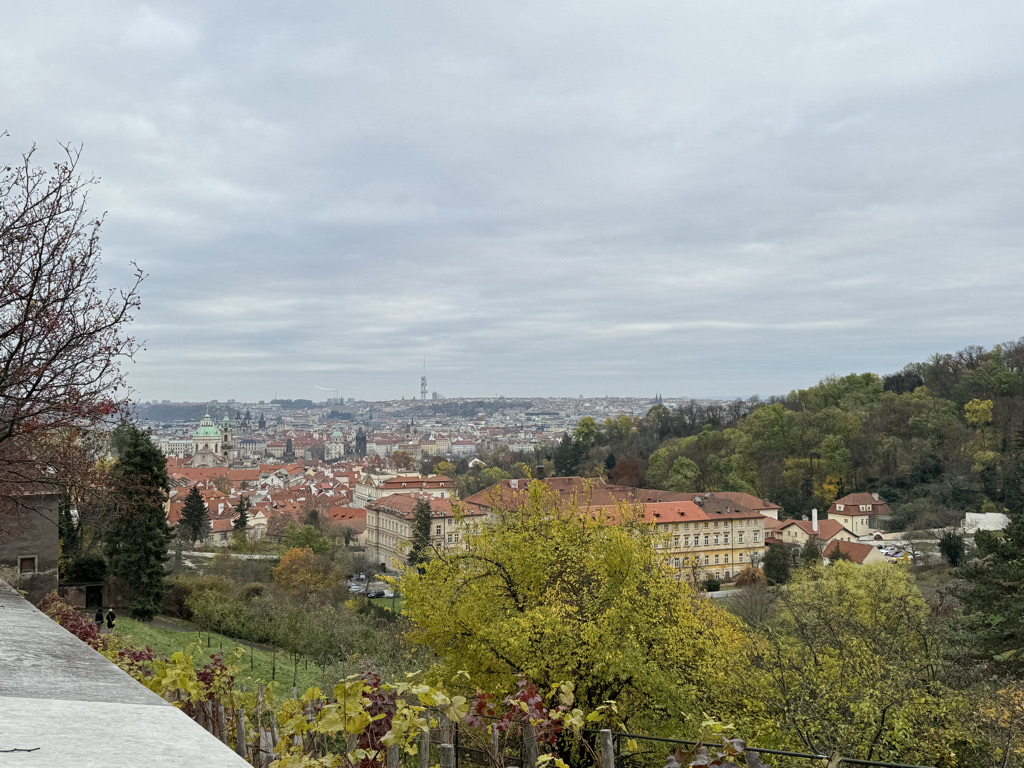
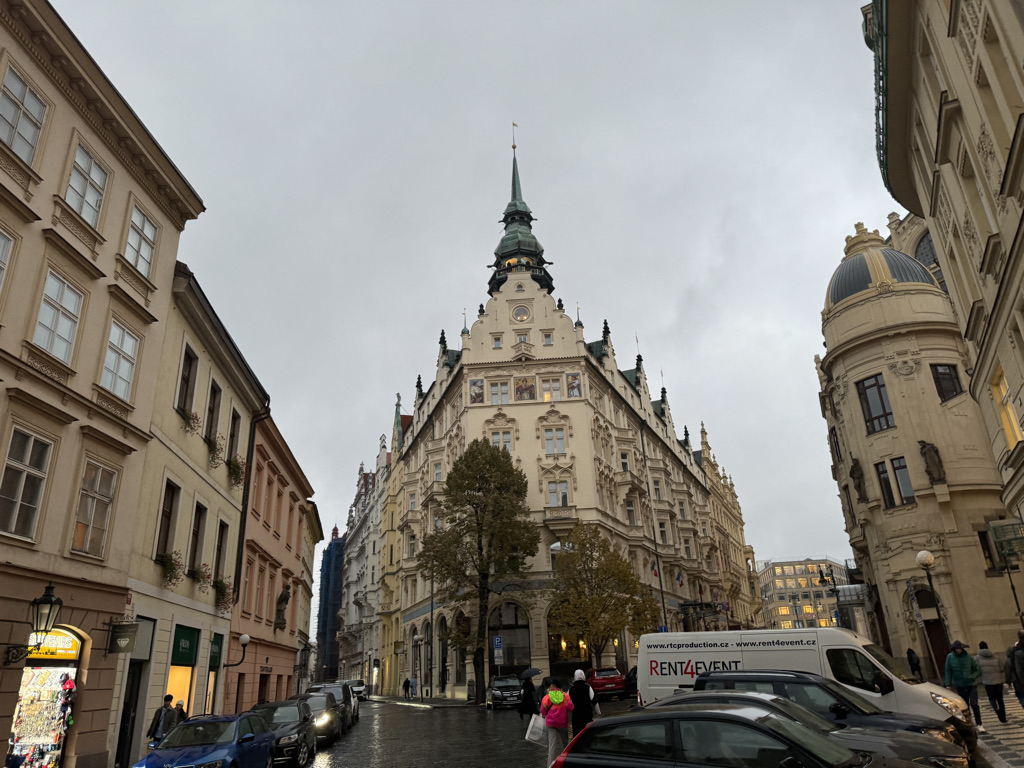
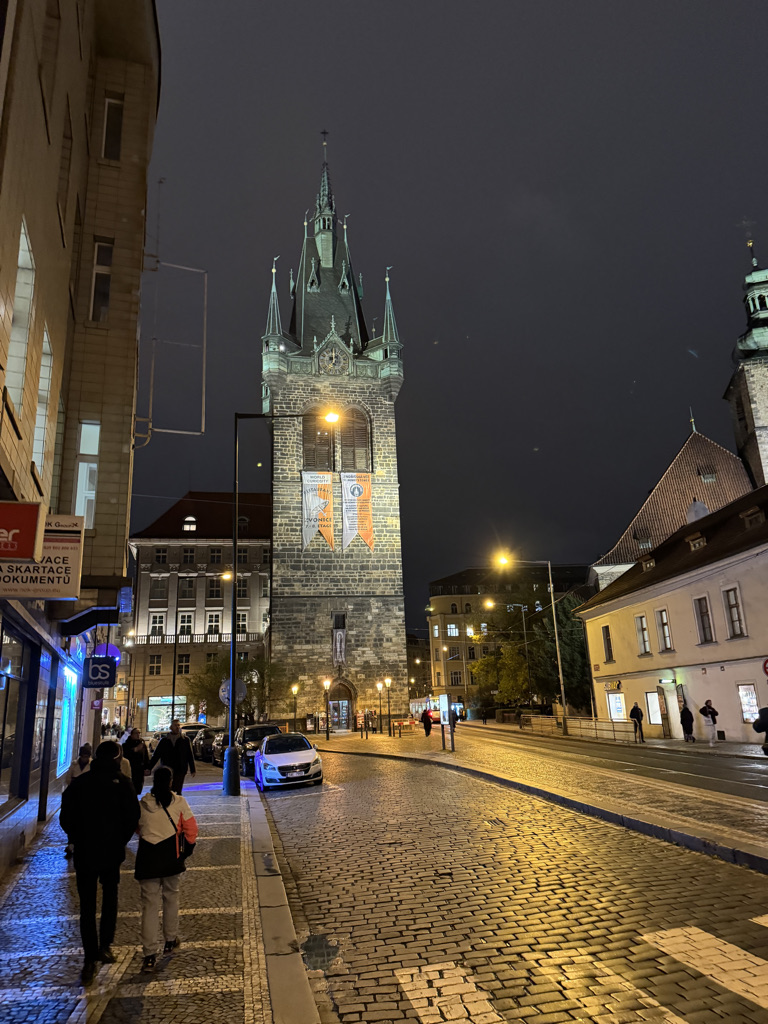
The first thing that stands out to anyone visiting Prague for the first time is the architecture. Navigating the city’s confusing, densely packed roads, visitors encounter one elaborate Medieval or Baroque era building after another.

Many of them show off the centuries of history they embody, as well as what had to have been thousands of hours of attention to detail in design and build.

It is perhaps an even more amazing set of structures to behold at night.

It is no wonder the city tops many lists of the most beautiful cities on earth.

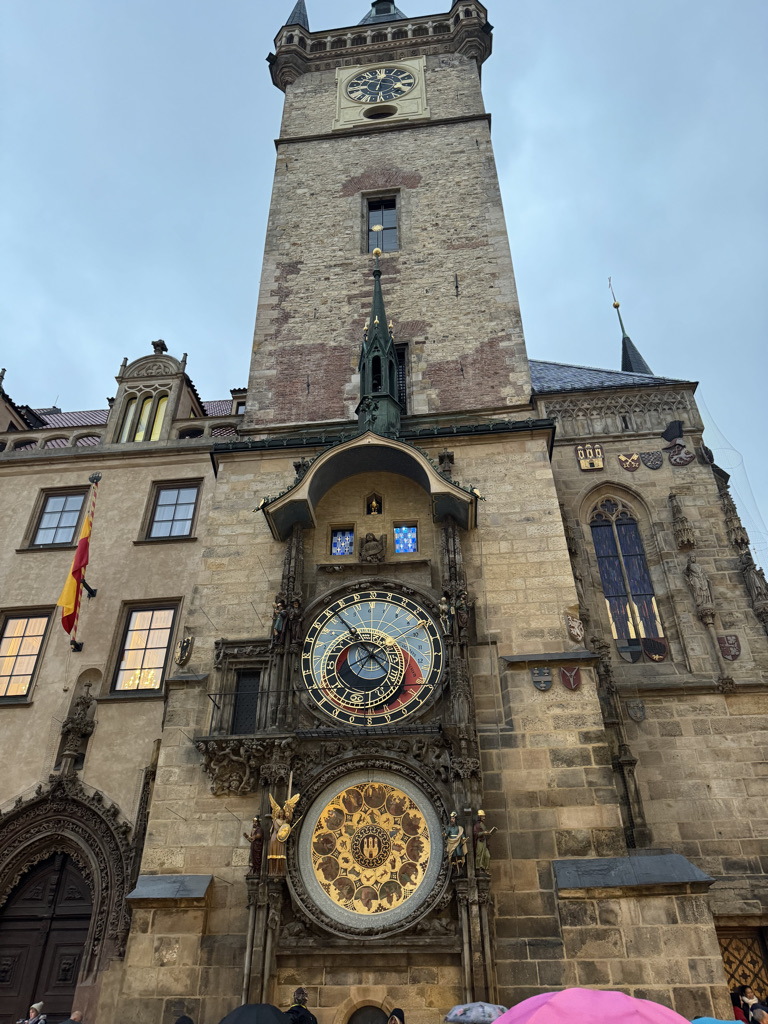
Perhaps the most crowded destination in the city is the now over 600 year old Astronomical Clock, right in the center of Old Town Prague.

For anyone visiting destinations that are “touristy”, it is imperative to find the right time to visit destinations like these where crowds are constantly gathering for things like the hourly show this clock put on. This clock itself is ironically a window into Central Europe’s past, particularly the 15th through 17th centuries when the majority of its individual components were created. Embedded in the structure is an implication of the values of the time. There is religious imagery. The clock shows the positions of the sun, earth, moon and all of the zodiac constellations. It is also hard to ignore the skeleton adjacent to the upper right portion of the clock itself.

There is probably a near infinite number of inferences that can be made about the values of the past from what features were included in the design of this clock. Historians can rely on other sources and, if they can avoid the trap of their own biases, can create a more accurate description of what the Late Medieval and Early Modern people valued. Looking upon a structure like this, the important thing to realize is that their values were different than ours are today and that many of the assumptions we take for granted in 21st century life do not apply to building constructed so long ago.

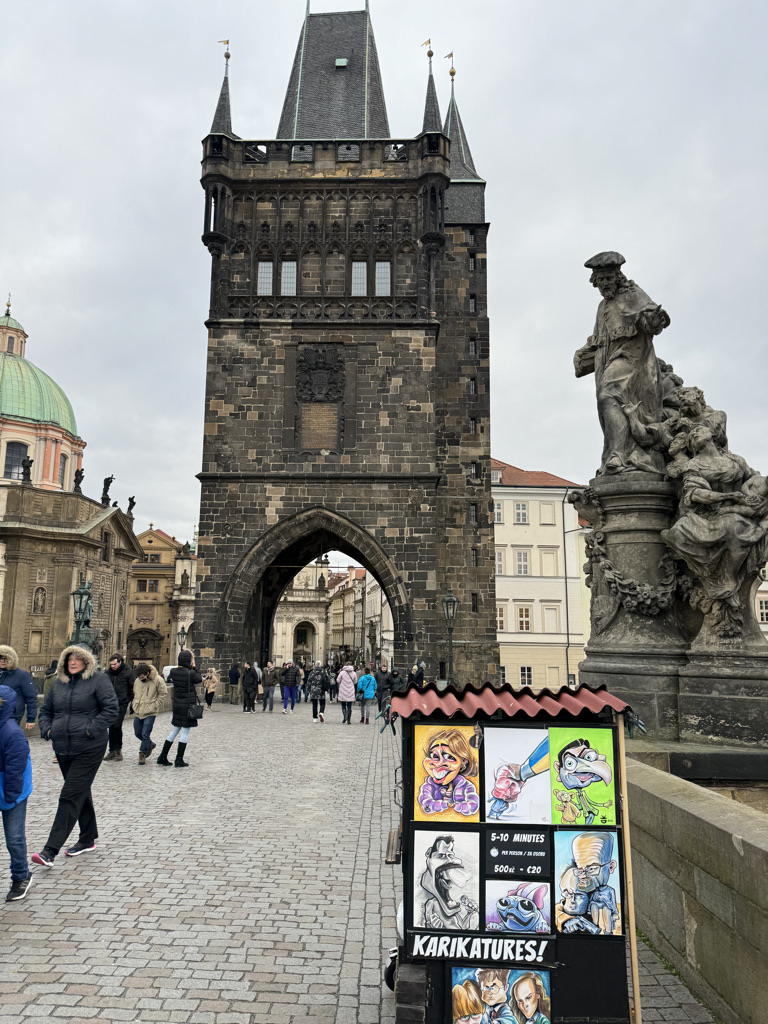
Construction on the famous Charles Bridge started even earlier than the astronomical clock.

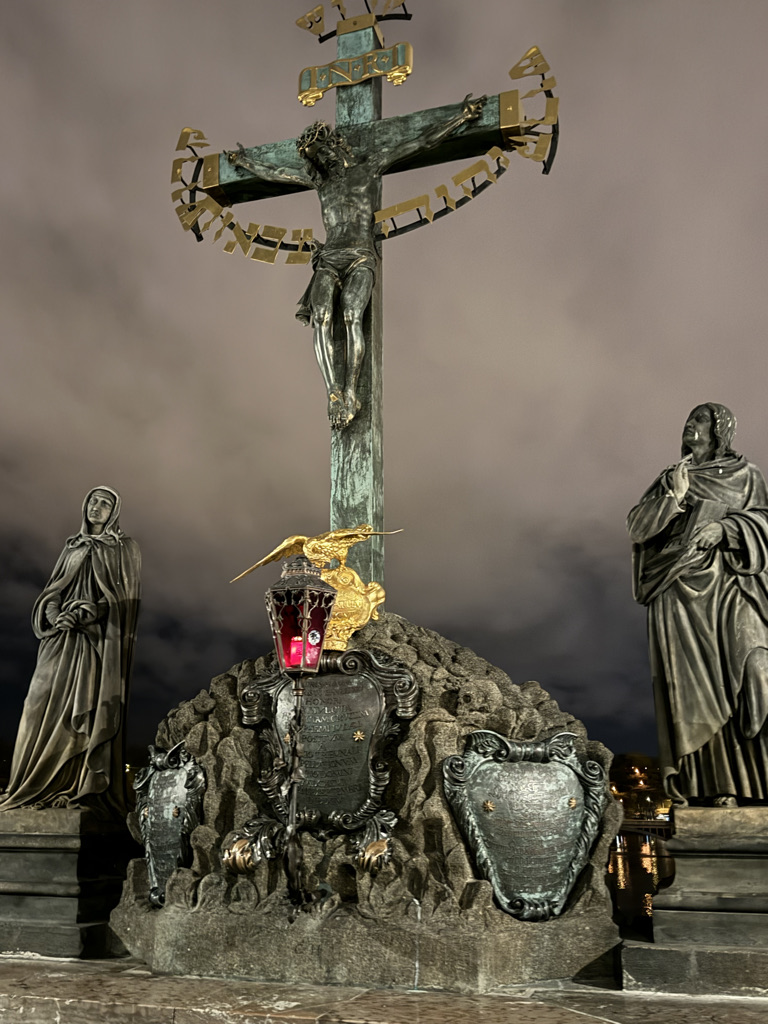
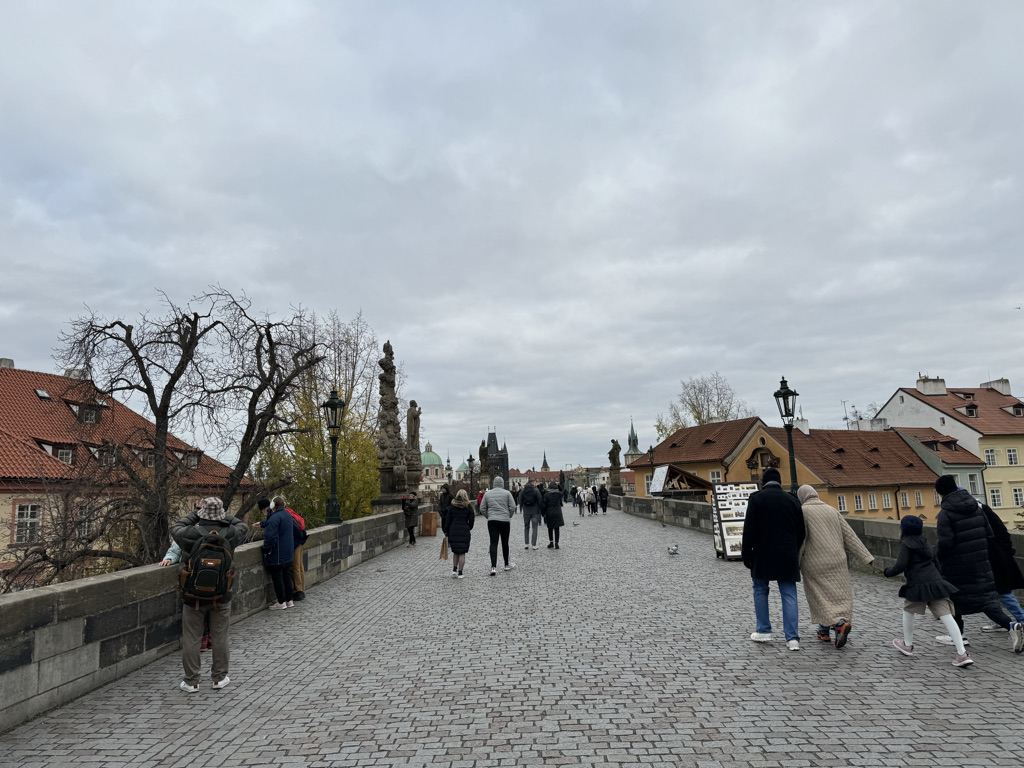
This bridge is beautiful to walk both by day and night. On both ends of the bridge, end there is a monument to pass under.

This bridge is one of many places around Prague where the city’s religious past is right in front of everyone’s faces, ironic for a country that is now one of the world’s least religious.

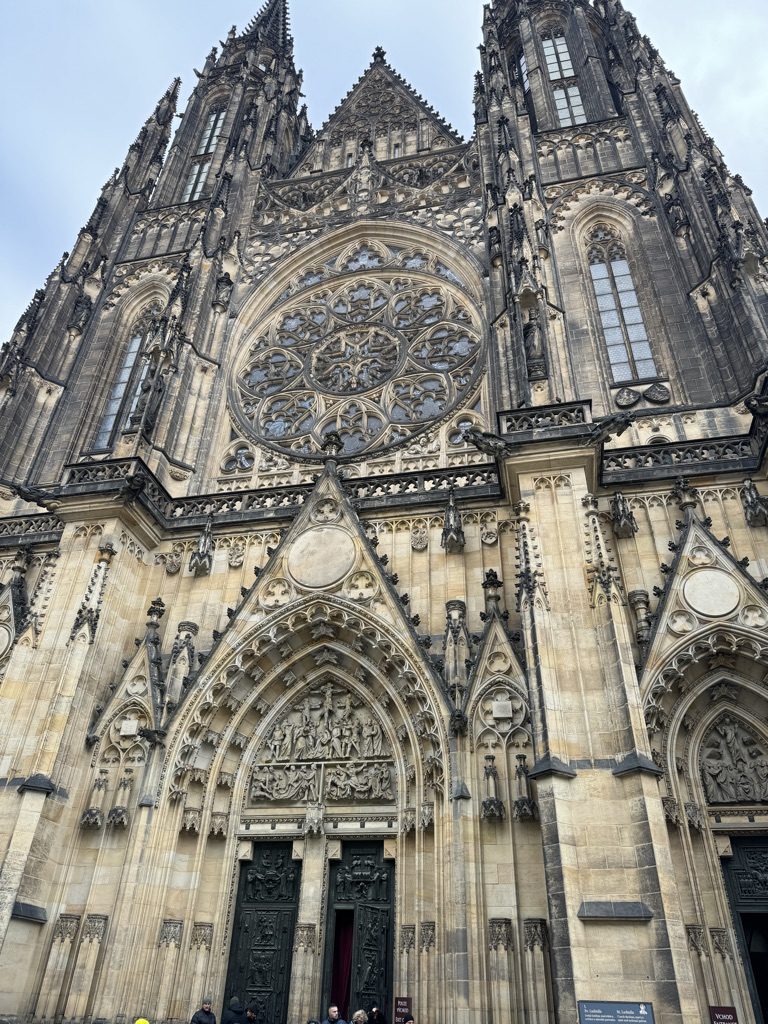
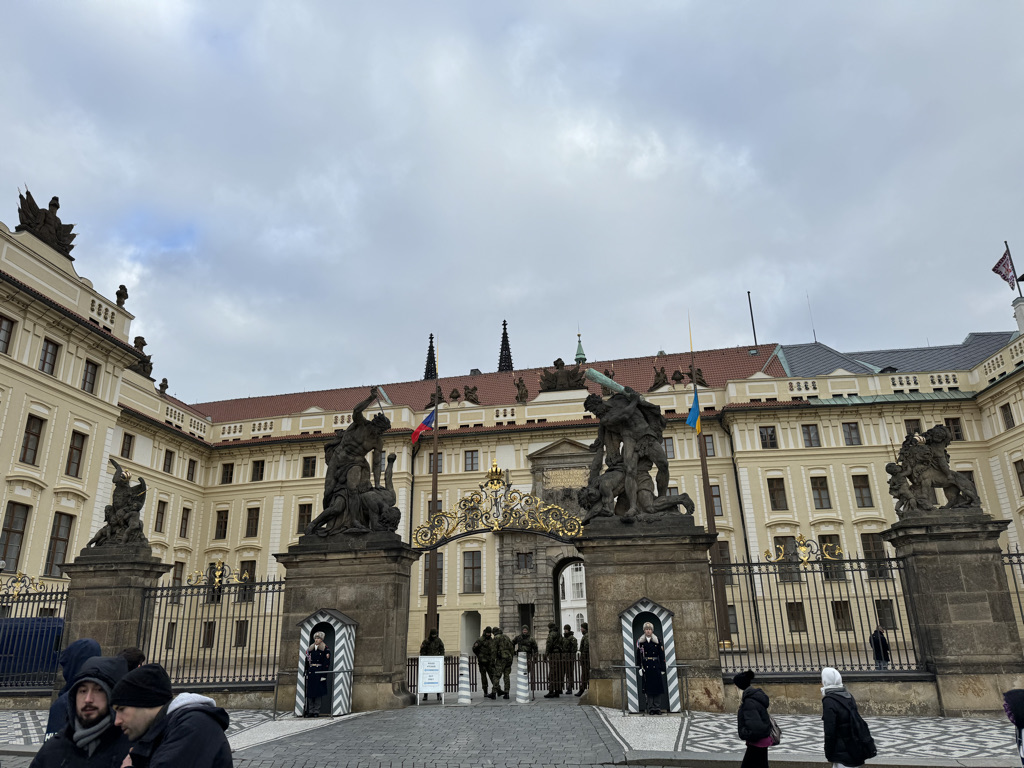
It’s odd because the Prague Castle, which is now the residence of the Czech Republic’s Head of State, is also home to several huge churches.

As an American looking upon this, I cannot help but see, right in front of me, the true reasoning behind one of the founding principles of our nation being the “Separation of Church and State.” There are many Americans today who fear any intrusion of religious based values into our public policy is a threat to this principle, but here in Prague, for centuries upon centuries, the church and the state were not even physically separated! Like many Medieval European governments, the church and the state were intertwined, with Bohemia being part of the Holy Roman Empire and often also imposing policy dictated by the pope.

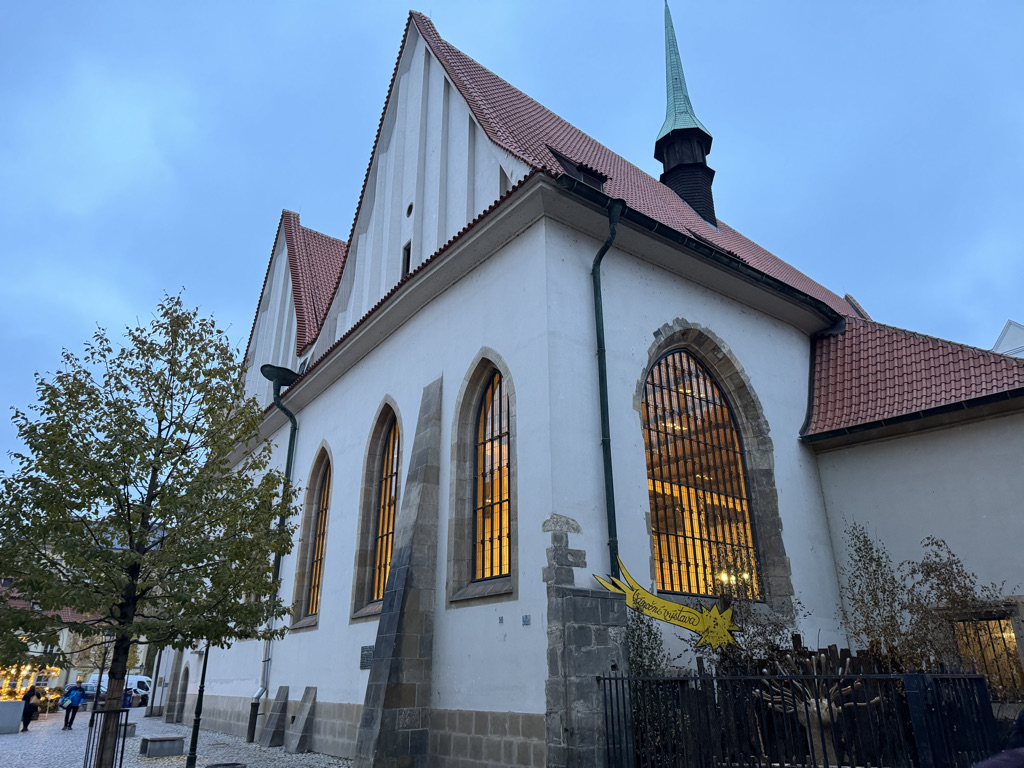
Of course, there were some who questioned it, including Jan Hus, whose Proto-Protestant movement pre-dates Martin Luther by roughly a century. It is here in Prague he preached many of the same principles that would be promoted by Luther, at the Bethlehem Chapel.

Perhaps because the region that is now the Czech Republic did not suffer quite the mortality rate of the rest of Europe from the “black death”, the battle between Catholicism and Protestantism that would take place here would foreshadow what was to come for the rest of Eurpoe.

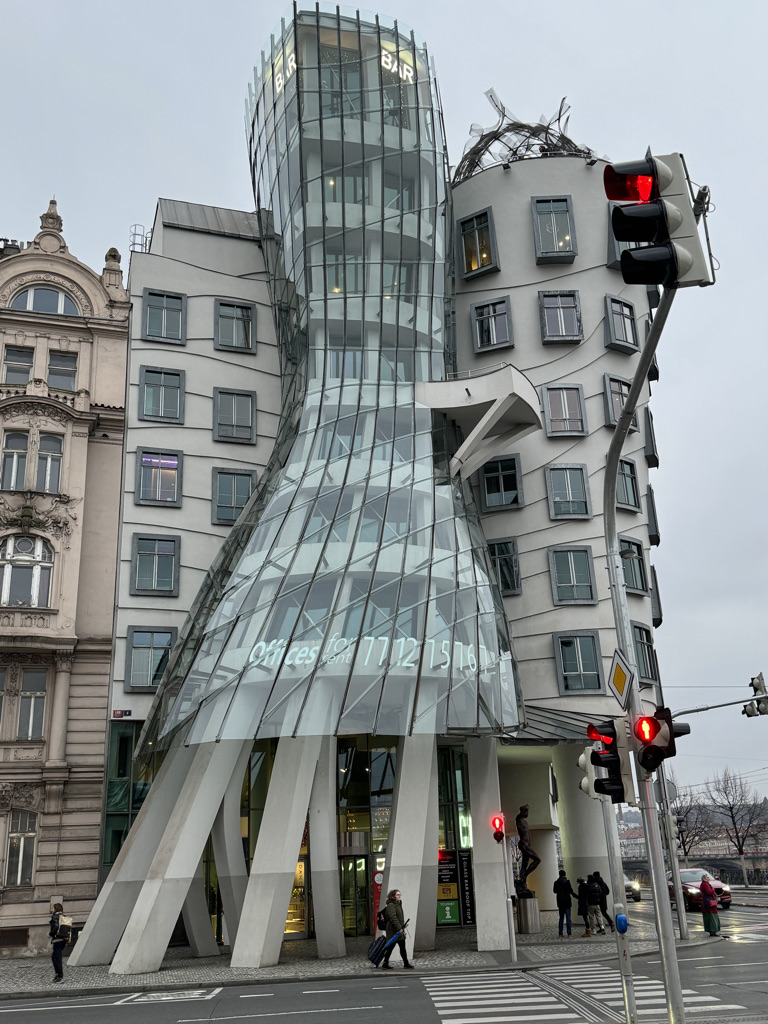
Around Prague, it is not just ancient history that comes to life. The Dancing House was built to on the site of the Prague bombing of 1945.
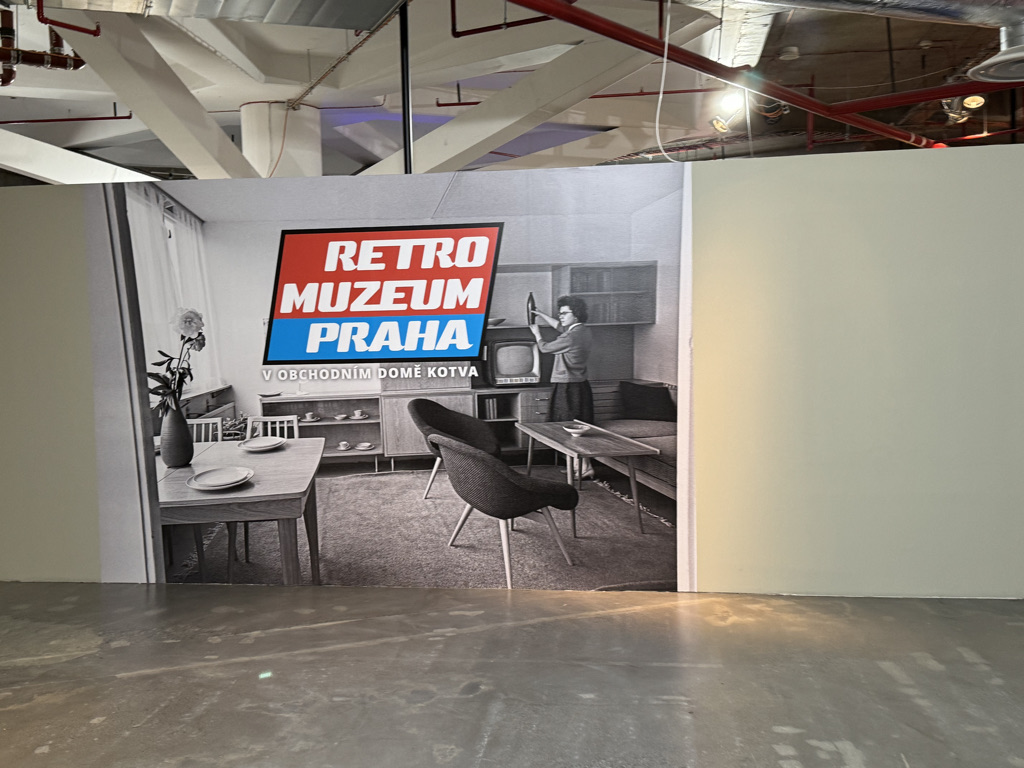
The Retro Museum is one of two museums that depicts life under Communist rule, this one focused on the 1970s and 1980s.
Prague has only been what it currently is for a little over 30 years. So, to experience Prague and its consumer culture and apparently legal marijuana is to be very much in the present day.

The Czech Republic’s per capita GDP is right around the same as Estonia and significantly higher than Poland, making it one of the more successful ex-soviet countries. With an amazing amount of green space and parks, the place seems like an incredible place to be and live.

To be in Prague is to be in the present moment, but constantly surrounded by echoes of the past and be constantly reminded of what series of events made the world what it is today.

90 Minute Hikes Outside of Denver

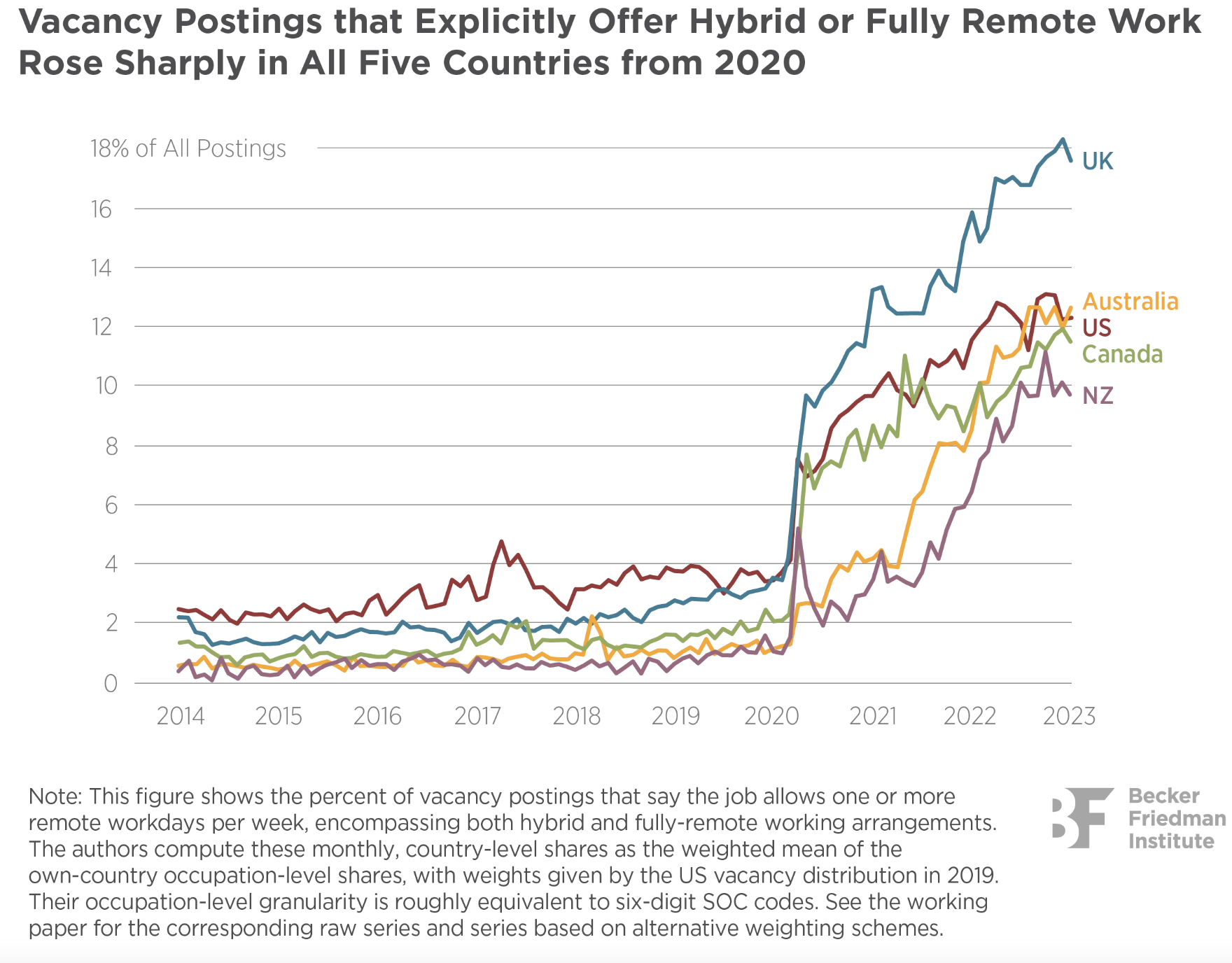
Phenomenon like “quiet quitting“, the “great resignation” and some places experimenting with the four day workweek should make it abundantly clear that there is something less than ideal about the standard work culture of the post industrial world.

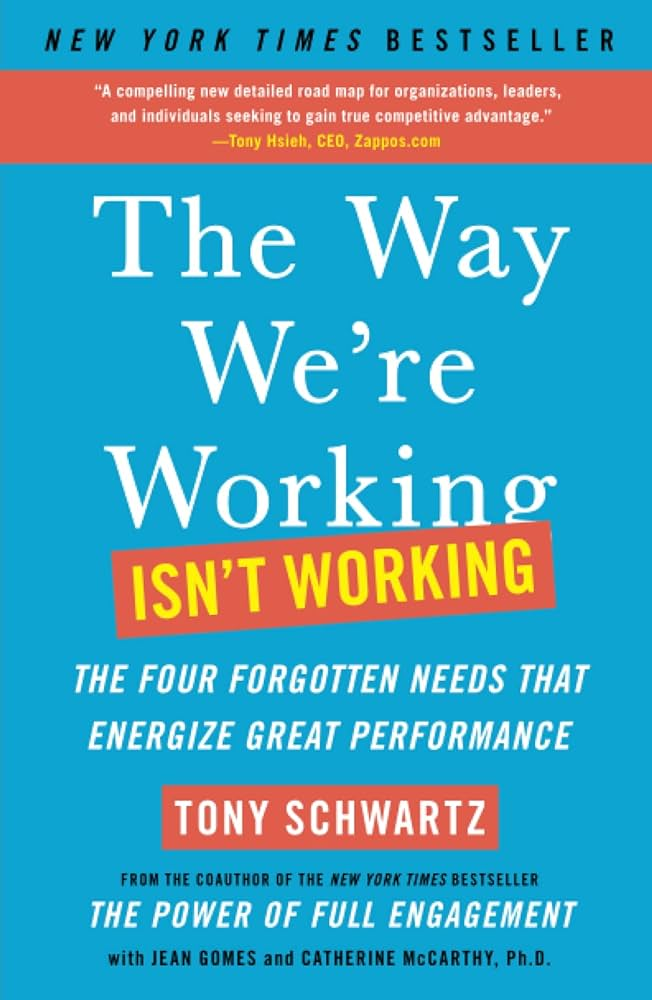
Note: This book was published in 2010

Our general work setup is built around a world that no longer exists. It was built around the industrial world of one income families of a hundred years ago. On an assembly line, the amount of value someone brings to a company is directly connected to the number of hours they are present. The eight hour workday represents a compromise of sorts between business owners and labor. It is based on this direct connection between value and hours worked, as well as a world where most laborers were men with women at home tending to childcare and household upkeep. Today’s world is completely different and needs a completely different paradigm.

A silent disco co-working pop-up in Denver, curtsey of Cifernoise Productions

However, realistically, it is going to take a while to get there. We are still in the beginning phases of exploring the new nature of work after the pandemic.

And, there are plenty of powerful interests trying desperately to keep as much of the old, flawed system as possible. This will certainly delay progress towards a new paradigm.

At this time, living a healthy and balanced life will require being innovative and working with what we have available. This is why I have taken an interest in hikes that can be done in roughly 90 minutes close to home. This fall, I tried two.

First was Pence Park, between Evergreen and Indian Hills.

The hike to the top is about a mile and a half (2.4 km) with an elevation gain of 750 feet (230m).

For a short hike, the views here are quite stunning, especially at the top.

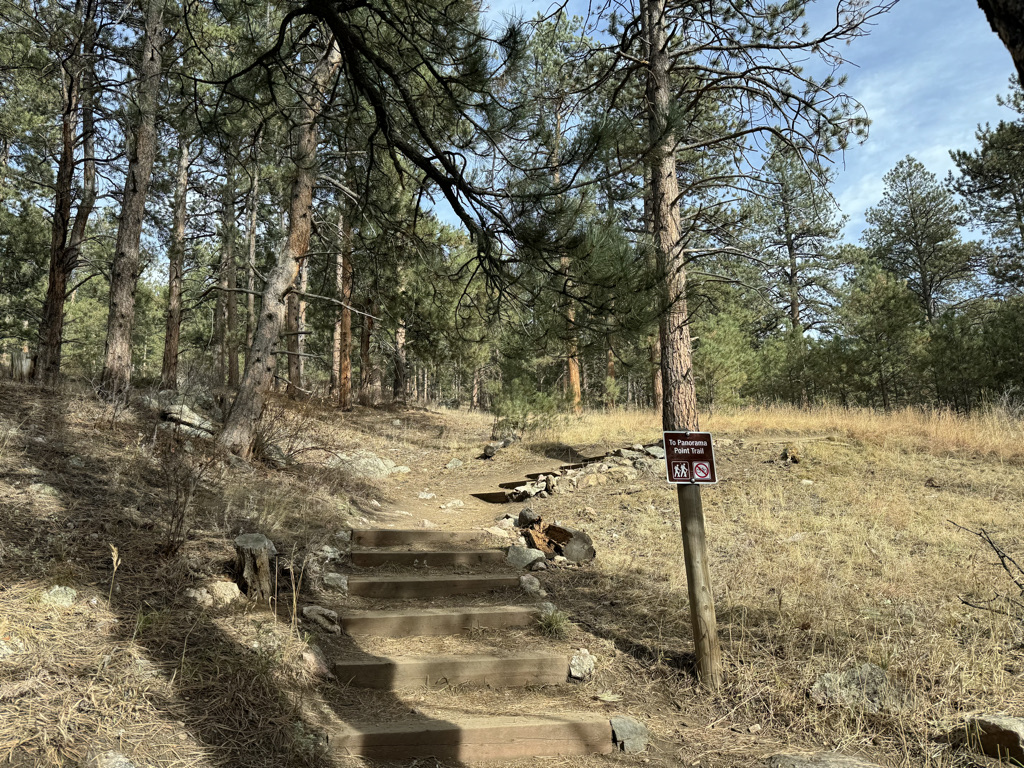
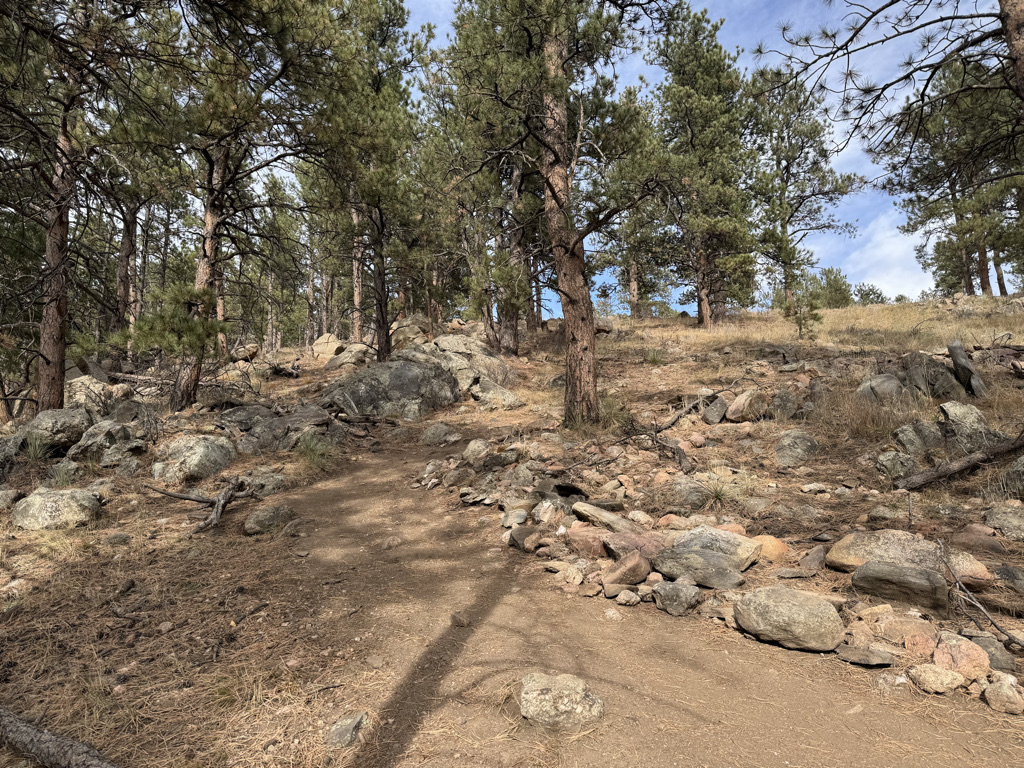
My other 90 minute fall hike was Panorama Point, just outside the small town of Kittridge.

This hike has a round trip distance of just over three miles (≈ 5 km) and an elevation gain of 625 feet (190m). These hiking trails are actually only a few miles apart, so it is not surprising that they feel quite similar.

Panorama Point has an overlook of the town of Evergreen at the top.

So, there are some slight differences, but both hikes take about an hour and a half and are about 45 minutes to drive to from downtown Denver.

This activity address two of the biggest shortcomings of “9-to-5” office jobs. Spending those hours doing work inside, whether it is in an office or remote, can limit one’s exposure to sunlight. Some studies have estimated that well over half of Americans are not getting sufficient vitamin D, which mostly comes from exposure to sunlight. Additionally, most of these jobs are sedentary, involving sitting at a computer all day long, which is certainly not helping with the obesity epidemic.

These 90 minute hikes offer an opportunity to get some sun, exercise, and even be a bit social in the middle of the day on a weekday, particularly in the spring and fall seasons. On hikes like these, there is even the potential to limit the amount of time spent out of contact to under two hours. Eating and working from a nearby restaurant made my time away from my computer, messages, etc. not too much more than a standard lunch hour.

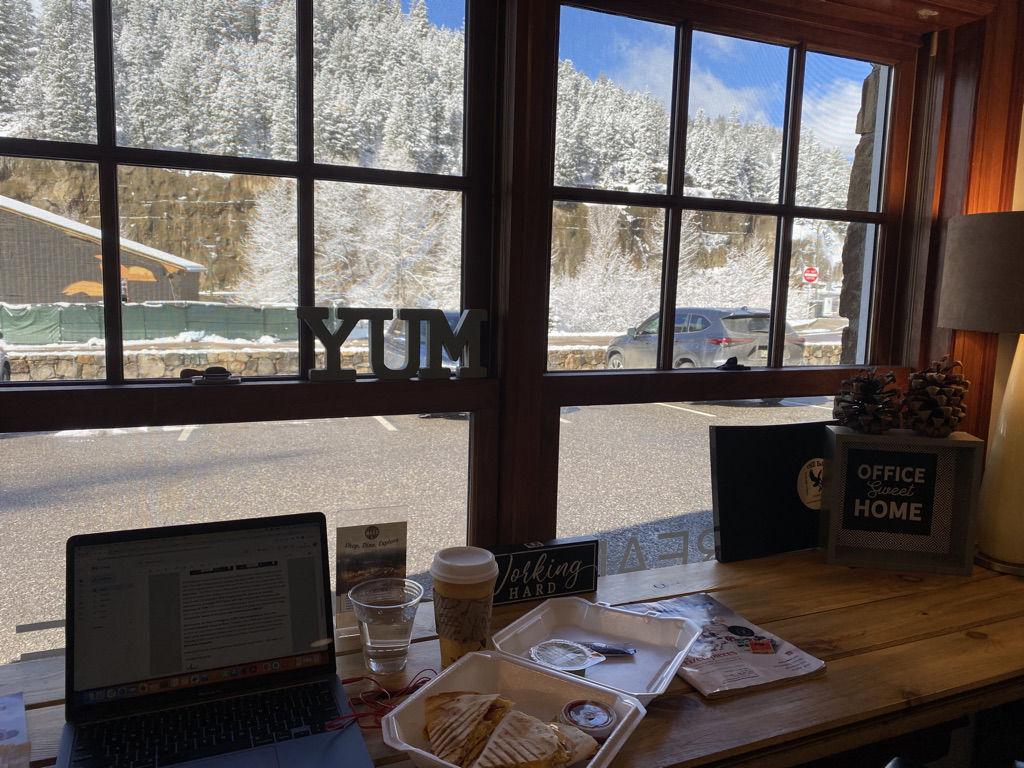
Blackbird Cafe in Kittridge, CO

Of course, not everybody lives in a place with amazing short hikes nearby. The key is to be creative and work with what you do have around you to find habits that help correct the imbalances created by a less than ideal work setup. Hopefully, the time will come sooner rather than later when we’ll determine how a majority of people can be happy, healthy and provide value to the organizations they work for. Until then, I hope you can find your version of the 90 minute hike less than an hour from home.

Visiting Three Past Chapters

What is the value of looking back to, and even re-experiencing some aspects of the past? It is a question many of us wrestle with quite a bit. From Happy Days to The Wonder Years, That 70s Show and Stranger Things there is no shortage of nostalgia in our present day culture. Yet, there was a time in fairly recent history when nostalgia was actually looked upon as a mental disorder. We all want to understand who we are, but…

Is there a reason we want to “visit” the past?

Why do we want to reminisce about the way things were?

Is it a form of escapism or a form of connecting with something about ourselves and our history?

That is the question I ended up inadvertently answering this summer, when a series of trips ended up being back-to-back visits to different parts of my past.

First up was Valparaiso University, where I attended college.

This was by far the most lighthearted part. Much of it was about seeing the people I went to college with, looking at the dorm rooms I lived in, sharing stories about antics and experiences.

Valpariaso, Indiana was once a far sleepier town. Going back there almost felt like Marty McFly’s trip into 2015’s version of Hill Valley in Back to the Future. My vision of Valparaiso is the Valparaiso of many years ago. I was stunned to see a far more vibrant downtown, with more people out and about, more bars and restaurants, farmer’s markets and people out cruising around!

I then visited Chicago, a place I lived several years later, for my first job after attending graduate school.

Being the most recent chapter of my life, this was my least dramatic experience. It was nice to be back at Portillos.

Ride the train again and visit some of my friends. I even got a chance to live the kind of life I lived there going to Wrigley Field and spending an entire night out at the bars.

The most dramatic part of my trip, by far, was visiting the place where I grew up, New York.

I actually grew up on Long Island, in a town called Mineola.

To most, it is not a huge difference, but New York is the place where people make the distinction between being from Queens, Brooklyn and the Bronx and consider them completely different ways of life despite the short geographical distance.

I grew up eating the best pizza in the world.

Going to swim at Barr Beach (now North Hempstead Beach).

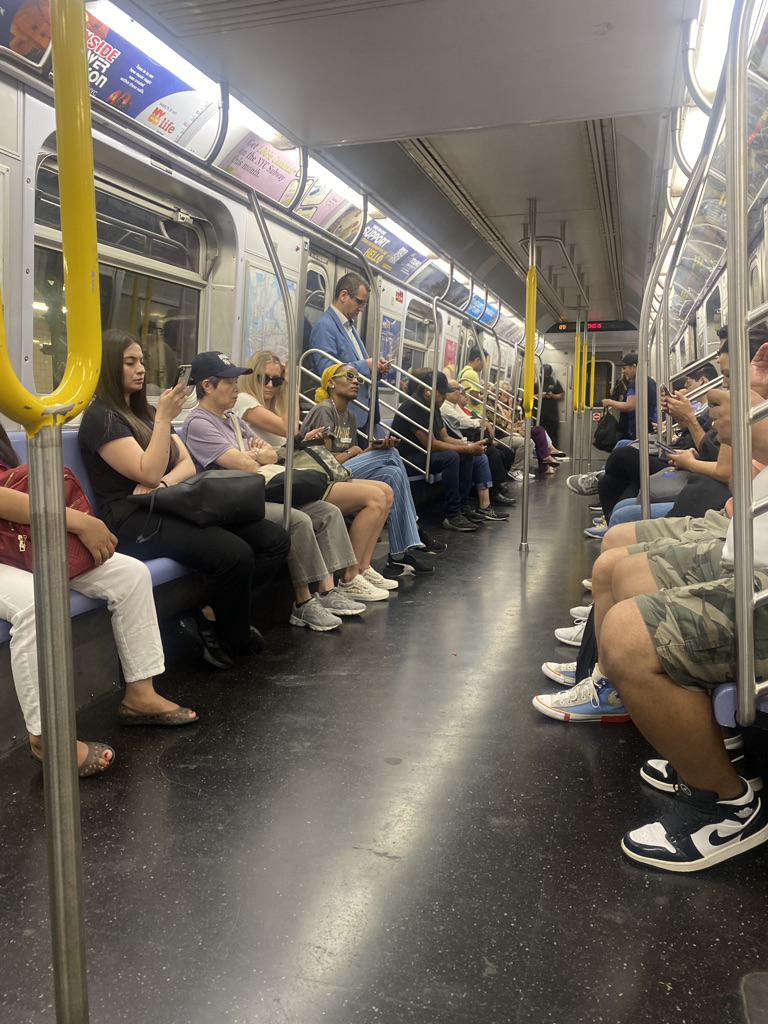
And riding the train, both the Long Island Railroad and the subway, to get places.

While there I felt like neither a resident nor a tourist.

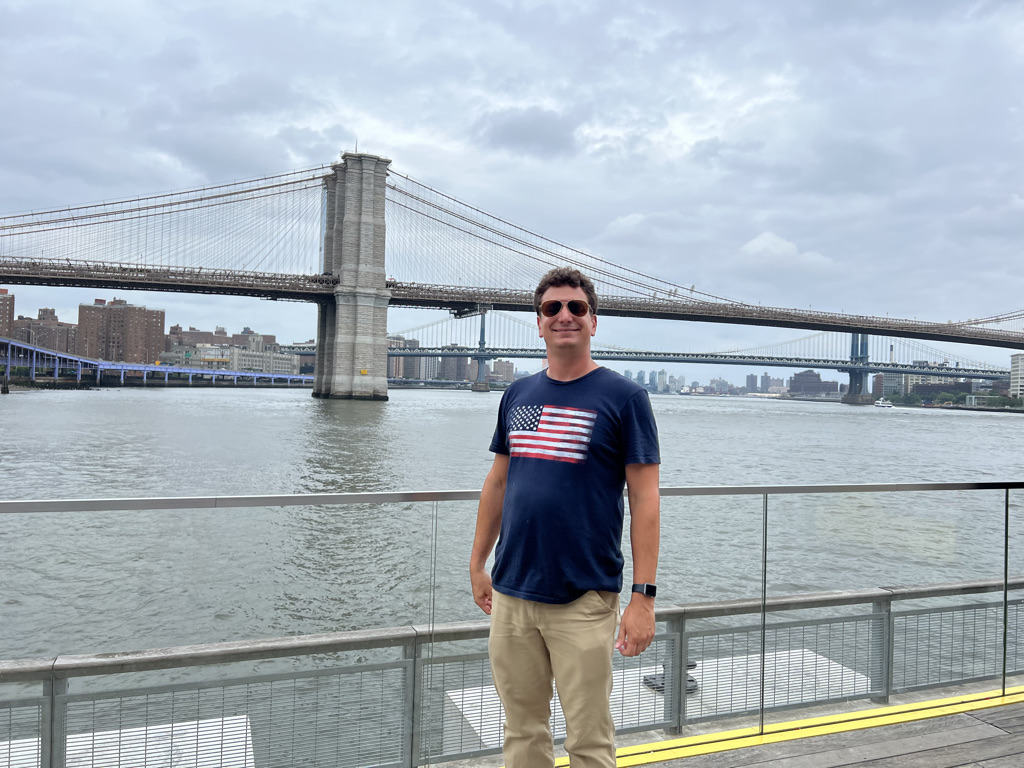
It’s been a long time since I’ve lived in New York. I never lived there as an adult. Yet, New York is still in the way that I walk, the way that I talk and the way that I act. The only day people viewed me as a tourist was the day I wore this American flag shirt to the Statue of Liberty.

Every other day, it was business as usual.

Still, it felt really emotional to remember all the things I loved when I was a kid, but feel so far removed from it.

I thought of my family, my family’s origins from even before we came to New York. Why do I sometimes feel so disconnected from it? Is that a bad thing? I’ve changed so much since every one of these chapters of my life. In fact, I would hate to be judged based on who I was at any of those moments in time. But, something made me feel a strong desire to be better connected with this past, as if it would provide some kind of grounding.

When I returned to Colorado, I reflected on the trip, especially New York.

I realized that, well, in life we all move on. We progress through chapters, some pleasant, some less pleasant. Some that feel more authentic than others. Based on who I am now, even though I often long for the fast paced lifestyle New York provides and taking trains everywhere, Colorado is where I was meant to be. Maybe I just feel I was meant to visit New York more frequently than I do.

As far as why we reminisce, why we desire to re-experience the people, places and activities we once did, in my journey I found myself focused primarily on who I was in each chapter. What I did. How I did it. How it made me feel. In New York, it was who I was as aa child. How I interacted with teachers, other kids my age. The experiences that, although so long ago, washed out in my memory by more recent happening, made me who I am.

Maybe that is the underlying reason for nostalgia. We want to remember who we once were. After all, in our lives we make some changes on purpose, but some just happen. They may not have been something we specifically desired. Sometimes they are foisted on us. Sometimes we’re just trying to get through a situation, like a survival technique applied to the modern civilized world.

So, maybe the primary reason we watch old shows, listen to old songs and go to the places that remind us of some past chapter of our lives is to reconnect with a past version of ourselves. And, if we are mindful enough, we can think about some of the ways in which we’ve changed and ask ourselves…

Did I want that?

Is this something that is serving me well?

And, is there something about who I was then I should get back in touch with?

On Restrictions (What Las Vegas Means to Me)

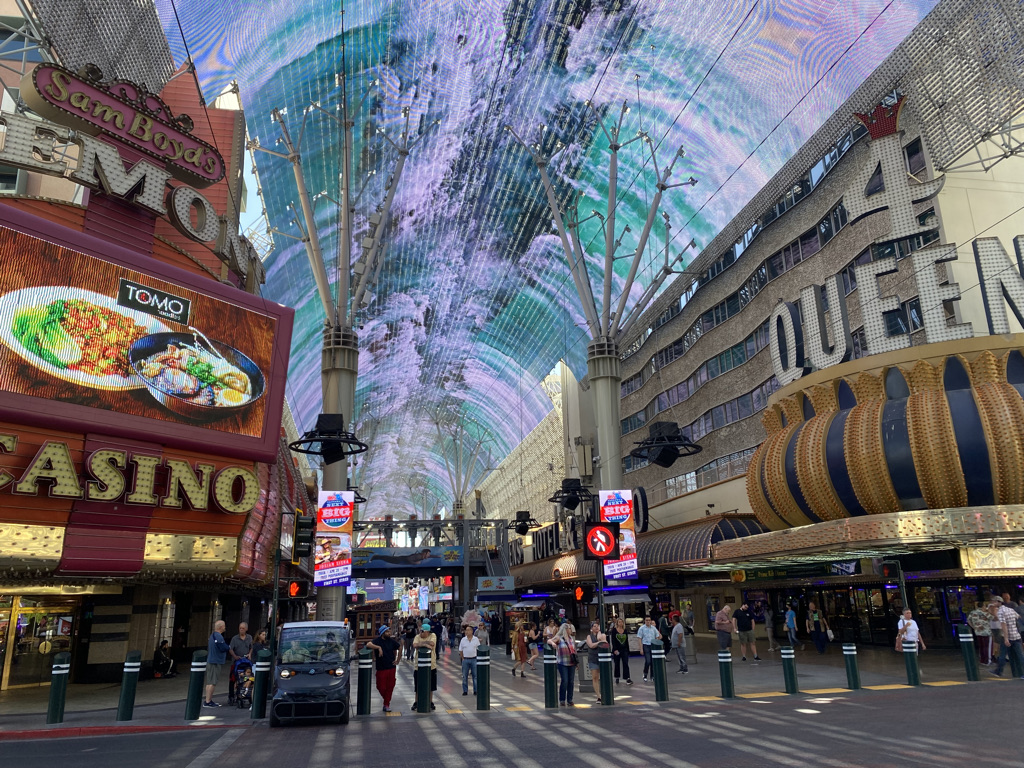
Every time I go to Las Vegas, I think about the grand meaning behind this place. What makes this place the way it is? Why do so many people want to come here? And, what does this tell us about the current human experience?

I come here a lot, and have written several previous entries about Las Vegas. Perhaps the most fitting description of what Las Vegas means to the countless people who frequently visit this place is the title to one of my previous posts, Three Days Without Rules.

Most people spend a vast majority of their time doing things they don’t really have control over. I don’t think any of us who work 40 hours per week were at any of the discussions, over a hundred years ago, where labor activists and corporate owners agreed to that standard. Nor do that many of us have any idea how 9-5 became the standard working hours.

The same can be said for many of the other responsibilities we take on, including maintaining our homes, family and relationship responsibilities and many of the standards around the other things we get involved in and take responsibility for.

For many of us, most days are just seas of to-do lists.

What we chose to do in that small amount of time we have total control over is often quite telling. People like me, with sedentary jobs in front of computers, often opt for active, outdoor pursuits in our spare time.

However, those with active jobs that require physical exertion are often more interested in relaxing, watching T.V. and sports in their spare time.

I remember back when I was in college and graduate school wondering if students balance out the high level of intellectual processing involved in their studies by drinking to sometimes crazy levels of stupidity. Those the live in cold climates are definitely the most anxious to visit places like Cancun. There is also the stereotype of the person who comes across as shy and reserved having some of the wildest and kinkiest sex lives.

In a world has recently abandoned organized religion and become obsessed with numbers and metrics for everything, we now see people looking for something beyond progress and achievement. Dare I say it, beyond this life.

These observations seem to indicate that we are all trying to achieve balance and that what people chose to do with weekends, vacations, etc. provide clues as to how day-to-day life can be out of balance in the current era.

So, why do so many people visit Las Vegas?

The reason so many visit Las Vegas is the same reason so many hate Las Vegas. What goes on here tells us something about how we live our lives in the present-day, specifically what is missing, what people are craving. I recently read a book called The Comfort Crisis, which describes, both through a lived experience and references to research what aspects of the human experiences we’ve lost by prioritizing comfort (and predictability, which is really another form of comfort) in nearly all of our recent pursuits.

In our collective pursuit of comfort, we have placed a lot of restrictions on ourselves and each other. We refuse to pursue our passions to avoid the potential financial, lifestyle and reputation risks. We shy away from pursuing meaningful encounters, friendships and relationships to avoid making ourselves potentially vulnerable to rejection and potentially making others uncomfortable for a variety of reasons, most commonly jealousy or the discomfort of seeing others break social norms. We skip activities to avoid random, often overblown risks. Perhaps most sadly, we limit how present we can be with the people around us, often the people we care about most, out of this strange pressure we put on ourselves to always be available to respond to messages. We fear our bosses, co-workers, or even sometimes causal acquaintances will be disappointed in us if there is any delay in our responses to messages over email, slack and even social media and therefore end up almost chained to our computers or other work stations.

Every time I go to Vegas, what I see is a large subset of society crying out.

They are crying out for some chaos. They are crying out for some unpredictability. They are crying out for some variety in a world where we condition ourselves and each other to follow the same routine, processes and procedures every day.

It is more than likely that we need some restrictions in our lives. At some point, we all need to sober up and get healthy.

But, perhaps, what places like Las Vegas demonstrate is that we may have too many restrictions, at least in certain areas of our lives.

Boise in Early October

Perhaps one of the hardest things for anyone to adjust to when moving to Western North America is that fact that the weather is far more dependent on elevation than latitude. Boise sits at about the same latitude as Portland, Maine, north of Boston. Yet, it is warmer than Denver (in October, as well as most other months), which sits at a latitude just south of Philadelphia. This is because, at 2,730 ft (830 m), Boise is 2,500 feet (760 m) lower in elevation.

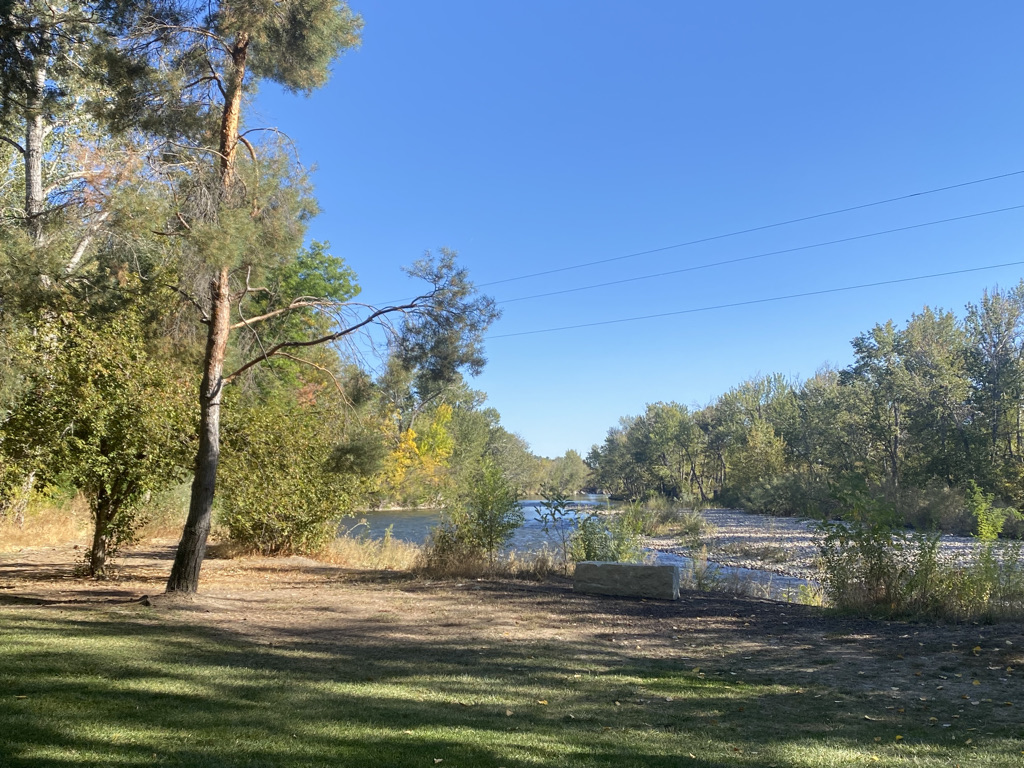
As October began, the leaves here had barely begun to turn colors.

And the temperatures were reaching 80 to even 85° F (27-28°C) every day.

It felt like it was still summer.

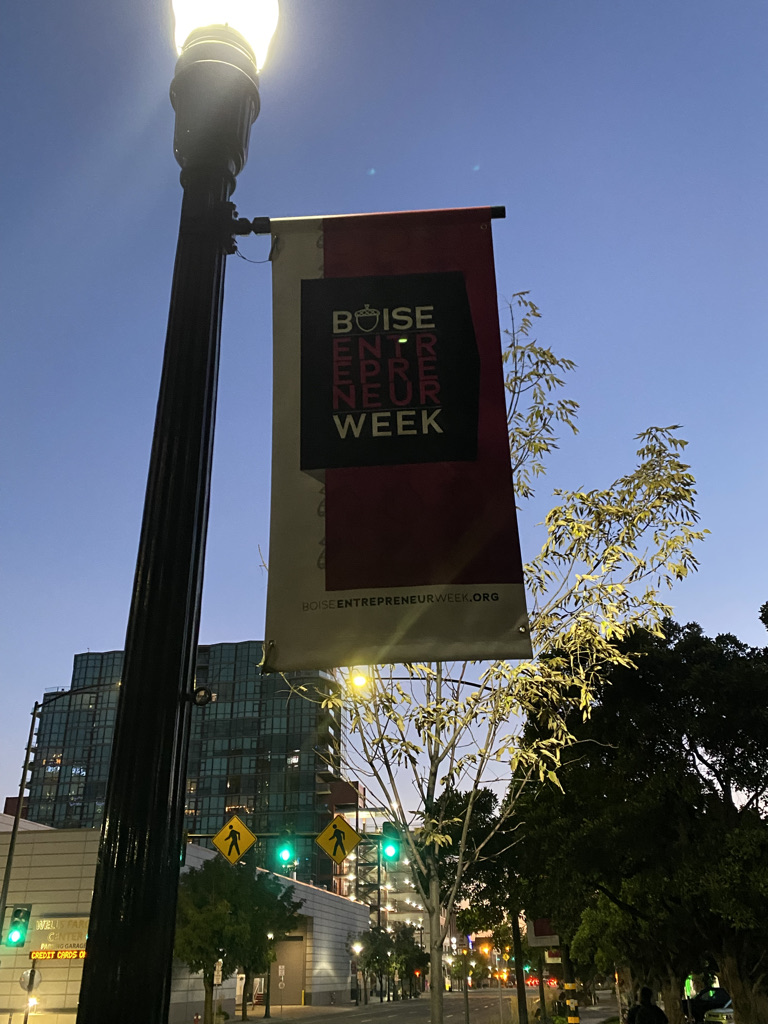
I spent three days in Boise and it was hard not to see Boise as a newer, smaller version of Denver, the city where I live. Boise is about 1/3 the size of Denver and the metro area is about 1/4 the size. I don’t like being the person who is constantly comparing something to something else, and I did not want to spend much of my time in Boise comparing it to Denver, the city where I live, but it was hard not to. There were similarities everywhere.

Like Denver, Boise is the State Capital.

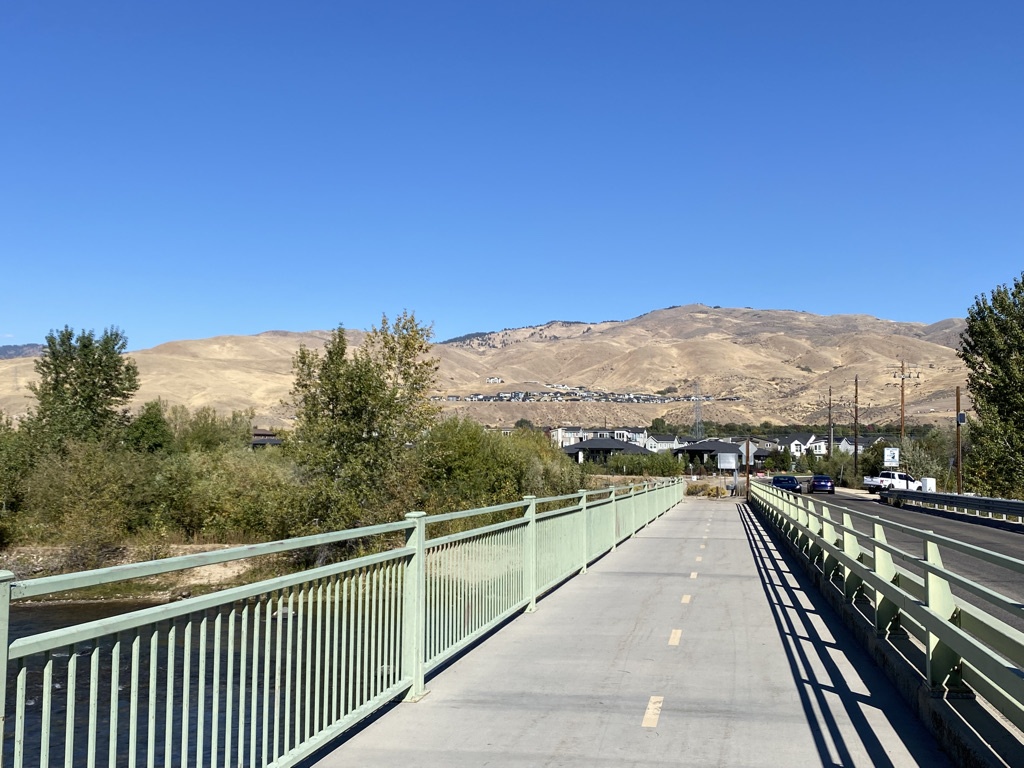
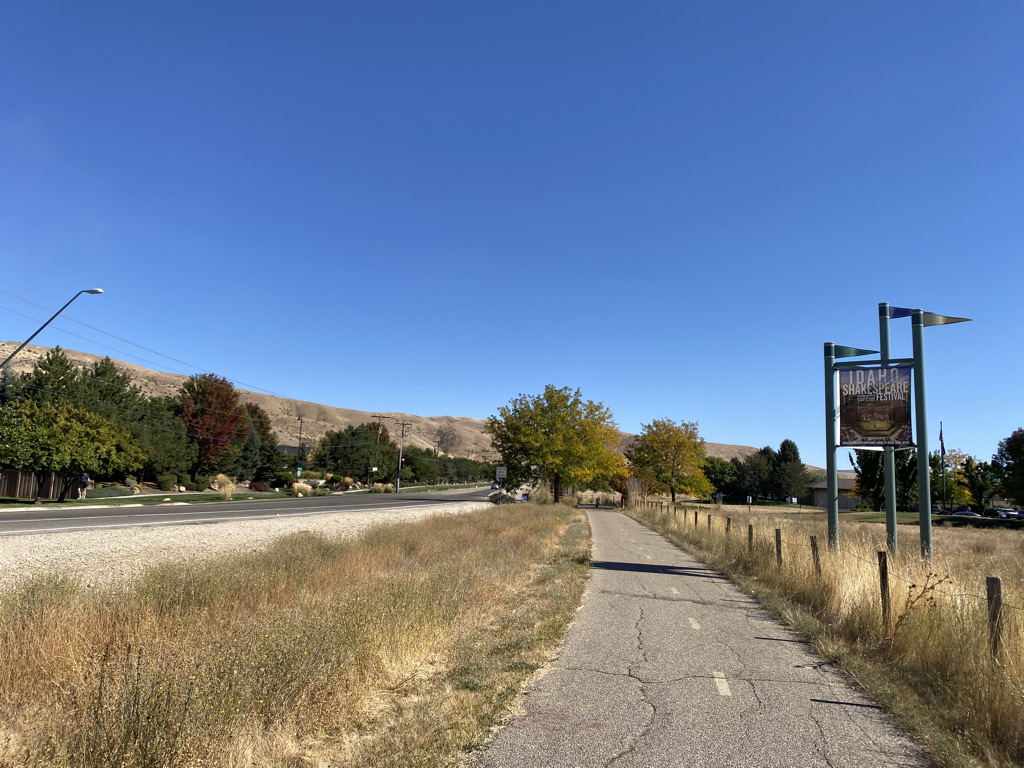
Has some cool bike trails.

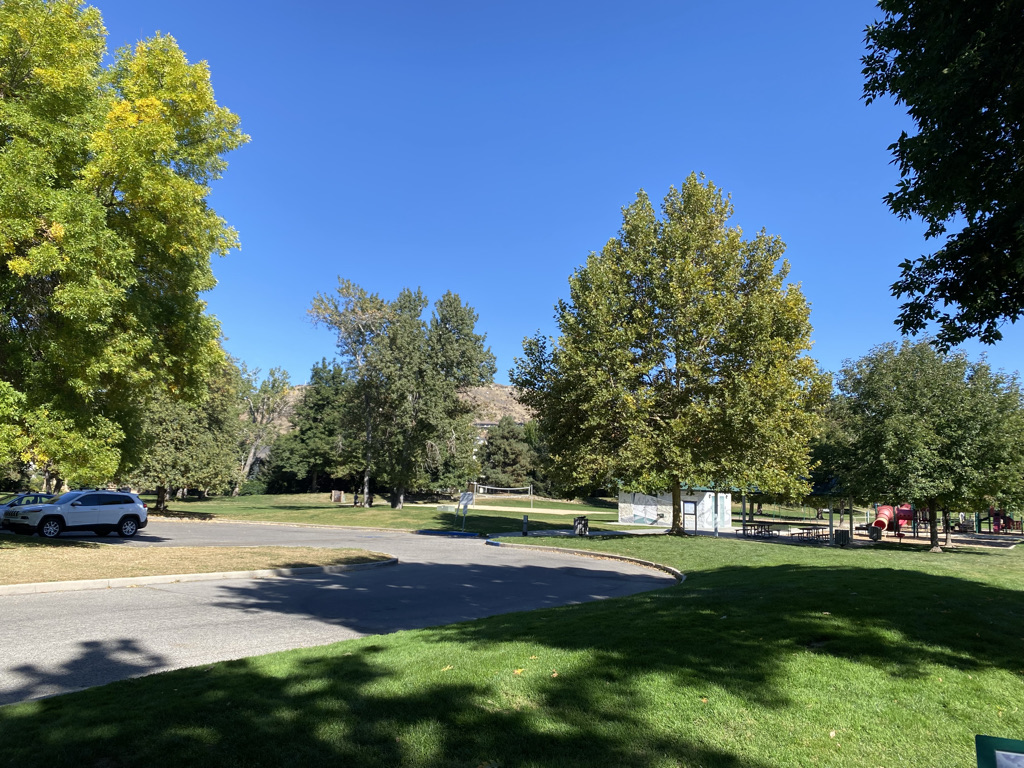
Which pass through city parks.

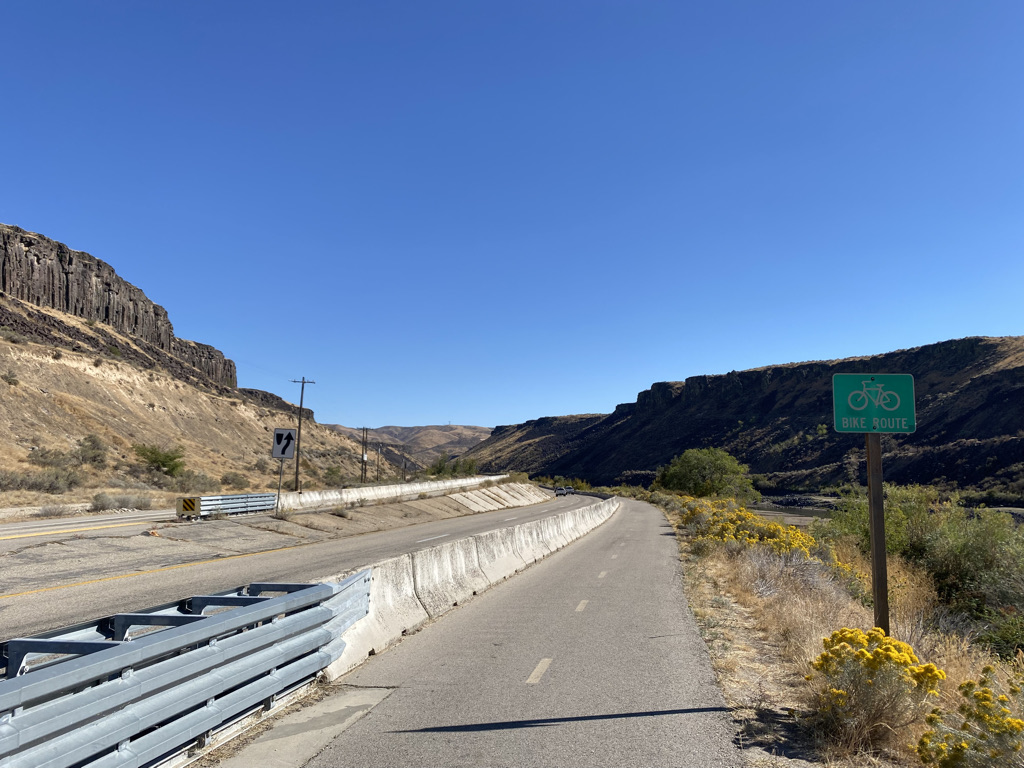
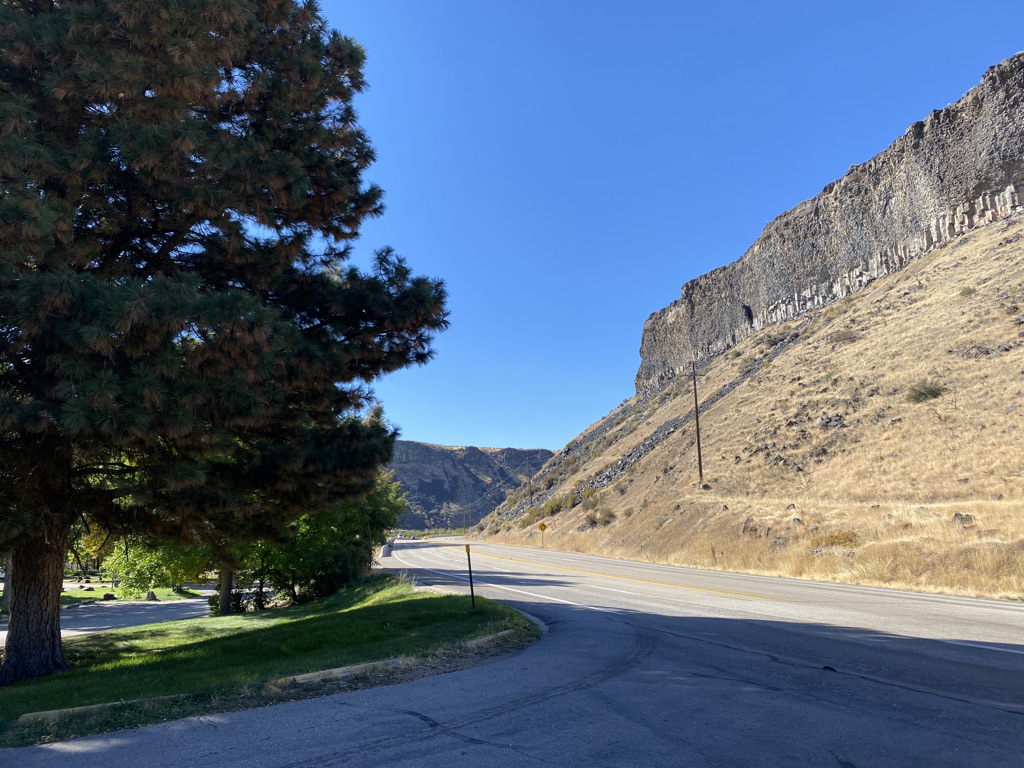
And to some amazing destinations outside the city.

However, I learned early on that people in Boise, particularly long-term residents, do not necessarily love the comparison. Boise is one of roughly ten cities that are rapidly expanding as people seek out destinations where they can be around other innovative types of people, but in a place that is more affordable than places like Silicon Valley.

I cannot accurately comment on how things are going in Austin, Oklahoma City, Phoenix, Salt Lake and Seattle, but some longer term Colorado residents lament how many new people have arrived over the past decade or so. The metropolitan area is more congested, with more traffic. However, what people seem to lament the most is how many more people an always be found on our trails and in other areas of scenic natural beauty. It feels like Idahoans do not want to follow that path. They like how empty the nearby natural beauty is.

It’s always tempting to compare things to what we already know. However, whether we are talking about a city, a music genre, business idea or festival it is important to let it be its own thing as opposed to trying to recreate something that already exists.

After all, if all we did was recreate what already exists there would never be any reason to go anywhere.

Well, I guess there would still be difference in natural scenery.

As well as climate and crops.

But there would be no reason to visit different cities. We would not let places have their own flare with things such as blue football fields.

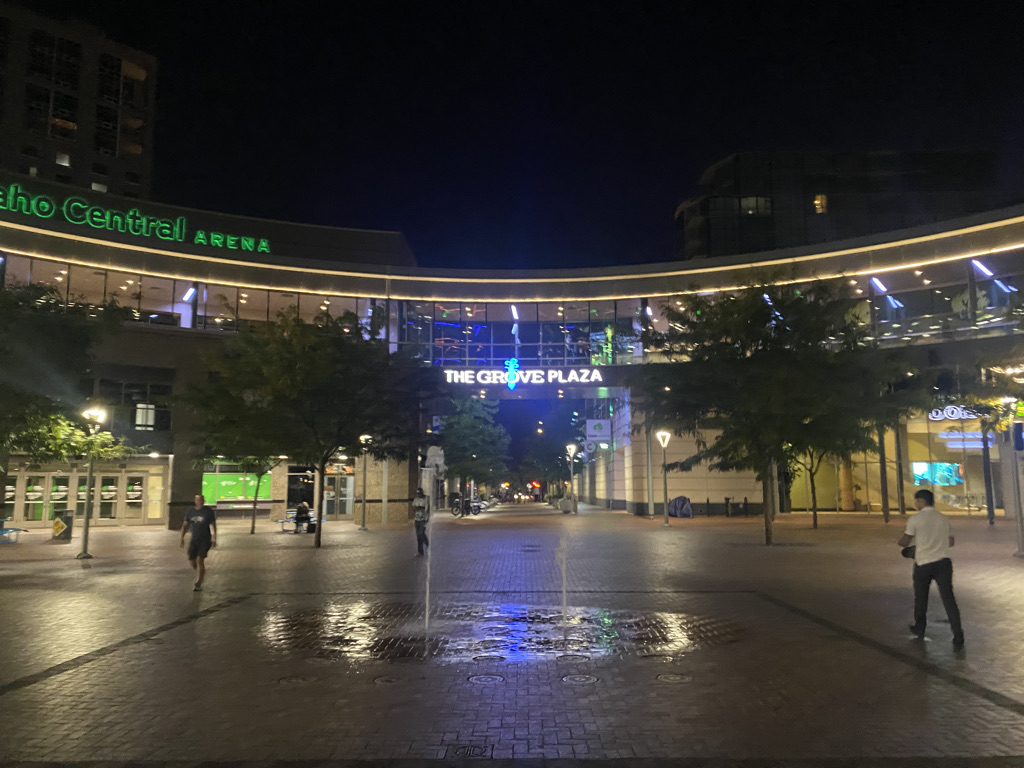
Really small water fountains you can still run through in October.

And, apparently a happy hour where your dog can drink.

Boise will likely continue to grow, as remote work permits more people to live away from some of our most expensive real estate markets.

How it grows is yet to be determined. As it grows, the place will likely become more exciting, with more activity around town. However, as Boise grows, will it be able to do so in a manner that allows the place to maintain its own unique identity? Will Boise residents still be able to get away from all the noise, all the people and daily concerns in less than half an hours time? Only time will tell.

Recreating the Past

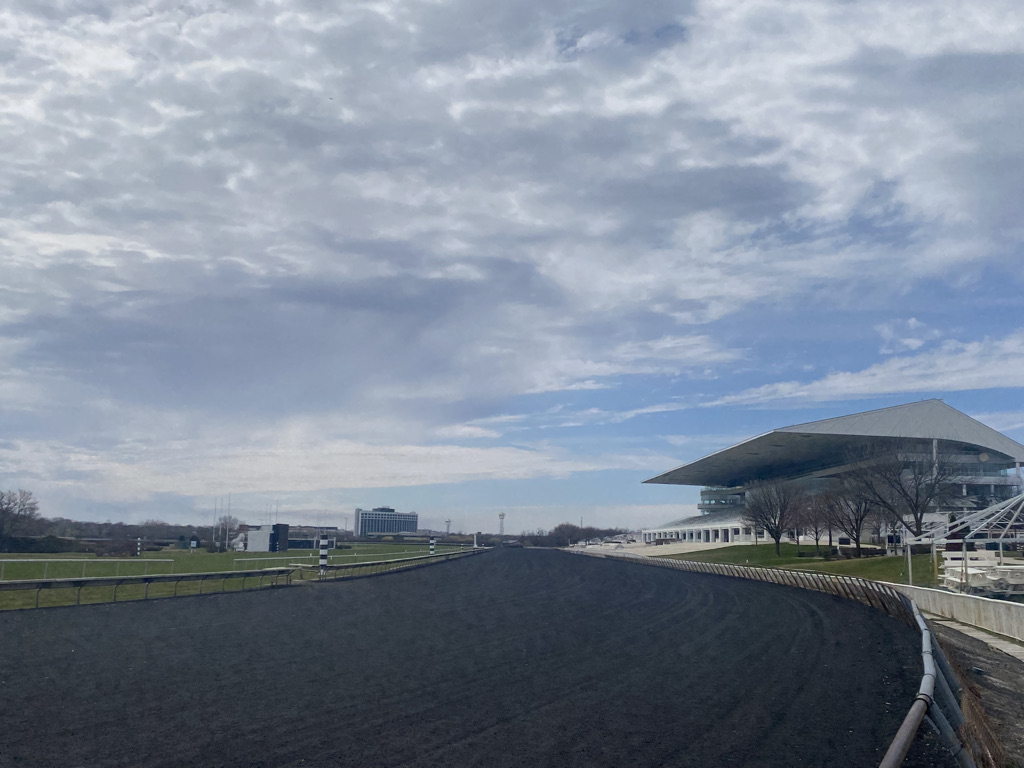
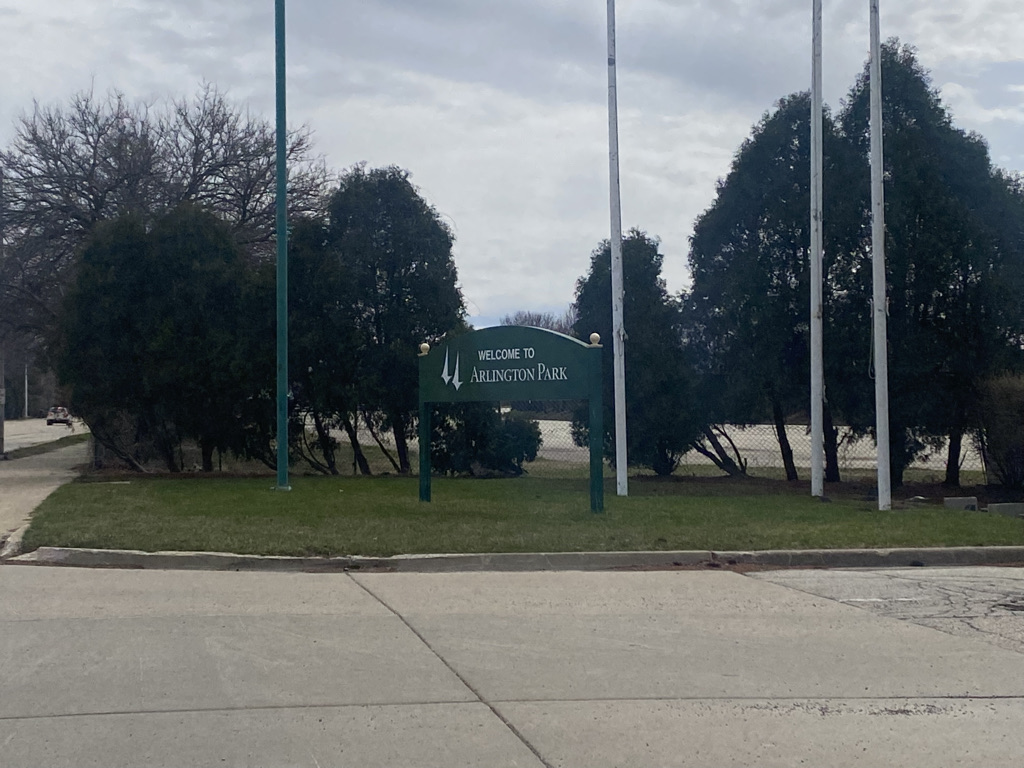
Most people who live in Chicago’s Northwest Suburbs, where I spent part of my childhood, are excited by the prospect of the Chicago Bears moving into Arlington Park. For me, the move is bittersweet. Arlington Park is one of those places of personal significance. It is the first place I ever gambled. Gambling would become a significant component of my life’s experience, with more betting on horse racing, and then, when I turned 21, games like black jack and craps.

I still remember all of those summer afternoons watching horses race on that track. I remember sitting in the stands cheering on whatever horse I had bet $5 on as they came around the curve headed towards the finish line. I remember seeing the official results post on the scoreboard at the end of every race, indicating what I had won, or what money I would have won had I made a better bet. I even remember hearing the occasional train pass by and the energy of the crowd when there was a particularly exciting race, or when someone had to make a bigger bit on something like a trifecta and won.

My April 2022 trip to Chicago brought me back to three past periods of my life.

My parents still live in the suburban home I lived in from age 11 to 17, where I learned how to work for a living, pack my schedule with activities and, of course, gamble. Experiencing the Easter holiday with my niece and nephew, ages 5 and 7, reminded me of my earlier childhood, and what holidays mean to children. Finally, the trip included two trips into Chicago, where I spent my late 20s.

In any experience like this, it is tempting to expect the same experience we had in the past. It’s tempting to get nostalgic. It’s easy to envision watching the same Easter movies I had watched when I was a child, frequenting the places I loved in my teenage years, like the Arlington Park Racetrack, and frequenting the same bars and restaurants I loved when I worked downtown as a young adult.

However, like the racetrack, which will soon appear quite differently and likely be packed with football fans, the experiences are not likely to be the same. The kids have new things the love to watch, different activities and different preferences (I’m a Cubs fan).

Establishments close and new ones open up.

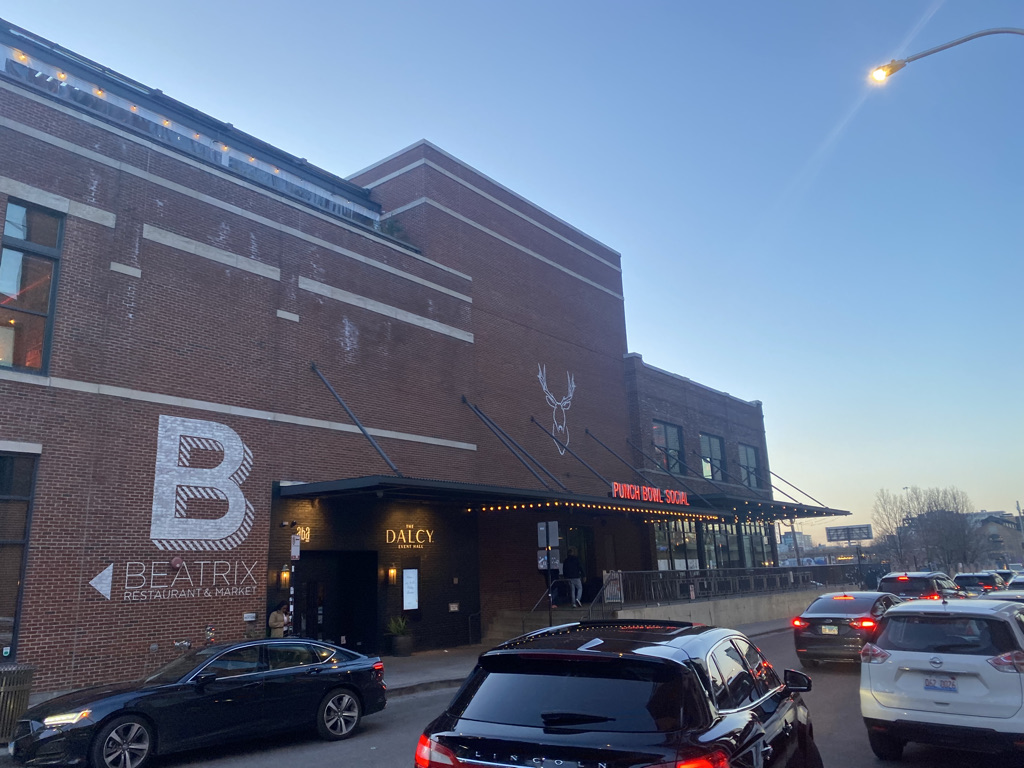
Punch Bowl Social actually opened its first location in Denver in 2014

And the overall situation we find ourselves in will inevitably change.

This is the only place I saw gas over $5

However, specifics like places, activities, prices and colors do not need to change for the experience to be different. Life’s experiences and the way we progress as human beings are inherently going to change our perspectives. Even if everything I did on this trip was exactly what I had remembered, a decade, or two, or three worth of life experience would have caused me to see them differently. I noticed this for the entire duration of the trip.

One of the most beautiful things about the experiences we have early in life, as children, is the fact that we often have no prior experience to compare them with. This is why children tend to watch movies, listen to music and take part in activities with an open mind. In adulthood, especially as we get older, it is tempting to compare any new experience with one from the past. We compare today’s music to the music of our adolescence. We compare the movies our kids watch with the kids movies of our childhood. And, we compare trends in things like fashion and lifestyles with the trends that defined our formative years.

However, to give ourselves the full opportunity to really enjoy the experiences we have in adulthood, we should temper the urge to make these comparisons. The experiences we have today do not owe it to us to live up to something that happened in the past. They are going to be what they are and only when we minimize the attachment to having the same experience we had years ago can we full be in the moment and enjoy what is in front of us for what it is.

Places Extroverts Love

It’s been hard to know what to expect the last two years. First, places that are typically lively, full of people, full of life, suddenly became empty as the pandemic shut down businesses and places of gathering.

Then, for nearly two years, our experiences became variable and inconsistent.

It felt like the whole world was suddenly subject to mood swings that are impossible to explain or predict. Maybe we are still in this period of uncertainty, but I was pleasantly surprised by the energy levels on my last two trips.

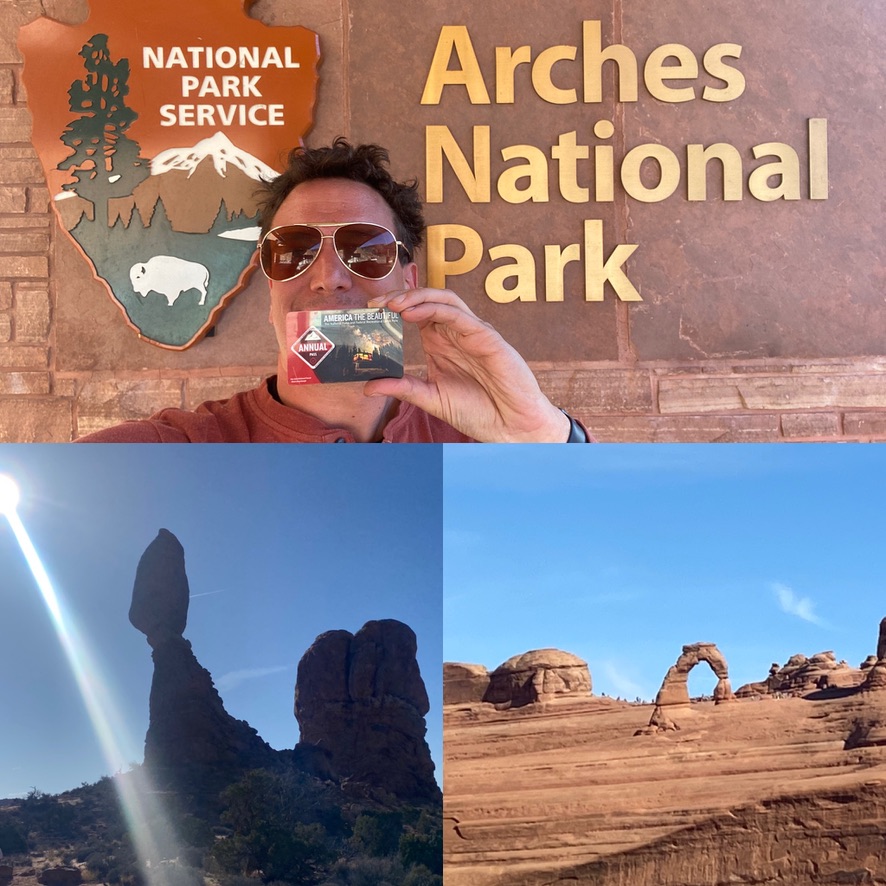
The last weekend in March, Moab was quite lively.

The town was busy! There were a lot of people out and about, walking around and having experiences. Traffic actually made it quite a challenge to make a left hand turn. People all seemed lively. The energy was just great!

The same can be said of Chicago a couple of weeks later.

The energy, the spirit of the big city could once again be felt both on a Thursday evening with horrible weather and a Saturday night with better weather. There were a lot of people, out in groups, in the bars, as well as along the street where there is typically a lot of nightlife. It felt good just to know these places are back!

These places could hardly be any any different. Chicago is a city of 2.75 million with many skyscrapers and what can seem like endless unique neighborhoods to explore.

People who visit come for a truly urban experience, doing things like going to museums, summer festivals, professional sports or visiting friends and family.

Moab, by contrast, is a town with barely over 5,000 residents adjacent to two National Parks.

Most of the people one would encounter here are tourists who came to explore the outdoors. Moab is known for Jeeping, mountain biking and hiking among other activities.

These settings, while different, warmed my heart in a similar way. There is something about seeing people out and about, interacting with each other, interacting with the world, and doing so in a way that feels joyous. It is the combination of joy and crowds that extroverts have missed so much over the past couple of years.

These recent experiences have demonstrated that there are often multiple ways to obtain the same underlying feeling, and maybe it is a good idea not to get too attached to one specific experience. There are often circumstances that require versatility. Sometimes the weather is not what we were hoping for.

Other times it’s our schedules, our health, someone else’s needs or just plain bad luck.

When this happens it is helpful to know that sometimes a different experience, but one that is feasible given whatever our circumstance is can be a really good substitute, providing almost the exact same underlying feeling we are looking for. So far this spring, I have been in lively joyous crowds both in a tourist destination surrounded by people on vacation and in a large city surrounded mostly by people who live there. Next time we find ourselves disappointed by not getting the exact thing we want, maybe we should try to think about the underlying reason we wanted it and try to find another path.

Pittsburgh- a City That Feels Everywhere at Once

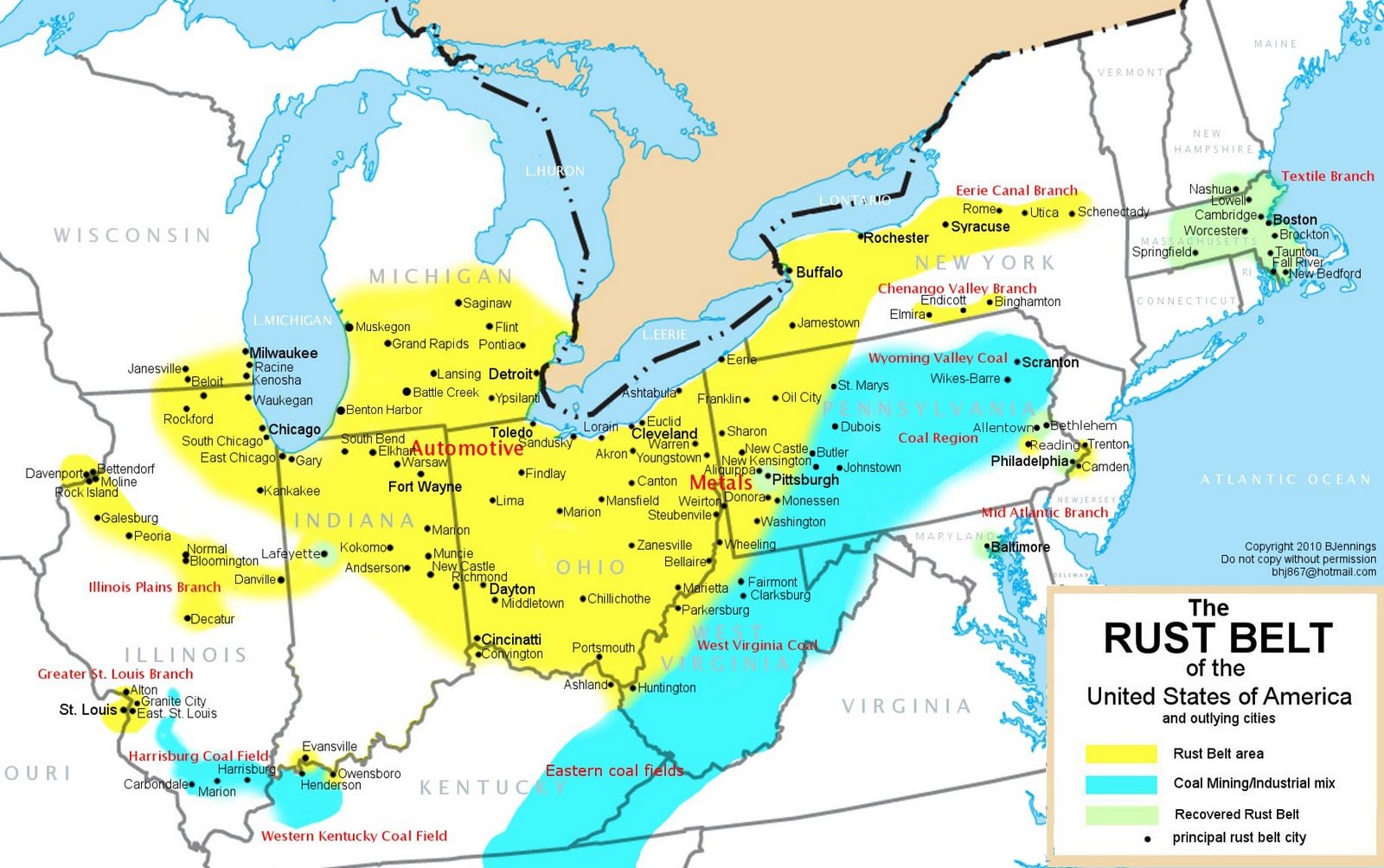
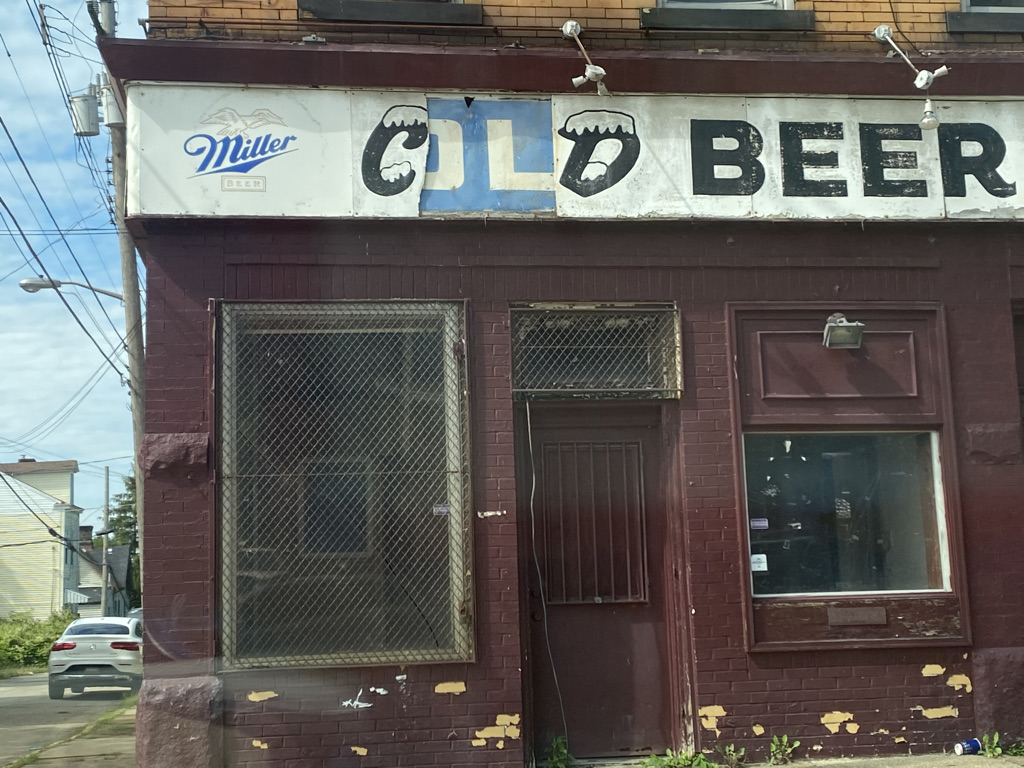
For people who love putting things into categories, Pittsburgh has to represent an absolute nightmare! Known as the “Steel City”, no regional map would not place it firmly in the rust belt. Like other rust belt cities, it fell on some hard times when many key industries collapsed in the final 30 years of the 20th century.

However, Pittsburgh is also known for having made a comeback. It’s considered a blueprint for other cities looking for a revival after suffering from the decline of their primary industries.

Pittsburgh’s revival is commonly attributed to versatility in embracing new industries like health care and technology. The education infrastructure and leadership with a more long-term focus is credited with creating the conditions needed for the city to once again thrive.

The story is reminiscent of countless personal stories of people who suffer major setbacks in life and later make a comeback. These stories often involve people who become complacent and stagnant. Typically their livelihoods get disrupted by external events they are unprepared for. Their personal revival stories typically revolve around a combination of adapting a new way of looking at things and tapping into core strengths they possessed all along.

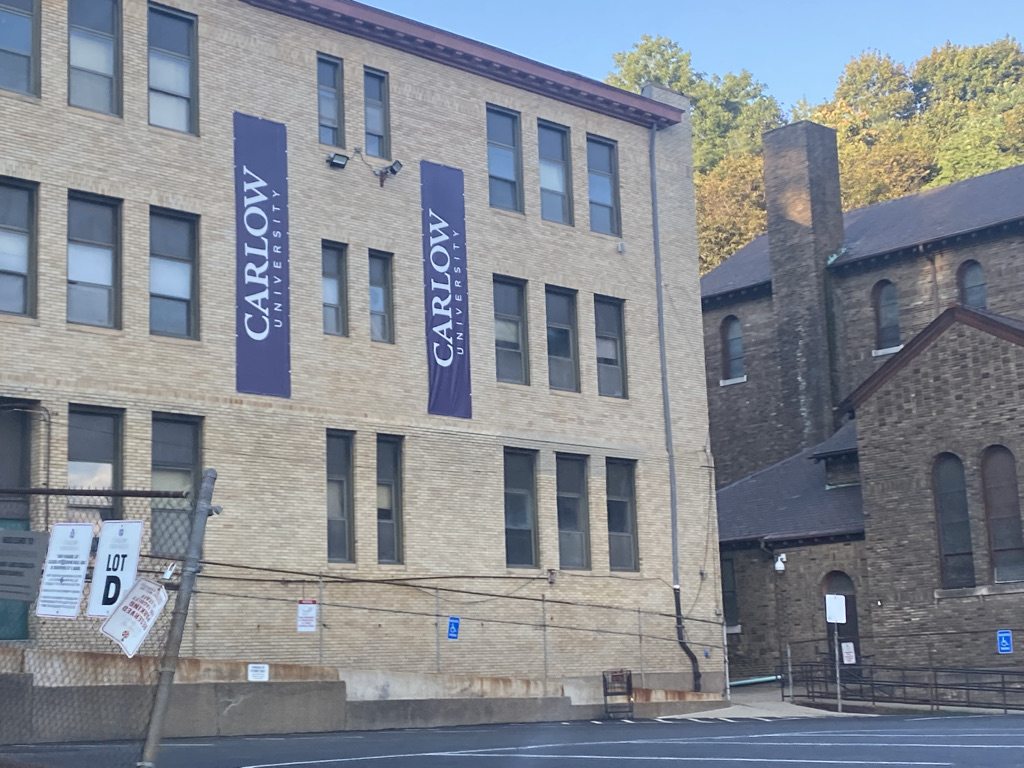
For a long time, Pittsburgh was a place that valued science and education. It is home to several major universities.

Benefiting from it’s hilly terrain, it is also home to the Allegheny Observatory, an observatory over 150 years old where countless star distance calculations have been made.

The hilly terrain makes Pittsburgh unique in other ways.

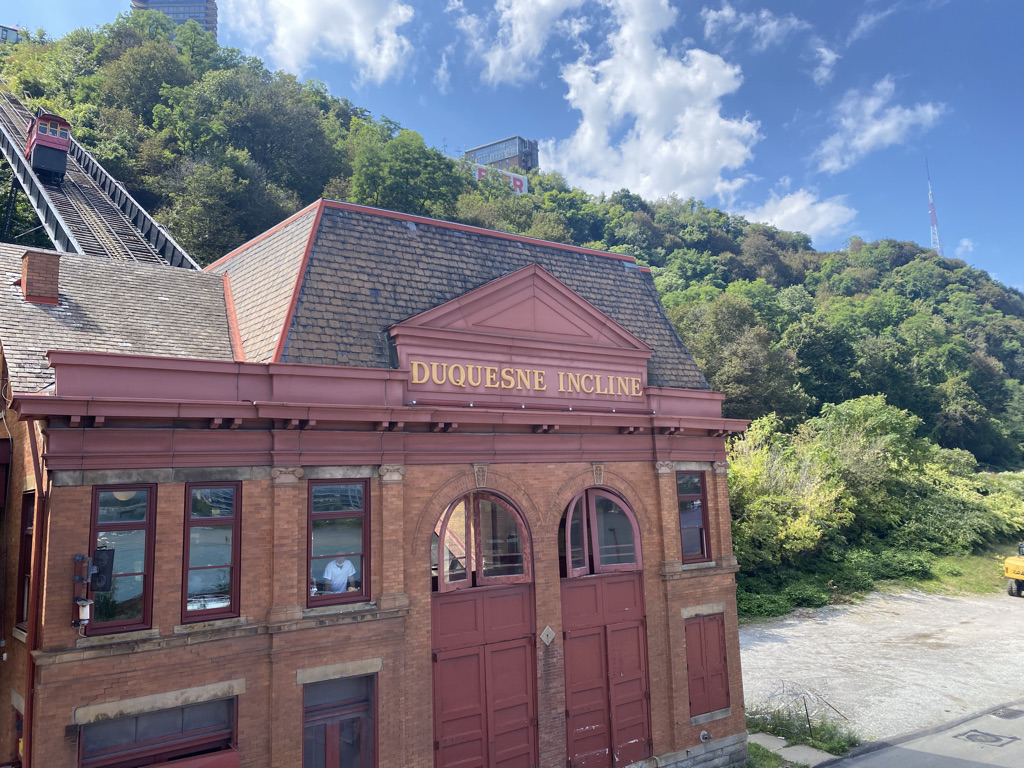
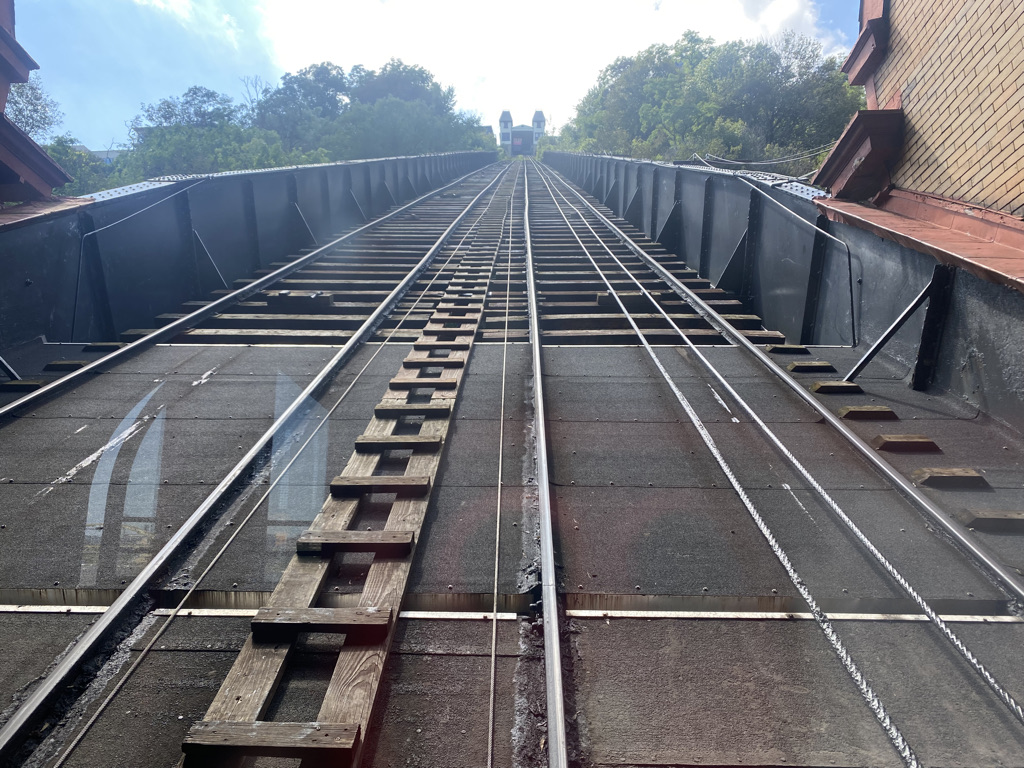
One of the city’s top attractions in the Duqeuesne Incline, a reasonably priced and dog friendly tram one can ride to overlook the city.

It’s also a historic commuter train as walking up the side of a bluff is often treacherous.

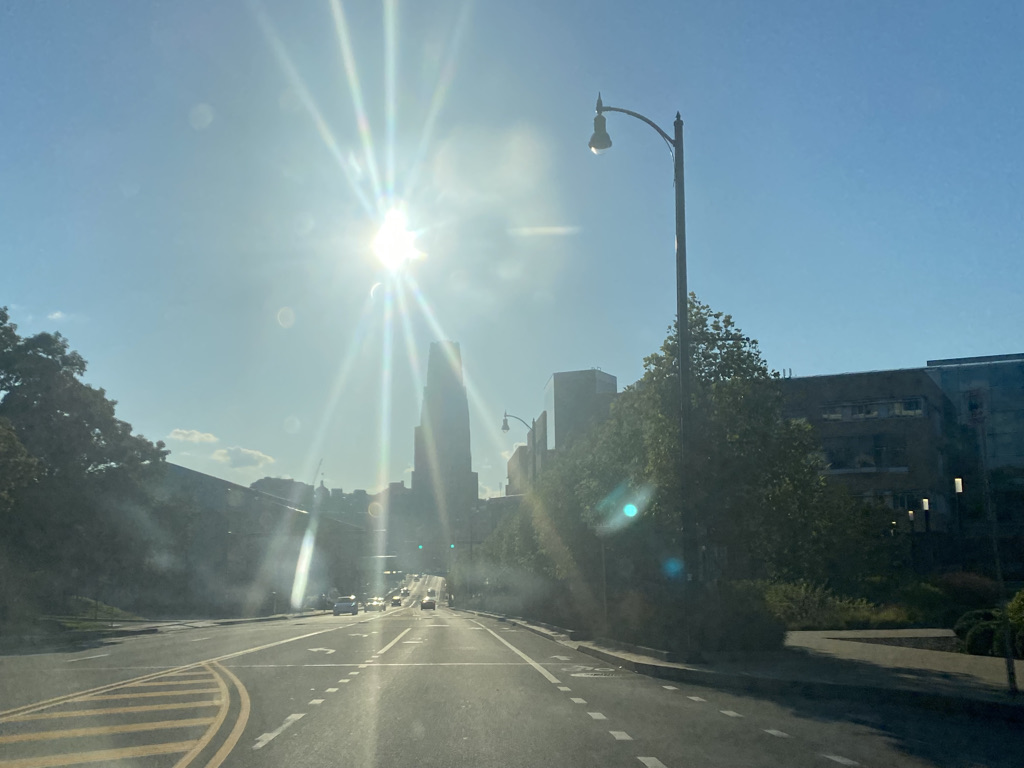
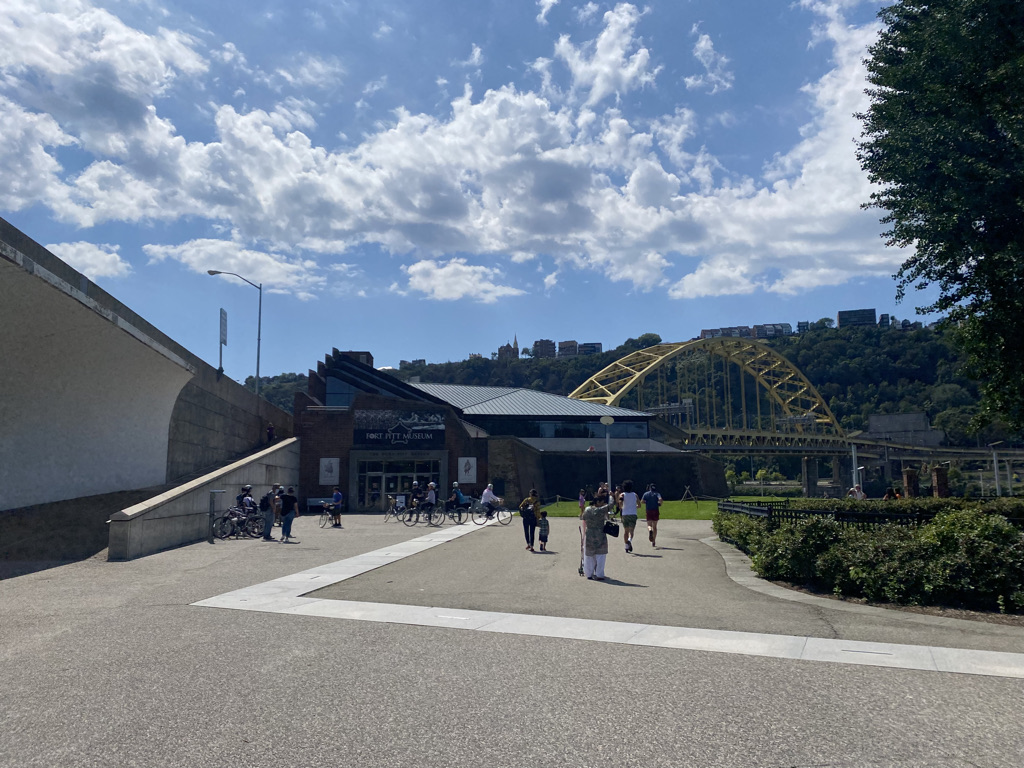
In fact, the entire layout of the city is forced by these geographical features. The city’s downtown is situated where the Allegheny and Monongahela Rivers converge into the Ohio River.

Both the football and baseball stadiums are right downtown.

Along with your typical big office buildings and a square which surprisingly seems to attract a lot of loud cars and motorcycles.

To the east of downtown, sandwiched between the Allegheny River and a densely forested bluff is the strip district, which seems like a standard tourist destination.

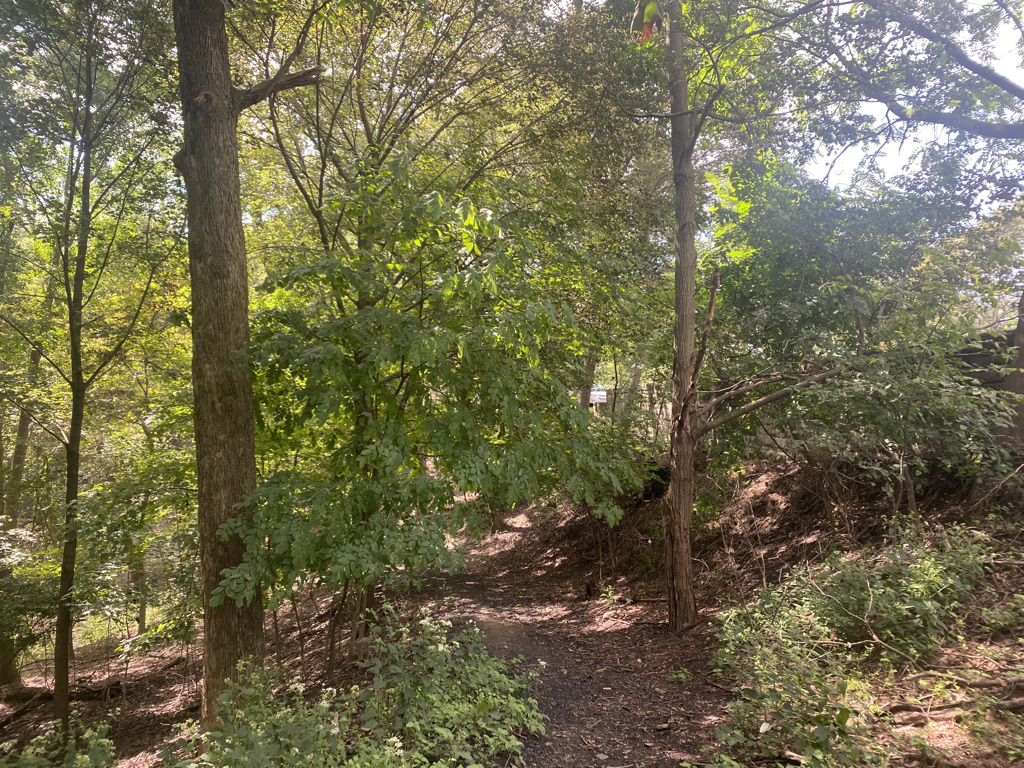
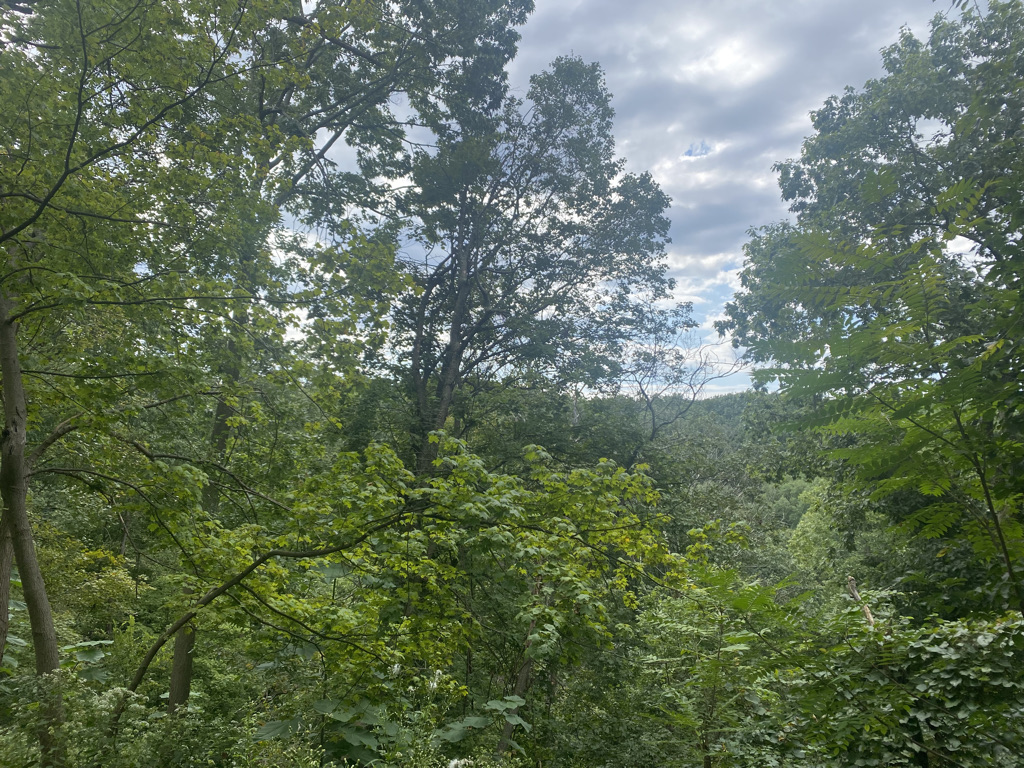
Pittsburgh’s most unique quality has to be legitimate hiking within the city limits. Riverview Park, on the north end, is one of several places with a system of trails that have significant terrain and fairly dense forests.

It is also a place with plenty of other parks.

When many think of Pittsburgh, they may still think of it as a rust belt city with a rough exterior.

That, of course is only part of the truth, one aspect of the city’s culture. Many of the things Pittsburgh was about before the decline and subsequent revival are still there. There is still all the ketchup.

Pittsburgh’s history also involves a lot of food and traditions based on Eastern European culture.

However, the city has managed to incorporate the amenities demanded by talented urban professionals in the 2020s.

We all are, in a way, every chapter of our lives. A tour through Pittsburgh shows the city before the steel industry declined, during its dark days and in the current era. It’s a reminder of all of our personal stories and how even during the more prosperous times in our lives, the bumps we experienced along the road, as well as who we were before experiencing these setbacks are still a significant part of who we are. Battle scars don’t go away, they are just put into context.

Despite my sincere desire to avoid categorization or labelling, I could not help but want some kind of quick description of what Pittsburgh is. Do people think of it as on the up-and-up or in decline? Do people know how Pittsburgh is viewed by others? What region do they consider themselves to be in?

Pennsylvania has recently emerged as quite possibly the most important state in presidential politics. Walking around town, I could not help but wonder if people here were already starting to dread the inevitable onslaught of political ads that will be absolutely impossible to avoid in the run up to an election that is still over three years away.

When people try to make sense of this state, they will often say the state has a genuine east coast city in Philadelphia, aspects of rust belt and Appalachia and a midwestern city in Pittsburgh. But, some aspects of Pittsburgh felt downright eastern to me. There are the tunnels.

The bridges.

Some neighborhood have really tight roads, reminiscent of the Northeast.

As it is on the East Coast, the roads are often not in straight lines and the intersections are often not 90 degree angles.

In just over 24 hours, my long dormant east coast instincts regarding driving, walking pace, how to act and how to time things kicked back in.

What does the future hold for Pittsburgh? Based on what I have read and seen, it seems like the ability to adjust, long-term focus and unique spirit has not gone anywhere. So, most likely it will be a good one.

As long as people don’t get sick of cloudy days.