Category Archives: Colorado

Full Service Camping

IMG_3562

Camping is not just camping.  In fact, there is an entire spectrum of different types of camping one can take part in.  On one end of the spectrum is the type of bare bones camping that can be found in National Forests and other wilderness areas.  I took part in this type of camping for the first time last year at Gunnella Pass.  These are places where you just put down your tent, and pretty much are on your own.  Maybe there’s a fire pit leftover from the last set of people who plopped their tents there.

On the other end of the spectrum are places like Starlite Classic Campground.  These campgrounds have their own office, where one can usually buy the ice, firewood, and other standard camping supplies, specific camping sites reserved in advance for various group sizes, and often have plenty of other amenities.

On this campground, we had a pool, which we ended up spending a significant amount of time in, as temperatures soared well in to the 90s Friday, Saturday, and Sunday.

IMG_3588

Next to the pool is a children’s play area, which I probably spent way more time than any adult should at, but, hey, I am also a grown-up throwing myself a half birthday party, so, it kinda fits.
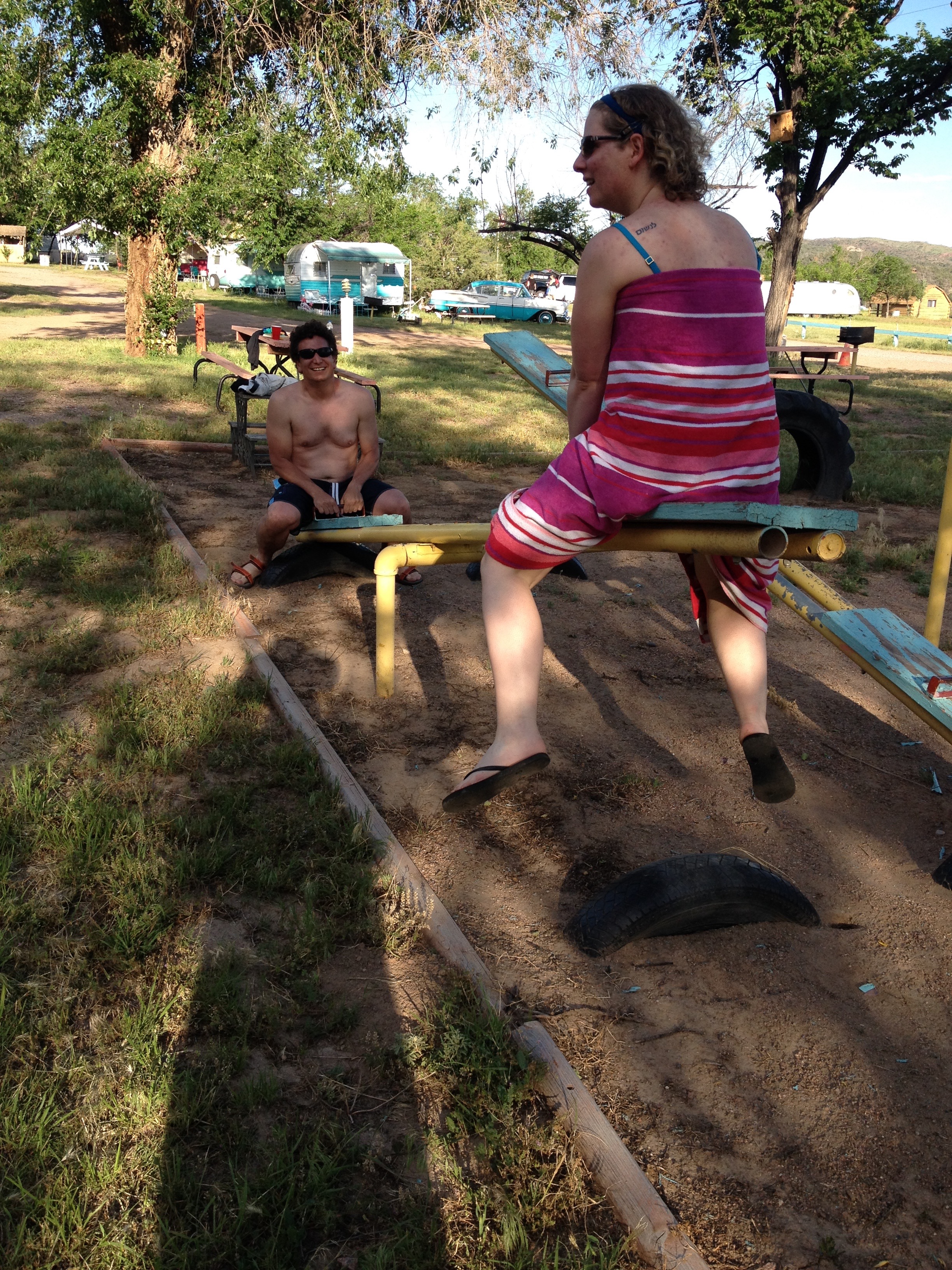
IMG_3571 IMG_3580

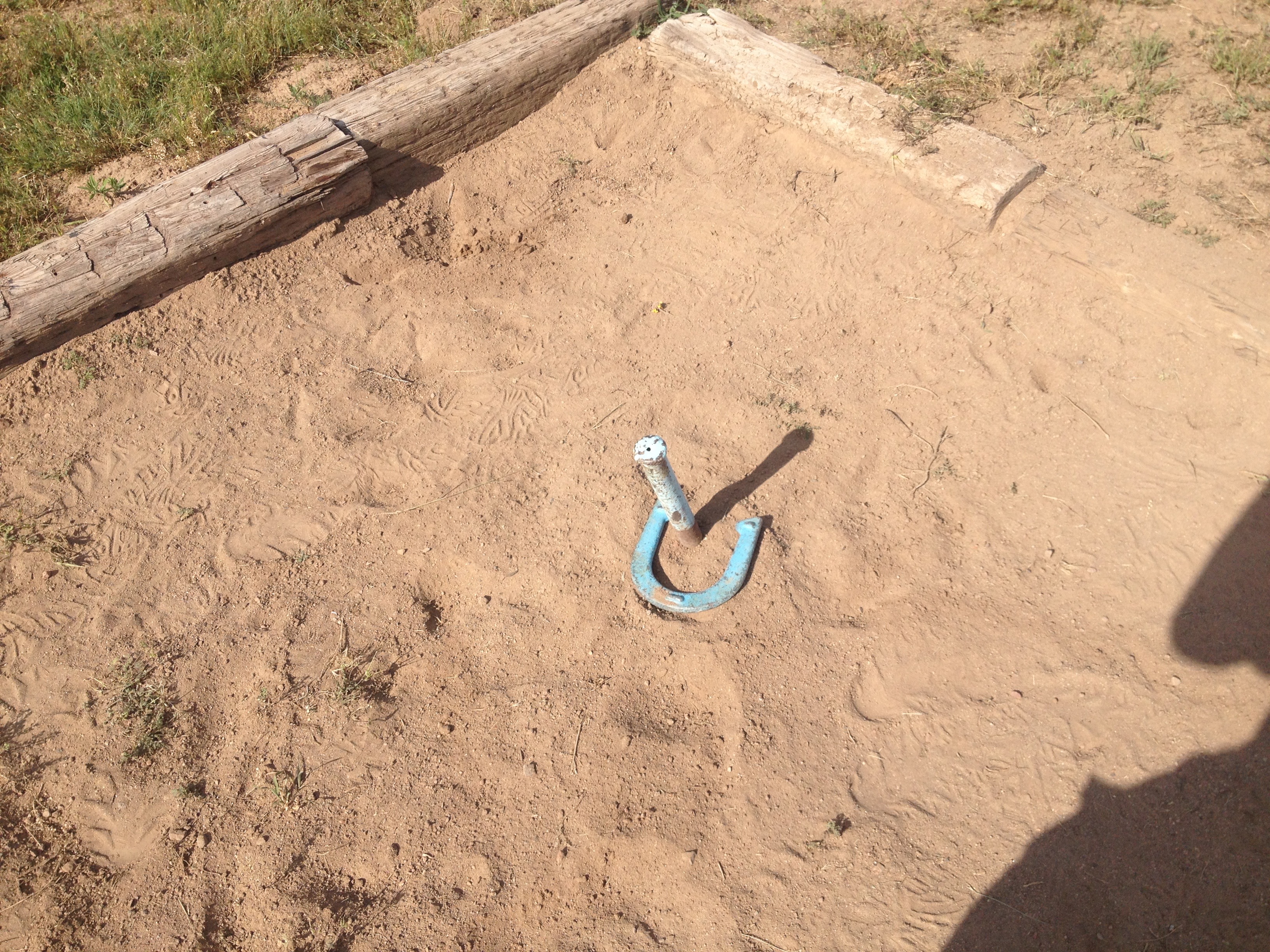
And, not to mention, a whole bunch of other games, including horseshoes, volleyball, and even a mini-golf course.
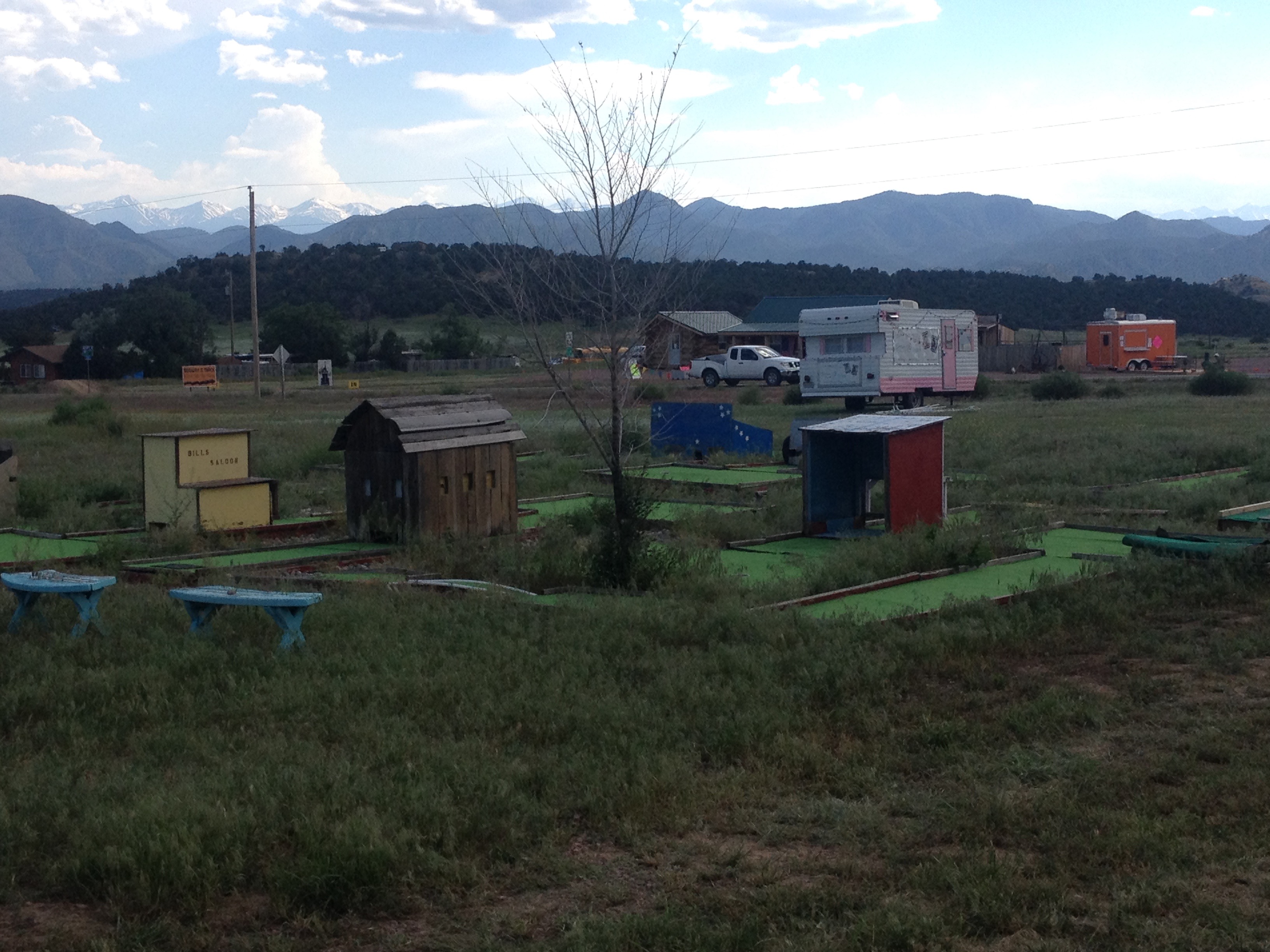
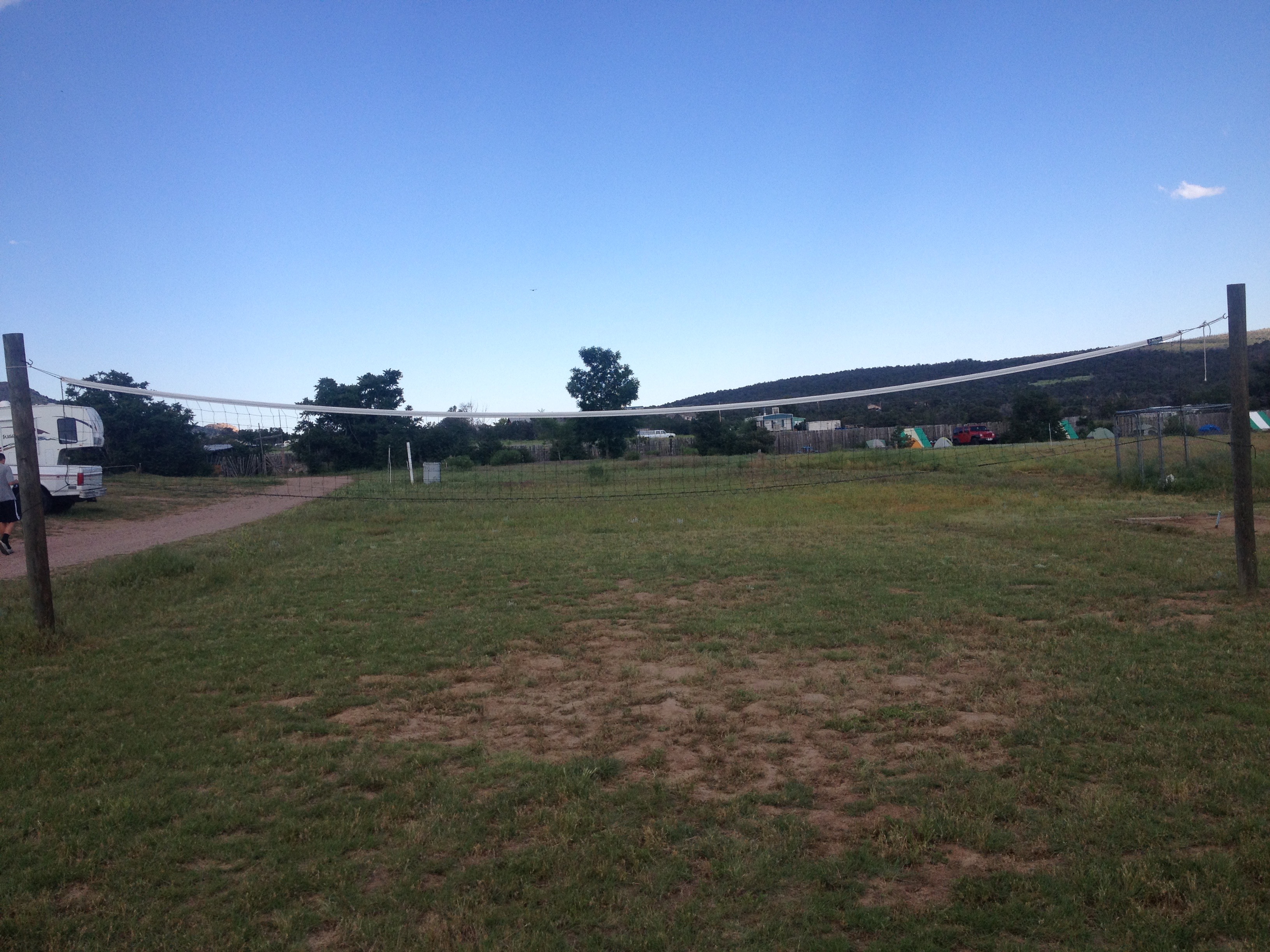
IMG_3559 IMG_3564 IMG_3566

All this made for a completely different kind of experience than your standard camping trip.  When most people think of camping, they ponder up images of a campfire, roasting marshmallows, and a fairly quiet experience, which can often involve some reflection, star gazing, and deep conversations in the wilderness.  With the hot temperatures, mid-June daylight lasting until nearly 9 P.M., all the amenities at Starlite, and a total of 17 people participating in the weekend (including both camping and rafting), very little of your standard camping experience happened.  In fact, the weekend kind of felt like some kind of hybrid experience between being at a campsite and a party!

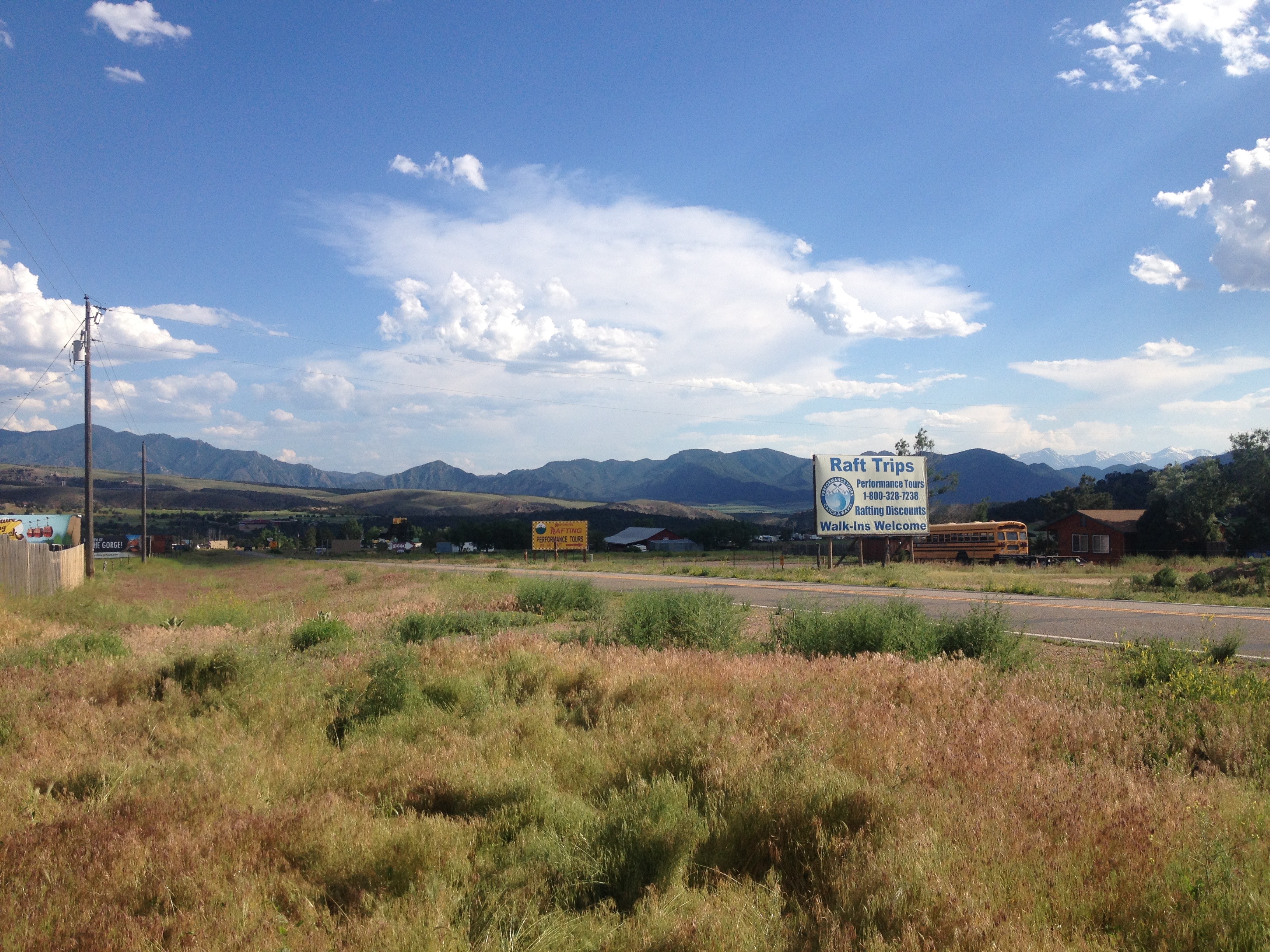
Starlite Classic Campground is located just across the street from Performance Tours, the outfitter we used for our rafting trip.  We had a mere two minute walk to get where we needed to go in the morning.  In fact, the evening before the trip, we could see the very bus we would be getting on the following morning to start our raft trip.
IMG_3567

With the purchase of the group site at Starlite, we received a significant discount on the rafting trip, as they have some sort of deal.

IMG_3565 IMG_3570

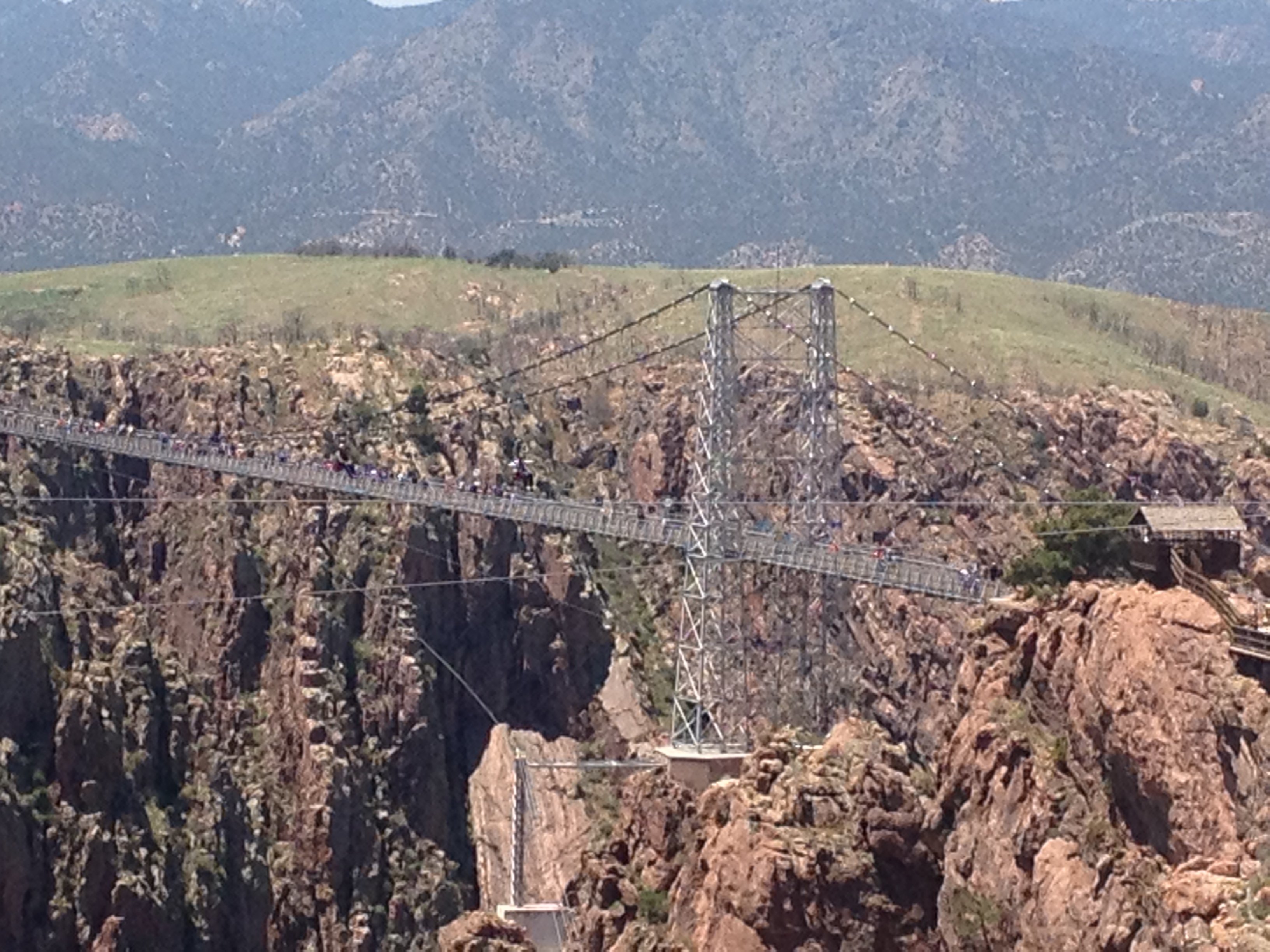
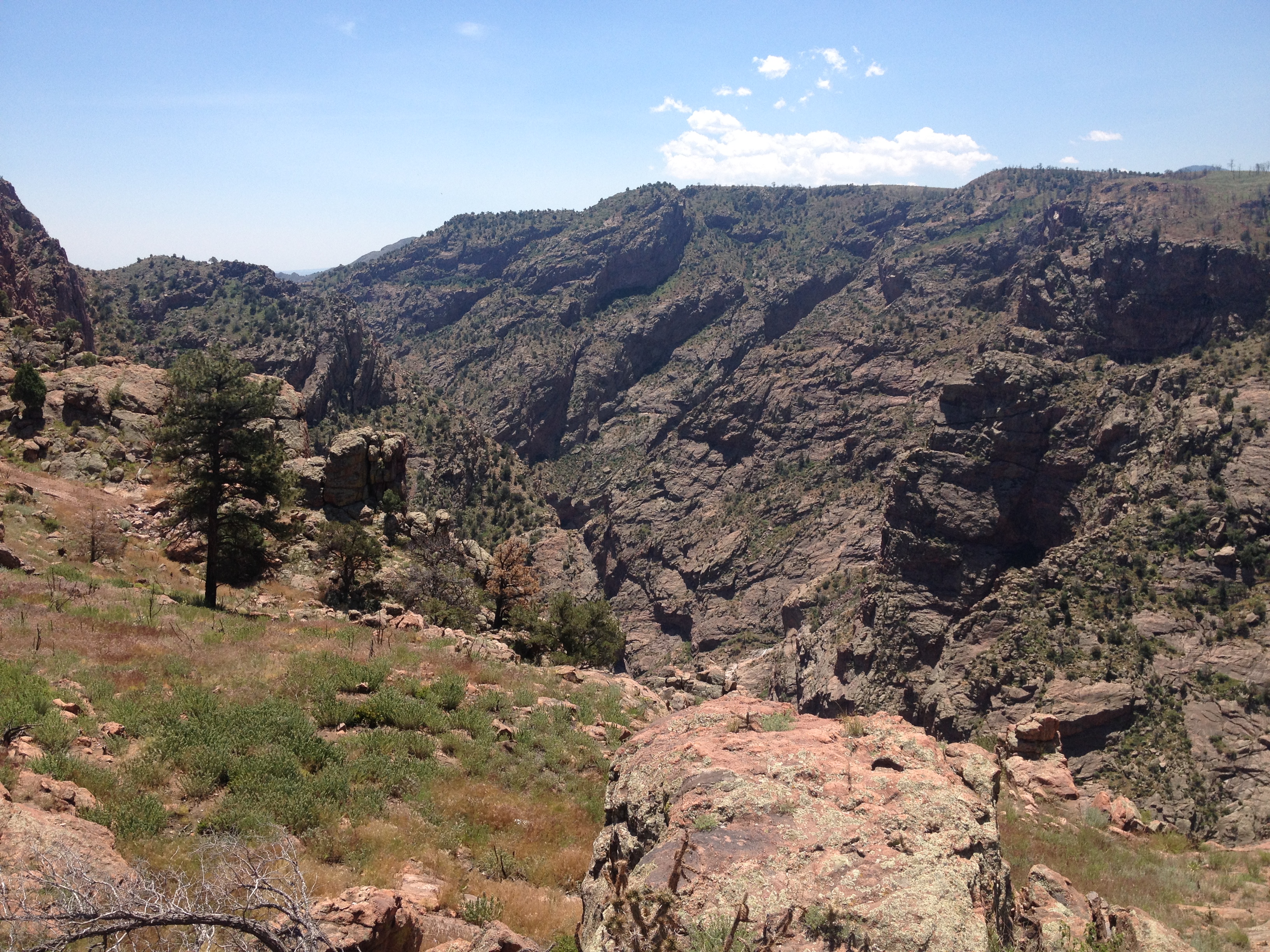
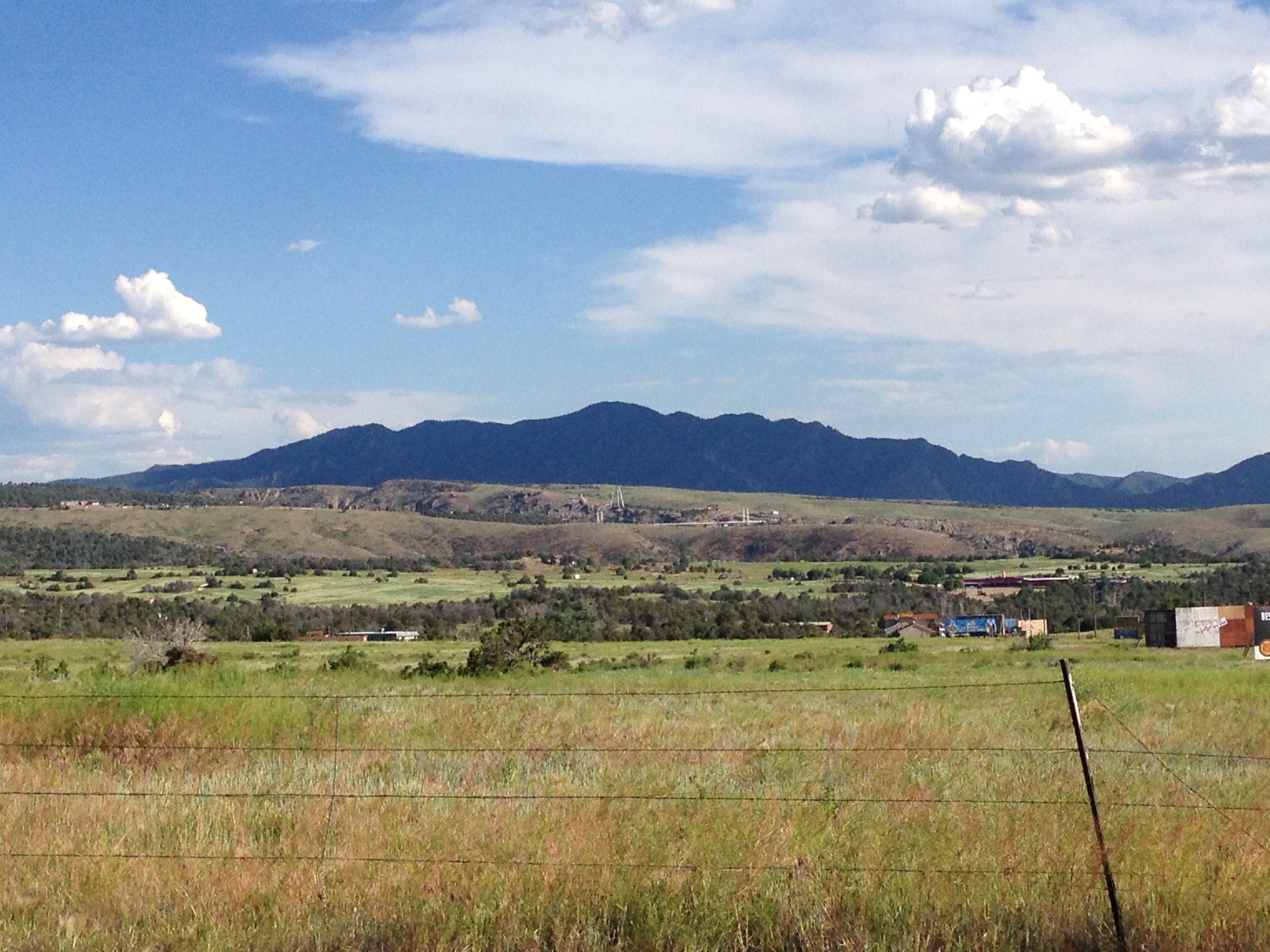
In addition to all of the fun, the scenery was amazing.  Just four miles south of the campground is the Royal Gorge Bridge, which can be seen by gazing across the open plane of the Arkansas River Valley.  A quick turn to the right, and one can see the Sangre de Cristo Mountain Range, which contains numerous peaks over 14,000 feet, and extends all the way into Northern New Mexico.

IMG_3582 IMG_3586

As I walked across the open field that evening, staring across a the Sangres, and the bridge, and some of the other terrain features that look so breathtaking when the setting sun hits them at just the right angle, I came to the realization that I had entered the sweet spot that I am always looking for in life.  By this I mean being the best version of me, the version of me I wish I could be all the time, but somehow can’t.

Without the help of any substance, drugs, alcohol, or even caffeine for that matter, all the anxiety had just vanished.  I was just content.  It’s hard to explain.  But, it was like I had just simply left the competitive world that we live in behind for a few days.  I did not feel I was competing with people, needing to prove anything, or potentially being judged for anything.  Maybe what I felt was acceptance, something we all long for in life, and something I sincerely appreciate those who joined me on this trip for.

IMG_3583

Out here, organizational structures, hierarchies, deadlines, and all of the things that make life stressful simply don’t exist.  It is just you, whoever you chose to make the trip with, and the scenery.  And, once you get to that place where you can let go of everything in your head, you find that best version of you, the one you know you are capable of.  It is the you that is confident, eager to take on a new activity, and in no way hiding any aspect of who you are out of fear of judgement.  It is the you that the people who you value are drawn to, and it is the you that should be celebrated, even if that means throwing yourself parties like this one.
IMG_3607 IMG_3611 IMG_3615

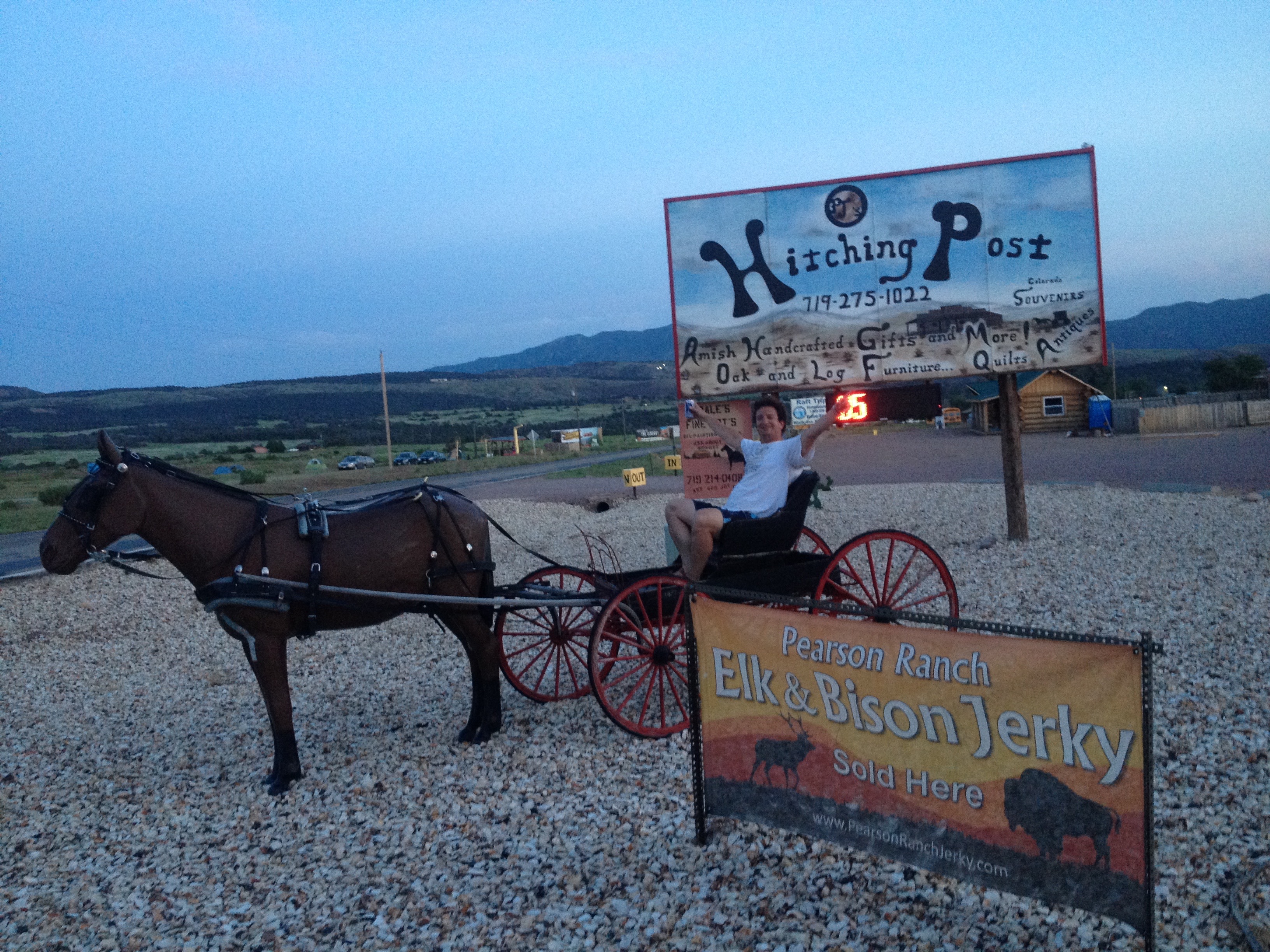
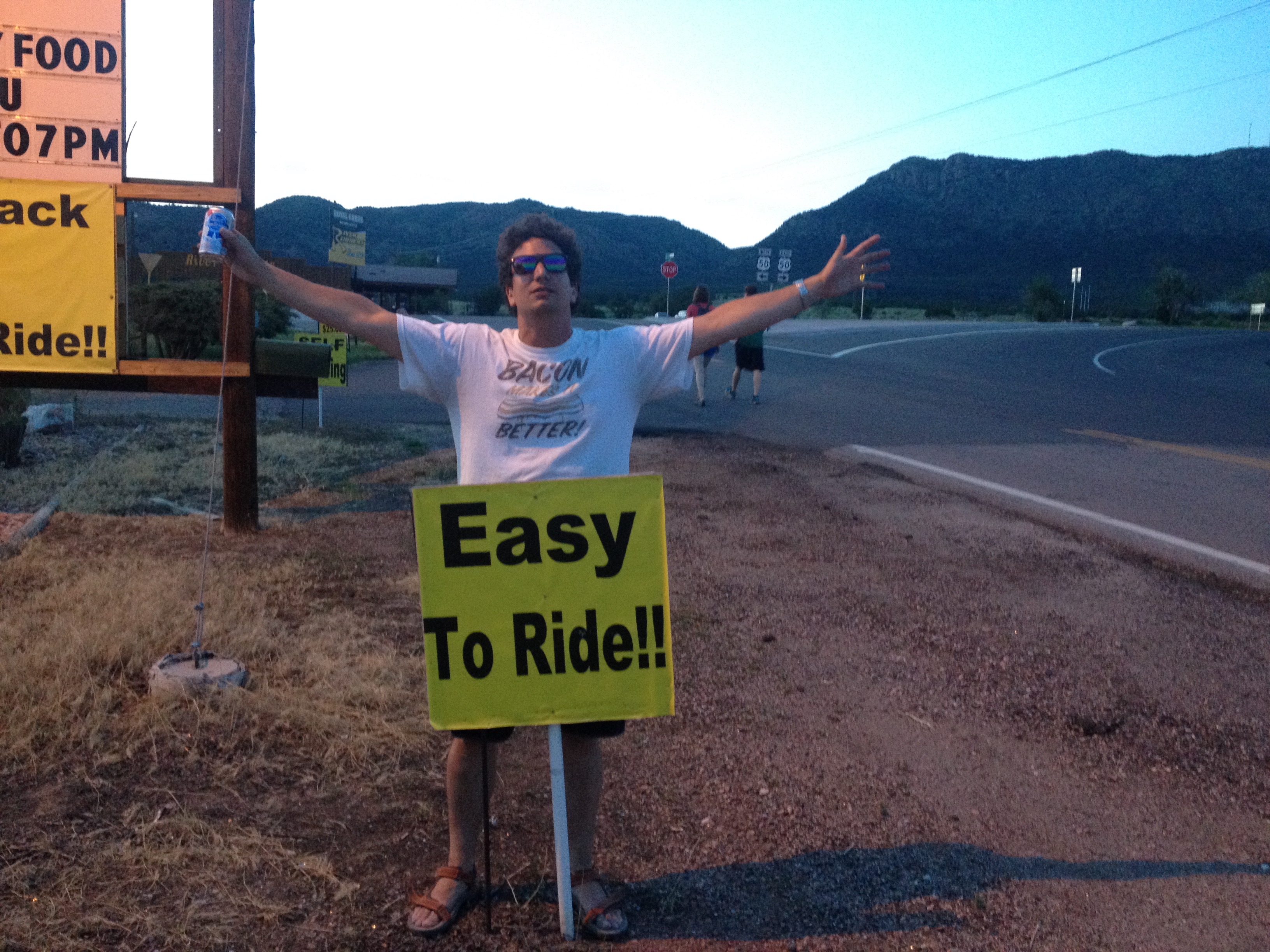
For me, when I am being true to myself, it means being goofy, and, well this area offers plenty of opportunities for that.  This section of U.S. highway 50, near Royal Gorge, has more than just one campsite and one whitewater outfitter.  There are more campsites, more whitewater outfitters, other activities (such as helicopter rides), and shops and restaurants that serve the needs of the tourists in the area.  Not to say that this area is a full-fledged tourist trap similar to Estes Park.  But, there are some places to wander around to at night if one is so inclined.
IMG_3623

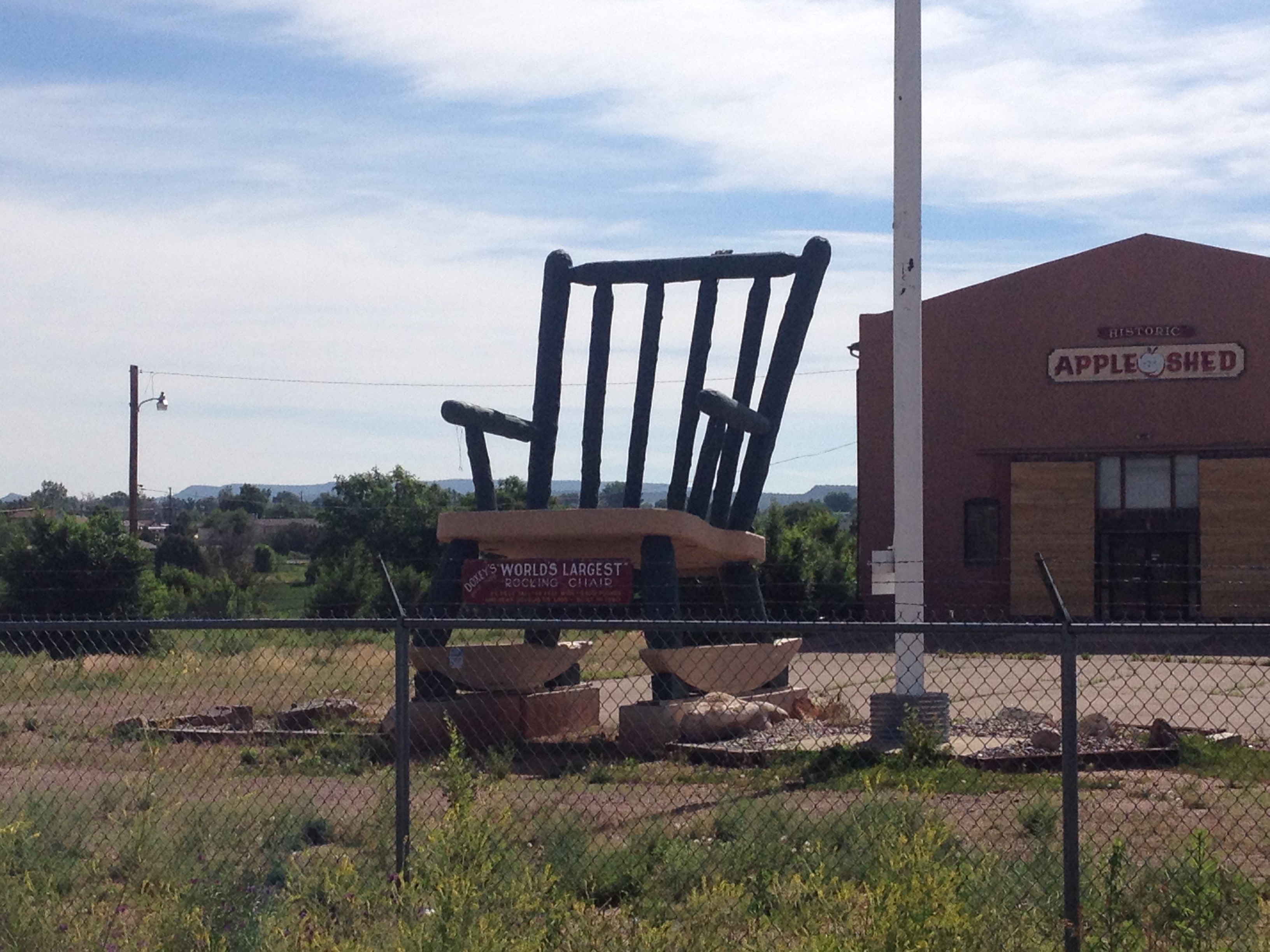
The return trip home involved one mildly disappointing stop; the World’s Largest Rocking Chair.  The chair was large, but we could not get in, as the shop that houses it has been closed for a year.

As I faced the return trip to the city, the return to work, and normal life, I could not help but think about the feeling I had this weekend, and how to be the best version of myself, the me that I was all weekend, every day.  What I struggle with is that “normal life” offers pretty much two typical paths.  First, one could work hard and “move up” in their organization, get promoted, become the boss, and maybe even reach leadership positions.  However, I have frequently observed that in many organizations, reaching higher levels requires some level of conformity, and one often must make some compromises on who they are and what they value to get in the good graces of those higher up- particularly in larger organizations.

Then, of course, there is always the option to be content to simply stay at the bottom of the totem pole.  This is a better path for those that prefer to keep their work load at reasonable levels, and seriously value work-life balance.  But, unfortunately, those that chose this route will always be answering to somebody, a boss, and sometimes for somewhat arbitrary reasons.  Being at the mercy of one person (and that person can suddenly change), who may be having a bad day, a bad month, or just simply be a bad person, has lead to countless terrible outcomes, all of which result in people not being the best version of themselves.

This is not to say that all is lost.  There are plenty of people that find a path outside the typical two options laid out above.  Many even write about their experiences here on WordPress.  There are also plenty of people that find a good environment using one of the two standard paths outlined above.  But, we all have a struggle.  And, this weekend, I realized that in order to make this struggle easier for both myself and the people around me, I need to celebrate the attributes in others that draw me to them, and also celebrate my own attributes that draw others to me.  Regardless of our paths, this authenticity needs to be encouraged.
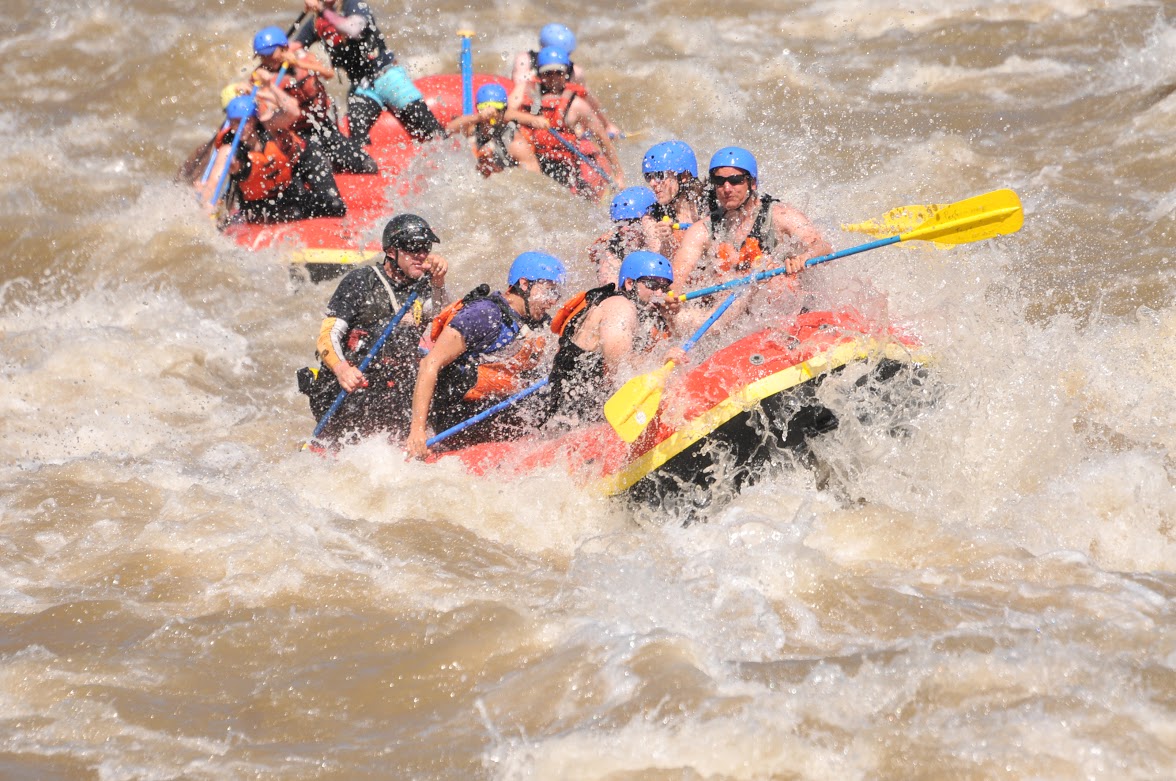
Flooding on the Arkansas River

RoyalGorgeRaftingRowdyCelebrating my half birthday with Whitewater Rafting has become somewhat of a tradition for me, even though this is only the second year that I have organized such a trip.  And, this year’s trip was a doozy!

Mid June is typically prime-time for rafting in Colorado, as a combination of snowmelt from the mountains and periodic spring thunderstorms create the faster moving waters that adventurers seek.  This year, however, an unusually rainy May across Central Colorado created rapids on the Arkansas not seen in a generation.  According to our raft guide, this is the highest the water had ever been on June 20th, and the highest the water had been since 1995!  And, of course, the river reached what is referred to as “flood stage” the day before the trip.

RoyalGorgeRaftingcalm

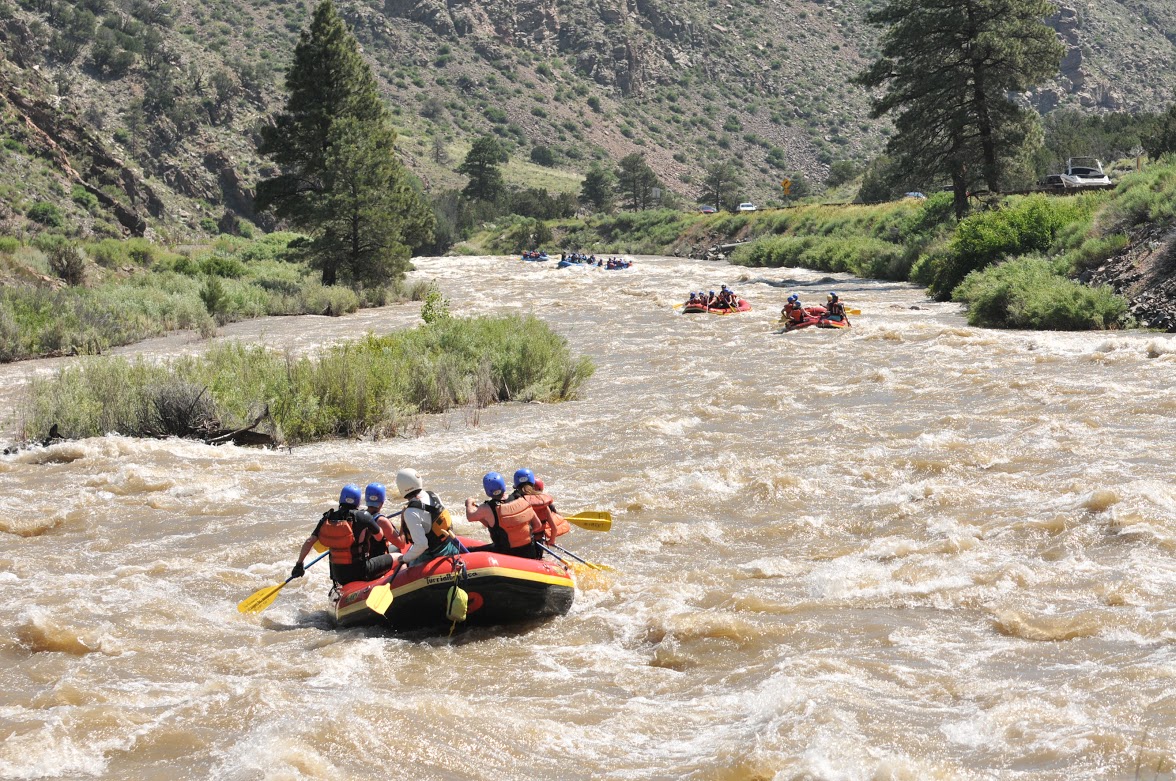
Even the calmer parts of the trip were quite rapid.  The trip we signed up for was Performance Tours’ Royal Gorge half day trip.  With the speed that we were moving downstream, we covered the 10 mile distance in a little over an hour.  As is the case with nearly every commercial rafting outfitter, we began our trip on somewhat calmer waters so we could figure out our paddling rhythm and review some commands prior to tackling the bigger rapids.  Last weekend on the Arkansas, this was about as calm as it got.

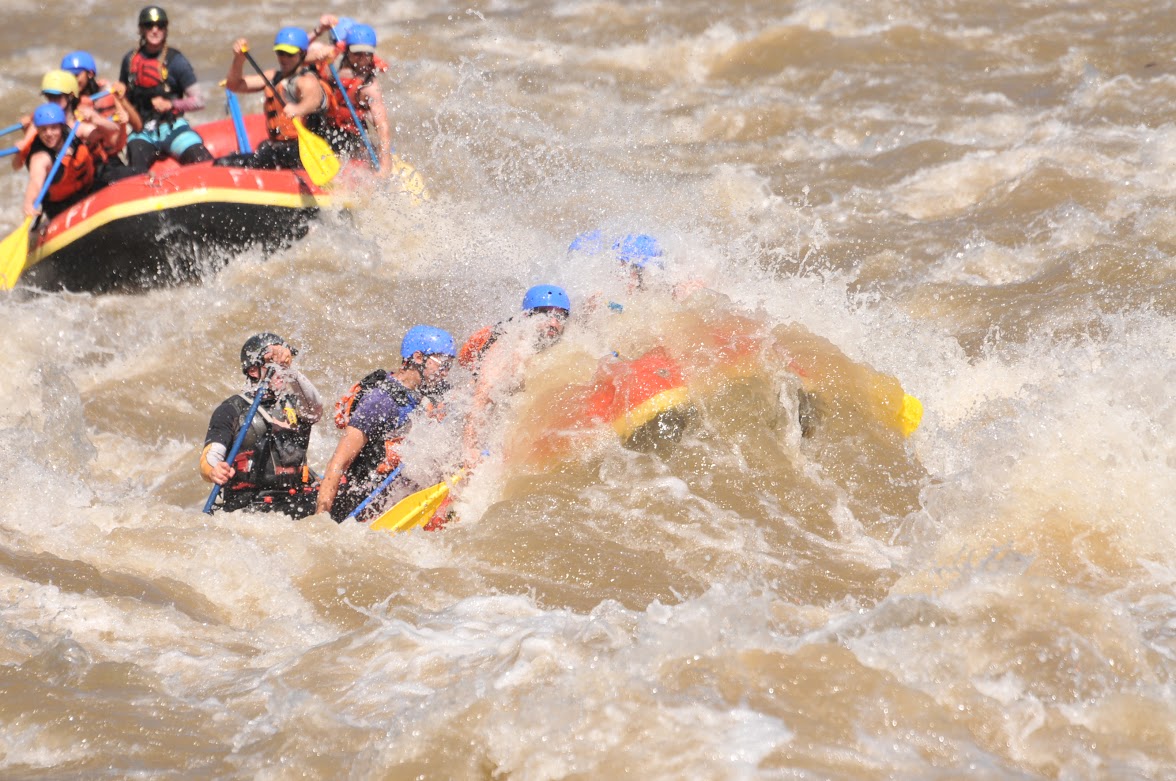
It was not long before we were fully in rapids, ones that would be considered class 3 and 4.  The raft frequently bounced up and down during this entire middle section of the journey.  The roughest stretch came about 2/3 of the way into the trip.  It was a section of rapids that the instructor said some consider class 5, which is the highest rating navigable.  Unfortunately, we were not quite so lucky here.  In this section of rapids, our raft was quickly flung to the right bank of the river by a powerful burst of water.  The raft tipped sideways, dumping all six occupants (including the raft guide) into the rapidly moving river.

RGRaftingTipOver

I did not even believe it was happening at the time.  On these rafting trips, many people look out the bus window, at the rapids they are about to take on, with a feeling of terror.  I had always believed I could conquer anything, as, well, for some reason rafting just never really scared me.  I just handle the bumps, lean in when necessary, and enjoy the ride!  But this time, we were all really going down.  Before I knew it, I was directly underneath the raft for what felt like an extended period of time (but in reality was only about 3 seconds).  Getting out from under the raft, and being able to pick my head up out of the water and breath was quite the relief.  It was an even bigger relief when I was able reach out and grab the paddle that our rafting guide extended towards us to pull us to shore.  And, although only three of us were able to grab onto that paddle, all five of us got out of the river with little to no injury.  After recovering my breath after all the water I swallowed while taking the unplanned dip into the river, all five of us got back on the raft and finished the trip.  It was quite the experience, one that the rafting guides told me, makes you “a pro”.

IMG_3590

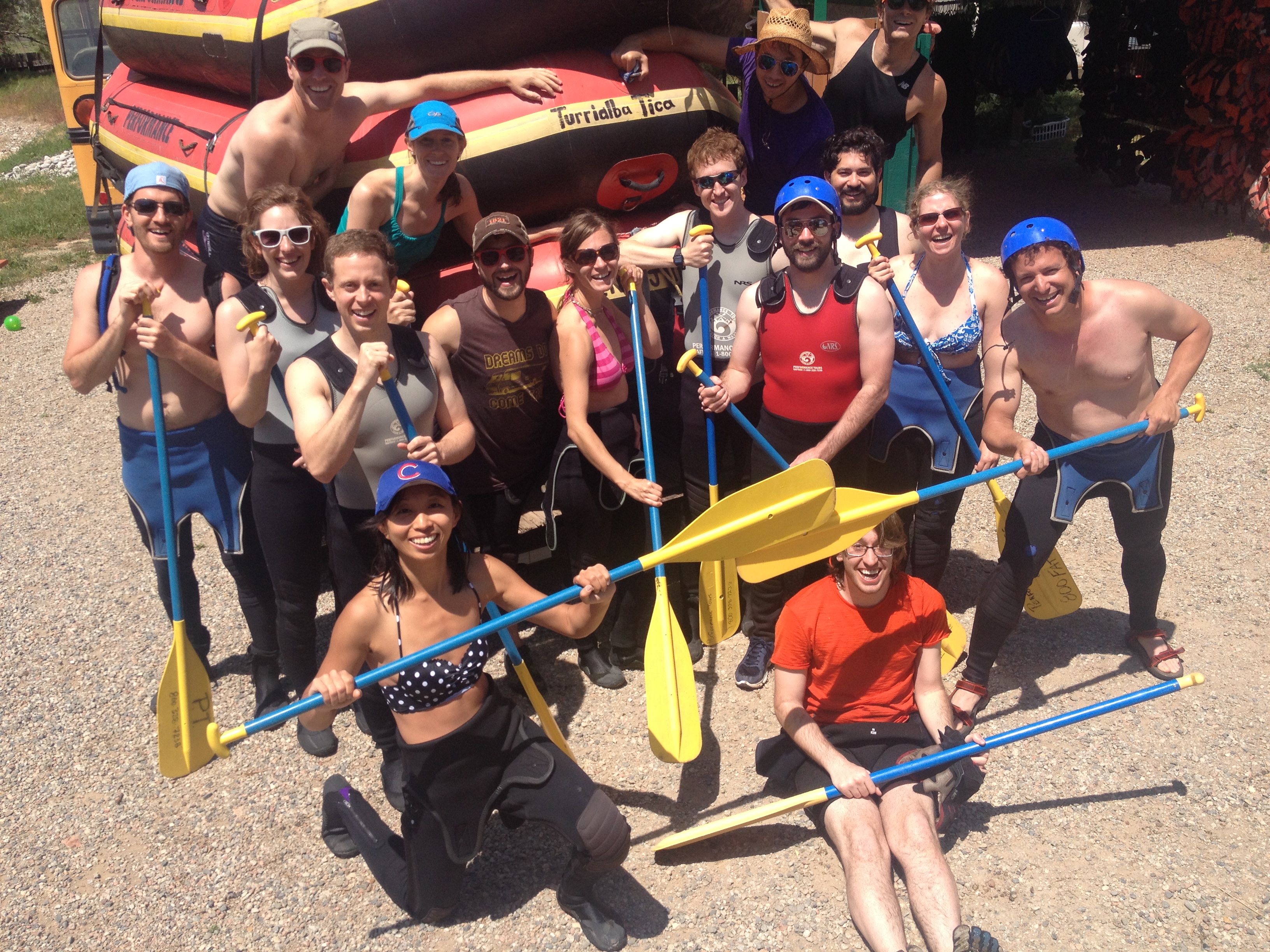
Perhaps the craziest aspect of the rafting experience was having the trip all to ourselves.  Almost every whitewater rafting trip one will take on, particularly on a popular river during a popular time of the year, is shared with strangers, basically, whoever also booked this particular trip at this particular time.  However, on this particular tour, perhaps due to sheer luck, or perhaps due to people canceling their trips due to the enhanced danger, my group of 16 ended up having the trip all to ourselves, which made the back and forth banter between the three boats on the trip interesting.

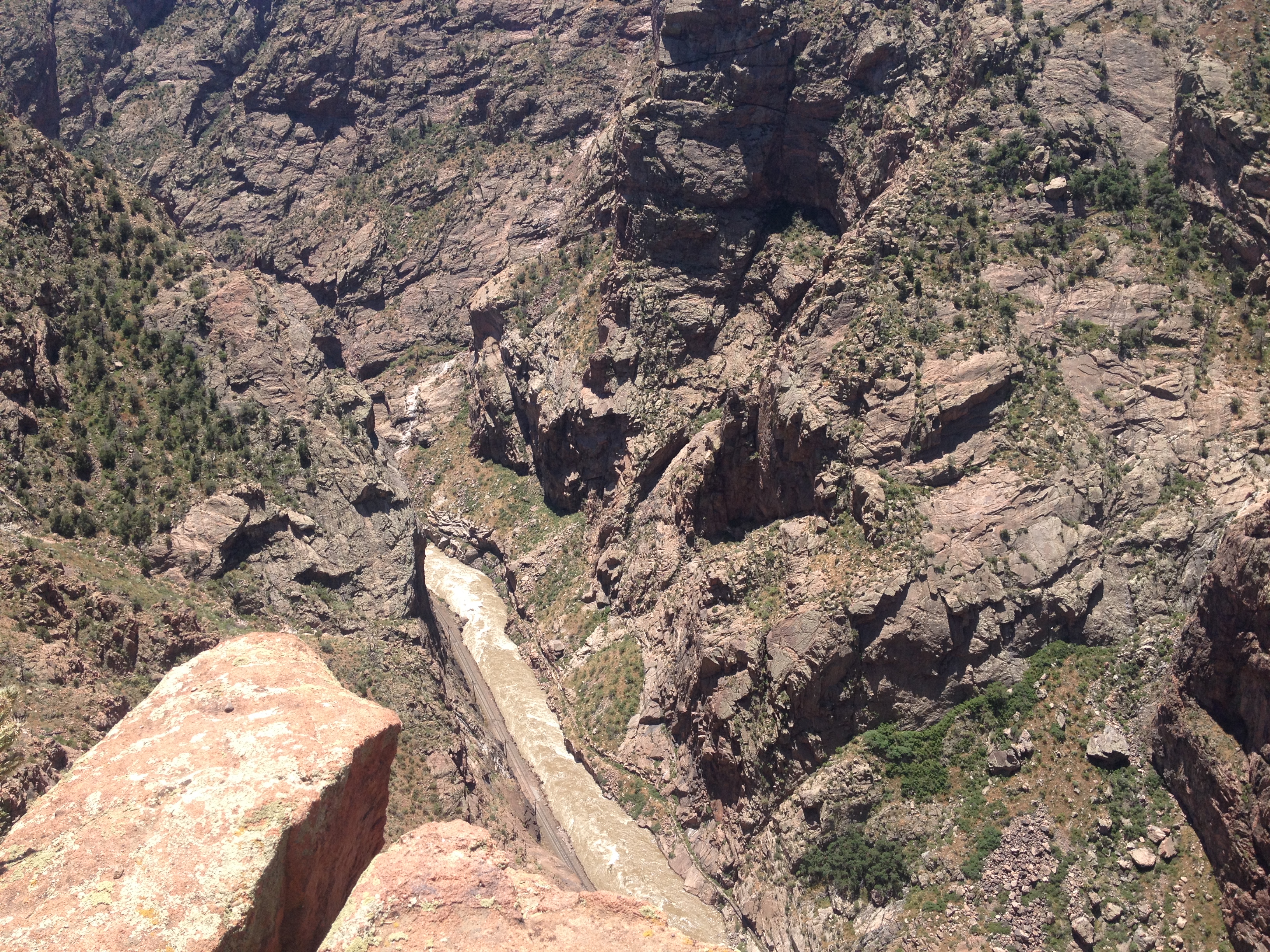
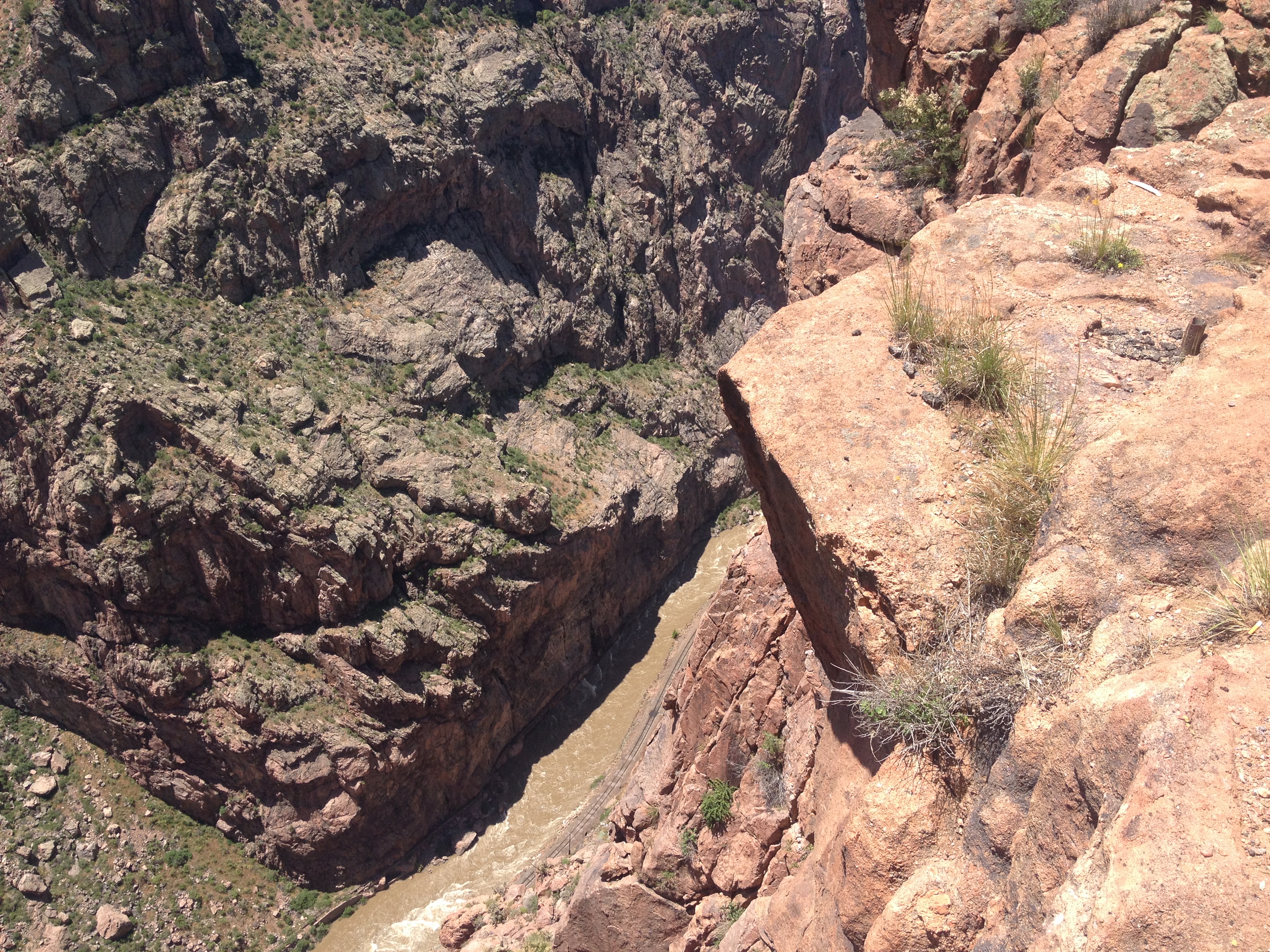
The one real drawback to having the water levels as high as they were was that it prevented us from physically rafting through Royal Gorge, which could not be entered (by raft) safely under these conditions.

IMG_3600

It would have been amazing to actually traverse right through this gorge on a raft.  And, on a calmer year, or in a calmer part of this year (say, August), it will be possible.  But, since I really wanted to see Royal Gorge, after the rafting trip, we picked up and drove the four miles to Royal Gorge Bridge & Park.

IMG_3597 IMG_3596

This park offers a variety of crazy ways to get across this gorge, from the red gondola, to zip lining across, to simply walking across the bridge.  Unfortunately, walking across the bridge costs $23.  Any of the other activities would surely add to that price.  None of us really thought it was worth it to pay $23 just to walk across the bridge, but looking around, we saw plenty of people on that bridge.  I would probably rather experience this gorge by paying only slightly more money for the scenic railway, or by rafting through it on a calmer weekend.

IMG_3601 IMG_3594

For free, we were still able to get on a short trail in the parking lot, to a nice over look.  It is really quite an amazing place, almost reminiscent of the large canyons one will find farther west, at places like Glenwood, Moab, and, of course, the Grand Canyon.

The craziest thing about the remainder of my Saturday was how little I had been “shaken up” by the entire experience.  Rather than being scared, and not wanting to continue (or ever go rafting again), my first instinct was to want to re-do the trip, and get it right this time (i.e. handle the rapids correctly).  If there is one thing I can take from this entire experience, it is the importance of being resilient, and taking experiences like this in stride.  If anything, I was far more upset about how much it costs to walk over the bridge ($23) than about falling out of the raft.  Hopefully this means I am still young and resilient, and not that I am actually crazy.

Cycling in Summit County

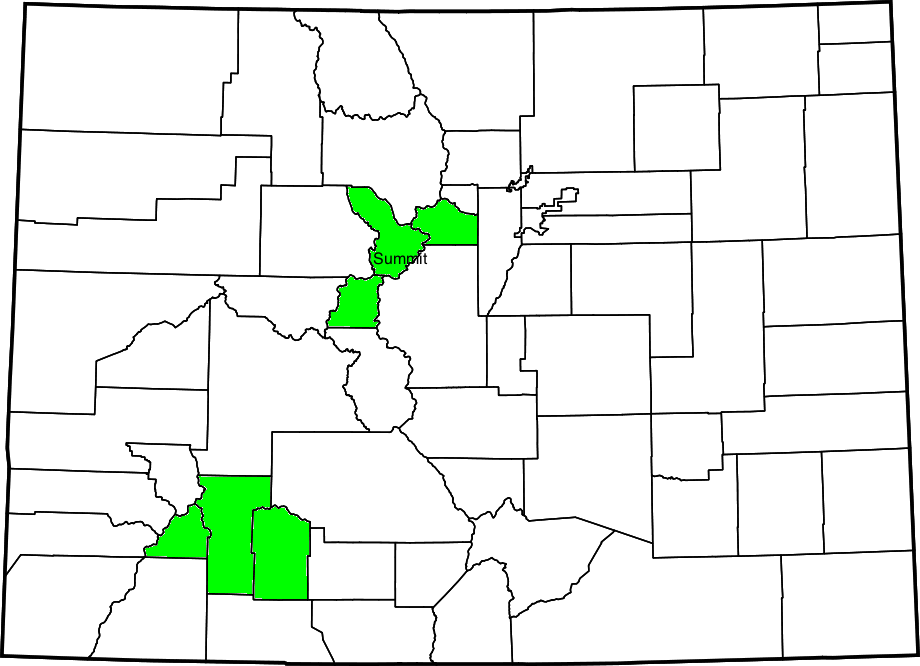
The Appropriately named Summit County (Colorado) sits right in the heart of the Central Rocky Mountains.   With multiple mountain ranges extending into the County on all sides, anywhere you will travel within the County, you will be pretty much surrounded by mountains in all directions.  In fact, Summit County is one of only six counties in the entire nation with a mean elevation of over 10,000 feet.

CO_Counties_over10000'

All six of these Counties are within the State of Colorado.  Outside of Colorado, not only are there no counties with mean elevations greater than 9,000 feet (Colorado has a total of 15), but only three counties outside of Colorado have mean elevations exceeding 8,000 feet (Colorado has 24).  Those looking to “go to the Mountains”, would be hard pressed to find a more suitable place than this one.

Summit County is probably best known as a skiing destination, with five popular ski resorts, including the incredibly popular Breckenridge and Copper Mountain.  However, it may also be one of the best places in the world for high-altitude cycling, which is important for those who train at high altitude to increase lung capacity.

Summit_County_RecPaths

Due in part to a series of rail lines that were created during gold and silver rushes and later abandoned in subsequent bust years, the county has an extensive network of recreational pathways.    The re-purposing of abandoned railways as recreational trails is actually the source of some of the nation’s best bicycling trails.  For those interested in seeing these rails-to-trails well maintained, and seeing more created, there is an advocacy group called the rails-to-trails conservancy leading this effort.

These recreational paths connect almost all destinations within the county.  Within this network of trails, one can find relatively flat rides, as well as intense climbing, all with a variety of amazing scenery.  The network is largely centered around the town of Frisco, a town of roughly 2700 people at an elevation just under 9,100 feet.  Located just off of Interstate 70, it is a relatively easy place to get to (when there aren’t traffic delays), and as good of a place as any to use as a home base for a weekend of high altitude cycling.

My first ride of the weekend was also the toughest one, from Frisco west to Vail Pass.  This ride involves two trails, the Tenmile Canyon trail and the Vail Pass trail.  Heading Southwest from Frisco, the first few miles on the Tenmile Canyon trail includes a fairly significant amount of climbing.

IMG_3464

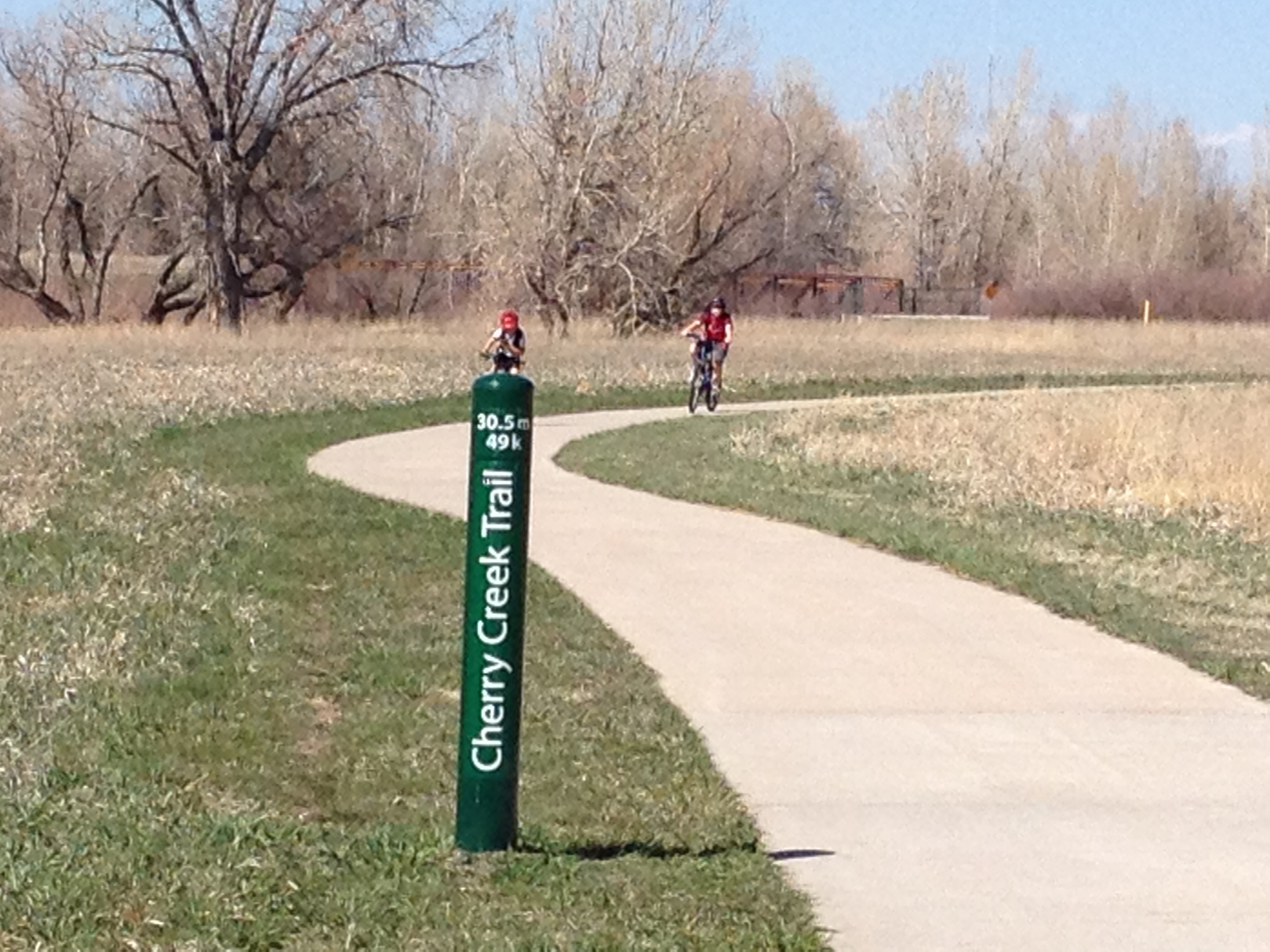
Indicative of how recreation-centric this part of the country is, the entire trail network is well marked, with signage indicating which trails lead to which towns, and a significant number of signs like this one, indicating mileage.

IMG_3468

This sign denotes the halfway point between Frisco and Copper Mountain.  And while the total mileage to Copper is 7.4, a cyclist that has reached this point has already done most of the climbing from Frisco’s 9,100′ elevation to Copper’s 9,800′.

IMG_3471

In fact, the final couple of miles of this trail, headed into Copper is pretty much flat.  But, even during this flat segment, I knew where I would be headed, which would bring me farther up into the mountains.

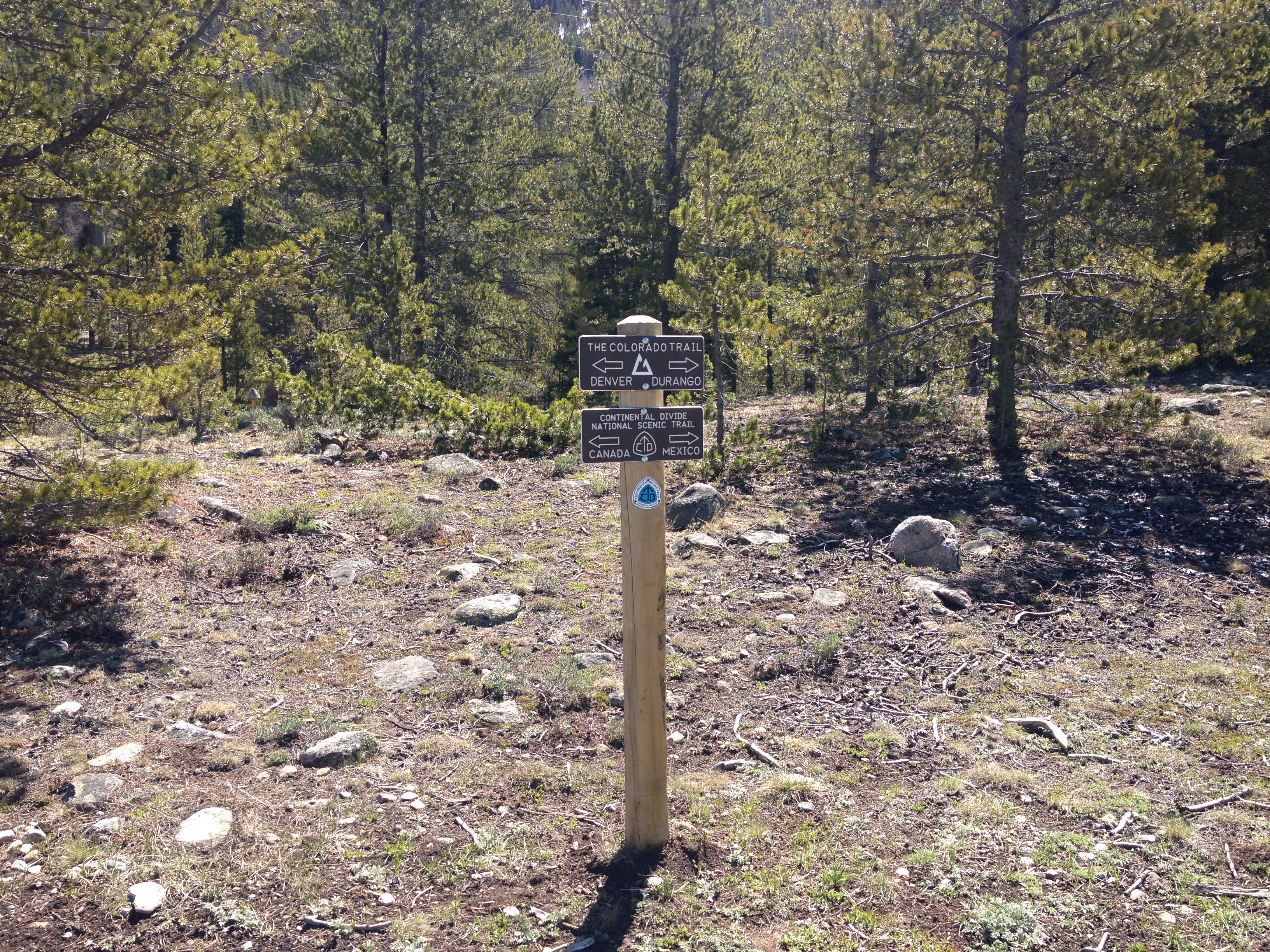
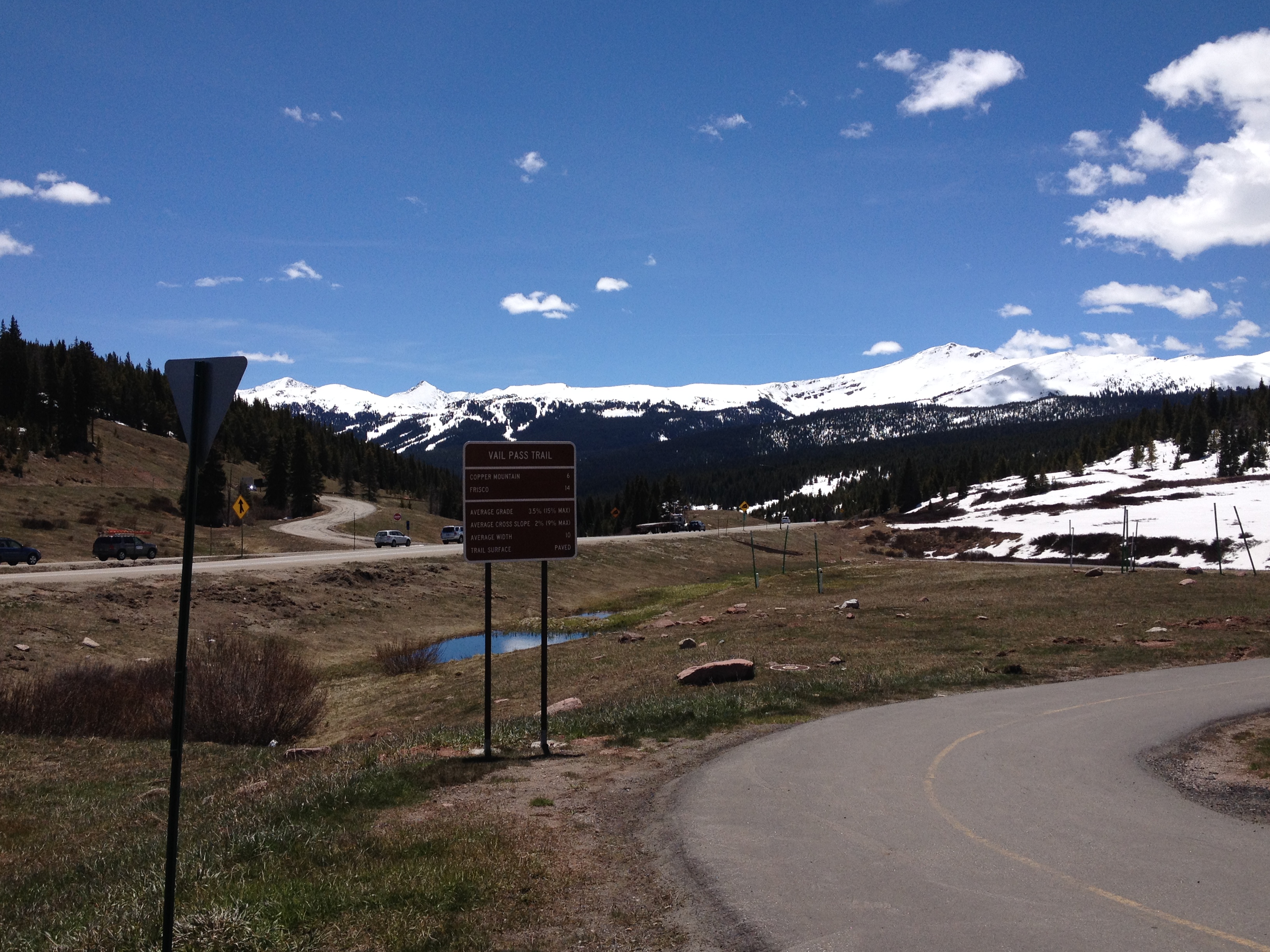
IMG_3474 IMG_3475With it not being ski season, and there not being an actual town there, there was not much going on in Copper Village.  Many places were closed.  The most notable thing I encountered while at Copper was a junction with both the Colorado Trail and the Continental Divide National Scenic Trail, which share the same path here.  Just the thought that anyone I encounter cycling or hiking could be headed as far as Durango, or the Mexican border, is just incredible!  At the West end of Copper Village is the Vail Pass trailhead.  Despite what is indicated in the signage, the trek from Copper to Vail Pass is actually only four miles.  Not only did I clock this myself, but a cyclist with over twenty years of experience cycling here told me that this sign has been “wrong for over 20 years”.
IMG_3476 IMG_3479The Vail Pass trail is kind of a mixed bag.  Over four miles, the trail climbs somewhere between 800 and 900 feet.  However, it is a mix of some fairly flat segments, and some fairly intense areas with switchbacks and such.  I would say there are three sections of this trail that are intense climbing.  One fairly shortly after beginning the climb from copper, one right in the middle, or about two miles from Copper (pictured here), and one close to the top.

IMG_3482

Strangely, most of this trail is actually in the middle of I-70, between the Eastbound and Westbound lanes, which are farther apart for much of the segment between Copper Mountain (exit 195) and the Vail Pass summit (exit 190).  The top of the trail is a rest area that cyclists share with motorists.  Here, a connection could be made with the Eagle County tail network, and cyclists could continue West towards Vail Villiage.

IMG_3483 IMG_3484

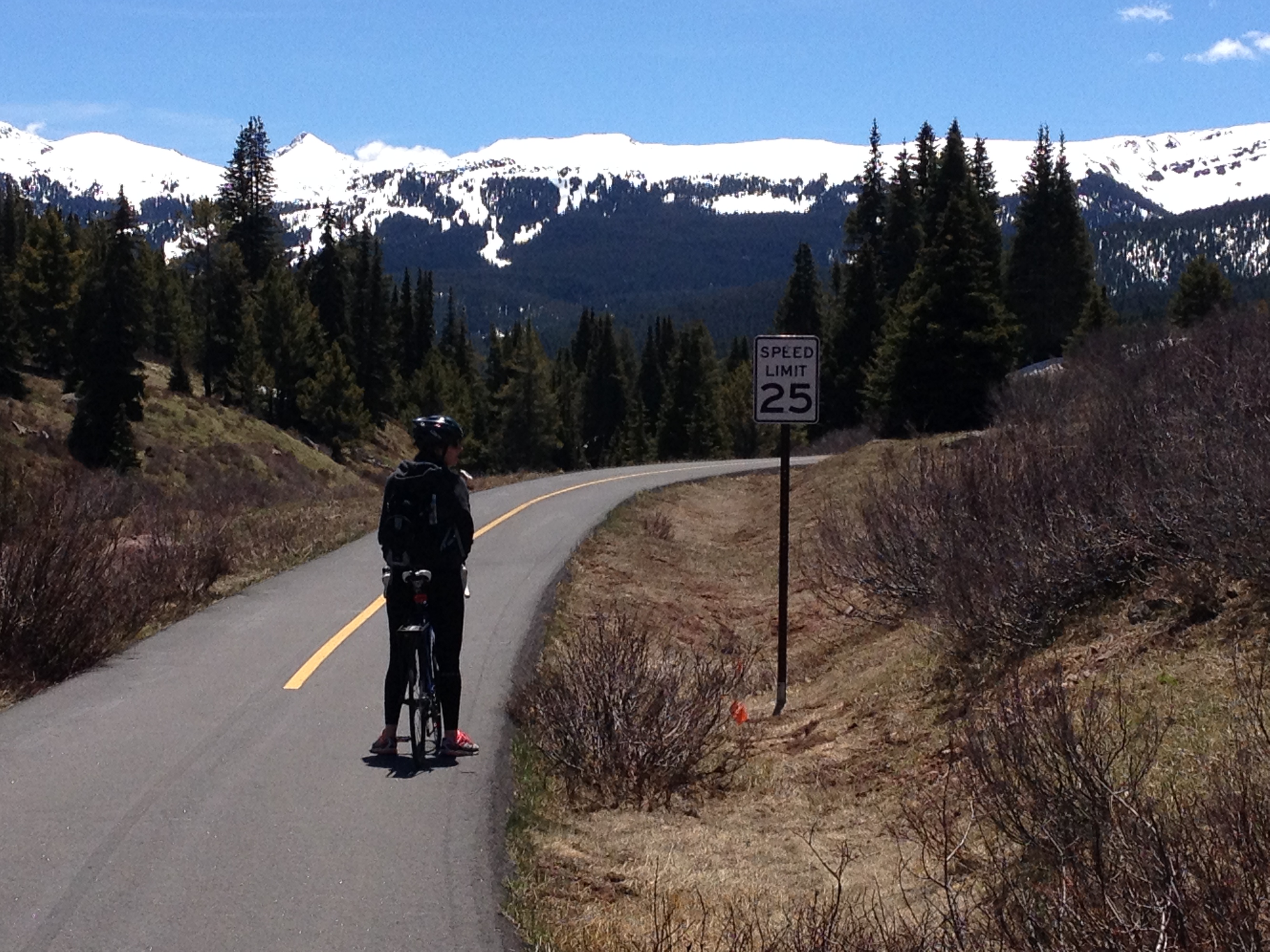
However, my plans take my back towards Frisco, where, I not only encountered another sign indicating that the trail is six miles long rather than four, but a speed limit sign.  I am not sure if and how this speed limit of 25 is enforced.  But, it does provide those concerned with safety with a guideline.

The descent back to Frisco, just over 12 miles in total when one includes getting from the tailhead back to home base (in my case Hotel Frisco on Main St.) went rather rapidly, at a speed that must have averaged fairly close to that assigned speed limit.

After stopping for lunch, in the afternoon, I took on another ride to explore more of the Summit County trail system.  This one, a loop around the Dillon Reservoir.

IMG_3485

The ride starts out “flat”, as the trail stays at roughly the elevation of the lake.  However, “flat” here is a relative term.  Even the rides described as flat and easier, here in Summit County, can contain some rolling hills.  And, while significantly easier than a “climb”, these trails are nowhere near as flat as a trail one would find in a place like Illinois where there is pretty much no terrain change.  There are small rolling hills, as nowhere in Summit County is really flat.

After a fairly “flat” ride on the Dillon Dam recpath and the Snake River recpath, in order to traverse the entire loop around the reservoir, one must climb Swan Mountain, which is actually a 1200′ climb.

IMG_3487

After two significant climbs, and nearly 50 miles of exploring this amazing system of trails, I was ready to call it a day.

I did a little more exploring on Sunday, mostly on the easier trails.

IMG_3493 IMG_3494

I came to really appreciate the portions of these trails that wind through the trees, often with small rolling hills.  While getting up to the top of a major climb provided me with a sense of accomplishment, these trail segments were just pleasant and enjoyable to ride through.  The smell of the pine trees reminded me of cabins, and camping, and all the things we do in life to get away from our day to day responsibilities.  The twists and turns just made me feel like I was on a ride of sorts, almost like a roller coaster in some places.  And, there were some other interesting areas, like these bogs.  In the end, I am glad I did both the big challenging climbs, and the gentler trail sections.

And, I was also glad to have experienced the town of Frisco a little bit more.

IMG_3490

Frisco is somewhat of an interesting place.  It has that Western feel that many of these towns have, with a Main Street lined with stores, and mountains in the backdrop.  It is somewhat touristy, but not overwhelmingly so.  It seems to occupy some kind of middle ground.  With bus service to Breckenridge, Copper Mountain, and Keystone ski resorts, they get their fair share of ski related tourism.  But, not as much as there is in Breckenridge, or any other town that is actually adjacent to the ski resort.  This appears to have created demand for a variety of different hotels and restaurants, but without some of the major crowds, or the dozens of souvenir shops that line the streets of many other tourist destinations.

Over the course of the weekend, I tried five different restaurants in Frisco; Boatyard American Grill, Begalis, Prost, Butterhorn Bakery and Cafe, and Lost Cajun.  All were within a block of Hotel Frisco, and each one provided a different experience.  Boatyard is a great place to get a burger, or bar type food.  Begalis provides a nice moderately upscale Italian dining experience.  The sausages at Prost were amazing.  Butterhorn is a very popular place for breakfast/ brunch.  And, I am particularly impressed by the free samples provided to customers at Lost Cajun prior to ordering.  And, I enjoyed the casual Louisiana style experience.

IMG_3497

Overall, it is hard for me to imagine a better place for high altitude bicycle training.  Right in the middle of the Rocky Mountains, there is a place with an extensive network of recreational paths that connect nearly every community in the area.

Mud Season

IMG_3372

“Mud Season” is a term used to describe a time of year when a combination of melting snow and frequent rain can cause the ground to become muddy for an extended period of time.  The term originated in Northern New England to describe the first part of Spring in Maine, New Hampshire, and Vermont, when rural dirt roads are significantly tougher to pass through.  It is now used quite extensively in the Rocky Mountains as well.  Here, “mud season” refers to the time period between ski season and the onset of summer activities; basically most of April and May.  With a drier climate, Rocky Mountain “mud season” is not nearly as muddy as its New England counterpart.  But, the lull in activity produces similar results.

“Mud season”, no matter where you are physically located, is the outdoor recreation equivalent of a matinee movie showing, a red-eye flight, or well liquor.  Those who chose to travel during this time of year are rewarded with significantly cheaper hotel rates, much less traffic to contend with, and campgrounds that are significantly emptier.  However, as is the case with any other off-peak event, there is reduced demand for a reason.  And, there are tradeoffs.  Matinee moviegoers are giving up greater opportunities than those who pay more to see a movie at night, a red-eye flight can mess up sleep schedules, and well liquor can produce significantly worse hangovers.

IMG_3368 IMG_3371

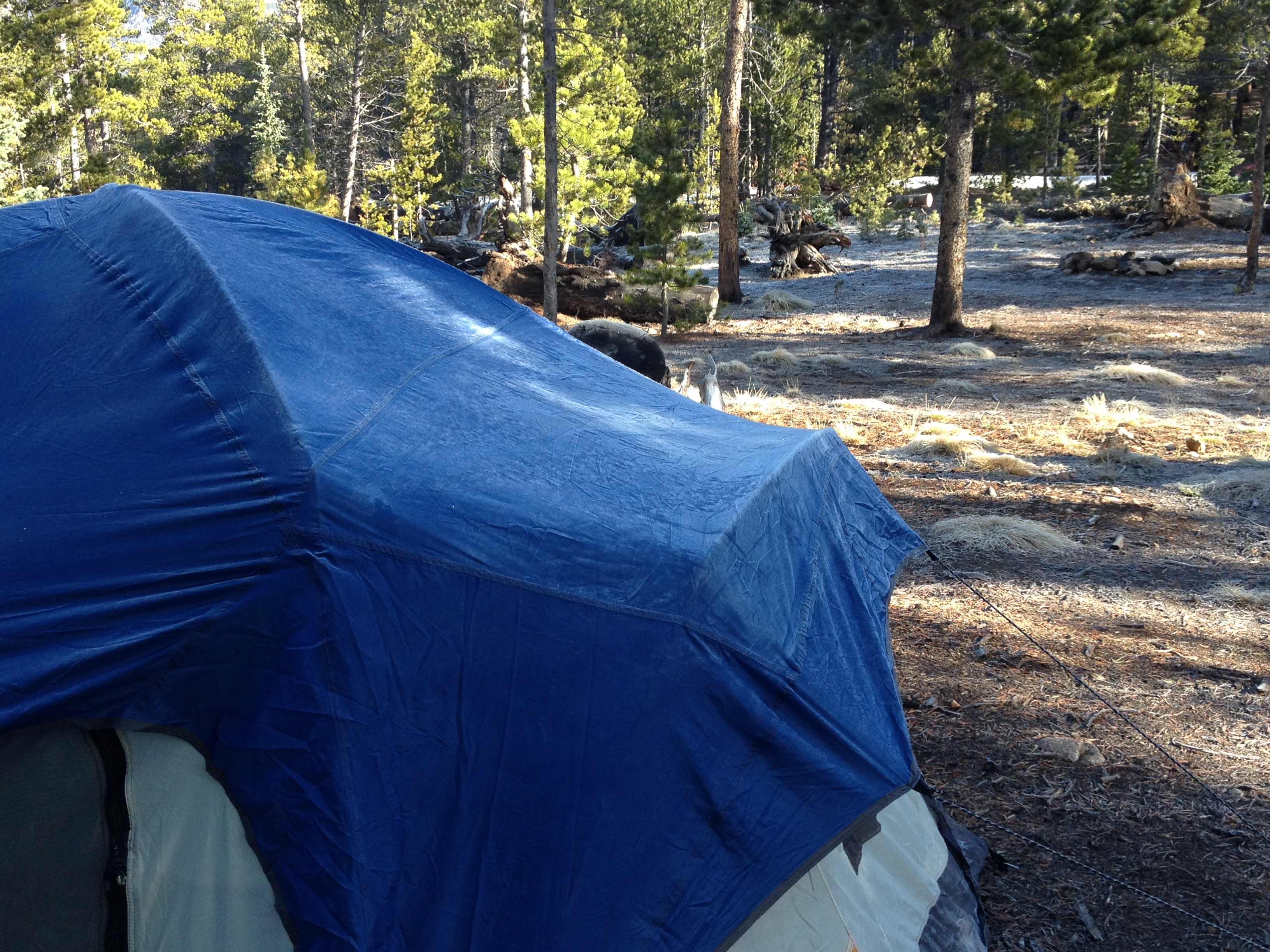
The main reason camp sites are easier to come by here in the Central Rocky Mountains in late April/ early May is that, at 10,000 feet in elevation, conditions are still not optimal.  This past weekend, both Friday and Saturday nights saw temperatures drop below the freezing mark.  Camping in these conditions is far less comfortable.  It necessitates chopping more firewood, packing more layers, and sometimes even breaking camp with frost on top of your tent!

In my case, there were plenty of people around to handle campfire preparation.  This particular camping excursion was actually a multi-day birthday party.  And, at some point Saturday evening, there was around 20 people at the campfire.  It was a strange mix, being in a remote, secluded area away from civilization, but also being at a major social gathering.  We were out of cell phone range, miles from any town, and a significant distance from the nearest other campers, but also using battery powered speakers to play music at a significant volume.  It was a truly amazing experience!  I got to both be around a large group of people, but also wander into the woods and collect my thoughts in perfect silence, all in the same day!

IMG_3384

Social gatherings of these kinds are always somewhat of a balancing act.  At any social gathering like this, you will find people that will fit into the following three categories:

First, there are the people you are solidly friends with.  You have seen them sometime recently.  You have your shared experiences, your silly jokes and the like.  Most likely you have some kind of plan to see them again.  Maybe you coordinated rides with them, or even lost a silly bet on a basketball game several weeks ago.  That is what happened to me, and why I had to wear this silly sombrero for most of the weekend!

IMG_3406 IMG_3385

In the second category are people who you know, but not terribly well yet.  These are the people you would typically describe as “friends of friends”.  You’ve definitely had some experience with them.  They showed up at the bar last weekend, or the last house party you attended.  You’ve hung out with them, conversed, danced, played games at various intoxication levels.  And, maybe someday in the future someone in this category will eventually be a good friend.  But, with people in this category, the next time you will see them will be at another event coordinated by your mutual friends.

And, finally, there are the people you are meeting for the first time ever.

A balance needs to be had.  I find it important to engage with people that would fit into all three of these categories over the course of the evening.  You need to enjoy your time with your friends, but also be open to letting more people into your life.  It’s about sharing in the activities you know, reliving the experiences you have had, and continuing the ongoing jokes you already share, but also trying new activities, exploring new ideas, and creating new jokes in your circle.

I dabbled in the old, as well as the new.  I even tried, once again, and failed, once again, at mastering the art of wood chopping.  That silly sombrero I had to wear did not help.

IMG_3396

Let’s be honest, my form here, it looks terrible, and look at all of those silly little chunks of wood that ended up splattered all over the place.  At least the activity kept me warm.

As is the case with any off-peak activity, there are some cases to take either side of tradeoff.  Someone who works a non traditional schedule may financially benefit from seeing a cheaper matinee movie.  A red-eye flight may be a more efficient use of time for someone capable of dozing off on an airplane.  And, well liquor could be a good cheaper alternative for someone whose plan for the following day does not necessitate being alert.  During “mud season” in the Rockies, hotels are cheaper and camp sites are far easier to come by.  It is also way easier to find both privacy and seclusion.  To get to a place that is truly peaceful, one must travel less distance, and often spend less time in traffic to get there.  Therefore, for those not looking to mountain bike, climb a tall mountain, or use muddy trails, it may be worth the trade-off to come up to the Rocky Mountains during “mud season”.  And, like the person who is capable of falling asleep on an airplane, or those who work non-traditional schedules, some are more adept at handling the cold nights of “mud season”.

IMG_3405

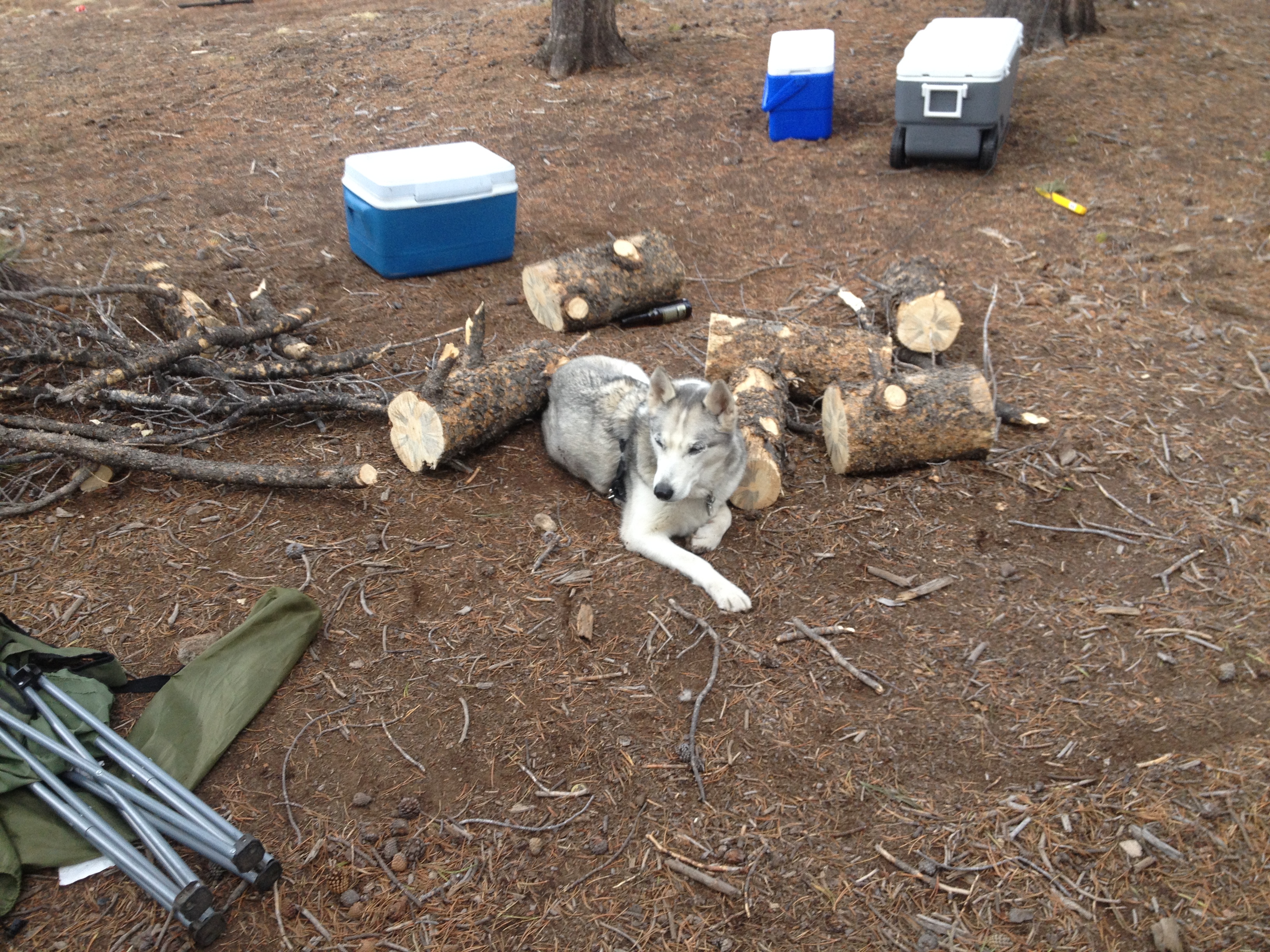
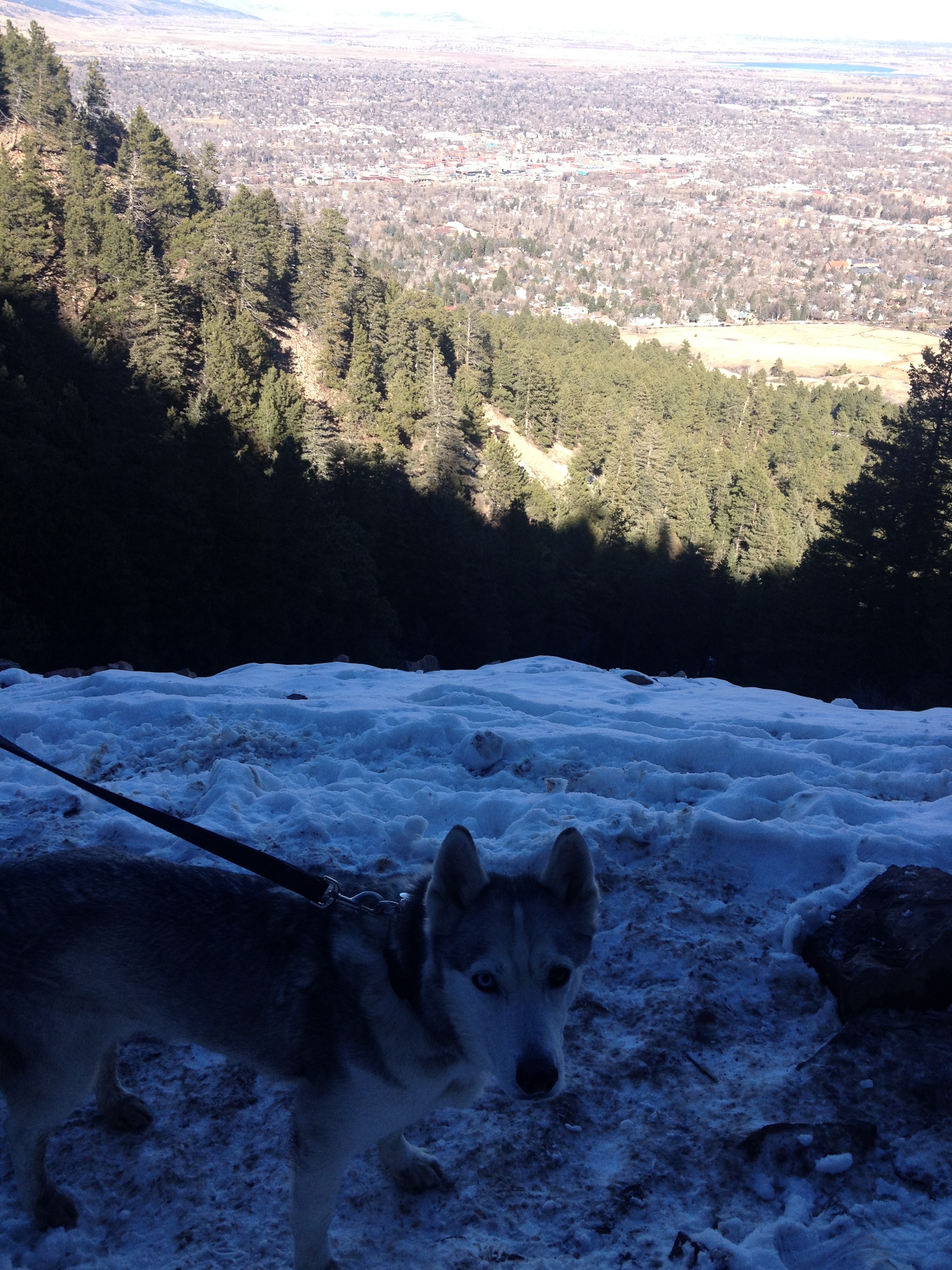
Like this Siberian Husky, who, if anything, feels at home in chillier conditions, there are off-peak opportunities out there for nearly any activity one engages in.  And, those who figure out the ones that are right for them, can save money, time and hassle.

Testing Our Limits

IMG_3247

A good friend of mine once told me that nearly all people are capable of much more than what they believe they can do.  And that, in fact, when challenged, most would actually be surprised by what they are physically able to do once they have been pushed to their very limit.

When it comes to most activities, people generally tend to stop when tired.  After all, exhaustion is generally an unpleasant experience for most, and has the potential to make an activity no longer enjoyable.  However, from time to time, life issues some kind of challenge that forces us to give everything we have, way beyond what we had been wanting to give.  Most of us have experienced that unexpectedly challenging assignment in college that forced us to “pull an all nighter”, or had to tend to someone they truly care about at a time when completely exhausted.  It is at these moments, when we completely drain ourselves, that we figure out the true boundary of what we are capable of.  And, for physical activities, such as cycling, it is when our bodies actually physically begin to give out on us, that we truly understand what we are capable of doing.

Heading into a new season, I decided it was time to challenge myself.  Monday, I had an entire day available with no prior engagements, so I decided to take on a ride that would potentially test the limits of my endurance at its current state; A bike ride from Denver to Castle Rock, and back, in one day.

IMG_3241 IMG_3259

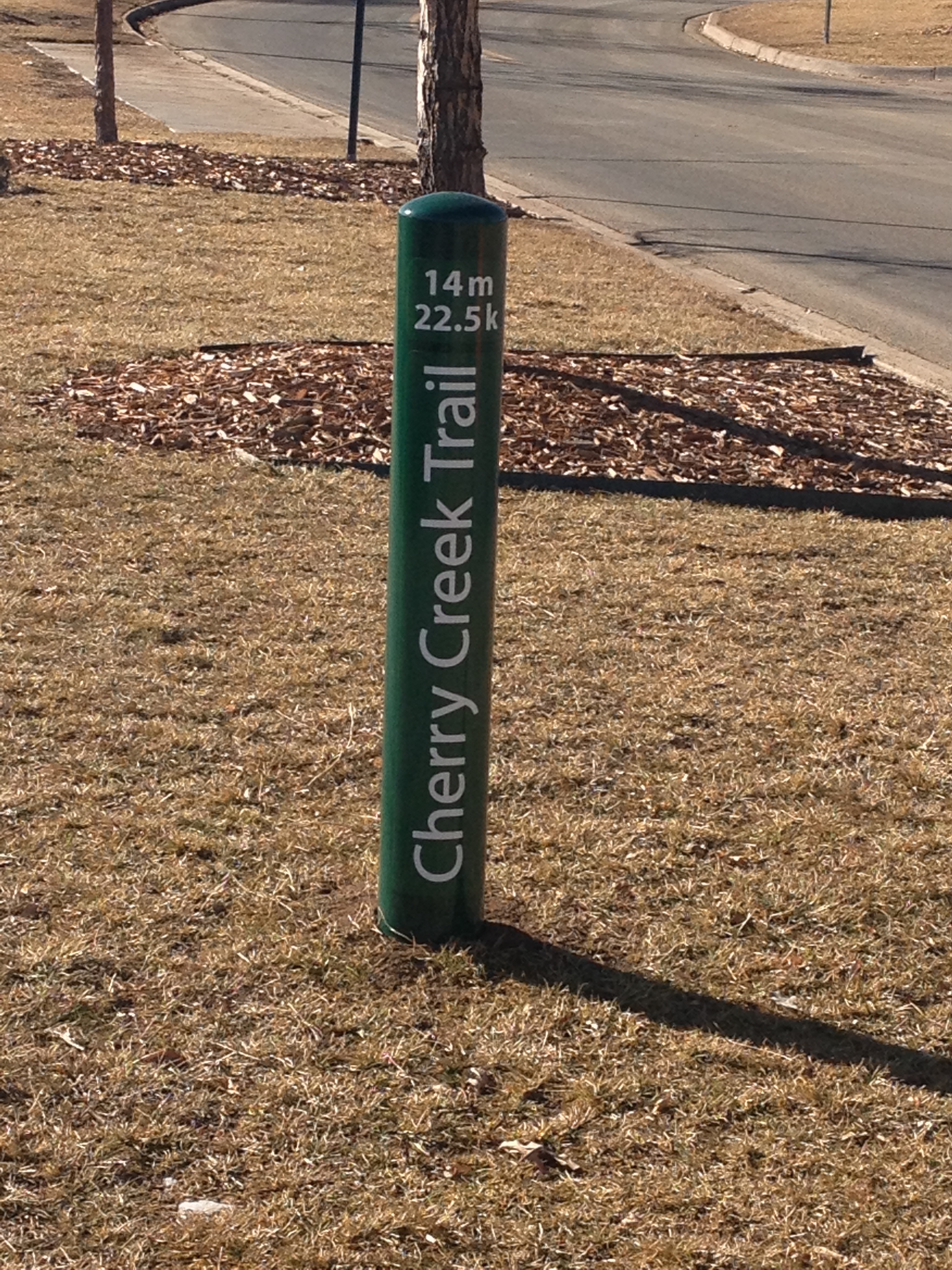
The first 30 miles of this trek is on the Cherry Creek trail, from Denver to the suburb of Parker.  Most of this trail is relatively flat.  A gradual upslope, combined with a few uphill segments, takes a rider from Denver’s 5280′ in elevation to Parker’s 5900′.  This part of the journey was not too terribly challenging.  In fact, in this segment, my biggest challenge was finding water to refill my water bottle.  I had assumed, for some reason, since it was already the end of March, and that there have already been 12 days with high temperatures of 70 or above, that the water fountains around the suburbs would be turned on for the spring.  I was wrong, and was quite thirsty and relieved to see this sign, indicating that although the water fountain was not operational, that the bathroom had available water.  You would be surprised how many suburban park bathrooms do not have running water.

IMG_3243

To get from Parker to Castle Rock, one must follow a road called Crawfoot Valley Road.  The road is quite luxurious for cyclists, with a shoulder wide enough for roughly two bikes.  In fact, it is labelled a bike lane for some parts of this eight mile stretch of road.  The first three miles, headed southwest from Parker, however, is a bit of a climb, and a deceptive one.  The climb is nowhere near as steep as one in the mountains, and one only climbs 500-600 feet.  But, it is one of those frustrating climbs where the road winds around a bit, and, with each turn, a cyclist will wonder whether or not they are approaching the apex only to see another uphill segment gradually appear as they approach.

IMG_3245 IMG_3246

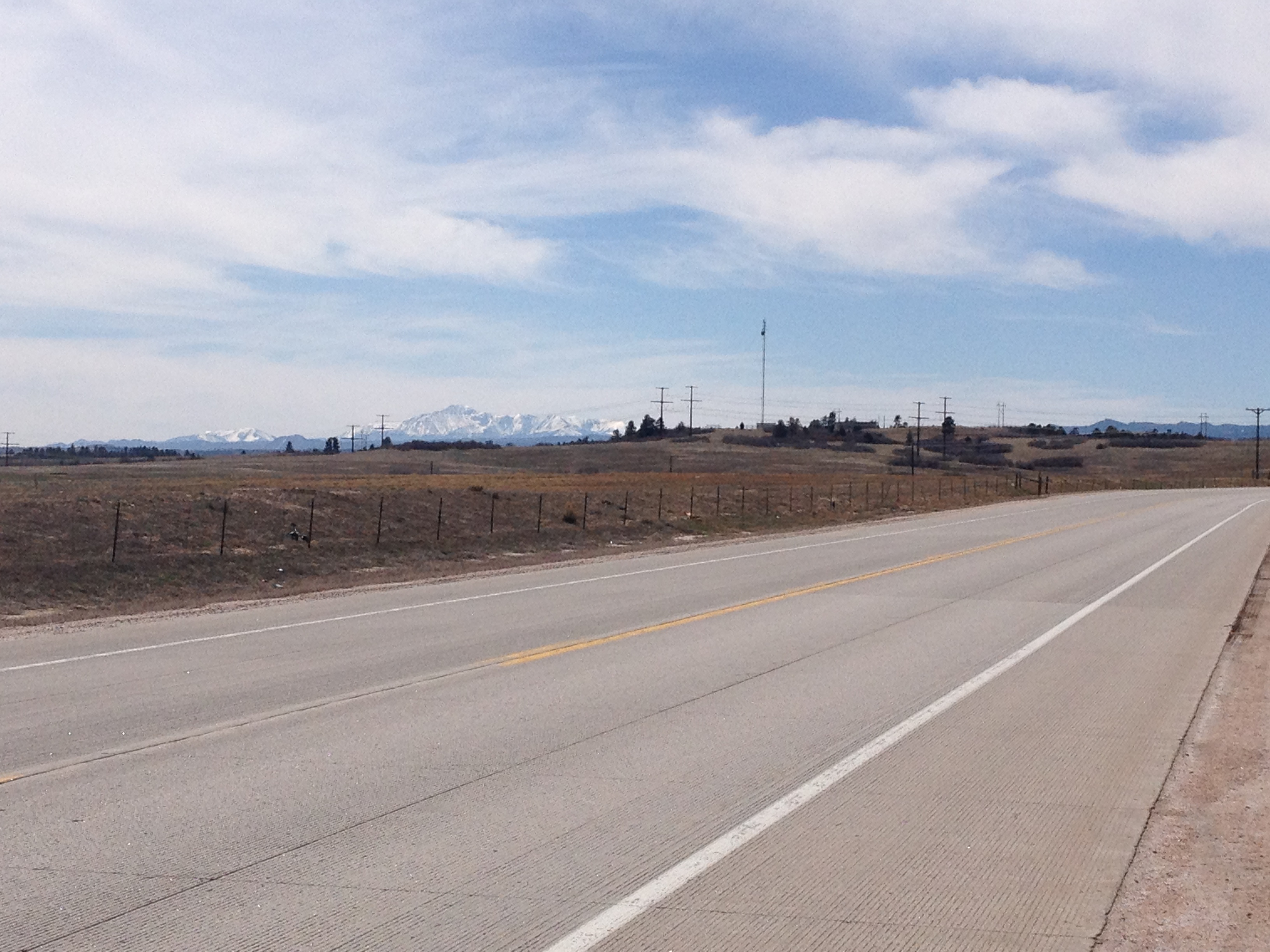
Once this road levels off, facing southwest, the ride becomes almost surreal.  To the left of the road, one can see Pike’s Peak, standing there all by its lonesome.  To the right, the mountains of the Front Range, due west of Denver appear.  Riding sort of directly at these mountains, with the vantage point of being up at roughly 6500 feet in elevation, I cannot help but take a deep breath and marvel at how wondrous the world can be sometimes.

IMG_3248 IMG_3247

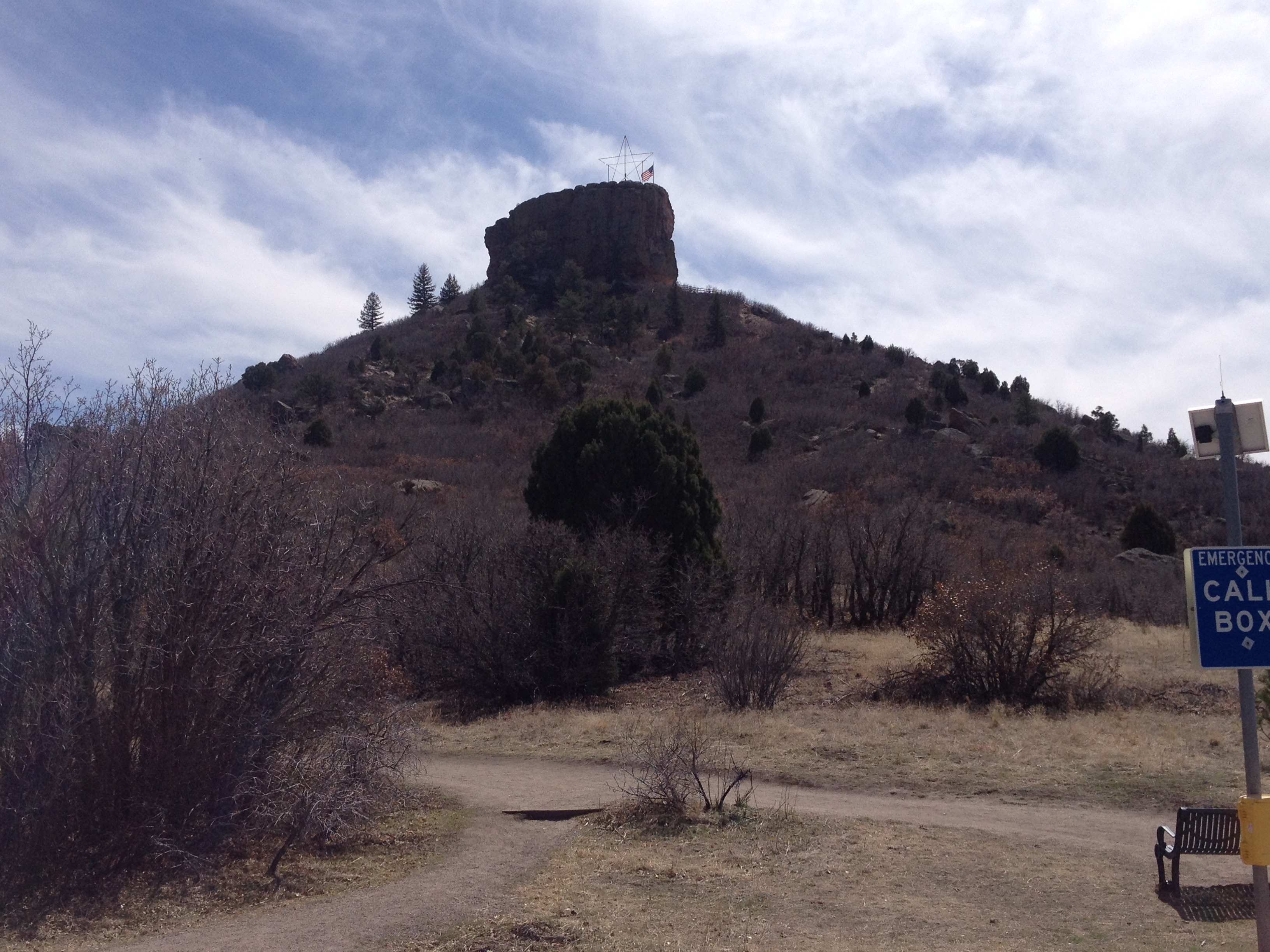
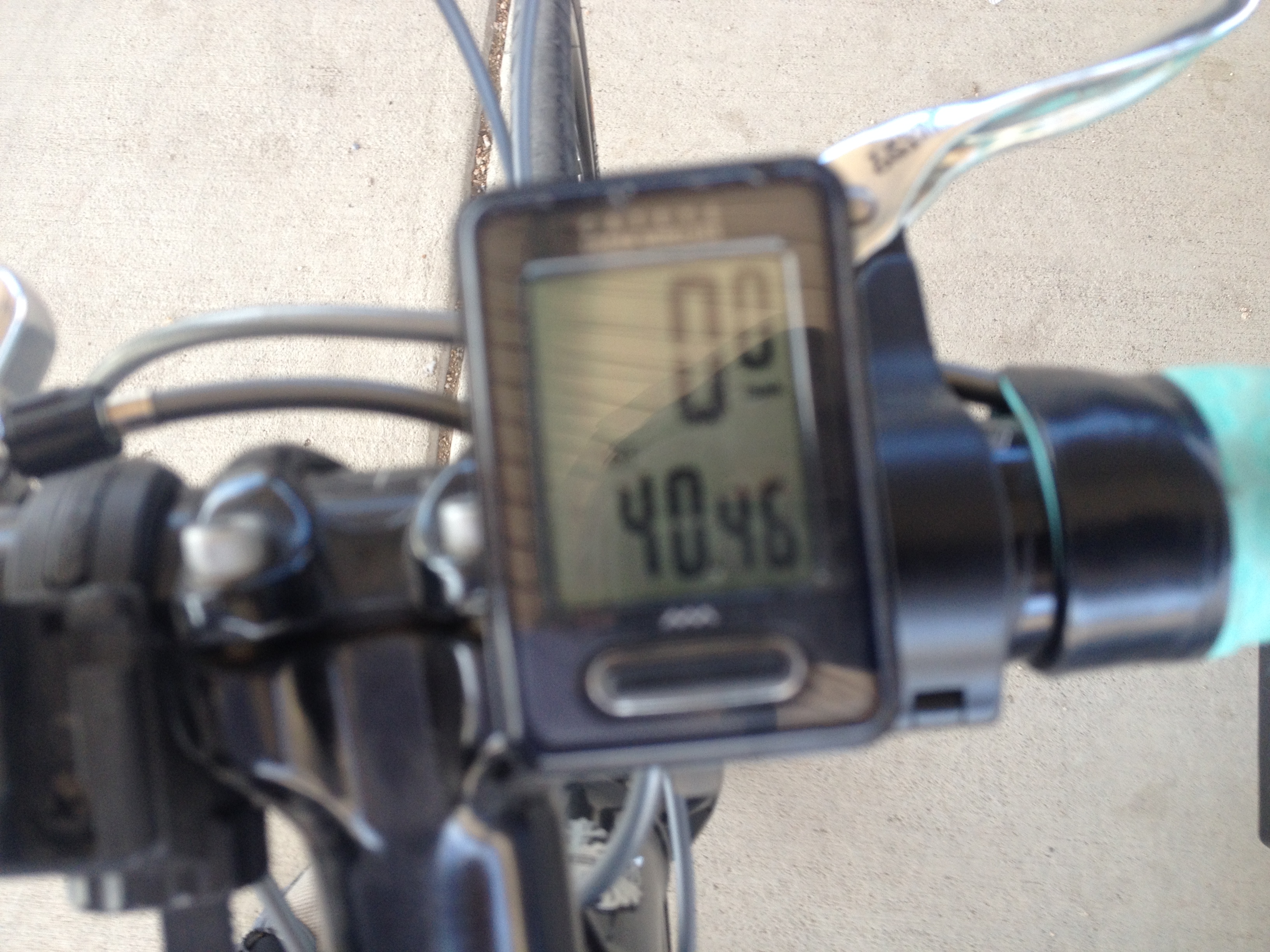
After just over 40 miles of cycling, I arrived at Castle Rock.  When I got to Castle Rock, I decided to add on a mini-hike to my day of activity.  After all, I spent almost three hours getting here, why wouldn’t I head up to this little rock structure- my destination!

IMG_3250 IMG_3253 IMG_3256 IMG_3257

This is a fairly short hike, with stair-step features that indicate that it was designed primarily for tourists, and not hard-core hikers.  So, I did not feel too bad about adding this hike to my already exhausting daily itinerary.

After all, the return trip to Denver would be much easier, after the initial climb out of town on Crawfoot Valley Road, the rest of the trip would be more or less downhill, descending, overall, from an elevation of 6200′ at Castle Rock back to 5280′ at Denver.

That turned out to be wrong.  As I approached Parker, a northerly wind developed, and, although the wind itself was not too terribly strong (10-12 mph range), the gusts began to pick up and become more frequent.  It was here, peddling into the wind, that an already challenging ride became one where I ended up testing the limits of what my body can do.

There are three levels of tired.  First, there is just general tiredness, where we just feel like stopping.  Many people do indeed stop at this point.  However, those who stop at this first level of tiredness generally do not develop any further endurance.  Level two tired is where we begin to ache, or feel some level of pain.  At this point, it is typically recommended that one stop.  This is the level of tiredness I had expected out of Monday’s ride.  However, the gusty winds on the return trip brought my level of tiredness to the third level, the level in which you simply cannot go anymore.

Working to each level of tiredness achieves a different goal.  An activity that stops at level 1 tiredness maximizes our enjoyment of an activity.  An activity that stops at level 2 tiredness is most beneficial to our fitness.  When we push to level 3 tiredness, we achieve personal accomplishments, the kind that make us feel as if we are achieving something with our activities.

The key is, for almost anyone involved in any kind of physical activity, to find a balance between working to each of the three levels, as they feed off of each other.  The original, and ultimate purpose of any activity should be to have fun, but, for most, an activity become even more enjoyable when we improve, take on new challenges, and accomplish new things.  Much like a skier that starts out on the green slopes, moves up to the blues, then blacks, and finally extreme terrain, I am looking to take my bike out longer distances, and to places that were previously unreachable.  However, in order to plan out how to test my own personal limits, I first have to know where those limits are.  So, as much as I can be pissed off that this ride ended up being more difficult than expected due to the wind, the wind allowed me to actually measure my personal limit, so I can start the process of improving.

The End of a Season

IMG_3231

Last November, prior to the start of the 2014-2015 ski season, I attended a screening of Warren Miller’s No Turning Back.  The main part of this film is broken up into eight segments, each one featuring a different location around the world, and each one containing footage of extreme skiing or snowboarding interwoven into a storyline that describes the people and the culture around snow sports in that location.  This film’s primary impact is to get skiers and snowboarders excited about the upcoming season.  However, the introduction to this film actually contained a reminder that every ski season comes to an inevitable end.  A time lapse of a ski resort becoming progressively more green over time (during springtime) is shown while the narrator (of the introduction) compares skiing and ski season to “falling in love with someone you know is going to leave you in four months.”

Well, here in Colorado, that four month expiration date appears to be rapidly approaching.  On Friday (3/27), Vail ski resort, the largest in the state, was still being patronized by a significant number of snow sport enthusiasts.  However, signs everywhere are pointing towards the inevitable decline in the quality of the skiing that accompanies the transition from winter into spring.  Not the only recent day to feature temperatures exceeding 50F, sections of bare ground can be seen not only on the horizon, but also on many of the slopes themselves, particularly slopes that feature bumps on Vail’s back side.

IMG_3229

Increasingly, trails are either being signed to caution skiers of this variable terrain, or being closed off altogether.

IMG_3227 IMG_3233

Conditions like these are often labelled “spring conditions”, a label that is both descript and non-discript at the same time.  Labels like “powder” and “groomed” are commonly used to describe the snow conditions on any given slope.  These two labels, amongst the most commonly used, provide a clear indication of what kind of snow a skier or snowboarder can expect to encounter.  When conditions are labeled as “spring conditions”, they are often quite variable.

Over the course of the day on Friday, I encountered all sorts of snow conditions.  There were parts with large clumps of snow, parts with hard packed snow, parts that were quite icy, and, of course parts that were very slushy.  I even managed to find a couple of spots with untouched new snow in the trees (I am not calling it “powder” as the snow is wet in variety, much like the snow one would regularly see in New York City).  I often encountered a significant variety of snow conditions while traversing a single ski trail.  Transitioning, often from hard packed to icy, and then to slushy, would cause sudden shifts in my weight distribution.  Being jerked, both forwards and backwards while skiing down the mountain almost made me feel as if I were at a rodeo.  Only, instead of being jerked around by a bull, angry that his reproductive region had been recently violated, I was being jerked around by what is labeled “spring conditions”.

Regardless of whether we ski, partake in some other form of activity, or just enjoy warmer weather, spring, and the conditions associated with it, do often jerk us around, much in the same way I was at Vail.  Springtime is not a slow and steady transition from winter’s chill to warmer weather.  It is often chaotic with wildly variant weather patterns that people in Oklahoma are unfortunately all too familiar with.

Sometimes, as is the case in the Northeastern U.S. this year, winter just seems to keep on going, maintaining it’s grip far longer than expected.  Those who eagerly anticipate spring’s warmth have a rough time with years like this one, as it almost feels as if nature is trying to torment them.  Other years are far more choppy.  In many parts of the country, this time of year can feature weeks that include both summer-like warmth, and snow, sometimes even within a day or two of each other.  It is not unheard of for an early spring warm period to trigger some to plant outdoors, only to have these plants killed by an unexpected hard freeze later in the year.

IMG_3238

Much like all other aspects of life, at the end of one season comes another one.  And, while the season to play in the snow is coming to an end, spring brings with it a whole new set of opportunities.  For those whose one and only love is skiing or snowboarding, the end of winter can feel very much like the narrator of No Turning Back described it; as having a feeling similar to having lost a love after four months.  However, for those who are fortunate enough to have found an appreciation for all of life’s seasons, the end of winter, and the transition to spring, while an ending in one sort, is also a beginning, with spring bringing with it a new set of opportunities.

The main advantage to living somewhere with seasons, as opposed to somewhere with consistent weather, is the variety that comes along with these cyclical changes.  In places like these, each season is distinct from the last.  At different times of year, we go to different places, and do different things, and even incorporate periods of rest and renewal into the cycle.  It provides life with a clear breaking point that distinguishes one year from another; something that many lack beyond college and graduate school.  I will most likely be back at Vail ski resort, to once again enjoy some of the world’s best skiing, before the end of 2015.  When that occurs, it will certainly have the look and feel of a completely new ski season distinct from the one that just ended.  Until then, the time has come to go and explore different places, maybe chase some storms, take some longer bike rides, or visit some places that are much more easily reached without the threat of a blizzard interrupting travel.  The coming months will certainly feature some amazing experiences that I cannot wait to have, enjoy, and share.

More New Experiences

IMG_3172 IMG_3186

I received a pair of snowshoes for Christmas … 2013.  Yet, until today, I had not gotten around to using them (unless you count the 15 minute trial run in my parents’ backyard on Christmas Day).  With my love for downhill skiing, I typically spend days with favorable conditions for snow sports on the slopes, which kind of doesn’t leave too much opportunity to pursue other snow sports that require those same conditions.

However, in 2015, as part of one of my annual goals, I am hoping to seek out new and interesting experiences.  This motivated me to take out those snowshoes and give them a try.  And, this weekend ended up being the perfect weekend to try snowshoeing out.  Colorado’s front range has received a decent amount of snowfall recently, and there is significant snow packs even at lower elevations.  With heavy traffic and treacherous conditions along I-70 this weekend, it made sense to make the much easier trip to a nearby snowshoeing trail and try something new, as opposed to risking sitting in tons of traffic to get to the ski resorts.

IMG_3171


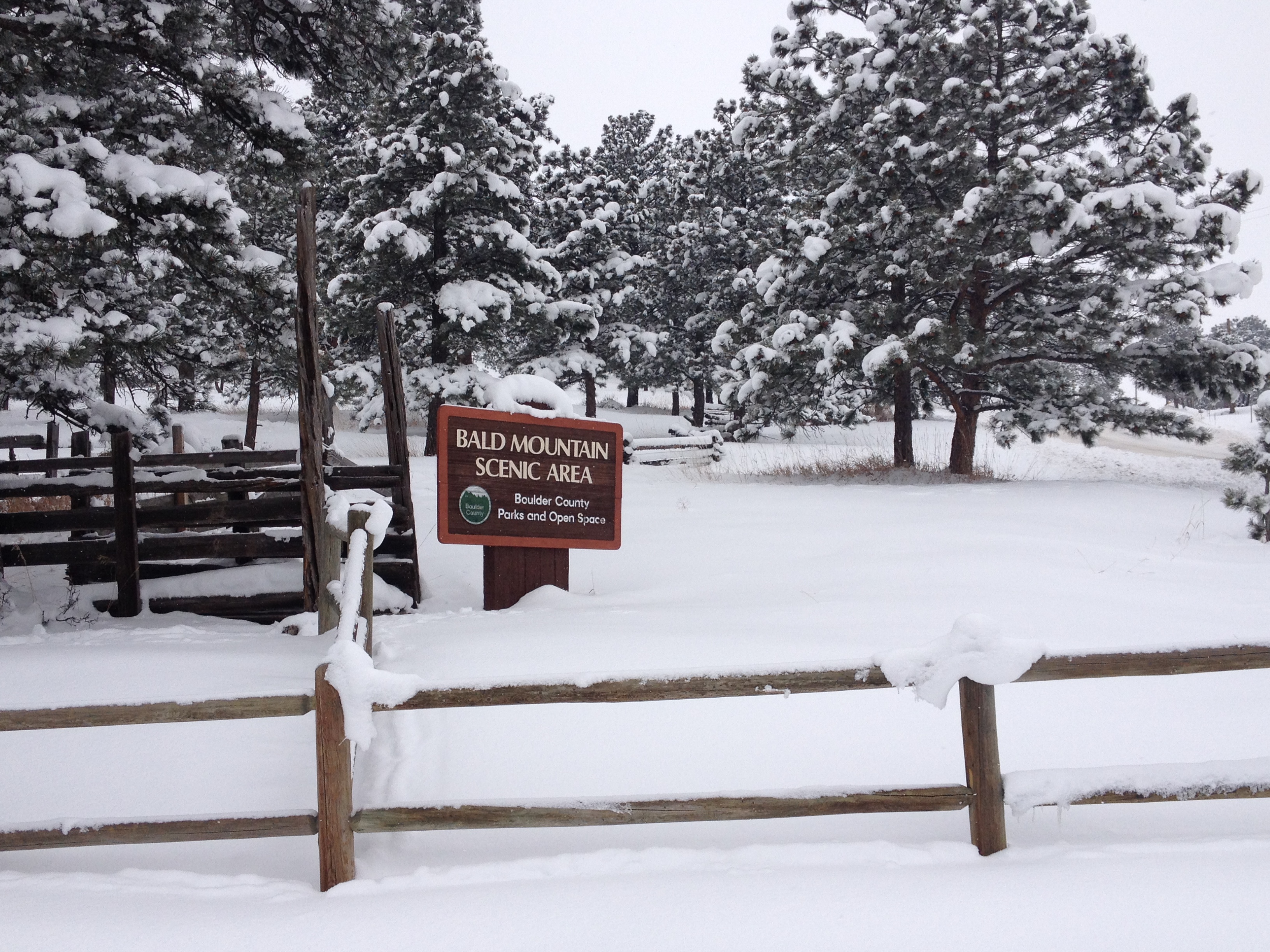
Being completely new to the activity, I decided to play it safe- really safe!  I found a 1.5 mile loop with only 200 feel of elevation gain roughly 10 miles west of Boulder, at a place called Bald Mountain.  With no idea how challenging snowshoeing is, I did not want to do anything to put myself in danger, particularly in winter.  I figured, if it turns out that this trail is not too challenging, I can always take on a harder one on a subsequent trip.

IMG_3174 IMG_3176

The first thing I noticed about snowshoeing as an activity is the way the trails are kind of carved out in the snow.  How do they come to be?  Are the trails made by snowshoers, or cross country skiers?  Do they need to be rebuilt every time it snows, and they once again get covered?  Do they always follow the exact same pattern as the hiking trails beneath them?

At first, following trails cut out in the snow confused me a bit.  Having never done this before, I got a bit apprehensive that I was not following the correct course, and may have been inadvertently following the tracks laid out by some snowmobiler, or worse yet, a stampede of bison, into some random spot into the woods that has nothing to do with where I intended to snowshoe, or where I had parked my car.  Luckily for me, I brought along with my one of the best guides anyone can have on a snowshoeing trip- a Siberian Husky!

IMG_3173 IMG_3175


Juno (dog pictured above) lead us around the entire loop, called the Pines to Peak Loop.  In fact, she was so much in her element out here in the snow, that at one point, she lead us on the correct path at a time when we were actually considering following a different set of tracks.  I trusted my dog, and she was correct!

IMG_3183 IMG_3184

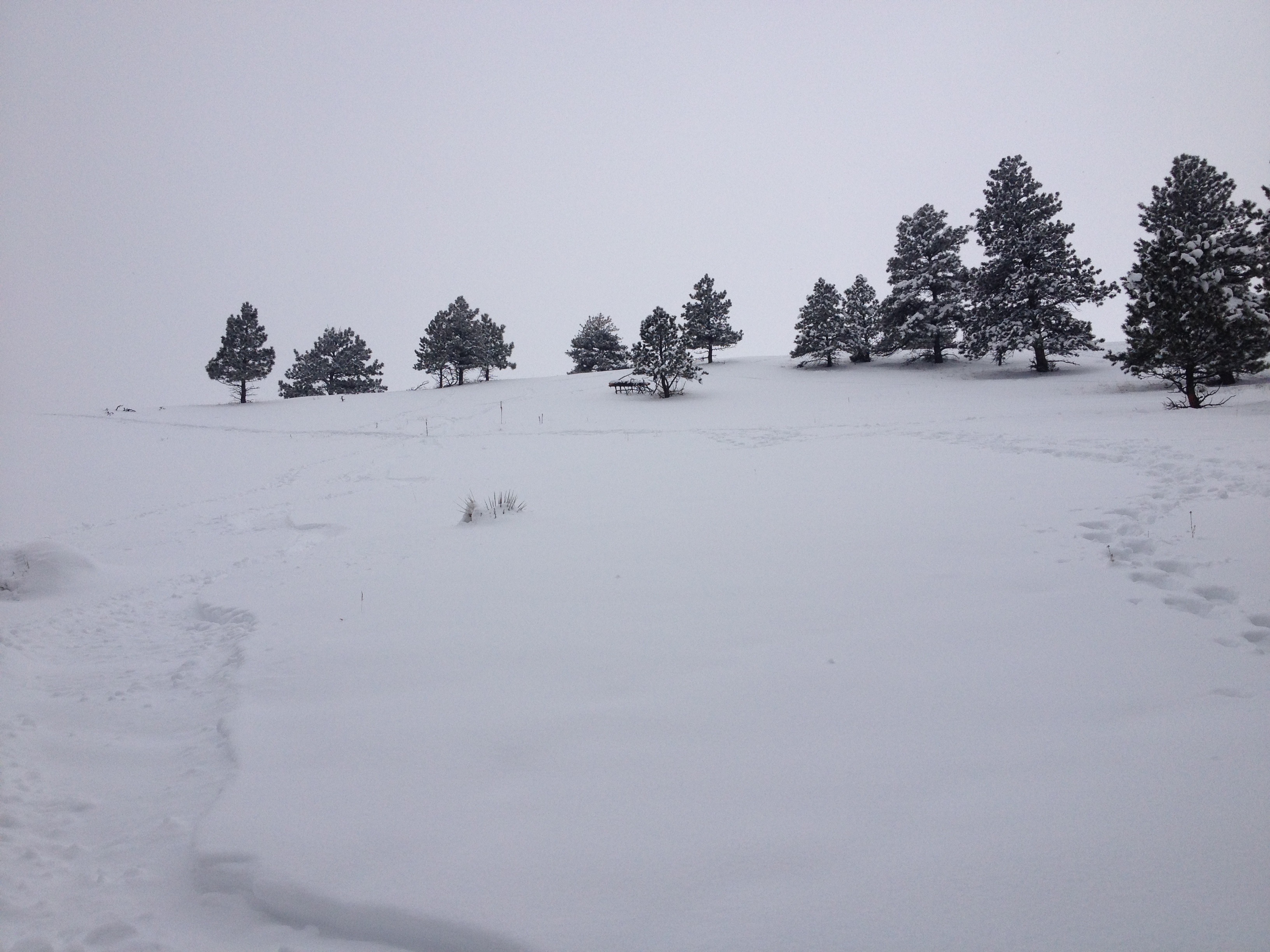
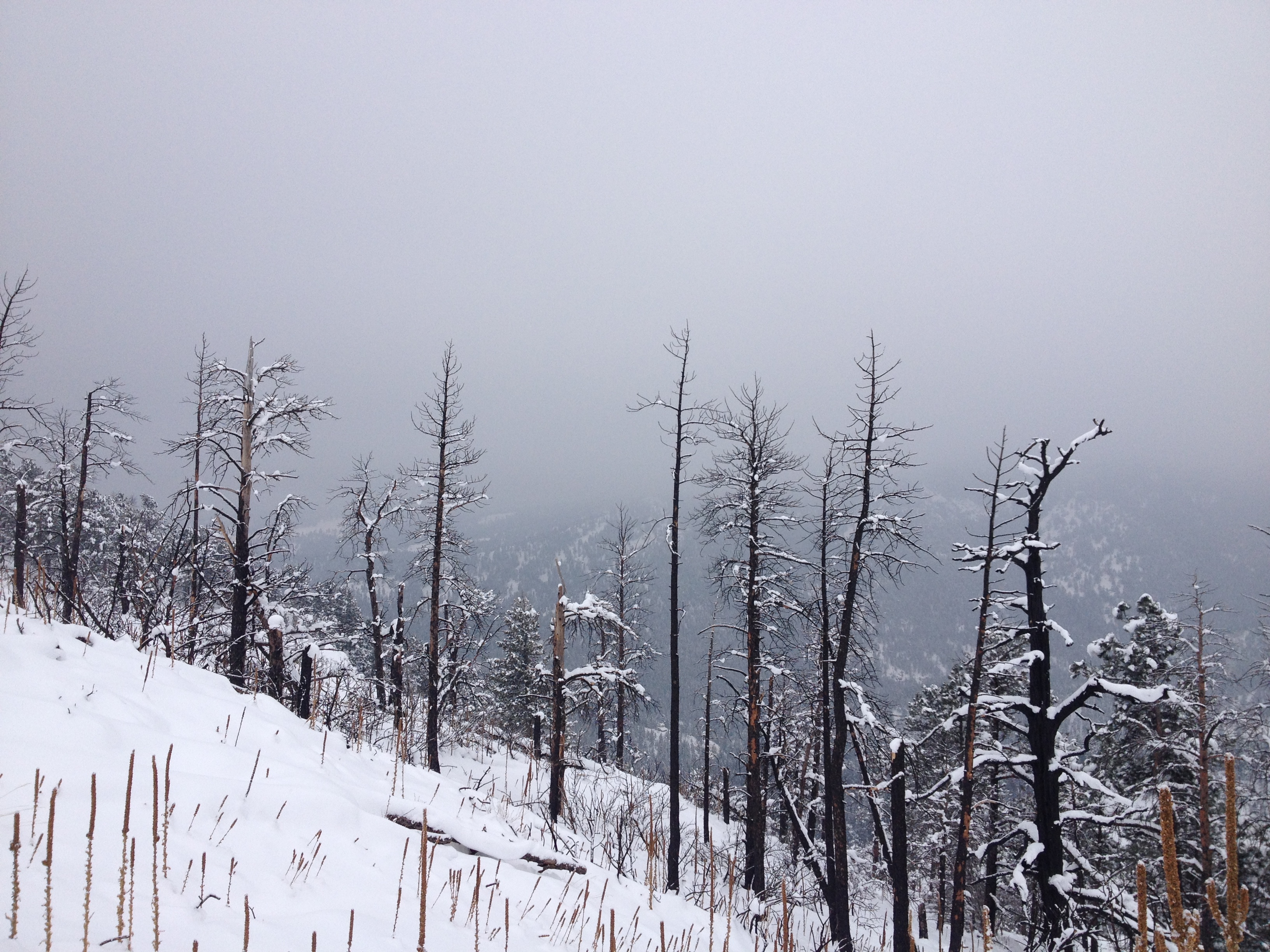
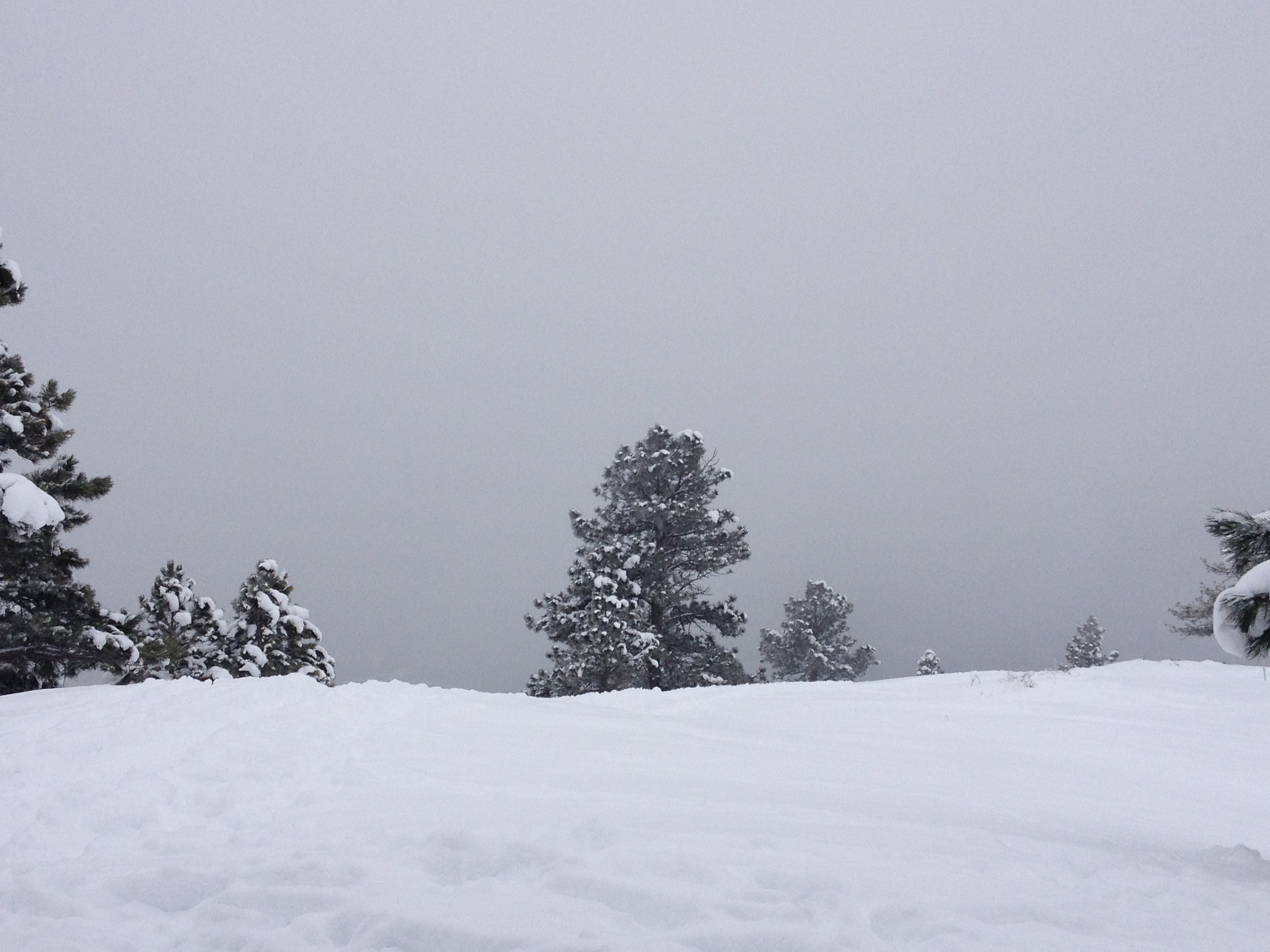
The conditions were quite pleasant, primarily because there was little wind.  However, there was a lot of fog at the “summit”, as well as along the entire trail.  This means that if I want to find out what kind of scenic view there is at the top of Bald Mountain, I will need to come back another day.  The outlines in the fog do hint at some really nice scenery.  The area is known as Sunshine Canyon, and I have typically enjoyed that type of scenery.

But, today’s voyage was not about scenery.  It was about trying a new activity.  And, in addition to snowshoeing for the first time in my life, I got another, unexpected, unique experience.  For the majority of the time we were on the trail, we were the only ones there.  When we arrived, there was one other car in the parking lot.  That group was on their way out.  We did not encounter any more people until we were almost back at the car.

With no other people around, and very little wind, at the trail’s high point, the only noises I heard was the occasional bird, or, once in a while, the faint noise of a car traveling along the roadway in the distance.  It had been quite some time since I had been somewhere so quiet, and so free of distractions.  Sometimes, even the places we go to away from the city can be crowded and hectic.  Vail was packed on Friday!  Rocky Mountain National Park is usually jammed with people driving around looking for Moose.  And, in summer, one will encounter ultra-runners running up “14ers” with their headphones on.

I was so amazed by how quiet it was here at Bald Peak today, that I had to stop, relax, and collect thoughts.  I even meditated for a while.  Well, I tried to.  I really don’t know how it’s done.  I wondered if others, particularly people local to the area, and more likely to know the place (it is not very high profile), frequently came here to collect their thoughts.  I wondered if, since it is Boulder, people came here to try to receive messages from their “spirit animals”, or tried to go on “vision quests” of some kind.  In fact, as I sat there in silence, the idea did not sound nearly as silly to me as it would have presented to me in the city on an average weekday.  With how rarely we liberate ourselves from every distraction there is in the modern world, it seems quite reasonable that one could finally uncover something hidden deep in their brain by coming to a place like this.

IMG_3182

As it turns out, snowshoeing, although more exhausting than hiking, is not as exhausting as I had feared.  I am guessing that cross-country skiing is more exhausting.  At least it sounds that way.  After today, I am confident that I can handle much more challenging trails with my snowshoes.  I am not sure if any of the ideas I pondered while completely free of distractions at Bald Mountain will lead to anything significant.  However, today did serve as a reminder to me to periodically find quiet, and take myself away from distractions, and all things that cause anxiety in life.

Winter Fun in the Mountains

IMG_1521

Winter fun in the mountains is about more than just skiing and snowboarding.

People who take wintertime vacations are typically drawn to one of two categories of vacations; Vacations people take to escape winter, and vacations people take to enjoy winter.  The former includes tropical resorts and beach towns in places where a 45 degree evening is considered grounds for remaining indoors.  The later, of course, typically involves mountains, with skiing and snowboarding being the most common activities.

In North America, the winter fun season lasts generally from the later part of November through the end of March.  Based on anecdotal evidence (the people I know and have talked to), the peak time to visit the mountains in winter occurs sometime around the middle part of February.  By this particular part of the year, enough snow has generally fallen to produce some of the best snow conditions of the year.  Also, temperatures have recovered a bit from their mid-January lows, and are a bit more pleasant.

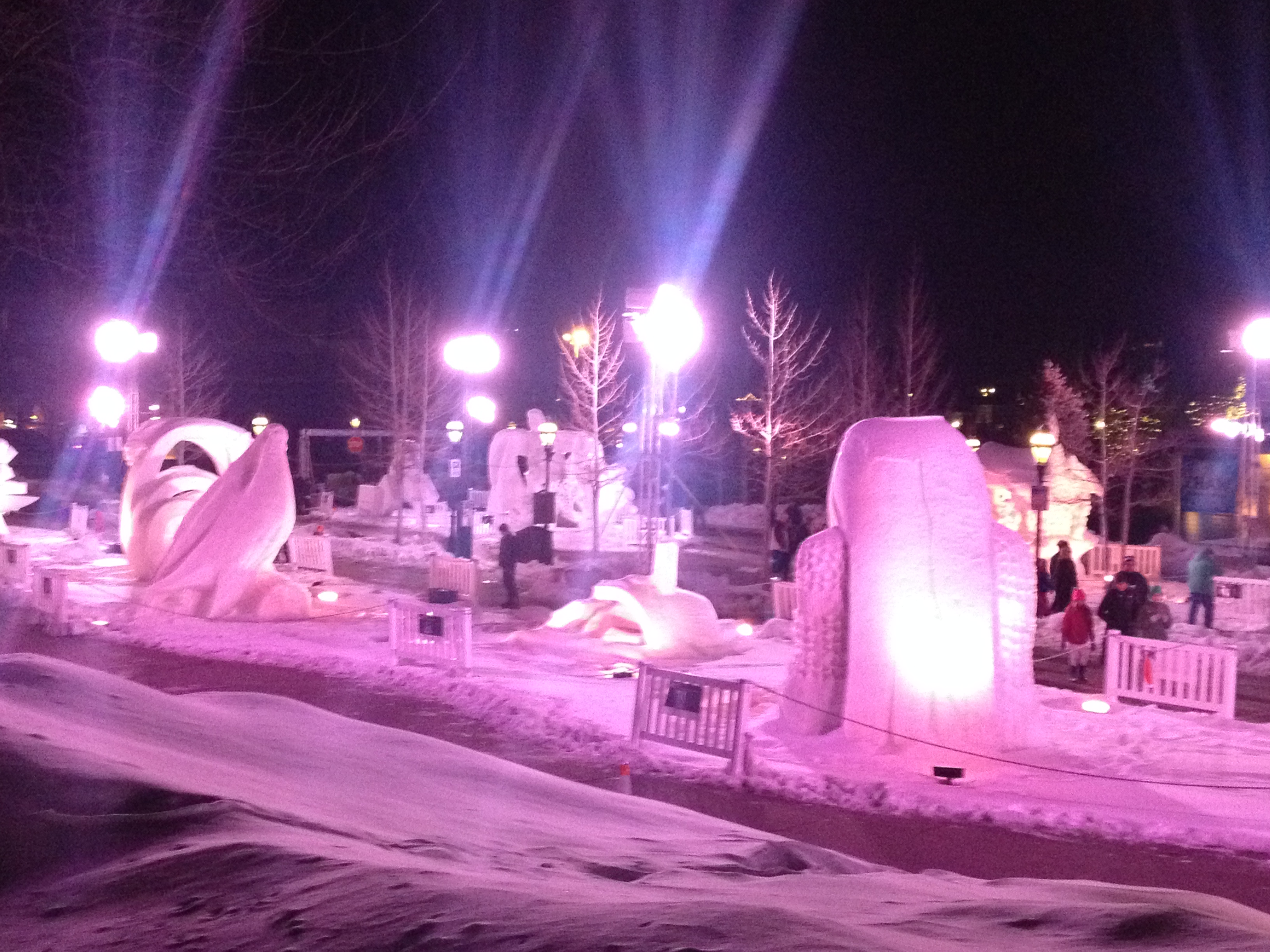
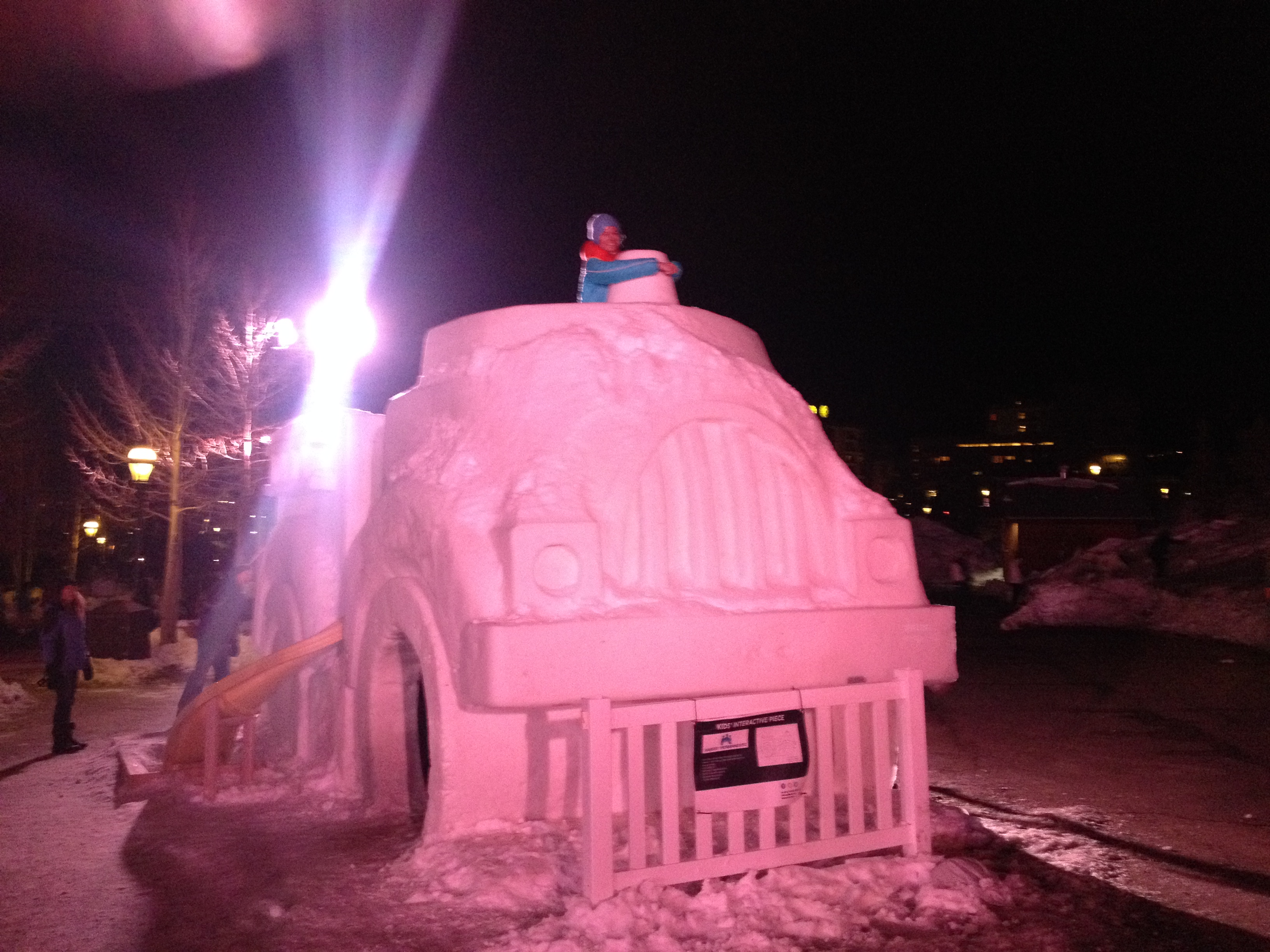
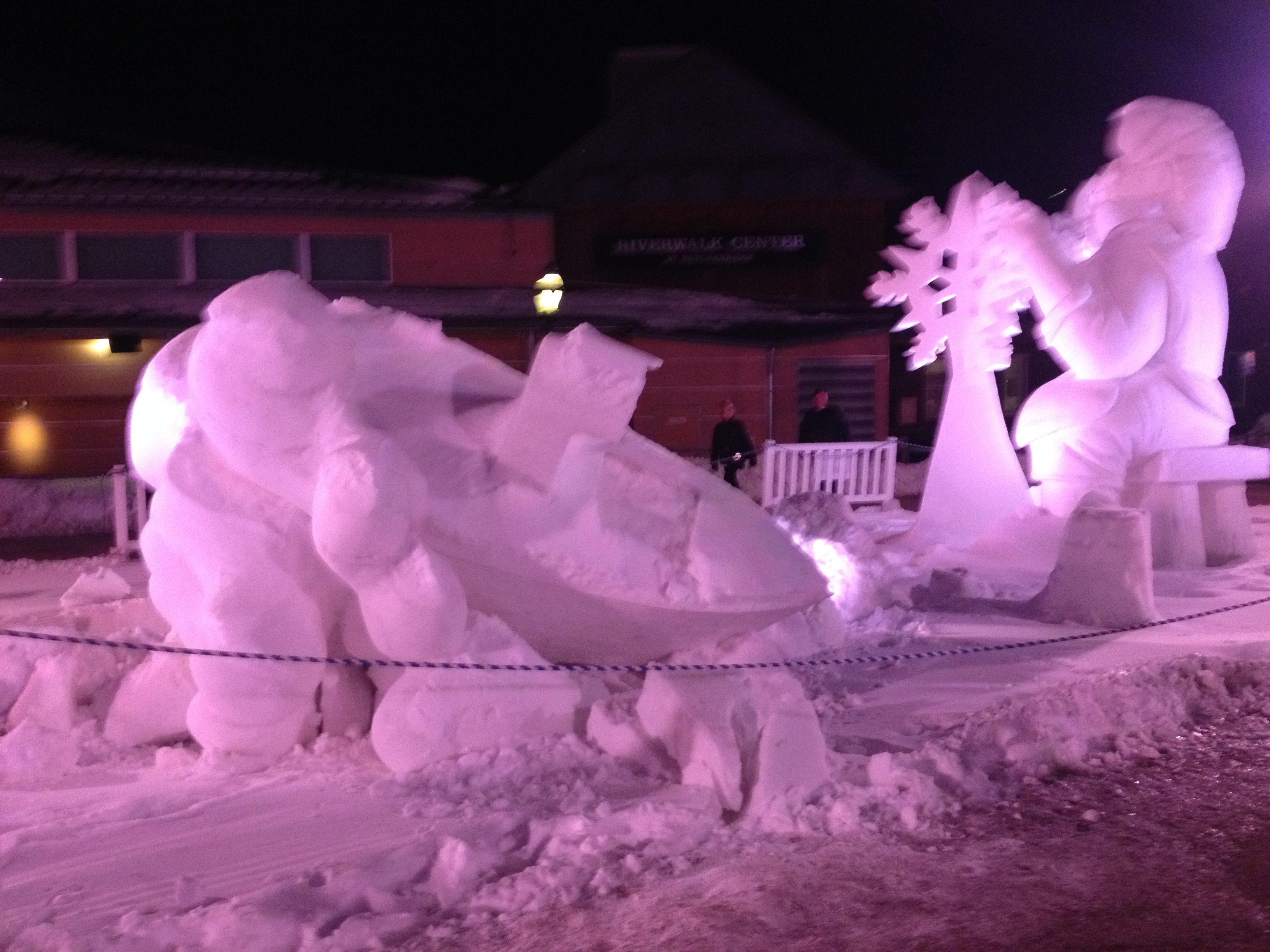
With all of the visitors, not only from all over the country, but from all over the world, other events, and other activities are bound to follow.  In the middle of winter every year, the Village of Breckenridge hosts the International Snow Sculpture Championships, which features snow art from artists from various places around the world (from local artists, to places as far away as Argentina).  These sculptures can commonly be viewed the final week of January through the first week of February.

IMG_3125 IMG_3126 IMG_3127 IMG_3129

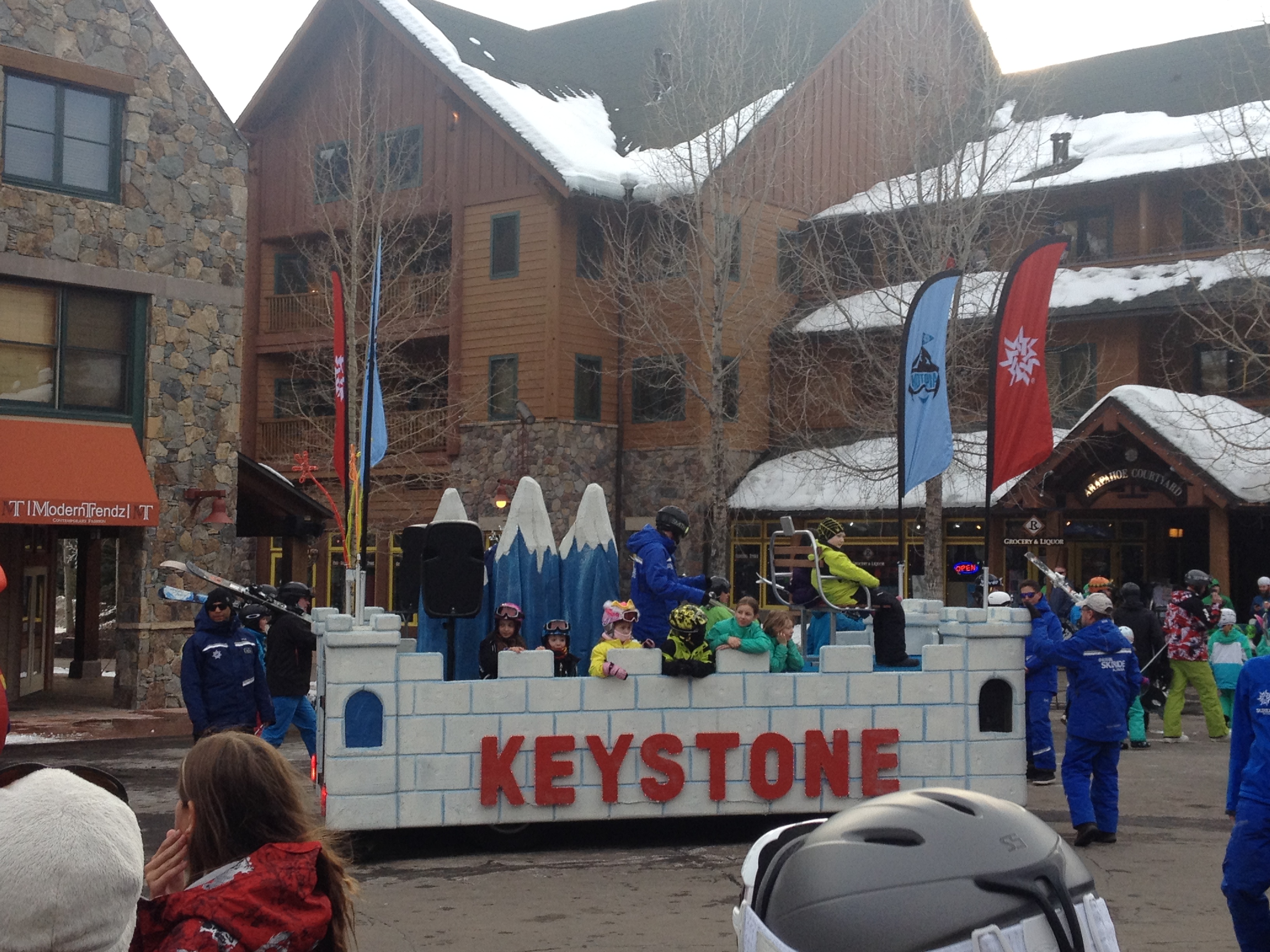
Events in the middle part of the winter also include family activities, Mardi Gras celebrations, and random parades through the village, such as this one at Keystone, which features Riperoo, the mascot for Vail Resorts, which owns eight of the top Western U.S. ski resorts in California, Colorado, and Utah.

IMG_3138 IMG_3139

And the events that take place in the ski villages throughout the peak part of the ski season are not just limited to family friendly activities.  With the number of visitors that come to the area, high class villages like Aspen, Jackson, or Vail, are able to draw some fairly well known acts to preform during the evening.

IMG_0256 IMG_0258

Those with enough energy can ski all day long, and party all evening in many of these western villages (although there might be a limit to how drunk you can get in Utah).  There is even a T-shirt commemorating this type of day.

While the ski resorts themselves are the main draw, and the main reason there are as many visitors to the mountains as there are at this time of year, wintertime activities are not limited to only the resorts and the villages that support them.

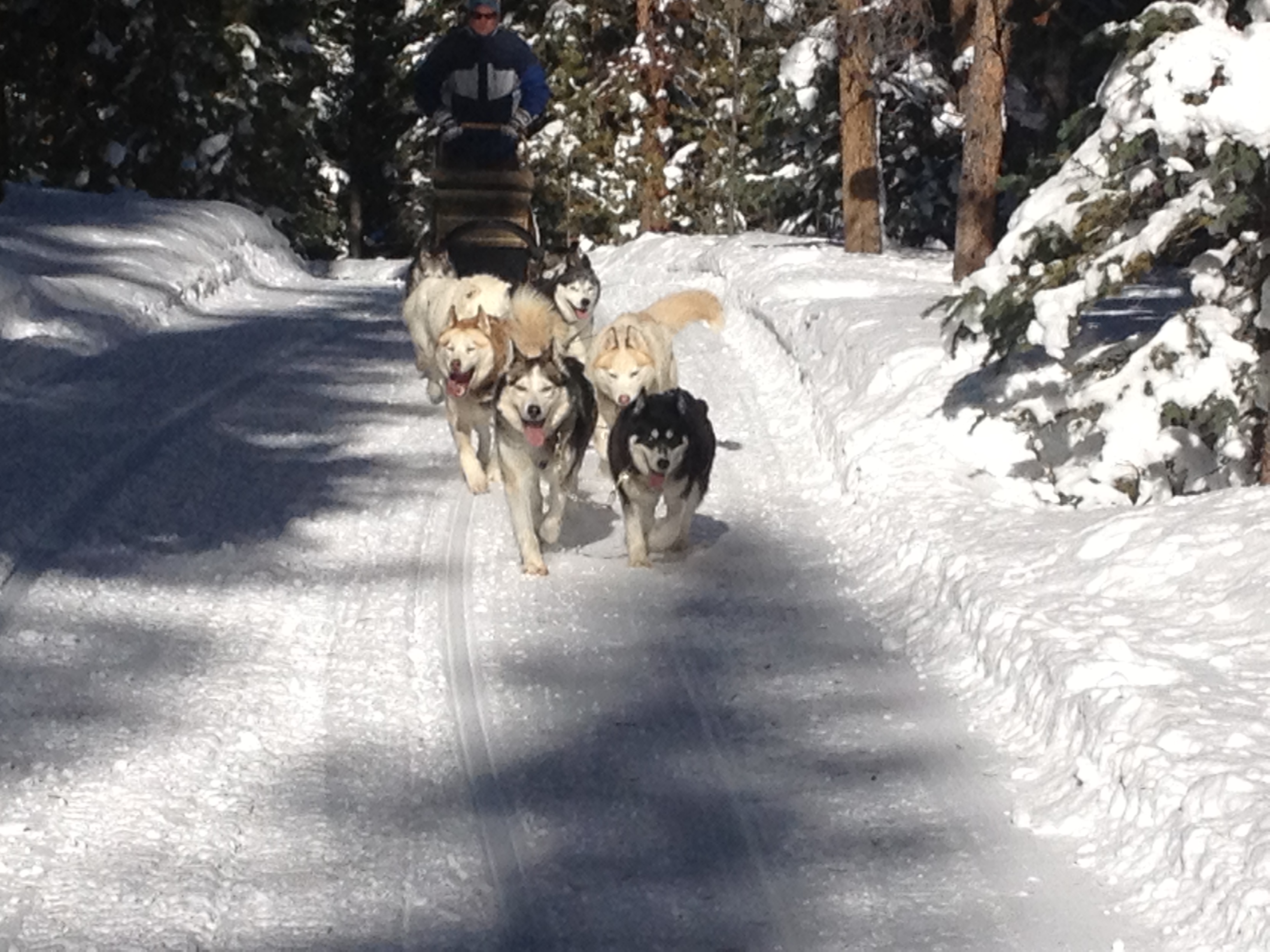
As I wrote about last year, there are plenty of outfitters in the mountains that offer dog sled tours.

IMG_1615

Many of these outfitters also offer snowmobile rentals and tours, and many are quite close to ski resorts and resort villages.

Due to geographical features, it is not hard to find hot spring throughout the West.  One of the most popular hot springs in the country, Strawberry Park, is located in Steamboat Springs, less than 10 minutes from the ski resort.

And, with frequent spells of warmer weather, it is quite possible to find a day, even during the peak part of ski season, where it is possible to just take a hike in the woods (that is, if you can handle hiking over a little bit of snow).

IMG_1657

It is a story repeated in many different places throughout the country.  In any place where you have large amounts of visitors, many other activities and events, often catering to all different kinds of people, pop up in response.  This is why we see tons of miniature golf courses, boat tours, and even night clubs pop up in places like Orlando, “Down-East Maine”, and the Wisconsin Dells.  In each case, a primary draw (like water parks, or ocean front) brings people to the region, and then the other amenities follow.  However, in many of these places, the area has become quite congested with people.  Those who have either sat in traffic, or spent a small fortune on strips such as International Drive in Orlando, or the Smoky Mountain Parkway in Pigeon Forge, will refer to places like these as “tourist traps”.

But are these places “tourist traps”?  It is, after all, quite easy to spend a small fortune in Vail right after sitting in major traffic on I-70 to get there.  However, despite the similarities between the “tourist traps” of the East and the mountain resorts of the West, there are still some major differences, with the primary one being the balance between natural and man-made attractions.  Theme parks such as Disney World and Six Flags are completely the creation of humans.  And, although we have lifts to carry us up the mountains, and a nice pool to cover the Hot Springs, the main attractions here are still the natural features that first brought us here.  So, until a roller coaster pops up adjacent to Park City, mini-golf courses start to line South Lake Tahoe, and Dillon Reservoir becomes covered with bumper boats, the mountain west has not become a “tourist trap”, at least not in the same way as the “tourist” traps had developed in these other places.

With that being said, it is still important to remember that there is way more to wintertime in the Rockies than skiing and snowboarding.  And, while there are some visitors who do little else but ski on their visits to the mountains at this time of year (spending most of their remaining time in their condo), there are others that take part in a lot of other activities and attractions in the area.

Vail; Where You Can Have it All?

“Having it all” means something different in different situations. For skiers, “having it all” generally means three things.

Ideal snow conditions…

20150208-195304-71584680.jpg

20150208-221901-80341504.jpg
Comfortable weather…

20150208-195431-71671873.jpg

20150208-195432-71672294.jpg

And, reasonable lift lines…

20150208-195553-71753592.jpg

20150208-195553-71753173.jpg

Of course, there is reason to believe that this kind of ski day is an unrealistic expectation. Comfortable weather conditions do not always produce the best snow conditions, and good snow conditions often bring crowds to a ski resort.

However, last Thursday, I believed that I could find this ideal combination at Vail Ski Resort. The previous day, Wednesday, Vail received several inches of new snow. But Thursday’s weather was warmer across the state. I believed the with combination of the recent new snow, a pleasant weather, and Thursday being a work day, I could “have it all”.

But, it did not quite work that way. Primarily, as the pictures above show, the lift lines were a bit longer than anticipated. This could actually be because of the Alpine World Ski Championships, which drew additional people up to the mountains.

20150208-221140-79900002.jpg

But, the additional people could also have been drawn to the mountain by the new snow, which we had not received too much of in the past few weeks.

There wasn’t too much new snow either, so Thursday’s conditions did not end up being truly ideal.

20150208-221501-80101611.jpg

Wise people will often remind others to keep their expectations within the realm of what is reasonably possible. Statements such as “You can’t have your cake and eat it too.”, are commonly used to keep expectations in check and protect people from a near certain disappointment.

It’s hard not to stop someone dead in their tracks as they begin speaking of things such as finding a 3 bedroom house in a safe neighborhood less than 5 miles from downtown for under $300,000. We know that this is not a realistic expectation and that any person who sincerely has these aspirations will likely be quite disappointed.

The understanding that some expectations are unrealistic comes from experience. Those of us that have experienced the “real world”, have seen countless people disappointed as the “realities of life” get in the way of ambitious desires. And, these desires don’t just include things like wanting to be a movie star or wanting to solve some kind of major world problem. They often include situational things like wanting a reasonable amount of success at their company without having to compromise on any of their principles, or wanting to ensure all of their friends and family are happy.

However, those of us with experience that are not completely jaded do know there are exceptions. After all, movie stars and world changers do exist. They are just a small minority of people who set out to do these things. And, they become successful through some sort of combination of aptitude, drive, and luck.

So, despite the real possibility of disappointment, it is hard for me to completely write off all lofty goals. Some people do achieve them. And, the hope that one will land their ideal job, or will find a way to make a difference, likely has a positive impact on people’s lives that more than offsets the negative impacts that results from the frustrations that occur when expectations of the world are not met.

A 50 Mile Bike Ride in the Dead of Winter

I am not sure where the phrase “The Dead of Winter” came from.  In fact, I am not even 100% sure people still use that phrase (in 2015).  But, I do recall hearing that phrase growing up in both New York and Illinois, referring to the period of time from roughly New Years through President’s Day.

My best guess is that the phrase comes from scenes like this one appearing in many major Northern Hemisphere cities.  Trees having long since lost all of their leaves, the grass taking on a lifeless brown-ish color, and overcast skies combine to create a cold, lifeless image that can persist for long periods of time.

IMG_2940

No month epitomizes the depths of winter more than the month of January.  By January, most northern cities have already experienced a significant amount of winter.  Residents of these cities have typically been through a dozen or so days they would consider “very cold” (which does vary by city).  Also, by January, most cities have experienced their version of lousy winter whether, whether that be lack of sunshine, heavy snow, ice storms, that cold drenching rain, or some kind of combination of the four.  With the holidays over, if winter is going to wear you down, it will most definitely do so in the month of January, as it runs its course.

For many, winter (and particularly January) is something of a metaphor for a rough period of time, or a low point.  In American history, the winter at Valley Forge is remembered as a low point for the American Revolution.  Winter is also used periodically to describe low points in people’s individual lives.  With the chill, darkness, and frequent inclement weather, there is not only commonly more hardships, but also more limitations.

This is true even when mother nature offers periodic breaks from cold and gloomy weather.  After a cold start to 2015, the middle part of January brought warmer conditions to Colorado, including several consecutive days with highs in the 50s or 60s here in Denver.  And, while today ended up being one of the best possible January days for a bike ride, the amount of riding I could do was still limited significantly by the sheer fact that it is January.

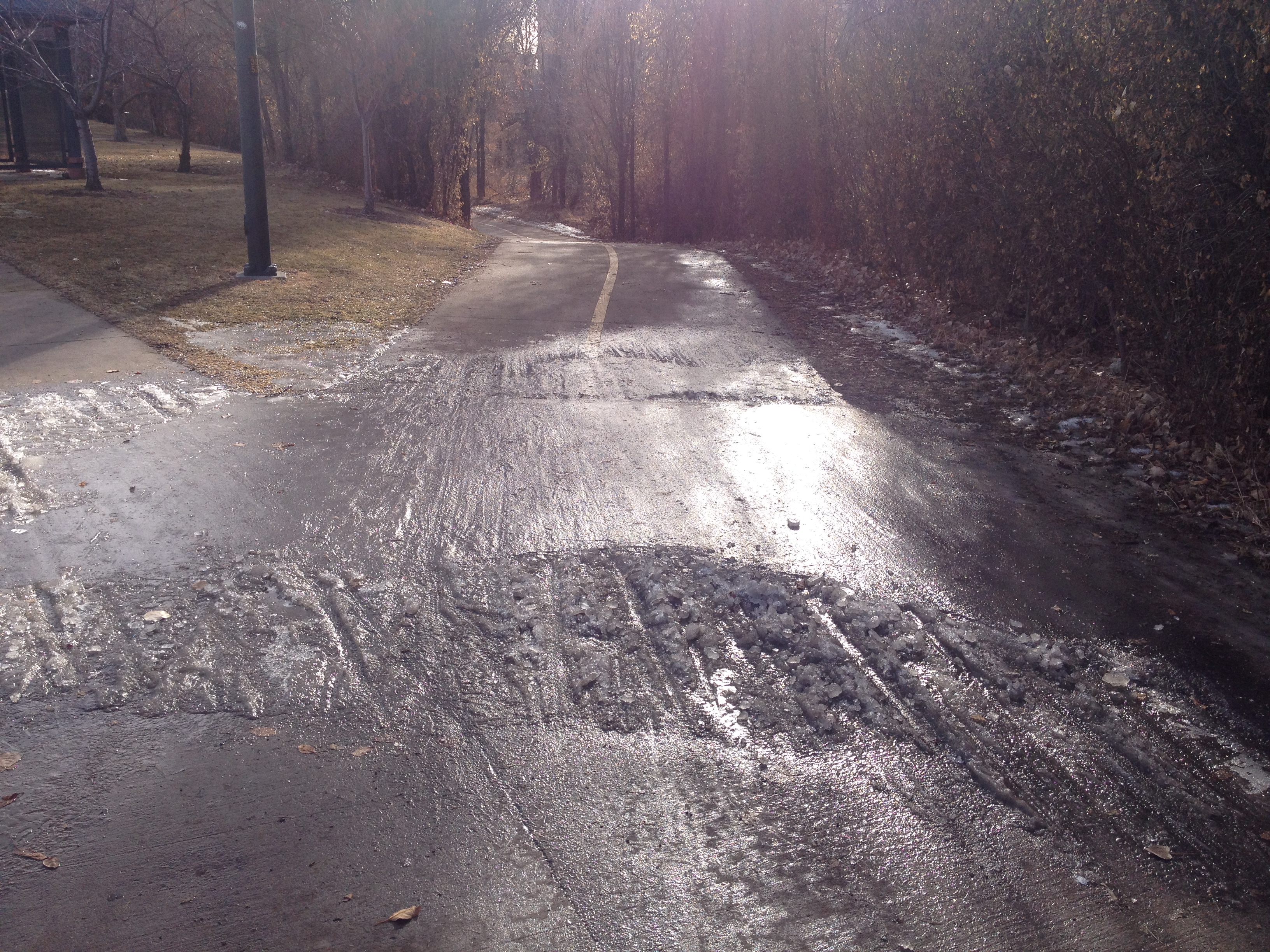
Even on a mild day, it is typically too cold to start riding at sunrise, the coldest part of the day.  As the day began with temperatures in the 30s, I waited until roughly 9:30 to begin my ride.  Even with this later departure, I still encountered significant amounts of water, and even ice on the trails.  In several sections, I needed to stop and dismount my bike for safety reasons.

IMG_3018

The mere possibility that ice like this will be present on the trail also makes it extremely unsafe to ride after dark.  With sunset occurring right around 5 P.M. at this time of year, the window of time for a bike ride is significantly shorter than it is in other season.

IMG_3025

Another major limitation to what places I can bike to in January is the wind.  In winter, wind can be quite unpredictable, and can lead to unexpected slow-downs.  Also, higher terrain can get quite windy, even on days where there is little to no wind in town and in the river valleys.

Therefore, I decided to ride up Cherry Creek trail, and make the 50-mile round trip ride from Denver to Parker, an exurb 25 miles to the Southeast.

IMG_3019 IMG_3020

Despite the slow-downs associated with random standing water and ice on the trail, I was still able to reach Cherry Creek Dam in roughly 45 minutes.  Here, the only “climbing” portion of the ride appears in the distance.  For those with little to no “climbing” experience, the uphill sections can actually be a bit exhausting.  However, for anyone that has previously ridden up a mountain, or a large hill, the climb up the hill is quite tame.  With the mountains still appearing in the distance, there is a clear reminder that even after a mild stretch of weather, climbing too high in elevation would also lead to slippery conditions.  In essence, this “climb”, although quite tame, is the most significant climb one can make safely in the month of January.

IMG_3023 IMG_3024

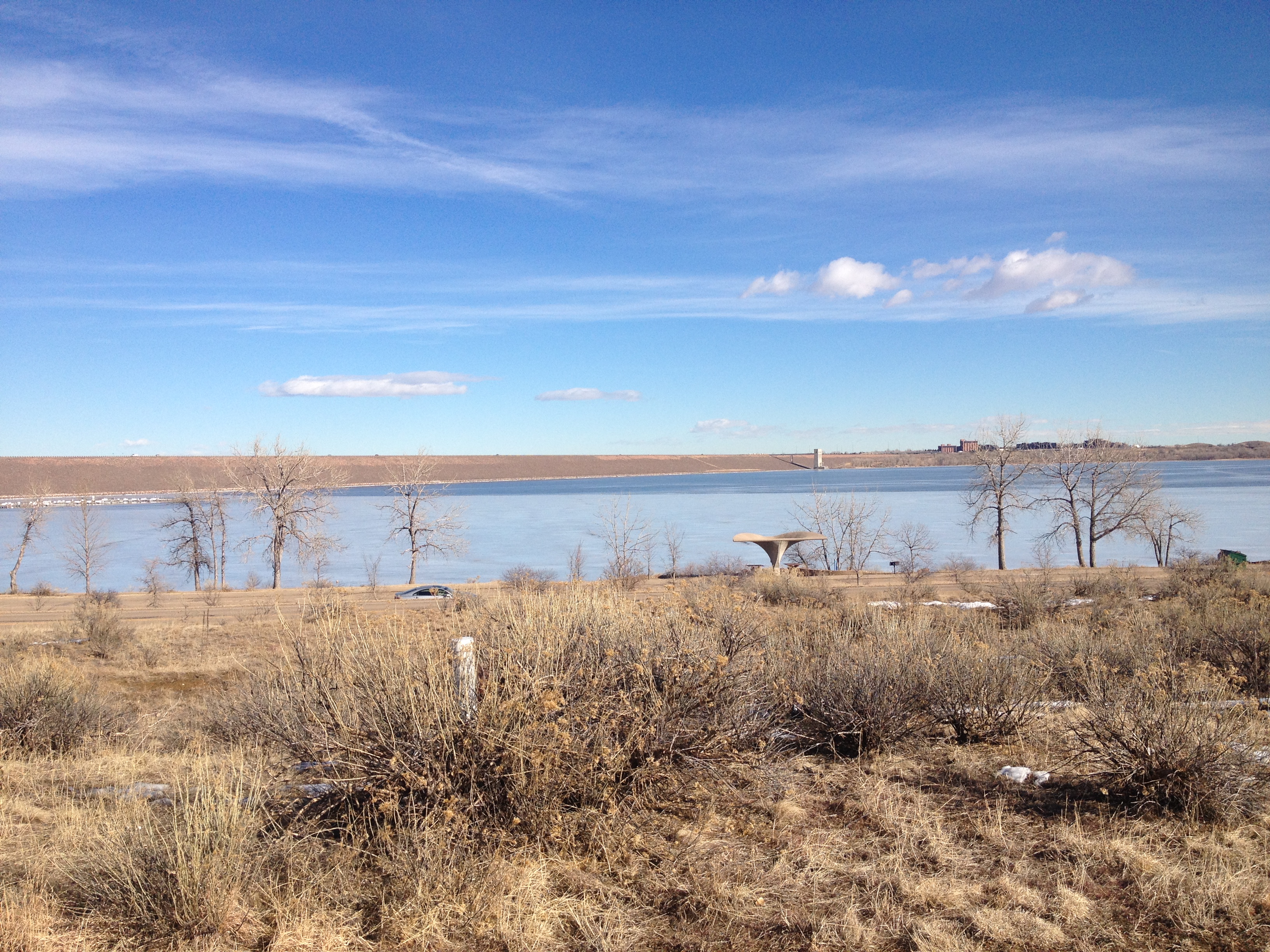
Behind the dam, the trail winds around Cherry Creek Reservior.  Only half covered with ice (and probably thin ice), I am relieved to see nobody trying to ice fish, or stand out on the lake at this time.

IMG_3028 IMG_3029

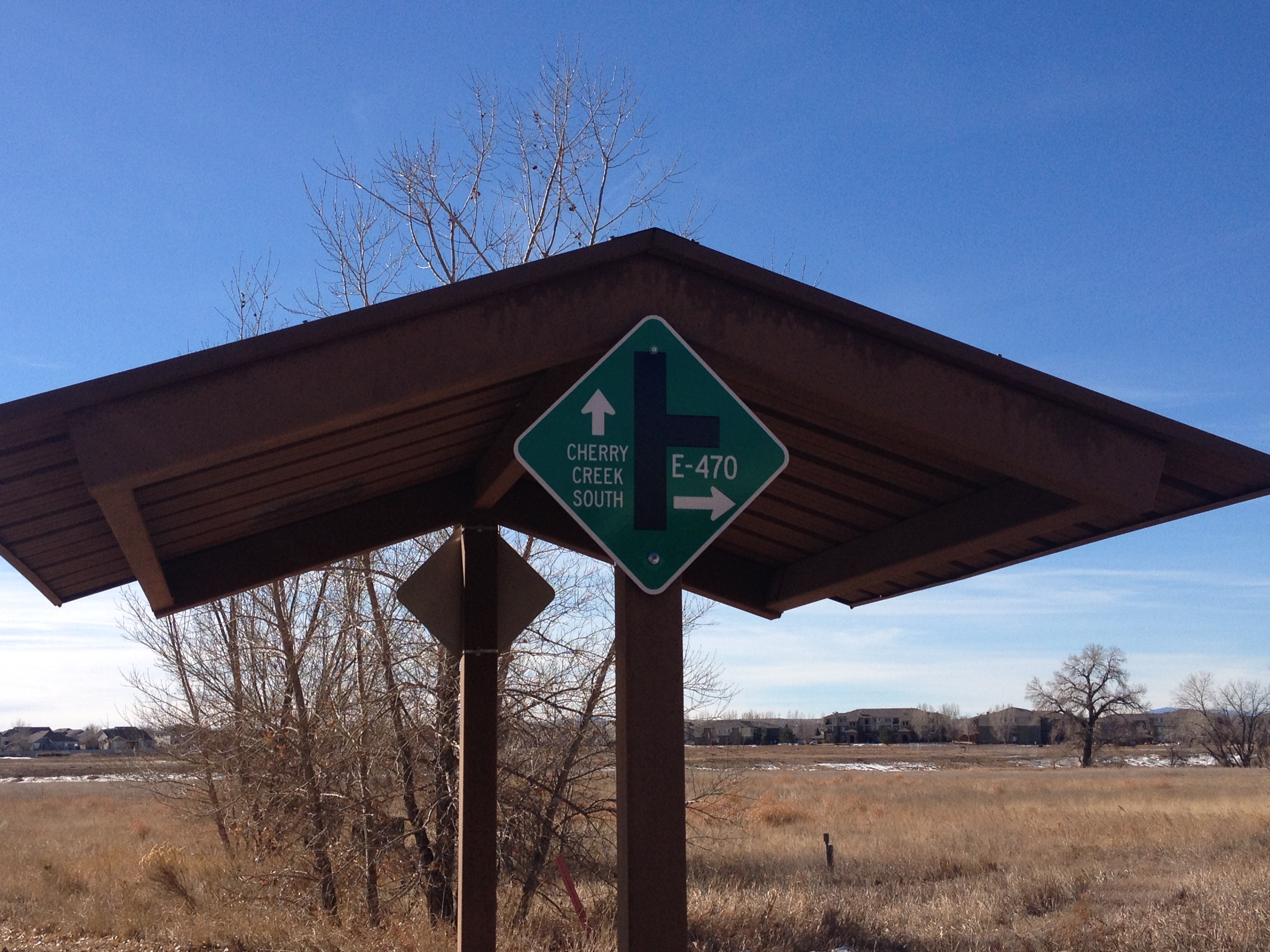
With some amount of wind, and having not ridden a significant amount of miles in one sitting in quite some time, I ended up taking it a bit slower on the trail today than I normally would have in mid-summer.  As a result, it ended up taking me nearly another hour to reach Parker, where the 470 trail, another major trail in the metro Denver trail system, terminates at the 40-mile long Cherry Creek Trail.

And, while it took me a bit longer than normal to ride 25 miles, not exhausting myself to achieve a better time had it’s reward.  Neither overly exerting myself, nor traveling too slowly, the return trip flew by!  Mile after mile passed, almost as if I was living out a montage of my own life.  I passed mile 25, 24, 23, winding around, smiling at nearly every person I passed by as the wind, and my direction shifted back and forth.

IMG_3030 IMG_3022

Before I knew it, it was mile 15, 14, 13.  On a typical ride, exhausted at the end of the day, I am anticipating each mile, and tracking how far I am from home.  Today, I achieved somewhat of a state of euphoria.  I almost feel as if I had achieved the “runners high” often discussed (albeit on a bicycle, as opposed to running).

In the end, despite my slower than usual pace, I thoroughly enjoyed the ride, and was actually only passed on the trail once!

For those wanting to take advantage of a mid-winter warm-up, and get on the trail (or roads), I offer the following tips

  • Plan extra time (maybe half an hour) for your ride.  There is a distinct possibility that mud, ice, or snow on the trail can slow you down, as well as unexpected winds.  It is not safe to ride at night, and it will get cold again.  You are better off taking on a goal that would be considered modest during the warm season than ending up in trouble.
  • Listen to your legs.  I know “shut up legs” is a popular poster to hold up at long distance rides, but often times a ride can be done more effectively if you allow yourself to downshift when the ride feels exhausting.  This may mean being on a specific segment of trail, or road, in a lower gear than what you would typically be in.  But, maybe that combination of the 5 pounds you gained over the holidays, and that 8 mph cross-wind is enough to warrant being one gear lower.  It is best not trying to exhaust yourself early just to be in your usual gear regime.  That being said, there also may be opportunities to shift up and go faster where there is an unexpected tail wind.
  • Don’t shy away from undertaking a major bike ride immediately after a hard day of skiing.  Cycling uses mostly different muscles than skiing, and I have been surprised by how little recent hard core skiing has impacted my cycling performance on rides like the one today.