Category Archives: culture

On Wisconsin

After spending a weekend in the Caribbean, I returned to a completely different world than the one I had left.  Prior to my trip, it had been autumn, with the mix of some relatively warm, but also some chillier days that typically marks the middle part of the fall season.  In fact, much of the Western U.S. experienced a warmer than usual October; a pattern which had extended into early November.  As I returned to the mainland United States, a gigantic push of unseasonably frigid air was rapidly descending upon most of the country from Canada.  Between the warmer than normal fall weather I had been experiencing prior to my trip, and the warmth of the Caribbean, I was certainly unprepared for this sudden weather transition, and far from thrilled to be experiencing weather more typical of mid-winter than mid-November.

This frigid weather pattern had firmly established itself by the day of the big game which I had planned to attend; Wisconsin’s home game against the Nebraska Cornhuskers.  And, while I had known that frigid weather was a distinct possibility for a November 15th football game in Wisconsin, I also knew that this would be a critical game, and probably the most ideal weekend for a trip back to Wisconsin to see the Badgers play.

IMG_2860 IMG_2870

While a part of the Midwest, the State of Wisconsin has a culture that is quite unique from all of the states that surround it.

IMG_2855 IMG_2856

While much of the Midwest likes to drink, seemingly more than the rest of the country, Wisconsin takes it to a whole different level, often being reported as the #1 state for “binge drinking”.  During my time living in the Midwest, I observed drinking in the state of Wisconsin at a larger subset of all occasions, and in larger quantities than anywhere else.  In fact, recently Wisconsin Public Radio did an entire series addressing the alcohol culture in Wisconsin.

Another tradition in which Wisconsin takes quite seriously is the Friday Fish Fry.  The extent in which this tradition is observed here highlights Wisconsin’s Catholic and Lutheran heritage, as well as the obsession with fishing here.  Like the consumptions of beer, cheese, and encased meats, the Friday Fish Fry is fairly common in other Midwestern states, but taken to a new obsessive level in Wisconsin.

IMG_2859 IMG_2862

One other thing Wisconsin knows how to do is tailgate.  In downtown Madison, in the vicinity of Camp Randall Stadium, nearly every parking lot with available space is filled with people drinking, grilling, and playing games in preparation for the game.  The tailgating experience here is somewhat different than in most places.  Tailgating at most stadiums generally involves parking in the stadium’s parking lot a few hours prior to the game; with people bringing their coolers, grills, food, and games out of their vehicles.

This past weekend, although we arrived downtown nearly four hours prior to game time, we were forced to park roughly a mile away from the stadium (as well as the tailgate).  At the tailgates here, there is a much higher ratio of people to cars than is typical.  It seemed like only the organizers of the tailgate, who likely arrived quite early in the morning, had vehicles in the lot, with the rest of the lot’s space available for people, tents, games, and a significant number of port-a-pottys to accommodate the excessive drinking that takes place at these events.

I attended a tailgate that I can only be described as “professional tailgating”.  It included a several table long buffet of food, tables for games, a television showing other games in the Big 10 conference, a sound system with multiple speakers, and even a heated lamp!  The organizers even brought in their own port-a-potty and handed out pieces of orange tape to attendees to ensure that those coming from outside their tent did not use it.  I was quite amazed!

IMG_2863 IMG_2866

Despite the chill, it felt good to be back at Camp Randall Stadium, a place where I had watched dozens of Wisconsin football games while attending the University.  Despite many of the changes that have occurred over the years, the stadium itself, and the experience of attending the games, was practically the same as it was back then.  Although, we did not do the crazy set of “waves” (standard, slow, fast, reverse, and then split) that I had recalled.  Well, maybe I just don’t remember it.

The game actually turned out to be a bit of a blowout, with Wisconsin winning 59-24.  Our running back Melvin Gordon set the all-time single game rushing record at 408 yards, and it began to snow halfway through the 3rd Quarter.

IMG_2869

Despite this, we did not leave the game early.  And not too many people did.  Maybe some Nebraska fans did.  But, it is something that Wisconsin fans do not really do.  Surprisingly, my buzz (from the tailgating) did not ware off despite not drinking at all during the game.

Like so many evenings I remember in Madison, the evening involved multiple bars and lasted until bar time … or some time around that.  Just as I remembered, the drinks here are made quite strong!  In fact, even at the places that I had previously thought of as making “weak” drinks, the drinks felt quite strong compared to what I had now become used to.

It was my third consecutive weekend of partying hard.  First, over Halloween, I threw a party at my place.  I was in a setting that consisted of a fairly large number of people, nearly all of whom I was already quite familiar with.  The following weekend, at Saint John Island, I was around almost all people I had not previously met.  This past weekend, I attended the game with a group of six people (including myself), only one of whom I had not met before.  However, out at the bars on State Street, I interacted with a significant number of complete strangers.

The past three weekends I had been in three different settings, both geographically and socially.  I managed to have a great time and be what I consider the best version of me.  It is the version of me that I become when I do not let the anxiety that comes from various life events and situations to get the best of me.  It is the me that is energetic, enthusiastic, confident, and welcoming to all around me.  It is the version of me that seems to make others around me happy, and the way I am when I am having the best times of my life.  It is this version of me that I wish I could be at all times.

Unfortunately, there are times when I do not live up to this standard.  As, sometimes I let some kind of anxiety, frustration, or insecurity prevent me from truly enjoying myself.  Having avoided these pitfalls in three different settings gives me hope that I have overcome some of these anxieties, insecurities, and frustrations.  However, I have no way of being certain of what the future holds.  At this time, all I can do is be happy that I have had the opportunity to have been the places I have been over the past few weeks, and hope for the best for those around me.
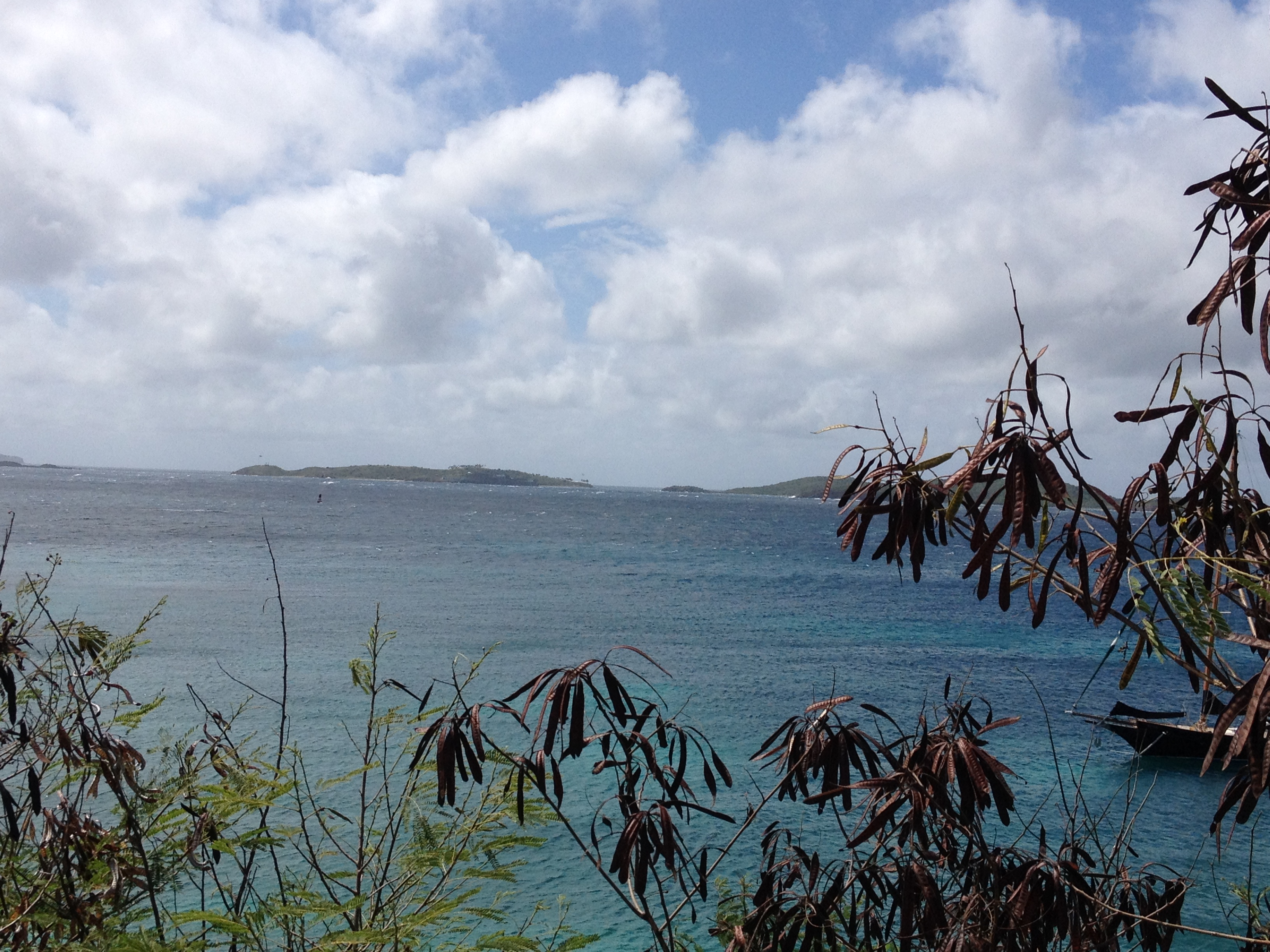
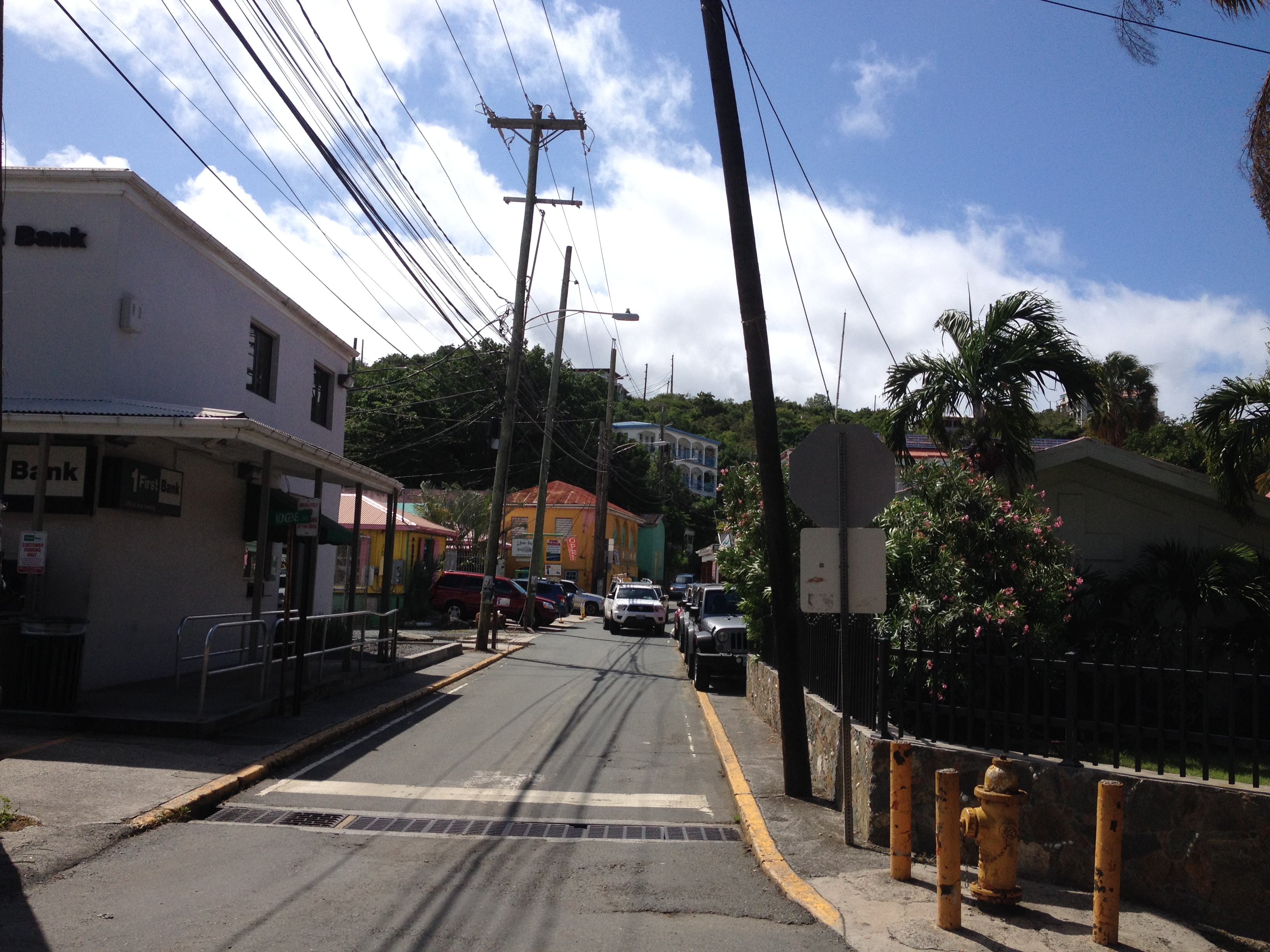
Saint John; Virgin Islands

Saint John Island is one of the most remote places within the United States.  A part of the United States Virgin Islands territory, it’s year-round population is a meager 4200 people.  It can only be accessed via ferry or boat.  For mainlanders, Saint John can be accessed by a 20 minute ferry ride, after a half hour cab ride from the airport on nearby Saint Thomas.  The flying time to Saint Thomas is listed as roughly three hours from the nearest major airport in the mainland; Miami, Florida.  Therefore, the minimum travel time for any mainlander is four hours.  For most, the journey is much longer.

I spent my time on Saint John primarily in two places; Cruz Bay, which is the main population center on the island, and Caneel Bay, a resort about ten minutes farther up the coast of the island.

IMG_2819 IMG_2817

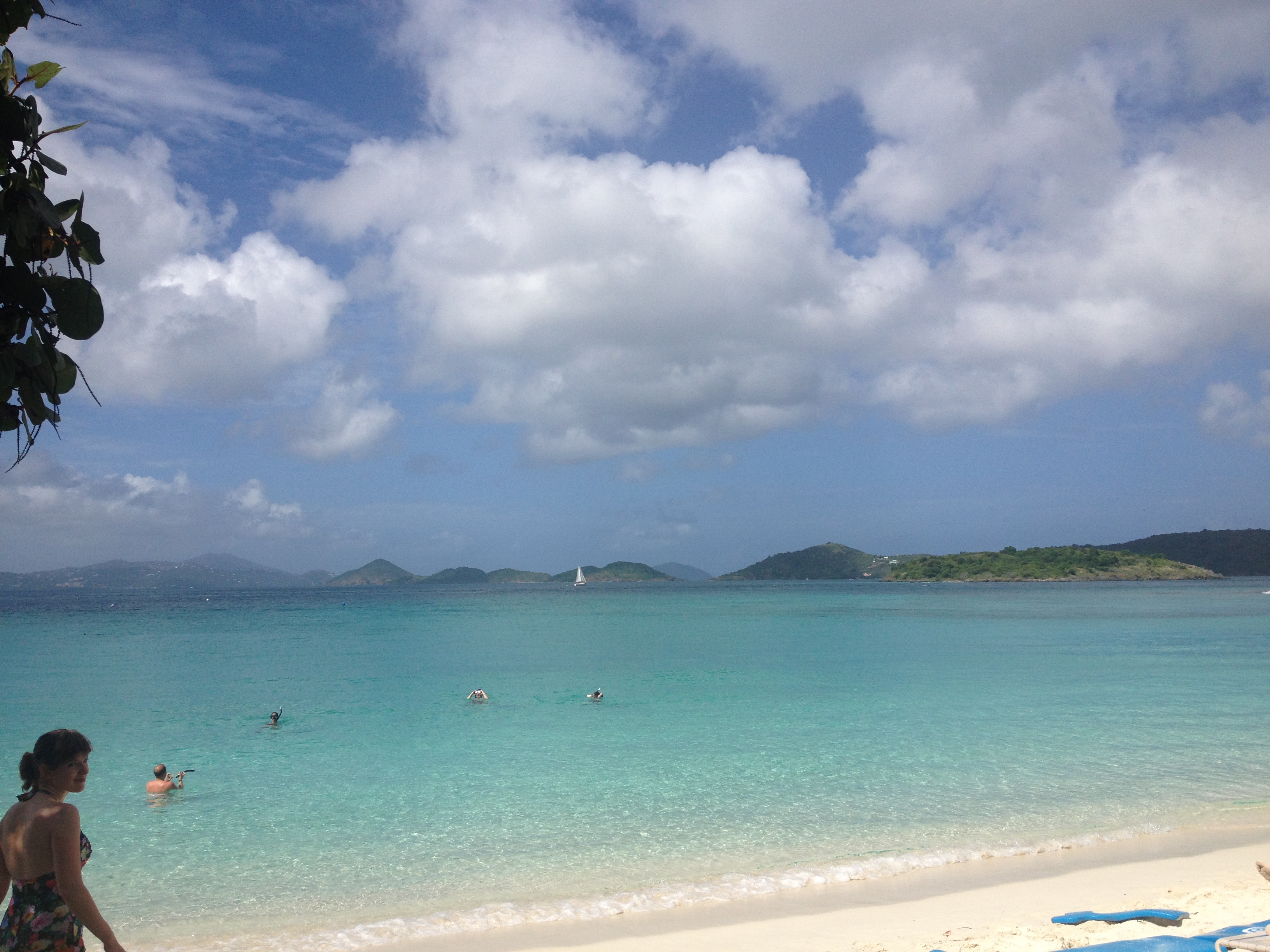
Cruz Bay is where the ferry from Saint Thomas first arrives.  It is the first place any visitor to this island sees.  It is Saint John’s front door, it’s first impression.  And it doesn’t disappoint.  The ocean here is as stunning and picturesque as anywhere I could possibly imagine.  In fact, even at some of the best kept lakes in the United States, I have never seen water this magically blue.

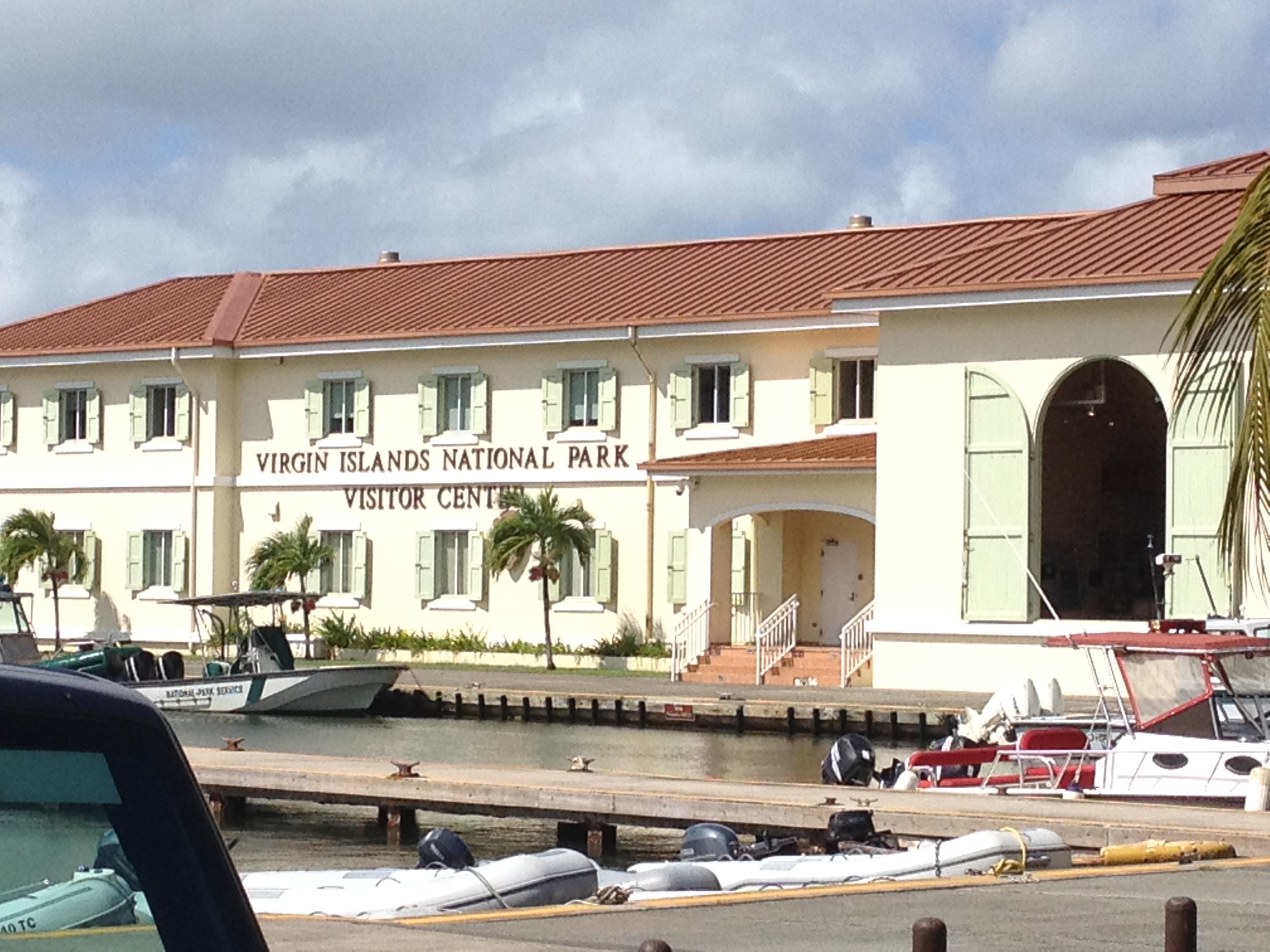
Upon arrival to Cruz Bay on the ferry, one immediately sees a plethora of tourist accommodations.  To the left is the Virgin Islands National Park Visitor Center.  In front are the beaches, boats and restaurants.

IMG_2824 IMG_2827

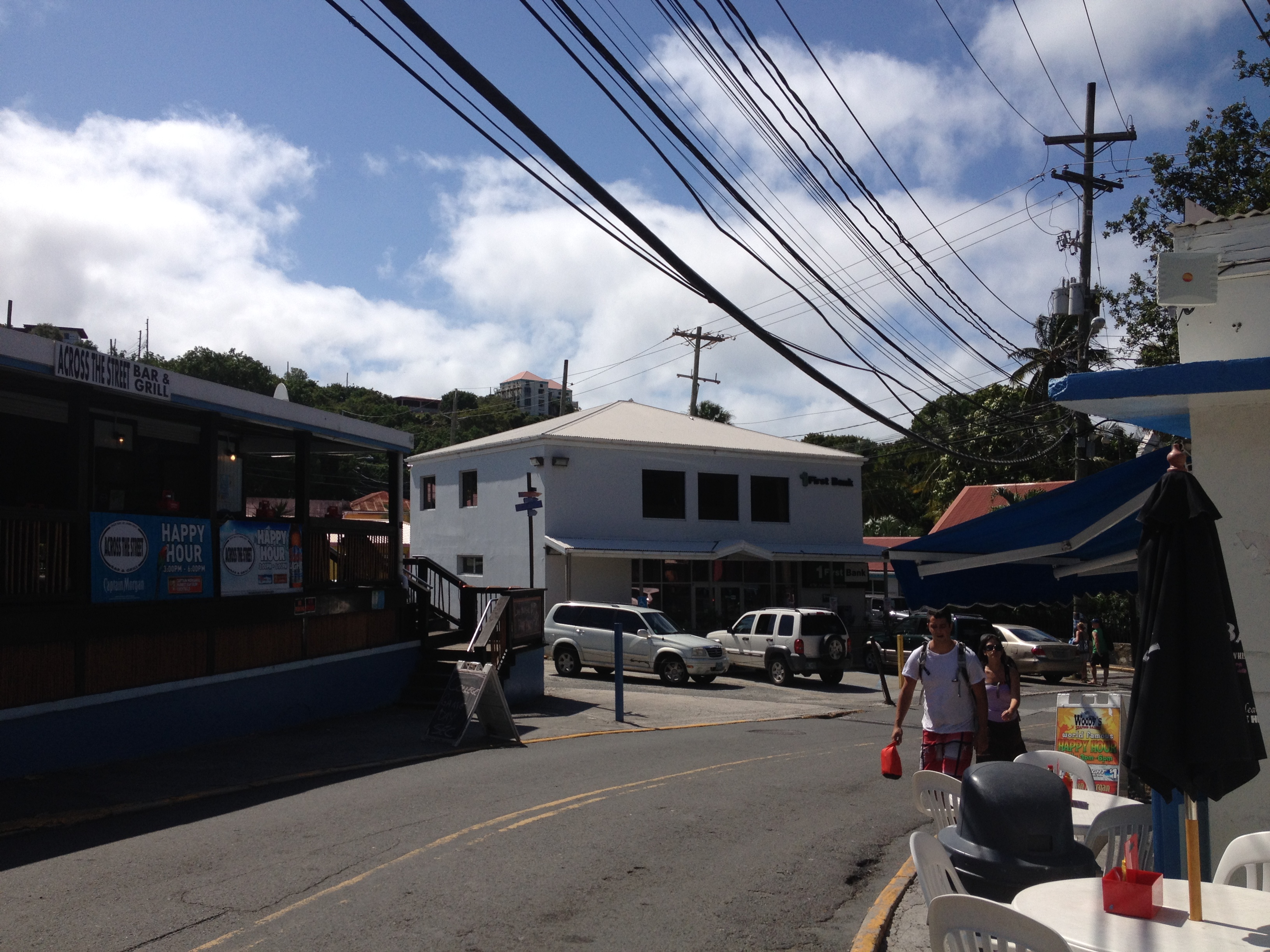
A tourist that walks up the road straight in front of them (road names are not obvious here) will encounter a road lined with bars and restaurants that obviously cater to those not from the Islands.  Walking along this street in the evening, rather than traditional Caribbean music, one will hear the likes of Jimmy Buffet, modern American pop, and a surprising amount of Country-Western music.  And, a vast majority of the proprietors and patrons of any of these restaurants are obviously tourists or those who moved here from the mainland to work tourism related jobs.

Most of the residents of this island are black (or Afro-Caribbean).  Although this did not really surprise me, I still wonder how this came to be, as I had never really been taught about the history of the Caribbean Islands beyond the arrival of Christopher Columbus in 1492 and the subsequent voyages to the “New World” that the news of this voyage inspired.

However, when I look around me, and take a couple of trips to less touristy parts of the Island, where one can see a better representation of how those native to Saint John live, I can’t help but have the present rather than the past on my mind.

How do the lives of those that live here year round differ from our own?

How do they feel about being a part of the United States?  And, more specifically, how do they feel about their status as a U.S. territory (and not a state)?  We commonly hear about issues regarding Puerto Rico’s similar status, and the razor thin margin between those who support and those who oppose statehood.  But, we never really hear much about the U.S. Virgin Islands’ status and how it impacts the people here.

Most importantly, how do they feel about us, and our presence here?  Do they debate the economic impact of tourism vs. the cultural disruption that it causes?  Do they ponder the fact that within the mainland part of the U.S., we have places like Catalina, Key West and South Padre, places where many of us could theoretically get a similar experience without invading their island?

Ultimately, are they fighting for their identities, their culture, or are they enjoying the economic benefit of our presence, as well as their association with the United States of America?   When we think of the Caribbean, we often think of pop icons, including Bob Marley, but also more recent pop icons from the region, such as Daddy Yankee and Sean Kingston.  The music produced by these artists take us to the pristine tropical oceans of the Caribbean, if nowhere else but in our minds.

However, it is these pop icons that appear to represent the dichotomy of the possible responses that seem plausible given the current situation of those that live in the U.S. Virgin Islands.  Marley, from his lyrics, considered himself part of a struggle for the culture and identity of himself and his people.  But modern pop stars like Kingston appear to be simply enjoying the economic benefit of their stardom, much of which comes from the U.S. and the western world that Marley rallies against.

Although there is a lot more to any one person’s life that what we witness through the media, Kingston and Co. do appear to be thoroughly enjoying their lives.

IMG_2847 IMG_2849

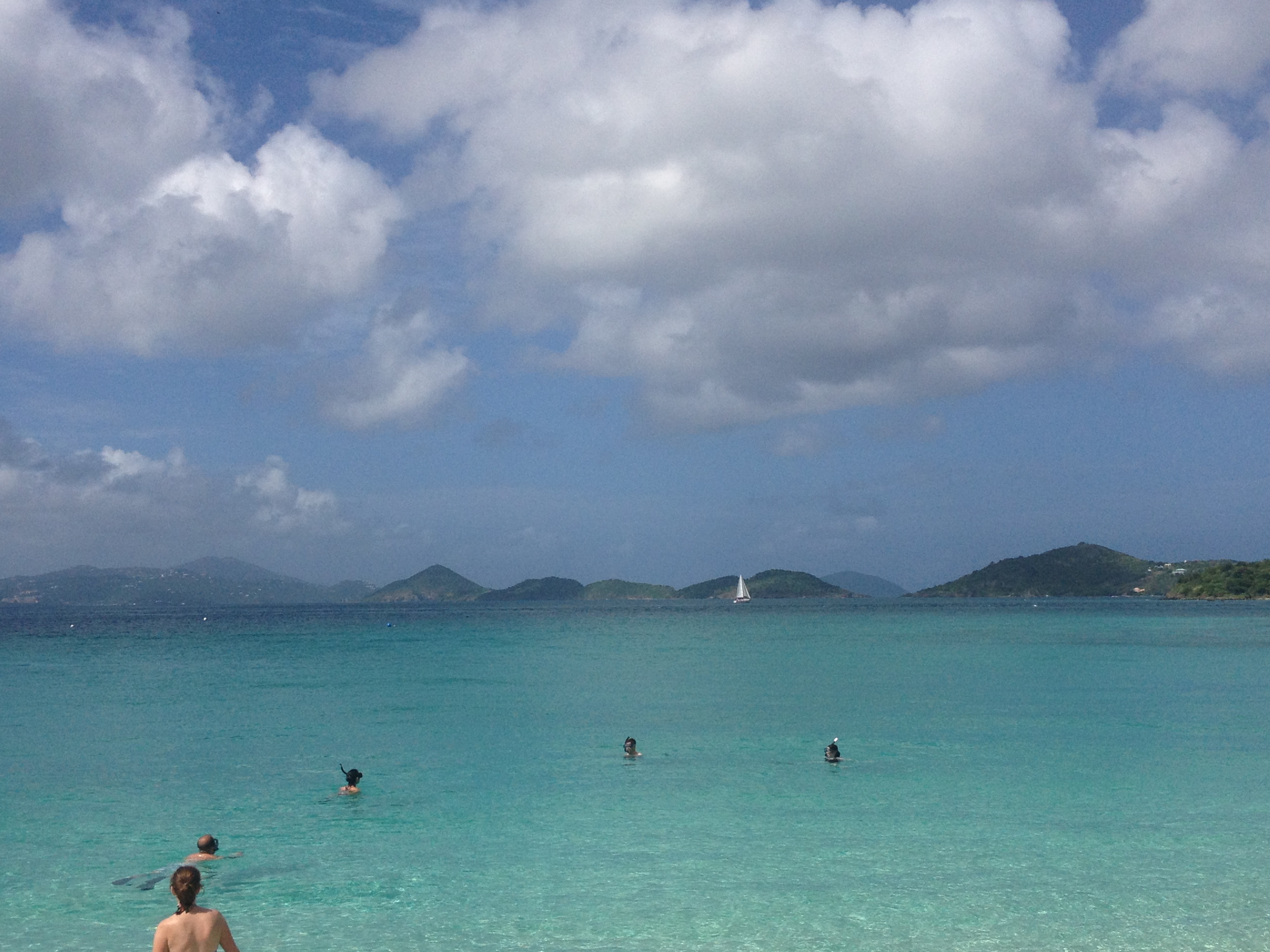
After multiple nights of partying, I lay exhausted on Scott Beach, the finest beach on Caneel Bay resort.  I watch the boaters and snorkelers go by.  Some even tell me that it was here, in the clear waters of the Caribbean, that they had one of the best snorkeling experiences of their lives.  They did so by being willing to visit a place a little bit out of the way, a place where the people, the culture, and the way of life are different than their own.

That is when it occurred to me that the world is full of people who are different from me.  The world is full of people who look different, act different, have different customs, beliefs, values, and different ways of understanding the world.  We can either learn to live with different types of people, and try to relate to them as best as we can, or we can accept the limitations that go along with confining ourselves to people with sufficient similarities to ourselves.

In practice, we all implore somewhat of a combination of the two strategies; accepting some differences but trying to stay away from others.  However, there are some that believe that in an increasingly connected world, the future belongs to those that can bridge the gap between different cultures.  I am not sure if I inherently believe that the ability to bridge cultural gaps is a prerequisite for success in the 21st Century, as many people have built fortunes designing products that largely cater to one segment of society.  However, when I watch people enjoy Saint John Island, and watch videos by Kingston and other similar artists, I see firsthand the benefits of being able to relate to those with different backgrounds and ways than my own.

Swing State USA 2014: The Current State of Colorado

IMG_2733 IMG_2741

What is the current state of your location?  What are the trends?  What do people like to do?  What makes your particular location unique?  What are people talking about?  What are people concerned about?  What are the hopes and fears for the future?

These are amongst the questions often answered through travel.  Sometimes, even when a traveler has nothing of this nature on his or her mind, answers to questions like these present themselves.  This is why I have thoroughly enjoyed all of the travel related shows hosted by Anthony Bourdain.  In each and every show he has been involved in, he travels to various locations with the simple goal of getting a comprehensive sample of a particular region’s food.  However, in nearly every show, he strikes up conversations with people local to the area, and learns quite a lot about their culture, history, and expectations.

IMG_2558 IMG_2720

Colorado has been on a lot of people’s minds lately.  Most surveys rank it one of the top 5 (or at the very least in the top 10) fastest growing states in the country.  Most of this population growth has come from migration of people from elsewhere in the country.

Colorado has also drawn significant national attention for a variety of reasons this year.  Recently, football fans at Sports Authority Field got to witness quarterback Peyton Manning break the all time record for career touchdowns.  This year, Colorado became the first state in the nation legalize the sale of recreational marijuana.  And, the city of Denver was recently ranked the 4th most influential city in the country, according to a survey of mayors.

With this being the autumn of an election year, and Colorado being a closely contested state (a “swing state”), much of the recent national media attention has turned to Colorado, and our two closely contested elections.  As the story goes, in two weeks, two very important elections are about to take place; one that will determine the direction the State of Colorado takes in the coming years (Gubernatorial), and one that may determine the direction the whole nation takes in the coming years (Senatorial).

Living in the Capitol City of such as state, one would expect these two important contests, and the political implications of them to garner a significant amount of intensity and enthusiasm.  However, if I had a dollar for every time someone asked me who I was planning to vote for in either election, I would be not a cent richer than I currently am.  By contrast, if I had a dollar for every time I was inquired about the other all important state question, whether I was getting the Epic Pass or the Rocky Mountain Super Pass, I would probably accumulate enough money for an amazing night out.

While this could be just the people I happened to associate with here in Colorado, or the types of conversations I tend to pursue, a walk through my neighborhood reveals significantly less yard signs than in most election years.

Baker_Denver_Oct2014

What I do see throughout my neighborhood, as well as most areas nearby, including downtown, are fliers like this one everywhere, sometimes multiple fliers per block, attempting to get people to inquire about campaign jobs for the coming election.

IMG_2714

Nearly every one of them appears exactly as this one does ,with close to all of the tabs underneath the flier remaining un-pulled.  In fact, this past Wednesday evening, after a networking event, I returned to my bicycle to find a similar flier had been wedged into my brake lever; something I had never expected to see, but also something that demonstrates to me campaigns are actually having a hard time getting some of these paid positions filled.

All of this tells me that Coloradans have other things on their mind.

IMG_2732

There is a significant of excitement around the Denver Broncos, by far Colorado’s most cherished sports team.

IMG_2745 IMG_2740

And, while this October has featured some beautiful weather, and some amazing fall colors that are atypical of this areas, many are concerned that this may delay the opening of ski season.  Most of the ski trails remain snow-free.

And, of course, people are quite divided regarding the rapid growth of the region.  Some cherish the opportunity to become the next significant and influential mega-region, with all of the privileges and responsibilities that it brings, while others lament the changes that are making the place significantly different than it was just a mere half a decade ago.

So, which is it?  Is Colorado, with its high density of start-ups, leadership in the craft brewing movement, and unique way of life, the place where trail-blazers grab the bull by the horn and reshape the world?

IMG_2730

Or is it still a place largely isolated from the population centers and mega regions, where people go to explore the world on their own, and escape as many outside influences as possible?

IMG_0034

Or, more importantly for the future, can we find a way to be both?


Pacific Beach San Diego

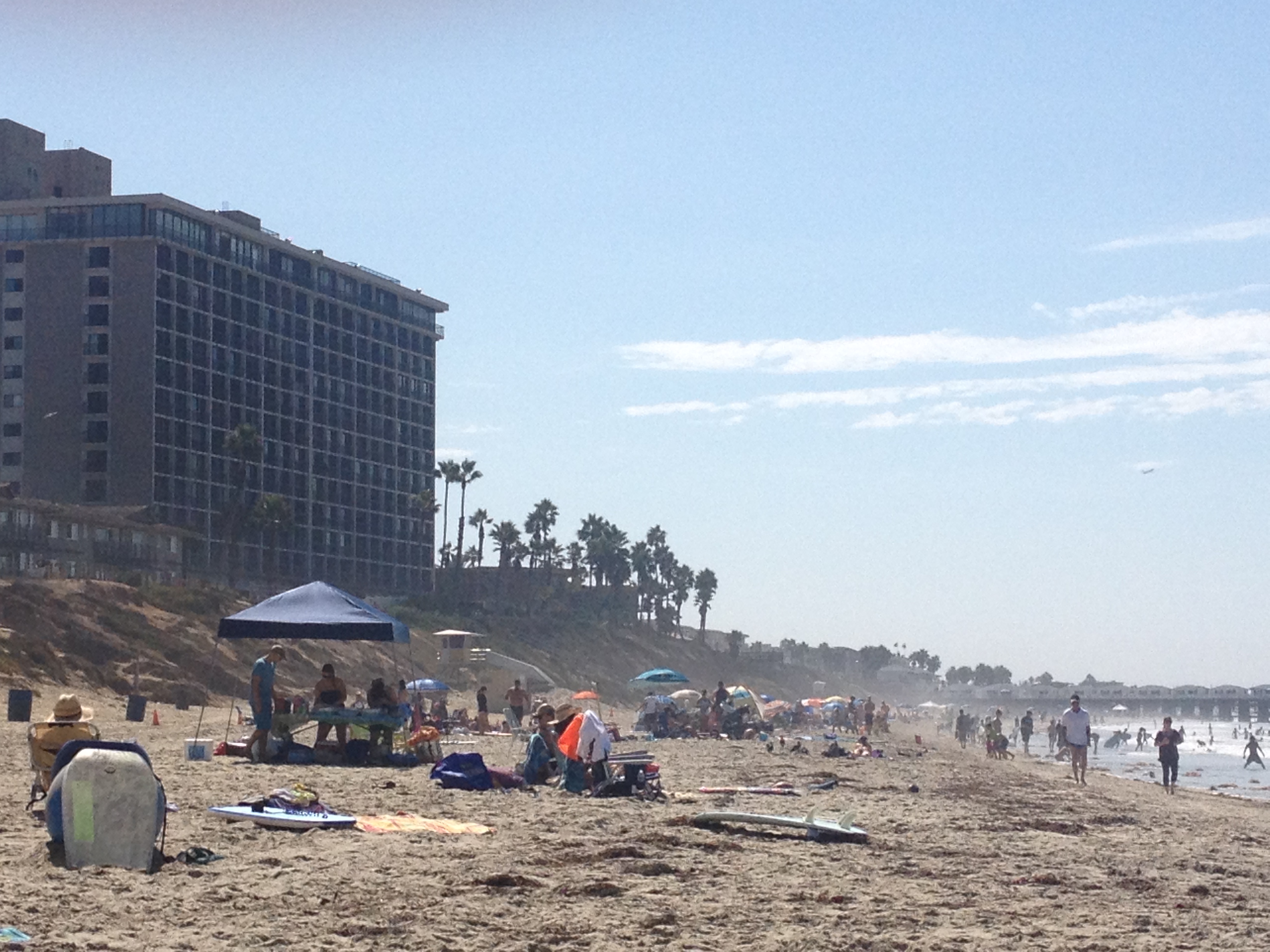
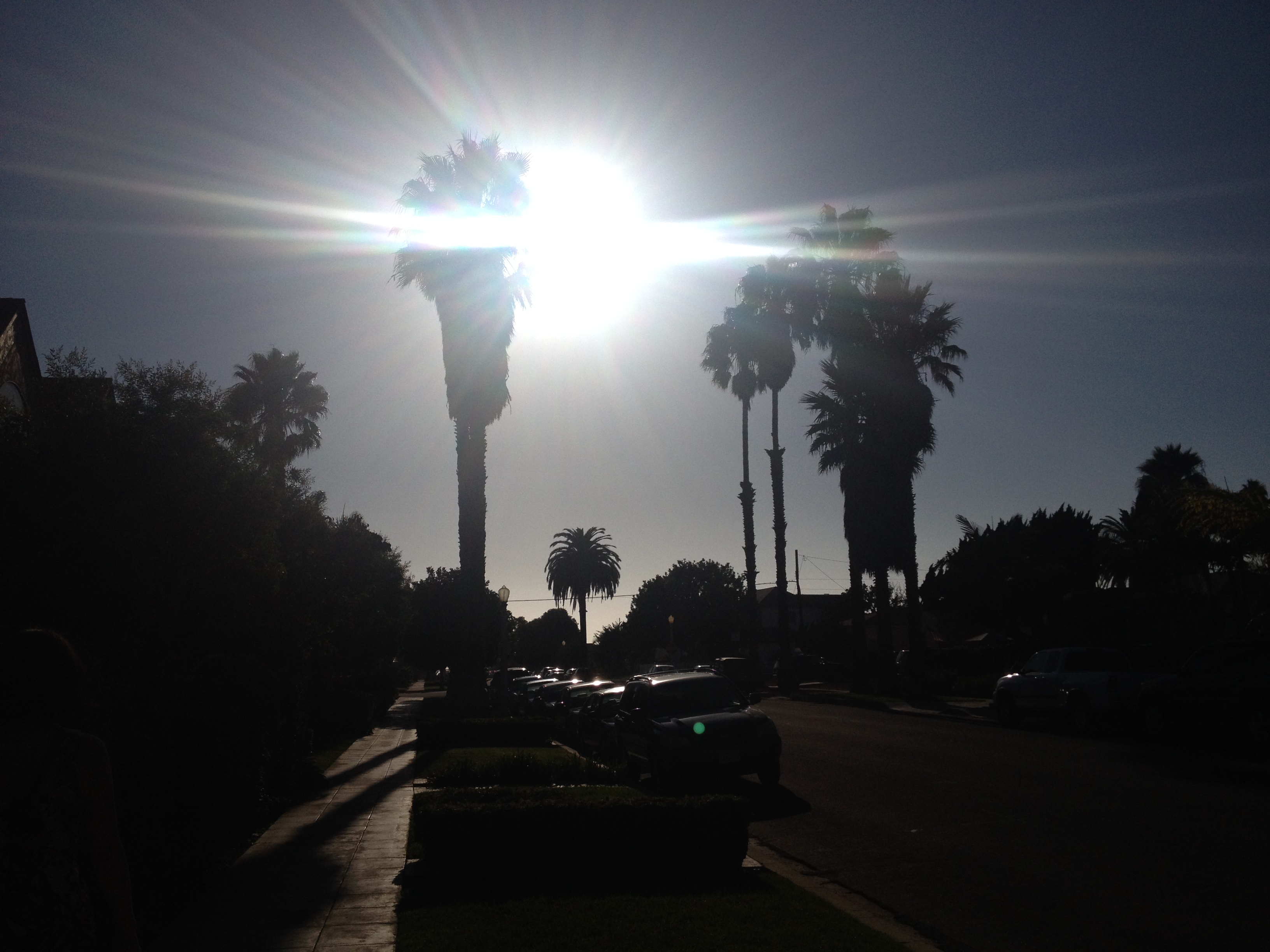
I laid there for over an hour in the hot California sun.  In fact, it was unusually hot for the oceanfront.  While areas further inland regularly get significantly hotter, temperatures well into the 80s with insane humidity is quite rare for the beech.  Despite the unusual conditions, I still captured this California experience.  In fact, the entire time I felt as if I had stepped right into a Red Hot Chili Peppers song.

IMG_2633 IMG_2634

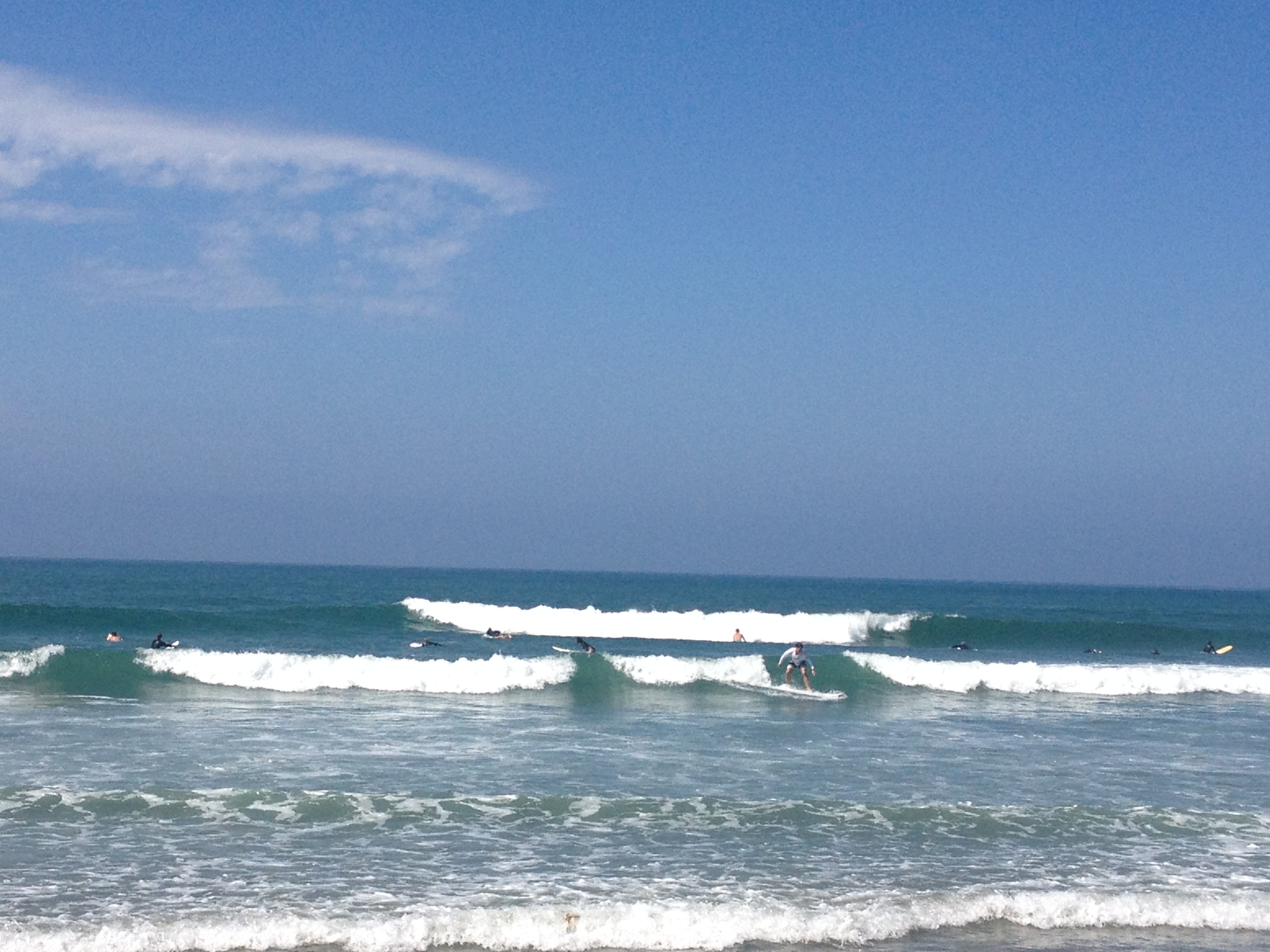
There is the ocean, the palm trees, the waves, and most importantly, the surfers.  Boy were there a lot of surfers.  I had never seen so many surf boards in my life.  Even in my most vivid imagination of a California stereotype, there were not nearly as many surf boards in one place.  On the way to and from the beach, a clear majority of vehicles had surf boards in them.

And I watched, gradually getting a nasty sunburn on my back.  I watched people walk by.  I saw a group of people play football in the water.  I saw about a dozen “wind surfers”, and even got to witness the challenge involved in using the wind, a much more variant force than that of a boat (used for activities like water skiing), to get up onto the water.  The most experienced wind surfers still appeared to require a few attempts to get up onto the water.  By contrast, experienced water skiers seem to always get up on their first attempt.

Mostly, I observed the surfers catch wave after wave.  I wondered if these waves were better or worse than a typical Saturday on Pacific Beach.  I wondered how long it took the better surfers to achieve this level, and whether or not their form was truly as great as it appeared to an outsider like me.

Normally, my attention span would wane much sooner than this.  But I was capturing the moment.  And, also I was quite exhausted.

IMG_2621 IMG_2649

The previous afternoon, I had flown into San Diego and attended my friend’s bachelor party, which was mostly held in Downtown San Diego’s Gas Lamp Quarter.  Similar to the French Quarter in New Orleans, or Midtown Manhattan, this district is touristy and quite expensive, but not overly cheesy.  There are a few chain restaurants and bars, but many of the establishments are unique to San Diego.  The nightlife here is not confined to one or two stretches of a road, as in places like the “Las Vegas Strip”.  The entire square mile was majorly hopping, with restaurants, bars, loud music, dancing, and the sidewalks where quite full with patrons, most of whom likely spent upwards of $100 over the course of the night.

The main thing that set the “Gas Lamp Quarter” apart from similar districts in other large cities was how many times we were solicited, and how aggressively we were solicited, by wait staff at bars and restaurants while walking down the street.  Someone from nearly every restaurant we walked by would talk to us, and tell us about their food and specials and such.  The only other place I remember being solicited walking down the street was along Division Street in Chicago’s Gold Coast, and those conversations were always brief.

IMG_2636 IMG_2638

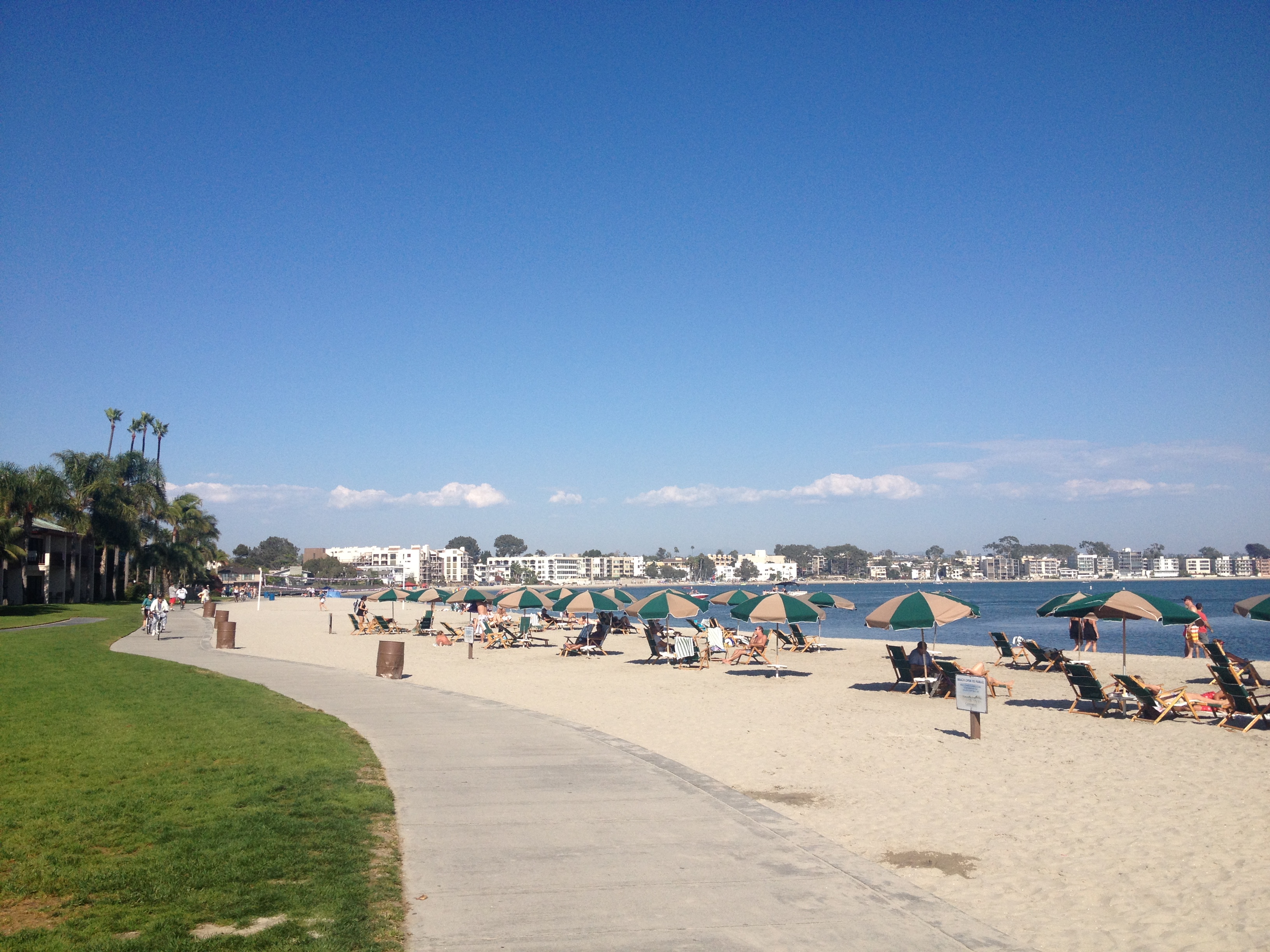
I only spent three days in San Diego, and a good chunk of it was tied up by the bachelor party, rehearsal, and the wedding itself.  So, I did not get a chance to go to Sea World, or any of the standard San Diego tourist places.  However, I did really appreciate where the wedding was held; At a resort called the Catamaran along San Diego’s Sail Bay.

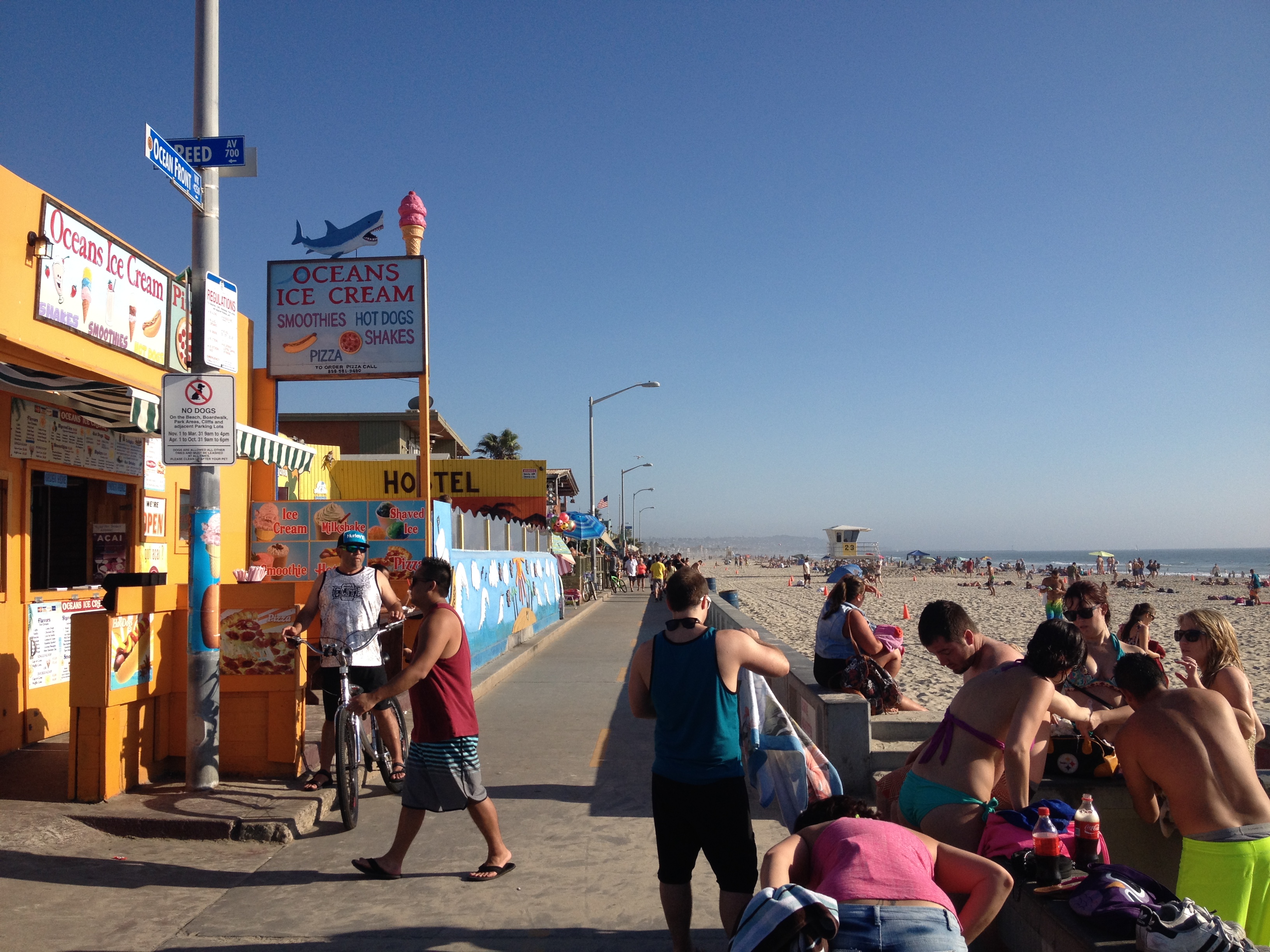
At this location, I spent most of my time in the Pacific Beech (and Mission Beach) area.  Aside from the standard boardwalk, the neighborhood has several active roads with lots of restaurants and bars, and is the kind of place where you can find almost anything within a short walk of each other, as well as the beech.  Both during the day, and in the evening, streets like Mission, Grand, and Garnett were filled with people taking part in many different activities.

California is a unique place with a distinct culture, and although I was only here for three days, I did get to observe a lot of it for myself.  People here really do drive everywhere!  Even though Pacific Beech is a walkable area on a grid system, the type of area you would expect to be more pedestrian/transit oriented in another major city, almost everyone seemed to be arriving here by car.  And this means that parking is hard to find in a lot of places.  As we left the beech that day, we were asked by a car full of surfers coming to the beech where our car was, in hopes that they could take our parking spot.

IMG_2648

While San Diego does have a transit system, almost all of the people I talked to basically did not consider it an option.  I did ride on both a bus and the train.  The bus driver told me there were no “transfers” (i.e. from one bus to another or from bus to train on one fare), making the system seem inconvineint for most.

IMG_2635

The fish tacos here are truly amazing!  And it really is the tortillas that make some fish tacos  more amazing than others.

IMG_2629

There are tons of other foods that are somewhat unique to the area, including a lot of foods with avocado and/or sprouts.  I particularly enjoyed San Diego style fries, which include meat, cheese, avocado, and garlic.

Although Southern California is known to be less obsessed with football than the rest of the U.S., there are still tons of people who get really into football, both college and professional.

Bicycle riders are clearly divided into two types; One that rides hard core and comes out early in the day wearing full bike gear, and one that rides cruisers, goes about 10 mph, and only pedals when absolutely necessary.  The later group does not wear helmets.

People here in general appear healthy- about as healthy as Denver, and far more healthy than the Midwest.

I really wish to return to San Diego, as I still feel there is much more to do that time allotted.  In a future trip, I think it would be neat to actually take a lesson and learn to surf, spend some time in some of the other popular neighborhoods, and I would really like to have some sushi, as there is probably a lot of really good sushi here.  And, I definitely wouldn’t mind seeing more scenes like this one.

IMG_2619

Places of Questionable Significance

IMG_2460

In 1983, an incredibly drunk Ozzy Osborne made the mistake of deciding to relieve himself on the Alamo, a building of historical significance.  He was arrested (Isn’t public urination usually just a ticket?), and scorned by many, primarily due to the fact that the Alamo is an important symbol of pride amongst Texans.  However, to Ozzy, a British rock star, the building probably did not mean too terribly much.  While a sober Ozzy (if that existed in 1983) would probably have realized the building is significant due to the presence of tourists, he probably would not have felt the same affinity or pride when standing in front of the Alamo.

With the exception of a few wide eyed hippies that believe that every place is significant, and a few hard core cynics, that fail to see the significance in any place (or anything), the significance of most places is dependent on the person and the culture.  There is no better of an example of a place like this than Four Corners, U.S.A.

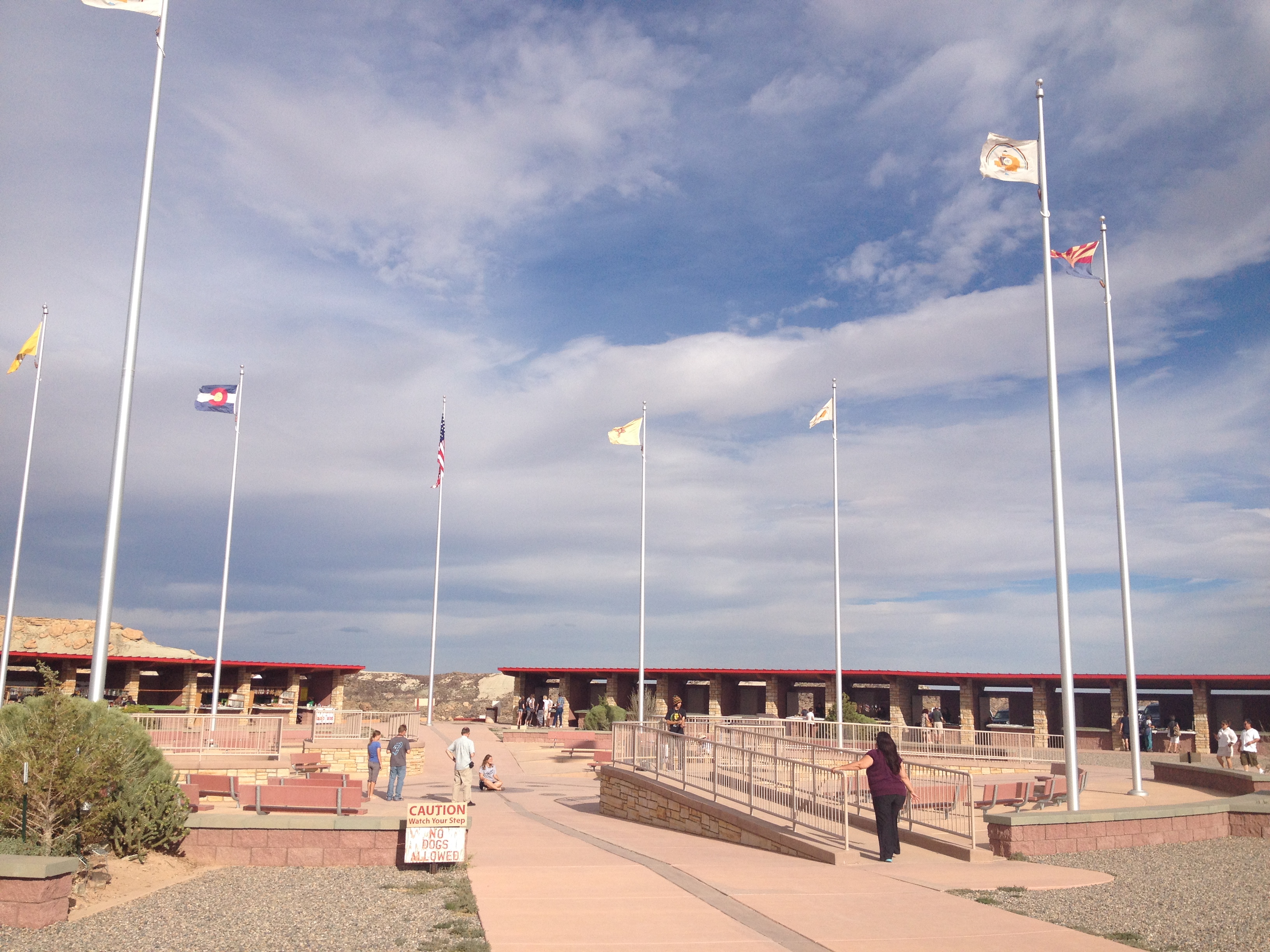
Four Corners is unique due to the fact that it is the only place in the United States where four states all border one another.  If one wanted to stand in five different states at one time, it would not be possible.  If one wanted to stand in four different states at once, there is only one place where it can be done; Four Corners Monument.

IMG_2455 IMG_2456

The primary reason people visit this particular monument is to take silly pictures like this one.  Assuming the location of the four-state border is correctly marked (some question that is in the right place), in this picture I am in four states at once.

IMG_2462 IMG_2468

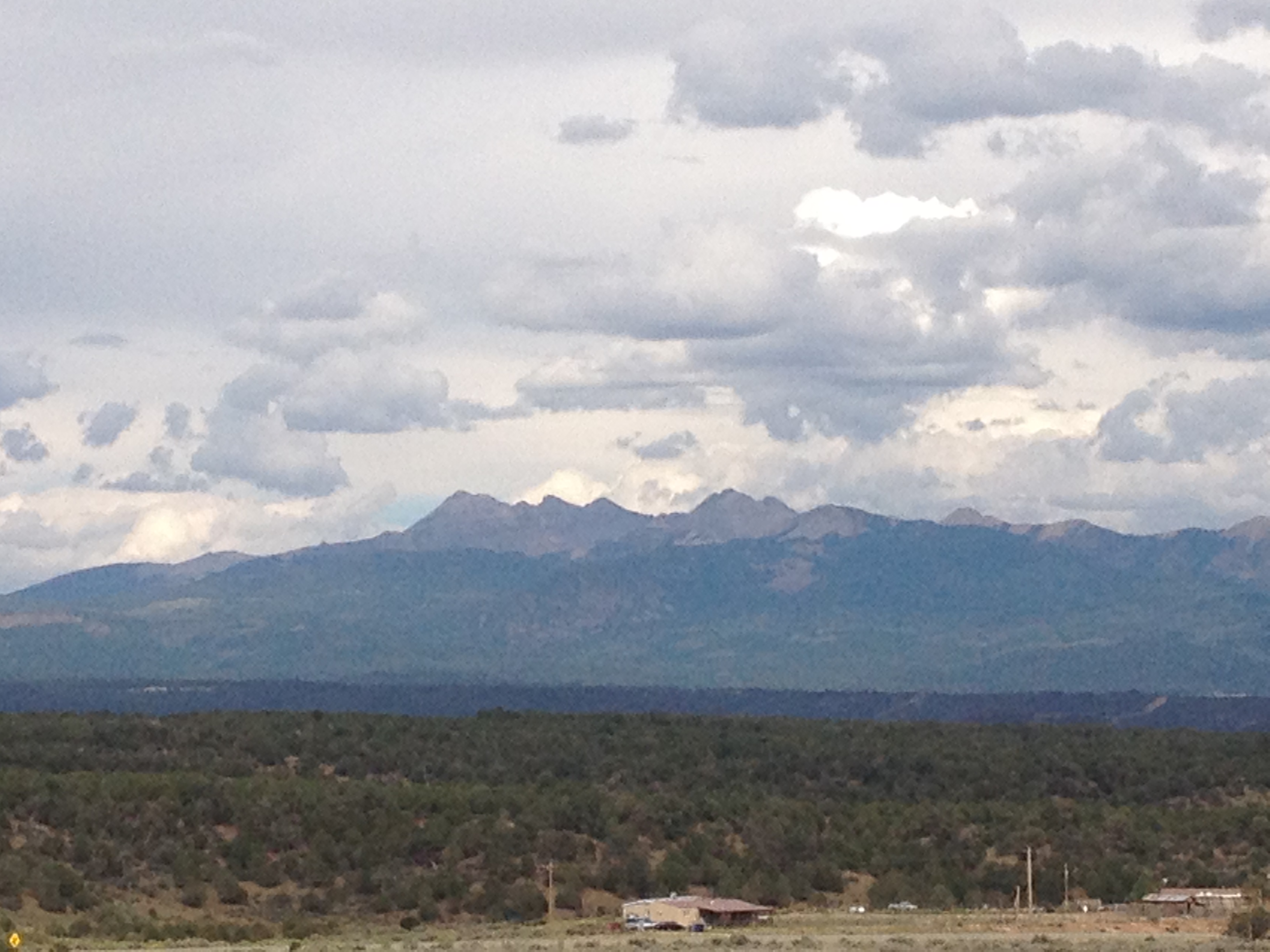
However, in the absence of state borders, this particular spot would really actually be quite insignificant.  There is no natural demarcation point, or significant change in scenery.  Even on the Colorado side, the wide open landscape, periodic mesas, and sagebrush screams Arizona much more than Colorado.  This Arizona-like feel persists for over thirty miles into Colorado until the San Juan Mountains start to show up on the horizon somewhere east of Cortez.

IMG_2457

The significance of this place is further muddled by the fact that this point is not the border of four different jurisdictions.  The monument is actually on an Indian Reservation.  Thus, you do not even get the standard differences in policies and sales tax that usually accompany state borders.  An equal number of souvenir stands exists on all four sides of the monument.  I am not sure whether or not marijuana is legal on this particular reservation, but the policy is the same on all sides.  I did not observe all of the pot heads clustered in the Colorado quadrant of this monument.

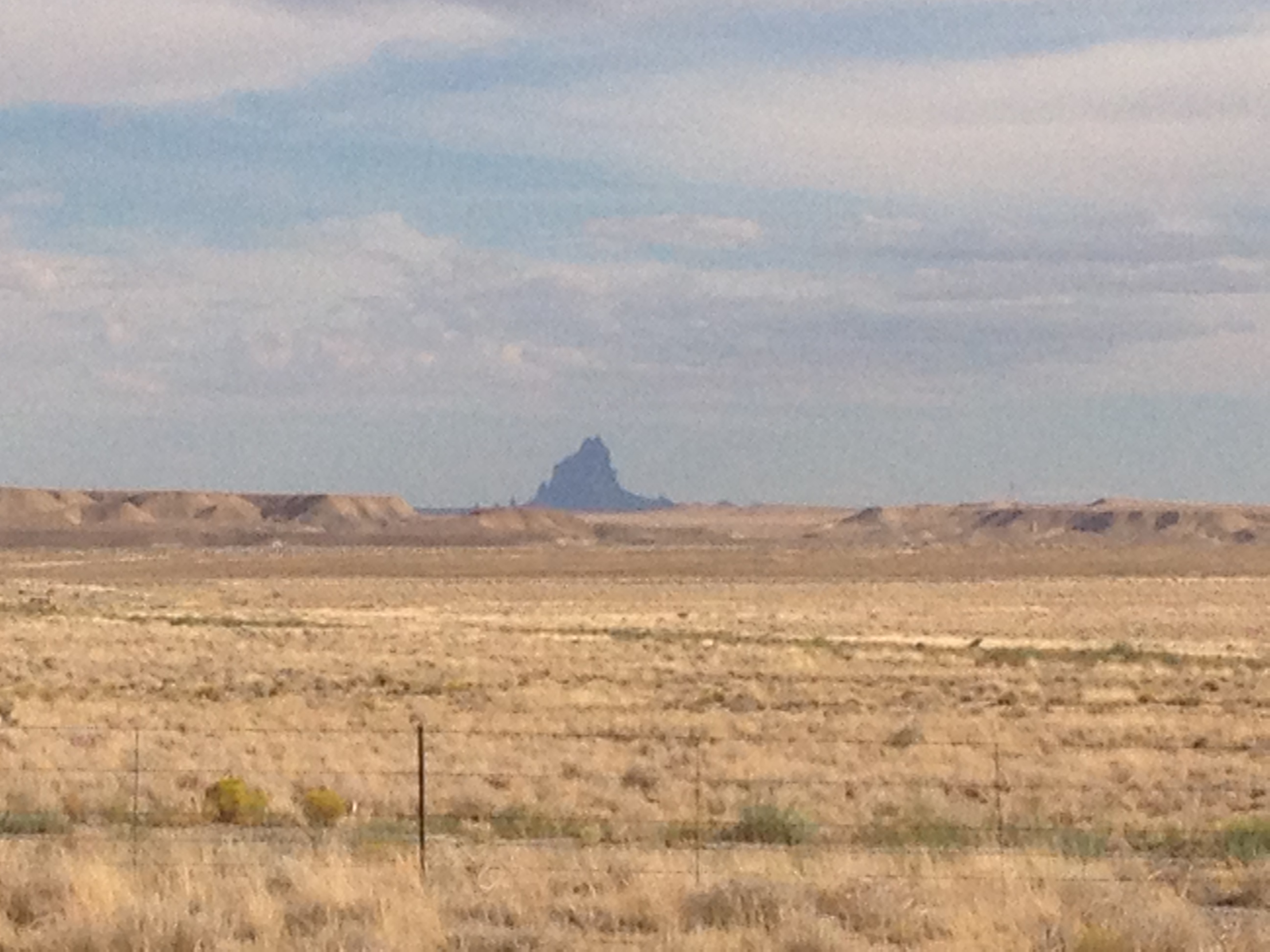
In the absence of state borders (and people obsessed with exact points of latitude and longitude), the most significant site in this region is a rock formation a dozen or so miles away called Shiprock, which has cultural and religious significance to the Navajo people who have inhabited the region since well before the Spanish arrived.

IMG_2467

From a completely neutral standpoint, the rock formation definitely seems to stand out way more than any other feature in the area, which is mainly small mesas and creeks.  But that does not mean the wide open space where the monument should lack significance to all people.

For most likely a variety of neurological, sociological, and historical reasons, Western Culture associates wide open spaces like this one with freedom.  It’s the wild.  It’s the untamed.  It’s the place where you can yell as loud as you want, shoot any kind of weapon you want, and start a fight without anyone to break it up.  There is nobody to tell you where you can (and can’t) hike, climb, tie a rope to an arch or mesa to swing from it, or even try to catapult small rodents.  It’s the last refuge of people seeking to escape every single one of society’s restrictions and limitations.

But the one set of regulations that one can really never escape is the ones that exist only inside their own heads.  I often refer to these as the “invisible chain”.  And by this, I am referring to all of the anxiety, fear, and self-consciousness that often stop us from doing what we feel we should be doing.  It stops us from telling people what we really think.  It stops us from talking to that interesting and attractive stranger on the train.  It stops us from dancing when fun music comes on.  In some ways, it stops us from living.  And, millions of Americans are in the process of destroying their livers trying to reclaim it.  In these pictures of the free, wild, and untamed west, there are typically very few people, or buildings to indicate the presence of people.  There is nobody to judge you, and nobody to make you feel self-conscious about what you chose to wear, say, and do.  The fact that this is where we go to seek freedom indicates where we, as a people, believe most of our restrictions come from.

Therefore, if one could overcome this “invisible chain”, the restrictions placed upon us would be limited only to those officially legislated by some kind of governing body and effectively enforced by law enforcement personnel.  The few lucky individuals that manage this are able to find this greater level of freedom in places like London, Hong Kong, or New York City; places that provide the interaction with other human being that we all crave.

We often see the desire for community and human interaction as pulling us in one direction, while the desire for freedom and individuality pulling us in the opposite direction.  As an extrovert, I often struggle with the fear that asserting my individuality and refusing to conform, will cost me in the social realm.  Reflecting upon all of this in the wide open spaces of the desert southwest, I re-realized that being an individual and reducing that fear actually helps in the social realm.  Negative responses from those that fear non-conformity are more than outweighed by positive responses by those that appreciate authenticity and variety in nearly all circumstances.  The key is to understand that we all have freedom of choice, and not to allow any of the hate to translate into hatred towards others.  This applies even the people that have ridiculed me and caused me hurt.  They have the freedom say what they want.  The only way to truly overcome that ridicule is not to ridicule them back, or “defeat” them in an argument.  It is to not be affected by that ridicule and continue to be the way you are despite anything they say.

This is one of several lessons, I re-learned on this trip.  These re-realizations make this place significant to me, even if the official reason for the significance of any of these places is questionable.  Everyone has a different experience here, and it is completely understandable for someone to come to Four Corners, find out it is on a reservation, buy nothing at the souvenir stands, and leave seeing the place as pointless.  For me, however, this is where I got my mind off some of life’s frustrations, and got back on the path to becoming a better person.

Mesa Verde: A Window to the Past

IMG_2396

For some reason, the history classes I took in Jr. High School and High School left me with the impression that the North American continent prior to the arrival of Europeans was one populated by nomadic hunter-gatherer tribes that never really established a civilization.  The popular characterization of Native America is a series of quasi-nomadic tribes following herds of Bison and other big game animals around vast open areas.  Thus, it is hard not to think of our continent as lacking the ruins of ancient civilizations that are quite prevalent in places like Egypt and Rome.

However, there are places in North America where one can view the ruins of ancient civilizations that existed long before the Spanish established the first European settlement at Saint Augustine, Florida.  The most high-profile pre-European (pre-Hispanic) civilization in the area is that of the Mayans, who archeologists discovered to have been quite advanced in writing, math, and the sciences, at a time when Europe was wallowing in the “dark ages”.   Those ruins can be found in Belize, Guatemala, Honduras, and Mexico.

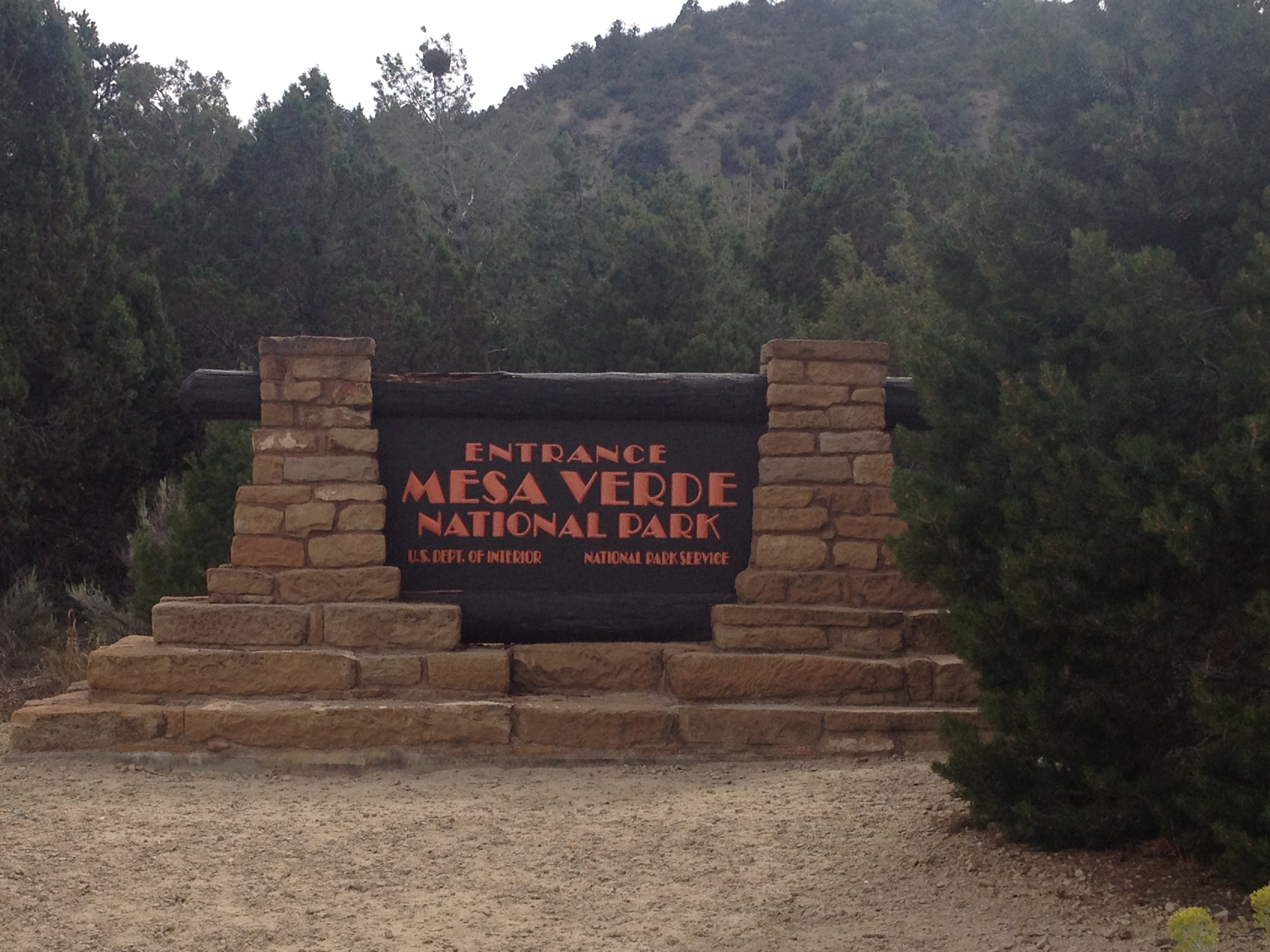
Closer to home (for me), there are a handful of places, mostly in the Southwestern United States, where ruins of ancient civilizations can be viewed.  Preserving this history was significant enough for the United States to establish (in 1906) Mesa Verde National Park, as the only archeology themed National Park in the system.

IMG_2452 IMG_2451

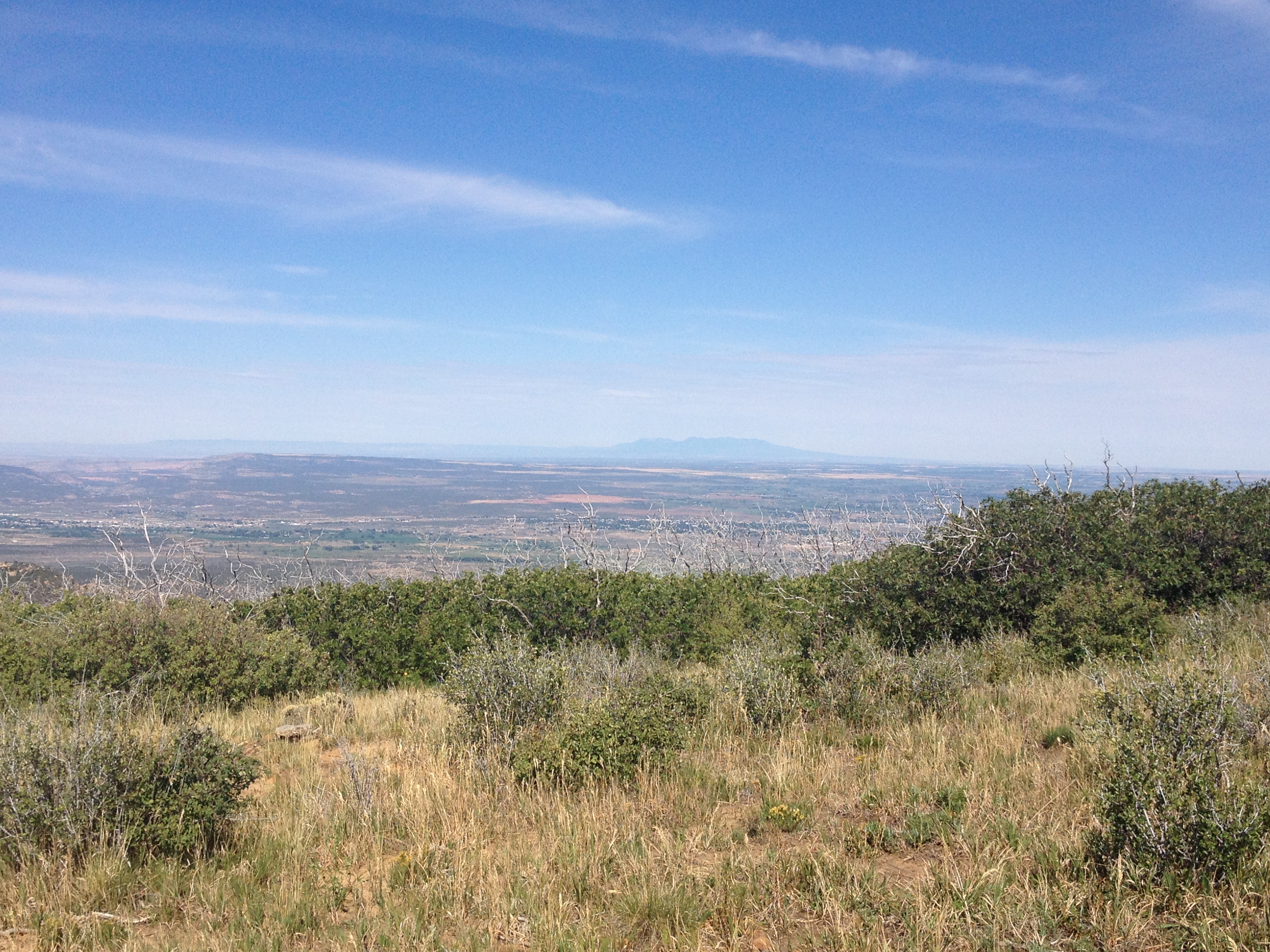
Mesa Verde National Park is located in Southwestern Colorado, in a part of the state where mountains are less numerous than they are in the popular tourist destinations in central Colorado.  The drive from Denver is roughly seven hours, making it a somewhat difficult destination for many to reach.  In fact, the nearest interstate highway is over 100 miles away, and so are all airports that normal people can afford to fly into (I am assuming flying into Telluride is pricey even in summer).  As a result, even on a popular weekend like Labor Day Weekend, the place is significantly less crowded than many other National Parks.

IMG_2433 IMG_2434

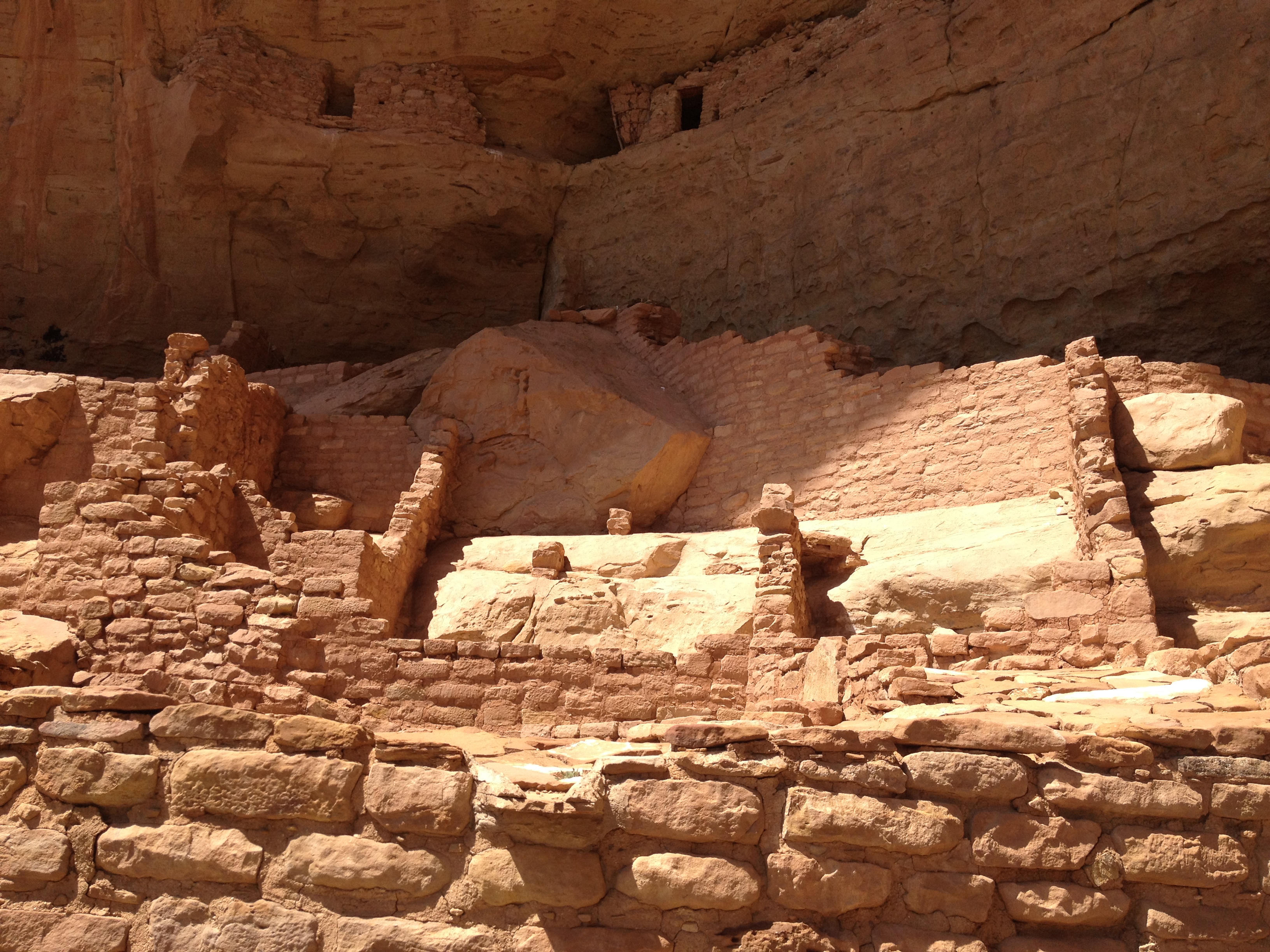
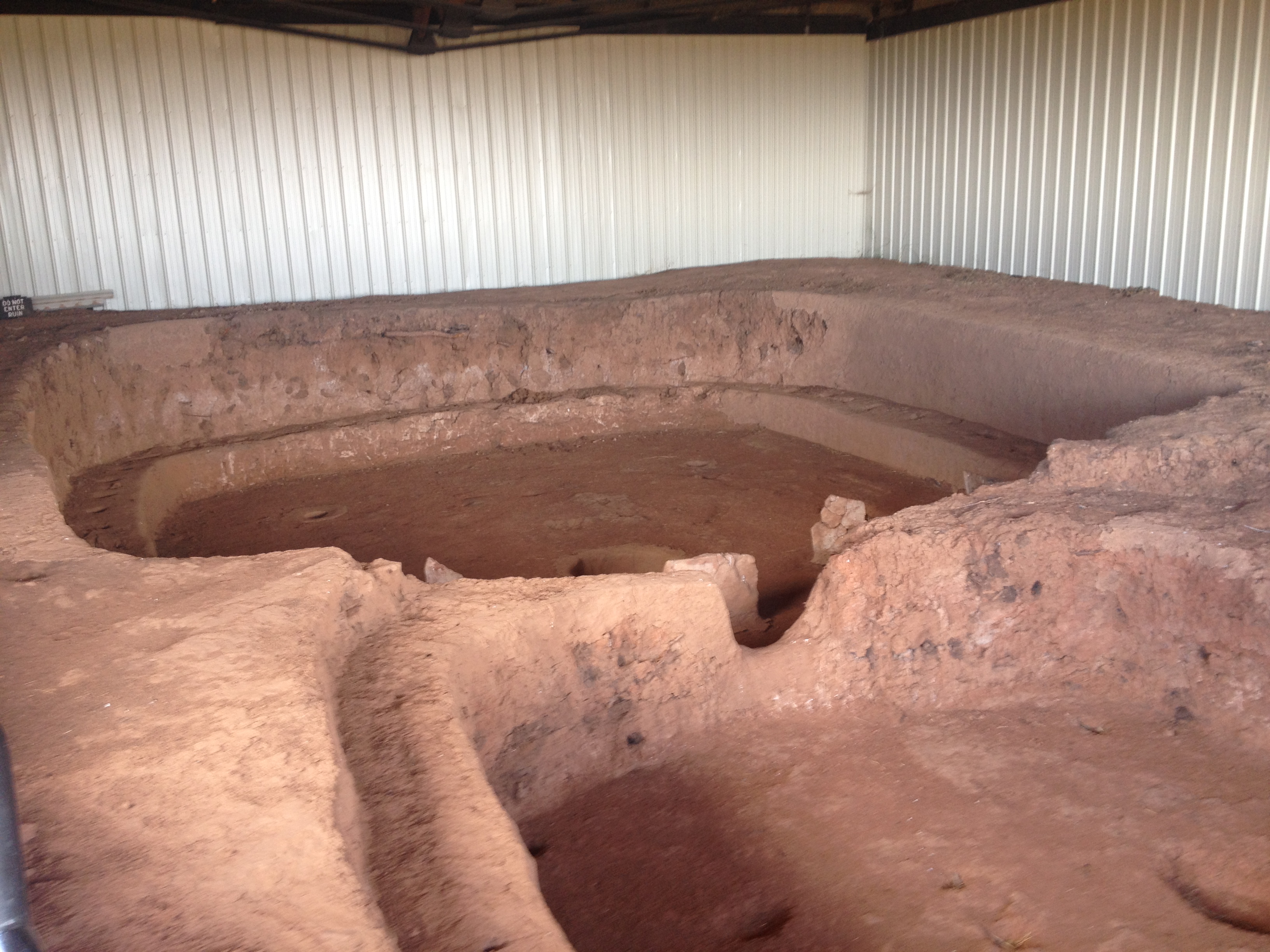
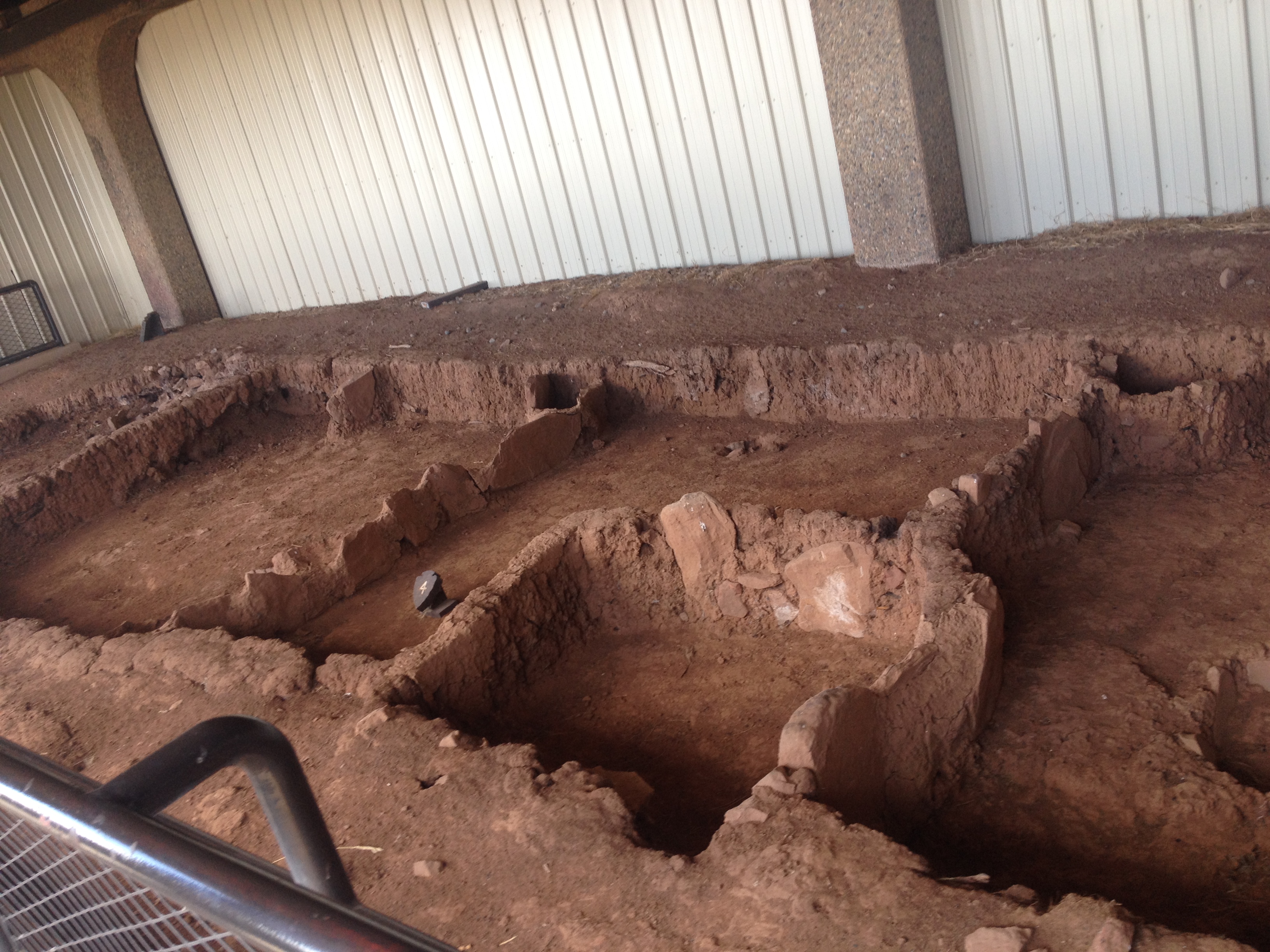
The history of “civilization” in this park begins sometime in the 6th Century with the construction of “pit houses”.  Archeologists believe that this was the first time any kind of permanent residence was established here.  The tribes that would eventually inhabit this area were believed to have been semi-nomadic prior to the 6th century A.D.  Over time, these civilizations gradually got more complicated, and houses (referred to as Kivas) were grouped together into little villages.

IMG_2443 IMG_2415

Although the period of Ancestral Puebloan civilization at this site lasted over 600 years, it is the very end period, mainly from the middle 1100s through the middle 1200s that receive the most attention at this park.  This, of course, is the period in which most of the Cliff Dwellings were inhabited.  The Cliff Dwelling we visited is referred to as Long House.  For $4 per person (in addition to the entrance fee), the Long House tour provides the most in-depth explanation of the civilization that existed in the region.  This 90-minute tour is only available from Memorial Day to Labor Day.  The road to access Long House (on the far west end of the park) is also only open Memorial Day to Labor Day.  Visitors who come to the park later in the fall, or earlier in the spring, can visit other Cliff Dwellings, and take other tours.

IMG_2409 IMG_2410

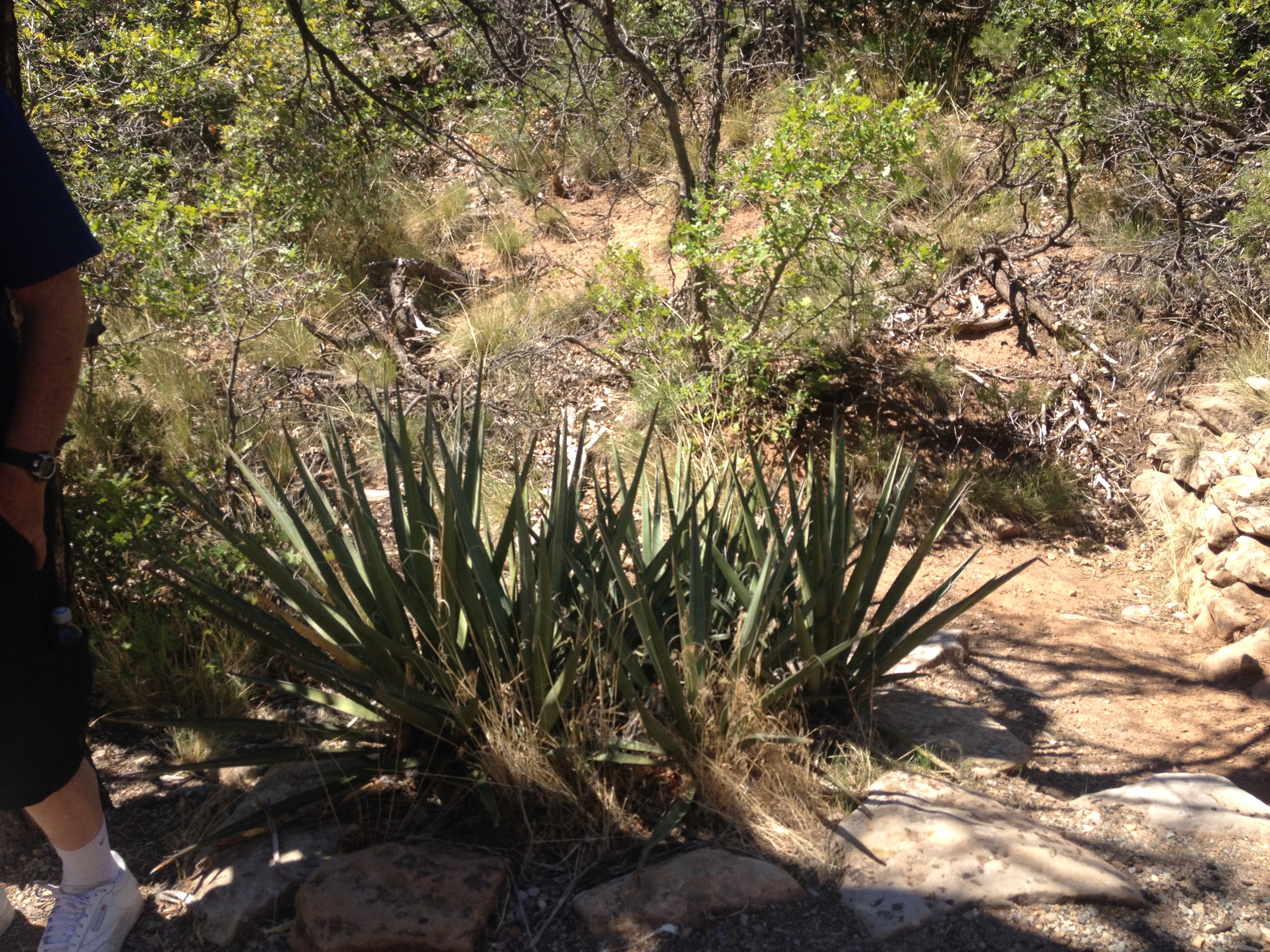
The inhabitants of this region were a very resourceful people.  In addition to the corn, beans, and squash that they grew in the region, they took advantage of most other plants in the area, including Cactus, and the fruit-bearing Yucca plant.  They even resorted to ever awful-tasting plants like Juniper berries in meager years.

IMG_2413 IMG_2432

They even invented the first diaper from Juniper bark.

IMG_2424 IMG_2425

Of course, in a dry climate like this one, one of the scarcest resources is water.  For this, the Ancestral Puebloans devised a system to capture what little water precipitates through a system of little streams and holes designed to capture water when it comes.  Even with this resourcefulness, water was still always in short supply, and a long-term drought is often cited as a potential reason as to why these villages were abandoned sometime in the 13th century.

IMG_2426 IMG_2427Their homes, or “Kivas”, were significantly smaller than our homes today, even in large cities like New York.  The standard “Kivas” appear smaller than most people’s garages today.  Even the “Grand Kivas” would pale in comparison to the size of most present-day one bedroom apartments.
This is most likely because this civilization did not view the concept of the “home” in a way we are accustomed to.  A recent commercial (for some kind of real estate agency) describes home as “a place for your life to happen”.  The commercial reflects the prominent views of mainstream America today.  The Ancestral Puebloans who inhabited Mesa Verde from the 6th through the 13th centuries, used these “kivas” as places to sleep, gather, and sometimes have ceremonies.  However, it was not where their “life happened”.  The remainder of their lives was still primarily outside.

IMG_2420 IMG_2417Archeological analysis has also revealed that these homes were actually built in a rather hurried manner, with little attention to details.  It was hinted that there was always this view that any residence would be considered temporary.  According to the exhibits at the Visitor Center, while many scientists and archeologists concur that the reason this site was abandoned in the 13th century was scarcity of resources (water and animals), the descendents of the inhabitants of this region indicate that it was simply time for their people to move on, to another chapter of their story, in a different place.   Coming from this point of view, the concept of homeowner’s insurance, something practically considered a necessity in our present culture, would have been rejected as an absurd idea in 12th century Mesa Verde.  Fire?  Move on.  Earthquake?  Just put up a new building.  Not the big deal that it has become for us today.
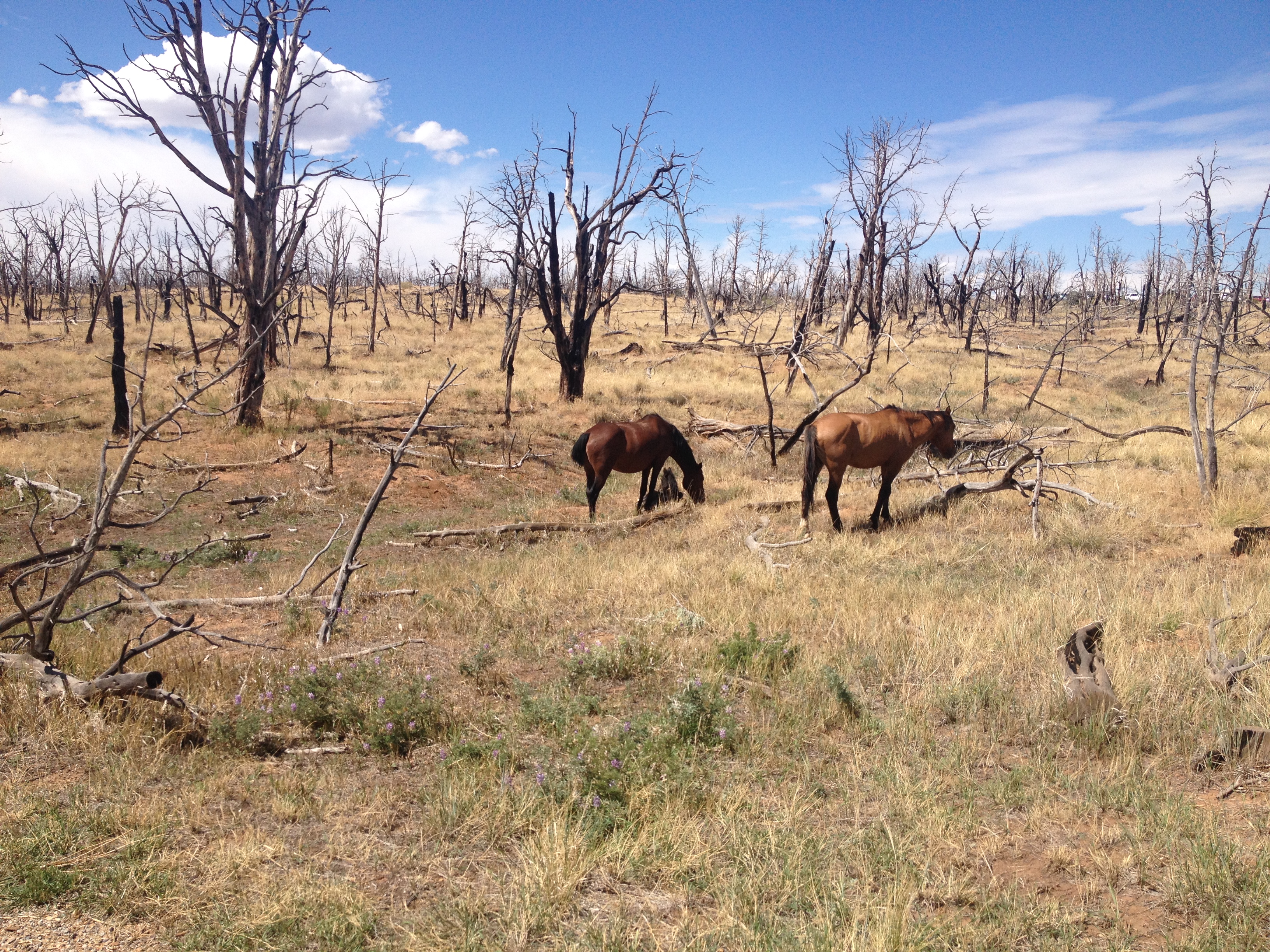
IMG_2448 IMG_2406 IMG_2439 IMG_2403 Mesa Verde’s more recent history appears to be driven by wildfires, always a concern in regions like this.  While traveling about the park, the landscape of any given area can vary significantly depending on how recently it has been burned by fire.  A major fire in the year 2000 engulfed nearly half of the park, causing significant portions of the park to appear as this picture above, with a creepy combination of larger, older, dead trees, and the newer vegetation that has developed over the past decade and a half.For those on a tighter budget, I would certainly recommend staying in the town of Mancos.  It is the nearest town to the entry of the park (only 6 miles away).  It is a town of only 1300 residents, and does not boast too many amenities.  However, it offers, by far, the best deals on hotel rooms in the area.  Our hotel room was the Country West Motel, and I would recommend it to anyone.  A classic looking, modest roadside motel, it had it’s own courtyard, sizable enough rooms, and even a poster that I really enjoyed having in my room.
IMG_2389 IMG_2391 IMG_2387 IMG_2474

Funnel Clouds and UFOs

Chugwater, Wyoming is not known for tornadoes, nor is it known for UFOs.  When people think of major tornadoes, they typically think of places like Oklahoma and the rest of the Great Plains.  Most consider “tornado alley” to be to the east of Wyoming.  Likewise, when people think of UFOs, the town of Roswell, New Mexico comes to mind, as it is not only the location of a major event related to UFO conspiracy theories, but also in a region dense with UFO reports.

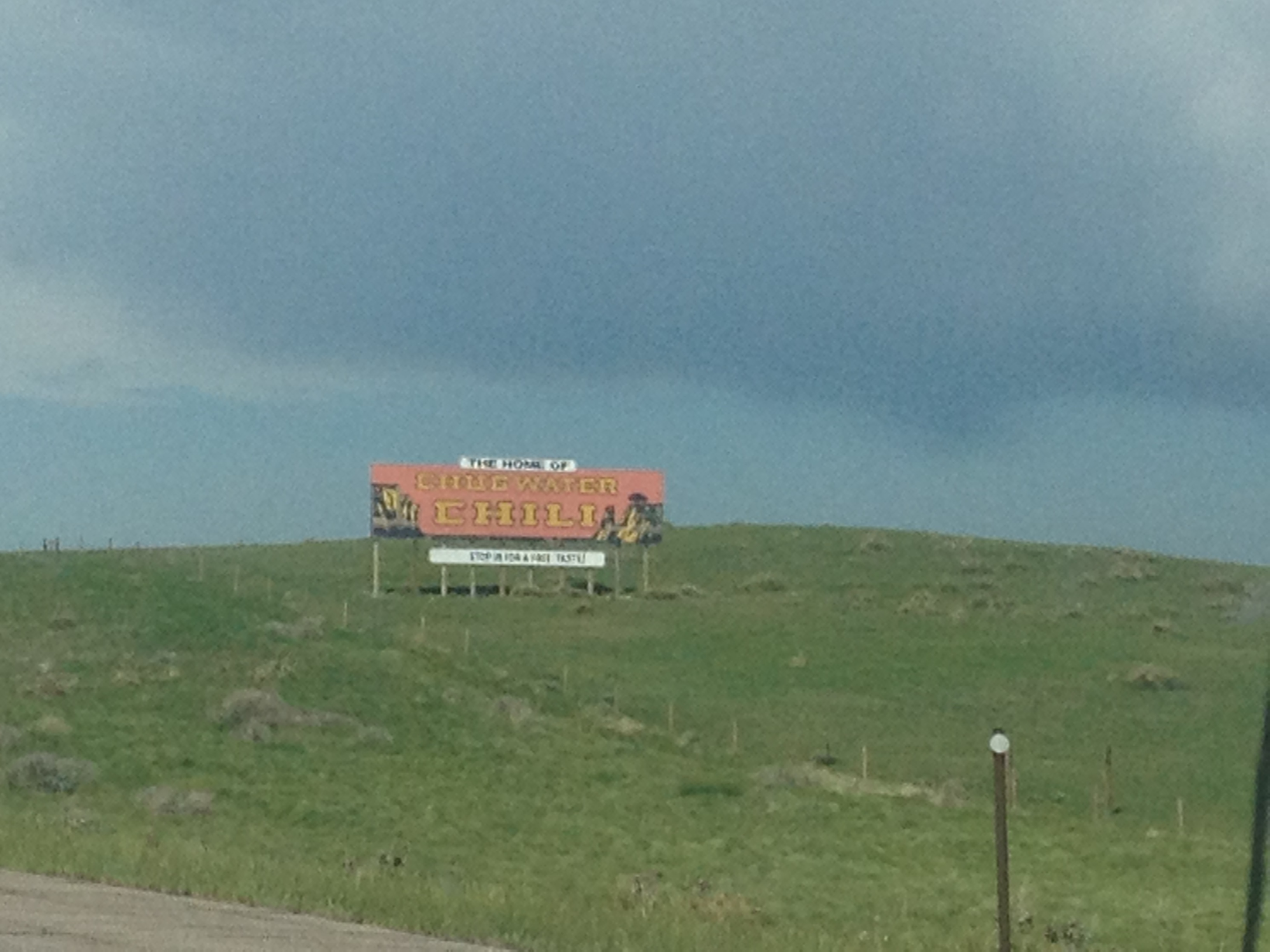
Chugwater is a town of barely more than 200 people roughly 40 miles north of Cheyenne.  The only thing it is really known for is chili.

IMG_2019 IMG_2020

I have never actually tasted Chugwater Chili, but others have told me that it is really good.  Enough people like it to support an annual chili cook-off in the town, which has been going on for twenty-nine years!

However, yesterday, the last day of May, a trip to Chugwater helped shed some light on both phenomenon.

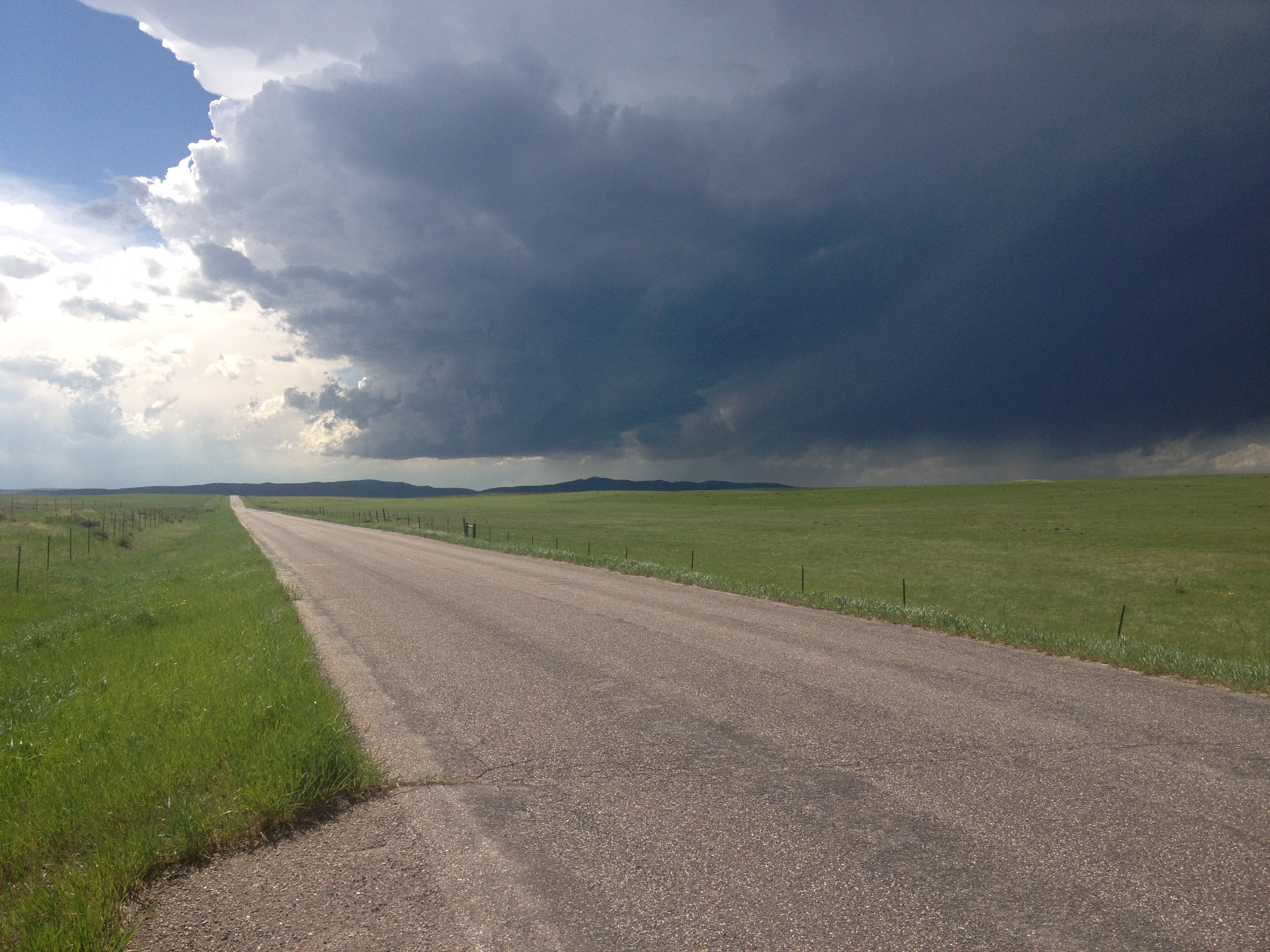
It was a day where thunderstorms fired up across a wide area that stretched all the way from Saskatchewan to just southwest of Colorado Springs.  After an examination of weather conditions, we determined that the best possible conditions for seeing some good thunderstorms within a reasonable drive of Denver would be in Southeast Wyoming.

IMG_2021 IMG_2022

In the early part of the afternoon, a series of storms popped up in the region, but fizzled out and died fairly quickly.  It was not until mid-afternoon when we finally encountered a major storm brewing over the Laramie Mountains to the west of Chugwater.

IMG_2025

From a hill just to the west of town, we were able to observe this storm gradually move towards us as the afternoon progressed.  The entire day felt quite strange to me.  In every single way, it felt like a typical storm chase.  The procedure of heading towards an initial target location, then heading towards a storm as it forms, and observing it along a country road was exactly as I had done probably close to 100 times throughout my lifetime.  The air felt warm and moist, and the wind picked up as the storm approached, just as I had always remembered it.  Even the ground looked as green as it had looked in most of my chases in places like Iowa, Nebraska, Kansas, and even Illinois.

However, this was Wyoming.  What we were observing today is quite atypical for Wyoming.  The ground, typically quite brown here, had turned green due to a recent uncharacteristically rainy period.  Additionally, it was quite moist that day, also atypical for the region.  All the conditions had come together to produce a scene, and event, and a feeling, that felt way more like Kansas, or even Oklahoma, than Wyoming.

IMG_2028 IMG_2030

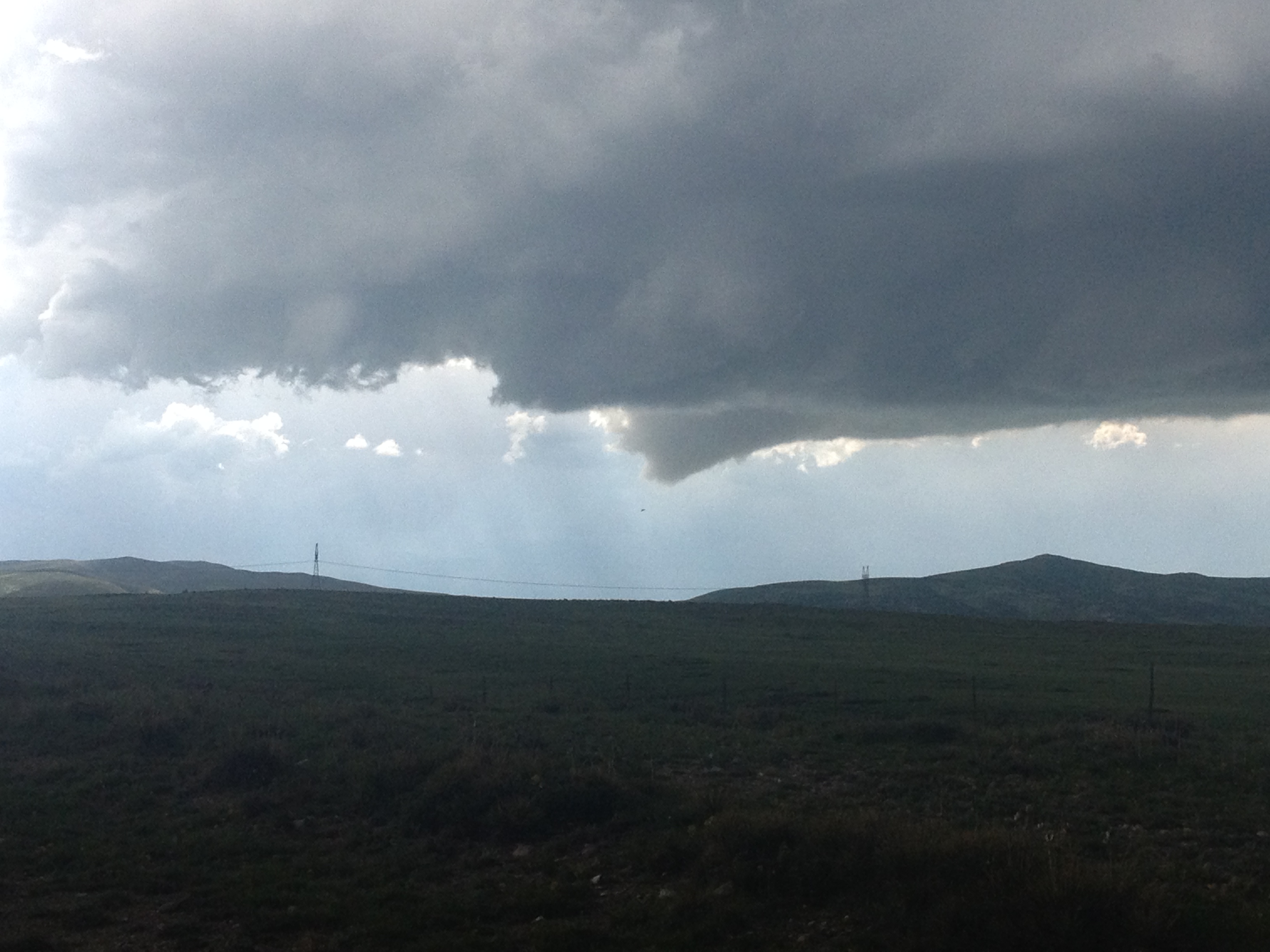
However, this region is still naturally dry, and as the storm developed, the somewhat random mixing of moist and dry air produced a somewhat chaotic storm structure.  For a period of time the storm structured itself in a manner that looked quite like a UFO.  Well, at least it looked like a UFO in the way it is typically portrayed in the movies; a gigantic circular object with a hole in the middle (the hole being where the aliens come down and abduct the humans in many scenarios).

The other major difference between this chase and a typical chase is the presence of mountains.  The mountains seen in the background of these pictures, which are facing West-North-West, are not nearly as tall as some of the region’s bigger mountains.  However, contemplating this UFO-like shape in the cloud feature did make me wonder if a similar phenomenon in Southern New Mexico, which also has a dry climate and more modest sized mountains, could explain some of the UFO sightings there.

Of course, there are many theories behind not only UFO spottings, but any observation that does not appear to be sufficiently explained.  The world often appears to operate in a manner that seems inconsistent with what we have been told by official sources, experts, and authority figures.  This is the primary driver of conspiracy theories.  While these theories largely have not been verified, I do sympathize with the intellectual curiosity that often leads people to explore these theories as a possible explanation for what they are observing in life.

IMG_2031 IMG_2032 IMG_2033 IMG_2034

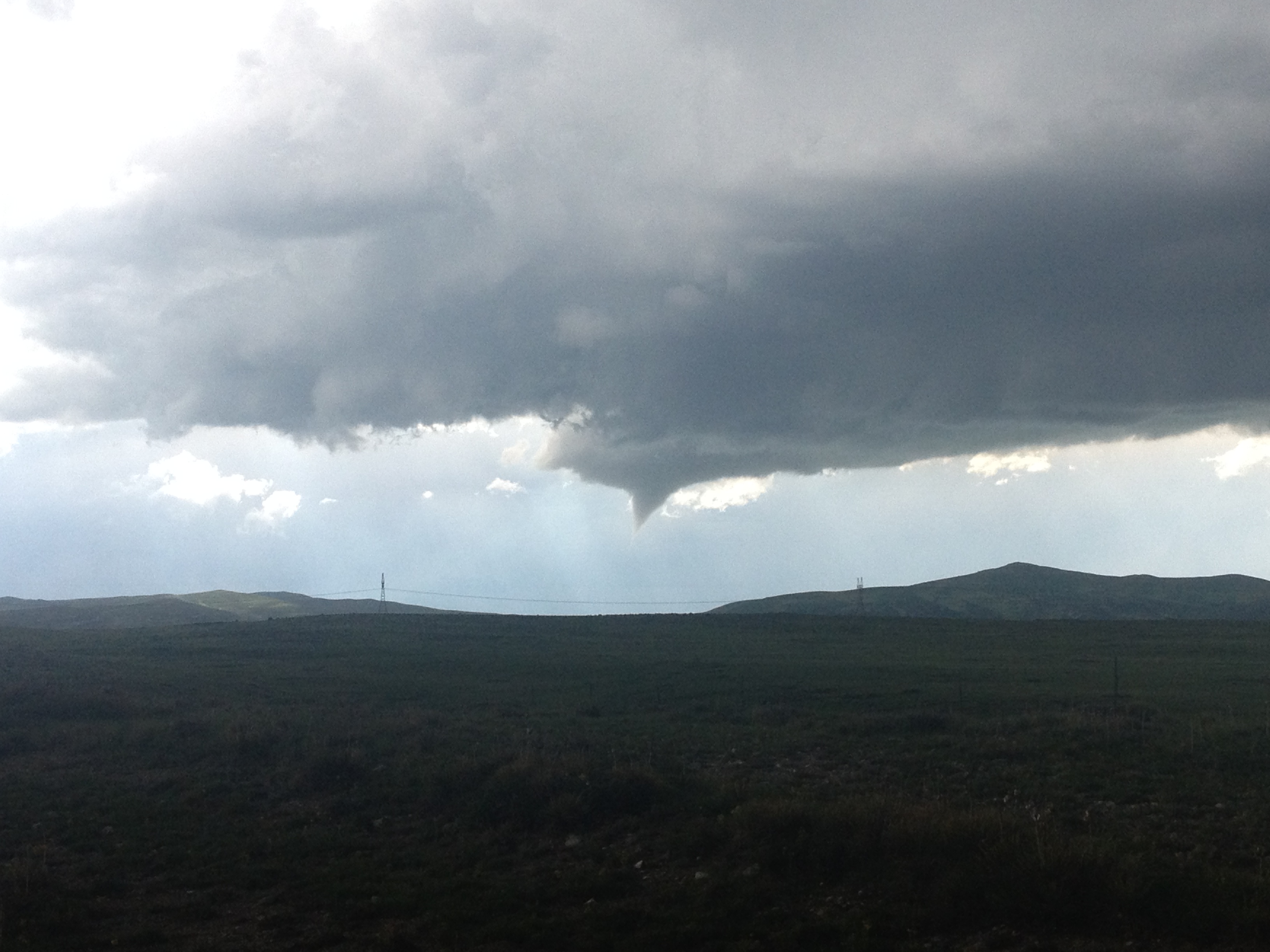
Roughly half an hour after the storm’s “UFO” phase, it produced a funnel cloud.  A funnel cloud is the beginning phase of a tornado.  However, not all funnel clouds reach the ground and produce tornadoes.  The reasons as to why some storms with the same rotation produce active, life-threatening, tornadoes while others don’t has been the subject of scientific research for decades.  I’m not going to figure this out by staring at this storm west of Chugwater.  I just came here because I love storms.

IMG_2035

After about 10 minutes the funnel dissipated, without producing a tornado.  As the storm began to produce greater and greater amounts of rainfall, it got darker, making the storm features harder to see.  This prompted us to go home, as we were already quite satisfied to have seen a funnel cloud.  In fact, this was the first time I got a picture of a funnel with mountains in the background.

This trip to Chugwater reminded me that every location has a story.  Even if a place seems boring, quiet, and insignificant, there is still the potential for something quite amazing to happen there, and there is still the potential for answers to some of life’s important questions to be found there.  Prior to 1947, I doubt too many people knew where Roswell, New Mexico was, or ever really thought about the place.  Now, a lot of people think of it whenever they think about aliens and UFOs.  While Roswell did not answer anything there are plenty of events occurring in all sorts of places around the world that may offer us answers to all kind of questions from curing diseases to questions of sociological and genetic nature.  What other obscure location could have the answers to some of the most pressing question of our day?  And, how do we go about finding it?

The Wheels of Change

image-7


It’s an experience nearly everybody seems to have.  A place from our past.  Maybe it’s a place we used to live, or a place we used to frequent.  But, sometime since the time when this place was an integral part of our lives, it has undergone some kind of drastic change, making it feel completely different from how we remembered it.  I’m not just talking about a strip-mall having mostly different stores, a few home additions, or a road widened from two lanes to four.   I am talking about a series of changes that makes life itself feel completely different.

For me, that place is Valparaiso, Indiana, where I went to college (undergraduate).  Valparaiso University has undergone many changes since my graduation, including a new student union, a new library, several other new academic buildings, and a new more pedestrian friendly campus layout.  While this is a drastic change, a drastic change on a college campuses is not really all that unique.  Colleges build new buildings all the time, and many of our campuses are in a near constant state of flux.

The changes that have truly surprised me are the changes to Valparaiso the town; particularly Valparaiso’s downtown area, which is located roughly a mile west of campus.

image


When I attended Valparaiso University, downtown Valparaiso was not a place we frequented.  We were far more likely to go to the WalMart for cheap groceries, a few other restaurants either just to the east near the junction of highway 49, or along highway 30, and when we turned 21, go to some bars scattered around town.  Downtown was not dingy, or run down, it just was not that interesting.  I remember going there every September for the annual Popcorn Festival (held to honor Valparaiso’s most famous resident- Orville Redenbacher), and maybe twice more in a given year.

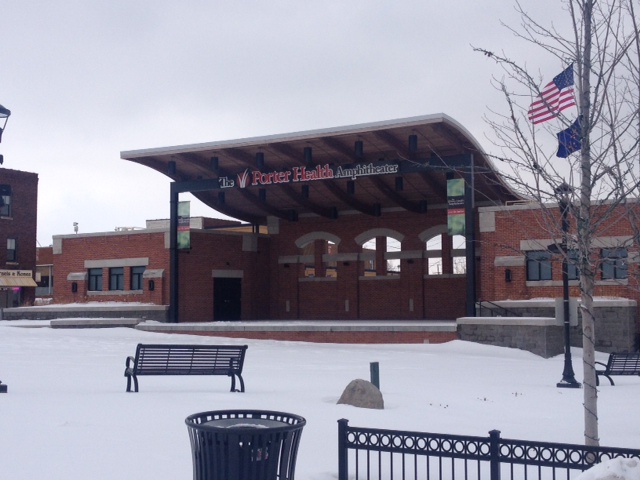
image-8image-5


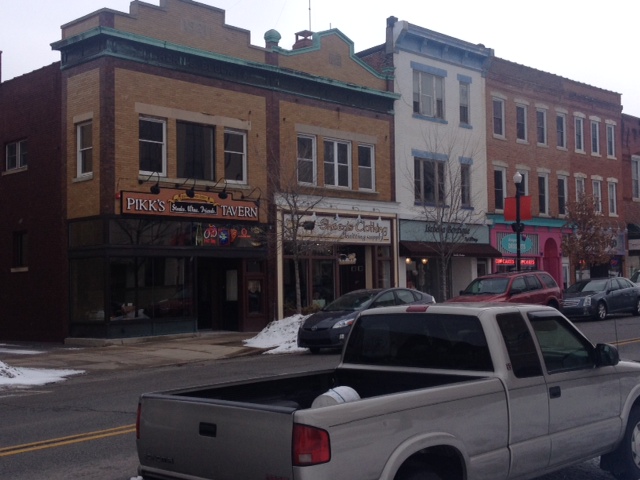
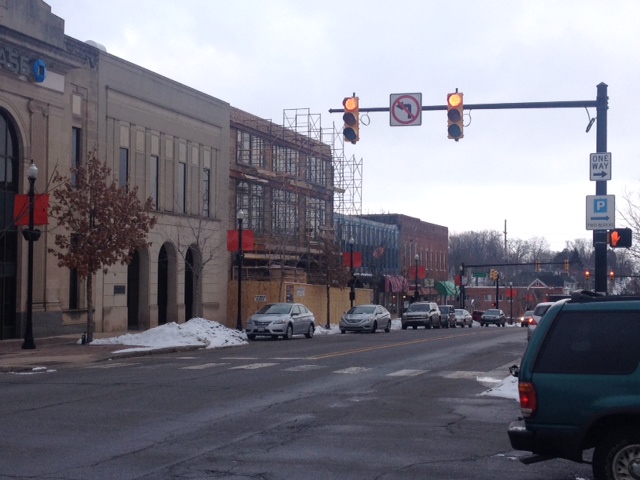
Today’s downtown Valparaiso is suddenly far more vibrant.  Along the Lincolnway, one can now find more bars, more restaurants (and many different kinds of restaurants including sushi), and a significant amount of foot traffic.  The storefronts along the main roads in town now often display paper signs in the window, advertising a plethora of upcoming events in the center of town.  These are all the kind of things I had become accustomed to seeing in a vibrant neighborhood of Chicago, or even a well put together suburban town center, like Downers Grove or Arlington Heights.  However, it was a unique experience to see all of this in a town that I used to live in.

image-4image-2


While Valparaiso has added a lot of places over the past several years, the two most major additions appear to be a new amphitheater and event center, and a new microbrewery.  The bartenders at Figure Eight Microbrewery told me that on evenings where a concert is held at the amphitheater, a sudden rush of people would often come into the bar at the end of the show.  But, the microbrewery is also a place to visit on it’s own.  In Denver, we have tons of microbreweries, but in Valparaiso, this is the first one of it’s kind.

Those I talk to around town, including my friends that are still there attribute the change to several factors, all of which appear to be connected to the election of a new mayor a few years back.  I had already noticed that the city of Valparaiso now offers bus service both to downtown Chicago and to the South Shore Rail line- both services I wish I had available to me while I was there.  They also focused development in the downtown area.  However, many attribute the redevelopment to the issuing of more liquor licenses.

No matter how much you pay attention to what is going on around you, there always seems to be at least one thing happening, that has a major impact on your life, that you remain unaware of.  While I was at Valparaiso, I actually had no clue that it was nearly impossible to get a new liquor license from the city.  For some time, they had been keeping the number of licenses steady, meaning one can only be attained if a different business had lost or dropped theirs.  Being under the legal drinking age of 21 for most of the time I was there, I would not have even seen how this impacted me.  But it was keeping a lot of Pub type places, which make some of their money on the sale of beer and such, out.

image-6


The downtown re-development is actually still taking place today, with more storefronts under construction.  I wonder what this place will become.
I had a great experience at Valparaiso University.  I loved the feel of the campus.  I really liked my professors, and I liked most of the people I was around on a regular basis.  When I look at this vibrant downtown, and convenient bus service to get back “home”, I can’t help but be somewhat envious of what current Valparaiso University students have that I did not.  But, I do wonder if my experience would have been significantly different had I had access to all of these things.  Maybe it was somehow secretly a good thing that I had to scramble for rides to the train station, and we did not have concerts at an amphitheater while I was there.  Maybe it made my experience there unique, and distinguish it from my later experience in a vibrant Chicago neighborhood.
Fort Collins; Another Vibrant Colorado City

IMG_1629 IMG_1630

I have never met anyone that told me they hated Fort Collins.  Not everyone knows a lot about the town.  But of the people who have been there or lived there, I have yet to hear a single overwhelmingly negative impression, the way I have about so many other towns.

Colorado is a state that is very divided both politically and culturally.  The political divide is close to even, thus Colorado’s status as a “swing state”.  Representing the extremes of the spectrum, Boulder and Colorado Springs are both very polarizing.  Many people hate one or both of these towns simply due to what they represent politically.  Not only do Fort Collins and Laramier County sit generally near the middle of the spectrum politically, but they are also not known for being particularly politically active the way Boulder and Colorado Springs are.

Other towns are polarizing or controversial for other reasons.  The casino town of Blackhawk not only leaves a bad impression on those that do not approve of gambling, but also ignited the ire of the bicycling community when it chose to ban bicycles from the entire town in 2010 (this ban was overturned by the State Supreme Court).  I have to admit that as much as I love Vail and Vail ski resort, I am quite disturbed by the town’s decision to close down the only affordable hotel in town to make way for a new extended stay hotel, which will most definitely be fancier and pricier.  Large towns like New York are loved by many, but also hated by many who resent the level of stress they cause, the amount of power they wield, and the amount of attention they receive.

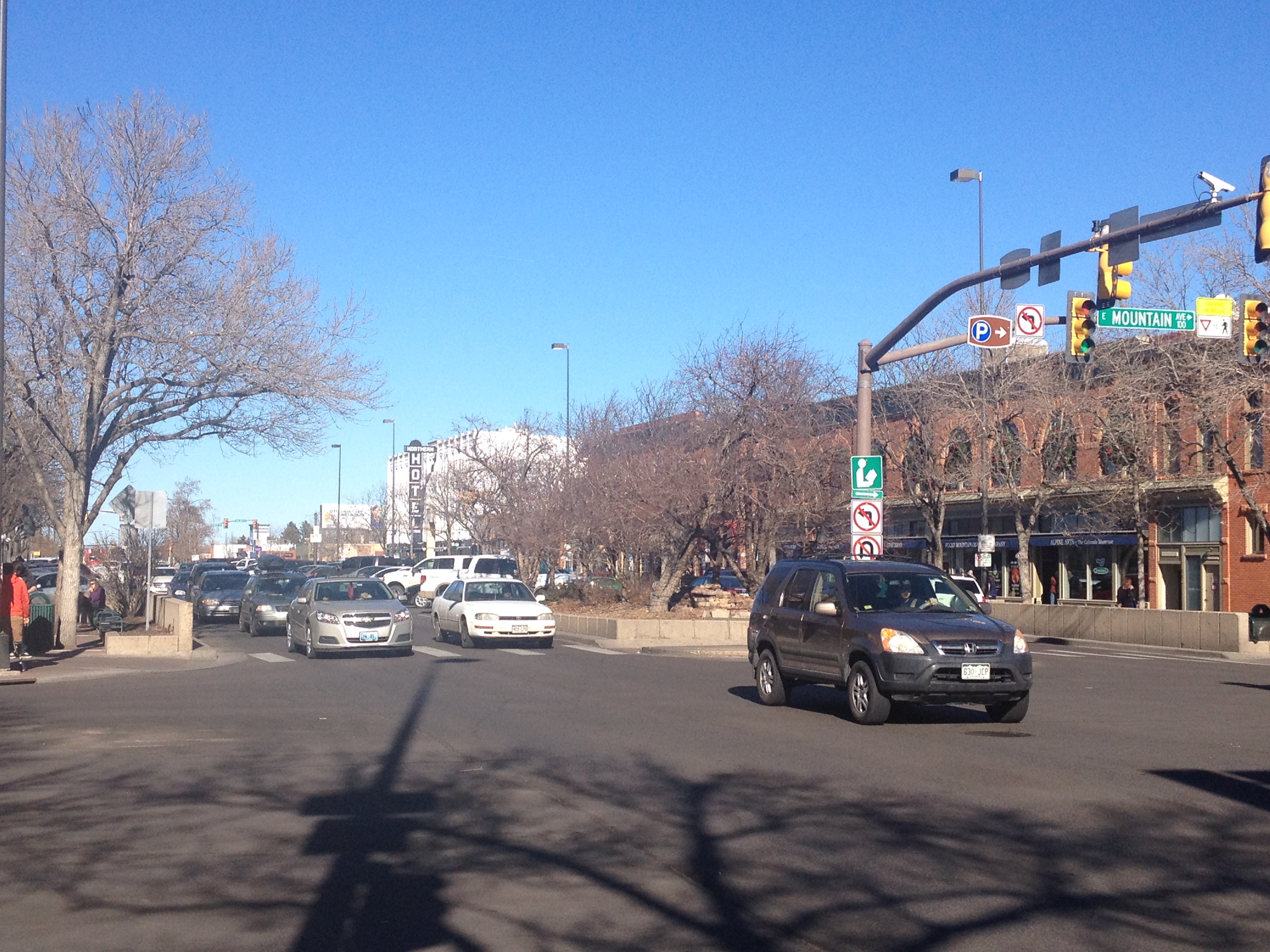
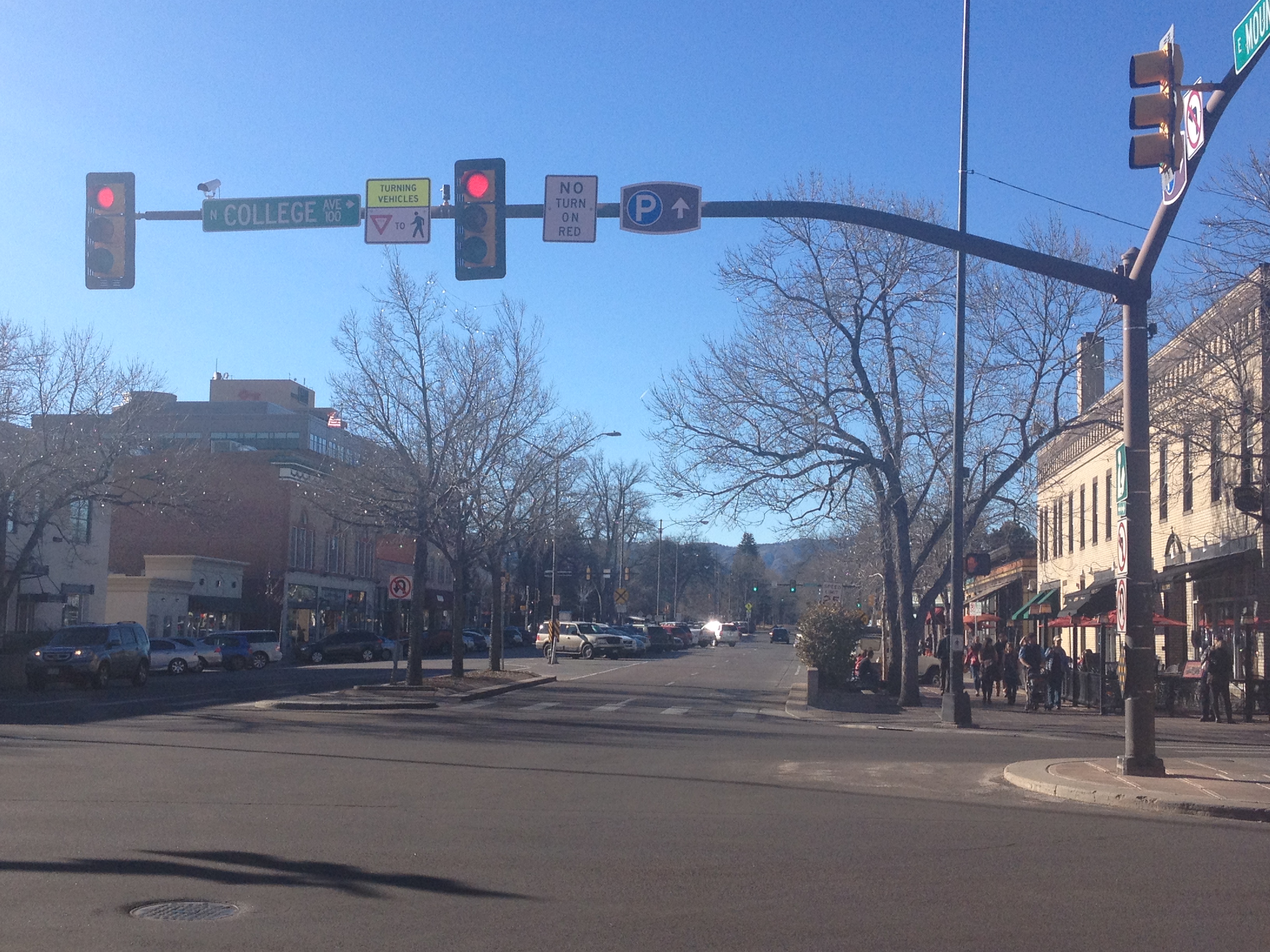
The sun shined bright and the temperatures were quite pleasant this January day.  It was the kind of day when you can really notice the character of a city.  On a cold or rainy day, it may be hard to feel the true energy of a town, as it is often subdued by such conditions.  Walking around Fort Collins’ central area today, the true energy of the city was on full display.

IMG_1632

Over the past decade or so I have become quite accustomed to living in vibrant places like this, where people can be found walking around, conversing, conducting business, and going about their days.  It feel like home, and it feels like the way our society was meant to operate.  If I were to find myself living in a town without this type of energy, it would definitely feel like something is missing.  However, that is just a personal preference.  I am sure a lot of people live satisfying, fulfilling lives in sprawled out suburbs, or even decaying towns with a lot of abandoned storefronts.  They probably do not share my addiction to the energy.  If anything, they are in a better situation than I am, as their choices of places they could live and thrive are much less limited than mine.

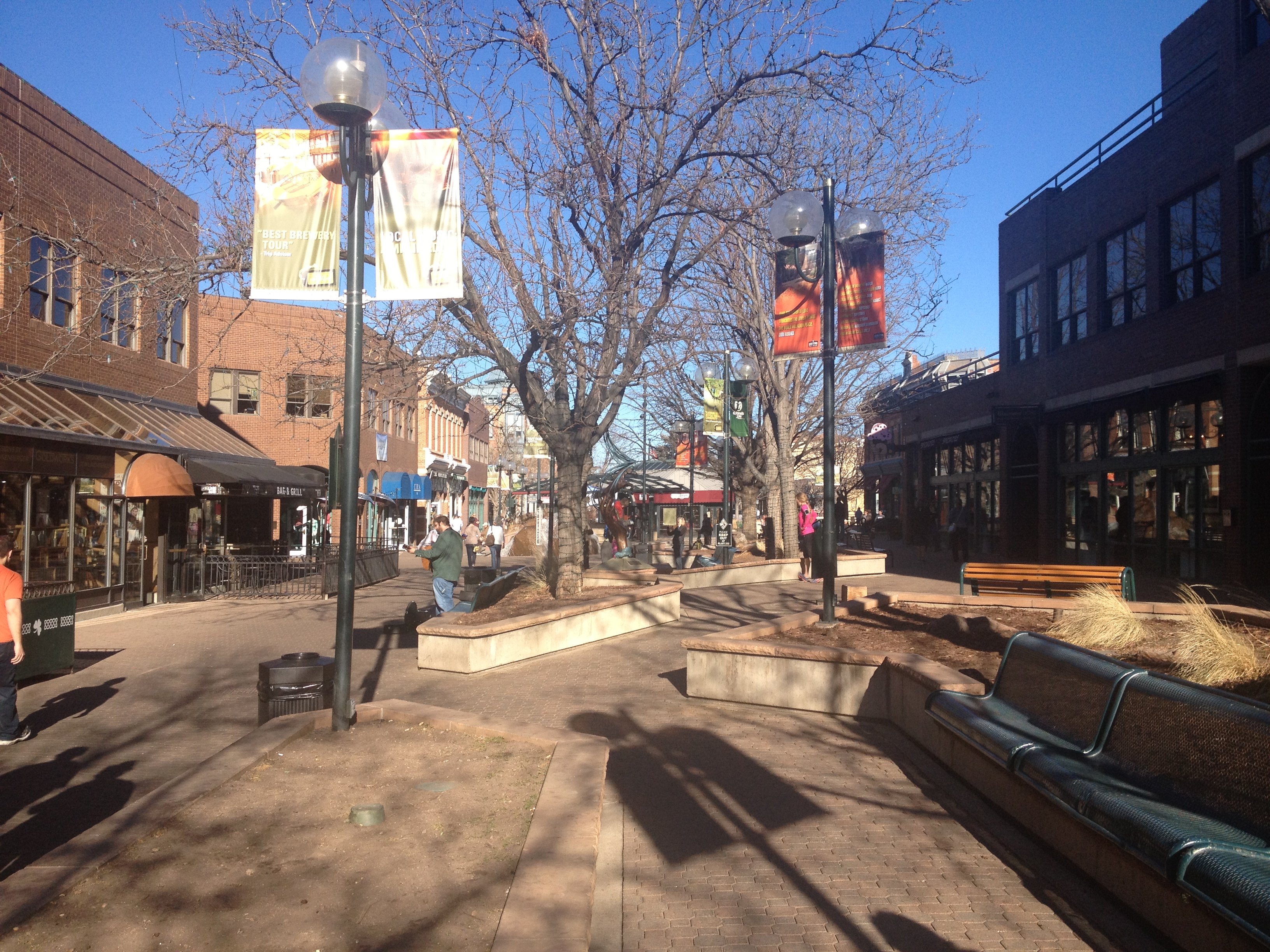
IMG_1634

Like Boulder, Fort Collins has a pedestrian mall with a lot of random street performers, particularly on a nice day like today.   The street performances here seem more varied than the ones in the average American city.  I saw the standard guitar performer, but there is also an outdoor public piano, and many more random acts like dance routines and hula-hoppers.  This pedestrian mall, called “Old Town Fort Collins” is significantly shorter than Boulder’s Pearle Street, but is still large enough and offers enough variety for it to be considered interesting.

Walking around here made me realize what makes Fort Collins special.  Not only is it not controversial, the way many other places are, but it still manages to be interesting and unique.  In actuality, there are plenty of places that do not ignite strong negative feelings.  When was the last time anyone fumed at the arrogance of Grand Island, Nebraska?  Or the rude partisans of Peoria, Illinois?  What sets Fort Collins apart is that it is still a fun and unique place to live, while also remaining non-controversial.

IMG_1633

As a town along the Front Range of the Rocky Mountains, many outdoor activities can be found right outside of town, the same way such activities can be found in any of the towns that line the front range from Fort Collins south to Colorado Springs.

IMG_1635

Fort Collins may be best known as the headquarters of New Belgium Brewing, known for it’s signature beer fat tire.  New Belgium employs a unique business model, and has been quite successful.  At New Belgium, every employee is a part owner of the company.  The benefits and beer are great as well, and they are also known for their support of bicycling as a form of transportation.  While I did not visit New Belgium on this particular trip, the values of this company appear to be reflected throughout the town.

IMG_1637

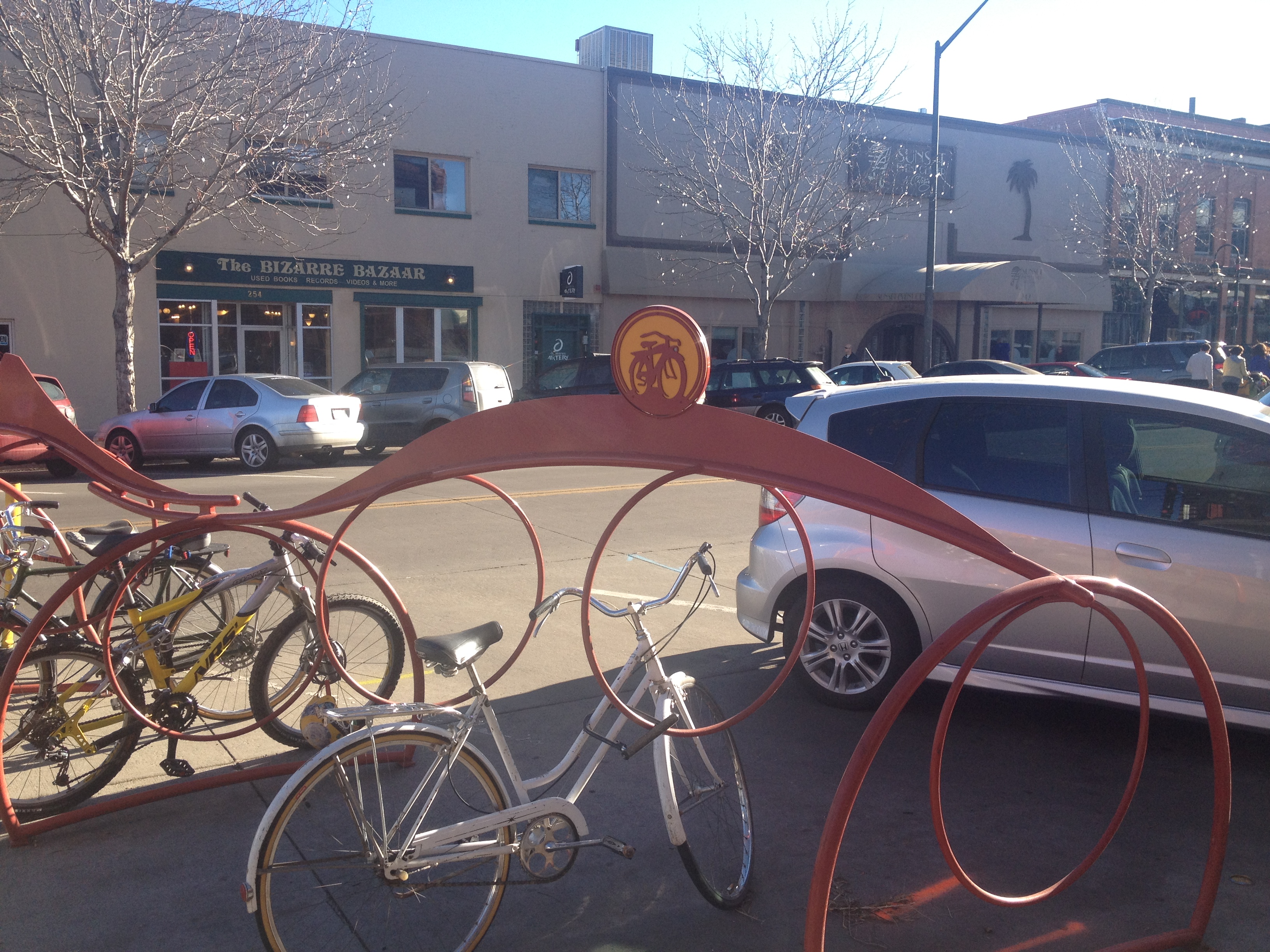
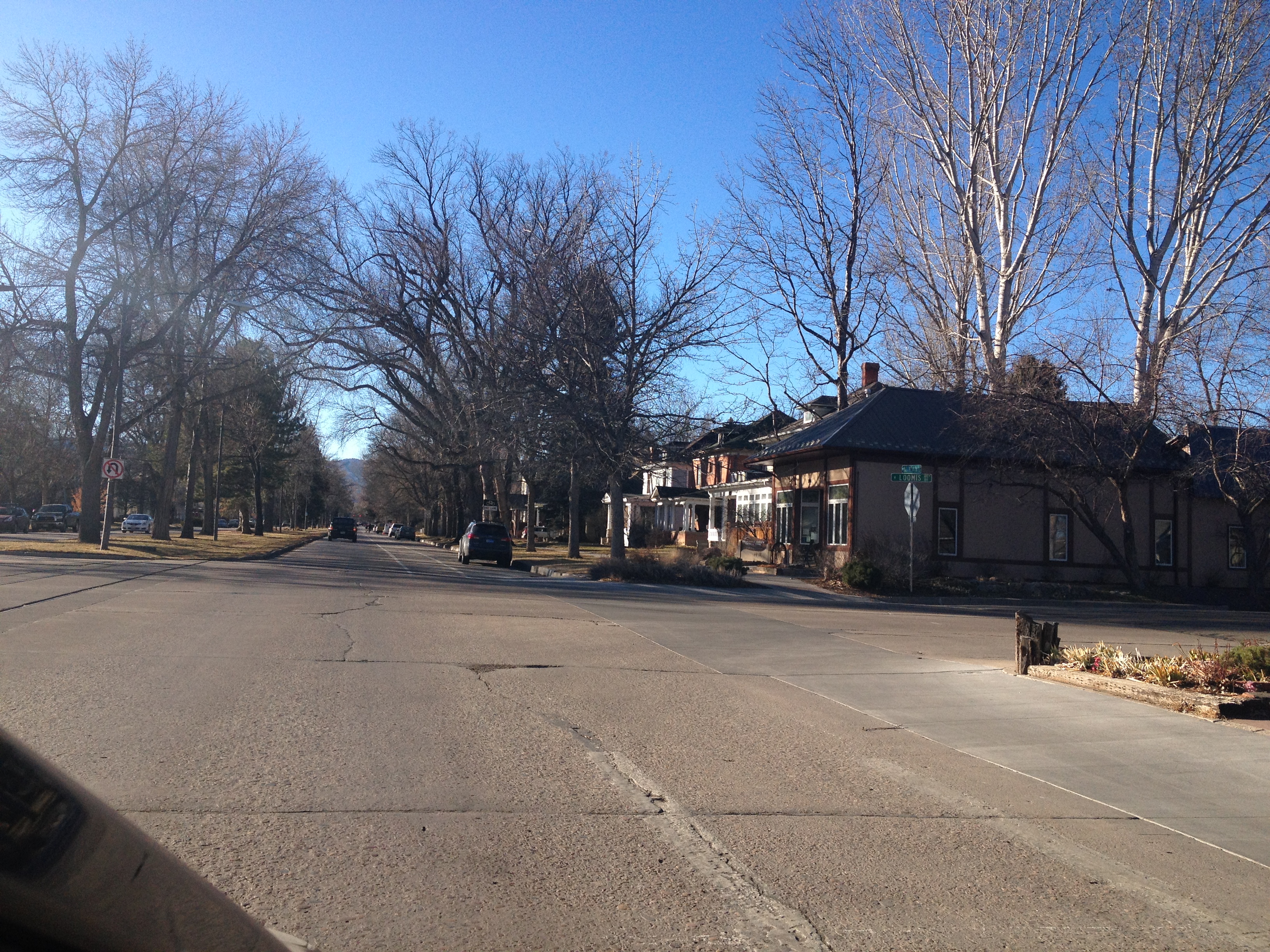
Fort Collins has one of the best networks of bike lanes and trails in the United States.  Even in this well-to-do neighborhood just west of downtown, a wide bike lane can be found.

Fort Collins is the northernmost town along Colorado’s front range.  To the south is a series of population centers that include Colorado’s largest; Denver and Colorado Springs.  To the north, it is quite empty.  Fort Collins is on the edge of our society.  It manages to be an interesting and vibrant place without the controversy and/or polarization that often accompanies this.  Big enough to feel energetic, but small enough not to be overwhelming to many, Fort Collins is truly a unique place worth checking out.

Dog Sledding in the Rockies

IMG_1615

For thousands of years humans have assembled teams of dogs to transport themselves (as well as other items of significance) across the cold arctic regions of the planet.  It is a tradition that nearly all human beings are aware of.  Most have seen images or video of popular dog sled races like the Iditarod and the Yukon Quest.  While the average American probably views this tradition as a recreation activity, or a sport that takes place somewhere far away, for many cultures across North America, Russia, and Mongolia, teams of dog sleds have been, and still are, an integral part of day-to-day life.

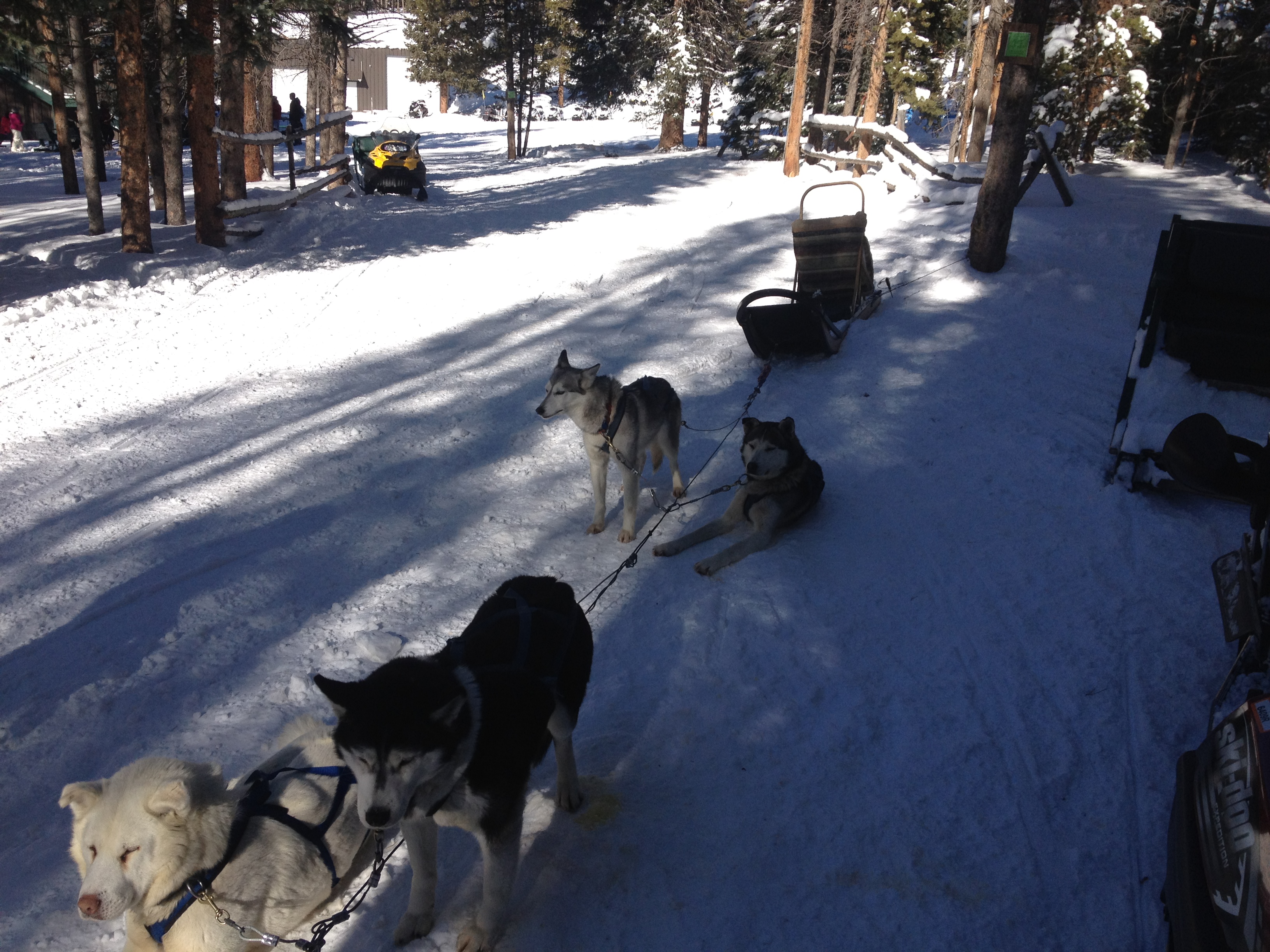
Sometimes the only way to truly understand something is to experience it for yourself.  A small taste of the dog sledding experience can be found at Good Times Adventures, just outside of Breckenridge, Colorado.   Over 150 dogs are kept here, ready to take those that wish to sample this experience on a short dog sledding voyage.  Dogs kept here get to live quite an active life, typically going on two voyages per day with customers throughout the season.  When it is time for a trip, they howl in anticipation, impatiently await the go-ahead from the tour guide, and enthusiastically begin to pull their passengers across the snow.  What an experience!

IMG_1608 IMG_1609

Going on a 60-90 minute dog sledding tour on a sunny afternoon in Breckenridge leaves plenty of additional time in the day for other activities.  As a season pass holder to Vail Resorts (a pass called the EPIC pass) that other activity is pretty obvious- skiing!  Breckenridge ski resort (part of the pass), is located less than half an hour from Good Times Adventures.  We planned our sled trip to begin at 1:15 in the afternoon, and used the morning to ski.  Morning is often the best time to ski, as snow conditions deteriorate as the day progresses (due to use) more frequently than not.  Following a series of major snow accumulations to start off 2014, snow conditions were ideal at Breckenridge ski resort today.

IMG_1601 IMG_1603

I will post more about Breckenridge ski resort, as well as the other ski resorts I ski regularly during wintertime, later.

IMG_1607

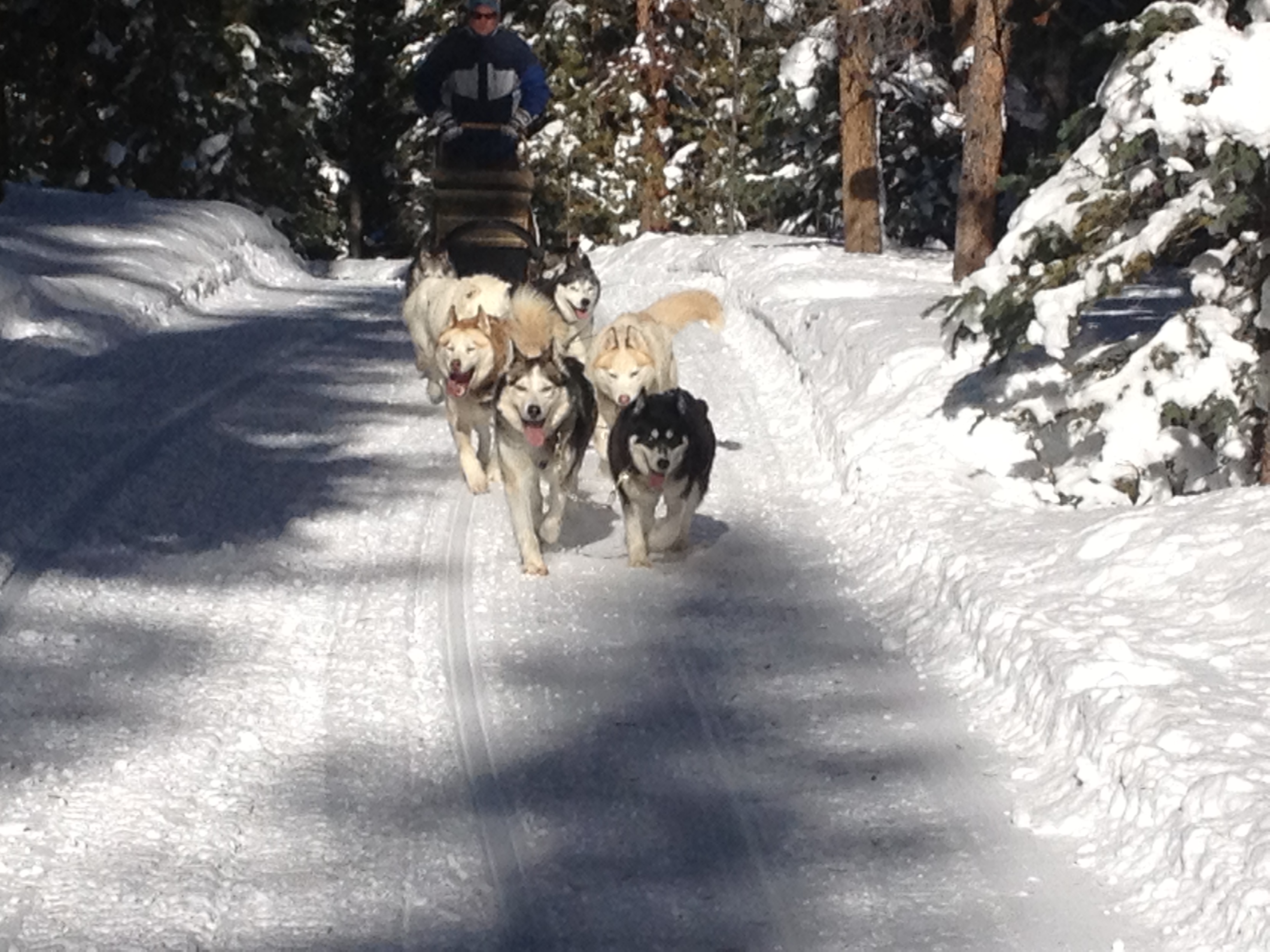
After several hours of great skiing, it was time to meet the dogs.  The eight-dog team was made up of huskies.  Across the north, huskies are traditionally used to transport lighter amounts of cargo at a faster speed.  This, of course, includes people.  For heavier cargo, the Alaskan Malamute is often used.  Essentially, a team of huskies would be analogous to a car in today’s world, while a team of malamutes would be analogous to a truck.

The dogs we met at the resort were friendly.  Towards us, they were friendly almost in a business-like way.  It almost felt like they had some kind of understanding that we were customers and that they are conducting a business.  Sometimes dogs have this eerie way of sensing a situation, and us humans cannot even begin to figure out how they do it.  Almost every dog owner can think of one instance in which they came home quite upset and found their dog ready to give them a comforting embrace.  These dogs seemed understand that we were customers and not their owners/friends quite clearly.

IMG_1610

One of the dog was briefly too friendly with his female companion.  But, hey, with almost two hundred dogs and an expanding business, Good Times Adventures could probably use a few more puppies from time to time- no matter what the source.

IMG_1620

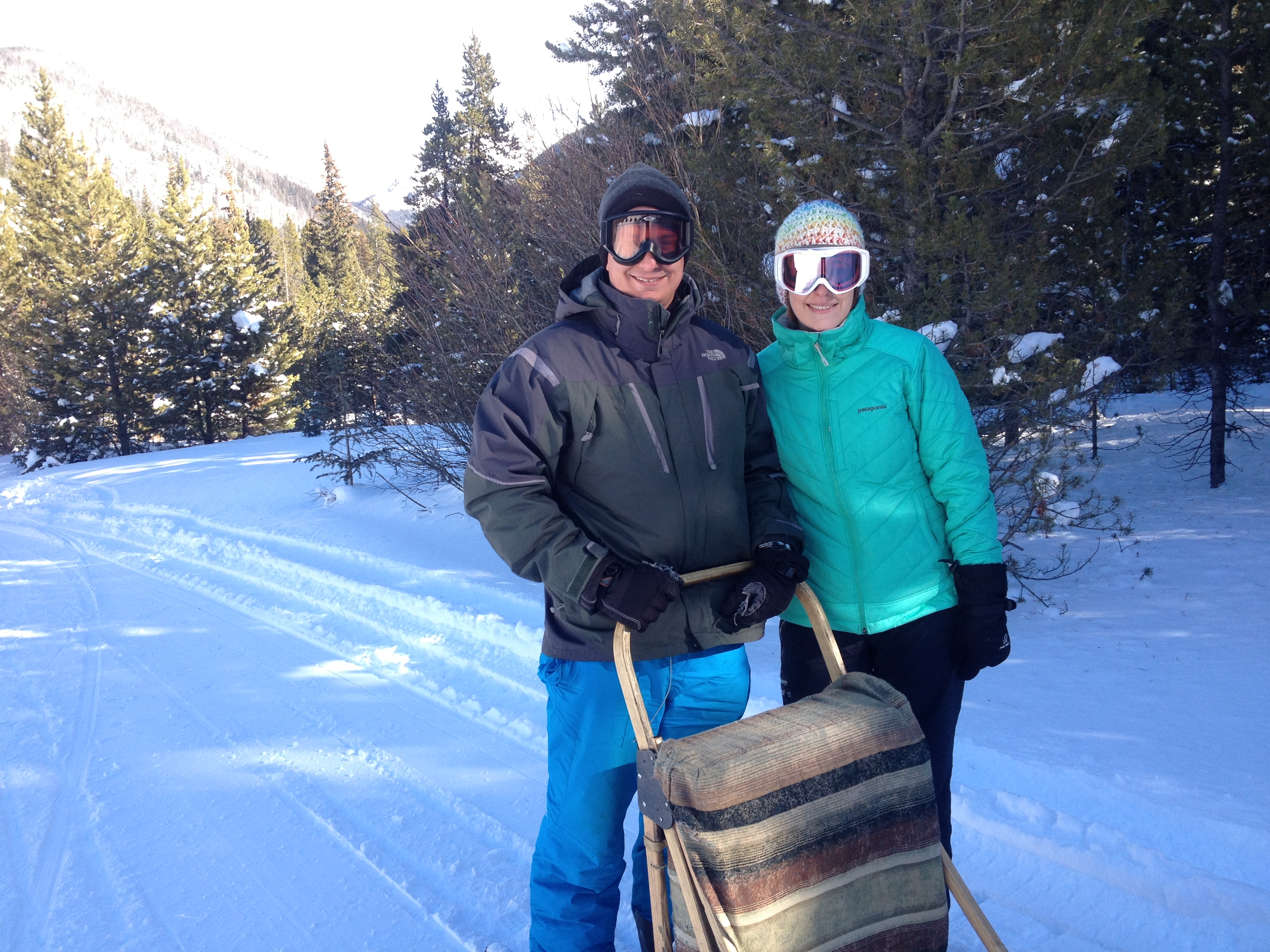
I was pleasantly surprised that I got to actually drive the sled, exactly the way the mushers do it on the dog sledding circuit.  The tour guide gave us all a brief lesson on how to steer, how to break, and some basic strategies (like leaning into a turn).  While I am sure there is a lot more to what professional mushers do, and that they do it at faster speeds on tougher courses, it definitely felt real.  I was really experiencing the culture that brought us the tradition of dog sledding, albeit only a sample.

IMG_1614

Most activities are not truly appreciated until they are experienced.  It is for this reason that people who participate or have participated in a sport are more likely to be fans of that sport.  It is the understanding of what is happening that only a fellow participant can relate to.  The speed at which the dogs are able to pull the sled across the snow is something that must be experienced.  Speed feels differently depending on the venue.  When I am able to get up to 30 mph on my bike it feels quite a bit different from skiing at 30 mph, and nothing like the extremely uninspiring experience of driving a car at 30 mph.  The same can be said of the speed at which the dogs pull the sled.  My first up close view of the dogs pulling another sled across the snow, and when I first hopped on the sled and experienced it myself surprised me quite a bit.  Huskies truly are amazing dogs!

IMG_1618 IMG_1622

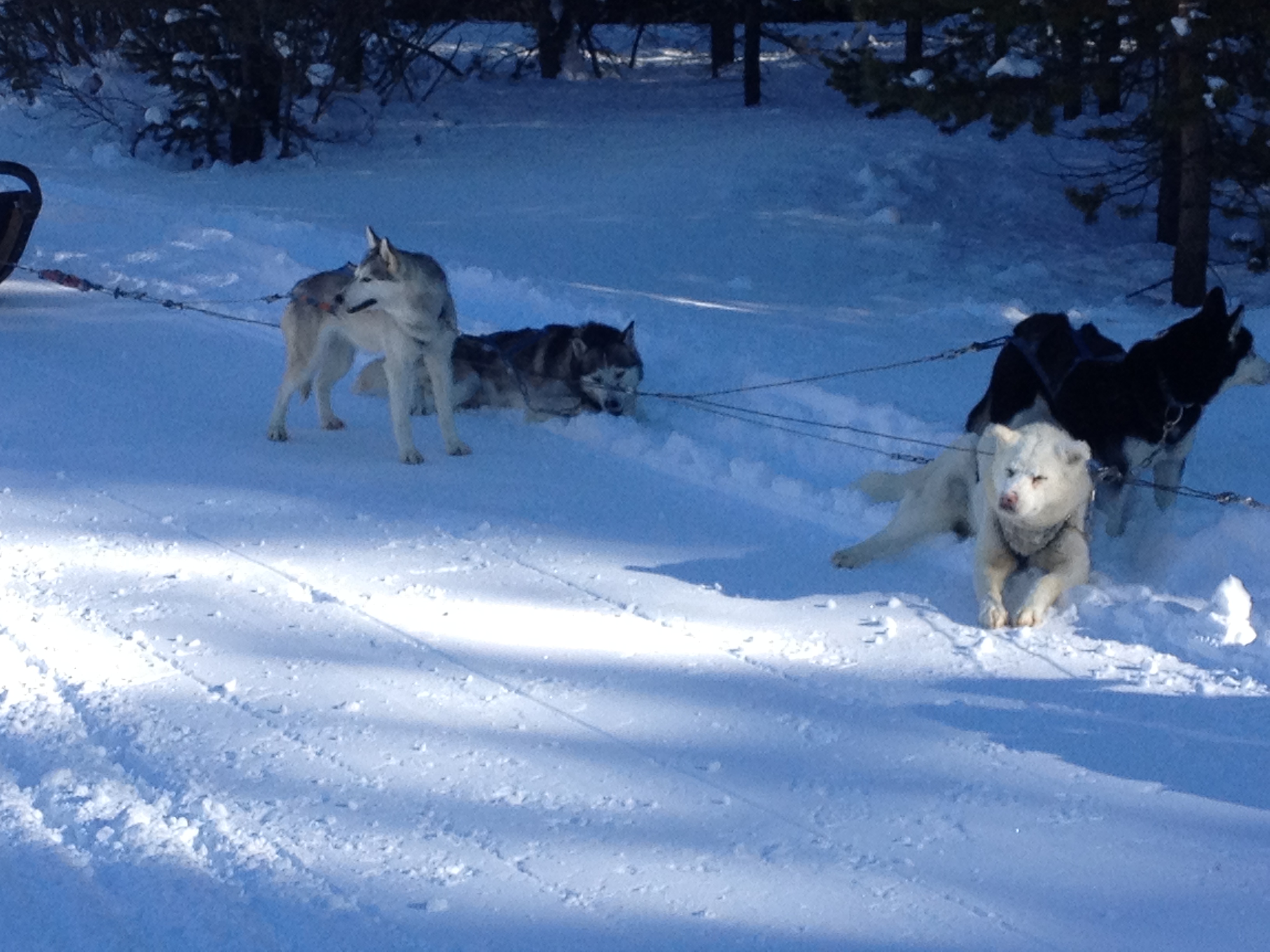
According to the tour guide, huskies are built for temperatures well below 0 (F), and it is at those temperatures that they feel the most comfortable.  Today’s temperatures in the lower 30s were therefore quite hot for these dogs.  Combined with the strenuous workout of pulling a sled at high speeds, the dogs were overheating.  In order to cool off, at every stopping point (we stopped regularly to give everyone multiple turns driving the sled) many of the dogs would actually jump into the snowbanks along the edge of the trail in order to cool off.  Some even basically covered themselves in snow!  I could not imagine living somewhere where I would regularly overheat in the middle of winter- let alone summer.

How we transport ourselves is an important aspect of our culture, and one of the ways we define who we are.  Route 66 remains an icon of American culture of the 1930s-1960s era.  The bicycling world remains its own community with its own identity.  And, one of the main differences between modern urban, suburban, and rural cultures is the manner in which we transport ourselves. Without trains, and eventually cars, the United States of America would not be what it is.

Without sled dogs, the culture of the north would not be what it is either.  By partaking in the main transportation mechanism of the cultures of the north, I was participating in their culture.  I was experiencing what they experience.  I was partaking in an activity that created a way of life, and was later harnessed to save an entire town from an epidemic.