Author Archives: Stephen Jaye

Unknown's avatar

About Stephen Jaye

My name is Stephen Jaye, I currently live in Denver, CO, but have lived in New York, Chicago, Indiana, and Wisconsin. I love the weather, I love getting out, being active, and I love exploring places. In this blog are my travel writings.

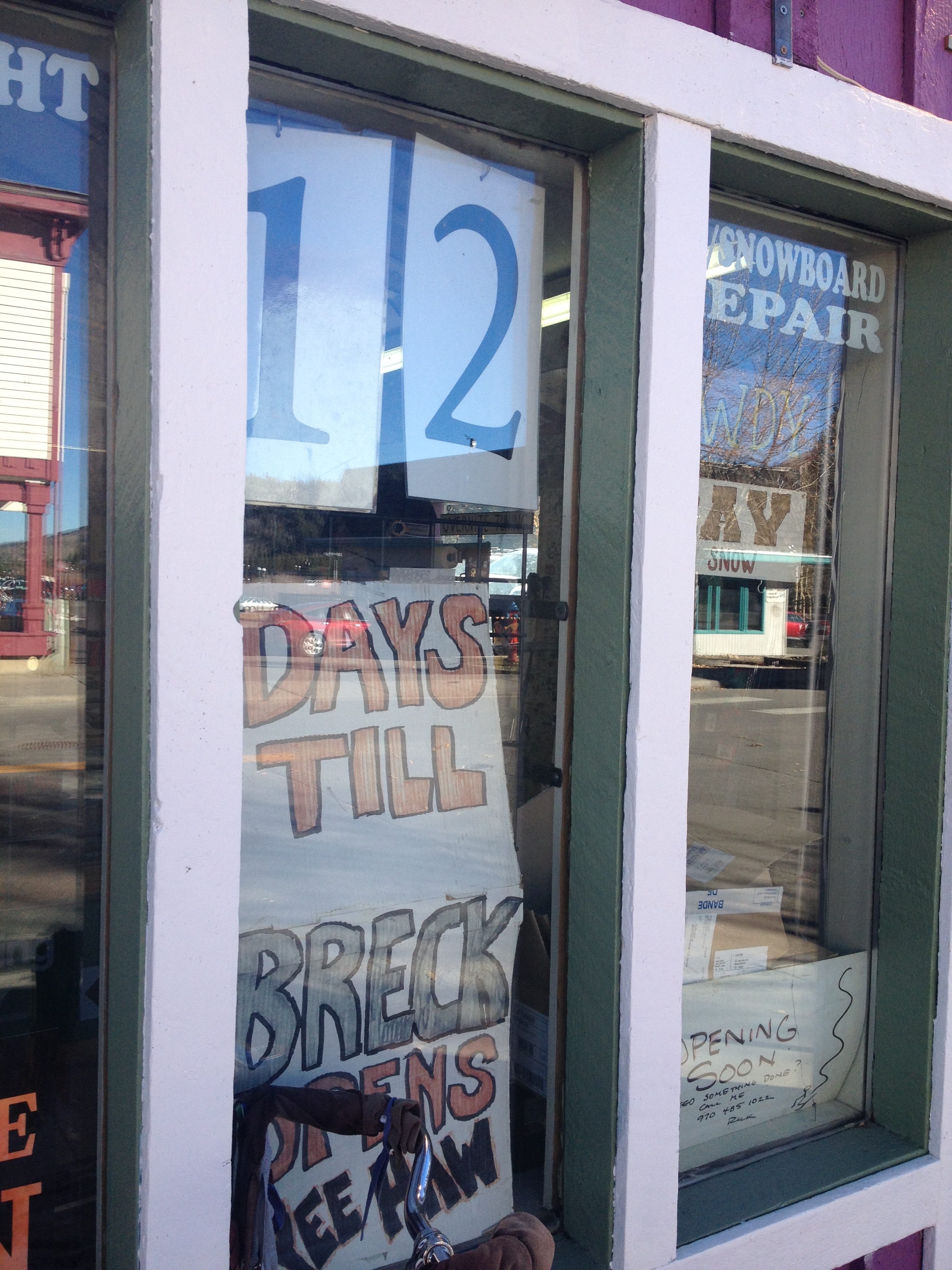
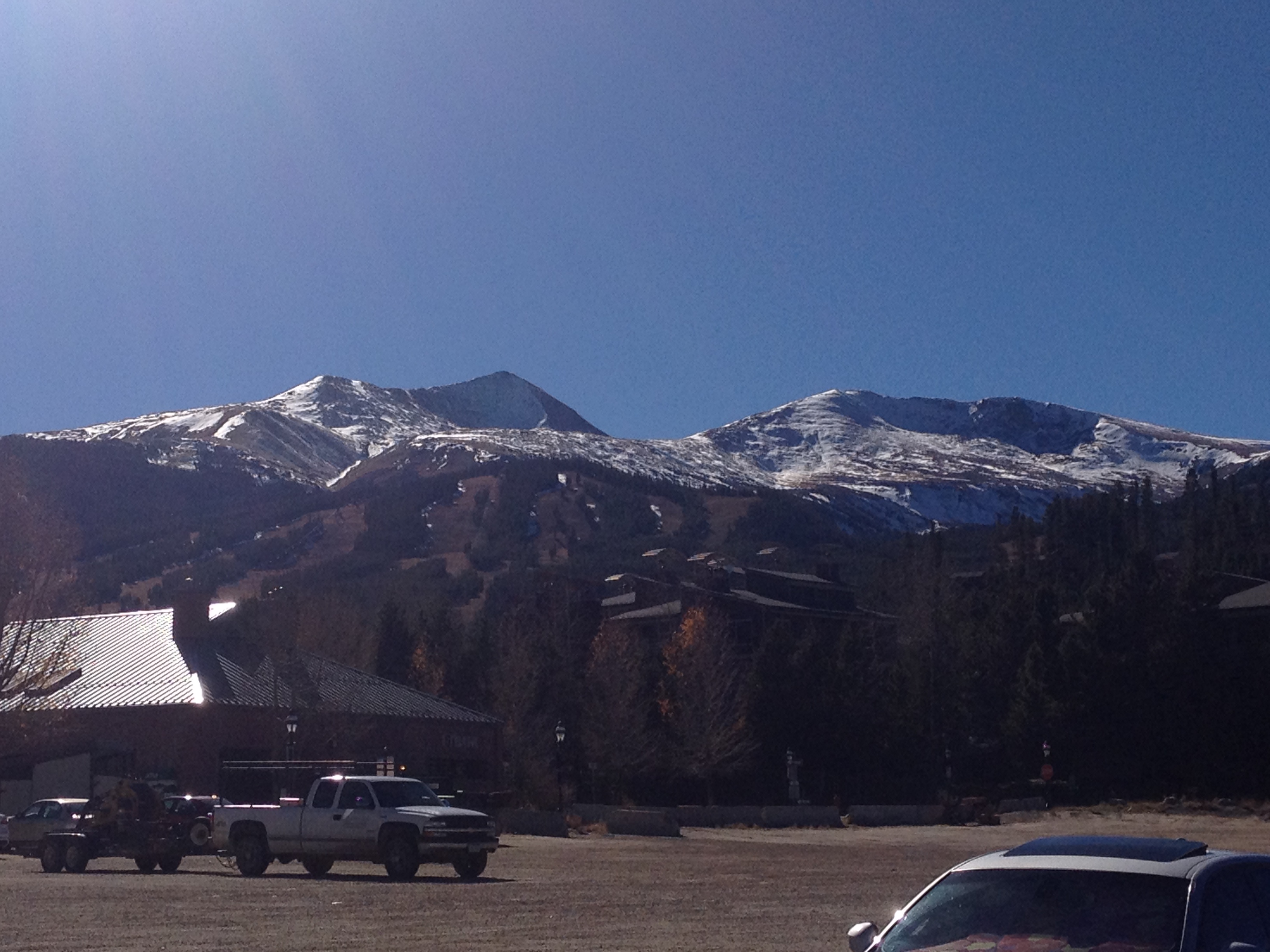
Christmastime in Breckenridge

IMG_2903 IMG_2917

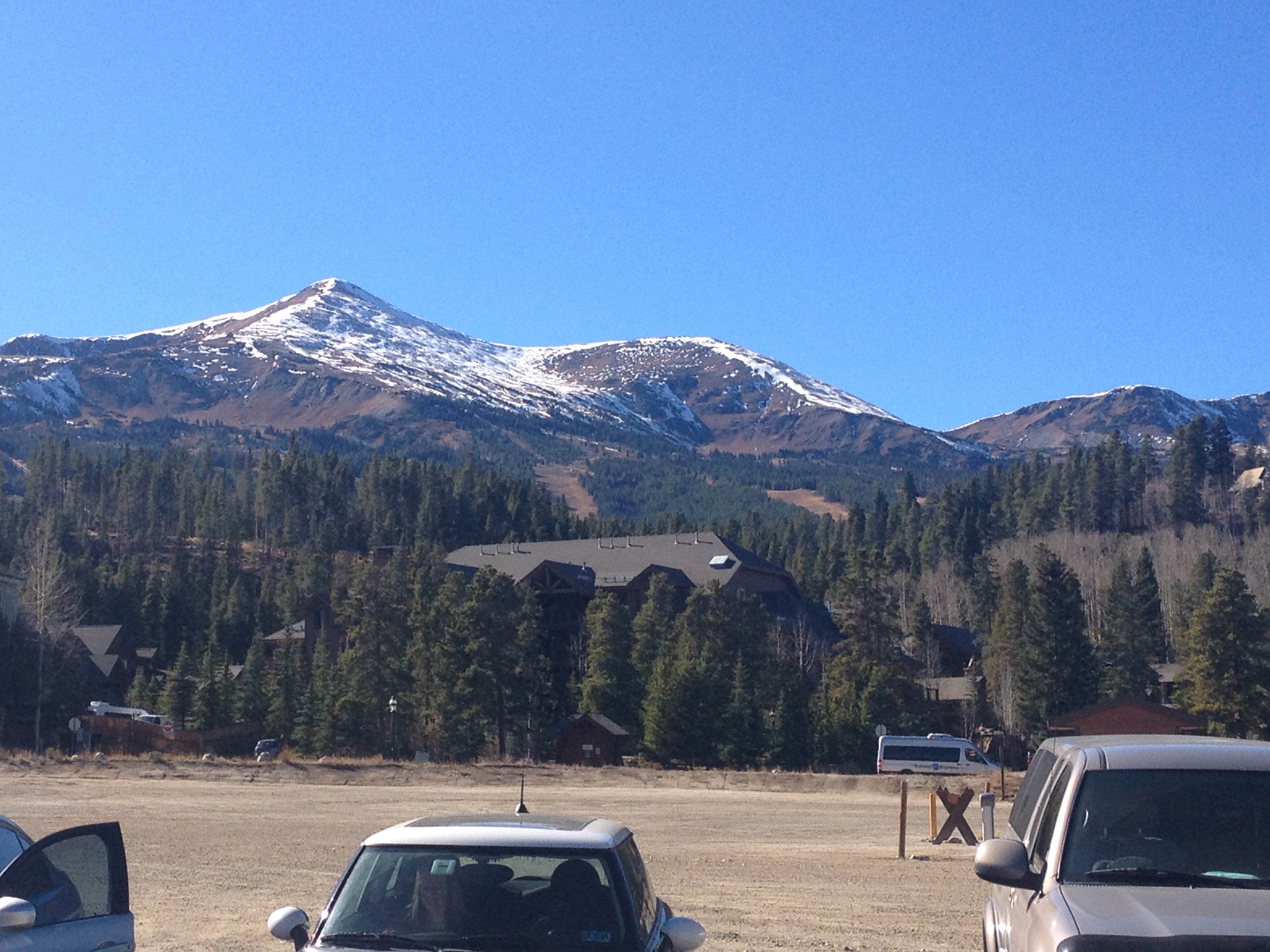
Last winter, I spent around a dozen days in Breckenridge, Colorado, including a week-long stay here in late February.  Only a 90 minute drive from Denver, I feel quite comfortable coming up here on a day trip, without spending money on lodging, on a regular basis.  To wake up, drive to Breckenridge, ski for six hours or so, and then drive back does not make for an overwhelmingly tiring day.

When traveling to a particular destination becomes as regular as this one has become for me, the lines become kind of blurred.  In a physical sense, I am most definitely traveling.  I prepare, I pack, and I get in a vehicle and go to a different location which is a non-trivial distance away.  It is not a run of the mill trip to the grocery store or a neighbor’s house.  However, there are a significant number of people who commute longer than 90 minutes each way to work every day.  For them, a trip that takes at least as long as my trip to Breckenridge (when there isn’t bad traffic), has become routine.  It is certainly not something that any of these commuters would categorize as “travel”.  A trip up to Breckenridge for me is without a doubt more interesting and exciting than a 90 minute drive to work, but it is only slightly less routine.  I know what to pack, I know what to expect, and I know where everything is.  So, a trip like this straddles some kind of middle ground between what most would consider “travel”, and what most would consider just a part of life’s routine.

However, for many, Breckenridge is most definitely a highly sought after travel destination.  In fact, according to a fairly recent Travel + Leisure article, Breckenridge is the second most visited North American ski resort, behind only Vail.  And, since the printing of that particular article, the resort has actually gotten bigger, with the opening of a whole new section of the resort- Peak 6.

Breckenridge_SkiMap_2014

Despite its size, it is actually fairly easy to get around the resort.  Each peak on the resort labelled numerically, and both the ski lifts and trails are labelled quite clearly.

IMG_1643 IMG_2905

A variety of great trails, and panoramic views, already existed before the opening of Peak 6.

IMG_1601 IMG_2907

Peak 6 added something unique; essentially intermediate level skiing in a wide open area above the tree line.

IMG_1707 IMG_1644

Even with Peak 6 rising to 12,300 feet, the highest point on the mountain is still the top of Imperial Express.

IMG_2911 IMG_2914

At 12,840 feet, the very top of the mountain it often gets quite windy.  In fact, this part of the resort gets closed quite frequently due to high winds, even on some perfectly sunny days.  If there are relatively strong winds at any of the other parts of the mountain, I will often have no desire to come up here, and deal with even stronger wind at this elevation.  Luckily for us, Saturday was a relatively calm day, making it an ideal time to head to this part of the mountain.  For anyone that can handle the more challenging terrain up here, I would recommend making a trip to the top of the resort at least once on a calmer day, as there are very few places where you can overlook a ski area from above as you can here.

Town of Breckenridge in the Winter

In addition to the popular ski resort, Breckenridge is a pretty vibrant town, especially during ski season, and one that I greatly appreciate.  Main Street, which is lined with shops, restaurants, and even nightlife, is a mere two blocks from the ski resort’s main Gondola parking.  Numerous condos line the roads that offshoot from Park Avenue, providing many visitors with places to stay within walking distance of both the ski lifts and Main Street!

In addition, the town is fairly unique.  Surrounding nearly every other ski resort I have visited is a ski village that was built primarily to serve the ski resort.  These villages are typically pedestrian-only areas (usually buses can come in) that lie between the main parking lot and the ski resort.  Since these towns were built around the ski resorts, they typically have all of the amenities that anyone on a ski trip would need, often including numerous hotels and ski shops.  However, Breckenridge, having existed long before the ski resort, offers the experience of a ski town that has the layout, and feel, of a normal town.  It feels a bit less like one is visiting a resort village, and more like one is visiting a town that happens to have an incredibly popular ski resort next to it.

With the lighting of the Christmas tree Saturday night, Breckenridge “officially” kicked off the Christmas season.  For many, the Christmas season has already begun.  In fact, some do not even wait until Thanksgiving to begin preparing for Christmas.  However, now, for better or worse, the season has kicked into full gear.

On the drive back Sunday, after another nearly full day of skiing, some lamented that it was time to return to “normal life”.  But, did we ever really leave our “normal lives”?  All of us involved in this trip live in Denver, and ski up in the mountains quite regularly, carrying season passes to multiple resorts.  Having skied 22 days last winter, 18 the year prior, and with the expectation of skiing nearly as frequently this winter, I feel as if last weekend, I was simply enjoying a funner part of my “normal life”.  And, this Christmas, I can be thankful that something as fun and enjoyable as skiing in Breckenridge is not a “vacation” or “travel” from which I will return from, but a part of the cadence that represents my “normal life” in its’ current state.

Early Season Skiing

IMG_2876

Winter is on its way!  And, unlike in many other parts of the country, here in Colorado, the arrival of winter is highly anticipated by those who love snow and snow related sports.  At the highest elevations in the mountains of Central Colorado, snow is possible at any time of year.  However, it is not until November when consistent snowpack can be expected at elevations between 8,000 and 12,000 feet, where most of the major ski resorts reside.

For those who truly love skiing or snowboarding, November often becomes somewhat of a waiting game.  This year, the snow was late to arrive in the mountains of Colorado.  The image below shows the snow pack in the Central Rocky Mountains on November 1st, 10th and 22nd (left, center, and right).  As indicated by this image, the month started with virtually no snow in the mountains, as October was quite warm.  However, a major shift in the weather pattern around Veterans day (Nov. 11) brought with it much colder weather for most of the Nation, and significant snowfalls to the Central Rockies.  The mountain snowpack in Colorado is now closer to the average for this time of year, and the ski resorts have finally been able to open up some of their trails.

http://www.nohrsc.noaa.gov/snow_model/images/full/Central_Rockies/nsm_depth/201411/nsm_depth_2014110105_Central_Rockies.jpghttp://www.nohrsc.noaa.gov/snow_model/images/full/Central_Rockies/nsm_depth/201411/nsm_depth_2014111005_Central_Rockies.jpghttp://www.nohrsc.noaa.gov/snow_model/images/full/Central_Rockies/nsm_depth/201411/nsm_depth_2014112205_Central_Rockies.jpg

It wasn’t 100% my decision to begin my ski season this past Saturday.  When is comes to activities like this, decisions on when and where to go very rarely truly rest in the hands of one individual.  Functionally, the decision to ski, or take part in any kind of activity in the mountains, is always partially dependent on the schedules of all of the people involved, and partially dependent on the weather.

Saturday’s conditions at Keystone were not too terribly uncommon for early season skiing.  As previously mentioned, snowpacks are now close to the typical amounts for mid to late November.  However, more recently, the weather warmed up.  And, as is not too terribly uncommon for those who try to ski prior to Thanksgiving, temperatures were above freezing by mid-morning on all parts of the mountain, and reached well into the 40s at the base.

One of the biggest issues with skiing this early in the year is that typically not all of the trails have opened yet.  On Saturday, most of the trails on the main part of the mountain, Dercum Mountain, were open.  However, most of the rest of the mountain remained closed.  The result was that a higher volume of skiers and boarders were concentrated on the part of the resort that is open.

IMG_2877

The lines for the ski lifts were quite long all day long.  At the start of the day, snow conditions were quite good.  However, they would deteriorate quite quickly.  Despite the fact that the mountain’s overall patronage was just over half what one would expect on a typical weekend day in January or February, by early afternoon much of the opened parts of the resort had become both crowded and “skied off”.

IMG_2879

“Skied off” refers to the conditions that occur after thousands of skiers and boarders have already gone down the trail, and moved the snow around as they make their turns.  On more powdery days, the snow will often clump up at various portions of the mountain.  On a warmer day like Saturday, after this large of a volume of skiers have traversed the mountain, it is pretty common for parts of the mountain to become icy- especially in the steeper areas where more turns are being made and more snow is being pushed down the mountain.

In either circumstance, the conditions become less favorable.  In fact, there is somewhat of a divide amongst skiers in the area, with some electing to wait for more enjoyable conditions, and others still believing the trip up to the mountains to be worthwhile.

It has frequently been pointed out to me that although these conditions are far from optimal compared to what can typically be found in Colorado, many other parts of the country cannot be so choosy.  Those that have skied a significant amount in the Northeast or Mid-Atlantic will often describe a day like Saturday as a “typical day in New England”.  Some have even said that despite the iciness and crowds, these conditions are better than what they typically see in that part of the country.

In the evening, I returned to Denver to see Warren Miller’s film No Turning Back screened at the Paramount Theater.  The film featured extreme skiing and snowboarding adventures in various parts of the world.  They included incredibly steep terrain, major jumps, and tricks that are undoubtedly life threatening.  The people featured in this film were definitely amongst the craziest and most daring in the sport.  These are the skiers that would generally not be able to enjoy skiing at a resort on a day like Saturday.  Their experience and appetite mandates more; better conditions, more challenging terrain, and, much more significantly, more effort to reach their ideal venues.

I can see some parallels in some of the skiers and boarders I have encountered in Colorado.  I have heard people say that they can only truly enjoy skiing if it is a powder day.  And, others that stick to back country skiing and hike-to-terrain, both of which require a much greater effort than simply riding on the ski lift or gondola.  Maybe this just comes with experience, and improving at something.  But, although the moves seem quite bad-ass (for lack of a better way to put it), and I know that the skiing I do will never be something that warrants viewership by an audience, I can’t help but feel like the people in this film are more limited in some ways.  These extremely experienced skiers and boarders have overcome limits regarding challenge, but in turn, have new limits, as they are now limited by finding ideal conditions, and ideal locations.  These are limitations I still live without, and being able to enjoy skiing Keystone on Saturday November 22nd is a clear demonstration.

On Wisconsin

After spending a weekend in the Caribbean, I returned to a completely different world than the one I had left.  Prior to my trip, it had been autumn, with the mix of some relatively warm, but also some chillier days that typically marks the middle part of the fall season.  In fact, much of the Western U.S. experienced a warmer than usual October; a pattern which had extended into early November.  As I returned to the mainland United States, a gigantic push of unseasonably frigid air was rapidly descending upon most of the country from Canada.  Between the warmer than normal fall weather I had been experiencing prior to my trip, and the warmth of the Caribbean, I was certainly unprepared for this sudden weather transition, and far from thrilled to be experiencing weather more typical of mid-winter than mid-November.

This frigid weather pattern had firmly established itself by the day of the big game which I had planned to attend; Wisconsin’s home game against the Nebraska Cornhuskers.  And, while I had known that frigid weather was a distinct possibility for a November 15th football game in Wisconsin, I also knew that this would be a critical game, and probably the most ideal weekend for a trip back to Wisconsin to see the Badgers play.

IMG_2860 IMG_2870

While a part of the Midwest, the State of Wisconsin has a culture that is quite unique from all of the states that surround it.

IMG_2855 IMG_2856

While much of the Midwest likes to drink, seemingly more than the rest of the country, Wisconsin takes it to a whole different level, often being reported as the #1 state for “binge drinking”.  During my time living in the Midwest, I observed drinking in the state of Wisconsin at a larger subset of all occasions, and in larger quantities than anywhere else.  In fact, recently Wisconsin Public Radio did an entire series addressing the alcohol culture in Wisconsin.

Another tradition in which Wisconsin takes quite seriously is the Friday Fish Fry.  The extent in which this tradition is observed here highlights Wisconsin’s Catholic and Lutheran heritage, as well as the obsession with fishing here.  Like the consumptions of beer, cheese, and encased meats, the Friday Fish Fry is fairly common in other Midwestern states, but taken to a new obsessive level in Wisconsin.

IMG_2859 IMG_2862

One other thing Wisconsin knows how to do is tailgate.  In downtown Madison, in the vicinity of Camp Randall Stadium, nearly every parking lot with available space is filled with people drinking, grilling, and playing games in preparation for the game.  The tailgating experience here is somewhat different than in most places.  Tailgating at most stadiums generally involves parking in the stadium’s parking lot a few hours prior to the game; with people bringing their coolers, grills, food, and games out of their vehicles.

This past weekend, although we arrived downtown nearly four hours prior to game time, we were forced to park roughly a mile away from the stadium (as well as the tailgate).  At the tailgates here, there is a much higher ratio of people to cars than is typical.  It seemed like only the organizers of the tailgate, who likely arrived quite early in the morning, had vehicles in the lot, with the rest of the lot’s space available for people, tents, games, and a significant number of port-a-pottys to accommodate the excessive drinking that takes place at these events.

I attended a tailgate that I can only be described as “professional tailgating”.  It included a several table long buffet of food, tables for games, a television showing other games in the Big 10 conference, a sound system with multiple speakers, and even a heated lamp!  The organizers even brought in their own port-a-potty and handed out pieces of orange tape to attendees to ensure that those coming from outside their tent did not use it.  I was quite amazed!

IMG_2863 IMG_2866

Despite the chill, it felt good to be back at Camp Randall Stadium, a place where I had watched dozens of Wisconsin football games while attending the University.  Despite many of the changes that have occurred over the years, the stadium itself, and the experience of attending the games, was practically the same as it was back then.  Although, we did not do the crazy set of “waves” (standard, slow, fast, reverse, and then split) that I had recalled.  Well, maybe I just don’t remember it.

The game actually turned out to be a bit of a blowout, with Wisconsin winning 59-24.  Our running back Melvin Gordon set the all-time single game rushing record at 408 yards, and it began to snow halfway through the 3rd Quarter.

IMG_2869

Despite this, we did not leave the game early.  And not too many people did.  Maybe some Nebraska fans did.  But, it is something that Wisconsin fans do not really do.  Surprisingly, my buzz (from the tailgating) did not ware off despite not drinking at all during the game.

Like so many evenings I remember in Madison, the evening involved multiple bars and lasted until bar time … or some time around that.  Just as I remembered, the drinks here are made quite strong!  In fact, even at the places that I had previously thought of as making “weak” drinks, the drinks felt quite strong compared to what I had now become used to.

It was my third consecutive weekend of partying hard.  First, over Halloween, I threw a party at my place.  I was in a setting that consisted of a fairly large number of people, nearly all of whom I was already quite familiar with.  The following weekend, at Saint John Island, I was around almost all people I had not previously met.  This past weekend, I attended the game with a group of six people (including myself), only one of whom I had not met before.  However, out at the bars on State Street, I interacted with a significant number of complete strangers.

The past three weekends I had been in three different settings, both geographically and socially.  I managed to have a great time and be what I consider the best version of me.  It is the version of me that I become when I do not let the anxiety that comes from various life events and situations to get the best of me.  It is the me that is energetic, enthusiastic, confident, and welcoming to all around me.  It is the version of me that seems to make others around me happy, and the way I am when I am having the best times of my life.  It is this version of me that I wish I could be at all times.

Unfortunately, there are times when I do not live up to this standard.  As, sometimes I let some kind of anxiety, frustration, or insecurity prevent me from truly enjoying myself.  Having avoided these pitfalls in three different settings gives me hope that I have overcome some of these anxieties, insecurities, and frustrations.  However, I have no way of being certain of what the future holds.  At this time, all I can do is be happy that I have had the opportunity to have been the places I have been over the past few weeks, and hope for the best for those around me.

Saint John; Virgin Islands

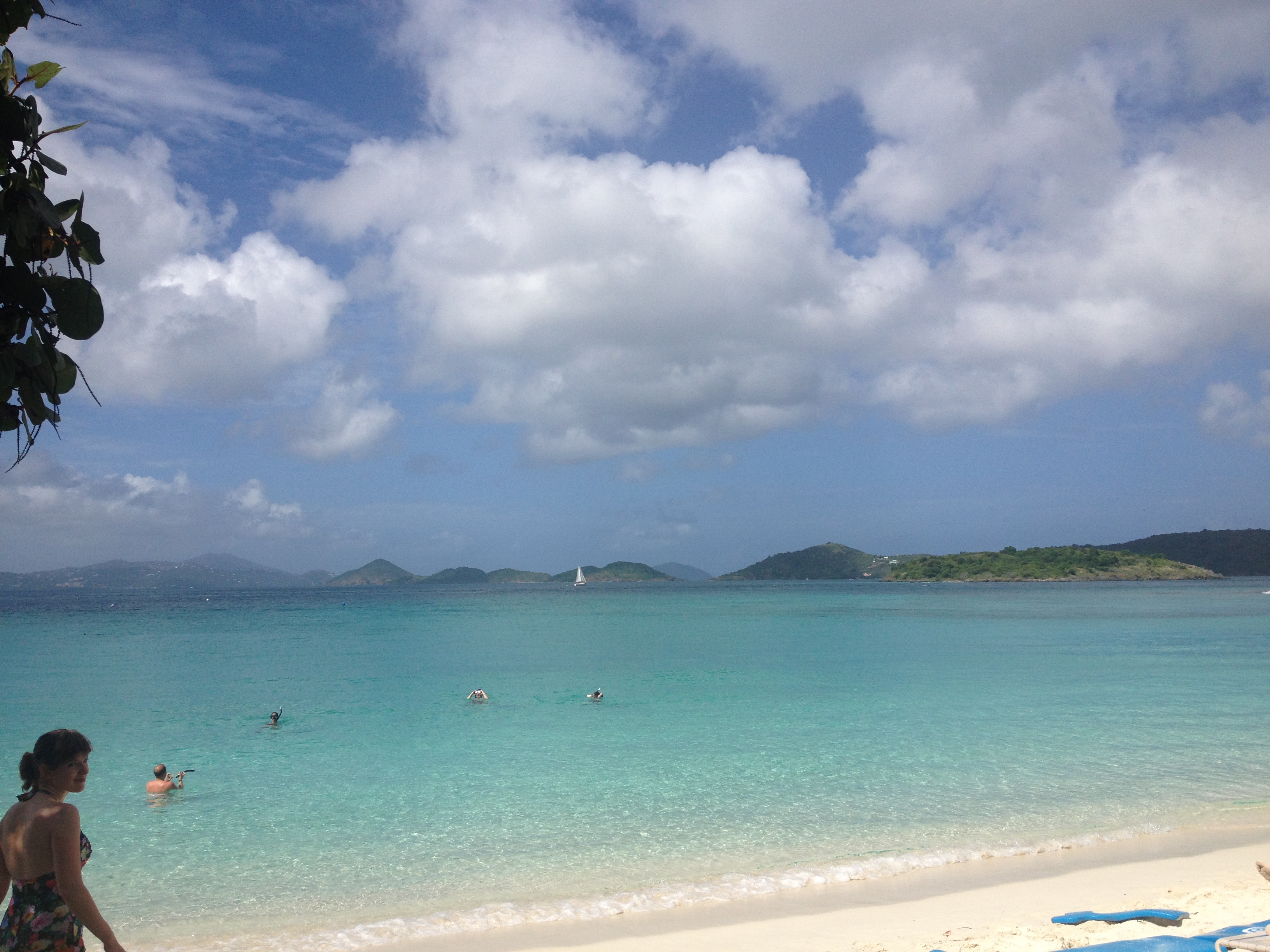
Saint John Island is one of the most remote places within the United States.  A part of the United States Virgin Islands territory, it’s year-round population is a meager 4200 people.  It can only be accessed via ferry or boat.  For mainlanders, Saint John can be accessed by a 20 minute ferry ride, after a half hour cab ride from the airport on nearby Saint Thomas.  The flying time to Saint Thomas is listed as roughly three hours from the nearest major airport in the mainland; Miami, Florida.  Therefore, the minimum travel time for any mainlander is four hours.  For most, the journey is much longer.

I spent my time on Saint John primarily in two places; Cruz Bay, which is the main population center on the island, and Caneel Bay, a resort about ten minutes farther up the coast of the island.

IMG_2819 IMG_2817

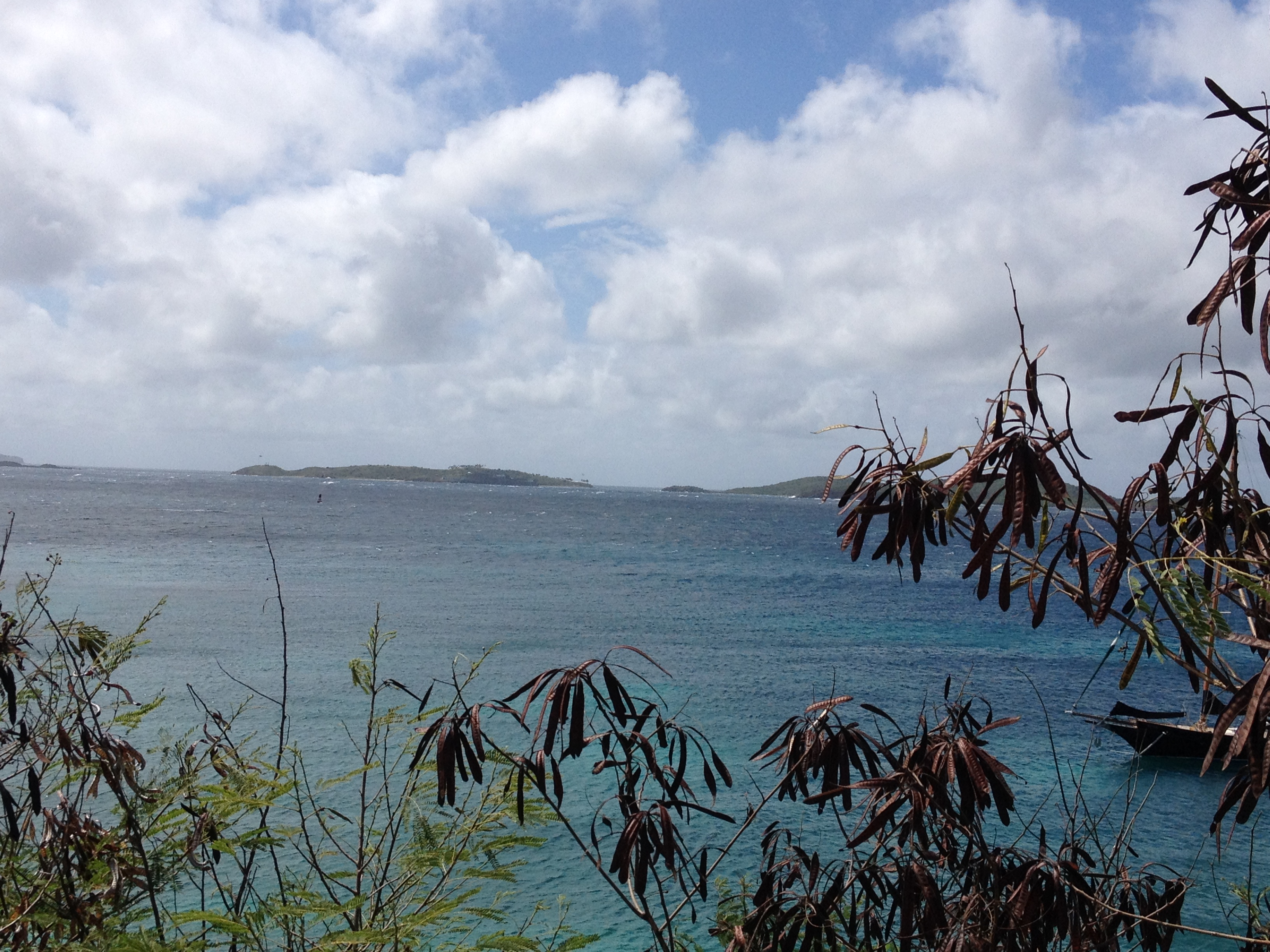
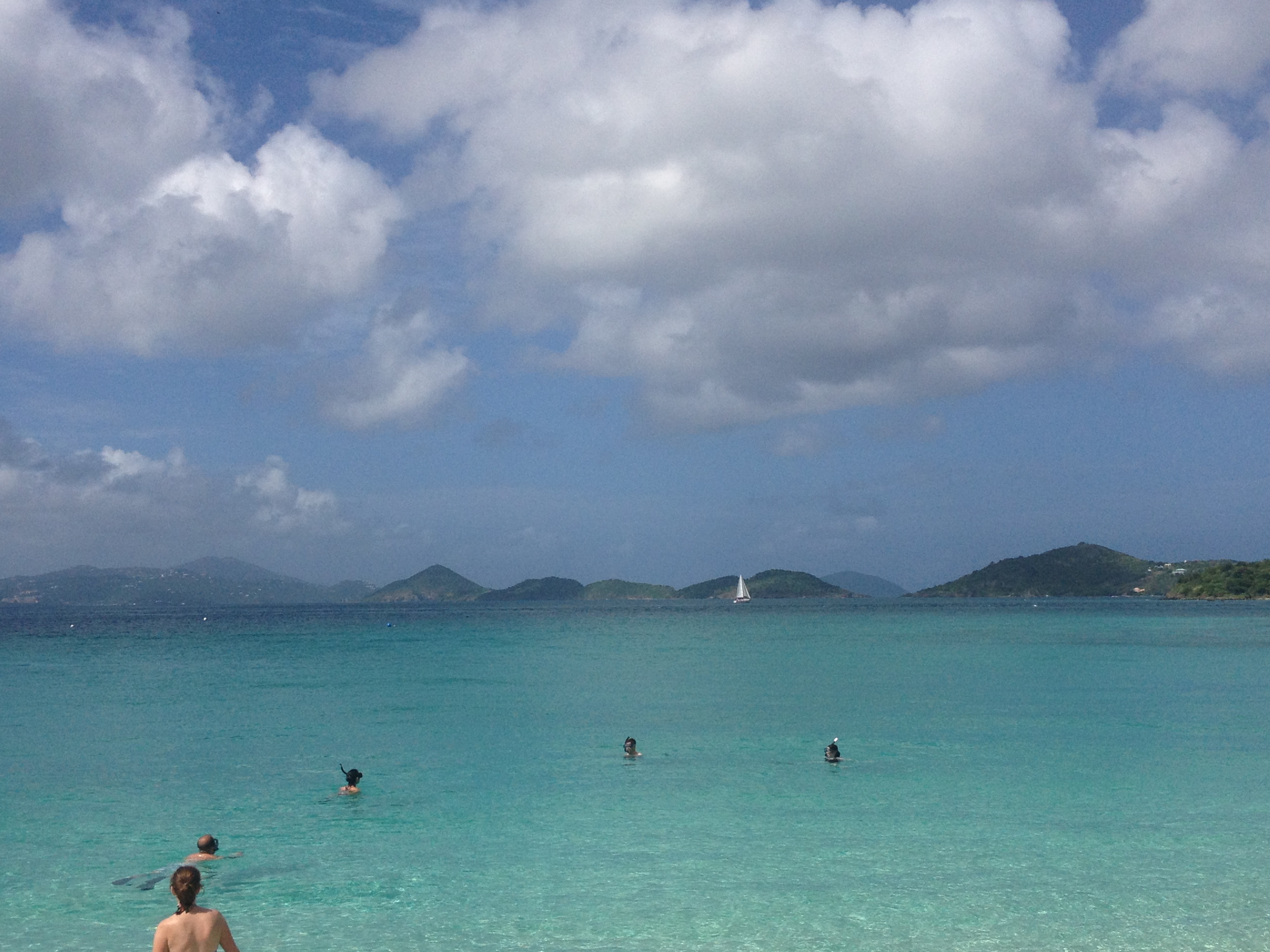
Cruz Bay is where the ferry from Saint Thomas first arrives.  It is the first place any visitor to this island sees.  It is Saint John’s front door, it’s first impression.  And it doesn’t disappoint.  The ocean here is as stunning and picturesque as anywhere I could possibly imagine.  In fact, even at some of the best kept lakes in the United States, I have never seen water this magically blue.

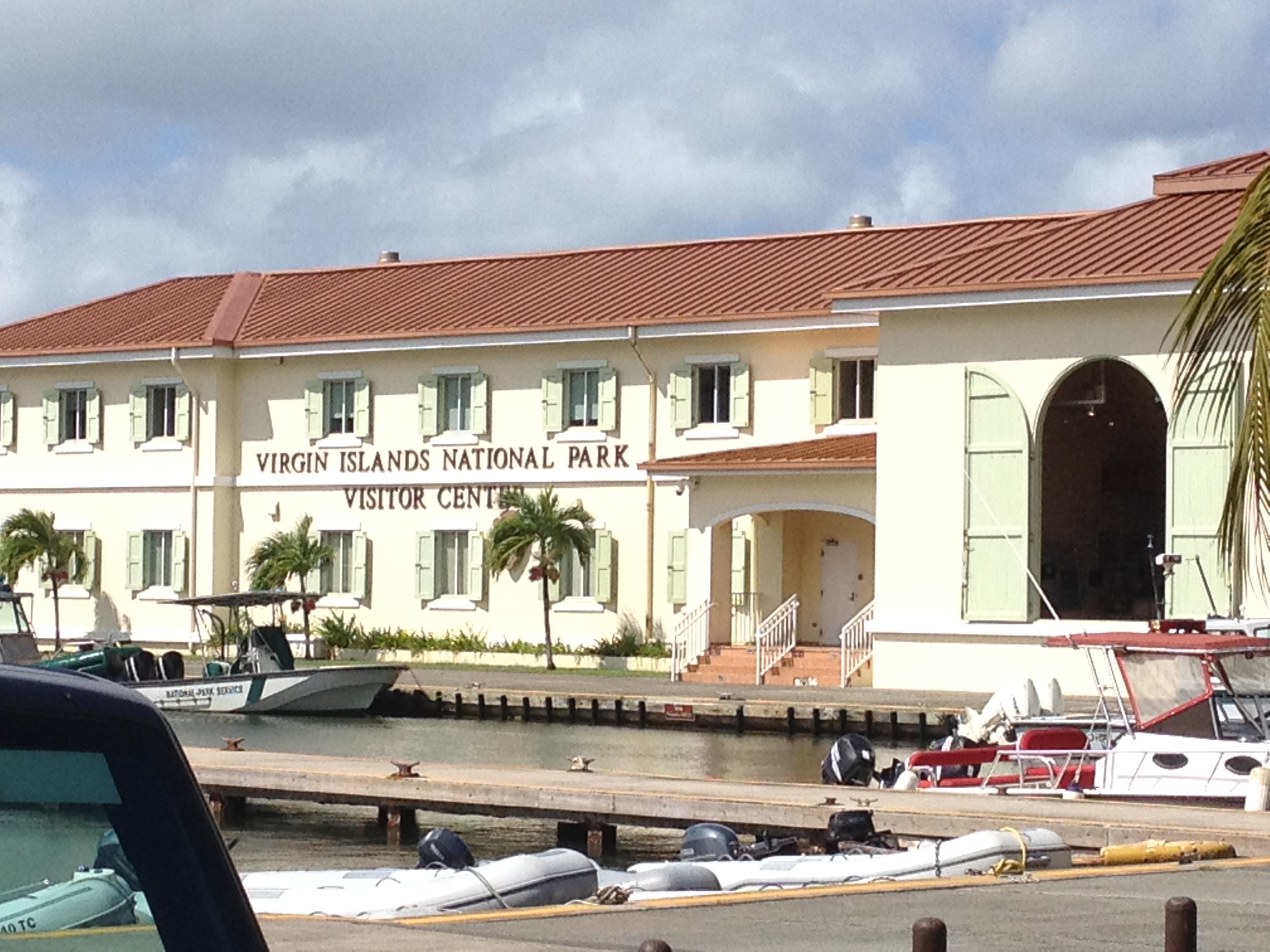
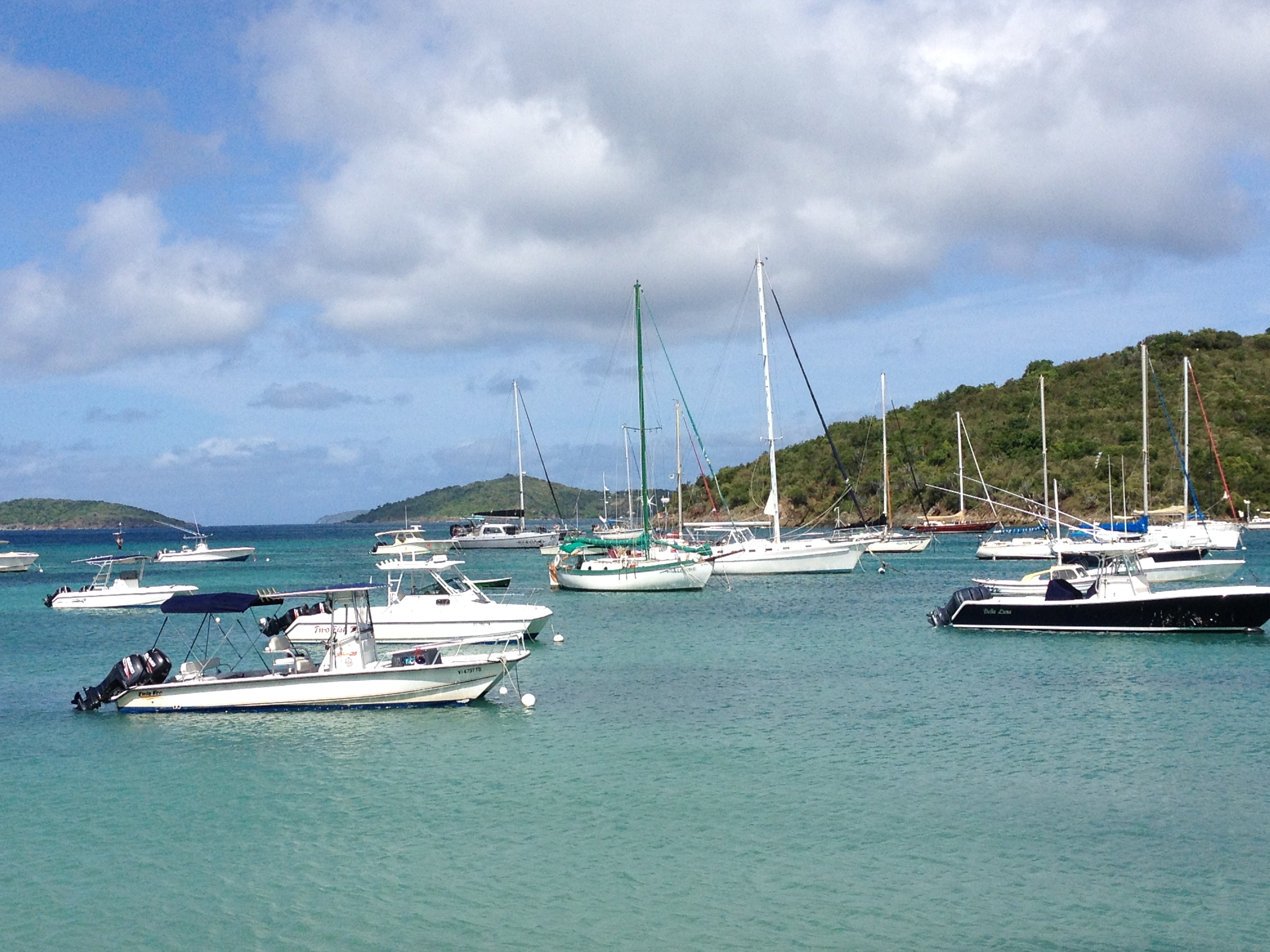
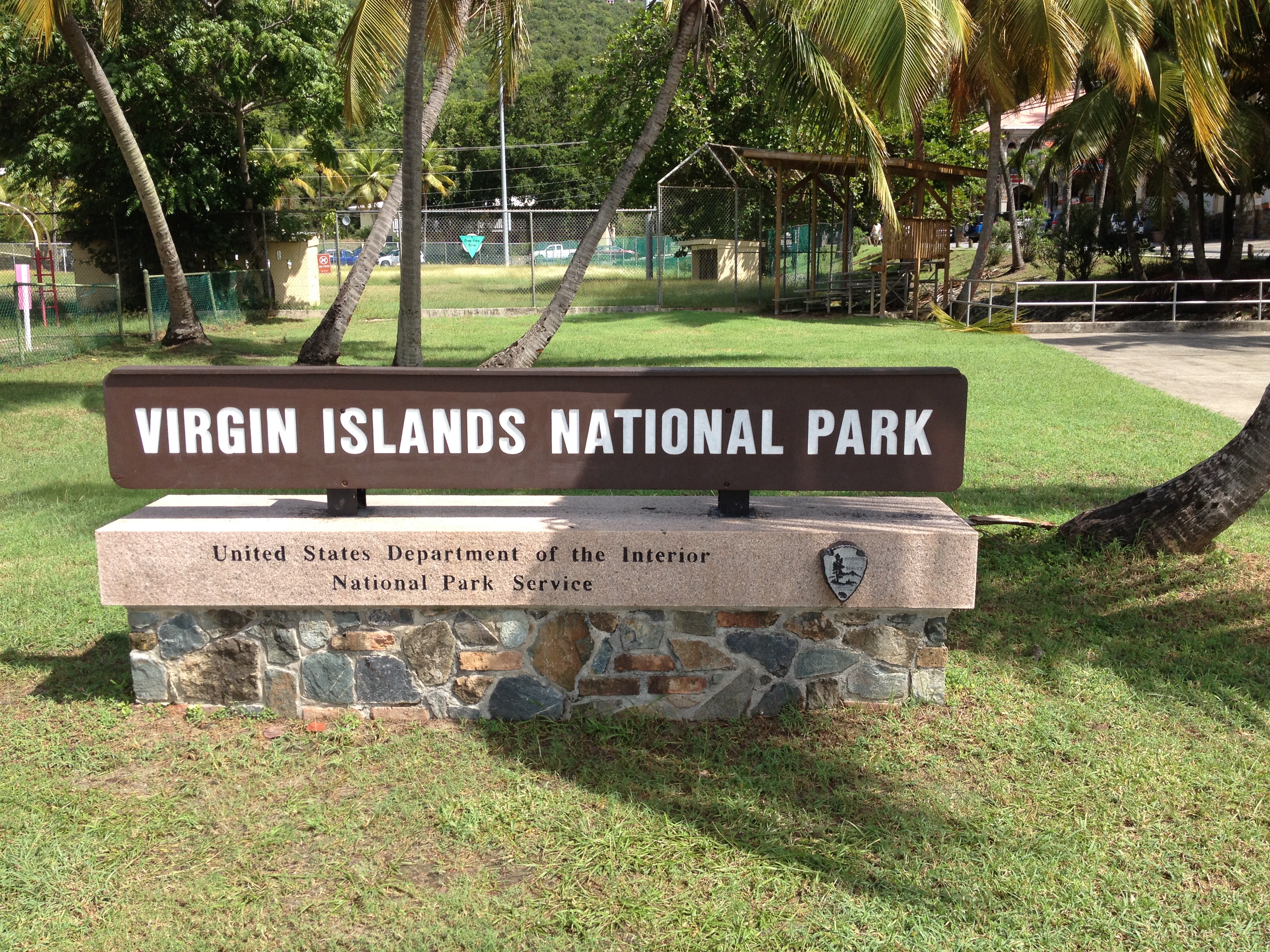
Upon arrival to Cruz Bay on the ferry, one immediately sees a plethora of tourist accommodations.  To the left is the Virgin Islands National Park Visitor Center.  In front are the beaches, boats and restaurants.

IMG_2824 IMG_2827

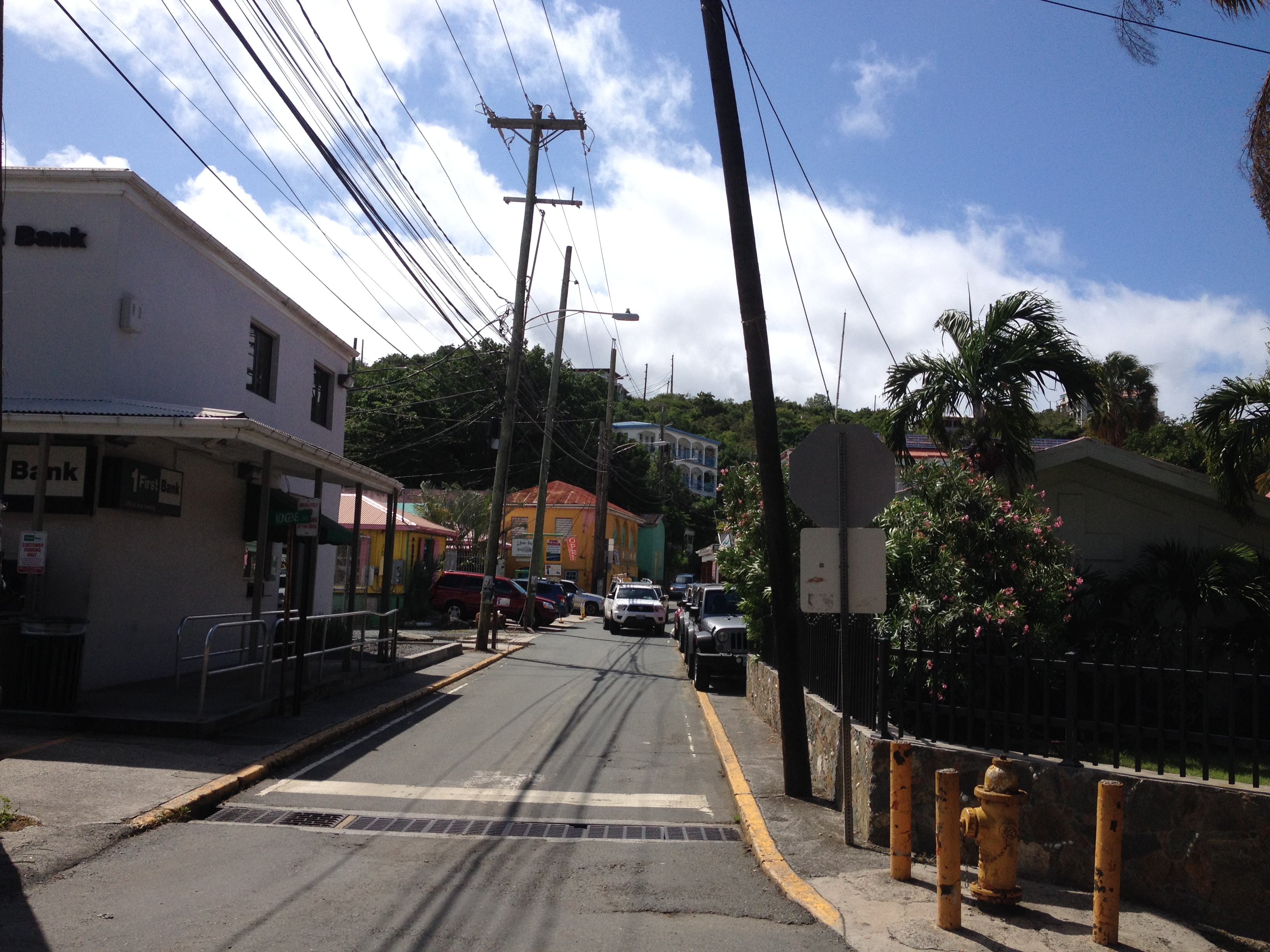
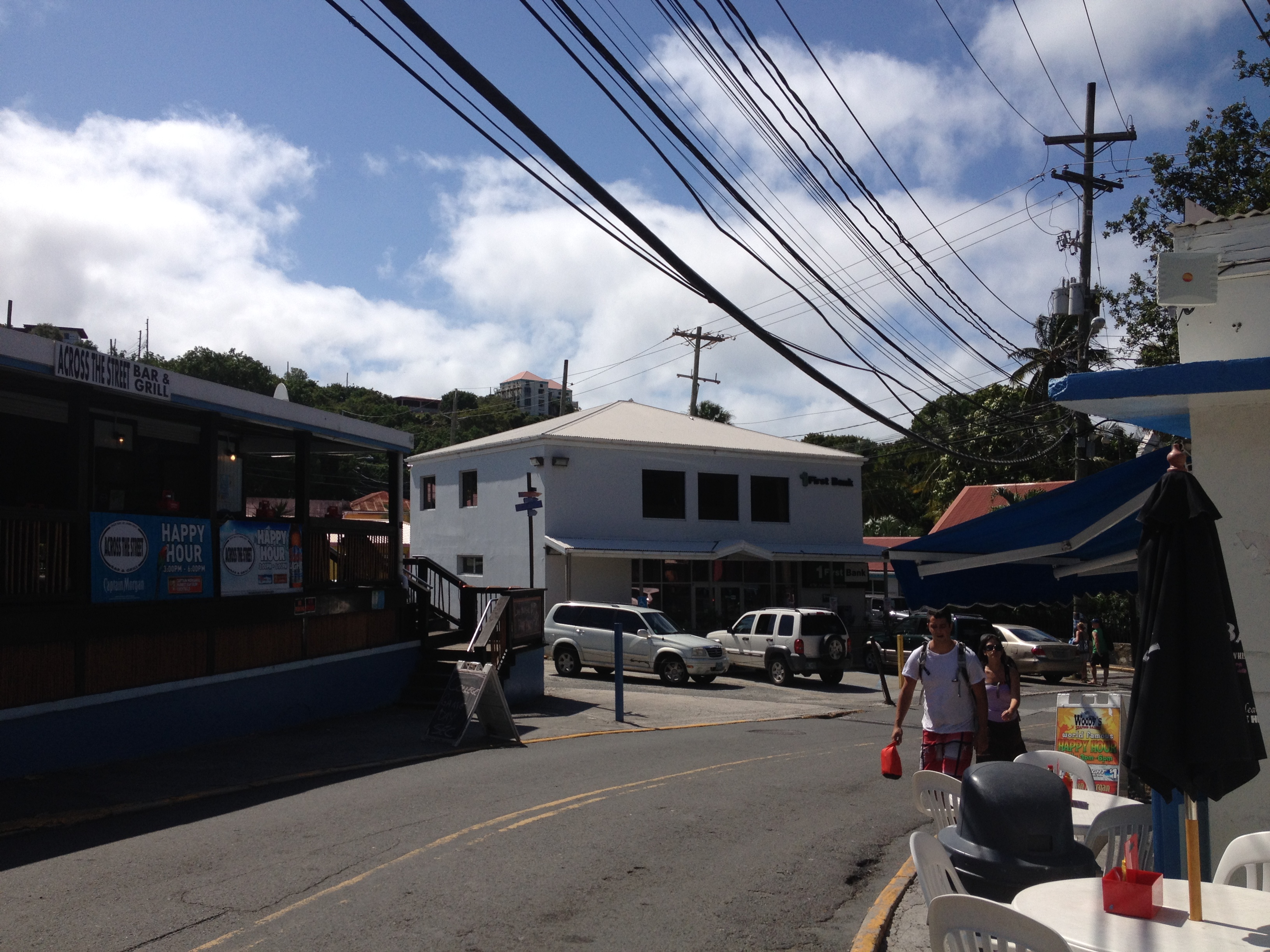
A tourist that walks up the road straight in front of them (road names are not obvious here) will encounter a road lined with bars and restaurants that obviously cater to those not from the Islands.  Walking along this street in the evening, rather than traditional Caribbean music, one will hear the likes of Jimmy Buffet, modern American pop, and a surprising amount of Country-Western music.  And, a vast majority of the proprietors and patrons of any of these restaurants are obviously tourists or those who moved here from the mainland to work tourism related jobs.

Most of the residents of this island are black (or Afro-Caribbean).  Although this did not really surprise me, I still wonder how this came to be, as I had never really been taught about the history of the Caribbean Islands beyond the arrival of Christopher Columbus in 1492 and the subsequent voyages to the “New World” that the news of this voyage inspired.

However, when I look around me, and take a couple of trips to less touristy parts of the Island, where one can see a better representation of how those native to Saint John live, I can’t help but have the present rather than the past on my mind.

How do the lives of those that live here year round differ from our own?

How do they feel about being a part of the United States?  And, more specifically, how do they feel about their status as a U.S. territory (and not a state)?  We commonly hear about issues regarding Puerto Rico’s similar status, and the razor thin margin between those who support and those who oppose statehood.  But, we never really hear much about the U.S. Virgin Islands’ status and how it impacts the people here.

Most importantly, how do they feel about us, and our presence here?  Do they debate the economic impact of tourism vs. the cultural disruption that it causes?  Do they ponder the fact that within the mainland part of the U.S., we have places like Catalina, Key West and South Padre, places where many of us could theoretically get a similar experience without invading their island?

Ultimately, are they fighting for their identities, their culture, or are they enjoying the economic benefit of our presence, as well as their association with the United States of America?   When we think of the Caribbean, we often think of pop icons, including Bob Marley, but also more recent pop icons from the region, such as Daddy Yankee and Sean Kingston.  The music produced by these artists take us to the pristine tropical oceans of the Caribbean, if nowhere else but in our minds.

However, it is these pop icons that appear to represent the dichotomy of the possible responses that seem plausible given the current situation of those that live in the U.S. Virgin Islands.  Marley, from his lyrics, considered himself part of a struggle for the culture and identity of himself and his people.  But modern pop stars like Kingston appear to be simply enjoying the economic benefit of their stardom, much of which comes from the U.S. and the western world that Marley rallies against.

Although there is a lot more to any one person’s life that what we witness through the media, Kingston and Co. do appear to be thoroughly enjoying their lives.

IMG_2847 IMG_2849

After multiple nights of partying, I lay exhausted on Scott Beach, the finest beach on Caneel Bay resort.  I watch the boaters and snorkelers go by.  Some even tell me that it was here, in the clear waters of the Caribbean, that they had one of the best snorkeling experiences of their lives.  They did so by being willing to visit a place a little bit out of the way, a place where the people, the culture, and the way of life are different than their own.

That is when it occurred to me that the world is full of people who are different from me.  The world is full of people who look different, act different, have different customs, beliefs, values, and different ways of understanding the world.  We can either learn to live with different types of people, and try to relate to them as best as we can, or we can accept the limitations that go along with confining ourselves to people with sufficient similarities to ourselves.

In practice, we all implore somewhat of a combination of the two strategies; accepting some differences but trying to stay away from others.  However, there are some that believe that in an increasingly connected world, the future belongs to those that can bridge the gap between different cultures.  I am not sure if I inherently believe that the ability to bridge cultural gaps is a prerequisite for success in the 21st Century, as many people have built fortunes designing products that largely cater to one segment of society.  However, when I watch people enjoy Saint John Island, and watch videos by Kingston and other similar artists, I see firsthand the benefits of being able to relate to those with different backgrounds and ways than my own.

Sort of Leaving the Country

IMG_2818

I never had any specific plans to visit the U.S. Virgin Islands.  I had always been aware of their existence, and their Puerto Rico like murky status as part of the United States.  And, every time I saw images like this one, showing the magnificently clear water of the Caribbean, the plethora of activities that are available, and the obviously phenomenal weather, it had always seemed like a magnificent place to go.  However, for some reason, I just never made any specific plans to make a trip here.  Maybe it was the knowledge that it would be a fairly expensive trip that kept me away.  But, more likely, it was the plethora of other pursuits, other destinations, and other activities that are constantly circulating around my head.

This is why, when it comes to travel as well as general life activities, it is sometimes best to follow the lead of others.  If I were to only take part in the activities that I had personally selected to be a part of, and only gone to the places I had decided on my own I wished to go, I would have missed out on hundreds of great experiences over the past couple of decades.  I would never have learned activities like water skiing, or camping.  I would have never discovered some of my favorite foods, like chicken wings, or Thai food.  And, I would have never attended some interesting events, like rodeos, plays, and some interesting comedy shows.  I would essentially be a completely different person than who I am today.

Following the lead of others, I was brought to the Virgin Islands to attend a destination wedding.  After nearly an entire day of travel, I arrived at a destination that is not quite American, yet not quite foreign.

IMG_2815 IMG_2826

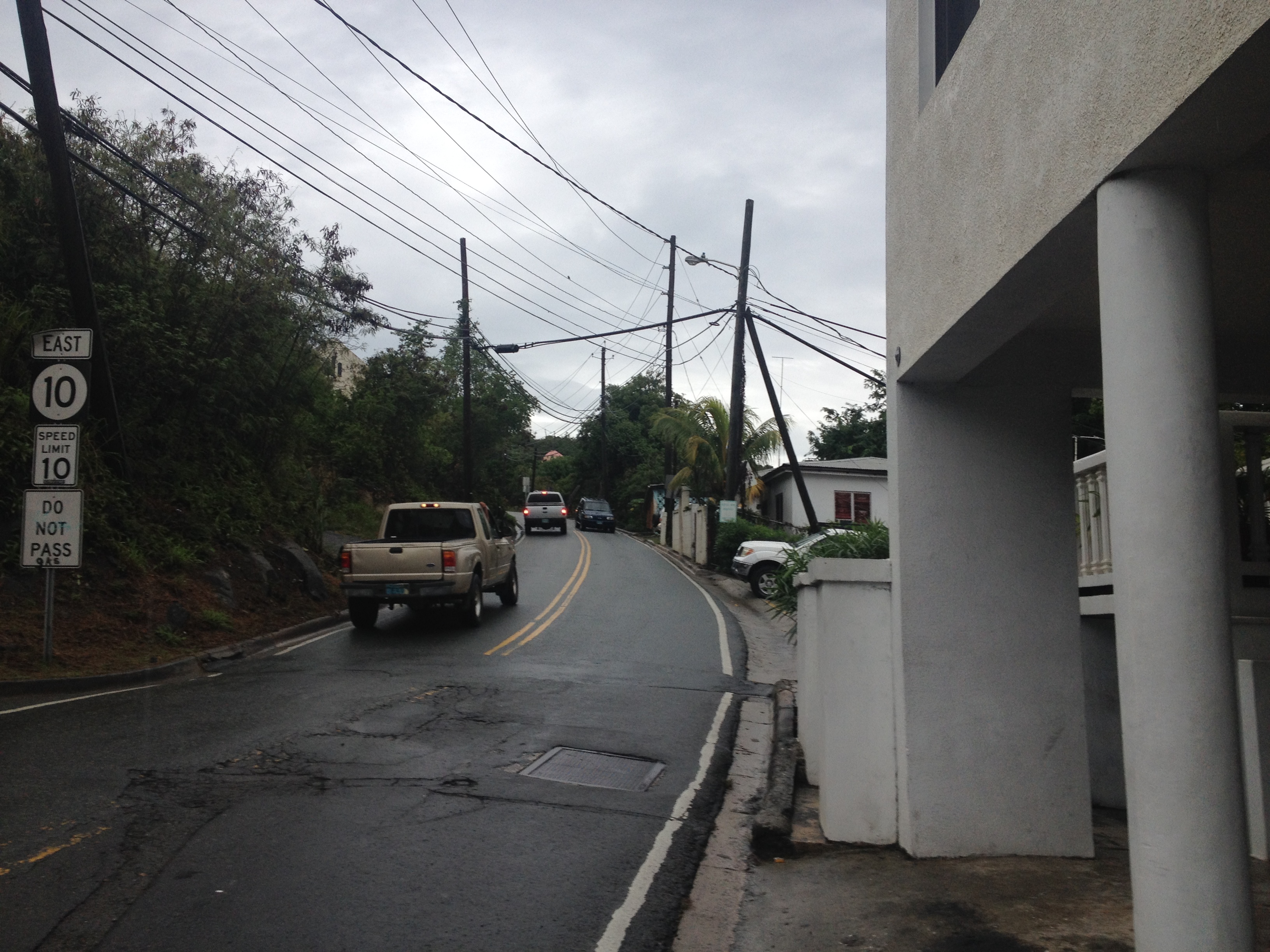
The U.S. Virgin Islands is considered a part of the United States.  All of the signs read in English.  There is no talk of any foreign currency.  And, more than half of St. John Island is a part of a U.S. National Park.  Yet, there are some major differences between how things work and operate in the U.S. Virgin Islands vs. the mainland.  The first, most glaring difference that greets any tourist when they arrive on either of the Islands is the fact that cars drive on the left side of the road.  For some reason, I figured this would be the case in the British Virgin Islands, but not the U.S. islands, as we drive on the right in our country.

IMG_2803 IMG_2823

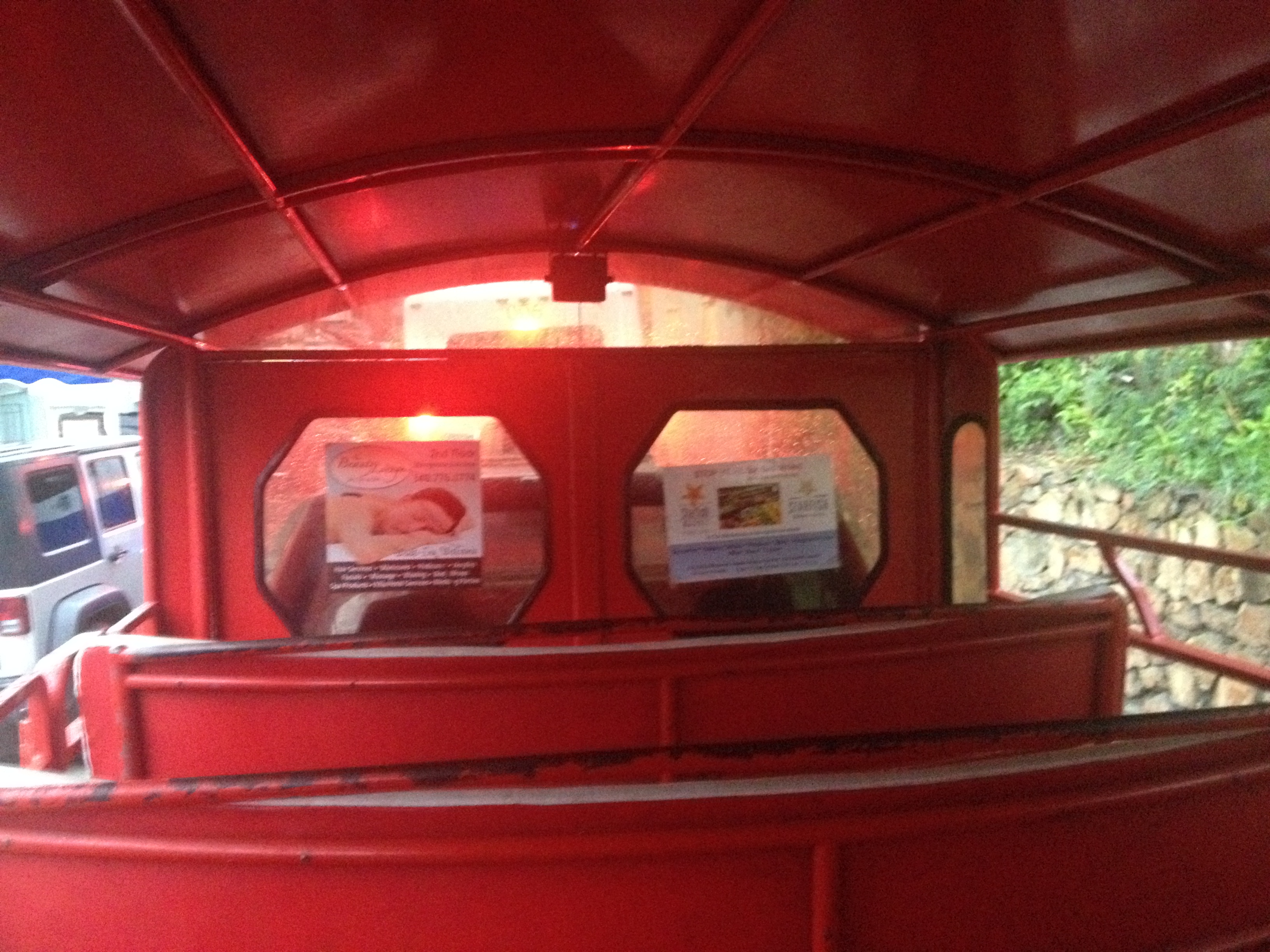
Other major differences that become obvious right away include the taxis, which are sized and shaped quite differently than anywhere in the U.S., even tropical places like California or Florida.  As opposed to basically being cars for hire, taxis here are high profile vans with several rows of seating, built to accommodate roughly a dozen people if need be.  Their fare structure is also different.  Most rides are a flat, destination dependent, per person fee, regardless of the size of the party.  In the mainland, fees are mostly destination dependent, with the cost difference between transporting a single passenger, and several passengers differing by only a couple of dollars.

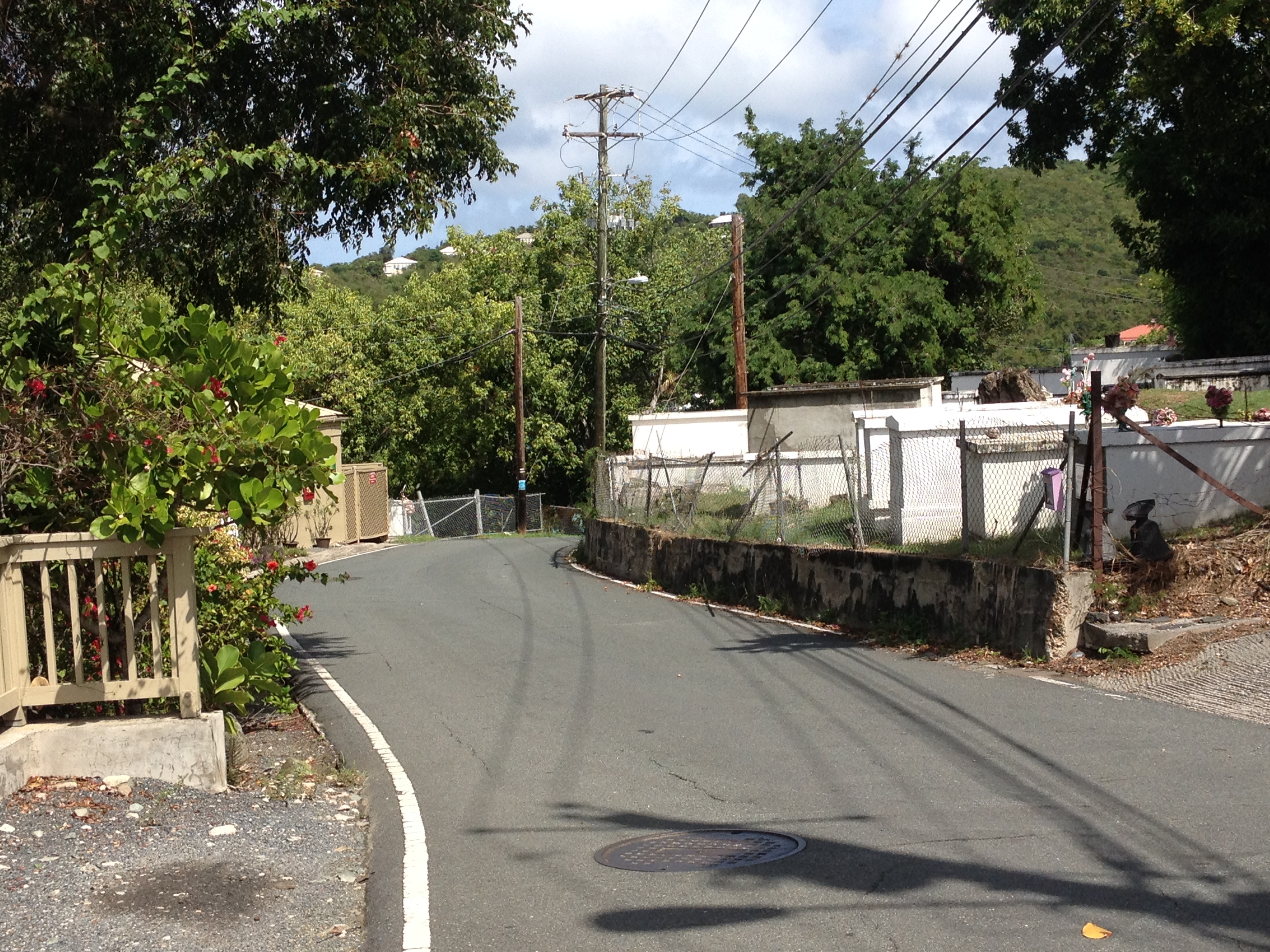
Also, a large majority of the streets here lack sidewalks, or any other type of pedestrian accommodation.  Walking around Saint John Island, I mainly had to figure out a way to maneuver around structures, both natural and man-made, and live with the traffic being so close to me.

Walking in close proximity to vehicles driving on the opposite side of the road that one is accustomed to, along with significantly different mannerisms, and the extremely thick accents of the natives, would be enough to make an extremely sheltered person freaked out.  For me, I felt only partially outside of my comfort zone.  It was really unclassifiable.  It was as if I was walking some kind of fine line, or living on the “edge”, as people used to say.  I was neither completely out of my element, nor reverting to the familiar.  I was neither “outside the box”, nor “inside the box”.  Maybe I was on the top of the box?

IMG_2808 IMG_2809

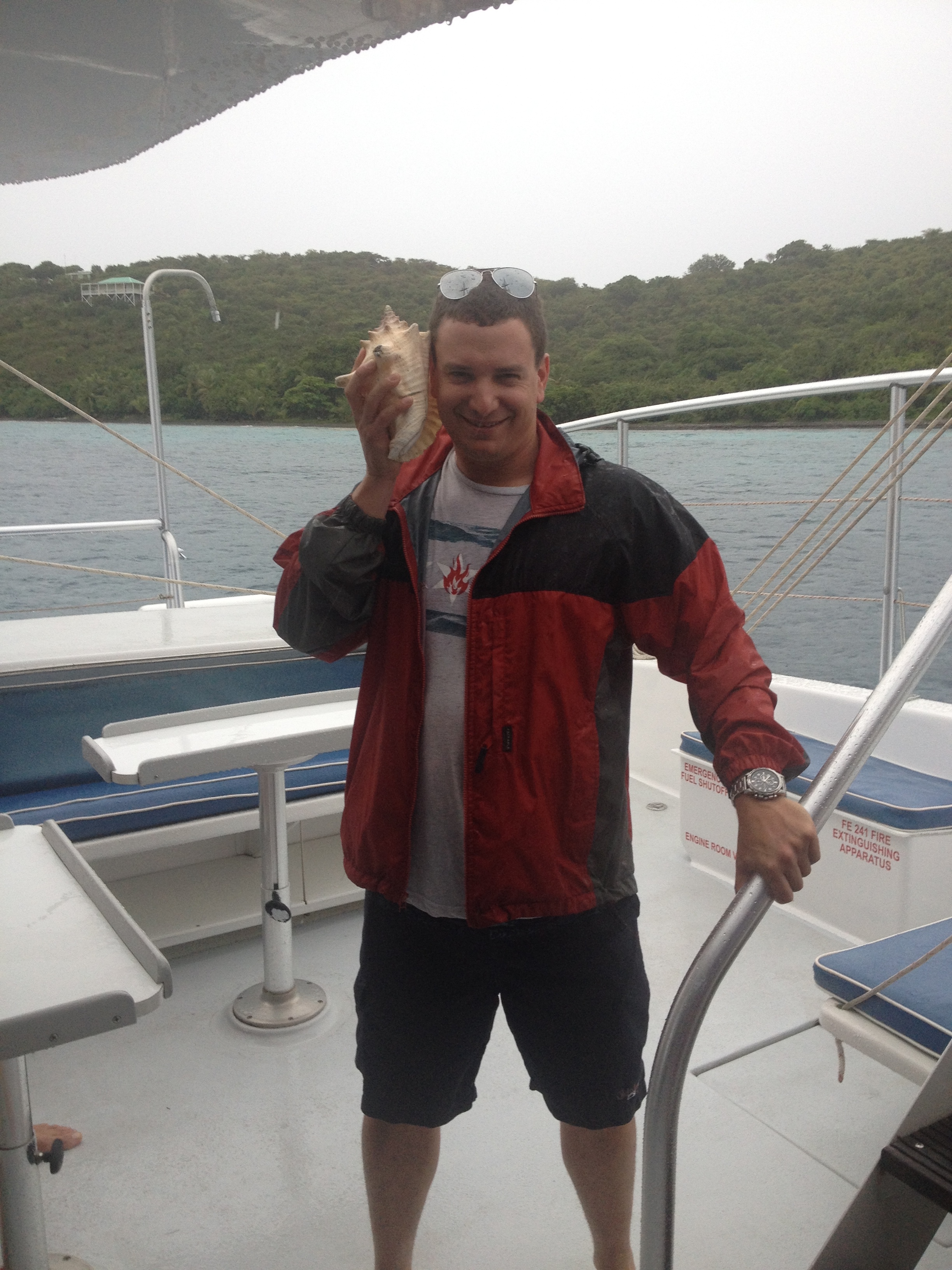
Fittingly, my new activity for the weekend was snorkeling in the Caribbean.  Like my experience in the U.S. Virgin Islands as a whole, this activity took me part of the way out of my comfort zone, but not completely.  I have swam, water skied, and jet skied before.  I have plenty of experience with water activities.  The main challenge snorkeling presented to me, as a first timer, was mastering the breathing.  I’d say it was also mastering the use of the flippers, but I most certainly did not master those.  I still moved around quite inefficiently.  However, once I was able to overcome my high elevation instincts to try to breath through my nose, and open my mouth wider to take in more oxygen while engaging in physical activity, I was able to breathe properly, and truly enjoy the activity.

It is said that the Caribbean is one of the best places to snorkel due to it’s clarity.  I was able to see some coral reefs, and moving fish.  Those the dove deeper down, either by scuba diving, or holding their breath, were able to see some turtles, a lobster, and view the coral much more closely.  Although I chose not to go too far down, I still saw underneath the Ocean for the first time ever, and was glad that I went part of the way outside my comfort zone, in both visiting the Virgin Islands, and snorkeling in the Caribbean.

Swing State USA 2014: The Current State of Colorado

IMG_2733 IMG_2741

What is the current state of your location?  What are the trends?  What do people like to do?  What makes your particular location unique?  What are people talking about?  What are people concerned about?  What are the hopes and fears for the future?

These are amongst the questions often answered through travel.  Sometimes, even when a traveler has nothing of this nature on his or her mind, answers to questions like these present themselves.  This is why I have thoroughly enjoyed all of the travel related shows hosted by Anthony Bourdain.  In each and every show he has been involved in, he travels to various locations with the simple goal of getting a comprehensive sample of a particular region’s food.  However, in nearly every show, he strikes up conversations with people local to the area, and learns quite a lot about their culture, history, and expectations.

IMG_2558 IMG_2720

Colorado has been on a lot of people’s minds lately.  Most surveys rank it one of the top 5 (or at the very least in the top 10) fastest growing states in the country.  Most of this population growth has come from migration of people from elsewhere in the country.

Colorado has also drawn significant national attention for a variety of reasons this year.  Recently, football fans at Sports Authority Field got to witness quarterback Peyton Manning break the all time record for career touchdowns.  This year, Colorado became the first state in the nation legalize the sale of recreational marijuana.  And, the city of Denver was recently ranked the 4th most influential city in the country, according to a survey of mayors.

With this being the autumn of an election year, and Colorado being a closely contested state (a “swing state”), much of the recent national media attention has turned to Colorado, and our two closely contested elections.  As the story goes, in two weeks, two very important elections are about to take place; one that will determine the direction the State of Colorado takes in the coming years (Gubernatorial), and one that may determine the direction the whole nation takes in the coming years (Senatorial).

Living in the Capitol City of such as state, one would expect these two important contests, and the political implications of them to garner a significant amount of intensity and enthusiasm.  However, if I had a dollar for every time someone asked me who I was planning to vote for in either election, I would be not a cent richer than I currently am.  By contrast, if I had a dollar for every time I was inquired about the other all important state question, whether I was getting the Epic Pass or the Rocky Mountain Super Pass, I would probably accumulate enough money for an amazing night out.

While this could be just the people I happened to associate with here in Colorado, or the types of conversations I tend to pursue, a walk through my neighborhood reveals significantly less yard signs than in most election years.

Baker_Denver_Oct2014

What I do see throughout my neighborhood, as well as most areas nearby, including downtown, are fliers like this one everywhere, sometimes multiple fliers per block, attempting to get people to inquire about campaign jobs for the coming election.

IMG_2714

Nearly every one of them appears exactly as this one does ,with close to all of the tabs underneath the flier remaining un-pulled.  In fact, this past Wednesday evening, after a networking event, I returned to my bicycle to find a similar flier had been wedged into my brake lever; something I had never expected to see, but also something that demonstrates to me campaigns are actually having a hard time getting some of these paid positions filled.

All of this tells me that Coloradans have other things on their mind.

IMG_2732

There is a significant of excitement around the Denver Broncos, by far Colorado’s most cherished sports team.

IMG_2745 IMG_2740

And, while this October has featured some beautiful weather, and some amazing fall colors that are atypical of this areas, many are concerned that this may delay the opening of ski season.  Most of the ski trails remain snow-free.

And, of course, people are quite divided regarding the rapid growth of the region.  Some cherish the opportunity to become the next significant and influential mega-region, with all of the privileges and responsibilities that it brings, while others lament the changes that are making the place significantly different than it was just a mere half a decade ago.

So, which is it?  Is Colorado, with its high density of start-ups, leadership in the craft brewing movement, and unique way of life, the place where trail-blazers grab the bull by the horn and reshape the world?

IMG_2730

Or is it still a place largely isolated from the population centers and mega regions, where people go to explore the world on their own, and escape as many outside influences as possible?

IMG_0034

Or, more importantly for the future, can we find a way to be both?


Saying Goodbye to a Travel Partner

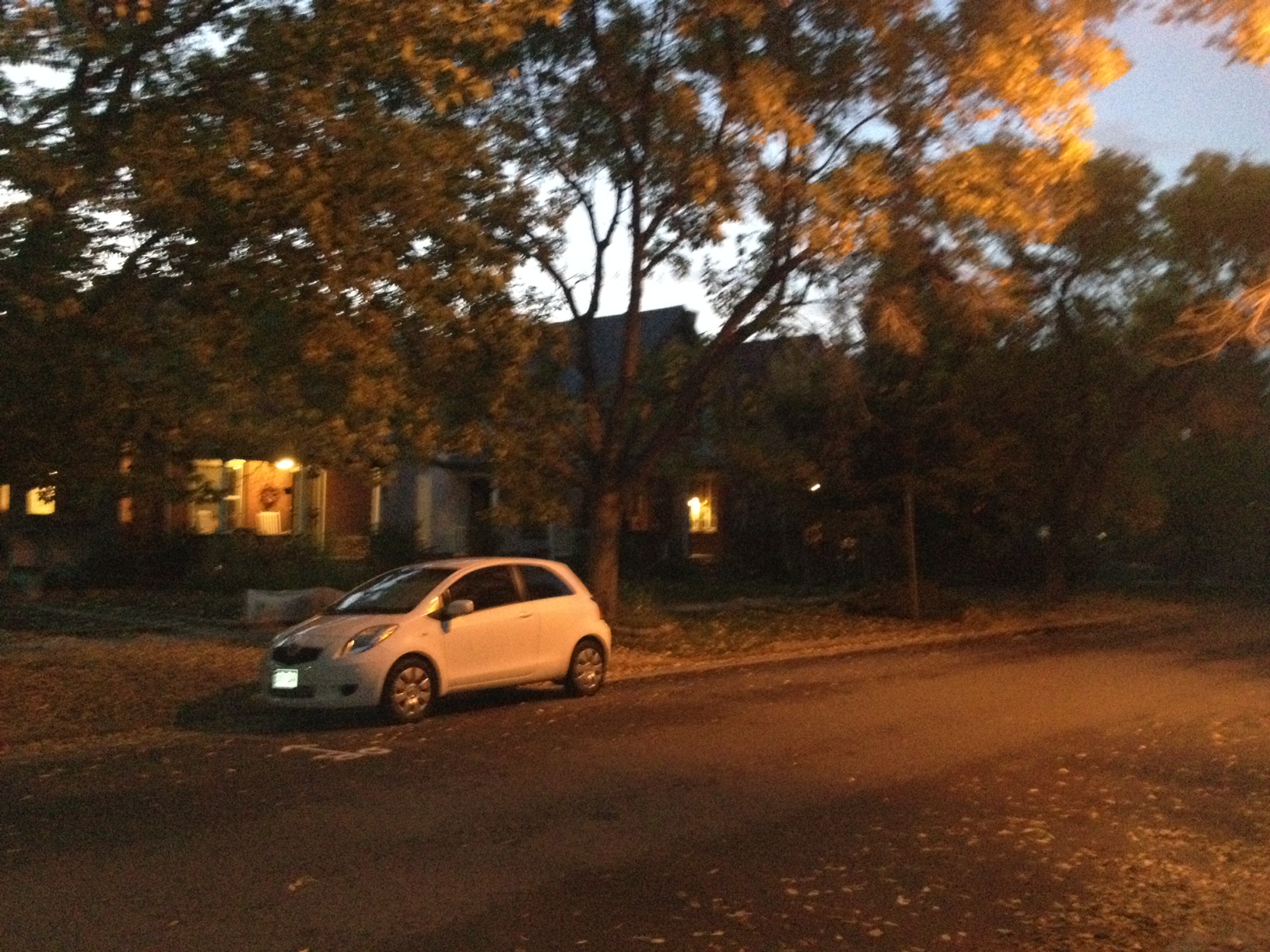
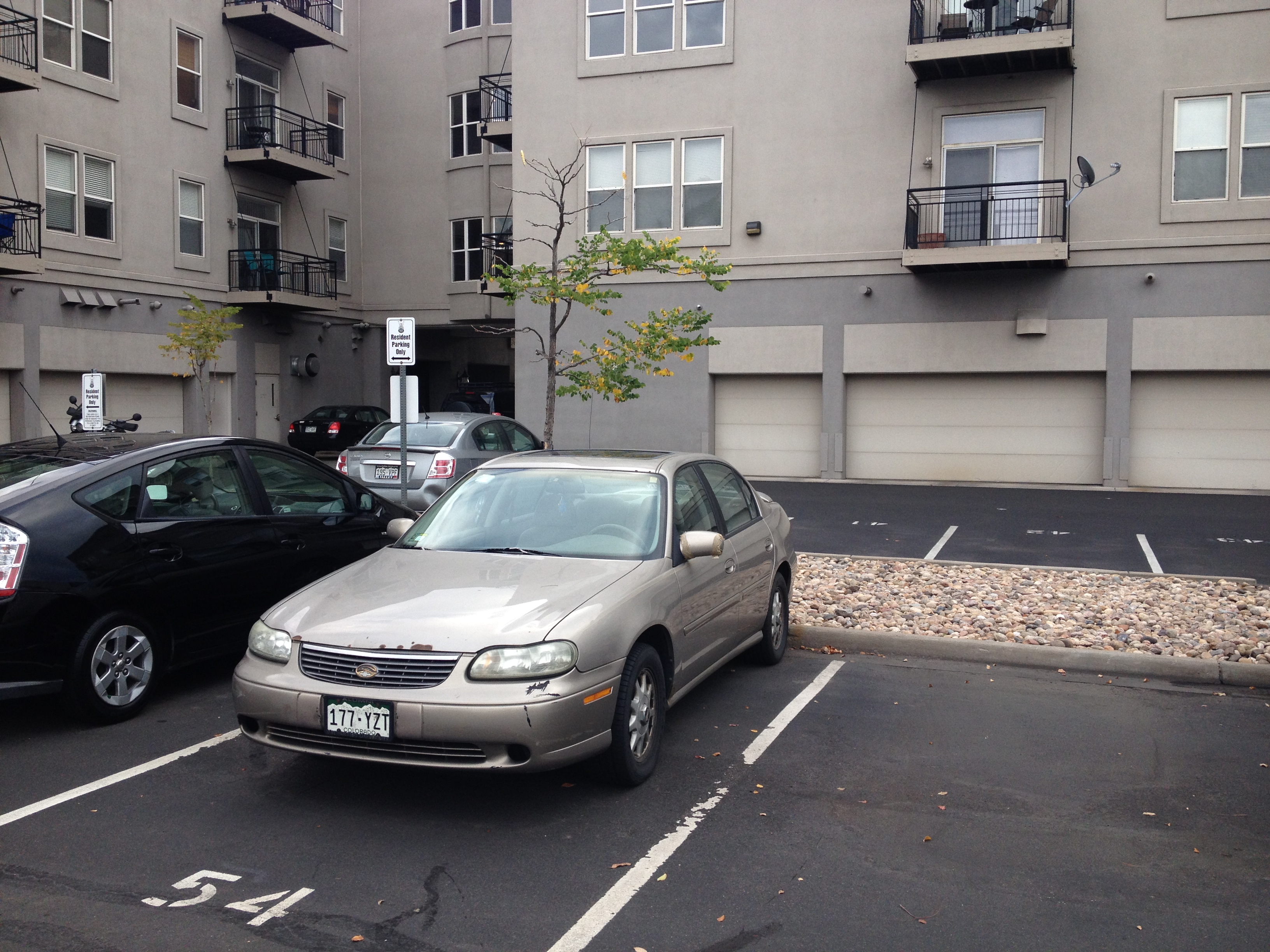
This week, it is with great sadness that I say goodbye to a travel partner that has been with me for over a decade; my 1997 Chevrolet Malibu.  After showing signs of weakness for several years, it’s performance just recently started declining rapidly, to the point where it can no longer be driven with any degree of confidence.  At its age, it would be quite difficult to justify spending any more money on repairs.  After holding on to this vehicle, potentially longer than I should have, it is finally time to say goodbye, and time to move on.

IMG_2674

To some people, a car is just a car.  It is just simply a tool for one to get from place to place, just like any of the other pieces of machinery they own.  Obviously, those that lease new cars every three years do not get attached to their vehicles, preferring to always have the latest in technology.  And, there is no clear reason to have any kind of emotional attachment to a mechanical object with no thoughts or emotions of its own.

However, as someone who loves to travel (and is addicted to being in motion), I cannot help but be extremely sad to know that I have taken my last drive inside this vehicle.  The feeling of being inside this car, and being behind the wheel is one that I had become so accustomed to, it almost felt like second nature.  For some time, it felt like a place I really belonged, and there was definitely a year or two in there when I felt more at home inside this car than the places where I actually lived.

When I purchased this vehicle, I was still in college, and longing for the independence associated with having a car of my own that I can drive at will, at any time I wish, and to any place I wish.  Like any guy that has not turned 21 yet (and even many who have), I thought that having my own car would make me more interesting, more popular, and more desirable.  I had somehow thought that having my own car would help fill one of the missing pieces of my life.

The year before I bought my own car, I had been using many different cars to get places.  Some belonged to family members, some belonged to friends at college.  But, all were different.  None were mine.  I did not really become particularly accustomed to the specific dimensions, specific quirks, and optimal use of any of those vehicles.  That, of course, changed when I bought my first car.  It was my first major purchase as a young adult.  For the first time in my life, I could call something major my own!

In a way, the story of my first car is the story of my own coming of age.  However, coming of age also means a fairly rapid rate of change and significant turmoil.  Most young adults experience a significant amount of turmoil in their lives as they go through college, start their careers, try to establish themselves as adults, and determine kind of person they were destined to be.

My vehicle saw me through the transition to graduate school, several career related disappointments (or setbacks), numerous relationship related fumbles, lots of really crazy travel, lots of adventures, and even some lewd behaviors I am not proud of.  It was also the setting of some of the more significant discussions I had with trusted friends, in which we would attempt to navigate some of the situations that puzzle young adults, and ponder our futures as they were unfolding in front of us.

Traveling not only provides adventures, stories, places to be, things to do, and ways in which to see the people I care about, and take part in activities I love, but it also provides an outlet.  Often when I feel frustrated, disappointed, or short-changed by life, I just need to go somewhere, get a change of scenery, and get a fresh perspective.  I did a significant amount of traveling well before I decided to start writing this blog, and took some major road trips.  In a way, I did exactly as the commercials at the time told me, I saw the U.S.A. in my Chevrolet.

I knew this day would eventually come.  In fact, it came significantly later than I had expected.  Over the years, I became increasingly interested in bicycling, and subsequently moved to the City of Chicago, where significantly less miles are driven in day-to-day life.  So, despite my car being 17 years old, it reached 150,000 miles only a few months ago (now at 151K).

IMG_2111

Still, as I struggled to get this car started for it’s last spin, I felt a sadness that was tough to explain.  I’d look at the car, and think of all of these memories, all that I had done, all that I had gone through, and how my years of coming of age shaped me into who I am, for better or for worse.

Life should never stop being an adventure.  I shared many of my adventures in the Midwest with my Mailbu.  There was no better car for all of those nights cruising on Dundee Road, those days passing people on the right on the Chicago Skyway, racing down I-65, or looking for tornadoes in Iowa.  Now that I live in Colorado, I am having completely different kinds of adventures.  And, although I am sad to have lost a travel partner that suited me well for a long time, I have been provided with an opportunity to find a new travel partner that is quite suited for the adventures I am destined to have in this part of the world.

IMG_2676

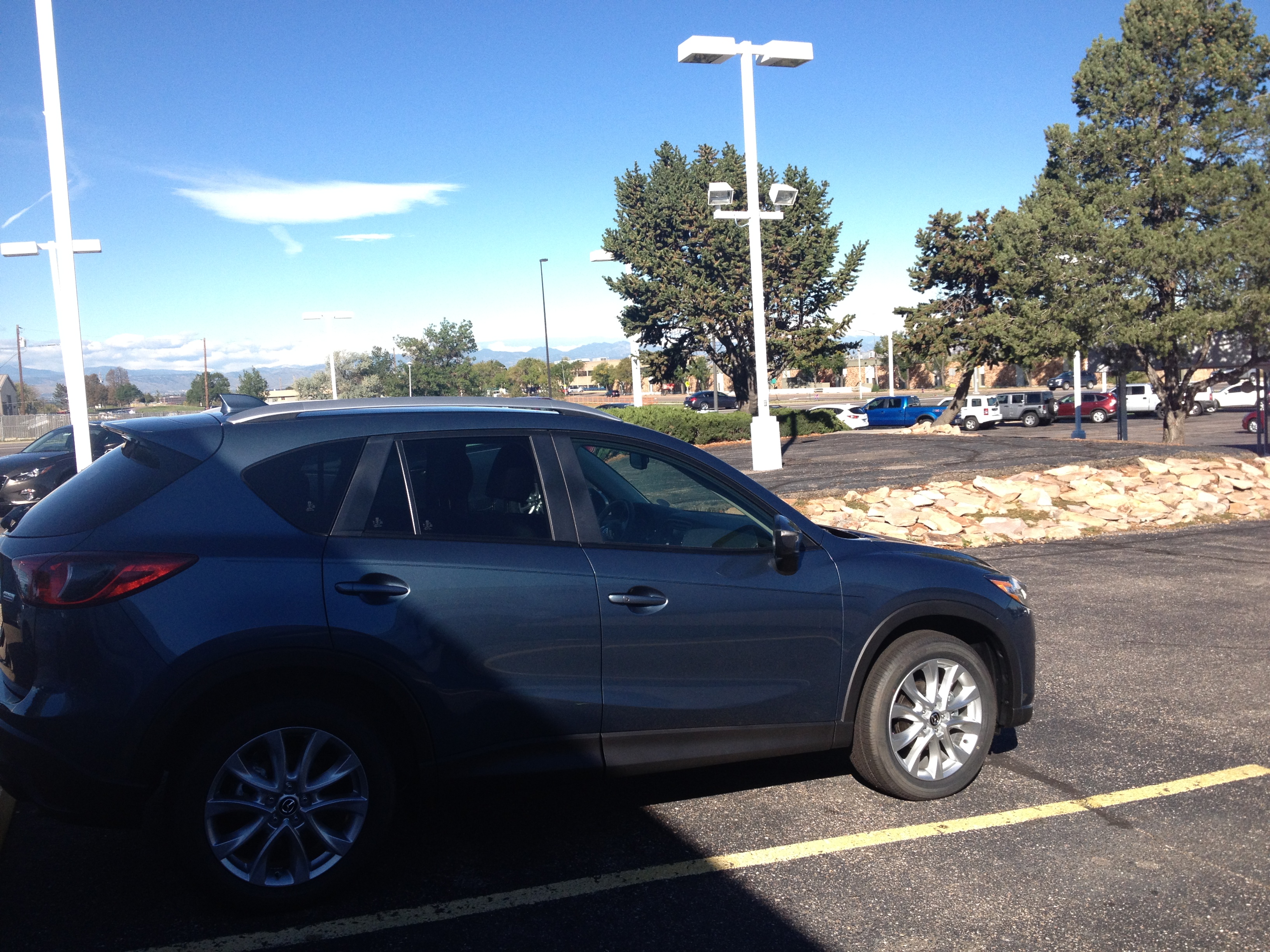
This morning I purchased a brand new Mazda CX-5, which may just be my travel partner for the next decade to come (or more).  With high clearance and all wheel drive, it is well suited for the State of Colorado.  With a little more pep to the engine than many of the other vehicles in it’s class, it also suits who I am.

Maybe these vehicles are just simply vehicles, inanimate objects built by humans.  Or maybe I had a loyal travel companion that selflessly determined that it had become time to step aside for another- one that suits where I now am a bit better.


Welcome to Fall

IMG_2656

Although the weather in many places in the country is still quite warm, the fall season is upon us.  Along with it comes all of the things associated with fall; shorter days, football games, all sorts of stuff made out of pumpkin, and, of course the fall colors.

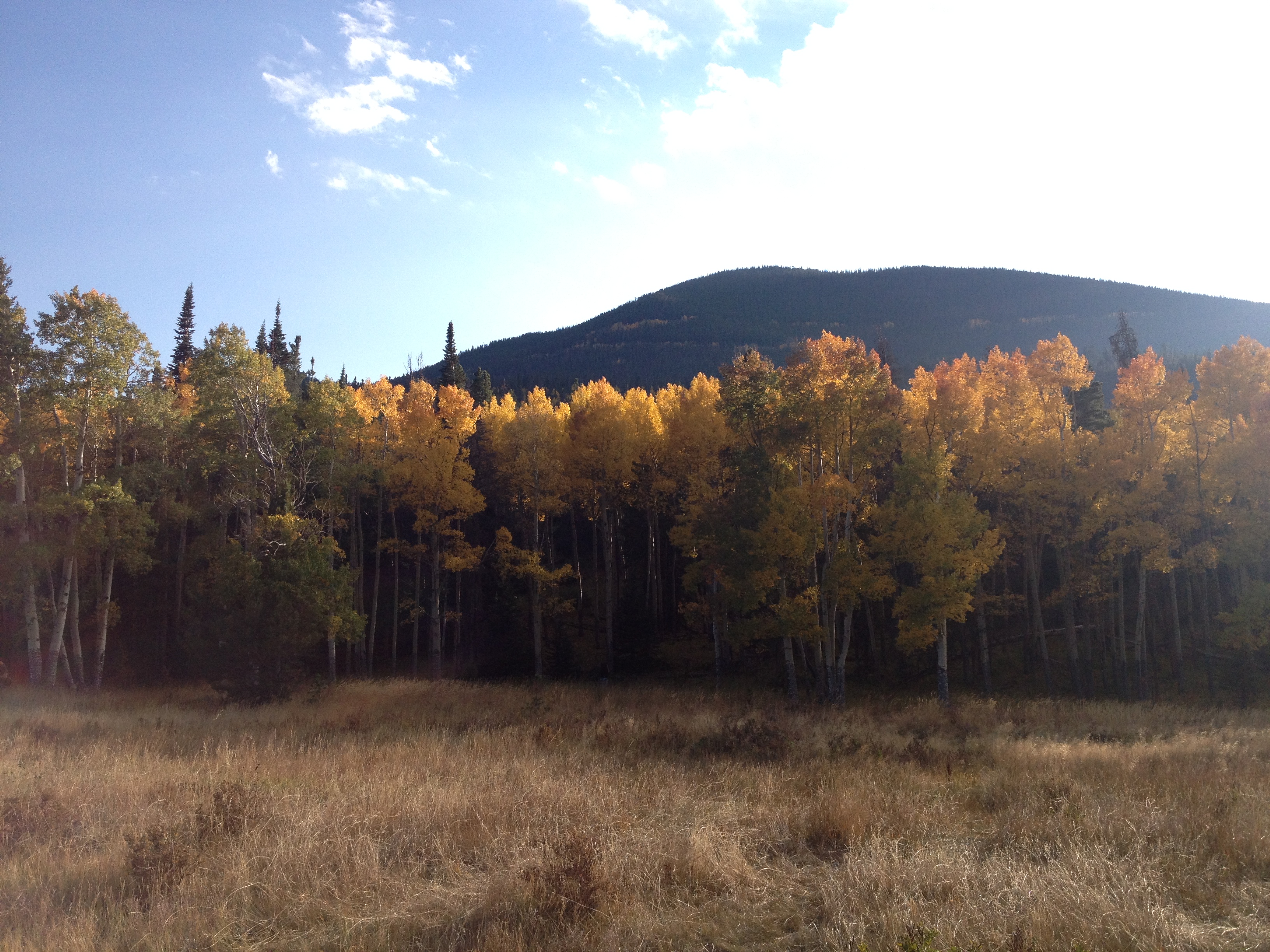
For many, fall’s best feature is the colors that arrive as some species of trees make the necessary preparations for the coming winter season.  The Aspen trees at higher elevations in the Rocky Mountains are amongst the first to change colors.  In fact, at elevations near 10,000′, fall colors can even arrive towards the beginning of September.  In the Eastern States, colors will only begin to appear at the end of September in places like Northern Minnesota and the higher terrain in New England.  Most places will see their peak colors in October or Early November.

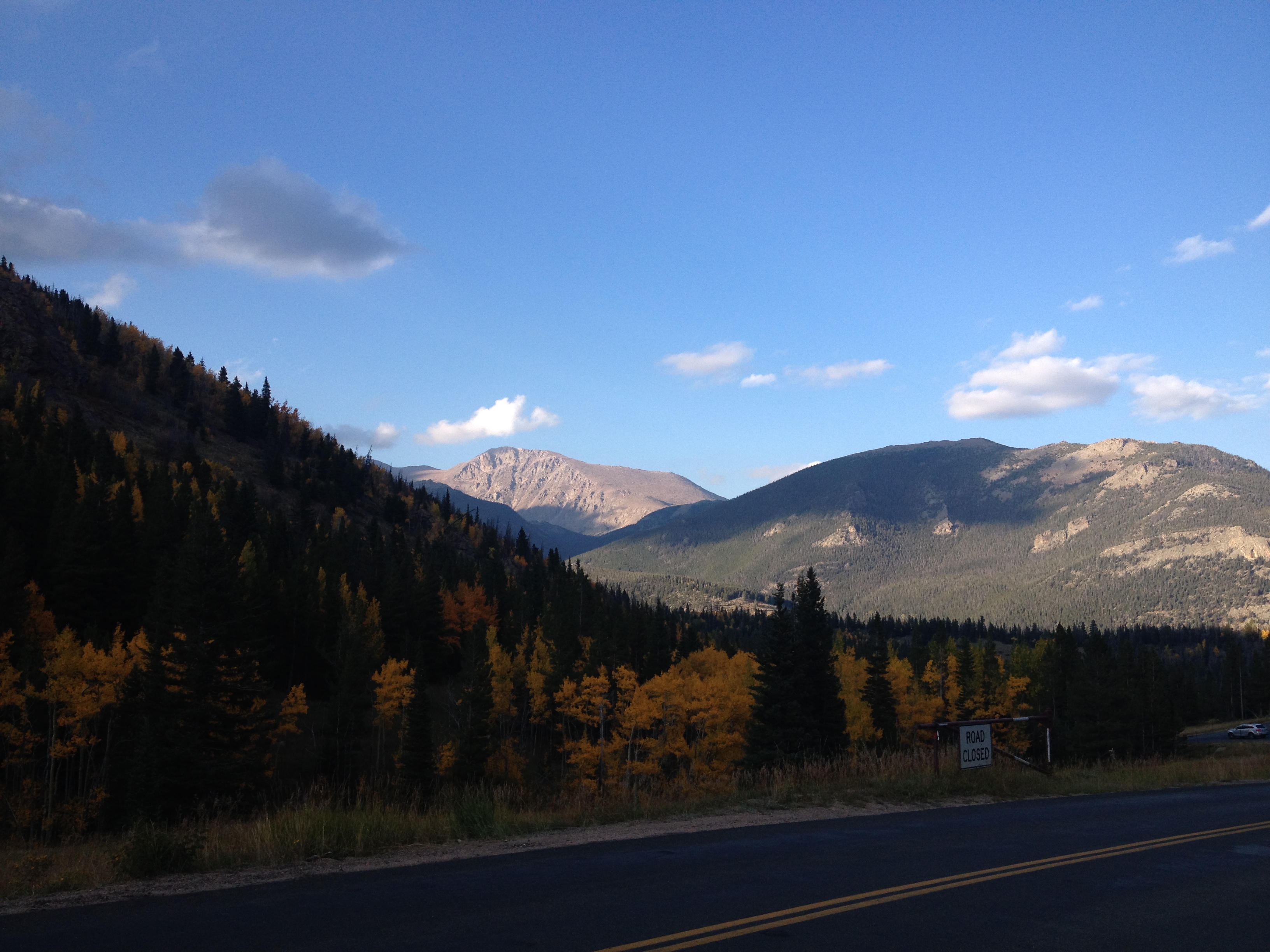
To view some of these Aspen trees, I headed to Rocky Mountain National Park, which actually has more of these trees than I had previously remembered seeing.  Of course, I had never been there during the fall before today, and probably did not pay enough attention to the tree types on my summer trips.  Like most places in Colorado, there are still more pine trees (and other “evergreen” varieties) than Aspens.  But, there are enough to make large patches of yellow and orange stand out while viewing the park.

IMG_2660 IMG_2664

Also, the colors themselves appeared more vivid here than they did in the places I had previously gone to view fall colors in Colorado.  I found out that this is one of the most popular places in Colorado for viewing fall colors.  This weekend, Estes Park is holding their annual Autumn Gold Festival, indicating that this is indeed the best time of year to search for fall colors in Rocky Mountain National Park.

IMG_2661 IMG_2665

The arrival of these fall colors, of course, indicates the changing of the seasons.  They remind us (just in case the football and pumpkin flavored everything is not enough) of the transition that is currently occurring, and, of course, of the winter that lies ahead.  They also remind us of the cyclical nature of most things on this planet.  And, they also remind us that all things on this planet, whether they be as periodic and predictable as an ocean tide, or as complicated as the global economy, undergo periodic transformations.

Those among us currently experiencing a rough period can look to the colors on the trees, and take solace in the fact that nothing is permanent, including situation they are currently in.  Just as the season must change, and just as periods of war and peace are inevitable, one’s current situation will eventually transform too, for better or worse.  And, at some point, regardless of how any particular person feels about their life’s situation, it will come time to move on to the next phase, or the next “chapter” of their life.  We did not chose to enter fall- fall just started.  I am sure there are some that would gladly stay in summer for a few more months.

Alongside, each individual’s periodic transformations, society as a whole also undergoes periodic transformations, which often end up intertwined with each person’s individual story.  Here in the United States, the 1950s-1970s was a time of great transition in which our society became more inclusive and individualistic.  More recently, the proliferation of the internet and later social media transformed the way we communicate.
Of course, with every transition, there is some level of predictability, but also some level of uncertainty with regards to the eventual outcome.  Will the coming winter be bitterly cold, or mild?  How much snow will we get?  Will it be a good ski season?
What can I expect from my new job?  Will my marriage work?  Will I like the city I chose to move to?

And, of course, the European philosophers that ignited the Age of Enlightenment had no clue that these ideas would lead to a series of revolutions amongst their colonized land in the “New World”.  Nor did the global political and economic community know what was to come of these newly established countries until several decades into their existence.

I believe our society is currently undergoing a transition, partly in response to the recent economic collapse, but also partly in response to some of the shortcomings of our current societal structure.  Maybe the internet and social media transformation has yet to be completed, and we are still working out how our society is going to incorporate all of these new innovations.  In-person interaction was somewhat degraded by the proliferation of social media and smart phones, and there is much talk about periodically “unplugging” from technology.  The cause of, and lessons to be taken from, the financial collapse is still very much under debate.  But, with the increased competition for both jobs and business, many are taking aim at one of the most destructive aspects of early 21st Century culture; the demand for instant gratification.  As is the case with any other transition, there is a lot of uncertainty, and what our society will look like in 10 years is anyone’s guess.  But, I am cautiously optimistic about these developments.

IMG_2658

For those unable to get up to their favorite fall color viewing spot this weekend, there is still time.  While many trees have already changed colors, there are some that have yet to “turn”.  Those who make it up to Rocky Mountain National Park over the next couple of weeks will still be able to enjoy some fall colors.

Pacific Beach San Diego

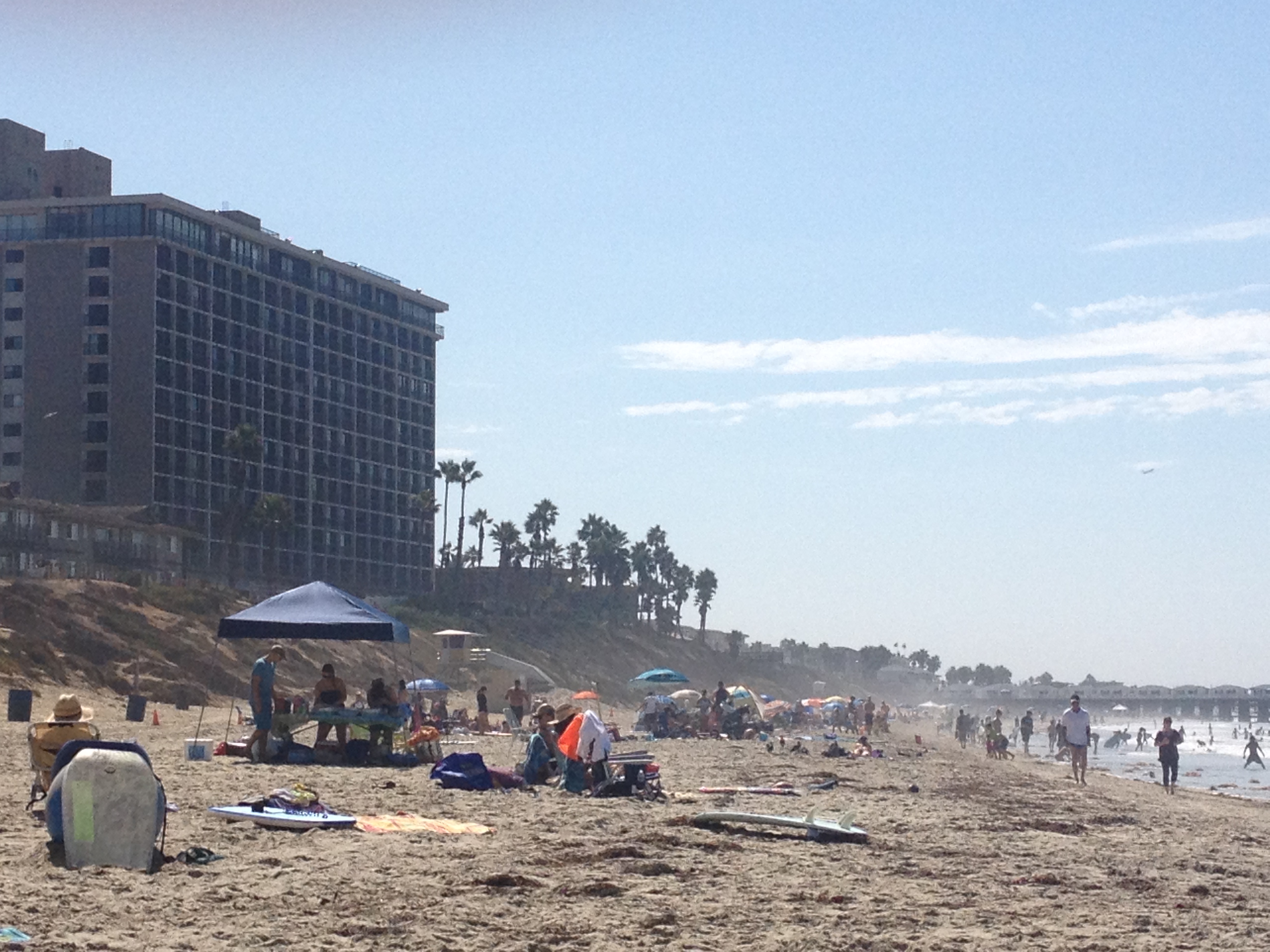
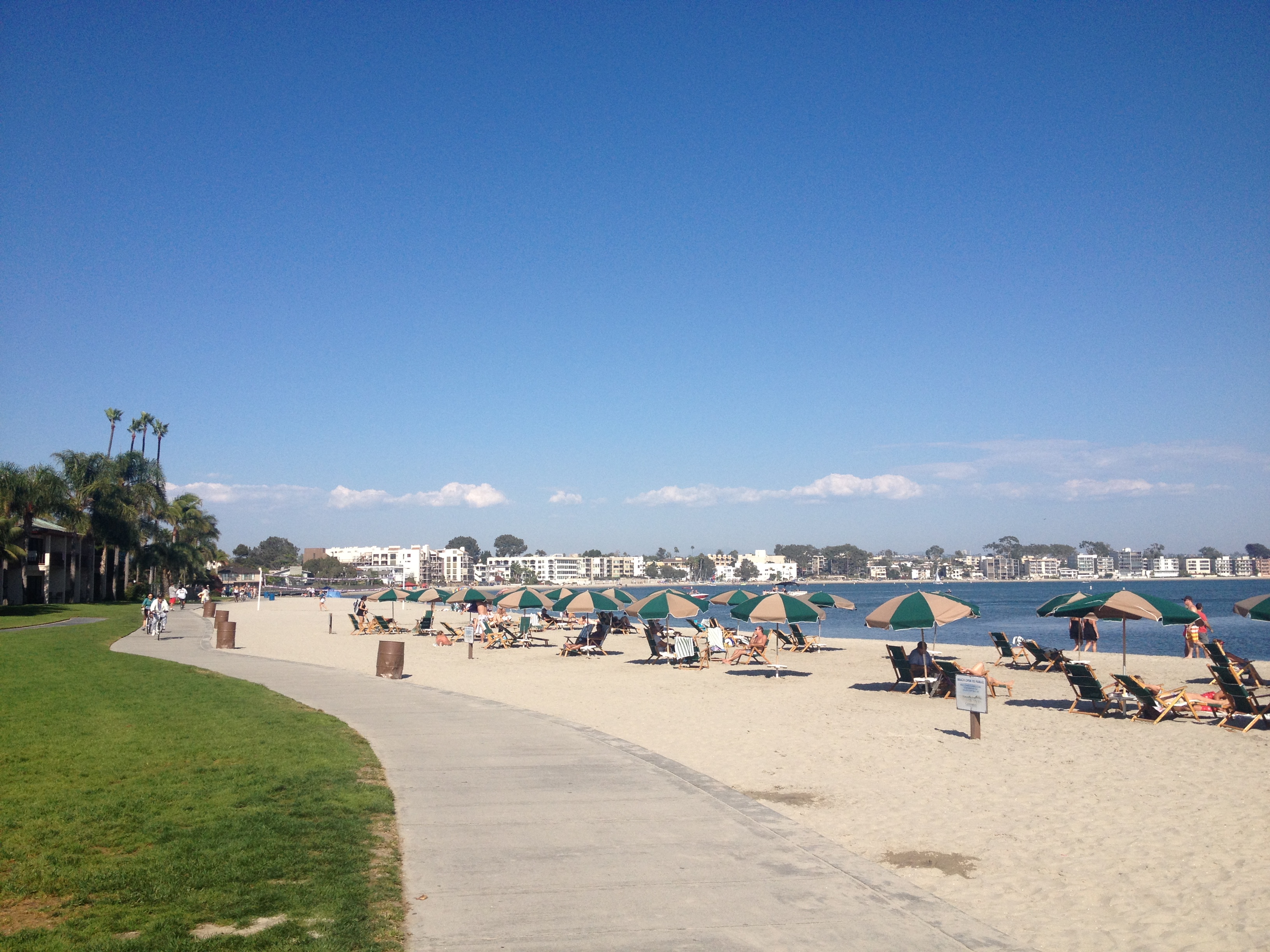
I laid there for over an hour in the hot California sun.  In fact, it was unusually hot for the oceanfront.  While areas further inland regularly get significantly hotter, temperatures well into the 80s with insane humidity is quite rare for the beech.  Despite the unusual conditions, I still captured this California experience.  In fact, the entire time I felt as if I had stepped right into a Red Hot Chili Peppers song.

IMG_2633 IMG_2634

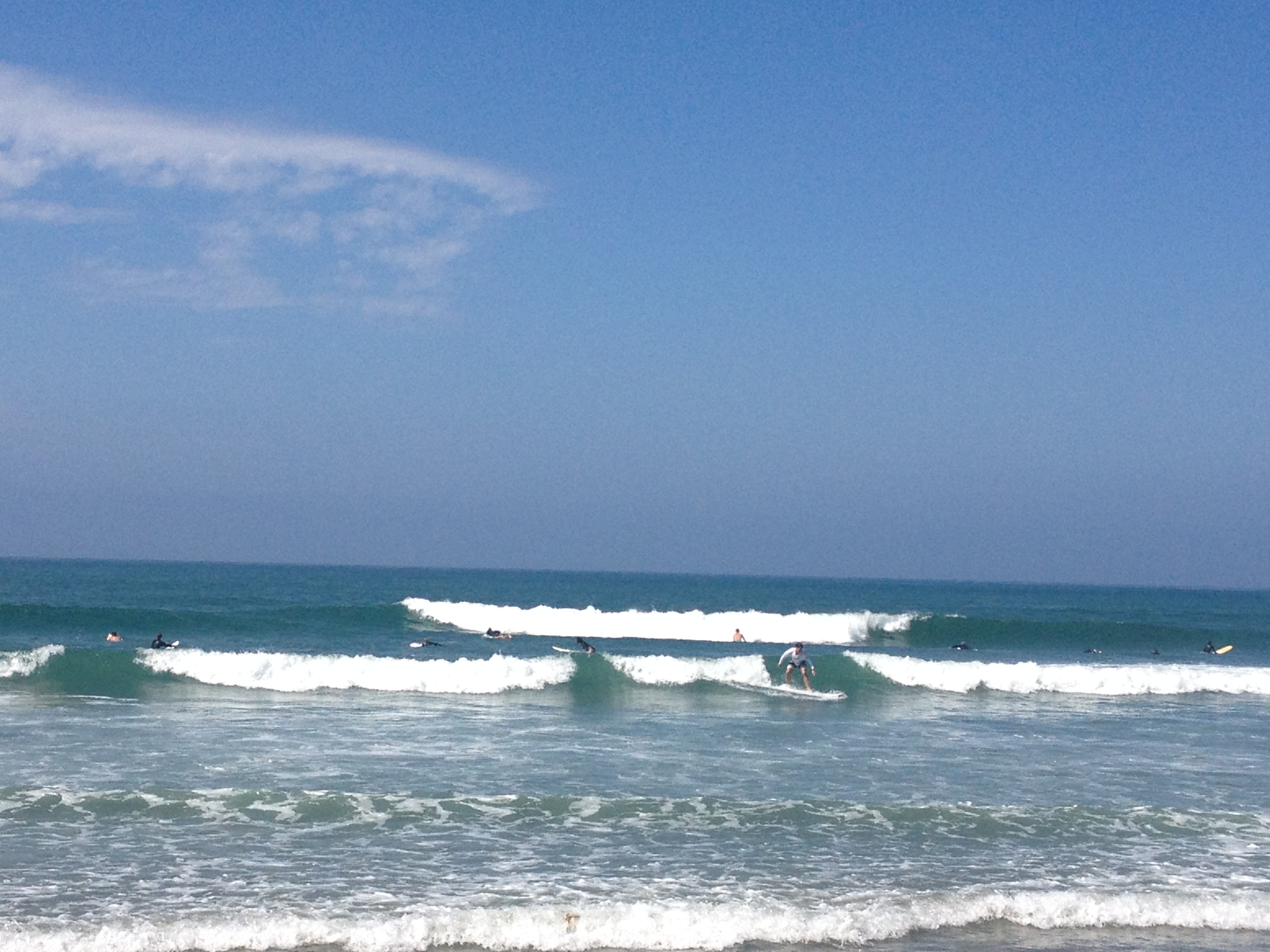
There is the ocean, the palm trees, the waves, and most importantly, the surfers.  Boy were there a lot of surfers.  I had never seen so many surf boards in my life.  Even in my most vivid imagination of a California stereotype, there were not nearly as many surf boards in one place.  On the way to and from the beach, a clear majority of vehicles had surf boards in them.

And I watched, gradually getting a nasty sunburn on my back.  I watched people walk by.  I saw a group of people play football in the water.  I saw about a dozen “wind surfers”, and even got to witness the challenge involved in using the wind, a much more variant force than that of a boat (used for activities like water skiing), to get up onto the water.  The most experienced wind surfers still appeared to require a few attempts to get up onto the water.  By contrast, experienced water skiers seem to always get up on their first attempt.

Mostly, I observed the surfers catch wave after wave.  I wondered if these waves were better or worse than a typical Saturday on Pacific Beach.  I wondered how long it took the better surfers to achieve this level, and whether or not their form was truly as great as it appeared to an outsider like me.

Normally, my attention span would wane much sooner than this.  But I was capturing the moment.  And, also I was quite exhausted.

IMG_2621 IMG_2649

The previous afternoon, I had flown into San Diego and attended my friend’s bachelor party, which was mostly held in Downtown San Diego’s Gas Lamp Quarter.  Similar to the French Quarter in New Orleans, or Midtown Manhattan, this district is touristy and quite expensive, but not overly cheesy.  There are a few chain restaurants and bars, but many of the establishments are unique to San Diego.  The nightlife here is not confined to one or two stretches of a road, as in places like the “Las Vegas Strip”.  The entire square mile was majorly hopping, with restaurants, bars, loud music, dancing, and the sidewalks where quite full with patrons, most of whom likely spent upwards of $100 over the course of the night.

The main thing that set the “Gas Lamp Quarter” apart from similar districts in other large cities was how many times we were solicited, and how aggressively we were solicited, by wait staff at bars and restaurants while walking down the street.  Someone from nearly every restaurant we walked by would talk to us, and tell us about their food and specials and such.  The only other place I remember being solicited walking down the street was along Division Street in Chicago’s Gold Coast, and those conversations were always brief.

IMG_2636 IMG_2638

I only spent three days in San Diego, and a good chunk of it was tied up by the bachelor party, rehearsal, and the wedding itself.  So, I did not get a chance to go to Sea World, or any of the standard San Diego tourist places.  However, I did really appreciate where the wedding was held; At a resort called the Catamaran along San Diego’s Sail Bay.

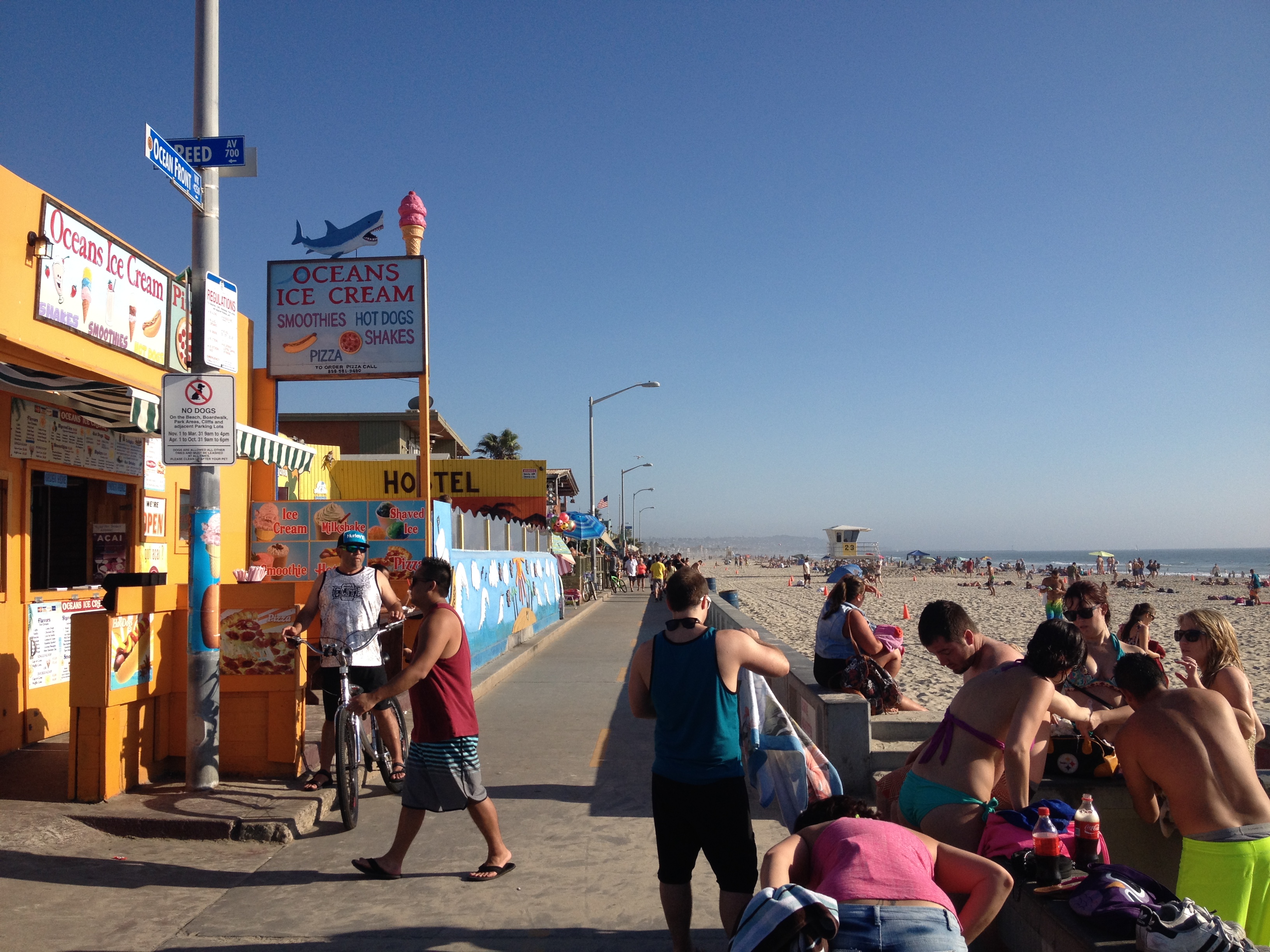
At this location, I spent most of my time in the Pacific Beech (and Mission Beach) area.  Aside from the standard boardwalk, the neighborhood has several active roads with lots of restaurants and bars, and is the kind of place where you can find almost anything within a short walk of each other, as well as the beech.  Both during the day, and in the evening, streets like Mission, Grand, and Garnett were filled with people taking part in many different activities.

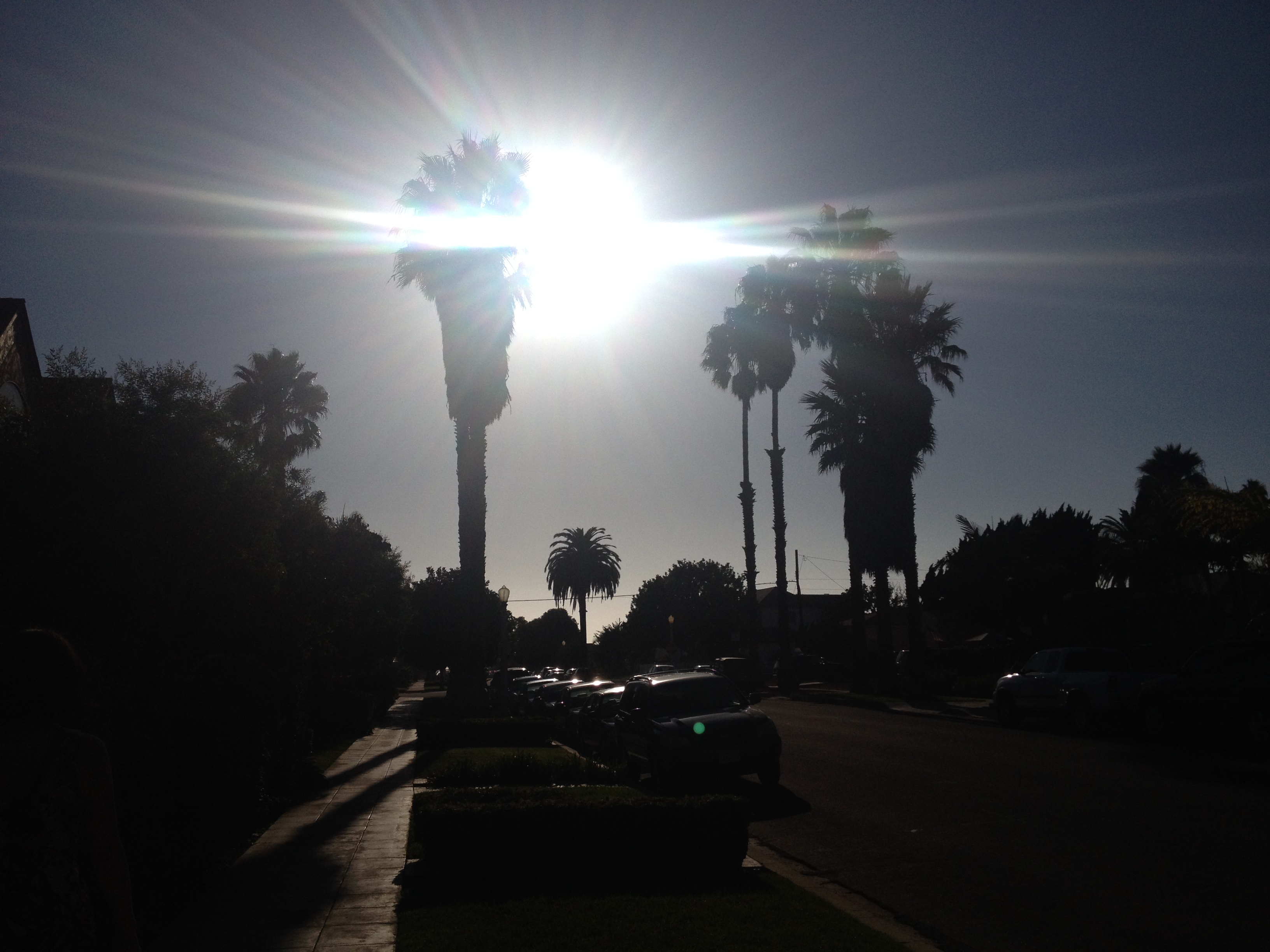
California is a unique place with a distinct culture, and although I was only here for three days, I did get to observe a lot of it for myself.  People here really do drive everywhere!  Even though Pacific Beech is a walkable area on a grid system, the type of area you would expect to be more pedestrian/transit oriented in another major city, almost everyone seemed to be arriving here by car.  And this means that parking is hard to find in a lot of places.  As we left the beech that day, we were asked by a car full of surfers coming to the beech where our car was, in hopes that they could take our parking spot.

IMG_2648

While San Diego does have a transit system, almost all of the people I talked to basically did not consider it an option.  I did ride on both a bus and the train.  The bus driver told me there were no “transfers” (i.e. from one bus to another or from bus to train on one fare), making the system seem inconvineint for most.

IMG_2635

The fish tacos here are truly amazing!  And it really is the tortillas that make some fish tacos  more amazing than others.

IMG_2629

There are tons of other foods that are somewhat unique to the area, including a lot of foods with avocado and/or sprouts.  I particularly enjoyed San Diego style fries, which include meat, cheese, avocado, and garlic.

Although Southern California is known to be less obsessed with football than the rest of the U.S., there are still tons of people who get really into football, both college and professional.

Bicycle riders are clearly divided into two types; One that rides hard core and comes out early in the day wearing full bike gear, and one that rides cruisers, goes about 10 mph, and only pedals when absolutely necessary.  The later group does not wear helmets.

People here in general appear healthy- about as healthy as Denver, and far more healthy than the Midwest.

I really wish to return to San Diego, as I still feel there is much more to do that time allotted.  In a future trip, I think it would be neat to actually take a lesson and learn to surf, spend some time in some of the other popular neighborhoods, and I would really like to have some sushi, as there is probably a lot of really good sushi here.  And, I definitely wouldn’t mind seeing more scenes like this one.

IMG_2619

The Way We Used to Travel

IMG_2512

One hundred years ago, most of us traveled on steam engine trains.  The proliferation of railroads across the continent during the 19th Century revolutionized how we got around, and connected us in ways we had never been before.  At the start of the 19th century, it took Lewis and Clark multiple years to get from one end of the continent to the other.  By the end of the 19th Century, that trip could be made in only one week by train.

During the 20th Century, more and more people were able to afford automobiles and flights.  Many of the train lines across the country went away as people switched transportation methods.  Those that remain have long since converted to more modern technologies; diesel or electric, and are primarily used for commutes between cities and/or suburbs at times of high traffic volume.

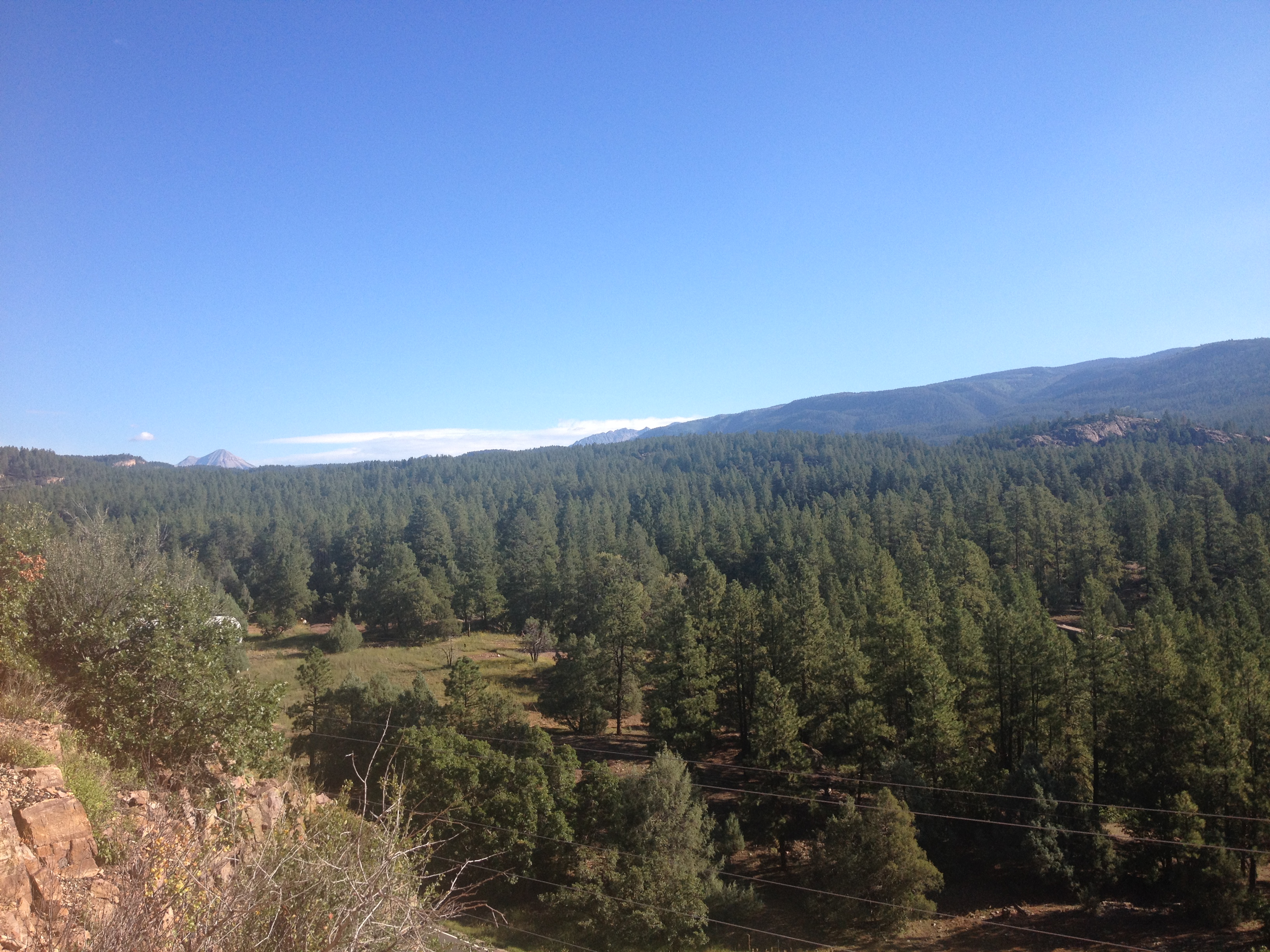
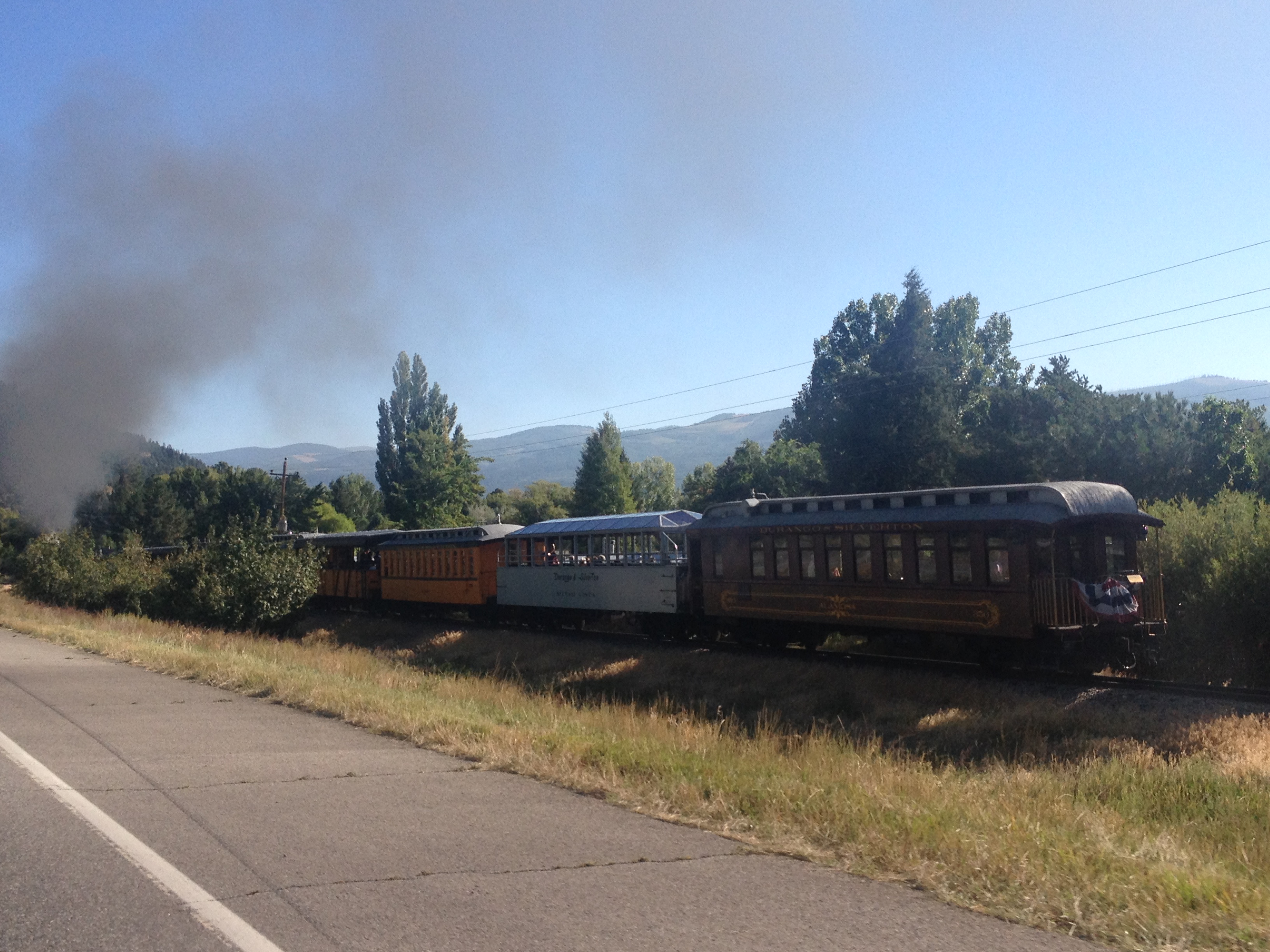
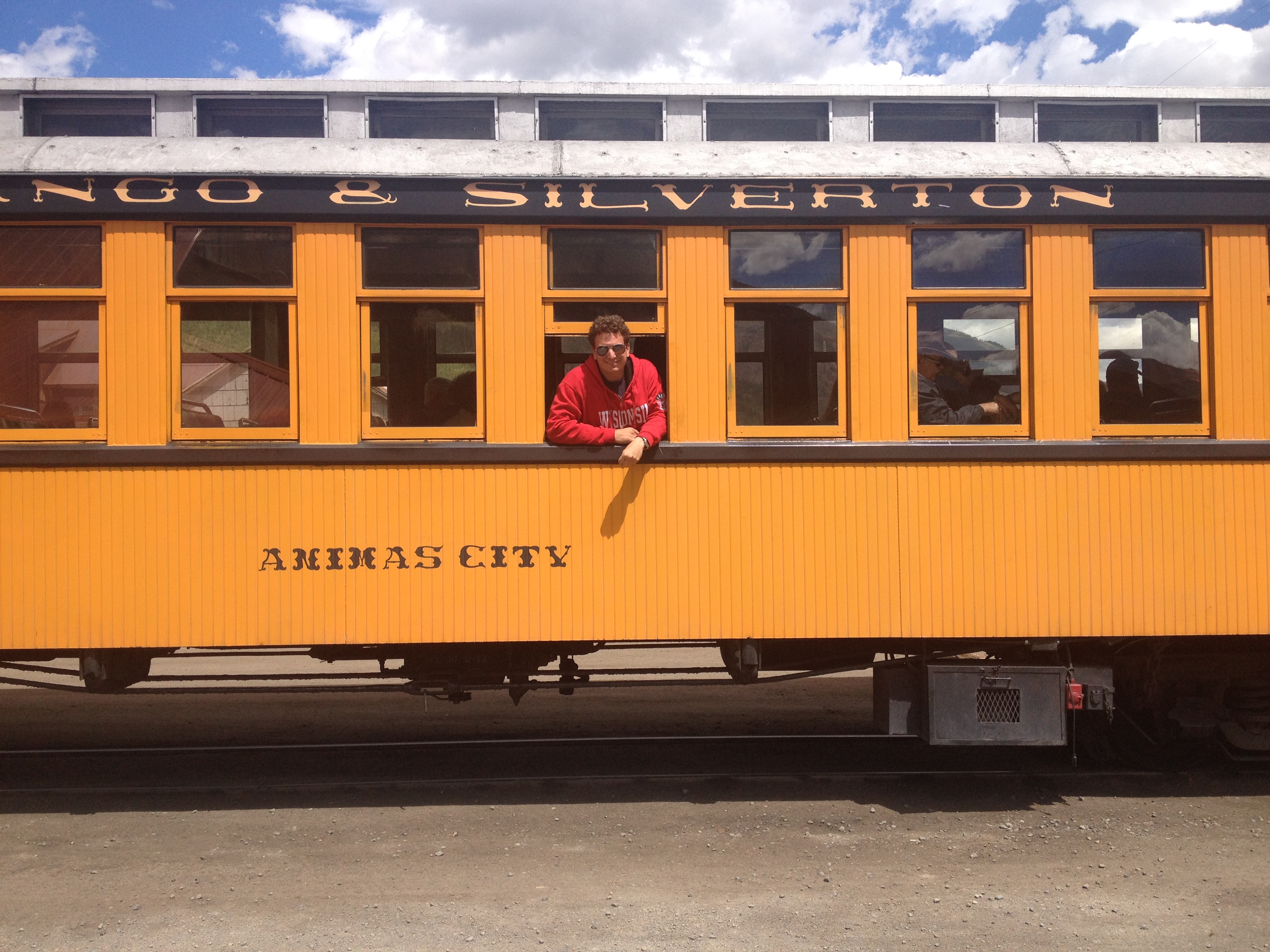
There are a few places where one can still ride a steam train, exactly how we used to ride in the late 19th and early 20th centuries.  One of those places is in the San Juan Mountains of Southwestern Colorado, where a Narrow Gauge Railway offers daily trips between Durango and Silverton, primarily for tourism purposes.

IMG_2475 IMG_2477

The train schedule is set for tourists to ride the train from Durango north to Silverton in the morning, and then return in the afternoon.  There are three departure time options, the earliest of which (and the one we took) departs at 8 A.M.

IMG_2479

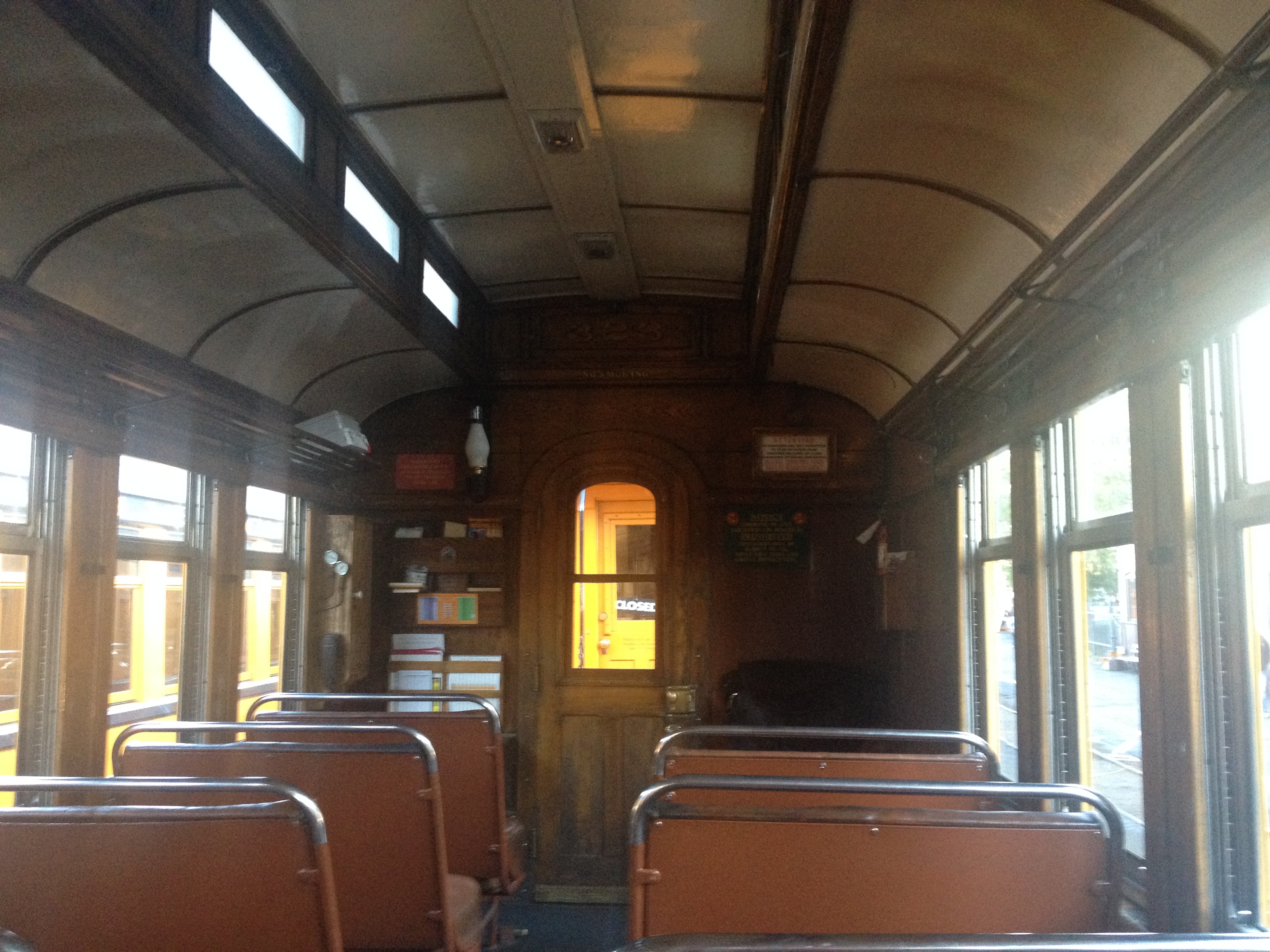
Part of the novelty of taking a train ride like this is how authentic the ride is, including the inside of the train.  Today, we are accustomed to traveling with a higher level of comfort than this.  But, the inside of this train definitely had the same exact feeling as one would have experienced one hundred years ago, making the experience as authentic as one can get.

This particular train route, from Durango to Silverton, follows alongside the Animas River the entire length of it’s 45.2 mile route.  The breathtaking scenery in which this train traverses makes the train ride appeal to many different kinds of tourists, as opposed to just train enthusiasts.

IMG_2481 IMG_2485

The train leaves Durango, at 6512′ above sea level, and begins it’s climb quite slowly, through a wide open river valley.

IMG_2493 IMG_2543

For the first section of the trip, the train follows the same path as the highway.

IMG_2513 IMG_2497

Some 15 or 20 miles into the trip, the train deviates paths from the highway, at a large lake called Electra Lake.  This is where the scenery really becomes quite unique and breathtaking.

IMG_2502 IMG_2504 IMG_2515 IMG_2516

The river valley becomes much more narrow as it meanders through the Needle Mountains.  The narrowness of the valley is the reason the train is “Narrow Gague”, and also the reason that roads could not be built to follow the river valley.

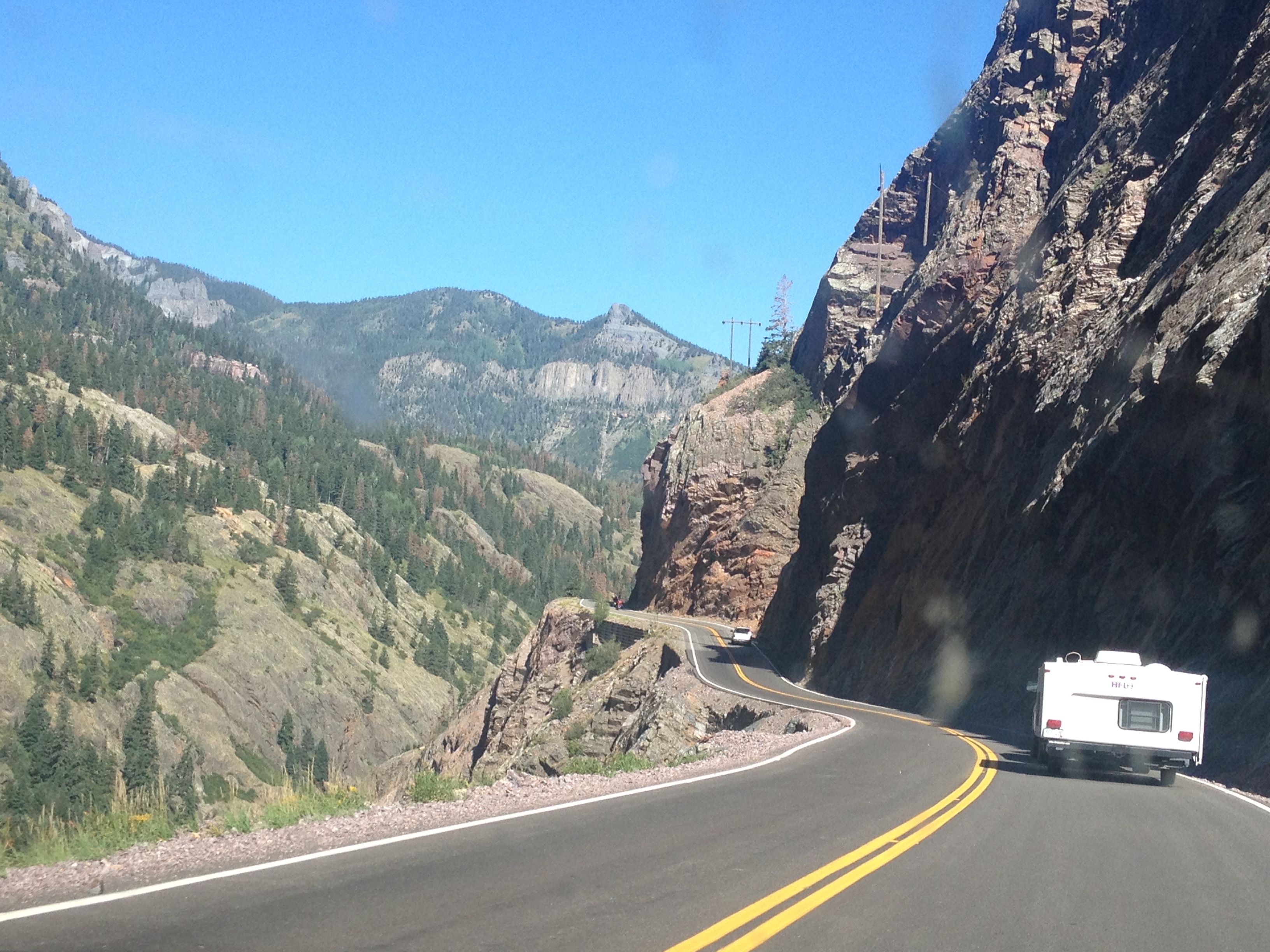
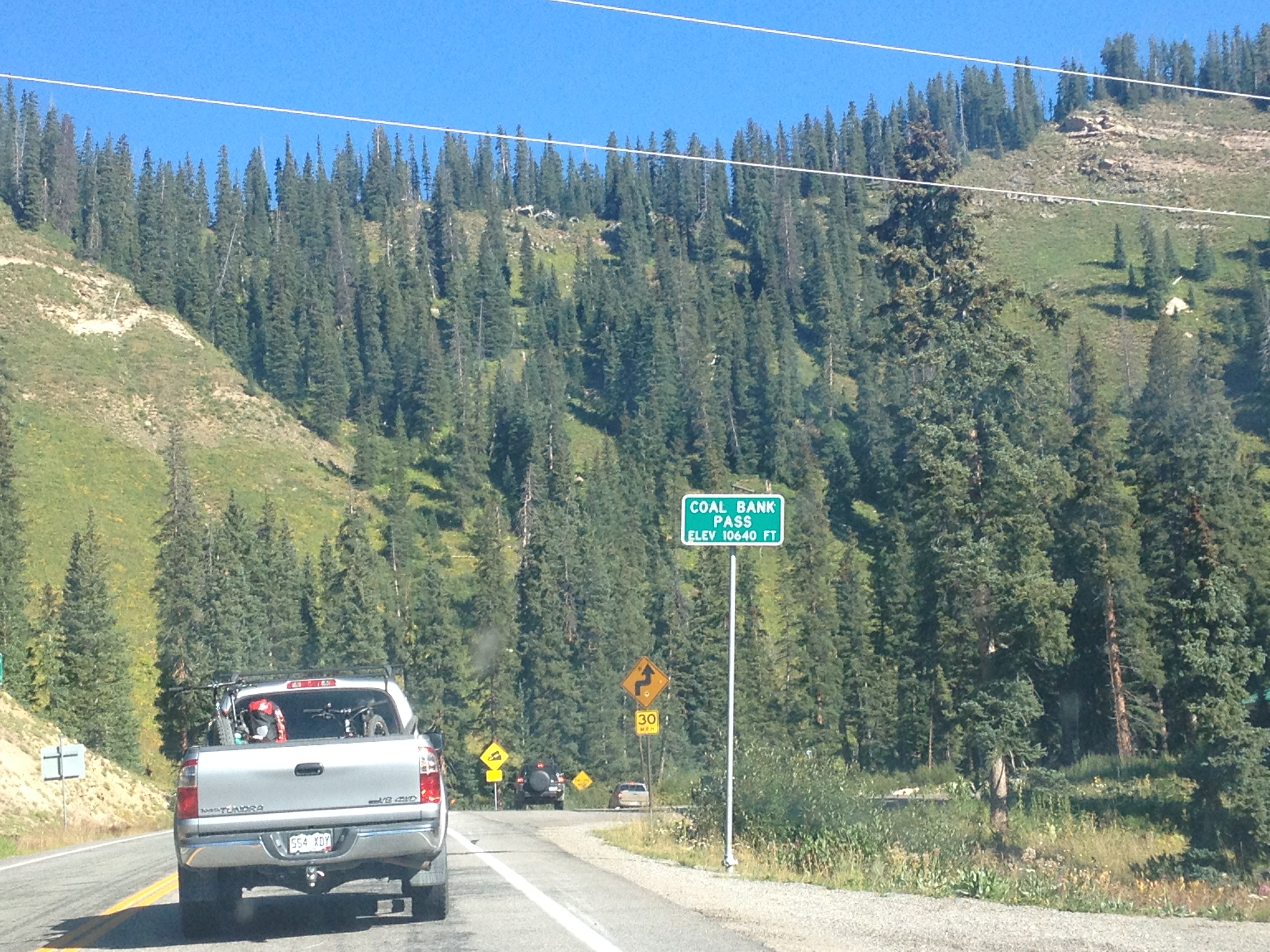
“Million Dollar Highway”, the highway that connects Durango to Silverton (and eventually Ouray), was necessarily built along a different route; traversing two mountain passes well above Silverton’s elevation of 9300(-ish) feet.

IMG_2547 IMG_2548

The route along “Million Dollar Highway” is also considered very scenic, but in a different way.  In fact, this highway is also a popular bicycle route, and even the venue of an annual bicycle race.  I would definitely recommend experiencing the journey from Durango to Silverton in both the old fashioned (steam train), and the modern (by car or with a nice road bike) way if time permits, as each set of views are great in a distinct way.

IMG_2517 IMG_2521 IMG_2522 IMG_2524

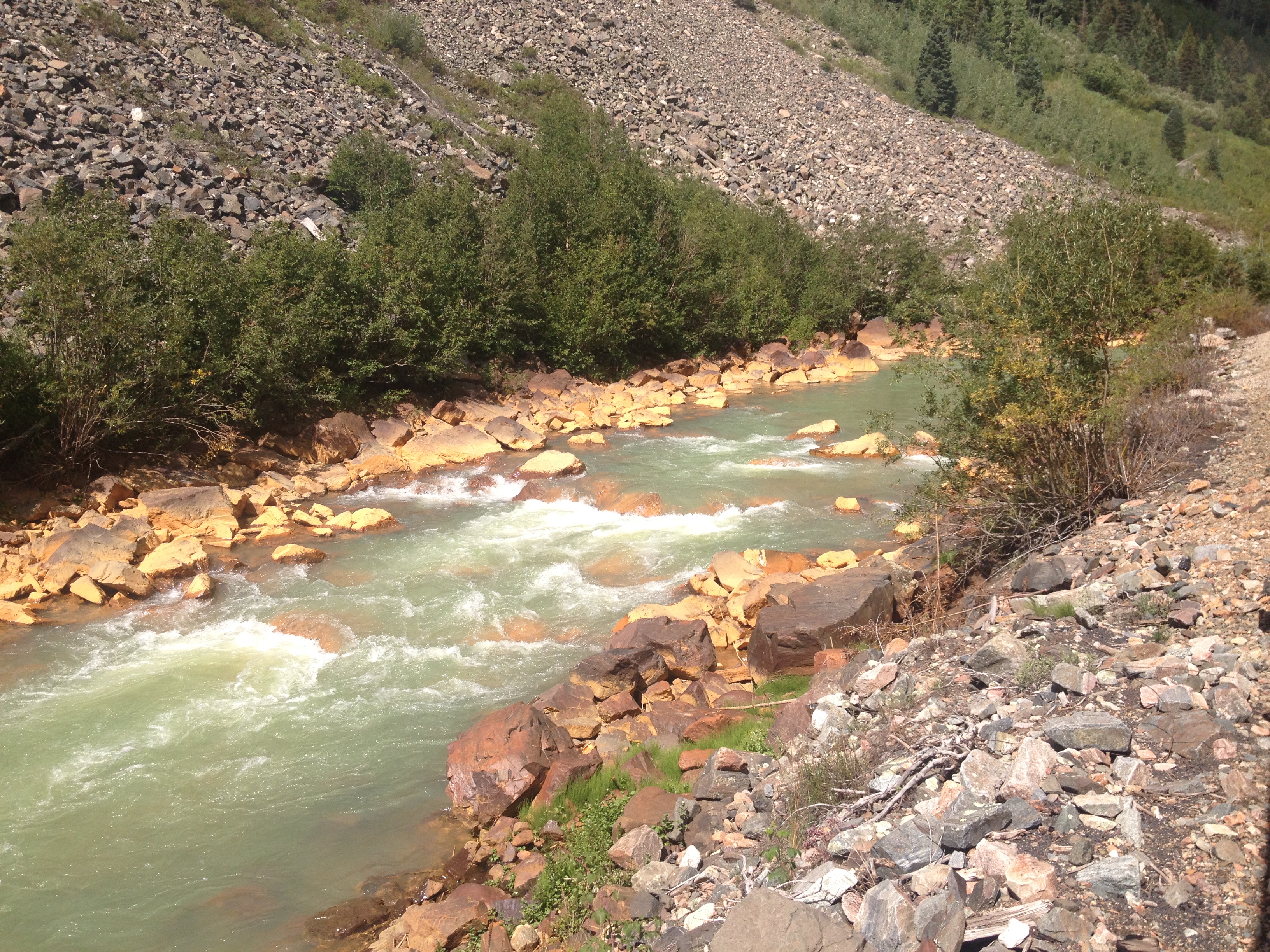
The train completes it’s journey into town in the heart of the Needle Mountains, where the gradual change in the color of the rocks surrounding the river reminds riders of the town’s history as a destination for miners.

IMG_2550 IMG_2552

Along Million Dollar Highway, motorists and cyclists view the Needle Mountains from both a higher elevation and a little bit of a distance, seeing them in their entirety.  This is followed by a descent that first winds around Molas Lake, and then provides an aerial view of the town.

IMG_2525 IMG_2534

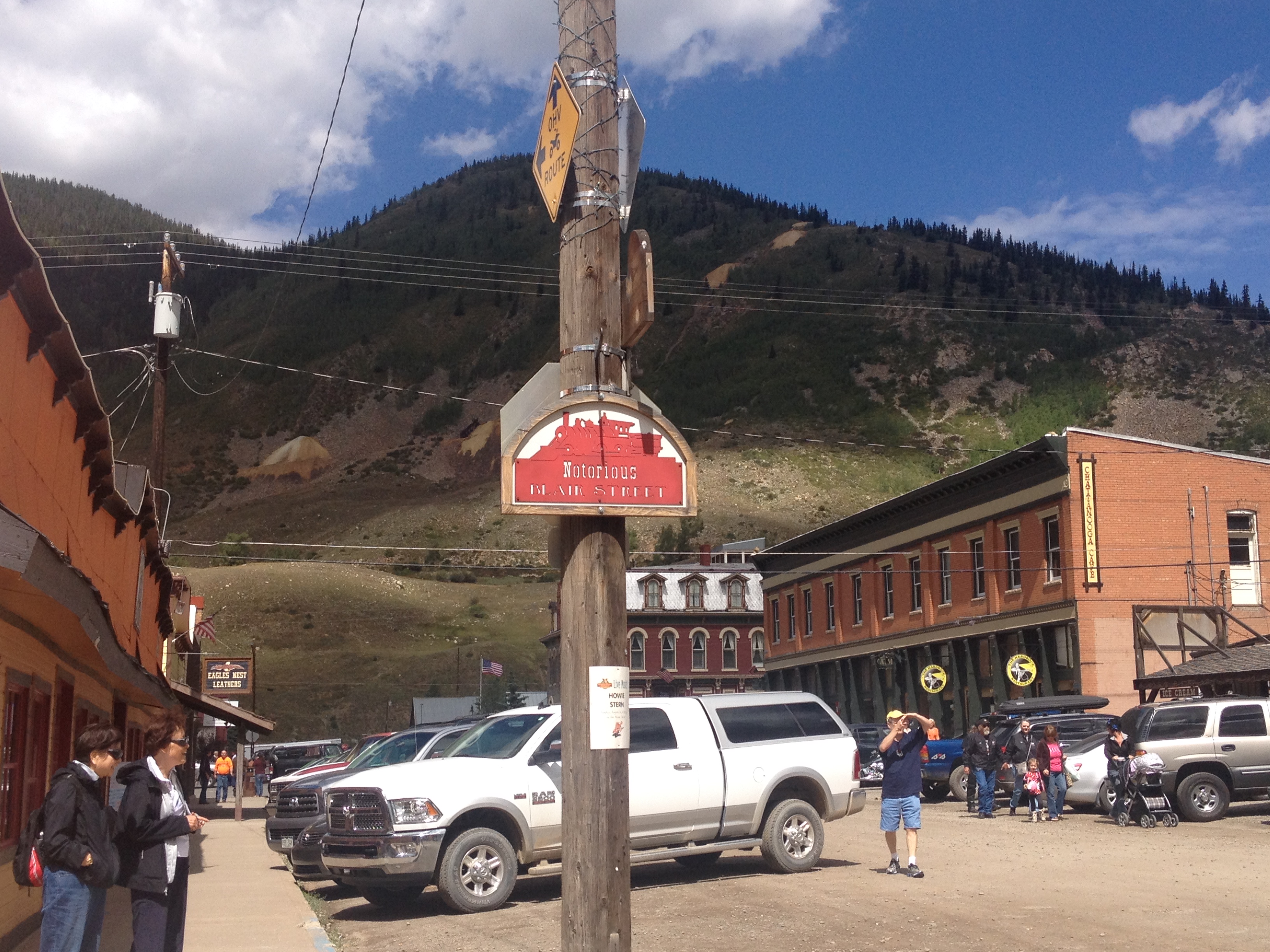
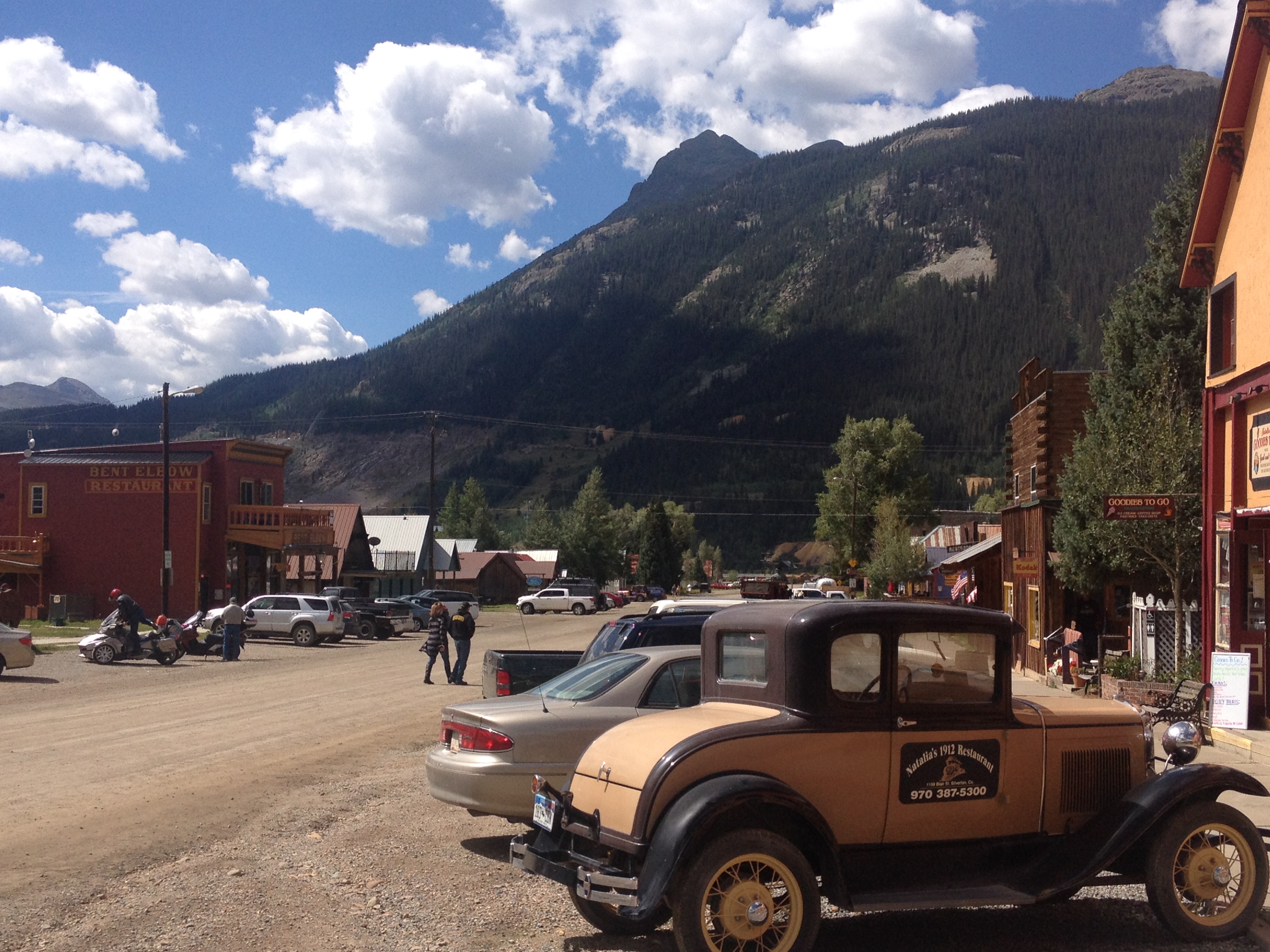
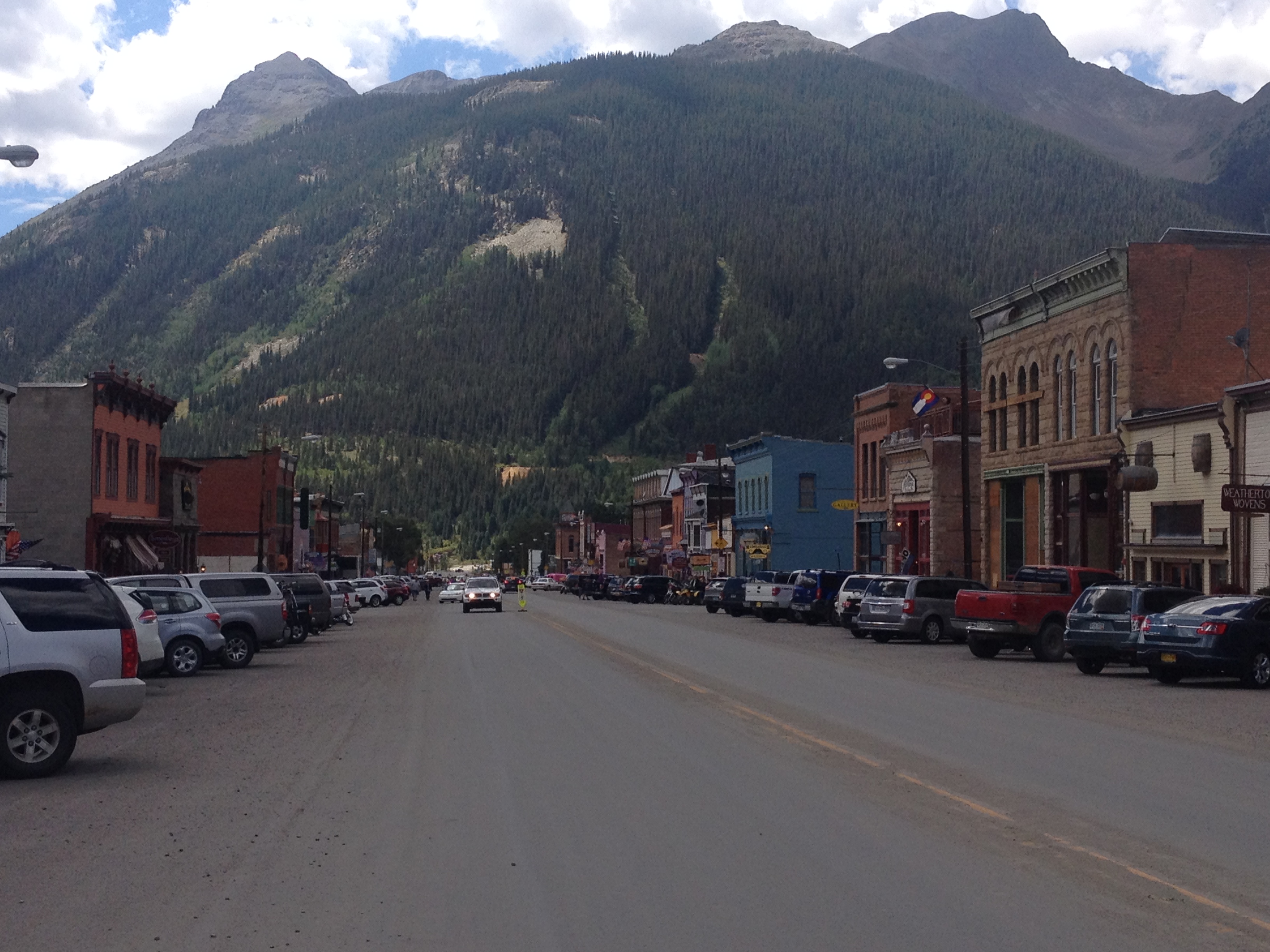
Silverton is quite the unique place as well.  As soon as I stepped off the train, I felt as if I had entered the Old West.  In fact, I have never felt more genuinely in the Old West in an operational town (as opposed to a restoration like South Park City) as I did in Silverton.

IMG_2527 IMG_2530

With the exception of Main Street, Silverton’s roads remain unpaved.  Many of the storefronts are still reminiscent of Old West businesses, in design and font, and there are even a few cars that resemble those produced in the early days of the automobile’s availability.

We at a restaurant called Grumpy’s Saloon, right in the heart of town.  This restaurant also felt like an Old West recreation.  Between the wall decorations, the waitresses dressed clothing that seemed like it came right out a film like Maverick, and an old man playing tunes on the piano, it actually felt as if they were trying too hard.

IMG_2528 IMG_2529

The only real drawback to taking the Durango-Silverton Narrow Gague Railway is the length of time the trip takes.  A trip of only 45.2 miles actually takes close to three and a half hours each way. By contrast, the trip by car took roughly and hour.  And, while it may take around the same amount of time for a cyclist like me to get from Durango to Silverton, the mainly downhill return trip could likely be done in around two hours.

I guess, like all other aspects of this trip, the travel time is also true to the exact way it was one hundred years ago.  While it was great to get the real experience, the return trip did start to drag on a bit, particularly when the train entered the less exciting scenery in the later part of the return trip to Durango.  My advice would be to either pay the extra money to ride the bus on the return trip, or to bring a book or magazine for the last 60-90 minutes of this trip.

IMG_2532