Category Archives: Midwest

WE Fest and the Culture of Northern Minnesota

IMG_4339.jpg

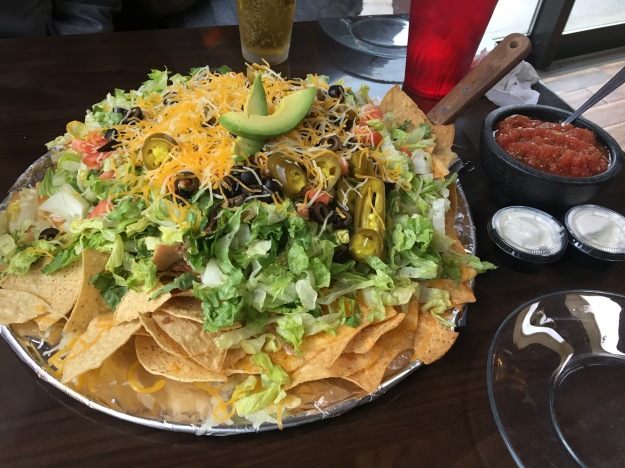
What is American Culture? This is a much tougher question to answer than most people would want to admit. Sure, there are those things about America that foreigners notice right away. For instance, the portion sizes.
IMG_4354

But, large portions of food, large amounts of soda, big cars, loudness and exhibitionism are not the only things that define American Culture. In fact, they do not even unite the entire nation, as there are places in the United States where these are not the customs.

American Culture cannot be described in one sentence, one paragraph, or even one page because of how far from homogenous it is. Traveling within the country, one would find many different sub-cultures. It is even possible to argue that every state, every city, and sometimes every neighborhood, has its own unique traditions and customs.

Of course, to claim there are thousands of sub-cultures in the country would be, in a way, getting too hung up on minor details. However, there is definitely grounds on which to claim there are several dozen cultures with significant distinctions from one another.

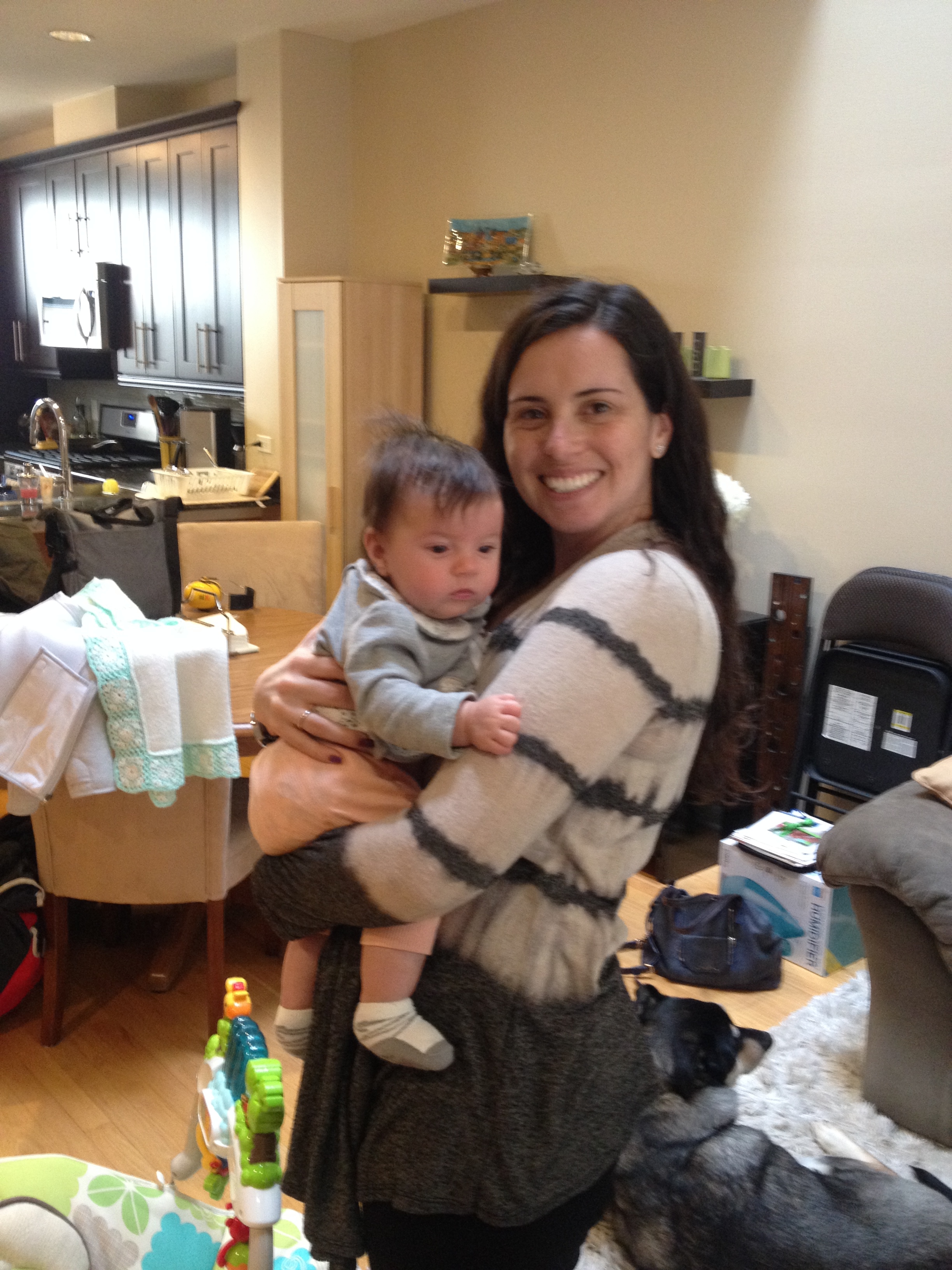
The culture of Minnesota can generally be thought of as in the same category as Wisconsin and Michigan. The entire region has an abundance of lakes. Minnesota is “The Land of 10,000 Lakes”. This culture seems to revolve around going to the lake, being on a boat, fishing, and drinking beer. People from the metropolitan areas often own second homes or cabins along a lake and travel there on the weekends. This seven week old infant living in Saint Paul is already preparing for his third trip “up to the lake”.

IMG_4426.jpg

Northern Minnesota specifically is fairly sparsely populated, putting it one one side of the most obvious cultural divide in the U.S.; urban vs. rural. Generally speaking, on either side of this divide between large metropolitan areas and places more sparsely populated. The expectations are different, the attitudes are different, and, the music is different. There is perhaps no better way to get immersed in the culture of rural America than to go to a country music festival.
IMG_4363.jpg

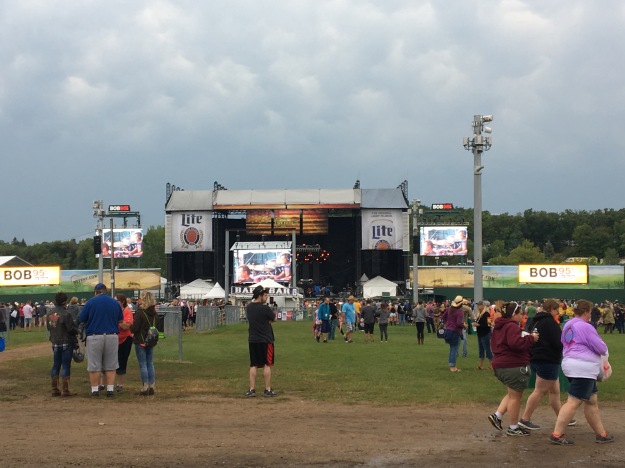
WE Fest is a major country music festival in Detroit Lakes, MN. The attendance, in 2018, was said to have topped 65,000. Here, the different customs and attitudes were on full display.

The U.S.A flag was everywhere! So were messages, from performers and attendees alike (often on their shirts) showing support for the American way of like, the military, and other mainstays of American culture.

This is not to say people in the cities do not love their country. But, there does seem to be significantly less exhibitionism about it. There is also, in some sub-cultures, particularly the ones centered around major academic institutions, a greater willingness to criticize actions taken by the United States of America. In some cases, this comes across as downright cynicism.

To be honest, there is something about the flag waving, proud, traditional rural culture that feels warmer …  happier. It feels far better to believe in something and take pride in it than to succumb to cynicism and long for something else. Cynicism can feel quite cold at times, and self-loathing creates sadness.

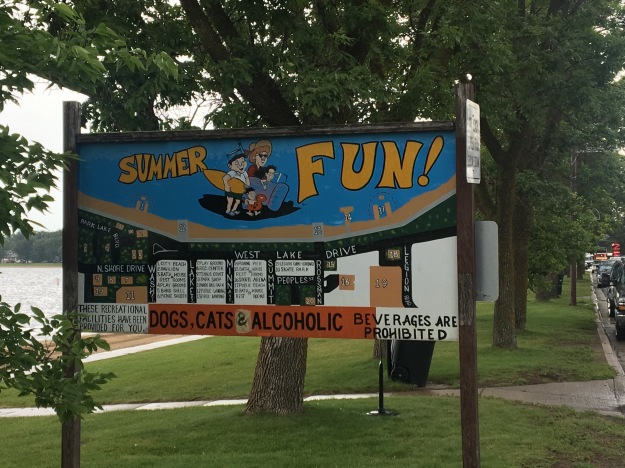
Yet, the more traditional culture can also feel unnecessarily restrictive.
IMG_4349.jpg

Seriously, let the dogs and cats have fun too!

While exhibitionism can be annoying to some people, taking excessive pride in one’s country truly only becomes harmful when it leads to one of two outcomes.

First is the hostile treatment of outsiders. In the case of National pride, this would be treating non-Americans as lesser human beings. This is not to say that most, or even one-in-ten flag waving rural Americans have ever advocated treating outsiders poorly. It is to say that, excessive pride in a group of people, whether it be a nationality, a gang, or even something like a personality type, can lead to some form of non-beneficial disconnect from those with different traits.

Second, is when pride leads to an attitude where no criticism, even if constructive, is tolerated. Not all decisions are good decisions.

IMG_4408.jpg

Loving another human being can sometimes mean needing to tell that person when they are choosing the wrong course of action. Loving oneself means seeking ways in which to improve. The same can be said for a nation. Like an individual, a nation needs to try to avoid poor decisions and seek ways in which to improve. Pride can lead to avoiding all criticism and seeing no need to take suggestions or improve, which is detrimental.

Maybe this nation, like every nation, needs people to remind them that the nation is great, with a great culture and heritage. But, also needs people to point out some shortcomings, help it avoid repeating past mistakes, and point out areas where improvements can be made. These are the traits of a balanced individual, and hopefully, going forward, can be the traits of a balanced nation.

The Largest Farmers Market in the USA

IMG_3676.jpg

It is the farmers market that ruined me for all other farmers markets. When I lived in Madison, Wisconsin, for several years, I would regularly attend the Dane County Farmer’s Market, the largest producer-only farmer’s market in the country. Every Saturday morning during the warm season, the entire capital square would be filled with vendors, selling fresh produce, flowers, baked goods, and, of course, because this is Wisconsin, cheese and meat.

Each Saturday, between 9 A.M. and noon, crowds of people pack the sidewalks that surround the capitol square, creating a lively scene. It was enough volume, enough activity, that every other farmer’s market I visited after this one has left me asking “Is this it”?

That is partially because the Dane County Farmers Market is a unique experience in a unique place. It was included as a “must see” in the book 1,000 Places to See in the USA & Canada Before You Die.

The book, however, was published in 2007, and a lot has changed since then. One distinct characteristic of the 21st century is the presence of simultaneous contradictory trends. For example, we have a new generation of people emerging who both spend over nine hours per day in front of screens and prefer face-to-face interactions. Likewise, while obesity rates continue to climb, people are also becoming more health conscious and more aware of the food they consume.

Specifically, with detox diets, and awareness of the amount of waste caused by our food distribution system, more and more people are desiring locally sourced food. This can be seen at grocery stores and even some restaurants, where more and more displays indicate that food was produced on a “local” farm. Farmers markets are expanding everywhere to meet this increasing demand to buy locally produced preservative free produce. Some lists of top farmers markets in the USA published more recently do not even include the Dane County Farmers Market.

The Dane County Farmers Market still certainly represents a unique experience, as it has always been about more than just the vendors.

As far as I can remember, Madison has always been a very political town. On all four corners of the square, booths promoting political causes and local candidates are an expected presence. Along the roads that radiate outward from the Capitol Square, more interesting activity can be found, including live performances, some additional vendors and demonstrations of activities like wood carving, and even an impromptu children’s play area placed in front of the children’s museum.

I would say that Madison, Wisconsin is certainly more interesting than most towns around this size. The college campus guarantees plenty of interesting cultural activities. The pedestrian mall, State Street, that connects the capitol with campus is always active, even if it does have a speed limit that just begs people to break it… on their bicycles.

IMG_3687.jpg

And there are the lakes, four of them to be exact, of pretty good size, one of which is directly adjacent to the University.

IMG_3691

IMG_3661.jpg

The city has two other characteristics that, having visited a lot of different places, feel quite surprising.

One is how strong drinks are mixed here, particularly on State Street. I ordered a make-your-own-bloody mary at one of the many establishments on State Street. Restaurants that offer this beverage typically provide a glass with vodka to mix with the other ingredients at the bloody mary bar. This is the only place where the glass provided to me was filled halfway up! Mixed drinks at other bars are also quite strong compared to the ones in most other cities.

From a now outsider perspective, it is also surprising to see how politically one-sided Madison is. Signs promoting events and groups, conversations around town and even signs in front of local businesses are quite frequently politically charged, way more so than in most other cities and towns. They are all from one side. It is as if those on the other side had been silenced or run out of town. In a State that is quite close to evenly divided politically, it feels strange to be in a place where one side has near 100% dominance of the discussion.

IMG_3654.jpg

Sometimes I find it depressingly easy for people who live in cities to forget what region they are in, on a larger scale. Traveling around the country, it often feels like all cities are tying to build the exact same amenities as each other; luxury apartments, shared workspaces, microbreweries, and art galleries. In my current hometown of Denver there is a constant reminder of where we are, the mountains to the West which tower over the skyscrapers of the city. The Midwest does not have that, however, seeing booth after booth selling cheese curds, other agricultural products, and products like venison jerky is as clear of a reminder to any that Madison is part of Wisconsin, which is part of the Midwest.

The Surf Ballroom; A little bit of History in Iowa

IMG_3613

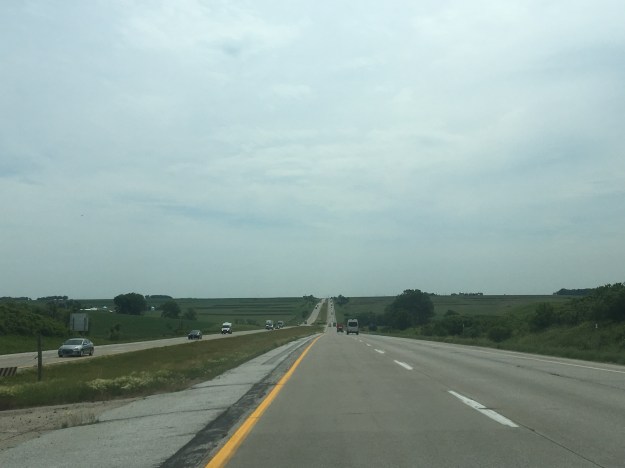
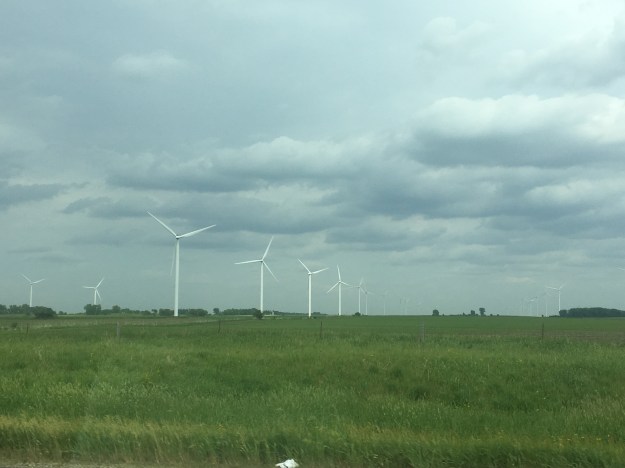
When one thinks of Iowa, a specific image comes to mind: One of soft rolling hills, and farms as far as the eye can see in all directions, where the sky can sometimes take on a characteristically midwestern form of murky thin cloudiness, giving a feeling that is neither cloudy nor sunny. Traveling across the state, this scene shifts quite little as the miles go by. The scenery is as steady and reliable as the culture.

Some people have a deep appreciation for the role that this corridor plays in agriculture and transportation, as indicated by this wall art at the Worlds Largest Truck Stop.

IMG_3719.jpg

Others find it monotonous and unbearable. People have even written parodies about how uninteresting and unpleasant a drive across Iowa is. However, as is the case with most places, there is more to it than what one will see from an interstate highway, whose primary purpose is to provide the most efficient route between cities for trucks.

Tucked away among the endless miles of corn fields are a surprising number of lakes that cannot be seen from the interstate.

20130605-204854.jpg

As well as the sites of a surprising amount of our history.

Most music fans are familiar with “The Day the Music Died“, February 3, 1959, when three of Rock and Roll’s biggest stars were all killed in a tragic plane crash. It was an event that nearly torpedoed the still young music genre’s rise to the top. It had the potential to significantly change the path music took for the remainder of the 20th Century, which could have had a major effect on the social and political movements that transformed our society from the middle of the century to where it is today.

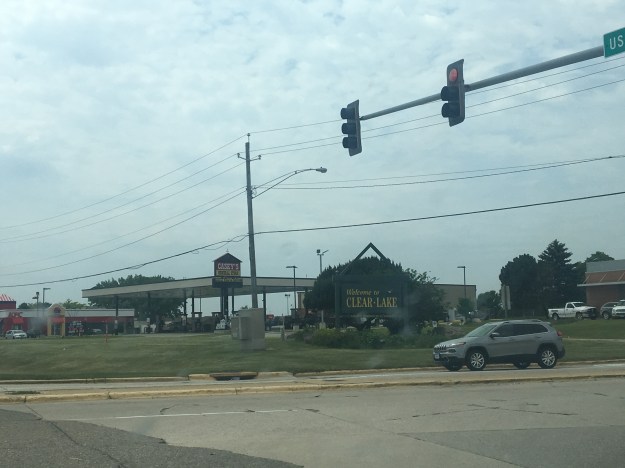
What few people know, though, is that all of this occurred in Northern Iowa, in a town called Clear Lake. Clear Lake is a town not unlike many other towns in Iowa, and the structure and establishments feel generally like anywhere in the Midwest.

IMG_3615

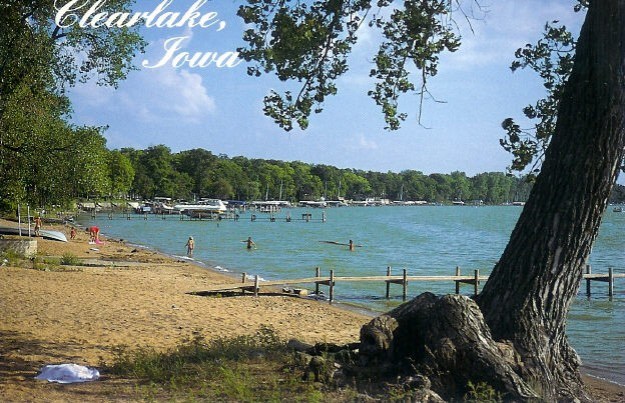
Like many place in Iowa, it has a surprisingly beautiful lake, depicted at its best by this postcard.

ClearLake_Iowa

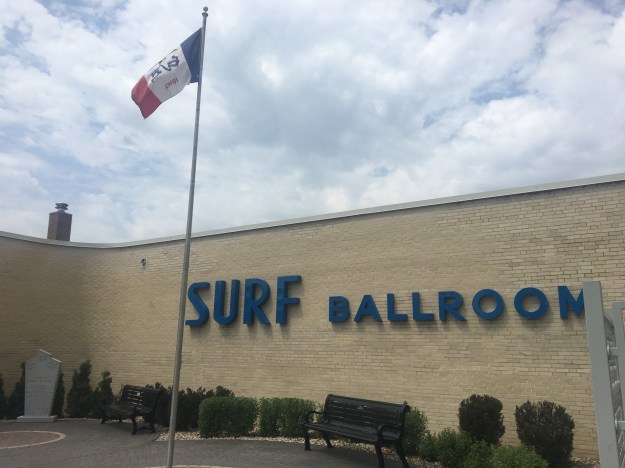
It is also home to the Surf Ballroom, the last place anyone would ever hear the three stars of early rock and roll on the night of February 2, 1959.

IMG_3618

Why they chose to play at this spot, on this date, feels both natural and confusing at the same time.

IMG_3620

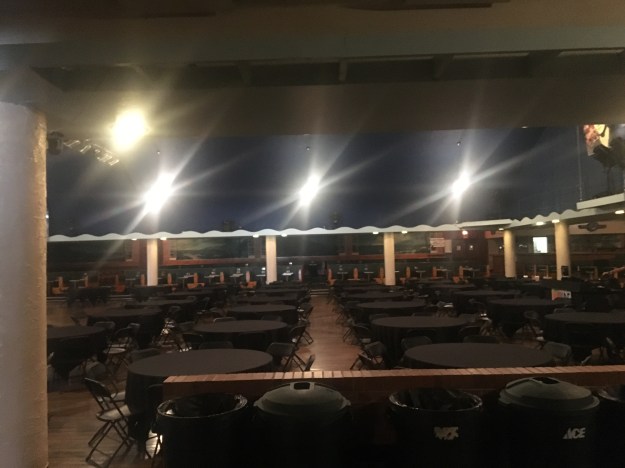
Perhaps because it is well preserved in its 1950s form, the venue itself feels like the exact place one would expect to hear Buddy Holly, Ritchie Valley, and the Big Bopper. It was also likely the right size, given the types of crowds that a music genre that was hot, but not quite mainstream would attract at that time in history.

IMG_3626

With traveling being a little more difficult than today, as the interstate highway system was just being built and flying was more likely to be prohibitively expensive, it seems logical for tours to come to smaller towns. Today, it would be more likely for musical acts to have tours that cover larger distances, such as a North American tour. Fans in Clear Lake would be expected to come to Des Moines or Minneapolis to see a show. Then, it was harder on both the band and the fans. However, I still wonder, why Iowa, and why in winter? Inclement weather is one of the reasons for the plane crash.

Another is how the tour, labelled the 1959 Winter Dance Party Tour, was planned, as indicated by this display.

1959DanceParty_TripAdvisor

They toured by bus. So, having a tour date in Kenosha right after Milwaukee makes logistical sense. After that, the schedule had them meandering all over the place. These dates were all back-to-back. The show at the Surf Ballroom came at a particularly grueling time, having played in Green Bay, WI the night before, and having a show scheduled in Morehead, MN the next day. Frustrated, Buddy Holly chartered a plane to the next show- the plane that would kill the three performers. One could say that February 3rd was the “Day the Music Died”, but it was a combination of poor planning and a harsh Midwestern winter that killed it.

However, as anyone reading this in the 21st Century knows quite well, the music didn’t really die that day. A few years later, rock music would be infused with fresh life, in the form of new bands that would later be counted amongst the best of all time. The Surf Ballroom also refused to let the music die. They continued to host musical performances of all kinds, and still do to this day. They have hosted some of the all time greats.

IMG_3624

It probably helped that the venue itself did a good job of finding the right balance, between preserving this key moment in history…


While also staying in the here and now.

IMG_3628.jpg

Road trips are certainly more appealing when they involve more than just traveling from one destination to another, but rather, leave time to explore some of the places in between. Every place that exists, big or small, new or old, has a story to tell. The story of one small town, one of many, tucked away behind the interstate by one of Iowa’s gentle rolling hills, certainly ignites the desire to explore more, eagerly anticipating what is around the next corner, over the next hill, just beyond the horizon.

The Motor City- Without a Vehicle

“And you may say to yourself, well, how did I get here”- David Byrne.

I found myself in Detroit, Michigan on an unexpectedly pleasant October week asking myself just that question.

On one level, of course I know how I got here: Delta Airlines. I am not that reckless :).

On a whole other level, and the level that David Byrne was clearly referencing in Once in a Lifetime, I was quite confused.

How did the sequence of events in my life come together that lead me here?

To this forum…

img_1465

In this city…

With this group of people….


Is there a reason for it? Was it “meant to be” for any reason? Or is it a result of decisions I made aggregated over the course of time? Had I made these decisions differently, prioritized things in my life in a different order, or just paid more attention to a few specific things, would it have lead to a result that is significantly different?

This song was on my mind because last time I was in Detroit, way before I even had the idea to start writing about my travels, I recorded a dance to this music video at the Henry Ford Museum.

This was in 2008, a time when Detroit was at some kind of a low point. The story of Detroit is familiar to many, as it has been written about extensively.

IMG_1396 (1)

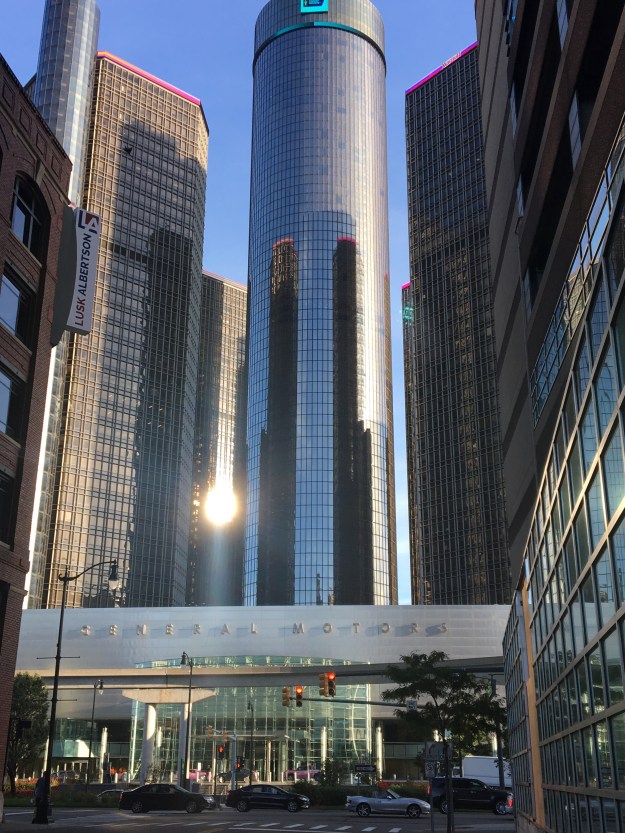
As the headquarters to America’s three biggest car manufacturers, the city was prominent and prosperous in the middle of the 20th Century. However, it fell on hard times in the later part of the 20th Century due to a combination of customers increasingly buying foreign cars and the decline in manufacturing in the U.S.

Nearly every time anyone writes about Detroit, they write about the city’s economic fortunes, often making points about social issues, economic policies, etc. Even when I came to Detroit with no desire to address the city’s economic misfortune and current attempts at recovery, it is hard to escape. Evidence of it is everywhere.

IMG_1430 (1).jpg

Visitors from other parts of the country kept telling me how eerie it felt; the lack of crowds, empty streets and mostly empty bars. Even acknowledging that these were all weeknights, it still felt different than what most people experience in urban areas throughout the country.

The history, as well as current state, of any place is always going to be a part of any travel experience. And, for Detroit, this includes the history people focus on (decline from 1960-2008), but also some of its history prior to this.

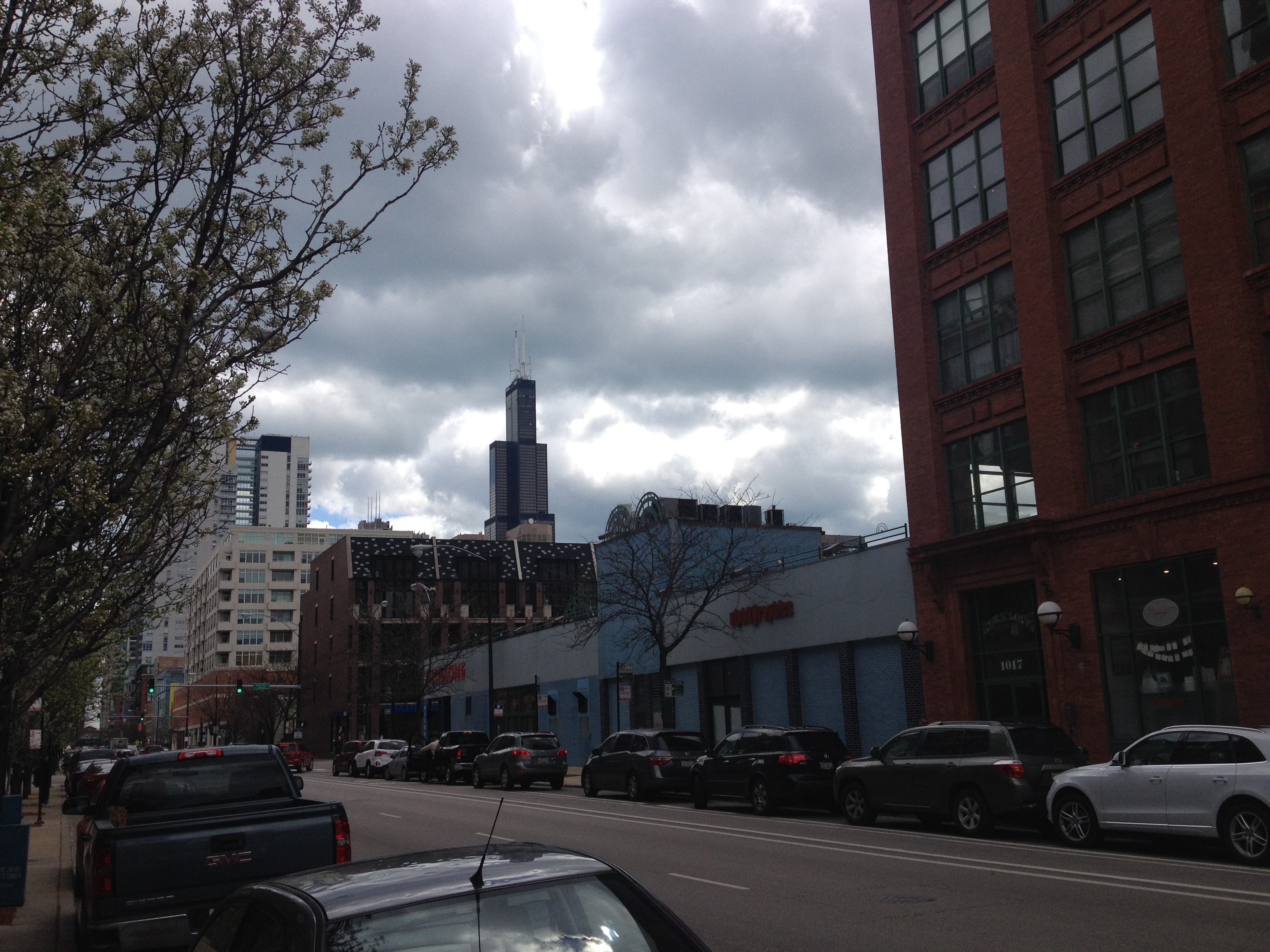
Strangely enough, despite the fact that Detroit is “The Motor City”, and best known for its role in the automobile industry, much of its history, and many of the interesting attractions, can actually be reached without a motorized vehicle.

Within downtown, one can walk to many of the city’s historical, and current attractions.

IMG_1414 (1)

For those willing to walk a mile, the only places that really require vehicular transportation are the Motown Museum and the Henry Ford Museum. The Cobo Center, all the attractions along the Riverfront, Detroit’s historic Opera House, the Fox Theater, the venues for all of Detroit’s sports teams, as well as multiple casinos can all be reached on foot within roughly a mile and a half of each other.


Interestingly enough, there is a lot one can do in the “Motor City” without even using a motor!

Much of this was actually built in Detroit after the decline of the auto industry. One of the reasons I visited Detroit in 2008 was to see their newly built baseball stadium, right downtown.

My 2017 visit to Detroit was to attend a conference related to a client I am currently consulting with. The reason is complicated as organizations rarely send consultants to conferences to represent their brand. Consultants are temporary and technically not a member of the organization.

It makes my identity, like Detroit’s identity as a city, feel way more fluid and complex than it was in the past. In the mid 20th Century, a place could have a simplistic identity; The Motor City, The Rubber City, The Iron City, etc. Today’s growing cities, like Denver, have identities that revolve around multiple areas of focus.

Many people are rooting for Detroit to make a comeback. Places like Greektown and Corktown, adjacent and walkable from downtown, are emblematic of a new, different, and more multi-faceted Detroit emerging from the ashes of the decay that plagued the prior half a century. One day, Detroit will find itself anew, unrecognizable to the Detroit of Motown, and people will ask “how did it get here”. They may even ask “My God, what have I done” (from the same song).

The point of David Byrne’s song is that people need to stop and periodically think about their lives, the directions they are headed, their priorities, etc. Otherwise, they will just kind of like drift, with nobody really understanding whey they are where they are, doing what they are doing, with the people they are with.

There are unique things about Detroit. Obviously the large amounts of empty space, some of which is being converted to farmland.

Also, their proximity to the Canadian border, rust belt infrastructure, and continued contributions to the music industry.


Attending this conference was a reminder to me. No matter where I go, no matter what I am doing, I cannot help but be me. While we all need to periodically re-think things, come up with new ideas, and even take on a somewhat different identity, there will always be some things fundamental about ourselves that do not change. Detroit’s current transitions reminds me of this.

Focusing on What Really Matters

That is, the people that have made, and continue to make, my life what it is.

Our day-to-day lives can become, at times, spiritually toxic.

We get preoccupied by what we are doing on a day-to-day basis. Often that involves a combination of work, other responsibilities, and some form of “quest” we have for ourselves. For many, that “quest” is status or career related. However, for some, things that are typically thought of as “leisurely” can end up being that quest….

I need to get a better golf score.

I need to be the best looking person at the party…

I need to get a better time running up “the incline“…

How much skiing can I do in one day?

IMG_5177

More often than not, we achieve what we set out to do, as long as we willing to put the necessary time and energy into it. If it truly matters to someone to be popular, they eventually will be popular. If it truly matters to someone to advance at work, make a lot of money, or even play on a winning softball team, well, it will be done.

image

I guess things do happen by accident too.

It’s just a simple matter that, well, nobody has the time and energy for everything.

We have to make choices. We have to set priorities. Over time, our lives end up becoming reflection of the priorities we set. When I see a divorced and single powerful executive, well, it is clear where their priorities have been for quite some time.

Sometimes I lose sight of this, but people have always been a priority to me. I feel far more fulfilled when I share my adventures with people, and I am certainly more satisfied when the tasks I perform on a regular basis are having a positive impact on the lives of other people.

Acting more in accordance with what my true priorities are, I spent a long weekend, right in the middle of the summer, in the flat midwest, largely indoors.

Not just in the maze of suburbs that surround Chicago, and in Indianapolis, Indiana, but also traveling I-65 between the two, not the most glamorous ride.

The main draw to Indianapolis is its affordability. It does not necessarily find itself at the top of people’s “bucket lists”, or desired travel destinations.

IMG_0491 (1).jpg

However, many chose to live here. The city continues to grow and appears to be prospering!

Which means that, in Indianapolis, a group of people can easily find enough interesting things to do and have a really good night out. It is often cheaper too. Well, that is unless the evening includes a visit to the most expensive steakhouse in town…

One of Indiana’s most iconic restaurants aside, the weekend was not about being at a high profile destination. It was about the people I was around, and it was nothing short of magical. I felt that feeling that is so elusive we do not even have a word for it in the English language; the opposite of loneliness, in a world that is lonelier than ever! I am blessed to have the people in my life that I have, near and far, from all my life’s “chapters”, and people who are willing to set aside time and energy to meet up with each other. This is what made me feel so wonderful this weekend- possibly more wonderful than I would have felt had I went off on my own, to a bucket list destination, or spent this time trying to advance my career.


When we act according to our true priorities, the result is always better 

Just as important as what our priorities are is how our priorities are set.

Not everyone will set their priorities exactly like I do. The question is whether we are being true to ourselves when these priorities are determined, day in and day out whenever there are multiple needs competing for our time, money, attention, and energy (i.e. life).

Are we making choices based on our own understanding of what we need to feel happy and fulfilled? Or are we letting something else dictate what we prioritize? Fear of losing a job? The desire for approval from others? Someone else?

The world can often bring us in the wrong direction, setting the wrong priorities. The boss pressuring you to perform. Peers bringing out your competitive side. Even self-doubt. This is why I urge everyone, in order to achieve a better life result, to..

  1. Determine priorities for yourself. List them, and order them.
  2. Each week set aside time to evaluate, and most importantly, reassert in your own life what your priorities are and how that should be reflected in your choices.
  3. Occasionally re-evaluate those priorities, and determine if some areas are needing more attention.

IMG_9024


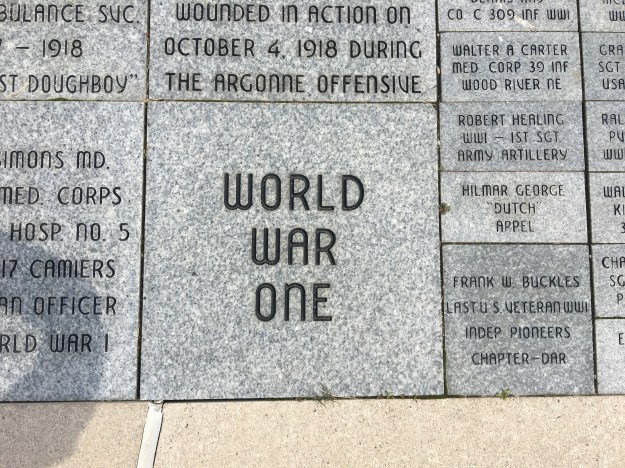
The World War 1 Museum

IMG_9874.jpg

In my history classes in Junior High and High School, we spent plenty of time covering World War 2. In retrospect, I realize that the reason people love to talk about World War 2 is that it is the closest thing in history to a real life battle between good and evil. Nearly every other war, struggle, or conflict, no matter how it is portrayed in the history books, is far more nuanced.

What I learned about World War 1 can be rudamentally summed up into the following sequence of events….

  1. Some archduke got assassinated
  2. There were so many entangling alliances that countries one by one started declaring war on one another
  3. There were these trenches and a lot of people died
  4. America came in and saved the day

I later read that World War 1 may be way more significant than the amount of coverage it got in history class.  So, when I found out that Kansas City had a museum dedicated exclusively to World War One, I decided it was worth a visit.

img_9873.jpg

The main part of the museum depicts the war’s events in chronological order. Visitors walk through the museum, with the chronological order of events displayed on one side and a mixture of war artifacts and other exhibits on the other.

The museum is pretty well balanced between the global USA-specific perspectives. The first section is dedicated to the events before the United States entered the war (1914-1916).  In the middle, a video describes the sequence of events that lead to our entry into the war. The final section is dedicated to the events of 1917 and 1918, as well as how the world was changed by the war.

To truly get the most out of a visit to this museum, I would recommend setting aside at least a couple of hours to read through the full list of chronological events.  If you are like me, and always have a burning need to both think and talk through the implications of everything you read, an additional hour might be necessary.

I came away from this museum with an even greater understanding of how nuanced this war was. First of all, in some ways, this war is often seen in a historical context as inevitable. Nationalism was on the rise, there were ongoing technological and geopolitical changes, and there were all of those alliances. But, the war also started by accident! The mission to assassinate Archduke Franz Ferdinand was aborted. However, the assassins that shot him did not get the message, and assassinated him anyways. This one event would trigger a cascading of war declarations that would descend nearly the entire world into war!

Also, in most wars there is one side that wins and another that loses. While this war had a winning and losing side, there were some exceptions. For example, Russia sided with the alliance that won the war. But, their war was on a different front, and, with a revolution at home that caused them to exit the war 18 months prior to the war’s conclusion, well, they lost. They clearly lost, and lost territory. Italy, the perpetual side switcher of Europe, also pretty much lost. And, the Serbians and Slavs, subjected to Austro-Hungarian rule, despite being on the losing side, won- they won their own nations.

IMG_9919.jpg

By the end of the day my mind was feeling, well, just busy. While looking backwards, 100 years in time, my mind kept drifting to the future. In a way, World War 1 created the modern world.  It created the shapes of many of our countries as they are today, but also solidified the concept of the modern nation. Before that there were far more empires, as well as loosely bound city-states. There are also a frightening number of parallels between the world leading up to World War 1 and the world today.
I just kept thinking about what is ahead in the context of what had already occurred. The world was not always the way it is today. It would be foolish to assume it won’t change in the coming years. Three decades from now, the very way our society is organized could be quite different from what we know today.

IMG_9921.jpg

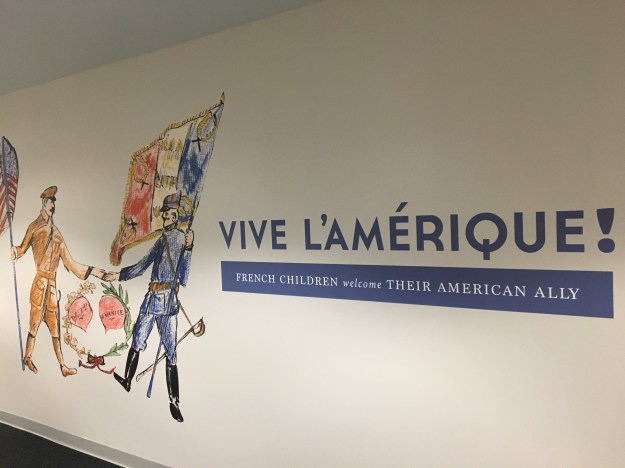
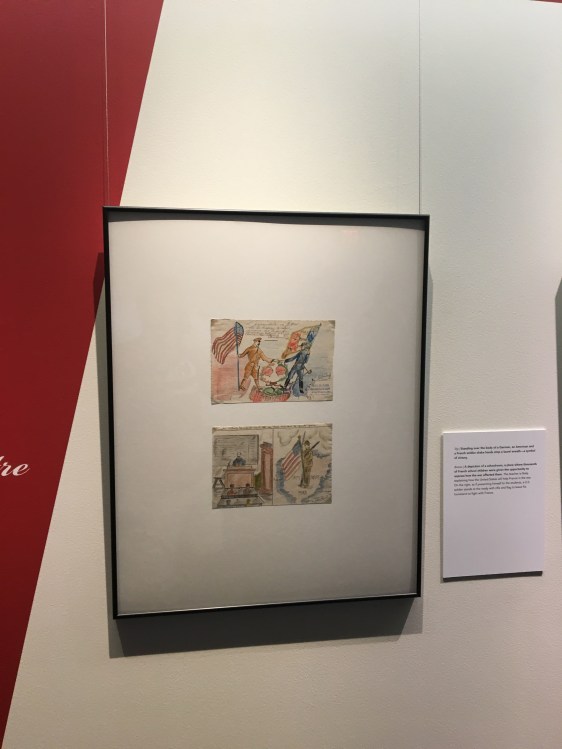
The museum also had several special exhibits, the best of which covered how the war-torn French reacted to the United States entering the war in 1917. Children in school throughout France were asked to draw pictures, and write essays, describing how the U.S. entry in to the war made them feel.

IMG_9920

Why is it that we commonly get what we want at the wrong time? I remember joining alongside my classmates in school in groaning when asked to do additional assignments such as this one. Now that I am a full fledged adult, I often desire nothing more than to spend my days doing the kinds of things my teachers would ask me to do in school, rather the work I must do to earn a living. I imagine many young adults feeling the same way.

The other special exhibits at the museum covered revolutions and signs of how the world was changing, murals, maps of the conflict, artifacts such as Wilson’s war proclamation, and posters encouraging people at home to support the war effort.

The museum does contrast with some of the more recently built museums I have visited. Museums built or fully updated in the past ten years tend to have two distinctions from older museums.

  1. Far more interactive exhibits, and interactive exhibits geared not just toward children but also towards adults.
  2. A greater willingness to take a somewhat critical view of history from the protagonist perspective, such as the Colorado History Center’s exhibits about Japanese Internment Camps, racial resentment in Denver, and the Sand Creek Massacre.

This museum largely lacked these two features. There were only a couple of interactive exhibits, and they were quite basic.

IMG_9925.jpg

The war posters, both in the main section and the special exhibits, refrained from depicting the extremely negative portrayal of German-Americans during the war effort, sticking to propaganda posters encouraging citizens to buy bonds and such.

Likewise, the censorship and jailing of political opponents under the Wilson administration (among its other misgivings) are really not touched upon. Still, I came into my visit to this museum with a hard opinion that our entry into this war was a mistake, and was at least able to see a new perspective on this when reading all of the facts here at the World War 1 museum.

Barbecue and Beer in Kansas City

IMG_9893

Kansas City is one of several places in America known for their barbecue.  Recently, Travel and Leisure magazine ranked it America’s best city for barbecue.  In other rankings, the city almost always places in the top 3-5.  While barbecue is sometimes the subject of fierce debate, Kansas City has a distinct barbecue style that appears to always be part of the discussion.  Regardless of how any specific barbecue fan feels about Kansas City’s sweet, savory, and saucy barbecue style, it has certainly earned significance in culinary circles, and it certainly has its fans.

IMG_9922

I came to Kansas City with only one food agenda… I wanted barbecue.  I did not bring up any specific places or dishes.  I just knew I wanted barbecue.  I’d leave the rest up to the locals.

IMG_9883

The first place I found myself was a place called Joe’s.  I was already encouraged by the name.  For some reason it feels like the restaurants with the best local food in the United States are named just someone’s first name (examples [1][2][3]).  I wonder if this is the same in other countries.

IMG_9887

We waited in line for close to an hour to eat at Joe’s.  This may be partially due to the fact that it was Memorial Day Weekend.  But, I cannot imagine that this line is too much shorter on any other Saturday in the summer.

Without even making the specific request, I found myself at one of Anthony Bourdain’s 13 places to eat before you die.

One can clearly see that this is the kind of place that values their sauces, and a variety of sauces.  This contrasts the barbecue style of Kansas City with some other places, where I was told there is greater emphasis on the meat itself, how it’s cooked and how it’s spiced.

The portion sizes ended up being somewhat deceptive.  I ordered the rib dinner, which included a half a slab of ribs, Texas Toast, and a side.  It did not look like a lot of food, but I found myself fuller than I had felt in quite some time!

IMG_9908

The next day we went to a barbecue establishment with a different feel.  Whereas Joe’s is actually in a gas station, and in Kansas, B-B’s is in Missouri, and feels more like what most barbecue places I’ve been at feel like.  The walls are more densely decorated than an Applebees, and plastic red and white table cloth covers the tables.

IMG_9909

Side note:  While technically, Kansas City, Kansas and Kansas City, Missouri are two different municipalities, they don’t feel too different.  If it weren’t for the highway signs, or the road named Stateline Rd. I would probably be unaware that I am entering a new state.

As if traveling food shows were somehow my destiny for the weekend, B-B’s Bar-B-Q was featured on Guy Fieri’s Diners Drive Ins and Dives.

It was another phenomenal meal, but once again, I overate.

In addition to eating more than I typically do, I drank after both meals, much of it being in the form of beer.  Beer, of course, is one of the most filling forms of alcohol.  So, while my tastebuds enjoyed this entire experience (Boulevard Brewing makes some excellent beer), my body was not happy.  I came away from this weekend not knowing how people here are able to eat and drink this way on a regular basis.

Despite this, it was still an amazing experience, and I got to see other things that Kansas City has to offer, including their downtown and historic Power & Light district (there has to be a reason for this, but I did not bother to look it up).

IMG_9898

One thing that plagues the modern world, and particularly my generation, is mental exhaustion.  Our minds are exhausted from the information overload which often results in analysis paralysis, which becomes extremely inefficient and exhausting.  When planning activities, we often give ourselves the following choices:

First is to select an activity that is familiar.  One that has already been done, and we are familiar with.  With this, we get a good experience without exhausting our minds planning.  However, there is no expanding our horizons.  Choosing all of our activities in this manner will inevitably lead to a rut.

The second is to do extensive research, spending hours on Yelp, Tripadvisor, and similar sites.  This, will usually ensure a good experience, but at the expense of exhausting research and planning.

The other option is to just wing it, making quick selections based on gut instincts.  This minimizes the exhaustion in selecting activities.  However, it can often lead to sub-par experiences.  I used to love to eat at randomly selected restaurants in the central business districts of small towns.  This practice lead to some unexpectedly amazing experiences.  But, there were quite a few disappointments as well.

My experience in Kansas City provided me with yet another reason community and trust are so valuable in our society.  By knowing people who are knowledgable on the subject of barbecue, I found myself at two truly great barbecue places without having to spend time researching places.  I relied on the knowledge of others.  This is something I hope we all can do more often as we seek out new places and experiences.

Logan Square: A Place That Still Feels Like Home

IMG_6020.jpg

In some ways, it feels as if I never left.  I go about my business from instinct.  I do not need to look up where things are, think too hard about how to get there, and fret about to expect from the people around me.  It is all still very familiar, fresh in my memory.  Things like how the streets are laid out, where the traffic lights are, or where and how to board busses and trains are still like second nature to me.  It is what makes a place feel like “home”.  It is what many people miss after a couple of months moving to a new town, as, for most, it takes time to become truly acquainted with a city, the customs, the energy, mannerisms and the like.

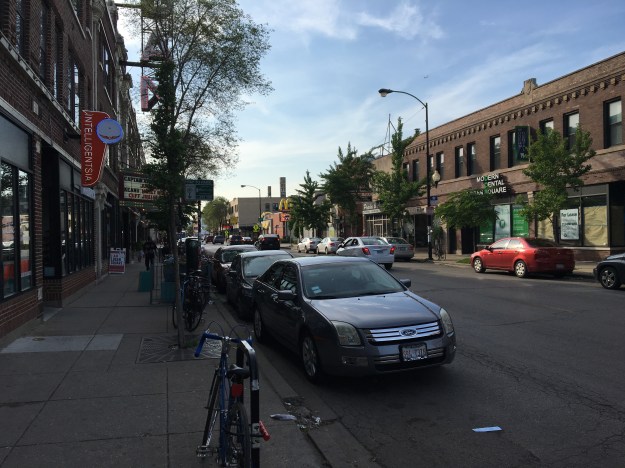
It’s now been nearly four years since I moved away from this neighborhood of Chicago, situated several miles northwest of downtown, near the halfway point between downtown and O’Hare International Airport.  Four years has always been a fascinating length of time for me.  I was a teenager when I first observed the significance of this length of time – four years.  I’ve always been fascinated with observing people, what makes them the way they are and how that changes over time.  I’d think about people, including myself, who they were, what kind of life they are living, what activities they are taking part in, and what their expectations are.  These things were likely to be quite similar one year to the next, but after a four year time frame, significant differences would be observed in most people.

This may be cultural, as we are trained from a young age to break our lives down into four year increments (high school, college, etc.).  But, I noticed something else too.  It felt as if four years was how long certain unintentional transitions took to manifest.  It’s how long a person can passively absorb a new culture (by passively I mean neither actively embracing nor resisting it) before starting to also reflect it.  It is how long one can go without talking to someone before it really does start to become awkward to meet again.

IMG_6018.jpg

It’s not like everything is exactly the way it was four years ago. No place really works like that.  Over the course of time, things change: A store goes out of business, a new one pops up, a few places renovate their buildings, new signage comes in, etc.  We are accustomed to this gradual change.  In the place where we live, we do not even notice it.  It’s kind of a seamless flow.  However, after several years, the cumulative effect of all the new development becomes noticeable.  This Logan Square, the one I returned to in June 2016 is not different enough to feel foreign to me.  It feels more like when a best friend gets a different haircut, or when a house gets one room remodeled.  It’s still the same person.  It’s still the same house.  It’s still the same Logan Square, just with a couple of new features.

Logan Square is also a neighborhood in transition.  It has been for a long time.  At the turn of the century, when the renewed interest in urban living following the crime reductions that took place in many major cities during the 1990s was still a new thing, Logan Square was still run down, and kind of edgy.  It would take a few more years and several thousand more young people searching for the new urban life.  However, Logan Square was destined to become a destination for young urban professionals.  The CTA blue line runs right through the heart of the neighborhood, giving residents easy access to both downtown and O’Hare airport.  Logan Square is somewhat of a hybrid neighborhood in this sense. It is possible to live here car free. But, car ownership is not the burden it is closer to downtown, where monthly parking can get quite pricey.  Most residents pay something like $100 a year (I’m not sure what it is exactly now- not something I keep up with) for a neighborhood city sticker.

IMG_6021.jpg

The Logan Square I came back to was a Logan Square with somewhat more energy than it had several years ago.  There were more people walking around.  There was more nightlife.  There were more buildings, and a lot of new restaurants, bars, shops, just places to go in general.  This should not be surprising.  It is just a continuation of the trend that I had once been a part of.  Logan Square felt more energetic and more alive, but it definitely maintained most of its individual character.  It felt like home- just a slightly livelier home.

IMG_6024.jpg

The weekend was fast-paced, and full of events, taking me from one side of the city to the other.  Due to time constraints, I took far too many Uber rides, as it would have taken longer to take trains and busses everywhere.  I recall going up and down the Kennedy and Dan Ryan expressways, passing from one side of town to another over and over again.  This is the part of a busy weekend, which is mostly about scrambling around to as many events, and seeing as many people as possible, that fades into kind of a blur.  It’s just a blur of nighttime expressway riding, going through Hubbard’s Canyon and riding by the new Whirlyball building a whole bunch of times.

Trips back to Chicago always feel like a whirlwind for me.  Trying to spend time with family friends, etc., see as many people as possible.  But, there is more to it than that.  Everything around me seems to happen faster here.  There is something about dense urban environments that make me, and probably others around me as well, walk faster, move faster, live faster.  Events happen and plans come together much quicker.  It’s like there is something in the air, or something about seeing a lot of buildings, people, and just stuff going on all around us that makes us want to pick up the pace.  If there is one thing I truly miss about Chicago and my life there, it is that.

Going Back to My Roots

“If you know your history, then you’ll know where you’re coming from”, Bob Marley explains in his classic hit song Buffalo Soldier.  It’s hard to really know how many places the functional equivalent of this phrase has been uttered throughout the history of mankind.

What does it mean to “know your history”, or “know where you’ve been”?  Is it sufficient to know your personal story?  Or, do you need to know the story of your parents, and your family’s ancestors?  How deeply must we understand the cause and effect relationships of events in the past?  After all, history, whether we are talking about it in an academic sense or in a personal narrative is about more than just facts.  When asked, nearly all people can recite the rudimentary factual aspects of their lives.  Where they were born, what schools they attended, when they moved, married, changed jobs, etc.  I always wonder, though, whether they understand their life’s events more deeply, how certain things impact one another, what emotions were involved, and what events were significant.  In other words, do they understand the “story” of their lives?

This holiday season, and by holiday season I am referring to Christmas and New Years, was kind of a trip back through my own history, or at least the places where said history took place.  First, Christmas was spent in the suburbs of Chicago, with my immediate family.  I spent a little bit of time in the City of Chicago, with friends, which is where I spent the four years before moving to Denver.  But, I largely spent that time in Buffalo Grove, a sort of typical suburb 35 miles northwest of downtown, and the place where I spent my Junior High and High School years.

IMG_4865

It’s been said, particularly of Millennials, that young adults go home for the holidays and revert into their teenager mode, subconsciously, because they have returned to the setting of their teenage years.  For me, it is a little bit more complicated.  Some things are the same, but some things are different.   Some things get a little bit more different every year.  There is the obvious course of change any particular location undergoes over time; that restaurant that closed, with a new one opening in its place, the road that was reconstructed and widened on the other side of town, and the new neighbors.  But there’s also a strange change in how we respond to things, sometimes things that are exactly the same as they were in previous years.

Over the course of our lives, we periodically re-examine things (I do this more than most).  Maybe it’s a different experience, or being exposed to a different point of view on something, or some major event.  Each year we come back with a slightly different perspective, and, that experience, which was the same exact one we had last year, the year before, and back when we were 14, is viewed differently in our own minds.  When it comes specifically to what my family does, both during the holidays, as well as in life in general, there are mixed emotions. There are some things my family does that I did not really appreciate with I was younger, but have found a new appreciation for.  There are other things now seem strange to me.  I am guessing many people who have moved a significant distance away from “home” have a similar experience at the holidays.

The Chicago area is not my full history.  The first 11.5 years of my life, I lived in New York, outside of New York City on Long Island.  I didn’t specifically travel to New York on New Years Eve as part of some plan to revisit my past.

IMG_4952

But, the two practically back-to-back trips did line up in a manner where I could not help but think along these lines.  New Years is already a time when people reflect on their lives.  Having just spent time in the place where I spent my recent past, and now being in a place where parts of my early childhood unfolded, I could not help but think it is time for me to re-connect with who I am.

IMG_4900

The move from New York to Chicago, my college and graduate school experience, jobs and more recent move to Colorado are the rudimentary facts of my life.  My “history”, is the memories, the periodic experiences, the kind of person I was and the kind of people I was around.  It is something that is remembered, hopefully accurately, and something that can be reconnected with, but only partially.  The New York of 2016 is not the New York of the 1990s.  Neighborhoods have made transitions, different kinds of people have both left and moved in, and some of the things one will experience here are significantly different.

However, some of the things are the same.  And, while I was not reliving a childhood event, coming back to the places where our formative years unfolded can help us reconnect with our roots. Through this experience, I feel like I am being called to return to my roots, the person I am, naturally, rather than the person we are all pressured to become as we adults in today’s world.  It’s like 2016 begun with what the year’s theme needs to be.  Outside of whatever negative feedback we have received, the adjustments we have made to be accepted, and who we were told to be, there is a person inside of all of us, the person we naturally are.  In this midst of everything I do in my adult life, this is a person I need to not lose sight of.  It is a person many of us need to reconnect with.  It is my sincere hope that in 2016, we all reconnect with our roots both individually and collectively.

Visiting the Past and the Future- Part 2

IMG_3329

I came back to the Chicago area for a number of reasons.  In fact, I had so many reasons to be here, it would have been hard to justify not being here.  Simply put, it was where I needed to be at this particular time, despite the fact that I now live elsewhere.

IMG_3283 IMG_3287

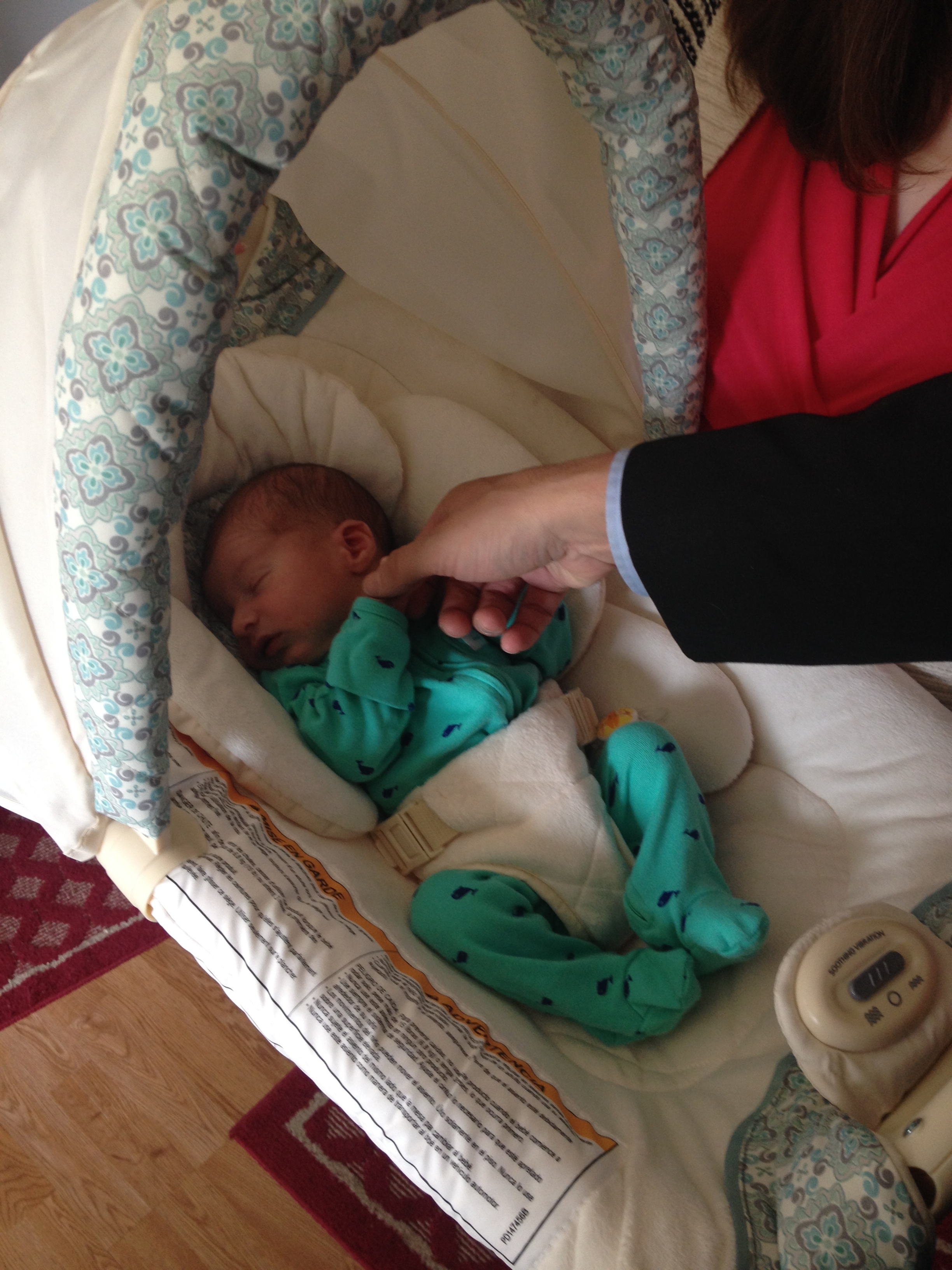
The primary reason for my visit was to meet my family’s newest member; my nephew, who was born only a week before I arrived back in Chicago’s Northwest suburbs, where both my parents, and my sister/ brother-in-law live.  At the age of 8 days, I got to meet him, and was able to subsequently spend some time with him over the course of the following week.  However, as I sit back at my home in Denver, I cannot help but think of what I am missing out on being 1000 miles away from “home”.  Specifically, I am thinking of this newborn baby, who will go through different phases of development, possibly on a daily to weekly basis for some time to come, as life changes at a faster pace for children than it does for adults.  Even if I come back twice a year, there are phases in his development I am destined to miss.  That is just the way it is.

However, my mind also drifts to all the rest of my family members, as well as my friends, back here in Chicago (as well as the surrounding area).  While adults have lives that do not go through changes in as rapid of succession as children, and it is easier to “catch up”, we still do have experiences on a daily basis.  And, as much as some people post much of their daily lives on social media, or do a decent job of keeping in touch, I do wonder what I am missing.  I dwell on the fun daily events, strange occurrences and “inside jokes” that made all of the people around me so much fun to be around.  But, I also dwell on the ups and downs, and the times when someone important to you just simply needs some encouragement, or, conversely, some advice.

I was wearing a suit the day I met my nephew, as I was on my way to the first of a number of events I would also attend over the course of the week.  This one, a wedding for one of my good friends from college, in Northwest Indiana.

IMG_1176 IMG_7633

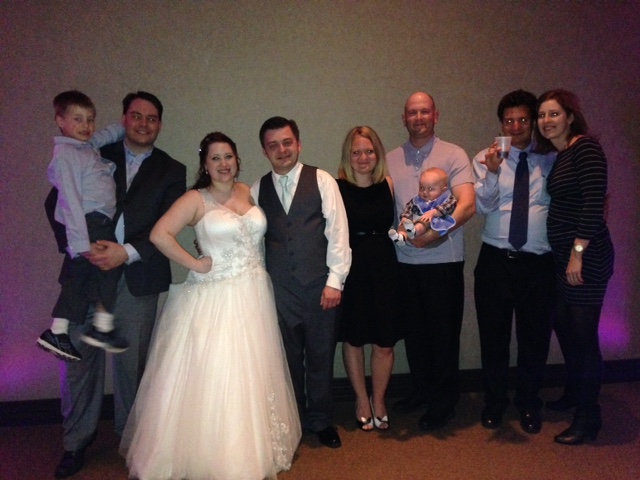
Here, not only did I get to witness the big day for the bride and groom, but as is common with events like this, I got the chance to hang out with several other friends from college.  In a way it was just like it was back in the day.  There are some people in all of our lives who we can not see for weeks, months, years, and still just pick right back up where we left off as if we had just seen each other the previous day.  I am blessed to have a good number of people like this in my life.

However, there was an obvious difference between now and then, and that is children.  Some of my friends also traveled a significant distance to be at this wedding, and they did so with children.  It is actually pretty inspiring to me, as they had decided somewhat spontaneously to travel to Indiana for this wedding, and were still able to do so despite having a 5 year old and a (not quite) 5 month old respectively.  And, they stayed at the wedding longer than many other people.  It makes me think of a future chapter of life, that my involve children of my own, with a lot more hope, that maybe the “your life is over” camp are significantly exaggerating when they describe the impact starting a family has on one’s life.  So, as was the case with so much of my trip, I was simultaneously living out a past “chapter” of my life, while also getting glimpses of a future “chapter”.

IMG_3314 IMG_3318 IMG_3319 IMG_3330 IMG_3333 IMG_3346 IMG_3348 IMG_3356

In fact, the rest of my week was also partially a baby/child meeting tour.  I wanted to try to see as many people, and take part in as many events with my friends, as possible, while still spending a significant amount of time with my family and my new nephew.  Luckily, many of my friends were able to work with me schedule-wise to create a successful trip!  And, I got to take part in all kinds of activities ranging from simple lunches to crazy nights out in large groups.  Over the course of the week, I was living the life I had lived as a child, as a young adult, and as I will live it in the future.  In a way, I spent the week in one place, but in another way, I was in too many different places to count.

IMG_3349 photo-1

The Chicago metropolitan area is centered around downtown, where trains from all directions converge, as do countless people every day.  It also includes countless suburbs, and even Northwest Indiana.  It is a place where, much like my experiences over the course of the past week, people are doing everything from working hard and playing hard, to relaxing, to trying to do the best the can to raise a family.

And, when I see my newborn nephew, or any newborn child, I see the great equalizer.

IMG_3353

Every single person, from the most successful to the biggest failures, from Bill Gates to habitual criminal, from the most personable to the biggest asshole, began as a vulnerable newborn infant, just like this.  No matter who someone is, they started out in this position, as a baby, completely dependent on someone else to survive and reach adulthood.  And, in the pool of newborn babies at the hospital at any given time, are people that will one day go on to become influential individuals both good and bad, people that will make their families proud, but also people who will one day disappoint, and people who will be nothing but kind and generous to their fellow human beings, but also people who will treat others with contempt and recklessness.  But, for now, each child I met over the course of this week is just a child, a person trying to figure out the world around them in various stages.  All we can do for them is give a good example.  Over the course of the week, I found myself repeating one phrase to the children I had encountered; “A positive attitude is contagious”.  When I smiled at a child, they would often smile back.  It is basic human nature, and one of the most powerful tools we can take into our day-to-day lives to produce the best possible outcomes.