Category Archives: Scientific Phenomenon

Winter Slowly Comes to an End

IMG_9752

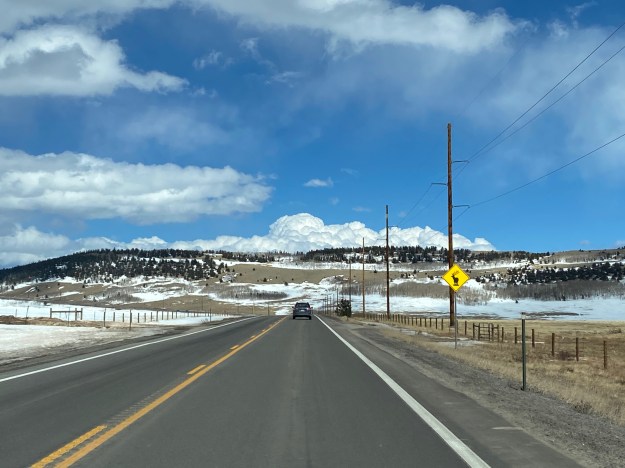
We just shifted our clocks forward for Daylight Savings Time. For the first time this year the sun will set later than 7:00 P.M. Each footstep we make in the snow feels like a crunch through cycles of nighttime freezes and daytime thaws. I gaze to the East in the middle of the day. Despite partial cloudiness, the sky feels quite bright. The ground, partially uncovered by recent warmth, appears as a somewhat random assortment of the season that was and the season that is to come. Vertical development in the clouds off on the horizon provide a preview of what’s to come; the types of powerful storms that truly embody the power of nature during springtime.

This time of year is quite unique. After several months of cold and snow, snowpacks in the Central Rockies are often near their peaks.

IMG_9715

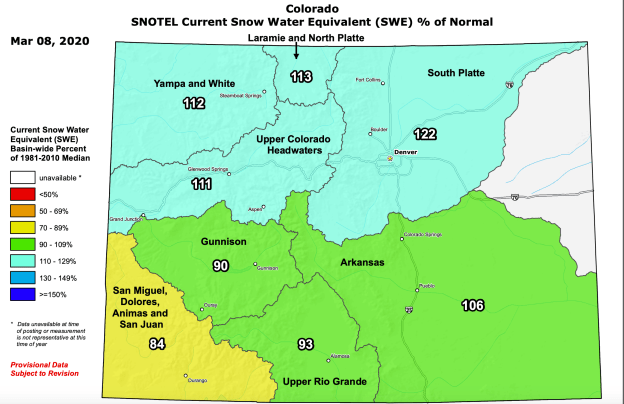
This year is no exception, as measured snowpacks are quite close to the long term average.

CO_Snowpack_20200308

At the ski resorts, the trails remain bright through the entire day, with the possible exception of some of the densest glades. In December and early January, shade starts to creep in sometime between 2 and 3 P.M.

We skied until 4 P.M. then sat out in the sun having drinks at the base.

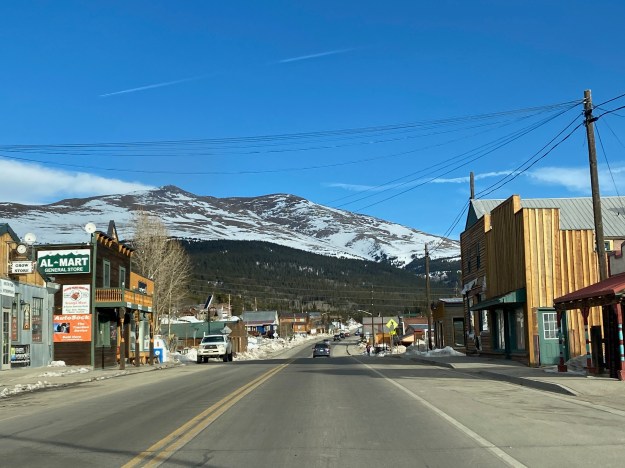
The high elevation mountain towns showed a kind of bright, snow-filled winter glory in a manner that felt like the setting of a movie.

IMG_9723

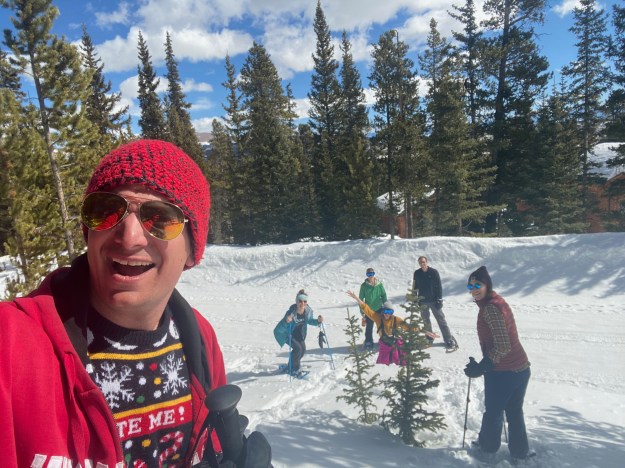
Passing through towns like these, I could not help but imagine movie characters doing things like training for winter sports, falling in love, or singing Christmas carols. It even inspired me to wear a Christmas sweater over two months after the holiday.

IMG_9748

Winter’s end will be slow. It starts with days like this. However, many places in the high elevations of central Colorado can expect to see several feet more snow before summer comes. The transition of the seasons is not unlike many other transitions in life. It is neither abrupt nor continuous. Whether it is a recovering alcoholic having periodic relapses or a group of people adapting to some major societal shift, the new and the old fade in and out in sometimes tough to predict patterns.

Sometimes there is a sweet spot. Snowshoeing in nothing but a light jacket, or a sweater and a hoodie, was a joyful experience in nature that combines the best of winter with the best of spring. It’s what we all should be looking for. New York pizza came when we combined the best of Italy with the best of America. Some of the best musicians and artists combine the best of angst with the best of optimism. The scene in South Park Colorado, where the pattern of snow and grass seemed to simultaniously make logical sense and lack any coherency serves us all as a reminder that there is great beauty and opportunity in all the awkward in-between phases in life. Maybe, in this phase of life, I can find a way to combine the best of youth with the best of maturity.

Variable Conditions at Steamboat

IMG_9531

Each day was somewhat different from the others. Monday was a great day to start off a multi-day ski trip. Skies were kind of a mixture of clouds and sun.

IMG_9535

And, there was several inches of fresh powder!

IMG_9537

It made for some excellent tree skiing.

IMG_9538

As well as bowl skiing.

IMG_9540

We covered most of the mountain in variable conditions, including the ever enjoyable Rough Rider Fun Zone.

It was another fantastic day of primarily tree skiing, particularly in the Storm Peak, Morningside, and Pony Express areas.

The only issue was the variable visibility and cold temperatures.

Tuesday the sky was clear!

IMG_9558

In fact, it took on a deep blue color later in the day.

IMG_9576

It was a great day for all kinds of skiing, from going fast down groomed trails

IMG_9560

to more adventures in the Aspen Glades.

IMG_9575

Perhaps because of its relatively low elevation for the region, I have never seen a resort with more Aspen Glades than this one!

Also, it was the day we got our best views of town.

IMG_9565

Clear skies, great visibility, and a lot of new snow mean fantastic conditions for all types of skiing. What could possibly be wrong? Well, clear skies also often mean cold mornings, especially right after a big storm.

Morning temperatures at the base of the resort were well below 0°F (close to -22°C).

Wednesday we woke up to more fresh snow and a day similar to Monday.

IMG_9583

It was a perfect day for some first tracks in the morning, as well as more adventures in the Aspen Glades.

Seriously, we could not get enough of the Aspen Glades on this trip.

Thursday brought more new snow than Monday or Wednesday. The powder was quite deep on some places.

IMG_9596

Powder skiing can be quite awesome and also quite exhausting. Turning in powder requires more energy than turning on snow that is more packed down. It is also easier to lose one’s momentum and even get stuck in places. There is still nothing like a good powder day. Many in Colorado drive hours out of their way and sit through horrendous traffic just to ski in conditions like these. So, we were most fortunate to have experienced a day like this one.

With the powder came some dense fog and poor visibility.

IMG_9594

Nearly every run had poor visibility near the top of the ski lift. In some places it was tough to see more than several feet in front of me!

IMG_9599

It was, however, on Thursday, when temperatures reached their most comfortable levels.

IMG_9602

Over the four day trip, the experience varied quite a bit from day to day. It was a good reminder of what people who love the outdoors, whether it is for adventure or just admiration of natural beauty, understand. No two experiences are exactly alike. Destinations can vary quite a bit from year to year, season to season, and even day to day. Therefore, there are still plenty of new experiences to be had visiting the same places multiple times.

When activities are dependent on forces of nature, weather or other natural phenomenon, it is easy to fall into the trap of waiting or searching for ideal conditions.

IMG_9568

There will always be this idea of a perfect day or a perfect situation or setting for an activity. For skiers, that may be a clear day after a major snowstorm. But, what is the consistency of the snow? Could it be too dry or wet? What about temperatures? And wind?

The “perfect day” becomes illusive. For all factors to line up in their most ideal state at the same time has the potential to become an exceedingly rare phenomenon.

IMG_9586

This is the danger of perfectionism. Perfectionism has the potential to become paralyzing. If someone were to wait for this potentially unattainable perfect day, they would have missed out on a lot of amazing experiences.

This concept applies to so many other areas of life. When to try something new. When to launch a product. When to ask someone out. When to go out into the world and put yourself out there. There is always going to be something about the timing or conditions that are less than ideal, or theoretically could be better. I need to lose ten pounds, then I’ll try to meet people. I’ll try something new when I save some more money. Someone said something mean to me and now I am in the wrong frame of mind. The problem is that as soon as that weight is lost, that money is saved and that mean comment fades into memory, there will be something else, ready to become the new barrier. The key is not to think about this theoretical perfect scenario and just determine if taking something on, whether it be a day of skiing or bringing life to a new chapter, will be worthwhile.

Two Powder Days at Aspen Snowmass

IMG_9464

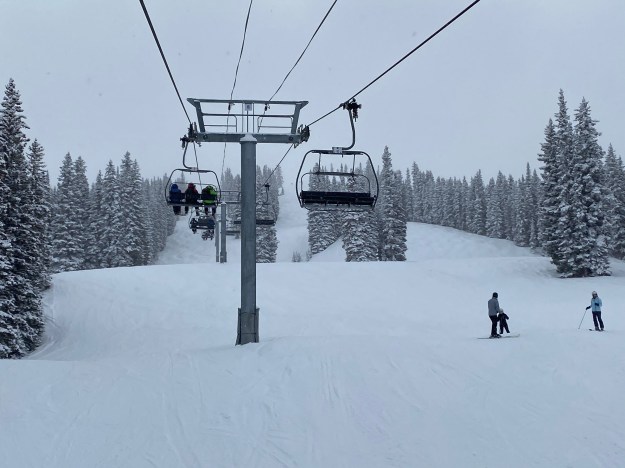
It was quite possibly the best circumstance to make my first trip to Aspen Snowmass, the only ski resort in Colorado with a vertical rise of over 4,000 feet! In almost any circumstance, skiing two weekdays in the middle of February at one of the top ski resorts in the world is a truly incredible experience! On top of that, I got to ski Snowmass with something like half a foot of fresh powder each day!

There are some drawbacks to skiing during a snowstorm. There is less visibility. Wind and snow hit you in the face on both the lift ride up and while skiing down the mountain.

IMG_9472

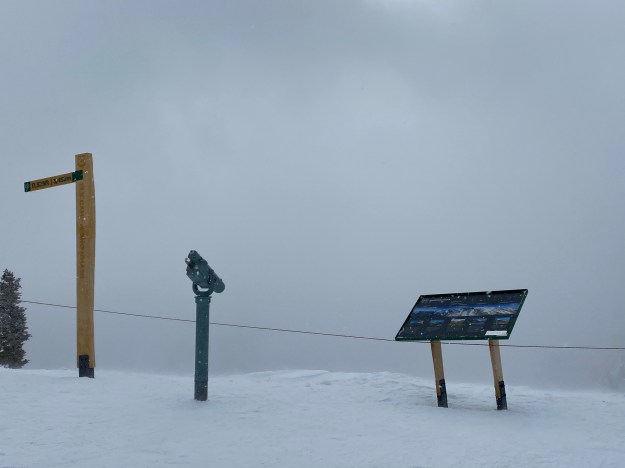
There is a place at the top of Elk Camp where there are typically iconic views of the Maroon Bells, the most photographed place in all of Colorado. There are even binoculars set up at the top of the chairlift. I’ll have to gaze at these mountains another time.

IMG_9475

Also, some of the higher lifts at the ski resort were periodically closed due to wind and visibility.

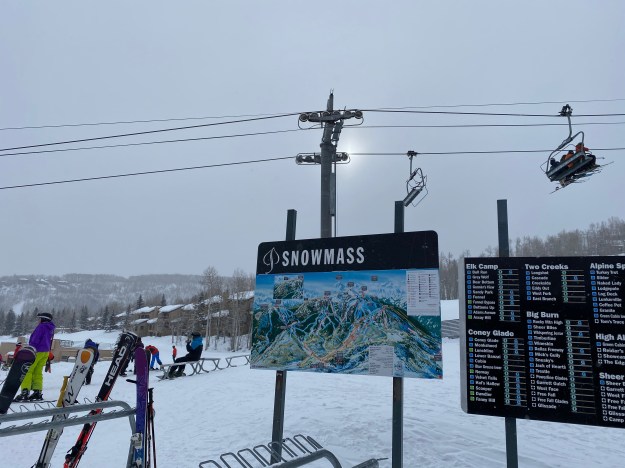
Snowmass Trail Map

When they were open, the conditions were less than ideal.

IMG_9506

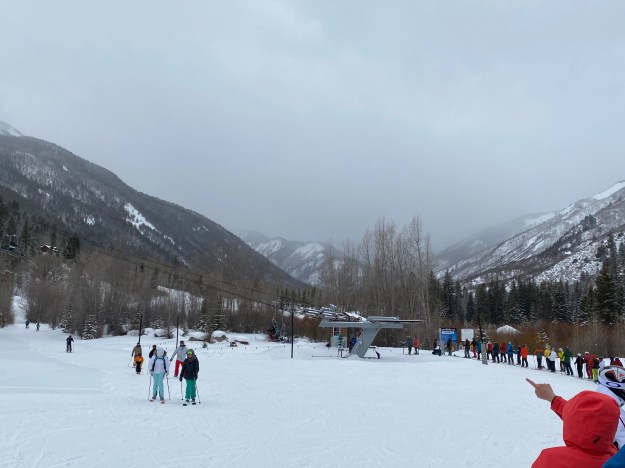
Also, when part of a ski resort is closed, some of the other lifts can generate unexpectedly long lines. The lines were by no means long compared to what can be seen on weekends at the ski resorts along I-70 close to Denver, particularly Breckenridge and Keystone. For Aspen standards, though, this a long line.

IMG_9502

Several people I talked to on the lift indicated that they do not encounter too many people from Denver. Maybe that is why the lift lines were mostly short to non-existent.

IMG_9469

Snowmass has two base areas, the Base Village and the Village Mall.

Both places have restaurants, shops, lift ticket windows and access to bus service.

The resort pays homage to wildlife, both past and present. Somewhere near Snowmass, discoveries of Ice Age era bones were made.

The Town Park bus terminal in Snowmass Village is not only a place to catch one of the shuttle busses to the ski lift, but also a mini-museum, with information about all sorts of interesting discoveries made in the area.

On the resort, at Elk Camp, the Wapiti Wildlife Center includes exhibits about the wildlife that currently inhabit the area. Apparently temperatures exceeding 78°F (24°C) can kill alpine marmots, and squirrels can gather 16,000 pine cones in a year.

Apen itself is a very expensive town.

So, we ended up staying in Basalt, a town a little less than 20 minutes down the river from Aspen.

IMG_9458IMG_9512

Basalt is a beautiful town of just over 4,000 people, with an active tourism industry of its own (fishing, mountain biking, and people who stay here to ski in Aspen), some really good restaurants and regular bus service to both Aspen and Glenwood Springs.

IMG_9486

When conditions get rough, particularly if it is windy, I often head for the trees.

IMG_9473

Tree skiing is among my favorite ski experiences and at Snowmass, with fresh snow both days, I got some of the best tree skiing of my life! While turning through the trees on this lightly packed snow, I felt like I was doing exactly what I came to Aspen to do! There were several runs we did a whole bunch of times, and we ended up spending most of our time in only a few areas of the mountain.

This is something we decided on halfway through the first day. We had come to Aspen for an experience, one that we were already having. Why be so obsessed with finding it again and again just to check off some kind of mental list or fulfill some idea put into our heads about what we are supposed to do at a place like this? Snowmass is a huge resort, and Aspen has three other ski areas. It is impossible to do it all! That’s kind of the point. People who live here need variety.

Time rushed Americans often get too obsessed with lists and agendas while traveling. Obsession with some kind of mission has the potential to diminish the experience we originally came for. Sometimes, we need to lighten up. Be present. Forget what we are planning to do next and enjoy what we are doing now. Go into the kids area despite being adults.

IMG_9510

On this short trip to Aspen, I put into practice how to overcome the tyranny of expectations and get the most out of my travel experiences. I encourage anyone who is reading this to do the same.


The Calm Before the Storm

91A9039D-4C79-45E4-812E-E3928B88931A.jpeg

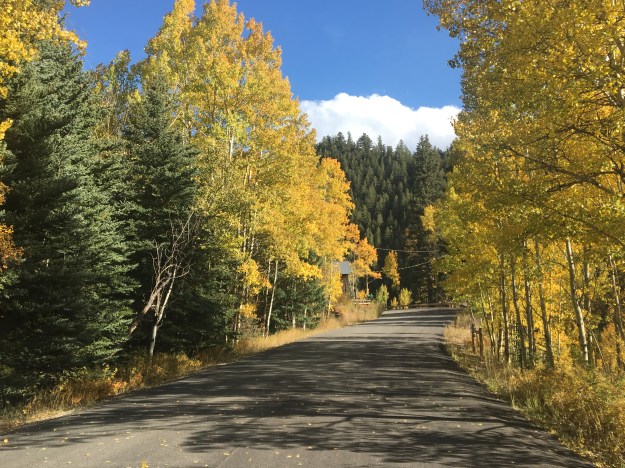
This is Guanella Pass, 11,700 feet (3570 m) above sea level on Wednesday October 9, 2019. It was a warm day, one that almost felt like mid-summer. As can be seen from the photograph, the region had yet to receive a significant snow. On that day, Denver International Airport would reach a high temperature of 83ºF (28ºC). Temperatures were quite pleasant at higher elevations.

However, change was on its way. These photos were taken only several hours before autumn’s fist meaningful push of cold air would arrive in Central Colorado. The next day would see temperatures across the entire region dip below freezing, and snow fall all the way down in Denver.

6A95AF2C-D104-4363-BC26-E1DDF08F99E7.jpeg

Friday morning’s low would reach 9°F (-12°C) in Denver, representing a near record breaking temperature drop.

Thanks to weather models, forecasters saw this dramatic change coming. Most Coloradans were prepared.

CFBE0B4F-A48E-449D-BF4F-A88194318A06.jpeg

Yet, even without computer models to foresee the exact day and exact nature of these changes, it is pretty well understood, especially up in the Rockies, that at this time of year, sooner or later an event like this is bound to happen. This is why many high elevation animals gather food in the second half of the summer and why the tree leaves change colors in the autumn.

Luckily, it was a Wednesday. So, the roads people usually take to go “leaf peeping” weren’t nearly as crowded as they are on weekends.

1163A9B2-5E2C-432F-AA67-6DA40ABCCD95.jpeg

Guanella Pass is amazing in autumn. Being only 50 miles from Denver, it is typically far more crowded on weekends at this time of year.

7E0D4CB5-AB2A-43B3-99A7-439119D5FE99.jpeg

I often get carried away with getting to that perfect location, many miles out of the way where the image, the sounds, smells and conditions are perfect!

2CC765D1-907C-44B7-BCCC-90203D52B37F.jpeg

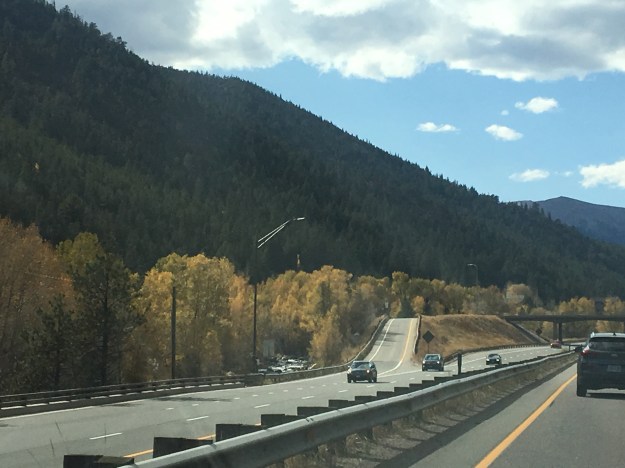
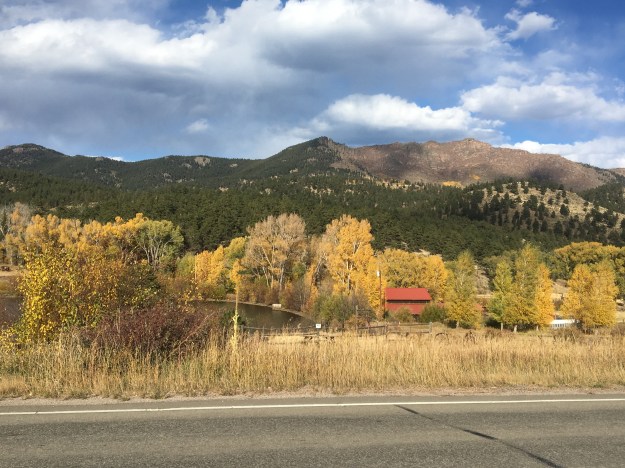
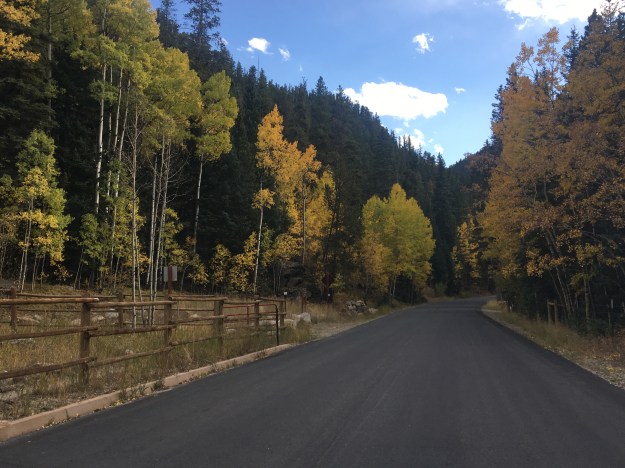
However, that day I noticed that it is quite possible to see some spectacular fall colors without even leaving the main roads. I saw bright gold trees along both Interstate 70 and U.S. Highway 285!

A0DDB034-26DE-4170-AA82-E319E6A6F799A9487C64-B667-4D02-8AE3-0627ED62852D

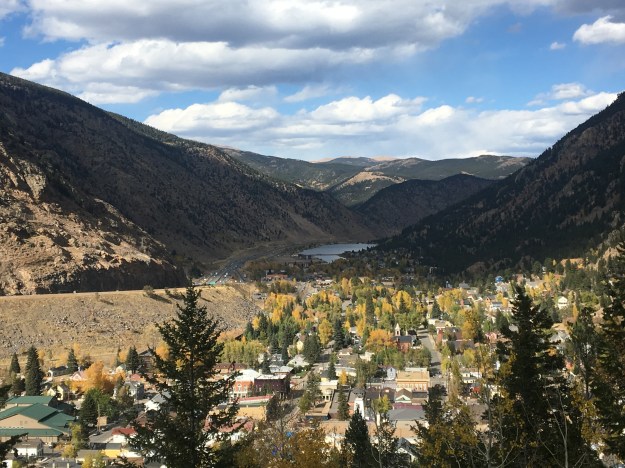
Few places captured the essence of life in the mountains in Autumn better than Georgetown, which is right along I-70.

0BFF00A7-FC21-4DB9-9098-3A56C44EC89A

It was strange to gaze upon the Aspen trees knowing that in less than 12 hours, due to wind and snow, most of the leaves would be gone, and the landscape was about to fundamentally be changed.

Storms are part of the nature of life, not just with respect to weather and seasons. It is the first time we have a crush, and soon after the first time we get our hearts broken. It is the conflicts we have with our family, close friends and significant others. It is that person we just don’t get along with. It is losing a job, getting in an unexpected accident, or even just having a week’s worth of bad luck.

It’s facing our fears, which is what Halloween is really all about.

A17E3021-CDD3-48B5-BCA1-17CED2393EB5.jpeg

In October, the days get darker and chillier, foreshadowing winter, often the most dreaded of the seasons. It is no coincidence that this is the time of year we celebrate all that is spooky; carving spooky designs into pumpkins, dressing in scary costumes and watching scary movies.

Some of life’s “storms” come unexpectedly. However, some are at least somewhat predictable, like the changing of the seasons or a coming breakup. How we respond differs quite a bit from person to person. There are those that prepare, those that embrace, those that deny and those that simply try to weather it as best as possible.

Maybe the same is true of these Aspen trees up in the mountains.

8363BED6-3327-4D95-9B13-2F665E3491C9.jpeg

It was hard for me to imagine why some trees at 9,000 feet (2750m) in elevation would still have green leaves on October 9th. They seemed less prepared. However, maybe they are just enjoying this calm before the storm a bit longer. I can’t say I had not done the same at various points in my life.

The key to facing the storms of our lives is to build up resiliency and self-confidence. This is part of what facing our fears is all about. Once our fears have been faced, we are prepared to have that awkward conversation where we must tell people what they don’t want to hear. We are ready to assert ourselves to obtain what we really want out of life. And, we are ready to deal with setbacks without falling apart.

The confidence not to panic gives us the capacity to enjoy “the calm before the storm” to its fullest extent.


The Highest Point in New Mexico

IMG_8006.JPG

Not too many hikes begin at a ski resort. In fact, many ski resorts have begun to incorporate summer activities; mountain biking, festivals and other attractions. However, that is exactly where the journey to New Mexico’s highest point, Wheeler Peak, begins, at Taos Ski Resort.

IMG_7954.JPG

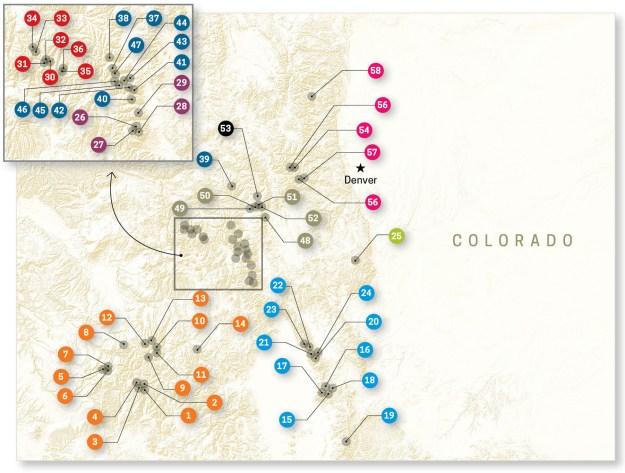
Wheeler Peak is not nearly as high as Mount Elbert, or many of Colorado’s other high points. It is a strange accident of geography that Colorado is home to 58 peaks that exceed 14,000 feet in elevation (referred to as “14ers”), while the highest point in neighboring New Mexico is only 13,167 ft.

As was the case with many State borers set at the time, a line of latitude (37ºN) was selected to form the border between Colorado and New Mexico. The same line is used for the borders between Arizona and Utah, and Kansas and Oklahoma.
Colorado_14ers_OutsideMag.jpg

All of Colorado’s peaks >14,000 feet in elevation

Yet, all the tallest peaks are contained within Colorado’s borders. Colorado’s Southernmost “14er”, Culbera Peak, is less than 10 miles north of the New Mexico border! Was it sheer luck, or did some sort of force will all the highest peaks be in Colorado?

Despite it not being a “14er”, the hike to the top of Wheeler Peak is actually quite similar. The vertical gain from the trailhead is just shy of 3,000 feet, and the threat of afternoon storms makes it advantageous to start the hike early in the morning.
IMG_7956.JPG

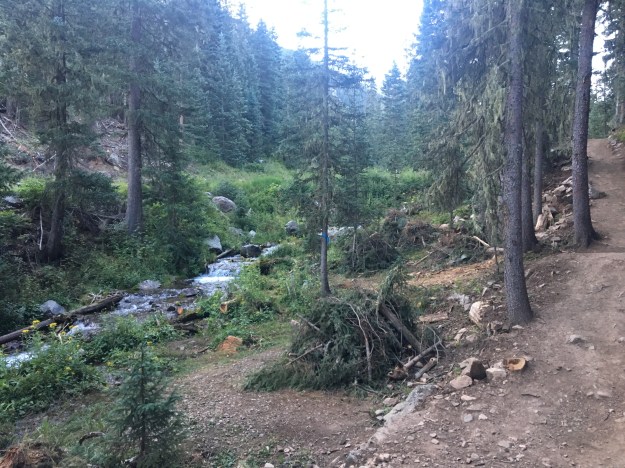
Much of the ascent felt like chasing the sun. We were hiking up the mountain, while the alpenglow would slide further and further down.

It’s a 2.2 mile hike to Williams Lake, the destination for most hiking the first part of this trail.

IMG_7972

This lake was not that crowded at 7:30 in the morning. Later in the day, it would become packed. Also, for those looking to hike to Wheeler Peak, the turn off is before the lake.

The marking for the Wheeler Peak turnoff at 7:30 A.M. and Noon

It is marked by a carving in a wooden stick, which is clearly labelled but easy to miss first thing in the morning.

For those who miss the turnoff, or decide to head to the lake, there is an alternate route. Good luck locating it.

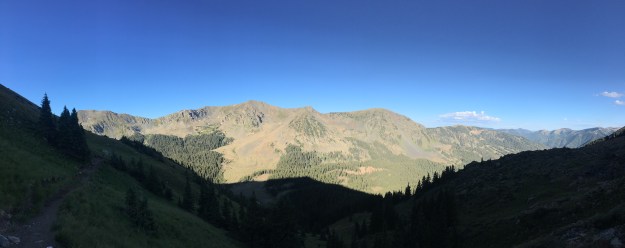
I spent much of the second hour of the hike wondering both where the treeline is, and when I had reached it.
IMG_7986.JPG

The term “tree line” makes it seem like hikers will reach a certain elevation and suddenly leave a dense forest for wide open alpine tundra. However, there are elevations where the trees thin out a bit but do not completely disappear. So, the elevation of the “treeline” is more of a guideline, or an approximation. The Alpine Visitor’s Center at Rocky Mountain National Park indicates that the treeline there is about 11,500 feet in elevation. In Northern New Mexico, that elevation is likely closer to 12,000 feet.

Just above the treeline, we had multiple close encounters with wildlife. First, the marmots chirped at us, as if to say “get off my lawn”.
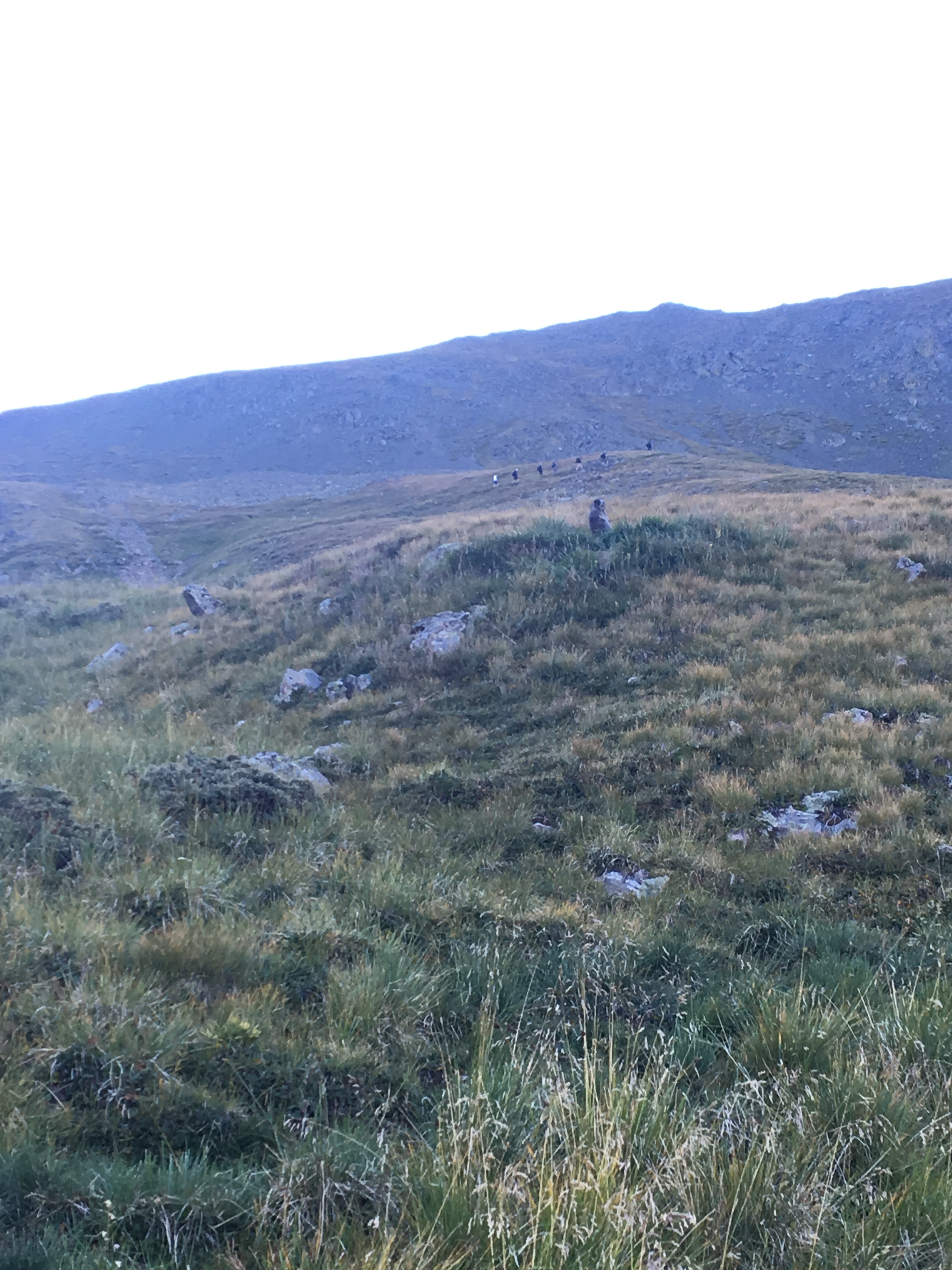
IMG_7987.JPG

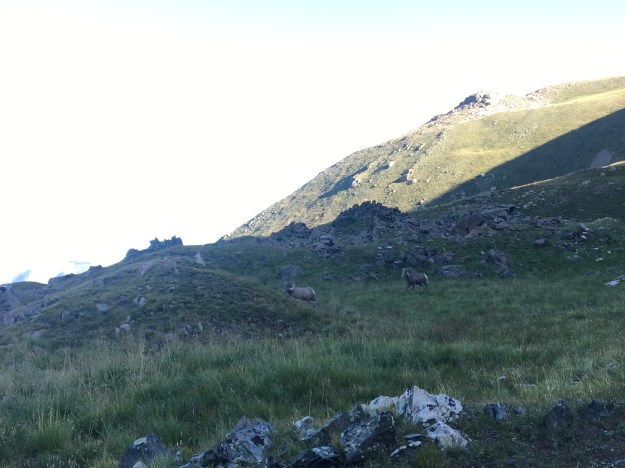
Then, a surprisingly close encounter with bighorn sheep.
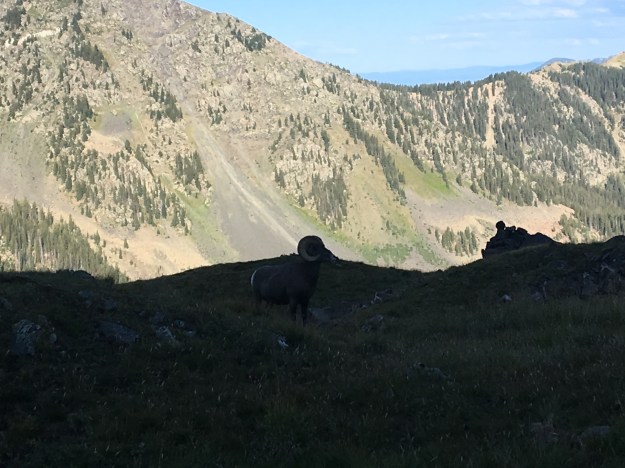
IMG_7990IMG_7992

At first I wondered whether these animals were staying away from the busiest trails. However, someone who hikes this trail quite a bit indicated that wildlife encounters this close is actually quite rare on this trail. On any of these trails, encountering wildlife is likely just a matter of luck; whether or not certain creatures happened to be roaming the area at a certain time. After all, last summer I saw mountain goats up close on a very busy “14er” near Denver.

After this, there was a section that is quite challenging. Steep rocky switchbacks quickly ascend the final 1000 feet of elevation gain.

This challenging section ends suddenly with a view over the ridge, overlooking the rugged terrain of the Carson National Forest. The exhaustion that had lead to this point made it even more breathtaking.

IMG_8001.JPG

A quick turn to the right, and the final ascent is made to the highest point in the State of New Mexico.
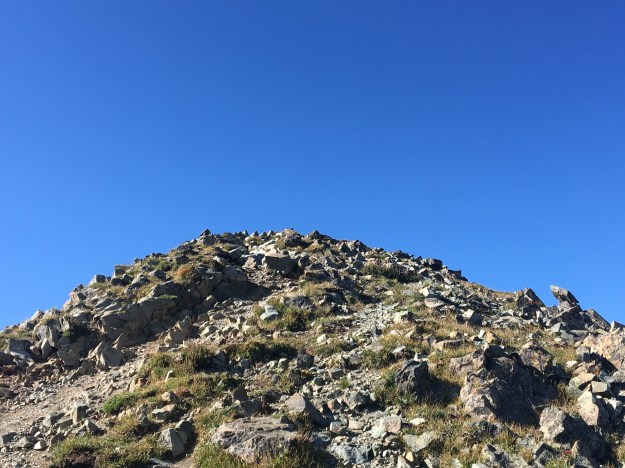
IMG_8003.JPG

A plaque at the top reveals that the mountain is named after the surveyor who identified this point as the highest in the State.
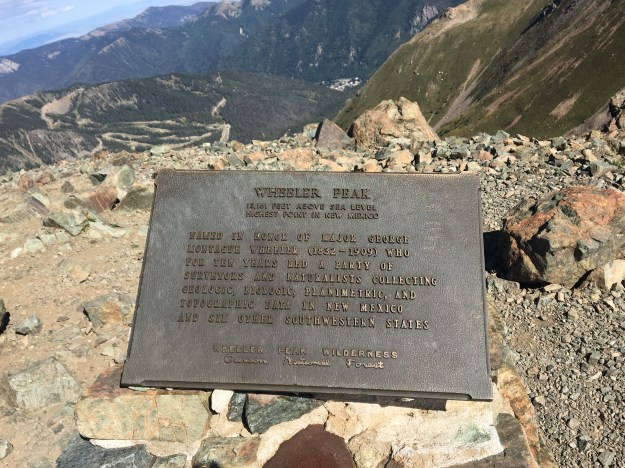
IMG_8004

I only imagined what it must have been like to be Major George Wheeler, charged with this task, especially at the very beginning. One look around the area, in most directions, revealed dozens of candidates for which peak could indeed be the tallest one in the State. He likely had to scale all of them to determine the true highest point. It reminded me of a situation we all find ourselves in at one point in our lives,. We agree to take on a project or endeavor. Getting started, me suddenly come to the realization that it is going to be significantly more work than anticipated.
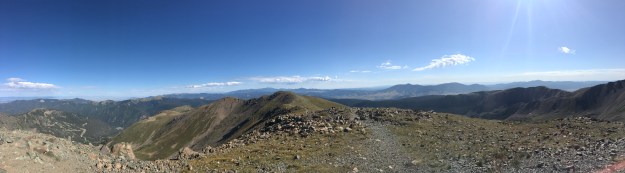
IMG_8006

Having many other peaks in the area that are nearly as tall gives it a pretty unique feel at the top. The plethora of similar peaks may have also contributed to the pleasant conditions at the top. There was surprisingly little wind at the top of Wheeler Peak that day (August 31, 2019).
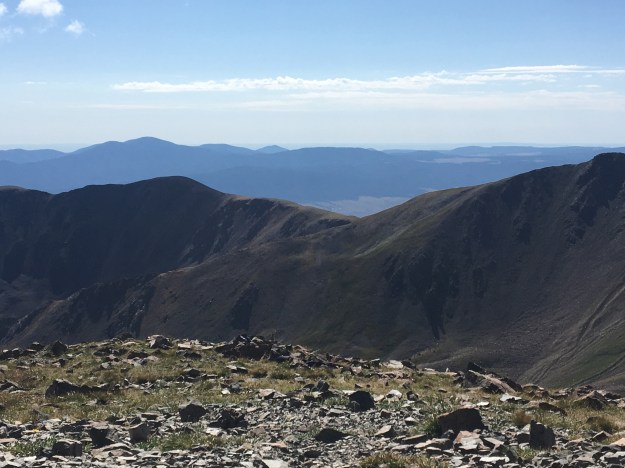
IMG_8010

The descent is also an interesting experience. Some of the steepest parts of the trail can be downright scary, and just as challenging as it was on the way up. It is also interesting to encounter the people that are still trying to reach the peak.

This aspect of the hike is a strange and somewhat depressing transition. At the start of the descent, still only a couple of hundred feet from the summit, it feels great to give hikers, often exhausted, encouragement and reassurance that they are “almost there”. Continuing downward, this transitions to having “a little bit to go”, to either no comment or vague encouragement.

If there is a depressing time of day on an amazing hike like this, it is 11:15 A.M. This is the time of when I start to realize that those that those still trying to get to the summit are probably not going to make it.

There is a safety concern behind this. Lightning is quite dangerous, even more so above treeline. Lightning is always looking for the fastest path to the ground. Regardless of where you are, if you’re outside, there is always a chance this can be you! Above treeline, without tall trees to theoretically provide that path, hikers are even more likely to be struck.

Surely enough, at 11:45, I heard thunder, and saw the convective clouds starting to build.

IMG_8019.JPG

I just hope that everyone in danger got off the mountain and stayed safe! While policies, attitudes and even the height of the peaks may be different on either side of the 37th parallel, some things are the same. This includes how mountainous topography creates thunderstorms, how lightning behaves and how our bodies react to being struck. Danger aside, it is refreshing to know that regardless of boundaries created by humankind, there are things we can always count on being true.
 

Summer’s Apex

IMG_7396.JPG

It could be argued that the apex of summer 2019 in Colorado occurred on July 19. It was the only day that the official high temperature at Denver International Airport exceeded 100ºF. It was the day residents of Boulder would finally tube to work and lead into a weekend with all kinds of festivals in the mountains.

We often reflect on things at beginnings and endings of different experiences. But what about that time in the middle? Sometimes during the middle period of a season, project, or experience, we need a break, a second wind or a new approach. I think of that 2:30 PM feeling many of us get during the day, the slump the main character gets about 2/3 of the way though every sports movie, or the way the dance floor at a club or wedding seems to have a lull between 10:30 and 11.

While there are many layers to life, seasons, relationships, projects, etc., my life feels like it’s at a midpoint with respect to all of them.

IMG_7224.JPG

At first glance it would seem that over the course of the last year I had gotten everything I’d wanted in life.

I was able to return to my original field- meteorology.

IMG_6650.JPG

The office I work at is full of fun people and fun events.

Also, as I had desperately wanted, my life had become more socially active and faster paced.

Somehow, I managed to get too much of what I wanted.

The severe storm season was very active. There was a lot of work to do!
060989E8-2B10-4769-99EA-6FD4108672B4.jpg

Also, a lot of hours.
The other areas in my life also picked up in pace. It felt like there was never any time to spare. My life, once again, was out of balance, just in a different way.

That is where it helps to get away, even if it is for just one night. Denver’s proximity to the mountains makes amazing one night getaways possible, and the long hot days of July makes getting up into the mountains quite refreshing.

IMG_7383.JPG

Despite departing late in the afternoon, we arrived at an amazingly tranquil place with outstanding views of the mountains before the sun went down.

IMG_7392.JPG

The weather patterns were so warm that despite the fact that our campsite was above 10,000 feet in elevation, I spent the entire night in shorts (although I did add layers after sundown).

IMG_7395.JPG

It was the perfect place for some quiet reflection. Sometimes it is hard for us to actually know what is happening when things get hectic and there is no time to process anything. I did not realize that a busy period, and pressure from others, had caused me to lose sight of my priorities in life. It also lead to me neglecting things that are important to me and people who I care about.

IMG_7400

The next morning was beautiful. The sun warmed the sky quicker than I had ever experienced in the mountains.

IMG_7404

When I find myself in places like this, I often like to spend time just watching trees sway in the wind. I’ve never thought about why. Maybe it is just interesting enough to keep my mind focused on the present, the here and now, as opposed to some grander concept.

July 2019, despite not being the beginning or ending of anything, ended up being a time where I got a lot of context and revelations about some of my life experiences. The prior weekend, I attended two weddings, where unexpected conversations provided me with clarity and closure related to situations that had ended years ago. Through quiet reflection, I figured out the meaning behind my current situation.

IMG_7407.JPG

Summer 2019 will continue to rage on. There are many more hot days to come. a few more weeks will pass before stores start advertising back to school sales and we begin to notice the sun setting earlier. However, I return home ready to adjust in a way I would have never anticipated as recently as four months ago. I’m adjusting to a life where I slow down more often, take the time to appreciate what is around me, and make time available for those that need me.

Keystone in Summertime

IMG_7316.jpg

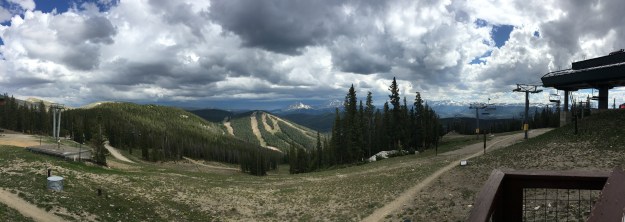
It’s a place I had only seen in wintertime, covered in snow, often packed with skiiers.

Summertime shows the place in a whole new light….

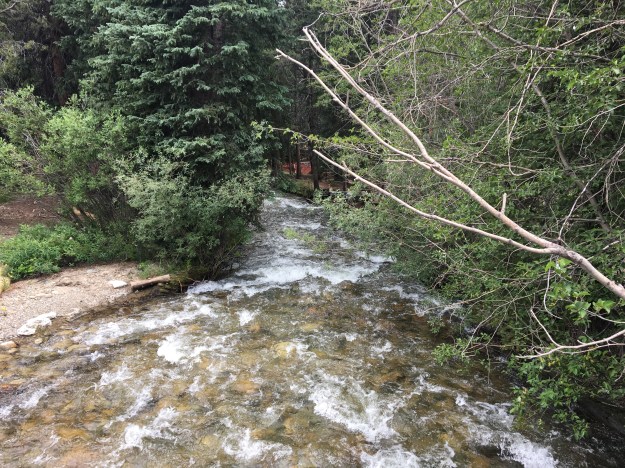
Water from the top of the mountain, ether from frequent afternoon thunderstorms or residual snowmelt channels through creeks emptying into the Snake River.

IMG_7311.JPG

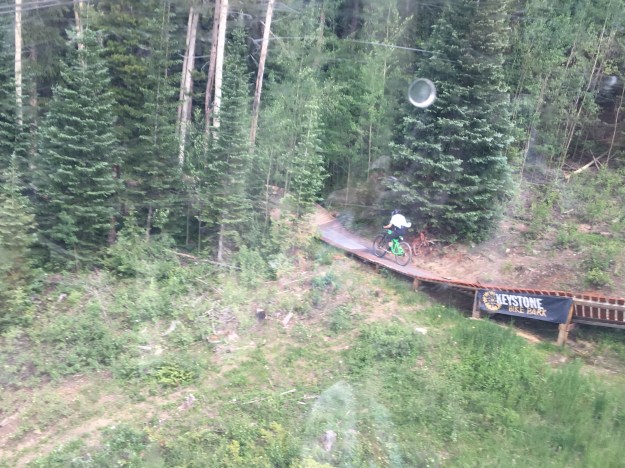
Mountain bikers are the primary users of the mountain, loading their bikes on the ski lift and riding down trails that wind through the trees.

IMG_7313.JPG

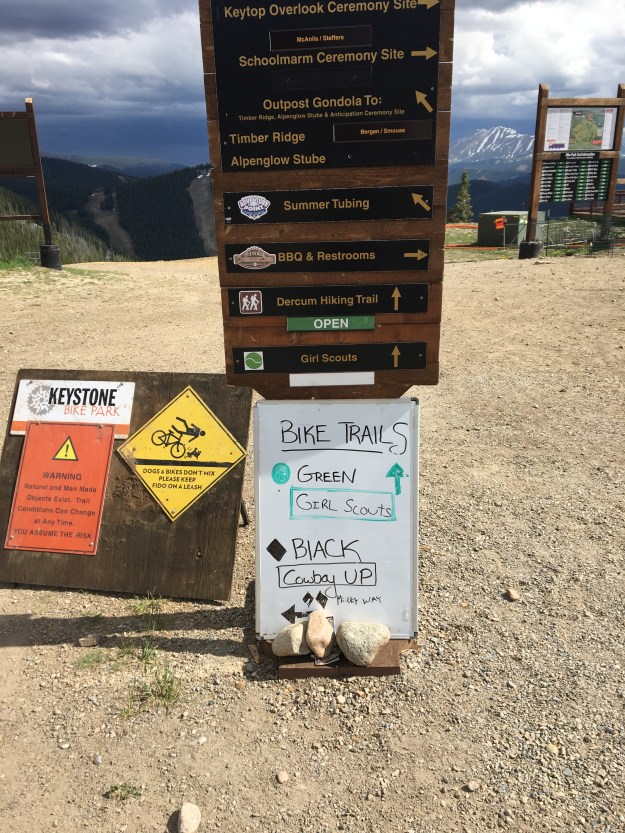
While the trails are different, they actually use the same rating system as is used for skiers and snowboarders in the winter.

IMG_7322

And, of course there are the hills, rocks and trees, a lot of which is altered or even covered up by the snow in the wintertime.

IMG_7318.JPG

It was a whole new perspective on a place I had been to hundreds of times, showing trails, rocks, and even small bushes I had been unaware of due to winter snowpack.

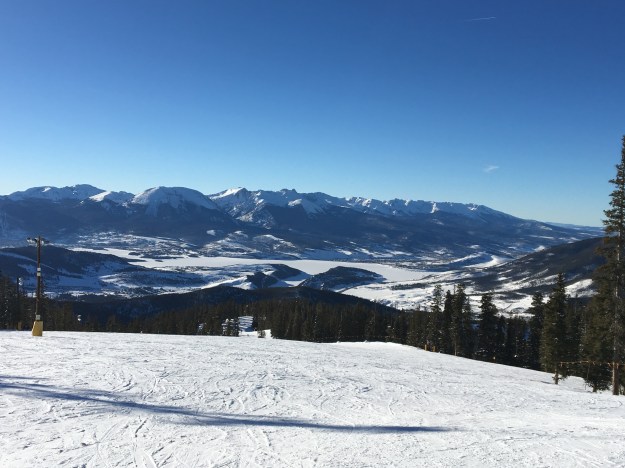
Perhaps the most breathtaking view of all was the one overlooking Dillon Reservoir at the start of what in the winter is the Schoolmarm trail.

IMG_7321

This overlook, at this moment in time, in an abnormally wet year where the ground appears greener then normal with greater than average residual snowpack at the top of the mountains, felt even more serene than it does in wintertime.

IMG_5176.JPG

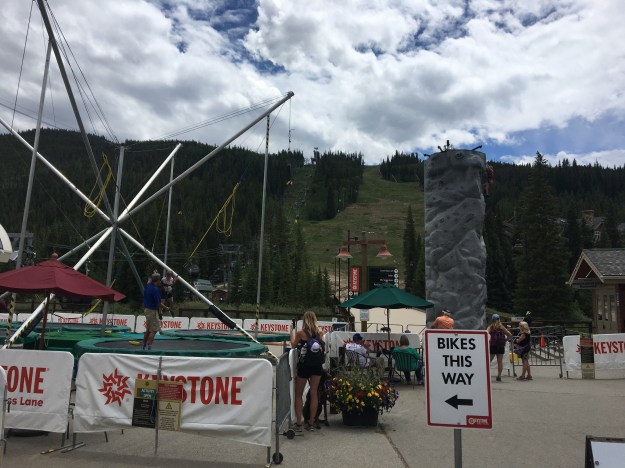
And, of course, there are the other activities.

IMG_7310.JPG

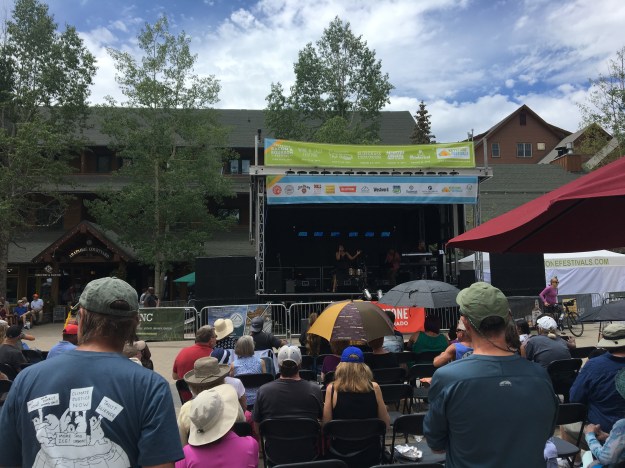
Summertime presents an interesting challenge for ski resorts. Obviously, there are no snow sports. Resorts can either shut down for the season (as some do) or try to bring in visitors for summer activities. The ones that chose to operate in summertime often put on other kinds of events and festivals to try to attract more people.

IMG_7307IMG_7308

The music at the wine and jazz festival was quite impressive. I really enjoyed some of the acts. People pay one flat fee for unlimited wine. Unsurprisingly, much of the crowd was drunk by late afternoon.

One draw to coming up to places like Keystone at this time of year is the weather. Colorado’s most populated cities can get quite hot in the summer.

IMG_7377.JPG

The mountains are significantly cooler. Advertisements for summer activities at ski resorts often highlight pleasant average summertime temperatures. However, summertime weather in the mountains can also be chaotic. In complex terrain like this, thunderstorms often form in the afternoon. Where they form changes from day to day based on some fairly small scale aspects of the wind patterns in the mid levels of the atmosphere.

IMG_7326.JPG

Therefore, whether or not a specific location in the mountains gets a thunderstorm on a summer afternoon, although there is a scientific reason for it, can feel like luck. Adventurers generally just prepare for the possibility through some combination of monitoring the clouds and planning to summit mountains in the morning and return to tree line shortly after noon.

If recent traffic patterns on I-70 is any indication, despite the fact that the ski resorts themselves are far less crowded, Coloradans are headed up to the mountains to cool off and take part in summer activities.

fullsizeoutput_24af

They are mostly headed to different places, sometimes out in the true wilderness of the Central Rocky Mountains.

IMG_7243.JPG

This is one place where it becomes undeniable that conflicts exist between corporate and human concerns. People choosing to go to different places in the summer, where they can have different experiences and often make a deeper connection with nature and themselves is a good thing for humanity overall. However, there are definitely those that stand to earn more money by getting more people to the resorts.

In theory organizations, including corporations exist to serve a purpose. I believe this is generally true in real life as well. Those that operate resorts like Keystone play a major part in encouraging people to get outdoors and seek adventure, most definitely improving human happiness. All ski resorts have a purpose, but one that is far greater in wintertime than any other time of year.

I thoroughly enjoyed seeing Keystone in the summer. Seeing how the place looks in the summer was also amazing. However, I will likely visit other places with what remains of the summer of 2019. The size of the crowds at Keystone Resort in mid-July, to me, don’t feel like a number that needs to be improved upon. To me, it just feels like the right size for what humanity needs at this part of the seasonal cycle of life.


The Great Ocean Road Day 3: Final Day

IMG_7118

The iconic 12 apostles is not the only intriguing coastal rock structure in the Port Campbell area. Continuing westward along the Great Ocean Road for the next several kilometers, spectacular oceanic limestone rock structures continue to appear.

First there’s The Arch, the only place I have ever seen a mini waterfall in an ocean.

IMG_7101

Then there is London Bridge. The name London Bridge was given to this structure back when it was attached to the mainland. In 2005, London Bridge literally fell down, due to waves and erosion.

IMG_7110

The South Ocean is quite turbulent. Everywhere along the Great Ocean Road, particularly in winter, there is a steady barrage of strong waves. There is a reason so many shipwrecks occurred here. As a result, this section of the coast is in a constant state of change. Watching the waves come onshore inundating the limestone rock, gradually eroding it and paving the way for the next structural change, is like watching science in action.

At the grotto, visitors can walk down to an arch-like structure where waves periodically crash in.

IMG_7115

Some of the larger waves can lead to mist on the other side of the arch.

After these structures, the Great Ocean Road once again ventures inland, transitioning to farmland.

IMG_7121.jpg

It would make sense that the Allansford Cheese World is in an area surrounded by farms, right near the end point of The Great Ocean Road.

IMG_7123.jpg

The Allansford Cheese World produces far more varieties of cheddar than I ever would have thought to be possible. I had always thought of cheddar as one of many types of cheese, which would include Swiss, Pepperjack, Havarti, etc. Visitors to the Allansford Cheese World can sample a dozen different types of cheddar, some of which are really innovative.

It was here I noticed myself slipping back into an American-like stand-offishness when it comes to dealing with people. For the entire trip, I felt Australians to be generally more friendly than Americans. In conversations with Australians, I did not experience the need for the conversation to provide some kind of value, or the assumption that everyone was in a rush to get to their next activity that is characteristic of many conversations I have with Americans. On my final day on the Great Ocean Road, as if trained by years of cultural experience I found myself starting to engage in conversation without being fully engaged, with the time and my next activity on my mind. I could not believe I was doing this.

Although the Great Ocean Road ends here, but most tourists continue on, at least to the town of Warrnambool, where visitors can supposedly see whales. A 30 minute visit to the pier, where one sign promised us “A Whale of a Time”, turned out to be a bust.

I guess there is a danger in trying to fit an activity like this, dependent on complicated natural forces and animal behavior, into any kind of schedule. However, I wanted to continue west, to the Tower Hill Nature preserve, a set of volcanic lakes where koalas often hang out. It would be a shame to visit Australia and not see at least one of those, and at this time of year daylight in Australia is limited.

IMG_7138.jpg

I made a major mistake here as well. Based on our life experiences, we often internalize assumptions and operate based on them without thinking. Being from Colorado, I have a base assumption that all “hikes” involve a climb, to some sort of peak or cool looking overlook.

After two such hikes, in hopes of seeing koalas, an employee at the visitor information center informed us that koalas need trees with moisture and would likely be found down by the lakes. This walk needed to be flat, not up a big hill.

For some reason, despite their actual demeanor, koalas feel like a picture of innocence. A small, furry, cuddly creature constantly hanging onto a tree and sleeping 20 hours per day. I actually wanted to pet them.

Port Fairy would be our final destination.

IMG_7165.jpg

We’d have one last adventure here, a short walk onto Griffiths Island.

IMG_7160

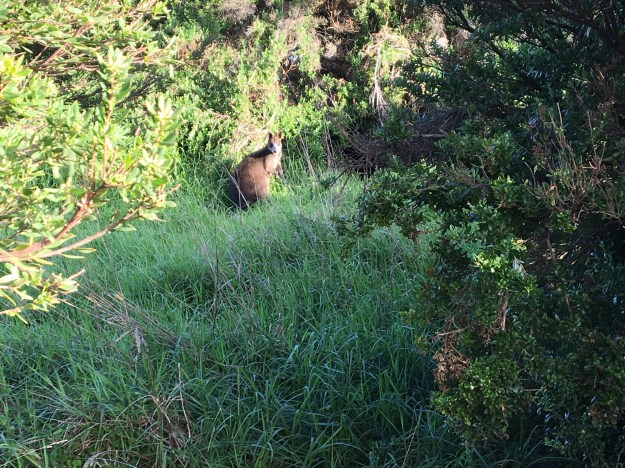
Where we would have one final wildlife encounter, fairly up close with the wallabies!

IMG_7164

A trip that many would consider “once in a lifetime” was coming to an end. I sat on a rock gazing out at the Ocean as the sun gradually faded behind me. It felt like a real life version of the fade outs often used at the end of movies and videos. Looking straight outward, I was amazed at how vast the Ocean is. I began to imagine what is on the other side, pondering more adventures. Uncertain as to the exact direction I was facing, I imagined multiple possibilities of what laid straight in front of me.

I imagined the jungles of Madagascar, with monkeys and other forms of wildlife roaming around in the trees and a lone explorer with a knife trying to trudge through the trees and mud.

I imagined the vast expansive ice sheets of Antarctica.

I imagined the far more nearby mountains of Tasmania, quiet for the winter season, but coming to life with young adult hikers and adventurers in the Springtime.

Despite the fact that my adventure would slowly be ending, the reflection of the orange light on the ocean surface felt like an invitation and promise of more to come.

IMG_7168.jpg

Four Days After the Blizzard

IMG_6099.jpg

Well, technically in most places it wasn’t actually a blizzard. Denver and points East were  under a blizzard warning for the afternoon and evening of April 10, 2019. The wind speeds did not quite reach the technical criteria for a “blizzard”, but snow did fall and the wind did howl.

05EBE052-3614-418B-98CE-41AB7FCC2025.jpg

April is perhaps the wildest, most unpredictable month. In cities throughout North America, scenes like this play out every year. Just as people are getting set up for Spring, a wild swing in temperatures, in this case from a high of 78F (26C) on Tuesday the 9th to an overnight low of 17F (-8C) after the snowstorm the next day, disorients everyone.

It can get violent too! While May is the month with the most tornadoes, April is the month with the most killer tornadoes.

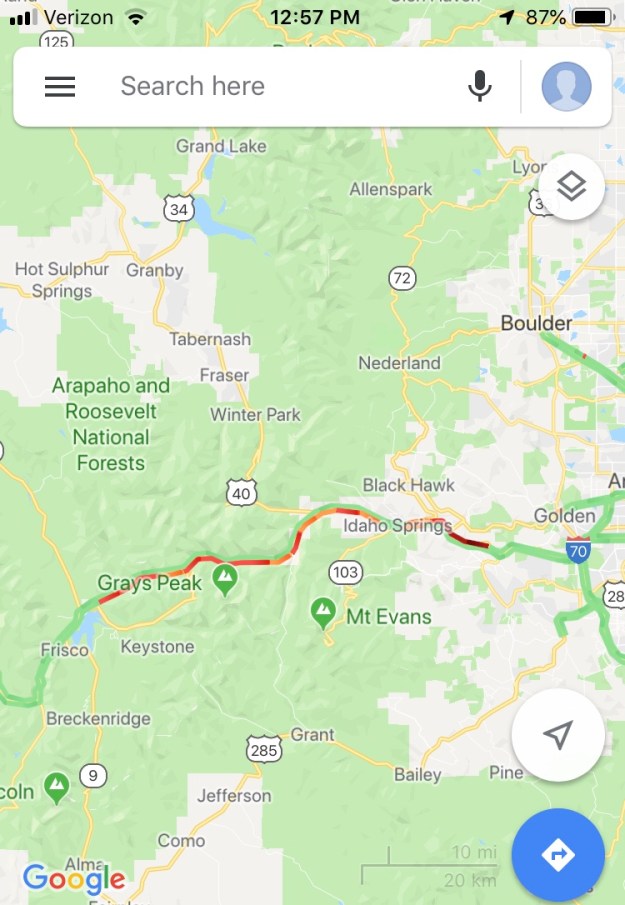
With weather forecasts for specific place on a specific day generally unreliable more than about a week out, April is a hard month to set expectations for. In the mountains, this time of year is generally referred to as “mud season”, but it is not that uniform. By Sunday, four days after the snowstorm, despite the weather not being too particularly warm, places like the Buffalo Herd Overlook, at an elevation around 7600 ft. (2300m) were pretty dry. For some reason, the bison (they are often called “buffalo”, but technically are bison) roamed closer to I-70 than normal, with many motorists stopping to admire them.

IMG_6100

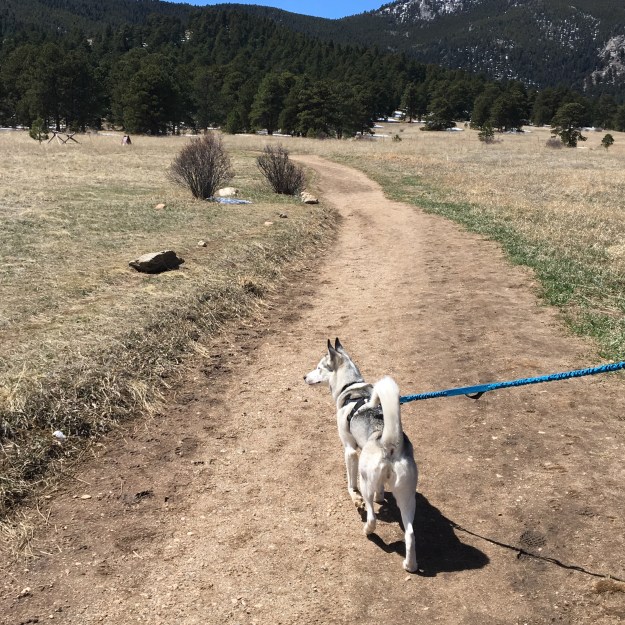
Four days after the “blizzard”, I found myself taking my new dog, Shasta, on her first hike since being adopted.

IMG_6109.jpg

Our group actually included a dog and a baby (9 months old), as they had previously taking a liking towards one another.

Shasta_Mila

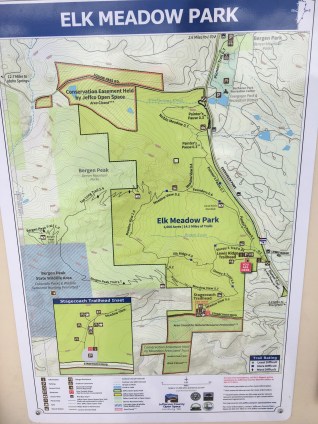
I had previously hiked at Elk Meadows Park, almost five years ago, hiking to the top of Bergen Peak on a hazy day in July.

IMG_6104.jpg

That hike involved a climb of just over 2,000 feet  and a distance just over ten miles. For several reasons, today’s hike would be much shorter. Most obviously, babies are exhausting to cary and often do not have the attention span to tolerate hikes that would span around 5 hours.

IMG_6107.jpg

There is also the variable trail conditions.

IMG_6113.jpg

Sections that are both muddy and still partially covered with melting snow were quite common at elevations between 7500 and 8500 ft (2250-2600m). Heading to elevations closer to 9700 ft. (2950m), areas with deep snow would have made the hike far more challenging. Colorado had a snowy winter, particularly in late February and early March. Mid-April snowpacks exceed long-term averages throughout the state.

CO_Snow_April2019

The cold, snowy winter was great for Shasta to get acquainted with the new neighbors.

IMG_5944.jpg

But, it ended up being an abnormally sedentary period for me.

My favorite thing about Elk Meadows Park is definitely the signage. There is no getting lost here, as every trail junction is clearly labelled.

IMG_6111.jpg

The lower part of the park is a wide open valley. It can feel like a miniature version of areas like South Park and the San Luis Valley, relatively flat, treeless areas surrounded by mountains in all directions.

IMG_6117.jpg

Despite these panoramic views, the hike itself cannot really be thought of as earth shattering. When people romanticize about the Colorado outdoors, it is often about things like climbing to the top of 14ers, cycling over mountain passes, skiing, or whitewater rafting.

IMG_6119.jpg

However, it ended up being what I needed. There is something about being outdoors, in the presence of nature, in good company that feels human in a way that our world of cubicles, screens, stress and performance metrics doesn’t. It is so easy for all of us to get so carried away in our pursuits; trying to get a promotion, saving up or something, asserting our status, making deals and planning the future that we forget to enjoy what is right in front of us.

IMG_6112.jpg

Planet Earth is full of wonder, whether they be mountains, gentle streams, wildlife, waterfalls, or something simple like a group of friends having fun and dancing- showing their true humanity. The more we can stop to appreciate this, or be a part of it, the better off we all will be. After a not so great week related to my pursuits in life, I genuinely needed to just be in nature, regardless of the setting.

Like the April weather, our situations, fortunes and struggles can change at any time, and often can’t be predicted too far in advance. It has been shown that luck can be related to one’s attitude, more than just chance. However, regardless of what happens to us, our responses often matter more than the actual situation at hand. Sometimes, like the weather in April, as opposed to a detailed long-term plan, all we can do is do the best with what is right in front of us.

Park City During Peak Ski Season

IMG_5753.jpg

North America has its fair share of iconic ski towns; places frequented by winter sport enthusiasts, particularly skiers and snowboarders at this time of year. On one level, the experience in most of these towns is quite similar. There are the hotels and condos, restaurants, sporting goods, all those T-shirt shops, and some form of nightlife to cater to the many young and active people that visit every year.

However, there are some major differences between these towns and the resorts around them that create different experiences. The town of Park City is perhaps most similar to Breckenridge, in that it is a town that was settled in the middle of the 19th Century as a mining town.

IMG_5794.jpg

This contrasts with towns like Vail, which were built up around the ski resort after it opened. Also, as is the case with places like Crested Butte and Whistler, the manner in which the town is laid out, the cultural vibes, and of course the resorts themselves make each place a unique experience.

IMG_5775.jpg

Visiting Park City February 9-13, skiing the 10th-12th, produced what is perhaps the most typical Park City ski vacation experience, as it is right in the peak of the ski season, but not a holiday or a special event.

This time period also produced a good variety of weather and snow conditions, with a snowstorm rolling in Sunday afternoon, but Monday and Tuesday’s weather being clear.

After this experience, I have concluded that the Park City experience is unique for the following five major reasons.

1. Accessibility

ParkCity_SLC

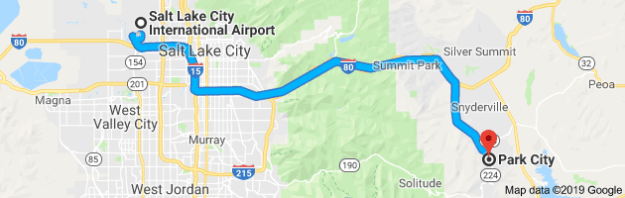
For people traveling from other parts of the country, this is a major draw. The drive from Salt Lake City International Airport to Park City can typically be done in well under an hour. Getting to most other resorts in North America requires either a longer drive or flying into a smaller airport.

2. Utah Culture

IMG_5714.jpg

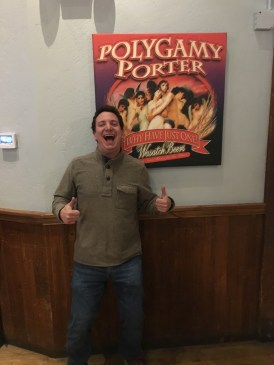
Saturday evening, my first night in town, I walked into Wasatch BrewPub, which is at the south (and high) end of Main Street. Arriving at a brewpub at 9:30 on a Saturday night is something that feels quite normal to me. Yet, upon arrival, I was informed that last call is in a half an hour.

All the tap beers on the menu were listed at 4.0% alcohol by volume, also reflecting Utah’s culture of caution when it comes to consuming alcohol. There are, however, ways around this.

IMG_5723

3. The Resorts

Several years back, Park City and the Canyons combined to form a mega-resort.

IMG_5726.jpg

Like Whistler-Blackcomb, the formerly separate resorts are connected by a gondola.

IMG_5787.jpg

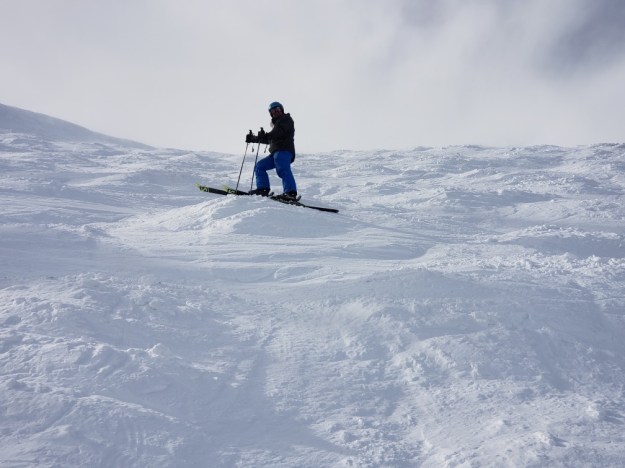
Both sides of the mountain have some epic skiing, including aspen glades.

Skiing through the aspen trees is somewhat of a unique experience, as, due to climate and elevation, not all resorts have areas like this.

The Park City side of the mountain probably has the best bowl skiing.

IMG_5791

Skiing areas like this after a fresh snow is a unique, however exhausting, experience.

Deer Valley Resort, just a couple of miles outside of town, is the site of many events at the 2002 Winter Olympics.

IMG_5764.jpg

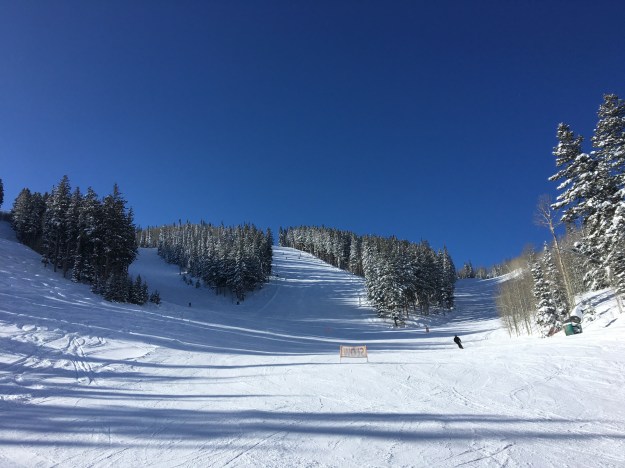
It’s the kind of place where skiers can pretty much do it all, from skiing really fast on a groomed trail.

IMG_5754.jpg

To going deep into the woods and encountering random cabins.

IMG_5757.jpg

One thing I love about the resorts in Utah is that some of their trails have a double blue, or advanced intermediate rating. In my opinion, the variety of types of trails at many ski resorts in Western North America warrants some being given a rating between blue (intermediate) and black (expert).

IMG_5756.jpg

There are, however, some potential annoyances for some visitors. Like many ski areas around the world, Park City has gotten into the cross-hairs of the arms race between competing multi-resort ski passes. Park City resort (which includes the Canyons) is on the Epic Pass, while Deer Valley is on the IKON Pass. Visitors who want to ski both resorts cannot do so on one pass, they must either purchase a one day pass at one of the resorts (as I did), or have both passes (I did meet someone on a ski lift ride that did purchase both the Epic and IKON passes).

Also, Deer Valley is one of only three resorts in the country that does not allow snowboarders.

4. Snow Conditions

IMG_5734.jpg

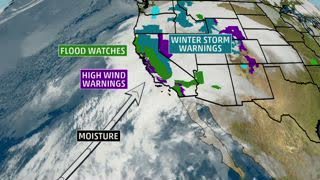
Different parts of the country have different snow conditions. Resorts closer to the East or West coast tend to have wetter snow than those in places like Colorado. Utah’s snow this February was kind of a mix between the two, as much of the snow in the area had come from the same series of storm systems that dumped heavy snow in California.

AtmosphericRiver2019

These storms have tapped into tons of moisture from the Pacific Ocean, bringing snow to Utah that has some resemblance to the snow at resorts closer to the West Coast.

5. Parking

IMG_5710.jpg

Aside from the strange way things close earlier than expected, I love Park City’s Main Street. The lights hung across the street and not so gentle slope from one end of the street to the other produce an evening atmosphere that just feels positive and festive. However I have never seen a street with so little available parking also have so little through traffic. It felt strange to look for parking for so long but also be able to stand in the middle of the road so frequently! Luckily, Summit County Utah has free busses visitors can take all over the areas, most of them going to Park City’s Main Street.