Category Archives: Denver

MeowWolf is a Reflection of Our Cultural Moment

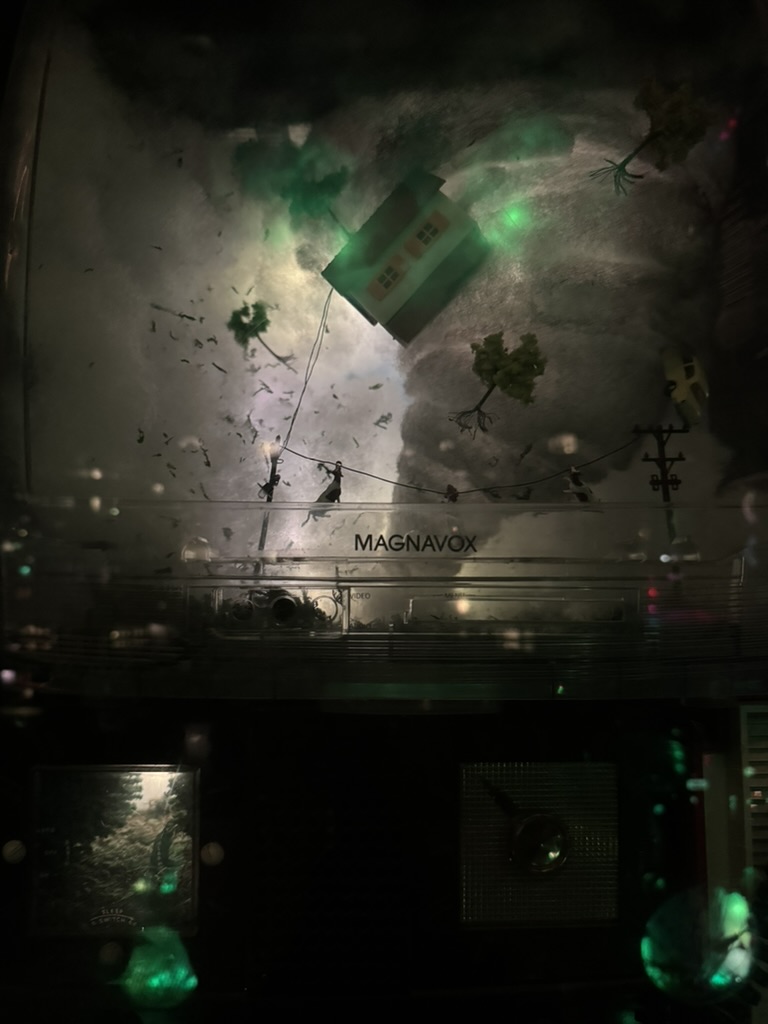
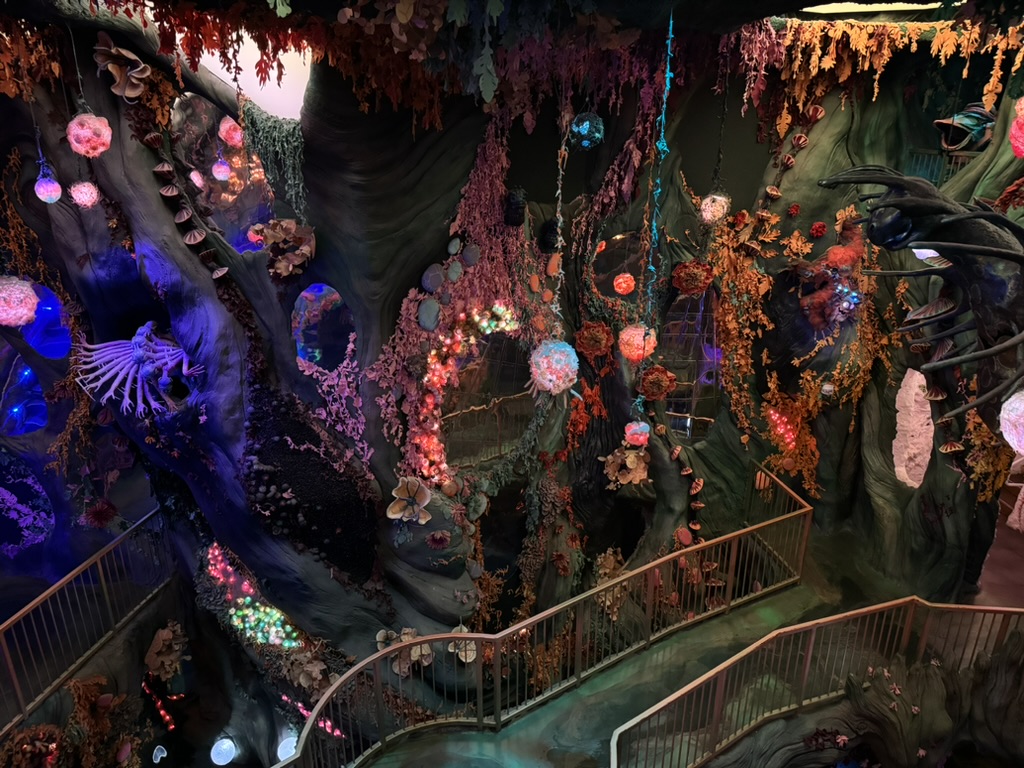
It’s hard to describe what exactly MeowWolf is. Over the past several years, you’ve likely seen some pictures of this place, mostly on social media. MeowWolf describes itself as Immersive Art Experiences and Interactive Exhibits. While this is certainly true, it feels like one of those IYKYK (If You Know You Know) types of places. Pictures like these give you an idea what to expect, but it’s impossible to understand what going to MeowWolf is like without actually going there.
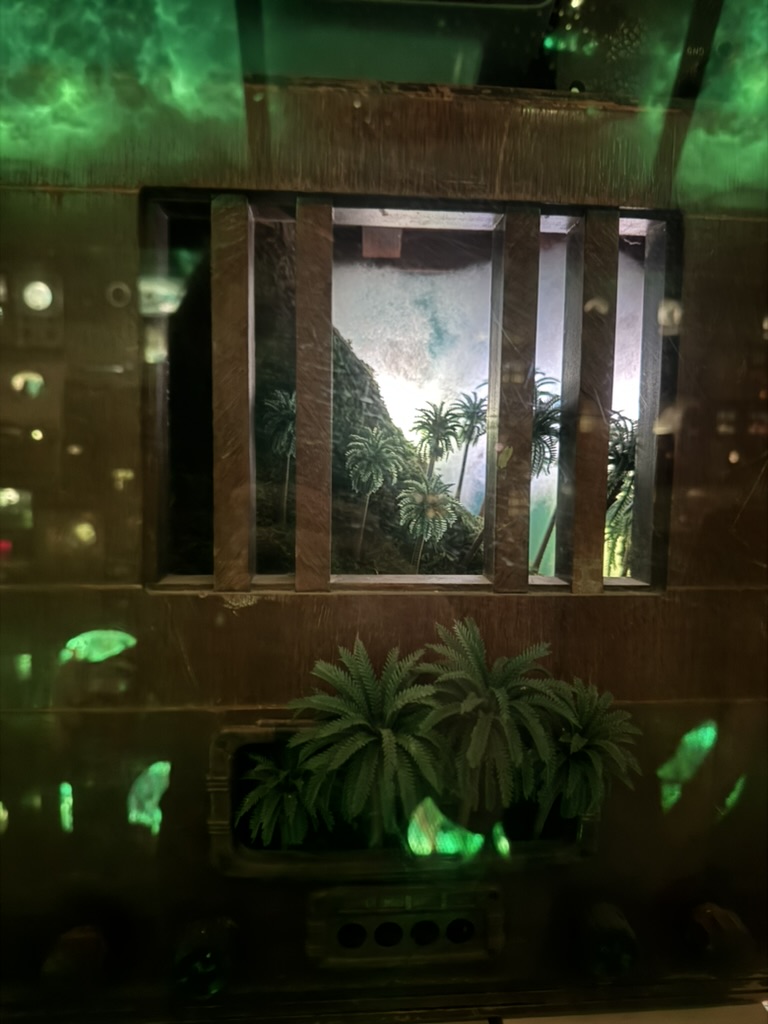
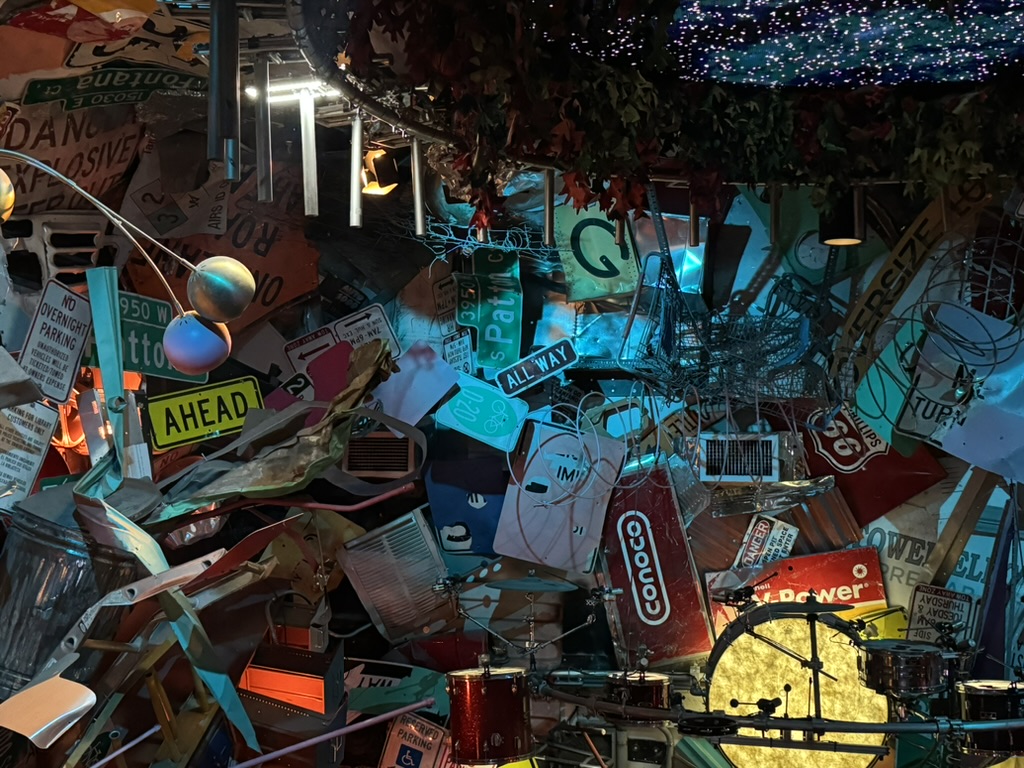
More than anything, the place is extremely artistic, and just random. Around every turn there is a door, another room, or even a crawl space that leads to another completely different exhibit. There’s a lot of it too. Some have spent over five hours in this place.

My favorite part was the Pizza and Pals section, a place where I suddenly found pizza singing at me.

The place also had an optional interactive component, with a story about four worlds that it would take a much deeper dive to understand.
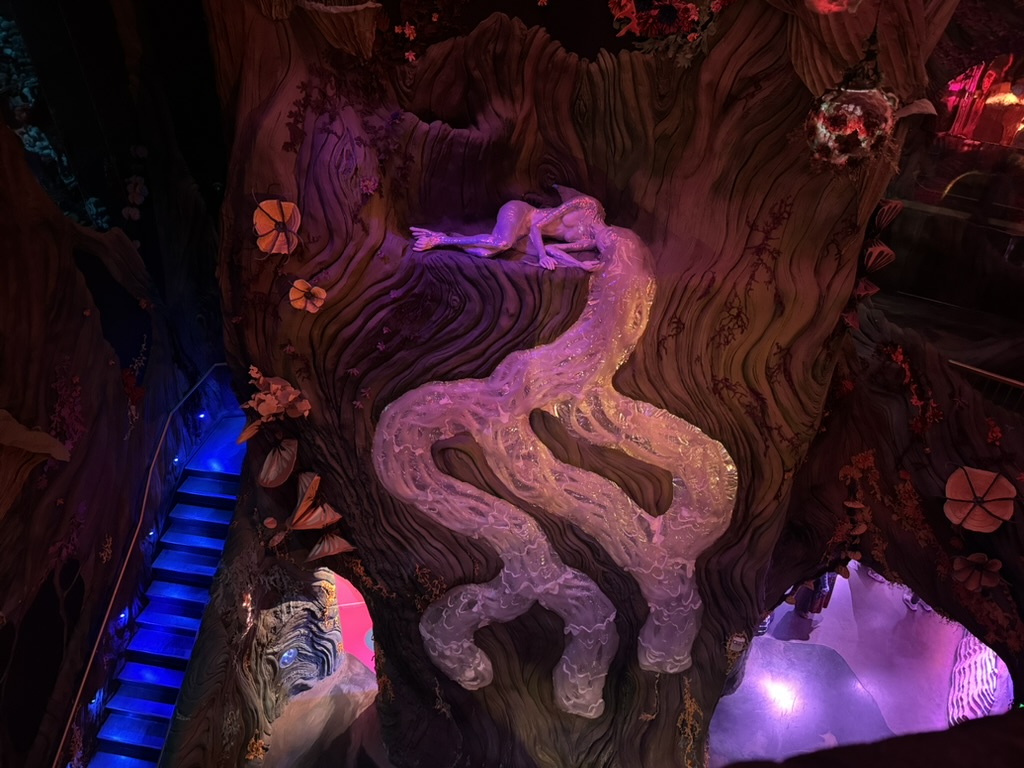
Still, I couldn’t help but reflect on how well this place matches our current cultural moment.

First of all, it certainly caters to an ADD (which seems to be all the rage right now) type of crowd. With all the different immersive art, any visitor can just abruptly change what they are looking at by turning their head or walking through a door.

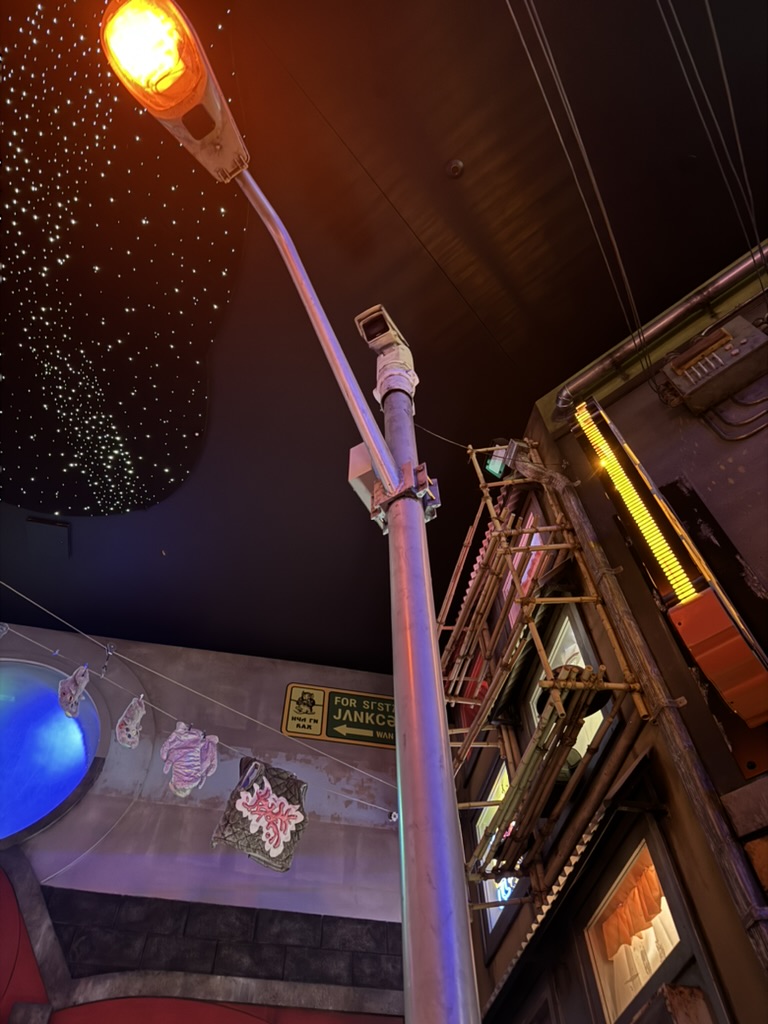
Yet, it seems to match this historical moment on a much deeper level. Sure, it is the perfect place for Instagram, something that people seem to have been looking for for a little over a decade now. However, it seems to speak to an even deeper craving that has developed during the 2020s. After nearly two decades of looking at and sharing pictures on social media, people are now looking for something that is more of an experience.

There is also something to be said about an experience that a person cannot truly wrap their heads around just by looking at pictures or even hearing about the experience. By knowing this place cannot even be remotely understood through social media feeds, it establishes itself as being about more. While this place may be great for social media, it points to a life beyond social media. The emergence and increased popularity of this place appears to be sending a cultural message along the lines of…

“We still want great photos to show our friends and family, but we are craving in real life interactive experiences. We want something unique. Something imaginative. We want something beyond what can just be seen in a photo or a video. We are ready to be done with just passively consuming content. And, we’re tired of the flattened culture where everything is the same!”

This, I believe, culturally, is where we are in 2025.
90 Minute Hikes Outside of Denver

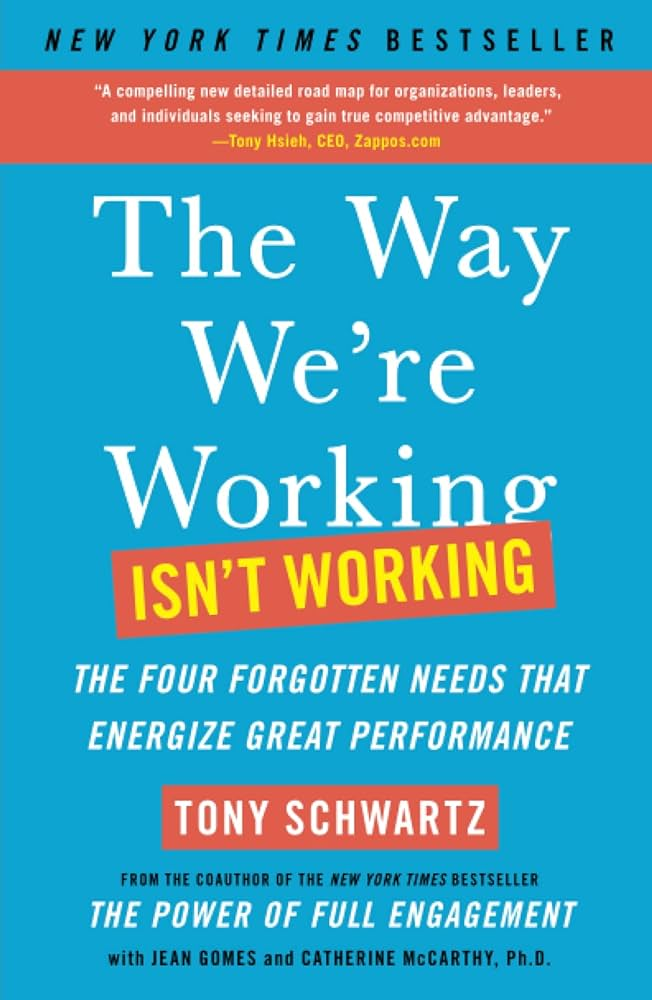
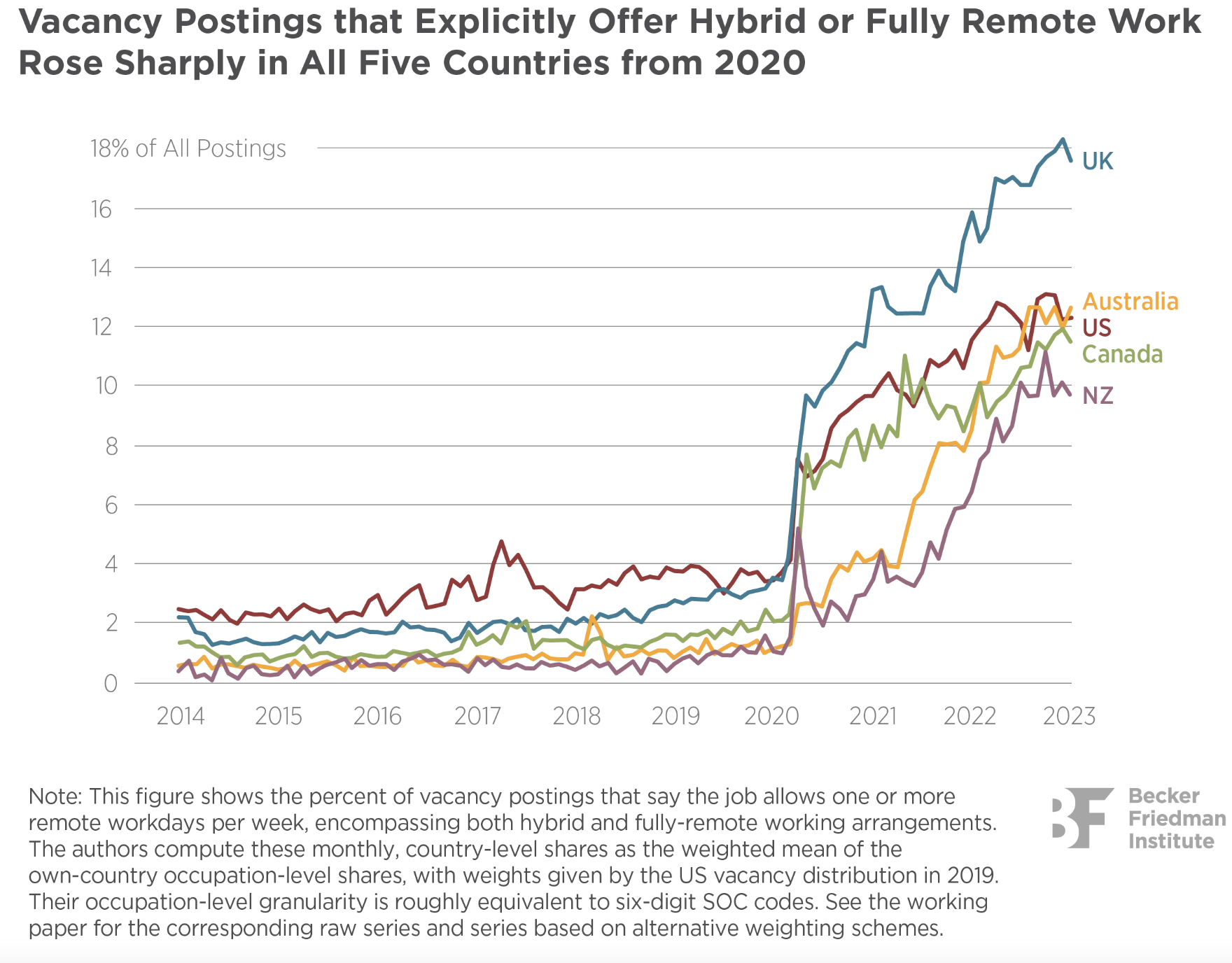
Phenomenon like “quiet quitting“, the “great resignation” and some places experimenting with the four day workweek should make it abundantly clear that there is something less than ideal about the standard work culture of the post industrial world.

Note: This book was published in 2010

Our general work setup is built around a world that no longer exists. It was built around the industrial world of one income families of a hundred years ago. On an assembly line, the amount of value someone brings to a company is directly connected to the number of hours they are present. The eight hour workday represents a compromise of sorts between business owners and labor. It is based on this direct connection between value and hours worked, as well as a world where most laborers were men with women at home tending to childcare and household upkeep. Today’s world is completely different and needs a completely different paradigm.

A silent disco co-working pop-up in Denver, curtsey of Cifernoise Productions

However, realistically, it is going to take a while to get there. We are still in the beginning phases of exploring the new nature of work after the pandemic.

And, there are plenty of powerful interests trying desperately to keep as much of the old, flawed system as possible. This will certainly delay progress towards a new paradigm.

At this time, living a healthy and balanced life will require being innovative and working with what we have available. This is why I have taken an interest in hikes that can be done in roughly 90 minutes close to home. This fall, I tried two.

First was Pence Park, between Evergreen and Indian Hills.

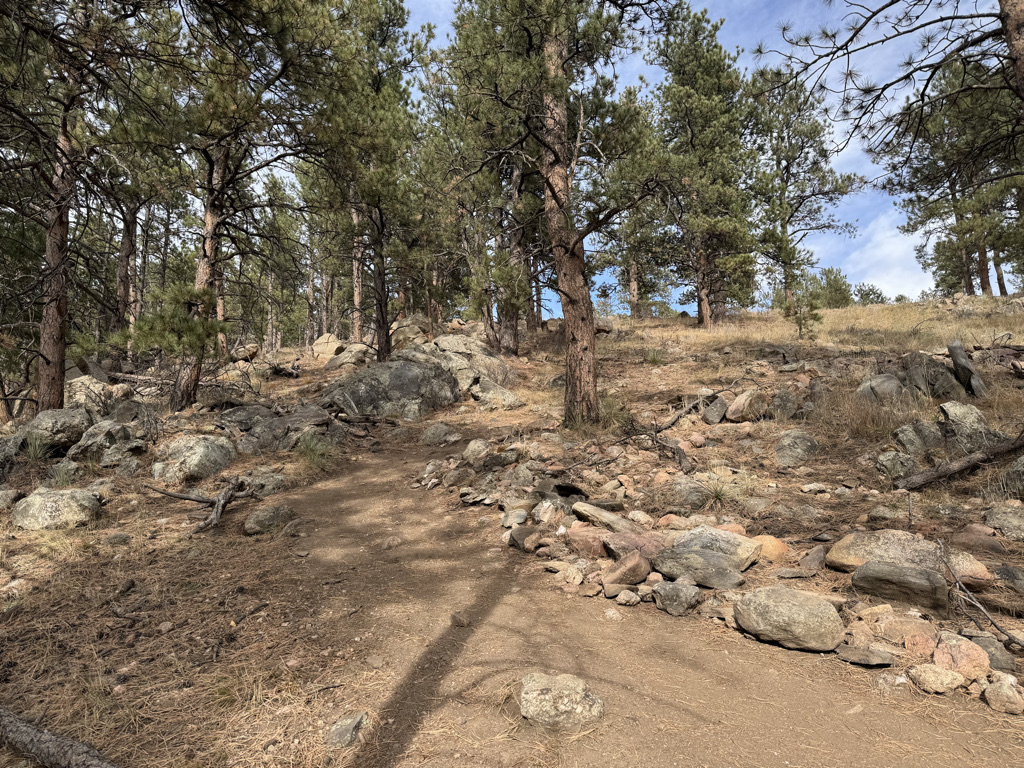
The hike to the top is about a mile and a half (2.4 km) with an elevation gain of 750 feet (230m).

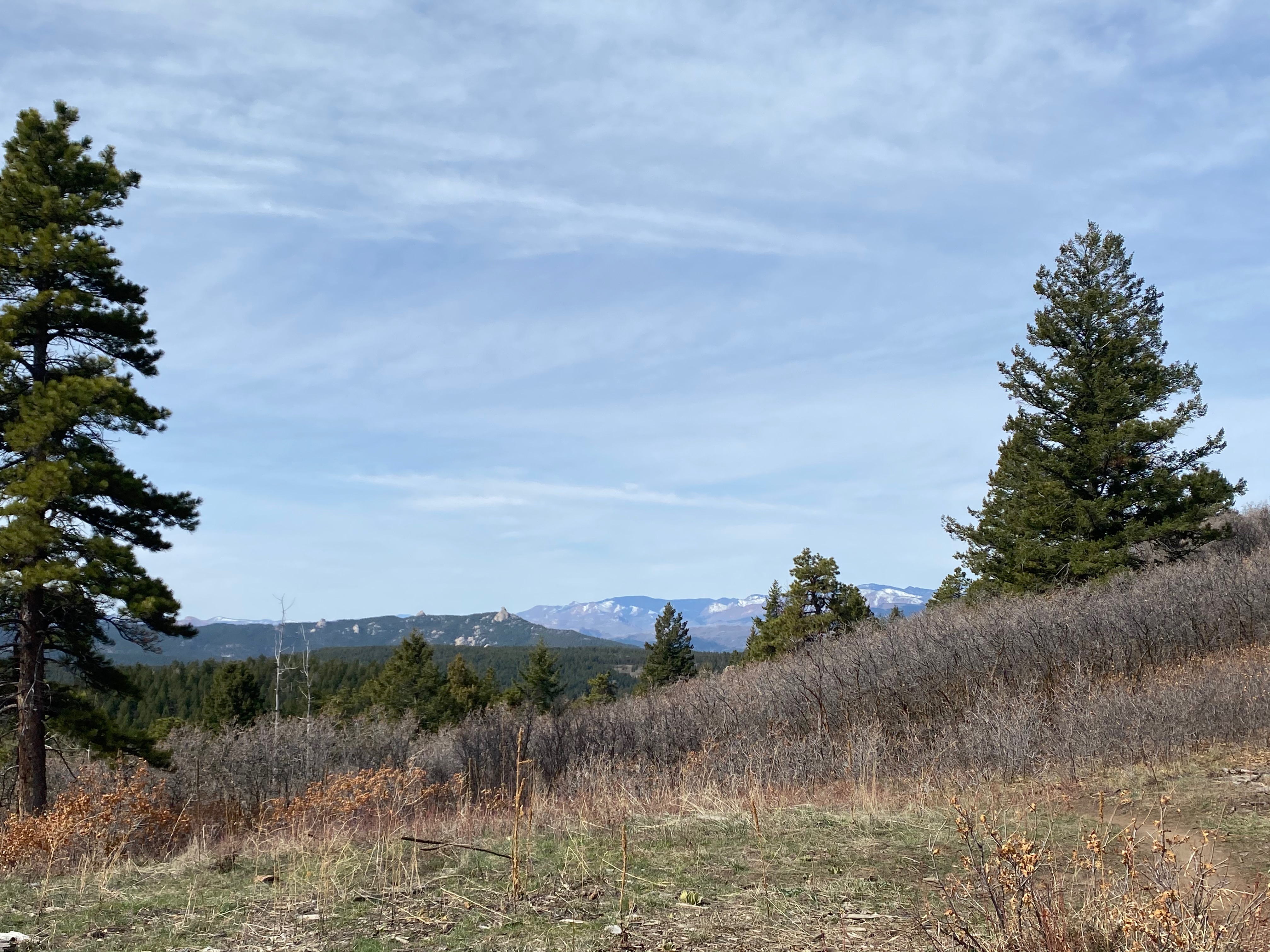
For a short hike, the views here are quite stunning, especially at the top.

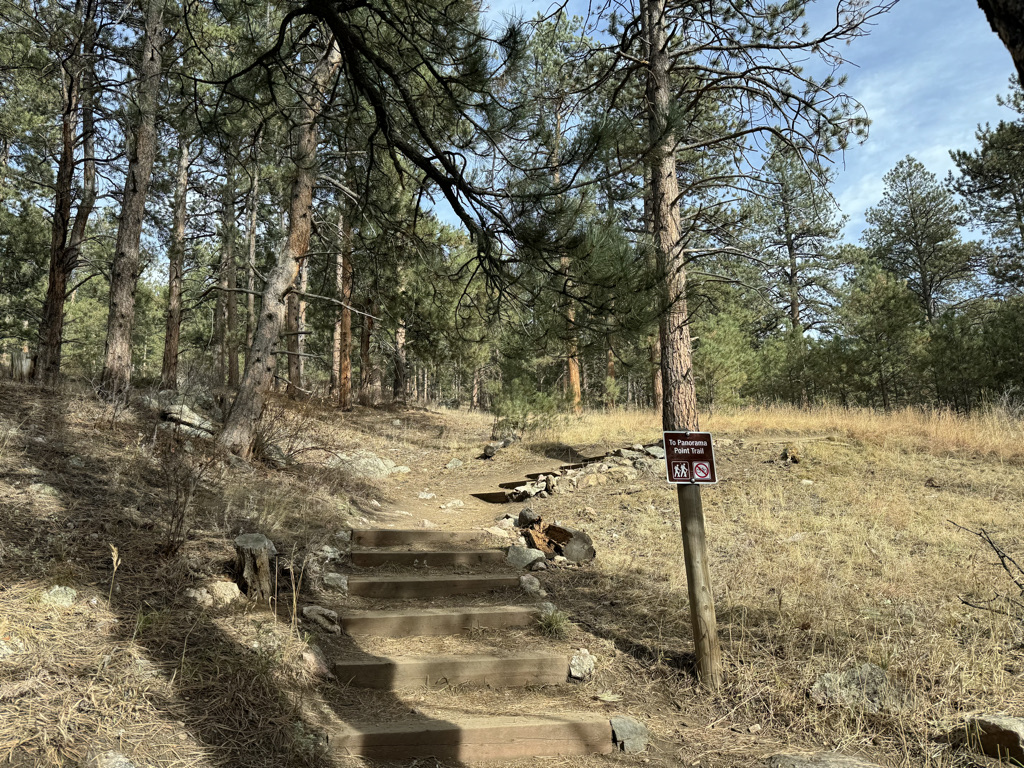
My other 90 minute fall hike was Panorama Point, just outside the small town of Kittridge.

This hike has a round trip distance of just over three miles (≈ 5 km) and an elevation gain of 625 feet (190m). These hiking trails are actually only a few miles apart, so it is not surprising that they feel quite similar.

Panorama Point has an overlook of the town of Evergreen at the top.

So, there are some slight differences, but both hikes take about an hour and a half and are about 45 minutes to drive to from downtown Denver.

This activity address two of the biggest shortcomings of “9-to-5” office jobs. Spending those hours doing work inside, whether it is in an office or remote, can limit one’s exposure to sunlight. Some studies have estimated that well over half of Americans are not getting sufficient vitamin D, which mostly comes from exposure to sunlight. Additionally, most of these jobs are sedentary, involving sitting at a computer all day long, which is certainly not helping with the obesity epidemic.

These 90 minute hikes offer an opportunity to get some sun, exercise, and even be a bit social in the middle of the day on a weekday, particularly in the spring and fall seasons. On hikes like these, there is even the potential to limit the amount of time spent out of contact to under two hours. Eating and working from a nearby restaurant made my time away from my computer, messages, etc. not too much more than a standard lunch hour.

Blackbird Cafe in Kittridge, CO

Of course, not everybody lives in a place with amazing short hikes nearby. The key is to be creative and work with what you do have around you to find habits that help correct the imbalances created by a less than ideal work setup. Hopefully, the time will come sooner rather than later when we’ll determine how a majority of people can be happy, healthy and provide value to the organizations they work for. Until then, I hope you can find your version of the 90 minute hike less than an hour from home.

Going Great; Going Poorly

I was riding my bike on a 76 degree (26°C) day in November , a day which tied a previous record high (November 17, 2020).

By early afternoon I was riding home but still 20 miles away. All of a sudden I heard the sound of a light piece of metal hit the road. Before I could react, my pedal was no longer attached to my bicycle.

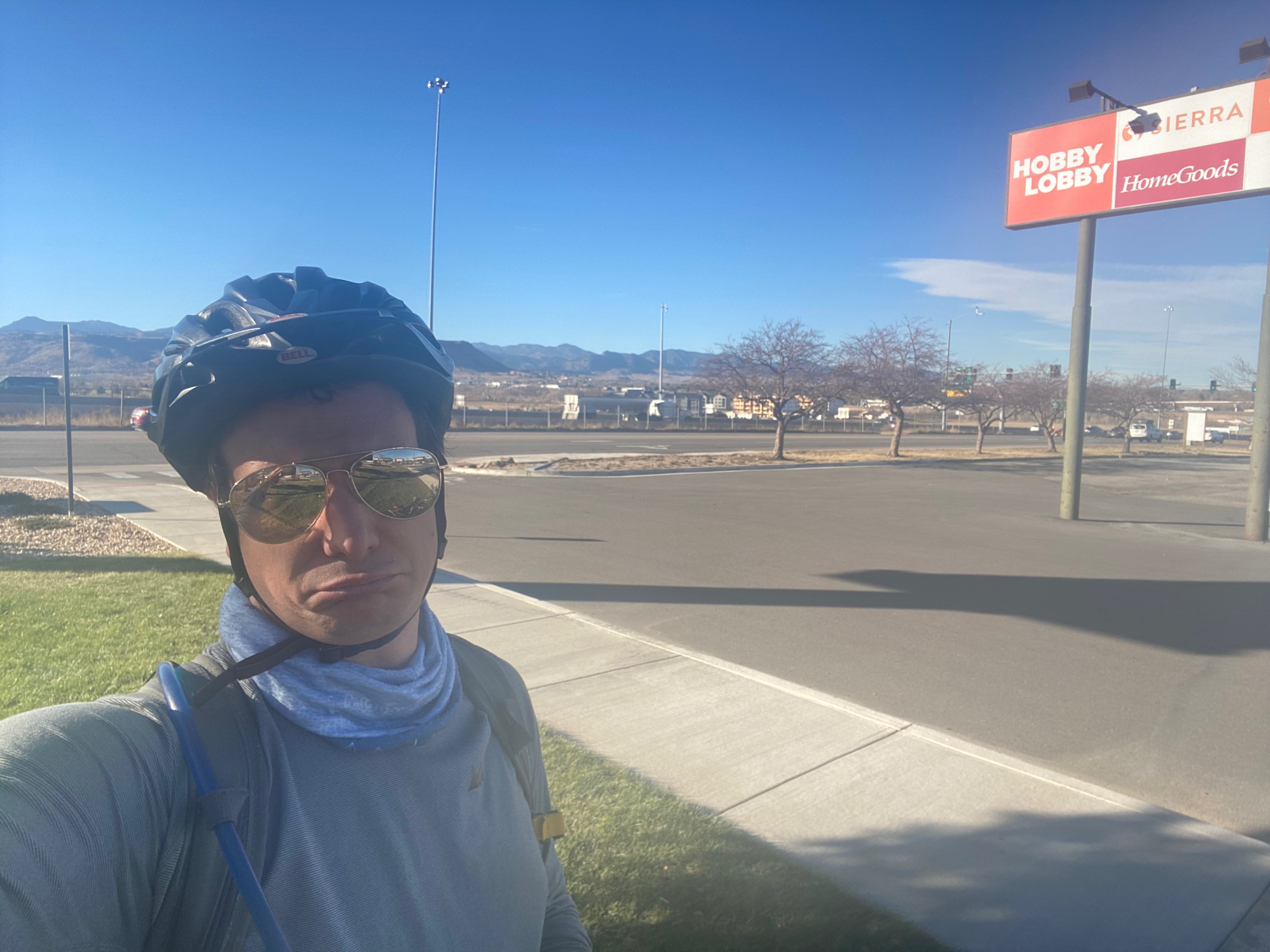
I had to slowly brake without putting myself in danger. I walked 1.8 miles (2.9 km) to what appeared to be the nearest bike shop. The place was empty. Research would show that this was a new business that had yet to fully occupy that address.

What to feel?

When you’re lucky enough to be able to spend a day like this outside, it is hard to feel too sad. Sure, I was sitting in a suburban parking lot waiting to get a ride to another bike shop. The air temperature and the sky were perfect, though. It’s hard to imagine getting better sun in mid-November.

The first 20 days of November has been unprecedentedly warm, almost 8°F (4.5°C) above average. At a time of year when people are typically forced indoors, as it becomes increasingly cold, dark and cloudy, nature has provided the opportunity for abundant adventure!

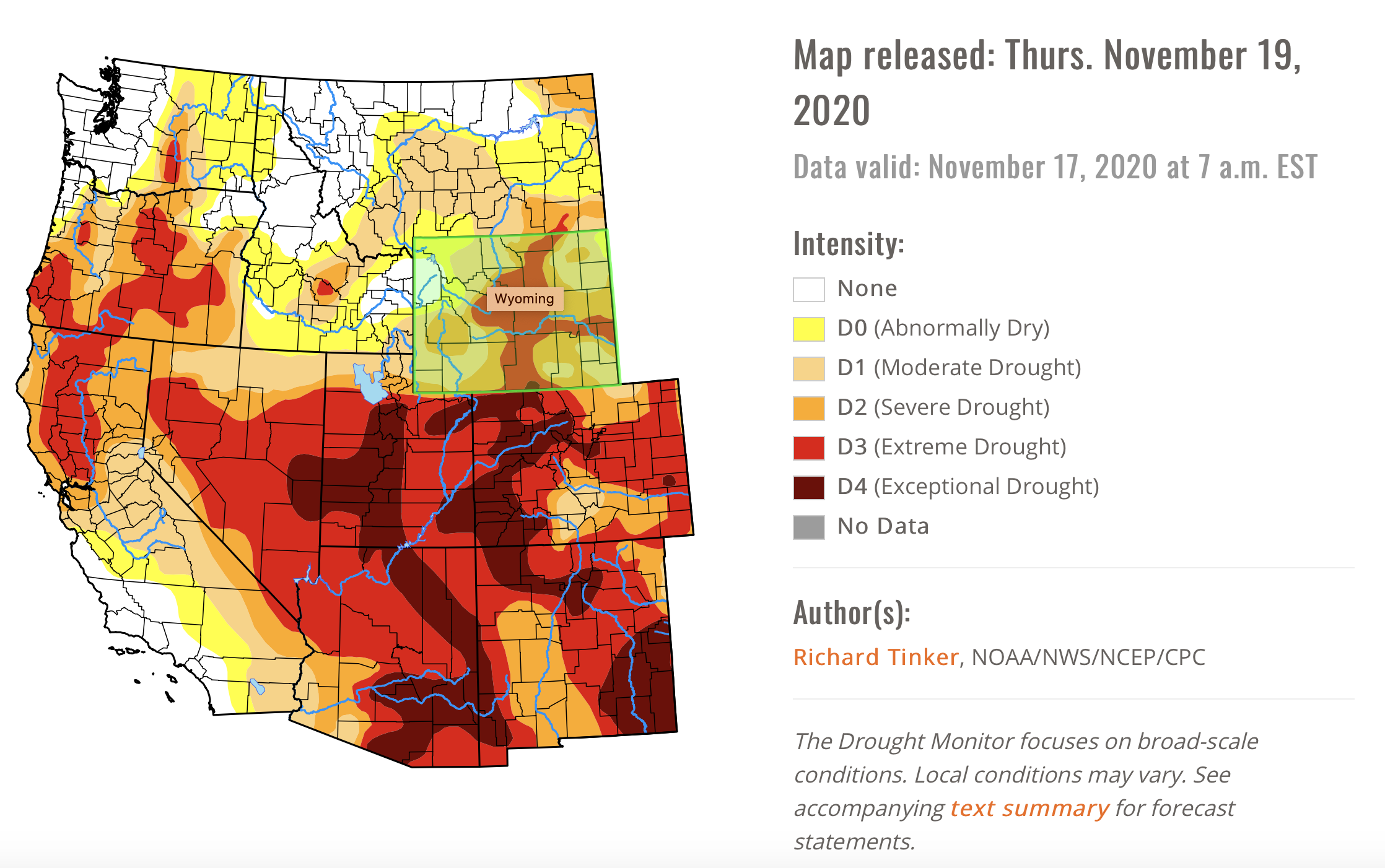
Yet, this very same weather pattern, which has been around for several months, has lead to a drought across much of the western United States.

Each warm dry day in the mountains was a great day for many. Yet, each one of those warm dry days took us one step closer to wildfires so powerful and destructive they could be seen 60 miles (96 km) away!

This particular fire lead to people having to flee their homes in panic!

The very nature of existence seems to always mix the good with the bad. Life has so many components to it, it is hard to look at a specific person or find a specific period of time and not see both positives and negatives. Some of the years when my career was truly going nowhere were also the years I had some of my best travel adventures. This year has featured a lot less travel than I would prefer, but with work I can do remotely, and a recent change in outlook on money, my financial position has improved. Between our homes, careers, social circles, relationships, adventures and hobbies, likely 90% of all people are doing great in some respects and doing poorly in others.

In my home country, November 2020 has become an exaggerated demonstration of this very phenomenon. Every week more progress is reported about the development of vaccines to finally end the COVID crisis.

There is hope it could be distributed in time to make all of our summertime activities possible! Yet, the current situation is dire. The case numbers are spiking, hospitals are running out of beds and staff and people are dying. Many states are reimposing restrictions and lockdowns. We are preparing for a dark kind of winter of despair.

Meanwhile, we are coming off an election whose results gave pretty much everyone, across the spectrum of ideologies, something to love and something to hate.

In truth, almost everything has a component to it that is good and a component that is bad. Tough situations have the potential to lead to personal growth and innovation. Even wars are often credited with scientific and technological progress. Meanwhile, many who had a comfortable and sheltered upbringing are entering the world without the skills to cope with adversity. Maybe one of the lessons 2020 is trying to teach us is that we need to be far less quick to assess things with a broad brushstroke as good or bad. As we realize things like the limitations in using GDP as a measure of success, we accept a more nuanced view of what is in front of us.

The Monsoon the Never Arrived

The North American Monsoon typically arrives in the Southwestern United States in mid to late July. Unlike some monsoons in other parts of the world, this one does not bring a consistent or steady rain. After all, it is a very dry region. Normally, for four to six weeks, most days will feature scattered thunderstorms across the region.

As has been the case for many expected events this year, the 2020 monsoon never happened.

Many places, particularly in Arizona, California, Colorado, Nevada and Utah received little to no rain along with hotter than normal temperatures. While there is variance in how strong these monsoons are from year to year, this year it seriously NEVER ARRIVED. 2020 is tracking to be the driest summer ever in Phoenix, while Las Vegas is on the verge of breaking a record for its longest streak without rain.

This has lead to widespread drought, raging wildfires, particularly across central California and Colorado, road closures, and smoke everywhere!

It feels as if Denver and the other front range cities have been under a constant barrage of smoke, with air quality alerts every day for the entire month. Day in and day out its been the same story. It is usually pleasant at sunrise.

But, this pleasant period is reserved only for early risers. It only takes a couple of hours of sun for it to begin to feel quite hot. Some days a few clouds show up as a teaser.

But the storm never arrives, just a hot wind. The last time there was any measurable rain was the first of the month, and that wasn’t much at all.

Each day, I’ll check the forecast only to see more of the same.

Forecast for August 20-23, 2020

If there is one theme to 2020 thus far, it’s monotony. We all endured some amount of quarantine, where each day, day in and day out, we have been doing pretty much the same thing. What fascinates me about this whole time period has been different people’s responses to two aspects of what is going on.

First, the monotony. Some people thrive on routine. I don’t! My response to a world where there are no concerts, many special events are cancelled and any travel or socializing comes with an additional risk is to try to create as much variety as possible.

Both the pandemic and the extremely hot summer required many to adjust their routines. COVID-19 forced many people to embrace things like preparing their meals at home as opposed to eating out, working remotely, and finding new ways to connect with their friends.

When hot summer days arrive, it becomes advantageous to wake up earlier to take advantage of the most pleasant part of the day.

Okay, I’m just using this blog as an excuse to show off sunrise photos

So, for many, this is not just a routine, but a new routine. The responses I have observed to this seem to be dependent on three factors…

  1. Does someone like routine or variety?
  2. Is the person enjoying the different routine that these events have created?
  3. How flexible and emotionally mature someone is.

It is hard for me not to dwell on the feeling that this entire year has been far more manageable for the introverted homebody types who love routine. I’ve had to almost entirely rely on item #3 to get me through this. Specifically, I’ve embraced this as the year to fully examine my mindset. How do I embrace gratitude rather than blame? Is there anything in my life that is still holding me back? What am I wasting energy on? Am I still getting trapped in too many negative thoughts? How do I really believe in myself? And, the list goes on and on.

It’s a strange journey because it requires two seemingly contradictory forms of internal dialogue. One one hand, for anyone to reach their true potential as a human being, they must be brutally honest with themselves. This means no more excuses, no more denial about shortcomings and taking responsibility for where one is in life. At the same time, it also requires radical self-acceptance and self-forgiveness. After all, it is important to not deny our problems, but one must love themselves for who they are and be confident in their value as a person to live a full life.

The monsoon is also far from the only expectation that the year 2020 has failed to meet.

Nearly everyone has had an event or a trip cancelled, had a career prospect not manifest, or even had to delay a major life event like a wedding or having a child. It has kind of become chaos, a kind of boring manifestation of chaos, but chaos nonetheless. 2020 has managed to cancel even the most basic things, like happy hours, the summer monsoon and travel on I-70! Handling this feels like an exercise in patience, flexibility and resiliency.

The question that 2020 is forcing all of us to answer is…

Can we put up with the flow of life taking us toward something different than what we had imagined it to be? Can we be ready to adjust to an unexpected change in circumstances? Can we stop fighting and blaming each other? Can we embrace something new? Can we let go of unnecessary assumptions: about the world, about life, about ourselves and about each other? Can we even find a way to come out better for it?

A Day Observing Natural Phenomenon

IMG_0350

It was never the most ideal setup for a storm chase. The convective environment was not too strong and the storms were poorly organized. It ended up being a fairly major day for severe thunderstorms with strong winds in the Southern Plains, as well as Upstate New York and parts of New England.

However, traveling about 90 miles to observe what did happen in Northeast Colorado would only cost me half a day. It was also my first chance to hit the open road since COVID-19.

IMG_0342

It turns out, a panoramic view of several different storms is beautiful and inspiring even if it isn’t damaging property!

IMG_0353

Maybe it was the relaxed pace life had taken over the past two months. Or maybe it was the amount of time we have all started spending in front of screens during this strange period. This storm chase felt less like a mission to get to the best storm possible. It took on kind of an artistic feel.

It is easy to imagine the lone barn in front of an approaching storm, or the seemingly abandoned tiny town of Last Chance, CO with storm clouds gathered all around it as a painting or large photo hanging on someone’s wall for decoration.

IMG_0350IMG_0359

I would later catch up with the one storm that did produce large hail, which I would had to quickly escape to avoid car damage.

After returning home, another storm would pass right over my house right around sunset.

Screensho

As a child, weather was the first thing I became deeply fascinated with. The cycles of the seasons and the way the atmosphere moves around transporting warmer, colder, wetter and drier air impacts everyone. On a day to day scale it can often decide what people are doing with their day. On a longer time scale, it impacts business, food supply and health.

My pursuit of meteorology as a career ended up being kind of a disappointment. What began as a desire to investigate and understand the atmosphere scientifically got lost in a sea of equations, coding, and later egos and corporate buzzwords. Observing the weather through a screen caused it to eventually lose its luster. Seeing powerful lightning up close and hearing the raw power of the thunder put me back in touch with why I love the weather so much.

That evening, after the storms passed through, I took a walk through City Park.

IMG_0371

The orange-y lights shining onto a wet sidewalk adjacent the a lakeshore made me feel as if I were in a different place. I imagined the lake, which is not too big in real life, was the shore of one of our Oceans or Great Lakes. I imagined the high rise apartments nearby to be vacation rentals and I imagined crowds of people once again flocking to the beach.

I couldn’t stop staring at how the lights of different colors were sparkling on the water, gradually shifting with the slow movement of the lake.

IMG_0373

I wonder why I had gone years not noticing things like the way the water makes the light twinkle. Are our lives that out of balance? Maybe recent obsessions with things like yoga, meditation, low carb diets and workout “boot camps” are just our attempts to get our lives back into balance, ways to push back against all these forces in our culture that have lead to unhealthy lives. 

I think about all the beautiful experiences we have with the natural world and wonder if we are obsessed with technology. Technology has undoubtedly made our lives better. Technology has made the whole concept of storm chasing possible. However, I am not convinced all technological developments have been beneficial. To me, there is far more beauty in the air and in the clouds. There’s beauty in the smiles we give one another, the relationships we form and the feelings we get from experiences. There is beauty in love and passion. There is even beauty in things often held in less regard, like causal sex (when consensual of course), some drug related experiences (when not taken to a destructive extreme) and anger when it is born out of the passion associated with fulfillment (when it doesn’t lead to violence of course). At least those things feel more meaningful than staring at screens all day to me now.

Unlike many other people who are old enough to remember a world before people could pull a device out of their pockets and look up whatever they want, I am not “wowed” by technology for technology’s sake. I’ve seen plenty of people impressed by the latest technology, often doing things like moving data around and producing charts.

IMG_0374

Charts like this one, as is the case with scientific investigation in general, mean nothing unless something is learned and something is done based on them.

Technology has the potential to help us work more efficiently, improve our health and even form communities. But, let’s not forget who is in the driver’s seat. Technology and computers are here to enhance our experiences with the world around us, not the other way around. Thank God we occasionally have these moments, where thunder claps louder than any of our devices or when wildlife interrupts our travels, to remind us.

IMG_0286

The Slow Return to Normal

IMG_0154

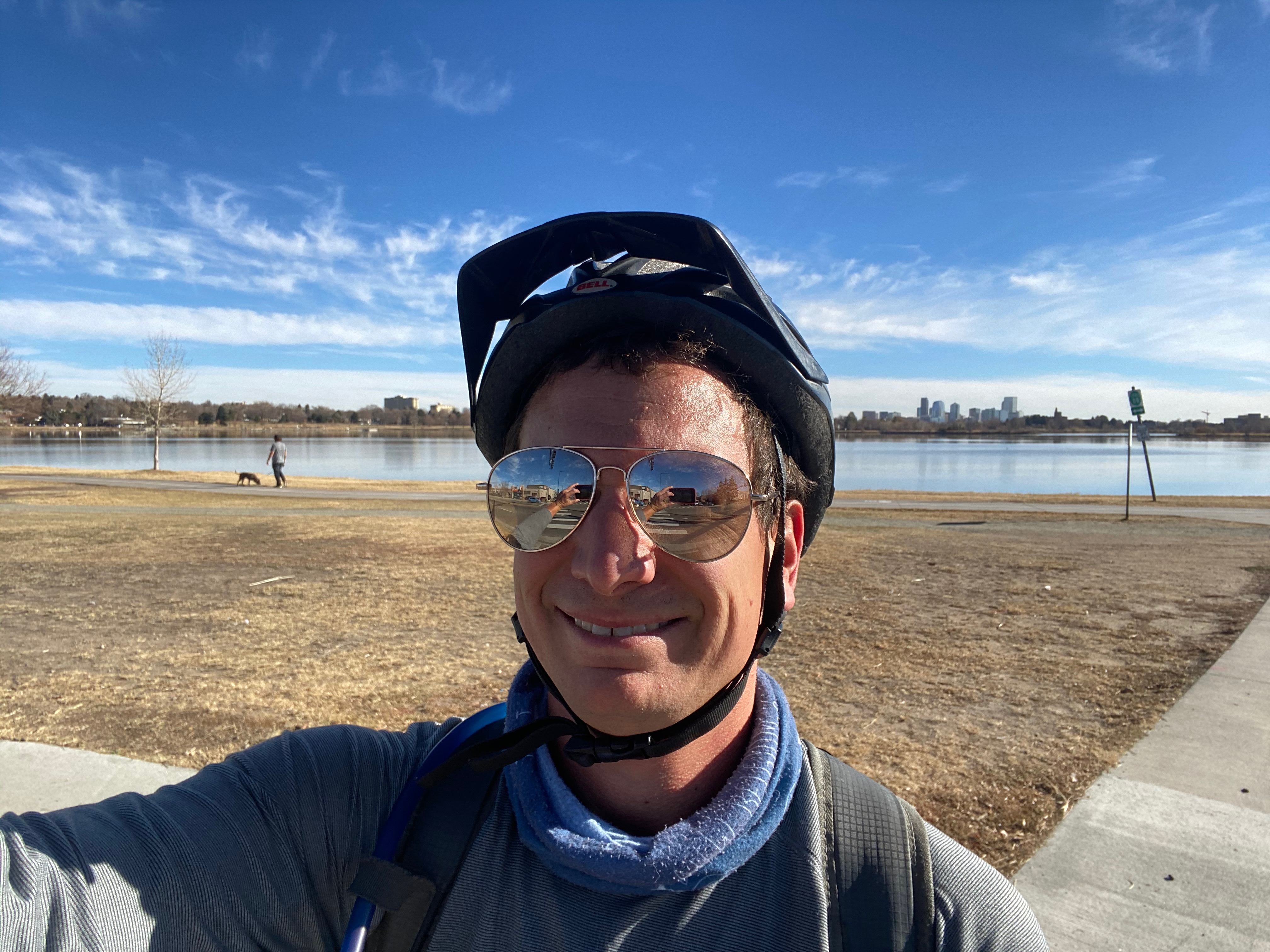
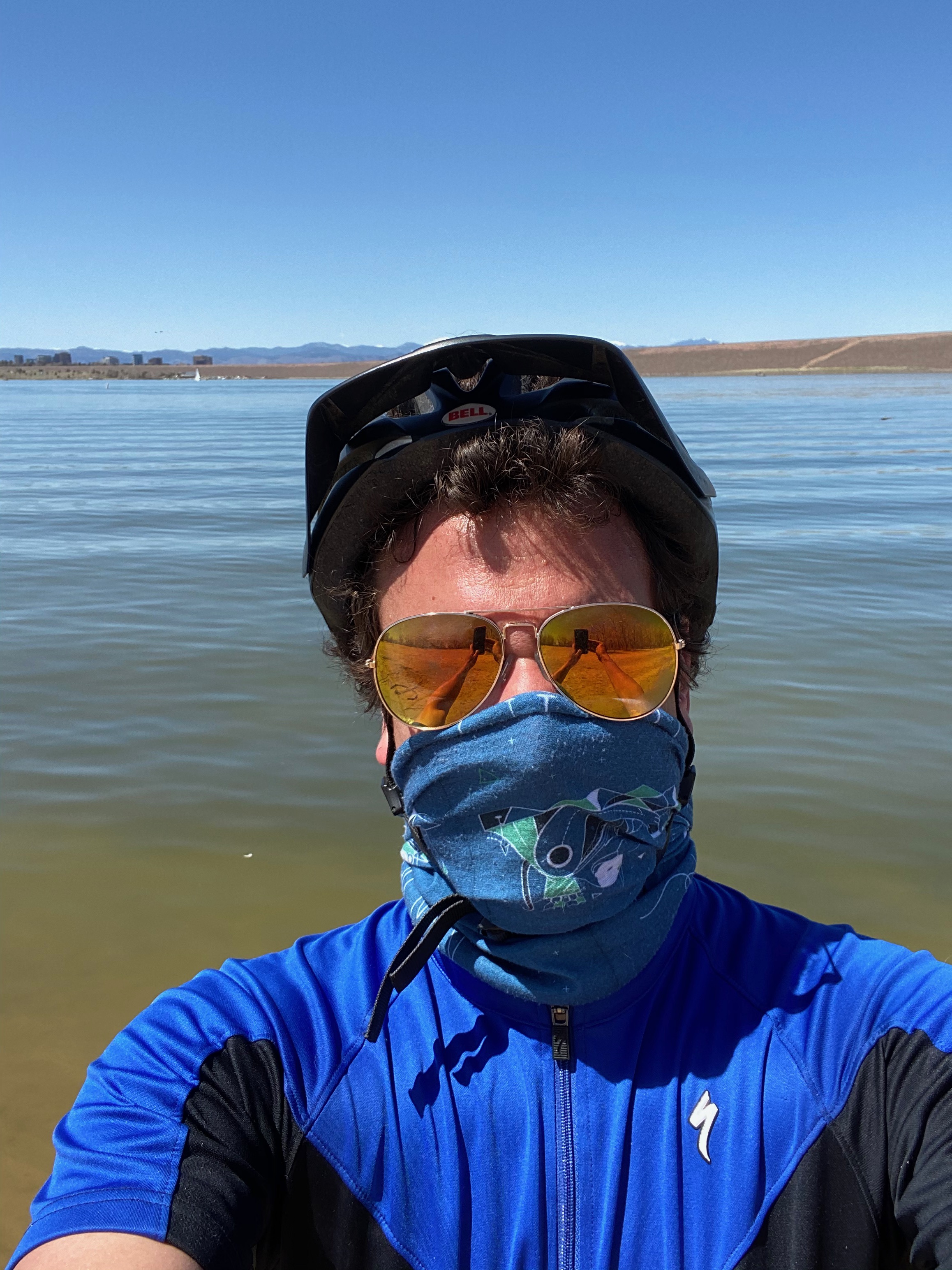
There I was, standing in the Cherry Creek reservoir, feet in the water, wearing a bicycle helmet and a mask. It was quite the interesting way to spend what was likely the first 80 degree day in parts of Denver (there are no observations downtown and the airport reached a high of 79), and the first day of Colorado’s slow return to normal.

That morning, Colorado’s statewide stay-at-home order transitioned to a safer-at-home order. For me, little had changed. The City of Denver still has a stay-at-home order which was extended nearly two weeks beyond the state’s. The businesses I frequent are all still closed, the guidelines still strongly suggest minimal travel. There is also evidence suggesting that the danger related to contracting and spreading the virus, in Colorado and in Denver, has yet to dissipate. Essentially, Monday’s slight change in policy, like a non-binding resolution or loose talk among friends about big things, felt mostly just symbolic.

Still, like many Americans, I am quite antsy to get back to doing a lot of the things that bring me joy; specifically travel and social activity. My mind is a bit all over the place as I try to reconcile the hopefulness of hearing news about states planning to reopen their economies with the very real threat that still exists. It feels like a classic heart vs. head issue, with many different dimensions and complications. My response is to start small.

Sunday, the last day of the full stay-at-home order, it was a short hike, at a place not too far away, called Steven’s Gulch, with only three other people.

IMG_0114

It’s not the kind of hike that leads to the most spectacular views.

IMG_0119

In fact, after a 500 foot ascent, there is a 1500 foot descent into the gulch, where the trail was quite muddy, and, in places, there was standing water to contend with.

The hike itself, wasn’t about reaching some summit. The largest climb was the 1000 foot climb back to the trailhead (which was surprisingly crowded for a not too well known trail on a day with clouds and rain chances).

IMG_0138

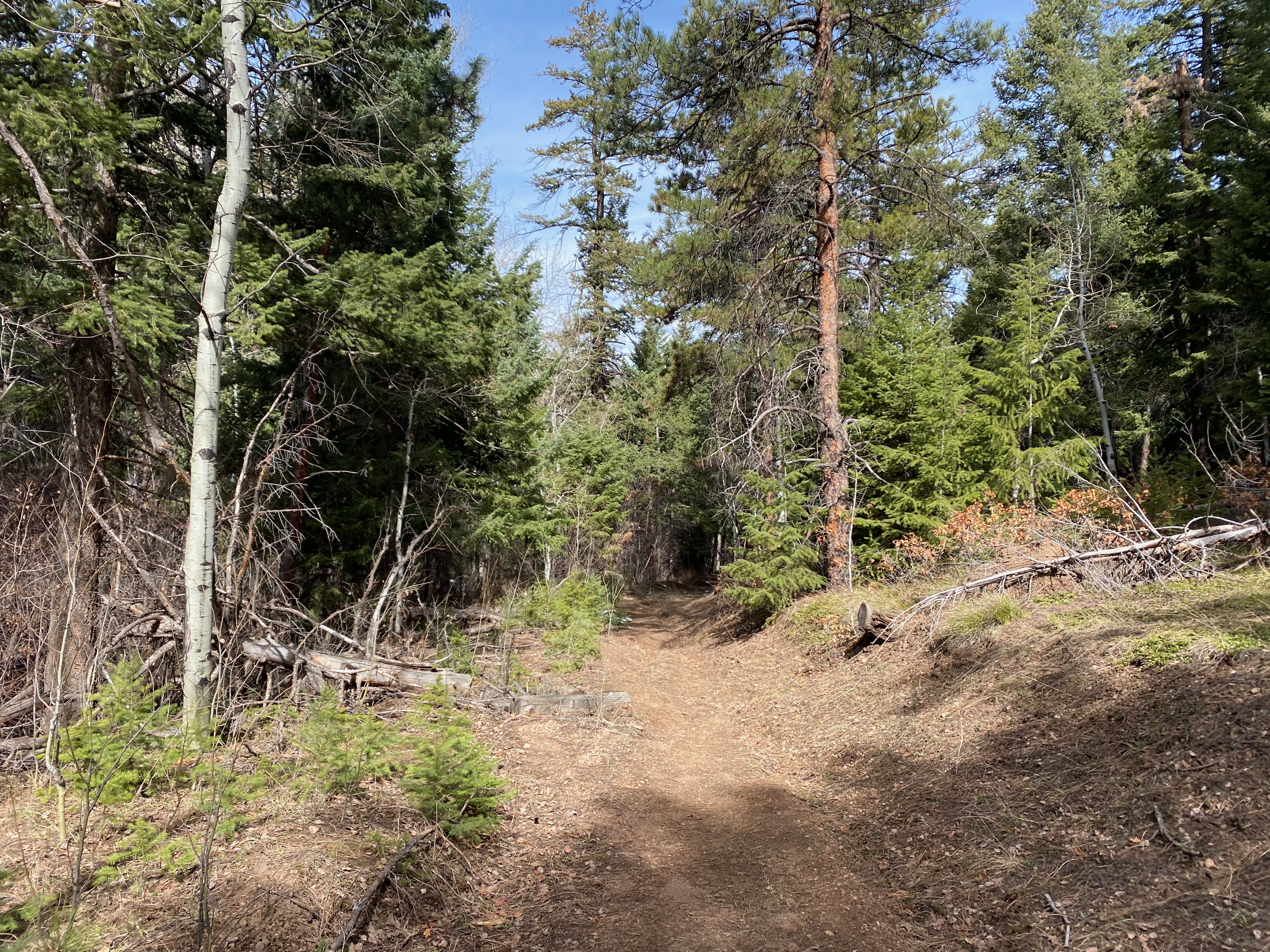
The hike was about being outside, being in nature, being in the woods.

IMG_0124

After weeks of spending far too much time at home, in front of screens, just being in a place that looks like this, putting one foot in front of the other for a few hours is an amazingly calming experience. Having lived without some modern luxuries for the past six weeks, it almost felt somewhat reminiscent of a backpacking trip.

Meanwhile back in Denver, the anxiety was still there and the tensions were still mounting.

IMG_0143

There are so many different factions of people feeling and saying different things about the virus and our response to it. There is so much fear, depression, loneliness and the post-traumatic stress. All data on the true extent and potency of COVID-19 is so unreliable. It has become nearly impossible to know who to believe.

One of the few bright spots of this whole pandemic is workplace flexibility in many sectors where working from home is an option. Without the commute, the need to get dressed up and be physically in an office for a certain time period, it becomes far easier to do things like go on an extended lunchtime bike ride.

IMG_0158

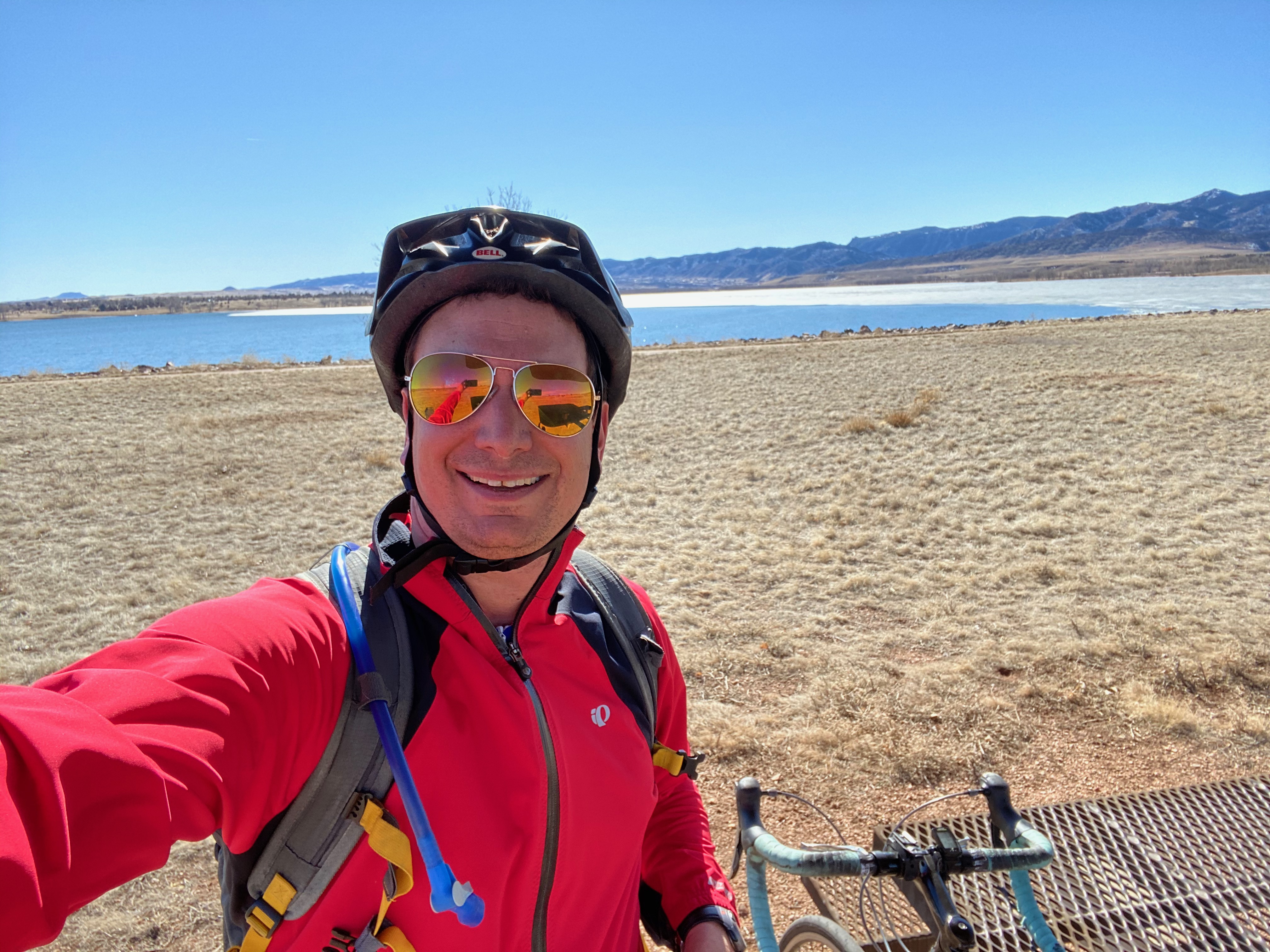
The ride to the Cherry Creek reservoir from anywhere near downtown Denver is about 13 miles, mostly on a trail. Throughout this pandemic, bike trails have been quite busy. Perhaps this is because the bars and restaurants are closed and more people are enjoying schedule flexibility related to their employment. The sun was bright that day, and there were many more people enjoying the day, on their sail boats or with their friends and family at the beach.

There is no way to tell how the history books will look back upon the Spring of 2020. Each and every person has their own unique way of coping with this major life event. Personally, I hold on to the hope that, in the long run, something good will come out of all of this. I’ve long held the belief that the expectation that people spend 40 to 50 daylight hours at their office is limiting, and something we are now capable of moving beyond due to new technology. With many people putting all this technology to use out of necessity, maybe our work culture will change for the better, opening up many daylight hours for experiences like this.

YHKH3119

Winter Cycling in Colorado

IMG_9426

Colorado weather can be quite variant, especially in wintertime. This variance opens up opportunities and makes winters here far less unpleasant than winters in the Northeast and Midwest. Compared with Chicago, Denver’s winter temperatures…

  • Are 41% more variable
  • Change, on average, 9.3°F from one day to the next (In Chicago it’s 6.6°F)
  • Reach 50°F (10°C) or greater 34.6% of all days, compared with only 7.1% in Chicago
  • Despite this, Denver gets more snow (53.8 inches per year) than Chicago (37.1)

In particular, the greater frequency at which temperatures warm up provides some opportunities. I need not write off an entire season for outdoor cycling. There were six days in January 2020 in which the temperature reached 55°F (12°C).

Then, on Groundhog Day, as if to taunt everyone that buys into the folklore, temperatures across Colorado were exceptionally warm. Denver and the surrounding area reached well into the 70s while some areas in the East and Southeastern parts of the state reached 80!

That morning, Punxsutawney Phil, the most widely known groundhog, would predict an early spring. Later on, Flatiron Freddy, a groundhog local to Colorado, predicted six more weeks of winter. That evening, the weather in Colorado would turn sharply colder and snowier for the foreseeable future.

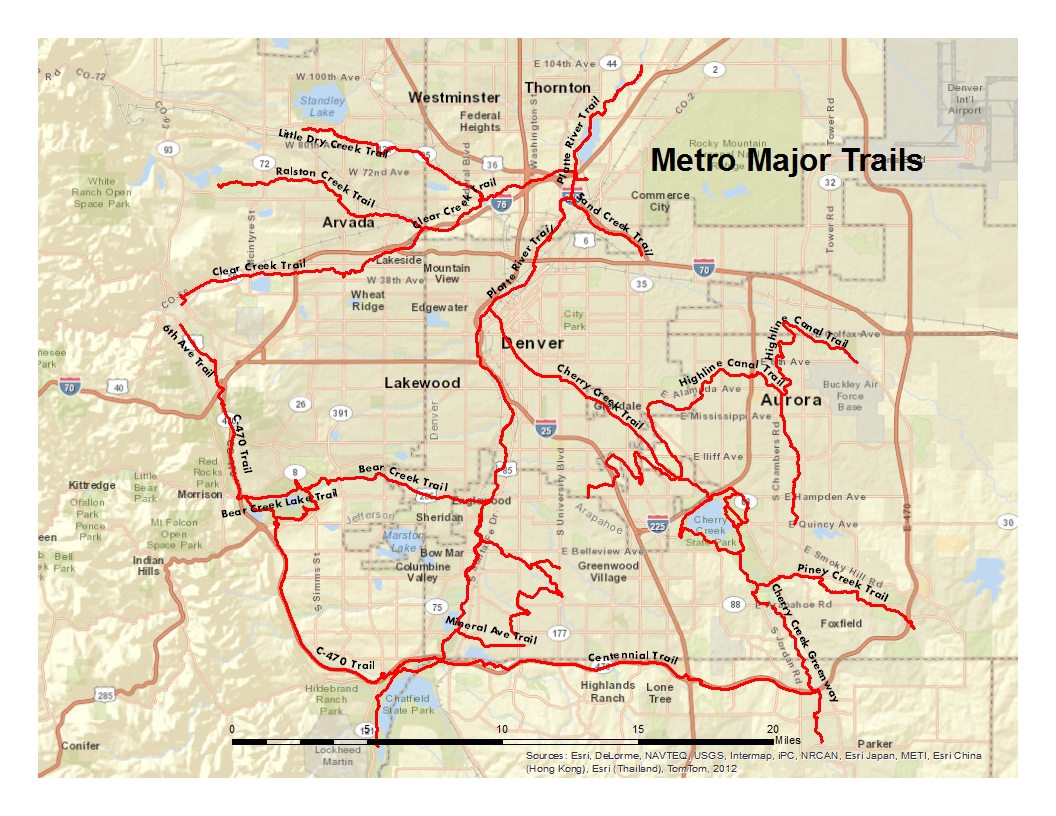
Groundhog Day 2020 ended up being a perfect demonstration of the opportunities and challenges associated with cycling in Colorado in wintertime. I learned a long time ago to keep to lower elevations in the wintertime due to both wind and residual ice on the roadways. Luckily, the region has a fantastic set of trails. This is actually an outdated map. The network has become even more robust since 2013!

DenverBikeTrails2013

It is all centered around Confluence Park, right in the heart of downtown. Confluence Park itself is a fantastic example of a place where people can get a little bit of time in nature right in the heart of a major city. There is also an REI flagship store!

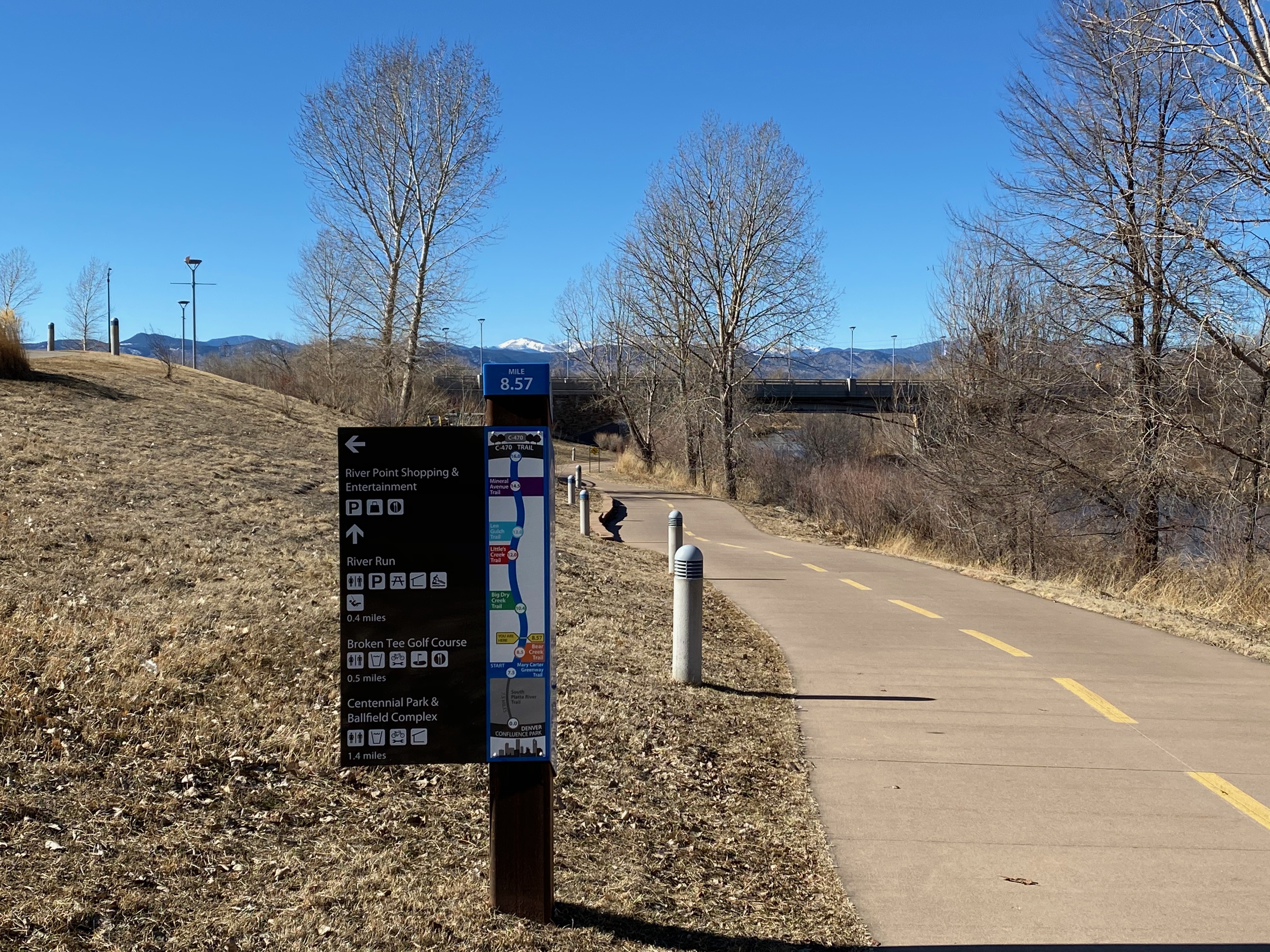
On Groundhog Day, I decided to ride the South Platte River trail from Confluence Park to Chattfield Reservoir.

IMG_9419

The trail runs a total of 16 miles. The reservoir itself can be reached with only an additional 3 miles of pedaling. This place is tremendous, with the lake in the foreground and the mountains behind. In summer, there are often a lot of boaters.

IMG_9427

One of the challenges that day was the wind. Wild changes in temperature from day to day are often associated with strong winds and Groundhog Day was no exception. The wind came out of the South at 15-20 miles per hour, making the mostly Southbound ride to the reservoir far more challenging than usual. I recall going at about 15 miles per hour the entire way.

Having not done this specific ride for a few years, I forgot how beautiful the Southern half of the Platte River trail is. The trail snakes through downtown Littleton. After that, there are plenty of places where the the river in the foreground and the mountains in the background make one feel as if they are in the setting of a famous nature painting. Much of this land is being preserved as part of South Platte Park.

IMG_9423

The return trip went quite fast, with the wind at my back and the miles just flying by. While I refrain from hill climbs in the wintertime, this ride ended up having some similarities, with a headwind to get to the reservoir and a much easier and faster return trip. I was back at Confluence Park before I knew it!

In addition to the wind, another major challenge of winter cycling is the limited amount of time available. Winter days are short, and without exception start off cold. Even on Groundhog Day, the day cities across the front range would hit record highs in the 70s to near 80, morning temperatures were still in the 25-35°F (-3 to +1°C) range. If one is to wait until 9 or 10 for temperatures to warm up a little, and be limited by a 5 P.M. sunset, there is a pretty limited amount of time or riding. It was for this reason I picked the particular ride I did.

IMG_9431

It is also for this reason that despite Colorado’s frequent warmer days in the winter, I finally decided to supplement my training with some indoor spinning.

IMG_9347

When I Went to Cuba


img_5447

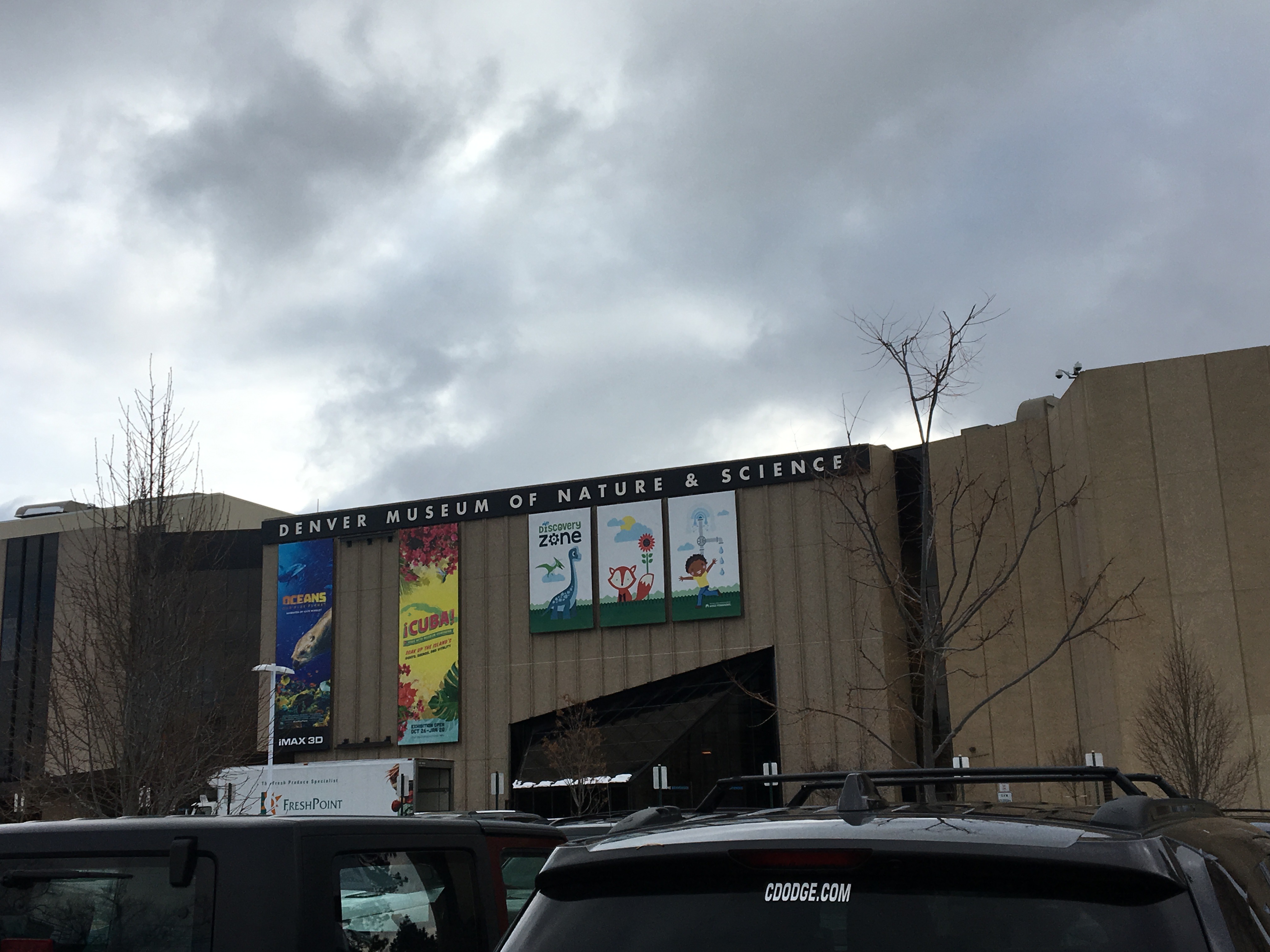
Okay, so it wasn’t Cuba, it was actually an exhibit at Denver’s Museum of Nature and Science.

img_5445

We travel to different cities, regions and countries to experience what we can’t experience at home. Sometimes, however, experiences from other places come to us. This is the case when a new restaurant, serving cuisine from the other side of the world opens, or when the stock show comes into town, parading livestock right through the middle of the city!

It is important for those of us that yearn to travel, share adventures, and learn about other cultures, but do not travel full time for a living, to take advantage of the times when experiences from other places come to us.

IMG_5449.jpg

It is human nature to be fascinated by what is not known. It is why children want to know what is in their parents secret closet, why many are fascinated by ghost stories and conspiracy theories, and why for our entire existence, humanity has speculated as to what exists beyond life and death.

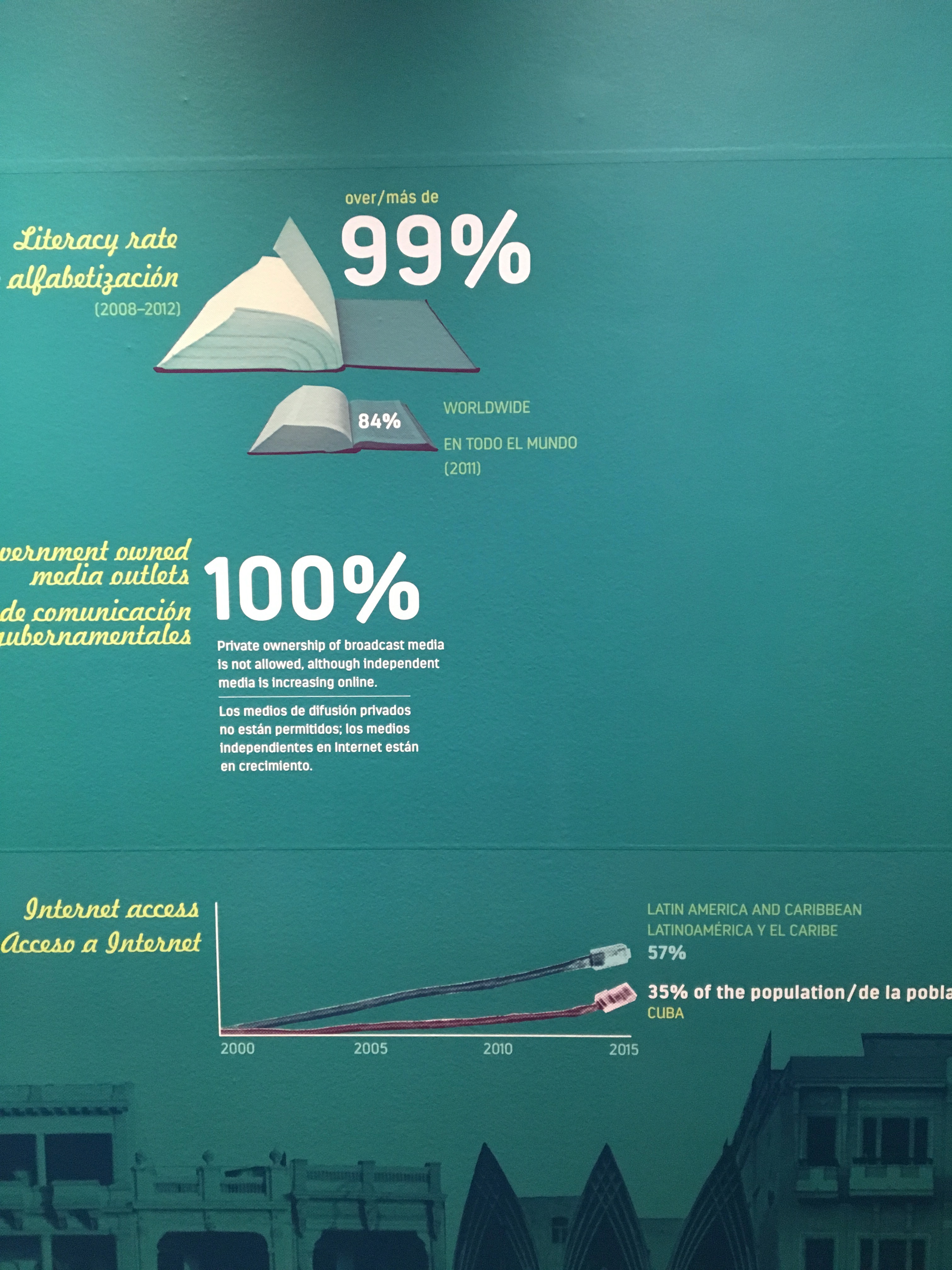
Cuba is one of those places that, to Americans, is somewhat of a mystery. This exhibit brings that mystery to life.

IMG_5451.jpg

The main part of the exhibit is an area that is far more wide open than nearly all other museum exhibits. Cuban music, both traditional and modern are played, and performers jump on and off the stage. It is surrounded by some of the things that Cuba is perhaps best known for culturally; Cars built before the Cuban Embargo went into place in 1962, and outdoor produce markets.

Seeing the culture of a place in this format serves as a reminder that experiencing a place, whether it be a country, a region, or a city, is not just about going to landmarks. It is about the people, the day-to-day life, the music, the art, and traditions. It is hard for me not to feel as if traveling to a destination, and only experiencing the places listed in a travel guide causes many of us to miss out on what makes a place truly unique.

Of course, it is hard to write about Cuba without addressing Communism and relations between the United States and Cuba. As someone who believes that a free market economy is both the most efficient and most just manner in which to organize a society, it would be easy for me to simply dismiss and hate the recent history of Cuba. However, I am also a person who appreciates the complexity of every situation. What I dislike most about our present day political situation is seeing that which is complex and deeply philosophical reduced to catch phrases, jokes, and sometimes mean-spirited tribalism.

I had previously read about the complexity of the factors that lead to the Cuban revolution, and the fact that Fidel Castro did not declare himself communist until a couple of years after he took power. He may have only declared the nation communist to gain protection from the Soviet Union after realizing he would not have good relations with the United States.

Reflecting on this, as well as the U.S. interventions in Cuba prior to Castro’s revolution made me realize that there are two sides to every struggle and every revolution. There is the ideological side, which is often used to drum up support in cases like the Cold War. However, there is also a component of them that are just about power.

IMG_1342

The story of Cuba in the 20th Century is also a demonstration of the danger in tearing down what exists without a clear plan going forward. Many Cuban revolutionaries, and supporters of the revolution, ended up getting something far different than what they had envisioned. Reading about what happened to large segments of humanity in 1177 B.C., and then in 476 A.D., and even some modern day examples of revolts without an end game, the lesson is clear. Yes, we should be striving to make changes. But, it is often better to build on what already exists. If the system must be completely torn down, it is imperitive to have at least a framework for what replaces it.

The results of the Cuban revolution are also often judged differently by different people based on priorities. Cuba is far poorer than us, but in some ways more equitable.

IMG_5450.jpg

They have also managed to preserve nearly a quarter of their land for nature, and protect some species that cannot be found anywhere else in the world.

Additionally, the agricultural practices developed on the Island after the collapse of the Soviet Union caused them to lose access to many pesticides and chemicals significantly improved the health of their coral reefs.

Cuba has endured many changes. An 80-year old Cuban has seen Fulgencio Batista seize power, Castro’s revolution, the U.S. embargo, the collapse of the Soviet Union, and the opening up on the Cuban economy over the past ten years. The exhibit ends with a series of statements made by randomly selected Cubans about the future of their country. Some express hope. Some express caution and resilience. There were even a couple that stated they do not want what we have, described as “excessive consumerism.”

The majority just learned how to just roll with the changes. After all, regardless of who does what in struggles for power, life goes on. The will always be music. There will always be culture. There will always be people with dreams.

IMG_5458.jpg

The Colorado Classic

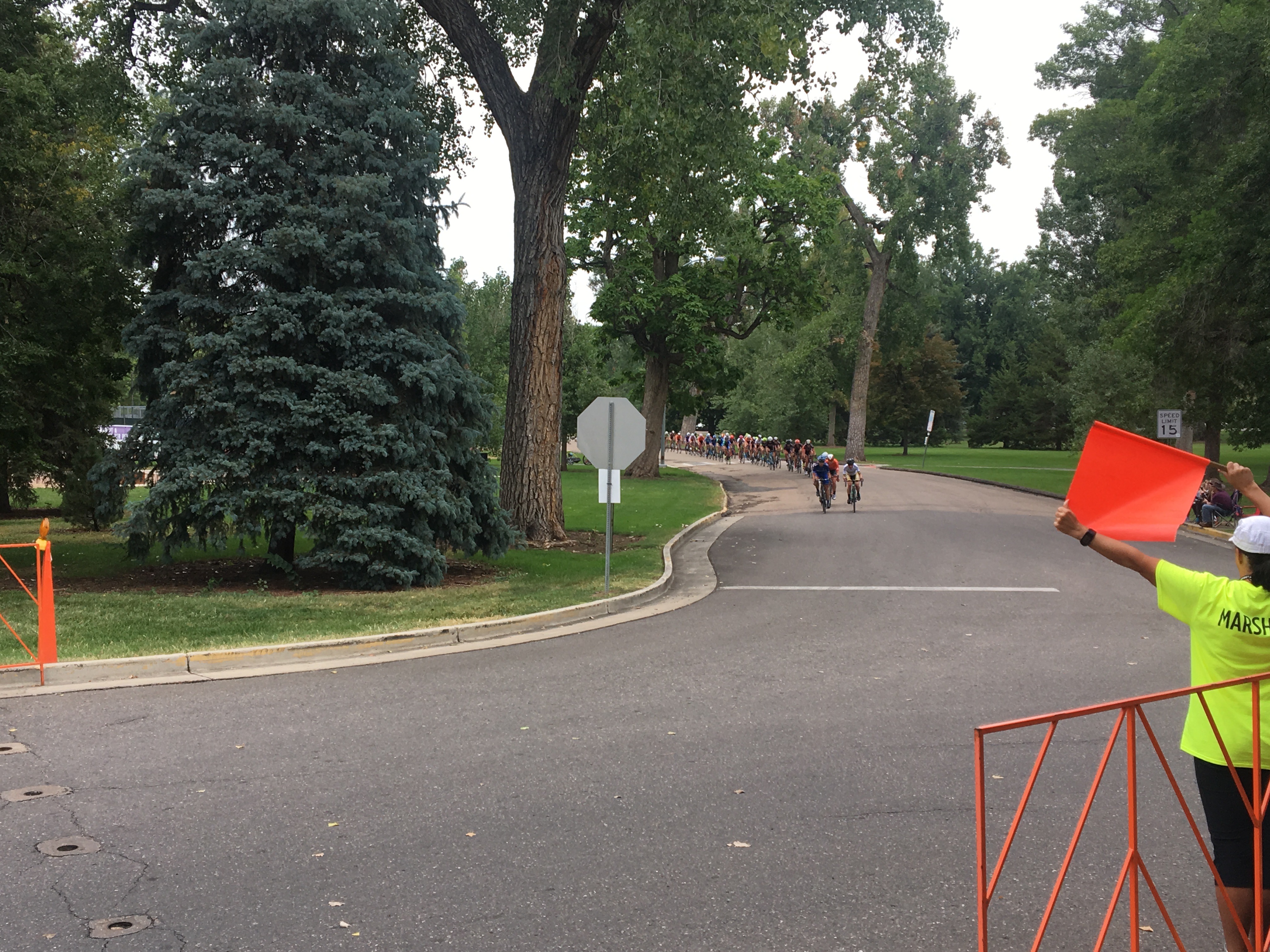
71 cyclists, all averaging a speed right around 30 mph, somehow ended up within 12 seconds of each other 2/3 of the way into an 8-lap 72 mile race. The strange thing is, this was the only time for the entire duration of the final stage of the 2018 Colorado Classic where all the riders were packed so closely together. Earlier in the race, a few riders would pedal ahead of the pack, forming what is referred to as a “breakout group”.

IMG_4637.jpg

Having not watched too much professional cycling, I am not familiar with the complicated scoring system, or how cycling teams work together. However, in what I have watched, from the perspective of mostly just monitoring who wins each race, it rarely seems beneficiary to form one of these breakout groups, especially early in the race. Seeing a few cyclists pull ahead near the beginning of a race always reminds me of when I used to bet on horse races. At first, I would get excited when the horse I bet on started out leading the pack. Experience would later teach me that that horse that jumps out ahead at the start of the race almost never wins. With rare exception, some other horse, usually one of the ones favored to win, would make a move about 2/3 of the way into the race, while the initial leader would run out of steam, finishing near the back of the pack. I’ll often joke that if I see the horse I bet on in the lead at the start of the race, I can all but throw that ticket away.

That is exactly what I tend to see happen at bike races. The cyclists who “breakout” put themselves at a disadvantage as they face more air resistance than those who stay in the main group, often referred to as the “peloton”. Time and time again, I have watched a breakout group form a lead, sometimes several minutes, just to see that lead slowly evaporate just in time for the end of the race. I would imagine all the riders trying to sprint to the finish line at nearly the same time, but with those that formed the breakaway group far more exhausted as they pushed against more air resistance all day long.

In a depressing metaphor for life, the breakaway group represents those that chose to take a different path, other than the tried and true. Like the 90% of Startups that fail, their path is tougher, and also a lot less certain.

IMG_4887.jpg

However, as discussed in detail in Bicycling Magazine, breakaways can be successful, when done…

  • Under the right conditions
  • Intelligently
  • With the right mix of people

The same is true for startups, as well as anyone else trying to “break away”.

Being back in Denver the weekend of the Colorado Classic, I got to witness the final two stages.

Stage 3, I got to watch from Lookout Mountain, which is outside of Golden about 15 miles west of Denver. It is Denver’s version of the mountain that overlooks the city, and is actually quite popular for cycling. The 1800 foot climb is a great after work workout, I have done many times.

Watching professionals ride a road you commonly ride is both exciting and humbling, as they do in 25 minutes what takes me 35-40.

Stage 4 was a very different experience. As is the case every year (for the Colorado Classic), the final stage is a series of laps around town.

IMG_4642.jpg

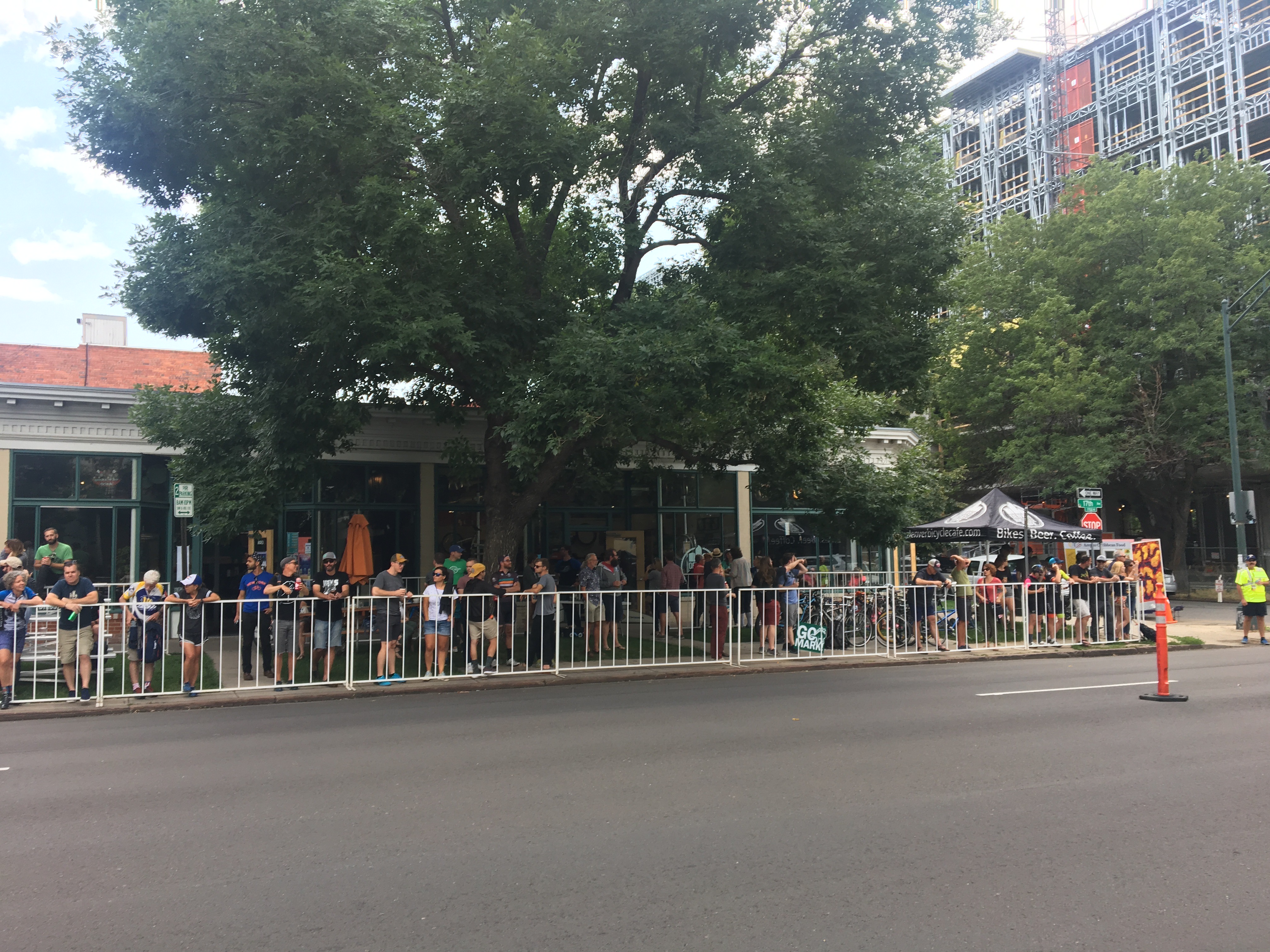
Cyclists rode down 17th Avenue in both directions during each lap, meaning it was possible to see them pass by the same exact spot 16 times! It is here where spectators witness, in person, breakaway groups get slowly caught up to by the pack.

There was even a bike shop, along 17th Avenue, that set up a set of bleacher seats for fans. Pro cycling, obviously has a smaller fan base than major sports like baseball and football. However, smaller groups often feel far more like a community than larger ones, and there is a kind of comradery between cycling fans that does not always exist at other sporting events.

IMG_4667.jpg

Watching multiple groups of people try to “breakaway” from the pack, but fail to win the stage reminds me of my own personal struggles. Like many people, I struggle with issues of individuality vs. conformity. It definitely had a negative impact on my high school experience, where there is a lot of pressure to conform. I still feel it now from time to time.

As is the case with pro cycling, there is a time to break away and there is a time to stay with the pack. The same is true in our other life pursuits. We all would prefer to stay true to our individual selves all the time. However, there is a often a cost for refusing to conform, sometimes legal or financial, but often in terms of lost opportunities and relationships. The challenge is to know when that cost can be endured so that we continue to feel like we are living our own lives, while also knowing when we need to be patient and flexible.

TEDxMileHigh: Point of Departure

IMG_0280 (1)

It’s a mid-summer weekend in sunny Colorado and thousands of people are standing in line, actually various lines that snake all around the Ellie Caulkins Opera House in downtown Denver. They are all waiting to get into the theater to hear a series of talks. These talks will cover a wide variety of subjects. One will be about a big idea, something that may change the world in the coming years. Another may be a personal narrative, and another may even be a musical or poetic performance. The only thing these talks have in common is the main draw. The main reason anyone chose to spend a Friday evening and Saturday afternoon in the middle of the summer inside a building as opposed to in the mountains where most Coloradans chose to spend their summer weekends, the association with a brand known as TED.

IMG_0259 (1)

Most people have some form of exposure to TED talks, even if they did not purposely seek them out. TED talks are shown at all sorts of conferences and workshops, are shared with friends and colleagues regularly, and are commonly found in web searches. This was the first time I chose to attend a TED event, but I have watched quite a few TED talks in my life. When you are really ill, watching TED talks on YouTube can be the most productive thing to do with your time.

What I notice most about TED talks, both at this conference and online, is the fact that I never get bored during them, despite the fact that I find it quite easy to get bored and antsy during presentations, especially of the standard power point variety. It is quite clear that the people who organize TED events (and TEDx events, which means they are independently organized) follow a formula that takes into account how the human mind works and responds to information as presented. Talks are generally 15-20 minutes, consistent with most scientific understanding of the human attention span. Short videos are presented between talks of wildly differing topics to ease the transition from one topic to another.

Speakers undergo a rigorous three-month long process of preparation to ensure all TED talks meet their standards. As a result, speakers always seem to emphasize the right words, stay poised, and avoiding using filler words. Auditions for speakers for this conference took place in February, and auditions for their next conference, in November, take place at the end of July!

When I think of the brand TED, the first thing I think of is people who think like me. By this, I do not mean people who have the same opinions on certain specific issues or policies. It is more of a general sense of what “TED people” are like. If there is one thing that binds all the people who speak at and participate in this brand known as TED, it is the desire to think beyond the day-to-day routine, the next task or the next purchase. People come here because they want to be inspired. They imagine possibilities beyond what is seen directly in front of them day-to-day. They want to engage their intellectual curiosity. They believe their life will be changed, or even that the world will be changed, by something they hear about and talk about here.

The conference provided a few other perks as well…

Each ticket, regardless of whether it was General Admission, VIP, or All Access, provided a free lunch, to be redeemed at one of many food trucks located in sculpture park behind the Denver Performing Arts Center (which houses the Ellie Caulkins Opera House). There were vendors for many other other organizations too, including ones that focus on environmental activism, sell new flavors of tea, or focus on career development. At the end of the conference, I even got a free pair of eclipse glasses, which I intend to use to view next month’s total solar eclipse.


After 22 speakers spread over three sessions, meeting countless interesting people, and a really awesome after-party (there was an after party both nights, but I only attended the Saturday night one due to poor meal planning on my part), I felt something absolutely crazy. I came out of this conference with more energy than when I had arrived. I wasn’t expecting this, as most conferences leave me drained. This one covers even more intellectually and emotionally draining topics than most.

The success of the TED brand seems to run contrary to every piece of business advice I have ever received. I am always told to have a specific product in mind, a narrower purpose, and a specific target audience, like all those blogs that focus on one activity.

Yet, this idea seemed to start with a broader purpose; to inspire and change the world. Then, they thought about humanity and found the most effective way in which to present the information. If TEDxMileHigh Point of Departure taught me anything (other than specifics like how fast a supersonic jet can go) it is to stop worrying about how others achieved, or what status anyone has. It is all about having something to offer that people see as worth-wile, and bringing it to them effectively, regardless of titles or perceived status.