Category Archives: seasons

A July 4th Hike Up Mount Evans

IMG_3942.jpgThis Independence Day was a strange one. It was a day with all sorts of mixed feelings. The first is related to the holiday. I love the United States of America, and feel extremely blessed to have been born and live here. However, something just feels a bit off right now. Without getting too into it, as travel and adventure is supposed to be an escape from all of this nonsense, I do not feel that our current political climate is in line with what this country was originally intended to be about. Based on the values of the Enlightenment, we escaped from tyranny and intended to set up a nation where the impact of politics and government on our lives is limited. People feeling that government is important enough that they will de-friend and even act violently towards those that support a different political party just doesn’t feel like America to me.

I was also somewhat mixed about the event. Mount Evans is one of two 14ers (peaks over 14,000 feet in elevation) with a paved road to the top, meaning that people can get to the top of this mountain in their cars (or on a bike). In fact, I know someone who drove to the very same peak on the same day.

IMG_3946.jpg

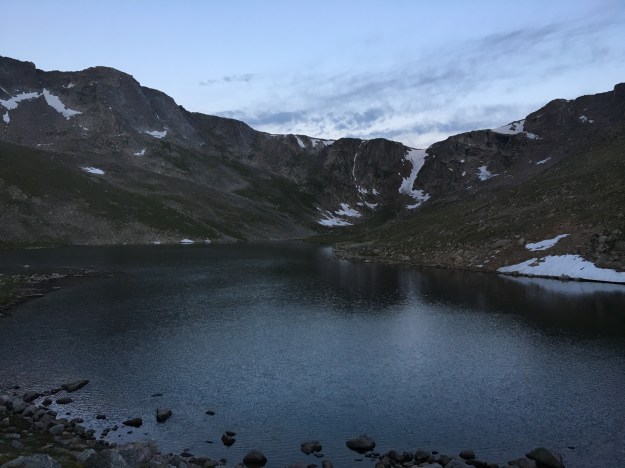
I also wasn’t too crazy about leaving Denver at 4 in the morning to arrive at the Summit Lake parking lot just before sunrise.
IMG_3914.jpg

14ers close to Denver are quite popular, and there was concern about parking availability. In many of my social circles, I find myself among the least cautious. It’s not that I want to go around being reckless, taking risks for the sake of risks. I would just rather deal with things occasionally going wrong than all the missed opportunities and additional stress that comes from being averse to risk.

However, the big picture is that I am hiking to the top of a tall mountain. Waking up two hours earlier than I wanted to guarantee a parking spot at the trailhead is a small compromise, and not one that takes me anywhere near a place where risk avoidance is costing me opportunities. There were also some benefits from starting that early, as each hour of the day is unique in the mountains, and the time around sunrise can be quite magnificent.

IMG_3915

Less than twenty minutes into the hike, the sun emerged from behind both the clouds and mountain peaks on the horizon.

IMG_3918

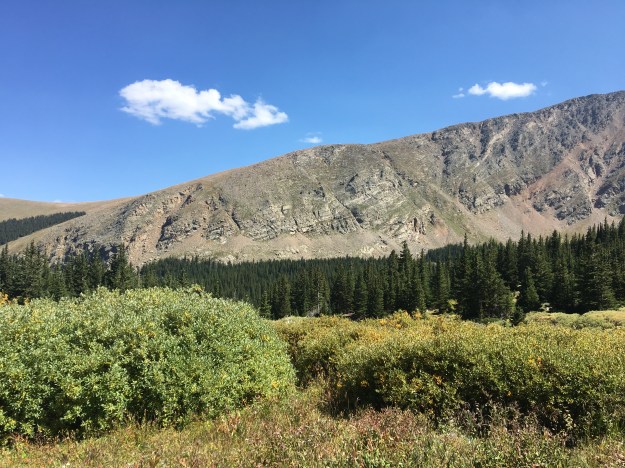
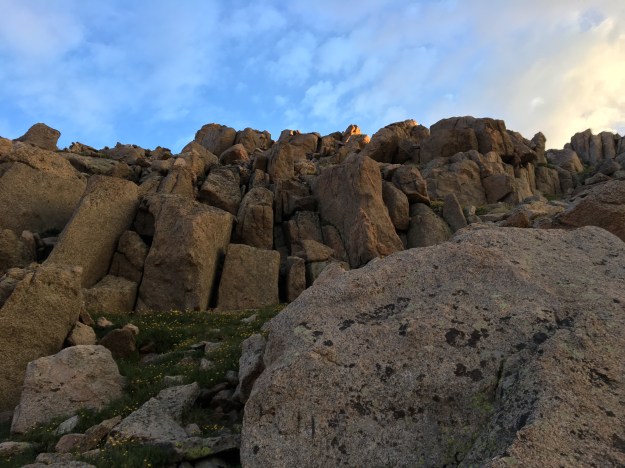
They do not call these mountains the Rocky Mountains for nothing. Many of these high elevation hikes are both steep and rocky.
IMG_3920.jpg

I would definitely recommend some form of hiking boots or trail shoes to traverse terrain like this.
IMG_3925

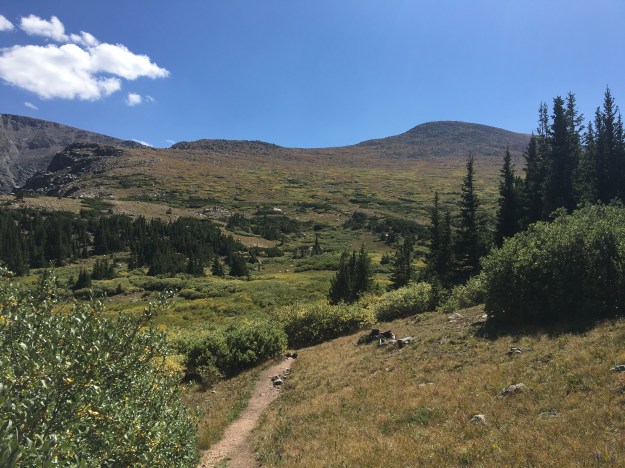
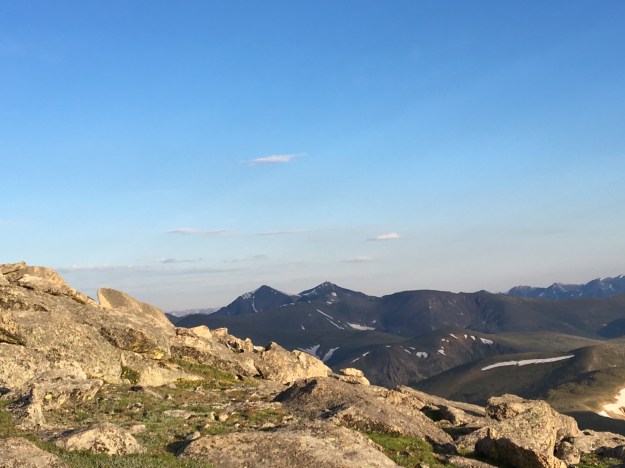
The trail climbs pretty quickly right from the start. Less than an hour into the hike, which is a slow hike, averaging little more than a mile per hour, I began to see Grays and Torreys Peaks, the first 14ers I ever climbed, five years ago.

IMG_3929.jpg

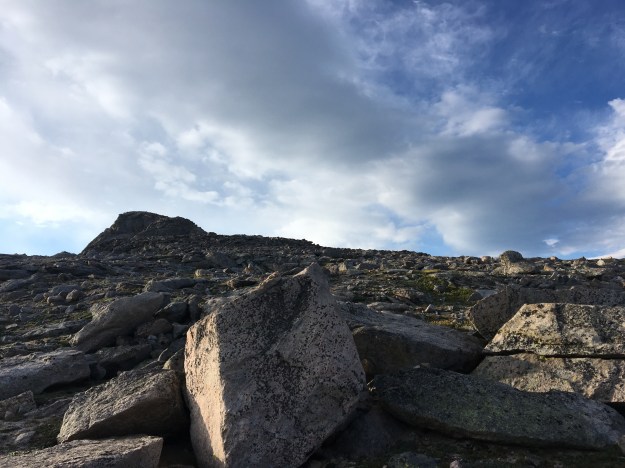
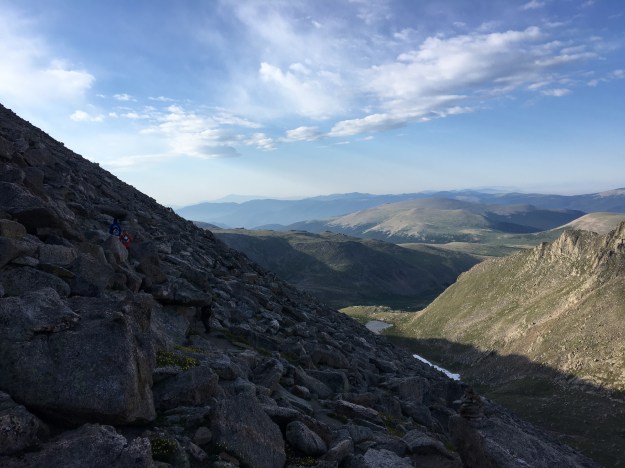
It wouldn’t be long before that top of the world feeling emerged. This is because, the trek up Mount Evans from Summit Lake is actually two peaks. The first one, Mount Spalding, is only 158 feet shy of being a 14er itself, and has its own scramble to the top.
IMG_3930IMG_3931

Like Grays and Torreys, there are many places where hikers conquer two peaks at once. This hike felt very much like this, despite the fact that Mount Spalding does not count as a “14er”.
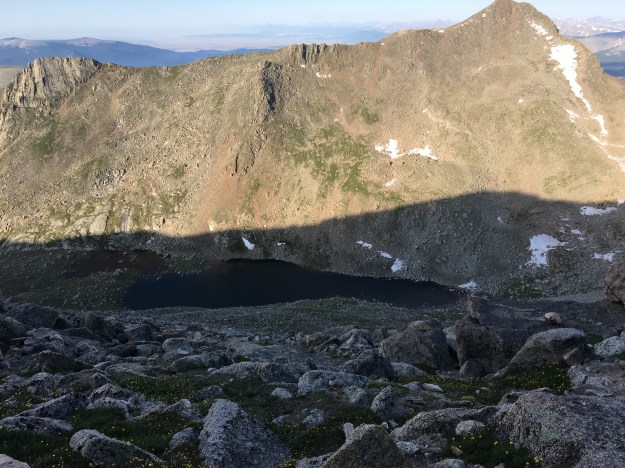
IMG_3936IMG_3937

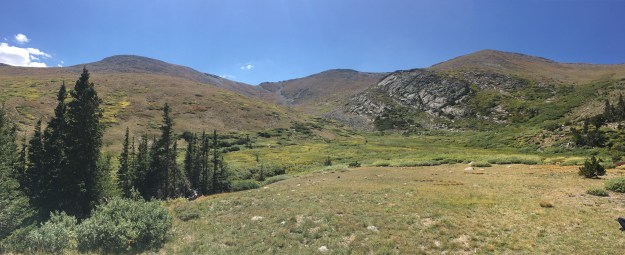
Saddling between the two peaks was rocky, shaded, and breathtaking. It may have been my favorite part of the hike.

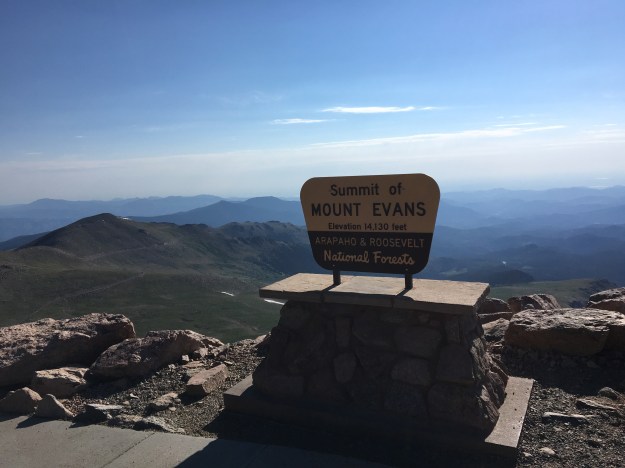
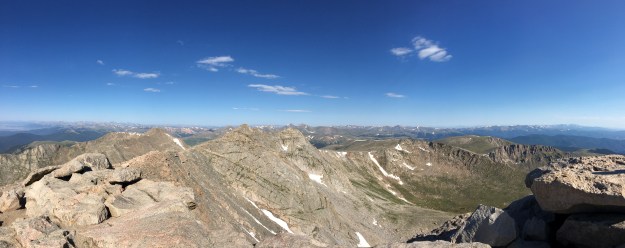
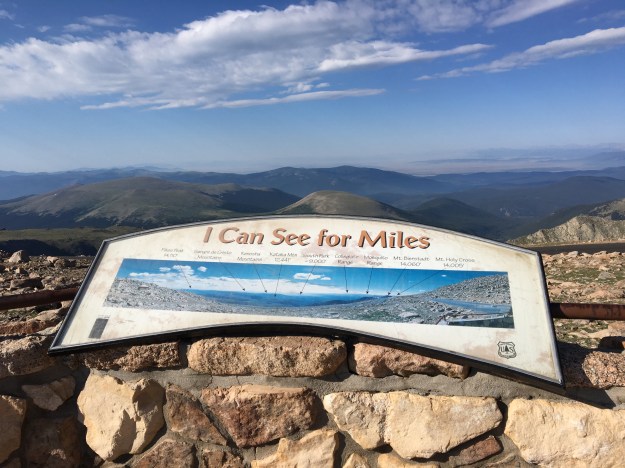
It was kind of strange to reach the summit only to see all the people who had just driven all the way up. We were also able to look down upon the lot where we had parked a couple of hours earlier.

From the top of the road, there is actually an additional 134 feet of climbing to the peak, at 14,264 feet.
IMG_3950.jpg

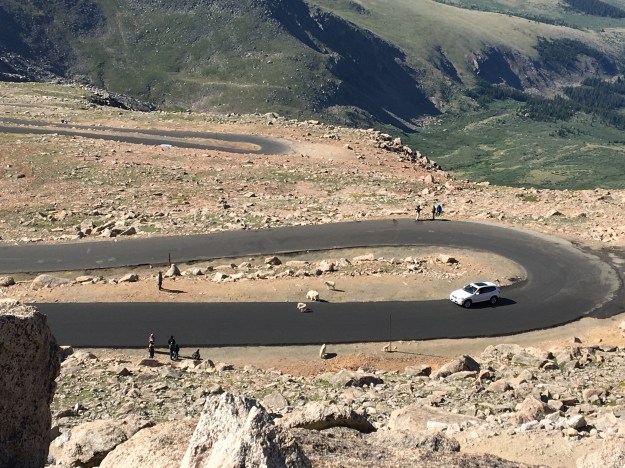
We also got a chance to get up close and personal with the mountain goats, who seemed strangely inclined to hang out relatively close to the road.
IMG_3961IMG_3965

With the steep rocky sections, and the climb back up Mount Spalding, the return hike was only slightly easier than the climb.

We also encountered a crew of trail maintenance volunteers. I cannot overstate how much I appreciate their work. I had not previously seen them working, but I know they work hard on behalf of the Colorado outdoors, and are an important part of the mission to encourage others to get outside, get active, and enjoy nature.

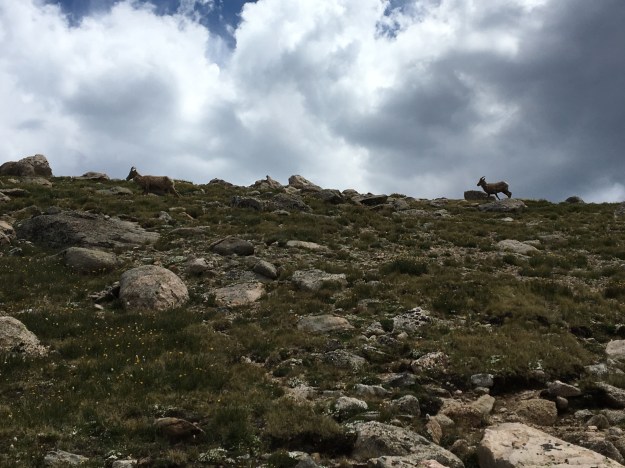
Then, at the bottom of the trail, we encountered more wildlife- sheep.
IMG_3972.jpg

I am somewhat in awe of these animals, both the goats at the top and the sheep near Summit Lake. They live their lives on the steepest of all hills. I wonder if they ever fall over, but it feels like they don’t. I spent half the downward trek grabbing onto rocks with my hands for balance, despite having a good pair of hiking boots. The goats and the sheep, they just walk up and down these steep, slippery, and rocky hills like it’s nothing.
IMG_3939.jpg

We got back to the car before noon. By the end of the hike, I really did not know what to feel. Hiking to the top of a tall mountain is no longer a new experience for me. It’s beautiful but familiar. 2018 so far has been quite emotional for me already, dealing with issues related to our mean spirited and way to identity-driven political climate, as well as drama related to my career, social standing, and even identity. Maybe, at this point in time, I do not need some kind of grand emotional response to my activities. I just need to enjoy them, laugh with friends, and see nature for the majesty that it is. That was good enough for me before I started writing this blog, and some things are indeed true regardless of time, place and culture.

Welcome to Summer

Week after week is spent focusing on some sort of life endeavor; a major project at work, a personal improvement initiative, a diet, starting a business, preparing for kids. Meanwhile, the world around us continues to tick. All of a sudden we realize that everything has changed. A jacket is no longer needed in the morning. Darkness does not set in until well after 8 P.M. Every evening, the neighborhood kids are outside being lively. While our focus had been elsewhere, the subtle process of seasonal transition has transformed the world around us. It is now summer!

IMG_3339.jpg

Although it has felt like summer, here in Colorado, for a few weeks, in the United States, Memorial Day is often referred to as some sort of unofficial beginning to summer. With most businesses not providing time off for the Easter holiday, and Cesar Chavez Day being a holiday in only two states, for many, Memorial Day is the first day off in several months. I have even had a pervious employment situation where there were no holidays between New Years Day and Memorial Day.

With vacation shaming running rampant in this country, causing Americans to collectively leave over 700 million vacation days unused annually, it is easy to imagine countless American who spent the three months leading up to Memorial Day doing little else besides work and tending to home and family needs.

2018 in particular was a year where the Spring Season was easy to miss, as winter felt quite persistent across much of the country through April.

April_2018_TEMP.png

Chicago even reported measurable snow four times in the Month of April!

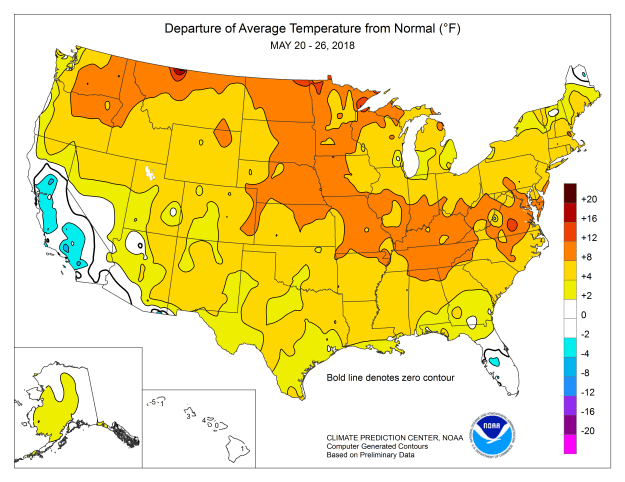
Many experienced the kind of weather they typically associate with Spring only briefly before summer-like conditions spread across the country.

MemDay2018_TEMP

By Memorial Day, 100 degree temperatures were reached in Minneapolis, while the Florida Panhandle was experiencing the start of the tropical storm season.

While it is completely understandable why some people were completely blindsided by the start of summer, it feels, in a major way, unnatural. Seasonal cycles are embedded in how our culture developed, flushed and progressed. They can be seen in the way our calendars were constructed, the holidays we celebrate, the traditions we all enjoy and even in art and music. Perhaps most importantly, they guarantee that we must periodically stop what we are doing, and move on to a new set of experiences and a different kind of energy. In a way, they guarantee progress.

All the major biomes in the Colorado Rocky mountains were alive this Memorial Day weekend, as if they knew this Memorial Day deadline for the start of summer existed and needed to be complied with.

IMG_3450.jpg

IMG_3478.jpg

The Aspen trees glowed an almost neon green in the bright sunshine, contrasting with the pine trees in some places, while clustering up, highlighting their own light gray branches in others.

IMG_3457.jpg

Somewhere slightly above 10,000 feet (3.05 km) in elevation the forest transitions to densely packed evergreens.

IMG_3460.jpg

Nourished from the melting of the residual snow at higher elevations, they shade the ground below them with a raw power almost feels as if they are, collectively, the protectors of the mountains.

IMG_3477.jpg

Along the trail, they reveal only what they want to reveal. Periodically, they reveal small previews of what is to come, building suspense and creating an experience.

IMG_3468.jpg

Above the trees, the remnants of the snowy season, which is any time of year besides summer at 12,000 feet (3.6 km) in elevation, fades away slowly transitioning the energy of the surrounding rocks, bushes and grass.

In the modern world, summertime for many feels like a time to thrive. It is often the busiest time of year. Surprisingly, this appears to be true for both weather dependent activities such as travel and recreation, as well as indoor ones. It is also the time of year where more is possible. Long days, less travel hazards, and in many cases less discomfort when outdoors gives us the chance to both let in and out a deep breath and smile, but also take our activities to the next level.

IMG_3480.jpg

Many of us did not keep our New Years resolutions, some could have even had their goals and desires forgotten about over the past few months. However, the start of a new season, indicated by the coming and passing of Memorial Day weekend, provides no better opportunity for each and every one of us to re-orient ourselves towards what we really want out of life. The coming season may be the best time to make a change- to chose life!

IMG_3428.jpg

As the floodwaters gradually recede, I look forward to the calm feeling the warmth of summer provides. I look forward to the energy of cities and towns alike, flooded with people walking to the park, walking their dogs a little longer, and to festivals and cookouts. I look forward to the energy it produces in each and every one of us, inspiring us to leave the computer screen, put down the remote, and go outside an play a little. I look forward to the brightness of the sun lightening the hearts of all of us. I look forward to seeing the lives that will be transformed by summer’s energy!

The First Time I Brought a Jacket to Las Vegas

IMG_2524 (1).jpg

This is the third time I am writing about a trip to Las Vegas in the past two years, and my 7th visit overall. Oddly enough, all six of my previous trips took place in either August or September. It may be a coincidence, but people do generally travel more frequently in summertime, and, strangely enough, I have never visited Vegas alone.

Despite the fact that I am not opposed to solo travel, it would never occur to me to visit Vegas alone. When I think of places I travel to alone, I tend to think of long contemplative hikes or bike rides, definitely not Las Vegas.

What is odd is that, while Vegas feels more like a group activity than any other destination, I can think of few other places where it is easier for someone to entertain themselves. The shows, the games, and general sensory overload all around make it nearly impossible to imagine boredom.

IMG_2501 (1).jpg

One thing every traveler knows is that it is possible to return to a place one has already visited and still get a completely different experience. This is especially true if it is a different season or under different circumstances. Vegas, in early February, during the middle of the week, is just not as crowded as it is on a weekend in the summer.

IMG_2503 (1).jpg

This translates into both conveniences and inconveniences. Yes, it was a lot easier to walk around the strip. There were considerably less crowds to navigate. There were even considerably less people out there promoting things like limousines to strip clubs and shows. However, the downside was that I learned that there is indeed a time when I can walk into a casino in Las Vegas and not see a single open BlackJack table.

img_06361-e1518132924612.jpg

That time is 8:45 A.M. on a Tuesday morning in the month of February.

IMG_2514 (1)

It was also necessary to walk to another resort to find an open pool.

IMG_2522 (1)

In some ways, it was the same Vegas experience I had always remembered; Gambling. Buffets. Staying up really late. And the random entertainment that appears out of nowhere.

In other ways it was different.

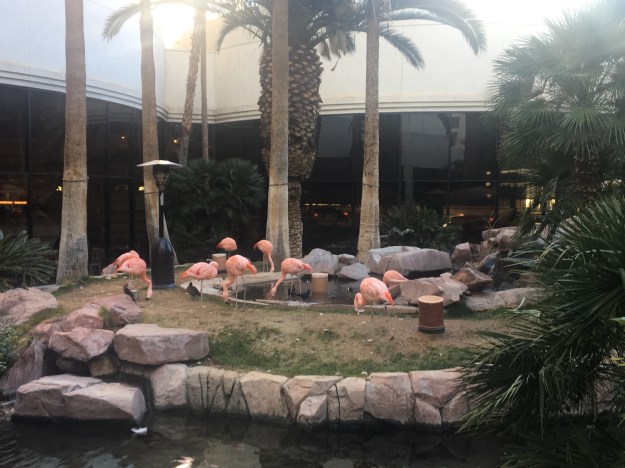
I learned that the Flamingo Hotel, which is the original Las Vegas hotel, actually has live flamingos there!

IMG_2508 (1).jpg

Walking through this exhibit was an interesting experience. It was the first time I had ever seen a significant number of children anywhere in the City of Las Vegas! Families and drunk people in the same place just always feels odd to me.

It is also interesting to observe how quickly any particular place can change. My last visit to Las Vegas was a mere six months ago! Yet, I noticed for the first time a pedestrian mall, with shops and restaurants, like In-N-Out Burger, between the Linq and Harrahs in the middle of the strip.

IMG_2506 (1).jpg

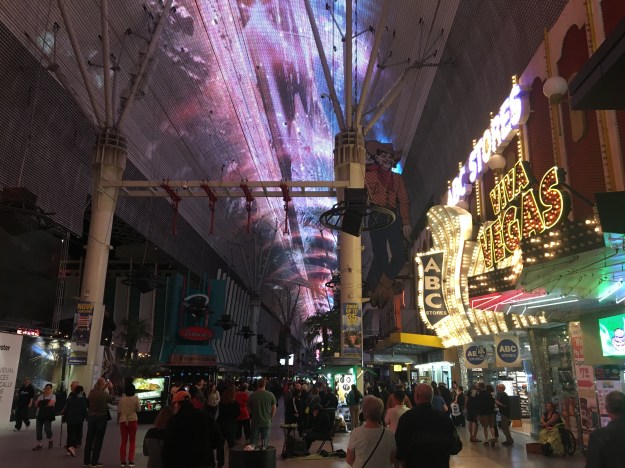
Freemont Street, the original Vegas dating back to the middle part of the 20th Century, seems to be undergoing some sort of major revival, with concerts, street performers, and a good number of people walking around on a Tuesday night!

IMG_2531 (1).jpg

Even the table games seemed to have increased in stakes!

With the world, and particularly cities in a constant state of flux, as long as we do not have a mechanism to travel through time, one can never travel to the EXACT same place already visited. Something will always be different.

IMG_3471

Given the kinds of experiences I typically write about on this blog, and the types of topics I regularly discuss, it may come as surprising to some that I love Las Vegas. I always talk about getting outdoors, staying healthy, and avoiding the dangers of materialism. Las Vegas, at its core, is the antithesis of all this.

I just love to observe how Las Vegas has this power to transform people. Some would say for the better, others would say for the worse, and both would have a valid point. Feeling like a different person, as I do every time I come to Vegas, can be thought of as a form of escapism. However, I feel that it is not about escapism at all.

IMG_2107 (1).jpg

At some point in time, we have all heard someone say “I need to go find myself”, as if the “self” is something that somehow gets lost and needs to be located just like a set of keys or a glove. While I may be getting hung up on semantics here, I honestly believe that nobody ever fully loses themselves. They may be afraid to be their true selves, or be in a setting that brings out only one component of their more complicated selves. This is when it is good to find a different environment for a while, which Las Vegas most certainly is for nearly all people.

Las Vegas has a strange way of demonstrating that all accepted societal norms are malleable and negotiable, but end up as what they are for a reason. Las Vegas does not accept norms such as not drinking on a weekday and going to bed by a certain time. However, there are other norms that develop in Vegas based on that setting. It is expected that nobody splits 10s at a blackjack table, and, at said tables I’d be shocked to see male dancers.

Nearly all people have at least one behavior or interest that surprises people because, on the surface, it does not jive with their other interests. However, there is always a common thread, which often can be found by digging deeper. Whether we are getting to know ourselves, or trying to understand someone else, determining the common thread between these seemingly unrelated interests can help us all reach a deeper understanding.

This is January

IMG_2265 (1).jpg

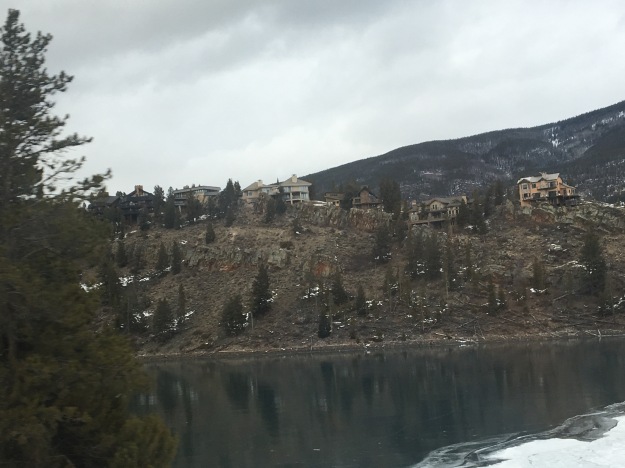
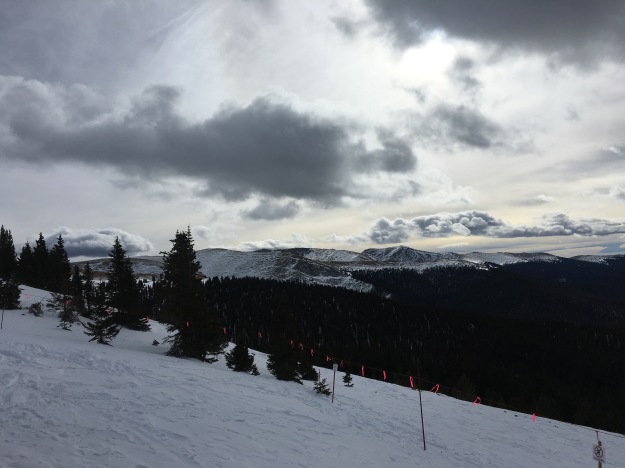
A week after New Years, Dillon Reservoir, which sits at a little over 9,000 ft (or about 2750m) in elevation is still partially open (as in not ice covered). Little to no snow is to be seen on the hills that surround the lake. By this time of year, they typically display a bright white color of undisturbed snow. The very persona of the region is different, particularly on a cloudy afternoon such as this one. It doesn’t really feel like winter. Yet, it is hard to attribute this scene to any other season of the year.

It is still hard to wrap the mind around the fact that at almost the exact same time last year, Central Colorado was getting pummeled, with feet and feet of snow.

img_8350

This isn’t a complete climate catastrophe. There are still people hitting the slopes.

IMG_2273 (1).jpg

But, the conditions are less than ideal. Half the trails remain closed. Some of the ones that are open have sketchy parts, where it is common to encounter rocks, branches, and blades of grass. Also, disappointingly, some of the best places for skiing, in wide open areas where it is easier for snow to blow off the mountain, are simply unnavigable.

IMG_2260 (1)

Visual reflections of the warm and dry start to winter show up all over Colorado. The open plains in places like the San Louis Valley, and even South Park (elevation near 10,000 feet) appear all but snow free. The snowpacks on the higher peaks appear shallow and inconsistent.

Colorado isn’t the only place experiencing a completely different winter from last year. After a relatively mild winter last year, the Midwestern and Eastern states experienced a complete turnaround at the end of 2017 into the start of 2018.

Chicago experienced a record tying 12 day span where temperatures did not exceed 20F (-6C).

IMG_2238 (1).jpg

While cold temperatures crippled a typically vibrant city, on the other side of the lake, the continuous flow of cold air over Lake Michigan produced steady and large amounts of Lake Effect Snow.

IMG_2169 (1).jpg

Accumulating snowfall occurred as far south as Florida, for the first time since 1989!

A lot of people who planned ski trips to the Rocky Mountains, or trips to the Southeast to escape the cold are disappointed. Some may speculate as to why, and wonder if this is part of some troubling long-term trend.

While it is completely understandable why someone would see bare ground at 11,000 feet above sea level in January and be concerned, it is important to remember that this is just one place, at one point in time. Last year those same places were getting pummeled with snow. Also, at that same point in time, it was snowing in places like Tallahassee and Charleston, cities where it snows less than once a decade!

What many are experiencing, when comparing how this winter has begun, with last winter, is variance, in a somewhat extreme form.

“Normal” weather, if there is such a thing, is often the result of large-scale weather patterns that vary and progress. This leads to experiences like two rainy days in a week, periodic snow in the mountains, or temperatures ranging between 15 degrees below and 15 degrees above the long-term average. Essentially, what people expect.

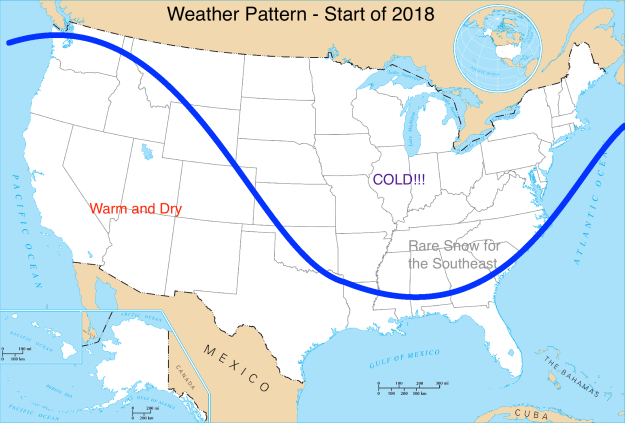
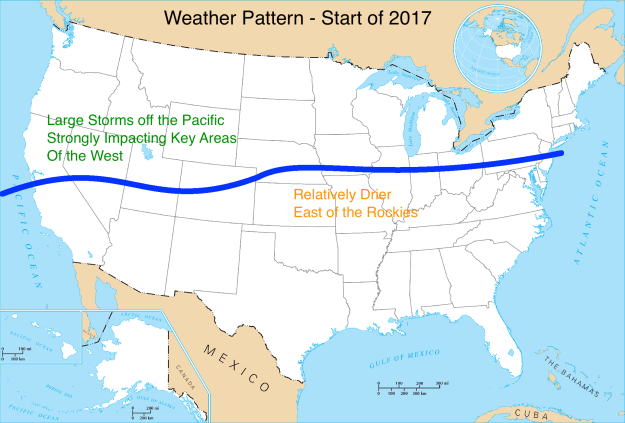
The start of 2018 is an example of a period of time when the weather pattern had become persistent. These are the times when extremes are experienced. The persistent pattern at the start of 2018 kept most of the west warm and dry while driving cold air, straight from the arctic right into the eastern half of the continent.

WeatherPattern_Startof2018

Likewise, one year ago, there was also a persistent pattern – one that looked quite different, and produced different extremes. One year ago, a strong jet off the Pacific Ocean formed, transporting large amounts of moisture straight into California, Utah, and Colorado. These storms played a large role in ending a long-term drought in California.

WeatherPattern_Startof2017

None of this is to dismiss the adverse effects of either extreme weather events or long-term trends in temperature or precipitation. If the mountain tops of Colorado remain dry, it could have an adverse effect on the water supply in many place in the west, and could also indicate high fire potential next summer. Likewise, a changing climate is something that needs to be dealt with. However, it should be dealt with in a manner that is appropriate, which means considering data on a larger scale, and multiple perspectives before taking action.

IMG_2258 (1)

While outdoors, experiencing conditions both normal abnormal, the only thing that can be done is to dress appropriately, try to ski around those rocks and branches, and pause to take in the experience while it is happening.

We Need A Little Christmas

20171208-162224-58944475.jpg

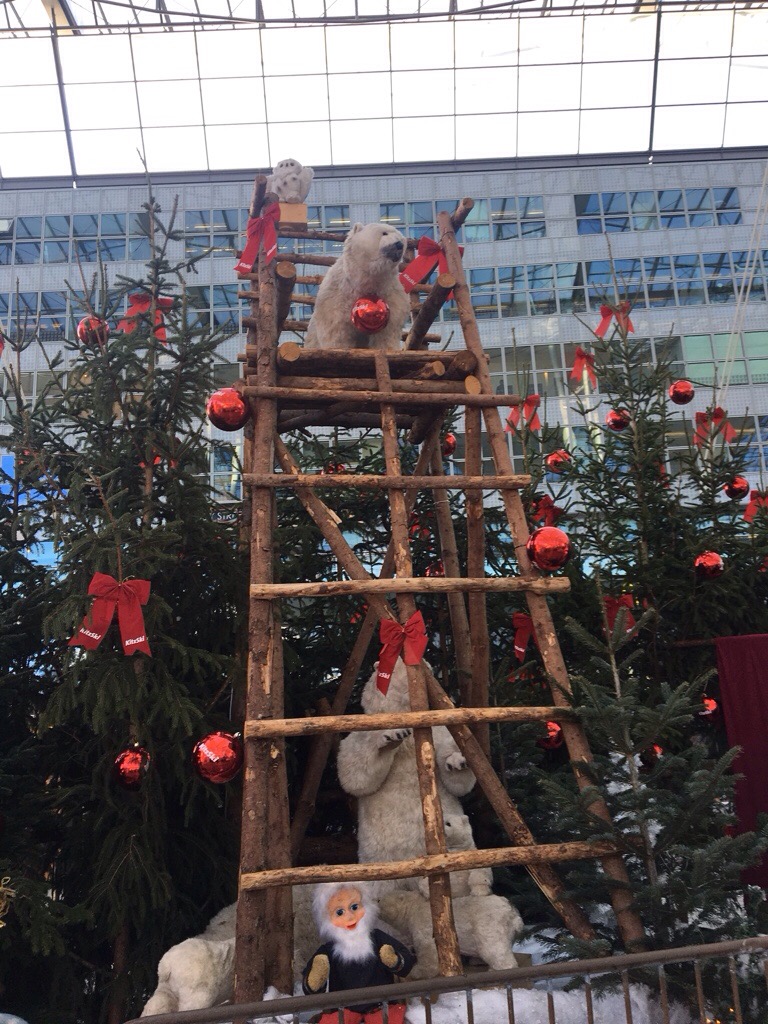
All over the world decorations have gone up, trees have been lit, and markets selling ornaments, toys, treats and drinks have opened up for the season.

20171208-162546-59146318.jpg

What does that all mean? Are they just lights? Toys? And a bunch of parties that guarantee that, alongside Halloween and Thanksgiving, we all put on weight for the winter?

20171208-163053-59453406.jpg

For those who truly believe (Christians that is), the holiday has a deep spiritual meaning, as it commemorates the birth of Christ. However, the picture gets a little bit murkier. The holiday has a secular component to it that is embraced by many non-believers. Caught up in that secular component, some Christians lose sight of the true meaning of the holiday.

There are also some external factors that can sometimes make it hard to enjoy the holiday season. The pressures of life in the modern world have the potential to suck the fun out of any season. Year-end deadlines at the office, combined with the pressure to buy the right gifts and get family events organized, produce a season of stress for far too many people.

The true spirit of the holiday can vary quite a bit from person to person, and from year to year. Many are familiar with the story of Ebineezer Scrooge in A Christmas Carol, a lonely businessman who resents the day as an unnecessary interruption in his business. There are also more subtle examples of people who see the holiday as just something “to get through”.

I have fallen into that trap in past years. There have been years for me when I resented what I saw as an ill-advised obligation to buy gifts and an unwelcome interruption in my young adult life, with the people I usually hang out with not being around to do the usual stuff I like doing.

This year feels different. Whereas, the past few years, I don’t recall thinking or hearing much about the holiday until mid-December. This year, there is this anticipation, both within me and in the people I am around, that started long before Thanksgiving.

20171208-165443-60883302.jpg

Perhaps it is a reflection of where we are as a society in 2017. There are a lot of problems we have; loneliness, difficulty finding fulfillment, all the forces that are driving us apart, etc. Many know that we are not completely blameless in creating these problems, and that we can make a conscious effort at creating a better society. Yet, the world of appears to be finishing up 2017 in nearly the exact same state as it began the year. It is possible to argue that things actually got worse.

What I am excited about, and what I feel like the people around me are excited about, is not the toys, the lights, and the drunkenness. It is not even the snow, which, here in Colorado, really hasn’t happened yet.

20171208-171121-61881093.jpg

It is the true meaning of the holiday which applies to both its religious and secular traditions. It is taking time away from the grind of every day life. It is being in the presence of family and close friends. It is comfort. It is rest. It is taking time to stop trying to earn, learn, advance, and achieve, and just play, laugh, and smile.

That is what the trees, the lights, the decorations and the toys symbolize to me. That is what we, as a culture need now, and we likely need it more than we did in years past. It is why I started anticipating the holiday weeks earlier than in recent years, and it is this component of the holiday that is my top priority for the remainder of 2017!

Cultural Observations in Stockholm


20171126-162130-58890905.jpg
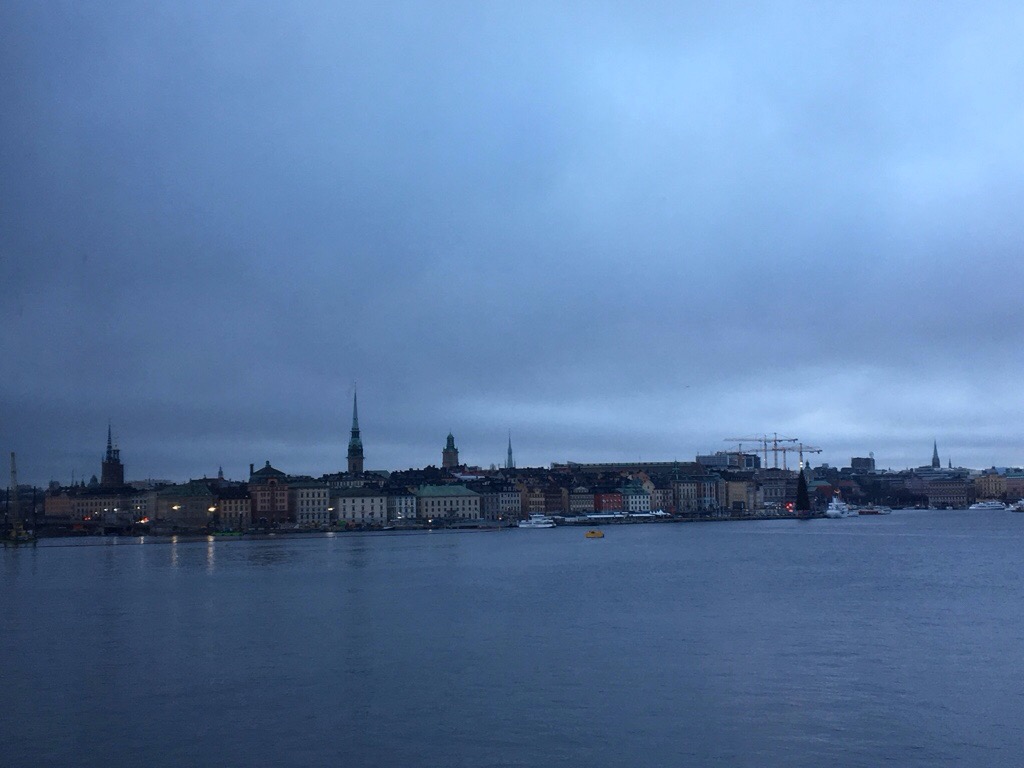
Setting out to observe a 3 P.M. sunset, in all its glory, is actually significantly more challenging than one would ever expect. Spending four days in Stockholm, I came to the realization that anywhere one would go in November or December where the sun sets this early is likely to be quite cloudy. While the sun did slip below the horizon right around 3, and the sky became pitch black before 4, each afternoon the sky pretty much appeared like this.

20171126-163631-59791108.jpg
There was no observation of the sun dipping below the horizon at 3 P.M., just a gray day fading gradually into nighttime.

Not only did 4 P.M. feel different here than anywhere I had ever lived, so did 8 P.M. Rather than feeling like the time the night was just beginning, when people were prepping up for their evening activities, getting ready, texting friends, etc., it felt like a lot later. I am not sure if this was 100% due to the fact that it had already been dark over four hours, or if it is due to cultural differences (when people leave work, etc.). However, at 8 P.M., it definitely felt like the “night”, whatever that entails, had been going on for some time and was approaching maturity.

20171126-164434-60274075.jpg
Stockholm is a city that parties pretty hard on Friday and Saturday evenings. Both evenings, in the area in and around the city center, including the areas around Central Station, and the Islands of Gamla Stan and Södermalm, there were plenty of people who were already quite intoxicated by 8 or 9 in the evening.

20171126-165059-60659634.jpg
This is one of several cultural observations I made while in Stockholm.

Of course there are ways to learn about the culture of a country or a region from afar. Travel books and other essays provide convenient cultural guides to places. Popular culture, music, movies, shows and such, also give people from afar a window into the culture of a place. However, I do notice time and time again, that there is no real substitute for actually going to a place and experiencing it for oneself.

For example, one of the things I noticed about Stockholm, the entire time there, was that people walk fast. It’s almost like the way it is in New York, and other large cities.

This is a prefect example of something needed to be experienced in person. While it is possible for someone to write, in a cultural guide or video, that people walk fast in a certain city, what that means can only be truly understood when experienced. The same can be said for New York.


Also, with the exception of New York, a city that seems to take pride in its high paced walking, it is easy to imagine a quick reference cultural guide which may focus on things like tipping or train etiquette, to not mention something like this. After all, did I really need to know how fast people in Stockholm walk prior to coming here?

I benefited more from reading about how Scandinavians dress. The casual sneakers, jeans and sweaters I wore all week did not stand out.

20171126-171745-62265432.jpg
In fact, I may have fit in too well. Despite the fact that people here are mostly fluent in English, most addressed me in Sweedish before I had to ask them to speak English to me.

Food is a significant component of any cultural experience. There is a reason why food makes a natural topic for travel shows. I couldn’t picture actually trying to experience the culture of a given place without trying the local food. I made sure I got the full Sweedish food experience, including the Skagenröra (shrimp salad), salmon, and various other fish dishes (Stockholm is a bunch of islands after all). However, I was surprised at how good their grilled sandwiches were. Specifically, many places throughout Stockholm serve various types of grilled sandwiches, all with some kind of cheese. Many of these sandwich did not include fish or seafood. Some were even vegetarian. They do an excellent job of melting the cheese on the rye bread, and this serves as a great lunch option for various types of people (as in, not everyone eats meat, seafood, etc.).

image

As an American, traveling abroad to places like this, it is hard for me not to feel at least a little bit guilty. American culture is harder to escape than I ever realized. Stockholm does have fast food as well. Most of it comes in the form of stands, similar to the hot dog stands found on the streets of New York. Given that most of the food in Stockholm is pretty expensive, it is almost necessary to have a couple of meals at one of those stands on any multi-day trip here, so as not to bust a budget. This was, however, the only place I encountered someone who did not speak English.

I also saw McDonalds and Burger King all over town. However, these establishments are at least somewhat different abroad than they are in the United States.

Perhaps my biggest disappointment was that I was unable to escape the tradition known as “Black Friday”. I was hoping, by virtue of not being in America, where thanksgiving is not a holiday, I would also not experience Black Friday. Well, apparently people do that here too. Maybe they don’t in less touristy parts of a country like Sweden. Maybe I needed to go somewhere with less tourists, and, also less people who speak English, to experience the actual culture of Sweden.

image

How much can anyone get to know about the culture of another country by visiting for just a short time? And not venturing outside of the City? I can see how a tourist can come to believe they have learned quite a bit about the culture of Sweden, or any place they chose to visit, by making an set of observations like these.

To me, my set of observations almost feels like how someone from abroad would judge the United States by simply spending several days in New York, our biggest city. The rest of the country i likely significantly different, in terms of pace of life, and how much they embrace ideas like Black Friday. However, just like the foreign tourist in New York, I did experience some things different from what I usually experience at home.

Christmastime in Copenhagen

20171122-003148-1908924.jpg

There is, perhaps, no better way to get into the spirit of Christmas than to find oneself surrounded by the ambience of the holiday, taking part in local traditions. Christmas may mean something different to different groups of people. Some focus more on the religious aspects of the holiday. Others on the secular. Still others celebrate different holidays altogether.

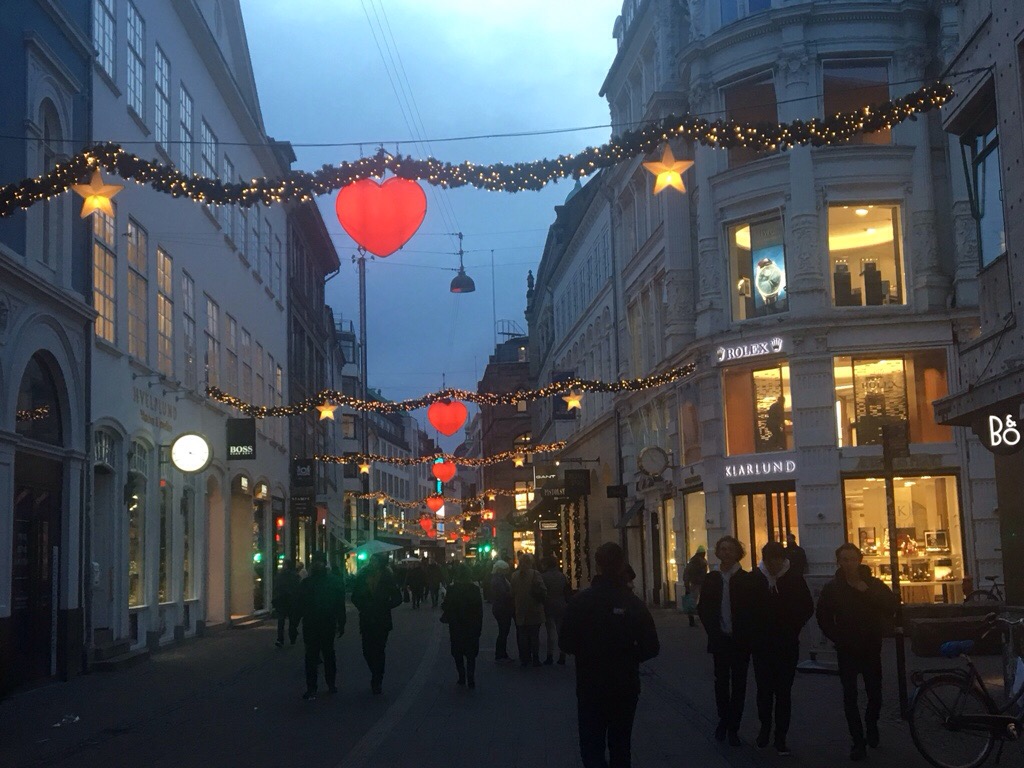
In central Copenhagen, where the spirit of the holiday can be seen all around, with decorations on buildings and streets.

20171122-010104-3664766.jpg20171122-010104-3664345.jpg

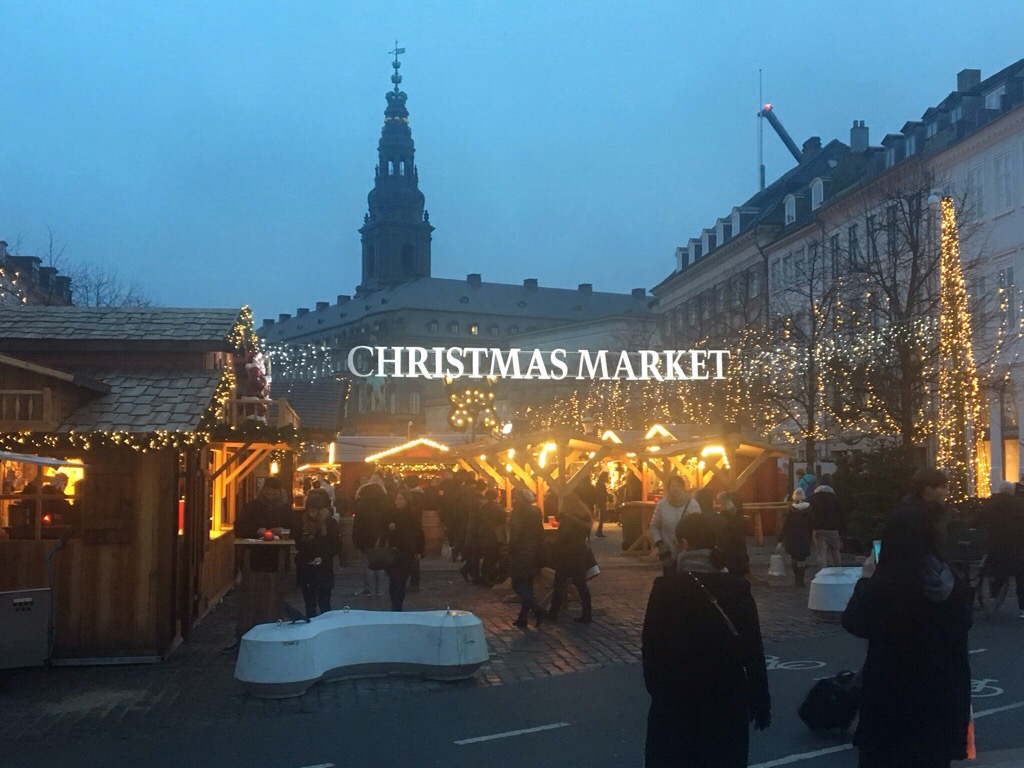
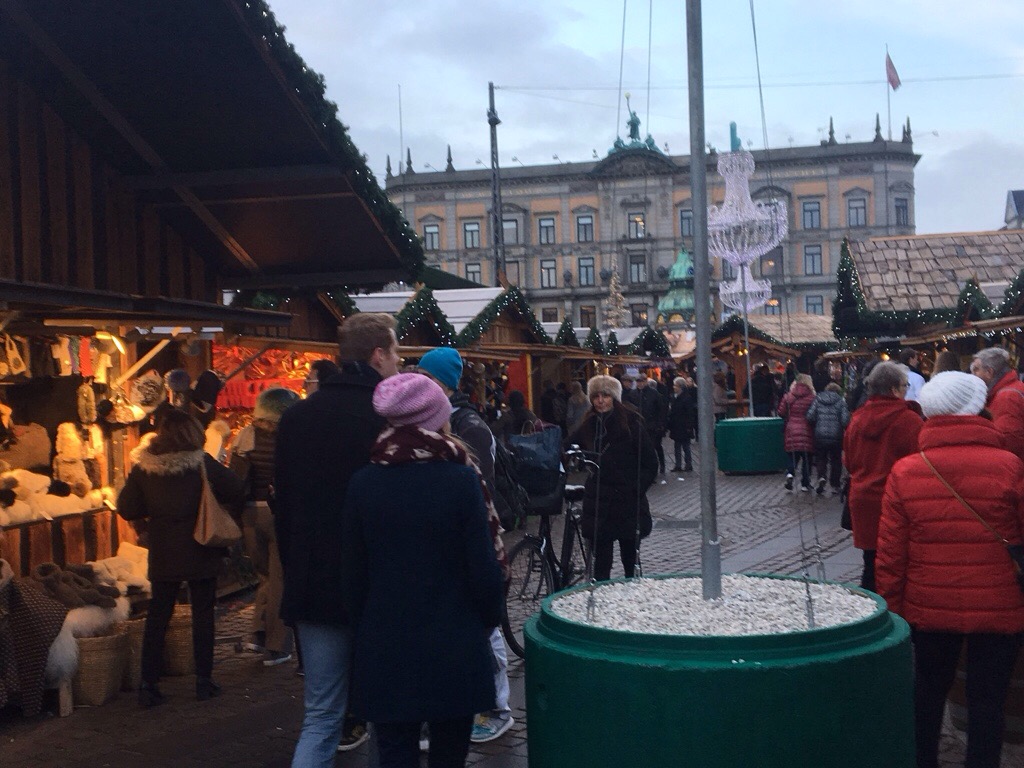
And numerous Christmas markets all over town offering holiday treats.

20171122-010217-3737620.jpg20171122-010217-3737184.jpg20171122-010218-3738052.jpg

The spirit becomes contagious. It is felt in the air. It is hard not to want to join in the traditions of the region. Eating nordic food, both new and old.

20171122-011125-4285759.jpg20171122-011125-4285311.jpg

And, of course, drinking gløgg, a warm spiced Scandinavian wine commonly drank on cold, cloudy winters days; particularly at Christmastime. It would be almost impossible to imagine myself here at this time of year without drinking it.

Denmark is known to be a happy place despite the weather, which is commonly cloudy and rainy, particularly in wintertime. In fact, it may even be because of the weather, as Danish culture has found some unique ways in which to cope.

20171122-011728-4648566.jpg

Hygge (pronounced hoo-ga), is a word we do not have a direct english translation for. It is happiness, in a friendly, slower paced, and cozy sort of way. Upon any reading or discussion of the subject, it becomes quite apparent how the weather has influenced the culture. Winter here means a lot of time spent indoors, in the dark. Spending it among good friends, eating good food, and removing oneself from the pressure of day-to-day life provides some form of rejuvenation.
20171122-013038-5438210.jpg

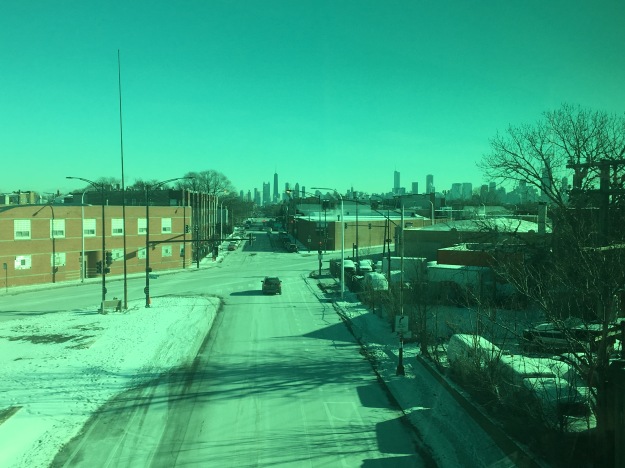
While Copenhageners spend a lot of time indoors at this time of year, it is apparent that they do not let the weather stop them from cycling. Despite the cloudy, and even rainy weather, and daylight that only lasts from roughly 8:30 A.M. to 3:30 P.M., there are still plenty of people on their bicycles, using them to transport themselves, and sometimes even other people and their cargo, around town.

As a cycling enthusiast, this is actually one of the factors that drove me to want to visit Copenhagen. It is by some measures the most bike friendly city in the world, and boasts one of the highest percentages of bicycle commuters. Perhaps because of the fact that nearly every street I encountered here in Copenhagen had some form of bicycle accommodation, it is a way of life here that cannot be stopped by the combination of darkness, rain, and temperatures in the lower 40s (around 5C).

20171122-014003-6003890.jpg

Besides what appeared to be the expectation of year-round commuting, I noticed several other manners in which the cycling culture here differed from what I see in the United States.

First, the bikes are different. I saw mostly cruisers not necessarily designed to go high speeds.

Second, cyclists here most certainly follow the rules. Nobody ran red lights.

And, finally, I also noticed that it is common practice here to leave bikes unlocked. I guess there is less worry about theft, but the idea of not locking a bike feels foreign to me.

20171122-014503-6303658.jpg

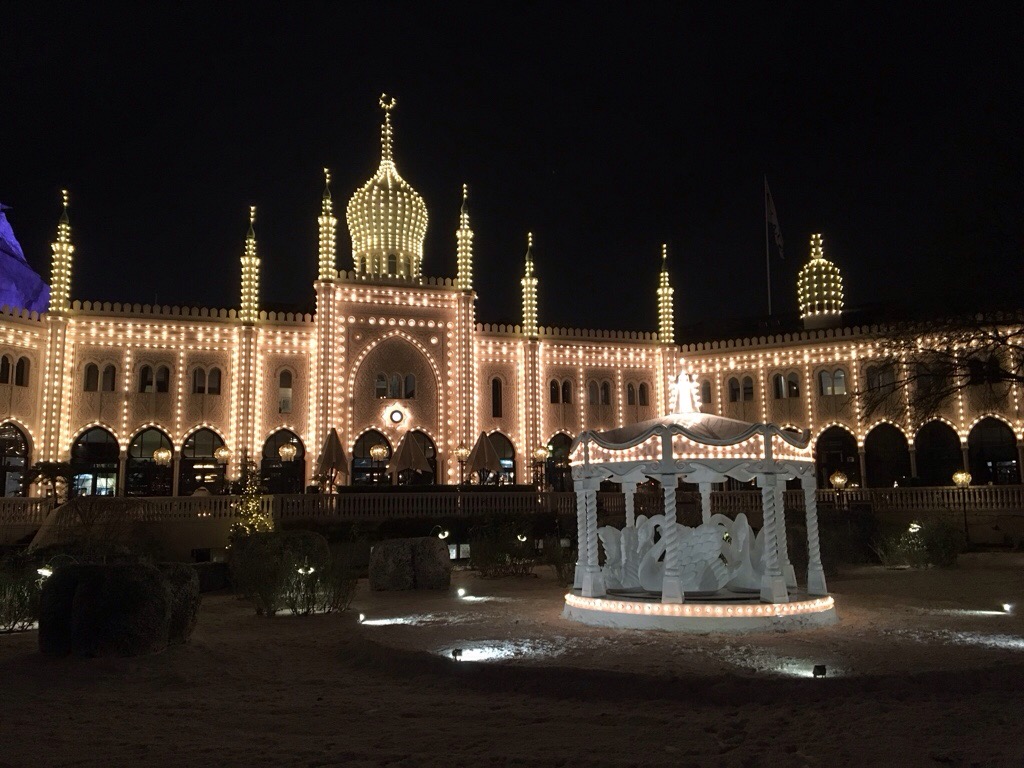
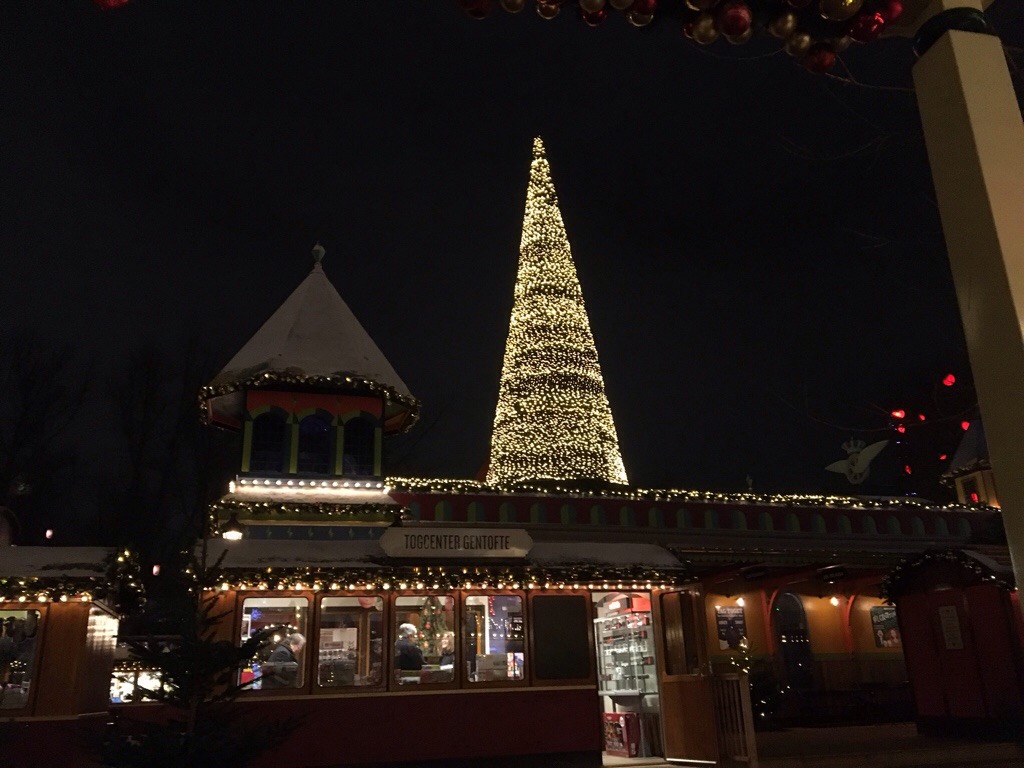
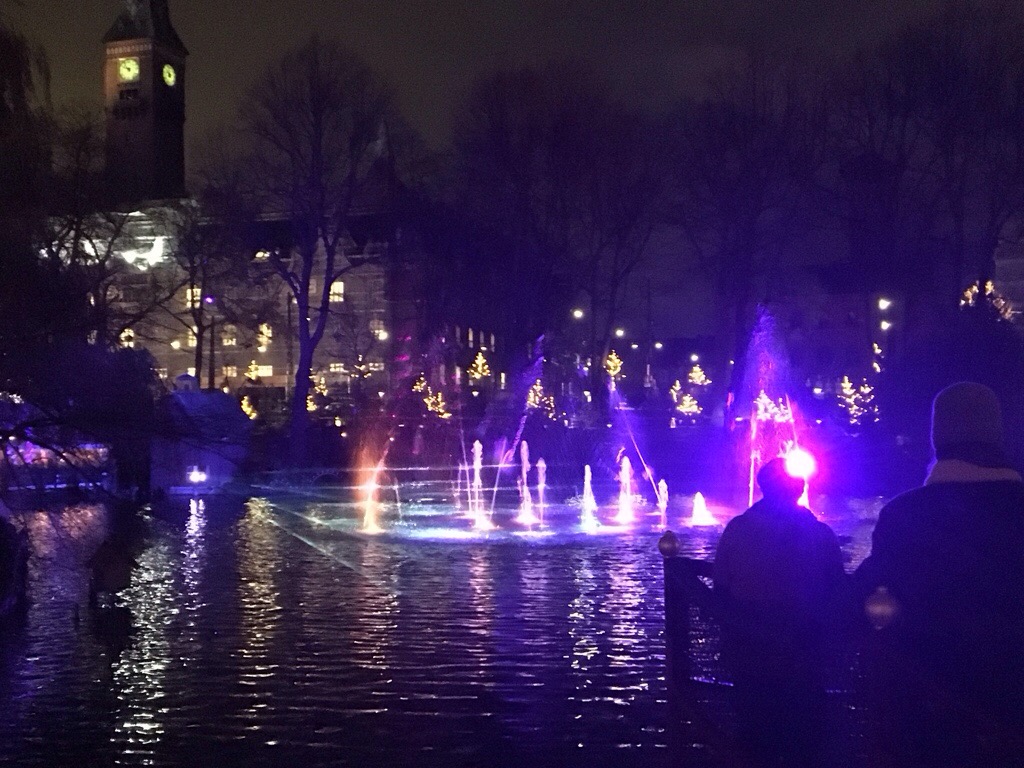
There is perhaps no place more iconic here in Christmastime than Tivoli gardens, one of the world’s oldest amusement parks.

The lights here, at night, are a must see for anyone who comes to Copenhagen at Christmastime, even for those who do not care for roller coasters.

20171122-014741-6461817.jpg20171122-014740-6460960.jpg20171122-014741-6461389.jpg20171122-014742-6462249.jpg

Recent reports have linked the lack of social support to unhappiness, poor health, and other bad life outcomes. The Danish people appear to take pride in their status as one of the happiest countries in the world, and, at least in part, attribute it to this concept of hygge.

According to the Little Book of Hygge, written by Meik Wilkins, the CEO of the Happiness Research Institute (which happens to be located in Copenhagen), hygge, while practiced all year long, is strongly linked with the Christmas season. The idea of taking a break from the stress of everyday life and spending time with loved ones is the core element of Christmas no matter where it is celebrated.

Often times the season for this is cut short. For many, some combination of pressure to complete end of the year tasks at work and holiday shopping keeps stress levels high for much of December. Experiencing Copenhagen in late November, with the spirit of Christmas already in full swing, I am inspired to make this entire season, not just a couple of days at the end of December, about giving, sharing time with those closest to me, and de-stressing.

Colorado Prepares for Winter

IMG_1641 (1)

There is, perhaps, no place on earth that gets more excited about winter than Colorado. While people certainly have differing views about their favorite activities, preferred types of weather, and favorite season, there is no denying that winter means something here in Colorado that it doesn’t in many other parts of the world.

The primary reason is the ski/snowboard industry, which generates excitement among locals and tourists alike. Four of the five most visited ski resorts in America are in Colorado. Statewide, annual attendance now typically tops 7 million. The ski/snowboard industry is also important to Colorado’s economy, with an estimated economic impact close to $5 Billion annually.

It is around this time of year that conversations at social gatherings turn to forthcoming winter activities. People discussing which of Colorado’s multi-mountain ski passes (most commonly the Epic Pass or the Rocky Mountain Super Pass) they had purchased, where their abilities currently stand, what their favorite types of slopes are and what travel plans they have.

In fact, Colorado is so excited about this season, and what it means to the state, that Denver International Airport has an exhibit about snow and ice!

IMG_1639 (1).jpg

This exhibit includes exhibits about many different topics related to Colorado snow, including the Snowsports Hall of Fame in Vail, which I visited two seasons ago.

Colorado’s ski/snowboard industry is quite large. All of the options and all the resorts can be a lot to sort through.

CO_Skiing_map

Each resort is, in its own way unique, both with respect to the terrain itself, crowds, and amenities around it. For example, Breckenride is a thriving town, with everything from fancy restaurants to even night clubs. Other places suck as Monarch, nowhere near any shops, restaurants, etc., offer a much quieter experience.

Luckily, the people at Denver Party Ride produced a guide to all of Colorado’s ski resorts which is perfect for just this purpose. While I could (and have) write at length about each specific resort I’ve skied at, this guide provides a relatively short (half a page or so) description for each resort, making it relatively easy for visitors to chose an experience that is right for them.

I was a bit surprised when informed about this ski guide. I knew Denver Party Ride for providing party limo services for events downtown and concerts at Red Rocks, I had no idea that they also shuttled people to and from ski resorts. As someone who has combined the experience of skiing and partying before, I may have to try this experience out!

IMG_8681.jpg

Every year, sometimes as early as late September, I start receiving calls and texts asking about what to expect, with regards to snowfall, for the upcoming winter season.

img_8403

It is here, as a weather enthusiast, I wish I had better guidance for those anticipating the coming ski season, or a ski trip to Colorado. When anticipating winter, people are most likely to hear about El Nino vs. La Nina. This year, the mainstream news has reported that a La Nina winter is likely.

Unfortunately, the forecast itself does not provide too much insight into what to expect this coming winter for two reasons.

1. La Nina’s impact on Colorado is somewhat inconclusive

According to this diagram from the Climate Prediction Center, Colorado trends to be sandwiched between an area to the north, which receives more precipitation during La Nina years and an area to the south which receives more precipitation during an El Nino.

El_nino_north_american_weather

Some local sources argue that, due to local topography, El Nino years favor snowfall in Denver and along the front range, while La Nina years favor snowfall up in the mountains, where most of the ski resorts are. However, official observations do not necessarily provide enough detail to reach that conclusion.

2. The La Nina is forecasted to be weak

Strong El Nino or La Nina events can be powerful predictors of winter weather. Weaker events are not as strong of predictors.

It is fun to speculate about the upcoming winter. However, after five yeas of living in Colorado, and several more of visiting annually to ski, I can’t help but think it is going to be good no matter what kind of winter we have. One of the main reasons it is safe to plan a trip to one of Colorado’s world class ski resorts is that, regardless of how each winter turns out, there is a period of time from roughly mid-January through mid-March where great snowpack and great conditions are all but guaranteed.

No matter what resort you visit, what pass you get, whether you ski or snowboard, get lost in the trees or stick to wide open groomed trails, get out there and enjoy the season. These resorts offer excellent opportunities to spend some time outside doing something that is both adventurous and gets the body moving. This is a reason to actually get excited about winter, a season many in other parts of the world dread.

Many Ways to Get Outside

IMG_1258 (1).jpg

As autumn approaches I cannot help but be concerned. With each passing year, there is greater and greater evidence that the lives we live in our present day culture are out of balance. Obesity rates continue to increase. Anxiety, stress, and similar mental health related concerns suddenly seem to be everywhere. Perhaps most alarmingly, opioid addiction has recently skyrocketed. It is now estimated that in the United States about 100 deaths per day can be attributed to opioids. Heck, even the fact that 90% of Americans consume caffeine, a far less risky drug, everyday is certainly a sign that something is off. For what reason are so many people dependent on caffeine, a stimulant, just to conduct a typical day’s activities?

The conclusion I have come to is that most of us spend too much time in the following three states..

  • Alone
  • Indoors
  • Seated

Many people spend most of their time in all three states. A lot of service sector jobs require that workers spend nearly all of their time at a desk, in front of a computer, alone. Outside of work, Americans now spend an average of about five hours per day watching TV, and are spending more and more time on their mobile devices. It’s no wonder 70% of the US population does not meet its daily recommended intake of Vitamin D. Vitamin D has but one natural source, the sun.

img_8124

Luckily, there are many ways to get outside! When many people think of the outdoors, they think about camping trips, long excursions into the wilderness, and other things that are far far away and require large amounts of time and planning. It is easy for those living in a major city to think of the outdoors as something only available during those special times, usually only several times a year, when their schedule permits.

However, it appears as if spending time outdoors is more important than many people realize. It may even be the answer to some of our society’s currently problems. This entry from MyWildEarth, a blog from the other side of the world that encourages adventure, outlines all of the health benefits, both physical and mental, of spending time outdoors.

In one weekend, I was able to identify several ways in which to get outside that do not require large amounts of time or advanced planning. And, as this photo suggests, these activities can be social as well.

A moderate difficulty 30-50 mile bike ride is an activity that can be fit into a weekend morning, and shared with others. For many, it does not require driving at all, just hop on a bike straight from home!

Many people are able to drive a short distance to somewhere that autumn is going to show its true beauty. The leaves on the trees here in Colorado turn a bit earlier than they do in most other places. In the coming weeks, there will be great weekends for viewing spectacular fall colors in the Upper Midwest, New England, and eventually places like the Mid-Atlantic, the Smoky Mountains and parts of the Southeast.

For those whose time is extremely limited, there are ways to get outside without even leaving the city or town in which one lives. Gardening is an outdoor activity that can be done on one’s property or in a community garden. As an added health bonus, the fresh vegetables can be used to produce fantastic meals that are both healthy and conducive to social events. Also, nearly everyone should have access to a local park a short distance from home. This will more important in the coming months, as the days get shorter, the weather less consistent, and the opportunities to get that vital time outdoors become more limited.

IMG_8629.jpg

I write about a lot of adventures on this blog. Each entry is not just a description about the places I go and things I do, but also a personal narrative.

I had a recent discussion with some good friends about the digital era, social media, and the manner in which we conduct ourselves online. To many, it feels as if people post about their adventures primarily in order to show off and seek attention. It is my hope that the narratives on this site make it about more than just that.

It is my hope that by sharing these stories with others, more are encouraged to seek activities that improve our health; mentally, physically, and spiritually.

We need to interact with others, and do so in a manner that is meaningful. Our bodies need movement, and they need sun. We also need time away from the digital world. Many did get that time during the summer, on trips, at summer camp, etc. Now that all the kids are back at school and the days are getting shorter, it is imperative that we look for opportunities to get outside. Luckily, even without traveling too far from home, there are a lot of wonderful options for all of us.

Hell’s Hole: A Lesser Known Hike for a Busy Weekend

IMG_1116 (1).jpg

It would be hard to find a day, or an event, that brings about more mixed emotions for me than Labor Day….

I love the fact that Americans get a holiday, the first Monday of every September. I hate the fact that so many Americans get so little time away from the office and their other daily responsibilities that Labor Day weekend represents a rare opportunity for travel, leisure, etc. As a result, roads, recreations areas, National Parks, and tourist attractions are very busy the entire weekend!

The history of the holiday is complex and contested. It started as a celebration of the Labor Movement, whose original purpose was to stand up for fair treatment of workers in the wake of industrialization. Leaving out some more controversial opinions, let’s just say I appreciate the fact that there is a Labor Movement and a lot of what it has done, but I do not always appreciate every manner in which it manifests.

Over the years, the workforce changed, and the holiday kind of morphed. Today, the holiday is less about parades celebrating the American worker, and more about recreation, parties, events, travel, and outdoor adventure. It also serves as the unofficial end of Summer. Yet another mixed emotion. I love seeing people get out and enjoy the world. But, I am bummed that Summer is ending.

The crowds also necessitate some outside the box thinking. The National Parks will be crowded. So will many highways, and other high-profile destinations. With the weather typically being pleasant, the three-day weekend ends up being a good opportunity to visit some lower-profile destinations, particularly for those of us that are fortunate enough to get more than three opportunities (Memorial Day, Independence Day and Labor Day) for summer adventure and exploration.

IMG_1089 (1).jpg

Mount Evans itself is a fairly high profile destination. Just over an hour’s drive from central Denver, it can be reached by driving up the highest paved road in North America. People also commonly hike or even cycle to the top of the 14,264 foot peak.

The Mount Evans Wilderness is a 116 square mile are surrounding the mountain, with rugged terrain, many other peaks, and numerous other trails to hike and backpack.

IMG_1114 (1).jpg

Hell’s Hole (I have no idea why they call it that) is a trail that stretches a little over 4 miles (estimate vary depending on source, a common issue for hikes in Colorado) just to the West of Mount Evans.

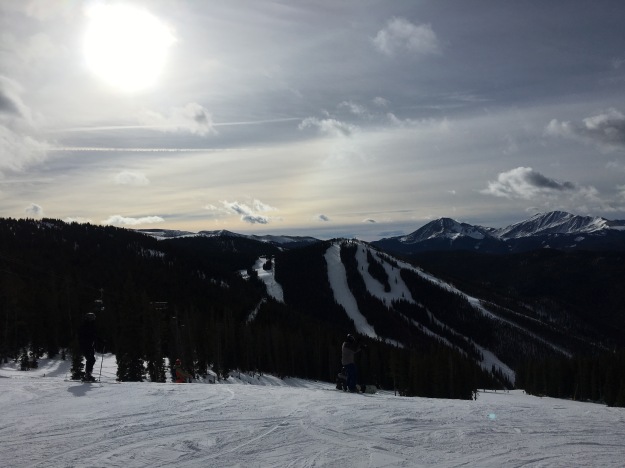
Starting at an elevation just over 9500 feet, the trail climbs a total of roughly 2000 feet, making it moderate in difficulty- overall. However, that difficulty is not spread evenly throughout the hike. Most of the climb occurs in the first two miles, as the trail ascends, first through a forest of mainly Aspen trees, then into a dense forest of Pines. Near the top, the trees begin to thin, and Mount Evans, the giant 14,000 foot peak periodically appears through the trees.
IMG_1107 (1).jpg

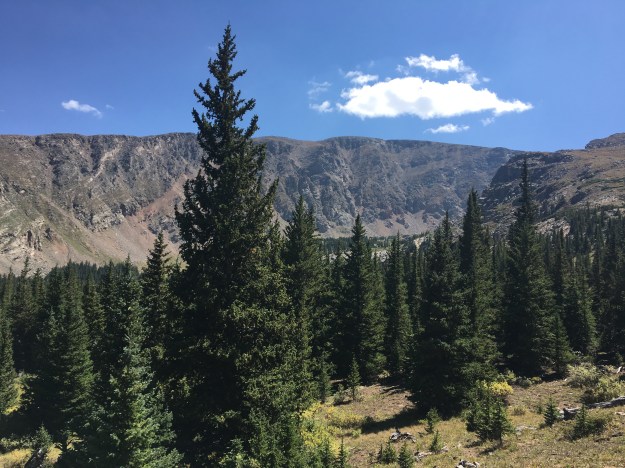
At a moderate pace, one should reach the end of the trail in roughly two hours, with the second half of the trek begin more gentle in slope. The gentler slop still manages to top out close to the “tree line”.
IMG_1111 (1).jpg

Although the final mile and a half of trail offers periodic glimpses at the mountains in all directions, it is only the last quarter of a mile of the trail that is truly wide open. To get the full experience, I would seriously recommend hiking the entire length of the trail, which totals roughly nine miles round trip.

For some reason, it took until the second half of the hike, the descent back to the trailhead to notice any signs that summer was indeed coming to an end. An unseasonably hot day, reminiscent of mid-July, temperatures in parts of the Denver metro area hit 100F, and even weather stations near 10,000 feet in elevation peaked out above 80F. The entirety of the hike felt no different than mid-summer.

IMG_1122

Yet, hints of fall appeared, and were suddenly noticeable when the ascent was complete. Shades of yellow began to appear in the shrubs that often dominate the landscape just above the treeline.

IMG_1125 (1)

Further down, gold colors even began to periodically appear in the Aspens closer to the trailhead.

IMG_1123 (1).jpg

People often think of Labor Day as summer’s farewell, summer making one last appearance before ending. Of course, the weather does not always line up that way, and it is quite possible that many more hot days are still yet to come.

Emotionally, and sociologically, a lot more can be controlled. Most children have already returned to school. Those still on summer break will be back in the classroom shortly. Anyone on summer schedules or summer dress codes will return to normal within a week. For those in the most traditional types of corporate structures, the next holiday may not be coming until Thanksgiving (late November).

On the descent, we spent some time discussing topics related to work, finding purpose in life, and other topics that were less about travel and adventure and more about life at “home”. It was almost as if the weather, the physical appearance of everything around me, as well as the general mood, was lining up to serve the purpose Labor Day serves in the 21st Century; a farewell to summer before a new season takes hold.

For many, this new season represents a return to some form of structure, but could also represent new opportunities to learn, achieve, and reach the next level. In life, we all need breaks, time to do that in which we enjoy. We also need time to work, and get things done and serve other human beings. While our current society may not have found the right balance, that does not mean we need to shun work altogether, and not embrace the season that is to come.