The Best of Southeast Utah

Monument Valley from 2 miles south

Monument Valley is the quintessential image associated with The American West. Perhaps because of how frequently it has appeared in films, particularly westerns, it is quite difficult to look at this grouping of red rock formations without imagining cowboys riding horses across the landscape.

Despite the fact that the natural processes associated with its formation are culturally agnostic, and the fact that the monument sits on the Navajo Indian Reservation, these rocks have become forever associated with the culture of the American West. The fact that the first music video that pops into my head when I think of Monument Valley is by a German Band, the Scorpions, does not even seem to temper that association. Every American hard rock song feels like it fits in perfectly with this landscape.

Speaking of the landscape, Monument Valley is one of those places with a command of the landscape for miles away. Particularly approaching from the north (or northeast as that is where the highways are), it can be seen from some 50 miles away.
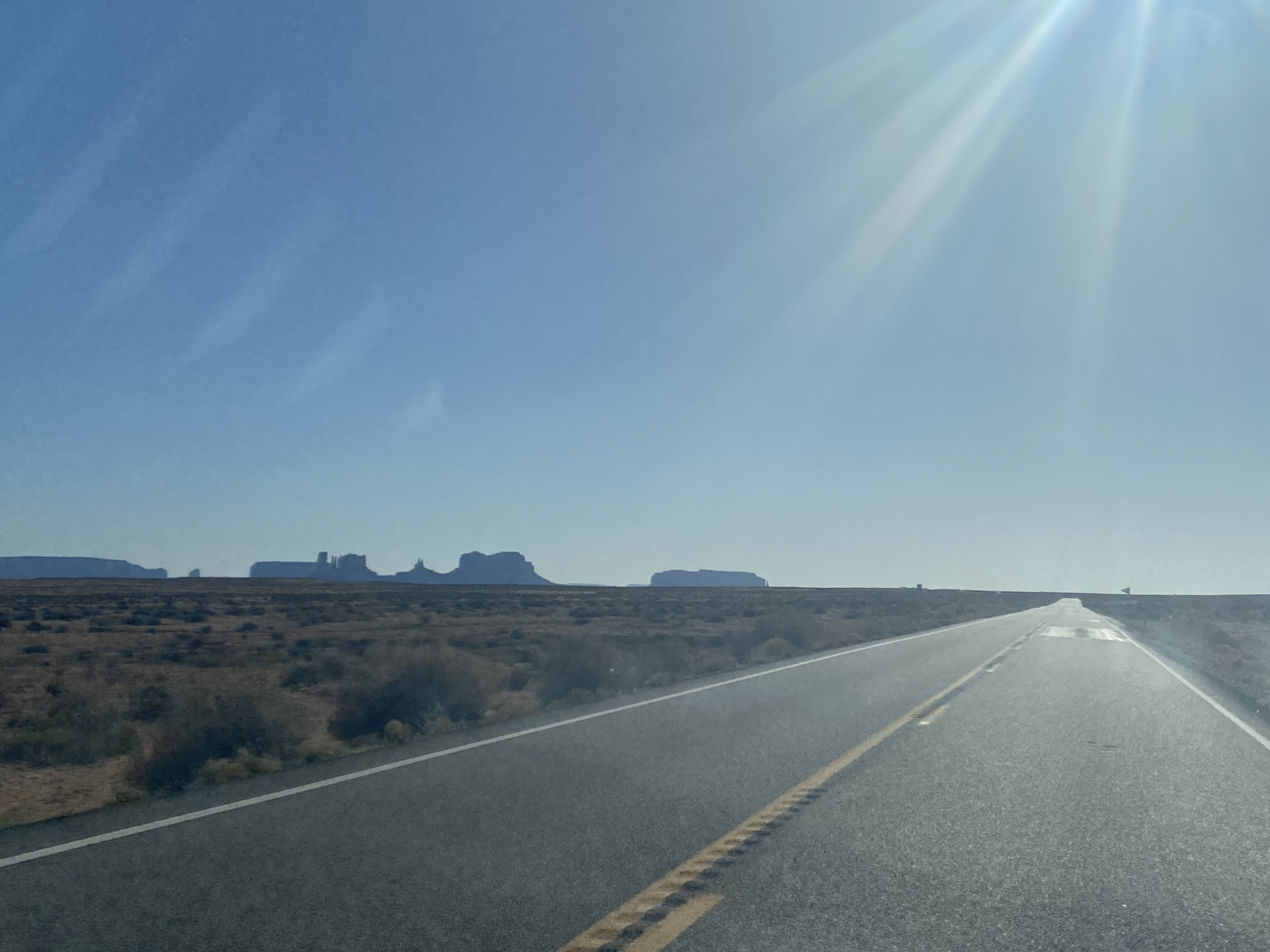
The interesting thing about Monument Valley is how different it can appear on either side of the monument. In the afternoon, the north (northeast) side has a much different appearance than the view from the south, which represents the standard iconic view of the feature, with the sun shining on it.
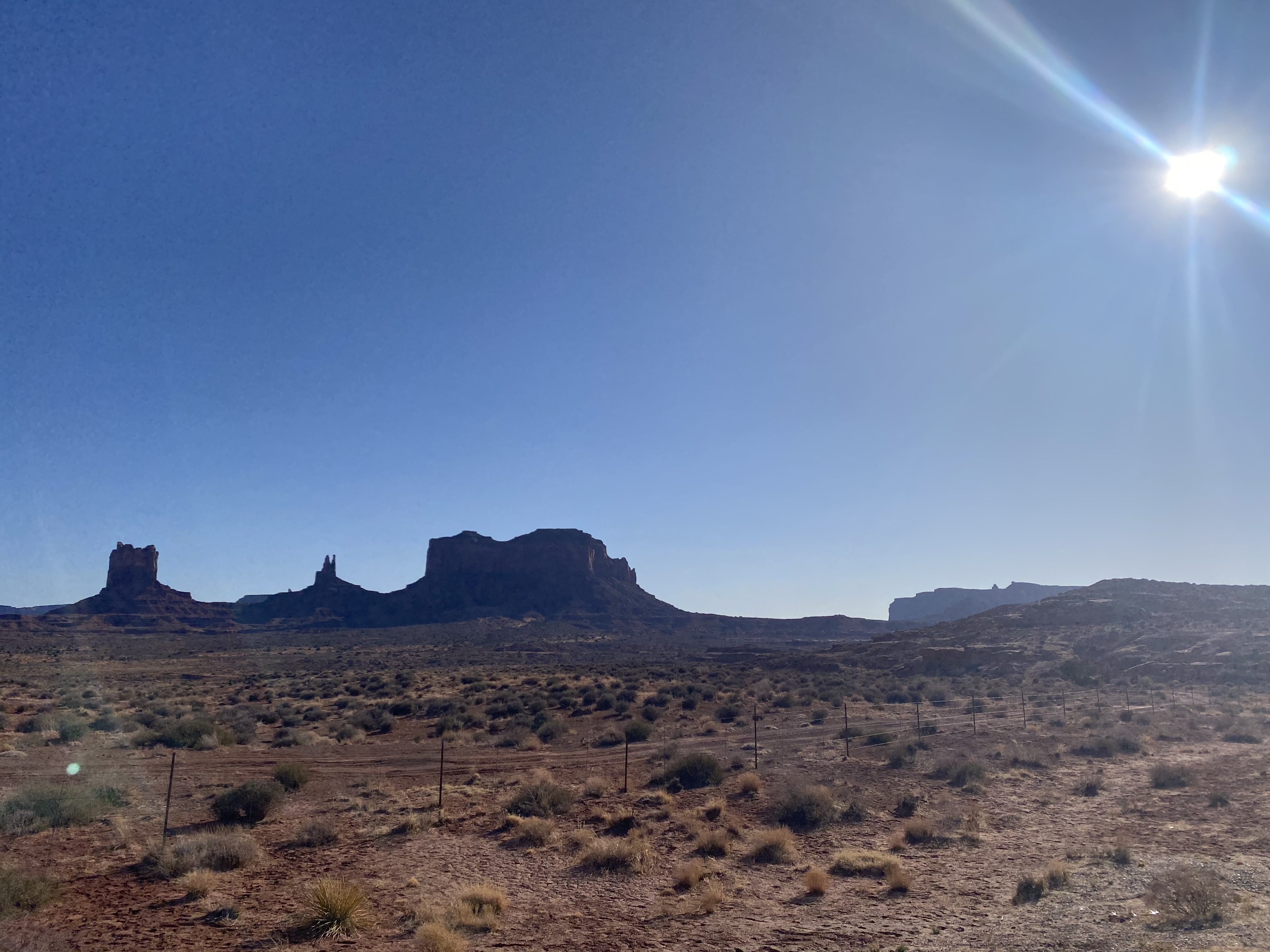
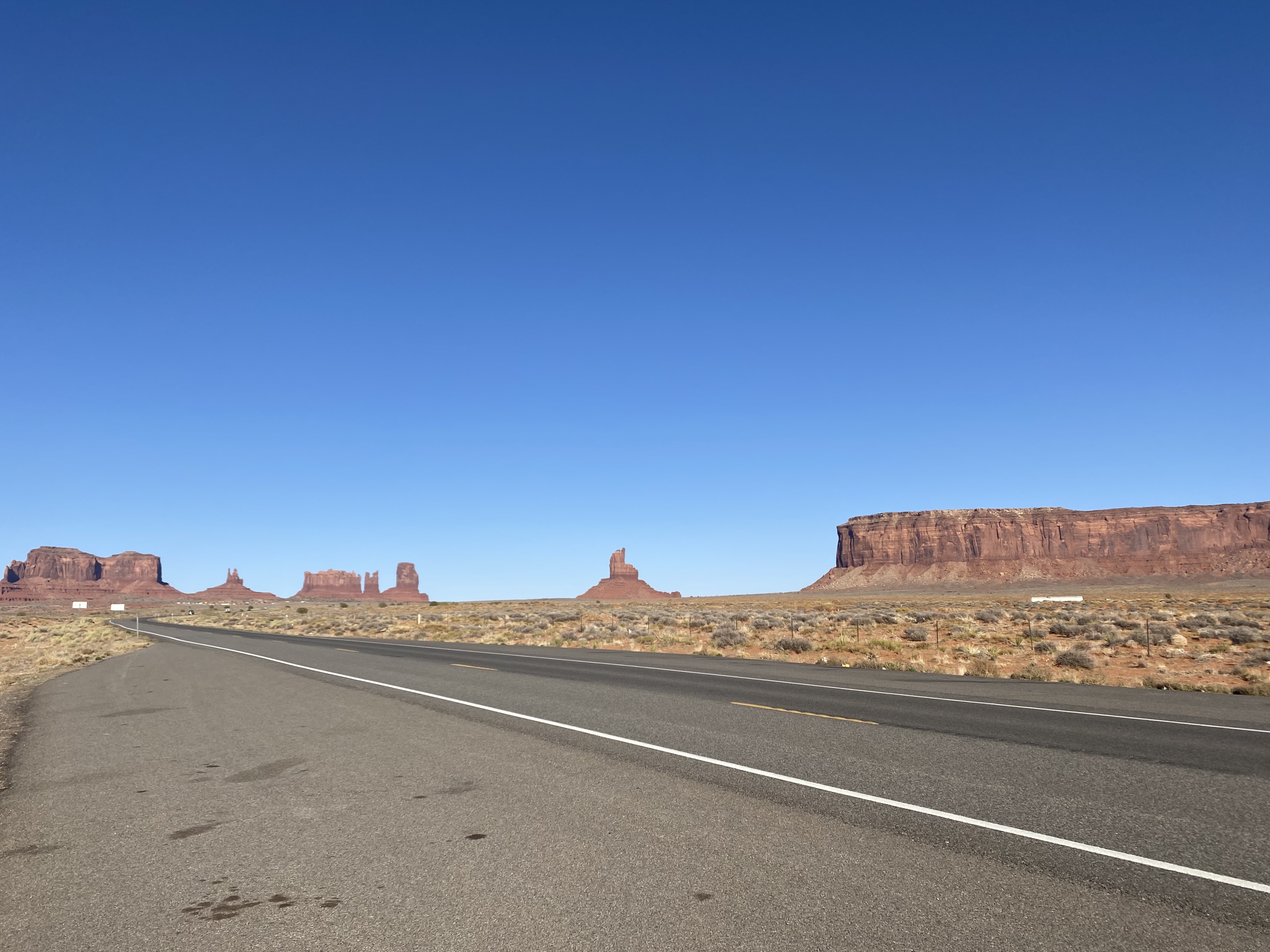
How this specific iconic set of rocks became associate with 19th century American pioneers on horseback, and the enduring culture and ethos of the Interior American West is probably a challenging question to answer. Yet, it is most certainly the repetition of this association throughout culture and media that makes people living some half a century or more after all of these films were produced continue to feel a certain feeling when they gaze upon this monument. It is hard to imagine a better example of how repetition creates and perpetuates and association than this one. I am truly curious about what the Navajo Nation thinks of it.

The strange thing is that this association has lead me to think of gold prospectors, cowboys on horseback, shootouts and such at other places with a similar feel. Like most naturally occurring features, Monument Valley is not the only place where the natural processes that created these features occured.

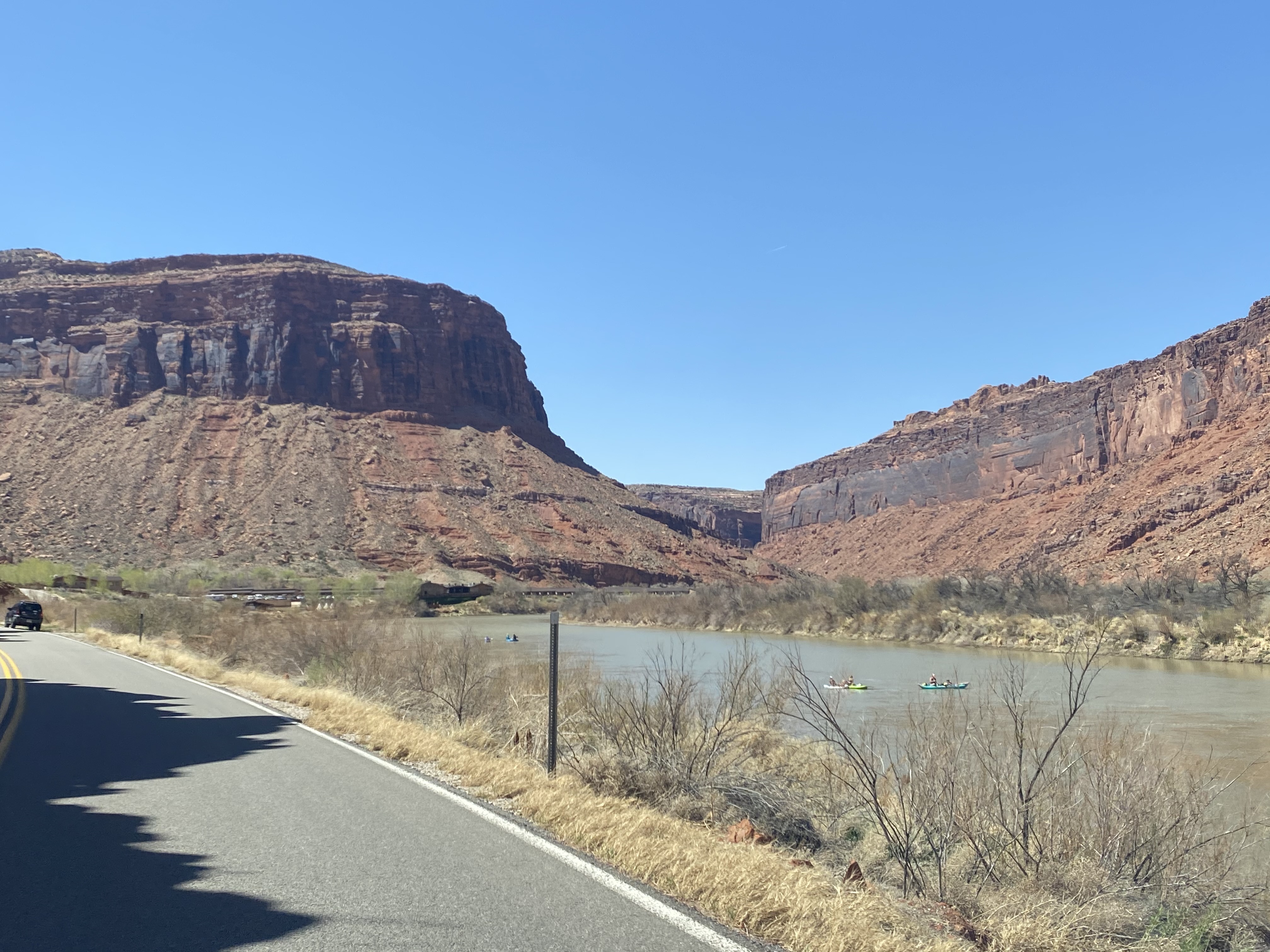
The rock formations about 160 miles to the Northeast, outside of Moab, Utah, take on a very similar feel. It almost feels as if any movie or music video filmed at Monument Valley could have just as easily been filmed here to the same effect.

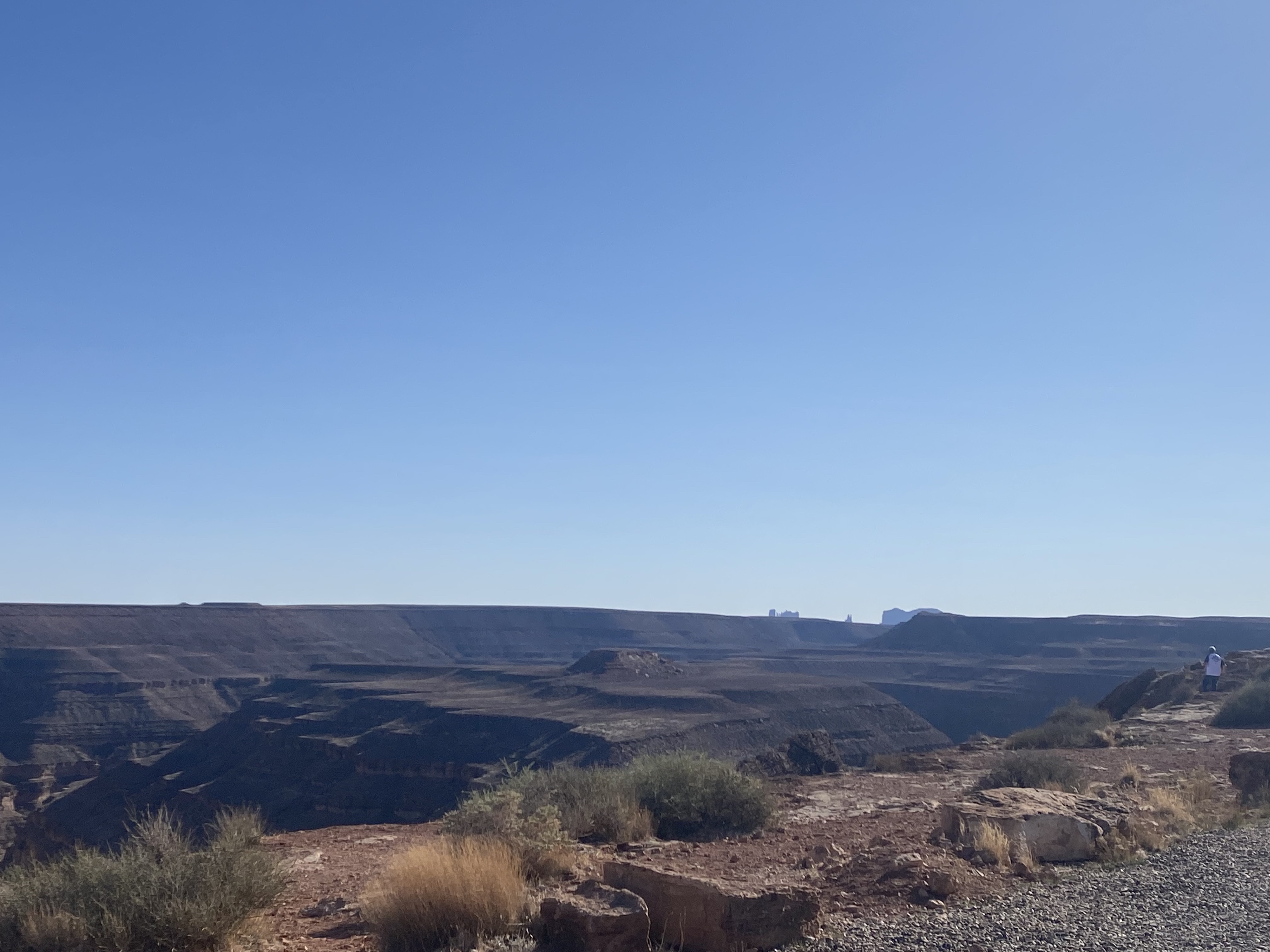
It would be a huge missed opportunity to visit Monument Valley without also visiting Goosenecks State Park, only about 30 miles away.

This is another spot that is photographed quite frequently. Unlike Monument Valley, it seems to have a stronger association with that which is current about the American West; tourism, outdoor adventures, and, of course, the search for the perfect instagram photo.

Visitors to the park can also see Monument Valley from a distance.
I had previously visited Arches National Park, traveling to the most iconic of the arches.
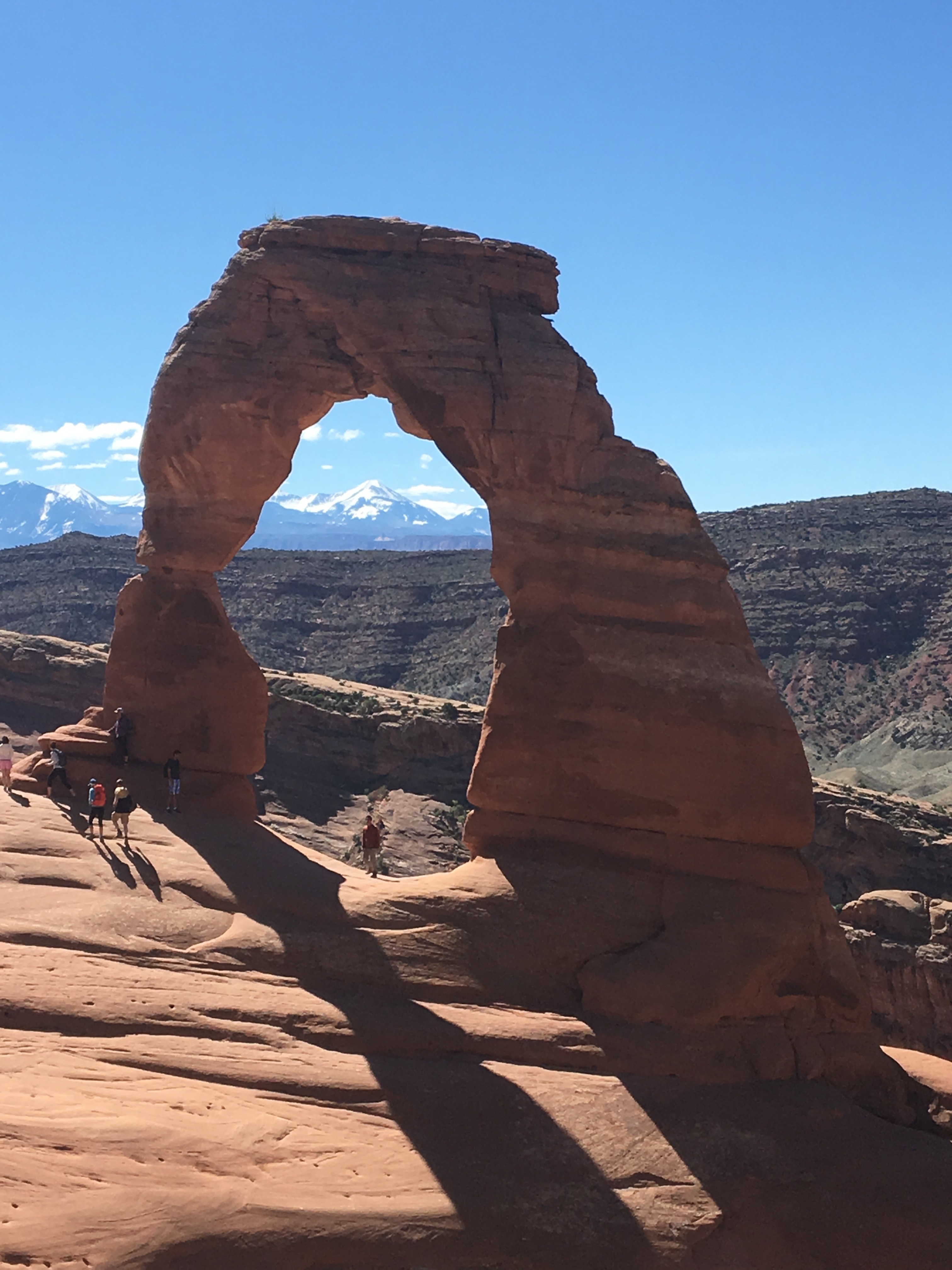
On that trip, I had failed to realize that just a half an hour south on highway 191, it is possible to see one of these arches without ever leaving the highway.
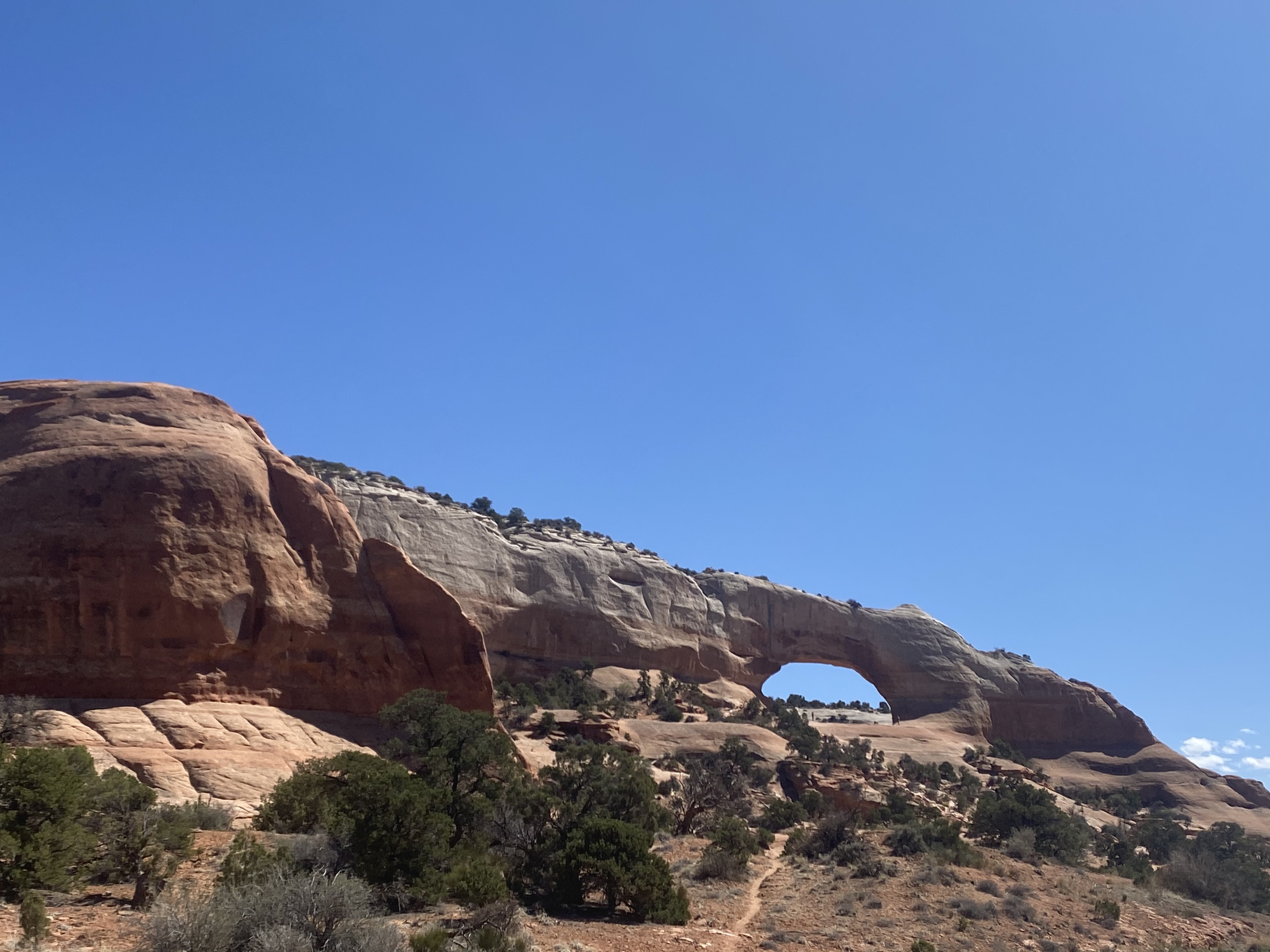
Like any other place in the West, Southeast Utah has places that are underrated, not trying to be noticed.

And places trying to get people to stop that don’t make much sense.

It’s unique natural features connect the past to the present, activate the imagination and provide experiences that are indicative of Western North America as a whole, yet unique to the specific location.
From Either-Or to Both-And

It feels good to be traveling again!

Here’s to more to come!

However, I must acknowledge that the middle of April is kind of a strange season to return to the world of traveling. It is not a very popular time to travel. Part of it is the school schedule nearly all families are subject to. Spring break is over and nobody finishes their school year before May. Mid-April is also a weird in-between season. In many active northern and high-altitude places, it is referred to as “mud season.” When people think of this time of year, they think of it as some abyss where conditions for activities on snow and ice deteriorate but the air has not warmed quite enough and the ground has not dried up enough for summertime adventures. I often specifically tell people not to come to Colorado in April because other months offer so much more.

And, thus, it is a great time to travel elsewhere.

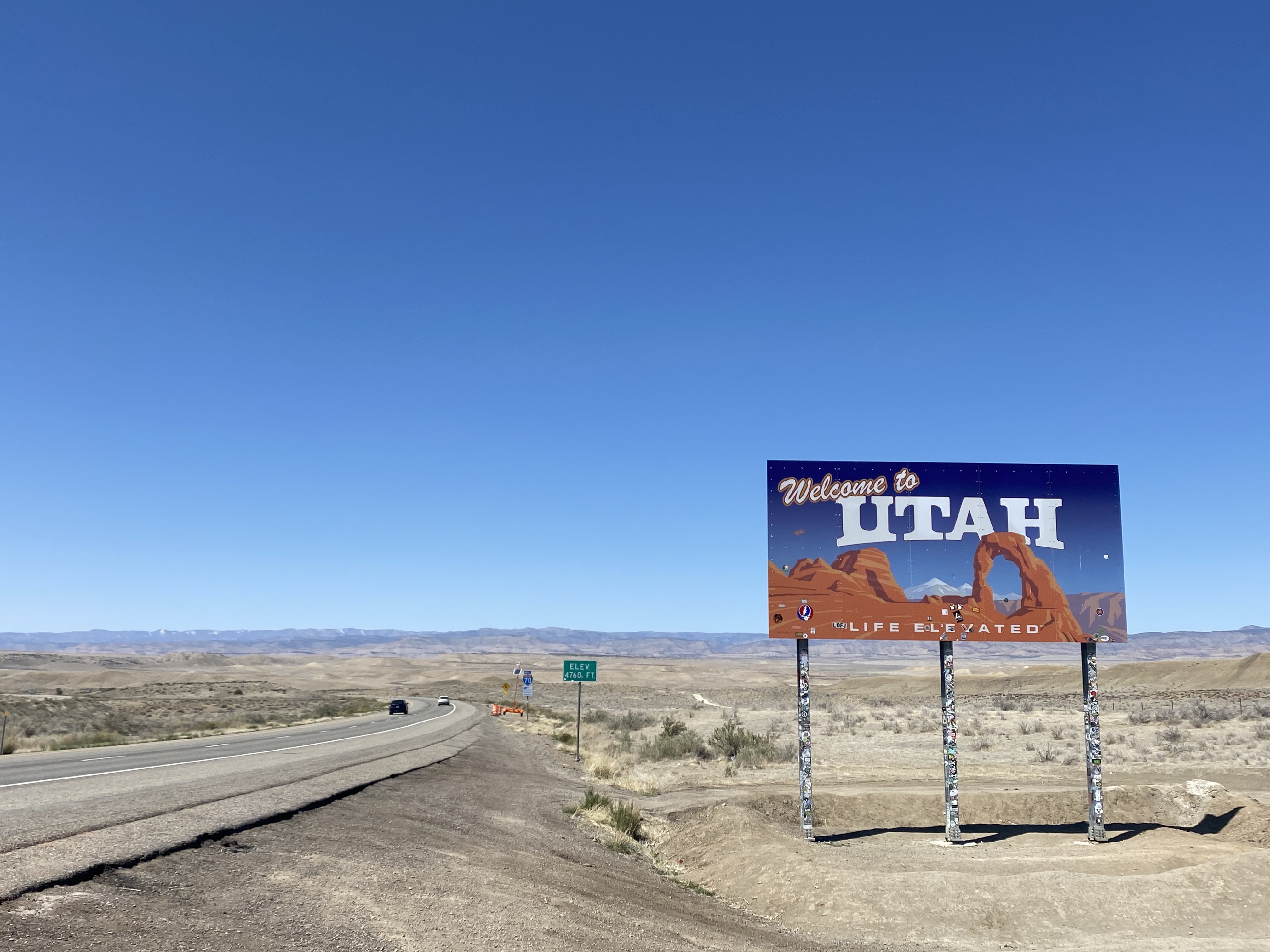
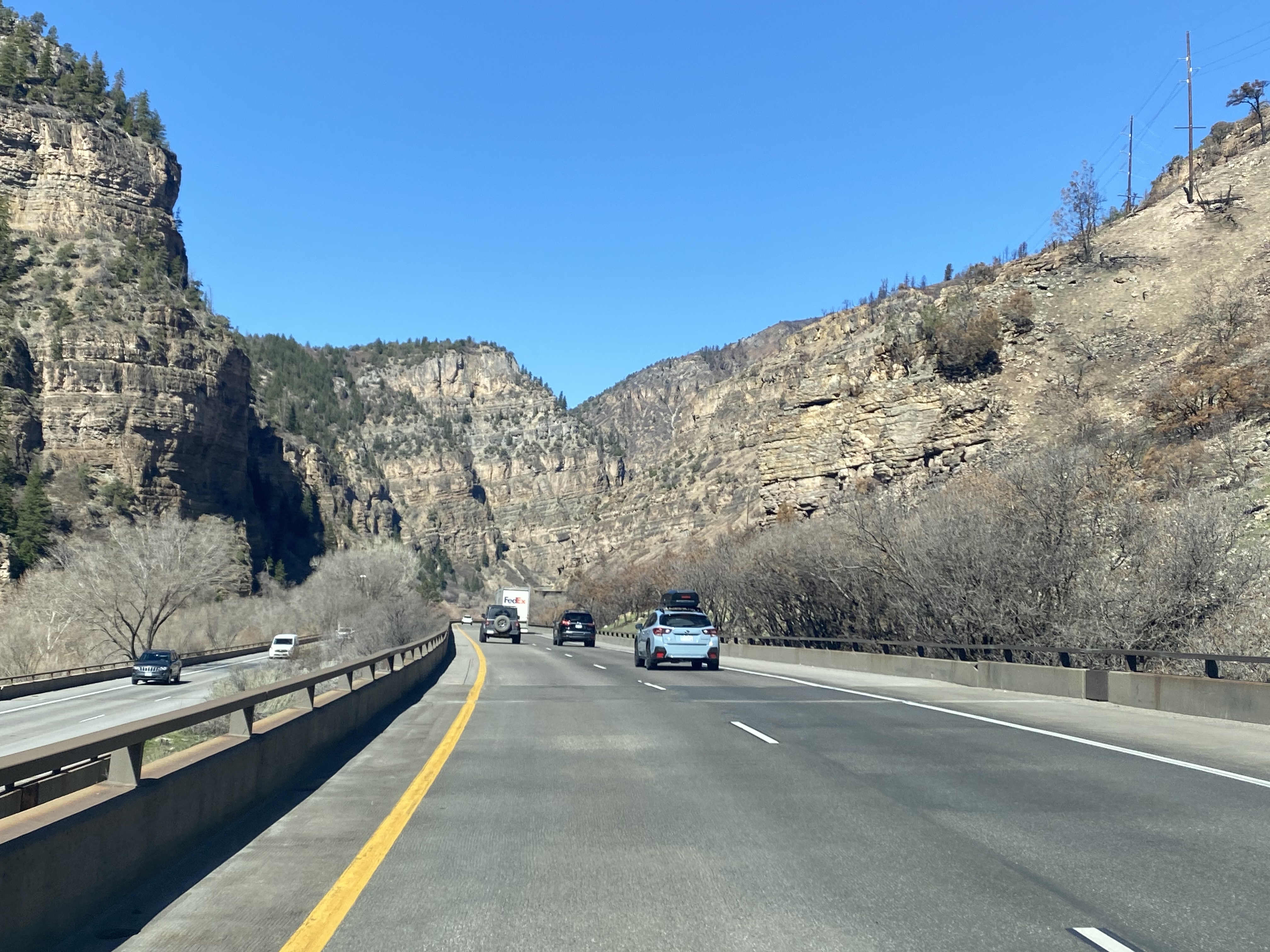
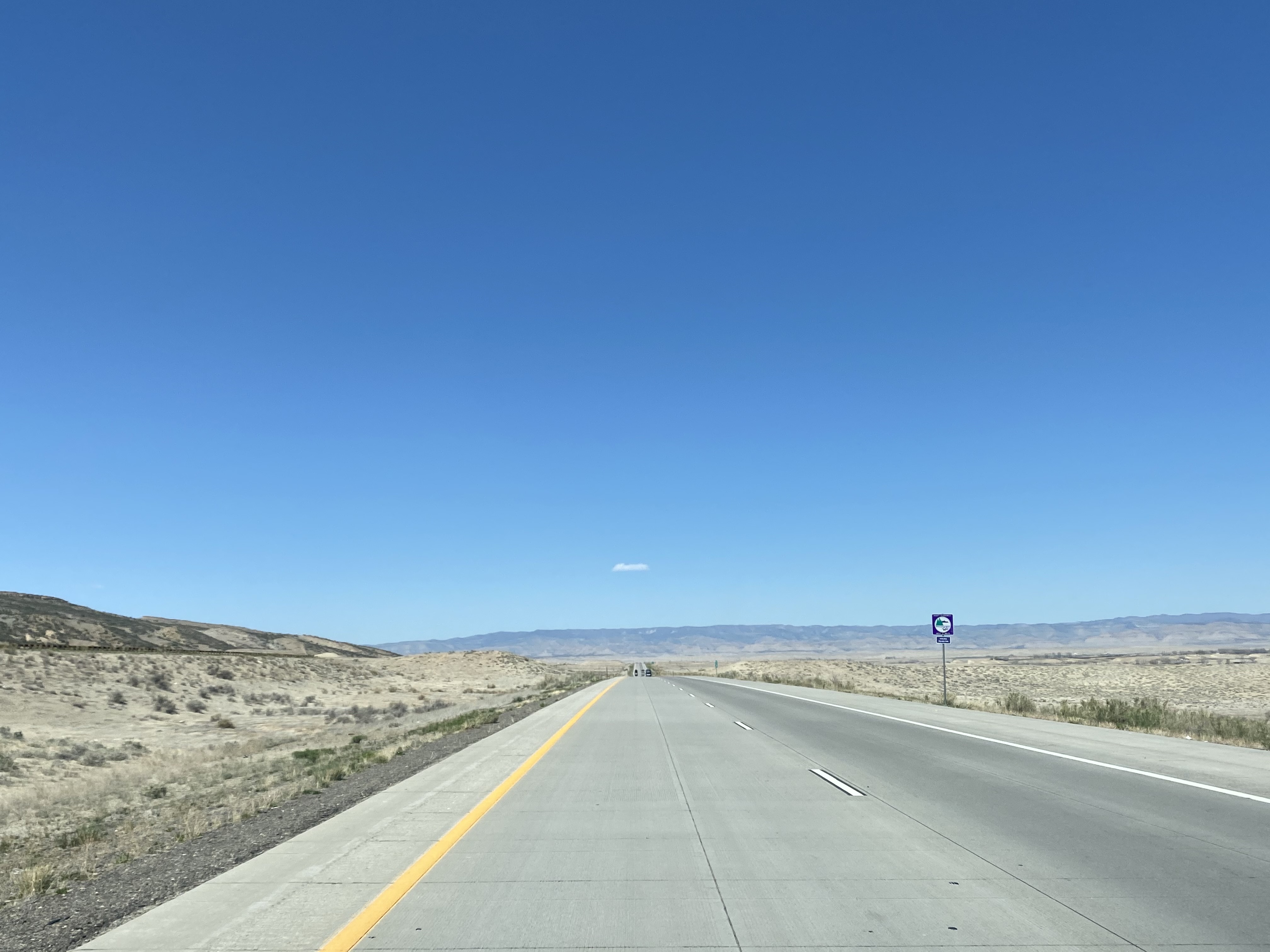
It was the very first part of the first adventure in a new post-pandemic world. It was an opening act, a preview of what world we will all be re-emerging into. And, this drive from Denver to Moab (Utah) ended up providing some interesting hints as to how our thinking is being transformed.

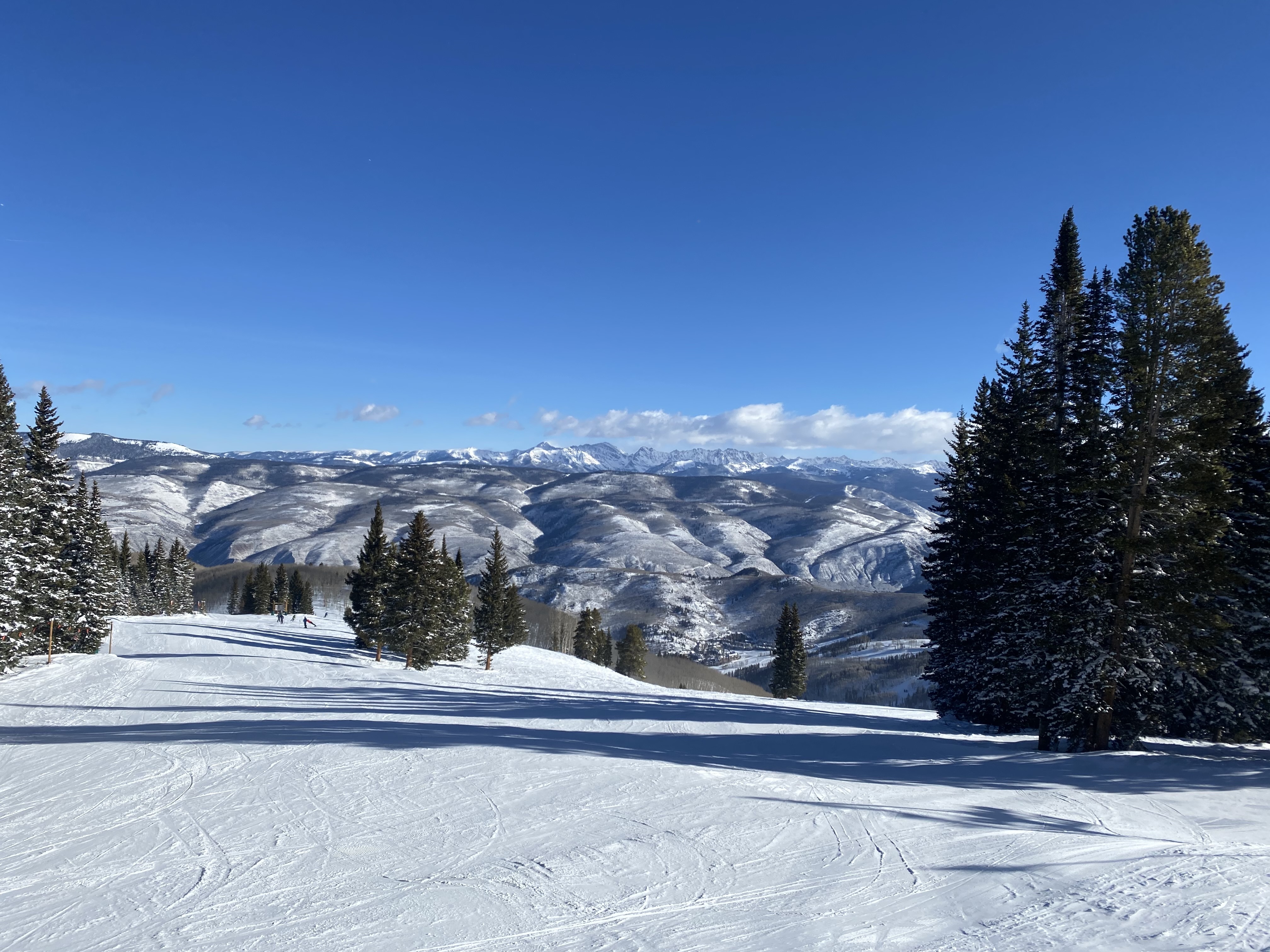
Loveland, Copper Mountain, Vail and Beaver Creek ski resorts are so close to I-70 motorists can see people skiing from the highway. That is, if the ski resort is still open. Not only were all four ski resorts still open, but the all had plenty of people still skiing.

Two hours later, across the border and down the slope near Moab, it felt like a completely different season.

Kayaks, canoes, rafts- people are already in the water. Could it be that a time of year many people had come to associate with boredom and few opportunities actually presents a plethora of opportunities for those willing to expand their view?

For some specific points on the map, especially some of the highest rated ski resorts, this is a time of year with little opportunity. The snow is melting and the ski season is coming to an end.

However, people looking to ski this late in the year can often still find some good skiing at lesser known higher elevation resorts. At lower elevations, like Moab, the weather is already ideal for some activities associated with summer. In fact, this is one of the best times of year to head there, as the middle of summer often gets quite hot.

What is interesting to imagine is someone either choosing between hitting the slopes or getting their canoe out. Or, even doing both!

One of the most profound ways that our world is shifting is a move away from an either-or to a both-and method of thinking. It has the potential to help us clarify our goals, live more balanced lives and more effectively settle arguments. For example, either-or thinking has always lead me to believe that my desire for community and to preserve my individuality are at odds with each other. Both-and thinking would encourage those of us with the same two needs, which is nearly everybody in reality, to develop a solution that considers the two truths about human nature.

Finding solutions using this new both-and mindset requires creativity and widening our view. At one specific spot, it is either ski season or summer, and sometimes neither. If we expand our range to include Loveland Ski Area (base elevation 10,800 feet) and Moab (elevation 4,028 feet) it is currently both! Perhaps, with this new way of thinking, an an expansive and creative worldview, we will design communities that give people a sense of belonging without having to surrender their individuality. Perhaps, with both-and thinking, we will also make headway on all of the other tug-of-war issues that have been driving us apart.

What I Want From My Summer 2021

I am not sure how to describe the emotional feeling of coming out of one of the toughest winters we’ve ever experienced.

When the third wave of the coronavirus brought on new restrictions last November I knew this would be some sort of “winter of despair” as we waited for the vaccines to be produced and distributed. I managed to maintain some level of sanity by skiing and going all in on a new initiative.

Yet, hearing an Avicii song on Spotify a week ago made me emotional in a way I find hard to describe. The lyrics reminded me of the beauty life has the potential to be if only we were to stop wasting time on that which is meaningless, without soul, and all those unnecessary sources of distraction and stress.

Once upon a younger year
When all our shadows disappeared
The animals inside came out to play
Went face to face with all our fears
Learned our lessons through the tears
Made memories we knew would never fade

Almost instantly, likely due to the combination of the music and warmer weather, a different setting entered my mind. It was not of a real place, but of a place that is not completely out of the realm of possibilities.

It was a place with beautiful sandy beaches, DJs and dancing, where people were truly present. People laughed. They cried. They interacted with each other. It wasn’t without conflict, but it was without all of the conflicts that many of us have been so preoccupied by over the past several years.

Maybe this sudden burst of imagination is just the result of what people this year are referring to as “Zoom Fatigue“, or simply too much time spent alone, indoors in front of a screen. Maybe it’s just me idiotically longing for a younger year where I can make memories that will last a lifetime. Or maybe it is secretly what we are all longing for after a year of restrictions, fear and isolation.

As the weather continues to warm up and many of the activities we have been denied for a little over a year now return, what I want from this summer is close to the exact opposite of what most of the past year was.

I want to get out from behind a computer (or phone) screen and connect with the world.

I want to explore places, beautiful places, either with the windows down or on a bicycle, where I can smell the trees and feel the air flow.

I want to gather with people, both familiar and unfamiliar, listen, laugh, talk, be heard, smile, try new things and make memories.

I want to feel truly alive and witness others feeling truly alive.

I want to dance, not as if nobody is watching me, but like it doesn’t matter who is watching me. After all, it doesn’t. All that matters is that the people dancing poorly are enjoying themselves more than the people laughing at them.

I want to throw away all that made us distrust one another, socially distance and hide our true selves, both from others and from ourselves.

I want to silence the voices telling me I need to change or hide parts of who I am.

I want to stop holding back.

I want the feeling of smiling at a stranger and SEEING THEM SMILE BACK.

And, this time, after the events of 2020 exasperated the problems of distrust, division, isolation, excessive screen time and victimhood mentality that were already present in our culture, I want to appreciate what is in front of me. I want to take this extended year of excessive restrictions as a lesson for us all to live in the here and now and stop focusing so much on the negative sides of things.

One thing I feel a lot of us, myself included, failed to appreciate before it was gone, is community. I imagine today that nearly all people have experienced life both with and without community. School naturally becomes a community and we have all lived through this pandemic.

When we did have community:

Could we have perhaps spent a little too much time focused on that one person in our social circle that we don’t particularly vibe with?

Did we possibly lament, too often, the times when we had to compromise on what we wanted to do because most other people in the group had different preferences?

Could too much thought have gone into that one conversation topic we were sick of hearing?

Were we too focused on what makes us different from those around us, and how our unique perspective needed to be appreciated more?

I know I feel I had made those mistakes. The past year has certainly reminded me, and hopefully others that it is better to have a community with the above frustrations than none at all. It feels like enough people feel that loneliness has become a major problem that some form of community will be built in the aftermath of this year of isolation.

Hopefully our favorite activities and freedoms come back soon. Hopefully, we also improve our communities.

When we do so, and start having the moments that make life truly worthwhile, the ones we will never forget, let’s truly immerse ourselves in those experiences.

Here’s to a better summer and a post-pandemic life with more of what makes life worthwile.

The Search for the Most Ideal Conditions

The lift lines at the ski resorts were so long that images of them made the rounds on social media, and the news even reported on how long these lines were. They were the longest lift lines I ever waited in. And, I was at Vail, a resort where lines tend not to be too long, as skiers have so many places to go!

What happened? And, what does it mean for the near future?

With restrictions related to COVID-19 being in place in one form or another for close to a year, there is a lot of pent-up energy all around us. Even some of the most introverted people are at the point where they are craving a return to many of the activities that we all, in one way or another, took for granted before the pandemic hit. Outdoor activities like skiing have been identified as relatively safer, when it comes to potentially spreading the virus, than large indoor gatherings.

Also, the snow season got off to a slow start. Before the national and local groundhogs predicted six more weeks of winter, the snowpacks in the mountains were running close to 30% behind seasonal averages.

It appears right now that the groundhogs turned out to be correct. In some places, several feet of snow would fall during the first week of February. This would inevitably lead to many “powder chasers” coming to the ski resorts. For those that love fresh powder, Thursday and Saturday would represent the most ideal conditions possible.

The problem with the most ideal conditions is that they also commonly lead to crowds. This is especially true on weekends. Since the predominant work schedule is still Monday through Friday, for many, having an event occur on a weekend makes the conditions even more ideal. Never will there be a day with bigger crowds at a ski resort than a powder day that happens to occur on a Saturday.

Oh, if life in general were just about finding the most ideal setup for anything, how much simpler it would be. Unfortunately, in nearly all areas of life ideal setups lead to some form of crowds.

Found the best job opportunity ever? Good luck with the 500 other applicants.

Look at that amazing house in a great neighborhood of a really trendy city! I wonder how long it is on the market and how much over asking price you will have to offer (this is really happening in Denver right now).

Unless you are a serious iconoclast it is also likely that at some point the person you wanted to date had several other suiters and the events you want to go to require tickets or a cover charge to get in.

Sometimes, the best way to find the ideal opportunity in all areas of life is to find the one where there is something off, but something you can live with.

Groundhog Day itself was a Tuesday. Despite really warm weather, conditions on all the trails in the area weren’t perfect. But, it still was a fantastic day for a bike ride.

By Sunday, the snow was a little bit less fresh.

Yet, the newer snow still made for some great conditions. Also, the sunshine made for a fantastic experience.

It also happened to be Super Bowl Sunday. In the right place, at Beaver Creek Resort, the lines were significantly better.

There are very few situations in life where we can have it all. Usually, we have to chose what is most important to us. The key to finding the right experience is much like the key to finding the right opportunity. It is to figure out what less than ideal conditions we can live with, whether it be an investment that is somewhat “risky”, a few icy spots on a bike trail or a job that requires the occasional late night to meet a deadline, and take advantage of those opportunities.

When Cycling Was What I Needed

January 31, 2021 on the Platte River Trail in suburban Denver…

I ceased pedaling for a few seconds, allowing myself to slow down. This helped me successfully navigate around several groups of people, while anticipating the unpredictable motion of dogs, children and even a few less attentive adults. There were so many people walking side by side with their dogs, or even in large groups, likely families. This made navigating the trail, in sections, particularly challenging. On this section of the trail, pedestrians outnumbered cyclists by about 3-to-1.

After navigating the congested area, my mind began to wander onto some of the more pressing issues of our time.

I thought about those on the left, who were concerned with people not getting paid what they are worth and the amount of power employers seem to have over their employees. I thought about those on the right, concerned with inconsistency and the possible abandonment of our core culture. I even thought about my own concern about preserving our basic freedoms, and a political culture that has become both more divisive and intrusive into more areas of our lives.

I thought about the commonly heard proposed solutions and why I find them narrow, short-sighted and potentially dangerous. Most people support solutions that address the issues that matter to them, but could make other problems worse, or create new problems altogether. I began to ponder an innovative solution that addresses multiple concerns at once. Then, I began to wonder if the solutions I would come up with would be just as narrow and short-sighted as the ones that terrify me.

Before I knew it, I was once again rapidly approaching a large group of people, this one larger than the last group. I decided not to be aggressive. It is a Sunday. I’m not in a hurry. After all, we are still supposed to be “social distancing” and trying to avoid using hospital resources, which are needed for COVID patients, for avoidable accidents. I slowly navigate around the group. First, I pass the parents walking and talking, while avoiding the couple walking in the other direction. Then, I maneuver around several children in front of them using scooters. However, this time before fully clearing the group, I suddenly noticed another cyclist behind me.

“On Your Left!” he shouted before I had fully moved over to the right side of the trail. I guess every person on this trail has a different agenda for the day.

The same cycle repeated for about 12 miles. The experience of suddenly realizing a more aggressive cyclist was behind me even repeated several more times. Regardless, my mind was alternating, almost in a rhythm, between navigation mode and pondering mode. The more I pondered these grand issues, and processed my thoughts about human nature, the more pessimistic I became.

Then, suddenly, I entered a section of the trail I had never fully appreciated until now. It is in the Southern part of Cherry Creek State Park.

Cherry Creek State Park is known for a fairly large (for Colorado standards) reservoir where people swim, boat, and apparently also walk on the ice in winter.

Seriously, I don’t know if this is safe. Winters here are not consistently cold, and the temperature was around 53°F (11°C) at this time.

However, at the southern end of this park the trail winds through a large open field.

Maybe this is what happens when you finally start to feel the physical strain of a long bike ride and don’t have the energy to think about mentally taxing subjects. Or, maybe it was the inspiration of the bright sunshine and the contrast between the mountains in the distance and wide open, mostly brown, field in front of me. I just gazed at the scene. I realized that, unlike in many other situations, nobody was trying to make me think about those topics that were making me feel pessimistic. All I had to do was appreciate that on this, the last day of January, the dead of winter, I was enjoying a sunny day on my bicycle.

I felt youthful, untamed and uninhibited, which was exactly what I needed after a year that has been filled with fear, restrictions and divisiveness. There was no better place to be than on my bike, on this trail.

I rode my bike nearly 60 miles that day, finding a great stopping point with some hidden treasures.

We are facing a lot of challenges and it would be foolish to ignore them. However, it would also be foolish to allow them to consume us. No matter what anyone is going through or becomes concerned with, sometimes it is necessary to just enjoy the experience in the here and now.

Crested Butte January 2021

The way we talk about the weather is quite peculiar. There are many that consider the weather amongst the most mundane topics of discussion, the thing people talk about when they don’t have anything more interesting to discuss. However, there is perhaps nothing that has a greater impact on the human experience than the weather. Every single day, the activities a person takes part in is at least partially determined by the weather. Activities like skiing and hiking are associated with seasons. Any outdoor sporting event has the potentially to be cancelled by inclement weather. Changes in long-term weather patterns, or climate, have brought down entire civilizations.

Perhaps the reason highly intellectual individuals prefer not to talk about the weather is the manner in which the topic is simplified. The weather anyone experiences is a result of scientific processes so complicated that despite our advanced observational and computational technology, it can still only be predicted to any degree of accuracy about a week out. The impact weather has on things like health, culture and happiness is the subject of countless articles and dissertations.

Yet, most discussions about the weather are boiled down to simple descriptions. It’s often described as simply “cold”, “warm”, sunny”, “rainy”, etc. Perhaps the most significant oversimplification of the phenomenon that we call weather is the description of weather conditions as ether “good” or “bad”. Generally, people refer to sunshine and pleasant temperatures as “good” weather, while any kind of unpleasantness, from rain to extreme temperatures or strong winds, as “bad” weather.

However, too much “good” weather can often lead to some terrible outcomes. The entire planet’s food supply is dependent on rainfall. Last summer’s wildfires across Western North America demonstrated that there are few businesses that have absolutely no exposure to what can happen when a region experiences too little precipitation, or “bad weather”.

Skiing, is perhaps the most obvious example of an activity that requires “bad” weather. Four years earlier, Crested Butte ski resort was buried under 100 inches of snow.

The winter of 2020-2021 has been far less snowy, making for pleasant days to ski, but perhaps not the best snow conditions.

Skiing is the most obvious example, but nearly every activity in life requires a certain amount of “bad” weather. It is a reminder that simply describing weather conditions as “good” or “bad” as they pertain to a specific day’s activities may be fine for a children’s nursery rhyme, but fails to accurately represent what combination of weather conditions are necessary in the long run. For the world’s food supply, farmers need a combination of rainy weather for the health of their crops and pleasant days to tend to their plants and animals. Skiers need snow, obviously, but benefit from days with good visibility, low wind and pleasant temperatures.

Nearly every activity, as well as life on Earth itself, requires a combination of different weather conditions. The key is to properly manage the expectations for each day based on our changing weather.

In Crested Butte, residents and visitors alike are dealing with both the ongoing pandemic and snowpacks that are about 30% below normal for this time of year. Yet, people are finding a way to continue with their lives. It is hard to be too negative in a town this beautiful.

While the ground may be a bit rocky in the trees, or on bump runs, a mild sunny day is the perfect time to admire the beauty of the morning sky while flying down fast, steep groomed trails.

The town itself, like everyone’s favorite optimistic and quirky friend, does not seem to be discouraged by what nature has brought.

Perhaps one of the reasons so many people dislike talking about the weather is because it represents something that cannot be controlled. It can only be responded to. It is, in a way, a metaphor for life. People generally have minimal control of what happens to them. The only thing that can be controlled is the response. Crested Butte, in January 2021 has shown that the proper response to all that life can throw is to be versatile and adjust while also remaining true to oneself.

Breckenridge During the Pandemic

Last March, when the Coronavirus first swept across North America, all the ski resorts were shut down in the name of “flattening the curve”. Luckily for those of us who love to ski:

  1. The pandemic related closures did not come until the middle of March. This was towards the tail end of the ski season, at a time when most people who take part in multiple outdoor activities were already starting to look towards their Spring and Summer pursuits.
  2. As the pandemic progressed over the course of the year, experts would learn more about it. They learned how to better treat those who contract it and how the virus spread. The conclusion was made that the virus did not spread quite as much outdoors as it does indoors. Restaurants, bars and breweries would build outdoor seating, sometimes even closing sections of road so that socially distanced crowds could still drink and dine out.

It also meant that when it came to spreading the virus, skiing, an outdoor activity, would be seen as less problematic than indoor activities like visiting Santa at the mall.

To reduce the spread of COVID, Vail Resorts, the owner of the most of the top resorts in Central Colorado, would adapt three policies:

  1. A reservation system was implemented to limit the total number of people at a resort on any given day. Visitors have to reserve a spot at a resort ahead of time, and once a certain capacity is reached, no more reservations are available.

This keeps the crowds relatively thinner. Of course, it has its downsides. In a typical year, skiers could decide to ski at one of the resorts, or change plans at the last minute. This year that is not possible. Often times, days need to be planned ahead of time, especially for anyone that wants to ski on a Saturday, the day that the resorts are most likely to run out of reservations.

2. All indoor seating is closed.

Breckenridge ski village, mostly closed January 2021

This is perhaps the most important measure the resorts took to prevent the spread of the virus, but also the biggest inconvenience. In the lodges at lunchtime is probably where people are most likely to come into close contact with one another. However, for many visitors, it is also an important part of the day. Skiing is a cold weather activity.

Breckenridge at 0°F

Without indoor seating, it is harder to find a way to warm up on cold days.

3. The resorts adapted some interesting policies with respect to sharing lift rides.

These policies prevent people from sitting next to people outside their party, another way the virus can spread. They have the potential to cause some confusion. On a six person chair lift, for example, a party of two could join with another party of two. However, at times, single skiers have trouble determining if four people lining up for a chair are a party of four, which they can join, or two parties of two, which they cannot join.

It also resulted in lift lines being, despite the overall reduction in the number of people at the resort, typically slightly longer than they would be had it not been for the pandemic.

Breckenridge and other nearby resorts are also facing another challenge this year, a lack of snow. The snow season is off to a slow start. As of the middle of January, the snowpacks in the Upper Colorado Headwater Basin, the basin that contains Beaver Creek, Breckenridge, Copper Mountain, Keystone, Vail and Winter Park ski resorts, is 30% below average.

These conditions are fine for those that want to ski on groomed trails.

In fact, with less crowds, this may be a wonderful opportunity for those that wish to fly down trails like these.

However, for the types of skiing that require more snow, it can be a bit of a challenge.

Snow conditions in the upper parts of the resort, where the ungroomed bowl skiing is, is not good. The imperial express lift, which leads to the highest points at the resort, has yet to open.

Variance is a natural part of life. It can be expected in every aspect of life, from entertainment to business to outdoor activities. There are going to be some years that are better and some that are not as good. Maybe, with over 95% of the population still waiting to be vaccinated and uncooperative weather, this was not meant to be one of the better ski seasons.

The key to being able to handle variance in life is to not be one dimensional. It is to base an entire life on one thing and only one thing. It is having that other activity to turn to when those less favorable seasons inevitably occur.

New Years in Central Colorado

There are many ways to approach travel. Some people travel for experiences, like festivals. Others visit places to see a specific landmark, experience a natural phenomenon or take part in a specific activity. Many seasoned travelers indicate that some of the most rewarding travel experiences are when they get to experience life in a different place. It is why Samantha Brown advocates going for a walk and Anthony Bourdain would always meet up with locals. For them, traveling is (or, sadly, was) not just about checking items off of a bucket list and visiting landmarks. It’s about experiencing a bit of life in another place.

During a global pandemic, that can be difficult. It is hard to sit in the restaurants where locals eat when the restaurants are restricted to takeout and it is hard to talk to locals when there are not too many people out and about.

Last summer, when I visited Leadville, another high elevation town right in the center of Colorado, there were plenty of people out and about. This was likely due to it being warm out, as it was summer. However, even then, it would have been strange to talk to people I did not know while everyone is on edge about what germs people could be bringing. Still, through both experiences, I was able to get a little taste of life in these small high elevation towns by spending a couple of days in town, slowing down, observing and noticing.

The region of South Park, in which Fairplay sits at the heart of, is breathtaking right from the start.

Regardless of season, there is nothing like driving over Kenosha Pass on highway 285 and suddenly gazing upon the wide open valley surrounded in all directions by some of the Nation’s highest peaks!

After spending a few winter days here, I wonder if the locals start to take these breathtaking sunrises and sunsets for granted.

Most people who come to the region in the winter come for the skiing, some of the best in the world!

However, there are a few things I did not learn about winter at 10,000 feet in Central Colorado on ski trips.

While this many not be too big of a deal for those that live in more rural areas, it is always interesting to spend time in places where people regularly encounter wildlife.

Both alive and dead.

Having spent most of my winter days here riding ski lifts and whizzing back down the mountain, I did not realize that a brisk walk, around town or in the nearby mountains, can actually be quite comfortable in the middle of the day.

The sun shines quite bright at these high elevations.

Note: The reduced distance to the sun is not why the sun’s rays feel stronger at higher elevations. The distance between the earth and sun is slightly over 90 million miles. 10,000 feet, by comparison, is negligible. The actual reason the sun’s rays feel stronger up here is that they are traveling through significantly less of the earth’s atmosphere.

Despite the temperature being right around the freezing point (32°F, 0°C), I was walking around in just a hoodie.

The flip side is, though, it starts to feel quite a bit colder as soon as the sun goes down.

The other fact of life specific to this region is the wind. In winter, it can get quite nasty quite often. Surprisingly, these windy days, where travel and spending time outdoors is quite unpleasant often occur in total sunshine.

Every time I’ve spend time up here in the winter, I’ve observed this interesting mix of calmer, more pleasant days and days with strong winds.

It was at this point I really wished I could wander into the bars and restaurants in order to talk with those who live here, in one of these towns.

I would love to ask….

Are the weather forecasts up here reliable enough, so that people know when the wind is going to pick up?

Are residents able to take advantage of the nicer days?

What does everyone do on these unpleasant windy days?

Is it bothersome that, even in the summer, it gets pretty chilly after the sun sets?

Is this sign, where people take their pictures as the characters from South Park by sticking their faces into these four openings, spreading the coronavirus?

Maybe I’ll find these things out and more, in 2021.

Five Percent Better After An Extremely Annoying Year: My 2020 Story

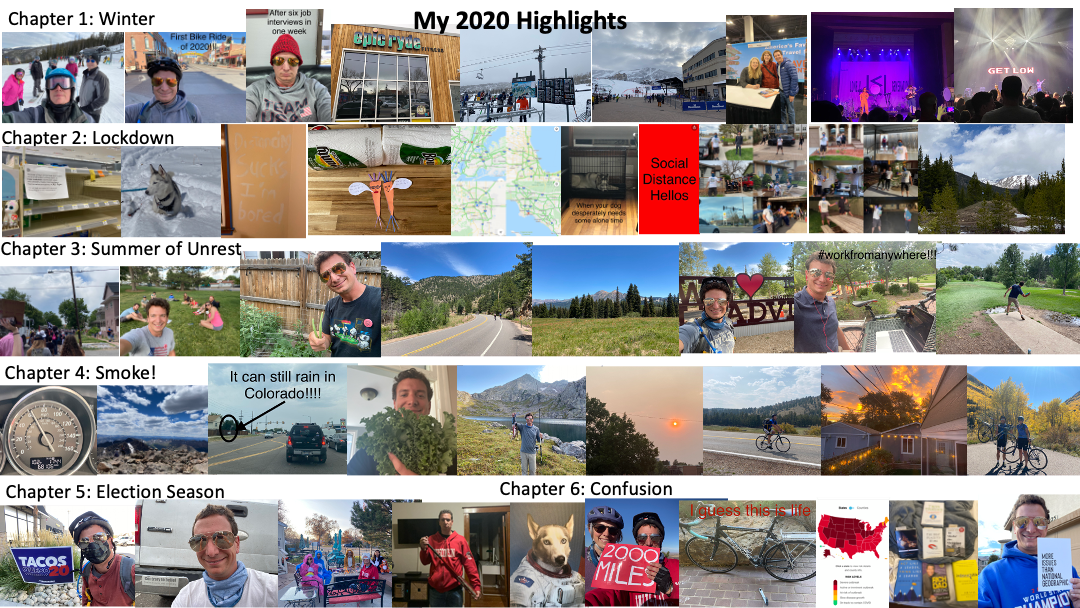
My highlights from 2020

2020 was a tough year to have a lot of travel experiences to write about. Like many, I spent a good part of the year trying to find the right balance between my social responsibility to avoid any potential spreading of the virus and my mental health needs. Spending too much time at home can be distressing for almost anyone. For me, an extrovert who loves to travel, it was especially rough.

For a variety of reasons, 2020 turned out to be an extremely annoying year. In 2019, as a decade came to an end, I took stock of our culture and current challenges. Three of our key societal issues would become an even bigger issue as a result of all the events of 2020.

  1. For the sake of our physical and mental health, it felt obvious that we needed to spend less time alone, indoors and seated. If anyone managed to spend less time alone, indoors and seated in 2020, well, I would seriously like to meet you!
  2. With the nastiness and divisiveness of our political culture, I seriously felt like we needed less politics in our lives, particularly identity politics (usually about race, age, gender and economic status). In 2019, I was proud to say to anyone that brought up the 2020 election that I had personally decided I would only think about the 2020 election in the year 2020.
  3. It seemed obvious that our culture was too risk averse. In 2019 I told people that if there is a scale from 0 to 100, with 0 being taking no risks on anything and 100 being constantly taking over the top risks like the main character in Uncut Gems, the ideal state is 50. Our culture seems to default us to somewhere like 25 or 30.

2020 would force us not to gather in large groups.

Cheesman Park in April 2020

Close many of the establishment where we would gather.

The main Inn in Redcliff, CO in May 2020

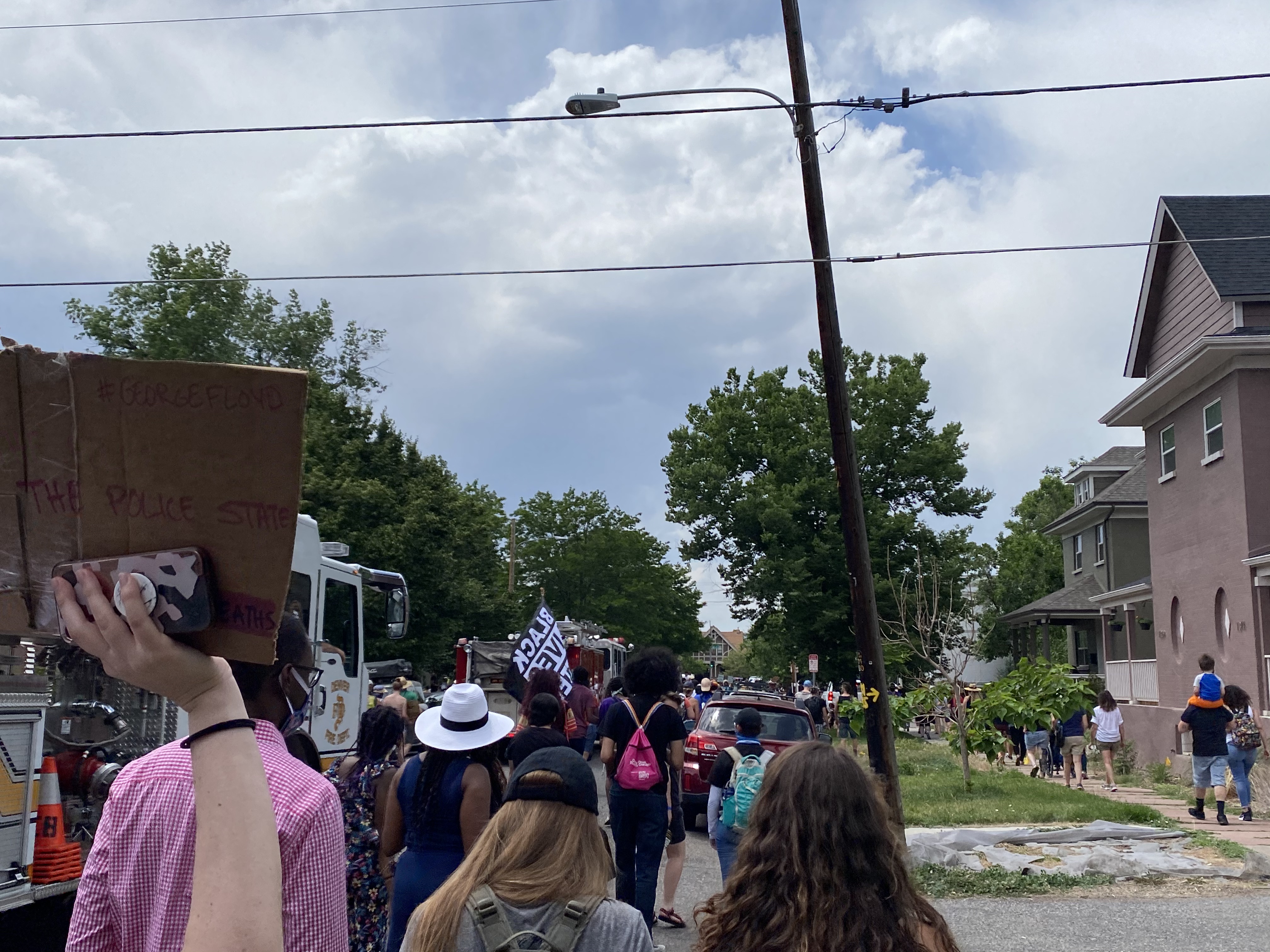
Force us to often stay home alone looking at social media, and place a greater emphasis on both identity politics and avoiding risk.

A June protest in Denver, CO

I struggled not to fall into dispair.

I went through four of these between March and June

I got myself through by imagining how we will come out of this better.

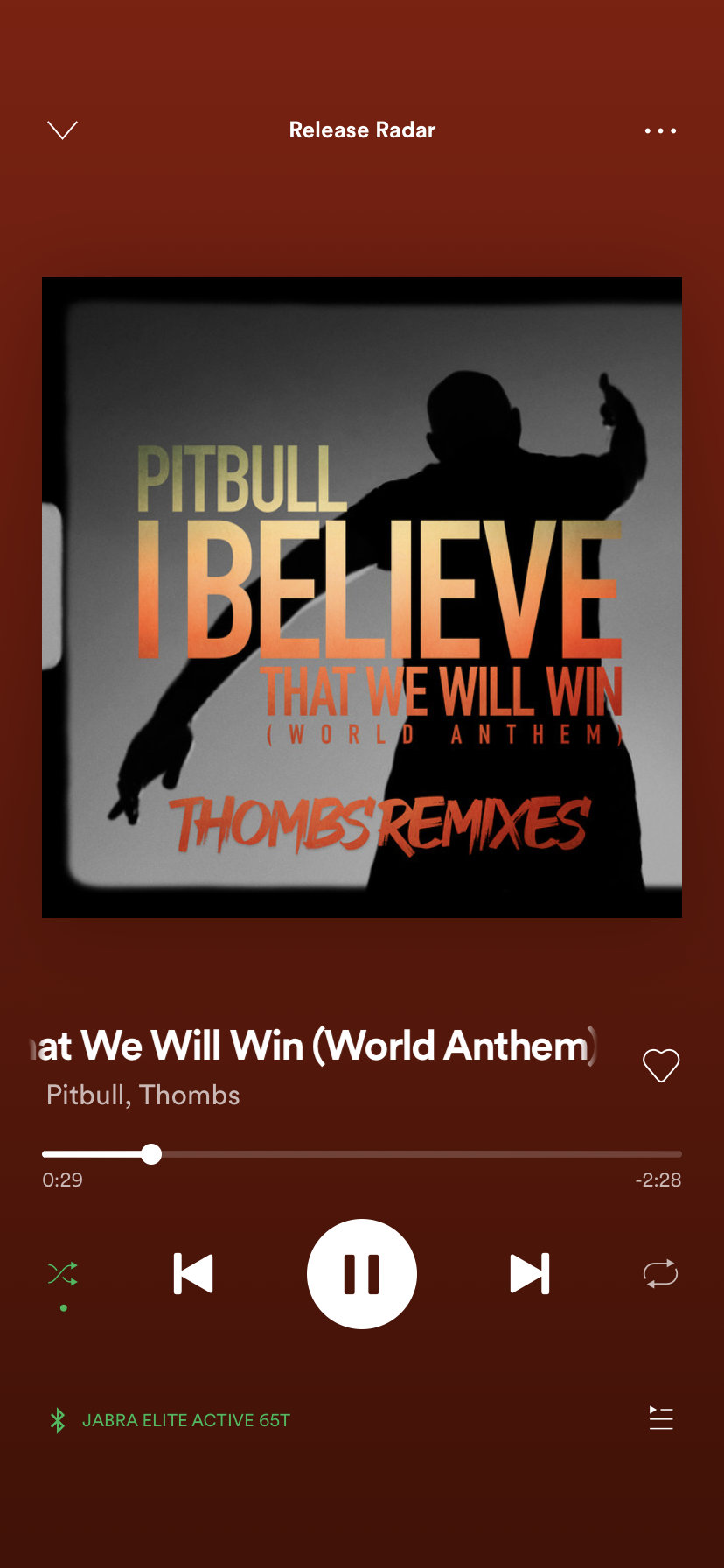
I took a lot of screen shots of my songs on Spotify this year

I started to imagine a future world where work is less oppressive. One morning in September I woke up with all kinds of ideas in my head.

I imagined a world where we rediscovered the importance of friendships and community. I imagined that, with concerns about health, and our loved ones, we would prioritize the things that really matter. No longer would anyone be asked to come into work when feeling sick.

With a lot of stuff cancelled or shut down, and large groups discouraged, I embraced more 1-on-1 meetups with people, cultivating better relationships. Slowing down also allowed me to connect to a more spiritual side, through things like meditation. This all culminated with the spiritual experience I had on an August backpacking trip.
Since then, I have never felt more clear about who I am and my purpose in life.

I am also ending the year with a better job, better financial position and I actually managed to lose weight during the pandemic. Perhaps there really is something to cooking rather than eating out.

Still, I certainly could have done better with all the spare time I had this year. Looking back on 2020, there were three things that occupied too much of my time, preventing me from making even more progress.

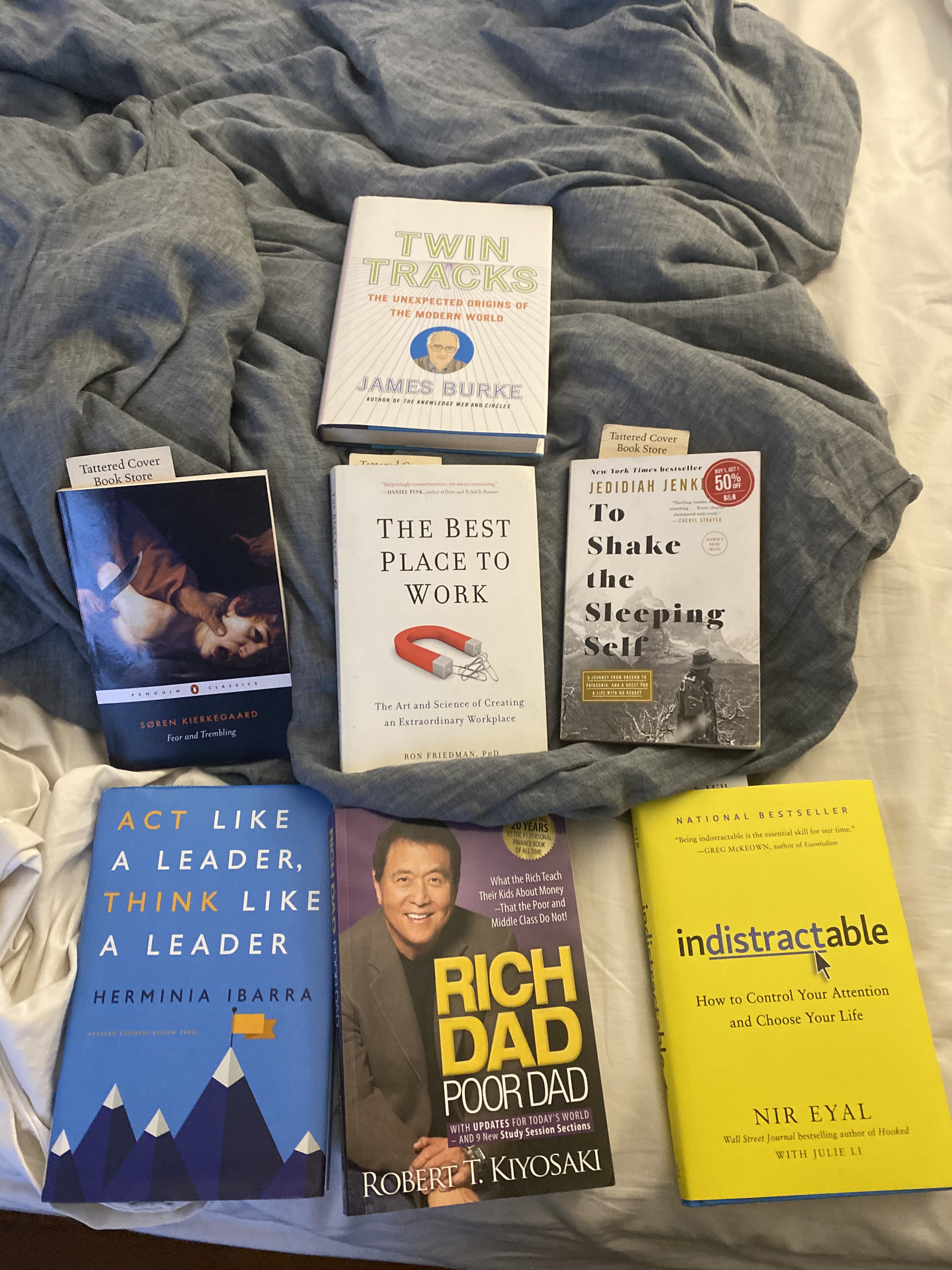
  1. Drinking while watching television: Drinking can be a great social activity, but drinking in front of the television is not the greatest use of time. While stuck at home, it is far more productive to read. I could have finished all these books!

2. Scrolling on my phone: My screen time was up again, some weeks I averaged close to three hours per day

3. Overthinking: Sometimes you have to just make decisions and stop worrying about all the factors and what could potentially be better.

In 2021, we will be ready to move on, hopefully not back to the world as it was prior to the pandemic, but to something new, something that produces a happier overall human experience. When the vaccines get distributed and we re-engage in many of the activities we previously took part in, like travel, concerts and nights out at the bar, hopefully we take the lessons learned from all this, particularly about health, community and priorities into our new lives. I am under no impression that 2021 is going to be easy. On the contrary, through this and my many other endeavors, I plan to work hard in 2021 to ensure I at least have an input into what our world will look like moving forward.

Thanksgiving 2020

I’m tired.

I’m tired of this pandemic. I’m tired of not being able to do many of the things I love doing. I can’t be social and go to many of the places and events I love going to. It hurts to consistently walk away from the people I see in the streets. I miss the small amount of joy I get trading smiles with a stranger.

I’m tired of not being able to travel and experience the world.

I’m tired of spending time alone, but I am also tired of always doing everything over video chat. It’s not the same as being face to face in front of people. I’m just tired of being alone in front of a screen.

I’m tired of everyone, near and far, whose actions made it so this virus would spread and continues to threaten us. But, I am also beyond tired of hearing people complain about people who are not following mask and social distance recommendations.

I’m tired of the expectation that all things begin with a search on a computer or smart phone screen. Want to learn how to do something? In 2020, it always starts with a Google (or DuckDuckGo if you’re privacy inclined) search, not asking a friend or neighbor what they know.

I’m tired of loneliness. I am tired of lack of community.

I’m tired of this extremely divisive political culture and the fact that discussions that do not initially or inherently have to do with politics turn into political discussions.

I’m tired of big data. I’m tired of work environments that treat human beings as resources and encourage us to behave more like machines.

I’m tired of discussions about anything to do with the home. I’m especially tired of the jokes and memes about things like vacationing to the basement, attic or kitchen. All it does is remind me of the 748,291 places I wish I were traveling to.

I’m tired of hearing the same cultural topics discussed, in the same way, from the same point of view. I’m even more tired of those who cannot appreciate that some people are focused on different problems or coming at our current ones from a different perspective.

I’m tired of who I feel like I have become over the past several months. I’m just…well…tired.

Yet, no matter how annoyed I get, I need to understand that most of the things I am tired of are just coping mechanisms. These are some unprecedented times.

Different people have different methods of dealing with things. Some like to try to be optimistic. Some like to try to make changes. Some like to shift their focus to something else. Some need to vent. Others turn to humor. Some still try to use it as an opportunity to get things done, grow personally or take part in other activities they enjoy.

As much as many people’s coping mechanisms have been getting on my nerves, I am sure plenty of people are tired of my coping mechanisms. I’m sure people are sick of hearing me talk about self-improvement, or my speculation about a better future age, where our work culture, institutions and cultural expectations have sufficiently updated themselves to create a happier existence.

This article was written shortly after the pandemic hit and is likely still true today. It is an aspect of our culture that has been especially slow to change.

Thanksgiving is an underrated and important holiday because it is all about gratitude. Like the first half of this blog, many of us spend far too much time focusing on what is wrong, what we don’t have, and what we don’t like about our situation and surroundings. However, many people have found that keeping a gratitude journal or regularly expressing gratitude has improved their lives and their outlook.

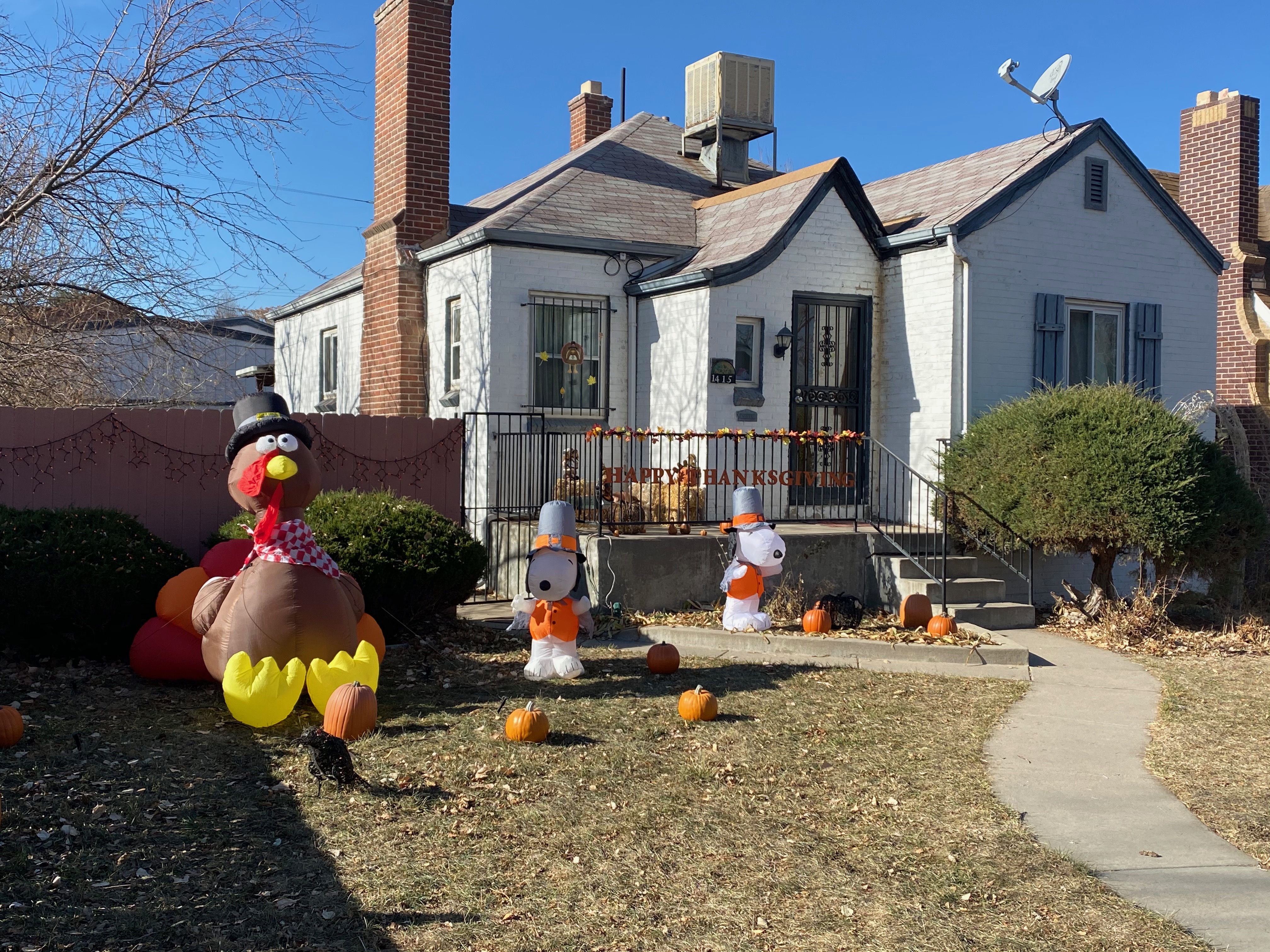
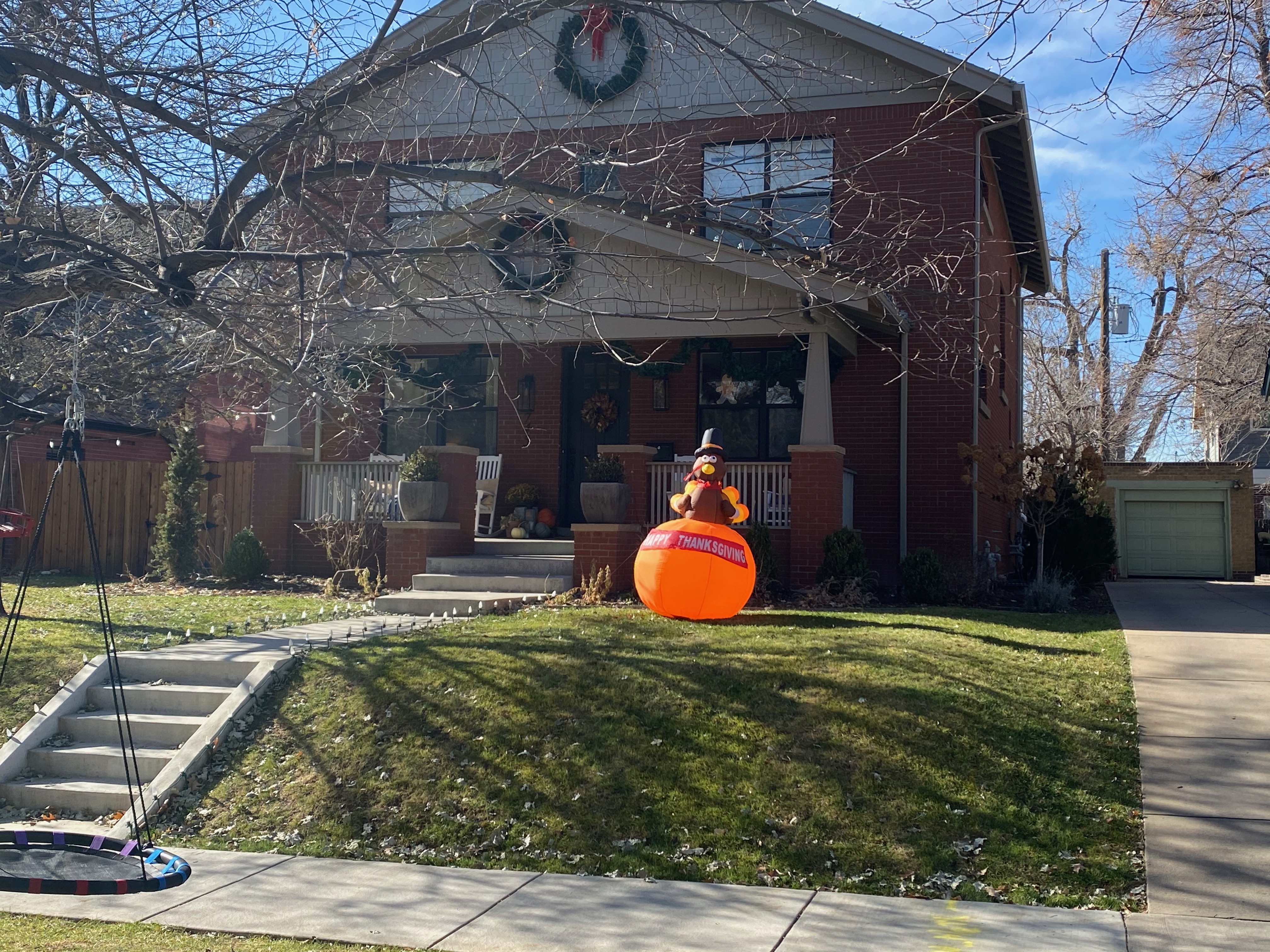
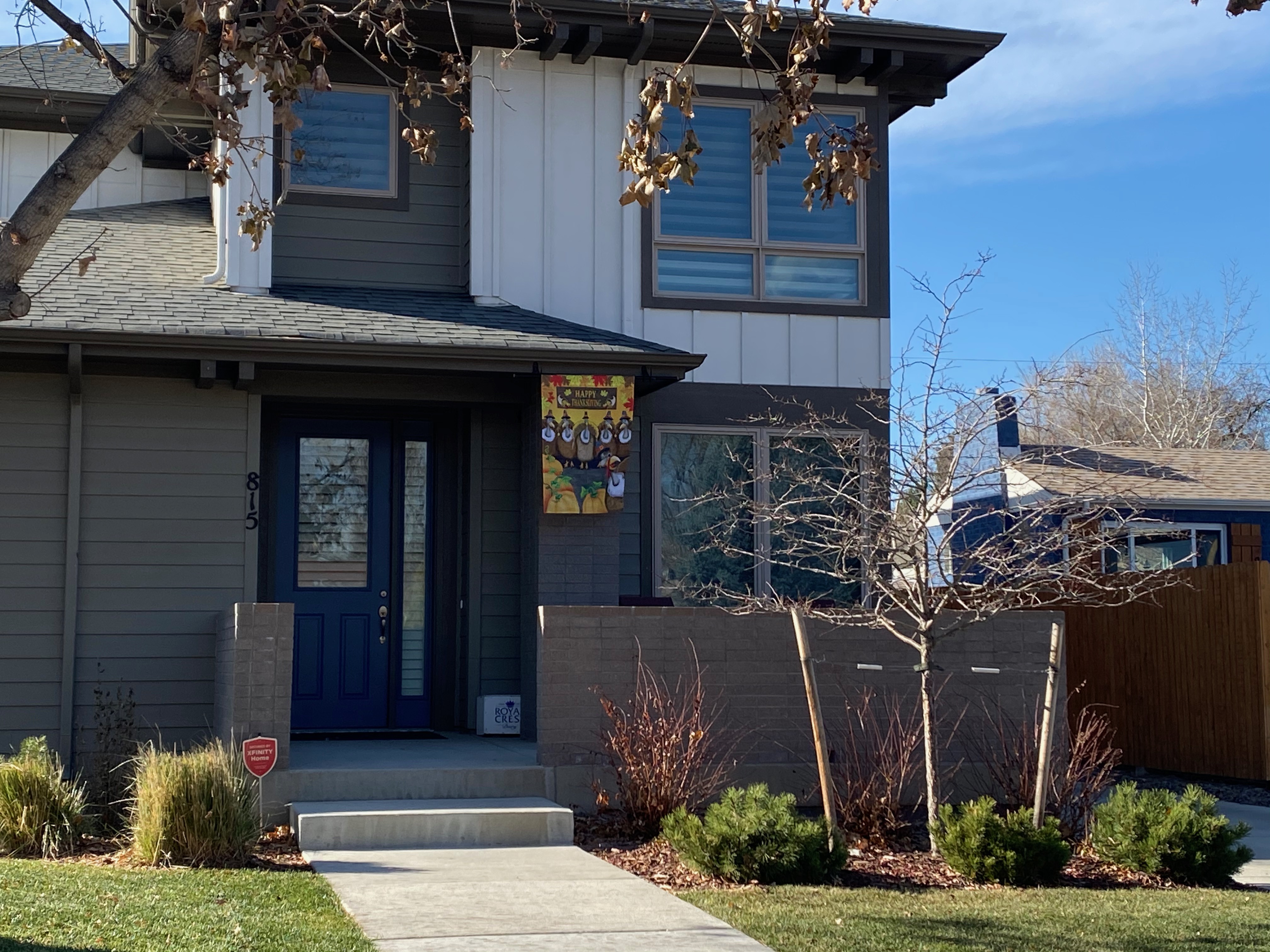
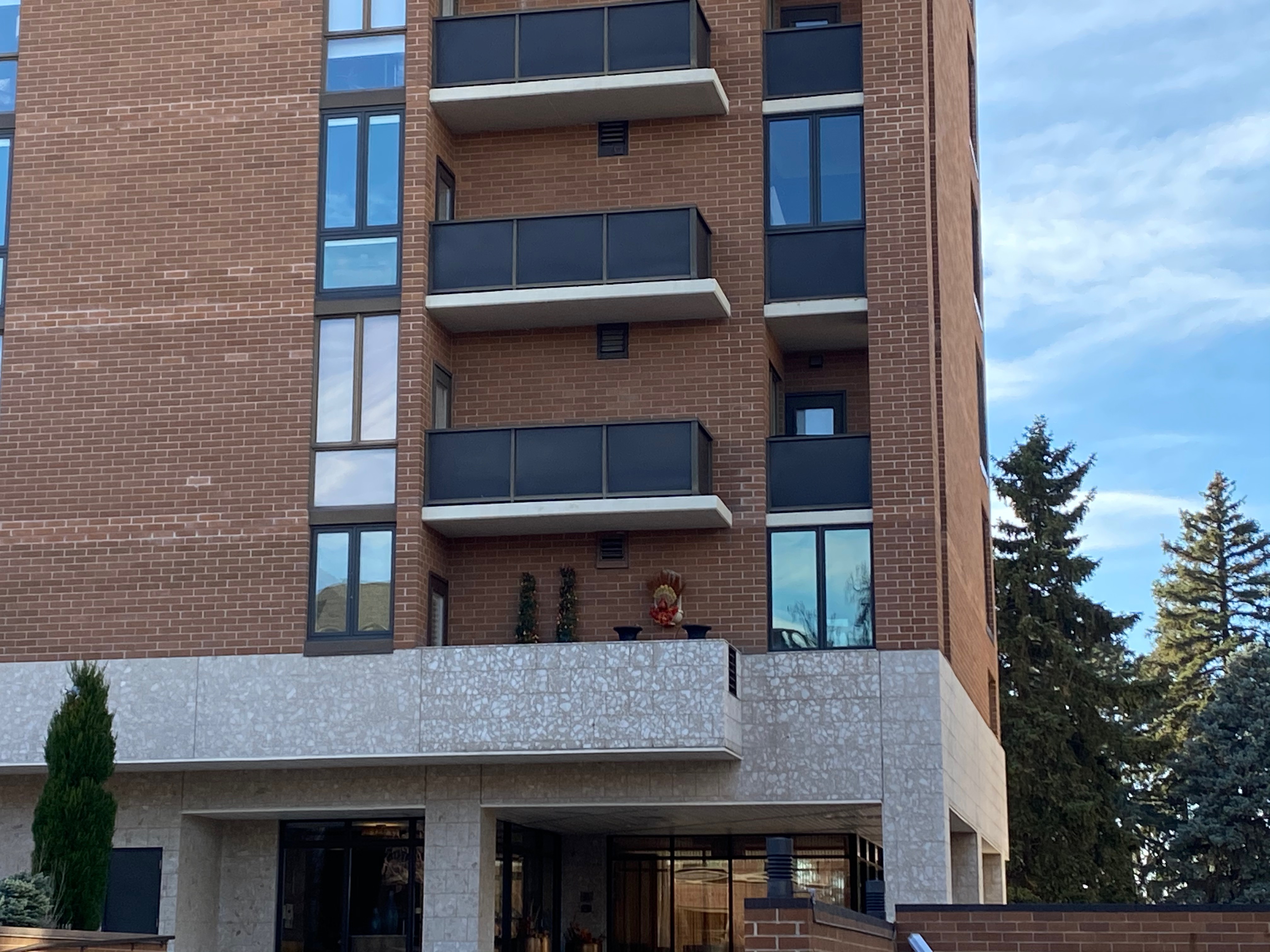
On Monday, I rode my bike around town looking for Thanksgiving decorations. At the first house I stopped at, the owner happened to be in her car. She saw me stop and take a photo of the decorations and offered to turn them on for me.

We talked for a little while about the importance of gratitude and I expressed gratitude for simply being in good enough shape to ride my bicycle. Having experienced debilitating shoulder injuries, she told me to appreciate that. Already I was on a happier vibe.

This Thanksgiving, 2020, it is time to reset our minds, as I am sure we are all annoyed with something. Let it go. First, I plan to forgive myself. I forgive myself for all the ways I have fallen short this year. I let go of the opportunities missed and the progress I feel like I am making far too slowly.

It’s also time to let go of the frustrations I am feeling towards some of the people in my life. At this moment in time, people just need a break. It’s easy to get our minds focused on petty annoyances, especially in times like these. Hopefully this year Thanksgiving reminds us of the good things about where we are in life, the good things about ourselves and the ways in which the people around us enrich our lives.