Category Archives: North America

The Denver Travel and Adventure Show

IMG_8957

It says something about our culture, in its current state, that we now have a series of exhibitions like this, throughout the country, dedicated to travel.  After all, it was only about a century ago that the idea of going on vacation, let alone regular travel as a way of life, became an option for those that would be considered “middle class”.  Now, we have a Travelers Century Club, with multiple chapters around the world, for people who have visited over 100 countries, and wanderlusters encouraging others to make travel a way of life.

Due to a variety of factors, I am in the midst of what I am referring to as a “low energy month”.  I am guessing this is more common than I realize.  I really cannot remember the last time I had one.  It’s likely that I needed a calmer, quieter period, although, I cannot say I welcomed it.  What I ended up with was a feeling eerily similar to how I would feel toward the later part of most winters when I lived in the Midwest.  I got kind of stir crazy (still am at the time of writing this).

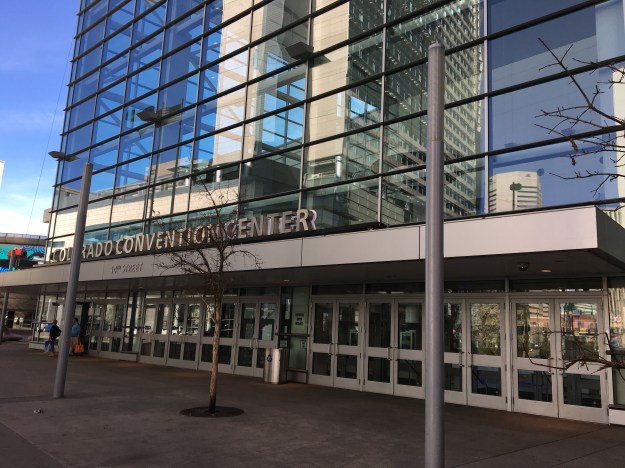
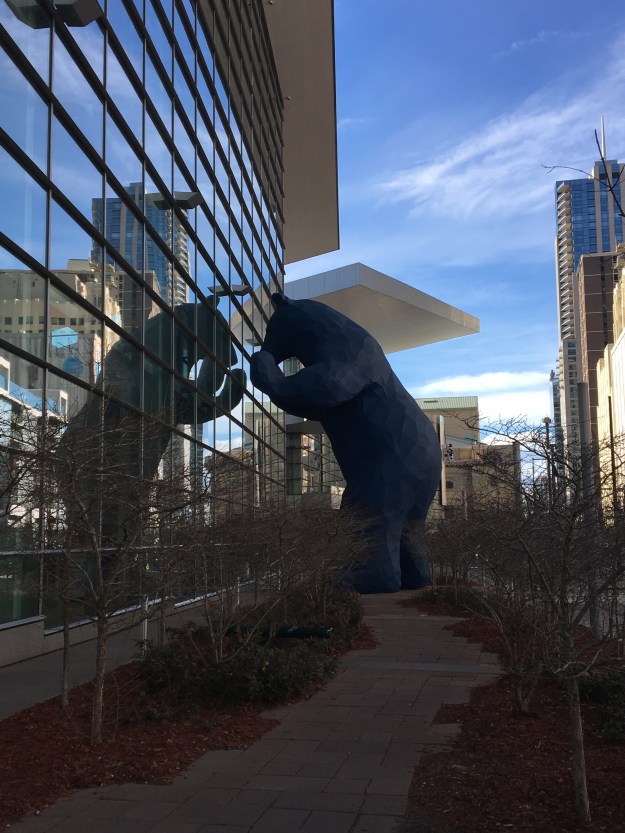
The Travel and Adventure Show represents a whole new way for people to feed their stir-craziness.  This year, the Travel and Adventure Show came to Denver for the first time ever, at the Colorado Convention Center downtown .  The Colorado Convention Center features the Big Blue Bear sculpture, one of Denver’s architectural attractions.  I love it!  So creative.  So unique.  Whoever designed this was not thinking along conventional lines!
IMG_8958

At first glance, the idea of attending this show could seem absurd.  Pay $12 (or $20 to go both days) to have people advertise to me?  It reminded me of those catalogs people would get in the mail.  They would be thick, at least 150 pages, of nothing but ads.  And people would actually pay to have them delivered?  I never wrapped my mind around that (and now I don’t have to).  I’m used to getting something like free entertainment (TV), or free information (web content) in exchange for being subjected to advertisements.

But, the Travel and Adventure Show is actually about more than just the exhibits.  The show had a series of presentations, from various people in the travel industry, with topics ranging from advice about journeys to specific destinations, travel tips, food, and so much more.

IMG_8951

Maybe this is more about who I am and what I care about, but the talk I got the most out of was definitely The Travel Channel’s Samantha Brown.  Her presentation focused on why we travel, how to get the most out of travel, and why experiencing other places and cultures is beneficial to us.

What I really liked about her presentation is that she presented clear and positive cases for what she believes are the best practices while traveling.  From personal experiences, she described why she does certain things on trips, including visiting some of the less publicized destinations, interacting with the locals, going on walks without maps, and being open to life-changing experiences.  However, she avoided doing so in a manner that demeans those who do things differently.

People often make the distinction between travelers and tourists.  I find it to be you classic “my way is better than their way, and now I feel better about myself” type of distinction.  People who describe themselves as “travelers” depict tourists as those who visit common destinations, play it safe, overpack, over-plan, and do nearly everything else that annoys locals.  Samantha flat out dismissed this distinction, encouraging people, well, just to travel.

IMG_8952

I also did not feel pressured by any of the exhibitors, which was the very thing I was afraid of.  I largely haven’t figured out what places I will visit in 2017, which makes me both nervous and excited at the same time.  I went around from booth to booth, talking to a good number of the exhibitors.  Whenever I did not think of anything specific to say to anyone, I would simply tell the exhibitors “I’m wanderlusting”.  At the time I thought it was an easy way to say that I was just browsing, but later realized that this sentence could have given people more reason to be pushy.  But, it did not happen.  I felt less like I was being advertised to, and more like I was just meeting people and hearing about places.

This distribution of exhibits were about a third from places within a day’s drive of Denver.  This included Colorado hot-spots such as Breckenridge, as well as some places a bit farther, including Utah and Montana.  The Great Plains actually had a significant presence.  Another third came from more distant international destinations.  Every region of the world was represented.  I particularly noticed a signifiant presence from Nepal, Australia, and Denver International Airport’s newest direct flight: Belize.  The remaining exhibits were a combination of people representing other parts of North America, such as Louisiana, and California, some travel related products, and even some interesting types of companies.

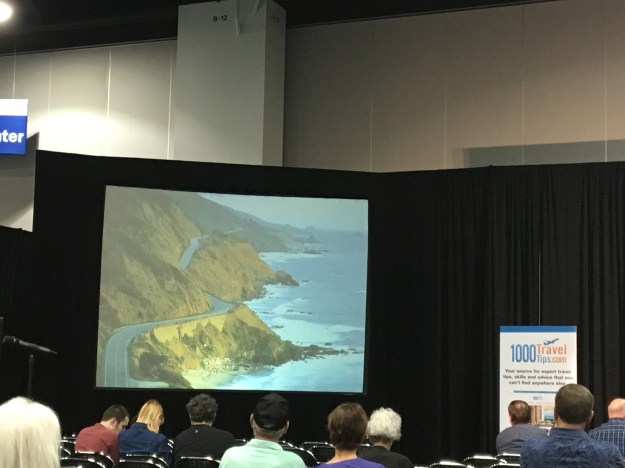
One was a company that offered active travel, which is the only place in the entire show I saw bike travel represented.  This exhibit, along with the 1000 Places to See Before You Die presentation reignited my desire to one day cycle the Pacific Coast Highway.  Unfortunately, this will not be possible in 2017 due to the California Floods.
IMG_8956

The main surprise, I would say, are the number of exhibits that were actually staffed by some sort of combination of a county or regional tourism board and one or several private tourism company.  I did not expect this.  I actually wondered if there were some tourism companies, not part of the exhibit, that would be upset by seeing their county’s tourism office team up with a rival company at an exhibition.

In the end, I would say my only disappointments were not seeing a big presence from some places I find interesting (Norway, etc.), and not seeing too much about bike travel (just the one exhibit).  I was lucky in that this show ended up feeling nothing like those gigantic catalog books I never understood, and that nobody pushed me to sign up for anything.  It ended up being just a place to explore, and, well, feed my “wanderlust”.  I thought back to those winters in the Midwest, when I would go online and start looking at trail maps, start talking to people about Springtime adventures, and thought to myself: Did I just help myself get through this stir-crazy period, or did I just make it worse?


Winter’s MidPoint (in the Central Rockies)

img_8525

Although we talk quite frequently about “seasons”, the concept of a season is actually far more abstract in nature than the manner in which it is typically discussed.  Consider this: while the most frequent discussions of seasons refers to a portion of the calendar year, a “season” can also mean a series of sporting events, TV shows, or plays, or even a chapter in someone’s life.  I’ve personally been involved in “seasons” that have lasted as short as three weeks, as well as “seasons” that persisted longer than a decade!

Even when referencing a “season” in its most common manner, to reference a portion a year, there is significant variance in how it manifests.  For a lot of people “seasons” means winter, spring, summer, and fall.  However, there are parts of the world where the year is far more accurately broken out into a wet season and a dry season.  Others even create seasonal references based on specific considerations, such as “mud season” or “typhoon season”.  In a way, every group of people has developed their own way to reference seasons, based on their lifestyle, location, and interests.

IMG_8504.jpg

While some groups of people have defined specific dates for the start and end of each season, for most, a season is more of a feeling.  There are plenty of years, where, on a day like March 25th, someone in Minnesota may feel as if it is still winter for them while someone in South Carolina may feel firmly into the Spring season.  Likewise, year to year variance has made November in Colorado feel like winter in some years, but feel like early autumn in others.

For winter as a season, just like a season for a sports team, or a chapter in one’s life, it matters less when the technical mid-point is defined.  It is more significant to reference a middle section, or a “hey-day”.  This is the period of time after most people have fully adjusted to the season, but before the end is in sight.

img_8529

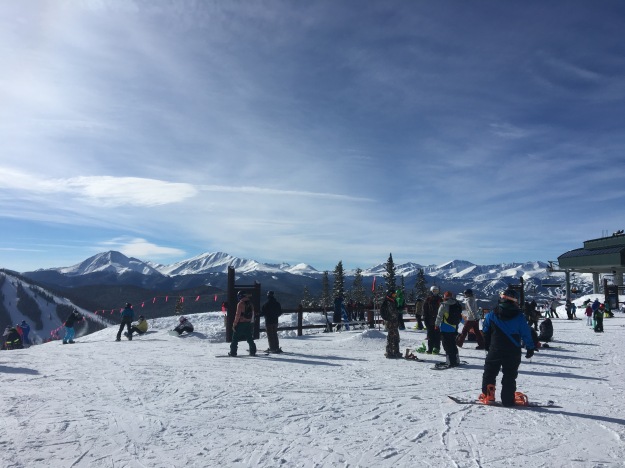
In the Central Rockies, this is the time after most skiers and boarders have worked out their early season jitters, (and the resorts have gotten pretty much all of their trails open, which usually takes until January) but before spring becomes eminent.

img_8503

It is at this point in the season, where, I believe, skiing actually becomes more fun!  First of all, snow conditions get better.

IMG_8499.jpg

As winter progresses, the snow pack gets deeper and more consistent.  It becomes far less likely to find bare spots, which often form in the areas where skiers and boarders make turns around trees, or in open areas where wind can blow a lot of snow around.

IMG_2923.jpg

Also, as winter progresses, temperatures begin to warm (making it more pleasant), and the sun stays out a bit longer.  There are plenty of places in the Central Rockies, like Vail, where, according to local CO-OP data, December is actually the coldest month of the year.

IMG_8327.jpg

With mountains blocking the afternoon sun, in December, many of the ski trails become completely shaded sometime around 2:30 P.M.  By the final weekend in January, the sunset is about 45 minutes later, and the sun angle is higher, adding roughly an additional hour before the trails become completely shaded.

This is the start of the best of the best, the best time to ski at some of the best ski resorts in the world.  The trails are all open, the sun is shining upon us, skiers and boarders are doing their best skiing and riding of their lives, and towns are celebrating with additional winter fun.

When a “season” is a positive one, like a fun ski season, a good music or sports career, or even a very positive experience at a University or a job, there really is nothing like that period of time in the middle.  Everything starts to feel right.  We begin to move about our days and activities with a greater efficiency, and, in some cases make a lot of progress in a short period of time.  Memories are being created, and, in most cases, we are making gains in the all important battle for our own individuality and/or sense of self worth.  We’re at our best!

IMG_8540.jpg

But, alas it cannot last forever.  The happiest and the saddest, the most reassuring yet the most unnerving thing about the world is the fact that all things have a beginning and an ending.  Even the greatest of experiences must come to an end, as, well, continuing to do the same thing will eventually lead to stagnation, and a creeping feeling of dissatisfaction.  The only thing we can do in periods like this is be greatful that the “season” we are currently in is an enjoyable and/or rewarding one, and do our best to make the next one positive as well.

Buried in Crested Butte

IMG_8353.jpg

There is such thing as too much of a good thing; too much food, too much exercise, even too much water!  While stories about people dying of water poisoning do exist, most people will experience dehydration, or too little water, many times throughout their lifetime.  Few people experience hyponatremia, or water poisoning.  So, health advocates rightly focus on advising the population to drink enough water.

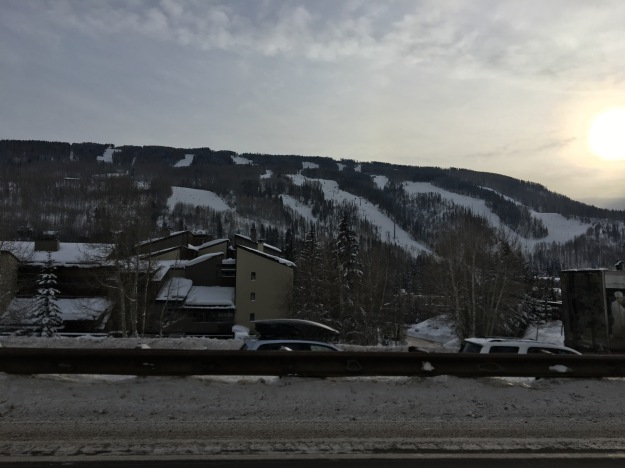
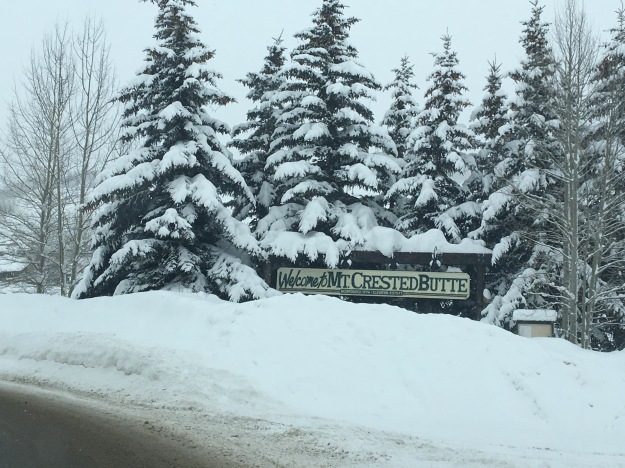
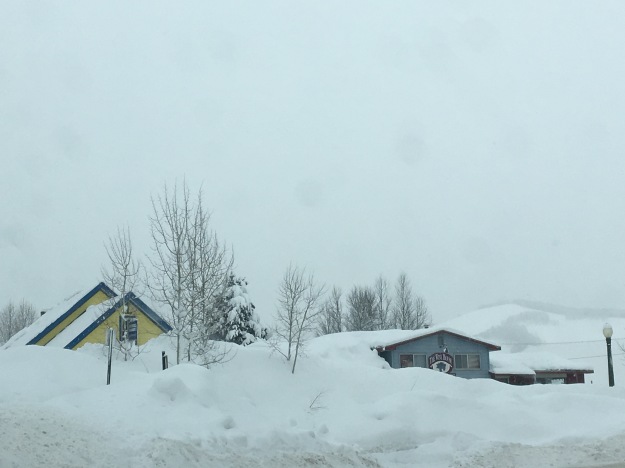
The same can be said of snowfall in towns like Crested Butte, Colorado.  Like many ski towns, Crested Butte’s livelihood is at least partially dependent on receiving ample snowfall to produce good ski conditions.  So, it is rare to actually hear people in a town like this say that the wish for the snow to stop.   But, that is exactly what happened, after the town received close to 100 inches of snow (half their annual total) in a ten day period.  In fact, at one point, the ski resort actually had to close due to too much snow!  In a way, this is like the ski resort version of water poisoning.

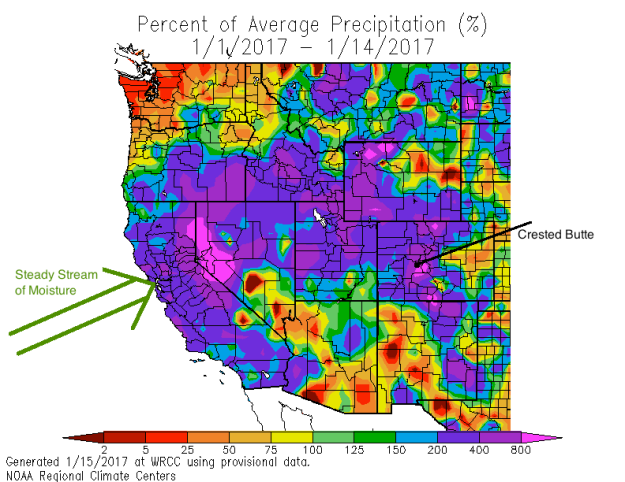
After a couple of quiet days, 2017 has begun on a crazy note for the Western United States.  A steady stream of storms, transporting moisture from the Tropical Pacific Ocean directly into the California Coast, transformed a drought stricken state into a deluge of floods and swollen rivers in only a few days!

These storms followed similar tracks eastwards, producing heavy precipitation in parts of Colorado, Idaho, Utah, and Wyoming.  For the first two weeks of 2017, Crested Butte received close to eight times their normal precipitation amount!

jan1_14_2017_precip

By Friday the 13th, the snow had slowed down, but hadn’t stopped.


Over Martin Luther King Day weekend, each day the weather followed a similar pattern.  Light snow would fall overnight, providing a few inches of new snow, and would linger into the morning.

IMG_8361.jpg

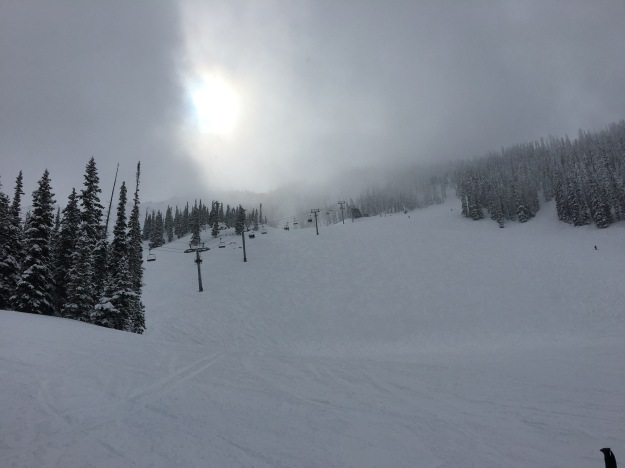
This would be followed by somewhat of a fuzzy period, where the sun appeared to be trying to come out, but fighting some kind of battle against low clouds which would reduce visibility on some parts of the mountain.

IMG_8365.jpg

This is a battle that the sun would eventually win after an hour or two of these in between conditions.

IMG_8374.jpg


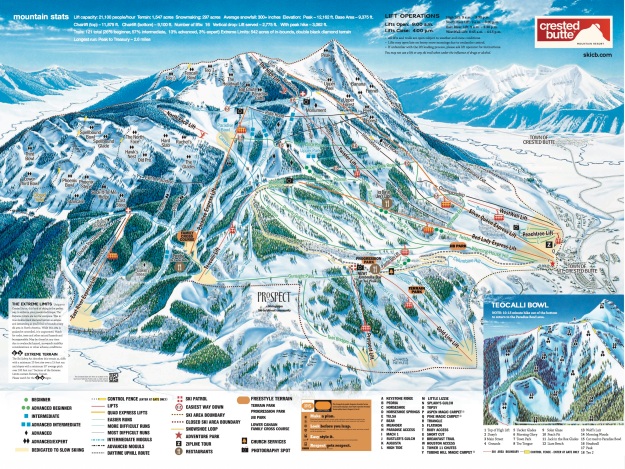
Crested Butte provides an interesting ski experience.  By size, it is significantly smaller than places like Snowmass, Steamboat, and Copper Mountain.

Crested_Butte_Map.jpg
However, all different types of skiing can be found here, from groomers (although, with limited visibility for much of the day, conditions were not quite optimal for those true speed demons out there) to glades and bumps of all different kinds, sizes and steepness.

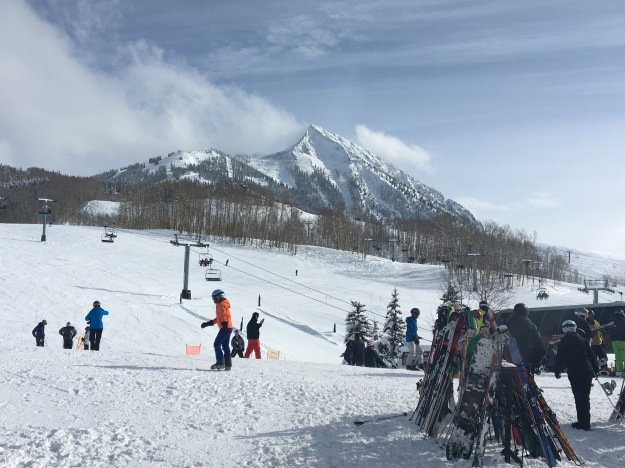
For advanced skiers and boarders, Mount Crested Butte is a must do!  It is possible to hike all the way to the top of Crested Butte’s signature mountain.  However, the Silver Queen Express lift provides access to all but the uppermost 287 feet of this peak.

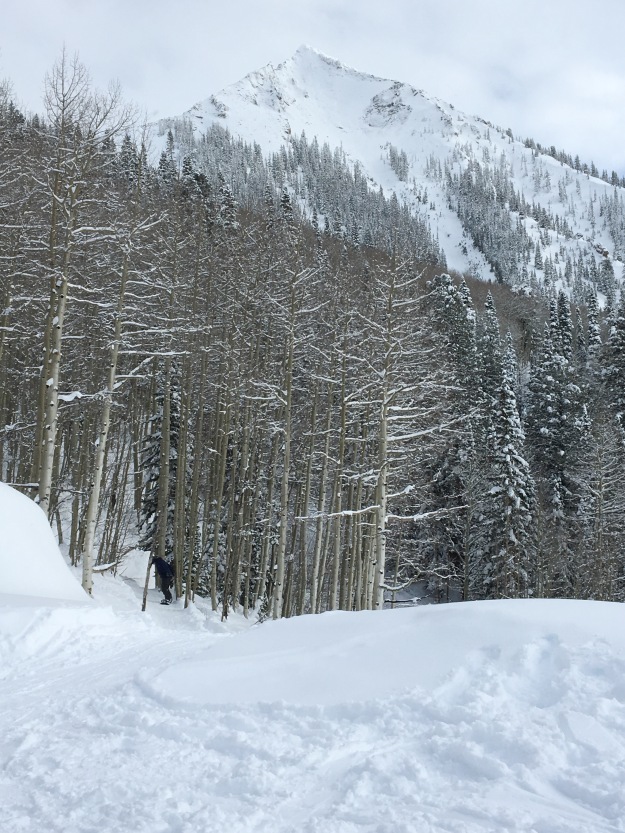
The journey down the mountain starts out wide open, but eventually winds through a series of challenging glade (dense tree) areas, both pine and aspen.

IMG_8407.jpg

Gazing back at the mountain, I felt as if I had just skied down something from one of those extreme sports videos that is often shown in loops at ski shops promoting the Go Pro camera, or at some film event.

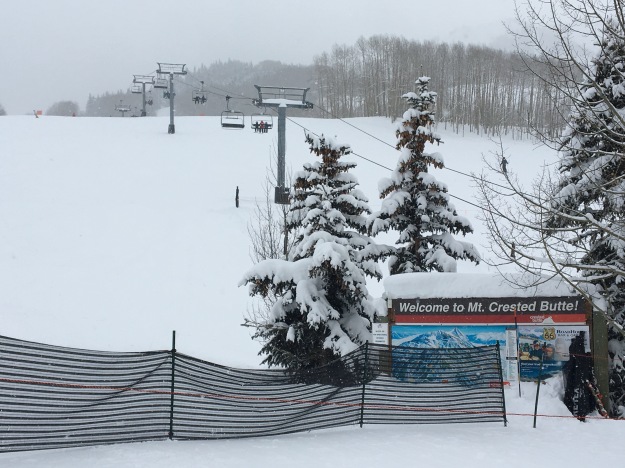
Crested Butte markets itself as having small crowds and short lift lines.  This was definitely true on Friday.  However, Saturday, the crowds began to build, and lift lines, uncharacteristic of Crested Butte, built fast.  At one point we ended up waiting 25 minutes in a lift line.
IMG_8396.jpg
The combination of the extreme snowfall at this particular mountain, and the holiday weekend (MLK Day) likely drew an unprecedented number of visitors to the resort.  Smaller, out of the way mountains like this one probably typically do have short lift lines.  But, with less capacity than some of the bigger resorts, increases in traffic on exceptional weekends like this one can increase wait times at lifts quicker.
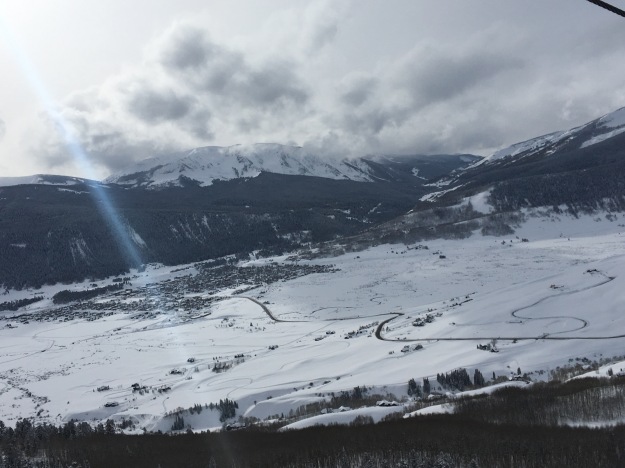
Geographically, Crested Butte has a different setup that many other ski areas.
img_8382

Unlike places like Breckenridge and Park City, where the town is directly adjacent to the ski resort, the main area of town is actually roughly six miles from the resort.

img_8433

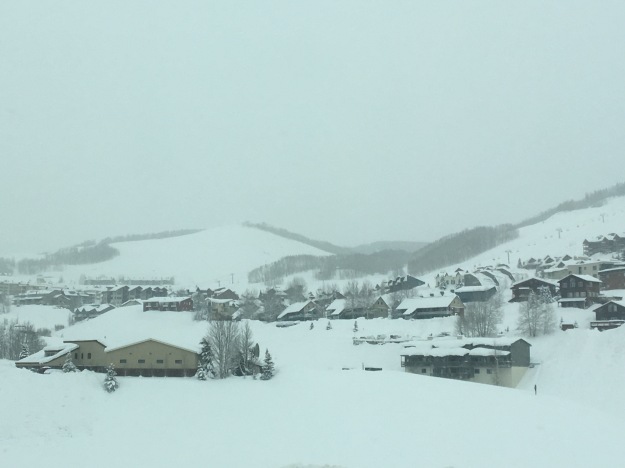
The settlement adjacent to the ski resort, which consists primarily of lodging, is referred to as Mount Crested Butte.

img_8350


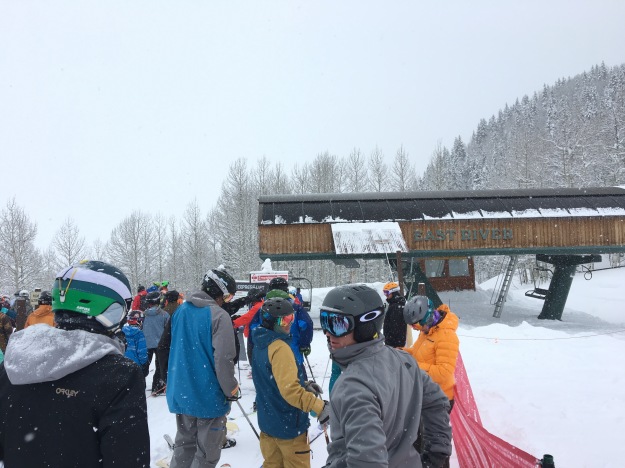
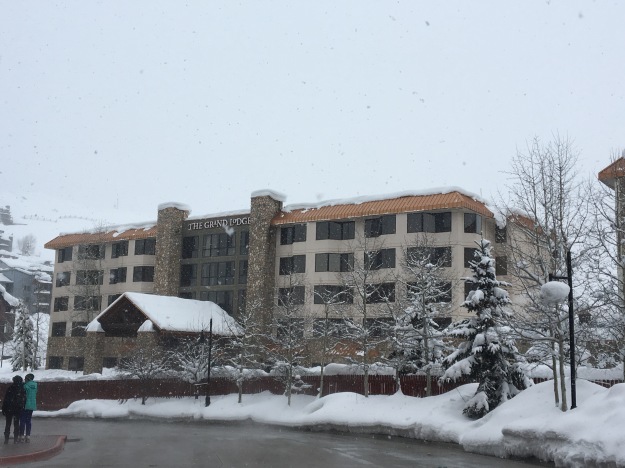
This setup works out a lot better than one would expect.  We stayed at the Grand Lodge, which is nearly adjacent to the base area lifts.

IMG_8401.jpg

The Lodge offers spacious rooms that contain amenities like refrigerators, microwaves, a hot tub and a spa.  There is a restaurant on the main floor of the hotel and several other eating options at the base of the mountain, which is only a two minute walk away.  Those who prefer to relax in the evenings can stay nearby.

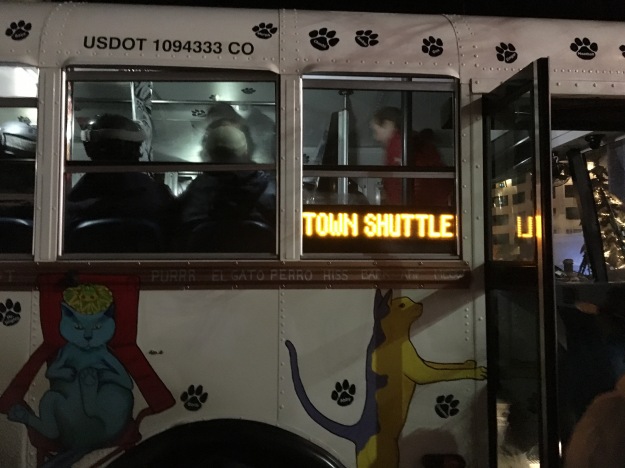
For those that want evening activities, there is a free shuttle from the base of the ski mountain into town, where there is plenty going on.

IMG_8412.jpg

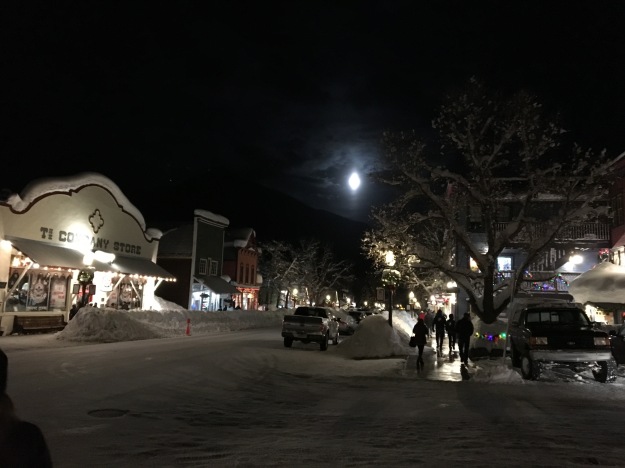
Walking along Elk Avenue, the main road in town, plenty of people can be found, going to bars, restaurants, shops, events and festivals.  Based on all of the posters, window decals, pamphlets and signs everywhere, there seems to always be some kind of event going on in town.

img_8390

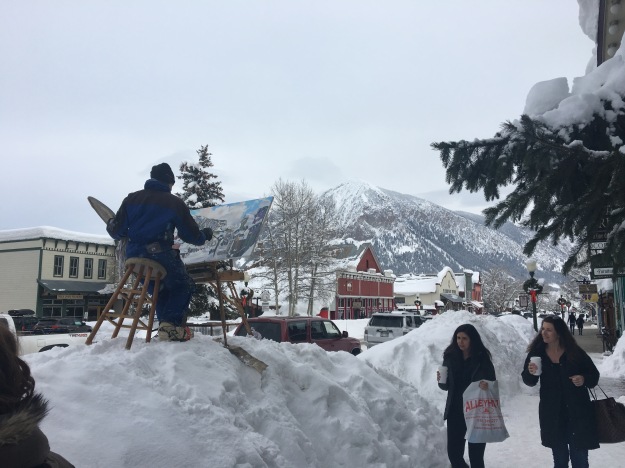
Crested Butte can also be described as “artsy”.  Saturday evening’s artwork was highly recommended by local residents.  In the vicinity of 3rd and Elk, it felt as if every third or fourth building was some kind of an art gallery partaking in the artwalk.  In fact, the large amount of snow piled between the sidewalk and the road provided one artist with the opportunity to gaze upon the town, and paint it, from a slightly different perspective.

img_8434


Crested Butte was at both its best and worst this weekend.  The snow conditions were amazing, and temperatures were actually quite comfortable the entire time.  However, the capacity, both with regards to the ski lifts, and for the town to remove snow from streets, buildings, and cars, was overloaded.

img_8347

Still, people went about their business, created and sold their artwork, partied in the hot tubs and at the bars, and kept a smile on their faces.  After this weekend, an accurate description of what a “normal” weekend in Crested Butte is like cannot be provided.   But, we don’t travel looking for “normal”.  We travel for an experience.  One that is different from what our day to day lives are.  This holiday weekend in Crested Butte was definitely a unique experience, due to the place that we visited as well as the exceptional conditions.


An All-Inclusive Week At Cancun’s El Dorado Royal

img_8072

Day 1: Every time I land in another country, something feels different.  I had this feeling when I first landed at the airport in Cancun, despite the fact that much of my surroundings were remarkably similar to what I experience at home.  As is the case at many U.S. airports, the airport signs are written in both English and Spanish, with the English words on top.  Even the mix of people didn’t feel too terribly different from many places around Colorado where I live. It was the little differences I observed; some different looking buildings, speed limits in kilometers per hour, and the driver of the van that took us to the resort from the airport trying to sell us Coronas (or Mexican water, as he said) that made me feel as if I had actually traveled to a place that is different than the place where I live and the places where I spend most of my time.

We arrived at the resort in the middle of the afternoon.  A resort this size takes a little bit of time to become acquainted with, as it has multiple sections, with different types of travelers having different types of experiences, a whole bunch of pools, and a ton of restaurants.  One of the great things about being at an all inclusive resort is the fact that, once guests arrive at the resort, everything, particularly food and drink, is taken care of.  This is good because I arrived hungry.  It would be the last time I would really experience hunger for the duration of the week.

Day 2: Like most Americans, a majority of my travel involves an itinerary of some sorts.  This makes the transition from what is referred to as the “real world” to the world of that particular voyage seamless.  The normal day-to-day concerns, work, schedules, responsibilities, etc. are replaced by the schedule- the itinerary of the trip.  Today I have meetings at 9,10, and 11, and a document that needs to be finalized by the end of the day transitions smoothly to tonight we are staying at this hotel, they have a continental breakfast, than we’re gonna get to this attraction by 10:30-ish.

IMG_8083.jpg

On this vacation, there was no itinerary; at least not at first.  There was just enjoying the weather, enjoying the beach, the pool, the activities, and a week off of not just work but many other sources of stress, such as chores, social situations, etc.  This often leads to a gradual process of letting go.  Over the course of roughly 36 hours these concerns gradually slip out of the mind, to be replaced, miraculously, with nothing!  I bet there are some people that do not even know what that feels like anymore.

Day 3: I decided I wanted to go the full day without taking any pictures.  Now that the process of disconnecting from the “real world” was complete, it was a good time to live in the moment, and, not think about anything else, not even what I would write in this blog!  It was on this day that two of the things that typically happen during longer resort trips happened.

First, I actually started to settle into a quazi-routine. El Dorado Royale offers a lot of activities, activities I more or less took advantage of.  At 8 A.M., there was yoga on the pier.  9 A.M. Spanish lessons.  11:00 volleyball.  12:00 Aqua-aerobics.

Since guests do not need to cary around money, ID, and such at an all-inclusive resort, these resorts can offer amenities such as swim up bars.  We found ourselves, after the noon Aqua-aerobics, swimming up to the bar to have some drinks in the pool.  And since I was typically eating breakfast a bit later (10 A.M.), an hour or so of drinks would then be followed by lunch, and then the day’s afternoon activities, which varied a bit more day-to-day.

Day 3 was also when I began to make vacation friends; other tourists who had also managed to disconnect from their “real world” concerns, and had been drinking and enjoying themselves in the pool.

The resort has a lot of great restaurants, but their signature restaurant is one called Fuentes. This restaurant is a dinner show, with a famous chef that demonstrates how each course is cooked while serving the food.  The dinner and cooking demonstration lasted two and a half hours.  Each course featured food from a different region of Mexico.  It was not just a meal, but also lessons about both geography and cooking technique.

IMG_8114.jpg

Every evening at El Dorado Royale, there is a show.  It typically starts at around 9:45 and lasts about an hour.  This is followed by dancing.  I found the meal/cooking demonstration exhausting!  I ended up electing to skip the dancing, calling it a night earlier than I typically do.

Day 4: A strange thing started happening on the fourth day.  Each day, I got drunker than the last.  On this day, after noon Aqua-aerobics, I took multiple shots at the swim up bar, and then took part in tequila tasting.  Yet, my hangovers were not getting any worse.  In fact, they were getting easier.  It was like I was hitting some sort of groove, which also involved the consumption of alcohol.

Also, having taken advantage of the 9:00 Spanish lessons, and through some conversation with the resort’s staff, whose company I truly enjoyed this week, I was suddenly getting back into the groove speaking Spanish.  Those that do not know Spanish could easily get by at this resort, as nearly all of the staff speaks English.  But, the lessons ended up being a great opportunity to speak Spanish with some native speakers and recover some lost knowledge.  By the end of the 4th day, I was instinctively starting to blurt out phrases such as “querimos jugar al volleyball por la playa ayer, per due demaciado ventido”.

Day 5: This day began to feel like the apex of the trip.  By the middle of the day I had made a good number of vacation friends, I was given two different nicknames by the other guests at the resort; “Denver” after where I am from (as it is hard to remember a lot of names), and “Maya Riviera”, after a rainbow colored drink that the resort offers.  It is a very sweet beverage, but I still managed to drink a ton of them.  In fact, one of my favorite things to do was to bring this drink under this fountain in the center of the pool, and drink it feeling as if I could not be doing anything more tropical at that particular moment.

IMG_8127.jpg


I also got accustomed to some of the other specifics about taking this kind of worry free vacation.  One which tragically took too long for me to adjust to is the proper application of sun screen.  Unfortunately, I got quite burnt over the course of this trip.

The other is something I wish I could do more of in normal daily life.  In most situations, when eating at restaurants, it is most cost effective to order one item.  Without such concern, most meals involved multiple items of food.  Additionally, the portion sizes at El Dorado Royale are such that it is typically possible to eat 4 or 5 course meals.  The resort has two Italian restaurants.  Traditional Italian meals involve an antipasto (appetizer), a soup, a primo (first, which usually involves pasta or risotto), and a secondi (second, usually a pice of meat of some kind).  Here, there was absolutely no reason not to order one of each.

At the end of the evening, though, I got slowed down again, this time by heart burn.  Apparently, there is a limit, as well, it had been quite some time since I had drank five days in a row, and I do not plan on becoming a “functioning alcoholic”.

Day 6: The previous early night made it easy to wake up in time to watch the sun rise over the ocean.  As someone who lives in a land locked city, this is something I try to do, if possible (last time it wasn’t), any time I am on the East Coast.

img_8117img_8121img_8122img_8124

The early start changed my routine up a little, but this turned out to be another fabulous day of activities, both in the pool and by the beach (beach volleyball).  I even amazed myself with my confidence levels.  Mexico has a warm place in my heart for this reason.  When I was younger, I had a very poor self image, and low confidence levels.  Then I got a part time job working at a restaurant, where most of the staff was (still is) Mexican.  I achieved my first real boost in confidence at the age of 16 when I was welcomed and appreciated by that community.  I thought about that experience, as once again in Mexico, I was feeling welcomed and appreciated, by the other guests as well as the resort’s staff.

But, I knew the “real world” would find a way to make a comeback.  At the start of this trip, I made a conscious decision to take a true holiday and stay away from reading about, taking about, or thinking about two things; work and current events.  Those were the two things that had been most likely to cause me angst over the past few months, and my mind needed a holiday from that way more than my body needed any kind of rest.  However, I did start to become curious when I saw a newspaper that reported that the president-elect had selected a treasury secretary.  I couldn’t help but wonder what it meant, even though I was wanting to not think at all about that stuff.

It’s also all but inevitable that something will happen over the course of a trip like this that will trigger a concern from “normal life”.  After all, these concerns do not go away, they are just temporarily out of one’s thoughts, and if something triggers it, the mind will come to the realization that there’s concerns will have to be addressed upon return.  This is more likely to happen to closer one gets to the end of their vacation.  Luckily for me, this was just a brief moment in a week that otherwise felt amazing!

Day 7: Sometimes it can be a real challenge to enjoy the last day of a trip.  Everything I am doing, I have been enjoying all week, and know it is the last time.  We all know it’s best not to think about this, but, it is inevitable. It ended up being the perfect day for a side excursion.

El Dorado Royale offers a lot of side excursions, for an extra charge. These include activities as simple as jet skiing to the more involved (and more expensive) voyage to the Mayan Ruins.  This is what is not part of the all-inclusive aspect of the resort.  It doesn’t cost any extra money to play volleyball, go to the batting cages, or take part in one of the many other activities, but it does cost for excursions like deep sea fishing, or swimming with the dolphins.

It’s possible to have a great week without doing any of these extra cash, but we finally decided to go parasailing, on the last day, which is one of the quickest excursions available.  With this excursion, we kind of got a two-for-one, as it both started and ended with a short ride on a jet ski to get to the boat.

img_4661-1img_4681-1img_4705-1img_4707-1

The activity ended up being one of my favorite parts of the whole trip.  It is surprisingly easy.  Some would see how high in the air para sailors gets done be intimidated by the activity.  I honestly expected to have to use a bit more energy holding on to the rope that attaches me to the sail.  But, it is actually quite safe, and is possible to let go of the ropes and just enjoy the ride.  It was a particularly spectacular view of the coast from several hundred feet in the air.

Due to the sunburn and travel, my body is exhausted.  My mind is neither exhausted nor refreshed.  But, my spirit is refreshed in a way it has not felt in quite some time.  The question now is, how to bring that spirit with me back home and keep it as long as I can.

Celebrating Our Accomplishments

IMG_8015.jpg

Life is full of events, both events in which we have control over and events which we do not.  This is true for everybody, from the most successful and confident people to the most disillusioned.  It’s also true that all people will experience both positive and negative events.

There are a lot of cheesy sayings out there that get to the same general point.  The one that sticks out in my mind is…

url.png

Every time I’ve ever read this statement, I imagine the author primarily referring to those “negative” events- the kind of events that can cause anxiety, and, when not properly handled, have long lasting negative consequences, including a reduction in confidence and self-worth.

However, I feel as if this statement can apply both ways.  The same way the impact negative events can have on our lives can be minimized through the proper response, the positive impact of certain events can be truly realized, both with regards to life circumstance as well as confidence and self-worth, with the right response to a good event.

That is why it is important to celebrate accomplishments whether major or minor.  When celebrated properly, a person’s accomplishments can reinforce positive perceptions they have about themselves- without doing so at the expense of others, the way so many mistakenly do.

IMG_5453.jpg

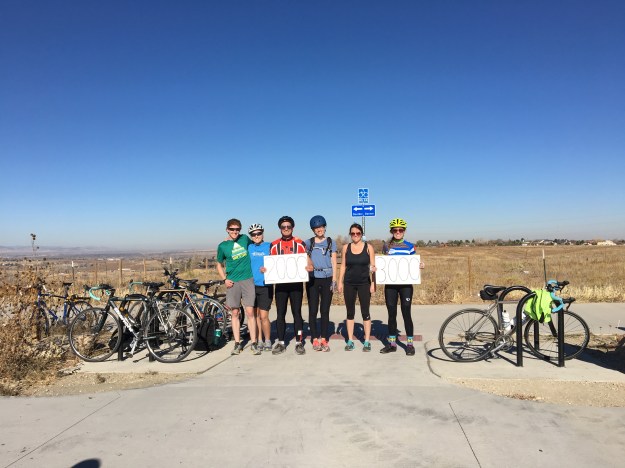
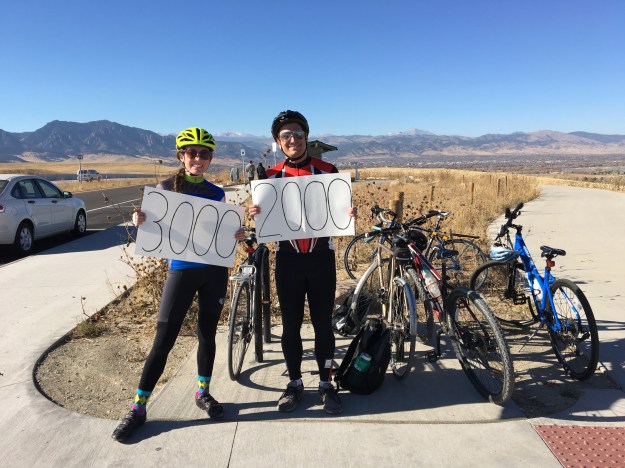
I wanted to reach the 2,000-mile mark, celebrating the biggest cycling year of my life, at a location that is iconic as well as meaningful.  I might have selected a place right in the middle of the Central Rocky Mountains, had it not been for the basic fact that it is November.  While the weather has been warm, to the point that it doesn’t feel like summer actually ended, the month of November still comes with constraints.  70 degree temperatures will not change the fact that by 5:00 it will be getting dark.  And, in the mountains, there is more risk for trouble, in the form of precipitation, wind, and chilly mornings.

Luckily, there was a reasonable place to host this event; Davidson Mesa, a moderate sized hill, that sits about 600 feet above town, roughly six miles East of Boulder.

IMG_5456.jpg

The view of the Flatiorns to the West on a clear day is magnificent enough to warrant the Colorado Department of Transportation putting in a scenic overlook, which is particularly popular among tourists to the area driving from Denver to Boulder.

As is the case at the top of Vail Pass, the rest area is shared between motor vehicles and bicycles, as there is now a bike trail that follows highway 36 between Denver and Boulder.  As a regular visitor to Boulder, I have ridden on this trail about a dozen and a half times over the course of 2016.  So, it felt both scenic and meaningful to celebrate reaching this mile marker at the most scenic location along the trail between Denver and Boulder.

What makes events like this truly special is sharing them with others.  For me, this meant even sharing the event with someone who had a more significant accomplishment, mileage-wise, than I did.  In fact, I know that there are a lot of cycling enthusiasts who ride far more miles than I do, some even topping out at over 10,000 miles in one year!

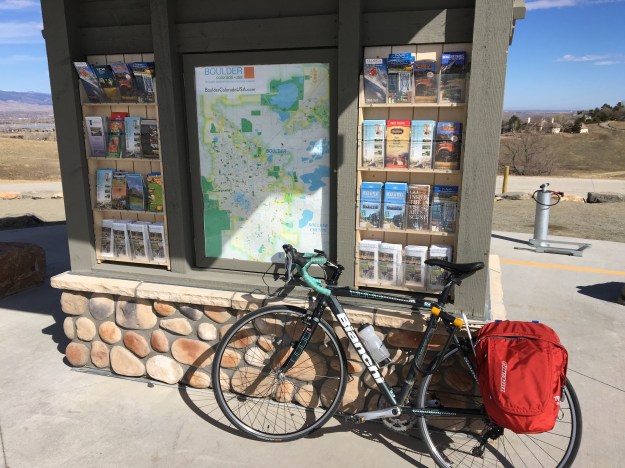
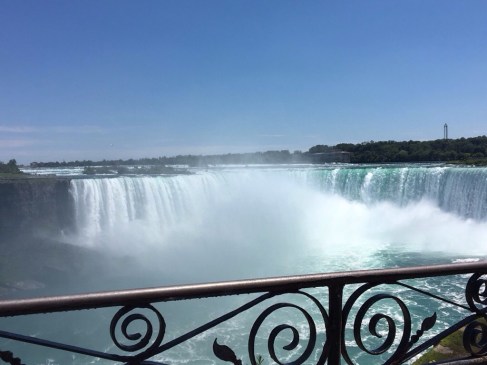
2016 was a memorable cycling year for me, and the fact that I hit this milestone, 2,000 miles is only a small part of it.  When I look back upon the year, that is now almost over, and think of the cycling I have done, it is about way more than numbers.  It is pedaling around Niagara Falls

20160703-231425-83665101.jpg

The Adirondacks

IMG_6462

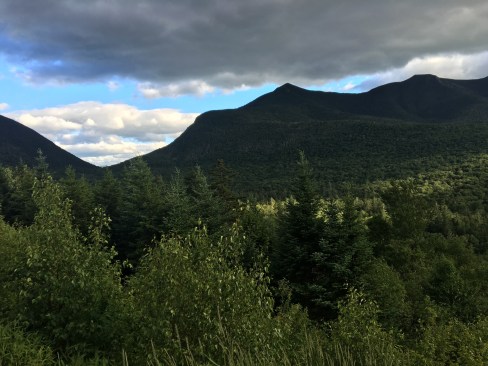
Over the mountain passes of New Hampshire

IMG_6598

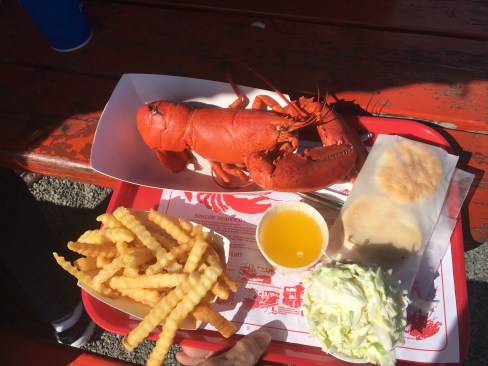
And reaching the ocean, after six days, to have a fresh lobster.

IMG_6648

It is treks to places like Cheyenne and Castle Rock.

It is countless rides long the Platte River, Cherry Creek, and Route 36 bike trails.  It is even commuting for work.  This celebration for me, was about all those experiences way more than it was about reaching a milestone.  In a way, I was celebrating a year’s worth of positive and healthy experiences on my bicycle.

And I got to share the event with others, some of whom joined me for the 25-mile ride from downtown Denver, and some of whom joined me along the way.

img_8017


img_8020

I even shared the event with a friend who was celebrating a more significant accomplishment than mine, 3,000 miles.  The true way to celebrate our accomplishments, both big and small is to do so in a way that does not take away from the accomplishments of others.  Knowing there are people out there who accomplish more, ride 3,000, 5,000, even 10,000 miles, and have gone to more destinations, some even riding across countries or continents, does not take away from what I have done.

I know I am not a super hero, or someone saving the world because I do some interesting bike rides that add up to 2,000 miles a year.  And, I know my life will have some more significant accomplishments.  But, I also know how to properly harness an event like that.  And, it is certainly not by using it as a means in which to compare myself favorably with some people for an artificial self-esteem boost.  Nor is it by dwelling on how much more others have done.  It’s by simply being joyous, celebrating, being happy for others, but most importantly, allowing myself to be happy for myself.

Pure Instinct

Day-to-day life over the past month or so had left me kind of burnt out.  I was inexplicably feeling exhausted.  I was not at my best- which I truly hate.  I’d realized weeks ago I would eventually need a day to disconnect.  We all need that every once in a while.  I figured out that I would not want to hear everybody’s recap of the election (regardless of the result), and Wednesday’s weather was forecasted to be unseasonably warm.

IMG_7976.jpg

So, I took Wednesday off, got in my car and just started to drive.  I had no plan, no idea as to where I would be headed when I left.  I purposely refrained from making a plan.  I didn’t look into options, or pre-meditate in any sort of way.  I wanted to try something different than what we all typically do when we travel.  I wanted to lean simply on my instinct, and just let it determine where I should go as I go.  Everywhere I went, every decision I made regarding when and where to turn, I made on the fly, just based on what felt right.

I went west out of Denver, following highway 6 through Golden, than 93 north, and 72 west towards Nederland.  I continuously resisted the urge to pull out my map book, or my phone, or turn to any other source of information to achieve a welcome break from one of the things that may be exhausting all of us in the mid-2010s.  This is the process of gathering information.  In this era, often gather way too much of it, agonizing over it, to the point where we delay actually making the decision, sometimes far too long!

Along the way, I experienced this strange hyper-emotional calm.  I began to tear up.  I was breathing heavy.  But, it felt really good.  It felt as if for the past couple of months, emotions were one by one filling up inside my head, bouncing around like molecules until they gradually started to reach a critical mass, where there was no longer room for them to move around.  They had just become jammed .  And, now, with whatever barrier that was keeping them inside removed, I was suddenly free to just let them out, and let them all out at once.

IMG_7983.jpg

As I continued along this windy path, this strange hyper-emotional calm became accompanied by a feeling of optimism.  I felt like I knew I was in the right place, doing the right things, and making progress toward where I wanted to be.  I’d freed myself from all the data, all the second guessing that gradually erodes away at our confidence.  I knew that, both that day, and in life, I was moving in the right direction even when I didn’t see the destination.

For a while, I had no idea as to why I was experiencing burnout.  The term typically conjures up images of someone working long hours into the night, neglecting their friends, their families, and other areas of their lives.  Burnout is people working 70+ hour  weeks, which I most certainly had not been for the duration of 2016.  So, why was I burned out?  Why did I feel drained so often?

Having searched for answers regarding this, through reading, conversation, and observing people, I came to a series of important realizations about burnout, which run contrary to the image of long nights with pots of coffee.

It’s not the amount of work that burns us out.

Workload can contribute, but more important is how we feel while we are doing our work.

The primary source of burnout is feeling as if we are being phony, or fake.

Pretending to be someone else, for whatever reason we do it, is exhausting.  It is not sustainable.  The only way to be is our true selves.  That is what our instincts tell us to do.

Negative energy in all forms leads to burnout.

One of the nastiest forms is fear, trying to prevent some sort of bad outcome such as loss of job or status.  When we act out of fear, or anger, hate, etc., everything we do is significantly more draining.

One of the most exhausting things we do is try to prove ourselves.

I’ve seen plenty of instances where someone is working long hours, but is not burned out because they are doing what they love and they feel confident while doing it.

img_7989

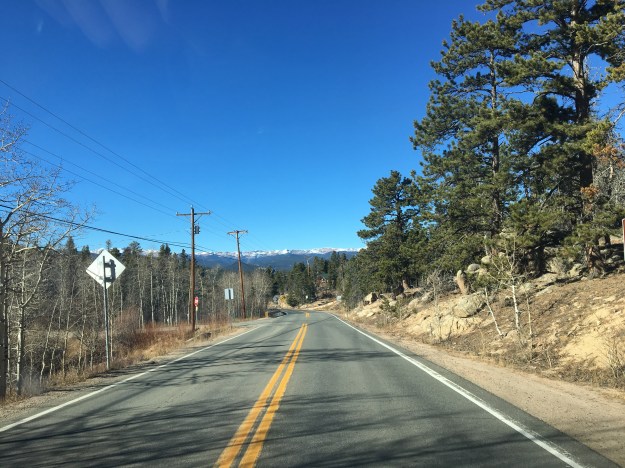
My instinct even took me down a random dirt road, something I otherwise never would have done if it were not my previously specified destination.

img_7990

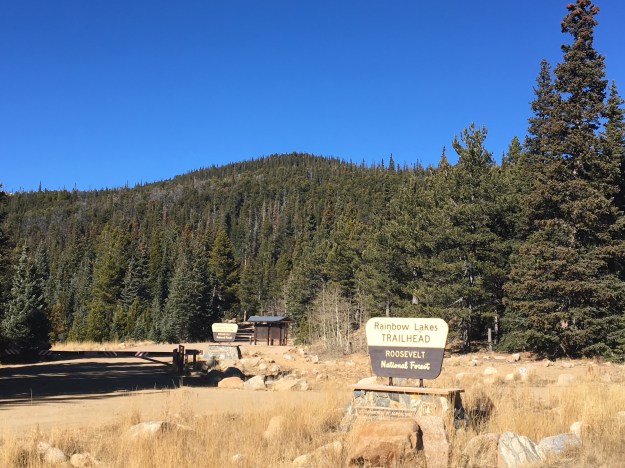
I ended up at a place called Rainbow Lakes, part of the Indian Peak Wilderness.

img_7996

I hiked roughly 2.5 miles, getting to the treeline, which was surprisingly nearly snow free!  This is definitely not encouraging for fans of winter sports.

img_7997

As, well, as can often be the case in our lives as a whole, the change of season that winter sports fans are waiting for is simply not happening yet.  This hike, on Wednesday Nov. 9th, felt shockingly similar to the way it would have felt in the middle of the summer.

img_7998

Just over the ridge, I got myself to a place that was extremely inspiring.  Unfortunately, I did not get a photo, as, well, my phone died.  It was a sign that what I needed to do was disconnect, and, once again, connect to my own thoughts.  Just for good measure, though, here’s a pic I found of the exact place where I sat.

rainbowlakes_20161109

I actually stared at that one little gap in the rock straight ahead.

Our subconscious thoughts do take into account recent information, even as our conscious minds look for more info and don’t know what to make of it.  My subconscious mind, my instinct, though, processed all of this; the election, interactions with people, my own feelings, and summed it up neatly in one sentence, a sentence that simply popped into my head…

The age of deference is over

Make what you want of that.

I also came to another revelation regarding a matter that is more specific to my life.  I had been thinking a lot about the concept of acceptance.  It is why we are always trying to prove ourselves, and often exhausting ourselves.  Afternoon exhaustion, dissatisfaction, lack of inspiration, all of these concepts are inter-related.

We want to be accepted, and can only be accepted as who we are.

But, for each person individually, myself included…

If we want to be accepted as who we genuinely are, we must do so for others as well.

We’re all looking for acceptance, but if we make it easier on each other, as well as ourselves, we might all have a bit more energy leftover for other things.

The previous night’s election, regardless of how any of us feel about it, is yet another example where sometimes more information, more data, is not better.  The best models, based on every piece of data available, made predictions that were quite flawed.  My instinct, many months back, came to a more accurate conclusion about what was to occur.

In an era where we have access to unlimited information, and are often bombarded by it, sometimes we need to realize that less is more.  I, for sure, will, going forth, make a better effort to rely less on data and more on instinct.  After all, it brought me to Rainbow Lakes, without even so much as looking at my atlas, or my Google Maps App.


Looking Forward to Winter

img_1651

No season is the subject of speculation quite the way winter is.  Sure, people anticipate all four seasons, planning activities such as vacations, sporting events, and outdoor activities around each one.  But, there is something about the way winter is anticipated, as experiences can vary year to year in winter more than in any other season.  Every October, speculation begins to intensify.  Fear and dread clearly radiate from the voices of some, while excitement and anticipation come from others.  Most likely, this depends on one’s location, as well as preferred activities.

I spent a lot of years in the Midwest, and completely sympathize with those who dread winter, and hope for nothing more than to have their pain be as minimal as possible for the season.  Here in Colorado, on the other hand, enthusiasts of outdoor snow sports, mostly skiing and snowboarding, anticipate winter with great excitement, typically hoping that the coming season’s snowfall and snowpacks will be at least in line with seasonal averages, if not more.

As an Epic Pass skier who lives in Denver, my ideal winter would be one with plenty of snow in the mountains, particularly the resorts I ski near the I-70 corridor, but generally milder east of the mountains, where Denver is.  And, given this year’s setup, I may actually get this kind of winter that I want!

I have received quite a few questions, both from people local to Colorado, and those considering traveling here to ski in the mountains, regarding what kind of winter to expect.  Now that the National Oceanic and Atmospheric Association (NOAA) has released its outlook for the season, there is no better time to give my own take on how winter 2016-17 is looking.

First, I should note that, the NOAA forecast, as well as other forecasts already made for the winter season primarily focus on one phenomenon: La Nina.  This, of course is the inverse of El Nino.  So, while El Nino winters tend to be wet to the south and dry to the north, La Nina winters will tend to be the opposite.

winter_lanina

This is reflected in NOAA’s graphical precipitation outlook for the winter.

noaa_winter2016_precip

However, this year’s La Nina is likely to be a weak one.  Both El Nino and La Nina can be strong, moderate, or weak, and the predictive power of the phenomenon is limited in cases when the anomalies are weak.  In these cases, I find it useful to look at other patterns that are beginning to emerge when speculating about long-range weather patterns.

Anomalies in Sea Surface Temperatures are the most commonly used data point when predicting weather long term.  This is because the ocean retains much more heat than land or air, making it more likely that the current pattern will persist for longer.  Ocean temperatures can also have a major impact on atmospheric circulation, as is evidenced by the El Nino phenomenon itself.

When looking at current SST anomalies, three patterns emerge as having the potential to impact the weather Colorado and the rest of Western North America will experience this winter.

2016_1026_WinterOutlook.png

First is the weak La Nina, whose impact would be more precipitation for the Northwest, but less for the Southwest.

Second is the abnormal warmth off the East Coast of North America.  This pattern emerged at the end of a summer that was hotter and drier than normal across much of the Northeast, a pattern that generally has continued, although they are currently experiencing a cold snap.  This warm anomaly, if it persists, would mostly likely lead to frequent northwesterly flow over Western North America, as the predominant pattern in winter is one called a wave #3 pattern.  This means three ridges and three troughs over the globe, a ridge to our west and a trough to our east.

The final temperature anomaly that appears to be in a crucial area are the warm anomalies off the coast of Alaska.  These warm temperatures could strengthen a phenomenon known as the “Aleutian Low”, which would act to steer wet weather into the Pacific Northwest.  Under this scenario, Colorado and the interior west will likely be drier.

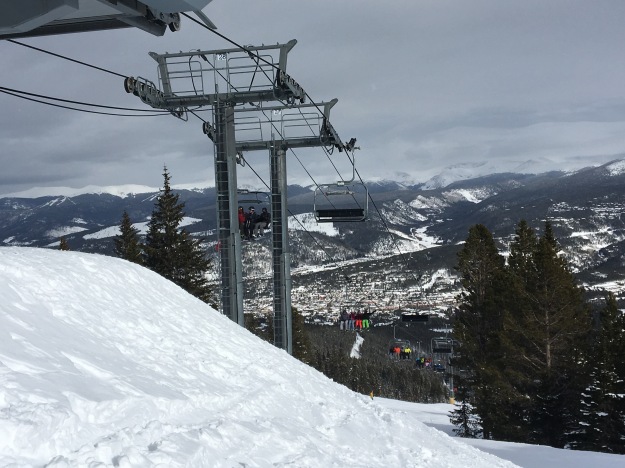
All three phenomenon point to, although not with too much confidence, more frequent northwesterly flow across the state.  This pattern tends to be dry in Colorado overall, but, as pointed out by Joel Gratz, is a favorable wind direction for upslope storms at ski resorts along the I-70 corridor, including Vail, Copper Mountain, and Breckenridge.

With La Nina being weak, and the other two SST warm anomalies (see map above) being in close proximity to areas of cool anomalies, there is low predictive power to this seasonal forecast.  Any scenario is still possible.  However, signs are pointing, generally, towards a dry winter for much of the west, particularly the Southwest, and a wet winter in the Northwest.  Locally, in Colorado, the most likely scenario is a mixed bag for the ski resorts, with the storms that do occur favoring the corridor of popular resorts near I-70 1-2 hours west of Denver.

IMG_5124.jpg

And a warm and dry winter on the East side of the Continental Divide.

IMG_5454.jpg

(Note: the two photos above are from the previous winter season)


The Quest for Freedom

img_7739

In a way, we all long for freedom.  Freedom from some form of restriction, some sort of pressure, mandate or expectation that we believe is holding us back.  The desire to break ourselves free from these restrictions, allowing ourselves to reach our true potential, or obtain a new level of self-awareness is ingrained in our culture.  Tales of striving for greater freedom can be found peppered throughout our literature, movies and music.  It is the underlying theme of the story of this nation, from overthrowing monarchy to westward expansion, ending slavery, and later the open road.  One could even view the baby boomer obsession with large suburban homes and the millennial obsession with authenticity and acceptance of individual preferences as simply the most recent chapters of a freedom themed cultural progression.

Cars have always been symbolic of freedom.  The mass production of automobiles in the early 20th Century made it possible for the average person to travel over large distances at the time of their own choosing.  Those who purchased an automobile were no longer subject to train schedules when making trips both short and long.

img_7741

“The Open Road” meant people now have the freedom to go when they want to go, where they want to go, and change their mind whenever they’d like.

img_7729

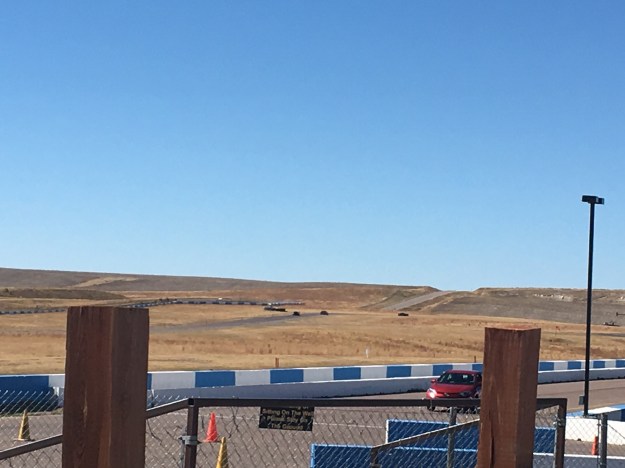
At the High Plains Raceway, this freedom is celebrated, and, well cranked up a notch.  Here, in a world where access to automobiles is now nearly universal, drivers free themselves of the few restrictions that remain.  For most, this primarily refers to the speed limit.  Here, for all practical purposes, there are no rules (in reality, there are a few for safety purposes, but they mainly revolve around how to conduct oneself in the event of an incident like a crash or a gasoline spill).  There is just how fast one can take the turns that make up the race course.

The feeling of having one of these inhibiting restrictions lifted, whether permanent or temporary, is hard to describe.  It’s joyous, almost in a jubilant manner.  It’s reassuring, anxious, and exhilarating at the same time.  I often equate it to a cyclist suddenly no longer having their brakes unnecessarily engaged while trying to pedal, or a runner no longer having 10 pound weights tied around their ankles.  Everything just suddenly feels like it is moving faster, and flowing more smoothly.

But, there is some level of risk one takes by coming to a facility like this.  Upon entry, every person, even guests who do not intend to drive a vehicle at all, must sign waivers, accepting the risks they take.  This includes understanding that there are dangers, both to life and property.  Crashes at high speeds can do damage to one’s life and limb in situations like these.  And, some of the vehicles at this raceway are valued at upwards of half a million dollars, assets that could be permanently lost when accidents render the vehicles irreparable (I am told that standard automobile insurance does not apply while on race tracks like this).

For these reasons, many will probably choose never to take part in this activity.  This is the case with many activities of this nature, from something as major as starting a new business to something as minor as stealing two sips of vodka from one’s parent’s liquor cabinet at the age of 15.  Some of us dive into the activity without thinking.  Some of us will shy away, and avoid the risk.

We all want freedom.  But, we all also want security.  Most of us also desire equality, justice, or some sense of “fairness”.  Most of our sociological conflicts come about when these desires are pitted against one another.  In this year’s presidential election, Americans have largely been denied a true discussion about what our priorities are, in this realm, and how they should be met.  But, that does not mean that determining how to free ourselves from our limitations, and how to prioritize this desire with other desires is not part of our lives every day, manifesting in the decisions we make and interactions we have.

Experiencing a Different Way of Life

img_7711

Most of the time, when we travel, we are touring.  We are visiting places.  We are going to specific destinations.  We are seeing landmarks, or specific points of interest.  Or we are going somewhere to take part in a certain event or activity.

Sometimes, we will speculate as to what it is like to live in a specific area.  Maybe we will even interact with some locals, and ask some questions.  But, even then, in a way, we are still touring.  We are getting some amount of information regarding what day-to-day life is like, but we are really only getting a snapshot of a specific point in time, and some verbal information about what may make that point different from typical day-to-day experience.

Sometimes, when we travel specifically to visit people, people we know, we get a little more of a window into what life is like in a different place.  For me, a metropolitan person, who has always lived in a city or suburban area, most of these kinds of trips involve traveling to a different city, or a suburb of a different city.  While each city, metropolitan area, and region are unique from one another, there are still some basic similarities.  I have a clear understanding of the differences between life in New York, Houston, Denver etc.  But, I also understand that there are many similarities that make life in all those places distinct from life in a more sparsely populated area.

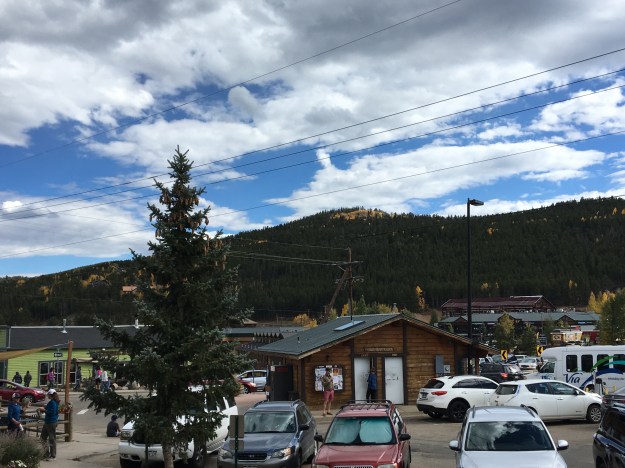
Nederland, Colorado is not too far from home for me.  Nor is it your typical small town U.S.A.  Positioned along the scenic Peak to Peak Highway, at 8200 feet elevation, and only about 40 minutes West of Boulder, it falls into the category of one of those quirky types of small towns.

This weekend turned out to be a unique experience for me.  Sometimes when we visit people, we don’t really experience their typical life.  There’s a specific event, or destination, and, in a way we all become tourists.  This weekend, that did not happen.  I ended up genuinely feeling as if I had spent some time in the day-to-day life those that live here!

img_7705

The first, and most obvious difference living here is how we get around.  To me, getting anywhere, whether it be between neighborhoods or to the center of town, involved what resembled a short hike to me.  There was no driving, Ubers, light rail, or busses, just walking along a series of trails that felt, and also typically smelled as if I were on a camping trip.

I also began to notice, and even feel, a difference in energy.  Things feel calmer, less urgent, less competitive.  This, of course, is both good and bad.  The good is the ability to relax, not feel like you are competing with everyone you see, and take time to enjoy some of the things around you.  The flip side is that lines move slower, people move slower, and most things take a little longer.  Even while enjoying the reprieve from the stress of everyday life, I recognized that, given that I wish Denver were faster moving than it is, I could never permanently move to a place like this.  I did however, fully immerse myself in the experience while I was here.

img_7709

The strangest thing that happened was finally getting a good understanding of a different perspective on a common conflict.  The center of town was packed with what many people refer to as “leafers”.  These are people who drive from the city to some nearby forested area to see fall colors.  Living in Denver, I am technically one of them, as I had been nearly every year.

Immersed in the Nederland experience, I experienced this from the other side.  Feeling the frustration of people dealing with things they don’t normally have to deal with, like waiting for a table at their favorite restaurant, traffic jammed up on all of the main roads, and a significant number of people in the lake, I began to understand why people who live in places like this don’t immediately calculate the benefits of tourism on their local economy on days like this.

This month, and for the remainder of 2016, one of my goals is to try harder to see things from the perspective of others.  I just feel like a lot of things in my life, whether it be putting together a presentation with specific audience in mind, or interactions with people, will go a lot more smoothly if I genuinely make an effort to understand them from the perspective of others.

Travel has, once again, taught me a valuable lesson.  To fully immerse myself in this experience, I had to, in a way, let go, of what I know, what I expect, and even what I want.  If more of us, both in our travels, and in our day-to-day lives were to approach people, experiences, and issues, with much of this pre-concpetion taken out of our minds, we would likely have a more positive impact on the lives of one another.  This doesn’t necessarily mean giving up on what we believe in, especially strongly held conviction.  It means taking them out of our mind, for at the very least a few minutes, to hear what others have to say, and feel what others feel.

The Longest Day Hike of My Life

DCIM160GOPRO

Conundrum Hot Springs

The hike from the Conundrum Trailhead to Conundrum Hot Springs is roughly 8.5 miles.  Round trip is at least 17 miles of hiking.  I say AT LEAST as I have been on plenty of hikes where side excursions, both planned and unplanned, lead to covering a total distance that exceeded the official distance of the hike.

Due to the distance, and the destination, nearly all the people we encountered on this hike were backpacking.  This is an attractive option, as the trail is pretty long but not terribly challenging, and the hot springs are the kind of destination one would want to spend a significant amount of time at.  However, Conundrum Hot Springs is a popular destination, and there are limited camping sites in the immediate vicinity of the springs.

Conundrum Hot Spring is close to Aspen, which is three and a half hours from Denver.  Some of the people in our group, myself included, were not able to leave early enough on Friday for us to be confident that we could secure a camping spot.  We ended up deciding to find a campground somewhat close to the trailhead, and hike to and from the springs as a day hike.  As an added bonus, we would not have to bring, or carry nearly as much equipment, as we would be “car camping”.  The hike would be both easier and harder.  We would not be carrying nearly as much weight, but we would be cramming 17 miles of hiking into one day.

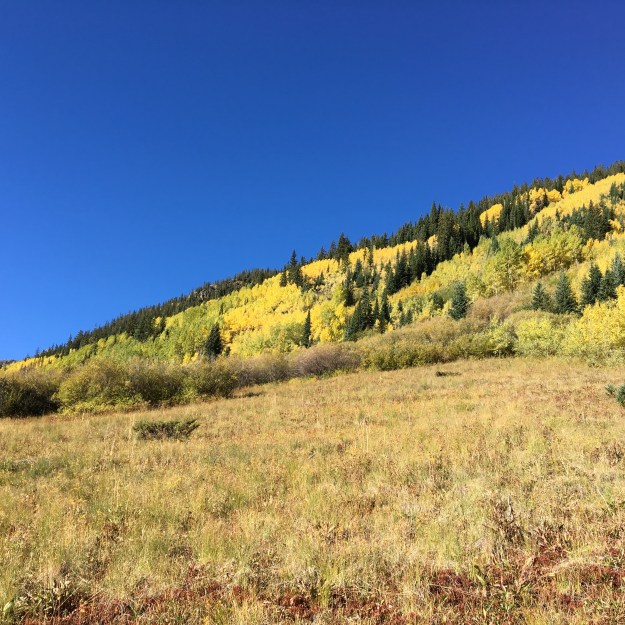
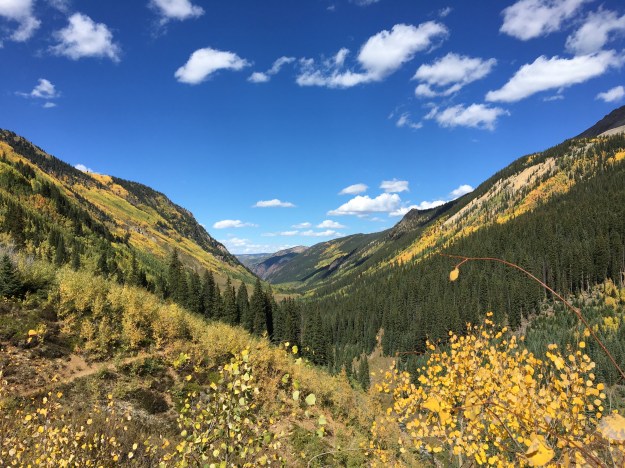
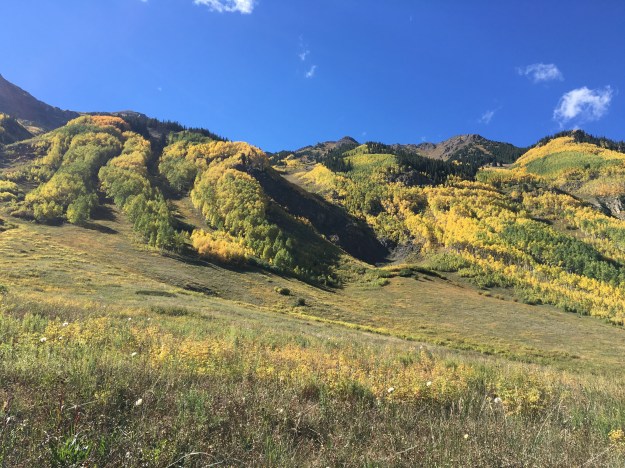
Up in the mountains of Central Colorado, trees change color earlier in the Fall than they do in many other parts of the Country.  In general, the second half of September, and maybe the first few days of October, is the best time to see the Aspen trees here change colors.  I was partially surprised by how vibrant the colors were, by September 16th.  For the first two hours or so of the drive, before sunset, we saw a preview of the kind of colors we’d be seeing during the hike, certainly early season, but vibrantly colorful, with sections of bright yellows and oranges periodically appearing in front of us.

To be sure we would have enough time, we had to wake up, eat breakfast and leave the campground at Lincoln Creek (dispersed camping roughly 40 minutes from the trailhead) all before sunrise.  We arrived at the trailhead and started hiking at roughly 15 minutes after 7 A.M.

The morning chill was both an obstacle and a boost.  Overnight temperatures dropped to roughly 30F (-1C) at the campground.  For the first 90 minutes of the hike, the ground was covered in frost.  In fact, the frost even made our first river crossing a bit slippery.

This morning cold made me cary several layers, adding a little bit to the weight of my backpack (although it was still way, way, lighter than it would have been had we been backpacking).  However, the cold weather motivated us to begin our hike at a rapid pace.

We would cover over four miles before we even reached the sun!

IMG_7577.jpg

I would describe at least the first five miles of the hike as “easy” from the standpoint of evolution gain.

img_7579img_7580img_7581

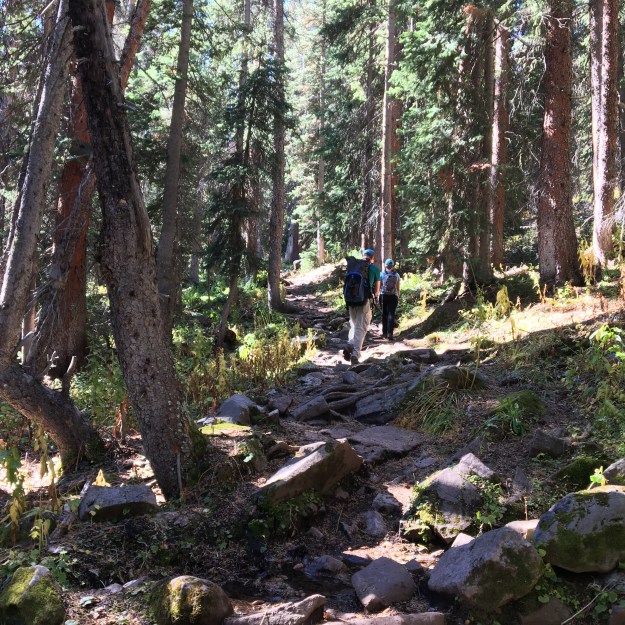
Many sections of the trail are actually close to perfectly flat, giving me plenty of time to take in the natural beauty that is around me, and also connect with my friends who I was hiking with.  When hiking, it is challenging to have a conversation when hiking up steep terrain, but fairly easy to do so in largely flat sections.

IMG_7582.jpg

The appearance of small lakes precludes the transition to the more challenging part of the trail.

This occurs somewhere around six and a half miles into the hike.  First of all, there are sections that are more technically challenging, including a couple of tricky creek crossings, and a section where one must scramble over rocks.

IMG_7589.jpg

There last two miles of the trail also includes some fairly steep sections.  I wouldn’t say they are overly challenging, but in the context of a 17 mile day that included hiking at a rapid pace towards the beginning, they ended up being fairly exhausting.

We ended up spending roughly two hours at the hot springs (including changing and eating lunch).  There were a lot of people in the hot springs, but it was not as crowded as some of us had feared.

img_7601img_7603

For a variety of reasons, the fall colors appeared even more magnificent on the way back down!  The most significant reason had to be the manner in which the trees appeared in the mid-afternoon sun.

img_7604

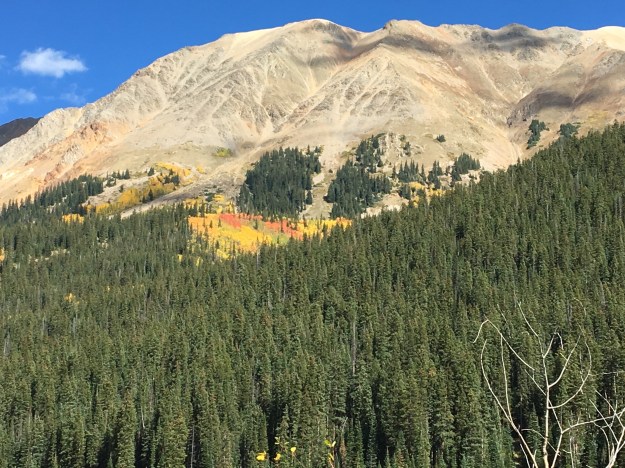
I was also pleasantly surprised to see a significant amount of deep orange shades.  In prior experience with fall in the Rockies, I had almost exclusively seen the yellow shade that seems to be the most common fall color for Aspen trees.  While “autumn gold” is pretty, I had, in some ways, missed wide variety of shades that leaves on maple trees take on during fall.

img_7606

I would definitely describe the color we enountered as “early season”.  There were still many Aspen trees primarily shaded green, particularly at lower elevations.  This indicates that the next two weekends could be just, or perhaps even more, colorful!  The colorful trees, the yellows and the oranges, tended to be those higher up.  The several patches of deep shaded orange I saw were nearly exclusively up closer to the tree line.

Conudnrum_FallCOlors_Sept2016.JPG

Both the hike up to the hot springs and the return trip took roughly four hours.

IMG_7607.jpg

We got back to the trailhead sometime just after 5 P.M., and, after the 40 minute drive back to Lincoln Creek, I finally got to see what the campground looked like.  And I got to do something I had not previously done.  I got to park my car with the rear left tire on top of a rock, showing off just how rugged my vehicle is.  Well, at least in an auto show pamphlet sort of way.

Capping off an exhausting day was a side excursion, to a waterfall, well, multiple waterfalls, that those of us in our group lucky enough to be able to leave early Friday had located roughly a quarter of a mile from the campground.  In fact, they hyped this place up over the course of the hike.  So, we had to go.  Additionally, this side excursion was enough for me to achieve something meaningless, but also something I am likely never again to achieve.  I recorded 50,000 steps on that step counter thing that comes with every iPhone6.  Yay me!

We would explore this likely unnamed waterfall area again Sunday morning before departing for Denver.

img_7631img_7636img_7641img_7642

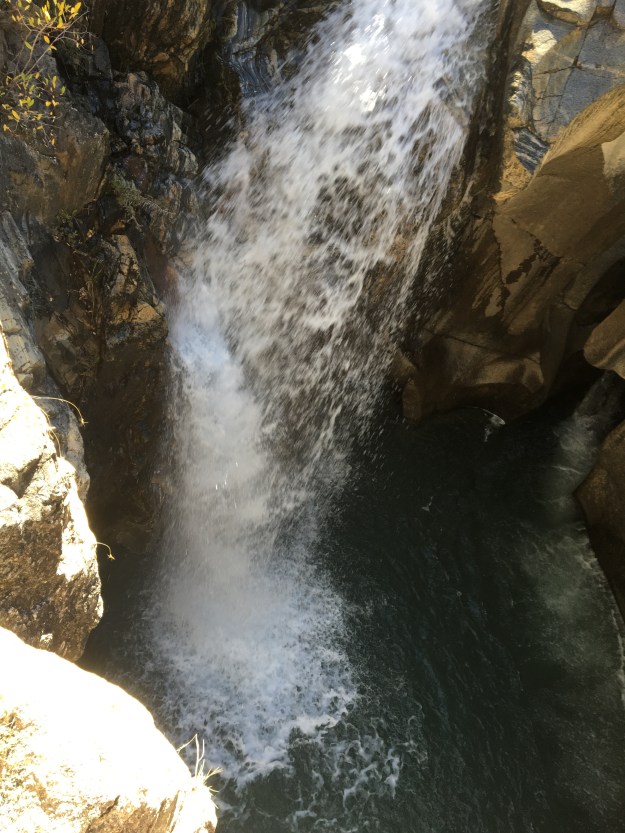
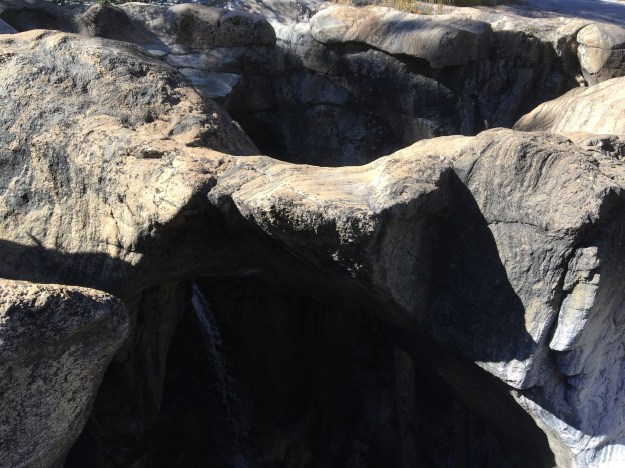
If you count all the places where water squirts out of random places in the rock, there are probably close to a dozen “waterfalls” in this area.  What a great unexpected treat!

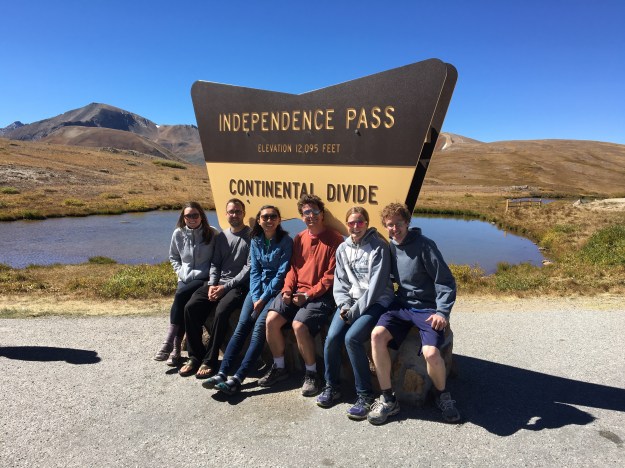
The return trip on Sunday was eventful as well, with some great stops at Independence Pass and Twin Lakes, both places I had driven by on Friday, but after the sun had already set.

img_7656img_7660

I titled this blog “The Longest Day Hike of My Life”, as, well, I can not picture a day where I hike more than 17 miles on a day trip.  However, I probably would have never imagined hiking 17 miles in one day a few years back, so there is no way to definitively say never.  I am prepared, though, for this to be my longest hike, and understand the significance of it. Like many of the adventures I had over the course of this summer, and in previous years, it was both exhausting and amazing.  But, most worthwhile experiences, from relationships to starting successful businesses and such, are.  Being exhausted after this experience should be a reminder to all of us that what is easiest is often the least rewarding, and that which is most challenging often comes with the greatest reward.