Category Archives: North America

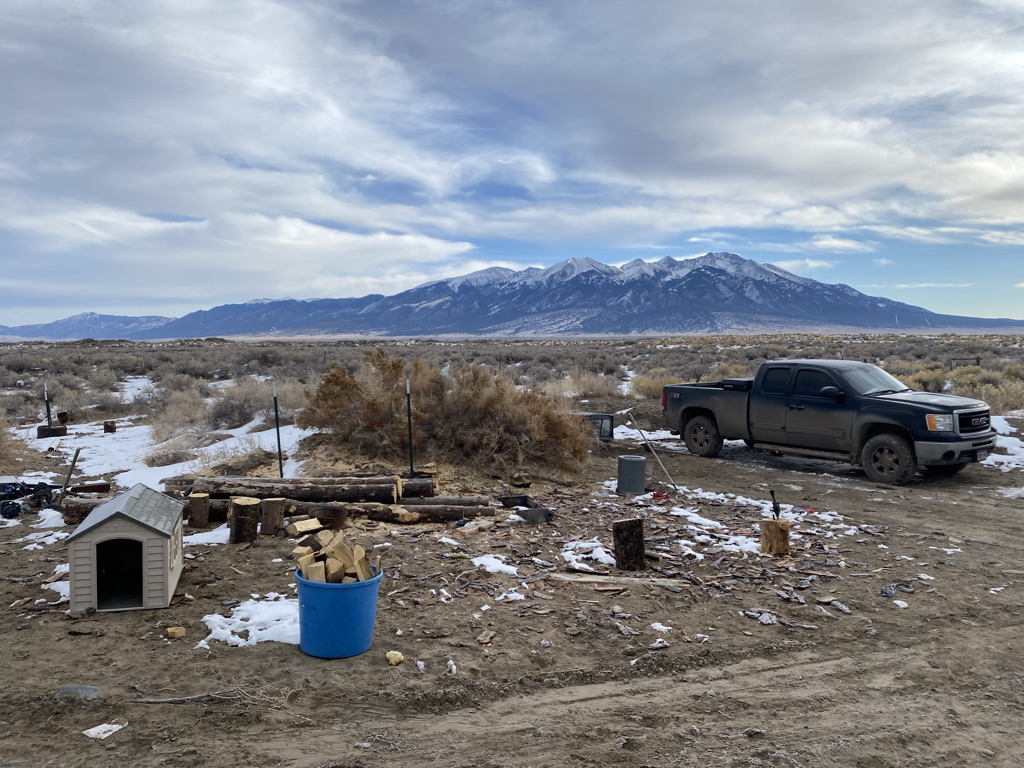
Homesteading in Southern Colorado

Location undisclosed

I did my best to keep up, as Homesteaders discussed things like tools, setting up electrical systems, building wells, cultivating crops and guns and ammo. Much of it is just to build many of the conveniences we in the city take for granted, like plumbing, food, running water and heat. All of our homes have complicated systems of electricity, water, piping and plumbing, which enable all of the conveniences of modern life. I know nothing of this world. It is all a part of this nebulous category of things that are somehow taken care of with the money we shell out when we buy our homes and pay our monthly bills.

When I entered this place, one of the first things to cross my mind was the fact that the nearest sushi restaurant is over an hour away. This, as well as many other conveniences and sources of excitement that define urban and suburban living are not easily accessible.

The concept of “homesteading” makes me think of the 19th century, when pioneers were settling vast unsettled parts of the country and President Lincoln signed The Homestead Act. What would make people decide to do this in the 2010s and 2020s? Could it be the sky high housing costs in many of our cities? Could it be something else? The homesteaders in Colorado point to a couple of other factors.

1. Energy and Lifestyle

I heard talk of not liking the energy of big city life. The city is full of pressure. It is fast paced. This appointment at 10, this meeting at 2, pick up the kids at 4, etc. Here, the day of the week and even the time of the day are far less significant. Alarms are not set. People don’t set aside a specific time to meet up, they just come by and see if their neighbors are home. It can be relaxing but certainly requires a different frame of mind. It requires abandoning concepts ingrained in modern life such as maximizing the number of tasks performed in a day.

2. The Necessary Skills for Life

For decades, the skills needed to build and upkeep our homes and other structures, often referred to as “the trades”, have been held in lower regard than most corporate jobs. These skills have become somewhat of a lost art. Recent shortages in “skilled trade labor” serve as a reminder of how important these skills really are. Homesteaders here mention preserving these lost skills in an era of desk jobs and specialization.

3. Society is Fragile

There was also talk about how fragile our society is, and what happens if we experience a collapse or state of emergency. Culture does periodically collapse. In Western Culture, there are two prominent examples of times when some combination of mis-trust, mis-management and mindless destruction lead to a fairly advanced era being followed up by a darker age. The first one was when the Bronze Age collapsed around 1177 B.C. The next is the fall of Rome, just over 1500 years later.

1500 years later, could another collapse be possible? There are plenty of legitimate reasons to be pessimistic about the future [1][2]. There are also plenty of reasons to be optimistic. Regardless of what is to come, it is probably a good thing that a significant portion of the population is interested in learning these skills.

Life here feels like life as it was two hundred years ago with the aid of some new technology. The focus is on more basic needs like food (agriculture) and shelter (building). New advanced technologies, like efficient solar power conductors and extremely accurate scopes on rifle guns, still make it feel clearly easier than 200 years ago.
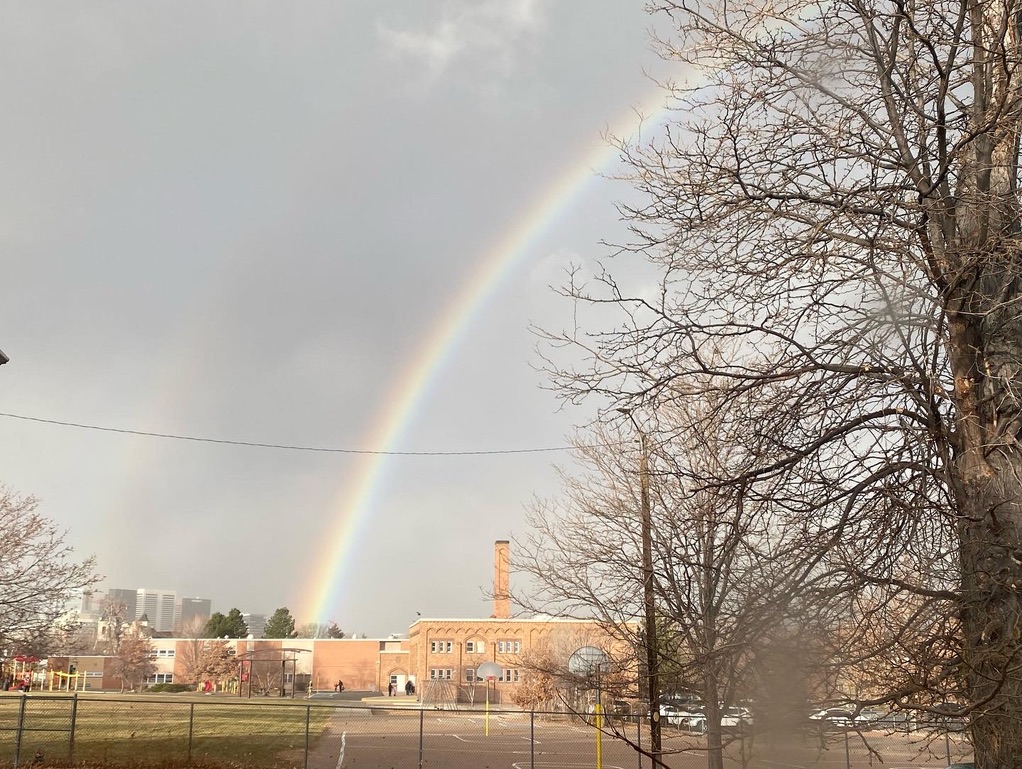
As is the case whenever there are options, there are trade-offs. In the city we have pressure, pressure to perform for our organizations, pressure to earn enough money to pay our mortgages or rent as well as buy food and all the things we want. There is the need to maintain a certain status in our chosen communities and a need to plan around things like traffic patterns, our schedules and anticipated crowds. However, there isn’t the need to worry oneself with how we get our food, water and shelter. There is also the opportunity to have a more significant impact on people, our society and our culture. It is this burning desire that will likely keep me in cities for the foreseeable future.

However, if there is one thing our current era of division and isolation can teach us, it is to stop looking at all people who make different choices based on different preferences as enemies, or threats.

Our differences make life more interesting. It is a big part of what makes travel worthwhile. If everywhere began to look and feel the same, something would certainly be lost. I do not expect a new dark age to descend upon us. However, regardless of what happens, I think it is a good idea not to piss off the group of people who know how to make our systems of food, water and electricity work.

When the Next Season is Late to Arrive

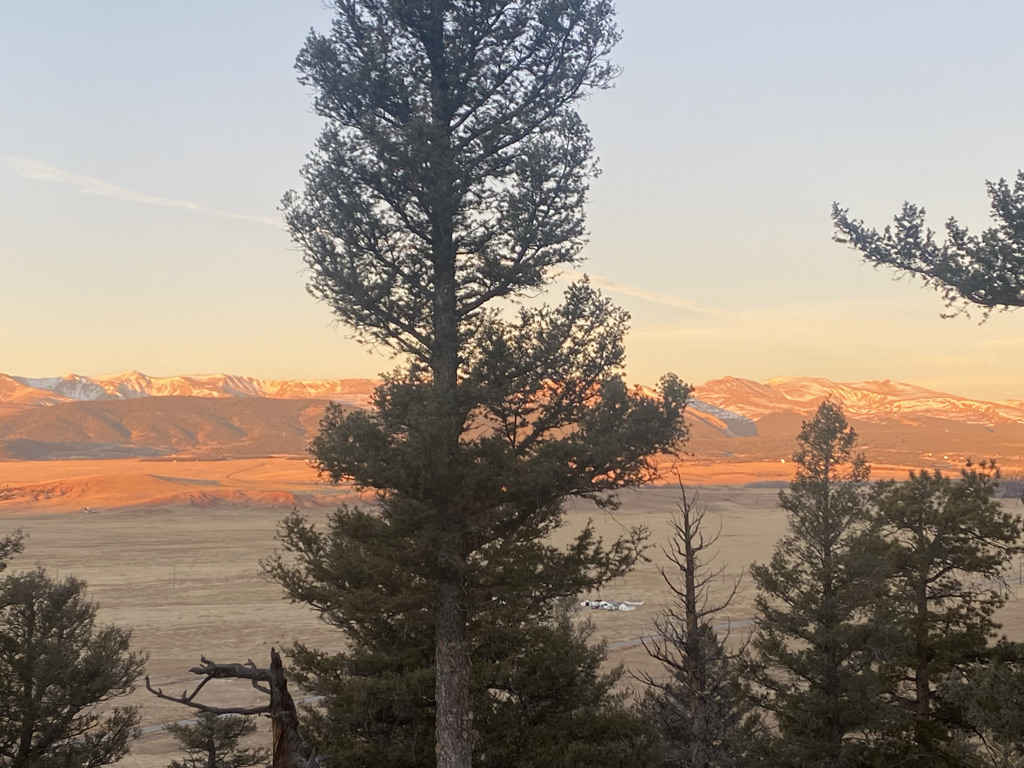
The Middle Fork of the Platte River 10,000 ft. (3km): Sunrise December 4th 2021

Life is full of patterns, rhythms and cycles. We anticipate them. We prepare for them. Depending on the cycle sometimes we dread certain phases. At other times, we eagerly await them, desperate for their arrival.

Sometimes, as is the case with events like the sunrise and sunset, we know exactly when something is going to happen.

Seasons, like many of life’s more puzzling cycles, can be unpredictable. This year, in Colorado, winter is late.

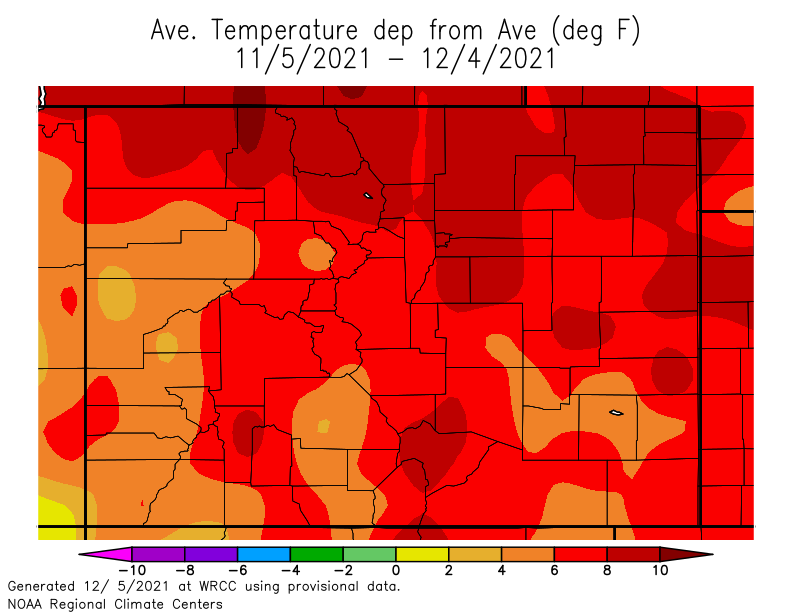
Temperatures over the past months have been about 7°F (4°C) above average. Basin-wide snowpacks are about half their average amount. On a weekend I expected to be at the ski slopes, instead, I was hiking.

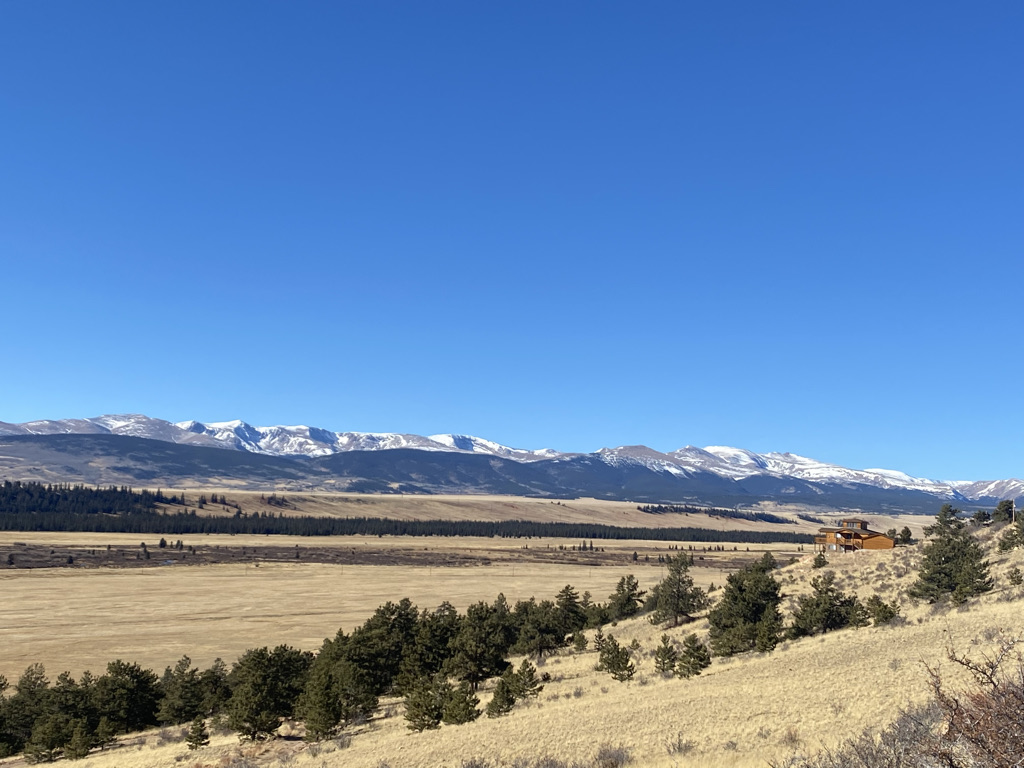
Temperatures warmed into the 50s (≈+13°C), which felt warm with no clouds or wind at a high elevation. The vibe, reminiscent of a totally different time and place then early December in the central Rocky Mountains, was impossible to ignore.

The sun kissed the entire river valley in a manner that made it hard to believe that this is really December.

Meanwhile, rather than airlifting skiers to hospitals after injuries, emergency management personnel were evacuating homes and trying to contain a wildfire.

Some welcome the continued warmth, and love the fact that they do not yet have to shovel snow and put on winter boots. Others are frustrated, losing patience, or even fearful. The weather is something that can be predicted fairly accurately about a week out and prepared for. However, like nearly all of nature, it cannot be controlled.

The weather may be one of the clearest and most present examples out there of that which we cannot control. As is the case with a lot of what life will hand us, we can only control our reaction to it. I was bummed that I was not skiing, as I had previously anticipated. However, when that door closed another one opened.

We hiked

We saw some places appear in a totally different light

And, I got to awkwardly combine holidays while wearing this strange Krampus t-shirt.

When seasonal shifts in weather arrive early or late it can be frustrating. However, this frustration can sometimes pale in comparison to unexpectedly early onsets or frustrating delays in other areas of life. Almost everyone can relate to having to wait longer than expected for a new career opportunity, to find a good relationship, or for a loved one to correct problematic behavior. Likewise, it’s hard to imagine too many people who haven’t been blindsided by an unexpected and unwelcome change.

The same way snow sport enthusiasts in Colorado are eagerly awaiting an overdue change in seasons, millions, possibly even billions, of people are eagerly awaiting what feels like an overdue change in our overall situation. The virus and the fear that goes along with it is still causing some restrictions. Most people seem tired of our partisan divisions, lack of human connections, excessive screen time and work culture that doesn’t make sense. Yet, like the onset of winter and our emergence from the pandemic, progress feels quite slow. Sometimes things go into reverse.

The timing of cultural shifts is harder to predict than weather patterns. There is no snow now, on December 5th, but, there will certainly be snow by February 5th. Shifts in the circumstance in our lives can arrive tomorrow morning, or never arrive at all. At this point, all we can do is hope and try to find the right balance between optimism and realism, between focusing on what we can control while trying to affect our surroundings, and accepting our current reality while trying to create a better future.

Moderate October Activities in the Front Range

October is the perfect month for people who prefer to sleep in and take it a little bit easier. In summertime, it is often imperative to get an early start on most activities, before the heat builds. The long days provide opportunities to climb to the tallest peaks, go places that are inaccessible at other times of the year and push ourselves to the limits. By October, the days are shorter and the mornings are chilly. 5 A.M. goes from being dawn to as pitch black as the middle of the night. 7 A.M. goes from the ideal time to start outdoor activities to a chilly sunrise. And, 10 A.M. goes from the time when heat starts to really build to when the sun has finally warmed the air to a comfortable temperature.

Unlike the middle of the winter, there is still plenty of nice weather. It’s not time for those that shy away from unpleasant conditions to hibernate just yet.

However, the shorter days and cooler conditions give many of us permission to take the pressure off ourselves a bit. The 100-mile ride, the 14,000 foot peak and the trek deep into the wilderness are now out of reach. The time has come to take a somewhat more relaxed approach to our activities and just simply enjoy being outdoors wile it is still pleasant to do so.

In that vein, two great activities that are simply enjoyable are Left Hand Canyon outside of Boulder and Evergreen Mountain (not surprisingly, outside of Evergreen).

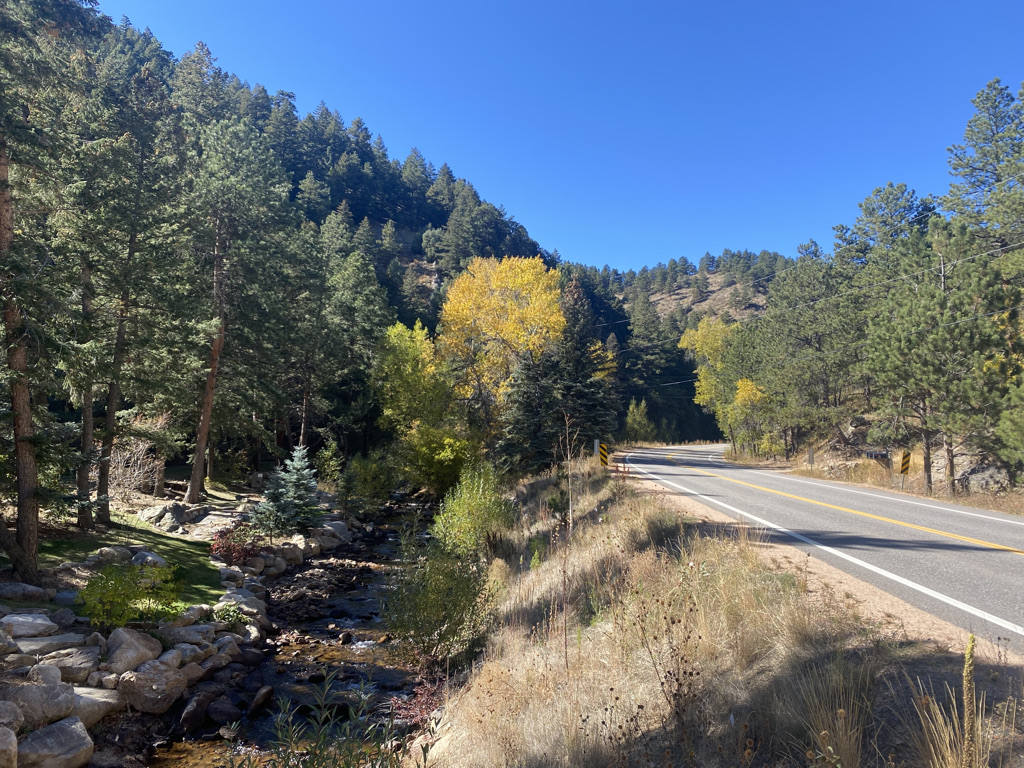
Left hand canyon is an 8 mile (13 km) bike ride up a mostly relatively gentle grade. The total climb to Jamestown is about 1300 feet (400m).

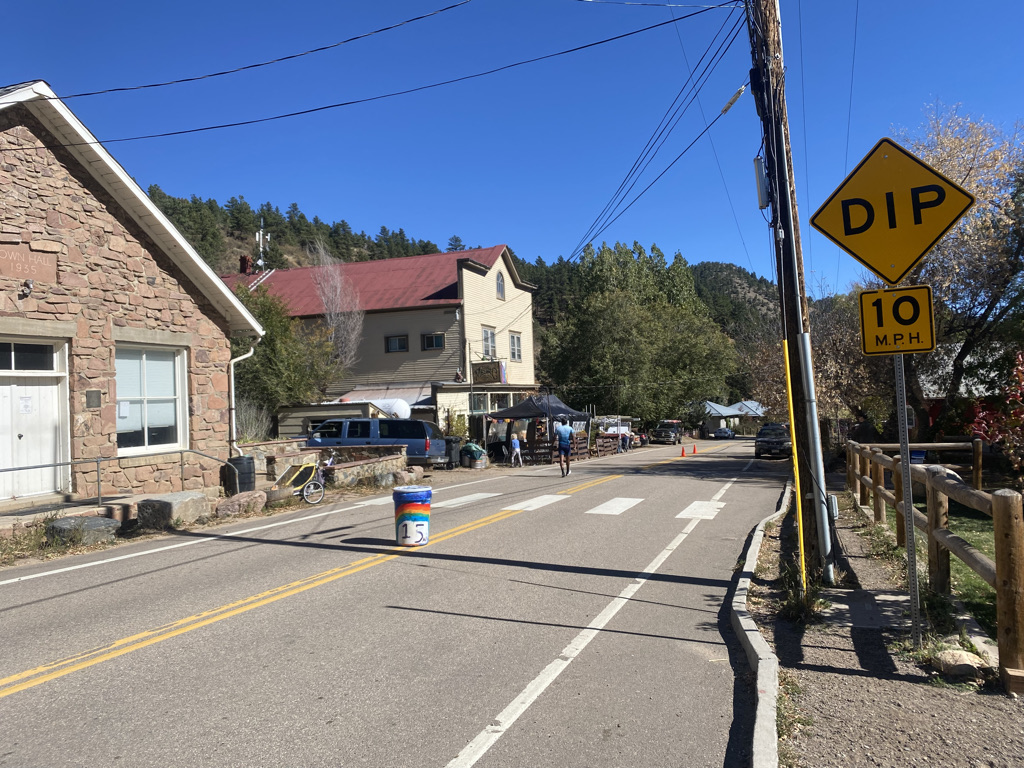
Jamestown is cute little town of only 250 people frequented by other cyclists making the same or similar journeys (the road does continue upward and connect with the Peak to Peak Highway).

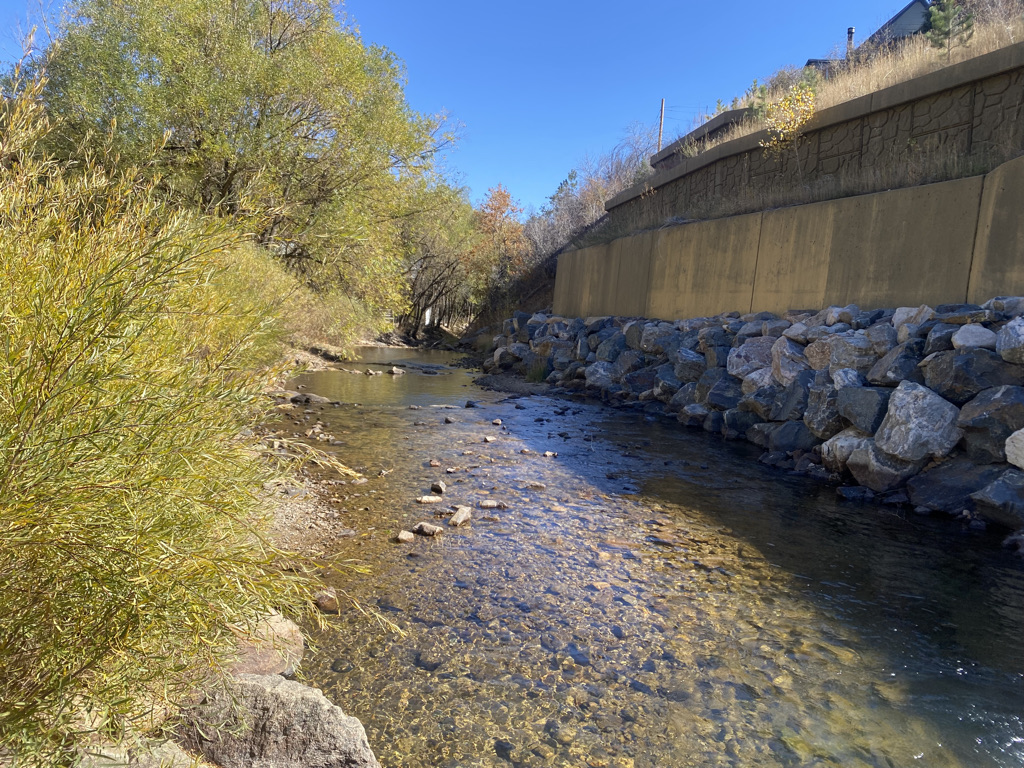
There are plenty of great places to just sit and meditate by the river or grab a bite to eat. The downhill is most enjoyable, as it is steep enough to go fast, but not so steep as to frighten most cyclists.

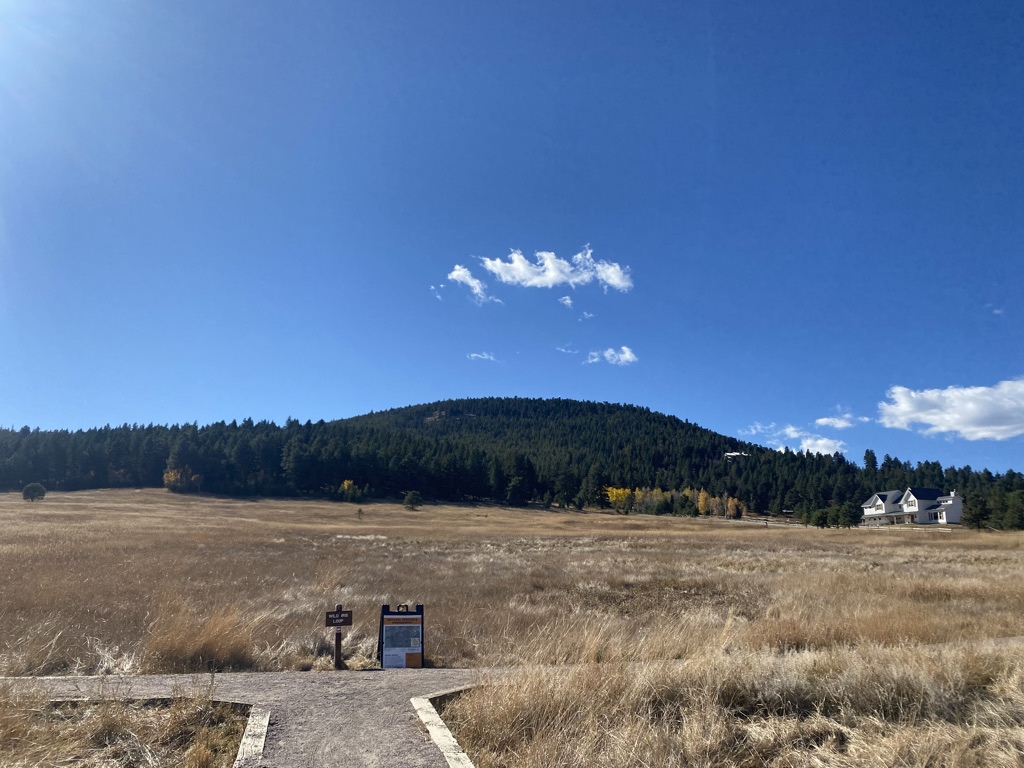
With chilly mornings, October is also the perfect time to take on shorter hikes, like Mount Evergreen, a hike with an 816 ft (250m) vertical and a total distance just shy of five miles (8 km).

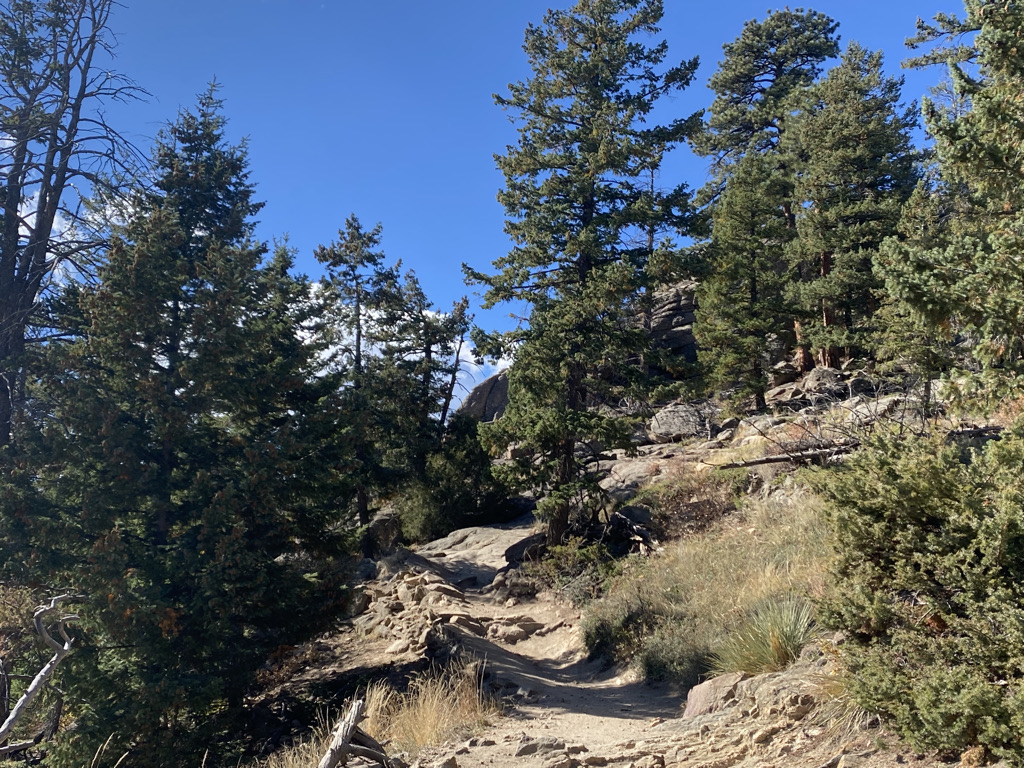
In the summer time, this is probably an ideal before or after work hike for residents of Evergreen. The trek is a combination of some sections that are quite easy (i.e. flat).

And some areas that are somewhat more challenging.

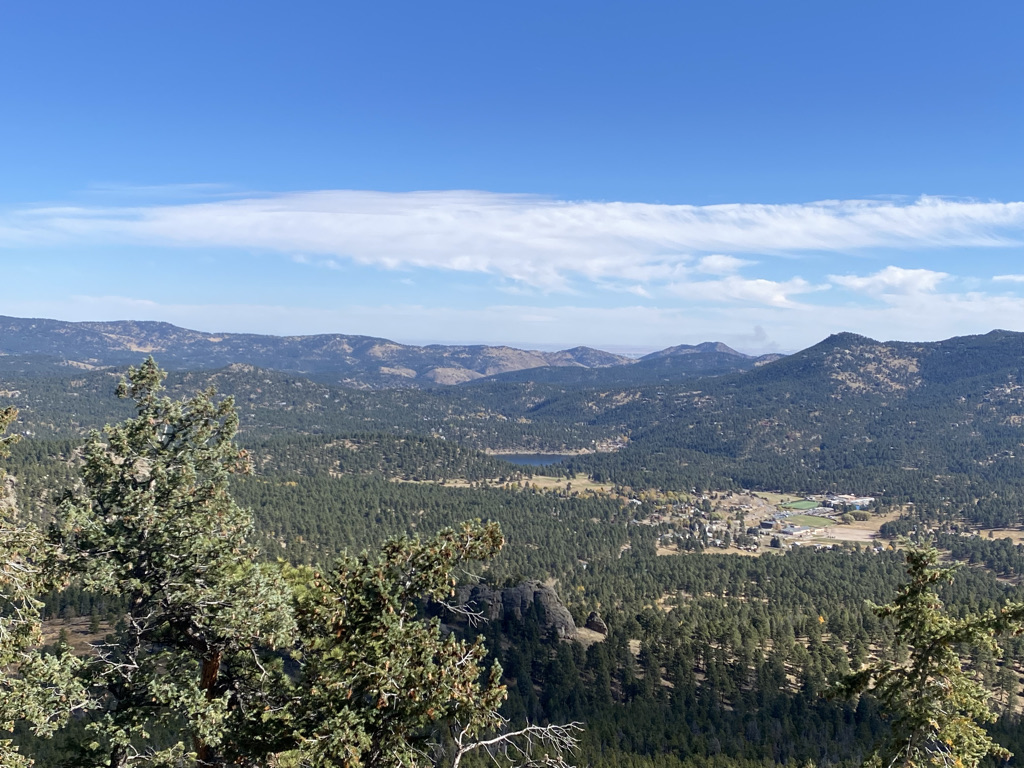
Near the top there is a short side trip to a scenic view of the town of Evergreen that should not be missed.

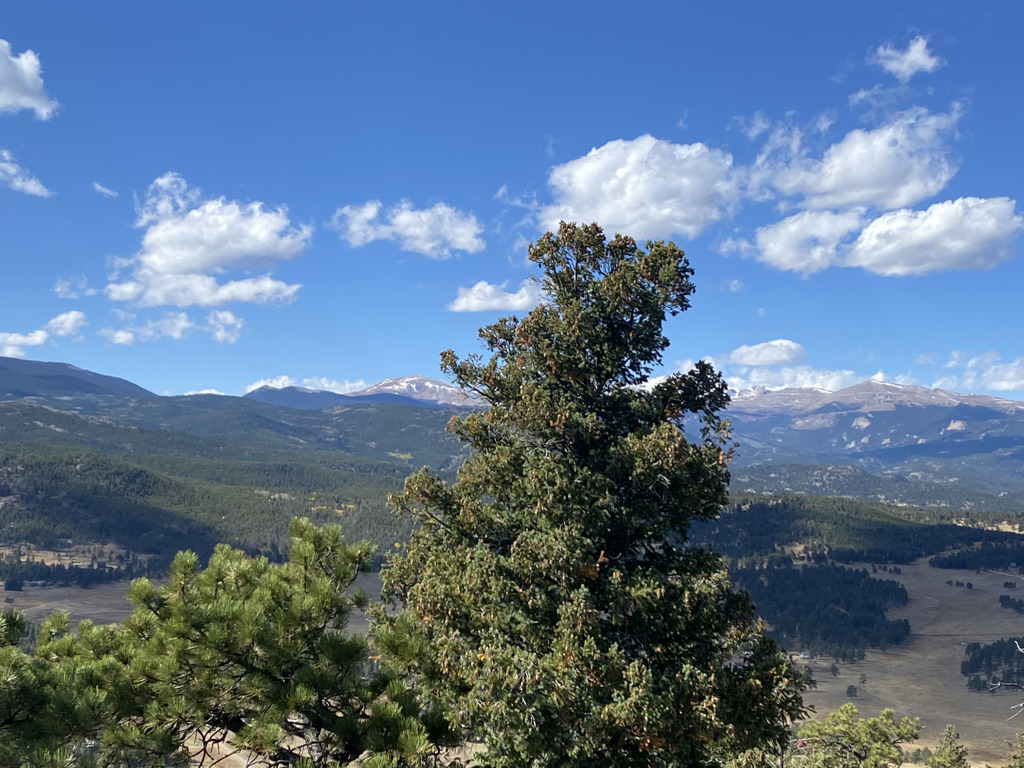
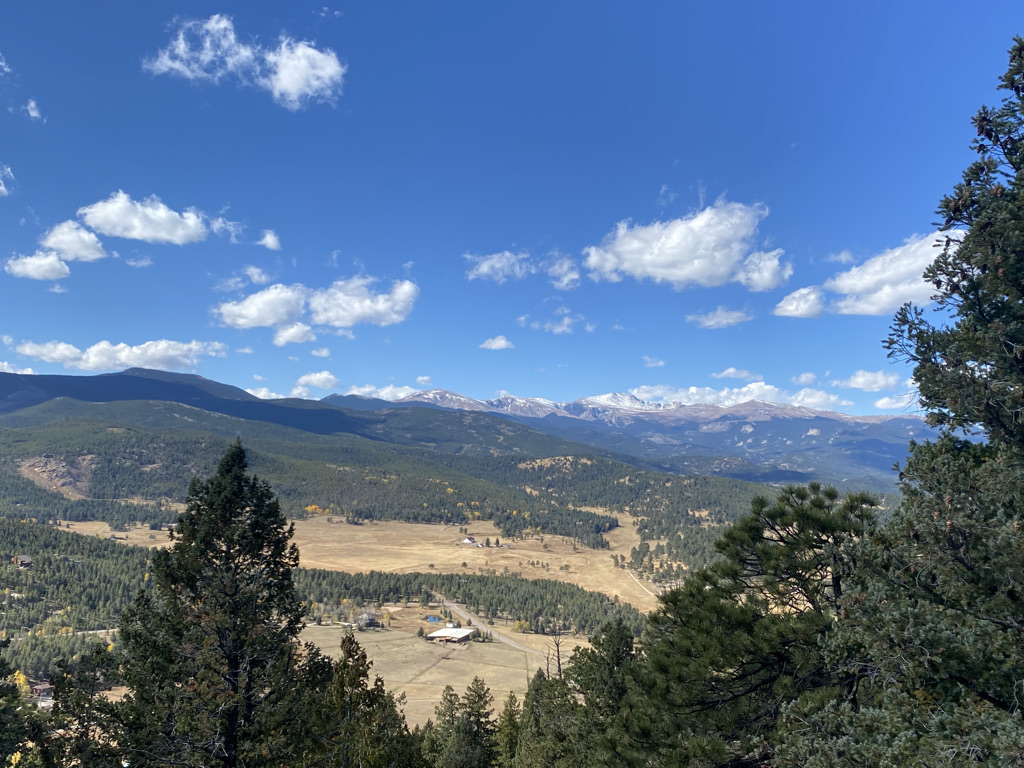
And, there are a couple of great vantage points of the taller mountains further west from a couple of points at the top.

As an active Coloradan, both of these activities feel relatively easy, or, at the very least moderate to me. However, as we approach November, the season of gratitude (based on the holiday Thanksgiving), I must reflect on the fact that these activities are not easy for everyone. Some people are not fortunate enough to be in good health and have the capabilities to climb 1300 ft. (400 m) on a bike or hike up 800 ft. (400 m). It is good to show gratitude for having functioning legs, a good circulatory system and the means to eat a healthy diet.

It is also important to remember that the easier activities would not feel so easy without the hard ones, the ones where we truly push ourselves.

For a sedentary person, these two activities would be hard.

If we do nothing but push ourselves, many of us will never truly enjoy the activities we take part in. However, if we never push ourselves, our range of possibilities would be very limited. We need both.

Perhaps that is what the changing of the seasons is all about.

However it manifests in the specific places we live and in our specific pursuits, it reminds us that different parts of the annual cycle and other cycles of life require us to focus on different needs.

20 Years Later

Okay, so I know this blog is a couple of weeks late. On September 11, 2021 I visited the International Quilt Museum in Lincoln, Nebraska to honor the 20 year anniversary of one of the most horrific events of my lifetime.

Sometimes, it is difficult to explain to those who were not yet alive or too young to remember how this event made a lot of us feel.

Many people describe the period of time between the end of the cold war (1989) and the September 11th attacks (2001) as a “break from history” of sorts. 12 years is not a long time when considering the overall course of history. However, 12 years is significant when it comes to the course of one’s own life. Many people, especially those who were quite young during that time period, got accustomed to a world that did not seem that dangerous.

It is why Trying to Make Sense of It is a very appropriate name for this exhibit. On that day, and for the weeks and months that followed, what most of us were trying to do is try to make sense of it. I recall it was the era of AOL Instant Messenger and when we were away we would put up away messages that would function as kind of an auto-reply to anyone that messaged us. That day mine was…

So we’re different colors and different breeds. And different people have different needs. It’s obvious you hate me though I’ve done nothing wrong. I never even met you so what could I have done? (Depeche Mode, 1985)

Yeah, I like to quote song lyrics.

The museum exhibit is a really good one. It contains some writing about how we all felt during the event.

There was also bunch of tables where people can use blocks to create their own art. I think it is mainly for children, but I made one anyways.

Typically, when I get a chance to do something creative, I try to do something off the wall. However, with the memories of growing up in pre-9/11 New York, all I really wanted to do was create two identical square shaped towers and remember how the skyline once looked.

The main part of the exhibit is a series of quilts that were made to honor those who died that day. There were a lot of them, some had names, some had flags and other designs. There were people from other countries that died that day, and those flags are represented here too.

Already emotional, the thing that got me into tears was actually seeing the faces of some of the victims. I guess that is how human emotions work.

That day I was generally fixated on the past, listening to a station called XM-FLY, which plays a lot of music from that time. However, I began to reflect on the event’s lasting legacy.

The first few months we seemed so united. For a little bit of time, a moment in history, all of our differences didn’t matter. All that mattered was that we were all American. We were all sad, mourning the deaths and pledging to be strong and continue living as free and prosperous people.

This would be the last time in American history anything would feel like that. It wouldn’t be long before we would first become divided over our response to the attacks and military interventions in Afghanistan and then Iraq. Then, a financial crash would cause us to lose faith in many institutions. Social media would further divide us. The economic stress and loneliness caused by these two developments would lead to all new divides, including the generational divide that created “those damn Millennials” and “OK Boomer.”

I wonder what the people who perished that day, especially those who heroically took down flight 93 before it could crash into the White House would think about where we are today. Maybe some of them would understand. Maybe some of these large scale trends are more powerful than any one event. Recently, after viewing some mean spirited content on Nextdoor, an app meant to connect neighbors, I came to the realization that any platform that facilitates asynchronous chat where people do not have to see people’s facial expressions will descend into nastiness, the same way Facebook, Reddit and Twitter have.

Part of me misses that world of national unity. However, it is important to be realistic. First, it was never going to last. The fact that another tragedy that has lead to far more deaths, COVID-19, has only made us more divided is evidence of these more powerful cultural forces. Second, times of national unity commonly revolve around a crisis; the War of 1812, the World Wars, terrorist attacks, etc. Maybe it is time to find some national unity around something positive. However, sadly, with where things are it feels like we could not be further from that moment. There’s too much fear around us.

Pittsburgh- a City That Feels Everywhere at Once

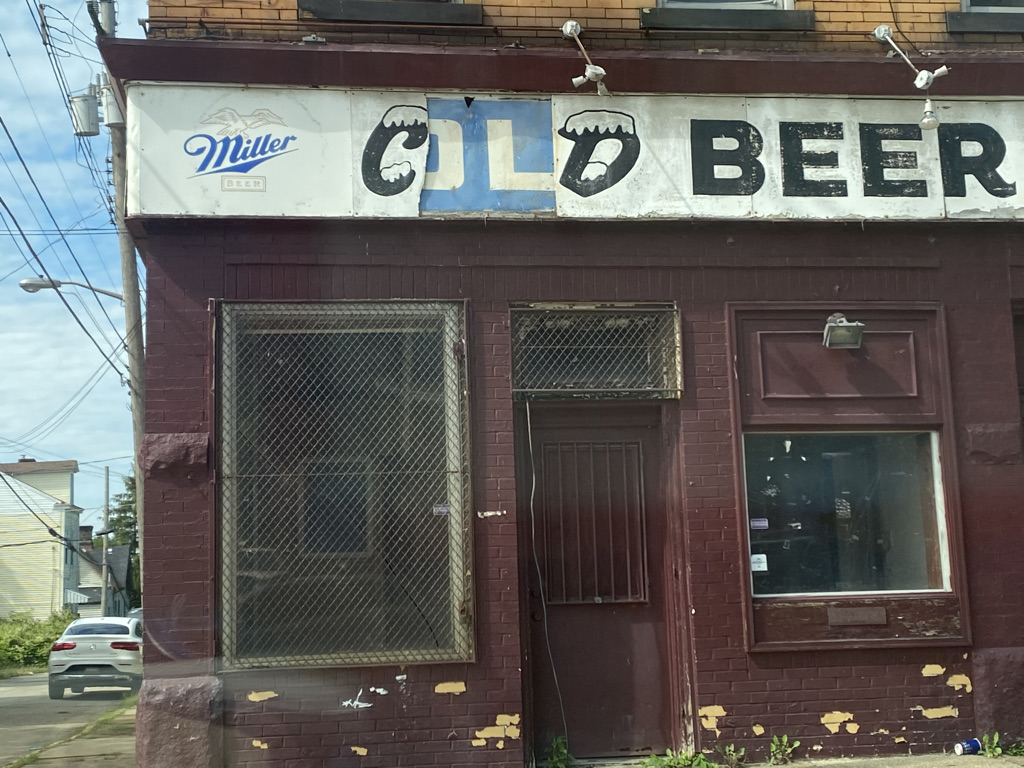
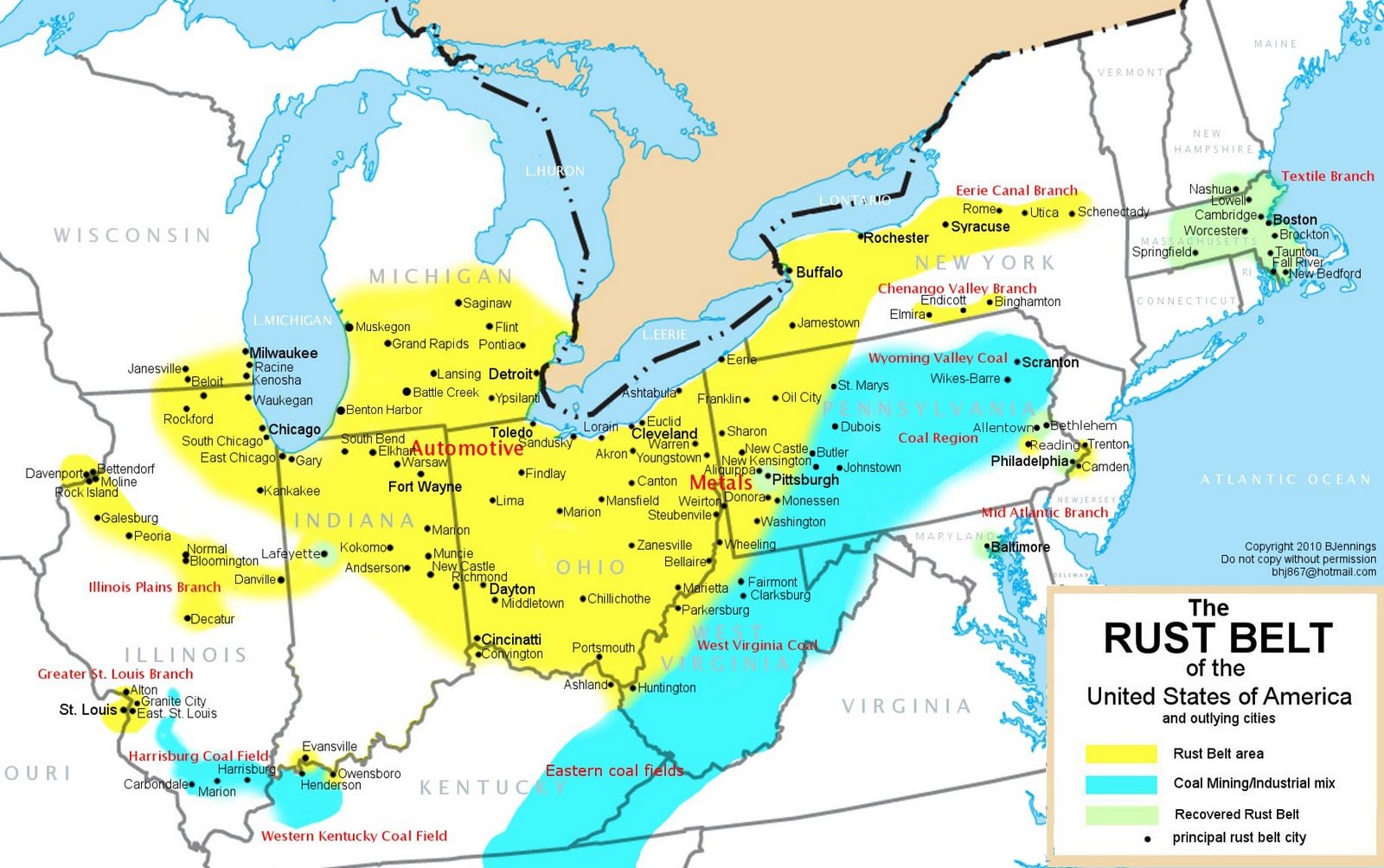
For people who love putting things into categories, Pittsburgh has to represent an absolute nightmare! Known as the “Steel City”, no regional map would not place it firmly in the rust belt. Like other rust belt cities, it fell on some hard times when many key industries collapsed in the final 30 years of the 20th century.

However, Pittsburgh is also known for having made a comeback. It’s considered a blueprint for other cities looking for a revival after suffering from the decline of their primary industries.

Pittsburgh’s revival is commonly attributed to versatility in embracing new industries like health care and technology. The education infrastructure and leadership with a more long-term focus is credited with creating the conditions needed for the city to once again thrive.

The story is reminiscent of countless personal stories of people who suffer major setbacks in life and later make a comeback. These stories often involve people who become complacent and stagnant. Typically their livelihoods get disrupted by external events they are unprepared for. Their personal revival stories typically revolve around a combination of adapting a new way of looking at things and tapping into core strengths they possessed all along.

For a long time, Pittsburgh was a place that valued science and education. It is home to several major universities.

Benefiting from it’s hilly terrain, it is also home to the Allegheny Observatory, an observatory over 150 years old where countless star distance calculations have been made.

The hilly terrain makes Pittsburgh unique in other ways.

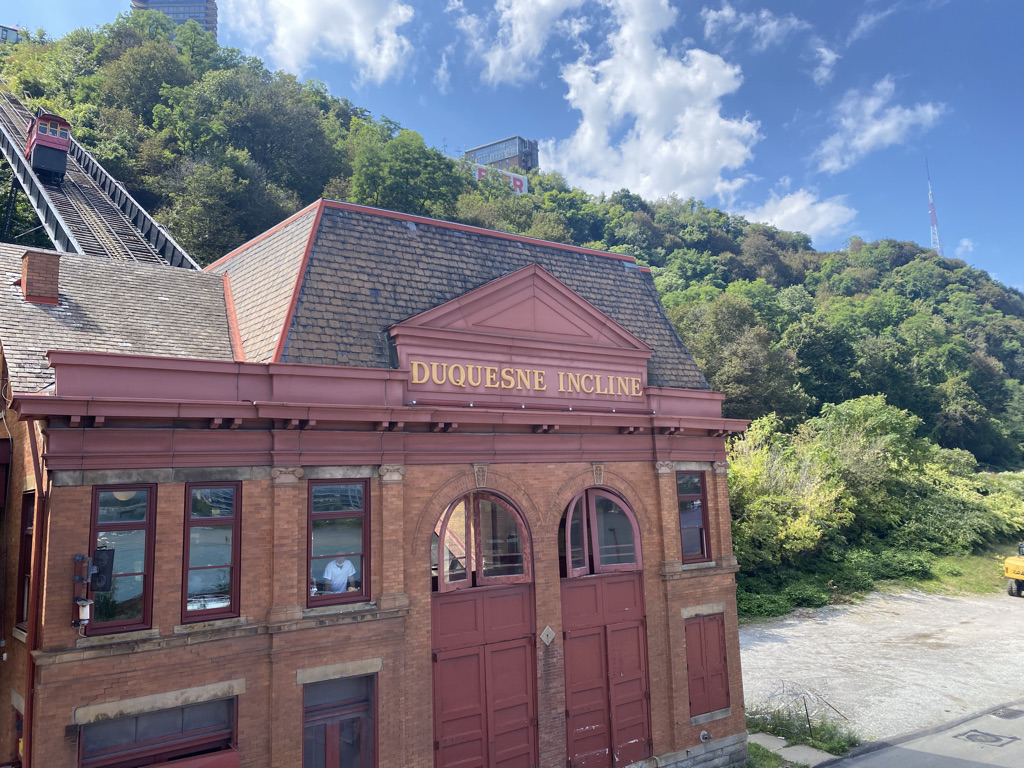
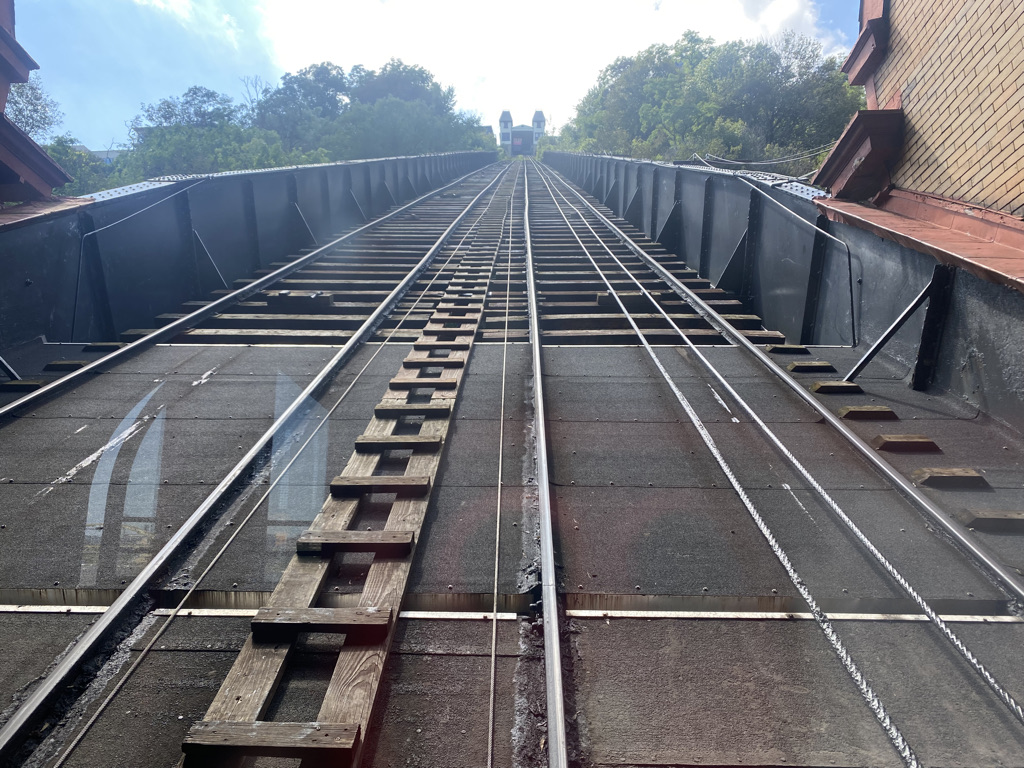
One of the city’s top attractions in the Duqeuesne Incline, a reasonably priced and dog friendly tram one can ride to overlook the city.

It’s also a historic commuter train as walking up the side of a bluff is often treacherous.

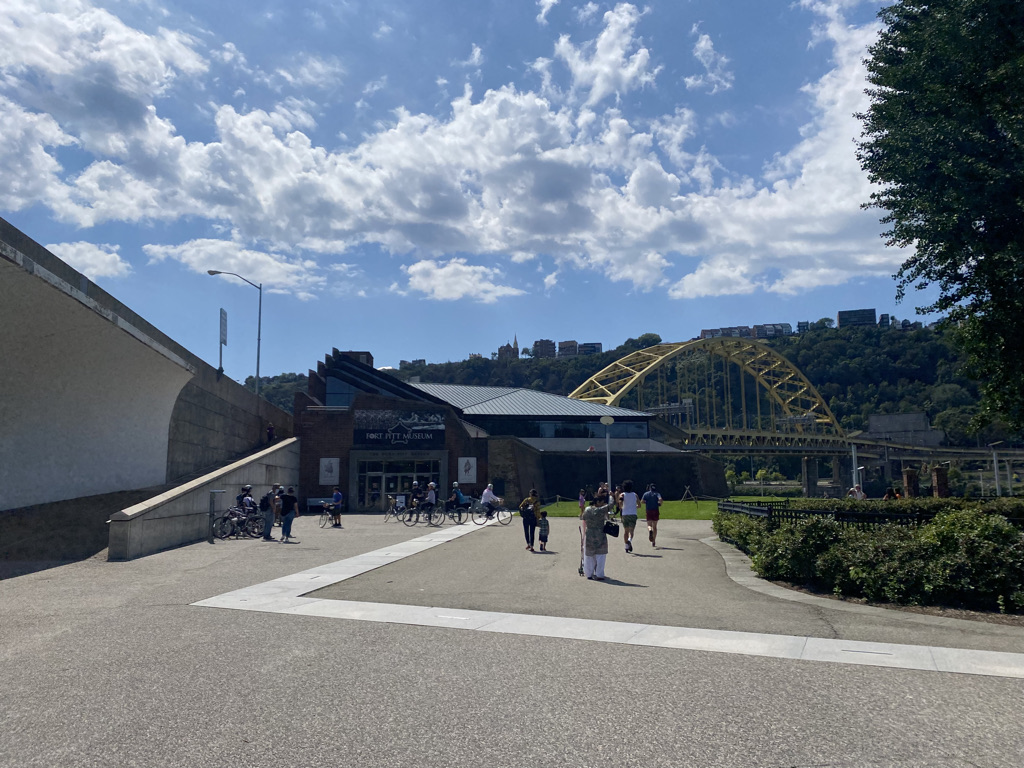
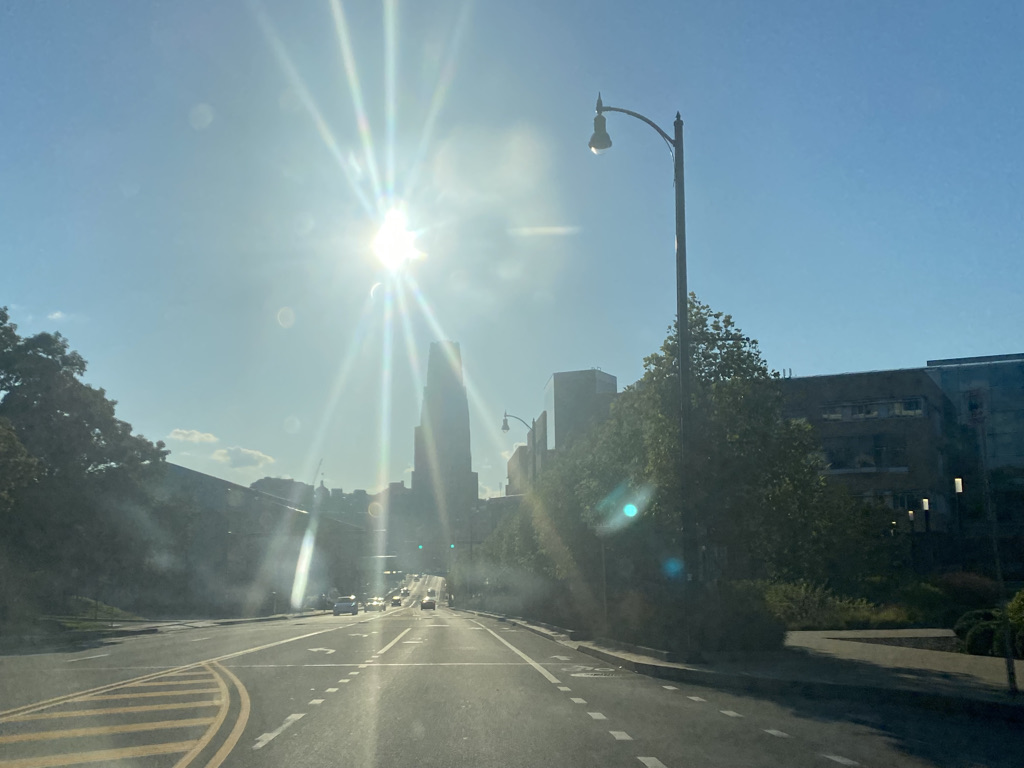
In fact, the entire layout of the city is forced by these geographical features. The city’s downtown is situated where the Allegheny and Monongahela Rivers converge into the Ohio River.

Both the football and baseball stadiums are right downtown.

Along with your typical big office buildings and a square which surprisingly seems to attract a lot of loud cars and motorcycles.

To the east of downtown, sandwiched between the Allegheny River and a densely forested bluff is the strip district, which seems like a standard tourist destination.

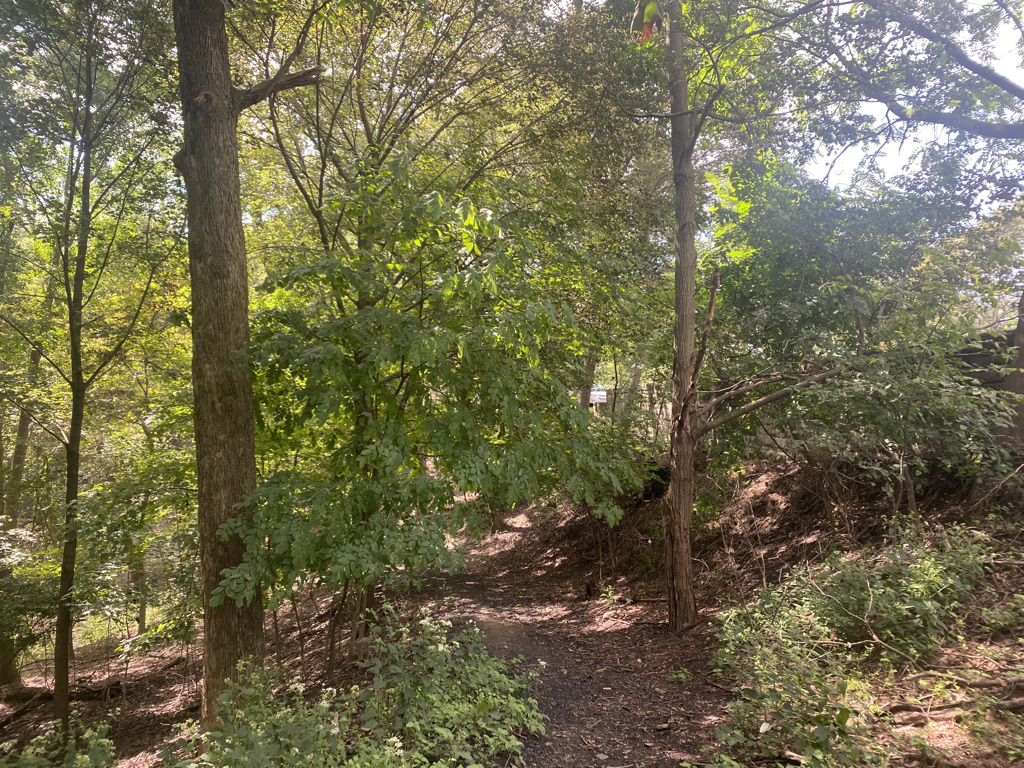
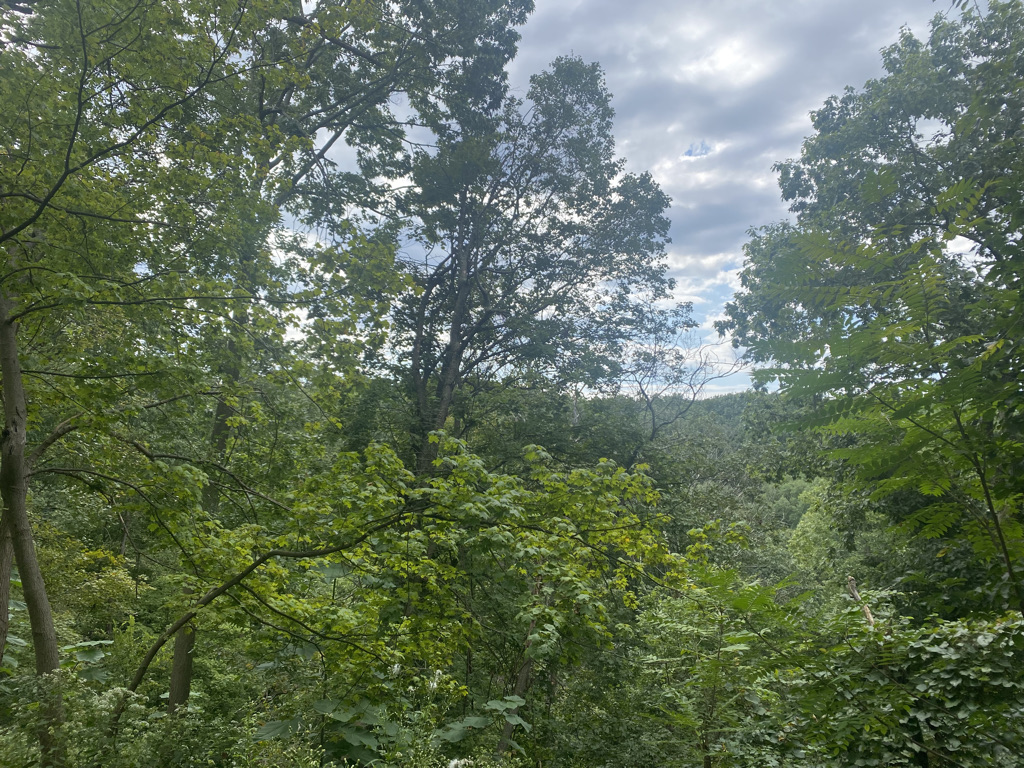
Pittsburgh’s most unique quality has to be legitimate hiking within the city limits. Riverview Park, on the north end, is one of several places with a system of trails that have significant terrain and fairly dense forests.

It is also a place with plenty of other parks.

When many think of Pittsburgh, they may still think of it as a rust belt city with a rough exterior.

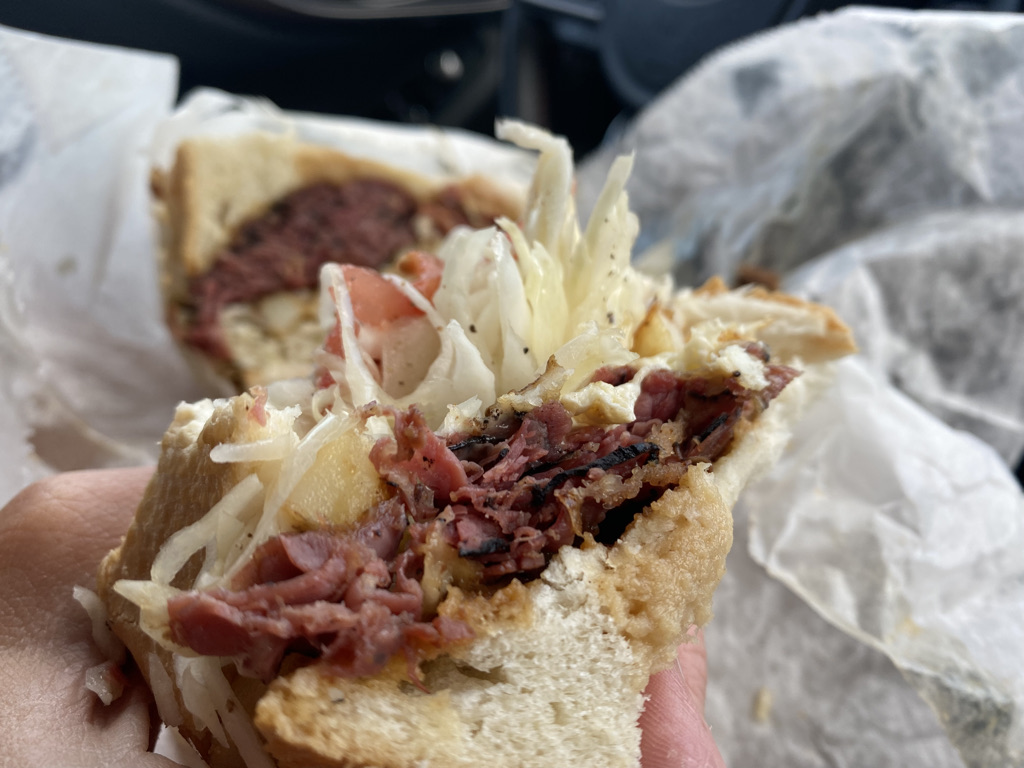
That, of course is only part of the truth, one aspect of the city’s culture. Many of the things Pittsburgh was about before the decline and subsequent revival are still there. There is still all the ketchup.

Pittsburgh’s history also involves a lot of food and traditions based on Eastern European culture.

However, the city has managed to incorporate the amenities demanded by talented urban professionals in the 2020s.

We all are, in a way, every chapter of our lives. A tour through Pittsburgh shows the city before the steel industry declined, during its dark days and in the current era. It’s a reminder of all of our personal stories and how even during the more prosperous times in our lives, the bumps we experienced along the road, as well as who we were before experiencing these setbacks are still a significant part of who we are. Battle scars don’t go away, they are just put into context.

Despite my sincere desire to avoid categorization or labelling, I could not help but want some kind of quick description of what Pittsburgh is. Do people think of it as on the up-and-up or in decline? Do people know how Pittsburgh is viewed by others? What region do they consider themselves to be in?

Pennsylvania has recently emerged as quite possibly the most important state in presidential politics. Walking around town, I could not help but wonder if people here were already starting to dread the inevitable onslaught of political ads that will be absolutely impossible to avoid in the run up to an election that is still over three years away.

When people try to make sense of this state, they will often say the state has a genuine east coast city in Philadelphia, aspects of rust belt and Appalachia and a midwestern city in Pittsburgh. But, some aspects of Pittsburgh felt downright eastern to me. There are the tunnels.

The bridges.

Some neighborhood have really tight roads, reminiscent of the Northeast.

As it is on the East Coast, the roads are often not in straight lines and the intersections are often not 90 degree angles.

In just over 24 hours, my long dormant east coast instincts regarding driving, walking pace, how to act and how to time things kicked back in.

What does the future hold for Pittsburgh? Based on what I have read and seen, it seems like the ability to adjust, long-term focus and unique spirit has not gone anywhere. So, most likely it will be a good one.

As long as people don’t get sick of cloudy days.

A Very Special Day for a Friend in Akron, Ohio

What we seek out, what we invest in, and what we are willing to spend our time and money on has undergone an uneven and somewhat nebulous transformation thus far this century. Perhaps this is because I grew up in the suburbs, but at the turn of the century, life seemed to revolve around shopping malls and the pursuit of material possessions. Since then, my focus has undergone two major shifts, one at the start of the century and one quite recently.

I now have nearly a decade’s worth of entries in this blog, primarily about travel and experiences. The transition from focusing on the material to focusing on the experiences, society-wide, can be seen on Instagram. The Instagram era, and what many people see in their feeds, is the embodiment of people switching from seeking out bigger homes and more stuff to put into them to seeking out experiences in general, many of which have been shared on Instagram over the past decade.

As I pointed out in two earlier blogs [1][2], this year, after all that recently happened, I suddenly found myself most interested in connecting with people. There are a lot of people who have and/or continue to play an important role in my life. At this point in time, this feels like the most important use of my time and energy.

We’re also seeing this shift society-wide. More people are talking about the importance of connecting with locals and local culture while traveling. People are now sharing tips and even building apps to facilitate this pursuit.

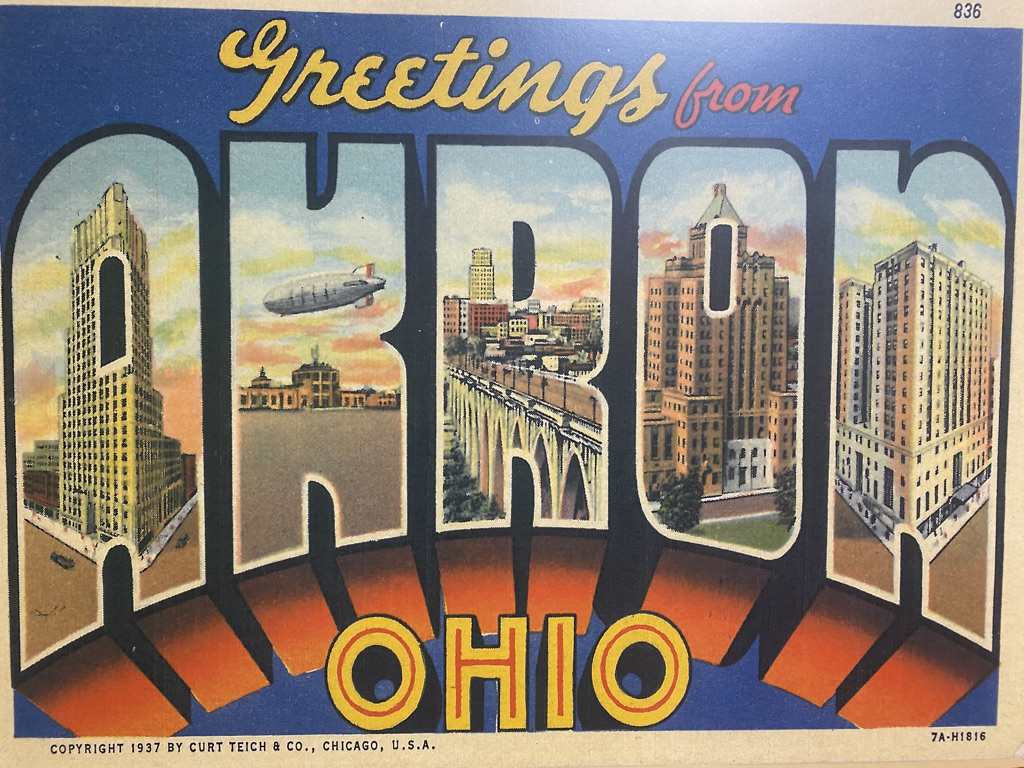
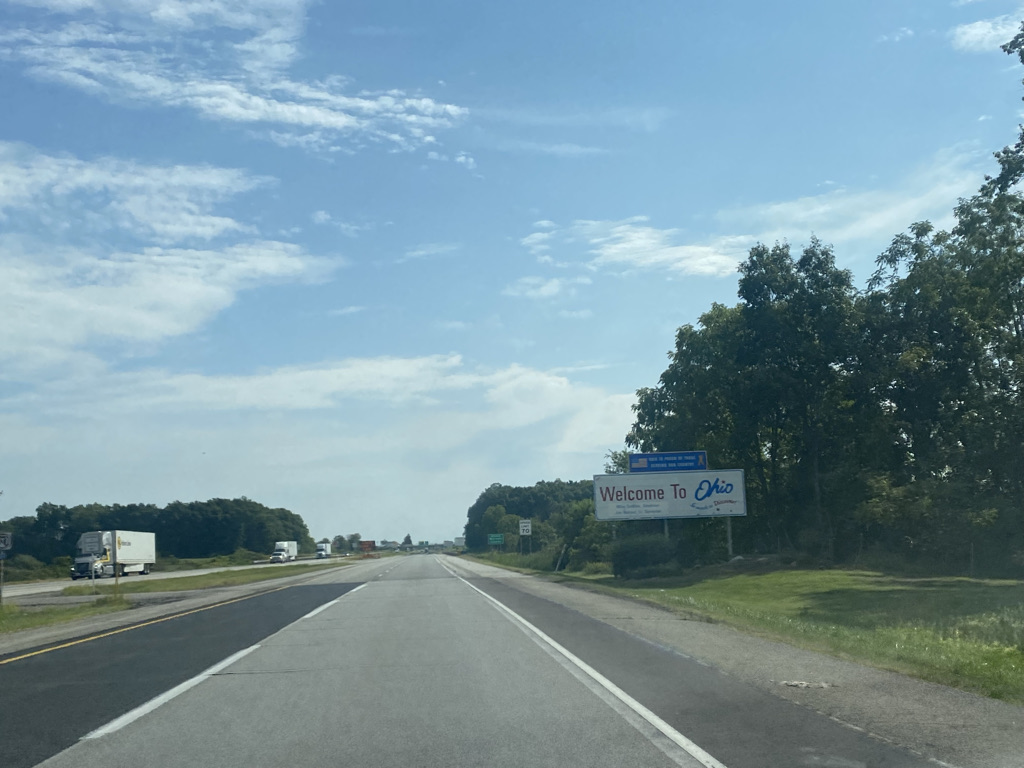
To end the Summer of 2021, I went to Akron, Ohio.

To go to a Minor League Baseball Game.

Traveling 1300 miles (2100 km) to go to Minor League Baseball game is not something that is going to appear on anyone’s bucket list. As was the case with my earlier trips this summer, the purpose of this trip was connection.

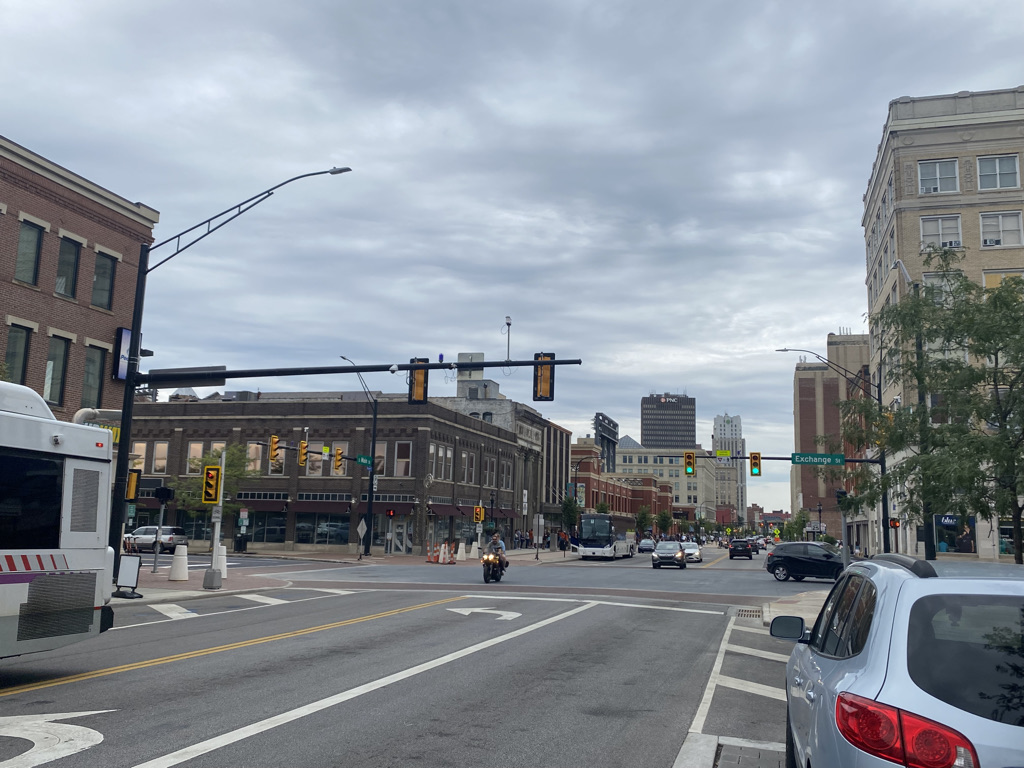
That being said due to its location in the “rust belt”, Akron often gets a bad rap. However, there is more to the place than industrial decline. It’s probably not the most desirable place to live but it is certainly underrated.

It has a fairly lively downtown.

There are other interesting neighborhoods with some interesting places to go.

And, there a lot of outdoor places to explore.

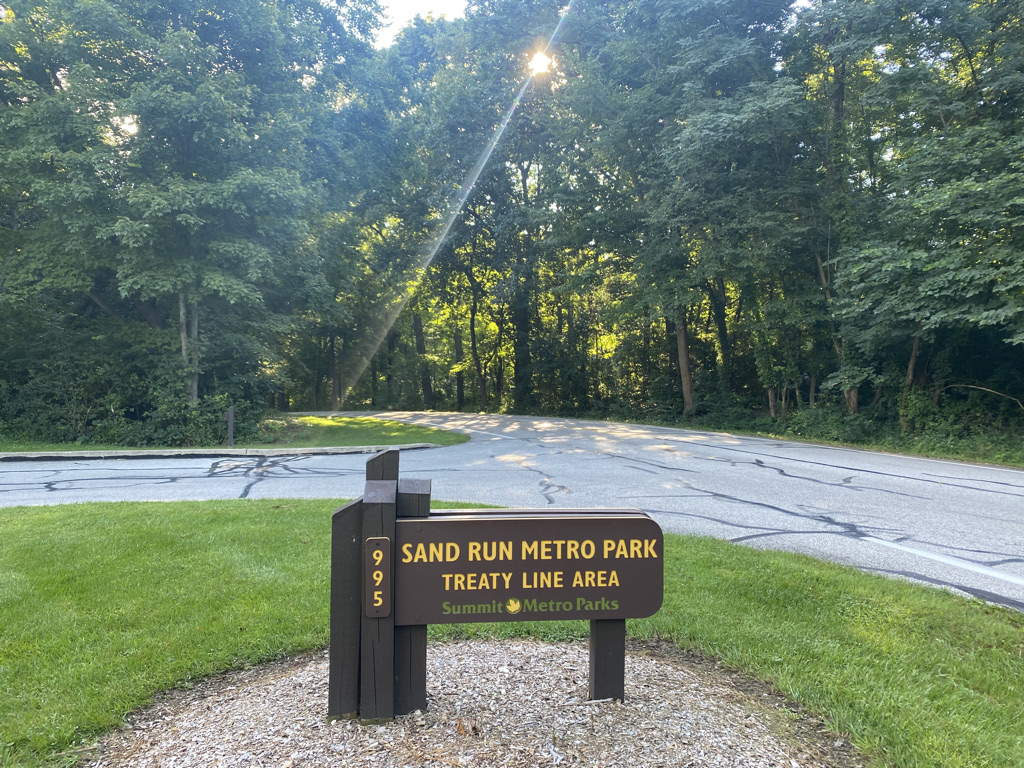
The Summit Metro Parks are right next to the city.

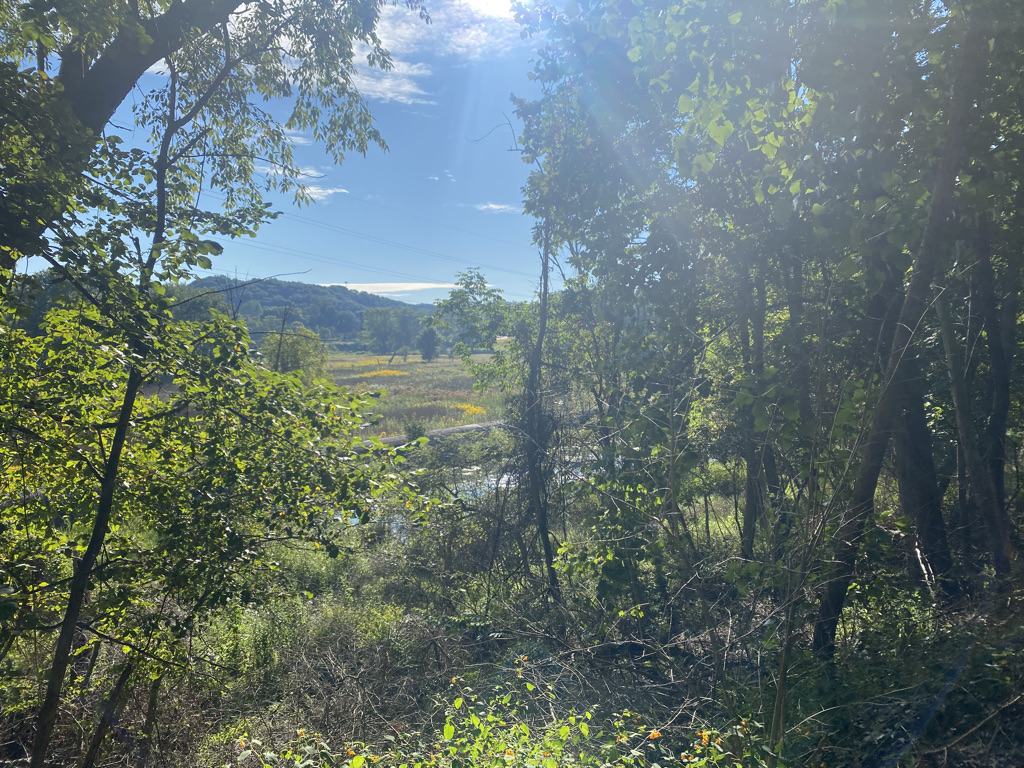
In this park there a series of trails with dense deciduous forests and a little bit of terrain!

The Buckeye Trail runs right through the park.
There are also some other hidden gems.

This particular railroad crossing reminded me of another time and place where people would commonly run or dismount a horse and jump into the open car of a moving freight train.

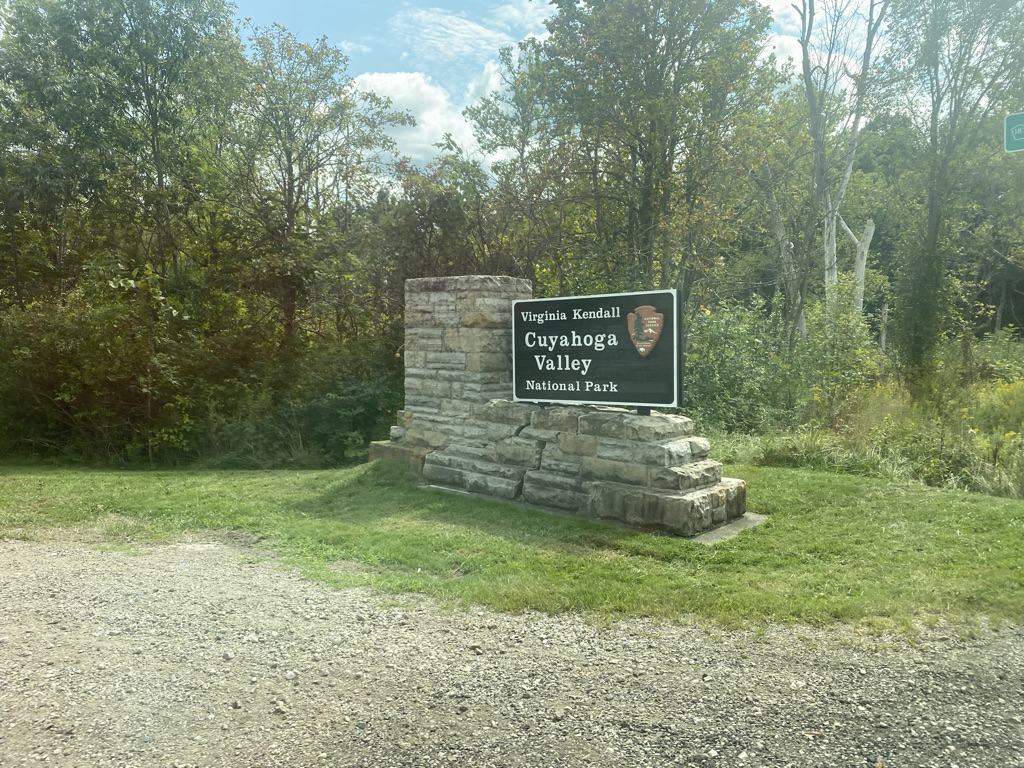
The other gem close to Akron is Cuyahoga Valley National Park.

Hiking in Cuyahoga Valley National Park is fairly similar the Metro Parks hikes. There are the trees and rolling hills.
Cuyahoga Valley is one of the free National Parks. It also does not appear to be as crowded as some other National Parks can be.

Akron is also right in the middle of an 87 mile trail that connects it with Cleveland, as well as Canton and New Philadelphia. Following the Cuyahoga River, runners and cyclists encounter some scenic spots.

As society shifts it focus from the material to experiences and connection, as we shift our priorities, expectations, habits, and how we perceive work, value and power, our patterns of travel will shift. The conciseness on the post pandemic world where we use virtual meetings more, is that there will be less travel for work and more travel for pleasure. It also feels like more combination trips are in our future. This is because, it is possible to meet people and coordinate work virtually, without having to spend time, money and energy traveling. However, to CONNECT, whether it be with other people, with places, cultures or ourselves, will still require significant amounts of travel. What will likely shift is where we go, when we go there and how we get there.

My Thoughts on Turnpikes

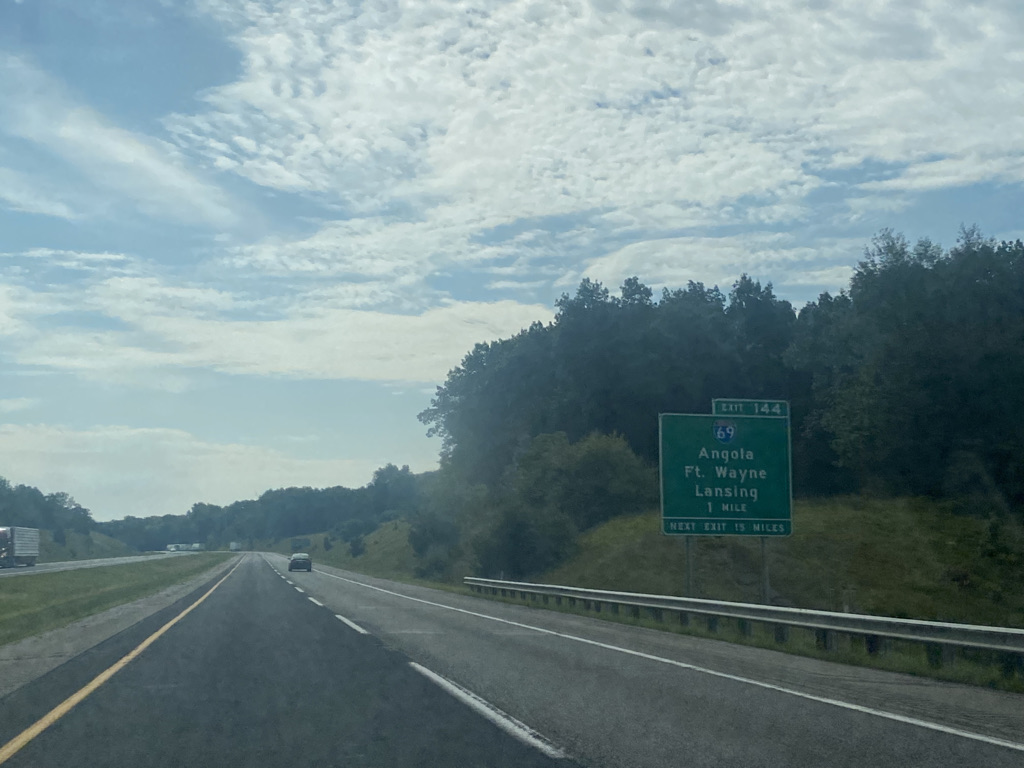
The Indiana Toll Road and Ohio Turnpike are not the most exciting of journeys. Much of the area looks exactly the same. The terrain is quite flat. There is corn and soy everywhere. The road connects a series of medium sized cities, coming close enough to efficiently connect them without actually passing through them. It is a form of transportation that maximizes one thing and one thing only: temporal efficiency.

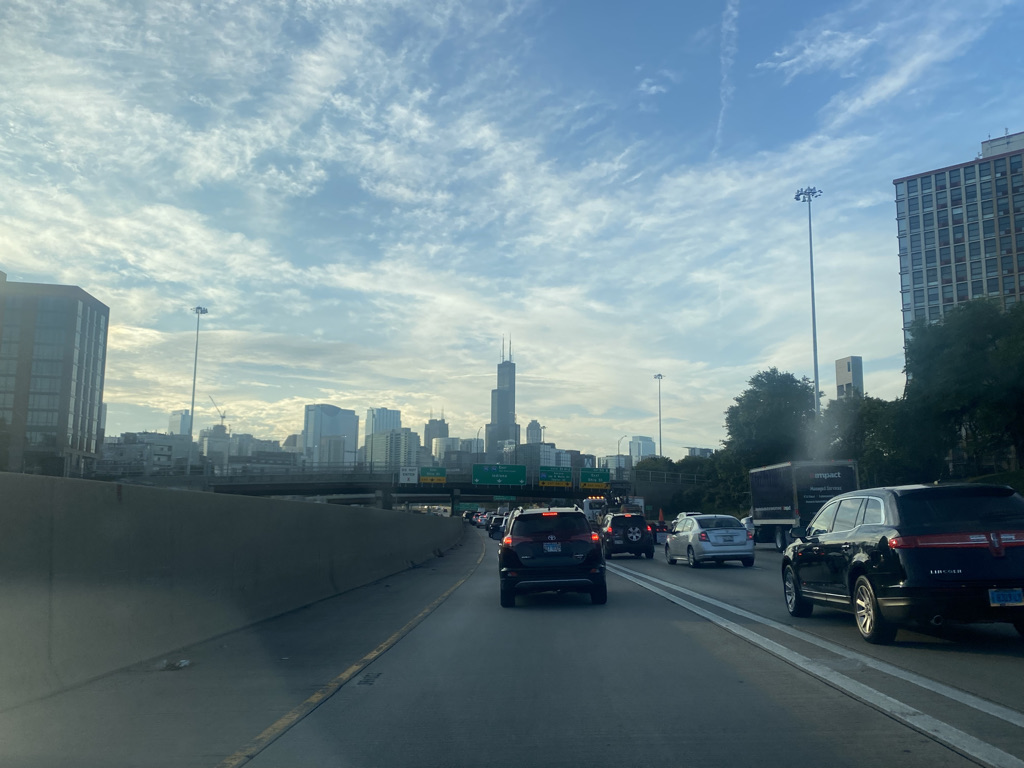
In the Midwest, all roads start and end in Chicago. It took me a while to realize that, while Chicago is right in the middle of the region known as the Midwest, and is its unofficial capital, Chicago is really nothing like the rest of the Midwest. It is a big international city. It moves at a pace that is closer to that of other large cities than the rest of the Midwest.

Once someone leaves the greater Chicago area, they are likely to encounter a completely different mentality and a completely different way of life.

Chicago also kind of divides the Midwest. There are some subtle differences between what lies to the West of Chicago and what lies to the East. These subtle difference are probably only commonly thought of by those of us who have lived in the Midwest and those of us who have driven across the entire region and had time to observe it.

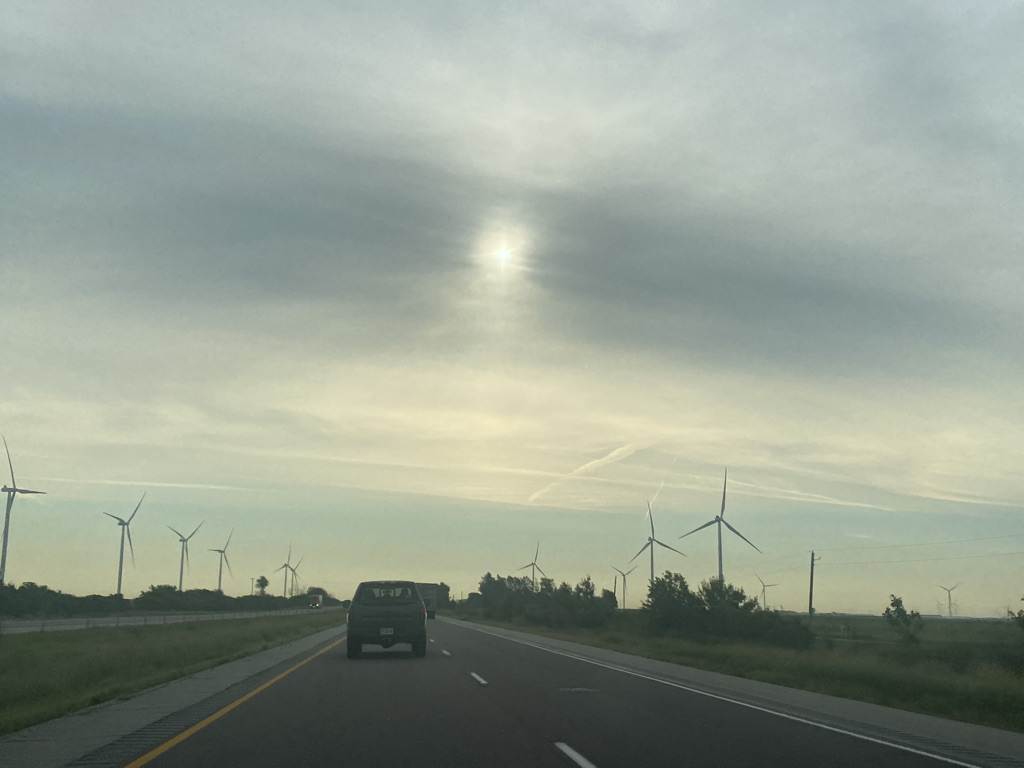
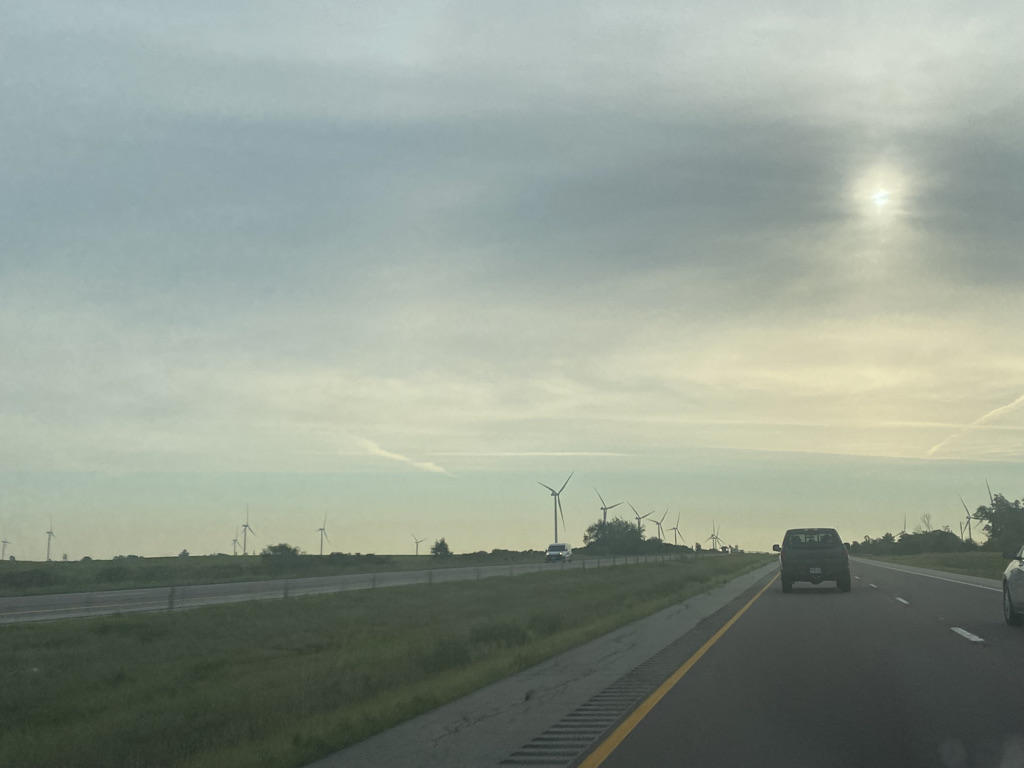
While there are farms everywhere in the region, the Western part of the region, West of Chicago seems to be built more around farmland. They have leveled enough trees to increase surface wind speeds (dense forests tend to reduce surface wind speeds) enough to make it a good place to build wind farms. The economies of many of the medium sized cities in this region are centered around farming equipment,

East of Chicago, trees are more plentiful. Medium sized cities here are a bit more frequent and they have more of a “rust belt” feel.

Cities here tend to have nicknames around what product are manufactured here…

  • Gary the Steel City
  • South Bend the Wagon City
  • Elkhart the RV Capitol of the World
  • Toledo the Glass City
  • Akron the Rubber City

As is the case with the subtle but noticeable difference between the region to the West and the region to the East of Chicago, there is also a subtle but noticeable difference between driving on turnpikes and driving on other highways.

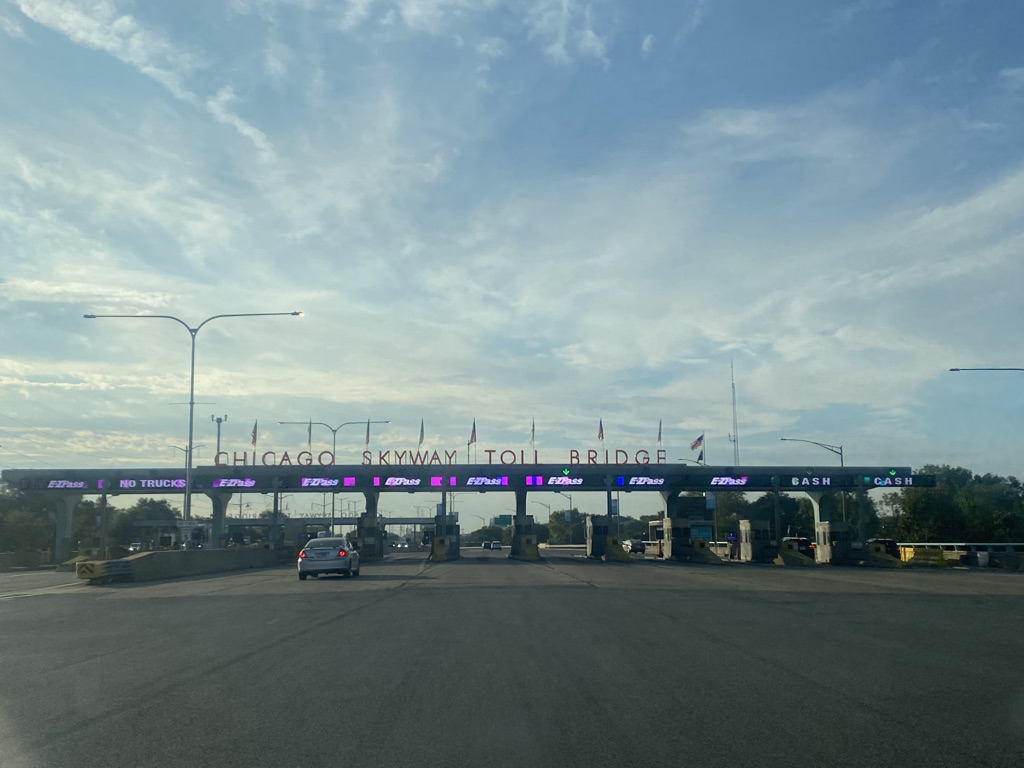
Turnpikes tend to have elaborate exit ramps to facilitate toll collection. As a result, exits are often quite far apart.

Two things happen. First, rather than pulling off at an exit to stop for gas, restrooms and food, it ends up being more common to stop at rest areas.

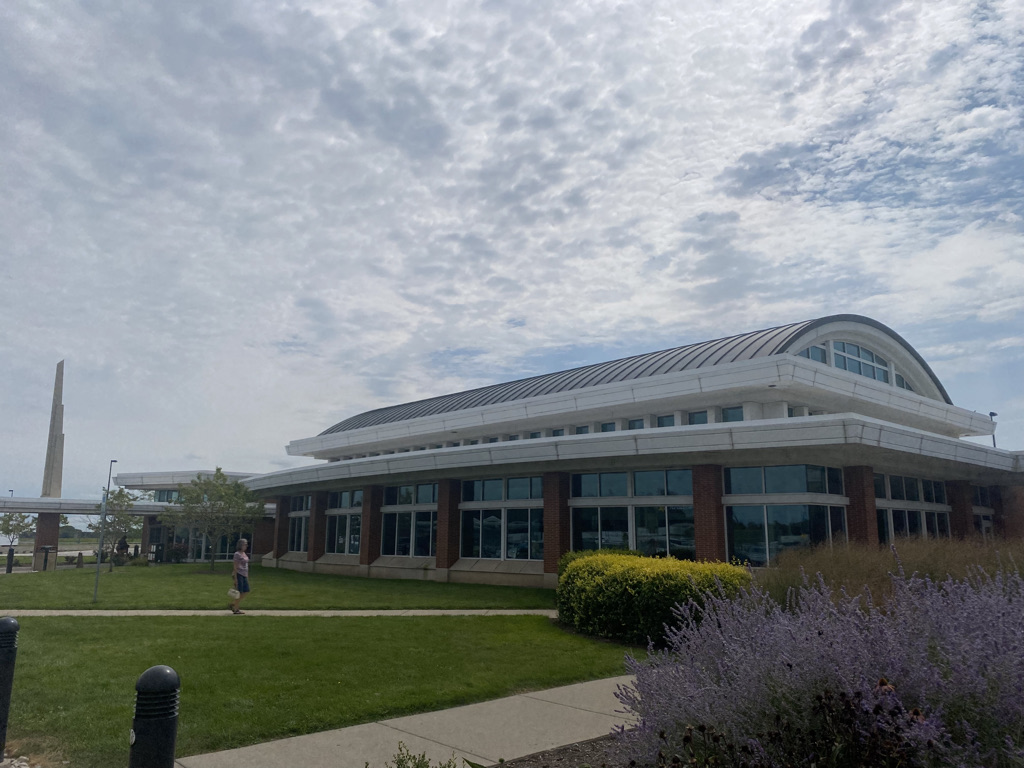
As homogenized as standard highway driving is compared with traveling on roads that go through the center of town, turnpike driving is even more homogenous. All of the rest areas on the Ohio Turnpike look exactly the same and many of them have the exact same food options.

Also, with the exits fewer and father between, it becomes far less likely that drivers will follow the most direct path from their origin to their destination. Getting to a location is more about finding the nearest exit than the series of roads that provide the most direct path.

Turnpike driving maximizes temporal efficiency, but it is not my favorite method of transportation.

When traveling from place to place, sometimes there are things more important than getting to a destination as quick as possible. There are places to experience along the way. The experience of traveling along the Indiana Toll Road and Ohio Turnpike is a reminder of what we lose out on when we focus on one metric and one metric only, in this case temporal efficiency. While South Bend, Elkhart, Toledo and Sandusky will not top anyone’s list of top vacation destinations, whizzing by them from 10-20 miles away on a homogenous turnpike still feels like missing out on something that has the potential to be a worthwhile experience.

Reflection on Iowa

After yet another drive across the State

In my younger years, my experiences with the State of Iowa were not always positive. One time, I was at a conference in downtown Des Moines and found it surprisingly challenging to find a suitable place to eat. When I was 21, I visited Ames. I recall taking a series of shots, one green, followed by a yellow one and then a red one. I believe the tradition is called the “stoplight.” Energized by these shots along with my then usual rum and coke I was ready to let loose. I asked “what are we doing”. The response was “sitt’n and drinking.” The 21 year old version of me, always looking for more activities, found this absolutely ludicrous.

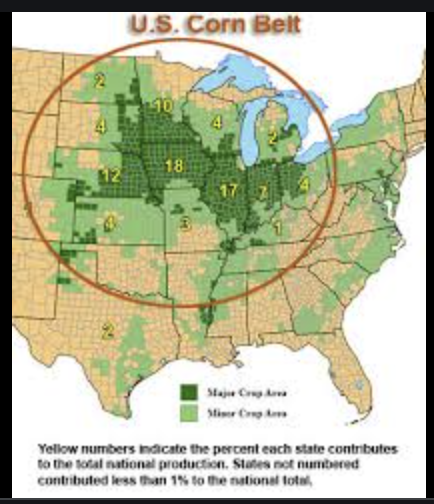
Iowa is primarily known for corn. It’s the top producer of corn and the only state that lies completely within what is known as the “corn belt”. The fact that those who drive across the state see nothing but corn was even the subject of a funny song that barely lasts half a minute.

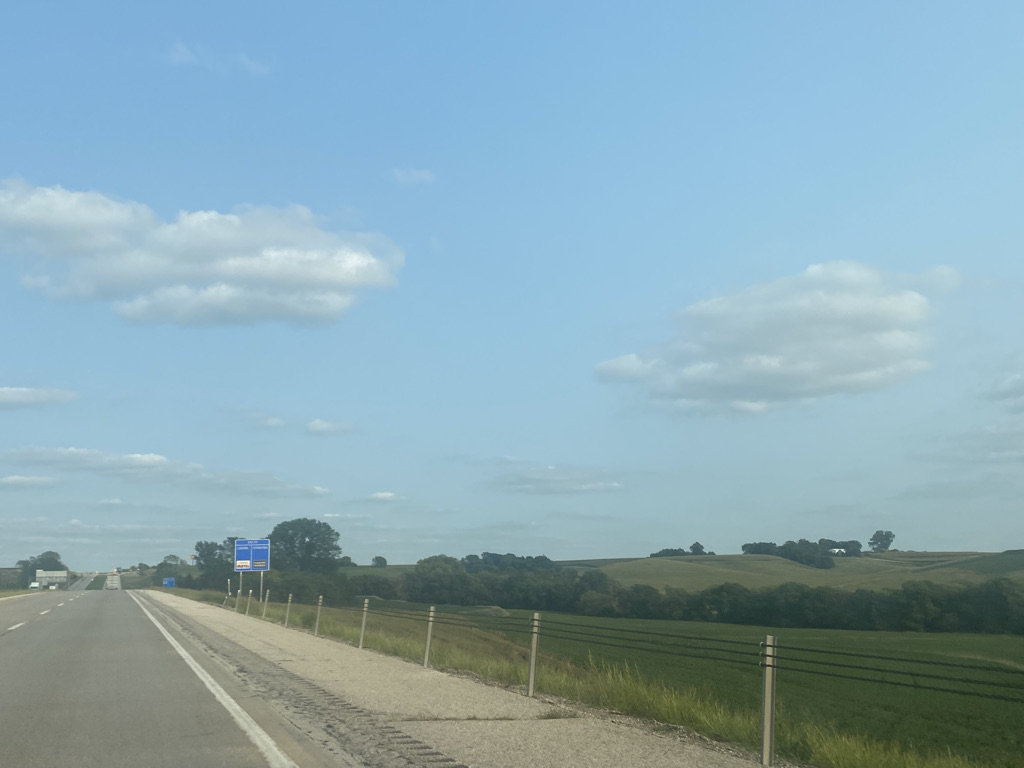
The drive across the state can be pretty monotonous, especially considering that Interstate 80, the highway most people use to cross the state, does not even go through the center of the towns it connects.

It is all pretty much the same thing, gentle rolling hills, farms, small towns, and, yes, tons and tons of corn fields. After a while I start to imagine what life is like here. What do people do on a day-to-day basis? What are the interesting and exciting activities? What worries them?

Was I only demanding these perfect restaurants in downtown Des Moines because I have become so accustomed to having so many options where I am from? Why is “sitting and drinking” not good enough for me? What am I chasing and is it making me happy?

It is easy to imagine life in Iowa being a kind of beautiful simplicity.

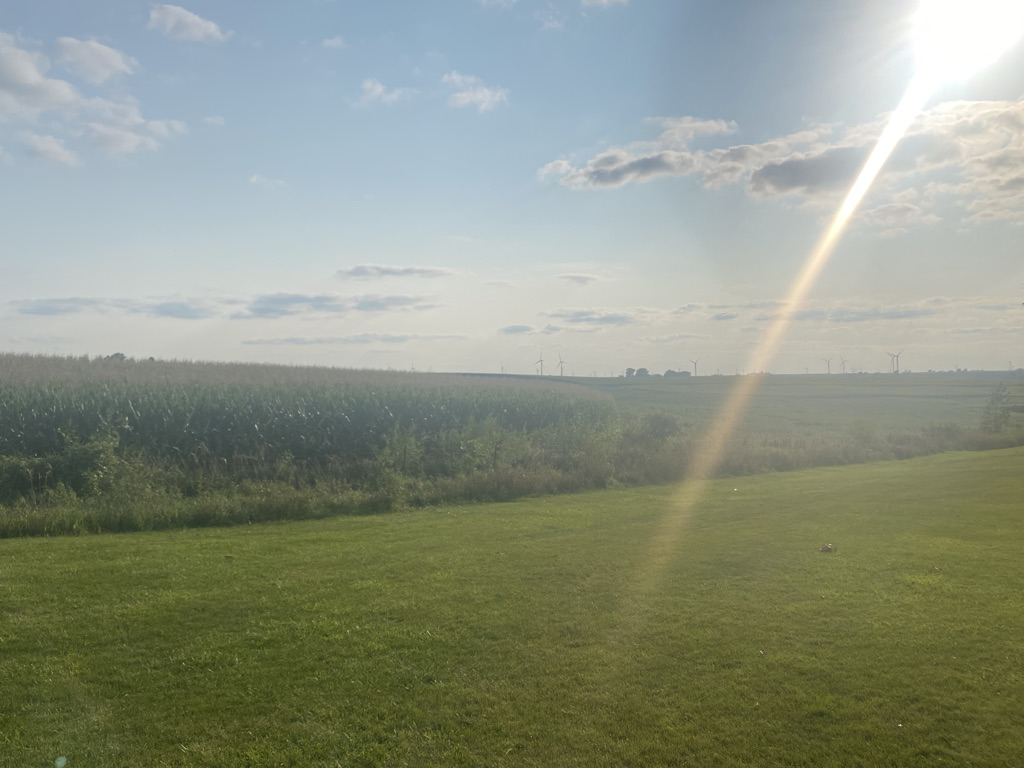
There are certainly uglier things to look at than corn fields kissed by the sun in the early evening hours on a late summer’s day.

Maybe what I dismiss as boring is a life that is actually satisfying to millions of people. Maybe the farmers across the state feel a sense of pride in growing the corn that feeds the nation’s cows that feed the nation’s people. Maybe people here love their communities. Maybe they love seeing people they know, deeply and personally, every time they go to their local grocery store or their local restaurants. Maybe they go over to each other’s houses and just play games. They could even enjoy just feeling the fresh air and watching the corn stalks sway in the wind.

Maybe that experience provides a deeper sense of satisfaction than having all the fancy items in the grocery store and five star restaurants with exotic food. Could it be that we are chasing the wrong things? I think to my own life and how happy all the expensive things we are all working so hard to be able to afford are really making us. Is it worth the stress?

While I still don’t imagine myself being happy living in Iowa, the realization that there are people happy here does make me re-evaluate my own life. There is a part of me that is always striving for more. The world, of course, needs people like this, to consistently move humanity forward. However, there is also a part of me that gets excited over some of life’s more simple pleasures.

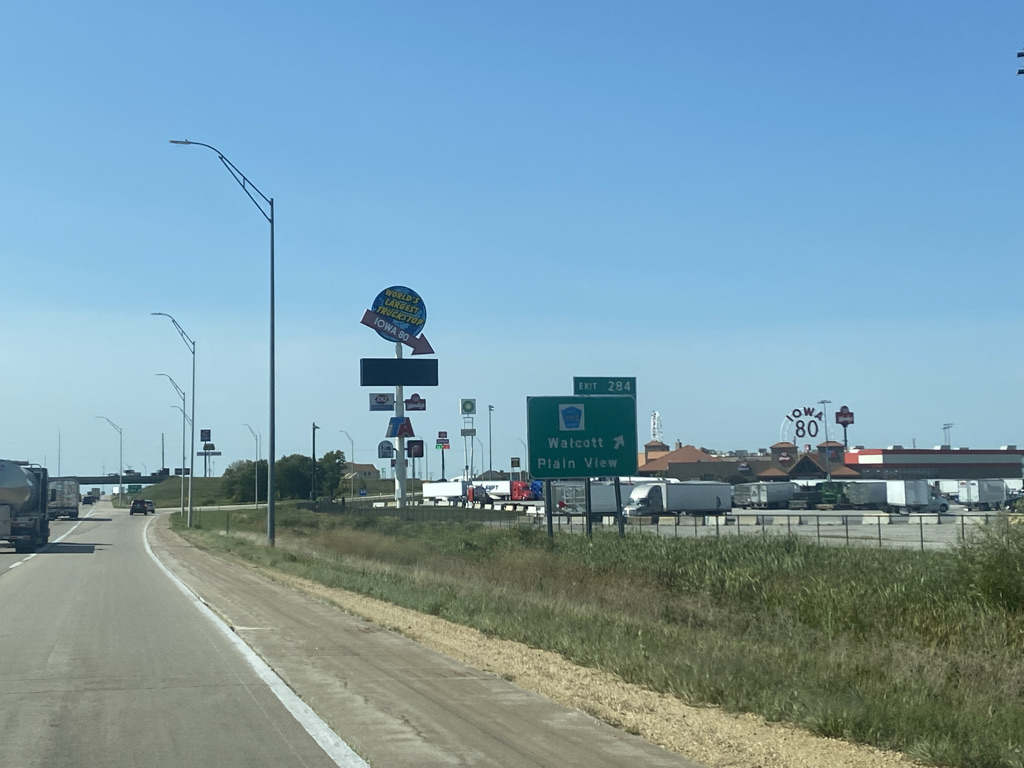
The world’s largest truckstop, in Iowa

Crossing Iowa, looking upon all the small towns and farms and imagining people who are perfectly content here inspires me to be present, pay attention and notice these small goofy things that make me happy. Sometimes in life that is all we have.

Columbine Lake- Grand County, Colorado

Many of Colorado’s outdoor activities involve putting the body through some kind of major challenge. There are no 14er climbs with less than 2,000 feet in vertical gain. Most 14er routes exceed 4,00 feet! Rock climbing, whitewater rafting and pretty much all of the State’s most talked about bike rides are quite physically challenging. There is a reason Colorado has the lowest obesity rate in the country.

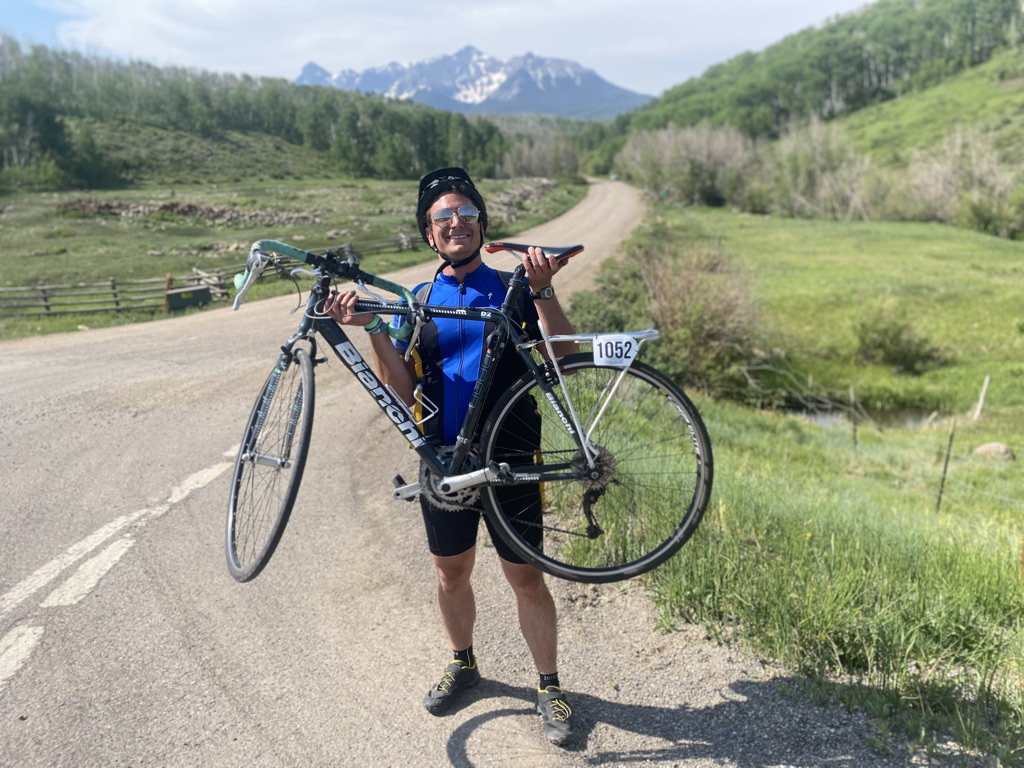
While these experiences improve physical health, there are spiritual benefits to being in nature and taking it at a slower pace. At a slower pace, one can fully observe, reflect, immerse and use that space to reduce stress and process thoughts. It’s a different kind of experience. After the extreme physical challenge that was Ride the Rockies, it was the kind of experience I was craving.

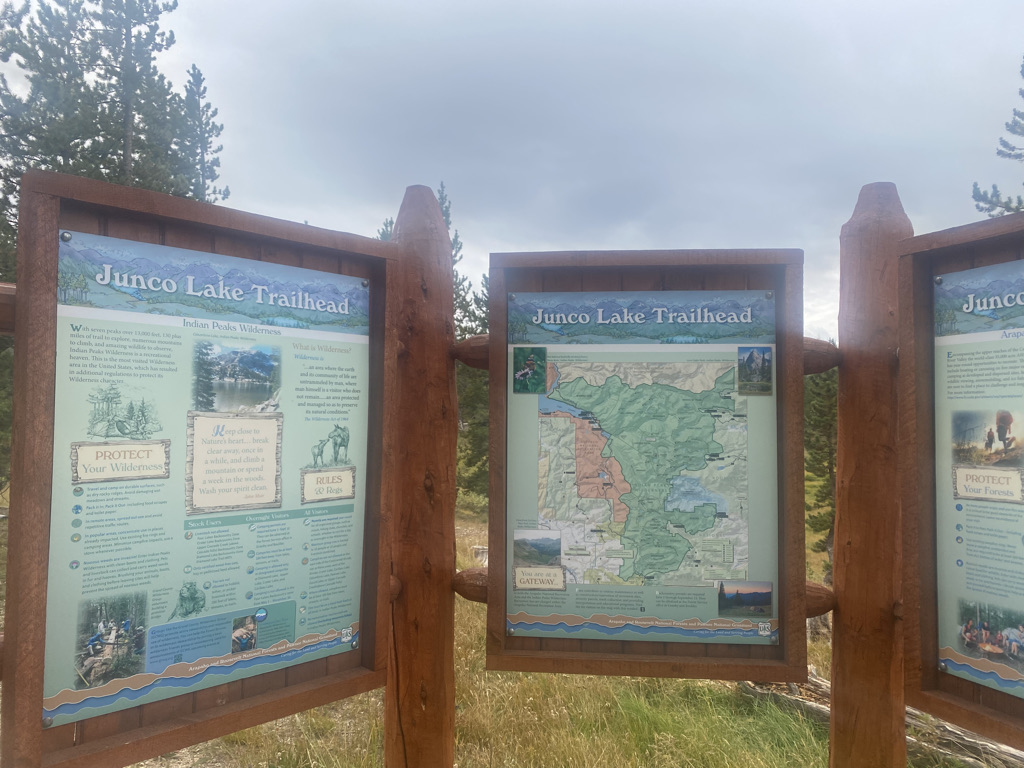
It may be challenging to develop the patience to just sit or walk slowly, especially after such a personal accomplishment. So, I found something in between the two extremes. I found a hike that would most certainly still be considered exercise, but not intense enough to distract from the experience of being in nature. That is Grand County’s Columbine Lake (there are two lakes in the state with this name so the distinction is necessary) via the Junco Lake Trail.

In addition to being a truly moderate trail, this particular hike is also both quiet and scenic. The catch is, getting there can be a little tough.

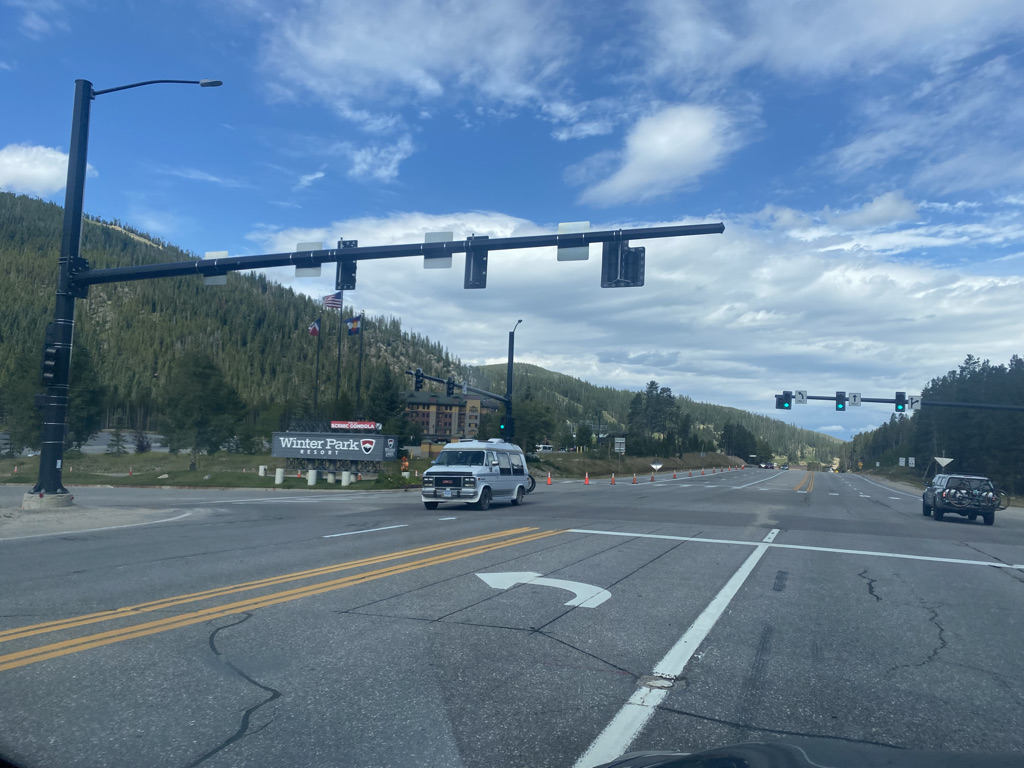
After driving through Winter Park along highway 40…

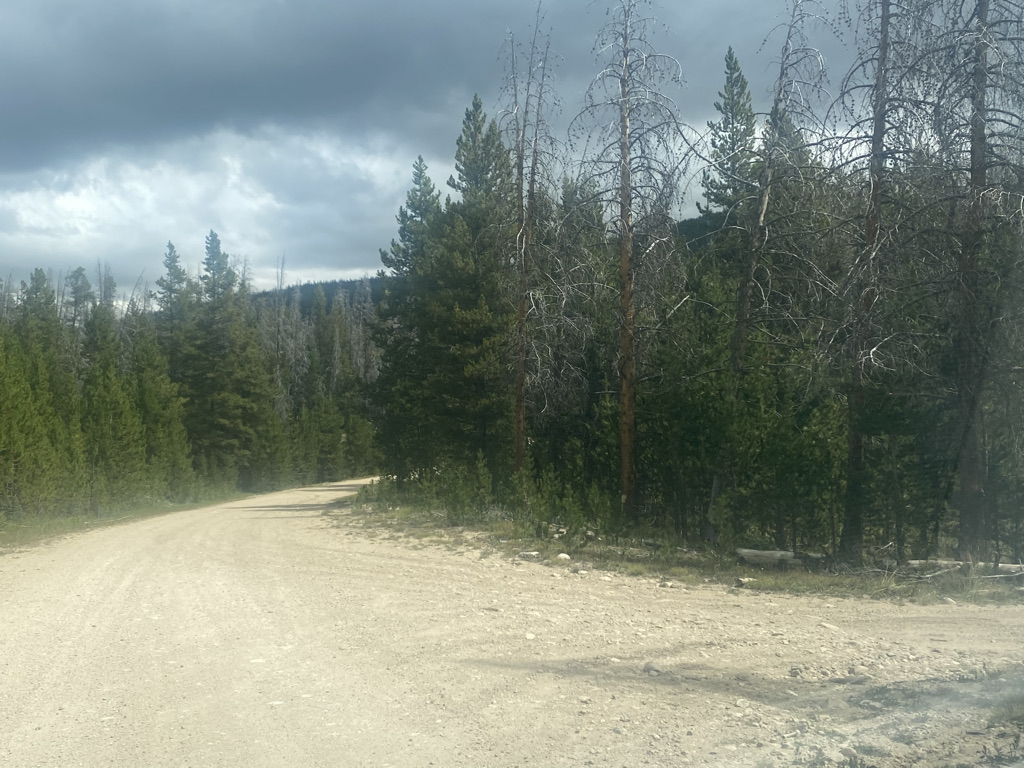
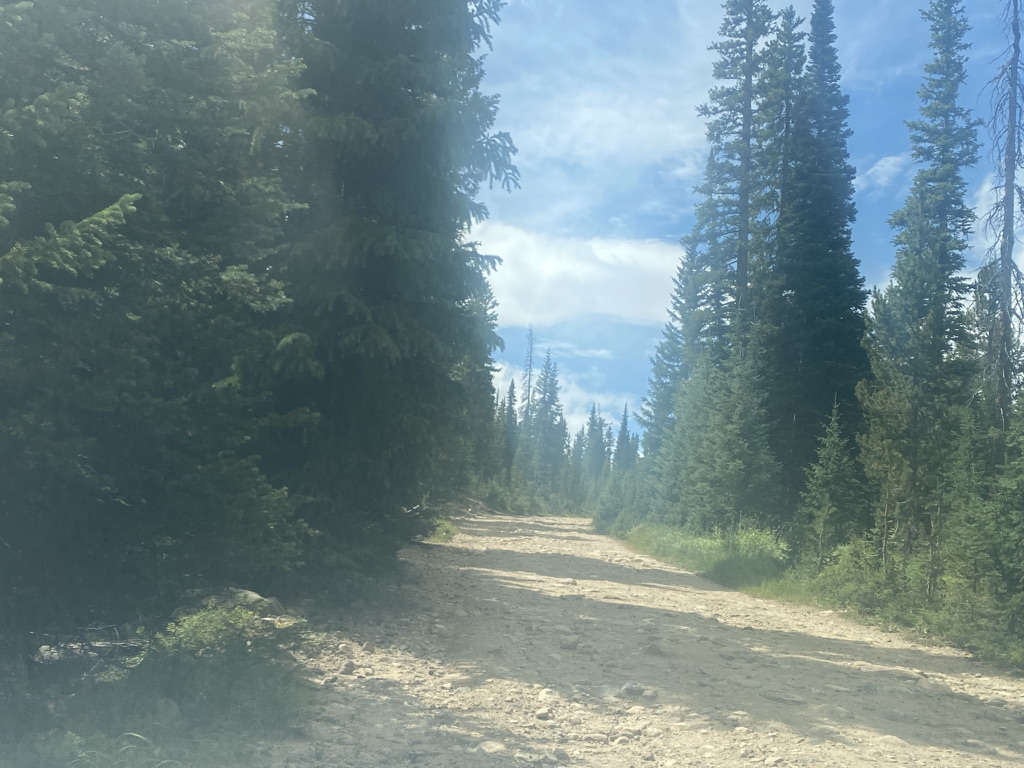
Getting there involves following an unpaved county road for about 12 miles, the final three of which can be quite rough.

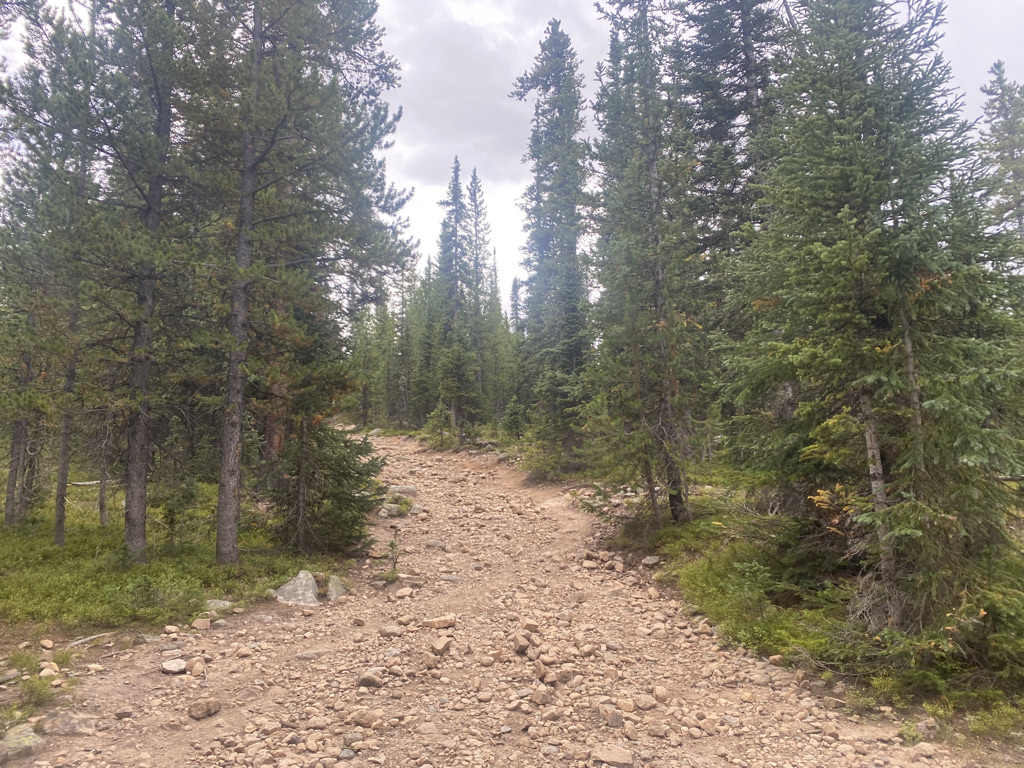
The trail also starts out rocky, in a manner that almost felt indistinguishable from the final few miles of driving to get to the trailhead.

This part was also pretty intense. At least it was intense enough to feel a lot more like a challenging hike than some kind of a walk in nature.

After this initial section, it felt exactly like the balance between active exercise and the spiritual experience I was looking for.

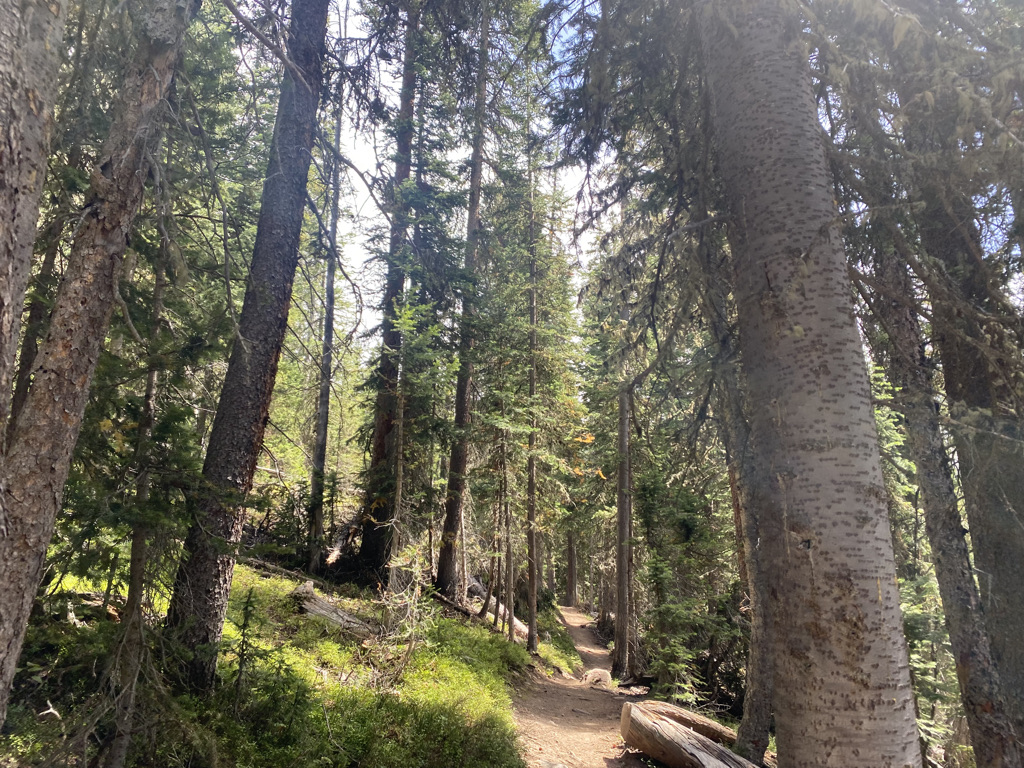
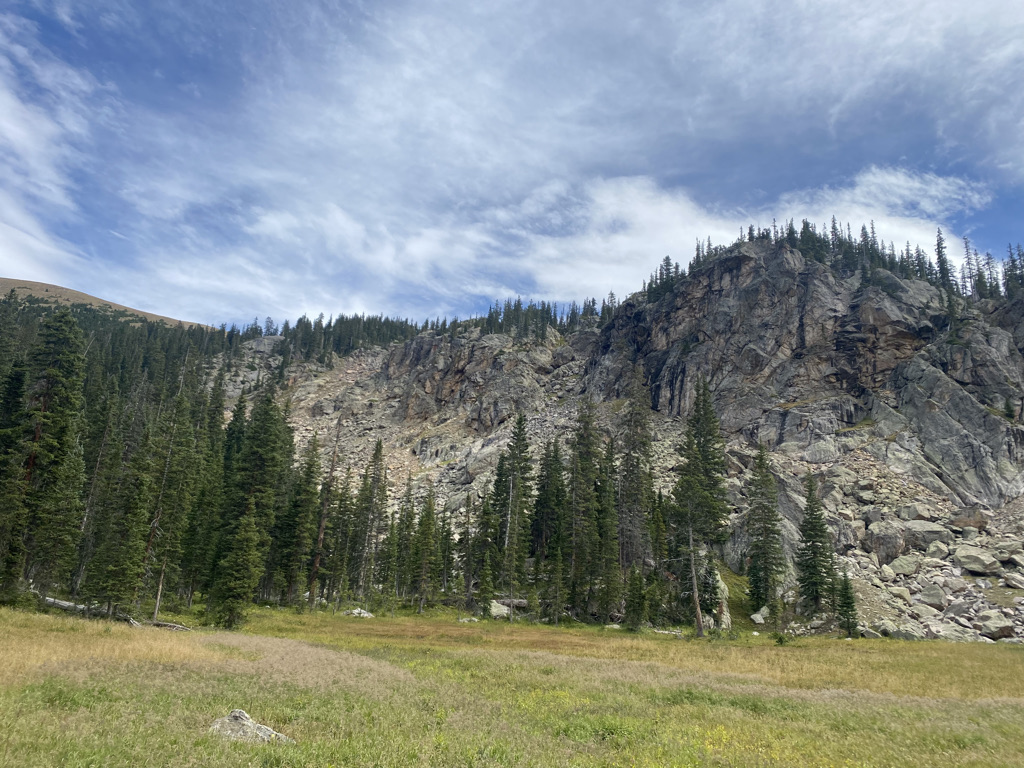
The trail also kind of switches back and forth between sections of dense pine forests and open meadows .

Finally, it follows a narrow creek with periodic mini waterfalls.

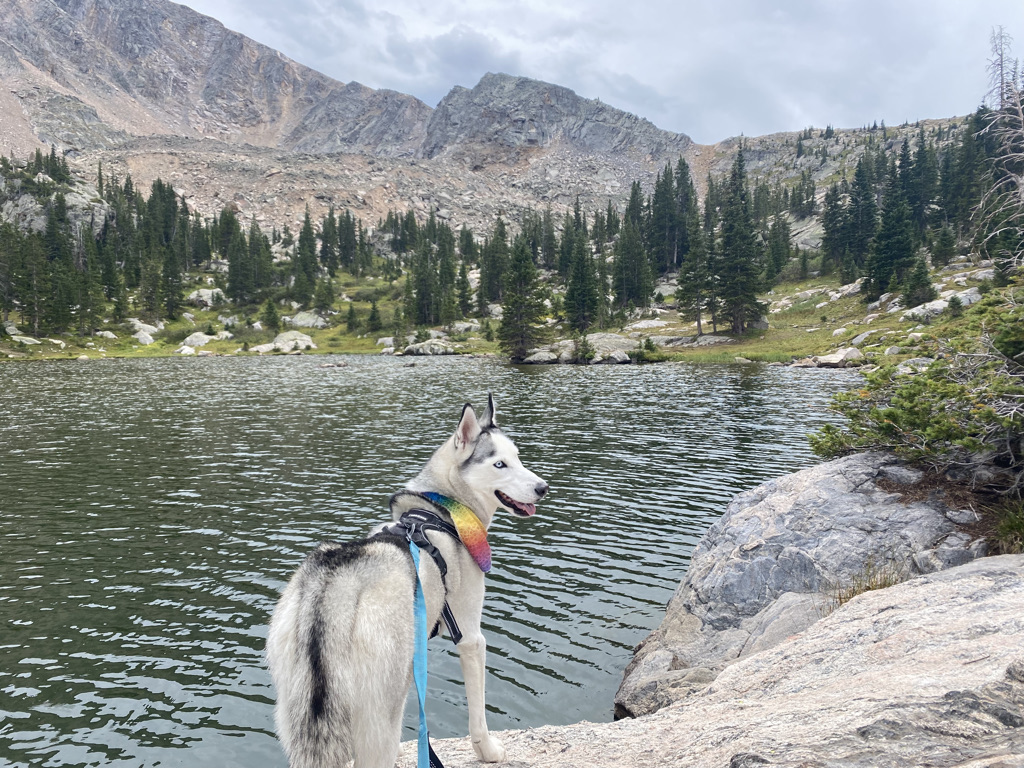
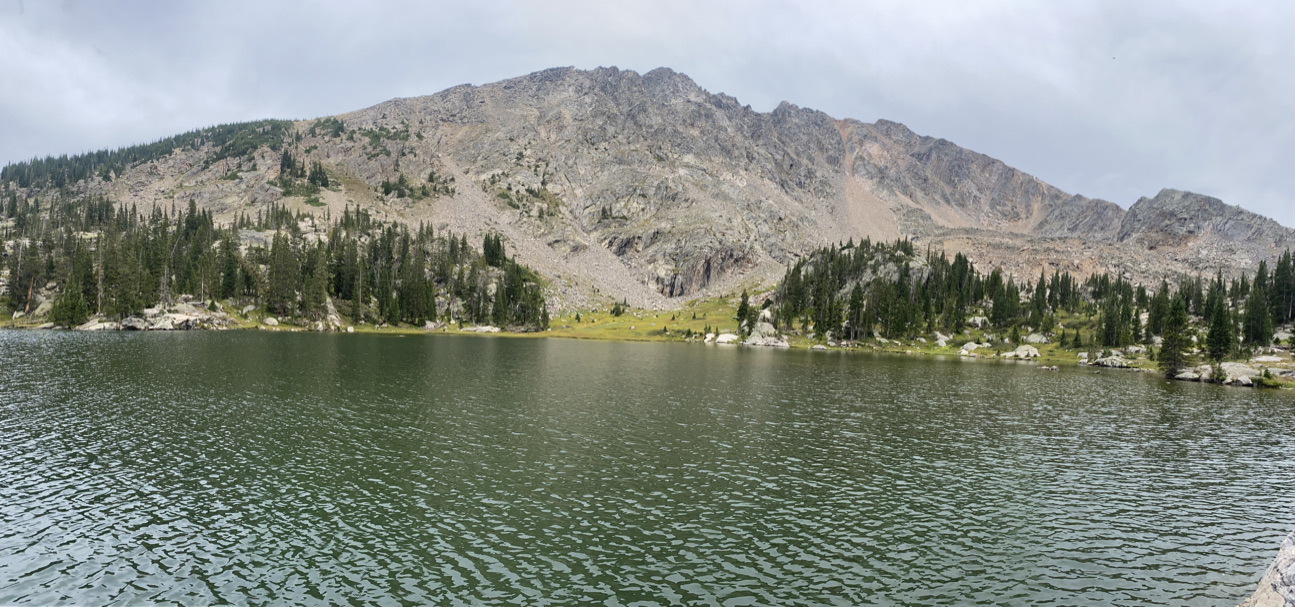
As it approaches the lake.

With open meadows and few other people, taken slowly enough, much of this hike could be the ideal setting for a spiritual experience. However, it requires some effort. It is almost reminiscent of Yoga, where the clearing of the mind comes only after pushing the body a little bit.

People are often searching for balance in life. This is frequently interpreted as finding some middle ground between two extremes. Could true balance also require a balance between moderation and that which is radical, extreme or intense? Likely, we all need some aspect of both in our lives. It ebbs and flows with different experiences taking a more prominent role in different seasons. In the end, it becomes all about getting the experiences we need to be complete human beings.

My First Two Flights After COVID

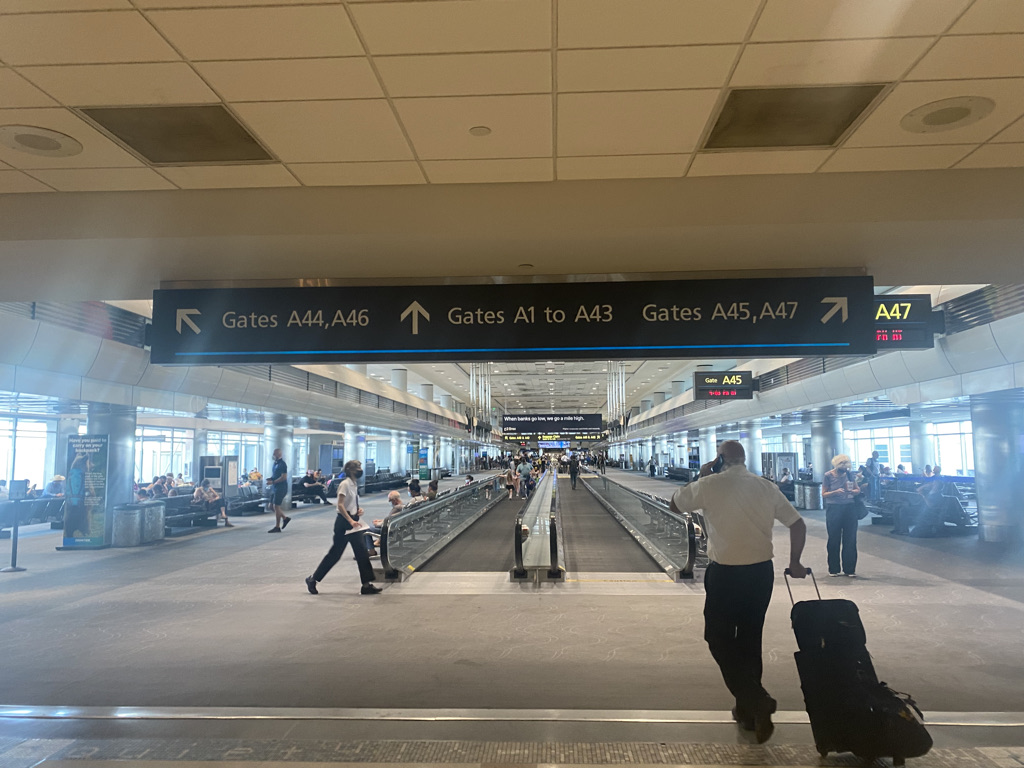
Okay, this blog should have been titled “My First Two Flights After Vaccination.” There’s this new variant of the virus that is causing an increase in sickness and death in some places. However, given my situation and the statistics presented to me about the effectiveness of the vaccine I received, I returned to living a mostly “normal” life this summer, which included hoping on an airplane for the first time in over a year (although I did still have to wear a mask).

It is often said that people’s actions are a better indicator of what they truly value than their words. When I returned to traveling, my first trips were not to explore some far away unknown place, even though I still really want to do that. Instead, I chose to travel to places that are familiar and not as exciting, for the purpose of visiting friends and family.

My first trip was to Minnesota, to visit with friends from college. This photo is going to appear strange, but my friends decided to produce “flat” cardboard versions of every member of our group so that if we ever have a gathering some people can’t make, we can still kind of bring them with us.

There’s a “flat” version of me too….

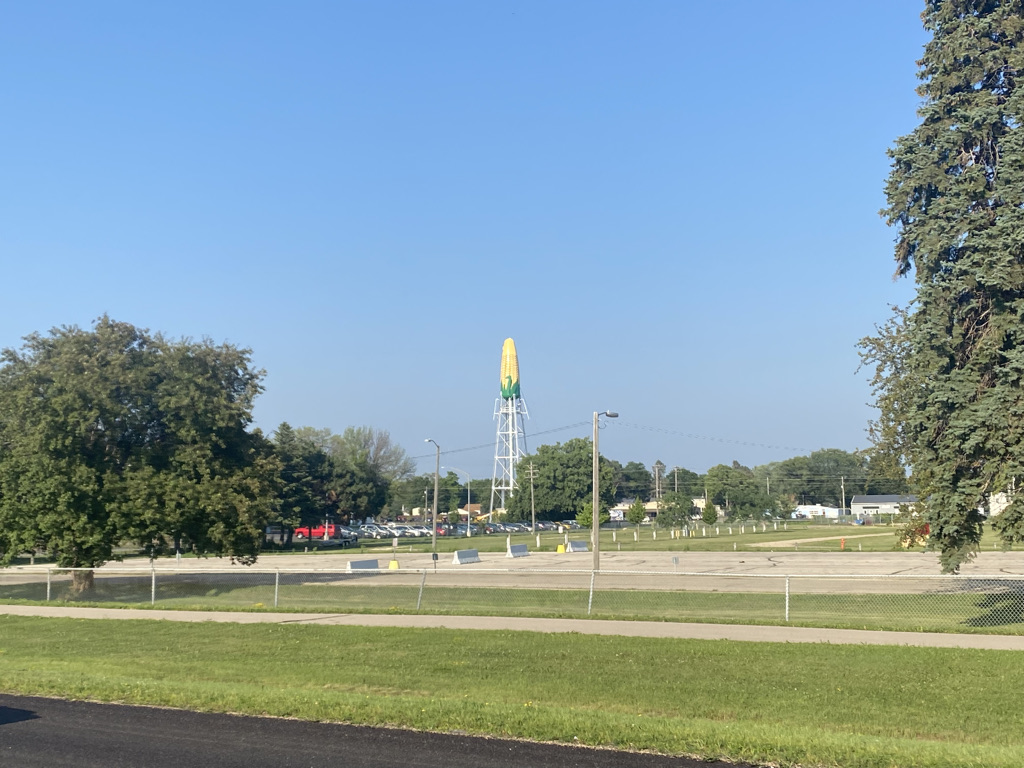
This was not a glamorous destination. The main places we explored were Rochester, a town primarily known for the Mayo Clinic, which is certainly not a good place to visit right now, as well as a giant corn water tower.

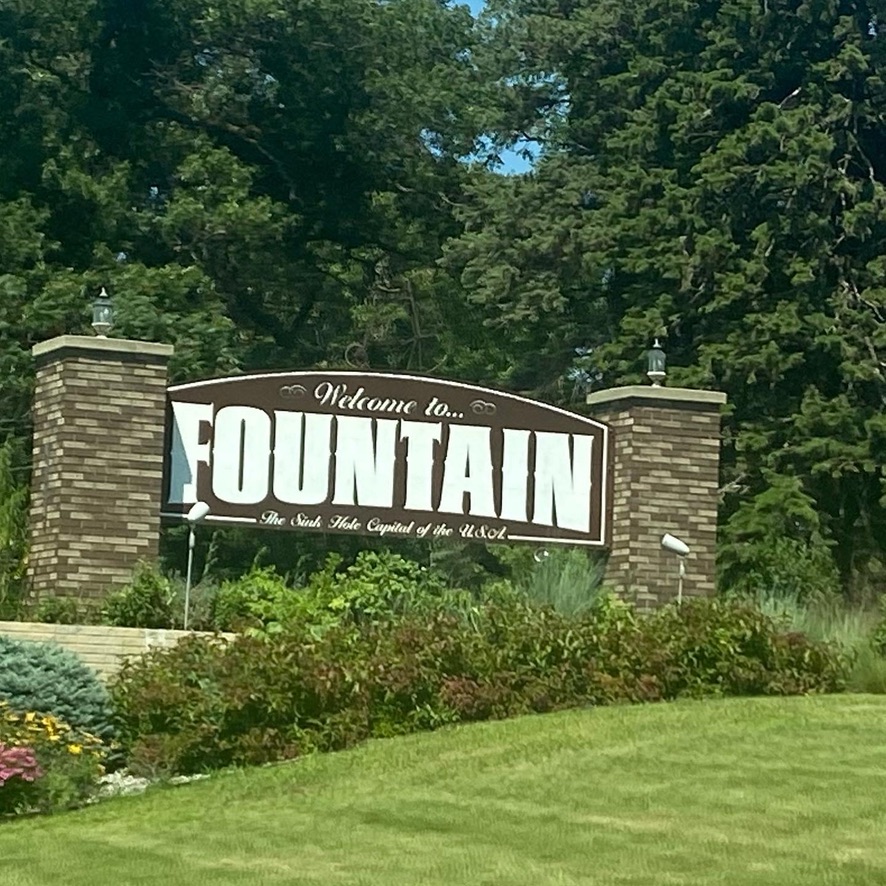
Some 30 miles Southeast of Rochester, in the Root River Valley, I was surprised to discover that the town of Fountain, MN is the Sink Hole Capital of the U.S.A.

Seriously, it’s not in Florida as we all would have assumed.

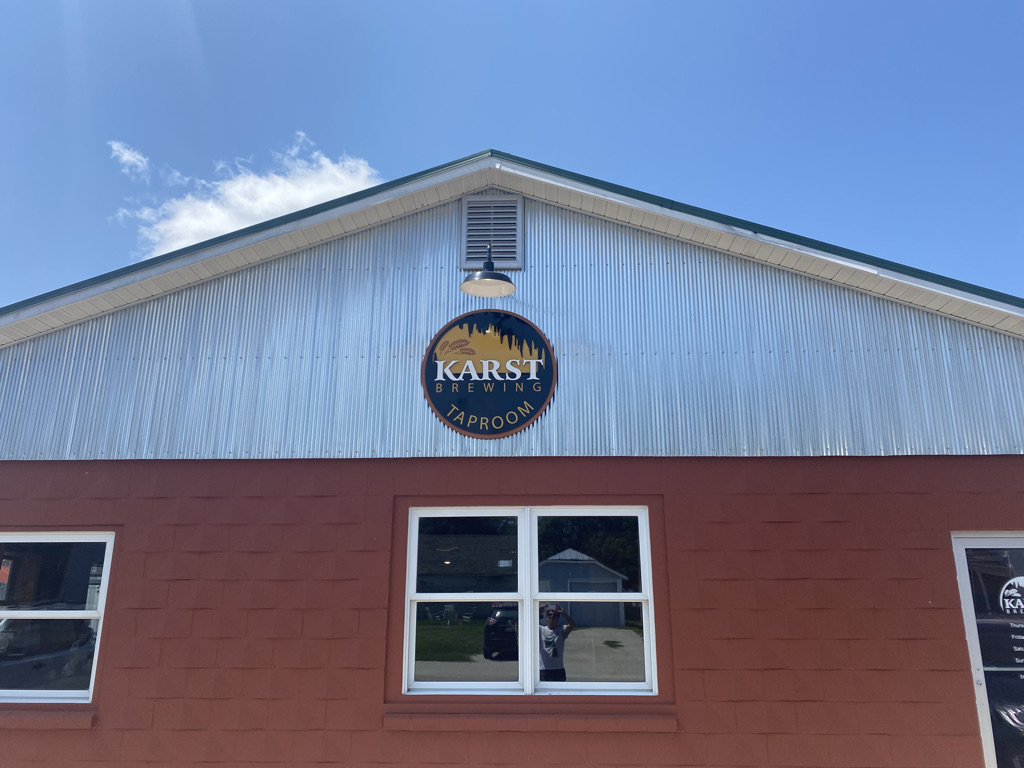
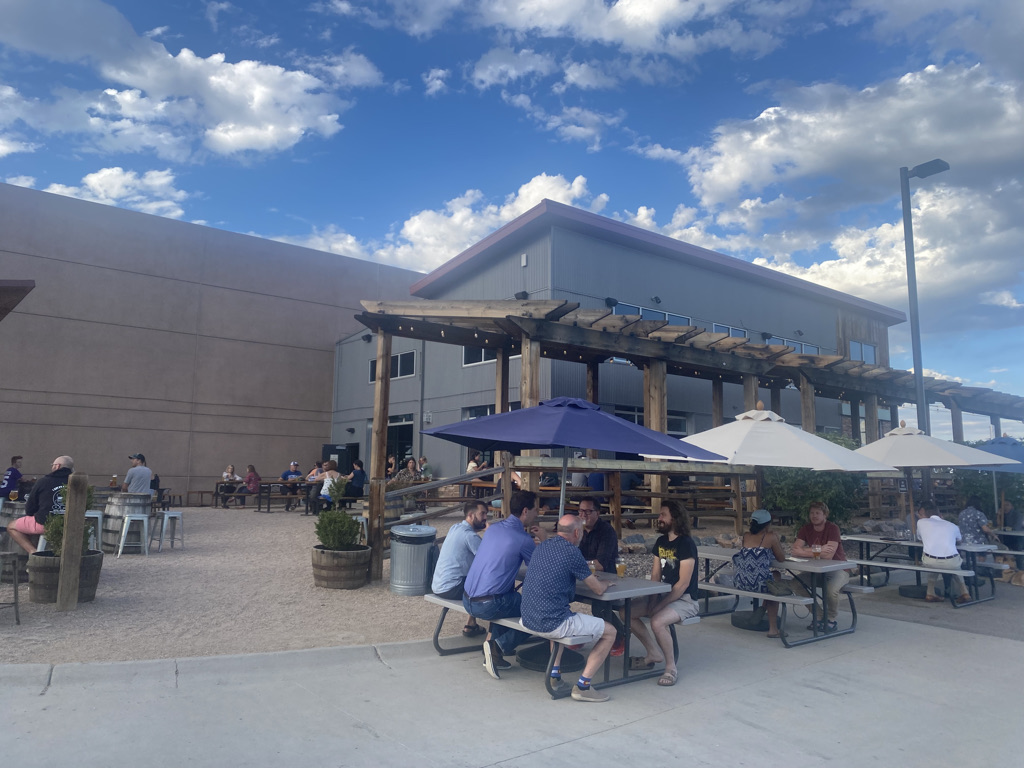
But, they celebrate this odd distinction. The main attraction in town is a brewery named for the geological feature that caused the sinkhole here, where they bring in bands and food trucks to celebrate Sinkhole Saturdays.

My other trip was to the house where I would spend the second half of my childhood, ages 11-17, where my parents sill live.

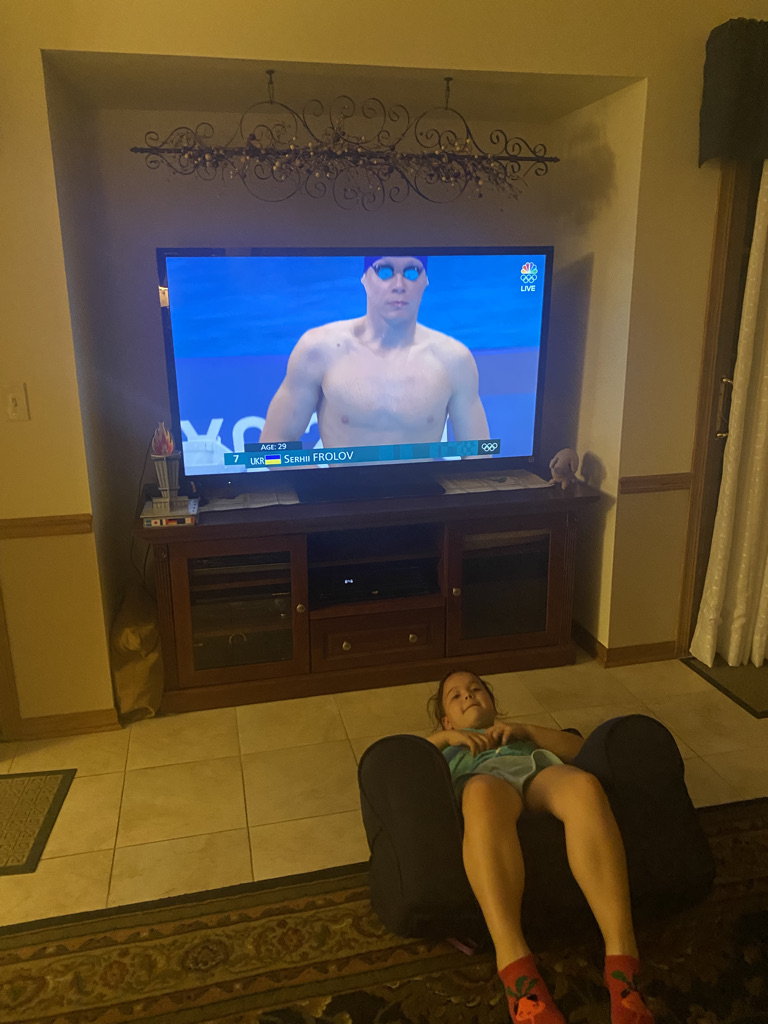
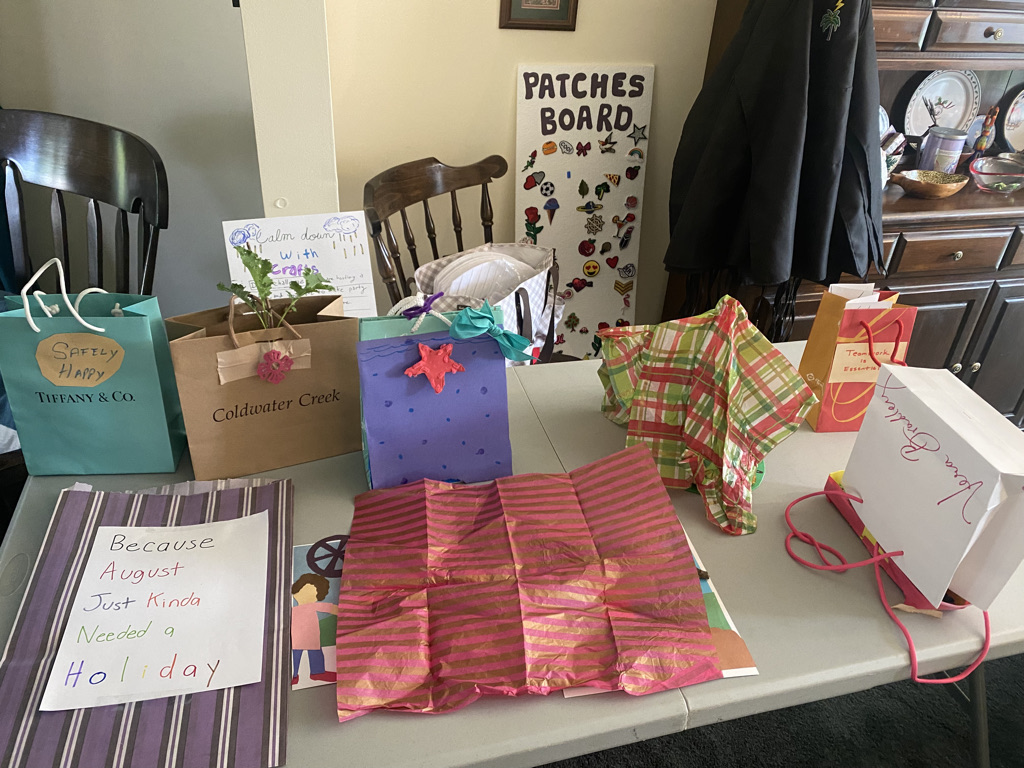
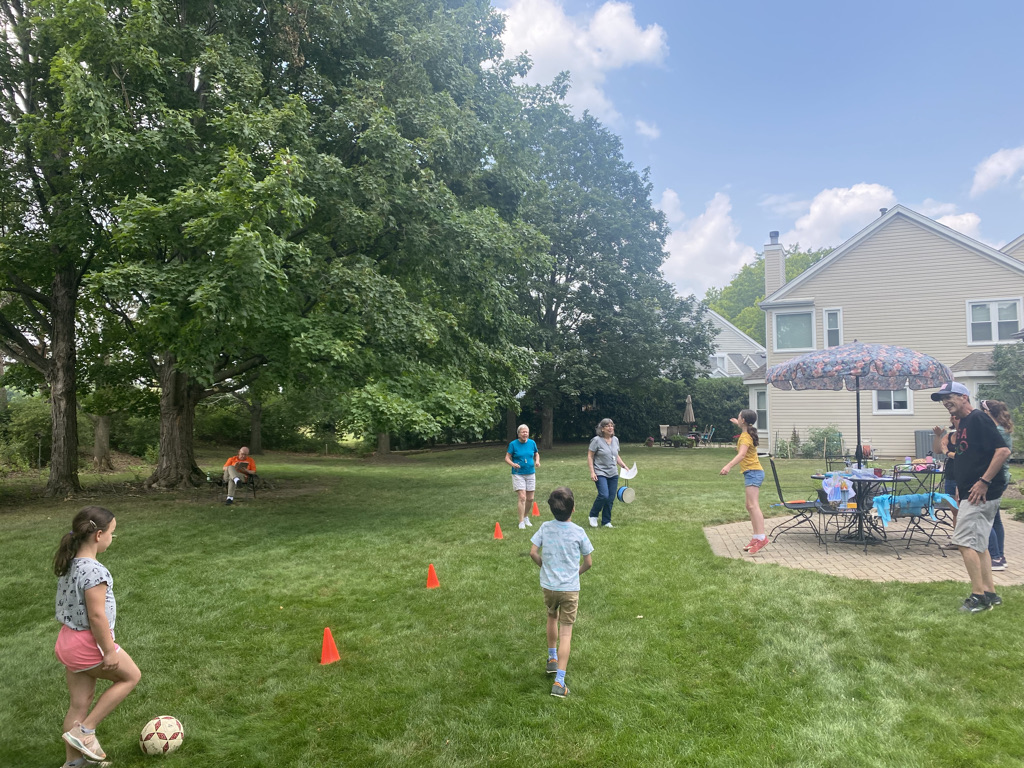
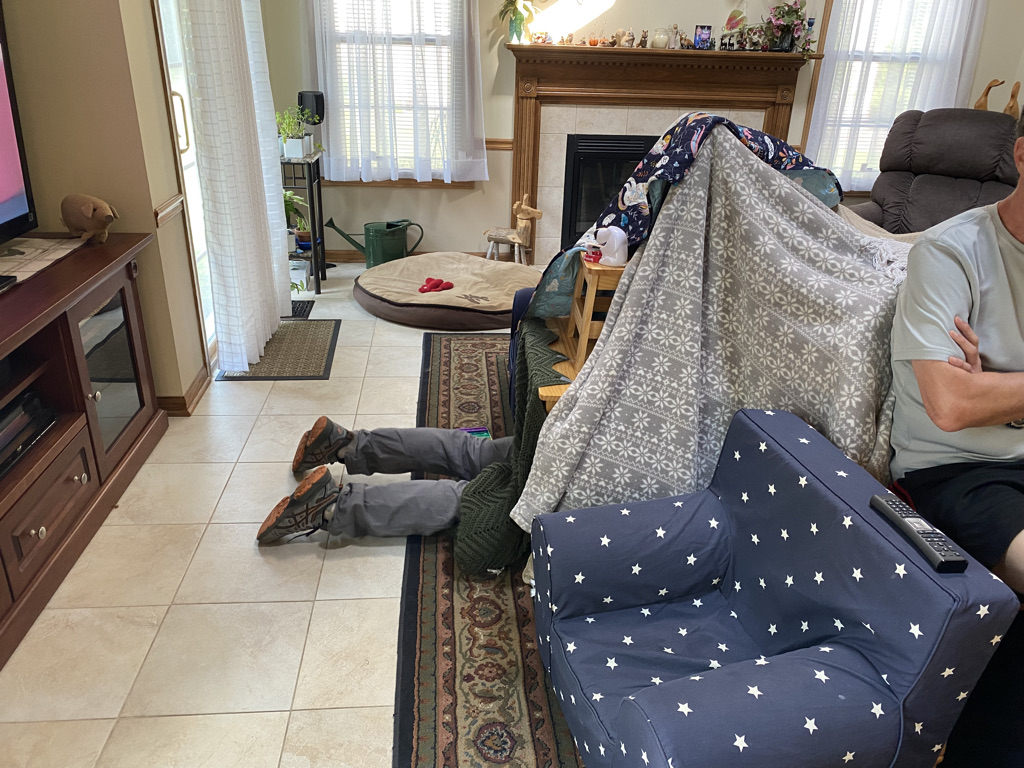
It was for a family reunion where we barely even left the house. Most of what we did was playing games with the children, watch the olympics and do things like arts and crafts.

Both of these trips were a chance to laugh. They were a time to be funny, goofy, creative and social. They were times to interact with the world, the real world, what is physically in front of us rather than something on a screen.

They also both reminded me of past chapters of life. Visiting with college friends, I felt like the version of me I was when I was in college. Interacting with children reminded me of who I was when I was a child. I could not help but engage with that childlike spirit for life.

When I returned to a then smoky Colorado sky I could not help but ponder, and wonder.

Why is it that???

  • At the age of 10, when we interact with each other, our default mode is to play a game, think of something creative, imagine, run around and engage our imagination.
  • At the age of 20, when we interact with each other, we party, we still play games, just a different kind, we goof off, watch things and talk about things like who we find attractive and what event we want to go to next.
  • Sometime after the age of 30, we start to default to conversations about what is angering and dividing us, our latest source of frustration or something mundane.

What happens? Is there something about adulthood, or “adulting” that we are doing all wrong? Can we rethink all of this? Sometimes I feel like we need to.

I’m just fortunate that this summer has provided me with plenty of opportunities to once again engage with the world in a manner that feels far more human than most of what I was doing when we were all far more fearful of the pandemic (as well as a lot of what adult life had become in the 2010s).

It won’t be long before I am off to another foreign land I’ve never been to before. Exploring is something I value quite a bit. However, in the summer of 2021, given the phase of my life I am in as well as where we are culturally, I probably needed to laugh with my friends and family more than I needed to explore. Hidden in everyone’s actions, there is always a reason.