Category Archives: Cycling

Cycling up Mountains in a Storm

Loveland Pass on Sunday May 23, 2021

Colorado can be a pretty confusing and frustrating place in the Springtime. In most mid-latitude Northern Hemisphere places, Spring is a time of revival. It is the time of year where people who had mostly been indoors and inactive during the winter return to life. Here in Colorado, Springtime is a period of major weather fluctuations. In Denver, March and April are often the snowiest months. It can even snow in May. Sometimes it feels like we go from tracking the weather for snow to 90 degree heat with barely a week or two in-between.

Credit Channel 7 Denver

At higher elevations it snows quite a bit during springtime (Leadville is 10,200 feet (3.1km) above sea level), even as the snow melts into mud on most trails. It is probably the most inactive time of year in the mountains.

Image from Weather Atlas

Springtime in Colorado requires a combination of planning, adjustment and resiliency. The weekend of May 22nd and 23rd would test my resiliency because I kind of dropped the ball on planning.

On Saturday, I climbed Lookout Mountain, a ride in Golden, Colorado that climbs from 5500 feet (1675m) to 7300 feet (2200 m).

The day was somewhat stormy but also quite active. Paragliders took off from Lookout Mountain, flying over the town.

And the road was packed with cyclists. Only about 20 miles (32 km) from Denver, this is a very popular ride!

After noon, with even more paragliders taking off from the mountain, I encountered the storm.
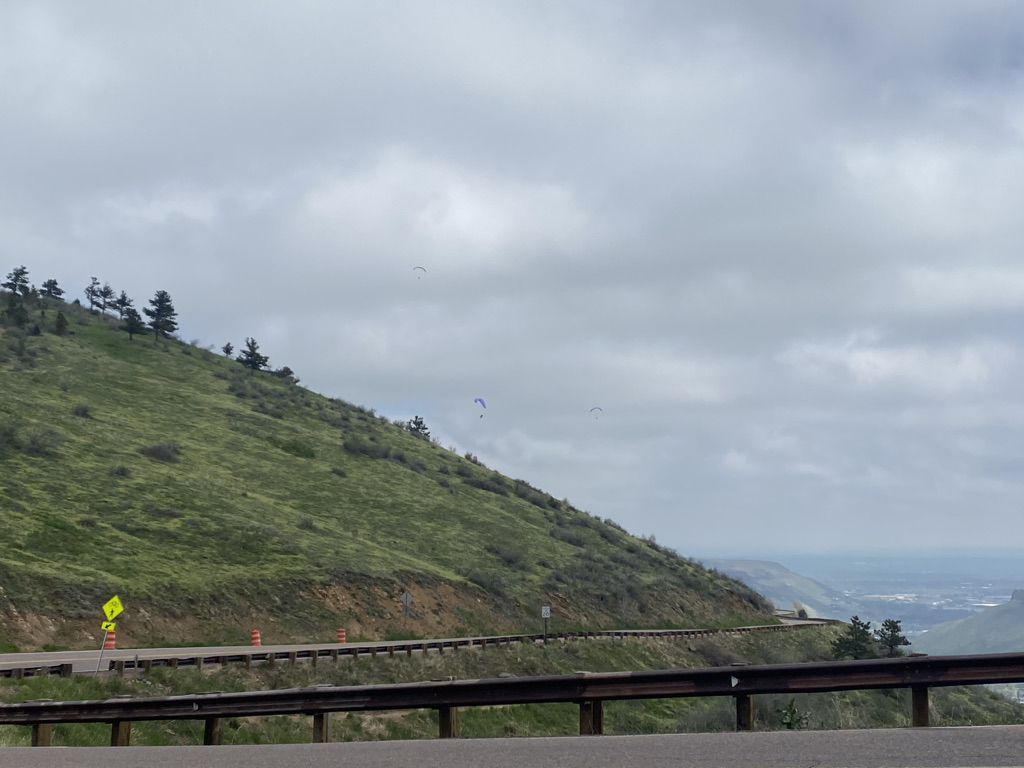
Some cyclists chose to wait out the rain by finding a building to stand next to. I raced back home, into a fairly significant wind down the hill.

The next day, I went up to Loveland Pass to climb another mountain, this one at a much higher elevation. My ride began at the parking lot of Loveland Ski Area, which sits at around 10,600 feet (3230 m). I could already see that the storms had returned.

As is the case with going upwards in elevation, the weather was much colder, probably only around 45°F (7°C) at the start of the ride. From the very beginning, the ride felt like it was taking place in a different season.

Much of the ground was still covered with snow. Unlike on Lookout Mountain, I was the only one on a bicycle on the road up to Loveland Pass that day. The only other people I encountered were backcountry skiing. One joking asked me for a ride to the top of the pass on my handlebars.

Higher up the mountain, I suddenly found myself doing something I typically try to avoid, riding in the snow. It became scary as it was obvious that slippery conditions existed.
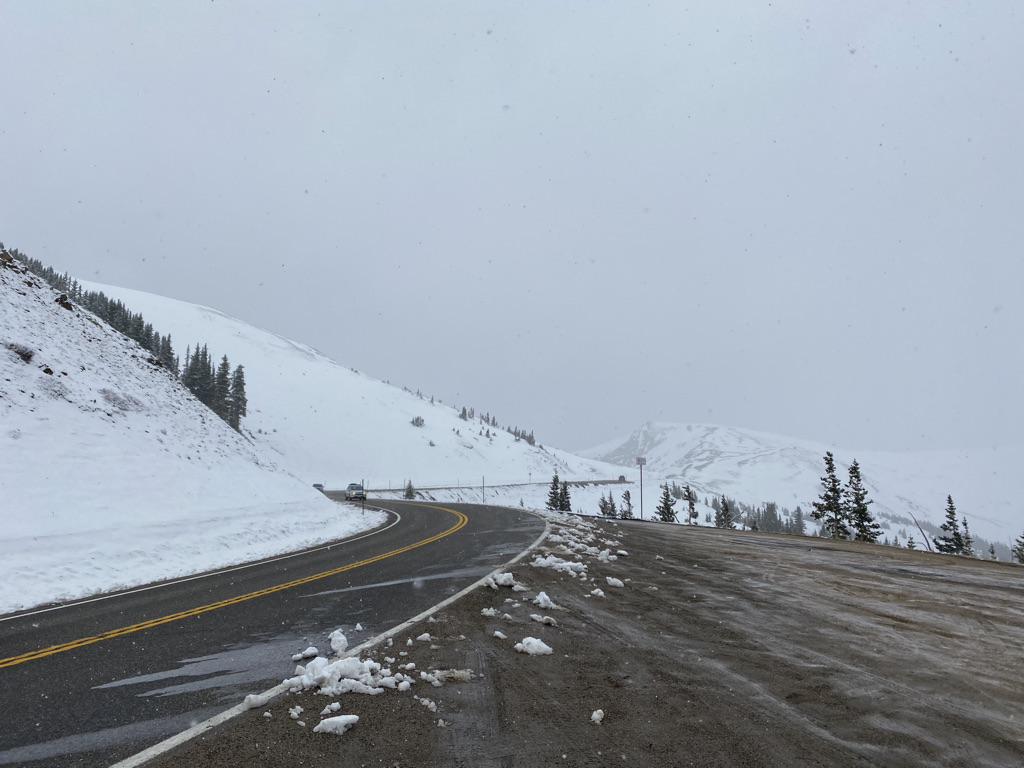
Near the top visibility continued to decline.

Finally, just to be true to the cycling community I belong to, I took a photo holding up my bike in front of the sign that indicated I had reached the top of the pass at just shy of 12,000 feet (3650 m).

There I stood, the only cyclist, almost out of place, like I was suddenly in the wrong season. It reminded me of how often we forget that different people in different places are often having quite different experiences. Two months ago, towards the end of March, while most places in North America were seeing people emerge from their winter dormancy and return to life, life in the Central Rockies was slowing down as the ski season was coming to an end. Now, there could not be more contrast all around me.

As the United States has mostly put the COVID-19 pandemic behind us, countries with slower vaccine rollouts are dealing with some pretty bad case numbers associated with newer, more rapidly spreading, variants of the disease. This sits in sharp contrast to last summer, when other more prepared countries had much greater success in containing the virus through behavioral measures than we had. Heck, even the period of time westerners refer to as the “dark ages“, were not a dark time for everybody. The Tang Dynasty was remembered as a golden age for China. It was also a time of great advancement in the Islamic world. Finding myself on my bike in the snow in the second half of May reminded of the benefit of understanding that not everyone and not every place is having the same experience.
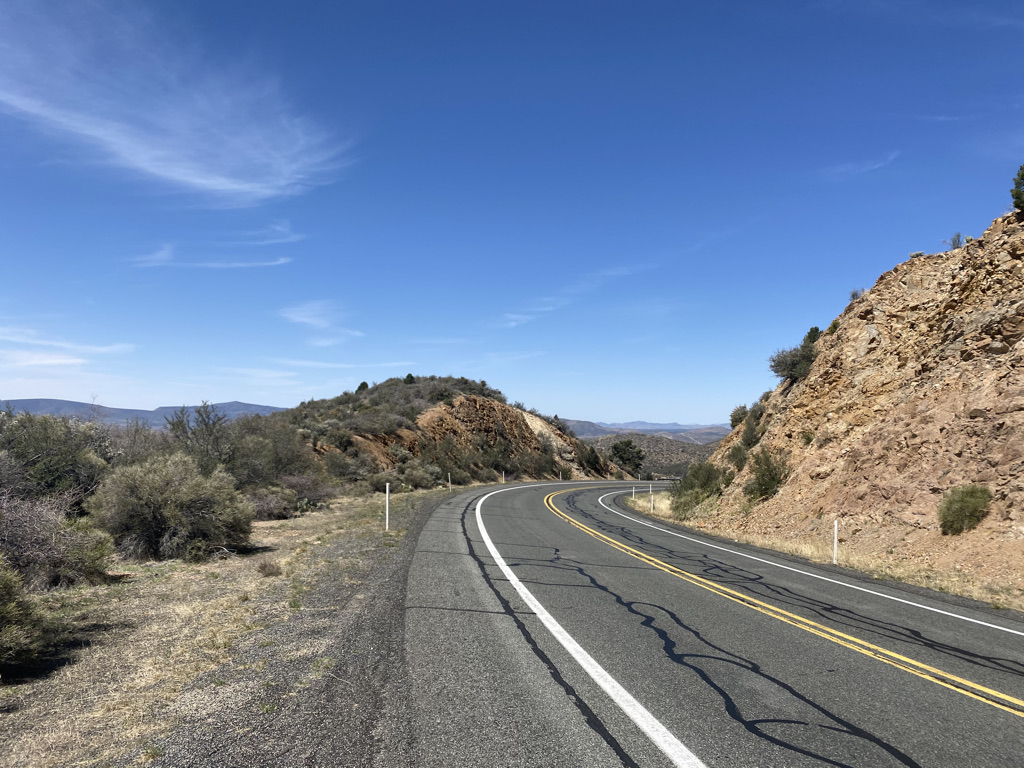
The Prescott-Skull Valley Loop

This 54 mile loop is a common ride for road bikers in Prescott. It is even an annual event. The official ride starts and ends in Prescott, which is called Arizona’s “Mile High City”. It’s official elevation is just over a mile at 5367 feet (1636 m). The official ride starts with a short climb and then a major descent into Skull Valley, whose elevation is closer to 4000 feet (1200 m). Then, the larger climb back towards Prescott is in the second half of the ride I, however, decided to start my ride at the ride’s low point, in a town even smaller, called Kirkland (not to be confused with the Costco brand).

From this side, the ride starts out with a relatively shallow grade up into Skull Valley.

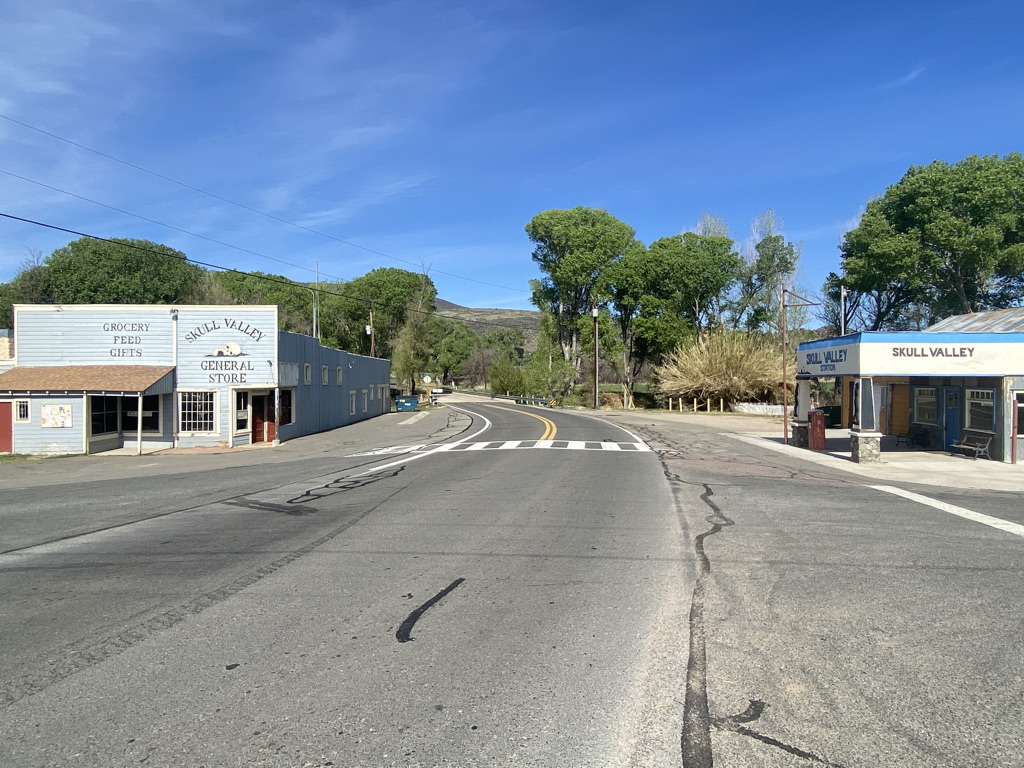
Skull Valley is also quite tiny, feeling mostly like a randomly placed trading post along an old western trail. It is also where the climb starts to get intense.

There was a total of 20 miles of climbing along county highway 10. The road felt quite accommodating the entire time. There were not too many cars and with the exception of a couple of bridges, there is plenty of shoulder space.

Unsurprisingly, the other bicyclists I encountered were traveling in the opposite direction, the official direction of the ride.

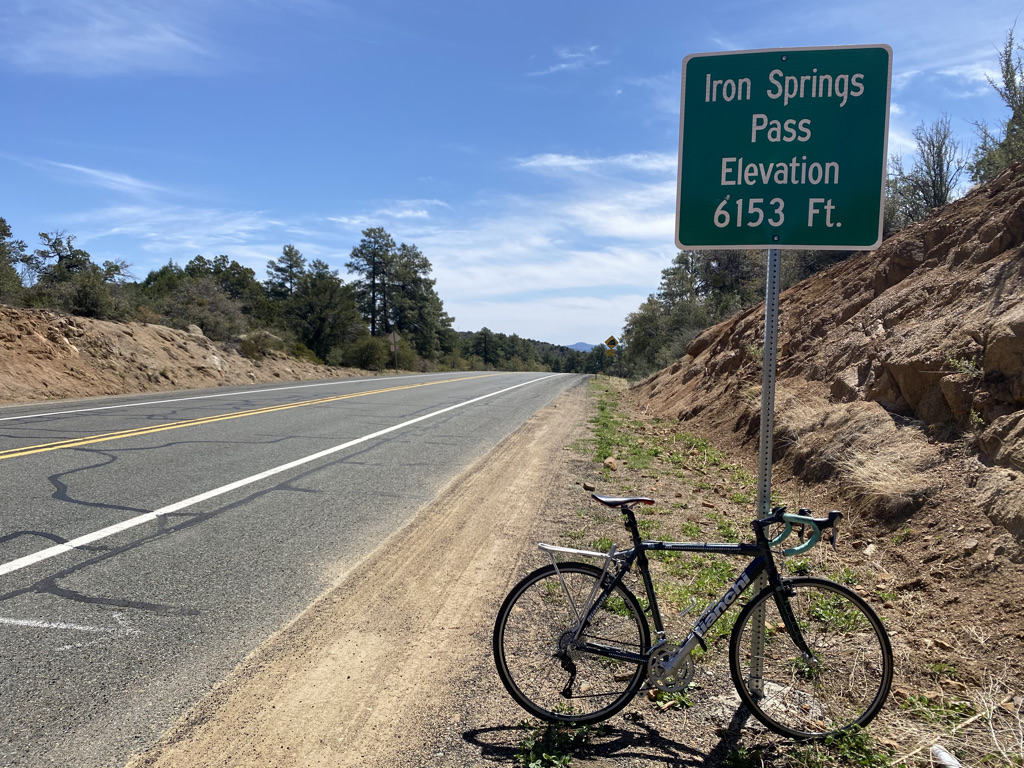
The road reaches it’s summit at a place called Iron Springs Pass.

And then descends into the town of Prescott.

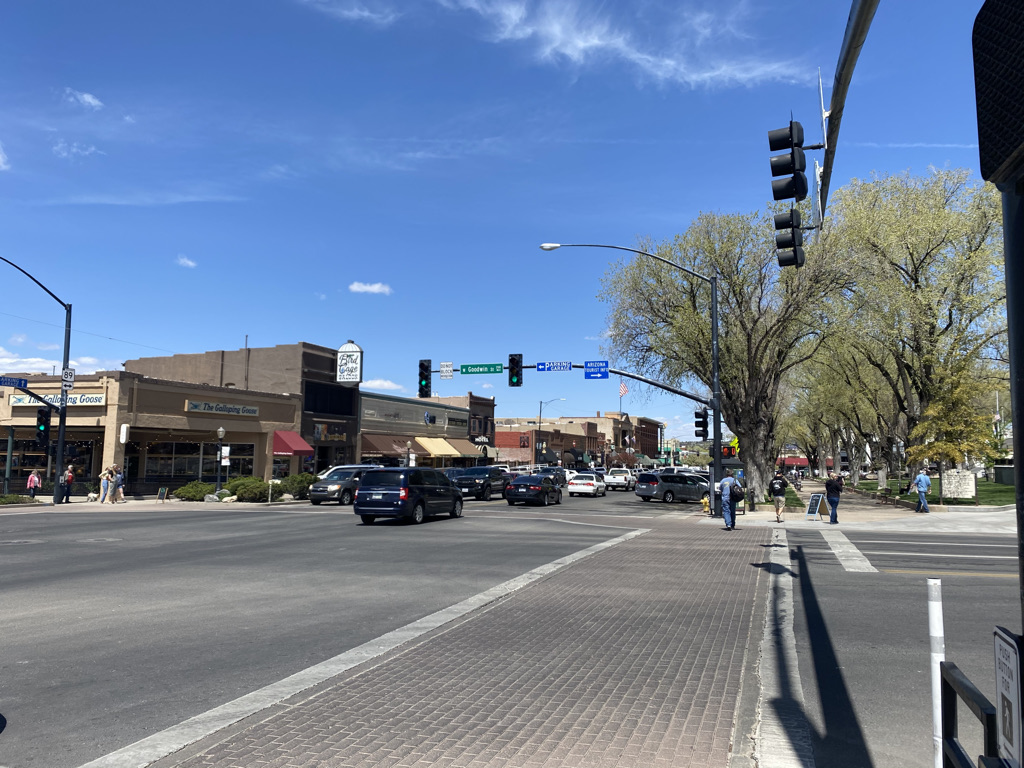
This was the other advantage I saw in parking in Kirkland and riding the loop in this direction. Not only does it feel better to do most of the climbing earlier, but it was great to stop in Prescott in the middle of the day and hang around the courthouse in the center of the city.

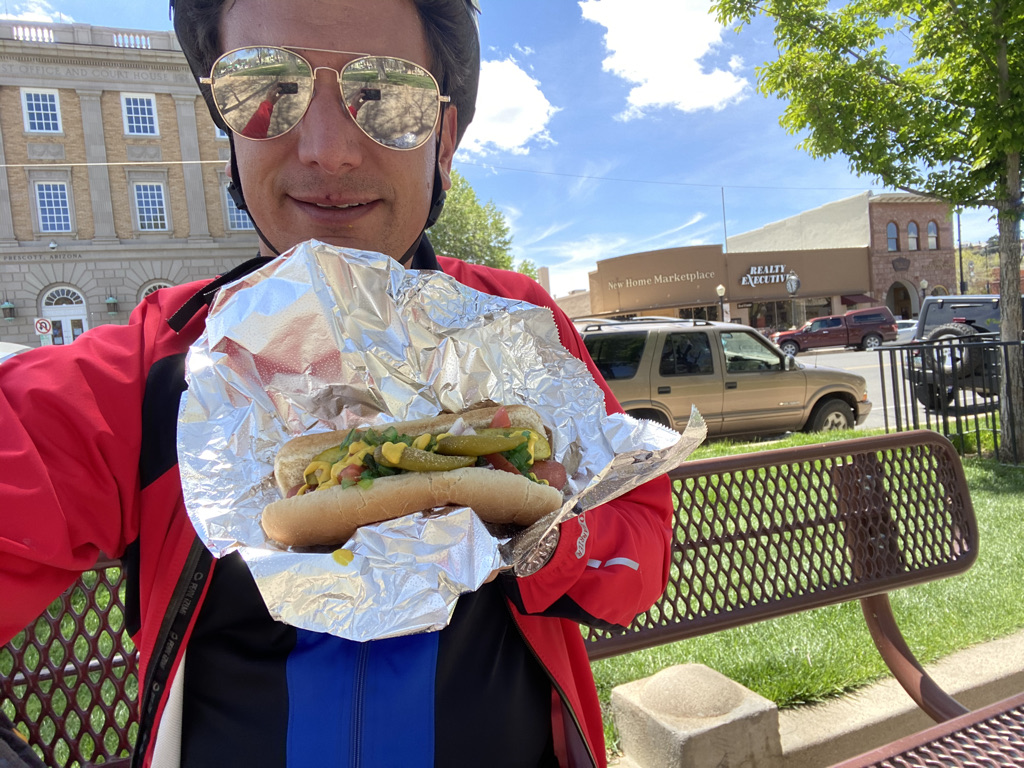
There were a lot of people out and about on a mid-April Friday and there seemed to be an interesting natural feature in the background in every direction I looked. As was the case in many other places I had explored in Arizona on this trip, there were definitely signs that a lot of ex-Chicagoans had settled there. I even had a true Chicago style hot dog.

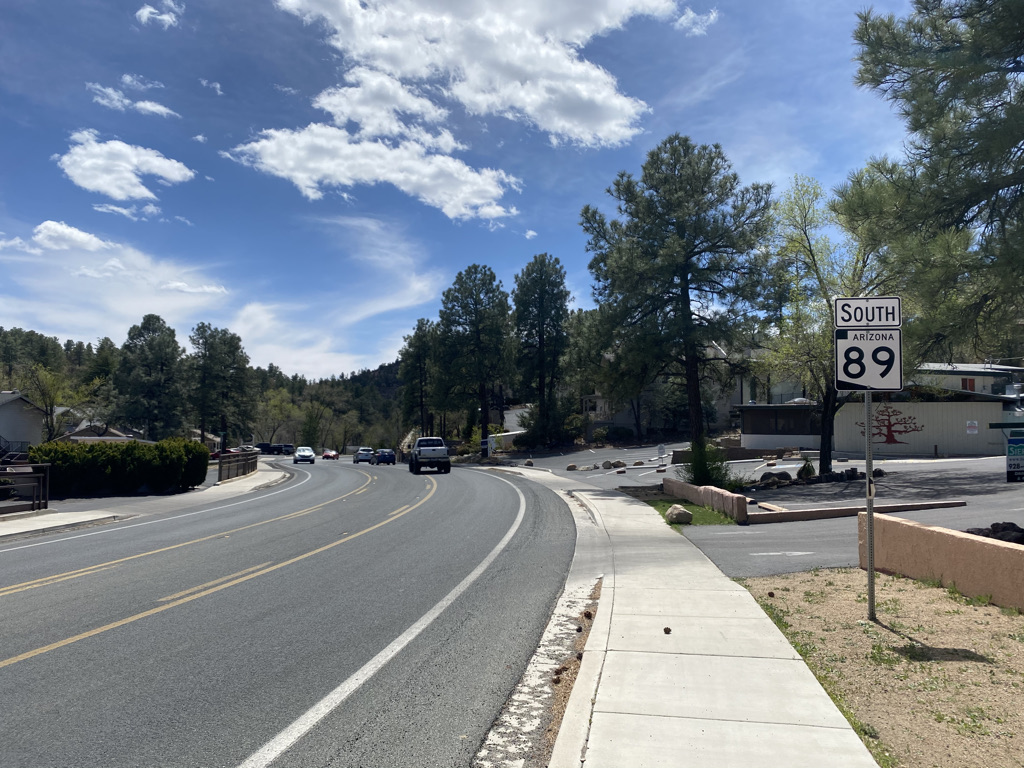
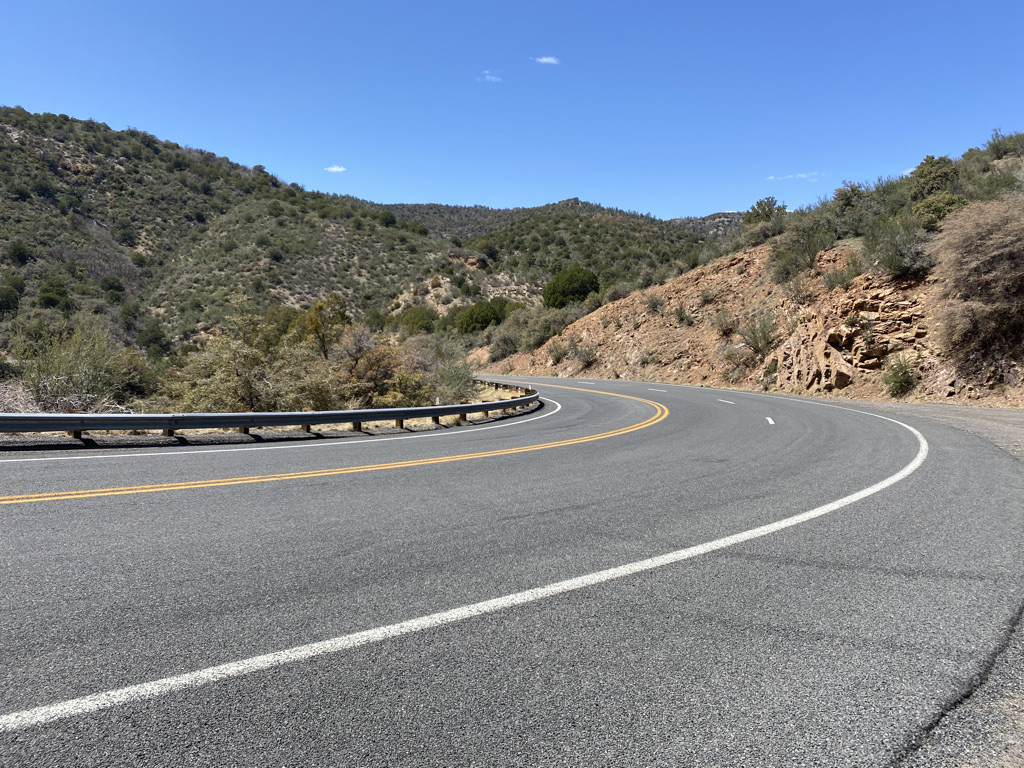
The trip back into the valley follows state highway 89 through Prescott National Forest.

There was one last hill climb, of a little under 1,000 ft. (300 m). It was the last climb of the last ride of my weeklong trip down to Arizona.

There was still about 15 miles left in the ride, but it was all downhill. On rides like these, it is quite common for a feeling of accomplishment to set in around this point. The last true challenge was done. This rapid paced downhill part, with much of the same natural beauty of the climb earlier in the day, felt like a victory lap of sorts.

I could gaze out upon the mountains in all directions feeling like I was doing exactly what I had came out here to do.

Whenever taking on any kind of challenge, anything that requires doing things that are hard, that require effort and getting out of our comfort zone, a common question is why. This is a question we are asked by others but also ask ourselves.

On both the uphill and downhill portions of the Prescott-Skull Valley loop, my why once again became quite clear as this was the exact type of bike ride so many of us work towards. It is the feeling of using my own power to traverse beautiful mountainous terrain while feeling the air in my face and smelling what is around me. The immersion in these surroundings cannot be replicated inside an automobile. The experience also becomes far more special when one has the capacity to enjoy it rather than focus single-handedly on the pain they are enduring just to make it up these big hills. Rides like these are a reminder of how we “level up”.

And then, inevitably, we enjoy the rewards the come with it.

The Cycling Trails of Metro Phoenix

People tend to think of Phoenix as a sun-belt car centric city, and for the most part they are correct. While Arizona ranks fairly low in terms of miles driven per capita, biking and public transit are not widely used in the Phoenix area. As is the case in other sun belt places like Southern California and Texas, driving is the default way to get from point A to point B. However, this does not mean that the region has no bike trails, nor does it mean that the area cannot be explored by bicycle.

Maricopa County Bike Map

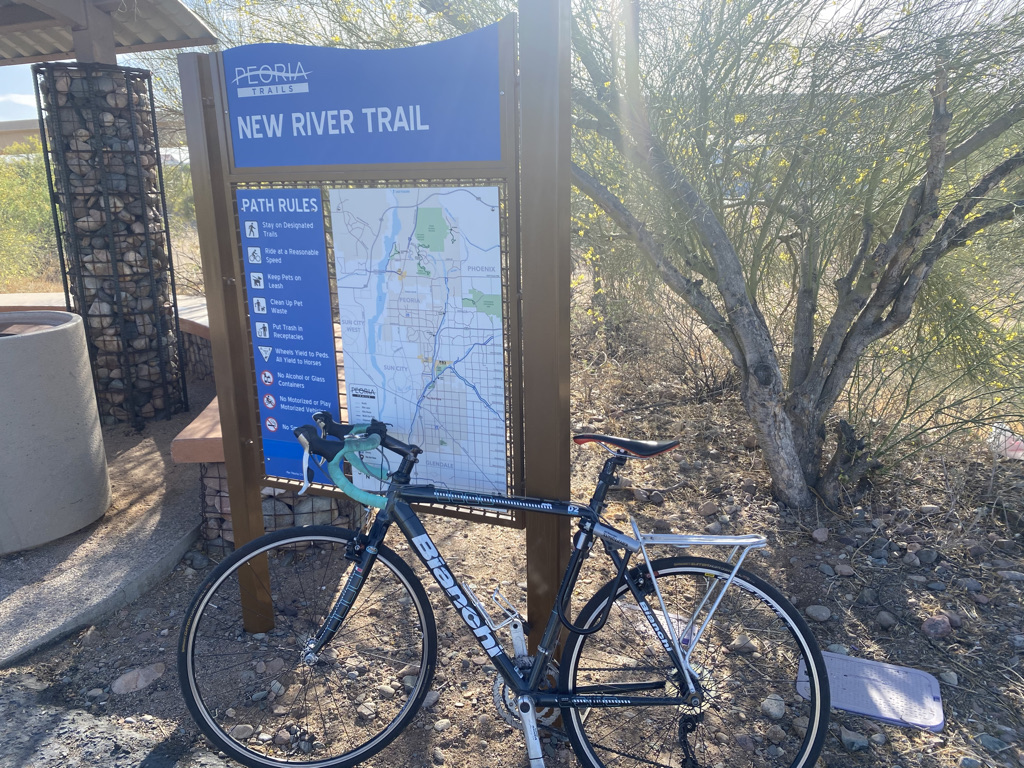
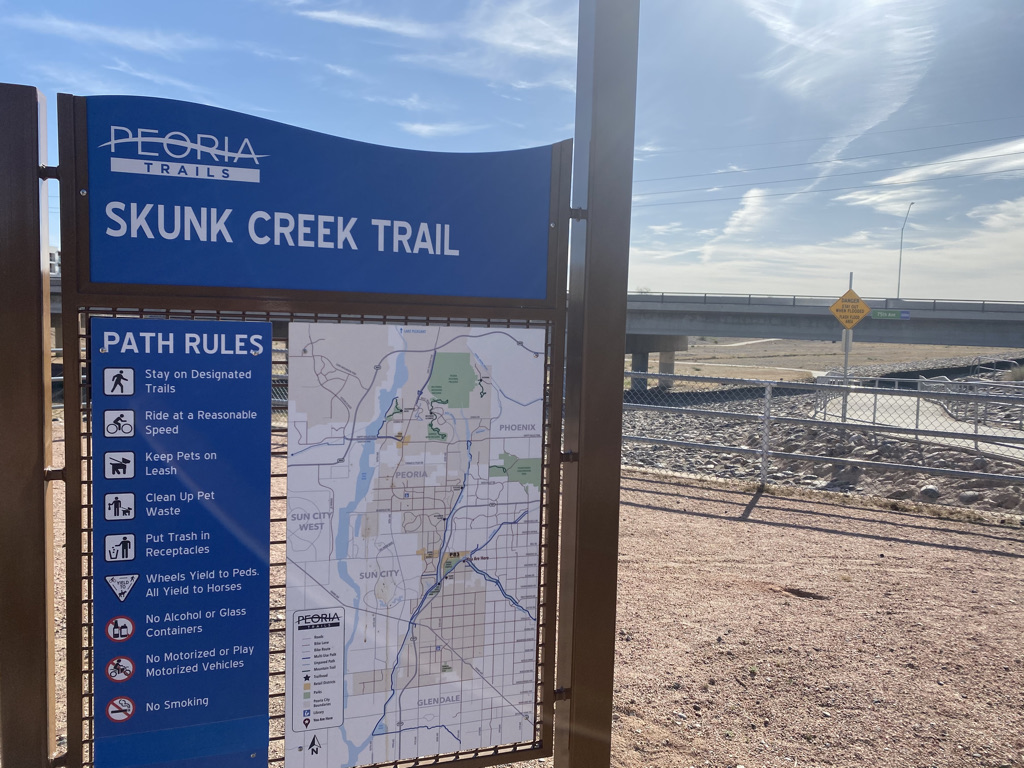
The bike trails are quite nice and not crowded at all. My visit to Phoenix came at probably the best time of year to bike around the city, in the middle of April, and I was commonly the only one on the trail.

There are also a good number of trails, all connecting most parts of Phoenix and the nearby suburbs.

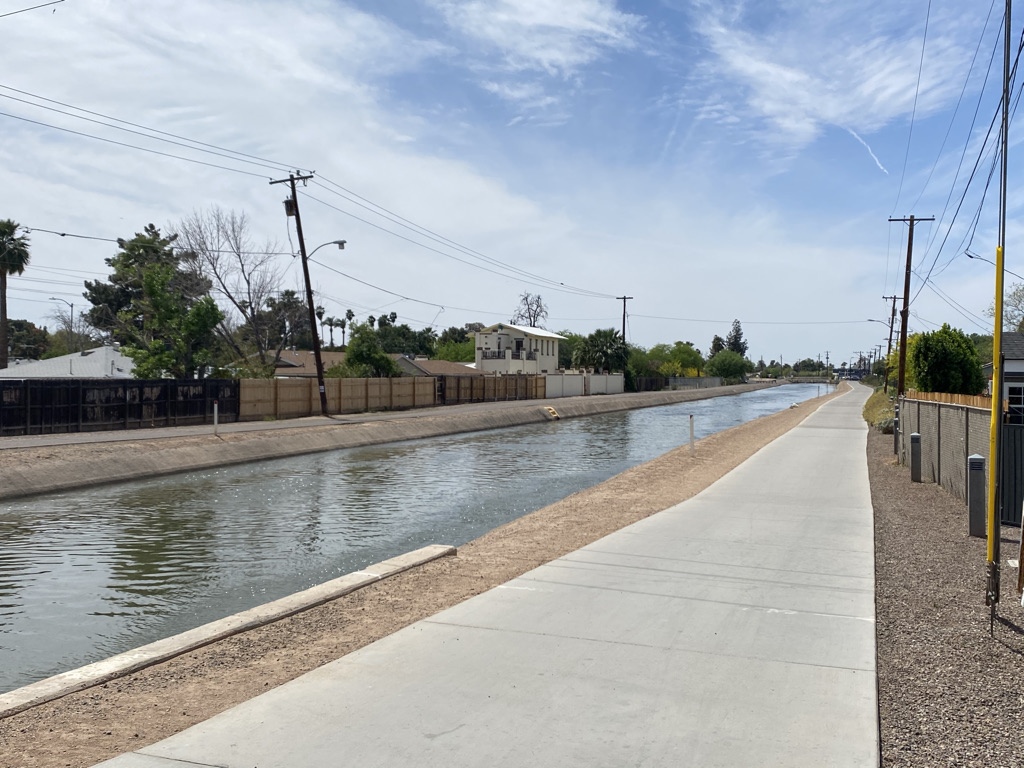
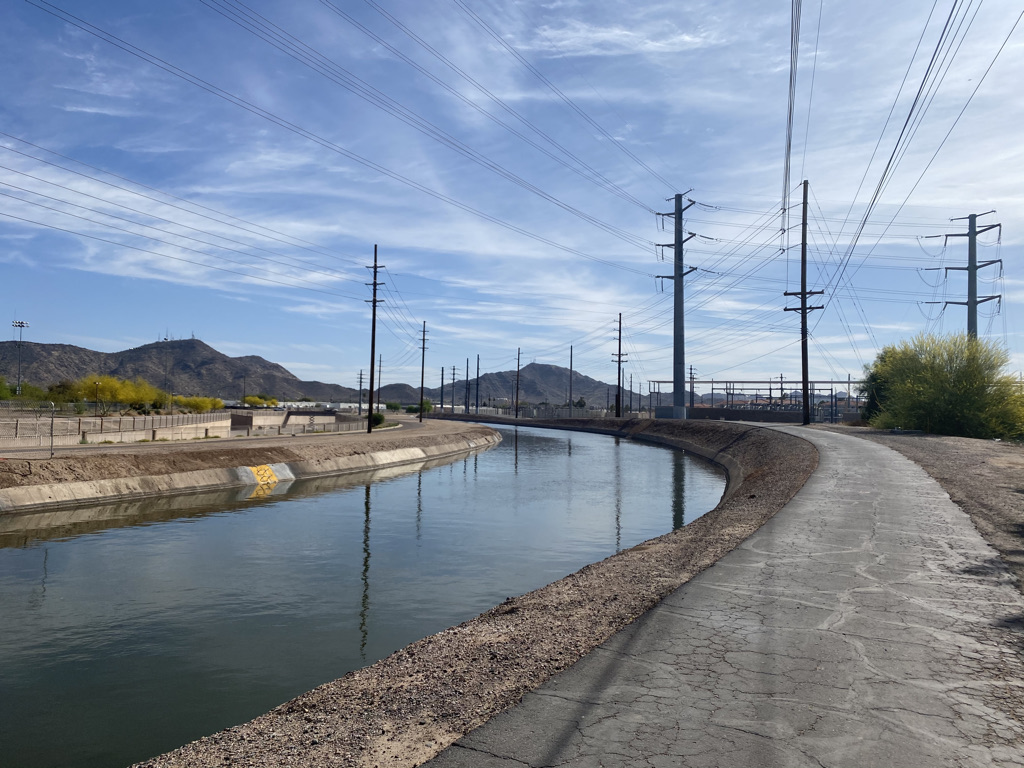
The crown jewel of the trail system is the Arizona Canal Path, a trail nearly 70 miles in length connecting places as far apart as Glendale and Scottsdale.

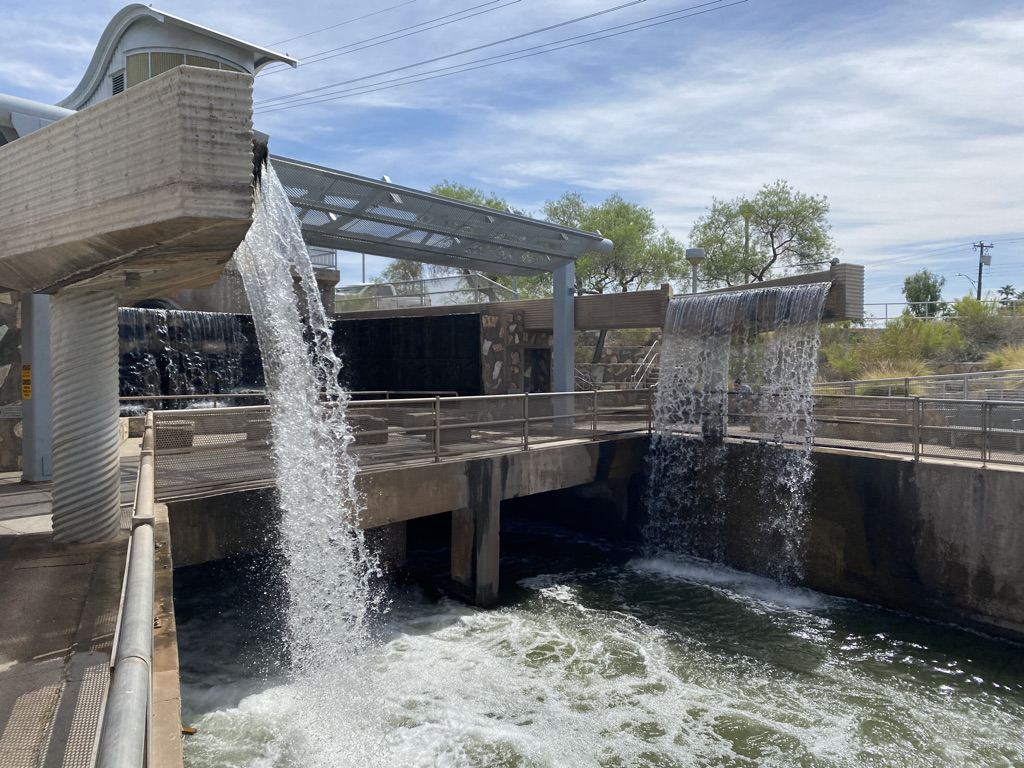
The trail has a very unique feel. The canal is obviously not natural. Nothing about it feels free flowing like the rivers and creeks I am accustomed to seeing elsewhere. It was constructed in the late 19th century kind of as the towns around Phoenix were being settled and incorporated. They needed the water and the means to transport goods, which was then far more dependent on water then. Later, they built Arizona Falls to harness some power from the canal.

Still, none of this is what I typically envision when I think of riding a bicycle along a river and seeing a waterfall.

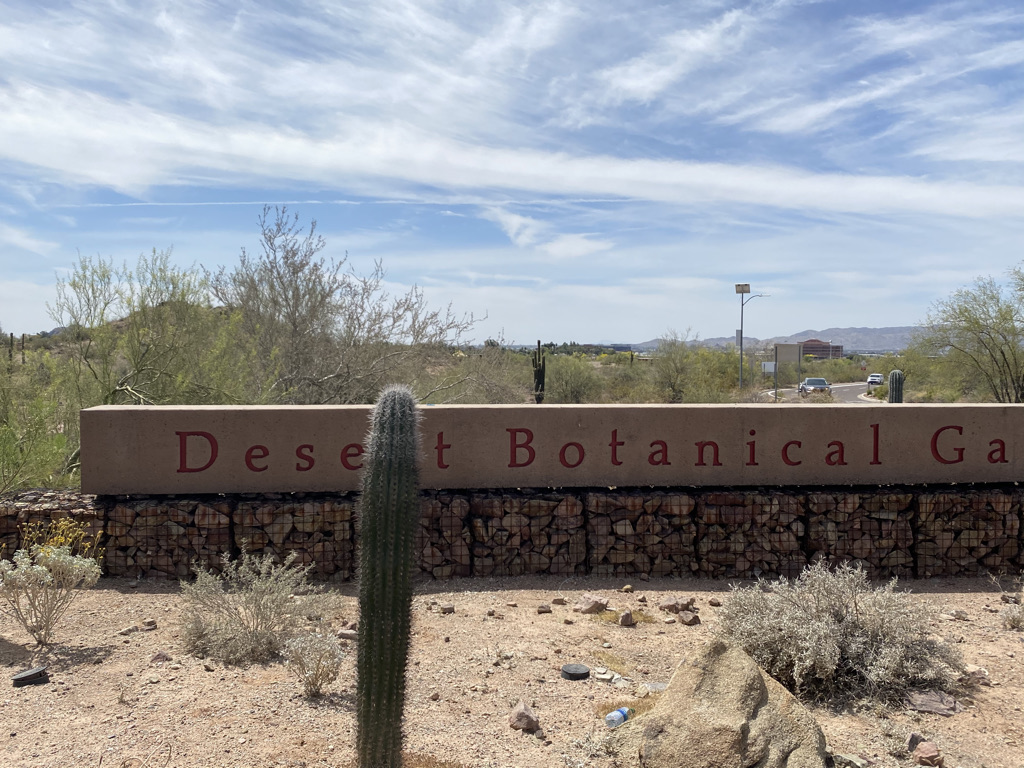
However, the ride is not without natural beauty. Mountains, cactus and palm tress emerge around every curve.

It’s such an interesting feeling. Little mini-mountains in the middle of a city with over 1.5 Million People. Natural beauty around every curve, but every curve was planned carefully by engineers. Some of us are so accustomed to thinking of natural experiences as being separate from human development. This is especially the case in places like New York and Chicago where our homes are surrounded by development but we travel a few hours to be away from that development in nature. However, here on all of the Phoenix area bike trails, there is both, right there in front of my eyes.

Along these trails, it is possible to visit a lot of the area attractions. From the kinds of places you’ll see in almost every major city.

To spring training facilities for baseball and softball alike.

To the college and professional sports stadiums.

While exploring, you also never know what kind of random attractions you’ll encounter. Right in the middle of town there is a castle, and just east of town there is this hole in a rock people like to hike into.

I even got to see Central Station under construction and the one light rail line downtown.

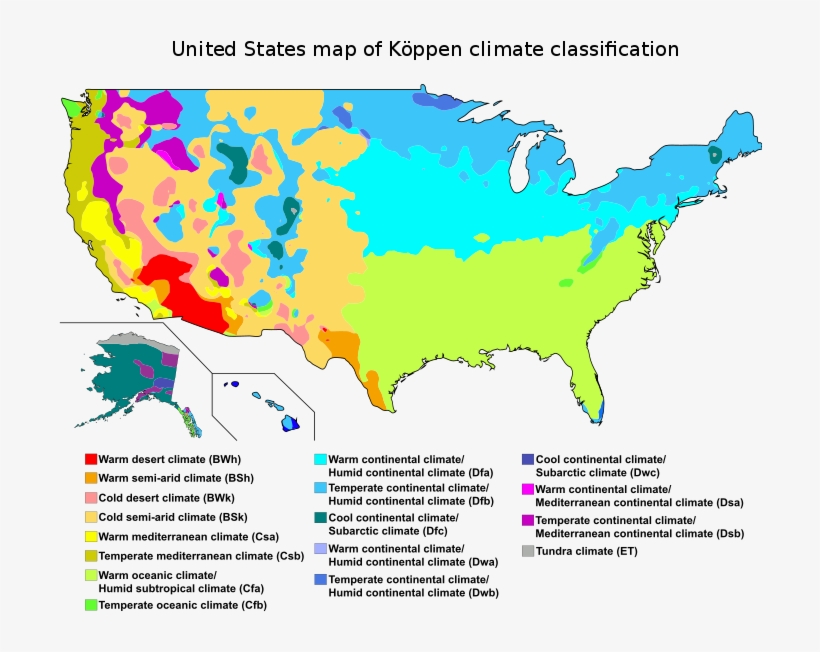
I also learned one other important lesson, the difference between cycling long distances in a semi-arid area like Denver and a full-blown desert like Phoenix.

Usa Map Of Köppen Climate Classification - 2018 Iecc Climate Zone Map -  Free Transparent PNG Download - PNGkey

In this part of Arizona, it was hard to drink enough water without even doing anything that involves physical exertion. Spending the whole day riding my bicycle felt like a constant search for water. I guess I now understand why the bike trails are empty and why they follow a series of waterways built to bring water into the area. It even facilitates some agriculture surprisingly close to the city center.

Still, there is nothing like the feeling of visiting so many tourist attractions traveling by bicycle on a day with sunshine and temperatures in the 80s (26-32° C).

Mingus Mountain: A 3500 foot climb in Arizona

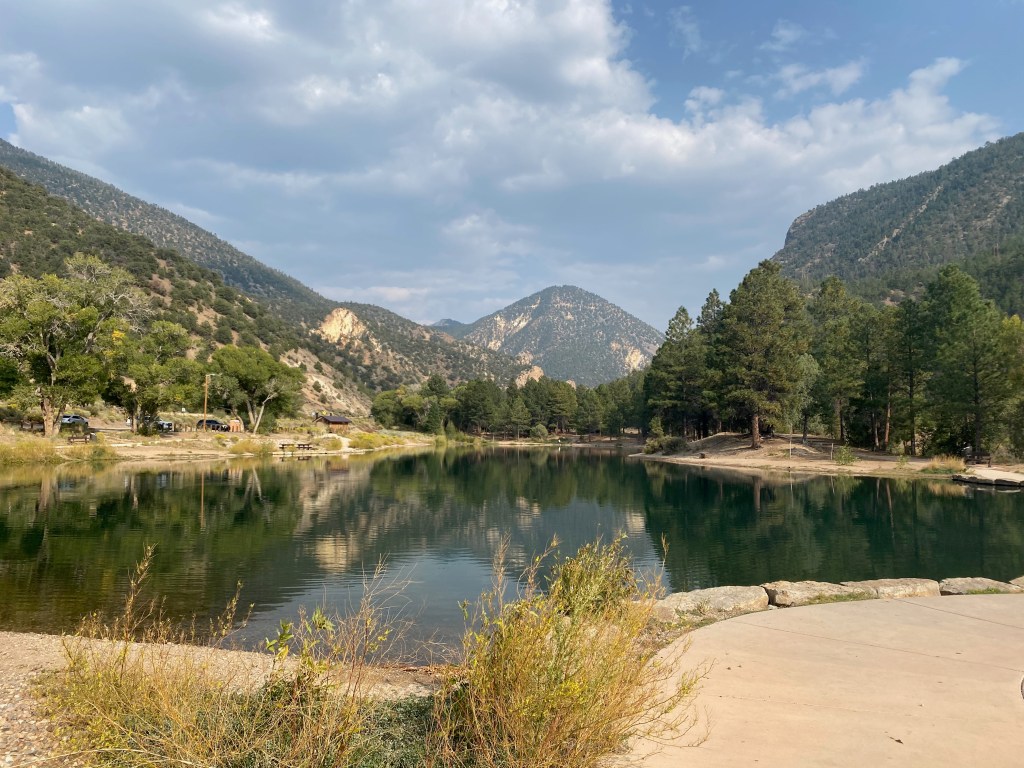
A view of Mingus Mountain from the edge of Clarkdale, Arizona

My day did not start out well. It may have been poorly planned. To train for Ride The Rockies 2021, a very challenging organized bike ride in mid-June, I decided to travel to Arizona in April where the weather would be more hospitable for mountainous bike rides. I looked at lists of Arizona’s top bike rides and determined that Mingus Mountain should be on my itinerary. However, upon looking at the specifics of the Mingus Mountain loop, I decided to shy away from a ride that would involve cycling on the interstate.

Instead, I came up with a plan that turned out to be unrealistic. I would park in Prescott and bike from Prescott to Sedona (and then back). I figured I wanted to push myself, and this long ride would enable me to see all of Central Arizona’s top spots in one day! I would start the day at beautiful Watson Lake.

Almost immediately I encountered problems. Highway 89-A is busy, and in parts of Prescott it is a limited access road much like an interstate highway. The alternate road I planned to bike on turned out to be closed.

Determined to find a way to continue with my original plan, I spent about an hour pedaling through neighborhoods under construction only to continuously be re-routed by dead ends and roads that were either closed or still in the process of being built. I ended up in a spot where the only reasonable course of action would be to follow an unpaved trail back to my vehicle.

First, i figured I would just drive around 15 miles down the highway, find a place to park and continue on my path. However, the road continued to be heavily trafficked without a shoulder to accommodate bicycles.

Also, this parking spot that I had just imagined to exist never actually materialized. Before I knew it, I was driving over Mingus Mountain.

So, I figured I would drive to Sedona and pedal up the mountain from the East side. Then, I encountered Clarkdale and Cottonwood. Riding through these towns, would have involved five or six miles, both ways, of riding on suburban feeling sidewalks.

My “plan” was never a good one. It involved too many assumptions about things I failed to fully research, including parking, bicycle accommodations, etc. Doing this due diligence is a lesson I had learned but somehow forgotten during the pandemic. How frequently lessons have to be re-learned can be one of the most frustrating occurrences in life. A “re-lapse” is not just a drug addict that starts using again. Unfortunately, it’s all too common for people who had improved things like their habits and mindset to slip back into their old patterns that were not serving them well.

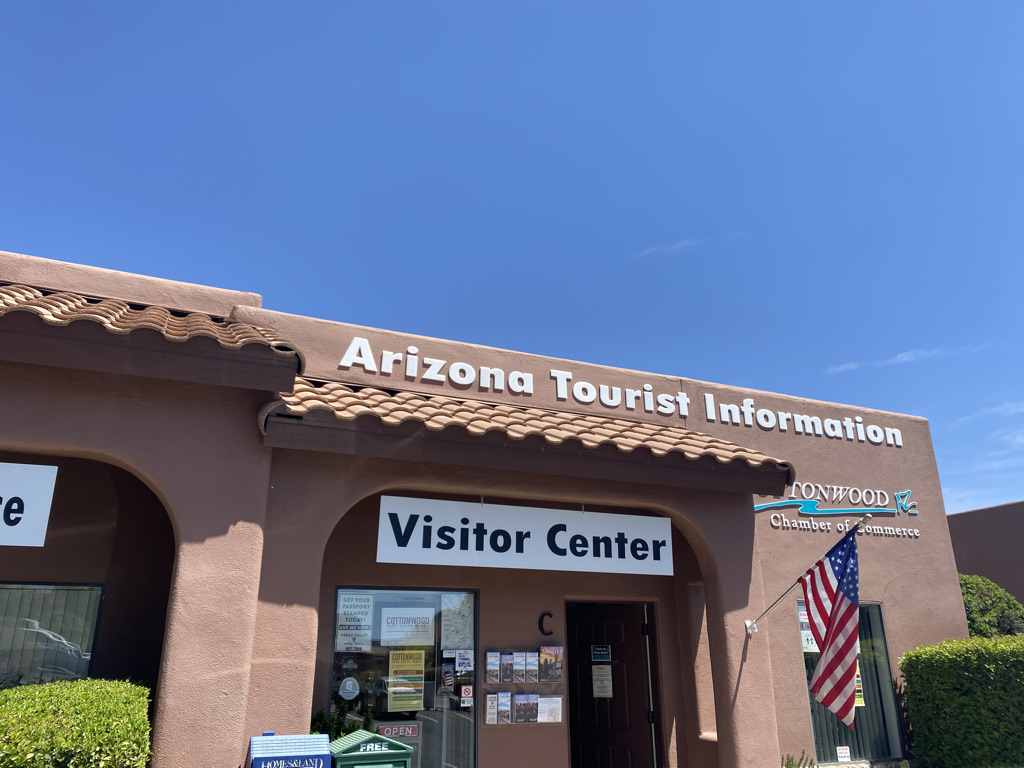
I was fortunate enough to find a tourist information center.

Where I was told I could park at the gas station on the far West end of town to ride my bike up Mingus Mountain.

The ride itself is beautiful right from the start, and, although I had a delay I was doing exactly what I had come to Arizona to do, ride my bike up big hills in nice weather.

Clarkdale sits at only 3545 feet (1080 m) in elevation. So, it is already a significant climb just to get to the ghost town of Jerome.

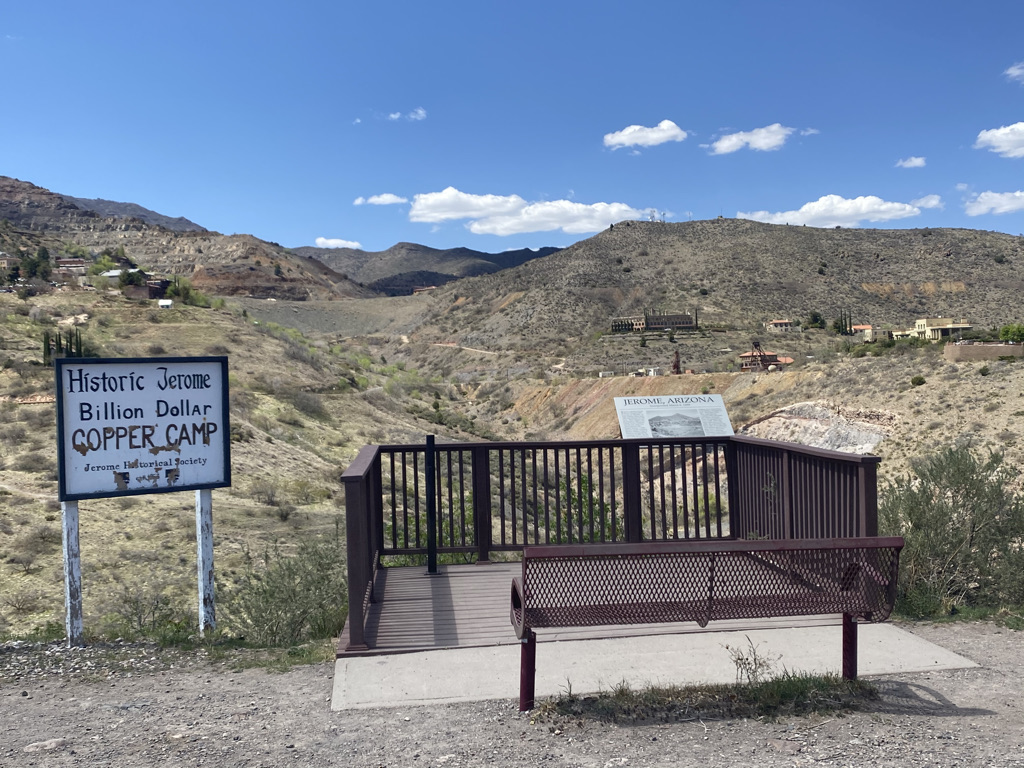
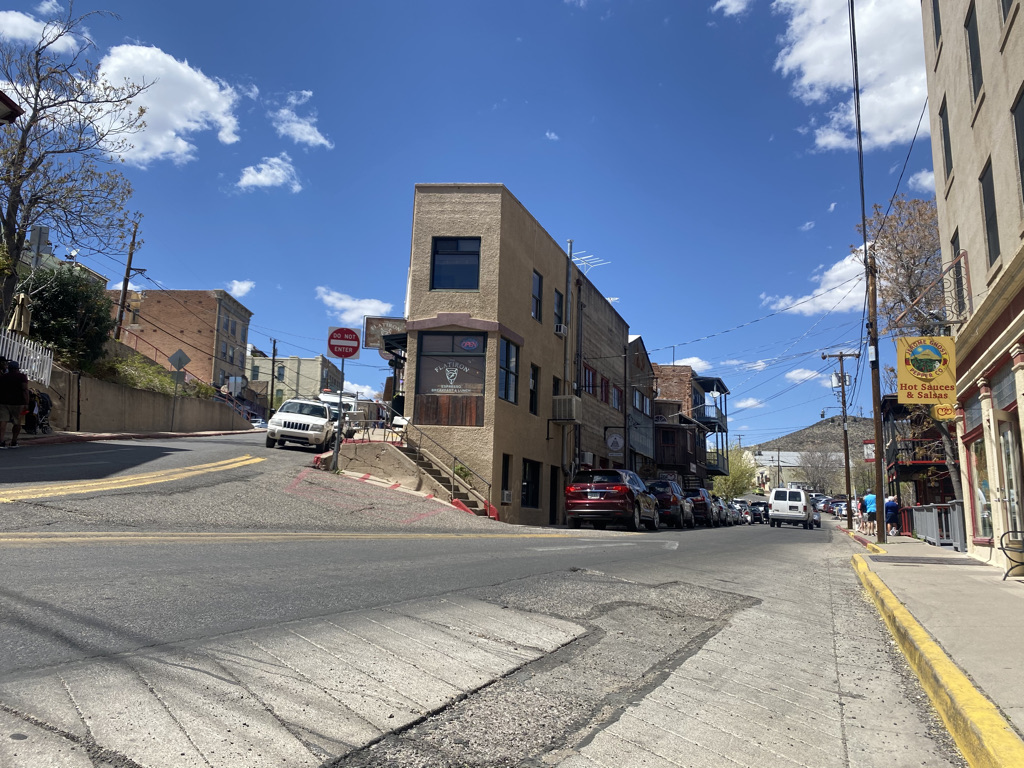
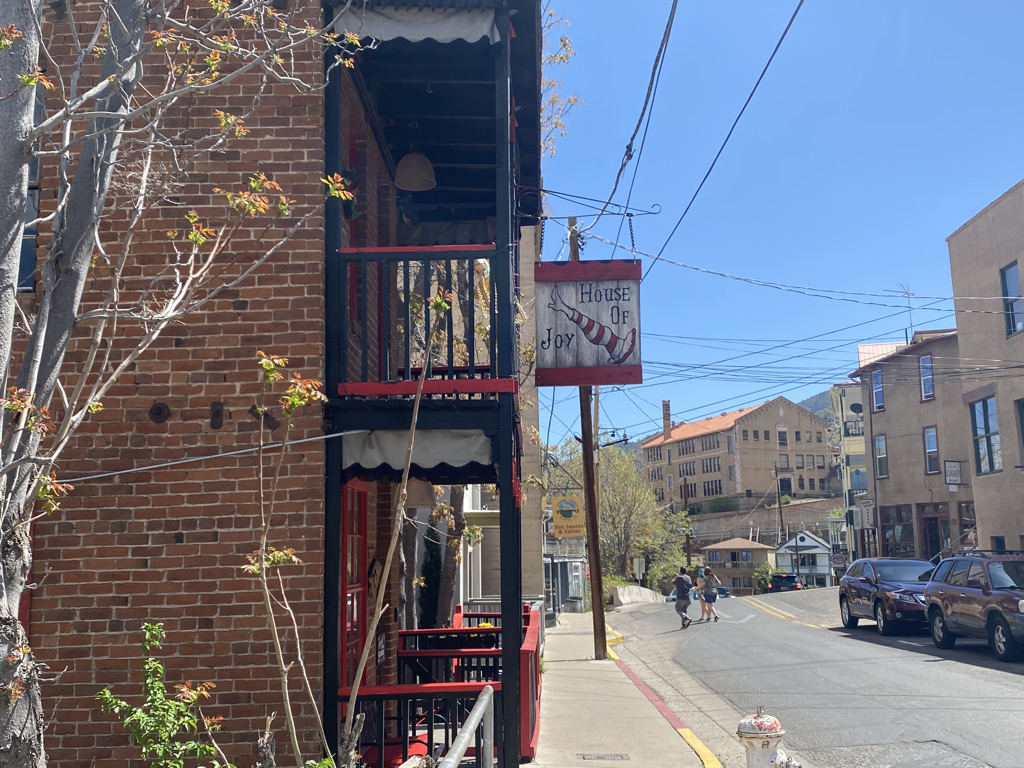
Jerome is a unique spot! Like many ghost towns of the West, it boomed in the late 19th Century due to mining (copper) and then went bust.

However, unlike other ghost towns, it is now a popular tourist destination with a lot of visitors.

Evidence of its past, as a lawless “old west” town can be seen everywhere.

Sitting on the side of a cliff, it also takes on the feel of a Mediterranean town.

Pedaling uphill through Jerome ended up being one of the hardest parts of the entire climb!

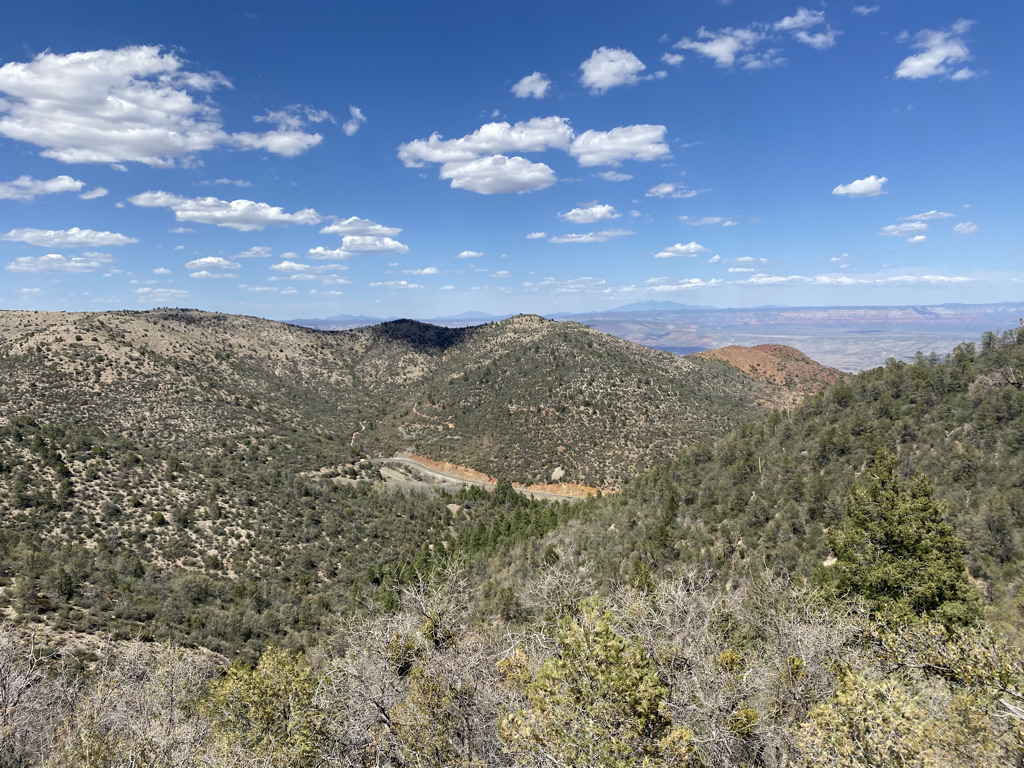
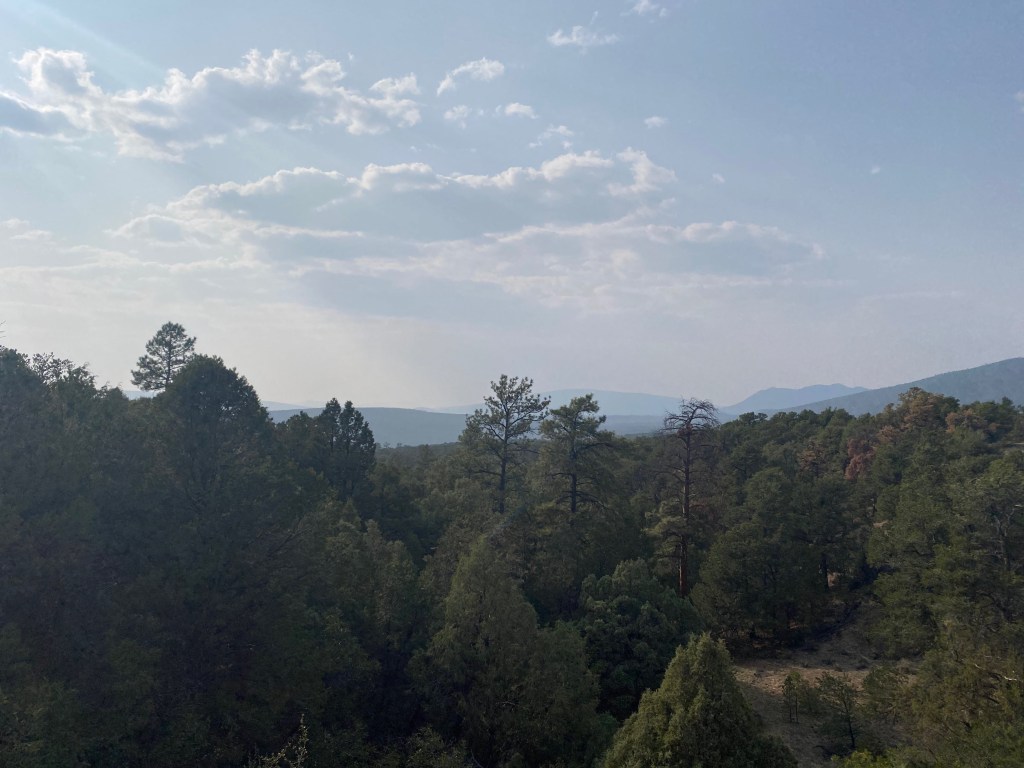
A scenic overlook a half a mile up the road from Jerome

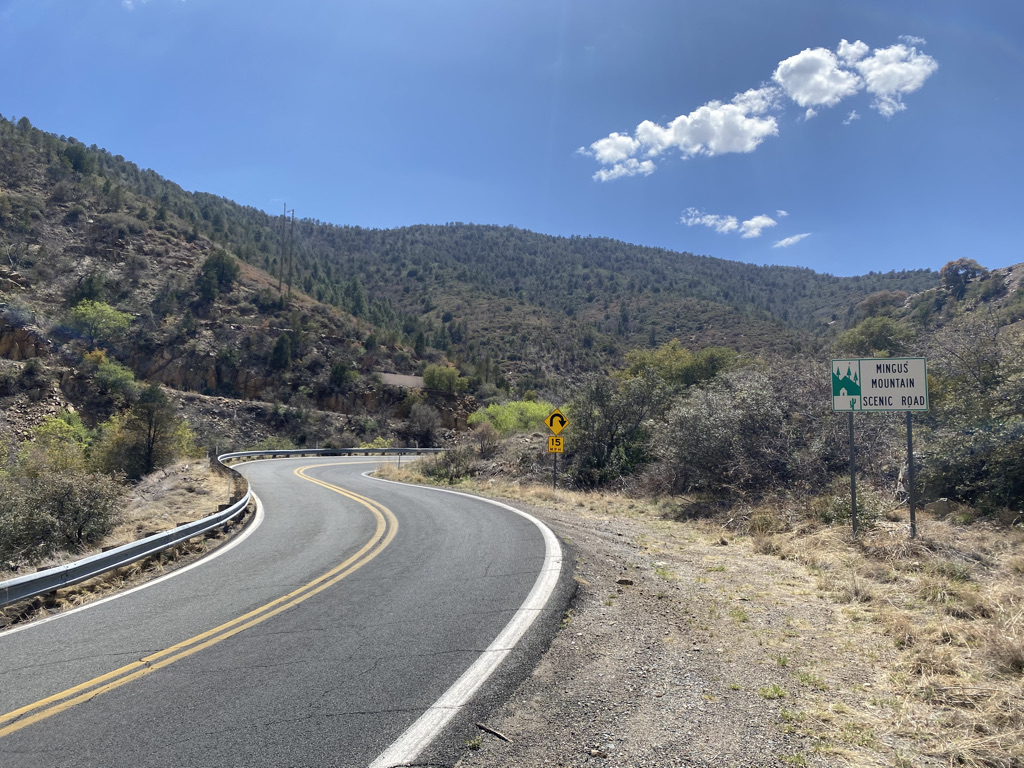
Above Jerome the climb continued to be intense, but the amount of cars drops off significantly making for a quieter ride.

One thing I would grow to love about Arizona’s highway system throughout the week was their elevation signs. Their highways commonly have signs denoting the 1000 foot increments in elevation, providing a fantastic reference point!

The highest 1000 feet (300 m) of the climb was stunning. The panoramic views provided an almost instant reward for level of muscle exhaustion I was experiencing.

This is perhaps why I love cycling so much. When it comes to physical exercise, it is quite rare to be so immersed in the core motivating factor for the hard work, exhaustion and pain. Typically during workouts people remind themselves they are building endurance, improving their health, losing weight, etc. to keep their motivation. Here in the mountains on my bicycle, all I needed to do was continue to look all around me, feel and smell the fresh air and I knew exactly why I was willing to endure so much.

It is always exciting to reach the top of a climb. Seeing the signs and the road turn downwards for the first time in over an hour is a sweet feeling that one must experience to truly understand.

It is a great place to rest and enjoy the beauty of the place I had worked so hard to get to.

As is the case with all other components of our lives, it is crucial to savor moments like these, enjoy them while they are happening. It would have been a huge disservice to myself, as well as the natural environment around me to dwell on my prior setbacks. After all, the world is in a constant state of flux. We never know what experiences will no longer be available to return to.

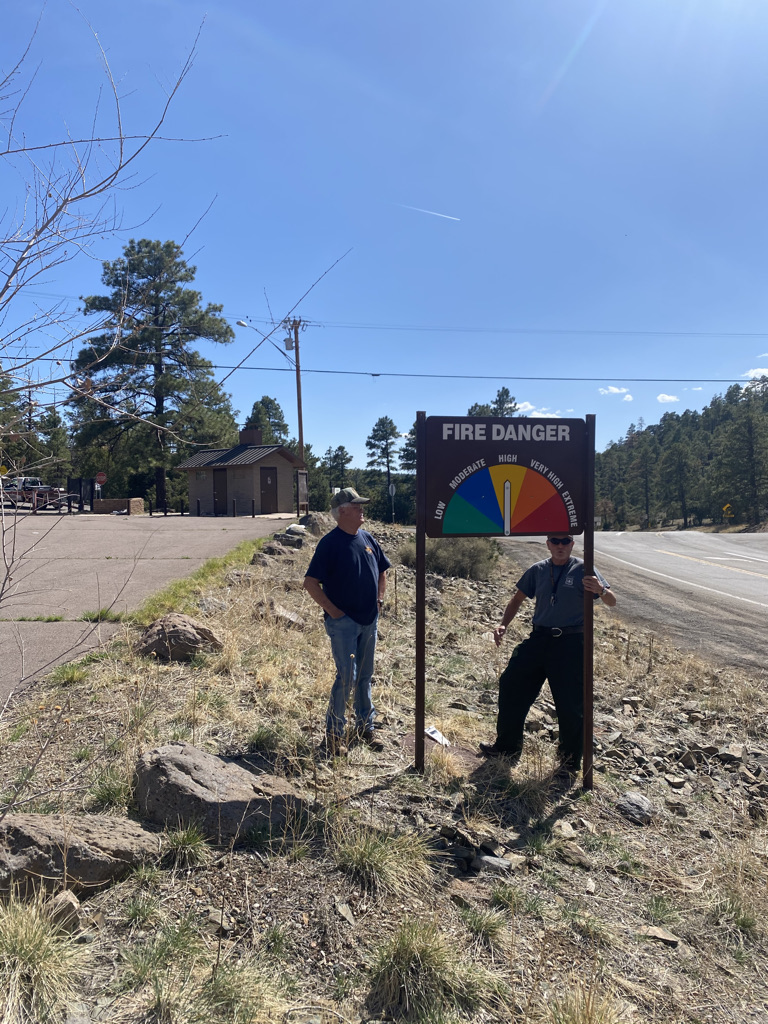
Yes, that day I actually saw the forest rangers update the fire risk to high on the grounds that the humidity was 8%.

When Cycling Was What I Needed

January 31, 2021 on the Platte River Trail in suburban Denver…

I ceased pedaling for a few seconds, allowing myself to slow down. This helped me successfully navigate around several groups of people, while anticipating the unpredictable motion of dogs, children and even a few less attentive adults. There were so many people walking side by side with their dogs, or even in large groups, likely families. This made navigating the trail, in sections, particularly challenging. On this section of the trail, pedestrians outnumbered cyclists by about 3-to-1.

After navigating the congested area, my mind began to wander onto some of the more pressing issues of our time.

I thought about those on the left, who were concerned with people not getting paid what they are worth and the amount of power employers seem to have over their employees. I thought about those on the right, concerned with inconsistency and the possible abandonment of our core culture. I even thought about my own concern about preserving our basic freedoms, and a political culture that has become both more divisive and intrusive into more areas of our lives.

I thought about the commonly heard proposed solutions and why I find them narrow, short-sighted and potentially dangerous. Most people support solutions that address the issues that matter to them, but could make other problems worse, or create new problems altogether. I began to ponder an innovative solution that addresses multiple concerns at once. Then, I began to wonder if the solutions I would come up with would be just as narrow and short-sighted as the ones that terrify me.

Before I knew it, I was once again rapidly approaching a large group of people, this one larger than the last group. I decided not to be aggressive. It is a Sunday. I’m not in a hurry. After all, we are still supposed to be “social distancing” and trying to avoid using hospital resources, which are needed for COVID patients, for avoidable accidents. I slowly navigate around the group. First, I pass the parents walking and talking, while avoiding the couple walking in the other direction. Then, I maneuver around several children in front of them using scooters. However, this time before fully clearing the group, I suddenly noticed another cyclist behind me.

“On Your Left!” he shouted before I had fully moved over to the right side of the trail. I guess every person on this trail has a different agenda for the day.

The same cycle repeated for about 12 miles. The experience of suddenly realizing a more aggressive cyclist was behind me even repeated several more times. Regardless, my mind was alternating, almost in a rhythm, between navigation mode and pondering mode. The more I pondered these grand issues, and processed my thoughts about human nature, the more pessimistic I became.

Then, suddenly, I entered a section of the trail I had never fully appreciated until now. It is in the Southern part of Cherry Creek State Park.

Cherry Creek State Park is known for a fairly large (for Colorado standards) reservoir where people swim, boat, and apparently also walk on the ice in winter.

Seriously, I don’t know if this is safe. Winters here are not consistently cold, and the temperature was around 53°F (11°C) at this time.

However, at the southern end of this park the trail winds through a large open field.

Maybe this is what happens when you finally start to feel the physical strain of a long bike ride and don’t have the energy to think about mentally taxing subjects. Or, maybe it was the inspiration of the bright sunshine and the contrast between the mountains in the distance and wide open, mostly brown, field in front of me. I just gazed at the scene. I realized that, unlike in many other situations, nobody was trying to make me think about those topics that were making me feel pessimistic. All I had to do was appreciate that on this, the last day of January, the dead of winter, I was enjoying a sunny day on my bicycle.

I felt youthful, untamed and uninhibited, which was exactly what I needed after a year that has been filled with fear, restrictions and divisiveness. There was no better place to be than on my bike, on this trail.

I rode my bike nearly 60 miles that day, finding a great stopping point with some hidden treasures.

We are facing a lot of challenges and it would be foolish to ignore them. However, it would also be foolish to allow them to consume us. No matter what anyone is going through or becomes concerned with, sometimes it is necessary to just enjoy the experience in the here and now.

Thanksgiving 2020

I’m tired.

I’m tired of this pandemic. I’m tired of not being able to do many of the things I love doing. I can’t be social and go to many of the places and events I love going to. It hurts to consistently walk away from the people I see in the streets. I miss the small amount of joy I get trading smiles with a stranger.

I’m tired of not being able to travel and experience the world.

I’m tired of spending time alone, but I am also tired of always doing everything over video chat. It’s not the same as being face to face in front of people. I’m just tired of being alone in front of a screen.

I’m tired of everyone, near and far, whose actions made it so this virus would spread and continues to threaten us. But, I am also beyond tired of hearing people complain about people who are not following mask and social distance recommendations.

I’m tired of the expectation that all things begin with a search on a computer or smart phone screen. Want to learn how to do something? In 2020, it always starts with a Google (or DuckDuckGo if you’re privacy inclined) search, not asking a friend or neighbor what they know.

I’m tired of loneliness. I am tired of lack of community.

I’m tired of this extremely divisive political culture and the fact that discussions that do not initially or inherently have to do with politics turn into political discussions.

I’m tired of big data. I’m tired of work environments that treat human beings as resources and encourage us to behave more like machines.

I’m tired of discussions about anything to do with the home. I’m especially tired of the jokes and memes about things like vacationing to the basement, attic or kitchen. All it does is remind me of the 748,291 places I wish I were traveling to.

I’m tired of hearing the same cultural topics discussed, in the same way, from the same point of view. I’m even more tired of those who cannot appreciate that some people are focused on different problems or coming at our current ones from a different perspective.

I’m tired of who I feel like I have become over the past several months. I’m just…well…tired.

Yet, no matter how annoyed I get, I need to understand that most of the things I am tired of are just coping mechanisms. These are some unprecedented times.

Different people have different methods of dealing with things. Some like to try to be optimistic. Some like to try to make changes. Some like to shift their focus to something else. Some need to vent. Others turn to humor. Some still try to use it as an opportunity to get things done, grow personally or take part in other activities they enjoy.

As much as many people’s coping mechanisms have been getting on my nerves, I am sure plenty of people are tired of my coping mechanisms. I’m sure people are sick of hearing me talk about self-improvement, or my speculation about a better future age, where our work culture, institutions and cultural expectations have sufficiently updated themselves to create a happier existence.

This article was written shortly after the pandemic hit and is likely still true today. It is an aspect of our culture that has been especially slow to change.

Thanksgiving is an underrated and important holiday because it is all about gratitude. Like the first half of this blog, many of us spend far too much time focusing on what is wrong, what we don’t have, and what we don’t like about our situation and surroundings. However, many people have found that keeping a gratitude journal or regularly expressing gratitude has improved their lives and their outlook.

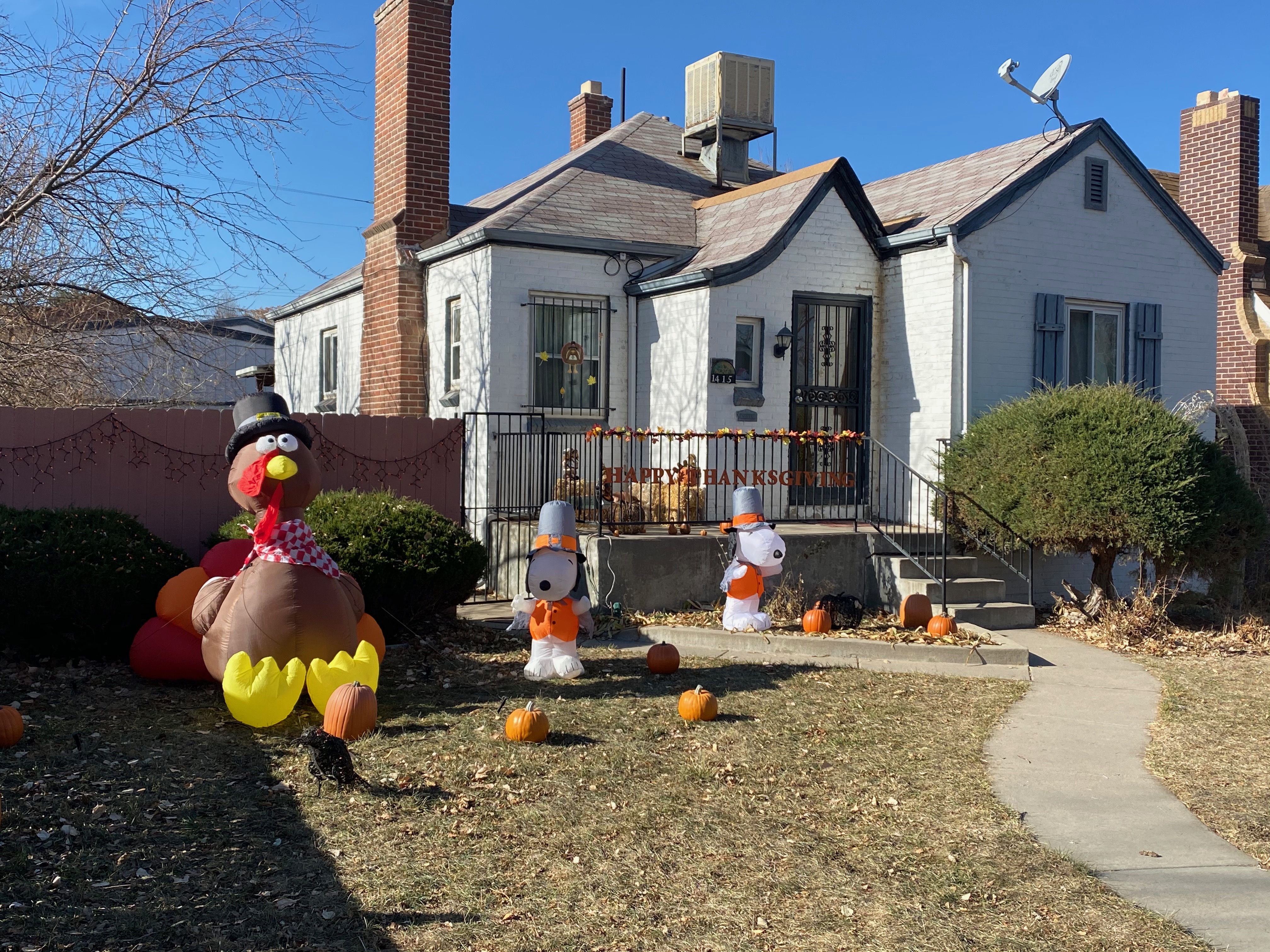
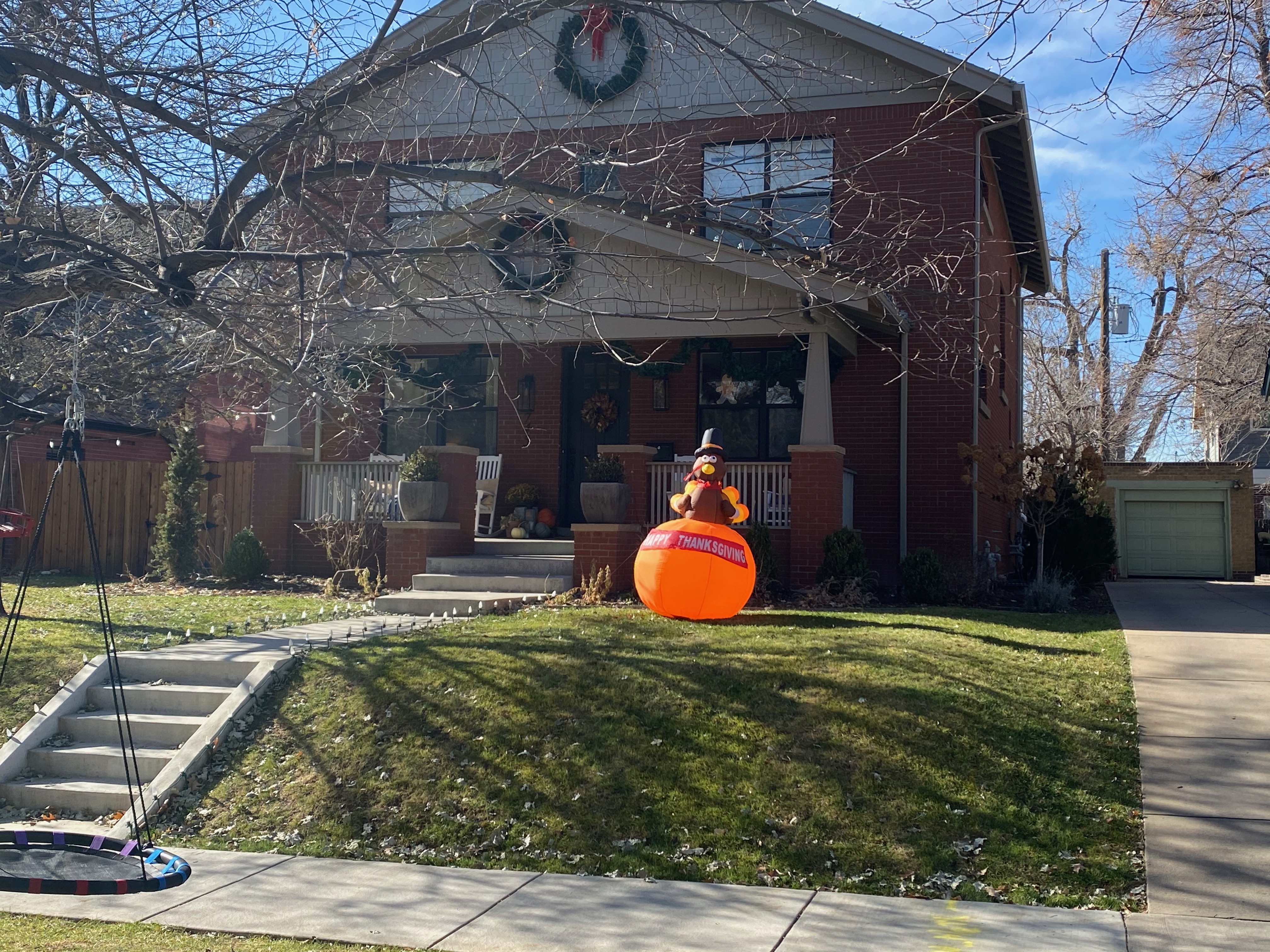
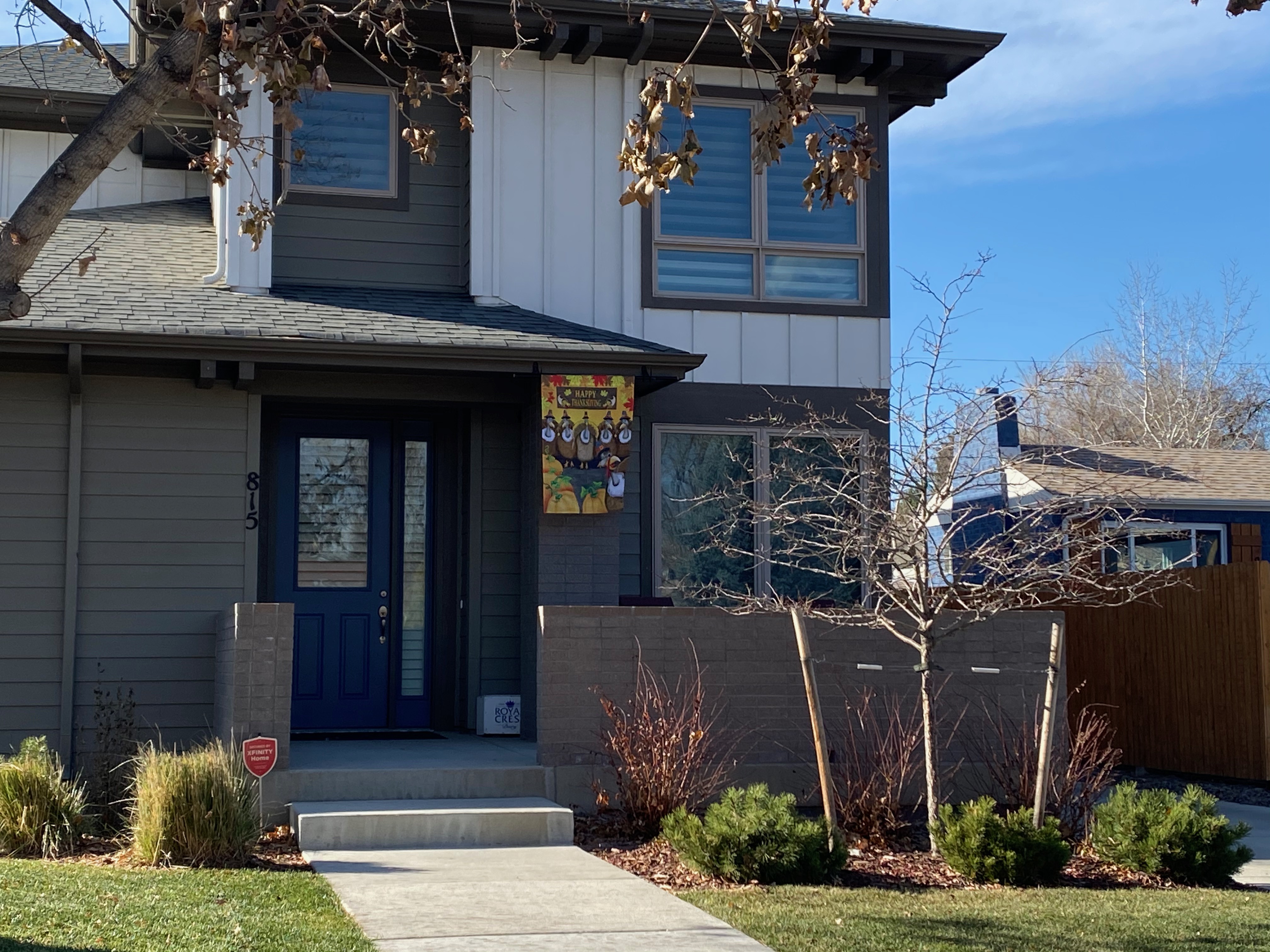
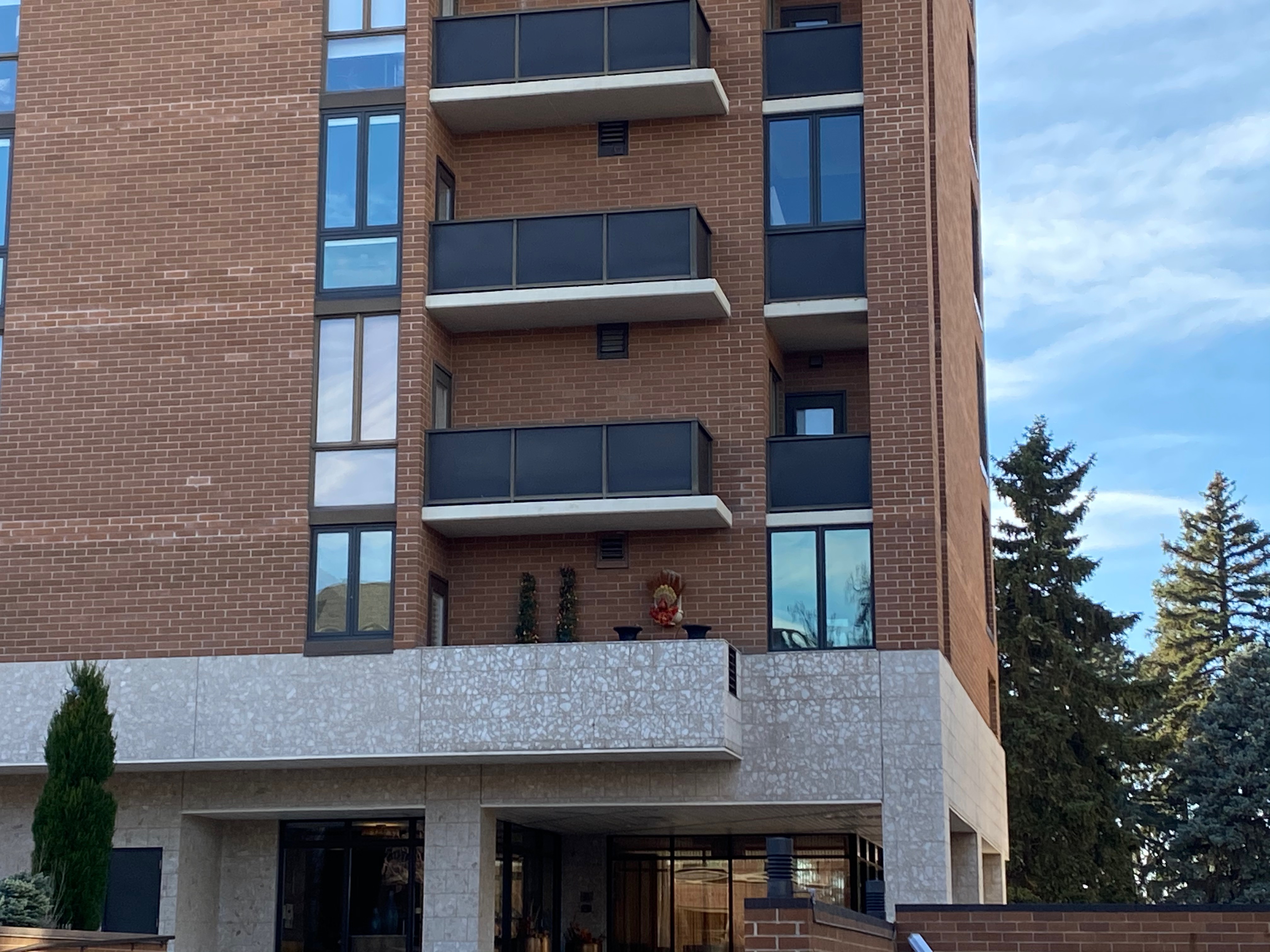
On Monday, I rode my bike around town looking for Thanksgiving decorations. At the first house I stopped at, the owner happened to be in her car. She saw me stop and take a photo of the decorations and offered to turn them on for me.

We talked for a little while about the importance of gratitude and I expressed gratitude for simply being in good enough shape to ride my bicycle. Having experienced debilitating shoulder injuries, she told me to appreciate that. Already I was on a happier vibe.

This Thanksgiving, 2020, it is time to reset our minds, as I am sure we are all annoyed with something. Let it go. First, I plan to forgive myself. I forgive myself for all the ways I have fallen short this year. I let go of the opportunities missed and the progress I feel like I am making far too slowly.

It’s also time to let go of the frustrations I am feeling towards some of the people in my life. At this moment in time, people just need a break. It’s easy to get our minds focused on petty annoyances, especially in times like these. Hopefully this year Thanksgiving reminds us of the good things about where we are in life, the good things about ourselves and the ways in which the people around us enrich our lives.

Going Great; Going Poorly

I was riding my bike on a 76 degree (26°C) day in November , a day which tied a previous record high (November 17, 2020).

By early afternoon I was riding home but still 20 miles away. All of a sudden I heard the sound of a light piece of metal hit the road. Before I could react, my pedal was no longer attached to my bicycle.

I had to slowly brake without putting myself in danger. I walked 1.8 miles (2.9 km) to what appeared to be the nearest bike shop. The place was empty. Research would show that this was a new business that had yet to fully occupy that address.

What to feel?

When you’re lucky enough to be able to spend a day like this outside, it is hard to feel too sad. Sure, I was sitting in a suburban parking lot waiting to get a ride to another bike shop. The air temperature and the sky were perfect, though. It’s hard to imagine getting better sun in mid-November.

The first 20 days of November has been unprecedentedly warm, almost 8°F (4.5°C) above average. At a time of year when people are typically forced indoors, as it becomes increasingly cold, dark and cloudy, nature has provided the opportunity for abundant adventure!

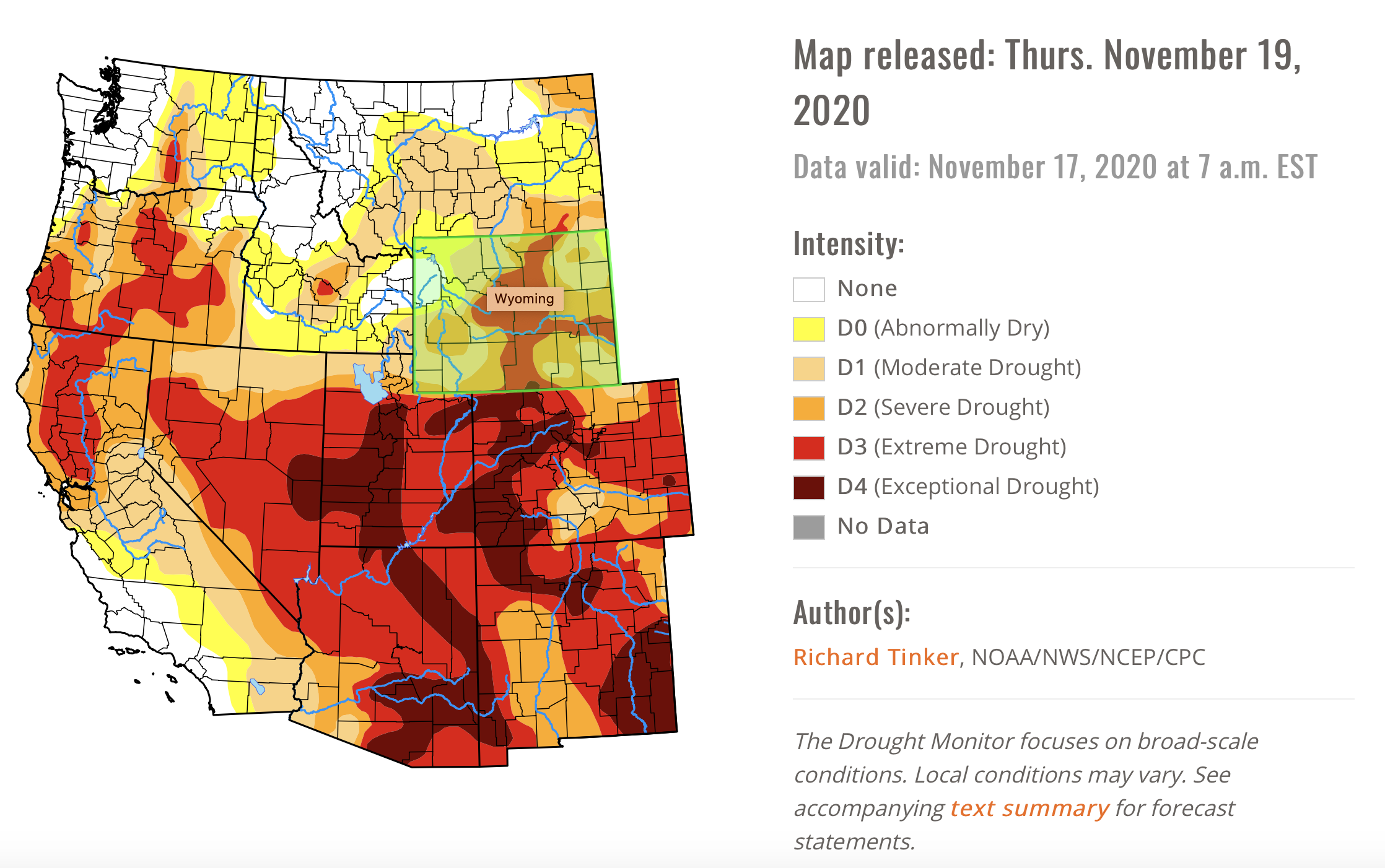
Yet, this very same weather pattern, which has been around for several months, has lead to a drought across much of the western United States.

Each warm dry day in the mountains was a great day for many. Yet, each one of those warm dry days took us one step closer to wildfires so powerful and destructive they could be seen 60 miles (96 km) away!

This particular fire lead to people having to flee their homes in panic!

The very nature of existence seems to always mix the good with the bad. Life has so many components to it, it is hard to look at a specific person or find a specific period of time and not see both positives and negatives. Some of the years when my career was truly going nowhere were also the years I had some of my best travel adventures. This year has featured a lot less travel than I would prefer, but with work I can do remotely, and a recent change in outlook on money, my financial position has improved. Between our homes, careers, social circles, relationships, adventures and hobbies, likely 90% of all people are doing great in some respects and doing poorly in others.

In my home country, November 2020 has become an exaggerated demonstration of this very phenomenon. Every week more progress is reported about the development of vaccines to finally end the COVID crisis.

There is hope it could be distributed in time to make all of our summertime activities possible! Yet, the current situation is dire. The case numbers are spiking, hospitals are running out of beds and staff and people are dying. Many states are reimposing restrictions and lockdowns. We are preparing for a dark kind of winter of despair.

Meanwhile, we are coming off an election whose results gave pretty much everyone, across the spectrum of ideologies, something to love and something to hate.

In truth, almost everything has a component to it that is good and a component that is bad. Tough situations have the potential to lead to personal growth and innovation. Even wars are often credited with scientific and technological progress. Meanwhile, many who had a comfortable and sheltered upbringing are entering the world without the skills to cope with adversity. Maybe one of the lessons 2020 is trying to teach us is that we need to be far less quick to assess things with a broad brushstroke as good or bad. As we realize things like the limitations in using GDP as a measure of success, we accept a more nuanced view of what is in front of us.

Goals and Metrics Put in Context

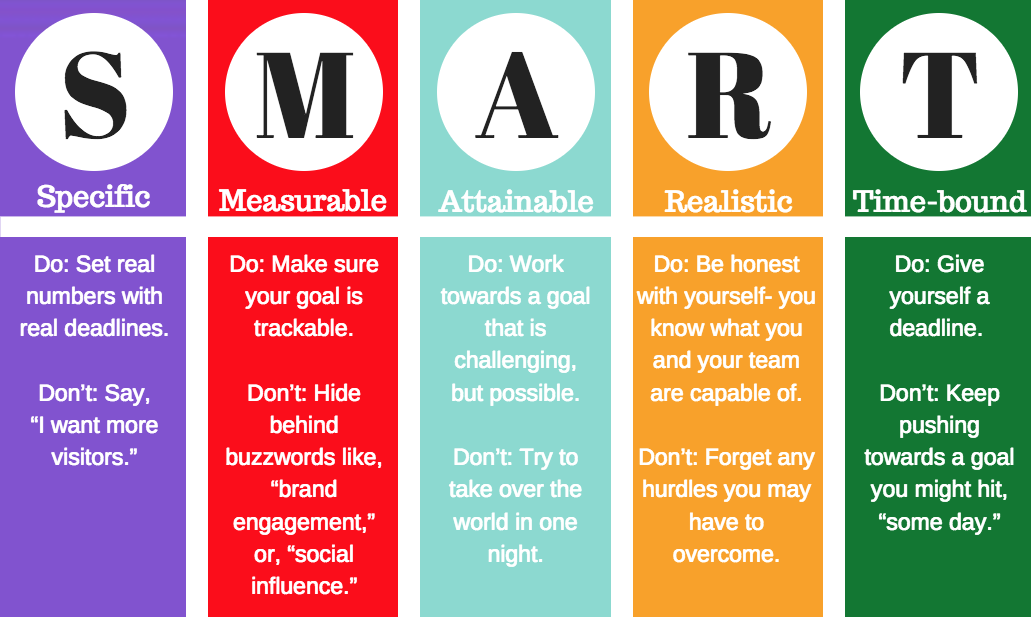
The debate about how to set goals and determine “success” is quite well aligned with the debate over how to approach life itself. On one side, there are those who say “everything can be measured.” In places like the United States, only a fortunate few have never been asked to set SMART Goals.

The SMART Goal system

This goal setting method has plenty of support, especially in the world of business and personal development [1][2][3]. To be fair, setting goals in this manner does prevent them from becoming vague, disorganized, unrealistic pursuits where one can easily lose focus and have no idea when they have been achieved.

This is the path of the left-brained, the detail-oriented, the driven, often the successful, those who build things and guarantee quality.

After all, it is more effective to describe an athlete as someone who can run 100m in 10.4 seconds than to simply say this person is “really fast”, and it is easier to contextualize a video with 100 million views over one that is “really popular”.

However, those more vague terms represent the actual goal. People tend to think of those on the other side as the more artistic types.

However, there are plenty of people in more traditional and even corporate types of leadership critical of the extremely numeric style of goal setting exemplified by the SMART goal system [1][2][3]. They are criticized, and rightfully so, for possibly putting a cap on one’s activities and being too short-term in focus. Once the specific number is reached, what’s next? Is mile number 2,001 pointless?

What about the day after the year ends?

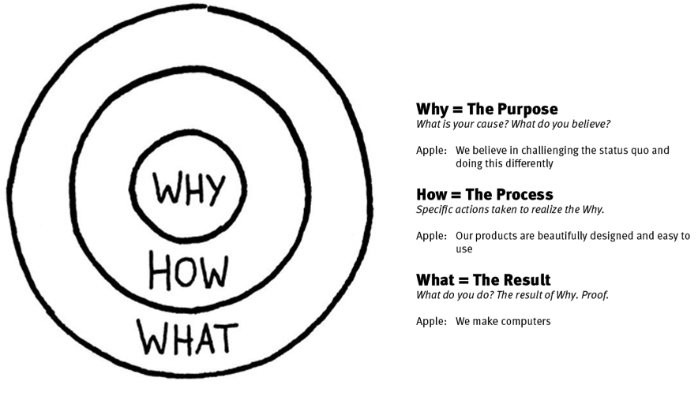
Perhaps more importantly, these goal setting systems are charged with lacking emotion and having no connection to the underlying reasons for the state of our live. Goals like riding 2,000 miles in a year have no connection to the manner in which habits and mentality truly shape a person’s life. In essence, they miss the center of Simon Sinek’s Golden Circle.

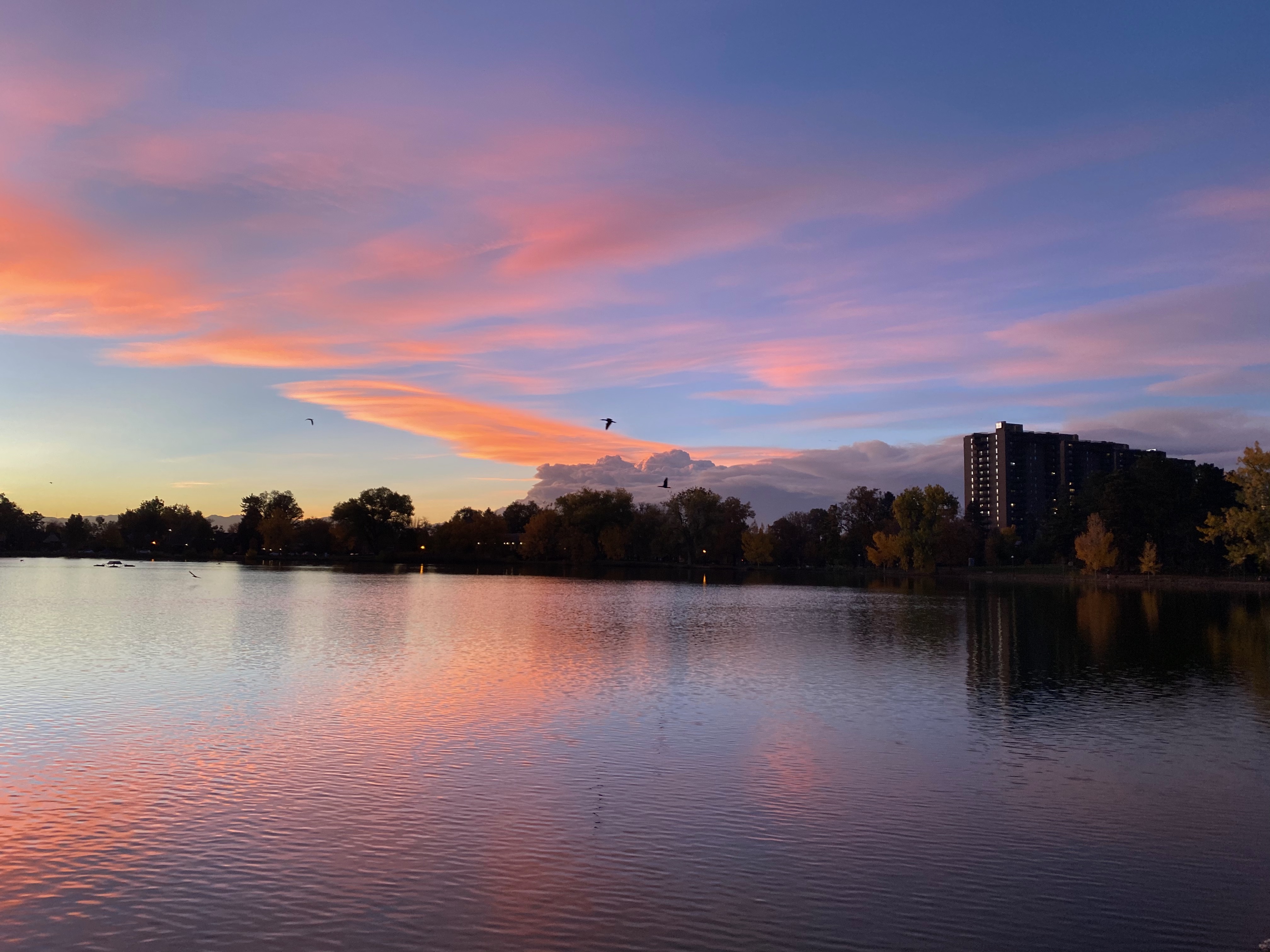
Whether or not one believes that everything (or most things) can and should be measured depends on experience and personality. It’s where the focus is. There is no sensical way to create a quantitative measurement of watching a sunset over a lake while a distant wildfire slowly expands.

Many other areas of life, both professional and fun, ARE all about numbers and only numbers.

Whether or not any individual should set a specific measurable goal depends on their personality and situation. However, not in the manner that most would expect. A person can understand that the ultimate goal in life is to be happy, or fulfilled, but have no idea how to go about finding that happiness or fulfillment. Likewise, one can toil over quarterly numbers and annual targets but one day find themselves completely disconnected from any meaning behind what they are doing. Both these states are recipes for depression.

At any given time in life, what a person needs is the piece of the puzzle they are lacking. Therefore, it is the unfocused creative with a vague idea of wanting to “make the world a better place”, that could benefit from a goal like getting 10,000 people to listen to their podcast. Meanwhile, the highly driven analytically-minded professional on the verge of burnout could benefit from laying off these numeric goals for a while and focusing on their mental state and underlying reason for wanting what they want.

After all, many of these experiences would not have been too much different had the year 2020 ended with only 1,900 logged miles, as opposed to the 2,200-ish it will likely end up at when the year ends.

The Rio Grande Trail: Basalt to Aspen

The name of this trail is puzzling. According the the trail’s website, this 42 mile trail, which connects Glenwood Springs to Aspen, was named after the Rio Grande Western Railroad, which ran along these tracks until it was decommissioned in the 1990s.

Most visitors to the area are not aware of this history. We just see that the trail is named the Rio Grande Trail despite the fact that the river it follows is the Roaring Fork. The Rio Grande is not only well known for marking the U.S./ Mexico border in Texas, but it also has its origins in Colorado, not too far away.

That being said, on the first of October, it still made for one of the most breathtaking bike rides one could ever hope for.

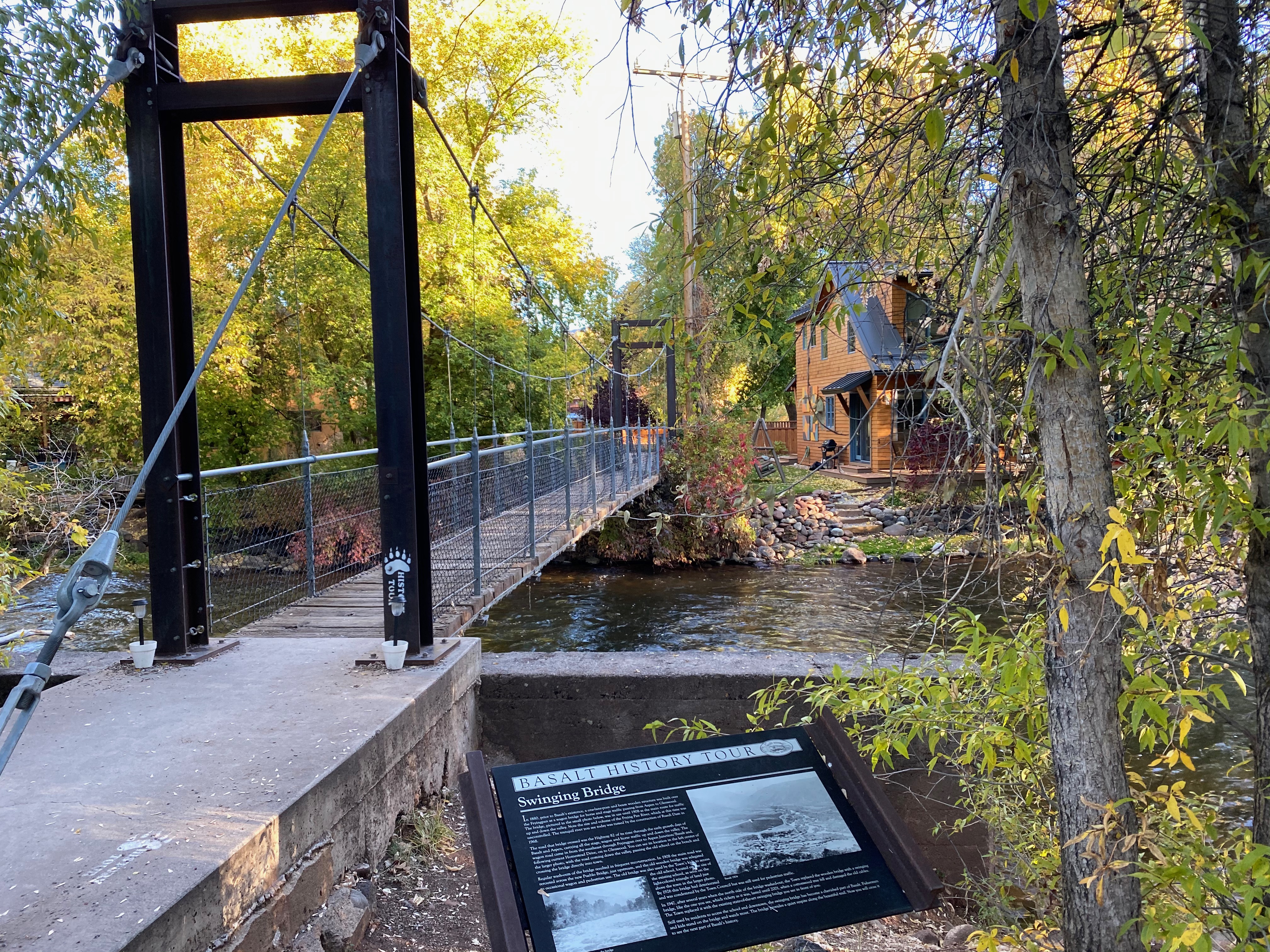
I absolutely love the town of Basalt!

Every visit I have ever had to this town has been incredible! It never feels crowded like a major tourist destination, but there is also never a shortage of things to do or basic resources. I have never had a bad meal in this town, and the two rivers that come together, the Frying Pan and the Roaring Fork are your quintessential free spirited mountain rivers!

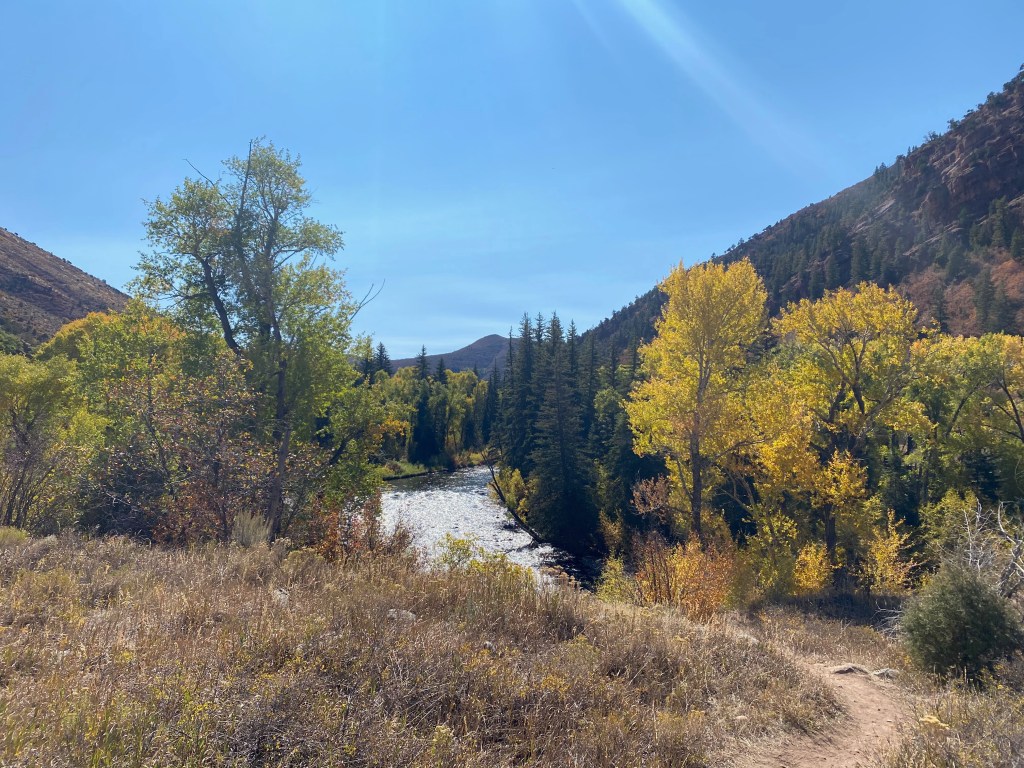
The ride from Basalt to Aspen is beautiful right from the start, especially on the first of October, with the fall colors at their peak.

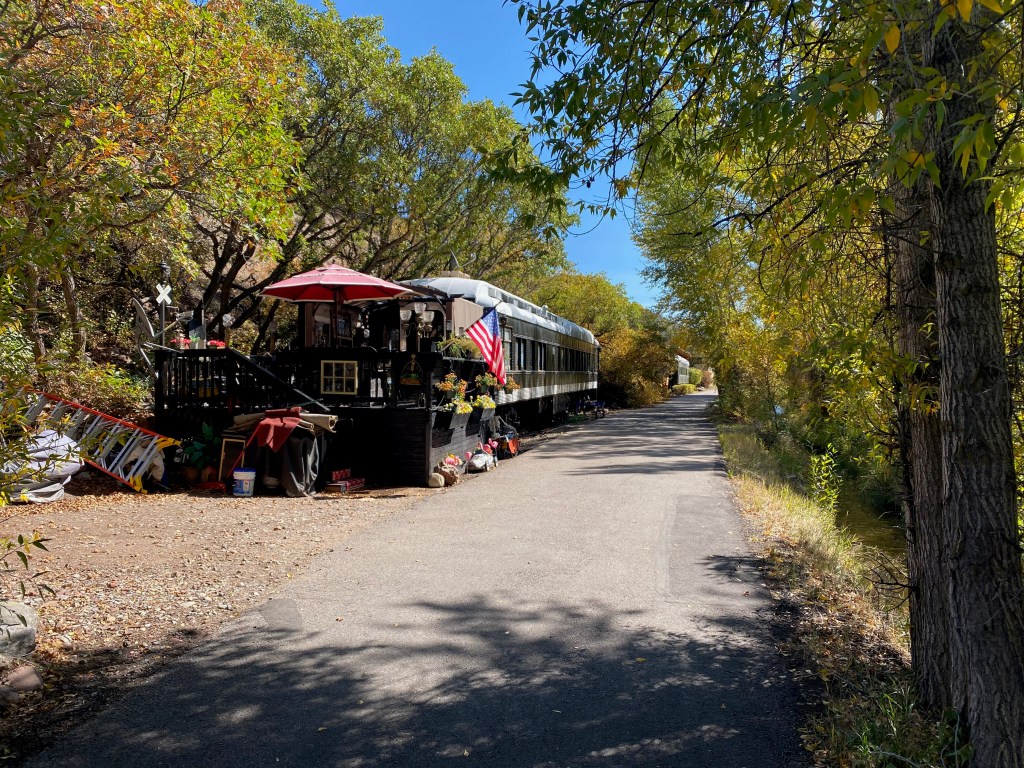
It is the kind of trail that has something for everyone. In the middle part of the ride, you’ll encounter a restaurant built in one of the old train cars used when this trail was a railroad.

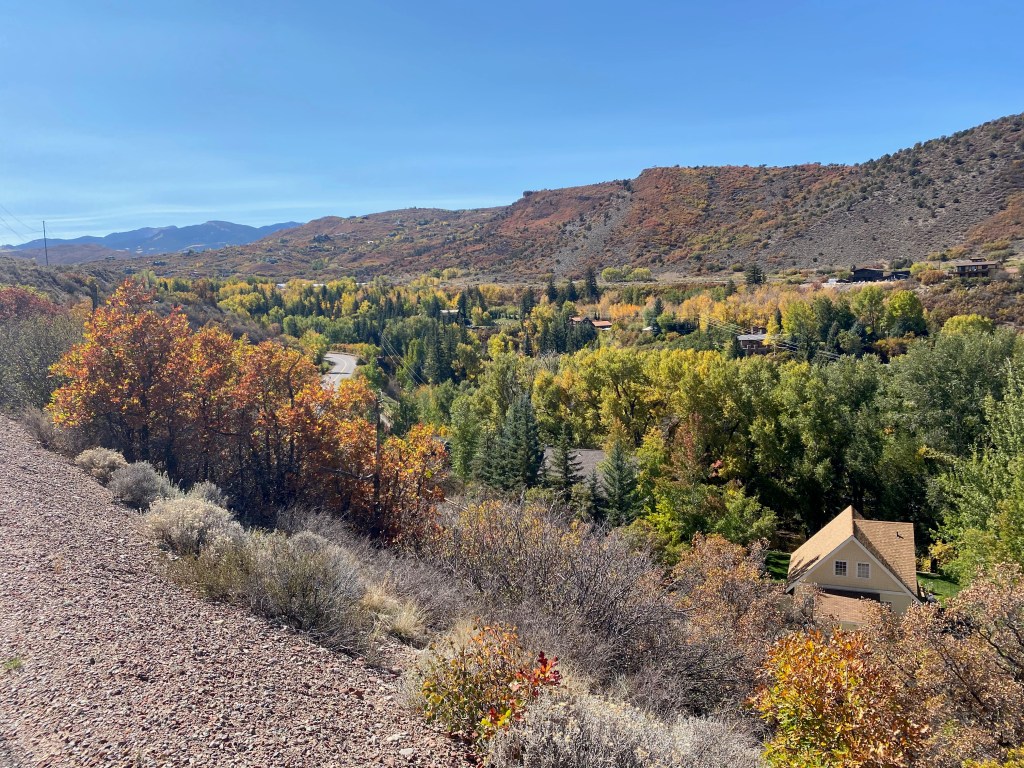
It overlooks several small villages.

The trail is mostly straight, but it makes a timely curve to give cyclists a direct view of Snowmass Village, one of the highest rated ski resorts in the state.

I also absolutely love the fact that the trail does not follow right beside the highway, usually traversing on the other side of the river from highway 82. There are many bike trails that travel right alongside a major highway. Here, cyclists enjoy the trail without the sounds of the busy highway. Additionally, those that have already driven the road see the area from a different perspective.

The mile markers are consistent, with one every half mile.

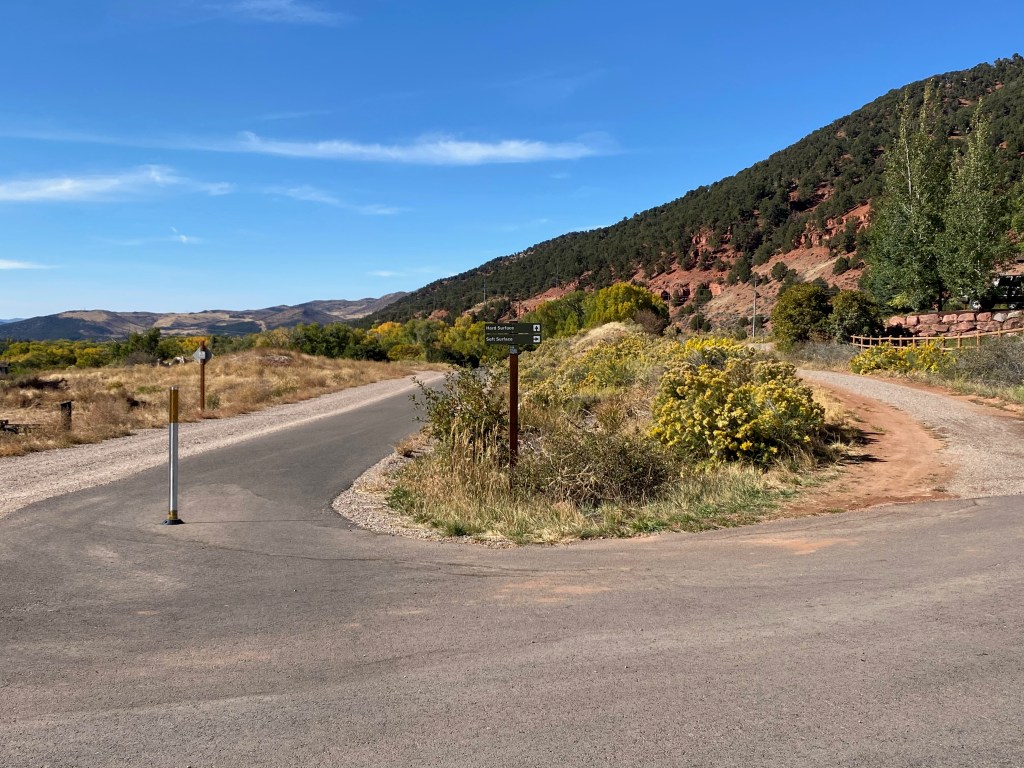
And, there are even parts of the trail where riders can chose a hard surface or a soft surface option.

Closer to Aspen there is an unpaved section that lasts about three miles.

Since it is hard packed and this section is flat, any kind of bike should be able to pass through with little problem. Oddly enough, my favorite experience of the ride was in this unpaved section.

This mini waterfall reminded me of a scene in the movie Cars, where the main character is taken to a similar feature. He is told that before the interstates were built all travelers would pass by this waterfall, but travelers now miss out on this beautiful experience in order to save 10 minutes. The scene, and in some ways the entire movie, was making a statement to us about our busy lives, and what we miss out on when we are always in a hurry, focused solely on our destination.

I was having an experience much like the scene in the movie. It would have been much faster to get from Basalt to Aspen on the highway, but not the same experience. I would not have encountered this feature. Leading up to the ride, I was feeling a bit stressed, like I was trying to cram too many activities into too little time. With work, I may have even been focusing on the destination rather than enjoying a key learning experience. Watching the water trickle down the rocks in stunning autumn gold reminded me how rich our lives can be when we don’t always take the most efficient route to a destination, both in physical space and in personal development.
The trail pretty much ends at the John Denver Sanctuary on the North side of Aspen.

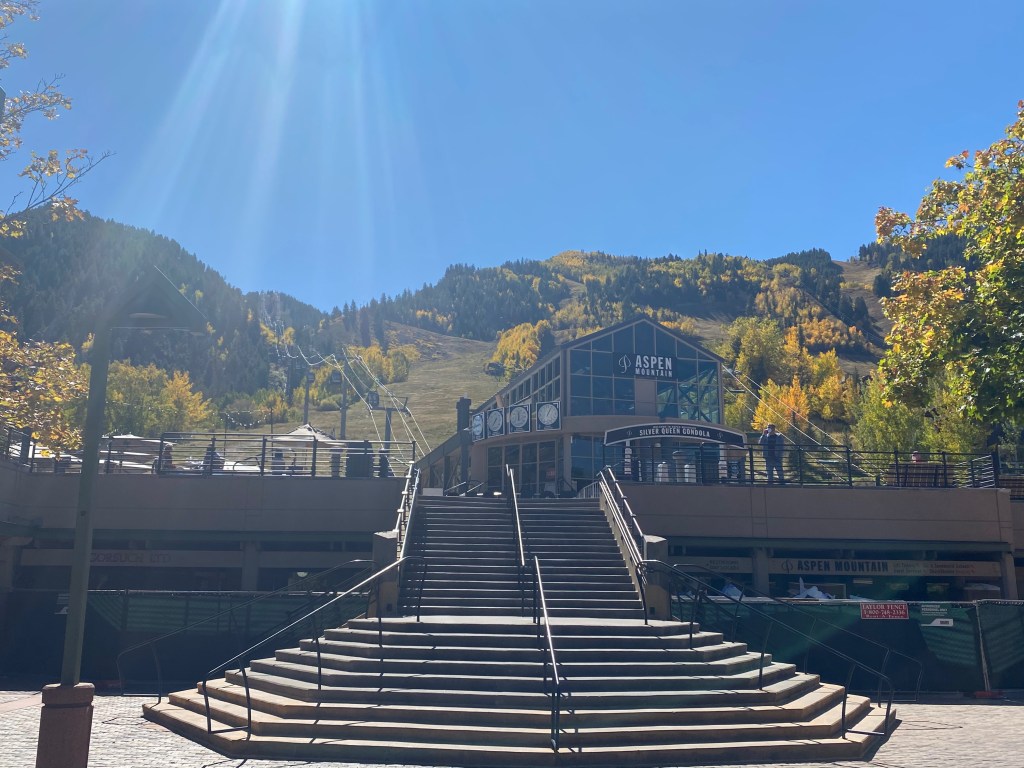
That day the city of aspen was colorful. Yellow colored trees could be seen in every direction, from Aspen Mountain, the ski resort adjacent to town, to the pedestrian mall that is often far more crowded (when there is not a global pandemic).

Aspen is known to be active and wealthy. But, I wonder if the people who live here live hectic lives, always focused on their destinations. Or, do many residents of Aspen, and the rest of the Roaring Fork Valley, frequently take the extra time to immerse themselves in the experience of the natural beauty that surrounds them?

Cycling The Enchanted Circle

The enchanted circle can be an intimidating bike ride for two reasons. First, it is challenging. It’s an 84 mile ride with a total of over 5,700 feet (1.75 km) of climbing. There are also a lot of sections where the road has no shoulder. A road with significant traffic and no shoulder can feel quite dangerous on a bicycle. Maybe I’m spoiled by typically riding in Colorado, with roads that are typically more bike friendly. According to the League of American Cyclists, Colorado ranks as the 7th most bike friendly state in the country, while New Mexico ranks 44th.

Like this bike ride, life has tons of opportunities that are both risky and potentially rewarding. A lot of people lose out on so much that life has to offer because they avoid endeavors that cary significant risk. For me, the Enchanted Circle bike ride became a microcosm for how we are meant to approach these important opportunities. I would not let the apparent challenge and the apparent danger stop me from doing the ride. However, it is good to be mindful and smart about the risks we take. With any potentially risky endeavor, there are actions one can take to minimize the downside. For me on the Enchanted Circle, it meant trying to face as little traffic as possible on the most potentially dangerous part, U.S. highway 64. So, I started the ride early, around 9 A.M., and rode the circle in the counter-clockwise direction, starting east out of Taos on 64.

As I’d hoped, there was very little traffic. There were even times where I completely forgot I was on a U.S. highway. The highway kind of took on the feeling of an empty country road, which was fantastic.

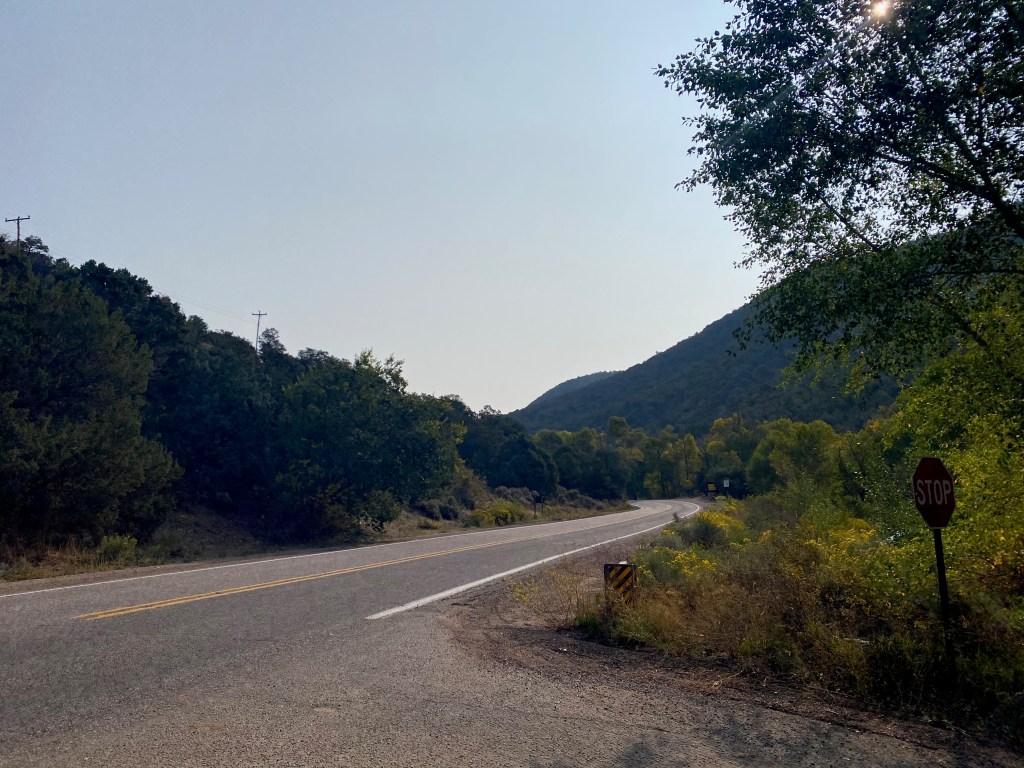
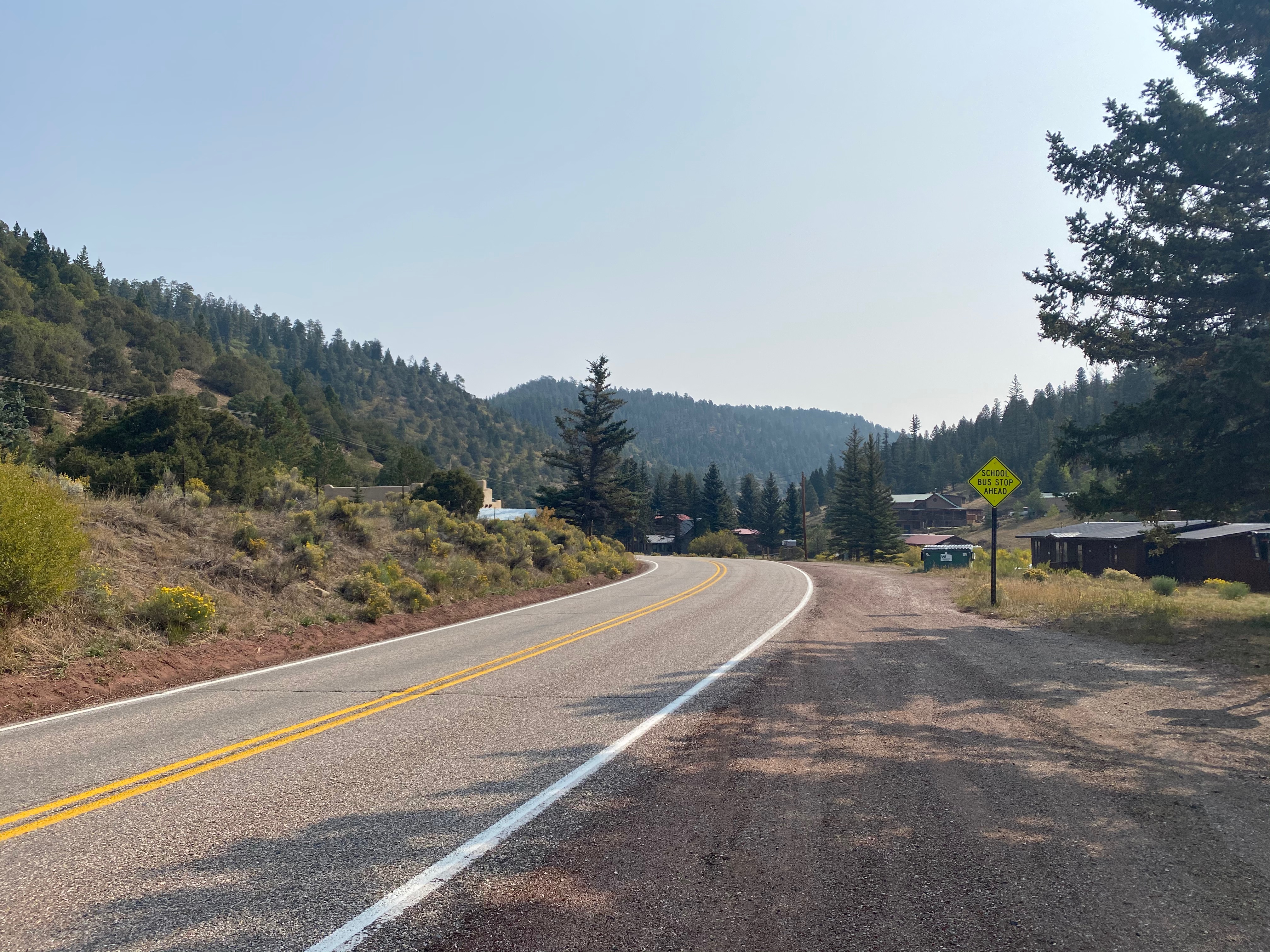
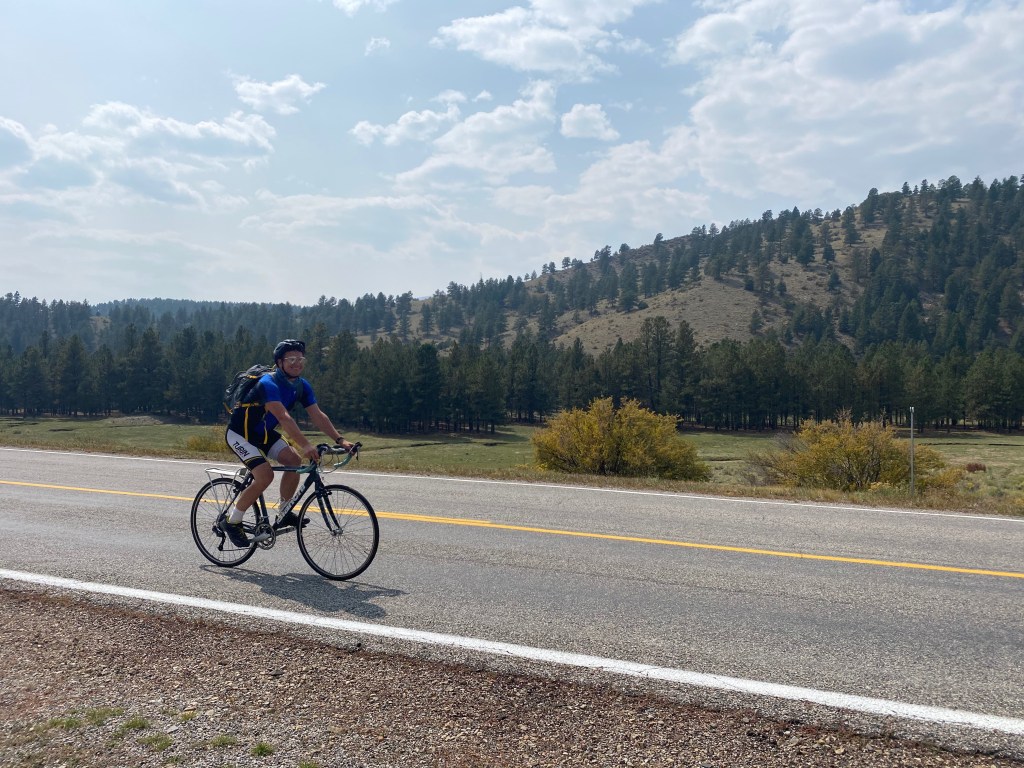
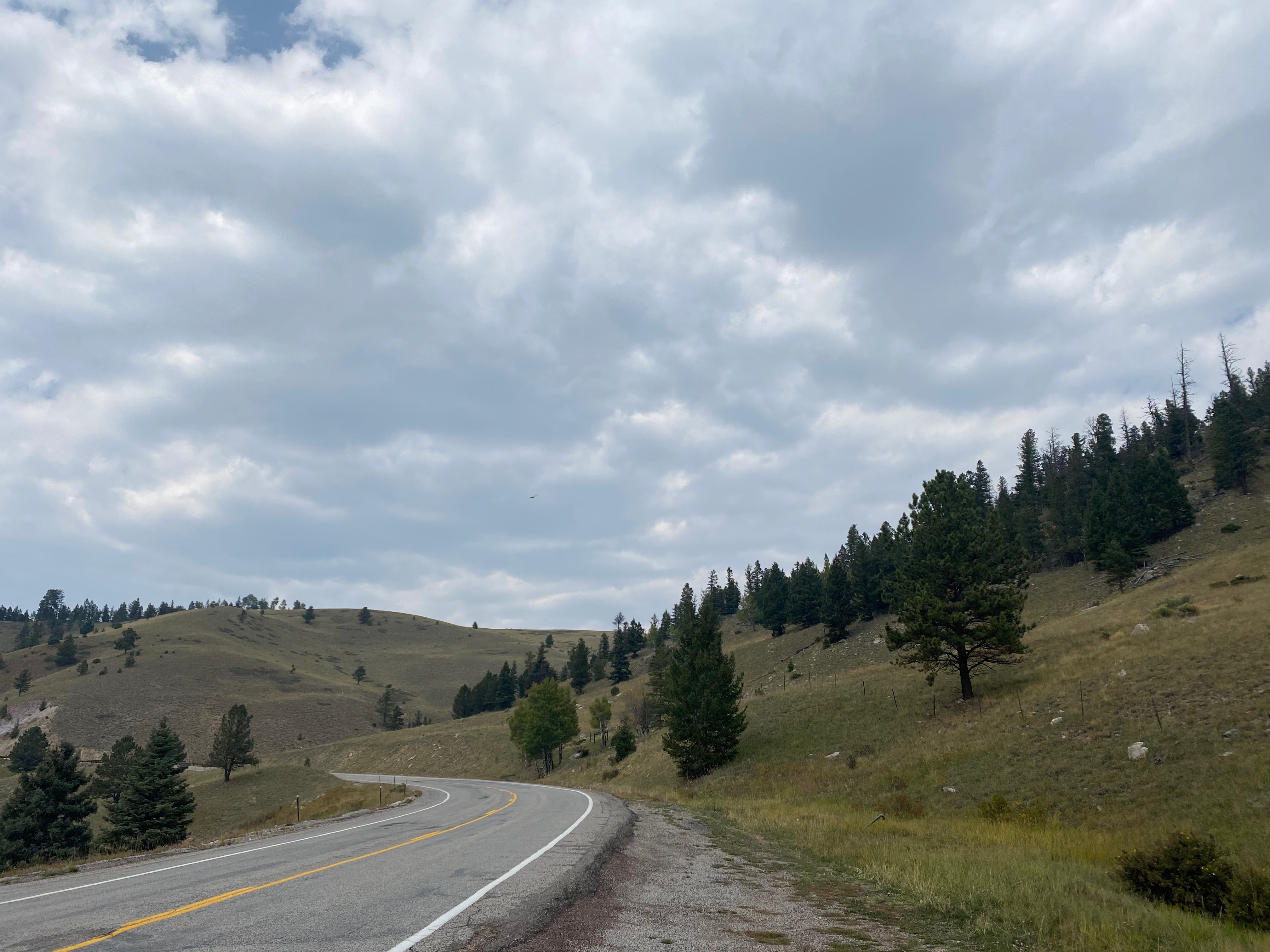
The 18 mile moderate climb from Taos to Palo Flechado Pass wound through the Carson National Forest. I truly felt enchanted, right from the start of the ride. Around each curve was a new sight to behold: Trees just starting to change colors for the upcoming fall. Birds flying through the air. Horses grazing on open land. New mountain peaks appearing on the horizon.

I could not help but smile for most of this segment. The climb is not even steep enough to cause too much exhaustion.

After this climb came a quick 700 foot (210m) descent into Angel Fire, home to one of several major New Mexico ski resorts along the Enchanted Circle.

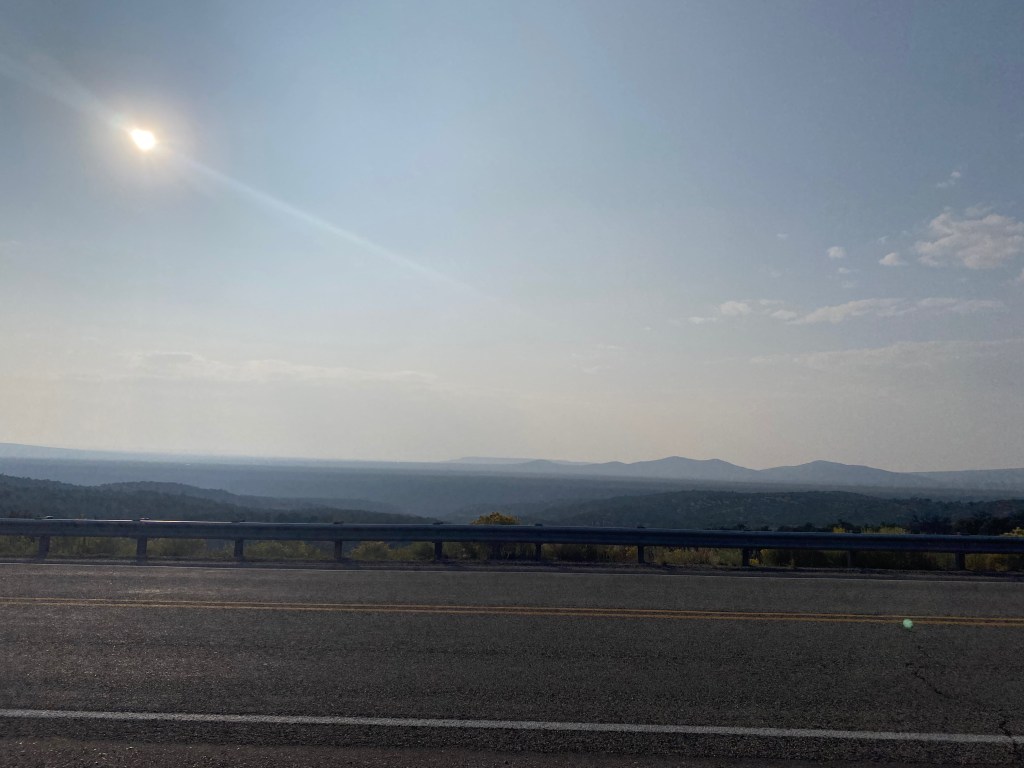
Due to smoke from wildfires in California and Oregon, I was unable to see Angel Fire ski resort from the road. However, I would later get the gist, as one of the locals I would speak with in Eagles Nest would describe this resort as “a ski resort without apres”. It sounded like an interesting family oriented experience.

The next stretch of road, from Angel Fire to Eagles Nest, was perhaps the most comforting, being flat and having the widest shoulders of the entire loop.

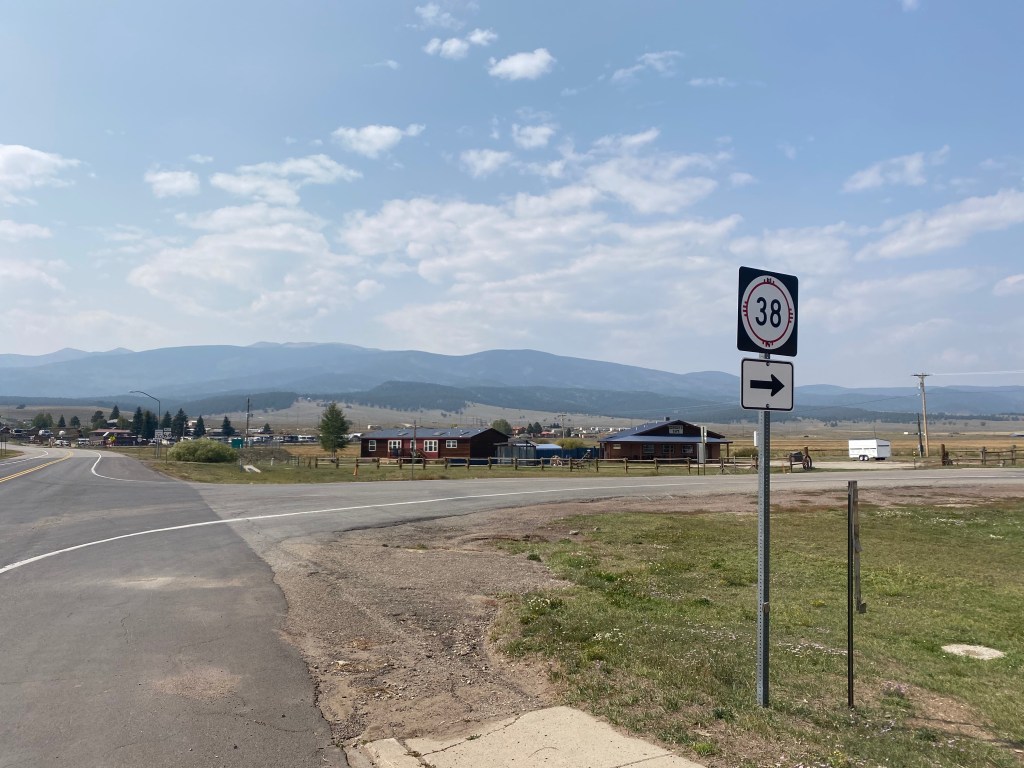
I grabbed some food in Eagles Nest, interacted with some of the locals and then turned onto highway 38 for the next segment.

Highway 38 is a mixed bag. There is no shoulder, but traffic is pretty light. Of the cars I did encounter, this is where I felt the most scared. On a few occasions, I was frightened by being passed at high speeds by vehicles that did not move too far over.

The climb starts gradually, passing by a ghost town called Elizabethtown. A woman I had talked to in Eagles Nest told me this town was so easy to miss I would “miss it if I blinked… while riding uphill”.

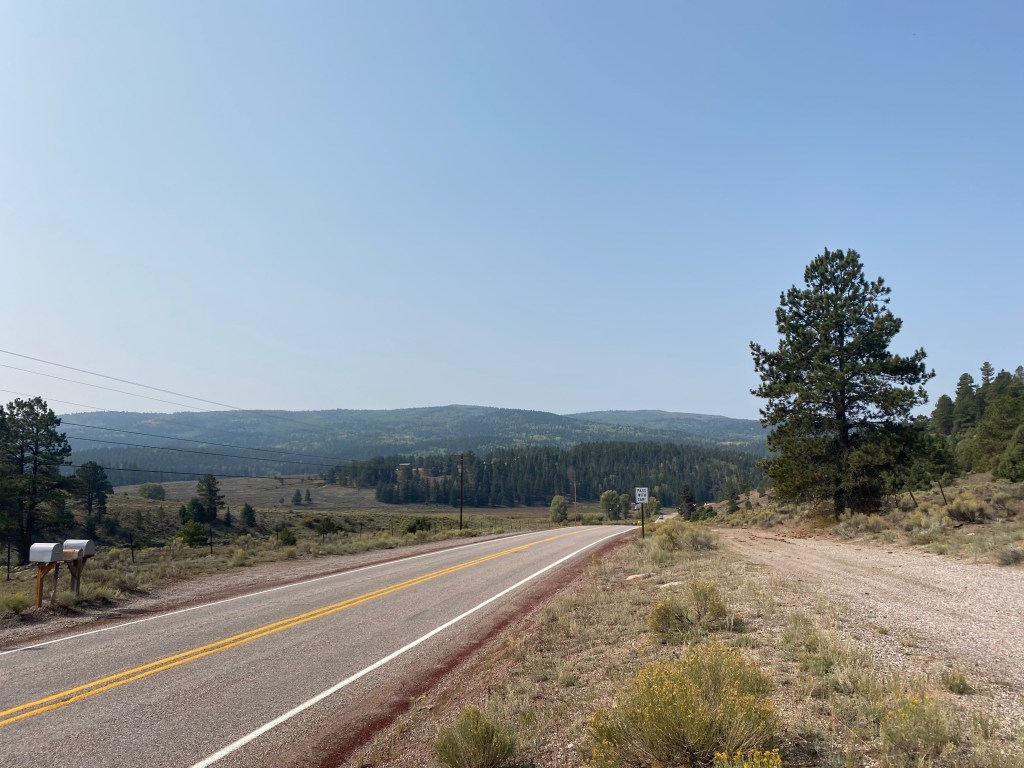
Then comes the most challenging ascent of the ride, to the top of Bobcat Pass, the ride’s highest point.

This part turned out to be quite steep. I had received some encouragement regarding this bike ride at the Eagles Nest Cafe. One patron even let me have one of her onion rings. However, when I told people I was doing this ride, I also did hear “I’m exhausted just thinking about you riding up Bobcat Pass”, as well as “If my son were to tell me he wants to do this ride, I’d urge him not to.”
I took the downhill at 35 miles per hour (56 km/hr).

And quickly arrived in the town of Red River.

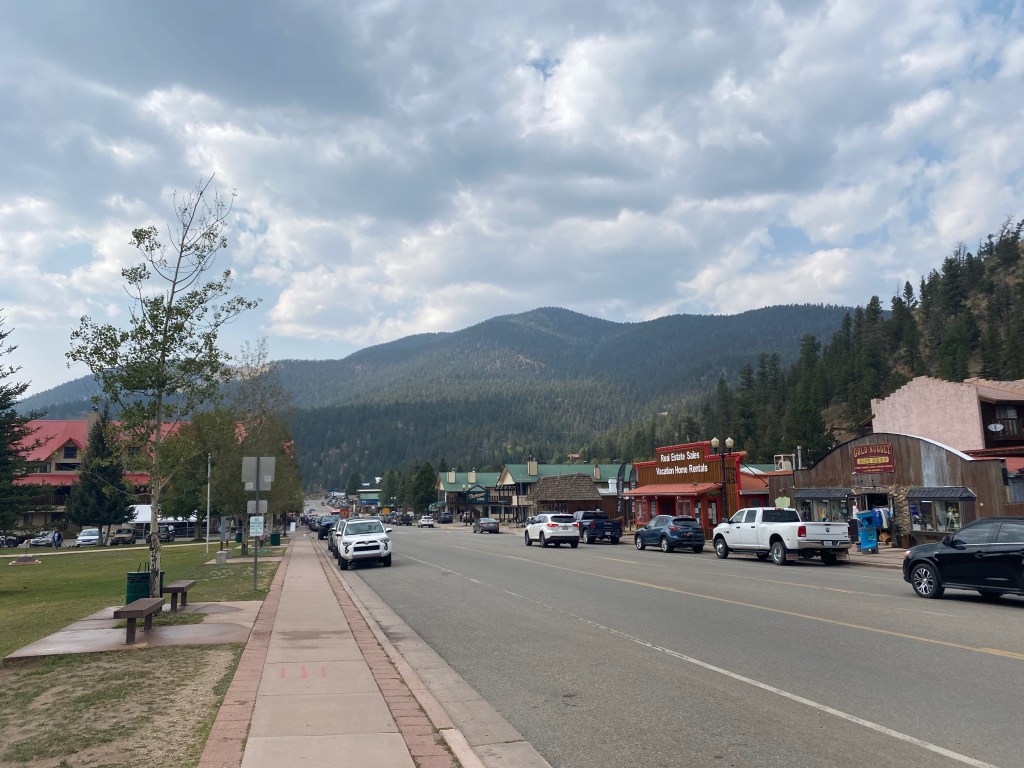
Red River, home to yet another ski resort, felt like your quintessential touristy mountain town. It felt reminiscent of Lincoln, New Hampshire, a town I rode through several years ago, also while on my bicycle tackling challenging mountain passes.

Continuing west on highway 38 was a beautiful descent from Red River into Questa.

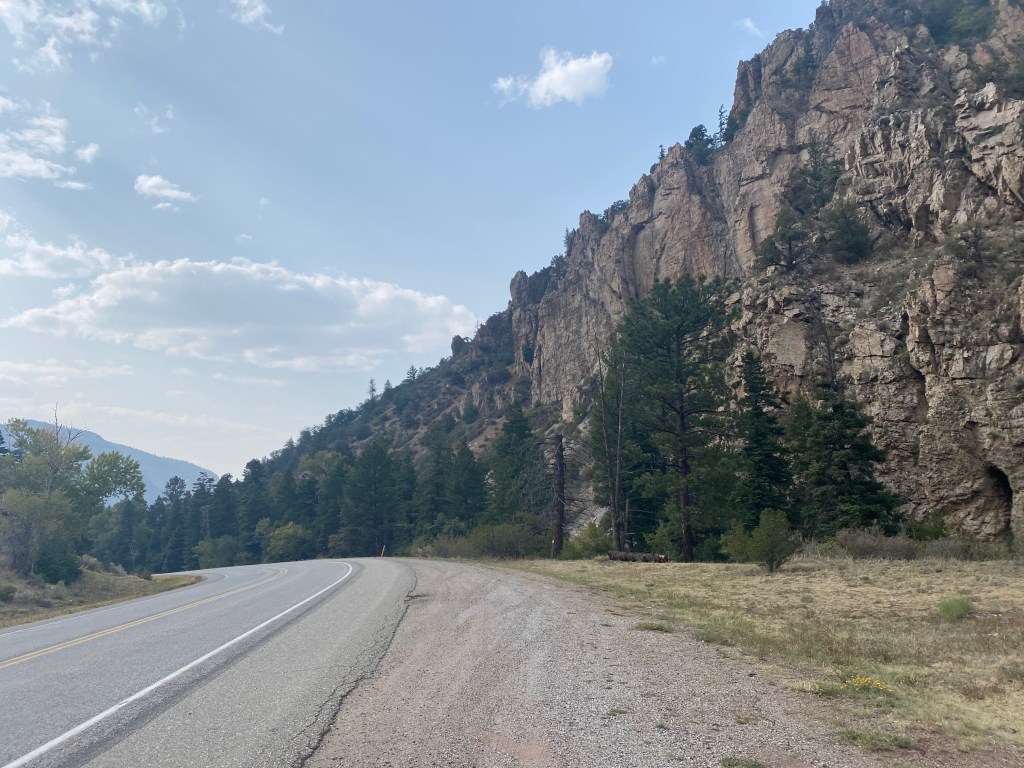
Like the initial climb out of Taos, this descent was not quite as steep, winding through the forest, and by some other unique natural features over the course of 12 miles.

The final 20 miles of the ride follows highway 522 back towards Taos. While this section has some rolling hills, it stays in the valley to the west of the Southern Sangre de Cristo mountain range. On this part of the ride, I saw the mountains from a whole different, and more broad, vantage point.

The rolling hills on this last part of the ride are not nearly as big as the major passes I’d rode up earlier. However, having already rode 70 miles and pedaled up Bobcat Pass, they were enough to exhaust me.

Like many of my previous exhausting bike rides, I ended the day physically exhausted but spiritually rested. It also came with another form of spiritual satisfaction, having properly persevered despite some less than ideal conditions. The manner in which I approached this ride allowed me to enjoy the upside of the experience (the satisfaction of the ride, the scenery, the interactions with the locals, etc.), while being smart enough to minimize the downside (the risk of riding in high traffic with no shoulder).