Category Archives: Outdoor Activities

Kayaking in the Sea Caves

IMG_1409

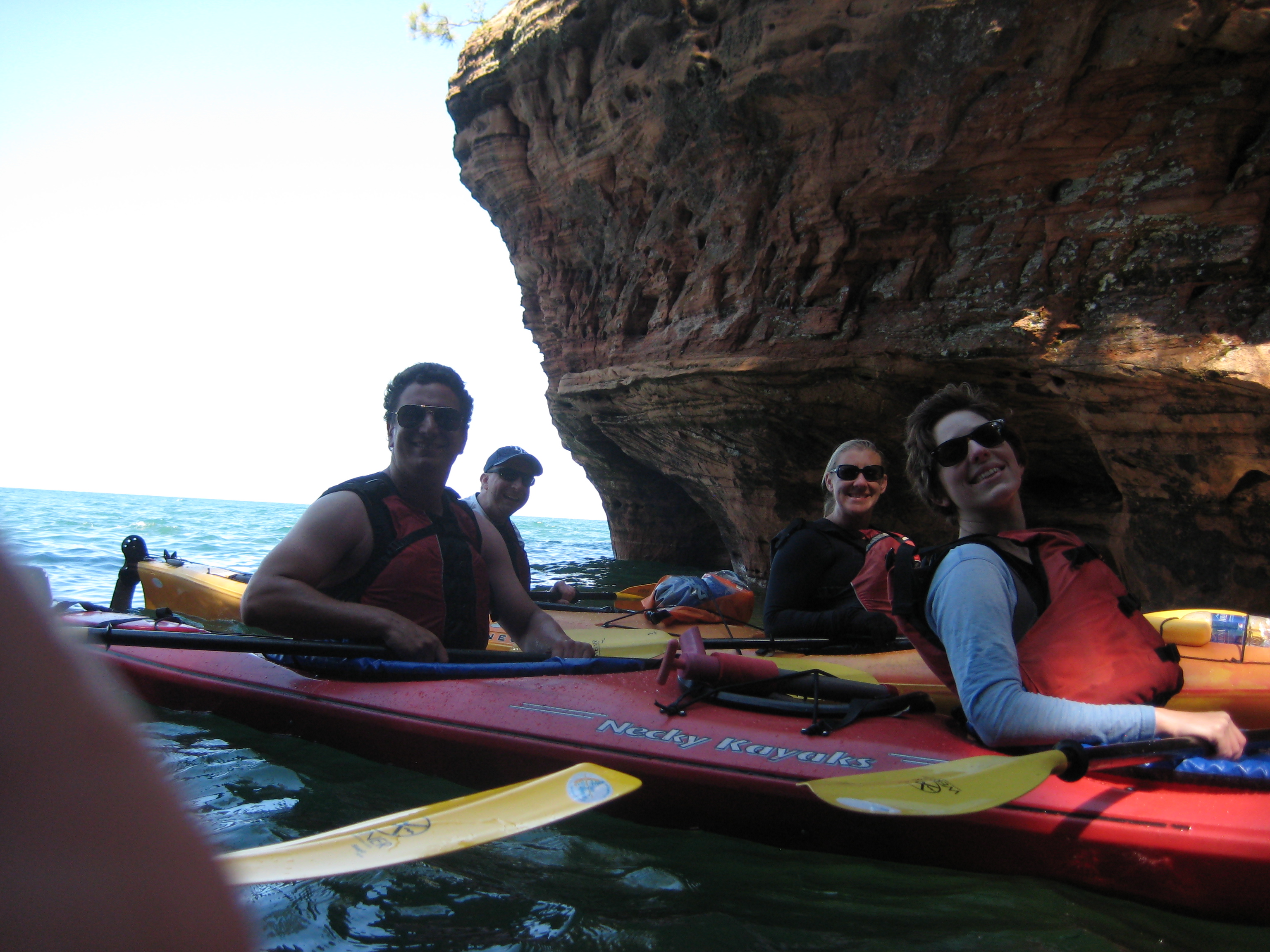
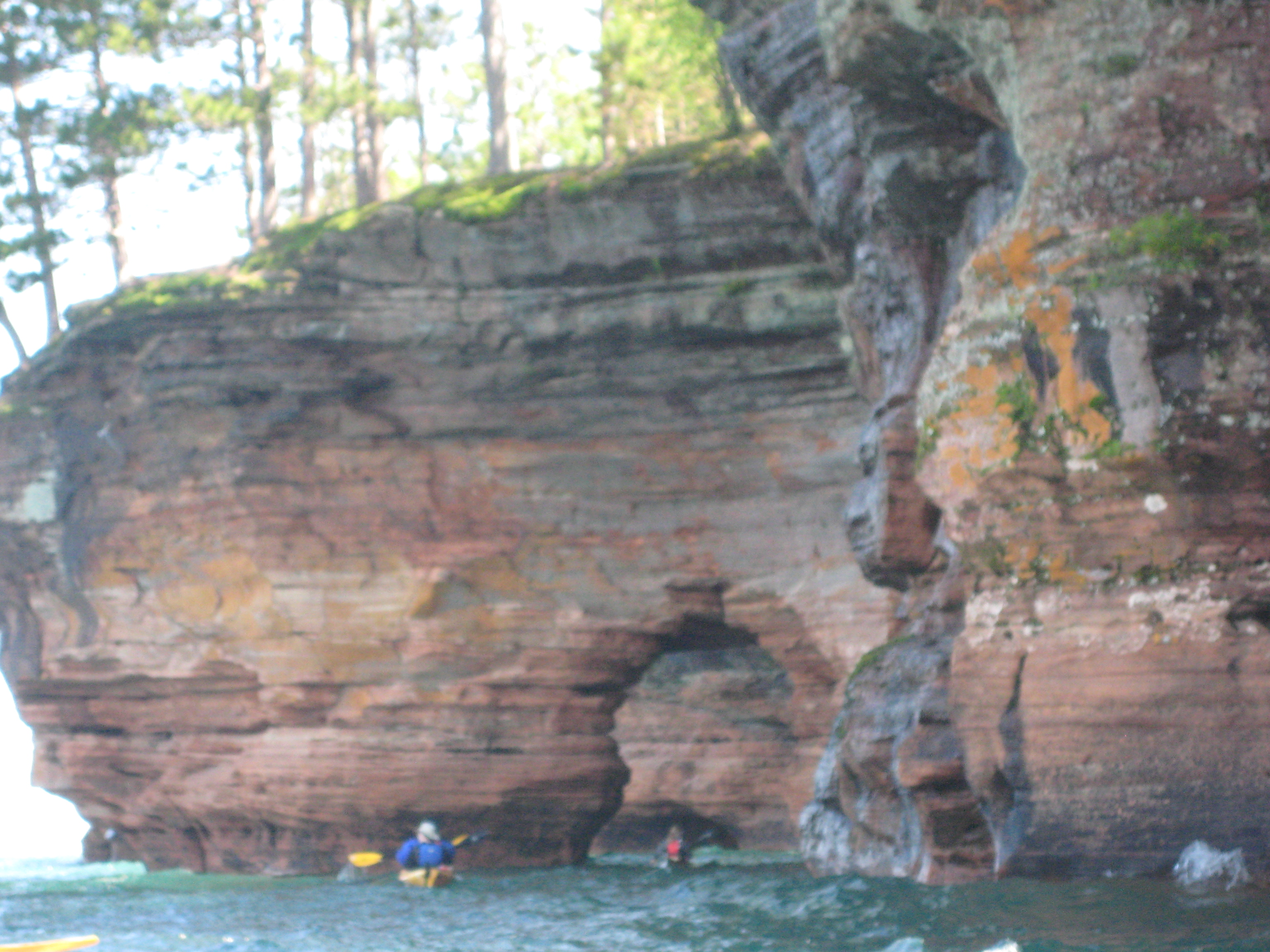
The process of erosion is quite an interesting process. Well, it is not interesting to watch, not even on time lapse. But the end process can be quite interesting to see. Different types of dirt, sand and rock, are weathered down in different climates to create some unique natural features. In the case if the Apostle Islands National Lakeshore, sandstone, eroded by constant waves from Lake Superior have created a series of “sea caves”. The arrangement of these sea caves is actually constantly changing. New “sea caves” are created and old ones are destroyed periodically throughout the region. The ice that forms on the lake can speed up this process as water expands when it freezes.

I actually own 16 DeLorme state atlases. I pretty much own all of the Midwest states and many of the mountain states. These atlases are a great resource for both outdoor recreation, as well as storm chasing. When I was at the headquarters of the Adventure Cycling Association, I actually saw that they have a whole pile of these atlases as well. They are quite great for everything except urban areas. In each atlas is a listing of places such as campgrounds, lakes and rivers for fishing, ski resorts, etc. Each atlas also has a listing of “unique natural features”. I wonder, not only what constitutes a “unique natural feature”, but also what makes us so drawn to them. Are we bored of the features we encounter on a regular basis? And, how unique are they? Couldn’t sea caves like this form pretty much anywhere along a lake where the soil has primarily been crushed into sandstone by geological processes? Well, maybe that is a rare condition. But, I still wonder what draws us to travel to see them, and any other “unique natural feature”.

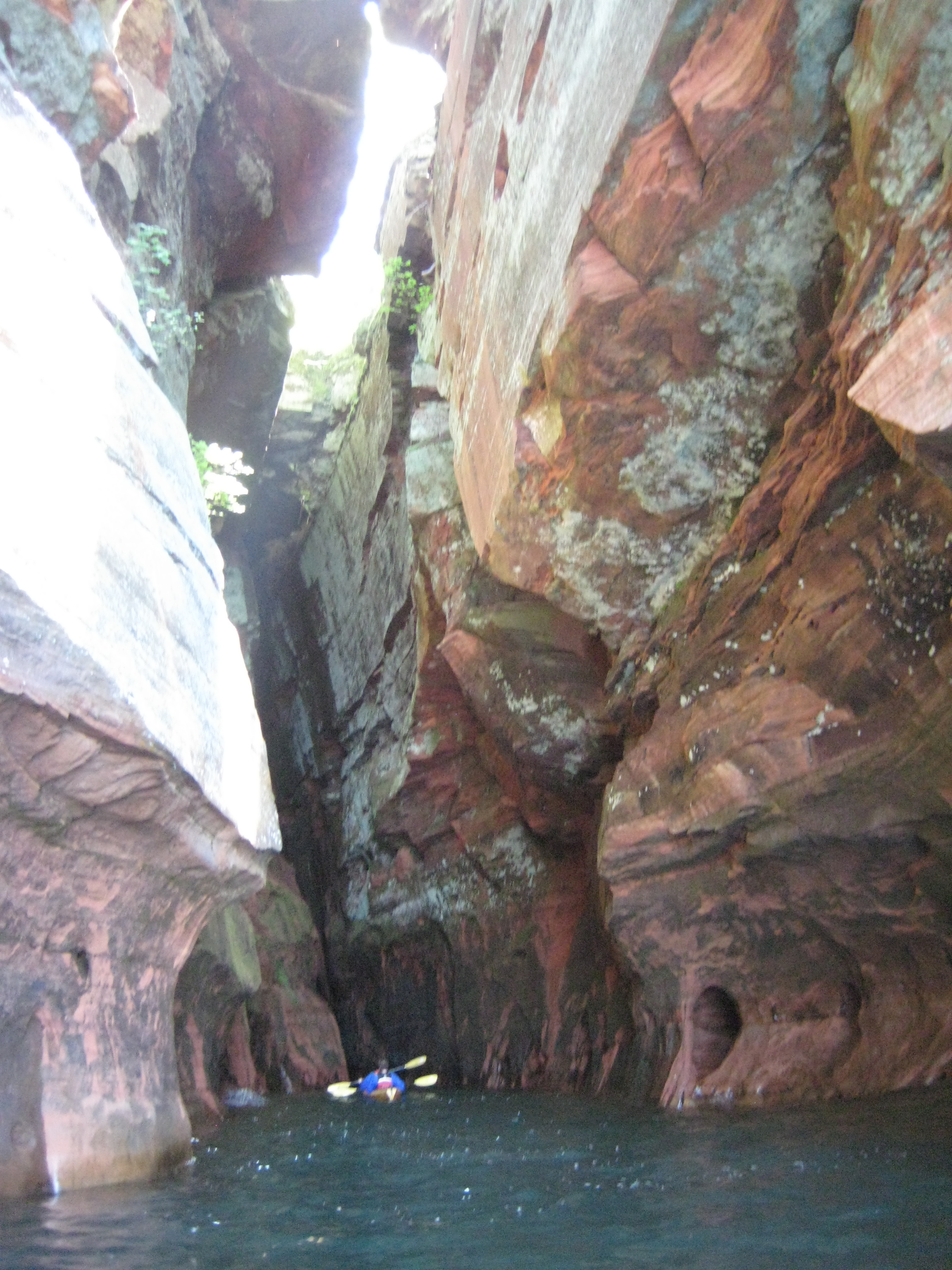
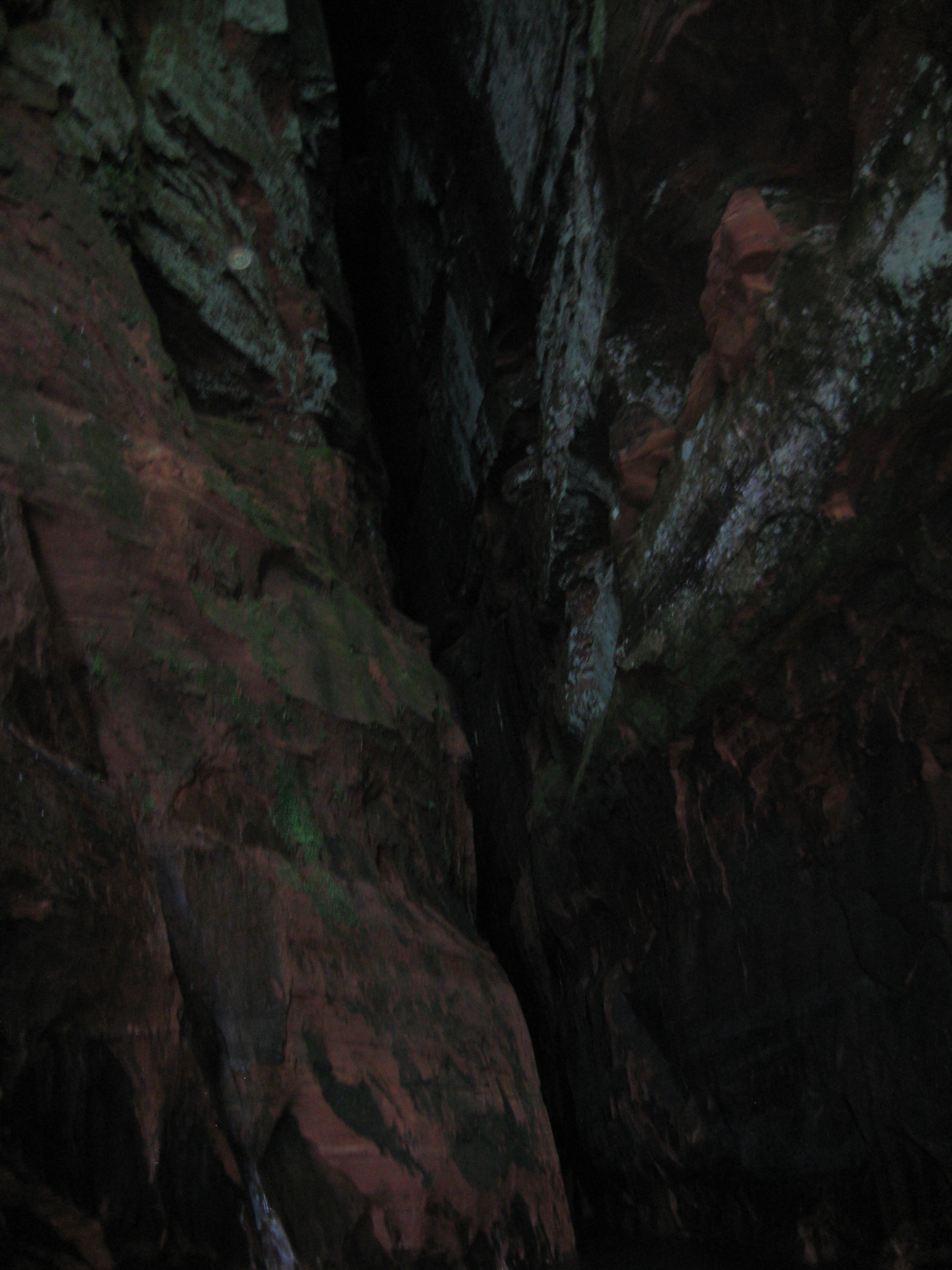
Friday’s activity was kayaking in the sea caves, a trip organized by Living Adventure Inc. out of Red Cliff, WI. This trip is quite neat, as they take participants out on kayaks. Tour guides direct the participants to some of the neatest sea caves along the Lake Superior tour. We were even able to kayak through some of them, and into this area known as “the crack”. This agency also offers multi-day tours that travel to the islands. The tour guides were quite knowledgeable too, and described to me the geological process that created these features, which islands had the most interesting sea caves, as well as how many bears each island has! I really did not know anyone tracked bear populations to this level of detail. The only thing I really know about bears is the saying “If it’s black fight back, if it’s brown, lie down”. I guess that is the important part, as to help you not get killed by a bear, but it still surprised me that there were a lot of bears here. I thought they were mainly out west, and remember seeing all of the bear related warnings in and around Yellowstone National Park.
IMG_1386IMG_1414

 IMG_1397 IMG_1393

I went on this kayak trip with a group of 8, all of us attendees of Saturday’s wedding in Bayfield, WI. Up until about a year ago, several of us all lived in Chicago and worked for AonBenfield. We had frequent social events throughout the city, and got to know each other quite well. It was really a fun time of my life, and I miss all of the people I encountered this weekend greatly. But life brings about changes from time to time. No matter how much people would like to think otherwise, we are not in total control of our lives. Some people believe in God, or a system of gods, or some kind of external force that guides our life paths. Others believe in a concept known as “fate”, something best addressed in that Gwyneth Paltrow movie “Sliding Doors”. But even those that don’t believe can still acknowledge that many of the events that have the largest impact on your life are completely out of our control. Sometimes it is a decision made by people that are more important than you in a company you work for, other times it is a natural event, like a gigantic storm. Either way, you can’t control what happens to you in life, you can only control how you respond.

And, if it is your response that builds character, than I am personally doing a terrible job of it. As I sit here in my hotel room, preparing to depart for home, my thoughts keep dwelling on all of the people I was hanging out with over the past few days. I was actually quite sad at the end of last night when I had to say goodbye to everyone. In fact, I do periodically think about my old life back in Chicago. I know some people have moved on, and others are looking to move on. The past cannot be recreated, and change is inevitable. I really need to look more towards the future. But, the way I had my life in a rhythm back in Chicago, especially the summer of 2011, when there was always something going on, and I still managed to train for and complete a century ride. Well, it is something that will definitely be missed. Having lots of people that honestly care about me, and appreciate me for who I am (which can be quite ridiculous sometimes), is something that is definitely appreciated. I don’t know what to say except that one fact of life is that there is a first and last to everything, and I truly hope that there were no “lasts” this weekend.

Sometimes it is the little things that you remember most about an event. Over the course of this past month, I have had plenty of opportunities to sharpen my rock skipping skills. On the kayak trip, we stopped at an island to eat lunch. On the island, we had some extra time, and I started skipping rocks. Others joined in from time to time. At one point in time, I actually skipped a rock that was about the size of my hand. I was even shocked that this rock actually skipped. My friend Liz described it as “the most awesome thing I’ve ever seen in my life”, which was definitely an exaggeration.

I was also proud of myself for helping a couple of others with their rock skipping. This goes back to leadership skills I have been pondering over the past year. If you think about the role of any leader, from someone that organizes trips to upper management/ CEO figures, one important aspect of their job is developing the skills of others. This involves knowing when to step aside and trust someone else to get a job done. A leader of this nature cannot possibly have involvement in all of the details of every project in all that they oversee. They must know when to let go a little and trust others, but also know when to step in and assist. I gave my wife Abby a couple of basic pointers that helped her with rock skipping, and was glad to see her succeed. Also, when handed a rock for skipping by Kristin, my good friend Quaid’s girlfriend and date for the wedding, I handed it back to her and let her skip it herself, and she was also successful. I know it is something stupid like skipping rocks, but I was proud of myself for revisiting the urge to try and do everything. This is a trait that can really limit one’s leadership ability, as well as annoy those that report to them. People who end up working for managers that do not know how to step aside and trust people with tasks also typically end up struggling to develop. Overall, it is a lose-lose, but I know it is hard for some to resist the urge to step into everything. This weekend it is skipping a rock, but maybe later it will be something more substantial. At least I did one thing right!

-Photos Credited to Sneha Soni-

Wisconsin’s Northernmost Region

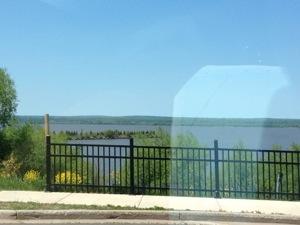
Yesterday I returned to a place I had been to only once before. The town of Bayfield, WI is along Wisconsin’s Lake Superior shoreline, and despite being a very small town (population less than 500), it is popular in the summer, as it is linked to the Apostle Islands, which is an island chain in Lake Superior with some unique scenery. Due to the geography of Wisconsin, this is the northernmost part of the state. It is the only part of the Lake Superior shoreline in Wisconsin, as farther east, the shoreline hits the Upper Peninsula of Michigan. This part of the state is actually over 300 miles from both Milwaukee and Madison, making it quite different than the part of the state I am most familiar with. In fact, someone once told me that sometime in the 1970s there was talk of this part of Wisconsin joining with the U.P. of Michigan to form a new state, breaking away from their respective states due to serious cultural differences.

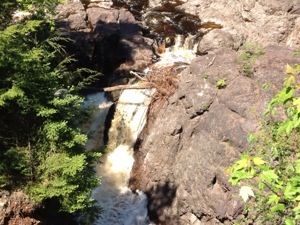
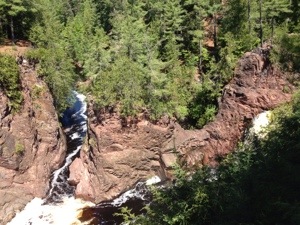
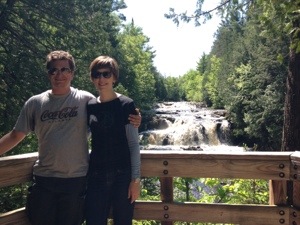
The first time I came here, in 2007, I was kind of obsessed with waterfalls. So, I found a place called Copper Falls State Park, which has some pretty nice falls. This particular trip warranted a return trip to Copper Falls, as some of the others on this trip live in Chicago, where there is little opportunity to find good waterfalls.

20130614-164212.jpg

The trail system at this state park is actually part of a larger trail system called the North Country National Scenic Trail. This trail system is only partially complete, but they eventually hope to connect central North Dakota all the way to upstate New York via a trail that follows some of the northernmost parts of the country. I am guessing they are hoping for it to be like the Appalachian Trail, but it seems like they are still a long way from completing this trail, and even when it’s completed it will be nowhere near as scenic as the Appalachian Trail, or the Great Divide or Colorado Trail for that matter.

20130614-164702.jpg

20130614-164710.jpg

20130614-164718.jpg

20130614-164723.jpg

20130614-165947.jpg

The hiking here was pretty easy, especially when compared with some of the hikes I have been doing more recently, with the move to Colorado and the trip to South Dakota. However, they did have some decent waterfalls in several different places. They are called the “Copper Falls”, due to their coloring, which actually comes from the type of red clay present in the region. As far as I know, the region has nothing to do with the mineral copper, and nor does the name of this particular waterfall.

20130614-165142.jpg

20130614-165147.jpg

Having lived in Colorado for some time now, a few things about this hike seemed quite different than what I am now used to. First of all, the hike felt to me like a luxury hike compared with what I have been doing more recently. There were some areas where staircases had been built, and there was even a sheltered bench built for resting. This is not something I have come to expect on a hiking trail. I had become accustomed to simply using a good rock or log to rest on if I were to get tired.

It was also way more wooded here than what I had become accustomed to. I guess they call it the “north woods” for a reason. It was so wooded here that I did not suffer any consequence for forgetting to wear sunscreen. At the end of the hike, I was actually way more anxious to put on bug spray. Parts of this hike had an excessively large concentration of mosquitoes. I think I killed like 50 of them and still got a bunch of bites. I cannot even seem to recall the last time I was in such a mosquito infested area.

20130614-170515.jpg

20130614-170130.jpg

After hiking Copper Falls, we drove up to Bayfield, the town most closely associated with the Apostle Islands. This is because the ferries that run to the islands all run out of this town. On the way up there, we hit the Lake Superior shore, and subsequently the Lake Superior circle tour, which is a series of roads that a motorist could follow around the lake. When I lived in Chicago, I recall being along and seeing signs for the Lake Michigan circle tour from time to time. In fact, that tour follows Lake Shore Drive in the city. The signs are neat, but taking the two or so days to drive around the lake seems like a strange idea to me.

20130614-170754.jpg

20130614-170800.jpg

20130614-170805.jpg

We took a ferry to Madeline Island, which is the largest island in the chain. In fact, it is the only island with roads. The others are largely uninhabited, but people still take boats, kayaks, etc., and camp and hike there. We did not end up spending too much time on Madeline Island. There wasn’t too much to do there, at least not for us. They do have a golf course, some beaches and trails, but it seemed to me that most things available on the island are also available in Bayfield, and in other areas on the mainland. Maybe it is still not quite peak tourist season yet.

I did enjoy the ferry ride. It actually brought back some distant memories for me. When I was a kid, growing up on Long Island, my family would periodically take trips that would involve bringing our car on the Orient Point ferry to Connecticut. This ferry ride was not nearly as long, and on fresh water instead of salt water, but driving onto the ferry and walking up the stairs did bring back those memories a couple of decades later. It is strange how, after all those years, the feelings can still be the same. The people with me probably thought my behavior at this point in time was a bit odd, as I was doing and saying certain things out of some kind of long dormant reflex that likely made little sense in the context of where we were. I even stated to crave seafood. It was somewhat of an odd feeling, but a good one.

Reflections on Missoula and the Adventure Cycling Association

For the past four days, from Thursday June 6th, through Sunday, June 9th, I attended a Leadership Training Course for the Adventure Cycling Association (ACA) in Missoula, Montana. This course is designed to teach people how to be leaders of long-distance bicycle tours. These tours can be as short as a week-long tour of about 300 miles, which is short by ACA standards, but long by the standards of the average person. They can also be cross-country, which could last three months! The course is designed to help the ACA develop leaders for their own tours, as well as teach leadership skills to people who wish to conduct bicycle tours in some other kind of capacity.

The course was quite rigorous. One of the leaders said that it was a week-long course condensed into four days. However, I think the main reason it was rigorous was that the course was designed to stick to a schedule akin to the schedules kept on these long distance bicycle tours, where each day stats before 7 A.M. with breakfast and campsite cleanup, and ends at another campsite with dinner at 6 P.M., and sometimes other activities. The in between time would be biking and exploring on an actual bicycling tour, but in this course, it was leadership exercises and some bicycling.

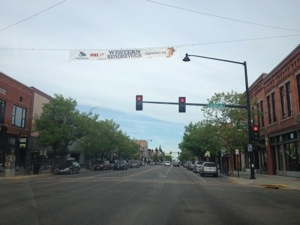
Despite this rigorous program at the Adventure Cycling Headquarters, I was still able to get out and experience Missoula a bit. There were definitely some surprises. Missoula had a nice downtown with a neat looking river valley and mountains in the backdrop, which did not really surprise me at all. Missoula’s population is about 66,000, more than any town in Wyoming, and I thought Sheridan had all of these features with roughly half the population. What did surprise me was the surfing! Yeah, surfing! When people think of surfing, the typically think of California, or Hawaii. Maybe Florida, or Massachusetts surfing would not be a major surprise, but Montana, I would never have guessed. But apparently there is this one rapid, created in the Cark Fork River, where people commonly surf.

20130611-065524.jpg

20130611-065617.jpg

The other surprise was how lively the town was, especially when it comes to night life. Missoula is a college town, home to the University of Montana, but those students have left for the summer. However, the town was quite lively on Friday night. There were several areas where there were bands playing and people dancing, and in one place there were people drinking beer out in a parking lot and taking turns jump roping. In addition to that, Saturday morning featured more farmer’s markets than I thought it would be humanly possible for a town of 66,000 to support. One of the other participants in the Leadership Training Course referred to Missoula as a “mini Portland”.

At the Leadership Training Course, I couldn’t help but feel a bit conflicted. The main thing as learned here was that there was a lot more to putting together a long distance bike tour than I had really thought about. Most long distance bike tours involve primarily camping each night, and cooking food on a campfire. Both of which require a lot of gear, which needs to be carried by the bicycle riders. So, just like in backpacking trips, gear parking must be planned carefully and unnecessary items need not be taken along on the trip. Also, the route and campground accommodations must be carefully planned in advance. In these areas, the Adventure Cycling AssocIation does a really good job. Their maps are second to none, as well as their notes on services in each town on the route. If anyone plans to go on a bike trip across the country, I’d seriously recommend using their maps, or signing up for a guided tour.

Learning about all of their tour preparations and such, as well as meeting people who have the system of packed pannier bags and such down, made me realize just how inexperienced I really am at this stuff. The bicycle trips I organized with my friends were not nearly as far, and not nearly as well planned. I also have not had too much experience with cooking and camping. In essence, I learned that bing good at biking and having some good leadership personality traits is not all I need to be a good leader of bike tours. If I ever were to actually bike across the country, let alone lead a ride across the country, or bike the Lewis and Clark trail, as I love talking to people about, I would have to either learn more about this stuff, or be prepared to spend nearly $5,000 on hotels and restaurants. Or I can become good at convincing people to let me stay at my house, but being neither a drug dealer or a prostitute, well, that is not going to happen.

I also began to think about how much I may miss some of the other activities I love doing. Mostly, I am referring to social activities, and, well, partying. I may love to party too much to ever be able to give that up for 60 days. Well, it isn’t just partying. I don’t want to come across as someone out of that movie “Old School” that wants to join a frat well after college is over. But, I do like food variety, large social setting, etc. I guess in a nutshell, I am thinking of my urban nature. I mean, I am from New York and Chicago, and there is some kind of an adjustment to make to suddenly live a culture that represents the opposite, out in the woods in places like Montana.

I love bicycling though, and I do love being outside. I was tired of my desk job for a reason. It almost feels like there are two different version of me in conflict with each other. There is the me that just absolutely loves being on my bicycle, and cannot stand to watch a wonderful day with tons of opportunities to experience the outdoors go to waste inside the walls of an office sitting in front of a computer. This me stares at maps relentlessly and has been conjuring up ridiculous ideas for quite some time now.

20130611-065704.jpg

There is also the me that prides himself in being out until 5 A.M., being the craziest guy at the party, and squeezing as much activity into a weekend as possible. This is the me that lives and dies by schedules, social arrangements, and wants to find out whose Friday night activities will be the craziest. In essence, it is an urban me vs. a wilderness me, a nightlife me vs. a daytime me, an indoor me vs. an outdoor me.

After the Leadership Training course ended at 2:30, we headed South and East, towards Yellowstone, and I reentered the camping world, finding a campground roughly 15 miles northwest of Yellowstone along highway 287. As I set up camp and everything, and continued to ponder the possibilities regarding long bicycle tours in the wilderness, I begin to think of my friend Allison, who I had just seen in South Dakota (and wrote about on this blog). She lives in Chicago still, but has recently taken some outdoors classes, and gone on some trips. She seems to really enjoy it, but still lives on the north side of Chicago, well, maybe northwest, but you get the point. Maybe she has the same conflicts as I have, between enjoying urban areas and all the amenities, and loving all of these outdoor activities. Maybe this is something that a lot of American wrestle with. Do we need to pick one direction or the other? Or do we find a balance? Hopefully I find these answers soon.

20130611-065828.jpg

The Fourth Largest State

Earlier this week, when I was camping in some remote areas (as in, no WiFi), I fell behind on my blog posts. This is the main reason why today, for the second day in a row, three new entries are posted up on this blog. At the end of every day, I had been writing down my thoughts, but had not been able to upload the pictures into this site. Last night, I had a hotel room, and was able to load up my pictures. This weekend, I will be in the hotel world as well. So, with this entry, I will officially be caught up on my entires. On the return trip to Denver, I will most likely re-enter the camping world.

One way I have been amazing myself on this entire trip has been how consistently I have been waking up without provocation. Starting with Saturday morning, every morning I have been waking up at more or less 6 A.M., and not really having any problems. This is a far cry from when I was waking up to a desk job I did not enjoy every morning, and having to force myself out of bed every day, and struggling to be up at 7:00, or even 7:30. I thought this may have been an artifact of being outside camping, but, this morning, at the fabulous Super 8 in Hardin, I awoke at 5:45 with no problems.

Today’s journey was a nearly 400 mile journey across the state of Montana to get to Missoula for my Leadership Training. To be honest, I was somewhat concerned that I would get bored on this drive due to the large spacing between towns, and how traveling on only interstate highways get. But, this was not the case at all. In fact, I ended up finding a lot of Montana to be a pleasant place to drive across, with scenery that gave me serene and pleasant thoughts. It was quite a nice drive.

My first stop was in Billings for gas. Normally this is not really anything worth writing about, except that I was a little taken aback by the 85.5 octane ratings here in Montana. I had always been accustomed to 87 octane being the lowest grade fuel. Then, I moved to Denver where it is 85. I did not even know decimals existed for octane ratings in fuel until today.

20130606-221010.jpg

Another notable thing about Montana’s gas stations is that they have casinos! I took a look inside one of them, and all it was were slot machines and a poker table, but it was still an interesting and unique sight to see. The truck stops here also sold plenty of liquor and such. Montana’s attitude seems kind of like anything goes. It is almost like the people here have found a way to live free of everything uptight about the rest of the country, and avoided the unnecessary behavior restrictions that go along with it. In the grander scheme of things, thinking about this actually makes me feel like Denver may indeed be the place for me. I don’t think I could actually live in Montana, as I am kind of hooked on city life in a way. But, Chicago and New York come out with a bunch of unnecessary silly laws. Denver could be a really good compromise between the two.

Although it was pretty flat (albeit, nowhere near as flat as Nebraska), mountains quickly began to appear. To be honest, I don’t really remember the names of all the Mountain ranges here in Montana. I’ve just gotten to the point where I know most of them in Colorado. But, let’s just say scenes like this one were common throughout the drive. It was common to see mountains, but not have to drive through them like I-70 in Colorado.

20130606-221712.jpg

Bozeman was a nice town. It looked pretty well to do, and had some good Western qualities to it.

20130606-221833.jpg

With a couple of hours to spare, it was time for me to get my Lewis and Clark on. Those that know me know that I love to hear about the journey of Lewis and Clark and actually wish to recreate the adventure on my bicycle someday. In fact, that is the reason I know about the Adventure Cycling Association, as they are the organization that outlined a route in which to follow this historic mission on my bicycle.

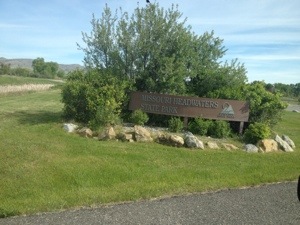
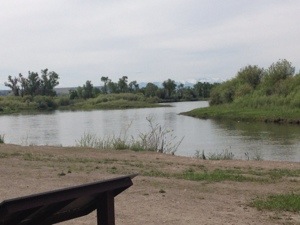
So. We took a stop at the Missouri River headwaters, an important point on the Lewis and Clark journey, as well as a very significant place in our nation’s water system. The Missouri River is formed near Three Forks, MT, where the Madison, Jefferson, and Gallatin rivers meet. The Missouri River is actually the longest river in the U.S.A., running from this point all the way to Saint Louis. But, could it be even longer? Who was the one who decided that these three rivers, by three separate names, came together to form the Missouri? Why isn’t it two rivers flowing into the Missouri? This are the questions we pondered while throwing sticks into the river, knowing that sometime next month they would show up in Saint Louis, an amazing feeling.

20130606-222421.jpg

20130606-222432.jpg

20130606-222440.jpg

After this, we passed over the continental divide, which was only at 6300 or so feet. Significantly lower than in Colorado, where the divide is consistently over 10,000 ft. I notice a few cool rock formation, and also a lack of pine beetle damage to the trees. Last year’s drought did not extend this far north, and therefore Montana’s forests, unlike those of Colorado and South Dakota, actually look pretty much in tact.

20130606-222824.jpg

After a little bit of construction, I finally arrived at my destination, Missoula, MT, and the organization I had been reading about on the Internet for a decade.

20130606-222942.jpg

Hiking in the Black Hills

June 4, 2013

Mount Harney is the tallest peak in South Dakota. In fact, it is the tallest peak anywhere east of the Rocky Mountains. The guy at the Custer State Park visitors center actually said it was the “Tallest peak between the Rockies and the Alps”. While that is technically true, it is a bit of a stretch. At 7242 ft., it is taller than anything in Appalachia, including the tallest peaks in the Smoky Mountains, but not really by too much. The difference is less than 1000 ft., and is probably made up for by the fact that the bases of those mountains are at lower levels.

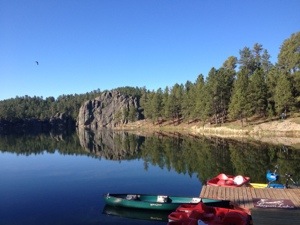
However, it was still a really good hike. In fact, it kind of reminded me of hiking near Boulder a bit. It is at similar elevations, a similar total climb, and there are some major rock formations here too. Our loop from Sylvan Lake up to Harney Peak and around by two other major features; Little Devil’s Tower, and the Cathedral Spires, took us a bit over 8 miles today. With what is probably close to 2000 ft. of vertical climbing, between the main climb and a couple of side climbs, it was a very satisfying hike. With this morning’s drive taking us by the ” Needles Eye”, we have actually seen nearly half of the unique natural features of South Dakota. Not bad considering that we only arrived in South Dakota on Sunday.

20130606-152731.jpg

20130606-152744.jpg

At the top of Harney Peak there was a strange lookout point. It was actually the remnants of an old building. We think people actually hid out here, but I am not sure who. It was still interesting to see the place, and imagine the life of someone living on top of the tallest peak in the area. From this vantage point, you can see all of the peaks. We could look out on all of the peaks of the Black Hills, including the ones we had driven up and down yesterday and today, and they all showed up significantly below us. This may be the first time I have experienced this exact feeling, climbing my own way up to the top of the highest peak in the area. In 2005, I biked up Blue Mounds (Wisconsin), but the terrain there is nothing compared to what it is here. In 1998, my family and I drove up Pike’s Peak, but, we drove.

20130606-152544.jpg

20130606-152552.jpg

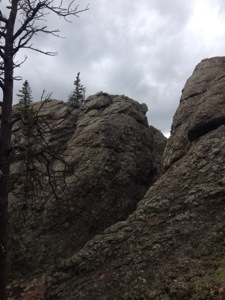
The alternate trail we took on the return trip to the car took us real close to the Cathedral Spires. These rock formations remind me of the Dolomites in Northern Italy, with their mostly vertical, but imperfect, gray colored rock structures of varying heights. In fact, for the entirety of the hike, as well as in many cases before and after, I have been referring to this feature as “The Dolomites”. And, no, I am not trying to show off that I am Italian, or that I have been to Italy. It is just kind of natural for people to make the association in their head based on the visual. I am reminded of an instance when someone I knew kept referring to the green sauce that they provide with samosa at an Indian restaurant as guacamole. He was not trying to show off his Mexican-ness, it was just that his previous experiences with green sauces in restaurants had mainly been guacamole, and the natural association was made. In the same vein, the other time. I had seen rock formations like that, it was the Dolomites. Some of the other rock formations did look like the Flatirons in Boulder, with a major exception being that they are lighter in color.

20130606-152834.jpg

20130606-152849.jpg

On this hike, in several places, both on and off the trails we were traversing, we passed through some tight areas inside rock formations. This was a good deal of fun, although somewhat scary. Oddly enough, I enjoy doing things like this, and I have not even completely figured out why. I guess there is a slight element of danger in it, and it does provide the hike with some variety. But, hiking is already an interesting enough activity that it does not need variety. And, I am not really pushing my limits anymore with this nonsense, as I have done it plenty of times over the past several years. Maybe it is just curiosity, the entrance into the unknown, the feeling you get when anything can happen. In this sense, it would be the same feeling that drives people to take a new route home, enter into new activities and new social circles, or even drink or do drugs. The flirtation with the unknown seems to come out in me a lot; skiing, hiking, parties, etc.

One final note about the hike. Boy have these pine beetles done a number on the forrest here. Scenes like this one are seen everywhere, and when viewed at a distance, parts of the “Black Hills” look quite red! I knew this was a big problem in Colorado, but it actually seems like the beetles have done even worse to the forests here. It is sad to think that the very nature of these places are bound to change forever, but in life, change is inevitable. It cannot be avoided at any costs.

20130606-152926.jpg

Our other activity today was visiting Crazy Horse. Crazy Horse is a statue of a famous Native American hero that sits on the other side of the black hills from Mount Rushmore. But, it is incomplete. It has actually been under construction since 1948, and is still nowhere near close to done. According to the hosts at our campground last night, the Crazy Horse statue will “not be completed in your grandchildren’s lifetime”. This slow progress is due to the desire to make this statue quite enormous, as well as their commitment to use only private funds. Turning down money shows a significant amount of pride, and/ or adherence to principles. Maybe both, they are actually probably quite related.

20130606-152949.jpg

20130606-153001.jpg

At Crazy Horse is also a museum of the Native American. We did not intend to spend all day there, so I pick a few excerpts to read, some about famous Native Americans. I don’t even remember the stories themselves, but reading these stories makes me more curious about Native American culture in general. History is written by the winners, and in the battle for North America, we, the white man, are the winners. But, it is hard to ignore the fact that we kept making and then Subsequently breaking treaty after treaty with these Native tribes. I would love to know the full story behind this, from both perspectives, and how the modern day Native Americans feel about all this, as well as the situation they are in now. Are they happy to have all the modern conveniences associated with the U.S.A.? Do they feel that we are the ones protecting the freedom of all? Or do they feel they cannot live the lifestyle of their choosing, and their continent has been usurped? I bet you get some real mixed emotions.

On the campground tonight, we got a bit goofy. In fact, we spent probably about half an hour, sometime around sunset, trying to throw pine cones into the campfire from various places. Most of them were from the top of a rock. It was some unexpected (and free) fun. I think our society could use a bit more of that if you ask me. One of my favorite things about trips like this are actually simple things like this that bring joy out of nowhere, unexpectedly.

20130606-153140.jpg

Experiencing Western South Dakota

June 3, 2013

Today’s first activity was a hike at Badlands National Park. Yesterday evening, at the visitors center, I had chosen a hike for our group that was mostly considered “moderate”. Only the initial 1/4 of a mile, which started from the parking lot and took us up the side of the structures towards a plateau was considered “strenuous”. This initial part was pretty strenuous, and, had it gone on for over a mile, would have made a difficult hike. But, after the initial climb, most of the trail system we traversed on this morning, would be pretty flat, with only minor inclines and declines. This, of course, was the part of the trail that was labelled “moderate” in difficulty. I guess, the “moderate” difficulty rating was a let down because, the badlands, while a beautiful natural place, is not a place with a lot of terrain. There simply isn’t 1,000 ft. worth of incline to find.

20130605-211914.jpg

20130605-211920.jpg

Difficulty ratings for hikes have no set standard. How any place labels it’s hikes is completely to the discretion of the park. It reminds me of the differences we observe between ski trails labeled green vs. blue vs. black at different ski resorts. Some of the easiest black diamond ski trails I have skied in Wisconsin may even be considered green if they were to be in Colorado; certainly, they would at least be blue, not black. So, I guess it is important to understand the relative context of activities while planning them. While occasionally you will run into an activity with a standardization of sorts, like whitewater rafting, it seems like when it comes to most activities, descriptions of difficulty levels are subjective as well as relative.

The biggest waste of time today was driving about five miles out of our way to search for Bison at the Badlands. The reason being that our ultimate destination today was Custer. In Custer we saw so many Bison, and so many up close, that the search for Bison anywhere else today, well, the idea of looking for Bison anywhere else today seems utterly silly at this point in time.

20130605-212020.jpg

20130605-212029.jpg

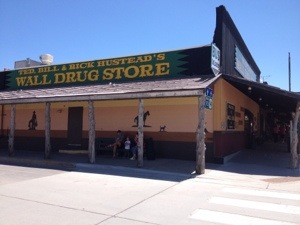
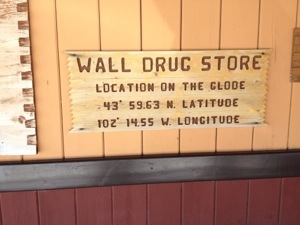
We gave in to the nearly 200 (well, possibly even more) billboards we saw yesterday, and we went to Wall Drug. This place does a really good job of marketing itself, given that the main goal of marketing is to make people aware of your product. The signs, bumper stickers, and such make sure everyone is aware of the existence of Wall Drug. I had heard from others that the place was a gigantic tourist trap and not really worth it, but it is so close that it is worth going and finding out for myself.

20130605-212113.jpg

20130605-212119.jpg

The place was actually alright. It was a little bit cheesy. In the front , there is an actual drug store, true to its name. Behind that is a restaurant and ice cream parlor, which is pretty neat. The rest is mainly souvenir shops. Behind the store, there is this kind of old west town that many tourist traps in the high plains have. The only oddity is that they also have a really poor replica of a dinosaur there too. This was advertised on many billboards, so I am glad the delivered on this. But this does not belong right next to a replica of a village from 1880. Time periods should be consistent.

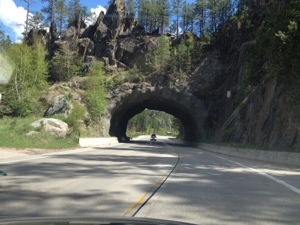
I made one key mistake there. I ate both ice cream and a donut. That is just simply too much sugar, simple sugar. A little over half an hour down the road, I got that sugar crash, and, for about half an hour could barely keep myself awake. This sucked, because the scenery was starting to become really interesting as we approached Rapid City and then drove Southwest on U.S. 16, and the 16-A.

20130605-212203.jpg

20130605-212213.jpg

The mountains here (I guess they are referred to as hills), are legit. I mean, the way the look, both from a distance, and up close when you drive into them, are actually not too different from the mountains of Colorado. This, I find somewhat surprising. When people make lists of states with really cool mountains, and I mean really big ones, it does not seem like South Dakota is ever really on that list. At least the association is never really made in my mind. I had always kind of known South Dakota to be kind of more interesting than the other plains states, and known that this area existed. But, it was not until now that I fully realized that the terrain in this area is significant when compared to other places in the country. It’s not as mountainous as Colorado, but it is not insignificant.

20130605-212245.jpg

20130605-212250.jpg

20130605-212301.jpg

20130605-212310.jpg

Today the sun rose at 5:30, and set at 8:30, for a total of 15 hours of daylight. I kept thinking about how much is possible with all these hours of daylight. It takes generally an hour or so to set up camp, start a fire, and cook. Today, we were able to take showers because we had extra time after cooking. This was after not arriving until nearly 6:00. In most other months, this would not have been possible. All this week, it seems like we had been less stressed, or had gotten more done than we would have in the fall, or some other time of year with less sunlight.

The problem is, June is the best time of year for a lot of things. Storm chasing is good, rafting is good, and with the most daylight possible, camping, touring, and such are all easier. So, how do we take advantage of our Junes. Should we work our asses off at other times of the year so we could get June off? That might cause too much stress at the other end of the year. How do we decide what activities are most deserving of these days? At the very least, the NBA and NHL can stop extending their playoffs into June so people don’t use up this time watching sports.

Oh, and we also saw Mount Rushmore. It was a bit smaller than I expected.

Camping in the Badlands

Today, June 2nd, started with a bang. Following our friends Jason and Allison, after only about 5 minutes of driving, suddenly a large black structure came flying off their vehicle. At first glance, the structure looked like a tire, and I became concerned that they had lost a tire. But, they continued, seemingly unaffected, so I assumed they had just run over an old tire, or old piece of rubber of some kind that was on the road. Either way, they wanted to stop to check things, which turned out to be unexpectedly beneficial. We stopped, still on some county road nowhere near the interstate, and concluded nothing was wrong with their vehicle.

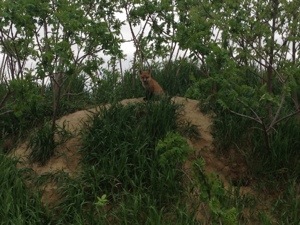
After returning to the car, I suddenly see Allison running back to us with the kind of look on her face that made me think that something could have been wrong. It turns out that I had confused the sad look with the amazed look. Outside their car, sitting on some county road in South-Central (Minnesota that is), they had spotted a baby fox. This baby fox was quite cute. It actually made me think of dogs. It seemed in no way alarmed by our presence- and just presented itself to us, the same way a pet dog would. Had the fox of 60,000 years ago done the same to our forefathers, could the fox have become the pet of choice for humans rather than the evolved wolf (dog)?
20130605-210640.jpg

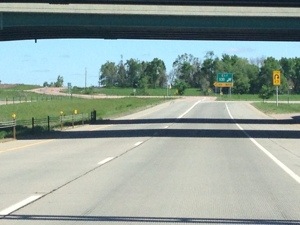
The remainder of the drive across Minnesota on I-90 was uneventful. A lot of windmills, that is it. Our first stop off on our journey to the Badlands was in Sioux Falls, SD. I’ve been to this town before. In fact, whenever I see this town, I think to myself that if I were to ever run a city, this is what it would look like, mainly on the count of how many signs that say “CASINO” one encounters here. Of course, they are mainly for places that throw in a slot machine or two, not full-fledged casinos with table games and all, but you still see them. And it makes you think this town is a gambling haven. We encounter a couple of other peculiarities in Sioux Falls. First, the gas station we filled up at had the following “Free Dandelion” sign. I not sure if that was supposed to be a joke or for real. Then, we saw something peculiar from a civil engineering standpoint, an interstate highway, 229, that actually turns into a dirt road (after its’ junction with I-90). From the point of view of someone who did not even know dirt roads still existed until college, but then became all too familiar with them on storm chases. I still think of dirt roads as not belonging in areas near “civilization”.

20130605-210740.jpg

20130605-210758.jpg

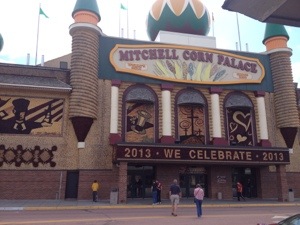
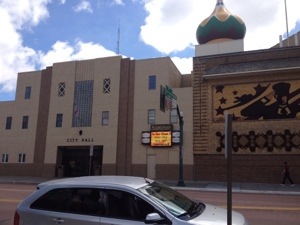
To break up the drive, we stop at the Mitchell Corn Palace, in Mitchell, which is just over an hour farther down I-90. For over 100 years, they have been building a succession of buildings that are actually made out of corn. Since corn does not last too long, roughly once a year they reconstruct the building with a different theme. The whole practice is rather ridiculous if you think about it. It becomes even more ridiculous when you see that the town’s city hall is actually attached to this building! Imagine being able to say you get to go to a castle every day because you are the mayor of the seventh largest town in South Dakota. Talk about the life.

20130605-210841.jpg

20130605-210847.jpg

My party thankfully avoids making all of the corn related puns one could make when visiting a ridiculous exhibit like this. I won’t repeat any of them, but I am sure you have thought of at least four by now. I did enjoy getting my picture taken with “Cornelious”, and buying a corn dog at the concession stand.

20130605-210942.jpg

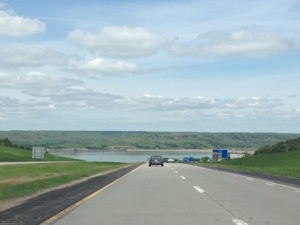
South Dakota is pretty dull to drive across until you reach the Missouri River Valley, at the town of Chamberlin. At that point it becomes sort of interesting, but it does not become exciting all at once, the way it happens in Colorado where you suddenly see the mountains in the distance and one of the dullest most barren areas suddenly becomes a playground of infinite adventure possibilities. This transition starts with the Missouri River Valley, and then with some other river valleys that carve out of the land, as is typical in the high plains. Either way, it feels like we are in the West again.

20130605-211026.jpg

The other gradual transition across the state of South Dakota today was in the weather. Upon entering the state, the weather was similar to the weather we left behind in Iowa/Minnesota. It was chilly for this time of year last night, and we woke up to temperatures near 50 degrees and a thick deck of strato-cumulus clouds. As we transitioned across the state, the strato-cumulus clouds gradually waned, until there were suddenly quite few clouds in the sky. It also significantly warmed across the state, and by the time we arrived at Badlands National Park, it was a comfortable 70-72 degrees with good sun.

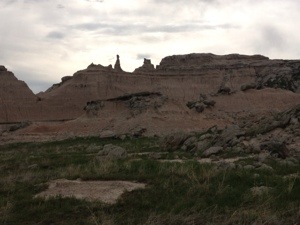
Indeed we were in the west. The distance we can see, the dryness, the scenery, everything felt a lot more west than Midwest. I switched I to what I am referring to as “Western mode”, which basically means being more prepared for dehydration and drinking more water. As soon as we arrived at Badlands National Park, we found a couple of really neat scenic overlooks, and then an area with some minor hiking trails. Today’s hike only lasted some thirty minutes and was more of a goofy/exploratory hike. By this, I mean there was no serious burn, no real workout. But we did some goofy things, climb a few rock structures, and went off trail. I even threw a few rocks around to see if I could throw them over some of the gorges. Hikes like this can be fun, even if they don’t build anything.

20130605-211135.jpg

20130605-211142.jpg

After hiking we went to our campsite, which was actually within the grounds of the park. This is my first time camping at a National Park! As a result of this, we have the minor inconvenience of not being allowed to have a campfire. But, the bigger inconvenience on this day is the wind. The high plains is known to be a windy place. Sometime in the afternoon, a Southeast wind of around 15 miles per hour, with major gusts, developed. I think for a while sustained winds may have reached 20. The main issue with this has been that it keeps blowing into my tent, and knocking the rods that hold it up out of place. I wonder if I have a sturdy enough tent. They have to make sturdier ones, but, are they tougher to carry? What is truly the best tent to have for hiking, or bicycle touring? Maybe, having the tent be less effective when camping in the wind is just a fact of life. This, of course is somewhat disturbing to me, as Colorado can get windy at higher elevation.

20130605-211453.jpg

Isn’t it strange how experience often leads us to more questions? I have some camping experience for sure, but to too much. I had never really thought of the odds and ins of these types of situations. I just know that I want the tent to be big enough and comfortable, that is all. Now, I am suddenly in a quandary of thought about a number of factors such as a tent’s weight, it’s reliability, durability, and, of course, how many people it can hold. It’s been said before that for every new question answered, two more are created. I really hope this is not right numerically, as we will never create a closed system of equations if this is the case. But, I do se the reality in answers leading to new questions. So do experiences. In a way, this is the rhythm of life. We meet people, try things, and create experiences. This leads to new inquiry, new ideas, and new methods. Which, leads to new experiences, activities, and people. The cycle goes on and on. The same is true of work, leisure, pretty much any area of life. Getting into this rhythm will create a life that will continue to perform, be motivated, and advance.

20130605-211527.jpg

After a visit to the visitors center where we determine a good hike for tomorrow, and a brief incident that involves me actually breaking our pants, our day ends with an evening presentation at the amphitheater about the black footed ferret, and then some star gazing with some heavy duty telescopes available at the park. This activity was an unexpected possibility at Badlands National Park. I learned about why this area is called the “Badlands”, and a lot about the history of the black footed ferret as well as the prairie dog. Then, we got to look at Saturn in this telescope, which was really quite awesome. Their telescope was so advanced that you could see the ring formations around Saturn, as well as some of its moons.

Overall, it was a very productive day. It is hard to believe that so much of it was spent on a fairly boring road. Tomorrow will involve less driving and more activities, which I look forward to. But, today’s activities were so diverse and the day was so full that I hope I can absorb them all, as well as the frenzy of thought they all put me in, in time to enjoy tomorrow’s to their fullest.

A Long Drive Down a Familiar Road

There is no road that I know better than Interstate 90. Before moving to Denver last year, I lived in the Midwest for 19 years. In that time, I attended High School, College, Graduate School, and started my first job. I lived in Illinois, Indiana, and Wisconsin. But, I never lived more than 10 miles from I-90. I drove back and forth on that road so much that I once claimed that I could tell at least one story about every exit on that road from South Bend to the Dells.

Today’s journey began on that all to familiar road. It was surreal to be driving past the same places, looking at the same exits, and reminiscing about the same stories, the same people, but keeping in mind that I no longer live here. It was almost like a journey into another life, but one that I am still living.

20130605-203944.jpg

We got an early start on June 1, and raced across Wisconsin. Well, raced is a relative term. Wisconsin remains, along with Illinois, the only states in the Midwest to still have a statewide speed limit of 65. In addition, unlike in Illinois, they are looking to pull you over.

20130605-204426.jpg

Regardless, we still go to LaCrosse in 4 hours, with our first stop being in Sparta, WI. Sparta is known as the “bicycle capital of Wisconsin”, which, as a bike enthusiast, makes it near and dear to me. In fact, I had ridden through Sparta in 2006, on a ride across the state. It is where the LaCross River Trail ends and the Elroy-Sparta trail begins. Both are bicycle trails created from abandoned rail beds, and quite fun to ride. Sparta hosts a bicycle museum, and has even placed bicycle images on their road signs!

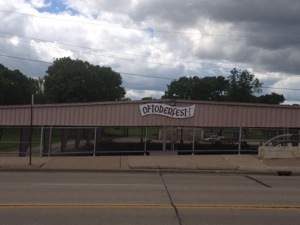
In LaCrosse, we did something I am not accustomed to on road trips. We actually stopped at a microbrewery to sample some beer. The Pearl Street Brewery would not open for tasting until noon. With a little bit of extra time, we went downtown and checked out some sights, including the grounds of Oktoberst. LaCrosse is said to have one of the best Oktoberfests this side of the Atlantic. I regret never having gone there, but I did live in Madison, and living in Madison is almost like a non-stop Oktoberfest!

20130605-204601.jpg

20130605-204612.jpg

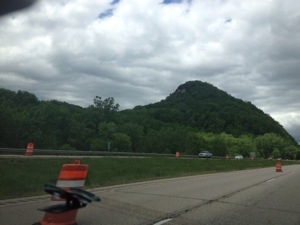
After sampling some good beer, it was time to tackle a new state, Minnesota. When it comes to states to drive across, Minnesota is the ultimate tease. The first ten miles are utterly spectacular! The road follows the bluffs of the Mississippi River, which are almost at their best here. In fact, this is my favorite Mississippi River crossing (with St. Louis being a close second).

20130605-204713.jpg

Unfortunately, after those ten miles, the surrounding scenery suddenly goes dull. I mean suddenly! At mile marker 267, you suddenly enter a mainly flat terrain full of corn fields. It stays that way for pretty much the entire rest of the state. So, essentially, Minnesota presents itself to the westbound I-90 traveler as quite exciting, but ends up manifesting as dull and frustrating. It reminds me of our own government, but that is another issue.

20130605-204756.jpg

Today’s destination is Spirit Lake, Iowa, for some camping. Spirit Lake, despite being in Iowa is only about 20 minutes off of I-90. The drive is quite easy, and, to be honest, I do not notice the difference in scenery between Iowa and Minnesota. I would say that the part of Minnesota I had been traveling through today is like more like Iowa than the rest of Minnesota.

However, ironically, the part of Iowa I end up camping in may be more like Minnesota than the rest of Iowa. Specifically, I am referring to the size of the lake. Minnesota, of course, is known for its lakes. Every time I visit the state, it feels like half the population owns a boat. In fact, the state motto is the “land of 10,000 lakes”. Iowa may not be lacking in lakes the way many states out west are, but it isn’t known for it’s lakes. But, Spirit Lake is a place where life pretty much revolves around the lake, much the way it does for many places in Minnesota.

20130605-204854.jpg

20130605-204912.jpg

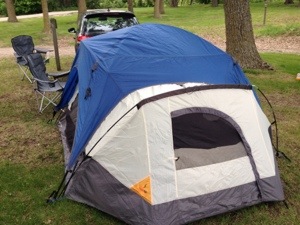
I am very proud of myself on this day. I put up the tent all by myself! Yeah, this is something that many people know how to do, but it is a skill I never developed, and really need to have. Especially, if I really want to dive into the experience of living in Colorado, and, what is the point of moving to a new place if you don’t plan to experience it with all you’ve got.

The evening was all about spending some quality time with good friends, the kind of people you truly feel comfortable around. We goofed off, we grilled, and played frisbee in the park. We had a few drinks, and got a bit loopy. My friend Jason found a way to break a rock trying to break a gigantic tree branch to make more firewood. It was quite hilarious.

More importantly, we talked about some real stuff. The kind of stuff that people don’t seem to talk about anymore. People, society, who we are, where we are going, what we need in life. I have no idea why people don’t talk about all this anymore. Maybe it is the constant distractions. It seems like we are more connected than ever, but also more isolated. I really don’t know what I personally can do about this, but be there for people when they need me, which I plan to do. If I can reduce the amount of loneliness in this world, I could truly be of service to humanity. Maybe this is the kind of realization people tend to have on a quiet (somewhat, as it has been windy) night in a lake in North Central Iowa.

Hiking With Dogs at Vedauwoo

My Memorial Day weekend has been pretty standard up until today. I got to spend some time out by the pool, went to the park for some games and grilling, and rode my bike a bit. You know, the standard kind of stuff someone is expected to do on Memorial Day Weekend. I stayed in town. Everything in town was more crowded than normal. But, the roads to get in and out of town were also more crowded than normal. What gives? More people going out of town, but also more people doing stuff in town. Where are all these people coming from? And, most significantly, where are all these people on an average summer weekend? Could they be doing nothing? That sounds weird to me.

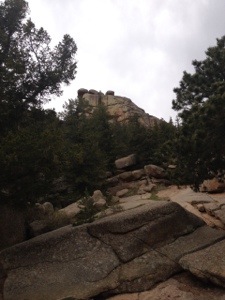
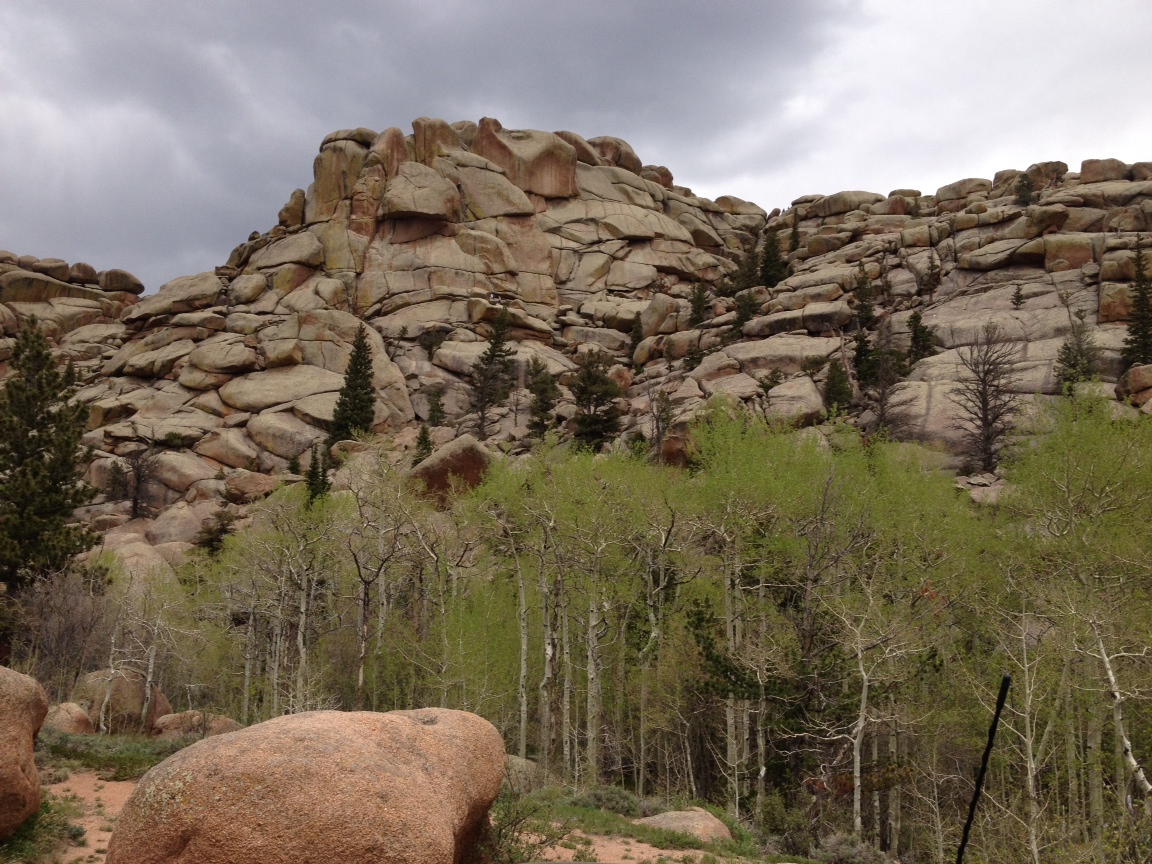
Anyways, on Monday we decided to make a trip up to Wyoming to go to Vedauwoo. For those not familiar, Vedauwoo is a place between Cheyenne and Laramie with some unique rock formations. It is popular for Wyoming standards for both hiking and climbing.  Both the hiking and the climbing here are kind of moderate, as in, if you are looking for a really challenging hike or a really challenging climb, this is not the place to go.

20130527-172834.jpg20130527-172845.jpg

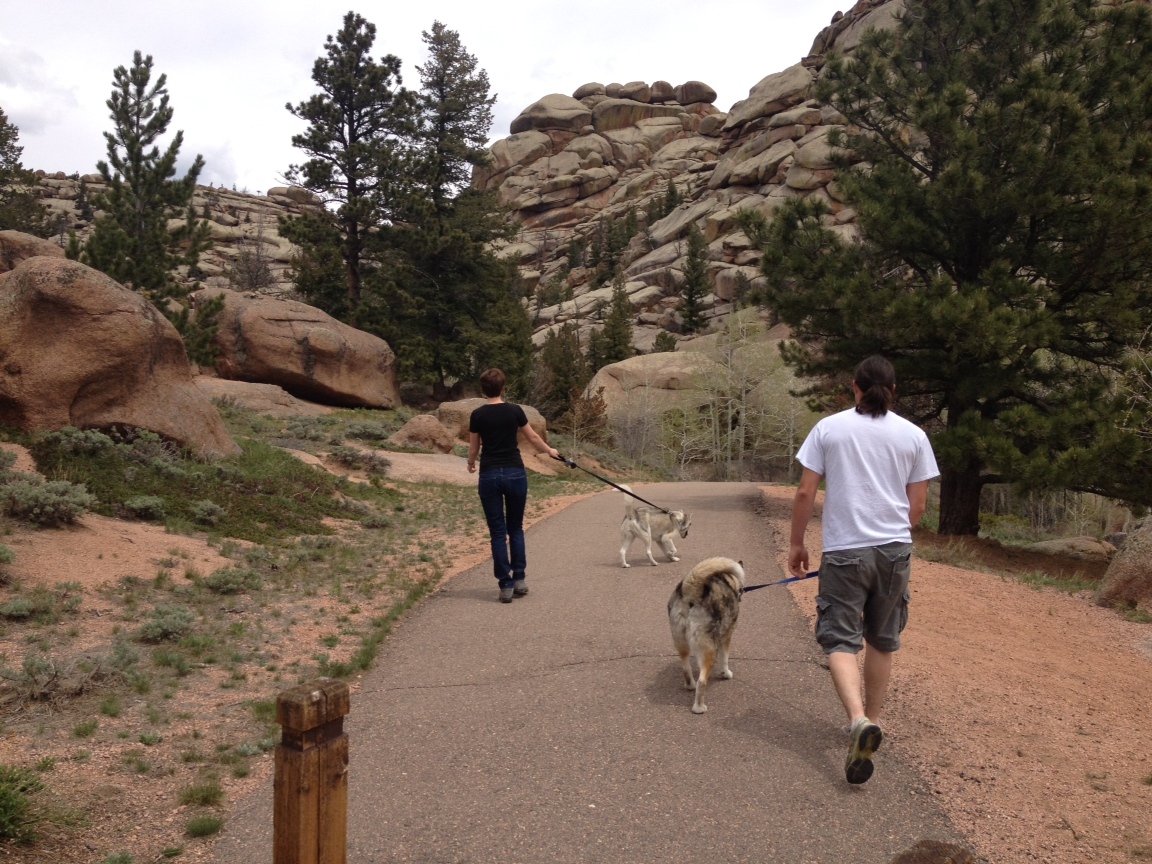
I like to bring my dog on some hikes.  To be honest, I do feel somewhat bad that a large majority of the activities I love do not involve the dog, and she usually ends up sitting at home alone all day.  Specifically, there are some places that fit a dog profile better than a human profile and visa versa.

IMG_0026

Vedauwoo is the kind of place where although the hikes are not physically challenging, there are some off-trail places you can go where the technical aspect of the hike gets kind of rough, specifically because of the rock formations.  While hiking up these rock formations, there were definitely some paths that we did not follow because they would be too hard for the dogs.  Three were also some places the dogs went that were tougher for humans.  Let’s just say that whatever limbo skills I do have definitely came in handy.

IMG_0030 IMG_0031

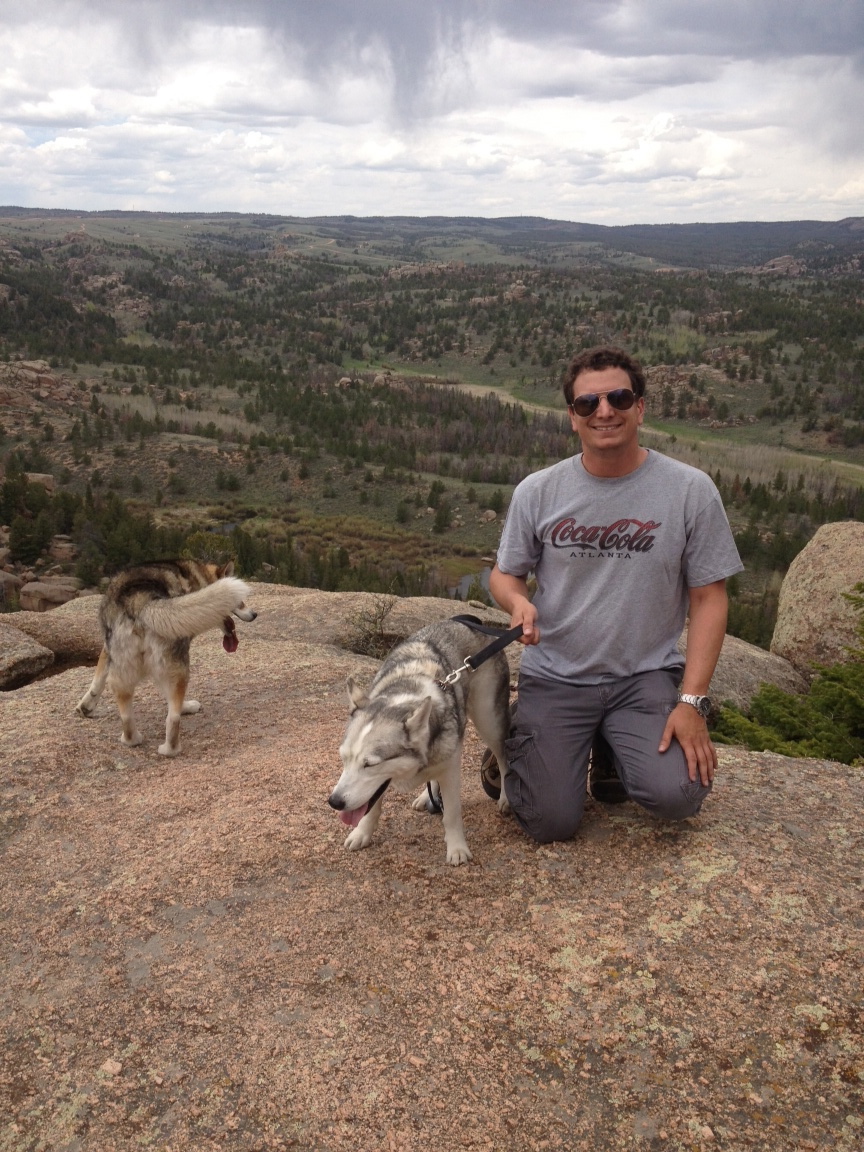
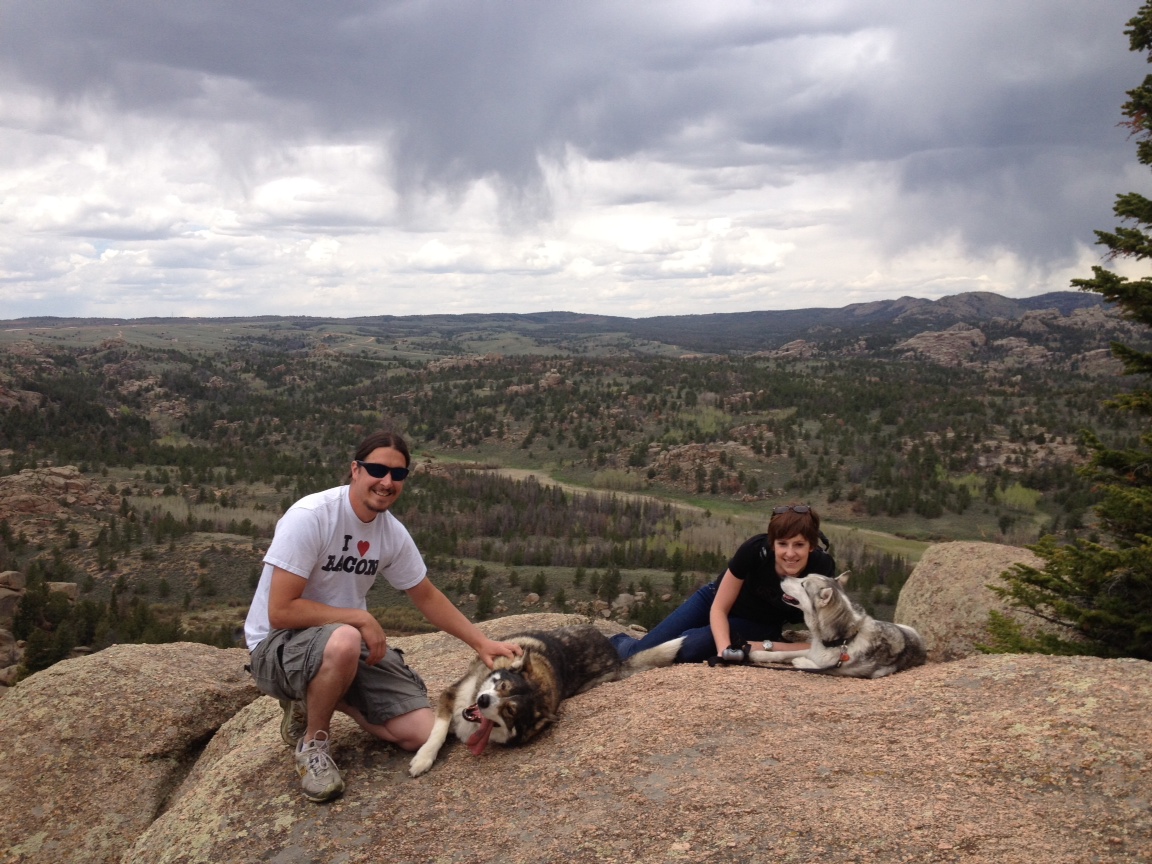
The apex of the trails reach elevations of only about 8500 feet.  However, this was definitely more than enough to wear out the dogs, who are pictured here completely worn out.  Dogs simply do not have the stamina that humans have, and most people who are very serious about their activities tend to prefer to leave their dogs at home.  However, today was not about accomplishing the greatest hike of all time, or even doing any hard core training.  It was much more of a fun hike.  I mean, we did not leave Denver until 9 A.M., which in the hard core hiking world is a no-no.  But, the amazing thing about this place is how good of a view I got from relatively little effort.  Only 600-700 feet of vertical, and I was able to kind of feel on top of the world.  It actually reminds me of a place in Wisconsin I used to go to in my graduate school days called Devil’s Lake.  The hiking there is actually the best hiking I have ever done in the Midwest, but then again, there are no mountains there.   But the climbing distance and rockiness is somewhat similar.

IMG_0032

Overall, I think the amazing thing about this particular hike was that I was able to do this hike in an hour or so, even after I drank last night.  I am not an alcoholic, or someone that needs to drink, but I do enjoy going out and letting loose from time to time.  And, I would never do so if I was hoping to climb a 14er or something serious the next day, it is really nice to know that there are places out there where I can get in a satisfying hiking experience without having to give up the previous night, not bring the dog, etc.  While I plan to hike some more major places this summer, I think there is room for the challenging hikes as well as the lighter and more recreational activities.  In fact, the same can be said for any activity.  Sometimes we want to push ourselves to the limits and come away worn out, but sometimes we just want to have some fun, laugh a little, and enjoy our surroundings.

That kind of sums up the entire Memorial Day Weekend for me.  I went for a bike ride, but it was only 31 miles.  I spent some time at the pool, chilling with friends, dancing, etc.  I drank a little, but did not go out of control.  I spent some time at a park playing some games, and enjoying some good company as well.  And, well, also this hike.  I could have used this weekend to do a challenging 3-day ride, or go out of town somewhere that is hard to get to on a standard 2-day weekend.  In fact, I will probably use some subsequent weekends for the purpose of pushing myself to the limit on one particular activity I enjoy.  But, sometimes in life, you want the sampler platter.

Denver to the Colorado Trail by bike

In this entry, I introduce another form of travel, bicycle travel. Bicycle travel is simply traveling by bicycle, but there are probably many people in the United States that have never even thought of the idea of traveling somewhere by bicycle.  It is definitely more common in Europe, but there are a significant number of people that do bicycle tours in the United States.  Groups like the Adventure Cycling Association run tours that vary from just a few days to several months.  The several month tours go across the entire country.  I don’t know who has the time and money to do this, but I sure wish I did!

My one day ride that clocked at just under fifty miles can hardly be considered a bike tour, given that these groups typically ride sixty or more miles a day.  However, today’s bike ride was with a specific exploratory mission, so I count it as “traveling” by bike (as opposed to just riding a trail or running errands).  I had desired to find out where the Colorado Trail began, which is twenty or so miles to the Southwest of Denver.  This trail, which conjures up images (at least in my mind) of the more well-known Appalachian Trail, runs about 485 miles, stretching from just Southwest of Denver all the way to Durango!  You can’t bike all of the trail, and most of the biking parts are primarily for mountain biking, but I did have in my mind the idea of being able to bike straight from home to Durango based on routes provided by the Adventure Cycling Association.

My ride today started as many of my rides do, down the Platte River trail.  Luckily for me, the Denver Metro area has a bunch of great bike trails, most of which follow rivers and creeks.  The Platte River trail runs along the river, passing right through the heart of the city.  It is one of the main trails of the Denver metro area, and I can take this trail South, for a good part of the way, all the way to C-470.

IMG_0325

On the way I took this photo of the South Platte River to demonstrate that water levels along the river are looking healthy.  Last year, as well as earlier this year, severe drought conditions lead to much lower river flows.  Hopefully this return to near normal will mean less wildfires than last year.

IMG_0336IMG_0337

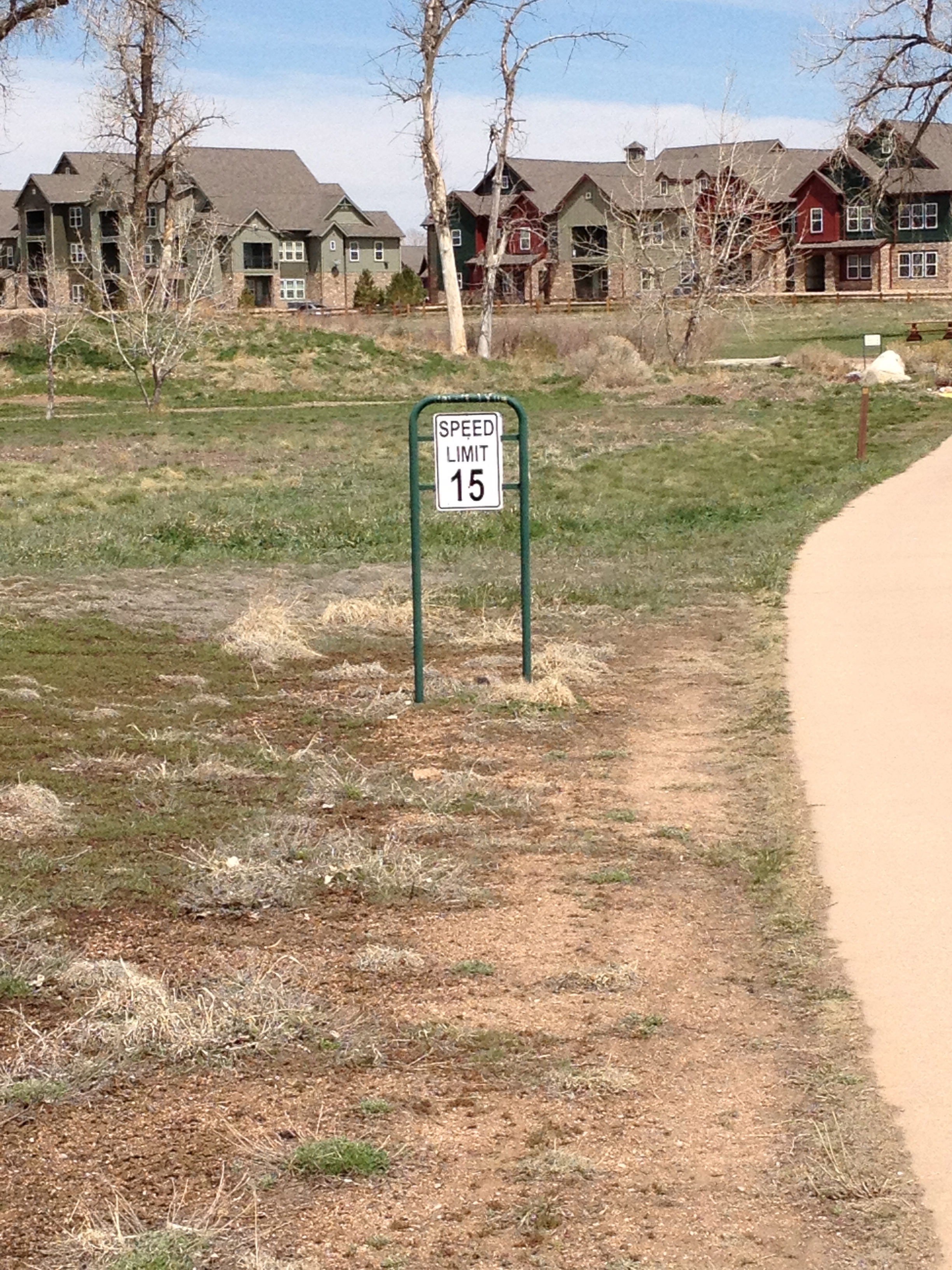
As I pass through the Denver City limits into Arapahoe County, the trail changes name to the Mary Carter Greenway.  In Arapahoe County I also notice two peculiar things.  There is a posted speed limit of 15 miles per hour.  In fact, this speed limit is posted quite frequently, a few times per mile.  I blatantly disobey.  I have become quite accustomed to exceeding posted speed limits while traveling by car, I did live in Chicago for a long time.  However, the 15 mph speed limit on this bike trail gave me the opportunity to disobey speed limits in a completely different venue- on my bike.  I felt great!  There are also round-abouts (also known as traffic circles) on this trail.  A lot of smaller trails branch off of this trail.  For some reason Arapahoe County decided that bicycle traffic circles are the best way to control the flow of traffic at these particular junctions.

After getting across highway 470, I must pass through the Chattfield Reservoir.  This is State Park, and where some climbing enters the picture.  Trails the follow rivers are generally quite flat, with only gradual rises and falls in elevation.   At this reservoir, I climb what feels like 300 feet in elevation over a fairly short distance.  Bicycling uphill is significantly harder than bicycling on flat ground.  Having spent several years in flat Illinois, I am not accustomed to bicycling uphill, so I need to practice, and I welcome the challenge.  The great thing about climbing these little hills in the Denver metro area is the view of the mountains you get at the top.  You are still a significant distance away from the mountains, but see them from a higher vantage point.  The photograph below is from the top of the hill, looking out over the resevour towards the foothills of the Rocky Mountains, quite a splendid view.  I took a little bit of time off here to soak this in.

IMG_0327

Sometimes after a triumphant hill climb, when I go back down the hill, I feel sad.  I feel almost as if I am just giving up what I had worked so hard to achieve- elevation.  It was especially hard to go downhill knowing that on the return trip I was going to have to re-climb up that very same hill.  However, I definitely need to work on my climbing.

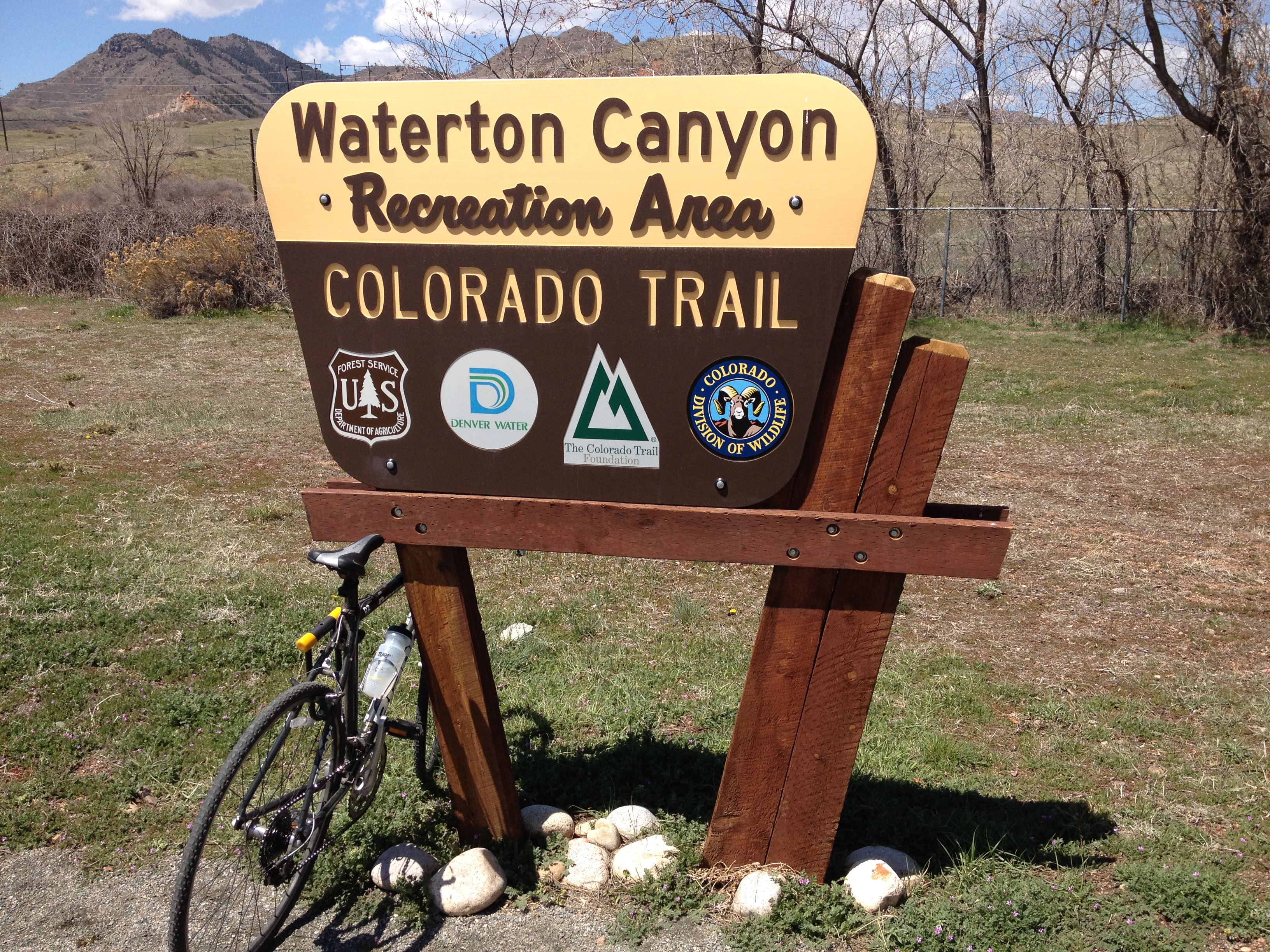
To get to the starting point of the Colorado trail, I must exit the park and take Wadsworth Rd. south for about three miles.  Cycling along Wadsworth Rd. in this segment is the closest thing to cycling on an interstate highway I have ever experienced.  In this segment (south of C-470), the road is 55 miles per hour with a wide shoulder.  The shoulder is wide enough that I am not at all scared of being side-swiped by a fast moving car, but it still is kind of a different experience for me, given that I usually bike in cities or on trails.  The road abruptly ends at a Lockheed Martin facility.  This I find even more odd, as my DeLorme High Resolution Colorado atlas had clearly pointed to this location as the start of the Colorado trail.  After stopping to look at the map on my phone and stopping at a sign, I finally find it, the beginning of the Colorado trail.

IMG_0329IMG_0331

As I gazed out at the Colorado trail, I obviously thought about the 485 mile path leading all the way to Durango.  If I were to bike the amount I biked today, it would take me ten days to complete the trail, and the conditions on the trail are much tougher than the paved roads I biked on all day.  Despite this, I still get some kind of a kick out of the idea that I am looking at a trail that leads all the way to the opposite end of the State.  But, I also cannot help but think about how this trail starts at a Lockheed Martin facility.  I mean, it’s a non-motorized trail, mostly geared towards hiking.  Regardless of how anyone feels about issues of war and national defense, defense contractors should be one of the last things that comes to anyone’s mind while thinking about trails like the Colorado Trail or the Appalachian Trail.  They even sponsor this Discovery Pavilion, which is at the end of the Waterton Canyon trail, which makes up segment 1 of 28 of the Colorado trail.

The return trip was not too eventful, except that the wind shifted out of the Northeast to ensure that I had to bike into the wind both ways.  Although, with sustained wind speeds not exceeding 10 mph, there really isn’t too much to complain about.  It made it that much harder, but, if I want to ever do bike tours like the ones at the Adventure Cycling Association, I do need to be prepared to handle wind and hills, so I am glad I am getting that experience even if my 46.5 mile ride today was harder than a 60 mile ride in Illinois would be.