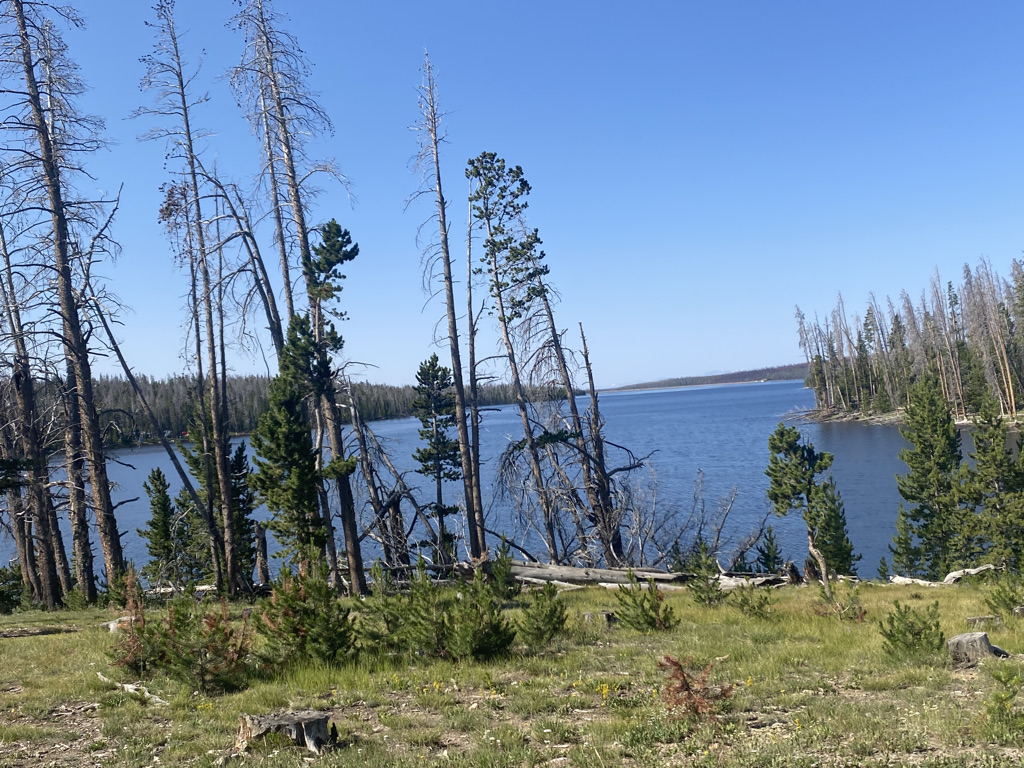
A Very Special Day for a Friend in Akron, Ohio

What we seek out, what we invest in, and what we are willing to spend our time and money on has undergone an uneven and somewhat nebulous transformation thus far this century. Perhaps this is because I grew up in the suburbs, but at the turn of the century, life seemed to revolve around shopping malls and the pursuit of material possessions. Since then, my focus has undergone two major shifts, one at the start of the century and one quite recently.

I now have nearly a decade’s worth of entries in this blog, primarily about travel and experiences. The transition from focusing on the material to focusing on the experiences, society-wide, can be seen on Instagram. The Instagram era, and what many people see in their feeds, is the embodiment of people switching from seeking out bigger homes and more stuff to put into them to seeking out experiences in general, many of which have been shared on Instagram over the past decade.

As I pointed out in two earlier blogs [1][2], this year, after all that recently happened, I suddenly found myself most interested in connecting with people. There are a lot of people who have and/or continue to play an important role in my life. At this point in time, this feels like the most important use of my time and energy.

We’re also seeing this shift society-wide. More people are talking about the importance of connecting with locals and local culture while traveling. People are now sharing tips and even building apps to facilitate this pursuit.

To end the Summer of 2021, I went to Akron, Ohio.
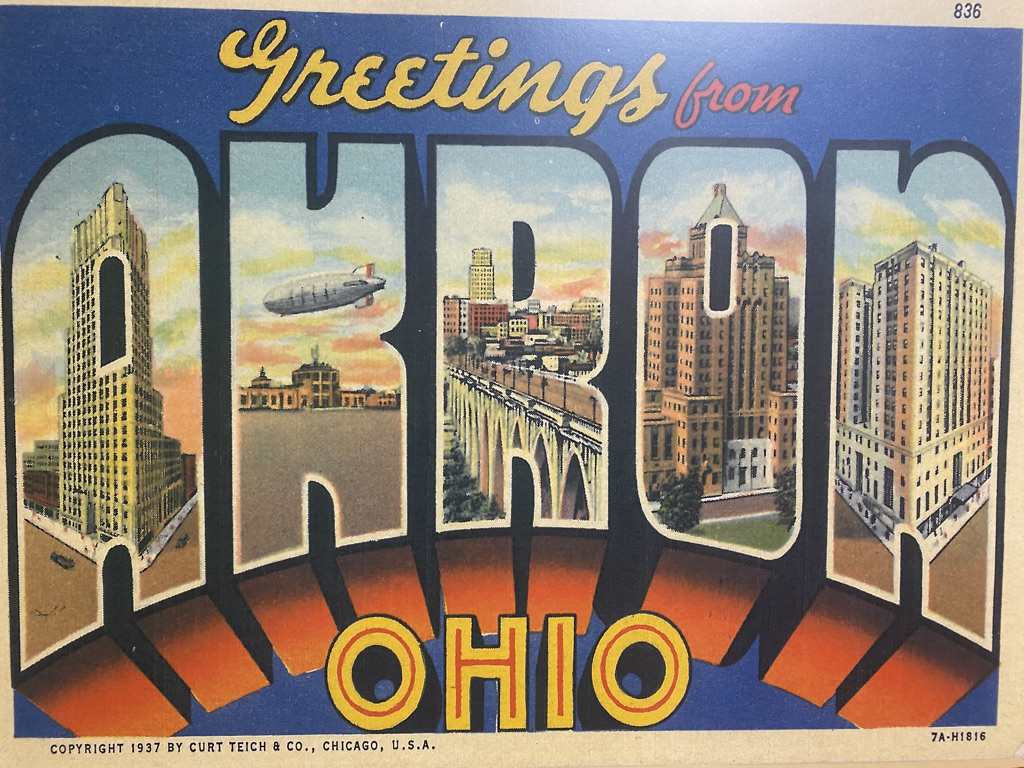
To go to a Minor League Baseball Game.

Traveling 1300 miles (2100 km) to go to Minor League Baseball game is not something that is going to appear on anyone’s bucket list. As was the case with my earlier trips this summer, the purpose of this trip was connection.

That being said due to its location in the “rust belt”, Akron often gets a bad rap. However, there is more to the place than industrial decline. It’s probably not the most desirable place to live but it is certainly underrated.

It has a fairly lively downtown.
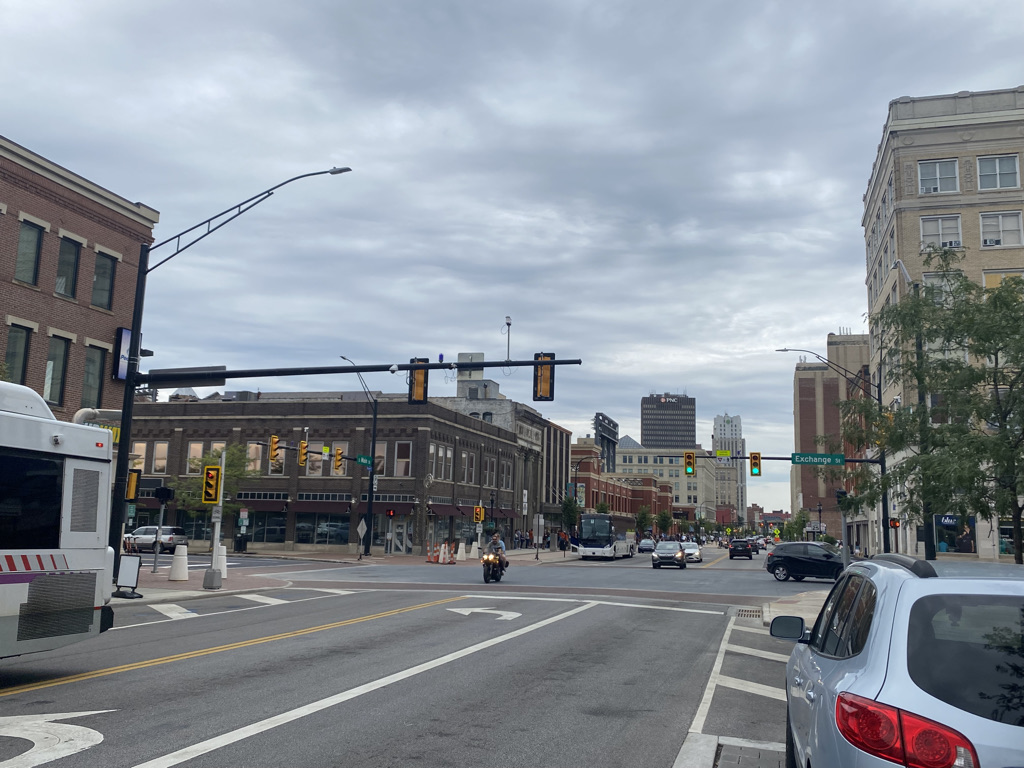
There are other interesting neighborhoods with some interesting places to go.

And, there a lot of outdoor places to explore.

The Summit Metro Parks are right next to the city.
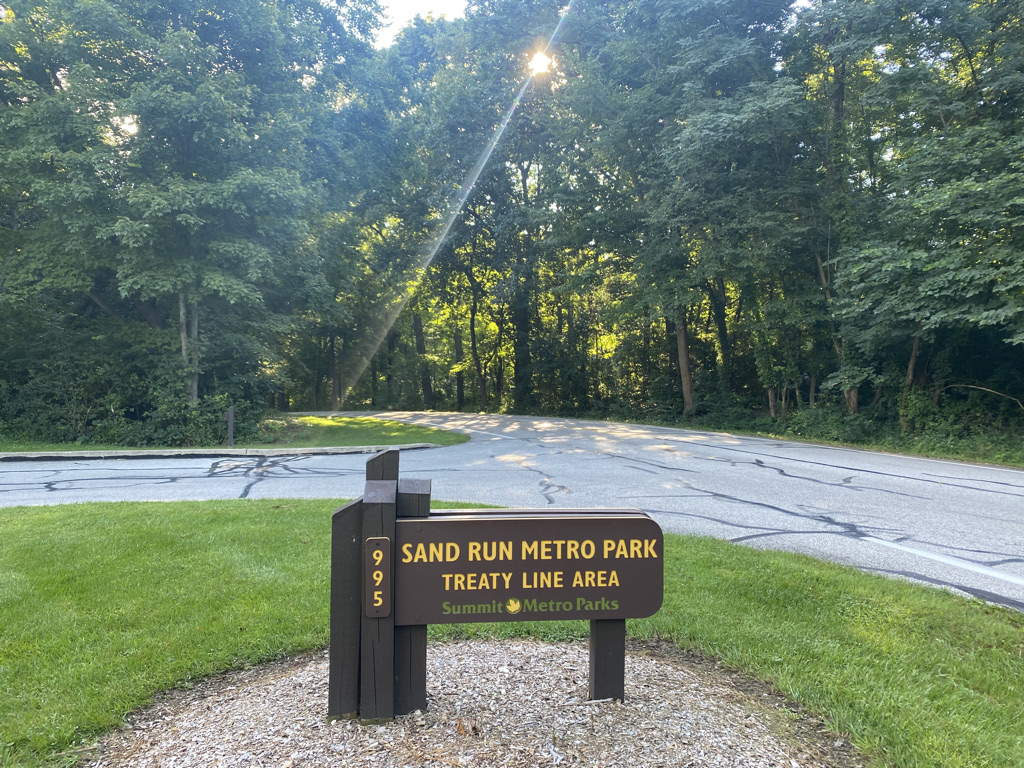
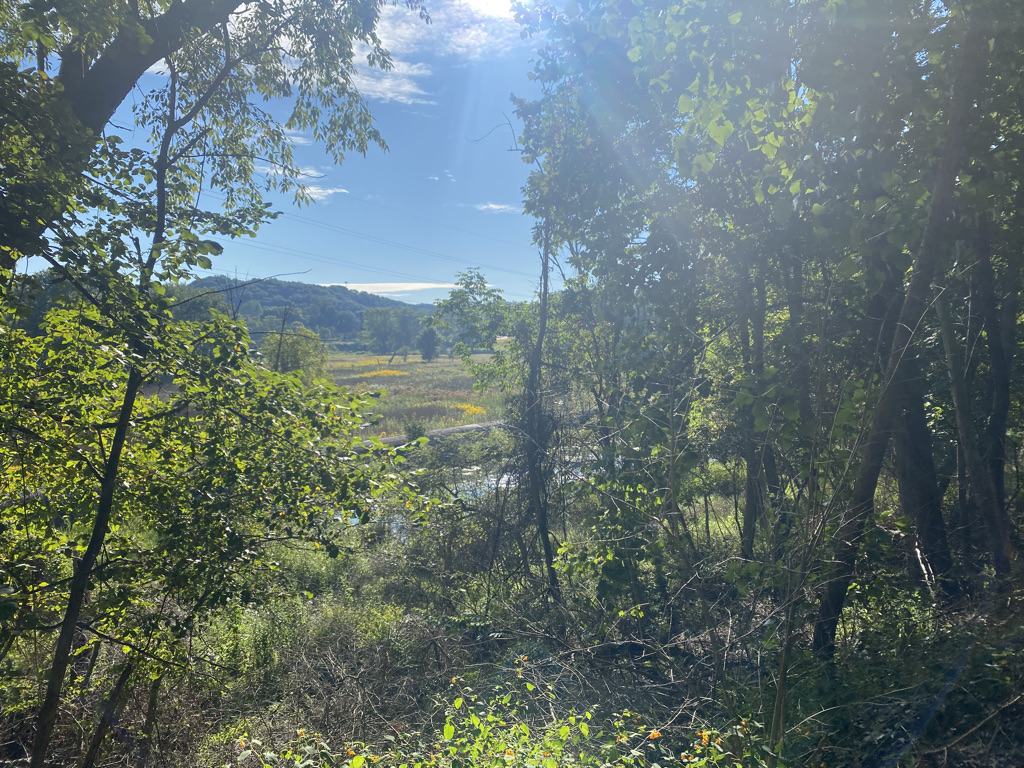
In this park there a series of trails with dense deciduous forests and a little bit of terrain!

The Buckeye Trail runs right through the park.

There are also some other hidden gems.
This particular railroad crossing reminded me of another time and place where people would commonly run or dismount a horse and jump into the open car of a moving freight train.

The other gem close to Akron is Cuyahoga Valley National Park.
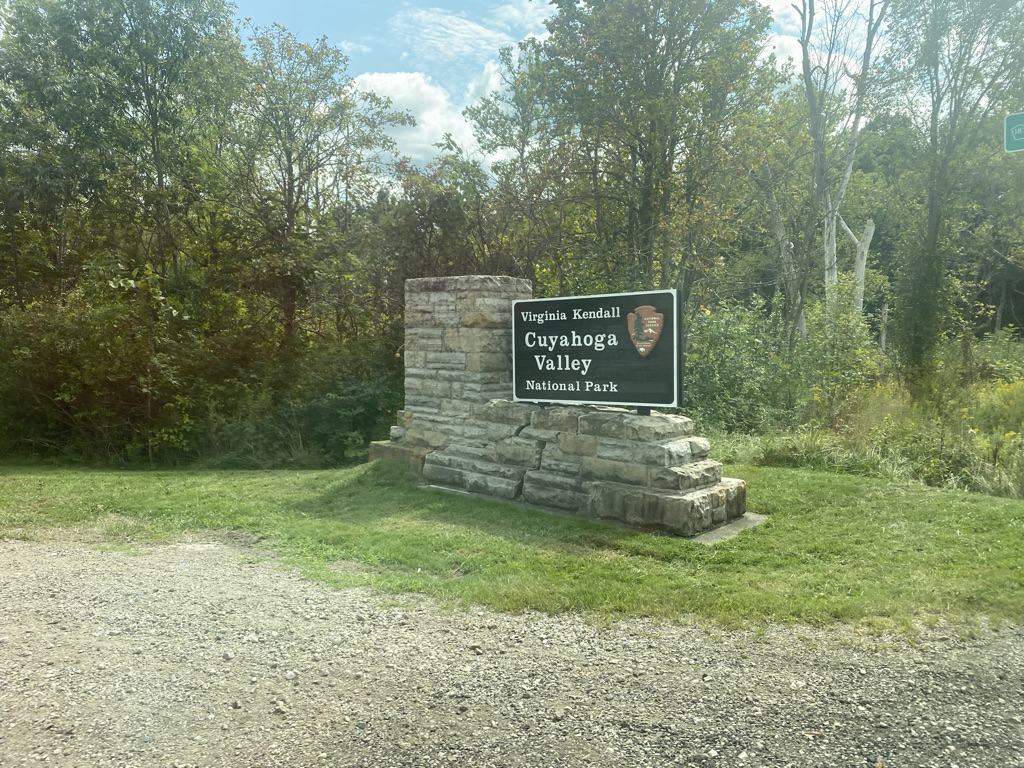
Hiking in Cuyahoga Valley National Park is fairly similar the Metro Parks hikes. There are the trees and rolling hills.

Cuyahoga Valley is one of the free National Parks. It also does not appear to be as crowded as some other National Parks can be.

Akron is also right in the middle of an 87 mile trail that connects it with Cleveland, as well as Canton and New Philadelphia. Following the Cuyahoga River, runners and cyclists encounter some scenic spots.

As society shifts it focus from the material to experiences and connection, as we shift our priorities, expectations, habits, and how we perceive work, value and power, our patterns of travel will shift. The conciseness on the post pandemic world where we use virtual meetings more, is that there will be less travel for work and more travel for pleasure. It also feels like more combination trips are in our future. This is because, it is possible to meet people and coordinate work virtually, without having to spend time, money and energy traveling. However, to CONNECT, whether it be with other people, with places, cultures or ourselves, will still require significant amounts of travel. What will likely shift is where we go, when we go there and how we get there.

My Thoughts on Turnpikes

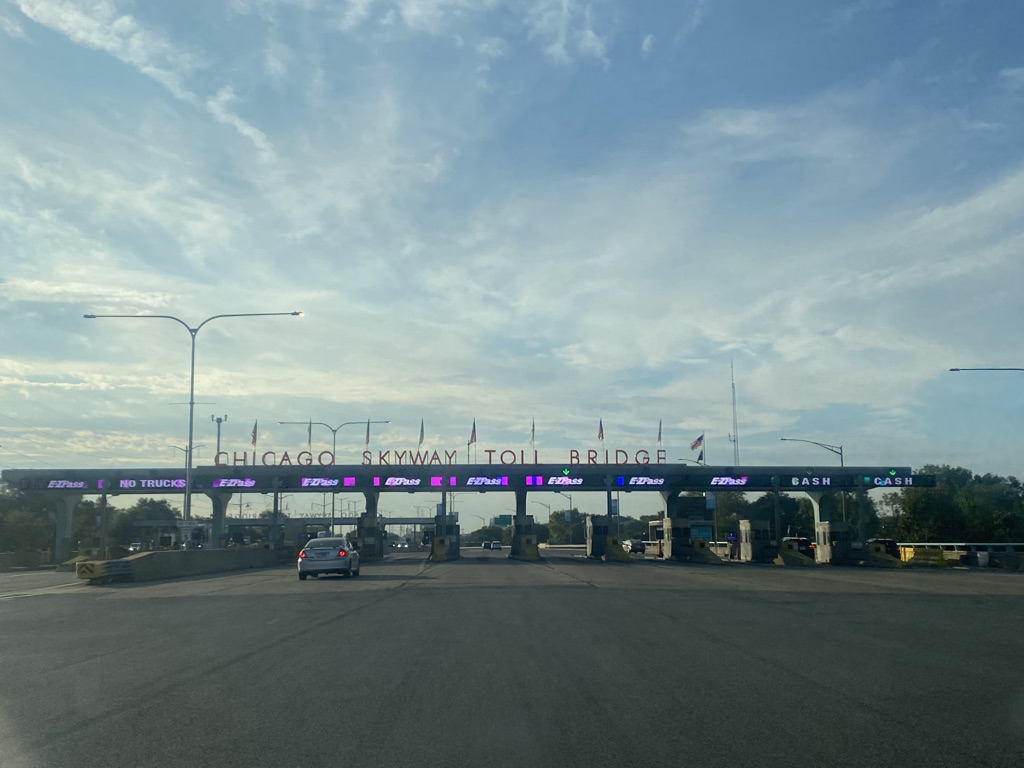
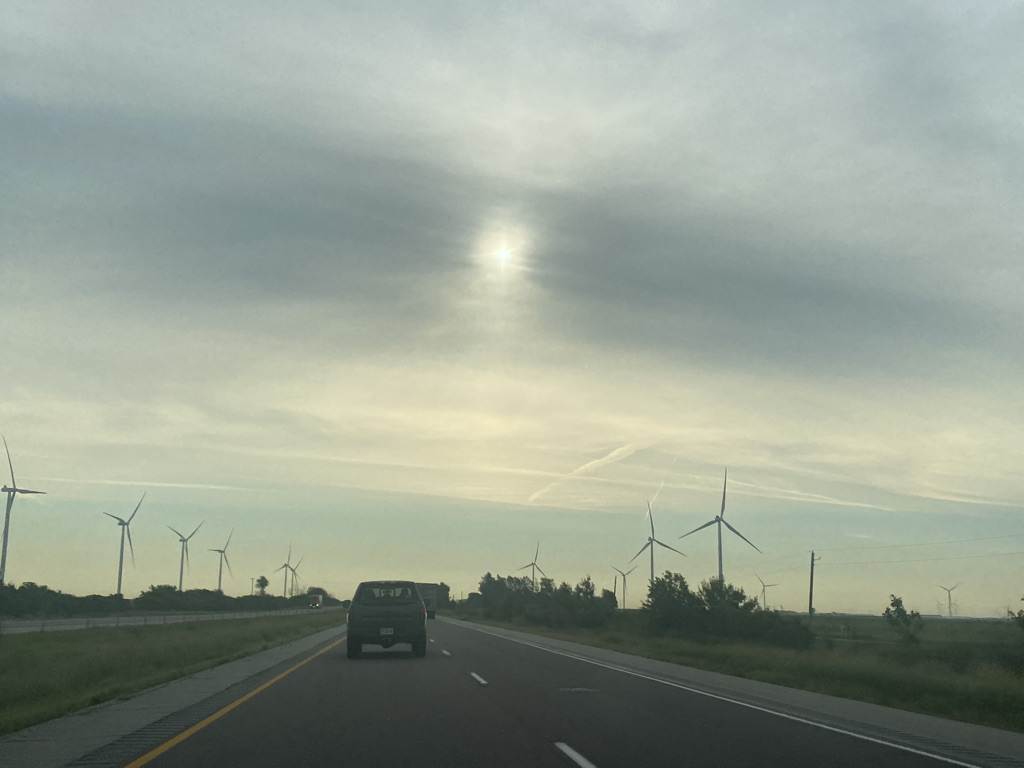
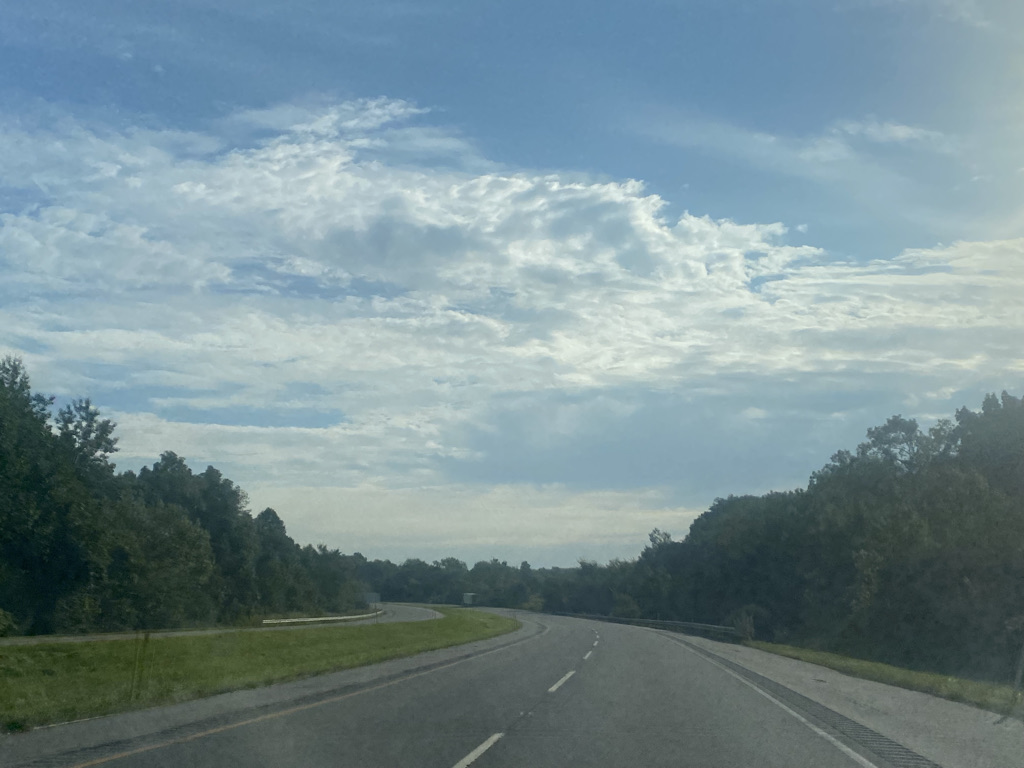
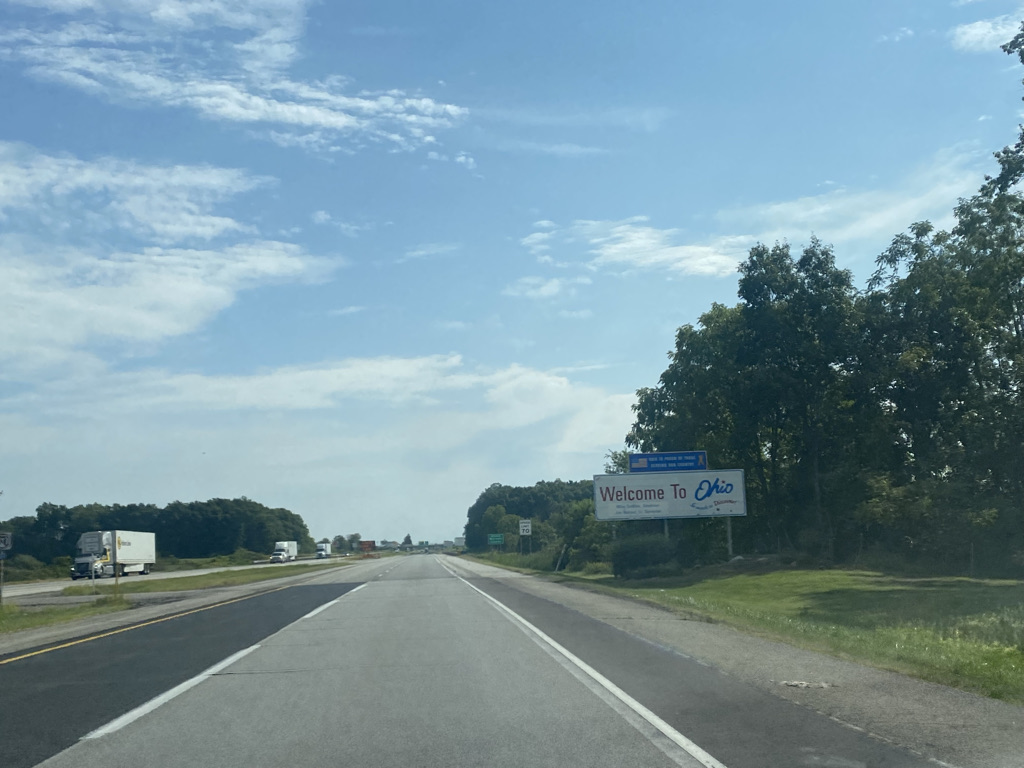
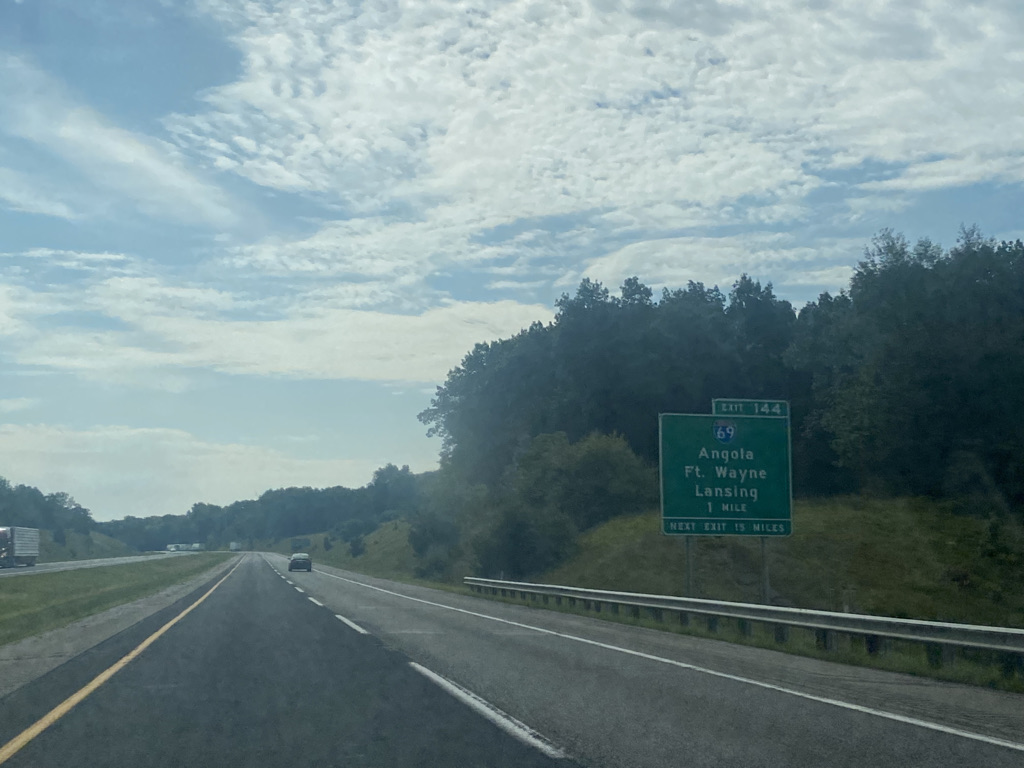
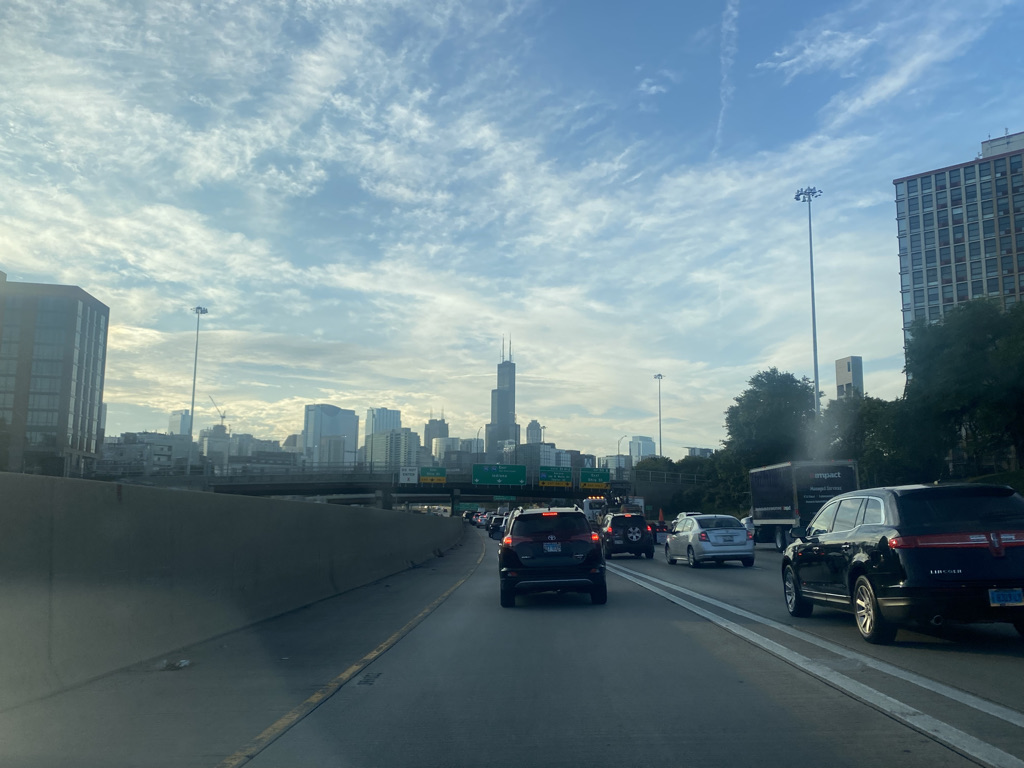
The Indiana Toll Road and Ohio Turnpike are not the most exciting of journeys. Much of the area looks exactly the same. The terrain is quite flat. There is corn and soy everywhere. The road connects a series of medium sized cities, coming close enough to efficiently connect them without actually passing through them. It is a form of transportation that maximizes one thing and one thing only: temporal efficiency.

In the Midwest, all roads start and end in Chicago. It took me a while to realize that, while Chicago is right in the middle of the region known as the Midwest, and is its unofficial capital, Chicago is really nothing like the rest of the Midwest. It is a big international city. It moves at a pace that is closer to that of other large cities than the rest of the Midwest.

Once someone leaves the greater Chicago area, they are likely to encounter a completely different mentality and a completely different way of life.

Chicago also kind of divides the Midwest. There are some subtle differences between what lies to the West of Chicago and what lies to the East. These subtle difference are probably only commonly thought of by those of us who have lived in the Midwest and those of us who have driven across the entire region and had time to observe it.

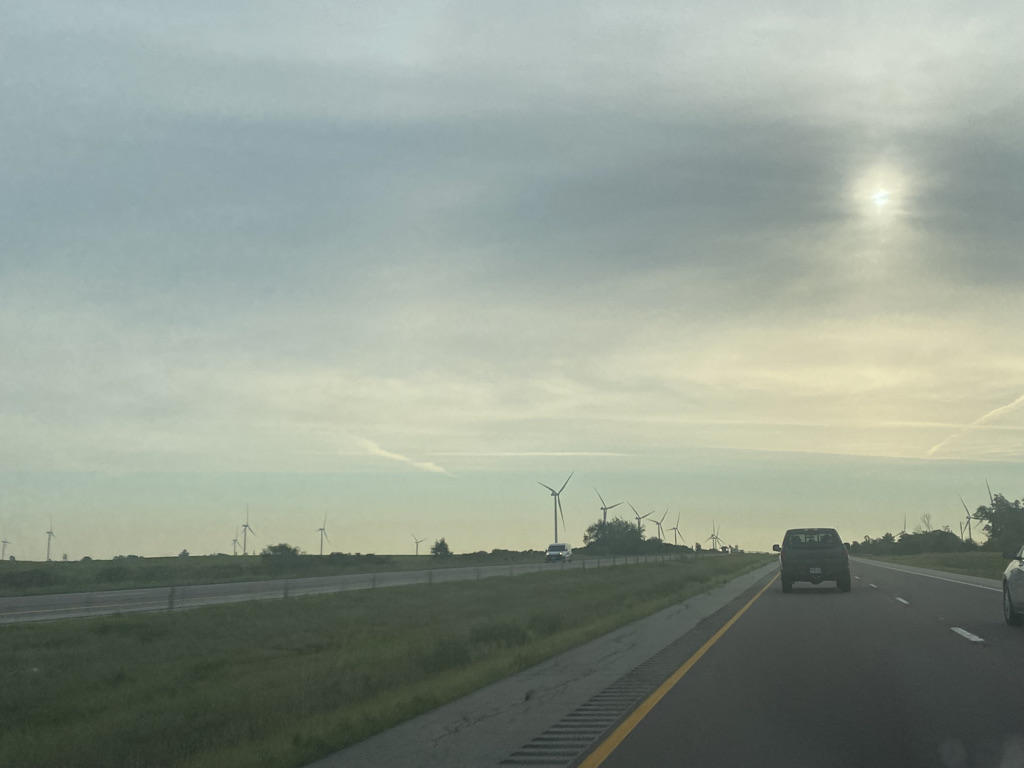
While there are farms everywhere in the region, the Western part of the region, West of Chicago seems to be built more around farmland. They have leveled enough trees to increase surface wind speeds (dense forests tend to reduce surface wind speeds) enough to make it a good place to build wind farms. The economies of many of the medium sized cities in this region are centered around farming equipment,

East of Chicago, trees are more plentiful. Medium sized cities here are a bit more frequent and they have more of a “rust belt” feel.

Cities here tend to have nicknames around what product are manufactured here…

  • Gary the Steel City
  • South Bend the Wagon City
  • Elkhart the RV Capitol of the World
  • Toledo the Glass City
  • Akron the Rubber City

As is the case with the subtle but noticeable difference between the region to the West and the region to the East of Chicago, there is also a subtle but noticeable difference between driving on turnpikes and driving on other highways.

Turnpikes tend to have elaborate exit ramps to facilitate toll collection. As a result, exits are often quite far apart.

Two things happen. First, rather than pulling off at an exit to stop for gas, restrooms and food, it ends up being more common to stop at rest areas.

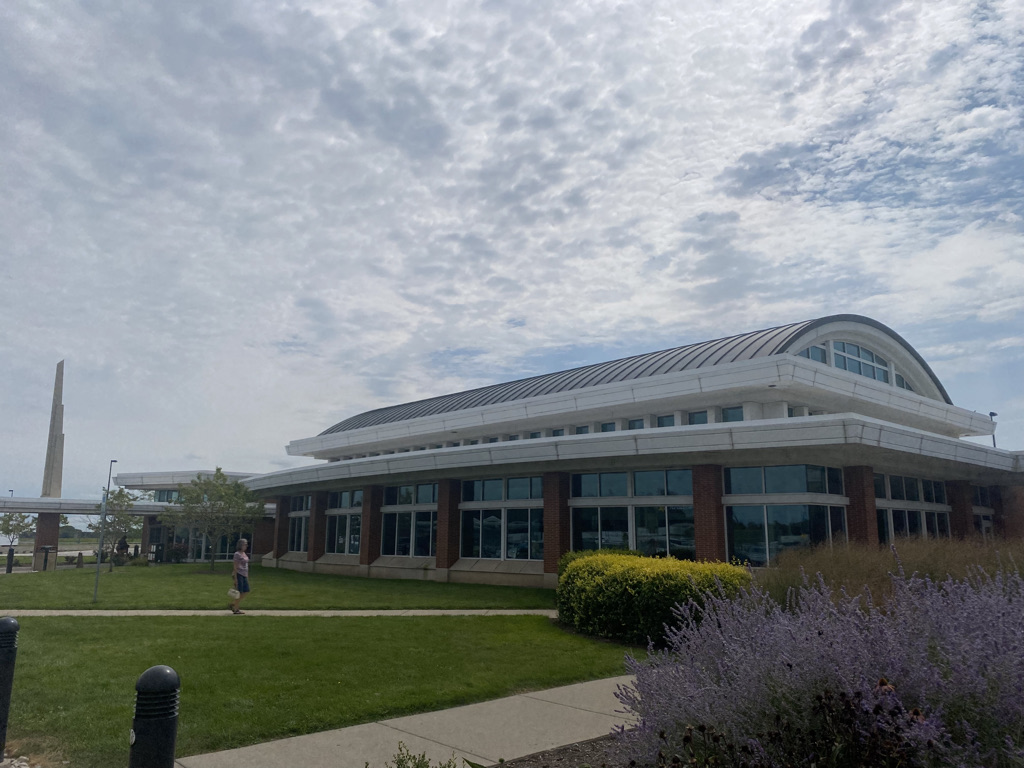
As homogenized as standard highway driving is compared with traveling on roads that go through the center of town, turnpike driving is even more homogenous. All of the rest areas on the Ohio Turnpike look exactly the same and many of them have the exact same food options.

Also, with the exits fewer and father between, it becomes far less likely that drivers will follow the most direct path from their origin to their destination. Getting to a location is more about finding the nearest exit than the series of roads that provide the most direct path.

Turnpike driving maximizes temporal efficiency, but it is not my favorite method of transportation.

When traveling from place to place, sometimes there are things more important than getting to a destination as quick as possible. There are places to experience along the way. The experience of traveling along the Indiana Toll Road and Ohio Turnpike is a reminder of what we lose out on when we focus on one metric and one metric only, in this case temporal efficiency. While South Bend, Elkhart, Toledo and Sandusky will not top anyone’s list of top vacation destinations, whizzing by them from 10-20 miles away on a homogenous turnpike still feels like missing out on something that has the potential to be a worthwhile experience.

Reflection on Iowa

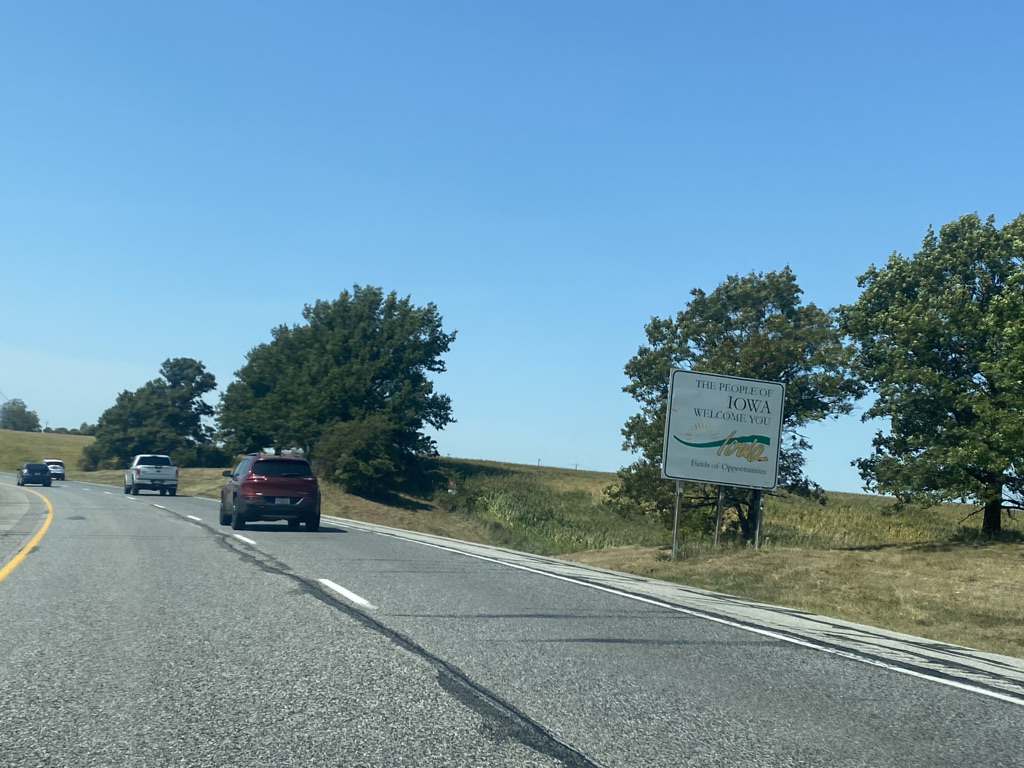
After yet another drive across the State

In my younger years, my experiences with the State of Iowa were not always positive. One time, I was at a conference in downtown Des Moines and found it surprisingly challenging to find a suitable place to eat. When I was 21, I visited Ames. I recall taking a series of shots, one green, followed by a yellow one and then a red one. I believe the tradition is called the “stoplight.” Energized by these shots along with my then usual rum and coke I was ready to let loose. I asked “what are we doing”. The response was “sitt’n and drinking.” The 21 year old version of me, always looking for more activities, found this absolutely ludicrous.

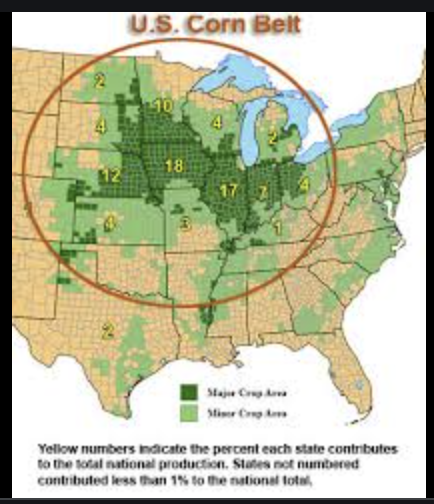
Iowa is primarily known for corn. It’s the top producer of corn and the only state that lies completely within what is known as the “corn belt”. The fact that those who drive across the state see nothing but corn was even the subject of a funny song that barely lasts half a minute.

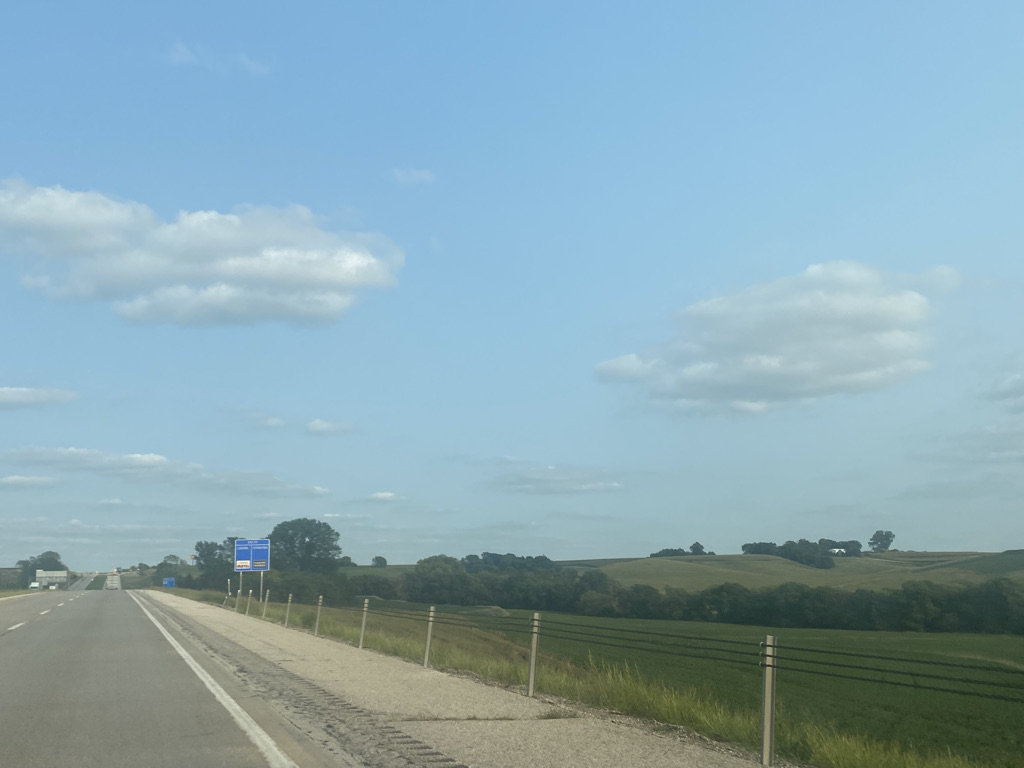
The drive across the state can be pretty monotonous, especially considering that Interstate 80, the highway most people use to cross the state, does not even go through the center of the towns it connects.

It is all pretty much the same thing, gentle rolling hills, farms, small towns, and, yes, tons and tons of corn fields. After a while I start to imagine what life is like here. What do people do on a day-to-day basis? What are the interesting and exciting activities? What worries them?

Was I only demanding these perfect restaurants in downtown Des Moines because I have become so accustomed to having so many options where I am from? Why is “sitting and drinking” not good enough for me? What am I chasing and is it making me happy?

It is easy to imagine life in Iowa being a kind of beautiful simplicity.

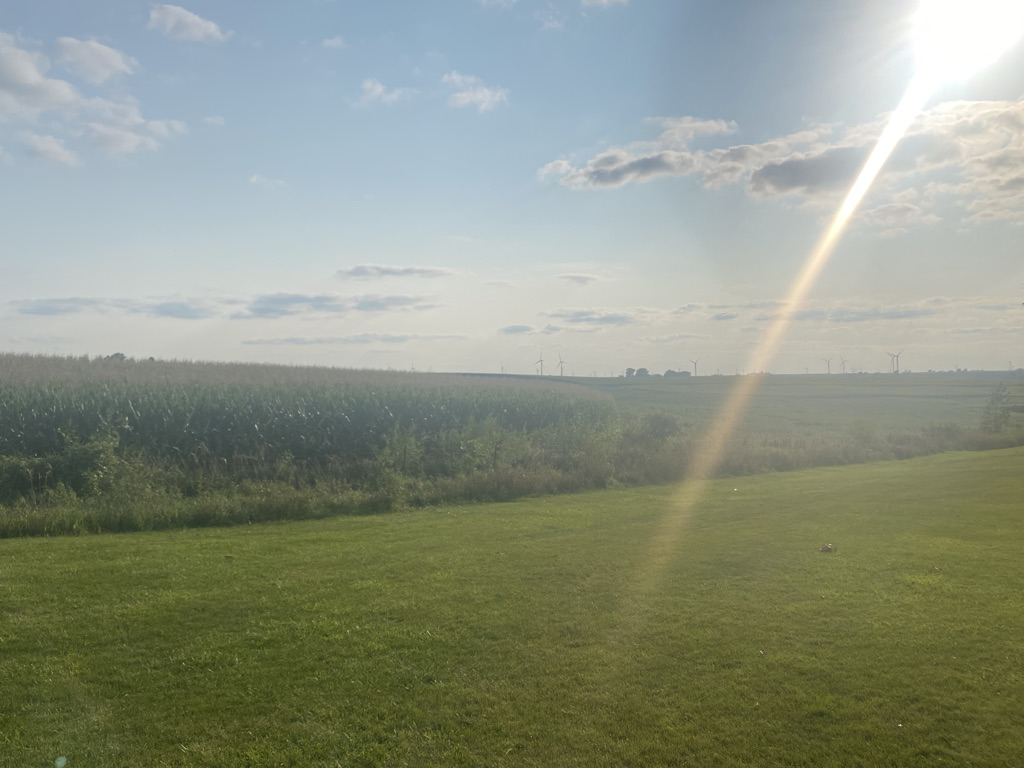
There are certainly uglier things to look at than corn fields kissed by the sun in the early evening hours on a late summer’s day.

Maybe what I dismiss as boring is a life that is actually satisfying to millions of people. Maybe the farmers across the state feel a sense of pride in growing the corn that feeds the nation’s cows that feed the nation’s people. Maybe people here love their communities. Maybe they love seeing people they know, deeply and personally, every time they go to their local grocery store or their local restaurants. Maybe they go over to each other’s houses and just play games. They could even enjoy just feeling the fresh air and watching the corn stalks sway in the wind.

Maybe that experience provides a deeper sense of satisfaction than having all the fancy items in the grocery store and five star restaurants with exotic food. Could it be that we are chasing the wrong things? I think to my own life and how happy all the expensive things we are all working so hard to be able to afford are really making us. Is it worth the stress?

While I still don’t imagine myself being happy living in Iowa, the realization that there are people happy here does make me re-evaluate my own life. There is a part of me that is always striving for more. The world, of course, needs people like this, to consistently move humanity forward. However, there is also a part of me that gets excited over some of life’s more simple pleasures.

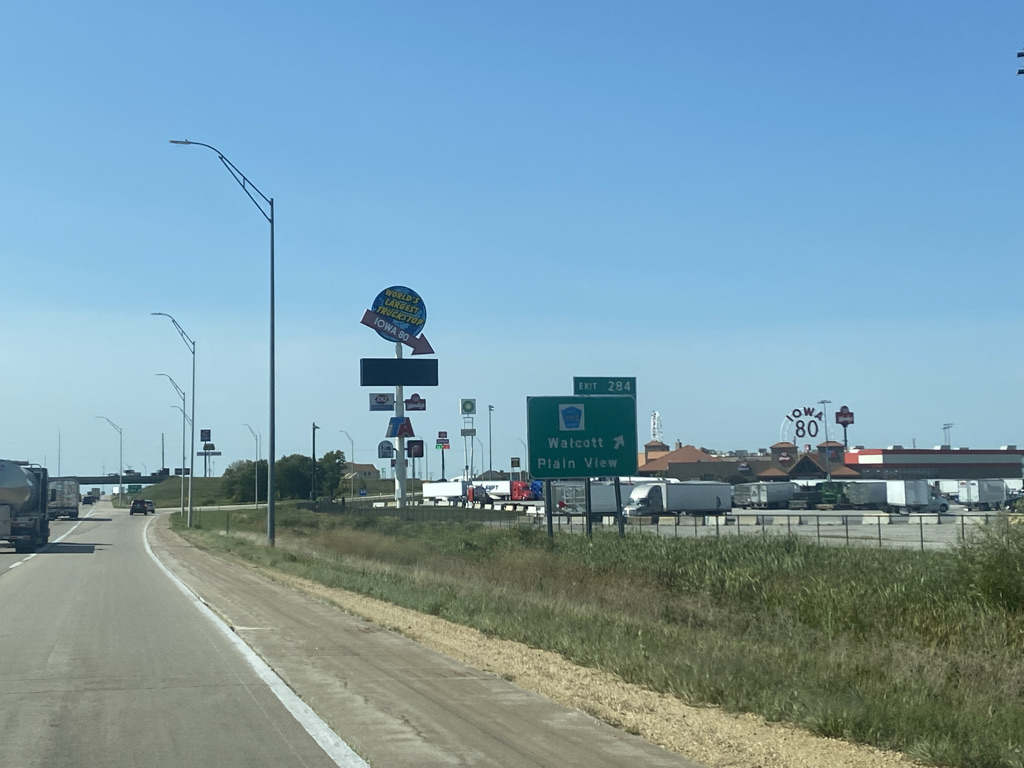
The world’s largest truckstop, in Iowa

Crossing Iowa, looking upon all the small towns and farms and imagining people who are perfectly content here inspires me to be present, pay attention and notice these small goofy things that make me happy. Sometimes in life that is all we have.

Columbine Lake- Grand County, Colorado

Many of Colorado’s outdoor activities involve putting the body through some kind of major challenge. There are no 14er climbs with less than 2,000 feet in vertical gain. Most 14er routes exceed 4,00 feet! Rock climbing, whitewater rafting and pretty much all of the State’s most talked about bike rides are quite physically challenging. There is a reason Colorado has the lowest obesity rate in the country.

While these experiences improve physical health, there are spiritual benefits to being in nature and taking it at a slower pace. At a slower pace, one can fully observe, reflect, immerse and use that space to reduce stress and process thoughts. It’s a different kind of experience. After the extreme physical challenge that was Ride the Rockies, it was the kind of experience I was craving.

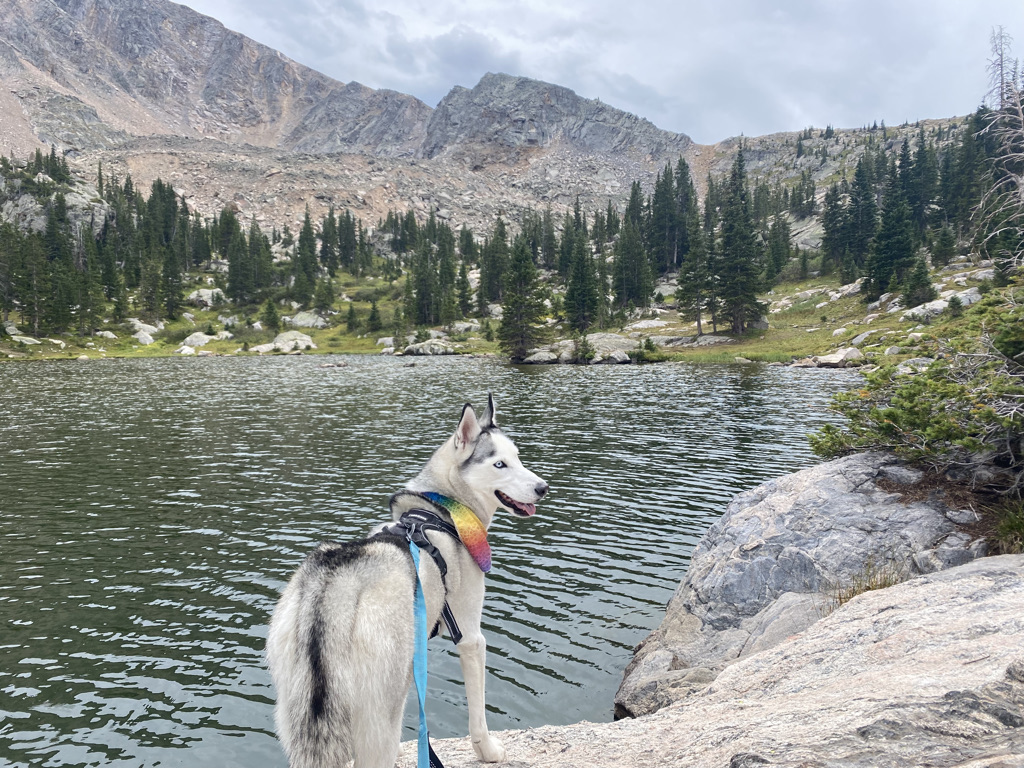
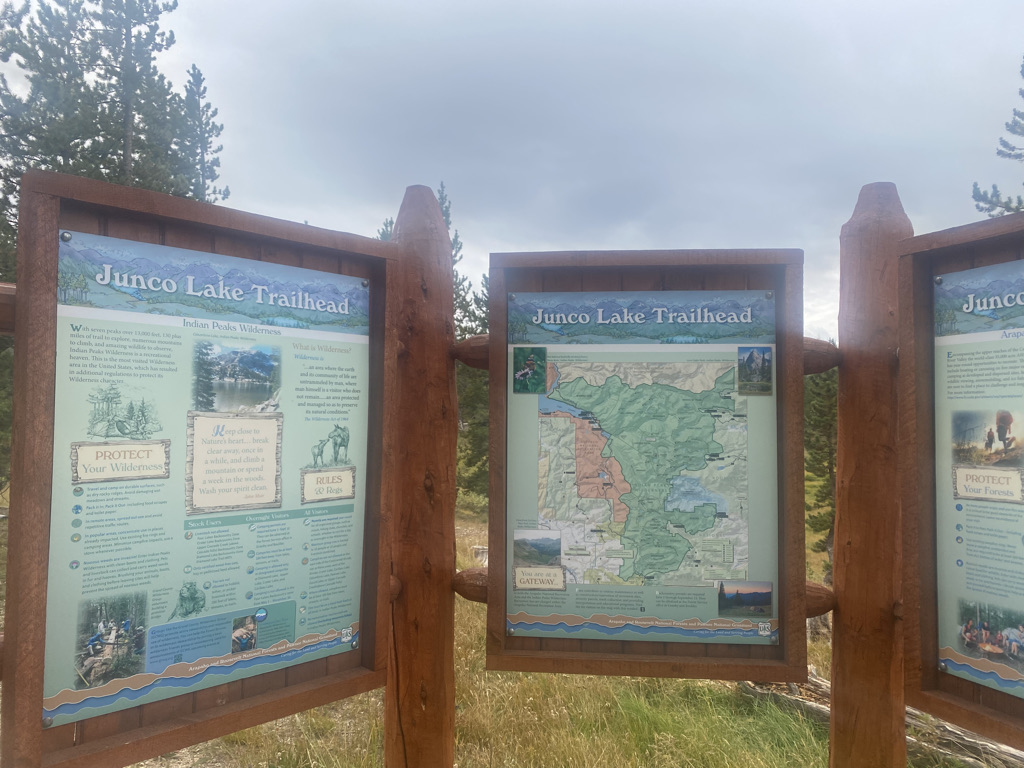
It may be challenging to develop the patience to just sit or walk slowly, especially after such a personal accomplishment. So, I found something in between the two extremes. I found a hike that would most certainly still be considered exercise, but not intense enough to distract from the experience of being in nature. That is Grand County’s Columbine Lake (there are two lakes in the state with this name so the distinction is necessary) via the Junco Lake Trail.

In addition to being a truly moderate trail, this particular hike is also both quiet and scenic. The catch is, getting there can be a little tough.

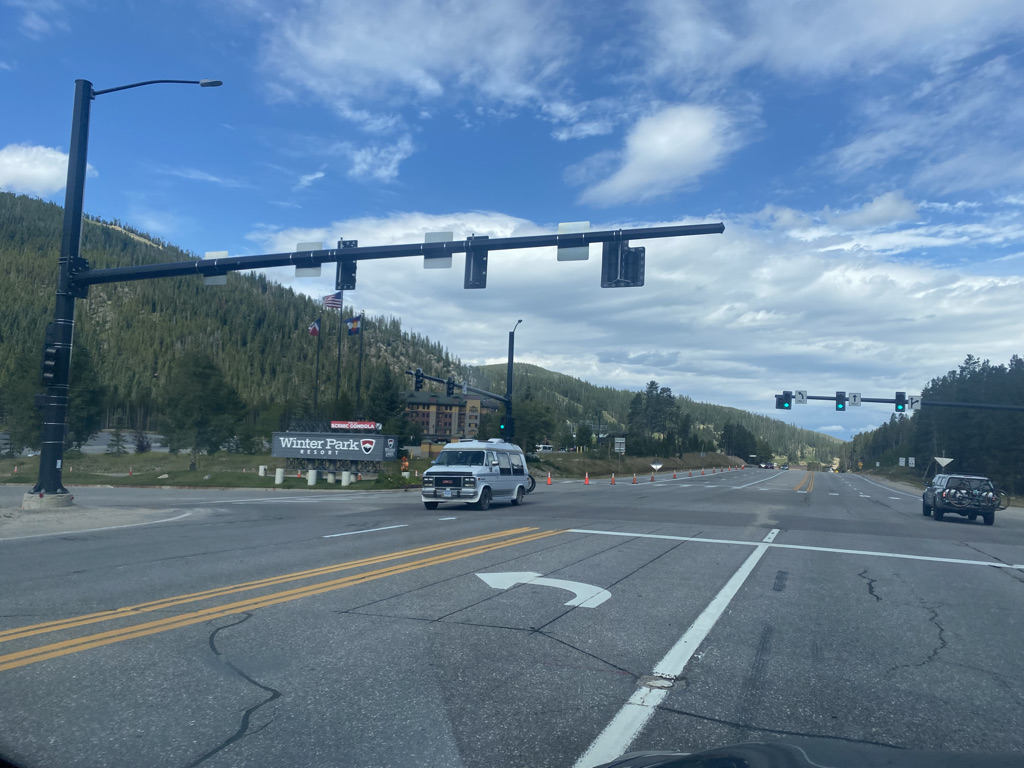
After driving through Winter Park along highway 40…

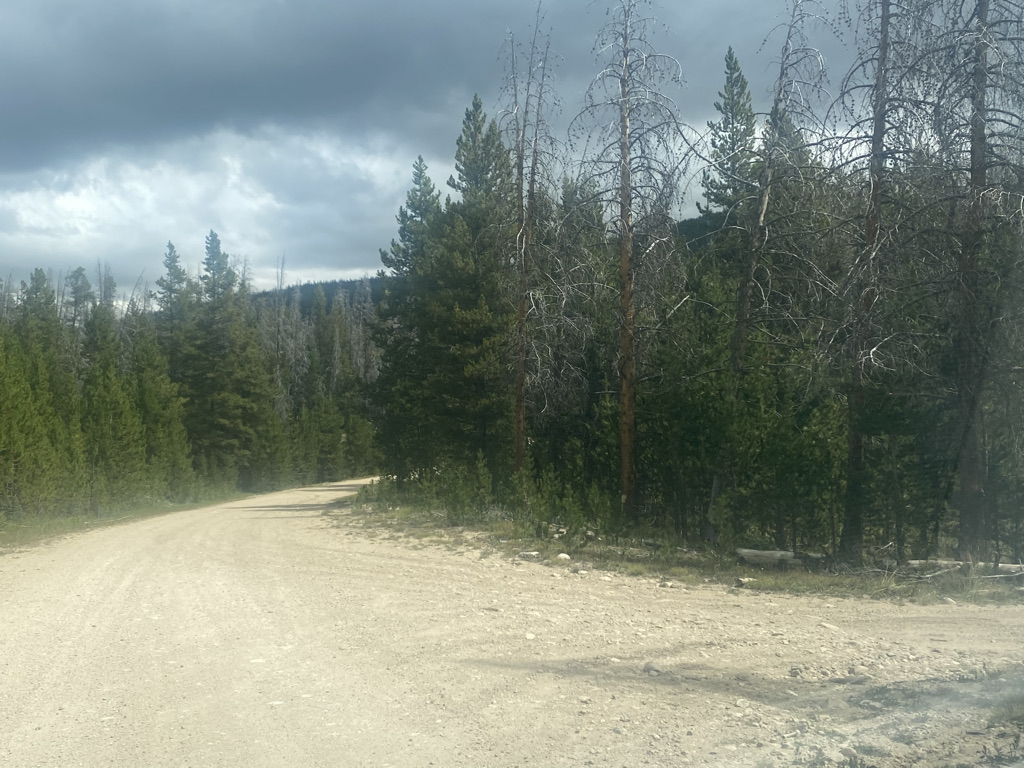
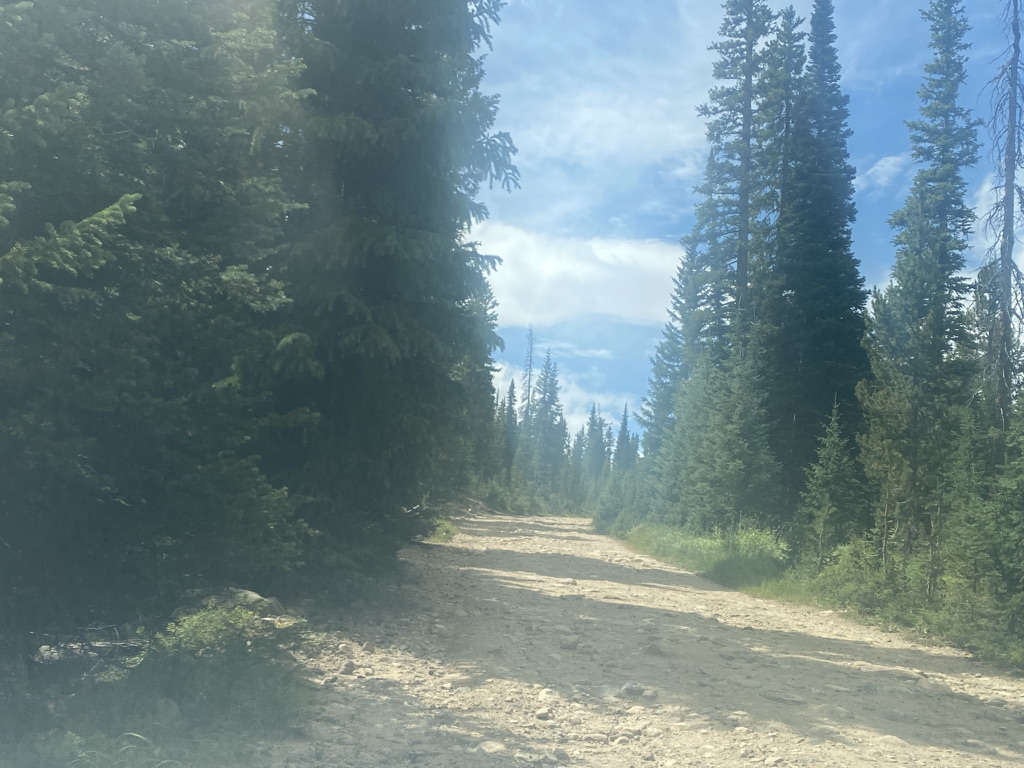
Getting there involves following an unpaved county road for about 12 miles, the final three of which can be quite rough.

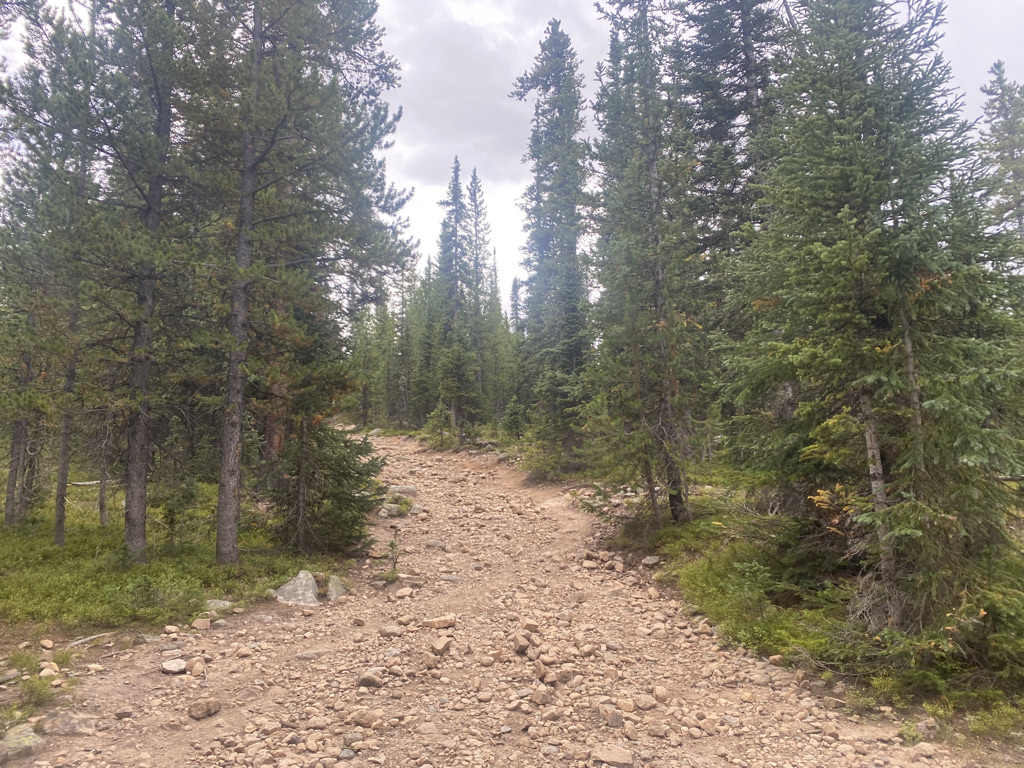
The trail also starts out rocky, in a manner that almost felt indistinguishable from the final few miles of driving to get to the trailhead.

This part was also pretty intense. At least it was intense enough to feel a lot more like a challenging hike than some kind of a walk in nature.

After this initial section, it felt exactly like the balance between active exercise and the spiritual experience I was looking for.

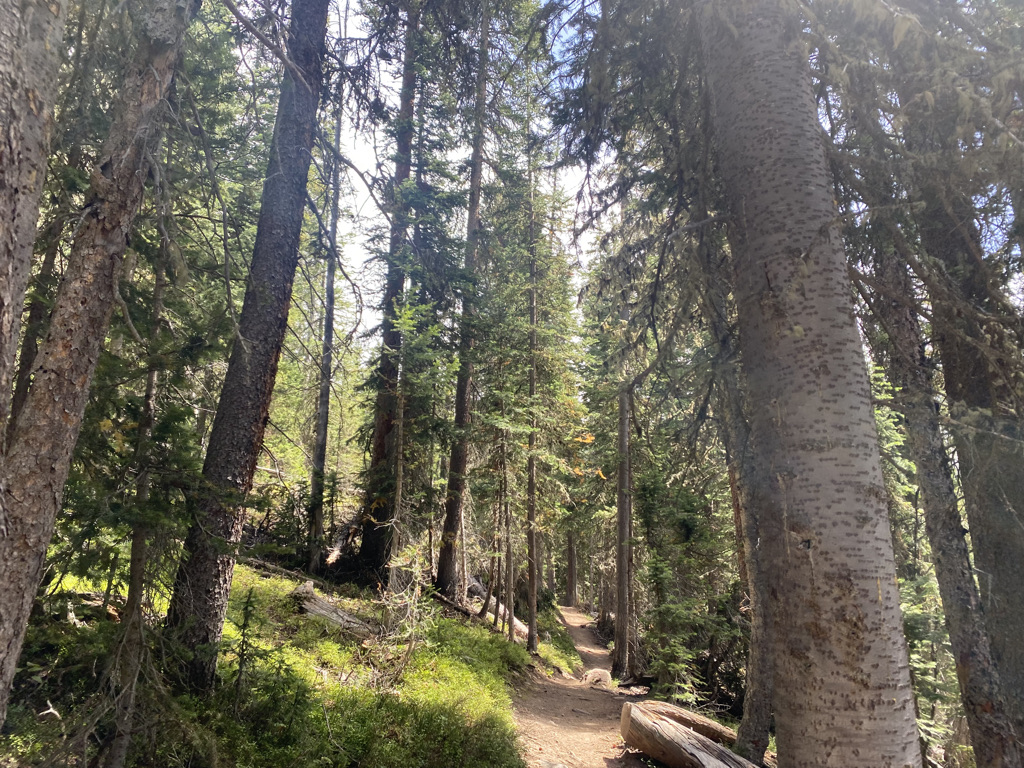
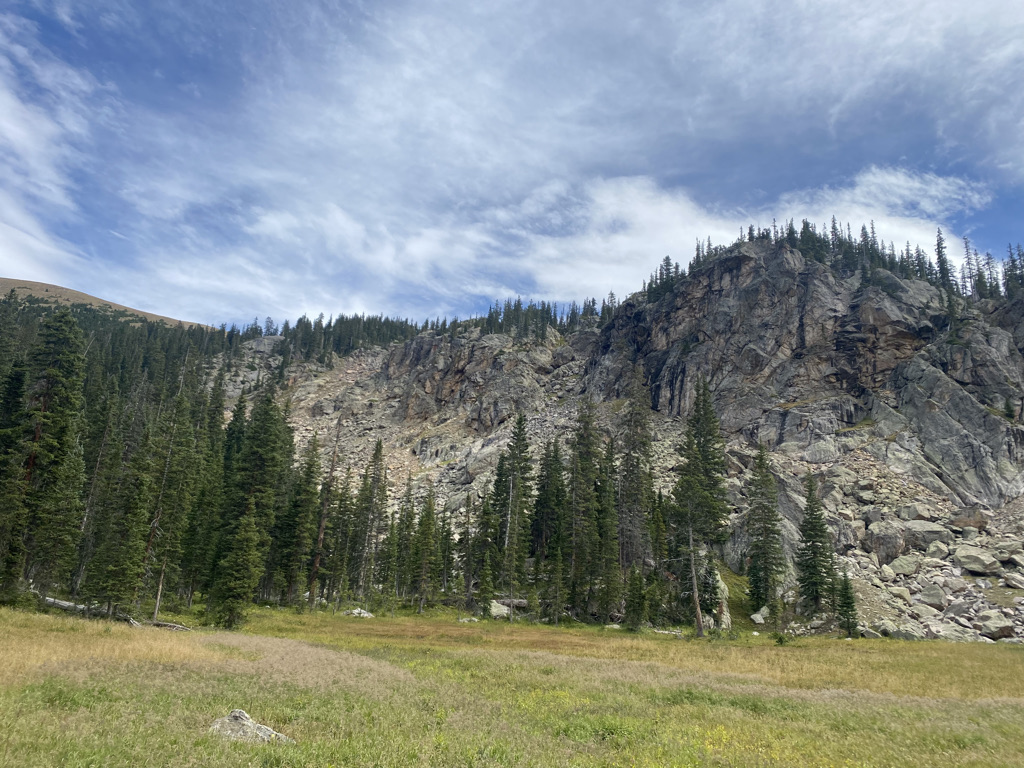
The trail also kind of switches back and forth between sections of dense pine forests and open meadows .

Finally, it follows a narrow creek with periodic mini waterfalls.

As it approaches the lake.

With open meadows and few other people, taken slowly enough, much of this hike could be the ideal setting for a spiritual experience. However, it requires some effort. It is almost reminiscent of Yoga, where the clearing of the mind comes only after pushing the body a little bit.

People are often searching for balance in life. This is frequently interpreted as finding some middle ground between two extremes. Could true balance also require a balance between moderation and that which is radical, extreme or intense? Likely, we all need some aspect of both in our lives. It ebbs and flows with different experiences taking a more prominent role in different seasons. In the end, it becomes all about getting the experiences we need to be complete human beings.

My First Two Flights After COVID

Okay, this blog should have been titled “My First Two Flights After Vaccination.” There’s this new variant of the virus that is causing an increase in sickness and death in some places. However, given my situation and the statistics presented to me about the effectiveness of the vaccine I received, I returned to living a mostly “normal” life this summer, which included hoping on an airplane for the first time in over a year (although I did still have to wear a mask).

It is often said that people’s actions are a better indicator of what they truly value than their words. When I returned to traveling, my first trips were not to explore some far away unknown place, even though I still really want to do that. Instead, I chose to travel to places that are familiar and not as exciting, for the purpose of visiting friends and family.

My first trip was to Minnesota, to visit with friends from college. This photo is going to appear strange, but my friends decided to produce “flat” cardboard versions of every member of our group so that if we ever have a gathering some people can’t make, we can still kind of bring them with us.

There’s a “flat” version of me too….

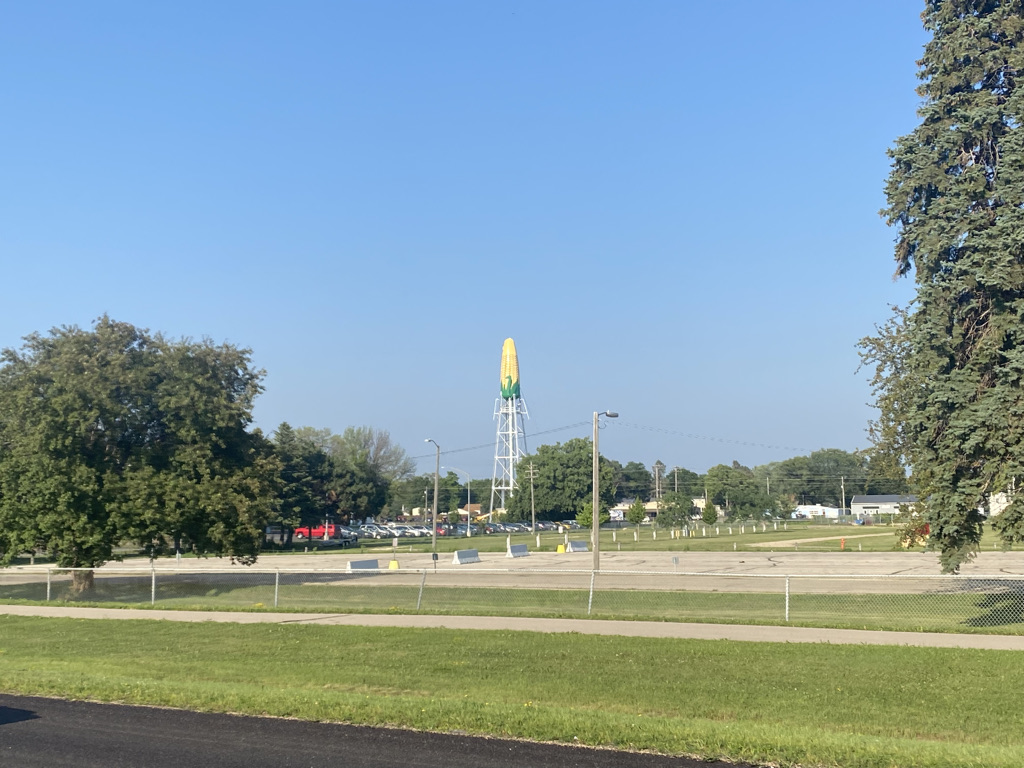
This was not a glamorous destination. The main places we explored were Rochester, a town primarily known for the Mayo Clinic, which is certainly not a good place to visit right now, as well as a giant corn water tower.

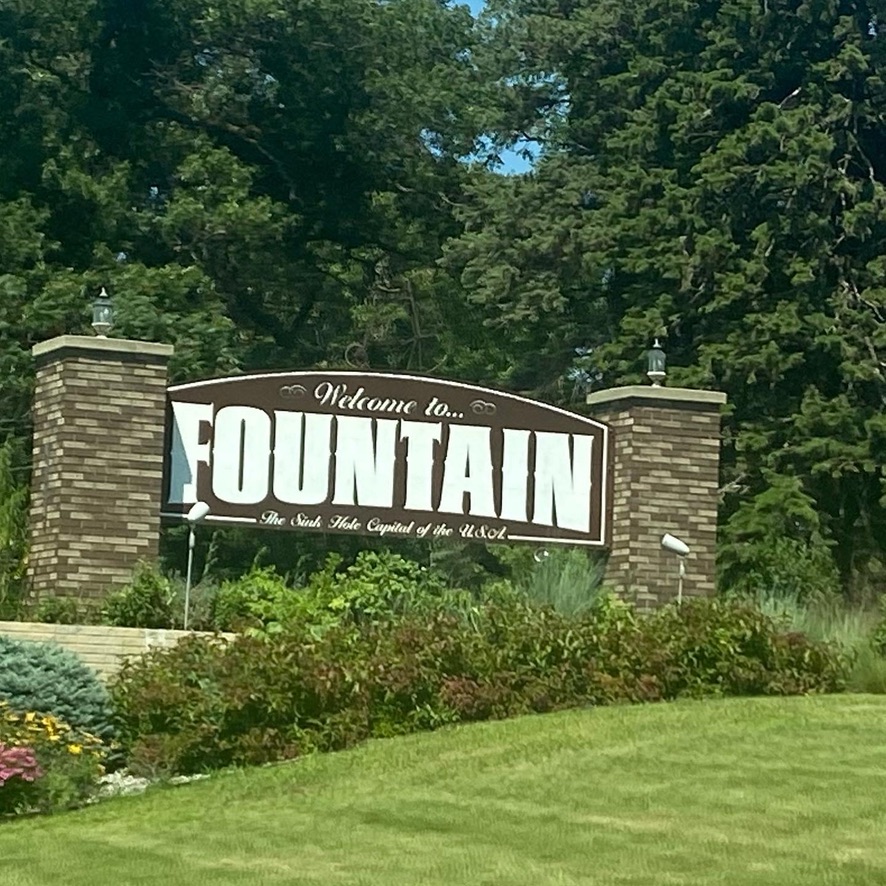
Some 30 miles Southeast of Rochester, in the Root River Valley, I was surprised to discover that the town of Fountain, MN is the Sink Hole Capital of the U.S.A.

Seriously, it’s not in Florida as we all would have assumed.

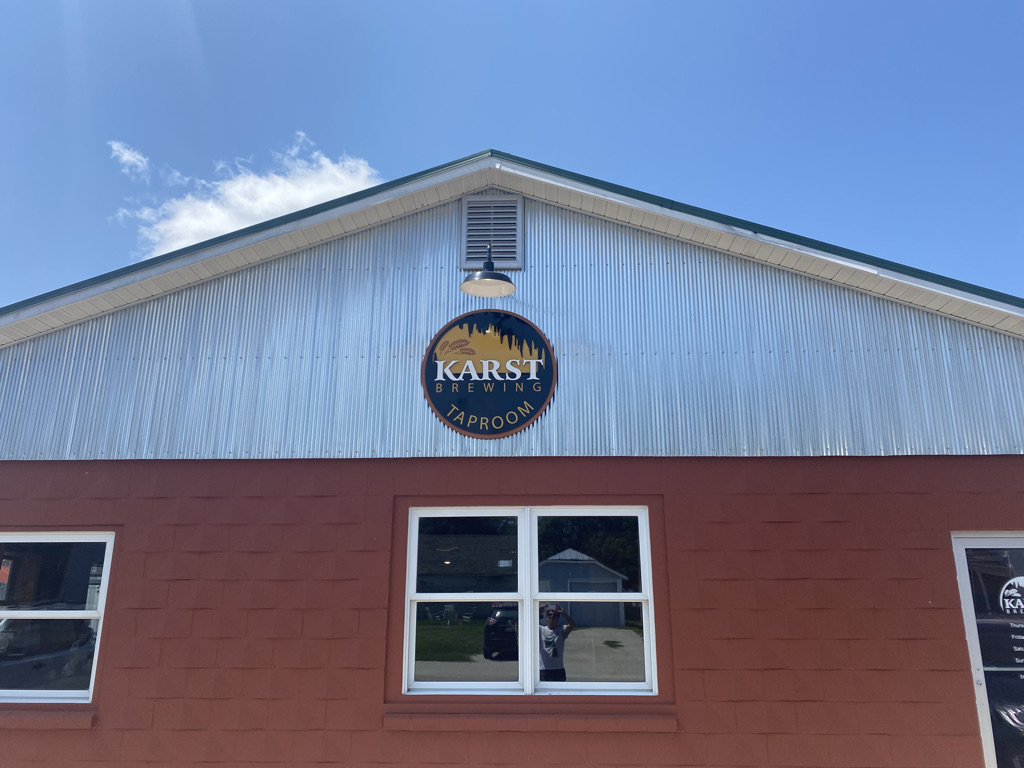
But, they celebrate this odd distinction. The main attraction in town is a brewery named for the geological feature that caused the sinkhole here, where they bring in bands and food trucks to celebrate Sinkhole Saturdays.

My other trip was to the house where I would spend the second half of my childhood, ages 11-17, where my parents sill live.

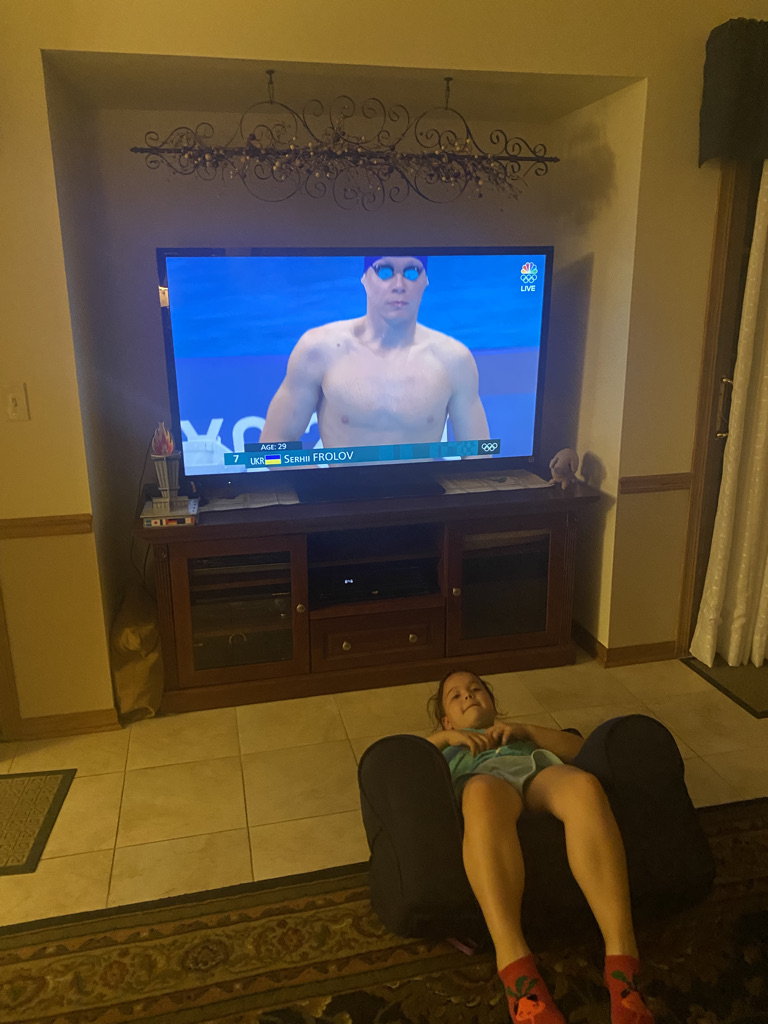
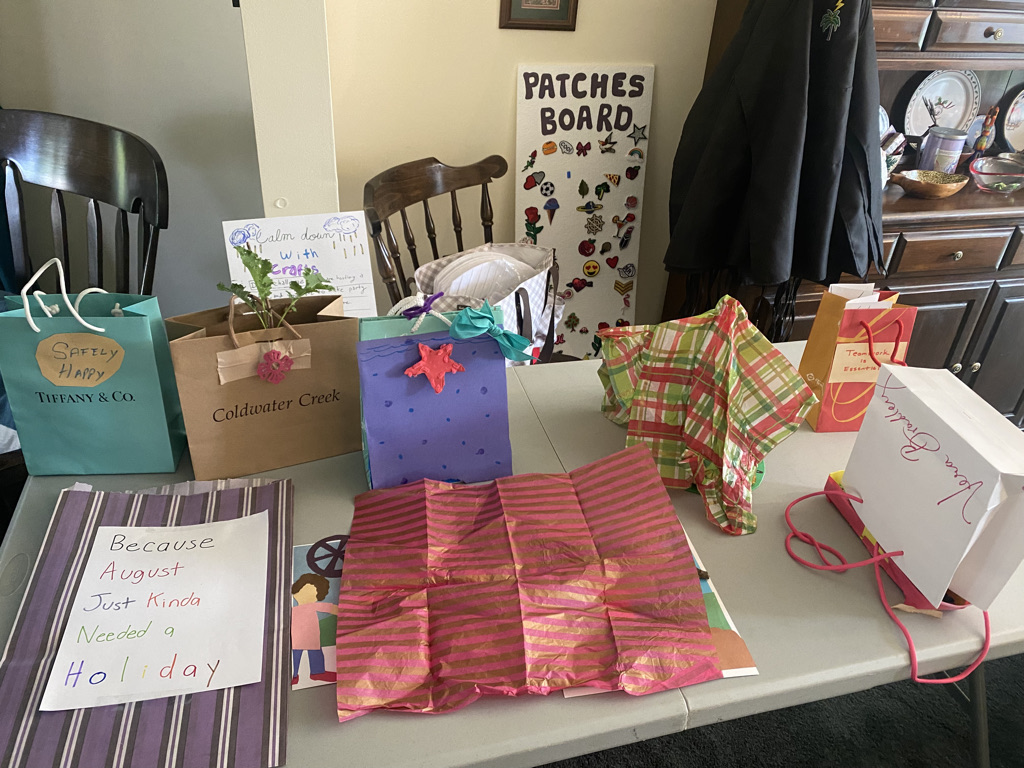
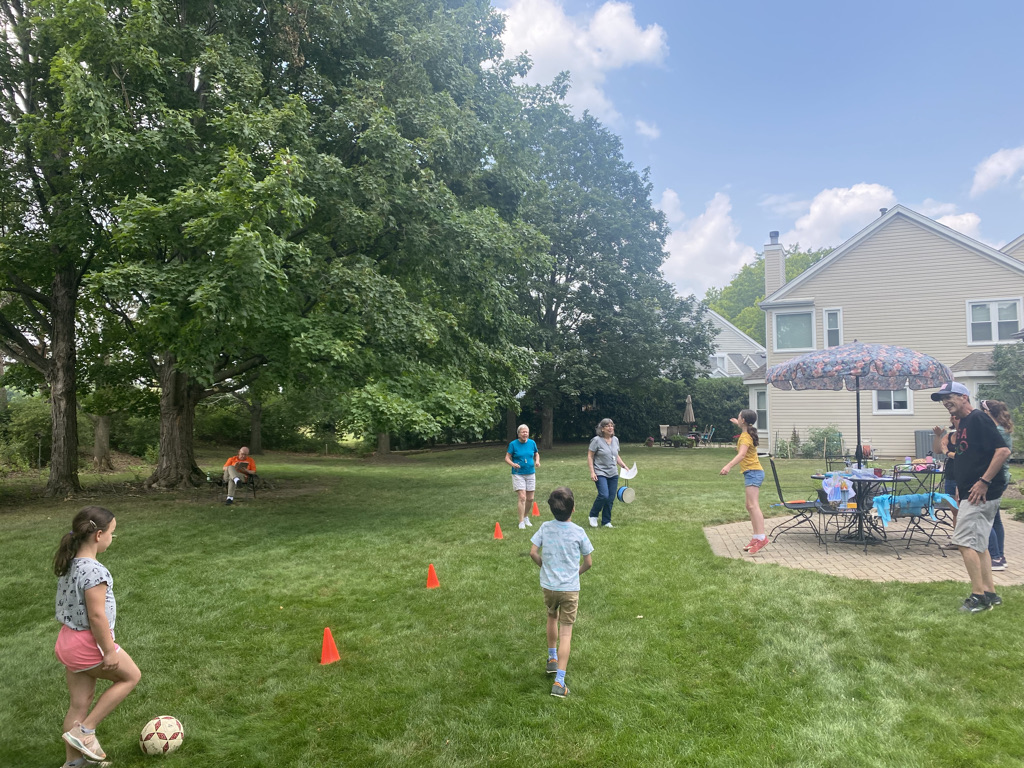
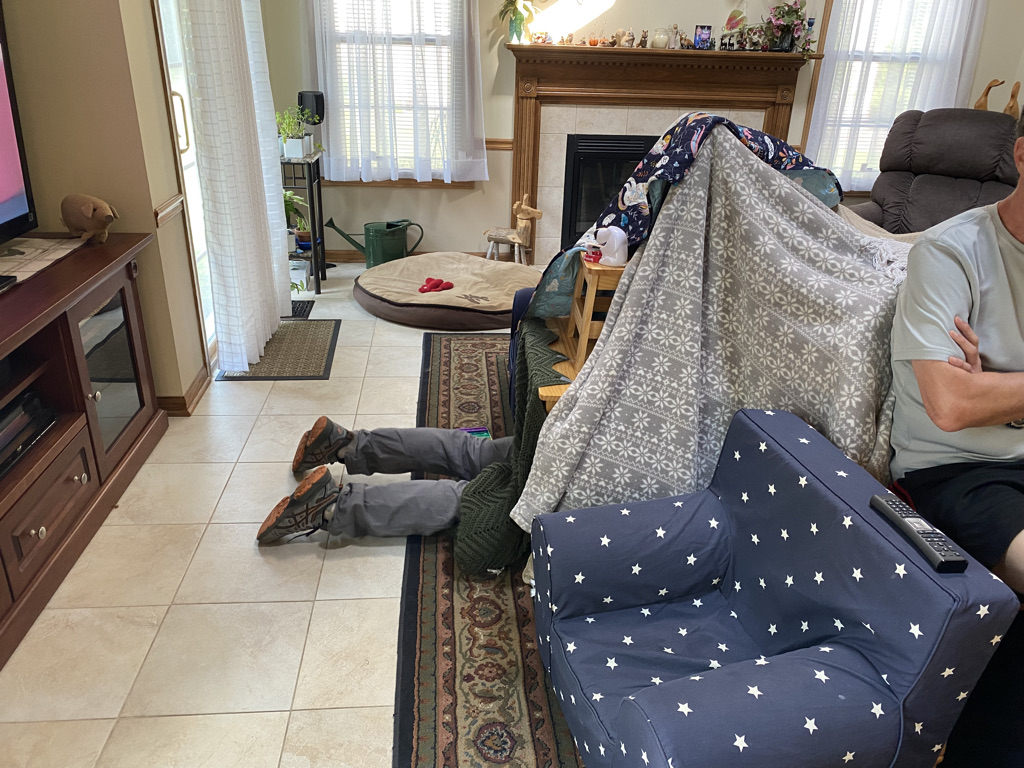
It was for a family reunion where we barely even left the house. Most of what we did was playing games with the children, watch the olympics and do things like arts and crafts.

Both of these trips were a chance to laugh. They were a time to be funny, goofy, creative and social. They were times to interact with the world, the real world, what is physically in front of us rather than something on a screen.

They also both reminded me of past chapters of life. Visiting with college friends, I felt like the version of me I was when I was in college. Interacting with children reminded me of who I was when I was a child. I could not help but engage with that childlike spirit for life.

When I returned to a then smoky Colorado sky I could not help but ponder, and wonder.

Why is it that???

  • At the age of 10, when we interact with each other, our default mode is to play a game, think of something creative, imagine, run around and engage our imagination.
  • At the age of 20, when we interact with each other, we party, we still play games, just a different kind, we goof off, watch things and talk about things like who we find attractive and what event we want to go to next.
  • Sometime after the age of 30, we start to default to conversations about what is angering and dividing us, our latest source of frustration or something mundane.

What happens? Is there something about adulthood, or “adulting” that we are doing all wrong? Can we rethink all of this? Sometimes I feel like we need to.

I’m just fortunate that this summer has provided me with plenty of opportunities to once again engage with the world in a manner that feels far more human than most of what I was doing when we were all far more fearful of the pandemic (as well as a lot of what adult life had become in the 2010s).

It won’t be long before I am off to another foreign land I’ve never been to before. Exploring is something I value quite a bit. However, in the summer of 2021, given the phase of my life I am in as well as where we are culturally, I probably needed to laugh with my friends and family more than I needed to explore. Hidden in everyone’s actions, there is always a reason.

One Year After the Fire

The wildfires of 2020 were hard to ignore. When the pandemic removed many of our day-to-day activities, everything about nature felt harder to ignore.

I suddenly found myself paying attention to things like the exact sunrise and sunset times, the cycles of the moon and all kinds of other things that were such an important part of our lives a few centuries ago. With limitations on most indoor activities, life would start and stop based on seasonal patterns and weather.

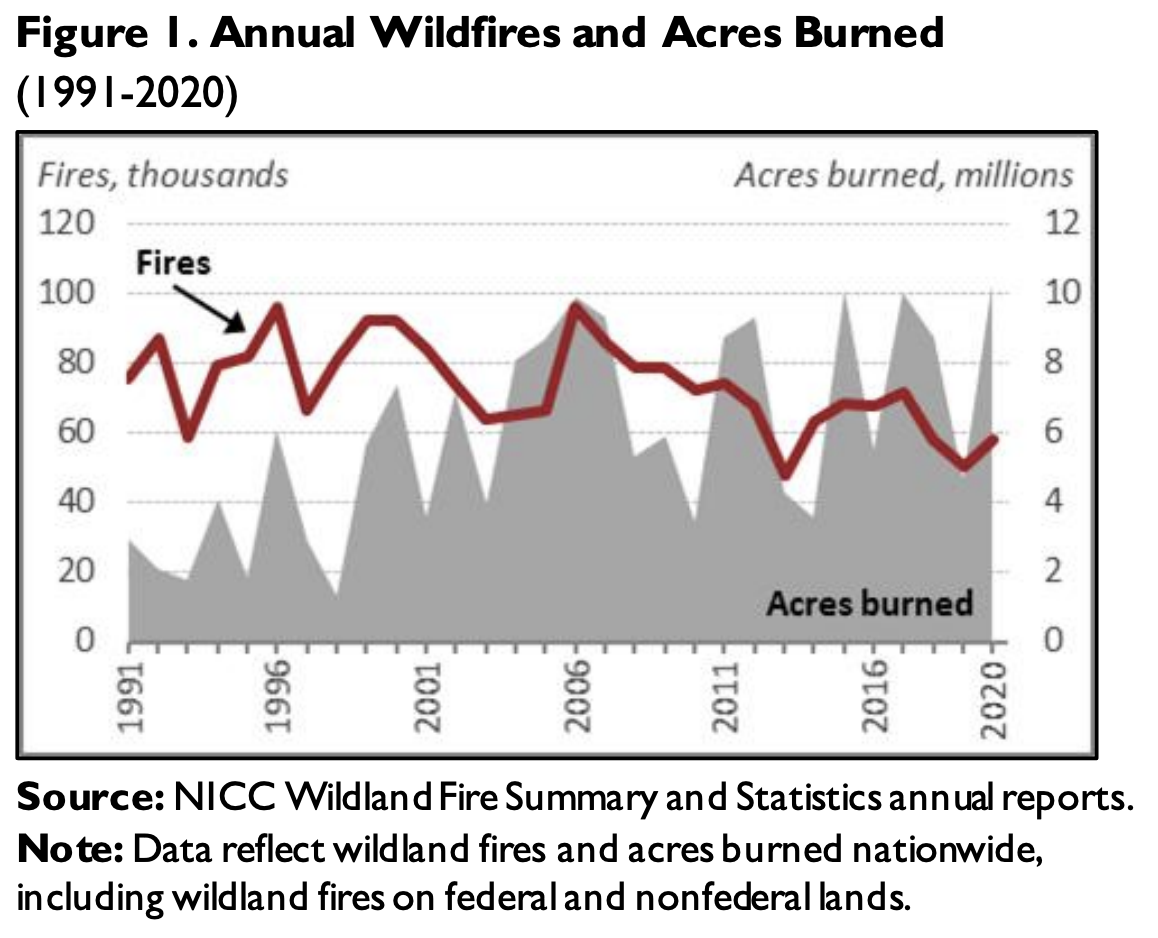
On top of that, 2020 turned out to be one of North America’s most active wildfire seasons and probably the most active one on record for the Western U.S.

Not only did the wildfires burn all over the West from California to Colorado, but at times, the smoke from some of the closer fires along with strong winds produced ominous clouds that occupied the horizon.

It was as if mother nature was making a statement that we were no longer to go about our lives ignoring her.

While fires were exceptionally strong last year, fires are a normal part of life in drier areas like Western North America. It is now scientifically accepted that surpassing wildfires was one of the worst environmental mistakes ever made, as it only lead to more dangerous fires later on. Places getting burned by a wildfire from time to time is just a part of life here. A section of forest burns. Then, it grows back.

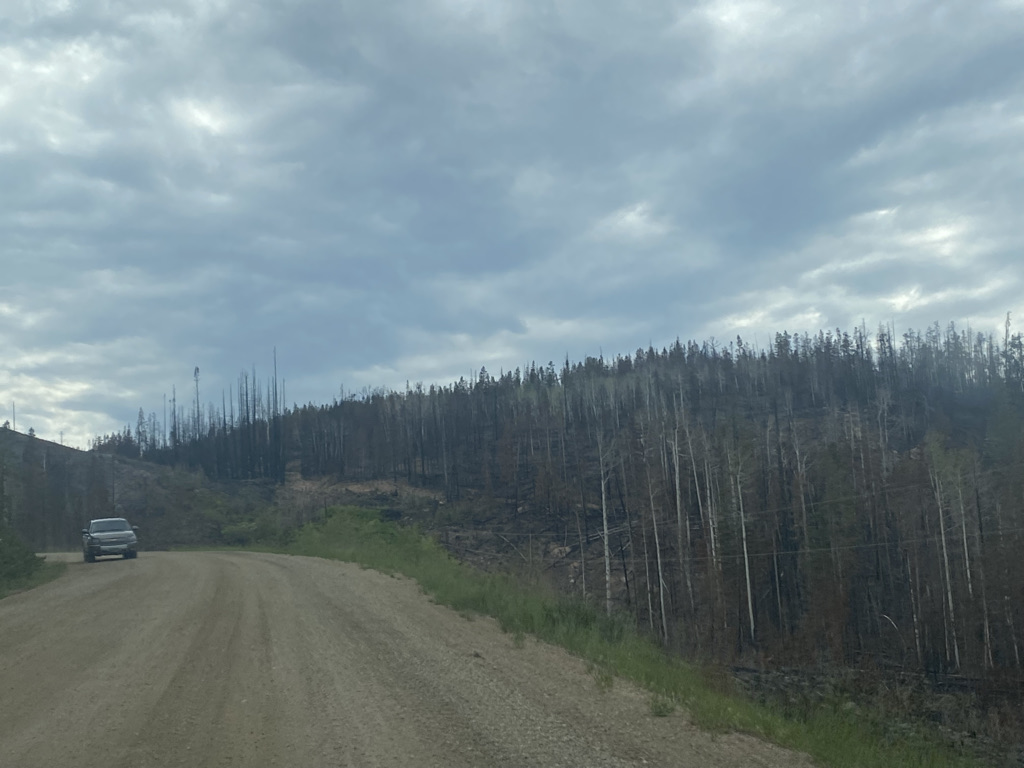
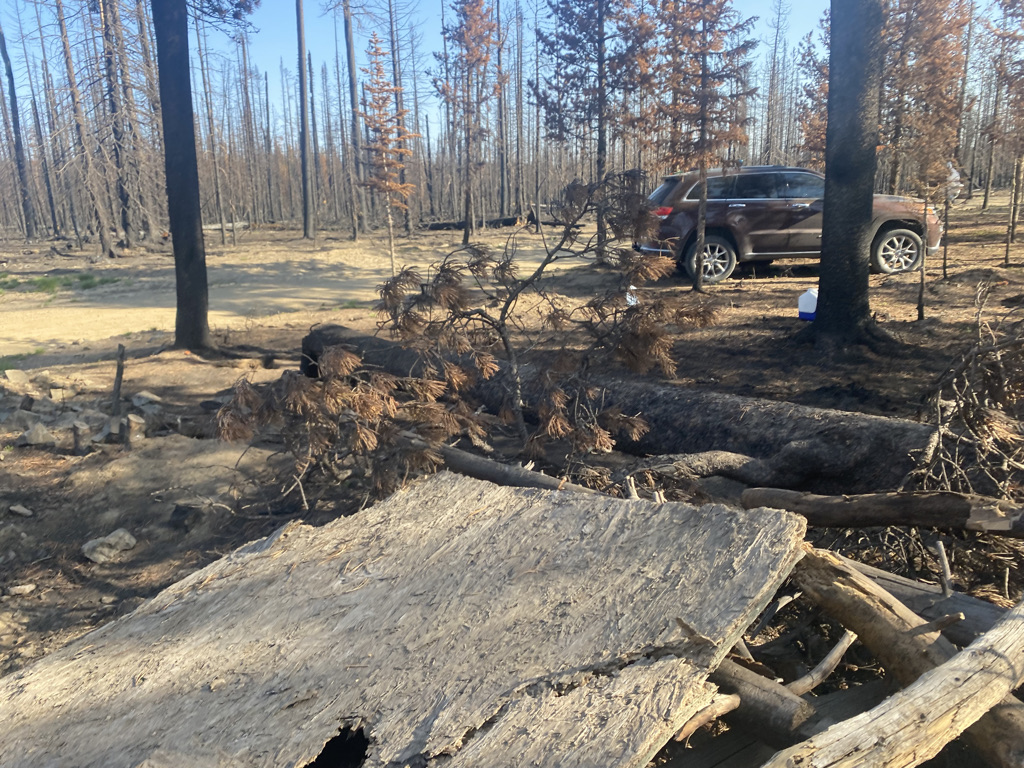
One of the worst wildfires of the 2020 season occurred in Northern Colorado and Southern Wyoming, in the Medicine Bow National Forest. With any catastrophic and disruptive event, we tend to pay attention to it while it is happening. Some, more aware and empathetic people may even pay attention to the aftermath for a little while. However, the news cycle will eventually focus on other things. This does not mean the impacts are done.

The wilderness, scorn from being scorched for over a month does not care that people desire to camp there 10 months later.

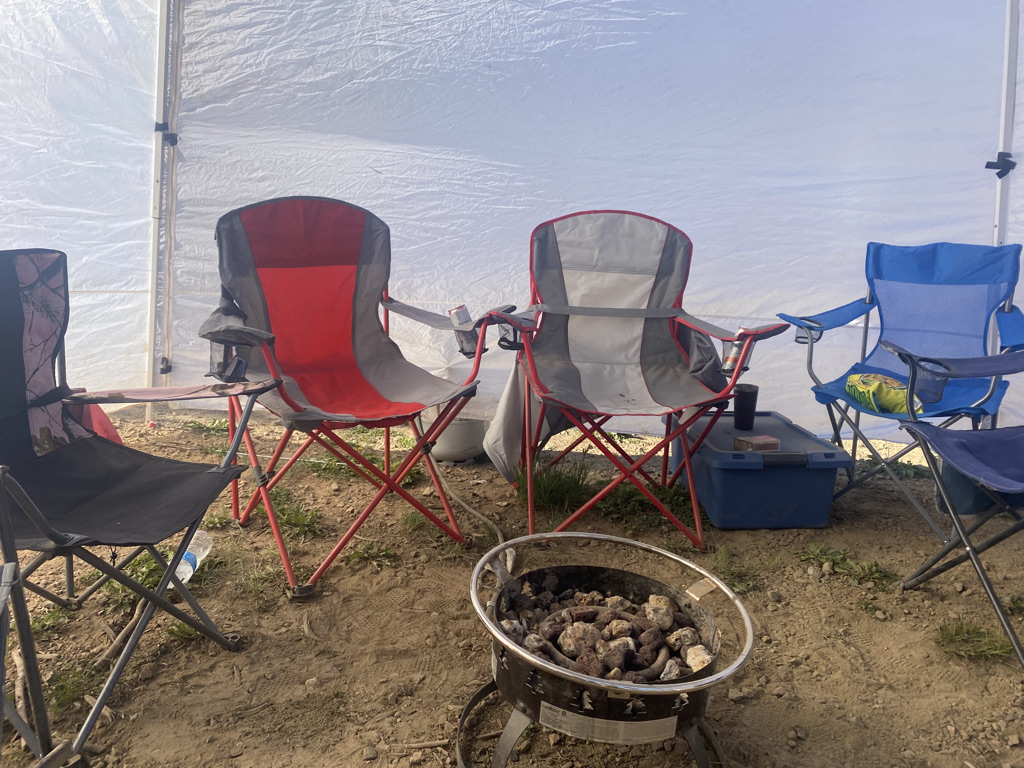
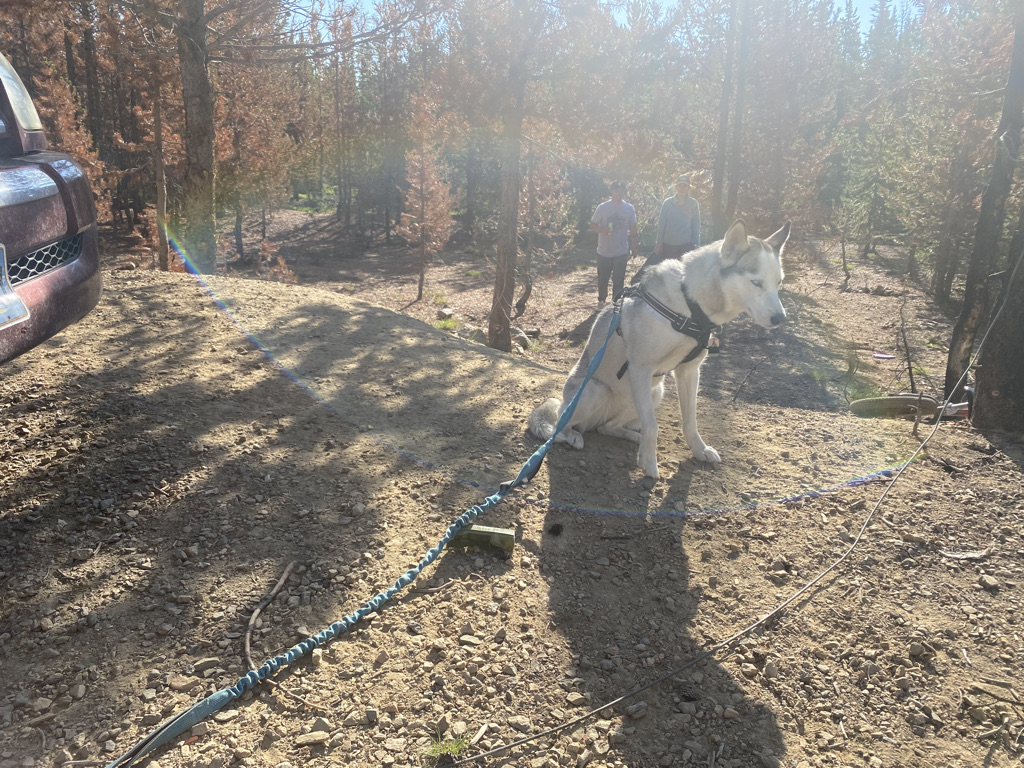
It makes for an interesting camping trip, one where it is almost impossible not to feel like one of those people that gawks at an accident while driving by. It certainly felt weird to set up a fire.

Seeing this section of the Medicine Bow National Forest still scorched reminded me of almost anyone who goes through something in life. It’s what happens after someone loses a loved one, gets divorced, has a major accident, loses a job or suffers some other major trauma or setback. Months, and often years later, they are not the same. Much like the Medicine Bow National Forest in July 2021, they are still dealing with the aftermath.

Seeing the forest, I can’t help but think about those I know who have been through and are going through a process like this one. One could argue that with the continuing impacts of COVID-19, we are all going through something of this nature. How everything will turn out seems to be an area of ongoing debate with major cultural significance for current and future events.

Do events like these make us stronger or weaker? Lately, it feels as if a lot of our policies are based around the idea that that which doesn’t kill us actually makes us weaker. Many of us aim to avoid all things that make us even the least bit uncomfortable. Some argue that we have even coded overprotective parenting into law. Based on the idea that words can hurt us, colleges have rescinded speaking invitations to controversial speakers and punished others for saying things that make people uncomfortable. Behind all these laws and actions is the belief that events far less catastrophic than an accident or the death of a loved one will make people weaker.

On the other side, there is still that age-old statement, “that which doesn’t kill me can only make me stronger.” In contrast to those advocating overprotective parenting and limitations on free speech are those who describe humans as “anti-fragile“. They assert that periodic exposure to distress, discomfort and setbacks causes us to develop resilience and become better prepared for future challenges. Some even worry that when we deny our children exposure to such things they become ill equipped to handle the stress of normal adult life (see The Coddling of the American Mind and iGen).

Few things are black and white. When I think of how people turn out in the long-term after painful events it varies quite a bit. Some come back stronger and better people. However, some are scarred for life and never truly recover. It reminds me of COVID or any other disease. We administer vaccines, which expose us to small doses of a disease to prepare us for the “real thing.” However, some are too fragile to get vaccines. Does that which does not kill us make us stronger or weaker? It depends on how severe the shock is and how strong the person is to begin with. To build resilience we must push ourselves on a regular basis, regularly expanding the realm of what we can tolerate.

Ride the Rockies Day 6: Million Dollar Highway

If I can conquer this mountain in front of me, I can conquer all the other “mountains” life has thrown at me.

There is a lot more I need to do to get my life fully aligned with who I truly am and reach my full potential. Much of it involves a combination of making mindset adjustments, engaging my creativity, hard work and leaning into uncomfortable situations. Some of the endeavors I have determined I must undertake are, like this ride, quite intimidating.

My final day of Ride the Rockies started in Ouray, at an elevation of 7,800 ft. (2375m). Highway 550, southbound from Ouray starts climbing right away!

An overlook of Ouray, CO

It also didn’t take long to start seeing why this is one of the most iconic roads to bike on. Only three miles outside of town, the road passes right by Bear Creek Falls.

Over thirteen miles, we climbed from Ouray up Red Mountain Pass, just over 11,000 feet (3350 m) in elevation.

The climb took a little over two hours.

Reaching the top of this mountain was quite emotional. This was the highest point of this extremely challenging ride. I am not a professional cyclist, nor am I an aspiring to be one. My goal was simply to complete this ride without having to use the van support.

This hill was so intense that while pedaling uphill I did not really think about much else. It is at the top, when the climb has been completed that most people realize what they had just accomplished. I realized that had conquered this mountain and that I was indeed going to make it, achieve my overall goal for the ride. The rest of the ride would feel kind of like a victory lap. I witnessed other riders, likely with similar goals and anxieties as mine, hugging at the top of Red Mountain Pass.

It was an incredibly emotional experience. I felt like if I could conquer this mountain, I could conquer the other metaphoric “mountains” awaiting me in life. Suddenly, so much more in life felt attainable. The challenges I face can be overcome. After all, the main thing I need to do is work hard and be okay with being uncomfortable. That is kind of exactly what challenging long distance bike rides are. They are hard work and they are uncomfortable, albeit primarily in the physical domain.

We descended into Silverton, a town with an extremely old west type of feel.

After Silverton, there were two more climbs, one up Molas Pass.

And a second one up Coal Bank Pass.

Both ascents were significantly less challenging than the previous ones, climbs of 1500 ft. (450 m) and 950 ft. (300 m) respectively.

With the ascents and descents, the entire middle section of this ride took place at elevations exceeding 9,000 ft. (2750 m). It was surrounded by the best of what the San Juan Mountains have to offer.

The descents were enjoyable as well. I got to about the highest speeds I am willing to go on a bicycle. There is something that feels truly alive about coasting downhill on a bicycle while surrounded by wide open spaces, peaks above tree line, forests and alpine lakes!

Even on events like these it is hard to get too disconnected from what is going on in the world. People will likely not remember this, with our active news cycle and short attention spans, but one of the new stories of June 2021 was a lumber shortage, which was delaying the construction of new homes and connected with the shortage of real estate in the market. Over the course of the day, I encountered about a dozen of these trucks transporting lumber along the Million Dollar Highway.

The final segment was mostly downhill and kind of stretched on a little bit. I encountered a little bit of rain, the first and only time I would on this ride.

Both the top of Red Mountain Pass and actually reaching the finish line felt amazing but in a different way.

The Ride the Rockies finish line in Durango, CO

I can’t decide which felt sweater. However, the entire experience of Ride the Rockies 2021 has provided me with a framework by which to take on every challenge life will present going forward. Know where you want to go, find the best path, lean into discomfort and put in the work.

Ride the Rockies Day 5: The Optional Day Around Ridgeway

Day 5 was optional, and when I first signed up for this ride, I was convinced I was going to take the day off. The ride in its entirety is very challenging. The final day is possibly the most challenging and the most iconic of the ride, along Million Dollar Highway from Ridgeway to Durango. It wouldn’t be a bad idea to get a day off and feel well rested. Plenty of people did chose to rest that day, as evidenced by conversations I had with other participants and the number of people I saw out at the brewery the previous evening.

When it came time to decide my instinct told me not to take the full day off. I decided to ride on day 5, but to skip the part of the ride I had already ridden on day 4, up Dallas Divide.

I also determined that, since I was staying in Ouray, I could make day 6 a little easier by riding the first 12 miles of that challenging 85 mile day after looping back to Ridgeway. I’d still get to see all the places included in the ride.

By the fifth day I began to notice…

  1. Regardless of the circumstance I always woke up around 5:45. On a “normal” weekday I sometimes struggle to get myself out of bed before 7! This was likely because I was getting exercise and sunlight, but could have also been related to the anticipation of each day’s ride.
  2. I also got in the habit of watching the morning news in the various hotel rooms I stayed in.

Since I was busy most days cycling, with my hands on my handlebars, I was not checking the news on my phone (or a computer) throughout the day. Instead, I watched the news for half an hour or so every morning as I prepared for the day’s ride.

I realized that, with respect to how we consume the news, I had essentially reverted to the way things were three decades ago, when it was common to watch the news in the morning or the evening, but our exposure to the news was confined only to that half hour or hour each day. I determined that I liked it better. 99% of all news stories are not emergencies. They can wait until the end of the day or the following morning.

The ride started on a trail that connected Ridgeway with Ridgeway State Park, a place where a lot of people take part in water sports.

The 17-mile descent went quite fast and before I knew it I was in the tiny town of Colona.

The second half of the loop pretty much embodied what Ride the Rockies is really all about. It was a challenging 2,000 foot (600 m) climb on a dirt road, but, the challenge ended up being worth it!

I spent some time in Ridgeway before tackling the final 12 miles of my day.

It was good to have a nice meal and then relax by the pool for a while.

I was concerned about the heat, which was starting to build in Ridgeway, but luckily was able to take advantage of some clouds that had built in the middle of the afternoon to take on the ride from Ridgeway to Ouray.

From the standpoint of off-roading, this was quite possibly the most challenging part of the ride. Here, highway 550 is fairly heavily trafficked and has no shoulder. The official ride follows parallel gravel roads that were a bit tough for me on the cyclocross bike I ride.

I did not love all these rocks

In Ouray, I got more time to relax, as the total ride for the day was still less than 50 miles.

I soaked my legs in the cold water of the Uncompaghre River.

And had a nice meal at the Outlaw Saloon, where I got to meet the man who plays all those old west sounding tunes on the piano.

This piano player makes a living playing old west style tunes at bars in both Ouray and Silverton (both towns with an old west vibe). I loved hearing his story!

Sometimes it feels like everywhere I go I see people that feel trapped in jobs they don’t like and are not passionate about. Some combination of fear and the need for security keeps them there. For the unfortunate ones who end up working long hours and enduring a lot of stress, it does not feel like much of a life, regardless of how much money they are making. Whenever I hear about people who decided to do what they love to do and actually find a way to make it work, I feel happy and encouraged.

The day ended with a gaze to the north and a reminder of the challenge that lied ahead on the following day.

Just looking around town in all directions, it feels like the hardest place in the world to bike. There is no easy way in or out!

Ride the Rockies Day 4: Telluride to Ridgeway

It was after the challenging third day of the ride that my legs started to feel like bricks. On one hand, I felt somewhat relieved that the day 4 ride was only 40 miles with only one climb, up Dallas Divide. However, as I ate my breakfast, casually in Telluride (as the shorter ride meant I was in no hurry), my legs certainly felt like they would rather just sit.

It always feels strange to me to begin a day with a downhill. After the four mile spur out of Telluride, the highway turned downhill for nearly 20 miles.

A good portion of the ride traversed through areas with red rocks, something that always seems to appear and disappear somewhat haphazardly whenever traveling around western North America.

Turning up highway 62 meant, once again, pedaling uphill, exactly the opposite of what my body had been desiring to do.

As is typically the case on multi-day trips, after a few miles of pedaling, I felt way better than I thought I would. That heavy brick-like feeling in my legs kind of melted away as my body adjusted to the fact that it was once again being asked to pedal up a hill.

The ride to the top of Dallas Divide turned out to be more than worth it.

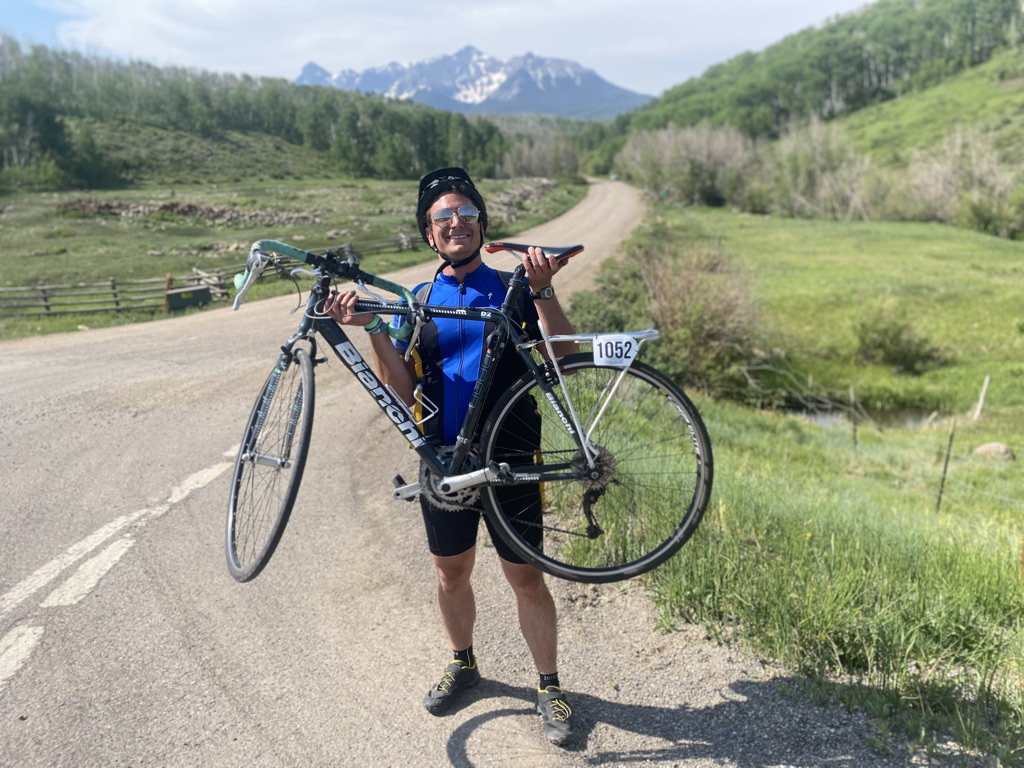
For some reason, it was on this day I also decided to become obsessed with the tradition of holding up my bicycle.

This also turned out to be one of the most scenic parts of the ride – a reward for the multi-day effort.

The instinct to give my body a rest when my legs felt like bricks could not have been more wrong! Luckily, I knew all along not to think about things from the narrow, or short-term, perspective of only considering the exhaustion I was feeling at the time. Sometimes what we think we want in the moment is not the path to get us to what we really want.

The instinct to pursue the momentary, fleeting desire seems to be heavily impacting some areas of our culture today. Many people at some point in their lives have had the unfortunate experiencing of feeling like part of an “out group”, whether it be not fitting in with the popular group in school or feeling like some part of their identity is rejected by mainstream societal standards. The answer to all of these situations is for each person to assert their individuality. Then, as a whole, we become more comfortable with what is different and more accepting of people who look, act, and orient their lives in a manner that is not what we are accustomed to seeing.

Like the instinct to stop riding after an exhausting day, feeling left out leads to the instinct to satisfy the immediate need to feel validation and belonging. This often leads people to look for a new group identity rather than assert their individual one. As would have been the case had I gave into my immediate instinct and skipped this ride, focusing on the immediate needs filled by establishing a new group identity does not lead to the most favorable outcome. It either leads to just switching who the “in” and “out” groups are (not getting to the root of the problem) or more mental energy spent lamenting about being in the “out” group.

For reasons I do not understand, this is the portion of the ride where things started to get emotional.

I arrived at the second, and final, aid station of the day, with pretty much the same mountain scenery in the background. A van was playing music, first Rocky Mountain High, then more recent songs like Party in the USA came on. These particular songs probably would not have made me emotional had it not been for the fact that I had not listened to too much music on the first few days of the ride.

The thoughts about the current state of the world and how to make the best choices for long-term satisfaction suddenly shifted to more spiritual thoughts. Phrases including “love in infinite” and “there is enough compassion for everyone” popped into my head and lingered. Descending 2,000 feet (600 m) from Dallas Divide to Ridgeway I felt prepared to embrace every other human being I encountered, regardless of their flaws.

It was the easiest day of the trip, but the consequence of a mostly downhill day is a return to the heat.

With the campgrounds in a hot dusty fairgrounds where some participants needed to go down to the river to get away from their overheated tents, I was more than happy to have opted to pay for the hotel package, even if it meant taking a shuttle to Ouray.

Ride the Rockies Day 3: Cortez to Telluride

When I signed up for this ride, it was the third and the sixth (and last) days that intimidated me. The first two days were both about 70 miles (115 km) with about 3,600 feet (1100 m) of climbing. These would not be considered “easy” or even “moderate” cycling days by any stretch of the imagination. However, they still pale in comparison to these more challenging days. The official ride for day 3 was 102 miles (164 km) with 6,500 feet (2 km) of climbing. The first 62 miles (100 km) were a fairly steady climb from Cortez to the top of Lizard Head Pass!

The first 20 miles, from Cortez to a small town called Dolores were pretty similiar to the first two days.

It was after passing through Dolores that, for the first time in this ride I truly felt like I was in the mountains. The ride followed up the Dolores River into a canyon that felt far more reminiscent of my many other Rocky Mountain experiences.

The further I went, the more amazing the scene in front of me got!

I was genuinely in a canyon, once again encountering random buildings and imagining what life would be like living in a house like this.

Only this time, I was not focused on the fact that these people lived so far from the nearest town. I was focused on the scenery. Does a person who was born in a place like this understand how spectacular the place the live is? Or is it just all they know? Or, do they think the grass is greener on the other side and stare at images of skyscrapers and other big buildings in their spare time?

A little over halfway through the climb, along with many of the other ride participants, I stopped to get Ice Cream.

This Priest Gulch Campground quite possibly gave me the best deal on ice cream I could imagine. For $2.50 I got a vanilla swirl that went pretty much as high as any vanilla swirl could go. I was almost worried I had consumed too much!

With the level of challenge on a day like this, it is hard not to pay attention to the little things that may make the ride easier or harder, even if they occur on a very small scale. Would this ride have been more or less challenging had I done it alone? On one hand, when riding with a group of people, there is often the opportunity to “draft”. This is when you ride behind someone going the same speed as you, letting them push against the wind. It makes the ride easier for those in the back of the pack. This is how cycling teams work.

However, on this day, there were a few incidences where one of the teams would be passing by me on the left while I quickly caught up to a slower or stopping rider in front of me. On several occasions I had to hit the breaks, which is always heartbreaking on days that feel like they will require nearly all the energy you have.

However, I would still say, overall, the big group is an advantage.

It was also after this ice cream stop that the tall peaks began to appear on the horizon.

After two days of hot lower elevation riding, I felt like I had entered a different ecosystem.

Two things I was not impressed with on this ride were…

  1. Serendipity Catering: The morning of the third and first extremely challenging day of the ride, I arrived at headquarters for breakfast at 5:45 A.M. only to find out that the catering service the ride had hired had essentially flaked on providing breakfast that morning. At the time, the organizers were unsure if they would return. As far as I knew, they didn’t return and I still do not know what happened.
  2. The town of Rico: I arrived at the aid station in Rico a little bit before noon, 50 miles into the ride. I had hoped to grab a quick bite to eat at one of the local shops only to be told the power was out in the entire town. I guess this is one town I will never explore.
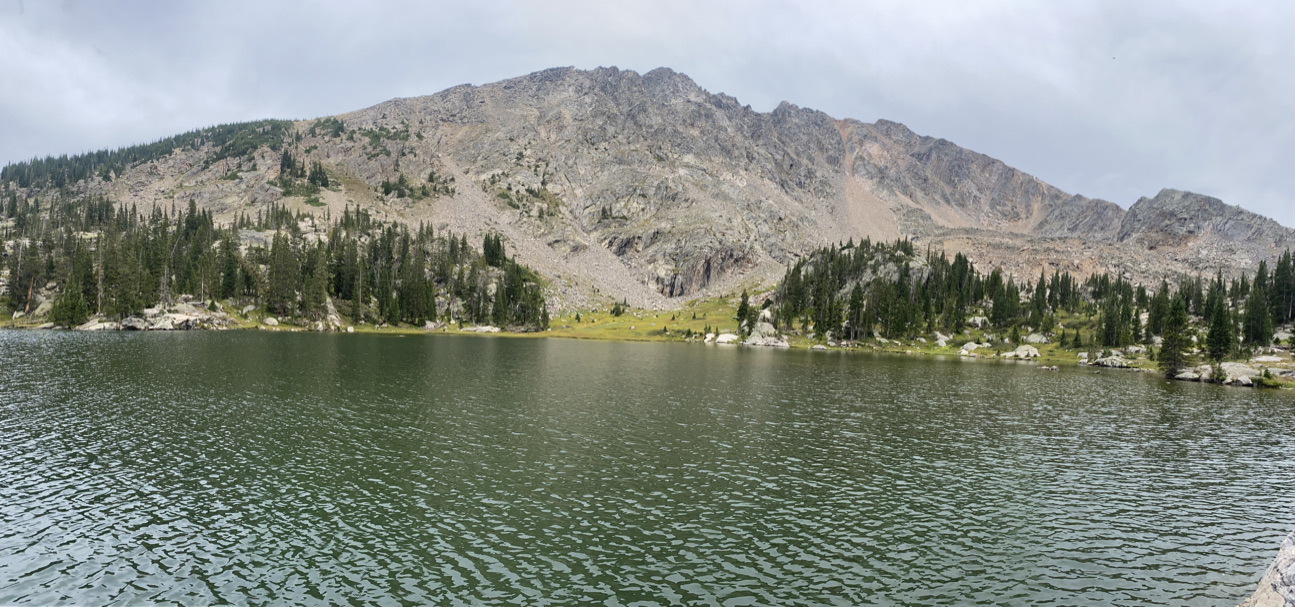
The final ten miles of climbing were kind of a mix between flatter sections and sections that were really intense.
But the top of Lizard Head Pass was amazing!!!

I had worked hard all morning, pedaling from 6,100 feet (1.85 km) to 10,200 feet (3.1 km) in elevation. That hard work made this unbelievably beautiful setting in front of me so much more sweet!

As an added bonus, I finally got to eat lunch, although I did have to wait in a pretty lengthy line to get it.

I did not follow the official route all the way into Norwood. Instead, I rode right into Telluride to my hotel. This ride started with a descent from the top of Lizard Head Pass.

Required another climb.

And then a descent into town.

Despite having lived in Colorado for nearly nine years, this was my first time in Telluride, a town with a unique flavor.

Many other riders had done more miles and gone faster than me. If I had to guess, I would say 70-75% of the participants had done “better” than me that day. But, for many, rides like these are not about competing against each other, they are about the experience. At the end of the day, I was still quite happy having completed the first of two extremely intimidating days. This ride is special. Being barely in the third quartile of ride participants here still likely puts me in the top 2-3% of the population as a whole when it comes to cycling. But, for me, it is not about feeling better than anyone else. It is about getting to the top of that mountain pass under my own power and experiencing the world from the seat of a bicycle rather than behind the glass of an automobile or airplane.