Category Archives: Western US

Fort Collins; Another Vibrant Colorado City

IMG_1629 IMG_1630

I have never met anyone that told me they hated Fort Collins.  Not everyone knows a lot about the town.  But of the people who have been there or lived there, I have yet to hear a single overwhelmingly negative impression, the way I have about so many other towns.

Colorado is a state that is very divided both politically and culturally.  The political divide is close to even, thus Colorado’s status as a “swing state”.  Representing the extremes of the spectrum, Boulder and Colorado Springs are both very polarizing.  Many people hate one or both of these towns simply due to what they represent politically.  Not only do Fort Collins and Laramier County sit generally near the middle of the spectrum politically, but they are also not known for being particularly politically active the way Boulder and Colorado Springs are.

Other towns are polarizing or controversial for other reasons.  The casino town of Blackhawk not only leaves a bad impression on those that do not approve of gambling, but also ignited the ire of the bicycling community when it chose to ban bicycles from the entire town in 2010 (this ban was overturned by the State Supreme Court).  I have to admit that as much as I love Vail and Vail ski resort, I am quite disturbed by the town’s decision to close down the only affordable hotel in town to make way for a new extended stay hotel, which will most definitely be fancier and pricier.  Large towns like New York are loved by many, but also hated by many who resent the level of stress they cause, the amount of power they wield, and the amount of attention they receive.

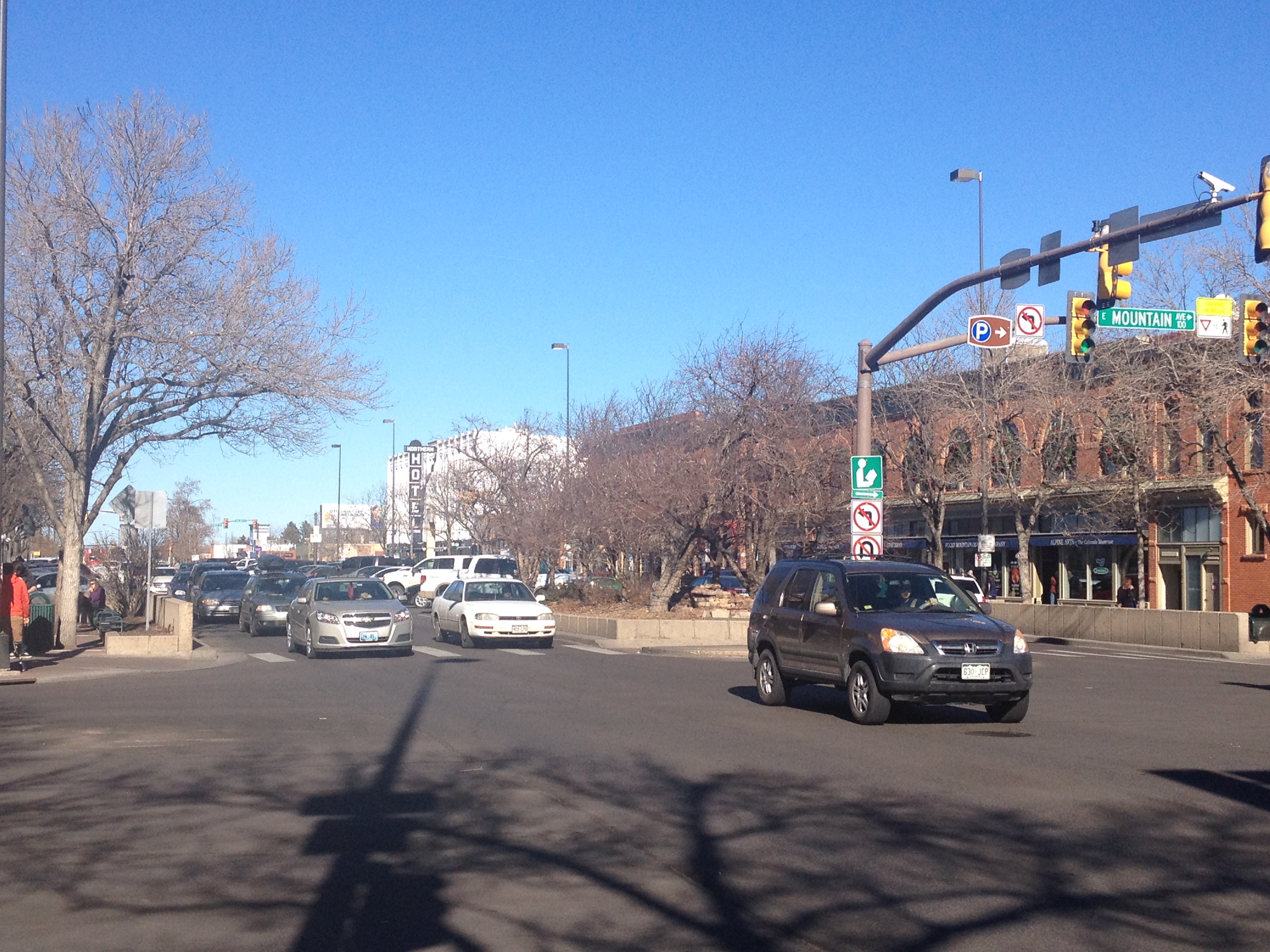
The sun shined bright and the temperatures were quite pleasant this January day.  It was the kind of day when you can really notice the character of a city.  On a cold or rainy day, it may be hard to feel the true energy of a town, as it is often subdued by such conditions.  Walking around Fort Collins’ central area today, the true energy of the city was on full display.

IMG_1632

Over the past decade or so I have become quite accustomed to living in vibrant places like this, where people can be found walking around, conversing, conducting business, and going about their days.  It feel like home, and it feels like the way our society was meant to operate.  If I were to find myself living in a town without this type of energy, it would definitely feel like something is missing.  However, that is just a personal preference.  I am sure a lot of people live satisfying, fulfilling lives in sprawled out suburbs, or even decaying towns with a lot of abandoned storefronts.  They probably do not share my addiction to the energy.  If anything, they are in a better situation than I am, as their choices of places they could live and thrive are much less limited than mine.
IMG_1634

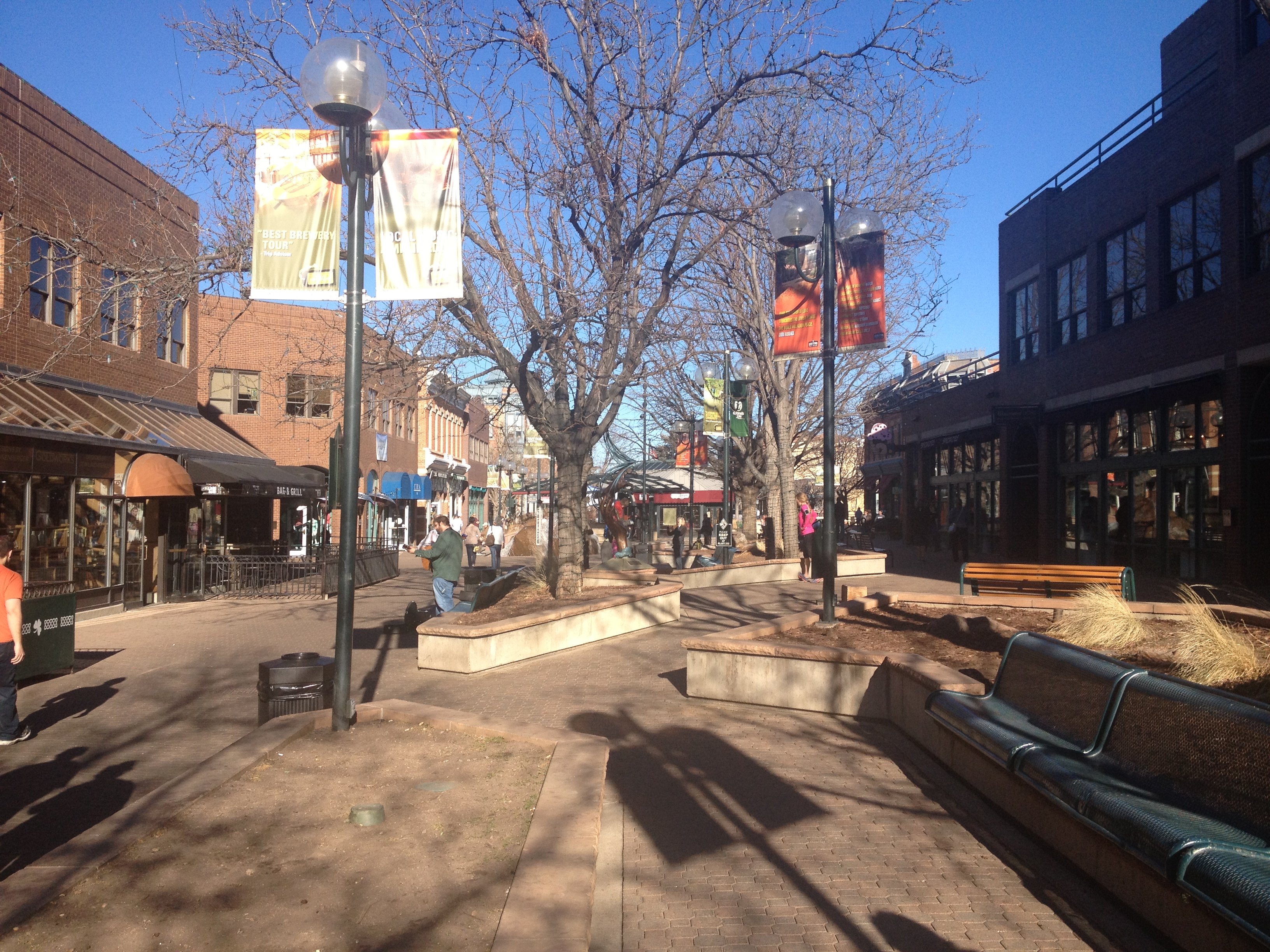
Like Boulder, Fort Collins has a pedestrian mall with a lot of random street performers, particularly on a nice day like today.   The street performances here seem more varied than the ones in the average American city.  I saw the standard guitar performer, but there is also an outdoor public piano, and many more random acts like dance routines and hula-hoppers.  This pedestrian mall, called “Old Town Fort Collins” is significantly shorter than Boulder’s Pearle Street, but is still large enough and offers enough variety for it to be considered interesting.

Walking around here made me realize what makes Fort Collins special.  Not only is it not controversial, the way many other places are, but it still manages to be interesting and unique.  In actuality, there are plenty of places that do not ignite strong negative feelings.  When was the last time anyone fumed at the arrogance of Grand Island, Nebraska?  Or the rude partisans of Peoria, Illinois?  What sets Fort Collins apart is that it is still a fun and unique place to live, while also remaining non-controversial.
IMG_1633

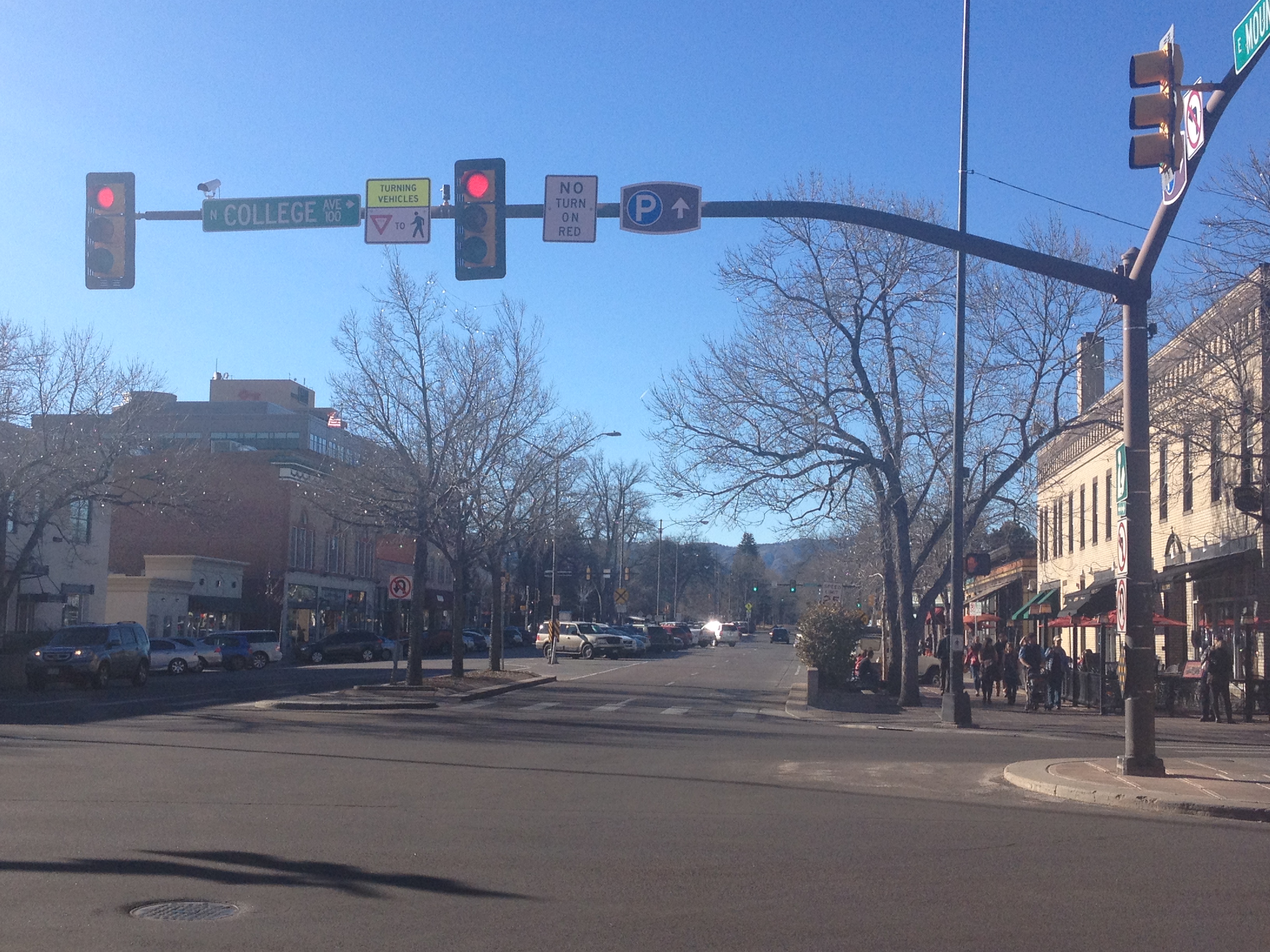
As a town along the Front Range of the Rocky Mountains, many outdoor activities can be found right outside of town, the same way such activities can be found in any of the towns that line the front range from Fort Collins south to Colorado Springs.
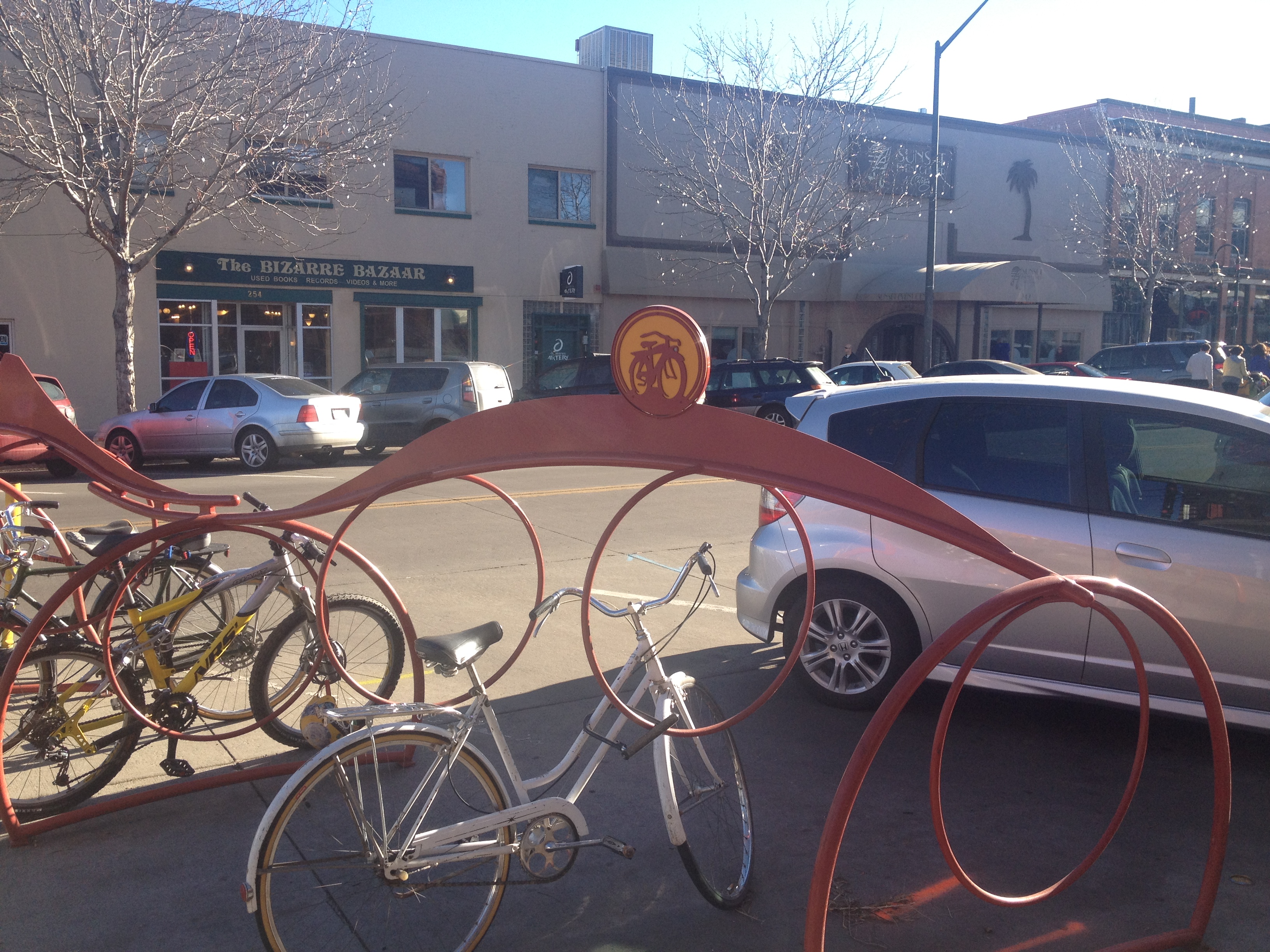
IMG_1635

Fort Collins may be best known as the headquarters of New Belgium Brewing, known for it’s signature beer fat tire.  New Belgium employs a unique business model, and has been quite successful.  At New Belgium, every employee is a part owner of the company.  The benefits and beer are great as well, and they are also known for their support of bicycling as a form of transportation.  While I did not visit New Belgium on this particular trip, the values of this company appear to be reflected throughout the town.
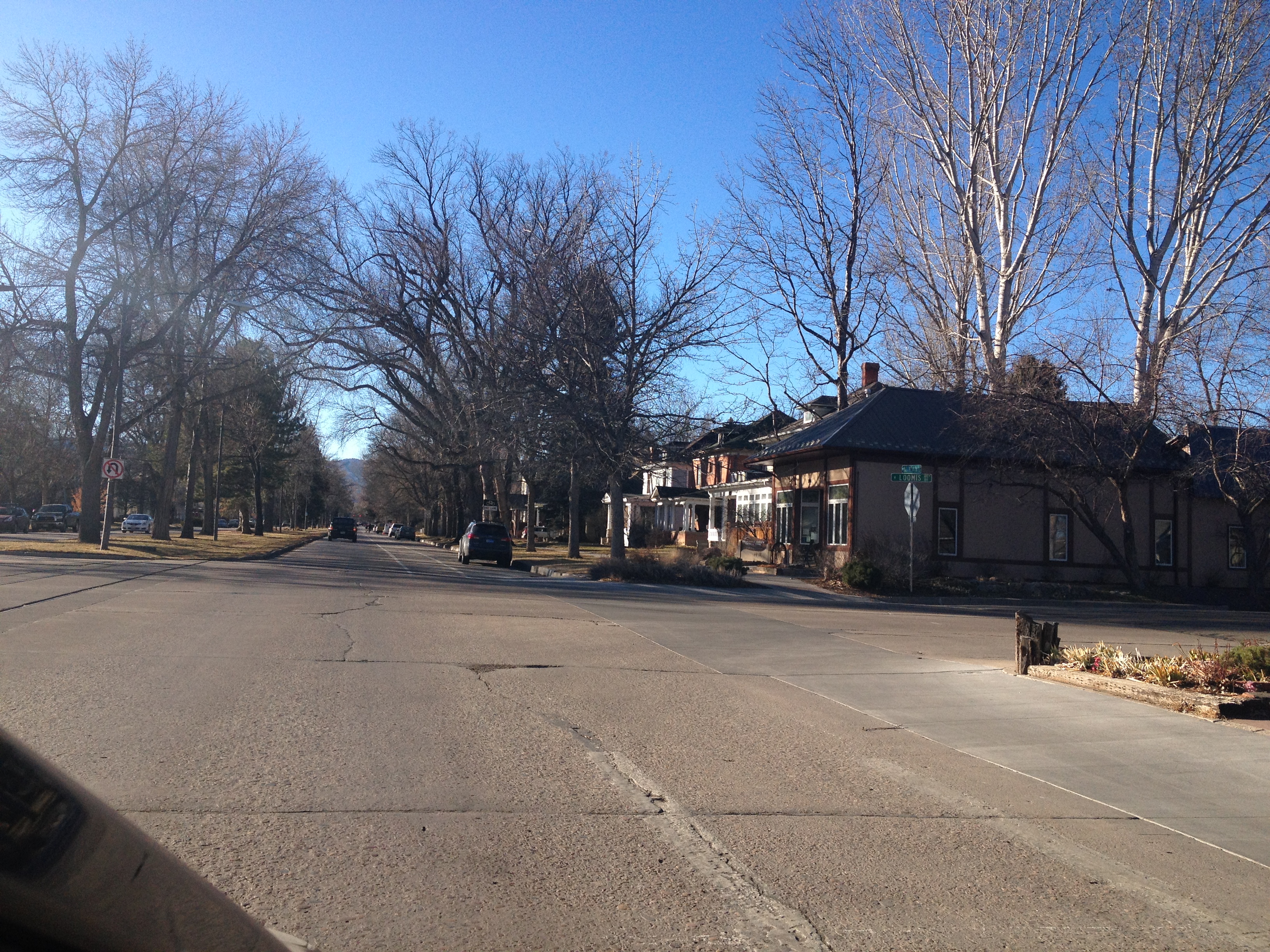
IMG_1637

Fort Collins has one of the best networks of bike lanes and trails in the United States.  Even in this well-to-do neighborhood just west of downtown, a wide bike lane can be found.

Fort Collins is the northernmost town along Colorado’s front range.  To the south is a series of population centers that include Colorado’s largest; Denver and Colorado Springs.  To the north, it is quite empty.  Fort Collins is on the edge of our society.  It manages to be an interesting and vibrant place without the controversy and/or polarization that often accompanies this.  Big enough to feel energetic, but small enough not to be overwhelming to many, Fort Collins is truly a unique place worth checking out.
Dog Sledding in the Rockies

IMG_1615

For thousands of years humans have assembled teams of dogs to transport themselves (as well as other items of significance) across the cold arctic regions of the planet.  It is a tradition that nearly all human beings are aware of.  Most have seen images or video of popular dog sled races like the Iditarod and the Yukon Quest.  While the average American probably views this tradition as a recreation activity, or a sport that takes place somewhere far away, for many cultures across North America, Russia, and Mongolia, teams of dog sleds have been, and still are, an integral part of day-to-day life.

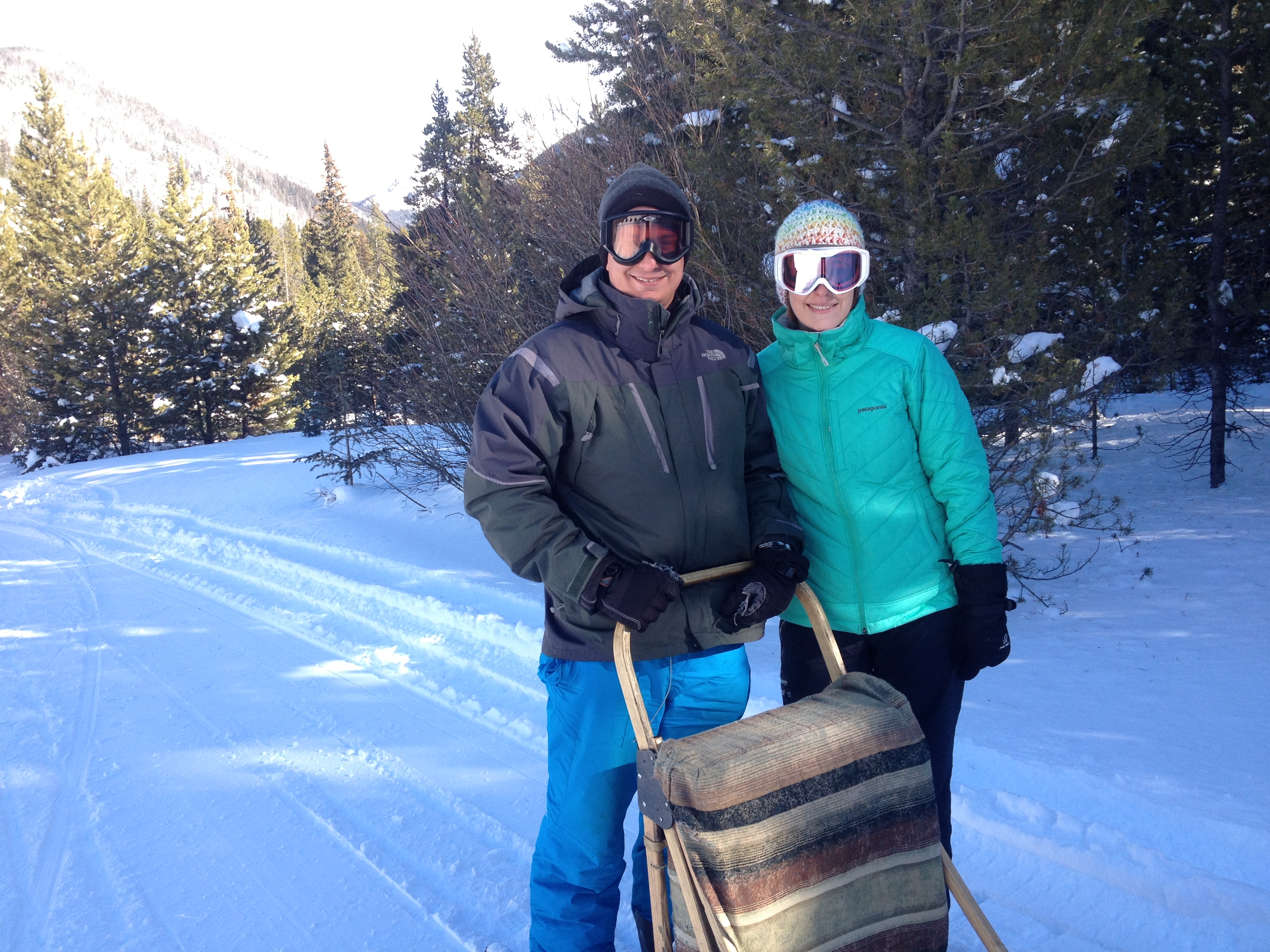
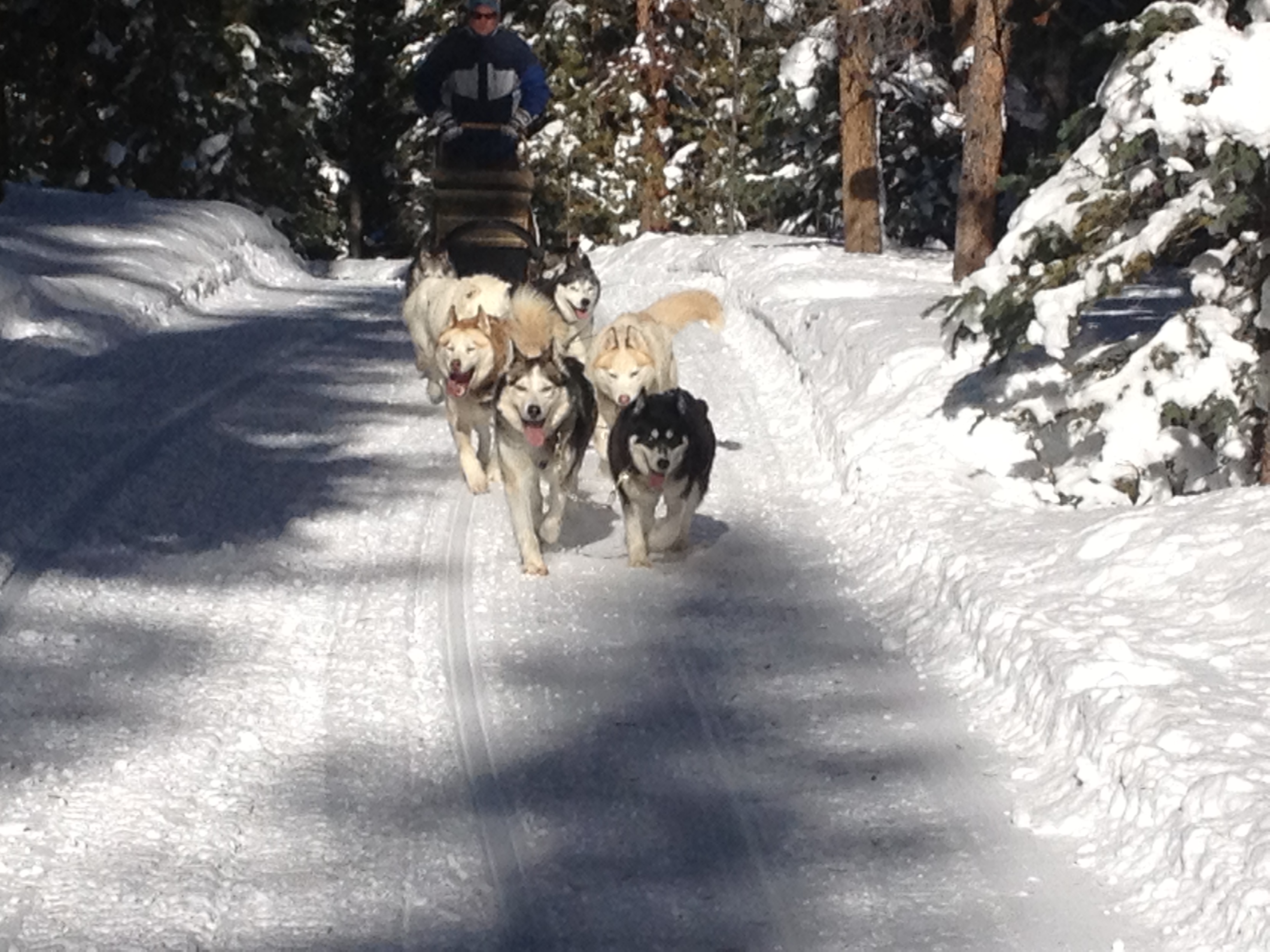
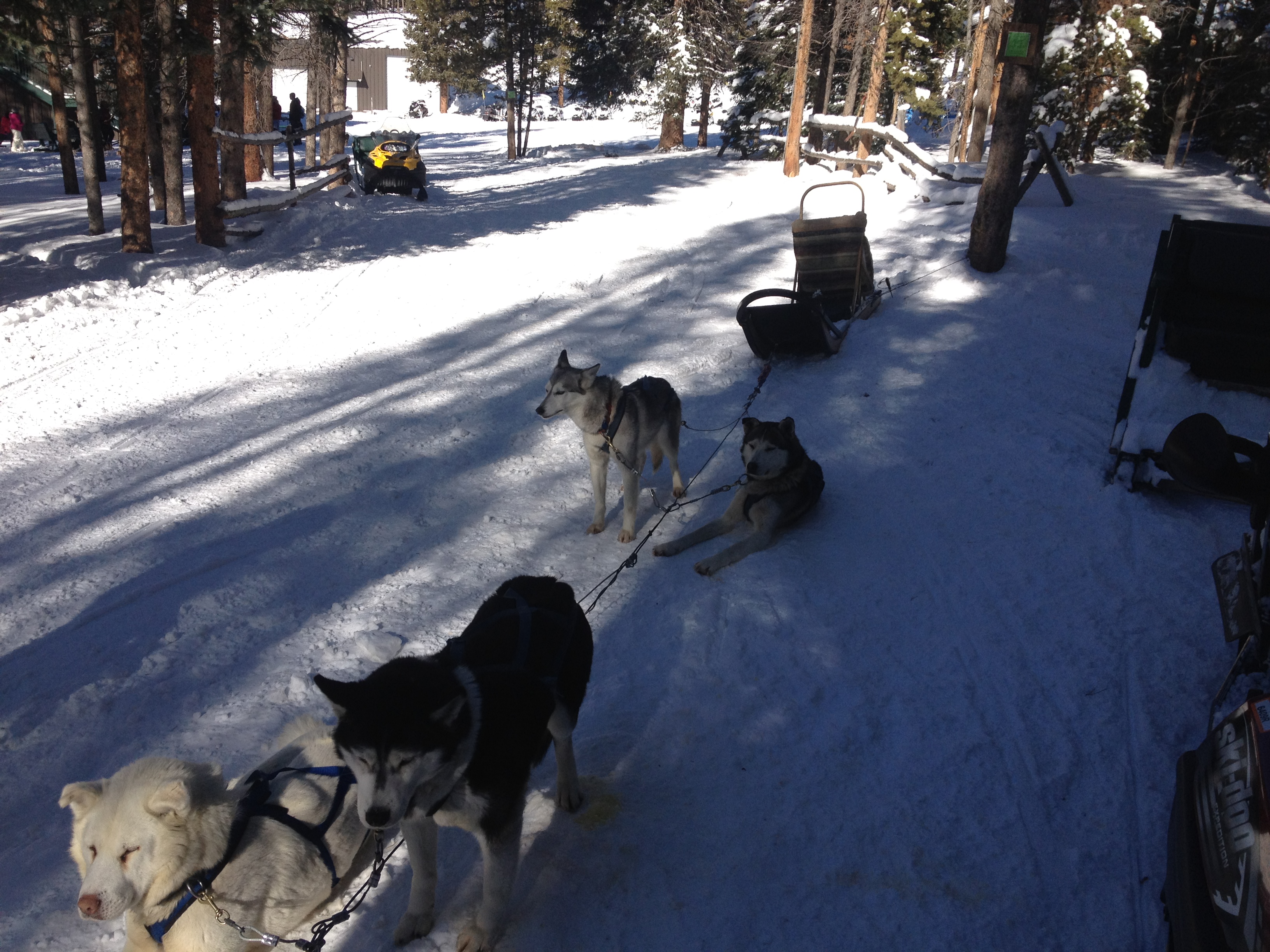
Sometimes the only way to truly understand something is to experience it for yourself.  A small taste of the dog sledding experience can be found at Good Times Adventures, just outside of Breckenridge, Colorado.   Over 150 dogs are kept here, ready to take those that wish to sample this experience on a short dog sledding voyage.  Dogs kept here get to live quite an active life, typically going on two voyages per day with customers throughout the season.  When it is time for a trip, they howl in anticipation, impatiently await the go-ahead from the tour guide, and enthusiastically begin to pull their passengers across the snow.  What an experience!

IMG_1608 IMG_1609

Going on a 60-90 minute dog sledding tour on a sunny afternoon in Breckenridge leaves plenty of additional time in the day for other activities.  As a season pass holder to Vail Resorts (a pass called the EPIC pass) that other activity is pretty obvious- skiing!  Breckenridge ski resort (part of the pass), is located less than half an hour from Good Times Adventures.  We planned our sled trip to begin at 1:15 in the afternoon, and used the morning to ski.  Morning is often the best time to ski, as snow conditions deteriorate as the day progresses (due to use) more frequently than not.  Following a series of major snow accumulations to start off 2014, snow conditions were ideal at Breckenridge ski resort today.

IMG_1601 IMG_1603

I will post more about Breckenridge ski resort, as well as the other ski resorts I ski regularly during wintertime, later.

IMG_1607

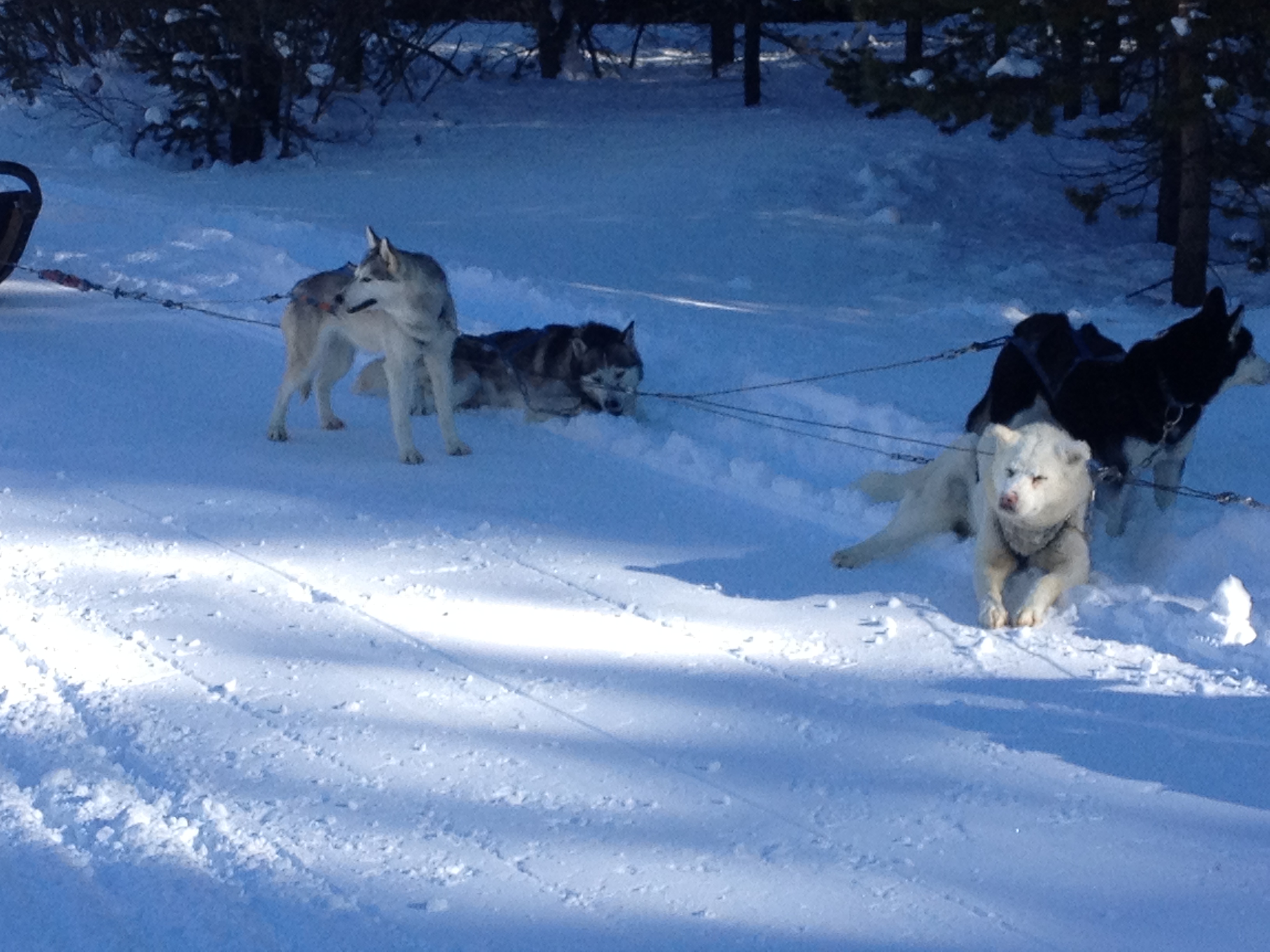
After several hours of great skiing, it was time to meet the dogs.  The eight-dog team was made up of huskies.  Across the north, huskies are traditionally used to transport lighter amounts of cargo at a faster speed.  This, of course, includes people.  For heavier cargo, the Alaskan Malamute is often used.  Essentially, a team of huskies would be analogous to a car in today’s world, while a team of malamutes would be analogous to a truck.

The dogs we met at the resort were friendly.  Towards us, they were friendly almost in a business-like way.  It almost felt like they had some kind of understanding that we were customers and that they are conducting a business.  Sometimes dogs have this eerie way of sensing a situation, and us humans cannot even begin to figure out how they do it.  Almost every dog owner can think of one instance in which they came home quite upset and found their dog ready to give them a comforting embrace.  These dogs seemed understand that we were customers and not their owners/friends quite clearly.

IMG_1610

One of the dog was briefly too friendly with his female companion.  But, hey, with almost two hundred dogs and an expanding business, Good Times Adventures could probably use a few more puppies from time to time- no matter what the source.

IMG_1620

I was pleasantly surprised that I got to actually drive the sled, exactly the way the mushers do it on the dog sledding circuit.  The tour guide gave us all a brief lesson on how to steer, how to break, and some basic strategies (like leaning into a turn).  While I am sure there is a lot more to what professional mushers do, and that they do it at faster speeds on tougher courses, it definitely felt real.  I was really experiencing the culture that brought us the tradition of dog sledding, albeit only a sample.

IMG_1614

Most activities are not truly appreciated until they are experienced.  It is for this reason that people who participate or have participated in a sport are more likely to be fans of that sport.  It is the understanding of what is happening that only a fellow participant can relate to.  The speed at which the dogs are able to pull the sled across the snow is something that must be experienced.  Speed feels differently depending on the venue.  When I am able to get up to 30 mph on my bike it feels quite a bit different from skiing at 30 mph, and nothing like the extremely uninspiring experience of driving a car at 30 mph.  The same can be said of the speed at which the dogs pull the sled.  My first up close view of the dogs pulling another sled across the snow, and when I first hopped on the sled and experienced it myself surprised me quite a bit.  Huskies truly are amazing dogs!

IMG_1618 IMG_1622

According to the tour guide, huskies are built for temperatures well below 0 (F), and it is at those temperatures that they feel the most comfortable.  Today’s temperatures in the lower 30s were therefore quite hot for these dogs.  Combined with the strenuous workout of pulling a sled at high speeds, the dogs were overheating.  In order to cool off, at every stopping point (we stopped regularly to give everyone multiple turns driving the sled) many of the dogs would actually jump into the snowbanks along the edge of the trail in order to cool off.  Some even basically covered themselves in snow!  I could not imagine living somewhere where I would regularly overheat in the middle of winter- let alone summer.

How we transport ourselves is an important aspect of our culture, and one of the ways we define who we are.  Route 66 remains an icon of American culture of the 1930s-1960s era.  The bicycling world remains its own community with its own identity.  And, one of the main differences between modern urban, suburban, and rural cultures is the manner in which we transport ourselves. Without trains, and eventually cars, the United States of America would not be what it is.

Without sled dogs, the culture of the north would not be what it is either.  By partaking in the main transportation mechanism of the cultures of the north, I was participating in their culture.  I was experiencing what they experience.  I was partaking in an activity that created a way of life, and was later harnessed to save an entire town from an epidemic.

A Weekend to Remember for Under $100?

Genesee Park is a place I had never really thought too much about.  For most of my first year and a half in Colorado, I was barely aware of it’s existence.  I mostly knew that there was some kind of park at the spot along Interstate 70 where the high peaks of the Rocky Mountains first appear, which is about half an hour west of Denver.  But, on most of those trips I would be on my way to the ski resort, or some other destination that is more well known, and farther West along the interstate.  With about half a day’s worth of spare time, and little appetite for a long drive, as holiday travels await, I decided to explore this area and see what I would find.

IMG_1529 IMG_1527

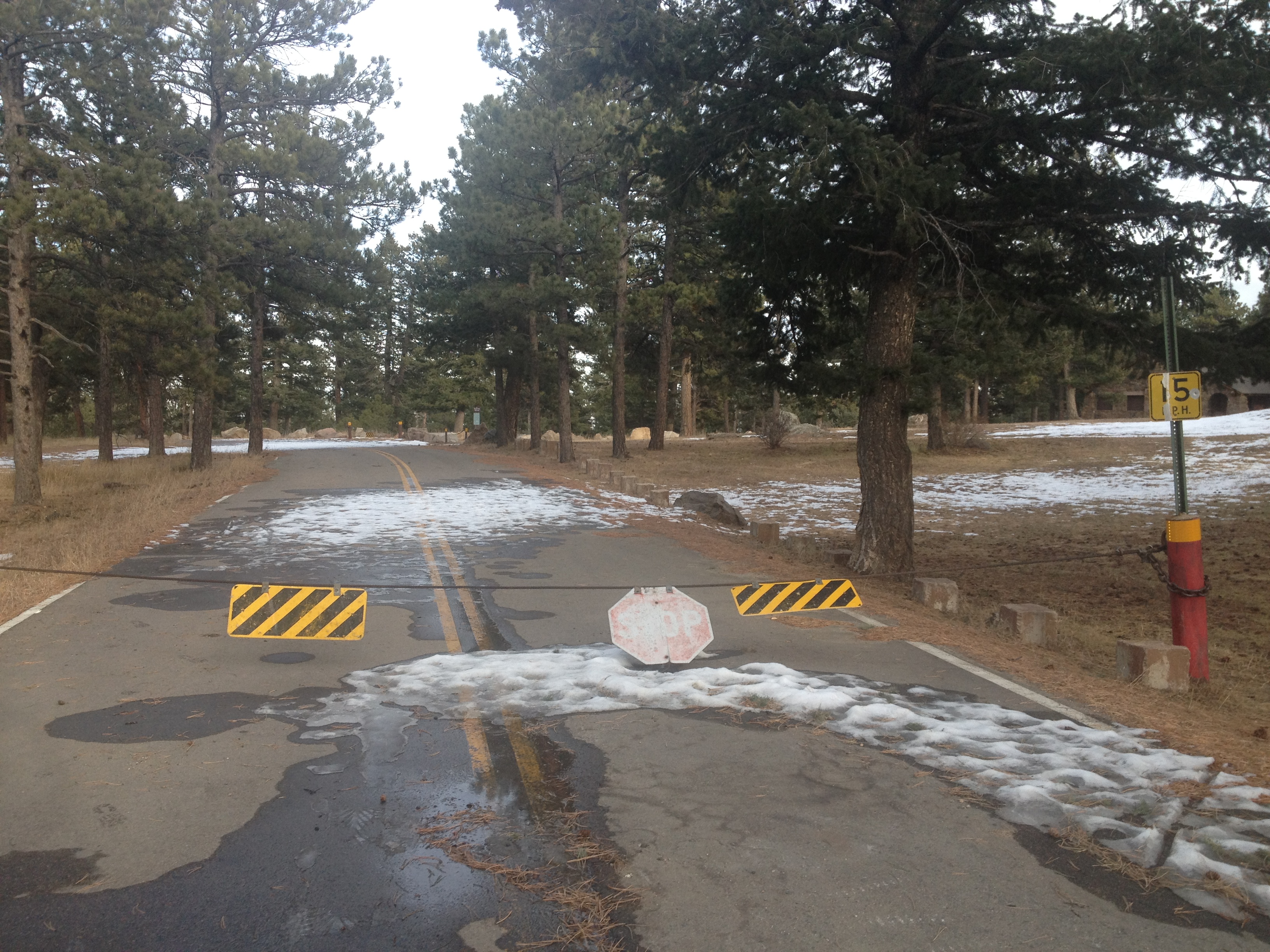
Not surprisingly, I was the only person at Genesee Park today.  Not only is it off-season for places like this, but it is also a weekday, a time when most other people are working.  In addition, the park was closed for the season.  Being alone in a place like this is somewhat of a strange experience, especially for someone who is accustomed to an urban environment, with a plethora of noise and crowds.  However, being completely alone was what allowed me to truly tap into my imagination and discover what could come of a place like this during the summertime.

IMG_1525 IMG_1526

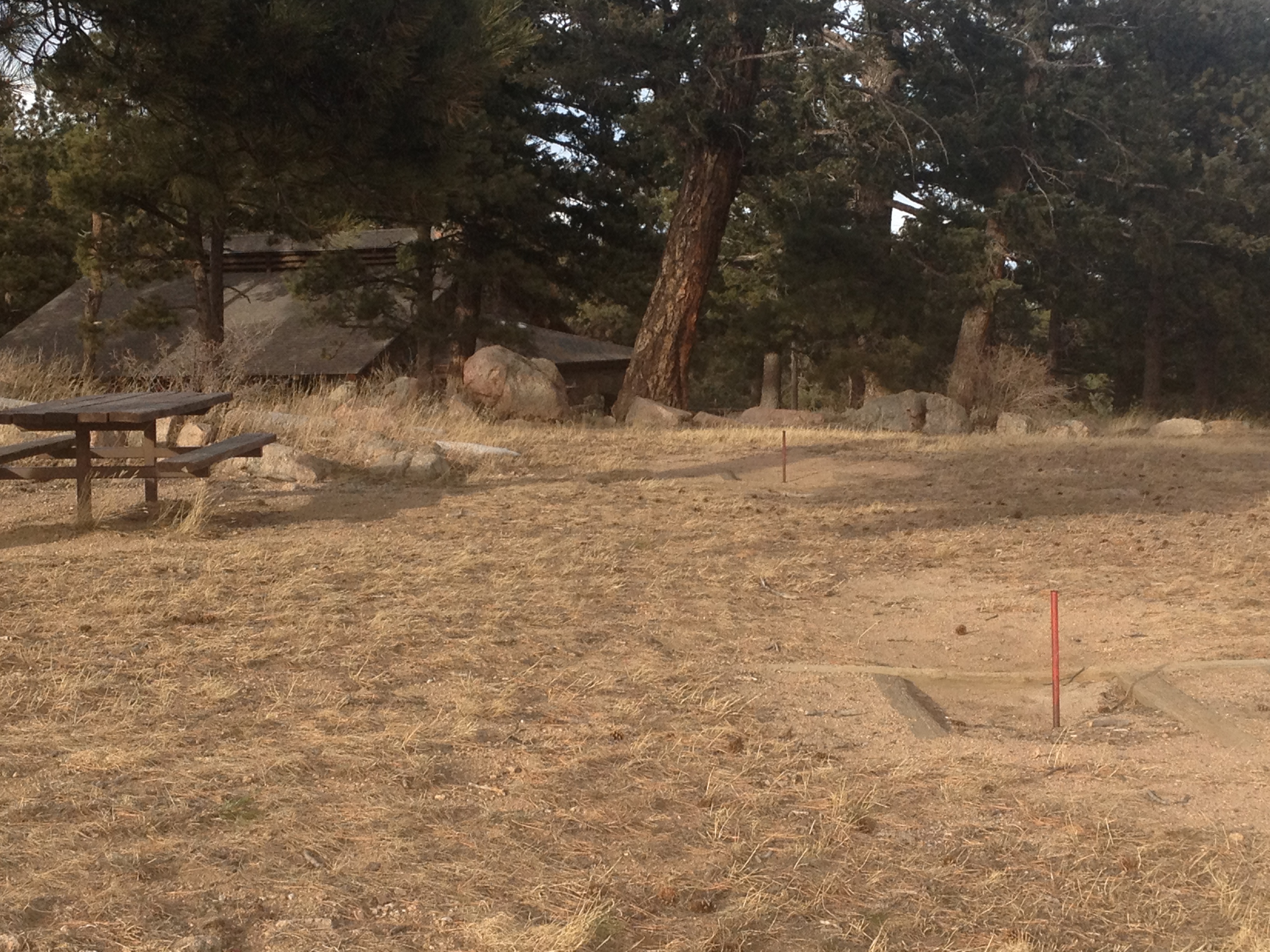
What surprised me about this mountain park were the plethora of available activities.  The two short red poles are obviously for horseshoes, and the two taller metal poles are for setting up a volleyball net.

IMG_1530 IMG_1533 IMG_1534

Additionally, the park had a pretty wide open softball field, which even included a home plate and a backstop.  Combined with a subtle smell of wood near the stoves adjacent to the picnic tables and I instantly imagined myself here on a warm summer’s day, with groups of campers taking part in a multitude of activities.  I pictured not only the activities the park is specifically set up for, but a multitude of others, such as Ultimate Frisbee, or just simply goofing off with all of the logs and pine cones all over the ground.  Children seem to never run out of things to do at a place like this, but sometimes a weekend up here can bring out that imaginative side of adults as well.  With the right group of people, a simple weekend away at a place like this could prove to be quite memorable.

It also dawned on me that the experiencing I am currently imagining at this place would also be quite inexpensive, at least compared to many other activities.  I did not do the math, to calculate the cost of gas, food, tents, etc., but I could not imagine it coming out to more than $100 per person.  In fact, it could end up being quite a bit less.  Just the thought of having an incredible weekend like this for such a small price demonstrates what is really important in this world.

It is odd that Christmas time, a time originally designed for people to reflect on what is really important in life, can now have the opposite effect.  Regardless of what people think of the practice, few people avoid the stress involved in purchasing Christmas gifts at this time of year.  But, what is it that people really want?  And what do people really need for Christmas?  After a quick mental survey of the people I know, as well as society as a whole, I came to the conclusion that while a new shirt may help someone’s confidence, and a new game may prove fun to play with, we are generally looking in the wrong places to satisfy ourselves.  What many of us need is not a new gadget, or an expensive coat.  What we need is more subtle.  We need things like companionship, appreciation, a sense of purpose, and security.  These are the things that we can often find at places like Genesee Park when we share experience with one other, and share ourselves with one another amongst the breathtaking backdrop of some unexpected mountain views.

IMG_1531 IMG_1532

However, it seems to me that all too often, rather than looking to places like Genesee, or to the people around us to fulfill what we need in life, we look to places like this.

IMG_1535

I will certainly give and receive presents this Christmas.  Some may even excite me quite a bit.  But, in the long run, the things that matter most will be more reflected in the way we view ourselves, the way we view life, the people around us, the way we treat one another, and the experiences we all have.

History Colorado Center

It has been unprecedentedly cold across Colorado these past several days!  It’s been so cold that no outdoor activity, not even skiing, sounds even remotely appealing.  So, in order to make the most of my time, I decided that today would be a good day to check out the new exhibit at the History Colorado Center.  As, I do want to check it out, and will likely be skiing or traveling elsewhere the next several weekends.

IMG_1502 IMG_1504

The History Colorado Center is a State history museum in Central Denver, located just south of downtown.  As the name advertizes, the museum covers the history of the State of Colorado.  A similar museum can most likely be found in nearly all state capitol cities.

In my biased opinion, the History Colorado Center is one of the best museums I have ever been to.  The reason I say it is a biased opinion is that I definitely prefer museums that cover topics I am personally interested in.  I tend to be more interested in science and history than art and lifestyle museums.  In addition, I have not been to too terribly many museums, as I tend to spend more time on outdoor activities.  So, my recommendation of this museum can be taken for what it’s worth; based on a strong personal bias and a limited sample set of options.  But, I do feel like this museum is worth the $12 admission. Today we spent just shy of three hours there, but I do feel like I could spend close to an entire day here.

I really enjoy this museum for three reasons:

1.  The museum is highly interactive.

This seems to be a trend in museums of late.  I am not sure what instigated this particular trend, but over the past decade more museums have been moving towards more interactive exhibits.  This particular museum was constructed only a couple of years ago (replacing the previous Colorado History Museum), and thus many of the exhibits at the museum are indicative of this trend.

IMG_1511

Just inside the entryway to the museum is a “time machine” exhibit.  These two “time machines” can be physically moved across a gigantic map of the State of Colorado.  Depending on where these devices are placed, a user can select a year from a list.  Each selection contains a different historical story of Colorado.  These stories come from many different time periods and nearly all portions of the state.  If one were to watch all of the stories available in this exhibit, it would definitely take multiple hours.

Other interactive exhibits at this museum include a silver mining exhibit, a bunch of screen-selecting games, and my personal favorite, the ski jump simulator.  The ski jump simulator not only simulates the building of speed, becoming airborne, and subsequent landing, but also requires that the user mimics the right ski jumping technique.  All this is done in from of a screen that shows the ski jump in progress.  Improper technique will result in a crash in the simulation, and the length of the jump is also dependent on technique.  It is interesting to attempt this ski jump simulation several times to get the best possible result.

2.  The museum presents a fairly complete representation of state history.

By this I mean the all regions of the state, all time periods, and all types of people appear to be represented at this museum.  Many people think of Colorado and think only of the mountains and the activities associated with the mountains.  Some think of Denver and the Front Range cities, but the entire Eastern 1/3 of the state is often ignored.  This museum actually includes several exhibits that cover life in the Great Plains portion of the state.

IMG_1508 IMG_1509

Half of the first floor of the museum is dedicated to the story of a small town named Keota on the plains in Northeastern Colorado.  Like many town in this area, it’s economy was primarily based on farming and ranching.  Although the town did fairly well in the first couple of decades of the 20th century, it did not fare well during the dust bowl and now is basically a ghost town.

Other exhibits about the history of Colorado’s often forgotten Eastern portion include one on Bent’s Old Fort, and one on the Sand Creek Massacre.  With these exhibits, and several others, the History Center Colorado also presents history from the point of view of nearly every ethnic group to ever inhabit the state.  One exhibit describes Colorado’s history as a borderland between the United States and Mexico prior to the Mexican-American war.  Another one describes the Japanese Internment Camps during World War 2.  And, despite the fact that Colorado is only 4% black (as a state), the museum contains an exhibit about a place called Lincoln Hills, a resort in the mountains developed by black people for black people at a time when many places refused to serve them.

In addition to presenting history from all portions of the state, as well as from multiple perspectives, the museum covers times all time periods, as well as both good times and bad times.  The Steamboat Springs Winter Carnival is a celebration of the winter sport activities that make Colorado a destination for many.  However, the new exhibit covers the importance of water resources in the state of Colorado.  This exhibit covers three periods of time where water resources and the management of them made a major difference in life in Colorado.  In the 13th century water resources were depleted from the “Mesa Verde” area, leading to hard times for the once thriving Pueblo Indians in that region.  Their response was to move south to areas where resources appeared more abundant.  Remnants of this civilization can still be viewed at Mesa Verde National Park, the only archeological U.S. National Park.  The dust bowl was one of the hardest times in Colorado.  Many farmers suffered from a combination of low prices and extreme drought.  This began a population decline in the plains, but some remained on the land.  Finally, current concerns about water resources were covered, as reduced snowpack from climate change combined with population increases threaten shortages of water resources.

3.  The museum has character.

IMG_1503

By this I mean there are a lot of little fun things like this Bison topped with a Santa hat.  Throughout the museum there are a lot of other little decorations here and there, such as the Welcome to Colorado sign, that just make the atmosphere a bitmore fun.  They do this without either going over the top, or seeming too cheesy, which I very much appreciate.

Visiting the History Colorado Center today was a good change of pace from my normal activities, and a wonderful way to take advantage of a day with less than ideal weather.  With a fun yet intelligent atmosphere, a complete view of Colorado’s history as a state, and a plethora of interactive exhibits, my visit to the History Colorado Center  was a memorable experience.  It gave me a lot to think about, and a good overview of the state that I now call home.

The Last Chance Of The Year

IMG_1493

There is a saying that “old habits die hard”.  This is possibly an overstatement, and it might not apply to everybody.  But it is a powerful statement of inertia that applies to a large segment of the population.  A major stress factor, such as the discovery of a new food allergy or the loss of a job, can change people’s habits rapidly and decisively.  However, in the absence of some kind of major push, most people’s habits will change slowly or even not at all.  It is for this reason that bad habits like watching too much TV, engaging in frequent unprotected sex with strangers, and even smoking can persist for decades.

I would not consider the habit I am referring to as a bad one.  It is mostly just annoying to some people around me.  It all started in the 8th grade when I became somewhat obsessed with football.  A typically Sunday for me that fall I would not only watch a couple of NFL games, but I would also watch the pre-game show at 11 A.M., as well as NFL Primetime at 6 P.M.  On any given Sunday, I’d watch as much as 8 hours of football!

This also caused me to put off too much of my schoolwork.  Then one November weekend, I suddenly realized that I had a major Science project due and I was running out of time to complete it.  That Friday evening, I came home from school knowing that I would have to scramble to finish this project on-time, and calculated that I would have almost no time for anything else that weekend.  My parents were disappointed in me, and actually feared that my grades would suffer because of it.

That weekend’s weather was especially nice, with high temperatures reaching 70 on Sunday.  Sometime on Sunday my father reminded me that this would probably be the last 70-degree day until April.  As a weather tracker from a young age, this was a fact that I was already well aware of.  But, it was something I had not been thinking about through all of this.  At this time, my father was just trying to be a good parent, and inform me that procrastination had consequences.  But the sudden reminder, that it would be at least three, and up to five months before weather like this would return prompted me to go outside that minute, even though I knew all I could afford was a 10-15 minute break from my work.

The previous winter was my first in Illinois, and it was quite harsh!  Not only had I just moved from Long Island, New York, a place with milder winters, but that winter was harsh for Chicago area standards too!  Temperatures were significantly colder than their long-term averages, particularly in January and February.  I recalled seeing a snowpack persist for over five weeks, something I had never seen before, and school was closed a couple of days due to extreme temperatures (below -20).  It was quite a shock for me, and something I did not enjoy.  Feeling that fresh air, and knowing that these ten minutes would be all I get for such a long time made me regret my obsessive watching of football in a way I had never regretted anything before.  It was that day that I realized that I cared significantly more about activities that I personally participate in than watching professional sports (or anything on TV).  I did not completely give up on watching professional sports that day.  But, since that day I’ve have had a clear understanding of where my priorities lie.

The winter that followed would be modestly mild for Chicago standards.  But, it was still colder than the ones I remembered in New York, and there were still very few days warm enough to be enjoyable for outdoor activities.  It was enough to cement in me the lessons I learned that November day.  I would spend seventeen more years in the Midwest, in either Illinois, Indiana, or Wisconsin.  Only one winter season would be more oppressively cold than that first one (and I was in Wisconsin- a colder place overall).  Many of the winters would be milder, some significantly milder.  Still, I would rehearse the same pattern every fall.  Starting around Halloween weekend, any day where temperatures were projected to reach the 60s or 70s would basically sound an alarm off inside of me.  I would start planning ahead of time how to take advantage of these particular days, and bill it “the last nice day of the year.”  Sometimes, I would even have some “false starts” in this process, where I would be prompted to enjoy “the last nice day of the year” only to have another stretch (or even two or three) of warm weather occur before winter set in.

Now that I live in Denver, this practice is not necessary.  Not only do sunny and mild days occur quite frequently in the middle of the winter, but winter is one of the most exciting times to be in Colorado- due to skiing.  But, we are also not in an ordinary weather pattern.  Today’s highs will top out somewhere between 60 and 65.  But, after this, an abnormally prolonged period of cold weather is expected in Colorado.  It might even be too cold to ski, as highs between 10 and 20, and lows below 0 are anticipated for Denver.  It will be even colder in the mountains!  So, that alarm in my head triggered me to take advantage of this day as if it were the last chance I would have this year to go on a bike ride, which I did.

IMG_1495 IMG_1496

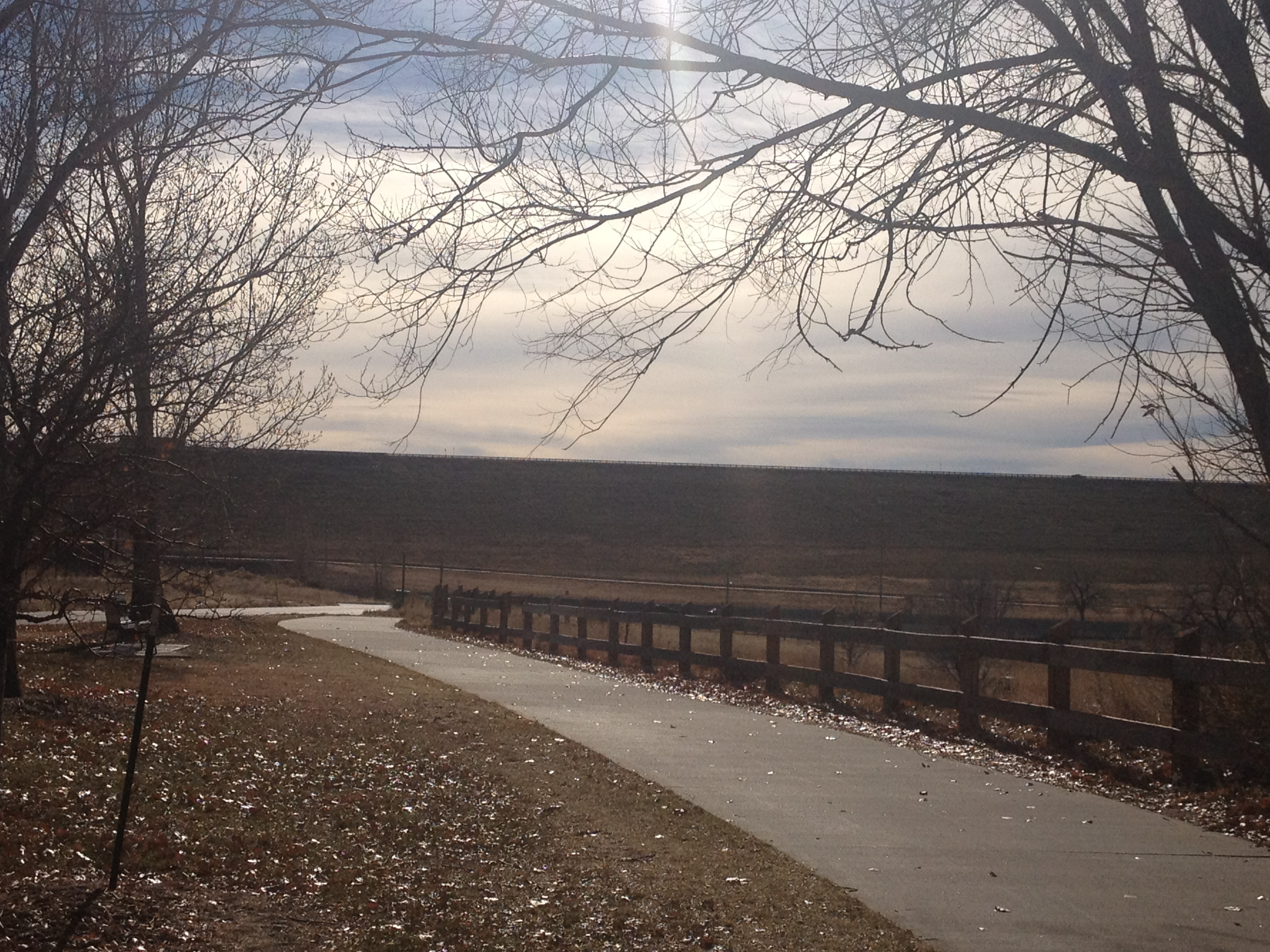
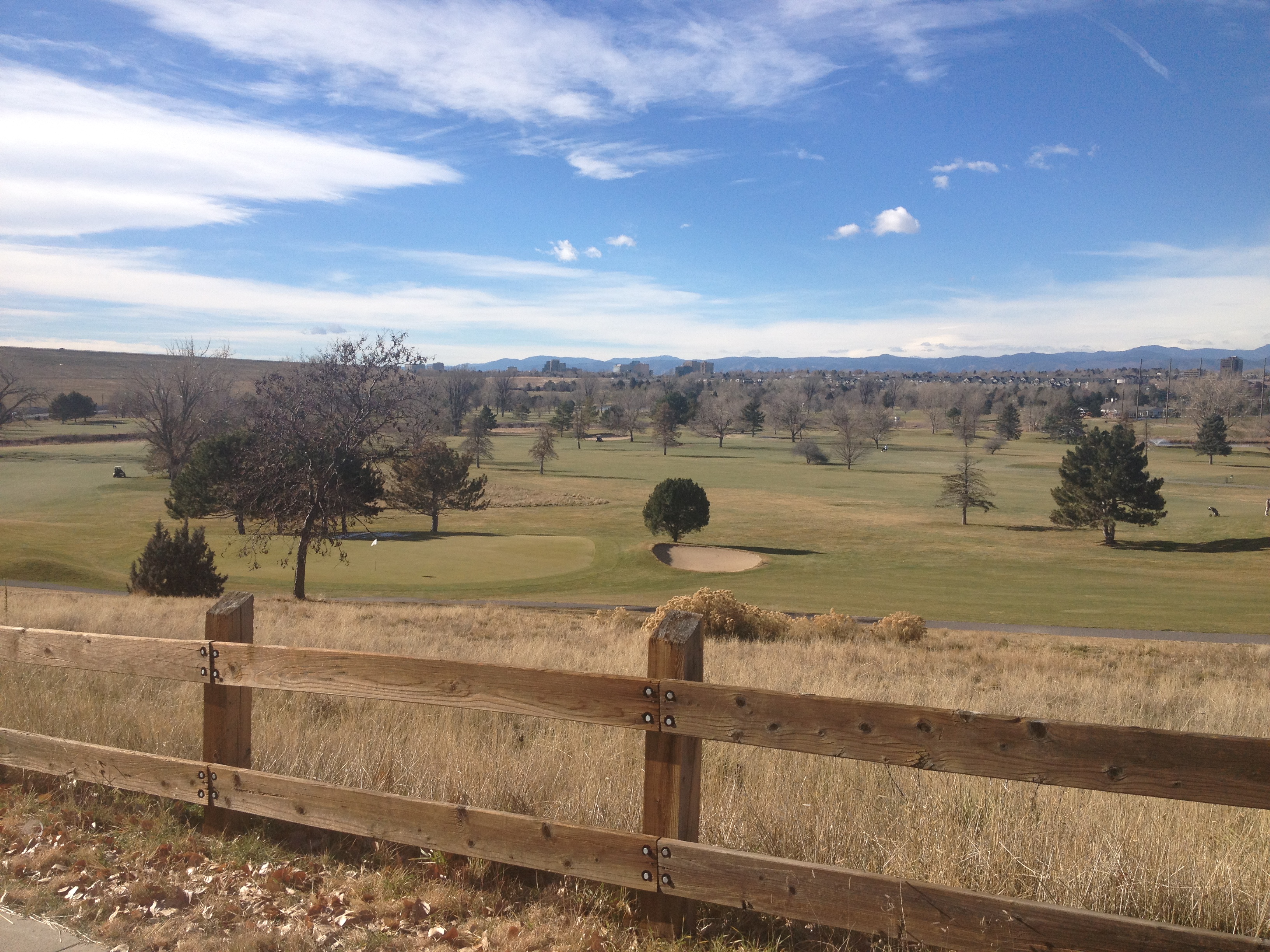
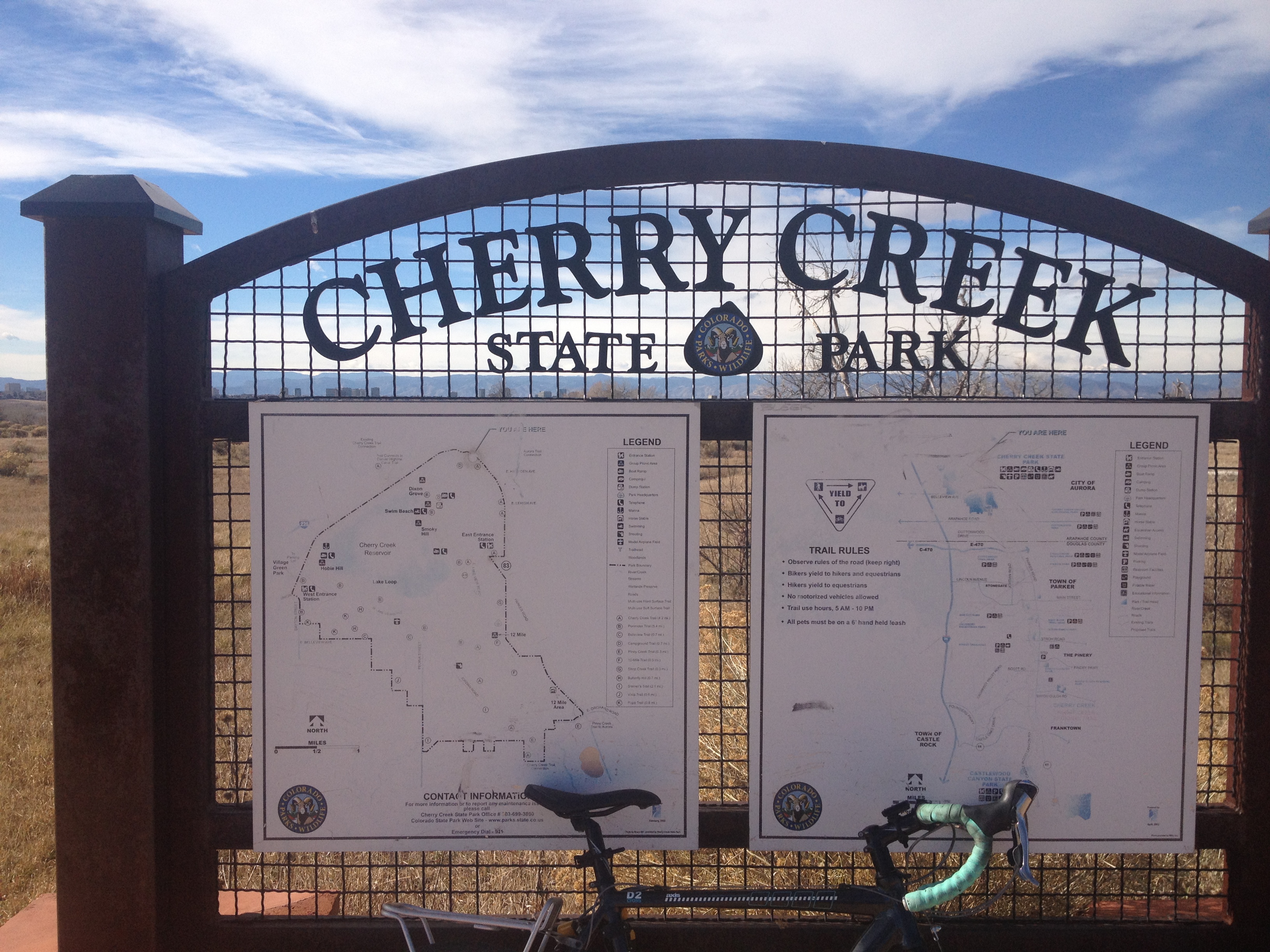
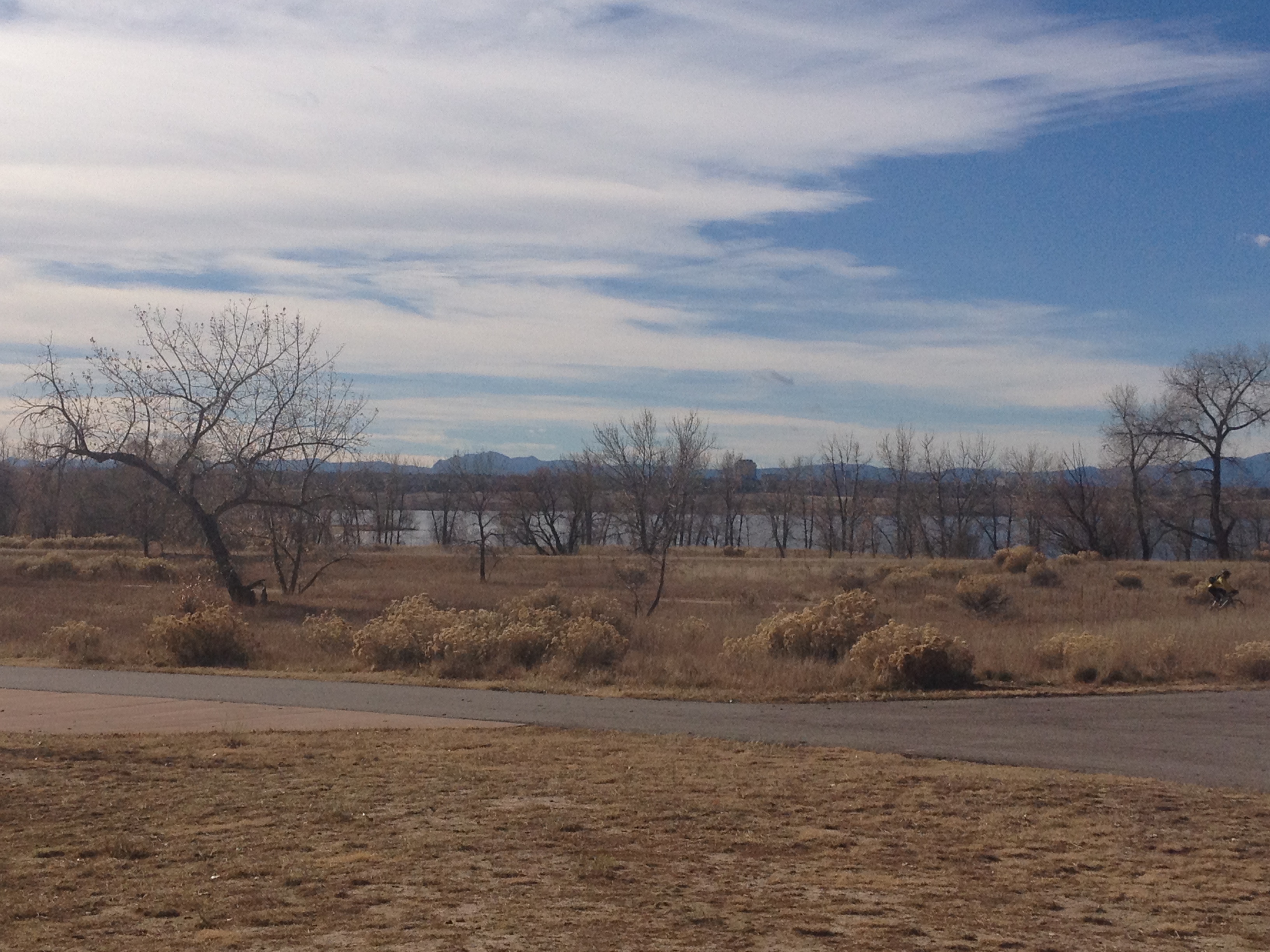
Of course, one of the challenge in taking advantage of the last nice day of the year is that in November and December, the days are quite short.  Today I also had an added time constraint, as I knew the winds around Denver would pick up around noon, making bicycling much more unpleasant.  So, I stuck to a much simpler ride, down the Cherry Creek Trail to  Cherry Creek State Park, a 25 mile round trip.  Most of the ride is flat, or slightly uphill on the way out and slightly downhill on the way back.  The first major terrain feature is a large hill near Kennedy Golf Course, which is followed by the climb up to the reservoir.

IMG_1499IMG_1497

The Cherry Creek Trail is one of the best trails I have ever ridden!  It follows the river, through all of the underpasses, and avoids nearly all traffic lights.  This makes it a perfect way to get somewhere quickly on a bicycle.  There is some terrain climbing up to Cherry Creek State Park, but overall, the ride here only involves three “climbs”, and each one is only a couple of hundred feet in elevation.  Therefore, this would be a great ride for people who are only in moderately good shape, or not looking for a major challenge.

It will be too cold for bicycling in Denver to be enjoyable for at least another week and a half.  But, in all likelihood, this was not my “last chance of the year” to ride.  Therefore, I probably did not need to be too concerned about taking advantage of today’s weather.  However, I am also not seeing any negative consequences in taking advantage of a day like this.  I did not miss out on anything important, and everything I need to work on I can complete in the later part of this week when the weather turns awful.  So, this old habit is going to “die hard”, and probably won’t change much until it leads to a poor result.

Hiking Boulder’s Flatirons in late November

IMG_1472

One of the things a lot of people don’t realize about Colorado is that it is actually possible to hike here year round.  For sure, winters in Colorado are characterized by a lot of snow, but at lower elevations, warm-ups are also quite frequent.  Earlier this year I made some calculations with some data from the National Climatic Data Center, and concluded that even in the coldest part of winter high temperatures can be expected to exceed 50F in Denver more than one in three days.

At higher elevations it is more consistently cold and snowpacked.  This is why Colorado has great skiing, but also why hiking at higher elevations beyond the month of October generally unrealistic.  However, it is great knowing that there is a place where both skiing and hiking could be available on the same calender day.  Sunday I went skiing, Monday I rode my bicycle, and yesterday I hiked.  What an interesting place!

IMG_1471

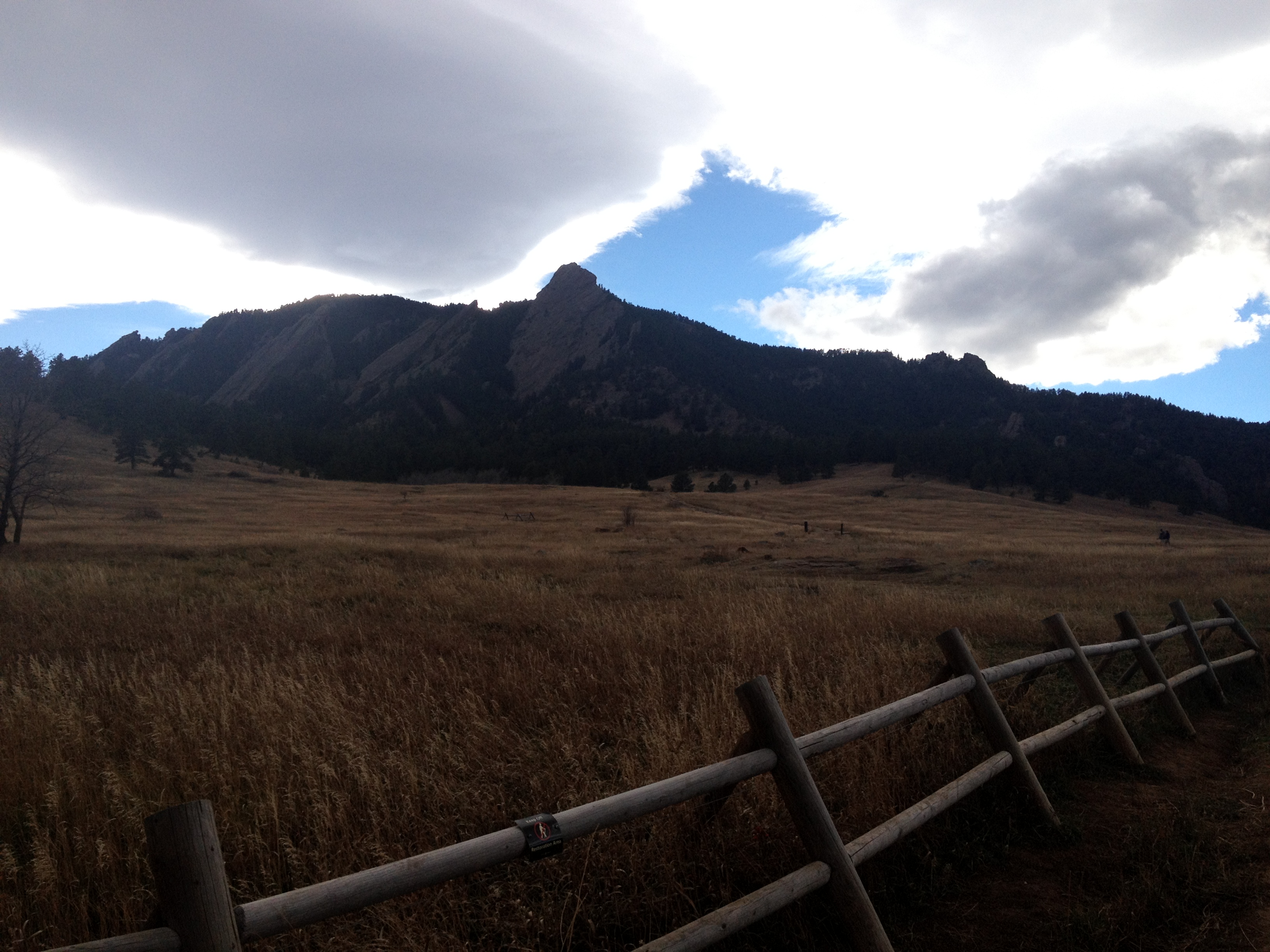
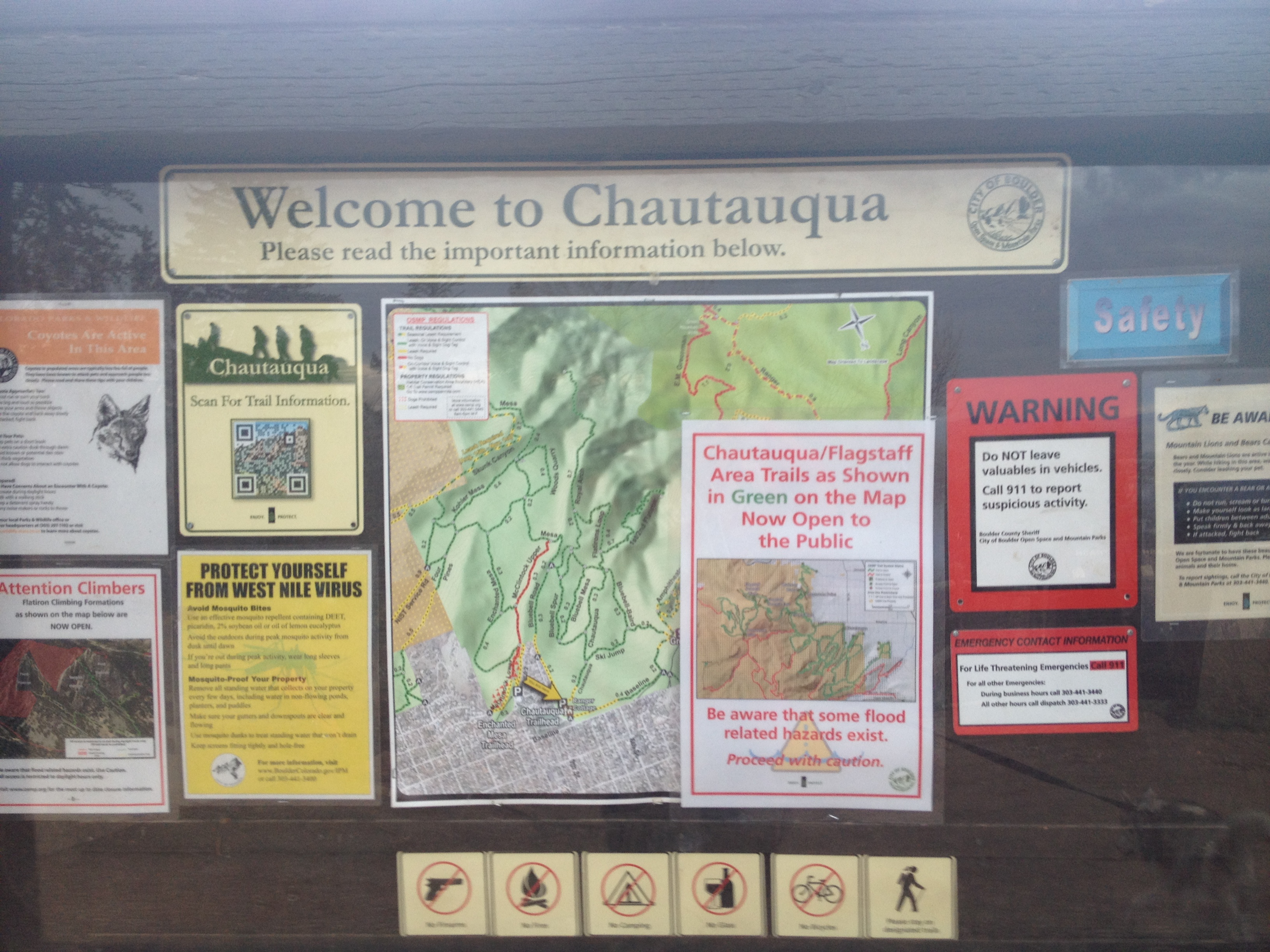
With that in mind, this is a great time of year to check out many of the hikes available at lower elevations.  This includes the Flatirons in Boulder, Colorado.  Many of the trails up this mountain feature can be accessed from Chautauqua Park on Boulder’s Southwest side.  With the park being in town, and downtown Boulder being only about a mile and a half away, and this park can easily be reached by bike or bus, making this one of the few places in the country where one can frequently hike and even rock climb without access to a car.  So, I can kind of see why it is an expensive place to live, but I really did not mind driving, so I’ll spare myself the extra $400 a month in rent.

IMG_1473 IMG_1474

Hiking in the Boulder Flatirons is quite different than climbing a trail up a mountain.  Rather than one trail up and one trail down, there is a network of trails that need to be navigated for one to reach their destination.  From the parking lot, the Chautauqua Trail can be followed up to the Flatiron Loop Trail.  The Chautauqua Trail is a fairly consistent moderate uphill grade.  The Flatiron Loop Trail, however, gets both steeper and rockier.  Climbing this trail reminded me how high in elevation the Flatiron features really are.  With the features known as the Flatirons being so close to town, it is easy for one to think of these features as extending down almost to the elevation of town, roughly 5400 ft.  But, the reality is that these features are largely between 7000 and 8000 ft. in elevation.

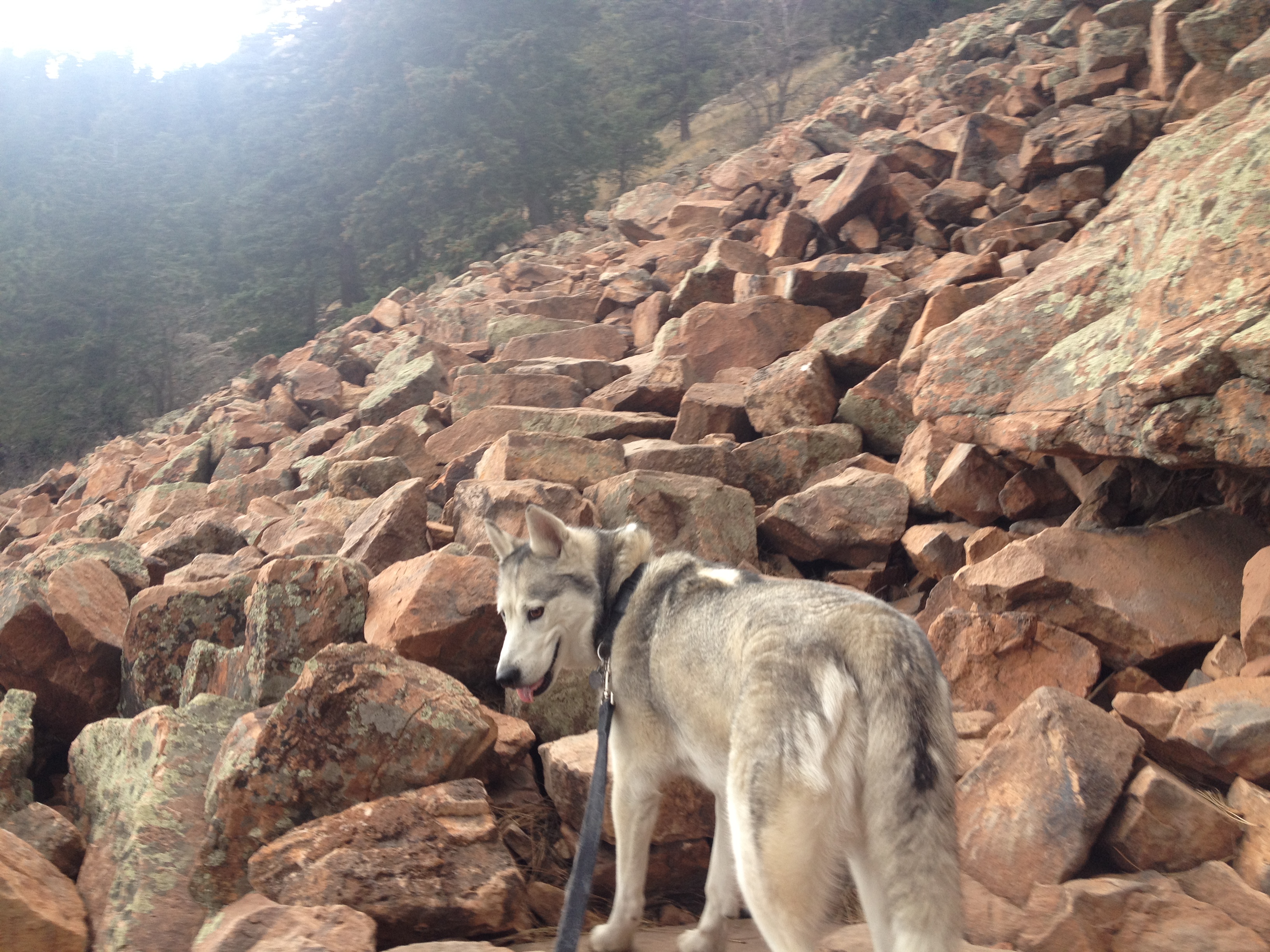
Some of the rockier areas of the trail scared my dog a little bit.  Despite this, I did see a significant amount of dogs on the trail.  However, in Boulder, I would consider the Mount Sanitas Trail more dog-friendly, as it does not contain segments like this one.

What I did not realize until yesterday’s hike was that the Flatirons are numbered.  The Flatiron Loop Trail traverses Flatirons #1 though #3.  For each of these peaks, a spur off the trail provides climbing access.  The first Flatiron, pictured above, looks somewhat different up close.  Small scale features, particularly indentations in the rock, do not show up when viewing these features at a distance.  Like some famous paintings, they look nicer from afar than they do from close up.  The trail reaches it’s peak elevation between Flatiron #2 and Flatiron #3, and beyond Flatiron #3 is the trail I intended to do, the Royal Arch trail.

IMG_1478 IMG_1479

Unfortunately, this trail was closed, most likely due to the flooding.  As an alternate, I decided to hike the Flatiron #3 climbing access trail, as I still wanted to get to the top of these features.  This trail was even steeper than the Flatiron Loop Trail, and also a lot narrower and rockier.  It is one of those trails where one follows the rocks as an indicator of the trail’s path.

IMG_1481 IMG_1480

Flatirons #2 and 3 appeared somewhat more as I imagined them; rock formations poking out of the trees, with a near steady slant of around 45 degrees.  As I viewed each of these features up close, I could not help but be reminded of the rock features near Red Rocks.  Of course, these features are not nearly as red in color, but their shapes looked quite similar, making me believe that some of the same geological processes must have been at work in the creation of both of these features.

IMG_1484

On the return trip, back to the parking lot, I actually came to the conclusion that Flatiron #1 just looks somewhat different than the other two.  A later Google image search would confirm this for me.  I guess this one is not quite a “flat” as the other ones.

IMG_1486

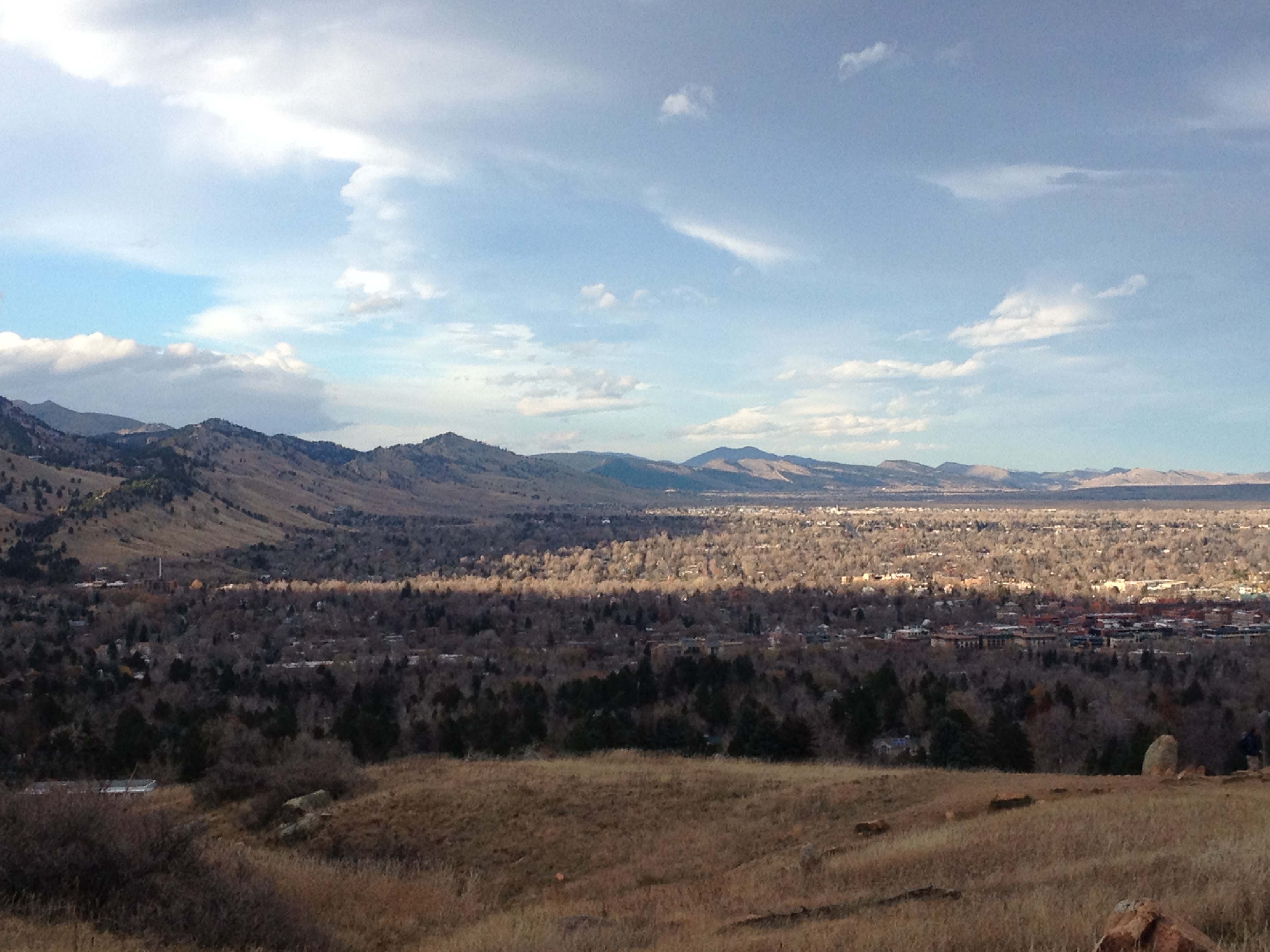
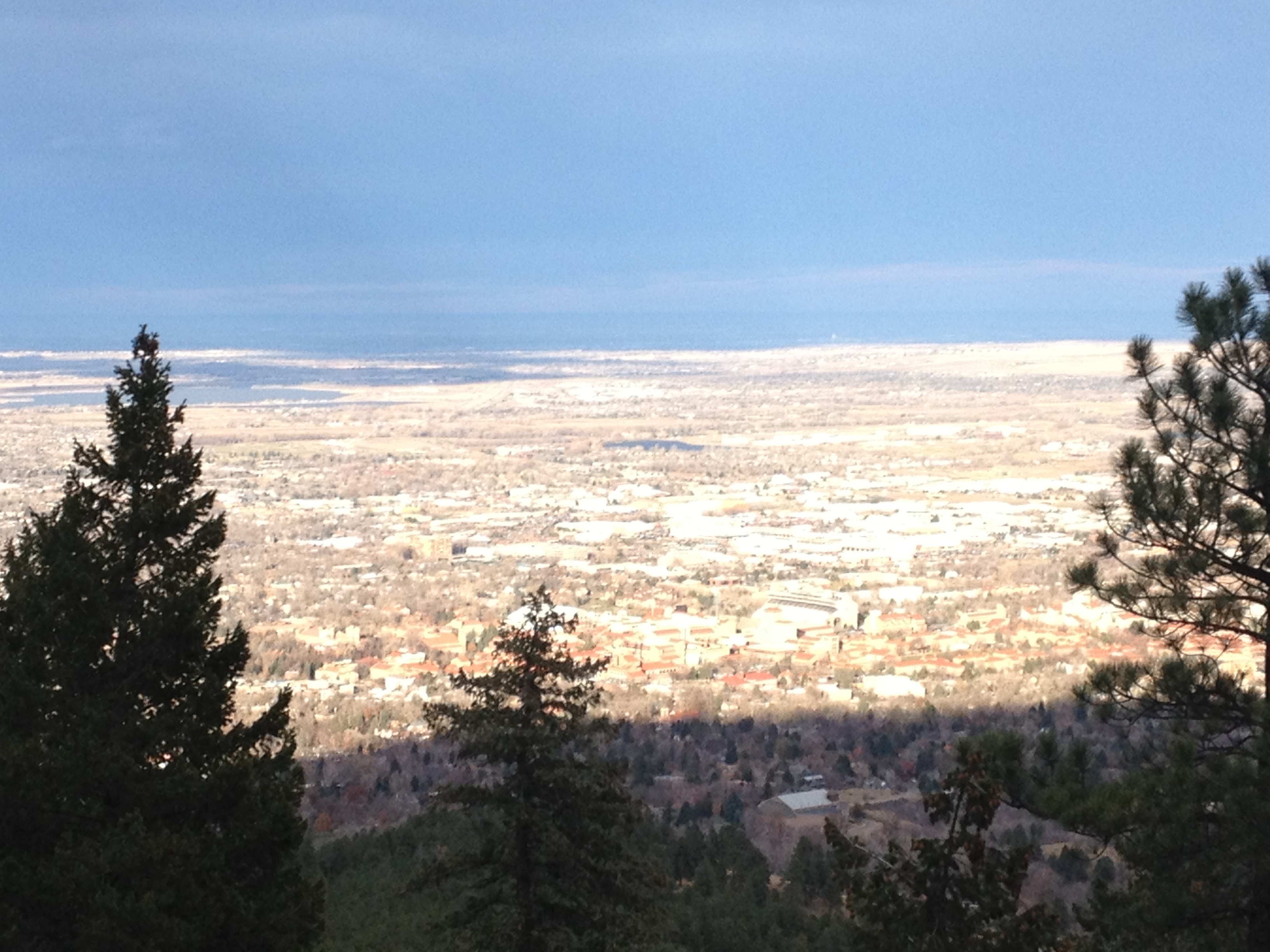
It was actually nearly 3/4 of the way back down to Chautauqua Park that I encountered what I consider the best view of the day.  The time was around 3:30 P.M., which in late November means that the sun was already starting to descend in the western sky behind the mountains.  However, the sun was still an hour or so from setting.  As a result, the shadow created by the mountains can be seen quite clearly in contrast with the bright sunshine, making for a breathtaking image that is unique to that particular time of day.  Half an hour earlier, it would have looked like your standard daytime image of the foothills of the Rocky Mountains, and half an hour later this entire area would be shadowed and the entire region would be significantly darker.

I did not specifically plan to be here at this exact time, in this exact place.  In fact, if I were to try to calculate what time of day I would need to be here to see this exact view, I likely would have calculated it incorrectly.  Sometimes in life the best results come not from careful planning, but from simply going to new places, trying new things, and being ready to absorb and enjoy what comes your way.  This is what comes to mind when I look at this particular photograph.

Golden Gate Canyon State Park

IMG_1152

Only half an hour outside of Golden, Colorado, Golden Gate Canyon State Park represents one of the easiest hiking places to get to from the Denver metropolitan area.  It is definitely a lot shorter of a drive then Rocky Mountain National Park, but is probably a little bit longer than The Flatirons in Boulder.  My visit to this park was not in peak season, on the 19th of October, but it was on a weekend.  Based on what I saw today, it appears that this park is significantly less crowded than both Rocky Mountain National Park and the Flatirons, and therefore may represent a more tranquil alternative to those two destinations for day hikes.

Yesterday, we visited the east side of the park, parking in the first parking lot in the state park off of Crawford Gulch Rd.  At this parking lot, our elevation was just short of 7,800 feet.  I have to admit, I was a little bit apprehensive about doing a hike this high in elevation well into October.  Last spring I came to the conclusion that the in-between seasons, when it is not warm enough to for activities at high elevations, but not quite ski season, are the best times of year to explore areas at lower elevations.  But, I knew that it was going to be a warmer day in Colorado, with southwest winds, and highs in the 60s in Denver, which would mean temperatures could be tolerable at this elevation.

IMG_1153 IMG_1154

Upon exiting the car, I immediately noticed two potential hazards.  One was the wind, which was quite strong that day, and made the temperatures, near 50 at the time, seem quite a bit chillier.  It did not help that our hike’s destination was a place called “windy peak”.  I kept thinking to myself, if it is this windy at the trailhead, I am in for an unpleasant summit.  Second was the fact that hunting is permitted in pretty much the entire area where we would be hiking.  Most likely, this is one of those irrational fears that we all seems to have.  It’s kind of like all of those posts we see that indicate that more children get injured by trampolines and swimming pools than by strangers, yet, most parents seem way more afraid of their kids talking to strangers than using their backyard trampolines and swimming pools unsupervised.  But, for some reason I did get a little nervous when I saw this sign.  Luckily, I was able to put this out of mind pretty quickly.  We would only see one group of hunters on this hike, and they seemed like they knew what they were doing.

IMG_1155 IMG_1156

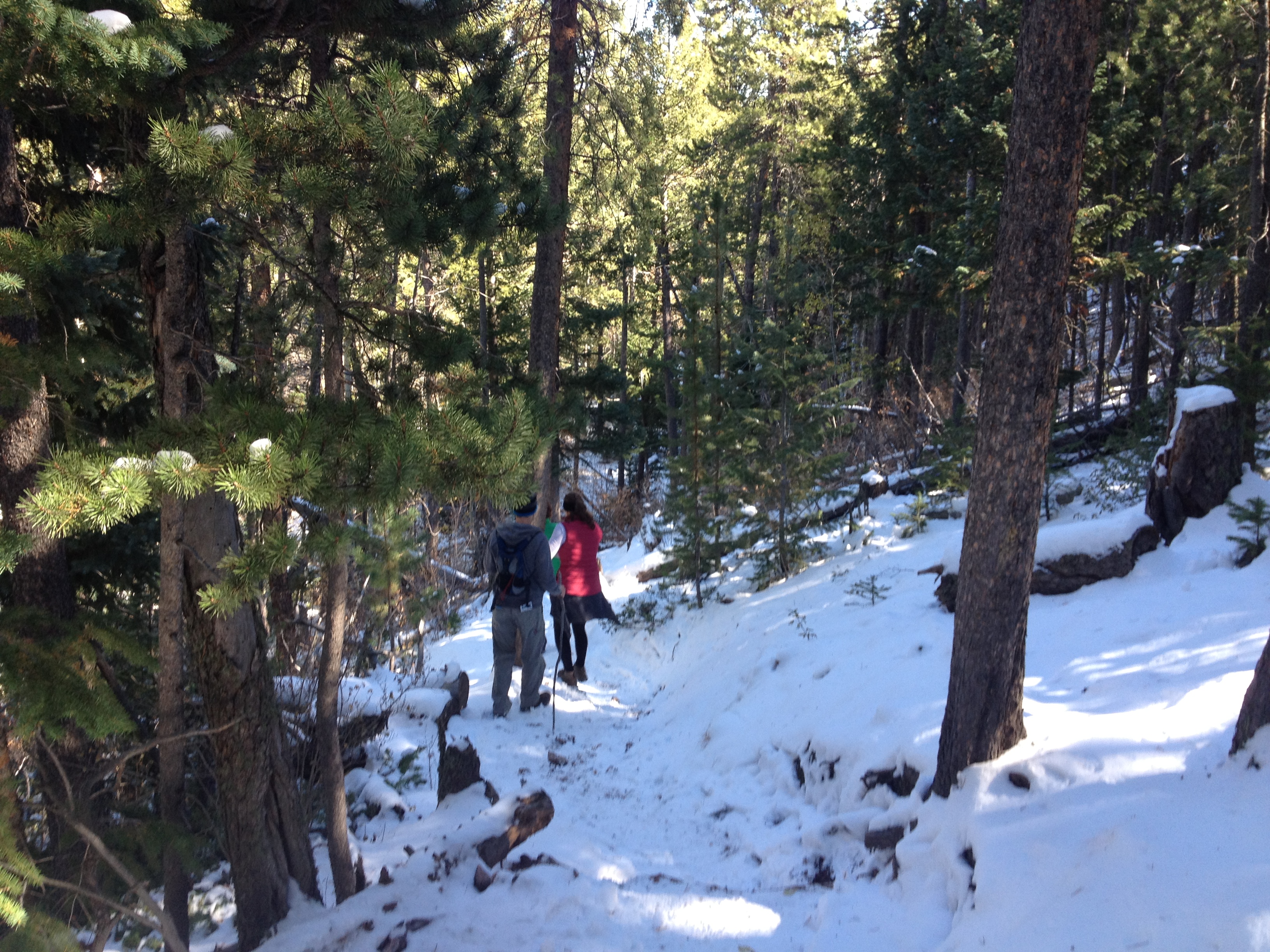
On this hike, we dealt with the remnants of two recent weather events.  First was the major flooding event last month.   In fact, one of the roads to the trailhead was washed out by this flood and closed.  We had to park right by the main road, and hike a little extra to get to the trail.  This was no big deal, and based on this, we could see why repairing this road would be a relatively low priority for the State of Colorado (compared with, say U.S. highways 34 and 36 near Estes Park).  We also had to traverse through some snowy areas.  Friday morning, Denver actually received it’s first snow of the year (which seems really early to me).  There was more snow in the mountains, and parts of the trail, especially those in the shadowy areas, and near our highest elevations, were snowpacked.  The snowpack, however, did not exceed 6″, where it would start to make the hike tougher and eventually impassible.  It did, however, make some downhill stretches a bit slippery and more hazardous than normal.

IMG_1158 IMG_1159 IMG_1160

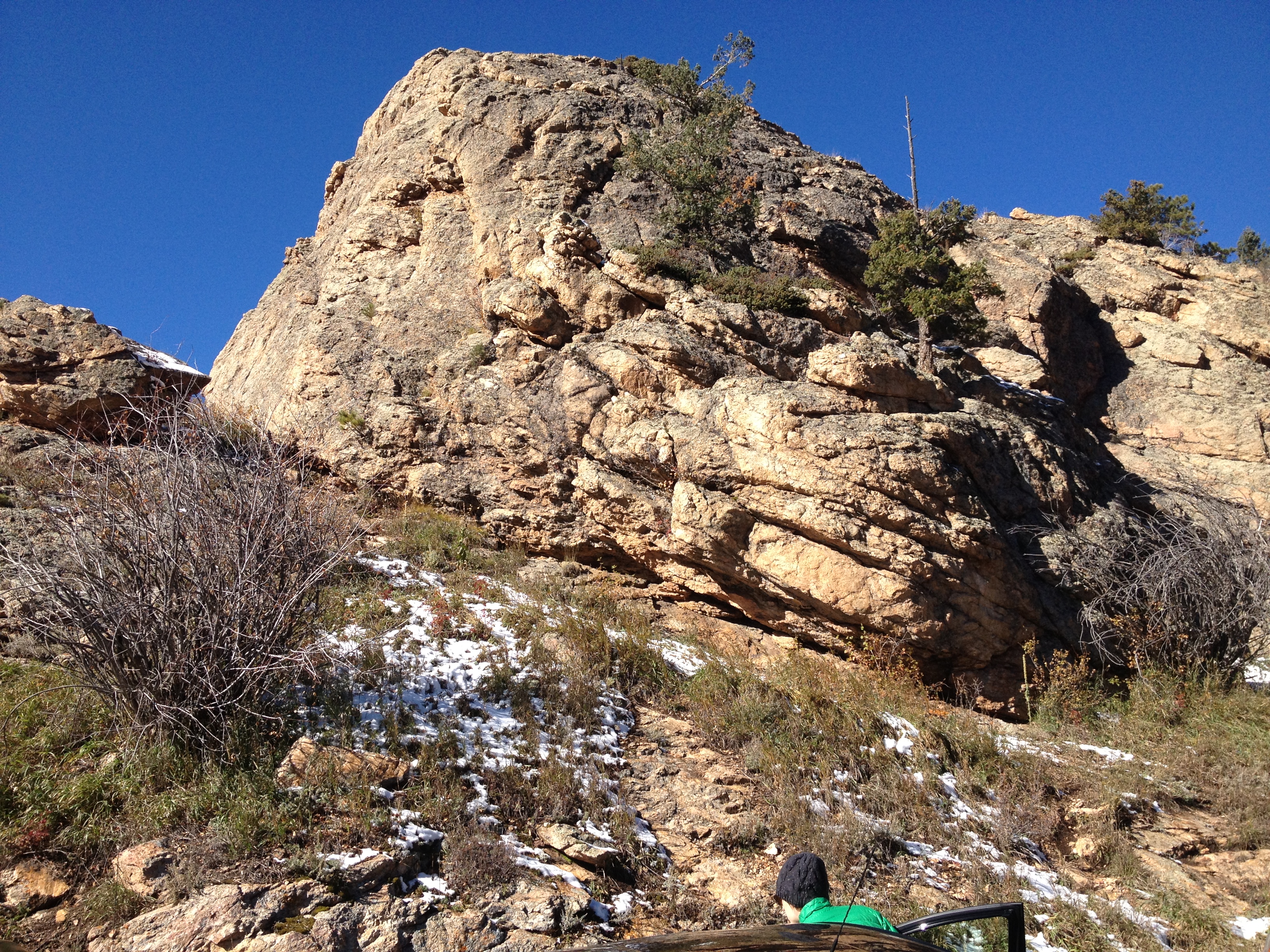
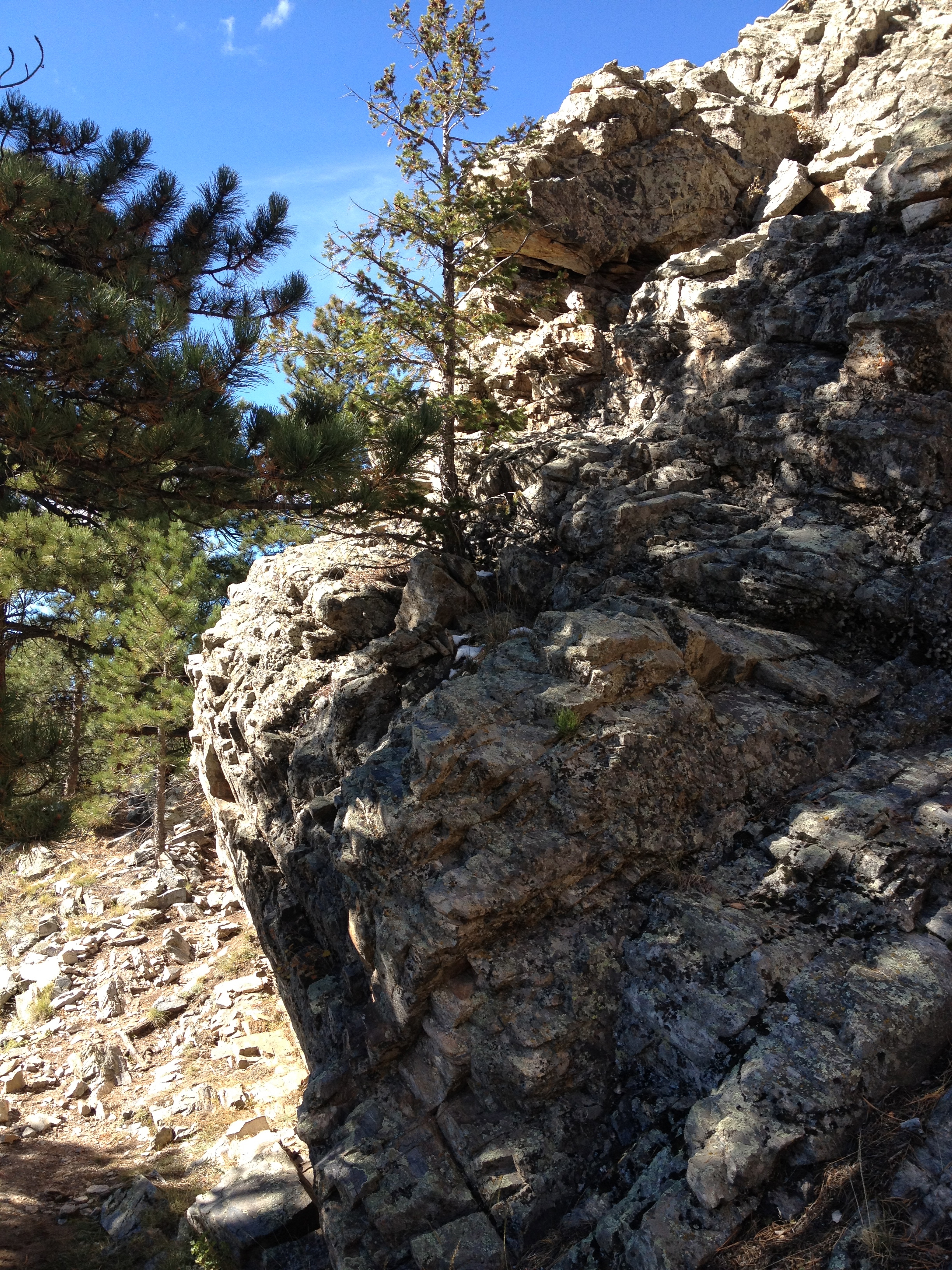
Somewhere between 1/2 and 2/3 of the way up, we saw a couple of neat rock formations, like this one, and decided to go off trail and take a few side excursions.  This mostly meant physically climbing up the rock, and then rejoining the trail the next place we see it.  It’s the kind of thing I periodically do with hikes that are not going to completely exhaust me (like a “14er”) to add a little extra spice to the experience.  Upon completion of the second of these side excursions, I saw the tall peaks in the distance for the first time.  These peaks, which I would later be able to identify as Mt. Evans, Mt. Bierstadt, Gray’s and Torrey’s Peaks, showed up in the southwest sky.

IMG_1162 IMG_1161

The end part of the hike involved traversing through a fairly uniformly snowpacked and fairly dense forest.  We arrived at Windy Peak, whose elevation is just shy of 9,100 ft.  The views from windy peak are pretty spectacular, but, as promised, it was quite windy here, and quite chilly.  It was definitely windier than it was at the trailhead, and this hike seemed to follow the similar pattern of the summit being significantly windier than even places a mere 50-100 feet down the mountain.  Due to the conditions, we did not remain at Windy Peak too long.  Basically, we remained there long enough to eat a cliff bar without feeling like we were rushing through it, and to take a few pictures.

IMG_1163

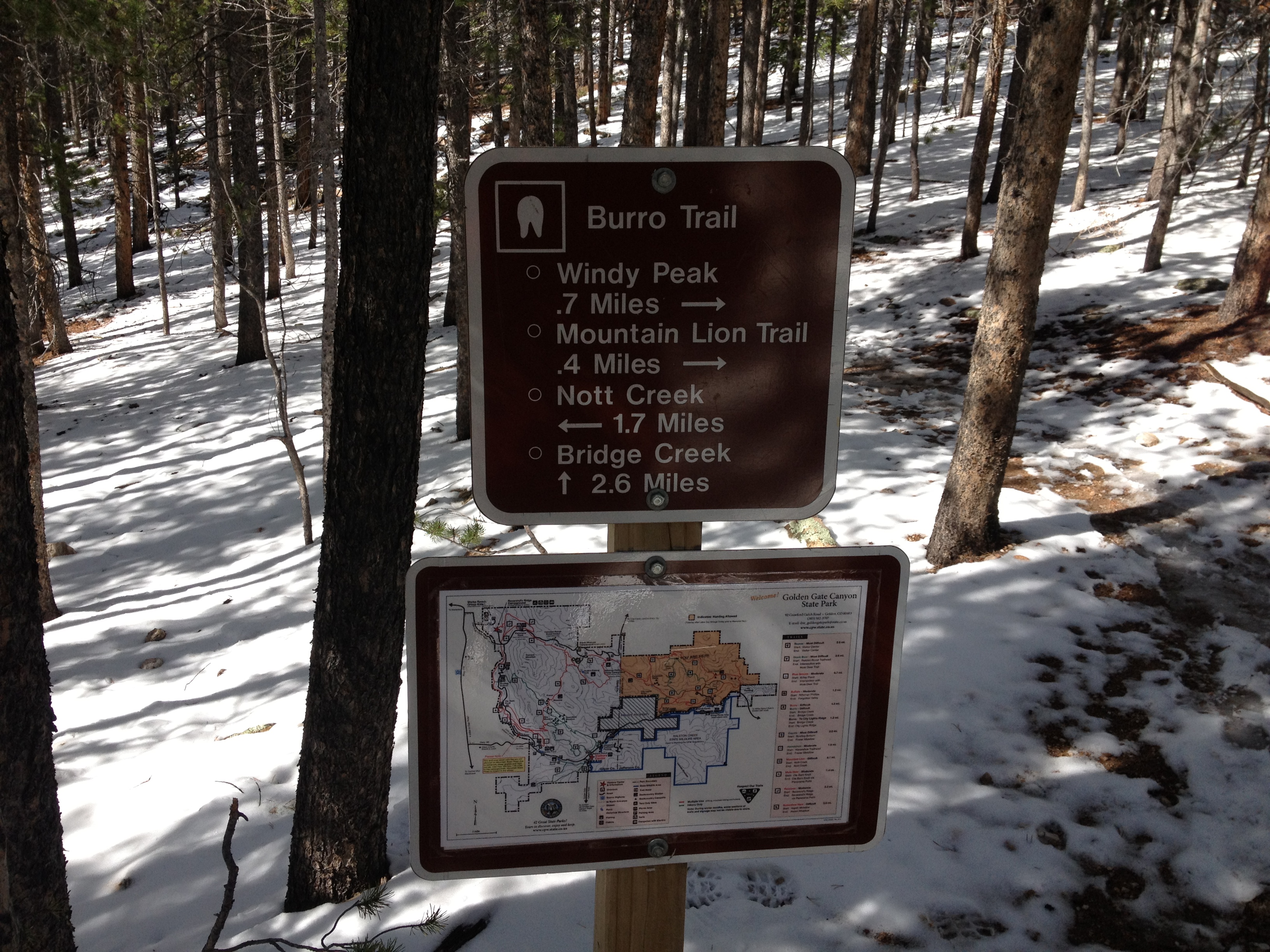
On the way down the mountain, we actually noticed significant snowmelt.  In fact, the road to the park was icy in the morning, but clear in the afternoon.  We also came to the conclusion that Golden Gate Canyon State Park is one of the best signed hiking destinations we had ever been to.  Every trail junction has signs like these, with a complete map of the park, and arrows pointing to where to go.  I’d say getting lost at Golden Gate Canyon State Park is next to impossible!

Colorado is full of places to explore.  In fact, as a relative newcomer, it is somewhat overwhelming.  I think I am finally well versed on all of the skiing options in the state, and I am getting a handle on all of the whitewater places.  But, hiking, climbing, and bicycling, it seems like can be done almost anywhere.  And nearly every trail area seems to have trails varying from easy to very difficult like this one.  How any Coloradan chooses where to go on a particular day remains a mystery to me

Back on the Reservation

A few weeks ago, I had the opportunity to visit an Indian Reservation for the first time in my life.  I learned quite a bit from that visit.  I learned that these reservations do not look like many of us imagine them to.  I also concluded that our history is complicated.  I do not have a good understanding regarding why relations between us and the Native Americans progressed the way they did, and it would be disingenuous for me to take a position on these issues.  However, I did see people in need due to their circumstances.

There are some things universal about helping out those in need.  Contrary to some people’s belief, helping out those in need is not dependent on ideology, wealth, or status.  It is only loosely dependent on what someone believes about the person (or people) they are helping.  Caring parents will often bail out their children with financial or housing support even if they believe their child had been lazy, stupid, or malicious in the behavior that led them into trouble.

In my belief, in order to be genuine in helping someone out, there are two necessary conditions.

  1. There must not be coercion.  This one is obvious, being forced to help someone out, or forcing somebody else to help someone out is not genuine charity.
  2. There must be no expectation of a reward.  This includes not only a monetary reward, but also the guy who does charity work and then starts telling girls at the bar about it to help him get lucky.  Or, likewise, anyone that hopes for any praise or increase in status from their charity work.  To be fair, rewards can come.  But they have to not be the reason for it.

For this reason, I was hesitant about writing about this in my blog.  It could come across that I am trying to show off that I did charity work.  I am really just trying to explain the reason I went back to the Pine Ridge Indian Reservation, as it is one of the poorest places in the country.  But, you have no real way of knowing that for sure.  Maybe I could have left this whole part out.
IMG_1135

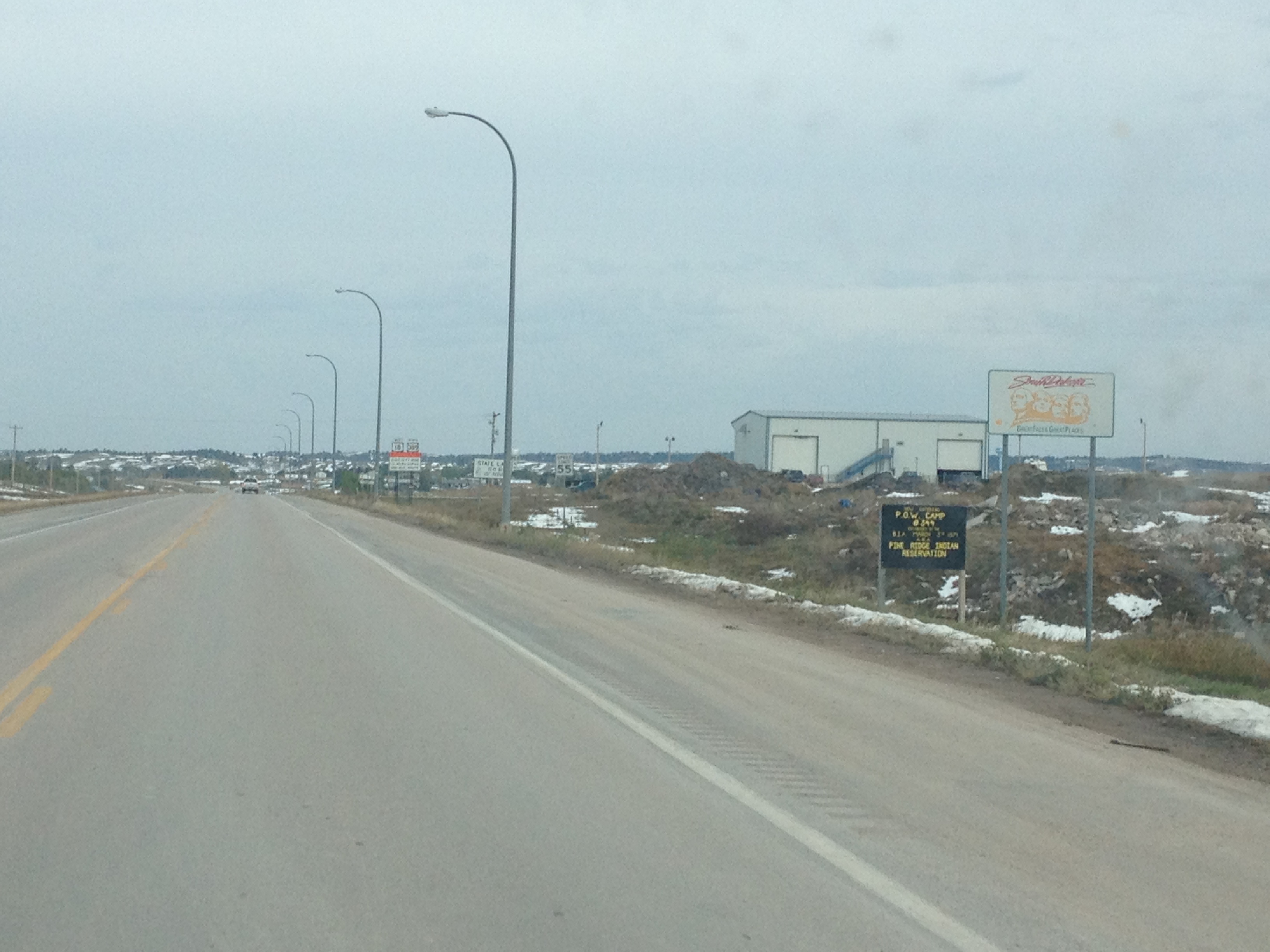
The Pine Ridge Indian Reservation is in Southwestern South Dakota, with it’s southern border being the Nebraska/South Dakota border.  So, as soon as we entered South Dakota, we were on the reservation.  Last week, this area got an unexpected early season blizzard.   In the Black Hills, to the north, some places got over 40″ of snow.  This is something that rarely ever occurs in mid-winter in this part of the country, let alone in early October.  Pine Ridge, more on the southern flank of this storm, got about 12″, still a lot, and the evidence of this snowstorm could still be seen.

IMG_1140 IMG_1139

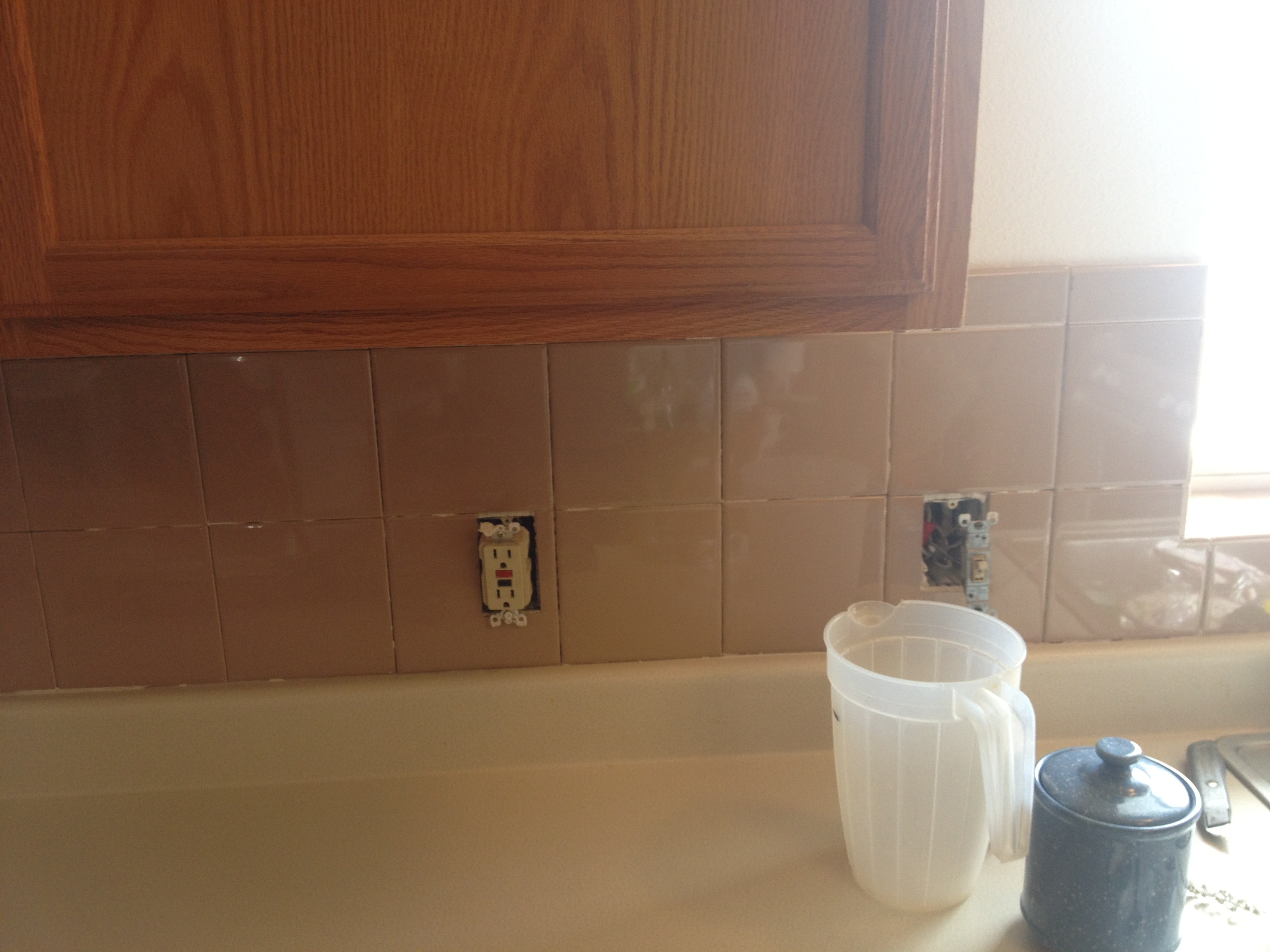
The task yesterday was tiling, and we put up tiling like the one pictured above at a couple of houses in this neighborhood in Pine Ridge.  So, just like the day before,  I learned a new activity.  In fact, I continued on the theme of expanding my comfort zone, as over the course of the day I became comfortable using machinery that initially intimidated me.

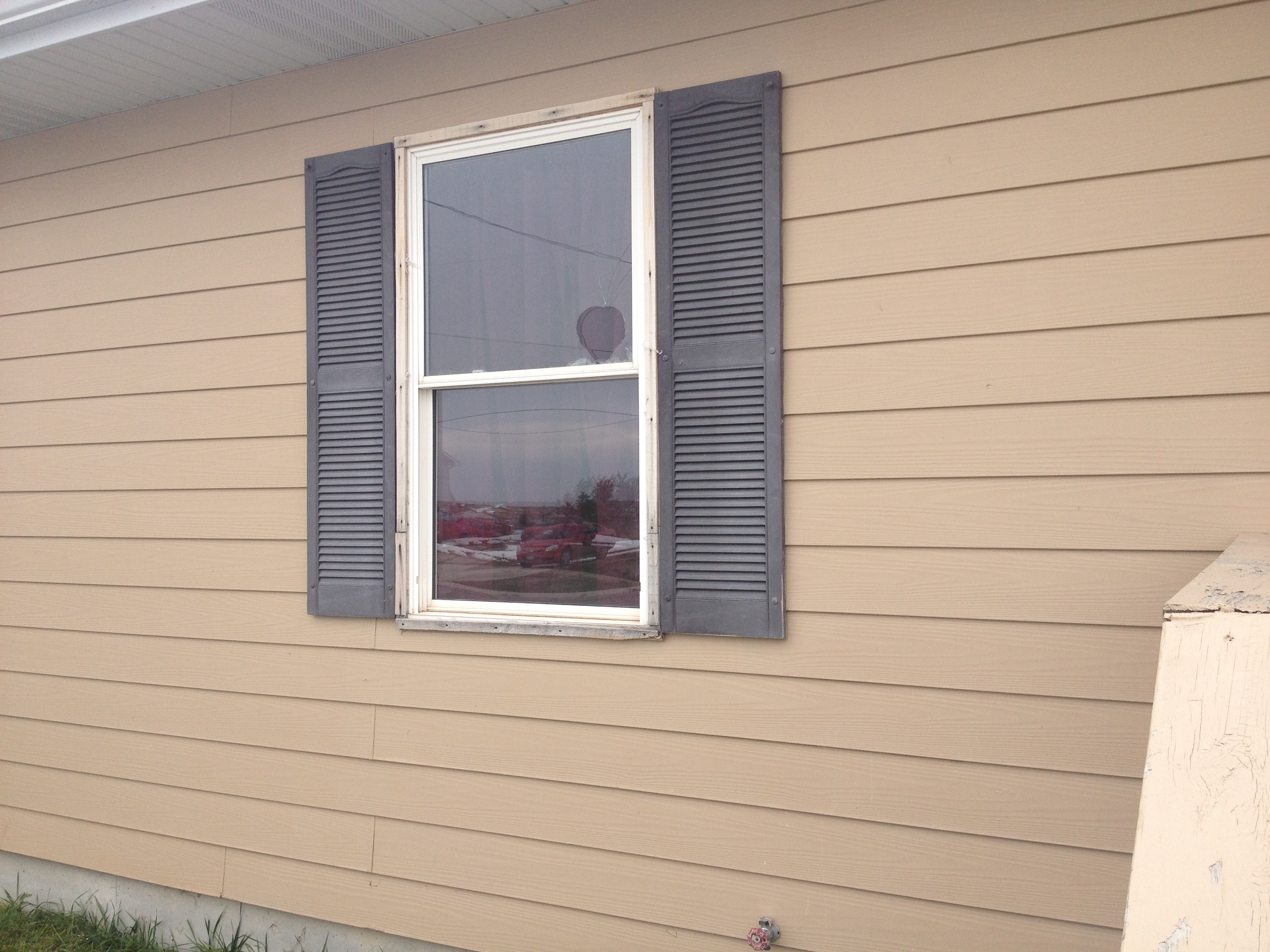
Spending an entire day on the reservation, I made a couple of observations I hadn’t last time (when I was only there for the morning).  Last time I felt that the reservation may have just as poor as some of the dispirited urban neighborhoods I had previously observed, but not as dangerous.  However, I was only there for the morning, which tends to be the least dangerous time of day.  I noticed this hole in the window of one of the homes I helped work on.

IMG_1143

This hole in the window may just be more evidence that the area is poor and do not have the resources to repair such a thing.  Still, I wonder who it got there.  Stray bullets from gang related activity tends to be one of the biggest fears one has about visiting poor neighborhoods in the United States.  Either way, I am not about to go ask the homeowner how this happened- that would be rude.

IMG_1145 IMG_1144

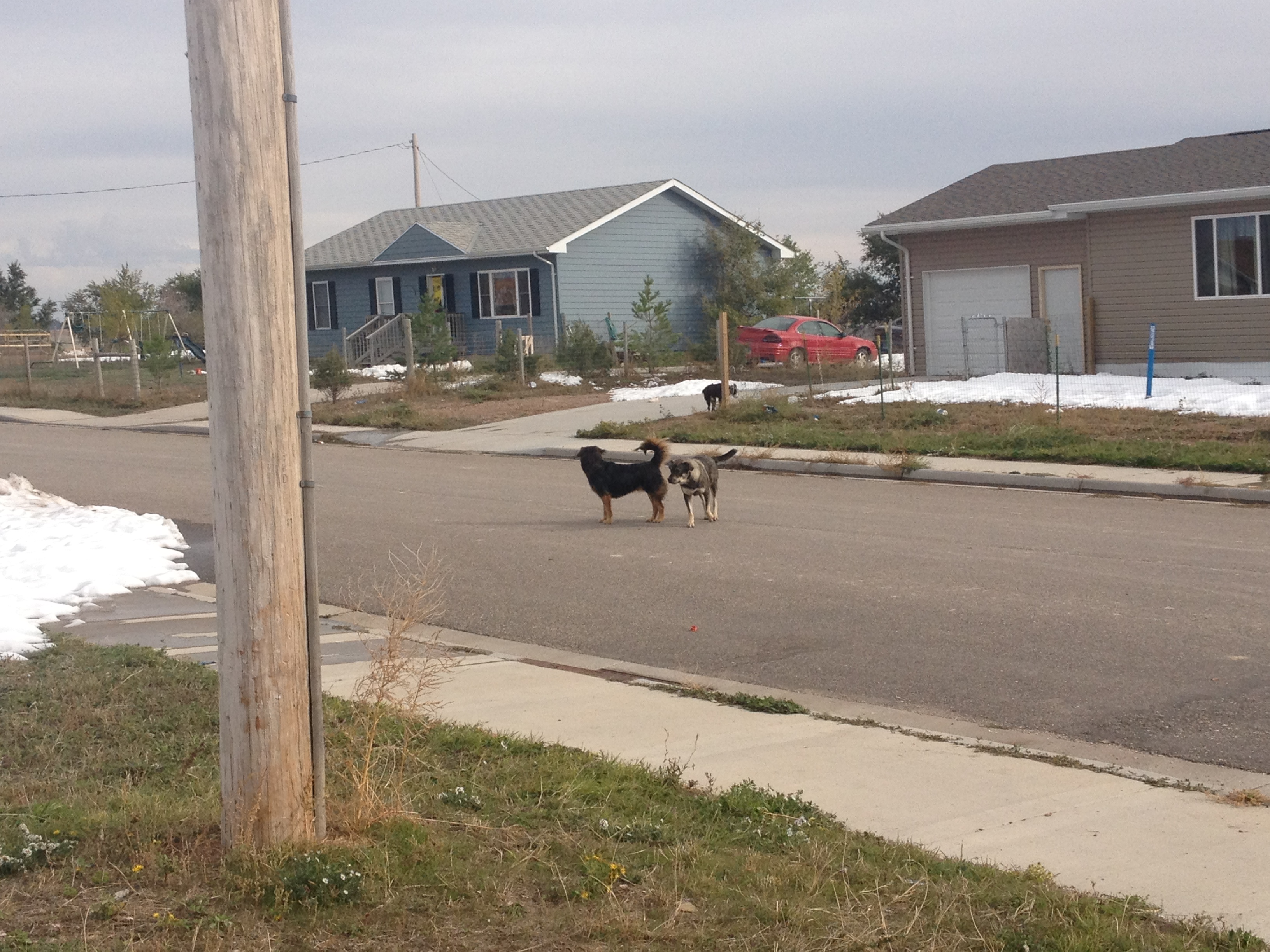
I was also quite astonished by the number of stray dogs in the neighborhood.  All day long, I encountered stray dogs just wandering up and down the street.  I recall one of my former co-workers in Chicago telling me that stray dogs were common on the south side, but I have no idea what that meant.  Occasionally I would see a stray dog in my neighborhood, but usually there was someone there to call animal control, or try to find them a shelter.  Here they were everywhere, wandering in and out of people’s yards, sometimes getting into people’s trash, and even pooping in the yard (which I was lucky to avoid).  I guess I just wonder why there is a different attitude towards dogs here than what I am used to.
The return trip also gave me an unexpected surprise; the quintessential Nebraska experience.  For me, this means thunderstorms and steak.  On the return trip southbound across the Nebraska Panhandle, we encountered a series of really fun storms, with lots of lightning.

RADAR_20131010 IMG_1146

Thunderstorms are my favorite type of weather, at least from an observers point of view.  There really is nothing like the raw, natural power of these storms.  I also love the differentiation within the storms, and how abruptly things change inside a thunderstorm.  With the heavy rain, frequent lightning, hail, and abrupt wind changes, there is so much to see.  There is so much going on I feel like I can make a diagram like those Xs and Os the football commentators make.  It is the weather phenomenon for people who love to see all things energetic.

It is also the weather phenomenon for people who love efficiency.  Seattle and Kansas City average about the same amount of annual precipitation (37-38″).  However, in Seattle, precipitation occurs 155 days per year, while in Kansas City, precipitation only occurs 104 days per year.  Kansas City achieves the same result with 41 more rain-free days.  In addition, many days with thunderstorms are mostly sunny for large sections of the day, with the exception of the hour or two when the storms are rolling through.  Overall, many more productive hours.  For me, it is the long, humid day, followed by the abrupt thunderstorm that makes the Great Plains what it is.

We stopped at a steakhouse called Cantu’s in the town of Bridgeport, NE right after we finished rolling through the storms.  The place is right on highway 385, the main street through the center of town.  I have many times stopped at random places I encounter on the main streets of towns while driving through.  I really like doing this because it gives me a sense of what makes that town unique to every other town I have ever been to, something I won’t get by eating at a chain restaurant.

Of course, I have had a variety of experiences, ranging from great to horrible at restaurants like this.  However, when on the Great Plains, particularly in areas near a lot of ranches, I’ve have mostly good experiences with steakhouses.  The trend definitely continued today.  I really enjoyed my sirloin steak at Cantu’s.

A New Activity

It has been said many times in life that each and every one of us has something called a “comfort zone”. This “comfort zone” consists of wherever we feel comfortable. It is a set of situations, places, activities, and types of people. Inside our comfort zones, we feel a certain calm. The situation does not call for any kind of panic, and does not induce a certain kind of stress. I think we all enjoy being in our comfort zones, and can have some of our best times in life in places that are familiar to us, around people that we know and trust, and doing activities we know we excel at. Outside our “comfort zones”, we feel stressed. We often have some level of self-doubt, about our ability to handle a certain situation, excel at a certain new activity, or relate to an unfamiliar group of people.

It is also commonly stated that our “comfort zones” are in a perpetual state of flux, and at all times they are always either expanding or contracting. And, believe it or not, whether our “comfort zones” are expanding or contracting is typically at least partially under our control. When we open ourselves up to new experiences, we allow our comfort zone to expand. Nearly every activity any one of us enjoys was once strange and unfamiliar. LeBron James was once new to basketball, and Lindsey Vonn was once new to skiing.

Those that do not leave their “comfort zones” from time to time tend to see their comfort zones contract over time. This is because, well, in life, change is inevitable. We have all had the experience of one of our favorite places, perhaps a restaurant or a store, either closing down, or changing under new management. Likewise, sometimes friends take a different path in life, or change in some kind of a way making the friendship simply not what it used to be, or gone altogether. If we don’t perpetually find new places, new activities, new people, and new situations, we are doomed to enojy less and less as time goes by.

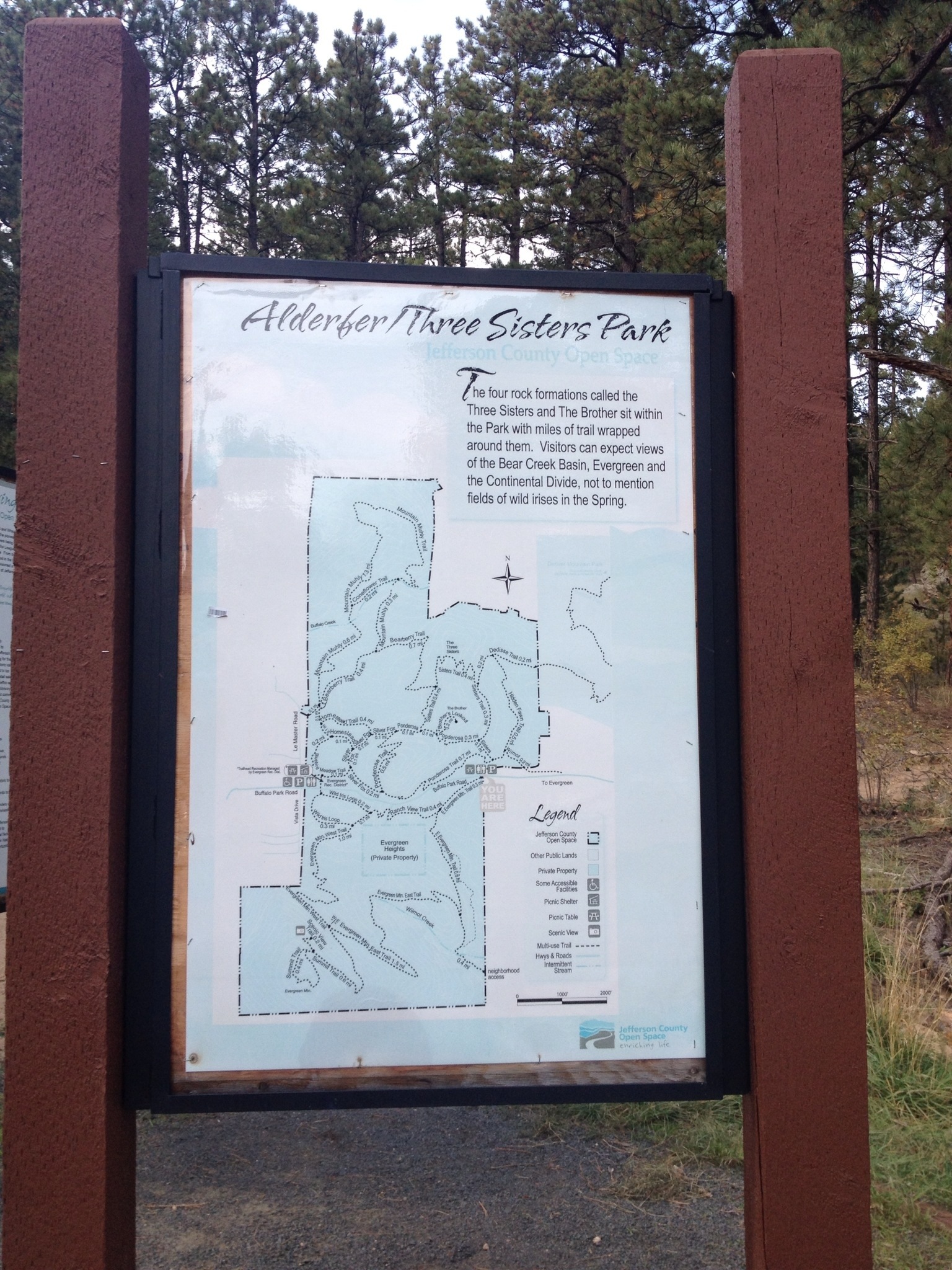
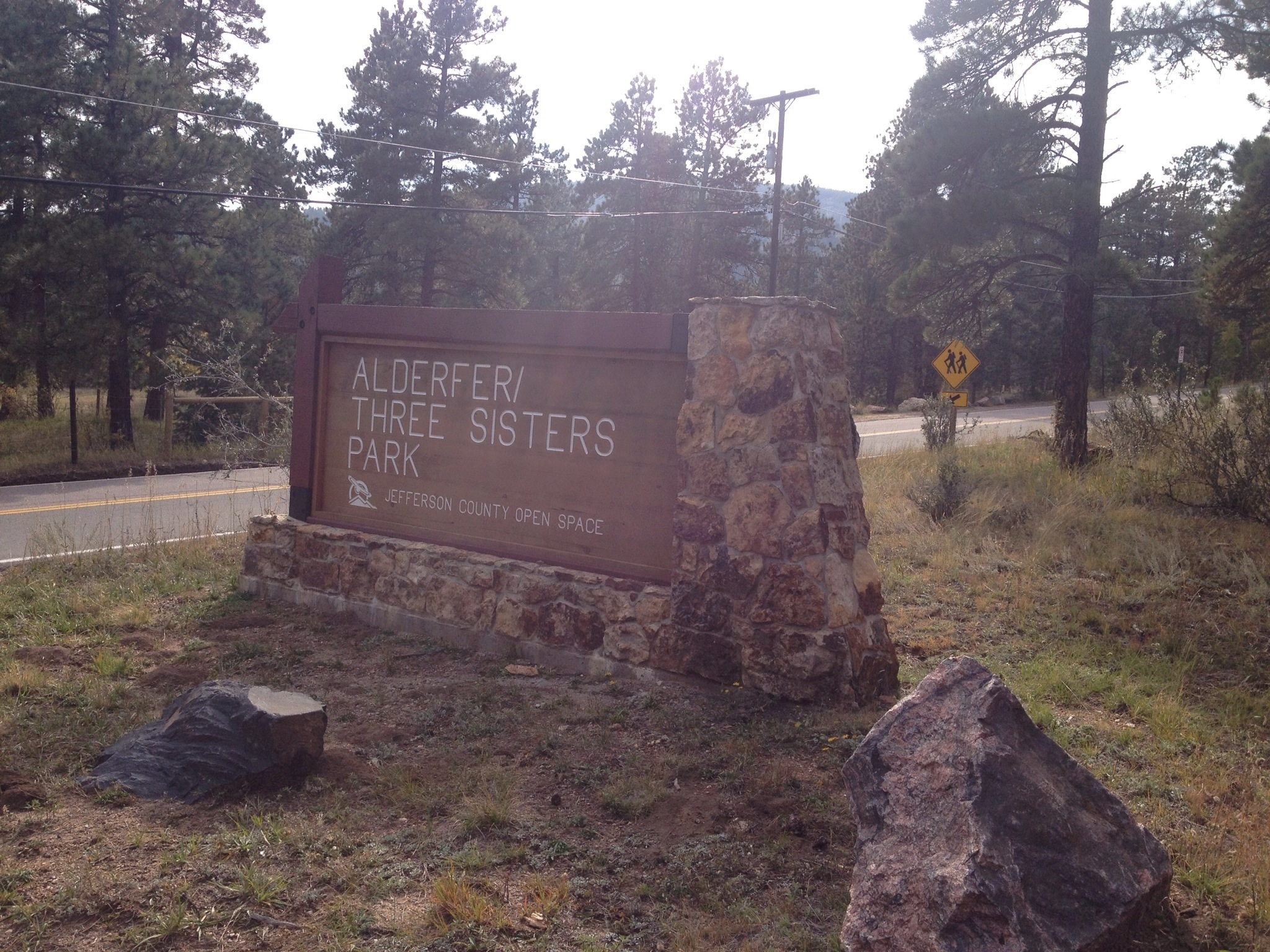
In that vein, I decided to take advantage of an opportunity to do a new activity today: mountain biking. Today’s adventure took me to Alderfer/ Three Sisters Park near Evergreen, CO, which is actually less than an hour from Denver.

20131009-223244.jpg

20131009-223253.jpg

Some might say that mountain biking is not too different of a sport from road biking, which I have done over 1,000 miles of every year since 2009. I even came into this thinking it was only slightly different, like how baseball is to softball. But, there are actually much larger differences than I imagined.

The main difference between the two sports can be summed up as balance vs. speed (or power). In road biking, when idle, it is proper to have one pedal down and one pedal up, and be positioned in an aerodynamic stance. This is because the top priority is sped, and putting our legs in the most powerful position possible will help us develop that speed. In mountain biking, it is proper to put both pedals at roughly the same height, especially on downhill sections with rocks and jumps. This, along with an upright position off the saddle, bent arms, and weight back is the best position for maintaining balance, which is the top priority when mountain biking.

20131009-224441.jpg

This was the hardest downhill stretch I did today. In fact, it took me three tries to get down this without either crashing or hitting a rock, which would make me come to a stop, and have to dismount. Even upon completion, I am sure I looked quite lame. However, I was told I did pretty well for a first timer.

Stretches like this become both easier and more fun, as one develops to confidence to take them at faster speeds. In this sense, mountain biking actually reminds me of skiing. Most people don’t understand how enjoyable skiing is when first learning. My first day of skiing, when I was 14, all I did was try not to fall. As I got better at it, and, most importantly, developed more confidence in myself, allowing me to go faster, the sport became more enjoyable. In fact, I came to the conclusion today that if an activity is easy to master, within the first day, it will likely get boring over time. Some of the most enjoyable activities, the best games, and most interesting topics, cause frustration at times, especially at first.

Later in the day, I crashed on a similar downhill stretch. I broke my pants and got a couple of scrapes. This is, of course, bound to happen to anyone that goes outside their “comfort zones”. Whether it be the physical “scrape” I got my first day of mountain biking, or the mental “scrape” of a 14 year old who got rejected after asking someone out on a date, we all take this risk when we exit our comfort zones. Assuming we can overcome our “scrapes”, and learn from our experiences, we will all be the better for it. In reality, we have a choice. We can either let fear control us, or gain control of our fears. This does not mean we eliminate fear. I was quite scared today. It means we work through it, and refuse to let our fears close us off from new experiences and relegate us to an ever contracting set of options in our lives.

Bent’s Old Fort

IMG_1112

The idea of racial unity, or more accurately the idea of two or more racial/national groups living side-by-side without conflict, and mutual respect for one another is not new.  It isn’t, as it feels like some people believe, something that mankind first came up with in the middle of the 20th century after finally sorting through the fallout from World War 2.  It is just an idea that has never really overcome other pressures.

In the early to mid 19th century, brothers William and Charles Bent, of Saint Louis Missouri, actually believed that it was possible.  Early in life, these brothers participated in a series of trade missions along the Santa Fe Trail.  As the Bent brothers encountered both Mexicans and Native Americans on these missions, over time they established good relations with both groups of people.  William Bent was even accepted into the Cheyenne tribe, and participated in negotiations on their behalf.  This included negotiations with other native tribes, as well as with the United States. The two brothers, along with Ceran St. Vrain established a trading fort in what is now Southeastern Colorado, along the Santa Fe trail.

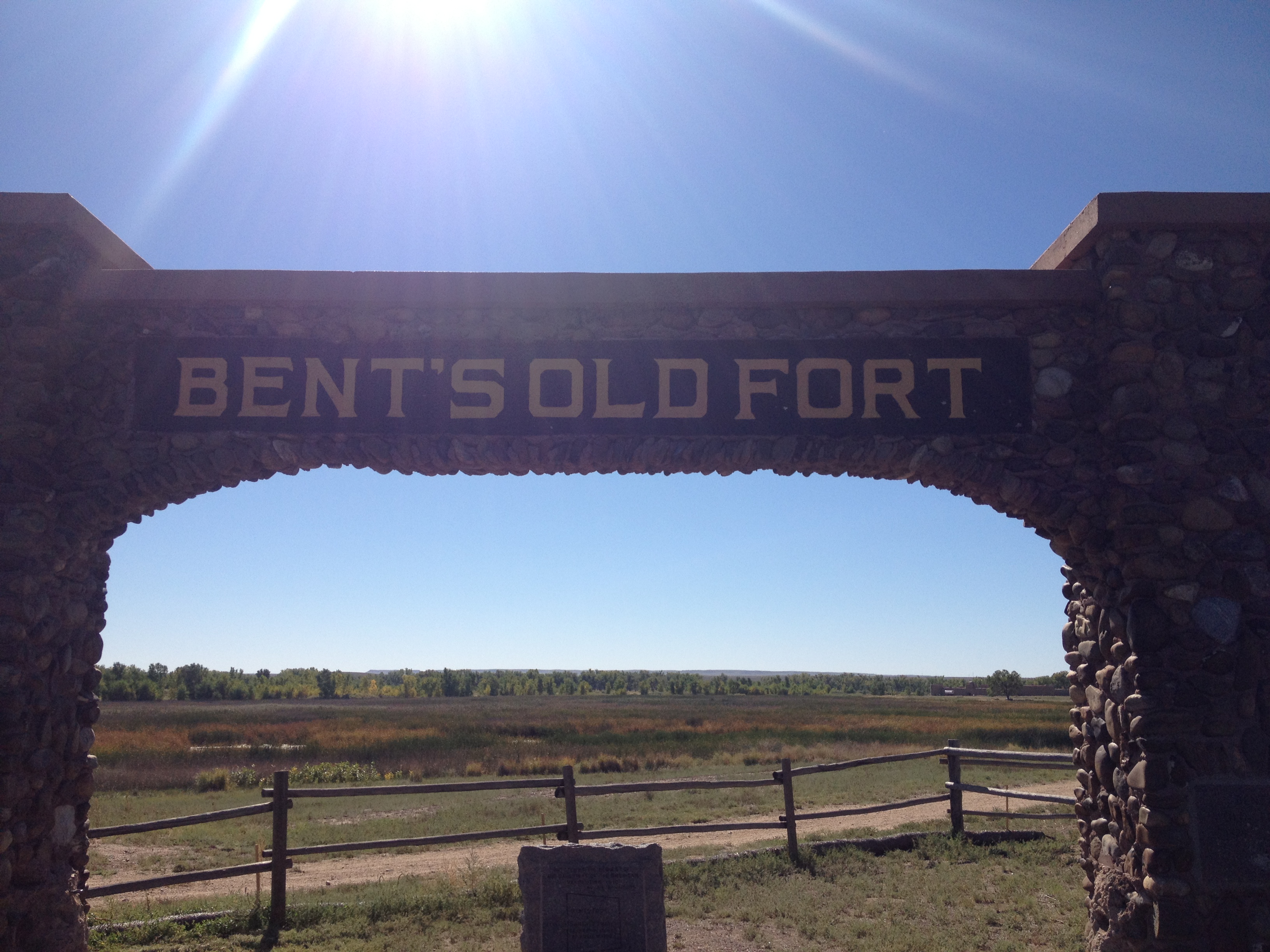
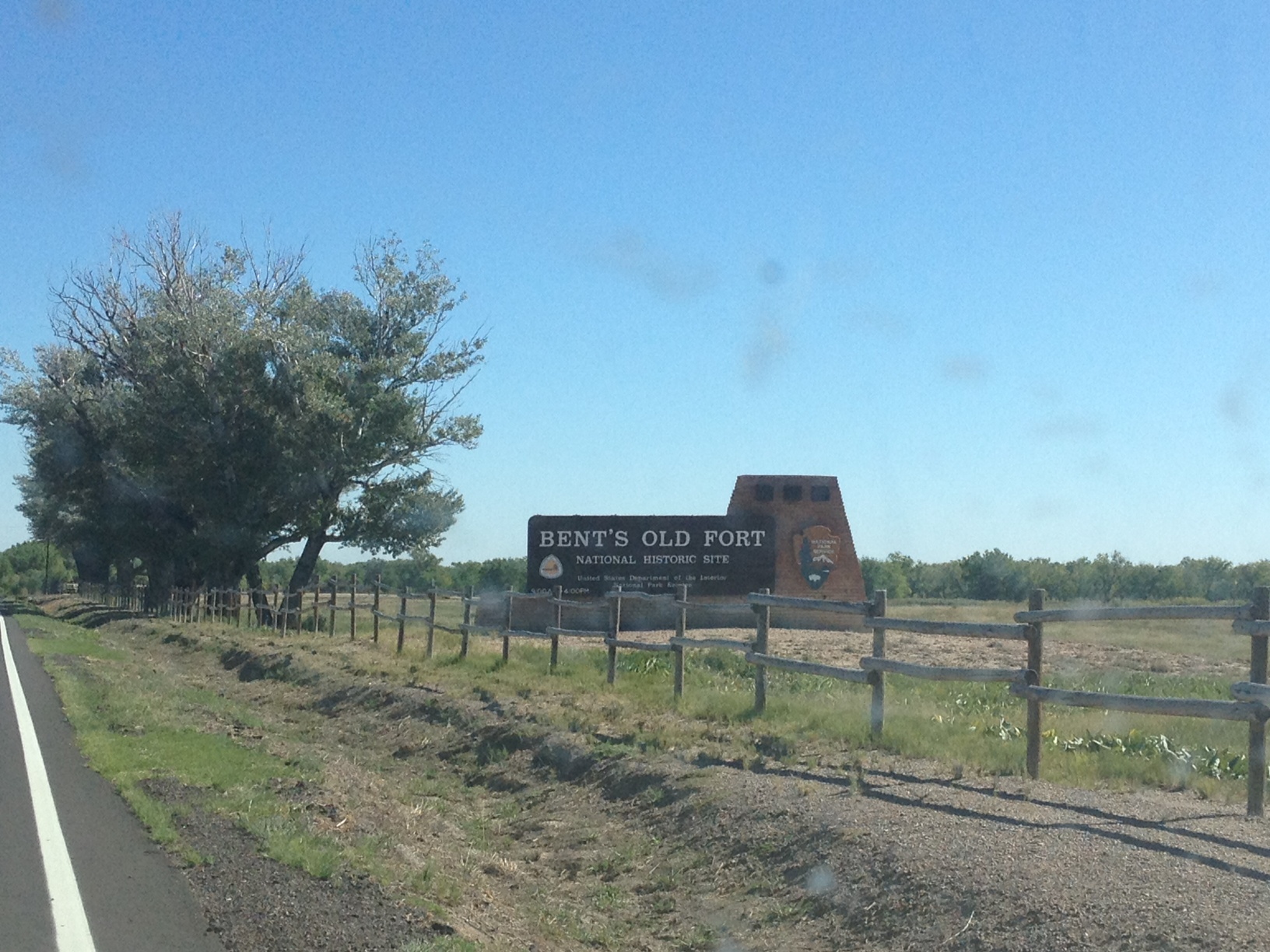
For this reason, I decided to make the trip to Bent’s Old Fort, but I ran into one minor issue.  Apparently, I did not realize that Bent’s Old Fort is a National Historic Site, and therefore is closed due to the current government shutdown.

IMG_1111 photo

So, I did the only sane thing.  I pulled my car off to the side of the road (the parking lot was also closed), and I snuck around the gate.  Heck, I didn’t have to pay the entry fee!

IMG_1115 IMG_1116

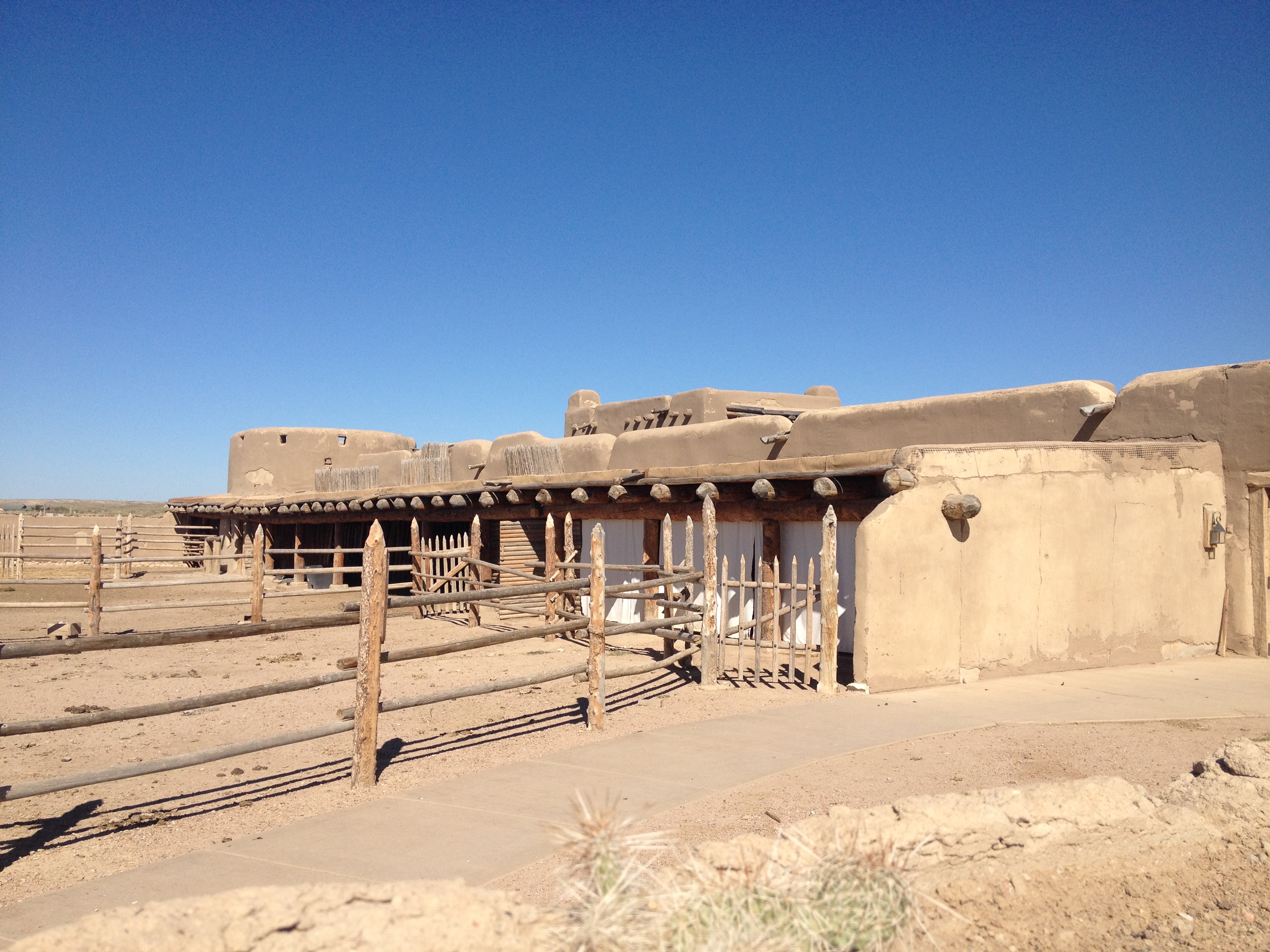
The fort is reconstructed really well.  I should probably come here sometime when I could actually get inside the building.  And also when the bulls and horses that are kept there are contained rather than wondering around where I could have theoretically provoked them and wound up in trouble.  In fact, that is why I did not stay very long, and did not take any pictures of the animals and the trail.  I was, however, able to imagine what it was like for pioneers and traders to travel along this trail, and encounter this fort, the first building of any sort travelers along the trail would find for miles.  And, according to the information presented in the parking lot, which I did get to read, from 1833 (when it was built) through 1849, this place would have been bustling.  Surely, a welcome sight for travelers.

IMG_1113

One question that often comes to mind when learning about Bent’s Fort, is why it was placed where it was, near La Junta, Colorado.  Currently, most of Colorado’s largest cities are a lot closer to the mountains, within 20 miles or so.  From the perspective of modern day Colorado, it appears illogical for this major trading post to be located over 60 miles east of Pueblo, the mountains, and all of the good fur and pine.   However, at the time Bent’s fort was built, 1833, it was built right on the border with Mexico.  For someone traveling west on the Santa Fe Trail, this fort marked the end of the portion of the trail in the United States.  After this, travelers would have entered Mexico, or, after 1836,  the Republic of Texas.

Unfortunately, both Bent brothers ended up on the wrong side of history despite their good intentions.  Actually, it was perhaps because of their good intentions.  Charles Bent, the older brother, was appointed the first territorial governor of New Mexico following the Mexican-American war.  The reading material outside the fort suggested that he was appointed to this position due to his good relations with the people there.  However, he was killed by the Native Americans in the Taos Revolt in 1847.

The younger Bent brother, William, was persecuted by the other side.  During the Sand Creek Massacre, he was captured by General John Chivington after attempting to make peace between the U.S. and the Native tribes during the gold rush.  He was forced to lead Chivington and his troops to the Cheyenne campsite where he conducted the Sand Creek Massacre, killing hundreds of Native Americans.  William’s end was not nearly as dramatic as his brother’s, but his efforts failed to create peace between the U.S. and the Native Americans.

The story of the Bent family and their fort reminds us that it is important to judge everybody as an individual, and not paint every member of some group with one brush.  Throughout this time, there were definitely more white people like Chivington, who murdered natives despite their efforts to make peace, and also more white people like the Bents, who approached native tribes with deep respect for their culture, and attempted to share in the human experience with them.  There is more to who someone is than their racial identity.

Just in case the lines were not blurred enough in this whole story, John Chivington was a hard-core abolitionist.  He could not wait to free the black population and share our culture with them.  Yet, he viewed all Native Americans as savages that needed to be exterminated.  On the flip side, the Bent brothers owned slaves, and William would eventually support the cause of the confederacy.  So, there is a group of people out there who would potentially view Chivington in a more favorable light than Bent.

So, who is the good guy and who is the bad guy?  People like to simplify history, assign one side ad good the other as bad, and establish one or two themes.  This makes them feel like the have a good handle on the situation.  However, in reality, history is about as complicated as the human mind, and all of the many mechanisms that cause people to behave in the way that they do.  Some people may know more individual facts about history, but that does not necessarily mean they understand history better.  Some people view all facts through the lens of a preconditioned idea about the nature of the people involved, and cannot appreciate all of the facts.

IMG_1120 IMG_1123

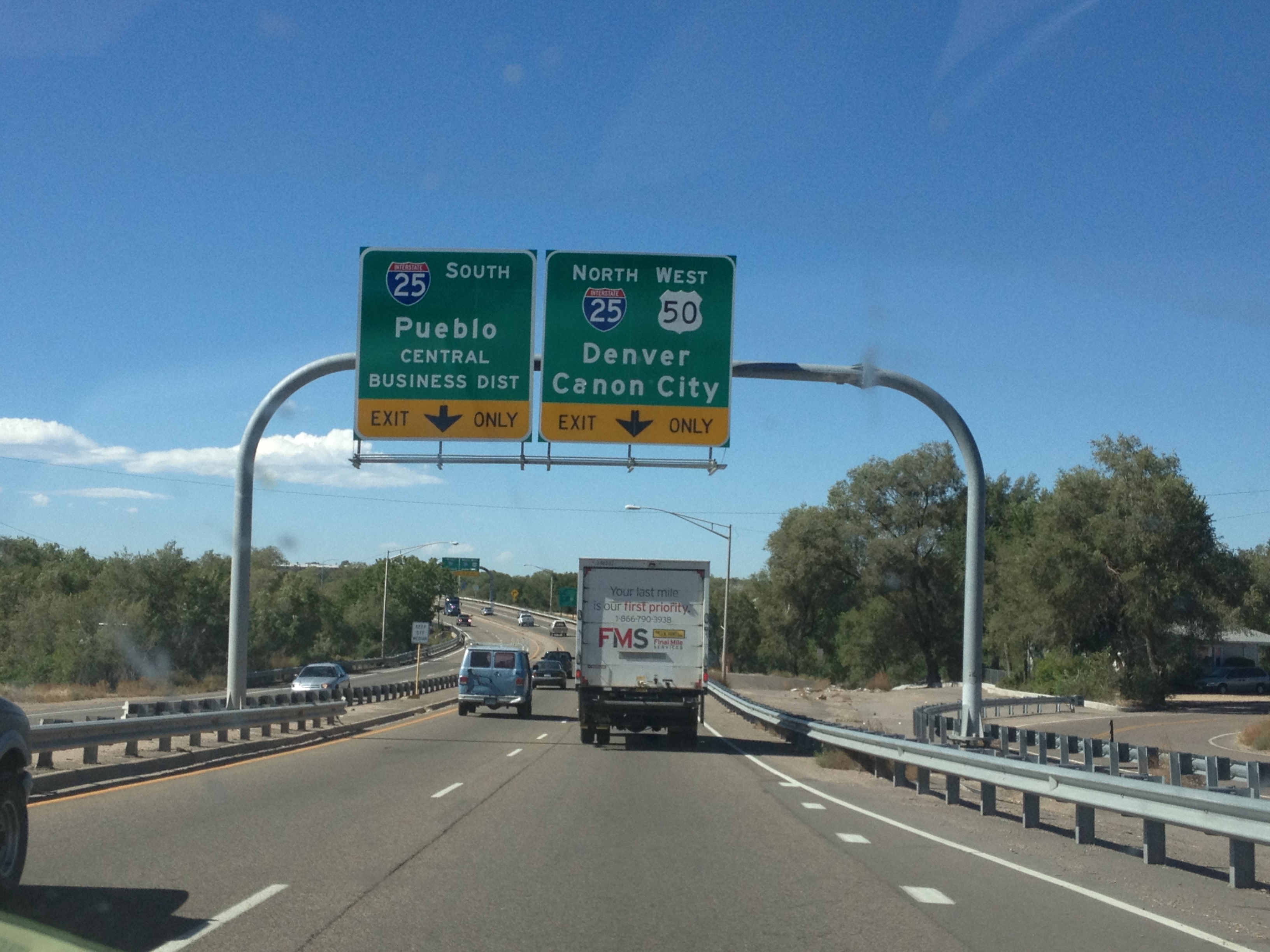
One amazing thing about traveling is that travel has this way of causing people to build upon their thoughts.  Sometimes it almost feels as if the world has found a way to set itself up in such a pattern that it creates certain themes in everybody’s lives, or at least each person’s individual trips.  After pondering these thoughts on the drive from La Junta back to the interstate, the drive home took me through two towns that recently made waves in our current political climate; Pueblo and Colorado Springs.

Last month, these two towns made news across the state as they surprising recalled two of Colorado’s state senators.  One of them was actually the leader in the senate!  The recall election was at least partially about the gun control debate, but other factors may have contributed.  Advocates on each side of the debate appeared, at least to me, to be motivated by ideological differences rather than some form of tribalism.

But is it all just ideology?  Have we really replaced racial issues with actual issues about how we view our government and society (which would be a positive change)?  Unfortunately, last year’s election results, and specifically the large difference in voting patterns by race indicates differently.  Race also still finds it’s way into may of the political debates we have in this country today.  I am not going to assign blame to either side on this one.  This is not a partisan political blog.  But, pondering the racial component to our politics, the self-segregated neighborhoods in Chicago and other places, the Indian Reservations and the like, makes me think that we are not really living side-by-side the way the Bents had envisioned.  The middle of the 20th century saw a major push towards that end, with Matrin Luther King’s I Have a Dream speech articulating that goal in a manner that most can relate to.  But, there does still appear to be a disconnect.

Tribalism is an inevitable part of human nature.  But will our “tribes” always be dictated by our origins?  The internet now provides us access to nearly everybody around the world, and more and people are moving more frequently.  These factors may encourage our future “tribes” to be more determined on different grounds, such as worldview, or common interests.  But, would this be better?  Less disconnected?  Less violent?  Maybe the key is not how we determine our “tribes”, but having respect for other “tribes”, or at least letting them live the way they want to as long as they are not hurting you.  This is a tall task for the human race, but one that is theoretically possible.  All challenges can be met, like the one below, Pike’s Peak, which I got one last view of before it once again becomes snow packed tomorrow (which is fine, it looks better with the snow on it anyways).  A mountain whose peak was once unreachable, is not reached by People on foot, in their cars, and by the cog railway.

IMG_1125