Category Archives: seasons

Winter Cycling in Colorado

IMG_9426

Colorado weather can be quite variant, especially in wintertime. This variance opens up opportunities and makes winters here far less unpleasant than winters in the Northeast and Midwest. Compared with Chicago, Denver’s winter temperatures…

  • Are 41% more variable
  • Change, on average, 9.3°F from one day to the next (In Chicago it’s 6.6°F)
  • Reach 50°F (10°C) or greater 34.6% of all days, compared with only 7.1% in Chicago
  • Despite this, Denver gets more snow (53.8 inches per year) than Chicago (37.1)

In particular, the greater frequency at which temperatures warm up provides some opportunities. I need not write off an entire season for outdoor cycling. There were six days in January 2020 in which the temperature reached 55°F (12°C).

Then, on Groundhog Day, as if to taunt everyone that buys into the folklore, temperatures across Colorado were exceptionally warm. Denver and the surrounding area reached well into the 70s while some areas in the East and Southeastern parts of the state reached 80!

That morning, Punxsutawney Phil, the most widely known groundhog, would predict an early spring. Later on, Flatiron Freddy, a groundhog local to Colorado, predicted six more weeks of winter. That evening, the weather in Colorado would turn sharply colder and snowier for the foreseeable future.

Groundhog Day 2020 ended up being a perfect demonstration of the opportunities and challenges associated with cycling in Colorado in wintertime. I learned a long time ago to keep to lower elevations in the wintertime due to both wind and residual ice on the roadways. Luckily, the region has a fantastic set of trails. This is actually an outdated map. The network has become even more robust since 2013!

DenverBikeTrails2013

It is all centered around Confluence Park, right in the heart of downtown. Confluence Park itself is a fantastic example of a place where people can get a little bit of time in nature right in the heart of a major city. There is also an REI flagship store!

On Groundhog Day, I decided to ride the South Platte River trail from Confluence Park to Chattfield Reservoir.

IMG_9419

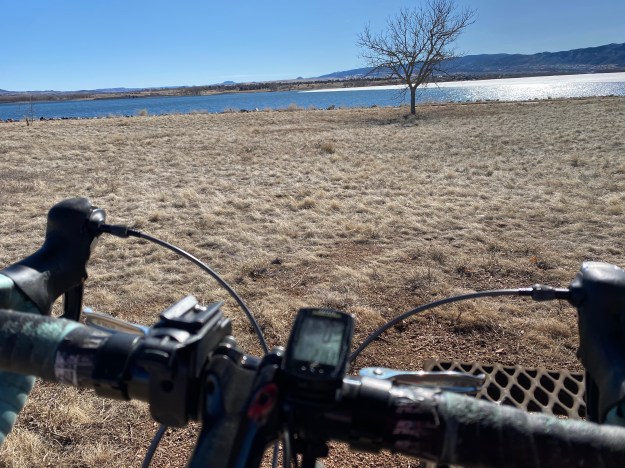
The trail runs a total of 16 miles. The reservoir itself can be reached with only an additional 3 miles of pedaling. This place is tremendous, with the lake in the foreground and the mountains behind. In summer, there are often a lot of boaters.
IMG_9427

One of the challenges that day was the wind. Wild changes in temperature from day to day are often associated with strong winds and Groundhog Day was no exception. The wind came out of the South at 15-20 miles per hour, making the mostly Southbound ride to the reservoir far more challenging than usual. I recall going at about 15 miles per hour the entire way.

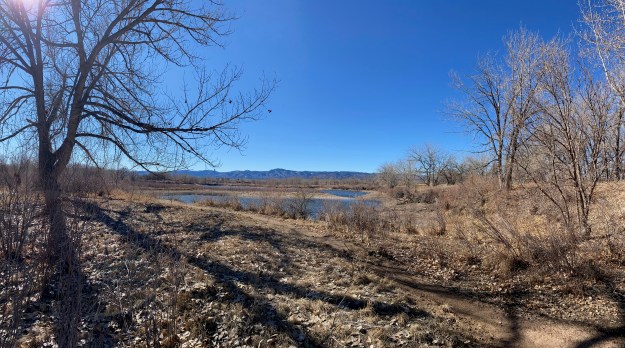
Having not done this specific ride for a few years, I forgot how beautiful the Southern half of the Platte River trail is. The trail snakes through downtown Littleton. After that, there are plenty of places where the the river in the foreground and the mountains in the background make one feel as if they are in the setting of a famous nature painting. Much of this land is being preserved as part of South Platte Park.
IMG_9423

The return trip went quite fast, with the wind at my back and the miles just flying by. While I refrain from hill climbs in the wintertime, this ride ended up having some similarities, with a headwind to get to the reservoir and a much easier and faster return trip. I was back at Confluence Park before I knew it!

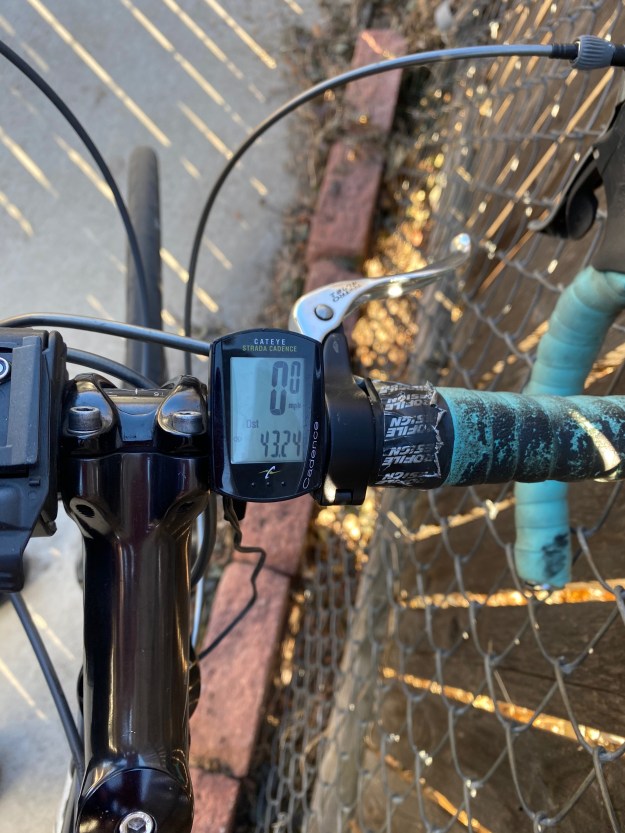
In addition to the wind, another major challenge of winter cycling is the limited amount of time available. Winter days are short, and without exception start off cold. Even on Groundhog Day, the day cities across the front range would hit record highs in the 70s to near 80, morning temperatures were still in the 25-35°F (-3 to +1°C) range. If one is to wait until 9 or 10 for temperatures to warm up a little, and be limited by a 5 P.M. sunset, there is a pretty limited amount of time or riding. It was for this reason I picked the particular ride I did.
IMG_9431

It is also for this reason that despite Colorado’s frequent warmer days in the winter, I finally decided to supplement my training with some indoor spinning.

IMG_9347

New Season, New Resort

img_9128

Winter in Colorado is off to a solid start. Several major snowstorms have brought significant snowfall to the Colorado mountains. Also, unlike in recent winters, all parts of the state have received their fair share of snow. The mountains across the state are reporting snowpacks slightly above the long term average.

CO_Snowpack_20191223.png

Winter Park is one of the few ski resorts relatively close to Denver that I had never been to before. The primary reason for this is that since moving to Colorado, I had stuck with the Epic Pass, which includes Beaver Creek, Breckenridge, Keystone and Vail. That set of top-notch resorts within a two hour drive is tough to pass up. However, some of us were ready to try something new and decided to go with the Ikon Pass this year.

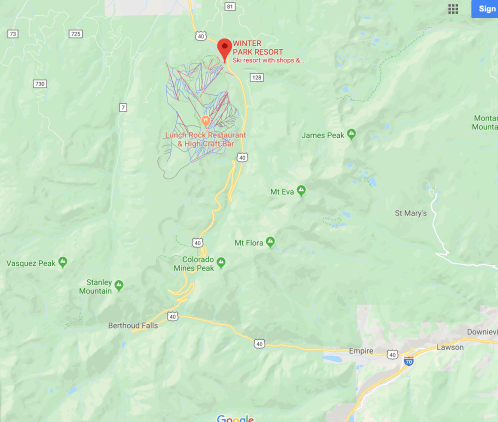
Winter Park is about the same distance from Denver as Breckenridge, Copper Mountain and Keystone. The road there, though, is one of the windiest roads I have ever been on.

WinterPark_HWY40.png

With an earlier exit off Interstate 70, this place may be easier to get to on days when there is heavy skier traffic. However, with all the curves going up and over Berthoud Pass, this trip could be more challenging in inclement weather. This particular trip was made five days after the most recent snowfall, and the roads were still slick.

The start of any season requires some adjustment. Having not skied in almost nine months, putting on my ski boots felt kind of hard. It really feels easy. However, the first few times in any season, it feels like I am shoving my feet into the boots and using up a significant amount of energy in my leg muscles.

img_9112

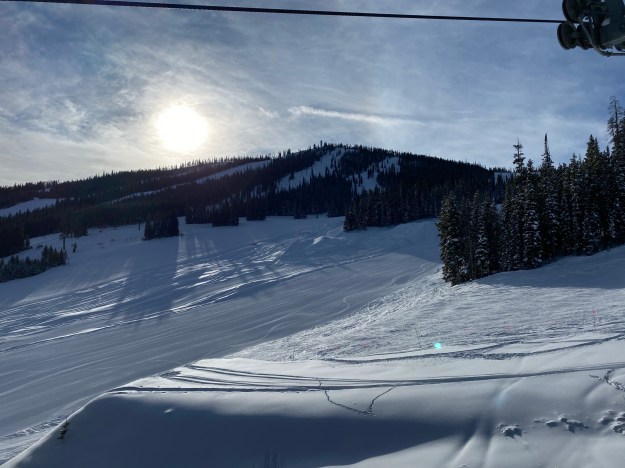
Winter Park felt similar to Colorado’s other top notch resorts. On measures such as vertical rise, skiable area and number of runs, it is quite comparable to Breckenridge, Copper Mountain and Steamboat. It also seems to have the same general mix of groomed runs, bumps, glades and bowls.

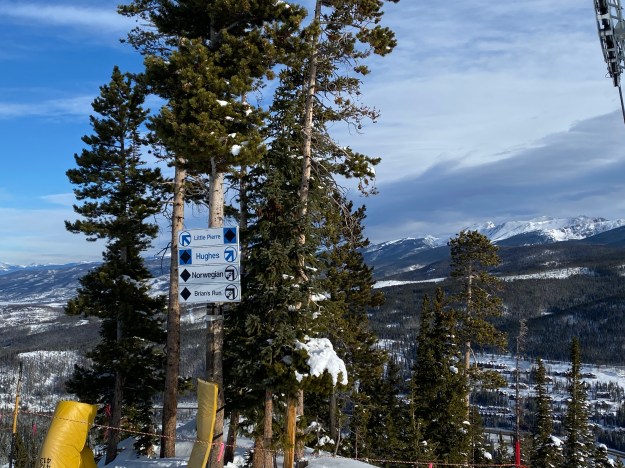
I appreciate the inclusion of the blue-black designation for runs where the difficulty level is somewhere in-between a typical intermediate (blue) and advanced (black) run. Everywhere I have been in Colorado, it has felt like there are plenty of runs needing this designation.

img_9104

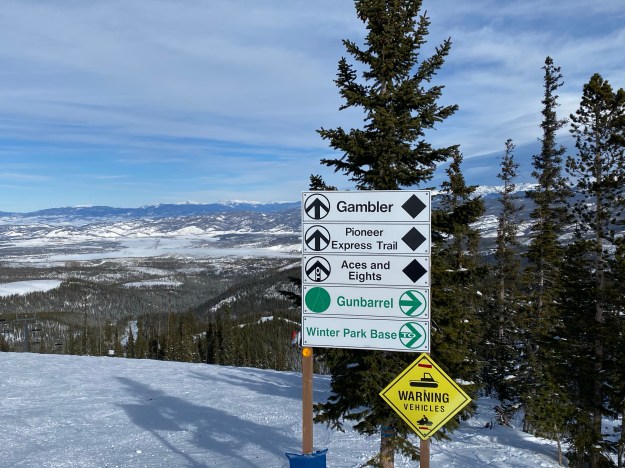
I also love it anytime slopes are given names related to gambling.

img_9115

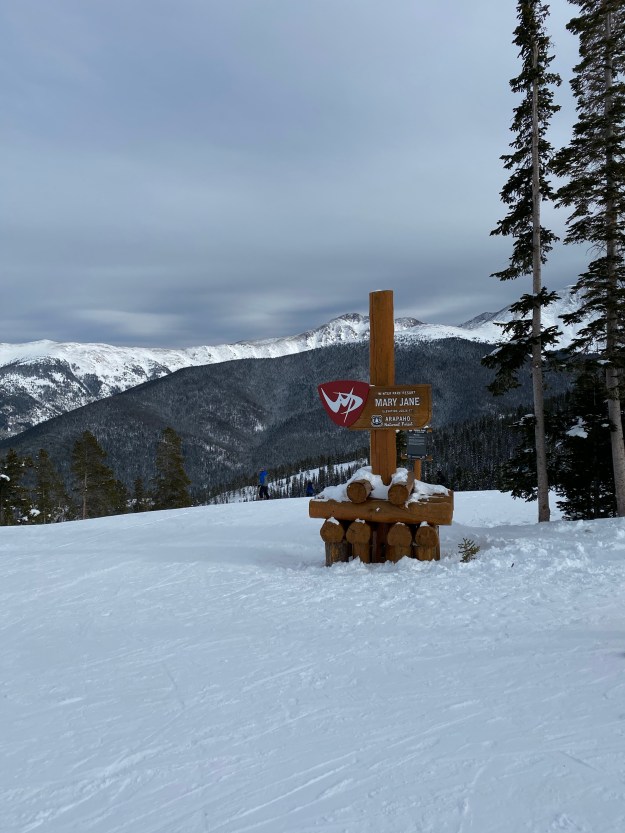
Those who ski Winter Park a lot tell me that no visit to Winter Park is complete without a visit to the Mary Jane area.

img_9126

This area cover about 1/3 of the resort, and has some of the more challenging terrain. Trestle is one of the steepest trails in Colorado.

It’s easy to feel lame on a run like this (unless you are an expert). While on the run, I felt like I was taking it very slowly and making wide cuts across the mountain. By the end, it felt great to know I had made it down such as steep slope in the trees. It is important to bask in our accomplishments, at least for a little bit.

img_9117

The entire experience served as a reminder of something I had realized years ago. Many of life’s choices follow the same general theme. There is a path we can take that is familiar, comfortable and easy. It’s avoiding our problems, not having that difficult conversation with a colleague, not sharing our opinions when they differ from the group, avoiding rejection and just turning on the television.

Then there is the other path. The one that requires effort, overcoming fears and facing discomfort. It is trying something new, learning something new, facing fears and taking the effort to arrange experiences to share with others. It is the path that will lead to a more enjoyable and fulfilling life. It’s a challenge to consistently follow the higher effort and higher reward path when we often crave the easy and comfortable. So, it felt great to realize that I was on this general path when I went through the discomfort of putting on ski boots and then again when traversing one of Colorado’s steepest tree runs.

It is hard to make a comparison between Winter Park and some of the other ski ares relatively close to Denver on a Thursday just before Christmas. Some people say that one of the advantages to Winter Park is that it is relatively less crowded. Judging this would require coming here on a busy weekend day. Overall, though, it feels good to have tried a new place and pushed my limits so early in the season.

Exactly What Was Expected

Sometimes in life, for better or for worse, things go exactly as expected.

img_8965d

An average November produces only six clear days in Chicago, compared to 18 cloudy ones. December is even cloudier, averaging 20 cloudy days.

The weather I experienced, visiting Chicago over Thanksgiving and into early December was exactly what one should expect. With the exception of a few hours on one day, it was cloudy. There were stretches where it even got foggy.

img_8951

A couple of days, it rained. Temperatures where in the 30s (-1 to +4°C) pretty much the entire time.

img_8961

It could have been worse. Chicago is prone to cold air outbreaks, and while late November into early December is not the heart of winter, it is still possible for temperatures to drop down close to 0°F (-17°C).

Thanksgiving is not about pleasant weather, being outdoors or any specific activities. It’s not even really about the food or drink. It’s about gratitude. It’s also about spending time with friends and family.

The Thanksgiving feeling is that conversation, usually around the table, where everyone feels safe, supported and not judged. Everywhere we go in life, we feel the need to prove something. We are always trying to prove to our bosses that we are worthy of pay raises and promotions. We are often trying to prove to those in our social scenes that we are worth inviting to parties and events. With social media and smartphones, much of our lives have become trying to prove to people that we are interesting enough to warrant their attention. Thanksgiving, when done right, is a reprieve from all that!

Holidays are not without their struggle. Flights to visit family are often expensive and we are often forced to make tough decisions regarding visiting family at Thanksgiving, Christmas or for some other holiday. This year’s trip turned out really well, as my time in Chicago started on Thanksgiving, November 28th and extended about a week. I got to experience both holidays, as we had Thanksgiving dinner, but also were able to set up the Christmas tree, start singing Christmas songs and watching Christmas movies.

For many other reasons, the entire trip to Chicago ended up pretty closely aligned with expectations.

img_8981

When trips to visit friends and family fall in line with expectations, it is almost always a good thing. However, in other areas of life, sometimes what we expect is not what we actually want. This is technically true of work right now. Well more than half of U.S. workers are not happy with how their jobs turn out. As of the end of the 2010s, going into any job, one would have to unfortunately bet on a poor experience.

In every area of life, from personal relationships, social endeavors, politics, to just going to the supermarket, an experience can be typical or it could be abnormal. How anyone feels after a “typical experience” depends on three factors.

1. Personality

Specifically, this often relates to how open we are and how optimistic we are. Optimists tend to have high expectations. This is generally a good thing, but can be frustrating when some anticipated better than normal experience does not come to pass. People who are more resistant to change would likely be more satisfied having an experience that falls in line with what is typically expected.

2. How one feels about the current state

This one is easy to reconcile. If someone likes where they are in life, and feels things are moving in the right direction, then they will be happy with a typical life experience. However, when someone feels like something in their lives or what they are observing around them needs a change in direction, a “typical” experience can actually lead to some level of depression.

3. Recent events in our own lives

Both ancient and recent philosophical writings have described the need for some kind of balance between the predictable and the chaotic. Too much of the former can lead to stagnation and that nagging feeling as if something is missing. Too much of the latter can lead to that feeling that everything is out of control and nothing can be counted on. Experiencing exactly what one expects falls into the category or order or the predictable. For someone whose life has felt out of control, an experience that follows the order of things can feel refreshing. For someone who feels antsy and stagnant after seven identical weeks following a constant routine, another typical experience could just add to the frustration.


Gratitude and Atonement

thanksgiving

I suck at gratitude. Forever thinking about the future and how to correct wrongs, both in my life specifically and with society as a whole, I often neglect to be grateful for what I do have.

The problem is not isolated to myself, or any specific subset of society. I can think of several people in my life that are great at showing gratitude. They make people feel good about themselves by giving compliments, and sounding grateful for anything anyone does for them. More importantly, they sound grateful to people just for being who they are and being in their lives. They are the ones that will occasionally just thank me for the way my mind works after I make some kind of comment.

six_basic_needs

This is the exception rather than the rule. I have encountered far more people who are fixated on what they don’t have or what’s wrong. If I had to express my behavior with respect to being thankful vs. resentful, I would put myself somewhere in the middle of the curve. That is, however, not good enough. A lot of people recognize this as a problem. It’s now commonly recommend that people keep a gratitude journal in order to alter their focus.

IMG_8194

A decade is coming to an end. A decade full of ups and downs. A decade full of experiences. A decade full of joy and pain.

Throughout the decade, I can point to times when my behavior was positive, selfless and encouraging. I can also point to plenty of times when my behavior was erratic, self-destructive and not exactly fair to the people around me.

In the new decade, I am done with the tyranny of expectations, the fear of letting people down and the need for approval from others; especially authority figures. However, there are people in my life who genuinely helped me, were there for me during some rough times, encouraged me, and enriched my life just by being a part of it.

This Thanksgiving, it is time to

  1. Show people that I am grateful for them being in my life
  2. Tell them why I am grateful for them, and tell them that I care
  3. Show remorse for those who I have treated unfairly or taken for granted
  4. Truly let go of some things I am still holding onto

What I did can be thought of as trying to cram multiple years worth of gratitude into a single month.

85CFE71D-A716-451F-B61E-17477563723D.jpeg

I decided to write notes to people who impacted my life in a significant way over the course of the decade. I’m sure I still left some people out. It was a list I agonized over. In the end, I wrote about 85 letters.

I spent two weeks writing what I should have been telling the people around me all decade. The notes mention specific qualities about people I enjoy. They express gratitude for shared experiences. They described the positive impacts certain people have had on my life. They express remorse for the situations I did not handle well.

FDB273A0-7A65-437F-AC18-F2A3DA2FB804.jpeg

Writing the letters was quite emotional. In some cases, it felt like reliving the ups and the downs, the moments I am proud of and the ones that make me cringe. Overall, writing these notes made me feel better.

PostOffice

Bringing these notes to the Post Office turned out to be even more emotional than writing them. There was something amazing about the act of dropping all these letters into the mail slot. At that specific moment, a giant weight lifted from me. I had finally done the right thing. The past could be put behind me. This season of reflection, gratitude and atonement makes me ready for life’s next chapter.

I’m not sure how anyone is going to respond to these Thanksgiving notes. Some people, especially those I have not talked to the last few years, may even be a bit bewildered.

While I am sure I will hear from some people when these notes are received in the mail, I am not anticipating anything specific. That’s not the point. I wasn’t doing this to have anyone tell me how great it is that I am finally showing some gratitude or hear from people who have not been in my life for years. The point was to tell people they matter. Assuming nothing goes terribly wrong at the Post Office, that mission is accomplished.

In Between Seasons

9A58FA82-F1A5-4784-8D92-3C829FE03058.jpeg

The first few days of November in Colorado’s high terrain is the quintessential example of an in-between season. The first few storms of the year have removed all the colorful leaves from the trees. All of the “leaf peepers” have gone home. Snow covers the ground, but not in a manner that is deep and consistent enough to enable many of the activities associated with the winter season. Some of the ski resorts have opened, but likely have only one or two lifts operating.

9278532B-E0A5-4B9E-B54D-6862593A7462.jpeg

Almost everything, from the sounds of nature to the volume of traffic along the highways, is much quieter than usual.

It is a familiar place for most, and not just with respect to seasons and outdoor activities. It is present in all cycles of life. No matter how hard some may try to remain consistently occupied, there will always be that time period, when one activity is done and the next has yet to begin.

4E4EF583-CDD8-4C00-BCBF-E55A82210998.jpeg

This has become even more prevalent in the 21st Century. The world is changing faster. Gone are the days of having one job or one main activity for nearly the entire duration of adulthood. Nearly all people must periodically learn new tools and expand their knowledge base on a regular basis. The average job tenure is now 4.2 years, and it is now common for people to switch to a completely different line of work from time to time.

0E375AD2-C434-4A60-820A-26B85425C059.jpeg

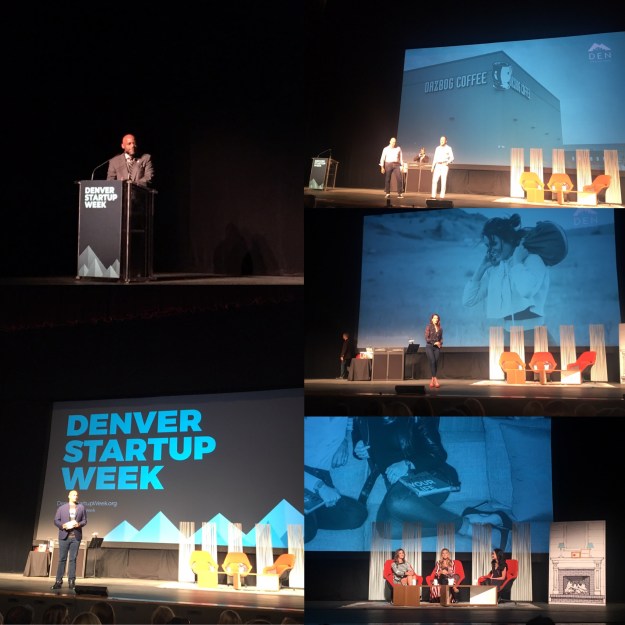
Olympic Gold medalist Lindsay Vonn discussing her new line of makeup at Denver Startup Week 2019

It’s long past time people stop asking those they meet for the first time “What do you do?”  This question needs to be replaced with something more appropriate for the current reality, such as “What are you up to?” One’s tenure at a specific job, like raising a child starting a bueiness or renovating a home is a project with a finite beginning and ending.

Early November in the mountains is that time period between one ending and the next beginning. What to do?

This in-between time represents an opportunity that the manager of six groups raising two children caring for an elderly family member and building a new garage does not have. For someone accustomed to being constantly on the move, this in-between time can be confusing and even disorienting. Whether expected, like the time between fall and winter, or unexpected, like a project cancellation, in-between seasons are a great time for what often gets neglected in typical daily life.

The most important things to do during in-between seasons are…

Rest

8A68DEAB-8E4E-4FDD-A5EA-D43552580BF2.jpeg

While it is certainly possible to rest too much, periodic rest is important to meet all of our physical and spiritual needs. Much has been written recently about the importance of getting good sleep. This is something few people prioritize.

Learn

0EA4297D-9A9D-41FB-B16C-BCCD612430D1.jpeg

Learning is commonly a part of everyday life. However, learning is typically dictated by demands related to jobs or other responsibilities. During this quieter time, there is the freedom to learn anything that actually pokes one’s curiosity. Many, including Google, understand the value of self-directed pursuits.

Improve

“Be better than you were yesterday” is a common mantra. Many people, especially those that are the most successful, are constantly working on themselves. The time between the ending of one activity and the beginning of another can be a unique opportunity to give some form of self-improvement the focus it needs to guarantee it come to fruition.

Work on Relationships

It is hard to imagine something more neglected by modern society than the need for human connection. Some believe that this neglect is behind most mental health problems. Relationships of all kinds need attention in order to thrive. Breakups and explosive fights between best friends and family members garner a lot of attention. However, people lose far more relationships due to neglect, when both parties cease making an effort.

Re-evaluate

Perhaps most importably, a life that is constantly busy provides little opportunity for re-evaluation of things like time use, spending habits and priorities. During times like these, more people have the ability to clear their heads of things like daily task lists and ask themselves what really matters. This will inform things like which relationships are the most important ones to working on, what to learn, what improvements to make and what the next beginning should be.

It won’t be long before the next season is underway.

img_5586

The odds of that next season being successful is improved when individuals improve, are well rested, and have the right priorities and relationships. While this can be done in many different settings, it is often done most effectively in places like these, where there are far fewer distractions.

B9771F77-1C0B-4678-9A75-5AE7C7A2A21B.jpeg


The Calm Before the Storm

91A9039D-4C79-45E4-812E-E3928B88931A.jpeg

This is Guanella Pass, 11,700 feet (3570 m) above sea level on Wednesday October 9, 2019. It was a warm day, one that almost felt like mid-summer. As can be seen from the photograph, the region had yet to receive a significant snow. On that day, Denver International Airport would reach a high temperature of 83ºF (28ºC). Temperatures were quite pleasant at higher elevations.

However, change was on its way. These photos were taken only several hours before autumn’s fist meaningful push of cold air would arrive in Central Colorado. The next day would see temperatures across the entire region dip below freezing, and snow fall all the way down in Denver.

6A95AF2C-D104-4363-BC26-E1DDF08F99E7.jpeg

Friday morning’s low would reach 9°F (-12°C) in Denver, representing a near record breaking temperature drop.

Thanks to weather models, forecasters saw this dramatic change coming. Most Coloradans were prepared.

CFBE0B4F-A48E-449D-BF4F-A88194318A06.jpeg

Yet, even without computer models to foresee the exact day and exact nature of these changes, it is pretty well understood, especially up in the Rockies, that at this time of year, sooner or later an event like this is bound to happen. This is why many high elevation animals gather food in the second half of the summer and why the tree leaves change colors in the autumn.

Luckily, it was a Wednesday. So, the roads people usually take to go “leaf peeping” weren’t nearly as crowded as they are on weekends.

1163A9B2-5E2C-432F-AA67-6DA40ABCCD95.jpeg

Guanella Pass is amazing in autumn. Being only 50 miles from Denver, it is typically far more crowded on weekends at this time of year.

7E0D4CB5-AB2A-43B3-99A7-439119D5FE99.jpeg

I often get carried away with getting to that perfect location, many miles out of the way where the image, the sounds, smells and conditions are perfect!

2CC765D1-907C-44B7-BCCC-90203D52B37F.jpeg

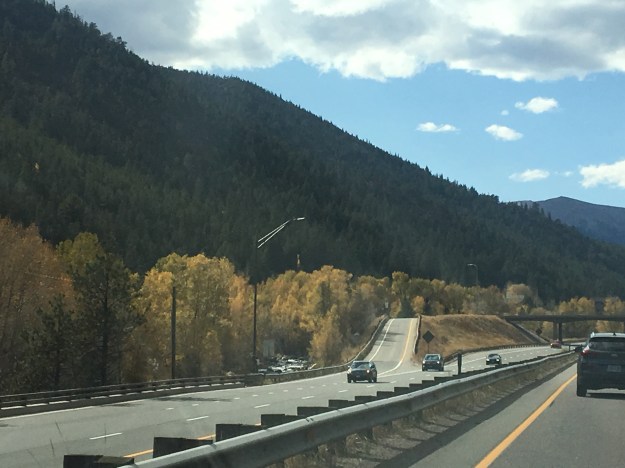
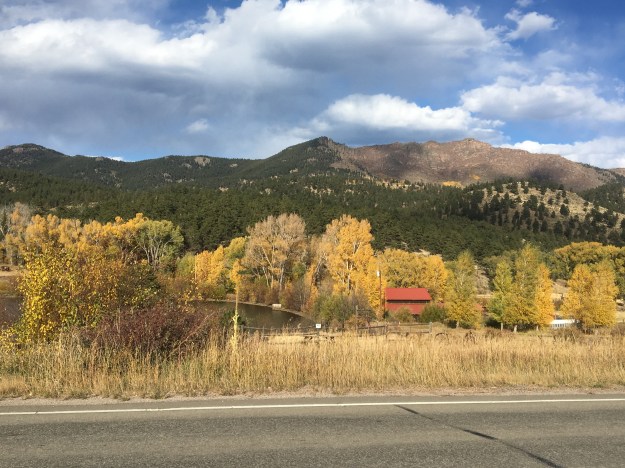
However, that day I noticed that it is quite possible to see some spectacular fall colors without even leaving the main roads. I saw bright gold trees along both Interstate 70 and U.S. Highway 285!

A0DDB034-26DE-4170-AA82-E319E6A6F799A9487C64-B667-4D02-8AE3-0627ED62852D

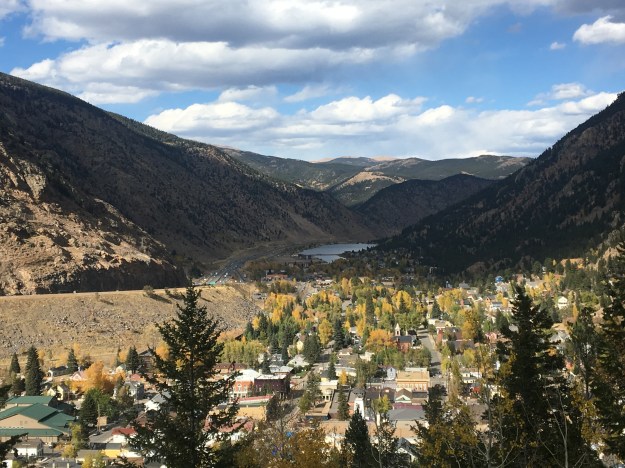
Few places captured the essence of life in the mountains in Autumn better than Georgetown, which is right along I-70.

0BFF00A7-FC21-4DB9-9098-3A56C44EC89A

It was strange to gaze upon the Aspen trees knowing that in less than 12 hours, due to wind and snow, most of the leaves would be gone, and the landscape was about to fundamentally be changed.

Storms are part of the nature of life, not just with respect to weather and seasons. It is the first time we have a crush, and soon after the first time we get our hearts broken. It is the conflicts we have with our family, close friends and significant others. It is that person we just don’t get along with. It is losing a job, getting in an unexpected accident, or even just having a week’s worth of bad luck.

It’s facing our fears, which is what Halloween is really all about.

A17E3021-CDD3-48B5-BCA1-17CED2393EB5.jpeg

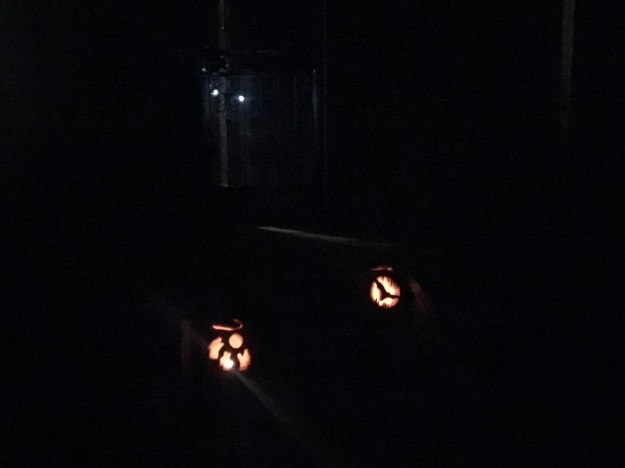
In October, the days get darker and chillier, foreshadowing winter, often the most dreaded of the seasons. It is no coincidence that this is the time of year we celebrate all that is spooky; carving spooky designs into pumpkins, dressing in scary costumes and watching scary movies.

Some of life’s “storms” come unexpectedly. However, some are at least somewhat predictable, like the changing of the seasons or a coming breakup. How we respond differs quite a bit from person to person. There are those that prepare, those that embrace, those that deny and those that simply try to weather it as best as possible.

Maybe the same is true of these Aspen trees up in the mountains.

8363BED6-3327-4D95-9B13-2F665E3491C9.jpeg

It was hard for me to imagine why some trees at 9,000 feet (2750m) in elevation would still have green leaves on October 9th. They seemed less prepared. However, maybe they are just enjoying this calm before the storm a bit longer. I can’t say I had not done the same at various points in my life.

The key to facing the storms of our lives is to build up resiliency and self-confidence. This is part of what facing our fears is all about. Once our fears have been faced, we are prepared to have that awkward conversation where we must tell people what they don’t want to hear. We are ready to assert ourselves to obtain what we really want out of life. And, we are ready to deal with setbacks without falling apart.

The confidence not to panic gives us the capacity to enjoy “the calm before the storm” to its fullest extent.


Flagstaff Hill: A Quick Intense Ride

IMG_8431.JPG

Before embarking on this journey, I was told that Flagstaff Hill was one of the most intense bike rides in Colorado’s Front Range. The full ride has a vertical climb of just over 2,000 feet and an average grade of 11%! This makes it slightly more intense than Lookout Mountain near Golden.

Most cyclists follow Flagstaff Road from Chautaqua Park. This is the ride that has earned a reputation as “quad-burning” and “lung-busting”.

Flagstaff_Route.png

However, there is an alternate route up, one that is slightly less steep, but also a bit less paved. It begins with a ride up Boulder Canyon.

IMG_8422

This part of the ride is not too intense and serves as a reminder of how easy it is to get into the mountains from Boulder. Even from the Eastern part of the City, it is only 20 minutes by bicycle to arrive at a place where the city feels completely left behind.

We did this ride on an early October day after work. So, it wouldn’t be long before the sunlight started to fade behind the mountains.

IMG_8423.JPG

Turning off Boulder Canyon Road on Chapman Dr., the road quickly turns into an unpaved trail. The trail is not too rocky or sandy to pass on a road bike. Still, not being on pavement certainly adds an additional challenge. This part of the ride is likely as steep as any, with wide curves rather than tight switchbacks.

IMG_8437.JPG

We huffed and we puffed. We burnt out our quads- just as had been promised. At times I felt as if this route may have even been slightly more challenging than the road route.

Less than an hour into the ride, we had reached a place where we had not only left the city limits, but felt as if we were completely in the middle of the Rocky Mountains.

IMG_8443.JPG

Most people have to travel further by car to get a a place that feels even remotely like this!

The top of this ride is at a place called Realization Point.

With limited daylight, and the Nature Center not being open, we opted out of this last part of the ride. Apparently, we missed out on the final 100 feet of climbing, but still faired quite well (I’m still certain we ascended at least 2,000 feet).

We retuned to town via the paved road, where we were able to relax, let gravity do the work, and overlook the town.

IMG_8453

It was one of those moments of pure joy we are always seeking after in life. It reminded me of scenes from movies such as The Secret Life of Walter Mitty and Flashdance, or looking on as groups of children play in the park, good friends laugh over a great meal or that one daring snowboarder jumps off the ten foot cliff. At that moment, nothing else matters. It is a moment of pure joy. Often times in these moments, we weren’t even necessarily intentional about setting aside our worries. The experience, the sense of accomplishment, wonder and excitement has this way of overwhelming us, leaving us with no choice but to fully immerse ourselves in what is happening here and now.

Cycling is an individual experience that we often share with others. At the Adventure Cycling Association, I was told that a bike ride with n people has a total of n+1 experiences; each person’s individual experience and then the group experience. On rides like these, even among similar people, each person experiences it somewhat differently. The amount of huffing and puffing on the uphill part, which individual groves in the surface we encounter with our tires and the strength of the adrenaline rush on the descent all vary enough to make individual experiences unique.

I cannot tell you if this is the most intense ride I have ever done. My day in Yellowstone was definitely far more exhausting, and I do recall being on steeper sections of road for shorter periods of time. All I can say is that I am grateful to be in a place where this type of experience is readily accessible and to have the means by which to make it happen. I ended the day not focused on who has more money, who is in better shape, or who has more fulfillment in life. That is always a good thing.

The Next Three Months

fullsizeoutput_25ab.jpeg

It is hard to believe we have already reached this point. There are only three months left in this decade! Soon, it will legitimately be the “20s”. Although there is a reasonable argument to be made that there is nothing special about milestones somewhat artificially created by our calendar, there are seasons and cycles to life. This one happens to correspond with a need to reflect. At least that is how I feel about my own life as well as our culture as a whole.

My Personal Story

Saying my life has undergone some major changes over the past decade would be a rather generic statement. It’s ten years! Of course life has changed. The idea that someone is living the same life they were living at the start of 2010 indicates a level of stagnation that would make my head spin!

Some aspects of my life were quite different at the start of the decade. I was living in Chicago working at my first “real job”. At the surface, I was living the life one would expect a 20-something in Chicago to be living.
I also, for the most part believed in the system and the institutions that we had put in place (mostly over the 20th Century). I was fortunate that the 2008 market crash had remarkably little impact on my life.

It wasn’t perfect, but I was riding high. A couple of years later, I would move to a a different part of the country. I suffered a series of disappointments, primarily related to jobs. It caused me investigate and take a more critical view of the current state of our culture.

I still love to goof off and have fun.

However, my attitude towards a lot of things have changed.

CE70B710-3BE7-498D-8C36-7B598253715E

I see our established institutions, such as work, education and social expectations as in desperate need of an update.

I started spending far more time traveling and seeking experiences, particularly in the outdoors, as well as attending the types of events that inspire people to buck the trend and seek out something more from life.

A0433D1A-63C1-44C2-9D01-66C41C9875D2.jpg

The 2010s

I can’t help but feel like when I think of the culture of the 2010s, the first thing that will come to mind will be a bunch of people staring at their phones.

Image result for people staring at phones

Social media and smart phones were a major disruption to our communication and social patterns we have yet to fully process. Over the course of the decade, we continued to embrace these technologies while simultaneously worrying about the consequences. We observed some alarming trends such as increases in suicide rate, opioid overdoes and violence, and have wondered whether loneliness and depression related to social media and smart phone distraction have played a part.

Our political discourse certainly went downhill. Despite a few trends here and there I find promising, I all but completely lost interest.

IMG_7180.JPG

The 2010s have, in many ways, brought some level of awareness. The sad part, for some, was the revelation of truth around people formerly regarded as heroes, like Bill Cosby and Lance Armstrong. Of course, this does mean a lot more people will get treated more fairly in life.

Also, in parallel with my own personal journey, a lot more people have come to the realization that many of our institutions, from work to education and social structures, could be improved upon to create a better human experience. In arenas such as TED talks, people are discussing what that future could look like.

IMG_6246.JPG

The Middle of an Uneven Transition

At this moment in time it feels like both my life and our culture as a whole is in the middle of a transition, with a result yet to be determined. New enterprises are re-imagining systems such as education, healthcare and transportation. More minor adjustments like flexible hours and married people maintaining separate bank accounts are more common. In general, though, we are still trying to define this transition, what the future state will look like and how we get there.

IMG_4979.JPG

My life’s path is in a somewhat similar place. I’m trying to get my life in alignment with my personality, values and interests. I am only part of the way there, and have encountered resistance of my own.

fullsizeoutput_257d

My Plan For the Next Three Months

The last 12 months of my life have been exhausting.

IMG_5236

With the 2020 milestone coming up, and a need to better define the direction my life needs to take, now is a good time to stop and focus on the following.

  • Slowing down
  • Processing ten years worth of events
  • Meditation and Mindfulness
  • Reconnecting with my true authentic self
  • Gratitude and atonement
  • Finding some direction
  • Personal development
  • Determining how to help bring about the changes our culture needs
  • Being there for those that matter

This unfortunately means less travel and activity. However, I am hoping it sets me up for an amazing new decade and even better adventures to come!

IMG_8347.JPG


A Mid-September Backpacking Trip to the Flat Tops Wilderness: Day 2 Staying on Trail

Opening and closing a tent has a certain familiar look, smell and sound. Over time, our brains come to associate what our senses observe with types of experiences and often the emotions that go along with them.

IMG_8184.JPG

While my summer was active, it was active in a way that involved somewhat less outdoor activity than the past several year, and not much camping. It felt good to using the tent again, and having the experiences associated with it. The smell of the nylon tent and the sounds of the zipper going back and forth brought back associations with things that I love.

IMG_8191.JPG

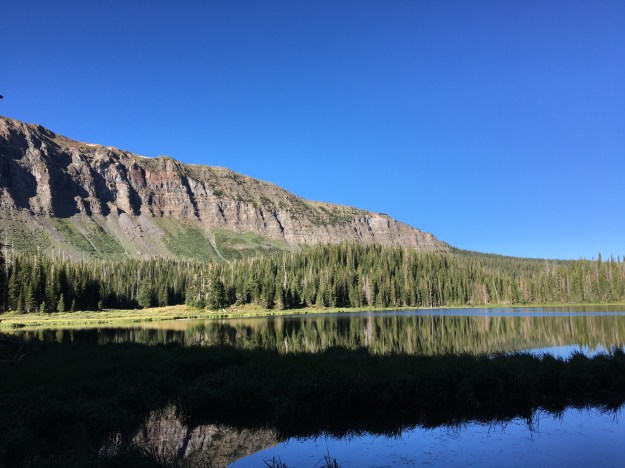
East Lost Lake was perhaps even more beautiful the next morning, which was not as cold as the previous day, yet, still cold.

A lot of people fantasize about living in the mountains. I have even thought about it from time to time. Experiencing cold mornings in mid-September gave me a glimpse into one of the downsides of living at these higher elevations. Those of us that live at lower elevations come up to the mountains during the best and exciting times of year: ski season and summer. Skiing is, of course, fun and exciting. Summer days at these elevations are pleasant.

However, mornings, even in the middle of the summer are quite chilly. Morning temperatures at these elevations are 35°F to 45°F (2-7°C) in the middle of summer! At this point in time, while some towns were looking forwards towards fall festivals and the changing of the leaves, after that will be a period of time that is not so exciting, with mornings that would be cold enough to prevent me from biking to work.

We stopped at the last in the series of alpine lakes, West Lost Lake to fill up with water.

IMG_8196.JPG

Then we began to climb again.

IMG_8197.JPG

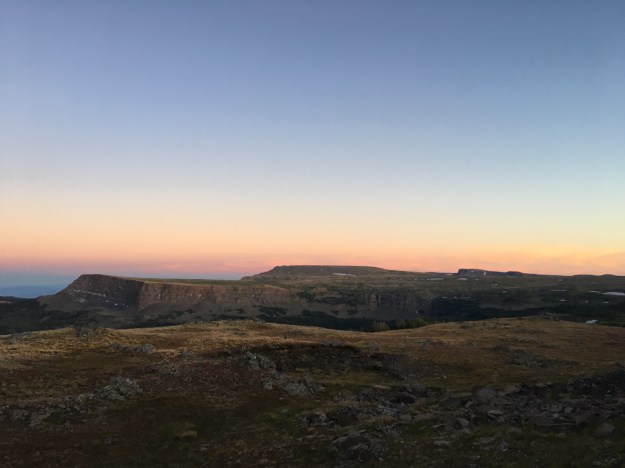
Like Friday, Saturday would feature a significant late morning climb. This one would take us up out of the woods and on top of one of a broad mesas.

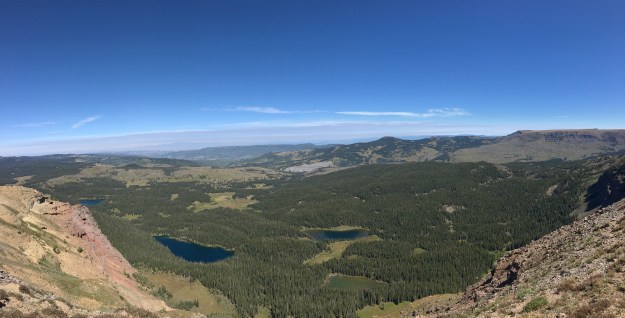
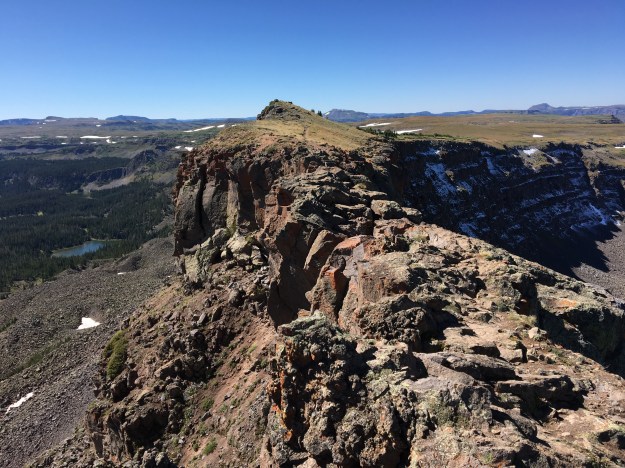
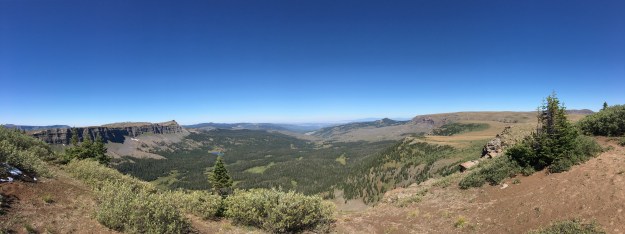
We would spend most of the afternoon along the mesa, periodically gazing at the features below. At one point, we were actually able to see where we had just camped the night before.

IMG_8206.JPG

That afternoon, we would encounter a different issue. While in the woods, the trail was well marked the entire way. On the mesa, the trail all but completely vanished in places. We were just walking across a large grassy field hoping we were going the right way.

IMG_8211.JPG

That’s the advantage, as well as disadvantage of selecting a trail that isn’t widely used. We would actually go the entire day without encountering any other people. However, that also means that there isn’t regular foot traffic to maintain the trail.

IMG_8215IMG_8218IMG_8220

Sometimes the most frustrating experiences are also the most rewarding. We spent the afternoon looking for the trail, often getting excited to find the sections of it where the grass had not fully regrown. We also occasionally found ourselves in some tough places like this section of shrubbery near the edge of the mesa.

At one point, we actually did make a wrong turn and went out of our way. However, it ended up adding less than a mile to our overall trip, and gave us one of the best overlooks of the day!

IMG_8231.JPG

By the end of the day, we had covered another 10 miles (16 km). I was exhausted.

IMG_8233

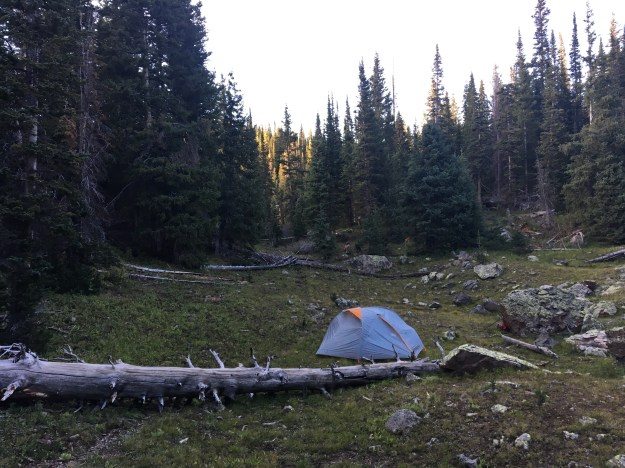
We camped above treeline, which was an interesting experience. I’d never thought of that possibility as we’d typically want to find campsites where we’d be able to find firewood. However, with gas stoves, it is possible to cook dinner without a fire, and we were able to find an unexpected water source.

Camping above treeline reminded me that life is not about following rules and procedures. It is about taking care of needs and solving problems. Rules and procedures can serve as a good general guide, but there are always going to be situations that require different solutions.

At this point, we were too exhausted to want to continue on to get back down below treeline. Going off trail to get into the trees would have involved carrying our heavy packs down a fairly steep area. The solution ended up working out.

IMG_8234

However, without a fire, it did feel cold. Perhaps the coldest hour of the day was the hour after we got everything set up, when my body was exhausted and didn’t want to move or expend the energy needed to keep itself warm. This may be the coldest hour of the day as physical exhaustion can have an impact on the temperature regulation system in our bodies.

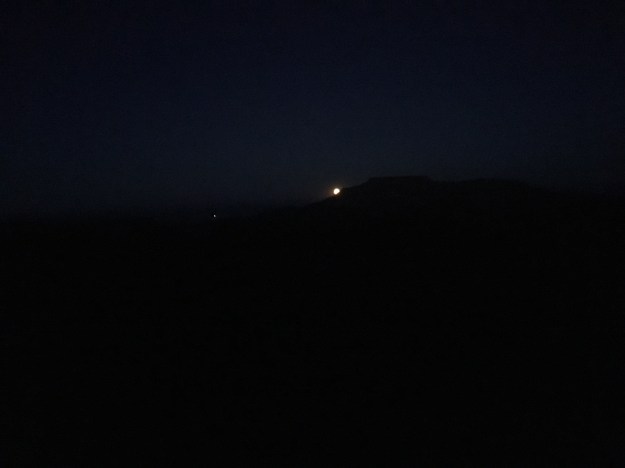
With clear skies and no fire, it was the perfect evening to watch the mid-september full moon, or “harvest moon”, come up from behind the mountains.

IMG_8237

With respect to both going the wrong direction for a short amount of time and being cold without a fire, both frustrating experiences lead to something magical in the end. It was an incredible day that reminded me of several important life lessons.

  1. We are often capable of far more than we give ourselves credit for.
  2. Some of the most frustrating experiences turn out to be the most rewarding ones.
  3. It’s not about rules and procedures, it’s about results.
  4. Some years we partake in some activities more than others. That is fine, just how it goes. It doesn’t make anything less enjoyable.

A Mid-September Backpacking Trip to the Flat Tops Wilderness: Day 1 Alpine Lakes

IMG_8142.JPG

It started with an evening of “car camping”. Sometimes I feel like Colorado has a vocabulary that is distinct from the rest of the country. For those who rarely venture too far away from the comforts of modern urban living, this activity is referred to simply as “camping”. In Colorado, car camping must be distinguished from backpacking, bike-packing, horse-packing and all other forms of camping that take us away from our vehicles.

As we rolled through the town of Kremmling, picking up some last minute supplies and having one last comfortable meal, my mind started to become daunted with the prospect of spending three days without heat, showers and a comfortable bed.

IMG_8124.JPG

The part of my brain that fears the unknown, protects the ego from failure and seeks comfort at all costs filled my head with images of hot meals, blankets and comfortable sleep. Very few people are exempt from this kind of mental resistance to change, discomfort and the unknown. The key is to understand how to deal with it, welcoming when we are seriously being warned about a potentially dangerous situation and when it is appropriate to silence that voice in our heads and go forth with our intentions.

The first evening was cold!

Cold mornings on intense trips provide a challenge of their own. After leaving the comfort of a sleeping bag, the best way to stay warm is to move around. However, I knew I had 26.2 miles (42 km) to cover in a three-day period and needed to conserve my energy. Despite my love for outdoor activities in the mountains, I don’t exactly love the cold.

IMG_8130.JPG

Desperately waiting for the sunshine to gradually slide down the mountainside and reach the campground reminded me that no matter how hot of a summer I had just experienced, I was not necessarily looking forward to the winter chill.

IMG_8140.JPG

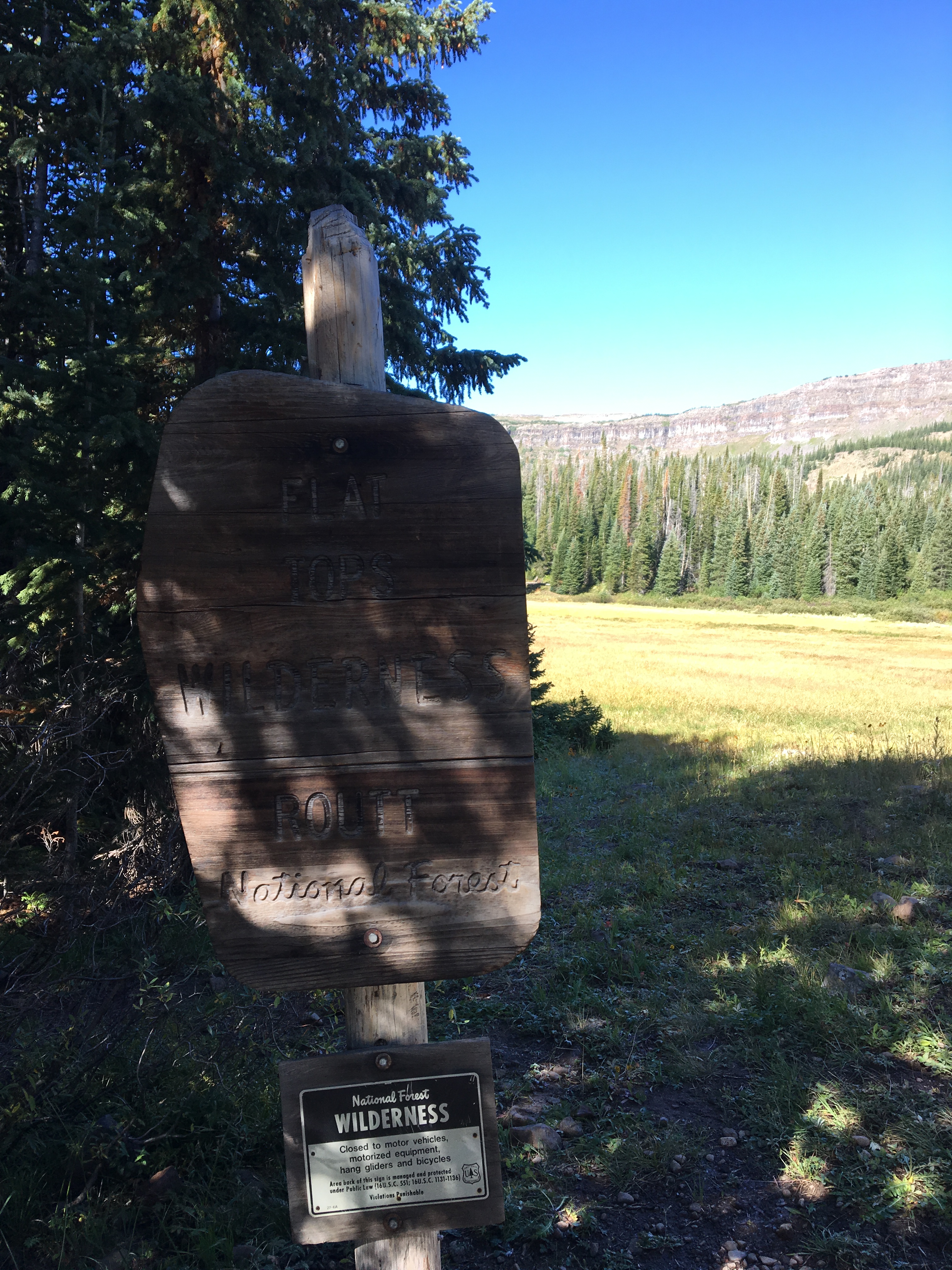
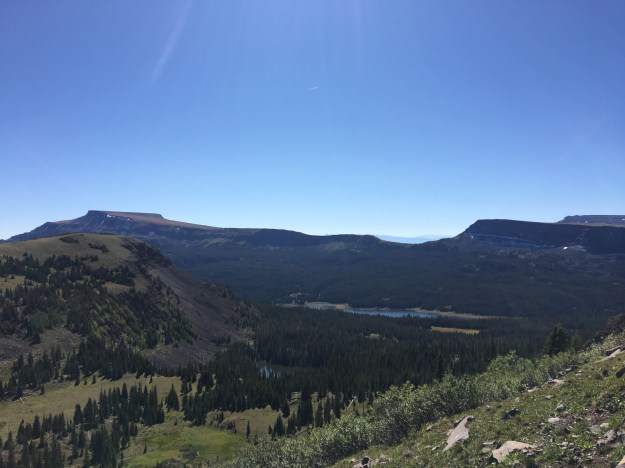
The hike began at the Stillwater Reservoir about 15 miles (27 km) WSW of the town of Yampa, CO. Day one would start with a 1500 ft (450 m) climb. It was here we would get our first view of the Devil’s Causeway, the Unique Natural Feature that draws most visitors to this specific part of the wilderness.

IMG_8148IMG_8152

Climbing can be slow with heavy backpacks on, so it took us the entire morning to reach the summit. We would spend the next hour descending back to an elevation of roughly 10,500 feet (3.2 km).

IMG_8156.JPG

Here, the trail goes by a series of alpine lakes, of varying sizes, each one stunning in its own way.

We didn’t stop for long at these points of interest. Most of the afternoon we spent cranking out miles at a fairly rapid pace for backpacking standards. Still, at most we were moving at a rate of 2.5 miles per hour (4 km/hour). A lot of trips include periods like this, with little stopping, where the primary objective for a period of time is to cover a lot of distance.

I’ve experienced this on road trips, bike trips, and even paddling trips. The great thing about these outdoor adventures is that we are still moving at a slow enough speed to take in nature. Additionally, we can see the creatures moving around, smell the landscape and feel the air flow around us.

IMG_8157.JPG

There is a true connection to nature. Unlike in some of the heavily visited areas, where tourism businesses have crafted a specific experience for visitors, the wilderness here is truly wild. It is untamed. Walking through this wilderness area, I was in the presence of one of the few places in the world that has not been boxed in by any of the standards, assumptions and paradigms we had artificially created to regulate the world to our liking.

At 2.5 mph (4 km/hr) that can truly be appreciated. I feel it can still be appreciated from the seat of a bicycle at 20 mph (32 km/hr) on roads that are far away from towns and cities. It contrasts so much from many of our day-to-day lives, where we have schedules, codes of conduct, social norms and deadlines. The word I would use to describe what I was experiencing, at that moment in time, is refreshing.

By the end of the day, we had covered over ten miles. Having passed by all of those breathtaking alpine lakes, we set up camp near one called East Lost Lake and enjoyed an evening of solitude.

IMG_8182IMG_8186

An interesting thing happens on the first day of group trips like this. Sometimes we are talking. Sometimes we are not. Sometimes, despite being so far from civilization, my mind wanders back to whatever I am concerned with in my daily life. As we slowly exhaust ourselves physically and then have to take on tasks like starting a fire, pumping water from the lake and cooking food, our minds complete a transition away from what has been concerning us the last few weeks to a focus on what is right in front of us.

With the genuine desire to take in nature, I believe my mind slowly realizes that the mental energy it takes to stress out about whatever had occurred over the past week or month is mental energy I don’t have to spare. At this point, I had truly brought my entire psyche away from day-to-day life and into a position of being fully immersed in the experience I was having.