Category Archives: tourism

Iceland Air’s Glacier Hike and Northern Lights Tour

As part of their push to encourage tourism in Iceland, Iceland Air now offers a variety of one-day excursions that travelers can embark on whether they are visiting Iceland specifically, or taking a stopover on their way between Europe and North America.  These one-day tours offer a variety of options for experiences, including which places to visit and what types of activities to take part in.  For all of them, the general idea is the same; a bus picks tourists up at various hotels in Reykjavik, and gives visitors what basically amounts to a one-day “Taste of Iceland”.

My tour of choice was the Glacier Hike and Northern Lights tour, which offers a lot of what I was looking for out of my time in Iceland.  The Northern Lights is something I had never seen before.  In America, we hear about such phenomenon occasionally. Roughly once a year, we will hear in the news about a particularly strong solar event occurring, and the potential for the Northern Lights to be visible much farther from the North Pole than is typical.  Sometimes that zone would even reach the Northern parts of the United States, and news outlets would provide maps of where the lights could potentially be visible.

For years, living in Chicago, such stories would provide a particular brand of torment for someone that is curious about seeing the Northern Lights.  It is not possible to see the Northern Lights from such a large, lit up city.  One would need to travel somewhere less populated. To get outside the populated metropolitan area, I theoretically would be able to travel in any direction, but it makes little sense not to go North, as the lights get better the farther north one travels. However, North of Chicago is Milwaukee, and the area in between the two cities is populated enough to make it less than ideal for viewing the phenomenon.  So, the prospect of getting in a car and driving out to see the Northern Lights was always a multi-hour trip.  Some combination of time constraints, or frequent wintertime cloudiness in the Midwest always stopped me from driving up to Central Wisconsin (or Central Michigan) to try to see the Northern Lights.

The tour started like every one of the Iceland Air excursions, with a mid-sized bus going from hotel to hotel picking people up.  The bus went to about six different hotels to make pick-ups, finally leaving Reykjavik around noon.  The tour group was quite mixed.  There were a couple of other Americans, a few Canadians, and even two people from France on our tour, but the majority of the group was from Great Britain.  I have relatively little experience traveling to Europe (this trip, and a trip to Italy, Austria, and Germany in 2012), but on both occasions I ended up hanging out with tourists from the UK, specifically England.  I don’t know what that says about America, or who I am as a person, or if it is just due to a common language, but I am curious to see if that happens again next time I go to Europe.

IMG_5276.jpg

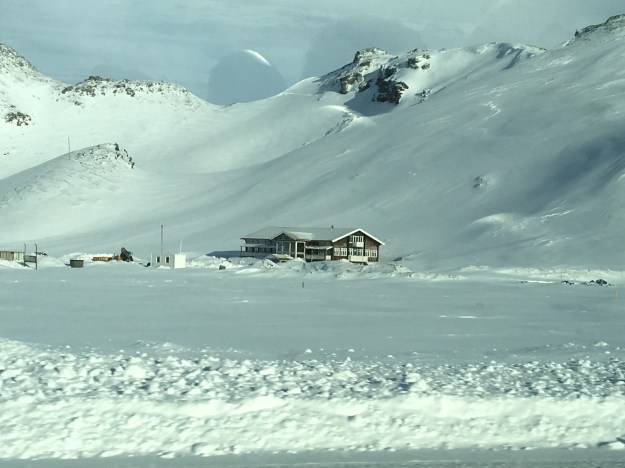
Driving East out of Reykjavik, towards Iceland’s South Coast area, the first thing I notice, which is common throughout Iceland are lava fields.  Across much of Iceland, the land is covered with ashes from previous volcanic activity.
IMG_5250.jpg

The previous day, I had learned at the Volcano House in Reykjavik that Iceland is one of the most volcanically active places in the world, as it sits on the ridge between the North American and Eurasian plates, which are drifting apart from one another.  In geologic terms, this is actually happening quite quickly.  On average, a volcano occurs somewhere on the Island once every 5 years, and as the plates pull apart, the Island is literally growing at a rate of 2 cm per year. 50 years from now, Iceland will be 1m wider than it is now!
IMG_5279.jpg

About 30 minutes into the trip, the bus passed by the hotel where one of the scenes in the 2013 film The Secret Life of Walter Mitty took place.  In the movie the volcano Eyjafjallajökull erupts, and Walter is lucky enough to have been picked up by a friendly local to escape before being covered in ashes. In real life, this gigantic volcano erupted quite explosively in 2010.  In the most unfortunate of circumstances, the wind happened to be coming from the Northwest that day, and the ashes covered the sky over Great Britain and much of mainland Europe halting air traffic for several days.

IMG_5286.jpg

The next stop on this tour was Skógafoss, one of Iceland’s largest waterfalls. Iceland is not only a hot spot for volcanoes, but it is also a hot spot for waterfalls. This is due to the glaciers, which cover 15% of the land area of the island, the terrain and relatively moderate maritime climate. Waterfalls like this can be found all over Iceland, and they probably look even more amazing in summer, when the ground appears lush and green!

IMG_5295IMG_5287

The main event of this tour, the Glacier hike, worked for me on multiple levels.  I love being outside, hiking and getting some exercise.  There are many times, when on vacation, I purposely try to find the most strenuous activities possible.  I especially do this when I am on a cruise or in some other kind of vacation package, where I know an activity does not need to be super challenging, or even that physically exhausting for them to be labelled as such.  I also got to try something new, hiking with crampons.  Now, I am not sure they were absolutely necessary for this particular hike, as back in Colorado I had hiked in areas that were steeper and more slippery and gotten by without them.  But, I did learn how to use them, how to attach them to my hiking boots, and how to walk with them on, a good thing to know for future activities down the road.

IMG_5298.jpg

In addition, the glacier, and what our tour guides told us about it was quite fascinating from a scientific perspective.  Apparently, this particular glacier is receding at a fairly rapid pace.  Along our hike, the tour guides pointed out where the glacier used to end in past years compared to where it ends now.  As recently as 2010, the glacier covered nearly all of the area near the entrance of the park that we traversed before getting onto the current glacier.  When this portion of the glacier melted, a gigantic lake was left behind in the lower lying area.

IMG_5302.jpg

The tour guides then informed us that we are actually witnessing a the formation of a fjord.  Roughly an hour into the hike, we had climbed to roughly 100m above sea level. However, the ice was thicker, somewhere between 150m and 200m.  Over time, the ice had pushed the land beneath it below sea level. Once these glaciers melt, the area will be under water, creating a fjord in this very spot.  This is one of many spots where this process is happening as we speak.

As a weather enthusiast, who had studied meteorology, I asked the tour guides what the primary mechanism was for the melting glacier.  Specifically, I asked if it was reduced winter snowfall or warmer summer temperatures.  They indicated that both were contributing factors, but also mentioned that, since temperatures in Iceland are commonly quite close to freezing, the area was starting to see precipitation fall in the form of rain (as opposed to snow) more frequently.  I could sense that, as even on this February day, the snow I stood upon was quite wet.

But that was not even the most fascinating scientific aspect of this tour.  Almost everyone is familiar with climate change, and it’s become the subject of sometimes-ridiculous debate.  The most fascinating thing I learned about this glacier is that fact that, due to the presence of volcanic ash, the glacier is creating terrain that is constantly changing.  Here, volcanic eruptions spill out on top of the ice, causing ice to melt faster in some areas.  The ice then flows in a manner that brings more ice into areas that are currently in “valleys”.  Even when there is no new volcanic activity, the cycle of ice flow and differential melting can happen rapidly enough that each year the terrain of any given section of ice is significantly different from the previous year.  Literally, if I were to return to Iceland at the same time next year, and come to this very glacier, the hike would be significantly different, as the terrain would have been significantly modified.  Amazing!

The glacier hike concluded a little after sun down, which was right around 6:00 P.M. After the hike, the tour bus took us to a hotel restaurant in the area for a traditional Icelandic meal.  To my surprise, the meal did not involve fish.  For some reason, I had this impression that since Iceland is an island in the North Atlantic, it would be a place where almost every meal consisted of fish.  Instead, the traditional Icelandic meal was a hearty meat soup.

IMG_5329.jpg

On the tour bus, I learned that the Icelandic cow, which is a special breed of cow that is smaller than the ones most of the world is familiar with is quite popular on Icelandic farms (they actually once voted in favor of keeping the cow over switching to a more efficient Norwegian cow).  In addition to these cows, many farms also keep lamb and sheep.

IMG_5331.jpg

After dinner we drove in search of an ideal place to view the Northern Lights.  This involved driving around and looking at weather conditions in a manner that actually seems reminiscent of storm chasing.  We drove around for hours, and every time it felt like we had found the right conditions (i.e. clear skies), something would change.  At one point, sometime between 9 and 10 P.M., as drove through an area where it suddenly started to snow!  At 11:30 I was in despair.  We were clearly headed back into Reykjavik, and I thought we were just going back to the hotel.  After all, the tour does not guarantee that the Northern Lights will be seen.  It can’t be guaranteed.  The weather is always changing, and the solar activity, which leads to the Aurora phenomenon, is also quite variable.

Oddly enough, though, just after midnight, we pulled into a pier on the far West end of town, along the shores of the Atlantic Ocean, on a peninsula.  Our tour guide informed us that we would now be able to view the lights, and, sure enough, they appeared. I was unable to capture them on camera in a manner that would do this amazing natural phenomenon any justice.  I mostly just sat there, in awe, watching the lights glow and move from side to side along the horizon.  I thought about how amazing this phenomenon was.  I wondered if people who lived here took it for granted, noticed it less, the same way many people become less appreciative of what is in their own back yards.  At the end, I just thought about what an amazing day it was, from when the tour began, over twelve hours ago, until now, ending with this amazing light display.
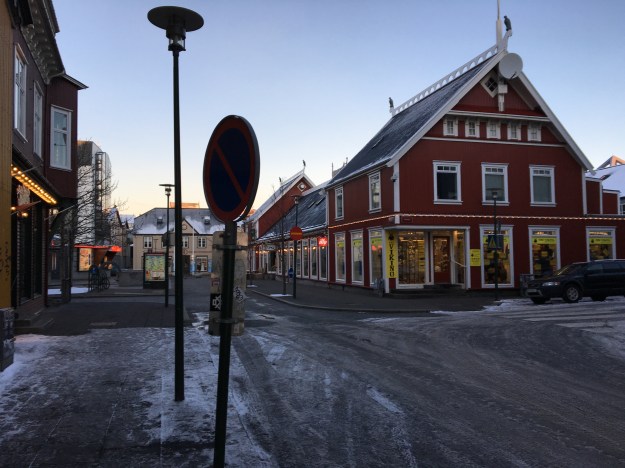
Life in a Northern Town

IMG_5245.jpg

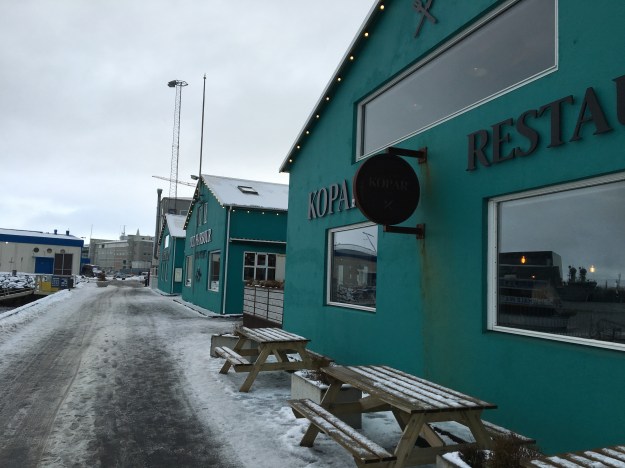
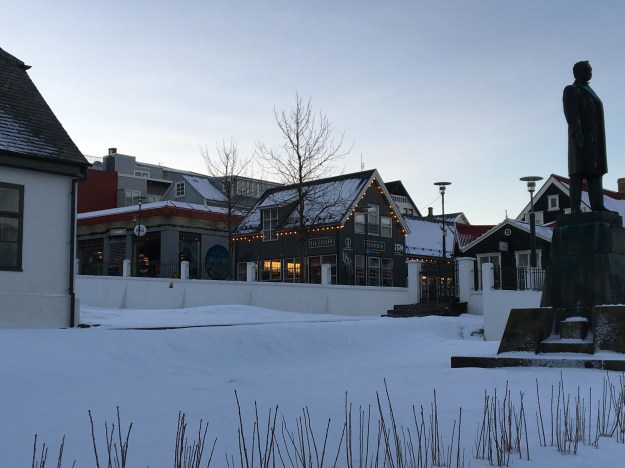
It’s 8 AM on a Thursday morning in Reykjavik, Iceland’s Capitol and largest City.  The sun has yet to come up, as this far north (64 degrees latitude) days are still quite short in the middle part of February.  A quiet dawn persists over the town for nearly two hours, from 8 to about 10.  A couple of local teenagers are hanging outside the grocery store.  A group of tourists can be seen hanging outside one of the few restaurants that are open.  Otherwise, the streets are quite empty, and the shops are mostly closed.

IMG_5248IMG_5246

It’s odd because, in many most major cities, 8:00 is the peak of what is often referred to as “rush hour”.  It is a time of people hurrying to and from train stations, and crowding highways trying to get to work.  Even in the more touristy sections of cities, which this most certainly is, a lot of motion can still be found at this hour.  At places like Chicago’s Michigan Avenue, and New York’s Time Square, which are utterly packed with tourists nearly every day, there are still plenty of people to be found at 8:00 on a weekday morning, mostly people headed into work.  Here, that culture just does not seem to exist.  Are all the office jobs elsewhere?  Do people have office jobs?  Do they work different hours?  Or is the economy so heavy on tourism and fishing that there is just no point in being awake at an hour when all the tourists are likely still asleep and the sun is not out?

By noon, things start to pick up.  On some days, the sun comes out and hits the harbor.  At this latitude, when it hits the harbor, it hits it in a way that seems to highlight every single feature, from the boats in the harbor to the snowy mountains on the other side.  From the perspective of someone that has always lived in the mid-latitudes, is feels neither like mid-day nor twilight.  It is a different feeling altogether, and those who take a pause from their tourist itinerary and truly soak up the moment are reminded as to why it is worthwhile to visit different places in the first place; to see something, experience something, do something that cannot be done at home.

The day progresses.  Tourists fill streets whose names are too intimidating to even try to pronounce, make their way into the bars, the restaurants, and the dozens of souvenir stores that feature a gigantic stuffed puffin in the window.

The weather inevitably changes- but, well it doesn’t.

IMG_5350

There is this saying, “if you don’t like the weather, wait 5 minutes, it will change.”  Anyone that travels on a regular basis to places outside the tropics has most likely heard the phrase too many times to count.  It is used here.  At souvenir shops, mugs and shirts about Iceland sport the phrase.  And, it is true to some extent.  At any moment, it can turn from sunny to cloudy, or suddenly get windy.  But, the temperature does not vary too much.  On a four day trip to Iceland, the temperature, including daytime and nighttime, seemed to only vary between a few degrees below freezing and a few degrees above freezing.

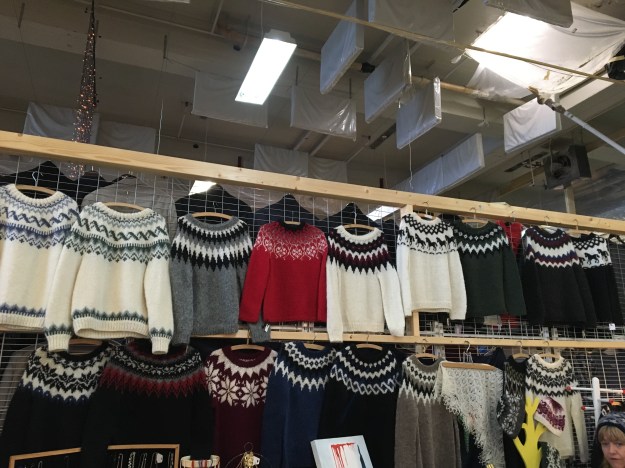
Regardless of these changes, winter in Iceland is consistently cold and damp.  For this reason, one of the most popular items made in all of Iceland are wool sweaters.  While any visitor to Reykjavik can find these sweaters for sale all over town, the best deals on them are found at the Kolaportid Flea Market.  Even at the Flea Market, though, they can be quite expensive, the equivalent of roughly $100.  Money talks, and it is easy to figure out what a certain culture values by seeing what they are willing to spend money on.  Coloradans are willing to spend thousands of dollars annually on ski equipment.  Icelanders are willing to spend money on a warm wool sweater.

IMG_5348

Reykjavik’s population is only just over 200,000 people.  In fact, the population of all of Iceland is 330,000- significantly less than every borough of New York City, even Staten Island.  Yet, it is a place that knows how to party!  The nightlife is surprisingly good- probably better than many towns 2-3 times its size!

Making up for the lack of action at 9 in the morning, festivals, shows, and clubs give locals and tourists alike plenty to do in the nighttime hours.  Iceland has been promoting tourism quite hard since the economic collapse of 2008, which hit Iceland particularly hard.  Iceland Air has been particularly active in promoting tourism, by adding direct flights to more places in both Europe and North America, possibly with the goal of becoming a preferred airport for making connections while traveling between Europe and North America.

IcelandAir_Map

Looking at this map, it is hard not to imagine an executive with Iceland Air looking at at map, possibly even Risk the board game, and thinking of this grand plan to become a connecting point between the continents.

Well, it’s working.  Recently, more people talk about Reykjavik being their favorite place to make flight connections, and more and more people seem to have visited Iceland.  At this point, in Reykjavik, it is probably impossible for locals and tourists not to interact with one another in some way, especially at clubs and shows.

After hours of partying, all of a sudden it is 4 AM.  Many clubs still have lines to get in!

At 5 AM, on the streets, music can still be heard coming from multiple directions.  In fact, by this hour, it almost becomes easier to find a place to eat than it was at 9 AM on Thursday morning.

Sometime in the next few hours, the blurry memory of a fun filled night fades into the next morning, likely to be delayed through at least part of that lengthy twilight period.  In my particular case, it faded into the realization that it is now noon, and Millions of New Yorkers (where the local time is 7 A.M.), despite the time difference, have woken up before me on the other side of the Atlantic!

IMG_5346

I only spent four days in Iceland.  I do not know the full extent of life in this nearly arctic city of Reykjavik.  I only know what I experience in this short period of time, where I did the best I could to experience the local culture.  Regardless, it does appear quite different from any place I have ever been.


Full Service Camping

IMG_3562

Camping is not just camping.  In fact, there is an entire spectrum of different types of camping one can take part in.  On one end of the spectrum is the type of bare bones camping that can be found in National Forests and other wilderness areas.  I took part in this type of camping for the first time last year at Gunnella Pass.  These are places where you just put down your tent, and pretty much are on your own.  Maybe there’s a fire pit leftover from the last set of people who plopped their tents there.

On the other end of the spectrum are places like Starlite Classic Campground.  These campgrounds have their own office, where one can usually buy the ice, firewood, and other standard camping supplies, specific camping sites reserved in advance for various group sizes, and often have plenty of other amenities.

On this campground, we had a pool, which we ended up spending a significant amount of time in, as temperatures soared well in to the 90s Friday, Saturday, and Sunday.

IMG_3588

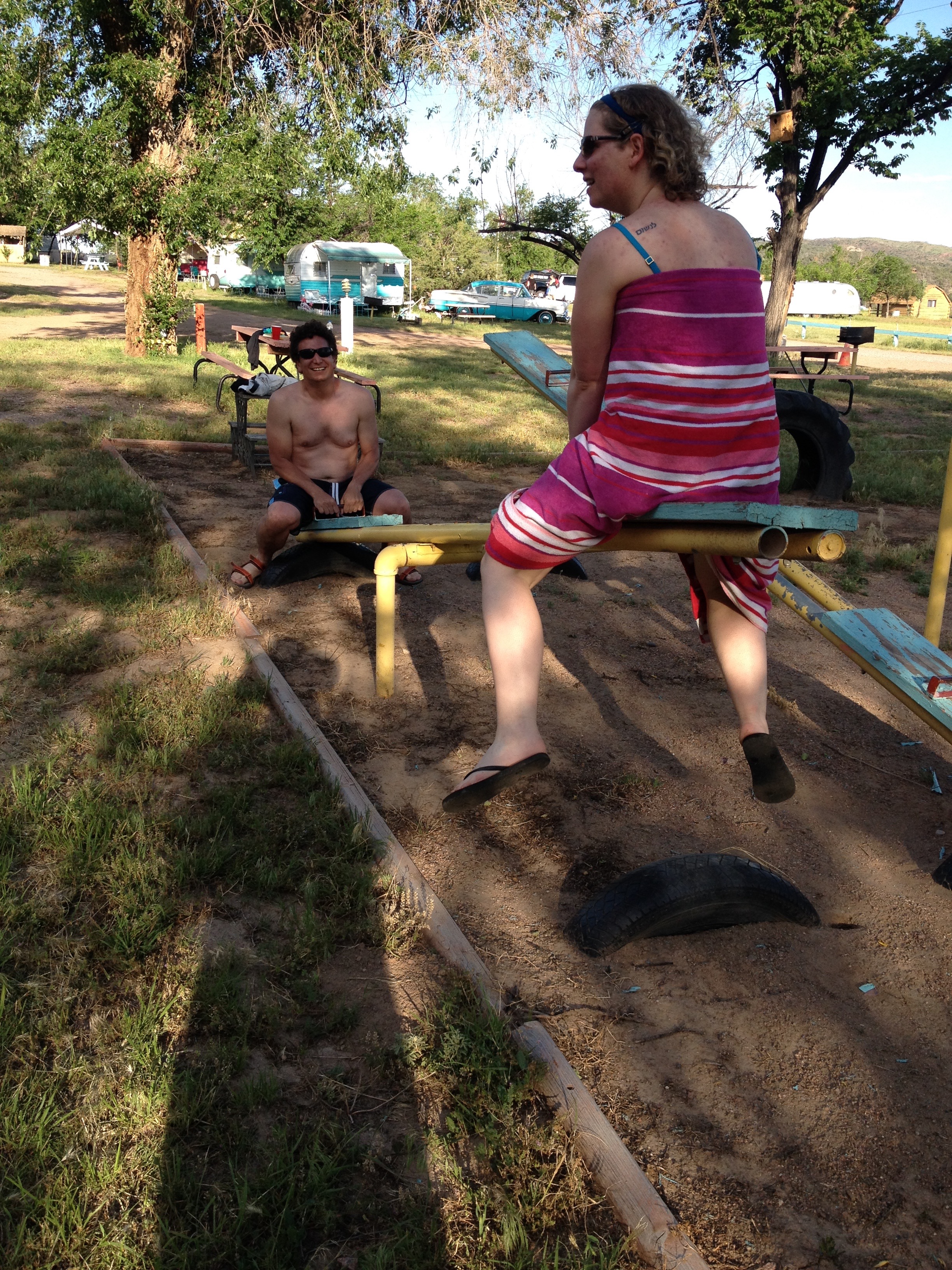
Next to the pool is a children’s play area, which I probably spent way more time than any adult should at, but, hey, I am also a grown-up throwing myself a half birthday party, so, it kinda fits.

IMG_3571 IMG_3580

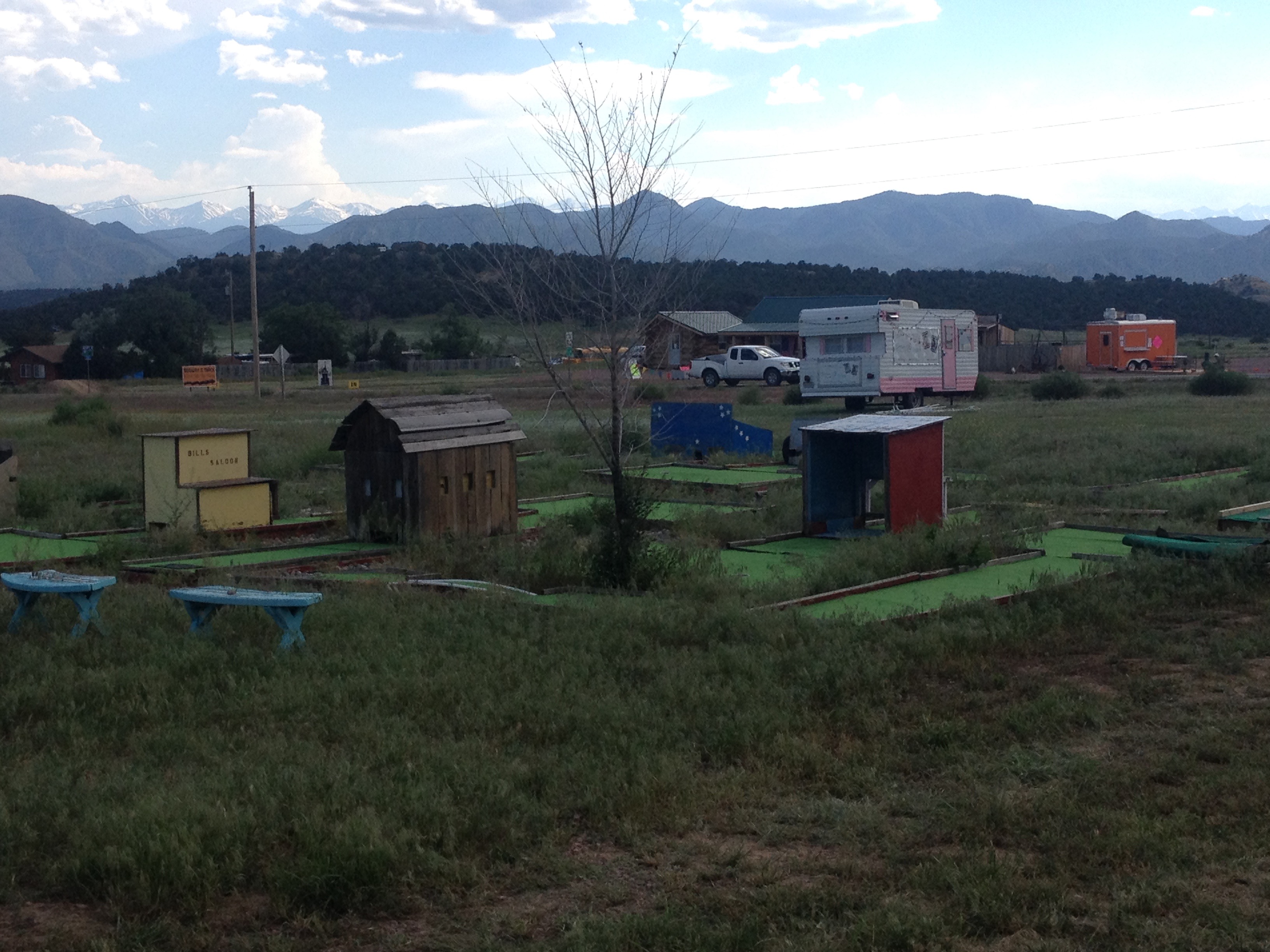
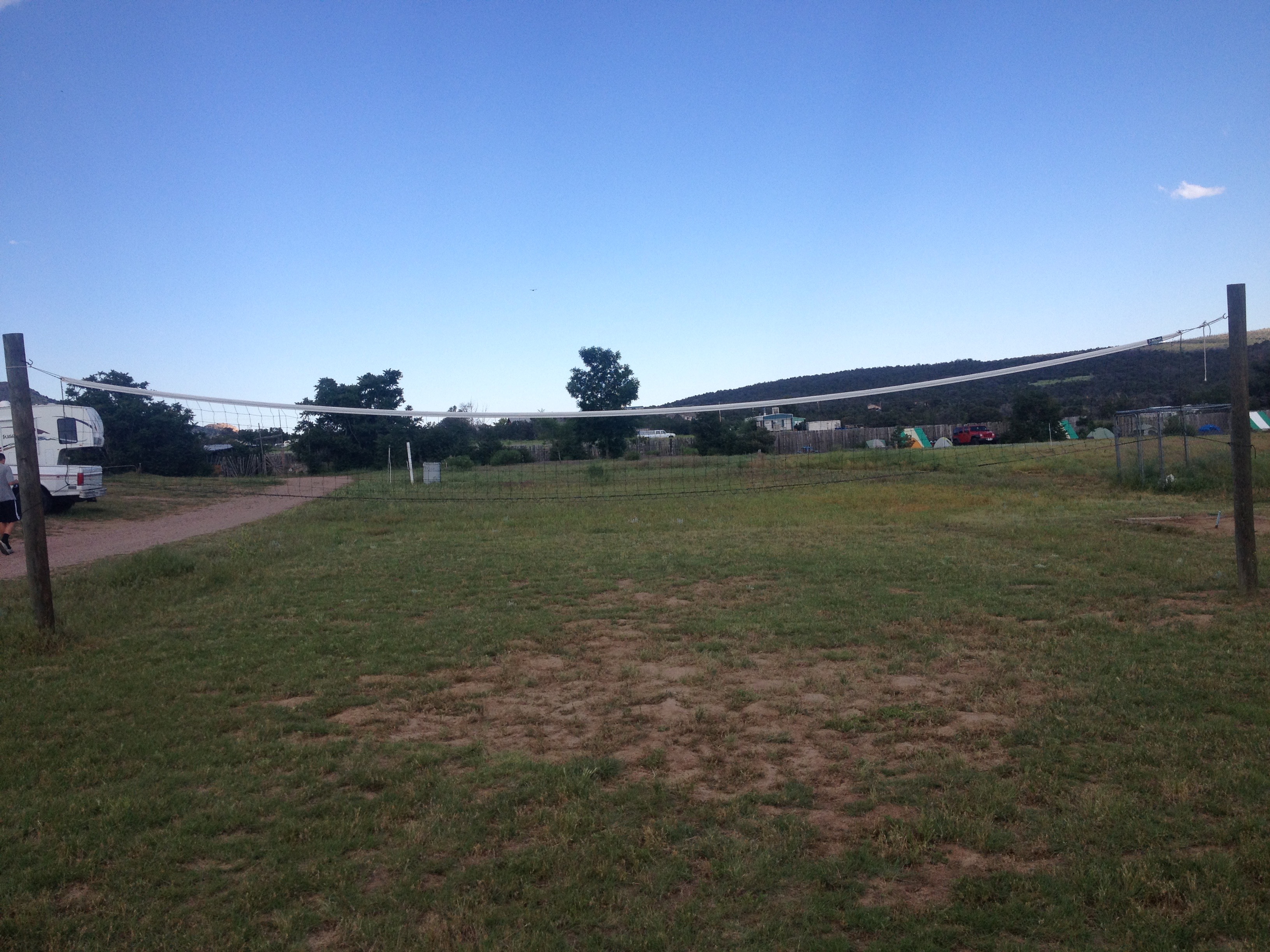
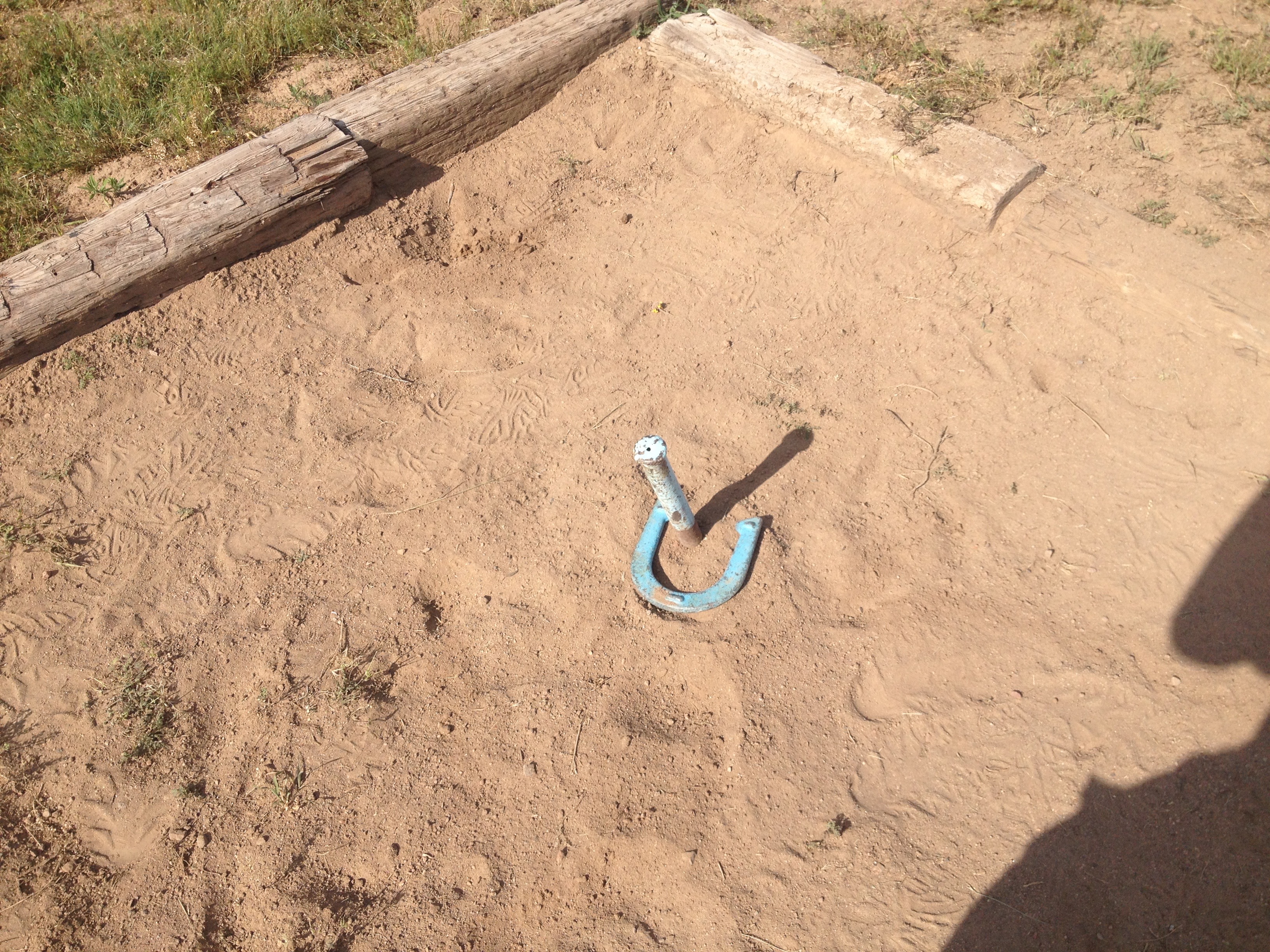
And, not to mention, a whole bunch of other games, including horseshoes, volleyball, and even a mini-golf course.

IMG_3559 IMG_3564 IMG_3566

All this made for a completely different kind of experience than your standard camping trip.  When most people think of camping, they ponder up images of a campfire, roasting marshmallows, and a fairly quiet experience, which can often involve some reflection, star gazing, and deep conversations in the wilderness.  With the hot temperatures, mid-June daylight lasting until nearly 9 P.M., all the amenities at Starlite, and a total of 17 people participating in the weekend (including both camping and rafting), very little of your standard camping experience happened.  In fact, the weekend kind of felt like some kind of hybrid experience between being at a campsite and a party!

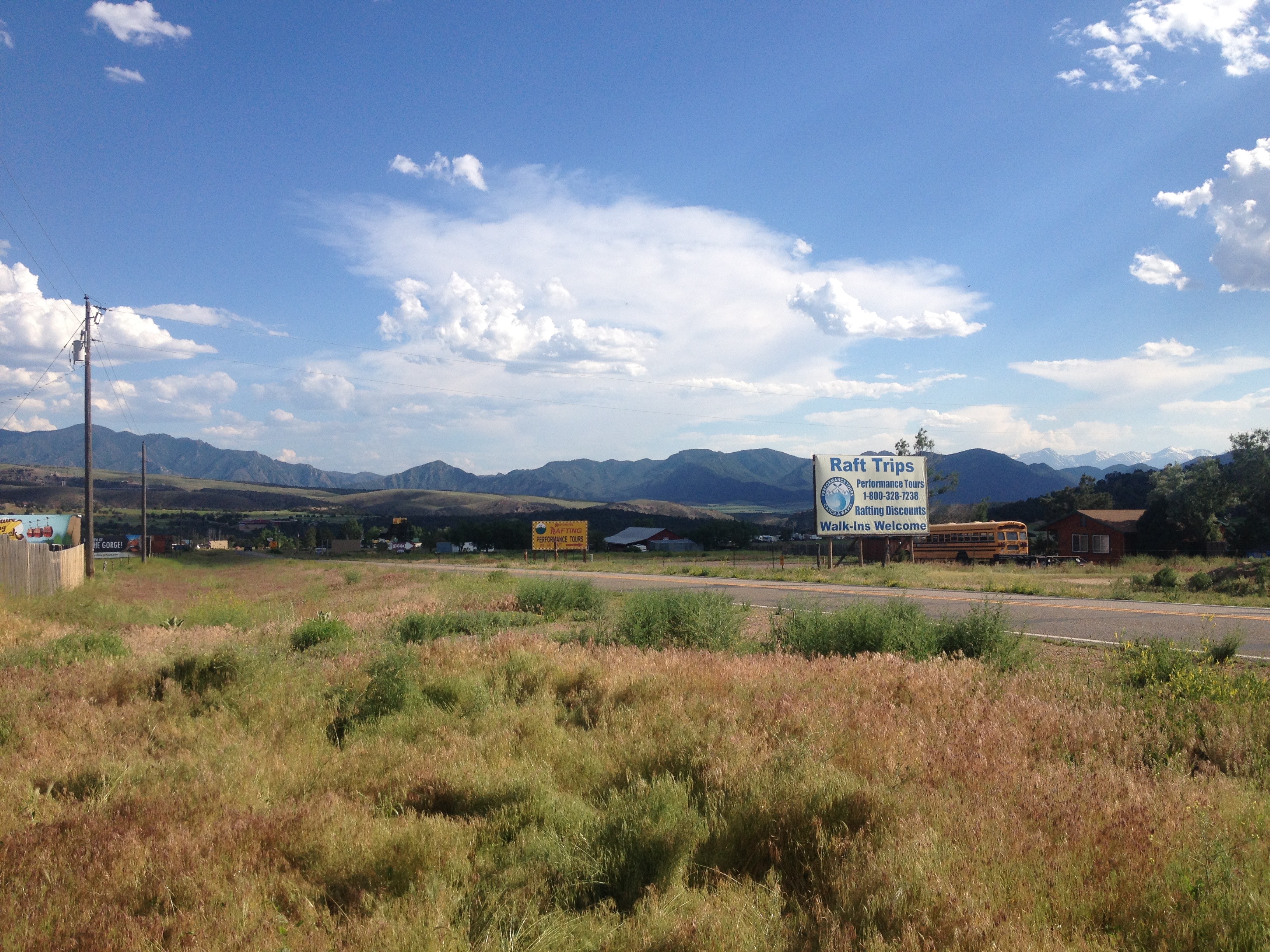
Starlite Classic Campground is located just across the street from Performance Tours, the outfitter we used for our rafting trip.  We had a mere two minute walk to get where we needed to go in the morning.  In fact, the evening before the trip, we could see the very bus we would be getting on the following morning to start our raft trip.

IMG_3567

With the purchase of the group site at Starlite, we received a significant discount on the rafting trip, as they have some sort of deal.

IMG_3565 IMG_3570

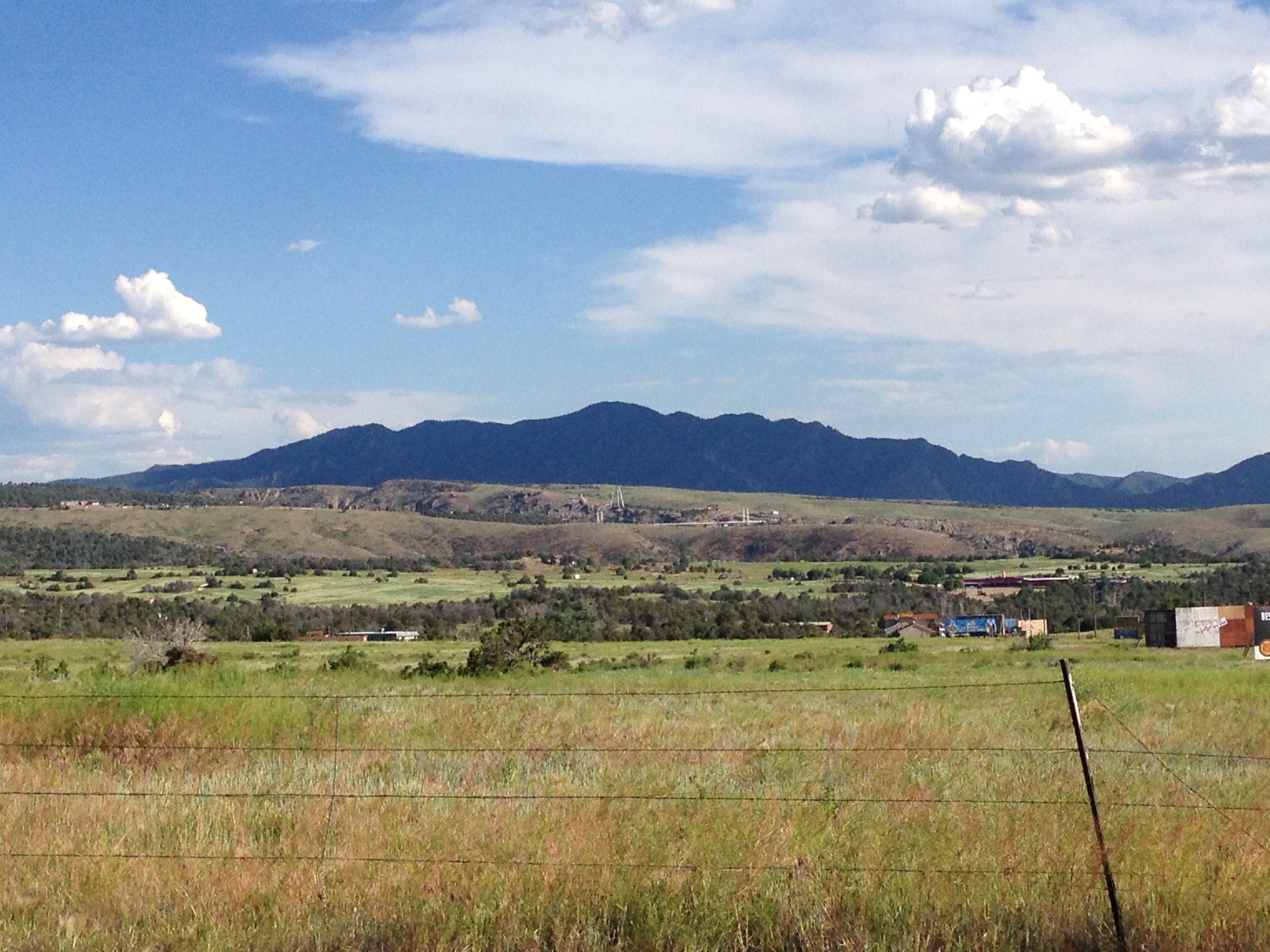
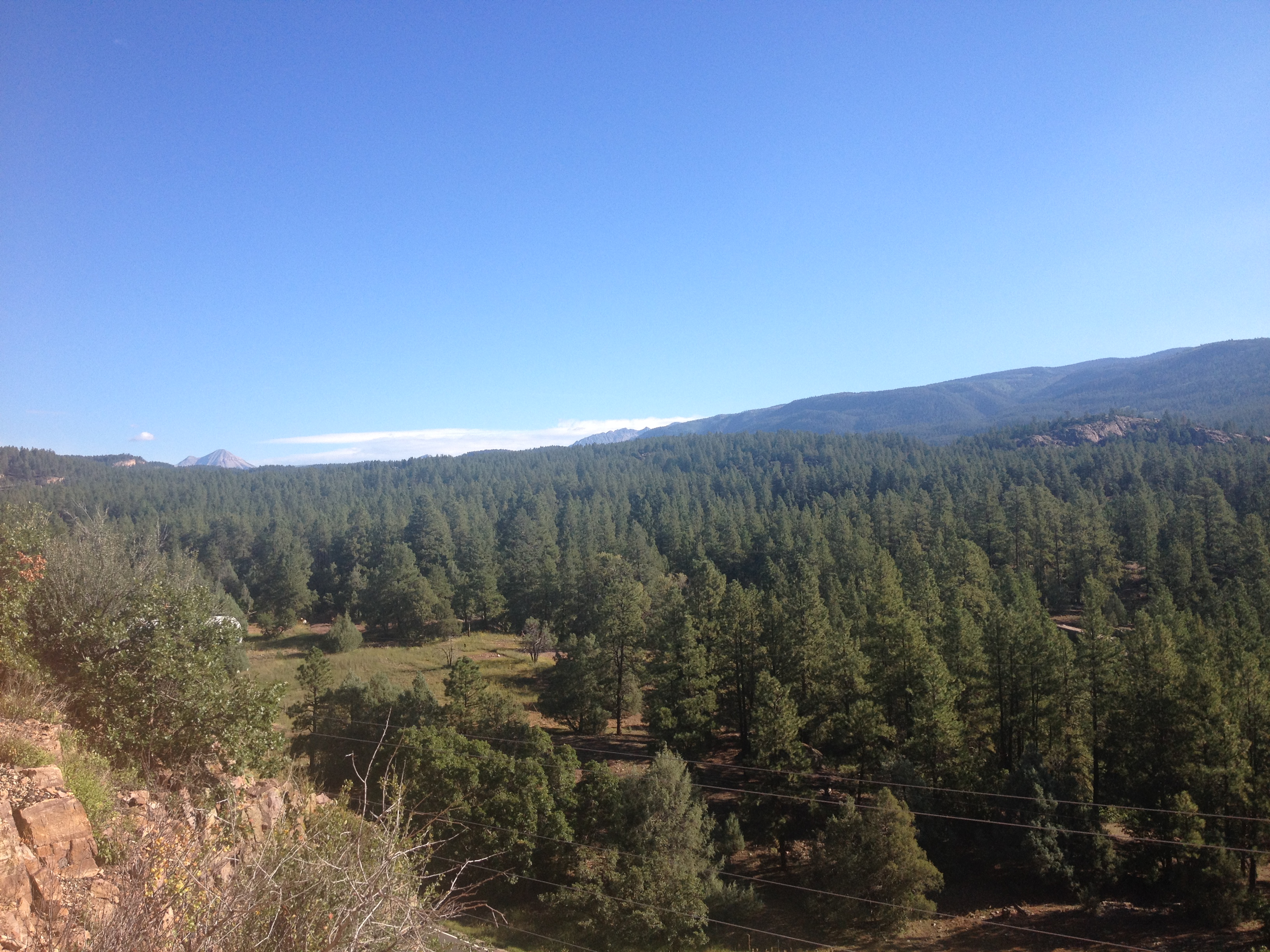
In addition to all of the fun, the scenery was amazing.  Just four miles south of the campground is the Royal Gorge Bridge, which can be seen by gazing across the open plane of the Arkansas River Valley.  A quick turn to the right, and one can see the Sangre de Cristo Mountain Range, which contains numerous peaks over 14,000 feet, and extends all the way into Northern New Mexico.
IMG_3582 IMG_3586

As I walked across the open field that evening, staring across a the Sangres, and the bridge, and some of the other terrain features that look so breathtaking when the setting sun hits them at just the right angle, I came to the realization that I had entered the sweet spot that I am always looking for in life.  By this I mean being the best version of me, the version of me I wish I could be all the time, but somehow can’t.

Without the help of any substance, drugs, alcohol, or even caffeine for that matter, all the anxiety had just vanished.  I was just content.  It’s hard to explain.  But, it was like I had just simply left the competitive world that we live in behind for a few days.  I did not feel I was competing with people, needing to prove anything, or potentially being judged for anything.  Maybe what I felt was acceptance, something we all long for in life, and something I sincerely appreciate those who joined me on this trip for.

IMG_3583

Out here, organizational structures, hierarchies, deadlines, and all of the things that make life stressful simply don’t exist.  It is just you, whoever you chose to make the trip with, and the scenery.  And, once you get to that place where you can let go of everything in your head, you find that best version of you, the one you know you are capable of.  It is the you that is confident, eager to take on a new activity, and in no way hiding any aspect of who you are out of fear of judgement.  It is the you that the people who you value are drawn to, and it is the you that should be celebrated, even if that means throwing yourself parties like this one.

IMG_3607 IMG_3611 IMG_3615

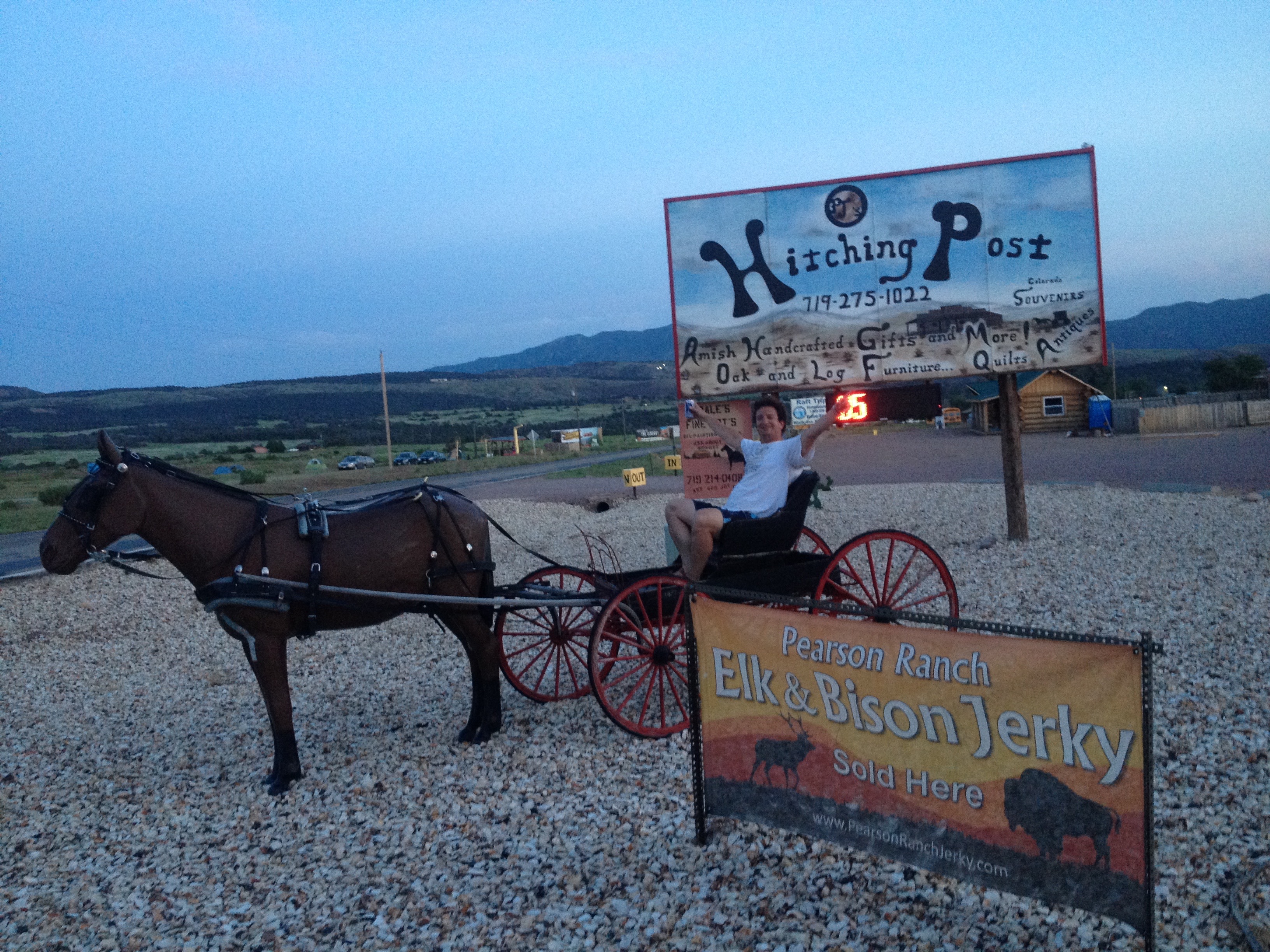
For me, when I am being true to myself, it means being goofy, and, well this area offers plenty of opportunities for that.  This section of U.S. highway 50, near Royal Gorge, has more than just one campsite and one whitewater outfitter.  There are more campsites, more whitewater outfitters, other activities (such as helicopter rides), and shops and restaurants that serve the needs of the tourists in the area.  Not to say that this area is a full-fledged tourist trap similar to Estes Park.  But, there are some places to wander around to at night if one is so inclined.

IMG_3623

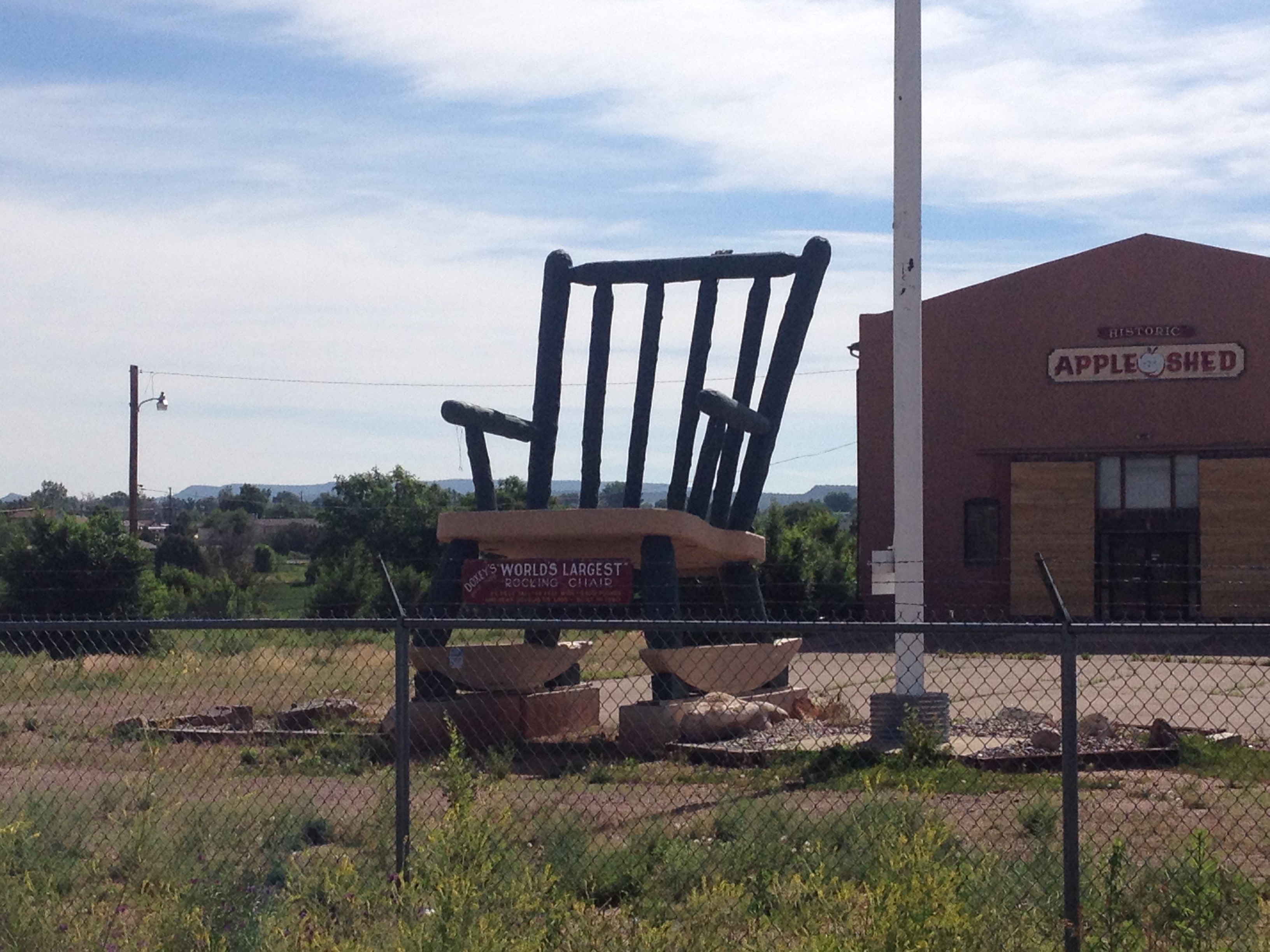
The return trip home involved one mildly disappointing stop; the World’s Largest Rocking Chair.  The chair was large, but we could not get in, as the shop that houses it has been closed for a year.

As I faced the return trip to the city, the return to work, and normal life, I could not help but think about the feeling I had this weekend, and how to be the best version of myself, the me that I was all weekend, every day.  What I struggle with is that “normal life” offers pretty much two typical paths.  First, one could work hard and “move up” in their organization, get promoted, become the boss, and maybe even reach leadership positions.  However, I have frequently observed that in many organizations, reaching higher levels requires some level of conformity, and one often must make some compromises on who they are and what they value to get in the good graces of those higher up- particularly in larger organizations.

Then, of course, there is always the option to be content to simply stay at the bottom of the totem pole.  This is a better path for those that prefer to keep their work load at reasonable levels, and seriously value work-life balance.  But, unfortunately, those that chose this route will always be answering to somebody, a boss, and sometimes for somewhat arbitrary reasons.  Being at the mercy of one person (and that person can suddenly change), who may be having a bad day, a bad month, or just simply be a bad person, has lead to countless terrible outcomes, all of which result in people not being the best version of themselves.

This is not to say that all is lost.  There are plenty of people that find a path outside the typical two options laid out above.  Many even write about their experiences here on WordPress.  There are also plenty of people that find a good environment using one of the two standard paths outlined above.  But, we all have a struggle.  And, this weekend, I realized that in order to make this struggle easier for both myself and the people around me, I need to celebrate the attributes in others that draw me to them, and also celebrate my own attributes that draw others to me.  Regardless of our paths, this authenticity needs to be encouraged.

Cycling in Summit County

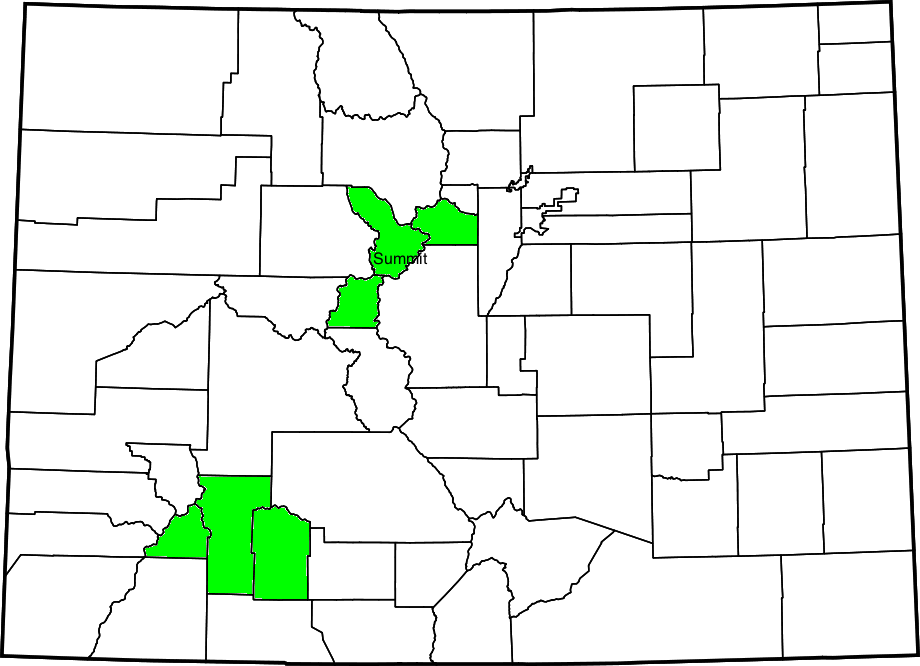
The Appropriately named Summit County (Colorado) sits right in the heart of the Central Rocky Mountains.   With multiple mountain ranges extending into the County on all sides, anywhere you will travel within the County, you will be pretty much surrounded by mountains in all directions.  In fact, Summit County is one of only six counties in the entire nation with a mean elevation of over 10,000 feet.

CO_Counties_over10000'

All six of these Counties are within the State of Colorado.  Outside of Colorado, not only are there no counties with mean elevations greater than 9,000 feet (Colorado has a total of 15), but only three counties outside of Colorado have mean elevations exceeding 8,000 feet (Colorado has 24).  Those looking to “go to the Mountains”, would be hard pressed to find a more suitable place than this one.

Summit County is probably best known as a skiing destination, with five popular ski resorts, including the incredibly popular Breckenridge and Copper Mountain.  However, it may also be one of the best places in the world for high-altitude cycling, which is important for those who train at high altitude to increase lung capacity.

Summit_County_RecPaths

Due in part to a series of rail lines that were created during gold and silver rushes and later abandoned in subsequent bust years, the county has an extensive network of recreational pathways.    The re-purposing of abandoned railways as recreational trails is actually the source of some of the nation’s best bicycling trails.  For those interested in seeing these rails-to-trails well maintained, and seeing more created, there is an advocacy group called the rails-to-trails conservancy leading this effort.
These recreational paths connect almost all destinations within the county.  Within this network of trails, one can find relatively flat rides, as well as intense climbing, all with a variety of amazing scenery.  The network is largely centered around the town of Frisco, a town of roughly 2700 people at an elevation just under 9,100 feet.  Located just off of Interstate 70, it is a relatively easy place to get to (when there aren’t traffic delays), and as good of a place as any to use as a home base for a weekend of high altitude cycling.

My first ride of the weekend was also the toughest one, from Frisco west to Vail Pass.  This ride involves two trails, the Tenmile Canyon trail and the Vail Pass trail.  Heading Southwest from Frisco, the first few miles on the Tenmile Canyon trail includes a fairly significant amount of climbing.

IMG_3464

Indicative of how recreation-centric this part of the country is, the entire trail network is well marked, with signage indicating which trails lead to which towns, and a significant number of signs like this one, indicating mileage.

IMG_3468

This sign denotes the halfway point between Frisco and Copper Mountain.  And while the total mileage to Copper is 7.4, a cyclist that has reached this point has already done most of the climbing from Frisco’s 9,100′ elevation to Copper’s 9,800′.

IMG_3471

In fact, the final couple of miles of this trail, headed into Copper is pretty much flat.  But, even during this flat segment, I knew where I would be headed, which would bring me farther up into the mountains.

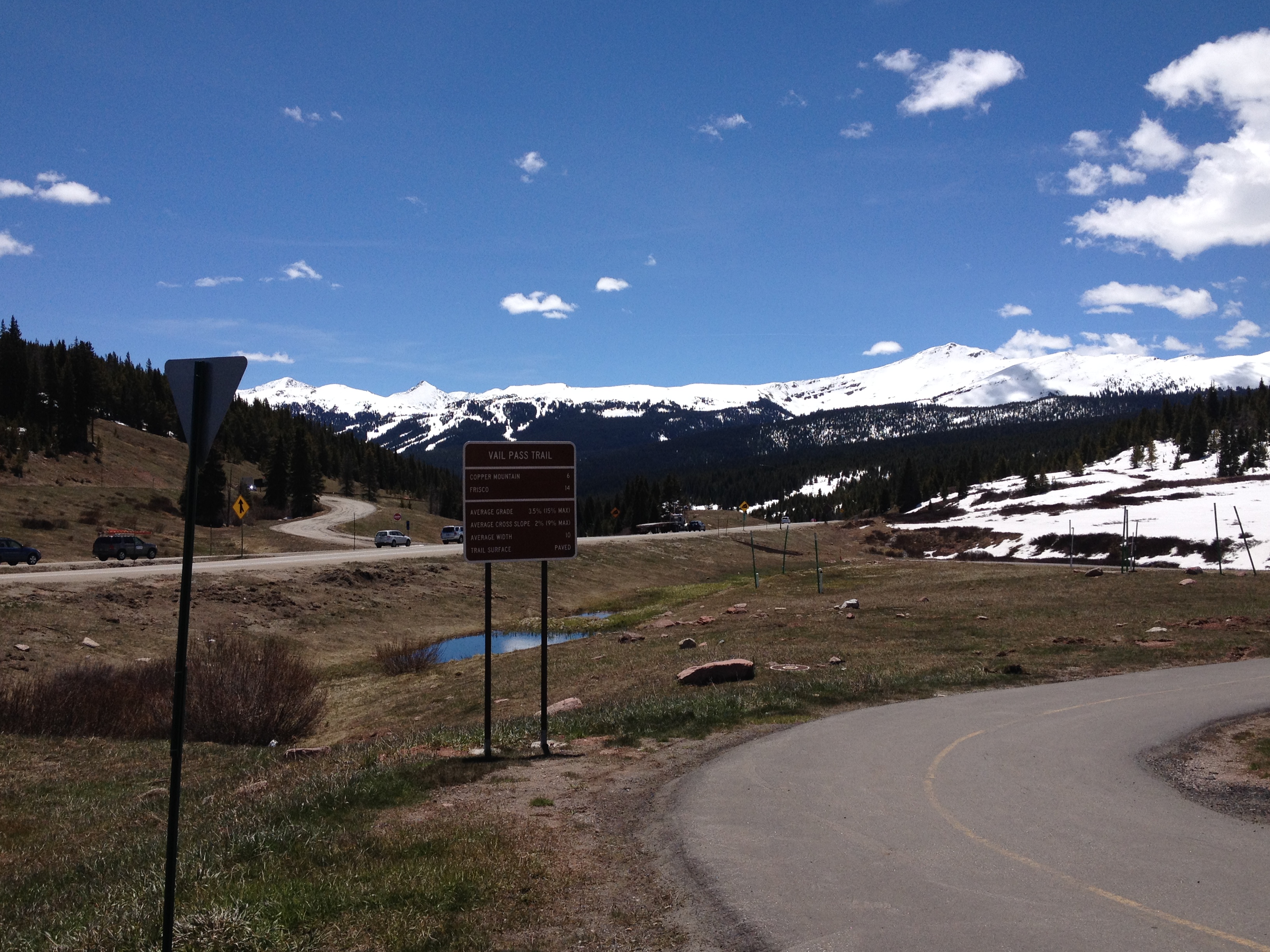
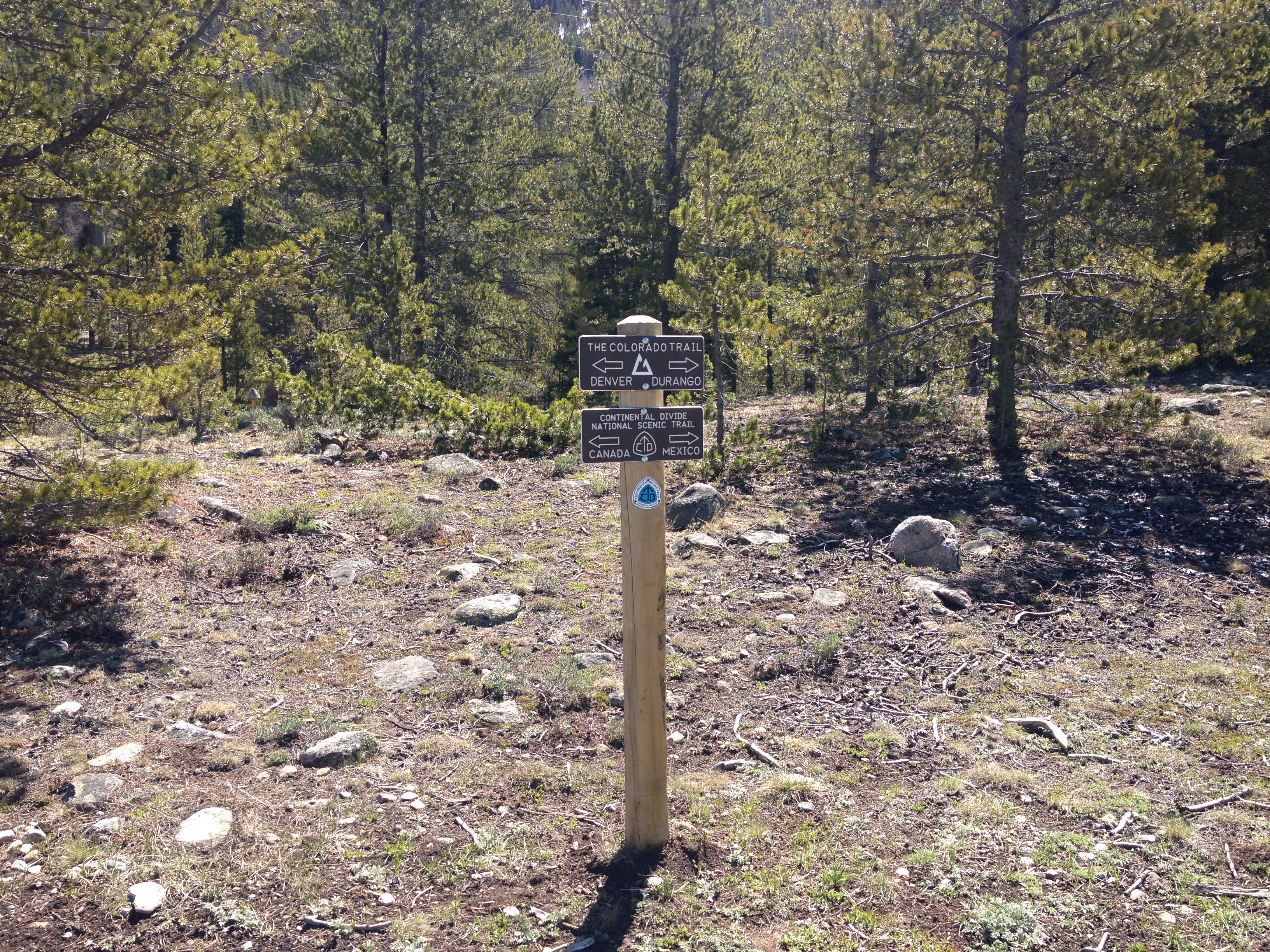
IMG_3474 IMG_3475With it not being ski season, and there not being an actual town there, there was not much going on in Copper Village.  Many places were closed.  The most notable thing I encountered while at Copper was a junction with both the Colorado Trail and the Continental Divide National Scenic Trail, which share the same path here.  Just the thought that anyone I encounter cycling or hiking could be headed as far as Durango, or the Mexican border, is just incredible!  At the West end of Copper Village is the Vail Pass trailhead.  Despite what is indicated in the signage, the trek from Copper to Vail Pass is actually only four miles.  Not only did I clock this myself, but a cyclist with over twenty years of experience cycling here told me that this sign has been “wrong for over 20 years”.

IMG_3476 IMG_3479The Vail Pass trail is kind of a mixed bag.  Over four miles, the trail climbs somewhere between 800 and 900 feet.  However, it is a mix of some fairly flat segments, and some fairly intense areas with switchbacks and such.  I would say there are three sections of this trail that are intense climbing.  One fairly shortly after beginning the climb from copper, one right in the middle, or about two miles from Copper (pictured here), and one close to the top.

IMG_3482

Strangely, most of this trail is actually in the middle of I-70, between the Eastbound and Westbound lanes, which are farther apart for much of the segment between Copper Mountain (exit 195) and the Vail Pass summit (exit 190).  The top of the trail is a rest area that cyclists share with motorists.  Here, a connection could be made with the Eagle County tail network, and cyclists could continue West towards Vail Villiage.

IMG_3483 IMG_3484

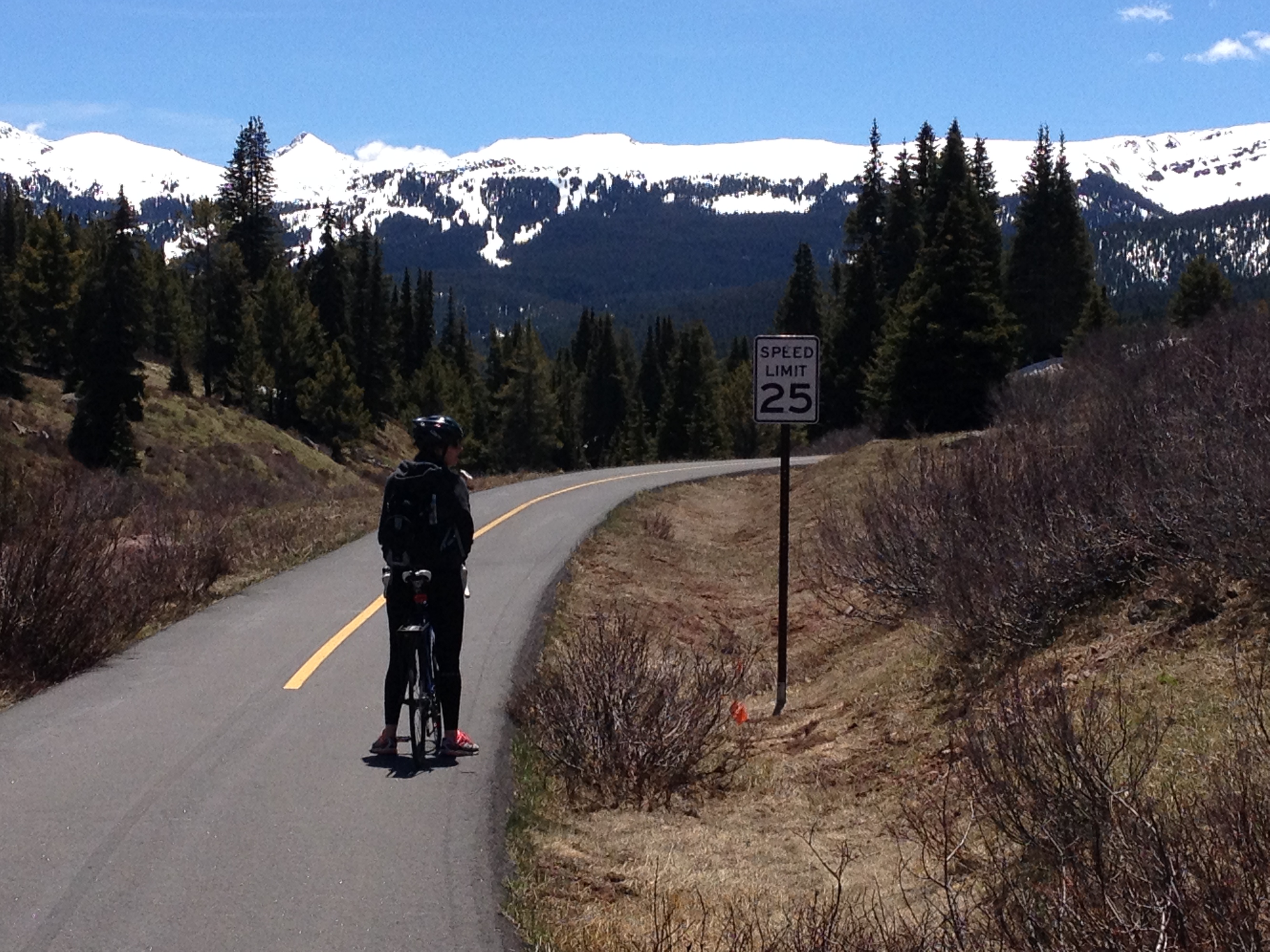
However, my plans take my back towards Frisco, where, I not only encountered another sign indicating that the trail is six miles long rather than four, but a speed limit sign.  I am not sure if and how this speed limit of 25 is enforced.  But, it does provide those concerned with safety with a guideline.

The descent back to Frisco, just over 12 miles in total when one includes getting from the tailhead back to home base (in my case Hotel Frisco on Main St.) went rather rapidly, at a speed that must have averaged fairly close to that assigned speed limit.

After stopping for lunch, in the afternoon, I took on another ride to explore more of the Summit County trail system.  This one, a loop around the Dillon Reservoir.

IMG_3485

The ride starts out “flat”, as the trail stays at roughly the elevation of the lake.  However, “flat” here is a relative term.  Even the rides described as flat and easier, here in Summit County, can contain some rolling hills.  And, while significantly easier than a “climb”, these trails are nowhere near as flat as a trail one would find in a place like Illinois where there is pretty much no terrain change.  There are small rolling hills, as nowhere in Summit County is really flat.

After a fairly “flat” ride on the Dillon Dam recpath and the Snake River recpath, in order to traverse the entire loop around the reservoir, one must climb Swan Mountain, which is actually a 1200′ climb.

IMG_3487

After two significant climbs, and nearly 50 miles of exploring this amazing system of trails, I was ready to call it a day.

I did a little more exploring on Sunday, mostly on the easier trails.

IMG_3493 IMG_3494

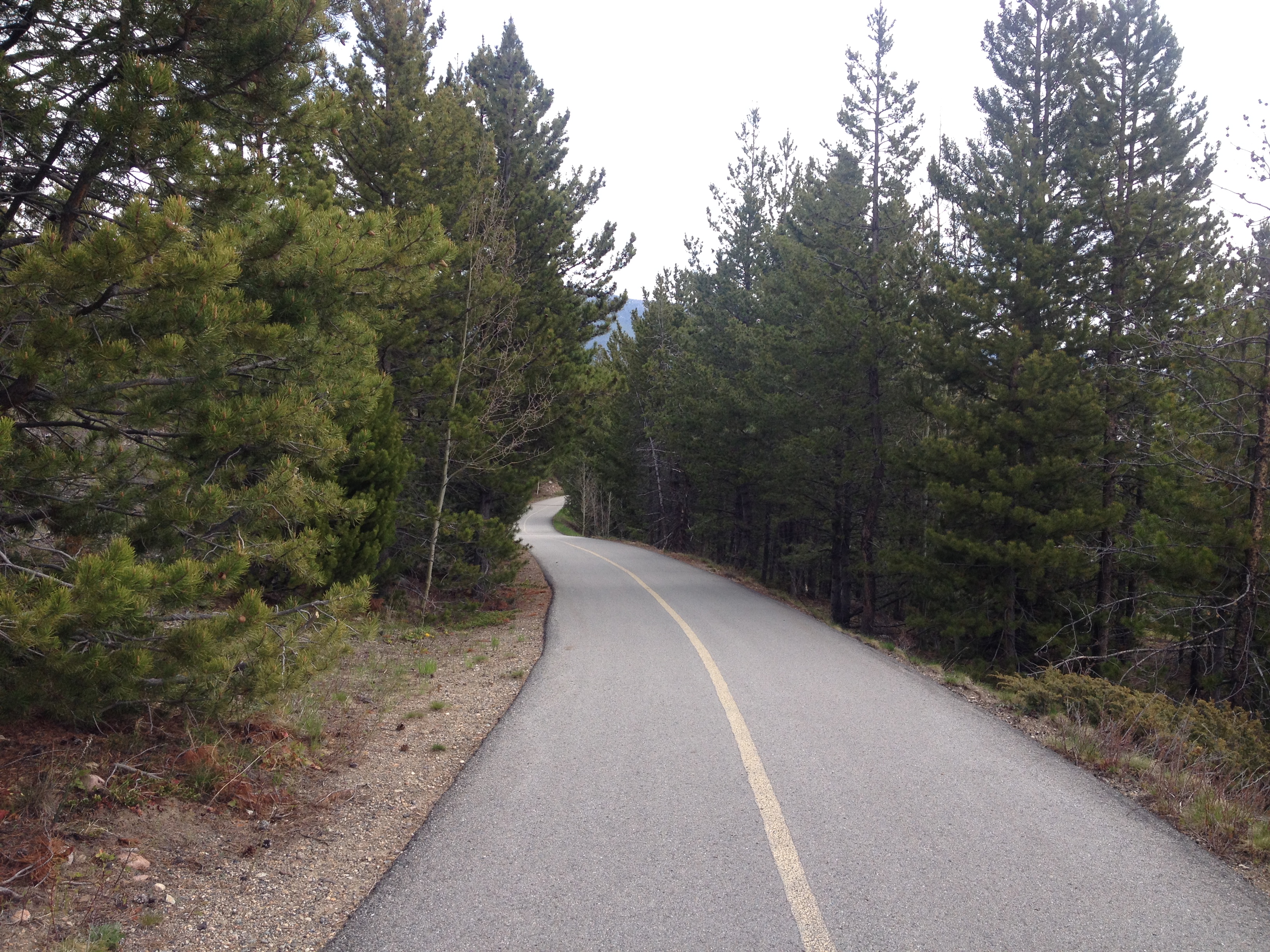
I came to really appreciate the portions of these trails that wind through the trees, often with small rolling hills.  While getting up to the top of a major climb provided me with a sense of accomplishment, these trail segments were just pleasant and enjoyable to ride through.  The smell of the pine trees reminded me of cabins, and camping, and all the things we do in life to get away from our day to day responsibilities.  The twists and turns just made me feel like I was on a ride of sorts, almost like a roller coaster in some places.  And, there were some other interesting areas, like these bogs.  In the end, I am glad I did both the big challenging climbs, and the gentler trail sections.

And, I was also glad to have experienced the town of Frisco a little bit more.

IMG_3490

Frisco is somewhat of an interesting place.  It has that Western feel that many of these towns have, with a Main Street lined with stores, and mountains in the backdrop.  It is somewhat touristy, but not overwhelmingly so.  It seems to occupy some kind of middle ground.  With bus service to Breckenridge, Copper Mountain, and Keystone ski resorts, they get their fair share of ski related tourism.  But, not as much as there is in Breckenridge, or any other town that is actually adjacent to the ski resort.  This appears to have created demand for a variety of different hotels and restaurants, but without some of the major crowds, or the dozens of souvenir shops that line the streets of many other tourist destinations.

Over the course of the weekend, I tried five different restaurants in Frisco; Boatyard American Grill, Begalis, Prost, Butterhorn Bakery and Cafe, and Lost Cajun.  All were within a block of Hotel Frisco, and each one provided a different experience.  Boatyard is a great place to get a burger, or bar type food.  Begalis provides a nice moderately upscale Italian dining experience.  The sausages at Prost were amazing.  Butterhorn is a very popular place for breakfast/ brunch.  And, I am particularly impressed by the free samples provided to customers at Lost Cajun prior to ordering.  And, I enjoyed the casual Louisiana style experience.

IMG_3497

Overall, it is hard for me to imagine a better place for high altitude bicycle training.  Right in the middle of the Rocky Mountains, there is a place with an extensive network of recreational paths that connect nearly every community in the area.

Winter Fun in the Mountains

IMG_1521

Winter fun in the mountains is about more than just skiing and snowboarding.

People who take wintertime vacations are typically drawn to one of two categories of vacations; Vacations people take to escape winter, and vacations people take to enjoy winter.  The former includes tropical resorts and beach towns in places where a 45 degree evening is considered grounds for remaining indoors.  The later, of course, typically involves mountains, with skiing and snowboarding being the most common activities.

In North America, the winter fun season lasts generally from the later part of November through the end of March.  Based on anecdotal evidence (the people I know and have talked to), the peak time to visit the mountains in winter occurs sometime around the middle part of February.  By this particular part of the year, enough snow has generally fallen to produce some of the best snow conditions of the year.  Also, temperatures have recovered a bit from their mid-January lows, and are a bit more pleasant.

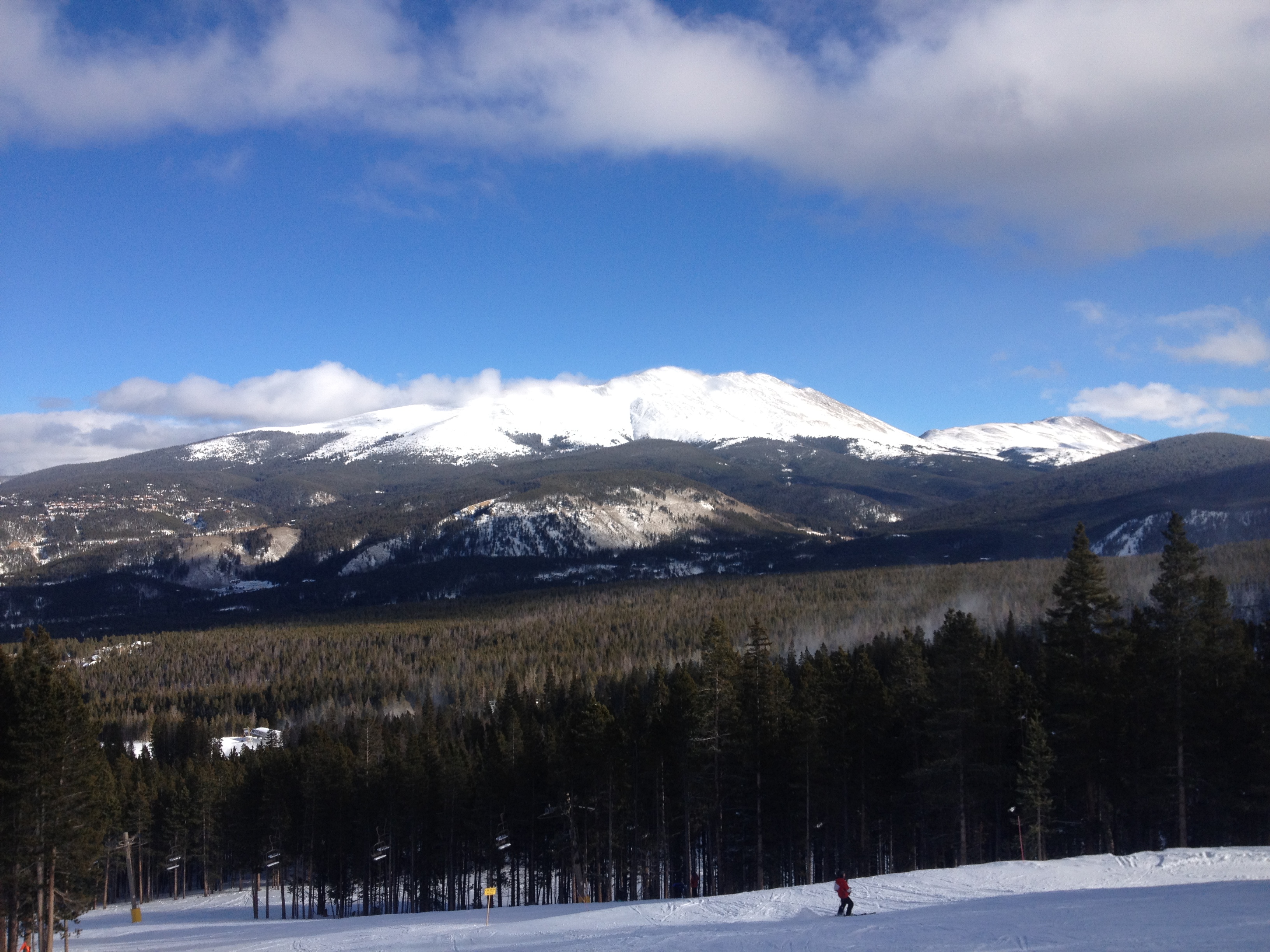
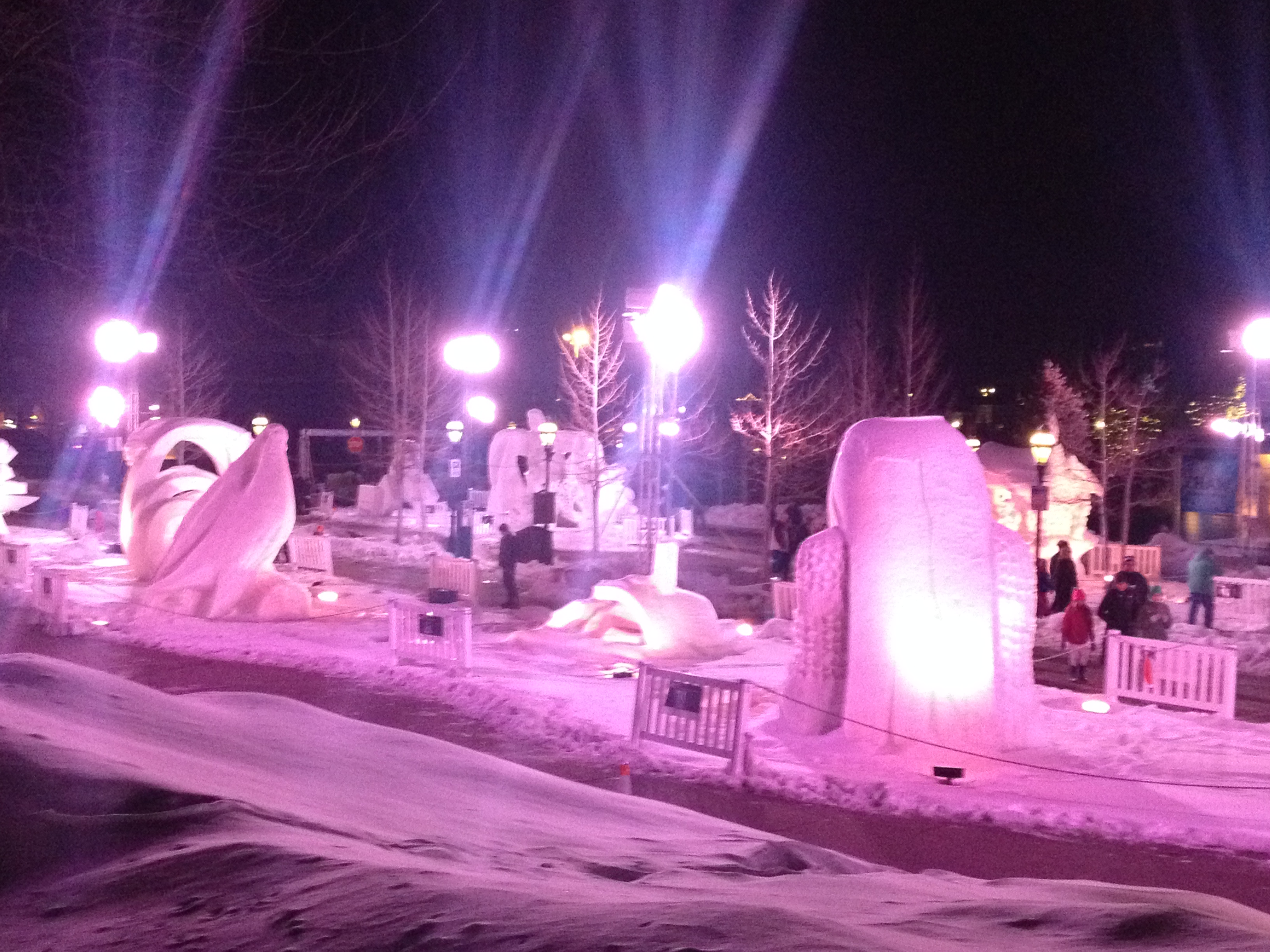
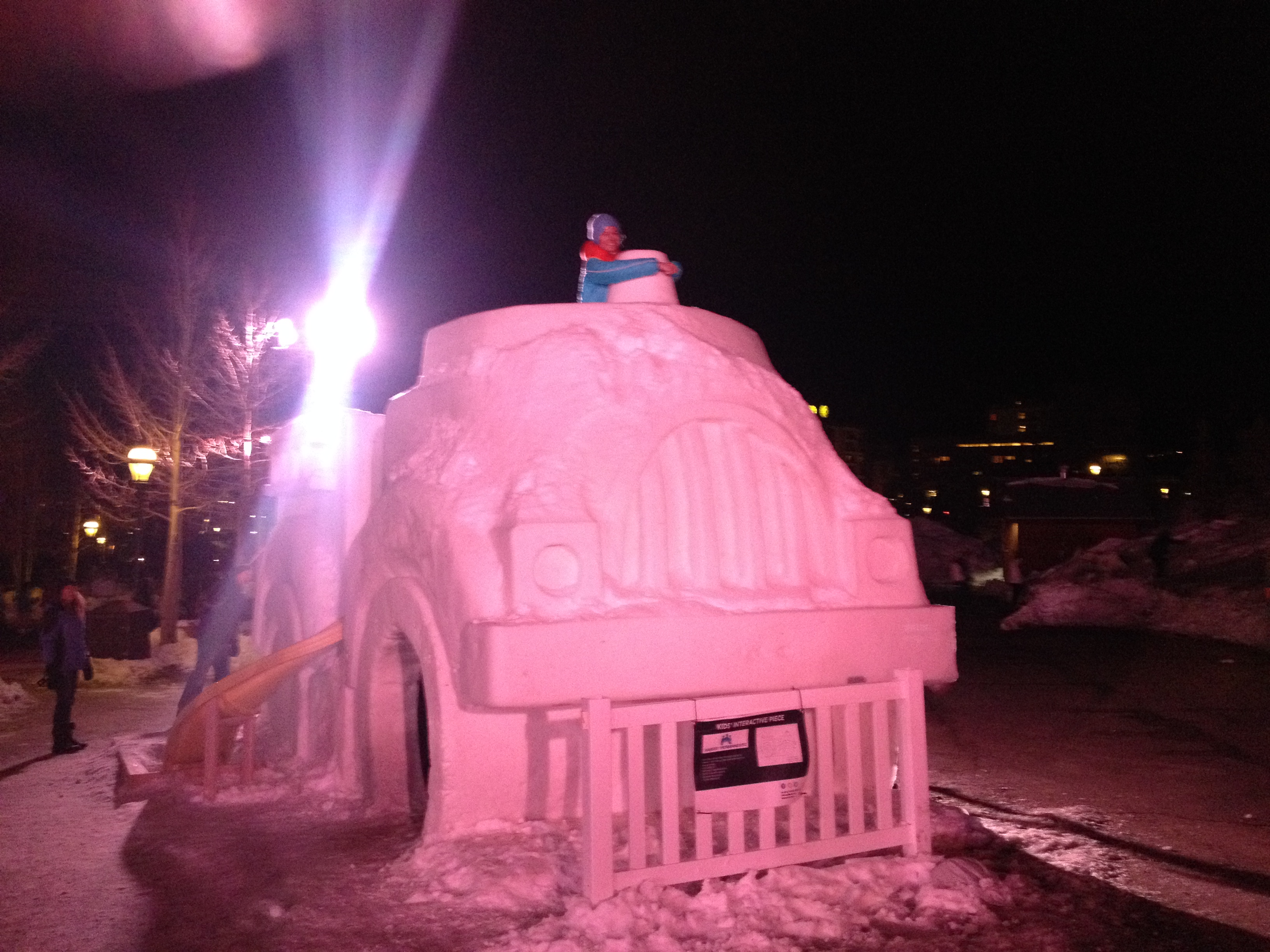
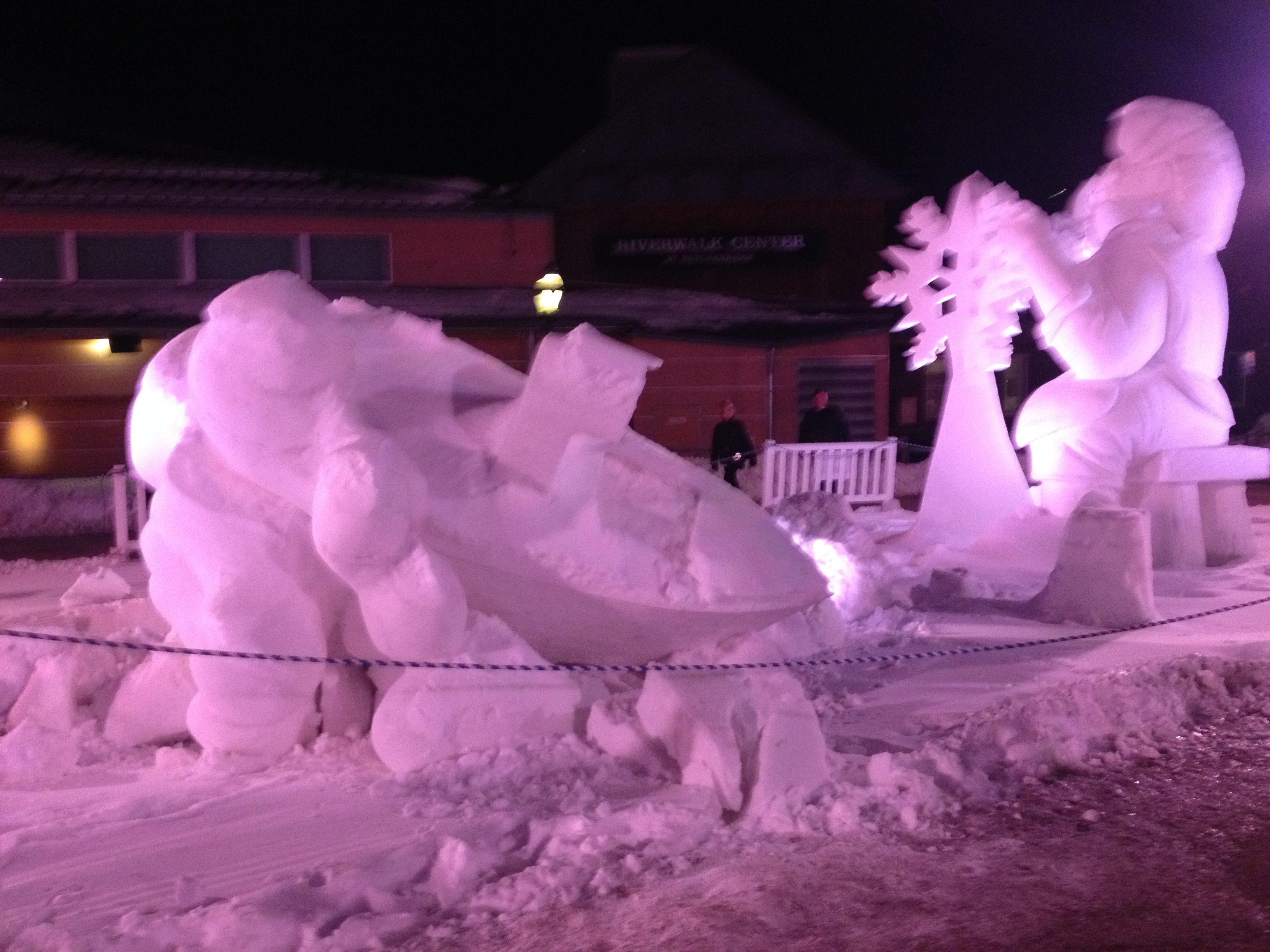
With all of the visitors, not only from all over the country, but from all over the world, other events, and other activities are bound to follow.  In the middle of winter every year, the Village of Breckenridge hosts the International Snow Sculpture Championships, which features snow art from artists from various places around the world (from local artists, to places as far away as Argentina).  These sculptures can commonly be viewed the final week of January through the first week of February.

IMG_3125 IMG_3126 IMG_3127 IMG_3129

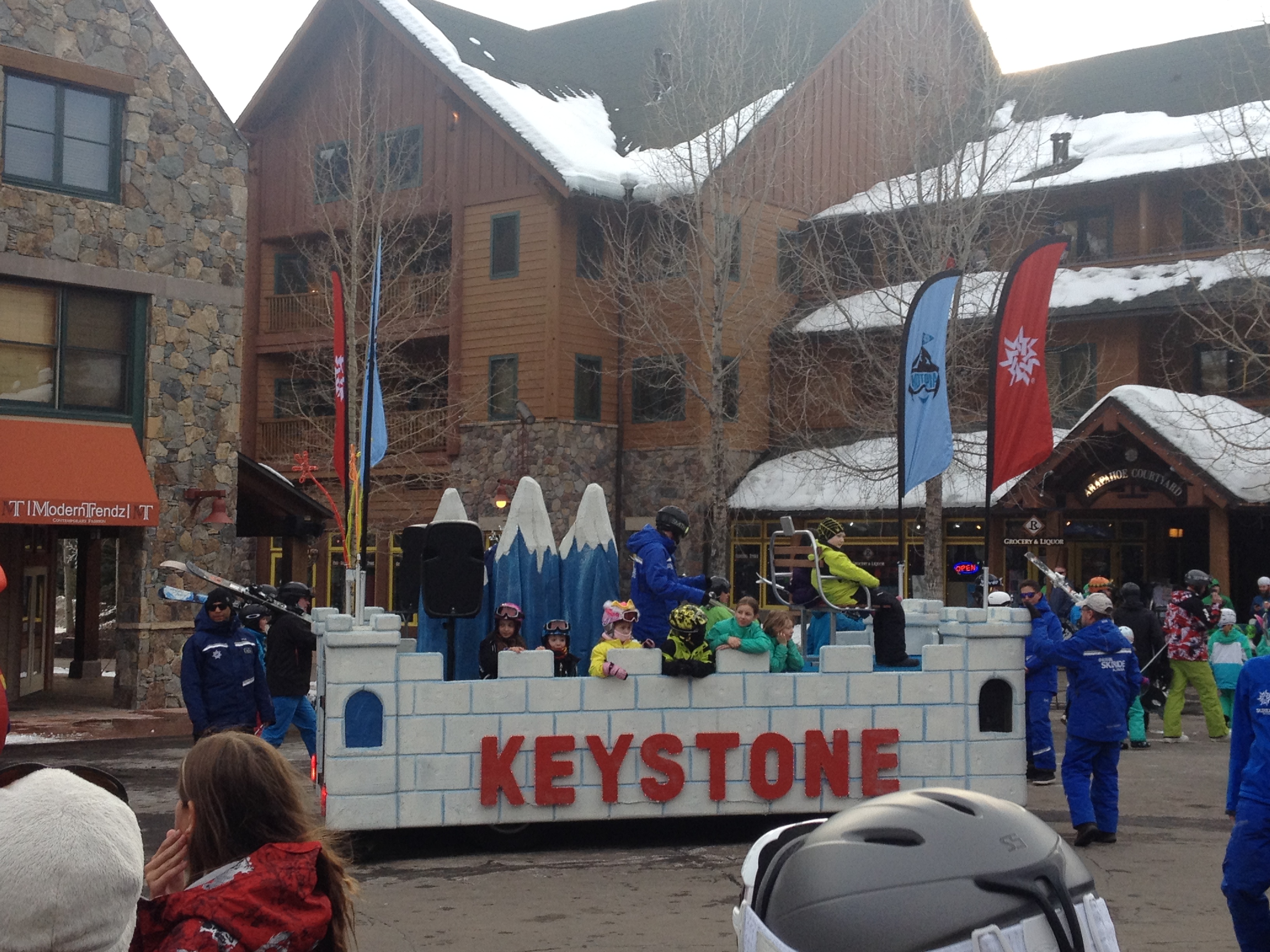
Events in the middle part of the winter also include family activities, Mardi Gras celebrations, and random parades through the village, such as this one at Keystone, which features Riperoo, the mascot for Vail Resorts, which owns eight of the top Western U.S. ski resorts in California, Colorado, and Utah.

IMG_3138 IMG_3139

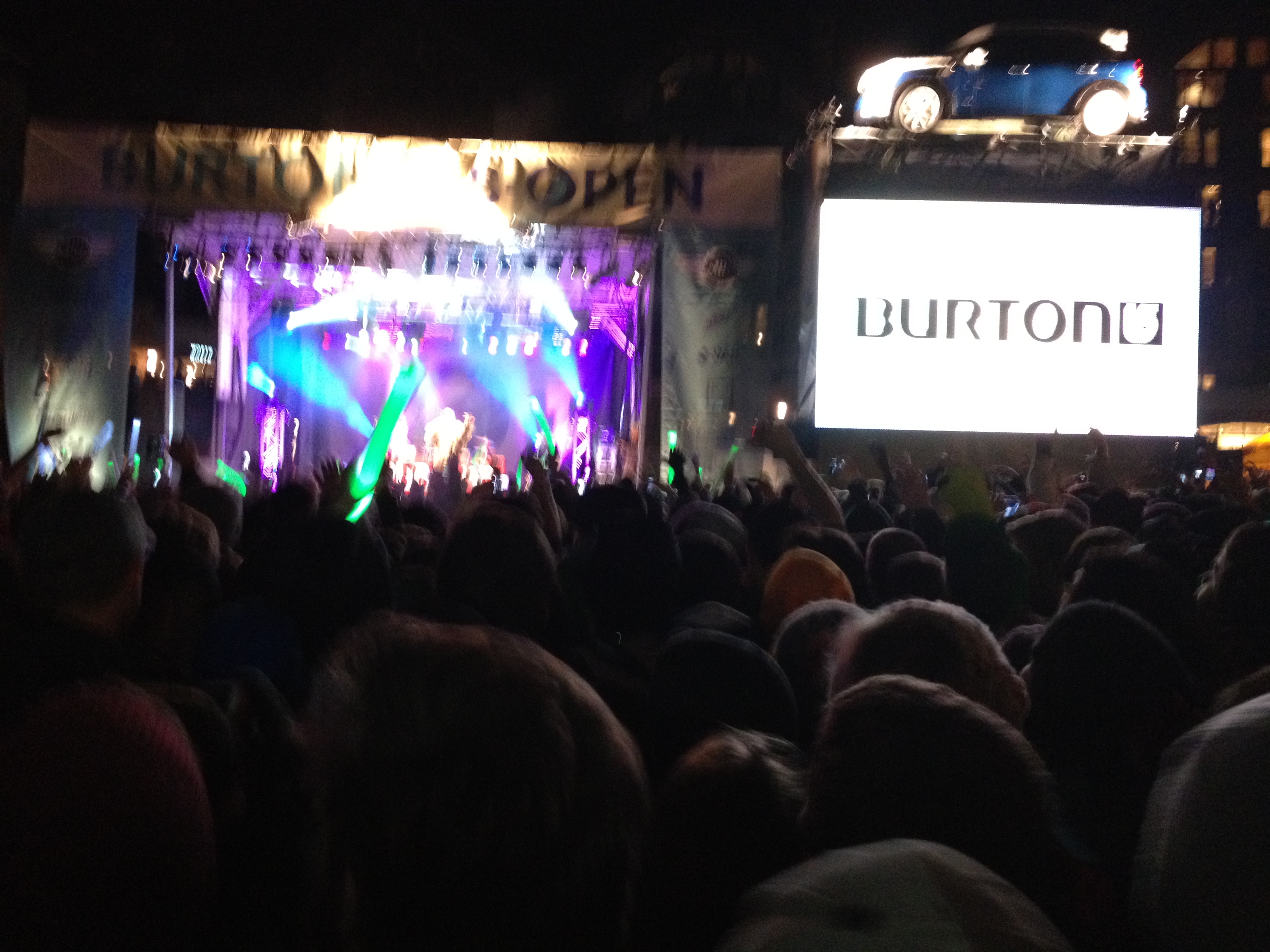
And the events that take place in the ski villages throughout the peak part of the ski season are not just limited to family friendly activities.  With the number of visitors that come to the area, high class villages like Aspen, Jackson, or Vail, are able to draw some fairly well known acts to preform during the evening.

IMG_0256 IMG_0258

Those with enough energy can ski all day long, and party all evening in many of these western villages (although there might be a limit to how drunk you can get in Utah).  There is even a T-shirt commemorating this type of day.

While the ski resorts themselves are the main draw, and the main reason there are as many visitors to the mountains as there are at this time of year, wintertime activities are not limited to only the resorts and the villages that support them.

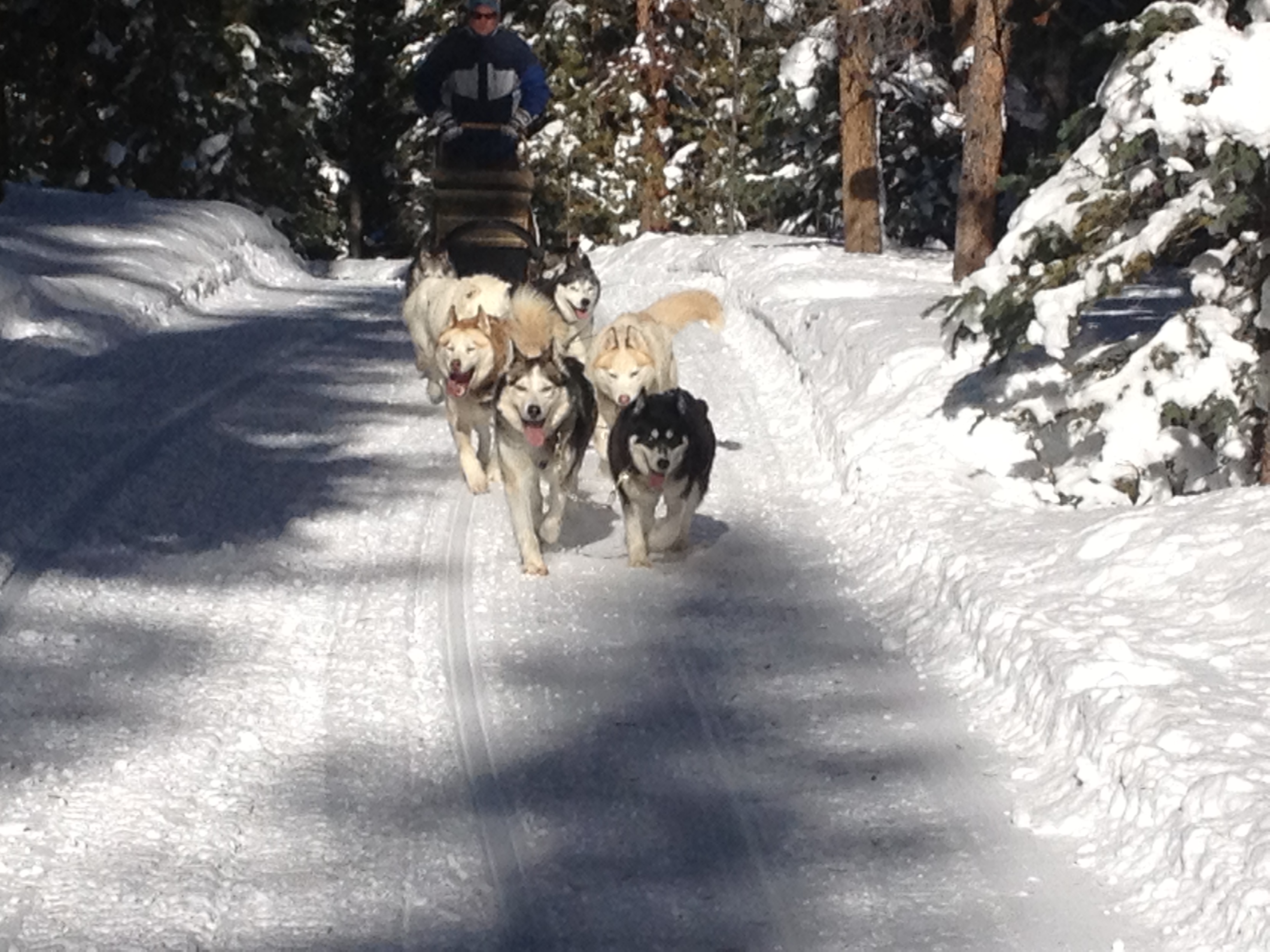
As I wrote about last year, there are plenty of outfitters in the mountains that offer dog sled tours.

IMG_1615

Many of these outfitters also offer snowmobile rentals and tours, and many are quite close to ski resorts and resort villages.

Due to geographical features, it is not hard to find hot spring throughout the West.  One of the most popular hot springs in the country, Strawberry Park, is located in Steamboat Springs, less than 10 minutes from the ski resort.

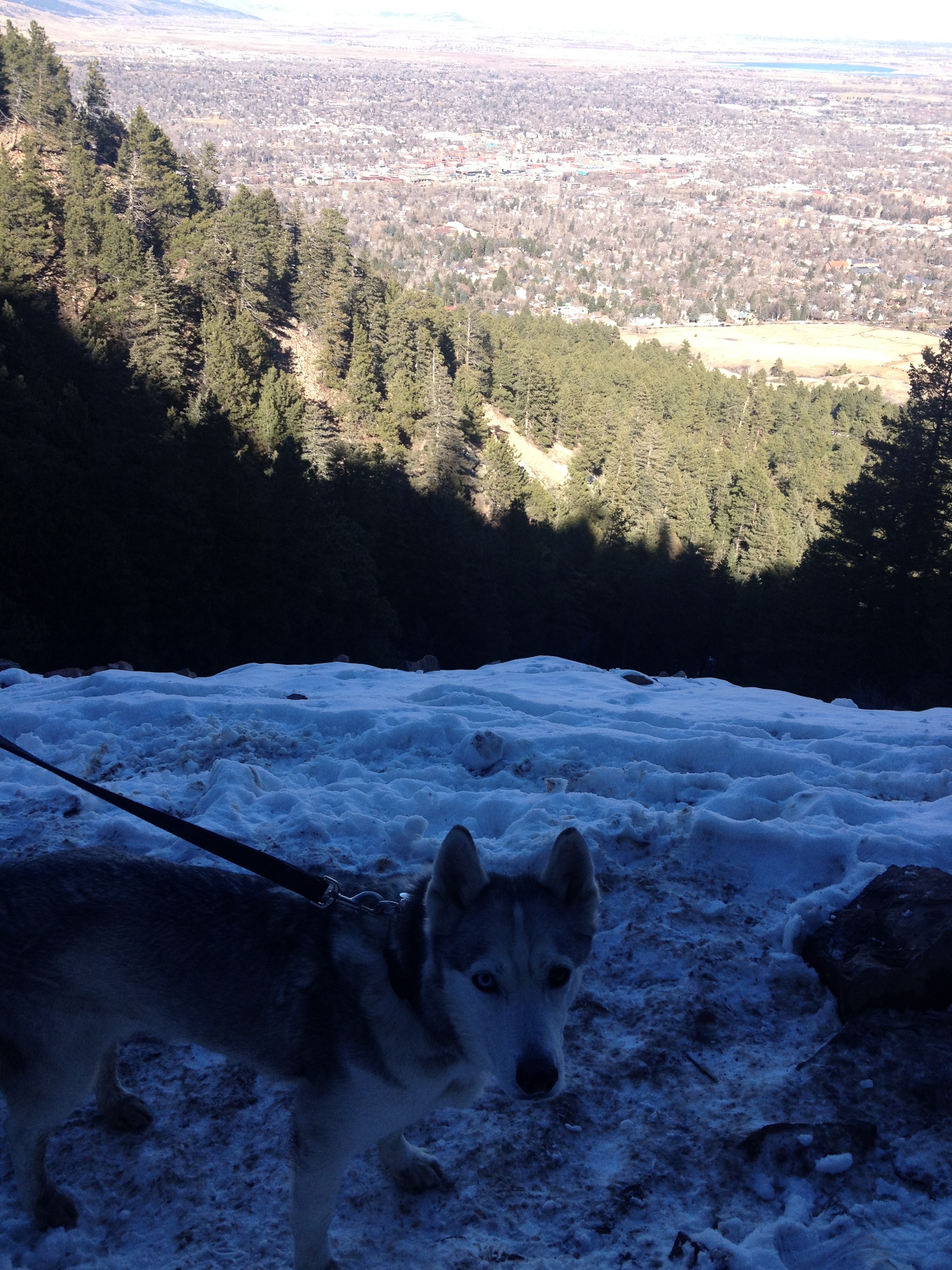
And, with frequent spells of warmer weather, it is quite possible to find a day, even during the peak part of ski season, where it is possible to just take a hike in the woods (that is, if you can handle hiking over a little bit of snow).

IMG_1657

It is a story repeated in many different places throughout the country.  In any place where you have large amounts of visitors, many other activities and events, often catering to all different kinds of people, pop up in response.  This is why we see tons of miniature golf courses, boat tours, and even night clubs pop up in places like Orlando, “Down-East Maine”, and the Wisconsin Dells.  In each case, a primary draw (like water parks, or ocean front) brings people to the region, and then the other amenities follow.  However, in many of these places, the area has become quite congested with people.  Those who have either sat in traffic, or spent a small fortune on strips such as International Drive in Orlando, or the Smoky Mountain Parkway in Pigeon Forge, will refer to places like these as “tourist traps”.

But are these places “tourist traps”?  It is, after all, quite easy to spend a small fortune in Vail right after sitting in major traffic on I-70 to get there.  However, despite the similarities between the “tourist traps” of the East and the mountain resorts of the West, there are still some major differences, with the primary one being the balance between natural and man-made attractions.  Theme parks such as Disney World and Six Flags are completely the creation of humans.  And, although we have lifts to carry us up the mountains, and a nice pool to cover the Hot Springs, the main attractions here are still the natural features that first brought us here.  So, until a roller coaster pops up adjacent to Park City, mini-golf courses start to line South Lake Tahoe, and Dillon Reservoir becomes covered with bumper boats, the mountain west has not become a “tourist trap”, at least not in the same way as the “tourist” traps had developed in these other places.

With that being said, it is still important to remember that there is way more to wintertime in the Rockies than skiing and snowboarding.  And, while there are some visitors who do little else but ski on their visits to the mountains at this time of year (spending most of their remaining time in their condo), there are others that take part in a lot of other activities and attractions in the area.

Christmastime in Breckenridge

IMG_2903 IMG_2917

Last winter, I spent around a dozen days in Breckenridge, Colorado, including a week-long stay here in late February.  Only a 90 minute drive from Denver, I feel quite comfortable coming up here on a day trip, without spending money on lodging, on a regular basis.  To wake up, drive to Breckenridge, ski for six hours or so, and then drive back does not make for an overwhelmingly tiring day.

When traveling to a particular destination becomes as regular as this one has become for me, the lines become kind of blurred.  In a physical sense, I am most definitely traveling.  I prepare, I pack, and I get in a vehicle and go to a different location which is a non-trivial distance away.  It is not a run of the mill trip to the grocery store or a neighbor’s house.  However, there are a significant number of people who commute longer than 90 minutes each way to work every day.  For them, a trip that takes at least as long as my trip to Breckenridge (when there isn’t bad traffic), has become routine.  It is certainly not something that any of these commuters would categorize as “travel”.  A trip up to Breckenridge for me is without a doubt more interesting and exciting than a 90 minute drive to work, but it is only slightly less routine.  I know what to pack, I know what to expect, and I know where everything is.  So, a trip like this straddles some kind of middle ground between what most would consider “travel”, and what most would consider just a part of life’s routine.

However, for many, Breckenridge is most definitely a highly sought after travel destination.  In fact, according to a fairly recent Travel + Leisure article, Breckenridge is the second most visited North American ski resort, behind only Vail.  And, since the printing of that particular article, the resort has actually gotten bigger, with the opening of a whole new section of the resort- Peak 6.

Breckenridge_SkiMap_2014

Despite its size, it is actually fairly easy to get around the resort.  Each peak on the resort labelled numerically, and both the ski lifts and trails are labelled quite clearly.

IMG_1643 IMG_2905

A variety of great trails, and panoramic views, already existed before the opening of Peak 6.

IMG_1601 IMG_2907

Peak 6 added something unique; essentially intermediate level skiing in a wide open area above the tree line.

IMG_1707 IMG_1644

Even with Peak 6 rising to 12,300 feet, the highest point on the mountain is still the top of Imperial Express.

IMG_2911 IMG_2914

At 12,840 feet, the very top of the mountain it often gets quite windy.  In fact, this part of the resort gets closed quite frequently due to high winds, even on some perfectly sunny days.  If there are relatively strong winds at any of the other parts of the mountain, I will often have no desire to come up here, and deal with even stronger wind at this elevation.  Luckily for us, Saturday was a relatively calm day, making it an ideal time to head to this part of the mountain.  For anyone that can handle the more challenging terrain up here, I would recommend making a trip to the top of the resort at least once on a calmer day, as there are very few places where you can overlook a ski area from above as you can here.

Town of Breckenridge in the Winter

In addition to the popular ski resort, Breckenridge is a pretty vibrant town, especially during ski season, and one that I greatly appreciate.  Main Street, which is lined with shops, restaurants, and even nightlife, is a mere two blocks from the ski resort’s main Gondola parking.  Numerous condos line the roads that offshoot from Park Avenue, providing many visitors with places to stay within walking distance of both the ski lifts and Main Street!

In addition, the town is fairly unique.  Surrounding nearly every other ski resort I have visited is a ski village that was built primarily to serve the ski resort.  These villages are typically pedestrian-only areas (usually buses can come in) that lie between the main parking lot and the ski resort.  Since these towns were built around the ski resorts, they typically have all of the amenities that anyone on a ski trip would need, often including numerous hotels and ski shops.  However, Breckenridge, having existed long before the ski resort, offers the experience of a ski town that has the layout, and feel, of a normal town.  It feels a bit less like one is visiting a resort village, and more like one is visiting a town that happens to have an incredibly popular ski resort next to it.

With the lighting of the Christmas tree Saturday night, Breckenridge “officially” kicked off the Christmas season.  For many, the Christmas season has already begun.  In fact, some do not even wait until Thanksgiving to begin preparing for Christmas.  However, now, for better or worse, the season has kicked into full gear.

On the drive back Sunday, after another nearly full day of skiing, some lamented that it was time to return to “normal life”.  But, did we ever really leave our “normal lives”?  All of us involved in this trip live in Denver, and ski up in the mountains quite regularly, carrying season passes to multiple resorts.  Having skied 22 days last winter, 18 the year prior, and with the expectation of skiing nearly as frequently this winter, I feel as if last weekend, I was simply enjoying a funner part of my “normal life”.  And, this Christmas, I can be thankful that something as fun and enjoyable as skiing in Breckenridge is not a “vacation” or “travel” from which I will return from, but a part of the cadence that represents my “normal life” in its’ current state.

Saint John; Virgin Islands

Saint John Island is one of the most remote places within the United States.  A part of the United States Virgin Islands territory, it’s year-round population is a meager 4200 people.  It can only be accessed via ferry or boat.  For mainlanders, Saint John can be accessed by a 20 minute ferry ride, after a half hour cab ride from the airport on nearby Saint Thomas.  The flying time to Saint Thomas is listed as roughly three hours from the nearest major airport in the mainland; Miami, Florida.  Therefore, the minimum travel time for any mainlander is four hours.  For most, the journey is much longer.

I spent my time on Saint John primarily in two places; Cruz Bay, which is the main population center on the island, and Caneel Bay, a resort about ten minutes farther up the coast of the island.

IMG_2819 IMG_2817

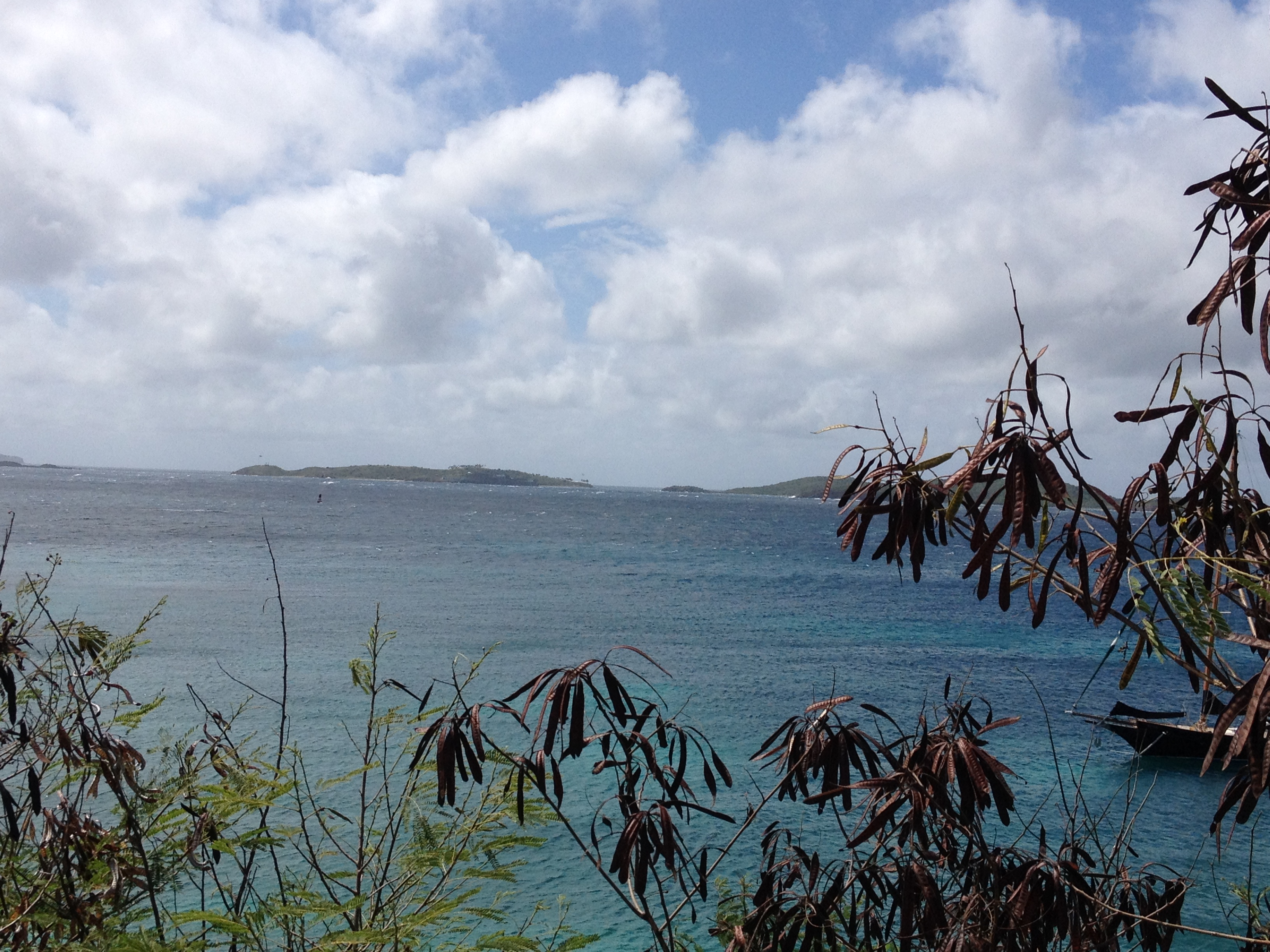
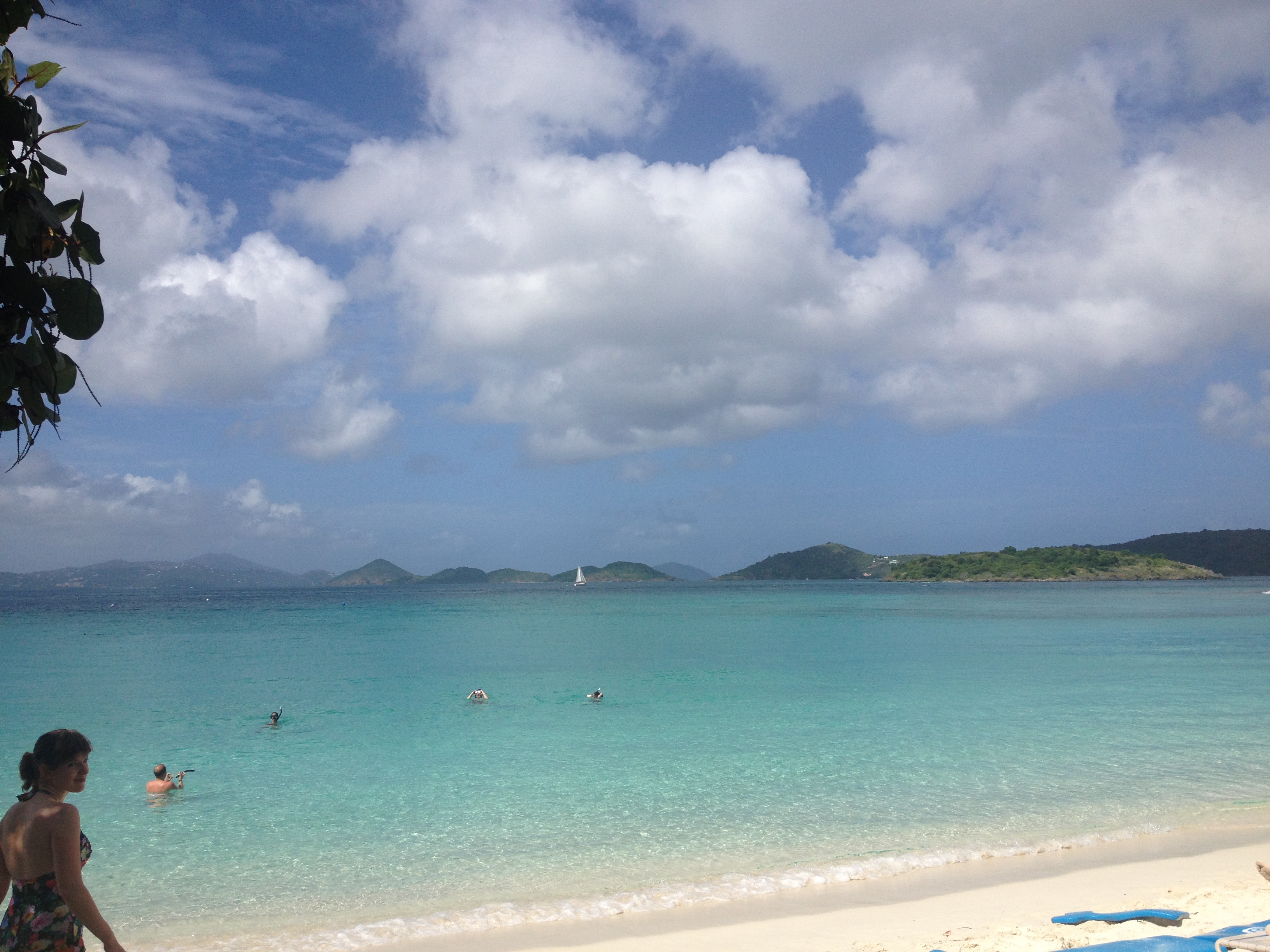
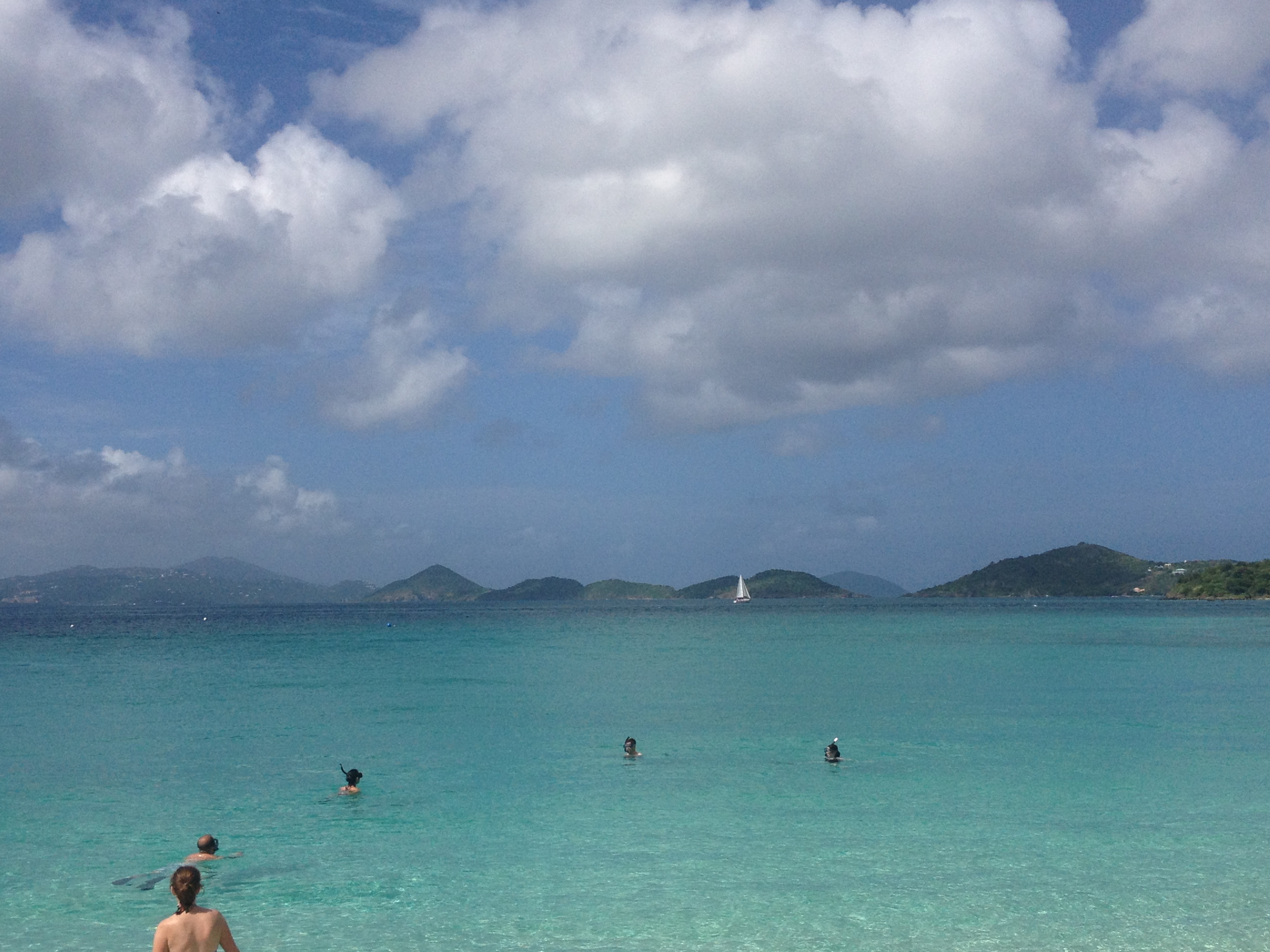
Cruz Bay is where the ferry from Saint Thomas first arrives.  It is the first place any visitor to this island sees.  It is Saint John’s front door, it’s first impression.  And it doesn’t disappoint.  The ocean here is as stunning and picturesque as anywhere I could possibly imagine.  In fact, even at some of the best kept lakes in the United States, I have never seen water this magically blue.

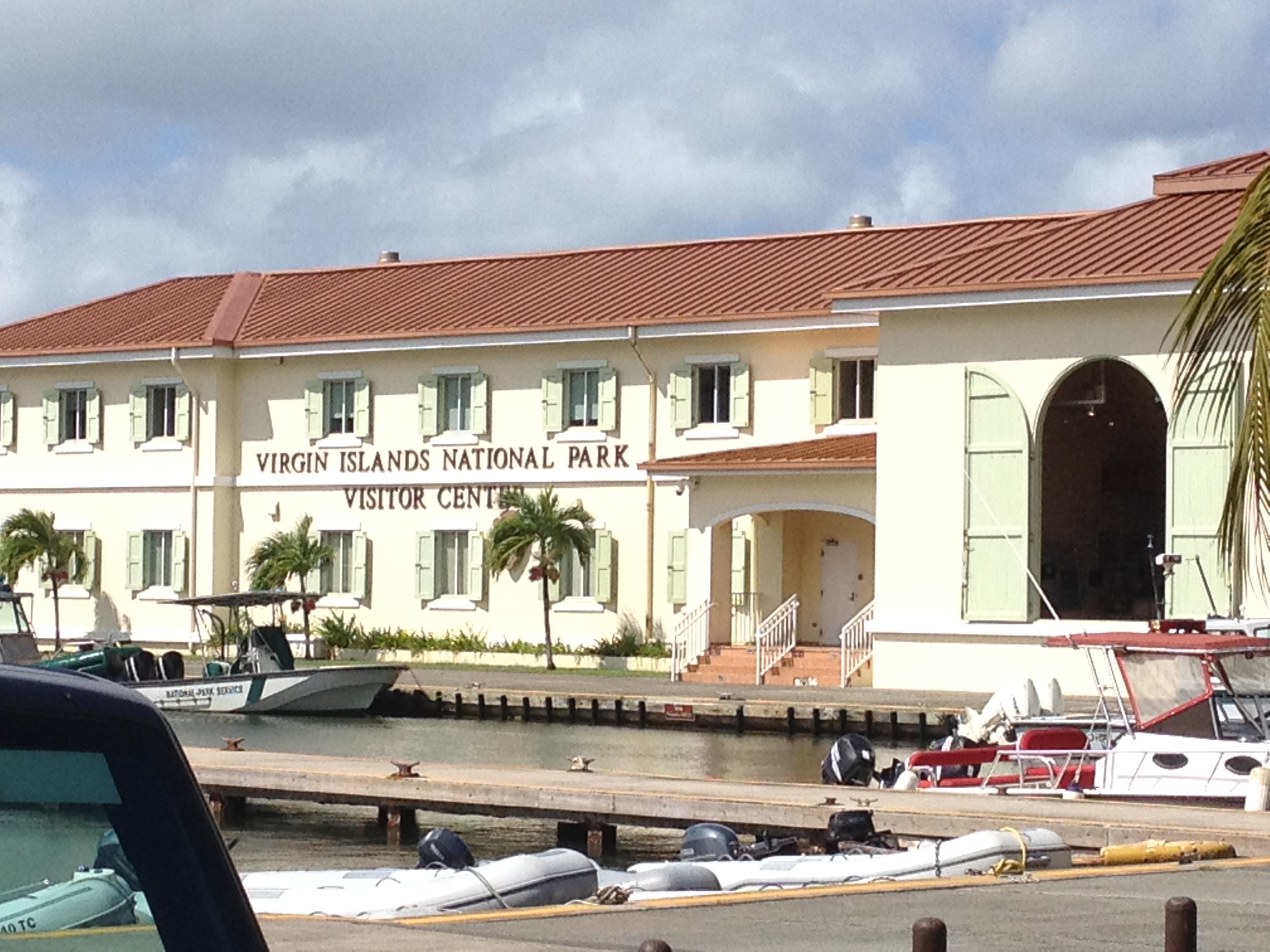
Upon arrival to Cruz Bay on the ferry, one immediately sees a plethora of tourist accommodations.  To the left is the Virgin Islands National Park Visitor Center.  In front are the beaches, boats and restaurants.

IMG_2824 IMG_2827

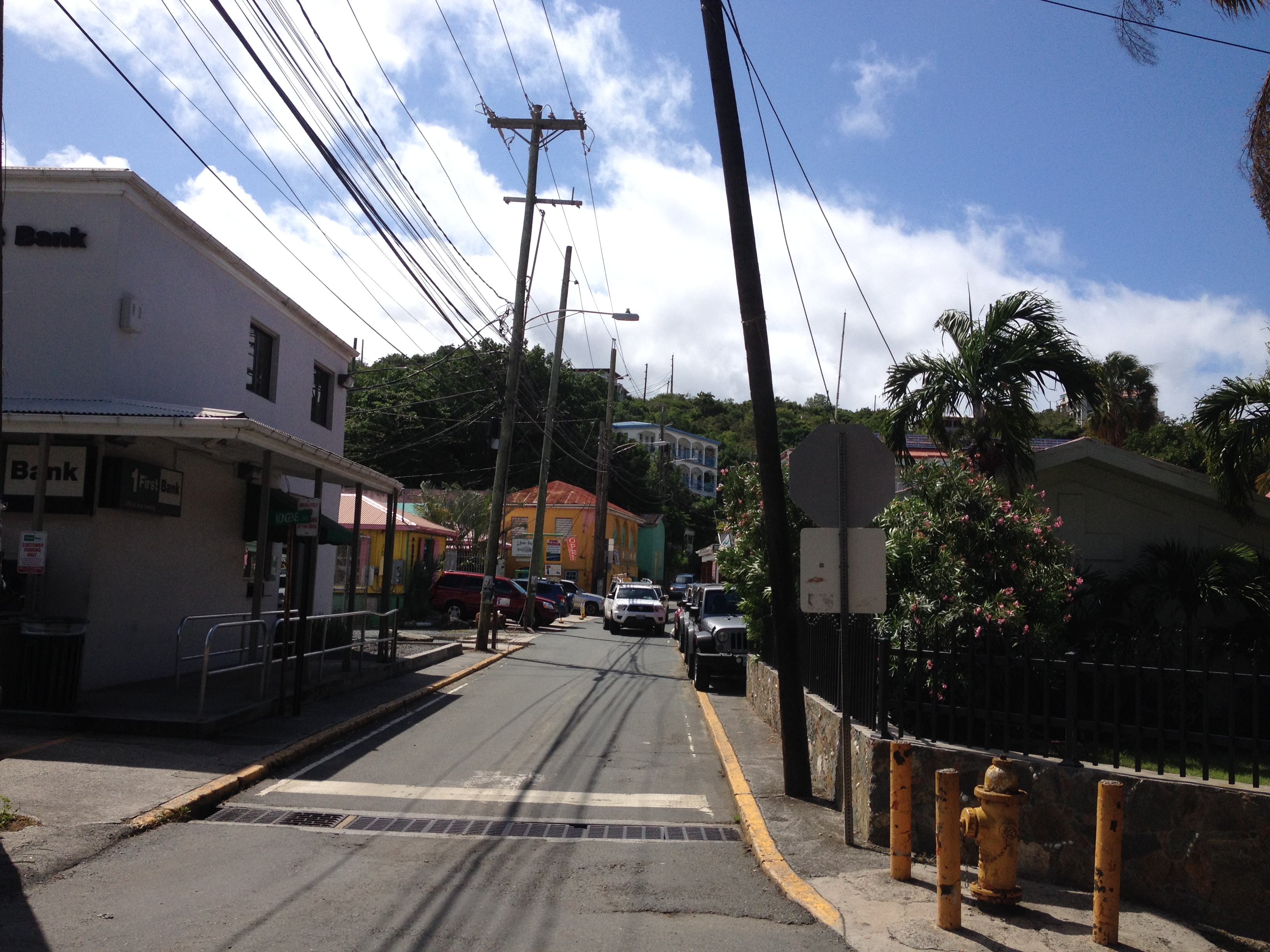
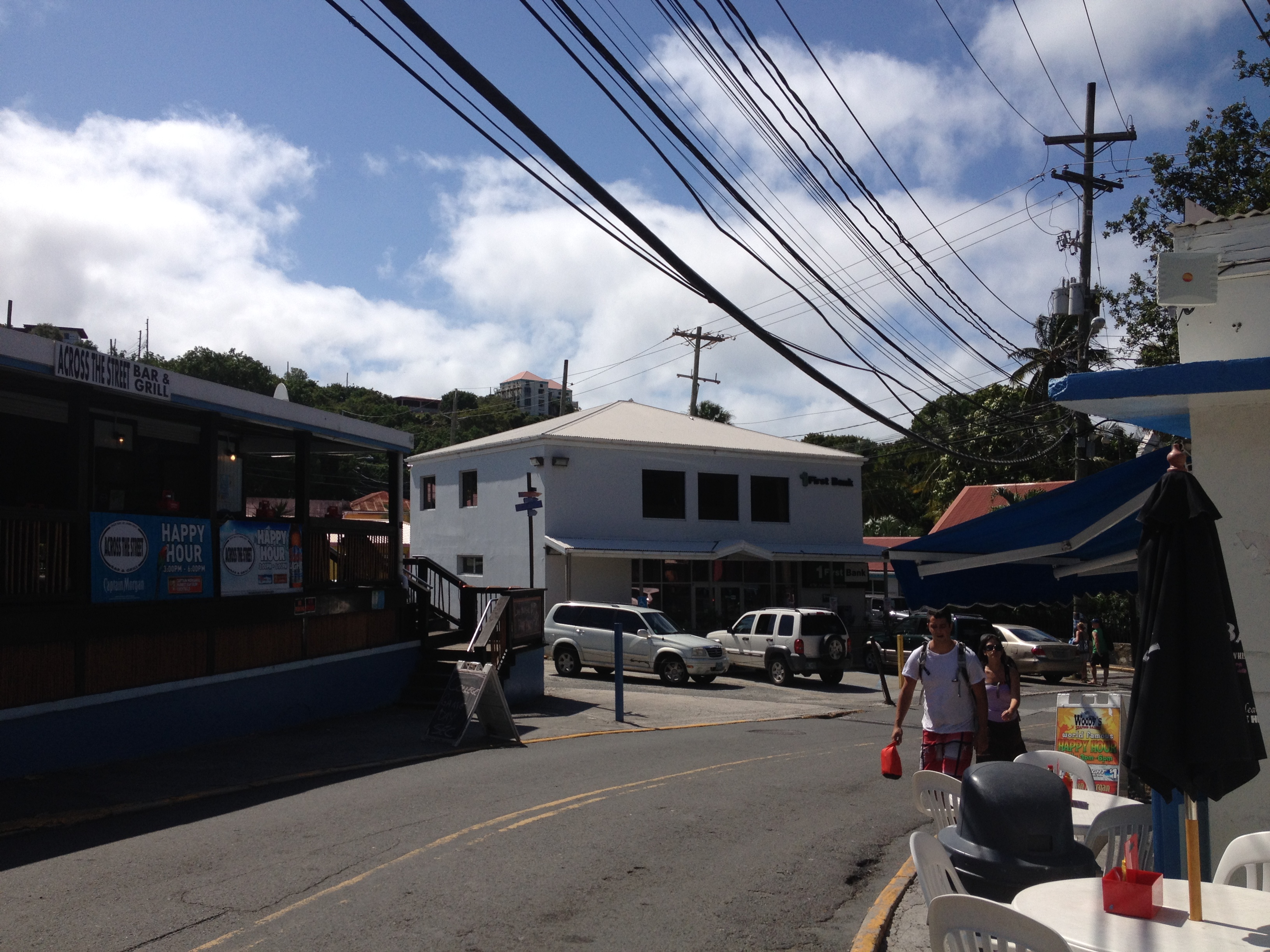
A tourist that walks up the road straight in front of them (road names are not obvious here) will encounter a road lined with bars and restaurants that obviously cater to those not from the Islands.  Walking along this street in the evening, rather than traditional Caribbean music, one will hear the likes of Jimmy Buffet, modern American pop, and a surprising amount of Country-Western music.  And, a vast majority of the proprietors and patrons of any of these restaurants are obviously tourists or those who moved here from the mainland to work tourism related jobs.

Most of the residents of this island are black (or Afro-Caribbean).  Although this did not really surprise me, I still wonder how this came to be, as I had never really been taught about the history of the Caribbean Islands beyond the arrival of Christopher Columbus in 1492 and the subsequent voyages to the “New World” that the news of this voyage inspired.

However, when I look around me, and take a couple of trips to less touristy parts of the Island, where one can see a better representation of how those native to Saint John live, I can’t help but have the present rather than the past on my mind.

How do the lives of those that live here year round differ from our own?

How do they feel about being a part of the United States?  And, more specifically, how do they feel about their status as a U.S. territory (and not a state)?  We commonly hear about issues regarding Puerto Rico’s similar status, and the razor thin margin between those who support and those who oppose statehood.  But, we never really hear much about the U.S. Virgin Islands’ status and how it impacts the people here.

Most importantly, how do they feel about us, and our presence here?  Do they debate the economic impact of tourism vs. the cultural disruption that it causes?  Do they ponder the fact that within the mainland part of the U.S., we have places like Catalina, Key West and South Padre, places where many of us could theoretically get a similar experience without invading their island?

Ultimately, are they fighting for their identities, their culture, or are they enjoying the economic benefit of our presence, as well as their association with the United States of America?   When we think of the Caribbean, we often think of pop icons, including Bob Marley, but also more recent pop icons from the region, such as Daddy Yankee and Sean Kingston.  The music produced by these artists take us to the pristine tropical oceans of the Caribbean, if nowhere else but in our minds.

However, it is these pop icons that appear to represent the dichotomy of the possible responses that seem plausible given the current situation of those that live in the U.S. Virgin Islands.  Marley, from his lyrics, considered himself part of a struggle for the culture and identity of himself and his people.  But modern pop stars like Kingston appear to be simply enjoying the economic benefit of their stardom, much of which comes from the U.S. and the western world that Marley rallies against.

Although there is a lot more to any one person’s life that what we witness through the media, Kingston and Co. do appear to be thoroughly enjoying their lives.

IMG_2847 IMG_2849

After multiple nights of partying, I lay exhausted on Scott Beach, the finest beach on Caneel Bay resort.  I watch the boaters and snorkelers go by.  Some even tell me that it was here, in the clear waters of the Caribbean, that they had one of the best snorkeling experiences of their lives.  They did so by being willing to visit a place a little bit out of the way, a place where the people, the culture, and the way of life are different than their own.

That is when it occurred to me that the world is full of people who are different from me.  The world is full of people who look different, act different, have different customs, beliefs, values, and different ways of understanding the world.  We can either learn to live with different types of people, and try to relate to them as best as we can, or we can accept the limitations that go along with confining ourselves to people with sufficient similarities to ourselves.

In practice, we all implore somewhat of a combination of the two strategies; accepting some differences but trying to stay away from others.  However, there are some that believe that in an increasingly connected world, the future belongs to those that can bridge the gap between different cultures.  I am not sure if I inherently believe that the ability to bridge cultural gaps is a prerequisite for success in the 21st Century, as many people have built fortunes designing products that largely cater to one segment of society.  However, when I watch people enjoy Saint John Island, and watch videos by Kingston and other similar artists, I see firsthand the benefits of being able to relate to those with different backgrounds and ways than my own.

Saying Goodbye to a Travel Partner

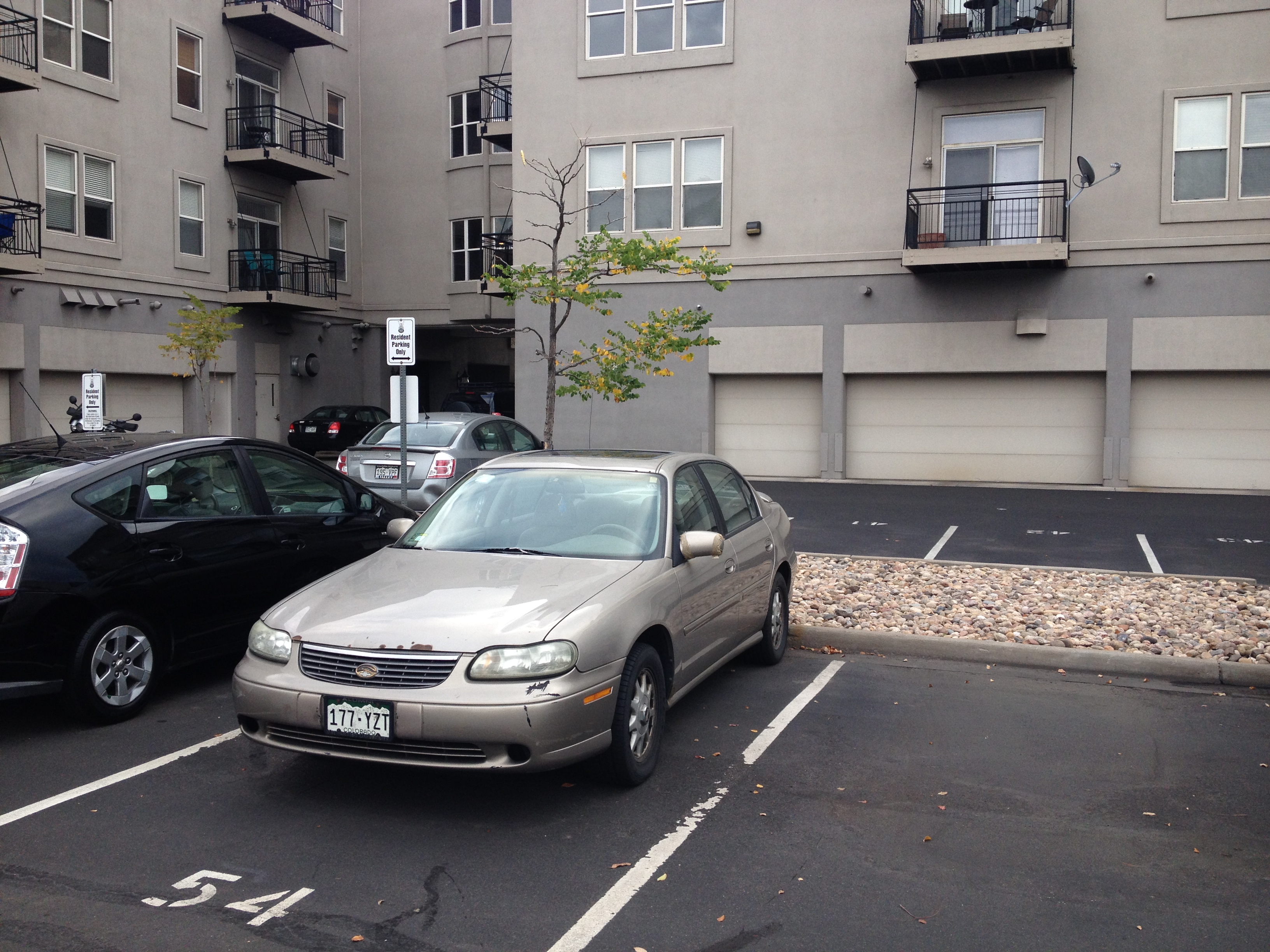
This week, it is with great sadness that I say goodbye to a travel partner that has been with me for over a decade; my 1997 Chevrolet Malibu.  After showing signs of weakness for several years, it’s performance just recently started declining rapidly, to the point where it can no longer be driven with any degree of confidence.  At its age, it would be quite difficult to justify spending any more money on repairs.  After holding on to this vehicle, potentially longer than I should have, it is finally time to say goodbye, and time to move on.

IMG_2674

To some people, a car is just a car.  It is just simply a tool for one to get from place to place, just like any of the other pieces of machinery they own.  Obviously, those that lease new cars every three years do not get attached to their vehicles, preferring to always have the latest in technology.  And, there is no clear reason to have any kind of emotional attachment to a mechanical object with no thoughts or emotions of its own.

However, as someone who loves to travel (and is addicted to being in motion), I cannot help but be extremely sad to know that I have taken my last drive inside this vehicle.  The feeling of being inside this car, and being behind the wheel is one that I had become so accustomed to, it almost felt like second nature.  For some time, it felt like a place I really belonged, and there was definitely a year or two in there when I felt more at home inside this car than the places where I actually lived.

When I purchased this vehicle, I was still in college, and longing for the independence associated with having a car of my own that I can drive at will, at any time I wish, and to any place I wish.  Like any guy that has not turned 21 yet (and even many who have), I thought that having my own car would make me more interesting, more popular, and more desirable.  I had somehow thought that having my own car would help fill one of the missing pieces of my life.

The year before I bought my own car, I had been using many different cars to get places.  Some belonged to family members, some belonged to friends at college.  But, all were different.  None were mine.  I did not really become particularly accustomed to the specific dimensions, specific quirks, and optimal use of any of those vehicles.  That, of course, changed when I bought my first car.  It was my first major purchase as a young adult.  For the first time in my life, I could call something major my own!

In a way, the story of my first car is the story of my own coming of age.  However, coming of age also means a fairly rapid rate of change and significant turmoil.  Most young adults experience a significant amount of turmoil in their lives as they go through college, start their careers, try to establish themselves as adults, and determine kind of person they were destined to be.

My vehicle saw me through the transition to graduate school, several career related disappointments (or setbacks), numerous relationship related fumbles, lots of really crazy travel, lots of adventures, and even some lewd behaviors I am not proud of.  It was also the setting of some of the more significant discussions I had with trusted friends, in which we would attempt to navigate some of the situations that puzzle young adults, and ponder our futures as they were unfolding in front of us.

Traveling not only provides adventures, stories, places to be, things to do, and ways in which to see the people I care about, and take part in activities I love, but it also provides an outlet.  Often when I feel frustrated, disappointed, or short-changed by life, I just need to go somewhere, get a change of scenery, and get a fresh perspective.  I did a significant amount of traveling well before I decided to start writing this blog, and took some major road trips.  In a way, I did exactly as the commercials at the time told me, I saw the U.S.A. in my Chevrolet.

I knew this day would eventually come.  In fact, it came significantly later than I had expected.  Over the years, I became increasingly interested in bicycling, and subsequently moved to the City of Chicago, where significantly less miles are driven in day-to-day life.  So, despite my car being 17 years old, it reached 150,000 miles only a few months ago (now at 151K).

IMG_2111

Still, as I struggled to get this car started for it’s last spin, I felt a sadness that was tough to explain.  I’d look at the car, and think of all of these memories, all that I had done, all that I had gone through, and how my years of coming of age shaped me into who I am, for better or for worse.

Life should never stop being an adventure.  I shared many of my adventures in the Midwest with my Mailbu.  There was no better car for all of those nights cruising on Dundee Road, those days passing people on the right on the Chicago Skyway, racing down I-65, or looking for tornadoes in Iowa.  Now that I live in Colorado, I am having completely different kinds of adventures.  And, although I am sad to have lost a travel partner that suited me well for a long time, I have been provided with an opportunity to find a new travel partner that is quite suited for the adventures I am destined to have in this part of the world.

IMG_2676

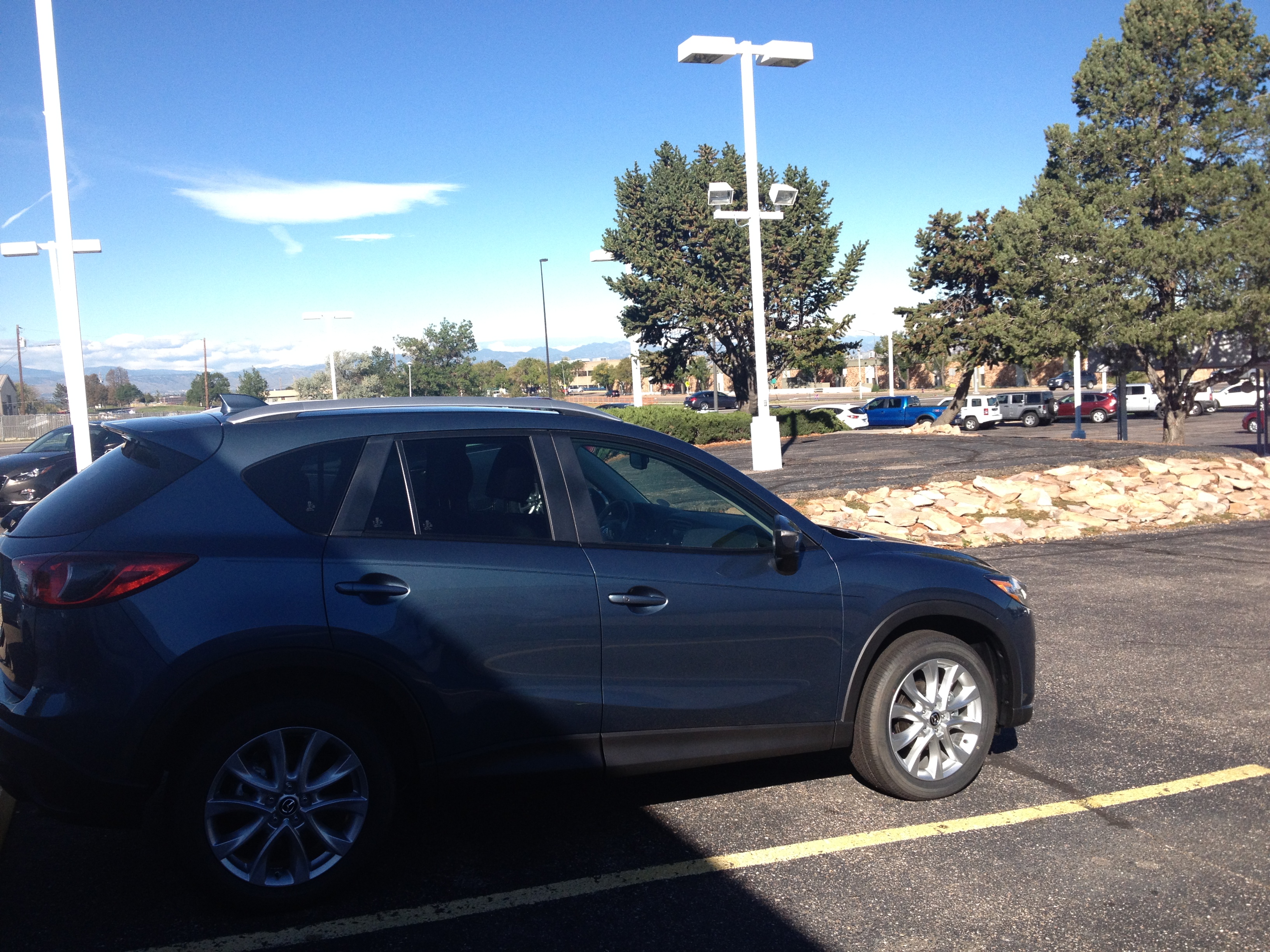
This morning I purchased a brand new Mazda CX-5, which may just be my travel partner for the next decade to come (or more).  With high clearance and all wheel drive, it is well suited for the State of Colorado.  With a little more pep to the engine than many of the other vehicles in it’s class, it also suits who I am.

Maybe these vehicles are just simply vehicles, inanimate objects built by humans.  Or maybe I had a loyal travel companion that selflessly determined that it had become time to step aside for another- one that suits where I now am a bit better.


Pacific Beach San Diego

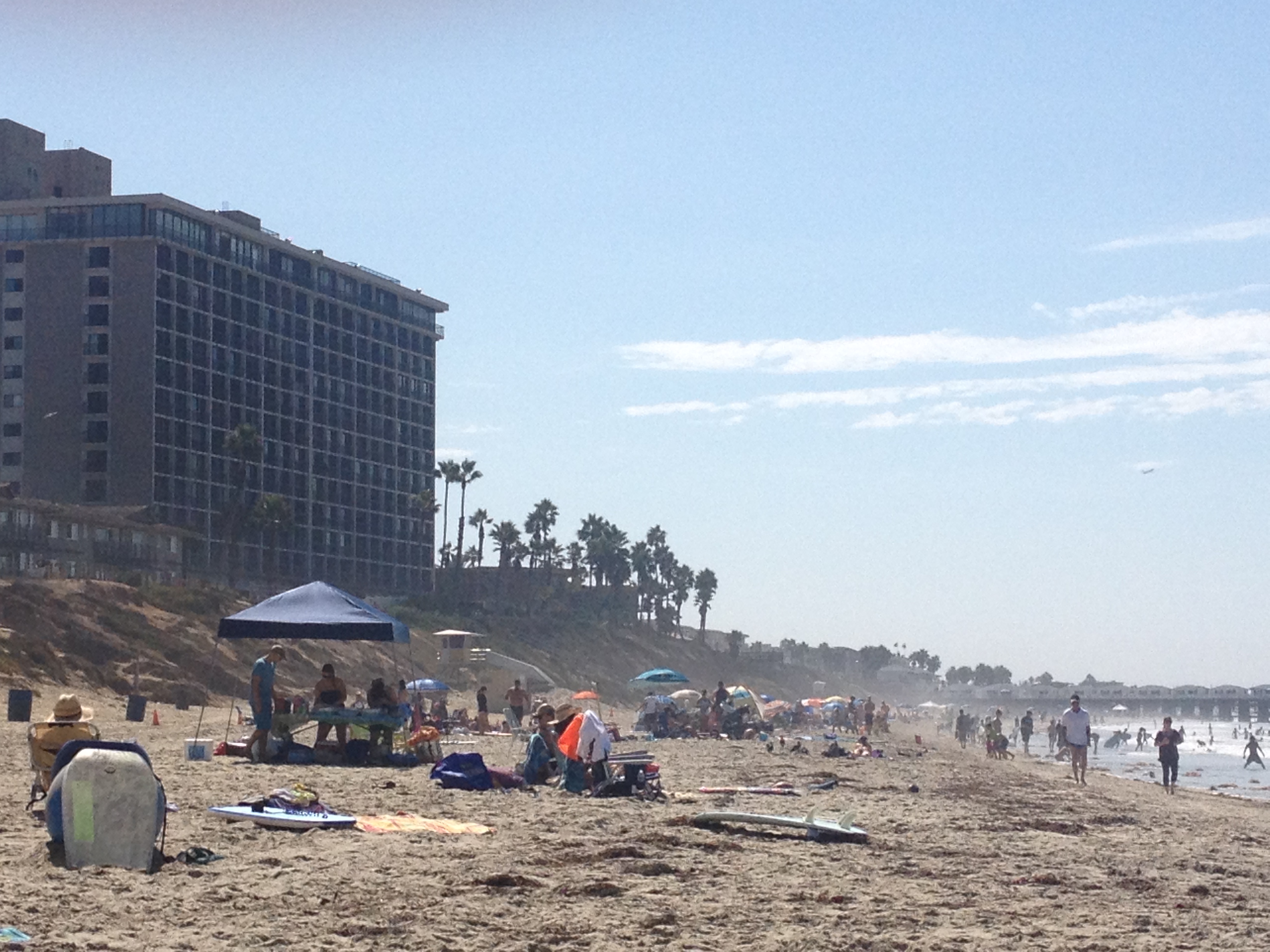
I laid there for over an hour in the hot California sun.  In fact, it was unusually hot for the oceanfront.  While areas further inland regularly get significantly hotter, temperatures well into the 80s with insane humidity is quite rare for the beech.  Despite the unusual conditions, I still captured this California experience.  In fact, the entire time I felt as if I had stepped right into a Red Hot Chili Peppers song.

IMG_2633 IMG_2634

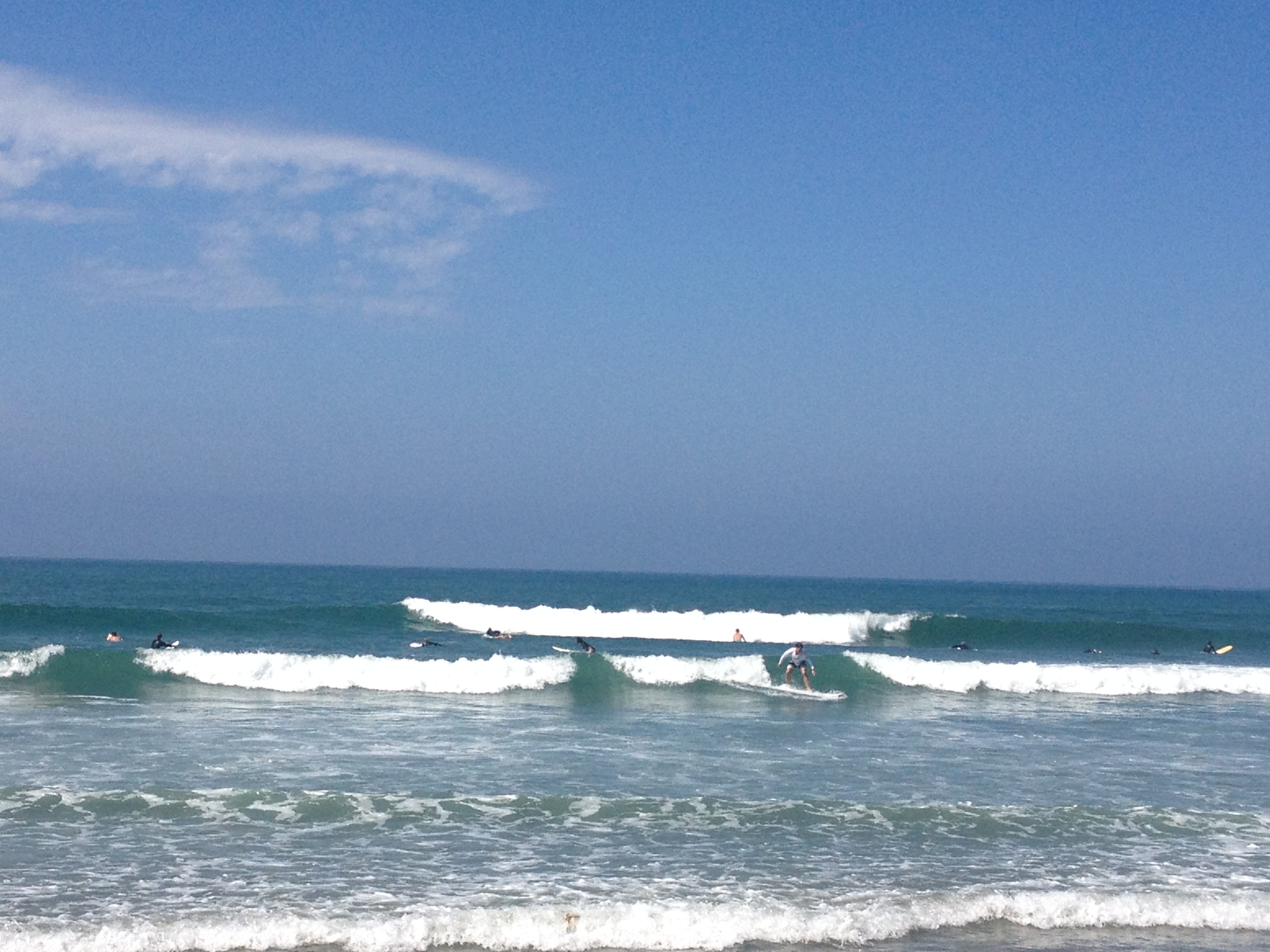
There is the ocean, the palm trees, the waves, and most importantly, the surfers.  Boy were there a lot of surfers.  I had never seen so many surf boards in my life.  Even in my most vivid imagination of a California stereotype, there were not nearly as many surf boards in one place.  On the way to and from the beach, a clear majority of vehicles had surf boards in them.

And I watched, gradually getting a nasty sunburn on my back.  I watched people walk by.  I saw a group of people play football in the water.  I saw about a dozen “wind surfers”, and even got to witness the challenge involved in using the wind, a much more variant force than that of a boat (used for activities like water skiing), to get up onto the water.  The most experienced wind surfers still appeared to require a few attempts to get up onto the water.  By contrast, experienced water skiers seem to always get up on their first attempt.

Mostly, I observed the surfers catch wave after wave.  I wondered if these waves were better or worse than a typical Saturday on Pacific Beach.  I wondered how long it took the better surfers to achieve this level, and whether or not their form was truly as great as it appeared to an outsider like me.

Normally, my attention span would wane much sooner than this.  But I was capturing the moment.  And, also I was quite exhausted.

IMG_2621 IMG_2649

The previous afternoon, I had flown into San Diego and attended my friend’s bachelor party, which was mostly held in Downtown San Diego’s Gas Lamp Quarter.  Similar to the French Quarter in New Orleans, or Midtown Manhattan, this district is touristy and quite expensive, but not overly cheesy.  There are a few chain restaurants and bars, but many of the establishments are unique to San Diego.  The nightlife here is not confined to one or two stretches of a road, as in places like the “Las Vegas Strip”.  The entire square mile was majorly hopping, with restaurants, bars, loud music, dancing, and the sidewalks where quite full with patrons, most of whom likely spent upwards of $100 over the course of the night.

The main thing that set the “Gas Lamp Quarter” apart from similar districts in other large cities was how many times we were solicited, and how aggressively we were solicited, by wait staff at bars and restaurants while walking down the street.  Someone from nearly every restaurant we walked by would talk to us, and tell us about their food and specials and such.  The only other place I remember being solicited walking down the street was along Division Street in Chicago’s Gold Coast, and those conversations were always brief.

IMG_2636 IMG_2638

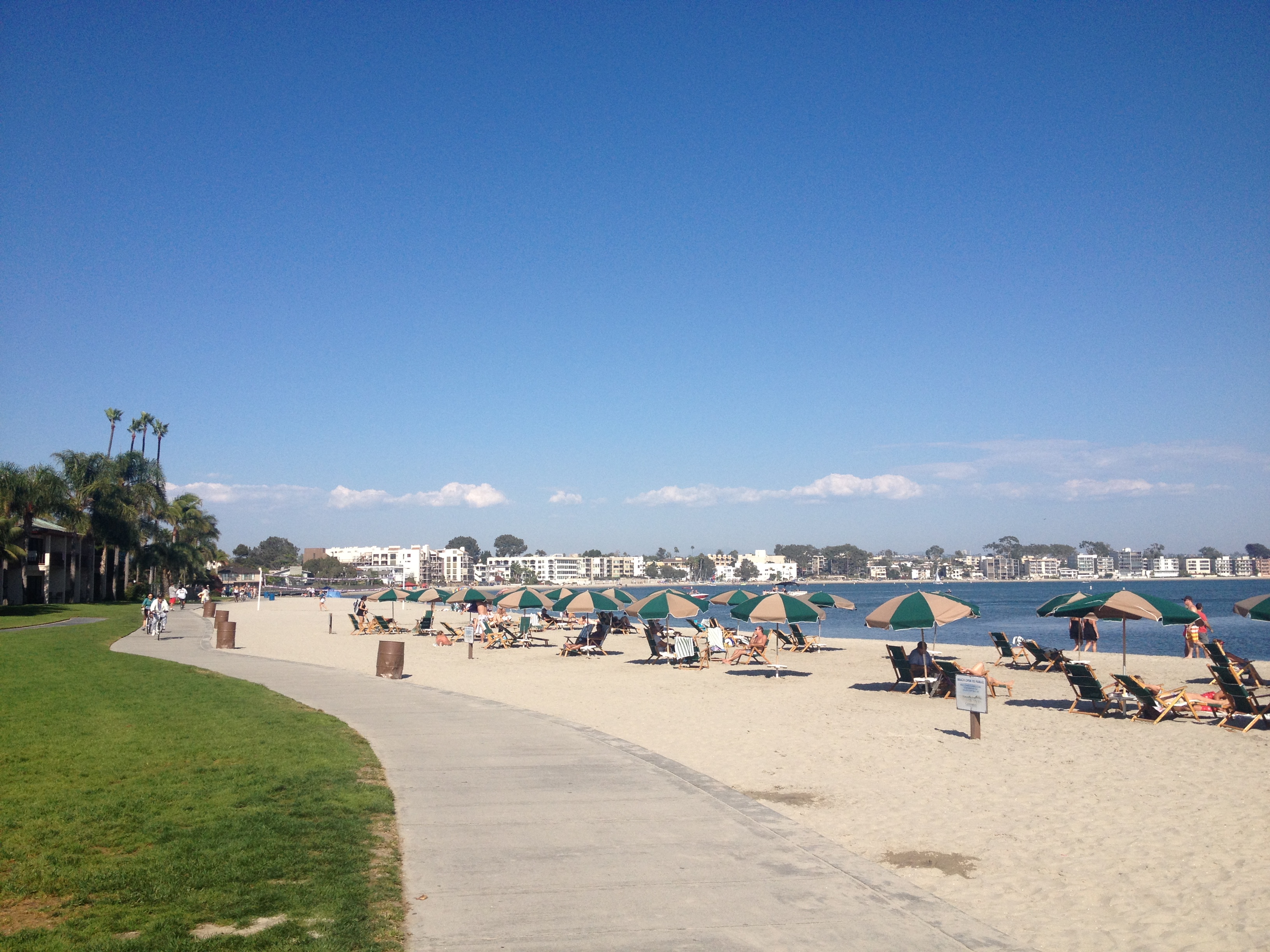
I only spent three days in San Diego, and a good chunk of it was tied up by the bachelor party, rehearsal, and the wedding itself.  So, I did not get a chance to go to Sea World, or any of the standard San Diego tourist places.  However, I did really appreciate where the wedding was held; At a resort called the Catamaran along San Diego’s Sail Bay.

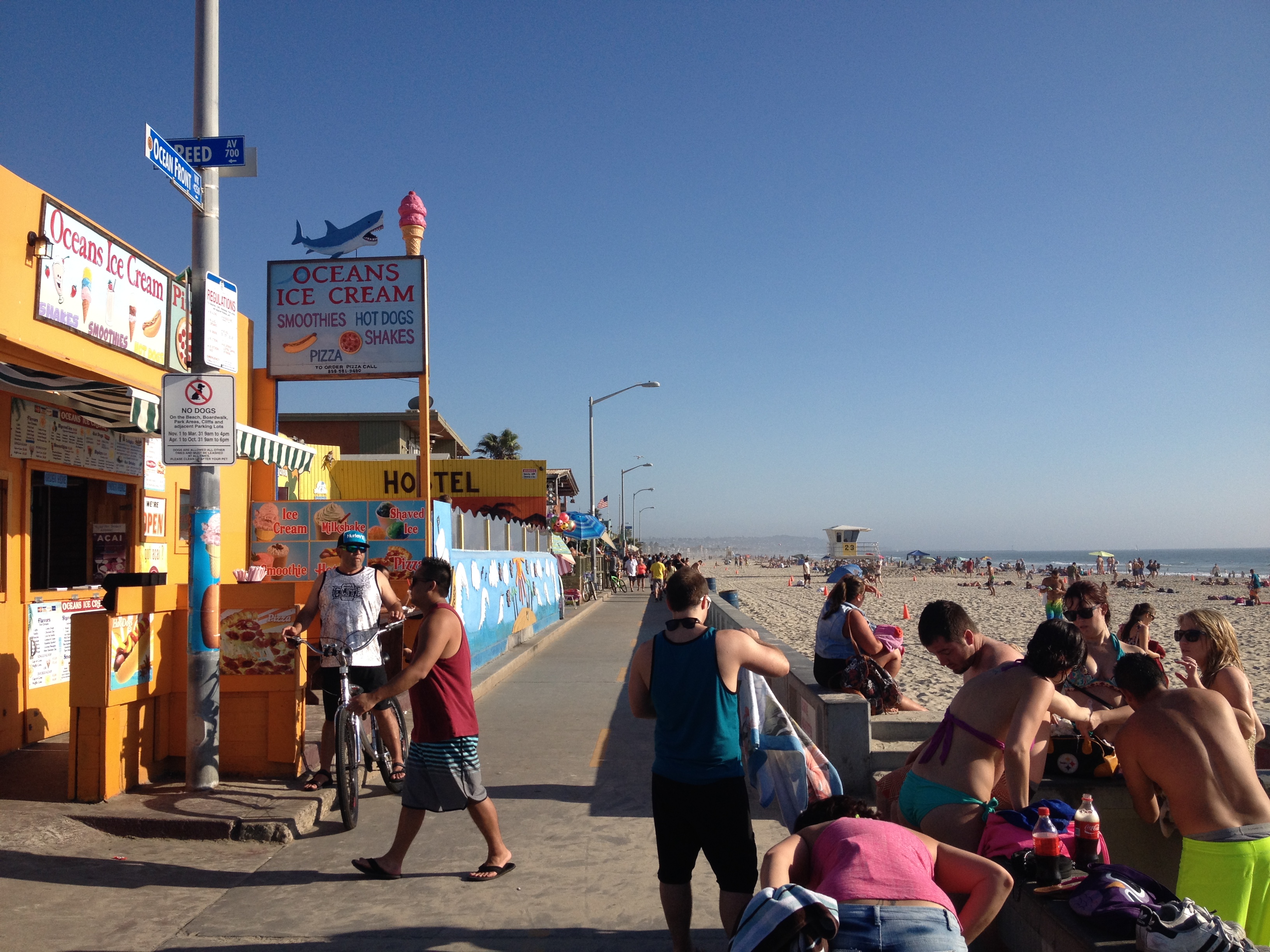
At this location, I spent most of my time in the Pacific Beech (and Mission Beach) area.  Aside from the standard boardwalk, the neighborhood has several active roads with lots of restaurants and bars, and is the kind of place where you can find almost anything within a short walk of each other, as well as the beech.  Both during the day, and in the evening, streets like Mission, Grand, and Garnett were filled with people taking part in many different activities.

California is a unique place with a distinct culture, and although I was only here for three days, I did get to observe a lot of it for myself.  People here really do drive everywhere!  Even though Pacific Beech is a walkable area on a grid system, the type of area you would expect to be more pedestrian/transit oriented in another major city, almost everyone seemed to be arriving here by car.  And this means that parking is hard to find in a lot of places.  As we left the beech that day, we were asked by a car full of surfers coming to the beech where our car was, in hopes that they could take our parking spot.

IMG_2648

While San Diego does have a transit system, almost all of the people I talked to basically did not consider it an option.  I did ride on both a bus and the train.  The bus driver told me there were no “transfers” (i.e. from one bus to another or from bus to train on one fare), making the system seem inconvineint for most.

IMG_2635

The fish tacos here are truly amazing!  And it really is the tortillas that make some fish tacos  more amazing than others.

IMG_2629

There are tons of other foods that are somewhat unique to the area, including a lot of foods with avocado and/or sprouts.  I particularly enjoyed San Diego style fries, which include meat, cheese, avocado, and garlic.

Although Southern California is known to be less obsessed with football than the rest of the U.S., there are still tons of people who get really into football, both college and professional.

Bicycle riders are clearly divided into two types; One that rides hard core and comes out early in the day wearing full bike gear, and one that rides cruisers, goes about 10 mph, and only pedals when absolutely necessary.  The later group does not wear helmets.

People here in general appear healthy- about as healthy as Denver, and far more healthy than the Midwest.

I really wish to return to San Diego, as I still feel there is much more to do that time allotted.  In a future trip, I think it would be neat to actually take a lesson and learn to surf, spend some time in some of the other popular neighborhoods, and I would really like to have some sushi, as there is probably a lot of really good sushi here.  And, I definitely wouldn’t mind seeing more scenes like this one.

IMG_2619

The Way We Used to Travel

IMG_2512

One hundred years ago, most of us traveled on steam engine trains.  The proliferation of railroads across the continent during the 19th Century revolutionized how we got around, and connected us in ways we had never been before.  At the start of the 19th century, it took Lewis and Clark multiple years to get from one end of the continent to the other.  By the end of the 19th Century, that trip could be made in only one week by train.

During the 20th Century, more and more people were able to afford automobiles and flights.  Many of the train lines across the country went away as people switched transportation methods.  Those that remain have long since converted to more modern technologies; diesel or electric, and are primarily used for commutes between cities and/or suburbs at times of high traffic volume.

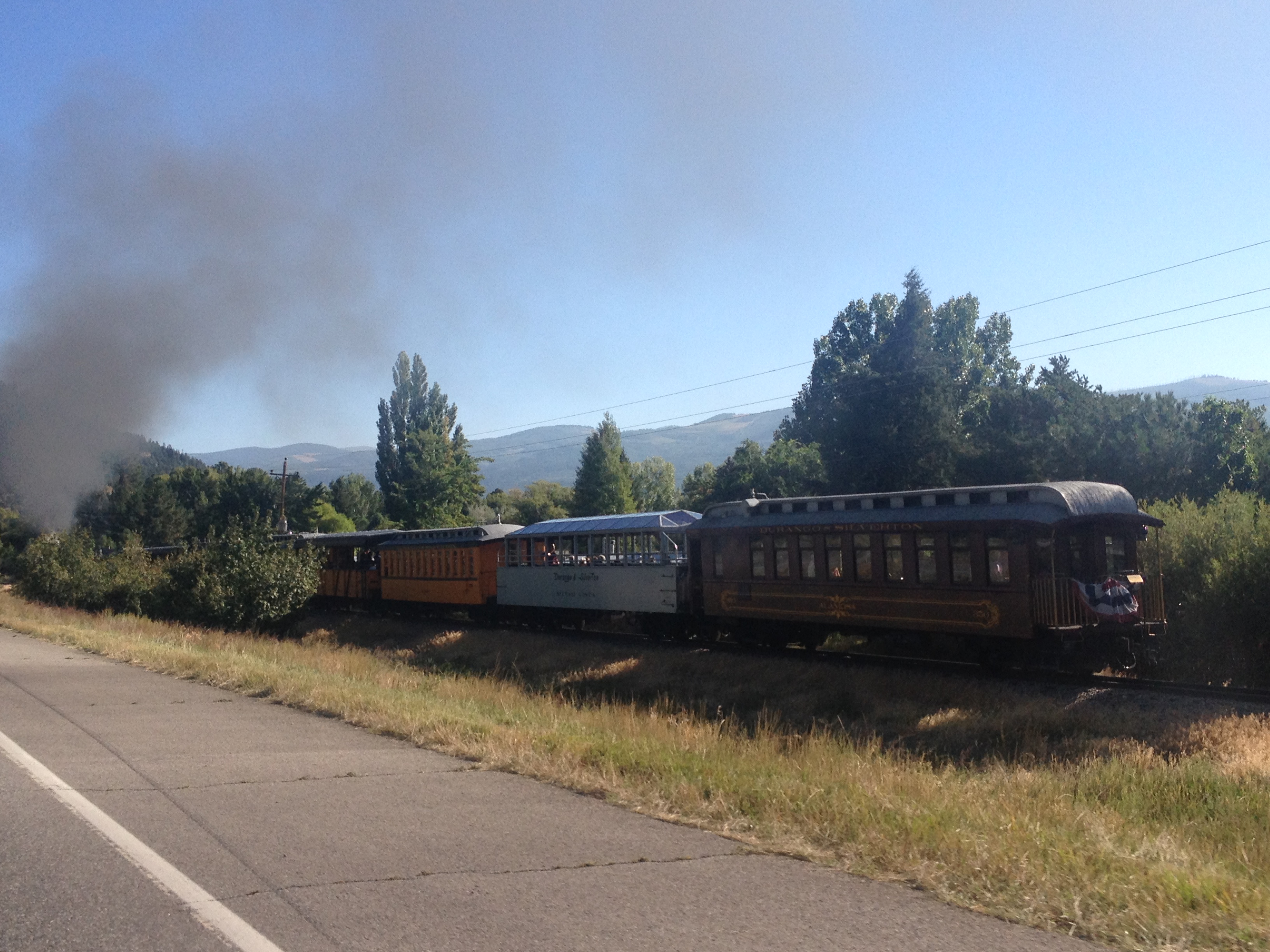
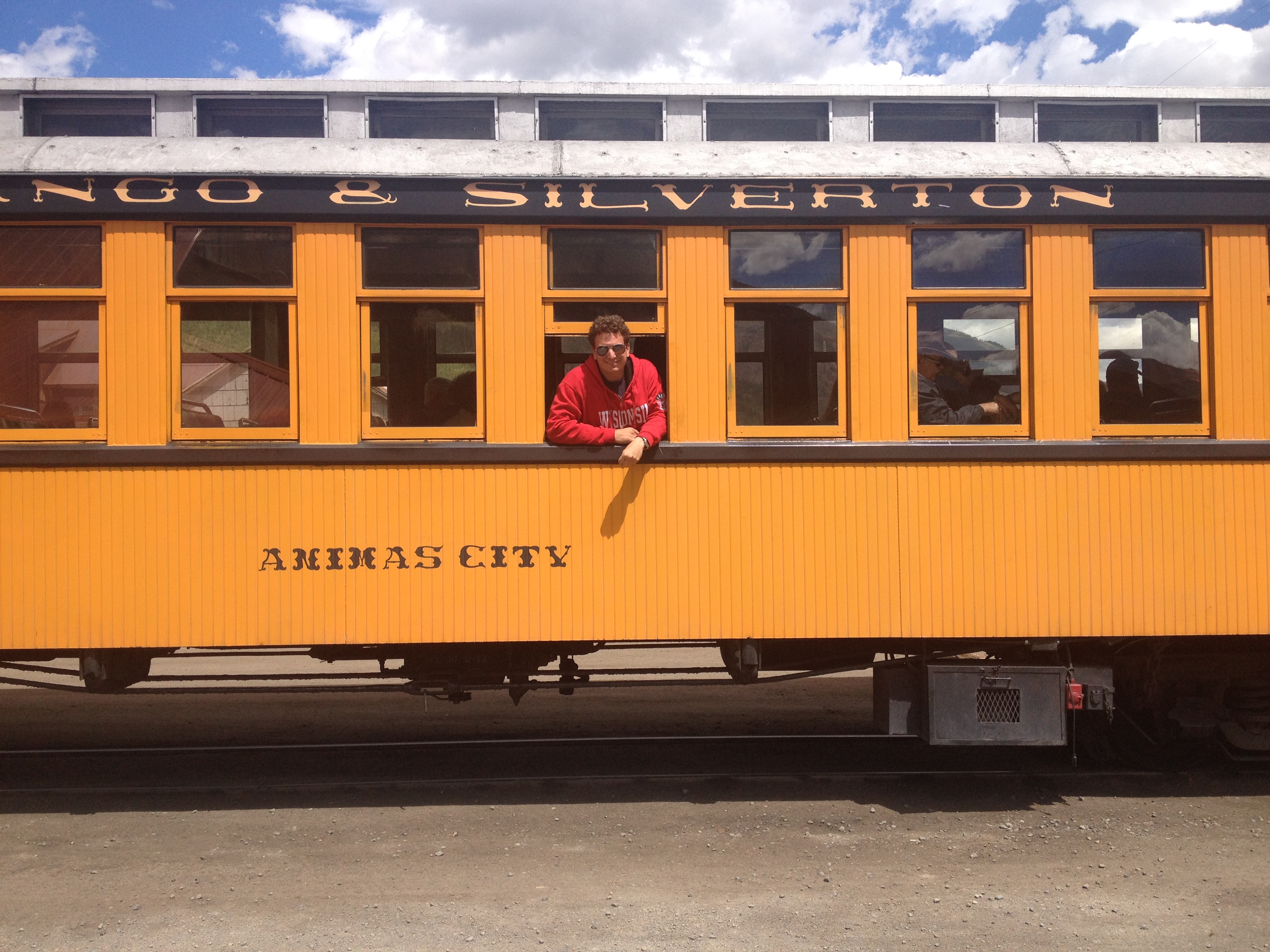
There are a few places where one can still ride a steam train, exactly how we used to ride in the late 19th and early 20th centuries.  One of those places is in the San Juan Mountains of Southwestern Colorado, where a Narrow Gauge Railway offers daily trips between Durango and Silverton, primarily for tourism purposes.

IMG_2475 IMG_2477

The train schedule is set for tourists to ride the train from Durango north to Silverton in the morning, and then return in the afternoon.  There are three departure time options, the earliest of which (and the one we took) departs at 8 A.M.

IMG_2479

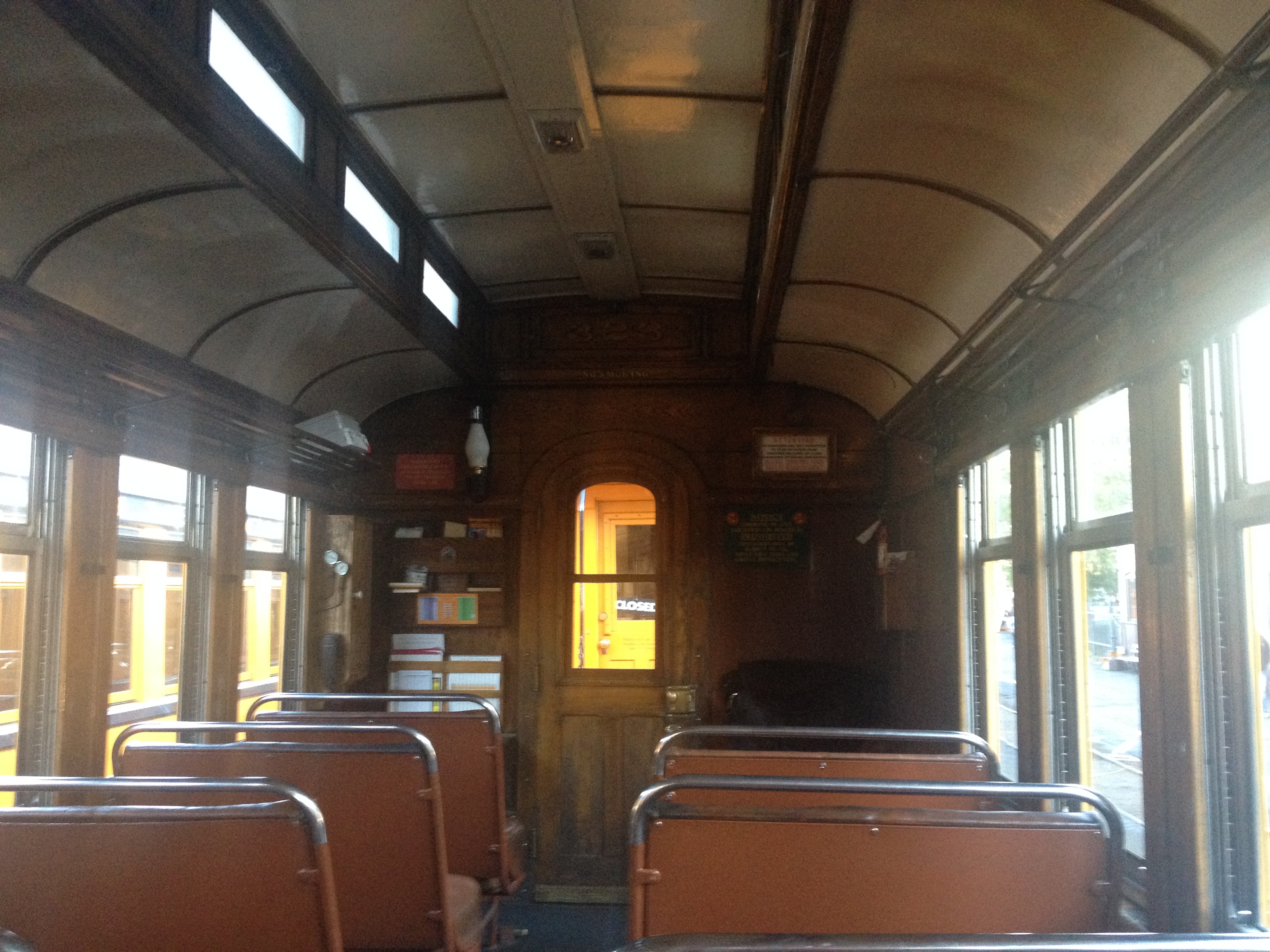
Part of the novelty of taking a train ride like this is how authentic the ride is, including the inside of the train.  Today, we are accustomed to traveling with a higher level of comfort than this.  But, the inside of this train definitely had the same exact feeling as one would have experienced one hundred years ago, making the experience as authentic as one can get.

This particular train route, from Durango to Silverton, follows alongside the Animas River the entire length of it’s 45.2 mile route.  The breathtaking scenery in which this train traverses makes the train ride appeal to many different kinds of tourists, as opposed to just train enthusiasts.

IMG_2481 IMG_2485

The train leaves Durango, at 6512′ above sea level, and begins it’s climb quite slowly, through a wide open river valley.

IMG_2493 IMG_2543

For the first section of the trip, the train follows the same path as the highway.

IMG_2513 IMG_2497

Some 15 or 20 miles into the trip, the train deviates paths from the highway, at a large lake called Electra Lake.  This is where the scenery really becomes quite unique and breathtaking.

IMG_2502 IMG_2504 IMG_2515 IMG_2516

The river valley becomes much more narrow as it meanders through the Needle Mountains.  The narrowness of the valley is the reason the train is “Narrow Gague”, and also the reason that roads could not be built to follow the river valley.

“Million Dollar Highway”, the highway that connects Durango to Silverton (and eventually Ouray), was necessarily built along a different route; traversing two mountain passes well above Silverton’s elevation of 9300(-ish) feet.

IMG_2547 IMG_2548

The route along “Million Dollar Highway” is also considered very scenic, but in a different way.  In fact, this highway is also a popular bicycle route, and even the venue of an annual bicycle race.  I would definitely recommend experiencing the journey from Durango to Silverton in both the old fashioned (steam train), and the modern (by car or with a nice road bike) way if time permits, as each set of views are great in a distinct way.

IMG_2517 IMG_2521 IMG_2522 IMG_2524

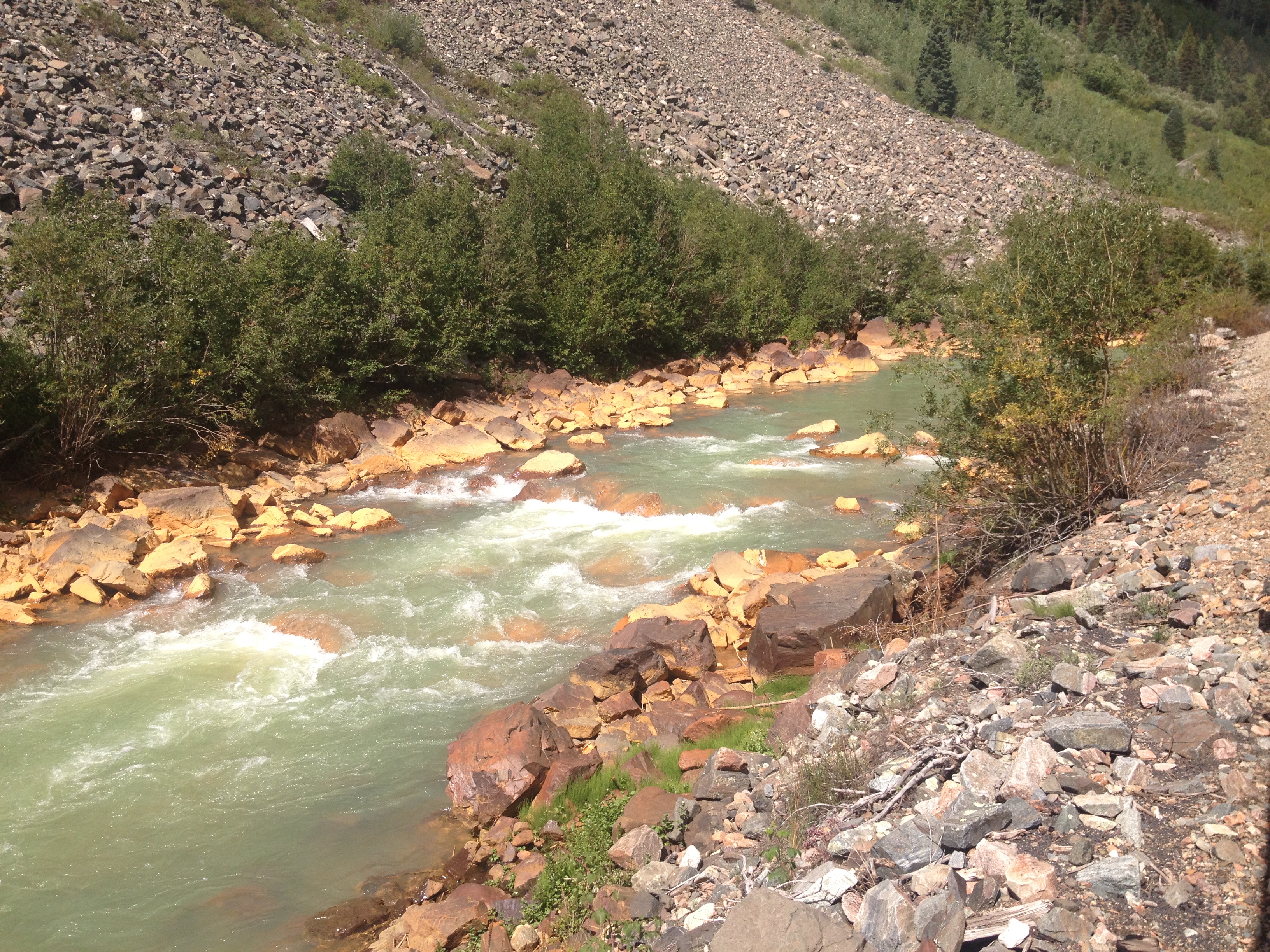
The train completes it’s journey into town in the heart of the Needle Mountains, where the gradual change in the color of the rocks surrounding the river reminds riders of the town’s history as a destination for miners.

IMG_2550 IMG_2552

Along Million Dollar Highway, motorists and cyclists view the Needle Mountains from both a higher elevation and a little bit of a distance, seeing them in their entirety.  This is followed by a descent that first winds around Molas Lake, and then provides an aerial view of the town.

IMG_2525 IMG_2534

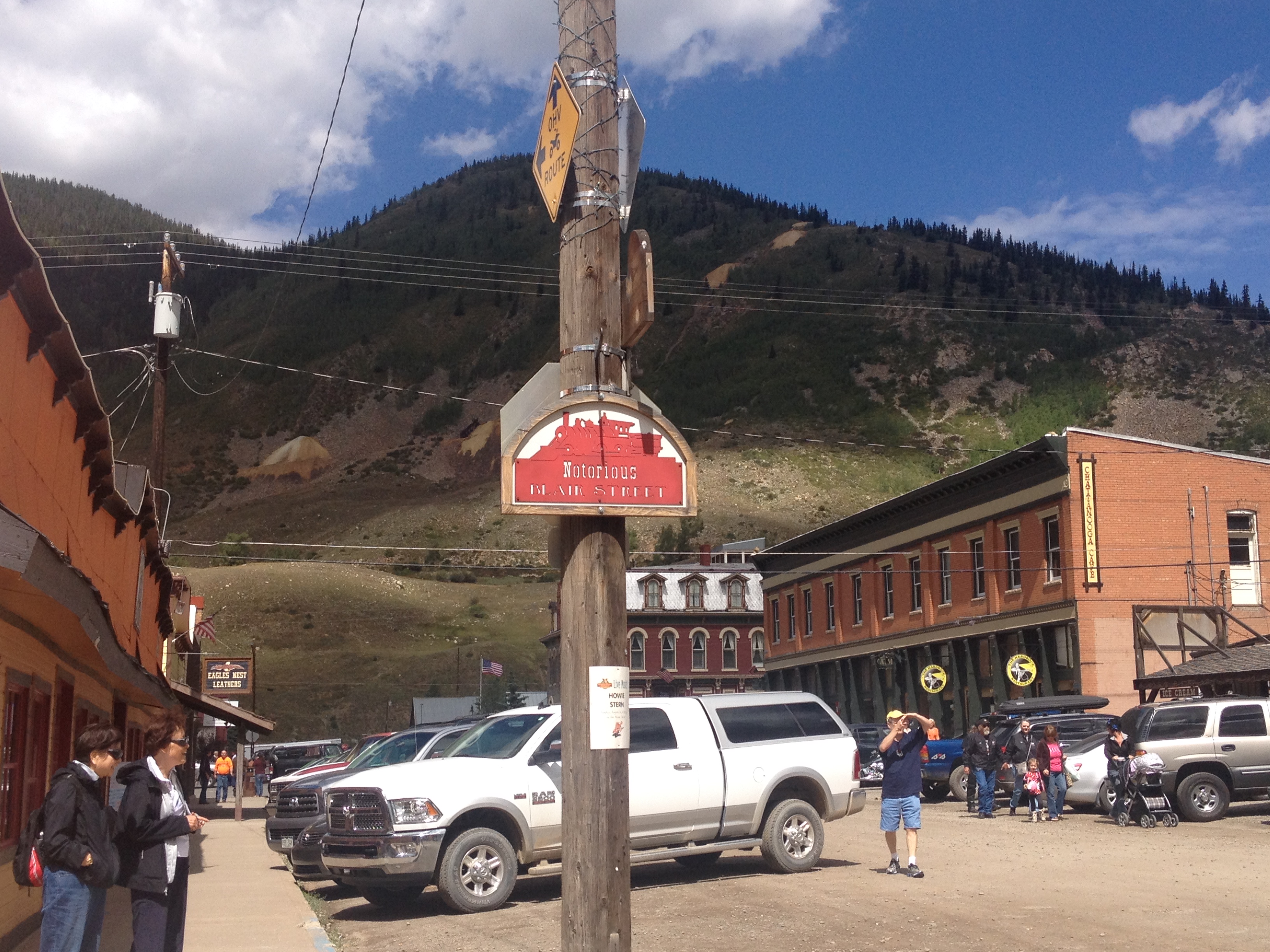
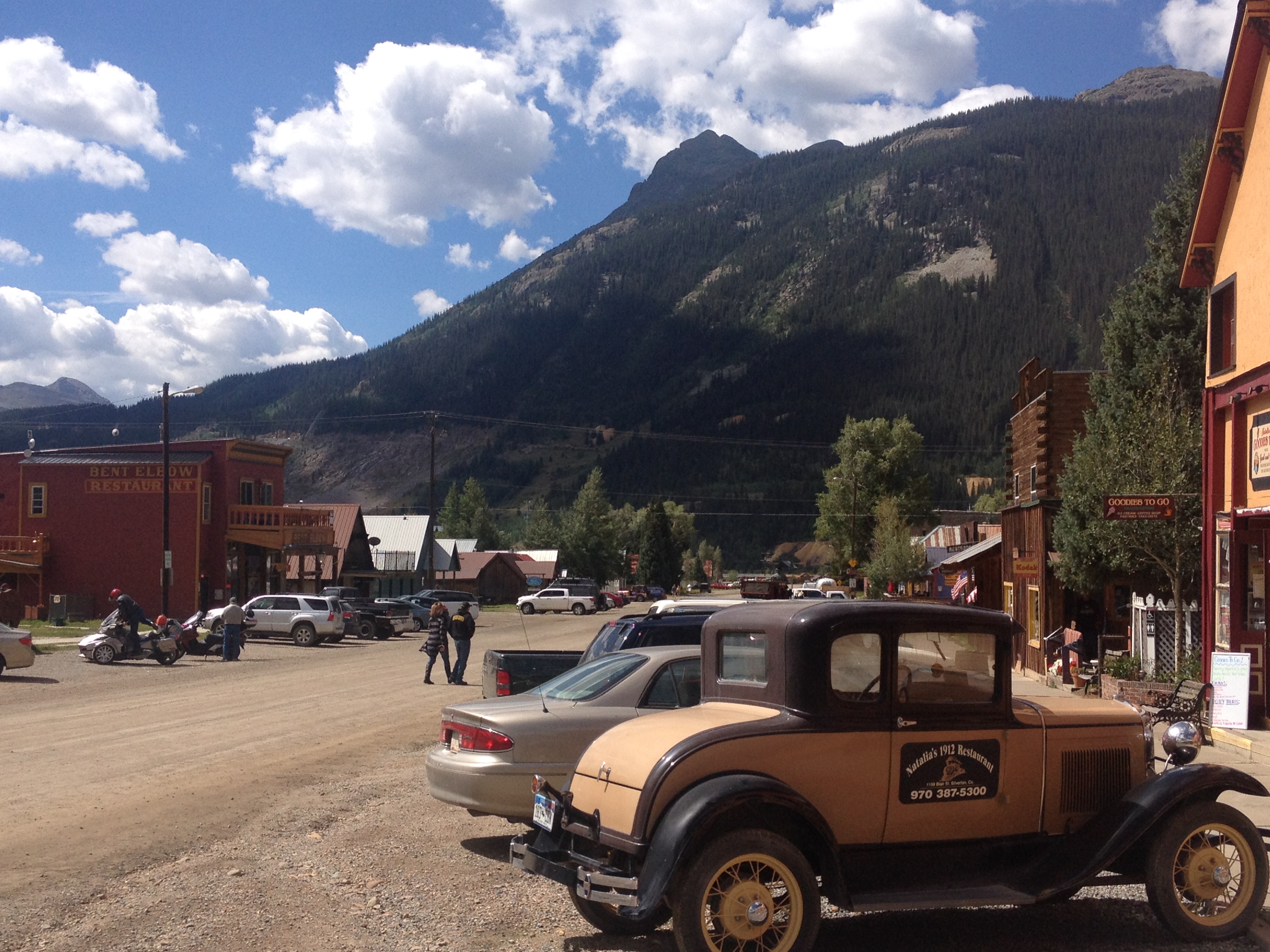
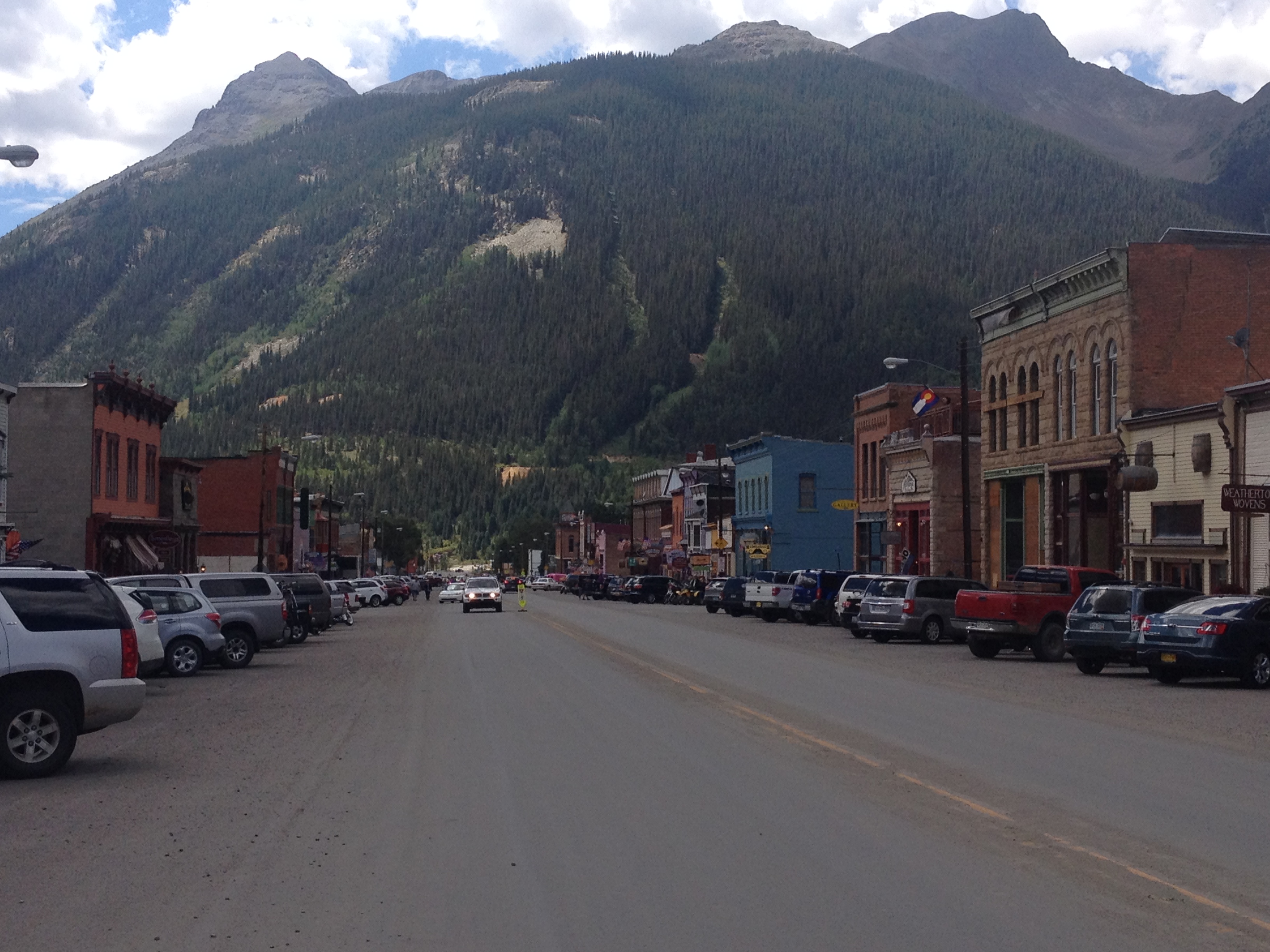
Silverton is quite the unique place as well.  As soon as I stepped off the train, I felt as if I had entered the Old West.  In fact, I have never felt more genuinely in the Old West in an operational town (as opposed to a restoration like South Park City) as I did in Silverton.

IMG_2527 IMG_2530

With the exception of Main Street, Silverton’s roads remain unpaved.  Many of the storefronts are still reminiscent of Old West businesses, in design and font, and there are even a few cars that resemble those produced in the early days of the automobile’s availability.

We at a restaurant called Grumpy’s Saloon, right in the heart of town.  This restaurant also felt like an Old West recreation.  Between the wall decorations, the waitresses dressed clothing that seemed like it came right out a film like Maverick, and an old man playing tunes on the piano, it actually felt as if they were trying too hard.

IMG_2528 IMG_2529

The only real drawback to taking the Durango-Silverton Narrow Gague Railway is the length of time the trip takes.  A trip of only 45.2 miles actually takes close to three and a half hours each way. By contrast, the trip by car took roughly and hour.  And, while it may take around the same amount of time for a cyclist like me to get from Durango to Silverton, the mainly downhill return trip could likely be done in around two hours.

I guess, like all other aspects of this trip, the travel time is also true to the exact way it was one hundred years ago.  While it was great to get the real experience, the return trip did start to drag on a bit, particularly when the train entered the less exciting scenery in the later part of the return trip to Durango.  My advice would be to either pay the extra money to ride the bus on the return trip, or to bring a book or magazine for the last 60-90 minutes of this trip.

IMG_2532