Tag Archives: Cycling

Cycling in Summit County

The Appropriately named Summit County (Colorado) sits right in the heart of the Central Rocky Mountains.   With multiple mountain ranges extending into the County on all sides, anywhere you will travel within the County, you will be pretty much surrounded by mountains in all directions.  In fact, Summit County is one of only six counties in the entire nation with a mean elevation of over 10,000 feet.
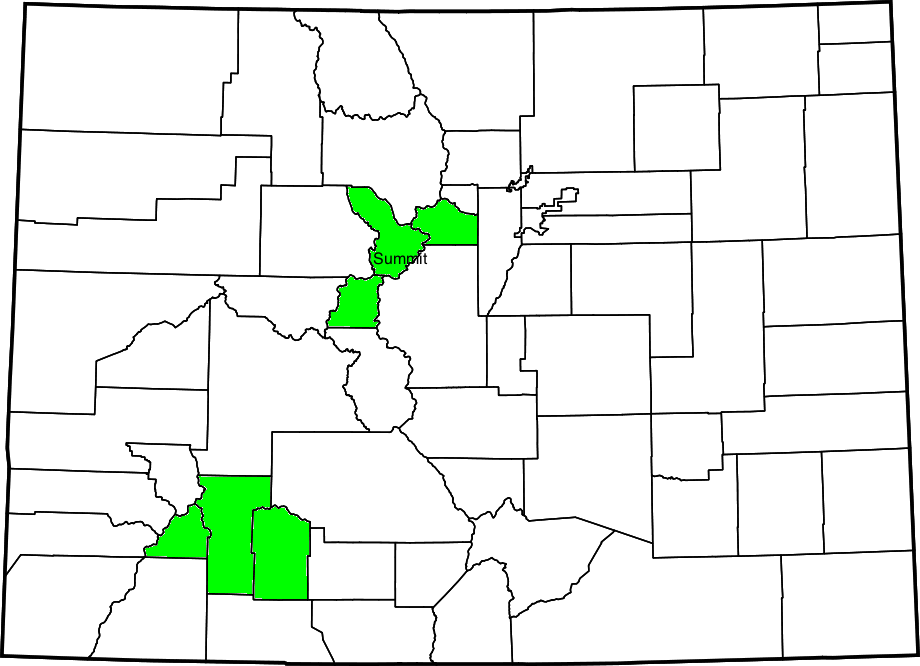
CO_Counties_over10000'

All six of these Counties are within the State of Colorado.  Outside of Colorado, not only are there no counties with mean elevations greater than 9,000 feet (Colorado has a total of 15), but only three counties outside of Colorado have mean elevations exceeding 8,000 feet (Colorado has 24).  Those looking to “go to the Mountains”, would be hard pressed to find a more suitable place than this one.

Summit County is probably best known as a skiing destination, with five popular ski resorts, including the incredibly popular Breckenridge and Copper Mountain.  However, it may also be one of the best places in the world for high-altitude cycling, which is important for those who train at high altitude to increase lung capacity.

Summit_County_RecPaths

Due in part to a series of rail lines that were created during gold and silver rushes and later abandoned in subsequent bust years, the county has an extensive network of recreational pathways.    The re-purposing of abandoned railways as recreational trails is actually the source of some of the nation’s best bicycling trails.  For those interested in seeing these rails-to-trails well maintained, and seeing more created, there is an advocacy group called the rails-to-trails conservancy leading this effort.

These recreational paths connect almost all destinations within the county.  Within this network of trails, one can find relatively flat rides, as well as intense climbing, all with a variety of amazing scenery.  The network is largely centered around the town of Frisco, a town of roughly 2700 people at an elevation just under 9,100 feet.  Located just off of Interstate 70, it is a relatively easy place to get to (when there aren’t traffic delays), and as good of a place as any to use as a home base for a weekend of high altitude cycling.

My first ride of the weekend was also the toughest one, from Frisco west to Vail Pass.  This ride involves two trails, the Tenmile Canyon trail and the Vail Pass trail.  Heading Southwest from Frisco, the first few miles on the Tenmile Canyon trail includes a fairly significant amount of climbing.

IMG_3464

Indicative of how recreation-centric this part of the country is, the entire trail network is well marked, with signage indicating which trails lead to which towns, and a significant number of signs like this one, indicating mileage.

IMG_3468

This sign denotes the halfway point between Frisco and Copper Mountain.  And while the total mileage to Copper is 7.4, a cyclist that has reached this point has already done most of the climbing from Frisco’s 9,100′ elevation to Copper’s 9,800′.

IMG_3471

In fact, the final couple of miles of this trail, headed into Copper is pretty much flat.  But, even during this flat segment, I knew where I would be headed, which would bring me farther up into the mountains.
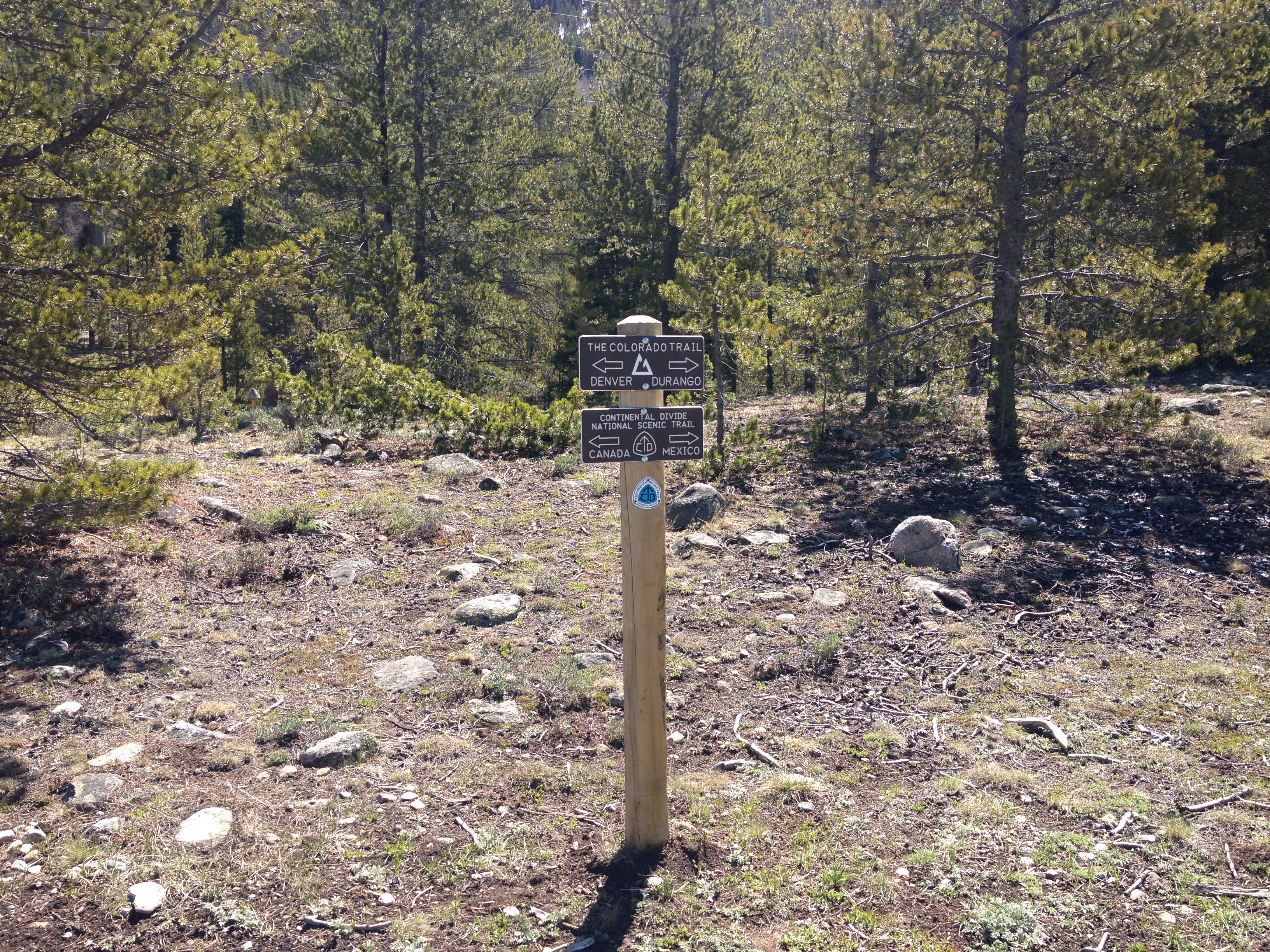
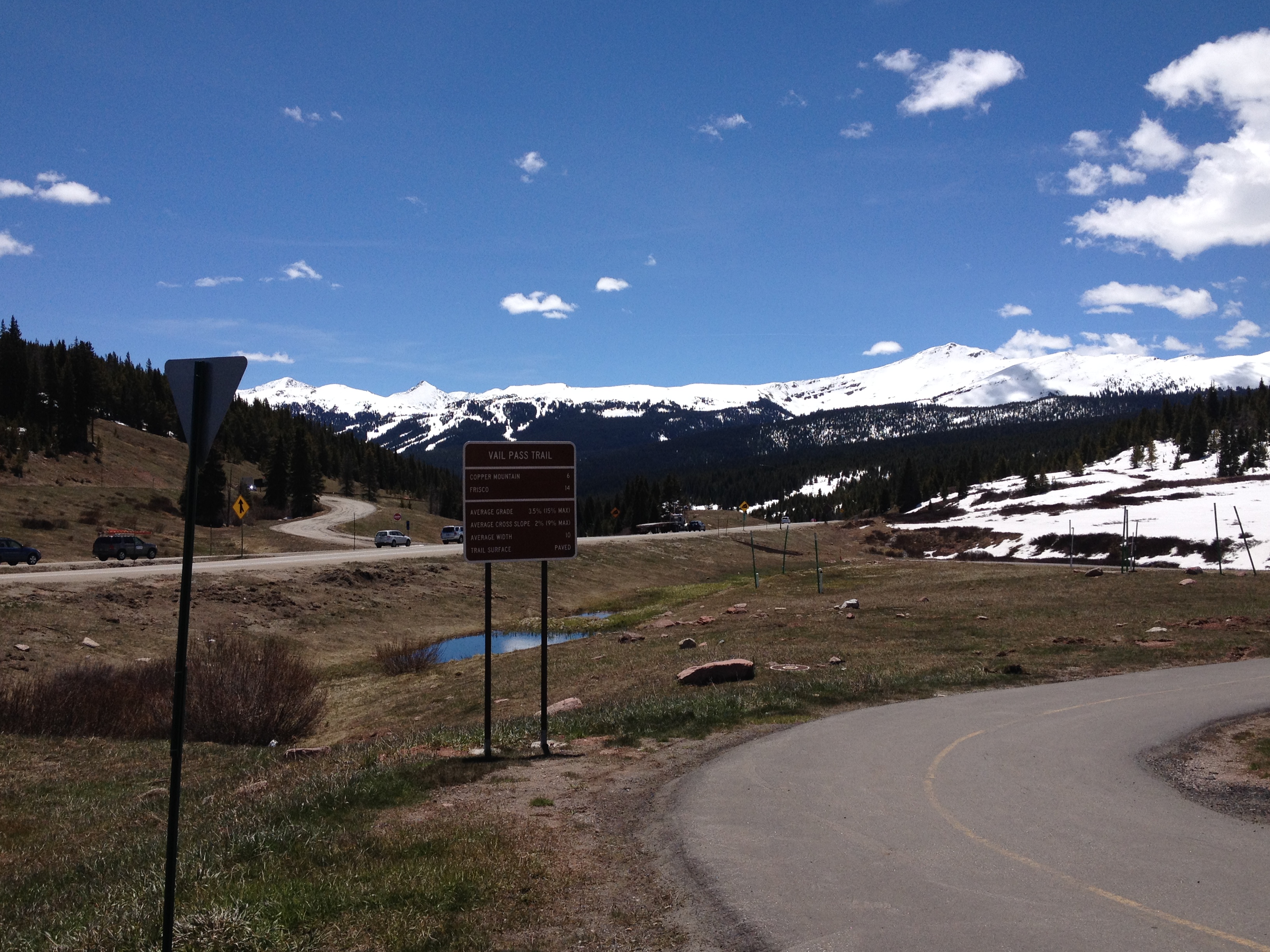
IMG_3474 IMG_3475With it not being ski season, and there not being an actual town there, there was not much going on in Copper Village.  Many places were closed.  The most notable thing I encountered while at Copper was a junction with both the Colorado Trail and the Continental Divide National Scenic Trail, which share the same path here.  Just the thought that anyone I encounter cycling or hiking could be headed as far as Durango, or the Mexican border, is just incredible!  At the West end of Copper Village is the Vail Pass trailhead.  Despite what is indicated in the signage, the trek from Copper to Vail Pass is actually only four miles.  Not only did I clock this myself, but a cyclist with over twenty years of experience cycling here told me that this sign has been “wrong for over 20 years”.

IMG_3476 IMG_3479The Vail Pass trail is kind of a mixed bag.  Over four miles, the trail climbs somewhere between 800 and 900 feet.  However, it is a mix of some fairly flat segments, and some fairly intense areas with switchbacks and such.  I would say there are three sections of this trail that are intense climbing.  One fairly shortly after beginning the climb from copper, one right in the middle, or about two miles from Copper (pictured here), and one close to the top.

IMG_3482

Strangely, most of this trail is actually in the middle of I-70, between the Eastbound and Westbound lanes, which are farther apart for much of the segment between Copper Mountain (exit 195) and the Vail Pass summit (exit 190).  The top of the trail is a rest area that cyclists share with motorists.  Here, a connection could be made with the Eagle County tail network, and cyclists could continue West towards Vail Villiage.
IMG_3483 IMG_3484

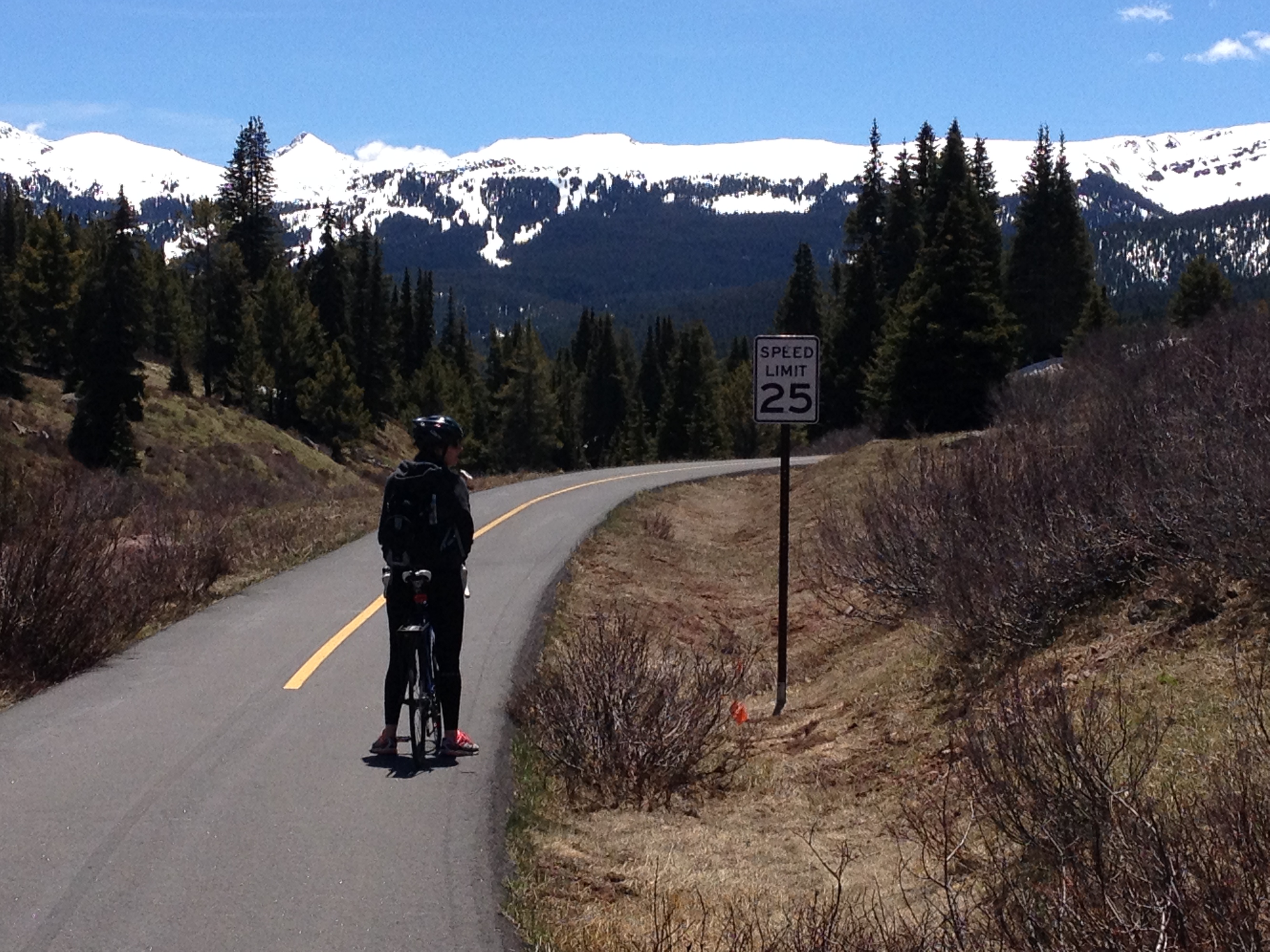
However, my plans take my back towards Frisco, where, I not only encountered another sign indicating that the trail is six miles long rather than four, but a speed limit sign.  I am not sure if and how this speed limit of 25 is enforced.  But, it does provide those concerned with safety with a guideline.

The descent back to Frisco, just over 12 miles in total when one includes getting from the tailhead back to home base (in my case Hotel Frisco on Main St.) went rather rapidly, at a speed that must have averaged fairly close to that assigned speed limit.

After stopping for lunch, in the afternoon, I took on another ride to explore more of the Summit County trail system.  This one, a loop around the Dillon Reservoir.

IMG_3485

The ride starts out “flat”, as the trail stays at roughly the elevation of the lake.  However, “flat” here is a relative term.  Even the rides described as flat and easier, here in Summit County, can contain some rolling hills.  And, while significantly easier than a “climb”, these trails are nowhere near as flat as a trail one would find in a place like Illinois where there is pretty much no terrain change.  There are small rolling hills, as nowhere in Summit County is really flat.

After a fairly “flat” ride on the Dillon Dam recpath and the Snake River recpath, in order to traverse the entire loop around the reservoir, one must climb Swan Mountain, which is actually a 1200′ climb.

IMG_3487

After two significant climbs, and nearly 50 miles of exploring this amazing system of trails, I was ready to call it a day.

I did a little more exploring on Sunday, mostly on the easier trails.
IMG_3493 IMG_3494

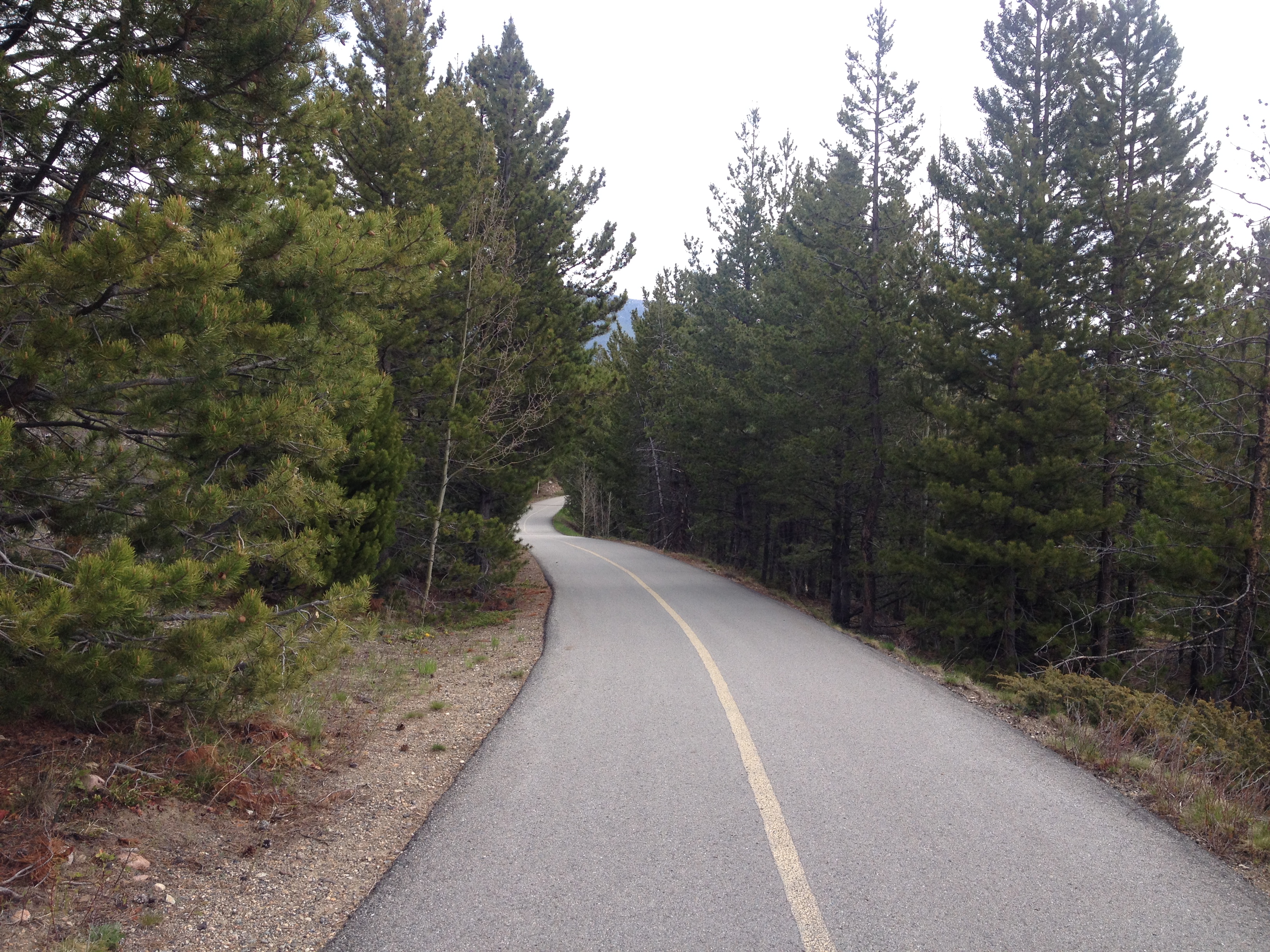
I came to really appreciate the portions of these trails that wind through the trees, often with small rolling hills.  While getting up to the top of a major climb provided me with a sense of accomplishment, these trail segments were just pleasant and enjoyable to ride through.  The smell of the pine trees reminded me of cabins, and camping, and all the things we do in life to get away from our day to day responsibilities.  The twists and turns just made me feel like I was on a ride of sorts, almost like a roller coaster in some places.  And, there were some other interesting areas, like these bogs.  In the end, I am glad I did both the big challenging climbs, and the gentler trail sections.

And, I was also glad to have experienced the town of Frisco a little bit more.

IMG_3490

Frisco is somewhat of an interesting place.  It has that Western feel that many of these towns have, with a Main Street lined with stores, and mountains in the backdrop.  It is somewhat touristy, but not overwhelmingly so.  It seems to occupy some kind of middle ground.  With bus service to Breckenridge, Copper Mountain, and Keystone ski resorts, they get their fair share of ski related tourism.  But, not as much as there is in Breckenridge, or any other town that is actually adjacent to the ski resort.  This appears to have created demand for a variety of different hotels and restaurants, but without some of the major crowds, or the dozens of souvenir shops that line the streets of many other tourist destinations.

Over the course of the weekend, I tried five different restaurants in Frisco; Boatyard American Grill, Begalis, Prost, Butterhorn Bakery and Cafe, and Lost Cajun.  All were within a block of Hotel Frisco, and each one provided a different experience.  Boatyard is a great place to get a burger, or bar type food.  Begalis provides a nice moderately upscale Italian dining experience.  The sausages at Prost were amazing.  Butterhorn is a very popular place for breakfast/ brunch.  And, I am particularly impressed by the free samples provided to customers at Lost Cajun prior to ordering.  And, I enjoyed the casual Louisiana style experience.

IMG_3497

Overall, it is hard for me to imagine a better place for high altitude bicycle training.  Right in the middle of the Rocky Mountains, there is a place with an extensive network of recreational paths that connect nearly every community in the area.

The Future of Transportation

This weekend, I got a glimpse into the future in an unexpected place … Wyoming.  Not to say that I have any kind of preconceived notion that Wyoming is backwards in any sort of way.  It is just that in mainstream American culture, people tend to look elsewhere for glimpses of the future.  More frequently, people will look to the latest gadgets being developed in Silicon Valley, the newest fashion designs coming out of New York, or even a new dance craze coming out of a place like Miami before they look into anything going on in a more remote area of the country.

However, my experience in Wyoming this past weekend felt oddly futuristic, albeit in a more subtle way.  As a travel lover, I pay close attention to all issues related to transportation and how we get around.  We are a mobile country full of people (such as myself) who love to be in motion.  And, regardless of what changes, I sincerely hope we (as a nation) never lose that zest for life and exploration that draws us out of our homes, and out of our day to day lives, to new places, experiences, and adventures.

While many novels and films set in the future immediately focus on some kind of major technological breakthrough that ultimately changes the way we live, the changes we actually observe are typically more gradual.  And, while many people are anticipating electric, driver-less cars coming out of Silicon Valley, over the last fifteen years, we have achieved some less high-profile, but still significant changes, such as the proliferation of hybrid cars, incremental efficiency improvements, a general increase in interest in bicycle commuting, and a few new rail lines in some cities.  Once again, nothing monumental, but the results of these changes, and how they impact our lives is easy to spot.

IMG_3276

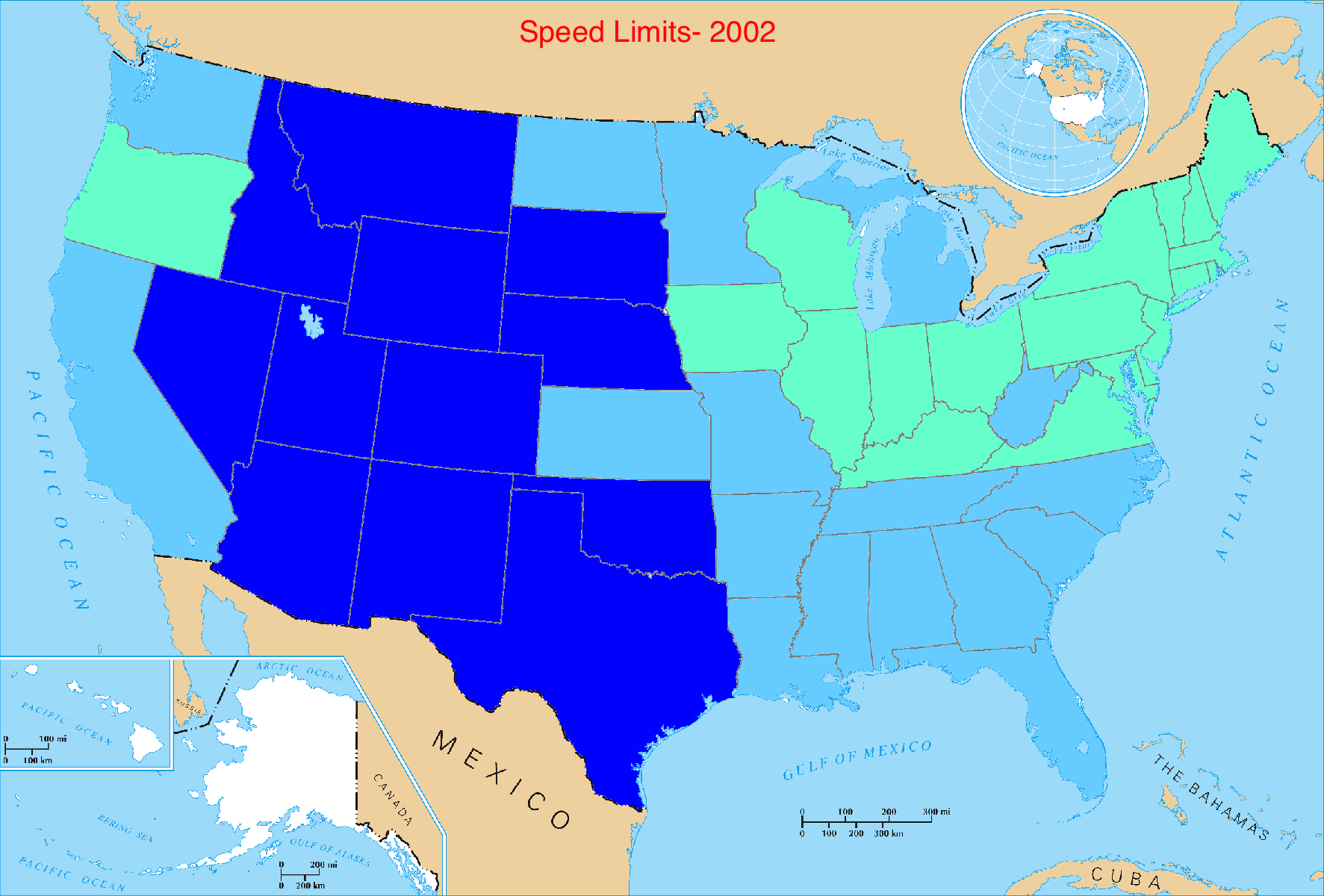
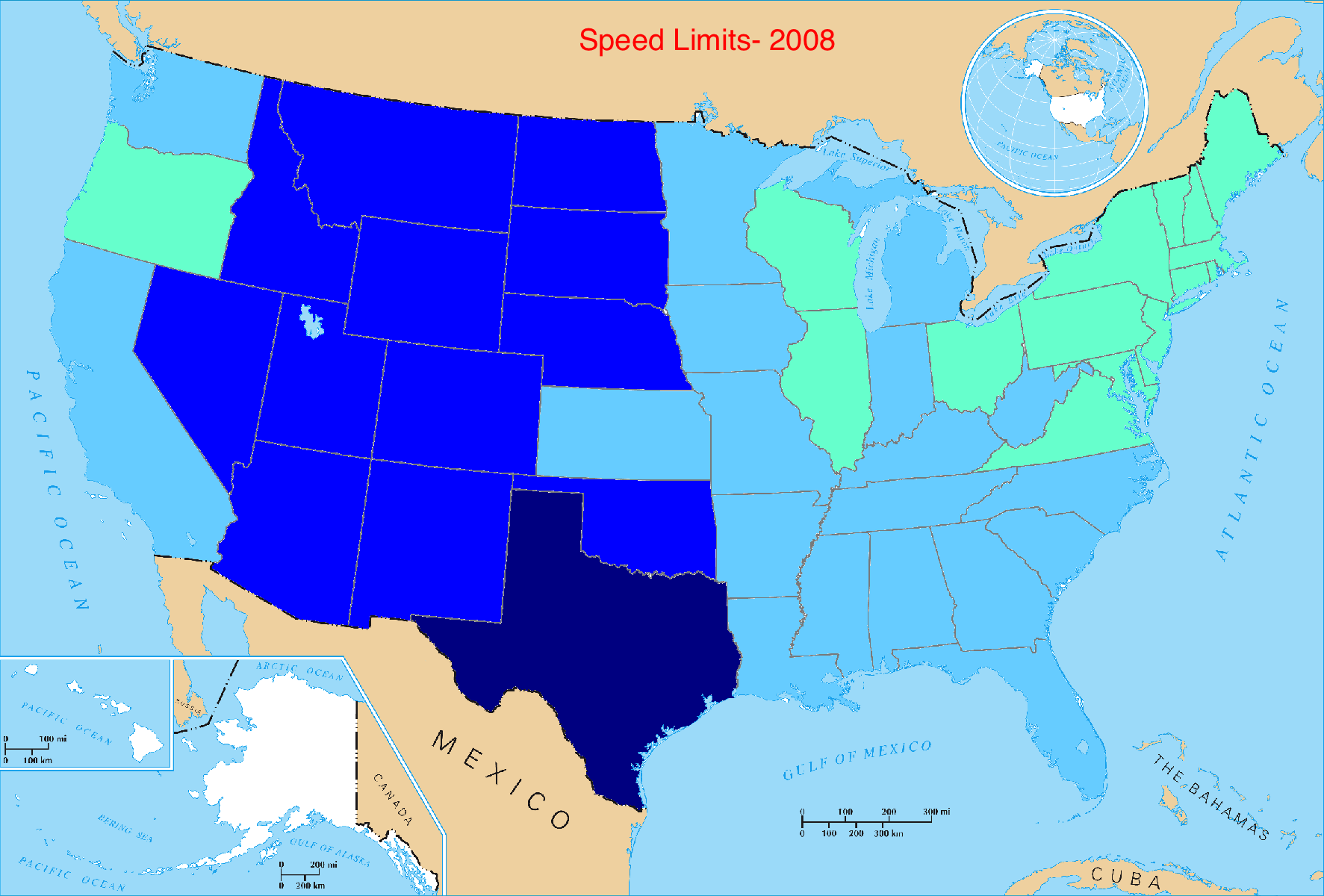
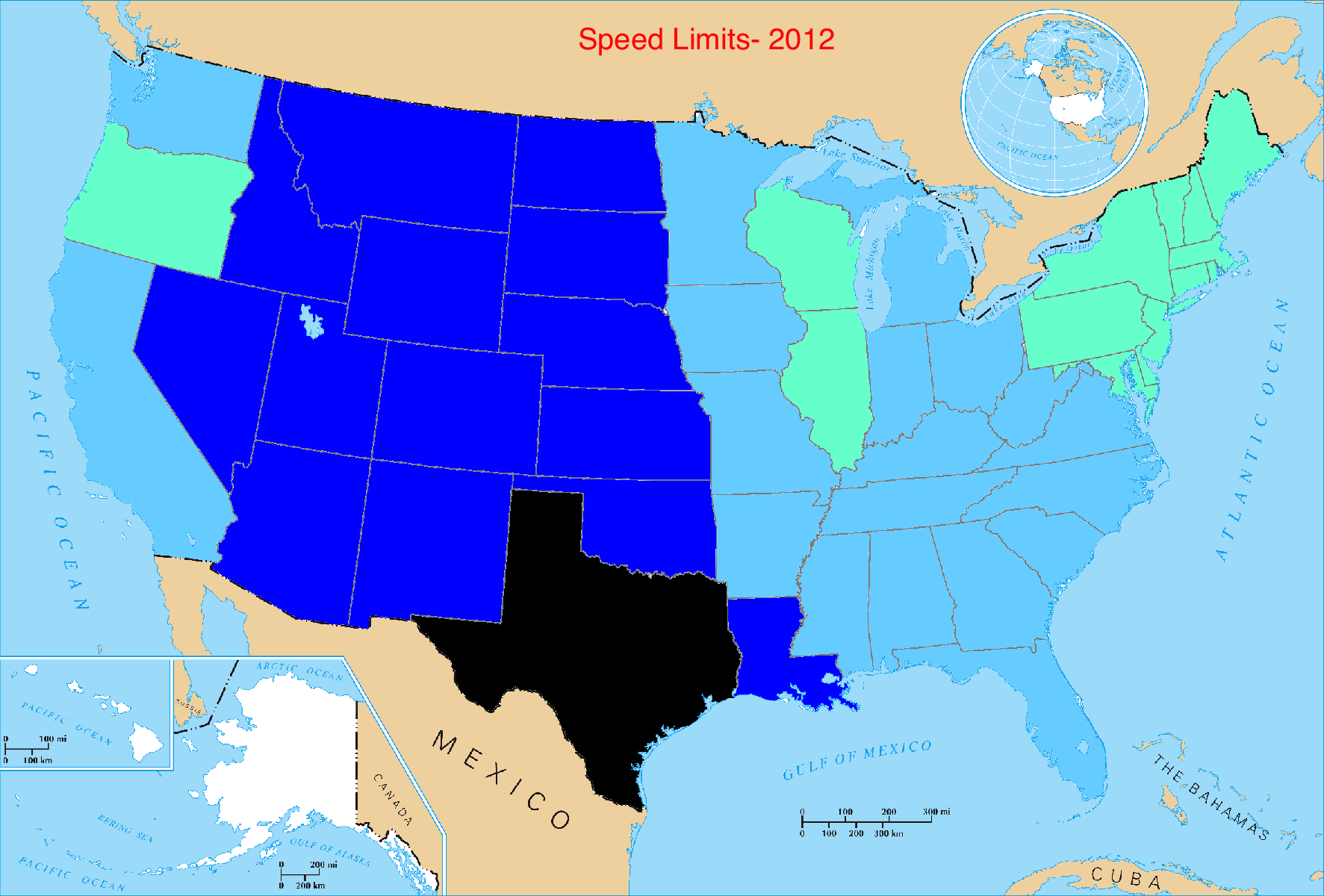
These gradual changes were on display this weekend when I, for the first time ever, got to drive on an 80 mile per hour road.  Prior to today, the highest speed limit I had ever observed had been 75.  In fact, it was just last year that speed limits on interstate highways in many parts of Wyoming increased to 80 miles per hour.  Higher speed limits can at least partially be attributed to vehicles becoming both safer and more fuel efficient, as historically these two concerns have prompted many to feel uncomfortable about high speed driving.

When I see the 80 mile per hour speed limit on Interstate 25, I see the future.  Growing up in the Midwest, I rarely got to drive on roads with speed limits in excess of 65 miles per hour.  I would commonly go 80, but doing so undoubtedly meant the risk of a speeding ticket.  The same speed here is not only legal, but almost necessary to keep up with the speed of traffic.  Over the years, a significant number of states have decided to allow higher speeds on their interstate highways.

Speed_Limits_2002Speed_Limits_2008Speed_Limits_2012Speed_Limits_2015

Speed_Limit_legend

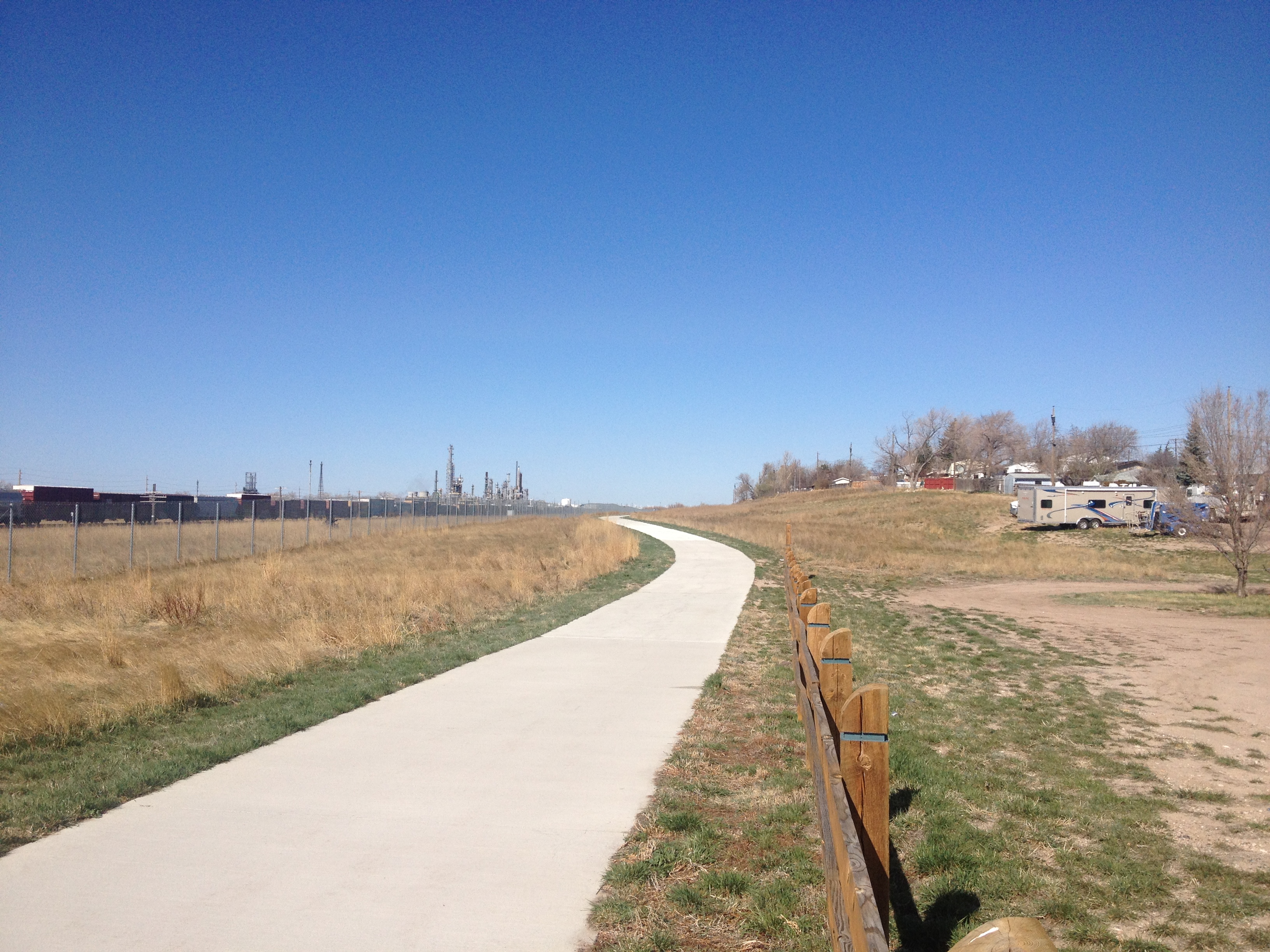
This is not the only transportation trend I observed in Wyoming this weekend.  In Wyoming’s largest city, Cheyenne, it is hard not to notice a newly built Greenway system, designed to accommodate the increasing interest in cycling, and the increased use of cycling as a form of transportation.

IMG_3264

And, while there are many places (such as Denver, where I live) that have built trail systems like this many years ago, Cheyenne is still ahead of the game.  As more people bicycle to get places, I expect to see many more trail systems like this one pop up in smaller to mid sized cities across the country.

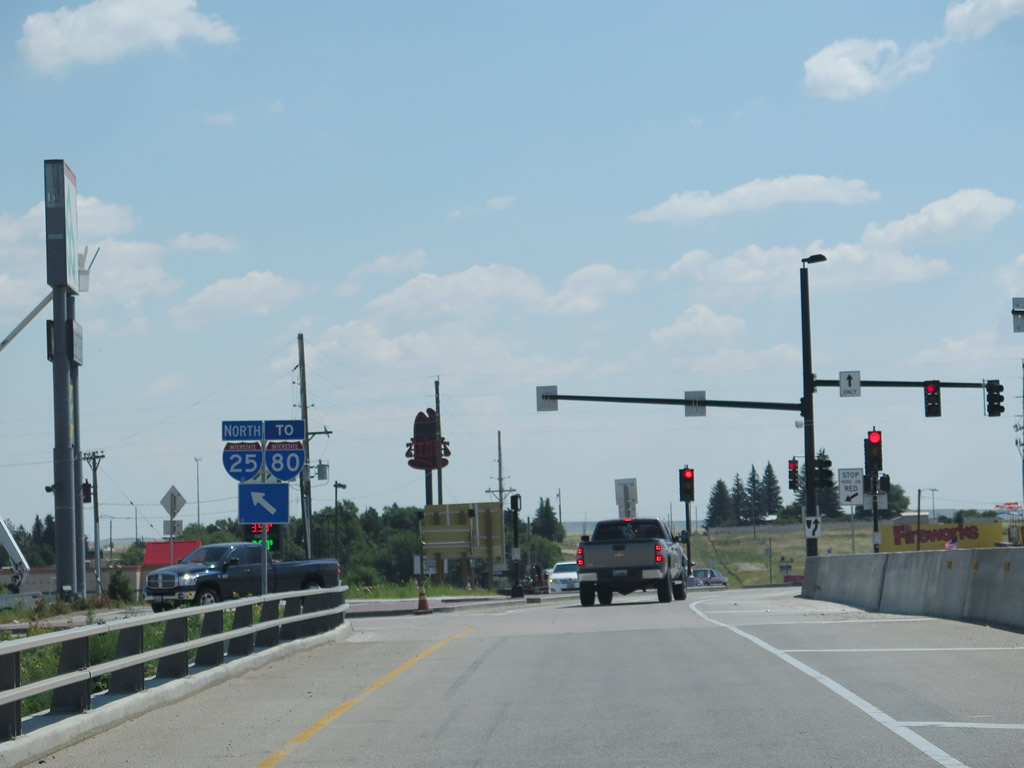
Cheyenne is also ahead of the game when it comes to new and innovative road design.  On the south side of town, a diverging diamond intersection has been built to handle the large volumes of traffic that occurs when a highway has multiple popular rest stops (truck stops) at one exit.

Diverging_Diamond_Cheyenne

This particular design is best suited for intersections like this one, where most of the traffic is either turning left or right (in this case entering or exiting the highway).  A majority of U.S. States have yet to successfully implement a diverging diamond interchange.  Yet, people who live in or travel through this area have seen a significant reduction in congestion at this interchange.

When I see the future of transpiration here in Wyoming, I see a bright one, and also a realistic one.  I am not waiting for some pie-in-the-sky innovation that should suddenly fix all of our problems.  But, I see incremental improvements, as there is one commonality in all of these developments, the desire to accommodate people.  While speed limits are increasing on highways across the country, they are not increasing everywhere.  In fact, last year New York City actually decreased its speed limits on surface streets.  At first these trends appear to contradict one another, but both are actually helping accommodate more people.  Maintaining slower speed limits on surface streets in town is seen as accommodating to pedestrians and cyclists.  We are moving towards a world where drivers can drive a fast but comfortable speed and arrive at their destination quicker using limited access highways, meanwhile pedestrians and cyclists feel increasingly comfortable choosing not to drive places as they travel on Greenway-ype trails, and/or surface streets where their safety is at only minimal risk.

Accommodation of different types of people, who live different types of lives, is important beyond just methods of transportation.  If we are going to live within a diverse nation like this one, let alone a global society, we must learn to live with those who chose to do things differently than us, and not let these differences lead to violent conflict.  Although some people would probably never look to a place like Wyoming for clues as to how the future will unfold, I am quite proud to be the kind of person who can see value anywhere.  And that, despite the current political situation in our country, I can go to a place like Wyoming, but also to a place like New York, and enjoy the local culture.  It is not that I do not have strong opinions opinions about anything, it is just that I refuse to view everything through the lens of the current red-state blue-state divide that so many people focus on.  Those who view all places, ideas, and even people through this lens place unnecessary limitations upon themselves.  Recently, at a bar, an acquaintance of mine actually suggested that political affiliations are a strong consideration for potential one night stands.  Needless to say my respect for this individual evaporated that evening.

If we can find ways to accommodate one another, such as maintaining both high-speed interstates and safe places to walk and bike, we no longer need to fight with those who do things differently than us.  The more we do so in all areas of our lives, the better we will be equipped to handle the diverse world that we have, and the more opportunities for meaningful experiences we will be able to take advantage of.

Testing Our Limits

IMG_3247

A good friend of mine once told me that nearly all people are capable of much more than what they believe they can do.  And that, in fact, when challenged, most would actually be surprised by what they are physically able to do once they have been pushed to their very limit.

When it comes to most activities, people generally tend to stop when tired.  After all, exhaustion is generally an unpleasant experience for most, and has the potential to make an activity no longer enjoyable.  However, from time to time, life issues some kind of challenge that forces us to give everything we have, way beyond what we had been wanting to give.  Most of us have experienced that unexpectedly challenging assignment in college that forced us to “pull an all nighter”, or had to tend to someone they truly care about at a time when completely exhausted.  It is at these moments, when we completely drain ourselves, that we figure out the true boundary of what we are capable of.  And, for physical activities, such as cycling, it is when our bodies actually physically begin to give out on us, that we truly understand what we are capable of doing.

Heading into a new season, I decided it was time to challenge myself.  Monday, I had an entire day available with no prior engagements, so I decided to take on a ride that would potentially test the limits of my endurance at its current state; A bike ride from Denver to Castle Rock, and back, in one day.

IMG_3241 IMG_3259

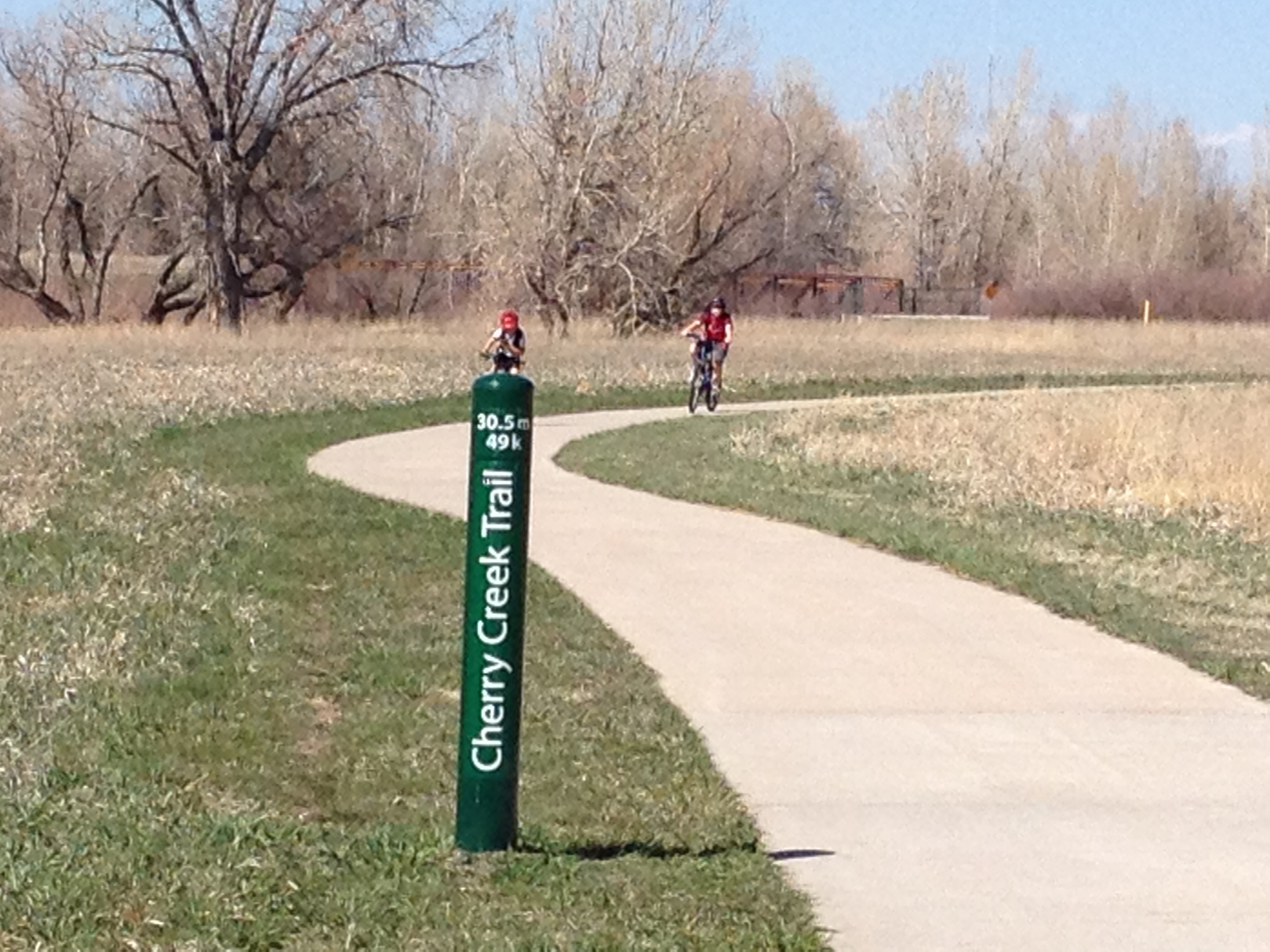
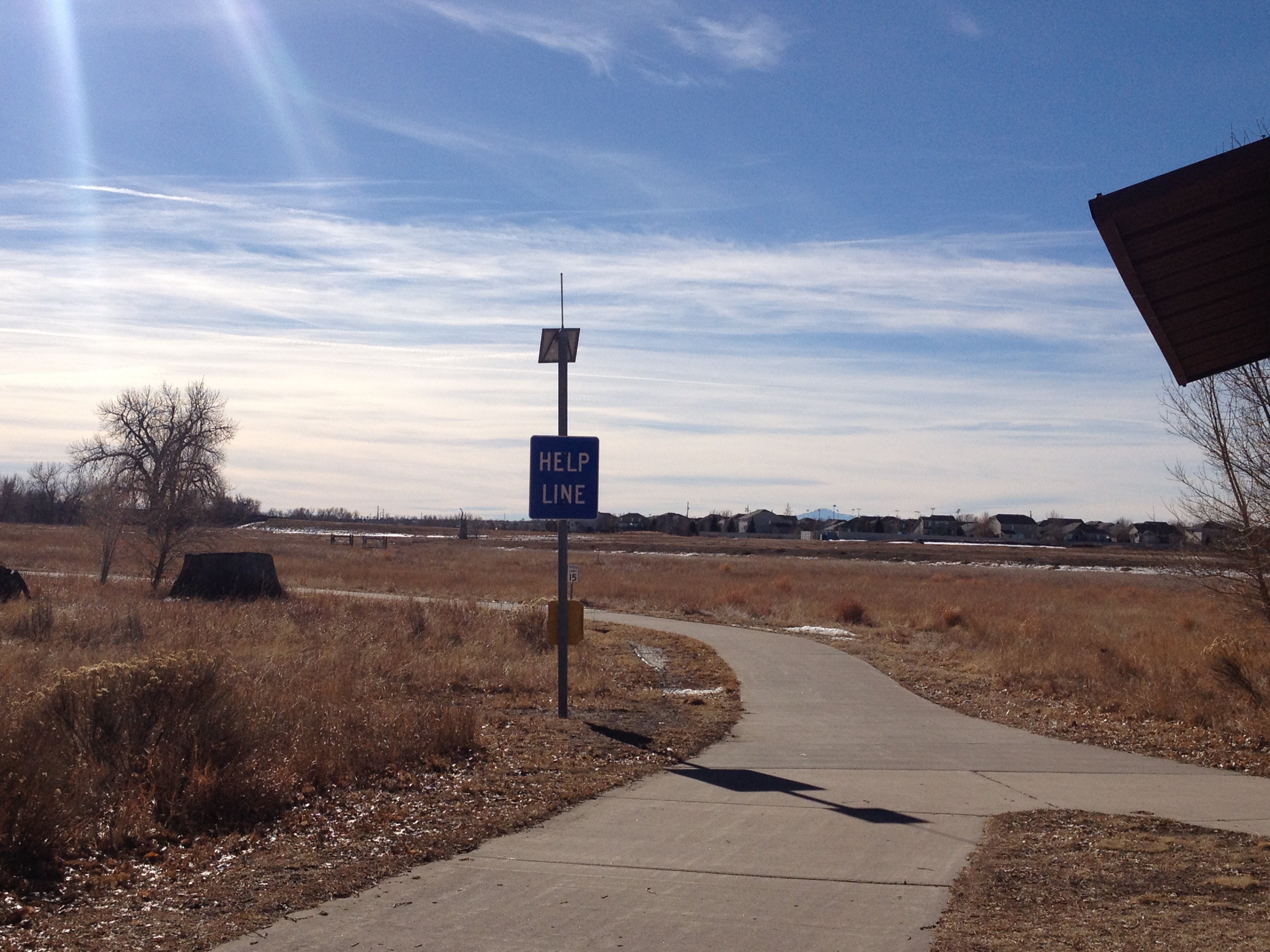
The first 30 miles of this trek is on the Cherry Creek trail, from Denver to the suburb of Parker.  Most of this trail is relatively flat.  A gradual upslope, combined with a few uphill segments, takes a rider from Denver’s 5280′ in elevation to Parker’s 5900′.  This part of the journey was not too terribly challenging.  In fact, in this segment, my biggest challenge was finding water to refill my water bottle.  I had assumed, for some reason, since it was already the end of March, and that there have already been 12 days with high temperatures of 70 or above, that the water fountains around the suburbs would be turned on for the spring.  I was wrong, and was quite thirsty and relieved to see this sign, indicating that although the water fountain was not operational, that the bathroom had available water.  You would be surprised how many suburban park bathrooms do not have running water.

IMG_3243

To get from Parker to Castle Rock, one must follow a road called Crawfoot Valley Road.  The road is quite luxurious for cyclists, with a shoulder wide enough for roughly two bikes.  In fact, it is labelled a bike lane for some parts of this eight mile stretch of road.  The first three miles, headed southwest from Parker, however, is a bit of a climb, and a deceptive one.  The climb is nowhere near as steep as one in the mountains, and one only climbs 500-600 feet.  But, it is one of those frustrating climbs where the road winds around a bit, and, with each turn, a cyclist will wonder whether or not they are approaching the apex only to see another uphill segment gradually appear as they approach.

IMG_3245 IMG_3246

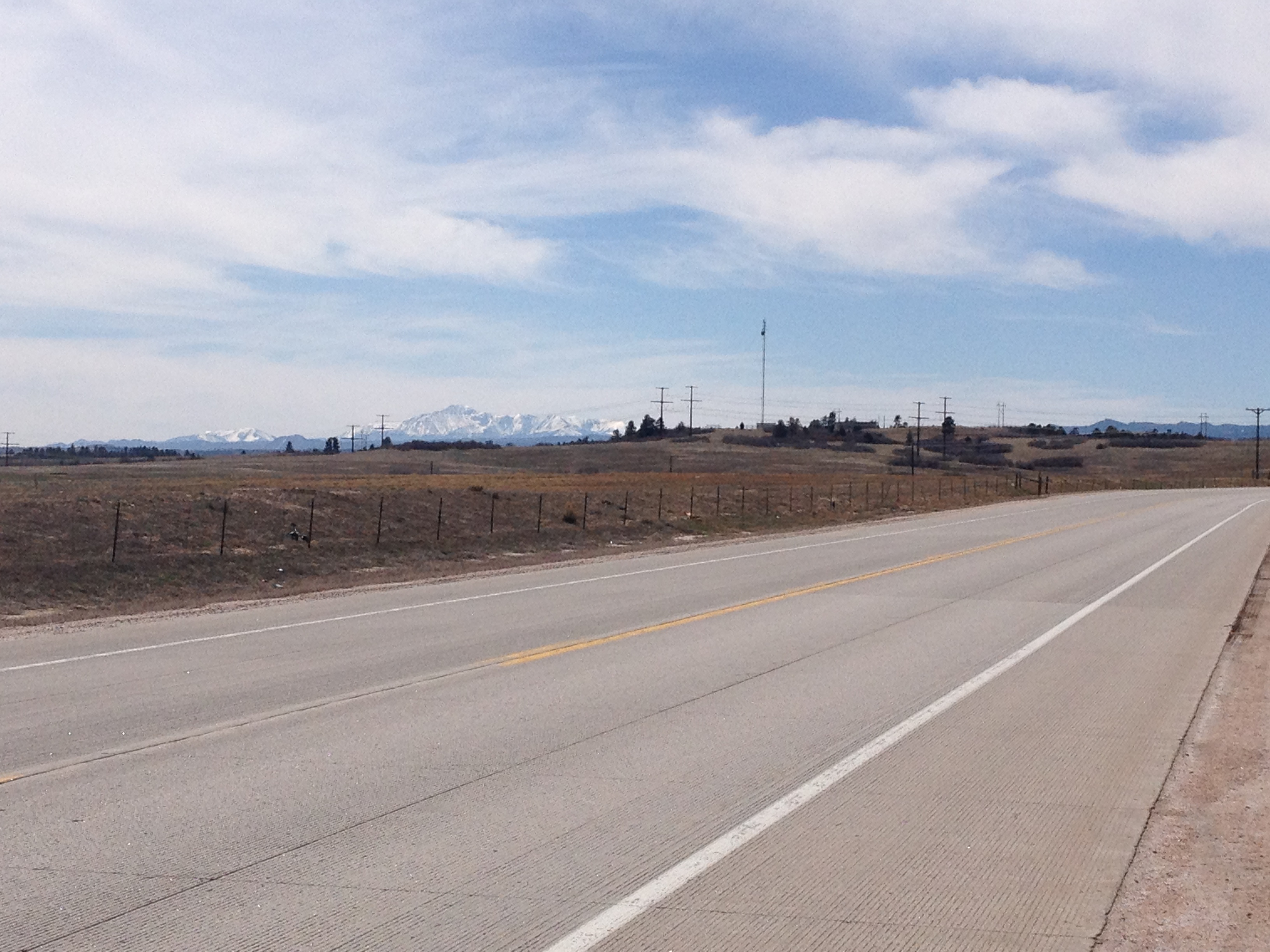
Once this road levels off, facing southwest, the ride becomes almost surreal.  To the left of the road, one can see Pike’s Peak, standing there all by its lonesome.  To the right, the mountains of the Front Range, due west of Denver appear.  Riding sort of directly at these mountains, with the vantage point of being up at roughly 6500 feet in elevation, I cannot help but take a deep breath and marvel at how wondrous the world can be sometimes.

IMG_3248 IMG_3247

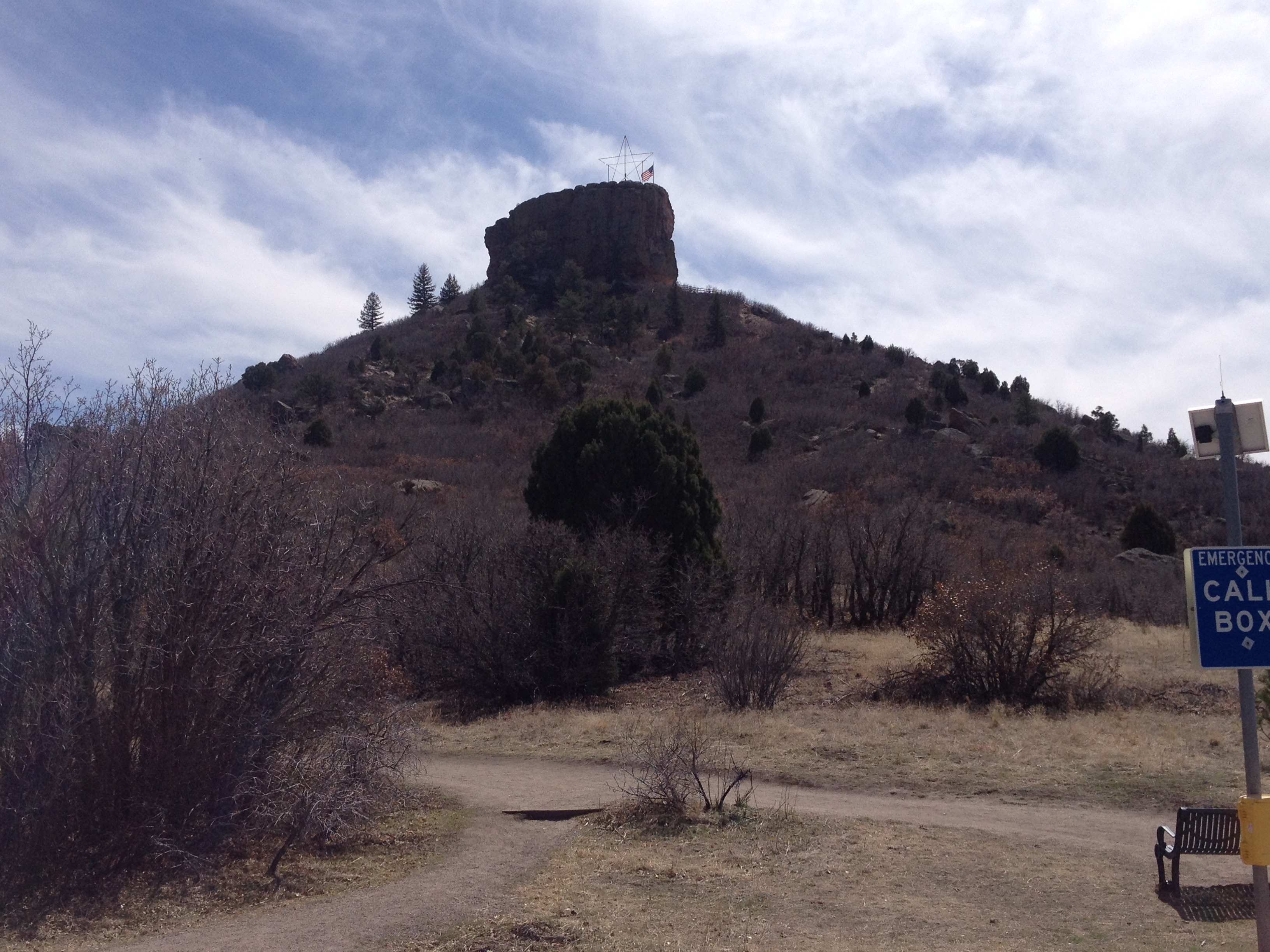
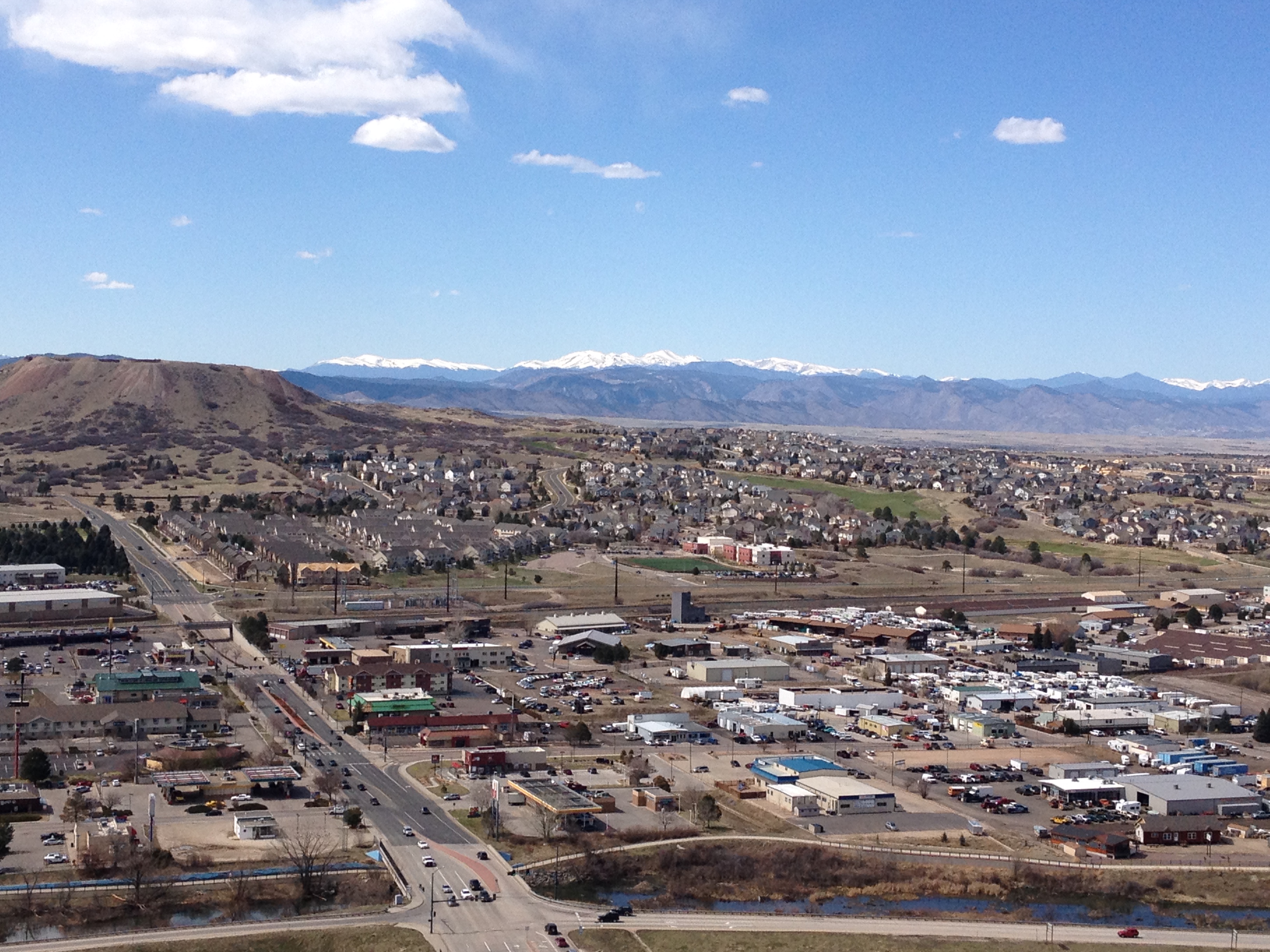
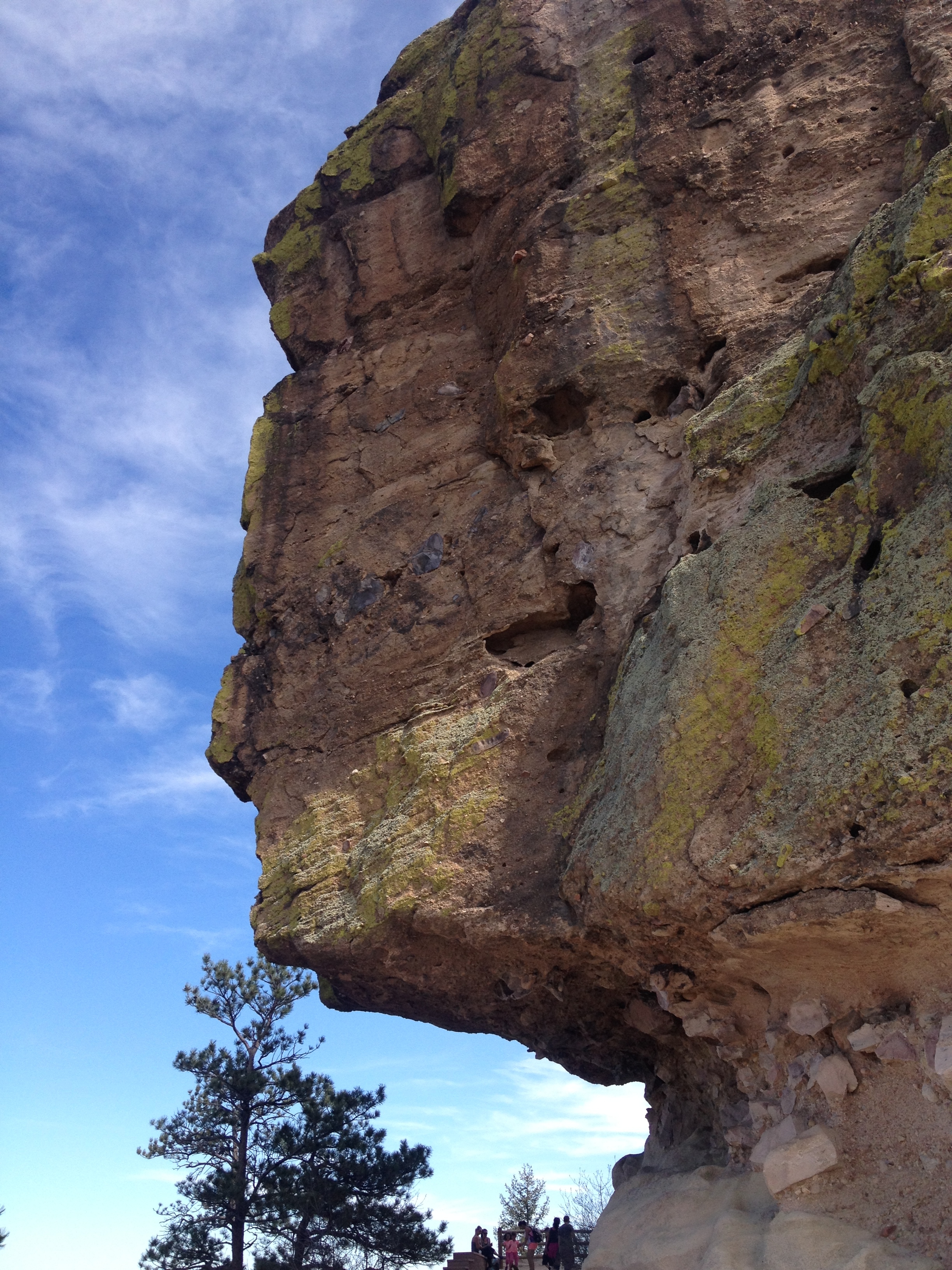
After just over 40 miles of cycling, I arrived at Castle Rock.  When I got to Castle Rock, I decided to add on a mini-hike to my day of activity.  After all, I spent almost three hours getting here, why wouldn’t I head up to this little rock structure- my destination!

IMG_3250 IMG_3253 IMG_3256 IMG_3257

This is a fairly short hike, with stair-step features that indicate that it was designed primarily for tourists, and not hard-core hikers.  So, I did not feel too bad about adding this hike to my already exhausting daily itinerary.

After all, the return trip to Denver would be much easier, after the initial climb out of town on Crawfoot Valley Road, the rest of the trip would be more or less downhill, descending, overall, from an elevation of 6200′ at Castle Rock back to 5280′ at Denver.

That turned out to be wrong.  As I approached Parker, a northerly wind developed, and, although the wind itself was not too terribly strong (10-12 mph range), the gusts began to pick up and become more frequent.  It was here, peddling into the wind, that an already challenging ride became one where I ended up testing the limits of what my body can do.

There are three levels of tired.  First, there is just general tiredness, where we just feel like stopping.  Many people do indeed stop at this point.  However, those who stop at this first level of tiredness generally do not develop any further endurance.  Level two tired is where we begin to ache, or feel some level of pain.  At this point, it is typically recommended that one stop.  This is the level of tiredness I had expected out of Monday’s ride.  However, the gusty winds on the return trip brought my level of tiredness to the third level, the level in which you simply cannot go anymore.

Working to each level of tiredness achieves a different goal.  An activity that stops at level 1 tiredness maximizes our enjoyment of an activity.  An activity that stops at level 2 tiredness is most beneficial to our fitness.  When we push to level 3 tiredness, we achieve personal accomplishments, the kind that make us feel as if we are achieving something with our activities.

The key is, for almost anyone involved in any kind of physical activity, to find a balance between working to each of the three levels, as they feed off of each other.  The original, and ultimate purpose of any activity should be to have fun, but, for most, an activity become even more enjoyable when we improve, take on new challenges, and accomplish new things.  Much like a skier that starts out on the green slopes, moves up to the blues, then blacks, and finally extreme terrain, I am looking to take my bike out longer distances, and to places that were previously unreachable.  However, in order to plan out how to test my own personal limits, I first have to know where those limits are.  So, as much as I can be pissed off that this ride ended up being more difficult than expected due to the wind, the wind allowed me to actually measure my personal limit, so I can start the process of improving.

A 50 Mile Bike Ride in the Dead of Winter

I am not sure where the phrase “The Dead of Winter” came from.  In fact, I am not even 100% sure people still use that phrase (in 2015).  But, I do recall hearing that phrase growing up in both New York and Illinois, referring to the period of time from roughly New Years through President’s Day.

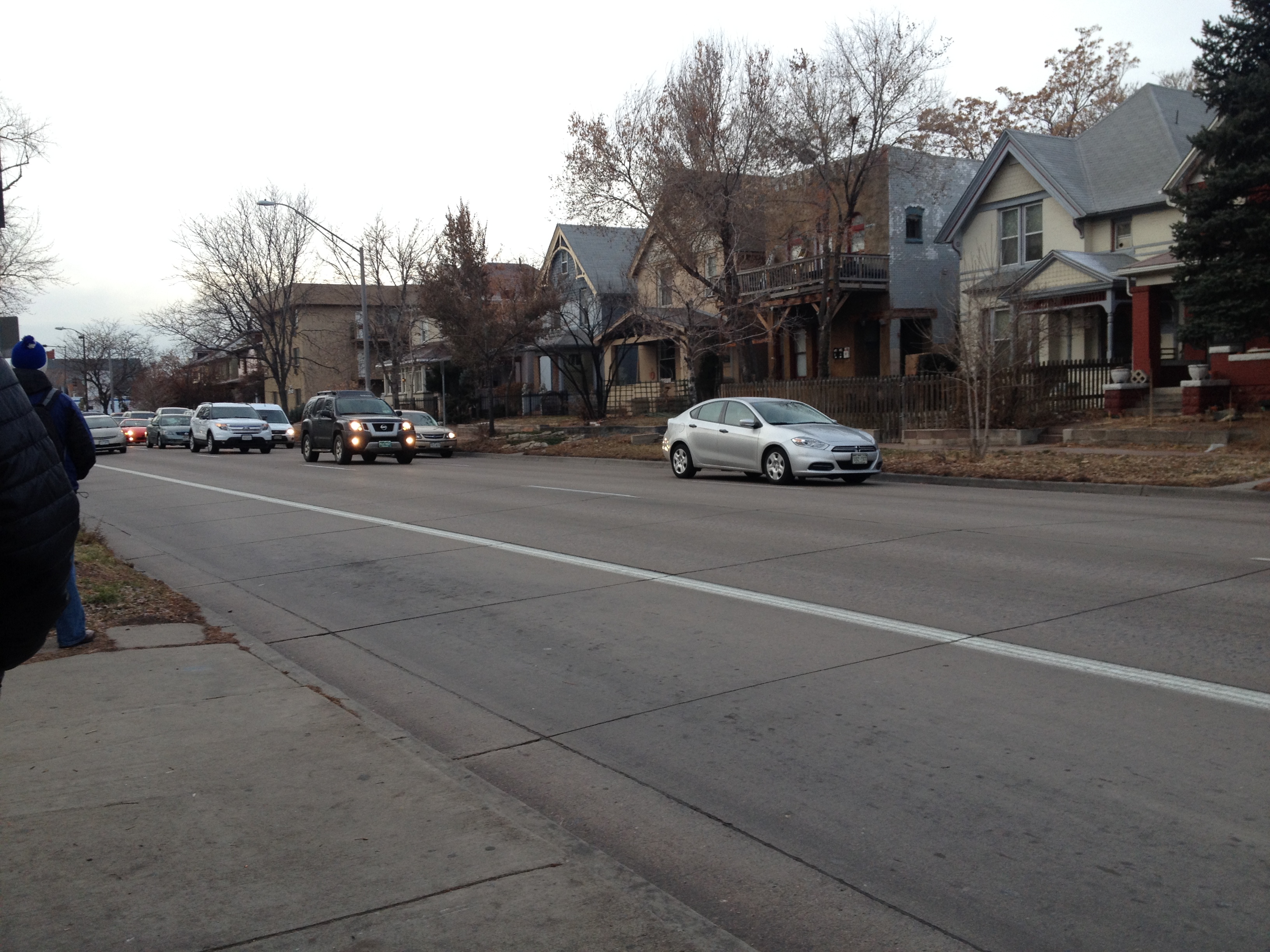
My best guess is that the phrase comes from scenes like this one appearing in many major Northern Hemisphere cities.  Trees having long since lost all of their leaves, the grass taking on a lifeless brown-ish color, and overcast skies combine to create a cold, lifeless image that can persist for long periods of time.

IMG_2940

No month epitomizes the depths of winter more than the month of January.  By January, most northern cities have already experienced a significant amount of winter.  Residents of these cities have typically been through a dozen or so days they would consider “very cold” (which does vary by city).  Also, by January, most cities have experienced their version of lousy winter whether, whether that be lack of sunshine, heavy snow, ice storms, that cold drenching rain, or some kind of combination of the four.  With the holidays over, if winter is going to wear you down, it will most definitely do so in the month of January, as it runs its course.

For many, winter (and particularly January) is something of a metaphor for a rough period of time, or a low point.  In American history, the winter at Valley Forge is remembered as a low point for the American Revolution.  Winter is also used periodically to describe low points in people’s individual lives.  With the chill, darkness, and frequent inclement weather, there is not only commonly more hardships, but also more limitations.

This is true even when mother nature offers periodic breaks from cold and gloomy weather.  After a cold start to 2015, the middle part of January brought warmer conditions to Colorado, including several consecutive days with highs in the 50s or 60s here in Denver.  And, while today ended up being one of the best possible January days for a bike ride, the amount of riding I could do was still limited significantly by the sheer fact that it is January.

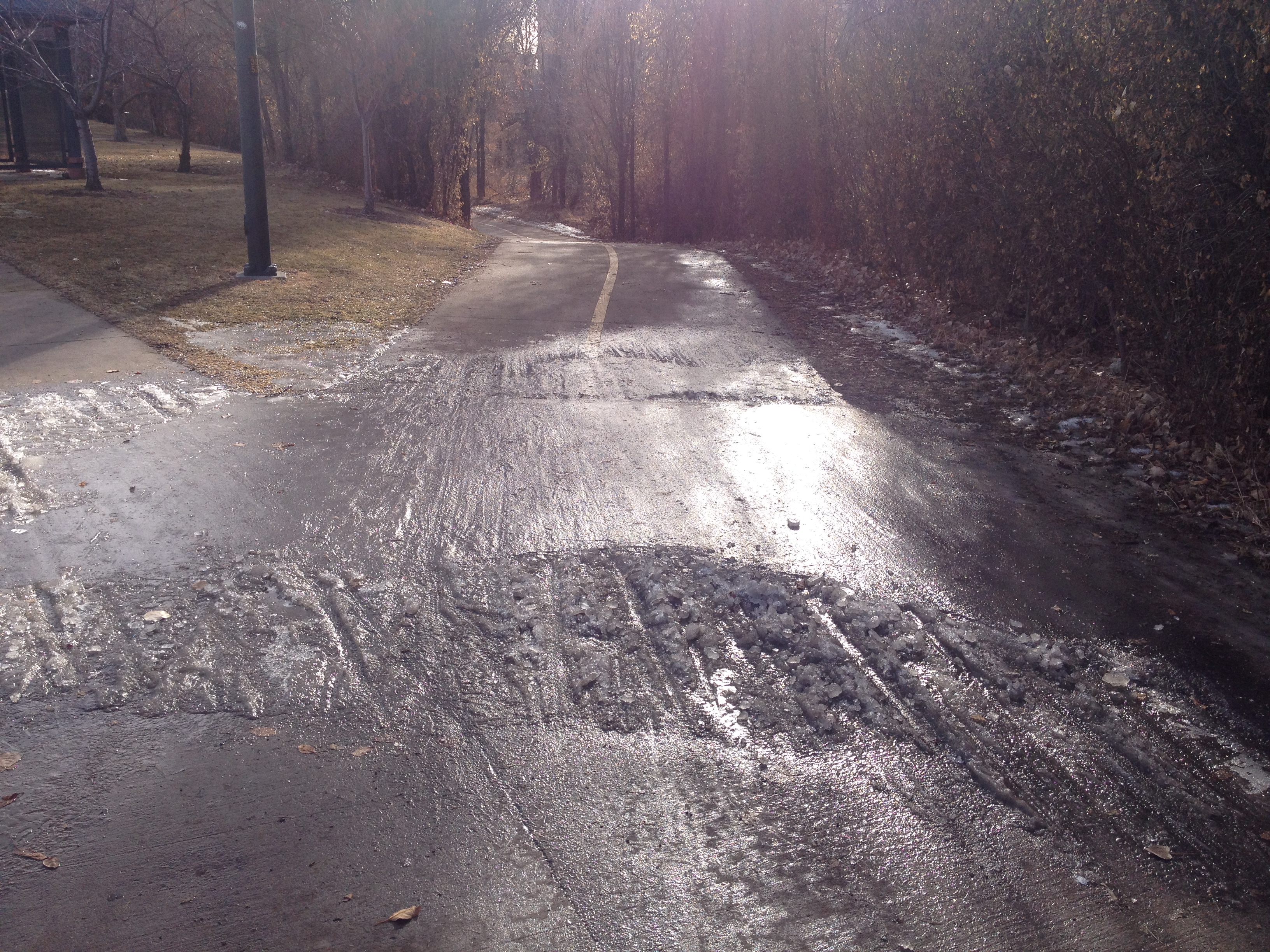
Even on a mild day, it is typically too cold to start riding at sunrise, the coldest part of the day.  As the day began with temperatures in the 30s, I waited until roughly 9:30 to begin my ride.  Even with this later departure, I still encountered significant amounts of water, and even ice on the trails.  In several sections, I needed to stop and dismount my bike for safety reasons.

IMG_3018

The mere possibility that ice like this will be present on the trail also makes it extremely unsafe to ride after dark.  With sunset occurring right around 5 P.M. at this time of year, the window of time for a bike ride is significantly shorter than it is in other season.

IMG_3025

Another major limitation to what places I can bike to in January is the wind.  In winter, wind can be quite unpredictable, and can lead to unexpected slow-downs.  Also, higher terrain can get quite windy, even on days where there is little to no wind in town and in the river valleys.

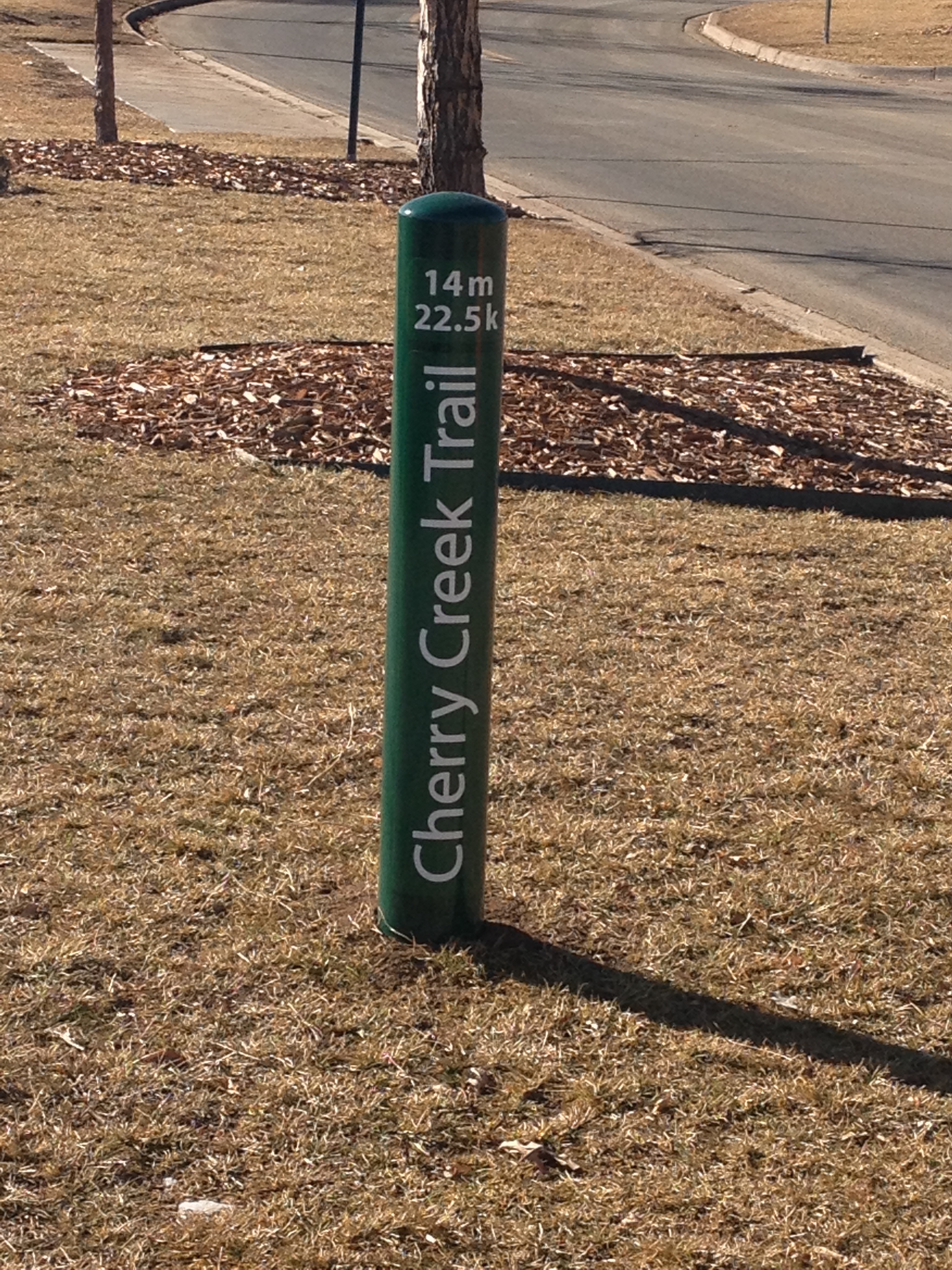
Therefore, I decided to ride up Cherry Creek trail, and make the 50-mile round trip ride from Denver to Parker, an exurb 25 miles to the Southeast.

IMG_3019 IMG_3020

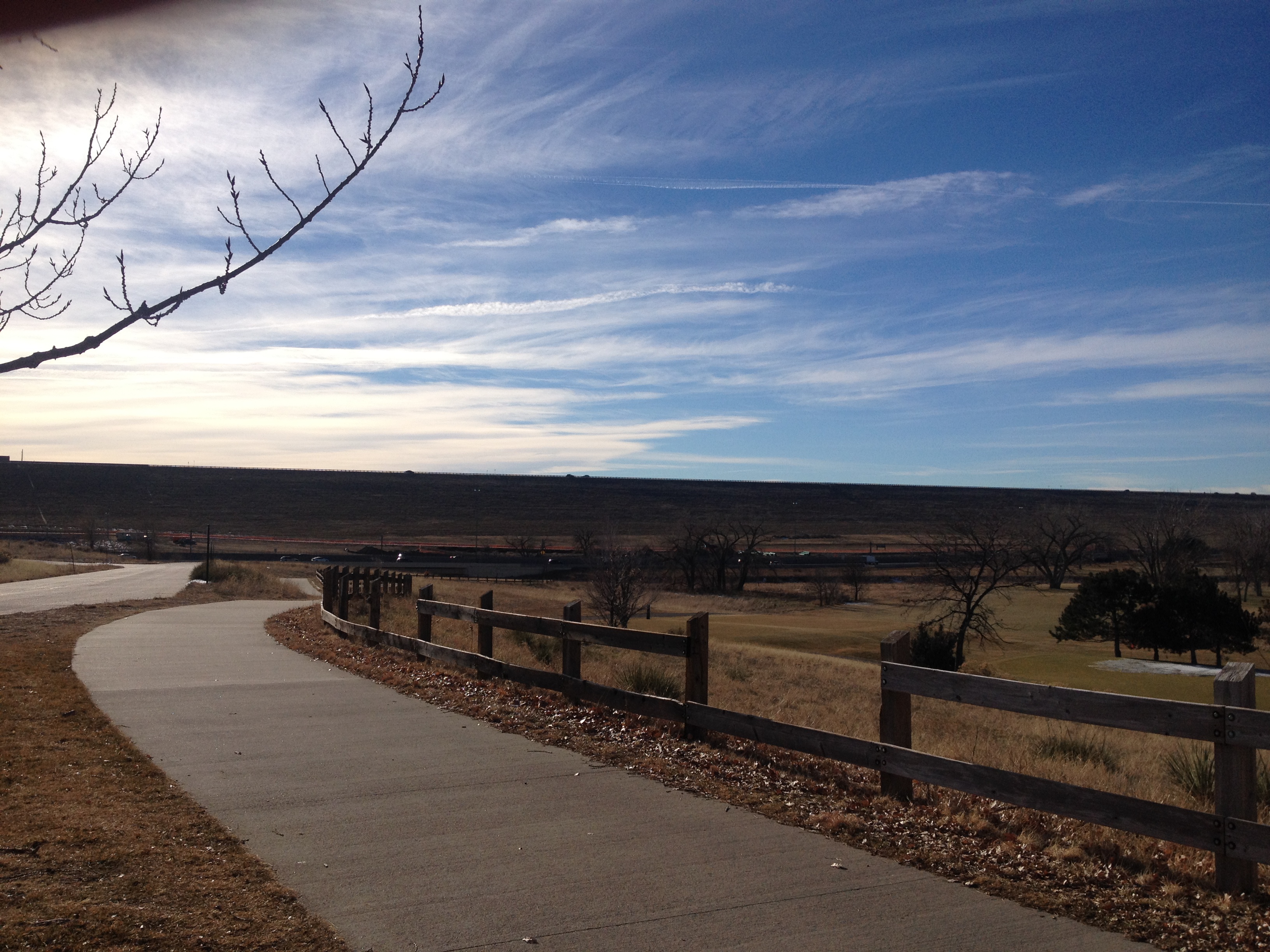
Despite the slow-downs associated with random standing water and ice on the trail, I was still able to reach Cherry Creek Dam in roughly 45 minutes.  Here, the only “climbing” portion of the ride appears in the distance.  For those with little to no “climbing” experience, the uphill sections can actually be a bit exhausting.  However, for anyone that has previously ridden up a mountain, or a large hill, the climb up the hill is quite tame.  With the mountains still appearing in the distance, there is a clear reminder that even after a mild stretch of weather, climbing too high in elevation would also lead to slippery conditions.  In essence, this “climb”, although quite tame, is the most significant climb one can make safely in the month of January.

IMG_3023 IMG_3024

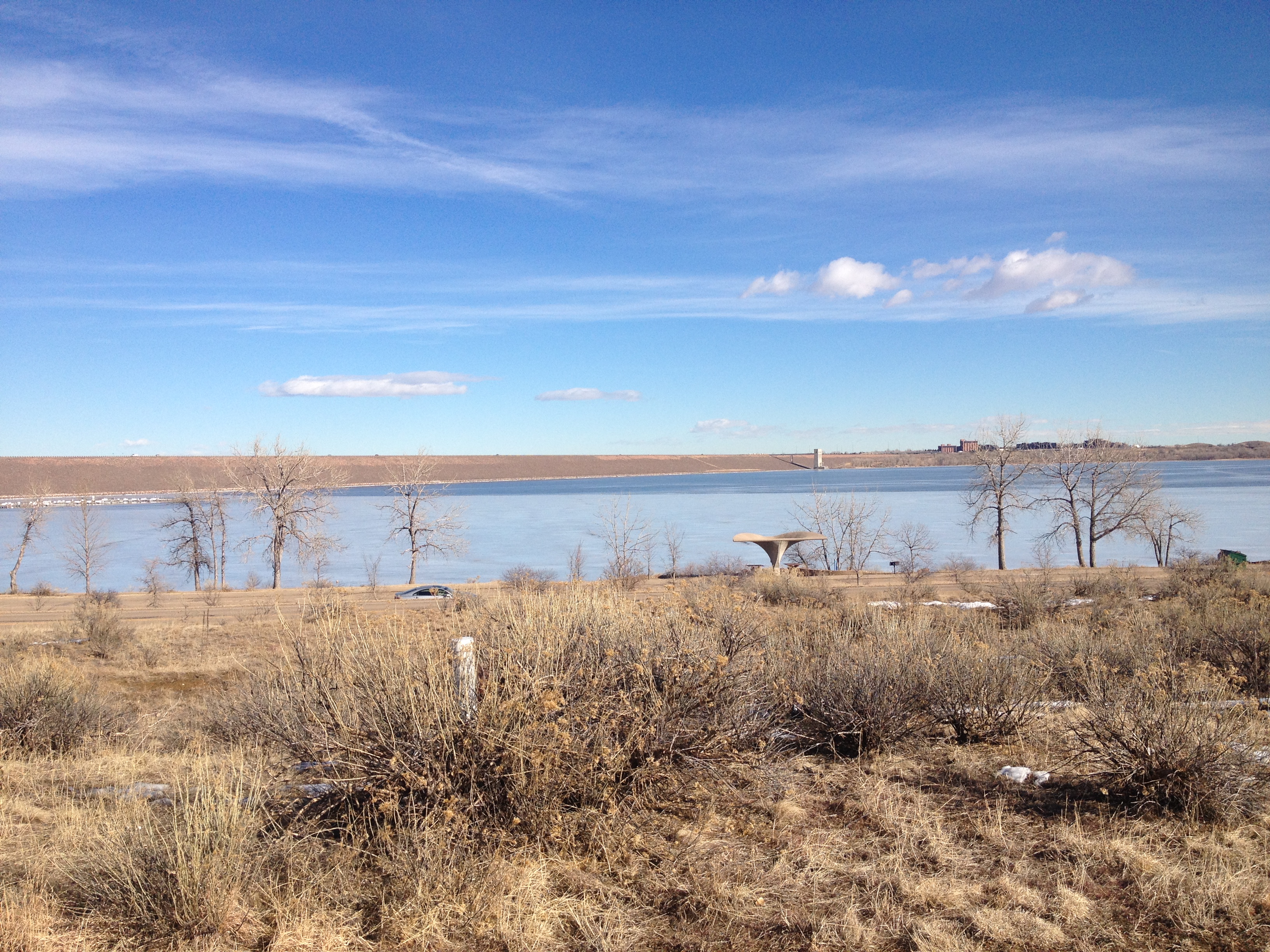
Behind the dam, the trail winds around Cherry Creek Reservior.  Only half covered with ice (and probably thin ice), I am relieved to see nobody trying to ice fish, or stand out on the lake at this time.

IMG_3028 IMG_3029

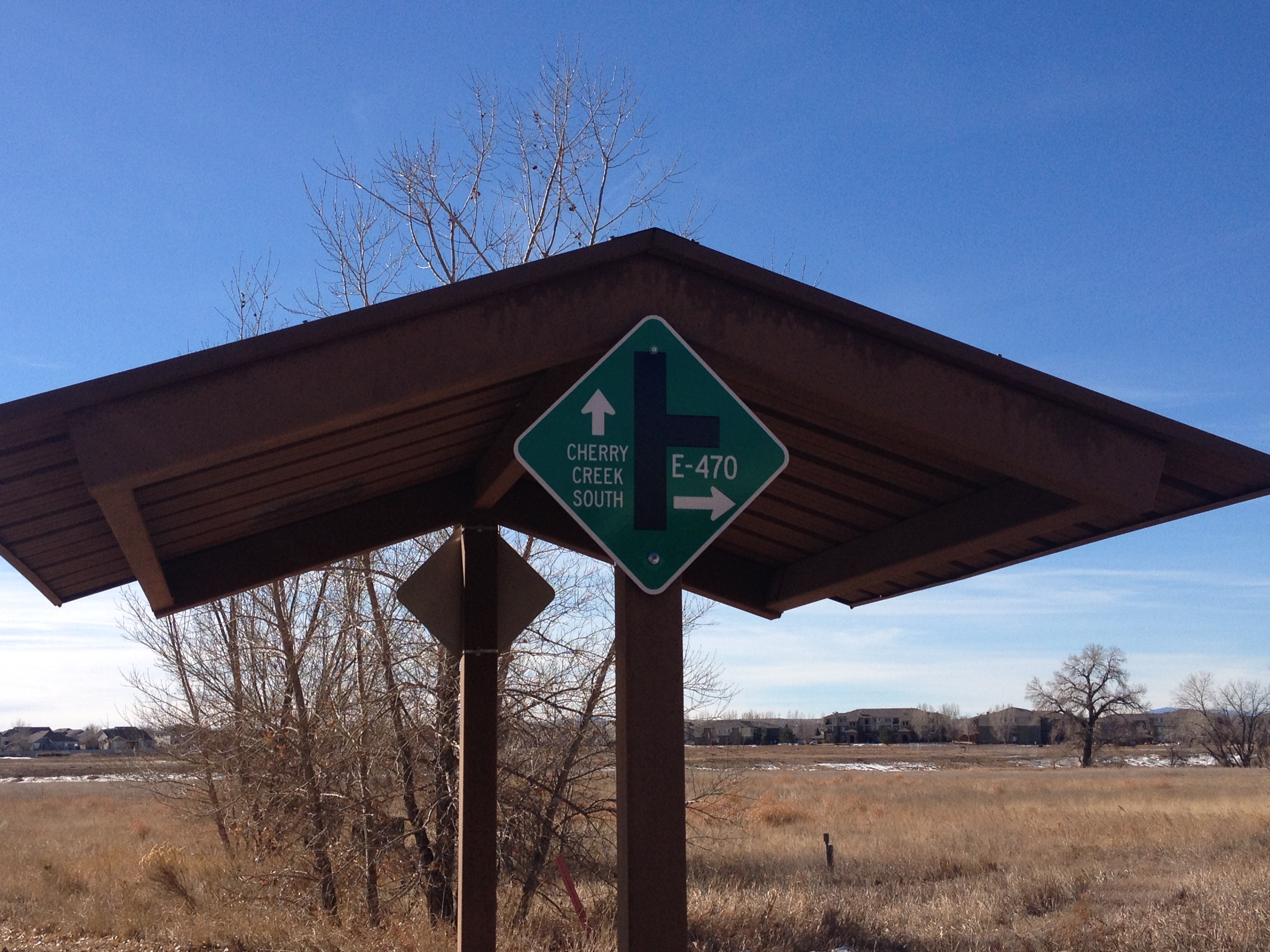
With some amount of wind, and having not ridden a significant amount of miles in one sitting in quite some time, I ended up taking it a bit slower on the trail today than I normally would have in mid-summer.  As a result, it ended up taking me nearly another hour to reach Parker, where the 470 trail, another major trail in the metro Denver trail system, terminates at the 40-mile long Cherry Creek Trail.

And, while it took me a bit longer than normal to ride 25 miles, not exhausting myself to achieve a better time had it’s reward.  Neither overly exerting myself, nor traveling too slowly, the return trip flew by!  Mile after mile passed, almost as if I was living out a montage of my own life.  I passed mile 25, 24, 23, winding around, smiling at nearly every person I passed by as the wind, and my direction shifted back and forth.

IMG_3030 IMG_3022

Before I knew it, it was mile 15, 14, 13.  On a typical ride, exhausted at the end of the day, I am anticipating each mile, and tracking how far I am from home.  Today, I achieved somewhat of a state of euphoria.  I almost feel as if I had achieved the “runners high” often discussed (albeit on a bicycle, as opposed to running).

In the end, despite my slower than usual pace, I thoroughly enjoyed the ride, and was actually only passed on the trail once!

For those wanting to take advantage of a mid-winter warm-up, and get on the trail (or roads), I offer the following tips

  • Plan extra time (maybe half an hour) for your ride.  There is a distinct possibility that mud, ice, or snow on the trail can slow you down, as well as unexpected winds.  It is not safe to ride at night, and it will get cold again.  You are better off taking on a goal that would be considered modest during the warm season than ending up in trouble.
  • Listen to your legs.  I know “shut up legs” is a popular poster to hold up at long distance rides, but often times a ride can be done more effectively if you allow yourself to downshift when the ride feels exhausting.  This may mean being on a specific segment of trail, or road, in a lower gear than what you would typically be in.  But, maybe that combination of the 5 pounds you gained over the holidays, and that 8 mph cross-wind is enough to warrant being one gear lower.  It is best not trying to exhaust yourself early just to be in your usual gear regime.  That being said, there also may be opportunities to shift up and go faster where there is an unexpected tail wind.
  • Don’t shy away from undertaking a major bike ride immediately after a hard day of skiing.  Cycling uses mostly different muscles than skiing, and I have been surprised by how little recent hard core skiing has impacted my cycling performance on rides like the one today.

A Bike Ride to Roxborough State Park

IMG_1933

The primary reason I love cycling as much as I do is that I am able to go places a significant distance away completely under my own power.  For many years I have enjoyed commuting to work (now only 1.5 miles but formerly 6 miles), running errands, visiting specific places, and getting myself to and from specific events by bicycle.  I feel the benefits are two-fold.  There is the obvious money savings on fuel (and/or parking/ transit).  In addition to the monetary savings, I find the exercise and time outdoors to have a been a great value to my health, both mentally and physically, over the years.

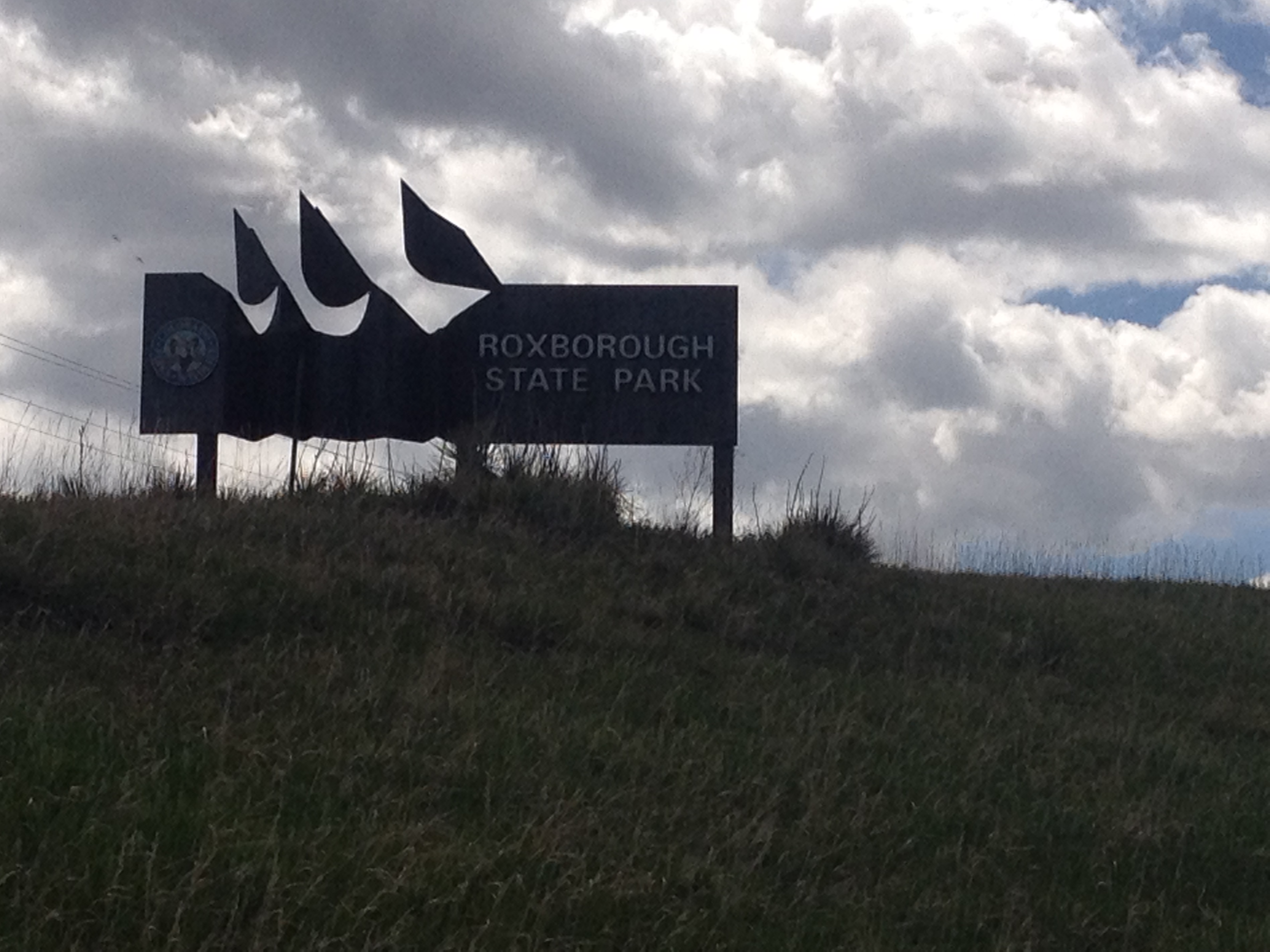
Roxborough State Park is about 30 miles South of central Denver.  It is a place I had never really thought about visiting up until a few weeks ago when I was looking for new interesting places to ride my bike to, and wanted a ride that would be roughly two hours each way.  In Denver, it is possible to cover a good amount of distance quite quickly using the metro area’s bike trails, which bypass traffic signals, as well as most terrain features that would normally slow a cyclist down.

IMG_0337IMG_1913

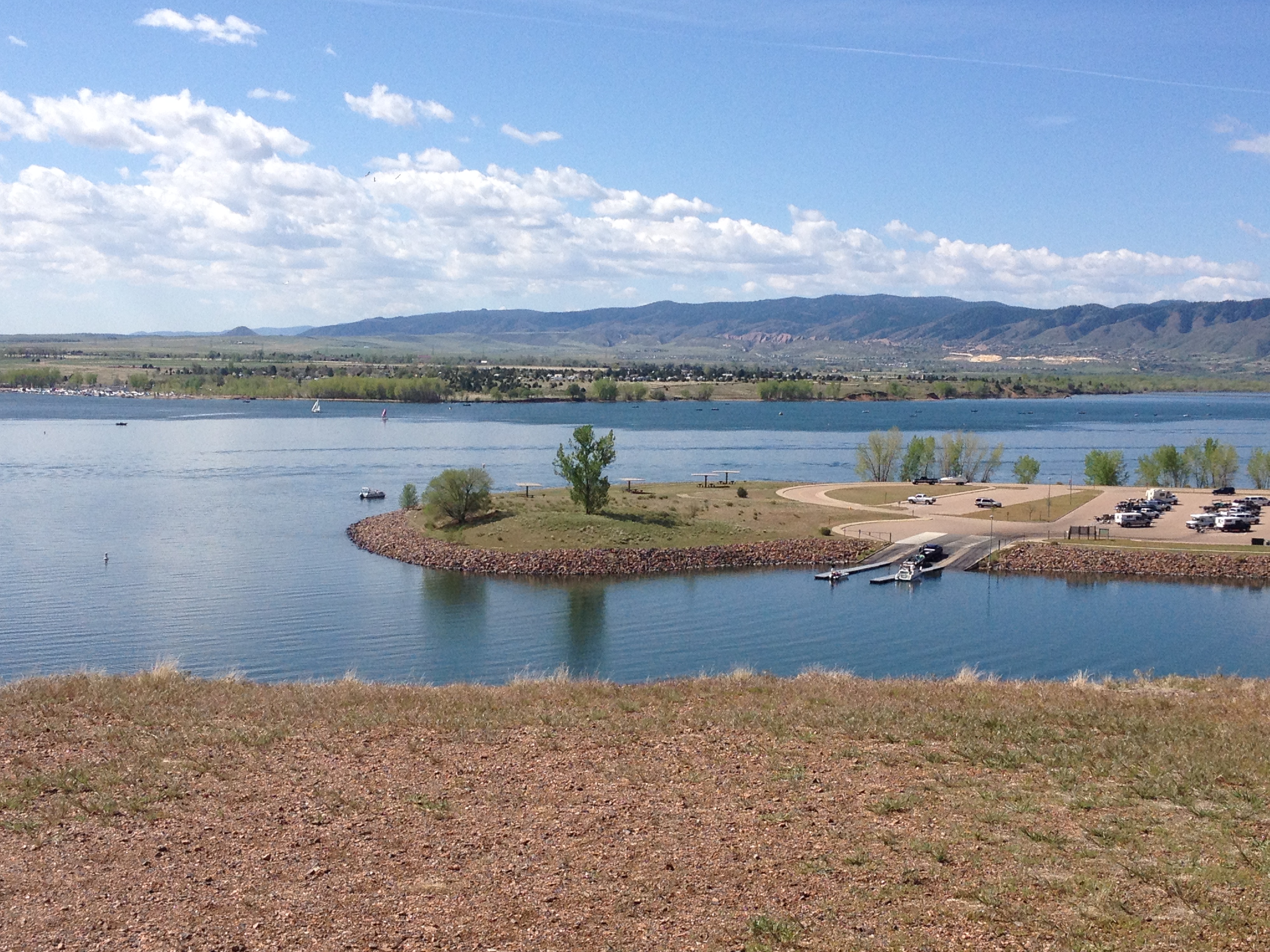
The Platte River trail can be followed from Denver southward to it’s terminus at the C-470 trail, about 16 miles south of downtown.  The Platte River trail is quite flat, as it tracks right along the river.  However, the C-470 trail, which roughly follows the highway (which is the Metro area’s outer loop), contains a lot more rolling hills.  After several miles on the C-470 trail, I arrived at Chattfield State Park, a reservoir, and popular boating destination on the southern fringe of the metro area.

IMG_1916 IMG_1917

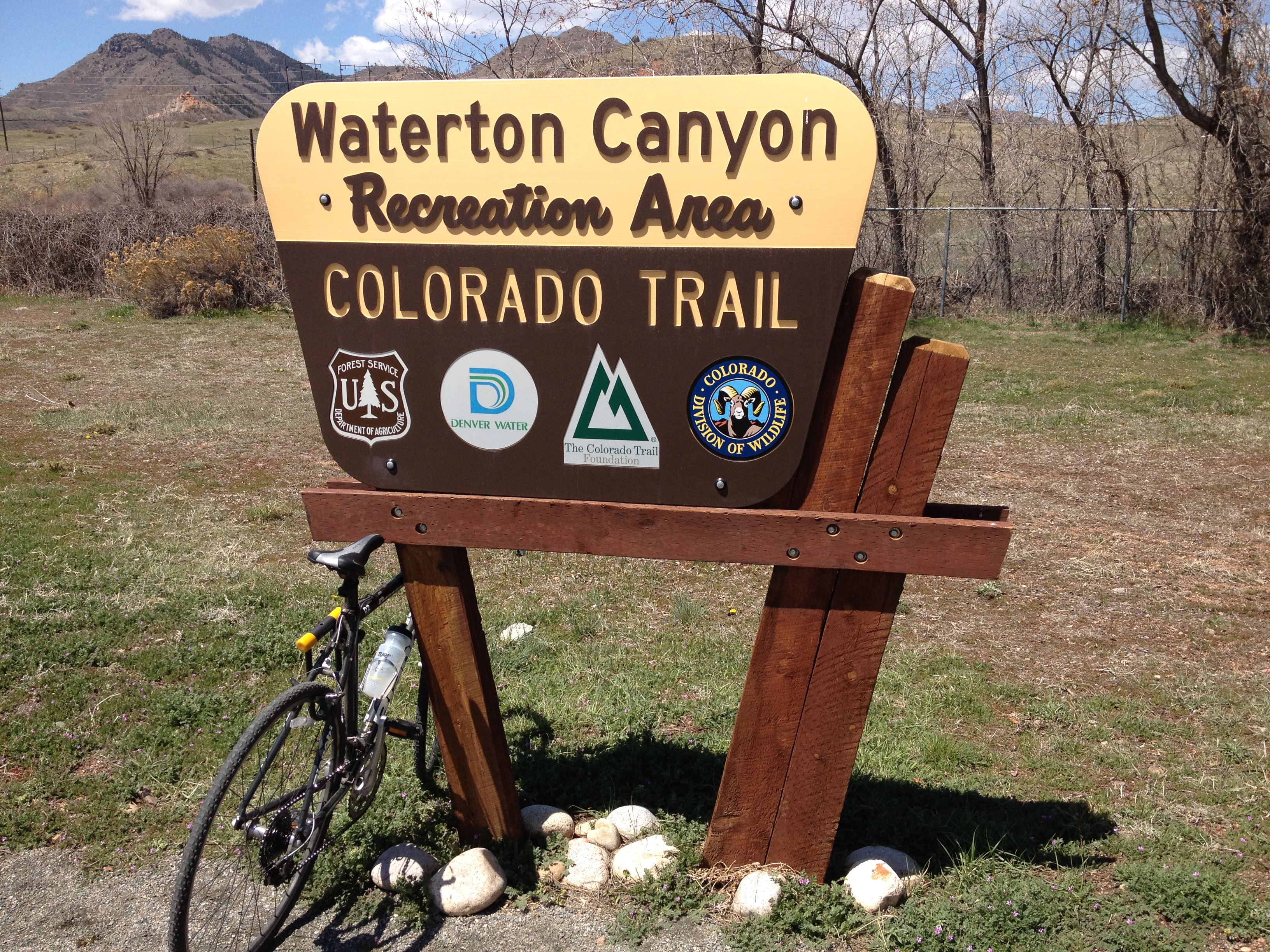
A couple of years ago, this was the destination of a couple of rides I had done.  Last year, I did a ride to Waterton Canyon, the starting point of the Colorado Trail, a place I also rode by on my way to Roxborough State Park.  It is somewhat encouraging to actually see my continued progress as a cyclist right in front of me.  However, it also made me realize that there is one disturbing parallel between cycling (or any activity of this nature) and drug addiction; as the more I ride my bicycle, the farther and more intense of a ride I need to do to feel “satisfied”.  This is beginning to feel eerily similar to the gradual increase in tolerance a regular drinker experiences, or the ever increasing doses many drug addicts demand over time.

IMG_1921 IMG_1922

There was a fairly long line of cars at the entrance to this park.  Luckily, I was able to bypass this line, saving me both roughly 20 minutes of time, as well as the $7 entrance fee to the park.

The road from the entrance to the visitor center, basically the last two miles of the ride, was not all that fun.  It was gravel and bumpy for much of the way.  I felt uncomfortable going over 13 miles per hour.  However, the park rangers were quite pleased that I did not try to use my bicycle on any of the trails, as they do not permit bicycles on the trails.

IMG_1927 IMG_1928

At the visitor center, I realized that one of the main attractions of this particular park is the wildlife.  Showing people the fur and bones of dead animals seems like a somewhat sick way of presenting what the park had to offer to it’s visitors, but it was really neat to actually feel the fur of a black bear for the first time in my life!

IMG_1929 IMG_1934

The rock formations at Roxborough State Park were actually quite similar to what I saw at Garden of the Gods.  In fact, it is easy to see how the same geological processes created the rock formations that run up and down the edge of the front range, including the Garden of the Gods, the place, as well as places like Red Rocks.

IMG_1931 IMG_1936

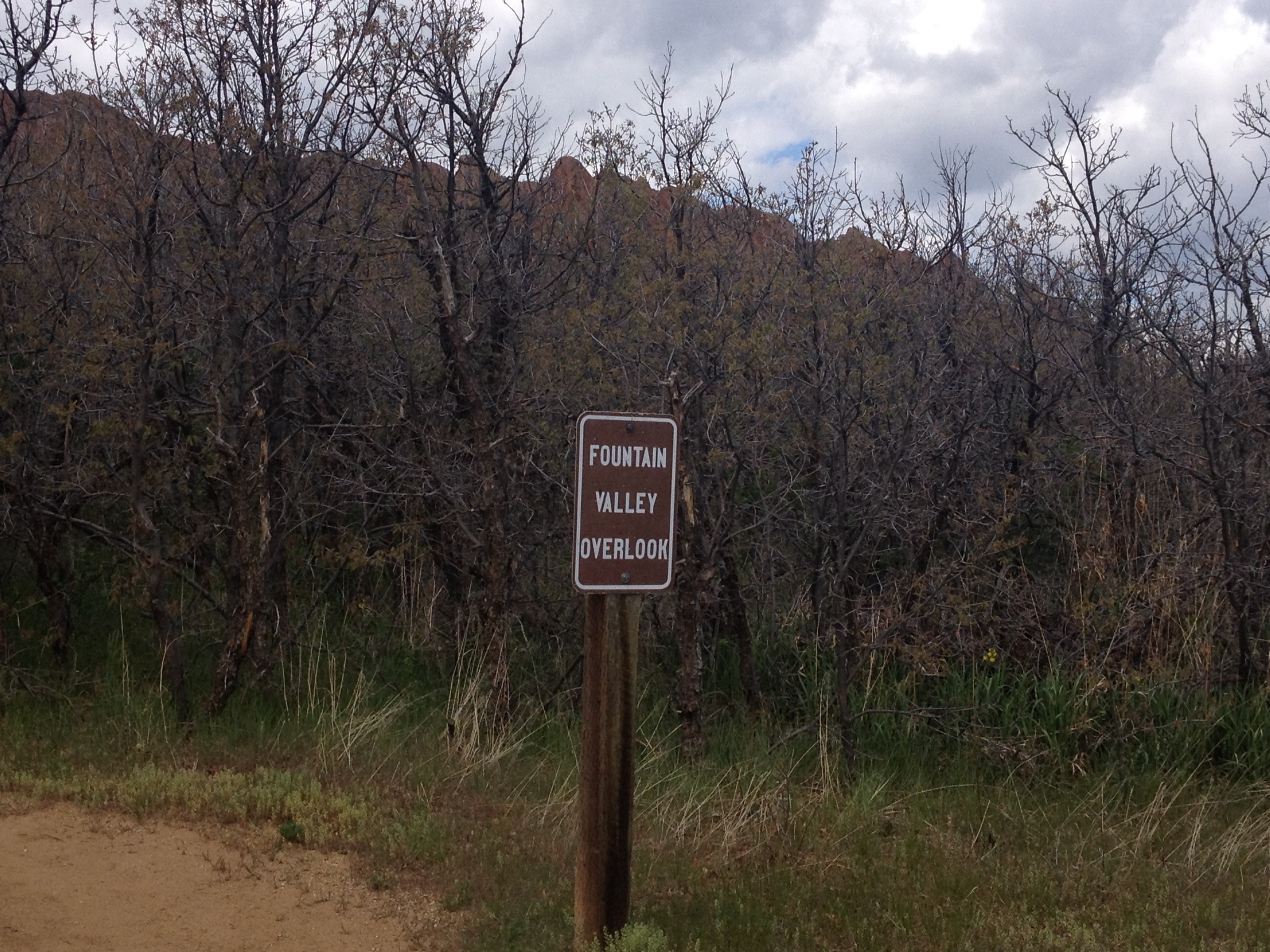
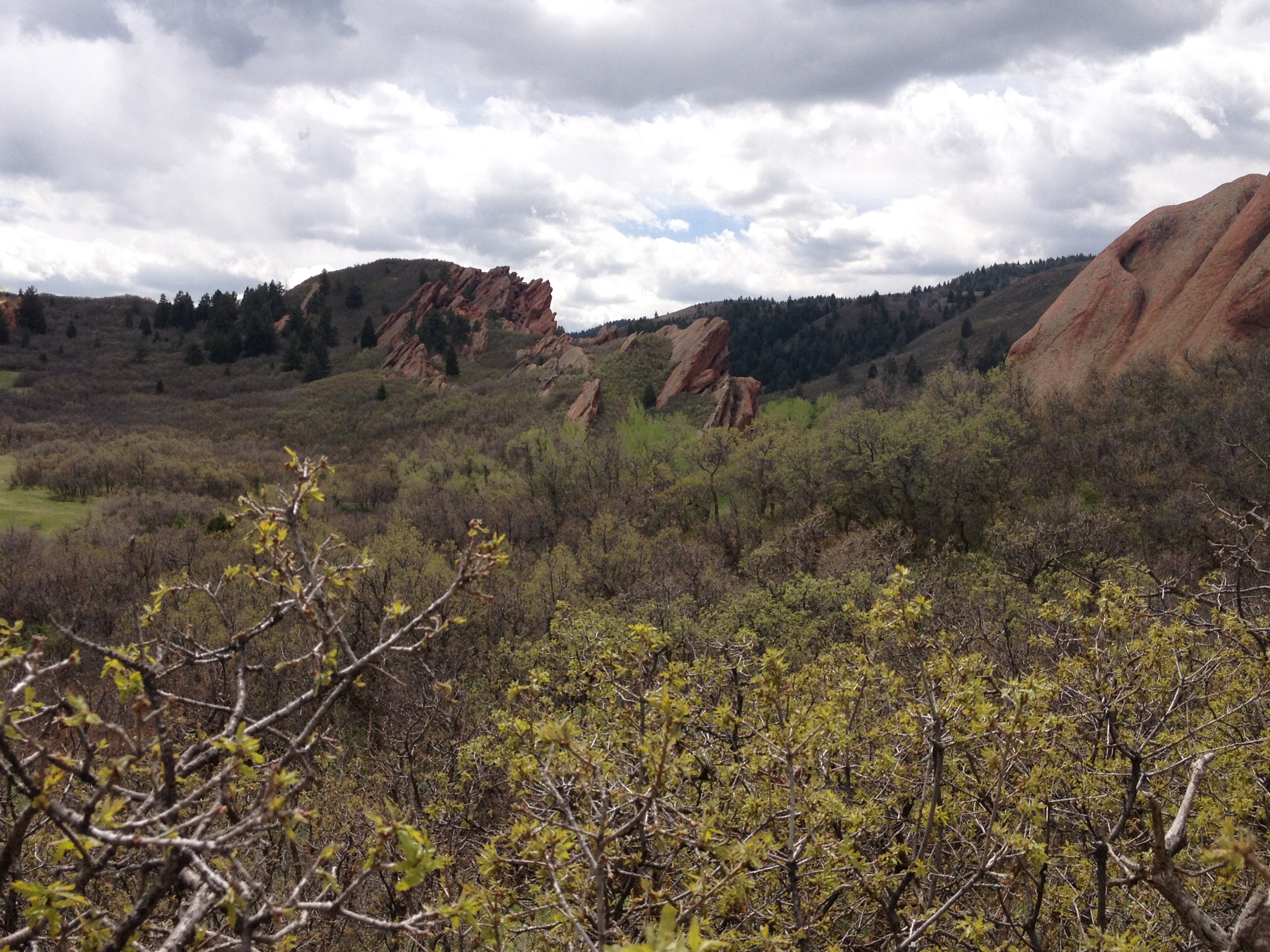
The park is also set up quite similar to Garden of the Gods.  Both places make it easy for the average non-outdoorsy tourist to attain a good view of the park.  Here, the Fountain Valley Overlook, a mere half mile from the parking lot with only a slight grade, provides views like the one at the top of this entry to those with no interest whatsoever of getting any exercise.  The park also offers somewhat more strenuous hiking.  Carpenter Peak is roughly 1000 feet higher in elevation than the visitor center.

IMG_1930

I meandered around the park a bit, but decided not to do the more strenuous hike as to preserve my energy for bicycling.  The only wildlife I encountered were these three deer, which is not particularly out of the ordinary.  However, I did encounter them at a much closer distance than I typically do.

IMG_1940

For much of my time at Roxborough State Park, I was intrigued by these relatively short trees I encountered all over the park.  These tress are quite different than the ones I typically see around Colorado.  I later read, on the way out of the park, that there are some unique species of trees, as well as insects and animals, that live here due to the micro-climates created by the wind patterns that these rock formations create.  In fact, Roxborough State Park is considered a destination not only for it’s rock formations, but also for it’s unique wildlife.

IMG_1935IMG_1938

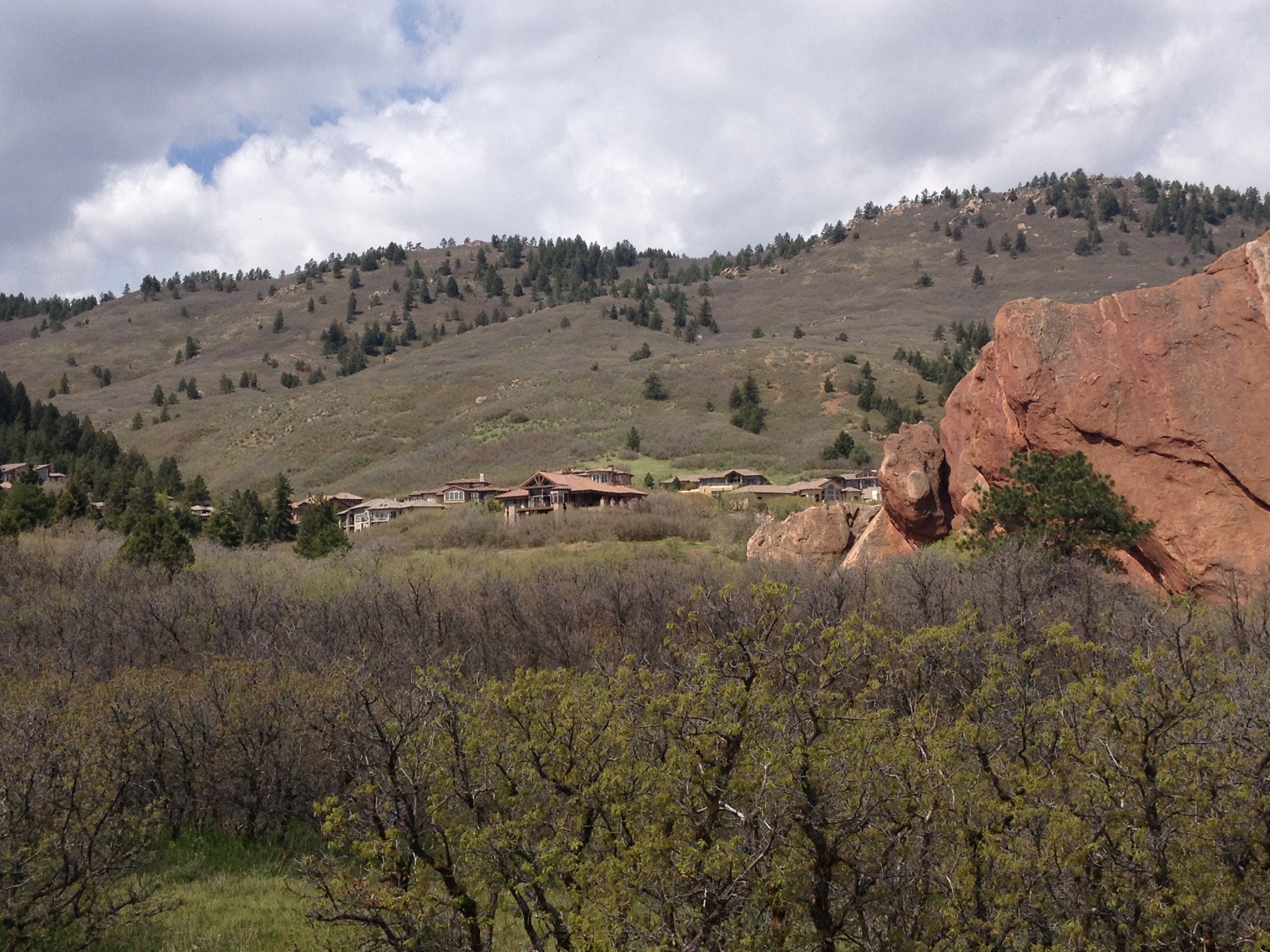
While marveling at the beauty of the park, and considering how awesome it might be to live in one of those houses that overlooks the place, the weather caught me off guard.  Prior to this ride, I looked at the forecast for Denver, which called for a threat of rain after 3 P.M.  However, 30 miles farther south (and closer to the Palmer Divide), and roughly 1,000 feet higher in elevation, any threat of thunderstorms is naturally going to come earlier in the day.  Right around noon, I noticed a few raindrops, and suddenly noticed the clouds beginning to build overhead.

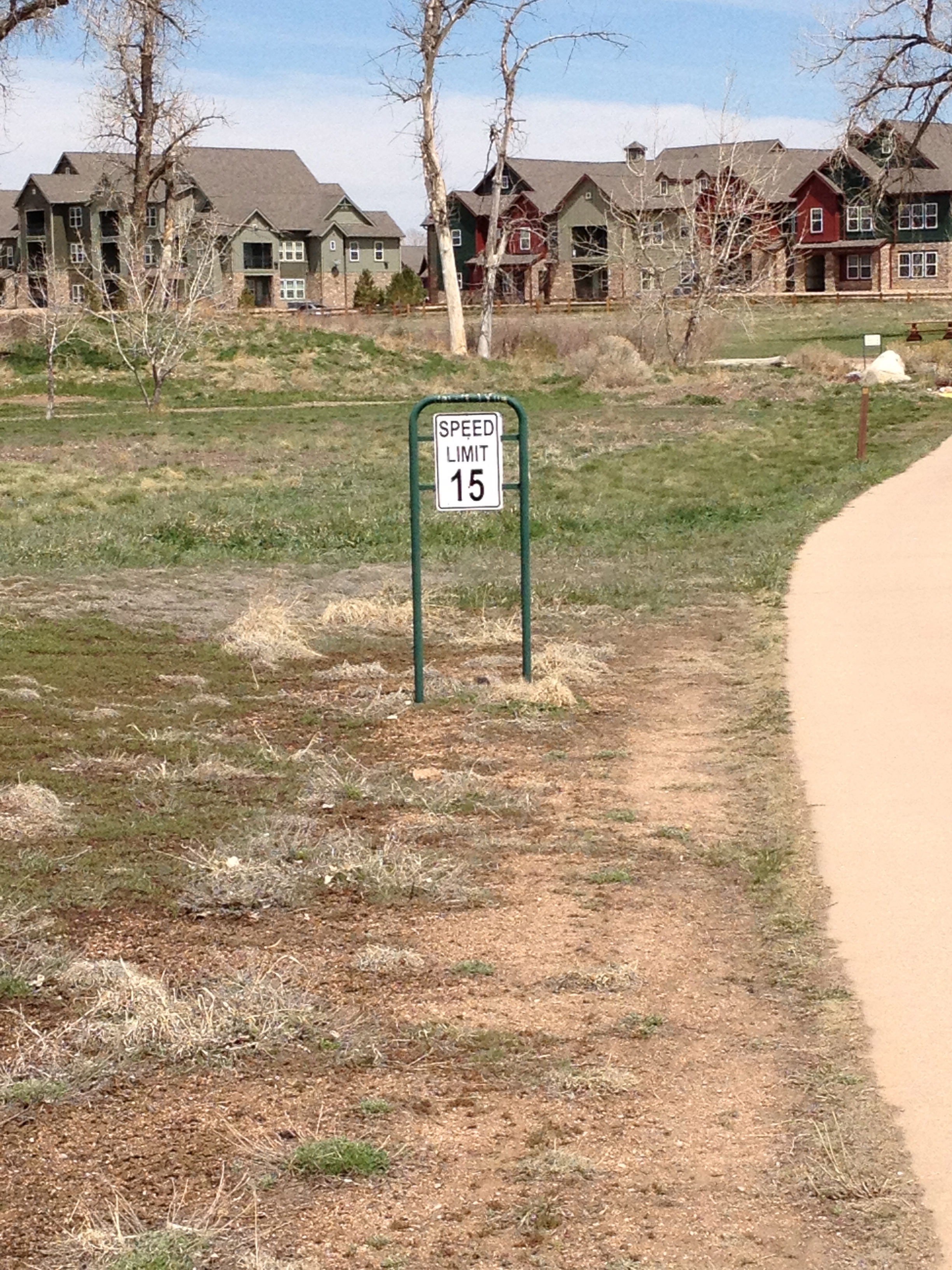
My bike ride home ended up being a race against mother nature, which I barely won, partially by blatantly ignoring the 15 mile per hour speed limits posted along the trail through South Suburban Littleton.  With a little bit of help from the wind at times, I was able to make the 28 mile ride from Roxborough State Park in 100 minutes, returning home by 1:45 P.M.  As someone who typically pays close attention to the weather, and understands weather patterns quite well, this was a somewhat embarrassing oversight on my part.  However, I do feel a sense of accomplishment in making the return ride so quickly.  And, once again, I was reminded of what I love most about cycling; being able to travel a good amount of distance, and even see my own progress on a map, all under my own power.

Denver to the Colorado Trail by bike

In this entry, I introduce another form of travel, bicycle travel. Bicycle travel is simply traveling by bicycle, but there are probably many people in the United States that have never even thought of the idea of traveling somewhere by bicycle.  It is definitely more common in Europe, but there are a significant number of people that do bicycle tours in the United States.  Groups like the Adventure Cycling Association run tours that vary from just a few days to several months.  The several month tours go across the entire country.  I don’t know who has the time and money to do this, but I sure wish I did!

My one day ride that clocked at just under fifty miles can hardly be considered a bike tour, given that these groups typically ride sixty or more miles a day.  However, today’s bike ride was with a specific exploratory mission, so I count it as “traveling” by bike (as opposed to just riding a trail or running errands).  I had desired to find out where the Colorado Trail began, which is twenty or so miles to the Southwest of Denver.  This trail, which conjures up images (at least in my mind) of the more well-known Appalachian Trail, runs about 485 miles, stretching from just Southwest of Denver all the way to Durango!  You can’t bike all of the trail, and most of the biking parts are primarily for mountain biking, but I did have in my mind the idea of being able to bike straight from home to Durango based on routes provided by the Adventure Cycling Association.

My ride today started as many of my rides do, down the Platte River trail.  Luckily for me, the Denver Metro area has a bunch of great bike trails, most of which follow rivers and creeks.  The Platte River trail runs along the river, passing right through the heart of the city.  It is one of the main trails of the Denver metro area, and I can take this trail South, for a good part of the way, all the way to C-470.

IMG_0325

On the way I took this photo of the South Platte River to demonstrate that water levels along the river are looking healthy.  Last year, as well as earlier this year, severe drought conditions lead to much lower river flows.  Hopefully this return to near normal will mean less wildfires than last year.

IMG_0336IMG_0337

As I pass through the Denver City limits into Arapahoe County, the trail changes name to the Mary Carter Greenway.  In Arapahoe County I also notice two peculiar things.  There is a posted speed limit of 15 miles per hour.  In fact, this speed limit is posted quite frequently, a few times per mile.  I blatantly disobey.  I have become quite accustomed to exceeding posted speed limits while traveling by car, I did live in Chicago for a long time.  However, the 15 mph speed limit on this bike trail gave me the opportunity to disobey speed limits in a completely different venue- on my bike.  I felt great!  There are also round-abouts (also known as traffic circles) on this trail.  A lot of smaller trails branch off of this trail.  For some reason Arapahoe County decided that bicycle traffic circles are the best way to control the flow of traffic at these particular junctions.

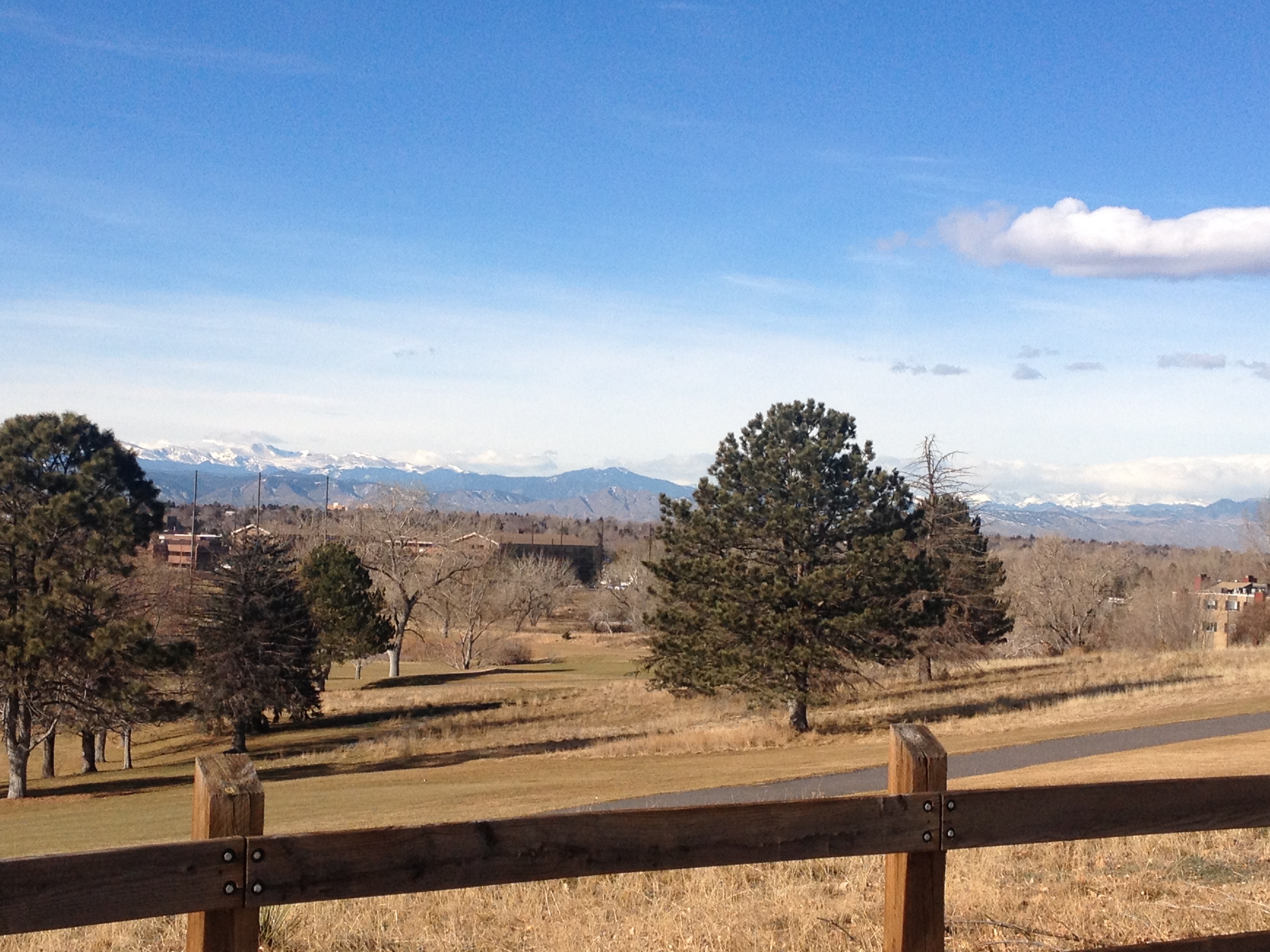
After getting across highway 470, I must pass through the Chattfield Reservoir.  This is State Park, and where some climbing enters the picture.  Trails the follow rivers are generally quite flat, with only gradual rises and falls in elevation.   At this reservoir, I climb what feels like 300 feet in elevation over a fairly short distance.  Bicycling uphill is significantly harder than bicycling on flat ground.  Having spent several years in flat Illinois, I am not accustomed to bicycling uphill, so I need to practice, and I welcome the challenge.  The great thing about climbing these little hills in the Denver metro area is the view of the mountains you get at the top.  You are still a significant distance away from the mountains, but see them from a higher vantage point.  The photograph below is from the top of the hill, looking out over the resevour towards the foothills of the Rocky Mountains, quite a splendid view.  I took a little bit of time off here to soak this in.

IMG_0327

Sometimes after a triumphant hill climb, when I go back down the hill, I feel sad.  I feel almost as if I am just giving up what I had worked so hard to achieve- elevation.  It was especially hard to go downhill knowing that on the return trip I was going to have to re-climb up that very same hill.  However, I definitely need to work on my climbing.

To get to the starting point of the Colorado trail, I must exit the park and take Wadsworth Rd. south for about three miles.  Cycling along Wadsworth Rd. in this segment is the closest thing to cycling on an interstate highway I have ever experienced.  In this segment (south of C-470), the road is 55 miles per hour with a wide shoulder.  The shoulder is wide enough that I am not at all scared of being side-swiped by a fast moving car, but it still is kind of a different experience for me, given that I usually bike in cities or on trails.  The road abruptly ends at a Lockheed Martin facility.  This I find even more odd, as my DeLorme High Resolution Colorado atlas had clearly pointed to this location as the start of the Colorado trail.  After stopping to look at the map on my phone and stopping at a sign, I finally find it, the beginning of the Colorado trail.

IMG_0329IMG_0331

As I gazed out at the Colorado trail, I obviously thought about the 485 mile path leading all the way to Durango.  If I were to bike the amount I biked today, it would take me ten days to complete the trail, and the conditions on the trail are much tougher than the paved roads I biked on all day.  Despite this, I still get some kind of a kick out of the idea that I am looking at a trail that leads all the way to the opposite end of the State.  But, I also cannot help but think about how this trail starts at a Lockheed Martin facility.  I mean, it’s a non-motorized trail, mostly geared towards hiking.  Regardless of how anyone feels about issues of war and national defense, defense contractors should be one of the last things that comes to anyone’s mind while thinking about trails like the Colorado Trail or the Appalachian Trail.  They even sponsor this Discovery Pavilion, which is at the end of the Waterton Canyon trail, which makes up segment 1 of 28 of the Colorado trail.

The return trip was not too eventful, except that the wind shifted out of the Northeast to ensure that I had to bike into the wind both ways.  Although, with sustained wind speeds not exceeding 10 mph, there really isn’t too much to complain about.  It made it that much harder, but, if I want to ever do bike tours like the ones at the Adventure Cycling Association, I do need to be prepared to handle wind and hills, so I am glad I am getting that experience even if my 46.5 mile ride today was harder than a 60 mile ride in Illinois would be.