Author Archives: Stephen Jaye

Unknown's avatar

About Stephen Jaye

My name is Stephen Jaye, I currently live in Denver, CO, but have lived in New York, Chicago, Indiana, and Wisconsin. I love the weather, I love getting out, being active, and I love exploring places. In this blog are my travel writings.

A Bike Ride to Roxborough State Park

IMG_1933

The primary reason I love cycling as much as I do is that I am able to go places a significant distance away completely under my own power.  For many years I have enjoyed commuting to work (now only 1.5 miles but formerly 6 miles), running errands, visiting specific places, and getting myself to and from specific events by bicycle.  I feel the benefits are two-fold.  There is the obvious money savings on fuel (and/or parking/ transit).  In addition to the monetary savings, I find the exercise and time outdoors to have a been a great value to my health, both mentally and physically, over the years.

Roxborough State Park is about 30 miles South of central Denver.  It is a place I had never really thought about visiting up until a few weeks ago when I was looking for new interesting places to ride my bike to, and wanted a ride that would be roughly two hours each way.  In Denver, it is possible to cover a good amount of distance quite quickly using the metro area’s bike trails, which bypass traffic signals, as well as most terrain features that would normally slow a cyclist down.

IMG_0337IMG_1913

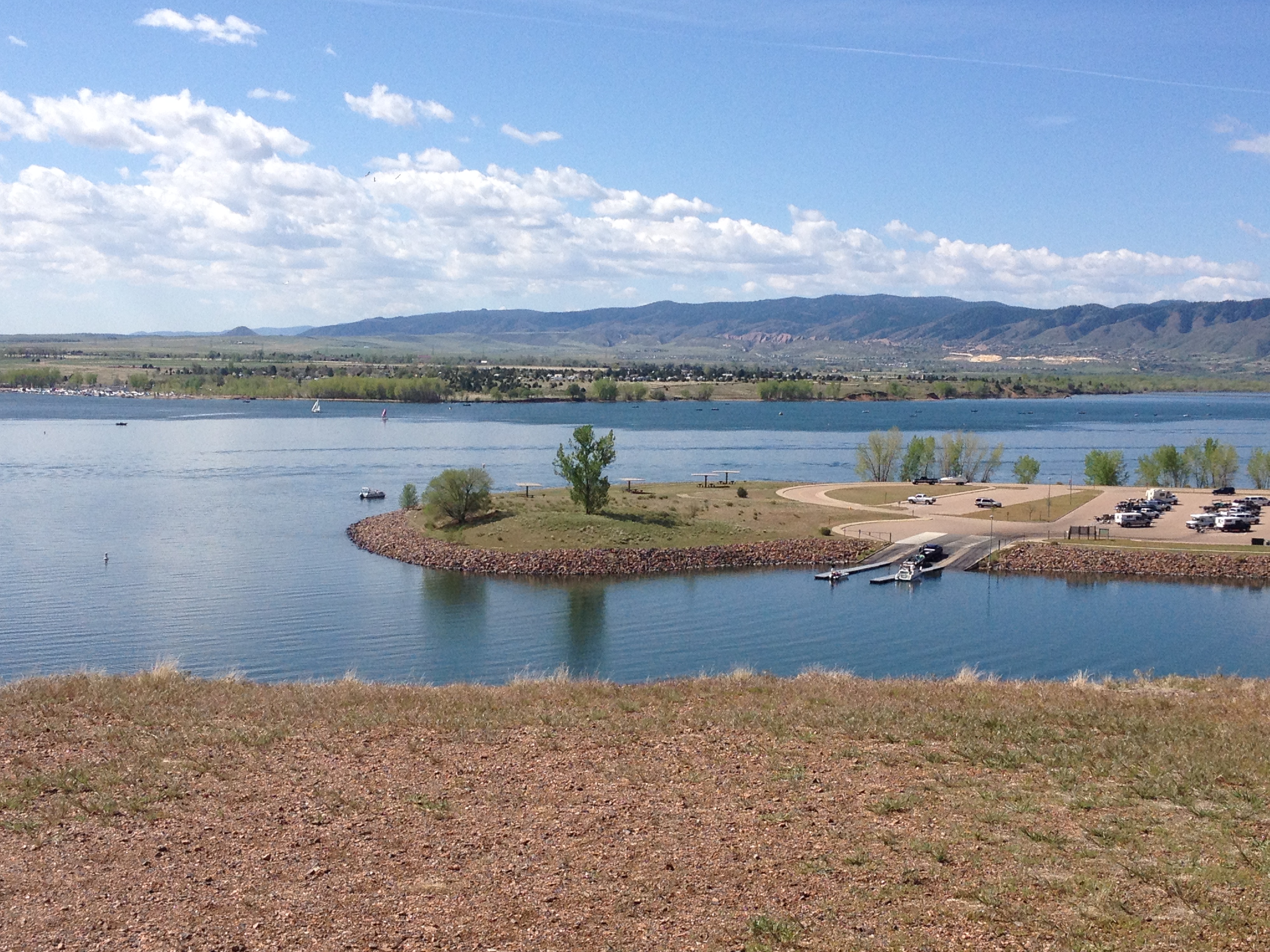
The Platte River trail can be followed from Denver southward to it’s terminus at the C-470 trail, about 16 miles south of downtown.  The Platte River trail is quite flat, as it tracks right along the river.  However, the C-470 trail, which roughly follows the highway (which is the Metro area’s outer loop), contains a lot more rolling hills.  After several miles on the C-470 trail, I arrived at Chattfield State Park, a reservoir, and popular boating destination on the southern fringe of the metro area.
IMG_1916 IMG_1917

A couple of years ago, this was the destination of a couple of rides I had done.  Last year, I did a ride to Waterton Canyon, the starting point of the Colorado Trail, a place I also rode by on my way to Roxborough State Park.  It is somewhat encouraging to actually see my continued progress as a cyclist right in front of me.  However, it also made me realize that there is one disturbing parallel between cycling (or any activity of this nature) and drug addiction; as the more I ride my bicycle, the farther and more intense of a ride I need to do to feel “satisfied”.  This is beginning to feel eerily similar to the gradual increase in tolerance a regular drinker experiences, or the ever increasing doses many drug addicts demand over time.
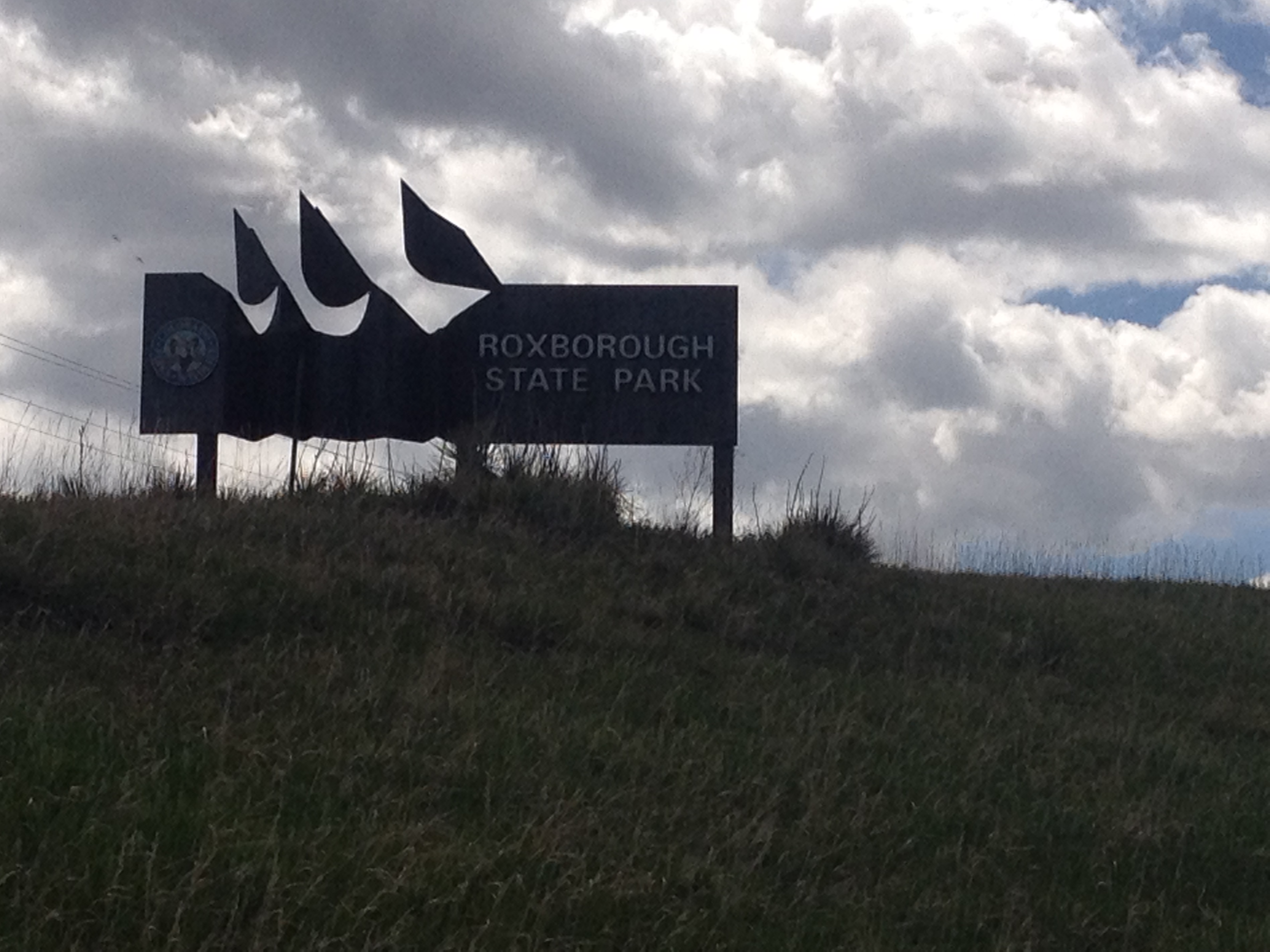
IMG_1921 IMG_1922

There was a fairly long line of cars at the entrance to this park.  Luckily, I was able to bypass this line, saving me both roughly 20 minutes of time, as well as the $7 entrance fee to the park.

The road from the entrance to the visitor center, basically the last two miles of the ride, was not all that fun.  It was gravel and bumpy for much of the way.  I felt uncomfortable going over 13 miles per hour.  However, the park rangers were quite pleased that I did not try to use my bicycle on any of the trails, as they do not permit bicycles on the trails.

IMG_1927 IMG_1928

At the visitor center, I realized that one of the main attractions of this particular park is the wildlife.  Showing people the fur and bones of dead animals seems like a somewhat sick way of presenting what the park had to offer to it’s visitors, but it was really neat to actually feel the fur of a black bear for the first time in my life!

IMG_1929 IMG_1934

The rock formations at Roxborough State Park were actually quite similar to what I saw at Garden of the Gods.  In fact, it is easy to see how the same geological processes created the rock formations that run up and down the edge of the front range, including the Garden of the Gods, the place, as well as places like Red Rocks.
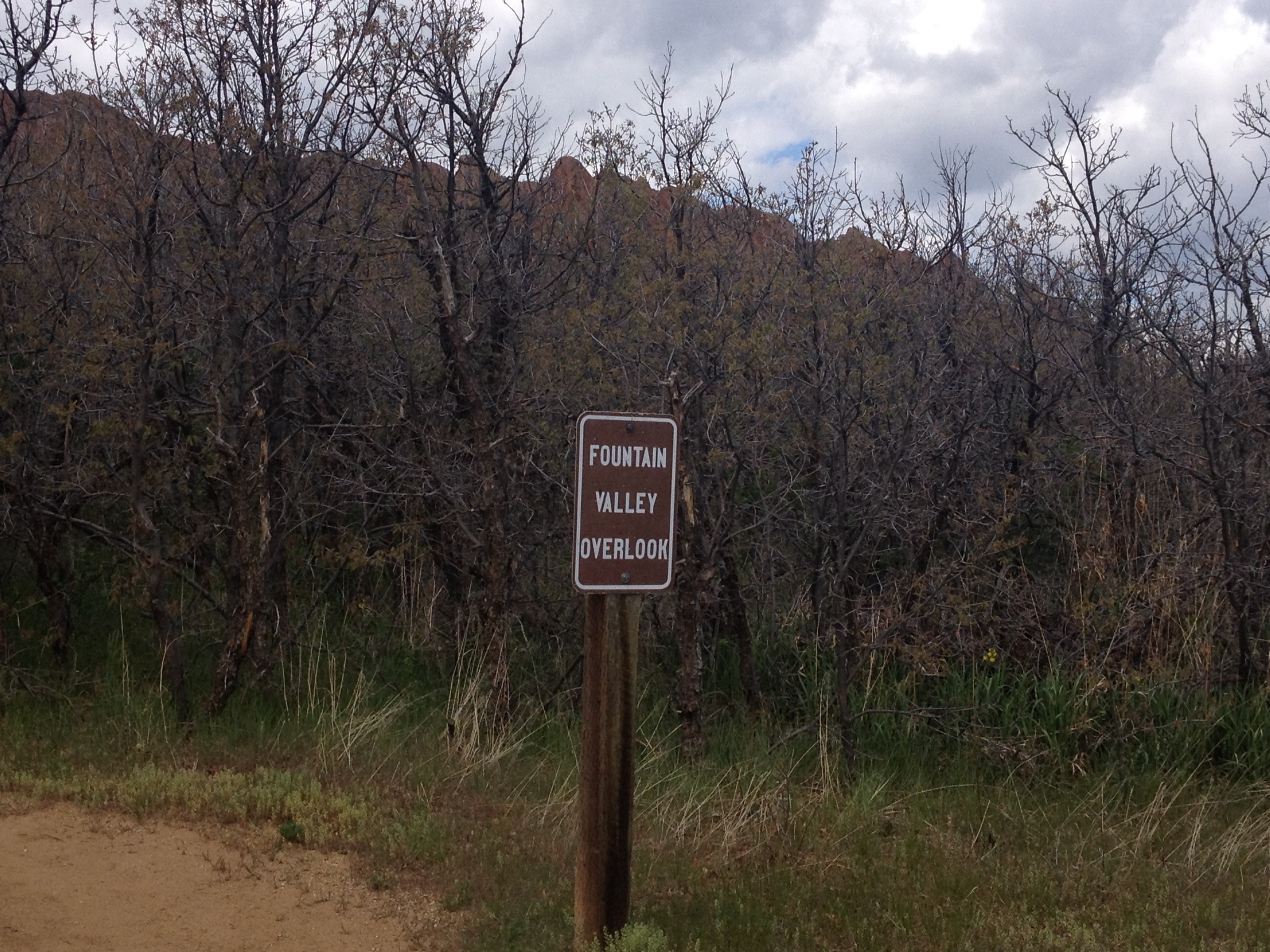
IMG_1931 IMG_1936

The park is also set up quite similar to Garden of the Gods.  Both places make it easy for the average non-outdoorsy tourist to attain a good view of the park.  Here, the Fountain Valley Overlook, a mere half mile from the parking lot with only a slight grade, provides views like the one at the top of this entry to those with no interest whatsoever of getting any exercise.  The park also offers somewhat more strenuous hiking.  Carpenter Peak is roughly 1000 feet higher in elevation than the visitor center.

IMG_1930

I meandered around the park a bit, but decided not to do the more strenuous hike as to preserve my energy for bicycling.  The only wildlife I encountered were these three deer, which is not particularly out of the ordinary.  However, I did encounter them at a much closer distance than I typically do.
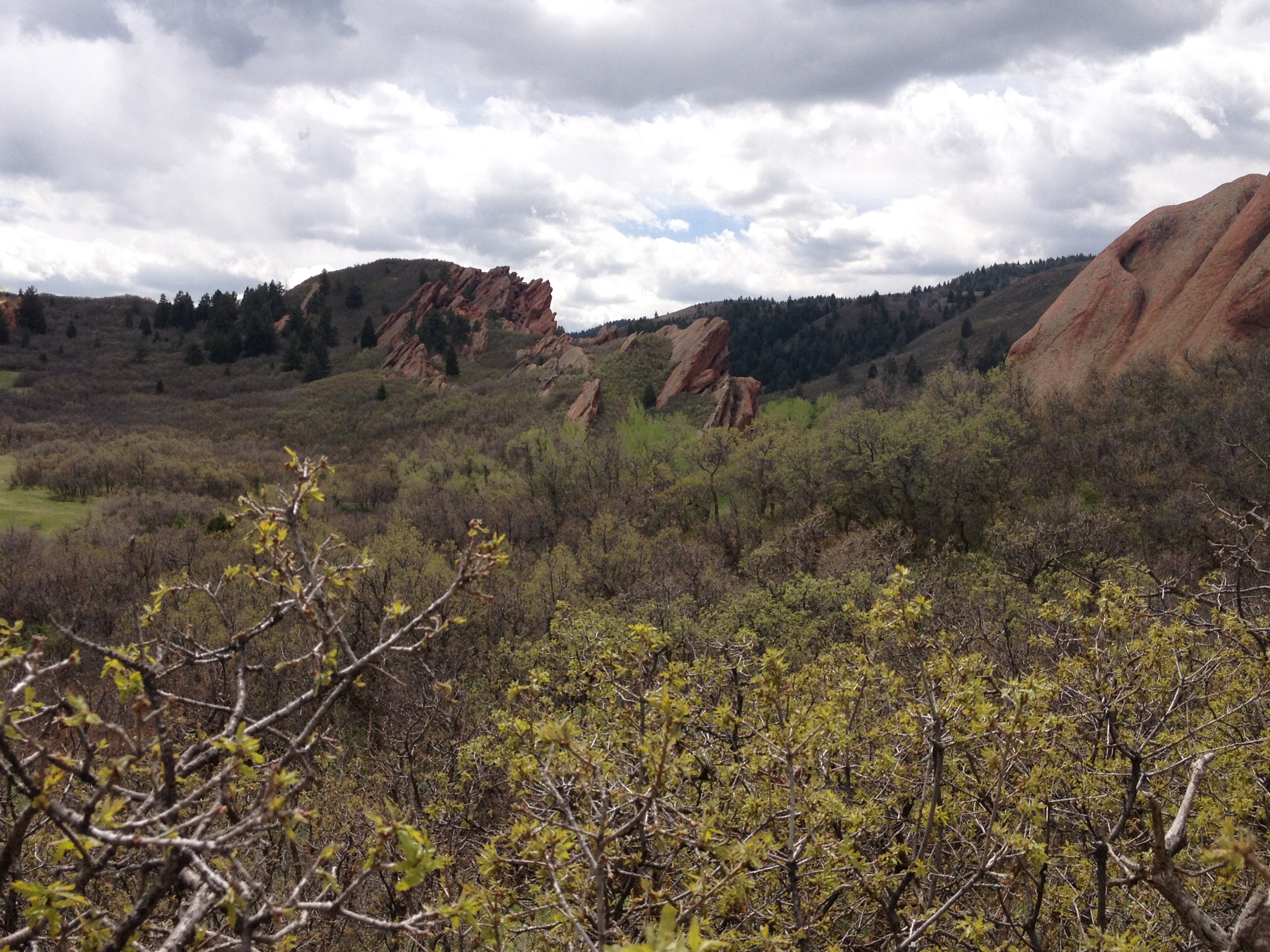
IMG_1940

For much of my time at Roxborough State Park, I was intrigued by these relatively short trees I encountered all over the park.  These tress are quite different than the ones I typically see around Colorado.  I later read, on the way out of the park, that there are some unique species of trees, as well as insects and animals, that live here due to the micro-climates created by the wind patterns that these rock formations create.  In fact, Roxborough State Park is considered a destination not only for it’s rock formations, but also for it’s unique wildlife.
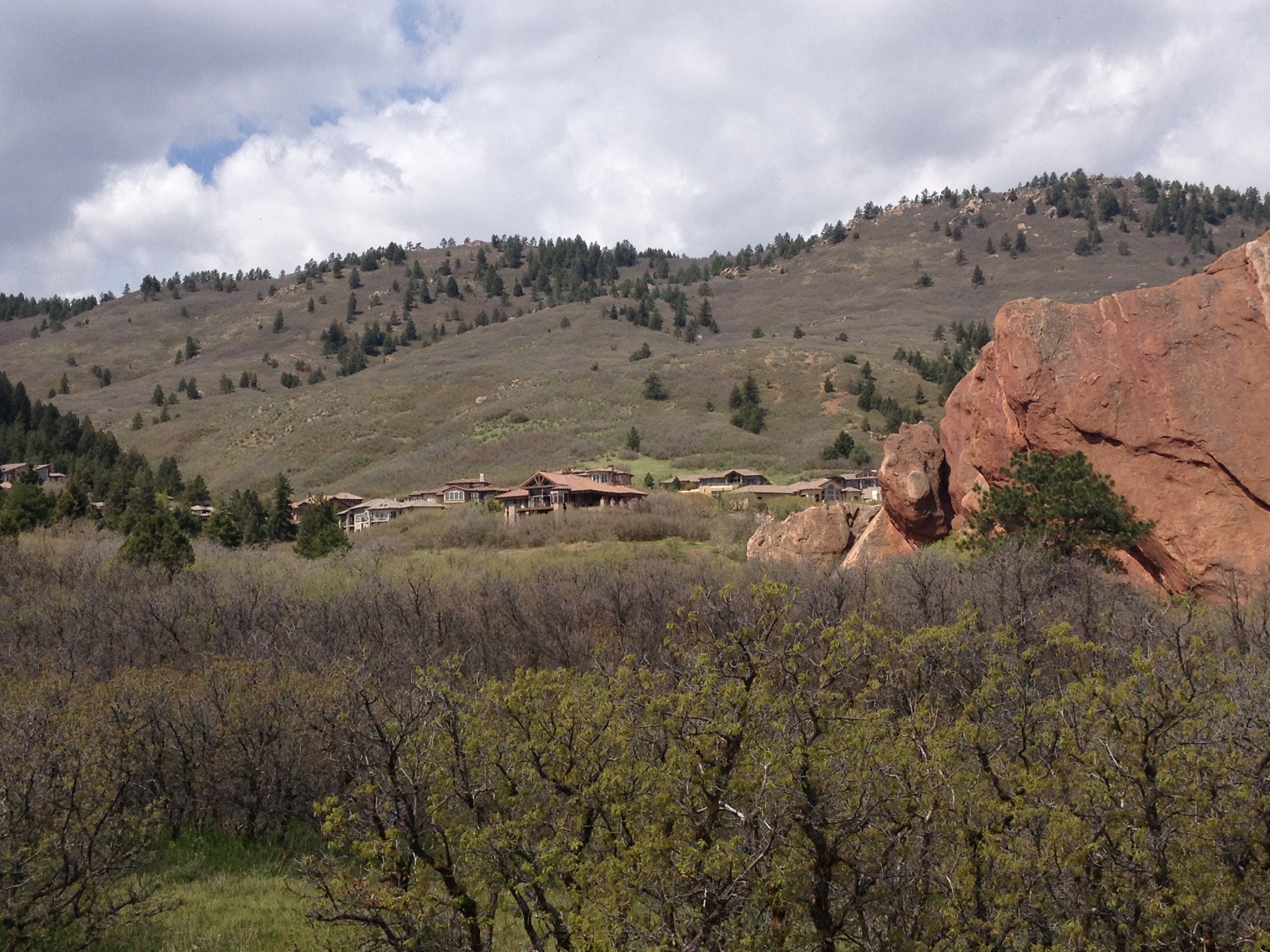
IMG_1935IMG_1938

While marveling at the beauty of the park, and considering how awesome it might be to live in one of those houses that overlooks the place, the weather caught me off guard.  Prior to this ride, I looked at the forecast for Denver, which called for a threat of rain after 3 P.M.  However, 30 miles farther south (and closer to the Palmer Divide), and roughly 1,000 feet higher in elevation, any threat of thunderstorms is naturally going to come earlier in the day.  Right around noon, I noticed a few raindrops, and suddenly noticed the clouds beginning to build overhead.

My bike ride home ended up being a race against mother nature, which I barely won, partially by blatantly ignoring the 15 mile per hour speed limits posted along the trail through South Suburban Littleton.  With a little bit of help from the wind at times, I was able to make the 28 mile ride from Roxborough State Park in 100 minutes, returning home by 1:45 P.M.  As someone who typically pays close attention to the weather, and understands weather patterns quite well, this was a somewhat embarrassing oversight on my part.  However, I do feel a sense of accomplishment in making the return ride so quickly.  And, once again, I was reminded of what I love most about cycling; being able to travel a good amount of distance, and even see my own progress on a map, all under my own power.

Maxwell Falls; The distance between reality and expectation

IMG_1886

Often times in life, the reality of a situation turns out significantly different than the expectation.  In fact, this has been one of the biggest challenges that I have had to deal with.  Like many in my generation, I grew up in a time of prosperity and high hopes for the future, and was told by parents, teachers, etc. about the rewarding life that awaits those that generally do the right thing.  While nearly every person who reaches adulthood has to come to terms with the fact that the world is unfair and that sometimes the wrong people get their way, those in our generation, particularly since the 2008 crash, have had to come to terms with a world where opportunities are fewer and harder to come by than what we had initially prepared for.

I went to Maxwell Falls, near Evergreen, CO, expecting two things that did not materialize.  Most hikes in Colorado are an uphill climb from a trail-head to a specific destination (a summit, lake, natural feature).  I had become so accustomed to this standard formula, that it had never occurred to me that this hike could be any different.

IMG_1887 IMG_1889

The beginning part of the hike was rather uneventful.  The climb was fairly moderate, and the trail would occasionally descend slightly to cross over creeks.  This is kind of typical across Colorado, especially in places like Rocky Mountain National Park.  However, about a mile and a half, maybe two miles into the trail, we reached an unexpected junction.

IMG_1894 IMG_1895

After a short section where the climb was more rigorous, I was surprised not only to find a spot where five separate trails seemed to merge together, but also find out (from talking to people) that none of these “forks” in the trail actually represented a part of the loop I had been expecting to encounter.  The sign pointed to which way to follow the trail, which also, shockingly took us on a fairly rapid descent.  This is not what I had become accustomed to, nor was it what I had expected.

IMG_1897IMG_1898

The descent was fairly lengthy too.  It almost felt like we had descended halfway back to the trailhead’s elevation!  It was there we finally encountered the loop we had anticipated.

Facing unexpected junctions, getting routing advice from strangers on the way, and anticipating landmarks that take longer to reach than anticipated made me think of Lewis and Clark.  On their expedition they would seek advice from many of the Native American tribes they encountered along the way.  They also encountered a few river junctions that made them pause and investigate which way to go.  They came into their journey with little information about features such as Great Falls, and the Rocky Mountains.  All they knew going into the mission was that these features existed, and they had a general idea of where they were.  Both of these featured proved more challenging to pass through than expected.  However, despite these unexpected challenges, they were still successful in their mission, and are still commemorated over 200 years later!

IMG_1900 IMG_1903

The falls themselves also did not quite meet the expectations.  The expectations I had about a waterfall hike largely came from hiking Brandywyn Falls in Cuyahoga Valley National Park, as well as viewing other falls in Rocky Mountain National Park, and Yellowstone National Park.  In all of those situations, the trail would either arrive right at a scenic view of the falls, or a spur coming off the main trail would take hikers right up the falls.  At Maxwell Falls, it was tough to find a really good view of the falls.  We ended up crossing the river and making a somewhat dangerous scramble to a remote rock to see the falls from a somewhat different vantage point.

It was still really neat to see the true power of water falling, even from a short distance, and to actually watch the residual spring ice melting right in front of our eyes.  But, it was still far from what I had been expecting from my previous waterfall hiking experience.

IMG_1908

Despite not getting the picturesque view of the waterfalls, this hike offered some other neat features that I had not necessarily anticipated.  After climbing up the Cliff Loop, we encountered views of the mountains that were much more splendid than I had imagined.  It actually reminded me what I had been missing.  Prior to this hike, I had not gone on a hike for several months.  A couple of months ago, I started a new job in Denver, and had been focusing on making that job, as well as my life in Denver in general, work.  I love to travel, have new experiences, and explore new places.  But, unfortunately, for a while, my life’s demands had taken me elsewhere.

IMG_1907

In addition to the splendid views at the higher points on the trail, which did turn out to be a series of ups and downs, we also encountered one of the most unique rock formations I have ever seen.  This rock, I refer to as “Troll Rock”, as it looks quite like a troll.  It was quite amazing, and was the subject of wonder for quite some time about what unique combination of all of the processes of nature could have lead to this particular rock shape.

IMG_1909 IMG_1910

The end of the day saw the sun come out, and the temperature rise.  This was an unfortunate turn of event for my Husky, who is built for colder conditions.

One of the things that still amazes me quite a bit about life itself is how often the specific experiences we have at a specific time actually mirror what is going on in our lives, or in society, on a much larger scale.  Today I expected a hike where I would climb up to a waterfall, be taken right up to that waterfall, and then make the ascent back to my car.  Instead, I got periodic climbs and descents throughout the duration of the hike, and awkward scramble around strange rocks to largely overlook a waterfall, but also unexpectedly encountered wonderful views at the top and unique rock formations.
In life, I expected to do well at school, generally stay out of trouble, and find a fulfilling job in my field of study.  Instead, I found a world where the seemingly well deserving nice people end up reporting to control freaks that often find sinister ways to get ahead, opportunities do not always present themselves, and many of the specific jobs I had originally hoped for have some expected downsides to them.  So, now, I am trying to make something completely different work, and thus far it is largely working out!  It appears that sometimes the path to fulfillment is not the expected one, and the reasons we end up enjoying the things we enjoy are not things we had previously considered.  Maybe what our generation as a whole needs to do is let go of what we had hoped for out of this world and remain open to finding fulfillment in a completely new way.

The Wheels of Change

image-7


It’s an experience nearly everybody seems to have.  A place from our past.  Maybe it’s a place we used to live, or a place we used to frequent.  But, sometime since the time when this place was an integral part of our lives, it has undergone some kind of drastic change, making it feel completely different from how we remembered it.  I’m not just talking about a strip-mall having mostly different stores, a few home additions, or a road widened from two lanes to four.   I am talking about a series of changes that makes life itself feel completely different.

For me, that place is Valparaiso, Indiana, where I went to college (undergraduate).  Valparaiso University has undergone many changes since my graduation, including a new student union, a new library, several other new academic buildings, and a new more pedestrian friendly campus layout.  While this is a drastic change, a drastic change on a college campuses is not really all that unique.  Colleges build new buildings all the time, and many of our campuses are in a near constant state of flux.

The changes that have truly surprised me are the changes to Valparaiso the town; particularly Valparaiso’s downtown area, which is located roughly a mile west of campus.

image


When I attended Valparaiso University, downtown Valparaiso was not a place we frequented.  We were far more likely to go to the WalMart for cheap groceries, a few other restaurants either just to the east near the junction of highway 49, or along highway 30, and when we turned 21, go to some bars scattered around town.  Downtown was not dingy, or run down, it just was not that interesting.  I remember going there every September for the annual Popcorn Festival (held to honor Valparaiso’s most famous resident- Orville Redenbacher), and maybe twice more in a given year.

image-8image-5


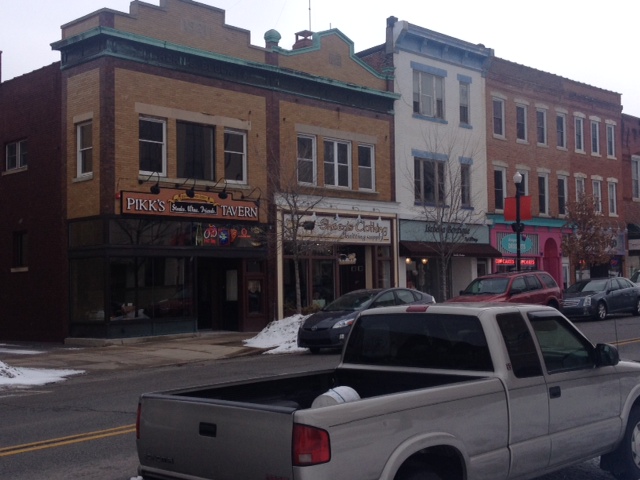
Today’s downtown Valparaiso is suddenly far more vibrant.  Along the Lincolnway, one can now find more bars, more restaurants (and many different kinds of restaurants including sushi), and a significant amount of foot traffic.  The storefronts along the main roads in town now often display paper signs in the window, advertising a plethora of upcoming events in the center of town.  These are all the kind of things I had become accustomed to seeing in a vibrant neighborhood of Chicago, or even a well put together suburban town center, like Downers Grove or Arlington Heights.  However, it was a unique experience to see all of this in a town that I used to live in.

image-4image-2


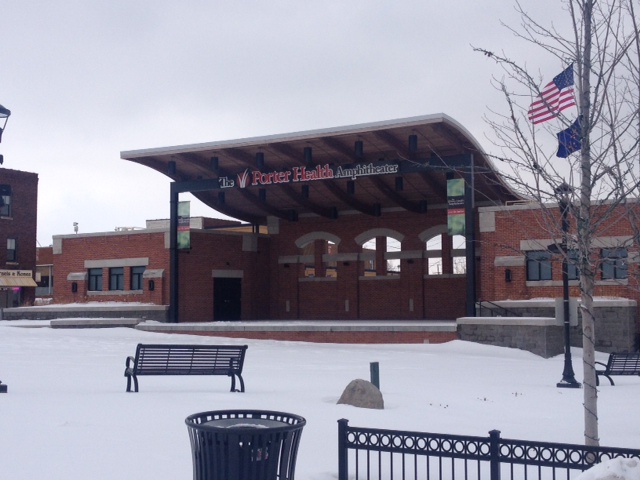
While Valparaiso has added a lot of places over the past several years, the two most major additions appear to be a new amphitheater and event center, and a new microbrewery.  The bartenders at Figure Eight Microbrewery told me that on evenings where a concert is held at the amphitheater, a sudden rush of people would often come into the bar at the end of the show.  But, the microbrewery is also a place to visit on it’s own.  In Denver, we have tons of microbreweries, but in Valparaiso, this is the first one of it’s kind.

Those I talk to around town, including my friends that are still there attribute the change to several factors, all of which appear to be connected to the election of a new mayor a few years back.  I had already noticed that the city of Valparaiso now offers bus service both to downtown Chicago and to the South Shore Rail line- both services I wish I had available to me while I was there.  They also focused development in the downtown area.  However, many attribute the redevelopment to the issuing of more liquor licenses.

No matter how much you pay attention to what is going on around you, there always seems to be at least one thing happening, that has a major impact on your life, that you remain unaware of.  While I was at Valparaiso, I actually had no clue that it was nearly impossible to get a new liquor license from the city.  For some time, they had been keeping the number of licenses steady, meaning one can only be attained if a different business had lost or dropped theirs.  Being under the legal drinking age of 21 for most of the time I was there, I would not have even seen how this impacted me.  But it was keeping a lot of Pub type places, which make some of their money on the sale of beer and such, out.

image-6


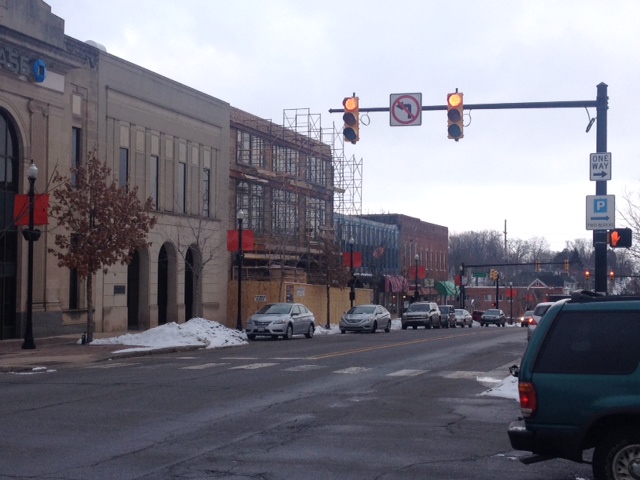
The downtown re-development is actually still taking place today, with more storefronts under construction.  I wonder what this place will become.

I had a great experience at Valparaiso University.  I loved the feel of the campus.  I really liked my professors, and I liked most of the people I was around on a regular basis.  When I look at this vibrant downtown, and convenient bus service to get back “home”, I can’t help but be somewhat envious of what current Valparaiso University students have that I did not.  But, I do wonder if my experience would have been significantly different had I had access to all of these things.  Maybe it was somehow secretly a good thing that I had to scramble for rides to the train station, and we did not have concerts at an amphitheater while I was there.  Maybe it made my experience there unique, and distinguish it from my later experience in a vibrant Chicago neighborhood.

An Overlook of the City

Starting sometime between the ages of 3 and 7, we are all asked the same question;  What do you want to be when you grow up?  Sometime between the day we are first asked this question and the first time we purchase an alcoholic beverage legally, we all answer this question.  Some of us, inspired by an event, a hero, or something we are really interested in, figure this out at a young age.  Meanwhile, others answer this question later on, after a year or two in college with an “undeclared” major.

Whether we answer this question at the age of 5 or 20, we all determine “what we want to be” believing that we have some kind of final answer to this question.  One of the biggest surprises that we all encounter in the adult world is that “What do you want to be when you grow up?” is a question that we never stop answering.  Sure, some of us may spend up to a few years at a time in a sort of steady-state, remaining in one place.  But, eventually, inevitably, some form of change, or opportunity for a change, will come our way, requiring us to revisit the question.

I actually learned this fact years ago, when I was actually given two different options for where to take my career by a former boss.  So, the fact that I am currently approaching a crossroads that may take me down a different career path, to a different location, or both, does not come as a complete shocker to me.  While not surprised, there is still plenty to think about, and sometimes the best thinking is done in another setting.

A common scene in the movies (and on TV) is for one of the main characters to absorb recent events and ponder what they are to do next while overlooking their city’s skyline.  This is a scene I reenacted somewhat accidentally today when I discovered the best view of the Denver skyline I have seen to date from a place called Mount Galbraith.

IMG_1701 IMG_1694

Mount Galbraith is located just to the west of the town of Golden, Colorado.  With a peak at only 7,260 feet, hiking to the top is not challenging.  The vertical climb from the parking lot probably does not even reach 1,000 feet.  For someone looking to hike in Colorado with no prior hiking experience, this may be a good choice.  Unlike other trails near Golden, there is no mountain biking permitted on these trails, and the trails are significantly less crowded than any of the trails near Boulder.

I do not know why I came to this park today.  I had a lot on my mind today, and needed to get away from the distractions that often disrupt my thought process; in particular YouTube, the internet, and the Olympics.  So, I pretty much just got in the car and started to drive with no plan whatsoever.  Before I knew it, I was approaching Golden, and I had remembered seeing a sign for some kind of hiking trail on the way to Golden Gate Canyon State Park.  Knowing that in the month of February it is always safer to stay at lower elevations (this is due to both wind and snow pack), I decided at the last minute to stop.

IMG_1698

I also made my Siberian Husky come along for the ride, but she seemed to enjoy it.  This is probably the closest I will ever come to getting a picture of my dog overlooking a city skyline, something that I think makes for a neat picture.  In fact, I think Dogs Overlooking Skylines would make for an awesome calender.  12 different cities, 12 different dog breeds.  If someone made it, I would buy one for sure!

Today I followed my instinct, and I did what countless movie and TV characters have done; find a good view of the city skyline and ponder what is going on in my life.  I’m guessing most people feel that when they come to a place like this they are taking a step back from life, and looking at what is going on from above.  It almost feels as if we are taking a big-picture omnipresent view of day-to-day life when we observe from a place like this.  While on a typical day, we are looking at one particular block, one building, or even one desk.  Coming to a place like this, the entire city, as well as many places around it, all come into view.  It is natural for this view to prompt anyone to look at the big picture.

And, it is time to apply this big picture view to that age old question.  What do you want to be when you grow up?  Or, for those of us that are already grown up, we can more simply say, what do you want to be?  Whenever anyone asks or answers this question, it seems like the discussion always revolves 100% around jobs and careers.  But, there is more to who someone is than their career.  Maybe you want to be the person your friends can depend on?  Maybe you want to travel and have some interesting experiences?  Or maybe you just want to have a balanced life?  When it comes to “what you want to be”, ambitions like these are a valid part of the discussion and should not be ignored.

Fort Collins; Another Vibrant Colorado City

IMG_1629 IMG_1630

I have never met anyone that told me they hated Fort Collins.  Not everyone knows a lot about the town.  But of the people who have been there or lived there, I have yet to hear a single overwhelmingly negative impression, the way I have about so many other towns.

Colorado is a state that is very divided both politically and culturally.  The political divide is close to even, thus Colorado’s status as a “swing state”.  Representing the extremes of the spectrum, Boulder and Colorado Springs are both very polarizing.  Many people hate one or both of these towns simply due to what they represent politically.  Not only do Fort Collins and Laramier County sit generally near the middle of the spectrum politically, but they are also not known for being particularly politically active the way Boulder and Colorado Springs are.

Other towns are polarizing or controversial for other reasons.  The casino town of Blackhawk not only leaves a bad impression on those that do not approve of gambling, but also ignited the ire of the bicycling community when it chose to ban bicycles from the entire town in 2010 (this ban was overturned by the State Supreme Court).  I have to admit that as much as I love Vail and Vail ski resort, I am quite disturbed by the town’s decision to close down the only affordable hotel in town to make way for a new extended stay hotel, which will most definitely be fancier and pricier.  Large towns like New York are loved by many, but also hated by many who resent the level of stress they cause, the amount of power they wield, and the amount of attention they receive.

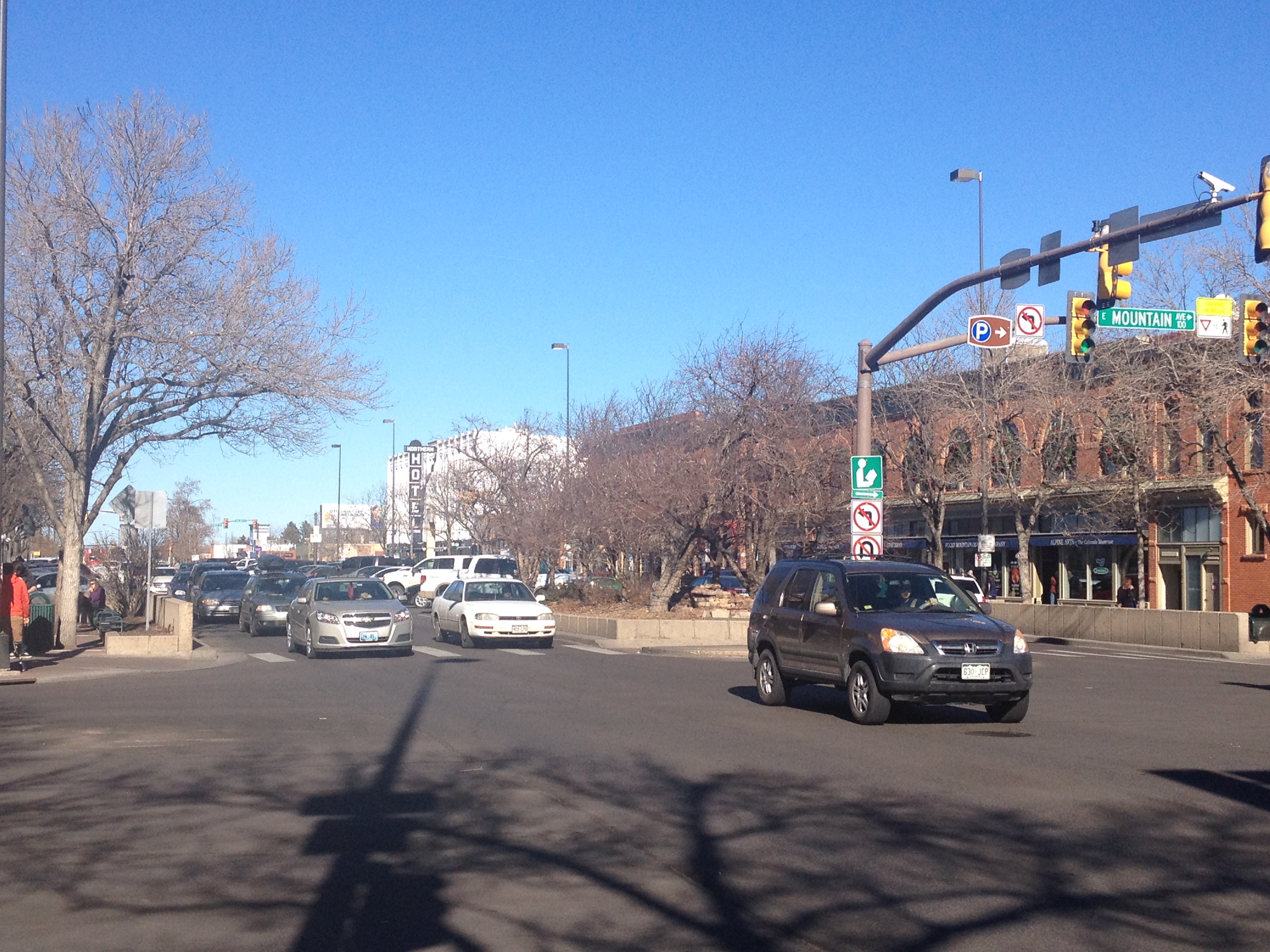
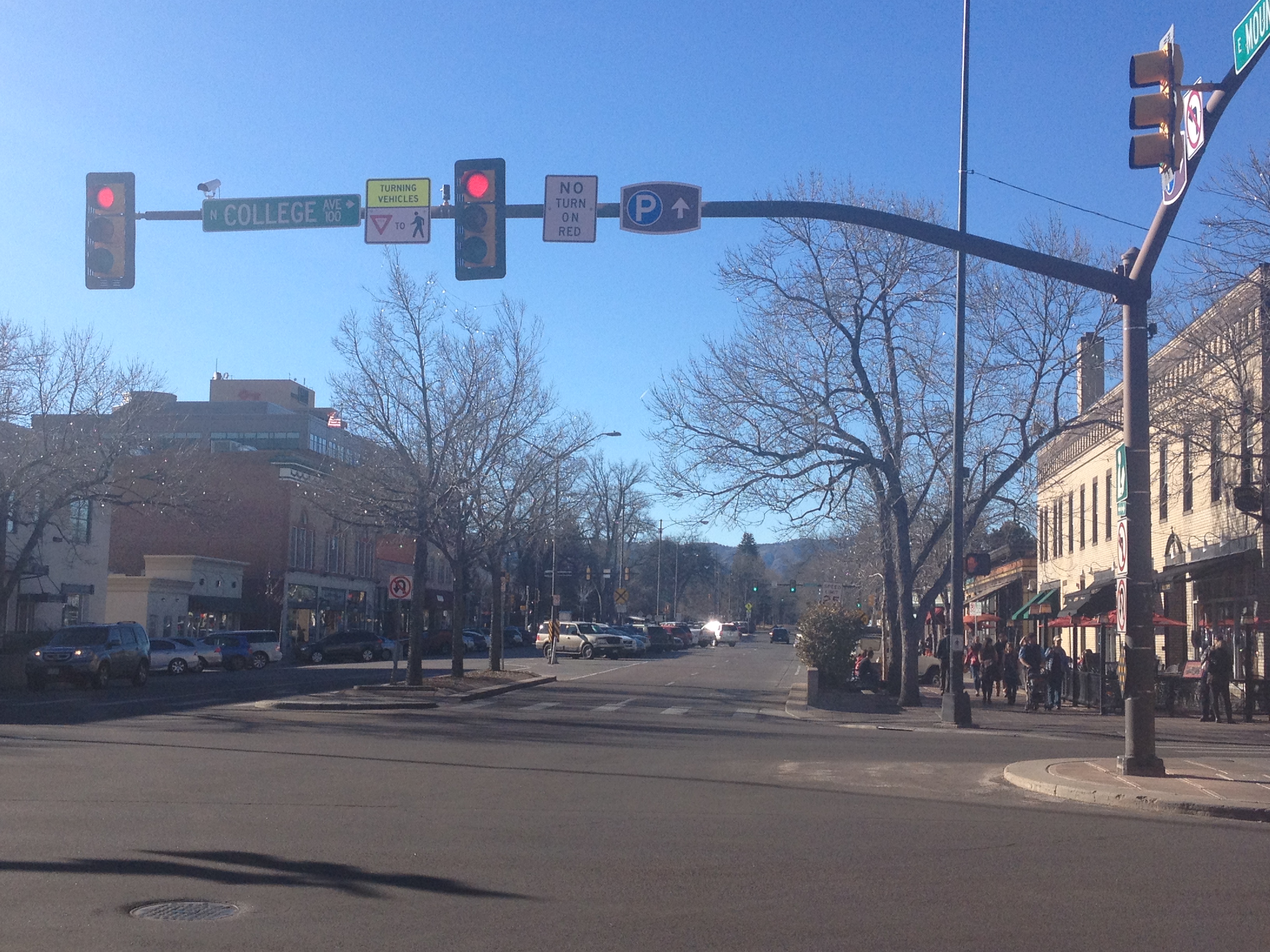
The sun shined bright and the temperatures were quite pleasant this January day.  It was the kind of day when you can really notice the character of a city.  On a cold or rainy day, it may be hard to feel the true energy of a town, as it is often subdued by such conditions.  Walking around Fort Collins’ central area today, the true energy of the city was on full display.

IMG_1632

Over the past decade or so I have become quite accustomed to living in vibrant places like this, where people can be found walking around, conversing, conducting business, and going about their days.  It feel like home, and it feels like the way our society was meant to operate.  If I were to find myself living in a town without this type of energy, it would definitely feel like something is missing.  However, that is just a personal preference.  I am sure a lot of people live satisfying, fulfilling lives in sprawled out suburbs, or even decaying towns with a lot of abandoned storefronts.  They probably do not share my addiction to the energy.  If anything, they are in a better situation than I am, as their choices of places they could live and thrive are much less limited than mine.

IMG_1634

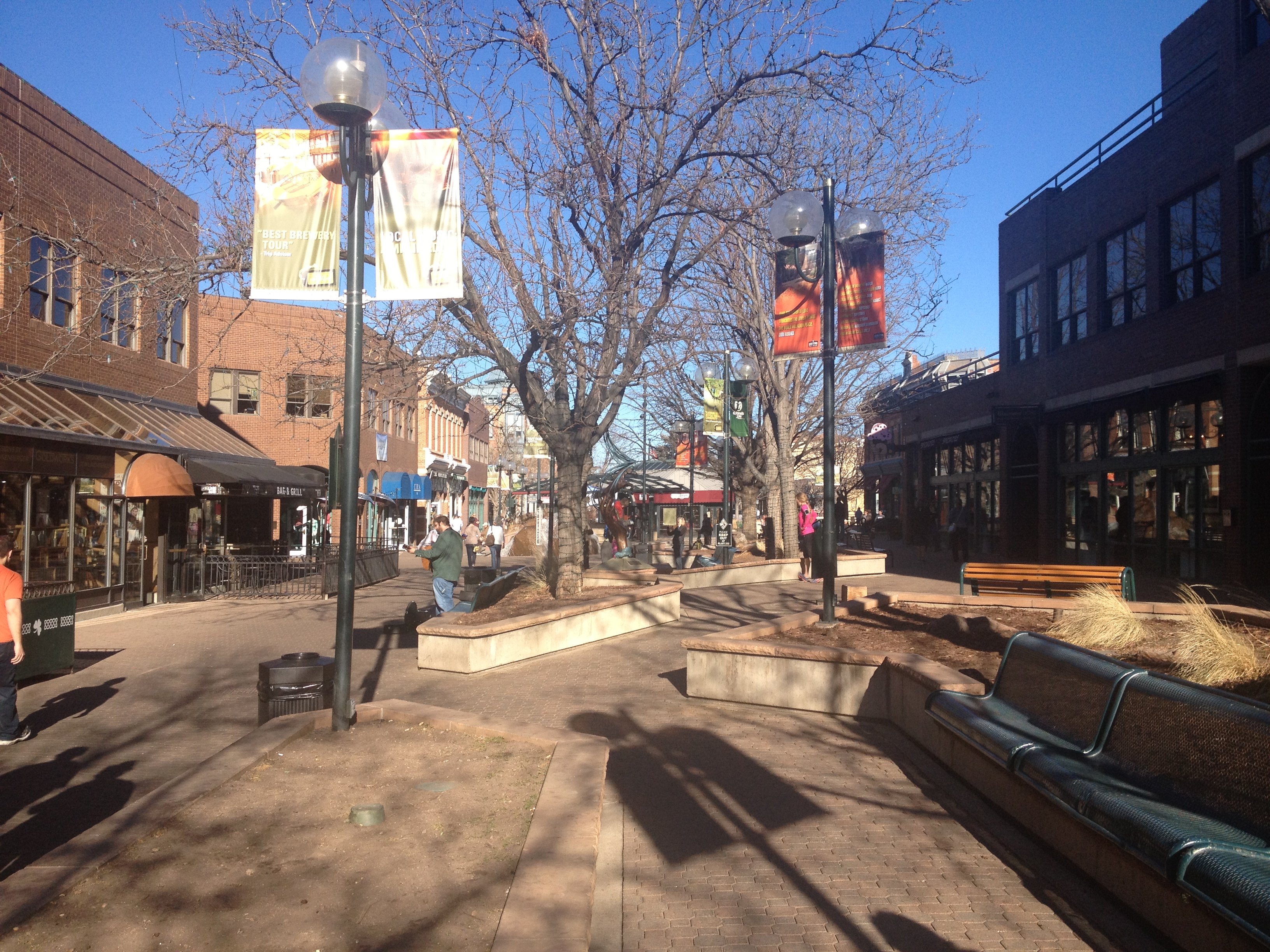
Like Boulder, Fort Collins has a pedestrian mall with a lot of random street performers, particularly on a nice day like today.   The street performances here seem more varied than the ones in the average American city.  I saw the standard guitar performer, but there is also an outdoor public piano, and many more random acts like dance routines and hula-hoppers.  This pedestrian mall, called “Old Town Fort Collins” is significantly shorter than Boulder’s Pearle Street, but is still large enough and offers enough variety for it to be considered interesting.

Walking around here made me realize what makes Fort Collins special.  Not only is it not controversial, the way many other places are, but it still manages to be interesting and unique.  In actuality, there are plenty of places that do not ignite strong negative feelings.  When was the last time anyone fumed at the arrogance of Grand Island, Nebraska?  Or the rude partisans of Peoria, Illinois?  What sets Fort Collins apart is that it is still a fun and unique place to live, while also remaining non-controversial.

IMG_1633

As a town along the Front Range of the Rocky Mountains, many outdoor activities can be found right outside of town, the same way such activities can be found in any of the towns that line the front range from Fort Collins south to Colorado Springs.

IMG_1635

Fort Collins may be best known as the headquarters of New Belgium Brewing, known for it’s signature beer fat tire.  New Belgium employs a unique business model, and has been quite successful.  At New Belgium, every employee is a part owner of the company.  The benefits and beer are great as well, and they are also known for their support of bicycling as a form of transportation.  While I did not visit New Belgium on this particular trip, the values of this company appear to be reflected throughout the town.

IMG_1637

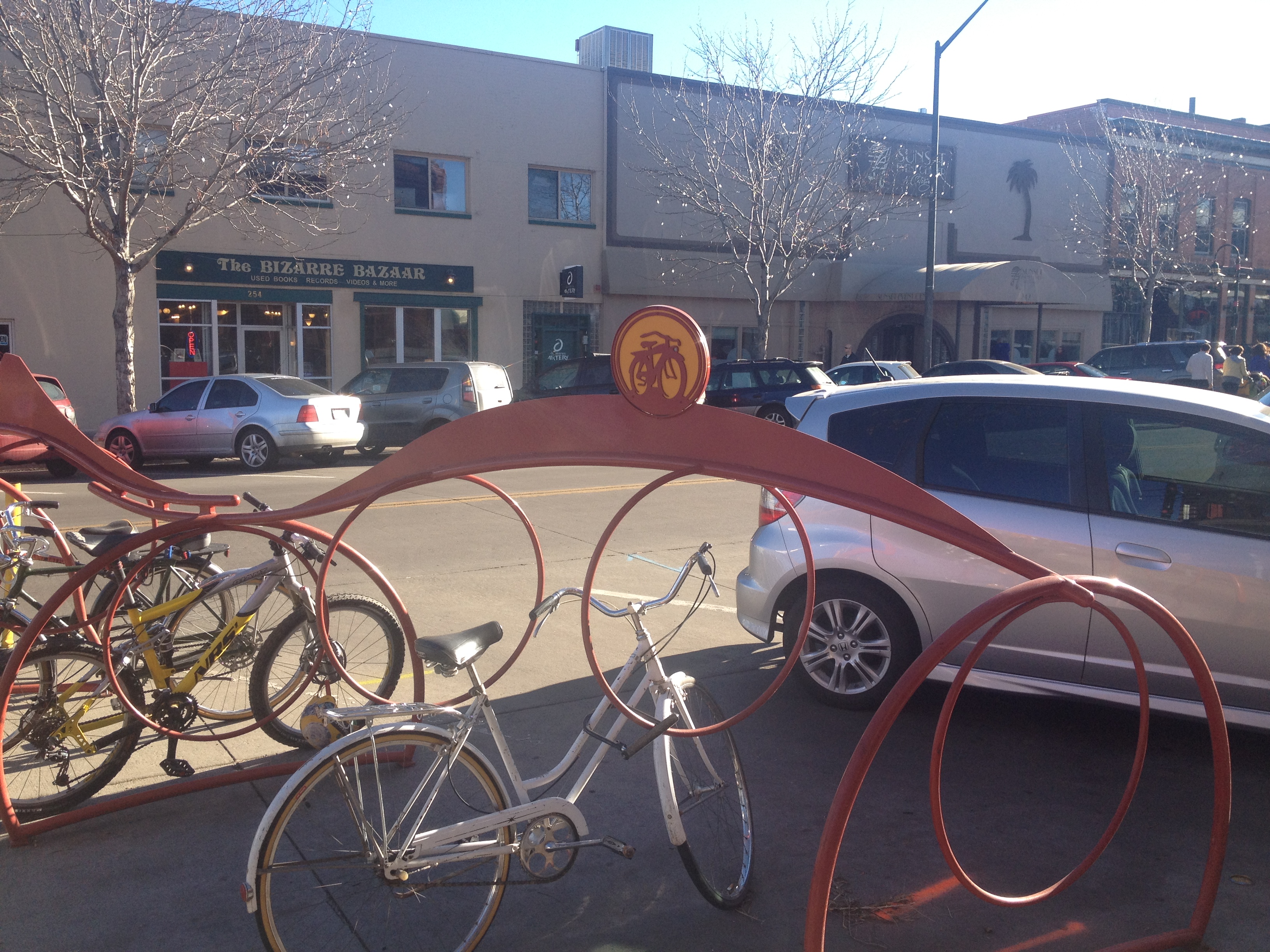
Fort Collins has one of the best networks of bike lanes and trails in the United States.  Even in this well-to-do neighborhood just west of downtown, a wide bike lane can be found.

Fort Collins is the northernmost town along Colorado’s front range.  To the south is a series of population centers that include Colorado’s largest; Denver and Colorado Springs.  To the north, it is quite empty.  Fort Collins is on the edge of our society.  It manages to be an interesting and vibrant place without the controversy and/or polarization that often accompanies this.  Big enough to feel energetic, but small enough not to be overwhelming to many, Fort Collins is truly a unique place worth checking out.

Dog Sledding in the Rockies

IMG_1615

For thousands of years humans have assembled teams of dogs to transport themselves (as well as other items of significance) across the cold arctic regions of the planet.  It is a tradition that nearly all human beings are aware of.  Most have seen images or video of popular dog sled races like the Iditarod and the Yukon Quest.  While the average American probably views this tradition as a recreation activity, or a sport that takes place somewhere far away, for many cultures across North America, Russia, and Mongolia, teams of dog sleds have been, and still are, an integral part of day-to-day life.

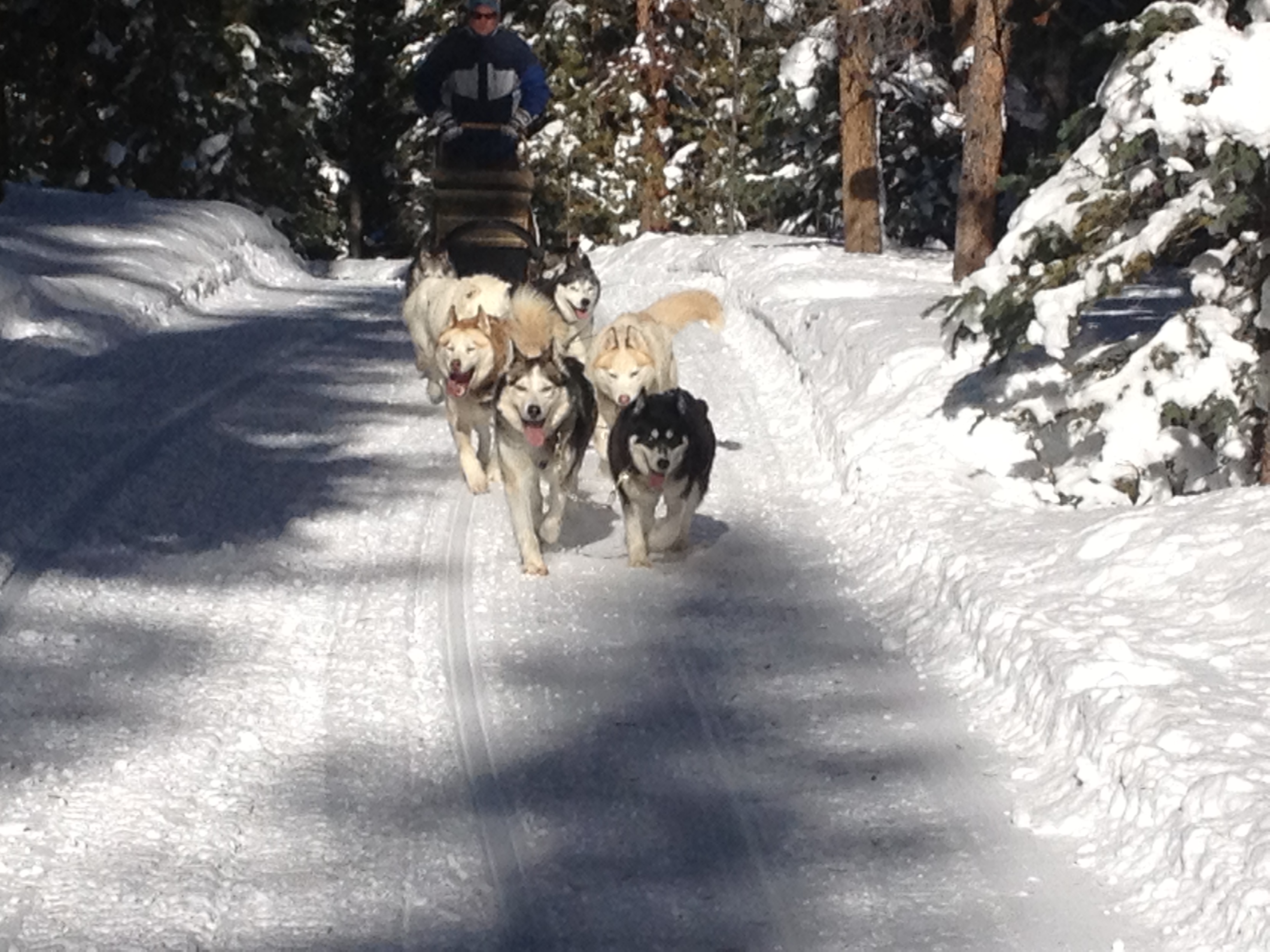
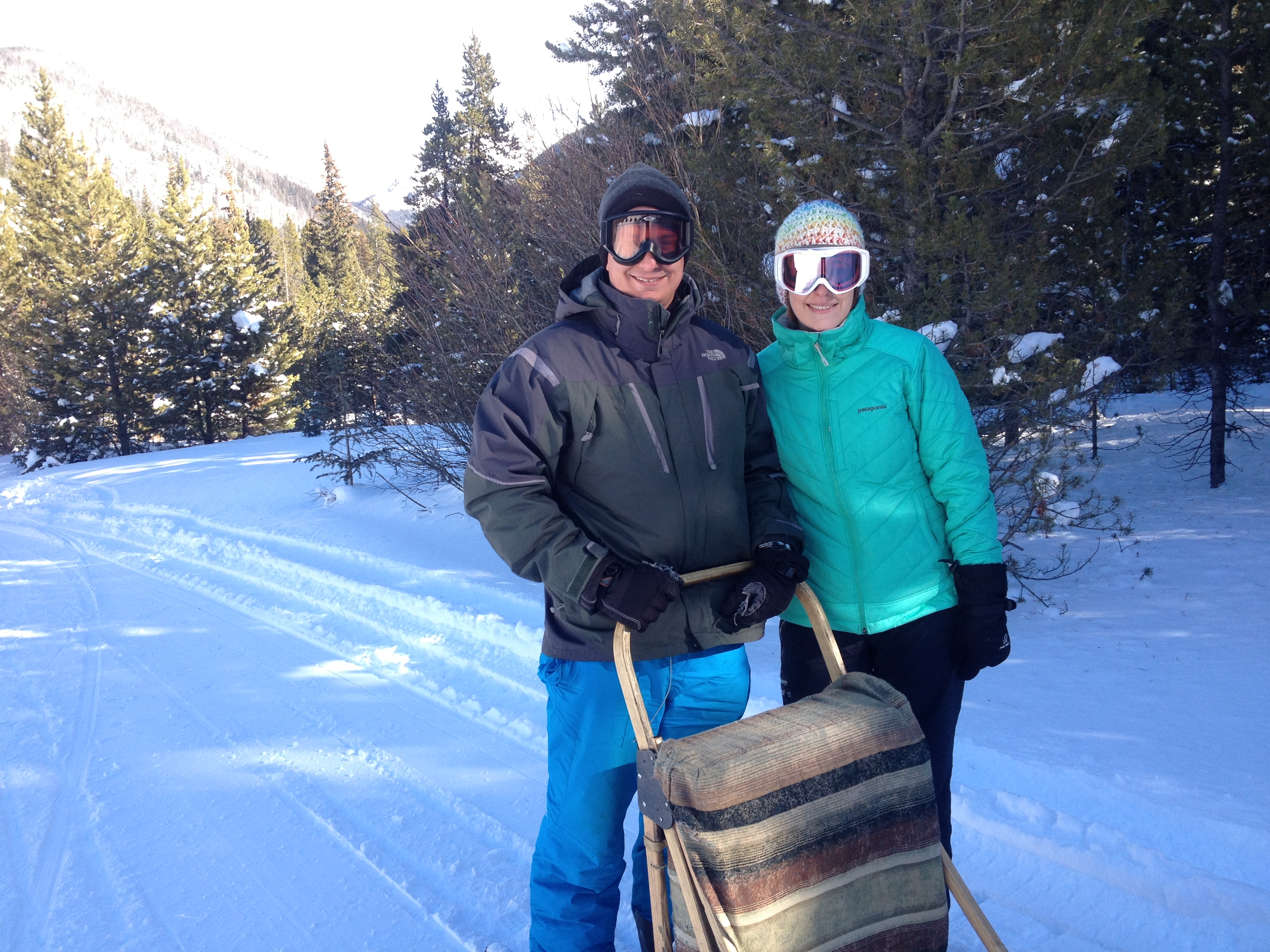
Sometimes the only way to truly understand something is to experience it for yourself.  A small taste of the dog sledding experience can be found at Good Times Adventures, just outside of Breckenridge, Colorado.   Over 150 dogs are kept here, ready to take those that wish to sample this experience on a short dog sledding voyage.  Dogs kept here get to live quite an active life, typically going on two voyages per day with customers throughout the season.  When it is time for a trip, they howl in anticipation, impatiently await the go-ahead from the tour guide, and enthusiastically begin to pull their passengers across the snow.  What an experience!

IMG_1608 IMG_1609

Going on a 60-90 minute dog sledding tour on a sunny afternoon in Breckenridge leaves plenty of additional time in the day for other activities.  As a season pass holder to Vail Resorts (a pass called the EPIC pass) that other activity is pretty obvious- skiing!  Breckenridge ski resort (part of the pass), is located less than half an hour from Good Times Adventures.  We planned our sled trip to begin at 1:15 in the afternoon, and used the morning to ski.  Morning is often the best time to ski, as snow conditions deteriorate as the day progresses (due to use) more frequently than not.  Following a series of major snow accumulations to start off 2014, snow conditions were ideal at Breckenridge ski resort today.

IMG_1601 IMG_1603

I will post more about Breckenridge ski resort, as well as the other ski resorts I ski regularly during wintertime, later.

IMG_1607

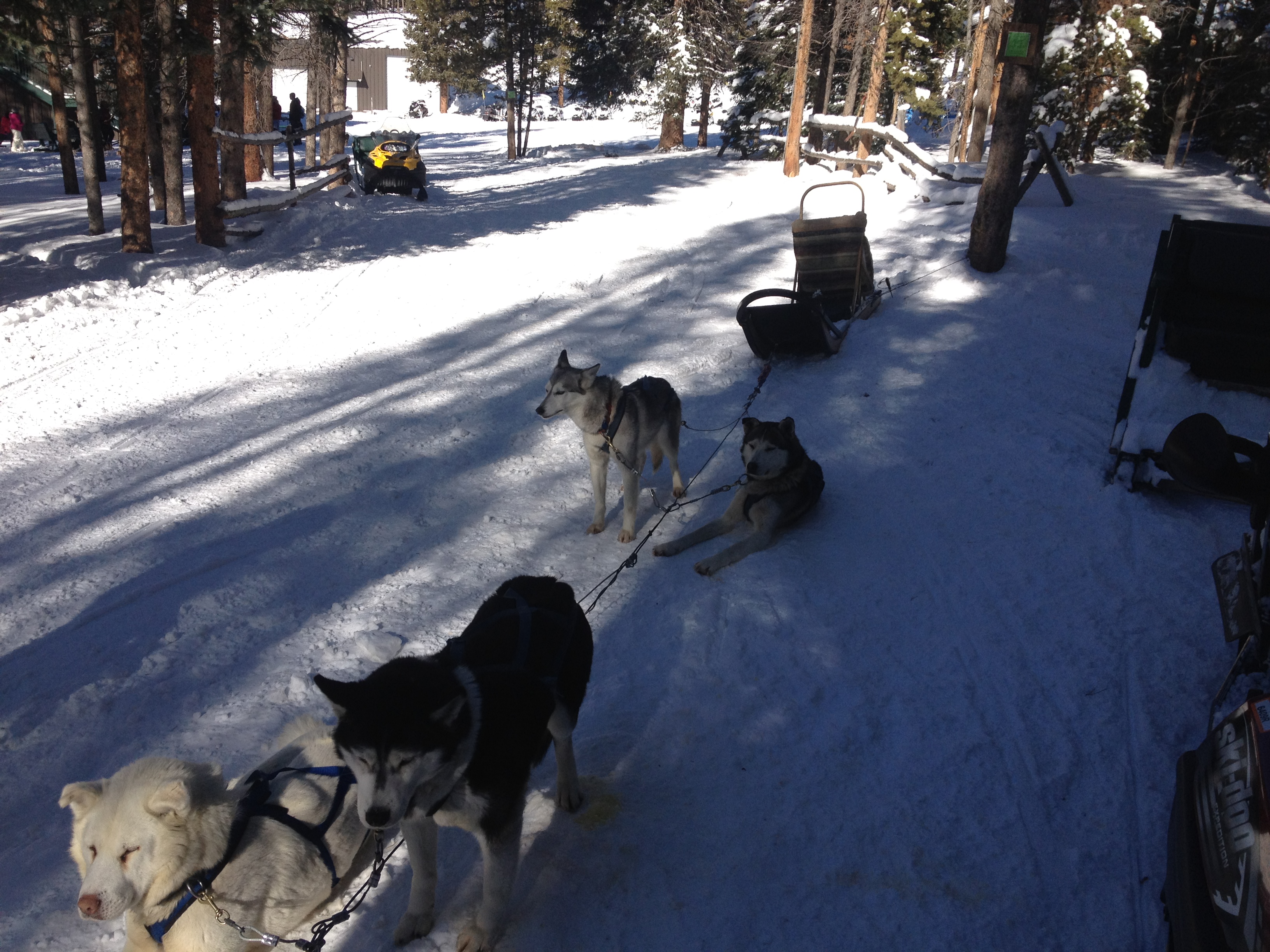
After several hours of great skiing, it was time to meet the dogs.  The eight-dog team was made up of huskies.  Across the north, huskies are traditionally used to transport lighter amounts of cargo at a faster speed.  This, of course, includes people.  For heavier cargo, the Alaskan Malamute is often used.  Essentially, a team of huskies would be analogous to a car in today’s world, while a team of malamutes would be analogous to a truck.

The dogs we met at the resort were friendly.  Towards us, they were friendly almost in a business-like way.  It almost felt like they had some kind of understanding that we were customers and that they are conducting a business.  Sometimes dogs have this eerie way of sensing a situation, and us humans cannot even begin to figure out how they do it.  Almost every dog owner can think of one instance in which they came home quite upset and found their dog ready to give them a comforting embrace.  These dogs seemed understand that we were customers and not their owners/friends quite clearly.

IMG_1610

One of the dog was briefly too friendly with his female companion.  But, hey, with almost two hundred dogs and an expanding business, Good Times Adventures could probably use a few more puppies from time to time- no matter what the source.

IMG_1620

I was pleasantly surprised that I got to actually drive the sled, exactly the way the mushers do it on the dog sledding circuit.  The tour guide gave us all a brief lesson on how to steer, how to break, and some basic strategies (like leaning into a turn).  While I am sure there is a lot more to what professional mushers do, and that they do it at faster speeds on tougher courses, it definitely felt real.  I was really experiencing the culture that brought us the tradition of dog sledding, albeit only a sample.

IMG_1614

Most activities are not truly appreciated until they are experienced.  It is for this reason that people who participate or have participated in a sport are more likely to be fans of that sport.  It is the understanding of what is happening that only a fellow participant can relate to.  The speed at which the dogs are able to pull the sled across the snow is something that must be experienced.  Speed feels differently depending on the venue.  When I am able to get up to 30 mph on my bike it feels quite a bit different from skiing at 30 mph, and nothing like the extremely uninspiring experience of driving a car at 30 mph.  The same can be said of the speed at which the dogs pull the sled.  My first up close view of the dogs pulling another sled across the snow, and when I first hopped on the sled and experienced it myself surprised me quite a bit.  Huskies truly are amazing dogs!

IMG_1618 IMG_1622

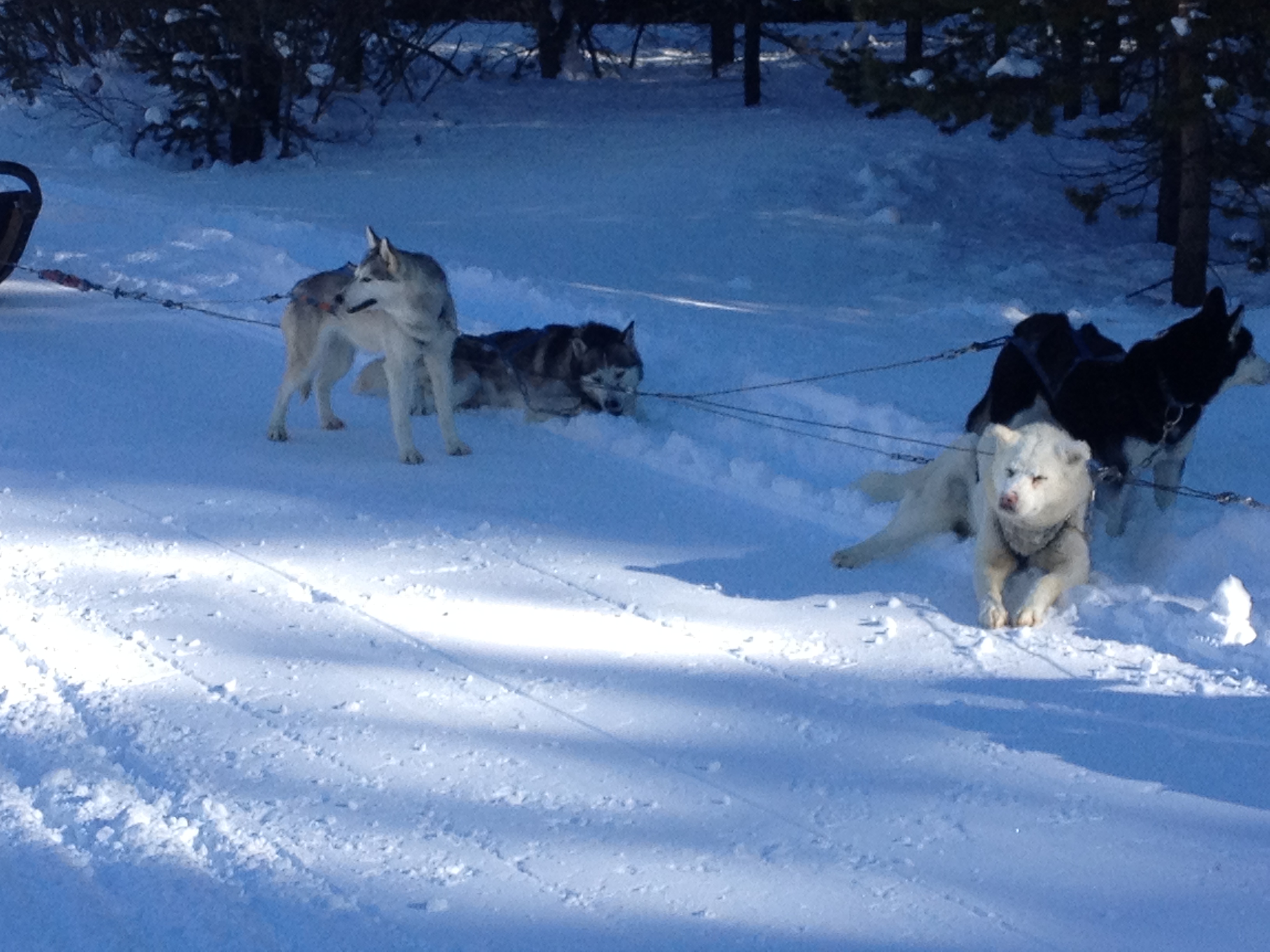
According to the tour guide, huskies are built for temperatures well below 0 (F), and it is at those temperatures that they feel the most comfortable.  Today’s temperatures in the lower 30s were therefore quite hot for these dogs.  Combined with the strenuous workout of pulling a sled at high speeds, the dogs were overheating.  In order to cool off, at every stopping point (we stopped regularly to give everyone multiple turns driving the sled) many of the dogs would actually jump into the snowbanks along the edge of the trail in order to cool off.  Some even basically covered themselves in snow!  I could not imagine living somewhere where I would regularly overheat in the middle of winter- let alone summer.

How we transport ourselves is an important aspect of our culture, and one of the ways we define who we are.  Route 66 remains an icon of American culture of the 1930s-1960s era.  The bicycling world remains its own community with its own identity.  And, one of the main differences between modern urban, suburban, and rural cultures is the manner in which we transport ourselves. Without trains, and eventually cars, the United States of America would not be what it is.

Without sled dogs, the culture of the north would not be what it is either.  By partaking in the main transportation mechanism of the cultures of the north, I was participating in their culture.  I was experiencing what they experience.  I was partaking in an activity that created a way of life, and was later harnessed to save an entire town from an epidemic.

A Weekend to Remember for Under $100?

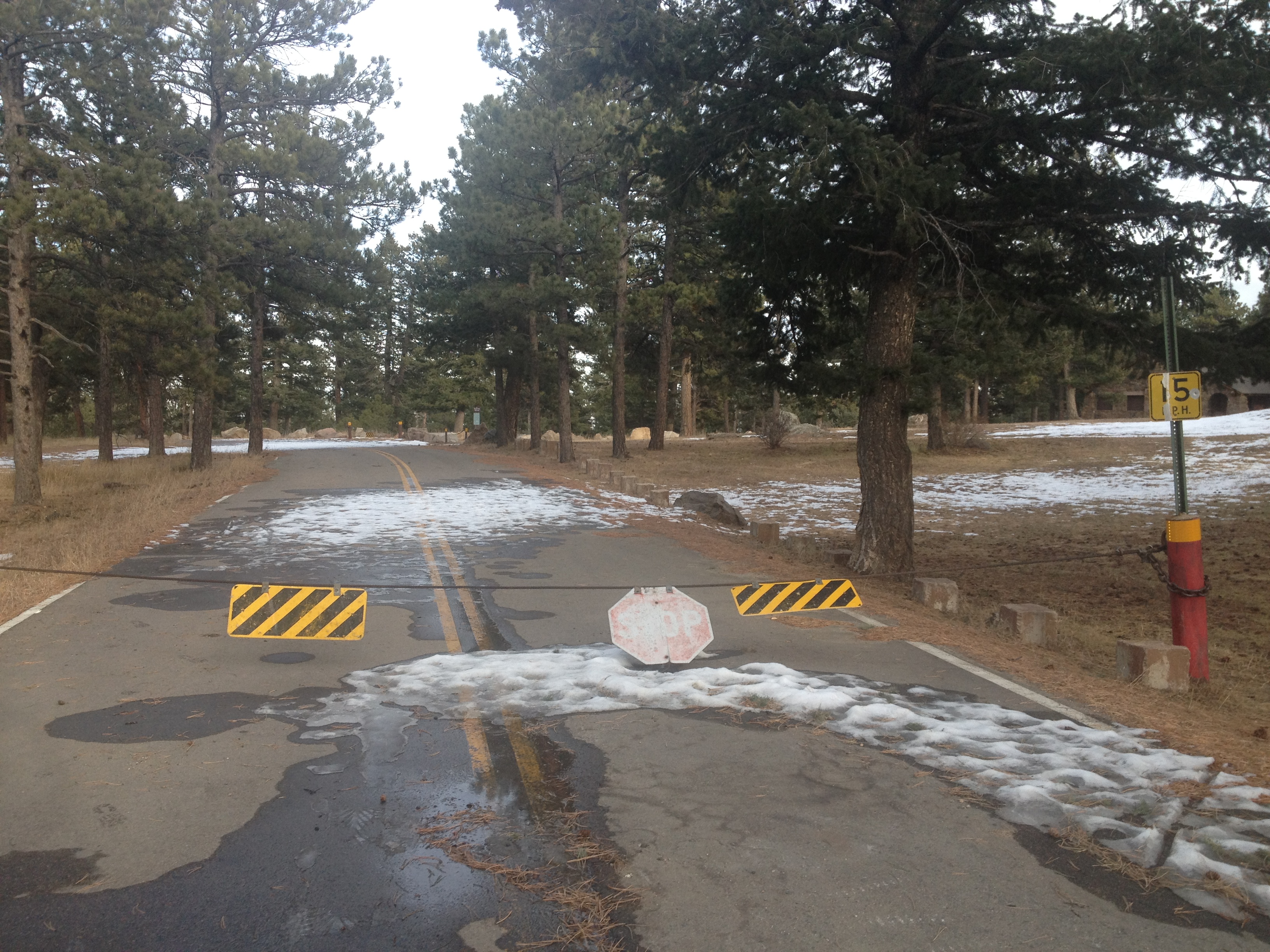
Genesee Park is a place I had never really thought too much about.  For most of my first year and a half in Colorado, I was barely aware of it’s existence.  I mostly knew that there was some kind of park at the spot along Interstate 70 where the high peaks of the Rocky Mountains first appear, which is about half an hour west of Denver.  But, on most of those trips I would be on my way to the ski resort, or some other destination that is more well known, and farther West along the interstate.  With about half a day’s worth of spare time, and little appetite for a long drive, as holiday travels await, I decided to explore this area and see what I would find.

IMG_1529 IMG_1527

Not surprisingly, I was the only person at Genesee Park today.  Not only is it off-season for places like this, but it is also a weekday, a time when most other people are working.  In addition, the park was closed for the season.  Being alone in a place like this is somewhat of a strange experience, especially for someone who is accustomed to an urban environment, with a plethora of noise and crowds.  However, being completely alone was what allowed me to truly tap into my imagination and discover what could come of a place like this during the summertime.

IMG_1525 IMG_1526

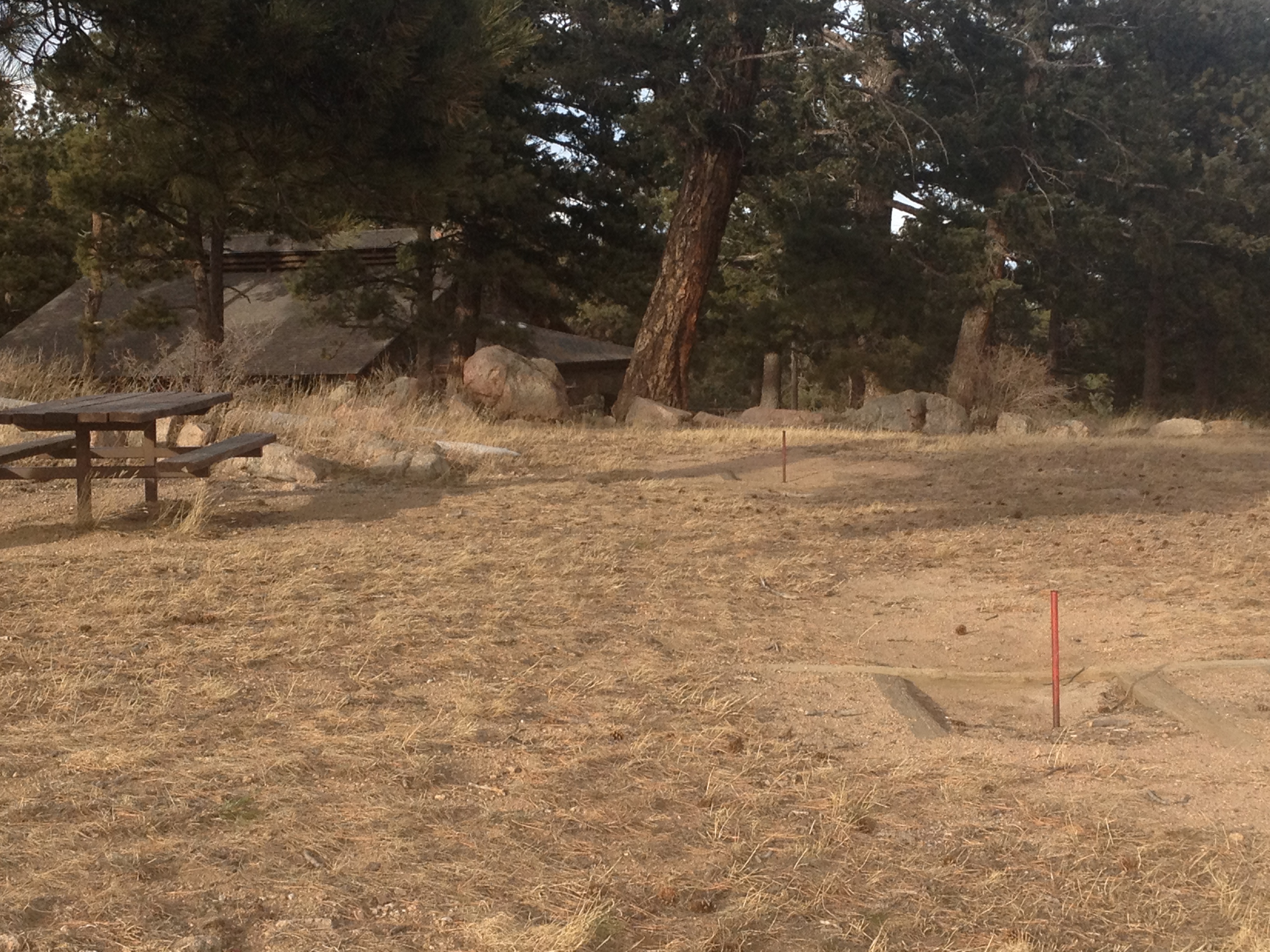
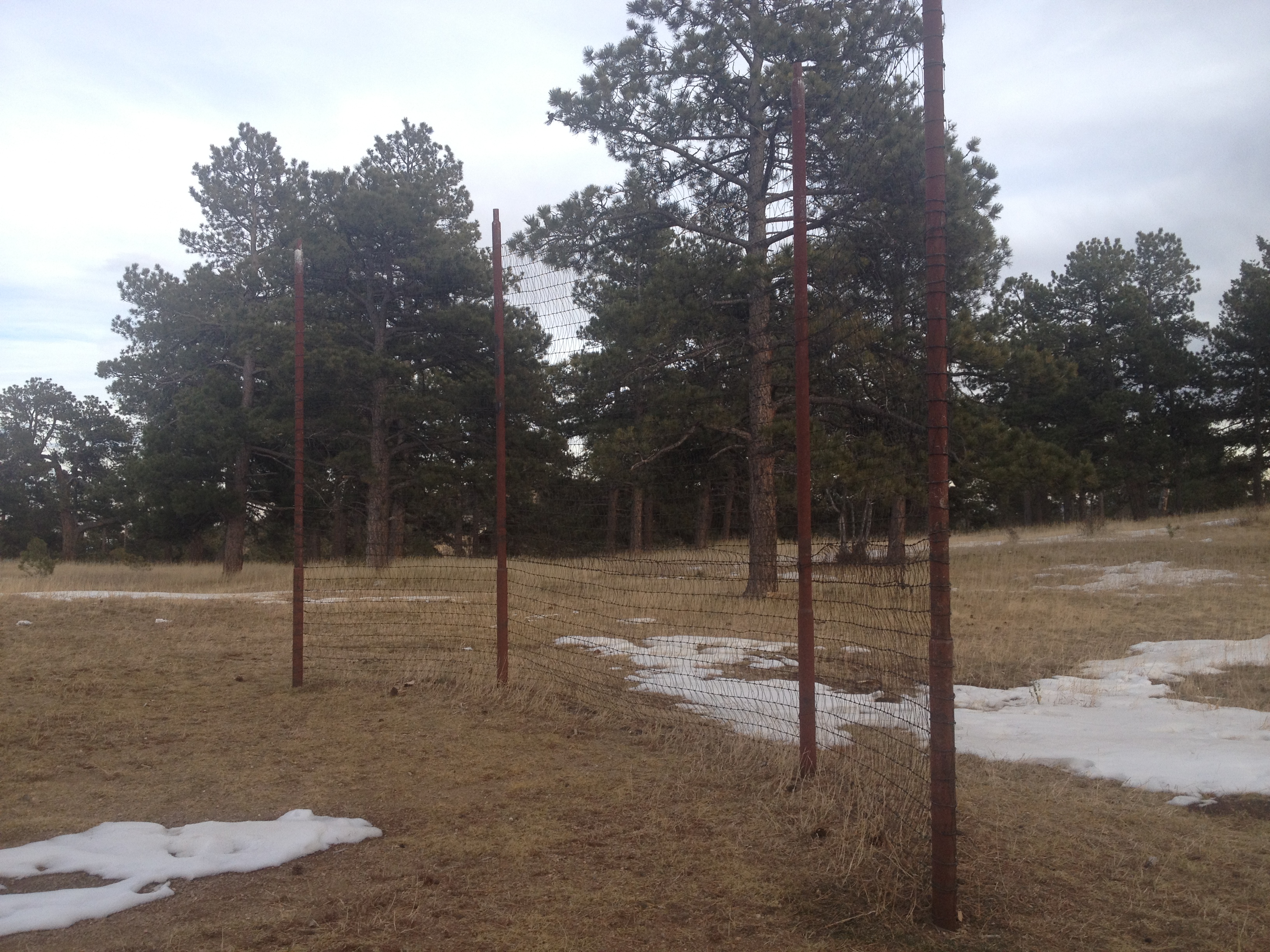
What surprised me about this mountain park were the plethora of available activities.  The two short red poles are obviously for horseshoes, and the two taller metal poles are for setting up a volleyball net.

IMG_1530 IMG_1533 IMG_1534

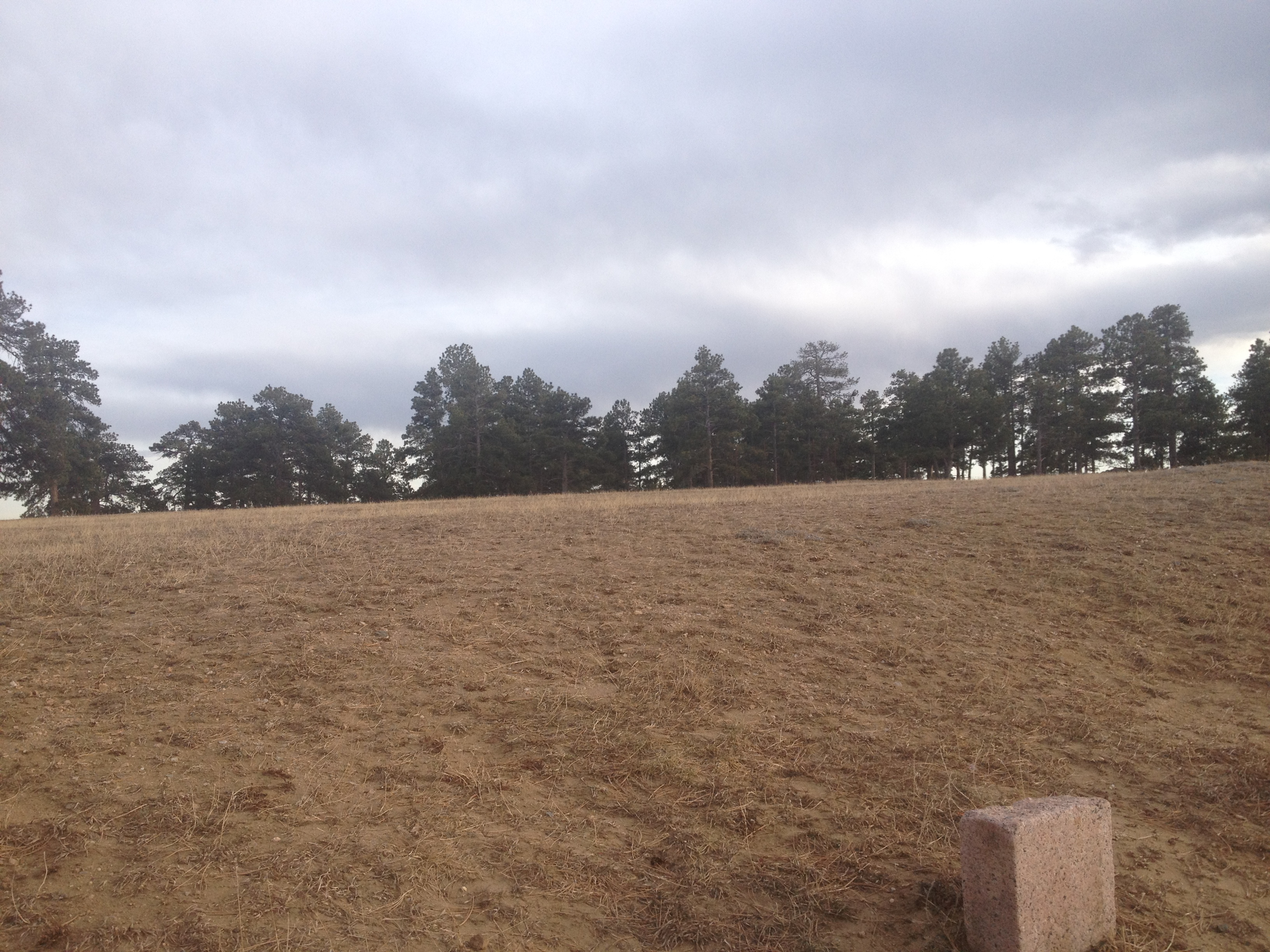
Additionally, the park had a pretty wide open softball field, which even included a home plate and a backstop.  Combined with a subtle smell of wood near the stoves adjacent to the picnic tables and I instantly imagined myself here on a warm summer’s day, with groups of campers taking part in a multitude of activities.  I pictured not only the activities the park is specifically set up for, but a multitude of others, such as Ultimate Frisbee, or just simply goofing off with all of the logs and pine cones all over the ground.  Children seem to never run out of things to do at a place like this, but sometimes a weekend up here can bring out that imaginative side of adults as well.  With the right group of people, a simple weekend away at a place like this could prove to be quite memorable.

It also dawned on me that the experiencing I am currently imagining at this place would also be quite inexpensive, at least compared to many other activities.  I did not do the math, to calculate the cost of gas, food, tents, etc., but I could not imagine it coming out to more than $100 per person.  In fact, it could end up being quite a bit less.  Just the thought of having an incredible weekend like this for such a small price demonstrates what is really important in this world.

It is odd that Christmas time, a time originally designed for people to reflect on what is really important in life, can now have the opposite effect.  Regardless of what people think of the practice, few people avoid the stress involved in purchasing Christmas gifts at this time of year.  But, what is it that people really want?  And what do people really need for Christmas?  After a quick mental survey of the people I know, as well as society as a whole, I came to the conclusion that while a new shirt may help someone’s confidence, and a new game may prove fun to play with, we are generally looking in the wrong places to satisfy ourselves.  What many of us need is not a new gadget, or an expensive coat.  What we need is more subtle.  We need things like companionship, appreciation, a sense of purpose, and security.  These are the things that we can often find at places like Genesee Park when we share experience with one other, and share ourselves with one another amongst the breathtaking backdrop of some unexpected mountain views.

IMG_1531 IMG_1532

However, it seems to me that all too often, rather than looking to places like Genesee, or to the people around us to fulfill what we need in life, we look to places like this.

IMG_1535

I will certainly give and receive presents this Christmas.  Some may even excite me quite a bit.  But, in the long run, the things that matter most will be more reflected in the way we view ourselves, the way we view life, the people around us, the way we treat one another, and the experiences we all have.

History Colorado Center

It has been unprecedentedly cold across Colorado these past several days!  It’s been so cold that no outdoor activity, not even skiing, sounds even remotely appealing.  So, in order to make the most of my time, I decided that today would be a good day to check out the new exhibit at the History Colorado Center.  As, I do want to check it out, and will likely be skiing or traveling elsewhere the next several weekends.

IMG_1502 IMG_1504

The History Colorado Center is a State history museum in Central Denver, located just south of downtown.  As the name advertizes, the museum covers the history of the State of Colorado.  A similar museum can most likely be found in nearly all state capitol cities.

In my biased opinion, the History Colorado Center is one of the best museums I have ever been to.  The reason I say it is a biased opinion is that I definitely prefer museums that cover topics I am personally interested in.  I tend to be more interested in science and history than art and lifestyle museums.  In addition, I have not been to too terribly many museums, as I tend to spend more time on outdoor activities.  So, my recommendation of this museum can be taken for what it’s worth; based on a strong personal bias and a limited sample set of options.  But, I do feel like this museum is worth the $12 admission. Today we spent just shy of three hours there, but I do feel like I could spend close to an entire day here.

I really enjoy this museum for three reasons:

1.  The museum is highly interactive.

This seems to be a trend in museums of late.  I am not sure what instigated this particular trend, but over the past decade more museums have been moving towards more interactive exhibits.  This particular museum was constructed only a couple of years ago (replacing the previous Colorado History Museum), and thus many of the exhibits at the museum are indicative of this trend.

IMG_1511

Just inside the entryway to the museum is a “time machine” exhibit.  These two “time machines” can be physically moved across a gigantic map of the State of Colorado.  Depending on where these devices are placed, a user can select a year from a list.  Each selection contains a different historical story of Colorado.  These stories come from many different time periods and nearly all portions of the state.  If one were to watch all of the stories available in this exhibit, it would definitely take multiple hours.

Other interactive exhibits at this museum include a silver mining exhibit, a bunch of screen-selecting games, and my personal favorite, the ski jump simulator.  The ski jump simulator not only simulates the building of speed, becoming airborne, and subsequent landing, but also requires that the user mimics the right ski jumping technique.  All this is done in from of a screen that shows the ski jump in progress.  Improper technique will result in a crash in the simulation, and the length of the jump is also dependent on technique.  It is interesting to attempt this ski jump simulation several times to get the best possible result.

2.  The museum presents a fairly complete representation of state history.

By this I mean the all regions of the state, all time periods, and all types of people appear to be represented at this museum.  Many people think of Colorado and think only of the mountains and the activities associated with the mountains.  Some think of Denver and the Front Range cities, but the entire Eastern 1/3 of the state is often ignored.  This museum actually includes several exhibits that cover life in the Great Plains portion of the state.

IMG_1508 IMG_1509

Half of the first floor of the museum is dedicated to the story of a small town named Keota on the plains in Northeastern Colorado.  Like many town in this area, it’s economy was primarily based on farming and ranching.  Although the town did fairly well in the first couple of decades of the 20th century, it did not fare well during the dust bowl and now is basically a ghost town.

Other exhibits about the history of Colorado’s often forgotten Eastern portion include one on Bent’s Old Fort, and one on the Sand Creek Massacre.  With these exhibits, and several others, the History Center Colorado also presents history from the point of view of nearly every ethnic group to ever inhabit the state.  One exhibit describes Colorado’s history as a borderland between the United States and Mexico prior to the Mexican-American war.  Another one describes the Japanese Internment Camps during World War 2.  And, despite the fact that Colorado is only 4% black (as a state), the museum contains an exhibit about a place called Lincoln Hills, a resort in the mountains developed by black people for black people at a time when many places refused to serve them.

In addition to presenting history from all portions of the state, as well as from multiple perspectives, the museum covers times all time periods, as well as both good times and bad times.  The Steamboat Springs Winter Carnival is a celebration of the winter sport activities that make Colorado a destination for many.  However, the new exhibit covers the importance of water resources in the state of Colorado.  This exhibit covers three periods of time where water resources and the management of them made a major difference in life in Colorado.  In the 13th century water resources were depleted from the “Mesa Verde” area, leading to hard times for the once thriving Pueblo Indians in that region.  Their response was to move south to areas where resources appeared more abundant.  Remnants of this civilization can still be viewed at Mesa Verde National Park, the only archeological U.S. National Park.  The dust bowl was one of the hardest times in Colorado.  Many farmers suffered from a combination of low prices and extreme drought.  This began a population decline in the plains, but some remained on the land.  Finally, current concerns about water resources were covered, as reduced snowpack from climate change combined with population increases threaten shortages of water resources.

3.  The museum has character.

IMG_1503

By this I mean there are a lot of little fun things like this Bison topped with a Santa hat.  Throughout the museum there are a lot of other little decorations here and there, such as the Welcome to Colorado sign, that just make the atmosphere a bitmore fun.  They do this without either going over the top, or seeming too cheesy, which I very much appreciate.

Visiting the History Colorado Center today was a good change of pace from my normal activities, and a wonderful way to take advantage of a day with less than ideal weather.  With a fun yet intelligent atmosphere, a complete view of Colorado’s history as a state, and a plethora of interactive exhibits, my visit to the History Colorado Center  was a memorable experience.  It gave me a lot to think about, and a good overview of the state that I now call home.

The Last Chance Of The Year

IMG_1493

There is a saying that “old habits die hard”.  This is possibly an overstatement, and it might not apply to everybody.  But it is a powerful statement of inertia that applies to a large segment of the population.  A major stress factor, such as the discovery of a new food allergy or the loss of a job, can change people’s habits rapidly and decisively.  However, in the absence of some kind of major push, most people’s habits will change slowly or even not at all.  It is for this reason that bad habits like watching too much TV, engaging in frequent unprotected sex with strangers, and even smoking can persist for decades.

I would not consider the habit I am referring to as a bad one.  It is mostly just annoying to some people around me.  It all started in the 8th grade when I became somewhat obsessed with football.  A typically Sunday for me that fall I would not only watch a couple of NFL games, but I would also watch the pre-game show at 11 A.M., as well as NFL Primetime at 6 P.M.  On any given Sunday, I’d watch as much as 8 hours of football!

This also caused me to put off too much of my schoolwork.  Then one November weekend, I suddenly realized that I had a major Science project due and I was running out of time to complete it.  That Friday evening, I came home from school knowing that I would have to scramble to finish this project on-time, and calculated that I would have almost no time for anything else that weekend.  My parents were disappointed in me, and actually feared that my grades would suffer because of it.

That weekend’s weather was especially nice, with high temperatures reaching 70 on Sunday.  Sometime on Sunday my father reminded me that this would probably be the last 70-degree day until April.  As a weather tracker from a young age, this was a fact that I was already well aware of.  But, it was something I had not been thinking about through all of this.  At this time, my father was just trying to be a good parent, and inform me that procrastination had consequences.  But the sudden reminder, that it would be at least three, and up to five months before weather like this would return prompted me to go outside that minute, even though I knew all I could afford was a 10-15 minute break from my work.

The previous winter was my first in Illinois, and it was quite harsh!  Not only had I just moved from Long Island, New York, a place with milder winters, but that winter was harsh for Chicago area standards too!  Temperatures were significantly colder than their long-term averages, particularly in January and February.  I recalled seeing a snowpack persist for over five weeks, something I had never seen before, and school was closed a couple of days due to extreme temperatures (below -20).  It was quite a shock for me, and something I did not enjoy.  Feeling that fresh air, and knowing that these ten minutes would be all I get for such a long time made me regret my obsessive watching of football in a way I had never regretted anything before.  It was that day that I realized that I cared significantly more about activities that I personally participate in than watching professional sports (or anything on TV).  I did not completely give up on watching professional sports that day.  But, since that day I’ve have had a clear understanding of where my priorities lie.

The winter that followed would be modestly mild for Chicago standards.  But, it was still colder than the ones I remembered in New York, and there were still very few days warm enough to be enjoyable for outdoor activities.  It was enough to cement in me the lessons I learned that November day.  I would spend seventeen more years in the Midwest, in either Illinois, Indiana, or Wisconsin.  Only one winter season would be more oppressively cold than that first one (and I was in Wisconsin- a colder place overall).  Many of the winters would be milder, some significantly milder.  Still, I would rehearse the same pattern every fall.  Starting around Halloween weekend, any day where temperatures were projected to reach the 60s or 70s would basically sound an alarm off inside of me.  I would start planning ahead of time how to take advantage of these particular days, and bill it “the last nice day of the year.”  Sometimes, I would even have some “false starts” in this process, where I would be prompted to enjoy “the last nice day of the year” only to have another stretch (or even two or three) of warm weather occur before winter set in.

Now that I live in Denver, this practice is not necessary.  Not only do sunny and mild days occur quite frequently in the middle of the winter, but winter is one of the most exciting times to be in Colorado- due to skiing.  But, we are also not in an ordinary weather pattern.  Today’s highs will top out somewhere between 60 and 65.  But, after this, an abnormally prolonged period of cold weather is expected in Colorado.  It might even be too cold to ski, as highs between 10 and 20, and lows below 0 are anticipated for Denver.  It will be even colder in the mountains!  So, that alarm in my head triggered me to take advantage of this day as if it were the last chance I would have this year to go on a bike ride, which I did.

IMG_1495 IMG_1496

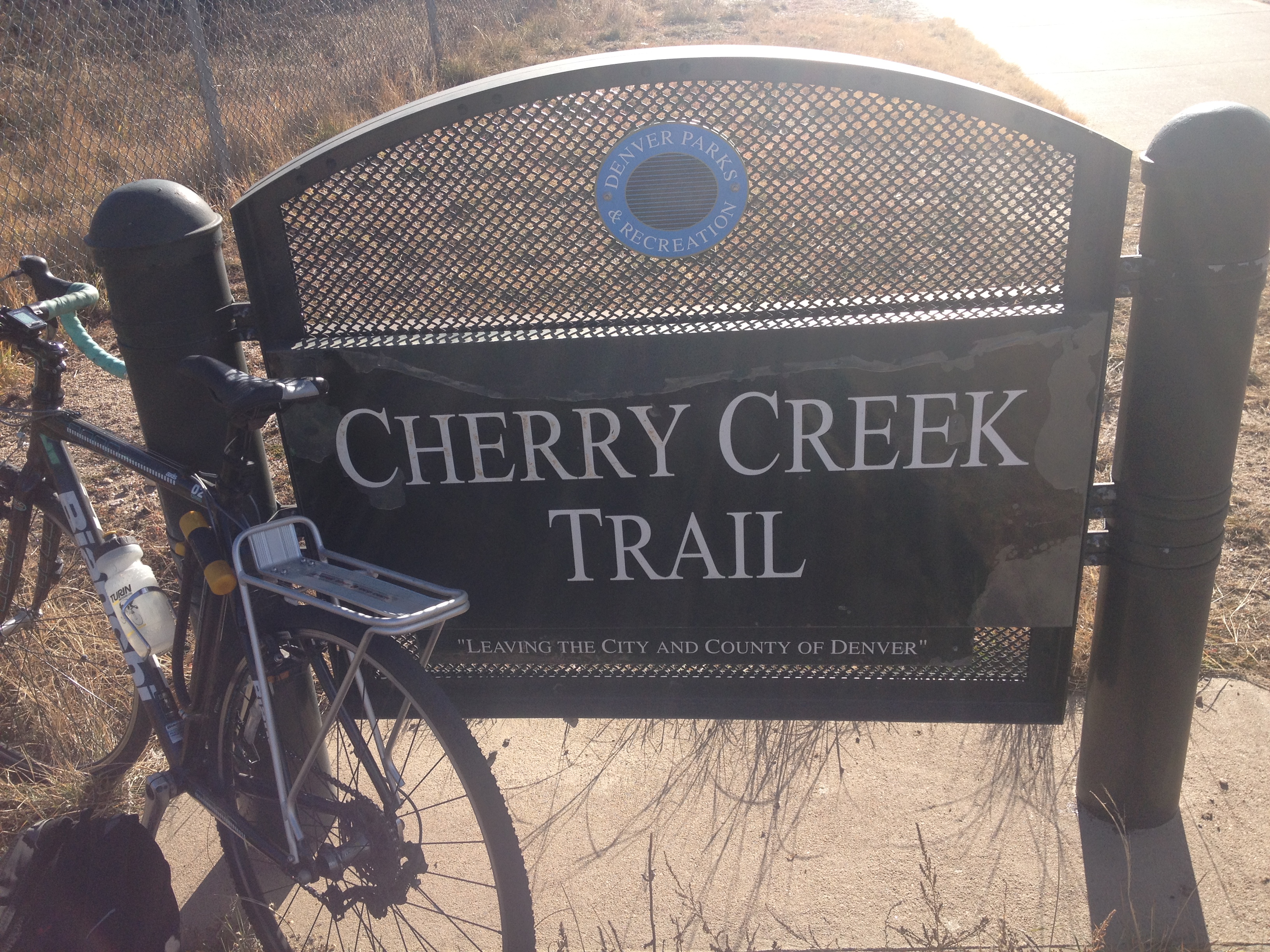
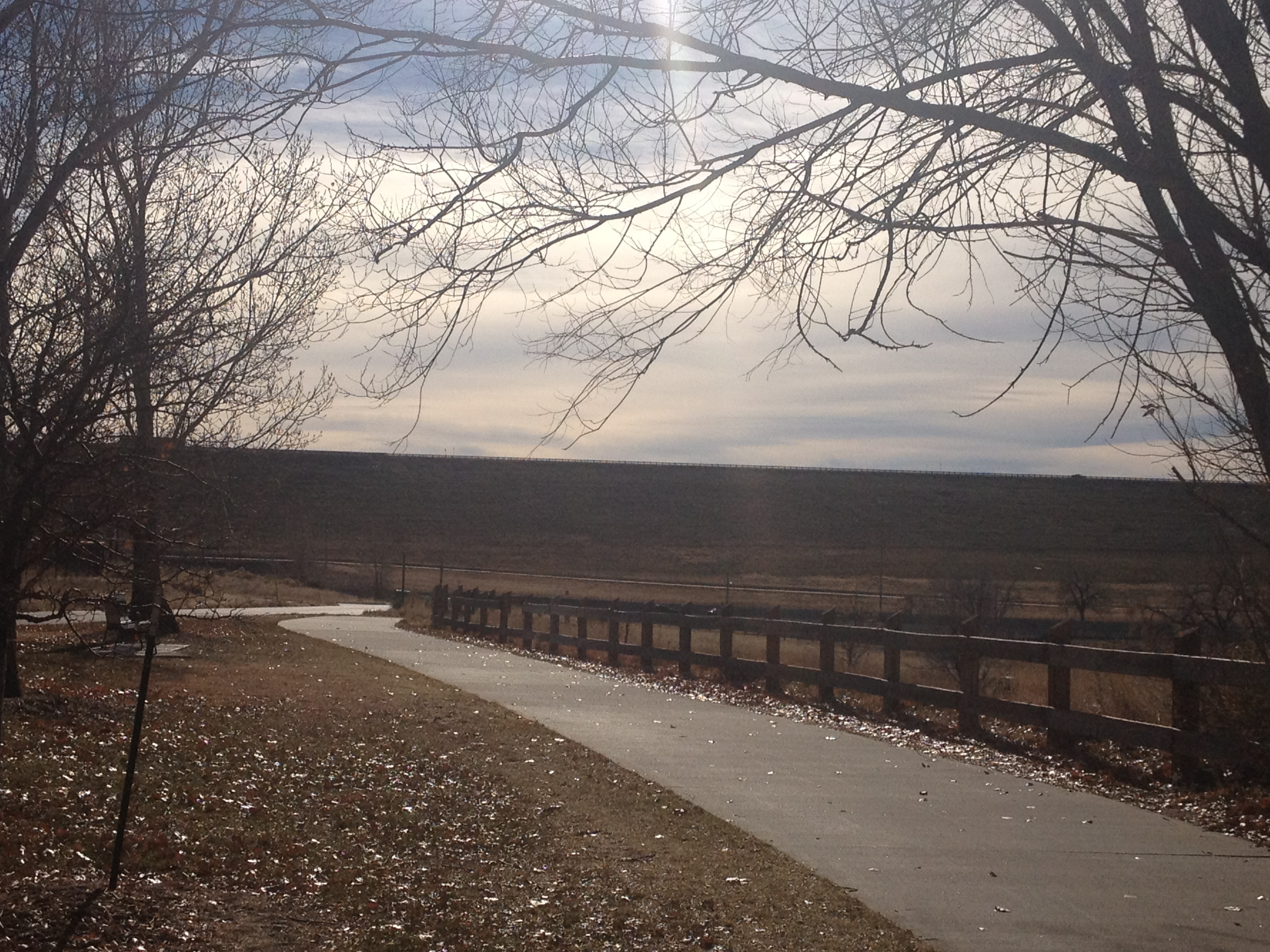
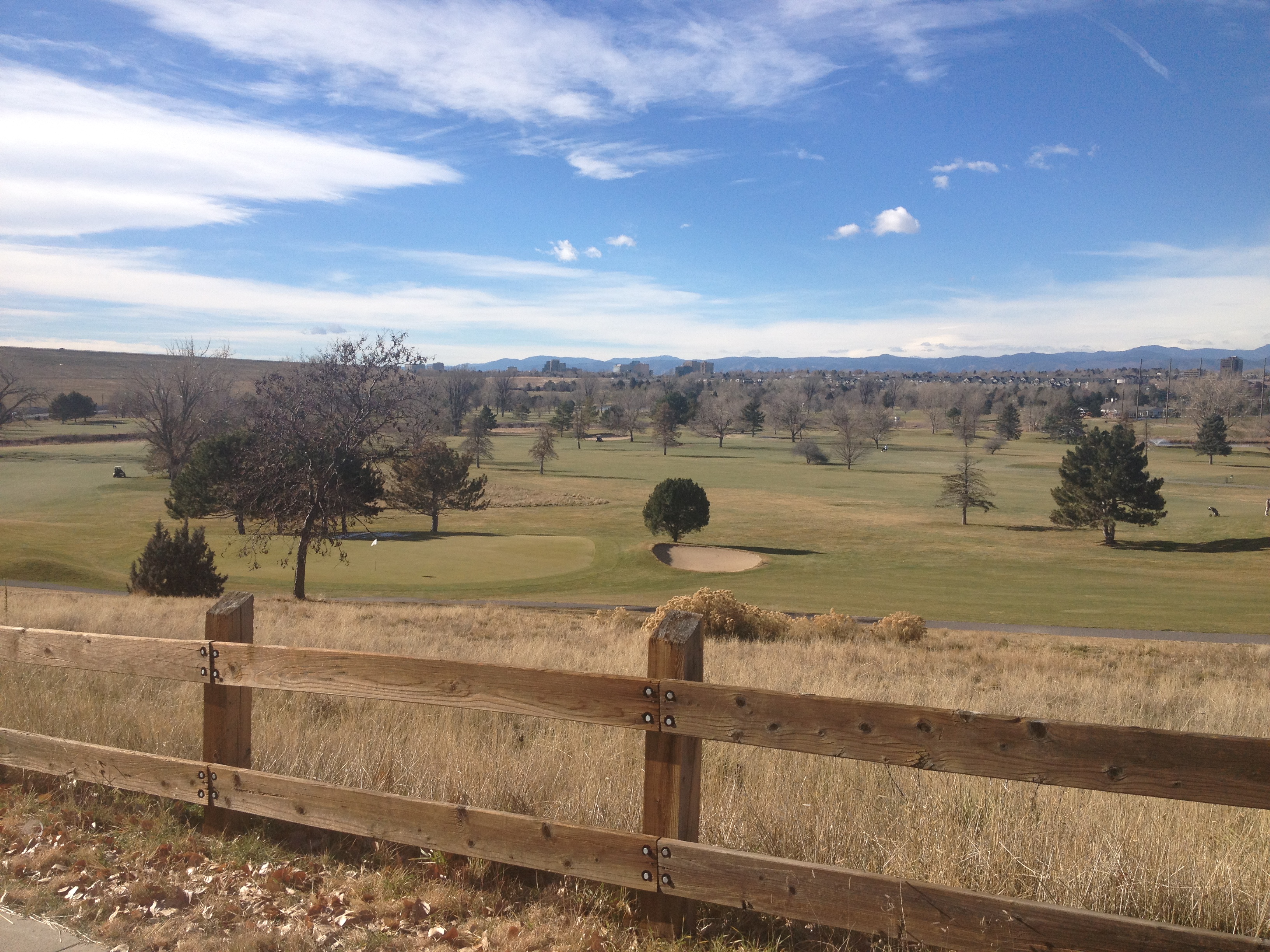
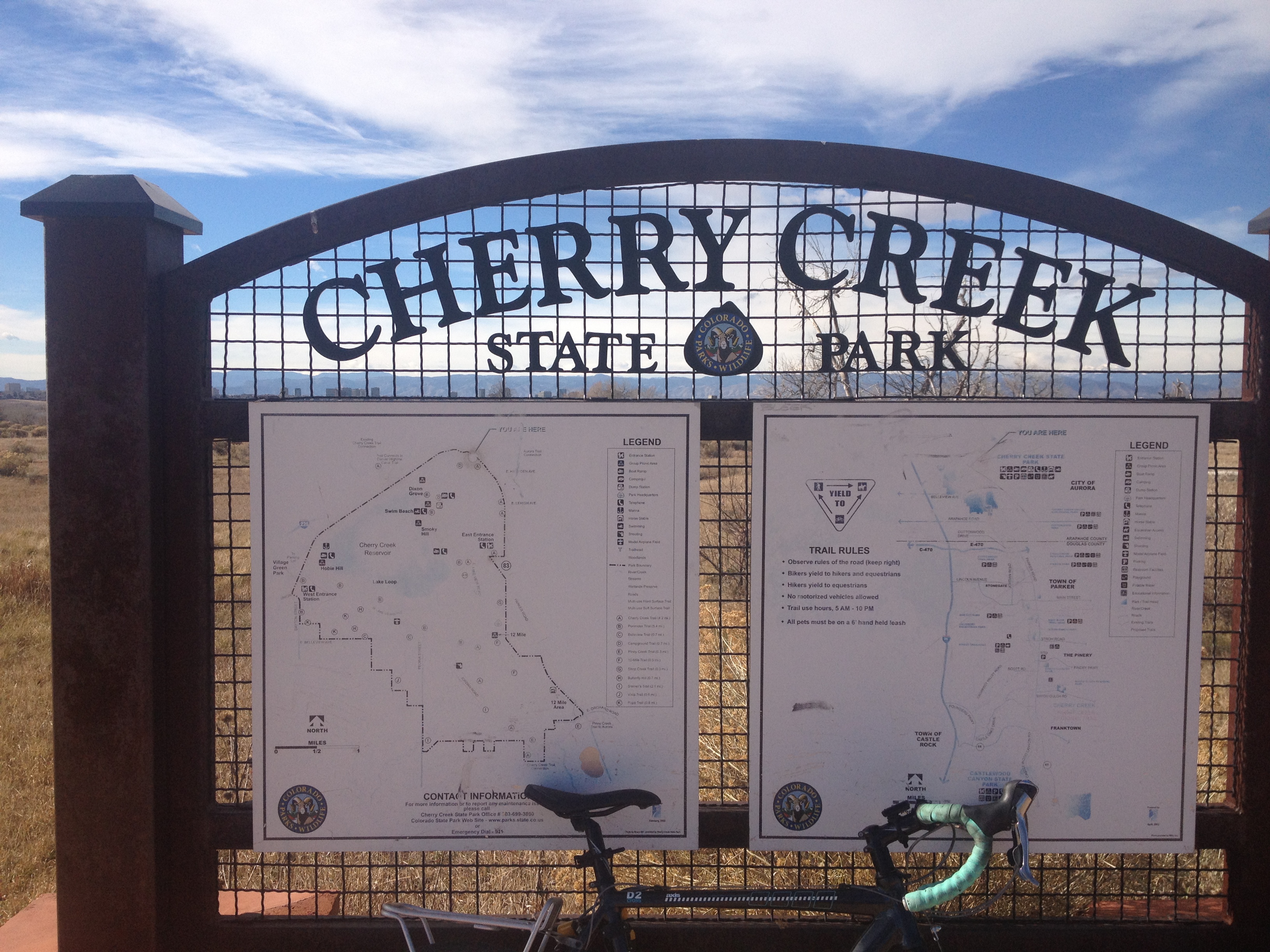
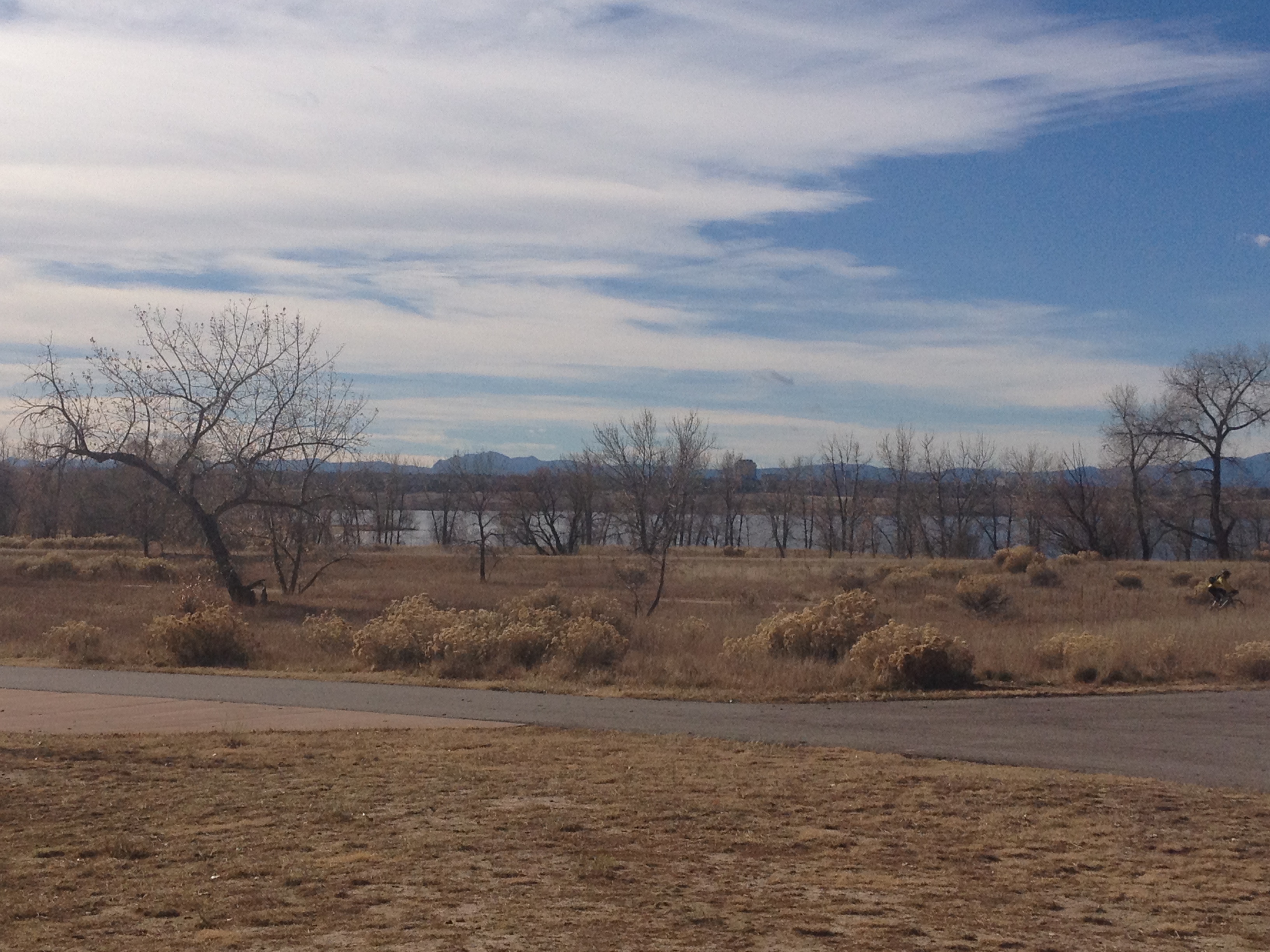
Of course, one of the challenge in taking advantage of the last nice day of the year is that in November and December, the days are quite short.  Today I also had an added time constraint, as I knew the winds around Denver would pick up around noon, making bicycling much more unpleasant.  So, I stuck to a much simpler ride, down the Cherry Creek Trail to  Cherry Creek State Park, a 25 mile round trip.  Most of the ride is flat, or slightly uphill on the way out and slightly downhill on the way back.  The first major terrain feature is a large hill near Kennedy Golf Course, which is followed by the climb up to the reservoir.

IMG_1499IMG_1497

The Cherry Creek Trail is one of the best trails I have ever ridden!  It follows the river, through all of the underpasses, and avoids nearly all traffic lights.  This makes it a perfect way to get somewhere quickly on a bicycle.  There is some terrain climbing up to Cherry Creek State Park, but overall, the ride here only involves three “climbs”, and each one is only a couple of hundred feet in elevation.  Therefore, this would be a great ride for people who are only in moderately good shape, or not looking for a major challenge.

It will be too cold for bicycling in Denver to be enjoyable for at least another week and a half.  But, in all likelihood, this was not my “last chance of the year” to ride.  Therefore, I probably did not need to be too concerned about taking advantage of today’s weather.  However, I am also not seeing any negative consequences in taking advantage of a day like this.  I did not miss out on anything important, and everything I need to work on I can complete in the later part of this week when the weather turns awful.  So, this old habit is going to “die hard”, and probably won’t change much until it leads to a poor result.

Hiking Boulder’s Flatirons in late November

IMG_1472

One of the things a lot of people don’t realize about Colorado is that it is actually possible to hike here year round.  For sure, winters in Colorado are characterized by a lot of snow, but at lower elevations, warm-ups are also quite frequent.  Earlier this year I made some calculations with some data from the National Climatic Data Center, and concluded that even in the coldest part of winter high temperatures can be expected to exceed 50F in Denver more than one in three days.

At higher elevations it is more consistently cold and snowpacked.  This is why Colorado has great skiing, but also why hiking at higher elevations beyond the month of October generally unrealistic.  However, it is great knowing that there is a place where both skiing and hiking could be available on the same calender day.  Sunday I went skiing, Monday I rode my bicycle, and yesterday I hiked.  What an interesting place!

IMG_1471

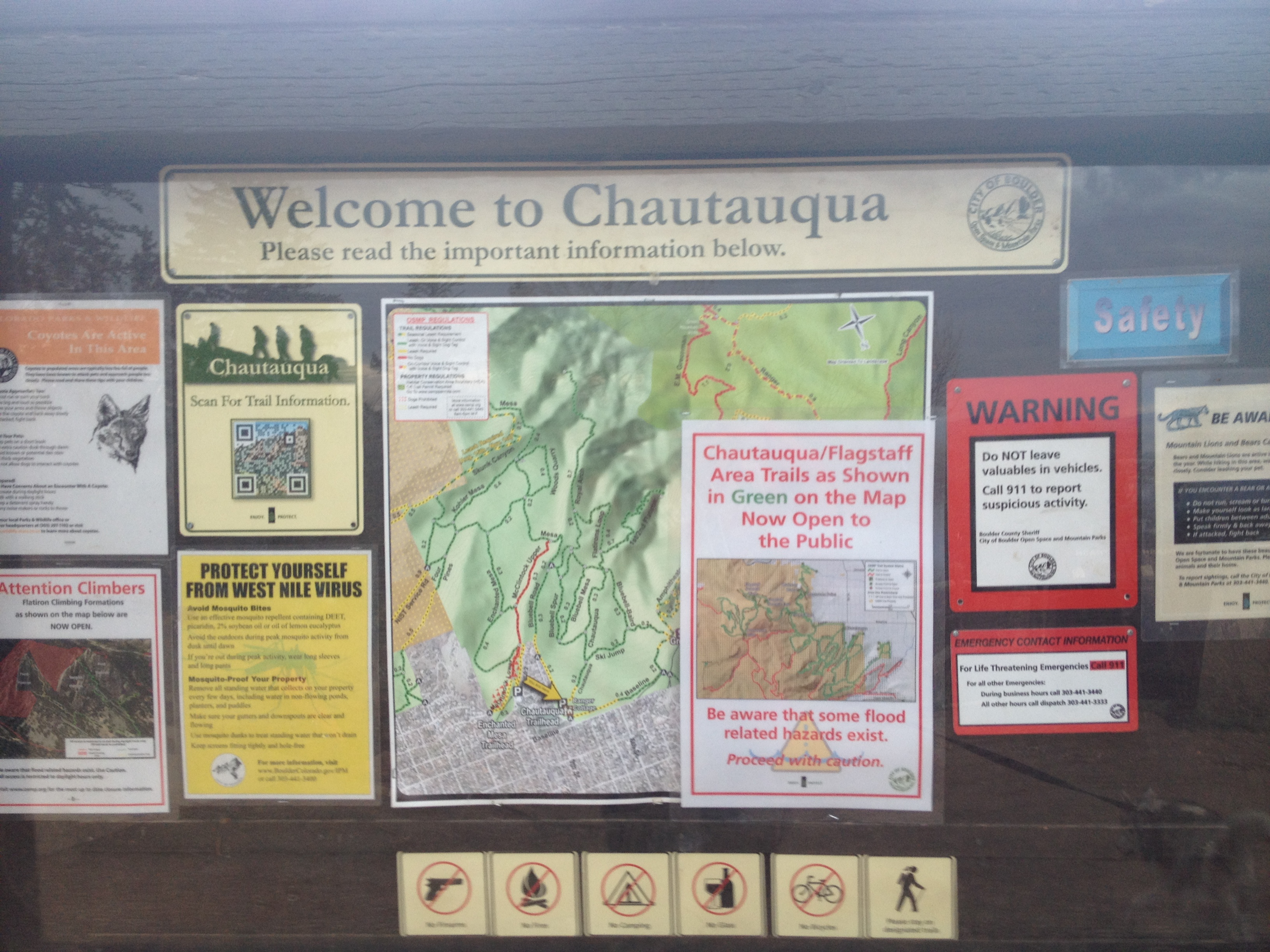
With that in mind, this is a great time of year to check out many of the hikes available at lower elevations.  This includes the Flatirons in Boulder, Colorado.  Many of the trails up this mountain feature can be accessed from Chautauqua Park on Boulder’s Southwest side.  With the park being in town, and downtown Boulder being only about a mile and a half away, and this park can easily be reached by bike or bus, making this one of the few places in the country where one can frequently hike and even rock climb without access to a car.  So, I can kind of see why it is an expensive place to live, but I really did not mind driving, so I’ll spare myself the extra $400 a month in rent.

IMG_1473 IMG_1474

Hiking in the Boulder Flatirons is quite different than climbing a trail up a mountain.  Rather than one trail up and one trail down, there is a network of trails that need to be navigated for one to reach their destination.  From the parking lot, the Chautauqua Trail can be followed up to the Flatiron Loop Trail.  The Chautauqua Trail is a fairly consistent moderate uphill grade.  The Flatiron Loop Trail, however, gets both steeper and rockier.  Climbing this trail reminded me how high in elevation the Flatiron features really are.  With the features known as the Flatirons being so close to town, it is easy for one to think of these features as extending down almost to the elevation of town, roughly 5400 ft.  But, the reality is that these features are largely between 7000 and 8000 ft. in elevation.

Some of the rockier areas of the trail scared my dog a little bit.  Despite this, I did see a significant amount of dogs on the trail.  However, in Boulder, I would consider the Mount Sanitas Trail more dog-friendly, as it does not contain segments like this one.

What I did not realize until yesterday’s hike was that the Flatirons are numbered.  The Flatiron Loop Trail traverses Flatirons #1 though #3.  For each of these peaks, a spur off the trail provides climbing access.  The first Flatiron, pictured above, looks somewhat different up close.  Small scale features, particularly indentations in the rock, do not show up when viewing these features at a distance.  Like some famous paintings, they look nicer from afar than they do from close up.  The trail reaches it’s peak elevation between Flatiron #2 and Flatiron #3, and beyond Flatiron #3 is the trail I intended to do, the Royal Arch trail.

IMG_1478 IMG_1479

Unfortunately, this trail was closed, most likely due to the flooding.  As an alternate, I decided to hike the Flatiron #3 climbing access trail, as I still wanted to get to the top of these features.  This trail was even steeper than the Flatiron Loop Trail, and also a lot narrower and rockier.  It is one of those trails where one follows the rocks as an indicator of the trail’s path.

IMG_1481 IMG_1480

Flatirons #2 and 3 appeared somewhat more as I imagined them; rock formations poking out of the trees, with a near steady slant of around 45 degrees.  As I viewed each of these features up close, I could not help but be reminded of the rock features near Red Rocks.  Of course, these features are not nearly as red in color, but their shapes looked quite similar, making me believe that some of the same geological processes must have been at work in the creation of both of these features.

IMG_1484

On the return trip, back to the parking lot, I actually came to the conclusion that Flatiron #1 just looks somewhat different than the other two.  A later Google image search would confirm this for me.  I guess this one is not quite a “flat” as the other ones.

IMG_1486

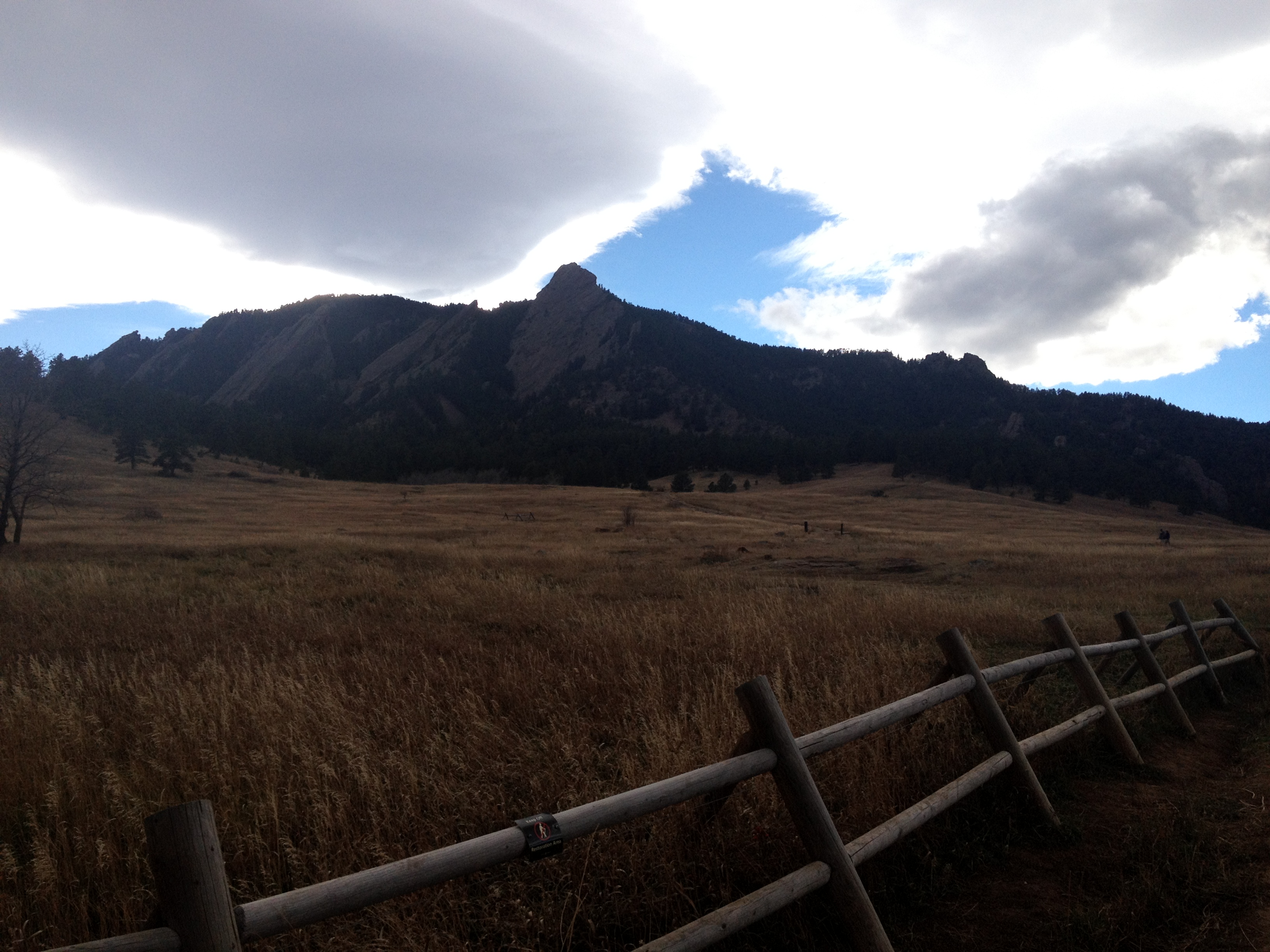
It was actually nearly 3/4 of the way back down to Chautauqua Park that I encountered what I consider the best view of the day.  The time was around 3:30 P.M., which in late November means that the sun was already starting to descend in the western sky behind the mountains.  However, the sun was still an hour or so from setting.  As a result, the shadow created by the mountains can be seen quite clearly in contrast with the bright sunshine, making for a breathtaking image that is unique to that particular time of day.  Half an hour earlier, it would have looked like your standard daytime image of the foothills of the Rocky Mountains, and half an hour later this entire area would be shadowed and the entire region would be significantly darker.

I did not specifically plan to be here at this exact time, in this exact place.  In fact, if I were to try to calculate what time of day I would need to be here to see this exact view, I likely would have calculated it incorrectly.  Sometimes in life the best results come not from careful planning, but from simply going to new places, trying new things, and being ready to absorb and enjoy what comes your way.  This is what comes to mind when I look at this particular photograph.