Category Archives: Scientific Phenomenon

A Month Without Sleep

IMG_3499 IMG_3514

I guess it would be an exaggeration to say that I, or anyone else for that matter, went a whole month without sleep.  But, sometimes life, and the procession of events, activities, changes and emotions, refuses to come at you at a steady and workable pace.  One day we find ourselves stagnant and antsy, wondering what is next, and wishing for something significant to happen to us.  Then, out of nowhere, we suddenly can’t seem to keep up with all the planning, deadlines, issues, and events.  We literally find ourselves unable to spare a single hour out of a crammed week.  Sure, we always think to ourselves of ways to avoid both extremes.  We think of ways to shift some activities from busier periods to quieter periods.  But, it never seems to work out that way.  Something always comes up.  Some sort of factor we had not previously considered prevents us from utilizing those slow periods when we get antsy.  And, these periodic episodes that test our endurance are still going to come.

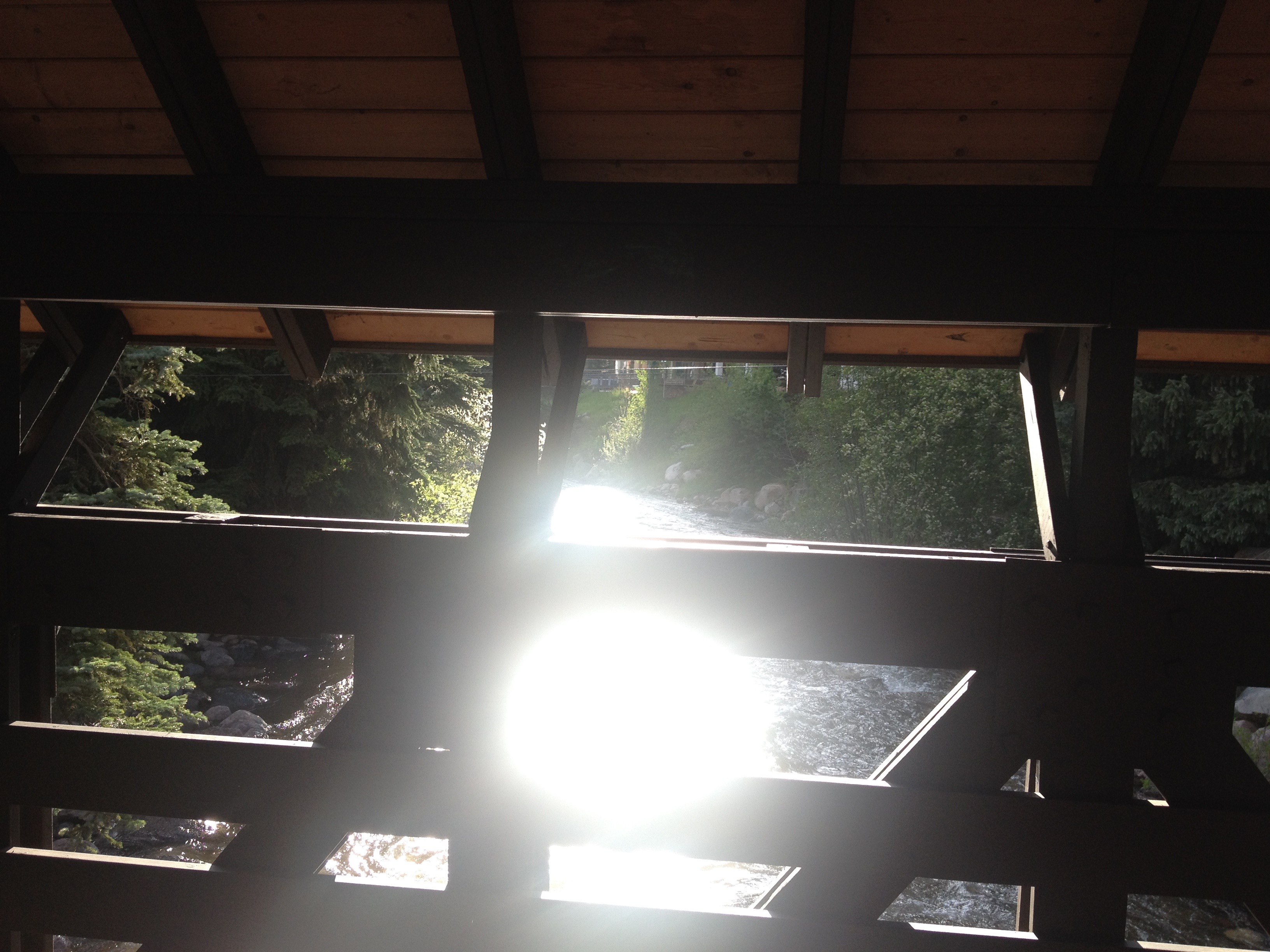
Both of these images were taken on restless nights during the month of June.  Both nights were restless for completely different reasons.  And, both photos are beautiful, in a very artistic sort of manner.  As I gaze at these pictures, I can’t help but imagine art enthusiasts looking at these images, discussing their settings, their emotions, their significance, all that deep stuff.  I wonder how many of these artists would come to conclusions similar to the actual stories behind these pictures.  The picture on the left is a sunset picture in the city, taken after a busy and emotional Monday at the office.  The photo on the right was taken after a particularly festive Saturday night in Vail that lasted well past sunrise Sunday morning.  Both nights I did not get any sleep, but for reasons that could not be any farther apart from one another.

June is a terrible time for any of the drama associated with “regular life”, whether it be moving, career issues, financial problems, or family and relationship issues to come up.  There is just way too much fun stuff to do- everywhere!  No matter what city you live in, there are festivals all over the place.
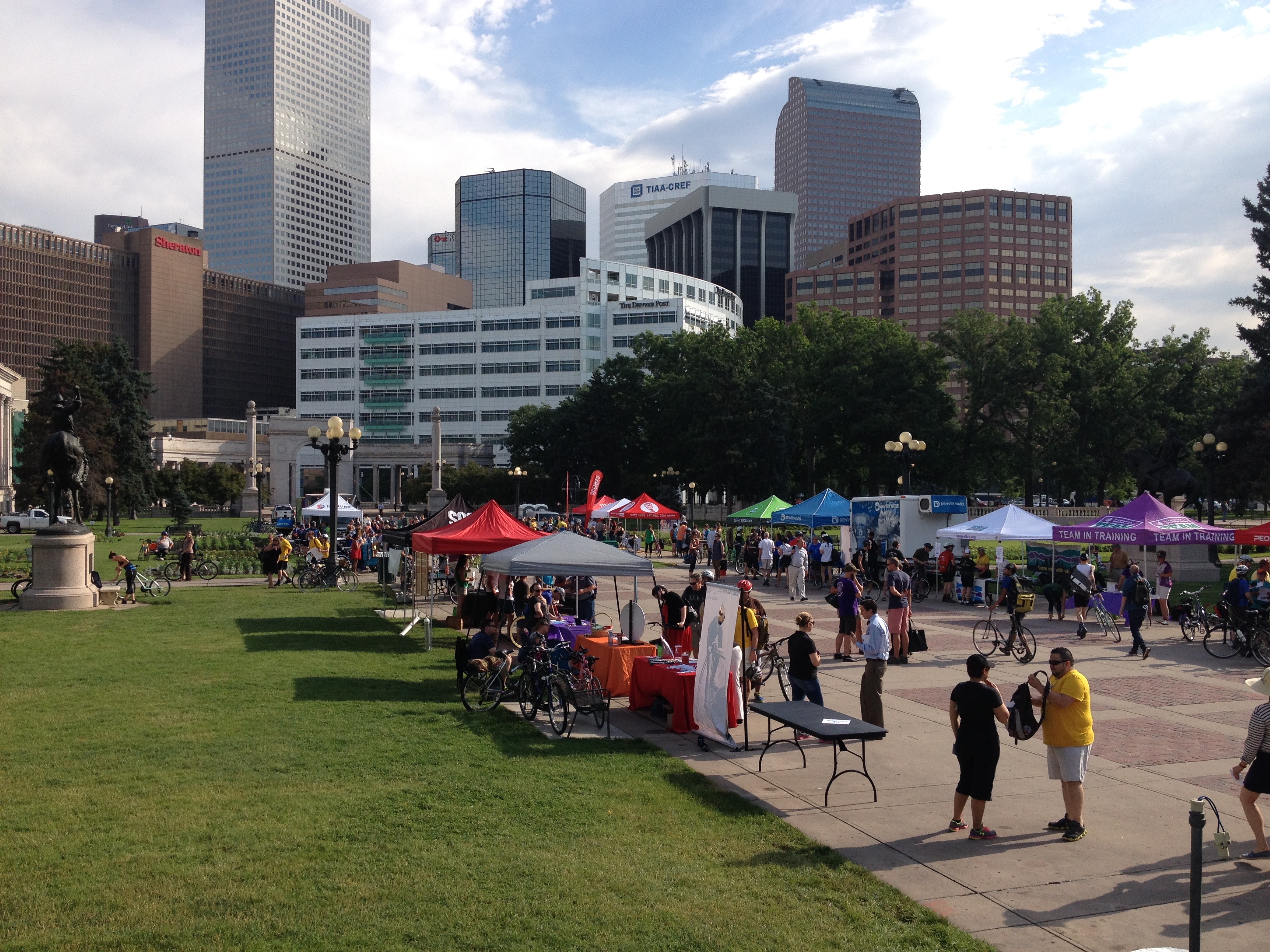
IMG_3628 IMG_3646

It is the peak time of year for Whitewater Rafting in this part of the country.

IMG_3589

There is the ongoing severe thunderstorm season.

IMG_3632

And, there is also tons of daylight, and pleasant weather up in the mountains.
IMG_2044

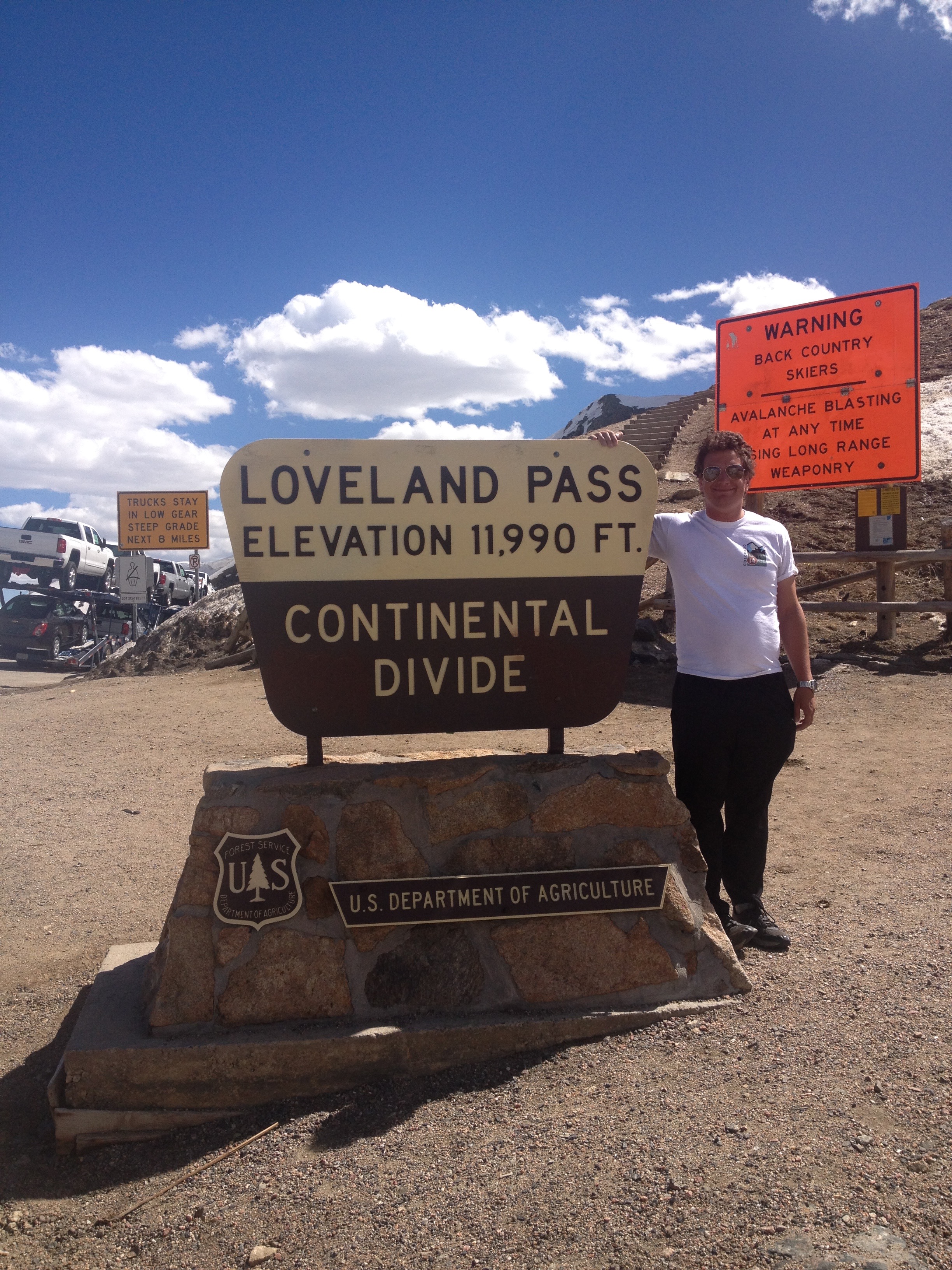
I have no time for anything else in June.  All those “regular life” things that demand my attention just need to wait.  There will be plenty of time when the snow reappears on the mountain tops, nights get longer, days get chillier, and opportunities inevitably shrink with the passing of the season, for me to turn my attention to all of that other stuff.

June, for me consisted of a plethora of experiences.  Some of them familiar.  As I did last year, I went to the GoPro games in Vail June’s first full weekend.  Just as I did last year, I went rafting the third weekend of the month.  And, as always, I spent some time out on the town, and did some goofy stuff.

IMG_3522 IMG_3511

But, some things were unique to this particular June.  I was lucky to have been joined in Colorado by some of my friends from Chicago, who came for a week to see some sights around the State.

IMG_3542

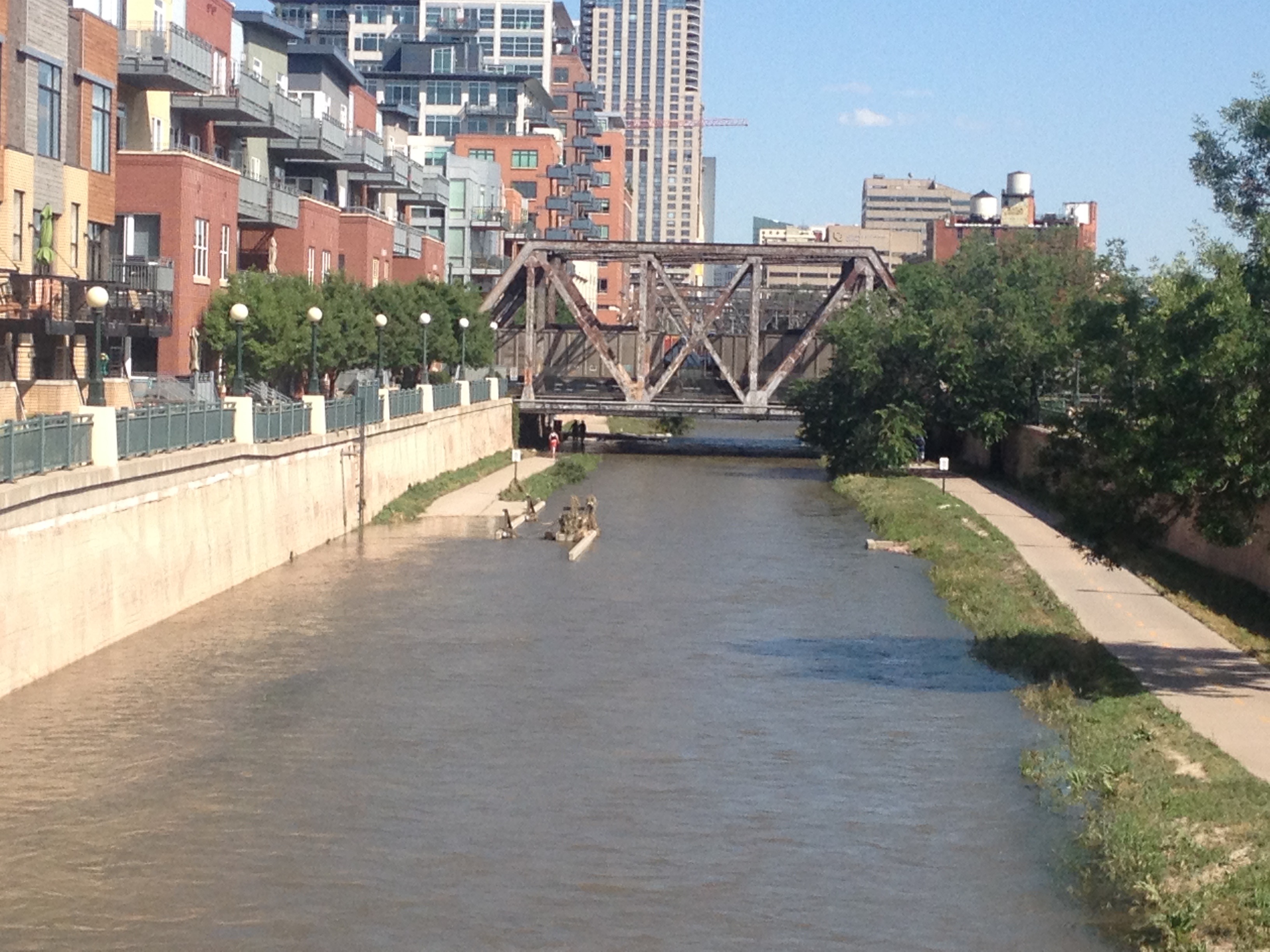
We also experienced copious amounts of rain.  Rivers and creeks expanded to cover areas that are typically dry- including bike trails.
IMG_3644 IMG_3666

On top of all that, career related anxiety, which began months ago, but mercilessly intensified during the month of June, lead me to seek out some places where I typically go to clear my head.

IMG_3668 IMG_3669

It was not until the final Sunday of June, the 28th, when I finally took a pause, and realized just how intense June had been.  It almost felt like my first real day of rest for the entire month.  You see, on top of all of the activities I have been involved in, seeking out answers related to my job, and trying to get more involved in some some social groups, I have also been training for, as well as planning out my next epic trip, which will begin in less than 48 hours.

I had always dreamed of traveling long distances by bicycle.  In fact, I am a member of the Adventure Cycling Association, and have been following their push to develop cross-country bicycle routes for years.  This fourth of July weekend, I will be embarking on the biggest journey by bicycle of my life, a ride from Bozeman, Montana to Jackson, Wyoming.

Bike_Trip_July2015

This three day, roughly 230 mile bike ride will take me through some of this country’s greatest treasures, including Yellowstone and Grand Teton National Parks.  On the way into Yellowstone, I will be riding through a region known as Paradise Valley, which includes Chico Hot Springs, and other unique features.

Planning, and training for, this ride definitely added to an already crammed month of June, but I sincerely believe it will be worth it.  Just as we have daytime and nighttime on a 24 hour cycle, we have both active and restful periods on a larger scale.  And, although July is not looking too much more restful than June for me, there will eventually will come another break in activity, another lull, another time to regroup, and “sleep”.  Maybe I’ll even figure out some of that pesky “regular life” stuff too.  But one thing is for sure, it will not be as epic as this.
A Bizarre Memorial Day Weekend in Wyoming

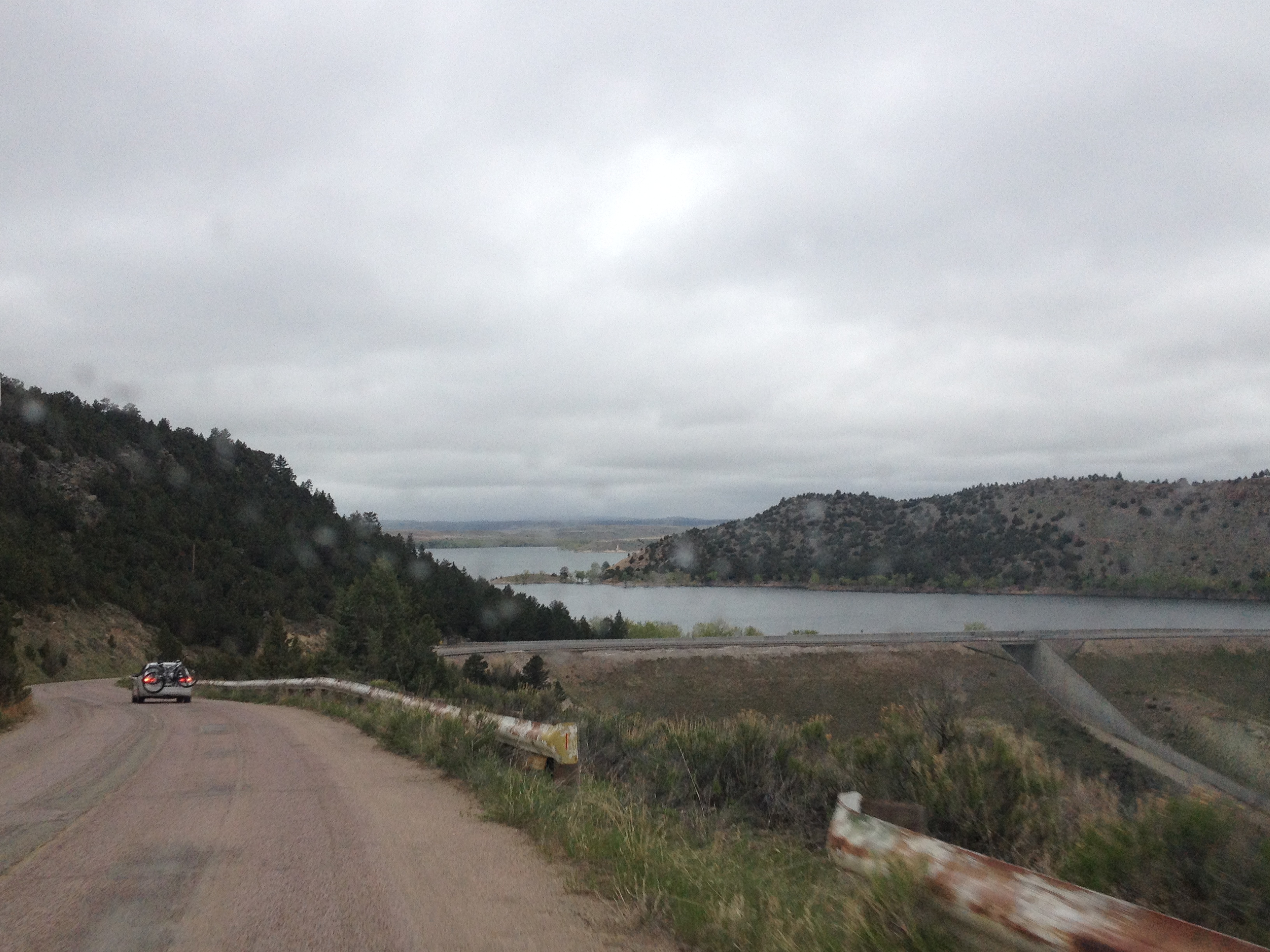
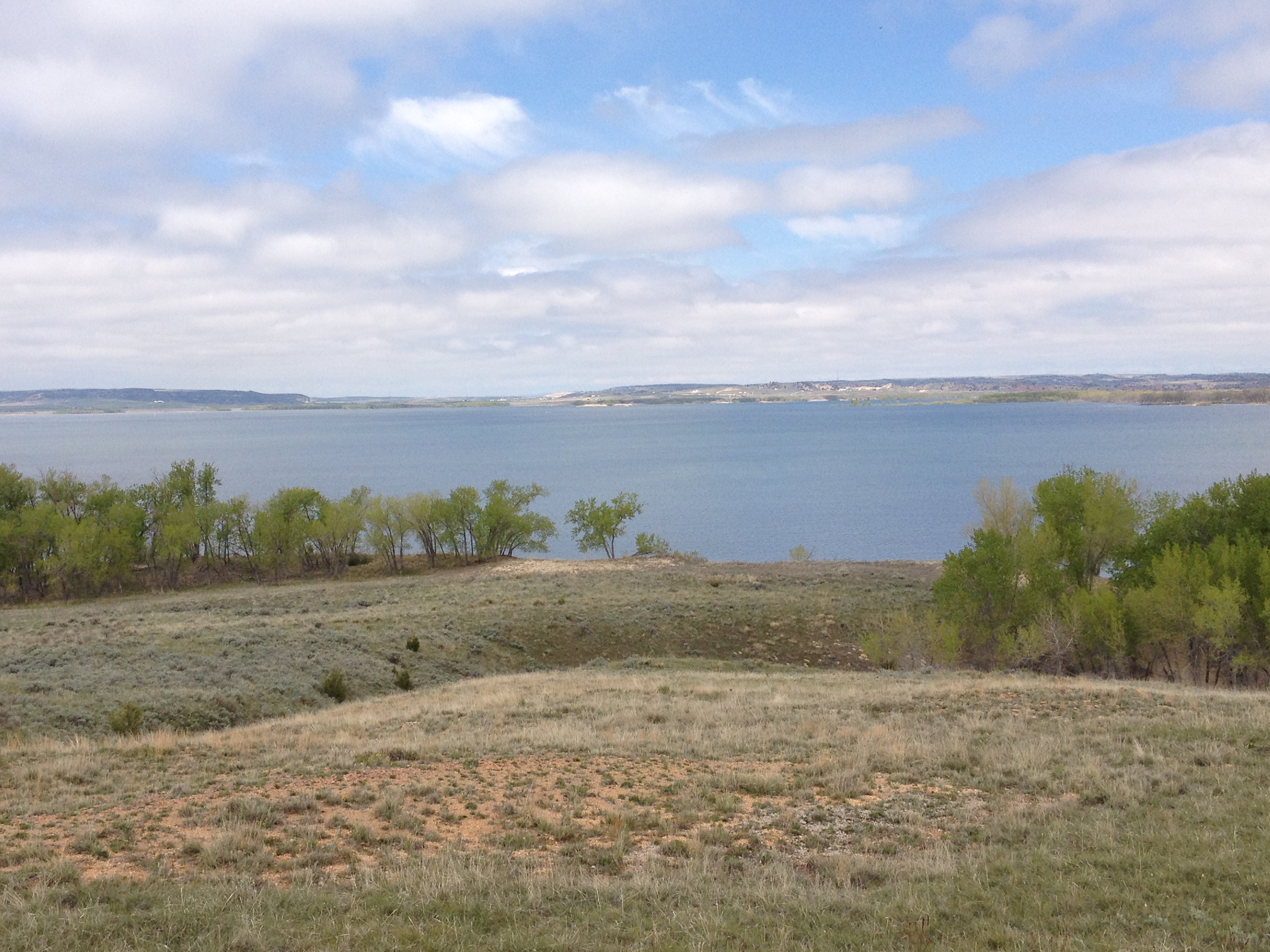
IMG_3445It is hard for me to really describe a place like Glendo Reservoir in East Central Wyoming.  It feels like this place is a complete contradiction of itself.    It is in Wyoming, a mountainous State with the second highest mean elevation in the country, at 6700 feet.  Yet, this reservoir sits at a paltry 4635 feet, lower than many of the larger cities of the Rocky Mountain region.  Unlike many of the other popular destinations in Wyoming, no mountains can be seen from here.

In fact, like many lakes here in the West, this particular lake is a Reservoir, meaning it is manmade and does not naturally exist.  Glendo’s average annual precipitation is roughly 14 inches per year, which is about what one can expect anywhere on the high plains just East of the Rocky Mountains.  Lakes like this one, and the even higher profile Lake McConaughy in Western Nebraska, exist only because of hydrological dams created in the 20th Century.  To anyone not thinking about the creation of these dams and the reason for them, lakes like these appear completely out of place for a section of the country that is quite dry.  The pioneers who followed the famed Oregon Trail during the westward expansion period of the 19th Century followed this very river westward through what is now Nebraska and Eastern Wyoming.  They would have seen none of these manmade lakes that now serve as popular weekend destinations for boating and fishing enthusiasts with few other places in the region to go.

In a way, this place does not even feel like it is in Wyoming at all.  When most of us think of Wyoming, or any other Rocky Mountain State, we think of destinations that are either in the mountains, or within view of the mountains.  Most Americans understand that there is much flatter terrain in the Eastern portions of Colorado, Montana, New Mexico and Wyoming.  However, these places are dry grasslands with abundant cattle ranches and oil fields, not the kind of place one would think to bring a boat, jet skis, kayaks, and fishing poles.

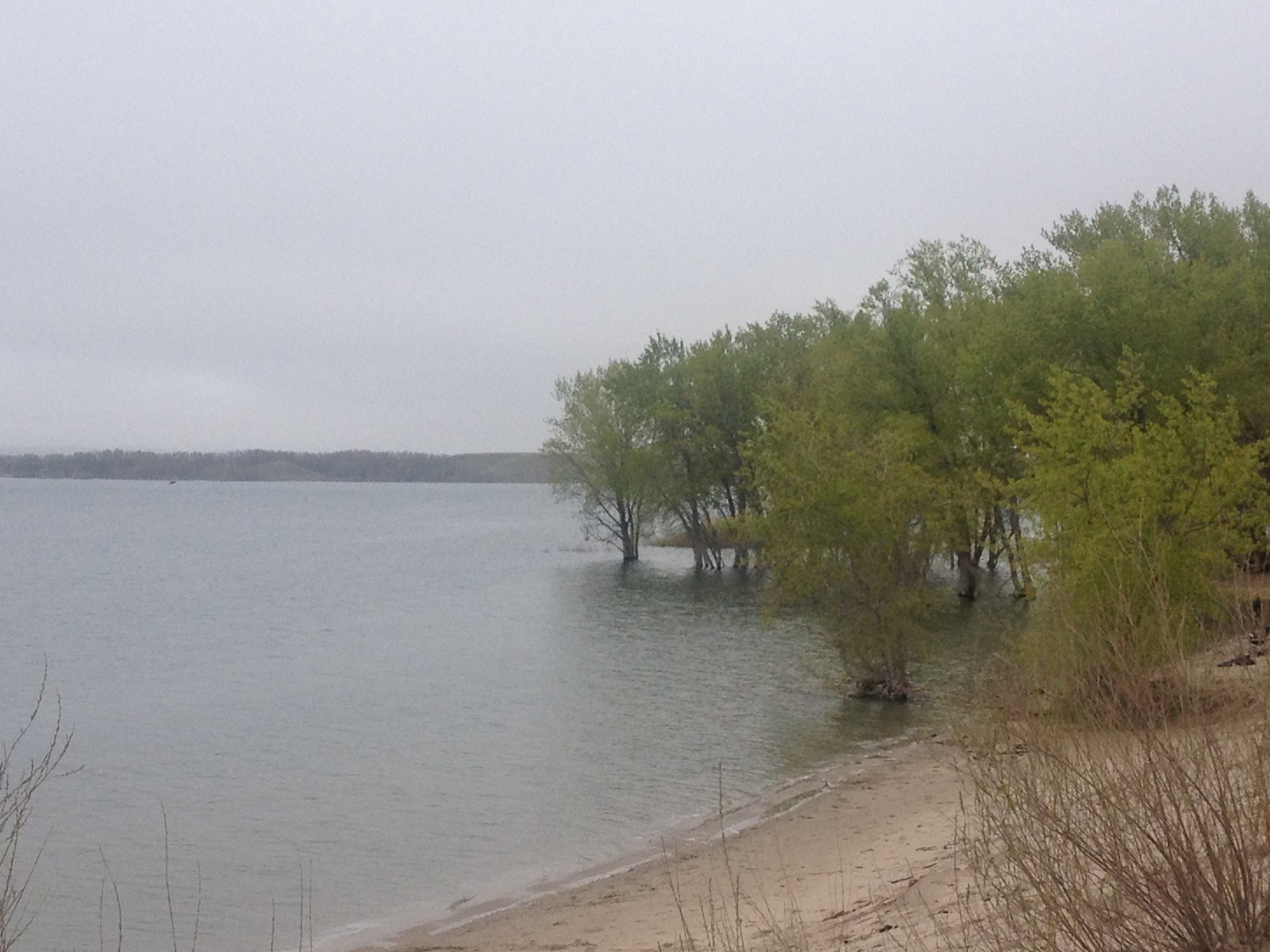
IMG_3425 IMG_3427Camping at Glendo Reservoir is already a bizarre experience.  Making the experience even more bizarre was the bizarre weather.  May had already been quite wet, with rainfall totals prior to Memorial Day Weekend more than double the monthly average for nearly all of Colorado, as well as the Southern half of Wyoming.  As a result, Glendo Reservoir was roughly 94% full prior to the weekend.  All over the lake, images like these were common, with trees that typically stand on dry land temporarily underwater.  The air was far more humid, and the skies were far more cloudy than is typically the case in Eastern Wyoming.

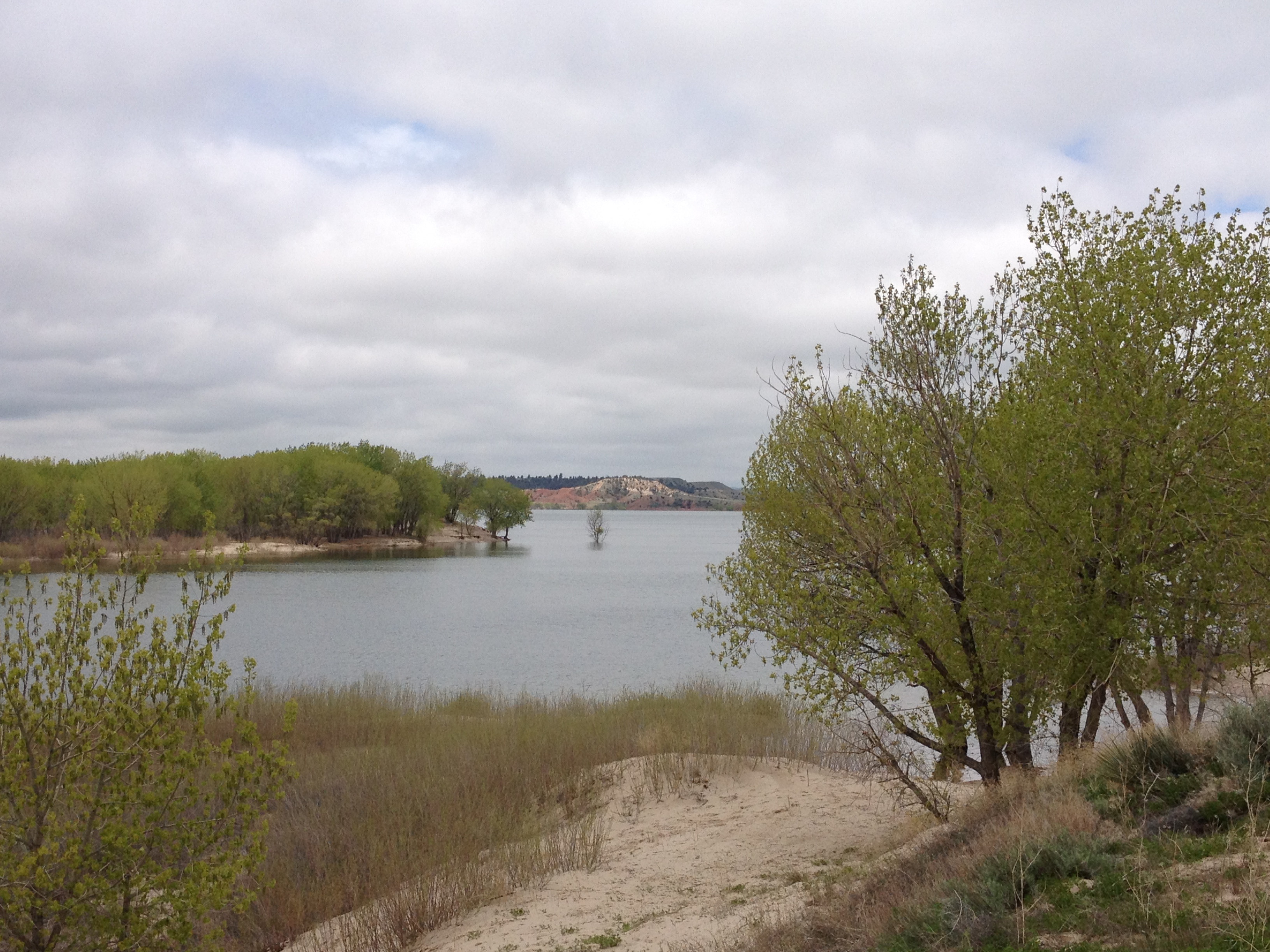
IMG_3428 IMG_3438The cool, damp overcast weather reminded me of the Midwest as a whole, as the entire region is prone to be damp and cloudy at times.  The size of the lake, however, reminded me specifically of Wisconsin, where I would frequently spend weekends on lakes roughly this size.  Bringing boats up to the lake on summer weekends is a major part of the culture there.  And, the sand dunes and trails that surrounded the lake reminded me of some of the dunes I would typically encounter on the Lake Michigan shoreline in Indiana and Michigan.  At times, it felt impossible to even remember that I was actually in Wyoming, and not in the Midwest.

After a fairly cold night of camping, we were able to have some fun on Saturday.  After a damp, foggy start, the skies gradually cleared throughout the morning hours, and temperatures reached comfortable levels.  During this time period, we were able to do some hiking on the sandy trails around the lake, hang out at the beach (another concept that seems foreign to the state of Wyoming), and even do some kayaking.  The water was quite cold, as the Lake is fed from the North Platte River whose origins are pretty high in elevation.

The rain did not start up again until 4 P.M., which was later than some forecasts had indicated.  Unfortunately, however, once the rain started, it came down quite heavy.  In fact, it actually ended up cutting the trip short, as, well, camping in the rain can be a less than enjoyable experience at times.  However, it was not the rainfall that pounded us in the afternoon and early evening hours that made me decide to leave Glendo behind on Saturday.  It was the expectation that the rain would continue throughout most of the day on Sunday that pushed me to leave, as enduring the evening of cold, wet weather huddled inside a tent would not produce a reward.  Those who decided to press on with the trip and stay at the campground confirmed that the rain was still falling Sunday morning.

IMG_3423

I could be disappointed in only getting one day at the lake this weekend.  But, unfortunately, that is part of the reality of taking part in outdoor activities as a whole.  People can make all the plans they want, but, in the end, Mother Nature really does not give a shit about whatever plans have been made.  The Earth, the sun, the air, and wildlife move about in a manner that we cannot truly control.  The best thing we can do is be prepared for it, both in the sense of remaining safe in adverse conditions, and in a way that allows us to use our most precious resource of all, our time, in a more optimal manner.

Thus, I decided to head back to Denver (home), where prospects for Monday, the final day of Memorial Day weekend, appeared better.  The decision proved to be the right one, as Monday morning was pleasant, and it did not rain until after 4 P.M.  I was able to get a solid bike ride in well before the onset of rain.

IMG_3449 IMG_3452

Life is full of unexpected experiences.  Nobody expects it to rain nearly every day in this part of the country, creating lakes where they typically don’t exist.  I did not expect to encounter a lake in the middle of nowhere in Eastern Wyoming or Western Nebraska.  And, people are often surprised that some of the people they meet like certain food, or genres of music that do not match their upbringing.  But, these anomalous experiences do happen, and happen quite frequently.  When we make expectations in life, we need to account for, and prepare for, uncertainty.

Mud Season

IMG_3372

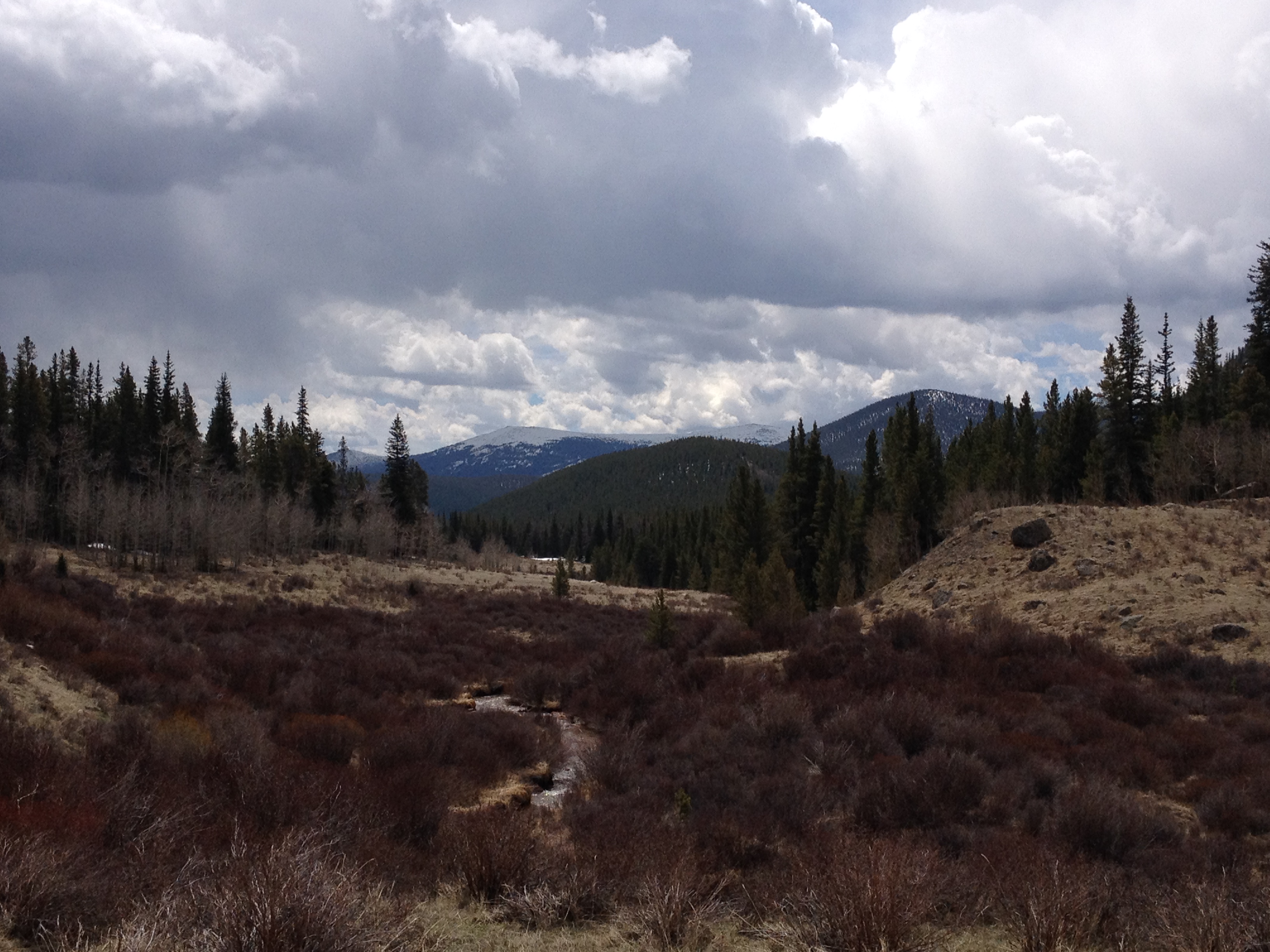
“Mud Season” is a term used to describe a time of year when a combination of melting snow and frequent rain can cause the ground to become muddy for an extended period of time.  The term originated in Northern New England to describe the first part of Spring in Maine, New Hampshire, and Vermont, when rural dirt roads are significantly tougher to pass through.  It is now used quite extensively in the Rocky Mountains as well.  Here, “mud season” refers to the time period between ski season and the onset of summer activities; basically most of April and May.  With a drier climate, Rocky Mountain “mud season” is not nearly as muddy as its New England counterpart.  But, the lull in activity produces similar results.

“Mud season”, no matter where you are physically located, is the outdoor recreation equivalent of a matinee movie showing, a red-eye flight, or well liquor.  Those who chose to travel during this time of year are rewarded with significantly cheaper hotel rates, much less traffic to contend with, and campgrounds that are significantly emptier.  However, as is the case with any other off-peak event, there is reduced demand for a reason.  And, there are tradeoffs.  Matinee moviegoers are giving up greater opportunities than those who pay more to see a movie at night, a red-eye flight can mess up sleep schedules, and well liquor can produce significantly worse hangovers.

IMG_3368 IMG_3371

The main reason camp sites are easier to come by here in the Central Rocky Mountains in late April/ early May is that, at 10,000 feet in elevation, conditions are still not optimal.  This past weekend, both Friday and Saturday nights saw temperatures drop below the freezing mark.  Camping in these conditions is far less comfortable.  It necessitates chopping more firewood, packing more layers, and sometimes even breaking camp with frost on top of your tent!

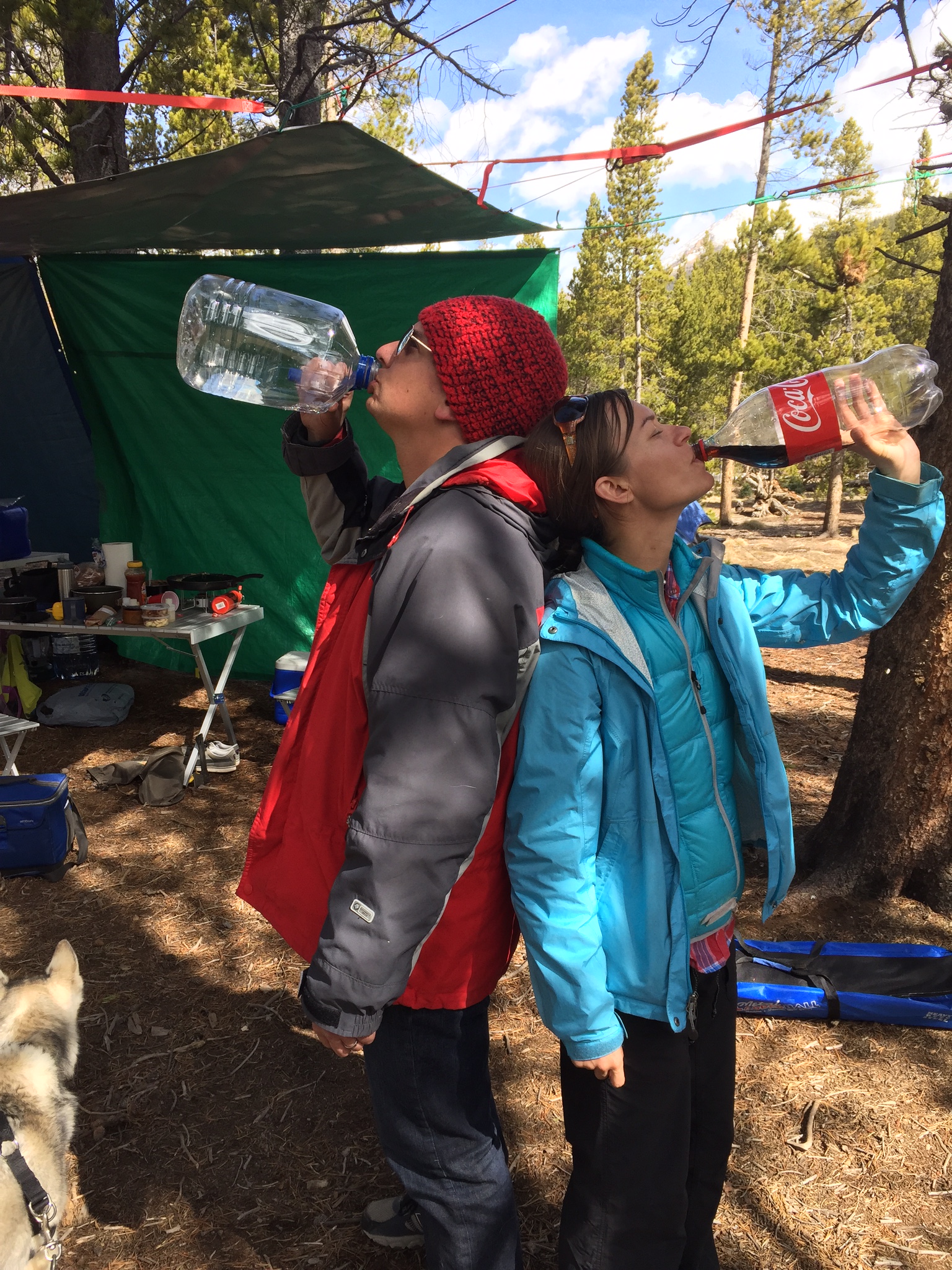
In my case, there were plenty of people around to handle campfire preparation.  This particular camping excursion was actually a multi-day birthday party.  And, at some point Saturday evening, there was around 20 people at the campfire.  It was a strange mix, being in a remote, secluded area away from civilization, but also being at a major social gathering.  We were out of cell phone range, miles from any town, and a significant distance from the nearest other campers, but also using battery powered speakers to play music at a significant volume.  It was a truly amazing experience!  I got to both be around a large group of people, but also wander into the woods and collect my thoughts in perfect silence, all in the same day!

IMG_3384

Social gatherings of these kinds are always somewhat of a balancing act.  At any social gathering like this, you will find people that will fit into the following three categories:

First, there are the people you are solidly friends with.  You have seen them sometime recently.  You have your shared experiences, your silly jokes and the like.  Most likely you have some kind of plan to see them again.  Maybe you coordinated rides with them, or even lost a silly bet on a basketball game several weeks ago.  That is what happened to me, and why I had to wear this silly sombrero for most of the weekend!

IMG_3406 IMG_3385

In the second category are people who you know, but not terribly well yet.  These are the people you would typically describe as “friends of friends”.  You’ve definitely had some experience with them.  They showed up at the bar last weekend, or the last house party you attended.  You’ve hung out with them, conversed, danced, played games at various intoxication levels.  And, maybe someday in the future someone in this category will eventually be a good friend.  But, with people in this category, the next time you will see them will be at another event coordinated by your mutual friends.

And, finally, there are the people you are meeting for the first time ever.

A balance needs to be had.  I find it important to engage with people that would fit into all three of these categories over the course of the evening.  You need to enjoy your time with your friends, but also be open to letting more people into your life.  It’s about sharing in the activities you know, reliving the experiences you have had, and continuing the ongoing jokes you already share, but also trying new activities, exploring new ideas, and creating new jokes in your circle.

I dabbled in the old, as well as the new.  I even tried, once again, and failed, once again, at mastering the art of wood chopping.  That silly sombrero I had to wear did not help.

IMG_3396

Let’s be honest, my form here, it looks terrible, and look at all of those silly little chunks of wood that ended up splattered all over the place.  At least the activity kept me warm.

As is the case with any off-peak activity, there are some cases to take either side of tradeoff.  Someone who works a non traditional schedule may financially benefit from seeing a cheaper matinee movie.  A red-eye flight may be a more efficient use of time for someone capable of dozing off on an airplane.  And, well liquor could be a good cheaper alternative for someone whose plan for the following day does not necessitate being alert.  During “mud season” in the Rockies, hotels are cheaper and camp sites are far easier to come by.  It is also way easier to find both privacy and seclusion.  To get to a place that is truly peaceful, one must travel less distance, and often spend less time in traffic to get there.  Therefore, for those not looking to mountain bike, climb a tall mountain, or use muddy trails, it may be worth the trade-off to come up to the Rocky Mountains during “mud season”.  And, like the person who is capable of falling asleep on an airplane, or those who work non-traditional schedules, some are more adept at handling the cold nights of “mud season”.

IMG_3405

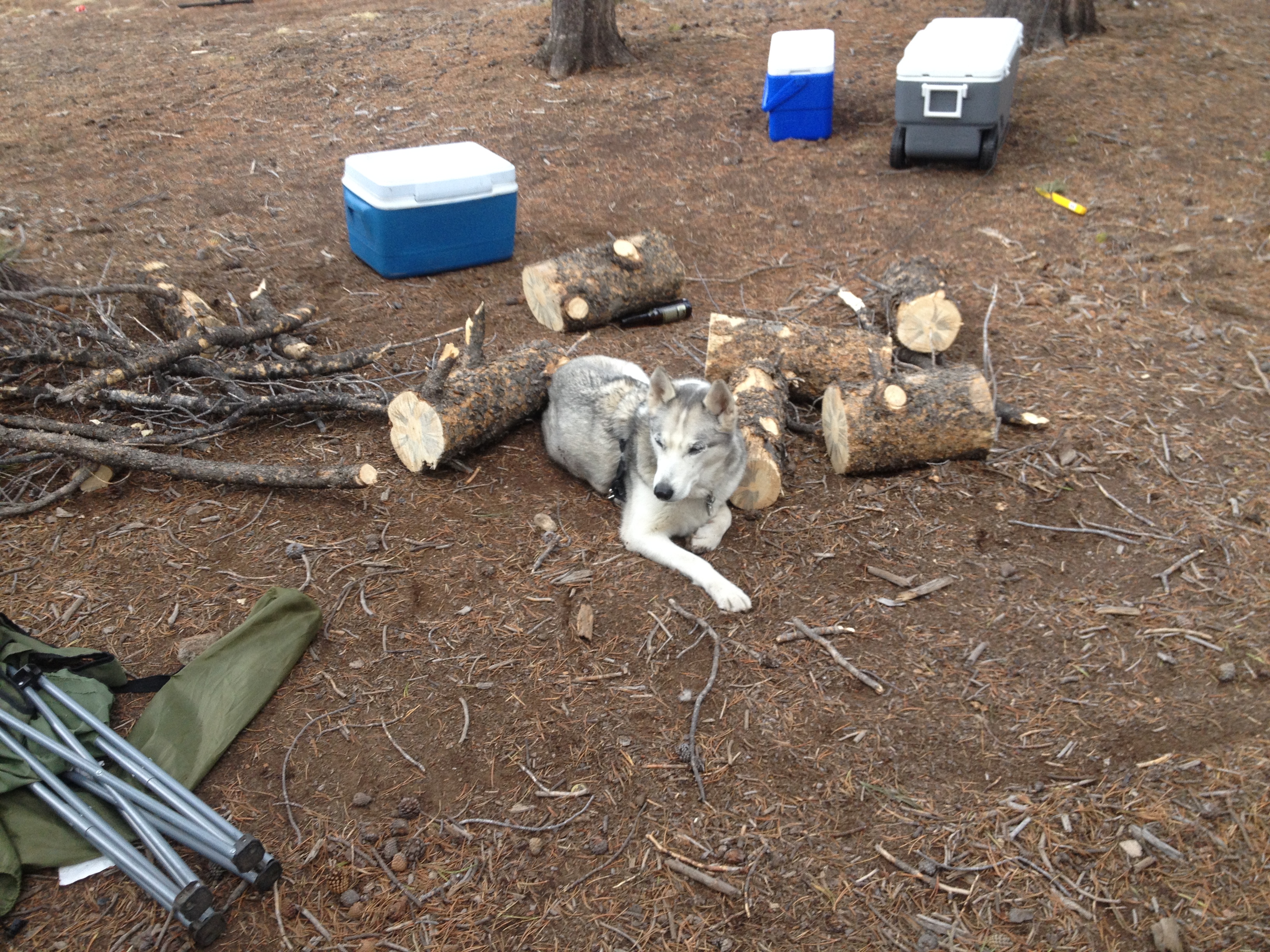
Like this Siberian Husky, who, if anything, feels at home in chillier conditions, there are off-peak opportunities out there for nearly any activity one engages in.  And, those who figure out the ones that are right for them, can save money, time and hassle.

A Weekend to Recharge

IMG_3103

It’s a day we all experience at some point in the winter season- some of us more than others.  A thick layer of low clouds blanket the sky in a manner that states in no uncertain terms that you will not be experiencing a single ray of sunshine for the entire day.  Temperatures hover somewhere in the 30s.  There is a cold, damp feeling to everything that makes anyone outside feel as if some kind of very light precipitation is falling.  But, nobody can really tell.  In fact, not only are we unsure whether precipitation is actually falling, we are not even sure what type of precipitation (rain, snow, other) we believe might be falling.  And, to be honest, it really doesn’t matter.  Because, the mood is already set, and that is one of a persistent cold, damp, and raw.  It is as if the world around you is telling you that you that today is going to be more subdued than most.  That today will not be the day you go on some kind of life changing adventure, achieve something major, or even make significant progress towards something.

There is a half a century old folk song whose lyrics go something like “a time for war, a time for peace, a time to laugh, a time to cry”.  I am not really 100% certain what they actually say in the song, but I know the entire song kind of discusses the cycles and sub-cycles of life in that sort of manner.  And, it advocates the recognition that certain actions, activities, emotions, etc. have their time and place, regardless of which ones we prefer, which ones we enjoy, or which ones we feel are more beneficial.

I have always been one to periodically look for ways to get the maximum utility out of one of the most precious resources we all have- time.  Implied in many initiatives we take to better our lives, including the goals I made for 2015 at the start of the month, is a better use of our time, commonly in the form of trying to select in favor of behaviors we consider a good use of our time and against behaviors that we consider a poor use of our time.  However, one thing I often fail to consider is that not every minute of every day can be spent doing something that we feel is significant.  Just as the cycles of life often take us to the next exciting adventures in our lives, the cycles of life will also tell us when it is time to slow down and recharge our batteries.  And, although I consider myself to be in the top quartile for energy levels in my age group, even those of us with high energy levels can run into times when it is depleted.  A time to rage, a time to mellow.

IMG_0245 IMG_1626

Sometimes it is hard for an energetic person to realize that the time to “mellow” has come.  For energetic people, this portion of the cycle of life can be frustrating, and, during down-times, I often find myself restlessly looking at bike routes and new travel destinations to consider in the near future.  However, this particular weekend, the time had come in no uncertain terms.  And, the weather, so raw, cold, and lifeless, only reinforces this fact.  It amplifies the mood.

Emotion and anxiety is a much more significant energy drain than many people realize.  In fact, I have found that at times emotions and anxiety can drain energy far more efficiently than strenuous physical and/or mental work.  There are plenty of times I remember bicycling 50+ miles, staying out partying well past midnight, or working hard to meet some kind of deadline, and still having an energy level the next day fairly close to normal.  However, I do recall several recent scenarios where drama, uncertainty, or allowing that part of your brain that worries about all things that can go wrong to stress me out about something have made me quite sleepy.

Along with the dull weather pattern, multiple emotional events over the past few weeks contributed to my need to take a weekend to recharge.  One of the hardest things to do is to say goodbye to a boss that you actually enjoy working for.  Two weeks ago, I found out that my supervisor, the man who hired me, has believed in me every step of the way, and genuinely respects me and my ideas, is departing.  This is hard to find in the workplace.

Work is not typically the most exciting thing people do in their lives.  There is a reason that movies rarely show a person manipulating data in a spreadsheet.  And, there is a reason I write a travel blog and not a work blog.  I’ve even seen some people that achieve the dream job they had set out to do from a young age, and still get burned out on it.  But, with good people around you and a good environment, the time that we spend at work can periodically be enjoyable and fulfilling, which is the most we can really ask for.

IMG_3100

This weekend, I am not just anxious about the uncertainty that comes with any change, but I am genuinely sad to see the man go.  And, while it is tough for an adventure-seeking extrovert like me to swallow a weekend of resting, and focusing on other areas of my life, there is a time for my focuses to remain within a 5 mile radius of home, and that time is now.  I am certain that 2015 will produce some amazing adventures, some of which I already have planned and look forward to.  But for now, all I can do is appreciate the opportunities I have received and do my best to make sure I continue advancing my career forwards without giving up on the most precious resource I have- who I am.

A 50 Mile Bike Ride in the Dead of Winter

I am not sure where the phrase “The Dead of Winter” came from.  In fact, I am not even 100% sure people still use that phrase (in 2015).  But, I do recall hearing that phrase growing up in both New York and Illinois, referring to the period of time from roughly New Years through President’s Day.

My best guess is that the phrase comes from scenes like this one appearing in many major Northern Hemisphere cities.  Trees having long since lost all of their leaves, the grass taking on a lifeless brown-ish color, and overcast skies combine to create a cold, lifeless image that can persist for long periods of time.

IMG_2940

No month epitomizes the depths of winter more than the month of January.  By January, most northern cities have already experienced a significant amount of winter.  Residents of these cities have typically been through a dozen or so days they would consider “very cold” (which does vary by city).  Also, by January, most cities have experienced their version of lousy winter whether, whether that be lack of sunshine, heavy snow, ice storms, that cold drenching rain, or some kind of combination of the four.  With the holidays over, if winter is going to wear you down, it will most definitely do so in the month of January, as it runs its course.

For many, winter (and particularly January) is something of a metaphor for a rough period of time, or a low point.  In American history, the winter at Valley Forge is remembered as a low point for the American Revolution.  Winter is also used periodically to describe low points in people’s individual lives.  With the chill, darkness, and frequent inclement weather, there is not only commonly more hardships, but also more limitations.

This is true even when mother nature offers periodic breaks from cold and gloomy weather.  After a cold start to 2015, the middle part of January brought warmer conditions to Colorado, including several consecutive days with highs in the 50s or 60s here in Denver.  And, while today ended up being one of the best possible January days for a bike ride, the amount of riding I could do was still limited significantly by the sheer fact that it is January.

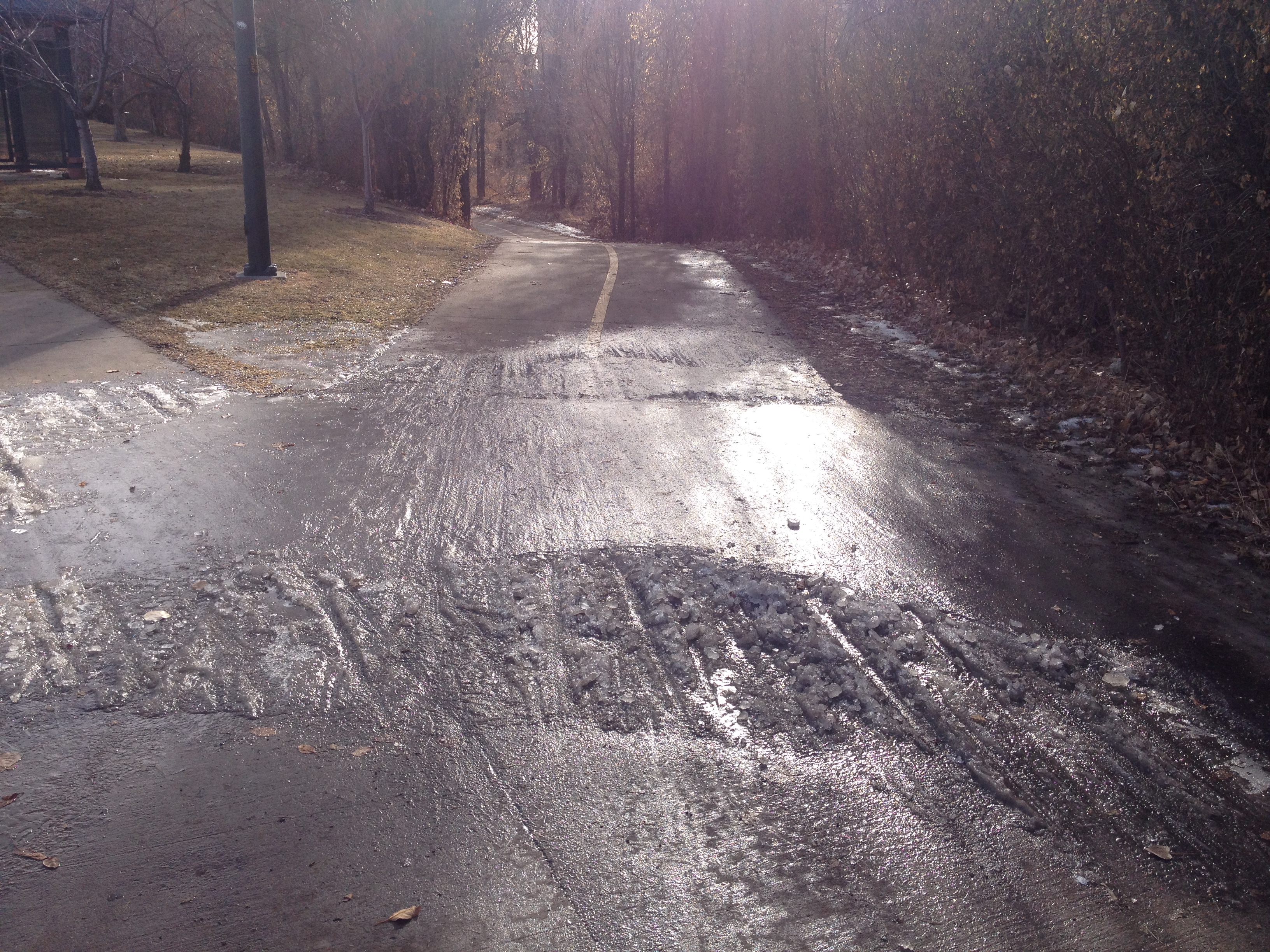
Even on a mild day, it is typically too cold to start riding at sunrise, the coldest part of the day.  As the day began with temperatures in the 30s, I waited until roughly 9:30 to begin my ride.  Even with this later departure, I still encountered significant amounts of water, and even ice on the trails.  In several sections, I needed to stop and dismount my bike for safety reasons.

IMG_3018

The mere possibility that ice like this will be present on the trail also makes it extremely unsafe to ride after dark.  With sunset occurring right around 5 P.M. at this time of year, the window of time for a bike ride is significantly shorter than it is in other season.

IMG_3025

Another major limitation to what places I can bike to in January is the wind.  In winter, wind can be quite unpredictable, and can lead to unexpected slow-downs.  Also, higher terrain can get quite windy, even on days where there is little to no wind in town and in the river valleys.

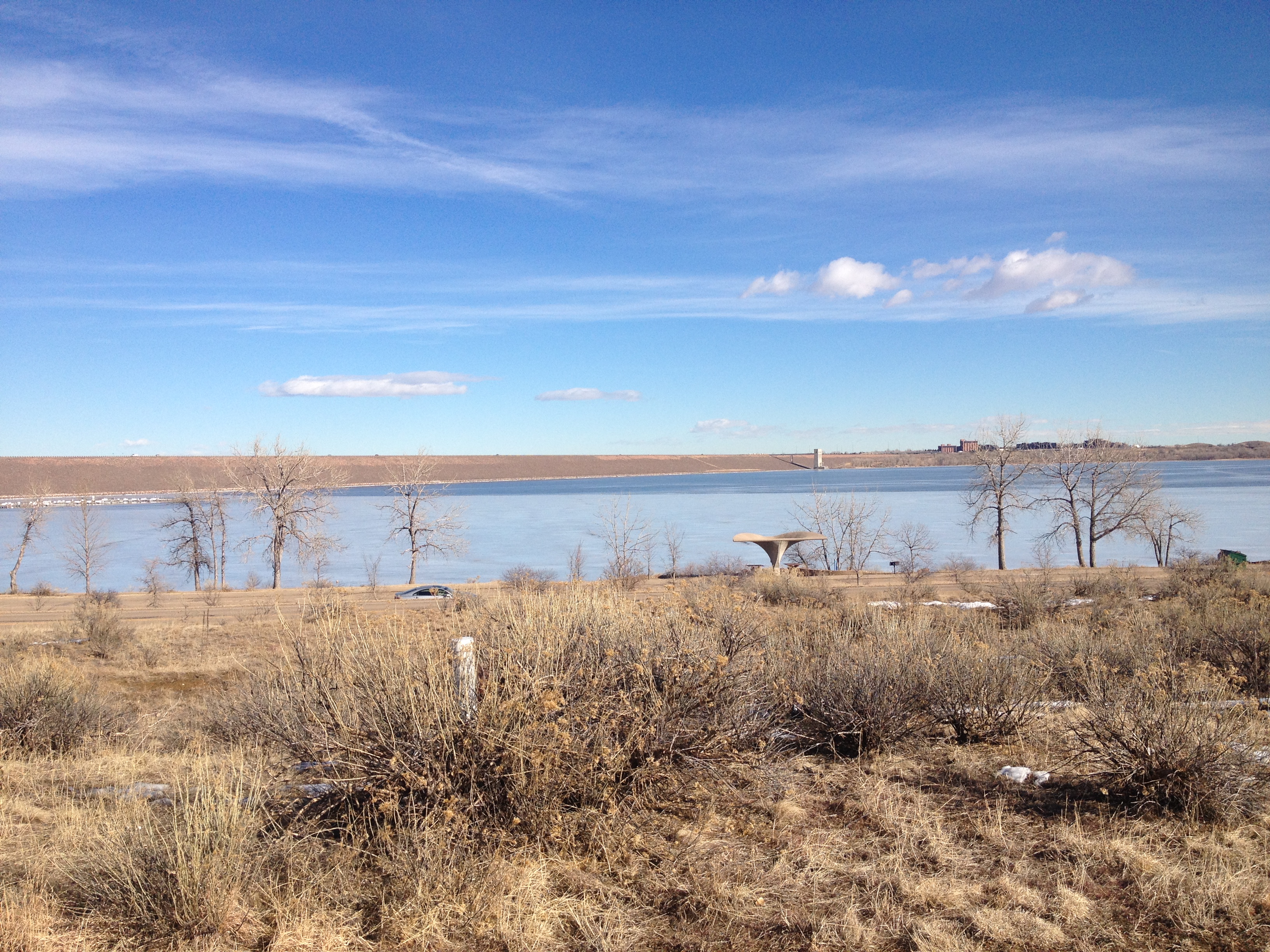
Therefore, I decided to ride up Cherry Creek trail, and make the 50-mile round trip ride from Denver to Parker, an exurb 25 miles to the Southeast.

IMG_3019 IMG_3020

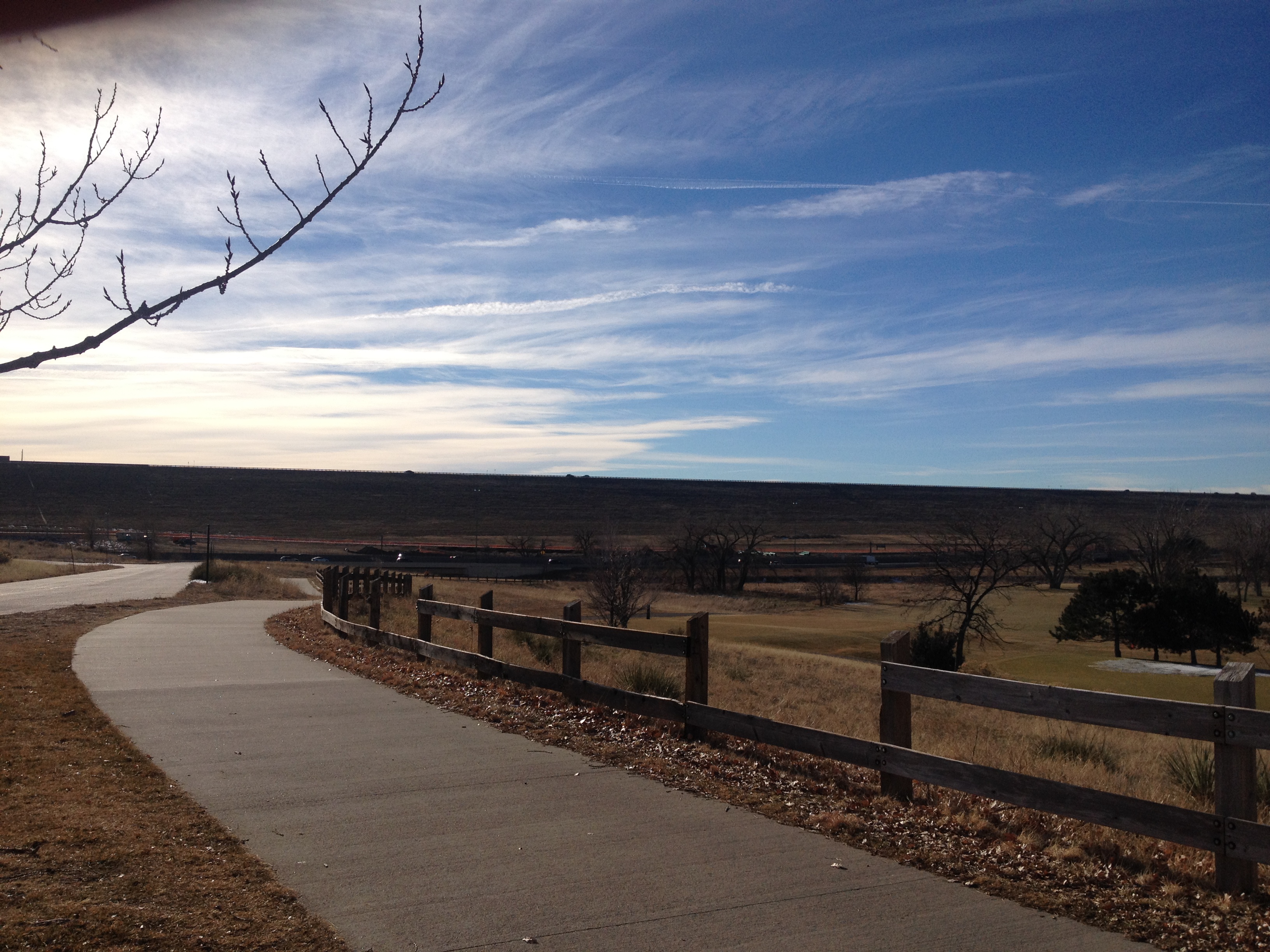
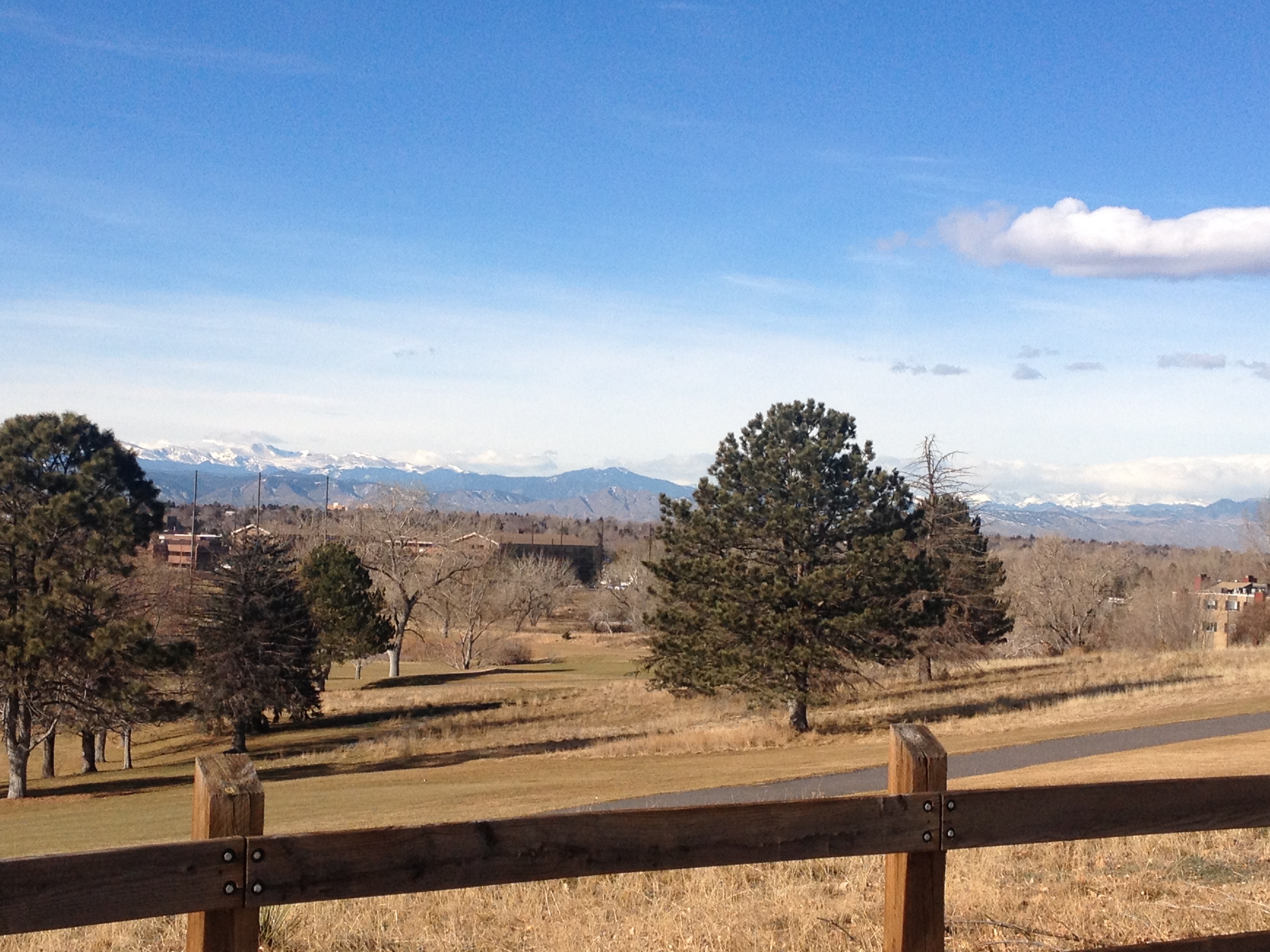
Despite the slow-downs associated with random standing water and ice on the trail, I was still able to reach Cherry Creek Dam in roughly 45 minutes.  Here, the only “climbing” portion of the ride appears in the distance.  For those with little to no “climbing” experience, the uphill sections can actually be a bit exhausting.  However, for anyone that has previously ridden up a mountain, or a large hill, the climb up the hill is quite tame.  With the mountains still appearing in the distance, there is a clear reminder that even after a mild stretch of weather, climbing too high in elevation would also lead to slippery conditions.  In essence, this “climb”, although quite tame, is the most significant climb one can make safely in the month of January.

IMG_3023 IMG_3024

Behind the dam, the trail winds around Cherry Creek Reservior.  Only half covered with ice (and probably thin ice), I am relieved to see nobody trying to ice fish, or stand out on the lake at this time.

IMG_3028 IMG_3029

With some amount of wind, and having not ridden a significant amount of miles in one sitting in quite some time, I ended up taking it a bit slower on the trail today than I normally would have in mid-summer.  As a result, it ended up taking me nearly another hour to reach Parker, where the 470 trail, another major trail in the metro Denver trail system, terminates at the 40-mile long Cherry Creek Trail.

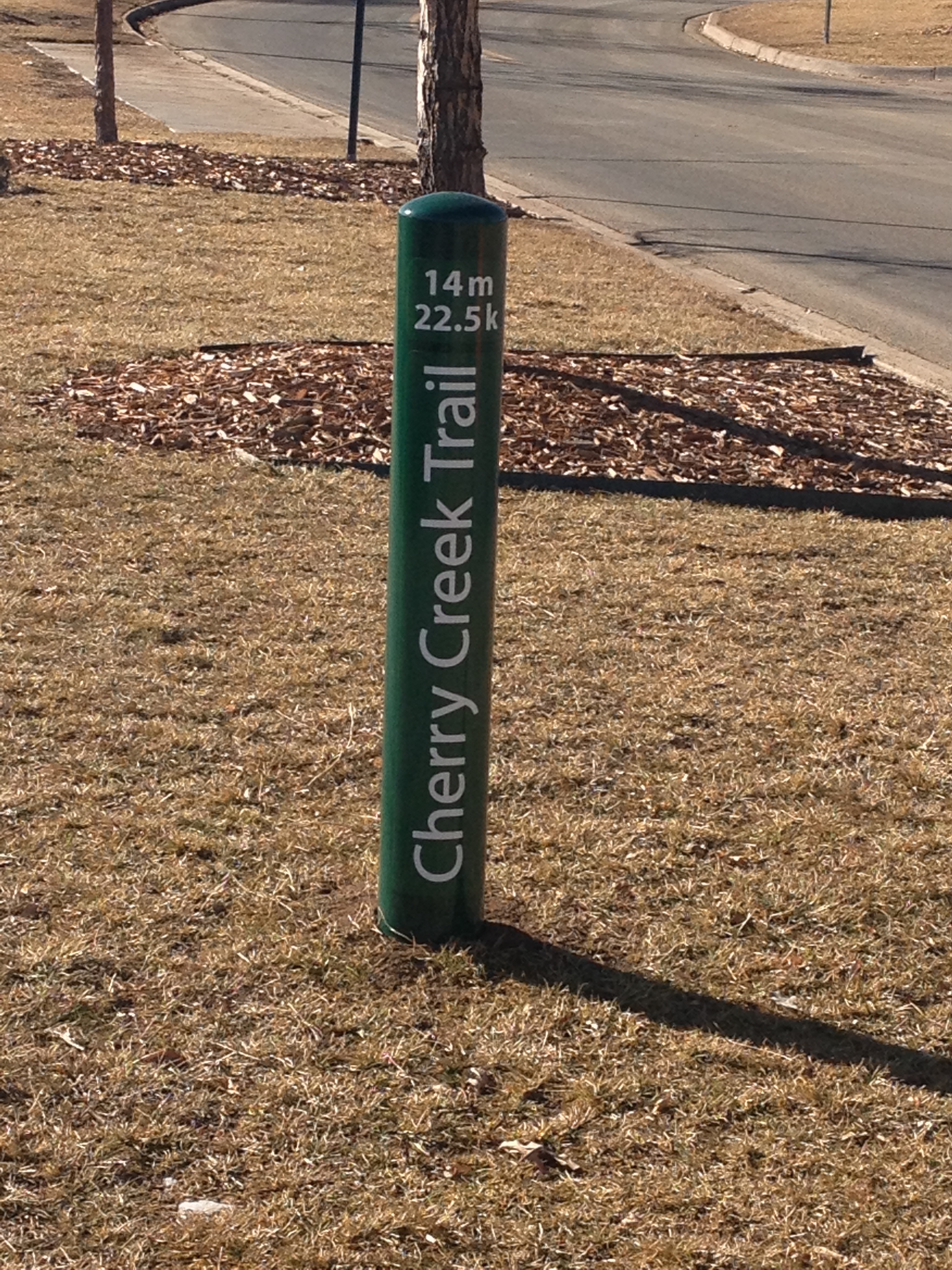
And, while it took me a bit longer than normal to ride 25 miles, not exhausting myself to achieve a better time had it’s reward.  Neither overly exerting myself, nor traveling too slowly, the return trip flew by!  Mile after mile passed, almost as if I was living out a montage of my own life.  I passed mile 25, 24, 23, winding around, smiling at nearly every person I passed by as the wind, and my direction shifted back and forth.

IMG_3030 IMG_3022

Before I knew it, it was mile 15, 14, 13.  On a typical ride, exhausted at the end of the day, I am anticipating each mile, and tracking how far I am from home.  Today, I achieved somewhat of a state of euphoria.  I almost feel as if I had achieved the “runners high” often discussed (albeit on a bicycle, as opposed to running).

In the end, despite my slower than usual pace, I thoroughly enjoyed the ride, and was actually only passed on the trail once!

For those wanting to take advantage of a mid-winter warm-up, and get on the trail (or roads), I offer the following tips

  • Plan extra time (maybe half an hour) for your ride.  There is a distinct possibility that mud, ice, or snow on the trail can slow you down, as well as unexpected winds.  It is not safe to ride at night, and it will get cold again.  You are better off taking on a goal that would be considered modest during the warm season than ending up in trouble.
  • Listen to your legs.  I know “shut up legs” is a popular poster to hold up at long distance rides, but often times a ride can be done more effectively if you allow yourself to downshift when the ride feels exhausting.  This may mean being on a specific segment of trail, or road, in a lower gear than what you would typically be in.  But, maybe that combination of the 5 pounds you gained over the holidays, and that 8 mph cross-wind is enough to warrant being one gear lower.  It is best not trying to exhaust yourself early just to be in your usual gear regime.  That being said, there also may be opportunities to shift up and go faster where there is an unexpected tail wind.
  • Don’t shy away from undertaking a major bike ride immediately after a hard day of skiing.  Cycling uses mostly different muscles than skiing, and I have been surprised by how little recent hard core skiing has impacted my cycling performance on rides like the one today.

A Stormy January Weekend in the Mountains

2015 is already off to an adventurous start for me.  This past weekend, the first weekend of the new year, I had the opportunity to accompany some friends on a trip to their cabin in Alma, Colorado.  Alma is the highest incorporated municipality in the United States (with permanent residents).  It is about 15 miles South of Breckenridge Ski Resort along state highway 9.  However, between Alma and Breckenridge lies a mountain pass, called Hoosier Pass, as well as the Continental Divide.

Still, visiting Breckenridge ski resort is significantly easier staying at a place like this than it is driving up there from Denver in the morning.  Not only is the distance much shorter, but there is no need to plan around the traffic patterns along I-70.  On a typical weekend day in Colorado, skiers traveling along I-70 from Denver to the area ski resorts must leave by around 6:00 A.M. to avoid significant delays.  The trek from Alma up to Breckenridge is typically only delayed by weather, and even if delayed will take significantly less time.

IMG_2997 IMG_2998

Unfortunately, this past weekend turned out to be one of those weekends.  Waking up Saturday morning (after driving up from Denver Friday evening), I was amazed by the views from the cabin!  The cabin, which is located in town, and walking distance from the town’s main street, sat on the side of a hill, with forests around it in every direction.  However, I was also startled to see some low clouds appearing to our North, the very direction we needed to travel to get to Breckenridge.

The ski day was kind of a mixed bag.  With a significant amount of recent snowfall, the snow was in really good shape- neither icy nor “skied off”.  However, as the day progressed, the snow began to pick up, and so did the wind.  With temperatures in the mid to upper teens most of the day, and winds picking up to about 15 mph, the wind chills were commonly near 0!  This, along with the sensation of snow hitting me in the face at high speeds (especially on faster trails going 50 mph), made the conditions less than ideal.  In the end, we decided to do slower runs in the trees, and still ended up with a really good day of skiing.

This weekend’s weather caught us by surprise– partially.  I know it is quite dangerous to be in the mountains when a major storm hits.  And, when a major storm is on it’s way, I tend to stay home.  However, this weekend’s storm was quite minor by Colorado standards.  48 hour snowfall totals across most of the region were only a couple of inches, not enough to make me reconsider any plans.  However, an area of heavier snow happened to occur right over Breckenridge.  The map below indicates snowfall totals this weekend.  The one little “bullzeye” of snowfall exceeding 6″ is located right over Breckenridge!  So, we were impacted by the most significant part of fairly minor storm system.

CO_Precip_2015_1_03_04

This made for a treacherous drive back over Hoosier Pass at the end of the day.  However, when we got back to Alma, it was not snowing at all.  In fact, the vehicle left at the cabin did not have any snow on it, and we did not have to shovel snow in front of the cabin.

In many parts of the country, seeing such drastic differences in weather conditions over the stretch of only 15 miles is quite a strange occurrence.  However, up here in the mountains, it is actually quite normal due to the impact the topography has on storms coming through.  Alma is considered part of South Park, a flat region of Central Colorado with elevations near 10,000 ft.  Due to it being surrounded by mountains in all directions, this region is significantly drier than other parts of the state.  The town of Breckenridge, at 9600 ft. in elevation, is actually more than twice as likely to receive significant precipitation in the winter than the South Park area, and receives more precipitation all year round.

co_precip_Breck_Alma

When selecting a home, whether it be a permanent residence, or a second home (vacation home), there are many factors to consider, one of which is location.  This weekend, with it’s kind of moderate snow event, provided a good showcase of both the advantages and disadvantages of choosing a place like Alma to have a cabin.

The major advantage seems to be how much you get for your money.  This place we stayed at is quite nice.

IMG_3006 IMG_3001 IMG_3002

It has three levels, each with it’s own sizable bedroom.  Each one has a different theme appropriate for the mountains.  The middle floor has a large kitchen, dining, and entertaining area.  And, perhaps one of the best features is the water heaters, which provide so much hot water that one can take a lengthy hot shower after a long day in the snow without having to worry about running out of hot water.  Overall, it is way more luxurious than any place I had stayed at closer to the ski resort.  I can imagine a place like this closer to one of the major ski resort being significantly more expensive.

However, the drive over Hoosier Pass in the snow was a clear demonstration of the downside of choosing a location like this.  Those with second homes in town would not have to travel too far to get to the resort, and not have to deal with icy roads and dangerous conditions.

IMG_3009

In addition, from this location it is also significantly less convenient to reach some of the other major ski resorts in the area, particularly Vail, Beaver Creek, and Copper Mountain.

Of course, the entire construct of this tradeoff implies a passion for skiing, because it is this passion for skiing that largely forces the pricing of these second homes in Central Colorado.  For those who prefer other activities, Alma, and the rest of South Park is quite an attractive location.

In the summertime, it is quite easy to reach tons of great hiking trails, including about a dozen “14ers” (peaks of 14,000 feet or higher).  And, a straight shot down an easy to travel highway is Buena Vista, the site of the most popular whitewater rafting river (the Arkansas River) in the country.  Finally, for those who just like solitude, the town’s population is only 270.

Due to the uncomfortable conditions, we decided not to ski again on Sunday.  Rather, we slept late, and made a leisurely journey back to Denver avoiding any traffic delays that could have built in the afternoon.  It was the prudent choice, even if we theoretically could have pushed ourselves a bit more.  Part of life in the mountains is having to accept some last minute changes in plans based on highly variable weather conditions.  So, in a way, changing up the plan for Sunday was part of an authentic mountain experience.


Early Season Skiing

IMG_2876

Winter is on its way!  And, unlike in many other parts of the country, here in Colorado, the arrival of winter is highly anticipated by those who love snow and snow related sports.  At the highest elevations in the mountains of Central Colorado, snow is possible at any time of year.  However, it is not until November when consistent snowpack can be expected at elevations between 8,000 and 12,000 feet, where most of the major ski resorts reside.

For those who truly love skiing or snowboarding, November often becomes somewhat of a waiting game.  This year, the snow was late to arrive in the mountains of Colorado.  The image below shows the snow pack in the Central Rocky Mountains on November 1st, 10th and 22nd (left, center, and right).  As indicated by this image, the month started with virtually no snow in the mountains, as October was quite warm.  However, a major shift in the weather pattern around Veterans day (Nov. 11) brought with it much colder weather for most of the Nation, and significant snowfalls to the Central Rockies.  The mountain snowpack in Colorado is now closer to the average for this time of year, and the ski resorts have finally been able to open up some of their trails.

http://www.nohrsc.noaa.gov/snow_model/images/full/Central_Rockies/nsm_depth/201411/nsm_depth_2014110105_Central_Rockies.jpghttp://www.nohrsc.noaa.gov/snow_model/images/full/Central_Rockies/nsm_depth/201411/nsm_depth_2014111005_Central_Rockies.jpghttp://www.nohrsc.noaa.gov/snow_model/images/full/Central_Rockies/nsm_depth/201411/nsm_depth_2014112205_Central_Rockies.jpg

It wasn’t 100% my decision to begin my ski season this past Saturday.  When is comes to activities like this, decisions on when and where to go very rarely truly rest in the hands of one individual.  Functionally, the decision to ski, or take part in any kind of activity in the mountains, is always partially dependent on the schedules of all of the people involved, and partially dependent on the weather.

Saturday’s conditions at Keystone were not too terribly uncommon for early season skiing.  As previously mentioned, snowpacks are now close to the typical amounts for mid to late November.  However, more recently, the weather warmed up.  And, as is not too terribly uncommon for those who try to ski prior to Thanksgiving, temperatures were above freezing by mid-morning on all parts of the mountain, and reached well into the 40s at the base.

One of the biggest issues with skiing this early in the year is that typically not all of the trails have opened yet.  On Saturday, most of the trails on the main part of the mountain, Dercum Mountain, were open.  However, most of the rest of the mountain remained closed.  The result was that a higher volume of skiers and boarders were concentrated on the part of the resort that is open.

IMG_2877

The lines for the ski lifts were quite long all day long.  At the start of the day, snow conditions were quite good.  However, they would deteriorate quite quickly.  Despite the fact that the mountain’s overall patronage was just over half what one would expect on a typical weekend day in January or February, by early afternoon much of the opened parts of the resort had become both crowded and “skied off”.

IMG_2879

“Skied off” refers to the conditions that occur after thousands of skiers and boarders have already gone down the trail, and moved the snow around as they make their turns.  On more powdery days, the snow will often clump up at various portions of the mountain.  On a warmer day like Saturday, after this large of a volume of skiers have traversed the mountain, it is pretty common for parts of the mountain to become icy- especially in the steeper areas where more turns are being made and more snow is being pushed down the mountain.

In either circumstance, the conditions become less favorable.  In fact, there is somewhat of a divide amongst skiers in the area, with some electing to wait for more enjoyable conditions, and others still believing the trip up to the mountains to be worthwhile.

It has frequently been pointed out to me that although these conditions are far from optimal compared to what can typically be found in Colorado, many other parts of the country cannot be so choosy.  Those that have skied a significant amount in the Northeast or Mid-Atlantic will often describe a day like Saturday as a “typical day in New England”.  Some have even said that despite the iciness and crowds, these conditions are better than what they typically see in that part of the country.

In the evening, I returned to Denver to see Warren Miller’s film No Turning Back screened at the Paramount Theater.  The film featured extreme skiing and snowboarding adventures in various parts of the world.  They included incredibly steep terrain, major jumps, and tricks that are undoubtedly life threatening.  The people featured in this film were definitely amongst the craziest and most daring in the sport.  These are the skiers that would generally not be able to enjoy skiing at a resort on a day like Saturday.  Their experience and appetite mandates more; better conditions, more challenging terrain, and, much more significantly, more effort to reach their ideal venues.

I can see some parallels in some of the skiers and boarders I have encountered in Colorado.  I have heard people say that they can only truly enjoy skiing if it is a powder day.  And, others that stick to back country skiing and hike-to-terrain, both of which require a much greater effort than simply riding on the ski lift or gondola.  Maybe this just comes with experience, and improving at something.  But, although the moves seem quite bad-ass (for lack of a better way to put it), and I know that the skiing I do will never be something that warrants viewership by an audience, I can’t help but feel like the people in this film are more limited in some ways.  These extremely experienced skiers and boarders have overcome limits regarding challenge, but in turn, have new limits, as they are now limited by finding ideal conditions, and ideal locations.  These are limitations I still live without, and being able to enjoy skiing Keystone on Saturday November 22nd is a clear demonstration.

On Wisconsin

After spending a weekend in the Caribbean, I returned to a completely different world than the one I had left.  Prior to my trip, it had been autumn, with the mix of some relatively warm, but also some chillier days that typically marks the middle part of the fall season.  In fact, much of the Western U.S. experienced a warmer than usual October; a pattern which had extended into early November.  As I returned to the mainland United States, a gigantic push of unseasonably frigid air was rapidly descending upon most of the country from Canada.  Between the warmer than normal fall weather I had been experiencing prior to my trip, and the warmth of the Caribbean, I was certainly unprepared for this sudden weather transition, and far from thrilled to be experiencing weather more typical of mid-winter than mid-November.

This frigid weather pattern had firmly established itself by the day of the big game which I had planned to attend; Wisconsin’s home game against the Nebraska Cornhuskers.  And, while I had known that frigid weather was a distinct possibility for a November 15th football game in Wisconsin, I also knew that this would be a critical game, and probably the most ideal weekend for a trip back to Wisconsin to see the Badgers play.

IMG_2860 IMG_2870

While a part of the Midwest, the State of Wisconsin has a culture that is quite unique from all of the states that surround it.

IMG_2855 IMG_2856

While much of the Midwest likes to drink, seemingly more than the rest of the country, Wisconsin takes it to a whole different level, often being reported as the #1 state for “binge drinking”.  During my time living in the Midwest, I observed drinking in the state of Wisconsin at a larger subset of all occasions, and in larger quantities than anywhere else.  In fact, recently Wisconsin Public Radio did an entire series addressing the alcohol culture in Wisconsin.

Another tradition in which Wisconsin takes quite seriously is the Friday Fish Fry.  The extent in which this tradition is observed here highlights Wisconsin’s Catholic and Lutheran heritage, as well as the obsession with fishing here.  Like the consumptions of beer, cheese, and encased meats, the Friday Fish Fry is fairly common in other Midwestern states, but taken to a new obsessive level in Wisconsin.

IMG_2859 IMG_2862

One other thing Wisconsin knows how to do is tailgate.  In downtown Madison, in the vicinity of Camp Randall Stadium, nearly every parking lot with available space is filled with people drinking, grilling, and playing games in preparation for the game.  The tailgating experience here is somewhat different than in most places.  Tailgating at most stadiums generally involves parking in the stadium’s parking lot a few hours prior to the game; with people bringing their coolers, grills, food, and games out of their vehicles.

This past weekend, although we arrived downtown nearly four hours prior to game time, we were forced to park roughly a mile away from the stadium (as well as the tailgate).  At the tailgates here, there is a much higher ratio of people to cars than is typical.  It seemed like only the organizers of the tailgate, who likely arrived quite early in the morning, had vehicles in the lot, with the rest of the lot’s space available for people, tents, games, and a significant number of port-a-pottys to accommodate the excessive drinking that takes place at these events.

I attended a tailgate that I can only be described as “professional tailgating”.  It included a several table long buffet of food, tables for games, a television showing other games in the Big 10 conference, a sound system with multiple speakers, and even a heated lamp!  The organizers even brought in their own port-a-potty and handed out pieces of orange tape to attendees to ensure that those coming from outside their tent did not use it.  I was quite amazed!

IMG_2863 IMG_2866

Despite the chill, it felt good to be back at Camp Randall Stadium, a place where I had watched dozens of Wisconsin football games while attending the University.  Despite many of the changes that have occurred over the years, the stadium itself, and the experience of attending the games, was practically the same as it was back then.  Although, we did not do the crazy set of “waves” (standard, slow, fast, reverse, and then split) that I had recalled.  Well, maybe I just don’t remember it.

The game actually turned out to be a bit of a blowout, with Wisconsin winning 59-24.  Our running back Melvin Gordon set the all-time single game rushing record at 408 yards, and it began to snow halfway through the 3rd Quarter.

IMG_2869

Despite this, we did not leave the game early.  And not too many people did.  Maybe some Nebraska fans did.  But, it is something that Wisconsin fans do not really do.  Surprisingly, my buzz (from the tailgating) did not ware off despite not drinking at all during the game.

Like so many evenings I remember in Madison, the evening involved multiple bars and lasted until bar time … or some time around that.  Just as I remembered, the drinks here are made quite strong!  In fact, even at the places that I had previously thought of as making “weak” drinks, the drinks felt quite strong compared to what I had now become used to.

It was my third consecutive weekend of partying hard.  First, over Halloween, I threw a party at my place.  I was in a setting that consisted of a fairly large number of people, nearly all of whom I was already quite familiar with.  The following weekend, at Saint John Island, I was around almost all people I had not previously met.  This past weekend, I attended the game with a group of six people (including myself), only one of whom I had not met before.  However, out at the bars on State Street, I interacted with a significant number of complete strangers.

The past three weekends I had been in three different settings, both geographically and socially.  I managed to have a great time and be what I consider the best version of me.  It is the version of me that I become when I do not let the anxiety that comes from various life events and situations to get the best of me.  It is the me that is energetic, enthusiastic, confident, and welcoming to all around me.  It is the version of me that seems to make others around me happy, and the way I am when I am having the best times of my life.  It is this version of me that I wish I could be at all times.

Unfortunately, there are times when I do not live up to this standard.  As, sometimes I let some kind of anxiety, frustration, or insecurity prevent me from truly enjoying myself.  Having avoided these pitfalls in three different settings gives me hope that I have overcome some of these anxieties, insecurities, and frustrations.  However, I have no way of being certain of what the future holds.  At this time, all I can do is be happy that I have had the opportunity to have been the places I have been over the past few weeks, and hope for the best for those around me.

Bergen Peak; Beating the Weather

IMG_2266

If anyone were seeking my advice about living in Colorado, amongst the topics I would address would be the weather.  One thing that differentiates Colorado’s day-to-day life from life in many other places is how significant of an impact weather can have on daily activities, and how imperative it is that Colorado residents pay attention to weather and weather changes.  Colorado, being an outdoor oriented place with significant weather changes on many different time scales, is a place where residents find their plans impacted by weather significantly more often than in most other places.

Today was one of those days.  Weather forecasts called for significant thunderstorm chances along the Front Range of the Rocky Mountains starting at 2:00.  This is not too terribly uncommon for this time of year.  As a result, it is a fairly common practice to begin all hikes in the mountains at this time of year early in the morning.  This lead me to wake up at 6 AM in order to complete the 9.6 mile round trip hike of Bergen Peak prior to the anticipated onset of thunderstorms.  The frequency in which people begin their activities early has implications beyond those activities.  It is fairly certain that a significant number of people forgo Friday and Saturday night activities in anticipation of early morning hikes.  Some even head up to the mountains the evening prior to their anticipated activity in order to save time.  The end result; less people out at bars and more people at cabins and campgrounds on any given Friday or Saturday night at this time of year.

IMG_2254 IMG_2255

Getting to this trail-head is actually quite easy from Denver.  Overall, the drive takes less than an hour, and it does not require any off-road type driving.  While the best route is along Interstate 70, the exit is far enough East that one could drive here from Denver without contending with the parts of the highway farther into the mountains where weekend traffic delays are common.  This hike is both moderate in intensity (elevation gains and such), and quite well marked.  This is possibly because the trail is often open to, and is quite popular with, mountain bikers.

IMG_2260 IMG_2263

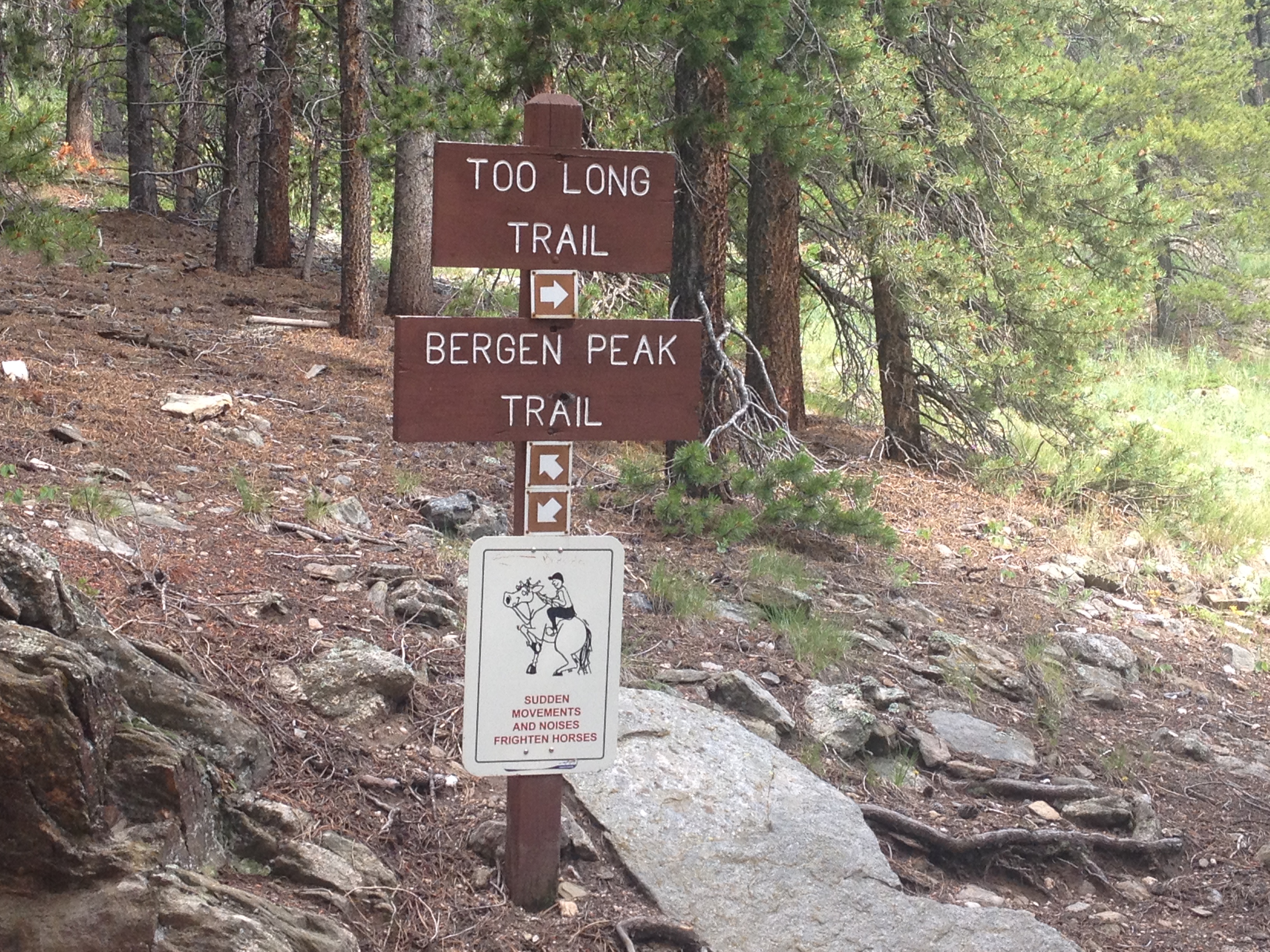
The first mile from the parking lot, along the Meadow View trail was fairly flat.  This trail connected us with a loop that consisted of the Bergen Peak Trail and the Too Long Trail.  We decided to take the loop in a clockwise direction, starting with the Bergen Peak Trail.

IMG_2256 IMG_2262

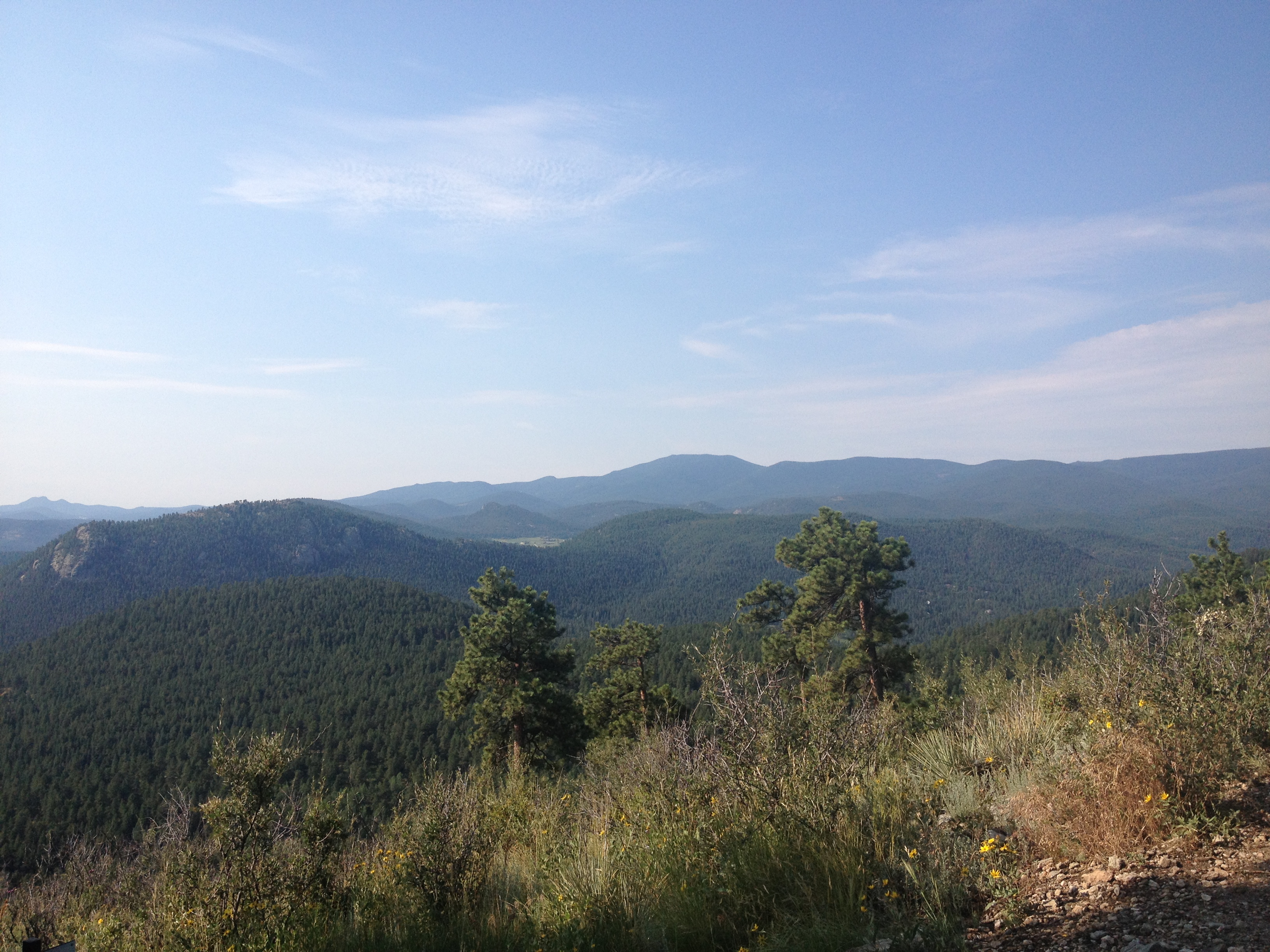
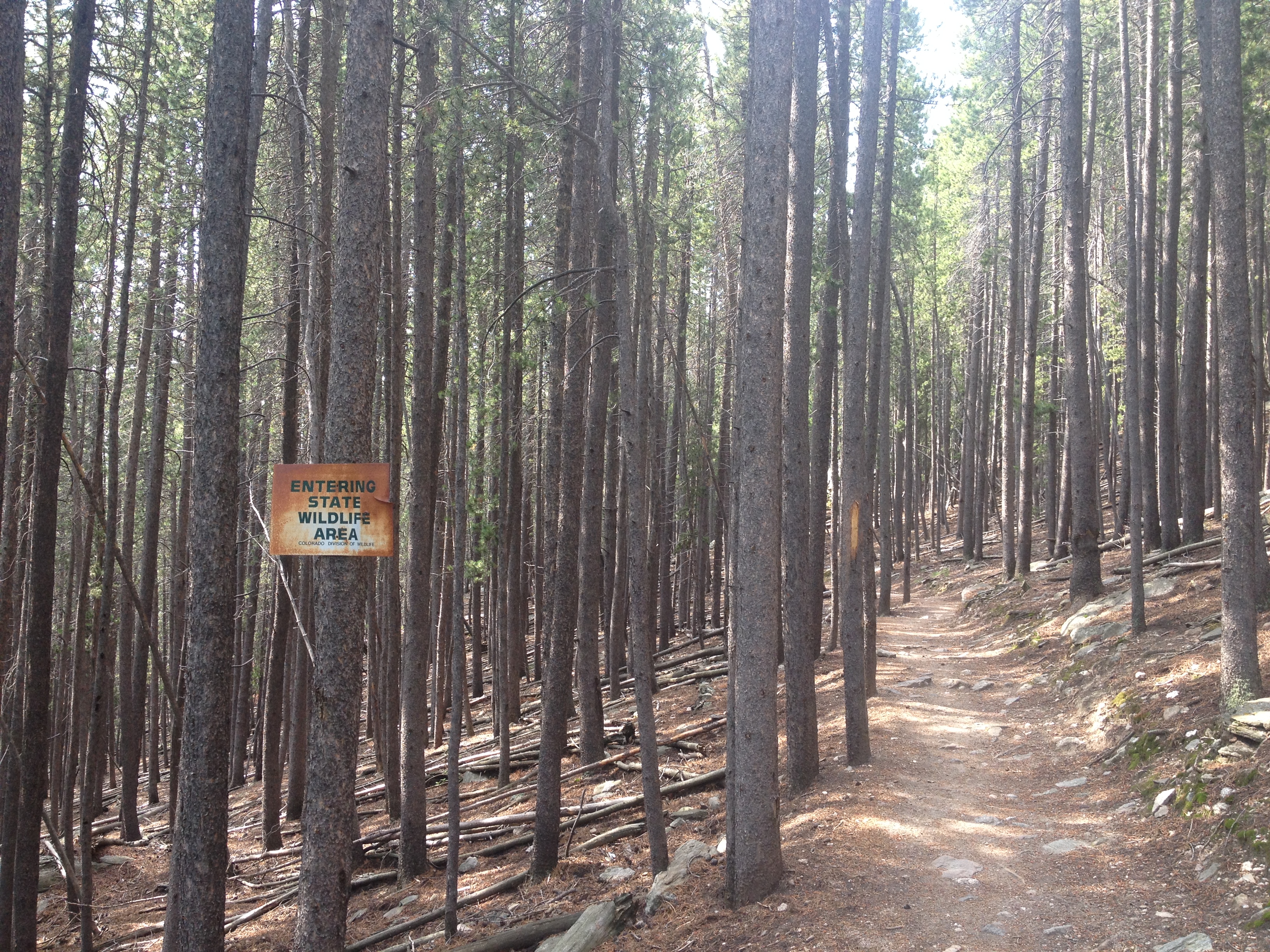
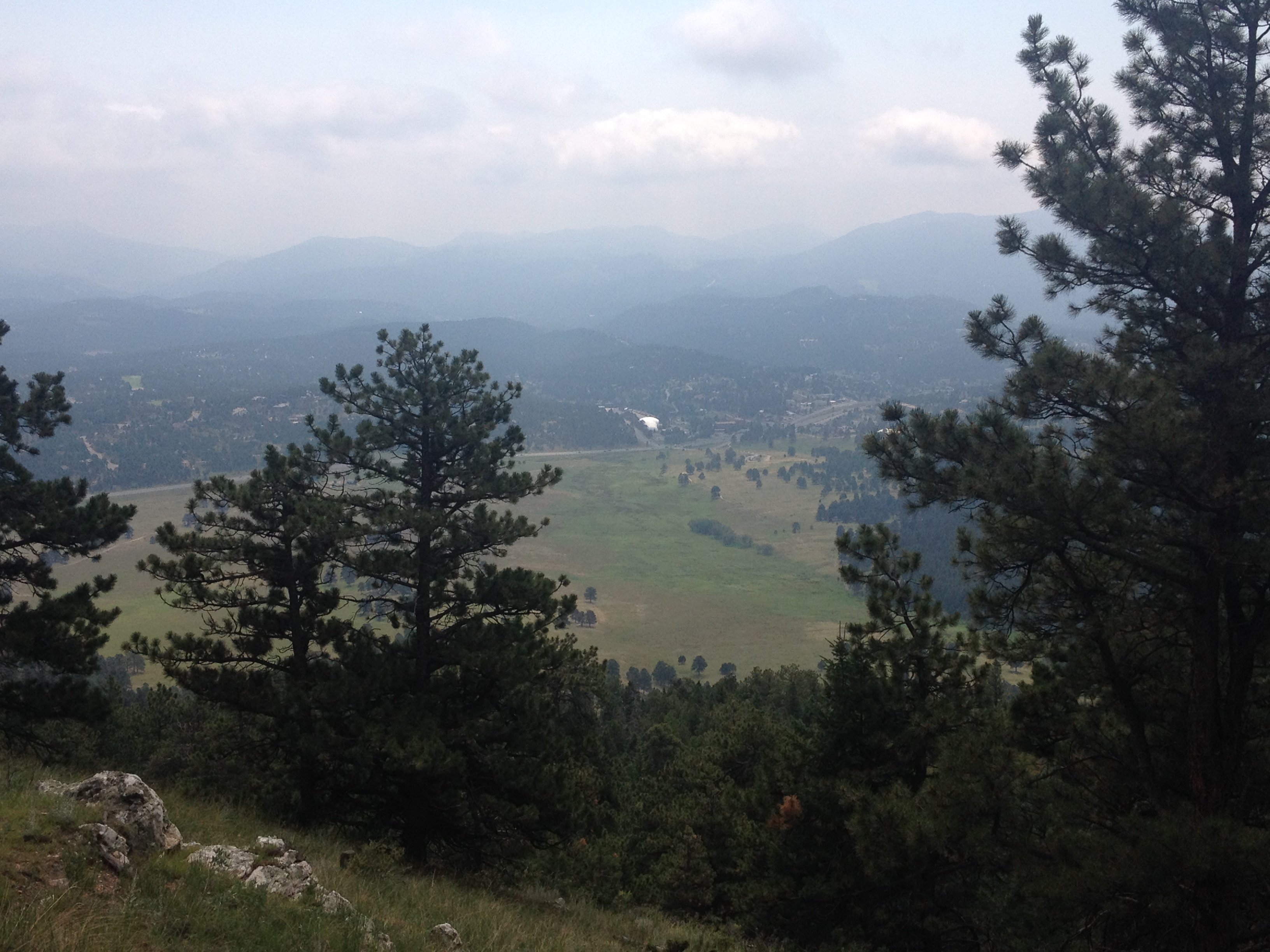
This trail took us up some steeper areas, as well as some areas of densely packed trees.  The occasional opening along the trail was marked with a sign indicating a “scenic view”.  These scenic views were pretty nice, but on this particular day, our visibility was limited by a significant amount of haze.  Once again, life was being impacted by weather, but this time a longer-term trend.  This summer has been more humid than is typical for Colorado standards, leading to significantly more haze than normal.

IMG_2267 IMG_2268

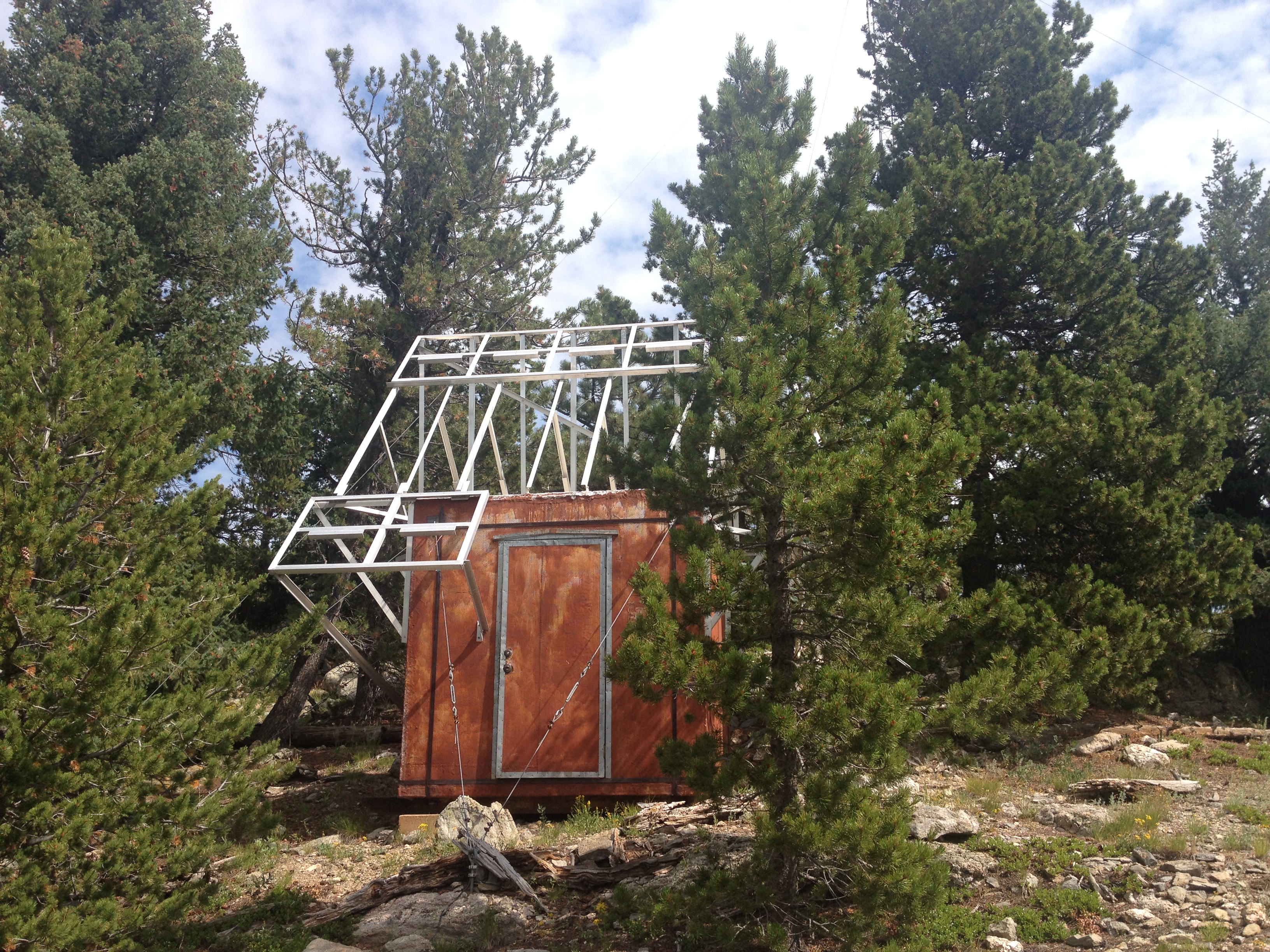
A one mile spur off of the main “loop” brought us to the top of Bergen Peak a little bit after 10 AM.  By this time, the skies had gotten even more hazy.  At the top of the mountain, there is some kind of tower (most likely for phones), as well as this sort of random building.  I really do not know what it is for, and I was unable to enter the building.  I really hope it is not home to some crazy recluse making secret revenge plans.  Nothing good would come of that.

IMG_2275 IMG_2280

Continuing the loop, we took the Too Long Trail, which felt as if it was living up to its name.  The trail itself is listed as only 2.4 miles, less than the 2.7 miles indicated for the Bergen Peak Trail.  However, it felt a bit longer, as the trail was more of a semi-circle, and connected to another trail, called the Elk Meadow Trail.  Along this trail, we were, indeed, closer to the meadow.  However, we did not see any Elk today.

IMG_2261 IMG_2272 IMG_2274 IMG_2276

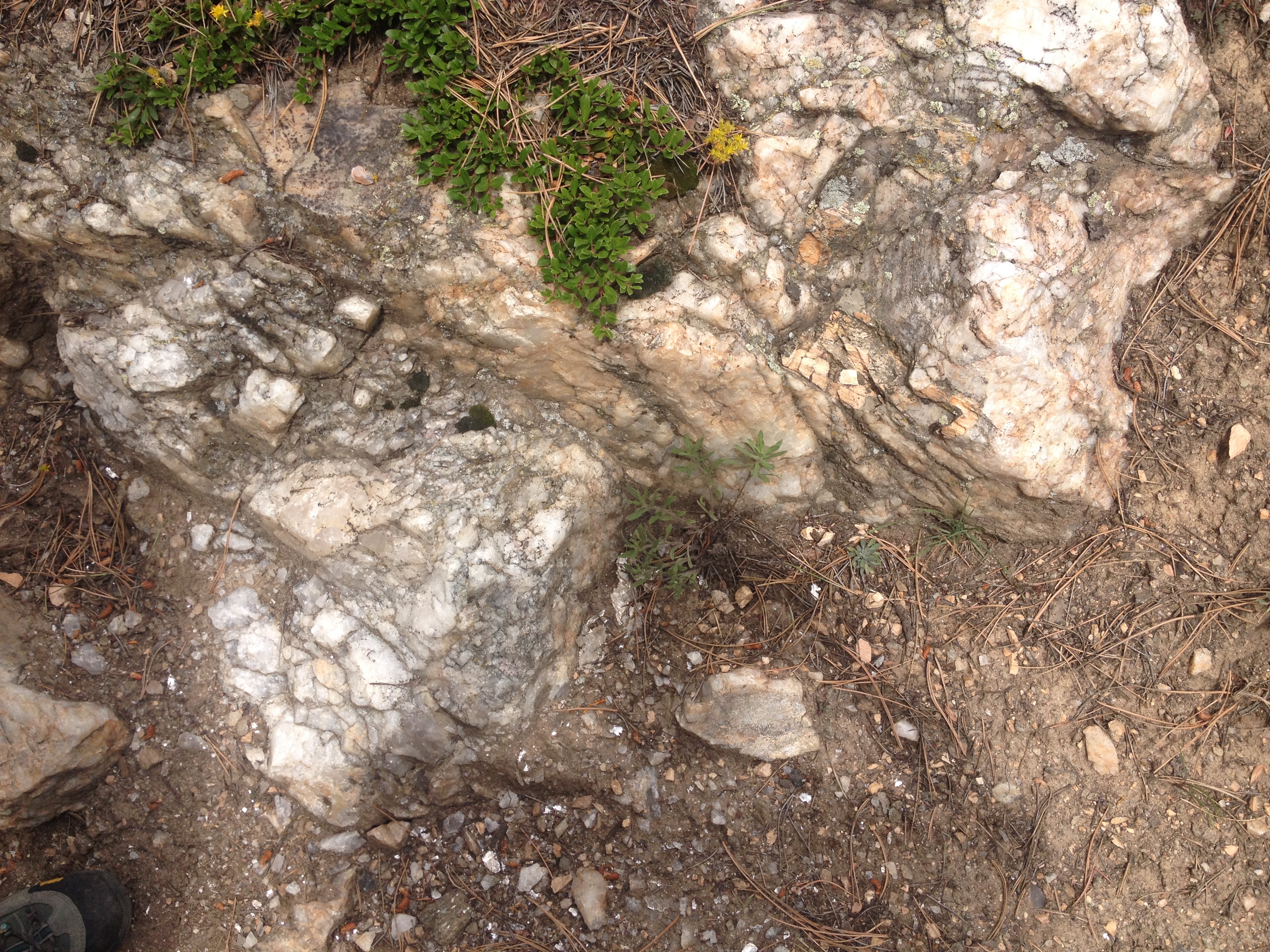
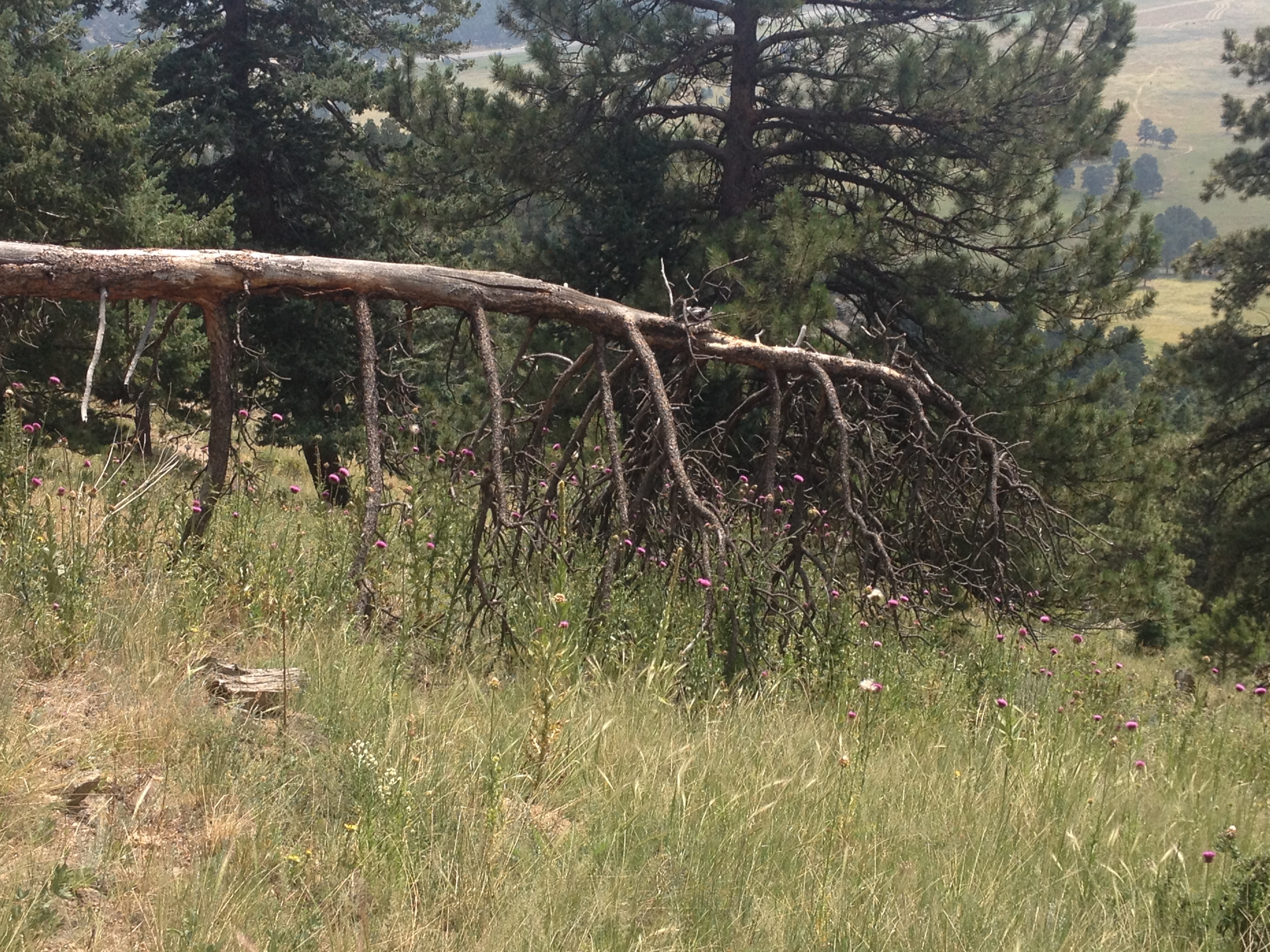
What we did see, though, were a significant number of different species of flowers, and some mica.  In one spot (pictured above), purple flowers were actually growing off of a dead tree branch.  Quite amazing!

IMG_2279

I’m glad we took the Too Long Trail, even if it lengthened our hike to something close to 10 miles.  Not only did we actually experience why it is called Elk Meadow Park, but we also encountered the most unique find on this hike.  Apparently, someone felt it would be interesting to decorate one single tree, roughly halfway up the Too Long Trail, with Christmas decorations.  It was just one tree, seemingly randomly selected, with roughly a dozen ornaments placed on it.  For one with an imaginative mind, there are dozens of different scenarios that can be pondered that would lead to this outcome.  But, even more so, I wonder what the people who operate the park think of all of this.  And, I wonder how well it would be received if I were to return to this tree, and add a contribution of my own.  If others have the same thoughts, what could this tree look like a year from now?

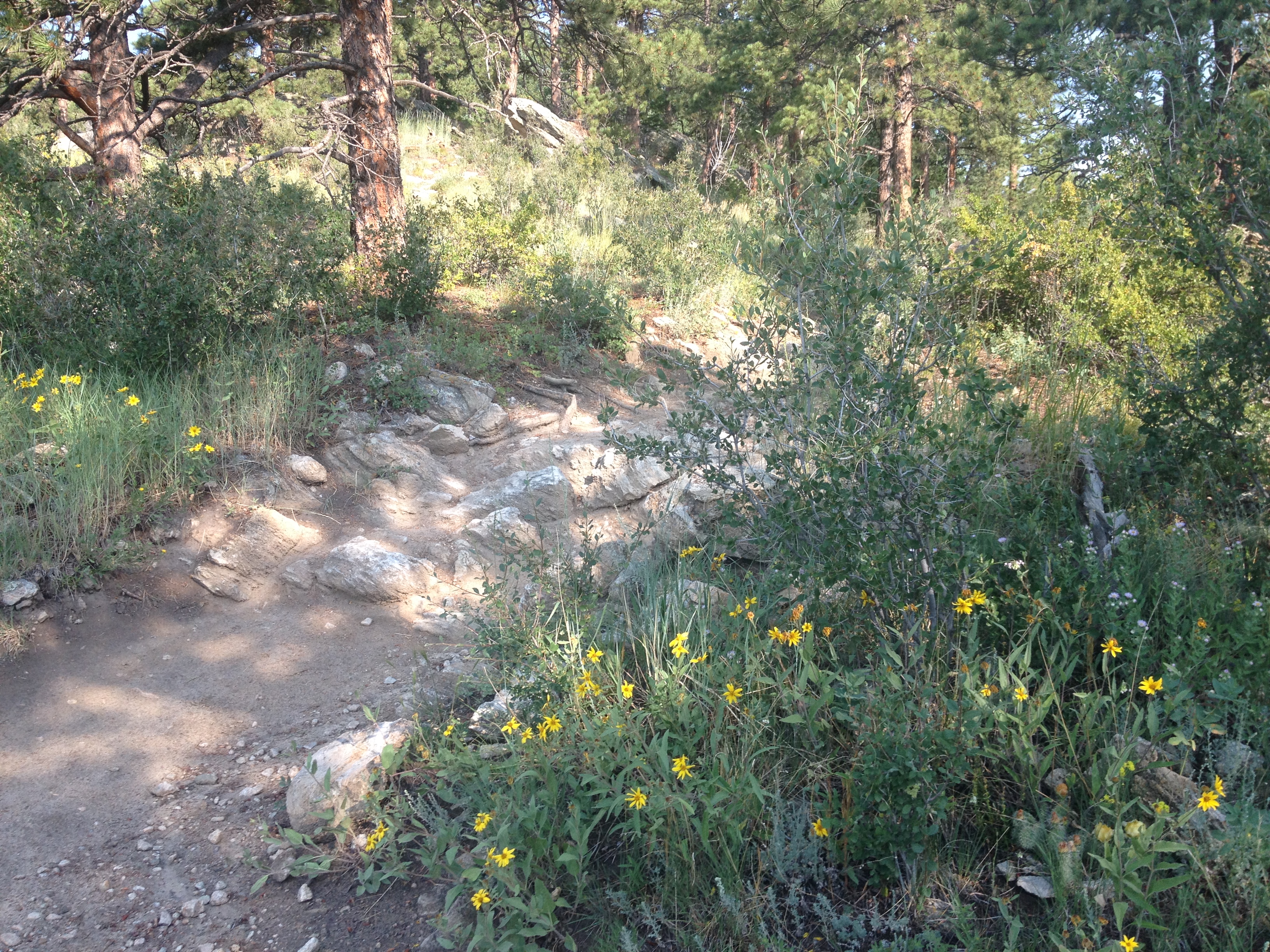
While hiking this trail today, I did not believe I was going to get any good photos at all (due to the haze, and the tree density of most of the hike).  However, the more I look a the photo I chose to lead this entry with, the more I fall in love with it!  It is not the kind of perfect photo that you will find on commercials or billboards (see this image).  It is a photo of the same place, but from a different perspective; one of a world that is not quite so perfect but beautiful in its own way.  It is an image of a world where people wake at 6 AM to get in a hike before a round of thunderstorms that never materialized.  It is a world where we know enough about what is in front of us to stay out of danger, but with enough haze to keep the excitement associated with the mystery of the unknown.  That is the world in which we live in, and the frustration occasionally waking up early unnecessarily is a small price to pay for the wonder and the mystery that accompanies it.

Funnel Clouds and UFOs

Chugwater, Wyoming is not known for tornadoes, nor is it known for UFOs.  When people think of major tornadoes, they typically think of places like Oklahoma and the rest of the Great Plains.  Most consider “tornado alley” to be to the east of Wyoming.  Likewise, when people think of UFOs, the town of Roswell, New Mexico comes to mind, as it is not only the location of a major event related to UFO conspiracy theories, but also in a region dense with UFO reports.

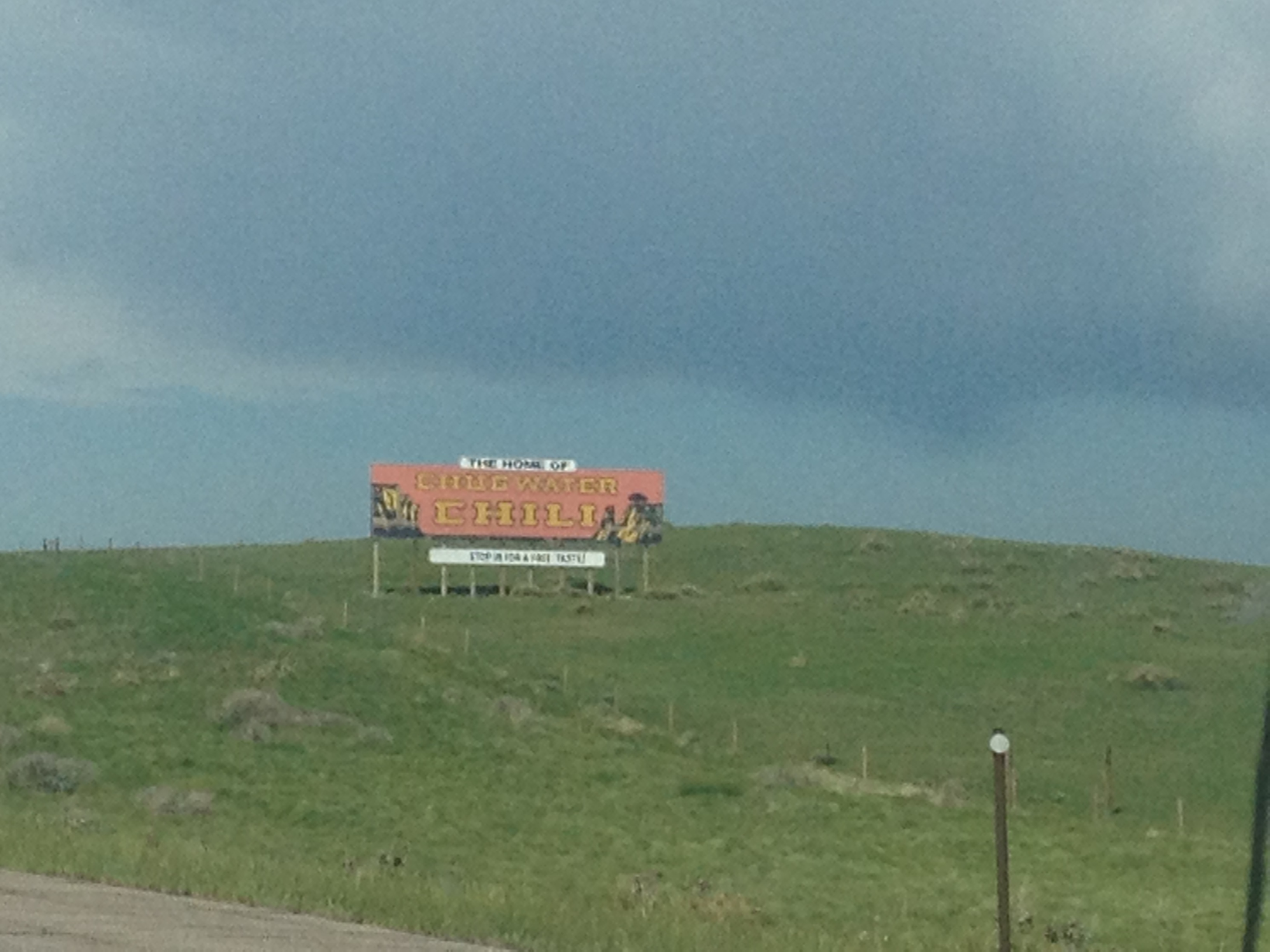
Chugwater is a town of barely more than 200 people roughly 40 miles north of Cheyenne.  The only thing it is really known for is chili.

IMG_2019 IMG_2020

I have never actually tasted Chugwater Chili, but others have told me that it is really good.  Enough people like it to support an annual chili cook-off in the town, which has been going on for twenty-nine years!

However, yesterday, the last day of May, a trip to Chugwater helped shed some light on both phenomenon.

It was a day where thunderstorms fired up across a wide area that stretched all the way from Saskatchewan to just southwest of Colorado Springs.  After an examination of weather conditions, we determined that the best possible conditions for seeing some good thunderstorms within a reasonable drive of Denver would be in Southeast Wyoming.

IMG_2021 IMG_2022

In the early part of the afternoon, a series of storms popped up in the region, but fizzled out and died fairly quickly.  It was not until mid-afternoon when we finally encountered a major storm brewing over the Laramie Mountains to the west of Chugwater.

IMG_2025

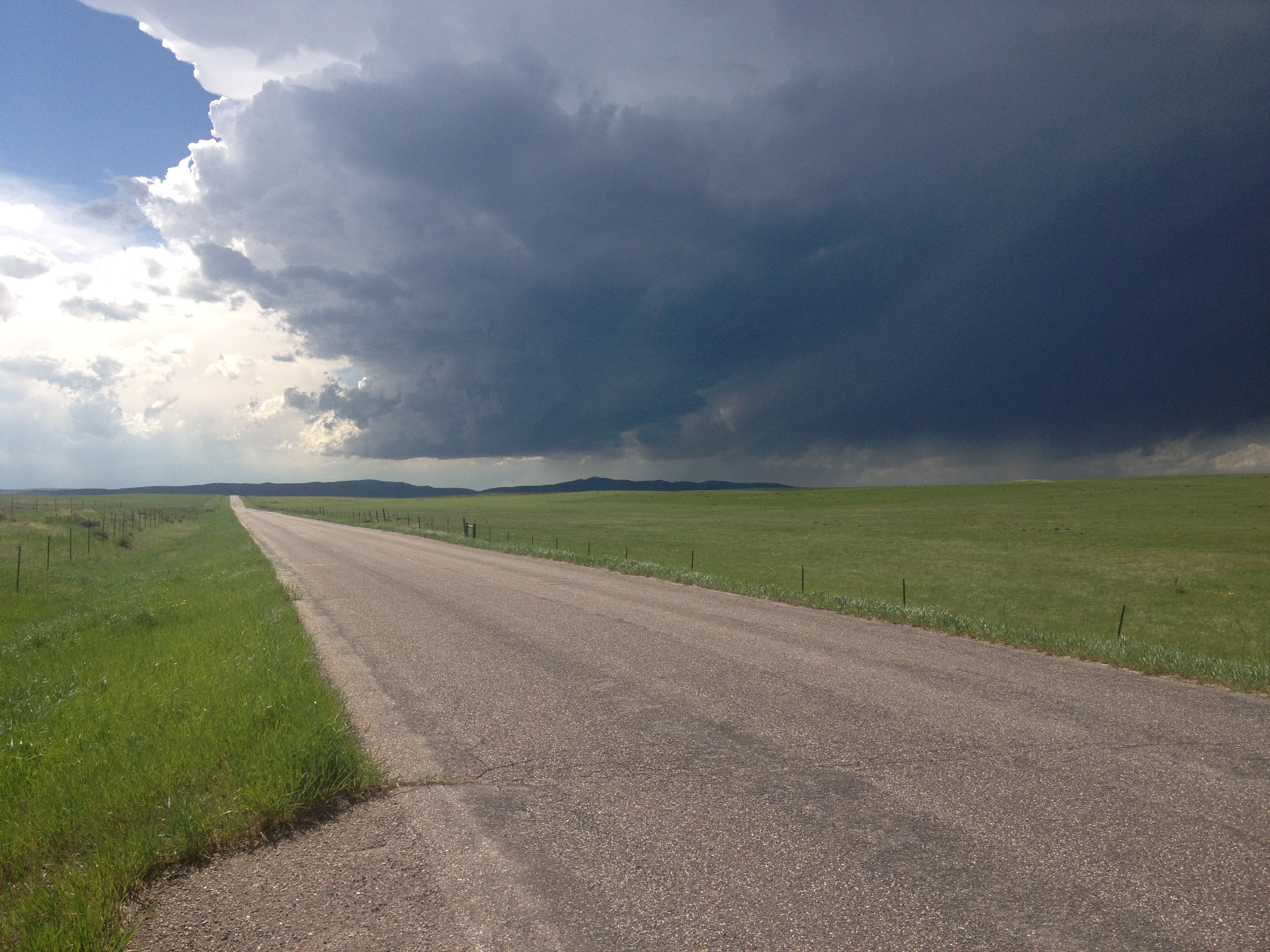
From a hill just to the west of town, we were able to observe this storm gradually move towards us as the afternoon progressed.  The entire day felt quite strange to me.  In every single way, it felt like a typical storm chase.  The procedure of heading towards an initial target location, then heading towards a storm as it forms, and observing it along a country road was exactly as I had done probably close to 100 times throughout my lifetime.  The air felt warm and moist, and the wind picked up as the storm approached, just as I had always remembered it.  Even the ground looked as green as it had looked in most of my chases in places like Iowa, Nebraska, Kansas, and even Illinois.

However, this was Wyoming.  What we were observing today is quite atypical for Wyoming.  The ground, typically quite brown here, had turned green due to a recent uncharacteristically rainy period.  Additionally, it was quite moist that day, also atypical for the region.  All the conditions had come together to produce a scene, and event, and a feeling, that felt way more like Kansas, or even Oklahoma, than Wyoming.

IMG_2028 IMG_2030

However, this region is still naturally dry, and as the storm developed, the somewhat random mixing of moist and dry air produced a somewhat chaotic storm structure.  For a period of time the storm structured itself in a manner that looked quite like a UFO.  Well, at least it looked like a UFO in the way it is typically portrayed in the movies; a gigantic circular object with a hole in the middle (the hole being where the aliens come down and abduct the humans in many scenarios).

The other major difference between this chase and a typical chase is the presence of mountains.  The mountains seen in the background of these pictures, which are facing West-North-West, are not nearly as tall as some of the region’s bigger mountains.  However, contemplating this UFO-like shape in the cloud feature did make me wonder if a similar phenomenon in Southern New Mexico, which also has a dry climate and more modest sized mountains, could explain some of the UFO sightings there.

Of course, there are many theories behind not only UFO spottings, but any observation that does not appear to be sufficiently explained.  The world often appears to operate in a manner that seems inconsistent with what we have been told by official sources, experts, and authority figures.  This is the primary driver of conspiracy theories.  While these theories largely have not been verified, I do sympathize with the intellectual curiosity that often leads people to explore these theories as a possible explanation for what they are observing in life.

IMG_2031 IMG_2032 IMG_2033 IMG_2034

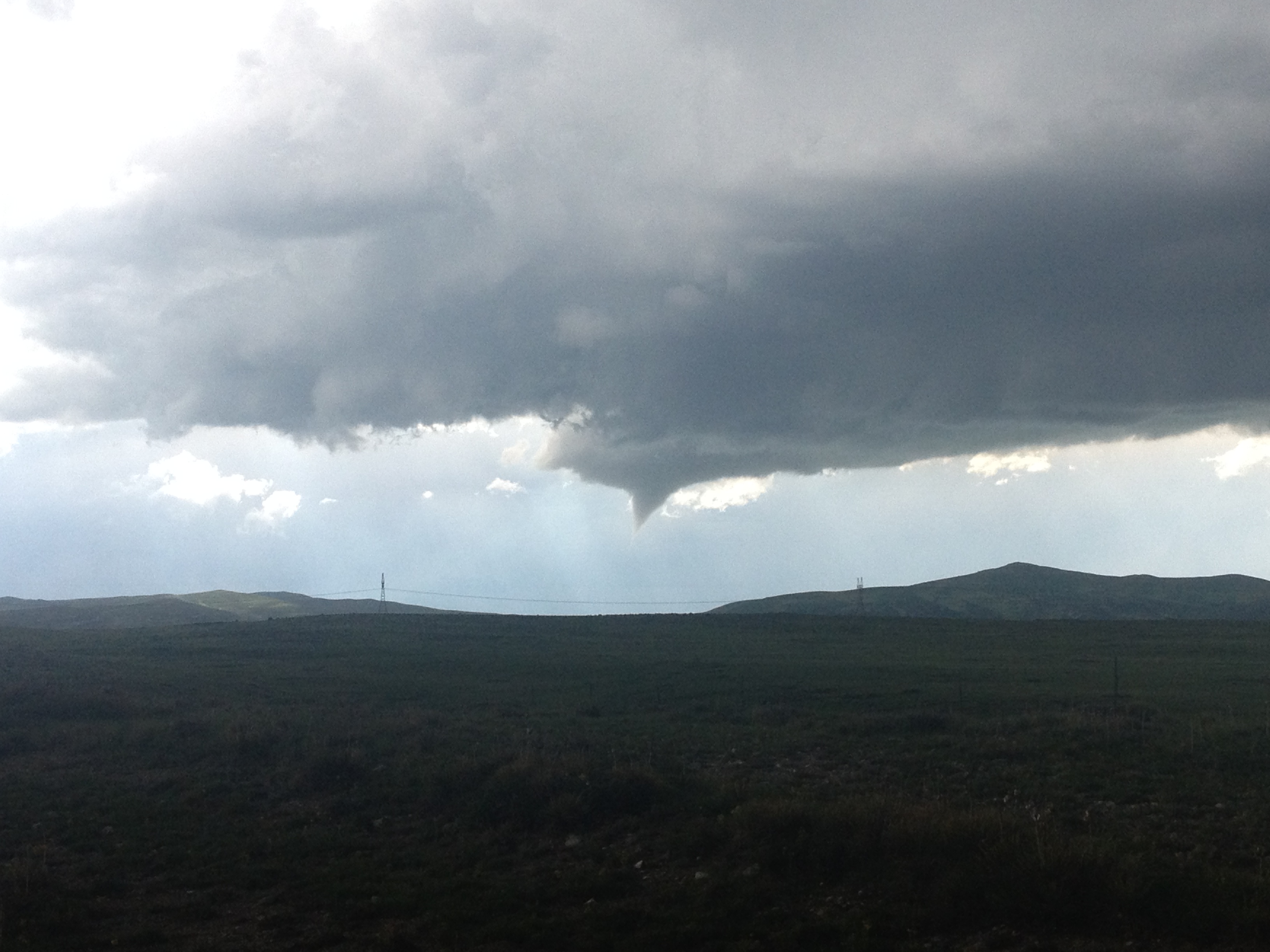
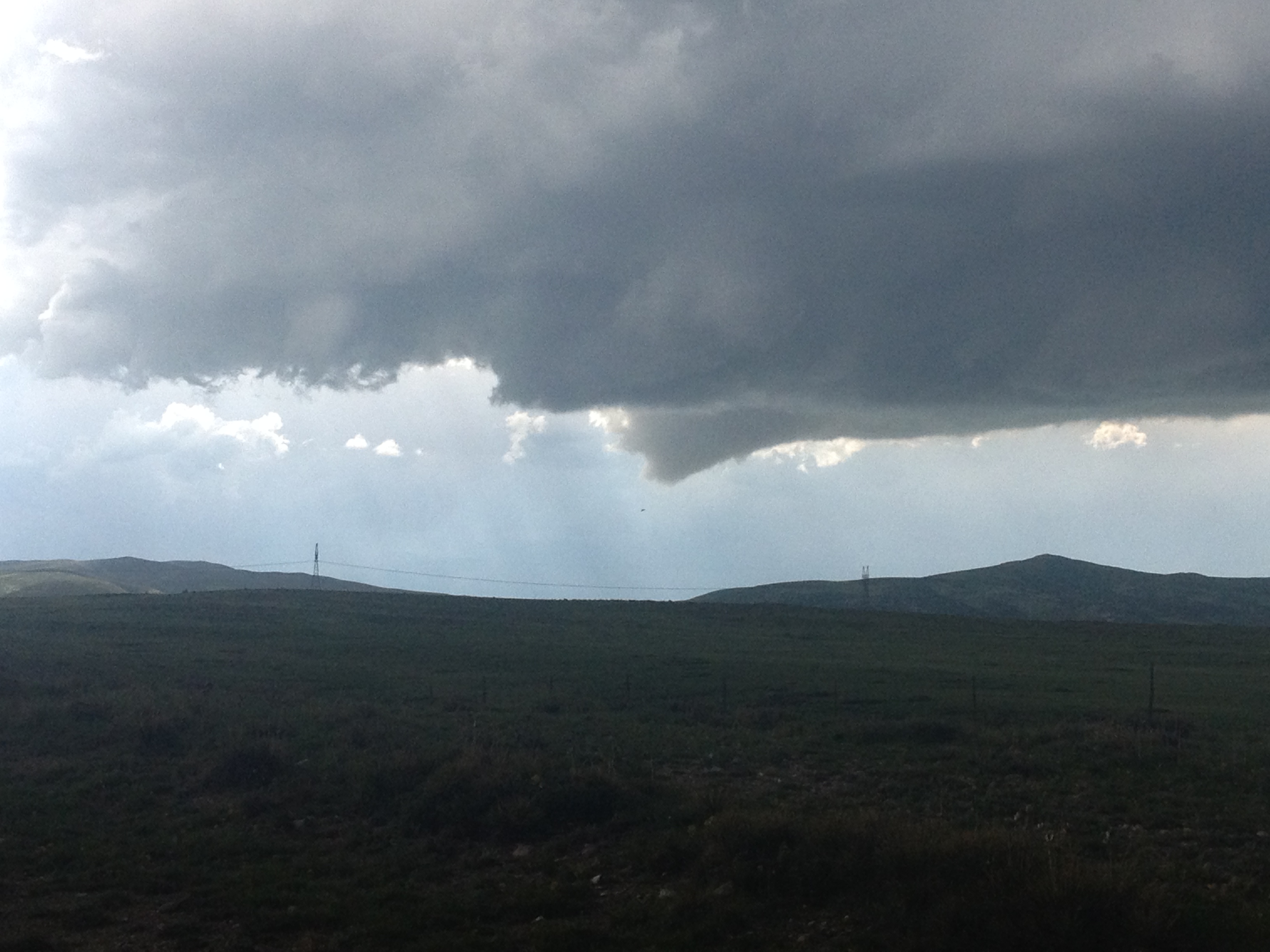
Roughly half an hour after the storm’s “UFO” phase, it produced a funnel cloud.  A funnel cloud is the beginning phase of a tornado.  However, not all funnel clouds reach the ground and produce tornadoes.  The reasons as to why some storms with the same rotation produce active, life-threatening, tornadoes while others don’t has been the subject of scientific research for decades.  I’m not going to figure this out by staring at this storm west of Chugwater.  I just came here because I love storms.

IMG_2035

After about 10 minutes the funnel dissipated, without producing a tornado.  As the storm began to produce greater and greater amounts of rainfall, it got darker, making the storm features harder to see.  This prompted us to go home, as we were already quite satisfied to have seen a funnel cloud.  In fact, this was the first time I got a picture of a funnel with mountains in the background.

This trip to Chugwater reminded me that every location has a story.  Even if a place seems boring, quiet, and insignificant, there is still the potential for something quite amazing to happen there, and there is still the potential for answers to some of life’s important questions to be found there.  Prior to 1947, I doubt too many people knew where Roswell, New Mexico was, or ever really thought about the place.  Now, a lot of people think of it whenever they think about aliens and UFOs.  While Roswell did not answer anything there are plenty of events occurring in all sorts of places around the world that may offer us answers to all kind of questions from curing diseases to questions of sociological and genetic nature.  What other obscure location could have the answers to some of the most pressing question of our day?  And, how do we go about finding it?