Category Archives: Waterfalls

September Backpacking in the Rio Grande National Forest

We drove two hours from the nearest town, Monte Vista, Colorado just to get to the Three Forks Trailhead in the Conejos River Valley.

It’s hard to imagine being any further away from civilization.

It’s the trip I needed, as it is the trip we all need from time to time. Three days without the constant distractions of modern life. Three days where one can just gather thoughts and reset from the constant onslaught of information.

It started on the final day of a rainy week. The trails were quite muddy from the previous several days.

It was actually somewhat of a miserable day. It’s hard enough to climb roughly 1400 feet (425m) carrying heavy backpacks. The morning was cold and mostly cloudy.
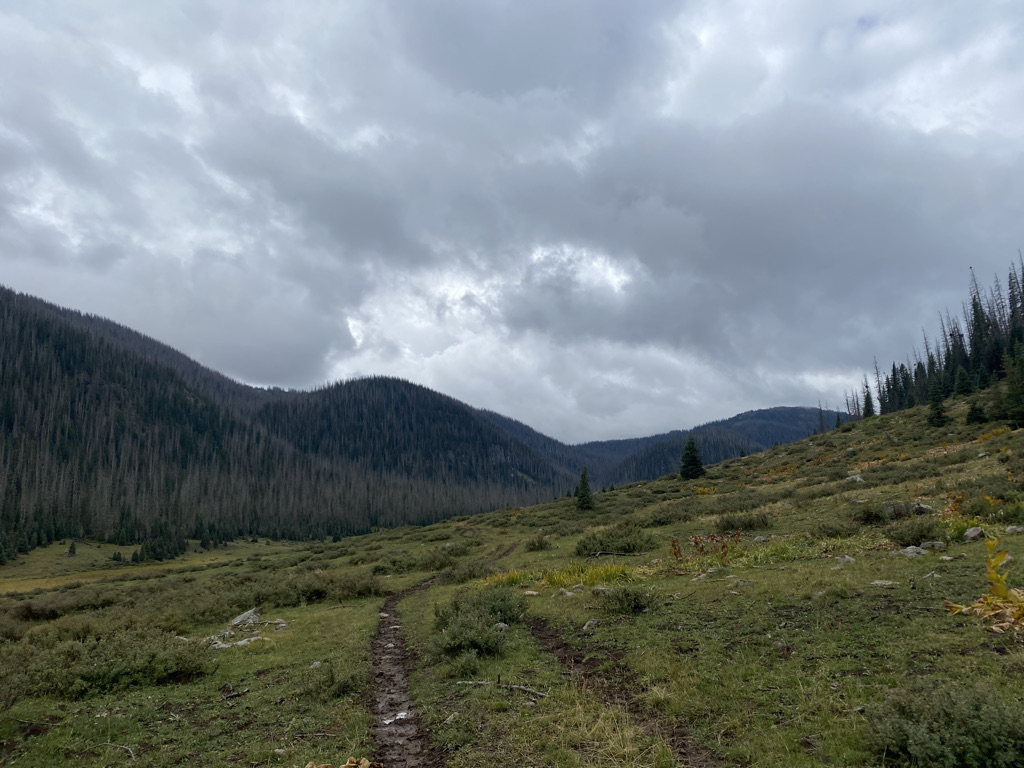
Then came the rain, somewhat heavy at times and the fog. And, it was a cold rain, the kind of rain that soaks coldness down to the bones. The kind of rain that made us want to just sit in our tents, which we did for over 12 hours that afternoon and evening.
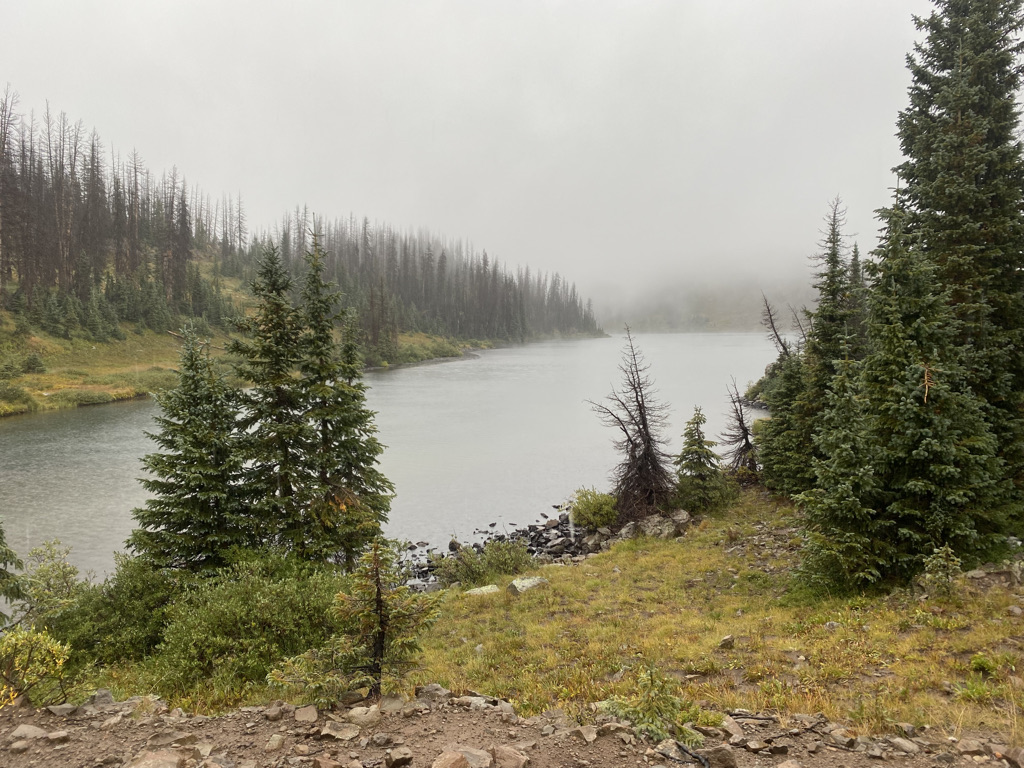
The fog obscured the views of Blue Lake, at nearly 11,500 feet (3500m) both in the evening and especially the following morning.
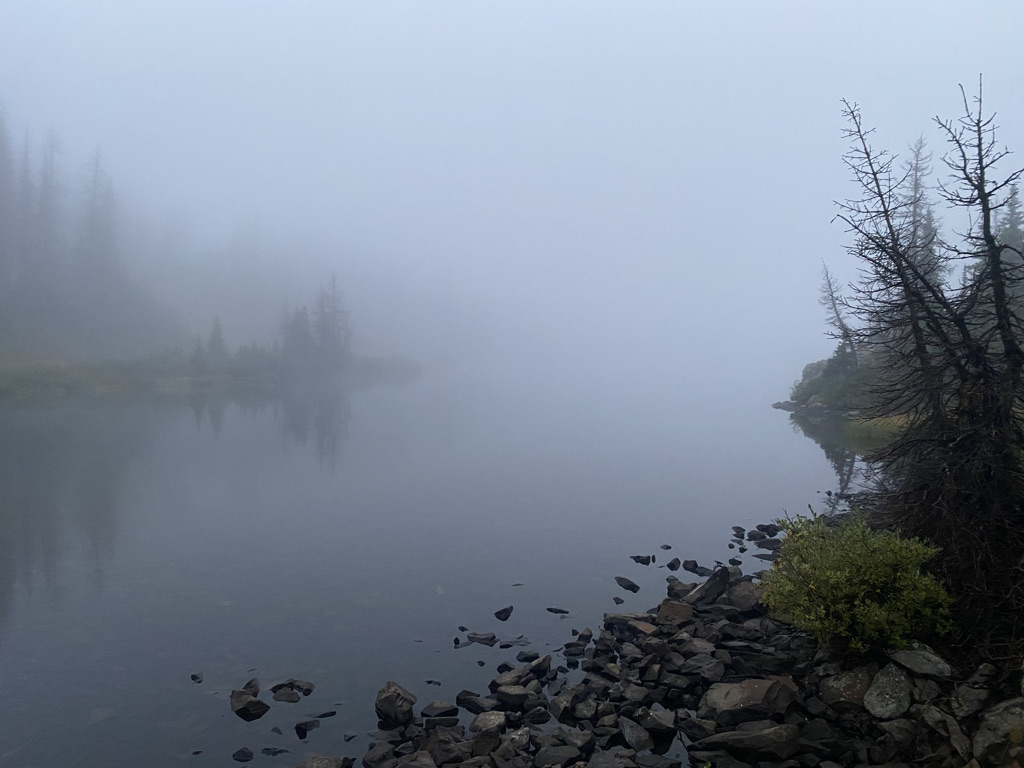
After climbing a little bit higher the next day, we could see the manner in which this morning fog was impacting some parts of the forest but not others.

I guess we just happened to be in one of those unlucky spots where the thick set of clouds had established themselves for the entire night. There is something both humbling and satisfying about experiences like these. We live in an era where people try to predict and control everything. It’s nice to know what to expect from our experiences. However, something gets lost when we achieve a certain level of certainty in life. It can make things feel emptier, more formulaic, even robotic at times. Surprises bring beauty. Surprises bring anticipation. They lead to appreication. Surprises can make us feel alive.

Sure, I was miserable the first day, but once everything cleared up it was spectacular!

The less than ideal conditions on day 1 probably made me appreciate day 2 more. In this case, it even created a more unique experience. Often times, cold rain means snow at higher elevations, which we saw when we looked up.
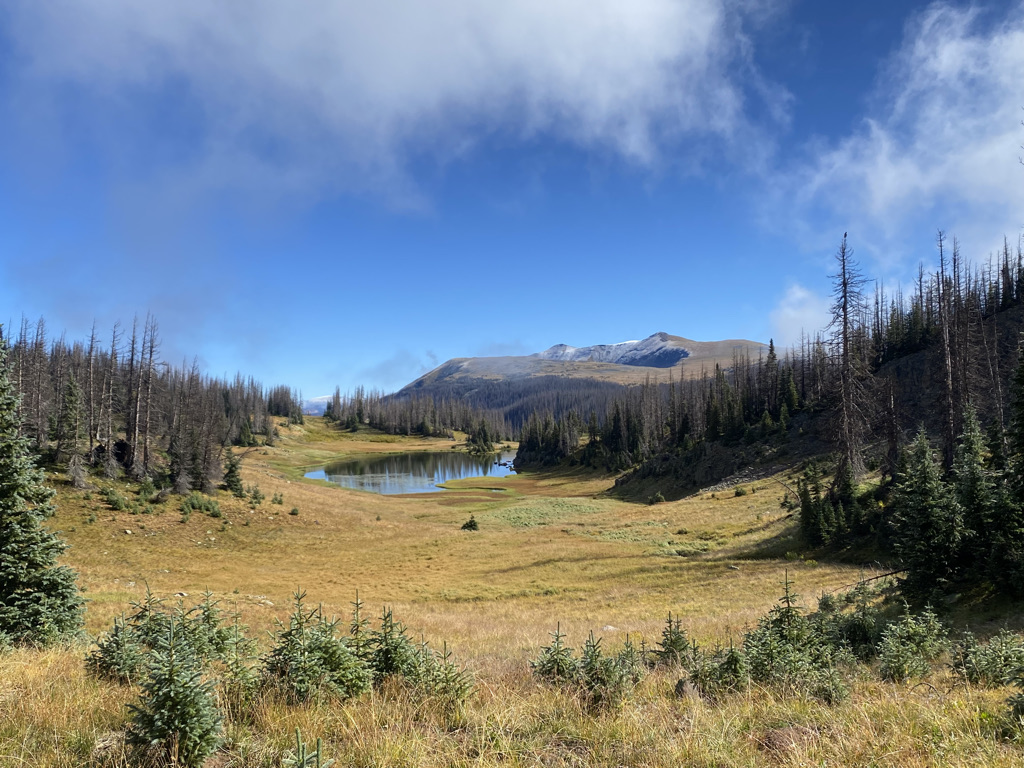
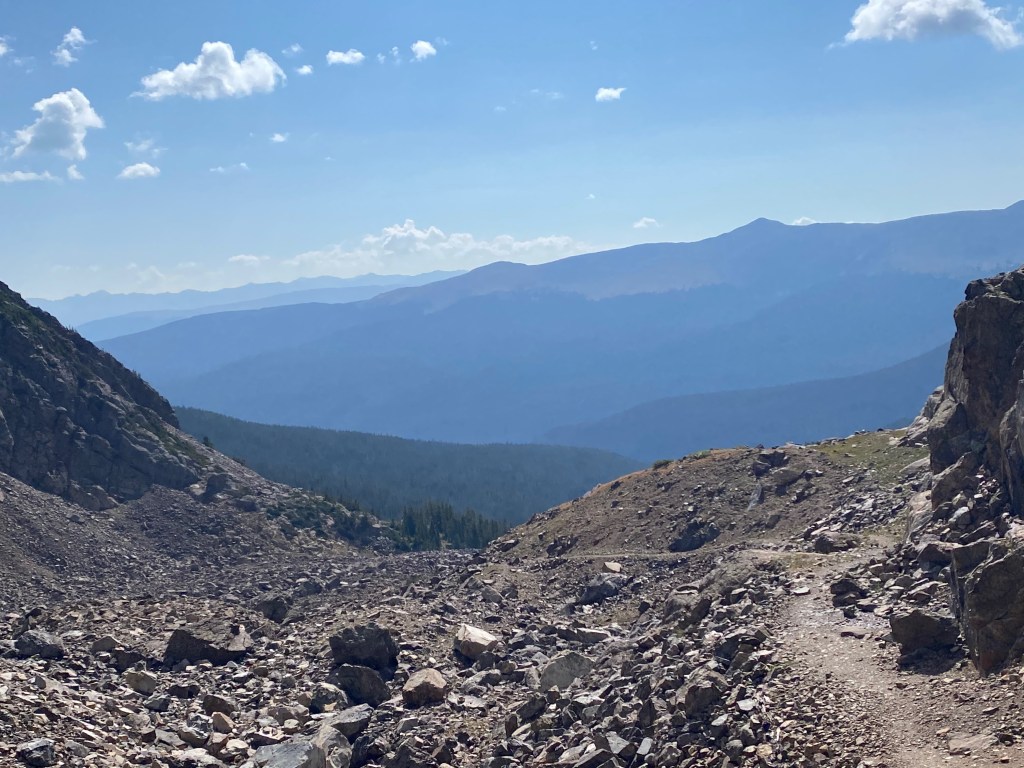
As we approached the pass, along the Continental Divide, we even began to encounter some snow from the previous night.

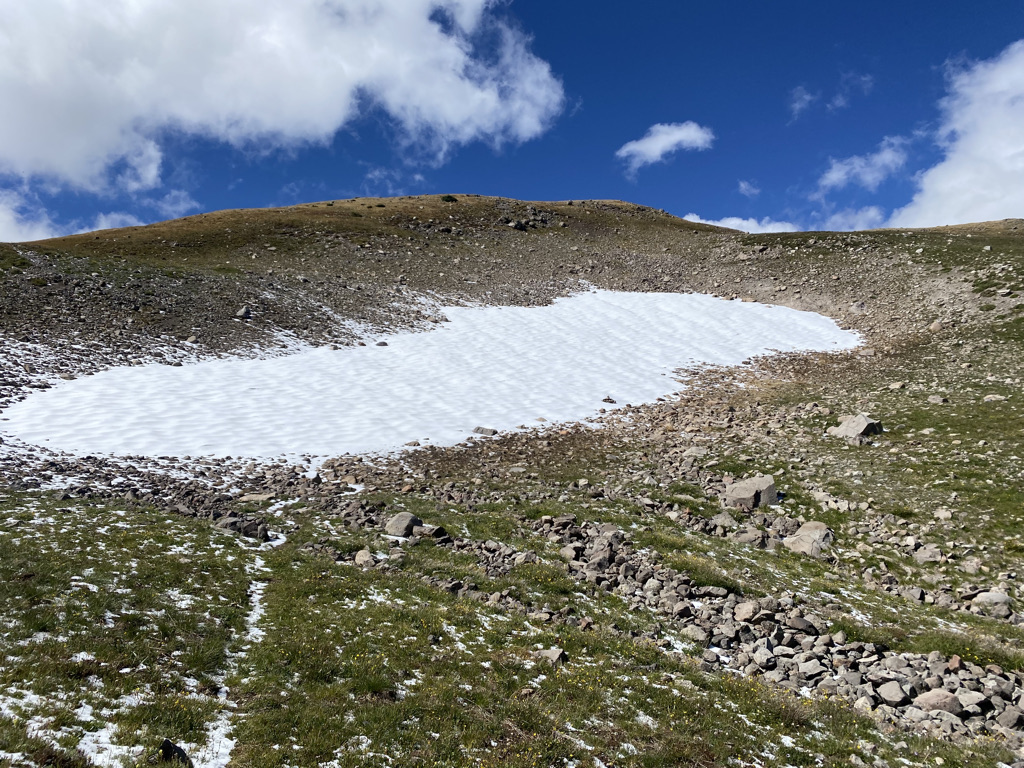
Yet, it was also somehow drier.
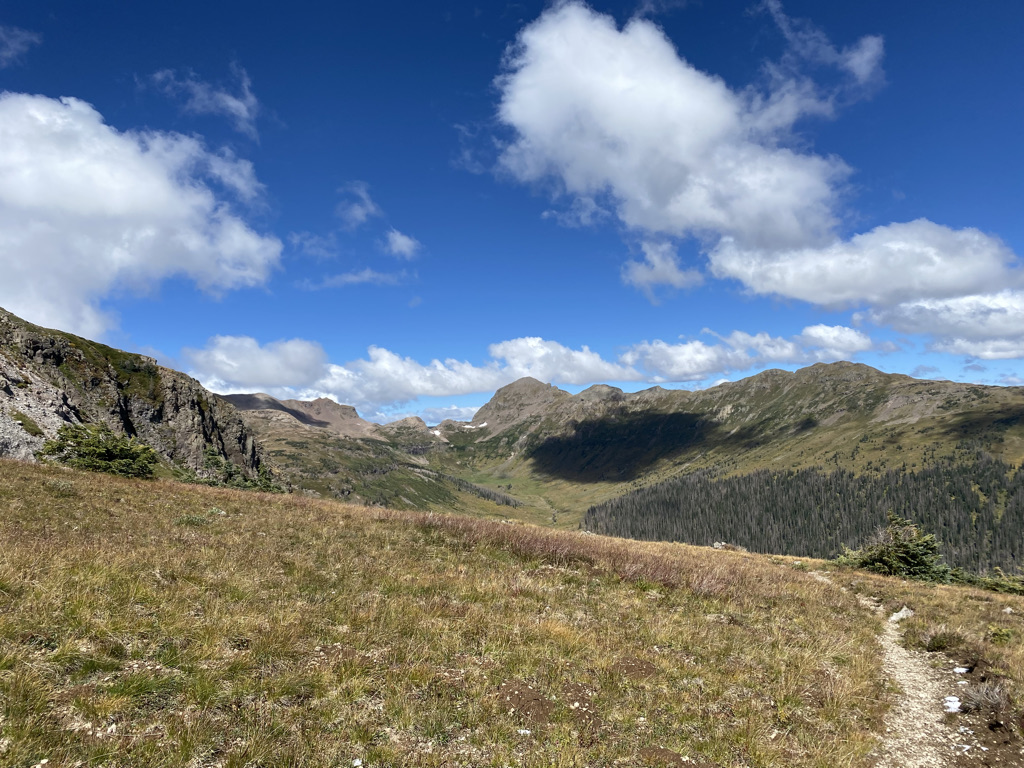
One of the things I love the most about the mountains is how full of paradoxes it can be. With each valley and mesa being subject to different weather conditions each day, experiences can often be wildly different from expectations.
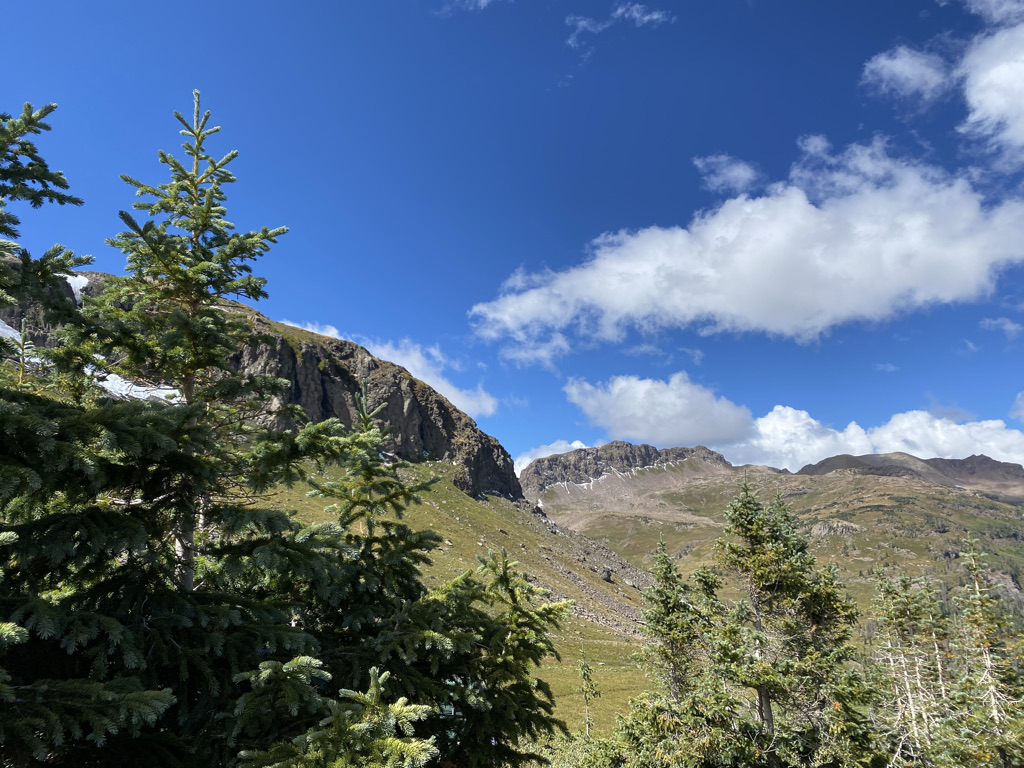
Combined with a type of natural beauty most of us are deprived of in our urban lives.
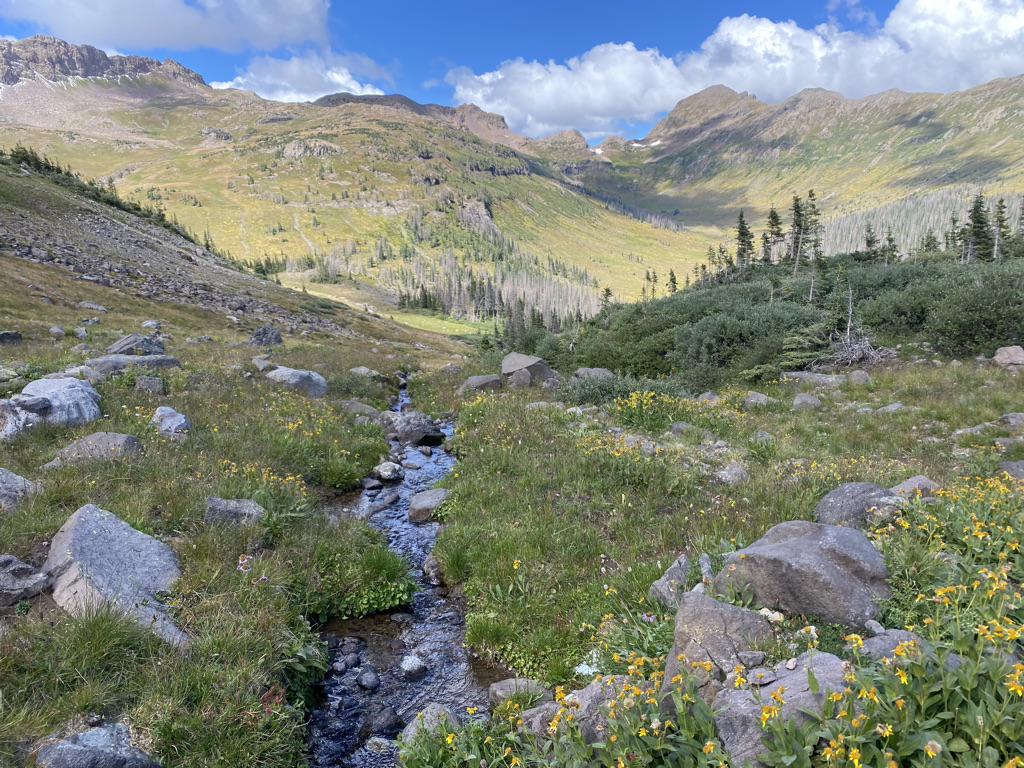
And seeing first hand, with features like deeper snow in the areas most commonly shaded.

Well, it forces us to think differently. In modern life, we typically try to understand and control our surroundings. Based on several factors, we select neighborhoods to live in. Many of us have jobs that provide a predictable stream of income. We learn routes, create habits and form routines. Here, all we can do is prepare for all the possibilities and respond to what happens.

What is odd is that the very thing that makes the conditions hard to predict, the mountains, is what makes it a place people want to visit. It’s almost as if humanity’s attraction to visiting places like this is a cosmic sign that we are, often unspokenly, yearning for a bit of chaos, a bit of surprise in our lives.

On the second day, we even found a wonderful, amazingly scenic, place to camp.

With an overlook of the Middle Fork of the Conejos River.
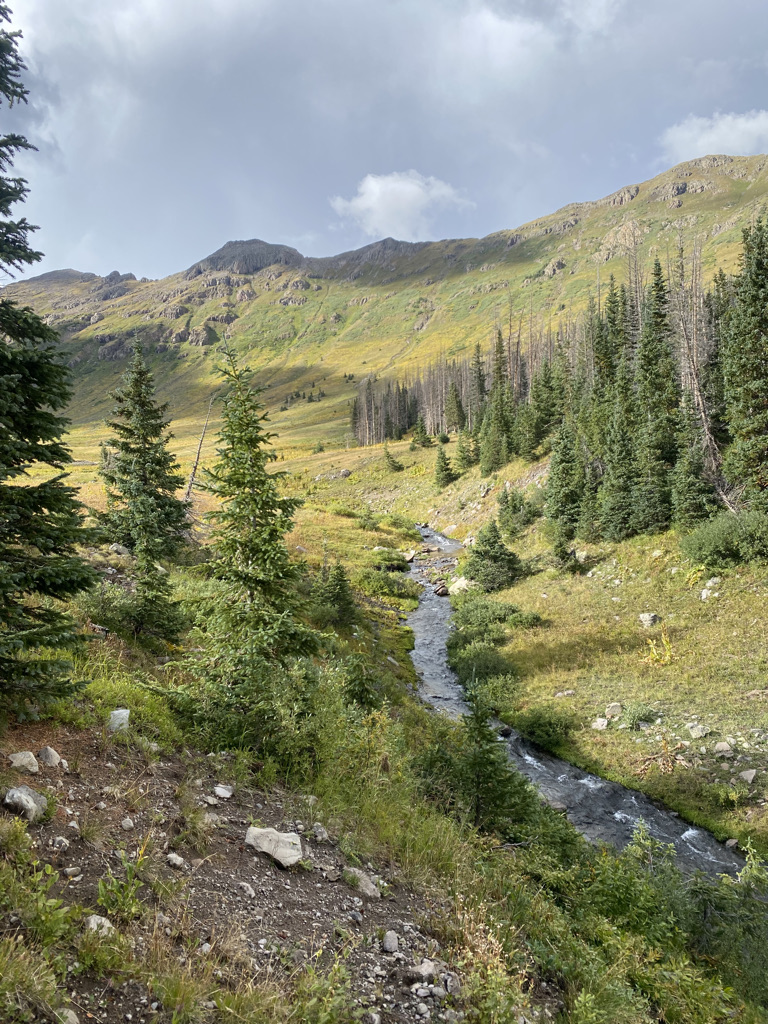
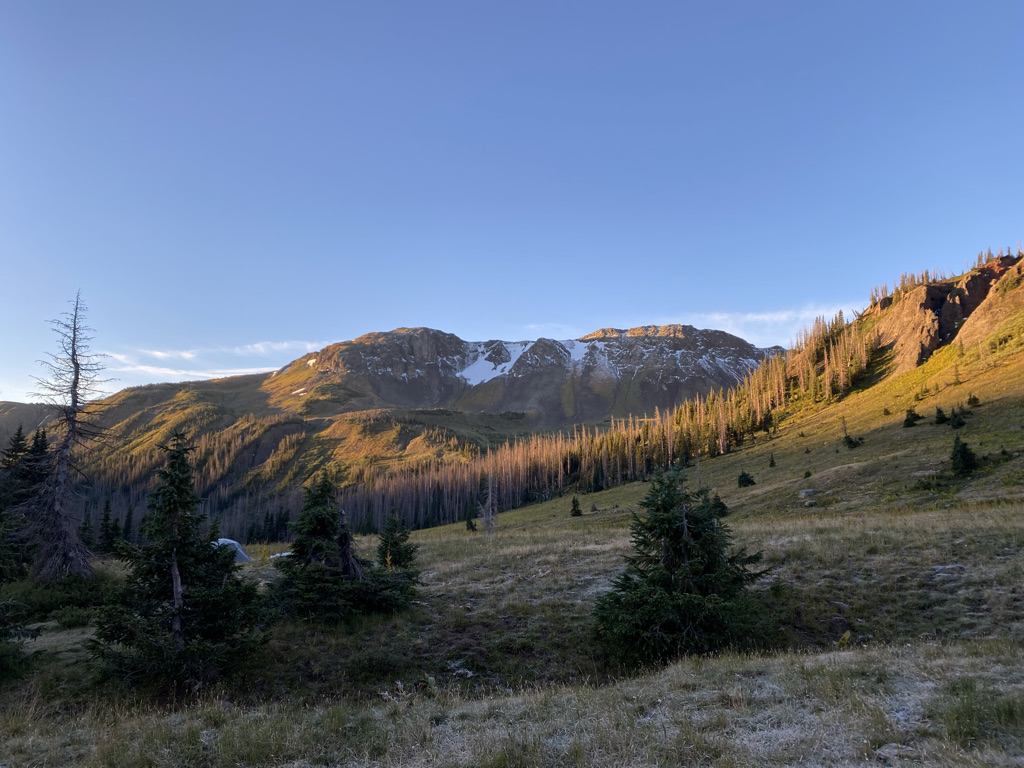
With amazing alpenglow in both the evening and the morning and the ability to see the stars on a new moon night.
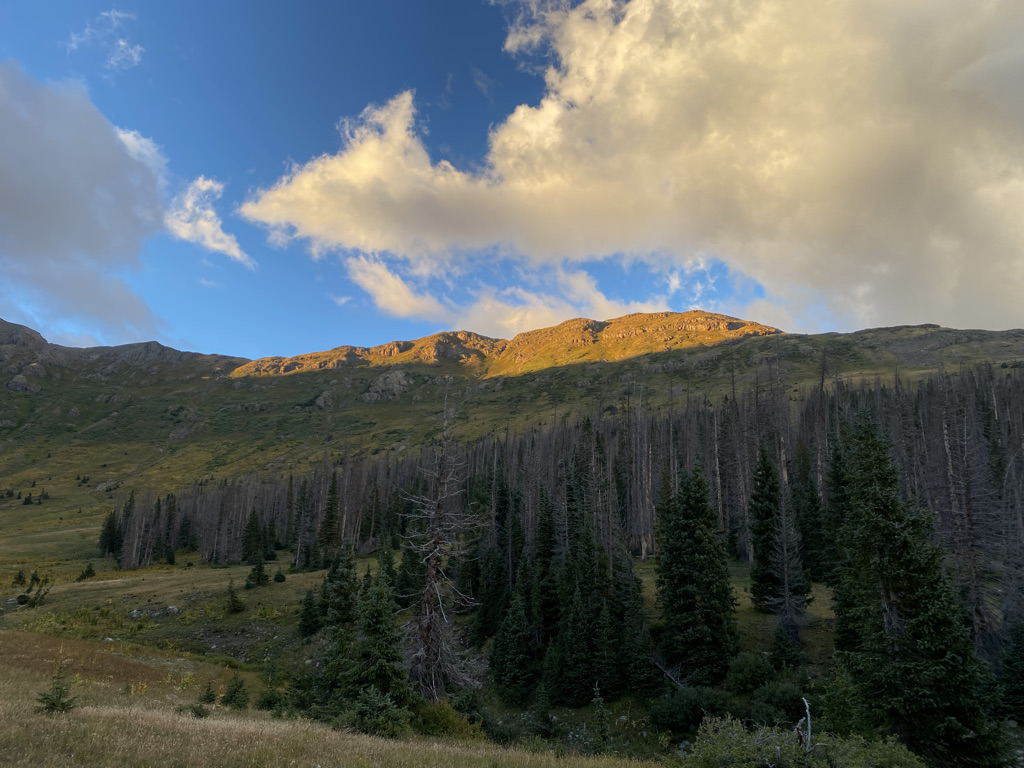
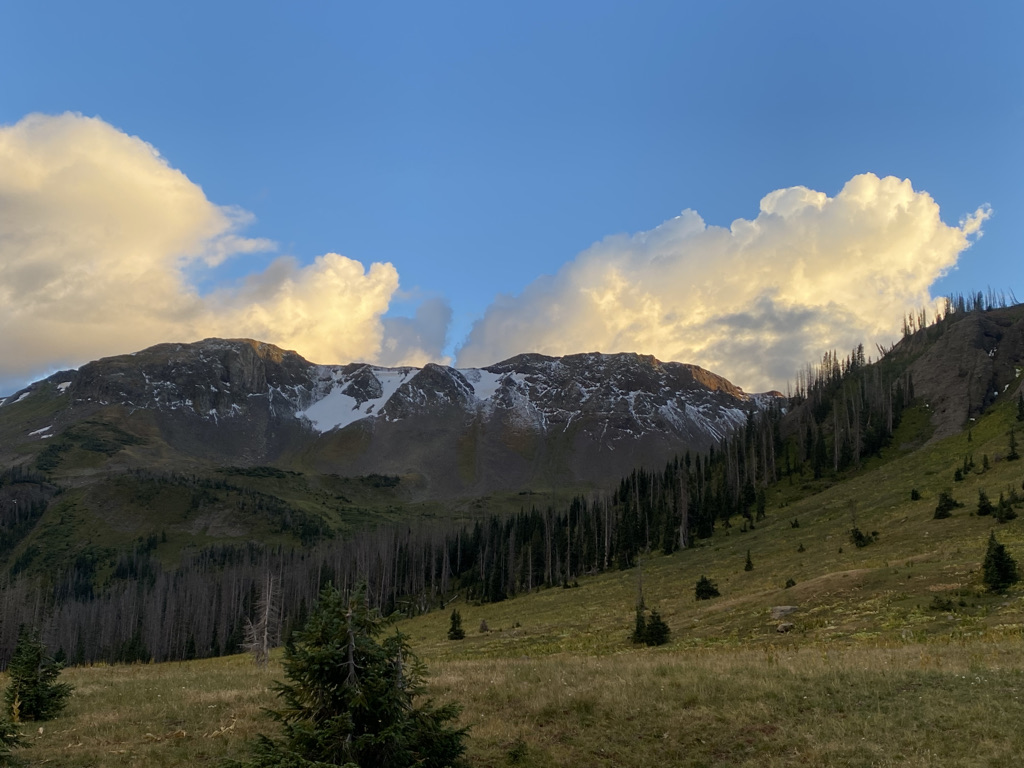
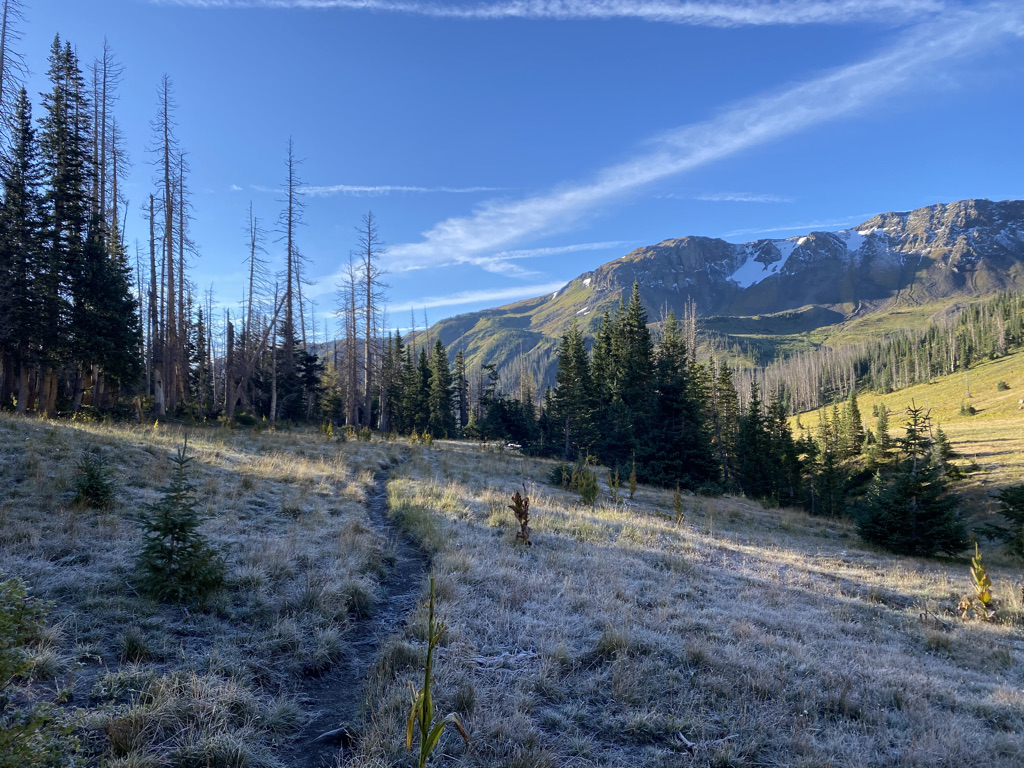
The final day of these types of trips typically involves hiking back downhill. We followed the Middle Fork of the Conejos River, making it the gentlest day of the trip. It is also almost always a day of de-layering. For most of us, it is not typical to see frost in September. Yet, this day switched from frost to being kind of warm pretty quickly.
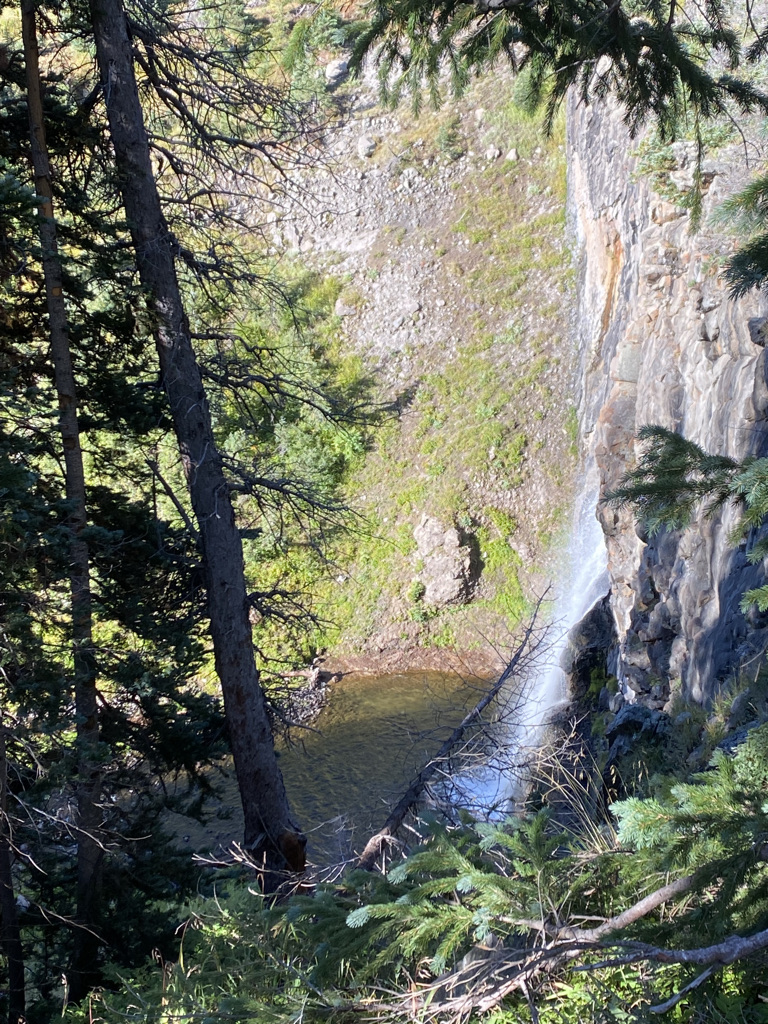
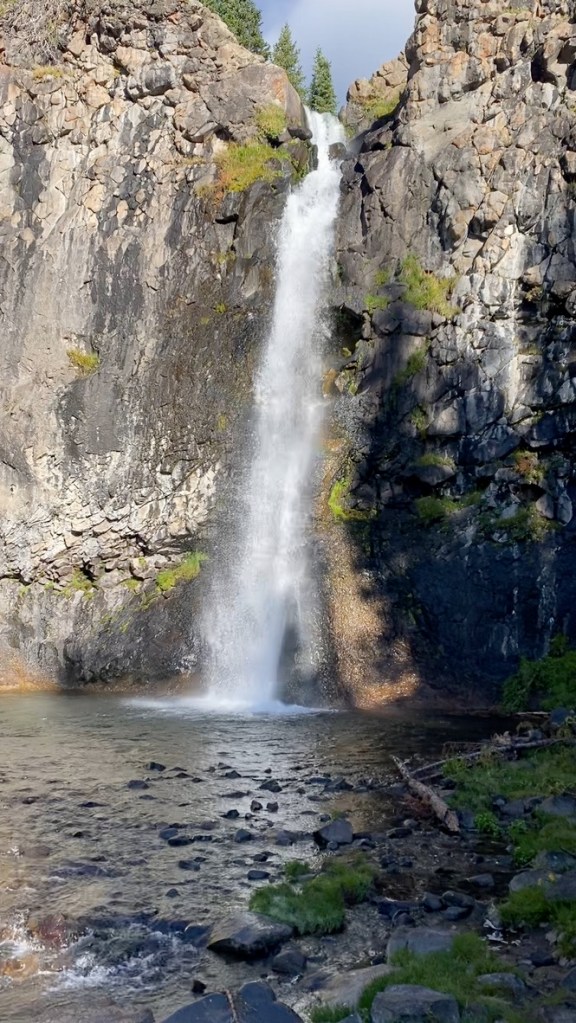
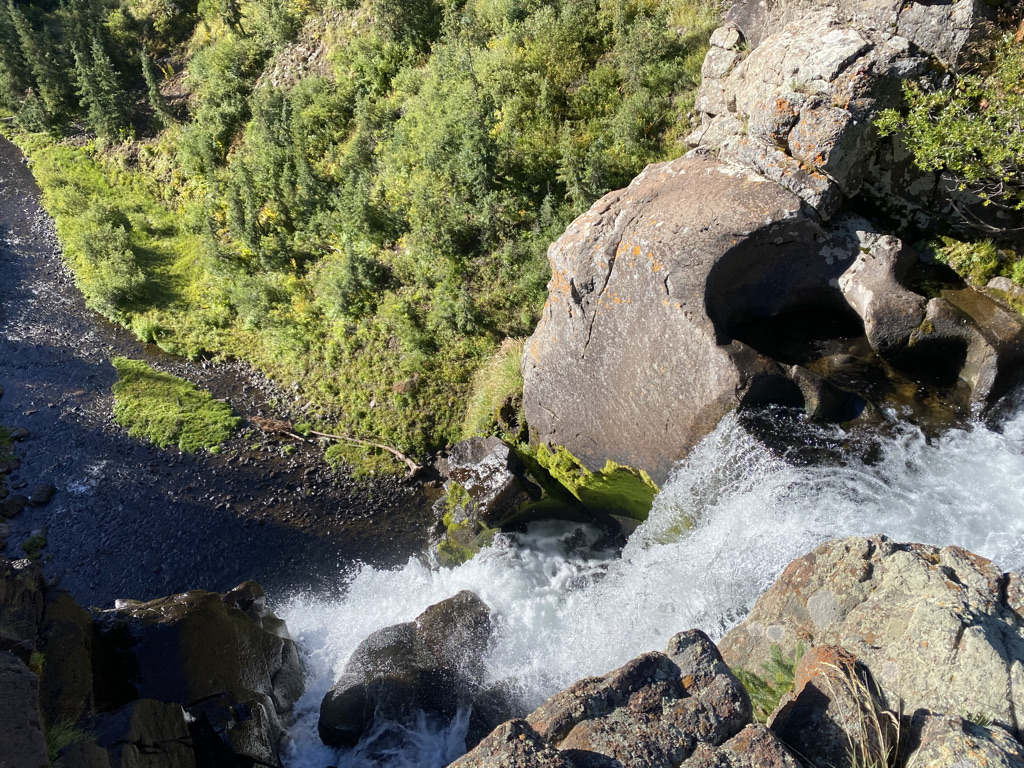
The best feature of the day, and the feature that made the trip was this unnamed waterfall.

It’s so far away from civilization, so infrequently traveled that a name for this waterfall could not be found on the map. We saw it from several angles, including having seen it the prior day from the other side of the ridge to the south.

In life, it is natural to seek comfort. Being uncomfortable is not fun. Unfortunately, the prioritization of comfort and conveniences has denied many of us the most amazing experiences. Nothing on this trip was possible without a little bit of discomfort. However, while we did have one miserable evening, we did manage to avoid a second by springing for a hotel room in Monte Vista along the way down.
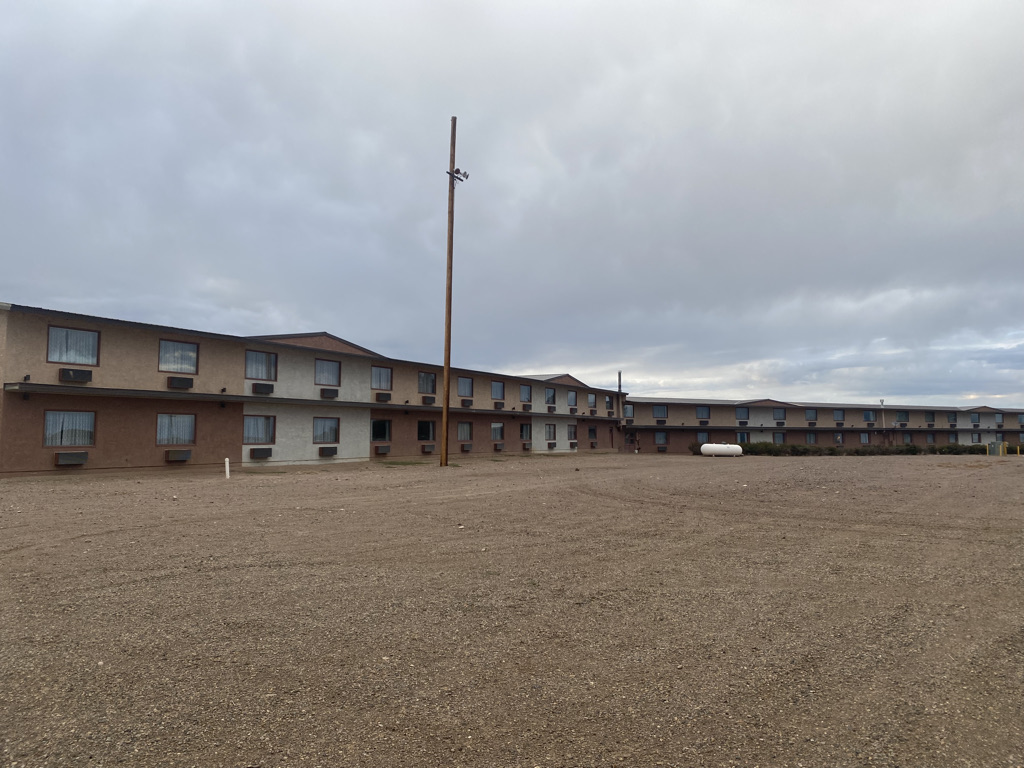
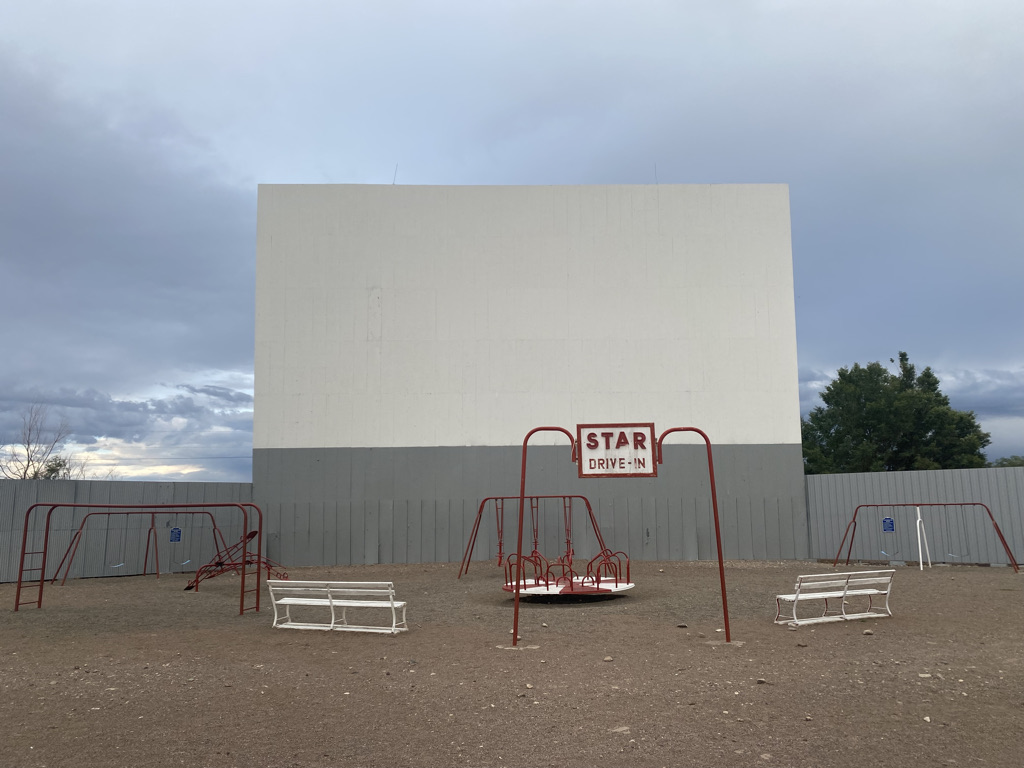
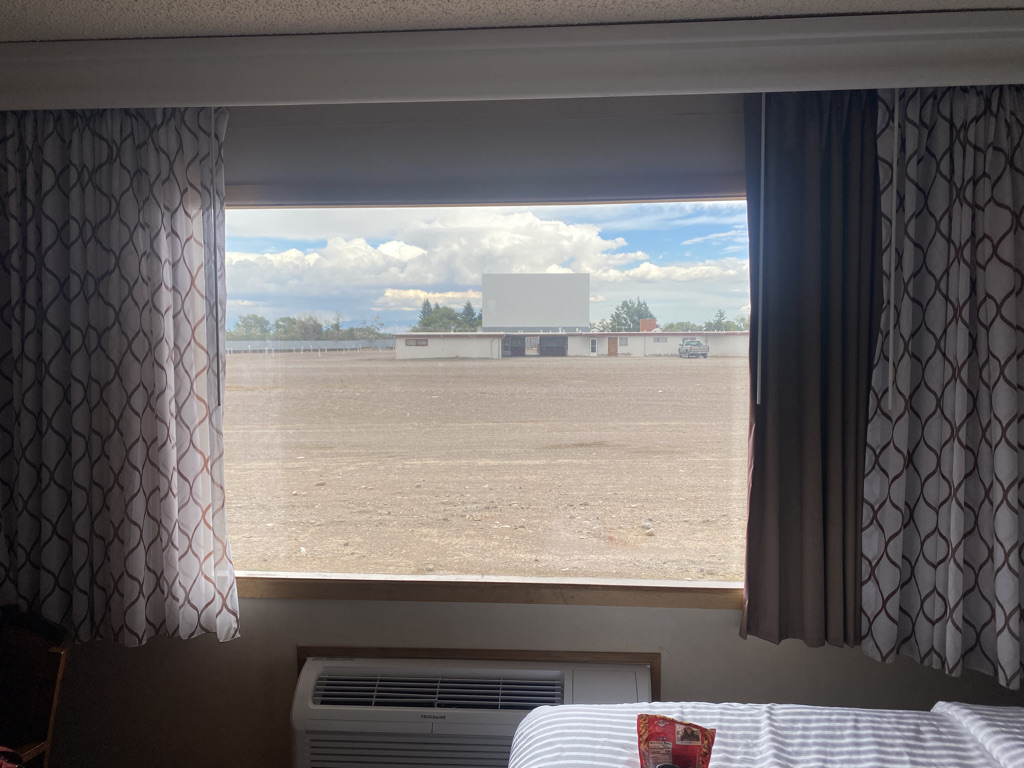
The Best Western Movie Manor is one of those unique hotels with a drive in movie, where visitors can actually watch a movie from their rooms, out the window. With this choice, we managed to avoid some discomfort without having it cost us any of the experiences we would have the next three days. Maybe it is possible to use our natural drive for comfort, but do so in a way that still recognizes that having the experience is the ultimate priority.

Ride the Rockies Day 6: Million Dollar Highway

If I can conquer this mountain in front of me, I can conquer all the other “mountains” life has thrown at me.

There is a lot more I need to do to get my life fully aligned with who I truly am and reach my full potential. Much of it involves a combination of making mindset adjustments, engaging my creativity, hard work and leaning into uncomfortable situations. Some of the endeavors I have determined I must undertake are, like this ride, quite intimidating.

My final day of Ride the Rockies started in Ouray, at an elevation of 7,800 ft. (2375m). Highway 550, southbound from Ouray starts climbing right away!

An overlook of Ouray, CO

It also didn’t take long to start seeing why this is one of the most iconic roads to bike on. Only three miles outside of town, the road passes right by Bear Creek Falls.

Over thirteen miles, we climbed from Ouray up Red Mountain Pass, just over 11,000 feet (3350 m) in elevation.

The climb took a little over two hours.

Reaching the top of this mountain was quite emotional. This was the highest point of this extremely challenging ride. I am not a professional cyclist, nor am I an aspiring to be one. My goal was simply to complete this ride without having to use the van support.

This hill was so intense that while pedaling uphill I did not really think about much else. It is at the top, when the climb has been completed that most people realize what they had just accomplished. I realized that had conquered this mountain and that I was indeed going to make it, achieve my overall goal for the ride. The rest of the ride would feel kind of like a victory lap. I witnessed other riders, likely with similar goals and anxieties as mine, hugging at the top of Red Mountain Pass.

It was an incredibly emotional experience. I felt like if I could conquer this mountain, I could conquer the other metaphoric “mountains” awaiting me in life. Suddenly, so much more in life felt attainable. The challenges I face can be overcome. After all, the main thing I need to do is work hard and be okay with being uncomfortable. That is kind of exactly what challenging long distance bike rides are. They are hard work and they are uncomfortable, albeit primarily in the physical domain.

We descended into Silverton, a town with an extremely old west type of feel.

After Silverton, there were two more climbs, one up Molas Pass.

And a second one up Coal Bank Pass.

Both ascents were significantly less challenging than the previous ones, climbs of 1500 ft. (450 m) and 950 ft. (300 m) respectively.

With the ascents and descents, the entire middle section of this ride took place at elevations exceeding 9,000 ft. (2750 m). It was surrounded by the best of what the San Juan Mountains have to offer.

The descents were enjoyable as well. I got to about the highest speeds I am willing to go on a bicycle. There is something that feels truly alive about coasting downhill on a bicycle while surrounded by wide open spaces, peaks above tree line, forests and alpine lakes!

Even on events like these it is hard to get too disconnected from what is going on in the world. People will likely not remember this, with our active news cycle and short attention spans, but one of the new stories of June 2021 was a lumber shortage, which was delaying the construction of new homes and connected with the shortage of real estate in the market. Over the course of the day, I encountered about a dozen of these trucks transporting lumber along the Million Dollar Highway.

The final segment was mostly downhill and kind of stretched on a little bit. I encountered a little bit of rain, the first and only time I would on this ride.

Both the top of Red Mountain Pass and actually reaching the finish line felt amazing but in a different way.

The Ride the Rockies finish line in Durango, CO

I can’t decide which felt sweater. However, the entire experience of Ride the Rockies 2021 has provided me with a framework by which to take on every challenge life will present going forward. Know where you want to go, find the best path, lean into discomfort and put in the work.

Ride the Rockies Day 5: The Optional Day Around Ridgeway

Day 5 was optional, and when I first signed up for this ride, I was convinced I was going to take the day off. The ride in its entirety is very challenging. The final day is possibly the most challenging and the most iconic of the ride, along Million Dollar Highway from Ridgeway to Durango. It wouldn’t be a bad idea to get a day off and feel well rested. Plenty of people did chose to rest that day, as evidenced by conversations I had with other participants and the number of people I saw out at the brewery the previous evening.

When it came time to decide my instinct told me not to take the full day off. I decided to ride on day 5, but to skip the part of the ride I had already ridden on day 4, up Dallas Divide.

I also determined that, since I was staying in Ouray, I could make day 6 a little easier by riding the first 12 miles of that challenging 85 mile day after looping back to Ridgeway. I’d still get to see all the places included in the ride.

By the fifth day I began to notice…

  1. Regardless of the circumstance I always woke up around 5:45. On a “normal” weekday I sometimes struggle to get myself out of bed before 7! This was likely because I was getting exercise and sunlight, but could have also been related to the anticipation of each day’s ride.
  2. I also got in the habit of watching the morning news in the various hotel rooms I stayed in.

Since I was busy most days cycling, with my hands on my handlebars, I was not checking the news on my phone (or a computer) throughout the day. Instead, I watched the news for half an hour or so every morning as I prepared for the day’s ride.

I realized that, with respect to how we consume the news, I had essentially reverted to the way things were three decades ago, when it was common to watch the news in the morning or the evening, but our exposure to the news was confined only to that half hour or hour each day. I determined that I liked it better. 99% of all news stories are not emergencies. They can wait until the end of the day or the following morning.

The ride started on a trail that connected Ridgeway with Ridgeway State Park, a place where a lot of people take part in water sports.

The 17-mile descent went quite fast and before I knew it I was in the tiny town of Colona.

The second half of the loop pretty much embodied what Ride the Rockies is really all about. It was a challenging 2,000 foot (600 m) climb on a dirt road, but, the challenge ended up being worth it!

I spent some time in Ridgeway before tackling the final 12 miles of my day.

It was good to have a nice meal and then relax by the pool for a while.

I was concerned about the heat, which was starting to build in Ridgeway, but luckily was able to take advantage of some clouds that had built in the middle of the afternoon to take on the ride from Ridgeway to Ouray.

From the standpoint of off-roading, this was quite possibly the most challenging part of the ride. Here, highway 550 is fairly heavily trafficked and has no shoulder. The official ride follows parallel gravel roads that were a bit tough for me on the cyclocross bike I ride.

I did not love all these rocks

In Ouray, I got more time to relax, as the total ride for the day was still less than 50 miles.

I soaked my legs in the cold water of the Uncompaghre River.

And had a nice meal at the Outlaw Saloon, where I got to meet the man who plays all those old west sounding tunes on the piano.

This piano player makes a living playing old west style tunes at bars in both Ouray and Silverton (both towns with an old west vibe). I loved hearing his story!

Sometimes it feels like everywhere I go I see people that feel trapped in jobs they don’t like and are not passionate about. Some combination of fear and the need for security keeps them there. For the unfortunate ones who end up working long hours and enduring a lot of stress, it does not feel like much of a life, regardless of how much money they are making. Whenever I hear about people who decided to do what they love to do and actually find a way to make it work, I feel happy and encouraged.

The day ended with a gaze to the north and a reminder of the challenge that lied ahead on the following day.

Just looking around town in all directions, it feels like the hardest place in the world to bike. There is no easy way in or out!

Do We Have Too Many Updates?

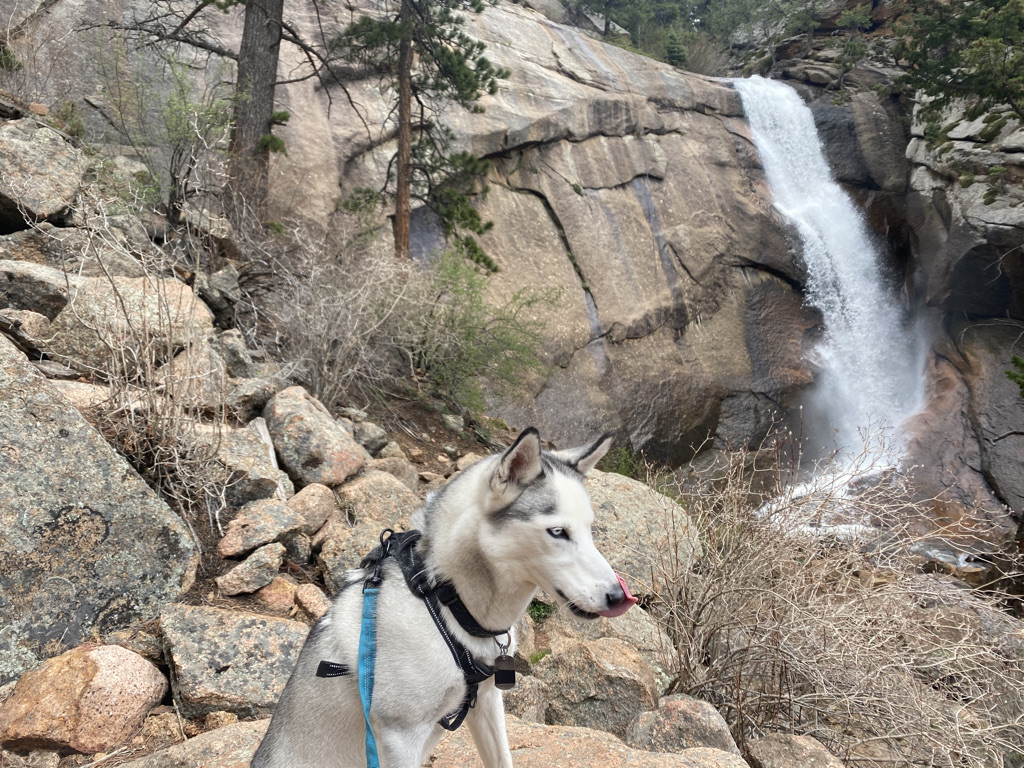
Elk Falls, in Stauton State Park, is a fairly lengthy hike. The round trip from the main parking lot (called the Meadow Parking Lot) is about 11 miles, depending on where you park. It begins with a mostly flat, 3.1 mile section called the Staunton Ranch Trail.

The trail passes by areas of interesting rocks where people climb.

And even crosses a county line.

As is the case with most State Parks, this trail is part of a network of trails that connect several important features. Elk Falls just happens to be the most commonly discussed feature, as it is the tallest waterfall within an hour drive of Denver.

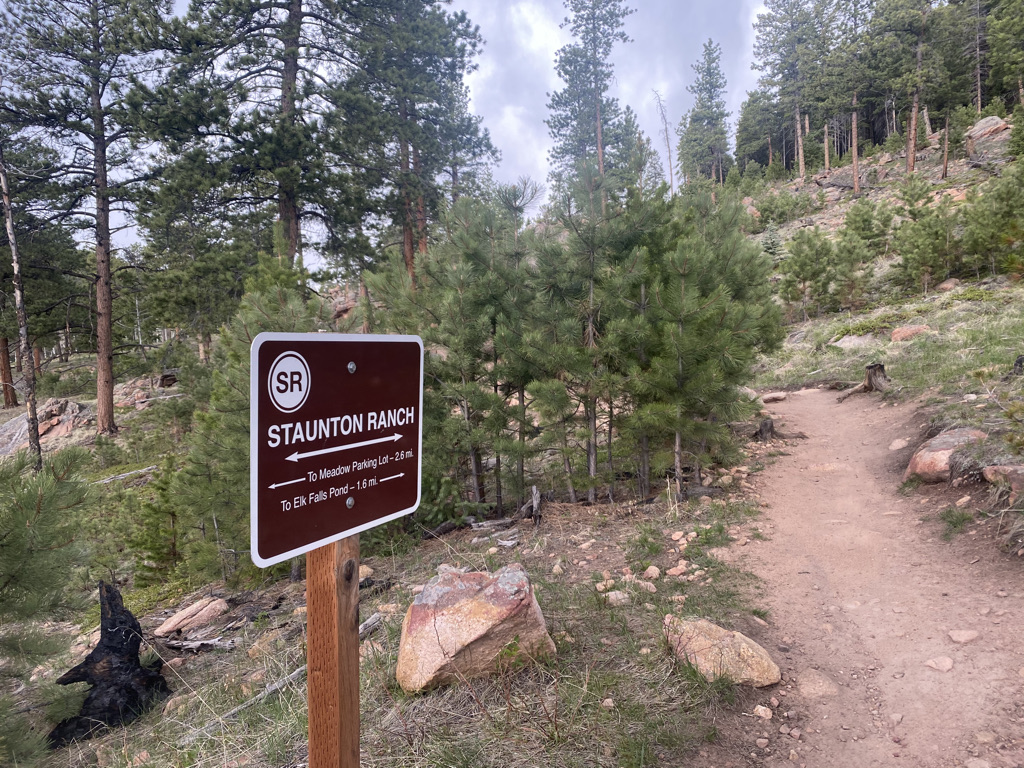
Staunton State Park is one of the easiest trail networks to navigate. At each trail junction, there is a sign that not only identifies the trails, but also serves as a mile marker.

At this point, I had hiked 2.6 miles and had 1.6 miles to the Elk Falls Pond.

With an additional 1.2 miles from the pond to the waterfall, this sign was quite close to the halfway point of the hike.

The hike from the parking lot to the falls would take just over two hours (the return trip would be about the same length). Over the course of the trip, the signage would provide me with a total of about five mileage updates. I actually found this to be quite close to the frequency I desired.

However, I wondered, how many updates we really need and what impact it is having on our experience. I thought about the explorers of centuries past, who would travel great distances using maps that, while state of the art for the time, would be considered woefully insufficient today. Lewis and Clark, for example, famously underestimated the length of their journey by many months. Yet, today we demand mapping software that estimates our time of arrival to the minute. These software packages, available to anyone who has a smart phone, even adjusts expectations for the one aspect of travel that still lead to uncertainty at the turn of the century- traffic. Now, at any moment in time, we can say exactly how much distance and how much time we have left.

Has this detracted from the experience? Are we bombarding ourselves with too many updates? Does checking the map on our phone for updates too frequently cause us to focus too much on the destination, preventing us from enjoying the journey? Could it even be causing anxiety? Elk Falls is the destination and the highlight of the trip, but while still over an hour away from the Falls, it is certainly better to enjoy what is in front of me than to spend the entire time anxiously awaiting the Falls. The same can be said for the trip back to the parking lot.

It makes me think of everything else in life we excessively look for updates on. How much is too much? How often do we check…

  • The number of likes our photo received?
  • The current status of our investments?
  • Whatever device is tracking our fitness goals?
  • The news?

And, what impact does it have on…

  • The experience we have in the places where we took those photos
  • How we think about the investments we chose to make
  • Our feelings about our bodies
  • How we feel about the state of the world

It feels like we’ve reached a point where we are updating ourselves too frequently on too many things. Maybe it’s time to back off all of it and try to be more present in the moment. Maybe this will require some degree of acceptance, of things how they are as opposed to how we wish them to be.

The Rio Grande Trail: Basalt to Aspen

The name of this trail is puzzling. According the the trail’s website, this 42 mile trail, which connects Glenwood Springs to Aspen, was named after the Rio Grande Western Railroad, which ran along these tracks until it was decommissioned in the 1990s.

Most visitors to the area are not aware of this history. We just see that the trail is named the Rio Grande Trail despite the fact that the river it follows is the Roaring Fork. The Rio Grande is not only well known for marking the U.S./ Mexico border in Texas, but it also has its origins in Colorado, not too far away.

That being said, on the first of October, it still made for one of the most breathtaking bike rides one could ever hope for.

I absolutely love the town of Basalt!

Every visit I have ever had to this town has been incredible! It never feels crowded like a major tourist destination, but there is also never a shortage of things to do or basic resources. I have never had a bad meal in this town, and the two rivers that come together, the Frying Pan and the Roaring Fork are your quintessential free spirited mountain rivers!

The ride from Basalt to Aspen is beautiful right from the start, especially on the first of October, with the fall colors at their peak.

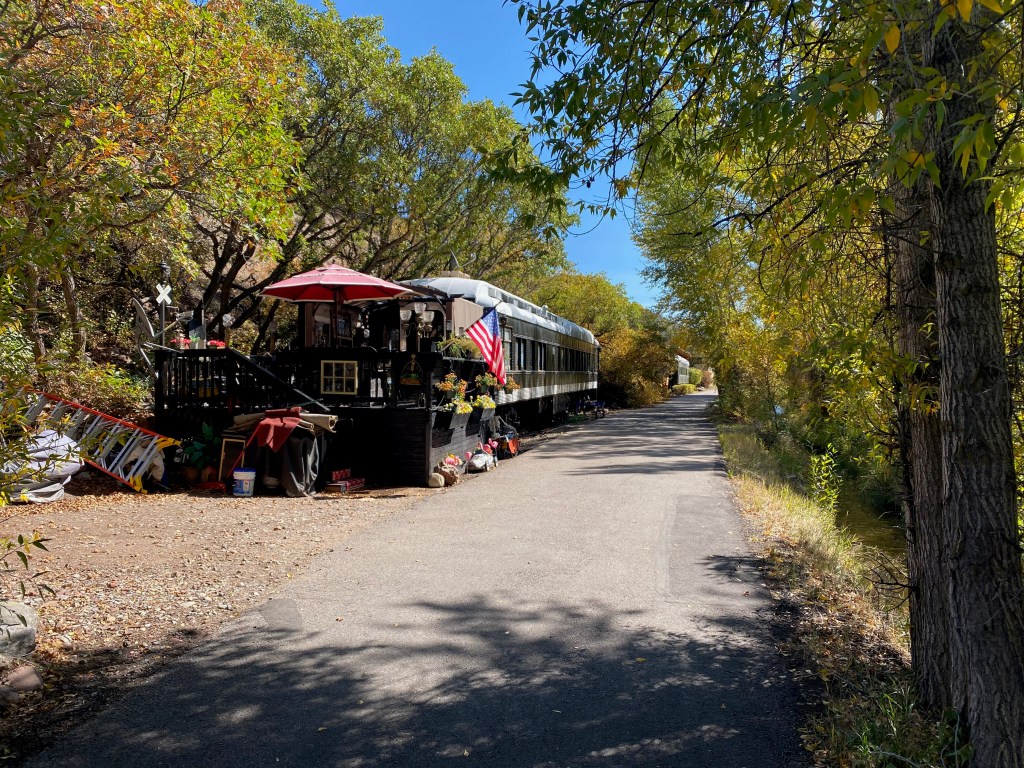
It is the kind of trail that has something for everyone. In the middle part of the ride, you’ll encounter a restaurant built in one of the old train cars used when this trail was a railroad.

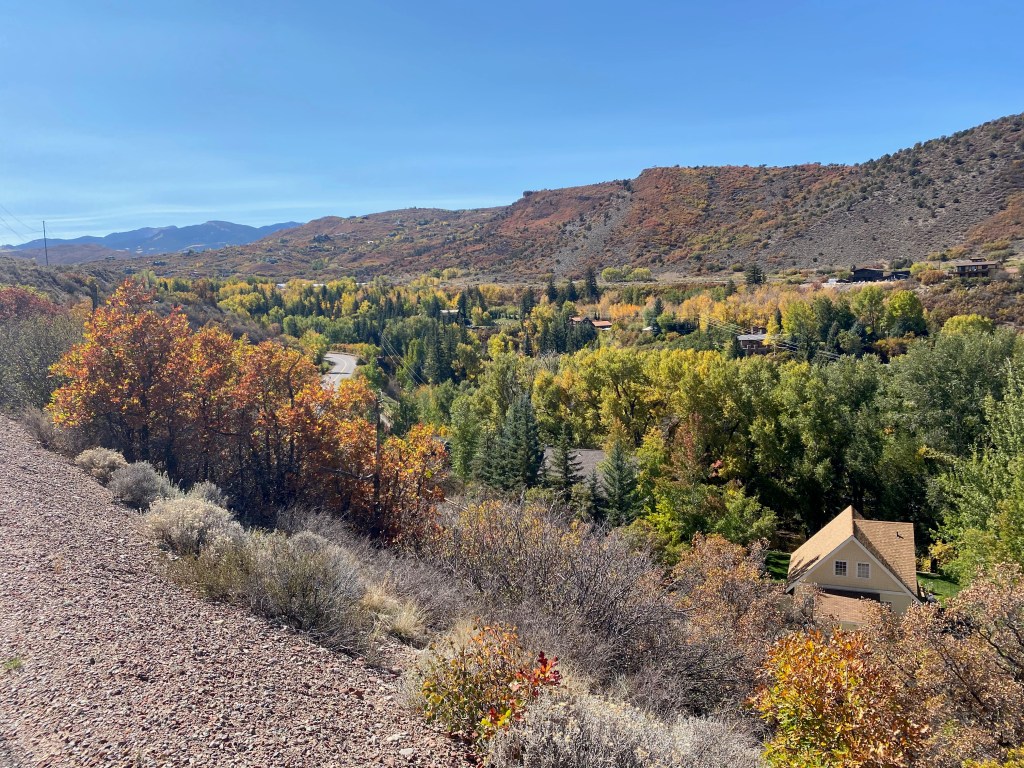
It overlooks several small villages.

The trail is mostly straight, but it makes a timely curve to give cyclists a direct view of Snowmass Village, one of the highest rated ski resorts in the state.

I also absolutely love the fact that the trail does not follow right beside the highway, usually traversing on the other side of the river from highway 82. There are many bike trails that travel right alongside a major highway. Here, cyclists enjoy the trail without the sounds of the busy highway. Additionally, those that have already driven the road see the area from a different perspective.

The mile markers are consistent, with one every half mile.

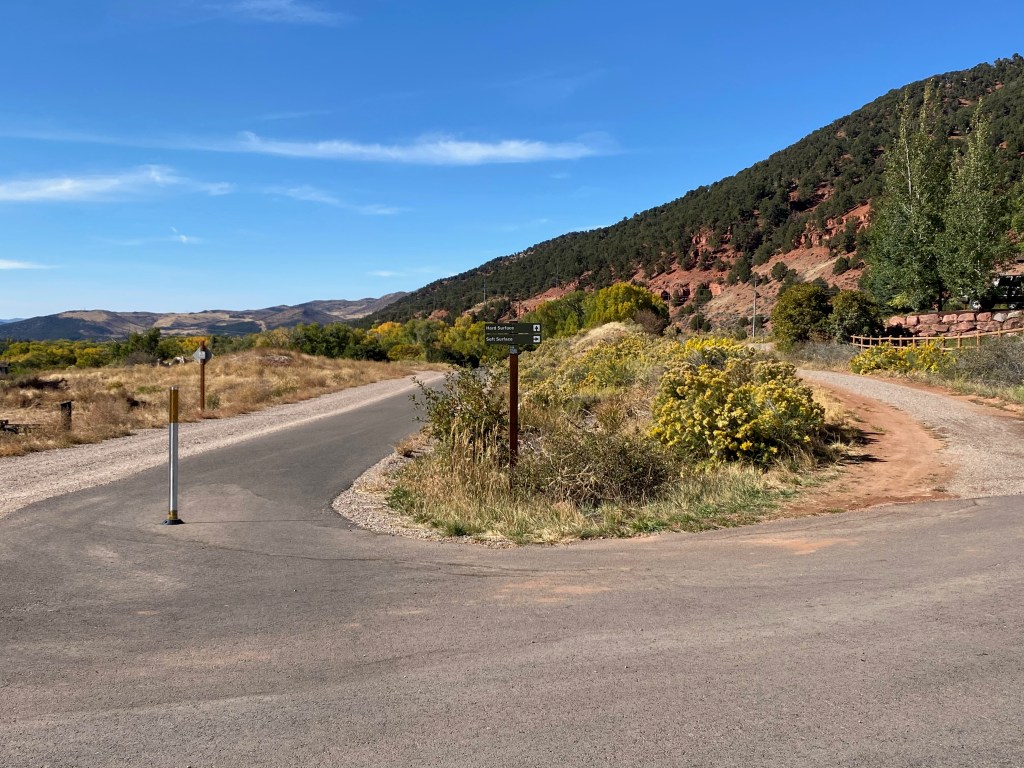
And, there are even parts of the trail where riders can chose a hard surface or a soft surface option.

Closer to Aspen there is an unpaved section that lasts about three miles.

Since it is hard packed and this section is flat, any kind of bike should be able to pass through with little problem. Oddly enough, my favorite experience of the ride was in this unpaved section.

This mini waterfall reminded me of a scene in the movie Cars, where the main character is taken to a similar feature. He is told that before the interstates were built all travelers would pass by this waterfall, but travelers now miss out on this beautiful experience in order to save 10 minutes. The scene, and in some ways the entire movie, was making a statement to us about our busy lives, and what we miss out on when we are always in a hurry, focused solely on our destination.

I was having an experience much like the scene in the movie. It would have been much faster to get from Basalt to Aspen on the highway, but not the same experience. I would not have encountered this feature. Leading up to the ride, I was feeling a bit stressed, like I was trying to cram too many activities into too little time. With work, I may have even been focusing on the destination rather than enjoying a key learning experience. Watching the water trickle down the rocks in stunning autumn gold reminded me how rich our lives can be when we don’t always take the most efficient route to a destination, both in physical space and in personal development.

The trail pretty much ends at the John Denver Sanctuary on the North side of Aspen.

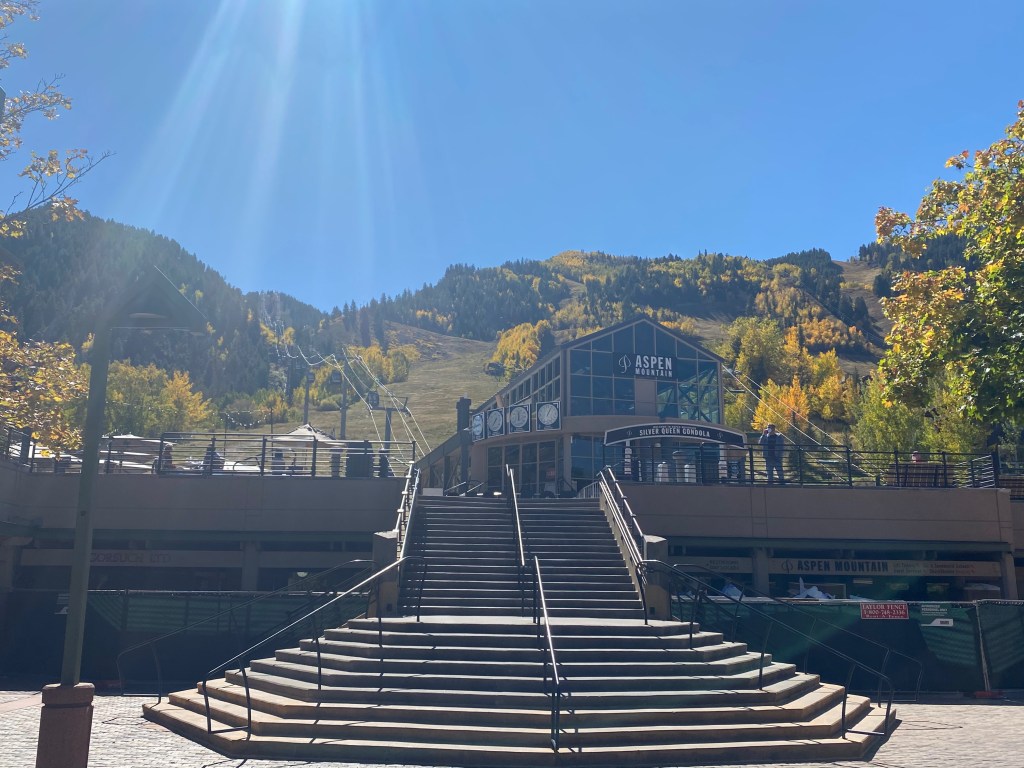
That day the city of aspen was colorful. Yellow colored trees could be seen in every direction, from Aspen Mountain, the ski resort adjacent to town, to the pedestrian mall that is often far more crowded (when there is not a global pandemic).

Aspen is known to be active and wealthy. But, I wonder if the people who live here live hectic lives, always focused on their destinations. Or, do many residents of Aspen, and the rest of the Roaring Fork Valley, frequently take the extra time to immerse themselves in the experience of the natural beauty that surrounds them?

Backpacking the Holy Cross Wilderness: Day 3 Nature and Spirit

I became fascinated with weather as a fairly young child. While looking into weather, I would often find old books, written long before people could look up a weather forecast on the computer or even turn on The Weather Channel. These books would describe how sky and wind conditions indicate likely changes in weather. This knowledge seems generally obsolete. However, the combination of knowing how weather patterns typically shape up in late August in the Rocky Mountains and observing the morning sky lead us to expect to be able hike the final 6.2 miles back to the trailhead before encountering rain.

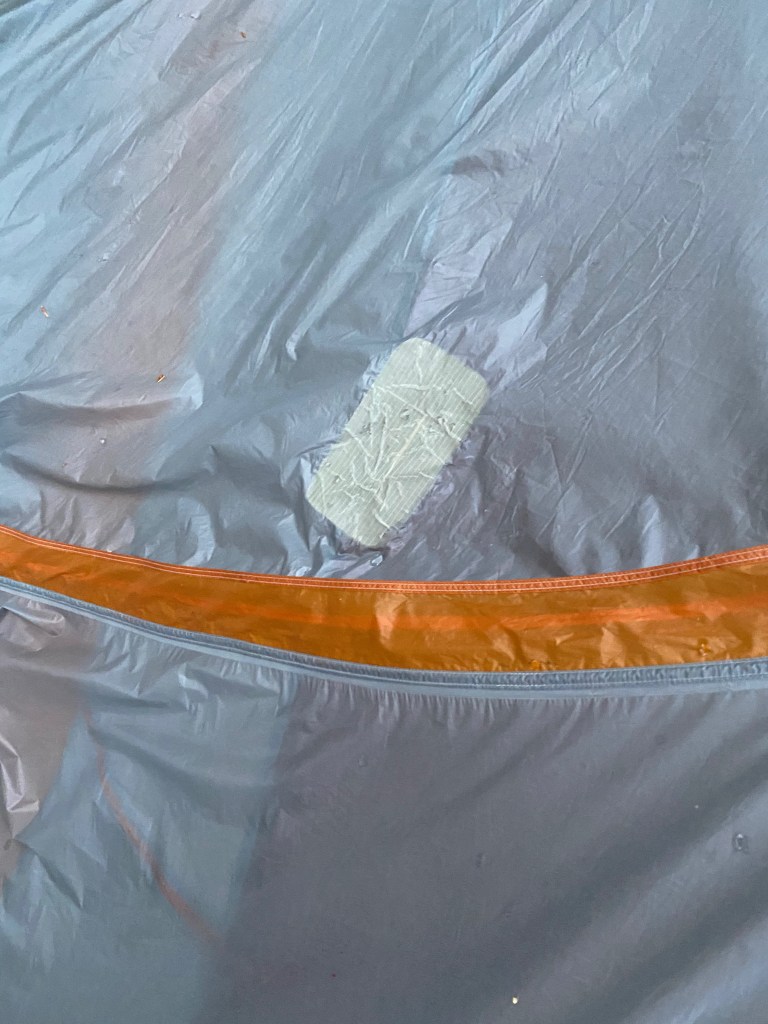
One thing that did get somewhat frustrating on this and other recent camping trips, is the equipment. It is common for people to buy equipment for activities such as camping or hiking and feel as if they are done making purchases. However, on this trip, it became apparent that this tent was going to soon need repair or replacement.

The same can be said for my hiking pants and spork.

It’s taken me a while to realize how warped most people’s view of money and finance is. It seems common to focus only on expenses we can psychically see and on the short-term. When it comes to outdoor and sporting equipment, the line between renting and owning feels quite blurry. The more one uses an item, the sooner it needs to be replaced. So, with certain variance for the quality of the item and how well we take care of our things, even when we buy our own equipment, we are still sort of paying per use. The first dozen or so times anyone uses something like a tent, they rarely think about the cost of eventually replacing it and how those trips are taking them closer to that inevitable expense.

Throughout the trip, we continued to encounter deer up close. We must have chosen to set up camp in their territory or something. Once, when I left the tent to go to the bathroom before going to sleep, I encountered a deer and got startled. By Sunday morning, with clear weather, it almost felt as if we were hanging out with them!

Looking at us, I was wondering if the deer were having their own “Low Key F2020” type of experience. I can imagine them thinking….

Ugh! First there is all this smoke, then this hailstorm comes through, and now these humans are in our way! Can we do like the bears, hibernate and skip to 2021?

Heading back across the valley, the sky continued to point to a more typical late August scenario and the expectation that rain and storms would come, as is more typical, in mid-afternoon.

Heading across the rocky area, we encountered some more furry creatures.

Then headed up fancy pass, a slightly higher pass than the one we had trekked in on Friday.

Heading up the pass, it got kind of windy. I wonder how the people who set up camp closer to the pass, in an exposed area, had fared that morning.

This was the challenging and exhausting part. First there was the nearly 1000 foot climb up Fancy Pass, where we could clearly see that Missouri Pass was lower.

Then, the other side was a steep, rocky downhill, which can be just as tiring as the uphill.

The Fancy Pass Trail experience was a bit more pleasant than the Missouri Lakes Trail experience two days prior. There was no crazy avalanche area where the trail was covered with downed trees and difficult to pass. Also, all of the trail’s features were quite exquisite in the morning sun.

First, Fancy Lake (okay, maybe the names of these things need more variety)

Then, just below the lake, the water funnels into an amazing tall, skinny waterfall.

The final three miles trail is pretty homogenous: a gentle downward slope through a pine forest.

It was in this section that I had a spiritual experience!

As I walked through the woods for what was the final hour and a half of this journey, I suddenly felt as if I was getting some deeply profound messages about my life. They were the kinds of messages that gave me clarity about what I am meant to be doing, confidence in who I am supposed to be and context around some of my more unpleasant past experiences. It was like nothing I had ever experienced before.

It felt like the result of a confluence of several circumstances.

  • I was tired enough to slow down my mind typically very active thought process. Yet, I was not so exhausted that it was all I could focus on.
  • There were not too many distractions in that section of the trail (i.e. fantastic panoramic views, wildlife, waterfalls, etc.)
  • My mind was somewhat de-cluttered from having done no-news August and having spent three days without access to Wi-Fi

While people believe different things, I genuinely believe that I received messages from either God or some kind of guiding spirit and came away from it with an unexpected boost.

It also gave me that answer to a question that had been looming on my mind for years. There is no question that our modern technology and conveniences have made our lives better. People live longer, are healthier and have more free time and other fun experiences than they did before we had all of our modern technologies. Yet, some chose to forgo conveniences like running water, electricity and computers for periods of time to take part in activities like this one. Regardless of whether or not one believes God speaks to us through nature, taking a break from the modern world gives us the opportunity to connect with something we don’t typically connect to.

The Great Ocean Road Day 1: Great Otway National Park

IMG_7011

The Great Ocean Road is an iconic drive along the south coast of Australia. Accessing the road is relatively easy. It starts about an hour west of Melbourne. For travelers, especially international ones, I’d recommend a stop at the travel information center along highway 1 just outside of Geelong. The people there were quite friendly. They provided plenty of maps and other information about attractions, which ended up being quite useful. They told me that many visitors try to do the entire drive all in one day, particularly in summer. However, with so much to do here, I am glad we chose a three day excursion in a camper van.

Our first spotting of the ocean shore in the distance, occurred less than 2km after we passed a sign welcoming us to the Great Ocean Road. A lot of travel involves a destination that is one specific location; a museum, campground, event or city. In these cases, it is easy to know when you have “arrived” at your destination. On trips like this one, the lines can be blurred. Seeing the ocean after passing this sign gave us a clearer indication that we were now at our intended destination- The Great Ocean Road.

IMG_7010.jpg

A bit further West, after having already hugged the coastline for about 20 km, an even fancier welcome awaits motorists just before entering one of the larger towns along the road, Lorne.

IMG_7017.jpg

Passing under this arch felt reminiscent of cycling under the original gateway into Yellowstone National Park, several summers ago.

The eastern half of this scenic drive passes in and out of coastal towns like Lorne and Torquay, which are primarily known for their surfing.

It also jets in and out of Great Otway National Park, a pretty dense feeling forest with plethora of utterly amazing waterfalls. Visiting all the waterfalls in this park would likely take several days, so it’s probably good to just pick a few specific ones to visit.

IMG_7022.jpg

As is the case with most of the other waterfalls in the park, getting to Erskine Falls required venturing a bit off the Great Ocean Road. The trailhead is about 10 km off the road in Lorne, and the walk was about 1.5 km round trip.

Despite the raw power of a this waterfall, the place felt quite tranquil. The trees calm the air while also creating a feeling of seclusion. Below the falls, the water seemed oddly calm despite having just descended 38 m (125 ft.). There is nothing like a gentile flowing creek when it comes to feeling balanced, happy, and connected to nature. The water cycle ties our planet together, and the manner in which it retains its tranquil feeling after going over the falls is uniquely reassuring.

IMG_7037IMG_7036

Each of the waterfalls in Great Otway National Park has a pattern that is unique from one another. Yet, they are uniform in their ability to create a feeling of seclusion from the outside world which made me feel refreshingly carefree and mindful.

IMG_7034.jpg

We saw the sun gradually begin to descend upon the Great Ocean Road, as we approached our campsite for the first evening, in a smaller town called Wye River where it appeared as if most people live on a hill.

IMG_7041.jpg

We set up a table and chairs along another tranquil creek, and opened up the top, or “penthouse” of our Jucy camper van.

It was my first time traveling in a camper van, but the experience felt quite similar to the kinds of camping trips I take part in back home in Colorado (with the exception of the sunset at 5:15 creating a long night).

Trips like this, away from much of our most recent technology always make me wonder whether or not it is worth it. Sure, when we ditch some of this technology, at places like this, there are more chores to be done, and some entertainment options are not available. However, making a comparison between an evening camping and an evening in the city, it feels like much of what our newest technologies have created are only minor conveniences, like a computer algorithm to help us select music to listen to, or a way to not have to physically buy a ticket to an event in person.

In exchange, we have created hundreds of new procedures to remember, hundreds of additional hours annually in front of screens, hundreds more things to keep track of and maintain and hundreds of log-ins and passwords to various sites and apps. Maybe it all is worth it, as I am comparing a holiday to normal days where we often have to work, do some form of home maintenance or run errands. Regardless, I am glad to have had some time away from these countless complications we have recently added to our lives.

The Time I Hiked Two Miles Past My Destination

IMG_6282.jpg

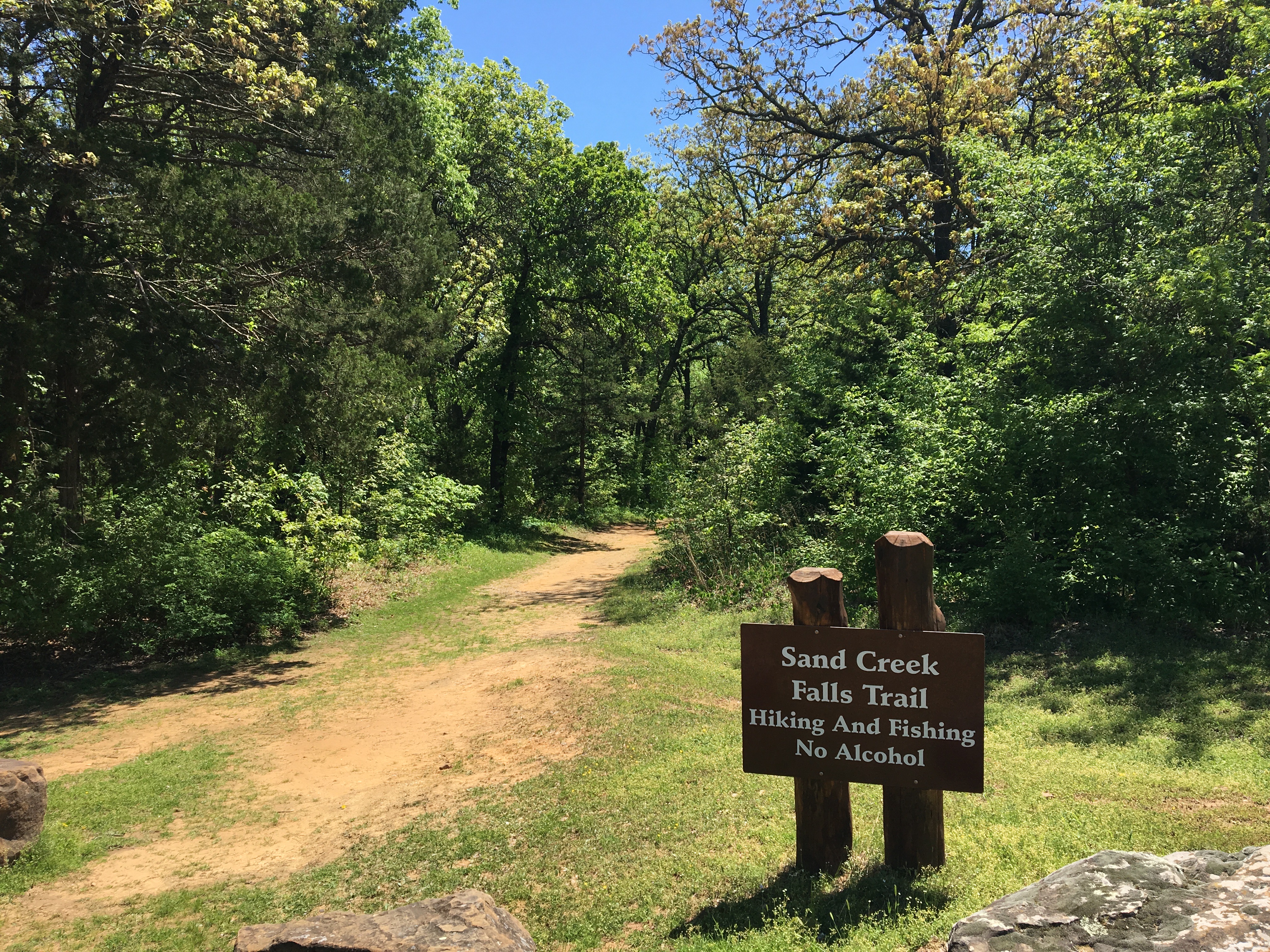
It took a mere 15 minutes to actually find Sand Creek Falls at Osage Hills State Park. I walked by these falls, which have a vertical drop of only around two feet, and thought “this cannot be the actual falls.” We would spend another two hours looking for waterfalls we had already found.

We would walk by some fishing cabins.

IMG_6273.jpg

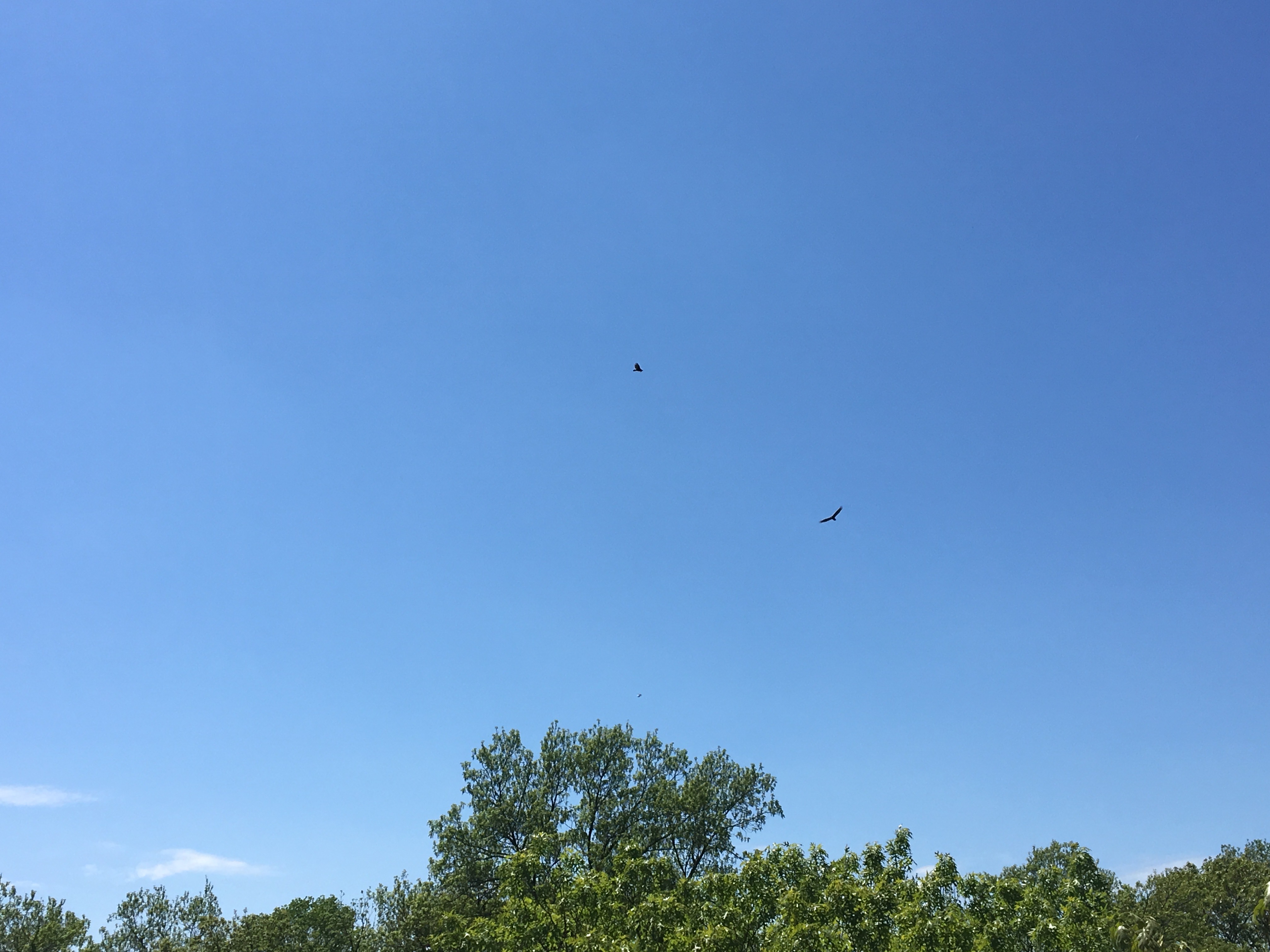
Birds circled the warm and humid late April Oklahoma sky.

IMG_6275

And, we continued to look, at different places further up the river, for the waterfalls that we had actually already found.

It was not until we had gotten back to the car and searched for images of Sand Creek Falls that we realized what we had seen were indeed the falls that this trail was named for.

IMG_6270.jpg

We just had the wrong expectation. Sure, Osage Hills State Park is in Oklahoma, but this part of Northern Oklahoma is hillier than the stereotypical images brought up by movies like Twister.

Just last year, I had visited another waterfall on the Great Plains, Smith Falls in Northern Nebraska.

IMG_4522

I thought the waterfall would be more like this one. As a result, I wouldn’t appreciate the falls until I looked back at the photos hours later. I was too focused on expectations. Rather than taking in Sand Creek Falls for what it actually was, I spent hours looking for something else.

This is a common struggle with respect to all kinds of events. It’s the party where not as many people show up as expected and the music being played is not what you wanted. It’s the time your friend cancels on you last minute, or when you didn’t get to watch the movie you had hoped for at a family gathering.

I struggle with this a lot. I often find myself down, or even hurt, when my life doesn’t meet the expectations I set for myself and the world around me.

IMG_6305.jpg

Experiences like a string of bad luck at a casino, a friendship or relationship not turning out as one hoped, or a bad turn of events at a job are somewhat out of our immediate control. However, sometimes when something does not match an expectation, it is not necessarily for the worse. It just requires an adjustment, and sometimes can open people up to new experiences altogether.

IMG_6293

Being part of something truly awe-inspiring is not as hard as most people make it. It’s just about finding the right balance; between planing and spontaneity, and between being determined to get what we are after and being able to adjust to changes in life’s circumstances. It is also about being open enough to new opportunities as they present themselves and noticing what is around us for what it is and not what it could or should be.


Nebraska Out of the Way Attractions

Smith Falls

IMG_4526

Smith Falls is pretty well hidden from most travelers. It is located in a very sparsely populated section of North Central Nebraska, far away from any heavily traveled interstate highway. It is also in a section of the country where few would expect to see a magnificent waterfall like this one.

Unless you are one of Valentine, Nebraska’s 2,820 residents, getting there is a long drive on empty roads, that even requires four miles on a gravel road off of State Highway 12.

Being so far out of the way of where people live and travel, the Niobrara Canyon, where Smith Falls is located, is quite secluded. The river itself looks nothing like the surrounding areas. The dense tree coverage feels reminiscent of places further East. It feels like the perfect destination for a private group experience; a float trip, family reunion, or some other group bonding experience.

IMG_4521

There does tend to be a few more people at the Falls themselves, as it is the main attraction at the State Park.

IMG_4522

Unlike some trails, visitors can freely walk right into Smith Falls without breaking any kind of rule. Many visitors bring swimsuits, and wear water shoes, as the trail to get from the parking to the falls is not vigorous at all, although it is about half a mile.

IMG_4529

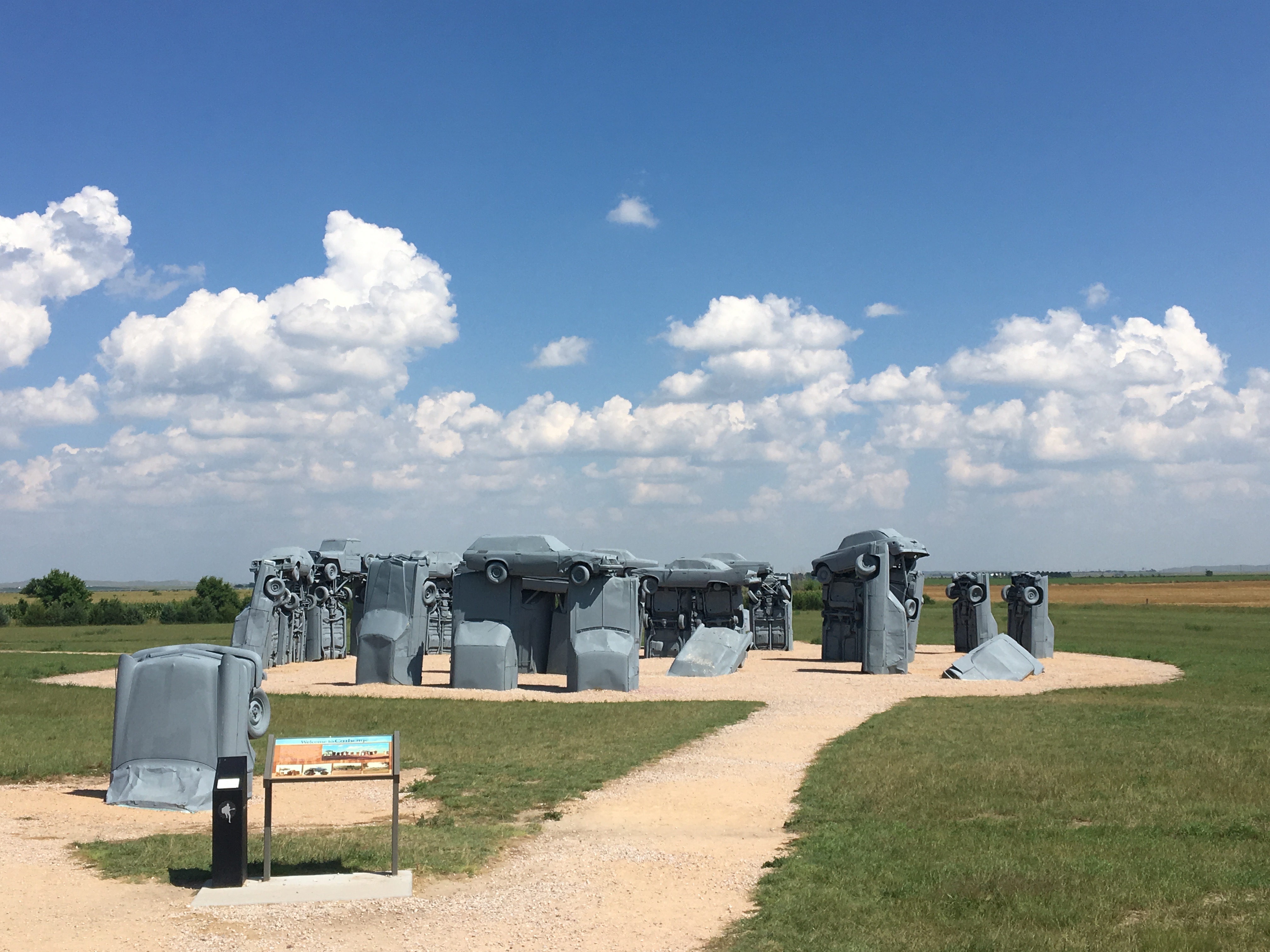
Carhenge

IMG_4542.jpg

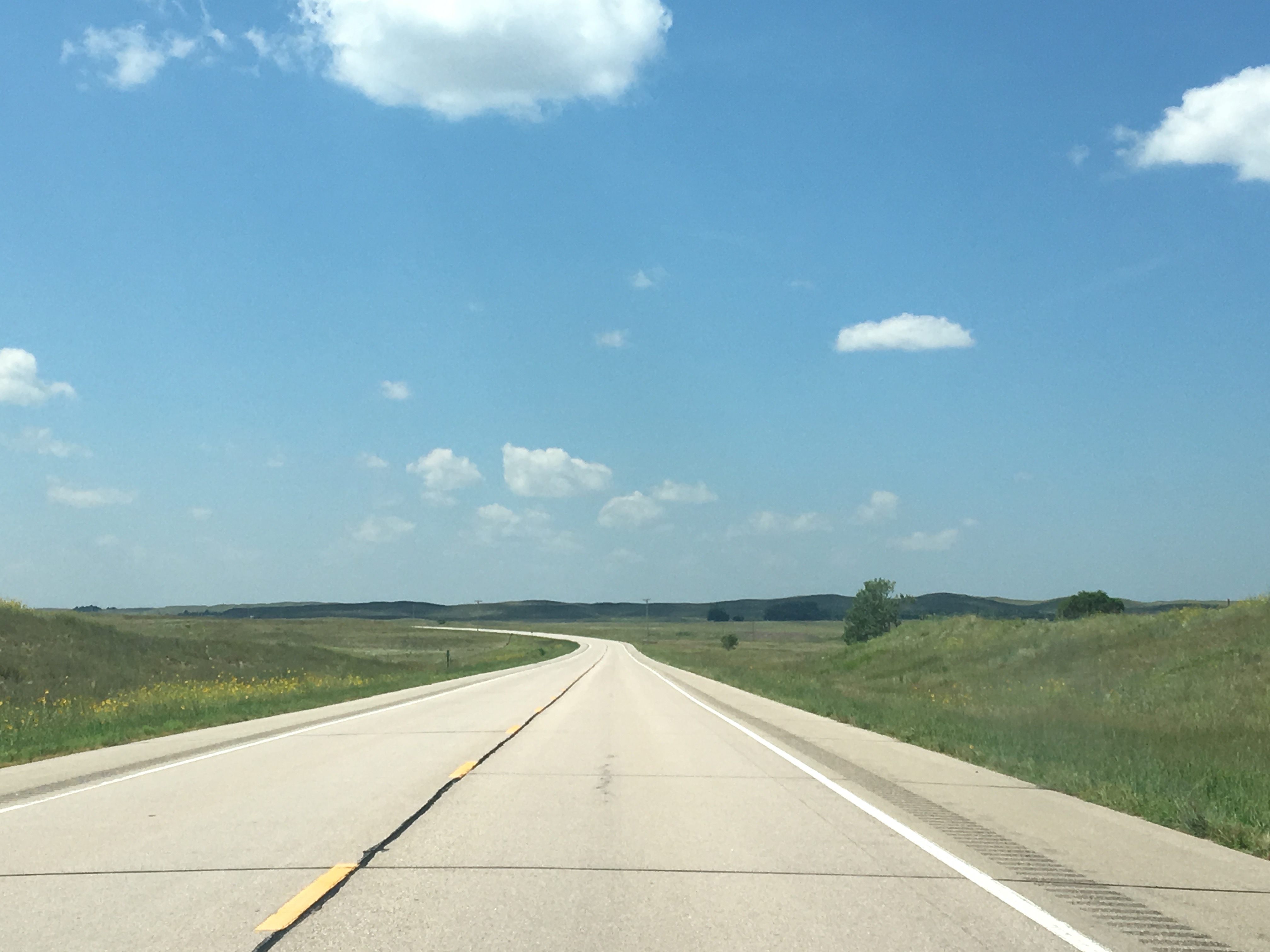
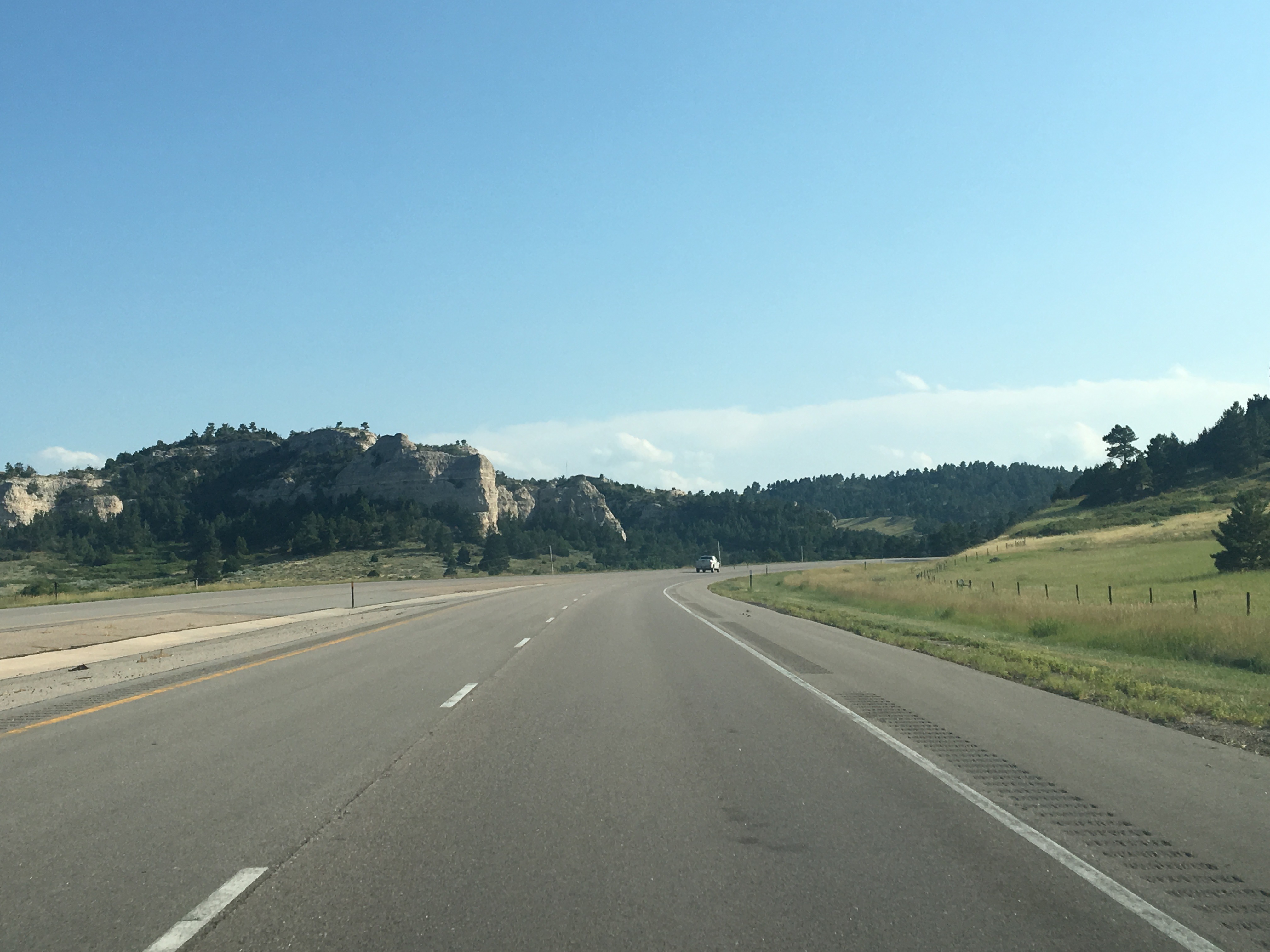
Carhenge, just north of Alliance, Nebraska, several hours west of Smith Falls is also quite far from any metropolitan area or heavily traveled highway. This image of an open two-lane highway with nobody else on it, wide open skies and small subtle sand hills in the background sums up the entire three hour drive between Smith Falls and Carhenge.

IMG_4538

While both attractions are out of the way, a few miles outside a small town (Alliance has a population closer to 8,000), in a way they could not be any more different. Smith Falls and the Niobrara Canyon is all about natural beauty, an attraction carved out of a glaciation event that occurred about 17,000 years ago. Carhenge is a homage to all things manmade, a recreation of Stonehenge, a mysterious pre-historic manmade structure, using a more modern human invention, cars.

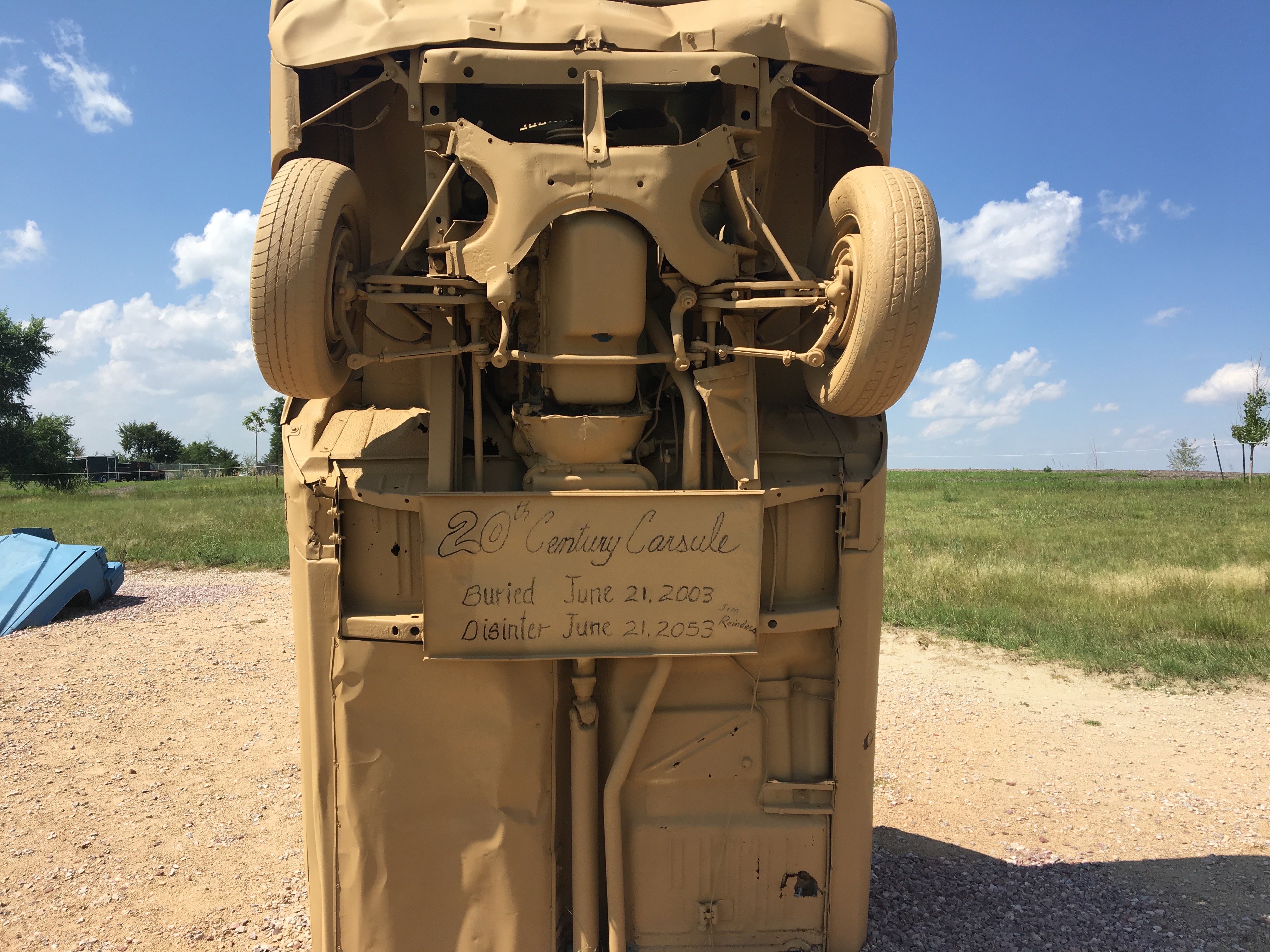
Whereas Smith Falls is serious, Carhenge is has a goofy vibe. There is also more to Carhenge than just rusty old cars arranged like Stonehenge. This one vehicle apparently has a time capsule in it. In the year 2053, someone will open up memories of 2003, the last year before social media. That should be an interesting experience, especially for someone not old enough to remember such a world.

IMG_4544

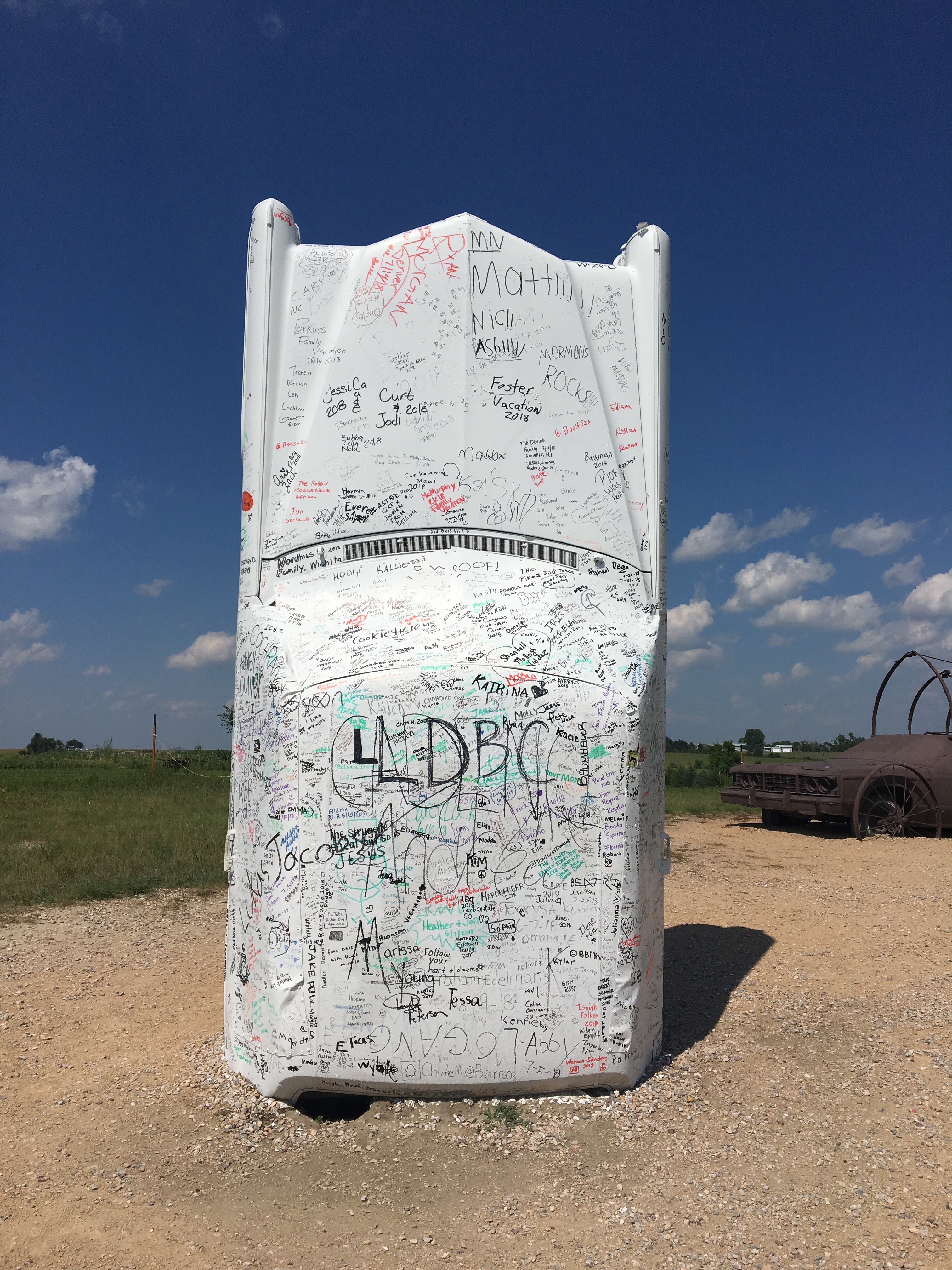
There is also a car where people can write on.

IMG_4545

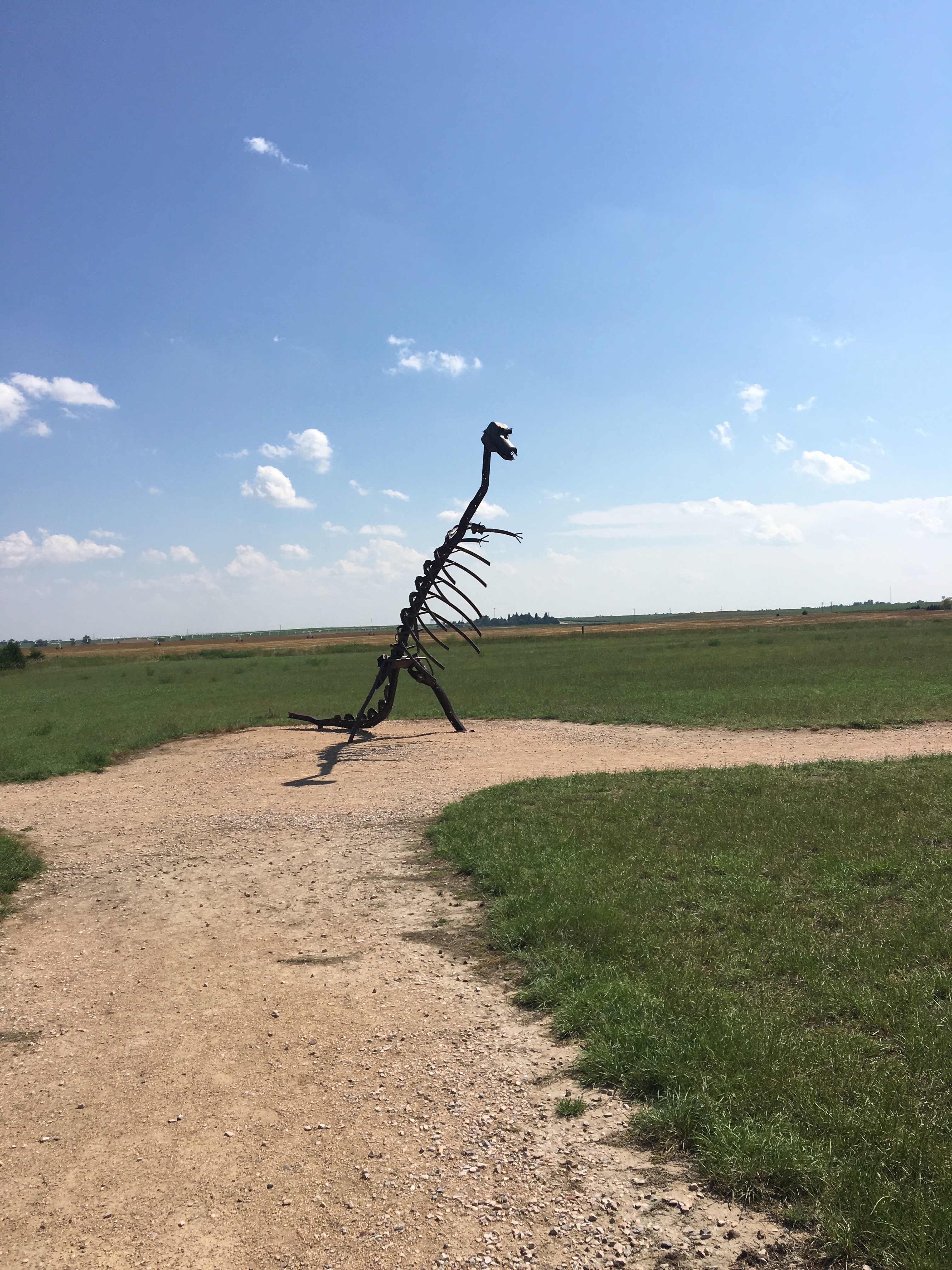
A few of these random structures that are made out of car parts, whose relation to the rest of the exhibit is not aparent.

IMG_4547

And, a car hood with a vaguely political sounding message on it.

IMG_4548

Chimney Rock

IMG_4562.jpg

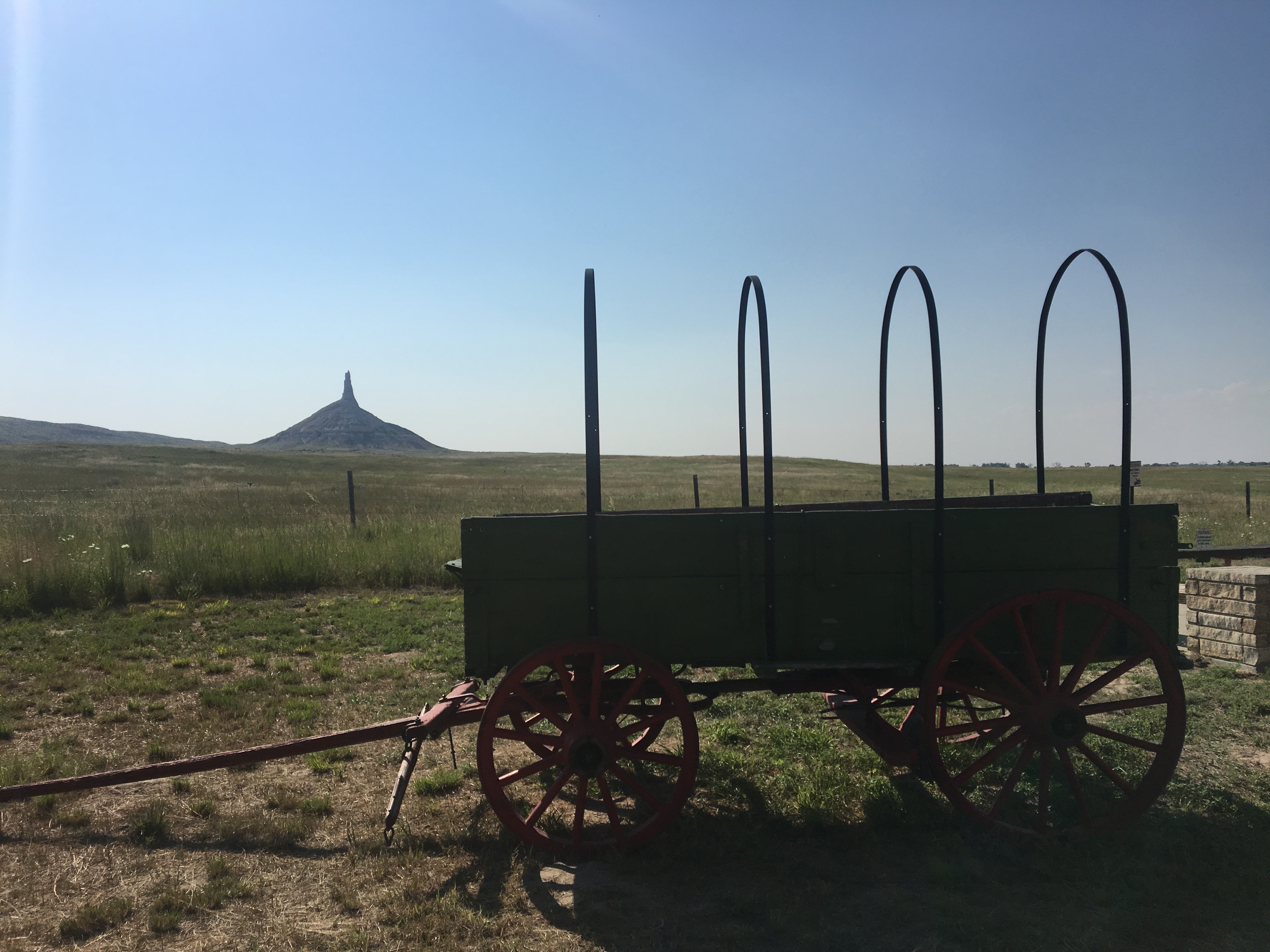
Not too far from Carhenge is an attraction of both natural beauty and historical significance: Chimney Rock.

IMG_4559

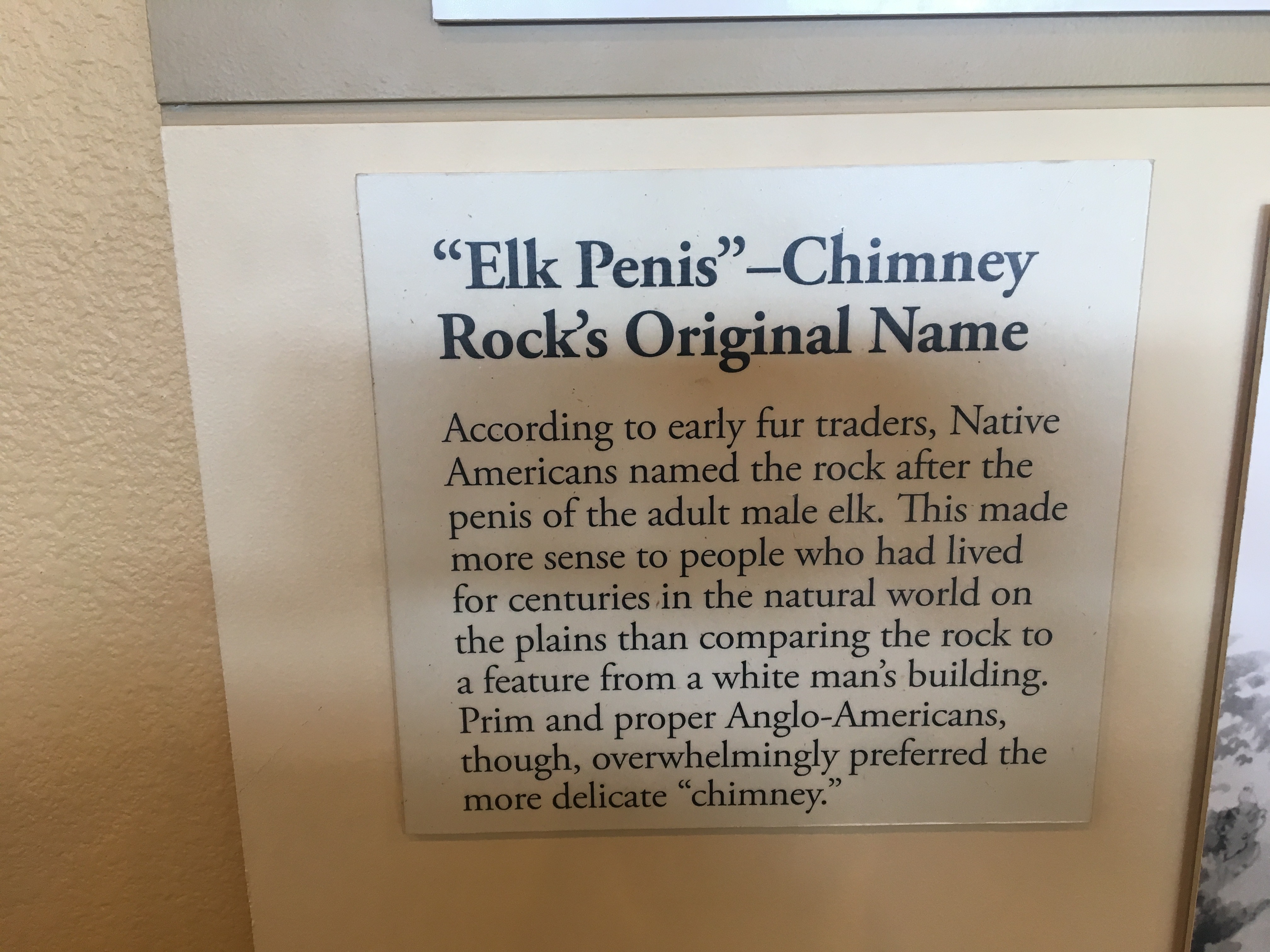
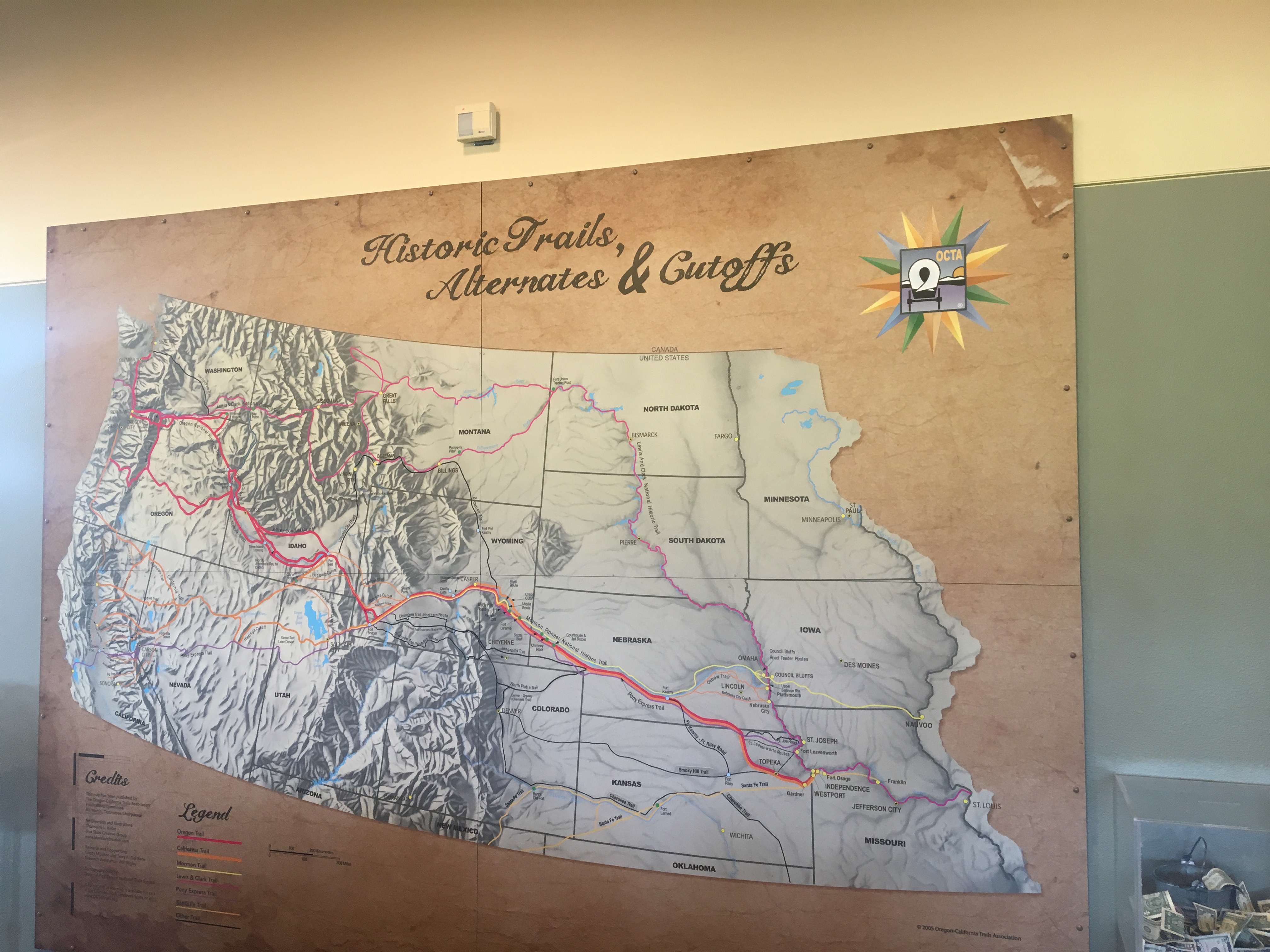
Although this structure served as a landmark for Native Americans and fur trappers, its significance was heightened when South Pass (in Western Wyoming) was discovered to be the easiest passage across the Rocky Mountains. This lead to most major trails, including the famed Oregon Trail, being routed along the North Platte River, passing by Chimney Rock.

IMG_4563.jpg

Chimney Rock is a National Historical Site with a museum containing artifacts, primarily about the pioneers who traveled this route, including journals and letters written by those who made the journey.

It is hard to appreciate in the current era, where anyone with means can get on a plane and fly to some of the most beautiful places on Earth, but when pioneers in the mid-19th Century came across Chimney Rock, they were often in awe of its beauty. Many accounts went to great lengths to describe the structure that is Chimney Rock.

It was also recognized by those making the journey at the time as the point where the flat portion of the journey ended and the uphill part began. The journey ahead would become more rigorous, but also more beautiful.

IMG_4567.jpg

Nebraska is not always known as a place with a lot of natural beauty. However, it is not without its places to be appreciated. The truth is that beauty can be found pretty much anywhere, because, it is often not a specific place or a specific person. It is often an experience. A major part of the travel experience is driving. Nebraska offers open roads that pass by subtle features like the sand hills or the rock features further west. The key is to go a little bit out of the way, and to notice, be looking for what is around you. Then, with the right music on in the right vehicle (I personally found both classic rock and EDM to match this situation, you may find something different), the experience becomes a thing of beauty itself.

Sioux Falls: Not What its Supposed to Be

IMG_4471

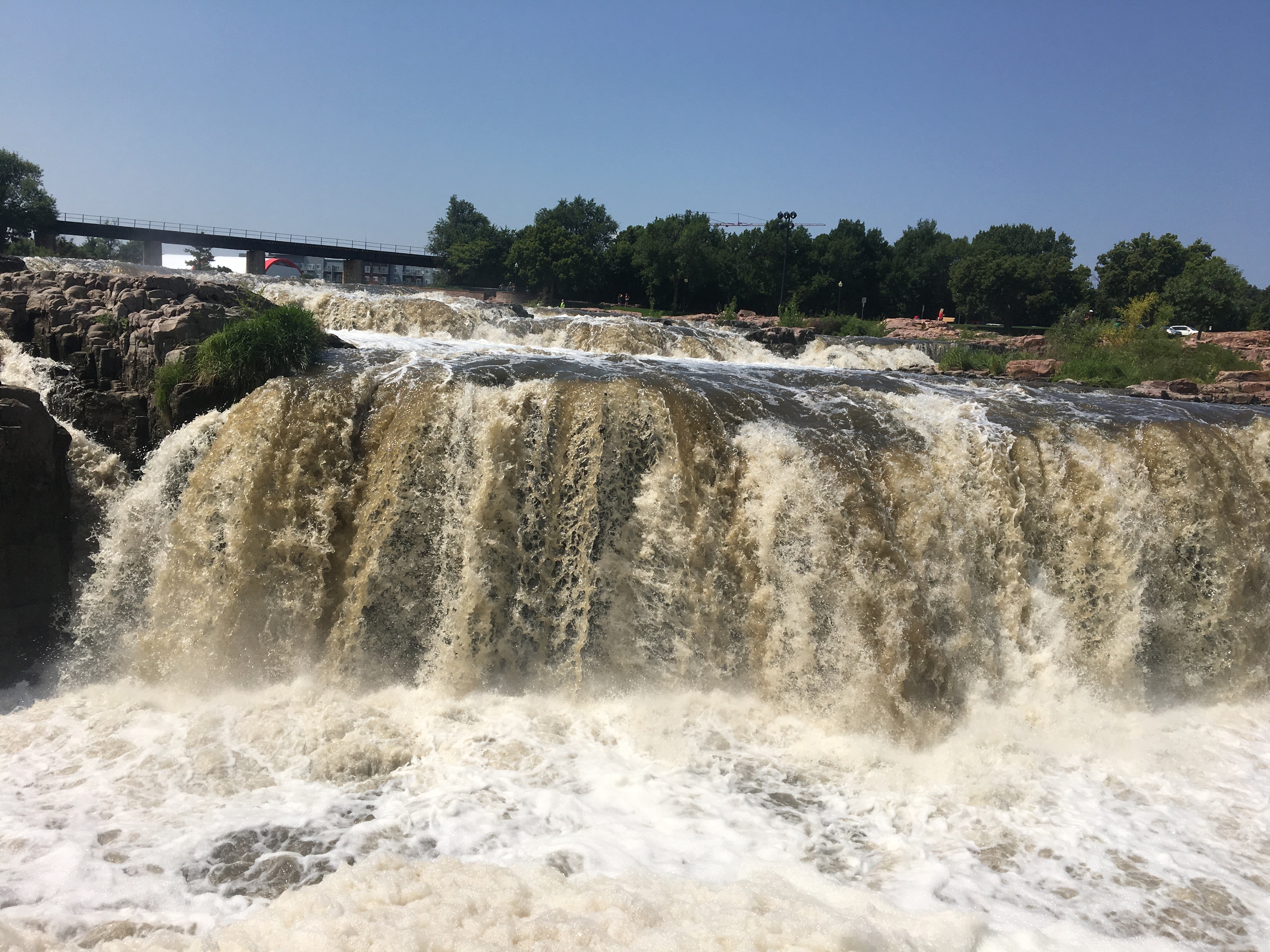
I could stare at this for hours, looking at every detail about how the water pours over the rocks, creating a continuous splash, swirls in a pattern that is both chaotic and controlled at the same time, and a fine mist that sprays outward from the surface it lands on.

IMG_4468

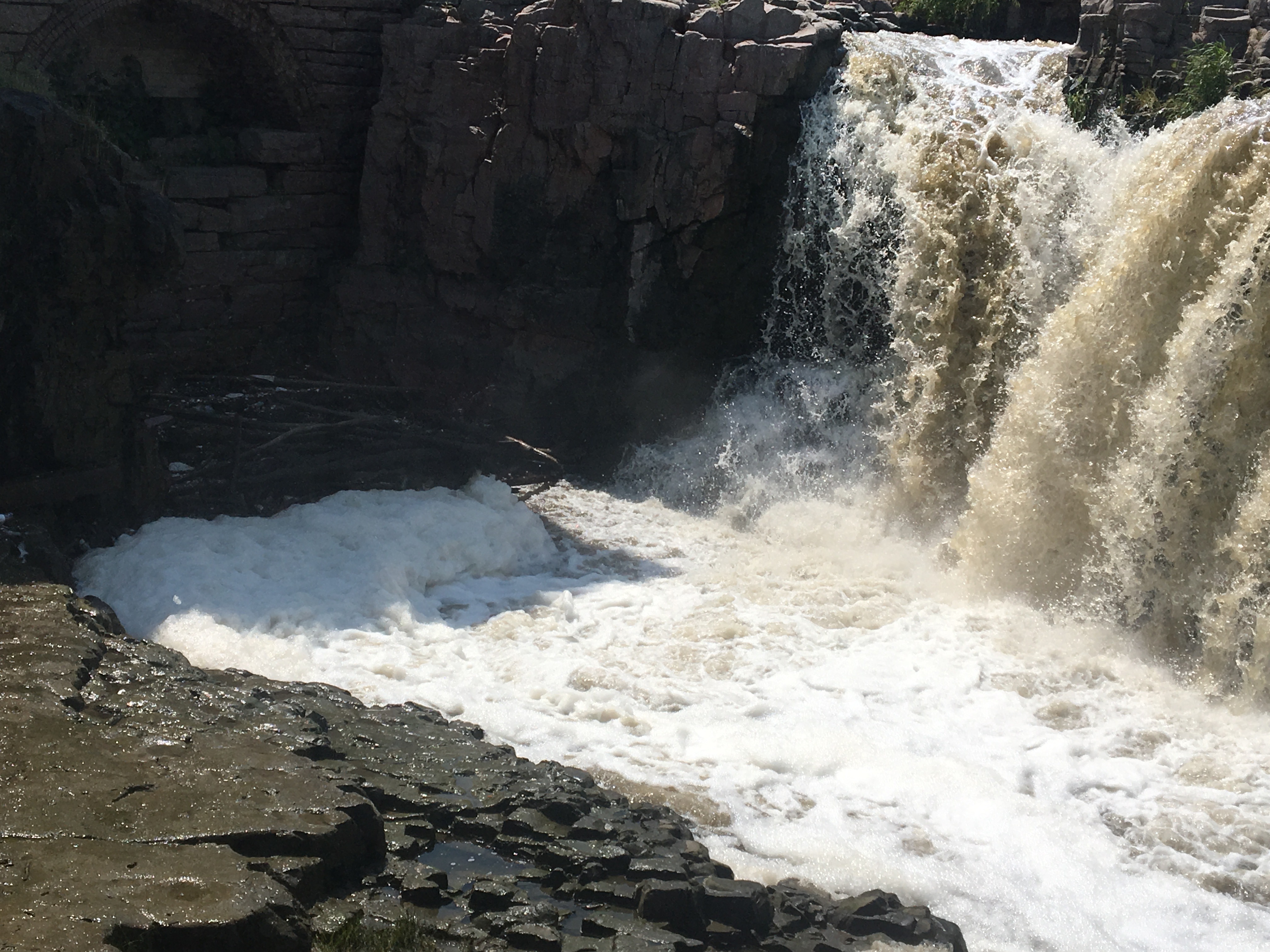
No matter how many times I see waterfalls like these, it always fascinates me that some of the water that cascades downward takes on the appearance of foam, as if it was not water at all, but had taken on another form. Watching the water rapidly descend and subsequently take on this different form feels reminiscent of a human being that undergoes an experience that is both traumatic and transformative. The water, traumatized by unexpectedly falling rapidly, suddenly exudes a sudsy and bubbly appearance.

IMG_4472

The amount of raw power that is created when large amount of water steadily pour over a rock. The variance in colors that appear as a result of every small scale detail about how the rocks are arranged. The changes in the manner in which the atmosphere feels in proximity to this phenomenon.

All of this creates a level of curiosity and fascination in me reminiscent of an 8-year-old at a science museum, in awe by dinosaur bones and that electricity ball that makes people’s hair stand up any time they put their hands on it. How did the rocks come to be formed in this manner? Why did the water chose this path on its way to the ocean to complete the water cycle? And, in this case in particular, how did this happen in a place so unexpected?

Falls Park is not only in a section of the country that is quite flat (Eastern South Dakota), but it is also right in the middle of a city (Sioux Falls). Everything about its location is contrary to what most people think of when they imagine encountering waterfalls. Yet, it is there, powerful and beautiful.

IMG_4467.jpg

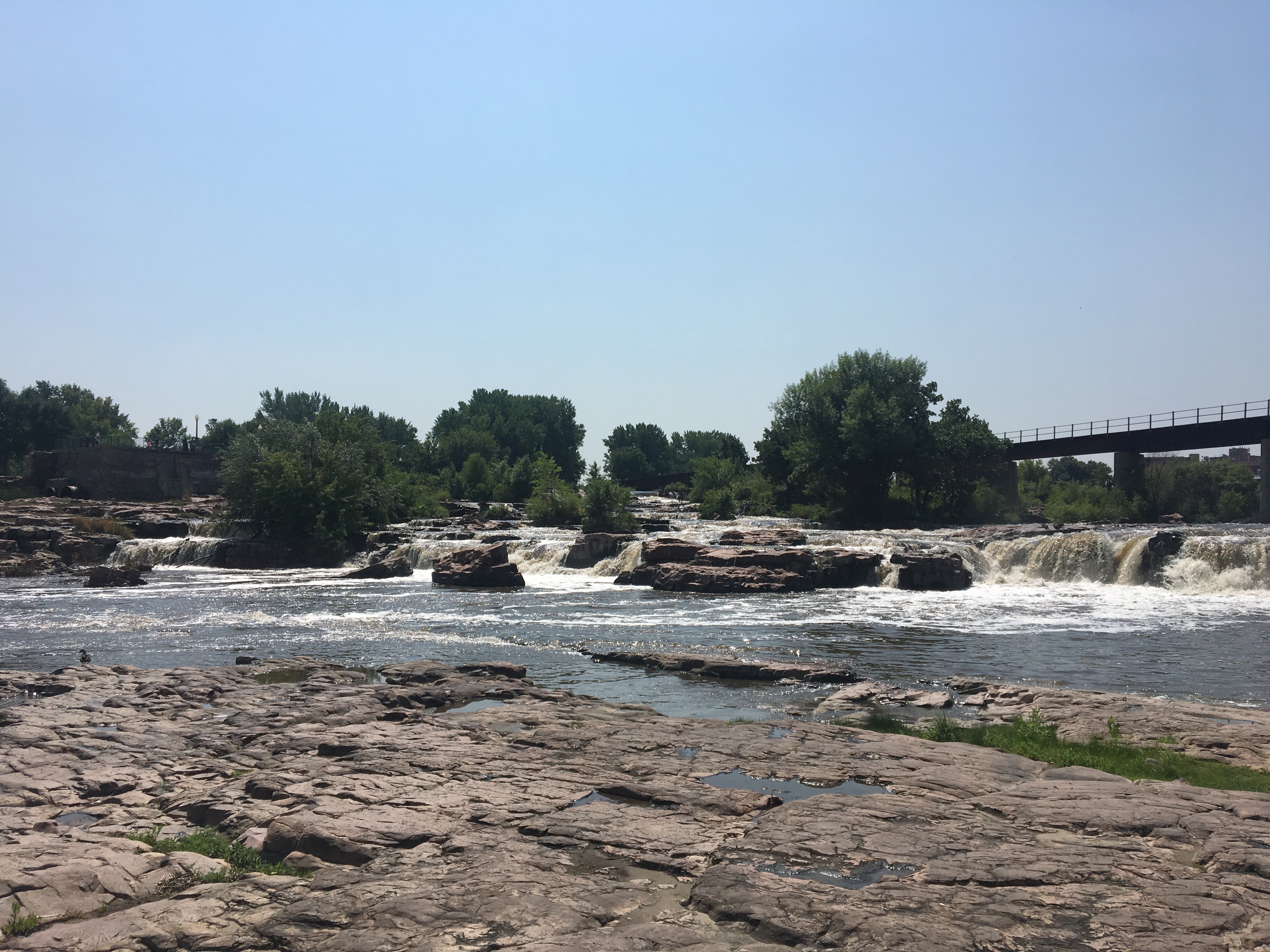
It is also not just one waterfall, but a series of waterfalls that cover a surprisingly long section of the Big Sioux River. The park itself spans 123 acres, includes a restaurant, permanent sculptures, and gets lit up for the holidays in December. It does for Sioux Falls what Central Park does for New York, and Golden Gate does for San Francisco. It is the place in the heart of town that is natural and scenic, providing a kind of convenient short-term escape from day-to-day urban concerns.

However, given its location, surrounded in all directions by flat lightly forested grassland and corn fields, a waterfall like this feels like it is not supposed to be here. Sioux Falls is a city in the Great Plains. The other cities in the region are bisected by rivers that gently flow towards the Mississippi in some capacity, not cascading waterfalls that are typically found in mountainous terrain.

Sioux Falls captures the imagination much in the same way light switches captivate a 9 month old, or magnets a 4 year old. It is not what is expected. It is not what it is supposed to be. Places like this, people like this, and ideas like this are what makes life interesting. Sure, we are all comforted when what is around us, including the people we interact with, follow some sort of pattern, behaving as expected. However, without the mavericks out there, the teacher with a strange method of reaching students, those that quit stable jobs to start a business, and that one person in your social circle who always has a story from last weekend about something the rest of us could never even imagine doing, things can get quite stale. Therefore, for the same reason I salute the first person to decide to travel the world by bicycle, I salute Sioux Falls for not being what it is supposed to be!