Tag Archives: Hiking

Great Smoky Mountains National Park

America’s most visited National Park is Great Smoky Mountains National Park.  Situated  in the Southern Appalachian Mountain Range, along the border of North Carolina and Tennessee, it is not the easiest place to get to.  When I think of National Parks, places like Yellowstone and the Grand Canyon first come to mind.  This is why I am somewhat surprised that this National Park takes the prize as most visited, with something like 10 million visitors annually.
IMG_1228 IMG_1229


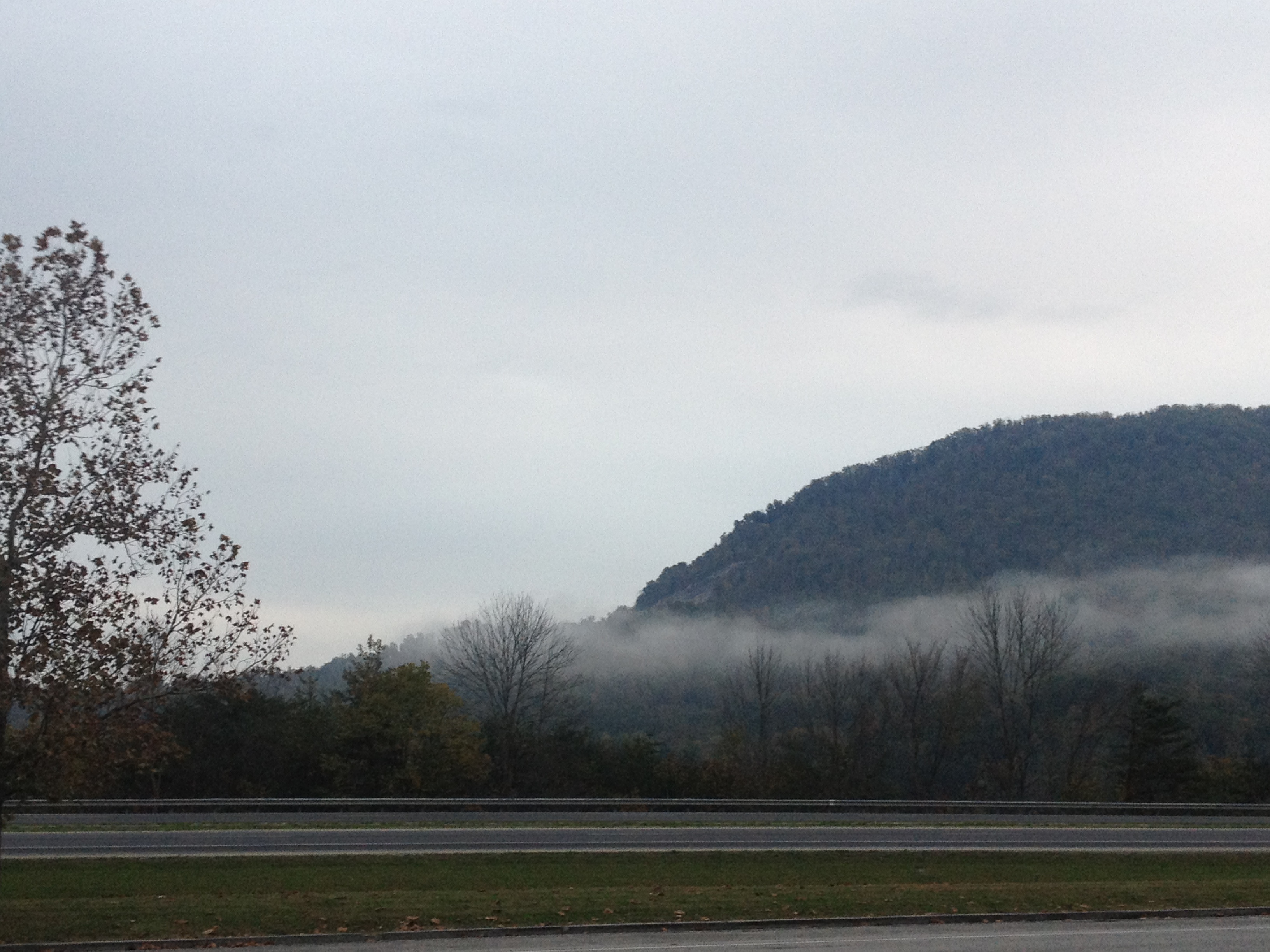
The drive down to the Smoky Mountains was quite scenic.  It was mostly along Interstate 75, which I joined just north of Richmond, Kentucky.  Mountains began to appear as I approached the border of Tennessee.  And, with it being a cold morning, fog appeared along the sides of the mountains near the border.  I have only driven this road once before, but I actually recall it being prone to fog.  I even remember fog related caution lights the last time I was here, which I did not see this time.
IMG_1232 IMG_1233

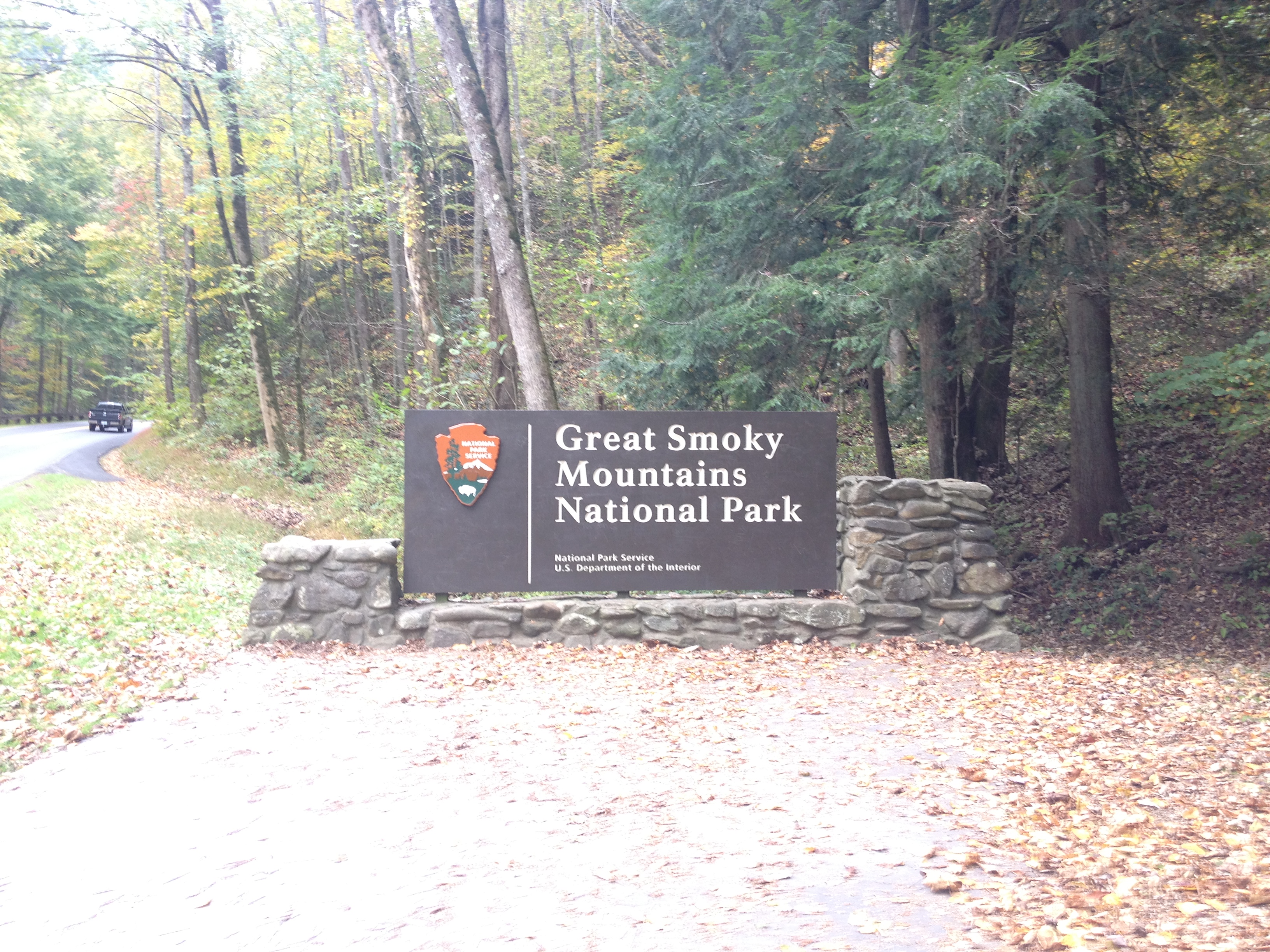
As I approached the National Park, I began to think that there may be places besides the National Park itself that are just as scenic.  I knew the park would be crowded, which it was, with slight backups on the way both in and out of the park.  I still wonder if I could have gotten the same experience at a slightly different location.  Most mountain ranges are larger than the parks that are built to celebrate them.
IMG_1234


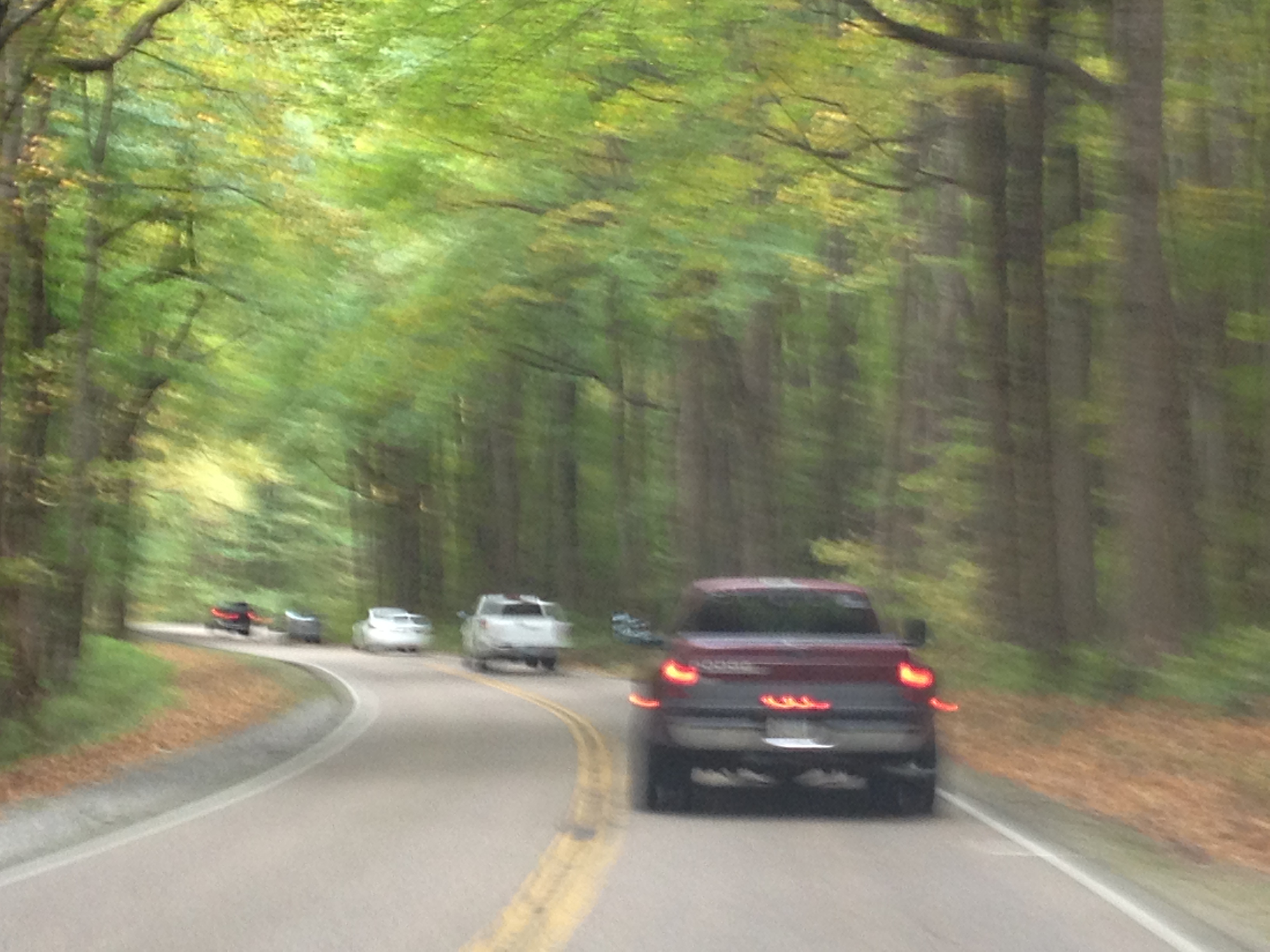
As I entered the park I notice that the trees in this area have largely not turned yet.  This, of course, is at lower elevations, and as I traveled up the mountains, the scenery would change.  This is one of the things that made this trip quite interesting.

IMG_1235


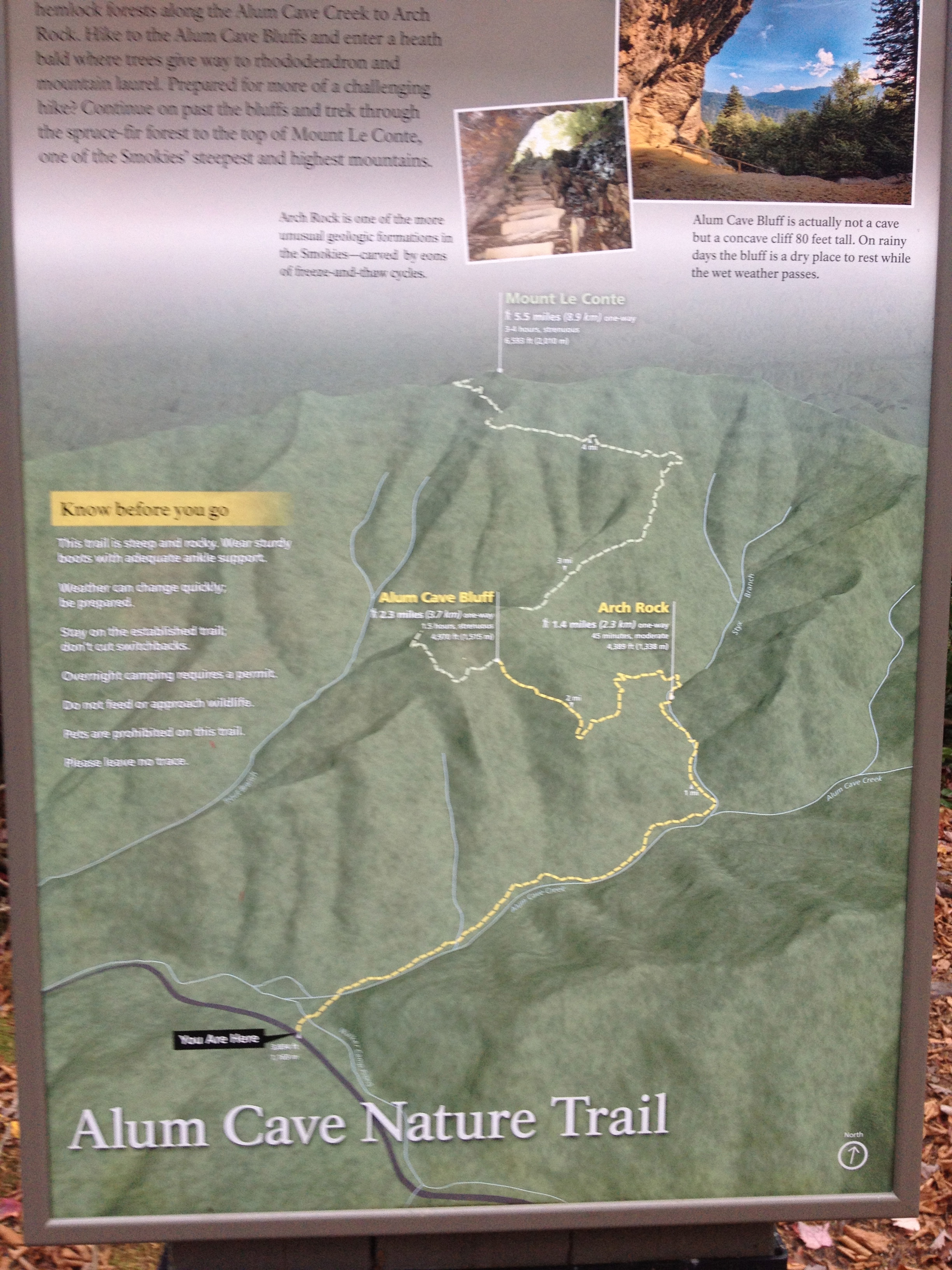
My Thursday hike would take me up the Alum Cave Trail to the top of Mount LeConte.  This trail is right in the middle of the park, and one of the most popular trails here.  It is kind of describes as your “quintessential Smoky Mountain hike”, and since this is my first time here, I figured I might as well start with this one.

IMG_1237

The hike starts off somewhat easy.  The first mile or so treks along the valley of a creek, gradually gaining elevation from a start of something like 3500 feet to just over 4000 feet.  It is in this part of the park, the middle elevations (as it has places lower than 2000, but also peaks above 6000) where the fall foliage was at it’s peak this week.  Knowing this, I would still recommend late October as an ideal time of year to visit the Smoky Mountains.

IMG_1238


Arch Rock is the first defining feature on this trail, 1.4 miles in.  It is at this point that the trail becomes more difficult.  In fact, I think there are a lot of people that end their hike here.
IMG_1240 IMG_1241 IMG_1242


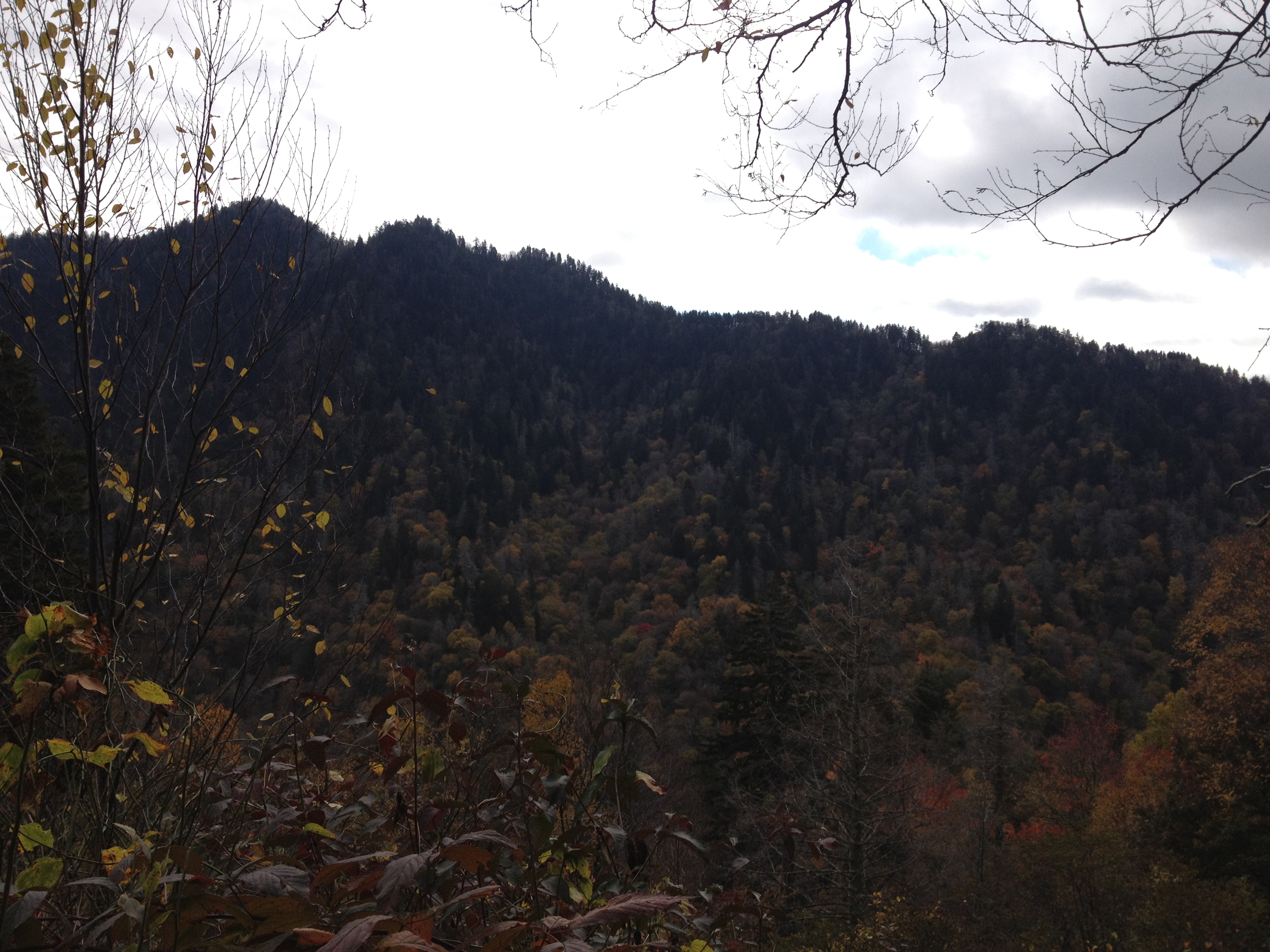
As I continue up the trail, I notice more great views of the mountains and the foliage.  The hike overall is somewhat difficult, but I would say I have done harder hikes in Colorado, especially due to the elevation.  However, I did get a chance to feel really awesome, as I was the fastest person on the trail that day.  I would spend most of the day passing people up, and only get passed up once, at the very end of my descent, right before reaching the car again.  This, of course, is the opposite of the experience that I typically have in Colorado, where I am the one usually getting passed up.  I should really not compare myself to others, especially regarding something like hiking, but it still felt kind of good, almost like I know what it feels like to be one of those guys with their headphones on running up Mt. Bierstadt.

IMG_1244 IMG_1245


The trail’s main defining feature is Alum Cave, which is not a cave, but more of a series of bluffs.  This point is also a common stopping point for hikers.  It was a cold day, especially for Tennessee standards.  Highs would only get into the lower-middle 50s at the base of the mountain, and most of my hike would be in temperatures in the 30s and 40s.  A little nervous about the cold, I thought about stopping here, but decided to keep going anyways, up Mt. LeConte, which would take me over 6500 feet in elevation.

IMG_1247 IMG_1248


I had perviously noticed a white looking feature to the top part of the mountains.  One could mistake this feature for snow, but one of the hikers informed me that it was a really heavy frost.  This, of course, is something that would never happen in Colorado due to the lack of moisture, and is one of many features that make the Appalachian Mountains different from the Rocky Mountains.  When I finally got to this level, I was relieved to find that this frost was not present on the ground, which would have made the hike slippery.
IMG_1250 IMG_1251


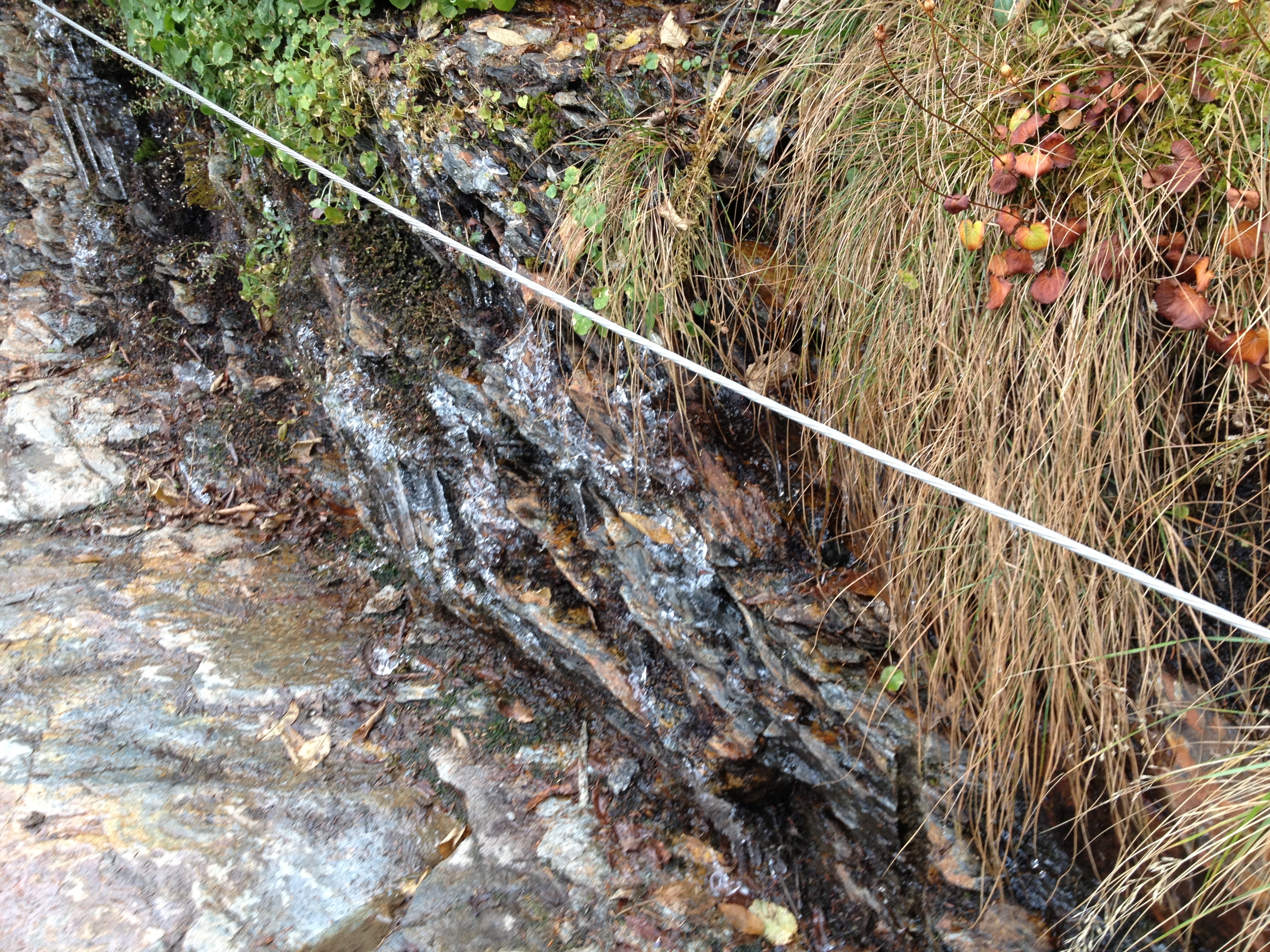
There were some really neat icicle formations near the side of the trail, but there were really only one or two parts I would consider slippery.  The top of the mountain did have some dense pine forests.  With their heavy coating of frost, walking in and out of these areas was somewhat creepy feeling- appropriate for Halloween.  There was some wind at the top of the mountain.  It was no faster than 10 mph, but was enough to blow some of this frost off the trees.  The frost flying through the air felt kind of like it was snowing, but being the scientist I am, I knew that it was not actually snowing.

IMG_1253 IMG_1254


0.2 miles before the top of the mountain, there were a bunch of cabins.  I actually saw some people with full backpacks headed there to stay the night.  The top of the mountain was foggy, which dampened my view.  WIth it being cold and windy, I only stayed up there for about 10 minutes; long enough to take this picture and eat a 6″ sub from Subway, which I brought with me in my backpack.
IMG_1257

The hike took me about 5 hours overall, 3 to get up and 2 to get down.  Other hikers told me that it was an impressive time, but I was kind of in a hurry, as it was cold and I did not want to take long breaks.  The additional time gave me a chance to see some of the park’s other features.
IMG_1259 IMG_1260


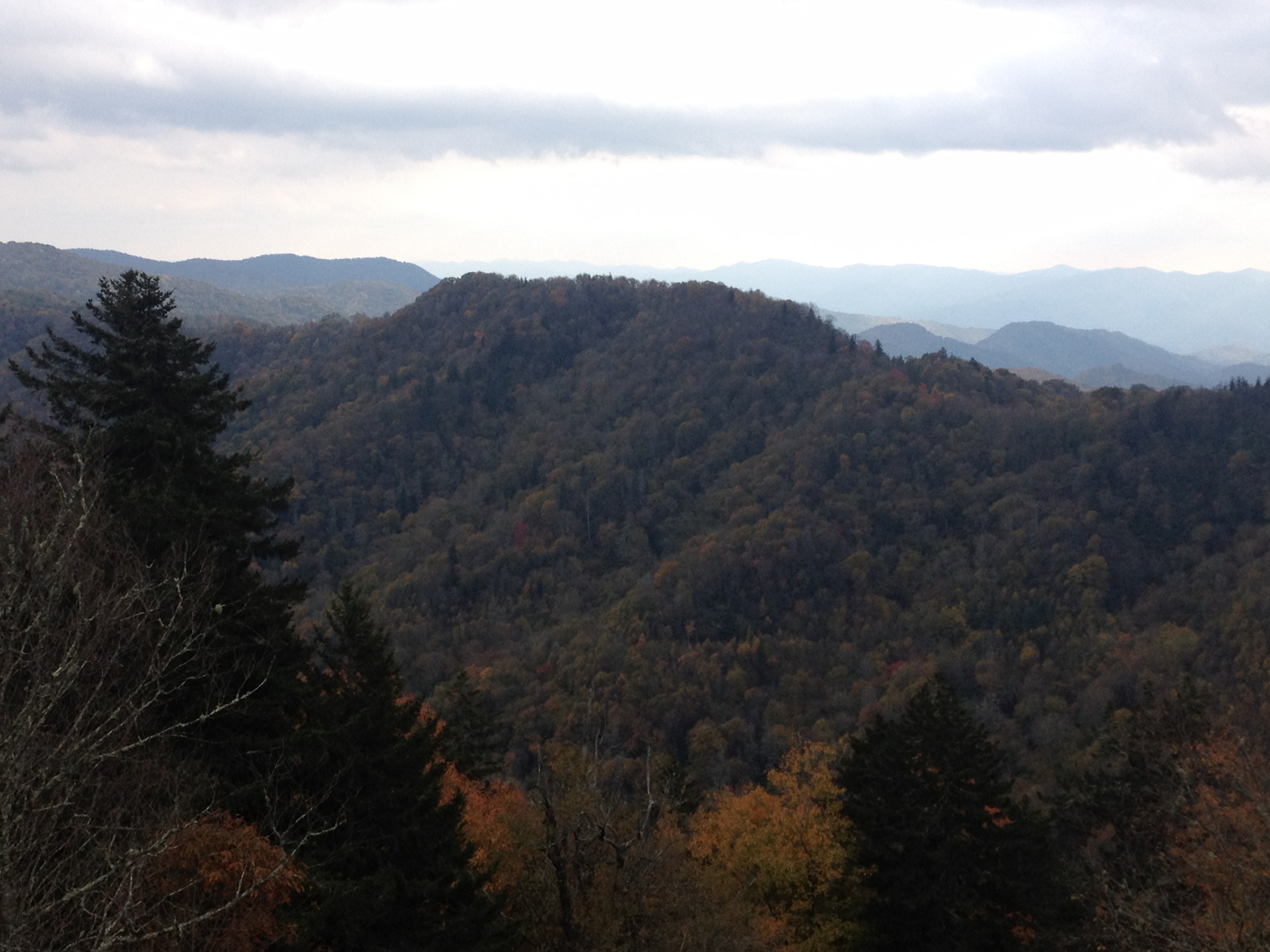
The first of such features was the Newfoundland Gap, which was apparently discovered in the early 19th century as an alternate route to the Cumberland Gap.  Looking out at the natural features, I struggle to figure out where this gap is, and what makes it an easy route for settlers to get across the Appalachians.  I am guessing it is the valley between this hills, but it seems as though they would still have to climb to the elevation I am sitting at, 5048 ft.

IMG_1261

I also got to see a small section of the famed “Appalachian Trail”, which follows the high points along the NC/TN state-line through most of the park.

IMG_1263


I drove up the road to Clingman’s Dome, the highest point in the park.  But, the cold, windy weather, and fog at the observation deck stopped me from actually going up there.

Overall, I enjoyed my experience at the Great Smoky Mountains National Park, and I think the area offers something for everyone.  Just outside the park are the towns of Gatlinberg and Pigeon Forge.
IMG_1264


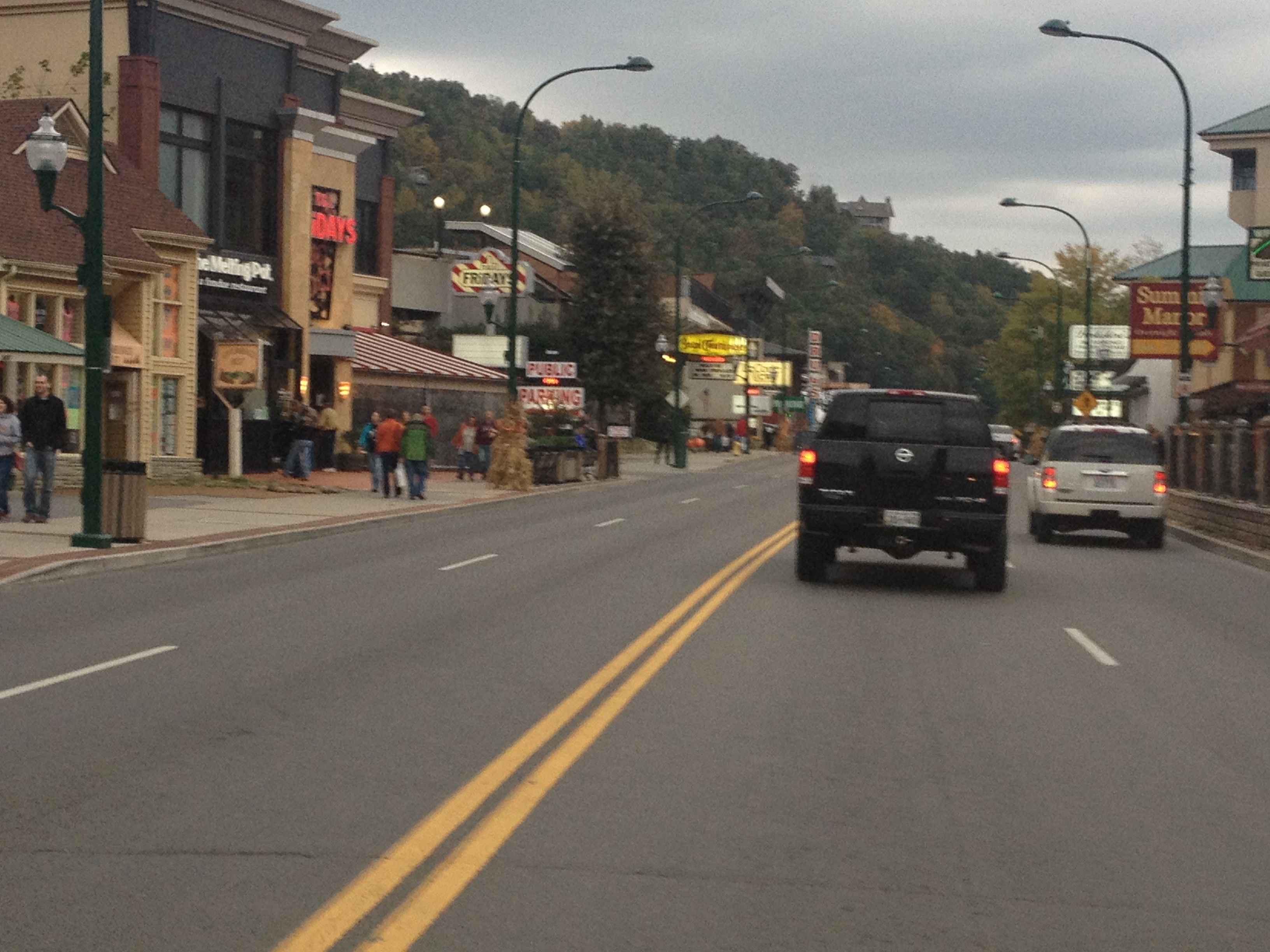
Both towns are quite touristy, with tons of restaurants, hotels, and other attractions like roller coasters and family fun centers.  However, Gatlinberg was more dense, the kind of place where one would largely walk to most of the places they desire to go to.

IMG_1230


Pigeon Forge, on the other hand, is a driving place.  I saw few people walking around here (as I saw a lot in Gatlinberg), but there were still tons of attractions, probably even more than in Gatlinberg as Pigeon Forge is home to Dollywood.

For those that want a more rustic experience, there is plenty of that too.  In fact, just off the Smoky Mountain Parkway (the highway that connects these two towns to Interstate 40), it gets a lot more rustic quite quickly, with lots of cabin sites, but also areas with tubing and other outdoor activities.  I can imagine nearly everyone getting something out of their Smoky Mountain experience, and I can imagine spending a significant amount of time here.  Between this, my experience in Nashville last year, and what I hear about Memphis, Tennessee seems to me like a state that really knows how to party!

One other thing I noticed while in Tennessee is that there are parts of the country where Krispy Kreme donuts are still popular.  In fact, my hotel offered free Krispy Kreme donuts to their guests, as a manner in which to draw people (as competition is quite stiff in this area).  In this part of the country, Krispy Kreme donuts were popular long before the Krispy Kreme fad up north around a decade ago, and remain a cultural institution.  When I ate my donuts, I realized once again that these are good donuts.

We urban, cosmopolitan, northerners (or however you describe pop-culture influenced mainstream America) seem to do a good job of taking cultural mainstays from other regions and turning them into short-lived fads.  Shortly after the Krispy Kreme fad (which was roughly 2001-2004), we created a fad out of Caribbean reggaton music, culminating with Daddy Yankee’s widely successful BarrioFino album.  For those that don’t know, Daddy Yankee is still producing albums that are widely successful in the Caribbean, and even moderated a gubernatorial debate in Puerto Rico.  We are now doing the same thing with twerking, which has been part of African American culture for two decades.  Actually, that fad may already be over!

After my breakfast, I head back to the park to visit one last destination; Cades Cove.  This part of the park is mainly for wildlife viewing.  I have limited luck, as much of the area is pretty empty.  There are a lot of horses here, but that is kind of what I expect.  I was amazed, though, at how people went right up to the wildlife, even if it was deer, something I see all the time.  At the other National Parks I have visited this year, mainly Yellowstone and Rocky Mountain National Park, anywhere I’d seen wildlife, there were park rangers making sure people don’t get too close.  Here, it appeared as if people were walking up to the animals, just daring them for a fight.

IMG_1266 IMG_1267

I would very much like to come back here.  There is so much more to see and do in Great Smoky Mountains National Park, as well a in Gatlinberg and Pigeon Forge.  However, I am also curious to go somewhere else in this mountain range where it may be less crowded.  Perhaps I could go somewhere like Mount Mitchell, or to an area north or south along the range, just to see if the foliage and hiking experience would be just a good without the traffic and crowds.  However, I do think it is interesting to see these mountain ranges in the east, as they are quite different from the Rocky Mountains, near where I live.  They have much more of a densely forested feel to them than the wide open Rockies.  The colors are different, and the mountains feel somewhat different in orientation.


Golden Gate Canyon State Park

IMG_1152

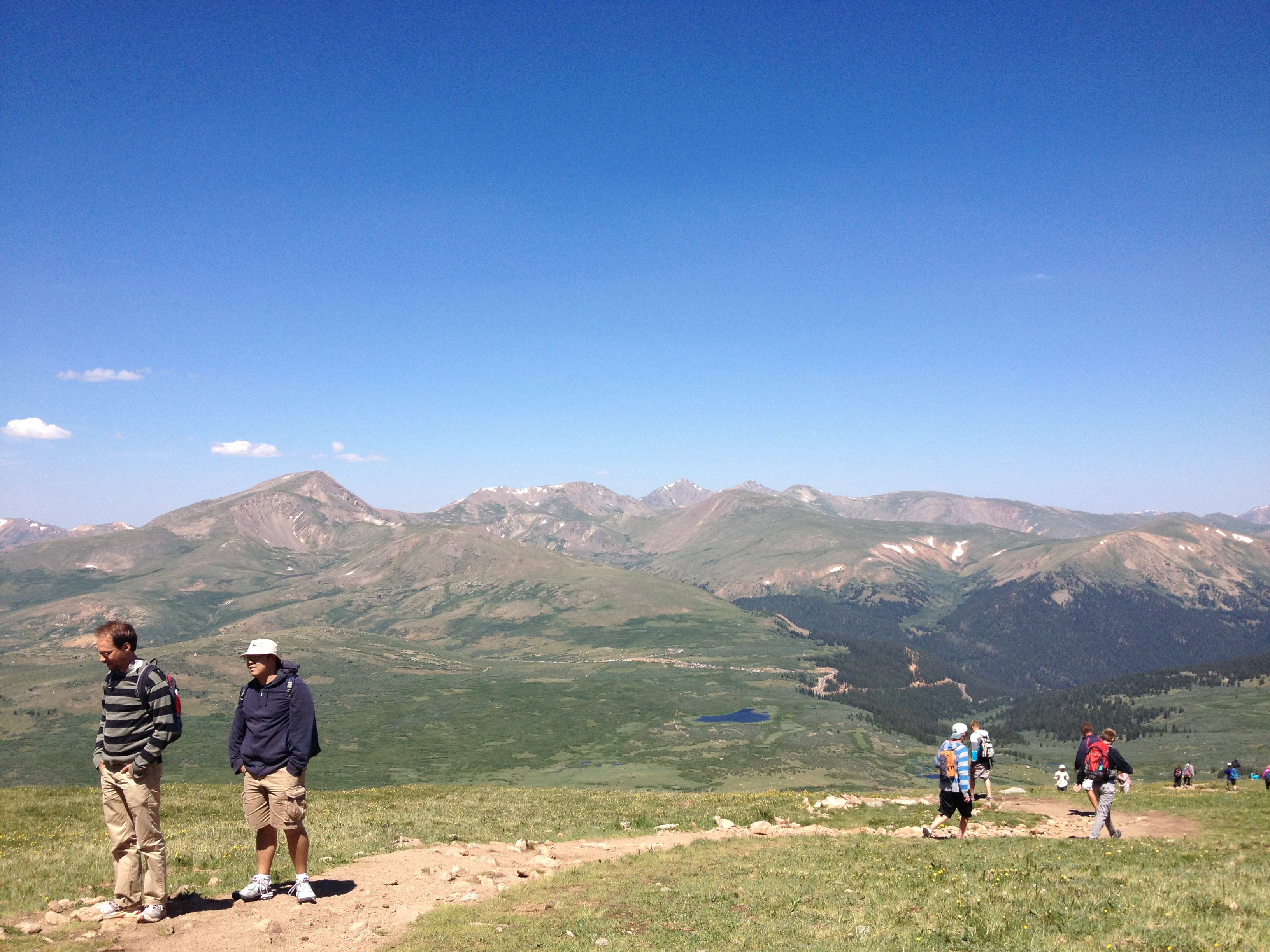
Only half an hour outside of Golden, Colorado, Golden Gate Canyon State Park represents one of the easiest hiking places to get to from the Denver metropolitan area.  It is definitely a lot shorter of a drive then Rocky Mountain National Park, but is probably a little bit longer than The Flatirons in Boulder.  My visit to this park was not in peak season, on the 19th of October, but it was on a weekend.  Based on what I saw today, it appears that this park is significantly less crowded than both Rocky Mountain National Park and the Flatirons, and therefore may represent a more tranquil alternative to those two destinations for day hikes.

Yesterday, we visited the east side of the park, parking in the first parking lot in the state park off of Crawford Gulch Rd.  At this parking lot, our elevation was just short of 7,800 feet.  I have to admit, I was a little bit apprehensive about doing a hike this high in elevation well into October.  Last spring I came to the conclusion that the in-between seasons, when it is not warm enough to for activities at high elevations, but not quite ski season, are the best times of year to explore areas at lower elevations.  But, I knew that it was going to be a warmer day in Colorado, with southwest winds, and highs in the 60s in Denver, which would mean temperatures could be tolerable at this elevation.
IMG_1153 IMG_1154

Upon exiting the car, I immediately noticed two potential hazards.  One was the wind, which was quite strong that day, and made the temperatures, near 50 at the time, seem quite a bit chillier.  It did not help that our hike’s destination was a place called “windy peak”.  I kept thinking to myself, if it is this windy at the trailhead, I am in for an unpleasant summit.  Second was the fact that hunting is permitted in pretty much the entire area where we would be hiking.  Most likely, this is one of those irrational fears that we all seems to have.  It’s kind of like all of those posts we see that indicate that more children get injured by trampolines and swimming pools than by strangers, yet, most parents seem way more afraid of their kids talking to strangers than using their backyard trampolines and swimming pools unsupervised.  But, for some reason I did get a little nervous when I saw this sign.  Luckily, I was able to put this out of mind pretty quickly.  We would only see one group of hunters on this hike, and they seemed like they knew what they were doing.

IMG_1155 IMG_1156

On this hike, we dealt with the remnants of two recent weather events.  First was the major flooding event last month.   In fact, one of the roads to the trailhead was washed out by this flood and closed.  We had to park right by the main road, and hike a little extra to get to the trail.  This was no big deal, and based on this, we could see why repairing this road would be a relatively low priority for the State of Colorado (compared with, say U.S. highways 34 and 36 near Estes Park).  We also had to traverse through some snowy areas.  Friday morning, Denver actually received it’s first snow of the year (which seems really early to me).  There was more snow in the mountains, and parts of the trail, especially those in the shadowy areas, and near our highest elevations, were snowpacked.  The snowpack, however, did not exceed 6″, where it would start to make the hike tougher and eventually impassible.  It did, however, make some downhill stretches a bit slippery and more hazardous than normal.

IMG_1158 IMG_1159 IMG_1160

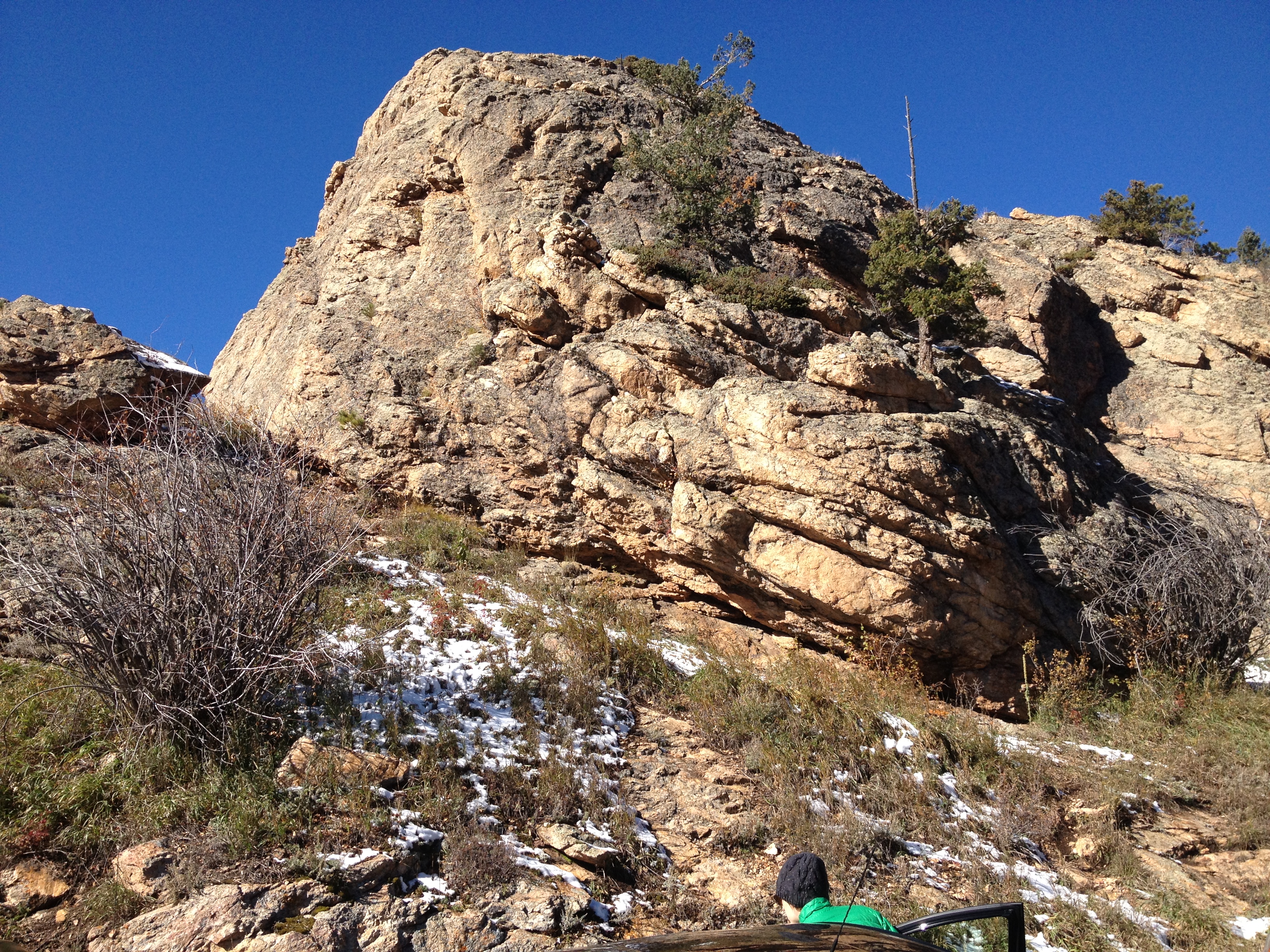
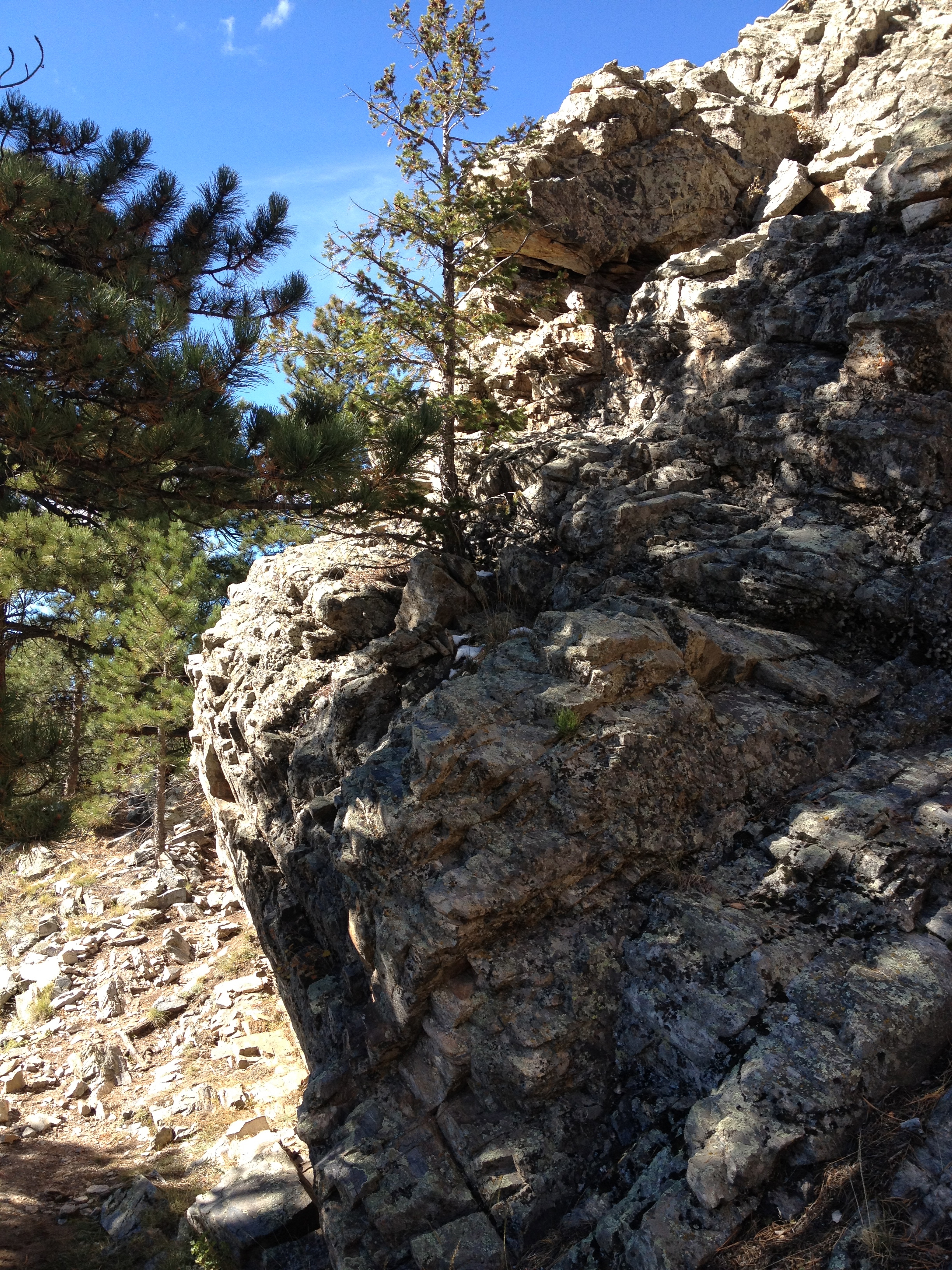
Somewhere between 1/2 and 2/3 of the way up, we saw a couple of neat rock formations, like this one, and decided to go off trail and take a few side excursions.  This mostly meant physically climbing up the rock, and then rejoining the trail the next place we see it.  It’s the kind of thing I periodically do with hikes that are not going to completely exhaust me (like a “14er”) to add a little extra spice to the experience.  Upon completion of the second of these side excursions, I saw the tall peaks in the distance for the first time.  These peaks, which I would later be able to identify as Mt. Evans, Mt. Bierstadt, Gray’s and Torrey’s Peaks, showed up in the southwest sky.

IMG_1162 IMG_1161

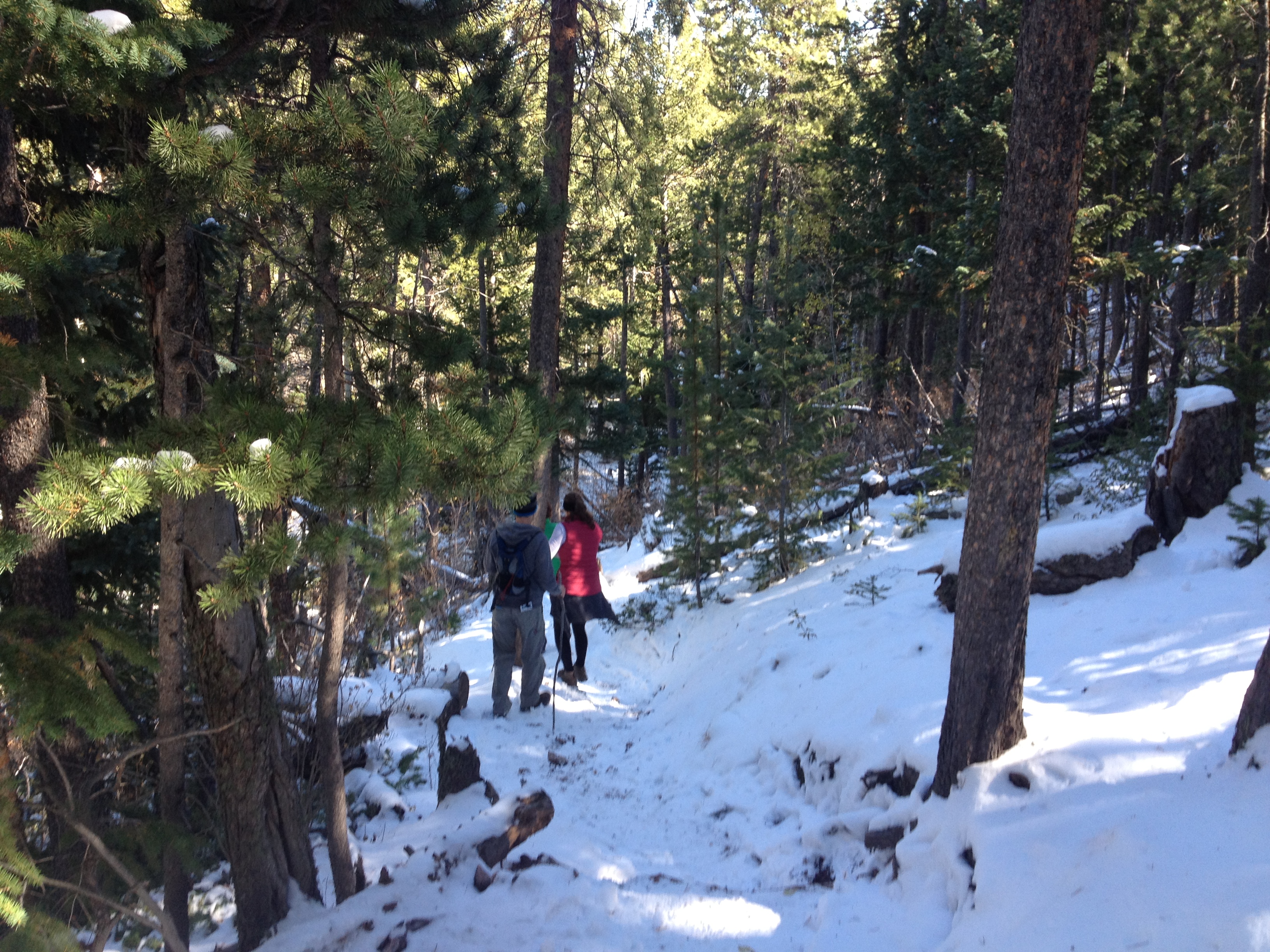
The end part of the hike involved traversing through a fairly uniformly snowpacked and fairly dense forest.  We arrived at Windy Peak, whose elevation is just shy of 9,100 ft.  The views from windy peak are pretty spectacular, but, as promised, it was quite windy here, and quite chilly.  It was definitely windier than it was at the trailhead, and this hike seemed to follow the similar pattern of the summit being significantly windier than even places a mere 50-100 feet down the mountain.  Due to the conditions, we did not remain at Windy Peak too long.  Basically, we remained there long enough to eat a cliff bar without feeling like we were rushing through it, and to take a few pictures.

IMG_1163

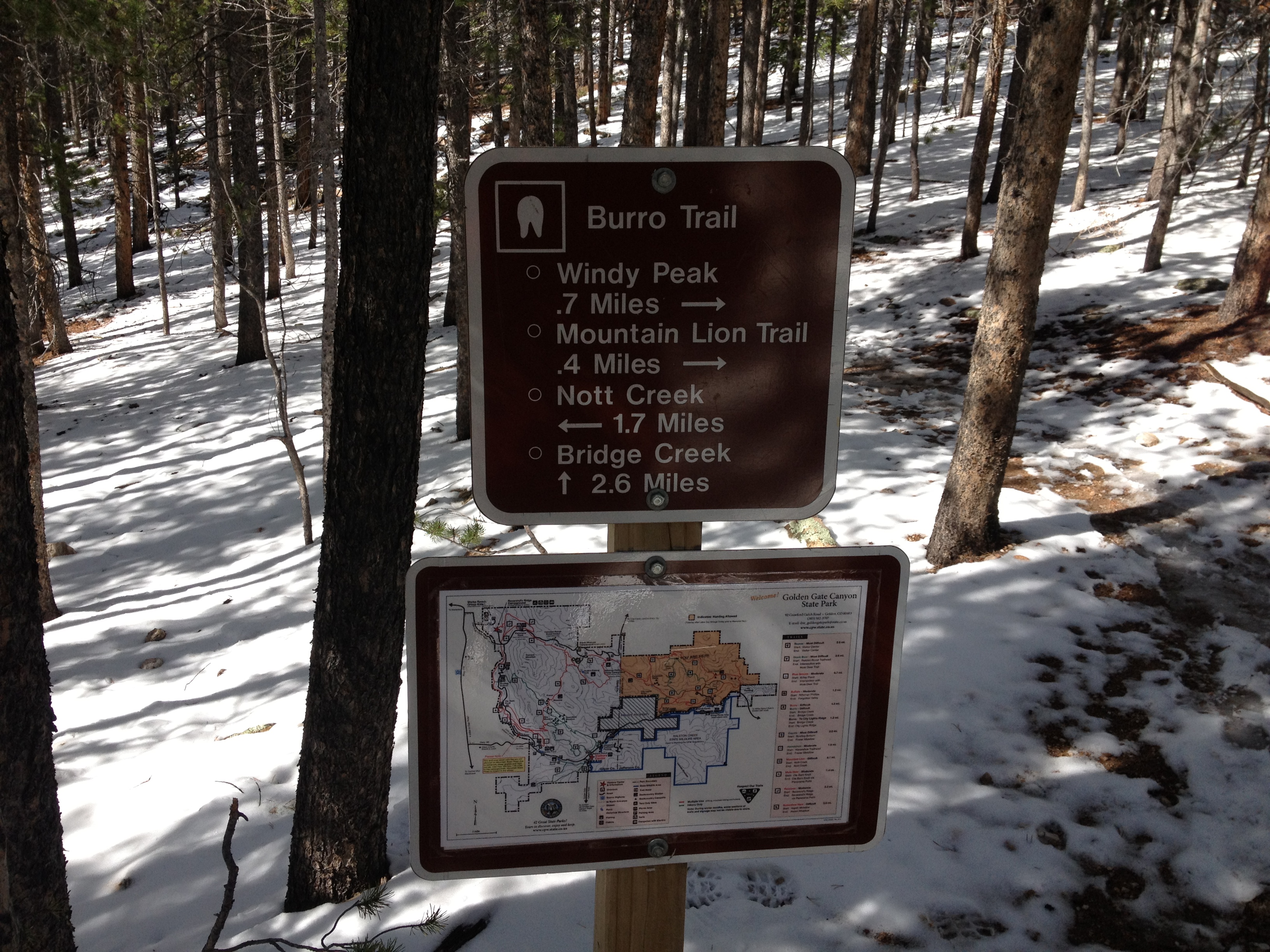
On the way down the mountain, we actually noticed significant snowmelt.  In fact, the road to the park was icy in the morning, but clear in the afternoon.  We also came to the conclusion that Golden Gate Canyon State Park is one of the best signed hiking destinations we had ever been to.  Every trail junction has signs like these, with a complete map of the park, and arrows pointing to where to go.  I’d say getting lost at Golden Gate Canyon State Park is next to impossible!

Colorado is full of places to explore.  In fact, as a relative newcomer, it is somewhat overwhelming.  I think I am finally well versed on all of the skiing options in the state, and I am getting a handle on all of the whitewater places.  But, hiking, climbing, and bicycling, it seems like can be done almost anywhere.  And nearly every trail area seems to have trails varying from easy to very difficult like this one.  How any Coloradan chooses where to go on a particular day remains a mystery to me

Medicine Bow Peak

Labor Day Weekend represents somewhat of a rare occurrence in our modern world. For many with standard salary positions, Labor Day Weekend, along with Memorial Day Weekend and sometimes the 4th of July, are the three times of year in which a three-day weekend occurs automatically at a time of year with reliable weather. It is the rare opportunity to embark on certain adventures without having to dip into what is a precious commodity for many; vacation days. With how little chance many people have to go out and enjoy our natural world, see new places, and find new experiences, it is hard not to feel some kind of pressure to take advantage of weekends like these. Many even plan their excursions months in advance.

I come from this world. And, no matter how independent-minded I try to be, I find it hard not to feel this same pressure. There is some kind of pull on me, some strange aspect of my subconscious, my psyche reminding me of this scarcity. A voice in my head will actually tell me that not having some kind of an adventure on one of these “major weekends”, which includes Labor Day Weekend, is a waste of a resource more precious than anything monetary. It engulfs me, telling me that a mediocre Labor Day Weekend could possibly indicate that I am no longer an interesting person, regardless of what kind of activities I had been involved in the pervious weekends, or have planned for the coming weekends.

I bet this same pressure is felt by many. Therefore, I am told that on Labor Day Weekend nearly all of the popular recreation destinations in Colorado are “crowded”. But, I still really do not know what that means. Everybody has different thresholds for what constitutes crowded. And, part of me still suspects that to the average Coloradan, still not really that terribly used to the idea of Denver as a large city (or at least significantly larger than it used to be), the threshold for a place being considered “crowded” is much lower. Despite the fact that part of me reasons that being told something is “crowded” in Colorado is not something I need to concern myself with, I heed the advice given to me and head up to Wyoming, where I am told crowds are significantly less, even on a weekend like this one.

20130831-210404.jpg

20130831-210415.jpg

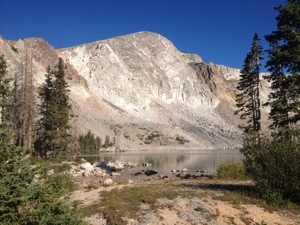
Today I headed up to Medicine Bow Peak, which is about 35 miles west of Laramie, Wyoming, basically in South Central Wyoming. And, well, the advice I was given actually turned out to be correct. The hiking trail, from Lake Marie to the top of Medicine Bow Peak, the highest peak in the region, is actually surprisingly not crowded. The crowd is probably less than half the crowd I encountered both times I climbed “14ers” earlier this summer, and probably comparable to what I would encounter on day hikes in Colorado on weekdays! Amazing for a holiday weekend like this one.

20130831-211950.jpg

Today’s hike began at Lake Marie, at about 10,500 feet in elevation, but started out climbing rapidly up the side of the mountain. This is actually something I was quite prepared for, as the mountain itself looked quite steep from approach. Today’s climb would only take me to slightly over 12,000 feet in elevation, a roughly 1500 foot climb, but the first half of the climb occurred quite quickly, and it did not take long for the lake, and the parking lot to appear significantly below us.

20130831-212334.jpg

20130831-212346.jpg

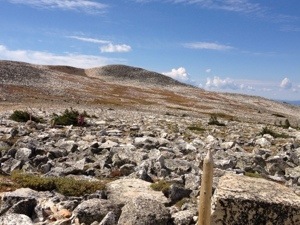
The next part of the hike, however, did take me by surprise. After climbing nearly 1,000 feet in the first mile, and feeling like I was actually on the verge of completing the hike, the trail flattened out. On the way to Medicine Bow Peak, there are several closer peaks that some would consider “false summits”, because they blocked the peaks behind them. We would hike around each peak in a semi-circle, the trail being either flat or having some minor rolling hills. This even included some downhill sections on the hike up the trail, which made the hike overall somewhat more challenging than other 1500 foot climbs.

I referred to this as “orbiting” these peaks. After each “orbit”, a new peak would appear, showing itself to be 100 feet or so higher than the pervious one. Each time, we would reason that the new peak was the one we needed to summit, only to be surprised to find the trail meandering on to the left of the peak once again, and another peak appearing in the distance.

20130831-213040.jpg

20130831-213048.jpg

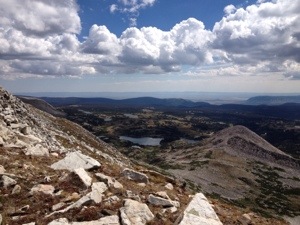
After four of these peaks, we finally encountered the peak we were destined to summit. After another steeper section, summiting this peak involved 100 feet of “scrambling”, which basically means climbing up a fairly steep vertical on rocks, with no one intended path. However, before the “scramble”, I was able to look down and see kind of an overview of the land I had already traversed. WIth all of the smaller peaks we had “orbited” around, we actually made some significant progress in the horizontal direction, and were quite far away from Lake Marie. A series of lakes near the trailhead appeared on the horizon looking down. The true beauty of the area could be seen from above, but did appear significantly different from it’s view from below.

20130831-213757.jpg

20130831-213803.jpg

The trek up this mountain actually reminded me of climbing “14ers” earlier this summer in a few ways. First of all, most of the trail was above the tree line, and had a similar feel to it. Secondly, despite the fact that this peak barely rises over 12,000 feet in elevation, it is the tallest peak in the region. So, the top of the mountain had a similar “on top of the world” feel to it. And, of course, the rock and the scrambling.

I would say overall that this particular hike would be a great warm-up for those planning to hike “14ers”. It has a similar feel, is also in the arctic tundra at high altitudes, but is less challenging with less vertical climbing. The “14ers” I climbed earlier this year were similar in length (7-8 miles total), but were steeper climbs in general, without the flat-ish section. They also generally contained longer and steeper scrambles at the top. For the purpose of working up to the challenge, I would recommend this hike for anyone that is looking for a good warm-up for a “14er”.

A New State Park

IMG_0939IMG_0940

Back in May, a new state park opened up in Colorado; Staunton State Park, near Conifer, which is just under an hour Southwest of Denver along highway 285.  I started hearing the buzz about this new state park during the springtime, just before and just after the park’s opening in mid-May.  The manner in which people talked about, and anticipated, the opening of a new state park in Colorado reminded me of how people would respond to the opening of a new restaurant, particularly by one of those celebrity chefs, in Chicago.

Through this, I came to the conclusion that the opening a new state park is the Colorado is the equivalent of the opening of a new restaurant in Chicago.  So, I applied the same crowd-avoidance rules to visiting this park that I would have applied to visiting a new restaurant in Chicago.  I waited a few months (until August), and I went on an off-peak day (today is Wednesday).  And, it worked!  It was not too crowded today at Staunton State Park.

I decided to check out a few different parts of the park, as well as a few different types of trails. Most of the trails in the park, or at least most of the trail length, permits mountain biking. The first mile or so of the trail was actually smooth enough that I would have felt comfortable riding my cyclocross bike on it.  A little bit farther up the road, a few rocks did begin to appear on the trail, but the trail still seemed quite smooth for a mountain biking trail, especially compared with the Apex trail near Golden.  For people who are thinking about getting started with mountain biking, or with little experience looking for something not too intimidating, I would definitely recommend Staunton State Park.

IMG_0941 IMG_0942

These trails also have a very moderate grade, making the hiking not too strenuous.  However, the few mountain bikers I saw traveling uphill on this trail appeared to be going rather slow.  So, it was probably steep enough to produce strain on a biker, but not a hiker.

I decided to check out one of the hiking-only trails.  A vast majority of the park is open to mountain bikes, with trails  that look like the pictures above, but there are a few places where only hikers are allowed.  The one hiking-only trail I took actually had a fairly strenuous section, with switchbacks and steep grades.  This strenuous section only lasted about 3/4 of a mile, making the hike overall significantly less strenuous than what would be labeled “strenuous” at a place like Rocky Mountain National Park, but it was not trivial by any stretch of the imagination, and would seriously challenge anyone that is not in shape.

IMG_0944 IMG_0945

Even these trails open to hikers only were quite wide and well-marked.  They reminded me of what I would refer to as “luxury hiking” back in the Midwest.  Well, without the restrooms and benches along the way.  But, the trail seemed to be laid out in a manner with greater comfort in mind than in many of the other places I have hiked in Colorado.

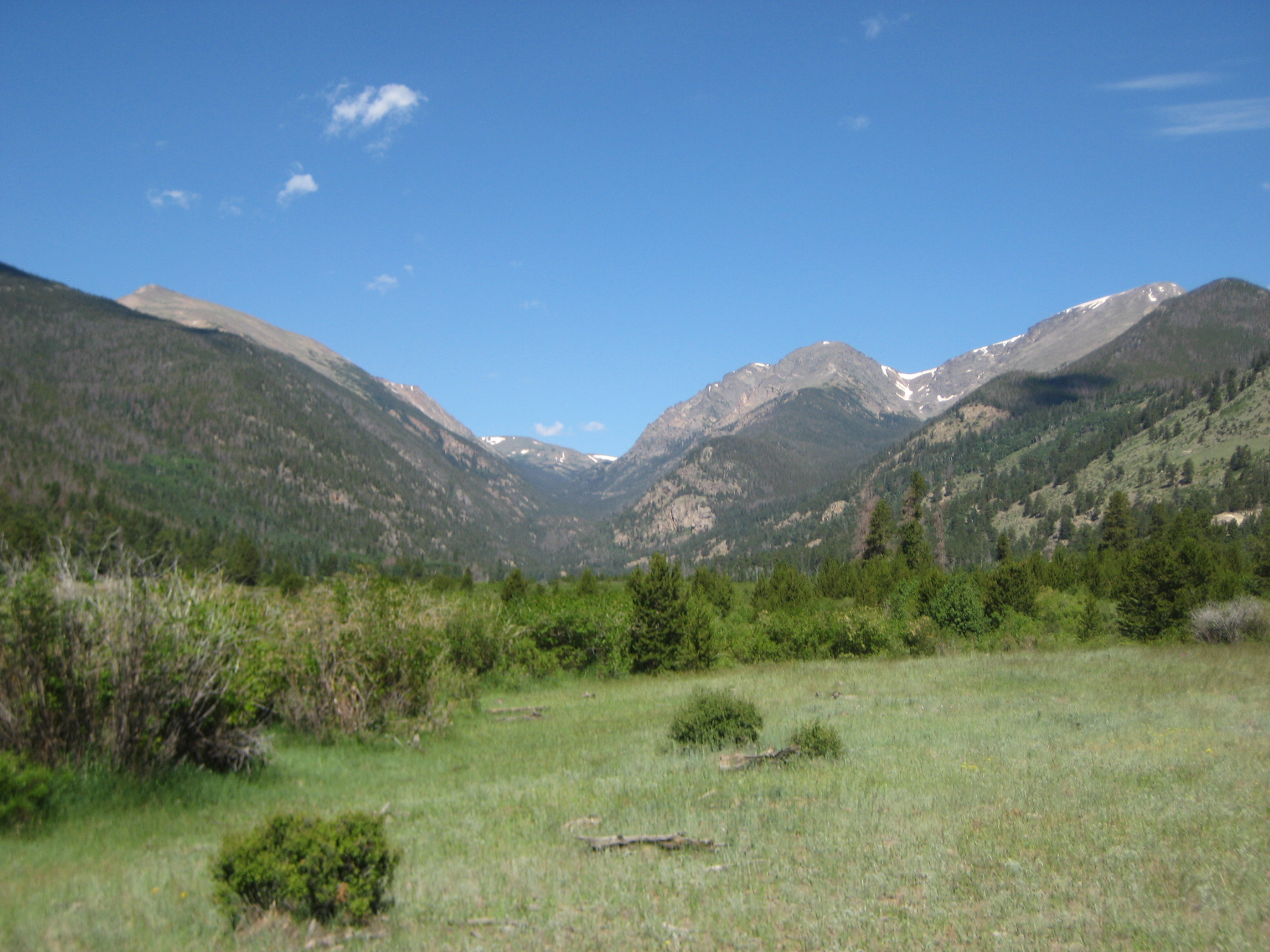
At the top of the ridge, I could not help but reflect on this view, as well as the views I had encountered at the top of the 14ers (14,000 ft. + mountains) that I had climbed last month.  The more I encounter views like this, and compare them with views like the one at the top of this page (photo taken near the park entrance), the more I begin to think that the best mountain views are taken somewhere between the base and the peak- basically somewhere in the middle.  This is kind of why the view of the Front Range mountains from the hill between Boulder and Louisville is so scenic.  At the top of the mountain, some of the features are a bit tougher to make out.  I guess it took me a while to come to this conclusion.
I did not get to view one of the park’s defining feature, Elk Falls.  The map I was handed at the park’s entrance indicated to me that the trail to these falls was not opened yet.  I guess this park is still a work in progress despite the fact that it is already open to the public.  I could have followed a series of trails to the Elk Falls Overlook, but I figured that with this park’s proximity to Denver (home), I would have plenty of chances to get back here after the trail to the falls directly opens.

IMG_0947 IMG_0948

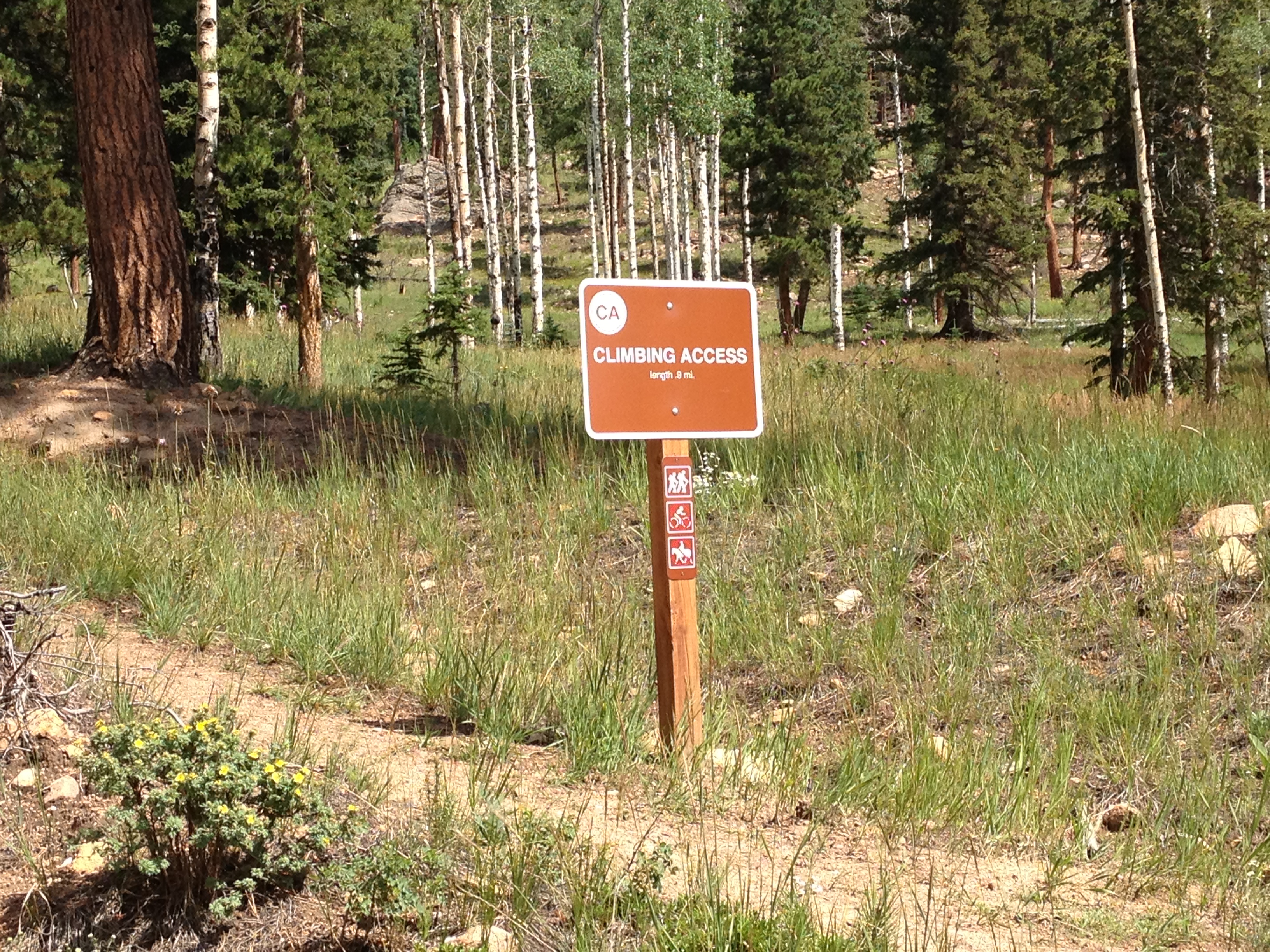
I did, however, get plenty of views of the park’s other defining feature, the rock formations.  These rock formations appear to make it a great place for rock climbing.  In fact, the park even put together a climbing guide, and specifically labelled the trail that leads to the climbing area “Climbing Access”.  So, it appears to me that this would be a great place for rock climbers, but I would not know for sure.  I have never been rock climbing.  As a matter of fact, I am a bit unsure of whether or not I want to add this activity to my repertoire.  On one hand, people I know who climb appear to love it.  And, it would add an upper-body intensive activity to supplement my current activities, which are mainly lower-body intensive (mainly biking, hiking, and skiing).  However, rock climbing appears dangerous to me.  I am somewhat hesitant to take on a dangerous activity like this when I am perfectly happy with the less dangerous activities I currently do.  It’s just one of those decisions I will likely put off for a while and then make based on something arbitrary, like someone’s fairly ridiculous line of reasoning at a bar one night.

Overall, Staunton State Park appears like a good place to go for mountain biking and climbing, that still offers some fairly good hikes.  I look forward to checking this place out next year, hopefully with the Elk Falls Trail open, and seeing everything it has to offer.  However, I am thinking that for someone whose primary interest is hiking, the options for hiking that does not resemble walking down the road may run out pretty quickly.

Mount Bierstadt on a Windy Sunday

One of the hardest truths to accept in life is that you never know when opportunities are going to run out.  There are all kinds of reasons life gets interrupted; new job, new city, new responsibility.  And, before you know it the opportunities for certain activities have come and passed.  This is why I embrace opportunities when they come about, unless I have a good reason not to.   In other words, I make yes a default.  It’s kind of like how in the United States, when you are on trial, you are considered innocent until proven guilty “beyond a reasonable doubt”.   I tend to say yes to things unless I have “reasonable doubt” about them for one reason or another (or another prior engagement, which is actually by far the most common reason I refuse invitations to anything).

Consistent with my desire to fully embrace the Colorado Rocky Mountain experience, when I got invited to climb another mountain, Mount Bierstadt, eight days after hiking my first 14er (peak whose elevation is greater than 14,000 feet), I accepted.  Although, the more I think about some of the interactions I have had with people around town, the more I realize that climbing mountain peaks at this frequency is far from unheard of.  I think I remember hearing about people climbing 10 in one year, which would have to involve at least 5 days (most likely more) of climbing, or 5 weekends, out of about 15 weekends from June to September where climbing these mountains does not involve trudging though excessive amounts of snow.

IMG_0893 IMG_0894

This particular trip came about when one of my friends wanted to take a friend from out of town on her first “14er”.  Despite this being her first climb above 14,000 feet, with more hiking experience than me, she is a stronger hiker than me.  Mount Bierstadt is actually one of the easiest “14ers” to climb, and it is also fairly easy to get to from Denver.  So, we were actually able to sleep relatively late, leaving Denver just after 6:00 A.M., not arriving at the trail head until about 7:30.

I already notice a few differences between this hike and the one I did last weekend.  This hike seemed to be about the same difficulty as the last one (Gray’s and Torrey’s Peak) minute for minute, but it lasted less time.  It took us only two hours and fifteen minutes to get to the top, and that is with me slowing my more experienced hiking partners down.  There was also not as much of an intimidation factor as there was at Gray’s Peak.  In fact, I was not even able to point out which mountain we would be climbing at first glance,  which I most definitely was able to at Gray’s and Torrey’s.  I had heard that this mountain was known for having “false summits”, where it looks like you are reaching the top of the mountain based on your viewpoint, but aren’t actually at the top.  There were a couple of places on this hike where I felt that way, but I still think there are more “false summits” at Rocky Mountain National Park, possibly because all of those hikes are mostly below the tree line, and therefore are in the woods where you can’t see as far.

The other thing I encountered on this mountain were guys, mostly by themselves, and mostly wearing headphones, practically running up the mountain.  My guess is that they are quite experienced with these types of hikes and were trying to make the best time possible.  I wonder how long it took them to get to the top, because I considered 135 minutes to be a decent time.  I really don’t see myself ever getting to this level.  In fact, seeing this does give me reasonable suspicion about going on a hiking trip like this with some of the most hard core people I know.

It reminds me of the saying that no matter how good you get at something you will always encounter someone better (although there are exceptions; Michael Jordan, Usain Bolt, etc.).  It is impossible to fully enjoy any activities like this without accepting this fact, and learning how to be satisfied with your own progress (as long as you find it acceptable) regardless of what you see from others around you.  This is the only way a beginner can get on that mountain, basketball court, or ballfield, knowing they’ll look a bit silly the first couple of times, but that even those most experienced participants around them were also once the newbies in awe of the performance of others, insecure about whether or not they truly belong.

IMG_0896

I decided not to take a picture with that sign that they pass around, with the name of the mountain, the elevation, and the date.  Maybe I was a bit scared to hold the sign, as it was significantly windier on this hike than it was on the hike I did last weekend.  While on the mountain, I wondered if this mountain tended to be windier than the others, as Colorado’s terrain causes a lot of small scale variations in weather.  However, on the way back to Denver, I noticed it was still windy.  So, I am thinking that Sunday was just a windier day, which makes sense because Friday and Saturday were stormy in the mountains.  This picture, I think, makes it pretty clear that we were  on the top of the mountain.

IMG_0897

Another interesting occurrence was what happened with the sandwich I packed in Denver, and ate at the summit of the mountain.  I guess this photo above proves that I pack my sandwiches well, as the bag expanded significantly due to the pressure decrease of being at a higher altitude.  Denver’s atmospheric pressure is around 850 millibars (sea level is just over 1000).  At 14,000 feet, the pressure is only about 600.

IMG_0900 IMG_0901

The trip back down the mountain was somewhat treacherous.  The part near the top is something often referred to as a “scramble”, which basically means that rather than a clear trail, it is mostly just rocks that you just kind of self-navigate the best path up.  This was the hardest part on the climb up the mountain, as it is pretty steep, at a high altitude, and required me to do a bit more with my upper body to propel me around the rocks.  Somewhat lower on the mountain, there are several areas with little streams that actually made the trail a bit wet.  On the way up the mountain, I did not care about this, but on the way down it did kind of worry me a bit.

Additionally, the time we were descending the mountain, from roughly 10:20 to 12:20, there seemed to be an even mix of people traveling in both directions (upwards and downwards).  I am guessing that since this hike is somewhat shorter than most “14ers”, it is more acceptable to get a somewhat later start here.  All of these factors probably made the trip down the mountain take nearly as much time as the trip up the mountain.  I really need to stop expecting the downward trip to take too much less time as the upward trip, but these are the kinds of things that we all learn through experience.

The only real annoyance on this particular trip was the traffic on Interstate 70 on the way back to Denver in the early afternoon.  I was told that is to be expected on any summer Sunday in Colorado, but for some reason all of us had just simply forgotten about this, and not really planned for it.  They are widening part of the road to three lanes in each direction, and the construction may have made the traffic worse.  Hopefully the additional lanes will make traffic move faster in the future.

I spent most of the day today (Monday) being worn out, but was back to my normal energy level sometime in the afternoon.  Maybe I am lucky that my energy recovers quickly, but I think part of the reason for it is that I embraced an active lifestyle long ago.  I started making yes a default long before the Jim Carey movie Yes Man came out, and, as a result, I have been on top of the world three times this month.
Regional Familiarity

IMG_2317

Within only a month or so of moving to Colorado, one of the things I missed quite a bit about the Midwest was the familiarity I had with the region.  After 19 years in the Midwest, I had grown quite familiar with the area.  I knew the traffic patterns of Chicago, as well as all of the good alternate routes.   I knew what areas were popular in which situations, and therefore knew where to expect crowds.  I knew how much time to allocate for driving between any area in the Midwest, allowing me to allocate my life quite efficiently.  I also knew about restaurants, bar specials, people’s typical behavior patterns, and, well a host of other little intangibles that help an individual operate their lives smoothly.

I suspect many people begin to feel this way when moving to a new place.  Although it is important to embrace a new experience, in order to get the best result possible, it is hard not to long for that familiarity.  Different things are important to different people.  But, after living in a place for a few years, most people will have gradually obtained the knowledge that is important to them.  However, that first year or two always involves a scramble.

Yesterday, I learned a lesson about Colorado.  I had decided I wanted to go to Rocky Mountain National Park for two reasons:

1.  I decided that it was a good time to do a hike that contained a vertical climb somewhere in the neighborhood of 2,000 feet at a fairly high elevation.  This, of course, is mostly me wanting to fit in here, with the activities that a lot of people in my age group like to do.  At the University of Wisconsin-Madison, fitting in involved developing an alcohol tolerance.  Here it means being able to physically handle terrain, by hiking, biking, climbing, skiing, etc.

2.  Last month at Badlands National Park, I bought an annual pass to the National Parks for $80, with the specific intention on using the National Parks here in Colorado.

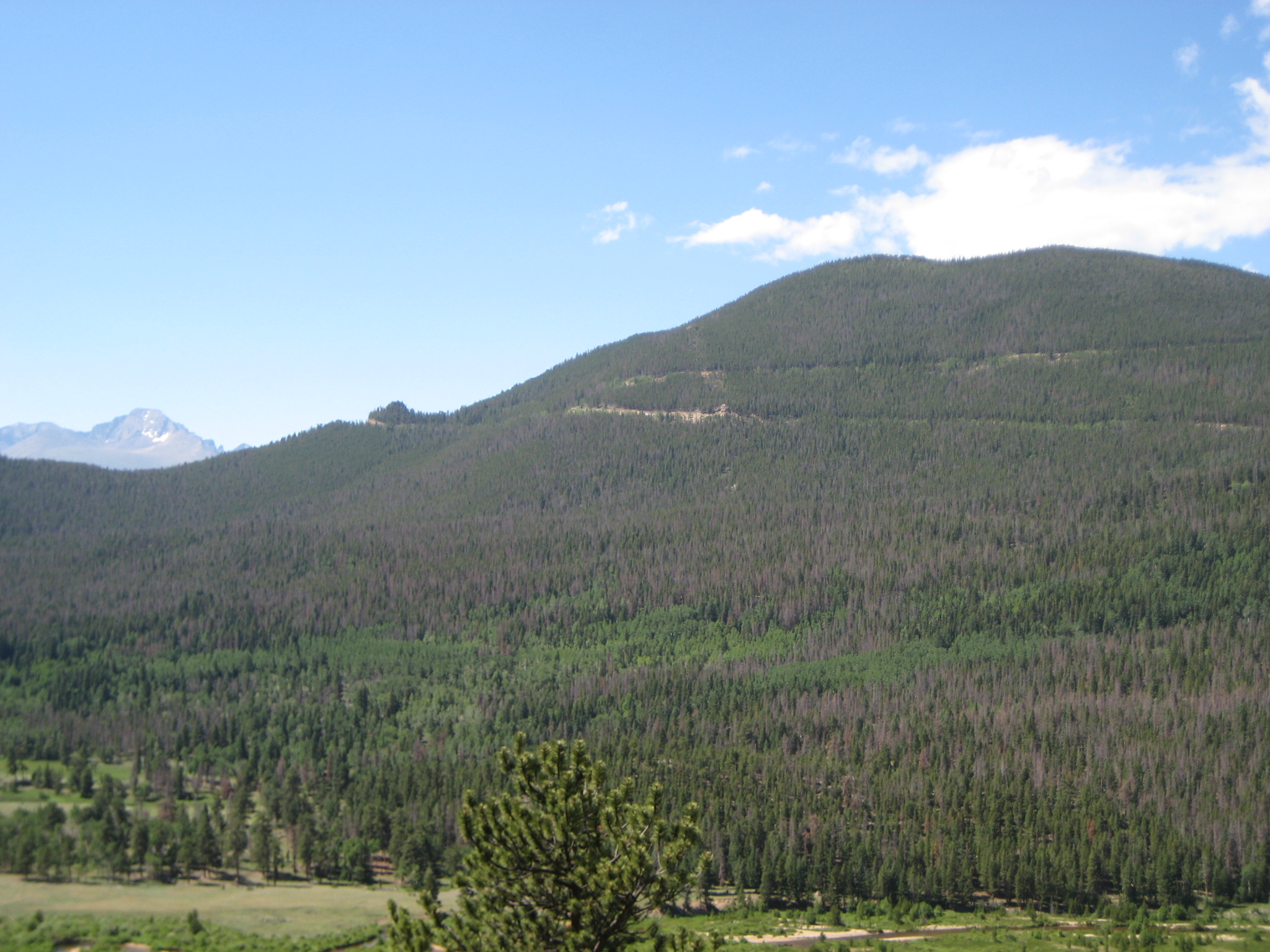
What I found out was, leaving at 7:30 A.M. was not early enough.  Well, not to do what I wanted to do, which was hike the Lawn Lake Trail, a 6.2 mile trail with a 2,450 foot accent to Lawn Lake, in the Mummy Mountain Range, and return to the car safely before thunderstorm chances increase in the afternoon.  My problem was that I departed right around the height of the morning rush hour, and, decided to take U.S. highway 36 through Boulder.  Not only did I encounter traffic before even getting out of Denver, but I encountered the usual Denver to Boulder traffic, and the usual delays in Boulder, where traffic is quite lousy for a city it’s size.  After all of this, I did not arrive at the entrance to the park until just after 10 A.M.  Luckily, I had learned from all of my recent travels that traveling within a National Park can be slow going, and therefore had selected a trail not too far from Estes Park, where I had planned to enter the park.

IMG_2318

By that time, all of the parking spaces at the Lawn Lake Trailhead parking lot had been taken, so I had to park across the street.  This was somewhat fortunate, as one of the best pictures I got from the area actually came walking across the street to get to the trailhead.

IMG_2319

On some hiking trails, it is surprisingly easy to take a wrong turn.  But, not on this one, as the trail was well marked by rocks the entire way, and even had periodic signs pointing the way.

IMG_2320 IMG_2321

As was advertised, the trail was quite steep.  In fact, it began with several switchbacks, and it was less than half a mile into the trail that some meaningful uphill progress began to appear.  That was when I saw another reminder that I am still a Colorado novice.  On one of the trail markers, I saw someone had actually left a hoodie on the post.  My first instinct was that having just worked up a sweat climbing the initial few switchbacks, the person had overheated a bit and decided to take their sweatshirt off.  But then, I thought to myself, why would anyone want to dump off a layer of clothing when going uphill, where it will only get cooler with elevation.  I also wondered if this was any kind of a signal that Coloradans know about that I do not.  Could it be similar to someone tying a tie around the door knob of a college dorm room to signal to their roommates that they have company and need to not be disturbed?  Only walking in on your roommate, as scary as that sounds, sounds less scary than being suddenly attacked by a bear, or giant falling rock because I did not understand this signal.

IMG_2322

I also seem to always happen upon waterfalls at Rocky Mountain National Park.  And, happening upon a waterfall I was not expecting kind of also made me reflect on some major differences between living here and in the Midwest.  I happened upon a waterfall when my destination was a lake.  This feels like the opposite of the way it would occur in the Midwest.  In the Midwest, waterfalls are hard to come by, and it is not uncommon to travel hours to encounter a good waterfall.

IMG_2324 IMG_2325

Knowing the thunderstorm threat at this time of year, and the amount of time I had, I had to change courses and chose to hike the shorter trail, Ypsilon Lake.  This trail, however, is also rated as “strenuous”, and at Rocky Mountain National Park, when they describe a trail as strenuous, they mean it!

IMG_2326 IMG_2328

I knew I had made some significant uphill progress because the density of the trees had begun to thin out.  From viewing the area around me, I concluded that I was roughly 1,000 feet below the “tree line”.  Later, after consulting my fabulous Colorado DeLorme Atlas, I determined that I turned around only about a mile and a half from the end of the trail, but that I had done pretty much all of the climbing.  From a base elevation of 8,540 feet, I had reached somewhere in the vicinity of 10,500 feet, leaving something in the neighborhood of 200 or 250 feet of climbing remaining.  I still wonder if I should have continued the rest of the way to the lake so that I could have completed the trail, but I guess I need to chalk the whole experience up to just not quite having the feel for how Colorado works yet.

IMG_2332 IMG_2333

Additionally, despite the fact that clouds seemed to be building on my decent, the thunderstorms actually held off.  So, I ended up deciding to do a little bit of driving along the famed Trail Ridge Road, which actually ascends up to nearly 12,000 feet.  On this road, one actually ascends above the tree line.  According to the Alpine Visitors Center, the tree line in Northern Colorado is at 11,400 feet of elevation.  Above this elevation, few trees are found, and pockets of residual snow can actually be found.

IMG_2335 IMG_2342

Overall, I guess I still had a productive day at Rocky Mountain National Park, but I still wish I could have traversed the entire trail to Lawn Lake.  I pictured myself getting there significantly earlier than I did.  I learned that Rocky Mountain National Park is farther away than I think of it in my head.  For some reason I always think of this place as being right in Denver’s backyard, because, from the point of view of 1,000 miles away, it kind of is.  But, it does take nearly two hours to get there from Denver.  Perhaps it would be faster to follow I-25 to Longmont, cutting over to Lyons on route 66?  I’ll probably try this next time, as Boulder does not do a good job of accommodating traffic.

I also learned not to expect this place to be much less crowded on a Tuesday than a Saturday.  This is because most of the people here are actually not from Colorado.  I actually saw a ton of Illinois plates here.  People come here on vacation, and, with the kids out of school for the summer, they are likely to be vacationing for a whole week.  If I really want to find a less crowded place to hike on a Tuesday, it would probably be best that I look somewhere completely different.  These are all things that people who have lived in Colorado for several or more years probably know and understand well.  And, over time, I will gradually get the feel for.  For now, I must learn all of this, either through experiences like this one, or through solicitations of advice from others.

Red Rock Canyon Open Space

Two miles south of Garden of the Gods, a place called Red Rock Canyon Open Space offers some of the same natural features.  Red Rock Canyon Open Space is a city park, belonging  to the city of Colorado Springs, but it is actually kind of halfway between Colorado Springs and Manitou Springs.

IMG_0830

There are two main differences between the Red Rock Canyon Open Space and the Garden of the Gods.  The most important difference is the density of the rock features.  The rock features at Red Rock Canyon do look similar to those at Garden of the Gods, but, these features are much farther apart than the features at Garden of the Gods.  This is most likely the reason that Garden of the Gods is more popular than Red Rock Canyon.

The other main difference is the hiking (and mountain biking).  Although Red Rock Canyon Open Space does not offer hard core hiking, there is more terrain here to climb than there is at Garden of the Gods.  Garden of the Gods can be thought of as more of a scenic walk than a hike, Red Rock Canyon does offer “strenuous” trails, that do have a little bit of grade.

IMG_0827 IMG_0825

Based on a previous understanding that the ratings assigned to hiking trails were relative, we decided to find the most strenuous set of trails possible in the park.  This actually took us on a mix of trails that were open to mountain bikers and trails that were labelled hiking only.  The trails we took wandered through some of the rock formations in the park, which, up close looked a lot like they did from up close at Garden of the Gods.  Oddly enough, one of the trails we ended up on was actually labelled the “Contemplative Trail”, which is odd because my previous post about Garden of the Gods was actually titled “Garden of the Gods, A Place to Collect Thoughts”.

IMG_0826 IMG_0829

We actually hiked far enough to leave the technical boundaries of the park, which took us a bit higher in elevation than those who remained within the park’s boundaries.  This is something I would definitely recommend to anyone else that is planning on hiking at Red Rock Canyon, as it provided us with some of the best views of the day.  From here, we could once again see the effects of last year’s major wildfires, which charred up all of the trees over a large segment of the mountainside.

IMG_0831 IMG_0833

At this location, the trail actually meets up with something called the “Section 16 Trail”, which appears to be a hike through the forest/ foothills with more elevation gain.  I still wonder what it is section 16 of, but my initial research, which primarily involves searching on Google, has not provided me with an answer as of yet.

The second half of this day will eventually feature thunderstorms over the higher terrain, west of both Denver and Colorado Springs.  This is actually a common occurrence, as air is compressed by the mountains.  On days like these, thunderstorms form in the mountainous part of the state, but not in the plains.  Occasionally, the thunderstorms do track eastward, affecting places like Denver and Colorado Springs, but not always, and it always takes quite a bit of time.  Although these storms did not form until afternoon, we could sense these storms were going to form because the wind was blowing up the mountain and already starting to form cumulus clouds.  Pictured below are the cloud formations at 10:30 this morning, and the RADAR image from 3:30 P.M.  Notice how the storms are only present in the mountainous part of the state.

IMG_0832 Screen Shot 2013-07-04 at 3.43.05 PM

Pike’s Peak, the defining feature of the region, was only visible for part of the hike.  In other parts of the hike, it was hidden behind other terrain features near Red Rock Canyon itself.  Of course, almost anywhere within Colorado Springs, Pike’s Peak can be seen towering over the city.  However, Pike’s Peak had a significantly different look this time up than last time.  Last time, in mid-May, Pike’s Peak was snow covered above basically the tree line.  Since then, all that snow has melted and the mountain is pretty much bare, making for a completely different look.

IMG_0377 IMG_0824

My May 16th photograph of Pike’s Peak, compared to the one taken today, July 4th.

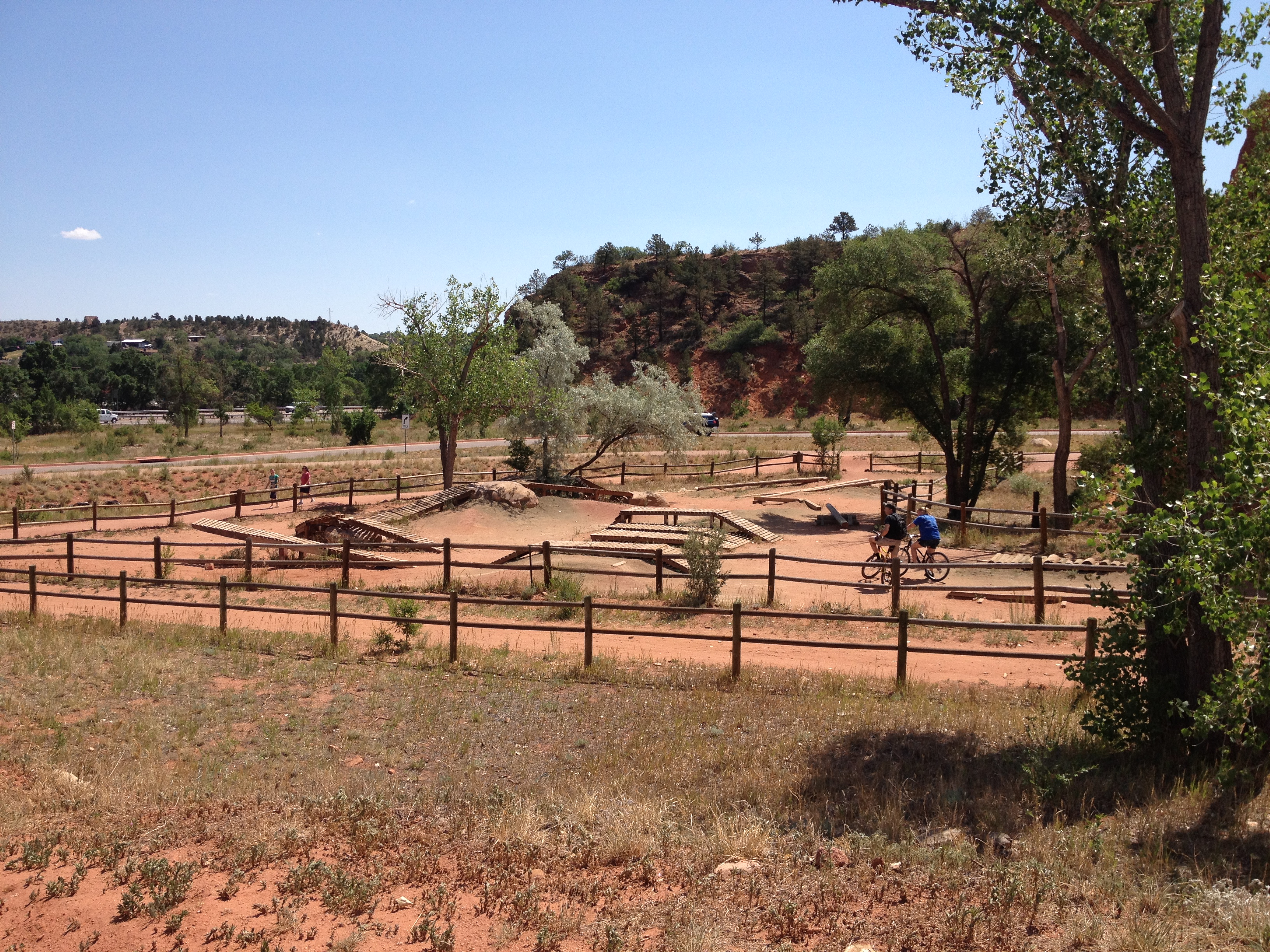
Finally, as we finished up our hike, we encountered an unexpected feature.  It was one of those terrain park areas for mountain bikes.  I had never really seen any of those before, and I actually saw a few people riding their bikes around, up and down the railway and sea-saw features.  It seems like a neat thing to do, albeit somewhat scary.  I think I am personally going to stick to long-distance road biking.

IMG_0834

Today’s hike had a surprisingly southwestern feel to it.  And, the whole time it made me wonder, where does the southwest really begin?  The south-westernmost part of Colorado, Durango and the Four Corners region, I can imagine, definitely is part of the southwest the way we know it.  Northeastern Colorado is definitely the plains, but North Central, like Fort Collins and even Denver do not particularly feel southwestern.  They feel basically central Rockies.  Maybe all red-ish features just make me think of all things southwestern, and I am getting it all wrong.  But, still, I wonder if I am entering an entirely new region every time I drive south on I-25 over Monument Pass.

Wisconsin’s Northernmost Region

Yesterday I returned to a place I had been to only once before. The town of Bayfield, WI is along Wisconsin’s Lake Superior shoreline, and despite being a very small town (population less than 500), it is popular in the summer, as it is linked to the Apostle Islands, which is an island chain in Lake Superior with some unique scenery. Due to the geography of Wisconsin, this is the northernmost part of the state. It is the only part of the Lake Superior shoreline in Wisconsin, as farther east, the shoreline hits the Upper Peninsula of Michigan. This part of the state is actually over 300 miles from both Milwaukee and Madison, making it quite different than the part of the state I am most familiar with. In fact, someone once told me that sometime in the 1970s there was talk of this part of Wisconsin joining with the U.P. of Michigan to form a new state, breaking away from their respective states due to serious cultural differences.

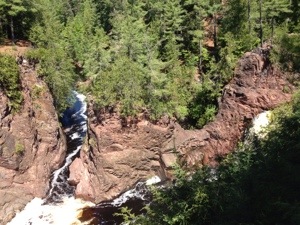
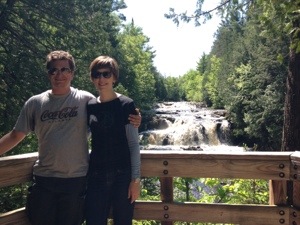
The first time I came here, in 2007, I was kind of obsessed with waterfalls. So, I found a place called Copper Falls State Park, which has some pretty nice falls. This particular trip warranted a return trip to Copper Falls, as some of the others on this trip live in Chicago, where there is little opportunity to find good waterfalls.

20130614-164212.jpg

The trail system at this state park is actually part of a larger trail system called the North Country National Scenic Trail. This trail system is only partially complete, but they eventually hope to connect central North Dakota all the way to upstate New York via a trail that follows some of the northernmost parts of the country. I am guessing they are hoping for it to be like the Appalachian Trail, but it seems like they are still a long way from completing this trail, and even when it’s completed it will be nowhere near as scenic as the Appalachian Trail, or the Great Divide or Colorado Trail for that matter.

20130614-164702.jpg

20130614-164710.jpg

20130614-164718.jpg

20130614-164723.jpg

20130614-165947.jpg

The hiking here was pretty easy, especially when compared with some of the hikes I have been doing more recently, with the move to Colorado and the trip to South Dakota. However, they did have some decent waterfalls in several different places. They are called the “Copper Falls”, due to their coloring, which actually comes from the type of red clay present in the region. As far as I know, the region has nothing to do with the mineral copper, and nor does the name of this particular waterfall.

20130614-165142.jpg

20130614-165147.jpg

Having lived in Colorado for some time now, a few things about this hike seemed quite different than what I am now used to. First of all, the hike felt to me like a luxury hike compared with what I have been doing more recently. There were some areas where staircases had been built, and there was even a sheltered bench built for resting. This is not something I have come to expect on a hiking trail. I had become accustomed to simply using a good rock or log to rest on if I were to get tired.

It was also way more wooded here than what I had become accustomed to. I guess they call it the “north woods” for a reason. It was so wooded here that I did not suffer any consequence for forgetting to wear sunscreen. At the end of the hike, I was actually way more anxious to put on bug spray. Parts of this hike had an excessively large concentration of mosquitoes. I think I killed like 50 of them and still got a bunch of bites. I cannot even seem to recall the last time I was in such a mosquito infested area.

20130614-170515.jpg

20130614-170130.jpg

After hiking Copper Falls, we drove up to Bayfield, the town most closely associated with the Apostle Islands. This is because the ferries that run to the islands all run out of this town. On the way up there, we hit the Lake Superior shore, and subsequently the Lake Superior circle tour, which is a series of roads that a motorist could follow around the lake. When I lived in Chicago, I recall being along and seeing signs for the Lake Michigan circle tour from time to time. In fact, that tour follows Lake Shore Drive in the city. The signs are neat, but taking the two or so days to drive around the lake seems like a strange idea to me.

20130614-170754.jpg

20130614-170800.jpg

20130614-170805.jpg

We took a ferry to Madeline Island, which is the largest island in the chain. In fact, it is the only island with roads. The others are largely uninhabited, but people still take boats, kayaks, etc., and camp and hike there. We did not end up spending too much time on Madeline Island. There wasn’t too much to do there, at least not for us. They do have a golf course, some beaches and trails, but it seemed to me that most things available on the island are also available in Bayfield, and in other areas on the mainland. Maybe it is still not quite peak tourist season yet.

I did enjoy the ferry ride. It actually brought back some distant memories for me. When I was a kid, growing up on Long Island, my family would periodically take trips that would involve bringing our car on the Orient Point ferry to Connecticut. This ferry ride was not nearly as long, and on fresh water instead of salt water, but driving onto the ferry and walking up the stairs did bring back those memories a couple of decades later. It is strange how, after all those years, the feelings can still be the same. The people with me probably thought my behavior at this point in time was a bit odd, as I was doing and saying certain things out of some kind of long dormant reflex that likely made little sense in the context of where we were. I even stated to crave seafood. It was somewhat of an odd feeling, but a good one.

Hiking in the Black Hills

June 4, 2013

Mount Harney is the tallest peak in South Dakota. In fact, it is the tallest peak anywhere east of the Rocky Mountains. The guy at the Custer State Park visitors center actually said it was the “Tallest peak between the Rockies and the Alps”. While that is technically true, it is a bit of a stretch. At 7242 ft., it is taller than anything in Appalachia, including the tallest peaks in the Smoky Mountains, but not really by too much. The difference is less than 1000 ft., and is probably made up for by the fact that the bases of those mountains are at lower levels.

However, it was still a really good hike. In fact, it kind of reminded me of hiking near Boulder a bit. It is at similar elevations, a similar total climb, and there are some major rock formations here too. Our loop from Sylvan Lake up to Harney Peak and around by two other major features; Little Devil’s Tower, and the Cathedral Spires, took us a bit over 8 miles today. With what is probably close to 2000 ft. of vertical climbing, between the main climb and a couple of side climbs, it was a very satisfying hike. With this morning’s drive taking us by the ” Needles Eye”, we have actually seen nearly half of the unique natural features of South Dakota. Not bad considering that we only arrived in South Dakota on Sunday.

20130606-152731.jpg

20130606-152744.jpg

At the top of Harney Peak there was a strange lookout point. It was actually the remnants of an old building. We think people actually hid out here, but I am not sure who. It was still interesting to see the place, and imagine the life of someone living on top of the tallest peak in the area. From this vantage point, you can see all of the peaks. We could look out on all of the peaks of the Black Hills, including the ones we had driven up and down yesterday and today, and they all showed up significantly below us. This may be the first time I have experienced this exact feeling, climbing my own way up to the top of the highest peak in the area. In 2005, I biked up Blue Mounds (Wisconsin), but the terrain there is nothing compared to what it is here. In 1998, my family and I drove up Pike’s Peak, but, we drove.

20130606-152544.jpg

20130606-152552.jpg

The alternate trail we took on the return trip to the car took us real close to the Cathedral Spires. These rock formations remind me of the Dolomites in Northern Italy, with their mostly vertical, but imperfect, gray colored rock structures of varying heights. In fact, for the entirety of the hike, as well as in many cases before and after, I have been referring to this feature as “The Dolomites”. And, no, I am not trying to show off that I am Italian, or that I have been to Italy. It is just kind of natural for people to make the association in their head based on the visual. I am reminded of an instance when someone I knew kept referring to the green sauce that they provide with samosa at an Indian restaurant as guacamole. He was not trying to show off his Mexican-ness, it was just that his previous experiences with green sauces in restaurants had mainly been guacamole, and the natural association was made. In the same vein, the other time. I had seen rock formations like that, it was the Dolomites. Some of the other rock formations did look like the Flatirons in Boulder, with a major exception being that they are lighter in color.

20130606-152834.jpg

20130606-152849.jpg

On this hike, in several places, both on and off the trails we were traversing, we passed through some tight areas inside rock formations. This was a good deal of fun, although somewhat scary. Oddly enough, I enjoy doing things like this, and I have not even completely figured out why. I guess there is a slight element of danger in it, and it does provide the hike with some variety. But, hiking is already an interesting enough activity that it does not need variety. And, I am not really pushing my limits anymore with this nonsense, as I have done it plenty of times over the past several years. Maybe it is just curiosity, the entrance into the unknown, the feeling you get when anything can happen. In this sense, it would be the same feeling that drives people to take a new route home, enter into new activities and new social circles, or even drink or do drugs. The flirtation with the unknown seems to come out in me a lot; skiing, hiking, parties, etc.

One final note about the hike. Boy have these pine beetles done a number on the forrest here. Scenes like this one are seen everywhere, and when viewed at a distance, parts of the “Black Hills” look quite red! I knew this was a big problem in Colorado, but it actually seems like the beetles have done even worse to the forests here. It is sad to think that the very nature of these places are bound to change forever, but in life, change is inevitable. It cannot be avoided at any costs.

20130606-152926.jpg

Our other activity today was visiting Crazy Horse. Crazy Horse is a statue of a famous Native American hero that sits on the other side of the black hills from Mount Rushmore. But, it is incomplete. It has actually been under construction since 1948, and is still nowhere near close to done. According to the hosts at our campground last night, the Crazy Horse statue will “not be completed in your grandchildren’s lifetime”. This slow progress is due to the desire to make this statue quite enormous, as well as their commitment to use only private funds. Turning down money shows a significant amount of pride, and/ or adherence to principles. Maybe both, they are actually probably quite related.

20130606-152949.jpg

20130606-153001.jpg

At Crazy Horse is also a museum of the Native American. We did not intend to spend all day there, so I pick a few excerpts to read, some about famous Native Americans. I don’t even remember the stories themselves, but reading these stories makes me more curious about Native American culture in general. History is written by the winners, and in the battle for North America, we, the white man, are the winners. But, it is hard to ignore the fact that we kept making and then Subsequently breaking treaty after treaty with these Native tribes. I would love to know the full story behind this, from both perspectives, and how the modern day Native Americans feel about all this, as well as the situation they are in now. Are they happy to have all the modern conveniences associated with the U.S.A.? Do they feel that we are the ones protecting the freedom of all? Or do they feel they cannot live the lifestyle of their choosing, and their continent has been usurped? I bet you get some real mixed emotions.

On the campground tonight, we got a bit goofy. In fact, we spent probably about half an hour, sometime around sunset, trying to throw pine cones into the campfire from various places. Most of them were from the top of a rock. It was some unexpected (and free) fun. I think our society could use a bit more of that if you ask me. One of my favorite things about trips like this are actually simple things like this that bring joy out of nowhere, unexpectedly.

20130606-153140.jpg

Experiencing Western South Dakota

June 3, 2013

Today’s first activity was a hike at Badlands National Park. Yesterday evening, at the visitors center, I had chosen a hike for our group that was mostly considered “moderate”. Only the initial 1/4 of a mile, which started from the parking lot and took us up the side of the structures towards a plateau was considered “strenuous”. This initial part was pretty strenuous, and, had it gone on for over a mile, would have made a difficult hike. But, after the initial climb, most of the trail system we traversed on this morning, would be pretty flat, with only minor inclines and declines. This, of course, was the part of the trail that was labelled “moderate” in difficulty. I guess, the “moderate” difficulty rating was a let down because, the badlands, while a beautiful natural place, is not a place with a lot of terrain. There simply isn’t 1,000 ft. worth of incline to find.

20130605-211914.jpg

20130605-211920.jpg

Difficulty ratings for hikes have no set standard. How any place labels it’s hikes is completely to the discretion of the park. It reminds me of the differences we observe between ski trails labeled green vs. blue vs. black at different ski resorts. Some of the easiest black diamond ski trails I have skied in Wisconsin may even be considered green if they were to be in Colorado; certainly, they would at least be blue, not black. So, I guess it is important to understand the relative context of activities while planning them. While occasionally you will run into an activity with a standardization of sorts, like whitewater rafting, it seems like when it comes to most activities, descriptions of difficulty levels are subjective as well as relative.

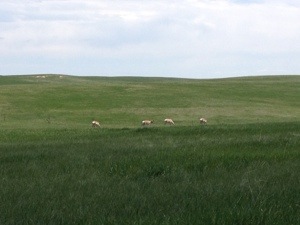
The biggest waste of time today was driving about five miles out of our way to search for Bison at the Badlands. The reason being that our ultimate destination today was Custer. In Custer we saw so many Bison, and so many up close, that the search for Bison anywhere else today, well, the idea of looking for Bison anywhere else today seems utterly silly at this point in time.

20130605-212020.jpg

20130605-212029.jpg

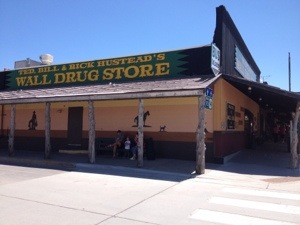
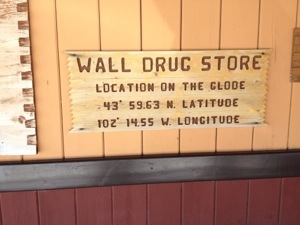
We gave in to the nearly 200 (well, possibly even more) billboards we saw yesterday, and we went to Wall Drug. This place does a really good job of marketing itself, given that the main goal of marketing is to make people aware of your product. The signs, bumper stickers, and such make sure everyone is aware of the existence of Wall Drug. I had heard from others that the place was a gigantic tourist trap and not really worth it, but it is so close that it is worth going and finding out for myself.

20130605-212113.jpg

20130605-212119.jpg

The place was actually alright. It was a little bit cheesy. In the front , there is an actual drug store, true to its name. Behind that is a restaurant and ice cream parlor, which is pretty neat. The rest is mainly souvenir shops. Behind the store, there is this kind of old west town that many tourist traps in the high plains have. The only oddity is that they also have a really poor replica of a dinosaur there too. This was advertised on many billboards, so I am glad the delivered on this. But this does not belong right next to a replica of a village from 1880. Time periods should be consistent.

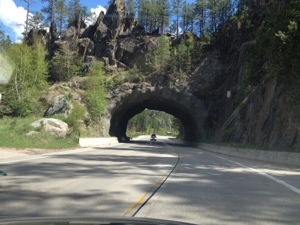
I made one key mistake there. I ate both ice cream and a donut. That is just simply too much sugar, simple sugar. A little over half an hour down the road, I got that sugar crash, and, for about half an hour could barely keep myself awake. This sucked, because the scenery was starting to become really interesting as we approached Rapid City and then drove Southwest on U.S. 16, and the 16-A.

20130605-212203.jpg

20130605-212213.jpg

The mountains here (I guess they are referred to as hills), are legit. I mean, the way the look, both from a distance, and up close when you drive into them, are actually not too different from the mountains of Colorado. This, I find somewhat surprising. When people make lists of states with really cool mountains, and I mean really big ones, it does not seem like South Dakota is ever really on that list. At least the association is never really made in my mind. I had always kind of known South Dakota to be kind of more interesting than the other plains states, and known that this area existed. But, it was not until now that I fully realized that the terrain in this area is significant when compared to other places in the country. It’s not as mountainous as Colorado, but it is not insignificant.

20130605-212245.jpg

20130605-212250.jpg

20130605-212301.jpg

20130605-212310.jpg

Today the sun rose at 5:30, and set at 8:30, for a total of 15 hours of daylight. I kept thinking about how much is possible with all these hours of daylight. It takes generally an hour or so to set up camp, start a fire, and cook. Today, we were able to take showers because we had extra time after cooking. This was after not arriving until nearly 6:00. In most other months, this would not have been possible. All this week, it seems like we had been less stressed, or had gotten more done than we would have in the fall, or some other time of year with less sunlight.

The problem is, June is the best time of year for a lot of things. Storm chasing is good, rafting is good, and with the most daylight possible, camping, touring, and such are all easier. So, how do we take advantage of our Junes. Should we work our asses off at other times of the year so we could get June off? That might cause too much stress at the other end of the year. How do we decide what activities are most deserving of these days? At the very least, the NBA and NHL can stop extending their playoffs into June so people don’t use up this time watching sports.

Oh, and we also saw Mount Rushmore. It was a bit smaller than I expected.