Category Archives: events

The Largest Farmers Market in the USA

IMG_3676.jpg

It is the farmers market that ruined me for all other farmers markets. When I lived in Madison, Wisconsin, for several years, I would regularly attend the Dane County Farmer’s Market, the largest producer-only farmer’s market in the country. Every Saturday morning during the warm season, the entire capital square would be filled with vendors, selling fresh produce, flowers, baked goods, and, of course, because this is Wisconsin, cheese and meat.

Each Saturday, between 9 A.M. and noon, crowds of people pack the sidewalks that surround the capitol square, creating a lively scene. It was enough volume, enough activity, that every other farmer’s market I visited after this one has left me asking “Is this it”?

That is partially because the Dane County Farmers Market is a unique experience in a unique place. It was included as a “must see” in the book 1,000 Places to See in the USA & Canada Before You Die.

The book, however, was published in 2007, and a lot has changed since then. One distinct characteristic of the 21st century is the presence of simultaneous contradictory trends. For example, we have a new generation of people emerging who both spend over nine hours per day in front of screens and prefer face-to-face interactions. Likewise, while obesity rates continue to climb, people are also becoming more health conscious and more aware of the food they consume.

Specifically, with detox diets, and awareness of the amount of waste caused by our food distribution system, more and more people are desiring locally sourced food. This can be seen at grocery stores and even some restaurants, where more and more displays indicate that food was produced on a “local” farm. Farmers markets are expanding everywhere to meet this increasing demand to buy locally produced preservative free produce. Some lists of top farmers markets in the USA published more recently do not even include the Dane County Farmers Market.

The Dane County Farmers Market still certainly represents a unique experience, as it has always been about more than just the vendors.

As far as I can remember, Madison has always been a very political town. On all four corners of the square, booths promoting political causes and local candidates are an expected presence. Along the roads that radiate outward from the Capitol Square, more interesting activity can be found, including live performances, some additional vendors and demonstrations of activities like wood carving, and even an impromptu children’s play area placed in front of the children’s museum.

I would say that Madison, Wisconsin is certainly more interesting than most towns around this size. The college campus guarantees plenty of interesting cultural activities. The pedestrian mall, State Street, that connects the capitol with campus is always active, even if it does have a speed limit that just begs people to break it… on their bicycles.

IMG_3687.jpg

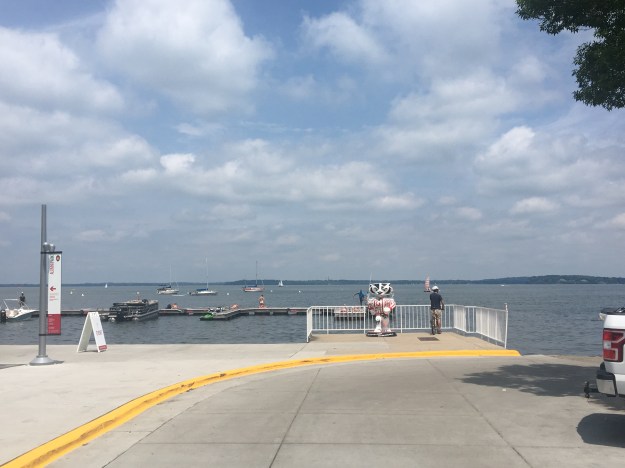
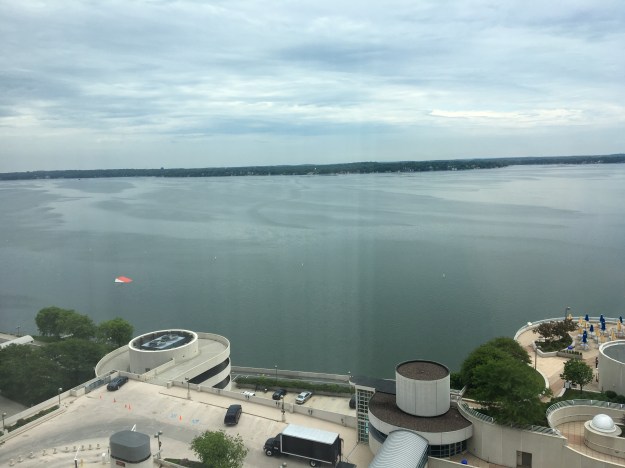
And there are the lakes, four of them to be exact, of pretty good size, one of which is directly adjacent to the University.
IMG_3691

IMG_3661.jpg

The city has two other characteristics that, having visited a lot of different places, feel quite surprising.

One is how strong drinks are mixed here, particularly on State Street. I ordered a make-your-own-bloody mary at one of the many establishments on State Street. Restaurants that offer this beverage typically provide a glass with vodka to mix with the other ingredients at the bloody mary bar. This is the only place where the glass provided to me was filled halfway up! Mixed drinks at other bars are also quite strong compared to the ones in most other cities.

From a now outsider perspective, it is also surprising to see how politically one-sided Madison is. Signs promoting events and groups, conversations around town and even signs in front of local businesses are quite frequently politically charged, way more so than in most other cities and towns. They are all from one side. It is as if those on the other side had been silenced or run out of town. In a State that is quite close to evenly divided politically, it feels strange to be in a place where one side has near 100% dominance of the discussion.

IMG_3654.jpg

Sometimes I find it depressingly easy for people who live in cities to forget what region they are in, on a larger scale. Traveling around the country, it often feels like all cities are tying to build the exact same amenities as each other; luxury apartments, shared workspaces, microbreweries, and art galleries. In my current hometown of Denver there is a constant reminder of where we are, the mountains to the West which tower over the skyscrapers of the city. The Midwest does not have that, however, seeing booth after booth selling cheese curds, other agricultural products, and products like venison jerky is as clear of a reminder to any that Madison is part of Wisconsin, which is part of the Midwest.
The Surf Ballroom; A little bit of History in Iowa

IMG_3613

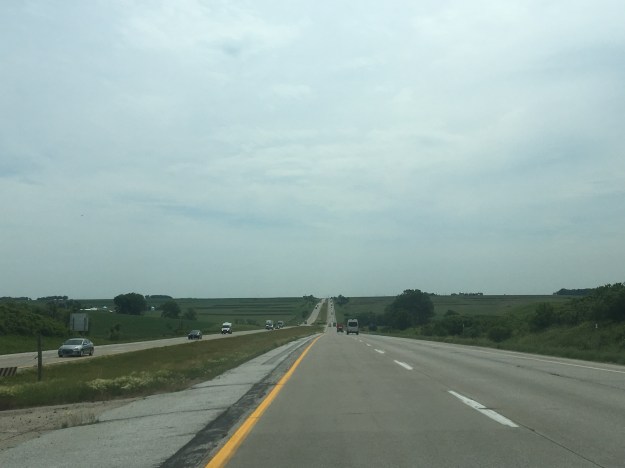
When one thinks of Iowa, a specific image comes to mind: One of soft rolling hills, and farms as far as the eye can see in all directions, where the sky can sometimes take on a characteristically midwestern form of murky thin cloudiness, giving a feeling that is neither cloudy nor sunny. Traveling across the state, this scene shifts quite little as the miles go by. The scenery is as steady and reliable as the culture.

Some people have a deep appreciation for the role that this corridor plays in agriculture and transportation, as indicated by this wall art at the Worlds Largest Truck Stop.

IMG_3719.jpg

Others find it monotonous and unbearable. People have even written parodies about how uninteresting and unpleasant a drive across Iowa is. However, as is the case with most places, there is more to it than what one will see from an interstate highway, whose primary purpose is to provide the most efficient route between cities for trucks.

Tucked away among the endless miles of corn fields are a surprising number of lakes that cannot be seen from the interstate.

20130605-204854.jpg

As well as the sites of a surprising amount of our history.

Most music fans are familiar with “The Day the Music Died“, February 3, 1959, when three of Rock and Roll’s biggest stars were all killed in a tragic plane crash. It was an event that nearly torpedoed the still young music genre’s rise to the top. It had the potential to significantly change the path music took for the remainder of the 20th Century, which could have had a major effect on the social and political movements that transformed our society from the middle of the century to where it is today.

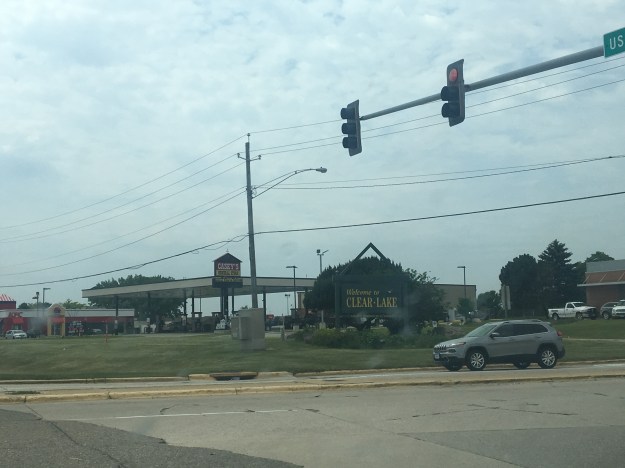
What few people know, though, is that all of this occurred in Northern Iowa, in a town called Clear Lake. Clear Lake is a town not unlike many other towns in Iowa, and the structure and establishments feel generally like anywhere in the Midwest.

IMG_3615

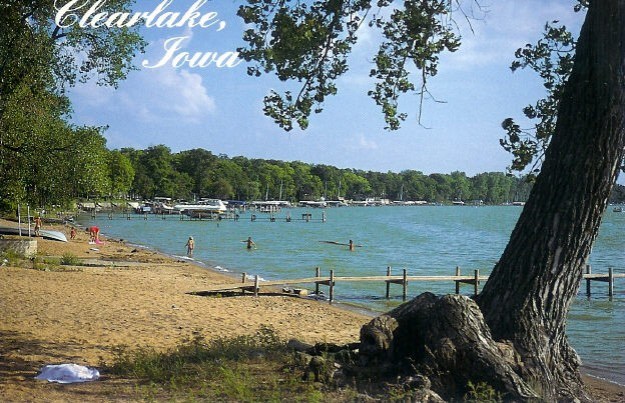
Like many place in Iowa, it has a surprisingly beautiful lake, depicted at its best by this postcard.

ClearLake_Iowa

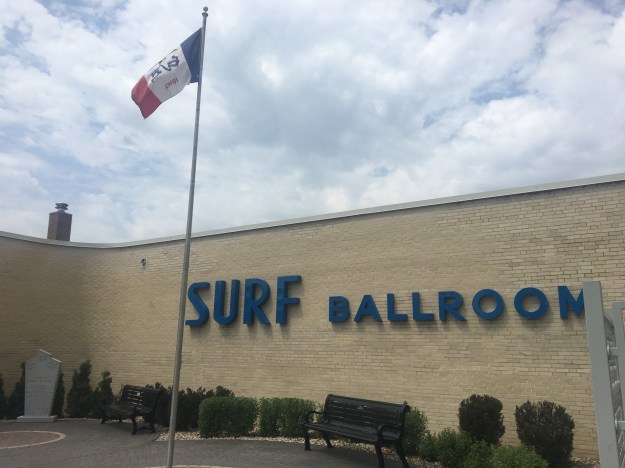
It is also home to the Surf Ballroom, the last place anyone would ever hear the three stars of early rock and roll on the night of February 2, 1959.

IMG_3618

Why they chose to play at this spot, on this date, feels both natural and confusing at the same time.

IMG_3620

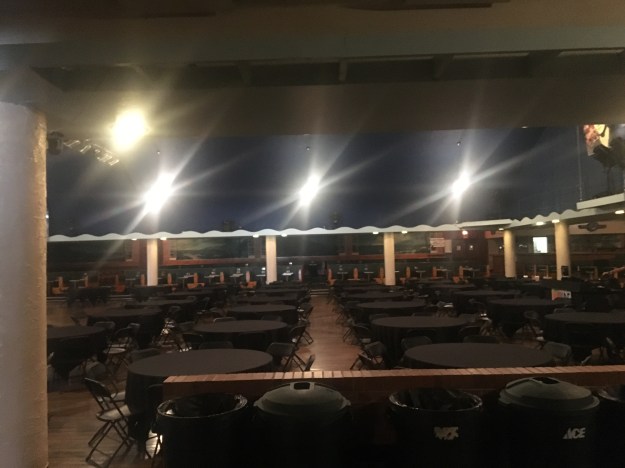
Perhaps because it is well preserved in its 1950s form, the venue itself feels like the exact place one would expect to hear Buddy Holly, Ritchie Valley, and the Big Bopper. It was also likely the right size, given the types of crowds that a music genre that was hot, but not quite mainstream would attract at that time in history.

IMG_3626

With traveling being a little more difficult than today, as the interstate highway system was just being built and flying was more likely to be prohibitively expensive, it seems logical for tours to come to smaller towns. Today, it would be more likely for musical acts to have tours that cover larger distances, such as a North American tour. Fans in Clear Lake would be expected to come to Des Moines or Minneapolis to see a show. Then, it was harder on both the band and the fans. However, I still wonder, why Iowa, and why in winter? Inclement weather is one of the reasons for the plane crash.

Another is how the tour, labelled the 1959 Winter Dance Party Tour, was planned, as indicated by this display.

1959DanceParty_TripAdvisor

They toured by bus. So, having a tour date in Kenosha right after Milwaukee makes logistical sense. After that, the schedule had them meandering all over the place. These dates were all back-to-back. The show at the Surf Ballroom came at a particularly grueling time, having played in Green Bay, WI the night before, and having a show scheduled in Morehead, MN the next day. Frustrated, Buddy Holly chartered a plane to the next show- the plane that would kill the three performers. One could say that February 3rd was the “Day the Music Died”, but it was a combination of poor planning and a harsh Midwestern winter that killed it.

However, as anyone reading this in the 21st Century knows quite well, the music didn’t really die that day. A few years later, rock music would be infused with fresh life, in the form of new bands that would later be counted amongst the best of all time. The Surf Ballroom also refused to let the music die. They continued to host musical performances of all kinds, and still do to this day. They have hosted some of the all time greats.

IMG_3624

It probably helped that the venue itself did a good job of finding the right balance, between preserving this key moment in history…


While also staying in the here and now.

IMG_3628.jpg

Road trips are certainly more appealing when they involve more than just traveling from one destination to another, but rather, leave time to explore some of the places in between. Every place that exists, big or small, new or old, has a story to tell. The story of one small town, one of many, tucked away behind the interstate by one of Iowa’s gentle rolling hills, certainly ignites the desire to explore more, eagerly anticipating what is around the next corner, over the next hill, just beyond the horizon.

The Motor City- Without a Vehicle

“And you may say to yourself, well, how did I get here”- David Byrne.

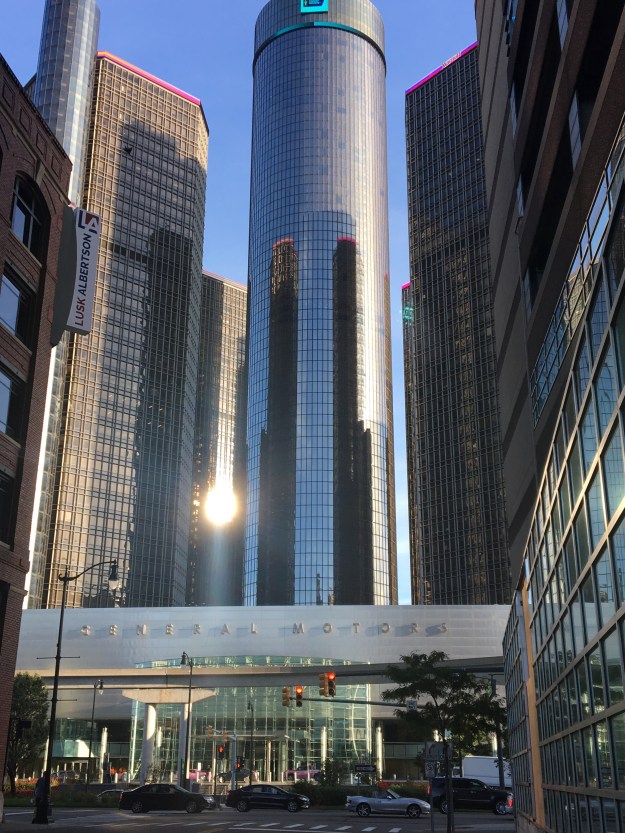
I found myself in Detroit, Michigan on an unexpectedly pleasant October week asking myself just that question.

On one level, of course I know how I got here: Delta Airlines. I am not that reckless :).

On a whole other level, and the level that David Byrne was clearly referencing in Once in a Lifetime, I was quite confused.

How did the sequence of events in my life come together that lead me here?

To this forum…

img_1465

In this city…

With this group of people….


Is there a reason for it? Was it “meant to be” for any reason? Or is it a result of decisions I made aggregated over the course of time? Had I made these decisions differently, prioritized things in my life in a different order, or just paid more attention to a few specific things, would it have lead to a result that is significantly different?

This song was on my mind because last time I was in Detroit, way before I even had the idea to start writing about my travels, I recorded a dance to this music video at the Henry Ford Museum.

This was in 2008, a time when Detroit was at some kind of a low point. The story of Detroit is familiar to many, as it has been written about extensively.

IMG_1396 (1)

As the headquarters to America’s three biggest car manufacturers, the city was prominent and prosperous in the middle of the 20th Century. However, it fell on hard times in the later part of the 20th Century due to a combination of customers increasingly buying foreign cars and the decline in manufacturing in the U.S.

Nearly every time anyone writes about Detroit, they write about the city’s economic fortunes, often making points about social issues, economic policies, etc. Even when I came to Detroit with no desire to address the city’s economic misfortune and current attempts at recovery, it is hard to escape. Evidence of it is everywhere.

IMG_1430 (1).jpg

Visitors from other parts of the country kept telling me how eerie it felt; the lack of crowds, empty streets and mostly empty bars. Even acknowledging that these were all weeknights, it still felt different than what most people experience in urban areas throughout the country.

The history, as well as current state, of any place is always going to be a part of any travel experience. And, for Detroit, this includes the history people focus on (decline from 1960-2008), but also some of its history prior to this.

Strangely enough, despite the fact that Detroit is “The Motor City”, and best known for its role in the automobile industry, much of its history, and many of the interesting attractions, can actually be reached without a motorized vehicle.

Within downtown, one can walk to many of the city’s historical, and current attractions.

IMG_1414 (1)

For those willing to walk a mile, the only places that really require vehicular transportation are the Motown Museum and the Henry Ford Museum. The Cobo Center, all the attractions along the Riverfront, Detroit’s historic Opera House, the Fox Theater, the venues for all of Detroit’s sports teams, as well as multiple casinos can all be reached on foot within roughly a mile and a half of each other.


Interestingly enough, there is a lot one can do in the “Motor City” without even using a motor!

Much of this was actually built in Detroit after the decline of the auto industry. One of the reasons I visited Detroit in 2008 was to see their newly built baseball stadium, right downtown.

My 2017 visit to Detroit was to attend a conference related to a client I am currently consulting with. The reason is complicated as organizations rarely send consultants to conferences to represent their brand. Consultants are temporary and technically not a member of the organization.

It makes my identity, like Detroit’s identity as a city, feel way more fluid and complex than it was in the past. In the mid 20th Century, a place could have a simplistic identity; The Motor City, The Rubber City, The Iron City, etc. Today’s growing cities, like Denver, have identities that revolve around multiple areas of focus.

Many people are rooting for Detroit to make a comeback. Places like Greektown and Corktown, adjacent and walkable from downtown, are emblematic of a new, different, and more multi-faceted Detroit emerging from the ashes of the decay that plagued the prior half a century. One day, Detroit will find itself anew, unrecognizable to the Detroit of Motown, and people will ask “how did it get here”. They may even ask “My God, what have I done” (from the same song).

The point of David Byrne’s song is that people need to stop and periodically think about their lives, the directions they are headed, their priorities, etc. Otherwise, they will just kind of like drift, with nobody really understanding whey they are where they are, doing what they are doing, with the people they are with.

There are unique things about Detroit. Obviously the large amounts of empty space, some of which is being converted to farmland.

Also, their proximity to the Canadian border, rust belt infrastructure, and continued contributions to the music industry.


Attending this conference was a reminder to me. No matter where I go, no matter what I am doing, I cannot help but be me. While we all need to periodically re-think things, come up with new ideas, and even take on a somewhat different identity, there will always be some things fundamental about ourselves that do not change. Detroit’s current transitions reminds me of this.

TEDxMileHigh: Point of Departure

IMG_0280 (1)

It’s a mid-summer weekend in sunny Colorado and thousands of people are standing in line, actually various lines that snake all around the Ellie Caulkins Opera House in downtown Denver. They are all waiting to get into the theater to hear a series of talks. These talks will cover a wide variety of subjects. One will be about a big idea, something that may change the world in the coming years. Another may be a personal narrative, and another may even be a musical or poetic performance. The only thing these talks have in common is the main draw. The main reason anyone chose to spend a Friday evening and Saturday afternoon in the middle of the summer inside a building as opposed to in the mountains where most Coloradans chose to spend their summer weekends, the association with a brand known as TED.

IMG_0259 (1)

Most people have some form of exposure to TED talks, even if they did not purposely seek them out. TED talks are shown at all sorts of conferences and workshops, are shared with friends and colleagues regularly, and are commonly found in web searches. This was the first time I chose to attend a TED event, but I have watched quite a few TED talks in my life. When you are really ill, watching TED talks on YouTube can be the most productive thing to do with your time.

What I notice most about TED talks, both at this conference and online, is the fact that I never get bored during them, despite the fact that I find it quite easy to get bored and antsy during presentations, especially of the standard power point variety. It is quite clear that the people who organize TED events (and TEDx events, which means they are independently organized) follow a formula that takes into account how the human mind works and responds to information as presented. Talks are generally 15-20 minutes, consistent with most scientific understanding of the human attention span. Short videos are presented between talks of wildly differing topics to ease the transition from one topic to another.

Speakers undergo a rigorous three-month long process of preparation to ensure all TED talks meet their standards. As a result, speakers always seem to emphasize the right words, stay poised, and avoiding using filler words. Auditions for speakers for this conference took place in February, and auditions for their next conference, in November, take place at the end of July!

When I think of the brand TED, the first thing I think of is people who think like me. By this, I do not mean people who have the same opinions on certain specific issues or policies. It is more of a general sense of what “TED people” are like. If there is one thing that binds all the people who speak at and participate in this brand known as TED, it is the desire to think beyond the day-to-day routine, the next task or the next purchase. People come here because they want to be inspired. They imagine possibilities beyond what is seen directly in front of them day-to-day. They want to engage their intellectual curiosity. They believe their life will be changed, or even that the world will be changed, by something they hear about and talk about here.

The conference provided a few other perks as well…

Each ticket, regardless of whether it was General Admission, VIP, or All Access, provided a free lunch, to be redeemed at one of many food trucks located in sculpture park behind the Denver Performing Arts Center (which houses the Ellie Caulkins Opera House). There were vendors for many other other organizations too, including ones that focus on environmental activism, sell new flavors of tea, or focus on career development. At the end of the conference, I even got a free pair of eclipse glasses, which I intend to use to view next month’s total solar eclipse.


After 22 speakers spread over three sessions, meeting countless interesting people, and a really awesome after-party (there was an after party both nights, but I only attended the Saturday night one due to poor meal planning on my part), I felt something absolutely crazy. I came out of this conference with more energy than when I had arrived. I wasn’t expecting this, as most conferences leave me drained. This one covers even more intellectually and emotionally draining topics than most.

The success of the TED brand seems to run contrary to every piece of business advice I have ever received. I am always told to have a specific product in mind, a narrower purpose, and a specific target audience, like all those blogs that focus on one activity.

Yet, this idea seemed to start with a broader purpose; to inspire and change the world. Then, they thought about humanity and found the most effective way in which to present the information. If TEDxMileHigh Point of Departure taught me anything (other than specifics like how fast a supersonic jet can go) it is to stop worrying about how others achieved, or what status anyone has. It is all about having something to offer that people see as worth-wile, and bringing it to them effectively, regardless of titles or perceived status.

The Denver Travel and Adventure Show

IMG_8957

It says something about our culture, in its current state, that we now have a series of exhibitions like this, throughout the country, dedicated to travel.  After all, it was only about a century ago that the idea of going on vacation, let alone regular travel as a way of life, became an option for those that would be considered “middle class”.  Now, we have a Travelers Century Club, with multiple chapters around the world, for people who have visited over 100 countries, and wanderlusters encouraging others to make travel a way of life.

Due to a variety of factors, I am in the midst of what I am referring to as a “low energy month”.  I am guessing this is more common than I realize.  I really cannot remember the last time I had one.  It’s likely that I needed a calmer, quieter period, although, I cannot say I welcomed it.  What I ended up with was a feeling eerily similar to how I would feel toward the later part of most winters when I lived in the Midwest.  I got kind of stir crazy (still am at the time of writing this).

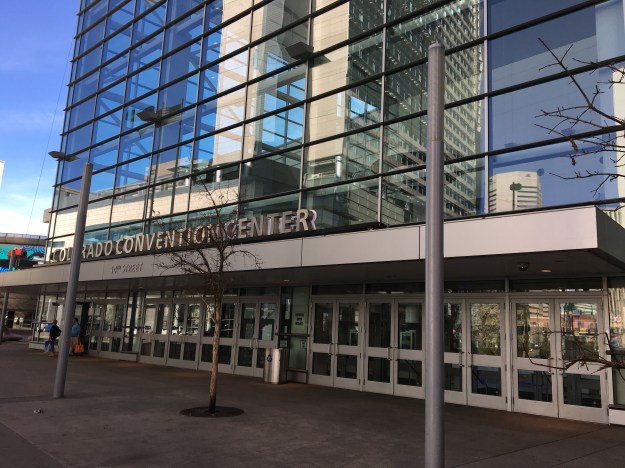
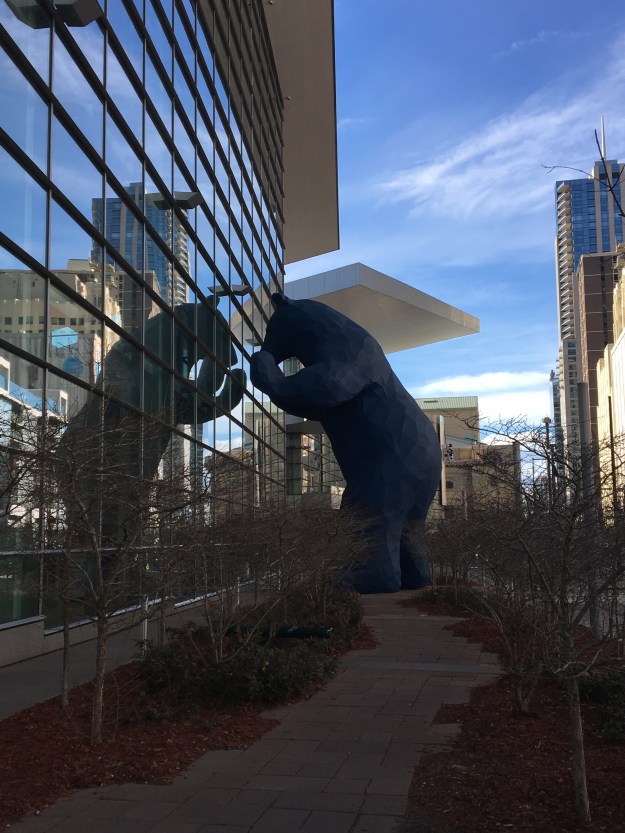
The Travel and Adventure Show represents a whole new way for people to feed their stir-craziness.  This year, the Travel and Adventure Show came to Denver for the first time ever, at the Colorado Convention Center downtown .  The Colorado Convention Center features the Big Blue Bear sculpture, one of Denver’s architectural attractions.  I love it!  So creative.  So unique.  Whoever designed this was not thinking along conventional lines!

IMG_8958

At first glance, the idea of attending this show could seem absurd.  Pay $12 (or $20 to go both days) to have people advertise to me?  It reminded me of those catalogs people would get in the mail.  They would be thick, at least 150 pages, of nothing but ads.  And people would actually pay to have them delivered?  I never wrapped my mind around that (and now I don’t have to).  I’m used to getting something like free entertainment (TV), or free information (web content) in exchange for being subjected to advertisements.

But, the Travel and Adventure Show is actually about more than just the exhibits.  The show had a series of presentations, from various people in the travel industry, with topics ranging from advice about journeys to specific destinations, travel tips, food, and so much more.

IMG_8951

Maybe this is more about who I am and what I care about, but the talk I got the most out of was definitely The Travel Channel’s Samantha Brown.  Her presentation focused on why we travel, how to get the most out of travel, and why experiencing other places and cultures is beneficial to us.

What I really liked about her presentation is that she presented clear and positive cases for what she believes are the best practices while traveling.  From personal experiences, she described why she does certain things on trips, including visiting some of the less publicized destinations, interacting with the locals, going on walks without maps, and being open to life-changing experiences.  However, she avoided doing so in a manner that demeans those who do things differently.

People often make the distinction between travelers and tourists.  I find it to be you classic “my way is better than their way, and now I feel better about myself” type of distinction.  People who describe themselves as “travelers” depict tourists as those who visit common destinations, play it safe, overpack, over-plan, and do nearly everything else that annoys locals.  Samantha flat out dismissed this distinction, encouraging people, well, just to travel.

IMG_8952

I also did not feel pressured by any of the exhibitors, which was the very thing I was afraid of.  I largely haven’t figured out what places I will visit in 2017, which makes me both nervous and excited at the same time.  I went around from booth to booth, talking to a good number of the exhibitors.  Whenever I did not think of anything specific to say to anyone, I would simply tell the exhibitors “I’m wanderlusting”.  At the time I thought it was an easy way to say that I was just browsing, but later realized that this sentence could have given people more reason to be pushy.  But, it did not happen.  I felt less like I was being advertised to, and more like I was just meeting people and hearing about places.

This distribution of exhibits were about a third from places within a day’s drive of Denver.  This included Colorado hot-spots such as Breckenridge, as well as some places a bit farther, including Utah and Montana.  The Great Plains actually had a significant presence.  Another third came from more distant international destinations.  Every region of the world was represented.  I particularly noticed a signifiant presence from Nepal, Australia, and Denver International Airport’s newest direct flight: Belize.  The remaining exhibits were a combination of people representing other parts of North America, such as Louisiana, and California, some travel related products, and even some interesting types of companies.

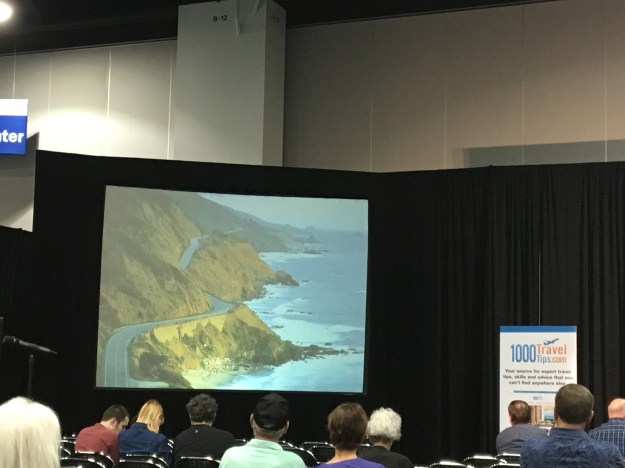
One was a company that offered active travel, which is the only place in the entire show I saw bike travel represented.  This exhibit, along with the 1000 Places to See Before You Die presentation reignited my desire to one day cycle the Pacific Coast Highway.  Unfortunately, this will not be possible in 2017 due to the California Floods.

IMG_8956

The main surprise, I would say, are the number of exhibits that were actually staffed by some sort of combination of a county or regional tourism board and one or several private tourism company.  I did not expect this.  I actually wondered if there were some tourism companies, not part of the exhibit, that would be upset by seeing their county’s tourism office team up with a rival company at an exhibition.

In the end, I would say my only disappointments were not seeing a big presence from some places I find interesting (Norway, etc.), and not seeing too much about bike travel (just the one exhibit).  I was lucky in that this show ended up feeling nothing like those gigantic catalog books I never understood, and that nobody pushed me to sign up for anything.  It ended up being just a place to explore, and, well, feed my “wanderlust”.  I thought back to those winters in the Midwest, when I would go online and start looking at trail maps, start talking to people about Springtime adventures, and thought to myself: Did I just help myself get through this stir-crazy period, or did I just make it worse?


Cycling from Denver to Cheyenne

IMG_6854On the evening of July 3rd, having just finished an exhausting six-day bike ride, including four days of cycling over one hundred miles, my body felt a bit relieved.  I was actually ready to rest, ready to sit in front of a computer again!  Clay, however, told me that I was going to wake up the next morning, realize I was not biking 100+ miles and not know what to do with myself.

The truth ended up being somewhere in the middle.  I could not have pictured cycling at all the next day.  This was literally how I felt.

IMG_6644

The next day, I biked six miles, to and from Union Station from my home.  And, I was perfectly fine with that.

However, I did eventually get antsy, despite two other, closer to home adventures.  By Tuesday July 19th, I posted this picture on Instagram, stating I was bored and wishing to get on my bike and explore again!

IMG_6808

I ride the new RTD A-Line train, which connects downtown Denver with Denver International Airport, roughly three days a week for a gig I am currently working at the airport.  At Central Park Station, one of six intermediate stops between downtown and the airport, this curious piece of potentially symbolic artwork sits atop a pillar.

IMG_6809

Whenever I am on the train, and not trying to sleep for efficiency sake, I see it, and sincerely wonder what its purpose is.  It seems to depict a person running to catch the next train, but headless.  But why headless?  Could it actually be a satire on the futility of the rat race?  Could the artist who created the sculpture have had an alterior motive?  Could he or she have created this sculpture with the secret hope that a few commuters each day would look at this sculpture and be prompted to ask; what am I doing and why am I doing it?  Is this the life I wanted?  Is this the natural state of human condition?  Etc.?

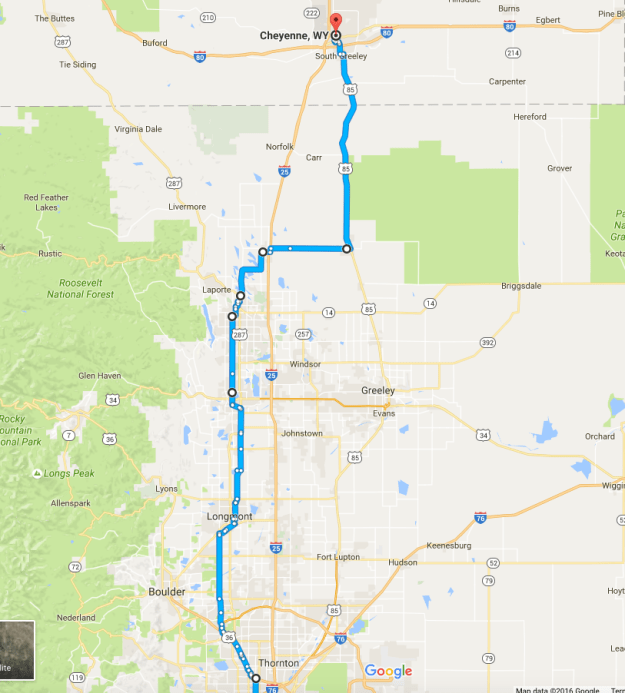
I, however, had other plans, actually for the next Friday, and, they once again involved my 2012 Bianchi Cyclocross bicycle.  The Cheyenne Frontier Days Rodeo was starting, and, I was going to ride my bike there!

The prior evening, I spent the night in Broomfield, after a softball game in Boulder.  So, even before this next 100+ mile bike ride, I was already spending some significant time on my bike again.  Knowing it was going to be hot, we got an early start.  I actually wish we had gotten an earlier start.

BikeRoute_DenvertoCheyenne

A lot of people hear about my bike adventures and immediately sounds perplexed…

Is there a trail there?

Are there safe roads to bike on there?

There’s a lot of trucks on that road.

I would never ride my bike on those roads, you could get killed.

Etc.…

There is some risk, no denying it.  When I was a child, one of my favorite bands, the Offspring, told me “Back up your rules.  Back up your jive.  I’m sick of not living just to stay alive.”  More recently, Drake told me, “Everybody dies, but not everybody lives.”  The truth is that there is the possibility of death doing nearly everything.  People die on the slopes.  People die rafting.  But, people also die commuting to work.  And, due to the health risk factors such as cardiovascular disease and such, sitting around watching television can be deadly!

That being said, I still considered risk when choosing a route, and am still willing to go a few extra miles to reduce my risk.  I am just not willing to miss out on opportunities altogether out of fear.

IMG_6814

The first part of the ride was pleasant, 95th St. from Broomfield to Longmont is a road I knew had bicycle accommodations in the form of bike lanes or wide enough shoulders.

Longmont was a little bit tougher to navigate.  Like many towns, their bike route network was designed primarily with travel within the town in mind.  I stared at their bike map for a good half an hour to figure out the best route through town, but it ended up being a fun route.

IMG_6817

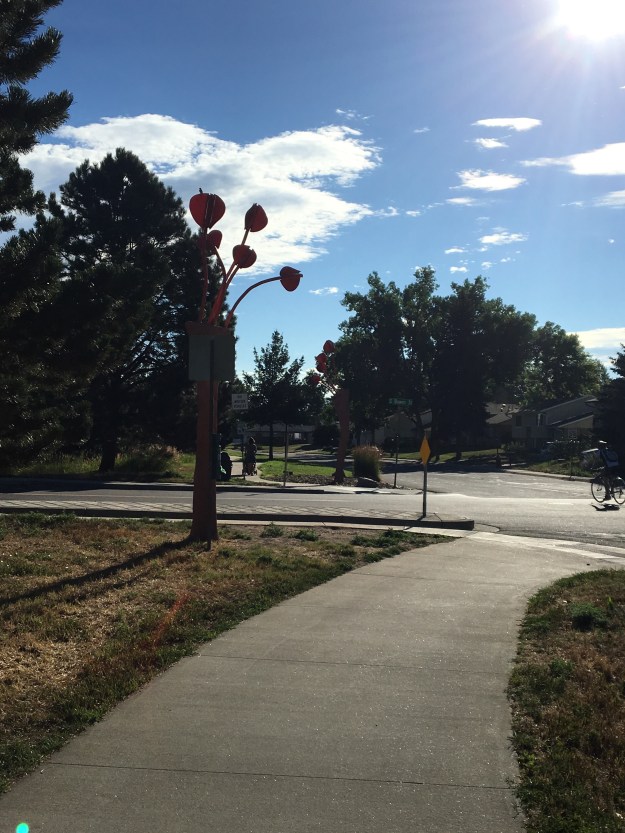
I particularly enjoyed all the sculptures along the Saint Vrain Greenway!

IMG_6818

One thing people miss when they drive along I-25 between Denver and Fort Collins is how many lakes there are in the area.  On the interstate, there are none.  On this route between Longmont and Fort Collins, through Berthoud and Loveland, we actually saw a lot of lakes.

I’d been pondering riding my bike from Denver to Cheyenne for years, even going as far as thinking about some of the details, such as what time of year to go and what route to take.  As soon as I started thinking about routing, there was one segment I knew I was going to do, the combination of Taft Avenue and Shields St. through Loveland and Fort Collins, roughly half a mile west of highway 287.  This straight shot through both towns has a bike lane the entire way, and made navigating through Loveland and Fort Collins was easier than navigating through Longmont.

IMG_6821

This is where I started to feel the heat, which was right around 10:30 or 11:00.  The temperature probably hit 90 sometime while we were in Fort Collins, making me regret having not left even earlier than we did (we departed at about quarter to 7 in the morning).

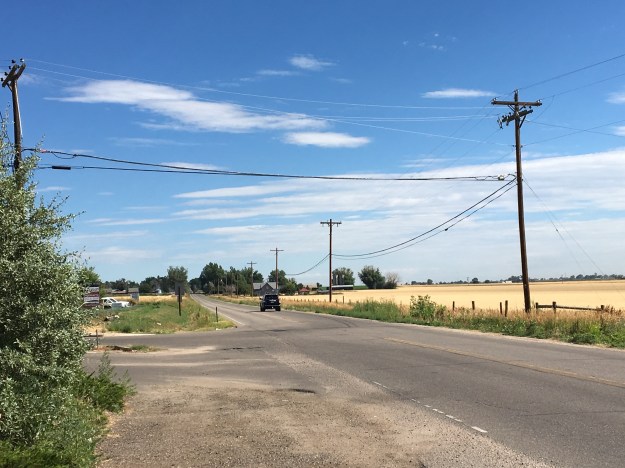
Also, the wind had a slight easterly component that day.  This made the next two segments of the ride, first from Fort Collins to Wellington, where we stopped for lunch around noon, and then from Wellington to Nunn to reach U.S. highway 85, quite possibly the most challenging segments of the ride.  I had this nagging feeling about entering Weld County.  I do not know why, I just felt as if something bicycle unfriendly would happen to me in this county specifically.  It was mainly just a premonition that bore out to be true, just not in the way I had anticipated.

IMG_6845

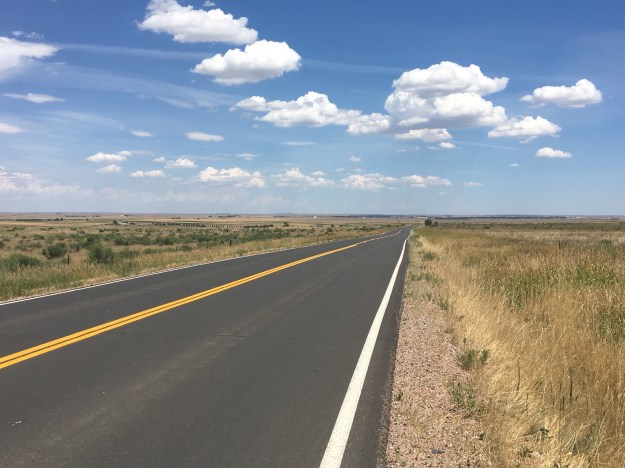
Upon entering Weld County, the road we were following switched to newly paved blacktop, while the temperatures had climbed probably into the mid-90s.  This lead to the closest thing to heat exhaustion we would experience during the ride.

IMG_6846

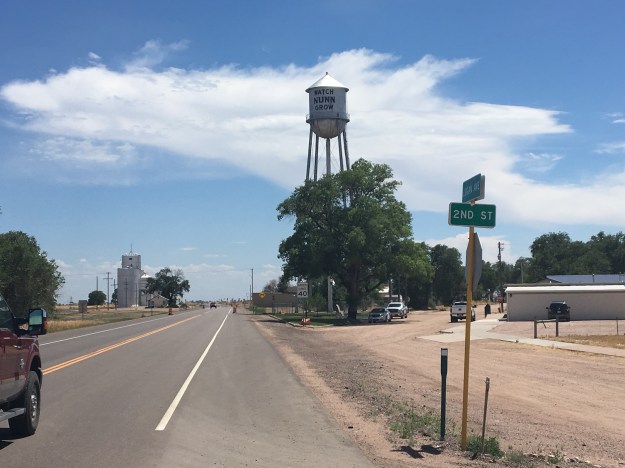
By the time we reached Nunn, we were desperate to get out of the heat for a few minutes and get some water.  Unfortunately, despite the fact that Nunn has a water tower that says “Watch Nunn grow”, I’m 100% sure that my calf muscles were growing faster than Nunn that day.  The only place we could find to fill up our water bottles was the police station/town hall, and the only reason that option was available to us is because we were riding on a weekday (Friday).

IMG_6847

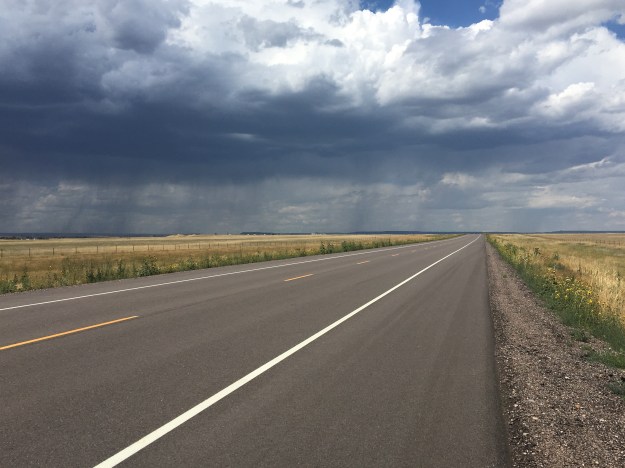
We followed U.S. 85 for the last 30 miles of the ride.  We ended up having to wait out a mid-afternoon thunderstorm near the Colorado-Wyoming border, at the only building within a 10-mile radius.

IMG_6850

The storm was, however, neat, and I felt as if I were storm chasing on my bicycle (even though in real life that would have been a disaster).

We arrived in Cheyenne during rush hour, which was a little nerve racking as this is the only part of the ride where the shoulder on U.S highway 85 disappears, the last couple of miles before entering town.

After 109 miles of riding, we were there, Cheyenne Frontier Days, miraculously with enough energy left to party, parade, and rodeo!

Life in a Northern Town

IMG_5245.jpg

It’s 8 AM on a Thursday morning in Reykjavik, Iceland’s Capitol and largest City.  The sun has yet to come up, as this far north (64 degrees latitude) days are still quite short in the middle part of February.  A quiet dawn persists over the town for nearly two hours, from 8 to about 10.  A couple of local teenagers are hanging outside the grocery store.  A group of tourists can be seen hanging outside one of the few restaurants that are open.  Otherwise, the streets are quite empty, and the shops are mostly closed.

IMG_5248IMG_5246

It’s odd because, in many most major cities, 8:00 is the peak of what is often referred to as “rush hour”.  It is a time of people hurrying to and from train stations, and crowding highways trying to get to work.  Even in the more touristy sections of cities, which this most certainly is, a lot of motion can still be found at this hour.  At places like Chicago’s Michigan Avenue, and New York’s Time Square, which are utterly packed with tourists nearly every day, there are still plenty of people to be found at 8:00 on a weekday morning, mostly people headed into work.  Here, that culture just does not seem to exist.  Are all the office jobs elsewhere?  Do people have office jobs?  Do they work different hours?  Or is the economy so heavy on tourism and fishing that there is just no point in being awake at an hour when all the tourists are likely still asleep and the sun is not out?

By noon, things start to pick up.  On some days, the sun comes out and hits the harbor.  At this latitude, when it hits the harbor, it hits it in a way that seems to highlight every single feature, from the boats in the harbor to the snowy mountains on the other side.  From the perspective of someone that has always lived in the mid-latitudes, is feels neither like mid-day nor twilight.  It is a different feeling altogether, and those who take a pause from their tourist itinerary and truly soak up the moment are reminded as to why it is worthwhile to visit different places in the first place; to see something, experience something, do something that cannot be done at home.

The day progresses.  Tourists fill streets whose names are too intimidating to even try to pronounce, make their way into the bars, the restaurants, and the dozens of souvenir stores that feature a gigantic stuffed puffin in the window.

The weather inevitably changes- but, well it doesn’t.

IMG_5350

There is this saying, “if you don’t like the weather, wait 5 minutes, it will change.”  Anyone that travels on a regular basis to places outside the tropics has most likely heard the phrase too many times to count.  It is used here.  At souvenir shops, mugs and shirts about Iceland sport the phrase.  And, it is true to some extent.  At any moment, it can turn from sunny to cloudy, or suddenly get windy.  But, the temperature does not vary too much.  On a four day trip to Iceland, the temperature, including daytime and nighttime, seemed to only vary between a few degrees below freezing and a few degrees above freezing.

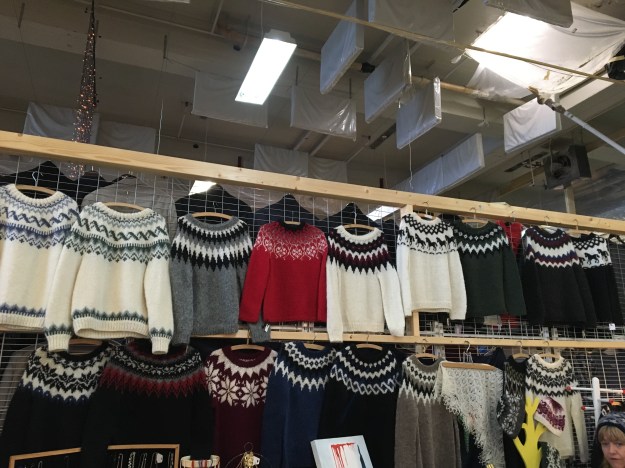
Regardless of these changes, winter in Iceland is consistently cold and damp.  For this reason, one of the most popular items made in all of Iceland are wool sweaters.  While any visitor to Reykjavik can find these sweaters for sale all over town, the best deals on them are found at the Kolaportid Flea Market.  Even at the Flea Market, though, they can be quite expensive, the equivalent of roughly $100.  Money talks, and it is easy to figure out what a certain culture values by seeing what they are willing to spend money on.  Coloradans are willing to spend thousands of dollars annually on ski equipment.  Icelanders are willing to spend money on a warm wool sweater.

IMG_5348

Reykjavik’s population is only just over 200,000 people.  In fact, the population of all of Iceland is 330,000- significantly less than every borough of New York City, even Staten Island.  Yet, it is a place that knows how to party!  The nightlife is surprisingly good- probably better than many towns 2-3 times its size!

Making up for the lack of action at 9 in the morning, festivals, shows, and clubs give locals and tourists alike plenty to do in the nighttime hours.  Iceland has been promoting tourism quite hard since the economic collapse of 2008, which hit Iceland particularly hard.  Iceland Air has been particularly active in promoting tourism, by adding direct flights to more places in both Europe and North America, possibly with the goal of becoming a preferred airport for making connections while traveling between Europe and North America.

IcelandAir_Map

Looking at this map, it is hard not to imagine an executive with Iceland Air looking at at map, possibly even Risk the board game, and thinking of this grand plan to become a connecting point between the continents.

Well, it’s working.  Recently, more people talk about Reykjavik being their favorite place to make flight connections, and more and more people seem to have visited Iceland.  At this point, in Reykjavik, it is probably impossible for locals and tourists not to interact with one another in some way, especially at clubs and shows.

After hours of partying, all of a sudden it is 4 AM.  Many clubs still have lines to get in!

At 5 AM, on the streets, music can still be heard coming from multiple directions.  In fact, by this hour, it almost becomes easier to find a place to eat than it was at 9 AM on Thursday morning.

Sometime in the next few hours, the blurry memory of a fun filled night fades into the next morning, likely to be delayed through at least part of that lengthy twilight period.  In my particular case, it faded into the realization that it is now noon, and Millions of New Yorkers (where the local time is 7 A.M.), despite the time difference, have woken up before me on the other side of the Atlantic!

IMG_5346

I only spent four days in Iceland.  I do not know the full extent of life in this nearly arctic city of Reykjavik.  I only know what I experience in this short period of time, where I did the best I could to experience the local culture.  Regardless, it does appear quite different from any place I have ever been.


Summer Persists

IMG_4449

I have been fascinated by the weather my entire life.  When it comes to our atmosphere, there is always something interesting going on.  The weather seems to find a way to continue to surprise people, behaving in different interesting ways each season, each year, each decade.  Our lives are impacted by the weather every day.  It is something that is impossible to ignore.  It is always on our minds, particularly for those that of us that love travel and outdoor activities.

At times, our plans can be frustrated, or even cancelled by changes in weather conditions.  It is the early season baseball game that was cancelled due to a freak April snowstorm.  Or the ski resorts in Lake Tahoe that had to close due to the lack of snow.

At other times, unexpected opportunities can arise.  I remember one year, when I was in college in Northwest Indiana, a place that is typically quite chilly in the wintertime, we had a series of unexpected 60 degree days in late January.  I unexpectedly found myself in Lake Michigan (albeit only knee-deep) on the 27th of January, a time of year I could normally expect to be huddled indoors.

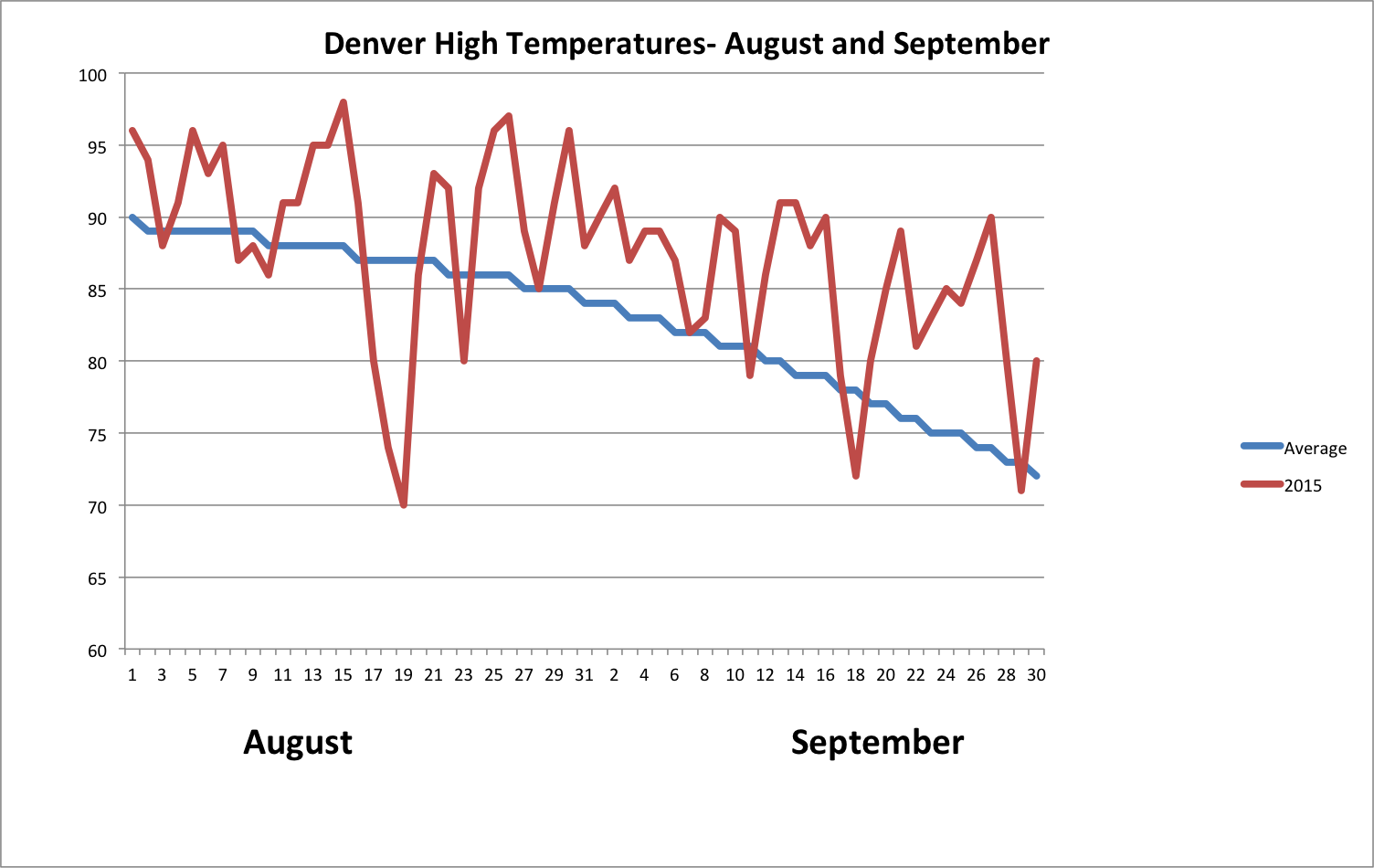
Across much of the country, the story this September was the persistence of summer.  Some places are experiencing one of to their warmest Septembers on record.  Here in Denver, it has been the same story.  September’s temperatures this year, largely resembled what is typical in August.

Denver_Aug_Sept_2015

A sensible response to hot weather in Denver is to travel up to the mountains, where it will be cooler and more comfortable.  So, in addition to my hike near Breckenridge on the 11th, I made trips up to the mountains both of the following weekends.

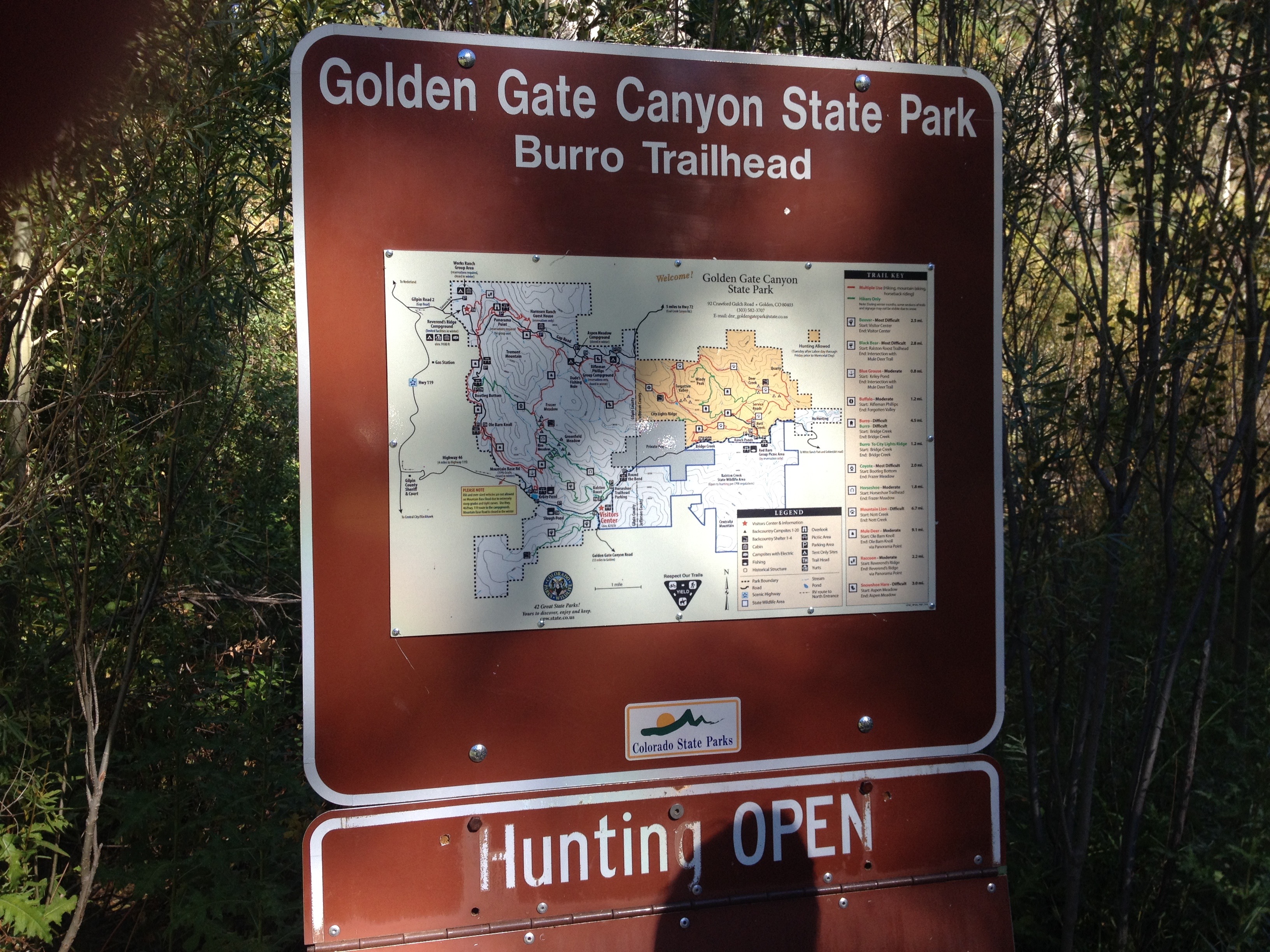
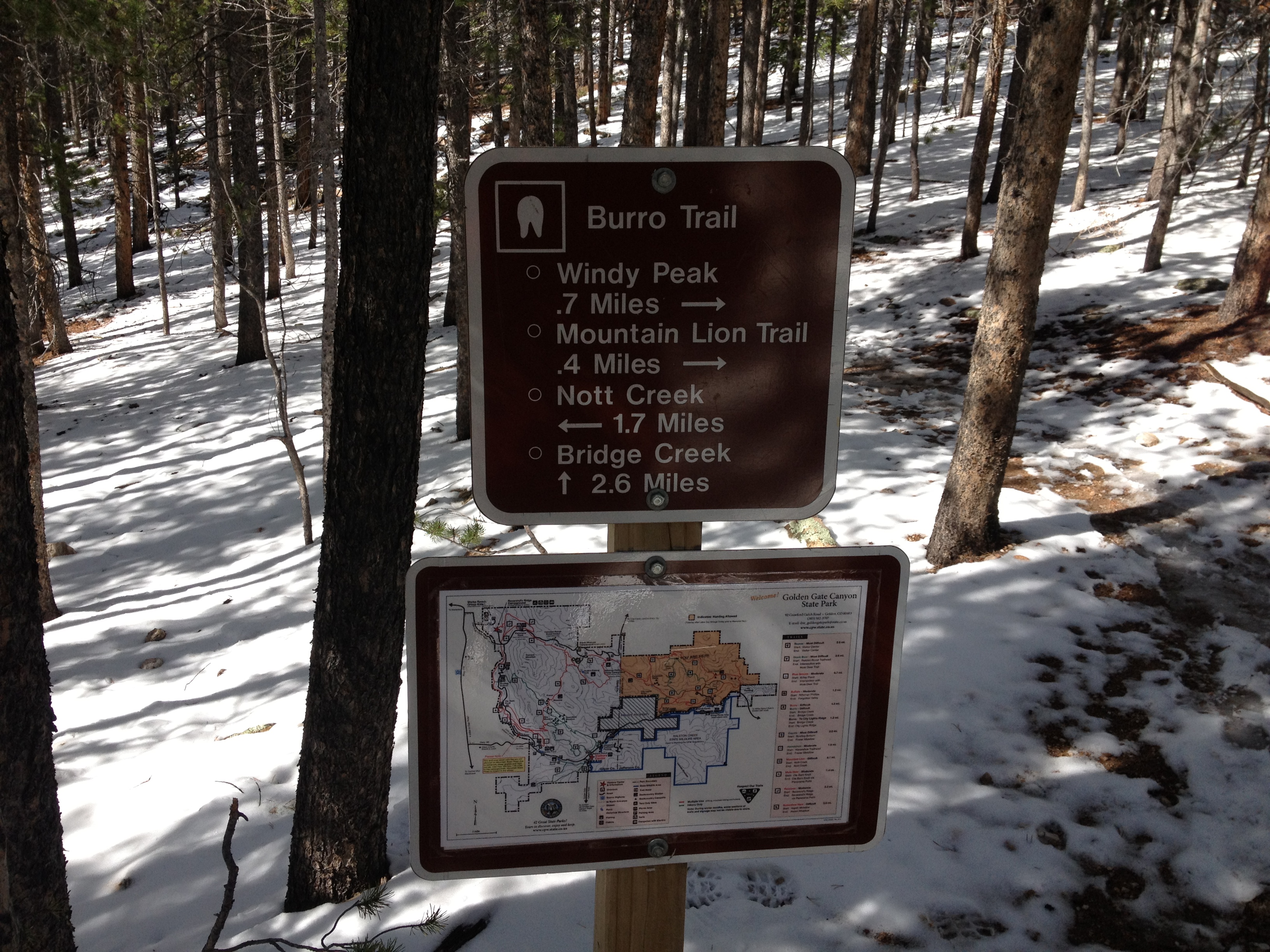
September 19th was a repeat hike, to Windy Point at Golden Gate Canyon State Park, which is actually less than an hour’s drive from Denver.  The first time I hike this particular trail, in October of 2013, the upper portions of the trail were already covered with snow.

IMG_1163

This time, I got to experience the trail without such snowpack.

IMG_4435 IMG_4430 IMG_4429 IMG_4414

My other late season hike in the mountains involved a trip to a place I had never been before, but had been meaning to check out for quite some time, the Fourth of July trail outside of Nederland.

IMG_4467 IMG_4465 IMG_4474 IMG_4478

This hike in particular, on September 26th, represents the kind of opportunity that would not have been available had it not been for the unusual resistance of summer.  This trailhead is at an elevation of just over 10,000 feet.  By late September, one would expect high temperatures only in the mid 50s at this elevation, and not the warm conditions we experienced that day.

IMG_4477

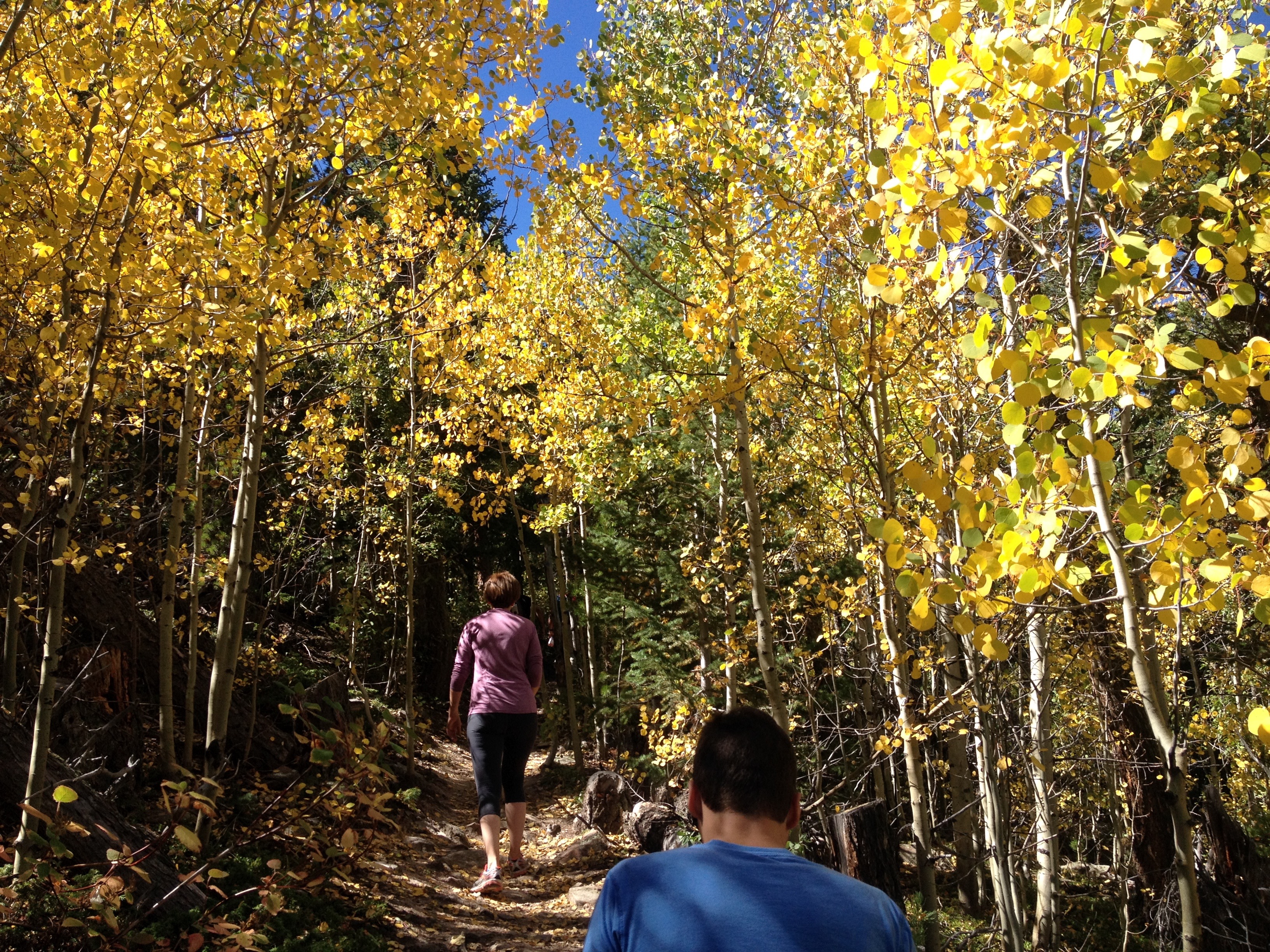
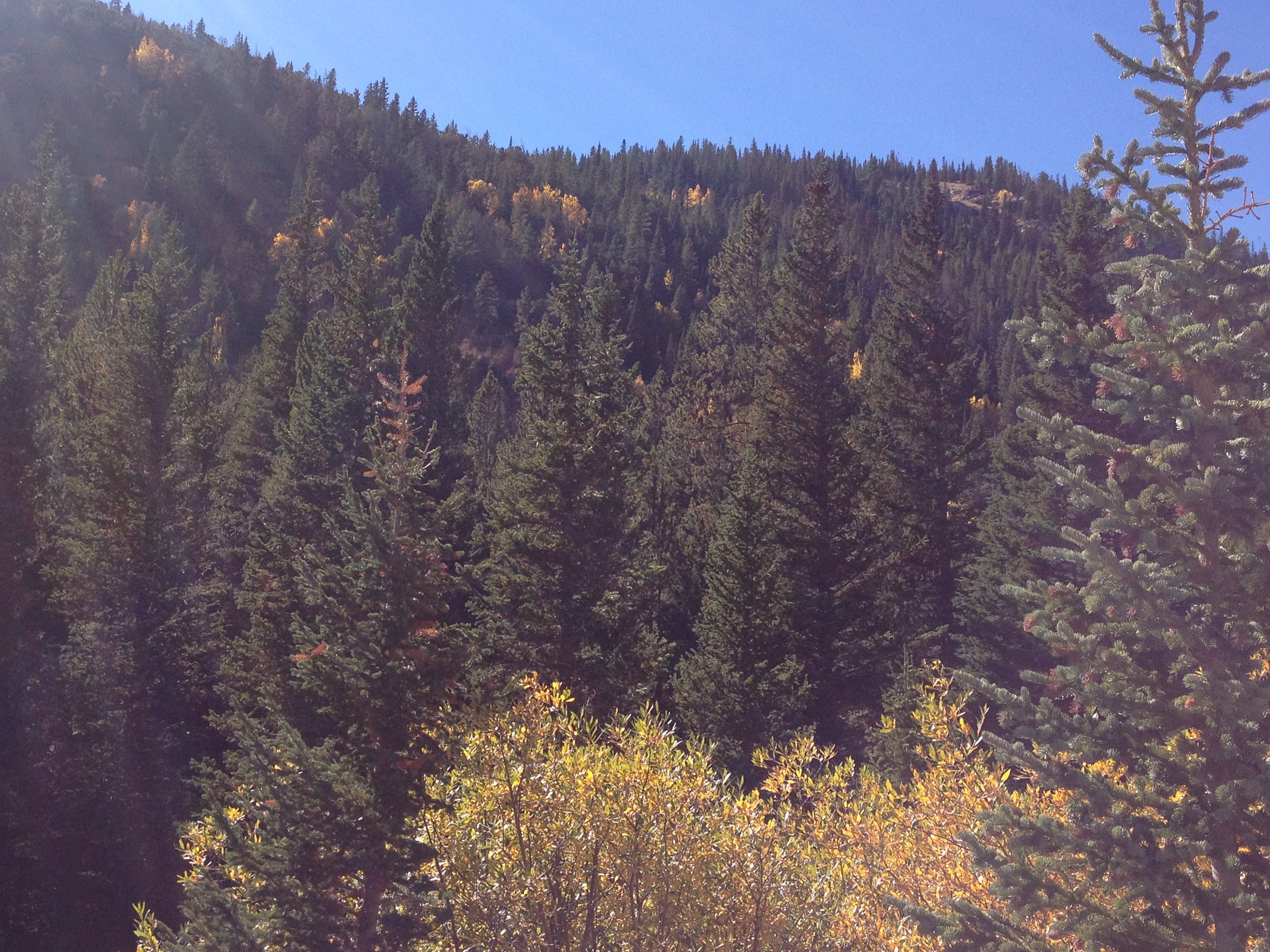
One thing I have come to notice during periods of abnormal weather is how the trees never seem to be fazed by the abnormal conditions.  In the Midwest, when we would have a mid-winter thaw, like the one I had perviously mentioned, none of the trees would start growing leaves or anything.  They would continue to stay the course, knowing what to expect from the rest of the season.  Here in Colorado, the trees are still changing colors largely on schedule, with the later part of September being peak season for fall colors at these elevations.

IMG_4483

I have actually come to realize that the most magnificent fall colors occur when there is a warm and dry fall.  As it was last year, without windy, rainy, or even snowy weather early in the year, the leaves stay on the trees longer.

IMG_2733

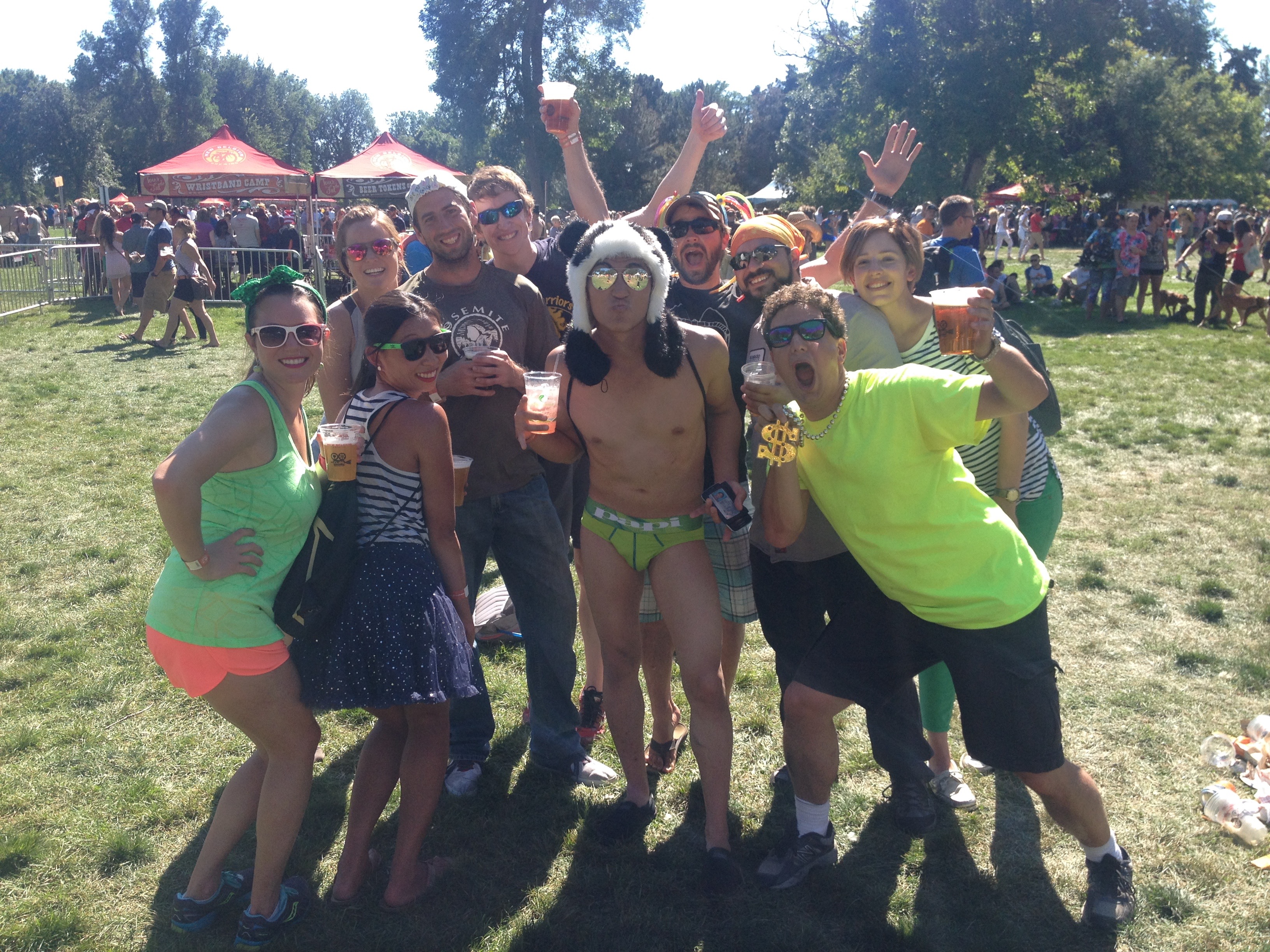
In a month where we sweated through 90 degree weather for Tour de Fat,

IMG_4372 IMG_4391

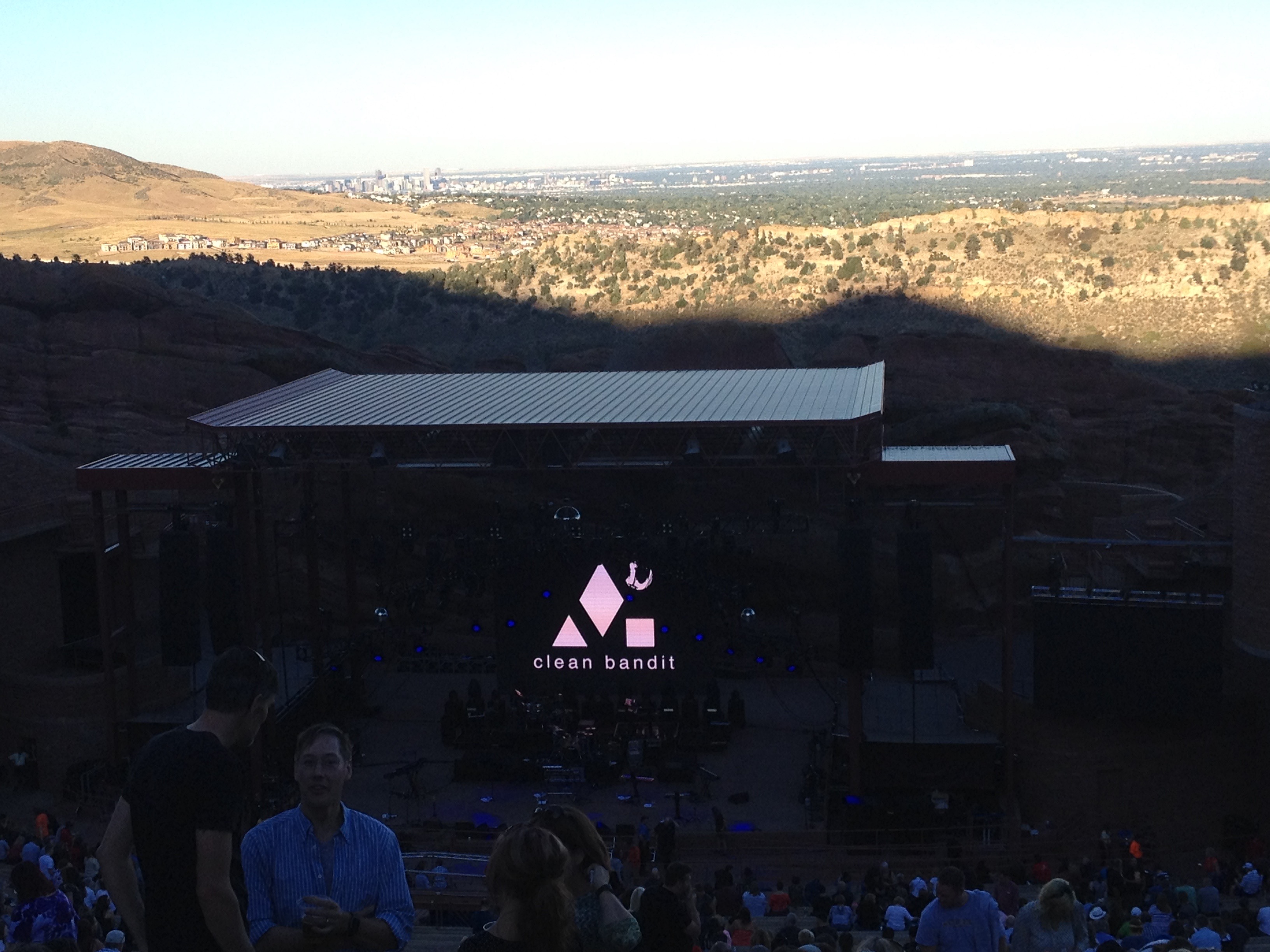
And one could attend a concert at Red Rocks without needing a jacket,

IMG_4442 IMG_4448

It is hard not to feel as if summer just has’t ended yet.  We simply got to experience summer longer than anticipated.

Whether it be a season of the year, like winter or summer, or a chapter of our lives, we all anticipate change.  We know that a change is destined to occur, and often have an idea in our heads as to when that change is destined to occur.  However, sometimes, changes do not happen at the time they are anticipated.  Sometimes in life, we are caught off guard by an unexpected change before we had fully prepared.  We all have heard of at least one person who had endured an unexpected layoff, or an unplanned medical emergency.  Other times, as is the case with the switch from summer to autumn across much of the United State this year, it takes longer than anticipated for the next chapter of our lives to begin.

As someone who loves hiking, cycling, and water sports, and is generally not too negatively impacted by hot weather, it is easy for me to welcome the unexpected extra month of summer.  It is easy for me to say, in this case, that the best way to handle this delay, in the transition from summer to autumn, is to go out and enjoy it, take advantage of the opportunities, and be patient for the next season to start.  But, I know that this is not the case for everybody.  I also remember being the one frustrated by the lack of change.  I remember one March in particular, when I was living in Madison, Wisconsin, that winter just seemed to never end- and I was beyond sick of it!

Fall is going to come.  According to the weather report, by this coming weekend, October 2nd and 3rd, most of the country will be experiencing weather more typical of fall.  Those that have grown tired of the heat, although they had to wait longer than expected for the cooler air to come, knew all along that it would, and that the changing of the season is inevitable.

IMG_4490

At some point in time, we all end up in a place where we feel our lives have stagnated.  We enter a place where our current situation, whether it be our job, or what we are doing on a day-to-day basis, has simply run it’s course.  We have gotten what we need to have gotten out of the experience.  Maybe it has become frustrating, or maybe it is just simply not inspiring to us at all.  In these situations, the cycle of winter-spring-summer-fall we all live through on an annual basis serves as a reminder that the change we desire is inevitable.  Sometimes it just takes longer than we had hoped.

Festival Season

Several years back, I spent a considerable amount of time fascinated with the question; What makes someone an “interesting person”?  I guess it was just the time we were living in (around 2010- but it’s still true now).  People had become exponentially more distracted by social media over the past half a decade.  Every job posting had 200 applications.  To get by in the world suddenly seemed to require the ability to get people’s attention.  It suddenly did not feel like enough to just simply be competent and friendly.  The most precious resource had suddenly become attention, and the amount of time one had to make an impression on people was ever shrinking.

So I took stock of the people in my life, the people I saw, the people I knew, and even people I had just heard about.  I knew that there were some people I found interesting for some reason.  I really tried to determine why that was.  What was it about some people that made their names come up in conversation more frequently?  I went through this quandary in my head about the delicate balance between being “too normal” and not having anything distinct about yourself and being “too weird” and not being able to relate to people.

IMG_4031

In true extrovert fashion, I did not really figure out what it was about until I started asking other people about it.  I asked my friends what people they found interesting and why.  And, I realized what is true for me, as well as everybody else on this planet.  Some people find me interesting, and some people don’t, the same way I find some people interesting and others not.  I even realized that there are people in my life that I had not necessarily found interesting, but could see how they could be interesting to other, different kinds of people.  I actually thought about those people that write those celebrity fashion blogs and report live from award shows.  I seriously still can’t think of anything I care less about than who wins the Oscars.  But, some people love it, and a lot of people love those blogs.

Nobody bores every single person they meet.  Also, nobody captivates everyone they meet.  But, some people do manage to find a way to relate to a larger proportion of the population than others.  We all know that one person that is always talking about the same things, and doing the same things.  And, when we get together with them we know it is going to be the same old same old.

Maybe all they do is work…

IMG_2969

Or maybe they’ve got some cause they just won’t ever shut up about….

IMG_4007

Or, they just really only have one interest.  When that happens, well, you can only relate to people who happen to share that interest.  When one cultivates a variety of interests, they are able to relate to a greater subset of the population.  Not only are more people going to find them interesting, but they are going to find a way to show genuine interest in the lives of more people.

IMG_4030

So, while I love to travel, I realize that it is not for everybody.  The average American works 47 hours a week.  And the average commute is approaching half an hour each way.  Many spend much more than that standard five hours a week in their cars as it is.  So, I completely understand why, for many people, the idea of hoping in a car Friday afternoon or Saturday morning, spending several hours in it, and doing the same on Sunday, just simply does not sound appealing.  I will always find the allure of new places, different experiences, and different cultures worth the effort, but many want to find activities closer to home.

This does not mean they are not interesting people, and this does not mean that I cannot find them interesting.  Last weekend, right here in Denver, I was able to attend three festivals; all within 4 miles of home.

IMG_4027 IMG_4028

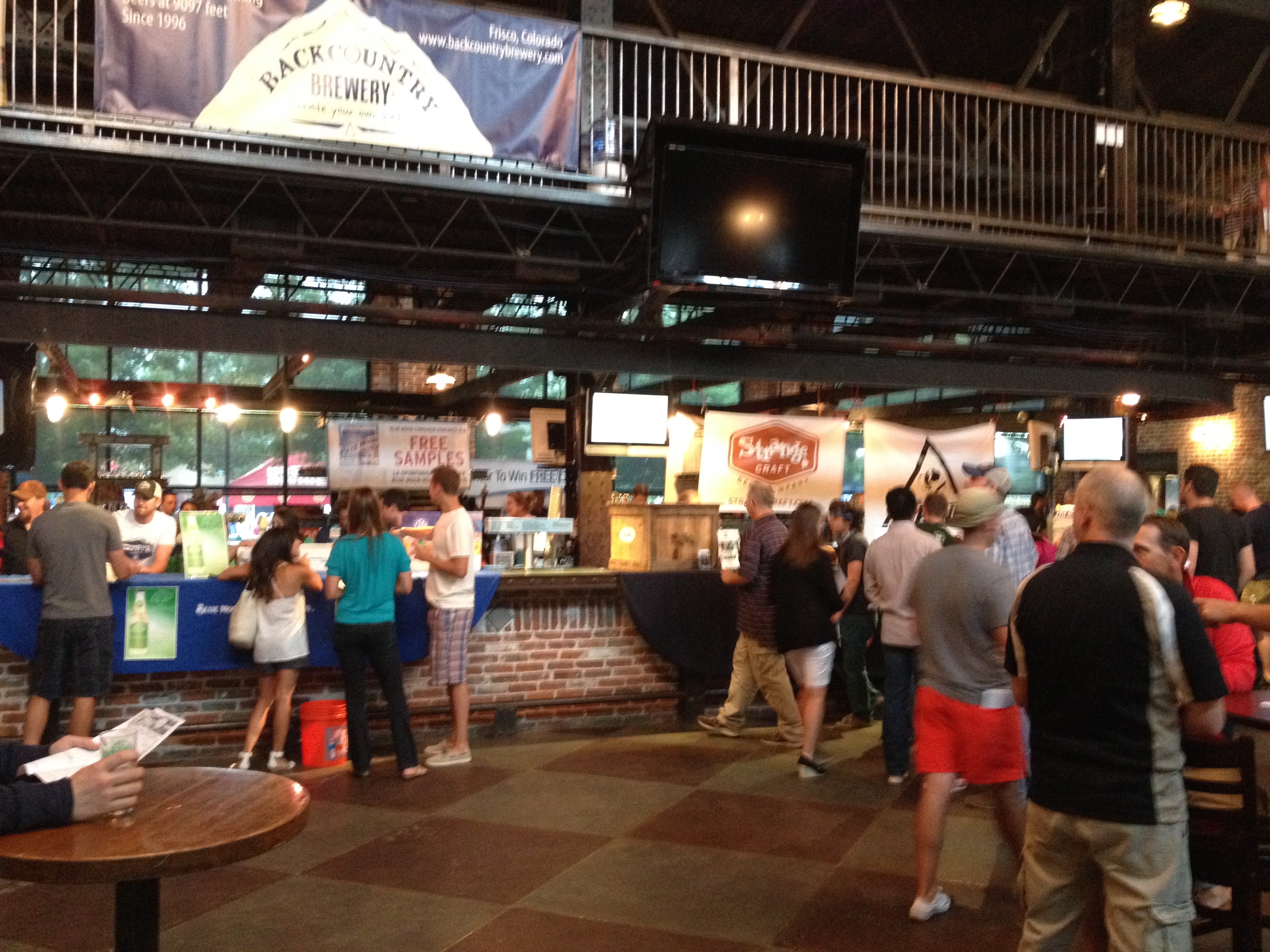
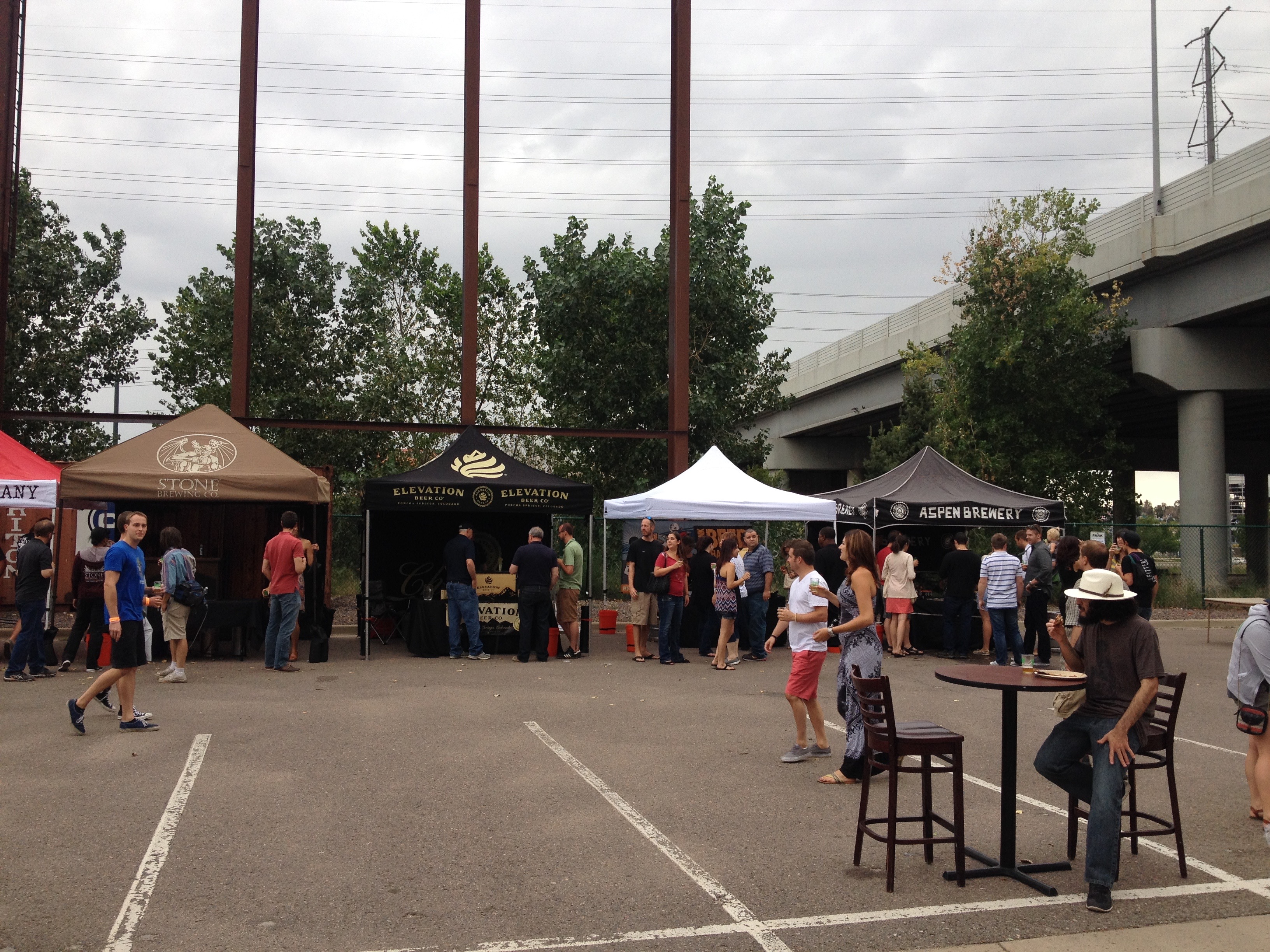
At the Denver Brew Festival, with over 50 different participating breweries, and unlimited drinks for $35, one is pretty much guaranteed to be trying beer they have yet to try before.

IMG_4048

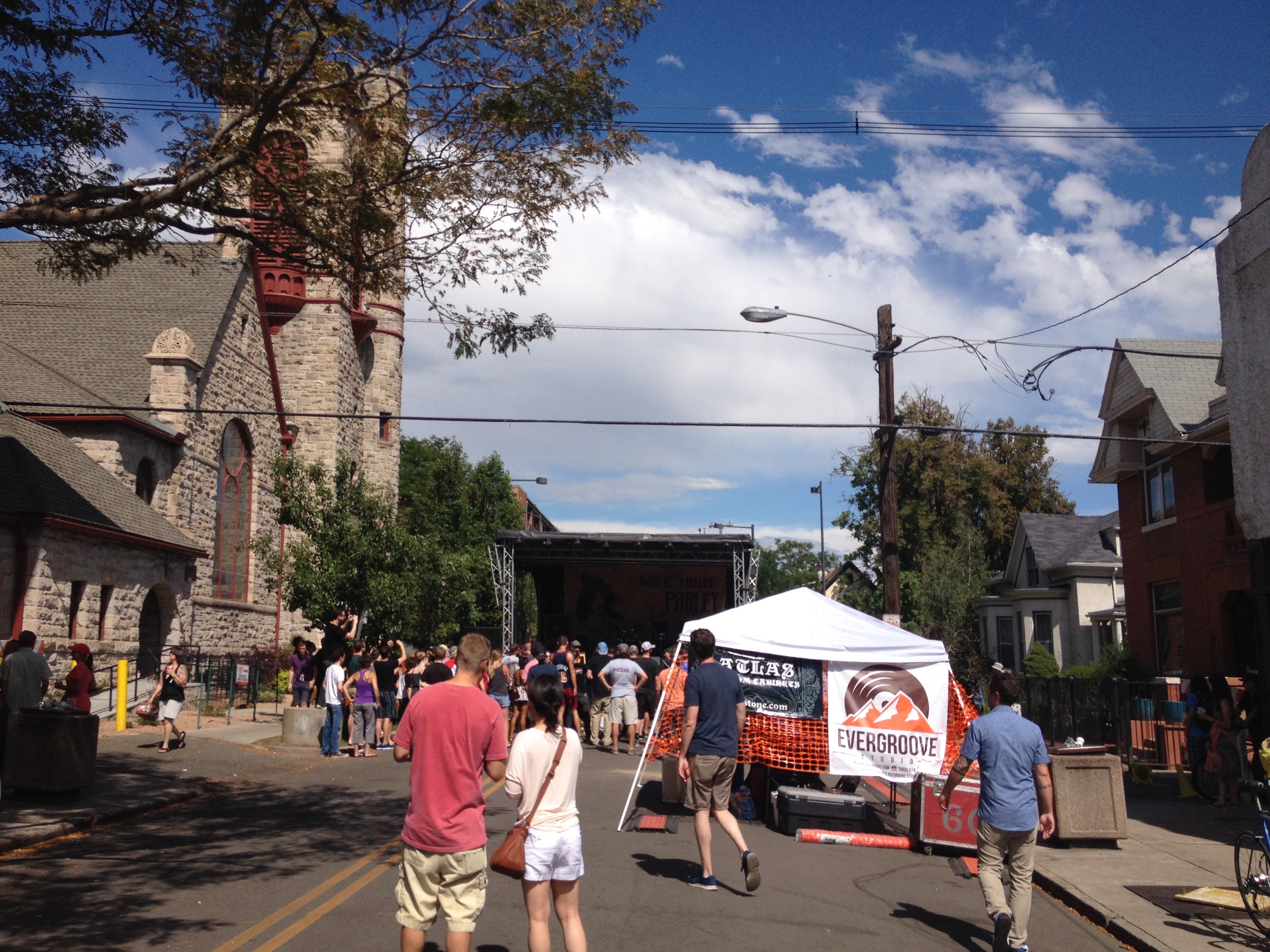
At the Underground Music Showcase, countless people get exposed to bands, and even musical stylings that they have never been exposed to before.

IMG_4050 IMG_4058 IMG_4059 IMG_4060

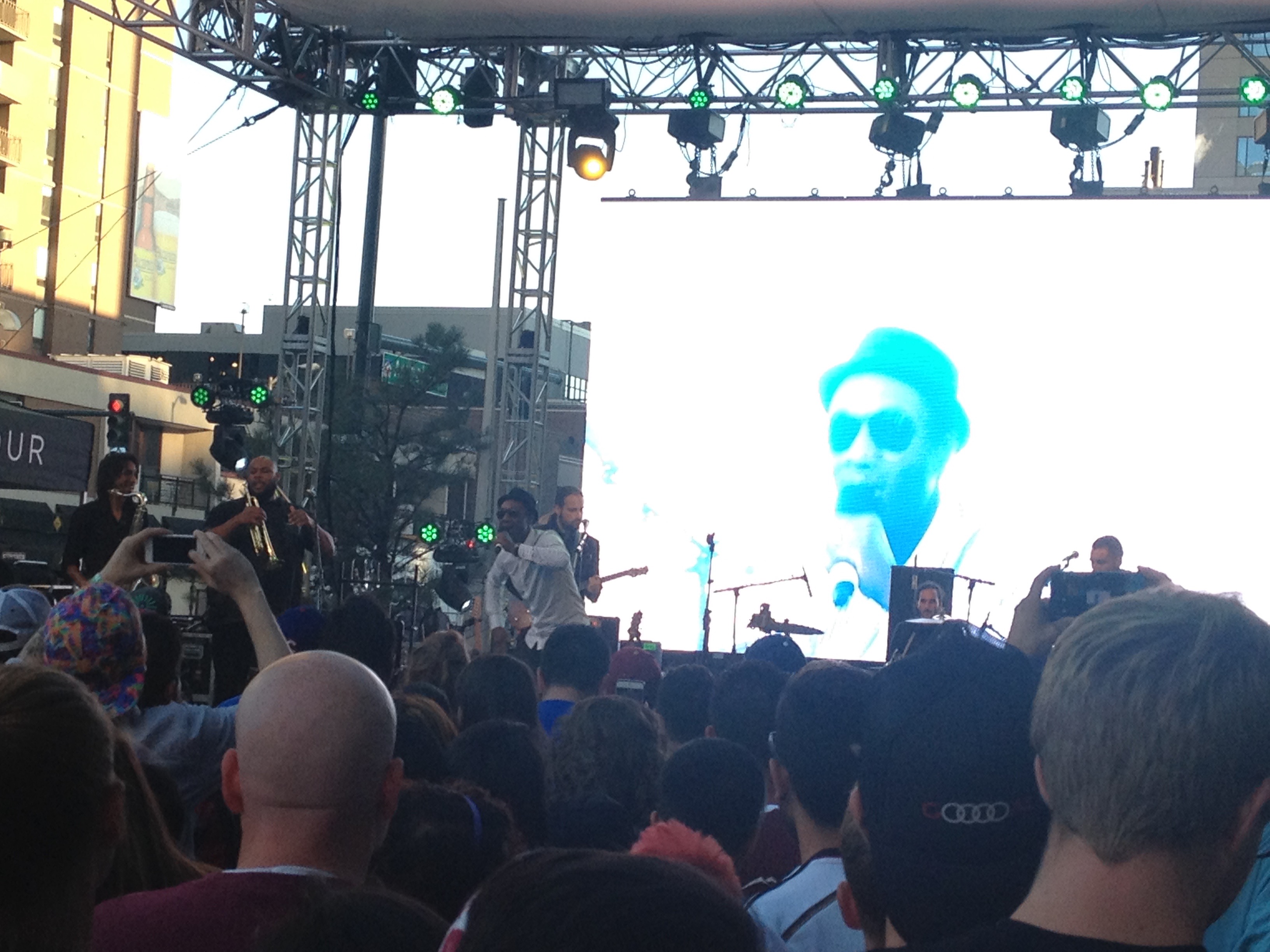
And, it is hard to top a free concert downtown with Aloe Blacc and Capital Cities!

But one does not need to even go to crazy festivals to be interesting and open to new experiences.  At the end of the weekend, I came to the realization that everything I had done this weekend, everything that seemed new and exciting, is something that I can really do whenever I want.  And, I live in a medium-sized city, not New York.

If I want to try a new kind of beer, I can go to a microbrewery I have not been to.  I think there is a new one opening up every weekend somewhere in Metro Denver.

Most cities have some sort of a local music scene, with local bands playing at a bar for a $5 or $10 cover.  In fact, I have had some amazing nights out going to some of these shows!

And, nothing is stopping us from changing the radio station, finding a new channel on Pandora, or asking those around us to expose us to new music that is already out there.

Every day is the opportunity to experience something new.  Taking advantage of more of these opportunities is no guarantee that the next time you meet an attractive stranger, a fun potential friend with an active social circle, or that person with the job opportunity of a lifetime, that that particular person will find you interesting.  But, it does make the odds much more favorable.

Happy Independence Day

IMG_2161

In honor of the holiday today, I decided to write a somewhat different kind of blog than what I usually write.  Typically, as is the case with most travel writing, I visit a specific destination (or multiple destinations), and write about the experience.  Following the lead of some of my favorite travel writing, I also tend to include my thoughts on the place I visited, the experience I had, or the significance of something related to it.

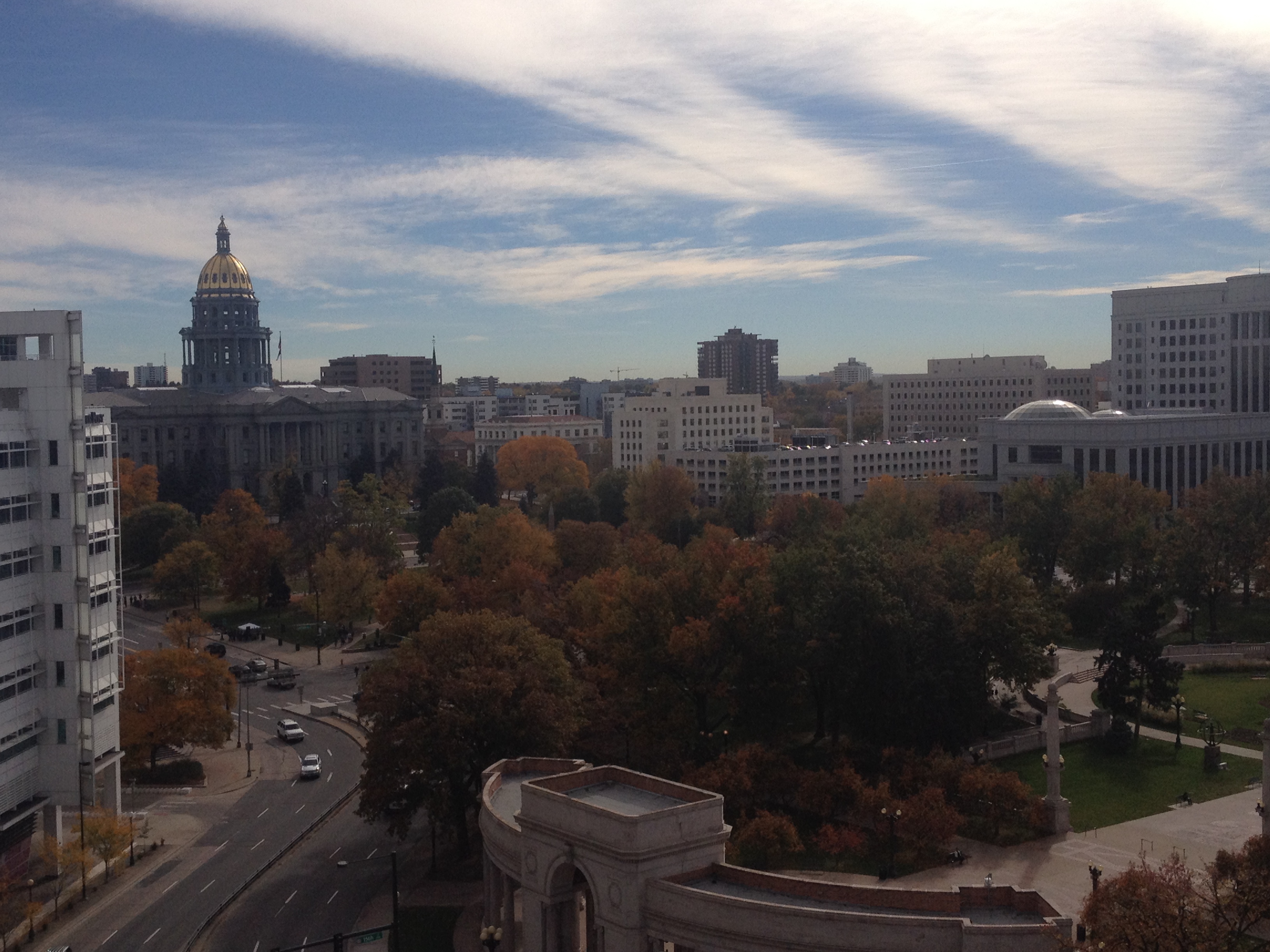
But last night, I traveled all of 12 blocks to Denver’s Civic Center Park to watch the firework show put on by the City of Denver.  Not exactly a major trip- I walked there!  However, just as certain places and experiences can lead to significant pondering and revelations, specific events, especially ones of historical significance like this one, can also lead to similar conclusions.
I found myself pondering what it means to be  an “American” and whether or not this is something I should be proud of.  Over the course of my life I have heard a wide variety of perspectives on this.  Many in this country sincerely believe the USA to be the greatest country in the world.  Some say this based on blind Patriotism, but some say this based on well though out reasoning.  On the other end of the spectrum, we have those that do not place that much pride in their country.  They either believe that taking pride in a specific nation is a silly concept, or are ashamed of this country based on something about it that they find foolish.

I grew up being pretty certain of America’s greatness.  But, that was at a time, the 1980s and 1990s, when it was quite easy to place a lot of faith in the USA.  The new millennium has been a bit rougher for this country.  Since the dawn of the new millennium, we’ve had a more shaky economy, more controversial events and political decisions, and some social movements that have angered people on all sides of the spectrum.  Nearly every American, from every part of the country, from every sociological, economic, political, or ethnic group, and of nearly any personality type, can point to something that the USA has done since 2000 that has made them feel utterly ashamed of our country.

What I realized while watching the fireworks last night, and pondering the anniversary of our Independence today is that while there are some things about our society and our country that are messed up, unfair, and inefficient, in the grand scheme of things, we are still pretty well off, and we are still a truly great country.  Most of us can count on a lot of the basic necessities of life, like clean water.  When we speak our minds, about any issue, we worry about being shunned, or dismissed, rather than being imprisoned or executed by those in power.  Anybody can make their best effort at being anything, and we are all free to associate with whoever we please.  And, while we have a political culture that has become polarized, and verbally vicious, violence between “warring” political factions in the U.S. has been very minimal thus far.

And, we have a variety of different adventures we can pursue right here in the U.S.  The breadth of the travel opportunities is quite possibly our greatest asset.  Within the borders of the United States, you can find everything from the frozen tundra of Alaska to tropical Hawaii.  We have the peaks of Colorado and the Rocky Mountains, as well as the perfectly flat regions of Northern Illinois and Indiana.  From the Grand Canyon in Arizona to Isle Royal National Park in Michigan, many different types of natural scenery can be found right here in the United States.  From the hustle and bustle of New York City to the quiet ranches of Wyoming, every pace of life can be found.  And, nearly every activity, from skiing to sailing can be found in great abundance here.  As a matter of fact, I cannot even keep track of the number of places I would like to visit, the list just keeps on getting longer as I hear about more and more great places.
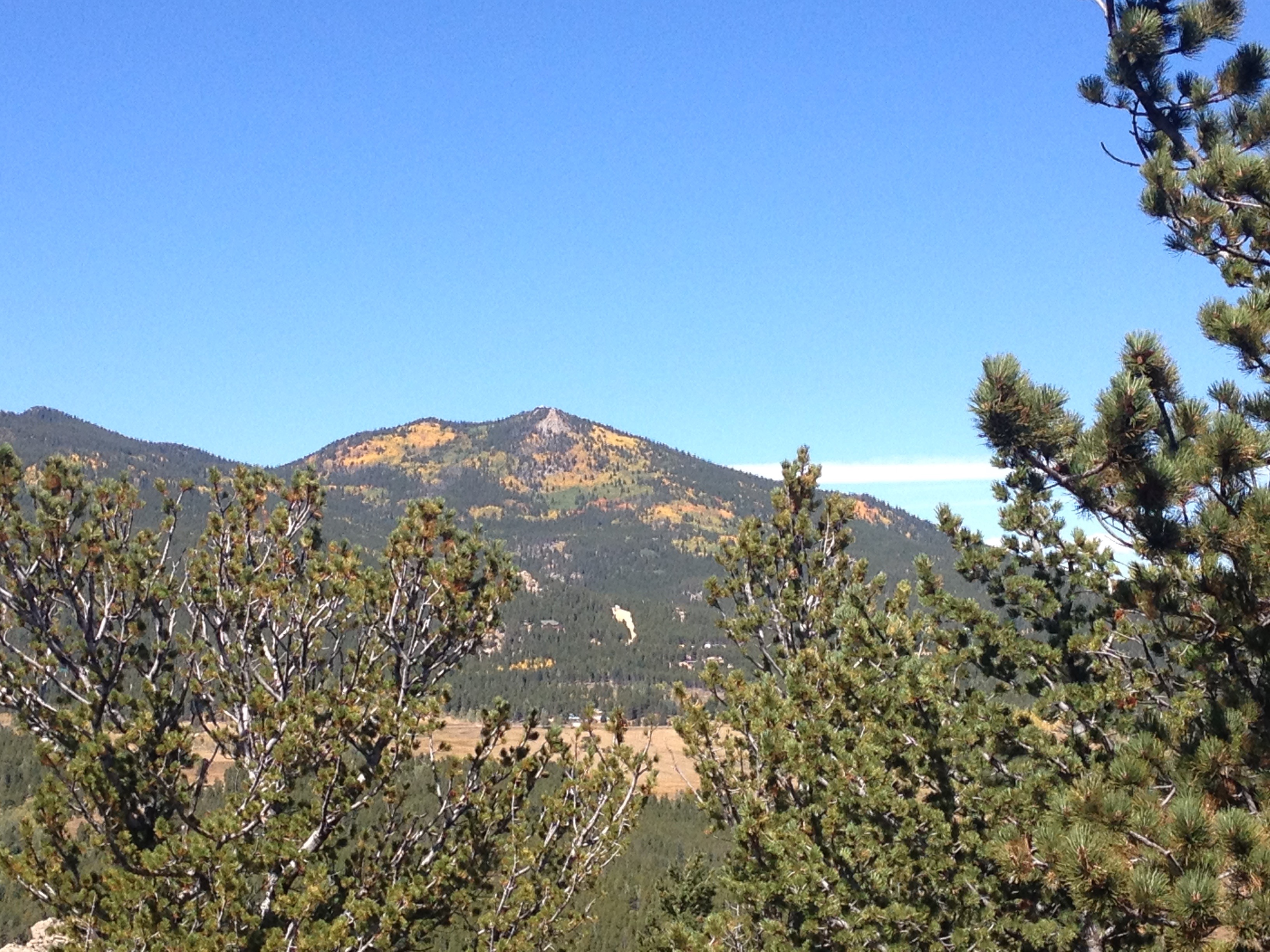
I am not one of those rare people that has absolutely no shame regarding any aspect of my country at this point in time.  Like most of the rest of you, I have a list in my head of things I would love to change.  I undoubtedly count myself amongst the clear majority of Americans that believe this country is on the wrong track.  And, I would genuinely like to see some action taken on certain items to make this a better places to live.  However, on this Fourth of July, I would like to show some appreciation for what we do have, and how fortunate we are to have enjoy the freedom and prosperity that we do enjoy.  And, while I do not believe there are no other great places to live in this world, I am still proud of the one that I call home.