Category Archives: history

The Great Ocean Road Day 2: The Twelve Apostles

IMG_7049

Just like that the weather turned. A couple of hours after the sun went down After our first day on the Great Ocean Road, the wind started howling and the rain started falling. It was weird to be on top of a van while a storm was coming through. At first I was scared that the van would tip over, but I reminded myself of the amount of wind needed to actually do that, at least 85 miles per hour (135 km/hour). As much as I lament the amount of places in the world, particularly at work, where emotions are expected to ignored, it is still great to overcome an irrational fear with knowledge and logic.

I was surprised to awaken and find that I had slept in, until about 8:30 A.M. Given how early I had gone to sleep, due to the sun setting at 5:10 P.M., this meant that I had slept nearly 11 hours! While I had hoped to get an earlier start that day, I could not believe how refreshed I felt. Lately it feels like there are multiple competing theories about sleep, in particular related to whether or not lost sleep can be made up for. Based on my experiences, it feels like it can. The experience reminded me of coming home from college and immediately sleeping 12 hours at my parents house after stressing out about finals and final projects for weeks (as well as living in the dorms). After sleeping 11 hours, for the first time in what feels like years, I did not feel any sleepiness or need for caffeine!

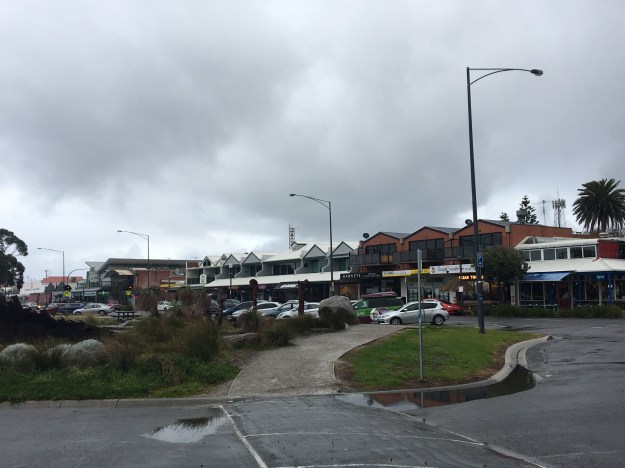
No matter how much people plan, changes in weather create the need for some adjustments. The wind and rain made it feel not exactly pleasant outside. The beaches, as well as some of the walking trails, were empty that day. The town of Apollo Bay is bigger than Torquay and Lorne, and where the Great Ocean Walk, a 104 km trail that leads to the Twelve Apostles, begins.

IMG_7053

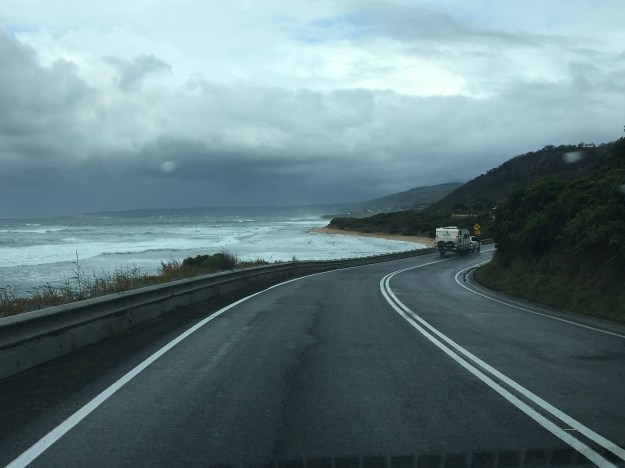
About 3 km West of Apollo Bay, is the first place along the Great Ocean Road, nearly halfway through the drive, deviates from the coastline.

Map of Great Ocean Road

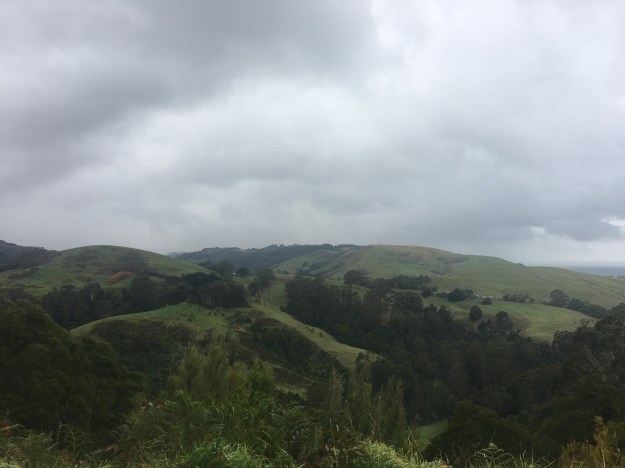
Even here, the ocean is still always kind of in sight, but the inland traverse into the hills provides some variety in the scenery.
IMG_7055.jpg

It is this section of the coast, near Cape Otway, conditions felt at their windiest. Sort of like a peninsula jutting out into the Southern Ocean, the area is often referred to as “shipwreck coast”. 19th Century historical events here include a number of documented shipwrecks, but also the construction of the Cape Otway Lighthouse, Australia’s oldest. This lighthouse established the first connection between mainland Australia and the island of Tasmania, via both shipping routes and telegraph messages.

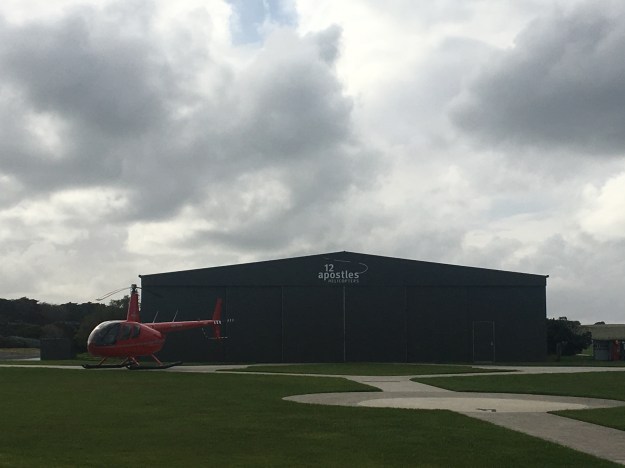
In the afternoon the rain stopped, but the wind continued to howl. The sun even gradually started to return. However, the cold wind straight off the coast would still make it a less than pleasant day for any kind of long walks or hikes. It ended up, however, becoming the perfect conditions for a once in a lifetime experience. A helicopter ride over one of Australia’s most iconic destinations; The Twelve Apostles.

IMG_7071

At AUS $145 ($110 US) per person, the cost of this epic journey is quite reasonable! The ride itself lasts about 15 minutes, and quickly soars over some iconic images, including The Great Ocean Road.

IMG_7072

Of course, the Twelve Apostles.

IMG_7082

And, many of the similar limestone structures further West.

While the helicopter ride provided an arial view of these beautiful oceanside structures, the Gibson Steps, located just a couple of kilometers to the East of the Twelve Apostles, provides a view at beach level.

IMG_7087.jpg

The Gibson Steps are exactly what one would expect, a staircase that leads down from the overlooking cliffs to the beach. Walking down and up the steps requires being outside for only about 10 minutes, so the less than pleasant weather was not too much of a factor.

IMG_7089.jpg

We camped that evening in Port Campbell, a town of barely 600 permanent full time residents with a beautiful beachfront. In the summer, this place is a lot more crowded. In the winter, it was quite empty.

This was the evening that having traveled to the Southern Hemisphere in June messed with my mind the most. Port Campbell in winter has a clasic quiet small town feel. The Main Street bar with a faded neon light outside it. The three block stretch of lit roads surrounded by darkness in all directions. The quiet street with a few people walking around but most inside the restaurants or their own homes.

We are accustomed to the relatively gradual changes in daylight patterns as the seasons progress. Even in periods like April and October, the amount of daylight, at most changes by a couple of minutes each day. Having experienced the daylight expansion in the Northern Hemisphere from April to June, I’d inured to sunset being sometime around 8 P.M. and complete darkness onsetting closer to 9. Being in complete darkness in a quiet small town made 6:30 P.M. feel almost like 10. Without seeing too many people out and about, it is easy to feel like we had arrived at everyone’s bad time.
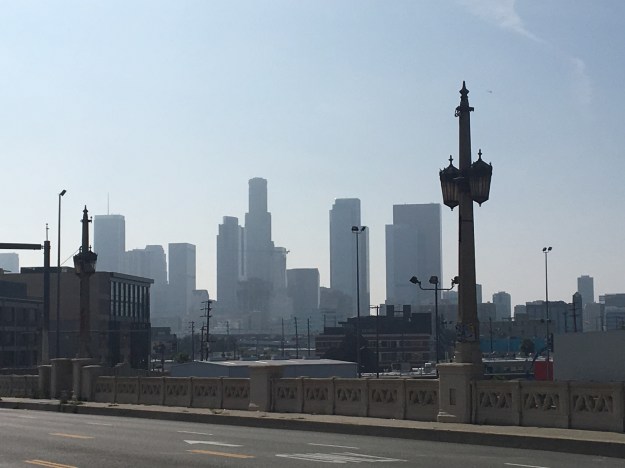
 

Downtown Los Angeles; Where the Recent Past Comes to Life

Los Angeles is something that can be felt as soon as visitors exit the airport. The air has a feeling about it that is distinct from drier inland areas but also distinct from the humid areas of the Eastern United States. It feels like a strange combination of warmth and chill that hints at the relatively cool waters of the Pacific Ocean nearby.

Could this atmosphere be why California’s lifestyle is chill compared to the also densely populated cities along the East Coast? This interesting combination of almost tropical sun and breeze coming off the relatively cooler Pacific Ocean creates a pleasant and relaxing atmosphere that is neither begging its residents to get inside like the cold winters of the Midwest nor suffocating like the combination of heat and humidity characteristic of summers in the Southeast.

Los Angeles is a city that came of age in the 20th Century, more recently than most other large cities in the world. When most people think about the region, images of windy roads and people surfing come to mind. Most don’t think too much about downtown Los Angeles. However, Downtown Los Angeles, as it turns out, is also quite historic, as well as vibrant.

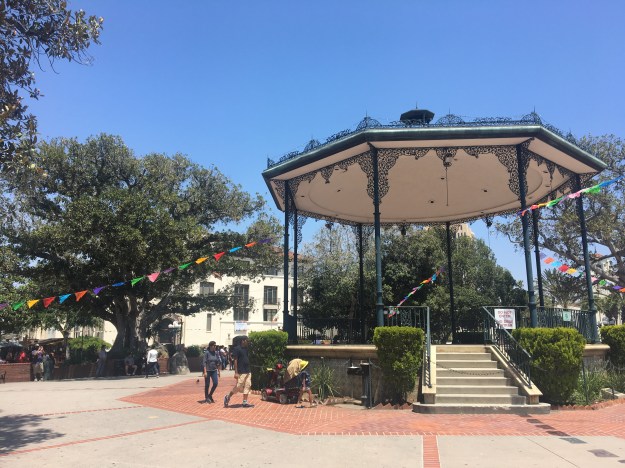
First, there is the Pueblo, just across the Street from Union Station.

On the plaza which surrounds the historic monument, performers periodically perform traditional Native American dances, while Olivera Street is a Mexican themed market. Los Angeles, like everywhere else in North America, was originally inhabited by Native American tribes. It was also part of Mexico before it was conquered in the Mexican-American war in 1848. Markets like Olivera Street can be found in many other cities that were originally part of Mexico, including San Antonio and Albuquerque.

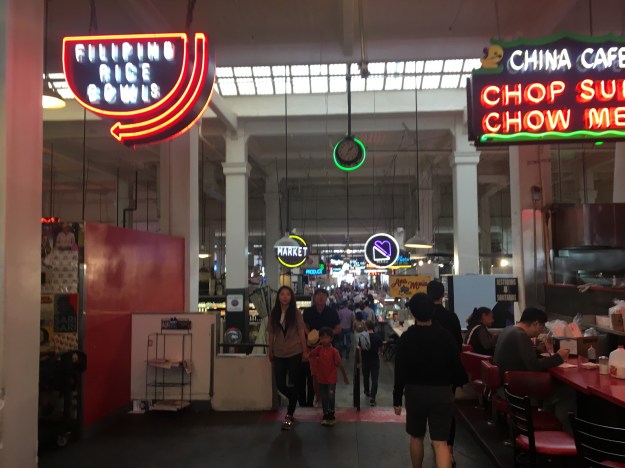
One of the oldest establishments in modern Los Angeles is the Grand Central Market, dating back to 1917. Today, it feels like a testament to the idea of multi-culturalism, which is a key component of the current identity of L.A.

Packed into this area, which covers less than a City block is cuisine from all over the world, from Mexican to Salvadorian, Chinese and Mediterranean. It feels like there aren’t two vendors serving the same nationality of food!

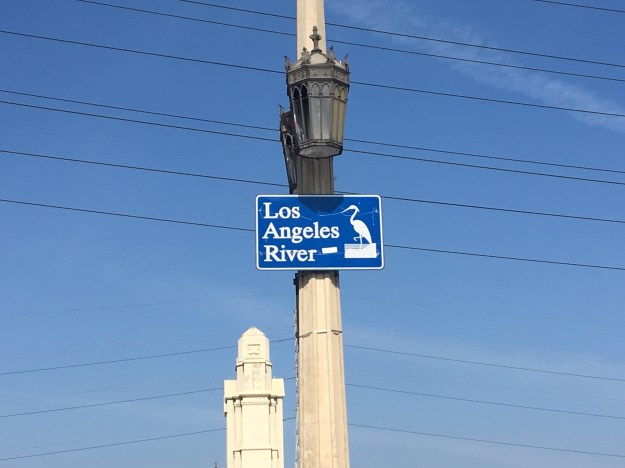
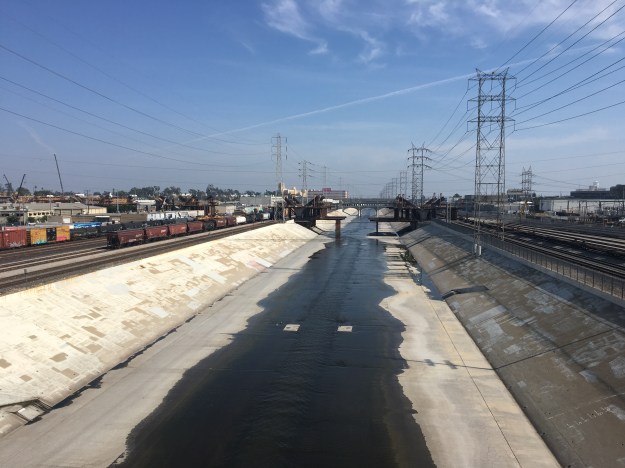
Most people who grew up in the United States have seen at least one movie scene filmed at the Los Angeles River.

Perhaps the most famous one is the car race scene in the movie Grease. This river is typically dry, as had to be the case for the teenagers to race their automobiles on the concrete. However, in springtime, especially in wetter years like this one, it can become filled with running water.

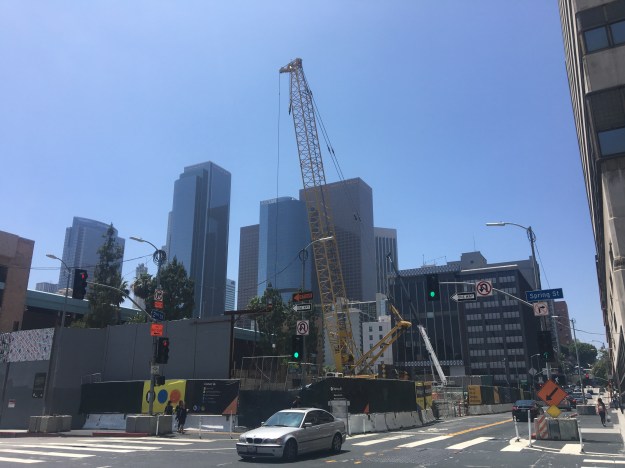
The last quarter of a Century has seen a renewed interest in Urban living which has not completely escaped Los Angeles despite its car-centric past.

Downtown Los Angeles has become a desirable place to live. As is the case in other thriving American cities, development is everywhere. The old stereotype that “nobody walks in L.A.” seems to no longer be true, at least for downtown. The sidewalks here are bustling, although not as much as New York.

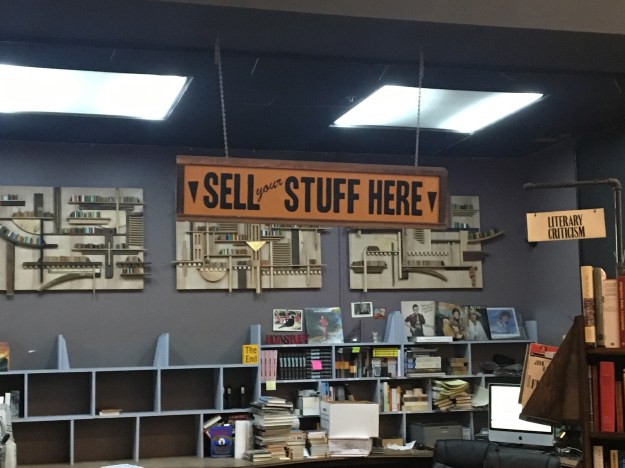
The Last Bookstore, built in 2005, has also become a destination for locals and tourists alike.

Built at a time when people believed bookstores were going to gradually cease to exist (thus its name), it was built to be so much more than a bookstore. Seemingly influenced by the hipster movement at the time, it was built to be a community center with a strong artistic component.

In particular, the upstairs, referred to as the “book labyrinth”, attracts many visitors, many of whom are taking pictures in front of the most interesting artistic displays.

Many of these visitors appear to be “doing it for the ‘Gram”, a quick way of saying that someone’s primary motivation for taking part in a certain activity is to post a picture that is likely going to get a good amount of likes on Instagram. This can easily be spotted because these individuals are always taking photos with their phones and posing in an attention seeking manner (which can manifest in many ways)

The present-day condition of Los Angeles is in some ways like many other cities where renewed interest in urban lifestyle has brought a lot of new energy and life into the central part of town. New, hip neighborhoods have emerged, with places like Urth’s Coffee shop in the Arts district.

Urth’s Coffee Shop feels like the epitome of trendy, selling expensive coffee and healthy food, essentially exactly what young wealthy urban professionals want. It is a part of the Arts district, which is your quintessential Early 21st Century trendy neighborhood.

However, these districts are often still adjacent to, and sometimes mixed in with the remnants of the urban decay that took place about half a century ago. Adjacent to the Arts district are some places that appear less than desirable and include large homeless populations.

Los Angeles is not nearly as obviously historical as Rome, Athens, or Alexandria. However, many often forget that recent history is still history. An event does not have to have occurred too long ago for most people to remember for it to be historically significant in the sense that it had a significant influence on the subsequent progression of the human condition.

Attractions in and near downtown L.A. uncover pieces of our history whose overall significance is something that is still being determined. The Last Bookstore appears to be certainly influenced by the recent hipster movement, and downtown’s other destinations are impacted by recent movements including globalization and gentrification. One day in the future, this will likely be considered just as historic as monuments from centuries past.

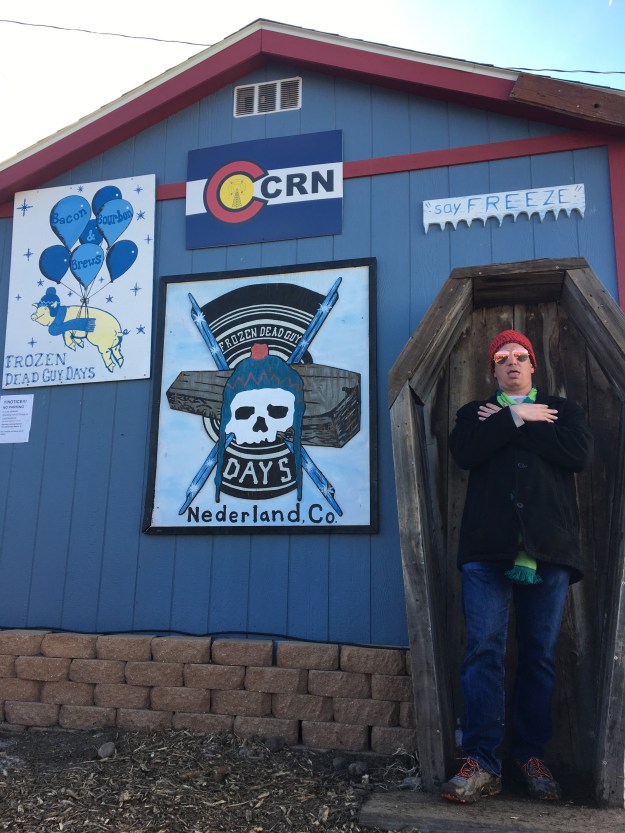
Frozen Dead Guy Days

IMG_5933.jpg

It is perhaps one of the strangest festivals one will ever encounter. In Early March, the town of Nederland, Colorado, situated slightly above 8,200 feet (2500m) in elevation, puts on a festival to celebrate an event or more accurately a series of events, that is bizarre, obscure and optimistic at the same time.
A man names Breto Mortol, who died in 1989, has a family who believes that one day it will be possible to return a well preserved body to life. When he died, his family had his body frozen to preserve it, and shipped from Norway to the United States, where it is preserved in a shed in Nederland, Colorado, awaiting the day when technological advances will start bringing people back from the dead.

The primary event at the festival is the coffin race.

IMG_5930

To commemorate the steps involved in preserving recently deceased bodies, teams of 7 race each other through a muddy obstacle course, with one person laying in the coffin and the other six carrying it. Each team is responsible for making their own coffin. They also dress up in unique costumes with a variety of different themes.

Overall, it is an event like almost nothing else ever encountered.

The festival features some other unique events like polar plunges and frozen T-shirt contests, as well as some more typical festival entertainment like live bands and beer tents. The entirety of the experience creates the kind of mix between the familiar and unfamiliar that make things interesting. After watching the coffin race, I had the desire to attend every unique quirky festival like this I could find.

IMG_5919.jpg

It wasn’t all pleasant though. As it is in the Rocky Mountains in the early part of March, it was both windy and muddy. For some people, depending on tolerance of conditions like these, as well as level of intoxication, weather like this does have the potential to tamper with the level of enjoyment of a festival.

img_7711

Nederland, Colorado is quite a quirky town. It is tucked away in the mountains, but only a 40 minute commute from Boulder. It is often the refuge of people who left Boulder because it was becoming too corporate and mainstream for them. It also attracts people who want to live in the mountains. This creates a quirky yet outdoorsy and individualistic vibe that is into alternative ideas and ways of living. It feels reminiscent of Vermont. From a sociological standpoint, it feels like the ideal setting for a festival celebrating a person who has been cryonically frozen for thirty years in hopes of being brought back to life in the future.

At times, life can be full of work, stress, and trying to protect our status. Sometimes we just need an excuse to party!

IMG_5880.jpg

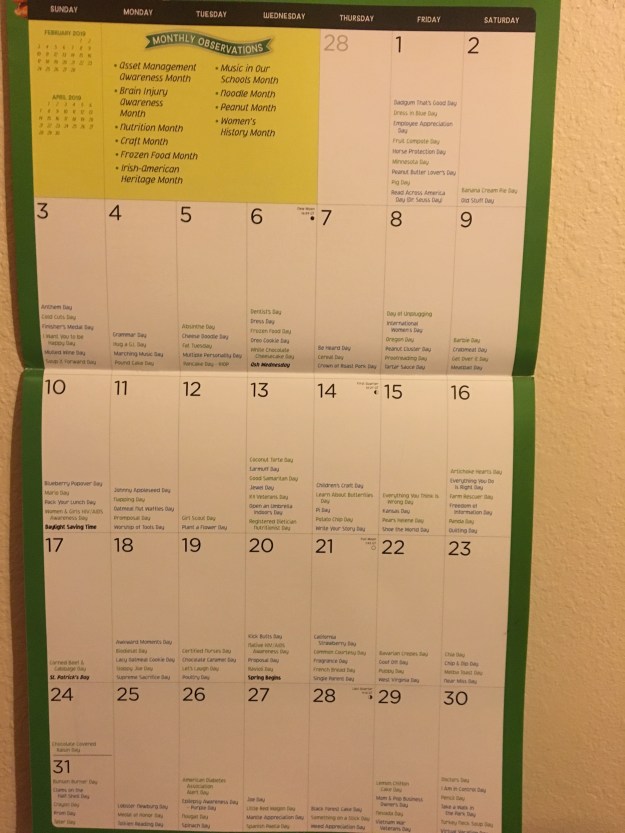
I hang this National Day Calendar not because I believe every day someone declared, such as Open and Umbrella Indoors day needs to be celebrated. However, there are a lot of things in life that deserve to be celebrated but aren’t. We hardly ever take time to celebrate things like friendship, being heard, or some of the simple joys in life like our favorite foods or the people that impact our lives in subtle but important ways.

Uniqueness and optimism, the main tenants of the story behind Frozen Dead Guy Days are certainly worth celebrating. Not everyone’s dream is to one day resuscitate their deceased loved ones (and hope that someone will do the same for them when they die). Some of us may dream of a world where travel is easier, communication is better, or access to food is far easier. All of these dreams require both uniqueness and optimism. Most of the beneficial technological advances we currently enjoy are the result of a person or group of people exhibiting these traits in the past. It is for this reason I will gladly continue to celebrate optimism and the courage to be unique in whatever form it takes.

IMG_0280 (1)

When I Went to Cuba


img_5447

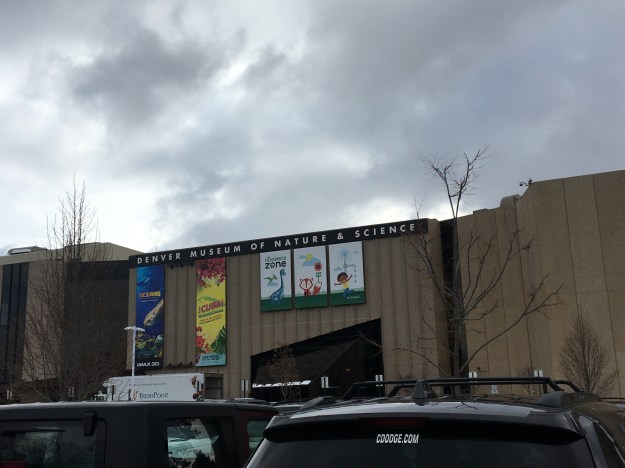
Okay, so it wasn’t Cuba, it was actually an exhibit at Denver’s Museum of Nature and Science.

img_5445

We travel to different cities, regions and countries to experience what we can’t experience at home. Sometimes, however, experiences from other places come to us. This is the case when a new restaurant, serving cuisine from the other side of the world opens, or when the stock show comes into town, parading livestock right through the middle of the city!

It is important for those of us that yearn to travel, share adventures, and learn about other cultures, but do not travel full time for a living, to take advantage of the times when experiences from other places come to us.

IMG_5449.jpg

It is human nature to be fascinated by what is not known. It is why children want to know what is in their parents secret closet, why many are fascinated by ghost stories and conspiracy theories, and why for our entire existence, humanity has speculated as to what exists beyond life and death.

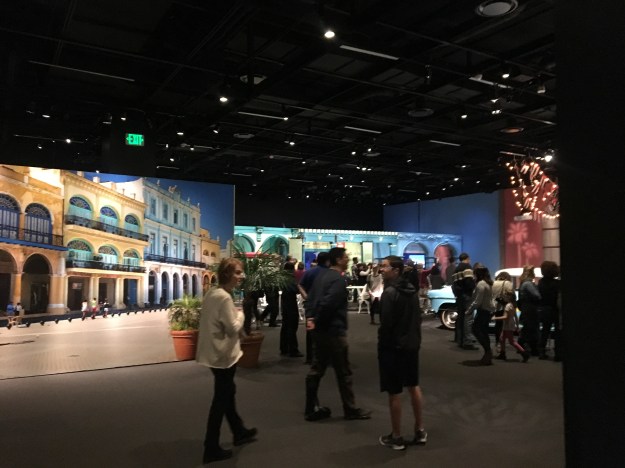
Cuba is one of those places that, to Americans, is somewhat of a mystery. This exhibit brings that mystery to life.

IMG_5451.jpg

The main part of the exhibit is an area that is far more wide open than nearly all other museum exhibits. Cuban music, both traditional and modern are played, and performers jump on and off the stage. It is surrounded by some of the things that Cuba is perhaps best known for culturally; Cars built before the Cuban Embargo went into place in 1962, and outdoor produce markets.

Seeing the culture of a place in this format serves as a reminder that experiencing a place, whether it be a country, a region, or a city, is not just about going to landmarks. It is about the people, the day-to-day life, the music, the art, and traditions. It is hard for me not to feel as if traveling to a destination, and only experiencing the places listed in a travel guide causes many of us to miss out on what makes a place truly unique.

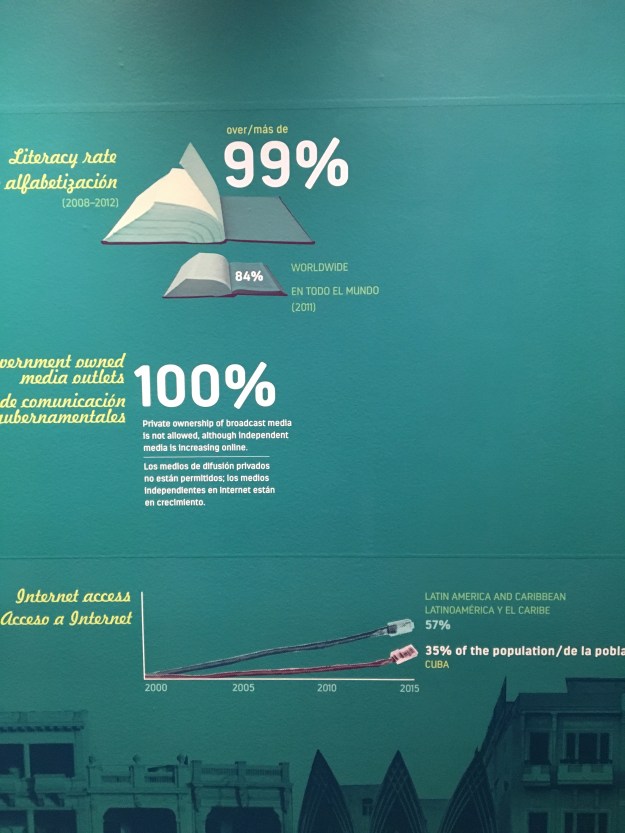
Of course, it is hard to write about Cuba without addressing Communism and relations between the United States and Cuba. As someone who believes that a free market economy is both the most efficient and most just manner in which to organize a society, it would be easy for me to simply dismiss and hate the recent history of Cuba. However, I am also a person who appreciates the complexity of every situation. What I dislike most about our present day political situation is seeing that which is complex and deeply philosophical reduced to catch phrases, jokes, and sometimes mean-spirited tribalism.

I had previously read about the complexity of the factors that lead to the Cuban revolution, and the fact that Fidel Castro did not declare himself communist until a couple of years after he took power. He may have only declared the nation communist to gain protection from the Soviet Union after realizing he would not have good relations with the United States.

Reflecting on this, as well as the U.S. interventions in Cuba prior to Castro’s revolution made me realize that there are two sides to every struggle and every revolution. There is the ideological side, which is often used to drum up support in cases like the Cold War. However, there is also a component of them that are just about power.

IMG_1342

The story of Cuba in the 20th Century is also a demonstration of the danger in tearing down what exists without a clear plan going forward. Many Cuban revolutionaries, and supporters of the revolution, ended up getting something far different than what they had envisioned. Reading about what happened to large segments of humanity in 1177 B.C., and then in 476 A.D., and even some modern day examples of revolts without an end game, the lesson is clear. Yes, we should be striving to make changes. But, it is often better to build on what already exists. If the system must be completely torn down, it is imperitive to have at least a framework for what replaces it.

The results of the Cuban revolution are also often judged differently by different people based on priorities. Cuba is far poorer than us, but in some ways more equitable.

IMG_5450.jpg

They have also managed to preserve nearly a quarter of their land for nature, and protect some species that cannot be found anywhere else in the world.

Additionally, the agricultural practices developed on the Island after the collapse of the Soviet Union caused them to lose access to many pesticides and chemicals significantly improved the health of their coral reefs.

Cuba has endured many changes. An 80-year old Cuban has seen Fulgencio Batista seize power, Castro’s revolution, the U.S. embargo, the collapse of the Soviet Union, and the opening up on the Cuban economy over the past ten years. The exhibit ends with a series of statements made by randomly selected Cubans about the future of their country. Some express hope. Some express caution and resilience. There were even a couple that stated they do not want what we have, described as “excessive consumerism.”

The majority just learned how to just roll with the changes. After all, regardless of who does what in struggles for power, life goes on. The will always be music. There will always be culture. There will always be people with dreams.

IMG_5458.jpg

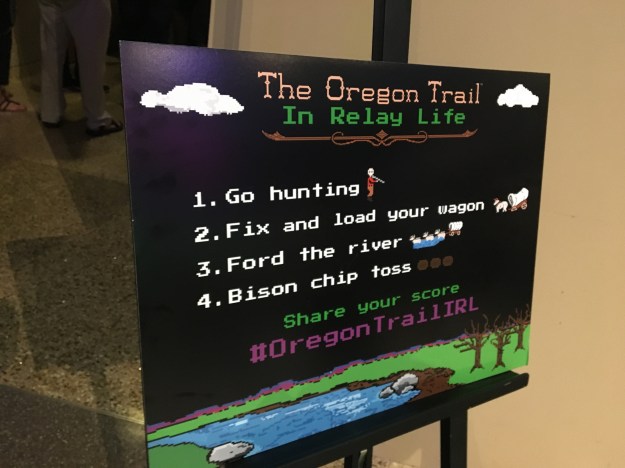
The Oregon Trail IRL

IMG_4783

We all remember playing the game as a kid. There was even a scene in the movie Boyhood, where the main character, Mason, is playing the game at school. Across multiple generations, it seems like nearly everyone, at least in the United States, has an experience playing Oregon Trail sometime between grades 3 and 8.

Strangely, I don’t recall the exact learning purpose. It seems like the game is about American History. However, nothing in the game requires players to remember historical facts. I bet that a lot of people play the game multiple times without even knowing that in the year it is set, 1848, James K. Polk was president and we were finishing up a war with Mexico. The game does seem to teach kids about geography, and some basic life skills like how to survive in the wilderness, plan a trip, and avoid disease.

The Oregon Trail IRL was a one time event, on a Saturday evening, at the History Colorado Center. It is only the third time I’ve ever consumed alcohol inside a museum, and is the kind of hands on event I would like to see more of at museums.

Don’t get me wrong, I do love all kinds of special exhibits, and the History Colorado Center had a great on on baseball at the same time.

IMG_4795.jpg

However, there is something about being able to physically interact with something like the Oregon Trail at a museum. As I had noted before, the permanent exhibits at the History Colorado Center are quite interactive, something I certainly appreciate. The Oregon Trail IRL, a one night event, is quite different a typical museum experience.

Participants took part in real life versions of the activities we all remember doing on the screen; fording a river, hunting, looking for wild fruit, and even fixing tires.


The only disappointment was that I sincerely expected to go to a room where we kill something like 2,400 pounds of bison, but are only able to carry 200 pounds of it back to the wagon. That seemed to always happen in that game.

It had not even occurred to me how much the event was about nostalgia until I entered a room called Ms. Frizzle’s Classroom Crafts.


Popular music from the late 1990s, such as Ricky Martin and Britney Spears were playing. There were old computers, overhead projectors, and everything people of a certain age range would remember about being in school. For a few minutes, I actually got quite emotional, remembering what childhood and being in school was like.

My mind instinctively turned to the good things, the things I wish I had more of in my adult life; Spending most of the day learning about a variety of different topics, and being surrounded by a community of people in the same situation as me (the class). Adulthood can be isolating, and many of us have jobs where we focus on one thing the entire day.

Nostalgia has its place. It is always fun to share fond memories with people. However, nostalgia can also be a trap. We often simplify the past, remembering experiences as only good or only bad, when the truth is far more complicated. I certainly long for the intellectual variety and the community I had during school. However, I would not want to return to an environment with all the social pressure and anxiety, where people are mean to those who do not conform to standards that in now way help anyone achieve success later in life. Like every chapter of our lives, this one had both positive and negative aspects.

Too much nostalgia can also get us too focused on the past. No matter how hard we try, the past cannot be re-created. However, the wisdom of these experience can help us make better futures, or, at the very least put into better context what we want, what we don’t want, what works and what doesn’t. The key is to not spend too much time dwelling on how much we miss our good times or how wronged we felt during our bad times.

At a young age, I recall hearing from a lot of older people that the music of “their era” was better. I started to recognize this as kind of a phenomenon, even though it does not have a name. It felt as if these people were culturally stuck, in a past era, 10, 20, or 30 years ago, however long it had been since their youth.

IMG_3753.jpg

I never wanted that for myself, because it feels like there is a connection between being stuck in the culture of the past, and being unable to adapt to a changing culture. As I get older, I plan to continue to follow whatever is new, culturally, as best as I can. In fact, despite the fond memories of the songs I heard in Ms. Fizzle’s classroom, I also remember that time period having some really bad ones as well. An idealized version of the past, in our heads, can prevent us from living our best lives in the present. Macklemore and Kesha, in their recent hit song Good Old Days, remind us that whatever situation we are currently in, is something we should be able to appreciate. This can’t happen if too much time is spent thinking about the past.


Nebraska Out of the Way Attractions

Smith Falls

IMG_4526

Smith Falls is pretty well hidden from most travelers. It is located in a very sparsely populated section of North Central Nebraska, far away from any heavily traveled interstate highway. It is also in a section of the country where few would expect to see a magnificent waterfall like this one.

Unless you are one of Valentine, Nebraska’s 2,820 residents, getting there is a long drive on empty roads, that even requires four miles on a gravel road off of State Highway 12.

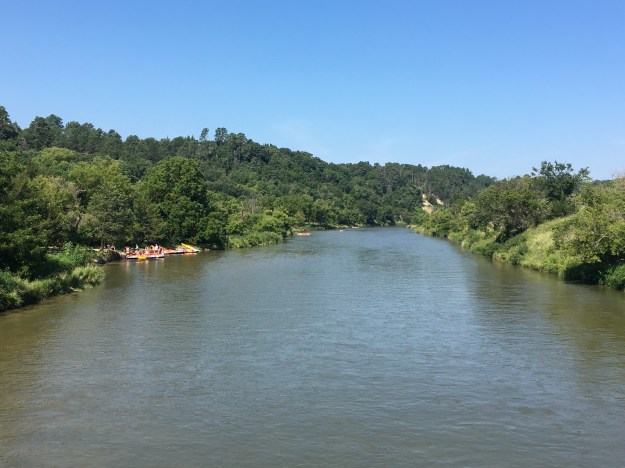
Being so far out of the way of where people live and travel, the Niobrara Canyon, where Smith Falls is located, is quite secluded. The river itself looks nothing like the surrounding areas. The dense tree coverage feels reminiscent of places further East. It feels like the perfect destination for a private group experience; a float trip, family reunion, or some other group bonding experience.

IMG_4521

There does tend to be a few more people at the Falls themselves, as it is the main attraction at the State Park.

IMG_4522

Unlike some trails, visitors can freely walk right into Smith Falls without breaking any kind of rule. Many visitors bring swimsuits, and wear water shoes, as the trail to get from the parking to the falls is not vigorous at all, although it is about half a mile.

IMG_4529

Carhenge

IMG_4542.jpg

Carhenge, just north of Alliance, Nebraska, several hours west of Smith Falls is also quite far from any metropolitan area or heavily traveled highway. This image of an open two-lane highway with nobody else on it, wide open skies and small subtle sand hills in the background sums up the entire three hour drive between Smith Falls and Carhenge.

IMG_4538

While both attractions are out of the way, a few miles outside a small town (Alliance has a population closer to 8,000), in a way they could not be any more different. Smith Falls and the Niobrara Canyon is all about natural beauty, an attraction carved out of a glaciation event that occurred about 17,000 years ago. Carhenge is a homage to all things manmade, a recreation of Stonehenge, a mysterious pre-historic manmade structure, using a more modern human invention, cars.

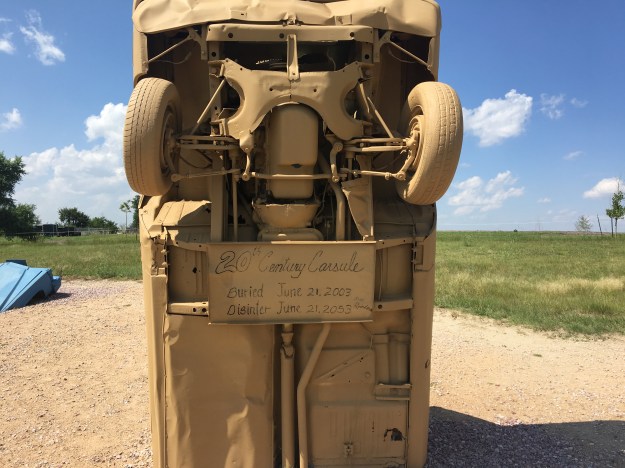
Whereas Smith Falls is serious, Carhenge is has a goofy vibe. There is also more to Carhenge than just rusty old cars arranged like Stonehenge. This one vehicle apparently has a time capsule in it. In the year 2053, someone will open up memories of 2003, the last year before social media. That should be an interesting experience, especially for someone not old enough to remember such a world.

IMG_4544

There is also a car where people can write on.

IMG_4545

A few of these random structures that are made out of car parts, whose relation to the rest of the exhibit is not aparent.

IMG_4547

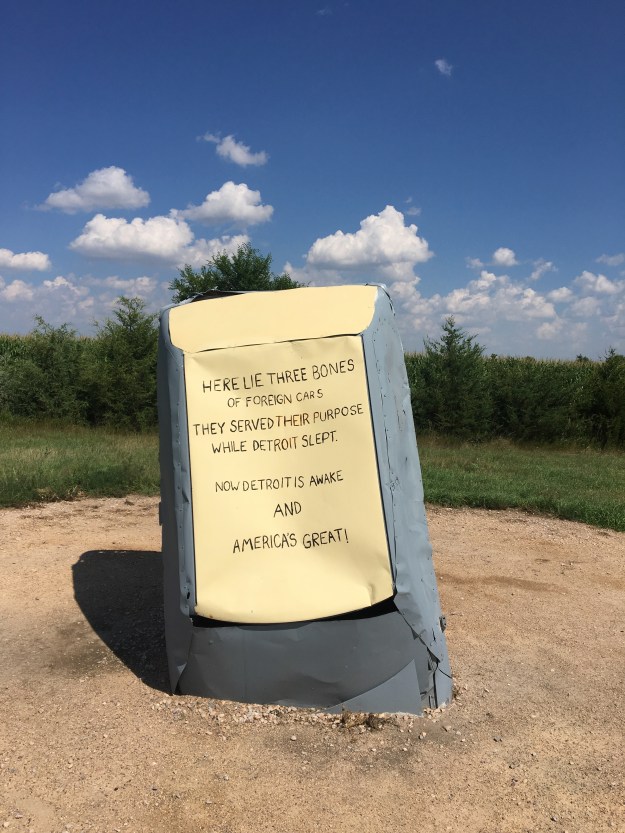
And, a car hood with a vaguely political sounding message on it.

IMG_4548

Chimney Rock

IMG_4562.jpg

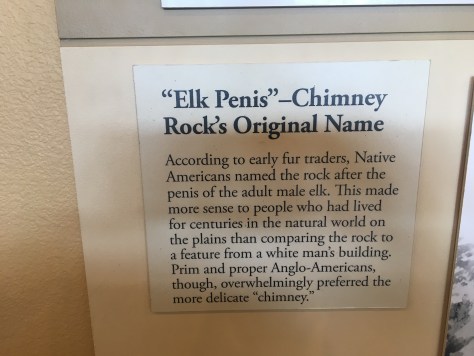
Not too far from Carhenge is an attraction of both natural beauty and historical significance: Chimney Rock.

IMG_4559

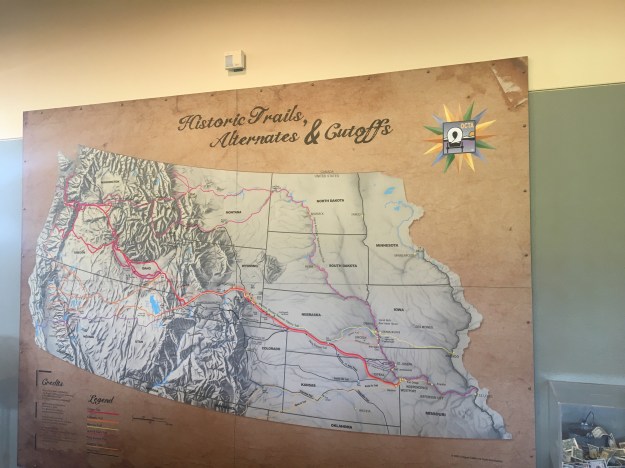
Although this structure served as a landmark for Native Americans and fur trappers, its significance was heightened when South Pass (in Western Wyoming) was discovered to be the easiest passage across the Rocky Mountains. This lead to most major trails, including the famed Oregon Trail, being routed along the North Platte River, passing by Chimney Rock.

IMG_4563.jpg

Chimney Rock is a National Historical Site with a museum containing artifacts, primarily about the pioneers who traveled this route, including journals and letters written by those who made the journey.

It is hard to appreciate in the current era, where anyone with means can get on a plane and fly to some of the most beautiful places on Earth, but when pioneers in the mid-19th Century came across Chimney Rock, they were often in awe of its beauty. Many accounts went to great lengths to describe the structure that is Chimney Rock.

It was also recognized by those making the journey at the time as the point where the flat portion of the journey ended and the uphill part began. The journey ahead would become more rigorous, but also more beautiful.

IMG_4567.jpg

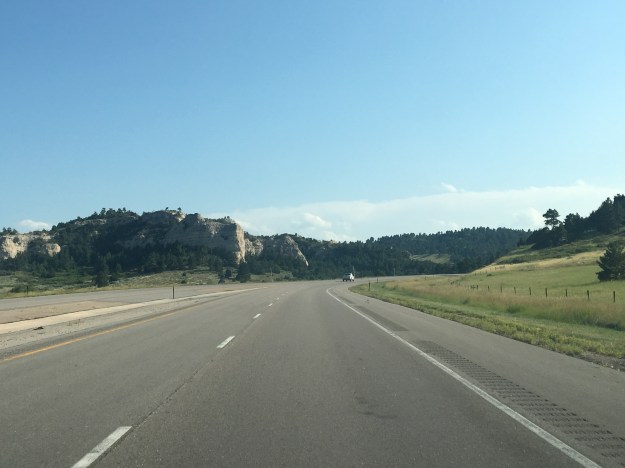
Nebraska is not always known as a place with a lot of natural beauty. However, it is not without its places to be appreciated. The truth is that beauty can be found pretty much anywhere, because, it is often not a specific place or a specific person. It is often an experience. A major part of the travel experience is driving. Nebraska offers open roads that pass by subtle features like the sand hills or the rock features further west. The key is to go a little bit out of the way, and to notice, be looking for what is around you. Then, with the right music on in the right vehicle (I personally found both classic rock and EDM to match this situation, you may find something different), the experience becomes a thing of beauty itself.

The Akta Lakota Museum and Cultural Center

IMG_4497

If you are anything like me, on a lengthy road trip, you are always looking for interesting places to stop. Stopping, for an hour or two, or for a night, breaks up the monotony of being in a car,  often on the highway, for many hours in a row. It also helps me take advantage of being where I am, and seeing interesting things I would not have been able to see had I flown. Depending on timing, the Akta Lakota Museum and Cultural Center, in Chamberlin, South Dakota is quite possibly one of the most interesting places to stop and check out on a drive across the state.

Chamberlin is already a welcome break to what can be a monotonous drive. Where I-90 crosses the Missouri river, and interestingly enough close to where explorers Lewis and Clark had one of their more confrontational encounters, the bluffs of the Missouri River contrast with the flat open grassland that stretches about 200 miles in either direction.

IMG_4489.jpg

The museum itself is unique as it tells the story of the Western United States from the point of view of the Native Americans, specifically the Sioux Nation.

IMG_4491

Most other museums about Western history, mention the Native Americans. However, in nearly all cases, the story is told primary from our point of view.

A lot of these museums cover the fir trade and the Lewis and Clark expedition. Some even talk of the Native Americans quite fondly and empathetically, like this statue, named Dignity, also in Chamberlin. It is accompanied by a museum that focuses on the South Dakota portion of Lewis and Clark’s mission.

The Akta Lakota Museum and Cultural Center, by contrast, tells the story of the region from the point of view of the Native Americans. It starts with life before European settlement. One of the first exhibits is an artistic depiction of what life was like across South Dakota before Lewis and Clark, and many of the fir traders had arrived.

IMG_4492.jpg

This depiction of life in South Dakota is quite easy to get immersed in. For a few minutes, I felt the way they felt, like I was living the life they lived. It is felt almost like the feeling people get when they truly feel a immersed in a movie or T.V. show and become emotionally attached to one or more of the characters. The people in this mural felt like my friends and family.

It made wish that I cared more, in the grand scheme of things, about the fact that the land they once occupied had been taken from them. Sure, change is inevitable, and given technological progress throughout the world, it is hard to imagine a scenario where South Dakota still looks exactly like this artist rendition today. However, there was a lot of misfortune brought upon these tribes.

This first part of the museum covers the culture of the Sioux. One thing I realized is that, the Sioux, being the group we interacted with most frequently in more recent years, likely created the caricature of Native Americans most of us live with today. The caricature of Native Americans are people who were at one with nature, in a way today’s hard core environmentalists can only dream of. They capture buffalo and use every last piece of it, giving the earth thanks for their bounty.

While this seems to be true of the Sioux Nations that Lewis and Clark encountered, and were among the last holdouts in the “Indian Wars” of the late 19th Century, it was not necessarily true of all Native Americans across the continent. Some tribes even exhausted their natural resources to the point of having to relocate.

What is astounding is how a culture can be so similar yet so different at the same time.

IMG_4494.jpg

Unlike in our culture, the Sioux place little emphasis on negative reinforcement or heavy-handed parenting. It seems as though positive reinforcement, likely mixed with a bit of peer pressure, generally brought children towards the right path. The general culture is interesting in the context of today’s current cultural divide. They saw children as a common tribal/communal responsibility, but also placed boys and girls on separate paths from a very young age; something both sides can agree with.

The museum then goes on to tell the story of the Sioux after European settlement. This story, oddly, starts out hopeful, which can be inferred from the diaries of Lewis and Clark. First, Spanish settlers brought with them horses, making travel faster. Later, British, French and Americans brought trade and all sorts of new supplies that made their lives easier. They became wealthier too.

IMG_4495.jpg

Unfortunately, they also brought disease. One aspect of the story of “How the West Was Won” that is rarely talked about extensively is how much of a role disease played in changing the North American continent for good. With the horses, guns, and new medicines, Europeans also brought diseases that Native Americans had no immunity to. These diseases would unleash plague after plague upon tribes throughout the 19th century, reducing their numbers. By the time the “Indian Wars” would occur, their numbers were reduced to the point that the outcome, victory for the United States, was all but inevitable.

What had started out as an interesting new development with opportunities had turned into a nightmare. The final part of the museum covers the next, equally depressing chapter in the story of the Sioux. For most of the later 19th and early 20th Centuries, the U.S. government would sign treaties, establishing bounders with Native American tribes, only to break them anytime gold, or anything else of value was found on their land. The end result was today’s geographical distribution of Reservations, which covers only about 3% of the land area in the United States.

At this point, I am not sure what I can do about this terrible turn of events. It is hard for me to accept too much guilt for it, as I was born in 1980s New York, a time and a place where all this had already occurred. “My people”, if I can call it that, had happened to already successfully assimilate into the Nation that is responsible for much of the devastation brought upon the Native Americans. I was born into this country, and that is all I really know. Going somewhere else would be foreign to me.

I imagine a scenario where all this never happened, an alternate history, where Native Americans still control the North American continent. Rather than being born in the United States, I would have been born in Italy, spoken Italian and lived Italian culture. Still, in this case, there would likely be some story about how the Romans conquered the Etruscans.
At some point, it becomes necessary, in my opinion, to say that all I can really do is be mindful of history, live the life I know how to live in the place I was born into, for my own happiness, and try to look for a solution going forwards. Unfortunately, I do not have that solution, otherwise, I would probably be doing something else at this moment in time.


North Dakota’s Role in the History of the West

IMG_4296

In my childhood, I never knew what to think of North Dakota. Like most people living in metropolitan areas, I never gave the place much thought. I do recall hearing, at some point in the late 1990s, that North Dakota was the least visited state in the country. However, a more recently published list indicates that the state sees far more visitors now due to the recent oil boom. Apparently, Alaska, the hardest state to get to, is now the least visited state in the country, which makes sense.

My ideas about North Dakota were just kind of hazy. I’d wonder if the culture was just like that South Dakota and Nebraska. Or, if the proximity to Minnesota or Canada made it kind of different.

IMG_4316.jpg

A drive across North Dakota along Interstate 94 will confirm what most people think. It is a Great Plains State with a Great Plains feel. If anything, there are even less trees and fewer towns than the rest of the Great Plains.

However, there are some surprising encounters, with both natural beauty and history to be found, without going more than a mile off the Interstate.

IMG_4305

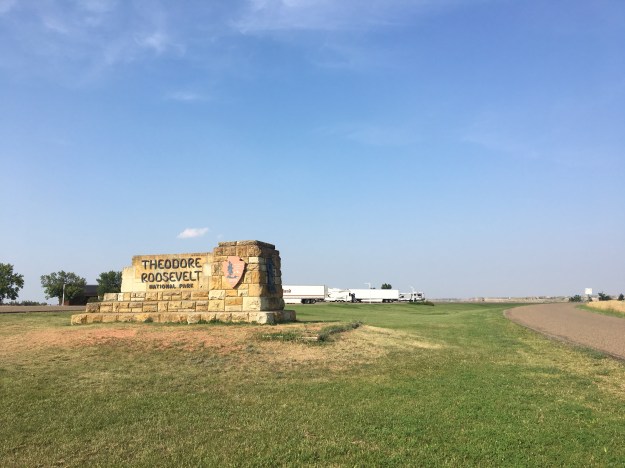
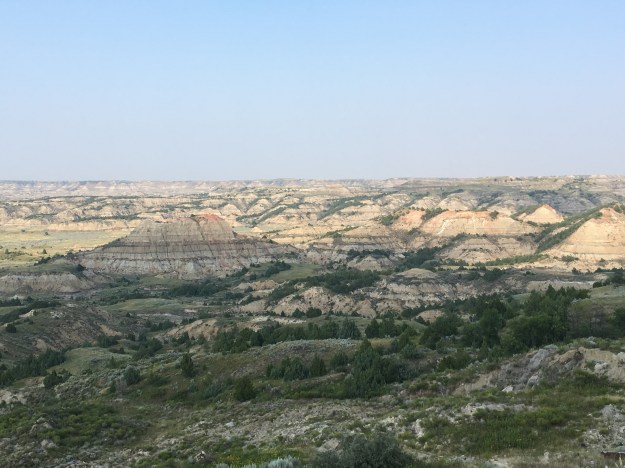
One of the most amazing parts of Theodore Roosevelt National Park, the Painted Canyon,  can be viewed just by going to a rest stop right off the highway.

IMG_4309

This is pretty amazing, considering that adjacent to the park in all directions is nothing but endless wide open prairie.

Theodore Roosevelt National Park’s significance to the history of the west is, as expected, related to the president the park was named after. Theodore Roosevelt first encountered this land on a train trip to Montana. He fell in love with the wide open spaces, colorful valley, and quiet seclusion the area offered. He would later buy a ranch here, and it is said that experiences like these influenced the conservationist policies he would pursue as president, including a major expansion of the National Park System.

Halfway across the State, I encountered another scenic area, or, at least the sign indicated it as such.

In both North and South Dakota, the Missouri River Valley, and the surrounding bluffs provide some variance in what is otherwise a fairly homogenous drive.

IMG_4326

This river crossing is also where explorers Lewis and Clark met Sakakawea, a 17-year-old Native American who would play an important role in helping the explorers complete their journey. The Shoshone were the predominant tribe in areas of what is now Idaho and Montana, where Lewis and Clark were headed to cross the Rockies. Sakakawea, a Shoshone who was captured by the Hidasta tribe and brought to present-day North Dakota, had the language experience Lewis and Clark needed for much of the remainder of the journey. She was even reunited with her brother, who turned out to be one of the tribe chiefs Lewis and Clark needed to trade with.

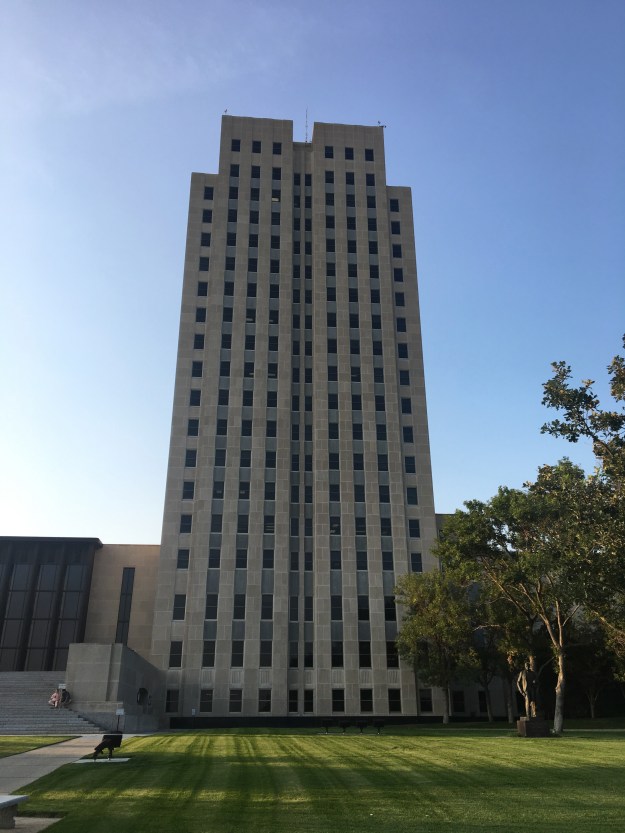
It was here in Bismarck I encountered a sizable North Dakota town, as well as a State Capitol building with a very unique shape.

IMG_4334.jpg

I was not sure how to feel. As I prepared to interact with people, my mind wandered to every pre-concieved notion I had about North Dakota. I wondered what people here do on a day-to-day basis. I wondered if, despite the fact that it was only the second day of August, people who live here are already dreading the winter to come.

I overheard some conversations from people who sounded like they were locals. What I heard was not complaints about excessive boredom, fear about a sub-zero temperatures four months in the future, or some foreign sounding discussion about fracking I cannot follow. I heard people with a lot of the same concerns I often have: How to help that one friend or family member going through some hard times. People’s concerns over changes being made at their workplace. Health concerns and other day-to-day topics that are common amongst almost all the people of all the world.

I thought to myself “Have I become this disconnected from really?” Do I now struggle to relate to people when they aren’t discussing some major global issue, an invention at a setting like start-up week or some grand adventure?

IMG_3395.jpg

Even in the most innovative cities in the world, more people would prefer to discuss their day than a diagram like this one.

It would be easy for anyone to say that, right now, North Dakota’s only really significance is in the world of energy production. However, that would be ignorant to history. For, if it weren’t for Lewis and Clark meeting a friendly tribe to camp with for the winter (Fort Mandan), and get the help they needed from Sakakawea, it may have taken several more decades for the West to be opened up. And, if it weren’t for a young future president finding picturesque Badlands he desperately wanted to preserve, the National Park system, which has a much larger presence in the West than the East, could look significantly different than it does right now.

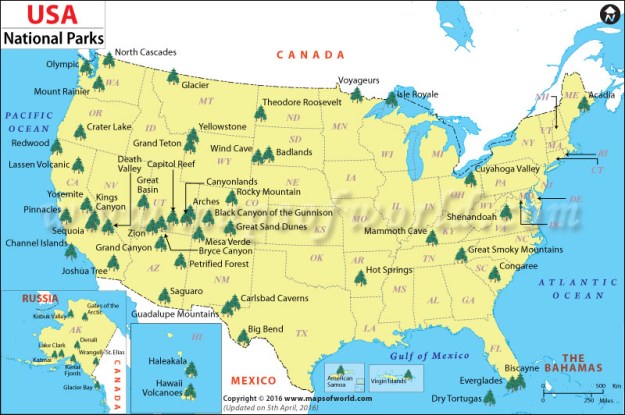
usa-national-park-map

What occurred to me as I continued Eastward from Bismarck was that, whether the number of annual visitors is closer to 2 or 20 Million, most North Dakotans probably do not care about the relatively small number of annual visitors. It reminds me of some of the people I interact with in Colorado that were born there decades ago. Many of them actually did not want this gigantic influx of people and visitors that fundamentally transformed the state. Many of them just wanted to enjoy their state the way it was, and that is what North Dakotans get to do.

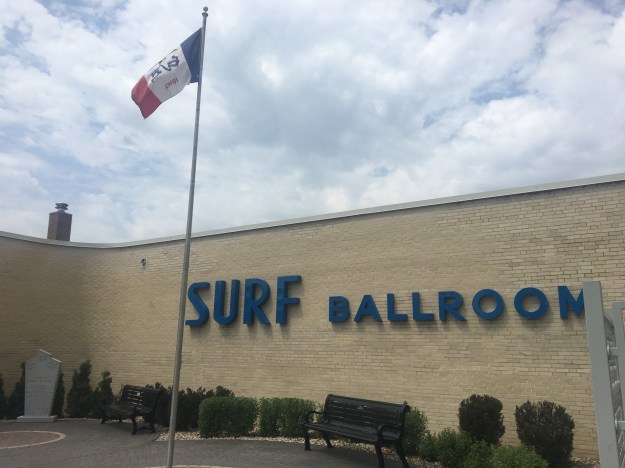
The Surf Ballroom; A little bit of History in Iowa

IMG_3613

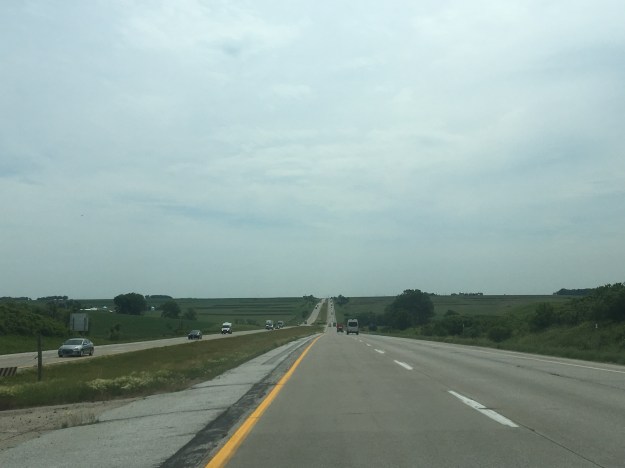
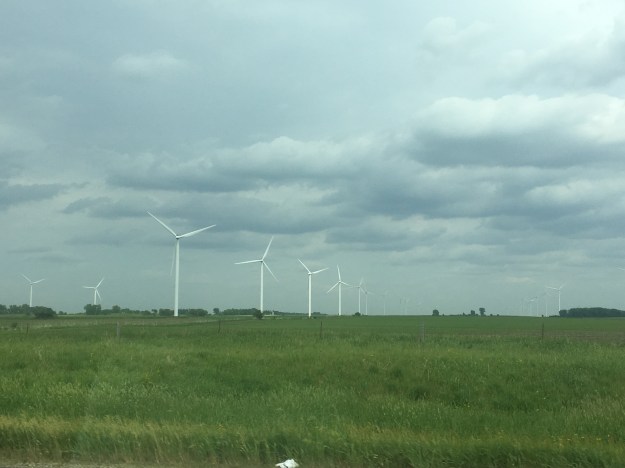
When one thinks of Iowa, a specific image comes to mind: One of soft rolling hills, and farms as far as the eye can see in all directions, where the sky can sometimes take on a characteristically midwestern form of murky thin cloudiness, giving a feeling that is neither cloudy nor sunny. Traveling across the state, this scene shifts quite little as the miles go by. The scenery is as steady and reliable as the culture.

Some people have a deep appreciation for the role that this corridor plays in agriculture and transportation, as indicated by this wall art at the Worlds Largest Truck Stop.

IMG_3719.jpg

Others find it monotonous and unbearable. People have even written parodies about how uninteresting and unpleasant a drive across Iowa is. However, as is the case with most places, there is more to it than what one will see from an interstate highway, whose primary purpose is to provide the most efficient route between cities for trucks.

Tucked away among the endless miles of corn fields are a surprising number of lakes that cannot be seen from the interstate.

20130605-204854.jpg

As well as the sites of a surprising amount of our history.

Most music fans are familiar with “The Day the Music Died“, February 3, 1959, when three of Rock and Roll’s biggest stars were all killed in a tragic plane crash. It was an event that nearly torpedoed the still young music genre’s rise to the top. It had the potential to significantly change the path music took for the remainder of the 20th Century, which could have had a major effect on the social and political movements that transformed our society from the middle of the century to where it is today.

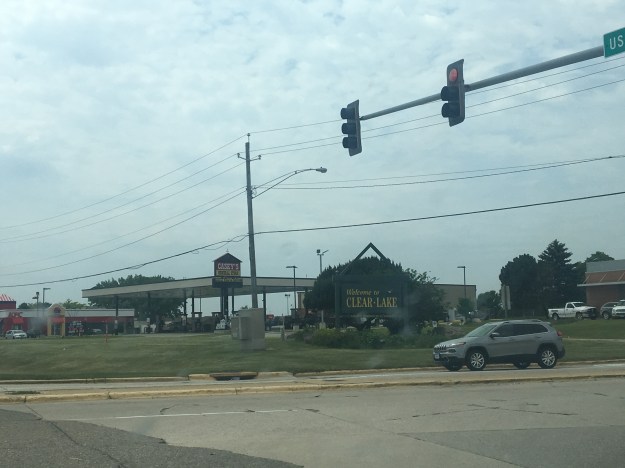
What few people know, though, is that all of this occurred in Northern Iowa, in a town called Clear Lake. Clear Lake is a town not unlike many other towns in Iowa, and the structure and establishments feel generally like anywhere in the Midwest.

IMG_3615

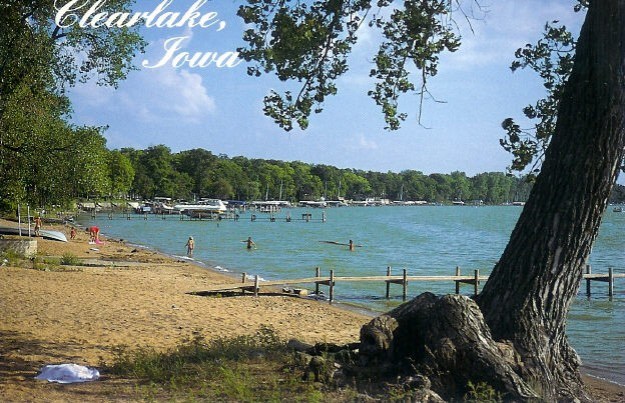
Like many place in Iowa, it has a surprisingly beautiful lake, depicted at its best by this postcard.

ClearLake_Iowa

It is also home to the Surf Ballroom, the last place anyone would ever hear the three stars of early rock and roll on the night of February 2, 1959.

IMG_3618

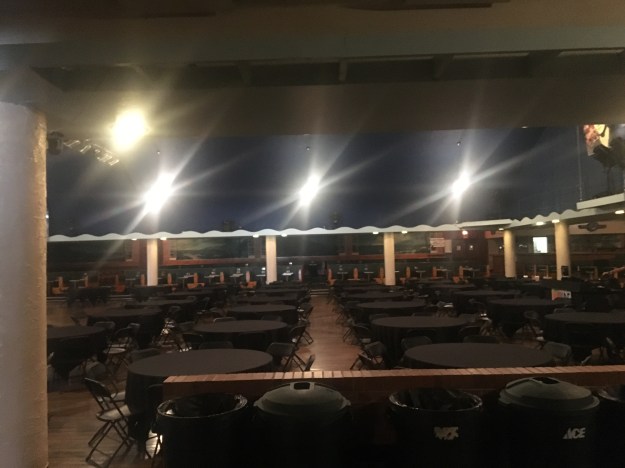
Why they chose to play at this spot, on this date, feels both natural and confusing at the same time.
IMG_3620

Perhaps because it is well preserved in its 1950s form, the venue itself feels like the exact place one would expect to hear Buddy Holly, Ritchie Valley, and the Big Bopper. It was also likely the right size, given the types of crowds that a music genre that was hot, but not quite mainstream would attract at that time in history.

IMG_3626

With traveling being a little more difficult than today, as the interstate highway system was just being built and flying was more likely to be prohibitively expensive, it seems logical for tours to come to smaller towns. Today, it would be more likely for musical acts to have tours that cover larger distances, such as a North American tour. Fans in Clear Lake would be expected to come to Des Moines or Minneapolis to see a show. Then, it was harder on both the band and the fans. However, I still wonder, why Iowa, and why in winter? Inclement weather is one of the reasons for the plane crash.

Another is how the tour, labelled the 1959 Winter Dance Party Tour, was planned, as indicated by this display.

1959DanceParty_TripAdvisor

They toured by bus. So, having a tour date in Kenosha right after Milwaukee makes logistical sense. After that, the schedule had them meandering all over the place. These dates were all back-to-back. The show at the Surf Ballroom came at a particularly grueling time, having played in Green Bay, WI the night before, and having a show scheduled in Morehead, MN the next day. Frustrated, Buddy Holly chartered a plane to the next show- the plane that would kill the three performers. One could say that February 3rd was the “Day the Music Died”, but it was a combination of poor planning and a harsh Midwestern winter that killed it.

However, as anyone reading this in the 21st Century knows quite well, the music didn’t really die that day. A few years later, rock music would be infused with fresh life, in the form of new bands that would later be counted amongst the best of all time. The Surf Ballroom also refused to let the music die. They continued to host musical performances of all kinds, and still do to this day. They have hosted some of the all time greats.

IMG_3624

It probably helped that the venue itself did a good job of finding the right balance, between preserving this key moment in history…


While also staying in the here and now.

IMG_3628.jpg

Road trips are certainly more appealing when they involve more than just traveling from one destination to another, but rather, leave time to explore some of the places in between. Every place that exists, big or small, new or old, has a story to tell. The story of one small town, one of many, tucked away behind the interstate by one of Iowa’s gentle rolling hills, certainly ignites the desire to explore more, eagerly anticipating what is around the next corner, over the next hill, just beyond the horizon.

Colorado Continues to Surprise Me

IMG_3189

Life, at times, can be trying, with a lot of ups and downs, surprises, and endeavors that do not go as planned. Of course, not all surprises are bad. Sometimes luck is on our side, and many of us unfortunately fail to truly appreciate when it is. However, we all certainly have times when we are just on the wrong side of circumstance, and feel like nothing is going right.

When doing what feels like all the right things repeatedly fails to produce any results. When it feels like all sorts of people trying to take advantage of us. When the wrong, most inept and mean spirited people seem to be getting ahead, while those that don’t deserve it are suffering. And, perhaps the most frustrating of all, when no logical explanation can be found as to why nothing is going the way it should be!

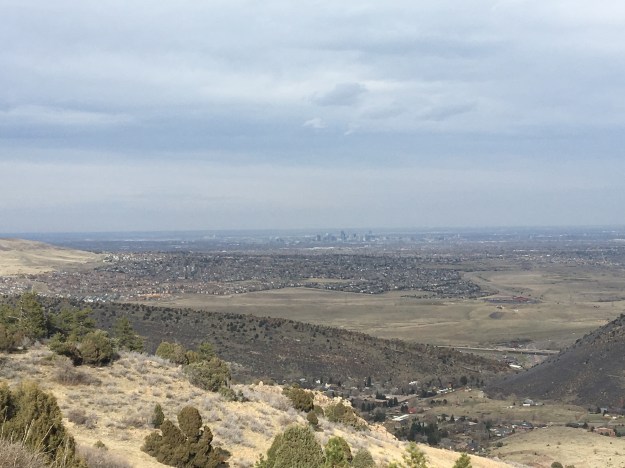
At these times, it is helpful to get a little distance between oneself and whatever situation is causing stress.  It provides a bit of much needed emotional rest, and taking a step back, and looking at a situation from afar, or from a different perspective, can often produce clarity.

IMG_3182

In one of those situations myself, I decided to head to Mount Falcon Park.

IMG_3178.jpg

Mount Falcon Park is only about a 40 minute drive from downtown Denver, near a smaller town called Morrison. Traveling to fun and sometimes far away destinations is very important to me. However, it is also important to remember that taking a little bit of time to step away from a frustrating situation to gain a new perspective doesn’t require traveling great distances, and does not have to wait until a major trip is feasible. For most people, there is a place, a retreat of sorts, somewhere relatively close. A place that is possible to just pick up and go to on a whim, as opposed to having to plan ahead, save money and travel significant distances.

Of course, one thing that always needs to be accounted for is the weather. April can be a very volatile time in a lot of places. Here in Colorado, it is quite common to have snowfall one day, and warm pleasant weather the next. There is no way to around having to think about the weather, and if a retreat involves an outdoor experience, it can be delayed by the weather.

The hike itself is fairly straightforward. It felt good to be exercising the body and walking through the dense pine trees that one encounters here in Colorado when they reach elevations above about 6500 feet.

IMG_3193.jpg

The main trail a the park is called the Castle Trail. Originating at the trailhead, near 6200 feet in elevation, it winds most of the 3 mile trip, up to the peak of Mount Falcon, at 7851′. Trying to get my mind off of disappointments related to day-to-day life, I thought nothing of the fact that this trail was called the Castle Trail. After all, trail names don’t always translate into real life experiences. I recall backpacking two summers ago along a trail called Rincon La Vaca. I did not see a single cow (vaca = cow)!

First, I was surprised to see a sheltered picnic area.

IMG_3183.jpg

This isn’t something typically encountered close to the top of a front range day-hike.

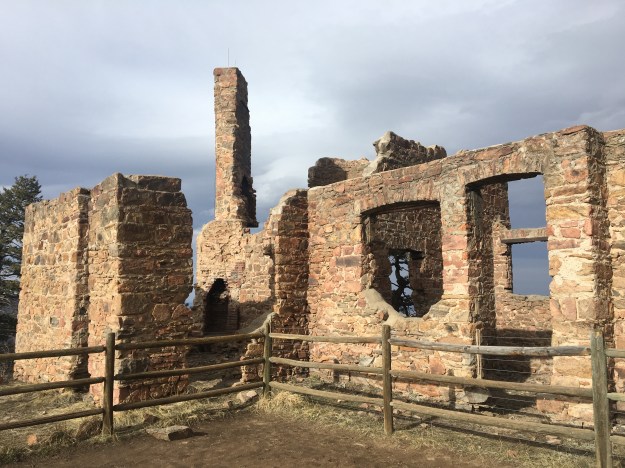
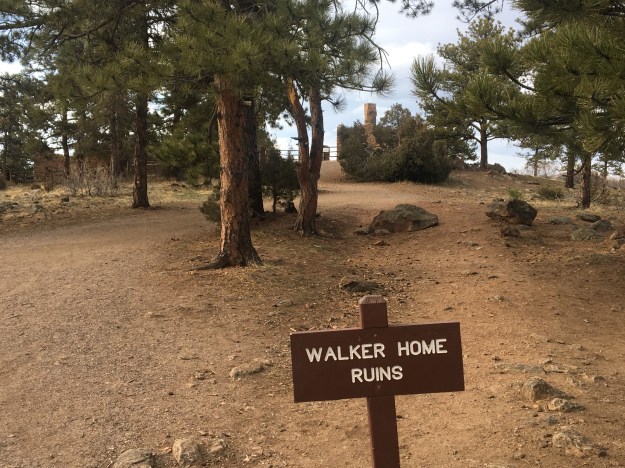
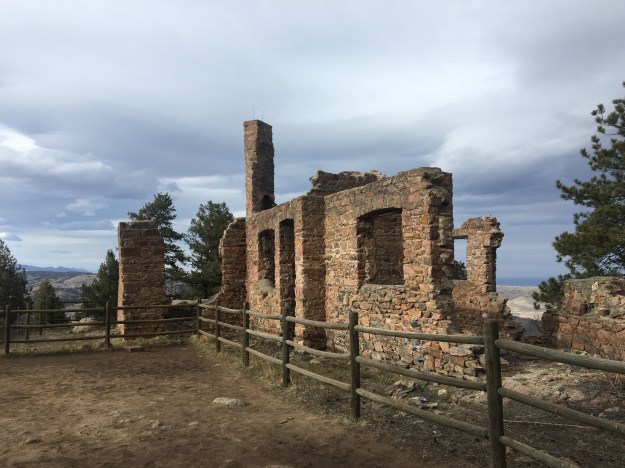
Then, I encountered Walker’s Home, or, well, the ruins of it.

IMG_3184IMG_3186

The ruins of this castle made me feel as if I were in Rome, or some other ancient city where the ruins of historically significant structures are being preserved for cultural reasons.

IMG_3190

Sings even informed visitors to keep out the fenced off remains of the building for preservation, just as they do at other historical sites.

The strange this is, unlike many other historical sites, this building is only 109 years old. In most cities, significantly older buildings can be found, with no historical fanfare, as they have just been in continued residential or commercial use for several centuries. The primary reason this building lay in ruins is because it was struck by lightning in 1918, leading Mr. Walker to abandon his plan of using this structure as a summer retreat for the President of the United States.

IMG_3188

I did not expect an experience akin to visiting an archeological site. I did not expect to read about someone who appeared to be a multi-talented entrepreneur in the late 19th and early 20th century. I certainly did not expect to be pondering where presidents Woodrow Wilson, Waren G. Harding and Calvin Coolidge would be expecting to spend their summers.

IMG_3196.jpg

Just like the ups and downs in the day-to-day weather, particularly in the springtime, and  the shadows produced by the mountains in the late afternoon, Colorado continues to surprise me. Travel to foreign lands and exotic far away places remains a very important part of my life. However, experiences like this provide us all a reminder to appreciate what is close to home as well.