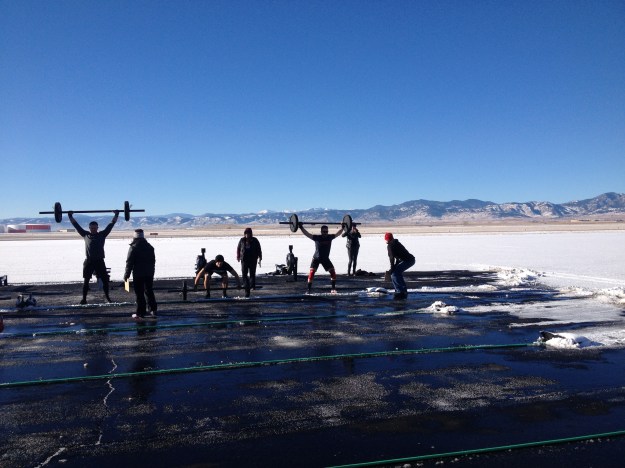
Category Archives: Colorado

Glenwood Springs: Where Canyon Country Begins

IMG_0014.jpg

When people think of the American West, certain images often come to mind:  the unique natural features of Yellowstone.  Iconic mountains that tower over the nearby landscape, such Rainier and Hood.  The canyons that carve through the American Southwest, creating popular destinations such as the Grand Canyon.

The Grand Canyon is not the only canyon of the American West.  In fact, it is not the only canyon carved out by the Colorado River, the continent’s fifth longest running river.  The river, has its source at Rocky Mountain National Park and snakes through the west carving out  numerous canyons.  In fact, there are some that believe that the canyon in Southern Utah that was flooded when Glen Canyon Dam was built, a couple of hundred miles upstream of the Grand Canyon, was even more scenic than the Grand Canyon itself (some are even looking to remove the dam despite the Wests water needs).

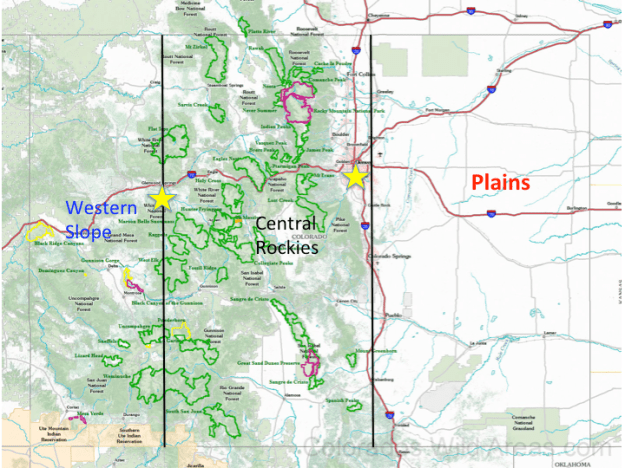
An overly simplified model of Colorado’s geography, is that of the three flavored boxes Neapolitan Ice Cream.  Colorado’s three sections are the Plains, the Central Rockies, and a region generally referred to as the Western Slope.  While the Western Slope is officially defined as anywhere west of the Continental Divide, culturally, we tend to think of it as west of Ski Country, which also happens to coincide with where canyon country begins.
Glenwood_20160725

On the above map, the two yellow stars are Denver, where the Plains end and the Central Rockies begin, and Glenwood Springs, where, traveling west the terrain transitions from tall peaks to canyons, mesas, and plateaus.

The official reason for the trip to Glenwood this year was whitewater rafting, a group trip that I organize every year, with a different destination each time.

This year, the trip was a little bit later in the season, early July, rather than mid-June.  The later date allowed more of the mountain snowpack to melt, particularly this year, as the period around the fourth of July was quite hot across the state.  As a result, the rapids were not nearly as intense as the previous two years.  However, the trip was not without its moments.  This time, everybody stayed in the raft!

As was the case last year and the year prior (this is the third year of my annual trip), we camped.  We selected a somewhat peculiar place to camp this year, on top of the White River Plateau north of town.

IMG_6664

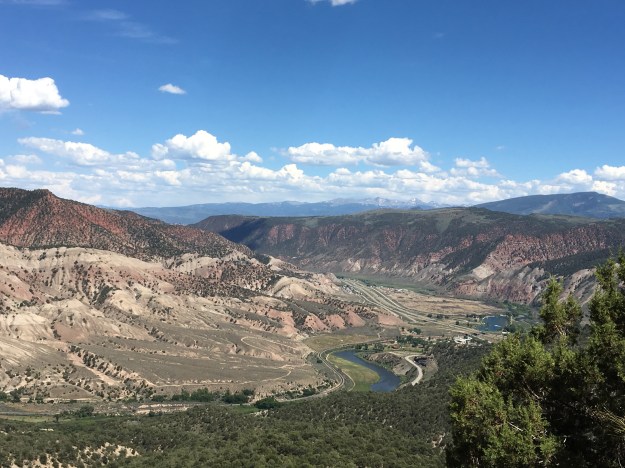
To get to the Plateau, we had to follow a road called Coffee Pot Road, a bumpy road that rose up out of the Colorado River Valley below us and onto the plateau several thousand feet above it.
IMG_6661.jpg

Here is where I fully came to the realization that I was on the border of two of Colorado’s “stripes”.  Looking east from the campground, in clear view are the tallest peaks of the Central Rockies, the Sawatch Range, which includes Mount Evans, Colorado’s tallest peak.

IMG_6715.jpg

A mere mile to the west of our campsite sits Deep Creek Canyon.  I had no idea this canyon existed.  Deep Creek is a tiny creek, carrying very little water at the time we saw it.  Yet, it manages to carve a 2100 foot deep crevice in the landscape in a manner similar to Black Canyon and other Western Canyons.

IMG_6667IMG_6669

What really made this feel like a peculiar place to camp was the range of temperatures we would experience over the course of the weekend.  We spent the middle part of the day in the valley, first rafting in the Colorado River than in town, all at elevations below 6000 feet.  Daytime temperatures soared well into the 90s!  At night, we returned to our campground, above 10,000 feet in elevation, where nighttime temperatures fell into the upper 40s.  If one were looking to experience comfortable temperatures, it would make sense to do the exact opposite, spending the daytime hours at higher elevations where it is cooler and then returning to the valley at night.

IMG_6682

The town of Glenwood Springs is a touristy town.  Everyone around, from the rafting instructors to the bus drivers describe it as such.  However, it is touristy in a different way than some other places I’ve visited.  I didn’t see 50 ice cream shops like I do in South Haven, MI.  I did not see anything like Ripley’s Believe it Not or the other places I see at the Wisconsin Dells.  And, I certainly didn’t see 150 T-shirt shops as I do when I visit Cooperstown.  It seemed like more bars and restaurants than anything else here.  And, of course, one of Glenwood’s other main draws, the hot springs.
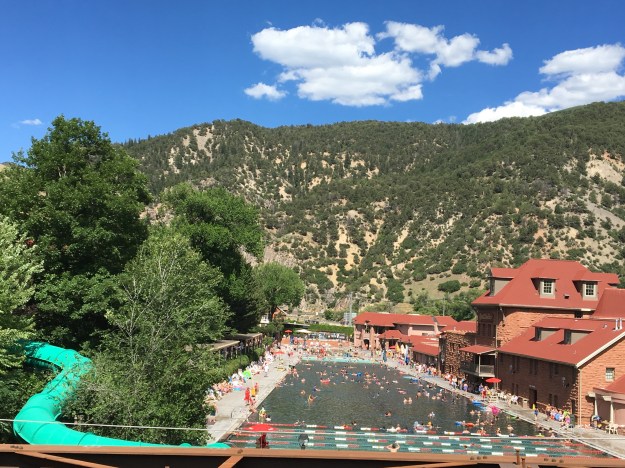
IMG_6683

Maybe Glenwood’s tourism industry is simply trying to accommodate a different mix of people than those other places, or maybe they are simply trying to stay true to their own unique identity.  After all, there are a lot of activities in the area, and a lot of reasons for people to visit.
IMG_6680.jpg

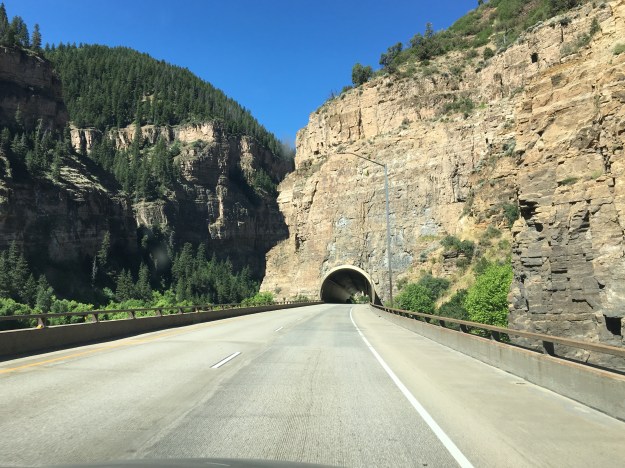
Just east of town, is the area known as Glenwood Canyon.  Due to the narrowness of this valley, there are sections of I-70 where the speed limit drops to 50 miles per hour, the westbound lanes are stacked on top of the eastbound lanes, and parts of the highway are tunneled underneath rock that goes right up to the River.

IMG_6684

It is in this canyon, several miles east of town, where Glenwood’s signature hike, Hanging Lake Trail draws so many tourists, that the parking lot is commonly full.  In fact, both Friday and Saturday, highway signage indicated that this lot was full anytime we drove by it.  We were able to get parking spots in the later part of the afternoon, around half past four, after the rafting trip, and lunch in town.

Hanging Lake is a short but challenging trail.  Only 1.2 miles long, it climbs 1200 feet in elevation.  This, both made sense and surprised me at the same time.  Being in a canyon, I knew that any hike in the area would be steep, and this one sure had its steep parts.  What surprised me was, how far up the canyon hanging lake is.

IMG_6691

I had seen pictures of this lake before, and knew the trail was short, I just pictured it being much shorter and much closer to the bottom of the canyon.

The trail was crowded, which should not be surprising, given that the parking lot was still almost completely full when we arrived.  What surprised me was the ethnic diversity of the crowd hiking this trail.  On the way up to hanging lake, which probably took a little over 30 minutes, I heard people speaking all sorts of different languages!  I enjoyed seeing so many different kinds of people enjoying scenery, nature, and, as I speculate, a weekend away from it all.

There is only one area attraction I did not get to, the Glenwood Caverns Adventure Park.  It’s hard to get to everything on a short weekend trip.  I guess there is still a lot more for me to see here in Glenwood, where Westbound travelers leave the high peaks of the Central Rockies and enter the land of deep canyons.


A Mental Health Day

IMG_6149

I feel like I have over 100 things on my mind, all vying for space, all wearing me out.  All the changes I see around me.  The shocks, the craziness, the idiocy.  The selfishness.  My personal shortcomings, recent mistakes, how my life’s path ended up where it is and what to do about it.  How do we find a balance between order and chaos?  All the ways in which the people around me have let me down.  All the ways I let the people around me down.  How do I keep the benefits of having a smart phone (like being able to take pictures like this, after 28 miles of bicycling, which would have been tough carrying a heavier device) but avoid the pitfalls of mindless scrolling on weekdays when bored?  What is my future,  and how do I find my niche?   What is the future of our society?  The mindless violence followed by the sometimes equally idiotic responses to it.  Globalization.  Trump, Brexit, and the backlash to globalization.  But, most of all, the disappointments when experiences do not match expectations.

Simply put, I needed a mental health day.  I think we all do from time to time.  A day where we get away from jobs, computers, social media, day-to-day responsibilities, pretty much everything that causes us stress, and do something that we enjoy.  This, of course is something different for everybody, and it is not up to me to judge what any one person does for their mental health days.  Well, unless of course it is something morally reprehensible like murder or theft.

I have a firm belief in, and also a unique take on, the connection between mind, body, and spirit.  Over the course of my life, and in observing others, it is almost impossible not to observe the connection between the three.  I remember winters in Chicago, and other times when lack of exercise would in turn weigh on my mind and spirit.  Overall, improvements in one of the three realms often force improvements in the other two.  Likewise, a deterioration in one of the three realms can negatively impact the other two, like the person who develops an eating disorder after a rough breakup.

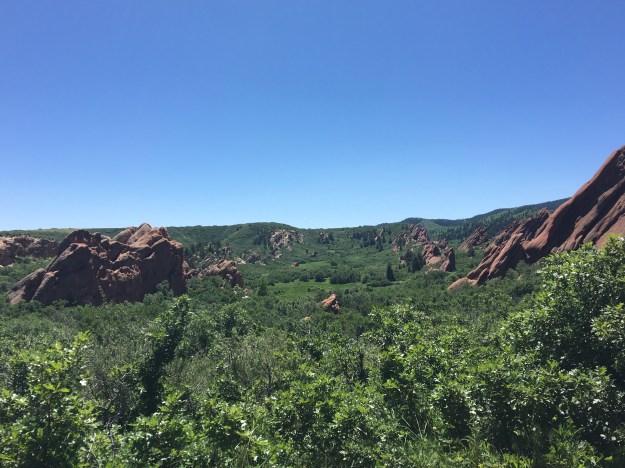
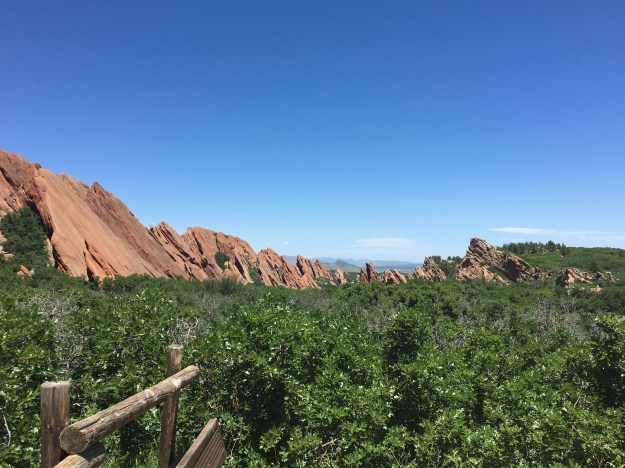
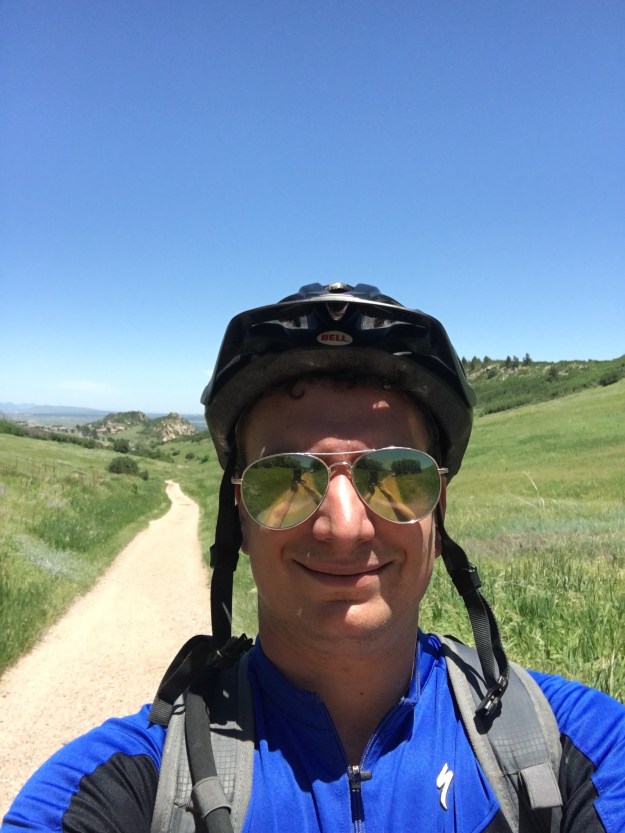
So, I decided to make my mental health day also a physical health day, with a bike ride to Roxborough State Park.  This is a ride I did two years ago.  The basic gist is that it is 28 miles each way, goes by Chattfield Reservoir, and is a significant climb over the last five or six miles.

Wednesday’s ride was even more exhausting, as temperatures soared into the 90s and a Southerly wind developed making the last several miles of climbing in harder.  Needless to say, I arrived at Roxborough exhausted.  In fact, I had to sit inside for about 15 minutes to cool off when I got there.

IMG_6140

Still, I decided to do some hiking.  Knowing that my legs were exhausted, I decided to stick to moderate trails, but ones where I can still view the essence of the park and what makes it geologically unique.

IMG_6142IMG_6143

It was after roughly 1.5 miles of hiking that the ideas suddenly started popping into my head.  Ideas about things I could be doing with my life just entered my mind.  I could do this, and present it to these people, and achieve fulfillment in this manner.  They just kept pouring in, and, for some reason, felt so simplistic to me.  Like, the only thing I need to do is just go out and do these things.

IMG_6144

These are all things that frustrate the hell out of me day and night.  Maybe it is because all of the physical exertion caused my mind to slow down enough for my brain to stop over-thinking things.  Maybe it is the freedom from all of the distractions of daily life.  It’s strange what I was contemplating.  Whenever I am in front of a computer, at an office, in a cube, or in some kind of work-like setting all of the ideas I have seem almost impossible, like a daunting challenge that would take years to attempt and would likely not result in any meaningful success.  In a way, there, I feel stuck.  Here, not so much.  Here, the same exact ideas seem quite possible.

It is here that the conspiracy theorist in me gets activated, so please bare with me, as I am the kind of person that just likes to entertain theories, even if I am not necessarily going to conclude that they are true.  I wonder if cubicles, offices, sedentary days and the like are the way “the system” maintains itself.  By “the system” I mean what I am observing around me.  A whole generation of highly educated people going to work at jobs that are well beneath the skill level they develop through college, and increasingly, post-granulate, education.  A whole generation of people submitting to rules, such as a strict 9-5 schedules and dress codes, that are no longer relevant for the kind of work that now predominates in a service sector economy.  Is the reason people continue down this path the manner in which a whole day of sitting at a computer connected to the internet and all of its distractions make them feel?

IMG_6147

People visit Roxborough State Park, and the geologically similar and more well-known Garden of the Gods, because they are unique.  If this place looked like every other place on Earth, people would not make a specific point of coming here.  So, maybe the key to being the kind of person people seek after, is to be unique.  After all, the person you meet at the party that is exactly like everyone else, is the person you don’t remember.  Sorry to be harsh.  But, it’s when someone does something unique, or interesting, that you remember that person.  Strangely, though, the world of school, and subsequently work, encourages conformity.  It encourages people to follow the worn out path and do things the way they are always done.  Maybe overcoming that conditioning and doing things our own way is the key to life, both in terms of success and happiness.

When You Don’t Appreciate What You Have

IMG_5987.jpg

It’s Memorial Day, and there is a lot on my mind.  Part of me feels like I “should be” doing something way more substantial this weekend, as it is one of three big weekends that define summer here in the United States.  I can’t stop thinking about all of the sales and shopping going on this weekend.  And, then, of course, I end up thinking about the ACTUAL meaning of the holiday; remembering those who have died fighting for my country.  Many people in the military, or closely associated with someone in the military, lament what this holiday has become, all about grilling in the park, going to stores, partying, etc.

I “stayed home” this weekend, which for my standards (as an antsy person) means I stayed within the Denver-Boulder-Castle Rock area.  I needed to take it easy.  My next two months are packed with activities.  Also, most places I would go would have been particularly crowded this weekend.

Confluence Park is a mere three miles from my home, and right in the middle of Downtown Denver.  In fact, when I worked in Lower Downtown (LoDo), I was able to walk here from my office on lunch hours.  I ended up being here at a very unique time of year.  The river that runs through the center of town, the South Platte, has its origins in the higher terrain of the Central Rocky Mountains.  Above 10,000 feet, snow continues to fall, and temperatures remain chilly through much of Spring.  By this time of year, that snow is melting rapidly, swelling rivers like this one with rapidly moving, cold water.  It seems like the water levels reach their highest sometime around Memorial Day.

I sat in Confluence Park with my feet in the water for roughly half an hour.  I moved around from time to time, from rock to rock, feeling the sensation of the rapid stream flow in varying patterns, with different bumps, and eddies at different spots along the river.  I even stood on top of a mini-water fall for a bit.

I thought about all of the people, running around from store to store, looking for something new today.  I even thought of myself, and how I am always looking for new places to travel, new experiences, etc.

I even thought of the other activities I took part in this weekend.

Saturday’s brewery tour by bicycle.

Sunday’s hike up Green Mountain, to a place where one can see multiple 14,000 foot peaks in one direction and Denver’s skyline in the other.

IMG_5984IMG_5985


None of these activities required traveling a long distance, or buying any fancy equipment. A basic bike, a basic pair of sneakers will due.

Sometimes it seems like we spend way too much time looking for something new, and not enough time appreciating what we already have.  After all, whether it be a place to view the skyline from above (something I did not have when I lived in Chicago), or a year old pair of shoes, everything we have was once new, was once exciting, and was once a thing we were happy to obtain.  Are we still happy to have it?  Are we still enjoying it?

Some of us have more than others.  But, no matter how much or how little any one of us has, the one thing each and every one of us has is ourselves.  We have our bodies, and what we are capable of doing.  We have our minds, the things we think of, the way we reason, etc.  And, we have our spirits, our attitudes, what makes us excited for life, what makes us empathize with one another, and what makes us stand up for what we believe in when necessary.  This is definitely something we should all learn to appreciate.  If we all spent more time appreciating ourselves, maybe we would have a more positive outlook, and a more positive impact on the world around us.

Lessons Learned?

IMG_5847

Some events in life are clear.  They can be clearly labeled a success or a failure.  The reason for the success or failure is clear, and there is a clear lesson to be learned from it.  One comes out of an event of this nature much like an idealized application of the scientific method.  A piece of new information is obtained.  It either strengthens a pre-existing theory or calls it into question.

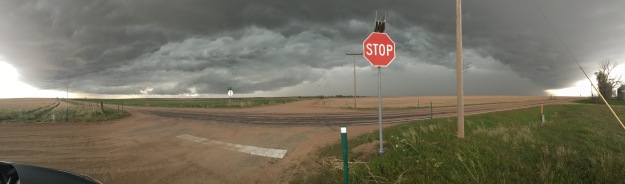
In the real world is not ideal like that.  Many observations, an many of our life experiences do not even produce a clear cut data point, a clear “success” or “failure”, or a clear lesson to be learned.  This was certainly the case on my first storm chase of the 2016 severe storm season, on Saturday, May 7th.

It was a day that did not require me to travel far to chase.  In fact, I returned home to Denver less than eight hours after departure, something that cannot typically be expected.  If I lived in a City right in the heart of “tornado alley”, such as Oklahoma City, Topeka, or Lincoln, I would expect to be able to regularly see great storms without having to allocate an entire day.  However, Denver is a bit West of the region most prone to severe thunderstorms, much the same way Chicago is a bit East of that region.  When I moved to Denver, I did have to make some adjustment with regards to storm chasing, but I did not significantly alter my expectations regarding time spent or distance traveled on a typical one-day storm chase.

Saturday’s severe storm setup provided me with a somewhat familiar dilemma, and one that is even more common chasing storms in Colorado, where many thunderstorms are initiated by orographic features.  Severe storms need a certain environment to thrive, one that is warm an moist, but also with some kind of boundary to create low-level wind sheer, which creates the rotation necessary for supercells, and tornadoes, to form.

Saturday was not that kind of day in the Denver metropolitan area. The Denver area spent the entire day in a thick field of low level cloudiness that prevented the air from warming up.  The high temperature at Denver International Airport was only 53.  Ideal conditions were farther East.  That day the high in Fort Morgan, close to where a lot of the violent storms would hit, was 68.  As is the case with any storm chase, it is important to get into an area where the environment will be favorable for storm development.  So we drove East of the cloud deck.

IMG_5826

But then it happened, forced by the Palmer Divide, thunderstorms formed just to the North and East of Colorado Springs, in an area where conditions were not favorable for severe storms.  Sitting in Byers, roughly 40 miles East of Denver, we had a choice; do we go South and West to catch the storm now, or do we hang back and wait for the storm to reach our current location, in a more favorable environment?

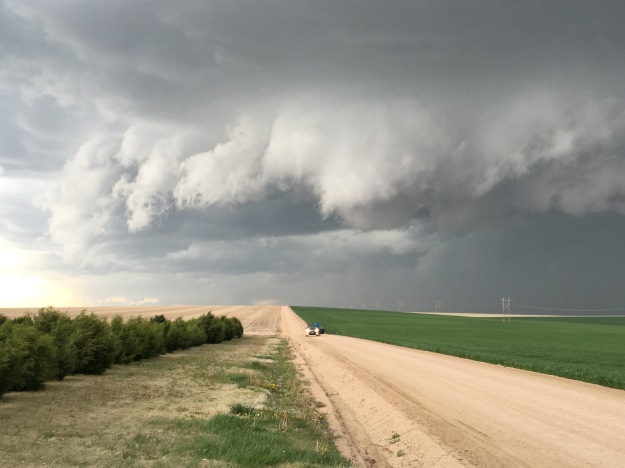
Staying back means potentially missing what the storm does in its early phases.  However, being more aggressive means possibly missing a different storm, that may form in an area with better conditions for severe storms.  On Saturday, after some deliberation, we decided to go after the first storm.  We felt cold air, possibly the coldest I have ever been in while observing a thunderstorm, and saw a strong downdraft.  This is consistent with an atmosphere that is cooler and drier than the ideal one for producing severe weather.

IMG_5831.jpg

The storm raced northward.  We ended up being a little bit limited by the relatively sparse road network in Northeastern Colorado, having to follow the storm along a series of dirt roads that connected Strasburg, CO (along I-70), to Wiggins, CO (which is along I-76).

IMG_5836.jpg

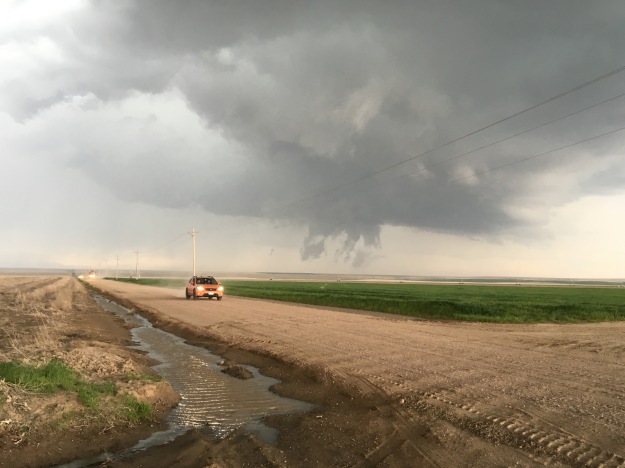
In fact, there was even a time when we were pretty much directly under where the RADAR echoes showed the center of circulation to be.  This situation sort of made me nervous.  At the time I was thinking that if a tornado were to form, it might form quite close to my current location.

IMG_5837.jpg

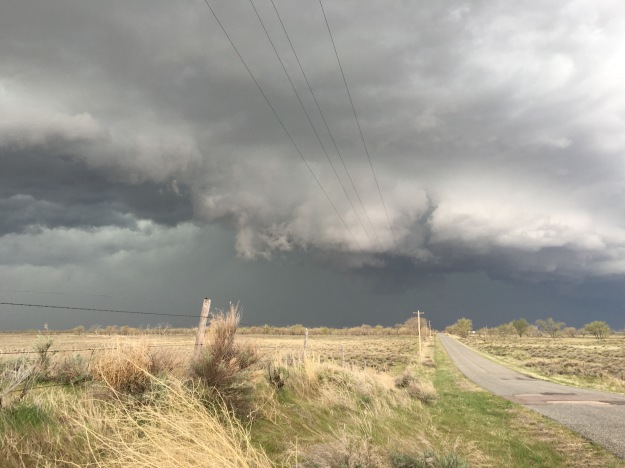
For roughly an hour, it seemed like the storm was kind of teasing us.  One minute, these clouds would appear to be lowering and rotating, as if a tornado were ready to form, the next minute it would all just simply disappear.

IMG_5839

It was around this time that the storm reached I-76 near Wiggings.  Here, the storm interacted with a previously existing boundary, and, according to sources, went tornadic.  However, we were never able to observe the tornado.

After this, the storm transitioned, as many severe storm clusters often do, into a large bow echo.

This is a clear indicator that the storm is entering a different phase, often associated with decay.  It has become dominated by downdrafts.  The most likely result is severe straight line winds.  At this point in time, the best thing to do is simply observe this gigantic thunderstorm, as despite no longer having the low-level rotation necessary for tornado formation, it is quite breathtaking in its own way.

Storm chasing, and storm observation is about more than just tornadoes, and it is quite unfair to describe all chases that do not result in viewing a tornado as a “failure”.  We really could not have picked a better place.  There was only one other cluster of storms that day that produced numerous severe storm reports.  That one formed farther East, a bit later, and produced tornadoes when it interacted with the same East-West oriented boundary.  We also still observed some interesting severe convective storms.

But still, it is frustrating to know that there was indeed a tornado, verified, within ten miles of where I was sitting, and I somehow did not get to actually see it.

I know being in position to view this storm was quite challenging, and it is likely that few chasers found themselves in such position to view the tornado.  But I wonder, had my group reached the I-76 corridor 15-20 minutes earlier, would we have been in the right position to see it?  We knew this boundary was there, and it was in the area with the most ideal conditions.  Was going after the storm initially an exercise in impatience?

IMG_5851.jpg

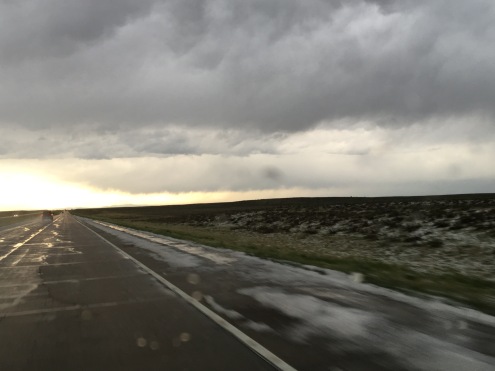
The day ended with a return trip, along I-76, back to Denver, through the area that was clearly just recently pelted with hail.  I returned knowing that there are aspects of this chase that can be considered a “success”, but others that can be considered a “failure”.  I also returned still wondering how to strike that proper balance between aggressively chasing after storms that initiate, and patiently waiting for storms to form or reach the location where the conditions appear to be most favorable.

Road Trip to Santa Fe

IMG_5623.jpg

I spent about half a decade working in the Insurance Industry, an industry with a significant presence in Bermuda.  At workshops, conferences, and in meetings, I would regularly interact with people who lived there.  The place certainly has its draw, and with the right opportunity, a person with experience in the industry could make a really good life there, despite the high cost of living.

I often imagine what it would be like to have a totally different life, in a totally different place, particularly when traveling, or when I meet someone from somewhere far away.  While working in the insurance industry, although I never seriously considered up and moving to Bermuda, I did imagine what it would be like a couple of dozen times.  Each time I imagined it, I would always end up dwelling on the lack of room to roam around there.  The island is only 20.6 square miles, and getting anywhere else requires a flight.  I pictured myself moving there, getting my swimming trunks out, snorkeling, attending a few parties and such, but then, eventually, just getting restless, and missing something I love to do here in mainland U.S.A.; taking a road trip.

There is something I really love about road trips.  When I refer to road trips, I am not talking about simply driving somewhere.  A lot of people drive to work every day, or to a relative’s house every other weekend, and those drives don’t feel like “road trips”.  I’m talking about driving somewhere a significant distance away that is not a routine trip; somewhere that is somewhat unknown.  On road trips, we have somewhat of an idea as to what to expect, based on what we have heard, read, or researched, but we do not know it intimately.  We have not experienced the towns we will pass along the way, which exits have the best deals on gas, and where the best restaurants are.  In other words, there are still some surprises, and we are still going to encounter something unexpected.

IMG_5619

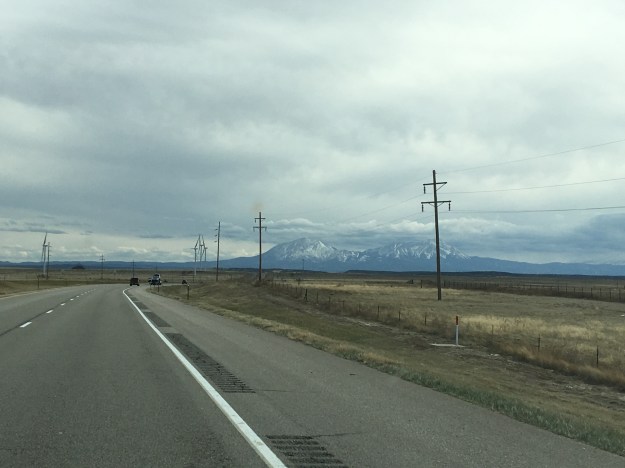
Driving south along I-25, the first indication that one is reaching the Southernmost portion of Colorado is the Spanish Peaks.  While visible farther north, they take prominence south of Pueblo. The Spanish Peaks are nowhere near the tallest features in Southern Colorado.  In fact, within 30 miles or so, there are 5 mountains taller than 14,000 feet (14ers)!  But, since they are relatively isolated from other natural features, and can be seen quite some distance, they are a prominent landmark toady (an entire region is named Spanish Peaks country, as well as the names of countless business in the region), and were a prominent landmark on the old Santa Fe Trail.

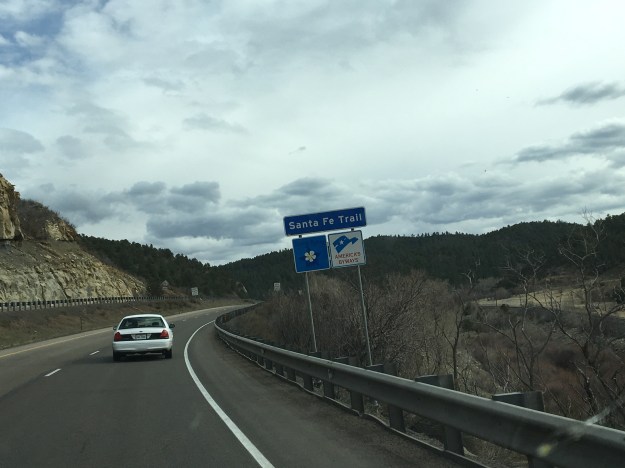
Approaching Trinidad, CO, the last town before the New Mexico border, the Spanish Peaks disappear from the horizon as the highway enters a much hillier region approaching Raton Pass.  It is here that the path of Interstate 25 joins with the old Santa Fe Trail, which it will more or less follow for the remainder of the trip to Santa Fe.  This trail was first pioneered by the Spanish and later played a pivotal role in American history including westward expansion, and the eventual conquest of the Southwest from Mexico.

IMG_5622.jpg

I had mixed expectations of Raton Pass.  Many years back, I was on a ten-day storm chase. Our group was situated in Clovis, New Mexico, which is quite close to the Texas-New Mexico border.  We were discussing the possibility of chasing upslope storms roughly an hour northeast of Denver the following day.  Some of us brought up the possibility of driving west to Raton so we can take the Interstate to our target destination, but the group leader balked at the idea, instead suggesting driving up 385, as he felt it might be risky to take a large convoy of chase vehicles over Raton Pass.  We ended up deciding not to drive up to Northeastern Colorado, as, in the morning, the storm outlook had weakened, and we no longer felt it worth the drive.  By the way, this is common on storm chases, you really never know where you will end up going.  However, ever since then, I had kind of wondered what it was like to drive over this pass.

As the photos indicate, the road gets windy as motorists climb from Trinidad, at roughly 6000′ in elevation, over Raton Pass, which tops out at 7834′.  It’s definitely not nearly as rough as heading over the Rocky Mountains along I-70 or I-80, but definitely is a much more major incline than anything a group of people that drives largely in the Great Plains from Texas up to South Dakota would typically experience.

IMG_5626.jpg

Oh, and in one of the strangest of coincidences, the top of the pass is right at the border of Colorado and New Mexico.  This is odd as, first of all, the Colorado-New Mexico border is defined as the 37th parallel, and has nothing to do with where any mountain pass is located, and roads through mountain passes are built to take the safest and most effective route.  The fact that the place where this road crosses the 37th parallel most effectively happens to also be the high point seems to me as a pure coincidence.  Maybe someday I will read into this, the story behind the road and such, but I have yet to do so.

After a descent into Raton, the road reaches a segment that is long, flat, open, and rather empty.

I switched the music on the radio to classic rock, The Clash, Ozzy, Queensryche and such.  For some reason, there is something about the sound of guitar rock that makes more sense while driving through scenery like this than many other forms of music.  As the afternoon passed along this landscape, cloudy skies gave way to peaks from the sun only every once in a while.  A few periods of gentile, chilly rain fell from the skies.  In some ways it reminded me of a storm chase gone horribly wrong, the day slowly but surely slipping away with no prospects of favorable storm conditions developing.  However, in other ways, the drive was relaxing, allowing me to think without any distractions.

After passing through a town called Las Vegas, NM (which I assure you is nothing like the Las Vegas in Nevada), the highway turns West.  It kind of loops the last 60 or so miles into Santa Fe, even heading back northward for the last ten miles, following the route of the old Santa Fe trail.  However, unlike the previous 100 or so miles, this part of the trail, and the drive, is far from flat.

To the right, is the southernmost part of the Sangre de Cristo mountain range, and an area now part of the Santa Fe National Forest.  It is these mountains that the trail routed 19th century pioneers around.  To the left are a series of bluffs which, luckily, the trail did not have to also bypass, as it would have added many more miles to the journey.  The road itself slowly climbs over Glorietta Pass, descending only slightly into New Mexico’s Capitol City- Santa Fe.

The Colorado Model Railroad Museum

The later half of March is a confusing time to be in Colorado.  The range of possible weather events makes it a tough time period to plan for.  In the mountains, there are plenty of times snow continues to fall, and provides more high quality snow days for skiers and snowboarders.  But, the snow does not always continue to fall, and if it doesn’t, conditions on the mountain can deteriorate fast, as warmer temperatures are likely to eat away at the snow pack.

At lower elevations there is quite a bit of variance as well.  March can easily bring Denver, Fort Collins, and even Colorado Springs long strings of 70 degree days.  It can also bring heavy snowfall, as was the case this past Wednesday.

img_5529

There’s no guarantee that the weather will cooperate for any outdoor activities.  There is always the chance that skiing conditions will continue to deteriorate without conditions for cycling or hiking at lower elevations improving.  For people like me, this time of year has the potential to be quite underwhelming.  Due to this uncertainty, I would not personally recommend people travel any great distance to visit Colorado in the later half of March or April.

With leftover snow on the ground, covering the trails and such, this weekend ended up being a good time to visit one of Colorado’s indoor attractions.  I often lament that Colorado does have some quality museums, an indoor activity, but that I rarely actually visit them as I am planning outdoor adventures.  A weekend like this, with less than inspiring weather conditions is the perfect time visit the Colorado Model Railroad Museum in Greeley.

img_5567

As should be expected from a museum dedicated to model railroads, there is quite a bit on display here.  Following the suggested self-guided tour route through the museum, I started out by going upstairs, where I viewed the model rail display in its entirety.

Although it is neat to see these trains go by, each one carrying a different type of freight across the landscape, model railroads are about so much more than just the trains.  They depicts towns, industry, and scenery.  Some of the mountains depicted on this display even contain small components of real rock.

The upper floor of this museum is like a trip back in time.  Plastered on the wall is a map of regional railways, which were once the primary way in which we traveled around the area.  After viewing the photos of historic rail depots, posters from the middle of the 20th Century promoting passenger rail service, and old train schedules on display, I imagined myself in the setting of some quasi-ambiguous time in the middle part of last century, bags packed, ready to hop aboard one of these trains to embark on an adventure.  I gaze at these maps, and think about how much I enjoy not only the adventures I have at various travel destinations, but the process of getting there, the journey.  The railways, and these models, are all about the journey!

The second half of the self guided tour takes visitors downstairs, to see the components of this elaborate model train display individually.  Each segment of model trains tell a story, but not a straightforward story.  They show a snapshot of life in different places along this train’s route.  Looking at all of these individual displays, it is quite easy to imagine oneself there, as part of the story, or as an omnipresent type of observer.  The details and creativity allow visitors to develop a story based on what they see.

img_5577

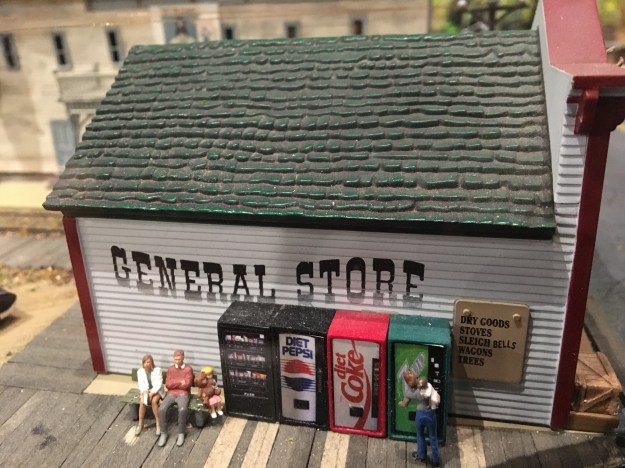
In this thriving town along the rail route, I imagine myself getting a dollar out to purchase a soda from a vending machine on a hot day.  I imagine what this family is doing.  Did they just have a fight?  The Man’s arms are folded and the daughter is turned away from her parents, clinging to a stuffed bear.

img_5575

They got creative too.  The scene here is a wildfire being put out by firefighters.  This is one of many places throughout this gigantic exhibit where specific events are depicted.  Not only do we see where stores are, where houses are and such, imagining the day-to-day life in fictitious towns along the route, periodic occurrences are displayed before us as well.

In a few areas, the builders of this display got even more creative.  My favorite one here depicts a kayaking trip gone wrong.  This kayak now inhabited by a black bear, with two people having been thrown into the water, only one still holding on to their paddle.

img_5576

A ton of work went into the displays at this particular museum.  It’s been a long time since I have been to a museum like this one, but I picture most model railway museums being similar in nature.  It is impossible to overstate how important attention to detail is when creating an exhibit like this, or even when people create model train sets for their own homes and gardens.  I do not consider myself detail-oriented enough to put something like this together.  I am also probably way too extroverted to want to spend the time putting together a display like this.

Seeing this display, first in its entirety, and then by its individual components, gave me a newfound appreciation for the attention to detail payed when creating this exhibit.  None of it would have been nearly as good had anyone involved in building this exhibit taken the attitude I often take that details matter less than the big picture.  The story of this exhibit would not be presented properly had one little item, one tiny piece of brick at 1:87 scale been slightly off.  Maybe details need not be dismissed.  Maybe those of us that are frustrated with dealing with details we deem insignificant need to just understand how they fit into the big picture.


A Fancier Ski Experience

IMG_5028

There are plenty of things that make skiing at Beaver Creek Resort different from pretty much anywhere I have ever skied.  As soon as I walk into the ski village, I am greeted by the resort’s staff in an extremely friendly manner.  The friendliness of the staff reminds me of the few times I had visited high priced golf resorts, and was greeted by staff offering to wipe down my clubs after a round of golf.  In a away, right from the get-go I feel like I am not at a typical ski resort, but somewhat of a country club of ski resorts.

After this, as is the case with most other resorts, I walk through a ski village to get to the lifts.  However, at Beaver Creek, this walk involves getting on a series of elevators, something I have yet to see anywhere else I have ever skied.

In addition to the elevators, Starbucks coffee and other amenities in the village, every day at 3:00 P.M., cookies are brought out to guests at the main village — for free!  In fact, on days that are less busy, staff will come out with trays of cookies and often hand guests two cookies at a time!  Last time I visited this resort, I ended up eating 4 cookies!

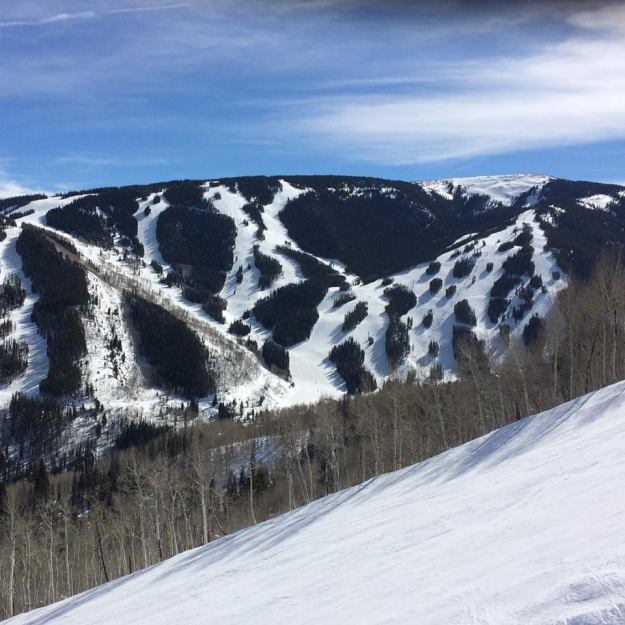
It’s easy to build up an appetite for those cookies here.  In addition to the standard type of ski runs that one finds at many of the other mountains in the area, the resort has some interesting areas that are both unique and challenging.

Beaver_Creek_Terrain

First off, some of the steepest terrain can be found here, particularly for “groomed” trails. I use the term “groomed” loosely here, as when most people think of a groomed ski trail, they think of one that had been groomed recently, often with marks from the recent grooming.

IMG_5171.jpg

(Note: This particular image was taken at Keystone Resort)

This is some of the easiest terrain to ski on, a there are no small obstacles to take a skier off course, and the snow has been churned up by the groomers to make stopping relatively easier.  However, once the snow is pushed away, either by numerous skiers making turns on the trail, or by strong winds, the conditions become much more challenging, as they can get icy, making stopping more difficult.  This seems to be the case every time I go to the steepest part of Beaver Creek ski resort; areas called Grouse Mountain and Birds of Prey.

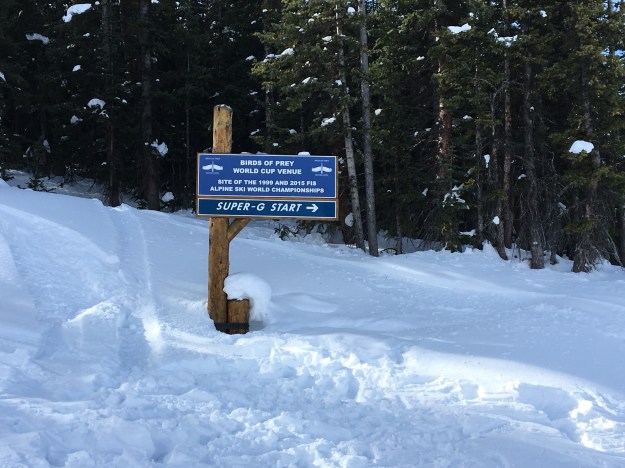
Birds of Prey is where the 2015 World Championships were held.  I had heard that this was the fastest ski trail in the State of Colorado, and that they actually purposely make the trail icier for competition.  I knew it would be scary to ski here, but I wanted to have the experience of actually skiing on a trail that professional skiers compete on.

IMG_5197IMG_5200IMG_5203

The trail certainly was icy (or “race surfaced”)!  I actually fell three times trying to get down this course, and apparently, although I could hardly imagine skiing on a surface any icier than this one, it wasn’t even as icy as it is during an actual competition.  I would later be reminded, by the friendly staff at one of the ski lifts that of the 36 contestants that entered the World Championships here, only 15 finished, the other 21 fell in some sort of way!

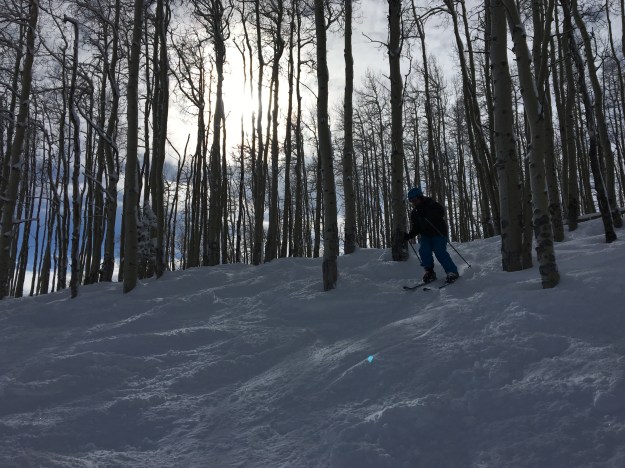
Due to it’s relatively lower base, at 7400′, Beaver Creek Resort is home to a significant amount of aspen glades.  By this I mean skiing through the trees, as can be done at pretty much any major ski resort worldwide, but rather than skiing through the pine and evergreen trees that are common at elevations from 9,000 to 12,000 feet (which is where a lot of the skiing at the other Central Colorado resorts is done), skiing through Aspen trees, which are more common at elevations closer to 8,000 feet.  Skiing in the Aspens offers a somewhat different tree skiing experience, primarily due to Aspen trees having significantly less branches.

IMG_5043.jpg

Discussion of Beaver Creek can be somewhat polarizing (although there is something polarizing about every resort in Central Colorado).  Beaver Creek is slightly farther away from Denver than Breckenridge, Copper Mountain, and Vail.  This means that the resort can often be slightly less crowded, but also means that most people who decide to visit this resort must consciously decide to drive past those other resorts.  Some people find the interesting experience, the unique amenities, cookies and special treatment worth the extra travel (and extra money).  Others don’t.


As an EPIC Season Pass holder, the money does not factor into the equation.  It is pretty much only the travel and opportunity cost.  Every time I come to Beaver Creek, I process the experience hoping to come to some kind of major interesting revelation about what makes some people chose the activities they do when they do.  In the end, all I actually end up thinking about is how much different the experience is than the experience I get at other resorts in the area, even Vail which is known to be a pretty fancy place in it’s own respect.

When I think about the people I ski with on a regular basis, I see a spectrum of attitudes, related to skiing, as there is with any activity.  On one side, there are the people who like to find something they like and stick to it.  These are the people who would be content to buy a pass to one resort, find their one favorite neighborhood bar, or have a standard order at a specific restaurant that they order every time.  These are the people who just want to enjoy the activity, and, know something they already enjoy, so feel no need to keep searching for something else.  On the other side are people who are always looking for variety, and always looking to mix things up.  People on this side of the spectrum can get bored going to the same places repeatedly even if they are incredible experiences.  In reality, almost everyone fits somewhere between these two extremes I describe.  I wonder, though, if for some people, particularly those who live in the area and ski somewhere in Central Colorado almost every weekend, if visiting Beaver Creek is a way to mix things up, doing something different, and ensuring that we get that variety in our experiences.  That may be what motivates many people to drive by Keystone, drive by Copper Mountain, and finally drive by Vail and come here to Beaver Creek.

When We Get Stuck

IMG_5082.jpg

Here we are, on the verge of something great!  It is right in front of us, in plain sight, a brand new endeavor, a great idea, something that’s going to either change the world, change our lives, or just be one heck of a great time!  The path in front of us is clear, exciting, invigorating.  Never have we felt so alive!  With excitement, enthusiasm, and passion, we enter this new endeavor without hesitation.  We do our due diligence, of course, but the excitement of what lies ahead by far overwhelms any concerns about what could possibly go wrong.

But then it happens.  Shortly into this new endeavor, due to something we either overlooked, poorly estimated, or never even considered in the first place, we find ourselves stuck, much like I was in Vail’s Orient Bowl.  That morning, I got off the ski lift, and saw the 15″ of fresh powder that Vail had recently received.  Instead of following tracks already made by those who skied in this area earlier in the day, I wanted to make my own tracks.  I expected a wild ride through this fresh powder!  On the contrary, I suddenly found myself slowing down, and sinking. The realization that I would find myself at a standstill, and need to work to dig my way back on track, is much akin to the realization many of us have when we realize that some aspect of our plan is not going to materialize the way we had anticipated.

IMG_5085

What is strange is that this experience, of suddenly finding myself stuck occurred at Vail Resort.  Vail Resort is not only home to one of the largest and highest rated ski resorts in the world, but it is also home to a ski museum, which has artifacts of the history of both skiing and the resort itself.

Vail_10thMountain

Vail ski mountain was founded by a man named Pete Siebert, who fought in World War 2 as part of the U.S. Army’s 10th Mountain Division.  This group of soldiers trained in the mountains of Colorado, mainly on skis, and were subsequently deployed to Northern Italy to lead an attack, on skis, in the heart of one of the Nazi strongholds in the region.  Many of the soldiers from the 10th Mountain Division, despite being from many different places all over the country, found their way back to Colorado, and alongside Siebert, helped develop the skiing industry into what it is today.

The story of skiing, and the story of Vail is summarized quite nicely at the Colorado Ski Museum.  In fact, the museum has other exhibits, including one on snowboarding, a bunch of facts about the origin of downhill skiing, which pre-dates Vail and even the 10th Mountain Division’s World War II efforts, and one that shows the history of the U.S. participation in skiing and snowboarding events in the Olympic Games.

IMG_5090

Yes, I had to get my picture taken with one of my favorite athletes, even if it is only a cardboard cutout.  I was not sure if I would get kicked out for taking this photo, so I made it quick.

The abridged version of the story of Vail is that it opened on December 15, 1962, struggled for a couple of years (the second year they had a snow drought and brought in the Southern Ute Indian Tribe to perform a snow dance for them), and then the resort took off in the later half of the 1960s.  After that, the resort periodically expanded, eventually combined with Beaver Creek and became what it is today.  For more details, I would seriously recommend visiting the museum.  With only a $3 suggested donation, it is a great activity for kind of day where skiers and snowboarders need to take an hour or two off due to weather or exhaustion.

The aspect of Vail’s history that is largely not covered by the Museum is the one that pertained to my own experience earlier that day- getting stuck.  The museum has an exhibit, and a video describing the 10th Mountain Division, how they trained, and what they accomplished.  They also describe the history of Vail as a ski resort in detail.  But, the 10th Mountain Division disbanded at the end of 1945, when the war ended.  Vail resort opened in 1962.  The only discussion of this roughly 17 year time period between these two events, was that Mr. Siebert was looking for the perfect place to open a ski resort.

IMG_5091

In detail, what did Pete Siebert do from 1946 through roughly 1960 (when he started laying the groundwork for Vail)?  Nobody knows, but it is definitely possible that he got stuck, much in the same way I was earlier that day.  Maybe, like many who returned from World War II, he came back and did not know what to do during Peacetime.  Or maybe, he looked at places for years and could not find the right one.  It is possible that he could have had a few “false starts”.

Those of us that have ever been, or currently are, stuck, can take solace in the fact that Mr. Siebert eventually, despite what is likely close to a decade of being stuck, put together a world class ski resort.  Additionally, many of his fellow 10th Mountain Division soldiers contributed to what Vail eventually became (the shops, restaurants, and even clubs that popped up in Vail Village).

After being stuck in the snow, I eventually made it down the mountain.  In fact, after only a short delay, I was able to climb my way out of the deep snow into a set of tracks just to my left.  Despite the fact that I did not get what I wanted out of that particular experience, I had a great experience with the remainder of that particular run, finding areas of deep powder farther down, where the terrain is a bit steeper, and then shooting through some glades.

In this particular case, I had no choice but to try to climb my way out of this section of deep powder.  In may other situations in life, we do have the option to give up.  Unfortunately, we often do prematurely, sometimes simply knowing that there is an easier path.  But, the easier path is rarely the more rewarding one.  The experience of getting stuck in the snow only to eventually have a great remainder of the run, followed by seeing a parallel experience with the founding of the very resort I was skiing at reminded me that it is often worthwhile to get “unstuck”, but also that it is less of a catastrophe to be stuck in the first place than we often imagine.

We live in a culture that reprimands people for being stuck only for a couple of months.  Two months with nothing to show for it- you’re on thin ice …. or out of a job!  Sometimes I even reprimand myself for “wasting” a single day!  Pete Siebert may have been stuck for over a decade!  Yet, he eventually founded Vail, and the experience of living in, or visiting, Colorado would not be the same if it weren’t for this important contribution.  So, maybe we need to be less hard on each other, and be less hard on ourselves.

Life On Monument Hill

What does a dog lover do when they suddenly find themselves dogless?  Well, they gladly accept the opportunity to “dog-sit” for their friends when they leave town.

Those that have lost a pet before know the situation.  It is just too soon to get a new dog.  But, I had become accustomed to spending time with dogs.  It still feels sort of strange to come home and not see my dog waiting for me at the door.  So, sometimes the best thing to do at this point, while I am missing just hanging out with dogs, is to go somewhere and spend several days with someone else’s dogs.

IMG_4782

The first time I drove over what is referred to as the “Palmer Divide” it kind of caught me by surprise.  It was my first time driving from Denver to Colorado Springs.  As one who loves looking at maps, I knew there was a ridge between the two towns, and I knew it was referred to as the Palmer Divide.  I was, however, caught by surprise by how high in elevation I got to just simply driving along Interstate 25.  7,352 feet is over 2,000 feet higher in elevation than Denver, and around the same elevation as Lookout Mountain, a place people can go and overlook the City.  It’s way higher than I thought one could go without actually going into the mountains.

A most general simplification of Colorado’s geography slices the state into thirds.  The eastern third is essentially part of a larger region that extends nearly 1000 miles east called the “Great Plains”.  The central third is the Central Rockies, and the western third is often referred to as the “Western Slope”.  In this extremely simplistic model, Monument would technically be part of the eastern third, but it’s high elevation makes it significantly different than most other places referred to as part of the Great Plains.

In some ways, this town has the same look and feel of any fairly recently built suburb.  Although the town was incorporated in 1879, most of it’s population arrived since 1990.  Unlike in urban areas, the roads wind, and subdivisions are all disconnected from one another.

I actually spent the later half of my childhood (7th-12th grade) in a suburb with a similar layout.  My parents house (in which they still live) was in subdivision built during the 1980s.  The area is somewhat more densely populated than this, but the experience was actually quite similar.  Most suburban subdivisions are across the street from some sort of strip-mall.  At my parents house, we happened to be only four houses in from the main road, making the shops across the street quite close.

Over the course of that six year period, I had actually become quite accustomed to an experience that would be considered strange to most people.  Given how close all those shops were to home (the grocery store we always went to was less than a quarter of a mile from home), it seemed strange to me not to just walk there, as opposed to driving.  However, as anyone who has spent a significant amount of time in suburban areas built  in the later part of the 20th Century would attest to, these areas are quite car-centric.  For a lot of people who live in these areas, it doesn’t even cross their minds to walk somewhere.  Therefore, I would quite commonly be the only person walking anywhere in a place not built with pedestrians in mind.  This is an experience I had become accustomed to, but would likely seem strange to most people.

IMG_4831

The apartment complex I stayed at in Monument Valley is across the street from a fairly major shopping center, which includes Wal-Mart, the Home Depot, and several restaurants.  Theoretically, one could live in a place like that, and, other than whatever commute they have to work, be able to satisfy all the basic needs of life without having to drive anywhere.

As the weekend progressed, I walked back and forth across the street to shops and restaurants, the same way I did all those years ago.  I kept thinking to myself about what life is like for people in a place like this.  Obviously, most people don’t walk, even if they are just going across the street, but if I lived here, I most certainly would.  But, if I lived here, I wonder if I would get bored.  Being so close to the mountains (closer than Denver), there were some interesting cloud formations that I would see on a regular basis.  But, as much as I love the weather, and was blown away by this long flat cloud in front of the mountain range, that would not entertain me for an entire day.

For nearly all of my life I have been judging certain areas, where there aren’t any interesting bars, restaurants, or other fun places, as boring.  In fact, one of the strangest things about the Denver, is that there are sections, within the city limits, that do not have anything within walking distance.  When I saw these neighborhoods, I decided I would not want to live there.

But, I really thought long and hard about life in a town like this.  Would there theoretically be a way to make it work?  I mean, I know that I would miss a lot of urban entities, and taking Ubers, busses, trains, etc. to get around.  But, obviously a significant subset of the population does just fine in places like this.  They just do something else.  Maybe they go out to the park instead of going to a fancy brunch, or they have house parties instead of going to the bars.  I would definitely still prefer to live in areas with interesting entities around me, but I maybe I should not be as reliant on places within the neighborhood for entertainment.  After all, it does get expensive.  If experiencing life in a place like this for a few days can teach me anything, it is that sometimes we need to be creative and figure out something amazing to do with our time on our own, using limited resource.

The CrossFit Games

IMG_4755

Sometimes it is difficult for me to wrap my brain around the entity that is CrossFit.  It is definitely not your typical gym, where you pay some kind of monthly fee, and get access to group exercise courses, weight rooms, and the like.  My primary exposure to CrossFit is living on the same block as an affiliate gym.  Nearly every morning, when I would be walking my dog, I would encounter large groups of people running along the sidewalk.  Sometimes they would have something in their hands, like a tire, a medicine ball, or something that just looked like a giant jug.  I would always think to myself about how these people woke up sometime around 5:30 A.M. to come in and do an intense workout, while I was just walking my dog after eating a bagel with creme cheese.

CrossFit is a also completely different philosophy, on exercise, and on life.  Unlike at a typical gym, CrossFit-ters (is that the right way to refer to them, I do not know) do not work out at their own pace.  In fact, the workouts appear intense and competitive, and so does the lifestyle.

It was a mere ten minutes after arriving that I realized that I may have inadvertently brought a contraband item into the gym.  With a bottle of Coca-Cola in front of a sign strongly advocating against the consumption of sugar, I felt quite ridiculous.

For several reasons, I was a little bit hesitant to come to the CrossFit Regional Competition.  The intensity of the workout regiment does not really match my personality.  I have also all but lost interest in “working out”.  This is primarily due to the fact that I now live in Colorado.  I just find it hard to motivate myself to go run on a treadmill and lift weights when there are mountains with trails, ski resorts, rivers with rapids, and endless adventure possibilities so close to home!

Also, Saturday morning was COLD!  Upon arrival, at about 8:20 A.M., the temperature was in the mid-teens.  This was after Denver International Airport (where the official observations taken) recorded an overnight low of 5 degrees.  Before that morning, the last time the temperature in Denver had dropped lower than 20 was the 6th of March, over 8 months ago.  So, not only was it cold, but we were not accustomed to it.

IMG_4745

Despite the cold, and despite the activity being outside the realm of what I would typically attend, I started having fun as soon as I got there.

The first competition I watched was a close race between several competitors.  The competition involved a series of rows, weight lifting, and some series of jumps that I did not really understand.  It was quite exciting!  As the competitors passed through the series of events, some would take leads, some would stage comebacks.  It was like watching another type of race, such as hurdles or horse racing, only with more craziness and variety.

I had came to the CrossFit Regional Competition to support a friend of mine who was competing.  He ended up pulling out a victory in a really close “race”.  In fact, there was an entire group of us that had made the trip up to Broomfield to see him compete.  Towards the end of this close race, we were all yelling, jumping up and down, and cheering him on!  In fact, part of the reason the event was so enjoyable was the group comradery.  I genuinely believe that all events are better when shared with others, even in the cases where solitude is major part of the event (like backpacking).

IMG_4784

There were also a lot of other fun events at the CrossFit games.  In particular, I enjoyed watching the relay races, as they had a crazy arrangement of obstacles that each team of competitors had to overcome.

I saw people who were in crazy good shape.  They all looked quite strong, and they all were capable of quite a lot.  All I could think to myself was that despite my strong lack of desire to spend multiple mornings a week lifting weights and running and such, while also making it into a competition, this program works!  It works for the people involved.  Nearly every CrossFit-ter that I have seen, whether it be here, or on my block, is in ridiculously good shape, exactly the result they set out to get.

I am also glad that once again I personally decided to say yes to life.  Had I chosen to stay home, whether it be because I was deterred by the frigid temperatures, or whether it be out of lack of a strong personal connection to the CrossFit way of life, I would have missed out on something truly beautiful.  In the end, what I appreciated most about this event wasn’t the yelling and jingling my keys for the last 15 seconds of the event, or any of the other excitement one gets when watching a close race and having their preferred participant win.  This event was special because I saw something that represents one of the greatest things we, as a human race, ever experience in life.  It is that moment when you see the positive results of hard work in another human being.  It is knowing that a genuinely decent person has taken part in something to better themselves.

Life is full of tough choices.  One definitely involves how one can best spend their time.  We will all receive a series of invitations (or solicitations), and must chose to say yes to some and no to others.  We all know what we like.  One will nearly always willingly accept invitations to activities they know they enjoy, and approach them with a positive and joyous attitude.  Conversely, one will nearly always turn down invitations to activities they know they are not fond of.

What about those activities that fall somewhere in the middle?  Maybe you are not too familiar with them, or have some kind of mixed emotions.  Ultimately, we all must make a judgement call.  Saturday’s event provided a clear reminder to me that accepting more of these invitations, and approaching them with an open mind and a positive attitude will lead to more positive experiences in life.