Category Archives: culture

An After Work Hike to Royal Arch

IMG_0176 (1).jpg

June is a month with tons of opportunities, if for no other reason than the amount of daylight many places in the Northern Hemisphere receive. The long days and late sunsets make a lot of activities possible for people who work traditional hours. It is only in and around this time of year that those working “normal working hours” (I want to make clear that I in no way advocate traditional working hours), have enough daylight for hikes, as we’ll as many other outdoor activities, on weekdays after work.


Royal Arch is a fairly strenuous three and a half mile (round trip) hike that originates at Chautauqua Park in Boulder, Colorado. Located at the Southwest edge of town, these trails are very popular, and Chautauqua Park can be quite busy at certain times of year. Although a high number of people reach this trailhead by bike or on foot (this is Boulder after all), parking is quite limited. One should not expect to find a parking spot in the lot by the trailhead any time conditions are ideal for hiking. This includes both weekend days, as well as on weeknights like this one.

IMG_0134 (1)

For a unique experience, I arrived at the trailhead at roughly 6:45 P.M. This is later than I would recommend arriving for anyone that desires to hike this trail at a moderate pace and finish before it gets dark, even at this time of year.

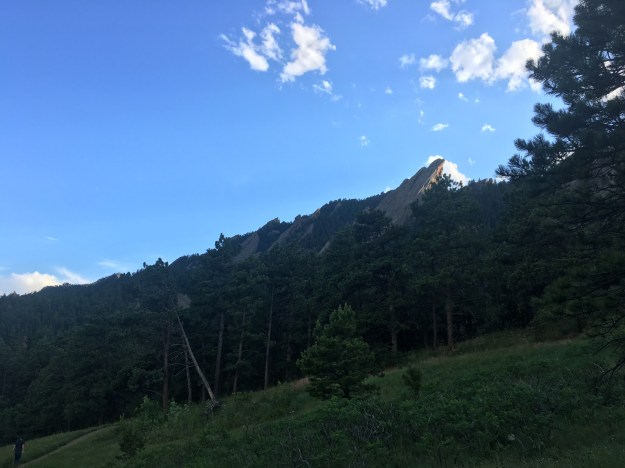
At this time of the evening, shortly after starting the hike, the sun had already descended behind the mountains to the west. Alpenglow could still be seen, hitting the top of the long flat diagonal rocks that are often referred to as the “Flatirons”.
IMG_0138 (1)

Hiking mainly after 7 P.M. also put most of the hike in the shade, as the sun was already behind the mountain peaks to the west. This made the hike more comfortable, as the temperature was in the upper 80s, a normal level for this time of year, before the hike.

Most of the trail is fairly strenuous, with a consistent climb. This changes at Sentinel Pass, which is within about a half a mile of the end of the trail.

Many hikes are said to have “false summits”; places where the trail appears to be reaching a summit, which is usually the final destination of a hike. Sentinel Pass, in a way, is both a false summit and a real summit.

IMG_0156.jpg

It is actually a summit! However, it is not the end of the trail. The trail continues. There is a short but steep descent right after Sentinel Pass. The descent is followed by another steep uphill section, where, after another 15 minutes or so of hiking, Royal Arch is reached.

IMG_0158 (1)IMG_0170 (1)IMG_0178

It ended up taking me just under an hour to reach Royal Arch. For a hike of 1.7 miles with 1600’ of net vertical, and some areas that are quite strenuous, this is a relatively quick pace.

After resting and enjoying the view for a mere 10 minutes at the top, I was still barely able to make it back down to the trailhead before darkness fell upon the area.

IMG_0183 (1).jpg

This is why I would recommend for most people to either arrive earlier (which shouldn’t be an issue for most work schedules), or bring a headlamp. Even in the week following the summer solstice, with some of the latest sunsets of the year, there are limitations to what can be done after working a typical 9-to-5-ish day.

One of life’s major challenges is making the most of whatever opportunities come our way. June, and its lengthy days, represents an opportunity to simply get outside more and get more exposure to sunshine.

For a variety of reasons it appears that the modern digital, sedentary lifestyle is taking its toll on us. It feels as if every five to ten years, some new set of dietary recommendations come out. Either a new set of foods become the secret, magic ticket to a healthier life. Or, some different type of food suddenly becomes the new “boogeyman”, and is suddenly to blame for all these widespread health problems.

I am not a health expert. However, based on my observations and reasoning, it appears that many of our health problems are related to two things; many people being way too sedentary, and, primarily in the United States, some ridiculous portion sizes. There also appears to be some merit behind staying hydrated and getting enough sleep.

Our bodies were meant to move. It’s been shown that sitting for even a couple of hours at a time can actually lead to negative health impacts, including the supply of oxygen being cut off from our brains. The predominant form of employment in 2017 is still 7-10 hours per day sitting in front of a computer. This cannot possibly be good for our minds or our bodies.

There has also been countless articles published recently regarding the connection between happiness and exposure to sunshine. Not only were we not meant to spend well over half of our waking hours seated, we also were not meant to spend nearly as much time indoors.

In our current culture, it is really hard to avoid having to perform a lot of work that requires being seated in front of a computer. Heck, writing this, I am, in fact, seated in front of a computer. This does not mean we cannot seek out and take advantage of opportunities, whenever we can, to be outdoors, be in motion,  and/ or be social (separate topic), as much as we can.

IMG_0187 (1)

On the descent, I spent half the time talking to random people. The other half, I was lost in my own thoughts. I imagined myself in various scenarios, settings I could see myself in, places I would be, people I would talk to, etc. All the scenarios I imagined involved me encouraging others. I encouraged others to believe in themselves, to have confidence, to stand up to naysayers, and to make the most of their lives. Part of that involves taking part in activities that enrich our lives. So, I encourage everyone to take advantage of summer, particularly this first part of summer, and the opportunities it affords us by checking out places like Royal Arch for evening hikes.
 

I Like Ike

IMG_9962.jpg

There are Presidential Museums for every President that served over the past 100 years, usually located in or near the their “hometown”. Some of the more memorable presidents from the 18th and 19th Century also have museums dedicated to their lives and accomplishments. While some of these museums are located in or near major cities, there have also been a good number of presidents who came from small towns. Their museums can sometime be interesting places to stop while traveling.

The first time I ever visited a presidential museum, I was driving from Saint Louis to Chicago on Interstate 55, a drive that had become familiar and dull to me. It was a July day and temperatures were close to 100 degrees. I knew both me and my car needed a break in the middle of the afternoon. So, I visited the Abraham Lincoln Museum in Springfield, a museum I would certainly recommend. I love stopping at places like this on a long drive, allowing the body to move around a bit, and stimulating the mind with some historical information.  So, on my drive back to Denver from Kansas City, I decided to stop at the Eisenhower Presidential Museum in Abeline, Kansas.

IMG_9971.jpg

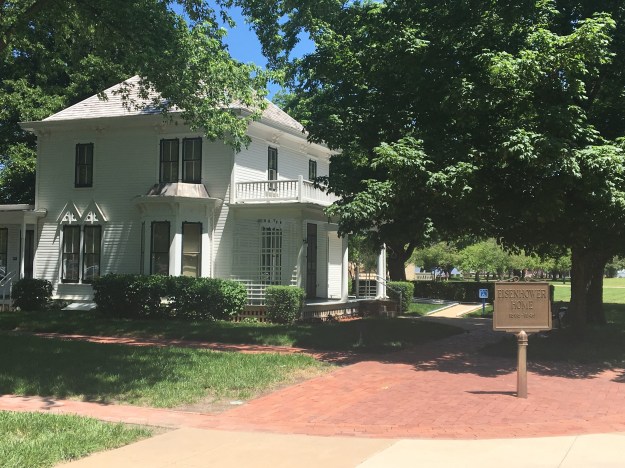
The museum is located in the EXACT SPOT that the former president grew up.

IMG_9951

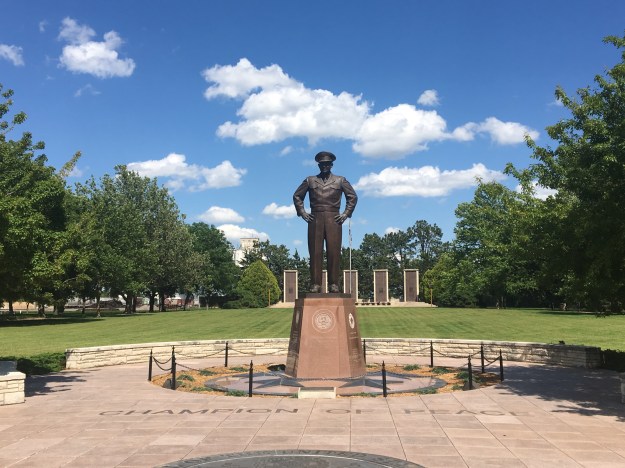
On the museum campus is Dwight Eisenhower’s boyhood home, and, with admission, visitors get a brief tour of the house.

Ike_Museum_Location

Map from Museum’s Webpage- does not include parts of I-35

The museum is only a few miles from Interstate 70. As president, one of Eisenhower’s signature accomplishments was the signing of the Interstate Highway Act in 1956. So, it seems fitting that this interstate highway system would find a way to serve the town Eisenhower grew up in. Arriving here without using the interstate would feel wrong in a way.

IMG_9960.jpg

Every president, no matter the background, has two stories. A story about what they did before they became president, and the story about what they did as president. Before becoming president, Eisenhower was known primarily as the general that oversaw the Allies European Victory in World War 2.

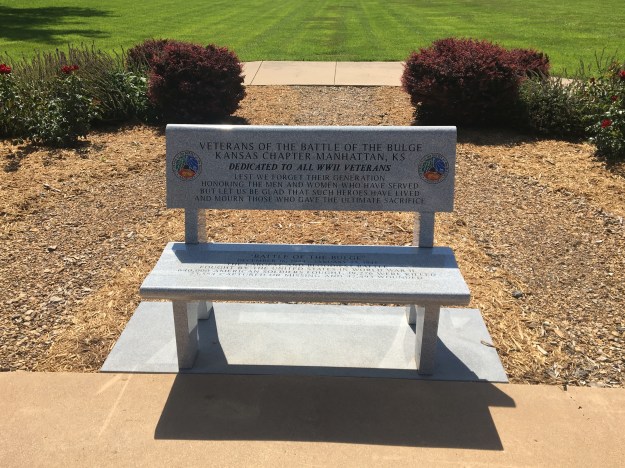
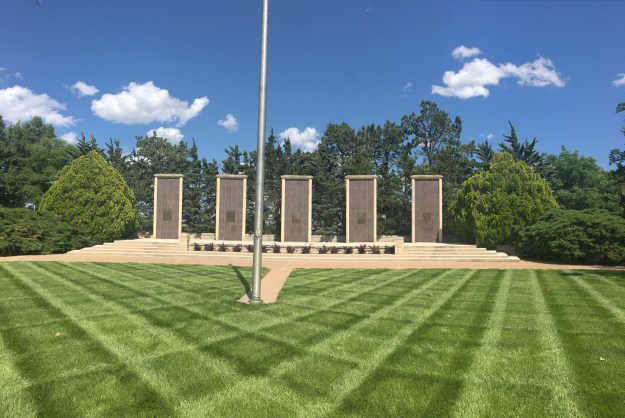
In fact, Eishenhower’s military career, and exhibits regarding World War 2, appear to make up the largest part of this museum. Later in life, Eisehnhower himself considered his role in the military as the most significant one he had played. In his retirement, he preferred to be addressed as “General Eishenhower”, as opposed to “Mr. President” (which is how former presidents are usually addressed).

IMG_9997

After helping start the North Atlantic Treaty Organization (NATO), he decided to run for President of the United States in 1952. The museum portrayed him, in a way, as a reluctant president. There is no way of knowing what truly is inside anybody’s heart. However, the way the story is portrayed is not of a man with a strong desire to become president, but of a man who spent his entire life fulfilling the various duties to which he was called. After being called to do so by countless associates, supporters, and both major political parties, leading the nation, as president, was just the final in a series of duties he was called to and performed over the course of his life.

IMG_9950.jpg

The entire life story that is Dwight David Eisenhower felt like a story out of a completely different time in history. This idea seems almost like a long-dormant old folklore in American culture. The hero turned leader. A person who wins the adoration and respect of a large group of people based on some heroic acts and then goes on to lead decisively, yet not divisively. A person who sincerely tries to lead all the people, rather than just the ones that are supportive. And, a person who finds a way to be both transformative and a consensus builder with views that are strong without being extreme.

[I will leave the exact details of his presidency to the history books and the museum itself.]

This feels, in a way, like the exact opposite of what has been going on recently. When it comes to this idea of a military veteran/ war hero president, there are plenty of examples throughout history, but no clearer example than Eishenhower.

I do not want to make this another angry political blog (there are way too many as it is), but I do not consider our current president, nor his predecessor, to be a hero, at least not in a general sense like the heroes past. Sure, both men are heroes to a subset of our population. However, both men were also dismissive, and sometimes in a nasty way, to other groups of people within our country. Being the first president of mixed racial background, or the first non-politician president may be important steps for our country. But it’s hard to consider being a community organizer or a business tycoon “heroic” in the traditional sense.

IMG_9966.jpg

There is a time and a place for everything. Maybe the middle of the 20th Century was the time and the place for the hero. It could be seen throughout the culture of that time; the Western Hero/Villain movies, characters like the Lone Ranger, and such. Our society has changed significantly since then. Movies this decade more commonly feature protagonists with some form of character flaw, and antagonists who draw some amount of sympathy based on their life experiences or perspectives.

As our culture progresses, we enter a period where maybe we should not look to a hero, but within ourselves. Most of the problems we face today are not as straight-forward as a General coming in and defeating Nazis. They’re more complex, like structural racism which results from the cumulative effect of people’s individual attitudes and pre-conceptions, the negative emotional and communal effects selfishness and the accessibility of smart phones create, or the susceptibility of those that feel disenfranchised to messages promoting radical and sometimes violent behavior. They are not solved by a leader, an army, or a bunch of laws. They are solved by each person’s behavior, one by one, day in and day out.

The World War 1 Museum

IMG_9874.jpg

In my history classes in Junior High and High School, we spent plenty of time covering World War 2. In retrospect, I realize that the reason people love to talk about World War 2 is that it is the closest thing in history to a real life battle between good and evil. Nearly every other war, struggle, or conflict, no matter how it is portrayed in the history books, is far more nuanced.

What I learned about World War 1 can be rudamentally summed up into the following sequence of events….

  1. Some archduke got assassinated
  2. There were so many entangling alliances that countries one by one started declaring war on one another
  3. There were these trenches and a lot of people died
  4. America came in and saved the day

I later read that World War 1 may be way more significant than the amount of coverage it got in history class.  So, when I found out that Kansas City had a museum dedicated exclusively to World War One, I decided it was worth a visit.

img_9873.jpg

The main part of the museum depicts the war’s events in chronological order. Visitors walk through the museum, with the chronological order of events displayed on one side and a mixture of war artifacts and other exhibits on the other.

The museum is pretty well balanced between the global USA-specific perspectives. The first section is dedicated to the events before the United States entered the war (1914-1916).  In the middle, a video describes the sequence of events that lead to our entry into the war. The final section is dedicated to the events of 1917 and 1918, as well as how the world was changed by the war.

To truly get the most out of a visit to this museum, I would recommend setting aside at least a couple of hours to read through the full list of chronological events.  If you are like me, and always have a burning need to both think and talk through the implications of everything you read, an additional hour might be necessary.

I came away from this museum with an even greater understanding of how nuanced this war was. First of all, in some ways, this war is often seen in a historical context as inevitable. Nationalism was on the rise, there were ongoing technological and geopolitical changes, and there were all of those alliances. But, the war also started by accident! The mission to assassinate Archduke Franz Ferdinand was aborted. However, the assassins that shot him did not get the message, and assassinated him anyways. This one event would trigger a cascading of war declarations that would descend nearly the entire world into war!

Also, in most wars there is one side that wins and another that loses. While this war had a winning and losing side, there were some exceptions. For example, Russia sided with the alliance that won the war. But, their war was on a different front, and, with a revolution at home that caused them to exit the war 18 months prior to the war’s conclusion, well, they lost. They clearly lost, and lost territory. Italy, the perpetual side switcher of Europe, also pretty much lost. And, the Serbians and Slavs, subjected to Austro-Hungarian rule, despite being on the losing side, won- they won their own nations.

IMG_9919.jpg

By the end of the day my mind was feeling, well, just busy. While looking backwards, 100 years in time, my mind kept drifting to the future. In a way, World War 1 created the modern world.  It created the shapes of many of our countries as they are today, but also solidified the concept of the modern nation. Before that there were far more empires, as well as loosely bound city-states. There are also a frightening number of parallels between the world leading up to World War 1 and the world today.

I just kept thinking about what is ahead in the context of what had already occurred. The world was not always the way it is today. It would be foolish to assume it won’t change in the coming years. Three decades from now, the very way our society is organized could be quite different from what we know today.

IMG_9921.jpg

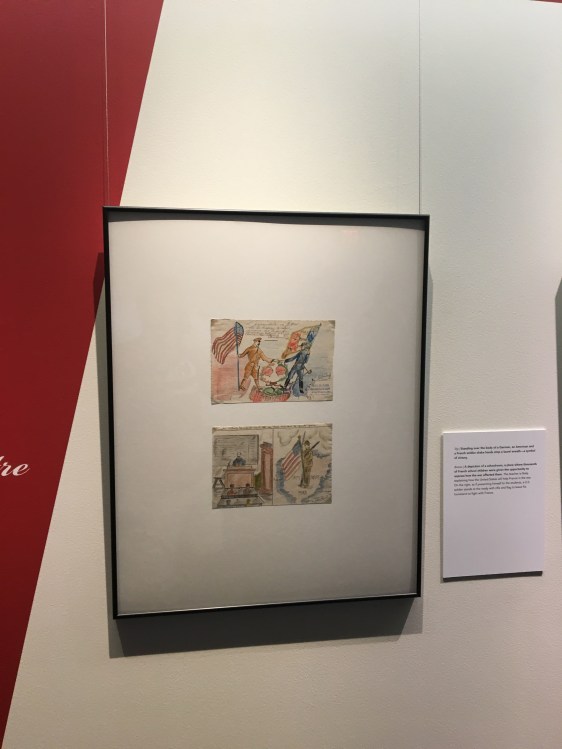
The museum also had several special exhibits, the best of which covered how the war-torn French reacted to the United States entering the war in 1917. Children in school throughout France were asked to draw pictures, and write essays, describing how the U.S. entry in to the war made them feel.

IMG_9920

Why is it that we commonly get what we want at the wrong time? I remember joining alongside my classmates in school in groaning when asked to do additional assignments such as this one. Now that I am a full fledged adult, I often desire nothing more than to spend my days doing the kinds of things my teachers would ask me to do in school, rather the work I must do to earn a living. I imagine many young adults feeling the same way.

The other special exhibits at the museum covered revolutions and signs of how the world was changing, murals, maps of the conflict, artifacts such as Wilson’s war proclamation, and posters encouraging people at home to support the war effort.

The museum does contrast with some of the more recently built museums I have visited. Museums built or fully updated in the past ten years tend to have two distinctions from older museums.

  1. Far more interactive exhibits, and interactive exhibits geared not just toward children but also towards adults.
  2. A greater willingness to take a somewhat critical view of history from the protagonist perspective, such as the Colorado History Center’s exhibits about Japanese Internment Camps, racial resentment in Denver, and the Sand Creek Massacre.

This museum largely lacked these two features. There were only a couple of interactive exhibits, and they were quite basic.

IMG_9925.jpg

The war posters, both in the main section and the special exhibits, refrained from depicting the extremely negative portrayal of German-Americans during the war effort, sticking to propaganda posters encouraging citizens to buy bonds and such.

Likewise, the censorship and jailing of political opponents under the Wilson administration (among its other misgivings) are really not touched upon. Still, I came into my visit to this museum with a hard opinion that our entry into this war was a mistake, and was at least able to see a new perspective on this when reading all of the facts here at the World War 1 museum.

The Cherry Creek Farmer’s Market

IMG_9567

What does it mean to have a “healthy community”?  I am encouraged to see more and more people actively consider their life choices, their environment, associations and just put more thought in general to how they spend their time, energy, and money.  This feels like a dramatic shift from, say, ten years ago.  However, embedded in some of the most high profile public improvement related pursuits in the modern era is an unfortunate residual strand of laziness.  After all, we do want something for nothing.

This often manifests itself in buzz phrases that people use to not-so subtly indicate some form of association with a popular present-day initiative.  Perhaps the one that bugs me the most is the term “sustainability”.  In many of its common present-day uses, the definition of this term “sustainability” has been narrowed to only mean sustainability in the environmental sense, short-changing the term of its full definition, and shortchanging discussions of “sustainability” of their full impact.

IMG_9576

Whenever I ride a bicycle to a Farmer’s Market, I feel as if I suddenly become the personification of the term “healthy community”.  It’s the standard image, embedded in every montage that any health or parks department has put together to promote some kind of health/ community initiative in the past six years.  People riding their bikes to buy pesticide-free produce and meat products from local farmers and ranchers.

IMG_9574

IMG_9571

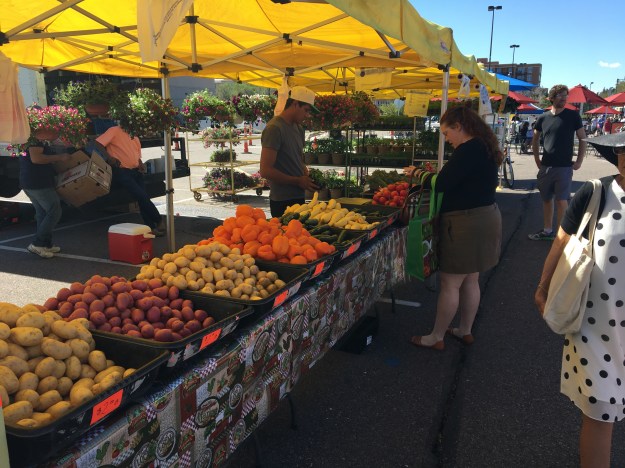
And there are a few booths that sell those products, including one with that cow diagram that just always confuses me.  Why are there like 50 types of beef?.  However, most of the booths at this Farmer’s Market are not vendors selling food.  In fact, I saw a somewhat random assortment of products that made me curious as to how one goes about determining what is appropriate for a Farmer’s Market.

And, as is the case with any other Farmer’s Market I have been to, there were plenty of booths where one can get food that is, well, not healthy.

IMG_9573

In Wisconsin, any Farmer’s Market I would attend would have a good number of booths selling cheese curds.  If the country ever breaks up into its 50 states, and Wisconsin becomes its own country, it would probably stock pile cheese as a strategic reserve, much the same way Canada stock piles maple syrup.

I would say a majority of the food vendors at this Farmer’s Market offer food that is not typically considered healthy; including many different varieties of baked goods, food trucks, and a bunch of stands that sell items like tamales and burritos.

Interestingly, several booths at this Farmer’s Market are operated by Local civic organizations advising residents on how to effectively garden and compost.  This gives this Farmer’s Market somewhat of a unique touch, that contributes to the health and sustainability of the community in a different way.

But, the same way being a successful person is about more than simply becoming “goal oriented”, eating well is about more than just buying things that are “organic”, and having a productive work team is about more than just “synergy”, having a healthy community is not just about initiatives like this.  There are a lot of other factors, culturally, near and far, that make this place what it is.

IMG_9554

Regardless of what we are trying to achieve, it takes time, effort and active participation.  We all want something for nothing.  We want to be able to claim some sort of accomplishment, moral validation, status or belonging by claiming association with some positively viewed buzzword, and maybe taking part in a token activity like going to a Farmer’s Market.  But, to really live healthy takes a much bigger commitment.  And there is more to having a “healthy community” than a video montage showing people like me bicycling to Farmer’s Markets.

What we do every day can be healthy, or it can be not.  For most of us, it is both, depending on the situation.  The intellectual rigor we need to truly evaluate our lives, the journey we are on and the communities we live in, involves respecting the complexity that is ourselves, our surroundings, and even places with divergent outcomes like the Cherry Creek Farmer’s Market.  It is at that point, with the understanding of places, activities and concepts beyond buzzwords and vague terms, we complete this transition, elevating our level of intellectual discourse and giving ourselves the tools we need to make the best of our lives and communities.


Buried in Crested Butte

IMG_8353.jpg

There is such thing as too much of a good thing; too much food, too much exercise, even too much water!  While stories about people dying of water poisoning do exist, most people will experience dehydration, or too little water, many times throughout their lifetime.  Few people experience hyponatremia, or water poisoning.  So, health advocates rightly focus on advising the population to drink enough water.

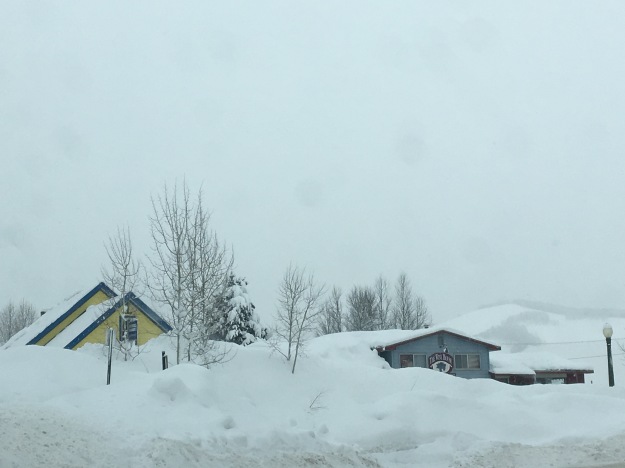
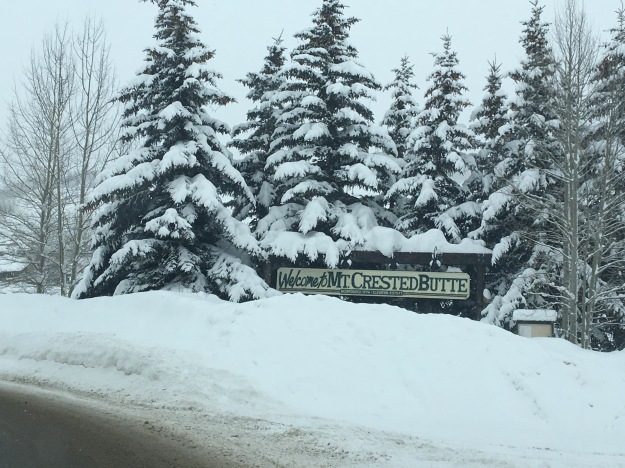
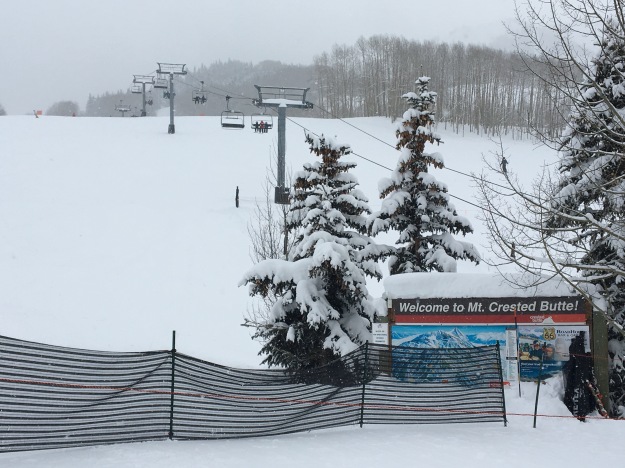
The same can be said of snowfall in towns like Crested Butte, Colorado.  Like many ski towns, Crested Butte’s livelihood is at least partially dependent on receiving ample snowfall to produce good ski conditions.  So, it is rare to actually hear people in a town like this say that the wish for the snow to stop.   But, that is exactly what happened, after the town received close to 100 inches of snow (half their annual total) in a ten day period.  In fact, at one point, the ski resort actually had to close due to too much snow!  In a way, this is like the ski resort version of water poisoning.

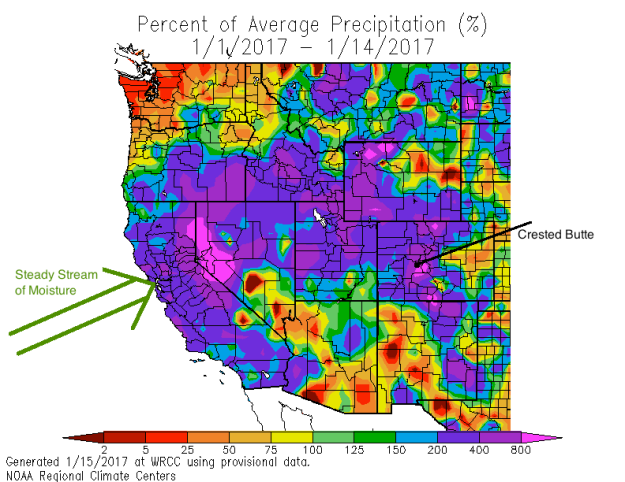
After a couple of quiet days, 2017 has begun on a crazy note for the Western United States.  A steady stream of storms, transporting moisture from the Tropical Pacific Ocean directly into the California Coast, transformed a drought stricken state into a deluge of floods and swollen rivers in only a few days!

These storms followed similar tracks eastwards, producing heavy precipitation in parts of Colorado, Idaho, Utah, and Wyoming.  For the first two weeks of 2017, Crested Butte received close to eight times their normal precipitation amount!

jan1_14_2017_precip

By Friday the 13th, the snow had slowed down, but hadn’t stopped.


Over Martin Luther King Day weekend, each day the weather followed a similar pattern.  Light snow would fall overnight, providing a few inches of new snow, and would linger into the morning.

IMG_8361.jpg

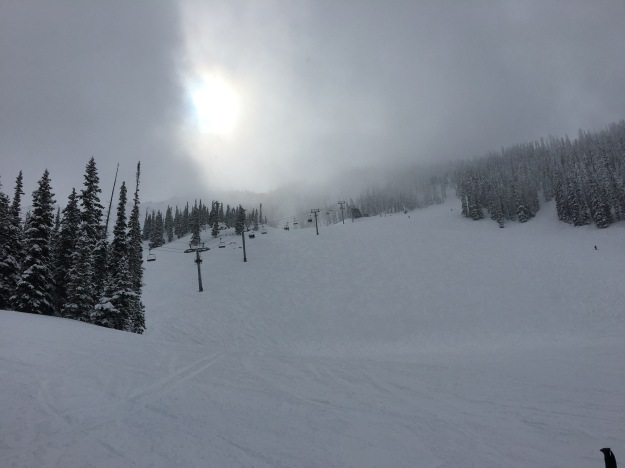
This would be followed by somewhat of a fuzzy period, where the sun appeared to be trying to come out, but fighting some kind of battle against low clouds which would reduce visibility on some parts of the mountain.

IMG_8365.jpg

This is a battle that the sun would eventually win after an hour or two of these in between conditions.

IMG_8374.jpg


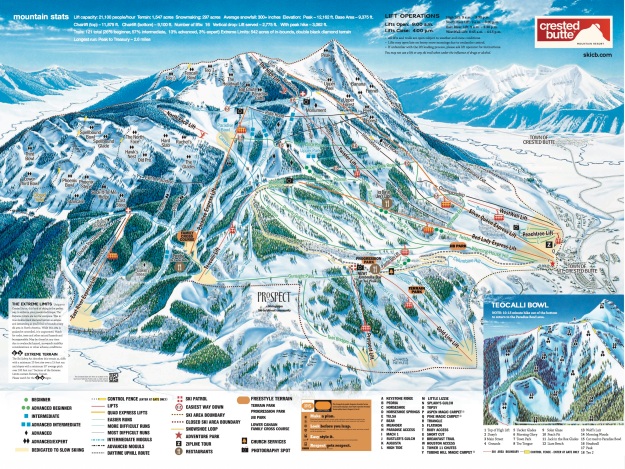
Crested Butte provides an interesting ski experience.  By size, it is significantly smaller than places like Snowmass, Steamboat, and Copper Mountain.

Crested_Butte_Map.jpg
However, all different types of skiing can be found here, from groomers (although, with limited visibility for much of the day, conditions were not quite optimal for those true speed demons out there) to glades and bumps of all different kinds, sizes and steepness.

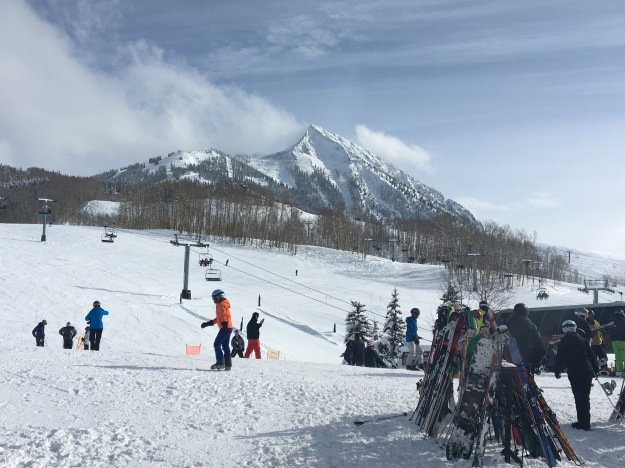
For advanced skiers and boarders, Mount Crested Butte is a must do!  It is possible to hike all the way to the top of Crested Butte’s signature mountain.  However, the Silver Queen Express lift provides access to all but the uppermost 287 feet of this peak.

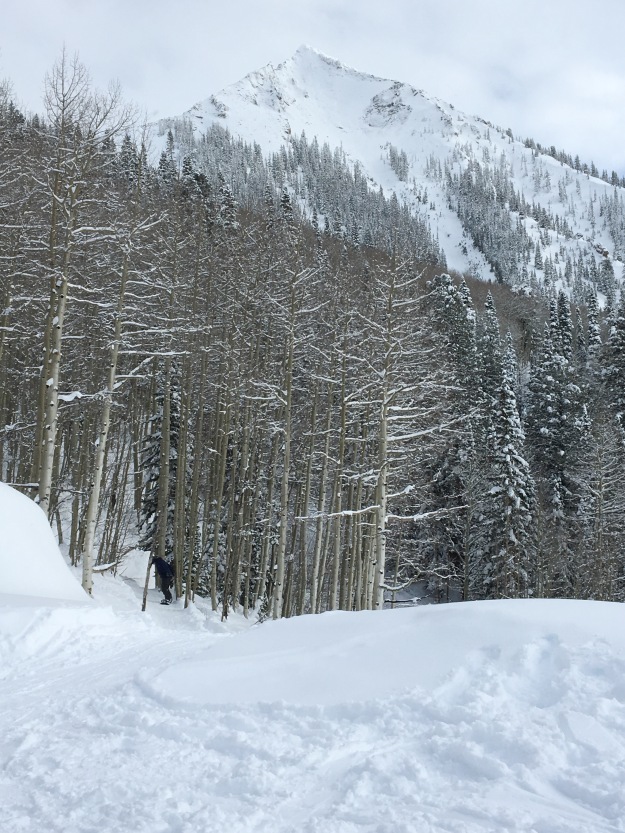
The journey down the mountain starts out wide open, but eventually winds through a series of challenging glade (dense tree) areas, both pine and aspen.

IMG_8407.jpg

Gazing back at the mountain, I felt as if I had just skied down something from one of those extreme sports videos that is often shown in loops at ski shops promoting the Go Pro camera, or at some film event.

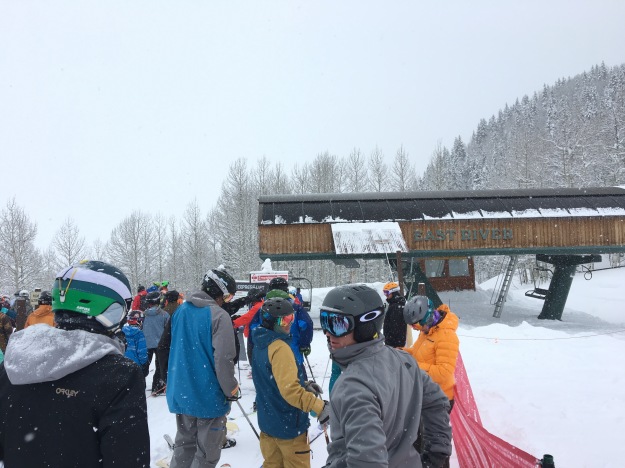
Crested Butte markets itself as having small crowds and short lift lines.  This was definitely true on Friday.  However, Saturday, the crowds began to build, and lift lines, uncharacteristic of Crested Butte, built fast.  At one point we ended up waiting 25 minutes in a lift line.
IMG_8396.jpg
The combination of the extreme snowfall at this particular mountain, and the holiday weekend (MLK Day) likely drew an unprecedented number of visitors to the resort.  Smaller, out of the way mountains like this one probably typically do have short lift lines.  But, with less capacity than some of the bigger resorts, increases in traffic on exceptional weekends like this one can increase wait times at lifts quicker.
Geographically, Crested Butte has a different setup that many other ski areas.
img_8382

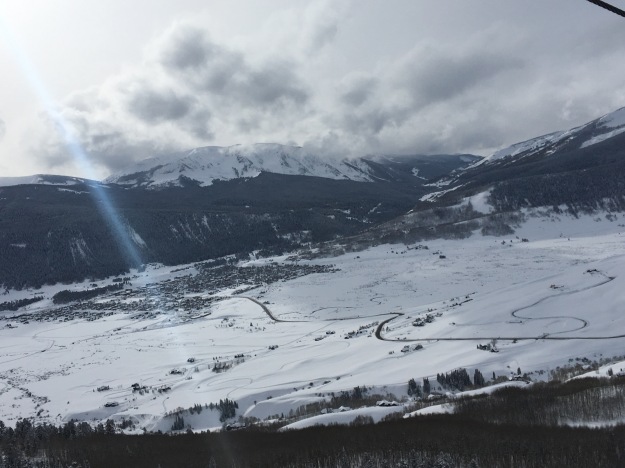
Unlike places like Breckenridge and Park City, where the town is directly adjacent to the ski resort, the main area of town is actually roughly six miles from the resort.

img_8433

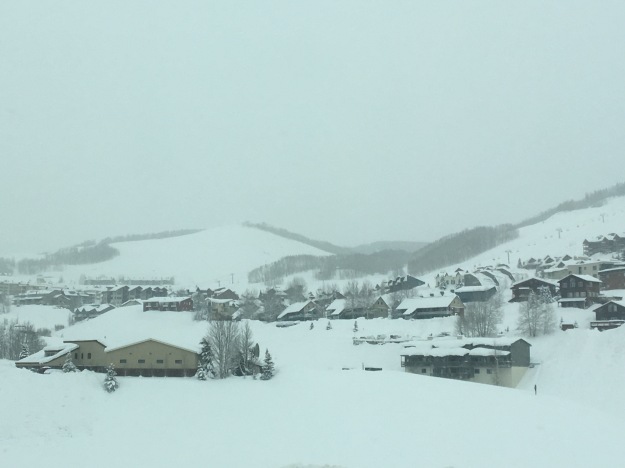
The settlement adjacent to the ski resort, which consists primarily of lodging, is referred to as Mount Crested Butte.

img_8350


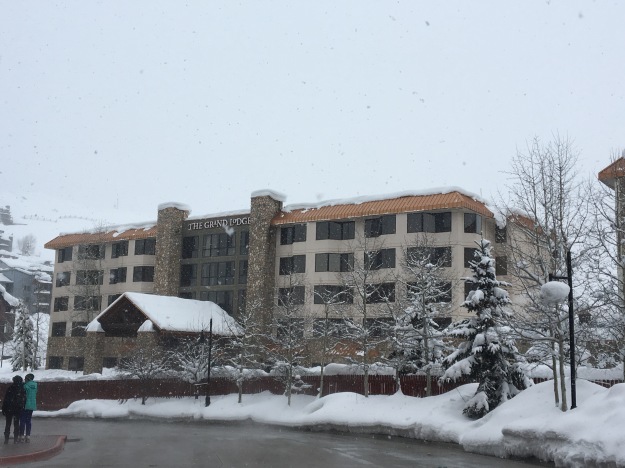
This setup works out a lot better than one would expect.  We stayed at the Grand Lodge, which is nearly adjacent to the base area lifts.

IMG_8401.jpg

The Lodge offers spacious rooms that contain amenities like refrigerators, microwaves, a hot tub and a spa.  There is a restaurant on the main floor of the hotel and several other eating options at the base of the mountain, which is only a two minute walk away.  Those who prefer to relax in the evenings can stay nearby.

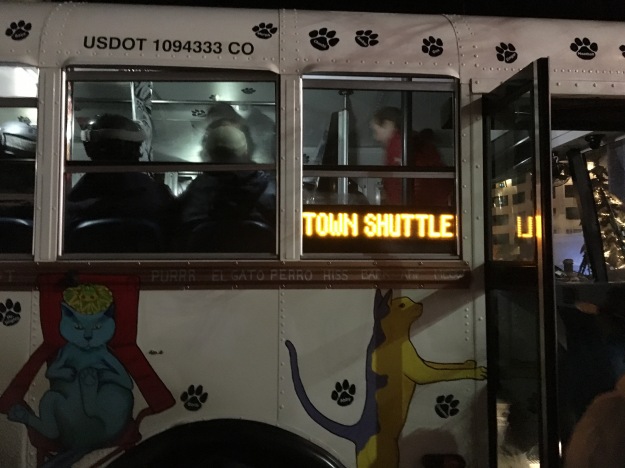
For those that want evening activities, there is a free shuttle from the base of the ski mountain into town, where there is plenty going on.

IMG_8412.jpg

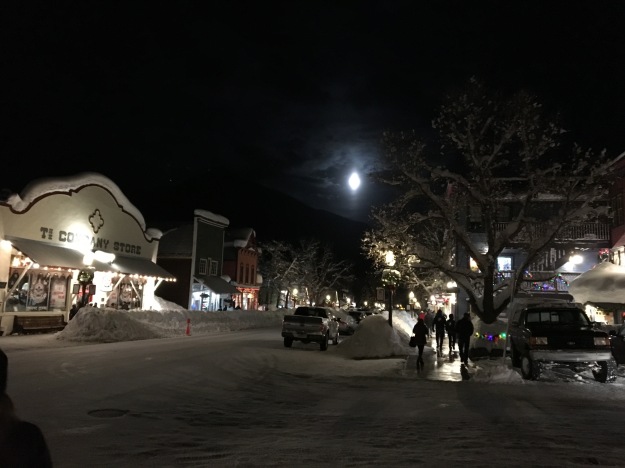
Walking along Elk Avenue, the main road in town, plenty of people can be found, going to bars, restaurants, shops, events and festivals.  Based on all of the posters, window decals, pamphlets and signs everywhere, there seems to always be some kind of event going on in town.

img_8390

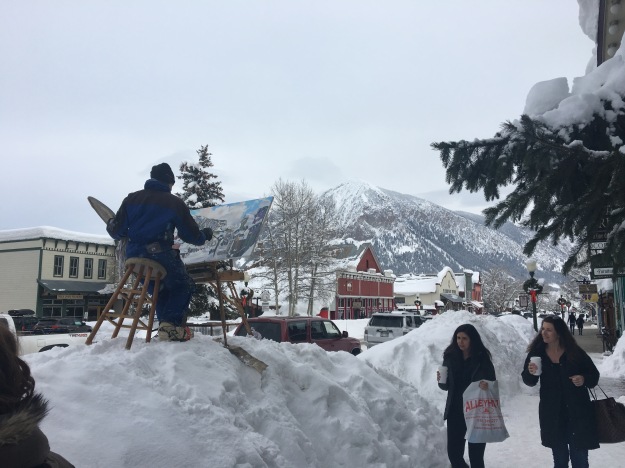
Crested Butte can also be described as “artsy”.  Saturday evening’s artwork was highly recommended by local residents.  In the vicinity of 3rd and Elk, it felt as if every third or fourth building was some kind of an art gallery partaking in the artwalk.  In fact, the large amount of snow piled between the sidewalk and the road provided one artist with the opportunity to gaze upon the town, and paint it, from a slightly different perspective.

img_8434


Crested Butte was at both its best and worst this weekend.  The snow conditions were amazing, and temperatures were actually quite comfortable the entire time.  However, the capacity, both with regards to the ski lifts, and for the town to remove snow from streets, buildings, and cars, was overloaded.

img_8347

Still, people went about their business, created and sold their artwork, partied in the hot tubs and at the bars, and kept a smile on their faces.  After this weekend, an accurate description of what a “normal” weekend in Crested Butte is like cannot be provided.   But, we don’t travel looking for “normal”.  We travel for an experience.  One that is different from what our day to day lives are.  This holiday weekend in Crested Butte was definitely a unique experience, due to the place that we visited as well as the exceptional conditions.


The Quest for Freedom

img_7739

In a way, we all long for freedom.  Freedom from some form of restriction, some sort of pressure, mandate or expectation that we believe is holding us back.  The desire to break ourselves free from these restrictions, allowing ourselves to reach our true potential, or obtain a new level of self-awareness is ingrained in our culture.  Tales of striving for greater freedom can be found peppered throughout our literature, movies and music.  It is the underlying theme of the story of this nation, from overthrowing monarchy to westward expansion, ending slavery, and later the open road.  One could even view the baby boomer obsession with large suburban homes and the millennial obsession with authenticity and acceptance of individual preferences as simply the most recent chapters of a freedom themed cultural progression.

Cars have always been symbolic of freedom.  The mass production of automobiles in the early 20th Century made it possible for the average person to travel over large distances at the time of their own choosing.  Those who purchased an automobile were no longer subject to train schedules when making trips both short and long.

img_7741

“The Open Road” meant people now have the freedom to go when they want to go, where they want to go, and change their mind whenever they’d like.

img_7729

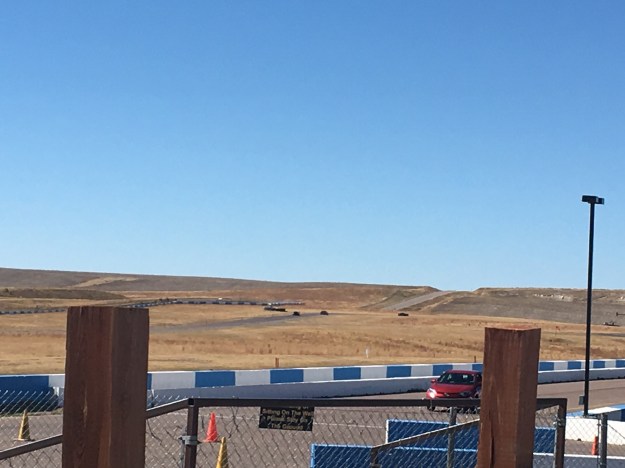
At the High Plains Raceway, this freedom is celebrated, and, well cranked up a notch.  Here, in a world where access to automobiles is now nearly universal, drivers free themselves of the few restrictions that remain.  For most, this primarily refers to the speed limit.  Here, for all practical purposes, there are no rules (in reality, there are a few for safety purposes, but they mainly revolve around how to conduct oneself in the event of an incident like a crash or a gasoline spill).  There is just how fast one can take the turns that make up the race course.

The feeling of having one of these inhibiting restrictions lifted, whether permanent or temporary, is hard to describe.  It’s joyous, almost in a jubilant manner.  It’s reassuring, anxious, and exhilarating at the same time.  I often equate it to a cyclist suddenly no longer having their brakes unnecessarily engaged while trying to pedal, or a runner no longer having 10 pound weights tied around their ankles.  Everything just suddenly feels like it is moving faster, and flowing more smoothly.

But, there is some level of risk one takes by coming to a facility like this.  Upon entry, every person, even guests who do not intend to drive a vehicle at all, must sign waivers, accepting the risks they take.  This includes understanding that there are dangers, both to life and property.  Crashes at high speeds can do damage to one’s life and limb in situations like these.  And, some of the vehicles at this raceway are valued at upwards of half a million dollars, assets that could be permanently lost when accidents render the vehicles irreparable (I am told that standard automobile insurance does not apply while on race tracks like this).

For these reasons, many will probably choose never to take part in this activity.  This is the case with many activities of this nature, from something as major as starting a new business to something as minor as stealing two sips of vodka from one’s parent’s liquor cabinet at the age of 15.  Some of us dive into the activity without thinking.  Some of us will shy away, and avoid the risk.

We all want freedom.  But, we all also want security.  Most of us also desire equality, justice, or some sense of “fairness”.  Most of our sociological conflicts come about when these desires are pitted against one another.  In this year’s presidential election, Americans have largely been denied a true discussion about what our priorities are, in this realm, and how they should be met.  But, that does not mean that determining how to free ourselves from our limitations, and how to prioritize this desire with other desires is not part of our lives every day, manifesting in the decisions we make and interactions we have.

48th State

IMG_7464.jpg

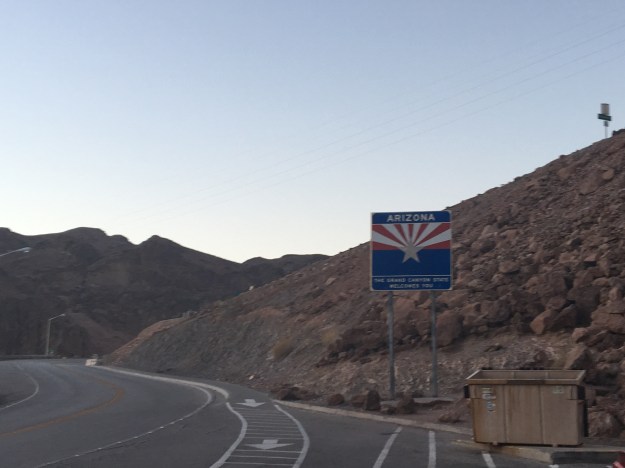
Arizona is the third most recent state to join the Union.  The only two states admitted more recently are Alaska and Hawaii.  This means that, when it comes to mainland U.S.A., this very much was the “final frontier”, an area that remained wild and unsettled for over a century while areas were being converted from frontier, to small villages, and eventually into powerhouses connected by networks of trails, ports, and railroads.

img_7422

The primary cultural image of Arizona is the “Old West”.  Cowboys roaming around wide open spaces.  Small isolated towns where outlaws and town sheriffs fight a continuous battle that resembles the internal conflict we all have between the innate desire for freedom and the desire for justice and order.  Crazy games of poker in whiskey salons that often end in guns being drawn.

Historically, it is correct that Arizona, like much of the west, is the site of many epic battles that often lead to gunfire.  This lead to places such as Tombstone, and Rawhide, being depicted in numerous Western themed movies and TV shows.  Tourists today can relive the experience of the wide open, unsettled, west by visiting these places.

However, movies and TV shows can frequently lead people to inaccurate perceptions.  Films and shows are designed for entertainment purposes, and therefore must focus on the interesting aspects of life in a specific place, like a shoot-out between two gangs.  Anyone that compares their lives to those of characters from TV and movies will often come out feeling that their life is uninteresting.  After all, no movie will show someone sitting at a cubicle for six hours, or doing laundry and ironing shirts.  They focus on the parts that will, well, entertain the people that watch them.

Recent studies have indicated that, while these high profile gunfights did occur in the old west, they were the exception rather than the rule.  Some studies (although not all) have even suggested that the western frontier of the later 19th century was actually a safer place than America today.  There is speculation as to why the “Old West” is depicted and thought of in the manner in which it is, leading some to entertain conspiracy theories.  Regardless of what the reality of what life in this time and place know as the “Old West” was truly like, it is encouraging to see people look at it statistically, as opposed to based on anecdotes and catch phrases.

IMG_7415.jpg

Arizona may have grown up late, but it grew up fast.  Based on the 2010 census, Arizona is now the fourth most populous state west of the Mississippi River.

IMG_7420.jpg

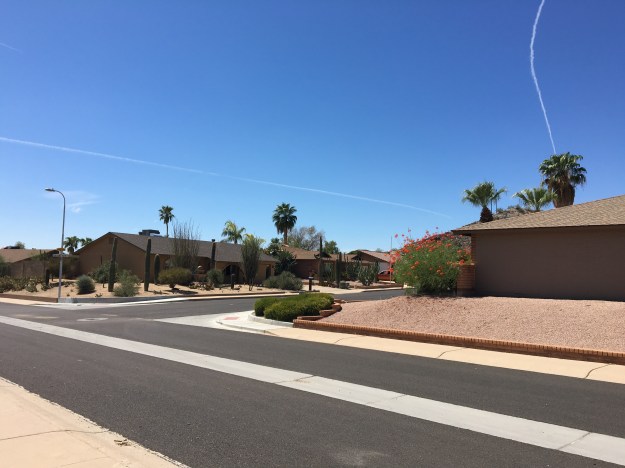
Growing up in the middle to late 20th century, Arizona grew up in a manner that is very car-centric.  Depictions of present day Arizona life, in movies like Bad Santa, commonly show life in car-centic suburbs, with winding subdivisions, malls and such.

img_7443

There is also no forgetting Arizona’s position along the famed Route 66, which took countless motorists between Chicago and Los Angeles during the middle part of the 20th century.  In popular culture, the Arizona stretch of this major historic thoroughfare is amongst the most celebrated, providing the inspiration for the setting of the Route 66 based movie Cars.

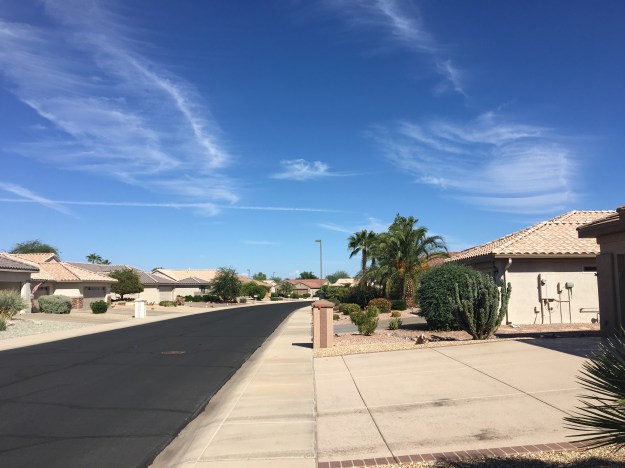
The most high profile destination in Arizona is the Grand Canyon.  After all, the state’s nickname, which is labelled on all Arizona license plates is “The Grand Canyon State”.  However, by taking a road trip from Phoenix to Las Vegas, one will traverse the landscapes that cover a much larger portion of the State.

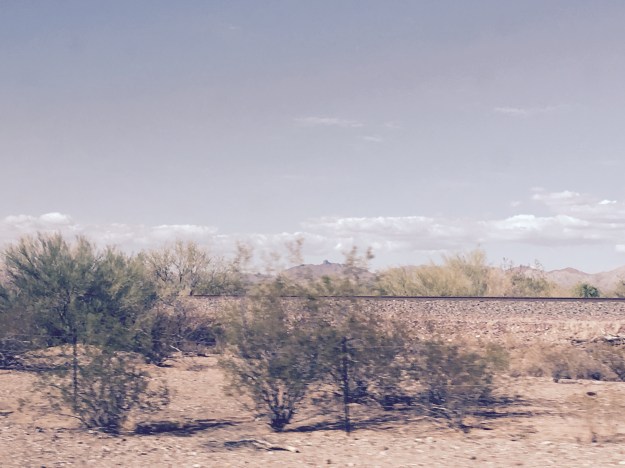
Passing through the Sonoran Desert, which includes Phoenix and much of the surrounding  area, one will encounter hills covered in sagebrush and cactus plants.

img_7441

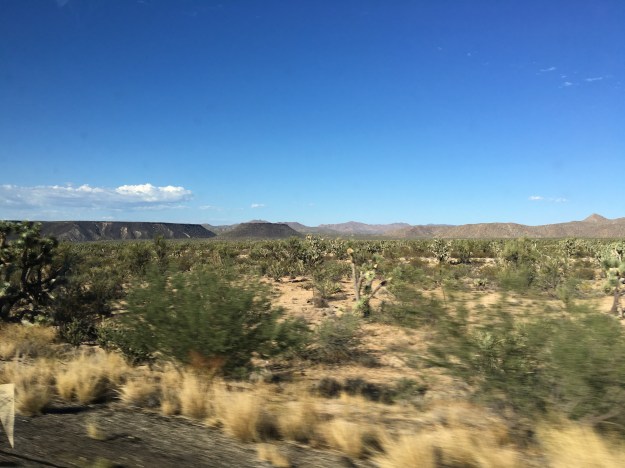
Periodically, one will also encountered Joshua Trees, mountain ranges, and mesas.

IMG_7429.jpg

img_7431

Closer to Vegas, the landscape transitions to the Mojave Desert, which is sometimes even hotter, drier, and more baren than the Sonoran.

img_7447img_7450

Two developments made Arizona’s rapid expansion in population possible.  First, is the much discussed invention of, and subsequent proliferation of air conditioning.  This, of course, made living in places prone to hot weather more desirable.  The second is the creation of dams, canals, irrigation systems, and water pipelines, which facilitated supplying these dry regions with the water resources needed to sustain life.

IMG_7475.jpg

The Hoover Dam, located at the border of Arizona and Nevada, is one of many places throughout the west that diverts water resources from a major river (the Colorado River) to major metropolitan areas.


As is the case with the idealized image of the rugged individual of the “Old West”, present day life in Arizona, when discussed, elicits some divided responses, as well as some different interpretations.

img_7411

This is very much the image of standard life in Arizona.  A house in suburban looking neighborhood, a pool in the backyard, mountains, and, in many cases, golf.  Some love it.  Some see it as the natural culmination of the “American Dream”.  Some can’t wait to get away from the frigid winters many experienced in other parts of the country, move down here and enjoy the life.  Others, and particularly those concerned with the environment, feel it is irresponsible for so many people to be living comfortable lifestyles, with swimming pools, irrigated lawns, and golf courses in a climate this dry.  People here seem to adhere to the “haters gonna hate” mentality.  The knowledge that people in some distant land are disapproving of their living, eating, hiking, and golfing in the desert does not seem to phase them.

IMG_7413.jpg


Cycling from Denver to Cheyenne

IMG_6854On the evening of July 3rd, having just finished an exhausting six-day bike ride, including four days of cycling over one hundred miles, my body felt a bit relieved.  I was actually ready to rest, ready to sit in front of a computer again!  Clay, however, told me that I was going to wake up the next morning, realize I was not biking 100+ miles and not know what to do with myself.

The truth ended up being somewhere in the middle.  I could not have pictured cycling at all the next day.  This was literally how I felt.

IMG_6644

The next day, I biked six miles, to and from Union Station from my home.  And, I was perfectly fine with that.

However, I did eventually get antsy, despite two other, closer to home adventures.  By Tuesday July 19th, I posted this picture on Instagram, stating I was bored and wishing to get on my bike and explore again!

IMG_6808

I ride the new RTD A-Line train, which connects downtown Denver with Denver International Airport, roughly three days a week for a gig I am currently working at the airport.  At Central Park Station, one of six intermediate stops between downtown and the airport, this curious piece of potentially symbolic artwork sits atop a pillar.

IMG_6809

Whenever I am on the train, and not trying to sleep for efficiency sake, I see it, and sincerely wonder what its purpose is.  It seems to depict a person running to catch the next train, but headless.  But why headless?  Could it actually be a satire on the futility of the rat race?  Could the artist who created the sculpture have had an alterior motive?  Could he or she have created this sculpture with the secret hope that a few commuters each day would look at this sculpture and be prompted to ask; what am I doing and why am I doing it?  Is this the life I wanted?  Is this the natural state of human condition?  Etc.?

I, however, had other plans, actually for the next Friday, and, they once again involved my 2012 Bianchi Cyclocross bicycle.  The Cheyenne Frontier Days Rodeo was starting, and, I was going to ride my bike there!

The prior evening, I spent the night in Broomfield, after a softball game in Boulder.  So, even before this next 100+ mile bike ride, I was already spending some significant time on my bike again.  Knowing it was going to be hot, we got an early start.  I actually wish we had gotten an earlier start.

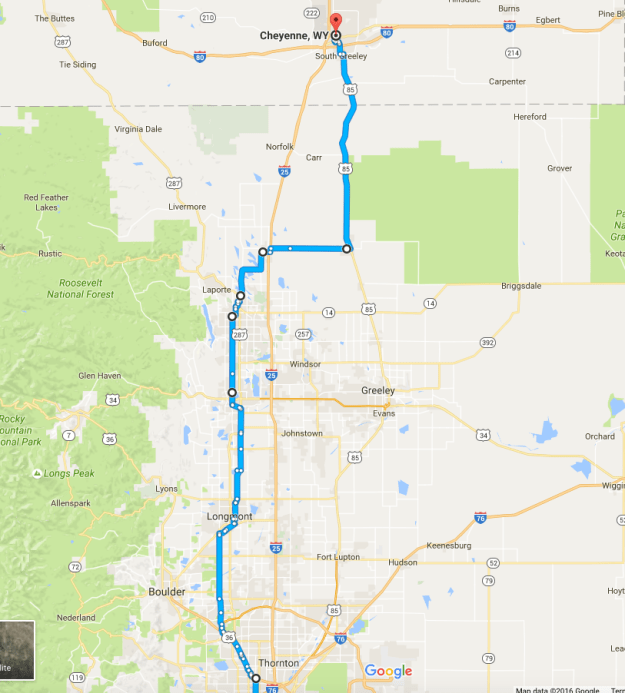
BikeRoute_DenvertoCheyenne

A lot of people hear about my bike adventures and immediately sounds perplexed…

Is there a trail there?

Are there safe roads to bike on there?

There’s a lot of trucks on that road.

I would never ride my bike on those roads, you could get killed.

Etc.…

There is some risk, no denying it.  When I was a child, one of my favorite bands, the Offspring, told me “Back up your rules.  Back up your jive.  I’m sick of not living just to stay alive.”  More recently, Drake told me, “Everybody dies, but not everybody lives.”  The truth is that there is the possibility of death doing nearly everything.  People die on the slopes.  People die rafting.  But, people also die commuting to work.  And, due to the health risk factors such as cardiovascular disease and such, sitting around watching television can be deadly!

That being said, I still considered risk when choosing a route, and am still willing to go a few extra miles to reduce my risk.  I am just not willing to miss out on opportunities altogether out of fear.

IMG_6814

The first part of the ride was pleasant, 95th St. from Broomfield to Longmont is a road I knew had bicycle accommodations in the form of bike lanes or wide enough shoulders.

Longmont was a little bit tougher to navigate.  Like many towns, their bike route network was designed primarily with travel within the town in mind.  I stared at their bike map for a good half an hour to figure out the best route through town, but it ended up being a fun route.

IMG_6817

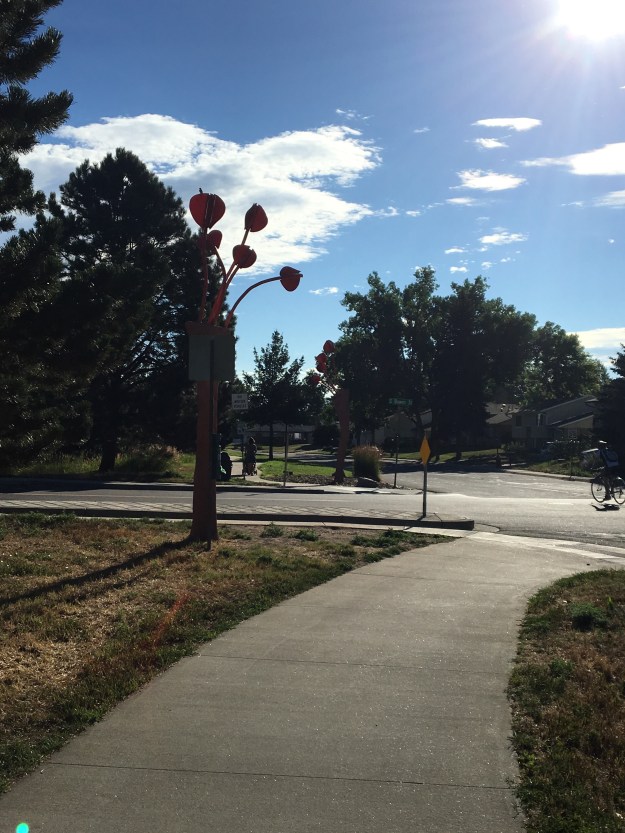
I particularly enjoyed all the sculptures along the Saint Vrain Greenway!

IMG_6818

One thing people miss when they drive along I-25 between Denver and Fort Collins is how many lakes there are in the area.  On the interstate, there are none.  On this route between Longmont and Fort Collins, through Berthoud and Loveland, we actually saw a lot of lakes.
I’d been pondering riding my bike from Denver to Cheyenne for years, even going as far as thinking about some of the details, such as what time of year to go and what route to take.  As soon as I started thinking about routing, there was one segment I knew I was going to do, the combination of Taft Avenue and Shields St. through Loveland and Fort Collins, roughly half a mile west of highway 287.  This straight shot through both towns has a bike lane the entire way, and made navigating through Loveland and Fort Collins was easier than navigating through Longmont.

IMG_6821

This is where I started to feel the heat, which was right around 10:30 or 11:00.  The temperature probably hit 90 sometime while we were in Fort Collins, making me regret having not left even earlier than we did (we departed at about quarter to 7 in the morning).

Also, the wind had a slight easterly component that day.  This made the next two segments of the ride, first from Fort Collins to Wellington, where we stopped for lunch around noon, and then from Wellington to Nunn to reach U.S. highway 85, quite possibly the most challenging segments of the ride.  I had this nagging feeling about entering Weld County.  I do not know why, I just felt as if something bicycle unfriendly would happen to me in this county specifically.  It was mainly just a premonition that bore out to be true, just not in the way I had anticipated.

IMG_6845

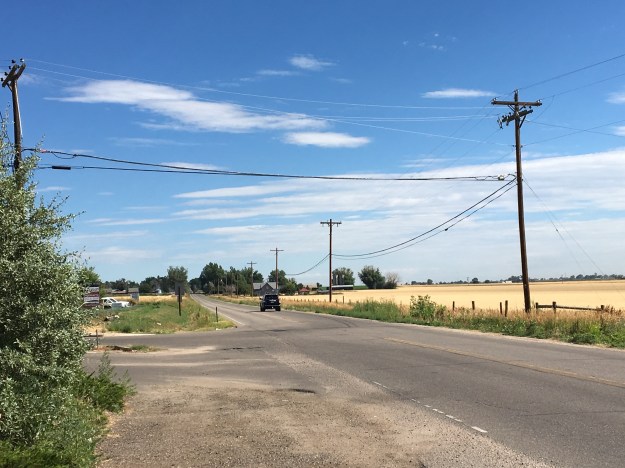
Upon entering Weld County, the road we were following switched to newly paved blacktop, while the temperatures had climbed probably into the mid-90s.  This lead to the closest thing to heat exhaustion we would experience during the ride.

IMG_6846

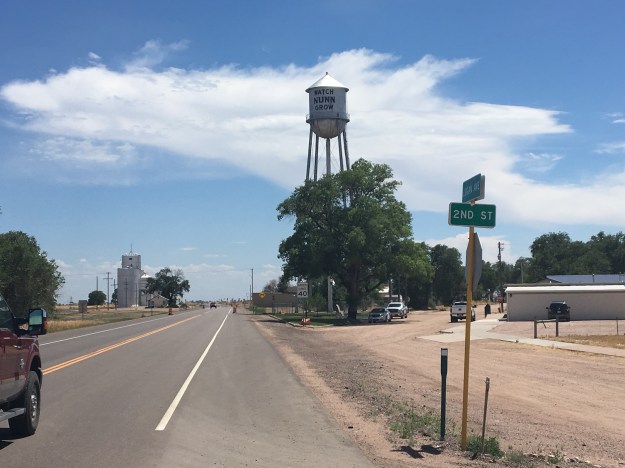
By the time we reached Nunn, we were desperate to get out of the heat for a few minutes and get some water.  Unfortunately, despite the fact that Nunn has a water tower that says “Watch Nunn grow”, I’m 100% sure that my calf muscles were growing faster than Nunn that day.  The only place we could find to fill up our water bottles was the police station/town hall, and the only reason that option was available to us is because we were riding on a weekday (Friday).

IMG_6847

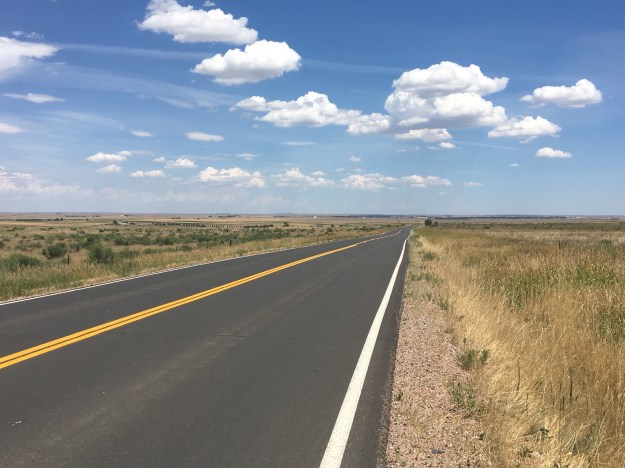
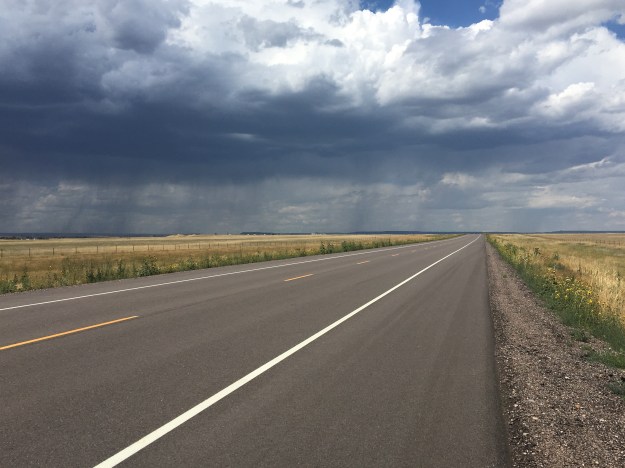
We followed U.S. 85 for the last 30 miles of the ride.  We ended up having to wait out a mid-afternoon thunderstorm near the Colorado-Wyoming border, at the only building within a 10-mile radius.

IMG_6850

The storm was, however, neat, and I felt as if I were storm chasing on my bicycle (even though in real life that would have been a disaster).

We arrived in Cheyenne during rush hour, which was a little nerve racking as this is the only part of the ride where the shoulder on U.S highway 85 disappears, the last couple of miles before entering town.

After 109 miles of riding, we were there, Cheyenne Frontier Days, miraculously with enough energy left to party, parade, and rodeo!

Cycling Day #4: Out of Gas

A decade and a half ago, popstar Christina Agulera, recalling a situation that most of us have faced at some point in our lives, sang “My body’s saying let’s go, but my heart is saying no.”  This morning’s situation was the exact opposite!  My heart wanted to continue riding, and soak in every experience that I could out of this trip.  But, my body, soar after three straight days of 100+ miles of riding (including yesterday’s climbs through the Adirondacks), did not feel like going any farther.

Had I decided not to ride today, I would have cheated myself out of an experience, that being day 4.  I have two previous experiences bike touring.  One, in graduate school, was a three day ride across the State of Wisconsin.  The other, last summer’s ride from Bozeman, Montana to Jackson, Wyoming, was also a three-day ride.  This day would be my first day 4, and regardless of what amount of pain I felt, I had to have this experience.

The ride started northeastward out of Lake Placid, with a little bit of a climb.  This was followed by a descent, which follows the Ausible River by Whiteface Mountain Ski Resort, and several waterfalls.

A strange thing happens when the human body is this worn out, but is forced to start going anyways.  The first few miles, or first 15 minutes or so, are kind of rough.  In particular, my legs did not feel as if they had anything left in them.  After 15 minutes, the resistance abated.  It felt like my body finally, and begrudgingly, agreed to tap some kind of alternate energy source.  For my own sake, I hope this energy source is fat reserves rather than muscle tissue.

The pain did not abate.  Sometimes the worst pain one experiences when cycling long distances is not muscle strain in the quadriceps, calves, or hamstrings.  Due to the long periods of time spent in riding position, other ares, particularly the neck and shoulders, often feel the worst.  In these situations, a little bit of Advil can help.  I usually do not advocate turning to pain medication, or any other kind of medication just to avoid a tough situation.  I even lament how many of us are dependent on caffeine to get through the average Thursday.  But, at least for me, eight hours a day hunched over a bicycle counts as that extreme situation where one can partake in pain medication without it becoming a regular occurrence.

IMG_6496.jpg

The first stop of the day, early on, was in a town called Wilmington.  This was an important stop for me, as it kind of represents the end of the Adirondacks.  On trips like this, I tend to spend well over 90% of my time looking forward, to the next destination, to the next activity, and to the next challenge.  In Wilmington, though, I found myself gazing backwards, back at the mountain range I had just “conquered”.  I have now already accomplished something.  Despite having significantly more distance in front of me, and some more amazing places to go, I’ve already had an amazing experience, one where I biked far greater distance than I have ever had before, and seen some amazing places I’ve never been to before.

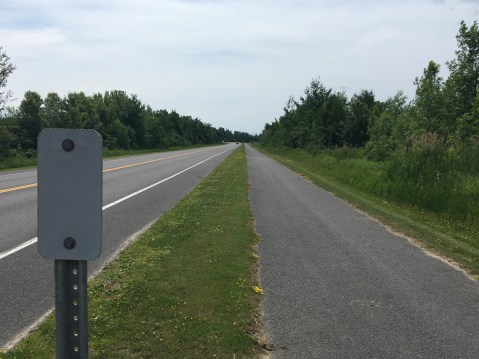
The next segment of the ride followed back roads farther northeastwards towards Plattsburgh, a town along Lake Champlain.  Forests gave way to farmland, and finally town.

It ended up being a bit harder than I had anticipated to get across Lake Champlain.  First, I hit a wall.  It was as I got into town, just over fifty miles, and only about three hours, into my ride.  I was probably still quite exhausted from the previous three days.

IMG_6503.jpg

Then, the last several miles to get to the ferry ended up being more challenging than expected.  To get to the ferry from town, one must follow a trail along the Cumberland Head Peninsula that starts out heading East, but turns towards the South.  In this case, that was straight into the wind, the only strong headwind I had faced.  Although the trail was flat, the combination of wind and fatigue meant I could barely maintain a speed of ten miles per hour for the very last few miles of my ride in New York State.  I had literally run out of gas.

IMG_6505.jpg

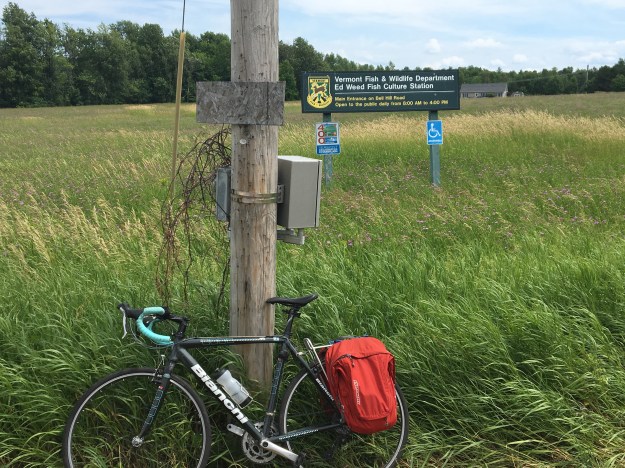
Perhaps my biggest disappointment of the day was that when I arrived on the other side of the lake, from the ferry, there was no sign welcoming me to Vermont.  There was only this Fish and Wildlife Department sign, which I used as a proxy.

IMG_6506.jpg

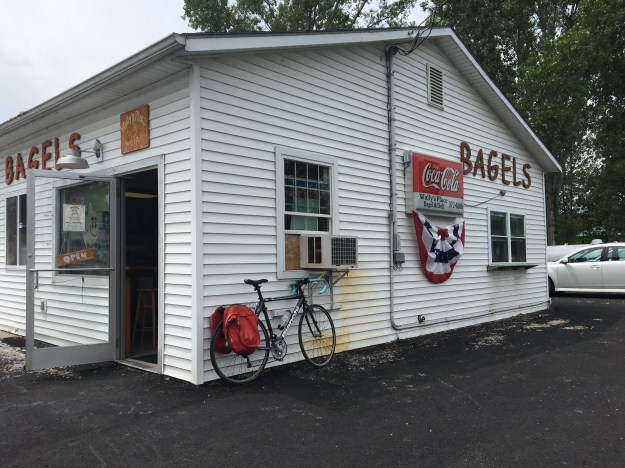
The other side of Lake Champlain, Vermont, is a very different place.  The attitudes of the people could not be any more different.  In Upstate New York, I was told that Texas has a better image than Long Island.  When I first got into Vermont, I stopped at a local bagel shop and grabbed a sandwich.  I overheard a conversation where one of the locals mentioned “extreme political differences” with Texas.

IMG_6507

I doubt that these difference with Texas corespond to any kind of affinity for the New York metropolitan area.

The family that hosted us that night in Greensboro told us that the town, and probably most of the area, was quite homogenous- politically.  They recommended that anyone who had a differing opinion “bite their tongue”.

IMG_6508

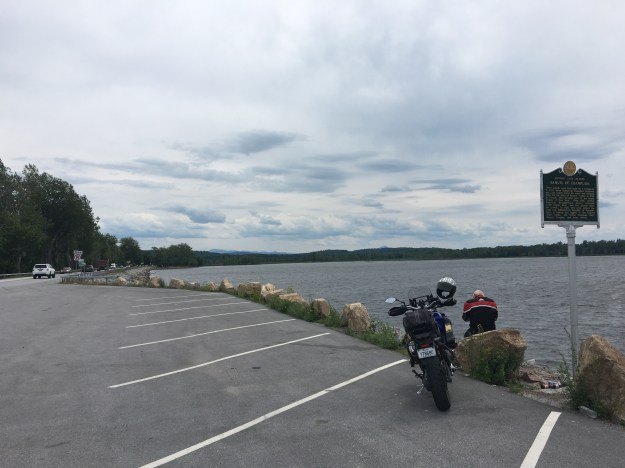
To me, though, Vermont felt like the reciprocal of Texas.  Current political considerations put the two places at odds with each other.  However, as soon as I got into Vermont, I saw signs and heard rhetoric that stressed individuality, and Vermont’s “Independence”, both current and historical.  This felt to me, honestly, reminiscent of Texas.

I decided to take the afternoon “off”, which meant returning to my backup plan; riding in the van that was following Clay’s route.  I came into this ride knowing that I would not be able to keep up with Clay’s pace, often well over 100 miles per day, for the entire ride.  Before booking my flights and such to join on this trip, I made sure that I would have a backup plan when this moment of utter fatigue would eventually set in.  I figured this would be the best time to rest, as the weather turned a bit questionable (that afternoon, it became windier, and it would eventually rain in the evening).

Riding in the van also allowed me to see a couple of additional sites, most notably the Ben and Jerry’s Ice Cream factory, which is not along the bike route, but not too far out of the way.

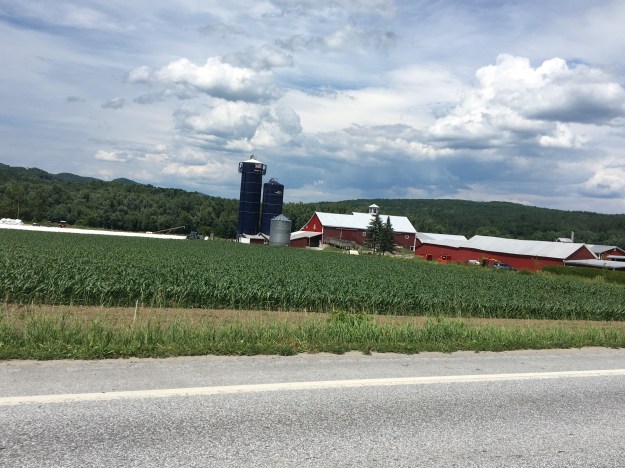
One thing I was told to expect from Northern Vermont, was to see a lot of red barns.  After all, the quintessential Vermont image is of rolling hills, possibly cheese or ice cream, and a red barn.

IMG_6513.jpg

During my time in Vermont, which included both the time in the van today, and the time I would spend on my bicycle the next day (before reaching New Hampshire), I would see a total of 80 barns!  During my entire time in New York State, a much longer distance from Niagara to Plattsburgh, I saw only 54.

IMG_6533.jpg

Clay arrived at our destination literally minutes before the sky opened up, and started to pour.  Had I continued cycling that day, not only would I have hit a large amount of rain, I likely would have slowed Clay down, causing him to unnecessarily get wet.  This was the last time I had to invoke my back-up plan, but, based on weather considerations, the opportunity to take the Ben and Jerry’s factory tour, and this dirt road, I think I made the right choice.

A Mental Health Day

IMG_6149

I feel like I have over 100 things on my mind, all vying for space, all wearing me out.  All the changes I see around me.  The shocks, the craziness, the idiocy.  The selfishness.  My personal shortcomings, recent mistakes, how my life’s path ended up where it is and what to do about it.  How do we find a balance between order and chaos?  All the ways in which the people around me have let me down.  All the ways I let the people around me down.  How do I keep the benefits of having a smart phone (like being able to take pictures like this, after 28 miles of bicycling, which would have been tough carrying a heavier device) but avoid the pitfalls of mindless scrolling on weekdays when bored?  What is my future,  and how do I find my niche?   What is the future of our society?  The mindless violence followed by the sometimes equally idiotic responses to it.  Globalization.  Trump, Brexit, and the backlash to globalization.  But, most of all, the disappointments when experiences do not match expectations.

Simply put, I needed a mental health day.  I think we all do from time to time.  A day where we get away from jobs, computers, social media, day-to-day responsibilities, pretty much everything that causes us stress, and do something that we enjoy.  This, of course is something different for everybody, and it is not up to me to judge what any one person does for their mental health days.  Well, unless of course it is something morally reprehensible like murder or theft.

I have a firm belief in, and also a unique take on, the connection between mind, body, and spirit.  Over the course of my life, and in observing others, it is almost impossible not to observe the connection between the three.  I remember winters in Chicago, and other times when lack of exercise would in turn weigh on my mind and spirit.  Overall, improvements in one of the three realms often force improvements in the other two.  Likewise, a deterioration in one of the three realms can negatively impact the other two, like the person who develops an eating disorder after a rough breakup.

So, I decided to make my mental health day also a physical health day, with a bike ride to Roxborough State Park.  This is a ride I did two years ago.  The basic gist is that it is 28 miles each way, goes by Chattfield Reservoir, and is a significant climb over the last five or six miles.
Wednesday’s ride was even more exhausting, as temperatures soared into the 90s and a Southerly wind developed making the last several miles of climbing in harder.  Needless to say, I arrived at Roxborough exhausted.  In fact, I had to sit inside for about 15 minutes to cool off when I got there.

IMG_6140

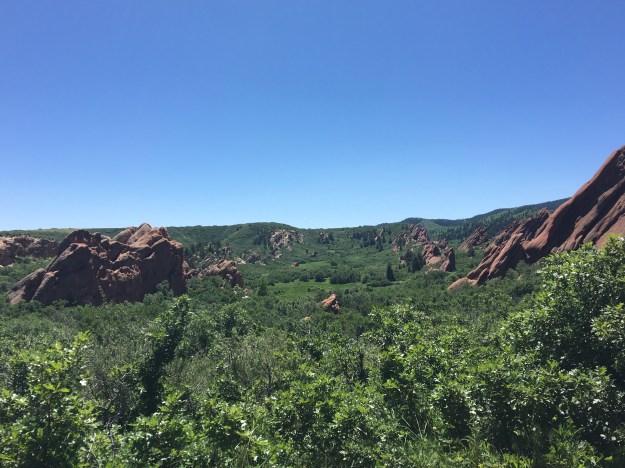
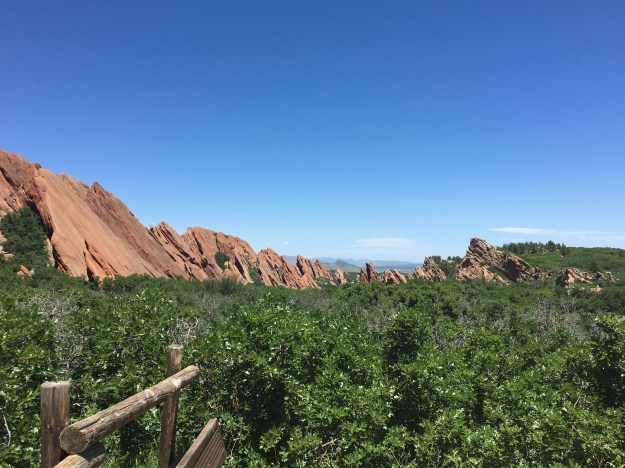
Still, I decided to do some hiking.  Knowing that my legs were exhausted, I decided to stick to moderate trails, but ones where I can still view the essence of the park and what makes it geologically unique.

IMG_6142IMG_6143

It was after roughly 1.5 miles of hiking that the ideas suddenly started popping into my head.  Ideas about things I could be doing with my life just entered my mind.  I could do this, and present it to these people, and achieve fulfillment in this manner.  They just kept pouring in, and, for some reason, felt so simplistic to me.  Like, the only thing I need to do is just go out and do these things.
IMG_6144

These are all things that frustrate the hell out of me day and night.  Maybe it is because all of the physical exertion caused my mind to slow down enough for my brain to stop over-thinking things.  Maybe it is the freedom from all of the distractions of daily life.  It’s strange what I was contemplating.  Whenever I am in front of a computer, at an office, in a cube, or in some kind of work-like setting all of the ideas I have seem almost impossible, like a daunting challenge that would take years to attempt and would likely not result in any meaningful success.  In a way, there, I feel stuck.  Here, not so much.  Here, the same exact ideas seem quite possible.
It is here that the conspiracy theorist in me gets activated, so please bare with me, as I am the kind of person that just likes to entertain theories, even if I am not necessarily going to conclude that they are true.  I wonder if cubicles, offices, sedentary days and the like are the way “the system” maintains itself.  By “the system” I mean what I am observing around me.  A whole generation of highly educated people going to work at jobs that are well beneath the skill level they develop through college, and increasingly, post-granulate, education.  A whole generation of people submitting to rules, such as a strict 9-5 schedules and dress codes, that are no longer relevant for the kind of work that now predominates in a service sector economy.  Is the reason people continue down this path the manner in which a whole day of sitting at a computer connected to the internet and all of its distractions make them feel?

IMG_6147

People visit Roxborough State Park, and the geologically similar and more well-known Garden of the Gods, because they are unique.  If this place looked like every other place on Earth, people would not make a specific point of coming here.  So, maybe the key to being the kind of person people seek after, is to be unique.  After all, the person you meet at the party that is exactly like everyone else, is the person you don’t remember.  Sorry to be harsh.  But, it’s when someone does something unique, or interesting, that you remember that person.  Strangely, though, the world of school, and subsequently work, encourages conformity.  It encourages people to follow the worn out path and do things the way they are always done.  Maybe overcoming that conditioning and doing things our own way is the key to life, both in terms of success and happiness.